英语播客|别再追求“母语者口音”了,口音也是你的身份
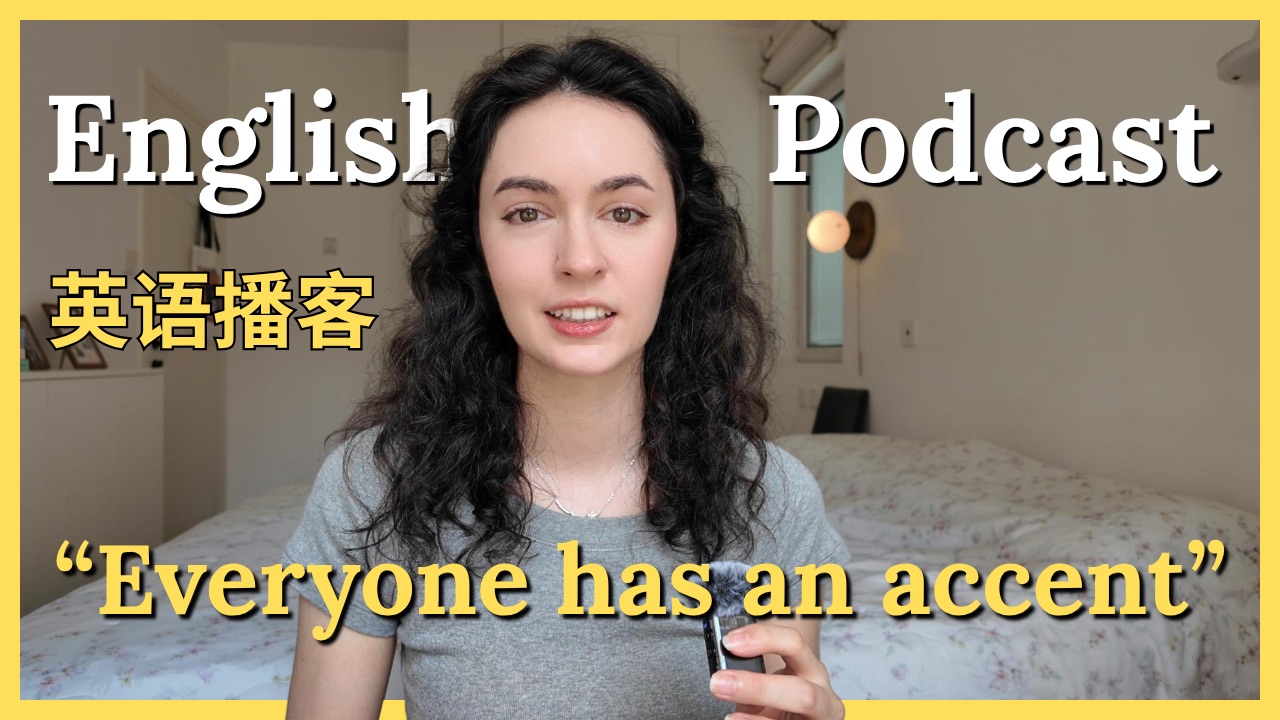
字幕摘录
| 时间 | 英文 | 中文 |
|---|---|---|
| 0:00 | we have to talk about your accent. | 我们得谈谈你的口音 |
| 0:02 | Whether you're learning English or another language, | 无论你学的是英语还是其他语言 |
| 0:05 | I'm sure all of us have had these thoughts | 我相信大家都有这些想法 |
| 0:07 | at some point in time. | 在某个时候。 |
| 0:09 | What if I sound weird? | 如果我听起来很奇怪呢? |
| 0:10 | What if people judge me? | 如果人们来评判我呢? |
| 0:12 | Will I ever sound like a native speaker? | 我听上去会像本地人吗? |
| 0:15 | In fact, one of the questions I get asked the most is, | 事实上,我最被问到的问题之一是, |
| 0:19 | how can I sound more like a native speaker? | 我怎么会更像一个母语? |
| 0:23 | And every time someone asks me this question, | 每次有人问我这个问题 |
展开字幕全文(369 条)
| 序号 | 英文 | 中文 |
|---|---|---|
| 1 | we have to talk about your accent. | 我们得谈谈你的口音 |
| 2 | Whether you're learning English or another language, | 无论你学的是英语还是其他语言 |
| 3 | I'm sure all of us have had these thoughts | 我相信大家都有这些想法 |
| 4 | at some point in time. | 在某个时候。 |
| 5 | What if I sound weird? | 如果我听起来很奇怪呢? |
| 6 | What if people judge me? | 如果人们来评判我呢? |
| 7 | Will I ever sound like a native speaker? | 我听上去会像本地人吗? |
| 8 | In fact, one of the questions I get asked the most is, | 事实上,我最被问到的问题之一是, |
| 9 | how can I sound more like a native speaker? | 我怎么会更像一个母语? |
| 10 | And every time someone asks me this question, | 每次有人问我这个问题 |
| 11 | I honestly struggle to respond | 我真的很难回应 |
| 12 | because I personally have mixed feelings about this. | 因为我个人对此有好坏参半的感觉 |
| 13 | Because on one hand, | 因为一方面, |
| 14 | I do feel like pronunciation is really important. | 我觉得发音很重要 |
| 15 | Those little sounds are the foundations of any language | 这些小声音是任何语言的基础 |
| 16 | and it's important to get the foundations right, right? | 和它的重要性 使基础正确,对不对? |
| 17 | But on the other hand, | 但另一方面, |
| 18 | I do feel like sometimes people can get a little too obsessed | 我觉得有时候人们会太着迷 |
| 19 | with this idea of sounding like a native speaker | 和这个想法 听起来像一个母语 |
| 20 | or having the perfect accent. | 或有完美的口音。 |
| 21 | So today I wanna talk about fluency, accents, identity, | 今天我想谈谈流利 口音 身份 |
| 22 | and why I don't think your overall goal | 为何我不认为你的总体目标 |
| 23 | should be to sound exactly like a native speaker. | 应该听起来像一个母语。 |
| 24 | So let's start with fluency | 我们从流利开始 |
| 25 | because I feel like a lot of people don't really agree | 因为我觉得很多人不太同意 |
| 26 | on what fluency actually means. | 关于流利实际上意味着什么。 |
| 27 | And I think a lot of people confuse fluency with perfection. | 我认为很多人把流利和完美混为一谈。 |
| 28 | You think that once you're fluent in another language, | 你以为一旦你精通另一种语言 |
| 29 | no matter the language, | 无论语言如何 |
| 30 | then that means you're never gonna make any mistakes. | 那表示你永远不会犯错 |
| 31 | You're gonna sound exactly like a native speaker. | 你会听起来像一个母语。 |
| 32 | You'll never forget a word. | 你永远不会忘记一个字。 |
| 33 | You'll never draw a blank on how to express something | 你永远也不会在如何表达东西上划出空白 |
| 34 | and you're gonna have a perfect accent. | 你会有一个完美的口音。 |
| 35 | But I don't think that's what fluency really means. | 但我不认为那才是流利的真正含义. |
| 36 | In my opinion, | 我认为, |
| 37 | fluency is more about your ability to communicate. | 流利更在于你的沟通能力. |
| 38 | Being fluent or having fluency | 流利或流利 |
| 39 | just means that you can smoothly and naturally | 就是说,你可以 顺利和自然地 |
| 40 | express your ideas, your opinions, your thoughts, | 表达你的想法 意见 思想 |
| 41 | and you can have a real conversation | 你可以好好谈谈 |
| 42 | without feeling stressed | 没有感觉压力 |
| 43 | or without really, really struggling. | 或者没有真正的,真正的挣扎。 |
| 44 | If you're fluent, you should be able to have conversations | 如果你是流利的, 你应该能够有谈话 |
| 45 | that flow really naturally | 自然流动 |
| 46 | and it just feels kind of like second nature. | 感觉就像第二大自然 |
| 47 | I don't think fluency means perfection | 我不认为流利意味着完美 |
| 48 | because even when you look at native speakers, | 因为即使你看着讲母语的人, |
| 49 | they make mistakes too. | 他们也会犯错 |
| 50 | For myself, I'm a native English speaker | 对我自己来说,我是讲英语的 |
| 51 | but sometimes when I'm just talking naturally, | 但有时当我只是说自然, |
| 52 | maybe I'll say something grammatically incorrect | 也许我会说错话 |
| 53 | or sometimes I draw a blank. | 或者有时我画一个空白。 |
| 54 | I forget a word suddenly or sometimes I misspeak. | 我突然忘了一句话,有时我说错了 |
| 55 | I kind of stumble over my words and that's totally natural. | 我有点不知所措 这很自然 |
| 56 | It's human to make those kinds of mistakes | 犯这种错误是人类的 |
| 57 | and I'm sure that when you speak in your native language, | 我敢肯定,当你用你的母语说话, |
| 58 | you also do similar kinds of things. | 你也会做类似的事情。 |
| 59 | So language doesn't have to be perfect all the time. | 故语言不须无尽. |
| 60 | That's really impossible if you think about it. | 想想看这是不可能的 |
| 61 | Fluency is more about your ability to communicate. | 流利更在于你的沟通能力. |
| 62 | This leads us to another very interesting question | 这给我们带来了另一个非常有趣的问题 |
| 63 | which is what exactly is standard English? | 什么是标准英语? |
| 64 | I find this question very interesting | 我觉得这个问题很有趣 |
| 65 | because if you think of a language like Chinese, | 因为如果你想到一种像中国语言的语言 |
| 66 | then you have Pudonghua or Mandarin Chinese. | 然后有浦东华语或普通话 |
| 67 | It's basically like a standard, right? | 这基本上就像一个标准,对不对? |
| 68 | You might hear it on the news, you might learn it in school, | 你可能会在新闻上听到, 你可能会在学校学到它, |
| 69 | you use that to do exams, take tests | 你用它来做考试,测试 |
| 70 | and all of that good stuff. | 和所有好东西。 |
| 71 | And it's not only Chinese. | 不仅中国人 |
| 72 | A lot of languages do have this kind of standard | 很多语言都有这种标准 |
| 73 | that they use for more formal situations | 用于更正式的情况 |
| 74 | like the news or government processes. | 就像新闻或政府程序 |
| 75 | So when people start to learn English, | 所以当人们开始学习英语, |
| 76 | they just assume that English has a similar kind of thing, | 他们只是假设英语有类似的东西, |
| 77 | that English also has this one single standard. | 英语也有这个单一的标准 |
| 78 | This is why a lot of people try to use English news sources | 这就是为什么很多人试图使用 英国新闻来源 |
| 79 | as a way to practice and to learn English | 作为练习和学习英语的方法 |
| 80 | because they just assume this must be standard English. | 因为他们认为这一定是标准英语 |
| 81 | This must be what normal people say in day-to-day life. | 这一定是正常人日常生活中所说的. |
| 82 | But the stuff that you hear on the news, | 但你听到的新闻, |
| 83 | the way that they talk on the news | 他们的谈话方式 |
| 84 | is not exactly how we talk in day-to-day life. | 并不是我们日常生活中的谈话方式 |
| 85 | And honestly, when you talk about English, | 老实说 当你谈论英语时 |
| 86 | there really isn't one standard accent | 真的没有标准的口音 |
| 87 | or one standard in English. | 或英语的一个标准。 |
| 88 | I mean, when you think about different countries, | 我的意思是,当你想到不同的国家, |
| 89 | like for me, I'm from America, so I speak American English, | 就像我,我来自美国, 所以我说美国英语, |
| 90 | but you also have British English | 但你也有英国英语 |
| 91 | and someone from Australia speaks differently | 和来自澳大利亚的人说话不同 |
| 92 | than how I speak and even in Canada, | 而不是我说话的方式,甚至在加拿大, |
| 93 | they do speak a little bit different | 他们说话有点不一样 |
| 94 | from how Americans speak usually. | 从美国人的说话方式。 |
| 95 | And then you think about inside those countries. | 然后,你思考 在这些国家内部。 |
| 96 | For example, like America. | 例如,像美国。 |
| 97 | I'm from the Midwest, I'm from Iowa. | 中西人,爱荷华州人. |
| 98 | So what I speak is considered a very neutral accent | 所以,我所说的是一种非常中性的口音 |
| 99 | or I guess you could assume | 或者你可以假设 |
| 100 | it's the standard accent in America. | 这是美国的标准口音。 |
| 101 | But if you go to Chicago or you go to Wisconsin, | 但如果你去芝加哥或者威斯康辛 |
| 102 | you go to Minnesota, the states surrounding where I'm from, | 你去明尼苏达, 周围的州 我来自, |
| 103 | then you're gonna hear slightly different sounds. | 然后,你会听到 略有不同的声音。 |
| 104 | There's a little bit of a difference | 有一点不同 |
| 105 | in the way that we talk, the way that we pronounce things. | 我们说话的方式, 我们发音的方式。 |
| 106 | And then you go even farther like LA or New York or Boston | 然后,你走得更远 像洛杉矶,纽约或波士顿 |
| 107 | or even like Southern parts of America, | 甚至像美国南部, |
| 108 | they speak very differently. | 他们说话非常不同。 |
| 109 | There are so many regional accents in America. | 美国有这么多的区域口音. |
| 110 | So when you consider all of those things, | 所以,当你考虑所有这些事情, |
| 111 | the different countries, the different accents, | 不同的国家,不同的口音, |
| 112 | the different ways that people speak, | 不同的方式 人们说话, |
| 113 | it's really hard to say what the standard is. | 很难说标准是什么 |
| 114 | And I think that's okay. | 我觉得这没关系。 |
| 115 | I don't think there has to be a standard | 我觉得没有标准 |
| 116 | because we can all understand each other. | 因为我们都能理解对方 |
| 117 | Whether that's within America, | 不管是在美国境内 |
| 118 | Americans talking to each other, | 美国人互相交谈, |
| 119 | no matter where they're from, | 不管他们来自哪里 |
| 120 | there's no struggle to communicate or to be understood. | 没有斗争来沟通或被理解。 |
| 121 | Or if I talk to someone from England, | 或者如果我跟英国人说话 |
| 122 | I talk to someone from Australia, Canada, | 我和来自澳大利亚、加拿大的人谈过 |
| 123 | as long as we speak English, | 只要我们说英语, |
| 124 | there's really no problem communicating. | 沟通确实没问题 |
| 125 | Honestly, everyone has their own way of speaking. | 老实说,每个人都有自己的说话方式。 |
| 126 | And even an individual person | 甚至一个人 |
| 127 | might have a few little quirks | 可能会有一些小怪胎 |
| 128 | that make them stand out from other people. | 让他们与其他人隔绝 |
| 129 | So the question is, | 所以问题是, |
| 130 | if native speakers don't all sound alike, | 如果当地人的声音不一样 |
| 131 | then who exactly are we trying to sound like? | 那我们到底想听谁的歌? |
| 132 | This reminds me of something | 这让我想起一些事情 |
| 133 | that one of my professors said in a recent class that I took. | 我的一位教授在最近的一个课上说过 |
| 134 | And it was a class on bilingualism | 是双语课 |
| 135 | and how to raise children, | 以及如何抚养孩子, |
| 136 | to be fluent in multiple languages, to be bilingual. | 能够流利地使用多种语言,成为双语。 |
| 137 | It was a very interesting class, I learned a lot. | 这是一个非常有趣的课程, 我学到了很多。 |
| 138 | But one day we were talking about children | 但有一天我们谈论孩子 |
| 139 | who grow up bilingual | 长成双语 |
| 140 | and how it might have an impact | 以及如何影响 |
| 141 | on the languages that they speak. | 他们所说的语言, |
| 142 | We were talking about accents. | 我们在谈论口音。 |
| 143 | And she said, everyone has an accent. | 她说,每个人都有口音。 |
| 144 | And now upon hearing that, | 现在听到这个 |
| 145 | some of my classmates immediately disagreed. | 有些同学马上不同意 |
| 146 | They were like, what? | 他们喜欢,什么? |
| 147 | No way, like I'm American, I only speak English. | 没办法,就像我是美国人,我只说英语。 |
| 148 | I've never even been abroad. | 我从来没有去过国外。 |
| 149 | I don't have an accent, but that's actually not true. | 我没有口音,但实际上并非如此。 |
| 150 | As long as you speak, as long as you say things, | 只要你说话 只要你说话 |
| 151 | you have an accent. | 你有一个口音。 |
| 152 | Just like I was saying, even within America, | 就像我说的 即使在美国 |
| 153 | there are different regional accents. | 有不同的区域口音。 |
| 154 | An accent is just a reflection of where you come from. | 口音只是你来自哪里的反映 |
| 155 | It's a reflection of your culture and even your family. | 这是你文化乃至家庭的反映. |
| 156 | So yes, everyone has an accent. | 是的,每个人都有口音。 |
| 157 | There's no such thing as having no accent. | 岂有无口音. |
| 158 | If you had no accent, | 如果你没有口音 |
| 159 | then that would mean you never spoke ever. | 那就意味着你从没说过话 |
| 160 | As language learners, | 作为语言学习者, |
| 161 | we often see language as a tool for communication. | 我们经常将语言视为交流的工具。 |
| 162 | And I would agree with that. | 我同意这一点。 |
| 163 | I think that's true in some ways, | 我觉得在某些方面是真的 |
| 164 | but I also think that language is a symbol of your identity, | 但我也认为语言是你们身份的象征 |
| 165 | especially when it comes to accents. | 特别是口音 |
| 166 | I do think it's a part of who you are. | 我认为这是你的一部分。 |
| 167 | And I don't think it's something | 我觉得这没什么 |
| 168 | that we should be ashamed of at all. | 我们应该感到羞愧 |
| 169 | But I'm also not gonna sit here | 但我也不会坐在这里 |
| 170 | and pretend that accents don't matter at all | 假装口音不重要 |
| 171 | because unfortunately they do. | 因为他们很不幸 |
| 172 | We can't deny that sometimes people make judgments | 我们不能否认人们有时会做出判断 |
| 173 | based on how we look or how we dress | 根据我们的外表 或我们穿什么 |
| 174 | or even how we speak or what accent we have. | 甚至我们说话的方式 或者我们有什么口音 |
| 175 | So sometimes people can feel a certain type of way | 所以有时候人们可以感觉到某种方式 |
| 176 | about a certain type of accent, | 关于某种口音, |
| 177 | and that can lead to unfair treatment and discrimination. | 这会导致不公平的待遇和歧视。 |
| 178 | This was actually proven in an experiment | 这是在实验中证明的 |
| 179 | done by someone named John Baugh. | 由约翰·鲍完成 |
| 180 | This was about 20 years ago, | 这是大约20年前, |
| 181 | but I still think it's really prevalent today. | 但我还是觉得今天很流行 |
| 182 | He wanted to see how people perceived | 他想看看人们如何看待 |
| 183 | different types of accents. | 不同类型的口音。 |
| 184 | So what he did was he would call people on the phone. | 所以,他所做的是 他会打电话给人们。 |
| 185 | They couldn't see him. | 他们看不到他。 |
| 186 | They couldn't make any judgments about what he looked like, | 他们无法判断他长什么样子 |
| 187 | only about what he sounded like. | 只有他听起来像什么。 |
| 188 | And he would call different places | 他会叫不同的地方 |
| 189 | asking about renting opportunities. | 询问租房机会 |
| 190 | He was trying to rent an apartment. | 他想租个公寓 |
| 191 | And each time he called, | 每次他打电话 |
| 192 | he would use a different type of accent. | 他会用另一种口音 |
| 193 | He would do like a Caucasian accent. | 他喜欢高加索口音 |
| 194 | He would try like a more black accent, a Hispanic accent, | 他会尝试像一个更黑色的口音, 一个西班牙口音, |
| 195 | just different ways of speaking, | 只是不同的说法, |
| 196 | but he was saying the exact same things. | 但他也是这么说的 |
| 197 | The content was all the same, | 内容都一样 |
| 198 | and he was also very polite in each different accent. | 他的口音也非常有礼貌 |
| 199 | But believe it or not, it led to very different results. | 但信不信由你,它导致了非常不同的结果。 |
| 200 | The callback rate was really different | 回调率真的不一样了 |
| 201 | depending on which accent he used. | 取决于他用哪一种口音。 |
| 202 | Now, can you guess which ones didn't get a callback? | 你能猜到哪一个没有回电吗? |
| 203 | This whole experiment basically proved | 这整个实验基本上证明了 |
| 204 | that different ways of speaking | 那不同的说法方式 |
| 205 | led to different outcomes | 导致不同结果 |
| 206 | and different opportunities in life. | 和不同的机会 在生活中。 |
| 207 | When he spoke with a black accent or Hispanic accent, | 当他用黑口音或西班牙口音说话时, |
| 208 | he didn't really get as many callbacks. | 他没有得到真正的 那么多回电。 |
| 209 | He didn't get as many opportunities. | 他没有得到那么多的机会。 |
| 210 | After this experiment, | 经过这次实验, |
| 211 | he coined the term linguistic profiling, | 他发明了语言特征分析这个术语, |
| 212 | which is a kind of discrimination | 这是一种歧视 |
| 213 | against someone's race or ethnic background | 种族或民族背景 |
| 214 | based on the way that they speak | 根据他们说话的方式 |
| 215 | or the accent that they have. | 或他们的口音。 |
| 216 | So far, we've been using the word accent, | 目前为止,我们一直在用口音这个词 |
| 217 | but I actually think accent is a really broad term. | 但我实际上认为口音是一个非常广泛的术语。 |
| 218 | It's one thing to have a regional accent, | 有区域口音是一回事 |
| 219 | but I think it's a totally different thing | 但我觉得这完全不同 |
| 220 | to have an accent because English is not your first language. | 因为英语不是你的第一语言 |
| 221 | For example, maybe you know this TV show | 比如说,也许你知道这个电视节目 |
| 222 | called Modern Family, | 现代家庭, |
| 223 | and maybe you know there's a character named Gloria. | 也许你知道有个叫格洛丽亚的角色 |
| 224 | She's very beautiful, right? | 她很漂亮,对吧? |
| 225 | Yes, but English is not her first language. | 是的,但英语不是她的第一语言。 |
| 226 | Spanish is her native language, | 西班牙语是她的母语, |
| 227 | and it's just kind of this running joke, | 这只是这种运行的笑话, |
| 228 | the whole show that she speaks English in a funny way, | 整个节目,她说英语的方式很有趣, |
| 229 | or she has this accent, | 或者她有这种口音, |
| 230 | or she doesn't know how to say certain things. | 或者她不知道该怎么说 |
| 231 | It's kind of like this running joke. | 这有点像这个运行的笑话。 |
| 232 | People always make fun of her. | 人们总是取笑她。 |
| 233 | There is one particular episode that really struck me though, | 有个特别的插曲让我印象深刻 |
| 234 | and it's this episode where Gloria makes a new friend. | 这是格洛丽亚交新朋友的一集 |
| 235 | She makes friends with someone else | 她和别人交朋友 |
| 236 | mostly because they share the same native language. | 主要是因为他们有相同的母语。 |
| 237 | They can speak Spanish to each other. | 他们可以互相说西班牙语。 |
| 238 | They can understand each other on a deeper level | 他们能更深入地了解彼此 |
| 239 | because they share the same language, | 因为他们有相同的语言, |
| 240 | and the people around them are kind of getting annoyed | 他们四周的人,是烦恼的, |
| 241 | in some ways because first of all, | 在某些方面 因为首先, |
| 242 | they don't really understand why they became friends | 他们真的不明白 他们为什么成为朋友 |
| 243 | and why they hang out together so much, | 还有为什么他们经常在一起 |
| 244 | and also they feel like they're kind of left out. | 而且他们觉得自己被排除在外了 |
| 245 | They don't understand what they're talking about. | 他们不懂自己在说什么。 |
| 246 | They don't understand the jokes that they say | 他们不懂他们所说的笑话 |
| 247 | or they don't understand why suddenly they started laughing. | 或者他们不明白为什么突然开始笑 |
| 248 | They just feel totally left out of the conversation. | 他们只是觉得完全被排斥在谈话之外 |
| 249 | But if Gloria tries to say the same things in English, | 但如果格洛丽亚想用英语说同样的话 |
| 250 | people laugh at her, people make fun of her | 人们嘲笑她,人们嘲笑她 |
| 251 | because her English isn't perfect. | 因为她的英语不完美 |
| 252 | So Gloria just gets really frustrated | 格洛丽亚很沮丧 |
| 253 | and she says something like, | 她说了一些类似, |
| 254 | you have no idea how smart and how funny I am | 你不知道我有多聪明多搞笑 |
| 255 | when I speak Spanish. | 当我说西班牙语时。 |
| 256 | And I just think about this scene all the time | 我只是一直在想这个场景 |
| 257 | because it's so true. | 因为它是如此真实。 |
| 258 | People often mistake language ability | 人们常常误读语言能力 |
| 259 | for someone's intelligence or humor or whatever it may be. | 为了某人的智慧或幽默 或它可能是什么。 |
| 260 | Maybe it's some part of human nature | 也许是人性的一部分 |
| 261 | to judge people in this way, I don't know, | 以这种方式判断人们,我不知道, |
| 262 | but it shouldn't be like that | 但不应该是这样 |
| 263 | because your language level is not a representation | 因为您的语言水平不是代表 |
| 264 | of how smart you are, how funny you are. | 你有多聪明,多有趣 |
| 265 | Honestly, one of the hardest things in the world | 老实说,这是世界上最难的事情之一 |
| 266 | is to be funny in another language. | 用另一种语言来搞笑 |
| 267 | It's so difficult. | 真难受 |
| 268 | And someone like Gloria having an accent like that, | 像格洛丽亚那样有口音的人 |
| 269 | it doesn't mean that she's not smart, | 这并不意味着她不聪明, |
| 270 | she's not funny or whatever. | 她一点也不好笑 |
| 271 | It just means that she speaks more than one language. | 意思是她会说多种语言 |
| 272 | Now, after everything that I've said, | 现在,经过所有我说过的话, |
| 273 | you might think that I'm saying | 你可能会认为我在说 |
| 274 | pronunciation doesn't matter. | 发音无关紧要. |
| 275 | You don't have to care about it. | 亦不须发心. |
| 276 | You don't have to work on it. | 不须修行. |
| 277 | That's not what I'm saying at all. | 我根本没这么说 |
| 278 | I think that pronunciation is incredibly important. | 我认为发音非常重要 |
| 279 | We still need to learn how to pronounce things clearly | 我们还需要学会如何清晰地表达 |
| 280 | and we still need to practice saying things clearly | 我们仍然需要练习说清楚 |
| 281 | because that's how other people | 因为其他人就是这样 |
| 282 | are gonna be able to understand you. | 会理解你的 |
| 283 | And when you practice this pronunciation, | 当你练习这种发音时, |
| 284 | you're getting better at understanding other people. | 你越来越了解别人了 |
| 285 | All of this is just to help you with communication. | 所有这一切都只是为了帮助你沟通。 |
| 286 | But during the process of communication, | 但在沟通过程中 |
| 287 | it's okay to have an accent. | 有口音没关系的 |
| 288 | Everyone has an accent. | 每个人都有口音。 |
| 289 | And I don't think sounding like a native speaker | 我觉得听起来不像一个本地人 |
| 290 | should be the goal. | 应该是目标。 |
| 291 | I think clear and effective communication should be the goal. | 我认为,目标应该是明确和有效的沟通。 |
| 292 | But I also do understand that it might take some time | 但我也明白 这可能需要一些时间 |
| 293 | for us to get used to the idea of accepting our accent. | 让我们习惯接受我们的口音 |
| 294 | Personally, for me, when I'm in China | 就我个人而言,我在中国的时候 |
| 295 | or when I'm speaking Chinese, | 或者当我说中文时 |
| 296 | sometimes I get embarrassed because I say things wrong. | 有时候我感到尴尬 因为我说错了 |
| 297 | I say something with the wrong tone | 我说话语气不对 |
| 298 | and someone corrects me. | 有人纠正我 |
| 299 | It can be really embarrassing, | 这可能会很尴尬 |
| 300 | but I think we just have to embrace it | 但我认为我们只需要拥抱它 |
| 301 | because going through that, being embarrassed, | 因为经历, 尴尬, |
| 302 | making mistakes, it's how we improve. | 犯错误,这是我们如何改善。 |
| 303 | There are definitely times when I wish | 绝对有希望的时候 |
| 304 | I could sound more natural speaking Chinese. | 我可以听起来更自然地说中文。 |
| 305 | I wish I could sound exactly like a native Chinese speaker, | 我希望我能听起来像 一个本地的中国人, |
| 306 | but it's just not realistic and that's okay. | 但它只是不现实,这没关系。 |
| 307 | People do notice accents | 人们会注意口音 |
| 308 | and some people even make judgments | 有些人甚至判决, |
| 309 | based on someone's accent, | 基于某人的口音, |
| 310 | but it's just like so many other things in this world. | 但它只是像 许多其他事情 在这个世界上。 |
| 311 | People judge others based on what they wear, | 人们根据穿什么来评判别人 |
| 312 | what they do, what they look like, | 他们做的,他们的样子, |
| 313 | or what they study, et cetera, et cetera. | 或他们所研究的,等等。 |
| 314 | There are so many things that people can be judgmental of, | 有很多事情 人们可以做出判断, |
| 315 | but I think as a language learner, | 但我认为作为一个语言学习者, |
| 316 | it's especially important for us | 这对我们来说特别重要 |
| 317 | to just be able to accept our accent. | 能接受我们的口音 |
| 318 | I don't think that having an accent should be something | 我不觉得有口音应该有什么 |
| 319 | that stops us from making new friends, | 阻止我们交新朋友 |
| 320 | from communicating in different ways | 以不同方式交流 |
| 321 | and from seeking out other opportunities. | 和寻找其他机会。 |
| 322 | It's really not something to be ashamed of | 这真的没什么可羞耻的 |
| 323 | and having an accent is really natural. | 和有口音真的很自然。 |
| 324 | It doesn't mean that you're bad at this language. | 不谓此语不善. |
| 325 | It doesn't mean that you're not smart, you're not capable. | 不谓无智无能. |
| 326 | It just means that you know more than one language. | 意思是你知道不止一种语言 |
| 327 | You're bilingual, you're multilingual | 你是双语,你是多语种 |
| 328 | and that's really amazing. | 这真的很惊人。 |
| 329 | That's something we should all be proud of. | 我们都应该为此感到自豪。 |
| 330 | I think we can still keep practicing pronunciation. | 我想我们还可以继续练习读音. |
| 331 | We can keep learning how to say things more clearly | 我们可以继续学习如何更明确地说 |
| 332 | that way we can have smoother communication later on, | 这样我们以后才能更顺利的沟通 |
| 333 | but don't let this impossible goal | 但不要让这个不可能的目标 |
| 334 | of sounding like a native speaker | 听起来像一个母语 |
| 335 | be something that makes you feel embarrassed | 让你觉得尴尬 |
| 336 | or stops you from having conversations | 或者阻止你说话 |
| 337 | and makes you feel less confident. | 让你觉得不那么自信 |
| 338 | At the end of the day, | 临终时. |
| 339 | it's totally natural to have an accent. | 有口音是完全自然的。 |
| 340 | Everyone has one and it's just a part of you. | 每个人都有一个,它只是你的一部分。 |
| 341 | It's a part of your identity | 这是你身份的一部分 |
| 342 | and a part of your personal history. | 也是你个人历史的一部分 |
| 343 | All right, guys, if you made it to the end of this video, | 好吧,伙计们,如果它到这段视频的结尾, |
| 344 | I want to say thank you. | 我想说谢谢你。 |
| 345 | Thanks for watching. | 谢谢你的观看。 |
| 346 | Thanks for listening. | 谢谢你的倾听。 |
| 347 | Thanks for watching all the way to the end. | 感谢你们一路观看到最后. |
| 348 | That's really crazy. | 这真是疯了。 |
| 349 | I mean, that's great. | 我的意思是,这是伟大的。 |
| 350 | Thank you. | 谢谢 |
| 351 | And don't be shy. | 别害羞 |
| 352 | Leave a like and a comment if you learned something, | 如果你学到了什么,就留下类似和评论 |
| 353 | if you enjoyed this podcast episode. | 如果你喜欢这个播客插曲 |
| 354 | I do try to read as many comments as I can. | 我确实尽可能多地阅读评论。 |
| 355 | There are a lot of them sometimes, so I might miss a few. | 有时候有很多,所以我可能会想念几个。 |
| 356 | But I did read the comments from the last podcast episode | 但我读了上集播客的评论 |
| 357 | and I saw a lot of people saying that they enjoyed it. | 我看到很多人说 他们喜欢它。 |
| 358 | They learned a lot. | 他们学到了很多东西。 |
| 359 | You know, they liked listening to me talk. | 他们喜欢听我说话 |
| 360 | So don't worry, I'm gonna keep posting these episodes. | 别担心,我会继续张贴这些剧集。 |
| 361 | I also really like making these and talking to you guys, | 我也很喜欢做这些 和你们说话, |
| 362 | sharing my ideas and also reading your own ideas | 分享我的想法 也读你自己的想法 |
| 363 | in the comments. | 在评论中。 |
| 364 | So, you know, don't be afraid to tell me | 所以,你知道, 不要害怕告诉我 |
| 365 | what you're thinking, what's going through your mind | 你在想什么,你脑子里在想什么 |
| 366 | at this exact moment. | 此时此刻 |
| 367 | And that's basically it for today. | 基本上就是今天。 |
| 368 | I will talk to you guys in the next video. | 我会在下一个视频中跟你们谈谈。 |
| 369 | Okay, bye bye. | 好吧,再见。 |
该视频共有字幕 369 条。解锁更多字幕为会员功能,请移动到 价格