【每天10分钟练英语】EnglishPod 001 如何打电
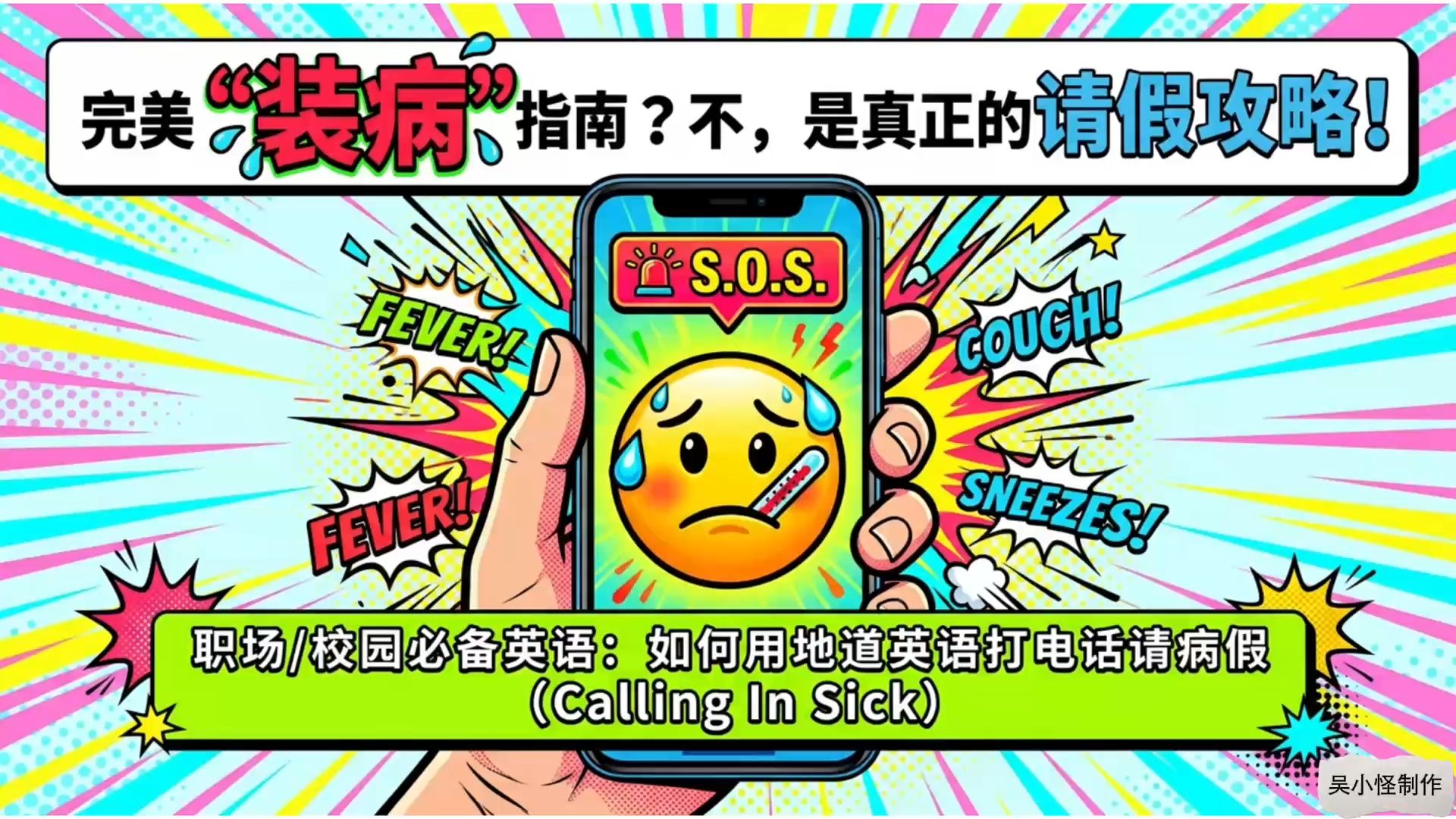
字幕摘录
| 时间 | 英文 | 中文 |
|---|---|---|
| 0:01 | Hello, English learners. | 你好,英语学习者。 |
| 0:02 | Welcome to EnglishPod. | 欢迎来到英国邮局。 |
| 0:04 | My name is Marco. | 我叫马可 |
| 0:05 | And I'm Erica. | 我是艾丽卡 |
| 0:06 | And today | 还有今天 |
| 0:07 | we're going to be bringing you a very useful lesson about being sick. | 我们将给你带来一个 关于生病的非常有用的教训。 |
| 0:11 | Yeah. | 对 |
| 0:12 | We're going | 我们要走了 |
| 0:13 | to learn how to tell your boss that you can't go to work because you're sick. | 学习如何告诉你的老板 你不能去工作 因为你生病。 |
| 0:19 | Exactly. | 没错 |
展开字幕全文(348 条)
| 序号 | 英文 | 中文 |
|---|---|---|
| 1 | Hello, English learners. | 你好,英语学习者。 |
| 2 | Welcome to EnglishPod. | 欢迎来到英国邮局。 |
| 3 | My name is Marco. | 我叫马可 |
| 4 | And I'm Erica. | 我是艾丽卡 |
| 5 | And today | 还有今天 |
| 6 | we're going to be bringing you a very useful lesson about being sick. | 我们将给你带来一个 关于生病的非常有用的教训。 |
| 7 | Yeah. | 对 |
| 8 | We're going | 我们要走了 |
| 9 | to learn how to tell your boss that you can't go to work because you're sick. | 学习如何告诉你的老板 你不能去工作 因为你生病。 |
| 10 | Exactly. | 没错 |
| 11 | This | 这个 |
| 12 | is really important because we all get sick and sometimes you just can't go to work. | 真的很重要,因为我们都生病了 有时你只是不能去工作。 |
| 13 | Yes. | 对 |
| 14 | Or maybe sometimes you just don't want to go to work. | 或者有时你只是不想去工作。 |
| 15 | Exactly. | 没错 |
| 16 | Maybe you're lying. | 也许你在撒谎 |
| 17 | But we're | 但我们 |
| 18 | going to be teaching you how to do it anyway. | 反正会教你怎么做 |
| 19 | So before we start with our dialogue, let's take a | 所以在我们开始对话之前,让我们先 |
| 20 | look at vocabulary preview. | 查看词汇预览。 |
| 21 | Vocabulary preview. | 词汇预览 。 |
| 22 | In this vocabulary preview, we have two words | 在这个词汇预览中,我们有两个单词 |
| 23 | for you. | 给你的 |
| 24 | The first one is quite ill. Quite ill. Quite ill. | 第一个病得很重。 甚则病之. 甚则病之. |
| 25 | So quite ill. | 病得很厉害 |
| 26 | Very sick. | 非常恶心 |
| 27 | Quite is a synonym of very. | 确切地说,是一个非常的同义词。 |
| 28 | Exactly. | 没错 |
| 29 | Okay. | 摆 |
| 30 | Ill. Sick. | 我会的 Ill. 恶心 |
| 31 | Sick. | 恶心 |
| 32 | Yep. | 对 |
| 33 | So they both mean the same | 所以他们都一样的意思 |
| 34 | thing. | 东西。 |
| 35 | No difference. | 无有差别. |
| 36 | No difference at all. | 无有差别. |
| 37 | I just think ill is more common in British English. | 我只是觉得疾病在英国英语中更常见. |
| 38 | Exactly. | 没错 |
| 39 | All right. | 好吧,我们走。 |
| 40 | Let's take a look at our second word. | 略举二句. |
| 41 | Flu. | 毛发。 |
| 42 | The flu. | 风疹. |
| 43 | So the flu is a virus. | 所以,流感是一种病毒。 |
| 44 | Yeah, it's a sickness. | 是啊,这是一个疾病。 |
| 45 | Okay. | 摆 |
| 46 | And it's very similar to a cold. | 而与寒热相甚相似. |
| 47 | Yes, | 对 |
| 48 | but just a lot worse. | 更糟糕的是,我们没有 |
| 49 | A lot worse. | 更难受 |
| 50 | So it's stronger. | 故更坚固. |
| 51 | Yep. | 对 |
| 52 | It's also called influenza. | 也称流感. |
| 53 | Influenza. | 炎热. |
| 54 | Exactly. | 没错 |
| 55 | So the flu. | 故曰流感. |
| 56 | Okay. | 摆 |
| 57 | So let's listen to our dialogue. | 让我们听听我们的对话 |
| 58 | What's going to happen | 接下来会发生什么? |
| 59 | here today? | 今天在这里? |
| 60 | Well, we're going to listen as Julie calls her boss to tell him she's sick. | 我们要听朱莉叫她老板 告诉他她病了 |
| 61 | All right. | 好吧,我们走。 |
| 62 | But is she really sick? | 但她真的病了吗? |
| 63 | I don't know. | 师曰. |
| 64 | Let's find out. | 让我们来看看。 |
| 65 | Hello. | 哈罗 |
| 66 | Daniel speaking. | 我是丹尼尔。 |
| 67 | How may I help you? | 有什么事吗? |
| 68 | Hi, Daniel. | 嗨,丹尼尔。 |
| 69 | Julie here. | 朱莉在这里。 |
| 70 | Oh, hi, Julie. | 哦,你好,朱丽。 |
| 71 | How are you? | 你好吗? |
| 72 | Actually, I'm feeling quite ill today. | 其实我今天感觉很不舒服 |
| 73 | Oh, I'm | 瓳и琌 |
| 74 | sorry to hear that. | 很遗憾 |
| 75 | What's wrong? | 有什么不对吗? |
| 76 | I think I'm coming down with the flu. | 我想我会 下来与流感。 |
| 77 | I have a headache, a | 我头痛,一个 |
| 78 | sore throat, a runny nose, and I'm feeling slightly feverish. | 喉咙痛,鼻子短促,我有点发烧 |
| 79 | I see. | 原来如此 |
| 80 | So you're calling in sick. | 这么说你生病了 |
| 81 | Yes, | 对 |
| 82 | I was hoping to take the day off to recover. | 我本来想请假去康复的 |
| 83 | Okay, then try and get some rest. | 好吧,那就试着休息一下。 |
| 84 | All right. | 好吧,我们走。 |
| 85 | So Julie didn't really seem to be sick, huh? | 所以朱莉似乎没有生病,是吧? |
| 86 | Yeah, I don't know. | 对,我不知道。 |
| 87 | That cough was just a little | 那个咳嗽只是一点点 |
| 88 | too much. | 太过分了 |
| 89 | It seemed like she was acting. | 她好像在演戏 |
| 90 | Yeah. | 对 |
| 91 | All right. | 好吧,我们走。 |
| 92 | So let's take a look at some of this | 所以让我们来看看这个 |
| 93 | vocabulary in language takeaway. | 语言外卖中的词汇. |
| 94 | Language takeaway. | 语言外传. |
| 95 | We have five words for you here, | 我们这里有五个字要告诉你 |
| 96 | and these are all great words to describe a sickness, right? | 这些都是伟大的词 描述疾病,对不对? |
| 97 | All right. | 好吧,我们走。 |
| 98 | The first one, | 第一个 |
| 99 | headache. | 头痛 |
| 100 | Headache. | 头痛. |
| 101 | So when you have a headache, you have a sore head, right? | 所以,当你头痛的时候, 你有一个痛的头,对不对? |
| 102 | Right. | 对 |
| 103 | Your head hurts. | 你的头好痛 |
| 104 | So it's pretty simple. | 所以很简单 |
| 105 | Yep. | 对 |
| 106 | You have a headache. | 你头痛 |
| 107 | It's the way you feel | 这是你的感觉 |
| 108 | after being at the bar too late. | 在酒吧里待得太晚了,所以... |
| 109 | Yeah. | 对 |
| 110 | When you drink too much, you get a headache. | 饮酒过多则头痛. |
| 111 | Yeah. | 对 |
| 112 | All | 全体 |
| 113 | right. | 对 |
| 114 | Let's take a look at our next word. | 复次观下一句. |
| 115 | Sore throat. | 喉咙痛. |
| 116 | So basically, | 所以说,基本上, |
| 117 | we have two words here. | 这里有两个词 |
| 118 | Let's look at the first one. | 试看第一首. |
| 119 | Sore. | 痛难忍. |
| 120 | Hurting. | 伤害。 |
| 121 | It hurts, right? | 疼吗? |
| 122 | Yep. | 对 |
| 123 | And | 还有 |
| 124 | your throat is? | 你的喉咙是? |
| 125 | Well, you know, it's the part right here at the back. | 嗯,你知道,这是角色 就在后面。 |
| 126 | You can't see me. | 你看不见我 |
| 127 | Well, | 那个 |
| 128 | it's the part at the back of your mouth that goes down to your stomach. | 这是你嘴后的部分 下到你的胃。 |
| 129 | All right. | 好吧,我们走。 |
| 130 | That's your | 这是你的 |
| 131 | throat. | 喉咙。 |
| 132 | Yeah. | 对 |
| 133 | So you use your throat to swallow. | 所以你用喉咙吞咽。 |
| 134 | Okay. | 摆 |
| 135 | Now we can use the word sore with different | 现在我们可以用不同的词痛 |
| 136 | body parts, right? | 身体部位,对不对? |
| 137 | Yeah. | 对 |
| 138 | Like a sore back. | 就像背部痛一样 |
| 139 | A sore back, right? | 背痛,对不对? |
| 140 | Or maybe you were playing tennis | 或许你在打网球 |
| 141 | all weekend, so you have a sore arm. | 整个周末,所以你有一个痛手臂。 |
| 142 | Or even a sore neck. | 乃至颈痛. |
| 143 | Right. | 对 |
| 144 | So the word sore. | 故此词痛. |
| 145 | Let's take | 开始吧 |
| 146 | a look at our third word. | 看看我们的第三个词。 |
| 147 | Runny nose. | 鲁尼鼻子。 |
| 148 | This is a very strange | 这很奇怪 |
| 149 | word. | 词 |
| 150 | I know. | 我知道,我记得 |
| 151 | But it doesn't mean that your nose is running, right? | 但这并不意味着你的鼻子在跑 对吧? |
| 152 | No, but okay. | 不,但没关系。 |
| 153 | No, but when you | 没有,但当你 |
| 154 | have a runny nose, there's lots of water coming out of your nose, right? | 你鼻子里流了很多水 对吧? |
| 155 | Right. | 对 |
| 156 | So it's interesting | 所以这很有趣 |
| 157 | though, because when you run, you go fast, right? | 但是,因为当你跑, 你走快,对不对? |
| 158 | So a lot of water is coming fast out of your nose. | 你鼻子里流出了很多水 |
| 159 | Out of your nose. | 从鼻出. |
| 160 | Runny nose. | 鲁尼鼻子。 |
| 161 | Yeah. | 对 |
| 162 | Okay. | 摆 |
| 163 | Our fourth word today. | 我们今天说的第四句话 |
| 164 | Slightly feverish. | 略发热. |
| 165 | Slightly | 一点点 |
| 166 | feverish. | 发烧 |
| 167 | Slightly feverish. | 略发热. |
| 168 | So again, slightly is? | 再说一遍,有点? |
| 169 | A little bit. | 一点点 |
| 170 | A little bit, | 一点点 |
| 171 | right? | 对吧? |
| 172 | A little bit and feverish. | 有点发烧 |
| 173 | Well, let's break this word down. | 好吧,让我们打破这个字。 |
| 174 | We know fever, right? | 我们知道发烧,对不对? |
| 175 | So when your body is very, very hot because you're sick. | 所以当你的身体非常,非常热 因为你生病。 |
| 176 | So feverish is the feeling of your body | 所以发烧是你的身体感觉 |
| 177 | being very, very hot. | 非常,非常热。 |
| 178 | Okay. | 摆 |
| 179 | So you have a high temperature. | 所以,你有一个高温。 |
| 180 | It's not that you have a high | 不是说你有一个高 |
| 181 | temperature, but you feel like you have a high temperature. | 温度,但你觉得自己有高温。 |
| 182 | Okay. | 摆 |
| 183 | So slightly feverish. | 有点发烧 |
| 184 | And our last word to recover. | 和我们最后的承诺 恢复。 |
| 185 | Recover. | 复还. |
| 186 | So this means to get better, right? | 这意味着要好起来,对不对? |
| 187 | Exactly. | 没错 |
| 188 | Can you only use it when you're sick? | 病时方可用? |
| 189 | So when you recover, you get better and you rest. | 所以,当你康复, 你得到更好和休息。 |
| 190 | So maybe you can say, I was so busy this week. | 所以,也许你可以说, 我是如此忙这周。 |
| 191 | I need to recover this weekend. | 这个周末我得恢复过来 |
| 192 | Okay. | 摆 |
| 193 | So yeah, | 所以,没错, |
| 194 | if you feel tired or you feel sick, you can recover. | 如果你感到疲倦或生病,你可以恢复。 |
| 195 | Okay. | 摆 |
| 196 | Let's listen to our dialogue again | 我们再听听我们的对话 |
| 197 | and we can listen to these words that we've just talked about. | 我们可以听这些话 我们刚刚谈论。 |
| 198 | Hello, Daniel speaking. | 你好 我是丹尼尔 |
| 199 | How may I | 我该如何 |
| 200 | help you? | 帮你? |
| 201 | Hi, Daniel. | 嗨,丹尼尔。 |
| 202 | Julie here. | 朱莉在这里。 |
| 203 | Oh, hi, Julie. | 哦,你好,朱丽。 |
| 204 | How are you? | 你好吗? |
| 205 | Actually, I'm feeling quite ill today. | 其实我今天感觉很不舒服 |
| 206 | Oh, I'm sorry to hear that. | 叹曰. |
| 207 | What's wrong? | 有什么不对吗? |
| 208 | I think I'm coming down with the flu. | 我想我会 下来与流感。 |
| 209 | I have a headache, | 我头痛 |
| 210 | a sore throat, a runny nose, and I'm feeling slightly feverish. | 喉咙痛 鼻子急躁 我感觉有点发烧 |
| 211 | I see. | 原来如此 |
| 212 | So you're calling in | 所以你打电话来 |
| 213 | sick. | 恶心 |
| 214 | Yes. | 对 |
| 215 | I was hoping to take the day off to recover. | 我本来想请假去康复的 |
| 216 | Okay, then try and get some rest. | 好吧,那就试着休息一下。 |
| 217 | In this dialogue, we listen to some really interesting phrases of how you can tell your | 在这个对话中,我们听到一些非常有趣的词句, 说明你如何告诉自己 |
| 218 | that you are feeling sick, right? | 你感到不舒服,对不对? |
| 219 | Yeah, some great phrases. | 是啊,一些伟大的短语。 |
| 220 | So let's look at these in Fluency Builder. | 让我们看看这些 在流利建设器。 |
| 221 | Fluency Builder. | 流利建设者. |
| 222 | Okay. | 摆 |
| 223 | Let's take a look at our first phrase on Fluency Builder. | 让我们来看看我们的第一个短语 关于流利建设。 |
| 224 | I'm coming down with. | 我下来了。 |
| 225 | All right. | 好吧,我们走。 |
| 226 | So let's listen to some examples and then we'll come back and explain this interesting | 让我们听一些例子 然后我们回来解释这个有趣的 |
| 227 | phrase. | 语句。 |
| 228 | Example one. | 例一释. |
| 229 | My throat really hurts. | 我的喉咙好痛 |
| 230 | I think I'm coming down with a cold. | 我想我会带着感冒下来 |
| 231 | Example two. | 例二举. |
| 232 | You have a runny nose. | 你鼻子长得不赖 |
| 233 | Are you coming down with the flu? | 你会感冒吗? |
| 234 | Example three. | 例三别. |
| 235 | I don't feel well. | 我感觉不舒服。 |
| 236 | I think I'm coming down with something. | 我想我会 下来的东西。 |
| 237 | Okay, so basically coming down with means? | 好吧,所以基本上下来 有手段? |
| 238 | Starting to get | 开始变得 |
| 239 | sick. | 恶心 |
| 240 | Yes. | 对 |
| 241 | Okay, so you can use it with I'm coming down with the flu. | 好吧,所以你可以用它 随着我下来与流感。 |
| 242 | I'm coming down with a cold. | 感冒而来. |
| 243 | Or I'm coming down with a cough. | 或以咳嗽而来. |
| 244 | Yeah, or I'm coming down with something. | 是的,或者我下来的东西。 |
| 245 | With something. | 有东西 |
| 246 | You | 你们 |
| 247 | don't know what it is. | 不知道这是什么 |
| 248 | Exactly. | 没错 |
| 249 | Okay, let's take a look at our second phrase. | 好吧,让我们看看我们的第二句。 |
| 250 | Calling in sick. | 打电话请病假 |
| 251 | Okay, calling in sick. | 好吧,请病假。 |
| 252 | So this phrase is great. | 所以这个短语是伟大的。 |
| 253 | You know, when you say I'm calling | 你知道,当你说我打电话 |
| 254 | in sick, you're saying, hey, I'm not going to come to work today because I am sick. | 生病了,你是说,嘿, 我今天不会上班 因为我病了。 |
| 255 | Okay. | 摆 |
| 256 | So literally it means that you call your office and you say you're not going to work. | 所以,从字面上说,这意味着你打电话给你的办公室, 你说你不会工作。 |
| 257 | Yes. | 对 |
| 258 | But it's great because it's three words that show such a long idea. | 却因三句显此长观. |
| 259 | Right, because otherwise | 对,因为不然 |
| 260 | you would have to say, I'm calling because I don't feel well, so I'm not going to go to work. | 你不得不说,我打电话是因为我不舒服 所以我不去上班了 |
| 261 | Yes. | 对 |
| 262 | But if you say I'm calling in sick, everyone knows. | 但如果你说我生病了 每个人都知道 |
| 263 | Everyone understands. | 每个人都明白 |
| 264 | That you're not going | 你不会去的 |
| 265 | to go to work. | 去工作。 工作吗? |
| 266 | Okay, now let's take a look at our last phrase. | 好吧,现在让我们看看我们的最后一句。 |
| 267 | Take the day off. | 今请假. |
| 268 | Now this is a great phrase. | 现在,这是一个伟大的短语。 |
| 269 | To take the day off is to | 休息时间是 |
| 270 | not go to work. | 别去上班 |
| 271 | On that day. | 当日. |
| 272 | Yes. | 对 |
| 273 | Now you can say take the week off. | 现在你可以说休息一周 |
| 274 | Take the month off. | 将月休. |
| 275 | Take the month off or take the year off. | 休月或减年. |
| 276 | If you are so lucky. | 如果你这么幸运的话 |
| 277 | Alright, so take the day off means | 好吧,所以请假意味着 |
| 278 | not go to work on that day. | 那天别去上班了 |
| 279 | Alright, let's listen to our dialogue again now and then | 好,我们偶尔听听我们的对话 |
| 280 | we'll come back and talk a little bit more. | 我们回来再聊 |
| 281 | Hello, Daniel speaking. | 你好 我是丹尼尔 |
| 282 | How may I help you? | 有什么事吗? |
| 283 | Hi, Daniel. | 嗨,丹尼尔。 |
| 284 | Julie here. | 朱莉在这里。 |
| 285 | Oh, hi, Julie. | 哦,你好,朱丽。 |
| 286 | How are you? | 你好吗? |
| 287 | Actually, I'm feeling quite ill today. | 其实我今天感觉很不舒服 |
| 288 | Oh, | 瓳 |
| 289 | I'm sorry to hear that. | 叹曰. |
| 290 | What's wrong? | 有什么不对吗? |
| 291 | I think I'm coming down with the flu. | 我想我会 下来与流感。 |
| 292 | I have a headache, | 我头痛 |
| 293 | sore throat, a runny nose, and I'm feeling slightly feverish. | 喉咙痛,鼻子短促,我有点发烧 |
| 294 | I see. | 原来如此 |
| 295 | So you're calling in. | 你打电话来 |
| 296 | Yes, I was hoping to take the day off to recover. | 是的,我本来想请假去康复的 |
| 297 | Okay, then. | 好吧,那就说吧。 |
| 298 | Well, Marco, have you ever | 马可,你有没有... |
| 299 | done what Julie did? | 做了Julie做的事吗? |
| 300 | Did you ever call your boss to say you're sick when you're not really? | 你曾经打电话给你的老板 说你生病的时候,你不是真的? |
| 301 | Yeah, | 对 |
| 302 | of course. | 当然 |
| 303 | I mean, sometimes you just don't feel very well, but you're not really sick. | 我的意思是,有时你只是感觉不舒服, 但你不是真的生病。 |
| 304 | You just | 你刚刚 |
| 305 | feel like going to work. | 喜欢去工作。 |
| 306 | Yes. | 对 |
| 307 | Or sometimes you have something to do. | 有时你还有事情要做 |
| 308 | Right? | 对吧? |
| 309 | Yep. | 对 |
| 310 | You know what | 你知道吗 |
| 311 | we call those in Canada? | 我们叫他们在加拿大? |
| 312 | We call them personal days. | 我们称之为个人的日子。 |
| 313 | Personal days. | 个人日. |
| 314 | Yeah. | 对 |
| 315 | So you say, Oh, I'm | 所以你说,哦,我 |
| 316 | going to take a personal day. | 要花个人一天。 |
| 317 | I'm going to call in sick, but then go shopping. | 我要去叫病,但然后去购物。 |
| 318 | We used to do that | 我们以前也这样 |
| 319 | a lot because for example, soccer games are such a big deal. | 比如说,足球比赛是件大事 |
| 320 | Oh, yeah. | 对 |
| 321 | And you know, sometimes you | 你知道,有时你 |
| 322 | would be maybe at 10 a.m. or 11 a.m. | 也许在上午10点或11点 |
| 323 | So everyone would call in sick on that day. | 那样大家都会在那天请病假 |
| 324 | Yeah. | 对 |
| 325 | So the boss | 所以头儿 |
| 326 | at least could plan that he would have an empty office. | 至少可以计划他有个空办公室 |
| 327 | Yeah. | 对 |
| 328 | Or sometimes you would take half the | 或者有时你会拿一半 |
| 329 | day off. | 一天休息时间。 |
| 330 | So you would just go, you say, Well, I'm not going to make it in the morning, but I'll come | 所以,你只是去,你说,嗯, 我不打算在早晨, 但我会来 |
| 331 | in the afternoon. | 在下午的时候。 |
| 332 | So you would recover very quickly. | 这样你就能很快康复了 |
| 333 | Yeah. | 对 |
| 334 | I'm feeling a little bit sick, | 我感觉有点不舒服 |
| 335 | but I'm going to be better in the afternoon. | 但我下午会好起来的 |
| 336 | All right. | 好吧,我们走。 |
| 337 | So, well, if you have any questions | 所以,如果你有任何疑问 |
| 338 | or comments, please come to our website. | 请访问我们的网站。 |
| 339 | And if you have any calling in sick stories, please let | 如果你有病态故事 请让我 |
| 340 | us know. | 我们知道 |
| 341 | Yes. | 对 |
| 342 | You can visit us at English pod dot com. | 你可以在英语的cot com访问我们。 |
| 343 | And Marco and I are always there to answer | 我和马可总是在那里回答 |
| 344 | your questions. | 你的问题。 |
| 345 | All right, folks. | 好吧,伙计们。 |
| 346 | So we'll see you next time. | 所以下次见 |
| 347 | Thanks for listening. | 谢谢你的倾听。 |
| 348 | Goodbye. | 再见 |
该视频共有字幕 369 条。解锁更多字幕为会员功能,请移动到 价格