为什么我们不快乐?|TED演讲
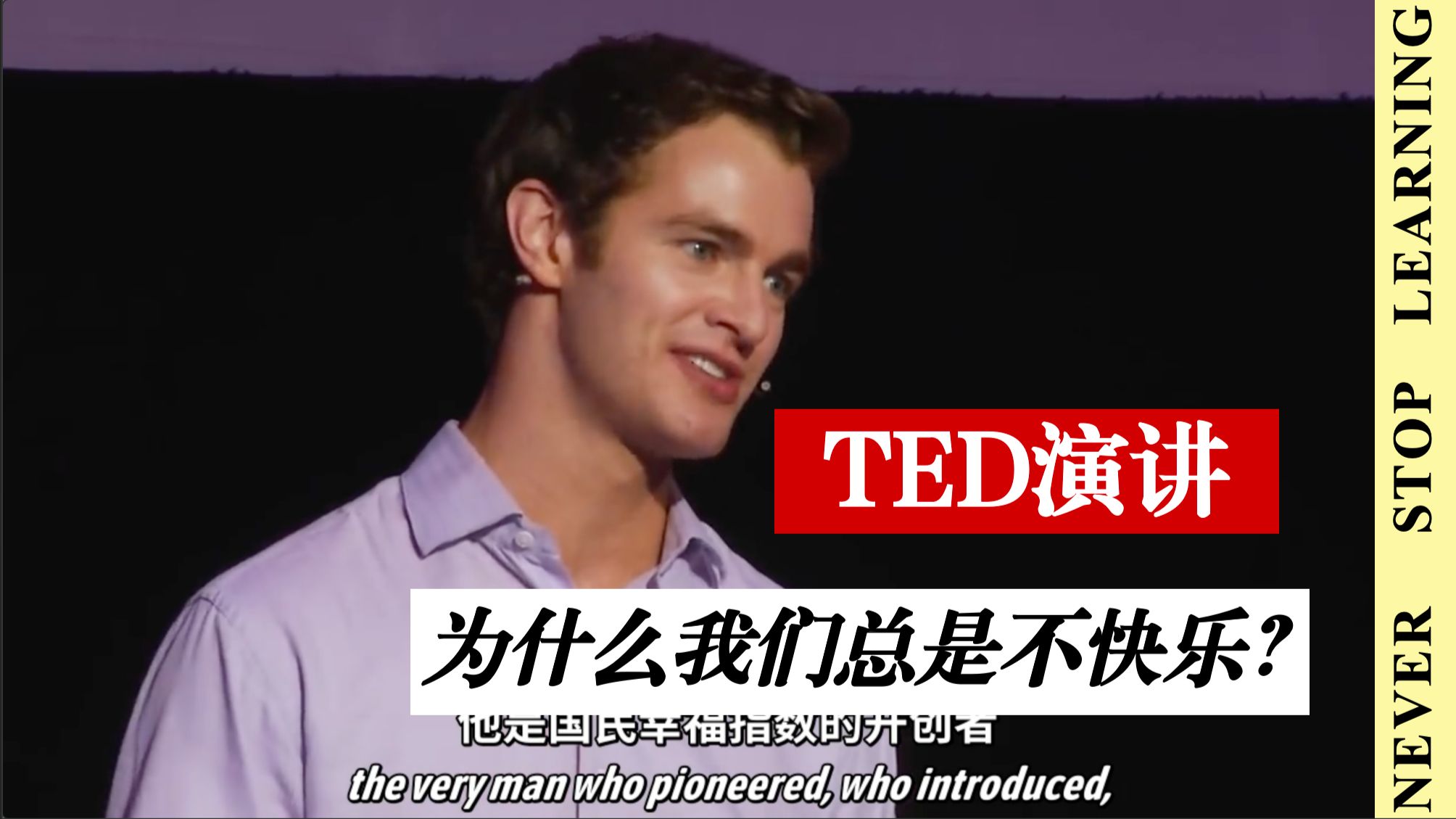
字幕摘录
| 时间 | 英文 | 中文 |
|---|---|---|
| 0:23 | I remember being shocked the first few times I went to Africa. | 我还记得我第一次去非洲时 被吓了一跳 |
| 0:27 | I was shocked when I met | 见面时很震惊 |
| 0:28 | a one-legged taxi driver in Kenya. | 肯尼亚一脚出租车司机。 |
| 0:30 | I was shocked when I met Sonia, an orphan schoolgirl in Rwanda, | 我遇到索尼娅时很震惊 索尼娅是卢旺达的孤儿 |
| 0:36 | and I was shocked when I met a disabled subsistence farmer in Mozambique. | 当我在莫桑比克遇到一个残疾的自给农时,我感到震惊。 |
| 0:41 | What shocked me wasn't their | 吓到我的不是他们 |
| 0:43 | poverty, but their happiness. | 贫穷,但他们的幸福。 |
| 0:46 | I found their happiness confronting, far more confronting | 我发现他们的幸福面对, 远比对抗 |
| 0:50 | than poverty. | 而不是贫穷。 |
| 0:52 | Of course not everyone was happy, but of those above a basic subsistence threshold | 当然,不是每个人都很快乐,但是在那些超过基本生活门槛的人当中 |
展开字幕全文(397 条)
| 序号 | 英文 | 中文 |
|---|---|---|
| 1 | I remember being shocked the first few times I went to Africa. | 我还记得我第一次去非洲时 被吓了一跳 |
| 2 | I was shocked when I met | 见面时很震惊 |
| 3 | a one-legged taxi driver in Kenya. | 肯尼亚一脚出租车司机。 |
| 4 | I was shocked when I met Sonia, an orphan schoolgirl in Rwanda, | 我遇到索尼娅时很震惊 索尼娅是卢旺达的孤儿 |
| 5 | and I was shocked when I met a disabled subsistence farmer in Mozambique. | 当我在莫桑比克遇到一个残疾的自给农时,我感到震惊。 |
| 6 | What shocked me wasn't their | 吓到我的不是他们 |
| 7 | poverty, but their happiness. | 贫穷,但他们的幸福。 |
| 8 | I found their happiness confronting, far more confronting | 我发现他们的幸福面对, 远比对抗 |
| 9 | than poverty. | 而不是贫穷。 |
| 10 | Of course not everyone was happy, but of those above a basic subsistence threshold | 当然,不是每个人都很快乐,但是在那些超过基本生活门槛的人当中 |
| 11 | level. | 级别。 |
| 12 | I was surprised at how genuinely content many of them were. | 我感到惊讶的是,其中很多都真正满足。 |
| 13 | And I became fascinated in | 我开始迷上 |
| 14 | this notion, this idea of happiness. | 这个概念,这个幸福的想法。 |
| 15 | And since then, I've researched it, I've worked on it, | 从那以后,我研究过,研究过 |
| 16 | I've thought about it. | 已而思议. |
| 17 | I'm interested in it from an economics perspective. | 我从经济学的角度对它感兴趣. |
| 18 | It's one of the things | 这是其中之一 |
| 19 | that I researched at Oxford. | 我在牛津大学研究过 |
| 20 | And I'm interested in it from a social enterprise perspective, | 我从社会企业的角度对它感兴趣 |
| 21 | because happiness is, after all, the ultimate social outcome. | 因为幸福毕竟是社会的最终结果 |
| 22 | And I think it's particularly | 我觉得这特别 |
| 23 | appropriate that we talk about happiness today, because we have with us the Prime Minister of | 今天我们讨论幸福,因为我们有总理 |
| 24 | Bhutan, the very man who pioneered, who introduced, and who championed the idea of gross domestic | 不丹,开拓者, 介绍者, 并倡导 毛家庭 |
| 25 | happiness, rather than GDP as a way of tracking countries' progress, as a way of monitoring how | 快乐,而不是GDP作为跟踪国家进展的一种方式,作为监测如何实现 |
| 26 | governments are doing. | 政府正在采取行动。 |
| 27 | But before we go into that, I want to begin with a little quiz, a little game. | 但是在我们开始之前,我想先做一个小测验,一个小游戏。 |
| 28 | It's just a simple multiple-choice quiz, and I've invited some other participants to join us on | 这只是一个简单的多选择考试, 我已经邀请了其他参与者加入我们 |
| 29 | So I want you to just raise your hand. | 所以我要你举起手来 |
| 30 | I want you to answer honestly when I give the questions. | 我要你诚实地回答我的问题 |
| 31 | So the first question. | 故第一问. |
| 32 | Imagine that you're competing in the Olympic Games. | 想象一下你们在奥运会比赛 |
| 33 | Imagine | 想象一下 |
| 34 | that you're representing your country. | 你代表你的国家。 |
| 35 | What would you prefer out of the following? | 你想从下面得到什么? |
| 36 | Would you prefer | 你喜欢吗? |
| 37 | to come second, to come third, or to come second last? | 来第二,来第三,还是来第二? |
| 38 | Answer honestly. | 老实回答 |
| 39 | Who would prefer to come | 谁愿意来? |
| 40 | second? | 第二个? |
| 41 | Raise your hand. | 举手曰. |
| 42 | Excellent. | 不错 |
| 43 | Who would prefer to come third? | 谁更愿意成为第三呢? |
| 44 | And who would prefer to | 谁更愿意 |
| 45 | come second last? | 倒数第二? |
| 46 | Excellent. | 不错 |
| 47 | Well, it seems like a large chunk of the audience wants to come second | 看来有一大群观众想来 |
| 48 | last. | 最后一个 |
| 49 | I'm not sure that I'd be selecting you for my Olympic team, but the monkeys, they select a | 我不确定我会选你参加我的奥运队 但猴子们会选一个 |
| 50 | third, a third, a third. | 第三,一个,第三个。 |
| 51 | They don't quite understand the question, but they knew that there were three | 他们不完全理解问题,但他们知道有三个 |
| 52 | options. | 选项。 |
| 53 | It's probably no surprise that amongst the general population, most prefer second. | 在一般人群中,大多数更喜欢第二,这也许并不奇怪. |
| 54 | So that's question one. | 所以,这是问题一。 |
| 55 | Question number two. | 第二问. |
| 56 | Imagine that you're given one of two options. | 想象一下,你得到了两个选择之一。 |
| 57 | Either you win the lottery and you get $10 million tomorrow. | 要么你赢了彩票 要么你明天就得到1000万美元 |
| 58 | You can spend it however you want. | 你可以随便花 |
| 59 | Or | 或者说 |
| 60 | option B. Alternatively, you get a very small payment tomorrow, but you get gradual payments | 选项B。或者,你明天得到一笔非常小的付款,但你得到逐步付款 |
| 61 | throughout your lifetime, increasing payments. | 在你一生中, 增加支付。 |
| 62 | And in total, you get $8 million over the course | 总共八百万 |
| 63 | of your lifetime. | 你一辈子都这样 |
| 64 | If I gave you that option right now, what would you pick? | 如果我现在给你这个选择 你会选什么? |
| 65 | Who would pick option A? | 谁会选A? |
| 66 | A lot of people. | 众多众生. |
| 67 | Who would pick option B? | 谁选B选项? |
| 68 | Excellent. | 不错 |
| 69 | Amongst the general population, | 在一般人口中, |
| 70 | most people seem to be quite shortsighted. | 大部分人看起来都很短视 |
| 71 | Most people like the $10 million tomorrow. | 大多数人都喜欢明天的1000万 |
| 72 | Again, the monkeys were 50-50. | 复次猕猴五五十. |
| 73 | They did recognize there were two options, not three. | 他们确实认识到有两个选择,而不是三个。 |
| 74 | Third and final question. | 第三个也是最后一个问题。 |
| 75 | You get to choose your salary. | 你可以选择你的薪水。 |
| 76 | What'd you pick? | 你选了什么? |
| 77 | You get $50,000 and | 你得到5万美元和 |
| 78 | everyone else you know gets $50,000. | 你认识的其他人都得到5万美元 |
| 79 | You get $50,000 and everyone else gets $60,000. | 你得到5万美元,其他人得到6万美元。 |
| 80 | Or you get | 或者你会得到 |
| 81 | $40,000 and everyone else you know gets $30,000. | 40,000美元,你认识的其他人得到30,000美元。 |
| 82 | Who would pick option A? | 谁会选A? |
| 83 | Who would pick option B? | 谁选B选项? |
| 84 | Virtually no one who would pick option C. I think there's one person in an audience of about 200. | 几乎没有人会选择选择选择C。 我想在大约200人的观众中有一个人。 |
| 85 | You're pretty consistent with the general population. | 你和一般人相当一致 |
| 86 | Most go for option A. | 大部分选A |
| 87 | The monkeys, no surprises there. | 猴子们,没有惊喜 |
| 88 | But let's now think about what the actual answers are. | 但是,现在让我们想想实际答案是什么. |
| 89 | Let's | 让我们 |
| 90 | look at what the research says about what actually makes us content, what actually makes us satisfied, | 看看研究对什么让我们满足 是什么让我们满足 |
| 91 | what actually makes us happy. | 真正让我们高兴的是什么 |
| 92 | For question one, the answer is actually to come a third, | 第一问题,答案是第三 |
| 93 | which I think was the lowest of the three options that you all gave. | 我认为这是你们三个选择中最低的。 |
| 94 | There's no shortage of silver medalists who appear unhappy. | 不乏看起来不高兴的银牌得主. |
| 95 | So that was question one. | 所以这是第一个问题。 |
| 96 | Question two, | 第二问题, |
| 97 | I think you did better on. | 我觉得你做的更好。 |
| 98 | You picked option B, you went against the general population, | 你选择了选择B,你反对了大众, |
| 99 | and I think you beat the monkeys on this occasion. | 我想你这次打败了猴子 |
| 100 | They beat you on question one, | 第一问题被他们打败了 |
| 101 | you won question two. | 你赢了第二题 |
| 102 | And for question three, the correct answer was actually C, which I think only | 而对于第三问题,正确的答案其实是C, 我认为只是 |
| 103 | one person got correct. | 一个人说对了 |
| 104 | And so the monkeys beat you on two out of three on those in terms of what | 猴子在三分之二的比赛中打败你 |
| 105 | actually makes us content, satisfied, and happy, as the research has shown. | 正如研究所显示的,实际上让我们满足、满意和快乐。 |
| 106 | So I think it's fair to | 所以,我认为公平 |
| 107 | say that in general, you're slightly better predictors of happiness than the general population, | 总的来说,你比一般人 更能预测幸福 |
| 108 | but you're still pretty pathetic, I'm sorry to say. | 但你还是很可怜,我很抱歉。 |
| 109 | I think the monkeys beat you, maybe that's why | 我觉得猴子打你,也许这就是为什么 |
| 110 | they're smiling, but if they won two out of three. | 他们笑了,但是如果他们赢得了2胜3负。 |
| 111 | And what's interesting is that it's not only us | 有趣的是 不只是我们 |
| 112 | that's bad predictors of happiness. | 那是对幸福的坏预测 |
| 113 | The macro data actually supports this as well. | 宏观数据实际上也支持这一点。 |
| 114 | We're wealthier | 我们比较有钱 |
| 115 | than ever, but unhappier than ever. | 比以前更不高兴 |
| 116 | We're more prosperous, but more depressed. | 我们更繁荣,但更沮丧。 |
| 117 | We're less | 我们少了 |
| 118 | satisfied. | 满意了 |
| 119 | I mean, we have faster and faster transport, but we're faster and faster to complain | 我的意思是,我们有更快和更快的运输, 但我们更快和更快的抱怨 |
| 120 | about it. | 关于它。 |
| 121 | In many countries, there are now more suicides than homicides. | 在许多国家,自杀事件现在多于杀人事件。 |
| 122 | We now have more goods | 我们现在有更多货了 |
| 123 | and services than ever before. | 以及前所未有的服务。 |
| 124 | We have technology improving exponentially, but we don't see a | 我们的技术有指数级的改进,但我们没有看到 |
| 125 | corresponding increase in our life satisfaction, in our happiness. | 生活满足感和幸福感相应增加 |
| 126 | That's perhaps one of the great | 这也许是伟大的之一 |
| 127 | paradoxes of our time. | 我们时代的矛盾。 |
| 128 | And I think the obvious question is, why is it that governments and | 我认为一个显而易见的问题是, 为什么政府和... |
| 129 | individuals are such bad predictors of happiness? | 个人是幸福的坏预测者吗? |
| 130 | Why is it that we get it wrong so often? | 为什么我们经常搞错了? |
| 131 | And I | 还有我 |
| 132 | think it's because we don't really understand why it is that we're often unhappy. | 因为我们不理解 为什么我们经常不开心 |
| 133 | And so the obvious | 所以很明显 |
| 134 | question is, why is it that we're unhappy? | 问题是 为什么我们不开心? |
| 135 | What's the explanation? | 什么解释? |
| 136 | Now, it's not an easy question | 现在,这不是一个简单的问题 |
| 137 | to answer, but it's one that I've thought about, that I've researched, that I've dealt into. | 回答,但这是我想过, 我研究,我处理。 |
| 138 | And | 还有 |
| 139 | through my research over the years, through thinking about it, I think there's one explanation | 通过我多年来的研究, 通过思考, 我想有一个解释 |
| 140 | that I find far more compelling, far more plausible, far more persuasive than any other. | 我发现比其他任何人都更有说服力 更有说服力 |
| 141 | And that explanation isn't that we have so much choice that we get stressed. | 而这个解释并不是说我们有太多的选择 以至于压力很大。 |
| 142 | It's not that we're | 不是我们 |
| 143 | economically worse off. | 经济上更糟糕。 |
| 144 | In many cases, we're economically better off. | 在许多情况下,我们的经济情况较好。 |
| 145 | It's not that we just | 不是我们只是 |
| 146 | have greater reporting of depression and suicide. | 对抑郁症和自杀有较多的报道。 |
| 147 | That's true, but it only explains a small portion | 没错,但只是解释一小部分 |
| 148 | of the data. | 数据。 |
| 149 | That's not due to family breakdowns or reduced freedoms. | 这不是因为家庭破裂或自由减少。 |
| 150 | No, the reason why we're | 不,这是为什么我们 |
| 151 | unhappy, the most compelling reason, as shown by the data, as shown by research, relates to | 令人不快的是,正如研究显示的数据所示,最令人信服的原因是: |
| 152 | expectations. | 期望。 |
| 153 | At a very basic, simple level, we're unhappy when our expectations of reality | 在一个非常基本,简单的层面,当我们对现实的期望时,我们感到不快 |
| 154 | exceed our experiences of reality, when our expectations exceed reality. | 当我们的期望超过现实时, |
| 155 | And I like to call | 我喜欢打电话 |
| 156 | this an expectation gap, when our expectations are greater than reality. | 当我们的期望大于现实时,这是一个期望差距。 |
| 157 | It's a very simple | 很简单 |
| 158 | concept, but it's a hugely important concept to fully understand, to fully get our head around. | 概念,但它是一个非常重要的概念 要完全理解, 完全让我们的头环。 |
| 159 | And to help us get our head around it, I like to think in terms of three different types of | 为了帮助我们绕过它 我喜欢思考三种不同的类型 |
| 160 | expectation gaps, three different types of gaps based on the different ways in which we form | 期望差距,三种不同类型的差距,基于我们形成这些差距的不同方式 |
| 161 | expectations. | 期望。 |
| 162 | I think we form expectations based on our imagination, based on those around us, | 我认为,我们基于我们的想象力和周围的人形成期望, |
| 163 | and based on our past experiences. | 根据我们过去的经验。 |
| 164 | So to this first type of expectation gap, the imagination gap, | 所以对于第一种期望差距,想象差距, |
| 165 | which occurs when our imagination exceeds reality. | 当我们的想象力超越现实时 就会发生 |
| 166 | You see, when we choose to buy goods, | 你看,当我们选择购买商品时, |
| 167 | we choose from a range of options. | 我们从一系列选项中选择。 |
| 168 | When we choose where to travel to, we often choose from a range | 当我们选择到哪里去, 我们经常从一个范围选择 |
| 169 | of options. | 选择。 |
| 170 | When we choose which leader to elect, we often choose from a range of options. | 当我们选择选举哪个领袖时,我们经常从一系列选择中选择. |
| 171 | And how do we make that decision? | 我们怎样做决定? |
| 172 | What we do is that we choose the one that we think will be the | 我们做的是我们选择一个 我们认为将是 |
| 173 | best. | 最好这样 |
| 174 | We choose the one that we imagine will be the best of all the options. | 我们选择一个我们想象中最好的选择。 |
| 175 | And so what we do is | 我们要做的就是 |
| 176 | that we try to maximize our utility at a given price. | 我们试图以一定的价格最大限度地发挥我们的效用。 |
| 177 | That's how most people make decisions. | 大多数人都是这样做决定的. |
| 178 | To do otherwise would be to choose an option that we didn't think would be as good, which seems a | 否则的话,就是选择一个 我们不认为是好的选项, 这似乎是一个 |
| 179 | bit counterintuitive. | 有点反直觉。 |
| 180 | Now the problem here is that the very act of choosing the thing that we think | 现在的问题是 选择我们所认为的东西 |
| 181 | will give us the greatest happiness, that very decision-making process is the thing that actually | 将给我们最大的幸福, 决策进程 才是真正 |
| 182 | undermines our happiness. | 破坏我们的幸福。 |
| 183 | Because what it means is that when we then see reality, when we then | 因为这意味着,当我们看到现实,当我们 |
| 184 | experience it, whether it's the good, or the place we travel to, or the leader that we elect, | 体验它,无论是好, 或我们旅行的地方, 或我们选举的领导人, |
| 185 | it's highly likely that that reality won't live up to our expectation. | 这很有可能是现实不能满足我们的期望 |
| 186 | And that leads to | 这导致 |
| 187 | disappointment. | 失望无奈. |
| 188 | And technology makes this so much worse. | 科技使事情变得更糟。 |
| 189 | What technology allows is things that are | 科技允许的东西是 |
| 190 | unrealistic to appear real. | 不现实 |
| 191 | Things that aren't even on the happiness scale are made to seem as | 连幸福尺度都没有的东西 都变得像 |
| 192 | though they are actually possible. | 虽然它们实际上是可能的。 |
| 193 | We Photoshop things in, we airbrush things out, we digitally | 我们把东西处理好,把东西刷掉,我们用数字 |
| 194 | enhance photos. | 增强照片。 |
| 195 | And what this does is it makes us romanticize travel and makes us come up with | 这会让我们把旅行浪漫化,让我们想出 |
| 196 | fantastical ideas about places that reality simply can't live up to. | 梦幻般的想法 对于现实无法实现的地方。 |
| 197 | So we think Sagrada Familia | 所以,我们认为萨格拉达家庭 |
| 198 | looks like this when it actually looks like this. | 看起来像这样,其实是这样。 |
| 199 | We think the Taj Mahal always looks like this | 我们认为泰姬陵总是这样 |
| 200 | when actually often it looks like this. | 经常这样 |
| 201 | We think that the Mona Lisa looks like this | 我们认为蒙娜丽莎是这样的 |
| 202 | when actually if we go and visit it it's more likely to look like this. | 如果我们去拜访的话 更可能是这样 |
| 203 | What technology does is that it skews our vision and distorts reality and makes the unreal seem | 技术的作用是扭曲我们的视野 扭曲现实 让不真实的事物看起来 |
| 204 | real. | 真实的 |
| 205 | Indeed, many of the times that when we're happiest when we go traveling, there are actually | 确实,很多时候, 当我们去旅行时最快乐的时候, 实际上有 |
| 206 | the times when we stumble across things we didn't expect, when we discover things for ourselves, | 当我们偶然遇到我们没有预料到的事情 当我们为自己发现事情 |
| 207 | where we don't have preconceived notions of different places. | 在那里,我们没有预先构思 不同的地方。 |
| 208 | And what also makes this worse | 是什么让这更糟 |
| 209 | is selection bias. | 是选择偏差。 |
| 210 | Many content-based algorithms, whether it's Google search or Facebook news feed, | 许多基于内容的算法,无论是Google搜索还是Facebook新闻反馈, |
| 211 | the way that it presents information is that it prioritizes those things that are the best images, | 信息呈现的方式是,它优先考虑那些是最好的图像, |
| 212 | the most shared images, the most liked images. | 最共享的图像, 最喜欢的图像。 |
| 213 | You're more likely to be shown a photo on Facebook | 你更可能在脸书上看到照片 |
| 214 | if it has 200 likes than if it has two. | 如果它有200个喜欢 比它有两个喜欢。 |
| 215 | And so we come to think of the best images as being normal, | 所以我们开始认为 最好的图像是正常的, |
| 216 | as being average, and this also plays with our imagination. | 作为普通人, 这还发挥我们的想象力。 |
| 217 | That's selection bias. | 那是选择的偏见。 |
| 218 | Then there's | 还有 |
| 219 | persuasion because politicians often get elected on the basis of promising things that they can't | 说服是因为政客们经常根据他们无法实现的有希望的事情当选。 |
| 220 | deliver by raising our expectations. | 通过提高我们的期望来实现。 |
| 221 | I mean, who would you be more likely to vote for? | 我是说,你更可能投给谁? |
| 222 | A politician | 一个政客 |
| 223 | that says, I'll fix your problems if you vote for me, or someone who says, perhaps more honestly, | 也就是说,如果你投我一票 我会解决你的问题 或者有人说,也许更诚实 |
| 224 | things will probably be the same whether you vote for me or not. | 无论你投不投我 事情都一样 |
| 225 | You're probably going to vote for | 你可能要投给 |
| 226 | the former, but you're probably going to be disappointed as well. | 前者,但你可能也会失望。 |
| 227 | And so we're in this | 所以,我们在这个 |
| 228 | constant cycle of expectations being raised and hopes being dashed. | 不断提高期望,希望破灭。 |
| 229 | That's the same with | 那也一样 |
| 230 | companies. | 企业。 |
| 231 | I mean, companies are more likely to tell us that watches have never performed tasks | 我的意思是,公司更有可能告诉我们,手表从来没有完成过任务 |
| 232 | so quickly. | 这么快。 |
| 233 | They're probably not going to tell us batteries have never run out so quickly, | 他们可能不会告诉我们电池从未这么快用完 |
| 234 | both of which are true. | 两者都是真的 |
| 235 | And so when you have technology, when you have persuasion, | 所以,当你有技术, 当你有说服力, |
| 236 | and when you have selection bias, what that means is that we imagine and demand and expect more | 当你有选择的偏见, 这意味着我们想象和要求,期待更多 |
| 237 | than reality can provide. | 比现实所能提供。 |
| 238 | And when the limitless potential of our minds is met by the confined | 当我们的无限潜力 被封闭的 |
| 239 | nature of earth, we're disappointed. | 地球的性质,我们失望。 |
| 240 | We're unhappy. | 我们不高兴。 |
| 241 | Expectations and disappointments | 期望和失望 |
| 242 | irrevocably intertwine. | 不可挽回地互通. |
| 243 | In terms of beauty, it's no wonder that self-esteem levels are so low, | 在美方面,无怪于自尊水平如此低下, |
| 244 | advertisers learned long ago that if you can make people hate themselves, you can sell them things. | 广告商早就学会了,如果你能让人们憎恨自己,你可以卖掉他们的东西. |
| 245 | Now they're applying it time and time again. | 现在他们一遍又一遍地应用它. |
| 246 | And we see this. | 我们看到了这一点。 |
| 247 | What we see is advertisers showing | 我们看到的是广告商显示 |
| 248 | only the best before and after photos. | 只有照片之前和之后最好的 |
| 249 | What we see is pictures of models who are made to seem | 我们所看到的是模型的照片 他们看起来 |
| 250 | perfect even though they're not. | 完美,尽管他们不是。 |
| 251 | We've become a society of complainers, of perfectionists, | 我们成为一个充满抱怨者 完美主义者的社会 |
| 252 | of counterfactual historians, people who always imagine different and better outcomes for | 反事实历史学家, 人总是想象 不同和更好的结果 |
| 253 | people whose imagination can't be satisfied. | 那些想象力无法满足的人 |
| 254 | So that's the imagination gap. | 这就是想象力的差距。 |
| 255 | That's why our | 这就是为什么我们 |
| 256 | imagination exceeds reality. | 想象力超越现实 |
| 257 | And that's the first main reason why we're unhappy. | 这也是我们不开心的第一个主要原因. |
| 258 | The second main type of expectation that we have, I like to call the interpersonal gap. | 我们的第二种主要期望,我想称之为人际差距。 |
| 259 | That's where we compare our reality to the reality of others. | 这就是我们比较现实与他人现实的地方. |
| 260 | Put simply, we judge ourselves based on | 简单地说,我们是根据 |
| 261 | what we experience around us. | 我们周围的经历 |
| 262 | If you own $50,000 and you're in a poor neighborhood, you'll feel | 如果你拥有5万元,你在一个贫穷的街区,你会觉得 |
| 263 | rich. | 有钱 |
| 264 | If you own $50,000 and you're in a wealthy neighborhood, you'll feel poor. | 如果你拥有5万元,而且你在一个富裕的街区,你会感到贫穷. |
| 265 | If you get a small | 如果你得到一个小 |
| 266 | pay rise but everyone around you gets a large pay rise, you'll be disappointed. | 工资上涨,但你周围的每个人都得到一个大工资上涨,你会失望。 |
| 267 | Your gain is | 你的收获是 |
| 268 | someone's pain. | 某人的痛苦。 |
| 269 | Someone's pain is your gain. | 有人的痛苦是你的好处。 |
| 270 | Unfortunately, it's a bit of a zero-sum game, | 不幸的是,这有点零和游戏, |
| 271 | or so it seems. | 看来是这样 |
| 272 | And it's not only relative income that matters. | 不仅相对收入很重要 |
| 273 | It's also relative appearance that | 也是相对的外表 |
| 274 | matters. | 问题。 |
| 275 | One person's plastic surgery is another's psychic loss. | 一个人的整形手术是另一个人的心理损失. |
| 276 | Indeed, research has shown that | 事实上,研究表明, |
| 277 | we're actually happier when we're with worse-looking people, because we're perceived by others to be | 和那些看起来更差的人在一起 我们其实更快乐 因为我们被别人认为是 |
| 278 | objectively better-looking. | 客观上更帅 |
| 279 | So now when your friend asks you to come to a bar or to a club with them, | 所以当你朋友叫你去酒吧或俱乐部的时候 |
| 280 | you know why. | 你知道为什么。 |
| 281 | And what's particularly interesting about this is that we have an | 特别有趣的是,我们有一个 |
| 282 | asymmetry of emphasis. | 重点不对称。 |
| 283 | We prioritize. | 我们优先 |
| 284 | We focus on one end of the spectrum. | 我们把注意力集中在一端。 |
| 285 | We focus on the rich, | 我们专注于富人, |
| 286 | the famous, the beautiful, and pay less attention to the other end. | 名人 美人 少注意另一端 |
| 287 | And so we're made to seem poorer. | 所以我们看起来更穷。 |
| 288 | We're made to feel poorer, made to feel less successful than we actually are. | 我们觉得自己更穷, 觉得自己不如我们真正成功。 |
| 289 | It's almost as | 这几乎是 |
| 290 | though we're running on a hedonic treadmill, constantly striving to be happy, but getting no | 虽然我们跑在一辆狂妄的跑步机上, 不断地努力着快乐,但没有得到 |
| 291 | closer. | 近一点 |
| 292 | Because when our standard of living improves, if everyone else's standard of living | 因为当我们的生活水平提高, 如果其他人的生活水平 |
| 293 | improves as well, we don't always feel happier. | 改善也好, 我们并不总是觉得快乐。 |
| 294 | So that's the second way in which we form | 所以,这是第二种方式 我们形成 |
| 295 | expectations based on others around us. | 基于我们周围其他人的期望。 |
| 296 | The third and final way is based on our past, based on our | 第三条也是最后一条道路是基于我们的过去,基于我们 |
| 297 | past experiences. | 过去的经历。 |
| 298 | I call this the intertemporal gap. | 我称之为时空差距。 |
| 299 | And we're unhappy when our past reality | 而我们不开心 当我们过去的现实 |
| 300 | is better than our present reality. | 比我们现在的现实要好 |
| 301 | Take two people who have the same average lifetime income, | 带两个人 平均一生收入相同 |
| 302 | but person A whose income decreases over their lifetime, person B whose income increases. | 收入在一生中减少的A人,收入增加的B人。 |
| 303 | Now research shows that you're always happier if you're person B, if you have that increasing income, | 现在的研究表明,如果你是B的人, 如果你的收入增加,你总是更快乐, |
| 304 | even though the average might be the same. | 即使平均是相同的。 |
| 305 | Why is this? | 为什么? |
| 306 | It's because of something that psychologists | 是因为心理学家 |
| 307 | refer to as anchoring. | 称为锚定。 |
| 308 | We compare to our past, and if you're constantly improving, constantly | 我们比较我们的过去, 如果你在不断改进,不断 |
| 309 | exceeding expectations, constantly moving forward, you're generally happy. | 超越期望,不断前进, 你普遍快乐。 |
| 310 | The reverse is true if | 如果 |
| 311 | you're person A. | 你是个人A。 |
| 312 | And so what this means in terms of raising children, I think often we tend to spoil | 因此,这对抚养孩子来说意味着什么, 我想我们常常会破坏 |
| 313 | children. | 孩子们 |
| 314 | We tend to give them everything to want to give them the best start in life, but often the | 我们往往给他们一切 想要给他们最好的开端 在生活中,但往往 |
| 315 | best intentions don't always lead to the best outcomes. | 最佳意图并不总是 导致最佳结果。 |
| 316 | Yes, we should support children, but | 是的,我们应该支持儿童,但 |
| 317 | if we give them everything, then it's much harder for them to have what I call a positive | 如果我们给他们一切, 那么他们很难得到 我所说的积极 |
| 318 | intertemporal gradient. | 时际梯度. |
| 319 | It's harder for them to improve over time throughout their life, | 他们一生都很难改善 |
| 320 | and that actually potentially undermines their happiness. | 这实际上有可能损害他们的幸福。 |
| 321 | And while I'm talking about parenting, | 当我在谈论养育子女时 |
| 322 | I think another problem in our society is that we tend to tell children that they're special, | 我认为我们社会的另一个问题是 我们倾向于告诉孩子们 他们是特殊的, |
| 323 | that they're unique, that they're one of a kind, that they're amazing. | 他们是独一无二的, 他们是一类的, 他们是惊人的。 |
| 324 | We tell them that they can | 我们告诉他们,他们可以 |
| 325 | be prime minister or president, that they can be the next Mark Zuckerberg. | 成为首相或总统 他们可以成为下一个马克·扎克伯格 |
| 326 | We tell them that they'll | 我们告诉他们他们会 |
| 327 | be Beyonce one day. | 有一天成为碧昂丝。 |
| 328 | What this means is that we raise their expectations. | 这意味着我们提高他们的期望。 |
| 329 | And so when that child | 所以当那个孩子 |
| 330 | gets a normal job, when they start a business and it fails like most do, when they're seeing career | 当他们开业的时候 和大多数人一样失败了 当他们看到事业 |
| 331 | peaks with a rendition of single ladies in the shower, they're disappointed. | 单身女子在淋浴时被引渡 他们很失望 |
| 332 | They're unhappy. | 他们不高兴。 |
| 333 | Their expectations haven't been satisfied. | 他们的期望没有得到满足. |
| 334 | Yes, we want to give children self-belief, | 是的,我们想让孩子们相信自己 |
| 335 | but we don't want to delude them, and we don't want to delude ourselves. | 但我们不想欺骗他们 我们也不想欺骗自己 |
| 336 | So what we see is that our happiness is largely determined by expectations. | 因此,我们看到的是,我们的幸福在很大程度上是由期望决定的. |
| 337 | Our expectations are largely determined by what we consider to be normal, | 我们的期望很大程度上取决于什么是正常的, |
| 338 | and what we consider to be normal is largely based on our imagination, based on others around us, | 而我们认为是正常的 基本上基于我们的想象力, 基于我们周围的其他人, |
| 339 | and based on our past. | 以我们的过去为基础 |
| 340 | And so we have these constant battles, the battle between our | 因此,我们有这些不断的战斗, 我们之间的战斗 |
| 341 | imagination and our reality, the battle between the reality that we experience and what we think | 想象力和现实,我们经历的现实与我们的想法之间的战斗 |
| 342 | or perceive that others experience, the battle between our reality and our past reality. | 或认为其他人经历过我们的现实与过去的现实之间的战斗。 |
| 343 | How can we win these battles? | 我们怎么能赢得这些战役? |
| 344 | Well, I think the first challenge, the challenge for entrepreneurs | 我觉得第一个挑战,对企业家的挑战 |
| 345 | and businessmen, for parents, for legislators, for magazine editors, is to take happiness seriously, | 而商人,父母,立法者,杂志编辑, 要认真对待幸福, |
| 346 | to take expectations seriously. | 认真对待期望。 |
| 347 | I think often we relegate happiness to the world of art, | 我认为我们常常把幸福归结于艺术世界, |
| 348 | not science. | 不是科学 |
| 349 | We dismiss it. | 我们驳回它。 |
| 350 | We think of it in terms of hippies rather than businessmen. | 我们考虑的是嬉皮士而不是商人 |
| 351 | What we want is for entrepreneurs to focus on actually improving contentment, | 我们想要的是 企业家们专注于 实际改善满足, |
| 352 | not just increasing consumption. | 不仅仅是增加消费。 |
| 353 | In terms of winning the imagination battle, | 就赢得想象力战而言 |
| 354 | I think it's important that we make it known to content providers the importance of actually | 我认为重要的是,我们要让内容提供者知道,事实上, |
| 355 | having realistic representations of images, people, and places, and events. | 有真实的图像、人、地点和事件 |
| 356 | And we might | 也许 |
| 357 | even go so far as to ban things like digital enhancement in ads. | 甚至在广告中禁止数字增强等内容. |
| 358 | In terms of winning the | 在赢得 |
| 359 | personal battle, I think it's important that governments prioritize income equality and that | 个人的战斗,我认为重要的是 政府优先 收入平等, |
| 360 | we learn to compete against ourselves rather than against others. | 我们学会与自己竞争,而不是与他人竞争。 |
| 361 | And in terms of that | 从这个角度来说 |
| 362 | intertemporal battle, I think it's important that we support kids, encourage kids, but also | 时空之战,我认为重要的是 我们要支持孩子,鼓励孩子,但也 |
| 363 | make them realize when it's impossible and not to give them completely unrealistic expectations. | 让他们在不可能的时候意识到 而不是给他们完全不切实际的期望 |
| 364 | Let me conclude. | 请允许我结束发言。 |
| 365 | We seem to have been seduced into a way of life that almost conspires in | 我们似乎被引诱 进入一种生活方式 几乎密谋 |
| 366 | every way against the most basic level of contentment. | 与最基本的满足度相违背 |
| 367 | We're terrible predictors of what | 我们是可怕的预测者 |
| 368 | will make us happy. | 能让我们快乐 |
| 369 | I mean, anytime monkeys beat you, you know there's a problem. | 我的意思是,每当猴子打你, 你知道有一个问题。 |
| 370 | We're terrible | 我们是可怕的 |
| 371 | predictors of happiness because the way in which we rationalize, the way in which we make decisions | 幸福的预测者 因为我们合理化的方式 以及我们决策的方式 |
| 372 | is often on the basis of actual levels, absolute levels. | 通常基于实际水平,绝对水平. |
| 373 | But the way in which we feel is based on | 但我们的感觉是基于 |
| 374 | relative outcomes, based on expectations. | 基于预期的相对结果。 |
| 375 | It's expectations that explains why a bronze medalist | 这是人们的期望 解释了为什么一个铜牌手 |
| 376 | can be happier than a silver medalist because the silver medalist imagines coming first, | 比银牌得主更快乐 因为银牌得主想先来 |
| 377 | the bronze medalist imagines coming forth. | 青铜奖得主想出来的。 |
| 378 | It's expectations that explains why often lottery | 是期望才解释为什么经常抽彩 |
| 379 | winners aren't that happy. | 赢家可没那么高兴 |
| 380 | Their happiness doesn't last because they don't have that increasing | 他们的幸福不会持续 因为他们没有增加 |
| 381 | level of satisfaction throughout their life. | 他们一生的满意程度。 |
| 382 | It's expectations that explains why you can be happier | 是期望才让你更快乐 |
| 383 | with an income of 40,000 to an income of 50,000. | 收入4万元至5万元. |
| 384 | We often think of happiness in isolation in a | 我们常常在孤立中思考幸福 |
| 385 | vacuum when in reality our happiness is far more complicated. | 在现实中,我们的幸福要复杂得多。 |
| 386 | It's far more intertwined with our | 和我们的关系更紧密 |
| 387 | community, our imagination and our past. | 我们的想象力和过去 |
| 388 | And it's important that we think carefully about how our | 重要的是,我们必须仔细思考 我们如何 |
| 389 | minds work, how our feelings work, how our expectations work. | 我们的感情和期望如何发挥 |
| 390 | And it's important that we | 重要的是我们 |
| 391 | change the way in which we make decisions so that our thinking process matches our feeling process. | 改变我们的决策方式,使我们的思维过程与我们的感觉过程相匹配。 |
| 392 | Ladies and gentlemen, for entrepreneurs that want to improve the lives of others as well as for | 女士们,先生们,希望改善他人生活的企业家们以及 |
| 393 | people that want to be happy, I think the first step is understanding why we're unhappy. | 想要快乐的人 我认为第一步 是理解我们为什么不高兴 |
| 394 | And I | 还有我 |
| 395 | hope that the next time, if ever it happens, that your decision-making prowess is compared to that | 希望下次,如果真的发生, 你的决策权被比作 |
| 396 | of monkeys, I hope you come out on top. | 猴子,我希望你从上面出来。 |
| 397 | Thank you. | 谢谢 |
该视频共有字幕 397 条。解锁更多字幕为会员功能,请移动到 价格