你的情绪会感染他人!TED:怎样把快乐传递给身边的人!
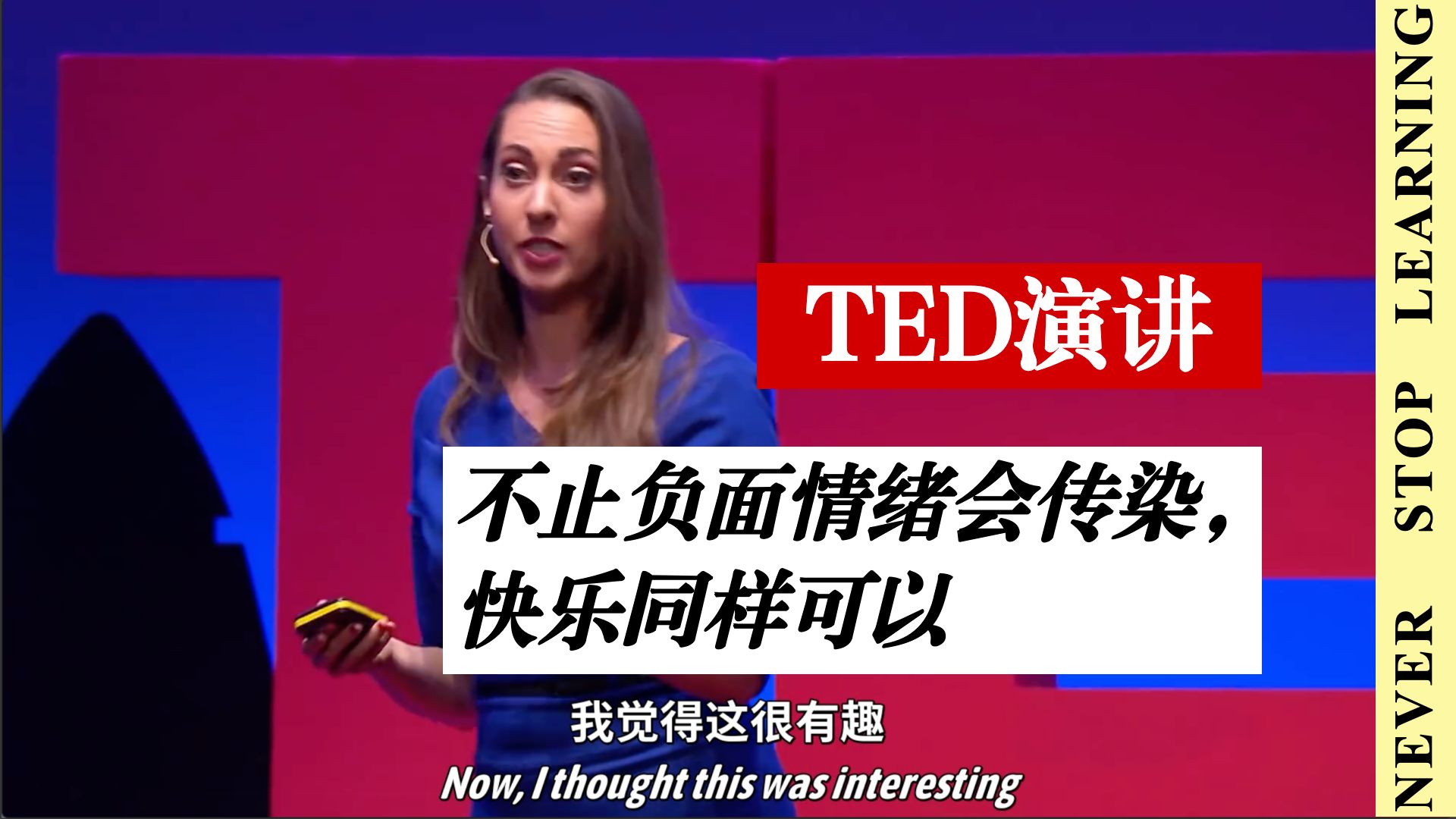
字幕摘录
| 时间 | 英文 | 中文 |
|---|---|---|
| 0:10 | Hello, my name is Vanessa, and I am a recovering, awkward person. | 你好,我的名字是凡妮莎, 我是个康复,尴尬的人。 |
| 0:17 | This is me at the peak of what I like to call my plaid vest phase. | 这是我在我喜欢的 格子背心阶段的最高峰。 |
| 0:23 | Luckily, my years of social awkwardness led me to a fascinating career | 幸运的是,我多年的社交尴尬 使我进入了迷人的事业 |
| 0:28 | trying to figure out how people work. | 试图找出人们是如何工作的。 |
| 0:31 | So what I didn't realize is that many years ago, I would do an experiment | 所以我没有意识到的是 很多年前,我会做一个实验 |
| 0:35 | that led me right on this stage in front of you here today. | 今天我站在你们面前 |
| 0:39 | My lab researchers and I were curious about TED Talks. | 我的实验室研究人员和我对TED演讲很好奇。 |
| 0:43 | We wanted to know why do some TED Talks go viral and others don't. | 我们想知道为什么一些TED演讲会变成病毒 而另一些则不会。 |
| 0:48 | So we embarked on a huge experiment. | 所以我们开始了一个巨大的实验。 |
| 0:50 | We analyzed thousands of hours of TED Talks, looking for patterns. | 我们分析了数千小时的TED会谈,寻找规律。 |
展开字幕全文(280 条)
| 序号 | 英文 | 中文 |
|---|---|---|
| 1 | Hello, my name is Vanessa, and I am a recovering, awkward person. | 你好,我的名字是凡妮莎, 我是个康复,尴尬的人。 |
| 2 | This is me at the peak of what I like to call my plaid vest phase. | 这是我在我喜欢的 格子背心阶段的最高峰。 |
| 3 | Luckily, my years of social awkwardness led me to a fascinating career | 幸运的是,我多年的社交尴尬 使我进入了迷人的事业 |
| 4 | trying to figure out how people work. | 试图找出人们是如何工作的。 |
| 5 | So what I didn't realize is that many years ago, I would do an experiment | 所以我没有意识到的是 很多年前,我会做一个实验 |
| 6 | that led me right on this stage in front of you here today. | 今天我站在你们面前 |
| 7 | My lab researchers and I were curious about TED Talks. | 我的实验室研究人员和我对TED演讲很好奇。 |
| 8 | We wanted to know why do some TED Talks go viral and others don't. | 我们想知道为什么一些TED演讲会变成病毒 而另一些则不会。 |
| 9 | So we embarked on a huge experiment. | 所以我们开始了一个巨大的实验。 |
| 10 | We analyzed thousands of hours of TED Talks, looking for patterns. | 我们分析了数千小时的TED会谈,寻找规律。 |
| 11 | Now, I wasn't sure if we would find anything, | 我不知道我们能不能找到什么 |
| 12 | so we were analyzing body language, hand gestures, vocal variety. | 所以我们在分析身体语言 手势 声乐种类 |
| 13 | We even looked at outfit choices, which made today particularly pressure-filled. | 我们甚至研究了衣服的选择,这些选择使今天的压力特别大。 |
| 14 | And very quickly, there was a pattern in the data that made me curious. | 很快,数据中出现了一种模式 让我好奇。 |
| 15 | And after we coded more and more TED Talks, we realized there was a pattern. | 当我们编译了越来越多的TED演讲之后, 我们意识到有一个模式。 |
| 16 | Now, before I tell you what that is, I have a personal question for you, | 在我告诉你那是什么之前 我有个私人问题要问你 |
| 17 | which is when you see someone, what part of the body do you look at first? | 当你见到某人时 你首先看身体的哪一部分? |
| 18 | You can just call it out. | 你可以叫出来。 |
| 19 | What do you look first when you see someone? | 你见到一个人时先看什么? |
| 20 | Face, eyes, so most people's shoes. | 脸,眼睛,所以大多数人的鞋子。 |
| 21 | They're very high. | 他们很高。 |
| 22 | So most people say eyes, face, or mouth. | 所以大多数人说眼睛,脸,或嘴。 |
| 23 | But actually, when we first see someone, the first place we look is the hands. | 但实际上,当我们第一次见到某人时, 我们首先看到的是手。 |
| 24 | And this is left over from our caveman days, | 这是从我们洞穴人的日子里留下的 |
| 25 | because if we were approached by a stranger caveman, | 因为如果我们被一个陌生的洞穴人接近 |
| 26 | the first place we looked was the hands to see if they were carrying a rock or a spear. | 我们首先看到的是手 看他们是否携带石头或长矛 |
| 27 | In other words, we wanted to know if we were safe, if they were friend or foe. | 换句话说,我们想知道我们是否安全,他们是朋友还是敌人。 |
| 28 | Now, this actually still remains from caveman days. | 现在,这实际上仍然保留 从洞穴人的日子。 |
| 29 | And when we can't see someone's hands, something interesting happens. | 而当我们看不到别人的手时,就会发生一些有趣的事情. |
| 30 | So I just did something a little mean to your brain. | 所以我对你大脑做了点小坏事 |
| 31 | You should start to feel just a little bit uncomfortable. | 你应该开始觉得有点不舒服。 |
| 32 | And the reason for that is because when you can't see my hands, you wonder, | 原因是当你看不到我的手时,你会想 |
| 33 | what is she doing back there? | 她在后面干吗? |
| 34 | And then the longer I leave my hands behind my back, | 然后,我离开我的手 在我的背后, |
| 35 | you get more and more distracted because you can't see them. | 你越来越分心 因为你看不到他们。 |
| 36 | And eventually, your brain is just screaming, | 最后 你的大脑在尖叫 |
| 37 | can she just bring her hands out from behind her back? | 她能从背后伸出手吗? |
| 38 | And the moment I bring them back out, it feels so much better. | 我一带他们回来 感觉就好多了 |
| 39 | And this is because our brain knows that if we can't see hands, we can't see intention. | 这是因为我们的大脑知道 如果我们看不到手,我们看不到意图。 |
| 40 | And what we found is when we compared the most viewed TED Talks | 我们发现的是,当我们比较 最受关注的TED会谈 |
| 41 | side by side with the least viewed TED Talks, | 在TED会谈中, |
| 42 | we found a pattern with hand gestures. | 我们找到了手势的图案 |
| 43 | Specifically, on average, the most popular TED Talkers | 具体而言,平均而言,最受欢迎的TED演讲者 |
| 44 | use an average of 465 hand gestures in 18 minutes. | 平均在18分钟内使用465个手势. |
| 45 | Yes, we painstakingly counted every single one. | 是的,我们辛苦地计算了每一个。 |
| 46 | I have 465 prepared for you today. | 今天我为你准备了465次 |
| 47 | And the least popular TED Talkers use an average of 272 hand gestures. | 而最不受欢迎的TED演讲者平均使用272个手势. |
| 48 | Almost half. | 几乎一半。 |
| 49 | What's happening here? | 这是怎么回事? |
| 50 | So when TED speakers take the stage, they're showing you first, | 所以当TED演讲者登台时 他们首先会给你们展示 |
| 51 | friend, friend, friend, friend, friend. | 朋友,朋友,朋友,朋友,朋友,朋友,朋友。 |
| 52 | You'll notice when I walked out on the stage, I waved. | 你会注意到,当我走出舞台,我挥手。 |
| 53 | I was saying friend, friend, friend, friend. | 我说朋友,朋友,朋友,朋友 |
| 54 | And the other thing that TED speakers do is see if this looks familiar. | TED演讲者所做的另一件事是 看看这看起来是否熟悉。 |
| 55 | So they come into the red dot and they do something like this. | 所以他们来到红点 并做了类似的事情。 |
| 56 | Today, I want to talk to you about a big idea. | 今天我想和你谈谈一个大主意 |
| 57 | I'm going to break it down into three different areas | 我要把它分为三个不同领域 |
| 58 | that are going to change your life. | 这会改变你的生活 |
| 59 | Right? | 对吧? |
| 60 | So the most viral TED Talkers seem to sit in the same way with these hand gestures | 因此,最具有病毒性的TED演讲者们似乎以同样的方式坐在这些手势中 |
| 61 | because what they're doing is they're showing you, | 因为他们正在做的是 他们让你看到, |
| 62 | I know my content so well that I can speak to you on two different tracks. | 我非常了解我的内容,我可以在两个不同的轨道上与你交谈。 |
| 63 | I can speak to you with my words, but I can also explain my concepts with my hands. | 我可以用我的话跟你说话,但我也可以用手来解释我的概念. |
| 64 | And this way, they underline their concepts with their words. | 这样,他们用自己的语言来强调他们的概念。 |
| 65 | For example, if I were to say, | 比如,如果我说, |
| 66 | today, I have a really big idea. | 今天,我有个好主意 |
| 67 | It's huge. | 这是巨大的。 |
| 68 | You laugh and you're like, Vanessa, it's so small. | 你笑你就像,凡妮莎, 它是如此小。 |
| 69 | It's not very big. | 虽不甚大. |
| 70 | And that is because your brain gives 12.5 times more weight to hand gestures. | 这是因为你的大脑给12.5倍重的手势。 |
| 71 | So today, I have a really, really big idea. | 所以今天,我有一个非常,非常大的想法。 |
| 72 | And I'm going to explain it to you in three different ways. | 亦以三界解说. |
| 73 | My big idea is that we are contagious. | 我的想法是,我们是传染性的。 |
| 74 | Specifically, as humans, we are constantly sending and decoding body language signals. | 具体来说,作为人类,我们不断发送和解码身体语言信号. |
| 75 | We also do this emotionally and chemically. | 我们也在情感上和化学上这样做。 |
| 76 | To explain this, I have a rather disgusting but very fascinating study. | 为了解释这一点,我有一个相当恶心但非常迷人的研究。 |
| 77 | So in this study, researchers collected sweat pads from people who ran on the treadmill. | 因此,在这项研究中,研究人员从跑步机上运行的人那里收集了汗垫。 |
| 78 | Then they collected sweat pads from skydivers on their first time skydive. | 然后在第一次跳伞时从潜水者那里收集汗垫. |
| 79 | Two very different kinds of sweat. | 汗出二种极别. |
| 80 | Here's the disgusting part. | 这是恶心的部分。 |
| 81 | Then they had poor, unsuspecting participants. | 然后,他们有贫穷、毫无怀疑的参与者。 |
| 82 | I know. | 我知道,我记得 |
| 83 | They had unsuspecting participants in the lab smell these sweat pads while they were in an fMRI machine. | 他们在FMRI机器中时 实验室里不怀疑的参与者闻到这些汗垫的味道 |
| 84 | Here's where it gets interesting. | 这是有趣的地方。 |
| 85 | Even though the participants had no idea what they were smelling, | 虽然参与者不知道他们是什么味道, |
| 86 | the ones that smelled the skydiving sweat pads had their fear response in their brain activated. | 那些闻到跳伞汗垫的 脑部有恐惧反应 |
| 87 | In other words, they caught the fear. | 也就是说,他们抓住了恐惧。 |
| 88 | This means that our emotions are contagious. | 这意味着我们的情绪是传染性的。 |
| 89 | Our fear is contagious. | 我们的恐惧是传染性的。 |
| 90 | Our confidence is contagious. | 我们的信心是传染性的。 |
| 91 | And this begs the big question. | 而此求大问. |
| 92 | If our emotions are contagious, how do we make sure that we're infecting people with the right ones? | 如果我们的情绪是传染性的,我们如何确保我们感染的人与正确的? |
| 93 | So I believe that we can be contagious in three different ways. | 因此,我认为我们可以有三种不同的传染方式。 |
| 94 | The first one is non-verbally. | 第一种是非动词. |
| 95 | Now to test this idea, I did a very simple experiment in the streets of Portland, Oregon. | 为了测试这个想法,我在俄勒冈州波特兰的街道上做了一个非常简单的实验. |
| 96 | What I did is I stood in the street and I looked up at nothing. | 我所做的就是站在街上,一无所获 |
| 97 | And I wanted to see if people would catch or mirror my non-verbal. | 我想看看人们会捕捉还是镜像我的非言语。 |
| 98 | So you can see in this video, I stand in the streets looking at nothing. | 所以,你可以看到这段视频, 我站在街上看什么。 |
| 99 | And slowly, one by one, I infect people walking by. | 慢慢地,一个接一个地, 我感染了走过的人群。 |
| 100 | And slowly, we begin to gather a crowd. | 慢慢地,我们开始聚集一群人。 |
| 101 | Oh, oh. | 瓳 瓳 |
| 102 | So this poor woman, you know, she was standing there with me and we're standing there. | 所以,这个可怜的女人,你知道, 她站在那里和我,我们站在那里。 |
| 103 | And remember, we're looking at nothing. | 记住,我们什么也没有看到。 |
| 104 | I just want to improve it. | 我只是想改进它。 |
| 105 | And we're standing and I'm going, how long are we going to stand here? | 我们站着,我要去, 我们要在这里站多久? |
| 106 | Who's going to break first? | 谁先破. |
| 107 | And after about 40 seconds, we're looking and she leans over and she says, is he going to jump? | 40秒后,我们看着她倾斜,她说,他会跳下去吗? |
| 108 | And this experience taught me that we catch emotions | 这段经历教会我 我们抓住情感 |
| 109 | and then we create rationales for why we've caught that emotion. | 然后我们创造了理由 为什么我们抓住了这种情感。 |
| 110 | Now this is actually a good thing. | 这其实是件好事 |
| 111 | As humans, this keeps us safe. | 作为人类,这使我们安全。 |
| 112 | Dr. Paul Ekman has studied something called the micro-expression. | 保罗·艾克曼博士研究过一些叫做微表情的东西. |
| 113 | It's a universal facial expression and he's discovered there are seven of them. | 这是一种普遍的面部表情 他发现有七个 |
| 114 | Across genders and races, we all make the same expression when we feel an intense emotion. | 纵观性别和种族,当我们感到强烈的情感时,我们都做出同样的表达. |
| 115 | This is the fear micro-expression. | 这是恐惧的微表情。 |
| 116 | So fear is a really important emotion because we want to catch it from someone else | 所以恐惧是一种非常重要的情感 因为我们要从别人那里抓住它 |
| 117 | to warn us if something's about to go wrong. | 警告我们,如果事情即将出问题。 |
| 118 | And this facial expression also keeps us safe. | 这种面部表情也使我们安全 |
| 119 | So imagine for a second that you're walking and you see a snake. | 想象一下你走路时看到一条蛇 |
| 120 | Your eyelids and your eyebrows jump out of the way | 你的眼皮和眉毛都跳出来了 |
| 121 | so you can take in as much of the environment as possible. | 这样你就可以尽可能多地进入环境。 |
| 122 | Is there another snake? | 还有一条蛇吗? |
| 123 | What's my escape route? | 我的逃生路线是什么? |
| 124 | Then your mouth opens so you can take in oxygen in case you have to fight, yell for help, or flee. | 然后,你的嘴打开,这样你就可以接受氧气 以防你不得不战斗,大叫求救,或者逃跑。 |
| 125 | We make this face before we consciously realize we've seen a snake. | 在意识到我们见过一条蛇之前 我们先做这个表情 |
| 126 | Now what's interesting about it is you should be starting to feel a little bit anxious. | 现在有趣的是,你应该开始感到有点焦虑。 |
| 127 | And that is because when we see other people have fear, | 这是因为当我们看到别人有恐惧, |
| 128 | if we saw this face in the subway we would be like, what's wrong? | 如果我们在地铁里看到这张脸... ...我们会是什么样子,怎么了? |
| 129 | What's going on? | 这是怎么回事? |
| 130 | Because it keeps us safe. | 因为它能保护我们的安全 |
| 131 | So I want you to try it with me. | 所以我要你和我一起试试 |
| 132 | So open your eyes as wide as possible. | 所以尽量睁开眼睛 |
| 133 | Raise your eyebrows up. | 举眉曰. |
| 134 | Very good. | 很不错。 |
| 135 | Now take in a sharp breath. | 现在深呼吸 |
| 136 | Perfect. | 不错 |
| 137 | Do you feel anxious? | 你感到焦虑吗? |
| 138 | What's interesting about facial expressions is they cause our emotions. | 关于面部表情的有趣之处在于它们引起我们的情绪. |
| 139 | So not only do our emotions cause our face, but our face also causes our emotions. | 因此,我们的情绪不仅引起我们的脸,我们的脸也引起我们的情绪. |
| 140 | It's called the facial feedback hypothesis. | 这被称为面部反馈假说. |
| 141 | So when we see someone with this face, we catch their emotion, | 所以,当我们看到有人 有这张脸,我们抓住他们的情绪, |
| 142 | and then we are ready to fight, flee, or yell for help. | 然后,我们准备战斗,逃离, 或大声求救。 |
| 143 | Luckily, this also works with positive emotions. | 幸运的是,这也与积极的情绪有关。 |
| 144 | So one of the faces behind me is a real happiness micro-expression, and one of them is fake. | 因此,我身后的一个面孔是真正的幸福微表情,其中一个是假的. |
| 145 | So the real happiness micro-expression is when the smile reaches all the way up | 所以真正的快乐微表情是 当微笑一直升起 |
| 146 | into these upper crow's feet muscles, those upper cheek muscles. | 进入上层乌鸦的脚部肌肉 那些上颊肌肉 |
| 147 | And this is really important because you know when you tell a frenemy, | 这很重要,因为你知道 当你告诉一个壁画, |
| 148 | And they say they're happy for you, but you know they're not really. | 他们说他们为你感到高兴 但你知道他们不是真的 |
| 149 | It looks like this. | 看起来像这样 |
| 150 | Oh yeah, I'm so happy for you. | 哦,是的,我很高兴为你。 |
| 151 | So try the fake expression for me first. | 先试试假的表情吧 |
| 152 | So just try this fake smile only on the bottom half of the face. | 所以,只是尝试这个假笑 只在脸的下半部。 |
| 153 | You can even go, uh, uh. | 你甚至可以去,嗯,嗯。 |
| 154 | It doesn't feel so good, right? | 感觉不太好,对吧? |
| 155 | It feels inauthentic. | 感觉不真实 |
| 156 | Now go all the way up into your eyes. | 现在向上走进你的眼睛 |
| 157 | So smile all the way up into the upper cheek muscles. | 故一笑而上至上颊肌肉. |
| 158 | That should feel so much better. | 这感觉应该好多了 |
| 159 | So what's interesting about this facial expression is it causes our own happiness. | 这个面部表情有趣的是 它能给我们带来幸福 |
| 160 | And we also catch it when we see it. | 当我们看到它的时候,我们也抓住它。 |
| 161 | Researchers at the University of Finland looked at these two facial expressions, | 芬兰大学的研究人员 看了这两个面部表情, |
| 162 | and they had participants look at photos of people with real happiness and fake happiness. | 他们让参与者看 真正幸福和假幸福的人的照片。 |
| 163 | They found that when they showed participants pictures of the real happiness smile, | 他们发现当他们向参与者展示 真正的幸福微笑的照片时 |
| 164 | those emotions caught, they caught the positive emotions, | 那些情绪被抓住, 他们抓住了积极的情绪, |
| 165 | and they themselves had a positive mood change. | 他们自己也有了积极的变化。 |
| 166 | But when they looked at the face with the fake happiness smile, they caught nothing. | 但当他们用假的幸福微笑看脸时,却一无所获. |
| 167 | In other words, if we show up to events that we're ambivalent about, | 换句话说,如果我们出现 我们矛盾的事件, |
| 168 | interact with people that we don't really like, we become less memorable. | 与我们不喜欢的人互动, 我们变得不那么难忘。 |
| 169 | This doesn't just happen in person, it also happens on the phone. | 这不仅仅是当面发生的,而且也发生在电话上. |
| 170 | So I work with a lot of different clients, corporate clients who are on the phone all the time. | 所以我和很多不同的客户,公司客户一起工作 他们一直在打电话。 |
| 171 | They said, Vanessa, I get being happy in person, but how about on the phone? | 他们说,凡妮莎,我很高兴 一个人,但怎么样 在电话? |
| 172 | So we decided to do an experiment where we had participants in our lab record different versions of their hello, | 所以我们决定做一个实验, 我们的实验室有参与者 记录不同的版本的问候, |
| 173 | the first impression on the phone. | 电话上的第一印象 |
| 174 | We wanted to know if people could hear happiness, sadness, or anger. | 我们想知道人们能否听到幸福、悲伤或愤怒。 |
| 175 | So we had people record different versions of their hello with happiness, sadness, anger, and wall power posing. | 因此,我们让人们用快乐,悲伤,愤怒, 和墙上力量的姿势, 来记录他们问候的不同版本。 |
| 176 | We wanted to see if they would sound different. | 我们想看看它们会不会不同 |
| 177 | So I want to play you two different versions of hello and see if you can guess which one is the happy hello. | 我想给你们演奏两个不同的版本的问候, 看看能否猜到哪个是快乐的问候。 |
| 178 | Are you ready? | 你准备好了吗? |
| 179 | All right, same person. | 好吧,同一个人。 |
| 180 | Here's A. | 这是A。 |
| 181 | Hello. | 哈罗 |
| 182 | Here's B. | 这里的B。 |
| 183 | Hello. | 哈罗 |
| 184 | How many will think A is the happy hello? | 有多少人会认为A是快乐的问候? |
| 185 | How many will think B is the happy hello? | 有多少人会认为B是快乐的问候? |
| 186 | Very good. | 很不错。 |
| 187 | We can hear this difference. | 我们可以听到这种不同。 |
| 188 | We can hear this micro-expression. | 我们可以听到这个微表情。 |
| 189 | Now, I thought this was interesting, but I wanted to take it a step further. | 我觉得这很有趣 但我想再进一步 |
| 190 | So we devised a second part of our experiment where we had participants in our lab listen to these recordings and rate that person on likeability. | 于是我们设计了实验的第二部分 我们实验室的参与者们聆听了这些录音 并评价这个人的相似性 |
| 191 | We wanted to see if the happiness micro-expressions or the anger micro-expressions or the power posing expressions did better. | 我们想看看幸福的微表征 愤怒的微表征 或强势的表情是否更好 |
| 192 | Here's what happened. | 事情是这样的 |
| 193 | After we asked people, I do like this person a lot, I like this person a little, or I do not like this person, | 我们问人之后,我很喜欢这个人, 我有点喜欢这个人, 或者我不喜欢这个人, |
| 194 | we found that the happiness micro-expressions across all trials for both men and women, they became more likeable, | 我们发现,幸福的微表情 在所有尝试中,男女, 他们变得更喜欢, |
| 195 | whereas the same person who made an anger or sadness micro-expression were less likeable. | 而做出愤怒或悲伤的微表情的同一个人则不那么令人喜欢。 |
| 196 | This is the happy side effect of having your confidence be contagious. | 这是你自信传染的快乐副作用 |
| 197 | Not only do you infect someone else with that happiness, you also become more likeable. | 你不仅感染别人的幸福, 你也会变得更令人喜欢。 |
| 198 | We talked about non-verbal, and I have to talk about what comes after the hello. | 我们谈了非口头问题 我得谈谈打完招呼后的事 |
| 199 | How do we infect confidence verbally? | 我们如何口头感染信心? |
| 200 | So in this study we did in Portland, Oregon, we took 500 speed networkers, | 在俄勒冈州波特兰 我们用500个速度网络 |
| 201 | and we asked each of these speed networkers to go through a conversation starter round, eight of these rounds. | 我们要求每一个这些速度网络员 通过对话启动回合, 八回合。 |
| 202 | So we assigned each participant a conversation starter to have with a stranger. | 所以我们给每位参与者分配了一个 和陌生人谈话的开始者。 |
| 203 | Then we set up cameras in all corners of the room, and we analyzed each of these speed rounds for patterns. | 然后我们在房间的每个角落设置摄像头, 我们分析这些速度回合的图案。 |
| 204 | We were looking for body language patterns, leans, nods, laughs, smiles, confidence. | 我们在寻找身体语言模式,倾斜,点头,笑,笑,自信. |
| 205 | We were also looking for volume differences. | 我们还在寻找数量差异。 |
| 206 | In a really good conversation, usually the volume goes up. | 在非常好的谈话中,通常音量会上升。 |
| 207 | In a really awkward, bad conversation, there's lots of silences and the volume goes down. | 在一个非常尴尬,糟糕的谈话中,有很多的沉默和音量下降. |
| 208 | And we also asked each of the participants to rate the conversation starters. | 我们也要求每位参与者对对话的启动者进行评分. |
| 209 | We wanted to know which ones produced the highest quality of conversation. | 我们想知道哪个能产生最高质量的对话。 |
| 210 | What we found was is that the conversation starters that worked centered on this little chemical called dopamine. | 我们发现的是,那些开始对话的人 以这个叫做多巴胺的化学物质为中心。 |
| 211 | So dopamine is the neurotransmitter that we produce when we feel pleasure or when we get a reward. | 多巴胺是当我们感到快乐或得到奖励时 产生的神经递质。 |
| 212 | And I noticed that most of our chit chat that we have at parties or networking events is the same. | 我注意到我们在派对或网络活动上的聊天 大多是相同的。 |
| 213 | It sounds like this. | 听起来是这样的。 |
| 214 | So what do you do? | 那你怎么办? |
| 215 | Where are you from? | 你从哪里来? |
| 216 | Live around here? | 住在这附近? |
| 217 | Well, I'm going to go get some more wine. | 我去拿点酒来 |
| 218 | It's great talking to you. | 很高兴跟你说话 |
| 219 | Those conversations happened over and over again. | 这些谈话一再发生。 |
| 220 | It was almost as if they were socially scripted. | 这几乎就像是社会剧本。 |
| 221 | My brain was on autopilot. | 我的大脑是自动驾驶。 |
| 222 | We found was is the worst ranked conversation starters, the ones that got the lowest ratings, the ones that produced the lowest volume, | 我们发现是排名最差的谈话开始者 那些收视率最低的人 那些收视率最低的人 |
| 223 | the ones that got the most leans away, worst head nods and worst micro expressions. | 最精致的人, 最糟糕的头点头和最糟糕的微表情。 |
| 224 | Those were the ones that we use the most. | 这些是我们用得最多的 |
| 225 | What do you do? | 你们是做什么的? |
| 226 | How are you? | 你好吗? |
| 227 | Where are you from? | 你从哪里来? |
| 228 | From a physiological perspective, have no effect, no pleasure. | 从生理角度看,没有效果,没有乐趣. |
| 229 | So what we tried was to find conversation starters that could spark or create some kind of excitement. | 因此,我们试图找到 对话的启动者, 能够激发或创造某种刺激。 |
| 230 | Can you verbally trigger dopamine? | 你能口头触发多巴胺吗? |
| 231 | And we found that the brain is really interesting. | 我们发现大脑真的很有趣。 |
| 232 | If you ask the brain a question, it tends to look for hits and not misses. | 如果你问大脑一个问题, 它倾向于寻找点击而不是错过。 |
| 233 | What I mean by this is if you ask someone been busy lately, their brain immediately looks for all the hits of been busy. | 我的意思是,如果你问某人 最近很忙, 他们的大脑 立即寻找所有点击 忙。 |
| 234 | They think about all the negative things that have happened, the stress, the busyness, all the bad things in their life. | 他们思考了自己生活中发生的所有消极的事情,压力,繁忙,不良的事情. |
| 235 | Whereas if you ask someone working on anything exciting recently, their brain immediately begins to look for all the hits of excitement. | 如果你问某人最近在做什么令人兴奋的事情, 他们的大脑立刻开始寻找兴奋的冲击。 |
| 236 | They start thinking of all the good, all the happy things, all the excitement that's going on in their own life. | 他们开始思考自己生活中所有美好的,快乐的事物,所有的兴奋. |
| 237 | And that does two things. | 这有两件事 |
| 238 | One, it creates pleasure for them. | 第一,这给他们带来乐趣。 |
| 239 | You're literally asking them to borrow excitement from other places in their life and bring it to the situation that you're in. | 你从字面上要求他们 从他们生活中的其他地方借到刺激 并把它带到你的处境。 |
| 240 | And the other thing that it does is it makes you more memorable. | 另一件事是 它让你更难忘。 |
| 241 | Dr. John Mededa found that dopamine, when it's triggered in verbal conversation, makes a mental post-it note. | 约翰·梅达达博士发现,当多巴胺在口头交谈中被触发时,会发出精神上的后注. |
| 242 | In other words, when you ask someone else to think of what's exciting in their life, the happy side effect is that you become more memorable. | 换句话说,当你要求别人思考自己生活中令人兴奋的事物时,快乐的副作用是,你变得更加难忘. |
| 243 | So here's my big challenge for today. | 因此,这是我今天的重大挑战。 |
| 244 | Instead of using the typical, what do you do, how are you, and where are you from, let's banish those conversation starters forever. | 而不是用典型的,你做什么的,你怎么样的,你从哪里来的, 让我们永远驱逐那些开始对话的人。 |
| 245 | And let's try ones that ask the brain to look for hits of excitement. | 让我们试试那些要求大脑 寻找刺激的刺激。 |
| 246 | Try working on anything exciting these days. | 尝试工作 任何刺激这些天。 |
| 247 | Have any vacations coming up? | 有假期吗? |
| 248 | Anything good happened today? | 今天有什么好事吗? |
| 249 | I think this is the greatest gift we can give our fellow human beings. | 我认为,这是我们能够给予人类同胞的最大礼物。 |
| 250 | We are asking them to flip into optimism. | 我们要求他们乐观起来。 |
| 251 | We're triggering dopamine and excitement and getting them off autopilot. | 我们触发多巴胺和兴奋 并让他们从自动驾驶。 |
| 252 | The last way that we're contagious is emotionally. | 我们最后的传染方式是情感上的 |
| 253 | So this study is one of my favorites. | 所以这个研究是我最喜欢的之一。 |
| 254 | In this experiment, they asked students to sing the song, Don't Stop Believing, into an accuracy software. | 在这个实验中,他们要求学生们唱这首歌,"不要停止相信",成为精准的软件. |
| 255 | Now, this is a very nerve-racking experiment. | 现在,这是一个非常神经紧张的实验。 |
| 256 | They're graded on vocal tone, words, and they're given no preparation. | 以声调,语句进行分级,不给准备. |
| 257 | But they did three different trials of this experiment. | 但他们对这个实验做了三次不同的试验. |
| 258 | First, they had them just walk into the room and sing into an accuracy software. | 首先,他们只是走进房间 唱到一个准确的软件。 |
| 259 | The second group got into the room and had to say out loud, I'm nervous. | 第二组进入房间,不得不大声地说,我很紧张. |
| 260 | And the last group had to walk into the room and say, I'm excited. | 最后一组人只好走进房间说 我很兴奋 |
| 261 | They found this simple reframe. | 他们发现了一个简单的重塑。 |
| 262 | The nervous group got 53% accuracy. | 神经组织有53%的精度 |
| 263 | The control group got 69. | 控制组得到了69。 |
| 264 | But the I'm excited group got 80% accuracy. | 但我很兴奋的团体有80%的准确度 |
| 265 | Why? | 为什么? |
| 266 | Anxiety and excitement are very similar emotions. | 焦虑和兴奋是非常相似的情绪. |
| 267 | The only difference is mindset. | 唯一的区别是心态。 |
| 268 | So my challenge for you today is to think about how you want to infect people. | 所以,我今天对你们的挑战就是 思考你们想怎样感染人。 |
| 269 | When you want to harness excitement or trigger excitement, ask dopamine-worthy conversation starters. | 当你想利用刺激或触发刺激时,请问多巴胺值得对话的开始者. |
| 270 | Use more hand gestures. | 用更多的手势。 |
| 271 | Make authentic smiles. | 做真实的微笑。 |
| 272 | And never pick up the phone in a bad mood. | 永远不要拿起电话 在糟糕的心情。 |
| 273 | Now, the last thing I want to do is I want to end on a note of excitement. | 现在,我最不想做的事是,我想以兴奋的心情结束。 |
| 274 | I want to make you really infectious. | 我想让你真正有感染力。 |
| 275 | So what we're going to do to end this talk is on the count of three, | 所以,我们要做的是结束这个谈话 数到三, |
| 276 | with all of the energy you can muster, I want you to yell out, I'm excited. | 用你所有的精力,我要你大喊,我很兴奋。 |
| 277 | Are you ready? | 你准备好了吗? |
| 278 | One, two, three. | 一二三时. |
| 279 | I'm excited. | 我很兴奋 |
| 280 | You rock, Ted. | 你很厉害,泰德。 |
该视频共有字幕 280 条。解锁更多字幕为会员功能,请移动到 价格