【TED演讲】如何将外语学到和母语一样流利?
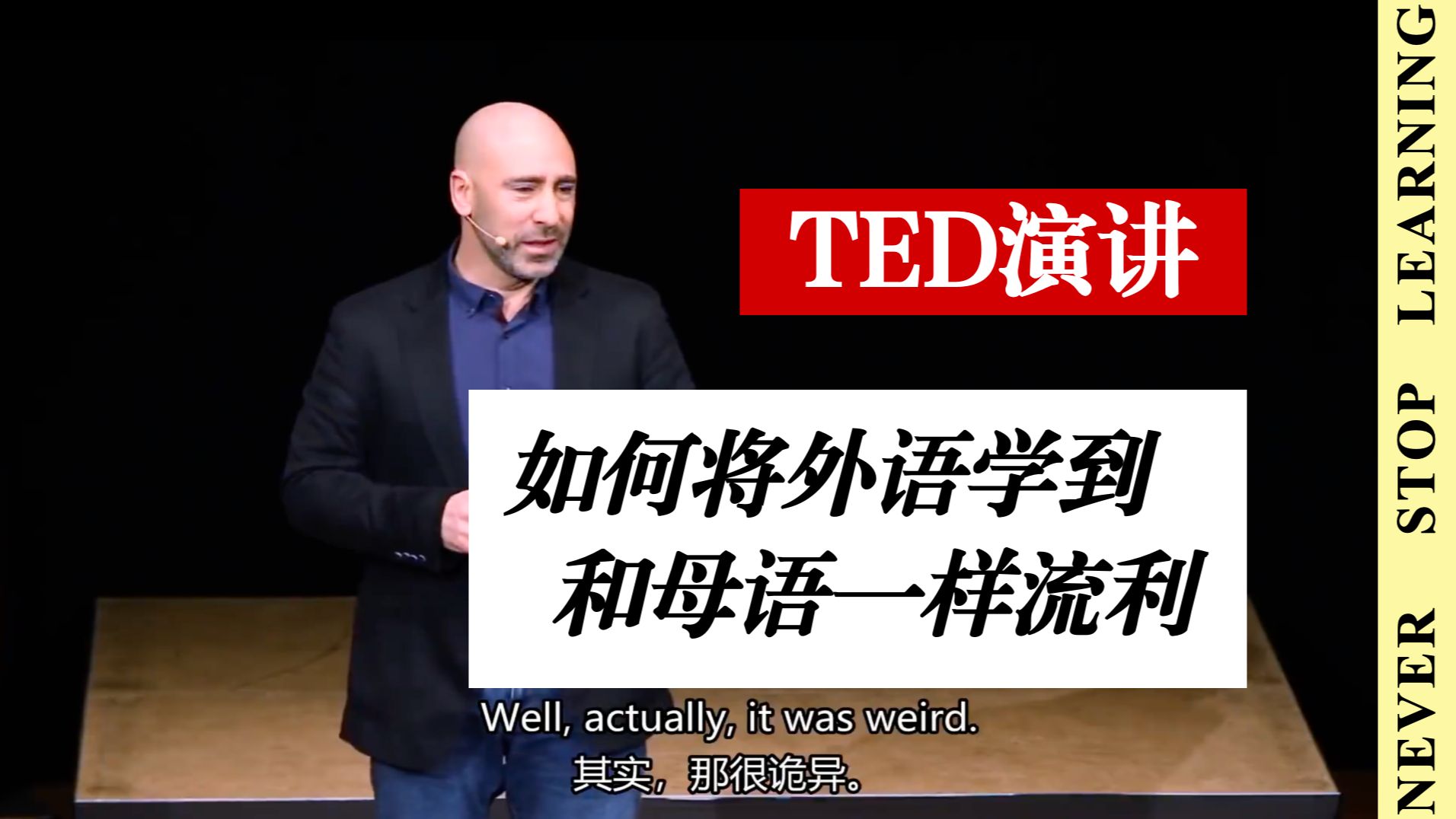
字幕摘录
| 时间 | 英文 | 中文 |
|---|---|---|
| 0:12 | My story starts in Moscow. | 我的故事从莫斯科开始 |
| 0:15 | I was 15 years old. | 我当时15岁 |
| 0:17 | My best friend and I, we were part of a group of Westerners visiting the Soviet Union. | 我最好的朋友和我, 我们是一群西方人 访问苏联的一部分。 |
| 0:22 | This was in 1987, a few years before the fall of the communist regime. | 这是在1987年,即共产主义政权垮台前的几年. |
| 0:31 | We were given an official tour guide who was assigned to us and the tour would start in the morning | 我们得到了一个正式的导游 被指派给我们, 和巡演将在早上开始 |
| 0:35 | and we were checked into our hotel rooms for the night. | 晚上我们被检查进旅馆房间 |
| 0:39 | My friend said to me, | 我的朋友对我说, |
| 0:42 | let's go outside and look at the city. | 我们出去看看这座城市 |
| 0:45 | I thought it was a great idea, dumb idea. | 我认为这是一个好主意,愚蠢的想法。 |
| 0:48 | So we grabbed our coats and we snuck out past security and into the street. | 于是我们抓起外套 偷偷溜出安全区 进入街上 |
展开字幕全文(258 条)
| 序号 | 英文 | 中文 |
|---|---|---|
| 1 | My story starts in Moscow. | 我的故事从莫斯科开始 |
| 2 | I was 15 years old. | 我当时15岁 |
| 3 | My best friend and I, we were part of a group of Westerners visiting the Soviet Union. | 我最好的朋友和我, 我们是一群西方人 访问苏联的一部分。 |
| 4 | This was in 1987, a few years before the fall of the communist regime. | 这是在1987年,即共产主义政权垮台前的几年. |
| 5 | We were given an official tour guide who was assigned to us and the tour would start in the morning | 我们得到了一个正式的导游 被指派给我们, 和巡演将在早上开始 |
| 6 | and we were checked into our hotel rooms for the night. | 晚上我们被检查进旅馆房间 |
| 7 | My friend said to me, | 我的朋友对我说, |
| 8 | let's go outside and look at the city. | 我们出去看看这座城市 |
| 9 | I thought it was a great idea, dumb idea. | 我认为这是一个好主意,愚蠢的想法。 |
| 10 | So we grabbed our coats and we snuck out past security and into the street. | 于是我们抓起外套 偷偷溜出安全区 进入街上 |
| 11 | We found the entrance to the metro. | 我们找到了地铁的入口 |
| 12 | The Moscow Underground's transportation system is the deepest one in the world. | 莫斯科地下交通系统是世界上最深的. |
| 13 | The ride down the escalator took a full minute. | 从扶梯下来的车 花了整整一分钟。 |
| 14 | Once we were down there, my friend headed right to an open train and I pulled him back. | 当我们在下面时,我的朋友 正赶往一辆开着的火车上, 我把他拉回来。 |
| 15 | I said, wait, | 我说,等等, |
| 16 | let's write down the name of the station so we can find our way back. | 我们把车站的名字写下来 这样我们才能找到回去的路 |
| 17 | So I had a notepad and I took a notepad and I wrote down the letters of the station and | 所以我有一张纸条,我拿了一张纸条,我写下了车站的信, |
| 18 | we hopped on the train and went some train hopping and that was fun because | 我们跳上火车,去 火车购物,这很有趣,因为 |
| 19 | well, actually it was weird. | 嗯,其实这很奇怪。 |
| 20 | There were a lot of people, | 那儿有很多人,他们... |
| 21 | they probably all coming home from work and | 他们可能都下班回家 |
| 22 | they were all dressed in brown and gray clothes and it looked very, very different from what we were used to at home. | 他们都穿着棕色和灰色的衣服 看上去和我们家里的习惯非常不同 |
| 23 | But the stations were lovely. | 但车站很可爱 |
| 24 | There were stations with | 有车站 |
| 25 | statues, with paintings on the wall and glass displays and it was really like museums. | 雕像,墙上有绘画 和玻璃展示, 它真的像博物馆。 |
| 26 | We would never have expected that and everything was perfectly clean. | 我们绝对不会料到 一切都很干净 |
| 27 | Well, | 那个 |
| 28 | what was weird though is that the people, nobody seemed to speak and everyone seemed to be looking at us and it kind of weirded | 奇怪的是,人们,没有人说话,每个人都看着我们,这有点奇怪 |
| 29 | us out. | 我们出去。 |
| 30 | So after about 20-30 minutes, we had enough and we wanted to go home. | 大约20到30分钟后, 我们喝够了,我们想回家。 |
| 31 | I showed my note to someone and they directed me over there and then over there | 我把我的纸条给别人看 他们指示我在那里 然后在那里 |
| 32 | I showed my note to another person and they directed us to the other way and then a third person directed us sideways. | 我把我的纸条给另一个人看 他们指引我们到另一条路 然后一个第三人指导我们侧面。 |
| 33 | That was a little confusing. | 这有点让人困惑 |
| 34 | Oh, then I saw it over the stairs, the sign. | 哦,然后我看到它在楼梯,标志。 |
| 35 | Turned out I had written down the Russian word for exit. | 原来我写了俄语词 出口。 |
| 36 | So we headed upstairs and we | 所以我们上楼去 |
| 37 | we found a taxi, that was great, and told the driver, you know, | 我们找到一辆出租车,很棒, 告诉司机,你知道, |
| 38 | in tourist hotel and then he was willing to take us and I remember sitting next to the driver | 在旅游酒店,然后他愿意带我们 我记得坐在司机旁边 |
| 39 | handing him 50 rubles and he looked at me and he said, | 给他50卢布 他看着我说 |
| 40 | 50 dollars, that was like, I don't know, 20 times that amount or something. | 50美元,那就像,我不知道, 20倍的金额什么的。 |
| 41 | That was not an option for us. | 这对我们来说不是一个选择。 |
| 42 | So we had to get out of the taxi and he drove away, leaving us standing there. | 所以我们不得不下车 他开车离开,让我们站在那里。 |
| 43 | It was cold night and you know, everything was strange for us and we were teenagers and | 当时是寒冷的夜晚 对我们来说一切都很奇怪 我们是青少年 |
| 44 | we were pretty nervous, didn't know what to do. | 我们很紧张,不知道该怎么办 |
| 45 | Well, we started walking. | 我们开始走路了 |
| 46 | We walked to the end of the block. | 我们走到了街区的尽头 |
| 47 | We turned the corner and | 我们转弯了 |
| 48 | 200 yards in front of us, the interist hotel. | 前面200码, 中间酒店。 |
| 49 | Well, this experience affected me in two ways. | 嗯,这种经历影响了我两个方面。 |
| 50 | The first is that any time after this trip that I hear would hear anyone speak Russian, I would just cringe. | 第一,这次旅行之后,我听到有人会说俄语,我只会哭。 |
| 51 | And the second one is that it taught me the importance of understanding the local language when you're traveling and | 第二,它教会了我在旅行时理解当地语言的重要性 |
| 52 | it actually led to me learning another four languages fluently over the following years. | 事实上,这让我在接下来的几年里 学会了另外四种语言。 |
| 53 | Now before I go on, I'd like to know in the audience, can we have a little bit of light maybe in the audience? | 现在,在我继续之前,我想在观众中知道, 我们可以有一点点光 也许在观众中? |
| 54 | Just like to know who's | 只是想知道是谁 |
| 55 | by show of hands who is not a native English speaker? | 谁不是英语母语? |
| 56 | That must be 99%. | 这一定是99%。 |
| 57 | Anyone who doesn't speak English, stand up. | 不说英语的人请站起来 |
| 58 | All right, so I can assume all of you have, you know, gone through the process of learning a language. | 好吧,所以我可以假设,你们都经历了学习一种语言的过程。 |
| 59 | Anybody who speaks three or more languages? | 有人会说三种或三种以上语言吗? |
| 60 | Wow, that is maybe 70%. | 哇,这也许是70%。 |
| 61 | Four or more languages, anyone? | 4种或更多语言,有人吗? |
| 62 | That's still quite a bit. | 那还是有点 |
| 63 | Anyone speak five or more languages? | 有人会说五种或五种以上语言吗? |
| 64 | Wow, come see me in during the break. | 哇 休息时来看我 |
| 65 | All right, well to me, learning a language is for me, | 好吧,对我来说,学习一种语言是我的, |
| 66 | it's like a deck of playing cards lying face down on the table. | 这就像一个打牌的甲板 躺在桌子上的脸。 |
| 67 | As you start learning and understanding, | 当你开始学习和理解, |
| 68 | the cards start opening up for you. | 牌开始为你打开。 |
| 69 | Now, there's no standard | 现在,没有标准 |
| 70 | way of classifying this, but as you learn, you reach certain milestones and | 分类的方式,但当你学习, 你达到了某些里程碑, |
| 71 | the first one would be when about 25% of the cards are turned up, you reach like a basic level. | 第一个是当25%的牌出现的时候, 你达到一个基本水平。 |
| 72 | At this level, | 在这一层面, |
| 73 | you have a base vocabulary, | 你有基础词汇, |
| 74 | some grammar, and you're able to have maybe very simple conversations and communicate a little bit and | 一些语法, 你可以有 也许非常简单的谈话 和沟通一点点, |
| 75 | your study goes on | 你继续学习 |
| 76 | until you reach this magical point of fluency, what we call being fluent in a language. | 直到你达到这个神奇的流利点 我们称之为流利的语言 |
| 77 | Now, what does this mean? | 这是什么意思? |
| 78 | Being fluent in a language, | 流利的语言, |
| 79 | it means that you've turned up more than 50% of the cards in the deck and | 意思是,你已经出现了超过50%的牌 在甲板和 |
| 80 | that is the point where you have, | 这就是你拥有的地方 |
| 81 | where the language becomes part of your subconscious so that even if you don't use it anymore for ten years or longer, | 语言成为你潜意识的一部分 即使你十年或更长时间不再使用 |
| 82 | you will not forget it. | 你不会忘记的 |
| 83 | You can go get back into it within a very, very short time. | 你可以在很短的时间内回去 |
| 84 | So this is | 这就是 |
| 85 | this is a | 这个是 |
| 86 | level where you're comfortable thinking in the language and | 水平,你舒服的思考 在语言和 |
| 87 | comfortable communicating in the language. | 用语言交流很舒服 |
| 88 | Now, some people go on and, you know, reach like a mastery level. | 现在,有些人继续,你知道, 达到像一个熟练的水平。 |
| 89 | By that time, | 那时 |
| 90 | you know classic literature in the other language and have maybe an in-depth knowledge of specialized fields. | 你懂其他语言的经典文学,也许对专业领域有深入的了解。 |
| 91 | That's often the point taken in academia. | 这经常是学术界的观点。 |
| 92 | For me, when I learned my first foreign language, I had a head start | 对我来说,当我学会了第一门外语, 我有一个开始 |
| 93 | because, well, I was born to a German-speaking mother and an American father. | 因为我出生在德语母亲和美国父亲 |
| 94 | Now, when I was a baby, I didn't really understand that what my parents were speaking to me were two separate languages. | 现在,当我还是个孩子的时候, 我并不真正理解我父母对我说的话 是两种不同的语言。 |
| 95 | But by the time I was two years old, I had figured it all out. | 但到了两岁的时候,我已经想通了一切. |
| 96 | Women speak only German. | 女人只说德语 |
| 97 | Men only speak English. | 男人只说英语。 |
| 98 | Imagine the fun my parents had when they introduced me to couples. | 想象一下我父母给我介绍情侣时的乐趣 |
| 99 | Well, being a bilingual was actually pretty helpful in learning my first language. | 嗯,作为一个双语 实际上对学习我的第一语言很有帮助。 |
| 100 | Definitely helped. | 当然有帮助。 |
| 101 | If you're... | 狦琌... |
| 102 | But it also gave me something else. | 但它也给了我其他的东西。 |
| 103 | It gave me two identities and the ability to switch between them. | 它给了我两个身份 和他们之间交换的能力。 |
| 104 | When you're a native speaker of more than one language, | 当你是一个母语 不止一种语言, |
| 105 | then your | 礛琌 |
| 106 | your | 您的电话 |
| 107 | personality, your humor, your value system, they change as you switch languages. | 人格,幽默,价值系统,随着语言的切换而改变。 |
| 108 | This can have huge advantages. | 这有巨大的优势。 |
| 109 | I mean, some studies have shown an increased problem-solving ability | 我的意思是,有些研究显示 解决问题的能力提高了 |
| 110 | or even a higher resistance to Alzheimer's disease. | 甚至对老年痴呆症的抵抗力更高 |
| 111 | But what I'm most interested in is that it's actually given me a lot of social benefits. | 但我最感兴趣的是 它实际上给了我很多社会福利。 |
| 112 | When you're a native speaker, then you feel at home among native speakers, | 当你是一个母语, 然后你感觉在家里 在母语, |
| 113 | in a culture, and also native speakers accept you as one of theirs. | 在一种文化中,也有本地人接受你为他们的其中之一。 |
| 114 | Now, is this only relevant to native speakers? | 现在,这是否只与讲母语的人有关? |
| 115 | And that's the big question. | 然此大问. |
| 116 | But wouldn't it be cool if a person learning a foreign language could actually | 学外语的人真的可以的话 是不是很酷? |
| 117 | develop another identity and | 开发另一个身份 |
| 118 | actually enjoy the social benefits of a native speaker | 实际享受母语的社会福利 |
| 119 | that go beyond communication skills? | 这超出了沟通能力? |
| 120 | Well, that's what happened to me. | 嗯,这就是发生在我身上。 |
| 121 | I was able to do that and I want to show you from my experience | 我做到了,我想告诉你 从我的经验 |
| 122 | how I think this can be achieved. | 我认为这可以实现 |
| 123 | So if we say this green area here is the level of the native speaker, | 所以,如果我们说这里的绿地是 当地演讲者的水平, |
| 124 | the first thing to note is that on your way to reaching fluency, there is not really any shortcut. | 首先要注意的是 在你到达流利的路上 没有任何捷径 |
| 125 | There are some methods that you can use such as the Pareto Principle where you identify the | 有一些方法可以使用,例如Pareto原理,在这里您可以识别 |
| 126 | 20% of the most effective material to study. | 20%的最有效的研究材料. |
| 127 | There are some apps like for time-spaced learning that increase vocabulary retention. | 有一些应用,比如用于时空学习,可以增加词汇保留. |
| 128 | They save a little time, but in the end | 他们节省了一点时间 但最后 |
| 129 | there's no way around working with the material, practicing it until you reach the fluency level. | 在你达到流畅水平之前 无法与材料合作 |
| 130 | But the second thing to note is that going from fluency to mastery is a much slower process and it requires | 但第二件事需要注意的是,从流利到掌握是一个慢得多的过程,它需要 |
| 131 | proportionally more effort. | 相当的多努力。 |
| 132 | And that's why most people, they just stop at fluency. | 这就是为什么大多数人, 他们只是停留在流利。 |
| 133 | They know how to speak English, good enough, | 他们知道怎么说英语,足够好 |
| 134 | and they don't even attempt to venture on, and I can understand it. | 他们甚至不尝试冒险 我可以理解 |
| 135 | But the good news is | 但好消息是,我们 |
| 136 | to get the benefits of a native speaker at a native speaker level, | 在讲母语者一级获得讲母语者的好处, |
| 137 | you don't have to go through mastery in the academic sense. | 在学术意义上你不必经过掌握. |
| 138 | In fact, you can skip this step altogether. | 事实上,你可以跳过这一步。 |
| 139 | So if you think about it, there are many native speakers who do not have an in-depth knowledge of specialized fields or sophisticated vocabulary. | 所以,如果你考虑一下,有很多讲母语的人对专门领域或复杂的词汇没有深入的了解. |
| 140 | So that's not really what is required. | 所以这不是真正需要的。 |
| 141 | So how do you do it, what is required? | 那么,你怎么做,有什么需要吗? |
| 142 | Well, | 那个 |
| 143 | I want to give you three | 我想给你三个 |
| 144 | areas to focus on when you're learning and interacting with native speakers. | 以学习和与本地人交流为中心。 |
| 145 | The first is | 第一个 |
| 146 | work on eliminating your accent. | 努力消除你的口音。 |
| 147 | I'm aware I said eliminating. | 我知道我说的是消灭 |
| 148 | It should be at least minimizing it. | 它至少应该尽可能减少。 |
| 149 | This is, in my opinion, the most overlooked aspect of language learning today, but it's also the most important one | 我认为,这是今天语言学习中最被忽视的方面,但也是最重要的方面 |
| 150 | to reach what I call a native speaker level or a speaker-like level. | 达到我所说的母语或类似发言者的级别。 |
| 151 | If you communicate without an accent or almost without an accent, this changes how natives behave towards you unconsciously, | 如果你没有口音或几乎没有口音的交流, 这改变着当地人如何无意识地对待你, |
| 152 | and it also gives you an ability to | 它也让你有能力 |
| 153 | to adapt a new self-image. | 以适应新的自我形象。 |
| 154 | The best way that I have found, the best exercise I have found to improve your pronunciation is what I call the perfect sentence technique. | 我找到的最好的方法, 最好的练习,我发现改进 你的读音是 我称之为完美的句子技术。 |
| 155 | What you do is you find a native speaker to help you, | 你所做的就是找一个本地人来帮你 |
| 156 | and you take a book in the foreign language, you open it at a random page, and you read the first sentence. | 并取外语之书,随机开一页,读第一句. |
| 157 | Then you ask the native speaker to rate you on | 那你就叫本地话人给你评分 |
| 158 | obvious accent, slight accent, no accent. | 明显口音,轻微口音,没有口音. |
| 159 | Then the native speaker will read this this sentence back to you. | 然后本地人会把这句话读给你听 |
| 160 | You have to listen carefully, and | 你一定要仔细听,而且 |
| 161 | then you repeat, and you repeat this process over and over until the native speaker tells you that he can no longer hear an | 然后你重复,你重复这个过程 一遍又一遍,直到当地人 告诉你,他不能再听到一个 |
| 162 | accent when you read the sentence. | 读到句子时重音。 |
| 163 | Now, I realize it can take a very long time even just to get one sentence right, but I promise you if you | 现在,我意识到这可能需要很长的时间 甚至只是得到一个句子正确, 但我向你保证,如果你 |
| 164 | are persistent, and if you patiently work on this, | 坚持不懈 如果你耐心地研究 |
| 165 | you will be amazed what happens to your accent. | 你会惊讶你的口音会怎样 |
| 166 | The second area to focus on is | 第二个重点领域是: |
| 167 | using verbs and expressions that locals use. | 使用当地人使用的动词和表达式. |
| 168 | Now, we all know the situation that | 现在,我们都知道情况 |
| 169 | vocabulary can be region-specific, like in the US you you stand in line in the UK UQ. | 词汇可以是特定区域, 就像在美国,你站在英国UQ的排队。 |
| 170 | That's all good, but sometimes | 这很好,但有时 |
| 171 | the spoken word is so different, the speech is so different from what you get in textbooks, | 口语的词是如此不同, 说话是如此不同 你得到的教科书, |
| 172 | that the books are almost useless if you want to converse with natives. | 如果你想跟本地人交谈 书就几乎没用了 |
| 173 | I want to give you an example. | 我想举个例子 |
| 174 | In the French language, | 在法语中, |
| 175 | there are words like le travail, which is my work, | 我的工作就是说, |
| 176 | a French person talking to his friend would probably say mon boulot, which is a completely different word. | 一个跟朋友说话的法国人可能会说 mon bloot, 这是一个完全不同的词。 |
| 177 | The same for the clothes, | 衣服也一样 |
| 178 | {\fn黑体\fs22\bord1\shad0\3aHBE\4aH00\fscx67\fscy66\2cHFFFFFF\3cH808080}但是你会听到的 | |
| 179 | Or money is | 或钱是 |
| 180 | l'argent, but people say le fric, les sous, or many other expressions for this. | 恕我直言,但人们会说 le fric, les sous, 或其他许多表达。 |
| 181 | Obviously, I'm only scratching the surface here, but here you actually have to learn all of these words and expressions | 很明显,我只抓着表面, 但在这里,你实际上必须学习 所有这些字和表达 |
| 182 | one by one, and of course you have to interact with natives to do that. | 一个接一个,当然你必须和原住民互动才能做到这一点. |
| 183 | But after you reach a critical mass that you are comfortable with, | 但当你到达一个临界质量 你感到舒适, |
| 184 | it'll actually be easier. | 这其实会更容易。 |
| 185 | When you encounter something new, | 当你遇到新的东西, |
| 186 | you'll just pick it up in one go, like native speakers would, who hear words or expressions they didn't know before. | 听到他们以前不知道的言语 |
| 187 | The third area to work on is | 第三个领域是: |
| 188 | adopting cultural traits. | 采用文化特征。 |
| 189 | What do I mean by that? | 这是什么意思? |
| 190 | So let me ask you, what does this mean, this gesture mean to you? | 所以,让我问你,这是什么意思, 这个姿态意味着你吗? |
| 191 | Any Italians here? | 有意大利人吗? |
| 192 | Okay, now depending on what culture you're from, this could mean something rude, or it could just mean | 好吧,现在取决于你来自什么文化, 这可能意味着一些粗鲁, 或者它可能只是意味着 |
| 193 | something incredulous, like why did you do that? | 令人难以置信的东西, 像为什么你这样做? |
| 194 | Or how could you? | 或者你怎么能这样? |
| 195 | Or it could just be signaling food, give me food. | 或者它可能只是信号食物, 给我食物。 |
| 196 | Interesting, in the Middle East, this is just a standard way of signaling, please wait. | 有趣的是,在中东,这只是一个标准的信号方式,请等一下。 |
| 197 | So these kind of traits you have to internalize, and you have to, and sometimes they're hard to spot, | 所以这种特质,你必须内化, 你必须,有时很难发现, |
| 198 | and it takes a lot of active listening. | 这需要很多积极的倾听。 |
| 199 | I want to give you a few more examples. | 我想再举几个例子。 |
| 200 | So imagine I'm with three of my friends, an American, a German, and a Frenchman, and | 想象我和三个朋友在一起 一个美国人 一个德国人 一个法国人 |
| 201 | like we're walking, and maybe the American bumps his head, and his initial reaction might be ouch. | 就像我们在走路,也许美国人撞了他的头, 他的最初反应可能触碰。 |
| 202 | That's how you say it in English. | 这就是你用英语说的。 |
| 203 | But the German that, you know, gets, I don't know, elbowed in the crowd, he would say ouch. | 但是,德国人,你知道,得到,我不知道, 肘在人群,他会说碰。 |
| 204 | And the French person, he might step on a nail and say ouch. | 还有那个法国人 他可能会踩到钉子上说"碰" |
| 205 | So this, of course, in your target language, this is something you have to observe and also internalize, and it has to become part of you. | 所以,当然,用你的目标语言, 这是你必须观察和内化的东西, 它必须成为你的一部分。 |
| 206 | If, | 如果,则 |
| 207 | again, with, I'm with these three friends, and I sit with them, and let's say I serve them tea, and I ask the American, | 再说一遍,我和这三个朋友在一起, 我和他们坐在一起, 假设我给他们喝茶, 我问美国人, |
| 208 | would you like a, | 你想来个... |
| 209 | you know, a biscuit with your, with your tea? | 你知道,饼干 与你的,你的茶? |
| 210 | And if he answers in the affirmative, he might say, uh-huh. | 如果他回答肯定的话,他可能会说,嗯,嗯。 |
| 211 | And I can ask the German, do you know what tea this is? | 我可以问德国人 你知道这是什么茶吗? |
| 212 | And he'll say, mm-hmm. | 他会说,嗯,嗯。 |
| 213 | And then, uh, yeah, and I asked the Frenchman, do you like this? | 然后,嗯,是的,我问 法国人, 你喜欢这个? |
| 214 | And he'll say, mm-hmm. | 他会说,嗯,嗯。 |
| 215 | So you notice these, so these differences, uh, they really require active listening. | 所以,你注意到这些, 所以这些差异,呃, 他们真的需要积极的倾听。 |
| 216 | So all of these, all of these, uh, three things that I told you, which is pronunciation, and, and, uh, | 所以所有这些,所有这些,呃,三件事,我告诉你, 这是发音,和,呃, |
| 217 | and colloquial speech, and adopting these cultural traits, | 并采用这些文化特征, |
| 218 | they all require that you interact with natives as much as possible. | 他们都要求你尽可能与本地人互动 |
| 219 | Ideally, you should fully immerse yourself in the culture. | 理想的是,你应该完全沉浸在文化中。 |
| 220 | Now, if you have the chance to live abroad for a while, that would be great, | 如果你有机会在国外住一段时间 那就太好了 |
| 221 | or maybe live among natives in your hometown, | 或者住在家乡的原住民中 |
| 222 | perhaps just have a romantic relationship, or even just spend times with, uh, | 也许只是有一个浪漫的关系, 甚至只是花时间与,呃, |
| 223 | you know, with, uh, co-workers. | 你知道,与,嗯, 同事。 |
| 224 | Romantic relationships, I could do a whole talk about that. | 浪漫恋情,我可以做一个完整的谈论。 |
| 225 | That's really, that works really well for these things. | 这是真的,这真的很有效 这些东西。 |
| 226 | But, uh, yeah, so this will be different for everybody, of course. | 但是,嗯,是的,所以这将是不同的 对每个人,当然。 |
| 227 | But, uh, | 不过... |
| 228 | even when you're not around natives, your learning must not stop, | 即使你不在本地人身边 你的学习也不能停止 |
| 229 | because what you can do, you can watch TV shows and films, you can mimic the characters, | 因为你能做的,你可以看电视节目和电影, 你可以模仿角色, |
| 230 | you can write down anything that you haven't heard of before, and | 你可以记下你以前没听说过的任何事, |
| 231 | practice that. | 练习一下 |
| 232 | I also want to encourage you to, um, to | 我还想鼓励你,嗯, |
| 233 | learn the lyrics of songs. | 学习歌词。 |
| 234 | Songs are really great, because they tell stories, and they don't, not only | 歌词真的很棒, 因为他们讲故事, 他们不,不仅 |
| 235 | help your pronunciation when you sing them, but they also, if, if they're emotional, | 帮助你的发音 当你唱的时候, 但他们,如果,如果他们的情绪, |
| 236 | they can anchor these expressions into your active vocabulary, and it's like speaking all day, and really using these expressions unconsciously. | 他们可以把这些表达语固定在你的活跃词汇中, 它就像整天说话, 并且真的在无意识地使用这些表达语。 |
| 237 | It's a, it's a great way. | 这是一个,这是一个伟大的方法。 |
| 238 | So music, definitely. | 所以音乐,肯定。 |
| 239 | Um, the other thing you need to | 嗯,还有一件事你需要 |
| 240 | move towards native speaker status is the right mindset, | 转向母语地位是正确的心态, |
| 241 | and, | 还有, |
| 242 | and a belief that if you sound like a native, express yourself like a native, talk like a native, and act like a native, | 并相信,如果你听起来像一个本地人, 表达自己像一个本地人, 说话像一个本地人, |
| 243 | you will actually achieve a native-like | 你将实现像本地人 |
| 244 | level. | 级别。 |
| 245 | So, | 这么说 |
| 246 | if I could only leave you with one thing today, it would be work on your pronunciation, because pronunciation | 如果我今天只留一件事给你, 它会工作 你的发音,因为发音 |
| 247 | helps any stage of the learning process, even in the very beginning, it will speed up everything, | 帮助任何阶段的学习, 即使一开始, 它会加快一切, |
| 248 | and it also | 和它同样 |
| 249 | is the key to reaching a native speaker level, or almost native speaker status. | 是达到母语或几乎是母语者地位的关键。 |
| 250 | So, uh, | 所以,呃,我们... |
| 251 | before I go, I'd like to tell you how I was able to overcome my fear of the Russian language. | 在走之前,我想告诉你我是如何克服对俄语的恐惧的. |
| 252 | It was a very, very elegant solution. | 这是一个非常非常优雅的解决方案。 |
| 253 | I married a Russian girl, | 我嫁给了一个俄罗斯女孩 |
| 254 | and I now have little kids in my home that speak Russian to me every day. | 现在我家里有小孩 每天对我说俄语 |
| 255 | So, | 这么说 |
| 256 | I want to thank you, | 我想谢谢你 |
| 257 | and before I go, I just want to wish you much success with your language studies. | 在我走之前,我只想祝你在语言研究方面取得成功。 |
| 258 | Good luck to you all, and | 祝你们好运 |
该视频共有字幕 259 条。解锁更多字幕为会员功能,请移动到 价格