(中英附文稿)如何发挥真正潜力?从一个小胜利开始,重建你的行
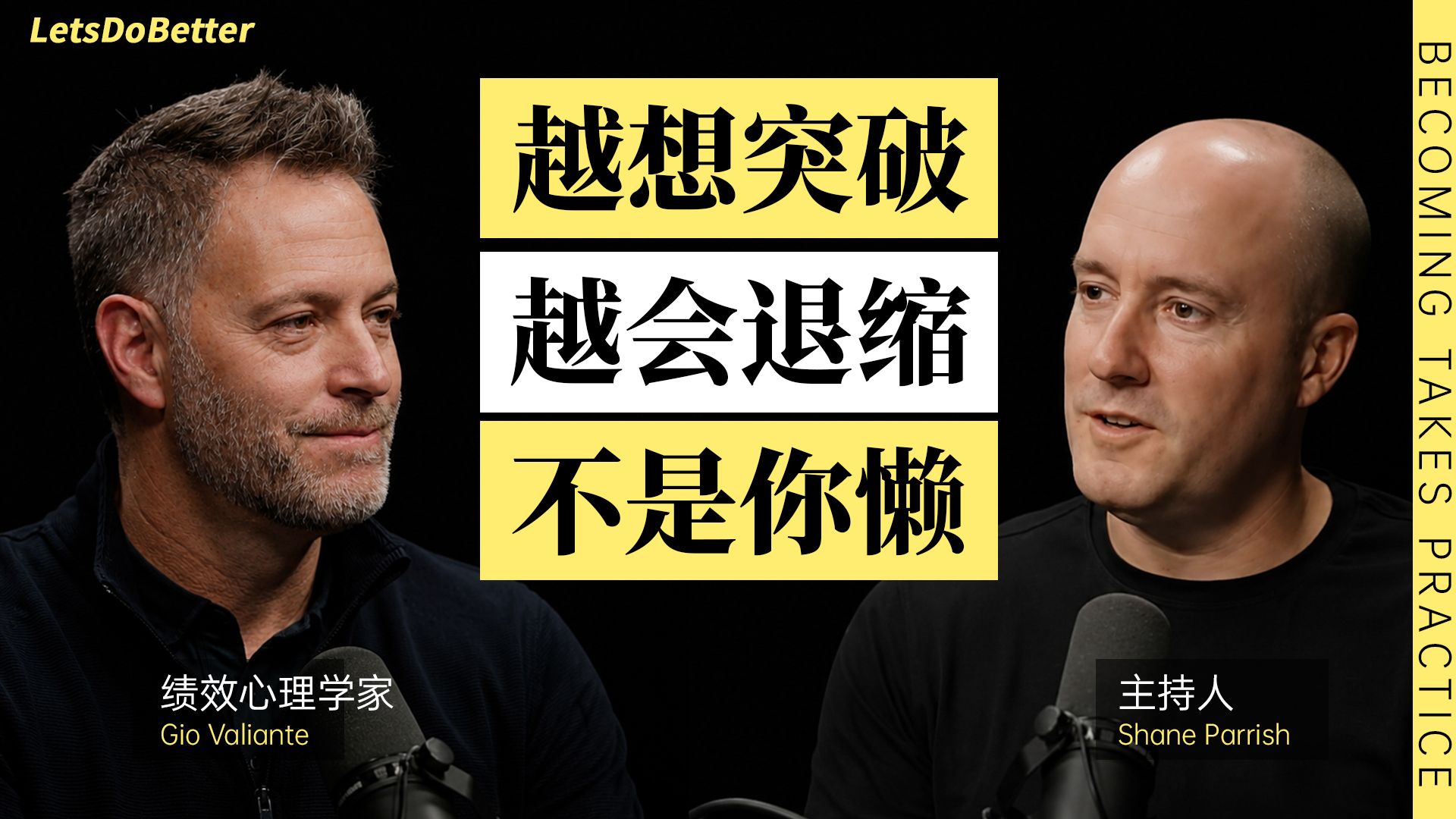
字幕摘录
| 时间 | 英文 | 中文 |
|---|---|---|
| 0:00 | If you go through life over-indexing | 如果你经历了生活过度指数化 |
| 0:03 | and caring too much what people think about you, | 关心太多别人对你的看法, |
| 0:05 | that's your ceiling. | 这是你的天花板。 |
| 0:10 | I want to start with something you said last time we talked, | 我想从你上次说起 |
| 0:12 | which is most people are underperforming | 大多数人表现不佳 |
| 0:15 | relative to their ability. | 相对于他们的能力。 |
| 0:16 | Yeah. | 对 |
| 0:17 | Walk me through that. | 带我通过。 |
| 0:18 | There's a term that I came across many years ago | 我很多年前遇到过一个词 |
| 0:21 | called the central governor hypothesis, | 被称为中央州长的假设, |
展开字幕全文(1641 条)
| 序号 | 英文 | 中文 |
|---|---|---|
| 1 | If you go through life over-indexing | 如果你经历了生活过度指数化 |
| 2 | and caring too much what people think about you, | 关心太多别人对你的看法, |
| 3 | that's your ceiling. | 这是你的天花板。 |
| 4 | I want to start with something you said last time we talked, | 我想从你上次说起 |
| 5 | which is most people are underperforming | 大多数人表现不佳 |
| 6 | relative to their ability. | 相对于他们的能力。 |
| 7 | Yeah. | 对 |
| 8 | Walk me through that. | 带我通过。 |
| 9 | There's a term that I came across many years ago | 我很多年前遇到过一个词 |
| 10 | called the central governor hypothesis, | 被称为中央州长的假设, |
| 11 | and essentially conveys the fact that most people underperform. | 并且基本上传达了一个事实, 大多数人表现不佳。 |
| 12 | And any observer of the human condition, | 和任何观察人类状况的人, |
| 13 | I think going back to forever, agrees that that's probably... | 我想永远回到过去,同意那可能... |
| 14 | Now, why is that? | 为什么? |
| 15 | Well, you have to sort of delve into sort of human biology | 你得去探索一下人类的生物学 |
| 16 | and genetics and understand, | 和遗传学,并了解, |
| 17 | so what's the purpose of the brain? | 那么大脑的目的是什么? |
| 18 | Generally, to keep you alive long enough to reproduce, right? | 一般来说,让你活得足够长 繁殖,对不对? |
| 19 | You know, at a fundamental biological level. | 你知道,在基本的生物层面。 |
| 20 | But we're not designed to overperform. | 但我们不是设计得超标 |
| 21 | We're designed to survive. | 我们的设计是生存。 |
| 22 | And so overperformance or achieving one's potential | 所以表现超常 或实现自己的潜力 |
| 23 | requires sort of a cognitive decision to push oneself there. | 需要某种认知决定 将自己推到那里。 |
| 24 | Right? | 对吧? |
| 25 | So to illustrate it, | 所以为了说明这一点, |
| 26 | I think a common illustration is if you look at marathon runners | 我想一个常见的例子是 如果你看看马拉松跑者 |
| 27 | or any extreme athlete, marathon runners, triathletes, | 或任何极端的运动员,马拉松选手,三胞胎, |
| 28 | these are people who design their lives | 这些是设计自己生活的人 |
| 29 | around pushing human potential. | 推动人类的潜力 |
| 30 | And so it begs the question, well, then if these are people | 那么如果这些人是 |
| 31 | who are even the ultra marathoners, right? | 谁是超级马拉松运动员? |
| 32 | People do, you know, five marathons over the course of five weeks | 人们有,你知道,五个马拉松 在五个星期 |
| 33 | or five days, whatever they do, | 或者五天,不管他们做什么, |
| 34 | how many of them push themselves to the point of death? | 有多少人把自己逼到死亡的地步? |
| 35 | Like, how many people push their limits? | 像,有多少人 推动他们的极限? |
| 36 | The answer is typically it's a very small percentage, | 答案是 通常它是一个很小的百分比, |
| 37 | single digits, you know? | 单数,你知道吗? |
| 38 | If you have five, you know, rounding numbers, | 如果你有五个, 你知道,四舍五入的数字, |
| 39 | five million marathoners, maybe five or ten die in a year, | 5百万马拉松运动员, 也许5或10死一年, |
| 40 | and most of the time it's because they get hit by a car | 大部分时间都是因为他们被车撞了 |
| 41 | or some other condition, | 或者其他条件, |
| 42 | but it's not because they push themselves too hard. | 但不是因为他们太用力了 |
| 43 | They cross the finish line and they're still alive. | 他们越过终点线,还活着。 |
| 44 | And they go and they carbo-load and so forth. | 他们去,他们装满了汽车等等。 |
| 45 | Now, why is that? | 为什么? |
| 46 | Because the brain has built-in mechanisms to shut us down | 因为大脑有内置机制可以让我们关闭 |
| 47 | so that we don't do self-harm, right? | 这样我们就不会伤害自己 对吧? |
| 48 | And so those are the same mechanisms | 所以这些是相同的机制 |
| 49 | that at a drive level for human beings, you know, | 在人类的驱动力层面,你知道, |
| 50 | govern our conduct. | 管理我们的行为。 |
| 51 | So underperformance is built into the human condition | 所以表现不佳是人类所固有的 |
| 52 | so that we can stay alive. | 这样我们才能活着 |
| 53 | And that's why, you know, they do these really interesting studies | 这就是为什么,你知道, 他们做了这些真正有趣的研究 |
| 54 | with sort of single cell organisms, | 与某种单细胞生物, |
| 55 | where you put them in a Petri dish | 你把它们放在Petri菜里 |
| 56 | and you make the conditions uncomfortable, right? | 你让病情变得不舒服,对吧? |
| 57 | So you put these various types of organisms | 所以你把这些种类的生物 |
| 58 | and you make it hot on one side of the plate | 你让它热在盘子的一侧 |
| 59 | and they gravitate to comfort. | 他们引以为慰。 |
| 60 | You make it too cold, they grab... | 你让它太冷了,他们抓住... |
| 61 | So really at a fundamental biological level, | 因此,实际上在一个基本的生物学层面, |
| 62 | you know, we are all programmed to seek comfort and safety. | 你知道,我们所有的程序 寻求舒适和安全。 |
| 63 | Well, comfort and safety are the exact opposite | 舒适和安全正好相反 |
| 64 | of overperformance or realizing one's potential. | 表现过度或 实现自己的潜力。 |
| 65 | And so therein lies the starting point, sort of table stakes. | 因此,这里就是起点, 某种桌杆。 |
| 66 | You know, if you want to be great at something, | 你知道,如果你想成为伟大的东西, |
| 67 | you know, the old adage is you have to get comfortable | 你知道,老格言是,你必须自在 |
| 68 | being uncomfortable, | 感觉很不舒服, |
| 69 | but that's something you have to train yourself to do. | 但这是你必须训练自己去做的 |
| 70 | And so the central governor hypothesis suggests that, | 所以中央州长的假设是 |
| 71 | yeah, you know, there's a governor in the human brain | 是啊,你知道,有一个州长 在人类大脑 |
| 72 | and that governor is built structurally by, | 而州长是结构上的, |
| 73 | you know, a couple of things. | 你知道,一些东西。 |
| 74 | Number one, the survival instinct. | 第一,生存本能。 |
| 75 | Number two, the desire for comfort. | 其二 欲安乐. |
| 76 | Number three, the desire, you know, | 第三个,欲望,你知道, |
| 77 | at a fundamental biological level | 在基本生物层面 |
| 78 | for our DNA to replicate itself. | 为了我们的DNA复制自己。 |
| 79 | You know, there's this view from geneticists | 遗传学家有这种观点 |
| 80 | that we as humans, you know, we talk about human agency. | 我们是人类 我们谈论的是人类机构 |
| 81 | Human agency being defined as the degree to which | 将人类机构定义为: |
| 82 | we have conscious control over our lives, right? | 我们有意识地控制我们的生活,对不对? |
| 83 | Agency being acting on your own behalf. | 机构代表自己行事。 |
| 84 | The fundamental question is, | 根本问题是, |
| 85 | do human beings have free will, right? | 人有自由意志吗? |
| 86 | William James and the pragmatists asked that question. | 威廉·詹姆斯和实用主义者提出了这个问题. |
| 87 | And again, most observers of the human condition | 再说一遍,人类的大部分观察者 |
| 88 | suggest that we have less control over ourselves | 说明我们对自己的控制力较弱 |
| 89 | than we believe we do. | 比我们相信的要多 |
| 90 | And so what did William James conclude? | 威廉·詹姆斯有什么结论? |
| 91 | He said, my first act of free will | 他说,我第一次自由意志的行为 |
| 92 | is to choose to believe in free will. | 选择相信自由意志。 |
| 93 | And if you really think about that | 如果你真的这么想 |
| 94 | and you go down that rabbit hole | 你走进兔子洞 |
| 95 | and then you look at the studies, | 然后,你看着学习, |
| 96 | people think that they're thinking | 人们以为他们在想 |
| 97 | where they're generally rearranging their prejudices. | 在那里他们通常 重新调整他们的偏见。 |
| 98 | And so the few acts of agency we really have, | 所以,我们有的少数代理行为, |
| 99 | one of them is to decide our path | 其中之一是决定我们的道路 |
| 100 | and then cultivate the habits, | 然后修养各种习惯, |
| 101 | which then become unconscious to push us out | 然后失去知觉 把我们赶出去 |
| 102 | to the tail end of the curve in any domain. | 到任意域的曲线尾端。 |
| 103 | But again, we all default to underperformance. | 但再说一遍,我们都欠佳 |
| 104 | So to become really, really good at something | 所以成为真正,真正 擅长的东西 |
| 105 | requires an act of agency | 要求代理行为 |
| 106 | to choose to become really, really good at something. | 选择成为真正,真正擅长的东西。 |
| 107 | That's table stakes. | 这是桌子的木桩。 |
| 108 | That's the opening bit. | 这就是开场白 |
| 109 | And then from there, you know, that's where the work begins. | 然后,从那里,你知道, 这是工作开始。 |
| 110 | So yeah. | 对啊 |
| 111 | So if I choose to become good at something, | 所以,如果我选择 成为擅长的东西, |
| 112 | I'm going to be good at something, | 我会擅长的东西, |
| 113 | like what is one practical thing | 就像一个实际的东西 |
| 114 | that people can take away from this, | 人可以带走这个, |
| 115 | to change in their life, | 改变他们的生活, |
| 116 | to help them realize their potential? | 帮助他们发挥潜力? |
| 117 | Right. | 对 |
| 118 | So, but you know, the research on like, | 所以,但你知道,研究 像, |
| 119 | you know, what the data shows on New Year's resolutions, right? | 数据显示的是新年决议,对吧? |
| 120 | 95% of them are over by the end of February. | 其中95%到2月底结束. |
| 121 | And then the other 4% are over by the end of March. | 而另外4%则在3月底前结束. |
| 122 | So the choice is just the beginning, right? | 所以选择只是开始,对不对? |
| 123 | I think the first thing to understand | 我觉得第一件事就是明白 |
| 124 | is that we are all creatures of habit. | 我们都是习惯的生物 |
| 125 | As Albert Bandura said, | 正如阿尔伯特·班杜拉所说, |
| 126 | behavior is a cause of behavior, right? | 行为是行为的原因,对吧? |
| 127 | Behavior is a cause of behavior. | 行为是行为的原因。 |
| 128 | That the more you do something on a probability scale, | 你越做一些 概率尺度, |
| 129 | the more likely you are to do the same thing. | 你更有可能做同样的事情。 |
| 130 | And so if you really want to get out of, you know, | 所以如果你真的想离开,你知道, |
| 131 | your situation or you want to do it differently, | 你的情况或你想做不同的, |
| 132 | there's a couple things to think of. | 有几件事要考虑 |
| 133 | Number one, it's in the doing, | 第一,这是在做, |
| 134 | not in the thinking or the saying, right? | 不是在思想或 谚语,对不对? |
| 135 | One of the things I always say to people is, | 我总是对别人说一件事 |
| 136 | it really doesn't matter what you say. | 你说的话真的不重要 |
| 137 | It doesn't matter what you feel. | 你的感觉不重要 |
| 138 | It doesn't matter what you believe. | 你相信什么并不重要 你相信什么 |
| 139 | It just matters what you do, right? | 你做什么都很重要 对吧? |
| 140 | And taking that step, that action step, | 采取这一步,行动步骤, |
| 141 | that behavioral step is a huge part of it. | 行为步骤是其中的一大部分 |
| 142 | John Dewey, the American philosopher, | 约翰·杜威 美国哲学家 |
| 143 | beautiful, beautiful insight, he said, | 他说,美丽的,美丽的洞察力, |
| 144 | we don't think our way into a pattern of living, | 我们不认为我们的方式 生活模式, |
| 145 | we live our way into a pattern of thought. | 我们以思维模式生活 |
| 146 | I mean, just really think about that. | 我的意思是,只是真正考虑一下。 |
| 147 | We don't think our way into a pattern of living. | 我们不认为我们的方式 一个模式的生活。 |
| 148 | We live our way into a pattern of thought. | 我们生活在一种思维模式中 |
| 149 | And what he meant by that is, you know, | 他的意思是, 你知道, |
| 150 | going back to your question, how do people change? | 回到你的问题, 人们如何改变? |
| 151 | Most people think, you know, I'm going to change my mind. | 大多数人认为,你知道, 我要改变我的想法。 |
| 152 | And what Dewey is saying is, no, no, no, | 杜威说的是 不 不 不 |
| 153 | changing your mind is one way toward change. | 改变你的思想是改变的方法之一。 |
| 154 | What he's saying is, we don't think our way | 他的意思是,我们不以为然 |
| 155 | into the living, into the doing. | 进入生命,进入行为。 |
| 156 | We live our way into a pattern of thinking. | 我们以思维的方式生活 |
| 157 | So he's essentially suggesting what I believe is, | 所以他基本上暗示 我相信的是, |
| 158 | change what you do. | 改变你的工作 |
| 159 | And as you change your behavior, then you change your mind. | 当你改变你的行为,然后你改变你的想法。 |
| 160 | So going back to what I said earlier, | 回到我之前说的话 |
| 161 | it doesn't matter what you think, what you feel, | 无论你怎么想 感受什么 |
| 162 | it doesn't matter what you say, | 你说的话不重要 |
| 163 | it's just a matter of what you do. | 这只是你做什么的问题。 |
| 164 | And so, to your original question, | 所以 对于你最初的问题 |
| 165 | what is one thing someone can change | 一个人能改变的一件事 |
| 166 | if they want to be better? | 如果他们想更好呢? |
| 167 | Find out the comfortable habit that's holding you back, | 找出让你无法自拔的习惯 |
| 168 | whether it's your phone, whether it's your food, | 不管是你的电话 还是你的食物 |
| 169 | whether it's the excuse you tell yourself, | 不管这是你的借口 |
| 170 | or you know, just one thing. | 或者,你知道,只是一件事。 |
| 171 | Change that and then hold yourself accountable | 改变这一点,然后追究你自己的责任 |
| 172 | on a repeated basis to that one thing. | 屡次提到这一点。 |
| 173 | There's an everydayness to excellence. | 成就无量无边众生. |
| 174 | There's an everydayness to it. | 其有日发. |
| 175 | People often ask me, | 人们经常问我, |
| 176 | well, you know, I want to write a book, Dr. Gio, | 我想写本书,吉奥博士 |
| 177 | how do you write a book? | 你怎么写书? |
| 178 | And what I say is, you sit down and you write. | 我说的是,你坐下来写作 |
| 179 | You want to write a book, you write a book. | 欲写一书,则写一书. |
| 180 | You don't wait for inspiration. | 你不等待灵感。 |
| 181 | You sit down every day. | 你每天都坐下来 |
| 182 | And on the days when nothing's coming, | 在什么也没有发生的日子里 |
| 183 | you stay in your seat and you write it badly. | 坐在座位上写得不好 |
| 184 | Because you have to write through the bad days | 因为你必须写过糟糕的日子 |
| 185 | to get to the good days. | 进入美好的时光。 |
| 186 | And I've conducted many writing workshops | 我做过很多写作班 |
| 187 | for master students at Rollins College and Emory University. | 罗林斯学院和埃默里大学的硕士生。 |
| 188 | And in writing workshops, I mean, that's what they talk about. | 在写作室里,我是说,这就是他们所说的。 |
| 189 | If you want to write a book, if you want to be a writer, | 如果你想写一本书, 如果你想成为一个作家, |
| 190 | writers write every day. | 作家每天都写作. |
| 191 | You know, say it badly, write it badly, but don't get up. | 你知道,说不好,写不好, 但不要起来。 |
| 192 | And so that everydayness is the hallmark of excellence | 使日常成为优秀的标志 |
| 193 | in every domain. | 在每一个领域。 |
| 194 | Why do some people grab on to these basics | 为什么有些人会抓住这些基础 |
| 195 | and use them and get better at them | 并使用它们 并更好地对待它们 |
| 196 | and slightly better at them and keep doing them | 并且稍好一点,继续做下去 |
| 197 | and some people don't? | 一些人不会吗? |
| 198 | Yeah, you know, you're asking a question | 是啊,你知道,你问一个问题 |
| 199 | and you say some people. | 你说有些人。 |
| 200 | I would say everybody. | 我要说大家。 |
| 201 | Now, why is that? | 为什么? |
| 202 | Not to sort of over-psychologize this, | 而不是过度心理分析 |
| 203 | but I do think that there's a lesson in it. | 但我确实认为这里面有个教训 |
| 204 | If you go back to fundamental human motivation, | 如果你回到人类的基本动机 |
| 205 | like why do people do what they do? | 像为什么人们做他们做的? |
| 206 | And in fact, one of the earliest psychological studies | 事实上 最早的心理研究之一 |
| 207 | I did in sports psychology was I asked, | 我在运动心理学上被问到 |
| 208 | I interviewed 200 golfers, some on the PGA Tour, LPGA Tour, | 我采访了200名高尔夫球员, 一些人在PGA巡回赛,LPGA巡回赛, |
| 209 | good amateurs, regular amateurs. | 好业余,普通业余 |
| 210 | And the question was simple, it's, why do you play golf? | 问题很简单 你为什么要打高尔夫球? |
| 211 | And you'd think it's an easy question, why do you play golf? | 你会认为这是一个简单的问题, 你为什么打高尔夫? |
| 212 | But what emerged from that was probably | 但从中发现的可能是 |
| 213 | one of the most profound insights into really into human motivation | 最深刻的见解之一 对真正的人类动机 |
| 214 | and golf just being sort of a petri dish for humanity. | 高尔夫球只是 一种Petri 菜为人类。 |
| 215 | And what you realize is some people play for love of the game. | 你所意识到的就是有些人为游戏的热爱而玩耍. |
| 216 | I love golf. | 我喜欢高尔夫球 |
| 217 | Some people play because they're competitive. | 有些人因为竞争对手而玩耍. |
| 218 | I want to beat that other person. | 我想打败另一个人。 |
| 219 | Some people play for money. | 有些人为了钱玩 |
| 220 | But they use golf as a vehicle to solve other things in their life. | 但他们使用高尔夫球作为工具来解决生活中的其他问题. |
| 221 | Well, if you extrapolate that and you ask doctors, | 好吧,如果你推断出来,你问医生, |
| 222 | you know, why did you go into medicine? | 你知道,你为什么要进药? |
| 223 | Lawyers, you know, why did you go into law? | 律师,你知道,你为什么要进法律? |
| 224 | You ask teachers, why did you go into teaching? | 你问老师,你为什么要去教书? |
| 225 | What you come to realize is people tend to bifurcate | 你终于意识到 人们往往会分化 |
| 226 | into two different camps. | 进入两个不同的营地。 |
| 227 | So going back to human motivation of why do people do what they do. | 所以回到人类的动机, 为什么人们这样做。 |
| 228 | People who have a mastery motivation, | 那些有本领的人 |
| 229 | they engage in their craft or their task. | 他们从事他们的工艺或任务。 |
| 230 | It's governed by a few things, like it's intrinsic motivation. | 它受到一些事物的支配,比如它的内在动机. |
| 231 | They do the act for the sake of the act itself, right? | 他们这样做是为了行为本身,对不对? |
| 232 | So they're not using it as a vehicle | 所以他们不是把它当作交通工具 |
| 233 | to get somewhere to do a thing. | 找个地方做点什么 |
| 234 | It's like the satisfaction's in the doing. | 犹如满足在行. |
| 235 | Now, the alternative path of why people do what they do, | 现在,人们为什么这样做的另一种途径, |
| 236 | it's called an ego orientation. | 这叫做自我导向 |
| 237 | And it's in the name, the meaning of it. | 而其名,其义也. |
| 238 | It's why do you do what you do? | 乃为甚么而作是事. |
| 239 | It's to enhance the ego. | 是为了增强自我 |
| 240 | It's, you know, I do this for money. | 我这么做是为了钱 |
| 241 | I do it to feel important. | 我这样做是为了感觉重要。 |
| 242 | I use the thing as a vehicle to make myself feel better. | 我用这个工具来让自己感觉好点 |
| 243 | So if you go into medicine because you want to make a lot of money, | 如果你因为想赚大钱而去吃药 |
| 244 | but you actually don't care about medicine, | 但你其实不在乎药 |
| 245 | invariably, you're going to burn out. | 你总是会烧焦的 |
| 246 | If you go into law because you want to be rich, | 若因欲富贵入法界. |
| 247 | but you don't love law, you're going to burn out. | 但你不爱法律, 你会烧焦。 |
| 248 | Same with all sports. | 所有运动都一样 |
| 249 | Same, really, everything in life. | 一样,真的,生活的一切。 |
| 250 | So what you find at the very tail end of the distribution, | 所以,你发现 在分发的尾端, |
| 251 | the top 1% of 1%, the all-timers, | 1%的前1%,全天候, |
| 252 | the origin of the greatness, right? | 伟大的起源,对不对? |
| 253 | The first order variable, the first domino to fall, | 第一个顺序变量,第一个多米诺坠落, |
| 254 | is they tend to gravitate toward their calling intuitively. | 他们倾向于直觉地向召唤方向前进 |
| 255 | And the reason why they do it is for the love of the craft itself. | 他们这样做的原因 是因为对工艺本身的热爱 |
| 256 | It's a calling, and they protect that purity. | 这是一个召唤, 他们保护的纯洁。 |
| 257 | And so what you'll often also often see | 你经常看到的 |
| 258 | is people who have a rebirth or a renaissance in their careers, | 是那些在事业中重生或复活的人, |
| 259 | it's like, where did this come from? | 这就像,这是从哪里来的? |
| 260 | What they often say is, oh, I fell in love. | 他们经常说,哦,我爱上了。 |
| 261 | It's Kelly Slater. | 我是凯莉史莱特 |
| 262 | I fell in love with surfing again. | 我又爱上冲浪了 |
| 263 | It's Brooks Koepke in golf recently. | 最近是布鲁克斯・柯普克高尔夫球场 |
| 264 | I love golf again. | 我又喜欢高尔夫球了 |
| 265 | It's musicians, right, who are practicing their craft late in life. | 是音乐家在晚年练习他们的工艺 |
| 266 | And so the journey, the developmental path is, | 因此,旅程,发展道路是, |
| 267 | it starts with a mastery orientation. | 从掌握方向开始 |
| 268 | You do the thing because you love to do it. | 你这样做是因为你喜欢这样做 |
| 269 | Then you start getting rewarded for it. | 然后,你开始得到奖励。 |
| 270 | And then the rewards itself become more powerful than the thing. | 然后奖励本身就变得比它更强大。 |
| 271 | Then you lose yourself, then you rediscover yourself, | 然后失去自我 然后重新发现自己 |
| 272 | and you find your way back to mastery, back to the calling itself, yeah. | 你找到回到掌握, 回到呼唤自己,是的。 |
| 273 | How do we fall in love with what we do, though? | 我们怎么爱上我们做的事呢? |
| 274 | Like, if I go into golf because I love it, | 喜欢,如果我去高尔夫球 因为我喜欢它, |
| 275 | and maybe I ebb and flow through, | 也许,我跳过和流经, |
| 276 | oh, you know, I start winning, | 哦,你知道, 我开始赢得, |
| 277 | and I switch from this mastery mindset to this ego mindset, | 我从这种自负的心态转向这种自负的心态, |
| 278 | and I start losing, that's very different than an office worker | 我开始输了,这跟一个办公室工人完全不同 |
| 279 | or an executive in a company who has a job, | 或公司有工作的经理, |
| 280 | and they kind of like it, but they want to get better at it. | 他们喜欢它,但他们想得到更好的。 |
| 281 | They want to reach their potential. | 他们想达到他们的潜力。 |
| 282 | How do we switch into a mastery-focused mindset | 我们如何转变为注重掌握的心态 |
| 283 | and something that we might not fully love? | 我们可能不完全爱的东西? |
| 284 | Yeah, no, that's a great question. | 是啊,不,这是一个伟大的问题。 |
| 285 | And it goes back to what we touched upon already, | 它又回到我们已经谈到的, |
| 286 | which is sort of the idea of human agency and free will. | 这是人类代理和自由意志的想法。 |
| 287 | Like, well, what do we actually have control over? | 我们到底能控制什么? |
| 288 | So, there's a book that I'm sure you've read, | 所以,有一本书 我相信你已经读过, |
| 289 | it's called Finding Flow by Mihaly Csikszentmihalyi. | 它被米哈利·奇克森特米哈利称为"寻找流"(Finding flow). |
| 290 | You know, the idea of flow or a flow state, | 你知道,流或流状态的想法, |
| 291 | it's the highest form of the human condition, right? | 这是人类的最高条件,对吧? |
| 292 | If you want to look at what human beings are capable of, | 如果你想看看人类的能力 |
| 293 | just go find people who have ever been in flow. | 去找那些曾经流传的人 |
| 294 | Now, the research on flow is fascinating | 现在,关于流量的研究很迷人 |
| 295 | because it shows a couple things. | 因为它显示一些东西。 |
| 296 | Number one, we can get into flow doing almost anything. | 第一,我们几乎可以做任何事情 |
| 297 | Gardening, people, you know, people can get into flow gardening | 园艺,人们,你知道, 人们可以进入流动园艺 |
| 298 | or cooking, great conversations are flow states. | 或烹饪,伟大的对话 是流体状态。 |
| 299 | Playing sports, being in love, reading a book. | 玩运动 恋爱 读书 |
| 300 | Now, what are the characteristics of the hallmarks of flow? | 现在,流动的标志特征是什么? |
| 301 | Number one, time is transcendent, right? | 第一,时间是超越性的,对不对? |
| 302 | It's the idea that when you get lost in a great book | 当你在一本伟大的书中迷路时 |
| 303 | and you look up, you're like, that was three hours? | 你抬头看,你喜欢, 那是三个小时? |
| 304 | Or a great conversation, you know, two hours went by, | 或者一个伟大的谈话,你知道, 两个小时过去了, |
| 305 | three hours, you know, athletes have told me, | 三个小时,你知道,运动员告诉我, |
| 306 | it's like when you're really in a flow state, | 这就像当你真的处于流动状态, |
| 307 | you look up, the game is over, it went by very, very quickly. | 你抬头看,游戏结束了, 它走了非常,非常快。 |
| 308 | There's a paradox of effort. | 努力有悖论. |
| 309 | Like, hard things feel easy. | 像,硬的东西 感觉容易。 |
| 310 | There's a paradox of perception. | 观念有悖论. |
| 311 | You're so lost in the moment, you're so present, | 此刻你迷路了,你如此现身 |
| 312 | that you forget that you're being watched | 你忘记你被监视 |
| 313 | or there's an audience or there's an outcome. | 或有观众或有结果. |
| 314 | And so, human beings who are able to transcend their limitations | 因此,能够超越其限制的人 |
| 315 | typically get lost in a flow state. | 通常在流动状态下消失。 |
| 316 | So, if you ask me, what advice would I give to people | 所以,如果你问我, 我会给人们什么建议 |
| 317 | who are sort of stuck in the middle part of the distribution | 他们被困在分配的中间 |
| 318 | or just quote unquote average, but who want to be great? | 或者只是引用未引用的平均值, 但谁想成为伟大的? |
| 319 | I mean, there's a few things. | 我的意思是,有一些东西。 |
| 320 | Number one, be mindful of your habits. | 第一,注意你的习惯 |
| 321 | Number two, get comfortable being uncomfortable. | 二号,舒服点 |
| 322 | But number three, get good at being fully present. | 但是,第三, 得到好在充分在场。 |
| 323 | Get in the moment. | 上车吧 |
| 324 | You know, John Dewey, in a book called How We Think, | 你知道,约翰杜威, 在一本书"我们如何思考", |
| 325 | John Dewey said, there's no greater enemy | 约翰 杜威说没有比这更大的敌人了 |
| 326 | to effective thinking than a divided interest, right? | 有效思考 而不是分裂的利益,对不对? |
| 327 | A fragmented interest. | 兴趣分散 |
| 328 | You partition your hard drive where you're here, | 你分你的硬盘 你在这里, |
| 329 | but you're thinking about something else. | 但你在想别的事 |
| 330 | You're here, you're thinking about... | 你在这里,你在想... |
| 331 | You're never fully present. | 你从来没有完全出席。 |
| 332 | The best of the best are present for everything all the time. | 精进者常在一切处. |
| 333 | So, again, it's a bit of a Buddhist tradition. | 故又说略说佛教传统. |
| 334 | But the habit of being present is a hallmark of excellence. | 但在场的习惯是优秀的标志. |
| 335 | So, if people want to be great at their jobs, | 所以,如果人们想成为伟大的工作, |
| 336 | you know, get into flow. | 你知道,进入流动。 |
| 337 | Well, how do you get into flow? | 你是怎么进入流动的? |
| 338 | Get present, challenge yourself, fall in love with the details, | 面对现实 挑战自己 爱上细节 |
| 339 | and love the mundanity of your work. | 并爱你作品的繁琐 |
| 340 | I want to come back to flow for a second. | 我想回来一下 |
| 341 | Is that... | 这是... |
| 342 | I'm assuming that's common amongst all top performers, | 我想这是所有优秀演员中常见的 |
| 343 | that people are fully present. | 人民是完全在场。 |
| 344 | How would you explain that to somebody like to fully present? | 你怎么解释给大家看? |
| 345 | What do I do when I'm in a meeting | 我在开会时怎么办? |
| 346 | and my mind starts thinking about picking up groceries, | 我开始想买东西 |
| 347 | or the kids, or all of a sudden I'm not fully present? | 或孩子们, 还是突然我还没有到场? |
| 348 | How do I bring myself back to fully present? | 我该如何让自己回到完全现身? |
| 349 | Like everything else, being present is a habit. | 和其他一切一样,在场是一种习惯。 |
| 350 | And like any other habit or skill, you can practice it. | 和任何其他习惯或技能一样,你可以练习. |
| 351 | So, you can't just hope to call on, you know, on deep immersion, | 所以,你不能只是希望 打电话,你知道, 在深浸, |
| 352 | or presence, or flow, | 或存在,或流动, |
| 353 | if you're not in the active habit of being present. | 如果你没有现身的习惯 |
| 354 | Okay, so it begs the question, | 好吧,所以它问的问题, |
| 355 | what gets us out of the present moment? | 什么让我们走出现在的时刻? |
| 356 | Well, it's distraction. | 嗯,这是分散注意力。 |
| 357 | It's attachment. | 谓依附. |
| 358 | And so, the good news for, you know, for anybody | 所以,好消息,你知道,对任何人 |
| 359 | who wants to get better is a little bit of practice | 谁想好一点 一点点练习 |
| 360 | on a consistent basis goes a long way. | 始终如一地发挥很大的作用。 |
| 361 | So, for example, what do I do in my own life? | 比如说 我这辈子该怎么办? |
| 362 | Knowing as much about psychology as I do, | 像我一样了解心理学 |
| 363 | every Friday at the end of the day, | 每个星期五,最后, |
| 364 | I take 10 or 15 minutes and I ask myself a simple question. | 我花了10或15分钟 问自己一个简单的问题 |
| 365 | I say, what are my attachments that have attached themselves to me | 我说,什么是我的附属物 一直附着在我身上 |
| 366 | that are interrupting my thoughts that I didn't put there by conscious choice? | 打断我的想法 不是我自觉的选择? |
| 367 | And what am I thinking about that I didn't choose to think about? | 我在想什么 我没有选择去思考? |
| 368 | What am I feeling that I didn't choose to feel? | 我是什么感觉 我没有选择感受? |
| 369 | And you come to realize is as we go through the journey of life, | 你终于意识到 我们经历生命的旅程 |
| 370 | just by default to the structure of the human brain, | 只是默认人类大脑的结构, |
| 371 | we attach to things or things attached to us, actually. | 事实上,我们紧贴着我们的东西。 |
| 372 | It goes back to what Nietzsche said. | 复依涅盘所说. |
| 373 | You know, Nietzsche and Carl Jung both agree on this idea | 尼采和卡尔·郑都同意这个想法 |
| 374 | that we don't have ideas, ideas have us. | 我们没有想法,想法有我们。 |
| 375 | Right? | 对吧? |
| 376 | We don't often choose to think or feel the way we feel. | 我们不常选择思考或感受我们的感受. |
| 377 | Things happen to us that govern, aren't they? | 统治我们的事情发生,不是吗? |
| 378 | You know, it's conditioning. | 你知道,这是调节。 |
| 379 | It's really true. | 这是真的。 |
| 380 | And so, what I do, the active practice of detaching from things | 所以,我做什么, 积极的实践 脱离事物 |
| 381 | that are shaping my thoughts or feelings or behavior, | 影响我的思想或感情或行为 |
| 382 | I detach from them. | 我和他们分开了 |
| 383 | And what you come to find is what fills in that space | 你来找的是那个空间 |
| 384 | of psychological freedom and presence. | 心理自由和存在。 |
| 385 | So, a little bit of practice with these things on a regular basis | 所以,有一点练习 这些东西定期 |
| 386 | and all of a sudden, you come to find you have psychological freedom. | 突然间,你发现你有心理自由 |
| 387 | And from there, you can explore the best version of yourself. | 从这里,你可以探索自己最好的版本. |
| 388 | So, yeah. | 对 |
| 389 | Every few years, a new platform earns its place | 每隔几年,一个新平台就能得到它的位置 |
| 390 | at the top of every smart advertiser's media plan. | 在每一个聪明的广告商的媒体计划上名列前茅. |
| 391 | The people who find it early build advantages | 早发现它的人会建立优势 |
| 392 | that are very hard to close. | 这很难关闭。 |
| 393 | AppLovin just had the most remarkable run in ad tech history, | App Lovin刚刚在广告科技史上获得了最出色的成绩 |
| 394 | and now they've opened that engine to businesses like yours. | 现在他们把引擎 打开给像你这样的企业 |
| 395 | Over a billion people play mobile games every day, | 每天有十亿人玩手机游戏 |
| 396 | focused, not scrolling, with no feed competing for their attention. | 专注,不滚动, 没有饲料争夺他们的注意力。 |
| 397 | AppLovin puts your brand in front of the right customers | App Lovin将你的品牌放在合适的顾客面前 |
| 398 | and optimizes purely for your growth. | 并优化 纯粹为您的成长。 |
| 399 | 像Wayfair、Kitch、Ridge和Nectar之类的品牌 已经在扩大规模了 | |
| 400 | while most of their competitors don't even know it exists. | 大部分竞争者甚至不知道它的存在 |
| 401 | Ready to find your next million customers? | 准备好找到你的下一百万客户了吗? |
| 402 | Go to applovin.com slash shane 启动你今天的第一次竞选活动. | |
| 403 | Video is the most effective way to communicate, | 视频是最有效的沟通方式, |
| 404 | but it's always been too slow and expensive to produce. | 但它总是太慢和昂贵生产。 |
| 405 | Heygen eliminates that. | 嘿,嘿根消除了这一点。 |
| 406 | You go from idea to professional video in minutes, no camera, no crew. | 你几分钟内就会从想法变成专业的视频, 没有摄像头,没有摄像组。 |
| 407 | Their avatars are rated the most realistic on G2, | 他们的阿凡达被评为G2最现实的. |
| 408 | and over 30 million people are already using Heygen, | 超过3000万人已经在使用Heygen, |
| 409 | including 85% of the Fortune 100. | 包括财富100的85%。 |
| 410 | You can even reach an audience in over 175 languages | 你甚至可以用175种语言达到观众 |
| 411 | with AI lip sync and translation. | 与人工智能唇语同步和翻译。 |
| 412 | Same voice, perfectly matched. | 相同的声音,完全匹配。 |
| 413 | If you're someone who communicates at scale, take a look. | 如果你是规模交流的人,请看一看. |
| 414 | Your first three videos are free. | 你的头三个视频是免费的。 |
| 415 | heygen.com,H-E-Y-G-E-N.com (中文(简体) ). | |
| 416 | How curated, important is shaping our environment? | 塑造我们的环境有多重要? |
| 417 | And I mean this in the sense of not only our physical environment, | 我的意思是,这不仅仅是我们的物质环境, |
| 418 | but our mental environment, the information that we consume, | 但是我们的精神环境, 我们消耗的信息, |
| 419 | and the people we let into our life. | 我们让人民进入我们的生活。 |
| 420 | Incredible question. | 不可思议的问题。 |
| 421 | You know, there's this song by an old band called Sister Hazel, | 有个叫海瑟修女的老乐队的歌 |
| 422 | and the lyric goes, | 和歌词去, |
| 423 | if you want to be somebody else, change your mind. | 如果你想成为别人 改变主意 |
| 424 | And I like the band, but I love that line, | 我喜欢乐队 但我喜欢那句台词 |
| 425 | but the reality is the line is wrong. | 但现实是 线是错误的。 |
| 426 | The reality is if you want to be somebody else, | 现实是 如果你想成为另一个人 |
| 427 | change your environment. | 改变你的环境。 |
| 428 | Now, why is this true? | 为什么会这样? |
| 429 | So there's this idea in psychology, it's called situated cognition. | 心理学中有个想法,叫做定位认知。 |
| 430 | Situated cognition. | 座而识之. |
| 431 | Situated cognition conveys the idea that the human brain | 定位认知传达了人类大脑 |
| 432 | is constantly interacting with the environment around it | 不断与周围的环境相互作用 |
| 433 | on both conscious and unconscious levels, primarily unconscious. | 在意识和无意识的水平, 主要是无意识。 |
| 434 | So think of it this way, when we're hot, we sweat, | 所以,这样想想, 当我们热,我们汗, |
| 435 | but we don't choose to sweat. | 但我们不选择出汗。 |
| 436 | When we're cold, we get goosebumps, | 当我们冷的时候,我们得到鹅粪, |
| 437 | but we don't choose to get goosebumps. | 但我们不选择得到鹅粪。 |
| 438 | The human brain interacts with the environment | 人类大脑与环境相互作用 |
| 439 | on an unconscious level. | 在无意识的层面。 |
| 440 | In fact, the unconscious interaction in the environment | 事实上,在环境中的无意识互动 |
| 441 | is the primary vehicle of human conduct. | 是人类行为的主要载体。 |
| 442 | And so, you know, in the book Atomic Habits, | 所以,你知道,在"原子哈比特"一书中, |
| 443 | the author has this really beautiful line | 作者有一条非常漂亮的线 |
| 444 | that's getting a lot of traction in the world these days. | 这世界最近很受欢迎 |
| 445 | He says, we don't rise to the level of our goals, | 他说,我们没有达到目标的水平, |
| 446 | we shrink to the level of our systems. | 我们缩小到系统的水平 |
| 447 | What does he mean by that? | 这是什么意思? |
| 448 | And what he means is, let's say that you aspire to greatness, | 他的意思是,让我们假设 你渴望伟大的, |
| 449 | but you're in a school system, or a classroom, | 但你在学校或教室里 |
| 450 | or a company, or on a team | 或公司,或团队 |
| 451 | that doesn't support your path to excellence, right? | 这不支持你的卓越之路,对不对? |
| 452 | When you go to take risks, you get slapped back. | 当你去冒险,你会被扇回耳光。 |
| 453 | If you're a hedge fund portfolio manager, | 如果你是对冲基金投资组合经理 |
| 454 | and you're in a place that is so risk-averse, right? | 而你在一个地方 如此规避风险,对不对? |
| 455 | That's governed by a risk manager or risk officer | 这由风险管理人或风险官员管理 |
| 456 | who's just trying to keep his or her job, | 他们只是想保住工作 |
| 457 | and so they're playing it safe. | 所以他们很安全 |
| 458 | So every time you ask for more capital, | 所以每当你要求更多的资本, |
| 459 | or you want to go outside of your risk limits, | 或者你想超越你的风险限度 |
| 460 | it's an automatic no. | 这是一个自动的不。 |
| 461 | Well, all of a sudden, that becomes, right? | 突然间,就变成这样了吧? |
| 462 | That becomes your ceiling. | 那将成为你的天花板。 |
| 463 | If you really want to understand human potential, | 如果你真的想了解人类的潜力 |
| 464 | ask yourself this question, what is greater? | 问自己这个问题,什么是更大的? |
| 465 | The difference between two individuals, | 两人的区别 |
| 466 | or the difference within an individual, | 或个人内部的差异, |
| 467 | and himself or herself? | 他自己还是自己? |
| 468 | So think about just you and I. | 所以,想想只有你和我。 |
| 469 | Let's say a company is looking to hire someone, | 假设公司想雇人 |
| 470 | and they're like, oh, should we hire Shane, | 他们喜欢,哦,我们应该雇用肖恩, |
| 471 | or should we hire Gio? | 还是应该雇用吉奥? |
| 472 | And they profile us, and they look at the differences, | 他们描述我们, 他们看的差异, |
| 473 | and they come to realize, well, you know, | 他们意识到,嗯,你知道, |
| 474 | they're pretty close to the same IQ or intelligence. | 他们接近相同的智商或智能。 |
| 475 | You know, similar education. | 你知道,类似的教育。 |
| 476 | Like, it's a hard choice, but like, we'll go with Shane. | 喜欢,这是一个艰难的选择, 但喜欢,我们会去与肖恩。 |
| 477 | But they never ask the question, | 但他们从来不问问题, |
| 478 | what does Shane look like at his best or his worst? | 谢恩的最好或坏的是什么样子? |
| 479 | And where is he in that regard? | 在这方面他在哪里? |
| 480 | So they hire, they spend all these resources profiling people | 所以他们雇人,他们花掉所有的资源 |
| 481 | to make sure they hire the right person. | 确保他们雇用合适的人。 |
| 482 | But once the person gets onboarded, | 但一旦这个人登机 |
| 483 | they don't really look at the differential | 他们真的不看差分 |
| 484 | of the person at the best or at their worst, | 最坏或最坏的人, |
| 485 | or how do we get the best out of them? | 或者我们如何从他们那里得到最好的? |
| 486 | Now, here's what research shows. | 下面是研究显示。 |
| 487 | Research shows that the differences within individuals | 研究表明,个人内部的差异 |
| 488 | is typically greater than between individuals. | 通常大于个人之间。 |
| 489 | In society today, we spend so much time | 在今天的社会中,我们花了很多时间 |
| 490 | comparing candidate A versus candidate B. | 比较候选人A和候选人B。 |
| 491 | There's more psychological alpha within individuals | 个人内部的心理意识比较强 |
| 492 | than between individuals. | 而不是个人之间。 |
| 493 | And teams, and organizations, and schools | 团队、组织和学校 |
| 494 | spend so much time comparing student A and student B, | 花这么多时间比较学生A和学生B, |
| 495 | or not realizing, and this is where I live. | 或者没有意识到, 这就是我住的地方。 |
| 496 | It's like, okay, what can this person be? | 这个人能是什么? |
| 497 | A person comes to me, hey, can you help me? | 有人来找我 你能帮我吗? |
| 498 | It's like, okay, well, let's look at where you're at right now. | 这就像,好吧,好吧, 让我们看看你现在在哪里。 |
| 499 | What are the mechanisms of suppression? | 有哪些压制机制? |
| 500 | What are the things that you asked earlier? | 你刚才问的是什么? |
| 501 | What keeps people from overachieving? | 是什么让人们无法过度实现? |
| 502 | What are the, we call them the mechanisms of suppression | 什么是,我们称之为压制机制 |
| 503 | that lead to underperformance or underachievement? | 导致表现不佳或成绩不佳? |
| 504 | And they're known, they're largely known | 和他们已知, 他们基本上已知 |
| 505 | what these mechanisms of suppression are. | 这些压制机制是什么。 |
| 506 | You start removing them and helping people identify them. | 你开始清除他们 帮助人们识别他们。 |
| 507 | And then all of a sudden, they start to blossom. | 然后突然,它们开始开花。 |
| 508 | And therein lies, there's a greater difference | 而其中谎言, 有一个更大的区别 |
| 509 | within an individual than there often are | 个人内部比通常 |
| 510 | between two individuals. | 两人之间。 |
| 511 | And what contributes to that? | 是什么原因促成的? |
| 512 | It was a mission that had meaning to you. | 任务对你有意义 |
| 513 | And you were part of a system of collective problem solving, | 你是集体解决问题系统的一部分 |
| 514 | solving hard problems together. | 共同解决难题。 |
| 515 | And whenever a company or an organization in various fields, | 当一个公司或组织 在各个领域, |
| 516 | more and more that I'm speaking to, | 我说话越来越多, |
| 517 | in leadership level, and this is true in schools as well, | 在领导一级,这一点在学校也是如此, |
| 518 | and teachers, job description should converge and boil down | 和教师, 职务说明应该汇合 和沸腾 |
| 519 | to really it's one sentence. | 真正是一句话。 |
| 520 | Your job description, everywhere I go, it's always the same. | 你的工作说明,我到哪里都一样 |
| 521 | Be good at solving hard problems together, or get good. | 善于共同解决困难问题,或好起来. |
| 522 | Learn, actually, if I really were to articulate it, | 学习,实际上, 如果我真的要说清楚, |
| 523 | learn how to be great at solving hard problems together. | 学会如何在共同解决难题上表现出色。 |
| 524 | Now, that's a easy thing to say and a really hard thing to do. | 现在,说起来很简单,做起来很困难。 |
| 525 | Because ego, right, put a hard problem in front of two people, | 因为自负,没错,在两个人面前 出了个难题, |
| 526 | never mind 10, especially smart people who are used to being right. | 不要介意10, 特别是聪明人 谁习惯是正确的。 |
| 527 | But they think there's a different solution | 但他们认为有不同的解决方法 |
| 528 | than the other person and that they're wrong, | 而不是其他人 他们错了, |
| 529 | but they've never been wrong before and they get defensive | 但他们以前从未犯过错 却有防守能力 |
| 530 | and it leads to argument, people closing themselves up. | 它导致争论, 人们关闭自己。 |
| 531 | But if you can actually participate in a system | 但是如果你能真正参与一个系统 |
| 532 | where people are competent and capable, | 在人的能力和能力, |
| 533 | open and willing, and their highest calling is to be great | 开放和愿意, 他们的最高要求是伟大的 |
| 534 | at solving hard problems together, | 共同解决难题, |
| 535 | that's the path to an autotelic state of being. | 这就是通往自我状态的道路 |
| 536 | It's the path to flow. | 流转之道. |
| 537 | It's the path to greatness and excellence. | 谓大乘精进之道. |
| 538 | Two stories, I'll illustrate that. | 两个故事,我会说明这一点。 |
| 539 | Number one, Einstein, he was stuck on the problem | 第一,爱因斯坦, 他被困在问题上 |
| 540 | for a very, very long time. | 很久以来 |
| 541 | And he was on the walk, on a walk with a younger colleague | 他和一个年轻同事散步 |
| 542 | trying to explain, here's what I'm working on. | 试着解释一下,这就是我的工作。 |
| 543 | And in the process of deconstructing and dissecting | 在解剖过程中 |
| 544 | his own thoughts and explaining it to someone, | 他自己的想法 并解释给别人, |
| 545 | that's when he had his aha moment, there's an epiphany. | 那时他有他的时刻, 有一个觉悟。 |
| 546 | And then over the course of the next three months, | 在接下来的三个月里, |
| 547 | he wrote two papers that led to the Nobel Prize. | 他写了两篇论文 导致了诺贝尔奖。 |
| 548 | So he was stuck, stuck, stuck, stuck. | 所以他被卡住了,卡住了,卡住了,卡住了,卡住了。 |
| 549 | The synthetic function of language, | 语言的合成功能, |
| 550 | the process of trying to articulate his thinking, | 试图表达他的想法的过程, |
| 551 | led to the epiphany. | 引为悟者. |
| 552 | Crick and Watson discovered the structure of DNA. | 克里克和沃森发现了DNA的结构. |
| 553 | It's the same thing. | 亦复如是. |
| 554 | It was through the interactive process | 这是通过互动过程 |
| 555 | for researchers on that team. | 给那个团队的研究人员 |
| 556 | But it was the interaction of problem solving that happened. | 但问题是解决问题的相互作用。 |
| 557 | And so, if people are trying to elevate | 所以,如果人们试图提升 |
| 558 | and realize the full expression of their talents and abilities, | 并充分实现他们的才能和能力, |
| 559 | the first place you have to look, | 首先,你必须看看, |
| 560 | I said earlier, you have to look at your habits and your behavior. | 我早说过,你得看看你的习惯和行为 |
| 561 | The reality is, the first place you have to look | 现实是,你必须先看看 |
| 562 | is your systems and your environment, | 你们的系统和环境, |
| 563 | whether it's a place that has all the hallmarks | 它是否是一个拥有所有标志的地方 |
| 564 | of leading to excellence, which is honesty and truth-telling, | 是导致优美的,是诚实的,是真实的, |
| 565 | which is challenge and skill development, | 挑战与技能发展, |
| 566 | which is no ceiling. | 这不是天花板。 |
| 567 | And one of the hallmarks, by the way, of these, | 顺便说一句,这些标志之一, |
| 568 | you know, Daniel Coyle articulated this | 你知道,丹尼尔·科伊尔 阐述了这一点 |
| 569 | in a really nice little book. | 写一本很棒的小书 |
| 570 | He calls them talent hotbeds, right? | 他叫他们人才温床,对吧? |
| 571 | They're places that tend to graduate | 他们经常毕业 |
| 572 | a disproportionate amount of excellence. | 超乎寻常的优秀 |
| 573 | So, you know, great singers tend to come out of this | 所以,你知道,伟大的歌手 倾向于走出这一点 |
| 574 | little school in Dallas, Texas, or on Dallas, Texas. | 小学校在德克萨斯州达拉斯, 或者在德克萨斯州达拉斯。 |
| 575 | For a period of time, great tennis players came out of Russia. | 一段时间内,伟大的网球运动员从俄罗斯出道. |
| 576 | Great baseball players out of the Dominican Republic. | 伟大的棒球运动员出多米尼加共和国。 |
| 577 | Great female golfers out of South Korea. | 韩国的女高尔夫选手 |
| 578 | If you look at the world of golf, you know, | 如果你看看高尔夫球的世界,你知道, |
| 579 | historically, great golfers out of Texas and California, | 历史上,伟大的高尔夫球手 出德克萨斯州和加利福尼亚州, |
| 580 | these great golf states. | 这些伟大的高尔夫球队。 |
| 581 | One of the hallmarks of talent hotbeds | 天才温床的标志之一 |
| 582 | is what do people do with mistakes? | 人犯错误是做什么的? |
| 583 | And so, by and large, the primary mechanism of suppression, | 因此,总的来说,主要的压制机制, |
| 584 | why people don't achieve what they're capable of achieving, | 为什么人们不能实现 他们有能力实现, |
| 585 | has to do with how they're conditioned | 和他们的状态有关 |
| 586 | with dealing with mistakes and failure. | 处理错误和失败。 |
| 587 | But if you really want to be great, | 但是如果你真的想成为伟大的, |
| 588 | put yourself in an environment that allows you the freedom, | 让自己进入一个允许你自由的环境, |
| 589 | yes, challenge and accountability and rigor and detail, | 是的,挑战和问责 以及严格和细节, |
| 590 | but that's not over-punitive of mistakes. | 但这不是过度惩罚错误。 |
| 591 | When you're interviewing somebody, | 当你采访某人时 |
| 592 | I want to know the signs of greatness | 我想知道伟大的迹象 |
| 593 | and the signs of this person isn't as good | 这个人的征兆并不那么好 |
| 594 | as they think they are. | 就像他们认为的 |
| 595 | What are the markers of, you know, | 是什么标记,你知道, |
| 596 | Steve Cohen called you a canary in a coal mine, | 史蒂夫·科恩在煤矿里叫你金丝雀 |
| 597 | but also you have an incredible ability to identify talent | 而且你有能力识别人才 |
| 598 | in very short period of time. | 在很短的时间内。 |
| 599 | What are the questions you ask? | 你问什么问题? |
| 600 | How do you do that? | 你怎么做到的? |
| 601 | Of all the variables that psychology measures, | 在心理学测量的所有变量中, |
| 602 | the two that I think are the most important | 我认为最重要的两个 |
| 603 | are confidence and motivation, right? | 是信心和动机,对不对? |
| 604 | Confidence and motivation. | 信心与动机. |
| 605 | People think it's intelligence, but it's actually not. | 人们认为这是智力,但实际上并非如此. |
| 606 | So the story of intelligence is, you know, | 所以情报的故事是,你知道, |
| 607 | the way we define it is a very muddled story. | 我们如何定义它是一个非常泥巴的故事。 |
| 608 | So intelligence, this idea of IQ, | 聪明的智商 |
| 609 | which people still use as a marker of intelligence, | 人们仍然用它作为智慧的标志 |
| 610 | IQ, meaning intellectual quotient, started, | IQ,意思是智力商数,开始, |
| 611 | I think it was in the late 1800s in France, | 我想是在法国的1800年代末 |
| 612 | and Alfred Binet, the French government said, | 阿尔弗雷德·比内特 法国政府说 |
| 613 | hey, listen, we need to be able to identify | 嘿,听着,我们需要能够识别 |
| 614 | kids who are struggling in school. | 孩子们在学校里挣扎着 |
| 615 | And if we can identify them early, | 如果我们能早点认出他们 |
| 616 | we could do an intervention. | 我们可以做一个干预。 |
| 617 | That's all it was. | 就是这样 |
| 618 | So Alfred Binet went and did some studies, | 所以阿尔弗雷德·比内特去做了一些研究 |
| 619 | then interviewed a bunch of people | 然后采访了一群人 |
| 620 | and came up with this intellectual quotient, | 并想出了这个知识商号, |
| 621 | said, you know, if we measure here, | 说,你知道,如果我们在这里测量, |
| 622 | these are the kids who will struggle in school. | 他们是在学校里挣扎的孩子。 |
| 623 | And when this research made its way to America, | 当这项研究到达美国时, |
| 624 | America did with it what Americans do. | 美国用它做美国人做的。 |
| 625 | Let's commercialize it. | 让我们把它商业化。 |
| 626 | So they started selling people on this idea | 所以他们开始卖人 这个想法 |
| 627 | that the higher IQ, the smarter you are. | 智商越高,你就越聪明 |
| 628 | It's undeniably false. | 不可否认是虚假的. |
| 629 | Higher IQ doesn't mean you're smarter. | 高智商并不意味着你更聪明。 |
| 630 | And then if people went just maniacal | 如果人们只是疯狂 |
| 631 | and intelligence tests, | 和情报测试, |
| 632 | which is a multi-billion dollar industry, | 这是一个数十亿美元的产业, |
| 633 | and that's why it stayed alive to this day. | 这就是为什么它一直活到今天。 |
| 634 | The SATs and the ACT and educational testing systems, | SAT、ACT和教育测试系统, |
| 635 | multi-billion dollar industry. | 数十亿产业. |
| 636 | That's the reason the idea hasn't died. | 这就是这个想法没有死的原因. |
| 637 | It's financially driven. | 由财经驱动. |
| 638 | It's a nonsensical idea now. | 今以无思议智. |
| 639 | You can argue that there is a thing called G, | 你可以说,有一个东西叫G, |
| 640 | which is general intelligence. | 这是一般情报。 |
| 641 | But again, so a Harvard researcher, | 哈佛大学的研究员 |
| 642 | a guy named Howard Gardner, | 一个叫霍华德・加德纳的人 |
| 643 | who started doing research in developmental psychology, | 开始研究发育心理学, |
| 644 | then cognitive psychology, | 然后是认知心理学 |
| 645 | and he posited the idea that humans have | 他提出人类有 |
| 646 | what he called multiple intelligences. | 他称之为多重智能 |
| 647 | And it challenged the status quo of IQ. | 它挑战了智商的现状。 |
| 648 | And what he says is human beings | 他说的是人 |
| 649 | have individual autonomous intelligences. | 拥有独立的自主情报机构。 |
| 650 | For example, verbal intelligence, | 例如,口头智能, |
| 651 | mathematical intelligence, | 数学智能, |
| 652 | and all of these intelligences | 和所有这些情报 |
| 653 | have their own characteristics. | 有他们自己的特性。 |
| 654 | He calls it interpersonal intelligence, | 他称之为人际智慧 |
| 655 | which you're a genius at. | 你是一个天才。 |
| 656 | What's interpersonal intelligence? | 何谓人际智慧. |
| 657 | Interpersonal intelligence is the ability | 人际智慧就是能力 |
| 658 | to read someone else in real time | 实时读取他人 |
| 659 | and sort of sense where they're at emotionally, | 和某种感官 他们的情绪, |
| 660 | cognitively, and steer them. | 在认知上,并引导他们。 |
| 661 | You know, great politicians | 你知道,伟大的政治家们 |
| 662 | have great interpersonal intelligence, | 人际情结, |
| 663 | great school teachers. | 伟大的学校老师。 |
| 664 | The fourth kind of intelligence | 第四类情报 |
| 665 | is called intrapersonal intelligence, | 被称为个人内部情报, |
| 666 | the ability to know yourself. | 认识自己的能力。 |
| 667 | How smart are you actually | 其实你多聪明啊 |
| 668 | if you have a perfect memory | 如果你有一个完美的记忆 |
| 669 | but have no self-awareness? | 却无自觉? |
| 670 | Right? | 对吧? |
| 671 | That's not intelligence. | 这不是情报。 |
| 672 | Gardner talks about a bodily kinesthetic intelligence, | 加德纳谈到身体上的亲缘感知, |
| 673 | the ability to know your body in space. | 在太空中了解你身体的能力。 |
| 674 | Michael Jordan, Tiger Woods, Martha Graham, | 迈克尔·乔丹 老虎伍兹 玛莎·格雷厄姆 |
| 675 | a great dancer, knowing your body | 一个伟大的舞者,了解你的身体 |
| 676 | and to be able to have this proprio perception, | 为了能有这种自觉的感觉, |
| 677 | spatial intelligence that great architects have | 伟大的建筑师拥有的空间智能 |
| 678 | to see things dimensionally. | 以维度观察事物 |
| 679 | Anyway, your question is, | 总之,你的问题是, |
| 680 | what do I look for when I'm screening people? | 我在筛选人时要找什么? |
| 681 | Well, I want to understand | 好吧,我想理解这一点 |
| 682 | what is the entire profile of this person. | 这个人的全貌是什么? |
| 683 | Where do they come from? | 他们从哪里来的? |
| 684 | What's their source of their motivation? | 他们动机的来源是什么? |
| 685 | How do they handle failure? | 他们怎么处理失败? |
| 686 | I want to know the degree to which they tell the truth | 我想知道他们说实话的程度 |
| 687 | because in most cases, | 因为在大多数情况下, |
| 688 | when people are having a conversation, | 当人们在交谈时, |
| 689 | particularly in an interview, | 特别是在采访中 |
| 690 | they're presenting a version of themselves | 他们正在展示自己的版本 |
| 691 | that they want you to see. | 他们想让你看到。 |
| 692 | But that's not the version of themselves | 但这不是他们自己的版本 |
| 693 | that's going to show up in the workplace. | 这会出现在工作场所。 |
| 694 | So one of the most important questions is this. | 所以最重要的问题之一是这个。 |
| 695 | It's, tell me a time in your life | 是,告诉我一个时间在你的生活 |
| 696 | where you had to work with somebody you didn't like. | 在那里你不得不工作 与你不喜欢的人。 |
| 697 | Could have been in elementary school, | 可能是在小学, |
| 698 | could have been in middle school, | 可能是在中学, |
| 699 | could have been a project in college, | 可能是一个项目 在大学, |
| 700 | your last company, | 你的最后一个公司, |
| 701 | somebody who you fundamentally disagreed with | 一个你根本上不同意的人 |
| 702 | and then viscerally didn't like but had to work with. | 却不得不合作 |
| 703 | How'd you handle that? | 你怎么处理的? |
| 704 | And if you ask a version of that question | 如果你问了一个版本的问题 |
| 705 | and you just sit back, | 你只是坐下来, |
| 706 | that will reveal the kind of person they are. | 那会揭示他们是什么人 |
| 707 | And it will also reveal how they will respond | 这也揭示了他们的反应。 |
| 708 | when faced with adversity in the workplace, | 面对工作场所的逆境, |
| 709 | particularly if you're in a hard industry, | 特别是如果你在一个艰苦的行业, |
| 710 | we're trying to solve hard problems. | 我们正在努力解决困难的问题。 |
| 711 | How do you handle conflict? | 你怎么处理冲突? |
| 712 | To what degree do you blame others? | 你责怪别人的程度是多少? |
| 713 | To what degree do you shut down? | 你关了多久? |
| 714 | To what degree are you engaging? | 你参战的程度是多少? |
| 715 | Research shows that companies that put brand management | 研究表明,那些实行品牌管理的公司 |
| 716 | or image management over problem solving | 或图像管理,而不是解决问题 |
| 717 | tend to deteriorate pretty quickly. | 情况会很快恶化 |
| 718 | So it has to be an environment or a culture | 所以它必须是环境或文化 |
| 719 | where smart people are empowered to solve hard problems | 聪明人有能力解决难题 |
| 720 | but they care more, in your case, | 但他们更关心你的情况 |
| 721 | more about the mission than about the self. | 更多关于任务 而不是自我。 |
| 722 | So I look for all of these things. | 所以我寻找所有这些东西。 |
| 723 | And again, it depends on the role | 再说一遍,这取决于角色 |
| 724 | because a lot of people are capable or competent, | 因为很多人是有能力或胜任的, |
| 725 | but if you put the right person in the wrong role, | 但如果你把合适的人 放在错误的角色, |
| 726 | they're never going to flourish, | 他们永远不会繁荣起来 |
| 727 | so it has to be a fit for the exactness of the role itself. | 因此它必须适合角色本身的准确性. |
| 728 | Are there any other questions that come to mind | 还有其他问题吗? |
| 729 | that you think are particularly revealing about people? | 你觉得特别能揭示人情吗? |
| 730 | What is the biggest obstacle | 什么是最大的障碍 |
| 731 | you've ever had to overcome in your life? | 你这辈子都得克服吗? |
| 732 | And the follow-up there is, | 后续情况是, |
| 733 | what resources did you lean on to overcome that obstacle? | 你靠什么资源来克服这一障碍? |
| 734 | In other words, how did you overcome it? | 换句话说,你是如何克服的? |
| 735 | So people stop at what obstacle did you overcome? | 所以人们停止在什么障碍 你克服了吗? |
| 736 | Where it becomes interesting psychologically | 在心理上变得有趣的地方 |
| 737 | is how did you overcome them? | 你是怎样克服他们的? |
| 738 | So going back to a really important interview question is, | 所以回到一个非常重要的采访问题 |
| 739 | well, tell me the hardest thing you've ever overcome. | 告诉我你所克服过的最艰难的事情 |
| 740 | And then, what did you enlist? | 然后,你征召什么? |
| 741 | Did you go to other people? | 你去找别人了吗? |
| 742 | Do you have a network? | 你有网络吗? |
| 743 | What beliefs did you engage? | 你从事什么信仰活动? |
| 744 | It's really important to understand the method | 了解这个方法很重要 |
| 745 | by which people overcome their obstacles. | 以便人们通过它克服障碍。 |
| 746 | They have to rely on themselves, | 他们必须依靠自己 |
| 747 | and this is what Tiger Woods was great at for a period of time. | 这就是虎伍兹在一段时间内 表现的伟大 |
| 748 | It's like, hey, here's what his self-talk was. | 他的自言自语是这样的 |
| 749 | You got yourself into this mess, now get yourself out of it. | 你惹上麻烦了,现在别管了 |
| 750 | And that's the best version of Tiger. | 这是"老虎"的最好版本. |
| 751 | Obviously, we've seen some other versions of Tiger, | 显然,我们已经看到一些其他版本的虎, |
| 752 | but the best version of Tiger is Tiger telling himself, | 但老虎最好的版本是老虎告诉自己, |
| 753 | you got yourself into this mess, now get yourself out of it. | 你让自己陷入了这种混乱, 现在让自己摆脱它。 |
| 754 | One thing I find with myself that I catch myself doing now | 有一件事我发现我自己,我发现自己现在做 |
| 755 | that I never was even aware of until recently | 直到最近我才意识到 |
| 756 | is shrinking the gap between where I am | 正在缩小我所处的位置之间的差距 |
| 757 | and what do I want to accomplish. | 以及我想达到的目标 |
| 758 | So not the ultimate goal, but like the first step. | 所以不是最终目标 而是第一步 |
| 759 | So we often look at like the thing that we want to accomplish. | 所以,我们经常看 像我们想要完成的事情。 |
| 760 | I want to be X, Y, Z. | 我想成为X,Y,Z。 |
| 761 | And that the gap between where you are | 以及你身处的空白 |
| 762 | and accomplishing that thing just seems really big. | 完成这件事似乎真的很大。 |
| 763 | And I find that shrinking the gap, | 我发现差距缩小了 |
| 764 | and I was talking with Dr. | 我在和医生谈话 |
| 765 | I think it was Dr. Emily Bacolatis | 我想是艾米莉·巴考拉蒂斯医生 |
| 766 | on the show, and she gave the example of a marathoner. | 她以马拉松运动员为例 |
| 767 | And I thought this was really apt, | 我认为这是非常合适的, |
| 768 | and I'm curious to hear your thoughts on this, | 我很想知道你对此的想法, |
| 769 | but she said, you know, when their legs start hurting, | 但她说,你知道, 当他们的腿开始受伤, |
| 770 | and it's mile 11, like they're not thinking about the finish line. | 现在是11英里,好像他们没考虑终点线 |
| 771 | They switch their focus to the next stop sign, | 他们把注意力转移到下一个停车标志上 |
| 772 | the next red light, and then you do that, | 下一个红灯,然后你这样做, |
| 773 | and then you do it, and you do it, | 然后,你这样做,你这样做, |
| 774 | and all of a sudden you're back in your flow state. | 突然你又回到了流动状态 |
| 775 | You're back in the state where you're either not feeling it | 你回到你感觉不到的州里 |
| 776 | or you've worked through the pain. | 或者你已经克服了痛苦 |
| 777 | So oftentimes people, the people like in golf, | 经常有人喜欢高尔夫球 |
| 778 | people don't call me when things are going well. | 当事情进展顺利时 人们不会打电话给我 |
| 779 | You know, I've got an email that came in this morning. | 我今早收到一封邮件 |
| 780 | For the first time in my career, I'm in a slump. | 职业生涯首次陷入萧条. |
| 781 | You know, first time in my career, I'm in a draw. | 你知道,第一次在我的职业生涯, 我在一个平局。 |
| 782 | First time in my career, I'm not making money. | 我职业生涯第一次没赚钱 |
| 783 | So these are the messages I get. | 这就是我得到的信息。 |
| 784 | How do you walk someone out of a draw? | 你怎么把别人从画里弄出来? |
| 785 | Let's say you're running $500 million, | 假设你开5亿美元 |
| 786 | and you're down, I don't know, let's call it, | 你倒下了,我不知道,让我们把它, |
| 787 | you know, let's say you're limits of $500 million. | 假设你只有5亿美元 |
| 788 | You know, the company's going to fire you, | 你知道,公司会解雇你, |
| 789 | you know, if you're down 20 and you're down 15, | 你知道,如果你跌了20,你跌了15, |
| 790 | and you don't have a lot of room to go, | 而你没有太多的空间去, |
| 791 | but like you need to put on risk, | 但你必须冒险 |
| 792 | because scared money don't make money, | 因为害怕的钱不赚钱, |
| 793 | so you need to put on risk. | 所以你得冒险 |
| 794 | But you know, if you're wrong again, you're out of a job. | 但是你知道,如果你再犯错,你就失业了. |
| 795 | And the path to getting out of a draw, | 和摆脱困境的道路, |
| 796 | the step one is to get in the habit of making money again. | 第一步是重拾赚钱的习惯 |
| 797 | But like you don't see where people make mistakes | 但好像你没看到 哪里有人犯错 |
| 798 | is they look at the size of the draw, | 难道他们要观察画的大小吗? |
| 799 | and they start trying to make it all back in one swing. | 他们开始试图让这一切 在一个秋千中回来。 |
| 800 | They just start panicking. | 他们只是开始恐慌。 |
| 801 | And what people do in panic is they lose their rationality. | 人们在恐慌中所做的就是失去理性。 |
| 802 | They see threat instead of opportunity, | 他们看到威胁而不是机会, |
| 803 | all sorts of characteristics of a PM and a draw. | 首相和画画的特征 |
| 804 | And what I say is, you know, we're not going to make it all back. | 我说的是,你知道, 我们不会让这一切回来。 |
| 805 | Let's make $100. | 让我们赚100美元。 |
| 806 | Let's make $100 this week. | 我们这周赚一百块吧 |
| 807 | So bring down your risk, | 所以,降低你的风险, |
| 808 | and let's get in the habit of making money. | 让我们开始赚钱的习惯吧 |
| 809 | And then it's like, but I'll never get out of this if I'm... | 然后它就像, 但我永远不会离开这一点,如果我... |
| 810 | It's like, no, I understand that. | 这就像,不,我知道这一点。 |
| 811 | But what happens is, you know, as Vince Lombardi famously said, | 但会发生什么,你知道, 正如文斯伦巴第 著名的说, |
| 812 | winning is a habit, and so, unfortunately, is losing. | 赢是一个习惯, 所以,不幸的是,正在失去。 |
| 813 | Well, so is making money. | 赚钱也是 |
| 814 | So is doing well in golf. | 高尔夫球也不错 |
| 815 | A confident investor, when he looks out in the world, | 一个自信的投资者,当他看着世界, |
| 816 | sees the world as a place of abundance, | 以世界为富足的地方, |
| 817 | sees opportunity, sees the market as a place of abundance, | 视机会,视市场为富足的地方, |
| 818 | sees opportunity everywhere. | 到处都是机会 |
| 819 | I don't have enough time to get to all the opportunity. | 我没有足够的时间去所有的机会。 |
| 820 | I don't have enough capital. | 我没有足够的资本。 |
| 821 | I need more money, | 我需要更多的钱, |
| 822 | because there's so much money to be made in this market. | 因为在这个市场上有很多钱可以赚 |
| 823 | When we lose our confidence, we see the market as a place of threat. | 当我们失去信心时,我们将市场视为一个威胁场所。 |
| 824 | Everything is dangerous. | 一切都很危险 |
| 825 | Landmines everywhere. | 到处都是地雷 |
| 826 | And so you come off your ability to take any risk, | 所以你放弃了冒险的能力 |
| 827 | because all you see is danger, | 因为你只看到危险, |
| 828 | and so that's why you have to protect your confidence. | 所以你必须保护自己的信心 |
| 829 | Why is that? | 为什么? |
| 830 | Because fear distorts our ability | 因为恐惧会扭曲我们的能力 |
| 831 | to see the world accurately. | 以准确观察世界。 |
| 832 | Fear is distortive. | 恐惧是扭曲的。 |
| 833 | Fear means danger is everywhere. | 恐惧意味着危险无处不在。 |
| 834 | At least we perceive danger everywhere. | 至少我们到处都能看到危险 |
| 835 | So the first thing I have to do with a PM | 所以,第一件事 我与一个首相 |
| 836 | is get them in a habit of making small dollars. | 让他们习惯于挣小钱 |
| 837 | Why? | 为什么? |
| 838 | Because the biggest source of confidence is success. | 因为最大的信心来源是成功. |
| 839 | So if you get in the habit of making $100, | 如果你有赚100块的习惯 |
| 840 | well, next we make $1,000, now you're confident again. | 好吧,接下来我们赚1000美元, 现在你又有信心了。 |
| 841 | Now you see opportunity, see opportunity, | 现在你看到了机会,看到了机会, |
| 842 | you start deploying capital into better opportunities. | 你开始将资本投入到更好的机会中 |
| 843 | You're more patient when a move... | 你更耐心 当一个动作... |
| 844 | So one of the characteristics of confidence versus fear is, | 所以信心与恐惧的特征之一是, |
| 845 | you know, let's say you deploy money into an idea, | 你知道,让我们假设 你部署资金在一个想法, |
| 846 | and that idea moves against you. | 而这个想法却与你为敌 |
| 847 | Do you cut the position, or do you put more money into it? | 你剪掉位置,还是多放点钱? |
| 848 | Well, if you love the thesis, and you love the work, | 如果你喜欢论文 也喜欢这部作品 |
| 849 | and you love the idea, you double down, | 你爱这个想法,你倍降, |
| 850 | you invest in an idea that's going against you. | 你投资一个想法,这是要反对你。 |
| 851 | When you're scared, you see threat and danger, | 当你害怕的时候 你会看到威胁和危险 |
| 852 | you pull out at the wrong time, you over-trade an idea. | 你在错误的时间退出, 你过度交易一个想法。 |
| 853 | So you have to protect your confidence at all costs, | 所以你必须不惜一切代价保护你的信心 |
| 854 | confidence and motivation. | 信心和动机。 |
| 855 | But when you're scared, you never see that path. | 但是当你害怕的时候 你永远看不到那条路 |
| 856 | And so step one for anybody in crisis, honestly, | 所以,第一步骤 对于任何处于危机中的人,说实话, |
| 857 | whether it's a golfer, a PM, people in private markets, | 不管是高尔夫球手还是首相 私人市场的人 |
| 858 | venture capital firms, and it's what you said, | 风险投资公司, 这就是你说, |
| 859 | alluded to earlier, runners, it's like, | 之前提到,跑者,它就像, |
| 860 | let's start finding small wins, things that we know we can, | 让我们开始寻找小赢, 我们知道我们可以, |
| 861 | and then celebrate them, because it changes the emotional profile. | 然后庆祝它们,因为它改变了情感的特征。 |
| 862 | And you start stacking incremental small wins, | 你开始堆积增量的小赢家, |
| 863 | and that leads to greatness. | 并导致伟大的。 |
| 864 | So, yeah. | 对 |
| 865 | Let me tell you about the best new product | 让我告诉你最好的新产品 |
| 866 | that I've used in the past five years. | 我用在过去5年。 |
| 867 | It's the Matic vacuum. | 即是弥陀真空. |
| 868 | This thing vacuums, it mops, Matic does everything. | 这东西会吸尘 拖把 Matic会做任何事 |
| 869 | Other robots bump into things, but the Matic sees things. | 其它机器人碰巧碰到一些东西,但Matic人看到了一些东西. |
| 870 | It actually avoids the problems. | 它实际上避免了问题。 |
| 871 | 和Matic自动调整 | |
| 872 | between my carpeted surfaces and my hardwood floors. | 我的地毯表面和硬木地板之间 |
| 873 | It's also super easy to schedule. | 这也是超容易安排的. |
| 874 | I have it run every night while I'm in bed, | 我每晚睡觉的时候都会跑 |
| 875 | and every morning I wake up to clean floors. | 每天早上我醒来 清理地板。 |
| 876 | Messes happen, and when they do, Matic rolls into action. | 出事了,一旦出事, Matic 就会投入行动。 |
| 877 | 今天去macrobots.com 让Matic为你工作 | |
| 878 | Ever hit 3 p.m. and feel like your brain just quit? | 曾经击中下午3点 觉得你的大脑刚刚退出? |
| 879 | For a lot of people, that's not caffeine or sleep, | 对很多人来说 这不是咖啡因或睡眠 |
| 880 | it's electrolytes, and water alone won't fix it. | 是电解质,只有水无法修复它。 |
| 881 | That's why I drink Element every day after lunch. | 这就是为什么我每天在午餐后喝元素。 |
| 882 | Zero sugar, no dodgy ingredients, | 零糖,没有杜迪成分, |
| 883 | just a real dose of sodium, potassium, and magnesium. | 只是真正的钠、钾和镁的剂量 |
| 884 | I know you're all thinking electrolytes are for athletes, | 我知道你们都以为电解质是运动员用的 |
| 885 | but you don't have to be an athlete to benefit from it, | 但你不必是运动员才能从中获益 |
| 886 | and it tastes great. | 味道不错 |
| 887 | Stay sharp in the afternoon and grab a free eight-count sample pack | 下午保持清醒,拿一个免费的8个县的样本包 |
| 888 | (原始内容存档于2018-09-21). at dridelement.com slash TKP. | |
| 889 | 这是drinklmnt.com slash TKP. 腾讯网. | |
| 890 | Is there a difference between types of confidence? | 信心的类型有区别吗? |
| 891 | Like, we all know the person who's confident from arrogance, | 像,我们都知道谁 谁的自信从傲慢, |
| 892 | and then there's like almost a confidence from humility. | 然后就好像谦卑的自信一样 |
| 893 | There's different types of confidence. | 信心有别类. |
| 894 | There are different flavors of confidence. | 信心的味道不一样。 |
| 895 | So, when we talk about the research on the self in modern times, | 所以,当我们谈论关于现代自我的研究时, |
| 896 | there's three self-constructs. | 有三个自建. |
| 897 | There's self-esteem, self-concept, and self-efficacy, right? | 有自尊,有自觉,有自效,对吗? |
| 898 | In simple terms, self-esteem is defined as, | 简单的说,自尊被定义为, |
| 899 | how do I feel about myself? | 我对自己有什么感觉? |
| 900 | Self-esteem is, my self-esteem is high or low, right? | 自尊是,我的自尊是高还是低,对不对? |
| 901 | It's just an emotional feeling about oneself. | 这只是一种自我情感的感觉。 |
| 902 | And while it's important to have a healthy self-esteem, | 虽然保持健康的自尊很重要 |
| 903 | it's not empirically related to excellence in any way, shape, or form. | 从经验上讲,它与优秀没有任何关系,无论是以什么方式,形状,还是形式. |
| 904 | Some of the highest performers don't feel good about their performance, | 一些表现最出色的人对自己的表现不满意, |
| 905 | and the best in the world never feel good about it, | 和世界上最好的 从来没有感觉很好, |
| 906 | and then underachievers feel great about themselves, right? | 然后成绩不佳的人 对自己感觉很好,对不对? |
| 907 | There's an overconfidence, | 有过度的自信, |
| 908 | or they feel great about themselves no matter what. | 或他们觉得自己很好,不管怎样。 |
| 909 | So, there's self-esteem. | 因此,有自尊心. |
| 910 | The second variable is self-concept. | 第二个变量是自觉. |
| 911 | And self-concept is, how do I view myself? | 而自我观念是,如何看待自己? |
| 912 | So, it's identity. | 所以,这是身份。 |
| 913 | When I look in the mirror, what do I see? | 当我照镜子时,我看到了什么? |
| 914 | That's somewhat related to performance. | 这跟表现有点关系 |
| 915 | But then there's self-efficacy. | 然则有自性. |
| 916 | And self-efficacy is essentially operationalized confidence. | 而自我效能实质上是实用化的信心. |
| 917 | So, here's what's known about confidence. | 因此,这里已知的是信心. |
| 918 | There's two forms of it. | 有二种形式. |
| 919 | Confidence as a personality trait. | 自信是一个个性特征。 |
| 920 | Some people are born, and if you talk to the mom or dad, | 有些人是出生的, 如果你说话的妈妈或爸爸, |
| 921 | they're like, yeah, he's been that swashbuckling confidence. | 他们喜欢,是的,他一直 挥霍的信心。 |
| 922 | He's been that way his whole life. | 他一辈子都是这样 |
| 923 | Whatever that thing is, he or she has always had it. | 不管那东西是什么 他或她一直都有 |
| 924 | So, that's confidence as a personality trait. | 所以,这是自信作为一个个性特征。 |
| 925 | That doesn't necessarily do much in life. | 这在生活中不一定能起到什么作用. |
| 926 | You have people who are failures who have it, | 你有失败的人 谁拥有它, |
| 927 | people who are successful, and everyone in the middle. | 成功的人 中间的每一个人 |
| 928 | The way that modern psychology defines confidence | 现代心理学如何定义信心 |
| 929 | is self-efficacy. | 这是自我效能。 |
| 930 | Now, the beautiful thing about operationalized confidence | 现在,关于可操作的信心的美丽事物 |
| 931 | is we can measure it, we know how the dominoes fall, | 我们可以测量它, 我们知道多米诺人如何下降, |
| 932 | and we know what creates it. | 我们知道是什么创造了它。 |
| 933 | So, for example, this is another question | 比如说,这是另一个问题 |
| 934 | I ask in almost every interview. | 我几乎每一次采访都要问 |
| 935 | Tell me something you think you're good at. | 告诉我一些你认为你擅长的东西。 |
| 936 | So, you know, any listener is listening to this, | 所以,你知道,任何听众 都在听这个, |
| 937 | just trying to be good at something. | 只是想做点什么 |
| 938 | If I ask you, tell me something that you believe yourself | 如果我问你,告诉我你相信自己 |
| 939 | to be good at, and then give an answer. | 然后给出一个答案。 |
| 940 | And then if I deconstruct it, and I say, | 然后,如果我解构它, 我说, |
| 941 | tell me why you believe that, what you come to find, | 告诉我你为什么相信 你来找的东西 |
| 942 | and this is true categorically across the human condition | 这在人类的生活中是绝对真实的 |
| 943 | in every domain, it boils down to four kinds of experiences | 在每一个领域, 它归结为四种经验 |
| 944 | that that person has had. | 那个人曾经有过 |
| 945 | The number one experience is what's called a mastery experience. | 头号体验是所谓的"精通体验". |
| 946 | It's simply success and failure. | 它只是成功和失败。 |
| 947 | Here's how many times I've done this and failed. | 我做过多少次,但失败了 |
| 948 | Here's how many times I've done it and succeeded. | 以下是我做过多少次并成功. |
| 949 | But it's not arithmetical, it's the interpretation | 但不是算术 而是解释 |
| 950 | of success and failure. | 成功和失败。 |
| 951 | 就像当Michelle Kwan在奥运会上 | |
| 952 | lost the gold medal to Tara Lipinski. | 失去金牌给塔拉·利平斯基. |
| 953 | The media said, Michelle, you just lost the gold medal. | 媒体说 Michelle 你刚刚丢了金牌 |
| 954 | You must feel terrible. | 你一定感觉很糟 |
| 955 | She's like, no, no, I didn't lose the gold, I won the silver. | 她喜欢,不,不,我没有失去黄金, 我赢得了银。 |
| 956 | Both are objectively true. | 两者在客观上都是真实的。 |
| 957 | Michelle Kwan won the silver, but she did lose the gold. | 米歇尔·宽赢得了银牌,但她确实失去了金牌. |
| 958 | But the interpretation of it allowed her to protect her confidence, | 但是对它的解释 让她可以保护她的信心 |
| 959 | and guess what? | 你猜怎么着? |
| 960 | Later that year, she won the world championships. | 当年晚些时候,她获得了世界冠军. |
| 961 | So, right, the number one source of confidence, | 所以,对,第一 信心来源, |
| 962 | the first place the brain goes when it asks itself, | 当大脑问起自己时,第一个地方就是 |
| 963 | hey, can I do this thing? | 嘿,我能做到这一点吗? |
| 964 | It goes to prior experience. | 这是以前的经验。 |
| 965 | But what you have to be mindful of is the pain of failure | 但你要记住的是失败的痛苦 |
| 966 | hurts more than success feels good. | 伤害大于成功的感觉好。 |
| 967 | So what happens is we tend to index toward our failures, right? | 那么,会发生什么,我们倾向于 指数我们的失败,对不对? |
| 968 | We bring the pain of the past, failures, to the moment. | 我们把过去的痛苦、失败带到现在。 |
| 969 | That's why most people are underconfident, right? | 这就是为什么大多数人 信心不足,对不对? |
| 970 | Because the way the memory and the brain... | 因为记忆和大脑的方式... |
| 971 | Because they're remembering all of the things that they've done wrong, | 因为他们记得所有他们做错的事 |
| 972 | all the mistakes they've made. | 他们犯的所有错误 |
| 973 | 100%. | 百分百的 百分百的 百分百的 |
| 974 | Golfers always want to talk to me about their bad shots. | 高尔夫球员总想跟我谈谈他们的坏球 |
| 975 | Portfolio managers always want to talk to me about the money they've lost | 投资组合经理总是想跟我谈谈他们损失的钱 |
| 976 | and what they didn't do. | 和他们没有做的事。 |
| 977 | And it's like an anchor. | 则如锚. |
| 978 | It becomes an anchor, it becomes their ceiling, right? | 它变成了锚, 它变成了他们的天花板,对不对? |
| 979 | The second source of confidence is verbal persuasions. | 第二个信心来源是口头说服. |
| 980 | We call verbal and social persuasions. | 我们称之为口头和社会说服。 |
| 981 | It's the feedback we get from other people. | 这是我们从其他人那里得到的反馈。 |
| 982 | You allude to that. | 你是指那个。 |
| 983 | Why do you think you're good at something? | 为什么你觉得你擅长什么? |
| 984 | Because people have told me that. | 因为有人告诉我 |
| 985 | Here and again lies the bias. | 偏见在这里一再存在。 |
| 986 | Criticism hurts more than praise feels good. | 批评伤害比赞美感觉好。 |
| 987 | So if you just combine mastery experiences | 所以,如果你只是结合 掌握的经验 |
| 988 | where failure hurts more than success feels good, | 失败比成功更痛苦, |
| 989 | verbal persuasions, criticism hurt more than compliments, | 口头说服,批评 伤害比恭维, |
| 990 | over the course of the life cycle, | 在生命周期中, |
| 991 | people index toward the pain of their past failures | 以过去失败的痛苦为指数 |
| 992 | and their criticisms. | 和他们的批评。 |
| 993 | And they index toward that. | 他们以此为指数。 |
| 994 | And they start living their life in anticipation. | 他们开始在期待中生活。 |
| 995 | Of indexing toward that. | 以此为指数。 |
| 996 | Third experience is called vicarious experiences. | 第三次经验称为间接经验. |
| 997 | How do I compare to other people? | 我怎么和别人比较? |
| 998 | We judge our abilities relative to other people. | 我们判断我们的能力 相对于其他人。 |
| 999 | But when we see someone effortlessly do better | 但是,当我们看到有人不费力地做更好 |
| 1000 | at something we work at, that lowers our confidence, | 我们的工作, 降低我们的信心, |
| 1001 | called vicarious learning. | 所谓的间接学习。 |
| 1002 | And then the fourth source of confidence in the final. | 然后是决赛中信心的第四个来源. |
| 1003 | It's called physiological states. | 称为生理状态. |
| 1004 | It's the butterflies in the stomach. | 是胃中之蝴蝶也. |
| 1005 | Shane, why do you think you're great at interviewing? | 肖恩,你为什么觉得你很擅长面试? |
| 1006 | Because I can feel it. | 因为我能感觉到 |
| 1007 | It's a feeling. | 是一种感觉。 |
| 1008 | It's in it. | 其内. |
| 1009 | But what you come to realize is that the butterflies | 但你意识到蝴蝶 |
| 1010 | that you feel when you're interviewing an important person, | 当你在采访一个重要人物时 你感觉到 |
| 1011 | that you feel great about, that gets you excited, | 你感觉很好,让你兴奋, |
| 1012 | those are the same butterflies that people feel | 和人们感觉的蝴蝶一样 |
| 1013 | when they choke physiologically. | 当他们窒息生理。 |
| 1014 | It's the interpretation. | 是释义. |
| 1015 | So in aggregate, confidence is an amalgamation | 所以总而言之,信心是合并 |
| 1016 | of prior success and failure, | 以前的成功和失败, |
| 1017 | what people communicate to us, | 人们告诉我们的 |
| 1018 | and whether we're good or bad, | 无论我们是好是坏, |
| 1019 | how we compare ourselves to others, | 我们如何与他人相比, |
| 1020 | and then how we feel about what we're doing. | 然后我们如何感觉 我们在做什么。 |
| 1021 | So if you want to become great at something, | 如果你想成为伟大的事物, |
| 1022 | you have to understand if you're... | 你必须要明白 如果你... |
| 1023 | So you talked about people who are way overconfident. | 所以,你谈论的人 谁是过度自信。 |
| 1024 | Here's what's known about confidence. | 此处知诸信心. |
| 1025 | If this is your objective skill and ability, measurable, | 如果这是你的客观技能和能力,可以衡量, |
| 1026 | your verbal intelligence, your mathematical intelligence, | 你的言语智能,你的数学智能, |
| 1027 | your skills as a hedge fund man or a moneymaker, | 你作为对冲基金人或钱主的技能, |
| 1028 | as a podcast interview, here's what I do well. | 作为播客的采访, 这就是我做的很好。 |
| 1029 | I know how to construct questions. | 我知道如何构建问题。 |
| 1030 | I know how to listen. | 我知道该怎么听 |
| 1031 | I know how to follow up. | 我知道如何跟进。 |
| 1032 | I know this. | 我知道这一点。 |
| 1033 | Here's your skills. | 这是你的技能。 |
| 1034 | A little bit of overconfidence | 有点自信 |
| 1035 | is really a really good thing. | 真的很不错 |
| 1036 | Why? | 为什么? |
| 1037 | Because that takes those skills and abilities | 因为这需要这些技能和能力 |
| 1038 | and it elevates them. | 它能提升他们。 |
| 1039 | You see opportunity. | 你看到机会了 |
| 1040 | You take more risks. | 你冒更多的风险。 |
| 1041 | You put yourself in more challenging situations | 你把自己置于更艰难的境地 |
| 1042 | when you're a little bit overconfident. | 当你有点过度自信。 |
| 1043 | Where does it get dangerous? | 哪里有危险? |
| 1044 | A lot of overconfident. | 很多过度自信。 |
| 1045 | Too overconfident. | 太过自信了 |
| 1046 | That leads to sloppiness, | 这导致滑稽, |
| 1047 | arrogance, laziness, self-delusion, deception, right? | 傲慢,懒惰,自欺欺人,欺骗,对不对? |
| 1048 | So you have to protect confidence. | 所以你必须保护信心 |
| 1049 | Now, here's what else happens when we lose our confidence. | 现在,我们失去信心时会发生什么。 |
| 1050 | When our confidence is below our ability, | 当我们信心不足的时候 |
| 1051 | we index toward that. | 我们以此为指数。 |
| 1052 | So it doesn't matter how many skills and abilities you have, | 所以不管你有多少技能和能力 |
| 1053 | they're going to find a way to that belief. | 他们会找到一个方法去达到这个信念。 |
| 1054 | It happens all the time. | 时常发生. |
| 1055 | And what's the primary mechanism of underachievement? | 成绩不佳的主要机制是什么? |
| 1056 | People index toward their past failures. | 人们以过去失败为指数 |
| 1057 | They index toward criticism, | 他们以批评为指数 |
| 1058 | what other people are going to think about them, | 其他人会怎么想他们, |
| 1059 | because we could... Now, where does this show up? | 因为我们可以... 现在,这个在哪里出现? |
| 1060 | If you look at the data on risk-taking | 如果你看看关于冒险的数据 |
| 1061 | in financial professionals, investment professionals, | 金融专业人员、投资专业人员; |
| 1062 | what you'll see is a curve that diminishes over time. | 你会看到一个曲线随着时间而减少。 |
| 1063 | It does the opposite of whom we lose our risk appetite | 正好相反,我们失去了风险的胃口 |
| 1064 | as we get older. | 随着我们变老。 |
| 1065 | Why is that? | 为什么? |
| 1066 | The simple answer is, | 简单的答案是, |
| 1067 | well, I've already made my money, | 我已经赚了钱 |
| 1068 | so I don't want to put it at risk. | 我不想冒险 |
| 1069 | That's not true. | 这不是真的。 |
| 1070 | What actually happens is we accumulate, | 现实是,我们积累, |
| 1071 | even though our skills get better, | 尽管我们的技术越来越好, |
| 1072 | when we're better than ever at what we've done, | 当我们比以前做得更好 |
| 1073 | we've also accumulated enough failure | 我们还积累了足够的失败 |
| 1074 | that we don't want to feel that way again. | 我们不想再有那种感觉 |
| 1075 | So we lose our appetite for risk. | 因此,我们失去了对风险的胃口。 |
| 1076 | This happens across every achievement domain. | 这发生在每个成就领域。 |
| 1077 | And so it goes back to the fundamental questions. | 因此,它回到基本的问题。 |
| 1078 | How do you live at the tail end of the curve? | 你怎么在曲线的尾端生活? |
| 1079 | You have to have a playbook for what you're going to do | 你必须要有一本游戏本 为你将要做的事 |
| 1080 | with mistakes and failure, | 错误和失败, |
| 1081 | because the four sources of confidence, | 因为那四个信任的来源, |
| 1082 | your prior experiences, | 你以前的经历, |
| 1083 | the brain is going to experience failure | 大脑将面临失败 |
| 1084 | more painful than success feels good. | 比成功更痛苦 感觉很好 |
| 1085 | Well, you have to use and override, | 你必须使用并控制 |
| 1086 | use your agency to flip the script on that. | 利用你的机构来翻转剧本 |
| 1087 | That's why visualization works when it works. | 故视化当效. |
| 1088 | That's why self-talk works when it works. | 故自言能行时. |
| 1089 | Number two, verbal persuasions. | 第二,口头劝说. |
| 1090 | You have to decide the degree to which you're going to care | 你必须决定你关心的程度 |
| 1091 | what other people think about you, | 别人怎么看你? |
| 1092 | because that becomes your prison. | 因为这是你的监狱。 |
| 1093 | If you go through life over indexing | 如果你通过指数化度过人生 |
| 1094 | and caring too much what people think about you, | 关心太多别人对你的看法, |
| 1095 | that's your ceiling. | 这是你的天花板。 |
| 1096 | Physiological states, | 生理状态, |
| 1097 | if you never want to feel uncomfortable, | 如果你不想觉得不舒服, |
| 1098 | that's your ceiling. | 这是你的天花板。 |
| 1099 | Vicarious experiences. | 阴险的经历。 |
| 1100 | If you are going to spend your life comparing yourself to others, | 如果你打算花一辈子时间 把自己和别人比起来 |
| 1101 | and instead of indexing toward your own full potential, | 而不是按照你的全部潜力来索引 |
| 1102 | that's your ceiling. | 这是你的天花板。 |
| 1103 | You mentioned self-talk. | 你提到自言自语。 |
| 1104 | Do positive affirmations work? | 肯定能行吗? |
| 1105 | They do. | 没错 |
| 1106 | They work when they work, | 他们工作的时候, |
| 1107 | so long as they're not delusional. | 只要他们没有妄想 |
| 1108 | Now, why do they work? | 现在,他们为什么工作? |
| 1109 | You know, people misunderstand the dynamic | 你知道,人们误解了动态 |
| 1110 | between cognition and language. | 在认知和语言之间 |
| 1111 | People think that the words I use | 人们觉得我用的话 |
| 1112 | are a reflection of what I think, | 反映了我的想法, |
| 1113 | that I have a thought, and I use words, | 我有一个想法,我用语言, |
| 1114 | and that word describes my thought. | 这个词描述了我的想法。 |
| 1115 | That's not what actually happens. | 事实并非如此。 |
| 1116 | What actually happens, and it's a developmental thing, | 到底发生了什么, 这是一种发展的东西, |
| 1117 | it happens early in life, | 它发生在生命的早期, |
| 1118 | language and thought are separate, right? | 语言和思想是分开的 对吧? |
| 1119 | Like when you think of an infant, right? | 像当你想到一个婴儿,对不对? |
| 1120 | There's all this, they don't even have language yet, | 这一切,他们甚至还没有语言, |
| 1121 | but then they start using words, | 然后他们开始用词, |
| 1122 | you know, second, third, fourth year of life, | 你知道,第二,第三,第四年的生命, |
| 1123 | and words are just random. | 而文字只是随机的。 |
| 1124 | But then words start to reflect thoughts, | 但之后,文字开始反映思想, |
| 1125 | and then what happens is there's a blending, | 然后会发生什么 是一个混合, |
| 1126 | where language and cognition become the same thing. | 语言和认知都一样 |
| 1127 | That's why certain words are charged with emotion. | 这就是为什么某些词 被指控的情感。 |
| 1128 | That's the beauty of a great lyric in music, | 这就是音乐中伟大的歌词的美 |
| 1129 | or a great sequence of words. | 或语大序. |
| 1130 | That's why in therapy, or even in coaching, | 这就是为什么在治疗,甚至指导, |
| 1131 | you're trying to give people a language that's empowering. | 你试图给人们一种 赋予权力的语言。 |
| 1132 | When we're young, developmentally, | 当我们年轻的时候,从发展的角度来说, |
| 1133 | the language that others use | 其他人使用的语言 |
| 1134 | becomes our own internal dialogue, | 成为我们自己的内部对话, |
| 1135 | typically the parents. | 典型的家长。 |
| 1136 | So how our parents talk to us | 我们的父母怎么跟我们说话的? |
| 1137 | becomes how we talk to ourselves, | 变成我们如何对自己说话, |
| 1138 | or our teachers or our coaches. | 或者我们的老师或者导师 |
| 1139 | And if that's not functional and healthy | 如果这不起作用 健康 |
| 1140 | and directionally accretive to success, | 并引导成功, |
| 1141 | that becomes our self-talk. | 这变成了我们的自我对话。 |
| 1142 | And then we talk to our kids that way. | 然后我们用这种方式和孩子说话 |
| 1143 | And then all of a sudden, it's generational trauma, | 然后突然间, 一代又一代的创伤, |
| 1144 | or generational excellence. | 或者代代相传 |
| 1145 | So self-talk absolutely matters | 所以自言自语绝对重要 |
| 1146 | because of this interaction between language and cognition. | 因为语言和认知之间的这种相互作用. |
| 1147 | Do affirmations work? | 肯定有用吗? |
| 1148 | Yeah. | 对 |
| 1149 | Where do we see this most prominently? | 我们从哪里看最突出的? |
| 1150 | In prayer. | 礼拜中. |
| 1151 | So think of it this way. | 所以,这样想。 |
| 1152 | This is incredible. | 这是不可思议的。 |
| 1153 | So if you think of all the major religions, | 所以,如果你想到所有的主要宗教, |
| 1154 | they've had several thousand years | 他们已经几千年了 |
| 1155 | of trial and error to get it right. | 审判和错误 来纠正它。 |
| 1156 | So whether you believe in God or not, | 无论你们是否信仰真主, |
| 1157 | or believe in religion or not, | 或信仰或不信仰宗教, |
| 1158 | these are institutions that have had several thousand years | 这些机构有几千年的历史 |
| 1159 | to get it right. | 为得到它的权利。 |
| 1160 | And what do they all have? | 他们都有些什么? |
| 1161 | They all have prayer as some component of what they do. | 他们都有祈祷作为自己行为的一部分。 |
| 1162 | Why is that? | 为什么? |
| 1163 | If I sit down to dinner with my children, | 如果我坐下来和孩子们共进晚餐 |
| 1164 | and every night I make them sit around | 我每晚都让他们坐着 |
| 1165 | and say something approximating grace, | 并说些相近的恩典, |
| 1166 | where they simply articulate the words, | 在那里,他们只说: |
| 1167 | I, you know, I'm thankful for the food before me. | 我,你知道,我很感激 之前的食物。 |
| 1168 | They're practicing the habit of gratitude. | 他们在练习感恩的习惯 |
| 1169 | And so what happens in religious tradition | 所以宗教传统中会发生什么 |
| 1170 | is if you articulate the words, | 如果你说清楚的话, |
| 1171 | a profession of faith, say these words, just say them. | 信仰职业,说这些话,只要说 |
| 1172 | I don't care if you believe it. | 我不管你信不信我说什么 |
| 1173 | The more you say it, invariably, | 你说得越多,总是 |
| 1174 | the randomness of experience is like, oh, it is true. | 经验的随机性就像,哦,这是真的。 |
| 1175 | Then we start to believe the things we say. | 然后我们开始相信我们说的话。 |
| 1176 | So self-talk absolutely matters. | 所以自言自语绝对重要。 |
| 1177 | But not immediately. | 但不是马上 |
| 1178 | It doesn't work automatically. | 不自动行. |
| 1179 | It's over the course of time. | 时已过. |
| 1180 | The process of articulating using words carefully | 仔细使用文字表达的过程 |
| 1181 | galvanizes the kinds of beliefs that lead to success, | 激发导致成功的各种信仰, |
| 1182 | failure, happiness, or misery. | 失败 幸福 或者痛苦 |
| 1183 | Yeah. | 对 |
| 1184 | One of the other things you said that I want to come back to, | 还有一件事你说我想回来 |
| 1185 | because I think a lot of people live their life | 因为我认为很多人 生活他们的生活 |
| 1186 | in a way that don't want to be disliked by other people. | 不想被别人讨厌 |
| 1187 | And it governs what they do. | 它支配着他们的行为。 |
| 1188 | And so it's fear in a way, you know, | 所以从某种意义上说,这是恐惧,你知道的, |
| 1189 | but they're letting other people dictate their behavior | 但是他们让别人决定他们的行为 |
| 1190 | and their choices. | 和他们的选择。 |
| 1191 | How do we let go of that? | 我们该怎么放手呢? |
| 1192 | Well, do you know why that is? | 你知道为什么吗? |
| 1193 | Why? | 为什么? |
| 1194 | Why do you think that's? | 为什么? |
| 1195 | Why do you think most people... | 为什么你认为大多数人... |
| 1196 | I think there's an evolutionary component to it. | 我认为它有一个进化成分。 |
| 1197 | So if I have to answer this, I mean, my guess would be that, | 所以,如果我必须回答, 我的意思是,我的猜测是, |
| 1198 | you know, we grew up in tribes. | 我们是在部落里长大的 |
| 1199 | Being excommunicated from the tribe meant death. | 脱离部落意味着死亡。 |
| 1200 | We evolved over thousands of years with this in mind. | 我们经过几千年的进化 牢记这一点。 |
| 1201 | You're not part of the tribe, you're out of the tribe. | 不属部落,出为部落. |
| 1202 | And if you're out of the tribe, you're dead. | 且若出部落,则死矣. |
| 1203 | And so we have this mechanism that we hold on to, | 因此,我们有这个机制 我们坚持, |
| 1204 | that's rooted in our biology. | 这根植于我们的生物学。 |
| 1205 | Absolutely. | 当然 |
| 1206 | And evolutionary psychology, | 和进化心理学, |
| 1207 | which is another branch of psychology, | 这是心理学的另一分支, |
| 1208 | has done really wonderful research in unpackaging this, right? | 已经做了非常棒的研究 在解剖这一点,对不对? |
| 1209 | Like that belonging, part of a community, is safety. | 类似这种归属,一个社区的一部分,是安全的。 |
| 1210 | To be excommunicated is death. | 被驱离即是死. |
| 1211 | Now, what happens is through natural selection, | 现在发生的事情是自然选择 |
| 1212 | the brain does not evolve. | 大脑不会进化 |
| 1213 | Natural selection doesn't work as fast as changes in society. | 自然选择不会像社会变化那样快. |
| 1214 | So I always say this to golfers, your brain did not evolve | 所以我总是对高尔夫球员说 你的大脑没有进化 |
| 1215 | for you to be a PGA golfer, a hedge run manager. | 让你成为PGA高尔夫球员 套期经营经理 |
| 1216 | Your brain did not evolve | 你的大脑没有进化 |
| 1217 | with the intention of you being a professional investor. | 你打算成为一个职业投资者。 |
| 1218 | Like that's not how natural selection worked. | 像这不是自然选择如何工作。 |
| 1219 | It wasn't directional. | 这不是方向性的。 |
| 1220 | So you're trying to do a hard thing with an imperfect instrument, | 所以,你试图做一个艰难的事情 用不完美的乐器, |
| 1221 | which is the human brain. | 这是人类的大脑。 |
| 1222 | And this is the one thing that separates humans | 这是人类分离的一件事 |
| 1223 | from every other animal on Earth, | 来自地球上其他动物 |
| 1224 | is we get to engage in abstract thinking. | 我们开始抽象思考 |
| 1225 | It's called metacognition, right? | 这是所谓的元识别,对不对? |
| 1226 | The ability to think about your own thinking. | 思考自己思想的能力. |
| 1227 | No other creature can do that. | 没有其他生物能做到这一点。 |
| 1228 | You get to think about your thinking and then make adjustments. | 你可以考虑你的思考 然后进行调整 |
| 1229 | So the beautiful thing about abstract thinking | 所以关于抽象思考的美丽事物 |
| 1230 | is it gave birth to this idea of forethought. | 是它产生了这种预想。 |
| 1231 | It's I can actually anticipate. | 其实我可以预料到 |
| 1232 | If I want to be comfortable in 10 years, | 如果我想在十年内舒服点 |
| 1233 | I save my money today. | 我今存钱. |
| 1234 | We anticipate a potential thing, and it governs current behavior. | 我们预料到一个潜在的事物, 它支配着当前的行为。 |
| 1235 | No other creature can do that. | 没有其他生物能做到这一点。 |
| 1236 | That's the good thing, is we get to anticipate and plan. | 这是好事, 因为我们有 预测和计划。 |
| 1237 | Here's the bad thing. | 这是坏事。 |
| 1238 | Forethought tends to lead to people over-indexing to the future. | 预谋往往导致人们过度指数化走向未来. |
| 1239 | So essentially, what we start asking is what if questions. | 因此,基本上,我们开始问的是,如果问题是什么。 |
| 1240 | What if this plane crashes? | 如果这架飞机坠毁怎么办? |
| 1241 | Oh my God. | 天呐 |
| 1242 | We know that people who are anxious are living the future. | 我们知道,焦虑的人正在生活着未来。 |
| 1243 | They create their own anxiety. | 他们制造自己的焦虑。 |
| 1244 | What if the plane crashes? | 如果飞机坠毁呢? |
| 1245 | Portfolio mirrors, what if I lose all my money? | 组合镜,如果我失去所有的钱呢? |
| 1246 | What if I get fired? | 如果我被解雇怎么办? |
| 1247 | Golfers, you know, what if I lose my car? | 高尔夫球员,你知道, 如果我失去了我的车? |
| 1248 | We camp out in the future and we go to worst case scenario. | 以后我们去野营,我们去 最坏的情况。 |
| 1249 | This is one of the weird features about the brain, | 这是大脑的怪异特征之一 |
| 1250 | is I had a girl call me actually, I'll never forget it, | 其实我有一个女孩给我打电话 我永远不会忘记 |
| 1251 | the morning of her wedding. | 她婚礼的早晨 |
| 1252 | The morning of her wedding, she's a friend of mine in college. | 她结婚的那天早上 她是我大学的朋友 |
| 1253 | She's like, I'm so sorry to bother you. | 她喜欢,我很抱歉打扰你。 |
| 1254 | I said, no, no, what's going on? | 我说,不,不,发生了什么事? |
| 1255 | I said, aren't you busy today? | 我说 你今天不忙吗? |
| 1256 | She's like, yeah, she goes, what if I'm making a mistake? | 她喜欢,是的,她去, 如果我犯了一个错误? |
| 1257 | What if he cheats on me? | 如果他骗了我怎么办? |
| 1258 | What if he stops loving me? | 如果他不再爱我呢? |
| 1259 | What if, what if? | 如果,如果,怎么办? |
| 1260 | All these, and this is one of the tells, | 所有这些,这是其中之一 告诉, |
| 1261 | ask people, what are the what if questions you ask yourself? | 问人们 如果你问自己问题怎么办? |
| 1262 | What you come to find is people almost always go to worst case scenario. | 你所发现的是 人们几乎总是去 最坏的情况。 |
| 1263 | They bring that future state into the present moment. | 它们使这一未来状态进入目前阶段。 |
| 1264 | And then they start reacting as if it's real. | 然后他们开始反应 仿佛它是真实的。 |
| 1265 | Can't tell you how many hedge fund portfolio managers go through this. | 无法告诉你有多少对冲基金投资组合管理者经历这个. |
| 1266 | They could have made tens or hundreds of millions of dollars in their life. | 他们一生中可能赚到几千或数亿美金. |
| 1267 | They start losing a little money. | 他们开始失去一点钱。 |
| 1268 | Like, oh my God, what if I get fired? | 喜欢,哦,我的上帝, 如果我被开除? |
| 1269 | And for some reason, the story is always the same. | 由于某种原因,故事总是一样的. |
| 1270 | And so when we talk about the powerful things about the brain, | 所以,当我们谈论 强大的东西 关于大脑, |
| 1271 | abstract thinking, forethought, hypotheticals, | 抽象的思考,预想,假设, |
| 1272 | you have to learn how to leverage that to your advantage | 你必须学会如何利用这个优势 |
| 1273 | because the natural human default reactions, | 因为自然的人类默认反应, |
| 1274 | it's another one of the things that approaches us | 是另一个接近我们的东西 |
| 1275 | to the middle part of the distribution, | 到中间的部分, |
| 1276 | {\fn黑体\fs22\bord1\shad0\3aHBE\4aH00\fscx67\fscy66\2cHFFFFFF\3cH808080}我们从过度成就而来 | |
| 1277 | And so when we talk about evolutionary psychology | 当我们谈论进化心理学时 |
| 1278 | and survival, | 与生存, |
| 1279 | the reason that I talk about forethought and abstract thinking | 我谈论预想和抽象思考的原因 |
| 1280 | is because it emerges at the same window of time, | 因为它出现在同一个时间的窗口, |
| 1281 | which is adolescence and middle school. | 这是青春期和初中。 |
| 1282 | So what you see out of adolescence, | 你从青春期看到的 |
| 1283 | so we get to think in hypotheticals and abstracts, | 所以我们在假设和摘要中思考 |
| 1284 | and for the first time in our lives, | 也是我们人生中第一次 |
| 1285 | this happens at every human being, everywhere on earth, | 这发生在每个人身上 发生在地球上的任何地方 |
| 1286 | it's a universality of the human condition, | 这是人类状况的普遍性, |
| 1287 | is we ask the most important question in human existence. | 是人类生存中最重要的问题 |
| 1288 | Who am I? | 我是谁? |
| 1289 | That question doesn't happen with young people | 这个问题不会发生在年轻人身上 |
| 1290 | because their identity is largely a part of the family. | 因为他们的身份主要是家庭的一部分。 |
| 1291 | But we start having these, oh, who am I? | 但我们开始有这些, 哦,我是谁? |
| 1292 | And that's where this process, | 这就是这个过程, |
| 1293 | Freud identified this process called individuation, | 弗洛伊德发现了这个叫做分化的过程, |
| 1294 | which is where we separate from a family identity. | 我们从家庭身份中分离出来 |
| 1295 | And that's where the rebellion occurs, right? | 叛乱就是在这里发生的,对吧? |
| 1296 | Because kids need to answer that question. | 因为孩子需要回答这个问题。 |
| 1297 | And then what you also start to see is this need to belong, conformity. | 然后你也开始看到 这需要归属,符合。 |
| 1298 | You see it all over middle schools and high schools, | 你看到它遍及初中和高中 |
| 1299 | everywhere in the world. | 处处世间. |
| 1300 | I need to be part of this group. | 我需要加入这个团体 |
| 1301 | I need to wear the right clothes. | 我需要穿合适的衣服。 |
| 1302 | I need to make the cheerleading team or the football team, | 我需要让啦啦队或足球队, |
| 1303 | or whatever, it's that need for belonging. | 或什么的, 这是需要归属。 |
| 1304 | There's two psychological insights | 有两种心理上的见解 |
| 1305 | that I think are probably the two most important | 我认为可能是两个最重要的 |
| 1306 | that I've ever come across, and here's one of them. | 我曾经遇到过, 这里有一个。 |
| 1307 | We try on different faces until we find a face of our own. | 我们尝试不同的面孔,直到找到我们自己的面孔。 |
| 1308 | But what drives that for, yeah, for a large middle period of life, | 但是什么驱使,是的, 对于一个大的中段生命期, |
| 1309 | middle school, high school, college, even, | 中学,高中,大学,甚至, |
| 1310 | it's called this extended adolescence, even in the 20s and the 30s, | 它被称为这个延长的青春期, 即使20和30年代, |
| 1311 | is this idea of I'm trying to find myself, right? | 这是我想找自己的主意吗? |
| 1312 | And this used to be these, you know, go west, young man, | 这曾经是,你知道,去西部,年轻人, |
| 1313 | and Jack Kerouac, you know, the open road. | 和杰克・凯鲁亚克,你知道, 开放的道路。 |
| 1314 | This used to be a healthy process where you go, | 这曾经是一个健康的过程 你去那里, |
| 1315 | the process of self-discovery was the search, | 自我发现的过程是寻找, |
| 1316 | the travel, the moratorium. | 旅行,暂停。 |
| 1317 | There's this great line in the movie, a river runs through it, | 电影里有一条很棒的台词 一条河流穿过它 |
| 1318 | where one of the sons comes home from college | 一个儿子从大学回家 |
| 1319 | and goes to his father, who's played by Tom Skerritt. | 并去他的父亲, 他由汤姆·斯克里特扮演。 |
| 1320 | It's like, so son, you've had four years at college. | 这就像,所以儿子, 你已经在大学四年。 |
| 1321 | What do you want to do? | 你想怎样? |
| 1322 | He's like, oh, I don't know. | 他喜欢,哦,我不知道。 |
| 1323 | It's like, but you've had four years to know. | 这就像,但你已经有四年的时间知道。 |
| 1324 | And that's what college is supposed to be. | 这就是大学应该是什么。 |
| 1325 | College is, if you think about the university, | 学院是,如果你想到大学, |
| 1326 | the etymology of the university is the word universe. | 大学的文体学是宇宙一词. |
| 1327 | The university was first born to be a repository | 大学诞生之初就是一个仓库 |
| 1328 | of everything in the known universe. | 在已知的宇宙中的一切。 |
| 1329 | So it was a place you could come and there was civics. | 所以,这是一个地方 你可以来, 有公民。 |
| 1330 | There's mathematics, there was theater, there was astronomy, | 数学,戏剧,天文学 |
| 1331 | there was language, and you can come to a place of learning. | 有语言, 你可以来一个学习的地方。 |
| 1332 | And the vehicle of that learning was critical thought | 学习的载体是批判性的思考 |
| 1333 | in the pursuit of truth. | 在追求真理。 |
| 1334 | And so this need for belonging is born out of evolution, | 所以这种归属的需要产生于进化 |
| 1335 | natural selection, manifests most pronounced in adolescence, | 自然选择,在青春期表现得最突出 |
| 1336 | in middle school, and then in the healthy identity, | 在中学,然后在健康的身份, |
| 1337 | you get to this place called an achieved identity | 你来到这个地方 被称为一个实现的身份 |
| 1338 | where you've tried on different faces, | 你尝试过不同的面孔, |
| 1339 | you've done a search, you've done exploration, | 你搜过了 探索过了 |
| 1340 | you've tried different things, you've taken some risks. | 你尝试过不同的事情, 你冒险。 |
| 1341 | And then you finally come to this moment where it's like, | 然后你终于来到了这一刻... |
| 1342 | oh, I know who I am. | 哦,我知道我是谁。 |
| 1343 | I know the real me. | 我知道真实的我。 |
| 1344 | That's not the real me. | 这不是真正的我。 |
| 1345 | I won't participate in that. | 我不会参与的 |
| 1346 | This is who I am. | 这就是我 |
| 1347 | And then what happens is you can then, | 然后发生的事是,你可以, |
| 1348 | you know, what Eric Erickson says | 埃里克·埃里克森说的 |
| 1349 | is when we talk about finding a partner to love in life, | 当我们谈论寻找一个伴侣 在生活中的爱, |
| 1350 | we call psychological intimacy, | 我们称之为心理亲密 |
| 1351 | you have all these people trying to find a partner. | 你有这么多人 试图寻找伴侣。 |
| 1352 | Eric Erickson说 你不能把自己交给别人 | |
| 1353 | if you don't have self to give. | 如果你没有自我奉献。 |
| 1354 | If you haven't developed a full sense of yourself, | 如果你还没有发展出完全的自我 |
| 1355 | what are you giving to the person? | 你要给这个人什么? |
| 1356 | So that's what we talk about, like work on yourself, | 所以,这就是我们谈论的, 像工作你自己, |
| 1357 | develop a healthy sense of self, who am I? | 我是谁? |
| 1358 | Like, solve for that and then go forth | 像,解决这一点,然后走出去 |
| 1359 | to your ultimate destiny in life. | 为了你生命中最终的命运 |
| 1360 | The second most important question, | 第二个最重要的问题, |
| 1361 | it's something I think about, usually you have an idea, | 通常你有一个想法, |
| 1362 | it's like a song, and you listen to it for a little while | 这就像一首歌,你听了一会儿 |
| 1363 | and then, yeah, I don't like it, I'm onto a new song. | 然后,是的,我不喜欢它, 我上了一首新歌。 |
| 1364 | This is a question that has never left me | 这是一个从未离开过我的问题 |
| 1365 | because I see it every day in my work. | 因为我每天都在工作里看到 |
| 1366 | It shows up all the time. | 常现其身. |
| 1367 | And it's not even a question, it's an observation, | 这甚至不是一个问题, 这是一个观察, |
| 1368 | a very keen observation by Sigmund Freud. | 西格蒙德·弗洛伊德非常敏锐的观察. |
| 1369 | We spend our adult lives undoing the debris of childhood. | 我们用成年人的生活来消除童年的残骸。 |
| 1370 | So just pause there for a minute and think about your life. | 所以只要暂停一分钟 想想你的人生 |
| 1371 | When you ask somebody, why do you do what they do? | 当你问别人, 你为什么做他们做什么? |
| 1372 | On a surface level, they're gonna give all these answers, | 在表面,他们会给出所有这些答案, |
| 1373 | it's like, oh, because I love it, oh, no. | 这就像,哦,因为我喜欢它,哦,不。 |
| 1374 | If you actually have deep conversations with them, | 如果你真的和他们深谈 |
| 1375 | what you come to realize is the fuel itself, | 你将发现燃料本身, |
| 1376 | the motivation is rooted in experiences | 动机植根于经验 |
| 1377 | that they had in their youth. | 那是他们在青春中拥有的。 |
| 1378 | Lance Armstrong, why? | 为什么? |
| 1379 | What gave Lance Armstrong the fuel | 是什么给兰斯·阿姆斯特朗的燃料 |
| 1380 | to ride his bike while he had cancer? | 在他得了癌症的时候骑自行车? |
| 1381 | What was he trying to overcome or solve for? | 他试图克服或解决什么? |
| 1382 | Talk to him or read his book, the trauma of his youth. | 和他说话或者看他的书 他年轻时的创伤 |
| 1383 | Tiger Woods, trauma in youth. | 虎伍兹,青春创伤. |
| 1384 | They didn't want black kids playing golf. | 他们不想让黑人孩子打高尔夫 |
| 1385 | They made fun of them, that's the fuel. | 他们取笑他们,这就是燃料。 |
| 1386 | Now, one of the things I often have to say, | 我经常要说一件事 |
| 1387 | your parents did too good of a job, | 你爸妈做得很好 |
| 1388 | you're too well adjusted, right? | 你适应得很好,对吧? |
| 1389 | But that's not the case for most of us. | 但对于我们大多数人来说并非如此。 |
| 1390 | Most of us are trying to solve for things | 我们大多数人都在努力解决问题 |
| 1391 | that happened during those formative years. | 发生在这些成长年代。 |
| 1392 | Here's where it gets dangerous. | 这儿很危险 |
| 1393 | I had a Wall Street guy who I was working with. | 我有一个华尔街的家伙 我的工作。 |
| 1394 | He was, at the time, he was, late 40s, | 当时他已经40岁了 |
| 1395 | had made $500, $700 million, but he was miserable. | 他赚了五亿七千万 但他很痛苦 |
| 1396 | He was married with two kids, he was up at 4 a.m. every day, | 他和两个孩子结婚 他每天凌晨四点起床 |
| 1397 | worked relentlessly, his family was falling apart, | 坚持不懈地工作, 他的家庭正在瓦解, |
| 1398 | relationships weren't great, massive insecurity. | 关系不是很大,巨大的不安全。 |
| 1399 | Now, I'll never forget this, through our work together, | 现在,我永远不会忘记这一点, 通过我们一起工作, |
| 1400 | it was in our second year, he told me the story | 是在我们第二年, 他告诉我的故事 |
| 1401 | about a girlfriend he had in high school. | 他高中时的女朋友 |
| 1402 | He grew up, my client grew up really poor, | 他长大了 我的委托人长大后很穷 |
| 1403 | with a brother, it was like a drug addict, | 和一个兄弟, 就像一个瘾君子, |
| 1404 | in a very sort of low income, low SES family, | 在一个非常 低收入,低SES家庭, |
| 1405 | dysfunctional parents, drug addict brother, | 失能的父母,瘾君子兄弟, |
| 1406 | and then there was him. | 然后还有他。 |
| 1407 | In high school, he had a girlfriend, | 在高中,他有一个女朋友, |
| 1408 | she was the it girl of the town. | 她就是那个镇上的女孩 |
| 1409 | Her mother, if I remember correctly, | 她的母亲,如果我记得正确, |
| 1410 | her mother drove a white Jaguar, | 她妈妈开着一辆白色美洲虎 |
| 1411 | she was on the tennis team, country club. | 她在网球队,乡村俱乐部。 |
| 1412 | So imagine a scenario where, you know, | 所以想象一下,你知道, |
| 1413 | lower SES class gets to date the it girl, | 低级的SES班 得到约会它的女孩, |
| 1414 | that validates you as a person, right? | 这证明你是一个人,对不对? |
| 1415 | Because nothing else in your life is validating you. | 因为你生活中没有别的东西可以证明你 |
| 1416 | Then the time comes, it's almost like the archetypal | 到时候,它几乎就像大公 |
| 1417 | movie, The Notebook, and she breaks up with him. | 电影《笔记本》 她和他分手了 |
| 1418 | And of course, he's like, but why? | 当然,他喜欢,但为什么? |
| 1419 | And the answer is the story we've seen in millions, | 答案是我们见过的数百万个故事, |
| 1420 | it's like, you know, at the end of the day, | 这就像,你知道, 在最后一天, |
| 1421 | it's like, mom and dad are never gonna let this happen. | 就像爸爸妈妈绝不会让这种事发生 |
| 1422 | And at the end of the day, it's like, mom and dad are never gonna let this happen. | 到了最后,就像,爸妈永远不会让这种事发生 |
| 1423 | You don't fit. | 你不适合这样 |
| 1424 | Like, we don't belong together. | 像,我们不属于一起。 |
| 1425 | That broke his heart. | 这伤了他的心。 |
| 1426 | We come from different worlds. | 我们来自不同的世界。 |
| 1427 | Come from different worlds. | 从不同世界来. |
| 1428 | You can imagine the kind of pain, | 你能想象那种痛苦, |
| 1429 | because that validates what he always thought about himself. | 因为这证明了他对自己的想法 |
| 1430 | Like, I'm a loser. | 喜欢,我是失败者。 |
| 1431 | I'm never gonna get out of this mess. | 我永远不会走出这烂摊子。 |
| 1432 | So what do you do at that point? | 你那时做什么? |
| 1433 | Essentially, what he told himself is, | 基本上,他告诉自己, |
| 1434 | no one's ever gonna hurt me again, | 没有人会再伤害我, |
| 1435 | because I'm too poor. | 因为我太穷了 |
| 1436 | Yeah. | 对 |
| 1437 | And he went to Wall Street, and he worked 20 hours a day, | 他去了华尔街 每天工作20小时 |
| 1438 | and he was relentless. | 他却不择手段 |
| 1439 | And even people who worked with him was like, | 即使是和他一起工作的人也一样 |
| 1440 | that guy's animal. | 那家伙的动物。 |
| 1441 | Relentless. | 无量无边. |
| 1442 | And I start working with him, | 我开始和他合作 |
| 1443 | because he knew something was broken. | 因为他知道有东西坏了 |
| 1444 | It was his identity, by the way, that... | 顺便说一句,这是他的身份... |
| 1445 | So what happened was, going back to Freud's observation, | 接下来是回到弗洛伊德的观察中 |
| 1446 | we spend our adult lives undoing the debris of our childhood, | 我们用我们成年人的生活 清除我们童年的残骸, |
| 1447 | he had never solved for that, | 他从来没有解决这一点, |
| 1448 | even after the hundreds of millions of dollars. | 乃至亿那由旬后. |
| 1449 | And when we finally traced back that story, | 当我们终于追溯到那个故事 |
| 1450 | it was catharsis. | 这是阴道炎。 |
| 1451 | And I remember having to say to him, I said, | 我记得我不得不告诉他, 我说, |
| 1452 | hey, you don't get a do-over. | 嘿,你没有得到一个补习。 |
| 1453 | She's never coming back. | 她再也不会回来了 |
| 1454 | And oh, by the way, look at your life. | 哦 对了 看看你的生活 |
| 1455 | And from that day forward, I have a text on my phone | 从那天起,我手机上有一条短信 |
| 1456 | that he had sent to me a couple of years ago. | 他几年前寄给我的 |
| 1457 | He's like, his family was intact. | 他像,他的家人是完好无损的。 |
| 1458 | His wife loved him again, | 他老婆又爱他了 |
| 1459 | because he stopped trying to solve for the pain | 因为他不再试图解决痛苦 |
| 1460 | of an 18-year-old self. | 一个18岁的自我。 |
| 1461 | But most people never do the work to do that. | 但大多数人从不这样做。 |
| 1462 | Most people never do the work to go into their, | 大多数人从不做 工作进入他们, |
| 1463 | you know, their psychological cellars, | 你知道,他们的心理地下室, |
| 1464 | and try to understand the form of experience | 试着理解经验的形式 |
| 1465 | that put them on their path. | 这让他们走上了他们的路。 |
| 1466 | And what happens is, if you don't do that, | 会发生什么是, 如果你不这样做, |
| 1467 | you spend the rest of your life compensating | 你余生都在补偿 |
| 1468 | for childhood insecurity. | 儿童不安全。 |
| 1469 | You make yourself miserable. | 你让自己痛苦。 |
| 1470 | You make everyone else miserable, | 你让其他人感到痛苦, |
| 1471 | and you never become the fullest version of yourself. | 你永远不会成为你最充实的版本 |
| 1472 | So what I would ask everyone to do | 所以我会请大家做什么 |
| 1473 | at a certain point in their life is, you know, | 在他们生命的某个时刻, 你知道, |
| 1474 | to what degree do you spend your life | 你花了多少时间? |
| 1475 | undoing the debris of childhood? | 清除童年的残骸? |
| 1476 | As you look at kids, and this is, by the way, | 当你看着孩子, 这是,顺便说一句, |
| 1477 | there's a whole nother level of dysfunction, | 她的机能有问题 |
| 1478 | and that's the billionaire class. | 那是亿万富翁的课 |
| 1479 | And those kids, which I've also met a lot of them, | 还有那些孩子 我也见过很多 |
| 1480 | sort of the trust fund kids, the heirs and heiresses, | 某种信托基金的孩子, 继承人和继承人, |
| 1481 | who've never had to earn money. | 从未挣过钱 |
| 1482 | You want to talk about an absolute disaster set up for life, | 你想谈论一个绝对的灾难 为生活设置, |
| 1483 | it's because they never learned self-reliance. | 因为他们从未学会自力更生 |
| 1484 | It imposes an identity on it, | 它将一个身份强加于它, |
| 1485 | so they never actually become themselves. | 所以他们从来没有真正变成自己。 |
| 1486 | They have this what's called identity foreclosures. | 他们有这所谓的身份赎回权。 |
| 1487 | Like, this is who you are. | 喜欢,这就是你是谁。 |
| 1488 | 你是一个Thurston。 | |
| 1489 | And all of a sudden, they have crises later in life. | 突然间,他们有 危机在后世。 |
| 1490 | When they finally wake up, like, I never chose this life. | 当他们终于醒过来的时候 我从未选择过这样的生活 |
| 1491 | So the poverty path or the wealth path | 因此,贫穷之路或财富之路 |
| 1492 | lead to the same kind of dysfunction, | 导致同样的功能障碍, |
| 1493 | because there's no self-discovery in the identity. | 因为身份上没有自我发现. |
| 1494 | The best identity path is you do your own work, | 最好的身份路径是 你做你自己的工作, |
| 1495 | you try on different faces, | 你尝试不同的面孔, |
| 1496 | and then you make a choice to who you want to become. | 然后再选择你想成为谁 |
| 1497 | But the convergence of those two observations, | 但这两个观点的趋同, |
| 1498 | number one, we spend our adult lives | 第一,我们过着成年人的生活 |
| 1499 | undoing the debris of childhood, | 清除童年的残骸 |
| 1500 | and that debris can come in the form of extreme wealth, | 以至残骸将出现, |
| 1501 | it could come in the form of extreme poverty, | 它可能以极端贫困的形式出现, |
| 1502 | it could come in the form of trauma, | 它可能会以创伤的形式出现, |
| 1503 | it could come in the form of living in a country club | 它可以以住在乡村俱乐部的形式出现 |
| 1504 | and being kind of fragile and everywhere in between. | 和一种脆弱的, 到处在两者之间。 |
| 1505 | And then the secondary thing is when you finally come | 其次是当你终于来了 |
| 1506 | to that awakening in that moment, you ask, | 在那一刻醒来,你问, |
| 1507 | well, who am I? | 我是谁? |
| 1508 | And who do I want to be? | 我想成为谁? |
| 1509 | That opens everything up. | 打开一切。 |
| 1510 | And that defines most of humanity, | 这定义了大多数人类 |
| 1511 | almost in every domain. | 几乎在每一个领域。 |
| 1512 | That's a beautiful way to end this. | 这是结束这一切的好办法 |
| 1513 | We always end with the same question, though, | 我们总是以同样的问题结束,虽然, |
| 1514 | which is what is success for you? | 什么是你的成功吗? |
| 1515 | Success for me is, I think, a little bit different | 我觉得成功对我来说有点不同 |
| 1516 | because I was successful pretty young in life. | 因为我一生很成功 |
| 1517 | You know, I had a real period of time | 你知道,我有一个真实的时间段 |
| 1518 | I graduated from Emory University, | 我毕业于埃默里大学 |
| 1519 | first in my classroom, top of my class. | 首先在我的教室, 顶级的我。 |
| 1520 | I was a young professor at Rollins College, | 我是罗林斯学院的年轻教授 |
| 1521 | and the youngest professor at the time. | 也是当时最年轻的教授 |
| 1522 | I was one of the youngest to ever get tenure. | 我是最年轻的人之一 曾经获得任期。 |
| 1523 | I had a best-selling book. | 我有一个畅销书。 |
| 1524 | I was being celebrated by the sports world, | 体育界都在庆祝我 |
| 1525 | Sports Illustrated. | 体育偶像. |
| 1526 | I had two jet skis, I had a house and an apartment. | 我有两个喷气式滑雪机, 我有一个房子和一个公寓。 |
| 1527 | Materially, in the veneers of my life, | 在物质上,在我的生活中, |
| 1528 | I had one life, right? | 我有一个生活,对不对? |
| 1529 | And I went to, I had my friends from undergrad, | 我去了,我有我的朋友 从本科, |
| 1530 | University of Florida, we had all gone to an Irish pub, | 佛罗里达大学,我们都去过爱尔兰酒吧 |
| 1531 | and just catching up with each other in life. | 和只是追赶对方在生活中。 |
| 1532 | One of my friend's girlfriends, | 我朋友的一个女朋友 |
| 1533 | who's now his wife, and we're all still really, really close, | 他现在是他的妻子, 我们都仍然非常,非常亲密, |
| 1534 | she's like, you're killing it. | 她喜欢,你杀了它。 |
| 1535 | I want you. | и璶 |
| 1536 | And she's like, we're so proud of you. | 她喜欢,我们为你感到骄傲。 |
| 1537 | She was like, you must be so happy. | 她喜欢,你一定很快乐。 |
| 1538 | And Shane, it was like one of those moments | 谢恩,就像那些时刻一样 |
| 1539 | in the movie, you hear the record scratch. | 在电影中,你听到记录刮伤。 |
| 1540 | I was like, oh my God, I'm not that happy. | 我当时想,哦,我的上帝, 我没有那么高兴。 |
| 1541 | I'm not. | 我没有。 |
| 1542 | I have all of this stuff. | 我有所有这些东西。 |
| 1543 | And I have all the superlatives. | 我拥有所有的超级乐器。 |
| 1544 | My life doesn't feel the way that people, | 我的生活没有那种感觉 |
| 1545 | the way that it looks, and even the articles | 它的样子,甚至文章 |
| 1546 | people were writing about me. | 人们都在写我 |
| 1547 | Young, you know, all these relationships, | 年轻,你知道, 所有这些关系, |
| 1548 | flying in jets, it looked great. | 在飞机上飞行, 它看起来很棒。 |
| 1549 | I wasn't happy. | 我不高兴。 |
| 1550 | So what I did is I went to the dean at Rollins College, | 所以我就去了罗林斯学院的院长 |
| 1551 | I said, hey, I need to take a sabbatical, | 我说,嘿,我需要休假, |
| 1552 | which I had earned at the time. | 那是我当时挣来的 |
| 1553 | And so I went out to Austin, Texas, | 所以我去了德克萨斯州的奥斯汀 |
| 1554 | and I got a 1-1, unfurnished. | 我得到了一个11,没有翻新。 |
| 1555 | And I really needed to solve for this case. | 我真的需要解决这个案子。 |
| 1556 | And what came out of that period of moratorium | 以及从那个暂停期中得出的结果 |
| 1557 | and self-exploration, what I did is I went to a bookstore | 和自我探索, 我做了什么,我去了一个书店 |
| 1558 | and I started buying books. | 我开始买书。 |
| 1559 | You know who went through this? | 你知道是谁干的吗? |
| 1560 | It was actually Michael Crichton, | 其实是迈克尔·克里顿 |
| 1561 | the great author and the great movie creator, | 伟大的作家和伟大的电影创作者, |
| 1562 | Michael Crichton. | 迈克尔·克里顿 |
| 1563 | He wrote a great book called Travels, | 他写了一本伟大的书叫《旅行》 |
| 1564 | which he articulated his own life journey. | 他阐述了自己的人生历程。 |
| 1565 | How do you become Michael Crichton? | 你怎么成为迈克尔·克里顿? |
| 1566 | So he went through what I went through. | 所以他经历了我所经历的 |
| 1567 | It's like you have all this material success, | 就像你取得了这些物质上的成功, |
| 1568 | but you're not happy. | 但你不高兴。 |
| 1569 | So I went to a bookstore in Austin, Texas. | 所以我去了德克萨斯州奥斯汀的一家书店 |
| 1570 | I spent, I think at the time, | 我花了,我想当时, |
| 1571 | it was like $400 or $500 on books. | 书上大概有400美元或500美元 |
| 1572 | But I made it a point to buy books | 但我还是想买书 |
| 1573 | and everything outside of my area of expertise. | 以及我专业领域以外的一切 |
| 1574 | I love books. | 我爱书 |
| 1575 | Just anything. | 任何东西。 |
| 1576 | And I loaded the apartment up with books, | 我给公寓装了书 |
| 1577 | and I got privileges at the University of Texas | 我在德州大学有特权 |
| 1578 | because I was an academic, they gave me a little office. | 因为我是个学者 他们给了我一个小办公室 |
| 1579 | And I spent four months in Austin, Texas, | 我在德克萨斯州的奥斯汀待了四个月 |
| 1580 | back when Austin was weird, right? | 当奥斯汀是怪异,对不对? |
| 1581 | The catchphrase of Austin, Texas in the 90s | 90年代德克萨斯州奥斯汀的口号 |
| 1582 | was keep Austin weird. | 奥斯汀一直很古怪 |
| 1583 | So all the artists and creatives and poets and musicians | 所以所有的艺术家和创作家 诗人和音乐家 |
| 1584 | went to have a little bit of a hippie journey. | 去了一个有点嬉皮的旅程。 |
| 1585 | And I wanted to immerse myself in that culture. | 我想沉浸在那种文化中。 |
| 1586 | I was hanging out with a bunch of comedians. | 我和一群喜剧演员在一起 |
| 1587 | One of my best friends at the time, | 当时我最好的朋友之一 |
| 1588 | they were stand-up comics. | 他们是站立的漫画。 |
| 1589 | And what came out of that was my self-understanding | 从中我明白了 |
| 1590 | that there are essentially four things that make me happy. | 基本上有四件事让我高兴 |
| 1591 | Number one is working out. | 一号正在工作 |
| 1592 | I know I don't look like it, but I work out every day. | 我知道我看起来不像 但我每天都工作 |
| 1593 | I just love the process of working out and fitness. | 我只是喜欢工作 健身的过程。 |
| 1594 | Number two is books. | 第二是书. |
| 1595 | Working out doesn't cost money. | 工作不费钱。 |
| 1596 | You know what else doesn't cost money? | 你知道还有什么不花钱? |
| 1597 | If you have a library card or books. | 若您有图书馆卡或书籍。 |
| 1598 | Number three is having really good conversations | 三号的谈话非常精彩 |
| 1599 | with smart people. | 与聪明人。 |
| 1600 | This. | 这个 |
| 1601 | Like, I could do this all day, every day, right? | 喜欢,我可以做到这一点一整天, 每天,对不对? |
| 1602 | That makes me happy. | 这让我高兴。 |
| 1603 | And then the fourth one is a little bit indulgent. | 然则第四品略释. |
| 1604 | It's, I love hitting golf balls. | 我喜欢打高尔夫球 |
| 1605 | But like not playing on it, like it's therapeutic for me. | 但喜欢不玩它, 像它对我治疗。 |
| 1606 | Getting lost. | 渐渐迷路. |
| 1607 | Just hitting a ball at the repetition, | 只是打球 重复, |
| 1608 | almost like, you know, | 几乎一样,你知道, |
| 1609 | at the end of hitting balls for an hour, | 在击球一小时后 |
| 1610 | it's cathartic and therapeutic and it clears my brain. | 它的催眠和疗效 并清除了我的大脑。 |
| 1611 | Those are the books, conversations, | 这些是书,谈话, |
| 1612 | working out and golf balls cost no money. | 工作 高尔夫球没钱 |
| 1613 | So what I learned is, unfortunately for me, | 所以,我学到的是, 不幸的是,对我来说, |
| 1614 | more money doesn't lead to more happiness. | 更多的钱不会带来更多的幸福。 |
| 1615 | At a certain level, like I want to be comfortable. | 在某种程度上,就像我想舒适。 |
| 1616 | And by the way, I love abundance for people who love money. | 顺便说一句,我爱富足的人谁爱钱。 |
| 1617 | So I want everyone to make as much money as they can. | 所以我希望每个人都能赚到尽可能多的钱。 |
| 1618 | If that's important to you. | 如果那对你很重要的话 |
| 1619 | What's important to me is if I have those four things, | 对我很重要的是 如果我有这四样东西 |
| 1620 | if hot water comes out of the shower, | 如果热水从淋浴中出来, |
| 1621 | when I turn it on in the morning, | 当我早上打开它, |
| 1622 | for me a hotel is, you know, it's a bed, it's four walls. | 对我来说,酒店是,你知道, 这是一个床,这是四面墙。 |
| 1623 | And it's like, I don't need more. | 这就像, 我不需要更多。 |
| 1624 | Incrementally more stuff doesn't lead to more happiness for me. | 渐渐增加的东西不会给我带来更多的快乐. |
| 1625 | So happiness for me is essentially those things. | 对我来说,幸福就是这些 |
| 1626 | And then I added a fifth. | 后又加第五个. |
| 1627 | It's raising kids who are resilient, | 这是抚养有弹性的孩子, |
| 1628 | who are not fragile, who want to be global citizens, | 他们不脆弱, 他们想成为全球公民, |
| 1629 | who are lifelong learners and who the expression, | 他们是终身的学习者,是表现者。 |
| 1630 | are going to have the full expression of their talents in life | 他们的才能将会在生活中得到充分的体现 |
| 1631 | and do what I hope to do, which is on some level, | 做我想做的事, 在某些程度上, |
| 1632 | be a light in the world, in the darkness, elevate others. | 成为世界的光芒 在黑暗中提升他人 |
| 1633 | And I know it sounds corny and cheesy, | 我知道这听起来很俗气 |
| 1634 | but on some level, make the world a little bit better place, | 但从某种程度上来说 让世界变得更好一点 |
| 1635 | ease other's suffering, because you can, | 放松别人的痛苦, 因为你可以, |
| 1636 | and make the world a better place. | 让世界变得更美好 |
| 1637 | And that's my definition. | 这就是我的定义。 |
| 1638 | That's beautiful. | 赞曰. |
| 1639 | Thank you. | 谢谢 |
| 1640 | I appreciate the time, man. | 我很感激时间,伙计。 |
| 1641 | This is awesome. | 这是真棒。 |
该视频共有字幕 1643 条。解锁更多字幕为会员功能,请移动到 价格