(中英附文稿)想改变,过年回家就变回原样?从家庭系统看懂阻力
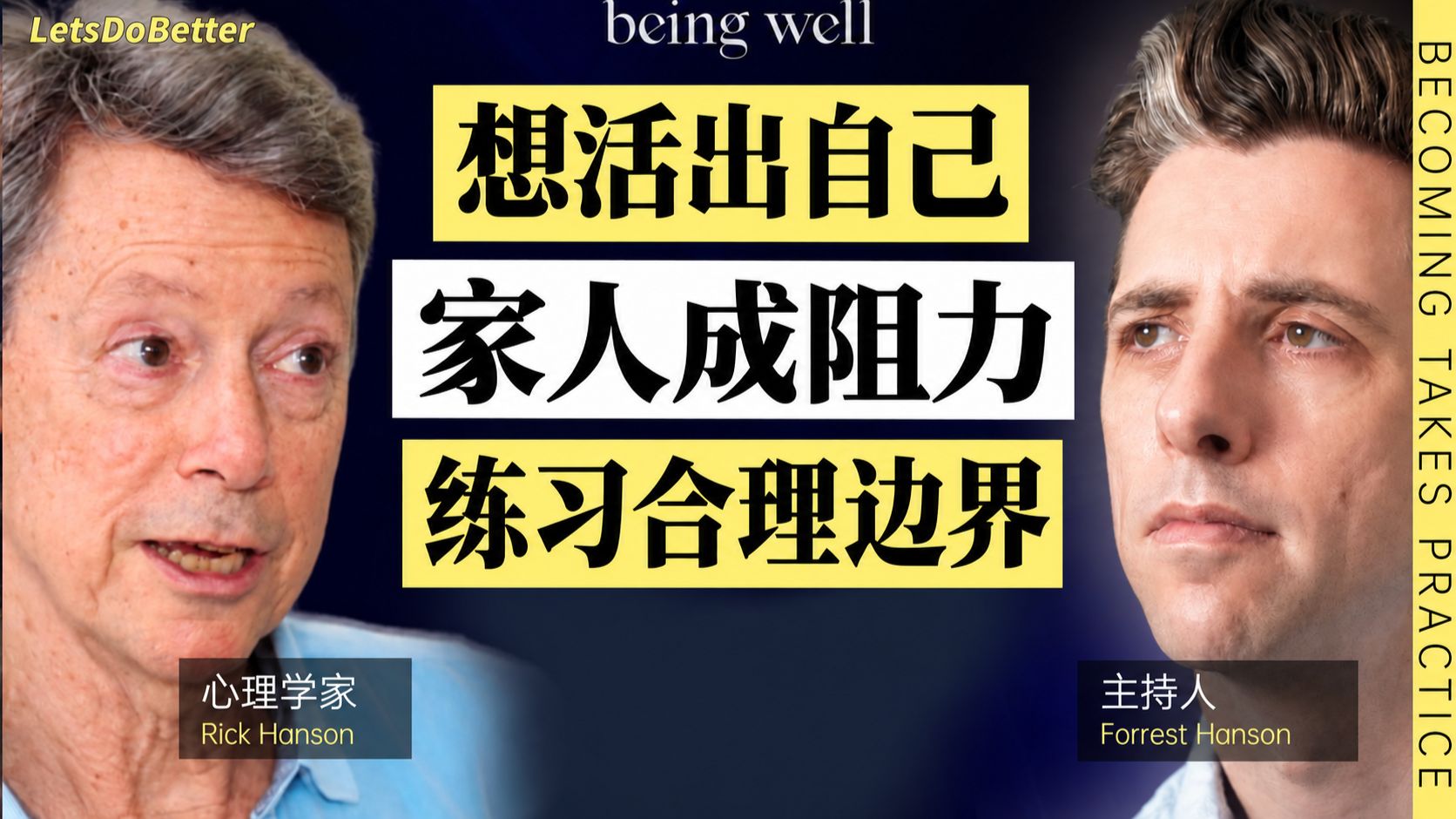
字幕摘录
| 时间 | 英文 | 中文 |
|---|---|---|
| 0:00 | Hello and welcome to Being Well. | 你好 欢迎光临"好" |
| 0:01 | I'm Forrest Hanson. | 我是福瑞斯特·汉森 |
| 0:02 | If you're new to the podcast, | 如果你是新来的播客, |
| 0:03 | thanks for joining us today. | 谢谢你今天能来 |
| 0:05 | And if you've listened before, welcome back. | 如果你之前听过了 欢迎回来 |
| 0:07 | Today, we're talking about something that I honestly cannot believe that we have never done | 今天,我们说的是一些 我无法相信我们从未做过的事 |
| 0:11 | a full episode on, family systems theory. | 家庭系统理论 |
| 0:14 | Family systems theory is a group of related approaches | 家族系统理论是一组相关的方法 |
| 0:17 | to therapy that emerged in the 1950s and 1960s, that fundamentally changed how we think about | 根本改变了我们的想法 |
| 0:23 | behavior. | 行为 |
展开字幕全文(180 条)
| 序号 | 英文 | 中文 |
|---|---|---|
| 1 | Hello and welcome to Being Well. | 你好 欢迎光临"好" |
| 2 | I'm Forrest Hanson. | 我是福瑞斯特·汉森 |
| 3 | If you're new to the podcast, | 如果你是新来的播客, |
| 4 | thanks for joining us today. | 谢谢你今天能来 |
| 5 | And if you've listened before, welcome back. | 如果你之前听过了 欢迎回来 |
| 6 | Today, we're talking about something that I honestly cannot believe that we have never done | 今天,我们说的是一些 我无法相信我们从未做过的事 |
| 7 | a full episode on, family systems theory. | 家庭系统理论 |
| 8 | Family systems theory is a group of related approaches | 家族系统理论是一组相关的方法 |
| 9 | to therapy that emerged in the 1950s and 1960s, that fundamentally changed how we think about | 根本改变了我们的想法 |
| 10 | behavior. | 行为 |
| 11 | At the time, the focus in psychology was mostly interest psychic. | 当时心理学的重点主要是兴趣灵媒. |
| 12 | That means that it | 这意味着它 |
| 13 | focused on what was going on in an individual person's mind. | 专注于一个人的脑海 |
| 14 | But clinicians noticed that a | 但临床医生注意到 |
| 15 | person's symptoms and their related behaviors seemed to change based on relationship context. | 人的症状及其相关行为似乎根据关系背景而改变。 |
| 16 | In other words, what was going on around them. | 换句话说,他们周围发生了什么。 |
| 17 | This was particularly noticeable in families that | 这在家庭中尤其明显: |
| 18 | were under stress. | 压力很大 |
| 19 | These days, most people take it as a given that behavior is situational. | 这些天,大多数人认为行为是情势性的。 |
| 20 | But at the time, the idea that you should bring the whole family into the room and focus on the | 但当时,你应该把全家都带进房间 专注于... |
| 21 | between them was genuinely radical. | 他们俩之间确实非常激进。 |
| 22 | And it wasn't just that context mattered. | 这不仅仅是背景问题。 |
| 23 | It's that | 就是这样 |
| 24 | the relationships themselves had predictable patterns and these patterns had a kind of life | 关系本身有可预测的模式 这些模式有某种生活 |
| 25 | of their own. | 他们自己的。 |
| 26 | And once you start seeing the stuff that FST talks about, this is, I don't know, I'm | 一旦你开始看到 FST 谈论的东西, 这是,我不知道,我 |
| 27 | like getting chills reading the intro right now. | 就像现在看新闻一样 |
| 28 | It is so cool. | 这太酷了 |
| 29 | You cannot unsee it. | 你不能不看出来 |
| 30 | You start to | 你开始 |
| 31 | see these patterns everywhere. | 到处都是这些图案。 |
| 32 | And it is an incredibly powerful lens to view ourselves and | 它是一个令人难以置信的 强大的透镜来看待我们自己 |
| 33 | systems we're a part of through. | 我们是整个系统的一部分 |
| 34 | And it also might lead you to reevaluate some significant | 也可能导致你重新评价一些重要的 |
| 35 | stretches of your personal history here. | 你个人历史的延伸 |
| 36 | So to help us learn more about this, I'm joined | 所以,为了帮助我们了解更多的事情,我加入了 |
| 37 | by clinical psychologist Rick Hanson. | 由临床心理学家里克·汉森(Rick Hanson)执导. |
| 38 | So dad, how are you doing today? | 爸爸,你好吗? |
| 39 | I'm good. | 我没事 |
| 40 | And this topic is particularly close to my clinical training and also practice. | 而这个话题特别接近于我的临床训练以及实践. |
| 41 | So I'm | ┮и琌 |
| 42 | especially psyched about it. | 特别喜欢它。 |
| 43 | Same. | 同样的。 |
| 44 | I just think that this is the | 我只是觉得这是 |
| 45 | behavior for understanding your own behavior, like why you act the way that you do, why you | 理解自己行为的行为 比如为什么你的行为方式 |
| 46 | why you feel a little different when you're returning to your parents' house. | 你回父母家的时候 为什么感觉有点不同 |
| 47 | Not that I | 不是说我 |
| 48 | can speak from personal experience here. | 从个人经验中可以说 |
| 49 | And you walk in the front door and you're like, | 你走在前门 你就像, |
| 50 | wait a second, I feel like I've re-downloaded this old version of my software. | 等等,我觉得我重新下载了这个旧版的软件。 |
| 51 | And now I'm | 现在我 |
| 52 | acting a little differently than I did previously. | 跟我以前一样 |
| 53 | What's all that about? | 这是怎么回事? |
| 54 | It's just such cool stuff. | 这太酷了 |
| 55 | So dad, let's start at the beginning here. | 所以,爸爸,让我们从这里开始。 |
| 56 | What's family systems theory? | 什么是家庭系统理论? |
| 57 | It's a therapeutic orientation. | 即是疗导. |
| 58 | So it's embedded in frames of practice and addressing different | 因此它嵌入了实践框架 并处理不同的 |
| 59 | kinds of suffering and distress and dysfunction. | 那种痛苦、痛苦和功能失调 |
| 60 | And in that frame, it is grounded in the recognition | 在这个框架里,它是建立在承认之上的 |
| 61 | that every individual is part of a larger system. | 每个人是一个更大的系统的一部分。 |
| 62 | Now that recognition was indeed present in | 现在这种承认确实存在于 |
| 63 | psychodynamic theory, particularly around object relations, in which there's a sense of self and | 心理动力学理论,尤其是围绕物体关系,其中存在自我感和自我感. |
| 64 | but the point of intervention, the target of intervention was intra-psychic, was the | 但干预点, 干预的目标是精神内,是 |
| 65 | individual themselves in isolation. | 个人被隔离。 |
| 66 | Family systems theory really broadened the awareness | 家庭系统理论真的扩大了人们的认识 |
| 67 | of the ways in which we are parts of much larger holes. | 我们成为大洞的一部分的方式 |
| 68 | And then it treated the whole itself. | 然后它处理整个自己。 |
| 69 | So the unit of treatment became the family, for example, increasingly thus family systems. | 因此,治疗单位成为家庭,例如,家庭制度日益成为家庭制度。 |
| 70 | It was also grounded in some intellectual developments around the time | 也基于当时的一些思想发展 |
| 71 | 有关系统理论的一般, Gregory Bates 之类的。 | |
| 72 | And, you know, kind of moving | 而且,你知道,一种移动 |
| 73 | through it all was, I think, a very welcome disruption of a certain privileging of | 我认为,所有这一切 是一个非常受欢迎的中断 某种特权的 |
| 74 | usually quite wealthy people who could afford very long treatments of individually centered | 通常相当富有的人 谁可以负担很长的治疗 个人中心 |
| 75 | psychoanalysis. | 心理分析。 |
| 76 | And family systems theory really came up with a grounded recognition | 而家庭系统理论 真正产生了一个有根据的认知 |
| 77 | of the ways in which things like poverty or racism or historical intergenerational trauma | 贫穷、种族主义或历史代际创伤 |
| 78 | could wear on systems in which individuals then were suffering. | 能够穿戴在个人遭受痛苦的系统中。 |
| 79 | Could you give a couple of examples here, Dad, whether it's from your own history of | 爸,你能举几个例子吗? |
| 80 | working with people or just kind of more generic examples of like what this actually looks like | 和人一起工作 或只是一些比较普通的例子 类似这个样子 |
| 81 | in practice? | 在实际中? |
| 82 | I once worked with and I'm | 我曾经工作过,我 |
| 83 | disguised some of the details here. | 伪装了一些细节在这里。 |
| 84 | I once worked with a 10 year old girl who was referred to me | 我曾经和一个10岁的女孩一起工作 她被推荐给我 |
| 85 | for being very aggressive and physically violent with other kids in school. | 因为在学校里对其他孩子非常粗暴和粗暴 |
| 86 | And the stories | 还有故事 |
| 87 | were also that when she was at home, she would threaten to do all kinds of things or would even | 还有当她在家的时候 她会威胁做各种事情 甚至会 |
| 88 | do them like destroying property, television sets, things like that. | 像破坏财产、电视机之类的 |
| 89 | And so I started seeing her | 于是我开始见到她 |
| 90 | individually. | 个人。 |
| 91 | But then at the same time, I began trying to get a sense from the two parents, | 但与此同时,我开始尝试 从双亲那里得到感知, |
| 92 | what's actually going on here? | 这到底是怎么回事? |
| 93 | And then it became increasingly revealed that the two parents were | 后来父母俩越来越 |
| 94 | also extremely aggressive with each other and were fighting physically in front of this girl | 对方也极有攻击性 还在这女孩面前打斗 |
| 95 | routinely. | 常规。 |
| 96 | And she was part of a larger complicated system of discord. | 她是一个比较复杂的不和体系的一部分。 |
| 97 | So that would be | 所以,这将是 |
| 98 | one example where what was happening for her was based in part by modeling what other people were | 其中一个实例是,她正在发生的事情 部分基于模拟其他人是什么 |
| 99 | doing, her parents, and also being really affected by them. | 做,她的父母, 也受到他们的影响。 |
| 100 | And then another example | 然后另一个例子 |
| 101 | would be a teenager who was really into drugs, really acting out, really problematic. | 会是一个青少年 谁真的喜欢毒品, 真正的行为,真正的问题。 |
| 102 | The dad was quite authoritarian, quite strict, quite disciplined, wanted to send the kid off to | 父亲很专制,很严谨,纪律严明,想送孩子去 |
| 103 | some extreme boarding school in Utah to straighten him out. | 犹他州一些极端的寄宿学校 纠正他。 |
| 104 | The mom, very kind of caring, | 妈妈,非常关心, |
| 105 | tender-hearted, wanted to really protect the boy. | 温柔的心 想真正保护孩子 |
| 106 | And she and the teenage boy were basically aligned | 她和那个十几岁的男孩 基本上都在一起 |
| 107 | with each other in opposition to the domineering and excessively authoritarian and kind of scary | 与对方对立 过度专制和恐怖 |
| 108 | father. | 父亲 |
| 109 | And so you could see the ways in which they formed, there was kind of an overall dynamic | 这样你就能看到它们形成的方式 有一种整体的动态 |
| 110 | in which you have classically the permissive parent, the more permissive parent, and then the | 在其中,你通常有 宽容的父母, 更宽容的父母,然后 |
| 111 | more authoritarian parent. | 更专制的家长。 |
| 112 | And then that starts creating a vicious cycle in which, you know, | 然后,这开始 形成恶性循环,你知道, |
| 113 | the more authoritarian one parent becomes, the more permissive the other parent seems like they | 父母一方越是专制 父母另一方越是放纵 |
| 114 | feels like they need to be, and vice versa. | 感觉他们需要,反之亦然。 |
| 115 | And the kid is kind of bouncing between them and tends | 那孩子在他们之间摇摆不定 |
| 116 | to understandably take advantage of that situation. | 利用这种情况是可以理解的。 |
| 117 | So if we're going to address the issues of the | 因此,如果我们要解决 |
| 118 | child, let's say a teenager who's plunking out of school and smoking dope every morning in the | 孩子,让我们假设一个少年 谁的跳出学校 每天早晨抽毒品 |
| 119 | parking lot before walking in the door there, if we're going to address that, we have to address | 在走进那扇门前的停车场 如果我们要解决这个问题 我们必须解决 |
| 120 | the overall structure, the system in which they're a part. | 整体结构,他们所在的系统. |
| 121 | If you have a really healthy strain of | 如果你有一个真正的健康菌株 |
| 122 | that you're growing in a particular petri dish, and then you move that bacteria over to a different | 然后把细菌移到另一个地方 |
| 123 | petri dish, and it doesn't thrive there, you don't blame the bacteria. | Petri菜,它不会在那里生长,你不会怪细菌。 |
| 124 | You look at the culture | 你看这文化 |
| 125 | medium. | 介质。 |
| 126 | You look at the context in which that person is in. | 你看看他所处的环境 |
| 127 | And so in wonderful ways, family | 因此,在美妙的方式,家庭 |
| 128 | system theory expanded our frame of analysis and our frame of reference, and also our frame of | 系统理论扩大了我们的分析框架和参照框架,也扩大了我们 |
| 129 | intervention. | 干预。 |
| 130 | And for me, just to kind of make it quite personal, when I reflect on my own family | 对我来说,只是有点 相当私人化, 当我思考我自己的家庭 |
| 131 | of origin, as I've done a new Curse You For Us, when you send me the notes for this conversation, | 我为我们做了新的诅咒 当你给我寄来谈话的笔记 |
| 132 | it's both haunting and vulnerable to realize the ways that the ripples, including generationally, | 它既困扰 也容易受到伤害 以意识到波纹的方式, 包括世代, |
| 133 | of these larger systems are moving through us and making us on the one hand. | 这些更大的系统 正在通过我们 并使我们一方面。 |
| 134 | So we realize that in | 所以我们才意识到 |
| 135 | saying we live exposed to the golden wind. | 说我们活在金色的风中 |
| 136 | I mean, we are exposed. | 我的意思是,我们暴露。 |
| 137 | On the other hand, alongside that | 另一方面,除此之外, |
| 138 | sort of haunting vulnerability is a release of a fair amount of self blame. | 一种困扰脆弱 是一种释放 相当数量的自我指责。 |
| 139 | We start to realize, | 我们开始意识到, |
| 140 | okay, you know, I got written into a script that was ordained long before I was even born. | 好吧,你知道,我被写成一个剧本 早在我出生之前就被指定。 |
| 141 | And | 还有 |
| 142 | I have been, of course, affected by all those larger dynamics. | 当然,我受到所有这些更大动态的影响。 |
| 143 | And I'm not to blame for, | 我不该怪我 |
| 144 | you know, most of them. | 你知道,大多数。 |
| 145 | And still, it's my responsibility at whatever age I find myself | 但不管年龄如何,这是我的责任 |
| 146 | to do what I can with regard to them. | 尽我所能去对付他们 |
| 147 | And so that's a lot of what we're going to be exploring here | 因此,这是很多 我们将在这里探索 |
| 148 | too. | 也一样。 |
| 149 | Right on. | 没错 |
| 150 | And there was already so much in those examples that you gave that we're going to | 在那些例子中已经有很多 你所给出的,我们要 |
| 151 | be talking about today, triangulation, a little bit of identified patient, the flow of anxiety | 谈论今天,三角化, 一点点识别的病人, 焦虑的流动 |
| 152 | in a system, how does a system manage anxiety. | 在一个系统中,一个系统如何管理焦虑. |
| 153 | So I think those are great examples already, | 所以我认为这些已经是很好的例子了, |
| 154 | dad, to give a little bit of extra context here. | 爸爸,给一些额外的背景。 |
| 155 | So where did this stuff come from? | 这东西从哪里来的? |
| 156 | A lot of people worked on FST. | 很多人在FST上工作过. |
| 157 | We're not talking about like a singular thing here. | 我们不是在谈论一个独特的事情 |
| 158 | The most well | 最强的 |
| 159 | known person is probably Murray Bowen. | 认识的人可能是默里·博文 |
| 160 | He developed Bowen family systems theory. | 他发展了博文家族系统理论. |
| 161 | This is sometimes | 有时候 |
| 162 | called just Bowen theory. | 叫做博文理论 |
| 163 | And a lot of the time when people refer to FST, they're typically | 很多人提到FST, 他们通常都是 |
| 164 | talking about Bowenian kind of approaches and the ones that descended from Bowen's work. | 谈论博文的手法 和博文的作品 |
| 165 | But there | 但这里 |
| 166 | were a lot of people involved here. | 有很多人参与其中 |
| 167 | 另一个大块头是Salvador Mnuchin, 他开发了结构 | |
| 168 | family therapy. | 家庭治疗。 |
| 169 | Mnuchin was, I think it's fair to say, pretty culturally located in terms of those | Mnuchin是,我认为公平的说法, 相当文化定位在这些方面 |
| 170 | factors that you were talking about, dad. | 你刚才提到的因素,爸爸。 |
| 171 | He really wanted to understand families and the broader | 他真的想了解家庭和范围 |
| 172 | social context that they landed in. | 他们所处的社会环境。 |
| 173 | Because the family also, just as members of the family have | 因为家庭,就像家庭成员一样 |
| 174 | to adapt to the family's rules of power, the family itself has to adapt to the rules of power | 为了适应家庭的权力规则,家庭本身必须适应权力规则 |
| 175 | of broader social contexts and systems like school, work, big broader social culture, | 更广泛的社会背景和制度,如学校、工作、更广泛的社会文化, |
| 176 | what neighborhood are they in, poverty, all of those factors that you were talking about before. | 他们住的是什么社区,贫困, 所有那些因素 你刚才谈论过。 |
| 177 | I want to say really quickly, in part because we just did two big episodes on evidence and therapy | 我想说真的很快, 部分是因为我们刚刚做了两集关于证据和治疗的大事件 |
| 178 | and where does evidence come from and all of that. | 证据从何而来? |
| 179 | Family systems theory is mostly observational in | 家族系统理论主要是观察 |
| 180 | its nature. It's mostly observational in its nature. It's mostly observational in its nature. It's mostly | 它的性质。 其性质多为观察. 其性质多为观察. 主要是这样 |
该视频共有字幕 180 条。解锁更多字幕为会员功能,请移动到 价格