(中英附文稿)你不是缺乏自制力:刷手机、暴食和分心,都可能在
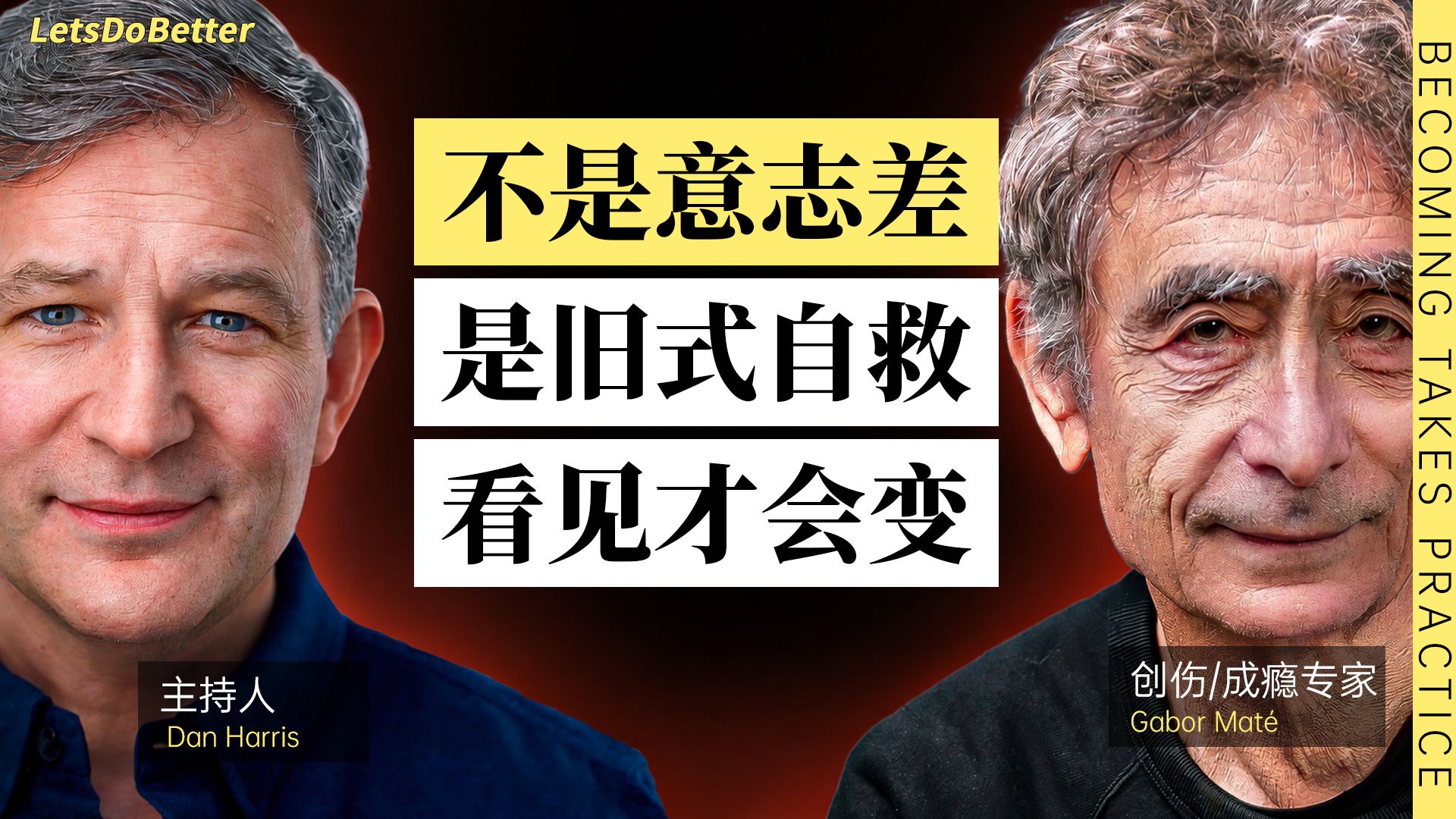
字幕摘录
| 时间 | 英文 | 中文 |
|---|---|---|
| 0:00 | Gabor Mate博士 欢迎回到节目里 | |
| 0:02 | Pleasure, thank you. | 幸会 谢谢 |
| 0:05 | I really appreciate you taking the time. | 我真的很感激你花时间。 |
| 0:06 | Okay, let me set an overall frame on this discussion. | 好吧,让我为这次讨论设定一个总体框架。 |
| 0:12 | You have written a lot about how the stuff | 你写了很多关于这些东西 |
| 0:17 | that happens to us in our childhood, | 发生在我们童年时期 |
| 0:20 | i.e. | 即说. |
| 0:21 | childhood trauma, can be the source | 童年的创伤,可能是原因 |
| 0:25 | of both our addictive tendencies and our scattered minds. | 我们的上瘾倾向 和分散的思想。 |
| 0:31 | In its most extreme form, ADHD. | 最极端的形式是ADHD. |
展开字幕全文(203 条)
| 序号 | 英文 | 中文 |
|---|---|---|
| 1 | Gabor Mate博士 欢迎回到节目里 | |
| 2 | Pleasure, thank you. | 幸会 谢谢 |
| 3 | I really appreciate you taking the time. | 我真的很感激你花时间。 |
| 4 | Okay, let me set an overall frame on this discussion. | 好吧,让我为这次讨论设定一个总体框架。 |
| 5 | You have written a lot about how the stuff | 你写了很多关于这些东西 |
| 6 | that happens to us in our childhood, | 发生在我们童年时期 |
| 7 | i.e. | 即说. |
| 8 | childhood trauma, can be the source | 童年的创伤,可能是原因 |
| 9 | of both our addictive tendencies and our scattered minds. | 我们的上瘾倾向 和分散的思想。 |
| 10 | In its most extreme form, ADHD. | 最极端的形式是ADHD. |
| 11 | So I wanna both explore this argument | 所以我都想探讨一下这个论点 |
| 12 | and then also get into what we can do about it. | 并进入我们所能做的。 |
| 13 | So how does that sound as an overall framework here? | 那么,作为一个总体框架,这听起来如何? |
| 14 | Sounds very necessary, is what it sounds like. | 听起来很有必要 听起来很有必要 |
| 15 | Well, I would agree with you there. | 好吧,我同意你的观点。 |
| 16 | Before we get into the sort of what we can do about it, | 在进入我们所能做的之前 |
| 17 | I wanna ask some clarifying questions. | 我想问几个问题 |
| 18 | When you argue that childhood trauma | 当你认为童年的创伤 |
| 19 | is at the root of addiction and ADHD, | 是成瘾和ADHD的根源, |
| 20 | does that argument scale to the less extreme cases? | 这一论点是否适用于不太极端的情况? |
| 21 | So instead of full-blown addiction, | 所以,而不是完全的瘾, |
| 22 | would what happened to me in my childhood | 我小时候的遭遇 |
| 23 | explain my tendency to overeat or scroll or binge on Netflix? | 解释一下我在Netflix上吃得太多或卷曲或大吃大喝的倾向? |
| 24 | 和ADHD一样, | |
| 25 | would your argument about childhood trauma | 你关于童年创伤的争论 |
| 26 | also scale to the fact that we generally | 也放大了事实,我们一般 |
| 27 | have scattered minds even if we don't have a diagnosis? | 即使我们没有诊断 头脑也会分散吗? |
| 28 | Well, so first of all, in my book on ADHD, | 首先 在我关于ADHD的书里 |
| 29 | which is the first book that I wrote | 这是我写的第一本书 |
| 30 | after I was diagnosed with it myself, | 我被诊断出来后 |
| 31 | I don't even use the word trauma. | 我甚至不使用创伤这个词。 |
| 32 | Although I'm accused of saying | 虽然我被指控说 |
| 33 | that trauma is the cause of ADHD. | 创伤是造成ADHD的原因 |
| 34 | If you read the book, 105,000 words, | 如果你读了这本书,105,000个字, |
| 35 | trauma is mentioned four times and never is the cause. | 创伤被提到四次,从来就不是原因。 |
| 36 | So it's a bit more sophisticated than that. | 所以比这要复杂一点 |
| 37 | Then when it comes to addiction, | 当它变成毒瘾的时候, |
| 38 | and you talk about a range of addiction, | 你谈论一系列的毒瘾, |
| 39 | a whole spectrum of it, | 整个范围, |
| 40 | from a full-blown heroin addict | 从一个彻底的海洛因瘾君子身上 |
| 41 | 给一个经常滚动Instagram的人 | |
| 42 | And there's a continuum. | 还有一个连续体。 |
| 43 | So human beings are on a spectrum, on a continuum. | 因此人类处于一个光谱,一个连续体。 |
| 44 | And the whole idea that there's sort of one normal | 整个想法是 有一个正常的 |
| 45 | and then there's deviations from the normal is totally false. | 然后,有偏离正常是完全错误的。 |
| 46 | In fact, my most recent book is called The Myth of Normal. | 事实上,我最近的一本书叫做"正常的神话". |
| 47 | So when it comes to addiction, | 所以,当它涉及到成瘾, |
| 48 | let me begin by giving you a definition, first of all, | 首先让我给你个定义 |
| 49 | which I think will help to cover your question. | 我想这能帮助你解答问题 |
| 50 | So I define it. | 所以我定义了它。 |
| 51 | And by the way, as a medical doctor, | 顺便说一句 作为一名医生 |
| 52 | I worked in North America's most dire and concentrated | 我在北美最悲惨最集中的地方工作 |
| 53 | and desperate area of drug use, | 和绝望的吸毒地区, |
| 54 | which is the downtown east side | 这是市中心东侧 |
| 55 | of Vancouver, British Columbia. | 不列颠哥伦比亚省温哥华市 |
| 56 | We're in a few square block radius. | 我们在几个方块半径。 |
| 57 | We have thousands of people ingesting, inhaling, | 我们有成千上万的人 摄入,吸入, |
| 58 | injecting drugs of all kinds, | 注射各种毒品, |
| 59 | and dying and falling sick as a result. | 并因此死亡和生病。 |
| 60 | And I worked there for 12 years. | 我在那里工作了12年。 |
| 61 | And at the same time, when I worked there | 同时,当我在那里工作时 |
| 62 | with these really desperately ill and driven human beings, | 与这些 真正极度的疾病和驱动人类, |
| 63 | I could recognize in myself very similar addictive drives, | 我能在自己身上认出非常相似的瘾君子驱动器 |
| 64 | not to the same extent. | 不尽相同程度。 |
| 65 | So it's a continuum. | 所以这是一个连续体。 |
| 66 | That's the first point. | 这是第一点。 |
| 67 | The second point is I'll give you a definition | 第二点是 我给你个定义 |
| 68 | of an addiction. | 瘾君子 |
| 69 | I don't think it's controversial. | 亦无争议. |
| 70 | So an addiction is manifested in any behavior | 所以成瘾表现在任何行为上 |
| 71 | in which a person finds temporary relief and pleasure, | 在其中一个人得到暂时的救济和快乐, |
| 72 | and therefore craves, | 因而渴望, |
| 73 | but then experiences negative consequences as a result of, | 但却会因为 |
| 74 | and doesn't give it up despite the harm. | 并不会放弃它 尽管伤害。 |
| 75 | So craving, pleasure, relief in the short term, | 如此渴望,快乐,短期内解脱, |
| 76 | that's the first. | 这是第一个。 |
| 77 | Dynamic, the second one is harm. | 动态,第二个是伤害。 |
| 78 | And the third is inability to give it up despite the harm. | 第三是不能放弃它 尽管伤害。 |
| 79 | Now, notice that my definition said nothing about drugs. | 现在,注意,我的定义 没有提到毒品。 |
| 80 | It certainly includes drugs. | 这当然包括毒品。 |
| 81 | Could be legal drugs like nicotine or caffeine. | 可能是尼古丁或咖啡因之类的合法药物. |
| 82 | Substances, alcohol. | 物质,酒精。 |
| 83 | Could also be illegal substances like heroin, | 也可能是海洛因等非法物质, |
| 84 | cocaine, crystal meth, and so on. | 可卡因、冰毒等 |
| 85 | But could also be internet scrolling, work, shopping, | 但也可能是互联网卷轴 工作 购物 |
| 86 | eating, bulimia, self-cutting, extreme sports, | 饮食、暴食、自残、极端运动 |
| 87 | pornography, gaming, and I could go on. | 色情,游戏,我可以继续。 |
| 88 | So the issue is not simply the behavior, | 所以问题不在于行为 |
| 89 | but one's relationship to it. | 但是一个人的关系。 |
| 90 | So for example, you could eat in a non-addictive way, | 举例来说,你可以吃 一种非强化的方式, |
| 91 | or you could be addicted to eating, | 或者你可能会上瘾吃东西, |
| 92 | depending on how you're using it. | 取决于你是如何使用它。 |
| 93 | So as to your question, | 至于你的问题, |
| 94 | what I'm saying is it's a whole spectrum, | 我想说的是它是一个完整的光谱, |
| 95 | but what the whole spectrum of addiction shares | 但所有成瘾者都分享 |
| 96 | is behaviors that cause temporary relief, | 是造成暂时缓解的行为, |
| 97 | cause harm, and we don't give it up. | 我们不会放弃的 |
| 98 | And what I'm saying is there's a universal addiction process | 我想说的是,有一个普遍的成瘾过程 |
| 99 | in the brain and in the psyche | 在大脑和心灵中 |
| 100 | that all people addicted share. | 所有人都上瘾了 |
| 101 | Doesn't matter what the target of the addiction is. | 不管毒瘾的目标是什么 |
| 102 | If that makes sense to you, | 如果你觉得合理 |
| 103 | allow me to ask you a question, if I may. | 请允许我问你一个问题,如果可以的话。 |
| 104 | Yes, of course. | 当然 |
| 105 | According to that definition, I'm not gonna ask what, | 根据这个定义,我不会问什么, |
| 106 | but have you ever had an addiction in your life, | 但你曾经有上瘾 在你的生活中, |
| 107 | addictive pattern in your life? | 你生活中的成瘾模式? |
| 108 | Cause you asked me, yes, I have. | 因为你问我,是的,我有。 |
| 109 | How about you? | 你怎么样? |
| 110 | A million percent, many of them, yes. | 百万分之一,他们很多人,是的。 |
| 111 | Okay, so let me ask you this. | 好吧,让我问你这个。 |
| 112 | Not what's wrong with the addiction, which is obvious, | 上瘾不是有什么问题 很明显 |
| 113 | what's right about it? | 有什么不对的? |
| 114 | What does it give you in the short term that you want? | 短期内你想要什么? |
| 115 | Well, you made a nod at this in your last answer, | 你上次回答的时候点了点头 |
| 116 | which is it gives me temporary relief | 它给了我暂时的解脱 |
| 117 | from some sort of afflictive emotion. | 从某种痛苦的情绪。 |
| 118 | Okay, so it gives you relief for some kind of pain. | 好吧,所以它给你解脱 某种痛苦。 |
| 119 | So that's my whole point. | 所以,这就是我的全部观点。 |
| 120 | Addictions are not a choice that people are making | 成瘾不是人们的选择 |
| 121 | and it's not a disease that they've inherited. | 这不是他们继承的疾病 |
| 122 | It's an attempt to solve the problem of human suffering. | 欲解众苦. |
| 123 | And what happens is, is that the suffering comes first, | 发生的事情是, 痛苦是第一, |
| 124 | then the addiction comes along to transude the suffering. | 然后成瘾的滋润 将痛苦转移 |
| 125 | Hence my mantra. | 所以我的口号。 |
| 126 | Don't ask why the addiction, ask why the pain. | 不问何故上瘾 问何故痛. |
| 127 | If you wanna ask why the pain, | 如果你想问为什么疼痛 |
| 128 | yes, that goes back to childhood experiences. | 是的,这可以追溯到童年的经历。 |
| 129 | Now, childhood experiences can be of different intensity | 现在,童年的经历可能不同程度 |
| 130 | and people can experience them differently | 人们可以以不同的方式体验他们 |
| 131 | depending on how sensitive they are. | 取决于他们有多敏感。 |
| 132 | So the more sensitive you are, | 所以,你越敏感, |
| 133 | the more things will hurt you. | 事情会越多伤害你。 |
| 134 | In the downtown Eastside where I worked for 12 years, | 在东区我工作了12年的市中心 |
| 135 | I never had a single female patient | 我从来没有一个女病人 |
| 136 | who had not been sexually abused as a child. | 他们小时候没有受到性虐待。 |
| 137 | And if you look at the large scale studies | 如果你看看大规模研究 |
| 138 | on substance addicts, that's what it shows | 药物瘾君子,这就是它显示 |
| 139 | that severe childhood experiences | 那种严重的童年经历 |
| 140 | potentiate addictions later on in life. | 后世的瘾君子 |
| 141 | That's not even vaguely controversial. | 这甚至没有模糊的争议。 |
| 142 | But children can be hurt | 但是孩子会受伤的 |
| 143 | not just by terrible things happening to them, | 不只是因为可怕的事情发生在他们身上, |
| 144 | but also by their needs not being met. | 但也因为他们的需要得不到满足。 |
| 145 | And so there's a whole range of experiences | 所以有各种各样的经验 |
| 146 | that can wound a child that can later lead somebody | 会伤到一个孩子 以后会引领别人 |
| 147 | to seek relief from the pain. | 以寻求缓解痛苦。 |
| 148 | And that's all addictions are, | 这就是所有瘾君子是, |
| 149 | is an attempt to seek relief from the pain. | 试图从痛苦中寻求解脱 |
| 150 | I've said a mouthful, but that's how I see it. | 我说了一句话 但我是这样看的 |
| 151 | No, it's fascinating and this is a podcast. | 不,很迷人,这是播客。 |
| 152 | Mouthfuls are encouraged. | 口为鼓励. |
| 153 | So that argument that, sorry, let me state that again. | 所以,对不起,让我再说一遍。 |
| 154 | So your argument that addiction is a spectrum | 所以,你的论点 成瘾是一个谱 |
| 155 | and at the root of all of it is difficult events. | 其根源是困难事件。 |
| 156 | Some degree of pain, including childhood, yeah. | 某种程度的痛苦,包括童年,是的。 |
| 157 | Yes, and is that also true for ADHD | 是的,对ADHD也是如此 |
| 158 | in the sense that while I personally | 意思是,当我个人 |
| 159 | 没有ADHD诊断, | |
| 160 | I am definitely prone to being distractible. | 我绝对容易分心 |
| 161 | And so would you say the same thing is true | 你也会这么说吗? |
| 162 | that there's a range, a continuum of attention, | 有一个范围, 一个连续的关注, |
| 163 | attentional faculties and attentional faculty challenges | 学制和学制挑战 |
| 164 | and that the same thing is true | 同样的事情是真实的 |
| 165 | that also those challenges have their root in childhood? | 这些挑战在童年时期也有其根源? |
| 166 | Yes, so I have an ADHD diagnosis. | 是的,所以我有一个ADHD诊断。 |
| 167 | I was diagnosed in my early 50s. | 我50多岁时被诊断出来 |
| 168 | And that's when I wrote my first book, | 那时我写了第一本书 |
| 169 | which is Scattered Minds, | 是散乱的心灵, |
| 170 | and which is even 26 years ago, | 甚至在26年前, |
| 171 | but even a few months ago, | 几个月前 |
| 172 | it was a New York Times bestseller. | 那是纽约时报的畅销书 |
| 173 | And if you look at ADHD is another one of these conditions | 如果你看ADHD 是其中一个条件 |
| 174 | which medical ideology says is an inherited disease. | 医学思想说是一种遗传性疾病 |
| 175 | No, it isn't. | 不,这不是。 |
| 176 | It runs in families. | 它在家庭里运行。 |
| 177 | A couple of my kids were diagnosed, | 我的两个孩子被诊断出 |
| 178 | but things can run in families without genetic transmission. | 但是在没有基因传播的情况下 家庭可以运转 |
| 179 | So here's what I'm saying. | 故此说. |
| 180 | If you take the hallmark of ADHD, | 如果你接受ADHD的标志, |
| 181 | which is tuning out absent-mindedness, it's not a disease. | 它正在调整 的缺席, 它不是一个疾病。 |
| 182 | It's actually a coping mechanism. | 这其实是一种应对机制. |
| 183 | If I were to stress you right now | 如果我现在要强调你 |
| 184 | and you'd have the options of leaving, | 你可以选择离开 |
| 185 | just hanging up on me or fighting back and saying, | 只是挂断我 或者反击说, |
| 186 | no, you can't talk to me that way. | 不 你不能那样跟我说话 |
| 187 | But if I were to create stress for you | 但是如果我给你制造压力 |
| 188 | and you couldn't escape | 而你却无法逃脱 |
| 189 | and you couldn't change the situation, | 你无法改变现状, |
| 190 | one way that your brain would deal with it | 一种方法,你的大脑会处理它 |
| 191 | {\fn黑体\fs20\shad2\2aH82\3aH20\4aH33\fscx95\3cH592001\be1}就是调和一下去脱离 | |
| 192 | to protect yourself from the stress. | 保护自己免受压力 |
| 193 | Now, what I'm saying is | 现在我要说的是 |
| 194 | when genetically highly sensitive infants | 当遗传高度敏感的婴儿 |
| 195 | are living in a highly stressed environment, | 生活在一个高度紧张的环境中, |
| 196 | which is not a question of necessarily | 那不一定是一个问题 |
| 197 | the parents being abusive or bad or unloving, | 父母是虐待、坏人或不爱的人, |
| 198 | but just the parents are stressed themselves, | 但只有父母 被强调自己, |
| 199 | which increasingly is the case in this culture, | 在这种文化中,情况越来越严重, |
| 200 | these kids are stressed. | 这些孩子压力很大。 |
| 201 | And how they cope with it is by tuning out. | 他们如何应对它 是通过调试。 |
| 202 | It's a coping mechanism. | 这是一个应对机制。 |
| 203 | And when does that happen? | 什么时候发生的? |
该视频共有字幕 203 条。解锁更多字幕为会员功能,请移动到 价格