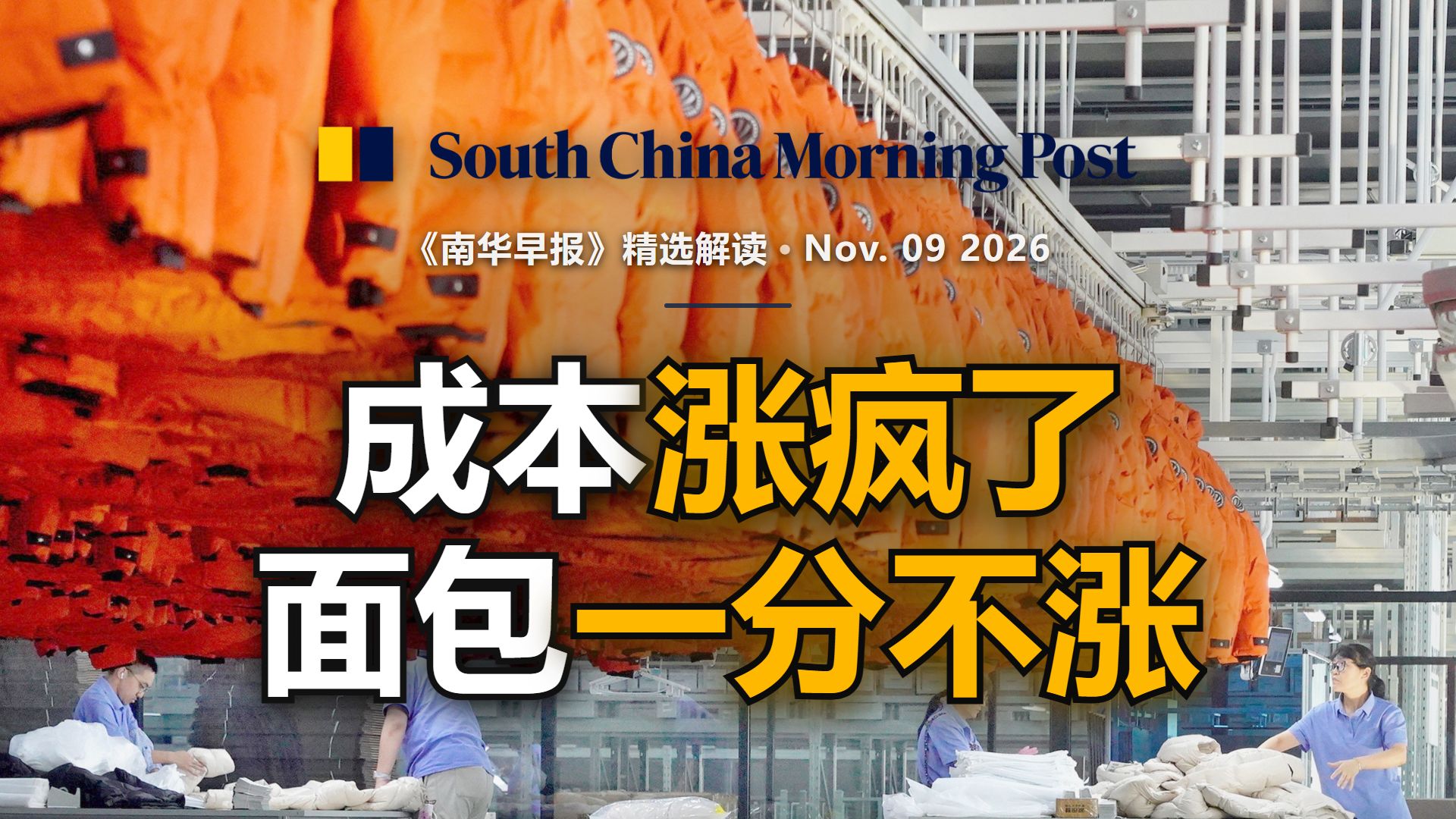
PPI创2022年以来最大涨幅:伊朗战火下的中国工厂,为何不
字幕摘录
| 时间 | 英文 | 中文 |
|---|---|---|
| 0:00 | Imagine, um, your favorite local bakery. | 想象一下 你最喜欢的本地面包店 |
| 0:03 | Okay. | 摆 |
| 0:03 | I am picturing it. | 我在想象着 |
| 0:05 | So the rent for their building just doubled. | 他们的房租翻了一番 |
| 0:07 | And the cost of their flour went way, way up. | 他们的面粉价格高涨 |
| 0:10 | Oh, that is really bad for business. | 哦,这对生意真的很不好。 |
| 0:12 | Right. | 对 |
| 0:13 | And their electricity bill is just huge now. | 他们的电费现在还很大 |
| 0:15 | But, um, when you walk in to buy your morning bread, | 但是 当你走进来买早饭时 |
| 0:19 | the price has not changed at all. | 价格根本没有变化。 |
展开字幕全文(261 条)
| 序号 | 英文 | 中文 |
|---|---|---|
| 1 | Imagine, um, your favorite local bakery. | 想象一下 你最喜欢的本地面包店 |
| 2 | Okay. | 摆 |
| 3 | I am picturing it. | 我在想象着 |
| 4 | So the rent for their building just doubled. | 他们的房租翻了一番 |
| 5 | And the cost of their flour went way, way up. | 他们的面粉价格高涨 |
| 6 | Oh, that is really bad for business. | 哦,这对生意真的很不好。 |
| 7 | Right. | 对 |
| 8 | And their electricity bill is just huge now. | 他们的电费现在还很大 |
| 9 | But, um, when you walk in to buy your morning bread, | 但是 当你走进来买早饭时 |
| 10 | the price has not changed at all. | 价格根本没有变化。 |
| 11 | Not even by a single penny? | 连一分钱都没有? |
| 12 | Nope. | 没有 |
| 13 | So, you know, how long before that bakery goes totally bankrupt? | 面包店要多久才能破产? |
| 14 | I mean, probably not very long. | 我是说,可能不会太久 |
| 15 | Exactly. | 没错 |
| 16 | Welcome to this Deep Dive. | 欢迎来到这个深渊 |
| 17 | Today we are looking at a recent article from the South China Morning Post. | 今天,我们看看《南华早报》最近发表的一篇文章。 |
| 18 | Yeah. | 对 |
| 19 | And this exact bakery scenario is actually playing out right now. | 而这个面包店的剧情 实际上是现在在演戏。 |
| 20 | But it is not happening in a local bakery, is it? | 但这不是发生在当地的面包店,是吗? |
| 21 | No. | 没有 |
| 22 | It is not. | 事实并非如此。 |
| 23 | It is happening across the entire manufacturing sector of China. | 它正在中国的整个制造业部门发生。 |
| 24 | Which is a huge economic puzzle. | 这是一个巨大的经济谜题。 |
| 25 | I mean, our mission today is to explore the strange situation. | 我们今天的任务是探索奇怪的情况。 |
| 26 | Right. | 对 |
| 27 | Factors are paying so much more money to make things. | 因素正在付出如此多的钱 做东西。 |
| 28 | But the prices that shoppers pay at the store are staying almost exactly the same. | 但店内购物者支付的价格几乎完全不变. |
| 29 | So we will break down the numbers today. | 因此,我们今天将细分数字。 |
| 30 | We will look at global causes like energy and new technology. | 我们将审视能源和新技术等全球事业。 |
| 31 | And we will discuss what experts think the government should actually do to fix this. | 我们将讨论专家认为政府应该做些什么来解决这个问题。 |
| 32 | Let's start with the facts. | 先说事实. |
| 33 | We have two really big numbers from October. | 我们从10月份开始有两个非常大的数字。 |
| 34 | Yes. | 对 |
| 35 | The first number is the PPI. | 第一个号码是PPI. |
| 36 | That stands for Producer Price Index. | 这是生产者价格指数。 |
| 37 | Let's explain that simply. | 让我们简单解释一下 |
| 38 | PPI is basically the factory gate price, right? | PPI基本上是工厂门价,对吧? |
| 39 | Exactly. | 没错 |
| 40 | It is what it costs to make things before they even leave the factory. | 在他们离开工厂之前 制造东西要花多少钱 |
| 41 | Okay. | 摆 |
| 42 | So what did the PPI do in October? | 10月PPI做什么了? |
| 43 | Well, it went up 5.7% compared to a year ago. | 和一年前相比上升了5.7% |
| 44 | Wow. | 珃 |
| 45 | That feels like a really big jump. | 这感觉就像一个真正的大跳跃。 |
| 46 | It is huge. | 这是巨大的。 |
| 47 | Actually, it is a record high since the middle of 2022. | 实际上,这是自2022年中以来创纪录的高点. |
| 48 | And did financial experts expect it to be that high? | 金融专家预计会这么高吗? |
| 49 | No, they did not. | 不,他们没有。 |
| 50 | There is a financial data group called WIND. | 有一个金融数据组叫WIND。 |
| 51 | Right. | 对 |
| 52 | And the experts at WIND expected it to only go up by 5.37%. | 而WIND的专家预计它只会上升5.37%. |
| 53 | So it was much higher than expected. | 所以比预期的要高得多 |
| 54 | And this is a new trend, you know, going up. | 这是一个新的趋势,你知道,上升。 |
| 55 | Yeah. | 对 |
| 56 | Factory prices have actually been rising since March. | 自3月以来,工厂价格实际上一直在上升。 |
| 57 | Which ended a really long period of falling prices, right? | 这结束了一段很长时期的价格下跌,对不对? |
| 58 | Exactly. | 没错 |
| 59 | Before March, prices were dropping for 41 months in a row. | 3月前,价格连续41个月下跌. |
| 60 | That is over three years of falling prices. | 这是三年多价格下跌。 |
| 61 | And now they are just shooting up. | 现在他们正在开枪 |
| 62 | Right. | 对 |
| 63 | So that is the factory side. | 这就是工厂方面。 |
| 64 | Let's look at the shopper side. | 让我们看看斜面。 |
| 65 | This is the second big number, the CPI. | 这是第二个大数字,CPI。 |
| 66 | Yes. | 对 |
| 67 | The Consumer Price Index. | 消费物价指数. |
| 68 | Yes. | 对 |
| 69 | And this is just the price regular people pay in stores, you know, for everyday items. | 这是普通人每天在商店里支付的价格。 |
| 70 | Then the CPI only went up 0.7% in October. | 之后消费物价指数在10月才上升0.7%. |
| 71 | Wait, only 0.7%? | 等等,只有0.7%吗? |
| 72 | Yeah. | 对 |
| 73 | But the factory costs went up 5.7%. | 但工厂成本上升了5.7%. |
| 74 | That is a massive gap. | 这是一个巨大的差距。 |
| 75 | It really is. | 没错 |
| 76 | And we also need to mention something called core inflation. | 我们还需要提到一些所谓的核心通货膨胀。 |
| 77 | Let's explain core inflation for you, the listener. | 我们来解释一下核心通货膨胀吧,听众 |
| 78 | It basically ignores food and energy, right? | 它基本上忽略了食物和能量,对不对? |
| 79 | Yes, because food and energy prices jump around a lot. | 是的,因为食品和能源价格 跳跃了很多。 |
| 80 | You know, a bad storm can make food expensive very quickly. | 暴风雨会很快使食物变得昂贵 |
| 81 | So when we remove those jumpy prices, what is the core inflation? | 所以,当我们去掉这些暴涨的价格, 核心通货膨胀是什么? |
| 82 | Core inflation was only 0.8%. | 核心通货膨胀率仅为0.8%。 |
| 83 | Wow. | 珃 |
| 84 | And food prices actually dropped by a full 1%. | 而粮食价格实际上下降了整整1%。 |
| 85 | So food is getting cheaper and store prices are barely moving. | 所以食物越来越便宜,商店价格也几乎没有变动. |
| 86 | Right. | 对 |
| 87 | This goes back to our bakery analogy. | 这又回到我们的面包店类比。 |
| 88 | The costs for the factory are going way up, but the price of the product stays the same. | 工厂的成本正在大幅上升,但产品的价格保持不变。 |
| 89 | Which means the factories are just eating that extra cost. | 也就是说工厂正在吃这个额外的成本 |
| 90 | So why are the factory costs going up so fast? | 那么为什么工厂的成本会这么快? |
| 91 | Let's talk about the global energy market. | 谈全球能源市场. |
| 92 | Yeah, that is the main reason for these high factory prices. | 是啊,这是这些高 工厂价格的主要原因。 |
| 93 | International energy costs. | 国际能源成本。 |
| 94 | Okay, why is energy so expensive right now? | 好吧,为什么能源现在这么贵? |
| 95 | Well, a big part of it is international politics, | 大部分是国际政治 |
| 96 | specifically the ongoing conflict between the U.S. and Iran. | 特别是美国和伊朗之间的持续冲突。 |
| 97 | Okay, I need to pause here. | 好,我要暂停一下 |
| 98 | I must explicitly state something for you listening. | 我必须明确告诉你一些事情 |
| 99 | We are just sharing the facts from the report today. | 我们只是分享今天报告中的事实。 |
| 100 | Yes, absolutely. | 是的,当然。 |
| 101 | We are not taking any political sides at all. | 我们完全没有采取任何政治立场。 |
| 102 | We are just explaining the economics. | 我们只是解释一下经济学 |
| 103 | Right, that is very important. | 这很重要 |
| 104 | So there is a group called CICC. | 有个叫CICC的团体 |
| 105 | That is the China International Capital Corporation. | 那是中国国际资本公司 |
| 106 | Okay. | 摆 |
| 107 | And what do their analysts say? | 他们的分析师怎么说? |
| 108 | They say this tension keeps crude oil prices very, very high. | 他们说,这种紧张状况使原油价格居高不下。 |
| 109 | And crude oil is the raw oil straight from the ground, right? | 原油是直接从地面运来的,对吧? |
| 110 | Yes. | 对 |
| 111 | And when crude oil is high, | 当原油高的时候, |
| 112 | things like refined oil and chemicals become much more expensive inside China. | 炼油和化工等产品在中国国内变得昂贵得多. |
| 113 | Because factories use those chemicals to make everything, | 因为工厂用这些化学品制造一切, |
| 114 | plastic, clothes, you name it. | 塑料,衣服,你说的。 |
| 115 | Exactly. | 没错 |
| 116 | No, U.S. President Donald Trump did speak about this. | 不,美国总统唐纳德·特朗普确实谈到这个问题. |
| 117 | What did he say? | 他说什么? |
| 118 | He said it is highly unlikely he would order a war with Iran. | 他说他不太可能下令与伊朗开战。 |
| 119 | Well, that sounds like a good thing for keeping prices calm. | 嗯,这听起来是一个好事 保持价格平静。 |
| 120 | It is, but he added a condition. | 是的,但他增加了一个条件。 |
| 121 | He said this is true as long as talks about Iran's nuclear program make progress. | 他说,只要谈论伊朗的核计划取得进展,情况就是如此。 |
| 122 | Right, and talks about the Strait of Hormuz too, correct? | 对,还谈了霍尔木兹海峡,对吗? |
| 123 | Yes. | 对 |
| 124 | The Strait of Hormuz is a major shipping path for oil. | 霍尔木兹海峡是石油的主要航运通道. |
| 125 | But he also said U.S. forces are ready to strike if needed. | 但他也表示,如果有需要,美军准备出击. |
| 126 | So that keeps the markets really nervous. | 这让市场非常紧张。 |
| 127 | And nervous markets mean high oil prices. | 紧张的市场意味着高油价。 |
| 128 | But is there a local reason inside China for high energy costs? | 但中国国内是否有高能源成本的局部原因? |
| 129 | Yes, there is. | 是的,这是有的。 |
| 130 | It is simply the time of year. | 这只是一年的时间。 |
| 131 | Factories and cities are preparing for winter. | 工厂和城市正在准备过冬。 |
| 132 | Oh, right. | 对 |
| 133 | Yeah, because it gets cold. | 是啊,因为它变得冷。 |
| 134 | Yeah, so they need a lot more coal and natural gas. | 是啊,所以他们需要更多的煤和天然气。 |
| 135 | They use it for power and for heating. | 他们用它来发电和取暖。 |
| 136 | So demand goes way up and prices go up with it. | 所以需求会上升很多,价格也会随之上涨。 |
| 137 | That is exactly what is happening. | 这正是正在发生的情况。 |
| 138 | Okay, so wait, does this mean anything in the world that needs oil or electricity to be made | 好吧,等等,这是否意味着 世界上任何需要石油或电力的东西 |
| 139 | is simply going to cost more right now? | 现在要花更多钱吗? |
| 140 | Basically, yes. | 基本上没错 |
| 141 | If a factory needs power, their bills are going up. | 如果工厂需要电力,他们的账单就会上升。 |
| 142 | That makes sense. | 这有道理。 |
| 143 | But there was another detail in the report and honestly, it really surprised me. | 但报告有另一个细节 老实说,这让我很惊讶。 |
| 144 | You mean the part about artificial intelligence? | 你是说关于人工智能的部分? |
| 145 | Yes, AI. | 是的,艾尔。 |
| 146 | Dong Lijuan mentioned this. | 董立柱提到这一点. |
| 147 | She is a senior statistician at China's National Bureau of Statistics. | 她是中国国家统计局高级统计学家. |
| 148 | Right, she said the very fast growth of AI is another reason for these high prices. | 对 她说AI的快速增长 是造成这些高价的另一个原因 |
| 149 | Okay, I have to push back on this. | 好吧,我必须推回这个。 |
| 150 | When I think of AI, I think of software. | 当我想到AI的时候,我想到了软件. |
| 151 | You know, invisible computer code. | 你知道,隐形计算机代码。 |
| 152 | Most people do. | 大多数人都这样 |
| 153 | I just do not think of heavy factory industry. | 我只是不认为重工厂工业。 |
| 154 | How does computer code make physical raw material so expensive? | 计算机代码如何使物理原料如此昂贵? |
| 155 | It is because AI is actually highly physical. | 这是因为AI实际上是高度物理的。 |
| 156 | It is not just floating in the air. | 这不仅仅是浮在空中。 |
| 157 | Well, what do you mean? | 你说什么? |
| 158 | To create AI, you need massive computers. | 要创建AI,你需要大规模计算机. |
| 159 | And these computers live in giant buildings called data centers. | 这些计算机生活在巨大的建筑中,称为数据中心。 |
| 160 | Right, okay. | 对,好的。 |
| 161 | And building those centers requires specific raw materials. | 建造这些中心需要具体的原材料。 |
| 162 | You need lots of copper for wires. | 你需要很多铜丝 |
| 163 | You need rare earth metals. | 你需要稀土金属 |
| 164 | Oh, wow. | 哦,哇呜。 |
| 165 | I did not really think about all the metal on wires. | 我并没有真正想到所有的金属 在铁丝网。 |
| 166 | Yeah, and you need a lot of new equipment manufacturing just to cool these giant computers down. | 是啊,你需要很多新的设备制造 只是为了冷却这些巨大的计算机。 |
| 167 | They get very hot. | 他们变得非常热。 |
| 168 | So building the machines that power AI is actually driving up factory costs everywhere? | 造出电源AI的机器 将工厂的成本推高到哪里? |
| 169 | Yes, they are buying up all the raw materials. | 是的,他们正在购买所有原材料。 |
| 170 | That is fascinating. | 这是令人着迷的。 |
| 171 | So energy and AI are making production super expensive. | 所以能量和AI使得生产变得超级昂贵. |
| 172 | So why don't the factories just charge the shoppers more, just cover the cost? | 那为什么工厂不给店主多收点钱 付点钱? |
| 173 | Well, this is the core problem. | 这是核心问题 |
| 174 | The reason they don't is because of weak end user consumption. | 之所以不这样做是因为终端用户消费疲软. |
| 175 | Weak end user consumption. | 终端用户消费薄弱. |
| 176 | Let's explain that. | 我们来解释一下 |
| 177 | That simply means regular people are not spending much money, right? | 这就是说普通人没花多少钱,对吧? |
| 178 | Exactly. | 没错 |
| 179 | Regular shoppers are being very careful. | 普通店主都非常谨慎 |
| 180 | They are holding onto their cash. | 他们拿着现金 |
| 181 | And if a factory raises the price of a shirt, the shopper just won't buy the shirt. | 如果工厂涨了衬衫的价格, shopper只是不会买衬衫。 |
| 182 | Right. | 对 |
| 183 | So the factory has to keep the price low even if they are losing money. | 所以工厂必须保持低价 即使他们正在失去钱。 |
| 184 | Okay, so what is the government doing about this? | 那么,政府在做什么呢? |
| 185 | How do they get people to spend? | 他们怎么让人们花钱? |
| 186 | In late October, China announced a plan to fix this by building better infrastructure. | 10月下旬,中国宣布计划通过建设更好的基础设施来解决这个问题. |
| 187 | What kind of infrastructure? | 什么样的基础设施? |
| 188 | Like roads and bridges? | 像道路和桥梁一样? |
| 189 | No, actually, they want to focus on places where people shop. | 不,实际上,他们想专注于人们购物的地方。 |
| 190 | For example, they want to make wet markets digital. | 例如,他们想让湿市面数字化. |
| 191 | Okay, let's explain a wet market for the listener. | 好吧,让我们解释一个湿市场 听者。 |
| 192 | It is basically a traditional local market, right? | 它基本上是一个传统的地方市场,对不对? |
| 193 | Where you buy fresh meat and vegetables. | 何处买鲜肉蔬菜. |
| 194 | Yes, exactly. | 没错 |
| 195 | A very normal everyday market. | 一个非常正常的日常市场。 |
| 196 | They want to add digital technology to them. | 他们希望增加数字技术。 |
| 197 | What else are they doing? | 他们还在干嘛? |
| 198 | They want to put brand new air conditioners in shopping malls. | 他们希望在购物中心安装全新的空调. |
| 199 | Oh, to make the malls more comfortable. | 哦,让商场更舒适。 |
| 200 | Right. | 对 |
| 201 | And they want to build new spaces for sports and even spaces for senior care. | 他们想要为运动建造新的空间,甚至为老年人护理建造新的空间。 |
| 202 | So the idea is make the places nicer and people will want to go out and spend money? | 所以这个想法是让这些地方变得更好 人们会想出去花钱? |
| 203 | That is the government plan, yes. | 这是政府的计划,是的。 |
| 204 | But does everyone agree with that plan? | 但大家都同意这个计划吗? |
| 205 | Not at all. | 一点也不 |
| 206 | There is a strong counter-argument. | 有一种强烈的反驳。 |
| 207 | We should look at Feng Zhu from JP Morgan. | 我们应该看看JP摩根的冯卓 |
| 208 | Okay, what does he say? | 好吧,他说什么? |
| 209 | He warrants against policies that are too government-driven. | 他有理由反对过于政府驱动的政策。 |
| 210 | Meaning the government is making all the choices. | 意思是政府要做出所有的选择 |
| 211 | Right. | 对 |
| 212 | He says these plans focus too much on supply. | 他说这些计划过于注重供给. |
| 213 | Okay, supply. | 好吧,供应。 |
| 214 | Right, like the people making the air conditioners. | 对 就像制造空调的人 |
| 215 | Exactly. | 没错 |
| 216 | He says buying air conditioners for malls just acts like a subsidy for the air conditioning industry. | 他说为商场购买空调就像对空调行业的补贴. |
| 217 | A subsidy is when the government gives financial help to a business, right? | 补贴是指政府给企业提供经济帮助,对吧? |
| 218 | Yes. | 对 |
| 219 | So the builders and manufacturers get money, but it does not really help the regular shopper. | 所以建筑商和厂商都得到钱, 但这并没有真正帮助普通的 s。 |
| 220 | So what is his alternative? | 那么他有什么选择? |
| 221 | What does Feng Zhu think they should do? | 冯朱认为他们应该做什么? |
| 222 | He believes the government should give direct cash subsidies to consumers. | 他认为政府应该给消费者直接现金补贴. |
| 223 | Wait, you mean just give money directly to the regular people? | 等等 你是说直接给普通人钱? |
| 224 | Yes, just put money right in their pockets. | 是的,只要把钱放在他们的口袋里。 |
| 225 | How does that help the economy more than upgrading a mall? | 这比提升商场更能帮助经济? |
| 226 | Well, if households get to choose how to spend the cash, the economy becomes much more market-driven. | 如果家庭可以选择如何花现金, 经济就更受市场驱动。 |
| 227 | Oh, I see. | 原来如此 |
| 228 | Because the families decide what they actually need? | 因为家人决定他们真正需要什么? |
| 229 | Right. | 对 |
| 230 | One family buys food, another buys clothes. | 一个家庭买食物 另一个家庭买衣服 |
| 231 | It helps the whole economy, not just specific industries like construction. | 它帮助整个经济,而不仅仅是建筑等特定行业. |
| 232 | So let me summarize this debate clearly. | 因此,让我清楚地总结一下这次辩论。 |
| 233 | It is basically asking, what works better to fix the economy? | 它基本上是在问,什么能更好地修复经济? |
| 234 | Yeah. | 对 |
| 235 | Do you pay businesses to build nicer shopping malls? | 你付钱给企业来建造更好的购物中心吗? |
| 236 | Or do you put money directly in people's pockets so they can actually buy things inside those malls? | 或者你直接把钱放在人们的口袋里 这样他们就可以在商场里买东西了? |
| 237 | That is the exact debate happening right now. | 这正是现在正在发生的辩论。 |
| 238 | It is such an interesting problem. | 这是一个很有趣的问题。 |
| 239 | But I want to connect this back to you, the listener. | 但我想把这个连接回你,听者。 |
| 240 | Yes, why should people care about this? | 是的,为什么人们会关心这个? |
| 241 | Exactly. | 没错 |
| 242 | Even if you live far, far away from China, these factories make the everyday items you buy. | 即使你住在远离中国的地方 这些工厂也做你每天买的东西 |
| 243 | They really do. | 他们真的有。 |
| 244 | They make so much of the world's stuff. | 他们做这么多的世界的东西。 |
| 245 | So this gap between what factories pay and what you pay, it affects the whole global supply chain. | 因此,工厂支付与你支付之间的这个差距, 影响了整个全球供应链。 |
| 246 | If factories are losing money, it will eventually affect everyone. | 如果工厂赔钱,最终会影响到每个人. |
| 247 | Which leaves us with a final, you know, provocative thought for you to think about. | 这留给我们一个最后的,你知道的, 挑衅性的想法让你思考。 |
| 248 | Okay, what is it? | 好吧,这是什么? |
| 249 | If factory costs keep going up because of oil and AI, but shoppers still refuse to spend their money, | 如果工厂成本继续上涨 因为石油和AI, 但购物者仍然拒绝花他们的钱, |
| 250 | who loses first? | 谁先输? |
| 251 | That is a tough question. | 这是一个很难的问题。 |
| 252 | Will the factories eventually have to just close their doors? | 工厂最终会关门吗? |
| 253 | Or will shoppers suddenly see a massive overnight jump in the price of their everyday goods? | 或者店主会突然看到 他们的日常用品价格 突然大幅上涨? |
| 254 | Someone has to give in eventually. | 总得有人屈服 |
| 255 | Exactly. | 没错 |
| 256 | We will leave you to mull this over. | 我们会让你考虑的 |
| 257 | Thank you so much for joining us for this deep dive. | 非常感谢你加入我们的深度潜水 |
| 258 | Yes, thank you for listening. | 是的,谢谢你的聆听。 |
| 259 | We will see you next time. | 下次见 |
| 260 | Goodbye. | 再见 |
| 261 | Bye. | 再见。 |
该视频共有字幕 261 条。解锁更多字幕为会员功能,请移动到 价格