2026年诺贝尔经济学奖揭晓,为什么是这俩位美国教授?
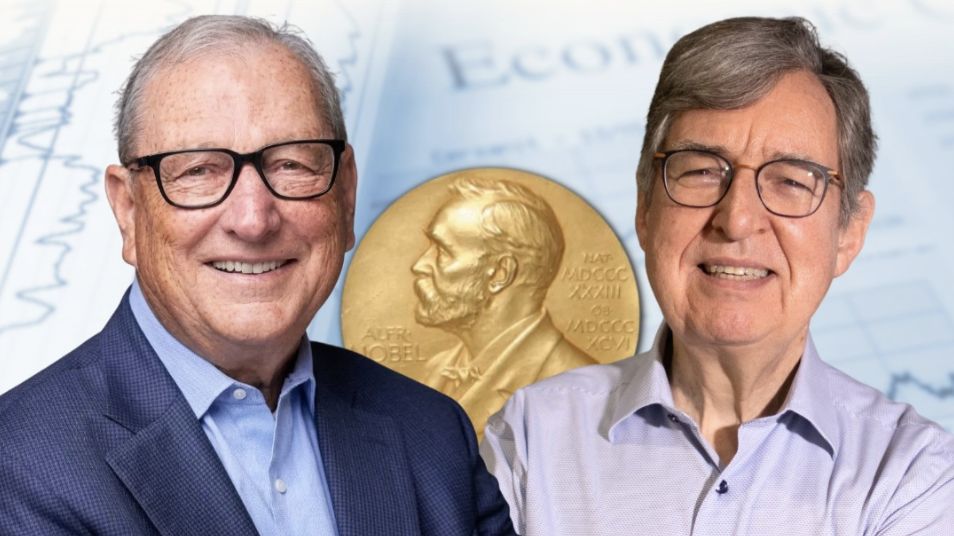
字幕摘录
| 时间 | 英文 | 中文 |
|---|---|---|
| 0:28 | Good morning, good afternoon, and good evening. | 早上好,下午好,晚上还好 |
| 0:33 | Welcome to the Royal Swedish Academy of Sciences | 欢迎来到瑞典皇家科学院 |
| 0:36 | and this press conference where we will present | 和这次记者招待会,我们将在会上介绍 |
| 0:40 | Sweden's Riksbank Prize in Economic Science | 瑞典里克银行经济科学奖 |
| 0:43 | to Alfred Nobel's memory. | 对阿尔弗雷德·诺贝尔的记忆 |
| 0:47 | Welcome to the Royal Swedish Academy of Sciences | 欢迎来到瑞典皇家科学院 |
| 0:50 | and this press conference | 和这次新闻发布会 |
| 0:52 | where we will present this year's | 我们今年将介绍 |
| 0:55 | Sweden's Riksbank Prize in Economic Sciences | 瑞典里克斯班克经济科学奖 |
| 0:59 | in memory of Alfred Nobel. | 为了纪念阿尔弗雷德·诺贝尔. |
展开字幕全文(382 条)
| 序号 | 英文 | 中文 |
|---|---|---|
| 1 | Good morning, good afternoon, and good evening. | 早上好,下午好,晚上还好 |
| 2 | Welcome to the Royal Swedish Academy of Sciences | 欢迎来到瑞典皇家科学院 |
| 3 | and this press conference where we will present | 和这次记者招待会,我们将在会上介绍 |
| 4 | Sweden's Riksbank Prize in Economic Science | 瑞典里克银行经济科学奖 |
| 5 | to Alfred Nobel's memory. | 对阿尔弗雷德·诺贝尔的记忆 |
| 6 | Welcome to the Royal Swedish Academy of Sciences | 欢迎来到瑞典皇家科学院 |
| 7 | and this press conference | 和这次新闻发布会 |
| 8 | where we will present this year's | 我们今年将介绍 |
| 9 | Sweden's Riksbank Prize in Economic Sciences | 瑞典里克斯班克经济科学奖 |
| 10 | in memory of Alfred Nobel. | 为了纪念阿尔弗雷德·诺贝尔. |
| 11 | We will keep to our tradition and start in Swedish | 我们按传统用瑞典语开始 |
| 12 | and then continue the presentation in English. | 然后继续以英语发言。 |
| 13 | And of course, you're welcome to ask questions | 当然,欢迎你问问题 |
| 14 | in either of these languages. | 这些语言中的任何一种。 |
| 15 | My name is Ellen Måns | 我叫艾伦·马恩斯 |
| 16 | and I am the Secretary of the Royal Swedish Academy of Sciences. | 我是瑞典皇家科学院的秘书 |
| 17 | To the right of me is Professor John Hassler, | 我右边是约翰·哈斯勒教授 |
| 18 | Chair of the Prize Committee. | 获奖委员会主席。 |
| 19 | And to the left of me is Professor Timo Boppard, | 我左边是蒂莫·博帕德教授 |
| 20 | Chair of the Prize Committee and expert in the field. | 担任奖项委员会主席和该领域专家. |
| 21 | My name is Ellen Måns | 我叫艾伦·马恩斯 |
| 22 | and I am the Secretary General | 我是秘书长 |
| 23 | of the Royal Swedish Academy of Sciences. | 瑞典皇家科学院 |
| 24 | And to my right is Professor John Hassler, | 我右边是约翰·哈斯勒教授 |
| 25 | Chair of the Prize Committee. | 获奖委员会主席。 |
| 26 | And to my left is Professor Timo Boppard, | 我左边是蒂莫·博帕德教授 |
| 27 | member of the Prize Committee and an expert in the field. | 获奖委员会成员和该领域专家。 |
| 28 | Arets pris handler om squilisering. (原始内容存档于2019-09-29). | |
| 29 | This year's prize is about stabilisation. | 今年的奖项是关于稳定. |
| 30 | Kungliga Vetenskapsakademin har idag beslutat 互联网档案馆的存檔,存档日期2013-12-02. | |
| 31 | Sveriges Riksbankspris 互联网档案馆的存檔,存档日期2013-12-02. | |
| 32 | i ekonomisk vetenskap till Alfred Nobel's minne | 我埃科诺米斯克兽医卡普 直至阿尔弗雷德·诺贝尔的小纳 |
| 33 | 直到罗伯特・E・霍尔・och Mikael Woodfordt。 | |
| 34 | Michael Woodfordt. | 迈克尔·伍德福特. |
| 35 | För mikroekonomiska 基金, , (法语). | |
| 36 | för makroekonomisk 稳定。 | |
| 37 | The Royal Swedish Academy of Sciences has today decided | 瑞典皇家科学院今天决定 |
| 38 | to award the 2026 Sveriges Riksbank Prize | 颁发2026年斯韦里格斯·里克斯班克奖 |
| 39 | in Economic Sciences in memory of Alfred Nobel | 纪念阿尔弗雷德·诺贝尔的经济科学 |
| 40 | to Robert E. Hall and Michael Woodfordt. | 给罗伯特·E·霍尔和迈克尔·伍德福特 |
| 41 | For microeconomic foundations | 微观经济基础 |
| 42 | of macroeconomic stabilisation. | 宏观经济稳定。 |
| 43 | Robert Hall was born in 1943 | 罗伯特·霍尔生于1943年 |
| 44 | in Palo Alto, USA. | 位于美国帕洛阿尔托. |
| 45 | He's now professor at Stanford University. | 现为斯坦福大学教授. |
| 46 | Michael Woodfordt was born in 1955 in Chicopee, USA. | 迈克尔·伍德福特1955年出生于美国奇科皮. |
| 47 | He's a professor at Columbia University. | 他是哥伦比亚大学的教授. |
| 48 | Professor John Hasler will now give us | 约翰教授 哈斯勒现在会给我们 |
| 49 | a short introduction, please. | 请简单介绍一下 |
| 50 | Thank you. | 谢谢 |
| 51 | We know all too well that the economy | 我们非常清楚经济 |
| 52 | is not always taking us on a smooth ride. | 并不是总能让我们顺利相处 |
| 53 | Sometimes the economy dives into recession | 有时经济会陷入衰退 |
| 54 | with increased unemployment and falling incomes. | 失业率上升,收入下降。 |
| 55 | Inflation can also suddenly increase | 通货膨胀也会突然增加 |
| 56 | and pose a threat to economic stability. | 并对经济稳定构成威胁。 |
| 57 | What triggers these bumps is sometimes easy to understand, | 触发这些颠峰的原因有时容易理解, |
| 58 | like the pandemic or increased energy prices. | 比如大流行或能源价格上涨 |
| 59 | In other situations, the causes are harder to identify. | 在其他情况下,原因难以确定。 |
| 60 | Regardless of the causes, | 无论原因为何 |
| 61 | an important goal for governments and central banks | 政府和中央银行的一个重要目标 |
| 62 | is to reduce the amplitude of these swings | 就是减少这些秋千的振幅 |
| 63 | and limit the risk that the economy gets stuck | 并限制经济陷入困境的风险 |
| 64 | in a situation with high unemployment | 在失业率高的情况下 |
| 65 | or loses control over inflation. | 或失去对通货膨胀的控制。 |
| 66 | The idea that excessive economic fluctuations can occur | 经济过度波动的想法 |
| 67 | if markets are left alone | 如果市场被孤立 |
| 68 | goes back to John Maynard Keynes, almost a century ago. | 回到约翰・梅纳德・凯恩斯, 大约一个世纪前。 |
| 69 | Keynes' remedy was government intervention. | 凯恩斯的补救办法是政府的干预。 |
| 70 | By stimulating the economy in recessions | 在衰退中刺激经济 |
| 71 | and slowing it down in booms, | 并缓缓地在烈火中, |
| 72 | the hope is to keep unemployment | 希望保持失业 |
| 73 | from reaching high levels during recessions | 在经济衰退期间达到高水平的 |
| 74 | and to maintain low inflation during booms. | 并在繁荣时期保持低通货膨胀率。 |
| 75 | For a long time, the recipes of Keynes seemed to work, | 很久以来,凯恩斯的食谱似乎有用 |
| 76 | but they then failed during the oil crisis in the 1970s | 但是在1970年代的石油危机中失败了 |
| 77 | when high unemployment and high inflation | 当高失业率和高通货膨胀时 |
| 78 | took over simultaneously. | 同时接管. |
| 79 | Many then concluded that Keynesian stabilization policy | 许多人随后得出结论,凯恩斯稳定政策 |
| 80 | did more harm than good, | 伤害大于伤害, |
| 81 | that policymakers should stay away | 决策者应当远离 |
| 82 | and simply allow business icons to play out on their own. | 并且只允许商业图标自己玩。 |
| 83 | Others argued that Keynesian insights were still relevant, | 其他人则认为凯恩斯主义的见解仍然具有相关性, |
| 84 | but that the framework had to be completely rebuilt | 但框架必须彻底重建 |
| 85 | on a more solid theoretical foundation. | 在更坚实的理论基础上。 |
| 86 | In separate contributions, | 单独捐款 |
| 87 | Robert E. Hall and Michael Woodford | 罗伯特·E·霍尔和迈克尔·伍德福德 |
| 88 | helped build this new foundation for stabilization policy. | 帮助建立了稳定政策的新基础。 |
| 89 | To understand how stabilization policy | 了解稳定政策如何 |
| 90 | affects the economy as a whole, | 影响整个经济, |
| 91 | one needs to start with describing | 首先要描述一下 |
| 92 | how individual households decide on consumption | 家庭如何决定消费 |
| 93 | and how individual firms make pricing decisions. | 以及个别公司如何作出定价决定。 |
| 94 | This is what we call micro-foundations | 这就是我们所谓的微创 |
| 95 | upon which the new Keynesian framework is built, | 新的凯恩斯主义框架的基础, |
| 96 | and this framework is used by policymakers | 决策者使用这一框架 |
| 97 | all around the world. | 到处都是 |
| 98 | Professor Timo Boppert is now gonna tell us more | 蒂莫·博珀特教授现在会告诉我们更多 |
| 99 | about the laureates' contributions. | 关于获奖者的贡献。 |
| 100 | This shows you the U.S. unemployment rate | 这显示了美国的失业率 |
| 101 | and how it fluctuates over the business cycle. | 和如何在商业周期中波动。 |
| 102 | During a recession, | 在经济衰退期间 |
| 103 | unemployment shoots up dramatically. | 失业率急剧上升。 |
| 104 | Unemployment tends to hit the most disadvantaged | 失业往往影响到处境最不利的群体 |
| 105 | individuals in our society the hardest. | 我们社会中的个人是最难的。 |
| 106 | Can we do something about this? | 我们能做些什么吗? |
| 107 | This is exactly the goal of stabilization policy. | 这正是稳定政策的目标。 |
| 108 | Governments intervene on market to make them work better. | 政府干预市场,使其运作得更好。 |
| 109 | How do markets work? | 市场如何运作? |
| 110 | Typically, when either supply or demand changes, | 通常,当供应或需求发生变化时, |
| 111 | prices adjust. | 价格调整。 |
| 112 | The invisible hand does its magic. | 无形手作其魔. |
| 113 | However, during the Great Depression in the 1930s, | 然而,在1930年代的大萧条时期, |
| 114 | economists realized that this doesn't always work so well. | 经济学家们意识到,这并非总能很好地运作。 |
| 115 | Prices and wages didn't adjust as much as they should have, | 价格和工资没有像他们应该做的那样调整 |
| 116 | and the economy got stuck | 经济陷入困境 |
| 117 | in a very high unemployment situation. | 失业率很高。 |
| 118 | Probably last century's most influential economist, | 可能是上个世纪最有影响力的经济学家 |
| 119 | 约翰·梅纳德·凯恩斯(John Maynard Keynes)继而介入并激烈争论 | |
| 120 | that governments have role to play and should help. | 政府可以发挥作用,应当提供帮助。 |
| 121 | Central banks should lower interest rates, | 中央银行应降低利率, |
| 122 | governments should lower taxes and increase transfers | 政府应降低税收和增加转账 |
| 123 | to bring demand back up. | 以恢复需求。 |
| 124 | This is the visible hand by the policymaker. | 这是决策者的可见之手。 |
| 125 | The economy can also end up in the opposite situation | 经济也会出现相反的情况 |
| 126 | where demand exceeds supply. | 需求超过供应的地方。 |
| 127 | In this case, monetary and fiscal tightening is needed. | 在这种情况下,需要紧缩货币和财政。 |
| 128 | Otherwise, there is a risk of inflation | 否则,就有通货膨胀的风险 |
| 129 | getting out of control. | 离开控制。 |
| 130 | This is the Keynesian recipe, | 这是凯恩斯的秘方 |
| 131 | and it worked well until it didn't. | 工作顺利,直到没有。 |
| 132 | And this is the painful experience of the 1970s, | 这是1970年代的痛苦经历, |
| 133 | in which case shocks hit the economy, | 在这种情况下,冲击经济, |
| 134 | policymaker tried to boost demand, | 决策者试图刺激需求, |
| 135 | but the economy ended up in the worst of both worlds | 但经济在两个世界中最糟糕 |
| 136 | with high unemployment | 失业率高 |
| 137 | and high and even accelerating inflation. | 和高,甚至加速通货膨胀。 |
| 138 | The Keynesian recipe was shattered. | 凯恩斯主义的食谱被打破了. |
| 139 | Stabilization policy came under pressure, | 稳定政策受到压力, |
| 140 | and many thought it should be abandoned completely. | 很多人认为应该彻底放弃它 |
| 141 | This year's prize is about reconstructing a framework | 今年的奖项是重建一个框架 |
| 142 | to analyze business cycles and stabilization policy. | 分析商业周期和稳定政策。 |
| 143 | The issue with the pre-existing framework | 先前存在框架的问题 |
| 144 | was that it was too much of a black box. | 说它太黑盒。 |
| 145 | It relied on relationships between aggregate variables | 它依赖综合变量之间的关系 |
| 146 | that were assumed, for instance, | 例如,假定 |
| 147 | between inflation rate and unemployment rate, | 在通货膨胀率和失业率之间, |
| 148 | and policymakers thought | 和决策者的想法 |
| 149 | they could exploit those relationships. | 他们可以利用这些关系。 |
| 150 | However, in the 1970s, those relationships broke down. | 然而,在1970年代,这些关系破裂了。 |
| 151 | The solution by Robert Hall and Michael Woodford | 罗伯特·霍尔和迈克尔·伍德福德的解决方案 |
| 152 | was to build a new framework ground up. | 将建立一个新的框架。 |
| 153 | They explicitly studied and modeled | 他们明确研究并建模 |
| 154 | the individual decisions of firms and household. | 公司和家庭的个别决定。 |
| 155 | They gave the framework a so-called micro foundation, | 他们给了这个框架所谓的微观基础, |
| 156 | and by doing so resulted a framework | 并由此形成了一个框架 |
| 157 | that gave more robust policy advice. | 从而提供了更强有力的政策建议。 |
| 158 | Robert Hall worked on the demand side, studying consumption, | 罗伯特·霍尔在需求方面工作 研究消费 |
| 159 | whereas Michael Woodford studied the supply side, | 而迈克尔·伍德福德研究了供给方面, |
| 160 | the price-setting behavioral firm, | 定价行为公司, |
| 161 | and put all the pieces together in a whole. | 把所有的片段拼凑在一起 |
| 162 | Consumption is key because it's the biggest component | 消费是关键,因为它是最大的成分 |
| 163 | of aggregate demand. | 需求总量。 |
| 164 | The pre-existing framework simply assumed | 原先的框架只是假设 |
| 165 | a mechanical relationship between aggregate disposable income | 合计可支配收入之间的机械关系 |
| 166 | and aggregate consumption demand. | 和总消费需求。 |
| 167 | Robert Hall instead asked, | 罗伯特·霍尔却问 |
| 168 | how do individuals make consumption decisions, actually? | 实际上,个人如何作出消费决定? |
| 169 | Yes, current disposable income matters, | 是,当前可支配收入事项, |
| 170 | but also expectation about the entire future path of income | 但也期望未来收入的全程 |
| 171 | is relevant too, so forward-lookingness | 也是相关的,如此前瞻性 |
| 172 | in this decision is key. | 在本决定中是关键。 |
| 173 | If consumers see dark clouds on the horizon, | 如果消费者看到地平线上的黑云 |
| 174 | they cut back on consumption already today. | 他们今天已经减少消费了 |
| 175 | Theories that model this existed at the time, | 当时这个模型存在的理论 |
| 176 | but they faced a seemingly unsurmountable | 但他们面对一个似乎无法攀登的 |
| 177 | empirical challenge because expectations are unobserved. | 经验挑战,因为期望是不可观察的。 |
| 178 | In a path-breaking paper in 1978, | 在1978年的一篇突破性论文中, |
| 179 | Robert Hall showed a way forward. | 罗伯特·霍尔展示了前进的道路. |
| 180 | The key idea was that if consumption summarizes | 关键的想法是,如果消费总结 |
| 181 | all the information up until today, | 直到今天为止的所有信息 |
| 182 | consumption changes from one period to the next | 从一个时期到下一个时期的消费变化 |
| 183 | if and only if new information arrives. | 只有在新信息到来时 |
| 184 | However, new information is by definition unpredictable. | 然而,从定义上讲,新信息是不可预测的。 |
| 185 | This means that the theory suggests | 这意味着理论暗示 |
| 186 | that changes in consumption must be unpredictable. | 消费的变化必须是无法预测的。 |
| 187 | This is precisely the property that Robert Hall | 这正是罗伯特·霍尔的财产 |
| 188 | tested in aggregate data and found support for the theory. | 在汇总数据中测试,并找到对该理论的支持. |
| 189 | This was a huge surprise, | 这是一个巨大的惊喜, |
| 190 | and it changed the entire theoretical | 它改变了整个理论 |
| 191 | and empirical literature on consumption completely. | 和关于消费的经验文献。 |
| 192 | We now have a way to test and quantify consumption theories. | 我们现在有办法测试和量化消费理论。 |
| 193 | Michael Woodford worked on a series of paper | 迈克尔·伍德福德写了一系列论文 |
| 194 | to construct a new framework. | 建立一个新的框架。 |
| 195 | The key missing part was on the supply side, | 钥匙缺失的部分是供应方面, |
| 196 | the price-setting behavior of firms. | 公司定价行为。 |
| 197 | How do firms actually set prices? | 公司实际上如何定价? |
| 198 | This is illustrated here with this ice cream menu. | 这里用这个冰淇淋菜单来说明。 |
| 199 | Prices do not adjust at the continuous basis. | 价格不连续调整. |
| 200 | Firms instead set the price of this ice cream | 公司来决定这冰淇淋的价格 |
| 201 | for a whole season. | 整个赛季 |
| 202 | This is because price-setting involves some costs. | 这是因为定价涉及一些费用。 |
| 203 | You have to reprint the whole menu | 你必须重印整个菜单 |
| 204 | if you want to adjust prices. | 如果你想调整价格。 |
| 205 | Bringing in those price rigidities into the framework | 将价格僵化纳入框架 |
| 206 | was absolutely key because this is the reason | 绝对关键 因为这就是原因 |
| 207 | why the invisible hand cannot do its magic | 为什么看不见的手不能做它的魔法 |
| 208 | and there is room for policy intervention. | 并且有政策干预的余地。 |
| 209 | Forward-lookingness, this friction in the price-setting behavior | 向前看 定价过程中的摩擦 |
| 210 | also implies that the price-setting becomes forward-looking | 也意味着价格的确定变得具有前瞻性 |
| 211 | because if you know that the price of your ice cream | 因为如果你知道 你的冰淇淋的价格 |
| 212 | is going to last for the whole season, | 将持续整个赛季, |
| 213 | you'd better look ahead when you set it in the first place. | 放在第一位的时候 你最好向前看 |
| 214 | Michael Woodford succeeded in deriving from such a theory, | 迈克尔·伍德福德成功地从这样一个理论中衍生出来, |
| 215 | a simple formula for how aggregate inflation | 计算总通货膨胀率的简单公式 |
| 216 | relates to expectation and the current level of output, | 与预期和目前产出水平有关, |
| 217 | combined it then with whole sphere of demand | 然后把它与整个需求领域结合起来 |
| 218 | to complete the framework. | 完成框架。 |
| 219 | This effort culminated in a 2003 monograph | 这项工作最终产生了2003年的专著。 |
| 220 | of enormous influence. | 影响很大 |
| 221 | In this book, Woodford lays out the full architecture | 在这本书中,伍德福德阐述了整个建筑 |
| 222 | of the new framework. | 新框架。 |
| 223 | He shows how the framework can be used | 他展示了如何使用框架 |
| 224 | to study business cycle, | 研究商业周期, |
| 225 | how you can derive stabilization policy implications | 如何获得稳定政策的影响 |
| 226 | and also how some further insights follow from it, | 以及从中得出的进一步见解, |
| 227 | for instance, the importance of transparency | 例如,透明度的重要性 |
| 228 | for the conduct of monetary policy. | 执行货币政策。 |
| 229 | Policy makers around the world were very fast | 世界各地的决策者都很快 |
| 230 | in adopting the new framework | 通过新框架 |
| 231 | and we now see it being actively applied | 我们现在看到它被积极应用 |
| 232 | in many countries to tame the business cycle beast. | 在许多国家 驯服商业循环野兽。 |
| 233 | Let me wrap up. | 让我结束。 |
| 234 | The pre-existing framework | 原有的框架 |
| 235 | was too much of a black unreliable box. | 是个黑不可靠的盒子 |
| 236 | Robert Hall and Michael Woodford reconstructed the framework. | 罗伯特·霍尔和迈克尔·伍德福德重建了框架. |
| 237 | They did so in short by giving our understanding | 简而言之,他们给了我们谅解 |
| 238 | of macroeconomic stabilization a micro foundation. | 宏观经济稳定是一个微观基础。 |
| 239 | We can now see under the hood of this framework. | 我们现在可以看到在这个框架的罩子下。 |
| 240 | The new framework allows us | 新框架允许我们 |
| 241 | to get deeper understanding of business cycles | 加深对业务周期的了解 |
| 242 | and allows us to derive more robust policy recommendations | 并使我们能够提出更强有力的政策建议 |
| 243 | that benefit us all. | 对我们所有人都有好处。 |
| 244 | Thank you. | 谢谢 |
| 245 | 谢谢你 Bobart教授 | |
| 246 | And we now have Professor Woodford with us on the phone | 我们现在有伍德福德教授在电话里 |
| 247 | from New York, I think. | 我想是从纽约来的 |
| 248 | Yes, that's right. | 没错 |
| 249 | Oh, good morning to you, Professor. | 早上好,教授,你好吗? |
| 250 | How do you feel? | 你感觉怎么样? |
| 251 | Well, Elaine, it's a tremendous honor. | 伊莲,我很荣幸 |
| 252 | It's a surprise, but I'm feeling very good about it. | 这是一个惊喜,但我感觉非常好。 |
| 253 | I'm sitting here in this beautiful session hall | 我坐在这个美丽的大厅里 |
| 254 | at the Royal Academy of Sciences | 皇家科学院 |
| 255 | and we have here with us at the press conference | 记者招待会上我们来了 |
| 256 | a lot of interested journalists | 很多感兴趣的记者 |
| 257 | from Swedish and international press. | 来自瑞典和国际媒体。 |
| 258 | And I wonder if you are ready | 你准备好了吗? |
| 259 | to take some of their questions. | 接受他们的一些问题。 |
| 260 | Yes, I'll try to. | 是的,我会尝试。 |
| 261 | Yes, so I would like to invite some questions | 是的,所以我想问几个问题 |
| 262 | from the press. | 从媒体。 |
| 263 | Yes, please. | 是的,谢谢。 |
| 264 | Thank you, I'm Jonas Malmborg from EFN Sweden. | 谢谢,我是乔纳斯・马尔姆伯格 来自EFN瑞典。 |
| 265 | Warm congratulations to you, Professor Woodford. | 热烈祝贺你,伍德福德教授 |
| 266 | Professor Bobart spoke earlier here | Bobart教授刚才在这里说 |
| 267 | about the visible hand and the Keynesian recipe | 关于可见的手和凯恩斯主义的食谱 |
| 268 | that was shattered. | 被击碎了 |
| 269 | I was wondering, do you consider your research as political | 我在想,你是否认为你的研究是政治性的 |
| 270 | or your scientific results as political? | 还是你的政治成果? |
| 271 | I don't think that they were motivated | 我不觉得他们有动机 |
| 272 | by a specific political agenda, if that's what you mean. | 如果这就是你的意思的话 |
| 273 | I mean, it was an attempt to improve the foundations | 我的意思是,这是试图改善基础 |
| 274 | for discussion of economic policy | 关于经济政策的讨论 |
| 275 | and therefore to contribute both to the management | 并因此对管理层作出贡献 |
| 276 | of the economy, but also to contribute | 经济,但也作出贡献 |
| 277 | to public understanding. | 对公众的理解。 |
| 278 | I mean, one of the themes in my work | 我的意思是,我工作的主题之一 |
| 279 | is that government authorities shouldn't view | 是政府当局不应该看 |
| 280 | stabilization of the economy as an exercise | 实现经济稳定 |
| 281 | {\fn黑体\fs22\bord1\shad0\3aHBE\4aH00\fscx67\fscy66\2cHFFFFFF\3cH808080}只是由拉杠杆的人来操控 | |
| 282 | to control the economy independently | 独立控制经济 |
| 283 | of what people in the economy understand about this. | 经济中人们对此的理解。 |
| 284 | My work, the understanding of the people | 我的工作,人民的理解 |
| 285 | who are in the markets and making decisions | 在市场上和决策的人 |
| 286 | about spending and so on, that their expectations | 关于支出等等 他们的期望 |
| 287 | and their understanding of what policy is likely to be like | 以及他们对什么政策可能是什么样子的理解 |
| 288 | in the future are actually crucial to the effect. | 在未来,实际上对效果至关重要。 |
| 289 | To talk is also important, and that was one key goals | 谈话也很重要,这是关键目标之一 |
| 290 | of trying to develop an analytical framework. | 努力制定分析框架。 |
| 291 | We can use it on people, but to also talk to people | 我们可以用它的人, 但也与人交谈 |
| 292 | about why the things that are being done are being done. | 关于为什么正在做的事情正在做。 |
| 293 | Okay, thank you. | 好的 谢谢 |
| 294 | Yes, please. | 是的,谢谢。 |
| 295 | No, Professor, my name is Bogumi Radejewski. | 不,教授,我叫博古米・拉德杰夫斯基 |
| 296 | I'm from the Polish television. | 我是波兰电视台的 |
| 297 | I wanted to ask you, given your findings, | 我想问你 鉴于你的发现 |
| 298 | what tendencies would you say are now the biggest threats | 现在最大的威胁是什么? |
| 299 | for the stability of global economy? | 全球经济的稳定? |
| 300 | A list of that, the economy can and often is disrupted | 经济可以而且经常被打乱 |
| 301 | by many kinds of events, often events that are not economic | 往往非经济性质的事件 |
| 302 | in their origins or in their nature | 或性质的歧视 |
| 303 | have very big effects on the economy. | 对经济影响很大 |
| 304 | An example right now on the war in the Middle East | 现在中东战争的一个例子 |
| 305 | has in many parts of the world, | 在世界许多地区, |
| 306 | and it obviously was not, you know, it was not. | 很明显,它不是,你知道,它不是。 |
| 307 | Yes, next question there, please. | 是的,下一个问题,请。 |
| 308 | Hi, Christopher Dittmer, Frösling and Flamsteig. | 嗨,克里斯托弗·迪特默,弗勒斯林和弗拉姆斯蒂格 |
| 309 | So Professor Woodford, congratulations to the prize. | 伍德福德教授,恭喜奖项 |
| 310 | So we heard in the presentation | 所以我们在演讲中听到 |
| 311 | about how the original Keynesian framework | 最初的凯恩斯主义框架 |
| 312 | broke down in the 1970s. | 1970年代解体. |
| 313 | So I'm curious to know if there's any particular | 所以我想知道有没有特别的 |
| 314 | like economic event or any particular shocks | 经济事件或任何特定冲击 |
| 315 | where you felt that the new framework | 你感觉到新框架 |
| 316 | really stood up to the test. | 真正站起来的测试。 |
| 317 | Any example of that? | 有这个例子吗? |
| 318 | Well, one example where I think the new framework | 嗯,一个例子,我认为新的框架 |
| 319 | was useful was when the global financial crisis | 全球金融危机时才有用 |
| 320 | hit the US and many other economies in 2008, | 2008年美国和许多其他经济体遭受冲击, |
| 321 | it created a situation where traditional tools | 它造成了一种传统工具 |
| 322 | of monetary policy were not really adequate | 货币政策不够充分 |
| 323 | to deal with the problem of restoring economic activity. | 解决恢复经济活动的问题。 |
| 324 | I think it was obvious to a lot of people | 我觉得很多人都看得出来 |
| 325 | that an important part of the problem that had arisen | 问题的一个重要部分 |
| 326 | was insufficient aggregate demand. | 总需求不足。 |
| 327 | The conventional recipe for that would be | 传统的配方是: |
| 328 | to cut interest rates, in particular the short term, | 降低利率,特别是短期利率, |
| 329 | in the, you know, these nominal interest rates control. | 你知道,这些名义利率控制。 |
| 330 | And yet, which ended up, I think, | 然而,最终,我想, |
| 331 | becoming quite important in the way | 变得很重要 |
| 332 | it did help to deal with this problem. | 它确实有助于解决这一问题。 |
| 333 | And I think in the years from 2009 onward, | 我想从2009年起的几年里 |
| 334 | it did contribute to better stabilization. | 它确实有助于更好的稳定。 |
| 335 | It didn't magically using this modern framework. | 它并没有神奇地使用这个现代框架. |
| 336 | A last question, please. | 最后一个问题,请。 |
| 337 | Yes, I'm Yan from China New Economist. | 是的,我是中国新经济学家阿燕 |
| 338 | So, Professor, what advice would you give | 所以,教授,你会给什么建议 |
| 339 | to the young economists in China? | 给中国的年轻经济学家? |
| 340 | And would you have them to work on questions | 你会让他们去研究问题吗? |
| 341 | in China that can only answer? | 在中国,只能回答? |
| 342 | And how far they are away from the Nobel Prize? | 他们离诺贝尔奖还有多远? |
| 343 | Thank you. | 谢谢 |
| 344 | You know, people in Sweden can tell you more | 你知道,瑞典的人可以告诉你更多 |
| 345 | about how far they are from the Nobel Prize. | 他们离诺贝尔奖有多远? |
| 346 | I will say I've been impressed by the rapid, | 我会说,我一直 印象深刻的快速, |
| 347 | what seems to me very rapid progress | 在我看来进展很快 |
| 348 | of the education system in China. | 中国的教育制度。 |
| 349 | I know that China invests a lot in education. | 我知道中国在教育上投资很多. |
| 350 | And I see many Chinese universities rising | 我看到许多中国大学在崛起 |
| 351 | in the surveys of the quality | 质量调查 |
| 352 | of world educational institutions. | 世界教育机构。 |
| 353 | I think that's especially true in technological fields, | 我认为这在技术领域尤其如此, |
| 354 | including artificial intelligence, | 包括人工智能, |
| 355 | where China really is also improving in a similar way. | 中国也正以同样的方式进步。 |
| 356 | Certainly China has much to contribute to. | 中国当然可以为此作出很大的贡献。 |
| 357 | Okay, thank you very much. | 好吧,非常感谢。 |
| 358 | This seems to be the last question | 这似乎是最后一个问题 |
| 359 | from the press for you, Professor Woodford. | 从媒体为你,伍德福德教授。 |
| 360 | Thank you. | 谢谢 |
| 361 | And once again, my warmest congratulations, | 再一次,我最热烈的祝贺, |
| 362 | and we look forward to meeting you in Stockholm | 我们期待着在斯德哥尔摩见到你 |
| 363 | in December for the Nobel Prize ceremony. | 12月诺贝尔奖颁奖典礼 |
| 364 | Thank you. | 谢谢 |
| 365 | I look forward to it. | 我期待着它。 |
| 366 | Have a nice day. | 祝你们愉快 |
| 367 | So then let's move on to some more questions, | 那么我们继续问几个问题 |
| 368 | perhaps about the prize in economic sciences | 也许关于经济科学奖 |
| 369 | and the research involved to us here in the panel. | 和研究我们在这里的小组。 |
| 370 | So are there any further questions? | 还有什么问题吗? |
| 371 | Oh, this doesn't seem to be the case. | 哦,这似乎不是情况。 |
| 372 | No questions at all? | 没有问题吗? |
| 373 | Okay. | 摆 |
| 374 | Then I would like to thank you for your interest. | 那么我想感谢你的关心。 |
| 375 | I know that many of you have booked individual interviews | 我知道你们很多人都安排了个人采访 |
| 376 | with our experts, and we will now proceed with that. | 与我们的专家,我们现在将着手这样做。 |
| 377 | I hope to see you again when the laureates arrive | 我希望能在获奖者到达时再见到你 |
| 378 | in December. | 12月时 |
| 379 | Thank you. | 谢谢 |
| 380 | And you want, | 而你却想要 |
| 381 | Oh Cleare, back from Hagoria. | 哦,克里尔,从哈戈里亚回来的。 |
| 382 | Okay. | 摆 |
该视频共有字幕 382 条。解锁更多字幕为会员功能,请移动到 价格