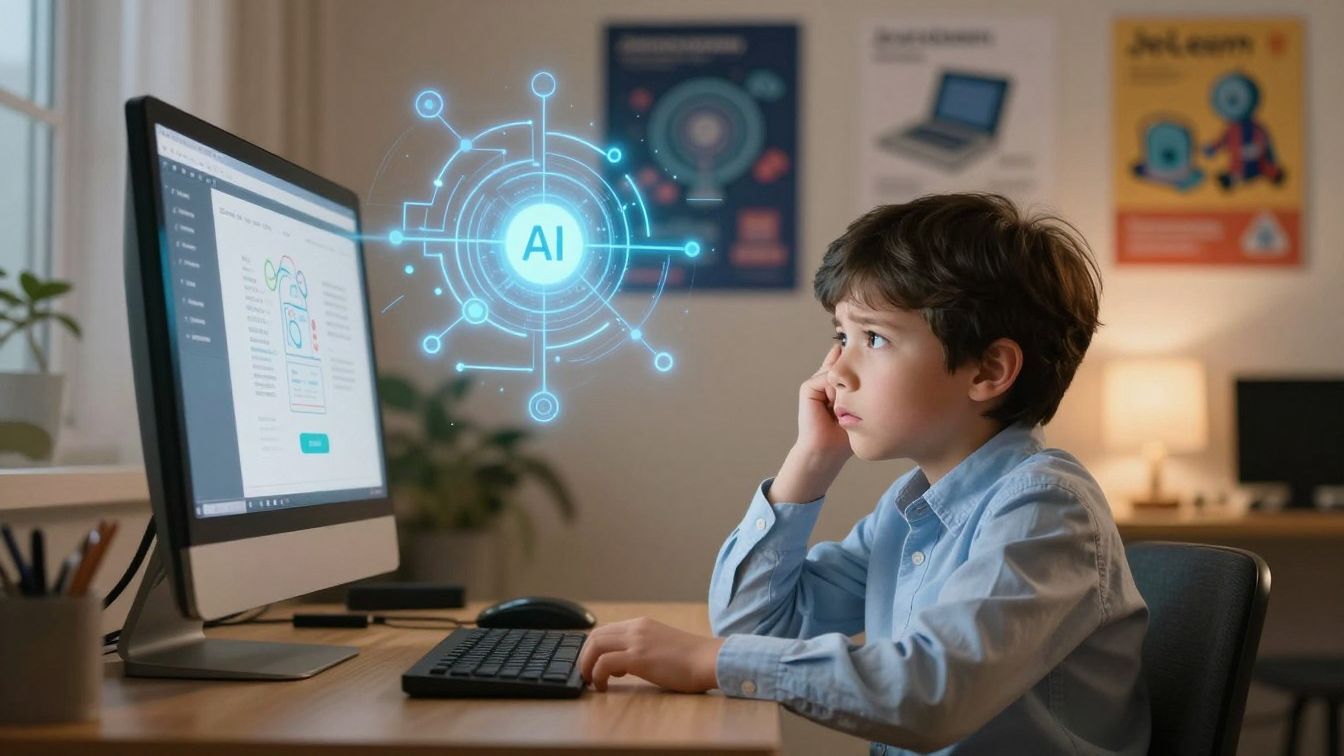
孩子太听AI智能音箱的话?国外AI教育专家TED演讲:教孩子
字幕摘录
| 时间 | 英文 | 中文 |
|---|---|---|
| 0:08 | In the 1940s, the radio was a transformative technology. | 在20世纪40年代,广播是一种变革性的技术. |
| 0:14 | But it wasn't an immediate hit. | 但它不是直接的打击。 |
| 0:16 | That's because the radios of the early 1900s looked like this, | 因为1900年代早期的收音机是这样的 |
| 0:21 | unwieldy contraptions of exposed wires and glowing vacuum tubes | 暴露的电线和发光真空管的无线装置 |
| 0:26 | like a science fair project gone wrong. | 就像一个科学博览会的项目出了问题。 |
| 0:28 | It wasn't until 1929 when radio started to look like this | 直到1929年无线电才开始这样 |
| 0:32 | with its sleek bake light, that's a kind of plastic shell, | 以它柔软的烤光, 那是一种塑料壳, |
| 0:36 | that they became insanely popular. | 他们变得疯狂的流行。 |
| 0:39 | But at a critical cost, transparency. | 但以关键的代价,透明度。 |
| 0:44 | What happens when technology becomes a black box | 当技术变成黑匣子时会发生什么 |
展开字幕全文(242 条)
| 序号 | 英文 | 中文 |
|---|---|---|
| 1 | In the 1940s, the radio was a transformative technology. | 在20世纪40年代,广播是一种变革性的技术. |
| 2 | But it wasn't an immediate hit. | 但它不是直接的打击。 |
| 3 | That's because the radios of the early 1900s looked like this, | 因为1900年代早期的收音机是这样的 |
| 4 | unwieldy contraptions of exposed wires and glowing vacuum tubes | 暴露的电线和发光真空管的无线装置 |
| 5 | like a science fair project gone wrong. | 就像一个科学博览会的项目出了问题。 |
| 6 | It wasn't until 1929 when radio started to look like this | 直到1929年无线电才开始这样 |
| 7 | with its sleek bake light, that's a kind of plastic shell, | 以它柔软的烤光, 那是一种塑料壳, |
| 8 | that they became insanely popular. | 他们变得疯狂的流行。 |
| 9 | But at a critical cost, transparency. | 但以关键的代价,透明度。 |
| 10 | What happens when technology becomes a black box | 当技术变成黑匣子时会发生什么 |
| 11 | and we stop being able to see what's going on inside? | 我们不再能看到里面发生了什么? |
| 12 | Fast forward 100 years. | 快速前进100年. |
| 13 | Today, the sci-fi artificial intelligence devices of our dreams | 今天,我们梦中的科幻人工智能装置 |
| 14 | have been woven into the very fabric of modern life. | 被编织成现代生活的结构 |
| 15 | But like the radio, these systems are bake lighted. | 但和收音机一样,这些系统被烤光. |
| 16 | We've hidden the machine behind frictionless interfaces, | 我们把机器藏在无摩擦接口后面 |
| 17 | beneath friendly voices, and inside children's toys. | 在友好的声音之下, 在儿童玩具里。 |
| 18 | Over the past decade, I've had a lot of conversations with kids | 过去十年来,我和孩子们聊了很多 |
| 19 | about AI as an MIT researcher and founding member of Day of AI, | 关于AI作为麻省理工学院研究员和AI日的创始成员, |
| 20 | a nonprofit creating opportunities for millions of children | 为数百万儿童创造机会的非营利组织 |
| 21 | around the world to learn about how AI works. | 了解AI如何运作。 |
| 22 | And here's what I've been seeing. | 且道所见. |
| 23 | These devices mimic intelligence and friendliness so well | 这些装置模仿智能和友好 |
| 24 | that children learn to trust them, | 孩子们学会信任他们, |
| 25 | sometimes more than they trust themselves. | 有时比他们信任自己还要多 |
| 26 | And there is real danger of children becoming overly reliant on | 并且存在着儿童过度依赖 |
| 27 | or inappropriately attached to their smart toys. | 或者不适当地附着在他们的聪明玩具上 |
| 28 | That said, with some intentional choices on the parts of adults, | 也就是说,在成年人身上 有一些有意的选择, |
| 29 | we can help children see the technology for what it really is, | 我们可以帮助孩子们看到技术的本质, |
| 30 | objects that they can play with or even program, | 用于播放甚至程序的对象, |
| 31 | rather than entities that they should look to for all the answers. | 而不是他们应该寻找所有答案的实体。 |
| 32 | My journey exploring kids and their relationships with AI | 我的旅程 探索孩子们和AI的关系 |
| 33 | began early in my days at MIT, | 我早年在麻省理工学院工作 |
| 34 | working on this fluffy, adorable social robot, Tega. | 正在研究这个可爱的社交机器人 特加 |
| 35 | So Tega being a social robot means that its goal is to help people | 所以Tega是个社交机器人 意味着它的目标是帮助人们 |
| 36 | with their goals. | 他们的目标。 |
| 37 | Social robots are used throughout health care, customer service, | 社会机器人被使用 整个医疗保健,客户服务, |
| 38 | and education. | 教育。 |
| 39 | In Tega's case, we were building it to see if a robot could help | 就Tega来说,我们建造它是为了看一个机器人能否帮助 |
| 40 | young children as they were learning how to read. | 年幼的孩子正在学习如何阅读。 |
| 41 | Let me show you a quick clip of Tega in action. | 让我给你们看看特加的动作 |
| 42 | Hmm, I'm lavender. | 嗯,我是薰衣草。 |
| 43 | We are trying to find lavender color stuff. | 我们在找薰衣草的颜色 |
| 44 | The word was lavender. | 这个词是薰衣草。 |
| 45 | Yes. | 对 |
| 46 | And what is lavender, though? | 薰衣草是什么来着? |
| 47 | It's purple. | 紫色'. |
| 48 | Yes. | 对 |
| 49 | Just like my friend loves lavender. | 就像我朋友喜欢薰衣草一样 |
| 50 | Ooh, nice. | 哦,不错。 |
| 51 | So, as you saw, it's Tega's job to keep the child engaged in the story. | 所以,如你所见,让孩子参与故事是特加的工作. |
| 52 | Tega will ask questions, add funny commentary, | 特加会问问题,加上有趣的评论, |
| 53 | and, of course, weave in that target vocabulary for the week. | 当然,这周要用目标词汇编织 |
| 54 | And it was my job to introduce Tega | 介绍特加是我的工作 |
| 55 | and get children oriented to how to use it. | 让孩子们熟悉如何使用它。 |
| 56 | So one day, I come into the study room, and I say, | 于是有一天,我来到书房, 我说, |
| 57 | Hi, my name is Randi. | 嗨,我的名字是兰迪。 |
| 58 | This is Tega. | 这是特加。 |
| 59 | You're going to read some stories with Tega today. | 你今天要和Tega一起读一些故事 |
| 60 | Let me show you how it works. | 让我告诉你它是如何工作的。 |
| 61 | And the girl I was working with, a kindergartner, stops me. | 和我共事的女孩, 一个幼儿园,阻止我。 |
| 62 | No, thanks, she says. | 不,谢谢,她说。 |
| 63 | I know all about robots. | 我知道所有关于机器人。 |
| 64 | I have an Alexa at home, and she's my best friend. | 我家里有个Alexa 她是我最好的朋友 |
| 65 | Watch this. | 看看这个 |
| 66 | And then she proceeded to show me how my robot worked. | 然后她告诉我我的机器人是如何工作的。 |
| 67 | What do we make of a response like that? | 我们如何看待这样的反应? |
| 68 | Well, first, I thought it was kind of impressive | 首先,我认为这是 一种令人印象深刻的 |
| 69 | that this girl, who, again, was learning how to read, | 这个女孩,她再次, 在学习如何阅读, |
| 70 | could effortlessly navigate the internet thanks to voice technology. | 由于语音技术, |
| 71 | And for context, I had to know how to read, write and type | 对于背景,我必须知道 如何读,写和类型 |
| 72 | before I could ask Jeeves a question. | 在我问Jeeves一个问题之前 |
| 73 | But for her, not so much. | 但对她来说,不是太多。 |
| 74 | But secondly, I was a little bit disappointed | 但第二,我有点失望 |
| 75 | that this girl didn't think that my super cool robot was so super cool. | 这个女孩不认为 我的超级酷机器人是如此的酷。 |
| 76 | And when I took a step back, I realized it wasn't just her. | 当我退一步时,我意识到不只是她 |
| 77 | We are raising a generation of children | 我们正在抚养一代孩子 |
| 78 | who are growing up with AI and smart toys. | 他们正在成长 AI和智能玩具。 |
| 79 | And they tend to see these devices not as virtual assistants or technology, | 他们往往不把这些设备视为虚拟助手或技术, |
| 80 | but as friends, | 但作为朋友, |
| 81 | distinct beings with a mind, a will and a soul. | 有着心灵、意志和灵魂的个体 |
| 82 | And that made me really curious about what children make of this technology. | 这让我非常想知道 儿童是如何利用这种技术的。 |
| 83 | How much do they understand about what's going on? | 他们知道发生了什么吗? |
| 84 | So to investigate that question, I ran a study. | 为了调查这个问题 我做了个研究 |
| 85 | And I had 30 children between the ages of 3 and 11 | 我有三个孩子在3到11岁之间 |
| 86 | come together to interact with a whole bunch of different smart toys all at once. | 一起来和一群不同的聪明玩具互动 |
| 87 | We had toy robots, talking dogs, text-based chatbots, | 我们有玩具机器人 说话的狗 还有基于文字的聊天机器人 |
| 88 | 当然 Alexa和Google Home等很多虚拟助手 | |
| 89 | One of the girls in the study, her favorite animal, they were sloths. | 书房里的一个女孩,她最喜欢的动物, 她们都是猪笼草. |
| 90 | She loved sloths. | 她喜欢树脂 |
| 91 | She'd been telling us all day how much she loves sloths. | 她整天都告诉我们她有多爱猪笼草 |
| 92 | And so naturally, when she got hold of an Alexa, | 自然 当她找到Alexa时 |
| 93 | she wanted to learn more about sloths from Alexa. | 她想从Alexa那里学到更多关于猪笼草的知识 |
| 94 | 她接了Alexa,说: | |
| 95 | Alexa, what do sloths eat? | 亚历克萨,什么是猪笼草吃? |
| 96 | And then Alexa very helpfully replied, | 然后Alexa非常有帮助地回答 |
| 97 | I'm sorry, I don't know how to help you with that. | 对不起 我不知道该怎么帮你 |
| 98 | The girl looked disappointed for a second. | 那女孩看起来很失望 |
| 99 | And then all of a sudden, perked right back up. | 然后突然间, 右后卫。 |
| 100 | Oh, I know, she says. | 哦,我知道,她说。 |
| 101 | And she picked up a second Alexa. | 她接了第二张Alexa |
| 102 | I'll see if this one knows. | 我看看这个知道没有 |
| 103 | The limitations of AI are not only frustrating and confusing for children, | 大赦国际的局限性不仅令儿童感到沮丧和困惑, |
| 104 | but research in child-robot interaction shows that it can make them vulnerable | 但儿童机器人相互作用的研究表明,它可能使他们变得脆弱 |
| 105 | to even more serious risks, | 更严重的风险, |
| 106 | like manipulation or accidental exposure to inappropriate content | 例如操纵或意外暴露于不适当的内容 |
| 107 | or security breaches. | 或破坏安全。 |
| 108 | And for me personally, | 对于我个人来说, |
| 109 | even the devices that are marketed as educational or screen-free | 甚至作为教育性设备或无屏幕设备销售 |
| 110 | are still corrupt because they're consumer products. | 因为他们是消费品,所以仍然腐败 |
| 111 | And they seem to be designed as something | 他们似乎被设计成 |
| 112 | that can be endlessly engaging or addictive. | 可能是无休止的接触或上瘾。 |
| 113 | They want to become your child's best friend | 他们想成为你孩子最好的朋友 |
| 114 | and gain their trust so that they can advertise to them. | 并获得他们的信任,以便他们加以宣传。 |
| 115 | Or better yet, sell that trust back to you for $20 a month. | 或者更好,卖回你的信任 每月20美元。 |
| 116 | The bottom line is that smart toys open a digital door | 底线是聪明的玩具打开数码门 |
| 117 | into children's playtime, bedroom, and hearts. | 进入孩子们的游戏时间 卧室和心 |
| 118 | And if you're thinking about opening that door, | 如果你想打开那扇门 |
| 119 | my advice to you would be to take a very careful look | 我建议你仔细看看 |
| 120 | at what's on the other side. | 在另一边。 |
| 121 | The good news is that we can mitigate the risks of AI to children | 好消息是我们可以减轻AI对儿童的风险 |
| 122 | by leaning into something they already do. | 依靠他们已经做的事 |
| 123 | Kids are natural reverse engineers. | 孩子们是自然逆向工程师. |
| 124 | Over and over again, I've watched children playing with AI devices, | 我一遍又一遍地看着孩子们玩AI设备 |
| 125 | trying to break it, just asking seemingly absurd questions like, | 试图打破它, 只是问看似荒谬的问题 比如, |
| 126 | Alexa, how old are you? | 亚历克斯,你多大了? |
| 127 | Or Cosmo, which is a toy robot car, can you jump? | 或者Cosmo,那是玩具机器人车 你能跳吗? |
| 128 | Or, hey Google, is it okay if I eat you? | 或者,嘿,Google,我可以吃你吗? |
| 129 | And these questions, while silly, | 这些问题虽然很愚蠢 |
| 130 | also are an example of children probing the machine | 也是儿童调查机器的例子 |
| 131 | about its very nature. | 关于它本身的性质。 |
| 132 | Play is inherent to how children understand the world, | 游戏是孩子们了解世界的内在因素 |
| 133 | which means that maybe we can use it to help them understand | 也就是说也许我们可以用它来帮助他们理解 |
| 134 | what's happening with the technologies they're interacting with. | 他们与这些技术的相互作用正在发生什么。 |
| 135 | What if children could take apart and reconstruct their smart toys | 如果孩子们能拆散 重建他们的聪明玩具 |
| 136 | the same ways that they take apart and reconstruct physical blocks? | 和他们拆块重建物理区块一样? |
| 137 | That was the idea behind another social robot that I worked on, Poppot. | 这是我工作的另一个社交机器人,流行乐。 |
| 138 | As you can see, Poppot's body is made completely out of Lego bricks. | 可见,波普特的身体完全用乐高砖砌成. |
| 139 | And it's kind of like a typical smart toy, | 这就像一个典型的智能玩具, |
| 140 | except I built it to make the most complex ideas of modern AI, | 除了我建造它是为了制造现代AI最复杂的思想, |
| 141 | logical reasoning, machine learning, generative AI, | 逻辑推理 机器学习 基因AI |
| 142 | easy to understand through hands-on, child-driven play. | 通过亲身操作,儿童驱动的游戏,很容易理解. |
| 143 | The idea was, if a four-year-old could understand AI, then anyone can. | 想法是,如果一个四岁的孩子能够理解AI,那么任何人都可以. |
| 144 | So, for example, to learn about machine learning, | 所以,举例来说,学习机器学习, |
| 145 | what children would do is they would play rock, paper, scissors | 孩子们会玩摇滚、纸、剪刀 |
| 146 | against the robot. | 对抗机器人 |
| 147 | Let me show you a quick clip of what that looks like with Poppot. | 让我给你们看一个短片 与流行乐相像。 |
| 148 | Go ahead, you can go. | 来吧,你可以走了。 |
| 149 | CHILDREN'S CHATTER | 儿童聊天 |
| 150 | The beauties of a real-life classroom study. | 现实主义课堂学习的美人. |
| 151 | So, before children could start playing against their Poppot, | 所以,在孩子们开始玩他们的流行乐之前, |
| 152 | first they had to teach their Poppot the rules of rock, paper, scissors. | 首先他们要教流行乐 摇滚、纸、剪刀的规矩 |
| 153 | And then, as they played the game, rounds like that, over and over again, | 然后,当他们玩游戏,回合 这样,一遍又一遍, |
| 154 | what Poppot would try to do is pick up on their pattern | Poppot会试图做的是收回他们的模式 |
| 155 | so that it could predict what move it could play to beat them. | 这样它就能预测它能用什么动作来打败它们. |
| 156 | And if you're between the ages of four and six, | 如果你在4到6岁之间 |
| 157 | pretty soon it gets hard, if not impossible, to beat your Poppot. | 如果不是不可能的话 很快就很难打败你的流行乐了 |
| 158 | There was one boy who was very frustrated by this. | 有一个男孩对此感到非常沮丧。 |
| 159 | And so, I planted a mischievous idea in his head. | 于是,我在他头上植入了一个错误的想法。 |
| 160 | I said, well, what if you taught your Poppot | 我说,如果你教流行乐怎么办? |
| 161 | the wrong rules of rock, paper, scissors? | 石头,纸,剪刀的错规则? |
| 162 | That way, as you played it, you would win every single time. | 这样,当你演奏它, 你会赢得每次。 |
| 163 | And he really liked that idea. | 他很喜欢这个想法。 |
| 164 | Our little act of AI sabotage created a unique opportunity | 我们的AI破坏行动创造了一个独特的机会 |
| 165 | to talk about who teaches AI the rules, what people do. | 谈论谁教人工智能规则, 人们做什么。 |
| 166 | And so, I asked him, well, if you can teach your Poppot | 所以,我问他,嗯,如果你能教 你的流行乐 |
| 167 | the wrong rules of rock, paper, scissors, | 石头,纸,剪刀, |
| 168 | how do you know Alexa was taught the right ones? | 你怎么知道Alexa被教得对? |
| 169 | Which led to a very insightful conversation | 这导致了一个非常深刻的谈话 |
| 170 | where he discussed how much we can trust AI | 在那里他讨论了我们能信任AI多少 |
| 171 | and the importance of verifying what it says with an adult's help | 和必须核实它说什么 在成年人的帮助下 |
| 172 | just to make sure that Alexa has been taught all the right rules. | 只是为了确保Alexa被教授了所有正确的规则 |
| 173 | The big idea that I want children to understand | 我想让孩子们明白 |
| 174 | is that AI is not magic. | 这是AI不是魔法。 |
| 175 | It's a set of rules written by people. | 这是一套由人们写的规则. |
| 176 | And it's up to us, those of us who have been around for a bit longer, | 这得由我们自己来决定 我们中那些在附近待了一段时间的人 |
| 177 | to make sure that children aren't being programmed by their toys, | 确保孩子们没有被他们的玩具编程, |
| 178 | but rather things work the other way around. | 但事情却相反 |
| 179 | We need to raise a generation of children | 我们需要培养一代孩子 |
| 180 | who know that they are the ones who get to write | 他们知道自己是写作的 |
| 181 | and even rewrite the rules of AI. | 甚至改写AI的规则. |
| 182 | And this work, you know, starts at the dinner table. | 这工作,你知道,从晚餐桌开始。 |
| 183 | So you're all sitting down, | 你们都坐下来 |
| 184 | and a question gets asked to the nearest AI chatbot or smart toy. | 一个问题被问到最近的AI聊天机 或智能玩具。 |
| 185 | When it responds, rather than just accepting that answer, | 当它回应,而不是仅仅接受这个答案, |
| 186 | wonder, I wonder why it answered the way it did. | 不知道,我想知道为什么它回答的方式。 |
| 187 | Or ask aloud, do we agree or disagree with that answer? | 或者大声问,我们是否同意或不同意这个答案? |
| 188 | Who do we think wrote the rules | 我们认为谁写的规则 |
| 189 | to make it work the way that it does? | 让它以它的方式运作? |
| 190 | And the thing is, you don't need to know the answers to all these questions | 问题是 你不需要知道这些问题的答案 |
| 191 | or become some sort of AI expert. | 或者成为某种AI专家。 |
| 192 | That's not the point. | 这不是重点。 |
| 193 | What children need is a model of what it means to be a curious user of AI. | 儿童需要的是一个模型,说明作为AI的好奇用户意味着什么. |
| 194 | They need someone who will sit down with them, | 他们需要一个和他们坐下来的人 |
| 195 | explore the machine, poke at its limits, | 探索机器, 戳它的极限, |
| 196 | challenge its responses, | 挑战其对策, |
| 197 | and most importantly, dare to rewrite its rules. | 最重要的是,敢于改写它的规则 |
| 198 | And I've been thinking about this a lot | 我一直在想这个 |
| 199 | in the context of what's happening in children's toy boxes, | 在儿童玩具箱里发生的事 |
| 200 | but the bigger picture is that we should all be treating | 但大局是 我们都应该治疗 |
| 201 | the everyday AI systems that we interact with the same way. | 每天的人工智能系统 我们以同样的方式互动 |
| 202 | I 100% believe that we can help children | 我百分之百相信我们能帮助孩子 |
| 203 | build safer relationships with their smart toys, | 和他们的聪明玩具建立更安全的关系, |
| 204 | and we all need to build better relationships | 我们都需要建立更好的关系 |
| 205 | between ourselves and the technologies we interact with every day. | 我们和我们每天交流的技术之间 |
| 206 | I believe in a world where no one is left in the dark by technology | 我相信世界里没有人会因为科技而留在黑暗中 |
| 207 | and where everyone has the inherent right to play a part | 并且每个人都有固有的权利发挥作用 |
| 208 | in shaping the systems that shape our lives. | 塑造我们生活的系统 |
| 209 | Thank you. | 谢谢 |
| 210 | Randy, fantastic talk. | 兰迪,精彩的谈话。 |
| 211 | I'd love to ask you just one question here, | 我想问你一个问题 |
| 212 | which is, before I was a parent, | 也就是说 在我做父母之前 |
| 213 | I had some very black and white thinking around screens. | 我有一些非常黑白的想法 在屏幕周围。 |
| 214 | I had this pristine vision of I would never use screens with my child at all. | 我有一个纯洁的愿景 我永远不会用屏幕 与我的孩子。 |
| 215 | And then, as I think many parents have experienced, | 然后,我想很多父母都经历过 |
| 216 | that crashed into the reality of needing to put sunscreen on him | 坠入现实 需要给他涂防晒霜 |
| 217 | or clip his nails. | 或者剪断他的指甲。 |
| 218 | I'm wondering, AI as a new technology in these smart toys, | 我在想,AI作为这些智能玩具的新技术, |
| 219 | how do you see parents balancing the ideals and the best case | 你如何看待父母 平衡理想和最佳案例 |
| 220 | with what we want versus the practical realities | 我们想要的与现实 |
| 221 | of kids being exposed to these things in ways that are sometimes | 孩子们接触这些东西的方式 有时 |
| 222 | out of our control, even as a parent? | 离开我们的控制, 即使作为一个父母? |
| 223 | No, I really love that question. | 不,我真的很喜欢这个问题。 |
| 224 | I think first because it gives so much grace to the fact | 我首先想,因为它给 这么多的恩典的事实 |
| 225 | that parenting is hard, and there are a lot of challenges. | 父母养育是很难的 有很多挑战 |
| 226 | I think in the world of artificial intelligence, | 我认为在人工智能的世界, |
| 227 | something I think a lot about is human wisdom, right? | 我常想的是人类的智慧,对吧? |
| 228 | And we've actually been kind of struggling with this problem for a long time. | 而我们实际上已经挣扎了很长时间。 |
| 229 | There were books, and then the radio, and then TV, and then the internet, | 有书,然后广播,然后电视,然后互联网, |
| 230 | and now it's artificial intelligence. | 现在是人工智能 |
| 231 | And I think the advice from then still rings true now, | 我认为从那时开始的建议 仍然是真实的, |
| 232 | which is don't leave children on their own to figure it out. | 也就是不要让孩子自己去想 |
| 233 | Rules are great, but better is to help your child learn how to interact with them | 规矩是好的,但更好的是帮助你的孩子学会如何与他们互动 |
| 234 | in a way that works with your family's values | 以一种符合你家庭价值观的方式 |
| 235 | and the ways that you want to engage in the world. | 以及你想参与世界的方式 |
| 236 | So if you're willing to take that journey with your child, | 如果你愿意带着孩子去旅行 |
| 237 | I think that could do a lot of good. | 我认为这可以做很多好事。 |
| 238 | Thank you. | 谢谢 |
| 239 | That's a great answer. | 答曰妙义. |
| 240 | Thank you. | 谢谢 |
| 241 | Another big round of applause for Randy. | 又为兰迪鼓掌了 |
| 242 | Great job. | 干得不错 |
该视频共有字幕 243 条。解锁更多字幕为会员功能,请移动到 价格