【22 集全】油管超火雅思课!只需40天掌握16400个雅思
共 22 集
剧集目录
| 集 | 标题 | 时长 |
|---|---|---|
| P1 | 【22 集全】油管超火雅思课!只需40天掌握16400个雅思 | 11:59 |
| P3 | 【22 集全】油管超火雅思课!只需40天掌握16400个雅思 | 10:37 |
| P4 | 【22 集全】油管超火雅思课!只需40天掌握16400个雅思 | 8:39 |
| P5 | 【22 集全】油管超火雅思课!只需40天掌握16400个雅思 | 10:25 |
| P6 | 【22 集全】油管超火雅思课!只需40天掌握16400个雅思 | 9:25 |
| P7 | 【22 集全】油管超火雅思课!只需40天掌握16400个雅思 | 11:38 |
| P8 | 【22 集全】油管超火雅思课!只需40天掌握16400个雅思 | 10:28 |
| P9 | 【22 集全】油管超火雅思课!只需40天掌握16400个雅思 | 26:35 |
| P10 | 【22 集全】油管超火雅思课!只需40天掌握16400个雅思 | 34:28 |
| P11 | 【22 集全】油管超火雅思课!只需40天掌握16400个雅思 | 42:53 |
| P12 | 【22 集全】油管超火雅思课!只需40天掌握16400个雅思 | 51:10 |
| P13 | 【22 集全】油管超火雅思课!只需40天掌握16400个雅思 | 58:59 |
| P14 | 【22 集全】油管超火雅思课!只需40天掌握16400个雅思 | 1:15:07 |
| P15 | 【22 集全】油管超火雅思课!只需40天掌握16400个雅思 | 1:23:50 |
| P16 | 【22 集全】油管超火雅思课!只需40天掌握16400个雅思 | 1:32:35 |
| P17 | 【22 集全】油管超火雅思课!只需40天掌握16400个雅思 | 1:41:02 |
| P18 | 【22 集全】油管超火雅思课!只需40天掌握16400个雅思 | 1:49:45 |
| P19 | 【22 集全】油管超火雅思课!只需40天掌握16400个雅思 | 1:58:54 |
| P20 | 【22 集全】油管超火雅思课!只需40天掌握16400个雅思 | 2:08:41 |
| P21 | 【22 集全】油管超火雅思课!只需40天掌握16400个雅思 | 2:16:58 |
| P22 | 【22 集全】油管超火雅思课!只需40天掌握16400个雅思 | 2:25:29 |
| P23 | 【22 集全】油管超火雅思课!只需40天掌握16400个雅思 | 2:44:17 |
P1 · 【22 集全】油管超火雅思课!只需40天掌握16400个雅思词汇!外教带你快速提高词汇量,英语全方位学习! p01 1. 1. 【70全集·YouTube最好词的雅思词汇课】40天背完16400词,你敢相信吗?生生拿捏雅思8分上 - 21.22.22.22.LEARN 105 (P1)
【22 集全】油管超火雅思课!只需40天掌握16400个雅思词汇!外教带你快速提高词汇量,英语全方位学习! p01 1. 1. 【70全集·YouTube最好词的雅思词汇课】40天背完16400词,你敢相信吗?生生拿捏雅思8分上 - 21.22.22.22.LEARN 105 (P1)
发布于 2026-08-17 · 时长 11:59字幕摘录
| 时间 | 英文 | 中文 |
|---|---|---|
| 0:01 | We're in the homestretch, guys. | 我们正忙着呢 |
| 0:03 | It's day 22 of our very awesome, very useful 30-day English vocabulary challenge. | 这是22天 我们非常棒,非常有用 30天的英语词汇挑战。 |
| 0:09 | Yes, this month we're learning 105 words from the academic word list. | 是的,这个月我们正在学习105个字 从学术词列表。 |
| 0:14 | Words that will help you have sophisticated English conversations. | 能帮助你进行精密英语对话的词 |
| 0:18 | Words you need to know if you're preparing for an exam like IELTS or TOEFL. | 你要知道是否准备IELTS或TOEFL等考试 |
| 0:22 | I've been watching the posts you've been making about this challenge. | 我一直在看你们关于这个挑战的文章 |
| 0:26 | It's incredible, inspiring. | 令人难以置信,鼓舞人心. |
| 0:28 | Make up a sentence to a word you learn and post it on social. | 写一句你学的词 然后贴在社交上 |
| 0:32 | Don't forget to like and subscribe. | 别忘了喜欢和订阅 |
| 0:34 | And don't forget to download the study guide that goes with this 30-day challenge. | 别忘了下载30天挑战的学习指南。 |
展开字幕全文(162 条)
| 序号 | 英文 | 中文 |
|---|---|---|
| 1 | We're in the homestretch, guys. | 我们正忙着呢 |
| 2 | It's day 22 of our very awesome, very useful 30-day English vocabulary challenge. | 这是22天 我们非常棒,非常有用 30天的英语词汇挑战。 |
| 3 | Yes, this month we're learning 105 words from the academic word list. | 是的,这个月我们正在学习105个字 从学术词列表。 |
| 4 | Words that will help you have sophisticated English conversations. | 能帮助你进行精密英语对话的词 |
| 5 | Words you need to know if you're preparing for an exam like IELTS or TOEFL. | 你要知道是否准备IELTS或TOEFL等考试 |
| 6 | I've been watching the posts you've been making about this challenge. | 我一直在看你们关于这个挑战的文章 |
| 7 | It's incredible, inspiring. | 令人难以置信,鼓舞人心. |
| 8 | Make up a sentence to a word you learn and post it on social. | 写一句你学的词 然后贴在社交上 |
| 9 | Don't forget to like and subscribe. | 别忘了喜欢和订阅 |
| 10 | And don't forget to download the study guide that goes with this 30-day challenge. | 别忘了下载30天挑战的学习指南。 |
| 11 | You can do that by clicking here or the link in the video description. | 你可以通过点击这里或视频描述中的链接来做到这一点. |
| 12 | Learn the words, ace the quizzes, you've got this. | 学字,甲子试,得此. |
| 13 | Our first word today is a word with two different pronunciations depending on the part of speech. | 我们今天的第一个单词是一个根据语音部分的不同而有两种不同发音的单词. |
| 14 | As a verb, we have survey, a word with second syllable stress. | 作为动词,我们有一个调查, 一个字与第二个音节压力。 |
| 15 | As a noun, you'll hear it with first syllable stress, survey. | 作为一个名词,你会听到它与 第一个音节压力,调查。 |
| 16 | Noun, survey, an activity where many people answer questions about what they do or think, a poll. | 名词 调查 许多人在其中回答关于他们做什么或想做什么的问题 一项民意调查 |
| 17 | We did an online survey to see which services our customers prefer. | 我们做了一个在线调查 看看哪些服务 我们的客户喜欢。 |
| 18 | As a verb, survey, it means to ask, many people probably, a question or a series of questions | 作为一种动词,调查,它的意思是, 许多人可能,一个问题或一系列的问题 |
| 19 | in order to gather information about what most people do or think about something. | 收集大多数人所做的事或想法的信息。 |
| 20 | Let's survey the group to see what kind of pizza they want. | 我们来调查一下他们想要的披萨 |
| 21 | It also means to look at and examine all parts of something. | 亦谓观察观察一切处. |
| 22 | He surveyed the room to see if anything was out of place. | 他调查了房间 看看有没有出事 |
| 23 | Let's look again up close and in slow motion at both pronunciations. | 让我们再仔细看一遍 两个发音的慢动作 |
| 24 | And now we'll go to Youglish for five examples. | 现在我们去Youglish 举五个例子。 |
| 25 | Survey as a noun, a questionnaire filled out to get people's opinions. | 调查为名词,填写问卷以征求人们的意见. |
| 26 | That same survey showed that 90% of your friends want to know if they've done something to upset you. | 同样的调查显示,90%的你的朋友想知道他们是否做了让你心烦意乱的事. |
| 27 | Here's another example. | 这是另一个例子。 |
| 28 | For example, we did a major survey for the Department of Health in the city. | 例如,我们对该市的卫生局进行了一次重大调查。 |
| 29 | A major survey, this means they asked a lot of people, they gathered a lot of information. | 一项重大调查,这意味着他们问了很多人,他们收集了很多信息. |
| 30 | For example, we did a major survey for the Department of Health in the city. | 例如,我们对该市的卫生局进行了一次重大调查。 |
| 31 | Here's another example. | 这是另一个例子。 |
| 32 | So we did a survey. | 所以我们做了一个调查。 |
| 33 | We did a survey. | 我们做了一个调查。 |
| 34 | Rather than just guessing at what people want, we asked them. | 而不是猜测人们想要什么, 我们问他们。 |
| 35 | With a survey, we got their opinions and preferences. | 通过调查,我们得到了他们的意见和偏好。 |
| 36 | Sometimes I do a survey on social media. | 有时我会在社交媒体上做调查。 |
| 37 | For example, I posted on Instagram saying that I'm working on a video on election vocabulary. | 例如,我在Instagram上发文说,我正在制作关于选举词汇的视频。 |
| 38 | This was last year in 2020. | 今年是2020年。 |
| 39 | And I wanted to know what terms people find confusing. | 我想知道人们觉得什么叫困惑 |
| 40 | And I got a lot of responses in the comments. | 我在评论中得到了许多回应。 |
| 41 | I used a lot of those ideas when writing the video. | 我用了很多这些想法 写视频。 |
| 42 | That made it a much better video than if I just guessed at what words and phrases my students wanted to know. | 这让我的视频比我想的要好得多, |
| 43 | So we did a survey. | 所以我们做了一个调查。 |
| 44 | Another example. | 另一个例子。 |
| 45 | When we survey, for example, students and teachers, we find that something like 90% of them or over 90% of people believe that they have a learning style. | 当我们调查学生和教师时, 我们发现, 90%或90%以上的人认为 他们有学习风格。 |
| 46 | When we survey, when we ask students and teachers about learning styles, a verb. | 当我们调查,当问学生和老师学习风格时,一个动词. |
| 47 | When we survey, for example, students and teachers, we find that something like 90% of them or over 90% of people believe that they have a learning style. | 当我们调查学生和教师时, 我们发现, 90%或90%以上的人认为 他们有学习风格。 |
| 48 | Our last example. | 我们的最后一个例子。 |
| 49 | I took my general survey class maybe in my junior year. | 我上过普通的勘测课 可能在大二的时候 |
| 50 | General survey class. | 一般勘测课. |
| 51 | This is a class that provides a general view, an overview of an academic subject, looking at all different parts of something, not focused in on a detail. | 此类提供一般观点,综述学术课题,考察事物的方方面面,不注重细节. |
| 52 | In college, I took a class called Survey of Music Literature. | 大学时,我上过一个叫"音乐文学调查"的课. |
| 53 | It was an overview over many time periods, not, for example, focusing on the times and life of Beethoven. | 这是在许多时期的概述,而不是,例如,专注于贝多芬的时代和生活. |
| 54 | I took my general survey class maybe in my junior year. | 我上过普通的勘测课 可能在大二的时候 |
| 55 | Our next word, participation. | 我们的下一个词,参与。 |
| 56 | Now, in the dictionary, you'll see the first syllable has the AH vowel. | 现在,在词典中,你会看到第一个音节有AH元音. |
| 57 | (原始内容存档于2018-09-30). Par, par, par. | |
| 58 | But it's common to say it with a schwa, too. | 但常以须弥说. |
| 59 | Per, per, per. | 亲,亲,亲. |
| 60 | Participation. | 参与。 |
| 61 | Participate. | 参与。 |
| 62 | 在发音中, per 或 par. | |
| 63 | Make sure the first syllable is said quickly, that it's unstressed. | 确保第一音节迅速说出,使其不坚固. |
| 64 | Participation. | 参与。 |
| 65 | As a noun, it means involvement with others in doing something together. | 作为一个名词,它意味着参与其他人一起做一些事情. |
| 66 | The show had a lot of audience participation. | 该剧有不少观众参与. |
| 67 | This means the audience joined in. | 这意味着观众加入. |
| 68 | It answered questions and so on. | 它回答了问题等等。 |
| 69 | Maybe a few people got on stage. | 也许有几个人上台了 |
| 70 | It did not just sit and watch. | 它不只是坐视不管。 |
| 71 | Let's look again up close and in slow motion. | 我们再仔细看看 慢动作 |
| 72 | Participation. | 参与。 |
| 73 | And now we'll go to Youglish for five examples. | 现在我们去Youglish 举五个例子。 |
| 74 | So this is the audience participation part. | 这就是观众参与的部分。 |
| 75 | I want to invite people. | 我想请人来 |
| 76 | There are microphones. | 有麦克风。 |
| 77 | The audience can ask questions now, can participate and be involved rather than just listening. | 观众现在可以提问,可以参与和介入,而不只是聆听. |
| 78 | So this is the audience participation part. | 这就是观众参与的部分。 |
| 79 | I want to invite people. | 我想请人来 |
| 80 | There are microphones. | 有麦克风。 |
| 81 | Here's another example. | 这是另一个例子。 |
| 82 | She had a real barrier against any kind of participation. | 她有真正的障碍 任何类型的参与。 |
| 83 | Against any kind of participation. | 反对任何类型的参与。 |
| 84 | She did not want to be involved in this. | 她不想参与此事。 |
| 85 | She had a real barrier against any kind of participation. | 她有真正的障碍 任何类型的参与。 |
| 86 | Here's another example. | 这是另一个例子。 |
| 87 | And it basically said that participation in the arts is down dramatically over the last 20 years. | 它基本上说,在过去20年里, 艺术参与率急剧下降。 |
| 88 | Participation in the arts. | 参与艺术。 |
| 89 | People being involved in the arts, going to the ballet, to the orchestra, visiting museums. | 人们参与艺术,去芭蕾舞,管弦乐,参观博物馆. |
| 90 | People are doing that much less than they did 20 years ago. | 人们这样做比20年前少得多。 |
| 91 | And it basically said that participation in the arts is down dramatically over the last 20 years. | 它基本上说,在过去20年里, 艺术参与率急剧下降。 |
| 92 | Another example. | 另一个例子。 |
| 93 | Well, New York decided to come to terms with its participation in the cotton industry and the slavery that also existed in New York. | 纽约决定接受它参与棉花业和纽约也存在的奴隶制。 |
| 94 | Its participation and its involvement in the cotton industry and slavery. | 其参与并参与棉花工业和奴役. |
| 95 | To come to terms with something means to accept it. | 以某种方式接受它。 |
| 96 | You had kind of denied it and now you're facing it, accepting it, coming to terms with it, dealing with it. | 你曾经否认过,现在你面对它,接受它,接受它,接受它,接受它,接受它。 |
| 97 | Well, New York decided to come to terms with its participation in the cotton industry and the slavery that also existed in New York. | 纽约决定接受它参与棉花业和纽约也存在的奴隶制。 |
| 98 | Our last example. | 我们的最后一个例子。 |
| 99 | And this is really important in the MBA classroom because participation counts for half the grade. | 这在MBA课堂上很重要 因为参与占了年级的一半 |
| 100 | Participation in class counts for half the grade. | 参加班级计算为年级的一半。 |
| 101 | So it's not just tests and essays. | 所以这不仅仅是测试和散文。 |
| 102 | It's how you interact with others in the classroom, how you add to the conversation. | 这就是你在课堂上如何与他人互动,如何增加对话. |
| 103 | And this is really important in the MBA classroom because participation counts for half the grade. | 这在MBA课堂上很重要 因为参与占了年级的一半 |
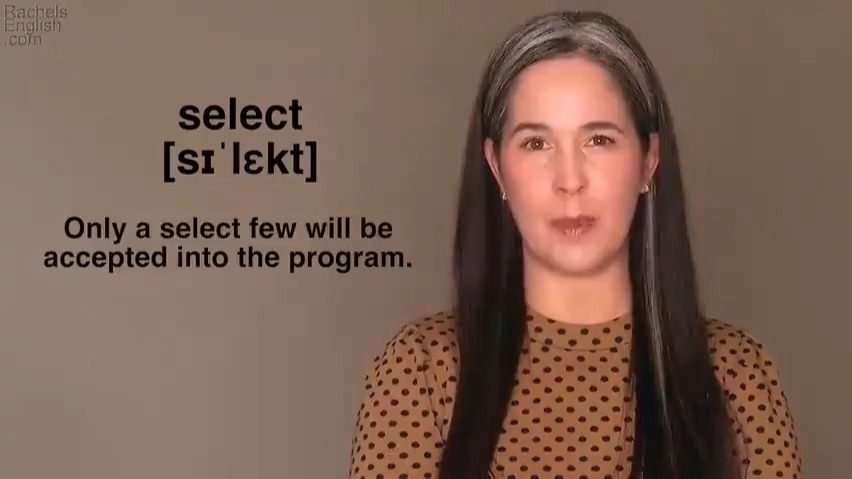
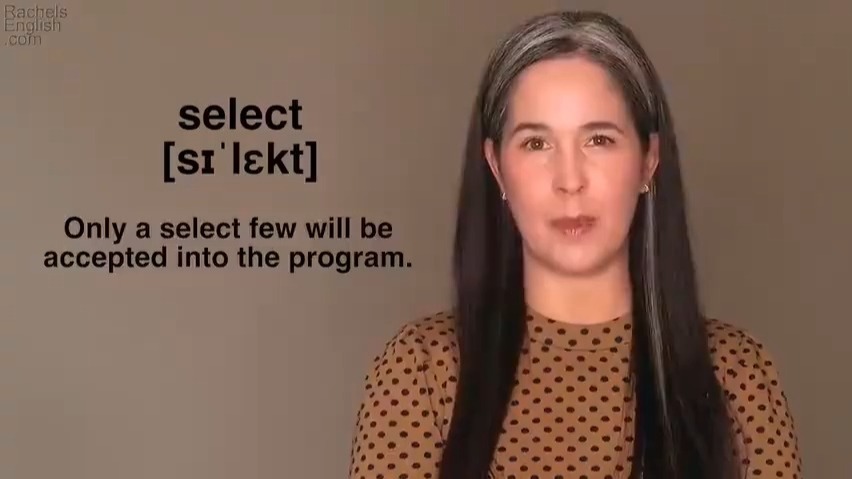
| 104 | Our last word today is select. | 我们今天的最后一句话是选择的。 |
| 105 | Select. | 选择 |
| 106 | It's a verb that means to choose someone or something from a group. | 它是一种动词,意思是从一个群体中选择某个人或某种东西. |
| 107 | Please select one item from the list. | 请从列表中选择一个项目 。 |
| 108 | As an adjective, it means chosen from a group to include the best people or things. | 作为一种形容词,它意味着从一个群体中选择包含最好的人或事物. |
| 109 | Only a select few will be accepted into the program. | 方案只接受少数选择。 |
| 110 | Let's look again up close and in slow motion. | 我们再仔细看看 慢动作 |
| 111 | And now we'll go to Youglish for five examples. | 现在我们去Youglish 举五个例子。 |
| 112 | I select teenagers, teenage girls here in Sacramento. | 我在萨克拉门托选了十几岁的少女 |
| 113 | She's talking about a leadership program to take young people and put them through a training process in leadership skills, project management, and so on, to develop them and give them useful skills. | 她指的是一个培养年轻人并让他们接受领导技能,项目管理等培训的领导能力方案,培养他们并给他们有用的技能. |
| 114 | She focuses on teenage girls. | 她专注于少女。 |
| 115 | She chooses them out of all of the people who might be interested for her specific program. | 她从所有对她具体节目感兴趣的人中挑选他们. |
| 116 | I select teenagers, teenage girls here in Sacramento. | 我在萨克拉门托选了十几岁的少女 |
| 117 | Here's another example. | 这是另一个例子。 |
| 118 | They can select vendors that have really high standards. | 他们可以选择那些具有真正高标准的供应商. |
| 119 | They can select vendors. | 他们可以选择销售商。 |
| 120 | They can buy what they need from vendors with high standards. | 他们可以从标准高的供应商那里购买他们需要的东西. |
| 121 | They can choose the best vendors. | 他们可以选择最好的卖家。 |
| 122 | Vendors is usually used in business to talk about companies that you buy things from for your business. | 销售商通常在商业中用来谈论你为了业务而从公司购买物品的公司. |
| 123 | For example, let's say I own a gym and I want to provide some food and drink. | 比如说,我有一个健身房 我想提供一些食物和饮料。 |
| 124 | I'm not going to make that myself. | 我不会亲手做的 |
| 125 | I'm going to buy it. | 我要买下它。 |
| 126 | I can call various vendors of granola bars, protein shakes, pressed juice, and this kind of thing. | 我可以调用各种摊贩的糖条, 蛋白质的摇晃,压榨的果汁, 和这种东西。 |
| 127 | I can compare the prices and quality of product from these different vendors. | 我可以比较这些不同供应商的产品的价格和质量。 |
| 128 | If five different vendors make celery juice, I'm going to choose the one that's the best fit for my gym based on nutrition, packaging, taste, and so on. | 如果有五个不同的摊贩做芹菜汁,我会根据营养,包装,口味等选择最适合我健身的一款. |
| 129 | They can select vendors that have really high standards. | 他们可以选择那些具有真正高标准的供应商. |
| 130 | Here's another example. | 这是另一个例子。 |
| 131 | So our art is to help select and evaluate talent. | 所以我们的艺术就是帮助选择和评价人才。 |
| 132 | Choose the right people. | 选对人. |
| 133 | Select and evaluate who has the right skills and talent for a particular task or job. | 选择和评估哪些人具备从事特定任务或工作的恰当技能和才能。 |
| 134 | So our art is to help select and evaluate talent. | 所以我们的艺术就是帮助选择和评价人才。 |
| 135 | Another example. | 另一个例子。 |
| 136 | You select the kind of thing you want notifications about. | 您选择要通知的种类 。 |
| 137 | You select, you choose the notifications you want. | 您选择, 您选择您想要的通知 。 |
| 138 | All apps on your phone want to send you notifications. | 所有手机上的应用程序都想给你发通知 |
| 139 | I personally don't need that. | 我个人不需要那个 |
| 140 | I select just the important apps to send me notifications. | 我选择了重要的程序来给我发通知 |
| 141 | You select the kind of thing you want notifications about. | 您选择要通知的种类 。 |
| 142 | Our last example. | 我们的最后一个例子。 |
| 143 | I would like to use the remaining time just to take you through some of the select chapters. | 我想用剩下的时间 带你读读一些章节 |
| 144 | Select chapters. | 选择章节。 |
| 145 | Not all of them. | 不是所有的人都这样 |
| 146 | Not the whole book, but some chapters that have been chosen for this particular presentation. | 不是全书,而是为这个特定的介绍选的一些章节. |
| 147 | I would like to use the remaining time just to take you through some of the select chapters. | 我想用剩下的时间 带你读读一些章节 |
| 148 | Seeing all the real life examples can really help you understand how to use these words, can't it? | 看到所有真实生活的例子,真的可以帮助你理解如何使用这些词语,不是吗? |
| 149 | I have a challenge for you now. | 我有一个挑战给你。 |
| 150 | Make up a sentence with one of these words. | 以此句中一句为句. |
| 151 | Make a short video of your sentence and post it to social media. | 制作一段简短的视频并张贴到社交媒体. |
| 152 | Tag me and use the hashtag Rachel's English 30 Day Challenge. | 用Rachel的英国30天挑战赛的标签标记我 |
| 153 | Don't be shy. | 别害羞 |
| 154 | You can do this. | 你可以做到这一点。 |
| 155 | I would love seeing what you've posted so far. | 我很想看看你已经发布到现在。 |
| 156 | Our next video comes out tomorrow at 10 a.m. Philadelphia time. | 明天费城时间上午10点 我们的下一部录像出来了 |
| 157 | Come on back to learn three more vocabulary words. | 回来再学三个词汇 |
| 158 | In the meantime, keep your studies going with this video and check out my online courses at Rachel's English Academy. | 在此期间,继续你的学习 与这视频 并检查我的在线课程 瑞秋的英语学院。 |
| 159 | You'll become a more confident English speaker. | 你会成为一个更自信的英语演讲者。 |
| 160 | And please do remember to subscribe. | 请记住订阅。 |
| 161 | I love being your English teacher. | 我喜欢当你的英语老师 |
| 162 | That's it and thanks so much for using Rachel's English. | 就这样 非常感谢你用瑞秋的英语 |
该视频共有字幕 163 条。解锁更多字幕为会员功能,请移动到 价格
P3 · 【22 集全】油管超火雅思课!只需40天掌握16400个雅思词汇!外教带你快速提高词汇量,英语全方位学习! p03 2. 2. 【70全集·YouTube最好词的雅思词汇课】40天背完16400词,你敢相信吗?生生拿捏雅思8分上 - 22.23.23.23.LEARN 105 (P3)
【22 集全】油管超火雅思课!只需40天掌握16400个雅思词汇!外教带你快速提高词汇量,英语全方位学习! p03 2. 2. 【70全集·YouTube最好词的雅思词汇课】40天背完16400词,你敢相信吗?生生拿捏雅思8分上 - 22.23.23.23.LEARN 105 (P3)
发布于 2026-08-17 · 时长 10:37字幕摘录
| 时间 | 英文 | 中文 |
|---|---|---|
| 0:01 | It's day 23 of your 30-day English vocabulary challenge, a video a day every day for 30 days. | 这是你30天的英语词汇挑战中的第23天, 每天的视频30天。 |
| 0:08 | Yes, this month we're learning 105 words from the academic word list, words that will help you have | 是的,这个月我们正在学习105个字 从学术字列表, 帮助你有 |
| 0:15 | sophisticated English conversations, words you need to know if you're preparing for an exam like IELTS or TOEFL. | 精密的英语对话,语句需要知道,是否正在准备IELTS或TOEFL这样的考试. |
| 0:22 | I've been watching the posts you've been making about this challenge. | 我一直在看你们关于这个挑战的文章 |
| 0:25 | It's | 这是 |
| 0:30 | posted on social. | 发布在社交。 |
| 0:31 | Don't forget to like and subscribe and don't forget to download the study guide that goes with this 30-day challenge. | 不要忘记喜欢和订阅,不要忘记下载与这30天挑战相关的学习指南. |
| 0:38 | You can do that by clicking here or the link in the video description. | 你可以通过点击这里或视频描述中的链接来做到这一点. |
| 0:42 | Learn the words, ace the quizzes, you've got this. | 学字,甲子试,得此. |
| 0:49 | Our first word today is | 我们今天的第一个词是 |
展开字幕全文(181 条)
| 序号 | 英文 | 中文 |
|---|---|---|
| 1 | It's day 23 of your 30-day English vocabulary challenge, a video a day every day for 30 days. | 这是你30天的英语词汇挑战中的第23天, 每天的视频30天。 |
| 2 | Yes, this month we're learning 105 words from the academic word list, words that will help you have | 是的,这个月我们正在学习105个字 从学术字列表, 帮助你有 |
| 3 | sophisticated English conversations, words you need to know if you're preparing for an exam like IELTS or TOEFL. | 精密的英语对话,语句需要知道,是否正在准备IELTS或TOEFL这样的考试. |
| 4 | I've been watching the posts you've been making about this challenge. | 我一直在看你们关于这个挑战的文章 |
| 5 | It's | 这是 |
| 6 | posted on social. | 发布在社交。 |
| 7 | Don't forget to like and subscribe and don't forget to download the study guide that goes with this 30-day challenge. | 不要忘记喜欢和订阅,不要忘记下载与这30天挑战相关的学习指南. |
| 8 | You can do that by clicking here or the link in the video description. | 你可以通过点击这里或视频描述中的链接来做到这一点. |
| 9 | Learn the words, ace the quizzes, you've got this. | 学字,甲子试,得此. |
| 10 | Our first word today is | 我们今天的第一个词是 |
| 11 | normal. | 寻常. |
| 12 | Normal. | 寻常. |
| 13 | In this stress level we have the all as in law vowel followed by R. Now R makes it so this is not a pure vowel. | 在这个压力级中,我们拥有所有的法律元音, 后面是R。现在R做了它,所以这不是一个纯粹的元音。 |
| 14 | It's not law, aw, | 这不是法律,Aw, |
| 15 | naw, | 唉哟 |
| 16 | normal, but it's no, or, | 正常,但它不是,或者, |
| 17 | nor. | 没有。 |
| 18 | The lips round more and the tongue pulls back a little bit more because of that R, nor, | 嘴唇更圆 舌头再往后拉一点点 因为那个R,也不是, |
| 19 | normal. | 寻常. |
| 20 | It's an adjective. | 谓之形容. |
| 21 | It means usual or ordinary, not strange. | 意思是平时或平时,并不奇怪. |
| 22 | Mentally and physically healthy. | 身心安乐. |
| 23 | Our normal business hours are from 9 to 5. | 我们的正常工作时间为9至5小时。 |
| 24 | This is what they usually are, but on a holiday, for example, New Year's Eve, maybe we close early. | 这就是他们通常的样子, 但是在一个节日,例如,除夕, 也许我们提前关闭。 |
| 25 | It's also a noun meaning the usual or expected state, level, amount, and so on. | 也是一种名词,意为通常或预期的状态,级别,数量等. |
| 26 | Your blood pressure is higher than normal. | 你的血压比正常高 |
| 27 | Let's look again up close and in slow motion. | 我们再仔细看看 慢动作 |
| 28 | Normal. | 寻常. |
| 29 | And now we'll go to Youglish for five examples. | 现在我们去Youglish 举五个例子。 |
| 30 | I mean, it's natural that people want to strive to put a roof over their heads and live a normal life, right? | 我的意思是,这是自然的,人们想要努力 把屋顶在他们的头上, 并过正常的生活,对不对? |
| 31 | Live a normal life. | 过正常生活 |
| 32 | Live a life like most people. | 像大多数人一样生活 |
| 33 | Have what most people have. | 拥有大多数人拥有的 |
| 34 | In this case, talking about a home. | 在这种情况下,谈论一个家。 |
| 35 | I mean, it's natural that people want to strive to put a roof over their heads and live a normal life, right? | 我的意思是,这是自然的,人们想要努力 把屋顶在他们的头上, 并过正常的生活,对不对? |
| 36 | Here's another example. | 这是另一个例子。 |
| 37 | This is the normal progression for an average child that gets the measles. | 这是普通儿童患麻疹的正常进展。 |
| 38 | The normal progression. | 正常的进展。 |
| 39 | The way measles usually progresses in a child. | 麻疹通常在儿童中发展。 |
| 40 | This is not strange, but these are the symptoms we can expect in a child that has the measles. | 这不奇怪,但是这些症状 在一个患麻疹的孩子中,我们可以预料到。 |
| 41 | This is the normal progression for an average child that gets the measles. | 这是普通儿童患麻疹的正常进展。 |
| 42 | Here's another example. | 这是另一个例子。 |
| 43 | Is it also the way that, like, we do normal things, the way we tie our shoes, the way that we drive a car or something like that? | 这也是我们做正常事情的方式吗 系鞋带的方式 开车的方式之类的吗? |
| 44 | Normal things. | 正常的东西。 |
| 45 | Every day, ordinary things that almost everyone does. | 每天都有普通的事物 几乎每个人都会做 |
| 46 | Tie your shoes. | 系好鞋带 |
| 47 | Drive a car. | 开车 |
| 48 | Is it also the way that, like, we do normal things, the way we tie our shoes, the way that we drive a car or something like that? | 这也是我们做正常事情的方式吗 系鞋带的方式 开车的方式之类的吗? |
| 49 | Another example. | 另一个例子。 |
| 50 | Her blood sugar levels were now normal all of the time. | 她的血糖水平现在一直正常 |
| 51 | Now normal. | 现在正常。 |
| 52 | Before, they were not at the expected levels. | 以前,它们没有达到预期的水平。 |
| 53 | They were not healthy. | 他们不健康。 |
| 54 | Now they are. | 现在他们就是了。 |
| 55 | Her blood sugar levels were now normal all of the time. | 她的血糖水平现在一直正常 |
| 56 | Our last example. | 我们的最后一个例子。 |
| 57 | They found they learned 200 to 500 percent faster than normal. | 他们发现他们学得比正常快200到500倍。 |
| 58 | Wow. | 珃 |
| 59 | They learned two to five times faster than normal. | 他们的学习速度是正常的2到5倍 |
| 60 | Faster than what's expected. | 比预期的要快 |
| 61 | Faster than most people. | 比大多数人都快 |
| 62 | They found they learned 200 to 500 percent faster than normal. | 他们发现他们学得比正常快200到500倍。 |
| 63 | Our next word is aspects. | 我们的下一个词是方面。 |
| 64 | Aspects. | 诸方面. |
| 65 | Notice I'm dropping the T here. | 注意,我要把T丢在这里。 |
| 66 | That's common, or normal, when it comes between two other consonants. | 这是常见的,或正常的, 当它涉及到其他两个对齐。 |
| 67 | Aspects. | 诸方面. |
| 68 | As a noun, it means a part of something. | 作为一个名词,它意味着某种东西的一部分。 |
| 69 | Their religion affects nearly all aspects of their lives. | 他们的宗教几乎影响到他们生活的方方面面。 |
| 70 | It influences how they do almost everything. | 它影响着他们几乎所做的一切。 |
| 71 | Let's look again up close and in slow motion. | 我们再仔细看看 慢动作 |
| 72 | Aspects. | 诸方面. |
| 73 | And now we'll go to Youglish for five examples. | 现在我们去Youglish 举五个例子。 |
| 74 | We were exploring different aspects of ourselves. | 我们在探索我们自己的不同方面。 |
| 75 | Different aspects of ourselves. | 自我的不同方面。 |
| 76 | Different parts of ourselves. | 我们自己不同的地方 |
| 77 | Getting to know, thinking about, different parts of ourselves. | 逐渐了解,思考, 我们的不同部分。 |
| 78 | We were exploring different aspects of ourselves. | 我们在探索我们自己的不同方面。 |
| 79 | Here's another example. | 这是另一个例子。 |
| 80 | So we have to look at various different aspects in order to figure out what's going on with the disease. | 因此,我们必须从不同的角度来研究这个疾病究竟是怎么回事. |
| 81 | Various different aspects. | 不同方面。 |
| 82 | Parts. | 部件。 |
| 83 | Sides. | 诸方. |
| 84 | We can't just focus on one thing, | 我们不能只专注于一件事 |
| 85 | but we have to look at disease from many different angles to try to understand it. | 但我们必须从许多不同的角度来看待疾病 来试图理解它。 |
| 86 | So we have to look at various different aspects in order to figure out what's going on with the disease. | 因此,我们必须从不同的角度来研究这个疾病究竟是怎么回事. |
| 87 | Here's another example. | 这是另一个例子。 |
| 88 | Because it was a presidential visit, so there were people all over town covering all aspects of it. | 因为那是总统访问,所以全镇都有人 覆盖了它的所有方面。 |
| 89 | All aspects. | 诸方面. |
| 90 | What the president wore, who the president met with, where the president stayed, and so on. | 总统所穿的,总统所见到的,总统所停留的地方等等. |
| 91 | Because it was a presidential visit, so there were people all over town covering all aspects of it. | 因为那是总统访问,所以全镇都有人 覆盖了它的所有方面。 |
| 92 | Another example. | 另一个例子。 |
| 93 | What are the aspects we want to improve and augment? | 我们希望改进和加强的方面是什么? |
| 94 | What parts of something bigger do we want to improve? | 我们想改进什么? |
| 95 | For example, let's say you run a grocery store. | 比如说你经营一家杂货店 |
| 96 | You've got the products, the display, really dialed in, but the checkout process isn't smooth. | 你已经得到了产品,显示器, 真正拨号, 但退票过程不顺利。 |
| 97 | You want to improve that part. | 你想改进这部分。 |
| 98 | What are the aspects we want to improve and augment? | 我们希望改进和加强的方面是什么? |
| 99 | Our last example. | 我们的最后一个例子。 |
| 100 | We need to understand that it's the social and the emotional aspects of language learning that decide everything. | 我们需要明白,决定一切的是语言学习的社会和情感方面. |
| 101 | The social and emotional aspects of language learning. | 语言学习的社会和情感方面. |
| 102 | Learning a language is made up of different parts. | 学习一种语言由不同的部分组成. |
| 103 | It's the social part. | 这是社会方面。 |
| 104 | Socializing with others, talking with them, connecting with them on an emotional level that matters. | 与他人社交,与他人交谈,在情感上与他人建立联系,这很重要. |
| 105 | It's not just about being able to state a fact in another language. | 不仅仅是在另一种语言中能够陈述一个事实. |
| 106 | It's about connecting with people. | 是关于与人的联系. |
| 107 | We need to understand that it's the social and the emotional aspects of language learning that decide everything. | 我们需要明白,决定一切的是语言学习的社会和情感方面. |
| 108 | Our last word today is perceived. | 我们今天的最后一句话被察觉了。 |
| 109 | Perceived. | 觉已. |
| 110 | It's the past tense of the verb perceive, which means to notice or become aware of something. | 这是动词感知的过去时态,意思是注意或意识到某事. |
| 111 | I perceived that she had been crying. | 我觉得她一直在哭 |
| 112 | Why would you know that? | 你为什么知道? |
| 113 | Well, maybe her eyes are red. | 也许她的眼睛是红色的 |
| 114 | It also means to interpret or look at someone or something in a particular way, to regard as. | 这也意味着以特定的方式解释或看待某人或某物,以视之. |
| 115 | He perceives himself as better than others. | 他觉得自己比别人好 |
| 116 | Let's look again up close and in slow motion. | 我们再仔细看看 慢动作 |
| 117 | Perceived. | 觉已. |
| 118 | And now we'll go to Youglish for five examples. | 现在我们去Youglish 举五个例子。 |
| 119 | In a traditional academic model, we group students together, usually by age and around middle school age and perceived ability. | 在一个传统的学术模式中,我们把学生聚集在一起,通常按年龄和中学生年龄和认知能力来划分. |
| 120 | Perceived ability. | 觉知能力. |
| 121 | How good do they think they are? | 他们觉得自己有多好? |
| 122 | We watch them, maybe have them take a test. | 我们看着他们 也许让他们做个测试 |
| 123 | We interpret their ability. | 我们解释他们的能力。 |
| 124 | We say, for example, | 我们说,例如, |
| 125 | he's good at math and he's not good at math. | 他擅长数学,不擅长数学. |
| 126 | And then we group the students based on that. | 然后我们把学生们集中在一起。 |
| 127 | In a traditional academic model, | 在传统的学术模式下, |
| 128 | we group students together, usually by age and around middle school age and and perceived ability. | 我们把学生聚集在一起, 通常按年龄和中学生年龄 和想象的能力。 |
| 129 | Here's another example. | 这是另一个例子。 |
| 130 | And don't worry about your | 不要担心你 |
| 131 | perceived weaknesses. | 认为有弱点。 |
| 132 | Don't worry about the weaknesses you think you have. | 不用担心你认为的弱点 |
| 133 | You look at them as weaknesses, but someone else might not. | 你把他们看做是弱点, 但别人可能不会。 |
| 134 | The second definition of this word, interpret or look at someone or something in a particular way, regard as. | 这个词的第二个定义, 解释或看 某人或东西 特定的方式, 视如。 |
| 135 | Has to do with judgment. | 和判断有关 |
| 136 | I look at this and I interpret it that way. | 我看着这个,我把它解释为。 |
| 137 | But something you might think is a weakness, | 但你可能认为是弱点 |
| 138 | someone else might see as a strength, might judge it differently. | 别人可能会认为是力量 可能会有不同的判断 |
| 139 | And and don't worry about your | 不用担心你 |
| 140 | perceived weaknesses. | 认为有弱点。 |
| 141 | Here's another example. | 这是另一个例子。 |
| 142 | Maybe you you have good intentions. | 也许你有好意 |
| 143 | You think you're doing a great job, but it isn't being perceived in that way. | 你以为你做的很好,但它不是被这样看待的。 |
| 144 | So again, this is about judgment. | 所以,这是关于判断。 |
| 145 | You think you're doing a great job, | 你以为你做得很好 |
| 146 | but someone else sees the same thing and thinks differently. | 但别人会看到同样的事情 并有不同的想法 |
| 147 | They regard it as something different. | 他们认为这是不同的东西。 |
| 148 | They perceive it differently. | 他们的看法不同 |
| 149 | Maybe you you have good intentions. | 也许你有好意 |
| 150 | You think you're doing a great job, but it isn't being perceived in that way. | 你以为你做的很好,但它不是被这样看待的。 |
| 151 | Another example. | 另一个例子。 |
| 152 | And I didn't want to share this with a lot of you because | 我不想跟你们分享这个 因为... |
| 153 | I'm usually a happy person and I didn't want to be perceived in any other way. | 我通常是一个快乐的人 我不想被别人看穿 |
| 154 | This person doesn't want other people to think she's anything but happy. | 这个人不想让别人认为她除了快乐之外别无他法. |
| 155 | She wants other people to regard her as a happy person. | 她希望其他人把她视为一个快乐的人. |
| 156 | And I didn't want to share this with a lot of you because | 我不想跟你们分享这个 因为... |
| 157 | I'm usually a happy person and I didn't want to be perceived in any other way. | 我通常是一个快乐的人 我不想被别人看穿 |
| 158 | Our last example. | 我们的最后一个例子。 |
| 159 | Maybe you know people have perceived me as this guy that's built this big business. | 也许你知道有人把我当成了这个大生意的人 |
| 160 | Perceived me. | 觉悟我. |
| 161 | They interpret me as someone who built a big business. | 他们把我解释为一个 建立大生意的人。 |
| 162 | They regard me as someone who's successful. | 他们认为我是个成功的人 |
| 163 | But everyone has many aspects to them. | 但每个人都有很多方面。 |
| 164 | Oh, there's another one of our vocabulary words for today. | 哦,今天还有一个词汇 |
| 165 | And even someone who's successful has pain in their life. | 乃至成就者亦有苦乐. |
| 166 | Maybe you know people have perceived me as this guy that's built this big business. | 也许你知道有人把我当成了这个大生意的人 |
| 167 | Seeing all the real life examples can really help you understand how to use these words, can't it? | 看到所有真实生活的例子,真的可以帮助你理解如何使用这些词语,不是吗? |
| 168 | I have a challenge for you now. | 我有一个挑战给你。 |
| 169 | Make up a sentence with one of these words. | 以此句中一句为句. |
| 170 | Make a short video of your sentence and post it to social media. | 制作一段简短的视频并张贴到社交媒体. |
| 171 | Tag me and use the hashtag Rachel's English 30-day challenge. | 用Rachel的英文30天挑战标记我 |
| 172 | Don't be shy. | 别害羞 |
| 173 | You can do this. | 你可以做到这一点。 |
| 174 | I would love seeing what you've posted so far. | 我很想看看你已经发布到现在。 |
| 175 | Our next video comes out tomorrow at 10 a.m. Philadelphia time. | 明天费城时间上午10点 我们的下一部录像出来了 |
| 176 | Come on back to learn three more vocabulary words. | 回来再学三个词汇 |
| 177 | In the meantime, | 同时 |
| 178 | keep your studies going with this video and check out my online courses at Rachel's English Academy. | 继续你的学习 与这段视频 并检查我的在线课程 在瑞秋的英语学院。 |
| 179 | You'll become a more confident English speaker and please do remember to subscribe. | 你会成为一个更自信的英语演讲者 请记住订阅。 |
| 180 | I love being your English teacher. | 我喜欢当你的英语老师 |
| 181 | That's it and thanks so much for using Rachel's English. | 就这样 非常感谢你用瑞秋的英语 |
该视频共有字幕 188 条。解锁更多字幕为会员功能,请移动到 价格
P4 · 【22 集全】油管超火雅思课!只需40天掌握16400个雅思词汇!外教带你快速提高词汇量,英语全方位学习! p04 3. 3. 【70全集·YouTube最好词的雅思词汇课】40天背完16400词,你敢相信吗?生生拿捏雅思8分上 - 23.25.25.25.LEARN 105 (P4)
【22 集全】油管超火雅思课!只需40天掌握16400个雅思词汇!外教带你快速提高词汇量,英语全方位学习! p04 3. 3. 【70全集·YouTube最好词的雅思词汇课】40天背完16400词,你敢相信吗?生生拿捏雅思8分上 - 23.25.25.25.LEARN 105 (P4)
发布于 2026-08-17 · 时长 8:39字幕摘录
| 时间 | 英文 | 中文 |
|---|---|---|
| 0:00 | It's day 25 how exciting this is your 30-day English vocabulary challenge this month | 这是第25天,你这个30天的英语词汇 多么令人兴奋的这个月。 |
| 0:07 | We're learning a hundred and five words from the academic word list words that help you have | 我们从学术字里学到了一百零五个字 列出了帮助你的词 |
| 0:12 | Sophisticated English conversations and words that you need to know if you're preparing for an exam like IELTS or TOEFL | 精密的英语对话 以及你需要知道的语句 是否准备考试 IELTS 或 TOEFL |
| 0:19 | I've been watching the posts you've been making about this challenge. | 我一直在看你们关于这个挑战的文章 |
| 0:23 | It's | 这是 |
| 0:23 | Incredible inspiring make up a sentence to a word you learn and post it on social | 不可思议的鼓舞人心的句子 补上一句你学到的词 然后贴在社交上 |
| 0:28 | Don't forget to like and subscribe and don't forget to download the study guide that goes with this 30-day challenge | 别忘了喜欢和订阅 别忘了下载30天挑战的学习指南 |
| 0:36 | You can do that by clicking here or the link in the video description | 您可以点击这里或视频描述中的链接来做到这一点 |
| 0:39 | Learn the words ace the quizzes. | 学"甲乙经"考证. |
| 0:42 | You've got this | 你有这个 |
展开字幕全文(118 条)
| 序号 | 英文 | 中文 |
|---|---|---|
| 1 | It's day 25 how exciting this is your 30-day English vocabulary challenge this month | 这是第25天,你这个30天的英语词汇 多么令人兴奋的这个月。 |
| 2 | We're learning a hundred and five words from the academic word list words that help you have | 我们从学术字里学到了一百零五个字 列出了帮助你的词 |
| 3 | Sophisticated English conversations and words that you need to know if you're preparing for an exam like IELTS or TOEFL | 精密的英语对话 以及你需要知道的语句 是否准备考试 IELTS 或 TOEFL |
| 4 | I've been watching the posts you've been making about this challenge. | 我一直在看你们关于这个挑战的文章 |
| 5 | It's | 这是 |
| 6 | Incredible inspiring make up a sentence to a word you learn and post it on social | 不可思议的鼓舞人心的句子 补上一句你学到的词 然后贴在社交上 |
| 7 | Don't forget to like and subscribe and don't forget to download the study guide that goes with this 30-day challenge | 别忘了喜欢和订阅 别忘了下载30天挑战的学习指南 |
| 8 | You can do that by clicking here or the link in the video description | 您可以点击这里或视频描述中的链接来做到这一点 |
| 9 | Learn the words ace the quizzes. | 学"甲乙经"考证. |
| 10 | You've got this | 你有这个 |
| 11 | Let's start with distinction | 我们先分辨一下 |
| 12 | Distinction | 区分 |
| 13 | It's a noun a difference that you can see hear smell feel | 名词不同,你可以看到闻到味道 |
| 14 | The separation of people or things into different groups | 将人或事物分为不同的群体 |
| 15 | These dogs are different breeds, but this distinction the difference is hard to see | 这些狗是不同的品种 但这种区别很难看出 |
| 16 | Let's look up close and in slow motion | 我们近距离看,慢动作 |
| 17 | Distinction | 区分 |
| 18 | Distinction and now we'll go to you glitch for five examples as a practical matter | 分明点,现在我们去找你 找五个例子作为实际问题 |
| 19 | People don't make the distinction between the two don't make the distinction don't separate | 人们不区分两者 不区分不区分 |
| 20 | He's talking about | 他在说 |
| 21 | Constitutional law and an individual's rights | 宪法和个人的权利 |
| 22 | He says people don't separate that out. | 他说人们不会分开的 |
| 23 | These are my rights under state law and these are my rights under federal law | 这些是我的州法下的权利 这些是我的联邦法下的权利 |
| 24 | He's saying they just group them together. | 他说他们只是把它们组合在一起 |
| 25 | These are my rights as a practical matter | 这些是我的实际权利 |
| 26 | People don't make the distinction between the two. | 众生不以二法分别. |
| 27 | Here's another example. | 这是另一个例子。 |
| 28 | I think that that's such an important distinction an | 我认为这是一个很重要的区别 |
| 29 | Important distinction an important thing that makes two things different at | 重要的区别 重要的事情 使两件事不同 在 |
| 30 | Thanksgiving for example an important distinction between me and my sister is that I cannot cook to save my life and my sister can prepare | 比如感恩节 我和姐姐的重要区别是 我无法做饭来拯救我的命 我妹妹可以准备 |
| 31 | A beautiful turkey. | 一个美丽的火鸡。 |
| 32 | I think that that's such an important distinction. | 我认为这是一个如此重要的区别。 |
| 33 | Here's another example | 还有一个例子 |
| 34 | It's kind of like the distinction microeconomics and macroeconomics the distinction between the difference between | 这有点像微观经济学和宏观经济学的区别... ... |
| 35 | It's it's kind of like the distinction microeconomics and macroeconomics another example | 它有点像 区别微观经济学和宏观经济 另一个例子 |
| 36 | Yeah, I think that's a really big distinction a really big distinction a really big factor that makes two things different | 是啊,我认为这是一个真正的大区别 一个真正的大区别 一个真正的大因素 使两件事不同 |
| 37 | I think that's a really big distinction our last example | 我觉得这是我们最后的例子 |
| 38 | They may recognize more the distinction between a candidate's public life and their personal | 他们可能更多地认识到候选人的公共生活与个人生活之间的区别。 |
| 39 | Candidate who's running for office has their public life the one that gets captured by cameras | 竞选公职的候选人有他们的公共生活 被摄像头抓住的人 |
| 40 | Relating to the work they do but also a personal life | 涉及他们的工作,但也涉及个人生活 |
| 41 | Separate that relates to things like being a father or mother that kind of thing two different aspects of life | 和父亲或母亲一样的分离 生活的两个不同方面 |
| 42 | They may recognize more the distinction between a candidate's public life and their personal. | 他们可能更多地承认候选人的公共生活与个人生活之间的区别。 |
| 43 | Yeah, our next word is items with a flap T | 是的,我们的下一个词是 与襟翼T |
| 44 | items | 项目 |
| 45 | It's a plural noun | 这是一个复数名词 |
| 46 | objects things | 对象 |
| 47 | individual ideas | 个人想法 |
| 48 | Her paintings became valuable items | 她的画成了有价值的东西 |
| 49 | Let's look again up close and in slow motion | 我们再仔细看看 慢动作 |
| 50 | items | 项目 |
| 51 | Items and now we'll go to you glitch for five examples. | 东西,现在我们去找你 5个例子。 |
| 52 | I gotta have some action items | 我有一些动作项目 |
| 53 | action items things to do a | 动作项目 |
| 54 | specific task to be done | 有待完成的具体任务 |
| 55 | John I have given you three action items for the Facebook project and I need them to be done by Friday | 约翰,我给你三个行动项目 Facebook项目 我需要在星期五完成 |
| 56 | I got to have some action items. | 我有一些动作项目。 |
| 57 | Here's another example | 还有一个例子 |
| 58 | Why don't you sit down with kids and give them four items a red shirt a blue tie a | 不如你和孩子们坐下 给他们四件红衬衫 蓝领带 |
| 59 | Kangaroo and a laptop and have them tell a story about those four things four items four things | 袋鼠和一台笔记本电脑 让他们讲述这四样东西的故事 四样东西 |
| 60 | Why don't you sit down with kids and give them four items a red shirt a blue tie a | 不如你和孩子们坐下 给他们四件红衬衫 蓝领带 |
| 61 | Kangaroo and a laptop and have them tell a story about those four things. | 袋鼠和一个笔记本电脑 让他们讲述这四件事 |
| 62 | Here's another example | 还有一个例子 |
| 63 | We have more than 50,000 items in collections | 我们有超过50 000件收藏品 |
| 64 | items in collections | 收藏中的项目 |
| 65 | She's talking about a museum a collection or a group of things can have any number of items | 她说的是博物馆 收藏品或一组东西可以拥有多少物品 |
| 66 | For example, this is a collection of all the letters Nixon wrote when he was president each letter in that collection is a single item | 举个例子,这是尼克松当总统时 写的所有信件的集合 每封信都是单项 |
| 67 | We have more than 50,000 items in collections | 我们有超过50 000件收藏品 |
| 68 | Another example, I looked at all of the largest budget items and tried to figure out where they were going | 另一个例子是,我看了所有最大的预算项目 并试图找出它们要去哪里 |
| 69 | The largest budget items the things that cost the most payroll health care and so on | 最大的预算项目 成本最高的薪水保健等等 |
| 70 | These are different items different things in the budget | 这些是不同的项目 不同的东西在预算中 |
| 71 | I looked at all of the largest budget items and tried to figure out where they were going our last example | 我查看了所有最大的预算项目 并试图找出它们在哪里去 我们最后一个例子 |
| 72 | NASA allows crew members to carry a limited number of personal items during the flight | NASA允许机组人员在飞行期间携带数量有限的个人物品. |
| 73 | Personal items things that aren't related to the NASA mission like a photograph of a loved one | 与NASA任务无关的私人物品 就像一个爱人的照片 |
| 74 | NASA allows crew members to carry a limited number of personal items during the flight. | NASA允许机组人员在飞行期间携带数量有限的个人物品. |
| 75 | Our last word today is assistance | 我们今天最后一句话是援助 |
| 76 | Assistance | 援助 |
| 77 | remember with an NS cluster in American English that sounds like NTS | 记得美国英语的NS集群 听起来像NTS |
| 78 | assistance as a noun it means the act of helping or supporting someone any | 帮助或支持他人的行为 |
| 79 | Assistance you can give me would be greatly appreciated. | 如果你能给我帮助,我将非常感激。 |
| 80 | Let's look again up close and in slow motion | 我们再仔细看看 慢动作 |
| 81 | assistance | 协助 |
| 82 | Assistance and now we'll go to you glitch for five examples. | 帮手,现在我们去找你5个例子 |
| 83 | They were in need of our assistance | 他们需要我们的帮助 |
| 84 | They were in need of our assistance. | 他们需要我们的帮助。 |
| 85 | They needed our help. | 他们需要我们的帮助。 |
| 86 | They were in need of our assistance | 他们需要我们的帮助 |
| 87 | Here's another example a network whose support and assistance is absolutely essential to our great work | 另一个例子是,一个网络,其支持和援助对我们的伟大工作绝对至关重要。 |
| 88 | assistance the help and support they give in different ways a | 他们以不同方式提供的帮助和支持 |
| 89 | Network whose support and assistance is absolutely essential to our great work | 网络的支持和援助对我们的伟大工作绝对必要 |
| 90 | Here's another example. | 这是另一个例子。 |
| 91 | This is how you apply for food assistance in the state of California | 这就是你在加州申请食物援助的方式 |
| 92 | food assistance | 粮食援助 |
| 93 | When you can't afford to buy food for your family | 当你买不起食物给家人的时候 |
| 94 | You can apply for assistance from the government to get help covering your grocery bill to keep food on the table | 你可以申请政府援助 以获得帮助 覆盖您的杂货账单 保持食物的桌子 |
| 95 | This is how you apply for food assistance in the state of California | 这就是你在加州申请食物援助的方式 |
| 96 | Another example because a lot of these organizations not only leave money, but they need technical assistance | 另一个例子是,许多这些组织不仅留下钱,而且需要技术援助。 |
| 97 | Technical assistance help with the technical side of things computers software | 技术援助对计算机软件技术方面的帮助 |
| 98 | Handling computer training that kind of thing | 处理电脑训练之类的事情 |
| 99 | Because a lot of these organizations not only leave money, but they need technical assistance our last example | 因为很多这样的组织 不仅留下钱, 而且他们需要技术援助 我们最后的例子 |
| 100 | But one thing I have always remembered is the extraordinary assistance given to me by the outstanding staff of the library | 但我一直记得的一件事 是图书馆的杰出工作人员给我的非凡帮助 |
| 101 | assistance given to me by the staff of the library | 图书馆工作人员给我的帮助 |
| 102 | What kind of help can library staff give? | 图书馆工作人员能提供什么样的帮助? |
| 103 | Help on understanding how to look things up with their system getting people access to rare books and collections and so on | 帮助人们了解如何用他们的系统 来研究事物 让人们能接触到珍贵的书籍和收藏品等等 |
| 104 | But one thing I have always remembered is the extraordinary assistance given to me by the outstanding staff of the library | 但我一直记得的一件事 是图书馆的杰出工作人员给我的非凡帮助 |
| 105 | Seeing all the real life examples can really help you understand how to use these words. | 看到真实生活中的所有例子,可以帮助你理解如何使用这些词语. |
| 106 | Can't it? | 不能吗? |
| 107 | I have a challenge for you now make up a sentence with one of these words | 我有一个挑战,现在你 补一句这些话 |
| 108 | Make a short video of your sentence and post it to social media | 制作一段简短的视频并张贴到社交媒体上 |
| 109 | Tag me and use the hashtag rachel's english 30-day challenge. | 用Rachel的英文30天挑战 |
| 110 | Don't be shy. | 别害羞 |
| 111 | You can do this | 你办得到的 |
| 112 | I would love seeing what you've posted so far | 我很想看看你已经发布到现在 |
| 113 | Our next video comes out tomorrow at 10 am philadelphia time | 我们的下一个视频明天10点在菲拉德尔菲亚时间出来 |
| 114 | Come on back to learn three more vocabulary words in the meantime | 回来学三个词汇 |
| 115 | Keep your studies going with this video and check out my online courses at rachel's english academy | 继续用这段视频学习 看看我在Rachel英语学院的在线课程 |
| 116 | You'll become a more confident english speaker and please do remember to subscribe. | 你会成为一个更自信的英语演讲者 请记住订阅。 |
| 117 | I love being your english teacher | 我喜欢做你的英语老师 |
| 118 | That's it and thanks so much for using rachel's english | 就这样,谢谢你用Rachel的英语 |
该视频共有字幕 123 条。解锁更多字幕为会员功能,请移动到 价格
P5 · 【22 集全】油管超火雅思课!只需40天掌握16400个雅思词汇!外教带你快速提高词汇量,英语全方位学习! p05 4. 4. 【70全集·YouTube最好词的雅思词汇课】40天背完16400词,你敢相信吗?生生拿捏雅思8分上 - 27.30.30.30.LEARN 105 (P5)
【22 集全】油管超火雅思课!只需40天掌握16400个雅思词汇!外教带你快速提高词汇量,英语全方位学习! p05 4. 4. 【70全集·YouTube最好词的雅思词汇课】40天背完16400词,你敢相信吗?生生拿捏雅思8分上 - 27.30.30.30.LEARN 105 (P5)
发布于 2026-08-17 · 时长 10:25字幕摘录
| 时间 | 英文 | 中文 |
|---|---|---|
| 0:01 | Bravo, my friends! | 好样的,我的朋友们! |
| 0:03 | You made it to the end. | 你走到了尽头 |
| 0:05 | It's Day 30 of your 30-day English vocabulary challenge. | 今天是你30天英语词汇挑战的第30天 |
| 0:09 | However, we still have three words to master today, so let's do this. | 然而,今天我们还有三个字要掌握,所以我们做吧. |
| 0:14 | Let's finish out the 105 words we've learned all month from the academic word list. | 从学术字表上写完全月学习的105个字. |
| 0:19 | Words that will help you have sophisticated English conversations. | 能帮助你进行精密英语对话的词 |
| 0:23 | Words you need to know if you're preparing for the IELTS or TOEFL exam. | 需要知道是否准备参加IELTS或TOEFL考试的单词. |
| 0:27 | I've been watching the posts you've been making about this challenge. | 我一直在看你们关于这个挑战的文章 |
| 0:31 | It's incredible, inspiring. | 令人难以置信,鼓舞人心. |
| 0:33 | Make up a sentence to a word you learn and post it on social. | 写一句你学的词 然后贴在社交上 |
展开字幕全文(169 条)
| 序号 | 英文 | 中文 |
|---|---|---|
| 1 | Bravo, my friends! | 好样的,我的朋友们! |
| 2 | You made it to the end. | 你走到了尽头 |
| 3 | It's Day 30 of your 30-day English vocabulary challenge. | 今天是你30天英语词汇挑战的第30天 |
| 4 | However, we still have three words to master today, so let's do this. | 然而,今天我们还有三个字要掌握,所以我们做吧. |
| 5 | Let's finish out the 105 words we've learned all month from the academic word list. | 从学术字表上写完全月学习的105个字. |
| 6 | Words that will help you have sophisticated English conversations. | 能帮助你进行精密英语对话的词 |
| 7 | Words you need to know if you're preparing for the IELTS or TOEFL exam. | 需要知道是否准备参加IELTS或TOEFL考试的单词. |
| 8 | I've been watching the posts you've been making about this challenge. | 我一直在看你们关于这个挑战的文章 |
| 9 | It's incredible, inspiring. | 令人难以置信,鼓舞人心. |
| 10 | Make up a sentence to a word you learn and post it on social. | 写一句你学的词 然后贴在社交上 |
| 11 | Don't forget to like and subscribe. | 别忘了喜欢和订阅 |
| 12 | And don't forget to download the study guide that goes with this 30-day challenge. | 别忘了下载30天挑战的学习指南。 |
| 13 | You can do that by clicking here or the link in the video description. | 你可以通过点击这里或视频描述中的链接来做到这一点. |
| 14 | Learn the words, ace the quizzes, you've got this. | 学字,甲子试,得此. |
| 15 | Today we begin with Institute. | 今天我们从研究所开始。 |
| 16 | Institute. | 研究所。 |
| 17 | It's a noun, an organization created for a particular purpose, such as research or education. | 这是一个名词,一个为特定目的创建的组织,如研究或教育. |
| 18 | I visit the Art Institute's gallery once a month. | 我每月访问艺术学院的画廊一次 |
| 19 | As a verb, it means to begin or create something, such as a new law, rule, or system. | 作为一种动词,它的意思是开始或创造某种东西,例如新的法律,规则,或制度. |
| 20 | By instituting these programs, we hope to improve our children's education. | 通过实施这些方案,我们希望改善我们儿童的教育。 |
| 21 | Let's look again up close and in slow motion. | 我们再仔细看看 慢动作 |
| 22 | Institute, Institute, Institute, Institute. | 研究所,研究所,研究所,研究所。 |
| 23 | And now we'll go to Youglish for five examples. | 现在我们去Youglish 举五个例子。 |
| 24 | The Wisconsin Institute for Research on Poverty recently did a symposium on this. | 威斯康辛贫困研究所最近就此举行了一次专题讨论会。 |
| 25 | This is an organization created for a particular purpose. | 这是一个为特定目的成立的组织。 |
| 26 | In this case, to conduct research. | 在这种情况下,进行研究。 |
| 27 | Oh, conduct. | 哦,行为。 |
| 28 | That's another word we learned in this challenge. | 这是我们在这个挑战中学到的另一个词. |
| 29 | To conduct research on poverty. | 开展贫困研究. |
| 30 | You know what, we learned research too on day four. | 我们第四天也学过研究 |
| 31 | The Wisconsin Institute for Research on Poverty recently did a symposium on this. | 威斯康辛贫困研究所最近就此举行了一次专题讨论会。 |
| 32 | Here's another example. | 这是另一个例子。 |
| 33 | I did that by setting up this institute in which I could foster these young scientists. | 我建立这个研究所来培养这些年轻的科学家。 |
| 34 | Okay, so again, this is an organization. | 好吧,所以再次, 这是一个组织。 |
| 35 | It was set up, that means started, by this woman to foster young scientists. | 它的建立,也就是说,开始, 由这个女人培养年轻的科学家。 |
| 36 | Foster means to encourage or promote the development of. | 扶植是指鼓励或促进发展. |
| 37 | She set up an organization to develop young scientists. | 她成立了一个组织来培养年轻的科学家. |
| 38 | I did that by setting up this institute in which I could foster these young scientists. | 我建立这个研究所来培养这些年轻的科学家。 |
| 39 | Here's another example. | 这是另一个例子。 |
| 40 | And the research institute has 25 major research teams | 研究所有25个研究团队 |
| 41 | with grants totally more than 12 million dollars per year. | 每年赠款总额超过1 200万美元。 |
| 42 | The research institute. | 研究所. |
| 43 | Again, this is the noun form of the word. | 再说一遍,这是词的名词形式. |
| 44 | An organization created for a particular purpose. | 为某一特定目的成立的组织. |
| 45 | In this case, research on a particular topic or variety of topics. | 在这种情况下,对某一特定专题或各种专题的研究。 |
| 46 | And the research institute has 25 major research teams | 研究所有25个研究团队 |
| 47 | with grants totally more than 12 million dollars per year. | 每年赠款总额超过1 200万美元。 |
| 48 | Another example. | 另一个例子。 |
| 49 | I think we need to institute a variety of reforms to make it possible. | 我认为我们需要进行各种改革,使之成为可能。 |
| 50 | Here we have the verb form. | 这里有动词表 |
| 51 | To institute, to begin to create a new rule, law, or system. | 建立,开始创造新的规则,法律,或制度. |
| 52 | In this case, they needed to begin reforms on a system | 在这种情况下,他们需要开始改革制度。 |
| 53 | to bring about changes to reach a goal. | 带来变革以达到一个目标。 |
| 54 | I think we need to institute a variety of reforms to make it possible. | 我认为我们需要进行各种改革,使之成为可能。 |
| 55 | Our last example. | 我们的最后一个例子。 |
| 56 | Sweden was the first country to institute a carbon tax and they did so back in 1991. | 瑞典是第一个实行碳税的国家,他们早在1991年就这样做了。 |
| 57 | Again, the verb. | 复次动词. |
| 58 | The first country to create a new law, a carbon tax, to help curb global warming. | 第一个制定新法律,碳税的国家,帮助遏制全球变暖。 |
| 59 | Sweden was the first country to institute a carbon tax and they did so back in 1991. | 瑞典是第一个实行碳税的国家,他们早在1991年就这样做了。 |
| 60 | Our next word is resident. | 我们的下一个词是居民。 |
| 61 | Notice the letter S here makes a Z sound. | 注意信S发出Z的声音 |
| 62 | It's a noun. | 名名义. |
| 63 | Someone who lives in a particular place. | 住在某个地方的人 |
| 64 | I'm a resident of Pennsylvania. | 我是宾夕法尼亚州的居民 |
| 65 | It's also an adjective. | 亦是形容词. |
| 66 | Living or working in a particular place, usually for a long period of time. | 在特定地点生活或工作,通常时间很长. |
| 67 | He's our resident history expert here at the museum. | 他是博物馆的常住历史专家 |
| 68 | Let's look again up close and in slow motion. | 我们再仔细看看 慢动作 |
| 69 | Resident. | 居民。 |
| 70 | And now we'll go to Youglish for five examples. | 现在我们去Youglish 举五个例子。 |
| 71 | In undergraduate school, I was a resident assistant, which is known as an RA. | 在本科学校,我是一名驻地助理,这被称为RA. |
| 72 | A resident assistant or RA. | 驻地助理或RA。 |
| 73 | This is a position at a college or university in a dorm. | 这是大学或大学宿舍里的职位。 |
| 74 | The RA is there to be a resource and a help to the students who live in the dorm. | RA为住在宿舍的学生提供资源和帮助. |
| 75 | That is, the residents who live in that particular place. | 也就是住在那个特定地方的居民。 |
| 76 | In undergraduate school, I was a resident assistant, which is known as an RA. | 在本科学校,我是一名驻地助理,这被称为RA. |
| 77 | Here's another example. | 这是另一个例子。 |
| 78 | When George was chief resident at the hospital, I scheduled all the interns and residents. | 当乔治是首席住院医生时 我安排了所有实习生和住院医生 |
| 79 | Chief resident. | 首席住院医生 |
| 80 | Living or working in a particular place. | 在特定地方生活或工作。 |
| 81 | In the US health system, a resident refers to a doctor in training. | 在美国卫生系统中,居民是指正在接受培训的医生。 |
| 82 | That person has finished the four years of medical school, | 那个人读了四年医学院 |
| 83 | but still needs to complete several years of training to become a particular kind of doctor. | 但还需要完成几年的训练 才能成为特殊的医生 |
| 84 | They work at one hospital or medical group and can work really long hours. | 他们在一个医院或医疗小组工作,可以工作很长的时间。 |
| 85 | When George was chief resident at the hospital, I scheduled all the interns and residents. | 当乔治是首席住院医生时 我安排了所有实习生和住院医生 |
| 86 | Here's another example. | 这是另一个例子。 |
| 87 | This is a benefit to all New Yorkers, to every resident. | 这对所有纽约人和每个居民都有好处。 |
| 88 | All New Yorkers, every resident, everyone who lives in New York. | 所有纽约人,每个居民,所有住在纽约的人 |
| 89 | This is a benefit to all New Yorkers, to every resident. | 这对所有纽约人和每个居民都有好处。 |
| 90 | Another example. | 另一个例子。 |
| 91 | You have to be a North American resident. | 你必须是北美居民。 |
| 92 | You have to live in a particular place. | 你必须住在一个特定的地方。 |
| 93 | In this case, North America. | 在这种情况下,北美。 |
| 94 | You have to be a North American resident. | 你必须是北美居民。 |
| 95 | Our last example. | 我们的最后一个例子。 |
| 96 | I was a surgical resident at the Johns Hopkins Hospital. | 我是约翰霍普金斯医院的外科医生 |
| 97 | Surgical resident. | 外科住院医师. |
| 98 | Completed medical school and now training to be a surgeon. | 医学院毕业,现在接受外科医生培训。 |
| 99 | I was a surgical resident at the Johns Hopkins Hospital. | 我是约翰霍普金斯医院的外科医生 |
| 100 | Our last word today and of the whole 105-word challenge is | 我们今天最后一句话 和整个105字挑战 |
| 101 | sought. | 请求。 |
| 102 | The past tense of seek. | 寻找的过去紧张。 |
| 103 | Sought. | 寻得. |
| 104 | It's a verb, to search or try to find someone or something. | 这是一个动词, 搜索或试图找到某人或什么的。 |
| 105 | Also, to ask for or try to achieve something. | 另外,要求或试图实现某种目标。 |
| 106 | He sought to write a movie that audiences would love. | 他试图写一部观众会喜欢的电影. |
| 107 | Let's look again up close and in slow motion. | 我们再仔细看看 慢动作 |
| 108 | Sought. | 寻得. |
| 109 | And now we'll go to Youglish for five examples. | 现在我们去Youglish 举五个例子。 |
| 110 | I've called you several times and sought advice from you. | 我已经给你打了好几次电话 并征求你的建议。 |
| 111 | Sought advice from you. | 征求你的建议 |
| 112 | Tried to get advice. | 试图得到建议。 |
| 113 | Asked for advice. | 问师曰. |
| 114 | I've called you several times and sought advice from you. | 我已经给你打了好几次电话 并征求你的建议。 |
| 115 | Here's another example. | 这是另一个例子。 |
| 116 | And I sought out other ideas to see if I could have a greater impact. | 我寻找其他想法 看看我是否能产生更大的影响。 |
| 117 | Sought out. | 寻出. |
| 118 | Notice when this word links into a word that begins with a vowel or diphthong, | 注意当这个单词链接到一个以元音或diphthong开头的单词时, |
| 119 | like in this phrase, sought out, the T in sought becomes a flap T. | 就像这个短语,寻求, 所寻求的T变成一个襟翼T。 |
| 120 | Sought out. | 寻出. |
| 121 | This is a common phrasal verb, to search for something. | 这是一个常用的词性动词,用于搜索某种东西. |
| 122 | This person searched for ideas. | 这个人寻找想法。 |
| 123 | And I sought out other ideas to see if I could have a greater impact. | 我寻找其他想法 看看我是否能产生更大的影响。 |
| 124 | Here's another example. | 这是另一个例子。 |
| 125 | In 1999, Kevin established his own creative consulting firm. | 1999年,凯文成立了自己的创意咨询公司. |
| 126 | Where he became a highly sought after producer. | 在那里,他成为了 高度追求的制作人。 |
| 127 | Highly sought after. | 紧追不舍 |
| 128 | This is a way to describe something or someone who's in great demand | 这是一种描述 某某某某某某某某某某某某某某某某某某某某某某某某某某某某某某某某某某某某某某某某某某某某某某某某某某某某某某某某某某某某某某某某某某某某某某某某某某某某某某某某某某某某某某某某某某某某某某某某某某某某某某某某某某某某某某某某某某某某某某某某某某某某某某某某某某某某某某某某某某某某某某某某某某某某某某某某某某某某某某某某某某某某某某某某某某某某某某某某某某某某某某某某某某某某某,某某某某某某某某某某某某某某某某某某某某某某某某某某某某某某某某某某某某某某某某某某某某某某某某某某某某某某某某某某 |
| 129 | or an object that's desirable. | 或理想的物体。 |
| 130 | Many people wanted Kevin as producer on their projects. | 许多人希望凯文成为他们项目的制作人. |
| 131 | In 1999, Kevin established his own creative consulting firm. | 1999年,凯文成立了自己的创意咨询公司. |
| 132 | Where he became a highly sought after producer. | 在那里,他成为了 高度追求的制作人。 |
| 133 | Another example. | 另一个例子。 |
| 134 | Fetterman unsuccessfully sought the Senate nomination in a three-person competitive race. | 在三人竞技比赛中,Fetterman未能成功寻求参议院提名. |
| 135 | Sought the Senate nomination. | 争取参议院提名. |
| 136 | Now here, the next word begins with a consonant, so it's a stop T in sought. | 现在,下一个词从一个对齐开始, 所以它是一个停止在寻求。 |
| 137 | Sought the. | 买的 |
| 138 | Sought the Senate nomination. | 争取参议院提名. |
| 139 | Tried to achieve something. | 尝试实现一些东西。 |
| 140 | To get the Senate nomination to win the primary election. | 争取参议院提名以赢得初选. |
| 141 | Fetterman was unsuccessful, did not win. | 铁人不成功,没有获胜。 |
| 142 | Fetterman unsuccessfully sought the Senate nomination in a three-person competitive race. | 在三人竞技比赛中,Fetterman未能成功寻求参议院提名. |
| 143 | Our last example. | 我们的最后一个例子。 |
| 144 | Companies early on and the government sought ways to protect our data and our identities. | 早期的公司和政府 寻求保护我们的数据和身份的方法。 |
| 145 | Searched for a way to protect our data and identities to protect privacy. | 寻找保护我们的数据和身份 保护隐私的方法 |
| 146 | Companies early on and the government sought ways to protect our data and our identities. | 早期的公司和政府 寻求保护我们的数据和身份的方法。 |
| 147 | Wow, congratulations, you impressive. | 哇,祝贺你,你令人印象深刻。 |
| 148 | This is the last video, but if you haven't seen them all, | 这是最后一段录像,但如果你还没有看到他们全部, |
| 149 | or you want to review the rest of the 30 day challenge, | 或者你想回顾30天挑战的其余部分 |
| 150 | be sure to check out the playlist here. | 一定要检查这里的播放列表。 |
| 151 | And if you haven't already downloaded your study guide, | 如果你还没有下载你的学习指南 |
| 152 | which has quizzes to test your understanding comprehension, | 以便考验你的了解, |
| 153 | to make sure you really get the words, | 以确保你真正得到的字, |
| 154 | you can do that here or with the link in the video description. | 你可以在这里做 或用视频描述的链接。 |
| 155 | I'm impressed with your dedication to your studies and I have a challenge for you now. | 你对学习的奉献给我留下了深刻的印象,我现在有一个挑战给你. |
| 156 | Make up a sentence with one of these words, make a short video of your sentence, | 用其中的一句话 做一段简短的视频 |
| 157 | and post it to social media. | 并发布到社交媒体。 |
| 158 | Tag me and use the hashtag Rachel's English 30 day challenge. | 用Rachel的英文30天挑战标记我 |
| 159 | Don't be shy, you can do this. | 不要害羞,你可以做到这一点。 |
| 160 | I've loved seeing what you've posted so far. | 我很喜欢看到你现在所发的消息 |
| 161 | We'll now go back to weekly videos here on the channel. | 我们现在回到频道的每周视频。 |
| 162 | The next video coming up is about Valentine's Day | 接下来的录像是关于情人节的 |
| 163 | and strategies you can use to train your brain to think in English | 和策略 你可以用来训练你的大脑 用英语思考 |
| 164 | rather than translating, very useful. | 而不是翻译,非常有用。 |
| 165 | In the meantime, keep up your studies with this video | 同时,继续学习这段录像 |
| 166 | 并检查我的在线课程 在rachelsenglishacademy.com。 | |
| 167 | You'll become a more confident English speaker and please do remember to subscribe. | 你会成为一个更自信的英语演讲者 请记住订阅。 |
| 168 | I love being your English teacher. | 我喜欢当你的英语老师 |
| 169 | That's it and thanks so much for using Rachel's English. | 就这样 非常感谢你用瑞秋的英语 |
该视频共有字幕 175 条。解锁更多字幕为会员功能,请移动到 价格
P6 · 【22 集全】油管超火雅思课!只需40天掌握16400个雅思词汇!外教带你快速提高词汇量,英语全方位学习! p06 5. 5. 【70全集·YouTube最好词的雅思词汇课】40天背完16400词,你敢相信吗?生生拿捏雅思8分上 - 26.29.29.29.LEARN 105 (P6)
【22 集全】油管超火雅思课!只需40天掌握16400个雅思词汇!外教带你快速提高词汇量,英语全方位学习! p06 5. 5. 【70全集·YouTube最好词的雅思词汇课】40天背完16400词,你敢相信吗?生生拿捏雅思8分上 - 26.29.29.29.LEARN 105 (P6)
发布于 2026-08-17 · 时长 9:25字幕摘录
| 时间 | 英文 | 中文 |
|---|---|---|
| 0:00 | We're doing a 30-day English vocabulary word challenge and, oh my gosh, guys, we're getting close to the end. | 我们正在做一个30天的英文词汇挑战, 哦,我的天哪,伙计们,我们正接近尾声。 |
| 0:08 | It's day 29, our second to last day. | 这是第29天,我们的第二天到最后一天。 |
| 0:11 | That's also called penultimate, our penultimate day. | 也叫倒数第二 我们倒数第二天 |
| 0:15 | You are all totally crushing it on learning 105 words from the academic word list with real examples, with quizzes. | 你们在学习学术词汇列表中的105个单词时 都用真实的例子 和测验来压抑它。 |
| 0:23 | These are words that will help you have sophisticated English conversations. | 这些词会帮助你进行复杂的英语对话. |
| 0:27 | Words you need to know if you're preparing for an exam like IELTS or TOEFL. | 你要知道是否准备IELTS或TOEFL等考试 |
| 0:32 | I've been watching the posts you've been making about this challenge. | 我一直在看你们关于这个挑战的文章 |
| 0:36 | It's incredible, inspiring. | 令人难以置信,鼓舞人心. |
| 0:38 | Make up a sentence to a word you learned and post it on social. | 用你学到的词来写句子 放在社交上 |
| 0:42 | Don't forget to like and subscribe and don't forget to download the study guide that goes with this 30-day challenge. | 不要忘记喜欢和订阅,不要忘记下载与这30天挑战相关的学习指南. |
展开字幕全文(144 条)
| 序号 | 英文 | 中文 |
|---|---|---|
| 1 | We're doing a 30-day English vocabulary word challenge and, oh my gosh, guys, we're getting close to the end. | 我们正在做一个30天的英文词汇挑战, 哦,我的天哪,伙计们,我们正接近尾声。 |
| 2 | It's day 29, our second to last day. | 这是第29天,我们的第二天到最后一天。 |
| 3 | That's also called penultimate, our penultimate day. | 也叫倒数第二 我们倒数第二天 |
| 4 | You are all totally crushing it on learning 105 words from the academic word list with real examples, with quizzes. | 你们在学习学术词汇列表中的105个单词时 都用真实的例子 和测验来压抑它。 |
| 5 | These are words that will help you have sophisticated English conversations. | 这些词会帮助你进行复杂的英语对话. |
| 6 | Words you need to know if you're preparing for an exam like IELTS or TOEFL. | 你要知道是否准备IELTS或TOEFL等考试 |
| 7 | I've been watching the posts you've been making about this challenge. | 我一直在看你们关于这个挑战的文章 |
| 8 | It's incredible, inspiring. | 令人难以置信,鼓舞人心. |
| 9 | Make up a sentence to a word you learned and post it on social. | 用你学到的词来写句子 放在社交上 |
| 10 | Don't forget to like and subscribe and don't forget to download the study guide that goes with this 30-day challenge. | 不要忘记喜欢和订阅,不要忘记下载与这30天挑战相关的学习指南. |
| 11 | You can do that by clicking here or the link in the video description. | 你可以通过点击这里或视频描述中的链接来做到这一点. |
| 12 | Learn the words, ace the quizzes, you've got this. | 学字,甲子试,得此. |
| 13 | Our first word today is site. | 我们今天的第一个词是网站。 |
| 14 | Site. | 站点. |
| 15 | It's a noun, the place for something, such as a building, is, was, or will be located, or will happen. | 这是一个名词, 某某某某某某某某某某某某某某某某某某某某某某某某某某某某某某某某某某某某某某某某某某某某某某某某某某某某某某某某某某某某某某某某某某某某某某某某某某某某某某某某某某某某某某某某某某某某某某某某某某某某某某某某某某某某某某某某某某某某某某某某某某某某某某某某某某某某某某某某某某某某某某某某某某某某某某某某某某某某某某某某某某某某某某某某某某某某某某某某某某某某某某某某某某某某某某某某某某某某某某某某某某某某某某某某某某某某某某某某某某某某某某某某某某某某某某某某某某某某某某某某某某某某某某某 |
| 16 | It's also short for website. | 网站也简称. |
| 17 | Amazon has chosen a new site for its distribution center. | 亚马逊为其发行中心选择了新网站. |
| 18 | Let's look up close and in slow motion. | 近距离看 慢动作 |
| 19 | Site. | 站点. |
| 20 | And now we'll go to Youglish for five examples. | 现在我们去Youglish 举五个例子。 |
| 21 | I'm proud to say that they are live on the site today. | 我自豪地说,他们今天现场直播。 |
| 22 | Here she's talking about a website, two important resources for veterans. | 她在这里谈论一个网站,两个重要的资源给退伍军人. |
| 23 | Information on education benefits and disability benefits are live on the website. | 有关教育津贴和残疾津贴的信息在网站上现场直播。 |
| 24 | When you go to vets.gov, you can see them there. | 当你去兽医.gov,你可以在那里看到他们。 |
| 25 | I'm proud to say that they are live on the site today. | 我自豪地说,他们今天现场直播。 |
| 26 | Here's another example. | 这是另一个例子。 |
| 27 | Take a tour with a guide who will bring this ultra-historical site to life. | 和一位导游一起参观,他将让这个超历史的遗址复活. |
| 28 | Historical site. | 历史遗址. |
| 29 | A place for something important happened in history. | 历史上发生了一件大事 |
| 30 | Take a tour with a guide who will bring this ultra-historical site to life. | 和一位导游一起参观,他将让这个超历史的遗址复活. |
| 31 | Here's another example. | 这是另一个例子。 |
| 32 | And chaperones are on site, but the girls are completely in charge. | 陪护者在现场,但女孩们完全负责。 |
| 33 | Chaperones are on site. | 礼拜者在现场. |
| 34 | They're there, in place, but the girls are in charge. | 他们在那里,就位,但女孩们负责。 |
| 35 | The chaperones are only present in case there's an emergency. | 陪护者只在出现紧急情况时在场. |
| 36 | A chaperone is a person who accompanies and looks after another person or group of people. | 陪伴者是指陪伴和照顾他人或人群的人. |
| 37 | For example, when a few parents go along on a school trip. | 例如,当几个父母一起上学旅行时。 |
| 38 | And chaperones are on site, but the girls are completely in charge. | 陪护者在现场,但女孩们完全负责。 |
| 39 | Another example. | 另一个例子。 |
| 40 | This site is a new site that was sort of discovered by a researcher named Dr. Ryan Daly. | 这个地点是一个新的地点, 被一个叫瑞安·达利博士的研究人员发现了。 |
| 41 | It's up near the Mozambique border. | 位于莫桑比克边境附近. |
| 42 | A new site. | 一个新网站. |
| 43 | A new place to go see these sharks. | 一个新的地方去看这些鲨鱼。 |
| 44 | This site is a new site that was sort of discovered by a researcher named Dr. Ryan Daly. | 这个地点是一个新的地点, 被一个叫瑞安·达利博士的研究人员发现了。 |
| 45 | It's up near the Mozambique border. | 位于莫桑比克边境附近. |
| 46 | Our last example. | 我们的最后一个例子。 |
| 47 | And the money goes right to the school site. | 钱直接送到校址 |
| 48 | The school site. | 校址. |
| 49 | Right to the school itself. | 对学校本身的权利。 |
| 50 | And the money goes right to the school site. | 钱直接送到校址 |
| 51 | Our next word is injury. | 我们的下一个词是伤害。 |
| 52 | Injury. | 受伤。 |
| 53 | A noun, harm or damage. | 名词,伤害或破坏. |
| 54 | Or an act or event that causes someone or something to no longer be fully healthy or in good condition. | 或导致某人或某物不再完全健康或状况良好的行为或事件. |
| 55 | She survived the accident without injury. | 她幸免于难 |
| 56 | Let's look again up close and in slow motion. | 我们再仔细看看 慢动作 |
| 57 | And now we'll go to Youglish for five examples. | 现在我们去Youglish 举五个例子。 |
| 58 | Risk injury or death. | 危险伤害或死亡。 |
| 59 | This is physically dangerous. | 这是身体上的危险。 |
| 60 | One can get hurt or killed. | 一个人会受伤或被杀。 |
| 61 | Here's another example. | 这是另一个例子。 |
| 62 | When your brain is damaged, for example, from a fall. | 当你的大脑受损,比如说,从坠落。 |
| 63 | Here's another example. | 这是另一个例子。 |
| 64 | Recurring. | 复次不断. |
| 65 | That means this is a pain that keeps coming back. | 意思是这种痛苦总是会回来 |
| 66 | For example, you may have a back injury that comes back every once in a while if you lift something that's too heavy. | 例如,如果你举起太重的东西,你可能偶尔会背部受伤。 |
| 67 | Another example. | 另一个例子。 |
| 68 | Personal injury. | 人身伤害。 |
| 69 | This is a common term in law. | 这是法律上常见的术语。 |
| 70 | Driving around the U.S., you might see a billboard for a law firm advertising that they are personal injury attorneys. | 你可能看到一家律师事务所的广告牌 说他们是人身伤害律师 |
| 71 | That means they handle cases where someone is hurt physically. | 这意味着他们处理有人身体受伤的案件。 |
| 72 | This is different from a case where someone's property is damaged, for example, or their reputation. | 这与某人的财产受损,例如其名誉受损的情况不同. |
| 73 | A reputation is something that can also be injured. | 名声也可以伤人 |
| 74 | She injured my reputation when she started trashing my research in conversation with colleagues. | 当她开始浪费我的研究 和同事谈话时 她伤了我的名誉 |
| 75 | I work primarily in the areas of personal injury and criminal law. | 我主要从事人身伤害和刑法领域的工作。 |
| 76 | Our last example. | 我们的最后一个例子。 |
| 77 | For older adults, the consequence of just one fall can cause permanent injury. | 对年长的成年人来说,只有一次摔倒的后果可能造成永久性伤害。 |
| 78 | Permanent injury. | 永久受伤。 |
| 79 | Harm, damage that will not heal. | 伤害,损害不会愈合。 |
| 80 | For older adults, the consequence of just one fall can cause permanent injury. | 对年长的成年人来说,只有一次摔倒的后果可能造成永久性伤害。 |
| 81 | Our last word today has two pronunciations. | 我们今天最后一句话有两个发音。 |
| 82 | Transfer and transfer. | 转与转. |
| 83 | Different stress. | 不同的压力。 |
| 84 | Transfer. | 转会 |
| 85 | As a verb, it can be either pronunciation, first syllable stress or second. | 作为动词,可以是发音,第一音节应力或第二音节. |
| 86 | As a noun, it's transfer with first syllable stress. | 作为名词,是带有第一音节应力的转录. |
| 87 | As a verb, this means to move someone or something from one place to another. | 作为一种动词,这意味着将某人或某物从一个地方转移到另一个地方. |
| 88 | We transfer the baby's car seat to the other car. | 我们把婴儿的车位转移到另一辆车上 |
| 89 | As a noun, it means an act or process of moving someone or something from one place to another. | 作为名词,它指将某人或某物从一个地方迁移到另一个地方的行为或过程. |
| 90 | My bake transferred the funds in just under two minutes. | 我的烘焙在不到两分钟就转移了资金。 |
| 91 | Notice with this TR cluster, it's very common to hear that as a CHR. | 注意这个TR集群, 听到这个作为CHR是非常常见的. |
| 92 | This is true of all words with the TR cluster. | 所有与TR集群相关的词语都是如此. |
| 93 | So rather than hearing tr, tr, transfer, you'll probably hear tr, tr, transfer with a light CH sound. | 所以,与其听到tr,tr,转移, 你可能会听到tr,tr,转移 与轻的CH声音。 |
| 94 | Let's look again up close and in slow motion. | 我们再仔细看看 慢动作 |
| 95 | Transfer. | 转会 |
| 96 | And now we'll go to Youglish for five examples. | 现在我们去Youglish 举五个例子。 |
| 97 | They can transfer the virus to their baby. | 他们可以把病毒传染给孩子 |
| 98 | Transfer the virus. | 转移病毒 |
| 99 | This means the virus can move from the parent to the baby and the baby can also get sick. | 这意味着病毒可以从父母转移到婴儿,婴儿也可以生病. |
| 100 | They can transfer the virus to their baby. | 他们可以把病毒传染给孩子 |
| 101 | Here's another example. | 这是另一个例子。 |
| 102 | They get their first two years and then transfer someplace else. | 他们得到他们的头两年 然后转移到别的地方。 |
| 103 | Transfer someplace else. | 换个地方 |
| 104 | This is talking about a job. | 这是在说工作 |
| 105 | You work somewhere for two years, then transfer to another location within the company. | 你工作了两年 然后转到公司另一处 |
| 106 | They get their first two years and then transfer someplace else. | 他们得到他们的头两年 然后转移到别的地方。 |
| 107 | Here's another example. | 这是另一个例子。 |
| 108 | And that was the first time this peaceful transfer of power had ever happened. | 这是第一次和平移交权力。 |
| 109 | Transfer of power. | 权转. |
| 110 | This refers to the leaders of a government peacefully handing over control to the newly elected leadership and stepping down. | 这是指政府领导人和平地将控制权移交给新当选的领导人并下台. |
| 111 | And that was the first time this peaceful transfer of power had ever happened. | 这是第一次和平移交权力。 |
| 112 | Another example. | 另一个例子。 |
| 113 | But in many large-scale wire transfers, it requires two people to sign off on the wire transfer. | 但在许多大规模的电汇中,它需要两个人签下电汇. |
| 114 | Wire transfer. | 电线传输. |
| 115 | Sending money from one bank account to another. | 从一个银行账户寄钱到另一个账户. |
| 116 | But in many large-scale wire transfers, it requires two people to sign off on the wire transfer. | 但在许多大规模的电汇中,它需要两个人签下电汇. |
| 117 | Our last example. | 我们的最后一个例子。 |
| 118 | Emails lend themselves very much to miscommunication. | 电子邮件非常容易造成通信错误。 |
| 119 | They're great for information transfer. | 他们很擅长信息传输 |
| 120 | Great for information transfer, for sending facts. | 对信息传输和事实传递都有好处。 |
| 121 | But when it comes to things like tone, for example, is this person angry about this? | 但是,当涉及到诸如语气之类的事情时,比如说,这个人是否对此感到愤怒? |
| 122 | That can be misinterpreted, can lead to miscommunication. | 这可能被误解,可能导致通信错误。 |
| 123 | For example, here is tone done differently for the same phrase. | 例如,这里对同一个短语的语气做了不同的处理. |
| 124 | I don't care. | 我无所谓 |
| 125 | Or, I don't care. | 或者,我无所谓。 |
| 126 | Emails lend themselves very much to miscommunication. | 电子邮件非常容易造成通信错误。 |
| 127 | They're great for information transfer. | 他们很擅长信息传输 |
| 128 | Seeing all the real-life examples can really help you understand how to use these words, can't it? | 看到所有现实生活中的例子,真的可以帮助你理解如何使用这些词,不是吗? |
| 129 | I have a challenge for you now. | 我有一个挑战给你。 |
| 130 | Make up a sentence with one of these words. | 以此句中一句为句. |
| 131 | Make a short video of your sentence and post it to social media. | 制作一段简短的视频并张贴到社交媒体. |
| 132 | 用Rachelsenglish 30天的难题标记我 | |
| 133 | Don't be shy. | 别害羞 |
| 134 | You can do this. | 你可以做到这一点。 |
| 135 | I would love seeing what you've posted so far. | 我很想看看你已经发布到现在。 |
| 136 | Our next video comes out tomorrow at 10 a.m. Philadelphia time. | 明天费城时间上午10点 我们的下一部录像出来了 |
| 137 | Come on back to learn three more vocabulary words. | 回来再学三个词汇 |
| 138 | In the meantime, keep your studies going with this video. | 同时,继续你的学习 与这个视频。 |
| 139 | And check out my online courses at Rachel's English Academy. | 看看我在瑞秋英语学院的在线课程 |
| 140 | You'll become a more confident English speaker. | 你会成为一个更自信的英语演讲者。 |
| 141 | And please do remember to subscribe. | 请记住订阅。 |
| 142 | I love being your English teacher. | 我喜欢当你的英语老师 |
| 143 | That's it. | 就这样 |
| 144 | And thanks so much for using Rachel's English. | 谢谢你用瑞秋的英语 |
该视频共有字幕 150 条。解锁更多字幕为会员功能,请移动到 价格
P7 · 【22 集全】油管超火雅思课!只需40天掌握16400个雅思词汇!外教带你快速提高词汇量,英语全方位学习! p07 6. 6. 【70全集·YouTube最好词的雅思词汇课】40天背完16400词,你敢相信吗?生生拿捏雅思8分上 - 25.27.27.27.LEARN 105 (P7)
【22 集全】油管超火雅思课!只需40天掌握16400个雅思词汇!外教带你快速提高词汇量,英语全方位学习! p07 6. 6. 【70全集·YouTube最好词的雅思词汇课】40天背完16400词,你敢相信吗?生生拿捏雅思8分上 - 25.27.27.27.LEARN 105 (P7)
发布于 2026-08-17 · 时长 11:38字幕摘录
| 时间 | 英文 | 中文 |
|---|---|---|
| 0:01 | It's day 27. | 现在是第27天。 |
| 0:03 | We're getting close to the end of our magnificent 30-day English vocabulary challenge. | 30天的英语词汇挑战即将结束 |
| 0:08 | We're learning 105 words from the academic word list with real-life examples, quizzes, words that will help you have | 我们正在学习105个字 从学术词列表 现实生活中的例子,问答, 字句会帮助你有 |
| 0:16 | sophisticated English conversations, and words you need to know if you're preparing for the IELTS or TOEFL exam. | 精密的英语对话,以及你需要知道的话语是否正在准备IELTS或TOEFL考试. |
| 0:23 | I've been watching the posts you've been making about this challenge. | 我一直在看你们关于这个挑战的文章 |
| 0:27 | It's incredible, inspiring. | 令人难以置信,鼓舞人心. |
| 0:29 | Make up a sentence to a word you learn and post it on social. | 写一句你学的词 然后贴在社交上 |
| 0:32 | Don't forget to like and subscribe and don't forget to download the study guide that goes with this 30-day challenge. | 不要忘记喜欢和订阅,不要忘记下载与这30天挑战相关的学习指南. |
| 0:40 | You can do that by clicking here or the link in the video description. | 你可以通过点击这里或视频描述中的链接来做到这一点. |
| 0:43 | Learn the words, ace the quizzes, you've got this. | 学字,甲子试,得此. |
展开字幕全文(168 条)
| 序号 | 英文 | 中文 |
|---|---|---|
| 1 | It's day 27. | 现在是第27天。 |
| 2 | We're getting close to the end of our magnificent 30-day English vocabulary challenge. | 30天的英语词汇挑战即将结束 |
| 3 | We're learning 105 words from the academic word list with real-life examples, quizzes, words that will help you have | 我们正在学习105个字 从学术词列表 现实生活中的例子,问答, 字句会帮助你有 |
| 4 | sophisticated English conversations, and words you need to know if you're preparing for the IELTS or TOEFL exam. | 精密的英语对话,以及你需要知道的话语是否正在准备IELTS或TOEFL考试. |
| 5 | I've been watching the posts you've been making about this challenge. | 我一直在看你们关于这个挑战的文章 |
| 6 | It's incredible, inspiring. | 令人难以置信,鼓舞人心. |
| 7 | Make up a sentence to a word you learn and post it on social. | 写一句你学的词 然后贴在社交上 |
| 8 | Don't forget to like and subscribe and don't forget to download the study guide that goes with this 30-day challenge. | 不要忘记喜欢和订阅,不要忘记下载与这30天挑战相关的学习指南. |
| 9 | You can do that by clicking here or the link in the video description. | 你可以通过点击这里或视频描述中的链接来做到这一点. |
| 10 | Learn the words, ace the quizzes, you've got this. | 学字,甲子试,得此. |
| 11 | The first word today is primary. | 今第一句为主. |
| 12 | Primary. | 初标. |
| 13 | As an adjective, it means most important, basic, or essential. | 作为形容词,它的意思是最重要的,基础的,或者必不可少的. |
| 14 | Also, happening or coming first. | 还有,发生或来先。 |
| 15 | Your safety is our primary concern, the most important concern. | 你的安全是我们的首要关切,最重要的关切。 |
| 16 | Let's look again up close and in slow motion. | 我们再仔细看看 慢动作 |
| 17 | Primary. | 初标. |
| 18 | And now we'll go to Youglish for five examples. | 现在我们去Youglish 举五个例子。 |
| 19 | But the primary responsibility is really to manage the retirement benefits for public employees. | 但是,主要的责任实际上是管理公共雇员的退休福利。 |
| 20 | The primary responsibility, the most important thing this person or organization does. | 首要的责任,最重要的事情 这个个人或组织做。 |
| 21 | But the primary responsibility is really to manage the retirement benefits for public employees. | 但是,主要的责任实际上是管理公共雇员的退休福利。 |
| 22 | Here's another example. | 这是另一个例子。 |
| 23 | But they're prescribed by primary care doctors who don't have the kind of follow-up that you have. | 但是,它们是由初级护理医生开的, 他们没有你的跟踪。 |
| 24 | Primary care doctors. | 初级保健医生。 |
| 25 | In the US, this is what we call your main doctor and you can think of it as the one you see first. | 在美国,这是我们所谓的主要医生, 你可以把它看作是你首先看到的医生。 |
| 26 | Some insurance plans require that you first see this doctor before seeing a specialist. | 有些保险计划要求您先看医生,然后再看专家。 |
| 27 | Your primary care doctor should know everything about your health and | 你的初级保健医生应该知道你的健康状况 |
| 28 | recommend you see specialists as needed. | 建议您在需要时见到专家。 |
| 29 | But they're prescribed by primary care doctors who don't have the kind of follow-up that you have. | 但是,它们是由初级护理医生开的, 他们没有你的跟踪。 |
| 30 | Here's another example. | 这是另一个例子。 |
| 31 | It was very much a concern, a very, very primary concern. | 这是一个非常令人关切的问题,是一个非常、非常主要的关切。 |
| 32 | A very important concern. | 一个非常重要的问题。 |
| 33 | It was very much a concern, a very, very primary concern. | 这是一个非常令人关切的问题,是一个非常、非常主要的关切。 |
| 34 | Another example. | 另一个例子。 |
| 35 | It's based on, you know, the primary documents in many cases, primary sources. | 它基于,你知道, 基本文件 在许多情况下,主要来源。 |
| 36 | Primary documents and primary sources. | 主要文件和主要资料来源。 |
| 37 | Let's explain these terms with secondary sources. | 让我们用次要来源来解释这些术语. |
| 38 | Let's say you're doing a research paper on Beethoven and you're researching what his diet was, what he ate. | 假设你在写一篇关于贝多芬的研究论文 而你在研究他的饮食是什么 他吃什么 |
| 39 | A primary source would be something that he wrote. | 一个主要的消息来源是 他写的东西。 |
| 40 | Letters, for example, where he mentions what he ate for breakfast or | 例如,当他提到他吃什么早餐,或者 |
| 41 | maybe in his papers you find a menu for a dinner party he gave. | 也许在他的报纸上 你能找到一个菜单 他给的晚宴。 |
| 42 | Also a primary source. | 也是源头 |
| 43 | A secondary source could be a book written on Beethoven where the author has written a paragraph about Beethoven's favorite foods. | 一个次要来源可以是一本关于贝多芬的书,其中作者写了一段关于贝多芬最喜爱的食物的段落. |
| 44 | That author is not Beethoven. | 那个作者不是贝多芬 |
| 45 | Maybe the book wasn't even written when Beethoven was alive. | 也许这本书在贝多芬活着的时候甚至还没有写出来. |
| 46 | So that's a secondary source. | 所以这是次要来源 |
| 47 | In your research, in the paper you're writing, you may cite or quote both primary and secondary sources. | 在你的研究中,在你正在撰写的论文中,你可以引用或引用初级和二级来源. |
| 48 | It's based on, you know, the primary documents in many cases, primary sources. | 它基于,你知道, 基本文件 在许多情况下,主要来源。 |
| 49 | Our last example. | 我们的最后一个例子。 |
| 50 | Primary education is now free in the U.S. | 初等教育现在在美国是免费的. |
| 51 | It's of tremendously variable quality, right? | 质量变化很大,对吧? |
| 52 | Primary education, the first education someone receives. | 初等教育,一个人接受的第一个教育。 |
| 53 | In the U.S. this refers to elementary school. | 在美国,这是指小学. |
| 54 | Kids can go to free public school when they're five. | 小孩五岁时可以免费上公立学校. |
| 55 | Primary education is now free in the U.S. | 初等教育现在在美国是免费的. |
| 56 | It's of tremendously variable quality, right? | 质量变化很大,对吧? |
| 57 | Our next word is strategies. | 我们的下一个词是策略。 |
| 58 | Strategies. | 战略。 |
| 59 | Notice our second T is a flap T. Strategies. | 注意我们的第二个T是飞跃的T策略 |
| 60 | A plural noun. | 复数名词. |
| 61 | Careful plans or methods for achieving a particular goal, | 为实现某一特定目标制定谨慎的计划或方法, |
| 62 | usually over a long period of time. | 通常在很长一段时间内。 |
| 63 | Rachel's English Academy has a ton of awesome strategies to help you speak better English. | 瑞秋的英语学院 有很多伟大的策略 来帮助你说更好的英语。 |
| 64 | Why not make up a sample sentence about my academy? | 为什么不给我的学院做个样本呢? |
| 65 | We have a method, steps to follow. | 我们有一个方法,步骤要遵循。 |
| 66 | In other words, a plan | 换句话说 一个计划 |
| 67 | for achieving the specific goal of understanding American English better and communicating more clearly and confidently in spoken English. | 更清楚、更有信心地用英语进行交流。 |
| 68 | Let's look again up close and in slow motion. | 我们再仔细看看 慢动作 |
| 69 | Strategies. | 战略。 |
| 70 | And now we'll go to Youglish for five examples. | 现在我们去Youglish 举五个例子。 |
| 71 | So the best strategies are going to vary between individuals. | 因此,最好的策略 将会因个人而异。 |
| 72 | The best strategies, the best way to reach a goal, will be different for different people. | 最佳战略,实现一个目标的最佳方法,对不同的人来说是不同的. |
| 73 | So the best strategies are going to vary between individuals. | 因此,最好的策略 将会因个人而异。 |
| 74 | Here's another example, and these are absolutely | 这是另一个例子 这些绝对是 |
| 75 | powerful marketing strategies. | 强大的营销策略。 |
| 76 | Marketing strategy. | 营销策略. |
| 77 | The plan a business makes to spread the word about who they are, | 一个生意计划传播 他们是谁, |
| 78 | what they do, and why someone would want to buy their products or services. | 他们做什么, 为什么有人想购买他们的产品或服务。 |
| 79 | And these are absolutely | 这些是绝对的 |
| 80 | powerful marketing strategies. | 强大的营销策略。 |
| 81 | Here's another example. | 这是另一个例子。 |
| 82 | We're innovating around new strategies that can help kids learn. | 我们正在围绕能够帮助孩子们学习的新策略进行创新. |
| 83 | New strategies, new methods and ideas to help students learn. | 新策略,新方法和思想帮助学生学习. |
| 84 | We're innovating around new strategies that can help kids learn. | 我们正在围绕能够帮助孩子们学习的新策略进行创新. |
| 85 | Another example. | 另一个例子。 |
| 86 | And then there are domestic groups. | 后有国内团体. |
| 87 | And I think so often the strategies that we employ to fight poverty overseas have equal application here. | 我认为,我们为在海外消除贫穷而采取的战略,经常在这里同样适用。 |
| 88 | The strategies that we employ, this means the plans we make and use, | 我们采用的战略,这意味着我们制定和使用的计划, |
| 89 | the different ways we try to do something. | 不同的方式 我们试图做一些事情。 |
| 90 | In this case, the way we try to fight poverty. | 在这种情况下,我们努力消除贫困的方式。 |
| 91 | And then there are domestic groups. | 后有国内团体. |
| 92 | And I think so often the strategies that we employ to fight poverty overseas have equal application here. | 我认为,我们为在海外消除贫穷而采取的战略,经常在这里同样适用。 |
| 93 | Our last example. | 我们的最后一个例子。 |
| 94 | Ideas, tips, strategies that you use that have worked. | 想法,提示,你使用的策略 已经奏效。 |
| 95 | You may have tried various different strategies for learning English. | 您可能尝试了不同的英语学习策略。 |
| 96 | Use different teachers, different programs. | 使用不同的老师,不同的课程. |
| 97 | Some have worked well for you and others not. | 有的对你很有效,有的则不行。 |
| 98 | Ideas, tips, strategies that you use that have worked. | 想法,提示,你使用的策略 已经奏效。 |
| 99 | Our last word today is resources. | 我们今天的最后一句话是资源。 |
| 100 | Resources. | 资源。 |
| 101 | This is a plural noun. | 这是一个复数名词。 |
| 102 | As a noun, it means something that a country has and can use to increase its wealth. | 作为一种名词,它意味着一个国家拥有并能够用来增加其财富的东西. |
| 103 | Oil is their only major resource. | 石油是他们唯一的主要资源。 |
| 104 | It also means a supply of something, such as money, that someone has and can use when it is needed. | 这还意味着提供某人在需要时拥有和可以使用的东西,例如金钱。 |
| 105 | I don't have the resources I need to start a business. | 我没有启动企业所需的资源 |
| 106 | This could mean you don't have the money you need, or you don't have the time in your schedule, | 这可能意味着你没有你需要的钱, 或者你没有时间在你的日程上, |
| 107 | or maybe you have both of those things, but you can't find the right people. | 或也许你有这两种东西, 但你找不到合适的人。 |
| 108 | You can't hire the employees that have the skills you need. | 你不能雇有你所需技能的员工 |
| 109 | Let's look again up close and in slow motion. | 我们再仔细看看 慢动作 |
| 110 | And now we'll go to Youglish for five examples. | 现在我们去Youglish 举五个例子。 |
| 111 | And we will need to grow significantly more food using significantly less land and resources. | 我们需要大量地增加食物, 减少土地和资源。 |
| 112 | Less land and resources, like water. | 减少土地和资源,如水. |
| 113 | How to grow more food with less resources. | 如何以少资种多粮. |
| 114 | We'll have to come up with some good strategies for that. | 我们必须想出一些很好的策略。 |
| 115 | And we will need to grow significantly more food using significantly less land and resources. | 我们需要大量地增加食物, 减少土地和资源。 |
| 116 | Here's another example. | 这是另一个例子。 |
| 117 | So groups who have more middle to upper class members tended to just simply have more | 所以中上层阶级成员多的团体 往往只会有更多的 |
| 118 | computers and skills and general resources. | 计算机、技能和一般资源。 |
| 119 | More general resources in addition to computers and skills. | 除了计算机和技能之外,还有更多的一般资源。 |
| 120 | Resources can be things like time and access to things. | 资源可以像时间 和进入事物。 |
| 121 | For example, let's say you need to record a video for an online class. | 例如,假设你需要为在线课录制一段视频. |
| 122 | Well, lots of people have smartphones, so that's very easy to do. | 很多人都有智能手机,所以这很容易做到。 |
| 123 | But some students lack that resource. | 但有些学生缺乏这种资源。 |
| 124 | They don't have a smartphone or they lack the resource of reliable internet. | 他们没有智能手机,或者缺乏可靠的互联网资源. |
| 125 | Maybe they lack the resource of time. | 也许他们缺乏时间 |
| 126 | They're working two jobs in addition to taking that class. | 他们除了上那个班外还做两个工作 |
| 127 | These are things that will make it harder to get that video posted to the online classroom. | 这些东西会更难让视频上线。 |
| 128 | So groups who have more middle to upper class members tended to just simply have more | 所以中上层阶级成员多的团体 往往只会有更多的 |
| 129 | computers and skills and general resources. | 计算机、技能和一般资源。 |
| 130 | Here's another example. | 这是另一个例子。 |
| 131 | But that is money and resources that can be reallocated to mental health services, | 但是,这是钱和资源 可以重新分配给精神保健服务, |
| 132 | to drug treatment programs, to education. | 药物治疗方案,教育。 |
| 133 | Money and resources. | 金钱与资源. |
| 134 | So money and something else that could be used for mental health services. | 钱和其他可以用于精神保健服务的东西 |
| 135 | What is another resource besides money? | 除了钱,还有什么资源? |
| 136 | It could mean staff, shifting some employees from other departments to mental health services. | 这可能是指工作人员,将一些雇员从其他部门转移到精神保健服务部门。 |
| 137 | It could mean a building, giving that department more space so they can help more people at once. | 它可能意味着一个建筑, 给予该部门更多的空间 这样他们可以帮助更多的人 一次。 |
| 138 | But that is money and resources that can be reallocated to mental health services, | 但是,这是钱和资源 可以重新分配给精神保健服务, |
| 139 | to drug treatment programs, to education. | 药物治疗方案,教育。 |
| 140 | Another example. | 另一个例子。 |
| 141 | Frankly, we're running out of resources to continue to extract. | 坦白地说,我们没有资源继续提取. |
| 142 | She's talking about linear consumption. | 她说的是线性消费 |
| 143 | We extract a resource, say we make something out of plastic. | 我们提取资源,说我们用塑料制造东西。 |
| 144 | We use it, we throw it away. | 我们用它,我们扔掉它。 |
| 145 | The world can't handle using our resources that way forever. | 世界不能永远利用我们的资源 |
| 146 | She says we need a circular model. | 她说我们需要一个循环模型。 |
| 147 | Instead, we have a resource, a supply of something. | 相反,我们有一个资源,一个东西的供应。 |
| 148 | We use it again and again in various different ways. | 我们一遍又一遍地以不同的方式使用它。 |
| 149 | Frankly, we're running out of resources to continue to extract. | 坦白地说,我们没有资源继续提取. |
| 150 | Our last example. | 我们的最后一个例子。 |
| 151 | Lots of great information and resources there. | 有很多伟大的信息和资源 |
| 152 | On our website, this can be information on this topic | 在我们的网站上,这是关于这个话题的信息 |
| 153 | and links to other websites, other resources with relevant information. | 并链接到其他网站、有相关信息的其他资源。 |
| 154 | Seeing all the real-life examples can really help you understand how to use these words, can't it? | 看到所有现实生活中的例子,真的可以帮助你理解如何使用这些词,不是吗? |
| 155 | I have a challenge for you now. | 我有一个挑战给你。 |
| 156 | Make up a sentence with one of these words. | 以此句中一句为句. |
| 157 | Make a short video of your sentence and post it to social media. | 制作一段简短的视频并张贴到社交媒体. |
| 158 | Tag me and use the hashtag Rachel's English 30-Day Challenge. | 用Rachel的英文30天挑战的标签标记我 |
| 159 | Don't be shy, you can do this. | 不要害羞,你可以做到这一点。 |
| 160 | I love seeing what you've posted so far. | 我喜欢看你目前为止的报导 |
| 161 | Our next video comes out tomorrow at 10 a.m. Philadelphia time. | 明天费城时间上午10点 我们的下一部录像出来了 |
| 162 | Come on back to learn three more vocabulary words. | 回来再学三个词汇 |
| 163 | In the meantime, keep your studies going with this video | 同时,继续用这段视频学习 |
| 164 | and check out my online courses at Rachel's English Academy. | 看看我在瑞秋英语学院的在线课程 |
| 165 | You'll become a more confident English speaker. | 你会成为一个更自信的英语演讲者。 |
| 166 | And please do remember to subscribe. | 请记住订阅。 |
| 167 | I love being your English teacher. | 我喜欢当你的英语老师 |
| 168 | That's it and thanks so much for using Rachel's English. | 就这样 非常感谢你用瑞秋的英语 |
该视频共有字幕 174 条。解锁更多字幕为会员功能,请移动到 价格
P8 · 【22 集全】油管超火雅思课!只需40天掌握16400个雅思词汇!外教带你快速提高词汇量,英语全方位学习! p08 7. 7. 【70全集·YouTube最好词的雅思词汇课】40天背完16400词,你敢相信吗?生生拿捏雅思8分上 - 24.26.26.26.LEARN 105 (P8)
【22 集全】油管超火雅思课!只需40天掌握16400个雅思词汇!外教带你快速提高词汇量,英语全方位学习! p08 7. 7. 【70全集·YouTube最好词的雅思词汇课】40天背完16400词,你敢相信吗?生生拿捏雅思8分上 - 24.26.26.26.LEARN 105 (P8)
发布于 2026-08-17 · 时长 10:28字幕摘录
| 时间 | 英文 | 中文 |
|---|---|---|
| 0:01 | Holy smokes, it's day 26. | 神圣的烟,这是第26天。 |
| 0:03 | We're down to our last five days of this incredible 30-day English vocabulary challenge. | 我们只剩最后五天的英语词汇挑战了 |
| 0:09 | We're learning 105 words from the academic word list with real-life examples, with quizzes, | 我们从学术词列表中学习了105个字 以现实为例,用考证 |
| 0:15 | words that will help you have sophisticated English conversations, | 能帮助你进行精密的英语对话的词, |
| 0:19 | words you need to know if you're preparing for exams like IELTS or TOEFL. | 你需要知道是否准备考试 比如IELTS或TOEFL。 |
| 0:24 | I've been watching the posts you've been making about this challenge. | 我一直在看你们关于这个挑战的文章 |
| 0:28 | It's incredible, inspiring. | 令人难以置信,鼓舞人心. |
| 0:30 | Make up a sentence to a word you learn and post it on social. | 写一句你学的词 然后贴在社交上 |
| 0:33 | Don't forget to like and subscribe and don't forget to download the study guide that goes with this 30-day challenge. | 不要忘记喜欢和订阅,不要忘记下载与这30天挑战相关的学习指南. |
| 0:41 | You can do that by clicking here or the link in the video description. | 你可以通过点击这里或视频描述中的链接来做到这一点. |
展开字幕全文(176 条)
| 序号 | 英文 | 中文 |
|---|---|---|
| 1 | Holy smokes, it's day 26. | 神圣的烟,这是第26天。 |
| 2 | We're down to our last five days of this incredible 30-day English vocabulary challenge. | 我们只剩最后五天的英语词汇挑战了 |
| 3 | We're learning 105 words from the academic word list with real-life examples, with quizzes, | 我们从学术词列表中学习了105个字 以现实为例,用考证 |
| 4 | words that will help you have sophisticated English conversations, | 能帮助你进行精密的英语对话的词, |
| 5 | words you need to know if you're preparing for exams like IELTS or TOEFL. | 你需要知道是否准备考试 比如IELTS或TOEFL。 |
| 6 | I've been watching the posts you've been making about this challenge. | 我一直在看你们关于这个挑战的文章 |
| 7 | It's incredible, inspiring. | 令人难以置信,鼓舞人心. |
| 8 | Make up a sentence to a word you learn and post it on social. | 写一句你学的词 然后贴在社交上 |
| 9 | Don't forget to like and subscribe and don't forget to download the study guide that goes with this 30-day challenge. | 不要忘记喜欢和订阅,不要忘记下载与这30天挑战相关的学习指南. |
| 10 | You can do that by clicking here or the link in the video description. | 你可以通过点击这里或视频描述中的链接来做到这一点. |
| 11 | Learn the words, ace the quizzes, you've got this. | 学字,甲子试,得此. |
| 12 | Today we start with equation. | 今天我们从方程式开始 |
| 13 | Equation. | 方说. |
| 14 | A noun. | 一个名词。 |
| 15 | In mathematics, a statement that two expressions are equal, he's starting to work out simple equations in school. | 在数学中,一种表示两种表达方式是平等的的说法,他开始在学校中制定简单的方程式. |
| 16 | It also means a complicated situation or issue. | 这也意味着复杂的情况或问题。 |
| 17 | And as we look at our real-life examples, we're going to see more of this use of equation. | 当我们观察现实生活中的例子时, 我们将会看到更多这样的方程式的使用。 |
| 18 | These sentences have to do with complicated situations or issues and sometimes with solving them. | 这些判决涉及复杂的情况或问题,有时涉及解决这些问题。 |
| 19 | Let's look again up close and in slow motion. | 我们再仔细看看 慢动作 |
| 20 | Equation. | 方说. |
| 21 | And now we'll go to Youglish for five examples. | 现在我们去Youglish 举五个例子。 |
| 22 | So lifelong learning is, I think, a very, very important piece of the equation. | 因此,我认为,终生学习是一个非常重要的方程式。 |
| 23 | Here they're talking about a job crisis and what can be done in society to keep as many people employed as possible. | 在这里,他们谈论的是就业危机,以及社会上可以做些什么来让尽可能多的人继续就业. |
| 24 | He's talking about this complicated issue. | 他说的是这个复杂的问题。 |
| 25 | So in this case, we're not talking about math, but life. | 所以,在这种情况下,我们不是在谈论数学,而是生活。 |
| 26 | And he thinks lifelong learning, being willing to learn new things when people lose their job or their jobs no longer exist, is an important part of solving that crisis. | 他认为,当人们失业或工作不复存在时,终身学习,愿意学习新事物,是解决这一危机的一个重要部分。 |
| 27 | So lifelong learning is, I think, a very, very important piece of the equation. | 因此,我认为,终生学习是一个非常重要的方程式。 |
| 28 | Here's another example. | 这是另一个例子。 |
| 29 | So it really just changes the whole equation. | 所以它真的只是改变了整个方程式。 |
| 30 | Changes the whole equation. | 改变整个方程式。 |
| 31 | Here he's talking about corporate income tax and the problems with it and how changing the laws in the U.S. can change the whole equation, | 在这里,他谈到公司所得税 及其问题 和如何改变美国的法律 如何改变整个方程式, |
| 32 | the whole complicated situation of companies booking their profits into low-tax countries. | 公司将利润存入低税国家的整个复杂情况。 |
| 33 | Again, we're not working out a math problem. | 再说一遍,我们没有解决数学问题 |
| 34 | We're looking at a complicated issue and discussing how changing pieces can change the whole equation. | 我们正在研究一个复杂的问题,并讨论改变的片段如何改变整个方程式. |
| 35 | So it really just changes the whole equation. | 所以它真的只是改变了整个方程式。 |
| 36 | Here's another example. | 这是另一个例子。 |
| 37 | It's only one piece of the whole equation. | 整个方程式中只有一个 |
| 38 | Just one piece of the whole equation. | 只是整个方程式中的一个 |
| 39 | Just one part of a bigger, complicated issue. | 只是一个更大的复杂问题的一部分 |
| 40 | It's only one piece of the whole equation. | 整个方程式中只有一个 |
| 41 | Another example. | 另一个例子。 |
| 42 | It's because I'm seeing an equation and they're dealing with exponents and that 30% that I didn't know is showing up. | 这是因为我看到一个方程式, 他们处理的开局者, 而30% 我不知道是出现了。 |
| 43 | Here, Sal Khan is talking about math. | 在这里,萨尔汗在谈论数学. |
| 44 | He's talking about the student experience learning math. | 他在谈论学生体验学习数学. |
| 45 | There's an equation with exponents. | 有释法者. |
| 46 | There's about 30% of this level of math that he doesn't know, doesn't understand, and that's what's on the test. | 大约30%的这种水平的数学是他不知道的,不理解的,这就是测试上的内容. |
| 47 | The part he doesn't know. | 他不知道的那个角色 |
| 48 | So he starts to give up. | 所以他开始放弃。 |
| 49 | It's because I'm seeing an equation and they're dealing with exponents and that 30% that I didn't know is showing up. | 这是因为我看到一个方程式, 他们处理的开局者, 而30% 我不知道是出现了。 |
| 50 | Our last example. | 我们的最后一个例子。 |
| 51 | So you see your resume is only part of the equation. | 所以你的履历只是方程式的一部分 |
| 52 | Here, we're back to not talking about math but talking about life. | 在这里,我们回到不谈论数学 而是谈论生活。 |
| 53 | In this case, the issue of getting a job. | 在这种情况下,找工作的问题。 |
| 54 | A resume is only part of the equation. | 简历只是方程式的一部分。 |
| 55 | Other things matter. | 其他事则重要。 |
| 56 | Cover letter. | 盖信. |
| 57 | How will you interview? | 你要怎么面试? |
| 58 | What your references have to say about you. | 你的推荐信上怎么说你? |
| 59 | For example. | 譬如说. |
| 60 | So you see your resume is only part of the equation. | 所以你的履历只是方程式的一部分 |
| 61 | Our next word has two pronunciations. | 我们的下一个词有两个发音。 |
| 62 | As a noun, conduct. | 作为名词,行为。 |
| 63 | As a verb, conduct. | 作为动词,行为. |
| 64 | conduct | 行为 |
| 65 | Now, conduct. | 现在, 行动. |
| 66 | The way that a person behaves in a particular place or situation. | 一个人在特定地点或情况下的行为方式. |
| 67 | Eating while teaching is not considered to be professional conduct. | 教学时的饮食不被认为是专业行为. |
| 68 | As a verb, conduct. | 作为动词,行为. |
| 69 | Second syllable stress now. | 现在第二音节压力。 |
| 70 | To plan and do something. | 打算做点什么 |
| 71 | I like the way the company conducts business. | 我喜欢公司做生意的方式 |
| 72 | Let's look again up close and in slow motion. | 我们再仔细看看 慢动作 |
| 73 | conduct | 行为 |
| 74 | And now we'll go to Youglish for five examples. | 现在我们去Youglish 举五个例子。 |
| 75 | And so we have given them the green light to go and conduct research studies. | 所以我们给了他们绿灯,让他们去进行研究研究。 |
| 76 | The green light. | 绿灯. |
| 77 | This means permission. | 这意味着允许。 |
| 78 | A group of people asked to do research on a particular topic. | 一群人要求就某一特定专题进行研究。 |
| 79 | And their bosses looked at the situation and decided it was a good idea. | 他们的上司们看着情况,决定这是个好主意. |
| 80 | Gave them permission, gave them the green light. | 给他们许可,给他们绿灯。 |
| 81 | If you use this phrase, make sure you're using the, not a. | 如果你使用这个短语,确保你在使用,而不是a. |
| 82 | It's not a green light, but to give the, the, the green light. | 不是绿灯 而是给绿灯 |
| 83 | They got permission to conduct research. | 他们得到了进行研究的许可。 |
| 84 | To plan and do a research study. | 计划并做研究 |
| 85 | And so we have given them the green light to go and conduct research studies. | 所以我们给了他们绿灯,让他们去进行研究研究。 |
| 86 | Here's another example. | 这是另一个例子。 |
| 87 | We have to rethink the way we conduct a public business. | 我们必须重新考虑我们开展公共事业的方式。 |
| 88 | Conduct the public business. | 主持公事. |
| 89 | The way we plan and do public business. | 我们的计划和办事方式 |
| 90 | We have to rethink the way we conduct a public business. | 我们必须重新考虑我们开展公共事业的方式。 |
| 91 | Here's another example. | 这是另一个例子。 |
| 92 | It's the words that you say, the way that you conduct yourself. | 这是你说的话,你的行为方式。 |
| 93 | The way that you conduct yourself. | 你的行为方式 |
| 94 | The way you do yourself, how you behave. | 你的行为,你的行为。 |
| 95 | Are you positive, polite? | 你是肯定的,礼貌的? |
| 96 | Do you show up to work on time? | 你准时来上班吗? |
| 97 | Are you trustworthy? | 你值得信赖吗? |
| 98 | Are you always joking? | 你总是在开玩笑吗? |
| 99 | How do you conduct yourself? | 你怎么表现的? |
| 100 | It's the words that you say, the way that you conduct yourself. | 这是你说的话,你的行为方式。 |
| 101 | Another example. | 另一个例子。 |
| 102 | You've held yourselves to a high code of conduct. | 你们遵守了一套高规范 |
| 103 | A code of conduct is a set of rules for how to act. | 行为守则是一套如何采取行动的规则。 |
| 104 | What is your code of conduct? | 你的行为守则是什么? |
| 105 | For me, honesty is extremely important. | 对我来说,诚实是极为重要的。 |
| 106 | I don't want to lie or keep things from people. | 我不想说谎或瞒着别人 |
| 107 | You've held yourselves to a high code of conduct. | 你们遵守了一套高规范 |
| 108 | Our last example. | 我们的最后一个例子。 |
| 109 | But if they turn it over to student conduct, then they will prosecute. | 但是,如果他们把它交给学生的行为, 那么他们会起诉。 |
| 110 | Student conduct. | 学生行为。 |
| 111 | So if you enroll in an American university, you might need to sign a student code of conduct. | 所以,如果你注册在美国大学, 你可能需要签署一个学生行为守则。 |
| 112 | It will state rules, expectations on how you'll behave, like you won't cheat, | 它会规定规则, 期望你会如何行为, 像你不会欺骗, |
| 113 | you won't drink alcohol on campus, this kind of thing. | 你不会在校园喝酒的 这种事 |
| 114 | The rules will vary by university. | 规则会因大学而异. |
| 115 | Student conduct is an office that deals with violations of the code of conduct. | 学生行为是处理违反行为守则行为的办公室。 |
| 116 | In the sample sentence, if someone cheats in class, the professor might report that to student conduct. | 在样本句中,如果有人在课堂上作弊,教授可能会向学生的行为报告. |
| 117 | But if they turn it over to student conduct, then they will prosecute. | 但是,如果他们把它交给学生的行为, 那么他们会起诉。 |
| 118 | Our last word today is conclusion. | 我们今天的最后一句话是结论。 |
| 119 | Conclusion. | 结论。 |
| 120 | Keep that first syllable really short. | 保持第一音节 真的很短。 |
| 121 | You don't need to try to put a vowel in there. | 你不需要把元音放进去 |
| 122 | Conclusion. | 结论。 |
| 123 | A noun. | 一个名词。 |
| 124 | A final decision or judgment. | 最后决定或判决。 |
| 125 | Or the last part of something. | 或某物之末处. |
| 126 | After thinking about it, we came to the conclusion that we shouldn't buy the tickets. | 考虑之后,我们得出结论,我们不应该买票. |
| 127 | They're just too expensive. | 他们太贵了 |
| 128 | Let's look again up close and in slow motion. | 我们再仔细看看 慢动作 |
| 129 | Conclusion. | 结论。 |
| 130 | And now we'll go to Youglish for five examples. | 现在我们去Youglish 举五个例子。 |
| 131 | So that brings us to your conclusion, which I'm going to read. | 因此,我们得出你的结论, 我要读它。 |
| 132 | It looks like she's reading an article. | 她好像在读文章 |
| 133 | The conclusion is the last part of the article where you summarize what you've written, | 结论是文章的最后一部分 你总结你写的东西, |
| 134 | the last thing you want the reader to think about. | 你最不想让读者想到的事 |
| 135 | So that brings us to your conclusion, which I'm going to read. | 因此,我们得出你的结论, 我要读它。 |
| 136 | Here's another example. | 这是另一个例子。 |
| 137 | That argument gives the wrong conclusion. | 这一论点得出了错误的结论。 |
| 138 | Gives the wrong conclusion. | 给出了错误的结论。 |
| 139 | This argument leads you to the wrong decision, the wrong judgment. | 这个论点导致你做出错误的决定,错误的判决. |
| 140 | That argument gives the wrong conclusion. | 这一论点得出了错误的结论。 |
| 141 | Here's another example. | 这是另一个例子。 |
| 142 | So the final conclusion is an optimistic one. | 因此,最后结论是乐观的。 |
| 143 | The final conclusion. | 最后结论。 |
| 144 | This is a little redundant. | 这有点多余 |
| 145 | There's usually just one conclusion and it's the final decision. | 通常只有一个结论,这是最终决定. |
| 146 | So the final conclusion is an optimistic one. | 因此,最后结论是乐观的。 |
| 147 | Another example. | 另一个例子。 |
| 148 | You're trying to work towards a conclusion. | 你试图争取一个结论。 |
| 149 | Work towards a conclusion. | 努力得出结论。 |
| 150 | You want a final decision or judgment to be made. | 你想做出最后的决定或判决 |
| 151 | You're trying to work towards a conclusion. | 你试图争取一个结论。 |
| 152 | Our last example. | 我们的最后一个例子。 |
| 153 | Alexander didn't reach that conclusion at all. | 亚历山大根本没有得出这个结论. |
| 154 | Didn't reach that conclusion. | 没有得出这个结论。 |
| 155 | They're talking about a decision. | 他们在谈论一个决定。 |
| 156 | This person, Alexander, had different ideas, | 这个人,亚历山大, 有不同的想法, |
| 157 | reached a different decision than someone else, | 做了一个与别人不同的决定, |
| 158 | or a decision that was different from what was expected. | 或与预期不同的决定。 |
| 159 | Alexander didn't reach that conclusion at all. | 亚历山大根本没有得出这个结论. |
| 160 | And now for the conclusion of this video. | 现在来结束这段视频 |
| 161 | Seeing all the real life examples can really help you understand how to use these words, can't it? | 看到所有真实生活的例子,真的可以帮助你理解如何使用这些词语,不是吗? |
| 162 | I have a challenge for you now. | 我有一个挑战给你。 |
| 163 | Make up a sentence with one of these words. | 以此句中一句为句. |
| 164 | Make a short video of your sentence and post it to social media. | 制作一段简短的视频并张贴到社交媒体. |
| 165 | Tag me and use the hashtag Rachel's English 30 Day Challenge. | 用Rachel的英国30天挑战赛的标签标记我 |
| 166 | Don't be shy. | 别害羞 |
| 167 | You can do this. | 你可以做到这一点。 |
| 168 | I would love seeing what you've posted so far. | 我很想看看你已经发布到现在。 |
| 169 | Our next video comes out tomorrow at 10 a.m. Philadelphia time. | 明天费城时间上午10点 我们的下一部录像出来了 |
| 170 | Come on back to learn three more vocabulary words. | 回来再学三个词汇 |
| 171 | In the meantime, keep your studies going with this video, | 同时 继续用这段视频学习 |
| 172 | and check out my online courses at Rachel's English Academy. | 看看我在瑞秋英语学院的在线课程 |
| 173 | You'll become a more confident English speaker. | 你会成为一个更自信的英语演讲者。 |
| 174 | And please do remember to subscribe. | 请记住订阅。 |
| 175 | I love being your English teacher. | 我喜欢当你的英语老师 |
| 176 | That's it, and thanks so much for using Rachel's English. | 就是这样 非常感谢你用瑞秋的英语 |
该视频共有字幕 183 条。解锁更多字幕为会员功能,请移动到 价格
P9 · 【22 集全】油管超火雅思课!只需40天掌握16400个雅思词汇!外教带你快速提高词汇量,英语全方位学习! p09 8. 8. 【70全集·YouTube最好词的雅思词汇课】40天背完16400词,你敢相信吗?生生拿捏雅思8分上 - 28.31.31.31.60 Englis (P9)
【22 集全】油管超火雅思课!只需40天掌握16400个雅思词汇!外教带你快速提高词汇量,英语全方位学习! p09 8. 8. 【70全集·YouTube最好词的雅思词汇课】40天背完16400词,你敢相信吗?生生拿捏雅思8分上 - 28.31.31.31.60 Englis (P9)
发布于 2026-08-17 · 时长 26:35字幕摘录
| 时间 | 英文 | 中文 |
|---|---|---|
| 0:00 | In this video, you'll learn 20 of the most common words and phrases in English. | 在这段视频中,你会学习英语中最常用的20个单词和短语. |
| 0:04 | Hi everybody, my name is Alisha. | 大家好,我叫艾丽莎 |
| 0:06 | Welcome to the 800 Core English Words and Phrases Video Series. | 欢迎来到800个核心英语单词和词组视频系列. |
| 0:11 | This series will teach you the 800 most common words and phrases in English, but there's | 这个系列会教你英语中最常用的800个单词和短语,但有 |
| 0:16 | a twist. | 一个曲折。 |
| 0:17 | With each new lesson in this series, we'll include the previous lessons at the end. | 凭借本系列的每一门新课,我们将在结尾部分包括之前的课. |
| 0:22 | So after you've learned the new words and phrases, stick around and review what you | 所以在学了新词和新词之后 留下来回顾一下 |
| 0:27 | learned in previous lessons. | 以往的经验教训。 |
| 0:28 | Reviewing is one of the most important parts of learning a language. | 评论是学习一种语言最重要的部分之一. |
| 0:32 | 也可在EnglishClass101.com获得完整名单. |
展开字幕全文(277 条)
| 序号 | 英文 | 中文 |
|---|---|---|
| 1 | In this video, you'll learn 20 of the most common words and phrases in English. | 在这段视频中,你会学习英语中最常用的20个单词和短语. |
| 2 | Hi everybody, my name is Alisha. | 大家好,我叫艾丽莎 |
| 3 | Welcome to the 800 Core English Words and Phrases Video Series. | 欢迎来到800个核心英语单词和词组视频系列. |
| 4 | This series will teach you the 800 most common words and phrases in English, but there's | 这个系列会教你英语中最常用的800个单词和短语,但有 |
| 5 | a twist. | 一个曲折。 |
| 6 | With each new lesson in this series, we'll include the previous lessons at the end. | 凭借本系列的每一门新课,我们将在结尾部分包括之前的课. |
| 7 | So after you've learned the new words and phrases, stick around and review what you | 所以在学了新词和新词之后 留下来回顾一下 |
| 8 | learned in previous lessons. | 以往的经验教训。 |
| 9 | Reviewing is one of the most important parts of learning a language. | 评论是学习一种语言最重要的部分之一. |
| 10 | 也可在EnglishClass101.com获得完整名单. | |
| 11 | Click the link in the description to access more example sentences, create your own flashcard | 单击描述中的链接访问更多实例句,创建自己的闪卡 |
| 12 | deck, and finally master English. | 甲板,最后掌握英语。 |
| 13 | Okay, let's get started. | 好了,我们开始吧 |
| 14 | First is laugh, laugh, laugh. | 首先是笑,笑,笑。 |
| 15 | So laugh can be used as either a noun or as a verb. | 因此,笑可以用作名词或动词. |
| 16 | So we use this when we find something funny. | 所以我们用这个当我们发现一些有趣的东西。 |
| 17 | The couple is laughing at a joke. | 夫妇笑一个笑话. |
| 18 | Delicious, delicious, delicious. | 美味,美味,美味,美味。 |
| 19 | So delicious is a word we use when we think something tastes good. | 所以,美味是一个字 我们使用当我们觉得 东西味道好。 |
| 20 | We can use this for food or drinks. | 我们可以用这个来做食物或饮料. |
| 21 | Chinese food is delicious. | 中国菜很好吃 |
| 22 | Water水, water水也. | |
| 23 | So water is just the word we use for the thing we drink, the most basic thing to drink. | 所以水只是我们用来喝的东西的词, 最基本的饮料。 |
| 24 | Can I have some water, please? | 我能喝点水吗? |
| 25 | Tea, tea, tea. | 茶叶,. |
| 26 | So tea is another very popular drink. | 所以茶是另一种非常受欢迎的饮料. |
| 27 | You can have it cold or hot. | 你可以有它冷或热。 |
| 28 | Would you like a cup of tea? | 要来杯茶吗? |
| 29 | Coffee, coffee, coffee. | 咖啡, 咖啡, 咖啡, 咖啡. |
| 30 | Coffee is yet another very popular drink. | 咖啡是另一种非常受欢迎的饮料。 |
| 31 | We usually have this in the morning. | 我们通常早上有这个 |
| 32 | Cup of coffee, cup of coffee, cup of coffee. | 来杯咖啡 咖啡 咖啡 |
| 33 | Beer, beer, beer. | 啤酒,啤酒,啤酒,啤酒 啤酒,啤酒,啤酒,啤酒 啤酒,啤酒,啤酒,啤酒,啤酒,啤酒,啤酒 |
| 34 | So beer, yet another very popular drink for adults. | 所以,啤酒, 另一种非常流行的饮料 对于成年人。 |
| 35 | We usually enjoy beer after work. | 我们通常在下班后喝啤酒。 |
| 36 | Cold beer, cold beer, cold beer. | 冷啤酒,冷啤酒,冷啤酒,冷啤酒。 |
| 37 | 酒,,酒 wine. | |
| 38 | So wine is something that we tend to enjoy with kind of special occasions or we like to pair it with foods. | 所以,葡萄酒是我们喜欢享受的 一种特殊的场合 或者我们喜欢用食物配酒。 |
| 39 | Glass of wine, glass of wine, glass of wine. | 酒杯 酒杯 酒杯 酒杯 酒杯 |
| 40 | Beef, beef, beef. | 牛肉,牛肉,牛肉。 |
| 41 | So beef refers to meat that comes from a cow. | 所以牛肉是指牛的肉类. |
| 42 | This can mean anything that comes from a cow. | 这可以指任何来自牛的东西. |
| 43 | Beefsteak, beefsteak, beefsteak. | 牛肉条 牛肉条 牛肉条 |
| 44 | Chicken, chicken, chicken. | 鸡,鸡,鸡。 |
| 45 | So chicken refers to the animal, but also the meat. | 因此鸡指动物,但也指肉类. |
| 46 | When you want to talk about one, like of the animal, you can say a chicken. | 欲谈一物,如禽兽,可说鸡. |
| 47 | Chicken can be fried, baked or roasted. | 鸡肉可以炒,烤或烤. |
| 48 | Pork, pork, pork. | 猪肉,猪肉,猪肉 |
| 49 | So pork is another very popular meat. | 所以猪肉是另一种非常受欢迎的肉类. |
| 50 | We often have it at breakfast as bacon or maybe in the evening as like a pork chop. | 我们早餐时经常用它当培根 或者晚上用它当猪排 |
| 51 | Pork is the meat from a pig. | 猪肉是猪的肉 |
| 52 | Fish, fish, fish. | 鱼,鱼,鱼。 |
| 53 | So fish is anything that comes from the ocean, anything that comes from the ocean or from other bodies of water. | 因此,鱼是来自海洋的任何事物,来自海洋或其他水体的任何事物. |
| 54 | Chicken or fish? | 鸡还是鱼? |
| 55 | Lamb, lamb, lamb. | 羊肉,羊肉,羊肉,羊肉。 |
| 56 | So lamb refers to meat that comes from a baby sheep. | 因此羊肉是指产自幼羊的肉类. |
| 57 | Lamb is extremely delicious. | 羊肉是极其美味的。 |
| 58 | Doctor, doctor, doctor. | 医生,医生,医生。 |
| 59 | So a doctor is a person who helps other people with their health. | 所以医生是帮助他人健康的人. |
| 60 | If you get sick, go to the doctor. | 生病了就去看医生 |
| 61 | Police officer, police officer. | 警官,警官,长官 |
| 62 | So a police officer is someone in a city that helps other people when they are in trouble. | 所以警察是城市里有人 帮助别人当他们有麻烦的时候 |
| 63 | I'll ask a police officer for help. | 我会向警察求助 |
| 64 | Teacher, teacher, teacher. | 师曰. |
| 65 | So a teacher is someone who shares information, who helps students or other people to learn something. | 因此,老师是共享信息的人,帮助学生或其他人学习一些东西. |
| 66 | English teacher, English teacher. | 英语教师,英语教师. |
| 67 | English teacher. | 英文老师. |
| 68 | Employee, employee, employee. | 雇员,雇员,雇员。 |
| 69 | An employee is someone who works at a company or someone who works for someone else. | 职工是指在公司工作的人员或者为他人工作的人员. |
| 70 | Female employee, female employee, female employee. | 女雇员 女雇员 女雇员 |
| 71 | Come, come, come. | 来吧,来吧,来吧。 |
| 72 | So we use the verb come to mean to move from one location to the place where we are now. | 所以我们用动词的意思是 从一个地方转移到我们现在的位置。 |
| 73 | The girl came towards the video camera. | 女孩朝摄像机走来。 |
| 74 | See, see, see. | 见见见见. |
| 75 | So we use the verb see to mean to use our eyes to focus on something. | 所以我们用动词看意指用我们的眼睛来集中一些东西. |
| 76 | The tourists saw the sunset. | 游客看到夕阳. |
| 77 | Make, make, make. | 制造,制造,制造。 |
| 78 | We use the verb make when we talk about creating something. | 我们谈论创造东西时使用动词制作. |
| 79 | The chef makes orange juice. | 厨师做橙汁. |
| 80 | Use, use, use. | 使用,使用,使用。 |
| 81 | So we use the verb use when we want to talk about like applying something or we want to talk about utilizing something for something else. | 所以,我们用动词,当我们想谈论比如应用某种东西,或者我们想谈论利用某种东西做别的东西。 |
| 82 | The programmer used the computer. | 程序员使用电脑. |
| 83 | Well done. | 干得不错 |
| 84 | In this lesson, you expanded your vocabulary and learned 20 new useful words. | 在这个课中,你扩展了你的词汇,学到了20个新的有用的词. |
| 85 | Click the link in the description and sign up for free at EnglishClass101.com to get | 点击描述中的链接, 在 EnglishClass101.com 免费注册以获取 |
| 86 | access to the full list of vocabulary you'll need for daily life conversations. | 获取日常生活交谈所需的完整词汇列表. |
| 87 | You'll also get example sentences, custom flashcard decks, and more learning resources. | 你也会得到实例句子,定制的闪卡甲板,以及更多的学习资源. |
| 88 | See you next time. | 下次见 |
| 89 | Goodbye. | 再见 |
| 90 | Today, today, today. | 今天,今天,今天,今天。 |
| 91 | Today means this day. | 今日意为今日. |
| 92 | We use this when we want to talk about something that's happening on this day, like part of a schedule. | 我们用这个,当我们想谈 发生在今天的事情, 像一个时间表的一部分。 |
| 93 | Today's homework, today's homework, today's homework. | 今之功课,今之功课,今之功课. |
| 94 | Yesterday, yesterday, yesterday. | 昨天,昨天,昨天,昨天。 |
| 95 | So yesterday means the day before today. | 所以昨天意味着今天的前一天。 |
| 96 | So you can use this word when you're talking about like past actions. | 这样你就可以在谈论过去的行为时使用这个词. |
| 97 | Yesterday morning, yesterday morning, yesterday morning. | 昨天早上,昨天早上,昨天早上,昨天早上,我说, |
| 98 | Tomorrow, tomorrow, tomorrow. | 明日,. |
| 99 | So tomorrow is like the opposite of yesterday. | 所以明天就像昨天一样 |
| 100 | It means the day after today. | 谓后天. |
| 101 | So we use this when we're talking about our future plans. | 所以我们在谈论我们的未来计划时使用这个. |
| 102 | See you tomorrow, see you tomorrow. | 明天见,明天见 |
| 103 | See you tomorrow. | 明天见 |
| 104 | Week, week, week. | 礼拜礼拜. |
| 105 | So week refers to seven days, that seven day period. | 因此,周指七天,也就是七天。 |
| 106 | So we use week when we want to talk about making plans or schedules and so on. | 所以我们用一周时间来谈计划或日程安排等等。 |
| 107 | I'm busy this week. | 我这周很忙 |
| 108 | Year, year, year. | 纪年,纪年. |
| 109 | So a year is 365 days. | 所以一年是365天。 |
| 110 | So we use year when we're talking about points in time, like historical events. | 所以我们用一年的时间来谈论时间点,就像历史事件. |
| 111 | One year, one year, one year. | 一岁一岁. |
| 112 | Second, second, second. | 第二释二. |
| 113 | So second refers to a very short period of time. | 因此,第二段指的是很短的时间。 |
| 114 | So the amount of time that's inside one minute, for example. | 比如说一分钟内的时间 |
| 115 | There are 60 seconds in a minute. | 一分钟有60秒。 |
| 116 | Minute, minute, minute. | 一分钟,一分钟,一分钟。 |
| 117 | So minute refers to, again, a period of time. | 因此,分钟再次是指一段时间。 |
| 118 | We learned that there are 60 seconds in a minute and we can use minutes when we're talking about times of day. | 我们得知一分钟有60秒,当我们谈论一天的时间时,我们可以使用分钟. |
| 119 | Three minutes, three minutes. | 三分钟三分钟 |
| 120 | Three minutes, hour, hour, hour. | 三分钟,小时,小时,小时。 |
| 121 | So an hour refers to one of those 24 blocks of time throughout the day. | 所以一个小时指的是24个街区中 一天的时间之一。 |
| 122 | I sleep for eight hours every day. | 我每天睡八个小时 |
| 123 | Clock, a clock is an object that we use to understand what time of day it is. | 时钟,一个时钟是一个我们用来理解它是什么时间的物体. |
| 124 | We can have analog or digital. | 我们可以有模拟或数字。 |
| 125 | Alarm clock, alarm clock, alarm clock, a clock, a clock, a clock. | 闹钟,闹钟,闹钟,一个钟,一个钟,一个钟. |
| 126 | So a clock is used after a number from one to 12 to show that it's a specific hour. | 因此,一个时钟在数字从1到12之后用于显示它是一个特定的小时. |
| 127 | Let's meet at the station at nine o'clock. | 九点在车站见. |
| 128 | Calendar, calendar, cal-en-der. | 历法,历法,算法 |
| 129 | So a calendar is something we use to understand the dates of the year. | 因此,日历是我们用来了解今年日期的。 |
| 130 | There are 12 months on a typical calendar. | 典型的日历上有12个月. |
| 131 | I marked our anniversary on the calendar. | 我在日历上纪念了我们的周年 |
| 132 | Monday, Monday, Monday. | 周一 周一 周一 周一 周一 周一 周一 周一 周一 周一 周一 周一 |
| 133 | So Monday is for most people the first day of the work week. | 所以,周一是大多数人工作周的第一天。 |
| 134 | I go to work on Monday. | 我周一去上班 周一去上班 |
| 135 | Tuesday, Tuesday, Tuesday. | 周二,周二,周二 (英语). |
| 136 | Tuesday is for most people the second day of the work week. | 星期二是大部分人工作周的第二天。 |
| 137 | Tuesday, January 1st. | 1月1日(星期二),农历1月1日. |
| 138 | Wednesday, Wednesday, Wednesday. | 礼拜三,三,三。 |
| 139 | So Wednesday is the middle day of the week, but keep in mind this is pronounced Wednesday. | 所以,星期三是一周的中日, 但记住这是宣布的星期三。 |
| 140 | There's a D there, but we don't say Wednesday. | 那里有个D 但我们不说周三 |
| 141 | We say Wednesday. | 我们说周三。 |
| 142 | Wednesday, the 18th. | 星期三,18号 |
| 143 | Thursday, Thursday, Thursday. | 星期四, 星期四, 星期四, 星期四 (英语). |
| 144 | So Thursday is the fourth day of the work week, the day that comes before Friday. | 所以星期四是工作周的第四天,也就是星期五之前的一天。 |
| 145 | So most people get a little bit excited for Friday, and thus Thursday is kind of the day | 所以大多数人周五会有点兴奋 所以周四是那种日子 |
| 146 | when some people start their weekends a little bit early. | 当有些人开始他们的周末 有点早。 |
| 147 | Thursday, January 3rd. | 1月3日,星期四,农历1月3日. |
| 148 | Friday, Friday, Friday. | 周五 周五 周五 周五 时间轴: |
| 149 | So Friday is the last day of the work week, and lots of people get excited about Friday, | 星期五是工作周的最后一天 很多人对星期五很兴奋 |
| 150 | and they do things on Friday nights with their friends or their co-workers. | 他们周五晚上和朋友或同事一起做事 |
| 151 | Are you free this Friday? | 你星期五有空吗? |
| 152 | Saturday, Saturday, Saturday. | 周六 周六 周六 周六 周六 周六 周六 周六 |
| 153 | So Saturday is the first day of the weekend. | 因此星期六是周末的第一天. |
| 154 | Lots of people choose to do things like their hobbies or maybe take a trip somewhere. | 很多人选择做一些喜欢的事 或者去某个地方旅行 |
| 155 | It's a day to relax for lots of people. | 今为众生解脱. |
| 156 | Saturday night, Saturday night, Saturday night. | 周六晚上,周六晚上,周六晚上。 周六晚上,周六晚上。 |
| 157 | Sunday, Sunday, Sunday. | 星期天,星期天,星期天, 星期天,星期天。 |
| 158 | So Sunday is the last day of the weekend, usually. | 所以星期天是周末的最后一天,通常是. |
| 159 | Sunday tends to be a more relaxing day. | 星期天一般是比较放松的一天. |
| 160 | So we're kind of recharging a little bit and taking it easy. | 所以,我们有点充电 并放松。 |
| 161 | Sunday morning breakfast, Sunday morning breakfast, Sunday morning breakfast. | 周日早饭 周日早饭 周日早饭 |
| 162 | Do, do. | |
| 163 | So do is used when we're referring to some kind of activity. | 所以当我们提到某种活动时,也会使用。 |
| 164 | We're making something happen. | 我们正在做一些事情。 |
| 165 | We are taking care of something. | 我们正在处理一些事情。 |
| 166 | Do homework, do homework. | 做功课 做功课 |
| 167 | Do homework, go, go, go. | 做功课,去,去,去。 |
| 168 | So the verb go means to move from one place to another place. | 因此动词去意为从一个地方转移到另一个地方. |
| 169 | We use this when we're traveling or maybe even | 我们用这个当我们旅行 或者甚至 |
| 170 | when we're talking about some place we would like to go or like to travel to. | 当我们在谈论我们想去或想去的地方时 |
| 171 | Go to the park, go to the park, go to the park. | 去园,去园,去园. |
| 172 | Hello, hello, hello. | 哈罗,哈罗,哈罗。 |
| 173 | Hello is the most basic greeting that you can use. | 你好,这是你最基本的问候。 |
| 174 | You can use it with your friends, with your family members, with your coworkers. | 与朋友,家人,同事一起使用. |
| 175 | Any time of day is fine. | 任何时间都是好的。 |
| 176 | Hello, how have you been? | 你好,你好吗? |
| 177 | Excuse me, excuse me, excuse me. | 对不起,对不起,对不起。 |
| 178 | So excuse me is the expression you can use when you bump into somebody | 所以,请原谅,当你遇到某人时,你可以用这个表情 |
| 179 | or when you need to interrupt somebody who's working on something. | 或者当你需要打断一个人 谁在做一些事情。 |
| 180 | It's a nice like apology expression to use. | 这就像道歉的表达 |
| 181 | Excuse me, how much is this? | 对不起,这是多少钱? |
| 182 | I'm sorry, I'm sorry, I'm sorry. | 释迦牟尼佛. |
| 183 | So we use I'm sorry in cases where we make a mistake. | 所以在犯错误的时候我们道歉 |
| 184 | So I did something wrong or I did something bad. | 所以我做了错事 或者做坏事 |
| 185 | I use I'm sorry to apologize. | 我用对不起。 |
| 186 | I'm sorry, it was a typo. | 对不起,是打字 |
| 187 | Good night, good night, good night. | 晚安,晚安,再见 |
| 188 | So good night is the expression we use at the end of the day | 所以,晚安是我们最后的表达 |
| 189 | when we want to say goodbye to someone | 当我们想跟别人说再见时 |
| 190 | or when we want to wish our family members a good night of sleep. | 或者当我们想 祝我们的家人一个美好的睡眠夜晚。 |
| 191 | Good night grandma, good night grandma. | 晚安,奶奶,晚安,奶奶,再见 |
| 192 | Good night grandma, nice to meet you. | 晚安,奶奶,很高兴见到你。 |
| 193 | Nice to meet you, nice to meet you. | 幸会,幸会 |
| 194 | So nice to meet you is the expression we use | 很高兴见到你,我们使用的表情 |
| 195 | the first time we meet someone. | 我们第一次见面的时候 |
| 196 | We don't use this like the second or the third time we see someone, | 我们不会像第二次或第三次见到别人那样使用它, |
| 197 | only for the first time. | 只为第一次。 |
| 198 | Please come in, nice to meet you. | 请进来,很高兴见到你。 |
| 199 | How are you? | 你好吗? |
| 200 | So how are you is used as a very general greeting. | 那么,你如何被用为 一个非常普通的问候。 |
| 201 | When we see our co-worker for the first time | 当我们第一次见到同事时 |
| 202 | or we see a classmate for the first time, | 或者我们第一次见到同学 |
| 203 | we ask how are you? | 我们问你怎么样? |
| 204 | Meaning what's your condition right now? | 你现在的情况如何? |
| 205 | It's been a long time, how are you? | 好久不见,你好吗? |
| 206 | Yes, yes, yes. | 对,对,对。 |
| 207 | So yes is the word we use to agree with something | 所以,是的,我们用这个词 同意的东西 |
| 208 | or to show we think something is good or correct. | 或显示我们觉得什么是好的或正确的。 |
| 209 | You can use yes in any of those cases. | 你可以在其中任何情况下使用"是"。 |
| 210 | Yes, this one please. | 是的,这个请。 |
| 211 | No, no, no. | 不,不,没有。 |
| 212 | So no is the opposite of yes. | 所以,没有是相反的。 |
| 213 | We use it when we want to disagree or show | 我们用它,当我们想不同意或显示 |
| 214 | that we think something is not good | 我们觉得事情不妙 |
| 215 | or is maybe not the best option. | 也许不是最佳选择 |
| 216 | No, I haven't eaten yet. | 不,我还没有吃。 |
| 217 | Thank you, thank you, thank you. | 谢谢,谢谢,谢谢 |
| 218 | So thank you is used to express your appreciation for something. | 所以,谢谢你 习惯于表达你的感激之情。 |
| 219 | You can use this after you receive a gift | 你收到礼物后再用这个 |
| 220 | or someone does something for you. | 或者有人为你做点什么 |
| 221 | Thank you very much for the invitation. | 非常感谢你的邀请。 |
| 222 | I'm, I'm, I'm. | 师曰. |
| 223 | So I'm is the reduced form of I and am becomes I'm. | 所以,我是一个缩小的形态 我变成了我。 |
| 224 | Make sure to clearly pronounce that sound | 一定要发出明确的声音 |
| 225 | like when you're introducing yourself. | 就像你自我介绍的时候 |
| 226 | I'm John, I'm John, I'm John. | 我是约翰 我是约翰 |
| 227 | Goodbye, goodbye, goodbye. | 再见 再见 |
| 228 | So goodbye is one way to say like something | 所以说,再见是说 喜欢的东西 |
| 229 | at the end of the day usually to say bye to someone. | 最终通常要跟别人说再见 |
| 230 | Goodbye sounds a little bit more formal than just bye, | 再见听起来比再见正式一点 |
| 231 | but you can use it to sound polite. | 但你可以用它来表达礼貌 |
| 232 | Goodbye, see you again. | 再见,再见 |
| 233 | Bad, bad, bad. | 恶恶恶. |
| 234 | Okay, so bad is a word that means not good. | 好吧,那么糟糕是一个词 意味着不好。 |
| 235 | You can use it to describe something you don't like | 你可以用它来形容你不喜欢的东西 |
| 236 | or that you think is inappropriate. | 或者你认为不合适 |
| 237 | Be careful of bad people. | 当心坏人. |
| 238 | Good, good, good. | 赞曰. |
| 239 | So good is the opposite of bad. | 故善与恶相反. |
| 240 | You can use it when you want to express | 你想表达的时候可以使用 |
| 241 | that you like something or that you think something is positive. | 你喜欢的东西 或者你认为的东西是积极的。 |
| 242 | My teacher is a good person. | 我的老师是个好人 |
| 243 | Pretty, pretty, pretty. | 美丽,美丽,美丽。 |
| 244 | So pretty is used to describe someone | 所以漂亮用来形容某人 |
| 245 | or something's physical appearance, | 或东西的物理外观, |
| 246 | something that we think is beautiful. | 我们认为是美丽的东西。 |
| 247 | I have a pretty girlfriend. | 我有一个漂亮的女朋友。 |
| 248 | 丑,丑 ugly. | |
| 249 | So ugly is the opposite of pretty. | 所以丑陋与漂亮相反 |
| 250 | We use this word to describe something | 我们用这个词来形容一些事情 |
| 251 | that we think is not pleasing or is unpleasant. | 我们觉得不愉快或不愉快。 |
| 252 | 丑 face面,丑 ugly面,丑 ugly面. | |
| 253 | Easy, easy, easy. | 慢点 慢点 |
| 254 | So easy is used to talk about something | 说些轻松的事 |
| 255 | that is not difficult. | 这不难。 |
| 256 | It's maybe something that's simple to do. | 也许事情很简单 |
| 257 | Easy exam, easy exam, easy exam. | 方便考试,方便考试,方便考试. |
| 258 | Difficult, difficult, difficult. | 难,难,难。 |
| 259 | So difficult describes something that is hard | 很难形容什么是难的 |
| 260 | or something that is challenging to do. | 或做一些有挑战性的事 |
| 261 | Difficult problem, difficult problem, difficult problem. | 困难问题,困难问题,困难问题. |
| 262 | Near, near, near. | 近,近,近也. 师曰. |
| 263 | Near is used to talk about something | 近在咫尺是用来说话的 |
| 264 | that is close to us. | 离我们很近 |
| 265 | It's something that we can go to quickly and easily. | 这是我们可以快速和轻松去。 |
| 266 | I live near the university. | 我住在大学附近 |
| 267 | Far, far, far. | 远,远,远. |
| 268 | So far is the opposite of near. | 目前为止与近似相反. |
| 269 | Far means something that is a great distance | 远意谓着远近 |
| 270 | from something else. | 从别的东西。 |
| 271 | There's like a long way to get to something. | 有如是远法得甚么. |
| 272 | The station is far from here. | 车站距离这里很远. |
| 273 | Small, small, small. | 小,小,小的,小的,小的。 |
| 274 | So small is the opposite of big. | 故小与大相反. |
| 275 | We use it to describe things that are little. | 我们用它来描述那些微不足道的东西。 |
| 276 | You can use it for concepts, for objects, or for people. | 你可以把它用于概念,对象,或者人。 |
| 277 | Small mistake, small mistake, small mistake. | 小错,小错,小错. |
该视频共有字幕 351 条。解锁更多字幕为会员功能,请移动到 价格
P10 · 【22 集全】油管超火雅思课!只需40天掌握16400个雅思词汇!外教带你快速提高词汇量,英语全方位学习! p10 9. 9. 【70全集·YouTube最好词的雅思词汇课】40天背完16400词,你敢相信吗?生生拿捏雅思8分上 - 29.32.32.32.80English (P10)
【22 集全】油管超火雅思课!只需40天掌握16400个雅思词汇!外教带你快速提高词汇量,英语全方位学习! p10 9. 9. 【70全集·YouTube最好词的雅思词汇课】40天背完16400词,你敢相信吗?生生拿捏雅思8分上 - 29.32.32.32.80English (P10)
发布于 2026-08-17 · 时长 34:28字幕摘录
| 时间 | 英文 | 中文 |
|---|---|---|
| 0:00 | In this video, you'll learn 20 of the most common words and phrases in English. | 在这段视频中,你会学习英语中最常用的20个单词和短语. |
| 0:05 | Hi everybody, my name is Alicia. | 大家好 我叫艾丽西娅 |
| 0:07 | Welcome to the 800 Core English Words and Phrases Video Series. | 欢迎来到800个核心英语单词和词组视频系列. |
| 0:12 | This series will teach you the 800 most common words and phrases in English. | 这个系列将教你英语中最常用的800个单词和短语. |
| 0:16 | But there's a twist. | 但有一个曲折。 |
| 0:18 | With each new lesson in this series, we'll include the previous lessons at the end. | 凭借本系列的每一门新课,我们将在结尾部分包括之前的课. |
| 0:23 | So after you've learned the new words and phrases, | 在你学到新词和新词之后 |
| 0:25 | stick around and review what you learned in previous lessons. | 留下来回顾你以前学到的教训 |
| 0:29 | Reviewing is one of the most important parts of learning a language. | 评论是学习一种语言最重要的部分之一. |
| 0:32 | 也可在EnglishClass101.com获得完整名单. |
展开字幕全文(324 条)
| 序号 | 英文 | 中文 |
|---|---|---|
| 1 | In this video, you'll learn 20 of the most common words and phrases in English. | 在这段视频中,你会学习英语中最常用的20个单词和短语. |
| 2 | Hi everybody, my name is Alicia. | 大家好 我叫艾丽西娅 |
| 3 | Welcome to the 800 Core English Words and Phrases Video Series. | 欢迎来到800个核心英语单词和词组视频系列. |
| 4 | This series will teach you the 800 most common words and phrases in English. | 这个系列将教你英语中最常用的800个单词和短语. |
| 5 | But there's a twist. | 但有一个曲折。 |
| 6 | With each new lesson in this series, we'll include the previous lessons at the end. | 凭借本系列的每一门新课,我们将在结尾部分包括之前的课. |
| 7 | So after you've learned the new words and phrases, | 在你学到新词和新词之后 |
| 8 | stick around and review what you learned in previous lessons. | 留下来回顾你以前学到的教训 |
| 9 | Reviewing is one of the most important parts of learning a language. | 评论是学习一种语言最重要的部分之一. |
| 10 | 也可在EnglishClass101.com获得完整名单. | |
| 11 | Click the link in the description to access more example sentences, | 单击描述中的链接访问更多示例句, |
| 12 | create your own flashcard deck, and finally master English. | 创建自己的闪卡甲板, 最后掌握英语。 |
| 13 | Okay, let's get started. | 好了,我们开始吧 |
| 14 | First is can, can, can. | 首先是可以,可以,可以。 |
| 15 | So can is used to mean something we are able to do. | 因此,可以用来表示我们能够做的事情。 |
| 16 | Can jump over, can jump over, can jump over. | 可以跳过,可以跳过,可以跳过. |
| 17 | ○ zero. | |
| 18 | So zero is used to refer to the number, which means nothing. | 所以零是用来指代数字的,意思是无. |
| 19 | So we also read this as O sometimes. | 我们有时也会读到这个 |
| 20 | Number zero, number zero, number zero. | 零号 零号 零号 |
| 21 | One, one, one. | 一为一. |
| 22 | So one means the first number. | 所以,一个是第一个数字。 |
| 23 | So we use it anytime there's a single number of something. | 因此,我们随时使用它 有单一的数字的东西。 |
| 24 | One degree, one degree, one degree. | 一等一等一等一等一等一等一等一等一等一等. |
| 25 | Two, two, two. | 二二颂. |
| 26 | So two is the second number. | 故二是第二数. |
| 27 | We use it to talk about pairs or couples of things. | 我们用它来谈论对或对的东西。 |
| 28 | The number two is my favorite number. | 二号是我最喜欢的号码 |
| 29 | Three, three, three. | 三释三. |
| 30 | So the third number in English is the number three. | 因此,英语中的第三个数字是第三. |
| 31 | Three dollars, three dollars, three dollars. | 三钱三钱三钱. |
| 32 | Four, four, four. | 四释四. |
| 33 | So the fourth number in English is the number four. | 因此,英语中的第四位数字是第四位. |
| 34 | Keep in mind that the spelling is different from F-O-R, | 记住拼写和F -O |
| 35 | which means a purpose. | 这就是目的 |
| 36 | Number four, number four, number four. | 卷之四·诸方(下) |
| 37 | Five五 five. | |
| 38 | So the next number is the number five. | 故下数为五. |
| 39 | The starfish has five legs. | 海星有五条腿. |
| 40 | Six, six, six. | 六六门. |
| 41 | So the next number in our sequence is the number six. | 因此,我们序列中的下一个数字是第六个数字. |
| 42 | We have a six-day vacation next month. | 我们下个月有六天假期 |
| 43 | Seven七七. | |
| 44 | So the next number in this sequence is the number seven. | 故此序中下数为第七. |
| 45 | There are seven days in every week. | 每星期有七天时间。 |
| 46 | Eight, eight. | 八个,八个。 |
| 47 | So the next number is the number eight. | 故下数为八. |
| 48 | This has an interesting spelling. | 这拼法很有趣 |
| 49 | It's pronounced eight. | 释八. |
| 50 | Eight is a lucky number. | 八是幸运数. |
| 51 | Nine九九. | |
| 52 | So the next number in this series is the number nine. | 因此这个系列的下一个数字是第9. |
| 53 | Nine floors, nine floors, nine floors. | 九层,九层,九层. |
| 54 | Ten, ten, ten. | 十门十门. |
| 55 | So ten is the first double-digit number. | 所以十是第一个两位数。 |
| 56 | That means there are two digits, one and zero. | 这意味着有两个数字,一个和零。 |
| 57 | 10克 10克 10克 10克 grams. | |
| 58 | Salesman, salesman, salesman. | 销售员 销售员 销售员 |
| 59 | So a salesman is a male, a man who sells things. | 所以推销员就是男的,卖东西的人. |
| 60 | Car salesman, car salesman, car salesman. | 汽车销售员,汽车销售员,汽车销售员. |
| 61 | Manager, manager, manager. | 经理,经理,经理. |
| 62 | So a manager is a person at a workplace that is responsible for other people. | 因此,经理是一个在工作场所负责他人的人。 |
| 63 | Department manager, department manager. | 部门经理,部门经理. |
| 64 | Department manager. | 部门经理. |
| 65 | Cook, cook. | 厨师,厨师。 |
| 66 | So a cook is a person who makes food. | 故厨师是制作食物的人. |
| 67 | A cook is different from a chef in that a chef went to school. | 厨师和厨师不一样 因为厨师上学 |
| 68 | A cook has their experience on the job. | 厨师有工作经验 |
| 69 | The cook fried an egg. | 厨师煎鸡蛋. |
| 70 | Engineer, engineer, engineer. | 工程师,工程师,工程师. |
| 71 | So an engineer is a technology-related job. | 因此,工程师是一个与技术相关的工作. |
| 72 | An engineer can create things in many different industries. | 一个工程师可以在许多不同的行业创造事物. |
| 73 | I'm an engineer, I'm an engineer. | 我是工程师,我是工程师 |
| 74 | I am an engineer. | 我是个工程师 |
| 75 | Programmer, programmer, programmer. | 程序员 程序员 程序员 |
| 76 | So a programmer is a person who writes or who creates programs. | 因此程序员是写作或创建程序的人. |
| 77 | I am a computer programmer. | 我是电脑程序员 |
| 78 | I'm a computer programmer. | 我是电脑程序员 |
| 79 | I am a computer programmer. | 我是电脑程序员 |
| 80 | Nurse, nurse, nurse. | 护士,护士,护士。 |
| 81 | So a nurse is someone who works at a hospital or a clinic or at like a nursing home. | 所以护士是在医院或诊所工作,或者像养老院一样工作的人. |
| 82 | So they help patients. | 他们帮助病人。 |
| 83 | The woman is a nurse. | 那个女人是个护士 |
| 84 | Body, body, body. | 身体,身体,身体。 身体,身体。 |
| 85 | So a body can be a human body. | 故身体能为人体. |
| 86 | It's just your actual body, all of your different parts. | 它只是你的实际身体, 所有不同的部分。 |
| 87 | We can also use this for animals too. | 我们也可以用这个做动物 |
| 88 | Food is fuel for the body. | 食物是身体的燃料。 |
| 89 | Head, head, head. | 头,头,头。 |
| 90 | So head refers to this part of your body, the very top part of your body. | 所以头部指的是你身体的这一部分, 身体的顶部。 |
| 91 | Head injuries are very dangerous. | 头部受伤很危险 |
| 92 | Well done. | 干得不错 |
| 93 | In this lesson you expanded your vocabulary and learned 20 new useful words. | 在这个课中,你扩展了你的词汇,学到了20个新的有用的词。 |
| 94 | 点击描述中的链接, 在 EnglishClass101.com 免费注册 | |
| 95 | to get access to the full list of vocabulary you'll need for daily life conversations. | 获取日常生活交谈所需的词汇表 |
| 96 | You'll also get example sentences, custom flashcard decks, and more learning resources. | 你也会得到实例句子,定制的闪卡甲板,以及更多的学习资源. |
| 97 | See you next time. | 下次见 |
| 98 | Bye-bye. | 再见 |
| 99 | 笑 laugh,笑 laugh. | |
| 100 | So laugh can be used as either a noun or as a verb. | 因此,笑可以用作名词或动词. |
| 101 | So we use this when we find something funny. | 所以我们用这个当我们发现一些有趣的东西。 |
| 102 | The couple is laughing at a joke. | 夫妇笑一个笑话. |
| 103 | Delicious, delicious, delicious. | 美味,美味,美味,美味。 |
| 104 | So delicious is a word we use when we think something tastes good. | 所以,美味是一个字 我们使用当我们觉得 东西味道好。 |
| 105 | We can use this for food or drinks. | 我们可以用这个来做食物或饮料. |
| 106 | Chinese food is delicious. | 中国菜很好吃 |
| 107 | Water水, water水也. | |
| 108 | So water is just the word we use for the thing we drink, the most basic thing to drink. | 所以水只是我们用来喝的东西的词, 最基本的饮料。 |
| 109 | Can I have some water please? | 我能喝点水吗? |
| 110 | Tea, tea, tea. | 茶叶,. |
| 111 | So tea is another very popular drink. | 所以茶是另一种非常受欢迎的饮料. |
| 112 | You can have it cold or hot. | 你可以有它冷或热。 |
| 113 | Would you like a cup of tea? | 要来杯茶吗? |
| 114 | Coffee, coffee, coffee. | 咖啡, 咖啡, 咖啡, 咖啡. |
| 115 | Coffee is yet another very popular drink. | 咖啡是另一种非常受欢迎的饮料。 |
| 116 | We usually have this in the morning. | 我们通常早上有这个 |
| 117 | Cup of coffee, cup of coffee, cup of coffee. | 来杯咖啡 咖啡 咖啡 |
| 118 | Beer, beer, beer. | 啤酒,啤酒,啤酒,啤酒 啤酒,啤酒,啤酒,啤酒 啤酒,啤酒,啤酒,啤酒,啤酒,啤酒,啤酒 |
| 119 | So beer, yet another very popular drink for adults. | 所以,啤酒, 另一种非常流行的饮料 对于成年人。 |
| 120 | We usually enjoy beer after work. | 我们通常在下班后喝啤酒。 |
| 121 | Cold beer, cold beer, cold beer. | 冷啤酒,冷啤酒,冷啤酒,冷啤酒。 |
| 122 | 酒,,酒 wine. | |
| 123 | So wine is something that we tend to enjoy with kind of special occasions or we like to pair it with foods. | 所以,葡萄酒是我们喜欢享受的 一种特殊的场合 或者我们喜欢用食物配酒。 |
| 124 | Glass of wine, glass of wine, glass of wine. | 酒杯 酒杯 酒杯 酒杯 酒杯 |
| 125 | Beef, beef, beef. | 牛肉,牛肉,牛肉。 |
| 126 | So beef refers to meat that comes from a cow. | 所以牛肉是指牛的肉类. |
| 127 | This can mean anything that comes from a cow. | 这可以指任何来自牛的东西. |
| 128 | Beef steak, beef steak, beef. | 牛肉牛排 牛肉牛排 牛肉 |
| 129 | Chicken, chicken, chicken. | 鸡,鸡,鸡。 |
| 130 | So chicken refers to the animal but also the meat. | 所以鸡是指动物,但也指肉类. |
| 131 | When you want to talk about one like of the animal, you can say a chicken. | 想谈动物一样的动物,可以说鸡. |
| 132 | Chicken can be fried, baked or roasted. | 鸡肉可以炒,烤或烤. |
| 133 | Pork, pork, pork. | 猪肉,猪肉,猪肉 |
| 134 | So pork is another very popular meat. | 所以猪肉是另一种非常受欢迎的肉类. |
| 135 | We often have it at breakfast as bacon or maybe in the evening as like a pork chop. | 我们早餐时经常用它当培根 或者晚上用它当猪排 |
| 136 | Pork is the meat from a pig. | 猪肉是猪的肉 |
| 137 | Fish, fish, fish. | 鱼,鱼,鱼。 |
| 138 | So fish is anything that comes from the ocean. | 鱼类是海洋中的一切 |
| 139 | Anything that comes from the ocean or from other bodies of water. | 任何来自海洋或其他水体的东西 |
| 140 | Chicken or fish? | 鸡还是鱼? |
| 141 | Lamb, lamb, lamb. | 羊肉,羊肉,羊肉,羊肉。 |
| 142 | So lamb refers to meat that comes from a baby sheep. | 因此羊肉是指产自幼羊的肉类. |
| 143 | Lamb is extremely delicious. | 羊肉是极其美味的。 |
| 144 | Doctor, doctor, doctor. | 医生,医生,医生。 |
| 145 | So a doctor is a person who helps other people with their health. | 所以医生是帮助他人健康的人. |
| 146 | If you get sick, go to the doctor. | 生病了就去看医生 |
| 147 | So a police officer is someone in a city that helps other people when they are in trouble. | 所以警察是城市里有人 帮助别人当他们有麻烦的时候 |
| 148 | I'll ask a police officer for help. | 我会向警察求助 |
| 149 | Teacher, teacher, teacher. | 师曰. |
| 150 | So a teacher is someone who shares information, who helps students or other people to learn something. | 因此,老师是共享信息的人,帮助学生或其他人学习一些东西. |
| 151 | English teacher, English teacher, English teacher. | 英语教师,英语教师,英语教师. |
| 152 | Employee, employee, employee. | 雇员,雇员,雇员。 |
| 153 | An employee is someone who works at a company or someone who works for someone else. | 职工是指在公司工作的人员或者为他人工作的人员. |
| 154 | Female employee, female employee, female employee. | 女雇员 女雇员 女雇员 |
| 155 | Come, come, come. | 来吧,来吧,来吧。 |
| 156 | So we use the verb come to mean to move from one location to the place where we are now. | 所以我们用动词的意思是 从一个地方转移到我们现在的位置。 |
| 157 | The girl came towards the video camera. | 女孩朝摄像机走来。 |
| 158 | See, see, see. | 见见见见. |
| 159 | So we use the verb see to mean to use our eyes to focus on something. | 所以我们用动词看意指用我们的眼睛来集中一些东西. |
| 160 | The tourists saw the sunset. | 游客看到夕阳. |
| 161 | Make, make, make. | 制造,制造,制造。 |
| 162 | We use the verb make when we talk about creating something. | 我们谈论创造东西时使用动词制作. |
| 163 | The chef makes orange juice. | 厨师做橙汁. |
| 164 | Use, use, use. | 使用,使用,使用。 |
| 165 | So we use the verb use when we want to talk about like applying something or we want to talk about utilizing something for something else. | 所以,我们用动词,当我们想谈论比如应用某种东西,或者我们想谈论利用某种东西做别的东西。 |
| 166 | The programmer used the computer. | 程序员使用电脑. |
| 167 | Today, today, today. | 今天,今天,今天,今天。 |
| 168 | Today means this day. | 今日意为今日. |
| 169 | We use this when we want to talk about something that's happening on this day like part of a schedule. | 我们用这个,当我们想谈论 发生在今天的事情 像一个时间表的一部分。 |
| 170 | Today's homework, today's homework, today's homework. | 今之功课,今之功课,今之功课. |
| 171 | Yesterday, yesterday, yesterday. | 昨天,昨天,昨天,昨天。 |
| 172 | So yesterday means the day before today. | 所以昨天意味着今天的前一天。 |
| 173 | So you can use this word when you're talking about like past actions. | 这样你就可以在谈论过去的行为时使用这个词. |
| 174 | Yesterday morning, yesterday morning, yesterday morning. | 昨天早上,昨天早上,昨天早上,昨天早上,我说, |
| 175 | Tomorrow, tomorrow, tomorrow. | 明日,. |
| 176 | So tomorrow is like the opposite of yesterday. | 所以明天就像昨天一样 |
| 177 | It means the day after today. | 谓后天. |
| 178 | So we use this when we're talking about our future plans. | 所以我们在谈论我们的未来计划时使用这个. |
| 179 | See you tomorrow. | 明天见 |
| 180 | Week, week, week. | 礼拜礼拜. |
| 181 | So week refers to seven days, that seven day period. | 因此,周指七天,也就是七天。 |
| 182 | So we use week when we want to talk about making plans or schedules and so on. | 所以我们用一周时间来谈计划或日程安排等等。 |
| 183 | I'm busy this week. | 我这周很忙 |
| 184 | Year, year, year. | 纪年,纪年. |
| 185 | So a year is 365 days. | 所以一年是365天。 |
| 186 | So we use year when we're talking about points in time like historical events. | 所以我们用一年的时间来谈论时间点,就像历史事件。 |
| 187 | One year, one year, one year. | 一岁一岁. |
| 188 | Second, second, second. | 第二释二. |
| 189 | So second refers to a very short period of time. | 因此,第二段指的是很短的时间。 |
| 190 | So the amount of time that's inside one minute, for example, there are 60 seconds in a minute. | 因此,1分钟内的时间量,例如一分钟内就有60秒. |
| 191 | There are 60 seconds in a minute. | 一分钟有60秒。 |
| 192 | Minute, minute, minute. | 一分钟,一分钟,一分钟。 |
| 193 | So minute refers to, again, a period of time. | 因此,分钟再次是指一段时间。 |
| 194 | We learned that there are 60 seconds in a minute and we can use minutes when we're talking about times of day. | 我们得知一分钟有60秒,当我们谈论一天的时间时,我们可以使用分钟. |
| 195 | Three minutes, three minutes, three minutes. | 三分钟三分钟三分钟 |
| 196 | Hour, hour, hour. | 小时,小时,小时。 |
| 197 | So an hour refers to one of those 24 blocks of time throughout the day. | 所以一个小时指的是24个街区中 一天的时间之一。 |
| 198 | I sleep for eight hours every day. | 我每天睡八个小时 |
| 199 | Clock, a clock is an object that we use to understand what time of day it is. | 时钟,一个时钟是一个我们用来理解它是什么时间的物体. |
| 200 | We can have analog or digital. | 我们可以有模拟或数字。 |
| 201 | Alarm clock, alarm clock, alarm clock. | 闹钟 闹钟 闹钟 |
| 202 | A clock, a clock, a clock. | 一个钟,一个钟,一个钟。 |
| 203 | So a clock is used after a number from 1 to 12 to show that it's a specific hour. | 因此一个时钟在数字从1到12之后被使用,以表明它是一个特定的小时. |
| 204 | Let's meet at the station at 9 o'clock. | 9点在车站见. |
| 205 | Calendar, calendar, cal-en-der. | 历法,历法,算法 |
| 206 | So a calendar is something we use to understand the dates of the year. | 因此,日历是我们用来了解今年日期的。 |
| 207 | There are 12 months on a typical calendar. | 典型的日历上有12个月. |
| 208 | I marked our anniversary on the calendar. | 我在日历上纪念了我们的周年 |
| 209 | Monday, Monday, Monday. | 周一 周一 周一 周一 周一 周一 周一 周一 周一 周一 周一 周一 |
| 210 | So Monday is for most people the first day of the work week. | 所以,周一是大多数人工作周的第一天。 |
| 211 | I go to work on Monday. | 我周一去上班 周一去上班 |
| 212 | Tuesday, Tuesday, Tuesday. | 周二,周二,周二 (英语). |
| 213 | Tuesday is for most people the second day of the work week. | 星期二是大部分人工作周的第二天。 |
| 214 | Tuesday, January 1st. | 1月1日(星期二),农历1月1日. |
| 215 | Wednesday, Wednesday, Wednesday. | 礼拜三,三,三。 |
| 216 | So Wednesday is the middle day of the week, but keep in mind this is pronounced Wednesday. | 所以,星期三是一周的中日, 但记住这是宣布的星期三。 |
| 217 | There's a D there, but we don't say Wed-nes-day. | 那儿有个D 但我们不说今天是婚礼 |
| 218 | We say Wednesday. | 我们说周三。 |
| 219 | Wednesday the 18th, Wednesday the 18th, Wednesday the 18th. | 18号周三 18号周三 18号周三 |
| 220 | Thursday, Thursday, Thursday. | 星期四, 星期四, 星期四, 星期四 (英语). |
| 221 | So Thursday is the fourth day of the work week, the day that comes before Friday. | 所以星期四是工作周的第四天,也就是星期五之前的一天。 |
| 222 | So most people get a little bit excited for Friday, and thus Thursday is kind of the day when some people start their weekends a little bit early. | 所以大多数人在周五会有点兴奋, 所以周四就有点早开始周末了。 |
| 223 | Thursday, January 3rd. | 1月3日,星期四,农历1月3日. |
| 224 | Friday, Friday, Friday. | 周五 周五 周五 周五 时间轴: |
| 225 | So Friday is the last day of the work week, and lots of people get excited about Friday, | 星期五是工作周的最后一天 很多人对星期五很兴奋 |
| 226 | and they do things on Friday nights with their friends or their co-workers. | 他们周五晚上和朋友或同事一起做事 |
| 227 | Are you free this Friday? | 你星期五有空吗? |
| 228 | Saturday, Saturday, Saturday. | 周六 周六 周六 周六 周六 周六 周六 周六 |
| 229 | So Saturday is the first day of the weekend. | 因此星期六是周末的第一天. |
| 230 | Lots of people choose to do things like their hobbies or maybe take a trip somewhere. | 很多人选择做一些喜欢的事 或者去某个地方旅行 |
| 231 | It's a day to relax for lots of people. | 今为众生解脱. |
| 232 | So Sunday is the last day of the weekend, usually. | 所以星期天是周末的最后一天,通常是. |
| 233 | Sunday tends to be a more relaxing day, so we're kind of recharging a little bit and taking it easy. | 星期天往往比较放松,所以我们有点充电,放松. |
| 234 | Sunday morning breakfast. | 周日早饭 |
| 235 | Do, do. | |
| 236 | So do is used when we're referring to some kind of activity. | 所以当我们提到某种活动时,也会使用。 |
| 237 | We're making something happen. | 我们正在做一些事情。 |
| 238 | We are taking care of something. | 我们正在处理一些事情。 |
| 239 | Do homework, do homework, do homework. | 做功课,做功课,做功课. |
| 240 | Go, go, go. | 冲,冲,冲. |
| 241 | So the verb go means to move from one place to another place. | 因此动词去意为从一个地方转移到另一个地方. |
| 242 | We use this when we're traveling or maybe even when we're talking about some place we would like to go or like to travel to. | 我们旅行的时候使用这个, 或者甚至当我们谈论我们想去的地方, 或者我们想去的地方。 |
| 243 | Go to the park, go to the park, go to the park. | 去园,去园,去园. |
| 244 | Hello, hello, hello. | 哈罗,哈罗,哈罗。 |
| 245 | Hello is the most basic greeting that you can use. | 你好,这是你最基本的问候。 |
| 246 | You can use it with your friends, with your family members, with your coworkers, any time of day is fine. | 你可以用它与你的朋友, 与家人, 与同事, |
| 247 | So excuse me is the expression you can use when you bump into somebody or when you need to interrupt somebody who's working on something. | 所以,请原谅,当你遇到某个人时, 或者当你需要打断某个正在做某事的人时, 你可以用到的表情。 |
| 248 | It's a nice like apology expression to use. | 这就像道歉的表达 |
| 249 | Excuse me, how much is this? | 对不起,这是多少钱? |
| 250 | I'm sorry, I'm sorry, I'm sorry. | 释迦牟尼佛. |
| 251 | So we use I'm sorry in cases where we make a mistake. | 所以在犯错误的时候我们道歉 |
| 252 | So I did something wrong or I did something bad. | 所以我做了错事 或者做坏事 |
| 253 | I use I'm sorry to apologize. | 我用对不起。 |
| 254 | I'm sorry, it was a typo. | 对不起,是打字 |
| 255 | Good night, good night, good night. | 晚安,晚安,再见 |
| 256 | So good night is the expression we use at the end of the day when we want to say goodbye to someone or when we want to wish our family members a good night of sleep. | 所以,晚安是我们在一天结束时使用的表达,当我们想与某人告别,或者当我们想祝愿我们的家人有一个美好的睡眠之夜的时候. |
| 257 | Good night grandma, good night grandma, good night grandma. | 晚安,奶奶,晚安,奶奶,晚安,奶奶,晚安 |
| 258 | Nice to meet you, nice to meet you, nice to meet you. | 幸会 幸会 幸会 |
| 259 | So nice to meet you is the expression we use the first time we meet someone. | 很高兴认识你 我们第一次见到某人时使用的表情 |
| 260 | We don't use this like the second or the third time we see someone, only for the first time. | 我们不会像第二次或第三次那样用这个,只是第一次 |
| 261 | Please come in, nice to meet you, please come in, nice to meet you. | 请进 很高兴见到你 请进 很高兴见到你 |
| 262 | Please come in, nice to meet you. | 请进来,很高兴见到你。 |
| 263 | How are you? | 你好吗? |
| 264 | So how are you is used as a very general greeting. | 那么,你如何被用为 一个非常普通的问候。 |
| 265 | When we see our co-worker for the first time or we see a classmate for the first time, we ask how are you? | 初见同事或初见同学时,问如何. |
| 266 | Meaning what's your condition right now? | 你现在的情况如何? |
| 267 | It's been a long time, how are you? | 好久不见,你好吗? |
| 268 | How are you? | 你好吗? |
| 269 | So yes is the word we use to agree with something or to show we think something is good or correct. | 所以,是的,我们用这个词来同意某种东西, 或表明我们认为某种东西是好的或正确的。 |
| 270 | You can use yes in any of those cases. | 你可以在其中任何情况下使用"是"。 |
| 271 | Yes, this one please. | 是的,这个请。 |
| 272 | No, no, no. | 不,不,没有。 |
| 273 | So no is the opposite of yes. | 所以,没有是相反的。 |
| 274 | We use it when we want to disagree or show that we think something is not good or is maybe not the best option. | 我们使用它时,我们想持不同意见或表明,我们认为有些事情不是好的,或许不是最佳的选择。 |
| 275 | No, I haven't eaten yet. | 不,我还没有吃。 |
| 276 | Thank you, thank you, thank you. | 谢谢,谢谢,谢谢 |
| 277 | So thank you is used to express your appreciation for something. | 所以,谢谢你 习惯于表达你的感激之情。 |
| 278 | You can use this after you receive a gift or someone does something for you. | 在你收到礼物或有人为你做一些事情后,你可以使用这个. |
| 279 | Thank you very much for the invitation. | 非常感谢你的邀请。 |
| 280 | I'm, I'm, I'm. | 师曰. |
| 281 | So I'm is the reduced form of I and am becomes I'm. | 所以,我是一个缩小的形态 我变成了我。 |
| 282 | Make sure to clearly pronounce that sound like when you're introducing yourself. | 记得在自我介绍时明确发音 |
| 283 | I'm John, I'm John, I'm John. | 我是约翰 我是约翰 |
| 284 | Goodbye, goodbye, goodbye. | 再见 再见 |
| 285 | So goodbye is one way to say like something at the end of the day usually to say bye to someone. | 所以,再见是一种方式 说的东西在一天结束时 通常说再见的人。 |
| 286 | Goodbye sounds a little bit more formal than just bye, but you can use it to sound polite. | 再见听起来比只是拜拜更正式一些,但你可以用它来听起来有礼貌. |
| 287 | Goodbye, see you again, goodbye, see you again. | 再见,再见,再见,再见 |
| 288 | Goodbye, see you again. | 再见,再见 |
| 289 | Bad, bad, bad. | 恶恶恶. |
| 290 | Okay, so bad is a word that means not good. | 好吧,那么糟糕是一个词 意味着不好。 |
| 291 | You can use it to describe something you don't like or that you think is inappropriate. | 你可以用它来形容你不喜欢的东西 或者你觉得不合适的东西 |
| 292 | Be careful of bad people. | 当心坏人. |
| 293 | Good, good, good. | 赞曰. |
| 294 | So good is the opposite of bad. | 故善与恶相反. |
| 295 | You can use it when you want to express that you like something or that you think something is positive. | 当你想要表达你喜欢的东西或者你认为东西是积极的时,你可以使用它. |
| 296 | My teacher is a good person. | 我的老师是个好人 |
| 297 | Pretty, pretty, pretty. | 美丽,美丽,美丽。 |
| 298 | So pretty is used to describe someone or something's physical appearance, something that we think is beautiful. | 美被用来形容某人或某物的外表, 我们认为是美丽的。 |
| 299 | I have a pretty girlfriend. | 我有一个漂亮的女朋友。 |
| 300 | 丑,丑 ugly. | |
| 301 | So ugly is the opposite of pretty. | 所以丑陋与漂亮相反 |
| 302 | We use this word to describe something that we think is not pleasing or is unpleasant. | 我们用这个词来形容我们认为不令人愉快或不愉快的东西。 |
| 303 | 丑 face面,丑 ugly面,丑 ugly面. | |
| 304 | Easy, easy, easy. | 慢点 慢点 |
| 305 | So easy is used to talk about something that is not difficult. | 所以很容易被用来谈论一些不难的事情。 |
| 306 | It's maybe something that's simple to do. | 也许事情很简单 |
| 307 | Easy exam, easy exam, easy exam. | 方便考试,方便考试,方便考试. |
| 308 | Difficult, difficult, difficult. | 难,难,难。 |
| 309 | So difficult describes something that is hard or something that is challenging to do. | 如此艰难地描述了一些艰难的事物,或者一些难以完成的事情。 |
| 310 | Difficult problem, difficult problem, difficult problem. | 困难问题,困难问题,困难问题. |
| 311 | Near, near, near. | 近,近,近也. 师曰. |
| 312 | Near is used to talk about something that is close to us. | 近是用来谈论我们亲近的东西。 |
| 313 | It's something that we can go to quickly and easily. | 这是我们可以快速和轻松去。 |
| 314 | I live near the university. | 我住在大学附近 |
| 315 | Far, far, far. | 远,远,远. |
| 316 | So far is the opposite of near. | 目前为止与近似相反. |
| 317 | Far means something that is a great distance from something else. | 远指与别的东西相距甚远的东西. |
| 318 | There's like a long way to get to something. | 有如是远法得甚么. |
| 319 | The station is far from here. | 车站距离这里很远. |
| 320 | Small, small, small. | 小,小,小的,小的,小的。 |
| 321 | So small is the opposite of big. | 故小与大相反. |
| 322 | We use it to describe things that are little. | 我们用它来描述那些微不足道的东西。 |
| 323 | You can use it for concepts, for objects, or for people. | 你可以把它用于概念,对象,或者人。 |
| 324 | Small mistake, small mistake, small mistake. | 小错,小错,小错. |
该视频共有字幕 389 条。解锁更多字幕为会员功能,请移动到 价格
P11 · 【22 集全】油管超火雅思课!只需40天掌握16400个雅思词汇!外教带你快速提高词汇量,英语全方位学习! p11 10. 10. 【70全集·YouTube最好词的雅思词汇课】40天背完16400词,你敢相信吗?生生拿捏雅思8分上 - 30.33.33.33.100 Eng (P11)
【22 集全】油管超火雅思课!只需40天掌握16400个雅思词汇!外教带你快速提高词汇量,英语全方位学习! p11 10. 10. 【70全集·YouTube最好词的雅思词汇课】40天背完16400词,你敢相信吗?生生拿捏雅思8分上 - 30.33.33.33.100 Eng (P11)
发布于 2026-08-17 · 时长 42:53字幕摘录
| 时间 | 英文 | 中文 |
|---|---|---|
| 0:00 | In this video, you'll learn 20 of the most common words and phrases in English. | 在这段视频中,你会学习英语中最常用的20个单词和短语. |
| 0:05 | Hi everybody, my name is Alicia. | 大家好 我叫艾丽西娅 |
| 0:07 | Welcome to the 800 Core English Words and Phrases Video Series. | 欢迎来到800个核心英语单词和词组视频系列. |
| 0:11 | This series will teach you the 800 most common words and phrases in English. | 这个系列将教你英语中最常用的800个单词和短语. |
| 0:15 | But there's a twist. | 但有一个曲折。 |
| 0:17 | With each new lesson in this series, we'll include the previous lessons at the end. | 凭借本系列的每一门新课,我们将在结尾部分包括之前的课. |
| 0:21 | So after you've learned the new words and phrases, stick around and review what you | 所以在学了新词和新词之后 留下来回顾一下 |
| 0:25 | learned in previous lessons. | 以往的经验教训。 |
| 0:27 | Reviewing is one of the most important parts of learning a language. | 评论是学习一种语言最重要的部分之一. |
| 0:31 | 也可在EnglishClass101.com获得完整名单. |
展开字幕全文(517 条)
| 序号 | 英文 | 中文 |
|---|---|---|
| 1 | In this video, you'll learn 20 of the most common words and phrases in English. | 在这段视频中,你会学习英语中最常用的20个单词和短语. |
| 2 | Hi everybody, my name is Alicia. | 大家好 我叫艾丽西娅 |
| 3 | Welcome to the 800 Core English Words and Phrases Video Series. | 欢迎来到800个核心英语单词和词组视频系列. |
| 4 | This series will teach you the 800 most common words and phrases in English. | 这个系列将教你英语中最常用的800个单词和短语. |
| 5 | But there's a twist. | 但有一个曲折。 |
| 6 | With each new lesson in this series, we'll include the previous lessons at the end. | 凭借本系列的每一门新课,我们将在结尾部分包括之前的课. |
| 7 | So after you've learned the new words and phrases, stick around and review what you | 所以在学了新词和新词之后 留下来回顾一下 |
| 8 | learned in previous lessons. | 以往的经验教训。 |
| 9 | Reviewing is one of the most important parts of learning a language. | 评论是学习一种语言最重要的部分之一. |
| 10 | 也可在EnglishClass101.com获得完整名单. | |
| 11 | Click the link in the description to access more example sentences, create your own flashcard | 单击描述中的链接访问更多实例句,创建自己的闪卡 |
| 12 | deck, and finally master English. | 甲板,最后掌握英语。 |
| 13 | Okay, let's get started. | 好了,我们开始吧 |
| 14 | First is hand, hand, hand. | 首先是手,手,手。 |
| 15 | So your hand, it's a part of your body. | 所以你的手,这是你身体的一部分。 |
| 16 | This part of your body is your hand. | 身体的这一部分是你的手。 |
| 17 | 左手执 hand,左手执 hand. | |
| 18 | Arm, arm, arm. | 手臂,手臂,手臂,手臂。 |
| 19 | So the arm is this part of your body from here to the end of your hand. | 所以手臂是身体的一部分 从这里到手的尽头 |
| 20 | Muscular arm, muscular arm, muscular arm. | 肌肉臂 肌肉臂 肌肉臂 肌肉臂 肌肉臂 肌肉臂 肌肉臂 肌肉臂 肌肉臂 肌肉臂 肌肉臂 肌肉臂 肌肉臂 肌肉臂 肌肉臂 肌肉臂 肌肉臂 肌肉臂 肌肉臂 肌肉臂 肌肉臂 肌肉臂 肌肉臂 肌肉臂 肌肉臂 肌肉臂 肌肉臂 肌肉臂 肌肉臂 肌肉臂 肌肉臂 肌肉臂 肌肉臂 肌肉臂 肌肉臂 肌肉臂 肌肉臂 肌肉臂 肌肉臂 肌肉臂 肌肉臂 肌肉臂 肌肉臂 肌肉 肌肉臂 肌肉臂 肌肉臂 肌肉 肌肉臂 肌肉臂 肌肉 肌肉 肌肉 肌肉 肌肉 肌肉 肌肉 肌肉 肌肉 肌肉 肌肉 肌肉 肌肉 肌肉 肌肉 肌肉 肌肉. |
| 21 | Foot, foot, foot. | 脚,脚,脚。 |
| 22 | So your foot, just one, is the part of your body that's at the very, very bottom. | 所以,你的脚,只有一个, 是你的身体的一部分 在非常,非常的底层。 |
| 23 | Right foot, right foot, right foot. | 右脚右脚. |
| 24 | Leg, leg, leg. | 脚,腿,腿。 |
| 25 | So your leg is the entire long part of your body, one leg that you walk on. | 所以,你的腿是整个身体的一部分, 一个腿你走。 |
| 26 | Long legs, long legs, long legs. | 长腿 长腿 长腿 |
| 27 | Finger, finger, finger. | 手指,手指,手指,手指。 手指,手指。 |
| 28 | So your fingers are these parts of your body. | 你的手指是身体的这些部分 |
| 29 | So finger is a countable noun. | 故指为数名名. |
| 30 | We count it one finger, two finger, three fingers, and so on. | 我们数一指二指三指等. |
| 31 | Pinky finger, pinky finger, pinky finger. | 粉红色的手指 粉红色的手指 |
| 32 | Back, back, back. | 回来,回来,回来。 |
| 33 | So your back is like the reverse part of your body. | 所以你的背就像身体的反面 |
| 34 | We think of this as the front part. | 我们认为这是前期部分。 |
| 35 | Our back is behind us. | 我们的背在我们身后。 |
| 36 | My back hurts, my back hurts, my back hurts. | 腰痛则腰痛,腰痛则腰痛. |
| 37 | Stomach, stomach, stomach. | 肠胃,胃也. |
| 38 | So your stomach is the part of your body that digests food. | 所以你的胃是身体中消化食物的部分. |
| 39 | So we often talk about our stomach because it feels uncomfortable. | 所以我们经常谈论我们的胃 因为觉得不舒服。 |
| 40 | My stomach hurts, my stomach hurts, my stomach hurts. | 胃痛则胃痛,胃痛则胃痛. |
| 41 | 胸st,胸 chest. | |
| 42 | So your chest is the upper part of the front of your body. | 故胸为前身上部. |
| 43 | I have chest pains, I have chest pains. | 我有胸痛,有胸痛。 |
| 44 | I have chest pains. | 我胸口疼,我有点疼 |
| 45 | 一月,,一月 January. | |
| 46 | January is the first month of the year. | 一月为一年中的第一个月. |
| 47 | In North America, it is typically a cold month. | 在北美,一般是一个寒冷的月份。 |
| 48 | It's very cold here in January. | 一月份这里很冷 |
| 49 | February, February, February. | 二月,,二月,. |
| 50 | So February has an interesting spelling. | 所以二月有一个有趣的拼写. |
| 51 | That first R isn't really pronounced. | 第一个R不是真的发音 |
| 52 | February is the shortest month with 28 days. | 二月为最短的月份,有28天. |
| 53 | March, March, March. | 三月,三月,农历三月. |
| 54 | March is the third month of the year. | 三月为年三月. |
| 55 | We think of March as the time when spring begins. | 我们认为三月是春天开始的时候。 |
| 56 | It is now April, so last month was March. | 现在是4月,所以上个月是3月。 |
| 57 | April, April, April. | 四月,农历四月. |
| 58 | April is the fourth month of the year, | 四月是一年中的第四个月 |
| 59 | and we think of this as a time when flowers start to bloom. | 我们认为这是花朵开始开花的时候 |
| 60 | April showers bring May flowers. | 四月淋浴带梅花. |
| 61 | 五月, May. | |
| 62 | May is the fifth month of the year. | 五月为年五月. |
| 63 | We think of May as just the time before summer. | 我们认为五月只是夏天之前的时间。 |
| 64 | So the weather is typically really, really nice, | 所以,天气是典型的 真的,真的很好, |
| 65 | and spring is in full like bloom. | 春天如开花一般。 |
| 66 | May 31st is World No Smoking Day. | 5月31日是世界禁烟日. |
| 67 | June, June, June. | 六月,农历六月. |
| 68 | June is the sixth month of the year. | 六月是农历第六月. |
| 69 | It feels a little bit warmer than May, | 感觉比五月暖一点 |
| 70 | but it's not quite summer. | 但是现在不是夏天 |
| 71 | A warm June. | 一个温暖的六月。 |
| 72 | July, July, July. | 七月,农历七月. |
| 73 | So July, the seventh month of the year, | 所以,7月,即当年的第七个月, |
| 74 | is typically when many people think of summer | 通常当很多人想到夏天的时候 |
| 75 | as beginning in the US. | 从美国开始 |
| 76 | July is one of seven months with 31 days. | 七月是七个月之一,有31天。 |
| 77 | August, August, August. | 八月,八月,农历八月. |
| 78 | August, the eighth month of the year, | 八月,农历第八月, |
| 79 | tends to be quite hot, | 总是很热, |
| 80 | and there's a lot of fun summer activities to do. | 有很多有趣的夏季活动要做。 |
| 81 | The school is closed in August. | 8月学校关闭. |
| 82 | September, September, September. | 九月,农历九月. |
| 83 | September is kind of the beginning of fall or autumn, | 九月是秋天的开始 |
| 84 | and it's also typically the time of year | 也是一般的一年时间 |
| 85 | when students go back to school. | 当学生回到学校。 |
| 86 | Today is Saturday, September 10th. | 今天是9月10日的星期六. |
| 87 | October, October, October. | 十月,农历十月. |
| 88 | So October is when the weather gets a little bit cooler, | 十月天气变凉了 |
| 89 | and we start to see some popular autumn foods appearing. | 我们开始看到一些流行的秋天食物出现。 |
| 90 | Halloween falls on October 31st. | 万圣节10月31日落幕. |
| 91 | November, November, November. | 十一月,农历十一月. |
| 92 | So November is very well known in the US | 所以11月在美国是众所周知的 |
| 93 | for having Thanksgiving when we enjoy a huge meal | 感恩节,当我们享受大餐时 |
| 94 | with family or friends. | 与家人或朋友。 |
| 95 | November is one of four months with 30 days. | 11月是四个月之一,有30天。 |
| 96 | December, December, December. | 十二月,农历十二月. |
| 97 | December is the last month of the year, | 十二月是一年中最后一个月 |
| 98 | and we think of it as a time for celebration. | 我们认为这是庆祝的时刻。 |
| 99 | December 31st is New Year's Eve. | 12月31日是除夕节. |
| 100 | Well done. | 干得不错 |
| 101 | In this lesson, you expanded your vocabulary | 在这个课中,你扩展了你的词汇 |
| 102 | and learned 20 new useful words. | 并学到了20个新的有用的词。 |
| 103 | Click the link in the description | 单击描述中的链接 |
| 104 | 并在EnglishClass101.com免费报名 | |
| 105 | to get access to the full list of vocabulary | 获取完整词汇列表 |
| 106 | you'll need for daily life conversations. | 你需要日常生活交谈 |
| 107 | You'll also get example sentences, | 你也会得到例子句子, |
| 108 | custom flashcard decks, and more learning resources. | 自定义闪卡甲板, 和更多的学习资源。 |
| 109 | See you next time. | 下次见 |
| 110 | Bye bye. | 再见 |
| 111 | Can, can, can. | 罐头,罐头,罐头。 |
| 112 | So can is used to mean something we are able to do. | 因此,可以用来表示我们能够做的事情。 |
| 113 | Can jump over. | 可以跳过。 |
| 114 | ○ zero. | |
| 115 | So zero is used to refer to the number, | 所以零是用来表示数字的, |
| 116 | which means nothing. | 意味着什么。 |
| 117 | So we also read this as oh sometimes. | 我们有时也会读到这个 |
| 118 | Number zero, number zero, number zero. | 零号 零号 零号 |
| 119 | One, one, one. | 一为一. |
| 120 | So one means the first number. | 所以,一个是第一个数字。 |
| 121 | So we use it anytime there's a single number of something. | 因此,我们随时使用它 有单一的数字的东西。 |
| 122 | One degree, one degree, one degree. | 一等一等一等一等一等一等一等一等一等一等. |
| 123 | Two, two, two. | 二二颂. |
| 124 | So two is the second number. | 故二是第二数. |
| 125 | We use it to talk about pairs or couples of things. | 我们用它来谈论对或对的东西。 |
| 126 | The number two is my favorite number. | 二号是我最喜欢的号码 |
| 127 | Three, three, three. | 三释三. |
| 128 | So the third number in English is the number three. | 因此,英语中的第三个数字是第三. |
| 129 | Three dollars, three dollars, three dollars. | 三钱三钱三钱. |
| 130 | Four, four, four. | 四释四. |
| 131 | So the fourth number in English is the number four. | 因此,英语中的第四位数字是第四位. |
| 132 | Keep in mind that the spelling is different from for, | 记住拼写方式和用意不同 |
| 133 | which means a purpose. | 这就是目的 |
| 134 | Number four, number four. | 四号,四号。 |
| 135 | Number four, five, five, five. | 四号,五号,五号,五号 |
| 136 | So the next number is the number five. | 故下数为五. |
| 137 | The starfish has five legs. | 海星有五条腿. |
| 138 | Six, six. | 六六门. |
| 139 | So the next number in our sequence is the number six. | 因此,我们序列中的下一个数字是第六个数字. |
| 140 | We have a six day vacation next month. | 我们下个月有六天的假期 |
| 141 | Seven七七. | |
| 142 | So the next number in this sequence is the number seven. | 故此序中下数为第七. |
| 143 | There are seven days in every week. | 每星期有七天时间。 |
| 144 | Eight, eight. | 八个,八个。 |
| 145 | So the next number is the number eight. | 故下数为八. |
| 146 | This has an interesting spelling. | 这拼法很有趣 |
| 147 | It's pronounced eight. | 释八. |
| 148 | Eight is a lucky number. | 八是幸运数. |
| 149 | Nine九九. | |
| 150 | So the next number in this series is the number nine. | 因此这个系列的下一个数字是第9. |
| 151 | Nine floors, nine floors. | 九层九层. |
| 152 | Nine floors. | 九层. |
| 153 | Ten, ten, ten. | 十门十门. |
| 154 | So ten is the first double digit number. | 所以十是第一个两位数。 |
| 155 | That means there are two digits, one and zero. | 这意味着有两个数字,一个和零。 |
| 156 | 10克 10克 10克 10克 grams. | |
| 157 | Salesman, salesman, salesman. | 销售员 销售员 销售员 |
| 158 | So a salesman is a male, a man who sells things. | 所以推销员就是男的,卖东西的人. |
| 159 | Car salesman, car salesman. | 汽车推销员,汽车推销员. |
| 160 | Car salesman. | 汽车推销员. |
| 161 | Manager, manager, manager. | 经理,经理,经理. |
| 162 | So a manager is a person at a workplace | 所以说经理是工作场所的人 |
| 163 | that is responsible for other people. | 对其他人负责 |
| 164 | Department manager, department manager. | 部门经理,部门经理. |
| 165 | Department manager. | 部门经理. |
| 166 | Cook, cook. | 厨师,厨师。 |
| 167 | So a cook is a person who makes food. | 故厨师是制作食物的人. |
| 168 | A cook is different from a chef | 厨师和厨师不一样 |
| 169 | in that a chef went to school, | 在那个厨师上学, |
| 170 | a cook had their experience on the job. | 一个厨师有他们的工作经验。 |
| 171 | The cook fried an egg. | 厨师煎鸡蛋. |
| 172 | Engineer, engineer, engineer. | 工程师,工程师,工程师. |
| 173 | So an engineer is a technology-related job. | 因此,工程师是一个与技术相关的工作. |
| 174 | An engineer can create things in many different industries. | 一个工程师可以在许多不同的行业创造事物. |
| 175 | I'm an engineer. | 我是工程师 |
| 176 | I am an engineer. | 我是个工程师 |
| 177 | Programmer, programmer, programmer. | 程序员 程序员 程序员 |
| 178 | So a programmer is a person who writes | 所以程序员就是写作的人 |
| 179 | or who creates programs. | 或谁创建程序。 |
| 180 | I am a computer programmer. | 我是电脑程序员 |
| 181 | I'm a computer programmer. | 我是电脑程序员 |
| 182 | I am a computer programmer. | 我是电脑程序员 |
| 183 | Nurse, nurse, nurse. | 护士,护士,护士。 |
| 184 | So a nurse is someone who works at a hospital | 所以护士是在医院工作的人 |
| 185 | or a clinic or at like a nursing home. | 或诊所或像疗养院。 |
| 186 | So they help patients. | 他们帮助病人。 |
| 187 | The woman is a nurse. | 那个女人是个护士 |
| 188 | Body, body, body. | 身体,身体,身体。 身体,身体。 |
| 189 | So a body can be a human body. | 故身体能为人体. |
| 190 | It's just your actual body, all of your different parts. | 它只是你的实际身体, 所有不同的部分。 |
| 191 | We can also use this for animals too. | 我们也可以用这个做动物 |
| 192 | Food is fuel for the body. | 食物是身体的燃料。 |
| 193 | Head, head, head. | 头,头,头。 |
| 194 | So head refers to this part of your body, | 所以头部指的是你身体的这一部分 |
| 195 | the very top part of your body. | 身体的顶部 |
| 196 | Head injuries are very dangerous. | 头部受伤很危险 |
| 197 | 笑 laugh,笑 laugh. | |
| 198 | So laugh can be used as either a noun or as a verb. | 因此,笑可以用作名词或动词. |
| 199 | So we use this when we find something funny. | 所以我们用这个当我们发现一些有趣的东西。 |
| 200 | The couple is laughing at a joke. | 夫妇笑一个笑话. |
| 201 | Delicious, delicious, delicious. | 美味,美味,美味,美味。 |
| 202 | So delicious is a word we use | 这么美味,我们用这个词 |
| 203 | when we think something tastes good. | 当我们觉得有东西好吃的时候 |
| 204 | We can use this for food or drinks. | 我们可以用这个来做食物或饮料. |
| 205 | Chinese food is delicious. | 中国菜很好吃 |
| 206 | Water水, water水也. | |
| 207 | So water is just the word we use for the thing we drink, | 所以水只是我们喝的东西用的词 |
| 208 | the most basic thing to drink. | 最基本的饮料。 |
| 209 | Can I have some water, please? | 我能喝点水吗? |
| 210 | Tea, tea, tea. | 茶叶,. |
| 211 | So tea is another very popular drink. | 所以茶是另一种非常受欢迎的饮料. |
| 212 | You can have it cold or hot. | 你可以有它冷或热。 |
| 213 | Would you like a cup of tea? | 要来杯茶吗? |
| 214 | Coffee, coffee, coffee. | 咖啡, 咖啡, 咖啡, 咖啡. |
| 215 | Coffee is yet another very popular drink. | 咖啡是另一种非常受欢迎的饮料。 |
| 216 | We usually have this in the morning. | 我们通常早上有这个 |
| 217 | Cup of coffee, cup of coffee. | 来杯咖啡 来杯咖啡 |
| 218 | Cup of coffee. | 来杯咖啡 |
| 219 | Beer, beer, beer. | 啤酒,啤酒,啤酒,啤酒 啤酒,啤酒,啤酒,啤酒 啤酒,啤酒,啤酒,啤酒,啤酒,啤酒,啤酒 |
| 220 | So beer, yet another very popular drink for adults. | 所以,啤酒, 另一种非常流行的饮料 对于成年人。 |
| 221 | We usually enjoy beer after work. | 我们通常在下班后喝啤酒。 |
| 222 | Cold beer, cold beer, cold beer. | 冷啤酒,冷啤酒,冷啤酒,冷啤酒。 |
| 223 | 酒,,酒 wine. | |
| 224 | So wine is something that we tend to enjoy | 所以我们喜欢喝酒 |
| 225 | with kind of special occasions | 有特殊场合 |
| 226 | or we like to pair it with foods. | 或者我们喜欢和食物配对 |
| 227 | Glass of wine, glass of wine. | 一杯酒 一杯酒 一杯红酒 |
| 228 | Glass of wine. | 一杯红酒 |
| 229 | Beef, beef, beef. | 牛肉,牛肉,牛肉。 |
| 230 | So beef refers to meat that comes from a cow. | 所以牛肉是指牛的肉类. |
| 231 | This can mean anything that comes from a cow. | 这可以指任何来自牛的东西. |
| 232 | Beef steak, beef steak, beef steak. | 牛肉牛排,牛肉牛排,牛肉牛排。 |
| 233 | Chicken, chicken, chicken. | 鸡,鸡,鸡。 |
| 234 | So chicken refers to the animal, but also the meat. | 因此鸡指动物,但也指肉类. |
| 235 | When you want to talk about one like of the animal, | 当你想谈论一个 像动物一样, |
| 236 | you can say a chicken. | 你可以说一只鸡。 |
| 237 | Chicken can be fried, baked or roasted. | 鸡肉可以炒,烤或烤. |
| 238 | Pork, pork, pork. | 猪肉,猪肉,猪肉 |
| 239 | So pork is another very popular meat. | 所以猪肉是另一种非常受欢迎的肉类. |
| 240 | We often have it at breakfast as bacon | 我们早餐时经常吃肉 |
| 241 | or maybe in the evening as like a pork chop. | 也许晚上就像猪排一样 |
| 242 | Pork is the meat from a pig. | 猪肉是猪的肉 |
| 243 | Fish, fish, fish. | 鱼,鱼,鱼。 |
| 244 | So fish is anything that comes from the ocean. | 鱼类是海洋中的一切 |
| 245 | Anything that comes from the ocean | 任何来自海洋的东西 |
| 246 | or from other bodies of water. | 或从其他水体。 |
| 247 | Chicken or fish, chicken or fish. | 鸡或鱼,鸡或鱼. |
| 248 | Chicken or fish. | 鸡或鱼. |
| 249 | Lamb, lamb, lamb. | 羊肉,羊肉,羊肉,羊肉。 |
| 250 | So lamb refers to meat that comes from a baby sheep. | 因此羊肉是指产自幼羊的肉类. |
| 251 | Lamb is extremely delicious. | 羊肉是极其美味的。 |
| 252 | Doctor, doctor, doctor. | 医生,医生,医生。 |
| 253 | So a doctor is a person who helps other people | 医生就是帮助别人的人 |
| 254 | with their health. | 他们的健康。 |
| 255 | If you get sick, go to the doctor. | 生病了就去看医生 |
| 256 | Police officer, police officer. | 警官,警官,长官 |
| 257 | Police officer. | 牡诡 |
| 258 | So a police officer is someone in a city | 所以说警察是城市里的人 |
| 259 | that helps other people when they are in trouble. | 帮助其他人 当他们有麻烦。 |
| 260 | I'll ask a police officer for help. | 我会向警察求助 |
| 261 | Teacher, teacher, teacher. | 师曰. |
| 262 | So a teacher is someone who shares information, | 老师是共享信息的人 |
| 263 | who helps students or other people to learn something. | 他们帮助学生或其他人学习一些东西。 |
| 264 | English teacher, English teacher. | 英语教师,英语教师. |
| 265 | English teacher. | 英文老师. |
| 266 | Employee, employee, employee. | 雇员,雇员,雇员。 |
| 267 | An employee is someone who works at a company | 员工是在公司工作的人 |
| 268 | or someone who works for someone else. | 或为他人工作的人。 |
| 269 | Female employee, female employee. | 女雇员,女雇员。 |
| 270 | Female employee. | 女雇员。 |
| 271 | Come, come, come. | 来吧,来吧,来吧。 |
| 272 | So we use the verb come to mean to move from one location | 所以我们用动词来表示 从一个位置移动 |
| 273 | to the place where we are now. | 到现在的地方。 |
| 274 | The girl came towards the video camera. | 女孩朝摄像机走来。 |
| 275 | See, see, see. | 见见见见. |
| 276 | So we use the verb see to mean to use our eyes | 所以我们用动词来表示我们的眼睛 |
| 277 | to focus on something. | 专注于一些事情。 |
| 278 | The tourists saw the sunset. | 游客看到夕阳. |
| 279 | Make, make, make. | 制造,制造,制造。 |
| 280 | We use the verb make when we talk about creating something. | 我们谈论创造东西时使用动词制作. |
| 281 | The chef makes orange juice. | 厨师做橙汁. |
| 282 | Use, use, use. | 使用,使用,使用。 |
| 283 | So we use the verb use when we want to talk | 所以我们用动词来说话 |
| 284 | about like applying something | 关于应用的东西 |
| 285 | or we want to talk about utilizing something | 或者我们想谈谈利用什么 |
| 286 | for something else. | 为了别的东西 |
| 287 | The programmer used the computer. | 程序员使用电脑. |
| 288 | Today, today, today. | 今天,今天,今天,今天。 |
| 289 | Today means this day. | 今日意为今日. |
| 290 | We use this when we want to talk about something | 我们想谈什么就用这个 |
| 291 | that's happening on this day like part of a schedule. | 就像日程安排的一部分 |
| 292 | Today's homework, today's homework. | 今日功课,今日功课. |
| 293 | Today's homework. | 今日功课. |
| 294 | Yesterday, yesterday. | 昨天,昨天,昨天,我们... |
| 295 | Yesterday. | 昨日.. |
| 296 | So yesterday means the day before today. | 所以昨天意味着今天的前一天。 |
| 297 | So you can use this word when you're talking | 这样你就可以用这个词说话了 |
| 298 | about like past actions. | 就像过去的行为 |
| 299 | Yesterday morning. | 昨日晨报. |
| 300 | Tomorrow, tomorrow. | 明天,明天,明天,我们走 |
| 301 | Tomorrow. | 明天见 |
| 302 | So tomorrow is like the opposite of yesterday. | 所以明天就像昨天一样 |
| 303 | It means the day after today. | 谓后天. |
| 304 | So we use this when we're talking about our future plans. | 所以我们在谈论我们的未来计划时使用这个. |
| 305 | See you tomorrow. | 明天见 |
| 306 | Week, week, week. | 礼拜礼拜. |
| 307 | So week refers to seven days, that seven day period. | 因此,周指七天,也就是七天。 |
| 308 | So we use week when we want to talk about making plans | 所以我们要用一周时间来谈计划 |
| 309 | or schedules and so on. | 或时间表等等。 |
| 310 | I'm busy this week. | 我这周很忙 |
| 311 | Year, year, year. | 纪年,纪年. |
| 312 | So a year is 365 days. | 所以一年是365天。 |
| 313 | So we use year when we're talking about points in time | 所以,我们用一年 当我们谈论的时间点 |
| 314 | like historical events. | 像历史事件。 |
| 315 | One year, one year, one year. | 一岁一岁. |
| 316 | Second, second, second. | 第二释二. |
| 317 | So second refers to a very short period of time. | 因此,第二段指的是很短的时间。 |
| 318 | So the amount of time that's inside one minute, for example. | 比如说一分钟内的时间 |
| 319 | There are 60 seconds in a minute. | 一分钟有60秒。 |
| 320 | Minute, minute, minute. | 一分钟,一分钟,一分钟。 |
| 321 | So minute refers to, again, a period of time. | 因此,分钟再次是指一段时间。 |
| 322 | We learned that there are 60 seconds in a minute | 我们得知一分钟内还有60秒 |
| 323 | and we can use minutes when we're talking about times of day. | 我们可以用几分钟 当我们谈论一天的时间。 |
| 324 | Three minutes, three minutes, three minutes. | 三分钟三分钟三分钟 |
| 325 | Hour, hour, hour. | 小时,小时,小时。 |
| 326 | So an hour refers to one of those 24 blocks of time | 所以一个小时指的是24个街区中的一个 |
| 327 | throughout the day. | 整个白天 |
| 328 | I sleep for eight hours every day. | 我每天睡八个小时 |
| 329 | Clock, clock. | 钟,钟. |
| 330 | A clock is an object that we use to understand | 时钟是我们用来理解的东西 |
| 331 | what time of day it is. | 今天是什么时候? |
| 332 | We can have analog or digital. | 我们可以有模拟或数字。 |
| 333 | Alarm clock, alarm clock, alarm clock. | 闹钟 闹钟 闹钟 |
| 334 | A clock, a clock, a clock. | 一个钟,一个钟,一个钟。 |
| 335 | So a clock is used after a number from one to 12 | 因此,一个时钟是用在从1到12的数字之后的. |
| 336 | to show that it's a specific hour. | 以表明这是一个特定的小时。 |
| 337 | Let's meet at the station at nine o'clock. | 九点在车站见. |
| 338 | Calendar, calendar, cal-en-der. | 历法,历法,算法 |
| 339 | So a calendar is something we use | 所以我们用的是日历 |
| 340 | to understand the dates of the year. | 以了解年份的日期。 |
| 341 | There are 12 months on a typical calendar. | 典型的日历上有12个月. |
| 342 | I marked our anniversary on the calendar. | 我在日历上纪念了我们的周年 |
| 343 | Monday, Monday, Monday. | 周一 周一 周一 周一 周一 周一 周一 周一 周一 周一 周一 周一 |
| 344 | So Monday is for most people the first day of the work week. | 所以,周一是大多数人工作周的第一天。 |
| 345 | I go to work on Monday. | 我周一去上班 周一去上班 |
| 346 | Tuesday, Tuesday, Tuesday. | 周二,周二,周二 (英语). |
| 347 | Tuesday is for most people the second day of the work week. | 星期二是大部分人工作周的第二天。 |
| 348 | Tuesday, January 1st. | 1月1日(星期二),农历1月1日. |
| 349 | Wednesday, Wednesday, Wednesday. | 礼拜三,三,三。 |
| 350 | So Wednesday is the middle day of the week, | 故周三为中日, |
| 351 | but keep in mind this is pronounced Wednesday. | 但记住这是周三宣布的 |
| 352 | There's a D there, but we don't say Wed-nez-day. | 那儿有个D 但我们不说今天是婚礼 |
| 353 | We say Wednesday. | 我们说周三。 |
| 354 | Wednesday the 18th. | 十八日礼拜三. |
| 355 | Thursday, Thursday, Thursday. | 星期四, 星期四, 星期四, 星期四 (英语). |
| 356 | So Thursday is the fourth day of the work week, | 所以,星期四是工作周的第四天, |
| 357 | the day that comes before Friday. | 周五之前的一天。 |
| 358 | So most people get a little bit excited for Friday, | 所以大多数人星期五都会有点兴奋 |
| 359 | and thus Thursday is kind of the day | 因此,星期四是有点一天 |
| 360 | when some people start their weekends a little bit early. | 当有些人开始他们的周末 有点早。 |
| 361 | Thursday, January 3rd. | 1月3日,星期四,农历1月3日. |
| 362 | Friday, Friday, Friday. | 周五 周五 周五 周五 时间轴: |
| 363 | So Friday is the last day of the work week, | 所以星期五是工作周的最后一天, |
| 364 | and lots of people get excited about Friday, | 很多人对周五很兴奋 |
| 365 | and they do things on Friday nights | 他们周五晚上做事 |
| 366 | with their friends or their coworkers. | 他们的朋友或同事。 |
| 367 | Are you free this Friday? | 你星期五有空吗? |
| 368 | Saturday, Saturday, Saturday. | 周六 周六 周六 周六 周六 周六 周六 周六 |
| 369 | So Saturday is the first day of the weekend. | 因此星期六是周末的第一天. |
| 370 | Lots of people choose to do things like their hobbies | 很多人都喜欢做自己的爱好 |
| 371 | or maybe take a trip somewhere. | 或者去个地方旅行 |
| 372 | It's a day to relax for lots of people. | 今为众生解脱. |
| 373 | Saturday night, Saturday night. | 周六晚上,周六晚上。 周六晚上,周六晚上。 |
| 374 | Saturday night, Sunday, Sunday, Sunday. | 周六晚间,周日,周日,周日. |
| 375 | So Sunday is the last day of the weekend, usually. | 所以星期天是周末的最后一天,通常是. |
| 376 | Sunday tends to be a more relaxing day, | 星期天更会放松 |
| 377 | so we're kind of recharging a little bit and taking it easy. | 所以,我们有点充电 并放松。 |
| 378 | Sunday morning breakfast, Sunday morning breakfast, | 星期天早上的早餐,星期天早上的早餐, |
| 379 | Sunday morning breakfast. | 周日早饭 |
| 380 | Do, do. | |
| 381 | So do is used when we're referring | 我们提到的时候也用到 |
| 382 | to some kind of activity. | 对某种活动。 |
| 383 | We're making something happen. | 我们正在做一些事情。 |
| 384 | We are taking care of something. | 我们正在处理一些事情。 |
| 385 | Do homework, do homework, do homework. | 做功课,做功课,做功课. |
| 386 | Go, go, go. | 冲,冲,冲. |
| 387 | So the verb go means to move from one place | 动词的意思是从一个地方移动 |
| 388 | to another place. | 到另一个地方。 |
| 389 | We use this when we're traveling, | 我们旅行时用这个 |
| 390 | or maybe even when we're talking about some place | 也许甚至当我们谈论某个地方 |
| 391 | we would like to go or like to travel to. | 我们想去还是想去? |
| 392 | Go to the park, go to the park, go to the park. | 去园,去园,去园. |
| 393 | Hello, hello, hello. | 哈罗,哈罗,哈罗。 |
| 394 | Hello is the most basic greeting that you can use. | 你好,这是你最基本的问候。 |
| 395 | You can use it with your friends, with your family members, | 你可以用它与你的朋友, 与你的家人, |
| 396 | with your coworkers, any time of day is fine. | 与同事,任何时间的一天是好的。 |
| 397 | Hello, how have you been? | 你好,你好吗? |
| 398 | Excuse me, excuse me, excuse me. | 对不起,对不起,对不起。 |
| 399 | So excuse me is the expression you can use | 所以,请原谅我的表达 你可以使用 |
| 400 | when you bump into somebody, | 当你碰到某人时, |
| 401 | or when you need to interrupt somebody | 或者当你需要打断某人时 |
| 402 | who's working on something. | 谁在工作的东西。 |
| 403 | It's a nice like apology expression to use. | 这就像道歉的表达 |
| 404 | Excuse me, how much is this? | 对不起,这是多少钱? |
| 405 | '. | |
| 406 | I'm sorry. | 对不起 |
| 407 | So we use I'm sorry in cases where we make a mistake. | 所以在犯错误的时候我们道歉 |
| 408 | So I did something wrong or I did something bad. | 所以我做了错事 或者做坏事 |
| 409 | I use I'm sorry to apologize. | 我用对不起。 |
| 410 | I'm sorry, it was a typo. | 对不起,是打字 |
| 411 | Good night, good night, good night. | 晚安,晚安,再见 |
| 412 | So good night is the expression we use | 所以,晚安是我们使用的表达 |
| 413 | at the end of the day, | 最终, |
| 414 | when we want to say goodbye to someone | 当我们想跟别人说再见时 |
| 415 | or when we want to wish our family members | 或者当我们想向家人发愿时 |
| 416 | a good night of sleep. | 睡个好觉 |
| 417 | Good night, grandma. | 晚安,外婆,再见 |
| 418 | Nice to meet you. | 幸会 |
| 419 | So nice to meet you is the expression we use | 很高兴见到你,我们使用的表情 |
| 420 | the first time we meet someone. | 我们第一次见面的时候 |
| 421 | We don't use this like the second | 我们不会像第二次那样使用 |
| 422 | or the third time we see someone, | 或第三次我们见到某人, |
| 423 | only for the first time. | 只为第一次。 |
| 424 | Please come in. | 请进 |
| 425 | Nice to meet you. | 幸会 |
| 426 | Please come in. | 请进 |
| 427 | Nice to meet you. | 幸会 |
| 428 | Please come in. | 请进 |
| 429 | Nice to meet you. | 幸会 |
| 430 | How are you? | 你好吗? |
| 431 | So how are you is used as a very general greeting. | 那么,你如何被用为 一个非常普通的问候。 |
| 432 | When we see our coworker for the first time | 我们第一次见到同事 |
| 433 | or we see a classmate for the first time, | 或者我们第一次见到同学 |
| 434 | we ask, how are you? | 我们问,你好吗? |
| 435 | Meaning, what's your condition right now? | 你现在的情况如何? |
| 436 | It's been a long time. | 久服轻身. |
| 437 | How are you? | 你好吗? |
| 438 | It's been a long time. | 久服轻身. |
| 439 | How are you? | 你好吗? |
| 440 | It's been a long time. | 久服轻身. |
| 441 | How are you? | 你好吗? |
| 442 | Yes. | 对 |
| 443 | So yes is the word we use to agree with something | 所以,是的,我们用这个词 同意的东西 |
| 444 | or to show we think something is good or correct. | 或显示我们觉得什么是好的或正确的。 |
| 445 | You can use yes in any of those cases. | 你可以在其中任何情况下使用"是"。 |
| 446 | Yes, this one, please. | 是的,这个,请。 |
| 447 | No. | 没有 |
| 448 | So no is the opposite of yes. | 所以,没有是相反的。 |
| 449 | We use it when we want to disagree | 我们想不同意就用它 |
| 450 | or show that we think something is not good | 或表明我们觉得有些事情不好 |
| 451 | or is maybe not the best option. | 也许不是最佳选择 |
| 452 | No, I haven't eaten yet. | 不,我还没有吃。 |
| 453 | Thank you. | 谢谢 |
| 454 | So thank you is used to express | 所以,谢谢你是用来表达 |
| 455 | your appreciation for something. | 你的感谢之情 |
| 456 | You can use this after you receive a gift | 你收到礼物后再用这个 |
| 457 | or someone does something for you. | 或者有人为你做点什么 |
| 458 | Thank you very much for the invitation. | 非常感谢你的邀请。 |
| 459 | I'm. | 我对 |
| 460 | So I'm is the reduced form of I and am becomes I'm. | 所以,我是一个缩小的形态 我变成了我。 |
| 461 | Make sure to clearly pronounce that m sound | 一定要发出明确的声音 |
| 462 | like when you're introducing yourself. | 就像你自我介绍的时候 |
| 463 | I'm John. | 我是约翰。 |
| 464 | Goodbye. | 再见 |
| 465 | Good bye. | 再见 |
| 466 | So goodbye is one way to say like something | 所以说,再见是说 喜欢的东西 |
| 467 | at the end of the day usually to say bye to someone. | 最终通常要跟别人说再见 |
| 468 | Goodbye sounds a little bit more formal | 再见,听上去有点正式 |
| 469 | than just bye, but you can use it to sound polite. | 不只是再见,但你可以用它 听起来礼貌。 |
| 470 | Goodbye, see you again. | 再见,再见 |
| 471 | Bad, bad, bad. | 恶恶恶. |
| 472 | Okay, so bad is a word that means not good. | 好吧,那么糟糕是一个词 意味着不好。 |
| 473 | You can use it to describe something you don't like | 你可以用它来形容你不喜欢的东西 |
| 474 | or that you think is inappropriate. | 或者你认为不合适 |
| 475 | Be careful of bad people. | 当心坏人. |
| 476 | Good, good, good. | 赞曰. |
| 477 | So good is the opposite of bad. | 故善与恶相反. |
| 478 | You can use it when you want to express | 你想表达的时候可以使用 |
| 479 | that you like something or that you think | 你喜欢什么 或者你认为 |
| 480 | something is positive. | 东西是积极的。 |
| 481 | My teacher is a good person. | 我的老师是个好人 |
| 482 | Pretty, pretty, pretty. | 美丽,美丽,美丽。 |
| 483 | So pretty is used to describe someone | 所以漂亮用来形容某人 |
| 484 | or something's physical appearance, | 或东西的物理外观, |
| 485 | something that we think is beautiful. | 我们认为是美丽的东西。 |
| 486 | I have a pretty girlfriend. | 我有一个漂亮的女朋友。 |
| 487 | 丑,丑 ugly. | |
| 488 | So ugly is the opposite of pretty. | 所以丑陋与漂亮相反 |
| 489 | We use this word to describe something | 我们用这个词来形容一些事情 |
| 490 | that we think is not pleasing or is unpleasant. | 我们觉得不愉快或不愉快。 |
| 491 | 丑 face面,丑 ugly面,丑 ugly面. | |
| 492 | Easy, easy, easy. | 慢点 慢点 |
| 493 | So easy is used to talk about something | 说些轻松的事 |
| 494 | that is not difficult. | 这不难。 |
| 495 | It's maybe something that's simple to do. | 也许事情很简单 |
| 496 | Easy exam, easy exam, easy exam. | 方便考试,方便考试,方便考试. |
| 497 | Difficult, difficult, difficult. | 难,难,难。 |
| 498 | So difficult describes something that is hard | 很难形容什么是难的 |
| 499 | or something that is challenging to do. | 或做一些有挑战性的事 |
| 500 | Difficult problem, difficult problem. | 困难的问题,困难的问题。 |
| 501 | Difficult problem. | 困难的问题。 |
| 502 | Near, near, near. | 近,近,近也. 师曰. |
| 503 | Near is used to talk about something that is close to us. | 近是用来谈论我们亲近的东西。 |
| 504 | It's something that we can go to quickly and easily. | 这是我们可以快速和轻松去。 |
| 505 | I live near the university. | 我住在大学附近 |
| 506 | Far, far, far. | 远,远,远. |
| 507 | So far is the opposite of near. | 目前为止与近似相反. |
| 508 | Far means something that is a great distance | 远意谓着远近 |
| 509 | from something else. | 从别的东西。 |
| 510 | There's like a long way to get to something. | 有如是远法得甚么. |
| 511 | The station is far from here. | 车站距离这里很远. |
| 512 | Small, small, small. | 小,小,小的,小的,小的。 |
| 513 | So small is the opposite of big. | 故小与大相反. |
| 514 | We use it to describe things that are little. | 我们用它来描述那些微不足道的东西。 |
| 515 | You can use it for concepts, for objects or for people. | 你可以把它用于概念,对象或人。 |
| 516 | Small mistake, small mistake. | 小错,小错. |
| 517 | Small mistake. | 小错误 |
该视频共有字幕 651 条。解锁更多字幕为会员功能,请移动到 价格
P12 · 【22 集全】油管超火雅思课!只需40天掌握16400个雅思词汇!外教带你快速提高词汇量,英语全方位学习! p12 11. 11. 【70全集·YouTube最好词的雅思词汇课】40天背完16400词,你敢相信吗?生生拿捏雅思8分上 - 31.34.34.34.120 Eng (P12)
【22 集全】油管超火雅思课!只需40天掌握16400个雅思词汇!外教带你快速提高词汇量,英语全方位学习! p12 11. 11. 【70全集·YouTube最好词的雅思词汇课】40天背完16400词,你敢相信吗?生生拿捏雅思8分上 - 31.34.34.34.120 Eng (P12)
发布于 2026-08-17 · 时长 51:10字幕摘录
| 时间 | 英文 | 中文 |
|---|---|---|
| 0:00 | In this video, you'll learn 20 of the most common words and phrases in English. | 在这段视频中,你会学习英语中最常用的20个单词和短语. |
| 0:04 | Hi everybody, my name is Alicia. | 大家好 我叫艾丽西娅 |
| 0:07 | Welcome to the 800 Core English Words and Phrases Video Series. | 欢迎来到800个核心英语单词和词组视频系列. |
| 0:11 | This series will teach you the 800 most common words and phrases in English. | 这个系列将教你英语中最常用的800个单词和短语. |
| 0:16 | But there's a twist. | 但有一个曲折。 |
| 0:17 | With each new lesson in this series, we'll include the previous lessons at the end. | 凭借本系列的每一门新课,我们将在结尾部分包括之前的课. |
| 0:22 | So after you've learned the new words and phrases, | 在你学到新词和新词之后 |
| 0:25 | stick around and review what you learned in previous lessons. | 留下来回顾你以前学到的教训 |
| 0:28 | Reviewing is one of the most important parts of learning a language. | 评论是学习一种语言最重要的部分之一. |
| 0:31 | 也可在EnglishClass101.com获得完整名单. |
展开字幕全文(476 条)
| 序号 | 英文 | 中文 |
|---|---|---|
| 1 | In this video, you'll learn 20 of the most common words and phrases in English. | 在这段视频中,你会学习英语中最常用的20个单词和短语. |
| 2 | Hi everybody, my name is Alicia. | 大家好 我叫艾丽西娅 |
| 3 | Welcome to the 800 Core English Words and Phrases Video Series. | 欢迎来到800个核心英语单词和词组视频系列. |
| 4 | This series will teach you the 800 most common words and phrases in English. | 这个系列将教你英语中最常用的800个单词和短语. |
| 5 | But there's a twist. | 但有一个曲折。 |
| 6 | With each new lesson in this series, we'll include the previous lessons at the end. | 凭借本系列的每一门新课,我们将在结尾部分包括之前的课. |
| 7 | So after you've learned the new words and phrases, | 在你学到新词和新词之后 |
| 8 | stick around and review what you learned in previous lessons. | 留下来回顾你以前学到的教训 |
| 9 | Reviewing is one of the most important parts of learning a language. | 评论是学习一种语言最重要的部分之一. |
| 10 | 也可在EnglishClass101.com获得完整名单. | |
| 11 | Click the link in the description to access more example sentences, | 单击描述中的链接访问更多示例句, |
| 12 | create your own flashcard deck, and finally master English. | 创建自己的闪卡甲板, 最后掌握英语。 |
| 13 | Okay, let's get started. | 好了,我们开始吧 |
| 14 | First is watch. | 首先是表。 |
| 15 | So when we use watch to talk about a noun, | 所以当我们用表来谈论一个名词时 |
| 16 | it's referring to the clock you can wear on your wrist. | 这是指手腕上可以戴的时钟. |
| 17 | Do you have a watch? | 你有手表吗? |
| 18 | Glasses, glasses, glasses. | 眼镜 眼镜 眼镜 |
| 19 | So glasses are eyewear. | 所以眼镜是眼衣 |
| 20 | We wear glasses so that we can see better or so that we can block the sun from our eyes. | 我们戴眼镜,这样我们才能看得更清楚,或者可以把太阳挡在眼里. |
| 21 | I don't wear glasses. | 我不戴眼镜。 |
| 22 | Jacket, jacket, jacket. | 夹克,夹克,夹克。 |
| 23 | So a jacket is usually a light piece of clothing. | 所以一件外套通常是一件轻便的衣服. |
| 24 | It keeps you a little bit warmer in autumn or maybe in spring. | 它让你在秋天或春天更温暖一点。 |
| 25 | That jacket looks nice on you. | 这件外套看起来不错 |
| 26 | Receive, receive, receive. | 接收,接收,接收。 |
| 27 | So to receive something means to get something. | 所以接受一些东西 意味着得到一些东西。 |
| 28 | Get sounds a little bit more casual than receive. | 听起来比接收更随意 |
| 29 | To receive a confession of love. | 受爱忏悔. |
| 30 | Search, search, search. | 寻,寻也. |
| 31 | So the word search means to look for, to look for something. | 所以"搜索"一词的意思是寻找,寻找一些东西. |
| 32 | Search tends to sound a little bit more formal than look for. | 搜索往往听起来比寻找更正式一些. |
| 33 | It'll show up if you search on the internet. | 如果你在网上搜索,会发现的 |
| 34 | It will show up if you search on the internet. | 如果你在互联网上搜索,就会发现 |
| 35 | Take, take, take. | 带,带,带。 |
| 36 | So take means to remove something from another place or to choose something. | 因此,采取手段去除别的地方的东西或者选择一些东西. |
| 37 | Please take me home. | 请带我回家。 |
| 38 | Weak, weak, weak. | 虚弱无力. |
| 39 | So this word is the opposite of the word strong. | 故此字与强字相反. |
| 40 | It means something that doesn't have a lot of power. | 意谓无量功德. |
| 41 | A weak team, a weak team. | 一个弱小的团队 一个弱小的团队 |
| 42 | A weak team. | 一个弱小的团队。 |
| 43 | Strong, strong, strong. | 坚固坚固坚固. |
| 44 | So strong is the opposite of weak. | 所以强与弱相反. |
| 45 | Strong refers to something that has lots and lots of power. | 强力是指拥有大量和大量权力的东西. |
| 46 | Be strong and don't give up. | 坚固不退. |
| 47 | Cold, cold, cold. | 寒热寒热. |
| 48 | So the word cold typically refers to temperature. | 所以寒冷一词一般是指温度. |
| 49 | When the temperature is low, we describe the feeling as cold. | 当温度低的时候,我们把感觉描述为寒冷. |
| 50 | The North Pole is cold even in summer. | 北极即使在夏天也是冷的. |
| 51 | Hot, hot. | 热,热。 |
| 52 | So hot is the opposite of cold. | 故热与寒相反. |
| 53 | Hot is used when the temperatures are warm. | 热在温度温和时使用. |
| 54 | The temperatures are very, very high. | 温度非常,非常高。 |
| 55 | We describe the feeling with hot. | 我们用热量描述这种感觉。 |
| 56 | The tea is still hot. | 茶还热么. |
| 57 | Funny, funny, funny. | 有趣 有趣 有趣 有趣 有趣 有趣 |
| 58 | So the word funny refers to something that causes us to laugh. | 因此,搞笑这个词指的是引起我们欢笑的东西. |
| 59 | Funny sitcoms make me happy. | 有趣的情景喜剧让我高兴。 |
| 60 | 桃,桃, peach. | |
| 61 | So a peach is a well-known fruit. | 故桃是名果. |
| 62 | It's kind of sweet. | 有点甜 |
| 63 | I'm allergic to peaches. | 我对桃子过敏 |
| 64 | I am allergic to peaches. | 我对桃子过敏 |
| 65 | Orange, orange, orange. | 橘子 橘子 橘子 橘子 橘子 |
| 66 | So orange can refer to the fruit or it can refer to the color orange. | 所以橙色可以指: 果实,也可以指颜色橙色. |
| 67 | I drink orange juice in the morning. | 我早上会喝橙汁 |
| 68 | Potato, potato, potato. | 马铃薯,马铃薯,马铃薯. |
| 69 | So a potato is a very, very popular food. | 所以马铃薯是一种非常,非常受欢迎的食物. |
| 70 | We make all kinds of things with potatoes, french fries, mashed potatoes, and so on. | 我们用土豆,薯条,土豆泥等等 来制造各种各样的东西 |
| 71 | Fried potato is not good for your health. | 炸土豆对你的健康不好 |
| 72 | Soybean, soybean, soybean. | 豆ean(原变种). |
| 73 | So a soybean is an ingredient that people may use to create other things like milk, for example. | 所以一种大豆是人们可能用来 创造牛奶等其他东西的成分,例如。 |
| 74 | Soybeans grow inside the pods. | 大豆生长在树茎内. |
| 75 | Vegetable, vegetable, vegetable. | 蔬菜,蔬菜,蔬菜。 |
| 76 | So a vegetable is a food that's good for you. | 所以蔬菜是一种对你有好处的食物。 |
| 77 | So there are many different kinds of vegetables, carrots, zucchinis, so on. | 因此有多种不同的蔬菜,胡萝卜,zu菜等. |
| 78 | I ate fried vegetables. | 我吃了炸菜,我吃过炸菜 |
| 79 | 牛,牛 cow. | |
| 80 | So a cow is a farm animal. | 故牛为农畜. |
| 81 | We use cows for dairy and for milk and for beef. | 我们用奶牛做奶、牛奶和牛肉 |
| 82 | The cows are grazing in the field. | 牛在田间放牧. |
| 83 | Pig, pig, pig. | 猪,猪,猪。 |
| 84 | A pig is another farm animal, usually very low to the ground and pink or kind of gray in color. | 猪是另一种农场动物,通常在地上非常低,颜色为粉红色或灰色. |
| 85 | We use these for meat. | 我们用这些做肉 |
| 86 | Pigs are intelligent animals. | 猪是智慧动物. |
| 87 | Horse, horse, horse. | 马,马,马。 |
| 88 | So a horse, another farm animal, is used a lot more for entertainment, for like racing activities. | 所以,一匹马,另一只农场动物, 被更多的用于娱乐, 像赛车活动。 |
| 89 | Have you ever ridden a horse before? | 你骑过马吗? |
| 90 | 雪,雪 snow. | |
| 91 | So snow is a type of weather. | 所以,雪是一种类型的天气。 |
| 92 | It's precipitation, so that means it's rain, it's water from the sky, but that is frozen. | 是降水,所以表示降雨,从天而降水,但这是冻死的. |
| 93 | There's a lot of snow on the mountain. | 山上积雪甚多. |
| 94 | There is a lot of snow on the mountain. | 山上积雪很多 |
| 95 | Well done. | 干得不错 |
| 96 | In this lesson, you expanded your vocabulary and learned 20 new useful words. | 在这个课中,你扩展了你的词汇,学到了20个新的有用的词. |
| 97 | 点击描述中的链接, 在 EnglishClass101.com 免费注册 | |
| 98 | to get access to the full list of vocabulary you'll need for daily live conversations. | 以获取日常直播所需的完整词汇表。 |
| 99 | You'll also get example sentences, custom flashcard decks, and other learning resources. | 也会得到实例句,自定义闪卡甲板,以及其他学习资源. |
| 100 | See you next time. | 下次见 |
| 101 | Bye-bye. | 再见 |
| 102 | Hand, hand, hand. | 手,手,手。 手,手。 |
| 103 | So your hand, it's a part of your body. | 所以你的手,这是你身体的一部分。 |
| 104 | This part of your body is your hand. | 身体的这一部分是你的手。 |
| 105 | 左手执 hand,左手执 hand. | |
| 106 | Arm, arm, arm. | 手臂,手臂,手臂,手臂。 |
| 107 | So the arm is this part of your body from here to the end of your hand. | 所以手臂是身体的一部分 从这里到手的尽头 |
| 108 | Muscular arm, muscular arm, muscular arm. | 肌肉臂 肌肉臂 肌肉臂 肌肉臂 肌肉臂 肌肉臂 肌肉臂 肌肉臂 肌肉臂 肌肉臂 肌肉臂 肌肉臂 肌肉臂 肌肉臂 肌肉臂 肌肉臂 肌肉臂 肌肉臂 肌肉臂 肌肉臂 肌肉臂 肌肉臂 肌肉臂 肌肉臂 肌肉臂 肌肉臂 肌肉臂 肌肉臂 肌肉臂 肌肉臂 肌肉臂 肌肉臂 肌肉臂 肌肉臂 肌肉臂 肌肉臂 肌肉臂 肌肉臂 肌肉臂 肌肉臂 肌肉臂 肌肉臂 肌肉臂 肌肉 肌肉臂 肌肉臂 肌肉臂 肌肉 肌肉臂 肌肉臂 肌肉 肌肉 肌肉 肌肉 肌肉 肌肉 肌肉 肌肉 肌肉 肌肉 肌肉 肌肉 肌肉 肌肉 肌肉 肌肉 肌肉. |
| 109 | Foot, foot, foot. | 脚,脚,脚。 |
| 110 | So your foot, just one, is the part of your body that's at the very, very bottom. | 所以,你的脚,只有一个, 是你的身体的一部分 在非常,非常的底层。 |
| 111 | Right foot, right foot, right leg, leg, leg. | 右脚 右脚 右脚 右脚 右脚 右脚 |
| 112 | So your leg is the entire long part of your body, one leg that you walk on. | 所以,你的腿是整个身体的一部分, 一个腿你走。 |
| 113 | Long legs, long legs, long legs. | 长腿 长腿 长腿 |
| 114 | Finger, finger, finger. | 手指,手指,手指,手指。 手指,手指。 |
| 115 | So your fingers are these parts of your body. | 你的手指是身体的这些部分 |
| 116 | So finger is a countable noun. | 故指为数名名. |
| 117 | We count it one finger, two finger, three fingers, and so on. | 我们数一指二指三指等. |
| 118 | Pinky finger, pinky finger, pinky finger. | 粉红色的手指 粉红色的手指 |
| 119 | Back, back, back. | 回来,回来,回来。 |
| 120 | So your back is like the reverse part of your body. | 所以你的背就像身体的反面 |
| 121 | We think of this as the front part, our back is behind us. | 我们把这当做前台 我们的后台在后面 |
| 122 | My back hurts, my back hurts, my back hurts. | 腰痛则腰痛,腰痛则腰痛. |
| 123 | Stomach, stomach, stomach. | 肠胃,胃也. |
| 124 | So your stomach is the part of your body that digests food. | 所以你的胃是身体中消化食物的部分. |
| 125 | So we often talk about our stomach because it feels uncomfortable. | 所以我们经常谈论我们的胃 因为觉得不舒服。 |
| 126 | My stomach hurts, my stomach hurts, my stomach hurts. | 胃痛则胃痛,胃痛则胃痛. |
| 127 | 胸st,胸 chest. | |
| 128 | So your chest is the upper part of the front of your body. | 故胸为前身上部. |
| 129 | I have chest pains, I have chest pains, I have chest pains. | 我有胸痛,有胸痛,有胸痛. |
| 130 | 一月,,一月 January. | |
| 131 | January is the first month of the year. | 一月为一年中的第一个月. |
| 132 | In North America it is typically a cold month. | 在北美,一般是一个寒冷的月份。 |
| 133 | It's very cold here in January, it's very cold here in January. | 1月份这里非常冷,1月份这里非常冷. |
| 134 | It's very cold here in January. | 一月份这里很冷 |
| 135 | February, February, February. | 二月,,二月,. |
| 136 | So February has an interesting spelling, that first R isn't really pronounced. | 所以二月有一个有趣的拼法,第一个R并没有真正发音. |
| 137 | February is the shortest month with 28 days. | 二月为最短的月份,有28天. |
| 138 | March, March, March. | 三月,三月,农历三月. |
| 139 | March is the third month of the year. | 三月为年三月. |
| 140 | We think of March as the time when spring begins. | 我们认为三月是春天开始的时候。 |
| 141 | It is now April, so last month was March. | 现在是4月,所以上个月是3月。 |
| 142 | April, April, April. | 四月,农历四月. |
| 143 | April is the fourth month of the year and we think of this as a time when flowers start to bloom. | 四月是一年中的第四个月,我们认为这是花朵开始开花的时刻. |
| 144 | April showers bring May flowers. | 四月淋浴带梅花. |
| 145 | 五月, May. | |
| 146 | May is the fifth month of the year. | 五月为年五月. |
| 147 | We think of May as just the time before summer. | 我们认为五月只是夏天之前的时间。 |
| 148 | So the weather is typically really, really nice and spring is in full like bloom. | 因此,天气一般是 真正,真的很好 春天是满满如开花。 |
| 149 | June is the sixth month of the year. | 六月是农历第六月. |
| 150 | It feels a little bit warmer than May, but it's not quite summer. | 感觉比五月更暖和,但还不算夏天. |
| 151 | A warm June, a warm June, a warm June. | 温六月采,温六月采. |
| 152 | July, July, July. | 七月,农历七月. |
| 153 | So July, the seventh month of the year is typically when many people think of summer as beginning in the US. | 因此,7月,一年中的第七个月一般是许多人认为夏天在美国开始的时候. |
| 154 | July is one of seven months with 31 days. | 七月是七个月之一,有31天。 |
| 155 | August, August, August. | 八月,八月,农历八月. |
| 156 | August, the eighth month of the year tends to be quite hot and there's a lot of fun summer activities to do. | 8月,当年的第八个月往往相当热闹,有许多有趣的夏季活动需要做. |
| 157 | The school is closed in August. | 8月学校关闭. |
| 158 | September, September, September. | 九月,农历九月. |
| 159 | September is kind of the beginning of fall or autumn and it's also typically the time of year when students go back to school. | 九月是秋季或秋天的开始,也是学生回校学习的典型时间. |
| 160 | Today is Saturday, September 10th. | 今天是9月10日的星期六. |
| 161 | October, October, October. | 十月,农历十月. |
| 162 | So October is when the weather gets a little bit cooler and we start to see some popular autumn foods appearing. | 所以10月天气变凉了 我们开始看到一些流行的秋天食物出现 |
| 163 | Halloween falls on October 31st. | 万圣节10月31日落幕. |
| 164 | November, November, November. | 十一月,农历十一月. |
| 165 | So November is very well known in the US for having Thanksgiving when we enjoy a huge meal with family or friends. | 所以11月在美国以感恩节而闻名,当时我们享受与家人或朋友的大餐. |
| 166 | November is one of four months with 30 days. | 11月是四个月之一,有30天。 |
| 167 | December, December, December. | 十二月,农历十二月. |
| 168 | December is the last month of the year and we think of it as a time for celebration. | 十二月是一年中的最后一个月,我们认为这是庆祝的时刻。 |
| 169 | December 31st is New Year's Eve. | 12月31日是除夕节. |
| 170 | Can, can, can. | 罐头,罐头,罐头。 |
| 171 | So can is used to mean something we are able to do. | 因此,可以用来表示我们能够做的事情。 |
| 172 | Can jump over, can jump over, can jump over. | 可以跳过,可以跳过,可以跳过. |
| 173 | ○ zero. | |
| 174 | So zero is used to refer to the number, which means nothing. | 所以零是用来指代数字的,意思是无. |
| 175 | So we also read this as O sometimes. | 我们有时也会读到这个 |
| 176 | Number zero, number zero, number zero. | 零号 零号 零号 |
| 177 | One, one, one. | 一为一. |
| 178 | So one means the first number. | 所以,一个是第一个数字。 |
| 179 | So we use it anytime there's a single number of something. | 因此,我们随时使用它 有单一的数字的东西。 |
| 180 | One degree, one degree, one degree. | 一等一等一等一等一等一等一等一等一等一等. |
| 181 | Two, two, two. | 二二颂. |
| 182 | So two is the second number. | 故二是第二数. |
| 183 | We use it to talk about pairs or couples of things. | 我们用它来谈论对或对的东西。 |
| 184 | The number two is my favorite number. | 二号是我最喜欢的号码 |
| 185 | Three, three, three. | 三释三. |
| 186 | So the third number in English is the number three. | 因此,英语中的第三个数字是第三. |
| 187 | Three dollars, three dollars, three dollars. | 三钱三钱三钱. |
| 188 | Four, four, four. | 四释四. |
| 189 | So the fourth number in English is the number four. | 因此,英语中的第四位数字是第四位. |
| 190 | Remember, keep in mind that the spelling is different from F-O-R, | 记住,记住, 拼写不同于F -O -R, |
| 191 | which means a purpose. | 这就是目的 |
| 192 | Number four, number four, number four. | 卷之四·诸方(下) |
| 193 | Five五 five. | |
| 194 | So the next number is the number five. | 故下数为五. |
| 195 | The starfish has five legs. | 海星有五条腿. |
| 196 | Six, six. | 六六门. |
| 197 | So the next number in our sequence is the number six. | 因此,我们序列中的下一个数字是第六个数字. |
| 198 | We have a six-day vacation next month. | 我们下个月有六天假期 |
| 199 | Seven七七. | |
| 200 | So the next number in this sequence is the number seven. | 故此序中下数为第七. |
| 201 | There are seven days in every week. | 每星期有七天时间。 |
| 202 | Eight, eight, eight. | 8,8,8号 |
| 203 | So the next number is the number eight. | 故下数为八. |
| 204 | This has an interesting spelling. | 这拼法很有趣 |
| 205 | It's pronounced eight. | 释八. |
| 206 | Eight is a lucky number. | 八是幸运数. |
| 207 | Nine九九. | |
| 208 | So the next number in this series is the number nine. | 因此这个系列的下一个数字是第9. |
| 209 | Nine floors, nine floors, nine floors. | 九层,九层,九层. |
| 210 | Ten, ten, ten. | 十门十门. |
| 211 | So ten is the first double-digit number. | 所以十是第一个两位数。 |
| 212 | That means there are two digits, one and zero. | 这意味着有两个数字,一个和零。 |
| 213 | 10克 10克 10克 10克 grams. | |
| 214 | Salesman, salesman, salesman. | 销售员 销售员 销售员 |
| 215 | So a salesman is a male, a man who sells things. | 所以推销员就是男的,卖东西的人. |
| 216 | Car salesman, car salesman, car salesman. | 汽车销售员,汽车销售员,汽车销售员. |
| 217 | Manager, manager, manager. | 经理,经理,经理. |
| 218 | So a manager is a person at a workplace that is responsible for other people. | 因此,经理是一个在工作场所负责他人的人。 |
| 219 | Department manager, department manager, department manager. | 部门经理,部门经理,部门经理. |
| 220 | Cook, cook. | 厨师,厨师。 |
| 221 | So a cook is a person who makes food. | 故厨师是制作食物的人. |
| 222 | A cook is different from a chef in that a chef went to school. | 厨师和厨师不一样 因为厨师上学 |
| 223 | A cook has their experience on the job. | 厨师有工作经验 |
| 224 | The cook fried an egg, the cook fried an egg, the cook fried an egg. | 厨师炒鸡蛋,厨师炒鸡蛋,厨师炒鸡蛋. |
| 225 | Engineer, engineer, engineer. | 工程师,工程师,工程师. |
| 226 | So an engineer is a technology-related job. | 因此,工程师是一个与技术相关的工作. |
| 227 | An engineer can create things in many different industries. | 一个工程师可以在许多不同的行业创造事物. |
| 228 | I'm an engineer, I'm an engineer, I am an engineer. | 我是工程师,我是工程师,我是工程师 |
| 229 | Programmer, programmer, programmer. | 程序员 程序员 程序员 |
| 230 | So a programmer is a person who writes or who creates programs. | 因此程序员是写作或创建程序的人. |
| 231 | I am a computer programmer, I'm a computer programmer. | 我是电脑程序员 我是电脑程序员 |
| 232 | I am a computer programmer. | 我是电脑程序员 |
| 233 | Nurse, nurse, nurse. | 护士,护士,护士。 |
| 234 | So a nurse is someone who works at a hospital or a clinic or at like a nursing home. | 所以护士是在医院或诊所工作,或者像养老院一样工作的人. |
| 235 | So they help patients. | 他们帮助病人。 |
| 236 | The woman is a nurse, the woman is a nurse. | 女子为护士,女子为护士. |
| 237 | The woman is a nurse. | 那个女人是个护士 |
| 238 | Body, body, body. | 身体,身体,身体。 身体,身体。 |
| 239 | So a body can be a human body. | 故身体能为人体. |
| 240 | It's just your actual body, all of your different parts. | 它只是你的实际身体, 所有不同的部分。 |
| 241 | We can also use this for animals too. | 我们也可以用这个做动物 |
| 242 | Food is fuel for the body. | 食物是身体的燃料。 |
| 243 | Head, head, head. | 头,头,头。 |
| 244 | So head refers to this part of your body, the very top part of your body. | 所以头部指的是你身体的这一部分, 身体的顶部。 |
| 245 | Head injuries are very dangerous. | 头部受伤很危险 |
| 246 | 笑 laugh,笑 laugh. | |
| 247 | So laugh can be used as either a noun or as a verb. | 因此,笑可以用作名词或动词. |
| 248 | So we use this when we find something funny. | 所以我们用这个当我们发现一些有趣的东西。 |
| 249 | The couple is laughing at a joke. | 夫妇笑一个笑话. |
| 250 | Delicious, delicious, delicious. | 美味,美味,美味,美味。 |
| 251 | So delicious is a word we use when we think something tastes good. | 所以,美味是一个字 我们使用当我们觉得 东西味道好。 |
| 252 | We can use this for food or drinks. | 我们可以用这个来做食物或饮料. |
| 253 | Chinese food is delicious. | 中国菜很好吃 |
| 254 | Water水, water水也. | |
| 255 | So water is just the word we use for the thing we drink, the most basic thing to drink. | 所以水只是我们用来喝的东西的词, 最基本的饮料。 |
| 256 | Can I have some water please? | 我能喝点水吗? |
| 257 | Tea, tea, tea. | 茶叶,. |
| 258 | So tea is another very popular drink. | 所以茶是另一种非常受欢迎的饮料. |
| 259 | You can have it cold or hot. | 你可以有它冷或热。 |
| 260 | Would you like a cup of tea? | 要来杯茶吗? |
| 261 | Coffee, coffee, coffee. | 咖啡, 咖啡, 咖啡, 咖啡. |
| 262 | Coffee is yet another very popular drink. | 咖啡是另一种非常受欢迎的饮料。 |
| 263 | We usually have this in the morning. | 我们通常早上有这个 |
| 264 | Cup of coffee, cup of coffee, cup of coffee. | 来杯咖啡 咖啡 咖啡 |
| 265 | Beer, beer, beer. | 啤酒,啤酒,啤酒,啤酒 啤酒,啤酒,啤酒,啤酒 啤酒,啤酒,啤酒,啤酒,啤酒,啤酒,啤酒 |
| 266 | So beer, yet another very popular drink for adults. | 所以,啤酒, 另一种非常流行的饮料 对于成年人。 |
| 267 | We usually enjoy beer after work. | 我们通常在下班后喝啤酒。 |
| 268 | Cold beer, cold beer, cold beer. | 冷啤酒,冷啤酒,冷啤酒,冷啤酒。 |
| 269 | 酒,,酒 wine. | |
| 270 | So wine is something that we tend to enjoy with kind of special occasions or we like to pair it with foods. | 所以,葡萄酒是我们喜欢享受的 一种特殊的场合 或者我们喜欢用食物配酒。 |
| 271 | Glass of wine, glass of wine, glass of wine. | 酒杯 酒杯 酒杯 酒杯 酒杯 |
| 272 | Beef, beef, beef. | 牛肉,牛肉,牛肉。 |
| 273 | So beef refers to meat that comes from a cow. | 所以牛肉是指牛的肉类. |
| 274 | This can mean anything that comes from a cow. | 这可以指任何来自牛的东西. |
| 275 | Beefsteak, beefsteak, beefsteak. | 牛肉条 牛肉条 牛肉条 |
| 276 | Chicken, chicken, chicken. | 鸡,鸡,鸡。 |
| 277 | So chicken refers to the animal but also the meat. | 所以鸡是指动物,但也指肉类. |
| 278 | When you want to talk about one like of the animal you can say a chicken. | 当你想谈论像动物一样的动物时,你可以说一只鸡. |
| 279 | Chicken can be fried, baked, or roasted. | 鸡肉可以炒,烤,也可以烤. |
| 280 | Pork, pork, pork. | 猪肉,猪肉,猪肉 |
| 281 | So pork is another very popular meat. | 所以猪肉是另一种非常受欢迎的肉类. |
| 282 | We often have it at breakfast as bacon or maybe in the evening as like a pork chop. | 我们早餐时经常用它当培根 或者晚上用它当猪排 |
| 283 | Pork is the meat from a pig. | 猪肉是猪的肉 |
| 284 | Fish, fish, fish. | 鱼,鱼,鱼。 |
| 285 | So fish is anything that comes from the ocean. | 鱼类是海洋中的一切 |
| 286 | Anything that comes from the ocean or from other bodies of water. | 任何来自海洋或其他水体的东西 |
| 287 | Chicken or fish, chicken or fish. | 鸡或鱼,鸡或鱼. |
| 288 | Chicken or fish. | 鸡或鱼. |
| 289 | Lamb, lamb, lamb. | 羊肉,羊肉,羊肉,羊肉。 |
| 290 | So lamb refers to meat that comes from a baby sheep. | 因此羊肉是指产自幼羊的肉类. |
| 291 | Lamb is extremely delicious. | 羊肉是极其美味的。 |
| 292 | Doctor, doctor, doctor. | 医生,医生,医生。 |
| 293 | So a doctor is a person who helps other people with their health. | 所以医生是帮助他人健康的人. |
| 294 | If you get sick go to the doctor. | 如果你生病了,就去看医生 |
| 295 | Police officer, police officer. | 警官,警官,长官 |
| 296 | So a police officer is someone in a city that helps other people when they are in trouble. | 所以警察是城市里有人 帮助别人当他们有麻烦的时候 |
| 297 | I'll ask a police officer for help. | 我会向警察求助 |
| 298 | Teacher, teacher, teacher. | 师曰. |
| 299 | So a teacher is someone who shares information who helps students or other people to learn something. | 所以老师是分享信息的人,帮助学生或其他人学习一些东西. |
| 300 | English teacher, English teacher. | 英语教师,英语教师. |
| 301 | Employee, employee, employee. | 雇员,雇员,雇员。 |
| 302 | An employee is someone who works at a company or someone who works for someone else. | 职工是指在公司工作的人员或者为他人工作的人员. |
| 303 | Female employee, female employee. | 女雇员,女雇员。 |
| 304 | Come, come, come. | 来吧,来吧,来吧。 |
| 305 | So we use the verb come to mean to move from one location to the place where we are now. | 所以我们用动词的意思是 从一个地方转移到我们现在的位置。 |
| 306 | The girl came towards the video camera. | 女孩朝摄像机走来。 |
| 307 | See, see, see. | 见见见见. |
| 308 | So we use the verb see to mean to use our eyes to focus on something. | 所以我们用动词看意指用我们的眼睛来集中一些东西. |
| 309 | The tourists saw the sunset. | 游客看到夕阳. |
| 310 | Make, make, make. | 制造,制造,制造。 |
| 311 | We use the verb make when we talk about creating something. | 我们谈论创造东西时使用动词制作. |
| 312 | The chef makes orange juice. | 厨师做橙汁. |
| 313 | Use, use, use. | 使用,使用,使用。 |
| 314 | So we use the verb use when we want to talk about like applying something or we want to talk about utilizing something for something else. | 所以,我们用动词,当我们想谈论比如应用某种东西,或者我们想谈论利用某种东西做别的东西。 |
| 315 | The programmer used the computer. | 程序员使用电脑. |
| 316 | Today, today, today. | 今天,今天,今天,今天。 |
| 317 | Today means this day. | 今日意为今日. |
| 318 | We use this when we want to talk about something that's happening on this day like part of a schedule. | 我们用这个,当我们想谈论 发生在今天的事情 像一个时间表的一部分。 |
| 319 | Today's homework, today's homework, today's homework. | 今之功课,今之功课,今之功课. |
| 320 | Yesterday, yesterday, yesterday. | 昨天,昨天,昨天,昨天。 |
| 321 | So yesterday means the day before today. | 所以昨天意味着今天的前一天。 |
| 322 | So you can use this word when you're talking about like past actions. | 这样你就可以在谈论过去的行为时使用这个词. |
| 323 | Yesterday morning, yesterday morning, yesterday morning. | 昨天早上,昨天早上,昨天早上,昨天早上,我说, |
| 324 | Tomorrow, tomorrow, tomorrow. | 明日,. |
| 325 | So tomorrow is like the opposite of yesterday. | 所以明天就像昨天一样 |
| 326 | It means the day after today. | 谓后天. |
| 327 | So we use this when we're talking about our future plans. | 所以我们在谈论我们的未来计划时使用这个. |
| 328 | See you tomorrow, see you tomorrow. | 明天见,明天见 |
| 329 | See you tomorrow. | 明天见 |
| 330 | Week, week, week. | 礼拜礼拜. |
| 331 | So week refers to seven days, that seven day period. | 因此,周指七天,也就是七天。 |
| 332 | So we use week when we want to talk about making plans or schedules and so on. | 所以我们用一周时间来谈计划或日程安排等等。 |
| 333 | I'm busy this week, I'm busy this week. | 我这周很忙 我这周很忙 |
| 334 | I'm busy this week. | 我这周很忙 |
| 335 | Year, year, year. | 纪年,纪年. |
| 336 | So a year is 365 days. | 所以一年是365天。 |
| 337 | So we use year when we're talking about points in time like historical events. | 所以我们用一年的时间来谈论时间点,就像历史事件。 |
| 338 | One year, one year, one year. | 一岁一岁. |
| 339 | Second, second, second. | 第二释二. |
| 340 | So second refers to a very short period of time. | 因此,第二段指的是很短的时间。 |
| 341 | So the amount of time that's inside one minute, for example. | 比如说一分钟内的时间 |
| 342 | There are 60 seconds in a minute. | 一分钟有60秒。 |
| 343 | Minute, minute, minute. | 一分钟,一分钟,一分钟。 |
| 344 | So minute refers to, again, a period of time. | 因此,分钟再次是指一段时间。 |
| 345 | We learned that there are 60 seconds in a minute. | 我们得知一分钟内就有60秒。 |
| 346 | And we can use minutes when we're talking about times of day. | 而当我们谈论白天的时候,我们可以使用分钟. |
| 347 | Three minutes, three minutes, three minutes. | 三分钟三分钟三分钟 |
| 348 | Hour, hour, hour. | 小时,小时,小时。 |
| 349 | So an hour refers to one of those 24 blocks of time throughout the day. | 所以一个小时指的是24个街区中 一天的时间之一。 |
| 350 | I sleep for eight hours every day. | 我每天睡八个小时 |
| 351 | Clock, a clock is an object that we use to understand what time of day it is. | 时钟,一个时钟是一个我们用来理解它是什么时间的物体. |
| 352 | We can have analog or digital. | 我们可以有模拟或数字。 |
| 353 | Alarm clock, alarm clock, alarm clock. | 闹钟 闹钟 闹钟 |
| 354 | A clock, a clock, a clock. | 一个钟,一个钟,一个钟。 |
| 355 | So a clock is used after a number from 1 to 12 to show that it's a specific hour. | 因此一个时钟在数字从1到12之后被使用,以表明它是一个特定的小时. |
| 356 | Let's meet at the station at 9 o'clock. | 9点在车站见. |
| 357 | Calendar, calendar, cal-en-der. | 历法,历法,算法 |
| 358 | So a calendar is something we use to understand the dates of the year. | 因此,日历是我们用来了解今年日期的。 |
| 359 | There are 12 months on a typical calendar. | 典型的日历上有12个月. |
| 360 | I marked our anniversary on the calendar. | 我在日历上纪念了我们的周年 |
| 361 | Monday, Monday, mon-day. | 周一 周一 周一 周一 周一 周一 周一 周一 周一 周一 周一 |
| 362 | So Monday is for most people the first day of the work week. | 所以,周一是大多数人工作周的第一天。 |
| 363 | I go to work on Monday. | 我周一去上班 周一去上班 |
| 364 | Tuesday, Tuesday, Tuesday. | 周二,周二,周二 (英语). |
| 365 | Tuesday is for most people the second day of the work week. | 星期二是大部分人工作周的第二天。 |
| 366 | Tuesday, January 1st. | 1月1日(星期二),农历1月1日. |
| 367 | Wednesday, Wednesday, Wednesday. | 礼拜三,三,三。 |
| 368 | So Wednesday is the middle day of the week, but keep in mind this is pronounced Wednesday. | 所以,星期三是一周的中日, 但记住这是宣布的星期三。 |
| 369 | There's a D there, but we don't say Wed-nes-day. | 那儿有个D 但我们不说今天是婚礼 |
| 370 | We say Wednesday. | 我们说周三。 |
| 371 | Wednesday the 18th, Wednesday the 18th, Wednesday the 18th. | 18号周三 18号周三 18号周三 |
| 372 | Thursday, Thursday, Thursday. | 星期四, 星期四, 星期四, 星期四 (英语). |
| 373 | So Thursday is the fourth day of the work week, the day that comes before Friday. | 所以星期四是工作周的第四天,也就是星期五之前的一天。 |
| 374 | So most people get a little bit excited for Friday, and thus Thursday is kind of the day when some people start their weekends a little bit early. | 所以大多数人在周五会有点兴奋, 所以周四就有点早开始周末了。 |
| 375 | Thursday, January 3rd. | 1月3日,星期四,农历1月3日. |
| 376 | Friday, Friday, Fry-day. | 星期五,星期五,弗莱日。 |
| 377 | So Friday is the last day of the work week, and lots of people get excited about Friday, | 星期五是工作周的最后一天 很多人对星期五很兴奋 |
| 378 | and they do things on Friday nights with their friends or their co-workers. | 他们周五晚上和朋友或同事一起做事 |
| 379 | Are you free this Friday? | 你星期五有空吗? |
| 380 | Saturday, Saturday, Sat-ter-day. | 周六 周六 周六 周六 周六 周六 周六 |
| 381 | So Saturday is the first day of the weekend. | 因此星期六是周末的第一天. |
| 382 | Lots of people choose to do things like their hobbies or maybe take a trip somewhere. | 很多人选择做一些喜欢的事 或者去某个地方旅行 |
| 383 | It's a day to relax for lots of people. | 今为众生解脱. |
| 384 | So Sunday is the last day of the weekend, usually. | 所以星期天是周末的最后一天,通常是. |
| 385 | Sunday tends to be a more relaxing day, so we're kind of recharging a little bit and taking it easy. | 星期天往往比较放松,所以我们有点充电,放松. |
| 386 | Sunday morning breakfast. | 周日早饭 |
| 387 | Do, do. | |
| 388 | So do is used when we're referring to some kind of activity. | 所以当我们提到某种活动时,也会使用。 |
| 389 | We're making something happen. | 我们正在做一些事情。 |
| 390 | We are taking care of something. | 我们正在处理一些事情。 |
| 391 | Do homework, do homework, do homework. | 做功课,做功课,做功课. |
| 392 | Go, go, go. | 冲,冲,冲. |
| 393 | So the verb go means to move from one place to another place. | 因此动词去意为从一个地方转移到另一个地方. |
| 394 | We use this when we're traveling or maybe even when we're talking about some place we would like to go or like to travel to. | 我们旅行的时候使用这个, 或者甚至当我们谈论我们想去的地方, 或者我们想去的地方。 |
| 395 | Go to the park, go to the park, go to the park. | 去园,去园,去园. |
| 396 | Hello, hello, hello. | 哈罗,哈罗,哈罗。 |
| 397 | Hello is the most basic greeting that you can use. | 你好,这是你最基本的问候。 |
| 398 | You can use it with your friends, with your family members, with your coworkers, any time of day is fine. | 你可以用它与你的朋友, 与家人, 与同事, |
| 399 | So excuse me is the expression you can use when you bump into somebody or when you need to interrupt somebody who's working on something. | 所以,请原谅,当你遇到某个人时, 或者当你需要打断某个正在做某事的人时, 你可以用到的表情。 |
| 400 | It's a nice like apology expression to use. | 这就像道歉的表达 |
| 401 | Excuse me, how much is this? | 对不起,这是多少钱? |
| 402 | I'm sorry, I'm sorry, I'm sorry. | 释迦牟尼佛. |
| 403 | So we use I'm sorry in cases where we make a mistake. | 所以在犯错误的时候我们道歉 |
| 404 | So I did something wrong or I did something bad. | 所以我做了错事 或者做坏事 |
| 405 | I use I'm sorry to apologize. | 我用对不起。 |
| 406 | I'm sorry, it was a typo. | 对不起,是打字 |
| 407 | Good night, good night, good night. | 晚安,晚安,再见 |
| 408 | So good night is the expression we use at the end of the day when we want to say goodbye to someone or when we want to wish our family members a good night of sleep. | 所以,晚安是我们在一天结束时使用的表达,当我们想与某人告别,或者当我们想祝愿我们的家人有一个美好的睡眠之夜的时候. |
| 409 | Good night grandma, good night grandma. | 晚安,奶奶,晚安,奶奶,再见 |
| 410 | Good night, grandma. | 晚安,外婆,再见 |
| 411 | Nice to meet you, nice to meet you. | 幸会,幸会 |
| 412 | Nice to meet you. | 幸会 |
| 413 | So nice to meet you is the expression we use the first time we meet someone. | 很高兴认识你 我们第一次见到某人时使用的表情 |
| 414 | We don't use this like the second or the third time we see someone, only for the first time. | 我们不会像第二次或第三次那样用这个,只是第一次 |
| 415 | Please come in, nice to meet you. | 请进来,很高兴见到你。 |
| 416 | How are you? | 你好吗? |
| 417 | So how are you is used as a very general greeting. | 那么,你如何被用为 一个非常普通的问候。 |
| 418 | When we see our co-worker for the first time or we see a classmate for the first time, we ask how are you, meaning what's your condition right now. | 当我们第一次见到同事或者第一次见到同学时,我们问您情况如何,意思是您现在的状况如何. |
| 419 | It's been a long time, how are you? | 好久不见,你好吗? |
| 420 | Yes, yes, yes. | 对,对,对。 |
| 421 | So yes is the word we use to agree with something or to show we think something is good or correct. | 所以,是的,我们用这个词来同意某种东西, 或表明我们认为某种东西是好的或正确的。 |
| 422 | You can use yes in any of those cases. | 你可以在其中任何情况下使用"是"。 |
| 423 | Yes, this one please. | 是的,这个请。 |
| 424 | No, no, no. | 不,不,没有。 |
| 425 | So no is the opposite of yes. | 所以,没有是相反的。 |
| 426 | We use it when we want to disagree or show that we think something is not good or is maybe not the best option. | 我们使用它时,我们想持不同意见或表明,我们认为有些事情不是好的,或许不是最佳的选择。 |
| 427 | No, I haven't eaten yet. | 不,我还没有吃。 |
| 428 | Thank you, thank you, thank you. | 谢谢,谢谢,谢谢 |
| 429 | So thank you is used to express your appreciation for something. | 所以,谢谢你 习惯于表达你的感激之情。 |
| 430 | You can use this after you receive a gift or someone does something for you. | 在你收到礼物或有人为你做一些事情后,你可以使用这个. |
| 431 | Thank you very much for the invitation. | 非常感谢你的邀请。 |
| 432 | I'm, I'm, I'm. | 师曰. |
| 433 | So I'm is the reduced form of I and am becomes I'm. | 所以,我是一个缩小的形态 我变成了我。 |
| 434 | Make sure to clearly pronounce that sound like when you're introducing yourself. | 记得在自我介绍时明确发音 |
| 435 | I'm John, I'm John, I'm John. | 我是约翰 我是约翰 |
| 436 | Goodbye, goodbye, goodbye. | 再见 再见 |
| 437 | So goodbye is one way to say like something at the end of the day usually to say bye to someone. | 所以,再见是一种方式 说的东西在一天结束时 通常说再见的人。 |
| 438 | Goodbye sounds a little bit more formal than just bye, but you can use it to sound polite. | 再见听起来比只是拜拜更正式一些,但你可以用它来听起来有礼貌. |
| 439 | Goodbye, see you again, goodbye, see you again. | 再见,再见,再见,再见 |
| 440 | Goodbye, see you again. | 再见,再见 |
| 441 | Bad, bad, bad. | 恶恶恶. |
| 442 | Okay, so bad is a word that means not good. | 好吧,那么糟糕是一个词 意味着不好。 |
| 443 | You can use it to describe something you don't like or that you think is inappropriate. | 你可以用它来形容你不喜欢的东西 或者你觉得不合适的东西 |
| 444 | Be careful of bad people. | 当心坏人. |
| 445 | Good, good, good. | 赞曰. |
| 446 | So good is the opposite of bad. | 故善与恶相反. |
| 447 | You can use it when you want to express that you like something or that you think something is positive. | 当你想要表达你喜欢的东西或者你认为东西是积极的时,你可以使用它. |
| 448 | My teacher is a good person. | 我的老师是个好人 |
| 449 | Pretty, pretty, pretty. | 美丽,美丽,美丽。 |
| 450 | So pretty is used to describe someone or something's physical appearance, something that we think is beautiful. | 美被用来形容某人或某物的外表, 我们认为是美丽的。 |
| 451 | I have a pretty girlfriend. | 我有一个漂亮的女朋友。 |
| 452 | 丑,丑 ugly. | |
| 453 | So ugly is the opposite of pretty. | 所以丑陋与漂亮相反 |
| 454 | We use this word to describe something that we think is not pleasing or is unpleasant. | 我们用这个词来形容我们认为不令人愉快或不愉快的东西。 |
| 455 | 丑 face面,丑 ugly面,丑 ugly面. | |
| 456 | Easy, easy, easy. | 慢点 慢点 |
| 457 | So easy is used to talk about something that is not difficult. | 所以很容易被用来谈论一些不难的事情。 |
| 458 | It's maybe something that's simple to do. | 也许事情很简单 |
| 459 | Easy exam, easy exam, easy exam. | 方便考试,方便考试,方便考试. |
| 460 | Difficult, difficult, difficult. | 难,难,难。 |
| 461 | So difficult describes something that is hard or something that is challenging to do. | 如此艰难地描述了一些艰难的事物,或者一些难以完成的事情。 |
| 462 | Difficult problem, difficult problem, difficult problem. | 困难问题,困难问题,困难问题. |
| 463 | Near, near, near. | 近,近,近也. 师曰. |
| 464 | Near is used to talk about something that is close to us. | 近是用来谈论我们亲近的东西。 |
| 465 | It's something that we can go to quickly and easily. | 这是我们可以快速和轻松去。 |
| 466 | I live near the university. | 我住在大学附近 |
| 467 | Far, far, far. | 远,远,远. |
| 468 | So far is the opposite of near. | 目前为止与近似相反. |
| 469 | Far means something that is a great distance from something else. | 远指与别的东西相距甚远的东西. |
| 470 | There's like a long way to get to something. | 有如是远法得甚么. |
| 471 | The station is far from here. | 车站距离这里很远. |
| 472 | Small, small, small. | 小,小,小的,小的,小的。 |
| 473 | So small is the opposite of big. | 故小与大相反. |
| 474 | We use it to describe things that are little. | 我们用它来描述那些微不足道的东西。 |
| 475 | You can use it for concepts, for objects, or for people. | 你可以把它用于概念,对象,或者人。 |
| 476 | Small mistake, small mistake, small mistake. | 小错,小错,小错. |
该视频共有字幕 572 条。解锁更多字幕为会员功能,请移动到 价格
P13 · 【22 集全】油管超火雅思课!只需40天掌握16400个雅思词汇!外教带你快速提高词汇量,英语全方位学习! p13 12. 12. 【70全集·YouTube最好词的雅思词汇课】40天背完16400词,你敢相信吗?生生拿捏雅思8分上 - 32.35.35.35.140 Eng (P13)
【22 集全】油管超火雅思课!只需40天掌握16400个雅思词汇!外教带你快速提高词汇量,英语全方位学习! p13 12. 12. 【70全集·YouTube最好词的雅思词汇课】40天背完16400词,你敢相信吗?生生拿捏雅思8分上 - 32.35.35.35.140 Eng (P13)
发布于 2026-08-17 · 时长 58:59字幕摘录
| 时间 | 英文 | 中文 |
|---|---|---|
| 0:00 | In this video, you'll learn 20 of the most common words and phrases in English. | 在这段视频中,你会学习英语中最常用的20个单词和短语. |
| 0:05 | Hi everybody, my name is Alicia. | 大家好 我叫艾丽西娅 |
| 0:07 | Welcome to the 800 Core English Words and Phrases Video Series. | 欢迎来到800个核心英语单词和词组视频系列. |
| 0:11 | This series will teach you the 800 most common words and phrases in English. | 这个系列将教你英语中最常用的800个单词和短语. |
| 0:15 | But there's a twist. | 但有一个曲折。 |
| 0:17 | With each new lesson in this series, we'll include the previous lessons at the end. | 凭借本系列的每一门新课,我们将在结尾部分包括之前的课. |
| 0:21 | So after you've learned the new words and phrases, | 在你学到新词和新词之后 |
| 0:24 | stick around and review what you learned in previous lessons. | 留下来回顾你以前学到的教训 |
| 0:27 | Reviewing is one of the most important parts of learning a language. | 评论是学习一种语言最重要的部分之一. |
| 0:30 | 也可在EnglishClass101.com获得完整名单. |
展开字幕全文(575 条)
| 序号 | 英文 | 中文 |
|---|---|---|
| 1 | In this video, you'll learn 20 of the most common words and phrases in English. | 在这段视频中,你会学习英语中最常用的20个单词和短语. |
| 2 | Hi everybody, my name is Alicia. | 大家好 我叫艾丽西娅 |
| 3 | Welcome to the 800 Core English Words and Phrases Video Series. | 欢迎来到800个核心英语单词和词组视频系列. |
| 4 | This series will teach you the 800 most common words and phrases in English. | 这个系列将教你英语中最常用的800个单词和短语. |
| 5 | But there's a twist. | 但有一个曲折。 |
| 6 | With each new lesson in this series, we'll include the previous lessons at the end. | 凭借本系列的每一门新课,我们将在结尾部分包括之前的课. |
| 7 | So after you've learned the new words and phrases, | 在你学到新词和新词之后 |
| 8 | stick around and review what you learned in previous lessons. | 留下来回顾你以前学到的教训 |
| 9 | Reviewing is one of the most important parts of learning a language. | 评论是学习一种语言最重要的部分之一. |
| 10 | 也可在EnglishClass101.com获得完整名单. | |
| 11 | Click the link in the description to access more example sentences, | 单击描述中的链接访问更多示例句, |
| 12 | create your own flashcard deck, and finally master English. | 创建自己的闪卡甲板, 最后掌握英语。 |
| 13 | Okay, let's get started. | 好了,我们开始吧 |
| 14 | First is shirt, shirt, shirt. | 首先是衬衫,衬衫,衬衫。 |
| 15 | So a shirt is a piece of clothing that we wear on the top part of our body. | 因此,一件衬衫是一件衣服,我们穿在身体的顶部。 |
| 16 | There are 10 shirts in the closet. | 衣柜里有十件衬衫. |
| 17 | Pants, pants, pants. | 裤子,裤子,裤子。 |
| 18 | So pants, that's a piece of clothing that we wear on the lower part of our body. | 裤子,那是我们身体下部穿的一件衣服。 |
| 19 | It covers our legs. | 它覆盖我们的腿。 |
| 20 | Your pants are bigger than mine. | 你的裤子比我大 |
| 21 | Dress, dress, dress. | 礼服,礼服,礼服. |
| 22 | So a dress is something that's worn over the entire body. | 所以一件衣服是整个身体上穿的 |
| 23 | It usually covers from the shoulders to around the knee area, but it can go further. | 通常从肩部覆盖到膝盖区域周围,但可以更进一步. |
| 24 | I regret not buying that dress. | 我很遗憾没有买那件裙子 |
| 25 | Say, say, say. | 说,说,说。 |
| 26 | We use say for simple reports of speech. | 我们只用简单的演讲报告 |
| 27 | I was just going to say that. | 我只是想说。 |
| 28 | Call, call, call. | 打电话,打电话,打电话。 |
| 29 | We use the verb call when we want to make a phone call to someone. | 我们用动词 打电话给别人。 |
| 30 | Please give me a call tomorrow morning. | 明天早上给我打电话 |
| 31 | Find, find, find. | 寻,寻,寻. |
| 32 | We use the word find when we talk about the moment we discover something. | 当我们谈论发现某件事的时候 我们用这个词来发现 |
| 33 | How did you find the cell phone? | 你怎么找到这手机的? |
| 34 | Clean, clean, clean. | 清净清净. |
| 35 | So the word clean can be used as an adjective or it can be used as a verb. | 因此,"干净"一词可以作为形容词,也可以作为动词. |
| 36 | It refers to making something nice. | 意思是做点好事 |
| 37 | We aim for a clean environment. | 我们的目标是清洁的环境。 |
| 38 | Dirty, dirty, dirty. | 脏,脏,脏. |
| 39 | So the word dirty is used to refer to something that is not clean. | 故脏之字,以指不净之物. |
| 40 | The fork is on the dirty plate. | 叉在脏盘上. |
| 41 | Carrot, carrot, carrot. | 胡萝卜 胡萝卜 胡萝卜 |
| 42 | So a carrot is a very common vegetable. | 所以胡萝卜是一种非常常见的蔬菜. |
| 43 | It's orange, maybe about this size. | 是橙色的,大概是这个尺寸 |
| 44 | We can have small ones as well. | 我们也可以吃小的 |
| 45 | Kids do not like carrots. | 孩子们不喜欢胡萝卜 |
| 46 | Onion, onion, onion. | 葱,葱,葱. |
| 47 | So an onion is a very common cooking ingredient. | 所以洋葱是一种很常见的烹饪成分. |
| 48 | When you cut them, it will make you cry. | 当你切掉它们, 它会让你哭。 |
| 49 | I don't cry when I cut onions. | 我切洋葱时不哭. |
| 50 | Lettuce, lettuce, lettuce. | 生菜 生菜 生菜 生菜 |
| 51 | So lettuce is very commonly used in salads. | 因此生菜在沙拉中非常常用. |
| 52 | It's a leafy green vegetable. | 叶绿菜. |
| 53 | My salad only has lettuce and tomato. | 我的沙拉只有生菜和番茄 |
| 54 | 羊,(学名:Primula people),是羊 sheep科羊ep属的动物. | |
| 55 | We get lots of things from them such as milk and wool as well. | 我们从他们那里得到很多东西,比如牛奶和羊毛。 |
| 56 | The sheep is eating the green grass. | 羊食绿草. |
| 57 | Rabbit, rabbit, rabbit. | 兔子,兔子,兔子,兔子,兔子,兔子。 |
| 58 | So a rabbit is a very small, cute animal that's known for hopping around. | 所以兔子是一种非常小,可爱的动物,以四处游荡著称. |
| 59 | Your rabbit is very cute. | 你的兔子很可爱 |
| 60 | Seal, seal, seal. | 封号,封号,封号. |
| 61 | So a seal is an ocean animal. | 所以海豹是一种海洋动物。 |
| 62 | They can be big or a little small. | 它们可以是大或小. |
| 63 | They kind of look like dogs sometimes in the ocean. | 他们看起来像狗 有时在海里。 |
| 64 | Seals live in the coldest areas. | 海豹生活在最寒冷的地区. |
| 65 | Cloud, cloud, cloud. | 云何经云. |
| 66 | So clouds are those usually white or gray kind of fluffy things we see in the sky. | 因此,云是那些通常白色或灰色的 在天空中我们看到的绒毛。 |
| 67 | I can't see any clouds today. | 今不见有云. |
| 68 | Sunny, sunny, sunny. | 阳光,阳光,阳光 |
| 69 | Sunny is the word that we use to talk about a day with lots of sunshine. | 阳光就是我们用来谈论 阳光灿烂的日子的词 |
| 70 | I often go on a picnic on a sunny day. | 我经常在阳光灿烂的一天去野餐 |
| 71 | 雨y,雨 rainy,雨 rainy. | |
| 72 | Rainy is used to talk about weather, so we use it for days when water is falling from the sky. | 雨是用来谈论天气的,所以当水从天上掉下来的时候,我们用它几天. |
| 73 | It'll be rainy this Saturday. | 这周六会下雨的 |
| 74 | It will be rainy this Saturday. | 星期六会下雨的 |
| 75 | Baby, baby, baby. | 宝贝,宝贝,宝贝。 |
| 76 | Baby is the word we use to describe a very small creature. | 宝宝是我们用来形容一个非常小的生物的词. |
| 77 | We can use it for humans and we can use it for animals. | 我们可以把它用于人类和动物。 |
| 78 | The baby sleeps on the blanket. | 婴儿睡在毯子上. |
| 79 | Girl, girl, girl. | 女孩,女孩,女孩们。 |
| 80 | So a girl is someone who is born as a female. | 故曰女为女生者. |
| 81 | The girl washes her face. | 女洗净其面. |
| 82 | Boy, boy, boy. | 男孩,男孩,男孩,伙计。 |
| 83 | The word boy refers to someone who is born as a male. | 男孩一词是指出生为男性的人. |
| 84 | The boy fell down from the tree. | 童子从树上落下. |
| 85 | Well done. | 干得不错 |
| 86 | In this lesson, you expanded your vocabulary and learned 20 new useful words. | 在这个课中,你扩展了你的词汇,学到了20个新的有用的词. |
| 87 | 点击描述中的链接, 在 EnglishClass101.com 免费注册 | |
| 88 | to get access to the full list of vocabulary you'll need for daily life conversations. | 获取日常生活交谈所需的词汇表 |
| 89 | You'll also get example sentences, custom flashcard decks, and more learning resources. | 你也会得到实例句子,定制的闪卡甲板,以及更多的学习资源. |
| 90 | See you next time. | 下次见 |
| 91 | Bye-bye. | 再见 |
| 92 | So when we use watch to talk about a noun, it's referring to the clock you can wear on your wrist. | 所以,当我们用表来谈论一个名词时,它指的是你可以戴在手腕上的时钟. |
| 93 | Do you have a watch? | 你有手表吗? |
| 94 | Glasses. | 眼镜 |
| 95 | So glasses are eyewear. | 所以眼镜是眼衣 |
| 96 | We wear glasses so that we can see better or so that we can block the sun from our eyes. | 我们戴眼镜,这样我们才能看得更清楚,或者可以把太阳挡在眼里. |
| 97 | I don't wear glasses. | 我不戴眼镜。 |
| 98 | Jacket. | 夹克 |
| 99 | So a jacket is usually a light piece of clothing. | 所以一件外套通常是一件轻便的衣服. |
| 100 | It keeps you a little bit warmer in autumn or maybe in spring. | 它让你在秋天或春天更温暖一点。 |
| 101 | That jacket looks nice on you. | 这件外套看起来不错 |
| 102 | Receive. | 接收。 |
| 103 | So to receive something means to get something. | 所以接受一些东西 意味着得到一些东西。 |
| 104 | Get sounds a little bit more casual than receive. | 听起来比接收更随意 |
| 105 | To receive a confession of love. | 受爱忏悔. |
| 106 | Search. | 寻曰. |
| 107 | So the word search means to look for, to look for something. | 所以"搜索"一词的意思是寻找,寻找一些东西. |
| 108 | Search tends to sound a little bit more formal than look for. | 搜索往往听起来比寻找更正式一些. |
| 109 | It'll show up if you search on the internet. | 如果你在网上搜索,会发现的 |
| 110 | It will show up if you search on the internet. | 如果你在互联网上搜索,就会发现 |
| 111 | Take. | 拿着 |
| 112 | So take means to remove something from another place or to choose something. | 因此,采取手段去除别的地方的东西或者选择一些东西. |
| 113 | Please take me home. | 请带我回家。 |
| 114 | Weak. | 虚弱. |
| 115 | So this word is the opposite of the word strong. | 故此字与强字相反. |
| 116 | It means something that doesn't have a lot of power. | 意谓无量功德. |
| 117 | A weak team. | 一个弱小的团队。 |
| 118 | Strong. | 坚固. |
| 119 | So strong is the opposite of weak. | 所以强与弱相反. |
| 120 | Strong refers to something that has lots and lots of power. | 强力是指拥有大量和大量权力的东西. |
| 121 | Be strong and don't give up. | 坚固不退. |
| 122 | Cold. | 凉. |
| 123 | So the word cold typically refers to temperature. | 所以寒冷一词一般是指温度. |
| 124 | When the temperature is low we describe the feeling as cold. | 当温度低的时候,我们把感觉描述为寒冷。 |
| 125 | The North Pole is cold even in summer. | 北极即使在夏天也是冷的. |
| 126 | Hot. | 热。 |
| 127 | So hot is the opposite of cold. | 故热与寒相反. |
| 128 | Hot is used when the temperatures are warm. | 热在温度温和时使用. |
| 129 | The temperatures are very, very high. | 温度非常,非常高。 |
| 130 | We describe the feeling with hot. | 我们用热量描述这种感觉。 |
| 131 | The tea is still hot. | 茶还热么. |
| 132 | Funny. | 真有趣,你觉得呢? |
| 133 | So the word funny refers to something that causes us to laugh. | 因此,搞笑这个词指的是引起我们欢笑的东西. |
| 134 | Funny sitcoms make me happy. | 有趣的情景喜剧让我高兴。 |
| 135 | 桃each. | |
| 136 | So a peach is a well-known fruit. | 故桃是名果. |
| 137 | It's kind of sweet. | 有点甜 |
| 138 | I'm allergic to peaches. | 我对桃子过敏 |
| 139 | I am allergic to peaches. | 我对桃子过敏 |
| 140 | So orange can refer to the fruit or it can refer to the color orange. | 所以橙色可以指: 果实,也可以指颜色橙色. |
| 141 | I drink orange juice in the morning. | 我早上会喝橙汁 |
| 142 | Potato. | 马铃薯. |
| 143 | So a potato is a very, very popular food. | 所以马铃薯是一种非常,非常受欢迎的食物. |
| 144 | We make all kinds of things with potatoes. | 我们用土豆做各种东西。 |
| 145 | French fries, mashed potatoes, and so on. | 炸薯条,土豆泥等. |
| 146 | Fried potato is not good for your health. | 炸土豆对你的健康不好 |
| 147 | 豆ean. | |
| 148 | So a soybean is an ingredient that people may use to create other things like milk, for example. | 所以一种大豆是人们可能用来 创造牛奶等其他东西的成分,例如。 |
| 149 | Soybeans grow inside the pods. | 大豆生长在树茎内. |
| 150 | 菜able. | |
| 151 | So a vegetable is a food that's good for you. | 所以蔬菜是一种对你有好处的食物。 |
| 152 | So there are many different kinds of vegetables, carrots, zucchinis, so on. | 因此有多种不同的蔬菜,胡萝卜,zu菜等. |
| 153 | I ate fried vegetables. | 我吃了炸菜,我吃过炸菜 |
| 154 | 牛ow. | |
| 155 | So a cow is a farm animal. | 故牛为农畜. |
| 156 | We use cows for dairy and for milk and for beef. | 我们用奶牛做奶、牛奶和牛肉 |
| 157 | The cows are grazing in the field. | 牛在田间放牧. |
| 158 | Pig. | 猪 |
| 159 | A pig is another farm animal, usually very low to the ground and pink or kind of gray in color. | 猪是另一种农场动物,通常在地上非常低,颜色为粉红色或灰色. |
| 160 | We use these for meat. | 我们用这些做肉 |
| 161 | Pigs are intelligent animals. | 猪是智慧动物. |
| 162 | Horse. | 马 |
| 163 | So a horse, another farm animal, is used a lot more for entertainment, for like racing activities. | 所以,一匹马,另一只农场动物, 被更多的用于娱乐, 像赛车活动。 |
| 164 | Have you ever ridden a horse before? | 你骑过马吗? |
| 165 | Snow. | 斯诺 |
| 166 | So snow is a type of weather. | 所以,雪是一种类型的天气。 |
| 167 | It's precipitation, so that means it's rain. | 降水,所以表示降雨. |
| 168 | It's water from the sky, but that is frozen. | 这是来自天空的水, 但这是冷冻的。 |
| 169 | There's a lot of snow on the mountain. | 山上积雪甚多. |
| 170 | There is a lot of snow on the mountain. | 山上积雪很多 |
| 171 | Hand. | 手给我 |
| 172 | So your hand, it's a part of your body. | 所以你的手,这是你身体的一部分。 |
| 173 | This part of your body is your hand. | 身体的这一部分是你的手。 |
| 174 | Left hand. | 左手执. |
| 175 | Arm. | 手举起来。 |
| 176 | So the arm is this part of your body from here to the end of your hand. | 所以手臂是身体的一部分 从这里到手的尽头 |
| 177 | Muscular arm. | 肌肉臂.. |
| 178 | Foot. | 脚 |
| 179 | So your foot, just one, is the part of your body that's at the very, very bottom. | 所以,你的脚,只有一个, 是你的身体的一部分 在非常,非常的底层。 |
| 180 | Right foot. | 右脚. |
| 181 | So your leg is the entire long part of your body, one leg that you walk on. | 所以,你的腿是整个身体的一部分, 一个腿你走。 |
| 182 | Long legs. | 长腿. |
| 183 | Finger. | 指头. |
| 184 | So your fingers are these parts of your body. | 你的手指是身体的这些部分 |
| 185 | So finger is a countable noun. | 故指为数名名. |
| 186 | We count it one finger, two finger, three fingers, and so on. | 我们数一指二指三指等. |
| 187 | Pink指. | |
| 188 | Back. | 回来 |
| 189 | So your back is like the reverse part of your body. | 所以你的背就像身体的反面 |
| 190 | We think of this as the front part. | 我们认为这是前期部分。 |
| 191 | Our back is behind us. | 我们的背在我们身后。 |
| 192 | My back hurts. | 我的背好痛,别这样 |
| 193 | Stomach. | 肠胃. |
| 194 | So your stomach is the part of your body that digests food. | 所以你的胃是身体中消化食物的部分. |
| 195 | So we often talk about our stomach because it feels uncomfortable. | 所以我们经常谈论我们的胃 因为觉得不舒服。 |
| 196 | My stomach hurts. | 胃痛则痛. |
| 197 | 胸st. | |
| 198 | So your chest is the upper part of the front of your body. | 故胸为前身上部. |
| 199 | I have chest pains. | 我胸口疼,我有点疼 |
| 200 | 一月 January. | |
| 201 | January is the first month of the year. | 一月为一年中的第一个月. |
| 202 | In North America, it is typically a cold month. | 在北美,一般是一个寒冷的月份。 |
| 203 | It's very cold here in January. | 一月份这里很冷 |
| 204 | February. | 二月.. |
| 205 | So February has an interesting spelling. | 所以二月有一个有趣的拼写. |
| 206 | That first R isn't really pronounced. | 第一个R不是真的发音 |
| 207 | February is the shortest month with 28 days. | 二月为最短的月份,有28天. |
| 208 | 三月 March. | |
| 209 | March is the third month of the year. | 三月为年三月. |
| 210 | We think of March as the time when spring begins. | 我们认为三月是春天开始的时候。 |
| 211 | It is now April, so last month was March. | 现在是4月,所以上个月是3月。 |
| 212 | 四月 April. | |
| 213 | April is the fourth month of the year, and we think of this as a time when flowers start to bloom. | 四月是一年中的第四个月,我们认为这是花朵开始开花的时候. |
| 214 | April showers bring May flowers. | 四月淋浴带梅花. |
| 215 | May五月. | |
| 216 | May is the fifth month of the year. | 五月为年五月. |
| 217 | We think of May as just the time before summer. | 我们认为五月只是夏天之前的时间。 |
| 218 | So the weather is typically really, really nice, and spring is in full bloom. | 因此,天气一般是 真正,真的很好, 春天是完全开花。 |
| 219 | May 31st is World No Smoking Day. | 5月31日是世界禁烟日. |
| 220 | June is the sixth month of the year. | 六月是农历第六月. |
| 221 | It feels a little bit warmer than May, but it's not quite summer. | 感觉比五月更暖和,但还不算夏天. |
| 222 | A warm June. | 一个温暖的六月。 |
| 223 | July. | 七月.. |
| 224 | July, the seventh month of the year, is typically when many people think of summer as beginning in the U.S. | 7月,即当年的第七个月,一般是许多人认为夏天在美国开始的时候. |
| 225 | July is one of seven months with 31 days. | 七月是七个月之一,有31天。 |
| 226 | August. | 奥古斯特. |
| 227 | August, the eighth month of the year, tends to be quite hot, and there's a lot of fun summer activities to do. | 8月,即当年的第八个月,往往相当热闹,有许多有趣的夏季活动需要做. |
| 228 | The school is closed in August. | 8月学校关闭. |
| 229 | September. | 九月.. |
| 230 | September is kind of the beginning of fall or autumn, and it's also typically the time of year when students go back to school. | 九月是秋季或秋季的开始,也是一般学生回校学习的一年时间. |
| 231 | Today is Saturday, September 10th. | 今天是9月10日的星期六. |
| 232 | 十月 October. | |
| 233 | October is when the weather gets a little bit cooler and we start to see some popular autumn foods appearing. | 10月份天气变凉了 我们开始看到一些流行的秋天食物出现 |
| 234 | Halloween falls on October 31st. | 万圣节10月31日落幕. |
| 235 | 十一月 November. | |
| 236 | November is very well known in the U.S. for having Thanksgiving when we enjoy a huge meal with family or friends. | 11月在美国因与家人或朋友一起享受大餐时有感恩节而闻名. |
| 237 | November is one of four months with 30 days. | 11月是四个月之一,有30天。 |
| 238 | December. | 十二月.. |
| 239 | December is the last month of the year, and we think of it as a time for celebration. | 十二月是一年中的最后一个月,我们认为这是庆祝的时候. |
| 240 | December 31st is New Year's Eve. | 12月31日是除夕节. |
| 241 | Can. | 罐头。 |
| 242 | So, can is used to mean something we are able to do. | 因此,可以用来表示我们有能力做的事情。 |
| 243 | Can jump over. | 可以跳过。 |
| 244 | Zero. | 零点 |
| 245 | So, zero is used to refer to the number, which means nothing, so we also read this as oh sometimes. | 所以,零是用来指数字的,意思是无,所以我们有时也会读到这个。 |
| 246 | Number zero. | ○号. |
| 247 | One. | 一个 |
| 248 | So, one means the first number, so we use it anytime there's a single number of something. | 所以,一个是第一个数字,所以我们随时使用它。 |
| 249 | One degree. | 一个学位。 |
| 250 | Two. | 两个 |
| 251 | So, two is the second number. | 所以,两个是第二个数字。 |
| 252 | We use it to talk about pairs or couples of things. | 我们用它来谈论对或对的东西。 |
| 253 | The number two is my favorite number. | 二号是我最喜欢的号码 |
| 254 | Three. | 三个 |
| 255 | So, the third number in English is the number three. | 因此,英文的第三个数字是第三位. |
| 256 | Three dollars. | 三块钱。 |
| 257 | Four. | 四门. |
| 258 | So, the fourth number in English is the number four. | 因此,英语中的第四位数字是第四位. |
| 259 | Keep in mind that the spelling is different from F-O-R, which means a purpose. | 记住拼写与F-O-R不同,意思是目的. |
| 260 | Number four. | 四号. |
| 261 | Five. | 五门. |
| 262 | So, the next number is the number five. | 故下数为五. |
| 263 | The starfish has five legs. | 海星有五条腿. |
| 264 | Six. | 六门. |
| 265 | So, the next number in our sequence is the number six. | 因此,我们序列中的下一个数字是第六个. |
| 266 | We have a six day vacation next month. | 我们下个月有六天的假期 |
| 267 | Seven. | 七门. |
| 268 | So, the next number in this sequence is the number seven. | 因此,这个序列中的下一个数字是第七号. |
| 269 | There are seven days in every week. | 每星期有七天时间。 |
| 270 | Eight. | 八个。 |
| 271 | So, the next number is the number eight. | 因此,下一个数字是第八个数字. |
| 272 | This has an interesting spelling. | 这拼法很有趣 |
| 273 | It's pronounced eight. | 释八. |
| 274 | Eight is a lucky number. | 八是幸运数. |
| 275 | Nine. | 九门. |
| 276 | So, the next number in this series is the number nine. | 因此,这个系列的下一个数字是第9个数字. |
| 277 | Nine floors. | 九层. |
| 278 | Ten. | 十岁. |
| 279 | So, ten is the first double digit number. | 所以,十是第一个两位数。 |
| 280 | That means there are two digits, one and zero. | 这意味着有两个数字,一个和零。 |
| 281 | Ten grams. | 十克.. |
| 282 | Salesman. | 推销员. |
| 283 | So, a salesman is a male, a man who sells things. | 因此,推销员是男性,是卖东西的人. |
| 284 | Car salesman. | 汽车推销员. |
| 285 | Manager. | 经理 |
| 286 | So, a manager is a person at a workplace that is responsible for other people. | 因此,经理是工作场所中负责他人的人. |
| 287 | Department manager. | 部门经理. |
| 288 | Cook. | 厨师 |
| 289 | So, a cook is a person who makes food. | 因此,厨师是制作食物的人. |
| 290 | A cook is different from a chef in that a chef went to school. | 厨师和厨师不一样 因为厨师上学 |
| 291 | A cook has their experience on the job. | 厨师有工作经验 |
| 292 | The cook fried an egg. | 厨师煎鸡蛋. |
| 293 | Engineer. | 工程师. |
| 294 | So, an engineer is a technology related job. | 所以,工程师是一个技术相关的工作。 |
| 295 | An engineer can create things in many different industries. | 一个工程师可以在许多不同的行业创造事物. |
| 296 | I'm an engineer. | 我是工程师 |
| 297 | I am an engineer. | 我是个工程师 |
| 298 | Programmer. | 程序员 |
| 299 | So, a programmer is a person who writes or who creates programs. | 因此,程序员是写作或创建程序的人. |
| 300 | I am a computer programmer. | 我是电脑程序员 |
| 301 | Nurse. | 护士 |
| 302 | So, a nurse is someone who works at a hospital or a clinic or at like a nursing home. | 因此,护士是在医院或诊所工作,或者像养老院一样工作的人. |
| 303 | So, they help patients. | 所以,他们帮助病人。 |
| 304 | The woman is a nurse. | 那个女人是个护士 |
| 305 | Body. | 躯体. |
| 306 | So, a body can be a human body. | 因此,一个身体可以是一个人的身体. |
| 307 | It's just your actual body, all of your different parts. | 它只是你的实际身体, 所有不同的部分。 |
| 308 | We can also use this for animals too. | 我们也可以用这个做动物 |
| 309 | Food is fuel for the body. | 食物是身体的燃料。 |
| 310 | Head. | 头曰. |
| 311 | So, head refers to this part of your body. | 所以,头指的是你身体的这一部分。 |
| 312 | The very top part of your body. | 你身体的顶部 |
| 313 | Head injuries are very dangerous. | 头部受伤很危险 |
| 314 | Laugh. | 笑个甚么. |
| 315 | So, laugh can be used as either a noun or as a verb. | 因此,笑声既可以作为名词,也可以作为动词. |
| 316 | So, we use this when we find something funny. | 所以,我们用这个当我们发现一些有趣的东西。 |
| 317 | The couple is laughing at a joke. | 夫妇笑一个笑话. |
| 318 | Delicious. | 美味极了 不错 |
| 319 | So, delicious is a word we use when we think something tastes good. | 所以,美味是一个字,当我们觉得有味道的时候。 |
| 320 | We can use this for food or drinks. | 我们可以用这个来做食物或饮料. |
| 321 | Chinese food is delicious. | 中国菜很好吃 |
| 322 | Water水. | |
| 323 | So, water is just the word we use for the thing we drink, the most basic thing to drink. | 所以,水只是我们用来 喝的东西,最基本的饮料。 |
| 324 | Can I have some water, please? | 我能喝点水吗? |
| 325 | Tea. | 茶毕. |
| 326 | So, tea is another very popular drink. | 所以,茶是另一种非常受欢迎的饮料. |
| 327 | You can have it cold or hot. | 你可以有它冷或热。 |
| 328 | Would you like a cup of tea? | 要来杯茶吗? |
| 329 | Coffee. | 来杯咖啡吧 |
| 330 | Coffee is yet another very popular drink. | 咖啡是另一种非常受欢迎的饮料。 |
| 331 | We usually have this in the morning. | 我们通常早上有这个 |
| 332 | Cup of coffee. | 来杯咖啡 |
| 333 | Beer. | 来杯啤酒 |
| 334 | So, beer is yet another very popular drink for adults. | 所以,啤酒是成年人的又一种非常受欢迎的饮料。 |
| 335 | We usually enjoy beer after work. | 我们通常在下班后喝啤酒。 |
| 336 | Cold beer. | 凉啤酒。 |
| 337 | Win酒. | |
| 338 | So, wine is something that we tend to enjoy with kind of special occasions or we like to pair it with foods. | 所以,葡萄酒是我们喜欢享受的一种特殊场合, 或者我们喜欢与食物配对。 |
| 339 | Glass of wine. | 一杯红酒 |
| 340 | Beef. | 牛肉(变种). |
| 341 | So, beef refers to meat that comes from a cow. | 所以,牛肉是指牛的肉类. |
| 342 | This can mean anything that comes from a cow. | 这可以指任何来自牛的东西. |
| 343 | Beef steak. | 牛肉牛排。 |
| 344 | Chicken. | 鸡肉 |
| 345 | So, chicken refers to the animal, but also the meat. | 因此,鸡指的是动物,但也指肉类. |
| 346 | When you want to talk about one, like, of the animal, you can say a chicken. | 想谈动物的一只,你可以说一只鸡. |
| 347 | Chicken can be fried, baked, or roasted. | 鸡肉可以炒,烤,也可以烤. |
| 348 | Pork. | 猪肉 |
| 349 | So, pork is another very popular meat. | 因此,猪肉是另一种非常受欢迎的肉类. |
| 350 | We often have it at breakfast as bacon or maybe in the evening as like a pork chop. | 我们早餐时经常用它当培根 或者晚上用它当猪排 |
| 351 | Pork is the meat from a pig. | 猪肉是猪的肉 |
| 352 | Fish. | 鱼 |
| 353 | So, fish is anything that comes from the ocean. | 所以,鱼是海洋中的一切。 |
| 354 | Anything that comes from the ocean or from other bodies of water. | 任何来自海洋或其他水体的东西 |
| 355 | Chicken or fish? | 鸡还是鱼? |
| 356 | Lamb. | 羊羔。 |
| 357 | So, lamb refers to meat that comes from a baby sheep. | 因此,羊肉是指来自幼羊的肉类. |
| 358 | Lamb is extremely delicious. | 羊肉是极其美味的。 |
| 359 | Doctor. | 医生 |
| 360 | So, a doctor is a person who helps other people with their health. | 因此,医生是帮助他人健康的人. |
| 361 | If you get sick, go to the doctor. | 生病了就去看医生 |
| 362 | Police officer. | 牡诡 |
| 363 | So, a police officer is someone in a city that helps other people when they are in trouble. | 所以,一个警察是一个在城市的人,帮助其他人 当他们有麻烦。 |
| 364 | I'll ask a police officer for help. | 我会向警察求助 |
| 365 | Teacher. | 师曰. |
| 366 | So, a teacher is someone who shares information, who helps students or other people to learn something. | 因此,老师是共享信息的人,帮助学生或其他人学习一些东西. |
| 367 | English teacher. | 英文老师. |
| 368 | Employee. | 雇员 |
| 369 | An employee is someone who works at a company or someone who works for someone else. | 职工是指在公司工作的人员或者为他人工作的人员. |
| 370 | Female employee. | 女雇员。 |
| 371 | Come. | 来吧。 |
| 372 | So, we use the verb come to mean to move from one location to the place where we are now. | 所以,我们使用动词的意思是 从一个地方转移到我们现在的位置。 |
| 373 | The girl came towards the video camera. | 女孩朝摄像机走来。 |
| 374 | See. | 见. |
| 375 | So, we use the verb see to mean to use our eyes to focus on something. | 所以,我们用动词看的意思是,用我们的眼睛来集中一些东西. |
| 376 | The tourists saw the sunset. | 游客看到夕阳. |
| 377 | Make. | 做点什么 |
| 378 | We use the verb make when we talk about creating something. | 我们谈论创造东西时使用动词制作. |
| 379 | The chef makes orange juice. | 厨师做橙汁. |
| 380 | Use. | 使用。 |
| 381 | So, we use the verb use when we want to talk about like applying something or we want to talk about utilizing something for something else. | 所以,我们用动词,当我们想谈论比如应用某种东西,或者我们想谈论利用某种东西来做别的东西。 |
| 382 | The programmer used the computer. | 程序员使用电脑. |
| 383 | Today. | 今时. |
| 384 | Today means this day. | 今日意为今日. |
| 385 | We use this when we want to talk about something that's happening on this day like part of a schedule. | 我们用这个,当我们想谈论 发生在今天的事情 像一个时间表的一部分。 |
| 386 | Today's homework. | 今日功课. |
| 387 | Yesterday. | 昨日.. |
| 388 | So, yesterday means the day before today. | 因此,昨天意味着今天的前一天。 |
| 389 | So, you can use this word when you're talking about like past actions. | 所以,你可以用这个词 当你谈论像过去的行动。 |
| 390 | Yesterday morning. | 昨日晨报. |
| 391 | Tomorrow. | 明天见 |
| 392 | So, tomorrow is like the opposite of yesterday. | 所以,明天就像昨天一样。 |
| 393 | It means the day after today. | 谓后天. |
| 394 | So, we use this when we're talking about our future plans. | 因此,我们在谈论我们的未来计划时使用这个. |
| 395 | See you tomorrow. | 明天见 |
| 396 | Week. | 礼拜. |
| 397 | So, week refers to seven days. | 所以,周指的是七天。 |
| 398 | That seven day period. | 那七天时间 |
| 399 | So, we use week when we want to talk about making plans or schedules and so on. | 所以,我们用一周时间来谈论 制定计划或时间表等等。 |
| 400 | I'm busy this week. | 我这周很忙 |
| 401 | Year. | 岁月. |
| 402 | So, a year is 365 days. | 因此,一年是365天。 |
| 403 | So, we use year when we're talking about points in time like historical events. | 所以,我们用一年的时间来谈论时间点,就像历史事件。 |
| 404 | One year. | 一年时间。 |
| 405 | Second. | 第二处. |
| 406 | So, second refers to a very short period of time. | 因此,第二段指的是很短的时间。 |
| 407 | So, the amount of time that's inside one minute, for example. | 例如,一分钟内的时间。 |
| 408 | There are 60 seconds in a minute. | 一分钟有60秒。 |
| 409 | Minute. | 一分钟。 |
| 410 | So, minute refers to, again, a period of time. | 因此,分钟再次指的是一段时间。 |
| 411 | We learned that there are 60 seconds in a minute and we can use minutes when we're talking about times of day. | 我们得知一分钟有60秒,当我们谈论一天的时间时,我们可以使用分钟. |
| 412 | Three minutes. | 三分钟 |
| 413 | Hour. | 一小时 |
| 414 | So, an hour refers to one of those 24 blocks of time throughout the day. | 因此,一个小时指的是这24个街区中的一个。 |
| 415 | I sleep for eight hours every day. | 我每天睡八个小时 |
| 416 | Clock. | 时钟. |
| 417 | A clock is an object that we use to understand what time of day it is. | 时钟是一个我们用来理解它是什么时间的物体. |
| 418 | We can have analog or digital. | 我们可以有模拟或数字。 |
| 419 | Alarm clock. | 警报钟。 |
| 420 | A clock. | 一个钟。 |
| 421 | So, a clock is used after a number from 1 to 12 to show that it's a specific hour. | 因此,一个时钟在数字从1到12之后用于显示它是一个特定的小时. |
| 422 | Let's meet at the station at 9 o'clock. | 9点在车站见. |
| 423 | Calendar. | 历法. |
| 424 | So, a calendar is something we use to understand the dates of the year. | 所以,一个日历是我们用来了解今年日期的。 |
| 425 | There are 12 months on a typical calendar. | 典型的日历上有12个月. |
| 426 | I marked our anniversary on the calendar. | 我在日历上纪念了我们的周年 |
| 427 | Monday. | 礼拜一 |
| 428 | So, Monday is for most people the first day of the work week. | 所以,星期一对大多数人来说是工作周的第一天。 |
| 429 | I go to work on Monday. | 我周一去上班 周一去上班 |
| 430 | Tuesday. | 礼拜二 |
| 431 | Tuesday is for most people the second day of the work week. | 星期二是大部分人工作周的第二天。 |
| 432 | Tuesday, January 1st. | 1月1日(星期二),农历1月1日. |
| 433 | Wednesday. | 礼拜三 |
| 434 | So, Wednesday is the middle day of the week, but keep in mind this is pronounced Wednesday. | 所以,星期三是一周的中日, 但记住这是宣布的星期三。 |
| 435 | There's a D there, but we don't say Wednesday. | 那里有个D 但我们不说周三 |
| 436 | We say Wednesday. | 我们说周三。 |
| 437 | Wednesday the 18th. | 十八日礼拜三. |
| 438 | Thursday. | 礼拜四 |
| 439 | So, Thursday is the fourth day of the work week, the day that comes before Friday. | 所以,星期四是工作周的第四天,也就是星期五之前的一天。 |
| 440 | So, most people get a little bit excited for Friday, and thus Thursday is kind of the day when some people start their weekends a little bit early. | 所以,大多数人在周五会有点兴奋, 因此周四是 一些人开始周末有点早的一天。 |
| 441 | Thursday, January 3rd. | 1月3日,星期四,农历1月3日. |
| 442 | Friday. | 礼拜五 |
| 443 | So, Friday is the last day of the work week, and lots of people get excited about Friday, and they do things on Friday nights with their friends or their co-workers. | 所以,星期五是工作周的最后一天,很多人对星期五感到兴奋,他们在星期五晚上和朋友或同事一起做事。 |
| 444 | Are you free this Friday? | 你星期五有空吗? |
| 445 | Saturday. | 礼拜六 |
| 446 | So, Saturday is the first day of the weekend. | 所以,星期六是周末的第一天。 |
| 447 | Lots of people choose to do things like their hobbies or maybe take a trip somewhere. | 很多人选择做一些喜欢的事 或者去某个地方旅行 |
| 448 | It's a day to relax for lots of people. | 今为众生解脱. |
| 449 | Saturday night. | 礼拜六晚上 |
| 450 | Sunday. | 礼拜. |
| 451 | So, Sunday is the last day of the weekend, usually. | 因此,星期天是周末的最后一天,通常是. |
| 452 | Sunday tends to be a more relaxing day, so we're kind of recharging a little bit and taking it easy. | 星期天往往比较放松,所以我们有点充电,放松. |
| 453 | Sunday morning breakfast. | 周日早饭 |
| 454 | So, do is used when we're referring to some kind of activity. | 所以,当我们指的是某种活动时,就使用它。 |
| 455 | We're making something happen. | 我们正在做一些事情。 |
| 456 | We are taking care of something. | 我们正在处理一些事情。 |
| 457 | Do homework. | 做功课. |
| 458 | Go. | 开始吧 |
| 459 | So, the verb go means to move from one place to another place. | 因此,动词的意思是从一个地方转移到另一个地方. |
| 460 | We use this when we're traveling or maybe even when we're talking about some place we would like to go or like to travel to. | 我们旅行的时候使用这个, 或者甚至当我们谈论我们想去的地方, 或者我们想去的地方。 |
| 461 | Go to the park. | 去公园。 |
| 462 | Hello is the most basic greeting that you can use. | 你好,这是你最基本的问候。 |
| 463 | You can use it with your friends, with your family members, with your co-workers. | 你可以和朋友、家人、同事一起使用 |
| 464 | Any time of day is fine. | 任何时间都是好的。 |
| 465 | Hello. | 哈罗 |
| 466 | How have you been? | 你好吗? |
| 467 | Excuse me. | 对不起。 |
| 468 | So, excuse me is the expression you can use when you bump into somebody or when you need to interrupt somebody who's working on something. | 所以,请原谅,当你遇到某个人的时候, 或者当你需要打断某个正在做某事的人的时候, 你可以用到这个表情。 |
| 469 | It's a nice apology expression to use. | 这是很好的道歉表达方式 |
| 470 | Excuse me. | 对不起。 |
| 471 | How much is this? | 多少钱? |
| 472 | Excuse me. | 对不起。 |
| 473 | How much is this? | 多少钱? |
| 474 | I'm sorry. | 对不起 |
| 475 | So, we use I'm sorry in cases where we make a mistake. | 所以,我们在犯错误的时候 使用我很抱歉。 |
| 476 | So, I did something wrong or I did something bad. | 所以,我做错了什么 或者我做了坏事。 |
| 477 | I use I'm sorry to apologize. | 我用对不起。 |
| 478 | I'm sorry. | 对不起 |
| 479 | It was a typo. | 是个打字机 |
| 480 | I'm sorry. | 对不起 |
| 481 | It was a typo. | 是个打字机 |
| 482 | Good night. | 边 |
| 483 | So, good night is the expression we use at the end of the day when we want to say goodbye to someone or when we want to wish our family members a good night of sleep. | 所以,晚安是我们在一天结束时用来表达的, 当我们想和某人说再见时,或者当我们想祝愿我们的家人有一个美好的睡眠之夜时。 |
| 484 | Good night, Grandma. | 晚安,外婆,再见 |
| 485 | Nice to meet you. | 幸会 |
| 486 | So, nice to meet you is the expression we use the first time we meet someone. | 所以,很高兴认识你 我们第一次见到某人时使用的表情。 |
| 487 | We don't use this like the second or the third time we see someone, only for the first time. | 我们不会像第二次或第三次那样用这个,只是第一次 |
| 488 | Please come in. | 请进 |
| 489 | Nice to meet you. | 幸会 |
| 490 | Please come in. | 请进 |
| 491 | Nice to meet you. | 幸会 |
| 492 | Please come in. | 请进 |
| 493 | Nice to meet you. | 幸会 |
| 494 | How are you? | 你好吗? |
| 495 | How are you is used as a very general greeting. | 如何用你作为一个非常一般的问候。 |
| 496 | When we see our coworker for the first time or we see a classmate for the first time, we ask, how are you? | 当我们第一次见到同事 或者第一次见到同学的时候 我们问,你好吗? |
| 497 | Meaning, what's your condition right now? | 你现在的情况如何? |
| 498 | It's been a long time. | 久服轻身. |
| 499 | How are you? | 你好吗? |
| 500 | It's been a long time. | 久服轻身. |
| 501 | How are you? | 你好吗? |
| 502 | It's been a long time. | 久服轻身. |
| 503 | How are you? | 你好吗? |
| 504 | Yes. | 对 |
| 505 | So, yes is the word we use to agree with something or to show we think something is good or correct. | 所以,是的,我们用这个词来同意某些东西 或者表明我们觉得有些东西是好的或者正确的。 |
| 506 | You can use yes in any of those cases. | 你可以在其中任何情况下使用"是"。 |
| 507 | Yes. | 对 |
| 508 | This one, please. | 这个,请。 |
| 509 | Yes. | 对 |
| 510 | This one, please. | 这个,请。 |
| 511 | Yes. | 对 |
| 512 | This one, please. | 这个,请。 |
| 513 | No. | 没有 |
| 514 | So, no is the opposite of yes. | 所以,不与是相反。 |
| 515 | We use it when we want to disagree or show that we think something is not good or is maybe not the best option. | 我们使用它时,我们想持不同意见或表明,我们认为有些事情不是好的,或许不是最佳的选择。 |
| 516 | No. | 没有 |
| 517 | I haven't eaten yet. | 我还没吃呢 |
| 518 | No. | 没有 |
| 519 | I haven't eaten yet. | 我还没吃呢 |
| 520 | Thank you. | 谢谢 |
| 521 | So, thank you is used to express your appreciation for something. | 所以,谢谢你的感谢。 |
| 522 | You can use this after you receive a gift or someone does something for you. | 在你收到礼物或有人为你做一些事情后,你可以使用这个. |
| 523 | Thank you very much for the invitation. | 非常感谢你的邀请。 |
| 524 | I'm. | 我对 |
| 525 | So, I'm is the reduced form of I and am. | 所以,我是 减少的形式我和现在。 |
| 526 | It becomes I'm. | 它变成我。 |
| 527 | Make sure to clearly pronounce that sound like when you're introducing yourself. | 记得在自我介绍时明确发音 |
| 528 | I'm John. | 我是约翰。 |
| 529 | Goodbye. | 再见 |
| 530 | So, goodbye is one way to say like something at the end of the day usually to say bye to someone. | 所以,再见是一种方式 就像在一天的结尾 通常说再见的人。 |
| 531 | Goodbye sounds a little bit more formal than just bye, but you can use it to sound polite. | 再见听起来比只是拜拜更正式一些,但你可以用它来听起来有礼貌. |
| 532 | Goodbye. | 再见 |
| 533 | See you again. | 又见. |
| 534 | Goodbye. | 再见 |
| 535 | See you again. | 又见. |
| 536 | Goodbye. | 再见 |
| 537 | See you again. | 又见. |
| 538 | Bad. | 坏处. |
| 539 | Okay. | 摆 |
| 540 | So, bad is a word that means not good. | 所以,坏是一个字 表示不好。 |
| 541 | You can use it to describe something you don't like or that you think is inappropriate. | 你可以用它来形容你不喜欢的东西 或者你觉得不合适的东西 |
| 542 | Be careful of bad people. | 当心坏人. |
| 543 | Good. | 不错 |
| 544 | So, good is the opposite of bad. | 因此,好与坏相反. |
| 545 | You can use it when you want to express that you like something or that you think something is positive. | 当你想要表达你喜欢的东西或者你认为东西是积极的时,你可以使用它. |
| 546 | My teacher is a good person. | 我的老师是个好人 |
| 547 | Pretty. | 很漂亮,你喜欢吗? |
| 548 | So, pretty is used to describe someone or something's physical appearance, something that we think is beautiful. | 所以,漂亮是用来描述某人或某物的外表, 我们认为是美丽的。 |
| 549 | I have a pretty girlfriend. | 我有一个漂亮的女朋友。 |
| 550 | Ugly. | 丑恶. |
| 551 | So, ugly is the opposite of pretty. | 所以,丑陋与漂亮相反。 |
| 552 | We use this word to describe something that we think is not pleasing or is unpleasant. | 我们用这个词来形容我们认为不令人愉快或不愉快的东西。 |
| 553 | Ugly face. | 丑恶面目. |
| 554 | Easy. | 慢点 |
| 555 | So, easy is used to talk about something that is not difficult. | 所以,容易用来谈论一些不难的事情。 |
| 556 | It's maybe something that's simple to do. | 也许事情很简单 |
| 557 | Easy exam. | 方便考试. |
| 558 | Difficult. | 难曰. |
| 559 | So, difficult describes something that is hard or something that is challenging to do. | 所以,困难的描述一些艰难的事情 或一些难以完成的事情。 |
| 560 | Difficult problem. | 困难的问题。 |
| 561 | Near. | 近处. |
| 562 | Near is used to talk about something that is close to us. | 近是用来谈论我们亲近的东西。 |
| 563 | It's something that we can go to quickly and easily. | 这是我们可以快速和轻松去。 |
| 564 | I live near the university. | 我住在大学附近 |
| 565 | Far. | 远曰. |
| 566 | So, far is the opposite of near. | 因此,目前与接近相反. |
| 567 | Far means something that is a great distance from something else. | 远指与别的东西相距甚远的东西. |
| 568 | There's like a long way to get to something. | 有如是远法得甚么. |
| 569 | The station is far from here. | 车站距离这里很远. |
| 570 | Small. | 小一点 |
| 571 | So, small is the opposite of big. | 所以,小与大相反. |
| 572 | We use it to describe things that are little. | 我们用它来描述那些微不足道的东西。 |
| 573 | You can use it for concepts, for objects, or for people. | 你可以把它用于概念,对象,或者人。 |
| 574 | Small mistake. | 小错误 |
| 575 | Small mistake. Small mistake. | 小错误 小错误 |
该视频共有字幕 744 条。解锁更多字幕为会员功能,请移动到 价格
P14 · 【22 集全】油管超火雅思课!只需40天掌握16400个雅思词汇!外教带你快速提高词汇量,英语全方位学习! p14 13. 13. 【70全集·YouTube最好词的雅思词汇课】40天背完16400词,你敢相信吗?生生拿捏雅思8分上 - 33.36.36.37.180 Eng (P14)
【22 集全】油管超火雅思课!只需40天掌握16400个雅思词汇!外教带你快速提高词汇量,英语全方位学习! p14 13. 13. 【70全集·YouTube最好词的雅思词汇课】40天背完16400词,你敢相信吗?生生拿捏雅思8分上 - 33.36.36.37.180 Eng (P14)
发布于 2026-08-17 · 时长 1:15:07字幕摘录
| 时间 | 英文 | 中文 |
|---|---|---|
| 0:00 | The 800 Core English Words and Phrases Video Series. | 800核心英语单词和词组视频系列. |
| 0:04 | This series will teach you the 800 most common words and phrases in English. | 这个系列将教你英语中最常用的800个单词和短语. |
| 0:08 | But there's a twist. | 但有一个曲折。 |
| 0:10 | With each new lesson in this series, we'll include the previous lessons at the end. | 凭借本系列的每一门新课,我们将在结尾部分包括之前的课. |
| 0:14 | So after you've learned the new words and phrases, stick around and review what you learned in previous lessons. | 所以在学习了新词和新词之后,要坚持下去,回顾一下你以前学到的教训. |
| 0:20 | Reviewing is one of the most important parts of learning a language. | 评论是学习一种语言最重要的部分之一. |
| 0:23 | 也可在EnglishClass101.com获得完整名单. | |
| 0:27 | Click the link in the description to access more example sentences, create your own flashcard deck, and finally master English. | 点击描述中的链接访问更多实例句,创建自己的闪卡甲板,最后掌握英语. |
| 0:34 | Okay, let's get started. | 好了,我们开始吧 |
| 0:35 | First is banana. | 首先是香蕉。 |
展开字幕全文(706 条)
| 序号 | 英文 | 中文 |
|---|---|---|
| 1 | The 800 Core English Words and Phrases Video Series. | 800核心英语单词和词组视频系列. |
| 2 | This series will teach you the 800 most common words and phrases in English. | 这个系列将教你英语中最常用的800个单词和短语. |
| 3 | But there's a twist. | 但有一个曲折。 |
| 4 | With each new lesson in this series, we'll include the previous lessons at the end. | 凭借本系列的每一门新课,我们将在结尾部分包括之前的课. |
| 5 | So after you've learned the new words and phrases, stick around and review what you learned in previous lessons. | 所以在学习了新词和新词之后,要坚持下去,回顾一下你以前学到的教训. |
| 6 | Reviewing is one of the most important parts of learning a language. | 评论是学习一种语言最重要的部分之一. |
| 7 | 也可在EnglishClass101.com获得完整名单. | |
| 8 | Click the link in the description to access more example sentences, create your own flashcard deck, and finally master English. | 点击描述中的链接访问更多实例句,创建自己的闪卡甲板,最后掌握英语. |
| 9 | Okay, let's get started. | 好了,我们开始吧 |
| 10 | First is banana. | 首先是香蕉。 |
| 11 | Bananas are a very popular fruit. | 香蕉是一种非常受欢迎的水果. |
| 12 | They are yellow in color and you peel them to open them. | 颜色是黄色的,你把它们剥开 |
| 13 | Apples are very popular fruits. | 苹果是非常受欢迎的水果. |
| 14 | You can usually find them in red or in green colors. | 一般可以用红色或绿色找到. |
| 15 | So a grape is another type of fruit. | 所以葡萄是另一种水果。 |
| 16 | You usually find them in purple or in green colors. | 通常用紫色或绿色发现. |
| 17 | Watermelon. | 西瓜(原变种). |
| 18 | So a watermelon is a very large fruit. | 所以西瓜是一种非常大的水果. |
| 19 | It's green on the outside and pink on the inside. | 外侧为绿色,内侧为粉红色. |
| 20 | Bird. | 鸟 |
| 21 | So a bird is a creature that can fly through the sky. | 所以鸟是能够飞过天空的生物. |
| 22 | It has wings and feathers. | 它有翅膀和羽毛。 |
| 23 | Mouse. | 鼠标。 |
| 24 | So a mouse is a very small creature. | 老鼠是个非常小的生物 |
| 25 | Some people consider it a rodent, so it's not wanted. | 有些人认为这是啮齿动物,所以它不被通缉. |
| 26 | The mouse is eating grass. | 老鼠吃草 is. |
| 27 | Sun. | 孙曰. |
| 28 | So the sun is the star that's closest to Earth and it gives us sunshine. | 所以太阳是最接近地球的恒星 它给我们阳光 |
| 29 | Weather. | 天气风. |
| 30 | So weather just refers to the outside conditions, the conditions in nature. | 因此,天气只是指外界条件,自然界的条件. |
| 31 | This weather is awful. | 这天气糟透了 |
| 32 | Degree. | 学位 |
| 33 | So the word degree is the word we use for that small circle next to Celsius or Fahrenheit when we talk about the temperature. | 因此,当我们谈论温度时,词度是用在摄氏或华氏旁边的小圆的词。 |
| 34 | It is one degree outside. | 外面只有一级 |
| 35 | Woman. | 妇人. |
| 36 | So woman refers to one person, one woman. | 因此,女人是指一个人,一个女人. |
| 37 | When talking about more than one woman, we use women. | 在谈论不止一个女人时,我们使用女人. |
| 38 | The woman is wearing a black sweater. | 这女人穿着黑色毛衣 |
| 39 | Man. | 伙计 |
| 40 | So a man refers to one male person. | 因此,一个人指的是一个人。 |
| 41 | When we want to talk about more than one male person, we say men. | 当我们想谈论一个以上的男性时,我们说男人。 |
| 42 | Girlfriend. | 女朋友,我认识她 |
| 43 | So the word girlfriend can be used to refer to your romantic partner who is a girl. | 所以女朋友这个词可以用来指代你的浪漫伴侣谁是女孩. |
| 44 | We can also use it to talk about female friends. | 我们还可以用它来谈论女性朋友。 |
| 45 | Your girlfriend is one year older than you, right? | 你女朋友比你大一岁 对吧? |
| 46 | Boyfriend. | 男朋友 爱人 |
| 47 | So the word boyfriend is used to refer to a male romantic partner. | 因此,男朋友这个词用来指男性浪漫伴侣. |
| 48 | We do not typically use this word to talk about our male friends, though. | 我们一般不会用这个词来谈论我们的男性朋友。 |
| 49 | Train. | 火车 |
| 50 | So a train is a large kind of public transportation that we use to travel quickly inside cities and between cities. | 所以火车是一种大型的公共交通, 我们用来快速地在城市内部和城市之间旅行。 |
| 51 | Airplane. | 飞机 |
| 52 | So airplanes are the mode of transportation that fly. | 所以飞机是飞行的交通工具。 |
| 53 | We often call them planes as well. | 我们经常叫它们飞机 |
| 54 | So a bus is like a large car. | 所以巴士就像一辆大车 |
| 55 | We typically use it to transport people inside cities or between cities on the road. | 我们通常用它来运送人 城市内部或城市之间的道路。 |
| 56 | He rides the bus. | 他坐公交车 |
| 57 | Taxi. | 出租车 |
| 58 | A taxi is a single car that you can rent, so you need to pay money to use a taxi to travel in a city. | 出租车是单车,可以出租,所以需要花钱使用出租车在城市里旅行. |
| 59 | Give me a call after you get in the taxi. | 上车后给我打电话 |
| 60 | Spinach. | 菠菜(原变种). |
| 61 | So spinach is a very healthy food. | 所以菠菜是一种非常健康的食物. |
| 62 | It's leafy and green and popular for salads. | 其叶生绿,常用于沙拉. |
| 63 | 海豚olph. | |
| 64 | A dolphin is a very smart undersea animal and they're very popular because they're very cute and it sounds like they're talking to people sometimes. | 一只海豚是一种非常聪明的海底动物,它们很受欢迎,因为它们非常可爱,有时听起来像是在和人交谈. |
| 65 | 须d. | |
| 66 | So a squid is another undersea creature. | 所以鱿鱼是另一种海底生物 |
| 67 | Sometimes they're small, but in other cases, in special cases, they are enormous. | 有时它们很小,但在其他情况下,在特殊的情况下,它们都是巨大的. |
| 68 | There are giant squid as well. | 还有巨大的鱿鱼 |
| 69 | Well done! | 干得不错! |
| 70 | In this lesson, you expanded your vocabulary and learned 20 new useful words. | 在这个课中,你扩展了你的词汇,学到了20个新的有用的词. |
| 71 | Click the link in the description and sign up for free at EnglishClass101.com to get access to the full list of vocabulary you need for daily life conversations. | 点击描述中的链接,在EnglishClass101.com免费注册,以获取日常生活对话所需的完整词汇列表. |
| 72 | You'll also get example sentences, custom flashcard decks, and more learning resources. | 你也会得到实例句子,定制的闪卡甲板,以及更多的学习资源. |
| 73 | See you next time. | 下次见 |
| 74 | Bye-bye. | 再见 |
| 75 | Sad. | 伤心 |
| 76 | So the word sad is used to describe our feelings when we are feeling down or low. | 因此,悲哀一词用来描述我们情绪低落或低落时的感受. |
| 77 | The sad teenager is sitting alone. | 悲少年独坐. |
| 78 | Angry. | 愤怒 |
| 79 | The word angry also refers to our emotions. | 愤怒这个词也指我们的情绪. |
| 80 | We use it in times when we feel upset or very unhappy about something. | 我们使用它的时候,当我们感到不高兴或非常不高兴的东西。 |
| 81 | There was something that made me angry this morning. | 今天早上有件事让我很生气 |
| 82 | Clothing. | 服装 |
| 83 | Clothing is a word that's used to refer to anything we wear. | 服装是用来指任何我们穿的衣服的词. |
| 84 | This can mean coats, pants, jackets, shirts, hats, whatever. | 这可以指: 大衣,裤子,外套,衬衫,帽子,随便什么. |
| 85 | I worked at a clothing store. | 我在一家服装店工作 |
| 86 | Shoe. | 鞋头. |
| 87 | So a shoe is something you wear on your foot. | 所以鞋是你脚上穿的 |
| 88 | I need new shoes. | 我要换双新鞋 |
| 89 | Sock. | 袜子。 |
| 90 | A sock is something that you wear between your shoe and your foot usually. | 袜子是通常穿在鞋和脚之间的东西. |
| 91 | You wear heavy socks often in winter. | 冬天常穿厚袜子 |
| 92 | Are you wearing socks? | 你穿袜子吗? |
| 93 | Underwear. | 内衣 |
| 94 | So underwear refers to the clothing we wear under the clothes we can see. | 所以内衣指的是我们所看到的衣着下穿的衣服. |
| 95 | My socks and underwear are in the top drawer of my dresser. | 我的袜子和内裤在我的梳妆台的顶端抽屉里 |
| 96 | Talk. | 说话 |
| 97 | We use the verb talk when we want to refer to a conversation | 我们用动词来形容谈话 |
| 98 | so two or more people are participating. | 因此,有两个或更多人参与。 |
| 99 | Let's talk about it. | 师便打. |
| 100 | Give. | 给 |
| 101 | We use the verb give when we want to provide someone with something else. | 我们用动词 给别人提供别的东西。 |
| 102 | Can I give you a useful tip? | 我可以给你一个有用的提示吗? |
| 103 | Low. | 低点 |
| 104 | We use the word low to talk about something that is not high. | 我们用低词来谈论一些不高的东西。 |
| 105 | This is the opposite of high. | 这是与高相反的。 |
| 106 | So it's something near the ground. | 故谓近地之物. |
| 107 | This table is too low for me. | 这张桌子对我来说太低了 |
| 108 | High. | 高处. |
| 109 | So the word high is the opposite of the word low. | 所以"高"字与"低"字相反. |
| 110 | It refers to something that is far away from the ground. | 它指的是远离地面的东西。 |
| 111 | The waves are high today. | 今日波涛高. |
| 112 | Fruit. | 果实。 |
| 113 | So fruit refers to a category of food. | 因此果实是指一类食物. |
| 114 | So fruits tend to be rather sweet. | 因此水果往往相当甜美. |
| 115 | Please put the fruits on the plate. | 请把水果放在盘子上 |
| 116 | Octopus. | 奥克托普斯 |
| 117 | So an octopus is a very interesting animal with eight legs. | 所以章鱼是一种非常有趣的动物,有八条腿. |
| 118 | Some cultures like to eat octopus. | 一些文化喜欢吃章鱼. |
| 119 | The octopus is swimming in the ocean. | 章鱼游海. |
| 120 | Shark. | 鲨鱼 |
| 121 | So a shark is, for many people, a very scary undersea creature. | 对很多人来说,鲨鱼是一种非常可怕的海底生物。 |
| 122 | Some of them are huge and can eat people. | 其中一些是巨大的,可以吃人. |
| 123 | The surfer was bitten by a shark. | 冲浪者被鲨鱼咬了 |
| 124 | Whale, whale, whale. | 鲸鱼 鲸鱼 鲸鱼 |
| 125 | So whales are typically very, very large creatures that live under the sea. | 因此鲸鱼一般都是生活在海底的非常,非常大的生物. |
| 126 | Some are peaceful, some are aggressive. | 有些是和平的,有些是侵略性的。 |
| 127 | Whales are mammals, whales are mammals, whales are mammals. | 鲸为哺乳动物,鲸为哺乳动物,鲸为哺乳动物. |
| 128 | Cloudy, cloudy, cloudy. | 云何经云. |
| 129 | So cloudy refers to weather. | 故云论天气. |
| 130 | It's used on days when there are many clouds in the sky. | 于诸天云多时用. |
| 131 | I don't like cloudy days. | 不乐云日. |
| 132 | Cool, cool, cool. | 冷静,冷静,冷静。 |
| 133 | We use cool when the weather is not like cold, but it feels a little bit nice actually still. | 我们使用凉爽的天气 不像冷, 但感觉有点好,实际上仍然。 |
| 134 | The weather is cool. | 天气凉爽. |
| 135 | Cucumber, cucumber, cucumber. | 木瓜,黄瓜,黄瓜. |
| 136 | So a cucumber is a food that we can eat. | 所以黄瓜是一种我们可以吃的食物。 |
| 137 | It's something that's healthy and usually pretty refreshing. | 这是健康的东西 通常相当新鲜。 |
| 138 | These cucumbers are fresh. | 这些黄瓜很新鲜 |
| 139 | Bell pepper, bell pepper, bell pepper. | 钟胡椒 钟胡椒 钟胡椒 |
| 140 | So a bell pepper is another food that many people like to eat. | 铃椒是许多人喜欢吃的另一种食物. |
| 141 | Sometimes they're a little bit bitter. | 有时候他们有点苦。 |
| 142 | The most common bell peppers are green, red, or yellow. | 最常见的铃椒为绿色,红色,或黄色. |
| 143 | Broccoli, broccoli, broccoli. | 花椰菜,西兰花,西兰花. |
| 144 | Broccoli is another very healthy food. | 椰菜是另一种非常健康的食物. |
| 145 | Lots of kids really don't like it though. | 很多孩子真的不喜欢这样 |
| 146 | Order the broccoli soup. | 点西兰花汤. |
| 147 | Shirt, shirt, shirt. | 衬衫,衬衫,衬衫。 |
| 148 | So a shirt is a piece of clothing that we wear on the top part of our body. | 因此,一件衬衫是一件衣服,我们穿在身体的顶部。 |
| 149 | There are ten shirts in the closet. | 衣柜里有十件衬衫. |
| 150 | Pants, pants, pants. | 裤子,裤子,裤子。 |
| 151 | So pants, that's a piece of clothing that we wear on the lower part of our body. | 裤子,那是我们身体下部穿的一件衣服。 |
| 152 | It covers our legs. | 它覆盖我们的腿。 |
| 153 | Your pants are bigger than mine. | 你的裤子比我大 |
| 154 | Dress, dress, dress. | 礼服,礼服,礼服. |
| 155 | So a dress is something that's worn over the entire body. | 所以一件衣服是整个身体上穿的 |
| 156 | It usually covers from the shoulders to around the knee area, but it can go further. | 通常从肩部覆盖到膝盖区域周围,但可以更进一步. |
| 157 | I regret not buying that dress. | 我很遗憾没有买那件裙子 |
| 158 | Say, say, say. | 说,说,说。 |
| 159 | We use say for simple reports of speech. | 我们只用简单的演讲报告 |
| 160 | I was just going to say that. | 我只是想说。 |
| 161 | Call, call, call. | 打电话,打电话,打电话。 |
| 162 | We use the verb call when we want to make a phone call to someone. | 我们用动词 打电话给别人。 |
| 163 | Please give me a call tomorrow morning. | 明天早上给我打电话 |
| 164 | Find, find, find. | 寻,寻,寻. |
| 165 | We use the word find when we talk about the moment we discover something. | 当我们谈论发现某件事的时候 我们用这个词来发现 |
| 166 | How did you find the cell phone? | 你怎么找到这手机的? |
| 167 | Clean, clean, clean. | 清净清净. |
| 168 | So the word clean can be used as an adjective or it can be used as a verb. | 因此,"干净"一词可以作为形容词,也可以作为动词. |
| 169 | It refers to making something nice. | 意思是做点好事 |
| 170 | We aim for a clean environment. | 我们的目标是清洁的环境。 |
| 171 | Dirty, dirty, dirty. | 脏,脏,脏. |
| 172 | So the word dirty is used to refer to something that is not clean. | 故脏之字,以指不净之物. |
| 173 | The fork is on the dirty plate. | 叉在脏盘上. |
| 174 | Carrot, carrot, carrot. | 胡萝卜 胡萝卜 胡萝卜 |
| 175 | So a carrot is a very common vegetable. | 所以胡萝卜是一种非常常见的蔬菜. |
| 176 | It's orange, maybe about this size. | 是橙色的,大概是这个尺寸 |
| 177 | We can have small ones as well. | 我们也可以吃小的 |
| 178 | Kids do not like carrots. | 孩子们不喜欢胡萝卜 |
| 179 | Onion, onion, onion. | 葱,葱,葱. |
| 180 | So an onion is a very common cooking ingredient. | 所以洋葱是一种很常见的烹饪成分. |
| 181 | When you cut them, it will make you cry. | 当你切掉它们, 它会让你哭。 |
| 182 | I don't cry when I cut onions. | 我切洋葱时不哭. |
| 183 | Lettuce, lettuce, lettuce. | 生菜 生菜 生菜 生菜 |
| 184 | So lettuce is very commonly used in salad. | 因此生菜在沙拉中非常常用. |
| 185 | It's a leafy green vegetable. | 叶绿菜. |
| 186 | My salad only has lettuce and tomato. | 我的沙拉只有生菜和番茄 |
| 187 | 羊,(学名:Primula people),是羊 sheep科羊ep属的动物. | |
| 188 | We get lots of things from them such as milk and wool as well. | 我们从他们那里得到很多东西,比如牛奶和羊毛。 |
| 189 | The sheep is eating the green grass. | 羊食绿草. |
| 190 | Rabbit, rabbit, rabbit. | 兔子,兔子,兔子,兔子,兔子,兔子。 |
| 191 | So a rabbit is a very small, cute animal that's known for hopping around. | 所以兔子是一种非常小,可爱的动物,以四处游荡著称. |
| 192 | Your rabbit is very cute. | 你的兔子很可爱 |
| 193 | Seal, seal, seal. | 封号,封号,封号. |
| 194 | So a seal is an ocean animal. | 所以海豹是一种海洋动物。 |
| 195 | They can be big or a little small. | 它们可以是大或小. |
| 196 | They kind of look like dogs sometimes in the ocean. | 他们看起来像狗 有时在海里。 |
| 197 | Seals live in the coldest areas. | 海豹生活在最寒冷的地区. |
| 198 | Cloud, cloud, cloud. | 云何经云. |
| 199 | So clouds are those usually white or gray kind of fluffy things we see in the sky. | 因此,云是那些通常白色或灰色的 在天空中我们看到的绒毛。 |
| 200 | I can't see any clouds today. | 今不见有云. |
| 201 | Sunny, sunny, sunny. | 阳光,阳光,阳光 |
| 202 | Sunny is the word that we use to talk about a day with lots of sunshine. | 阳光就是我们用来谈论 阳光灿烂的日子的词 |
| 203 | I often go on a picnic on a sunny day. | 我经常在阳光灿烂的一天去野餐 |
| 204 | 雨y,雨 rainy,雨 rainy. | |
| 205 | Rainy is used to talk about weather, so we use it for days when water is falling from the sky. | 雨是用来谈论天气的,所以当水从天上掉下来的时候,我们用它几天. |
| 206 | It'll be rainy this Saturday. | 这周六会下雨的 |
| 207 | It will be rainy this Saturday. | 星期六会下雨的 |
| 208 | Baby, baby, baby. | 宝贝,宝贝,宝贝。 |
| 209 | Baby is the word we use to describe a very small creature. | 宝宝是我们用来形容一个非常小的生物的词. |
| 210 | We can use it for humans and we can use it for animals. | 我们可以把它用于人类和动物。 |
| 211 | The baby sleeps on the blanket. | 婴儿睡在毯子上. |
| 212 | Girl, girl, girl. | 女孩,女孩,女孩们。 |
| 213 | So a girl is someone who is born as a female. | 故曰女为女生者. |
| 214 | The girl washes her face. | 女洗净其面. |
| 215 | Boy, boy, boy. | 男孩,男孩,男孩,伙计。 |
| 216 | The word boy refers to someone who is born as a male. | 男孩一词是指出生为男性的人. |
| 217 | The boy fell down from the tree. | 童子从树上落下. |
| 218 | Watch, watch, watch. | 看着,看,看。 |
| 219 | So when we use watch to talk about a noun, it's referring to the clock you can wear on your wrist. | 所以,当我们用表来谈论一个名词时,它指的是你可以戴在手腕上的时钟. |
| 220 | Do you have a watch? | 你有手表吗? |
| 221 | Glasses, glasses, glasses. | 眼镜 眼镜 眼镜 |
| 222 | So glasses are eyewear. | 所以眼镜是眼衣 |
| 223 | We wear glasses so that we can see better or so that we can block the sun from our eyes. | 我们戴眼镜,这样我们才能看得更清楚,或者可以把太阳挡在眼里. |
| 224 | I don't wear glasses. | 我不戴眼镜。 |
| 225 | Jacket, jacket, jacket. | 夹克,夹克,夹克。 |
| 226 | So a jacket is usually a light piece of clothing. | 所以一件外套通常是一件轻便的衣服. |
| 227 | It keeps you a little bit warmer in autumn or maybe in spring. | 它让你在秋天或春天更温暖一点。 |
| 228 | That jacket looks nice on you. | 这件外套看起来不错 |
| 229 | Receive, receive, receive. | 接收,接收,接收。 |
| 230 | So to receive something means to get something. | 所以接受一些东西 意味着得到一些东西。 |
| 231 | Get sounds a little bit more casual than receive. | 听起来比接收更随意 |
| 232 | To receive a confession of love. | 受爱忏悔. |
| 233 | Search, search, search. | 寻,寻也. |
| 234 | So the word search means to look for, to look for something. | 所以"搜索"一词的意思是寻找,寻找一些东西. |
| 235 | Search tends to sound a little bit more formal than look for. | 搜索往往听起来比寻找更正式一些. |
| 236 | It'll show up if you search on the internet. | 如果你在网上搜索,会发现的 |
| 237 | It will show up if you search on the internet. | 如果你在互联网上搜索,就会发现 |
| 238 | Take, take, take. | 带,带,带。 |
| 239 | So take means to remove something from another place or to choose something. | 因此,采取手段去除别的地方的东西或者选择一些东西. |
| 240 | Please take me home. | 请带我回家。 |
| 241 | Weak, weak, weak. | 虚弱无力. |
| 242 | So this word is the opposite of the word strong. | 故此字与强字相反. |
| 243 | It means something that doesn't have a lot of power. | 意谓无量功德. |
| 244 | A weak team, a weak team, a weak team. | 弱球队 弱球队 弱球队 |
| 245 | Strong, strong, strong. | 坚固坚固坚固. |
| 246 | So strong is the opposite of weak. | 所以强与弱相反. |
| 247 | Strong refers to something that has lots and lots of power. | 强力是指拥有大量和大量权力的东西. |
| 248 | Be strong and don't give up. | 坚固不退. |
| 249 | Cold, cold, cold. | 寒热寒热. |
| 250 | So the word cold typically refers to temperature. | 所以寒冷一词一般是指温度. |
| 251 | When the temperature is low, we describe the feeling as cold. | 当温度低的时候,我们把感觉描述为寒冷. |
| 252 | The North Pole is cold even in summer. | 北极即使在夏天也是冷的. |
| 253 | Hot, hot, hot. | 热,热,热。 |
| 254 | So hot is the opposite of cold. | 故热与寒相反. |
| 255 | Hot is used when the temperatures are warm. | 热在温度温和时使用. |
| 256 | The temperatures are very, very high. | 温度非常,非常高。 |
| 257 | We describe the feeling with hot. | 我们用热量描述这种感觉。 |
| 258 | The tea is still hot. | 茶还热么. |
| 259 | Funny, funny, funny. | 有趣 有趣 有趣 有趣 有趣 有趣 |
| 260 | So the word funny refers to something that causes us to laugh. | 因此,搞笑这个词指的是引起我们欢笑的东西. |
| 261 | Funny sitcoms make me happy. | 有趣的情景喜剧让我高兴。 |
| 262 | 桃,桃, peach. | |
| 263 | So a peach is a well-known fruit. | 故桃是名果. |
| 264 | It's kind of sweet. | 有点甜 |
| 265 | I'm allergic to peaches. | 我对桃子过敏 |
| 266 | I am allergic to peaches. | 我对桃子过敏 |
| 267 | Orange, orange, orange. | 橘子 橘子 橘子 橘子 橘子 |
| 268 | So orange can refer to the fruit or it can refer to the color orange. | 所以橙色可以指: 果实,也可以指颜色橙色. |
| 269 | I drink orange juice in the morning. | 我早上会喝橙汁 |
| 270 | Potato, potato, potato. | 马铃薯,马铃薯,马铃薯. |
| 271 | So a potato is a very, very popular food. | 所以马铃薯是一种非常,非常受欢迎的食物. |
| 272 | We make all kinds of things with potatoes. | 我们用土豆做各种东西。 |
| 273 | French fries, mashed potatoes, and so on. | 炸薯条,土豆泥等. |
| 274 | Fried potato is not good for your health. | 炸土豆对你的健康不好 |
| 275 | Soybean, soybean, soybean. | 豆ean(原变种). |
| 276 | So a soybean is an ingredient that people may use to create other things like milk, for example. | 所以一种大豆是人们可能用来 创造牛奶等其他东西的成分,例如。 |
| 277 | Soybeans grow inside the pods. | 大豆生长在树茎内. |
| 278 | Vegetable, vegetable, vegetable. | 蔬菜,蔬菜,蔬菜。 |
| 279 | So a vegetable is a food that's good for you. | 所以蔬菜是一种对你有好处的食物。 |
| 280 | So there are many different kinds of vegetables, carrots, zucchinis, so on. | 因此有多种不同的蔬菜,胡萝卜,zu菜等. |
| 281 | I ate fried vegetables. | 我吃了炸菜,我吃过炸菜 |
| 282 | 牛,牛 cow. | |
| 283 | So a cow is a farm animal. | 故牛为农畜. |
| 284 | We use cows for dairy and for milk and for beef. | 我们用奶牛做奶、牛奶和牛肉 |
| 285 | The cows are grazing in the field. | 牛在田间放牧. |
| 286 | Pig, pig, pig. | 猪,猪,猪。 |
| 287 | A pig is another farm animal, usually very low to the ground and pink or kind of gray in color. | 猪是另一种农场动物,通常在地上非常低,颜色为粉红色或灰色. |
| 288 | We use these for meat. | 我们用这些做肉 |
| 289 | Pigs are intelligent animals. | 猪是智慧动物. |
| 290 | Horse, horse, horse. | 马,马,马。 |
| 291 | So a horse, another farm animal, is used a lot more for entertainment, for like racing activities. | 所以,一匹马,另一只农场动物, 被更多的用于娱乐, 像赛车活动。 |
| 292 | Have you ever ridden a horse before? | 你骑过马吗? |
| 293 | 雪,雪 snow. | |
| 294 | So snow is a type of weather. | 所以,雪是一种类型的天气。 |
| 295 | It's precipitation, so that means it's rain, it's water from the sky, but that is frozen. | 是降水,所以表示降雨,从天而降水,但这是冻死的. |
| 296 | There's a lot of snow on the mountain. | 山上积雪甚多. |
| 297 | There is a lot of snow on the mountain. | 山上积雪很多 |
| 298 | Hand, hand, hand. | 手,手,手。 手,手。 |
| 299 | So your hand, it's a part of your body. | 所以你的手,这是你身体的一部分。 |
| 300 | This part of your body is your hand. | 身体的这一部分是你的手。 |
| 301 | 左手执 hand,左手执 hand. | |
| 302 | Arm, arm, arm. | 手臂,手臂,手臂,手臂。 |
| 303 | So the arm is this part of your body from here to the end of your hand. | 所以手臂是身体的一部分 从这里到手的尽头 |
| 304 | Muscular arm, muscular arm. | 肌肉手臂 肌肉手臂 肌肉手臂 肌肉手臂 肌肉手臂 |
| 305 | Foot, foot, foot. | 脚,脚,脚。 |
| 306 | So your foot, just one, is the part of your body that's at the very, very bottom. | 所以,你的脚,只有一个, 是你的身体的一部分 在非常,非常的底层。 |
| 307 | Right foot, right foot, right foot. | 右脚右脚. |
| 308 | Leg, leg, leg. | 脚,腿,腿。 |
| 309 | So your leg is the entire long part of your body, one leg that you walk on. | 所以,你的腿是整个身体的一部分, 一个腿你走。 |
| 310 | Long legs, long legs, long legs. | 长腿 长腿 长腿 |
| 311 | Finger, finger, finger. | 手指,手指,手指,手指。 手指,手指。 |
| 312 | So your fingers are these parts of your body. | 你的手指是身体的这些部分 |
| 313 | So finger is a countable noun. | 故指为数名名. |
| 314 | We count it one finger, two finger, three fingers, and so on. | 我们数一指二指三指等. |
| 315 | Pinky finger, pinky finger, pinky finger. | 粉红色的手指 粉红色的手指 |
| 316 | Back, back. | 回来,回来。 |
| 317 | So your back is like the reverse part of your body. | 所以你的背就像身体的反面 |
| 318 | We think of this as the front part. | 我们认为这是前期部分。 |
| 319 | Our back is behind us. | 我们的背在我们身后。 |
| 320 | My back hurts, my back hurts, my back hurts. | 腰痛则腰痛,腰痛则腰痛. |
| 321 | Stomach, stomach, stomach. | 肠胃,胃也. |
| 322 | So your stomach is the part of your body that digests food. | 所以你的胃是身体中消化食物的部分. |
| 323 | So we often talk about our stomach because it feels uncomfortable. | 所以我们经常谈论我们的胃 因为觉得不舒服。 |
| 324 | My stomach hurts, my stomach hurts, my stomach hurts. | 胃痛则胃痛,胃痛则胃痛. |
| 325 | 胸st,胸 chest. | |
| 326 | So your chest is the upper part of the front of your body. | 故胸为前身上部. |
| 327 | I have chest pains, I have chest pains, I have chest pains. | 我有胸痛,有胸痛,有胸痛. |
| 328 | 一月,,一月 January. | |
| 329 | January is the first month of the year in North America. | 1月是北美一年中的第一个月. |
| 330 | It is typically a cold month. | 这通常是一个寒冷的月份。 |
| 331 | It's very cold here in January. | 一月份这里很冷 |
| 332 | February, February, February. | 二月,,二月,. |
| 333 | So February has an interesting spelling. | 所以二月有一个有趣的拼写. |
| 334 | That first R isn't really pronounced. | 第一个R不是真的发音 |
| 335 | February is the shortest month with 28 days. | 二月为最短的月份,有28天. |
| 336 | March, March, March. | 三月,三月,农历三月. |
| 337 | March is the third month of the year. | 三月为年三月. |
| 338 | We think of March as the time when spring begins. | 我们认为三月是春天开始的时候。 |
| 339 | It is now April, so last month was March. | 现在是4月,所以上个月是3月。 |
| 340 | April, April, April. | 四月,农历四月. |
| 341 | April is the fourth month of the year and we think of this as a time when flowers start to bloom. | 四月是一年中的第四个月,我们认为这是花朵开始开花的时刻. |
| 342 | April showers bring May flowers. | 四月淋浴带梅花. |
| 343 | 五月, May. | |
| 344 | May is the fifth month of the year. | 五月为年五月. |
| 345 | We think of May as just the time before summer. | 我们认为五月只是夏天之前的时间。 |
| 346 | So the weather is typically really, really nice and spring is in full like bloom. | 因此,天气一般是 真正,真的很好 春天是满满如开花。 |
| 347 | May 31st is World No Smoking Day. | 5月31日是世界禁烟日. |
| 348 | June, June, June. | 六月,农历六月. |
| 349 | June is the sixth month of the year. | 六月是农历第六月. |
| 350 | It feels a little bit warmer than May, but it's not quite summer. | 感觉比五月更暖和,但还不算夏天. |
| 351 | A warm June, a warm June, a warm June. | 温六月采,温六月采. |
| 352 | July, July, July. | 七月,农历七月. |
| 353 | So July, the seventh month of the year, is typically when many people think of summer as beginning in the U.S. | 因此,每年的7月,一般是许多人认为夏天是在美国开始的时候. |
| 354 | July is one of seven months with 31 days. | 七月是七个月之一,有31天。 |
| 355 | August, August, August. | 八月,八月,农历八月. |
| 356 | August, the eighth month of the year, tends to be quite hot and there's a lot of fun summer activities to do. | 8月,即当年的第八个月,往往相当热闹,有许多有趣的夏季活动需要做. |
| 357 | The school is closed in August. | 8月学校关闭. |
| 358 | September, September, September. | 九月,农历九月. |
| 359 | September is kind of the beginning of fall or autumn and it's also typically the time of year when students go back to school. | 九月是秋季或秋天的开始,也是学生回校学习的典型时间. |
| 360 | Today is Saturday, September 10th. | 今天是9月10日的星期六. |
| 361 | October, October, October. | 十月,农历十月. |
| 362 | So October is when the weather gets a little bit cooler and we start to see some popular autumn foods appearing. | 所以10月天气变凉了 我们开始看到一些流行的秋天食物出现 |
| 363 | Halloween falls on October 31st. | 万圣节10月31日落幕. |
| 364 | November, November, November. | 十一月,农历十一月. |
| 365 | So November is very well known in the US for having Thanksgiving when we enjoy a huge meal with family or friends. | 所以11月在美国以感恩节而闻名,当时我们享受与家人或朋友的大餐. |
| 366 | November is one of four months with 30 days. | 11月是四个月之一,有30天。 |
| 367 | December, December, December. | 十二月,农历十二月. |
| 368 | December is the last month of the year and we think of it as a time for celebration. | 十二月是一年中的最后一个月,我们认为这是庆祝的时刻。 |
| 369 | December 31st is New Year's Eve. | 12月31日是除夕节. |
| 370 | Can, can, can. | 罐头,罐头,罐头。 |
| 371 | So can is used to mean something we are able to do. | 因此,可以用来表示我们能够做的事情。 |
| 372 | Can jump over, can jump over, can jump over. | 可以跳过,可以跳过,可以跳过. |
| 373 | ○ zero. | |
| 374 | So zero is used to refer to the number which means nothing so we also read this as O sometimes. | 零是用来指无谓的数字 所以我们有时也会读到这个 |
| 375 | Number zero, number zero, number zero. | 零号 零号 零号 |
| 376 | One, one, one. | 一为一. |
| 377 | So one means the first number so we use it anytime there's a single number of something. | 因此,一个是第一个数字,所以我们随时使用它。 |
| 378 | One degree, one degree, one degree. | 一等一等一等一等一等一等一等一等一等一等. |
| 379 | Two, two, two. | 二二颂. |
| 380 | So two is the second number we use it to talk about pairs or couples of things. | 因此,两个是第二个数字,我们用它来谈论一对或一对事物。 |
| 381 | The number two is my favorite number. | 二号是我最喜欢的号码 |
| 382 | Three, three, three. | 三释三. |
| 383 | So the third number in English is the number three. | 因此,英语中的第三个数字是第三. |
| 384 | Three dollars, three dollars, three dollars. | 三钱三钱三钱. |
| 385 | Four, four, four. | 四释四. |
| 386 | So the fourth number in English is the number four. | 因此,英语中的第四位数字是第四位. |
| 387 | Keep in mind that the spelling is different from F-O-R which means a purpose. | 记住拼写不同于F-O-R,意思是目的. |
| 388 | Number four, number four, number four. | 卷之四·诸方(下) |
| 389 | Five五 five. | |
| 390 | So the next number is the number five. | 故下数为五. |
| 391 | The starfish has five legs. | 海星有五条腿. |
| 392 | Six, six. | 六六门. |
| 393 | So the next number in our sequence is the number six. | 因此,我们序列中的下一个数字是第六个数字. |
| 394 | We have a six day vacation next month. | 我们下个月有六天的假期 |
| 395 | Seven七七. | |
| 396 | So the next number in this sequence is the number seven. | 故此序中下数为第七. |
| 397 | There are seven days in every week. | 每星期有七天时间。 |
| 398 | Eight, eight. | 八个,八个。 |
| 399 | So the next number is the number eight. | 故下数为八. |
| 400 | This has an interesting spelling. | 这拼法很有趣 |
| 401 | It's pronounced eight. | 释八. |
| 402 | Eight is a lucky number. | 八是幸运数. |
| 403 | Nine九九. | |
| 404 | So the next number in this series is the number nine. | 因此这个系列的下一个数字是第9. |
| 405 | Nine floors, nine floors, nine floors. | 九层,九层,九层. |
| 406 | Ten, ten, ten. | 十门十门. |
| 407 | So ten is the first double digit number. | 所以十是第一个两位数。 |
| 408 | That means there are two digits, one and zero. | 这意味着有两个数字,一个和零。 |
| 409 | 10克 10克 10克 10克 grams. | |
| 410 | Salesman, salesman, salesman. | 销售员 销售员 销售员 |
| 411 | So a salesman is a male, a man who sells things. | 所以推销员就是男的,卖东西的人. |
| 412 | Car salesman, car salesman, car salesman. | 汽车销售员,汽车销售员,汽车销售员. |
| 413 | Manager, manager, manager. | 经理,经理,经理. |
| 414 | So a manager is a person at a workplace that is responsible for other people. | 因此,经理是一个在工作场所负责他人的人。 |
| 415 | Department manager, department manager, department manager. | 部门经理,部门经理,部门经理. |
| 416 | Cook, cook. | 厨师,厨师。 |
| 417 | So a cook is a person who makes food. | 故厨师是制作食物的人. |
| 418 | A cook is different from a chef in that a chef went to school. | 厨师和厨师不一样 因为厨师上学 |
| 419 | A cook has their experience on the job. | 厨师有工作经验 |
| 420 | The cook fried an egg, the cook fried an egg, the cook fried an egg. | 厨师炒鸡蛋,厨师炒鸡蛋,厨师炒鸡蛋. |
| 421 | Engineer, engineer, engineer. | 工程师,工程师,工程师. |
| 422 | So an engineer is a technology related job. | 所以,工程师是一个与技术有关的工作。 |
| 423 | An engineer can create things in many different industries. | 一个工程师可以在许多不同的行业创造事物. |
| 424 | I'm an engineer, I'm an engineer, I am an engineer. | 我是工程师,我是工程师,我是工程师 |
| 425 | Programmer, programmer, programmer. | 程序员 程序员 程序员 |
| 426 | So a programmer is a person who writes or who creates programs. | 因此程序员是写作或创建程序的人. |
| 427 | I am a computer programmer, I'm a computer programmer. | 我是电脑程序员 我是电脑程序员 |
| 428 | I am a computer programmer. | 我是电脑程序员 |
| 429 | Nurse, nurse, nurse. | 护士,护士,护士。 |
| 430 | So a nurse is someone who works at a hospital or a clinic or at like a nursing home. | 所以护士是在医院或诊所工作,或者像养老院一样工作的人. |
| 431 | So they help patients. | 他们帮助病人。 |
| 432 | The woman is a nurse, the woman is a nurse. | 女子为护士,女子为护士. |
| 433 | The woman is a nurse. | 那个女人是个护士 |
| 434 | Body, body, body. | 身体,身体,身体。 身体,身体。 |
| 435 | So a body can be a human body. | 故身体能为人体. |
| 436 | It's just your actual body, all of your different parts. | 它只是你的实际身体, 所有不同的部分。 |
| 437 | We can also use this for animals too. | 我们也可以用这个做动物 |
| 438 | Food is fuel for the body. | 食物是身体的燃料。 |
| 439 | Head, head, head. | 头,头,头。 |
| 440 | So head refers to this part of your body, the very top part of your body. | 所以头部指的是你身体的这一部分, 身体的顶部。 |
| 441 | Head injuries are very dangerous. | 头部受伤很危险 |
| 442 | 笑 laugh,笑 laugh. | |
| 443 | So laugh can be used as either a noun or as a verb. | 因此,笑可以用作名词或动词. |
| 444 | So we use this when we find something funny. | 所以我们用这个当我们发现一些有趣的东西。 |
| 445 | The couple is laughing at a joke. | 夫妇笑一个笑话. |
| 446 | Delicious, delicious, delicious. | 美味,美味,美味,美味。 |
| 447 | So delicious is a word we use when we think something tastes good. | 所以,美味是一个字 我们使用当我们觉得 东西味道好。 |
| 448 | We can use this for food or drinks. | 我们可以用这个来做食物或饮料. |
| 449 | Chinese food is delicious. | 中国菜很好吃 |
| 450 | Water水, water水也. | |
| 451 | So water is just the word we use for the thing we drink, the most basic thing to drink. | 所以水只是我们用来喝的东西的词, 最基本的饮料。 |
| 452 | Can I have some water please? | 我能喝点水吗? |
| 453 | Tea, tea, tea. | 茶叶,. |
| 454 | So tea is another very popular drink. | 所以茶是另一种非常受欢迎的饮料. |
| 455 | You can have it cold or hot. | 你可以有它冷或热。 |
| 456 | Would you like a cup of tea? | 要来杯茶吗? |
| 457 | Coffee, coffee, coffee. | 咖啡, 咖啡, 咖啡, 咖啡. |
| 458 | Coffee is yet another very popular drink. | 咖啡是另一种非常受欢迎的饮料。 |
| 459 | We usually have this in the morning. | 我们通常早上有这个 |
| 460 | Cup of coffee, cup of coffee, cup of coffee. | 来杯咖啡 咖啡 咖啡 |
| 461 | Beer, beer, beer. | 啤酒,啤酒,啤酒,啤酒 啤酒,啤酒,啤酒,啤酒 啤酒,啤酒,啤酒,啤酒,啤酒,啤酒,啤酒 |
| 462 | So beer, yet another very popular drink for adults. | 所以,啤酒, 另一种非常流行的饮料 对于成年人。 |
| 463 | We usually enjoy beer after work. | 我们通常在下班后喝啤酒。 |
| 464 | Cold beer, cold beer, cold beer. | 冷啤酒,冷啤酒,冷啤酒,冷啤酒。 |
| 465 | 酒,,酒 wine. | |
| 466 | So wine is something that we tend to enjoy with kind of special occasions or we like to pair it with foods. | 所以,葡萄酒是我们喜欢享受的 一种特殊的场合 或者我们喜欢用食物配酒。 |
| 467 | Glass of wine, glass of wine, glass of wine. | 酒杯 酒杯 酒杯 酒杯 酒杯 |
| 468 | Beef, beef, beef. | 牛肉,牛肉,牛肉。 |
| 469 | So beef refers to meat that comes from a cow. | 所以牛肉是指牛的肉类. |
| 470 | This can mean anything that comes from a cow. | 这可以指任何来自牛的东西. |
| 471 | Beef steak, beef steak, beef steak. | 牛肉牛排,牛肉牛排,牛肉牛排。 |
| 472 | Chicken, chicken, chicken. | 鸡,鸡,鸡。 |
| 473 | So chicken refers to the animal but also the meat. | 所以鸡是指动物,但也指肉类. |
| 474 | When you want to talk about one like of the animal, you can say a chicken. | 想谈动物一样的动物,可以说鸡. |
| 475 | Chicken can be fried, baked or roasted. | 鸡肉可以炒,烤或烤. |
| 476 | Pork, pork, pork. | 猪肉,猪肉,猪肉 |
| 477 | So pork is another very popular meat. | 所以猪肉是另一种非常受欢迎的肉类. |
| 478 | We often have it at breakfast as bacon or maybe in the evening as like a pork chop. | 我们早餐时经常用它当培根 或者晚上用它当猪排 |
| 479 | Pork is the meat from a pig. | 猪肉是猪的肉 |
| 480 | Fish, fish, fish. | 鱼,鱼,鱼。 |
| 481 | So fish is anything that comes from the ocean. | 鱼类是海洋中的一切 |
| 482 | Anything that comes from the ocean or from other bodies of water. | 任何来自海洋或其他水体的东西 |
| 483 | Chicken or fish? | 鸡还是鱼? |
| 484 | Lamb, lamb, lamb. | 羊肉,羊肉,羊肉,羊肉。 |
| 485 | So lamb refers to meat that comes from a baby sheep. | 因此羊肉是指产自幼羊的肉类. |
| 486 | Lamb is extremely delicious. | 羊肉是极其美味的。 |
| 487 | Doctor, doctor, doctor. | 医生,医生,医生。 |
| 488 | So a doctor is a person who helps other people with their health. | 所以医生是帮助他人健康的人. |
| 489 | If you get sick, go to the doctor. | 生病了就去看医生 |
| 490 | Police officer, police officer. | 警官,警官,长官 |
| 491 | Police officer. | 牡诡 |
| 492 | So a police officer is someone in a city that helps other people when they are in trouble. | 所以警察是城市里有人 帮助别人当他们有麻烦的时候 |
| 493 | I'll ask a police officer for help. | 我会向警察求助 |
| 494 | Teacher, teacher, teacher. | 师曰. |
| 495 | So a teacher is someone who shares information, who helps students or other people to learn something. | 因此,老师是共享信息的人,帮助学生或其他人学习一些东西. |
| 496 | English teacher, English teacher. | 英语教师,英语教师. |
| 497 | English teacher. | 英文老师. |
| 498 | Employee, employee, employee. | 雇员,雇员,雇员。 |
| 499 | An employee is someone who works at a company or someone who works for someone else. | 职工是指在公司工作的人员或者为他人工作的人员. |
| 500 | Female employee, female employee, female employee. | 女雇员 女雇员 女雇员 |
| 501 | Come, come, come. | 来吧,来吧,来吧。 |
| 502 | So we use the verb come to mean to move from one location to the place where we are now. | 所以我们用动词的意思是 从一个地方转移到我们现在的位置。 |
| 503 | The girl came towards the video camera. | 女孩朝摄像机走来。 |
| 504 | See, see, see. | 见见见见. |
| 505 | So we use the verb see to mean to use our eyes to focus on something. | 所以我们用动词看意指用我们的眼睛来集中一些东西. |
| 506 | The tourists saw the sunset. | 游客看到夕阳. |
| 507 | Make, make, make. | 制造,制造,制造。 |
| 508 | We use the verb make when we talk about creating something. | 我们谈论创造东西时使用动词制作. |
| 509 | The chef makes orange juice. | 厨师做橙汁. |
| 510 | Use, use, use. | 使用,使用,使用。 |
| 511 | So we use the verb use when we want to talk about like applying something or we want to talk about utilizing something for something else. | 所以,我们用动词,当我们想谈论比如应用某种东西,或者我们想谈论利用某种东西做别的东西。 |
| 512 | The programmer used the computer. | 程序员使用电脑. |
| 513 | Today, today, today. | 今天,今天,今天,今天。 |
| 514 | Today means this day. | 今日意为今日. |
| 515 | We use this when we want to talk about something that's happening on this day like part of a schedule. | 我们用这个,当我们想谈论 发生在今天的事情 像一个时间表的一部分。 |
| 516 | Today's homework, today's homework, today's homework. | 今之功课,今之功课,今之功课. |
| 517 | Yesterday, yesterday, yesterday. | 昨天,昨天,昨天,昨天。 |
| 518 | So yesterday means the day before today. | 所以昨天意味着今天的前一天。 |
| 519 | So you can use this word when you're talking about like past actions. | 这样你就可以在谈论过去的行为时使用这个词. |
| 520 | Yesterday morning, yesterday morning, yesterday morning. | 昨天早上,昨天早上,昨天早上,昨天早上,我说, |
| 521 | Tomorrow, tomorrow, tomorrow. | 明日,. |
| 522 | So tomorrow is like the opposite of yesterday. | 所以明天就像昨天一样 |
| 523 | It means the day after today. | 谓后天. |
| 524 | So we use this when we're talking about our future plans. | 所以我们在谈论我们的未来计划时使用这个. |
| 525 | See you tomorrow, see you tomorrow. | 明天见,明天见 |
| 526 | See you tomorrow. | 明天见 |
| 527 | Week, week, week. | 礼拜礼拜. |
| 528 | So week refers to seven days, that seven day period. | 因此,周指七天,也就是七天。 |
| 529 | So we use week when we want to talk about making plans or schedules and so on. | 所以我们用一周时间来谈计划或日程安排等等。 |
| 530 | I'm busy this week. | 我这周很忙 |
| 531 | Year, year, year. | 纪年,纪年. |
| 532 | So a year is 365 days. | 所以一年是365天。 |
| 533 | So we use year when we're talking about points in time like historical events. | 所以我们用一年的时间来谈论时间点,就像历史事件。 |
| 534 | One year, one year, one year. | 一岁一岁. |
| 535 | Second, second, second. | 第二释二. |
| 536 | So second refers to a very short period of time. | 因此,第二段指的是很短的时间。 |
| 537 | So the amount of time that's inside one minute, for example. | 比如说一分钟内的时间 |
| 538 | There are 60 seconds in a minute. | 一分钟有60秒。 |
| 539 | Minute, minute, minute. | 一分钟,一分钟,一分钟。 |
| 540 | So minute refers to, again, a period of time. | 因此,分钟再次是指一段时间。 |
| 541 | We learned that there are 60 seconds in a minute and we can use minutes when we're talking about times of day. | 我们得知一分钟有60秒,当我们谈论一天的时间时,我们可以使用分钟. |
| 542 | Three minutes, three minutes, three minutes. | 三分钟三分钟三分钟 |
| 543 | Hour, hour, hour. | 小时,小时,小时。 |
| 544 | So an hour refers to one of those 24 blocks of time throughout the day. | 所以一个小时指的是24个街区中 一天的时间之一。 |
| 545 | I sleep for eight hours every day. | 我每天睡八个小时 |
| 546 | Clock, clock. | 钟,钟. |
| 547 | A clock is an object that we use to understand what time of day it is. | 时钟是一个我们用来理解它是什么时间的物体. |
| 548 | We can have analog or digital. | 我们可以有模拟或数字。 |
| 549 | Alarm clock, alarm clock, alarm clock. | 闹钟 闹钟 闹钟 |
| 550 | A clock, a clock, a clock. | 一个钟,一个钟,一个钟。 |
| 551 | So a clock is used after a number from 1 to 12 to show that it's a specific hour. | 因此一个时钟在数字从1到12之后被使用,以表明它是一个特定的小时. |
| 552 | Let's meet at the station at 9 o'clock. | 9点在车站见. |
| 553 | Calendar, calendar. | 日历,日历. |
| 554 | So a calendar is something we use to understand the dates of the year. | 因此,日历是我们用来了解今年日期的。 |
| 555 | There are 12 months on a typical calendar. | 典型的日历上有12个月. |
| 556 | I marked our anniversary on the calendar. | 我在日历上纪念了我们的周年 |
| 557 | Monday, Monday, Monday. | 周一 周一 周一 周一 周一 周一 周一 周一 周一 周一 周一 周一 |
| 558 | So Monday is for most people the first day of the work week. | 所以,周一是大多数人工作周的第一天。 |
| 559 | I go to work on Monday. | 我周一去上班 周一去上班 |
| 560 | Tuesday, Tuesday, Tuesday. | 周二,周二,周二 (英语). |
| 561 | Tuesday is for most people the second day of the work week. | 星期二是大部分人工作周的第二天。 |
| 562 | Tuesday, January 1st. | 1月1日(星期二),农历1月1日. |
| 563 | Wednesday, Wednesday, Wednesday. | 礼拜三,三,三。 |
| 564 | So Wednesday is the middle day of the week, but keep in mind this is pronounced Wednesday. | 所以,星期三是一周的中日, 但记住这是宣布的星期三。 |
| 565 | There's a D there, but we don't say Wednesday. | 那里有个D 但我们不说周三 |
| 566 | We say Wednesday. | 我们说周三。 |
| 567 | Wednesday the 18th. | 十八日礼拜三. |
| 568 | Thursday, Thursday, Thursday. | 星期四, 星期四, 星期四, 星期四 (英语). |
| 569 | So Thursday is the fourth day of the work week, the day that comes before Friday. | 所以星期四是工作周的第四天,也就是星期五之前的一天。 |
| 570 | So most people get a little bit excited for Friday, | 所以大多数人星期五都会有点兴奋 |
| 571 | and thus Thursday is kind of the day when some people start their weekends a little bit early. | 所以星期四是人们开始周末 有点早的一天 |
| 572 | Thursday, January 3rd. | 1月3日,星期四,农历1月3日. |
| 573 | Friday, Friday, Friday. | 周五 周五 周五 周五 时间轴: |
| 574 | So Friday is the last day of the work week, and lots of people get excited about Friday, | 星期五是工作周的最后一天 很多人对星期五很兴奋 |
| 575 | and they do things on Friday nights with their friends or their co-workers. | 他们周五晚上和朋友或同事一起做事 |
| 576 | Are you free this Friday? | 你星期五有空吗? |
| 577 | Saturday, Saturday, Saturday. | 周六 周六 周六 周六 周六 周六 周六 周六 |
| 578 | So Saturday is the first day of the weekend. | 因此星期六是周末的第一天. |
| 579 | Lots of people choose to do things like their hobbies or maybe take a trip somewhere. | 很多人选择做一些喜欢的事 或者去某个地方旅行 |
| 580 | It's a day to relax for lots of people. | 今为众生解脱. |
| 581 | Saturday night, Saturday night, Saturday night. | 周六晚上,周六晚上,周六晚上。 周六晚上,周六晚上。 |
| 582 | Sunday, Sunday, Sunday. | 星期天,星期天,星期天, 星期天,星期天。 |
| 583 | So Sunday is the last day of the weekend usually. | 所以星期天通常是周末的最后一天. |
| 584 | Sunday tends to be a more relaxing day. | 星期天一般是比较放松的一天. |
| 585 | So we're kind of recharging a little bit and taking it easy. | 所以,我们有点充电 并放松。 |
| 586 | Sunday morning breakfast, Sunday morning breakfast, Sunday morning breakfast. | 周日早饭 周日早饭 周日早饭 |
| 587 | Do, do. | |
| 588 | So do is used when we're referring to some kind of activity. | 所以当我们提到某种活动时,也会使用。 |
| 589 | We're making something happen. | 我们正在做一些事情。 |
| 590 | We are taking care of something. | 我们正在处理一些事情。 |
| 591 | Do homework, do homework, do homework. | 做功课,做功课,做功课. |
| 592 | Go, go, go. | 冲,冲,冲. |
| 593 | So the verb go means to move from one place to another place. | 因此动词去意为从一个地方转移到另一个地方. |
| 594 | We use this when we're traveling or maybe even when we're talking about some place | 我们旅行的时候用这个,或者甚至当我们谈论某个地方的时候 |
| 595 | we would like to go or like to travel to. | 我们想去还是想去? |
| 596 | Go to the park, go to the park, go to the park. | 去园,去园,去园. |
| 597 | Hello, hello, hello. | 哈罗,哈罗,哈罗。 |
| 598 | Hello is the most basic greeting that you can use. | 你好,这是你最基本的问候。 |
| 599 | You can use it with your friends, with your family members, with your coworkers. | 与朋友,家人,同事一起使用. |
| 600 | Any time of day is fine. | 任何时间都是好的。 |
| 601 | Hello, how have you been? | 你好,你好吗? |
| 602 | Excuse me, excuse me, excuse me. | 对不起,对不起,对不起。 |
| 603 | So excuse me is the expression you can use when you bump into somebody | 所以,请原谅,当你遇到某人时,你可以用这个表情 |
| 604 | or when you need to interrupt somebody who's working on something. | 或者当你需要打断一个人 谁在做一些事情。 |
| 605 | It's a nice like apology expression to use. | 这就像道歉的表达 |
| 606 | Excuse me, how much is this? | 对不起,这是多少钱? |
| 607 | '. | |
| 608 | I'm sorry. | 对不起 |
| 609 | So we use I'm sorry in cases where we make a mistake. | 所以在犯错误的时候我们道歉 |
| 610 | So I did something wrong or I did something bad. | 所以我做了错事 或者做坏事 |
| 611 | I use I'm sorry to apologize. | 我用对不起。 |
| 612 | I'm sorry, it was a typo. | 对不起,是打字 |
| 613 | Good night, good night, good night. | 晚安,晚安,再见 |
| 614 | So good night is the expression we use at the end of the day | 所以,晚安是我们最后的表达 |
| 615 | when we want to say goodbye to someone | 当我们想跟别人说再见时 |
| 616 | or when we want to wish our family members a good night of sleep. | 或者当我们想 祝我们的家人一个美好的睡眠夜晚。 |
| 617 | Good night, Grandma. | 晚安,外婆,再见 |
| 618 | Nice to meet you. | 幸会 |
| 619 | So nice to meet you is the expression we use the first time we meet someone. | 很高兴认识你 我们第一次见到某人时使用的表情 |
| 620 | We don't use this like the second or the third time we see someone, | 我们不会像第二次或第三次见到别人那样使用它, |
| 621 | only for the first time. | 只为第一次。 |
| 622 | Please come in. | 请进 |
| 623 | Nice to meet you. | 幸会 |
| 624 | Please come in. | 请进 |
| 625 | Nice to meet you. | 幸会 |
| 626 | Please come in. | 请进 |
| 627 | Nice to meet you. | 幸会 |
| 628 | How are you? | 你好吗? |
| 629 | So how are you is used as a very general greeting. | 那么,你如何被用为 一个非常普通的问候。 |
| 630 | When we see our coworker for the first time | 我们第一次见到同事 |
| 631 | or we see a classmate for the first time, | 或者我们第一次见到同学 |
| 632 | we ask, how are you? | 我们问,你好吗? |
| 633 | Meaning, what's your condition right now? | 你现在的情况如何? |
| 634 | It's been a long time. | 久服轻身. |
| 635 | How are you? | 你好吗? |
| 636 | It's been a long time. | 久服轻身. |
| 637 | How are you? | 你好吗? |
| 638 | It's been a long time. | 久服轻身. |
| 639 | How are you? | 你好吗? |
| 640 | Yes, yes, yes. | 对,对,对。 |
| 641 | So yes is the word we use to agree with something | 所以,是的,我们用这个词 同意的东西 |
| 642 | or to show we think something is good or correct. | 或显示我们觉得什么是好的或正确的。 |
| 643 | You can use yes in any of those cases. | 你可以在其中任何情况下使用"是"。 |
| 644 | Yes, this one, please. | 是的,这个,请。 |
| 645 | No, no, no. | 不,不,没有。 |
| 646 | So no is the opposite of yes. | 所以,没有是相反的。 |
| 647 | We use it when we want to disagree or show that we think | 我们用它,当我们想不同意 或者显示我们想 |
| 648 | something is not good or is maybe not the best option. | 有些东西不好,也许不是最佳选择。 |
| 649 | No, I haven't eaten yet. | 不,我还没有吃。 |
| 650 | Thank you, thank you, thank you. | 谢谢,谢谢,谢谢 |
| 651 | So thank you is used to express your appreciation for something. | 所以,谢谢你 习惯于表达你的感激之情。 |
| 652 | You can use this after you receive a gift | 你收到礼物后再用这个 |
| 653 | or someone does something for you. | 或者有人为你做点什么 |
| 654 | Thank you very much for the invitation. | 非常感谢你的邀请。 |
| 655 | I'm, I'm, I'm. | 师曰. |
| 656 | So I'm is the reduced form of I and am becomes I'm. | 所以,我是一个缩小的形态 我变成了我。 |
| 657 | Make sure to clearly pronounce that m sound | 一定要发出明确的声音 |
| 658 | like when you're introducing yourself. | 就像你自我介绍的时候 |
| 659 | I'm John, I'm John, I'm John. | 我是约翰 我是约翰 |
| 660 | Goodbye, goodbye, goodbye. | 再见 再见 |
| 661 | So goodbye is one way to say like something at the end of the day usually | 所以,再见是说的方式之一 像一天结束时的东西通常 |
| 662 | to say bye to someone. | 说再见的人。 |
| 663 | Goodbye sounds a little bit more formal than just bye, | 再见听起来比再见正式一点 |
| 664 | but you can use it to sound polite. | 但你可以用它来表达礼貌 |
| 665 | Goodbye, see you again. | 再见,再见 |
| 666 | Bad, bad, bad. | 恶恶恶. |
| 667 | Okay, so bad is a word that means not good. | 好吧,那么糟糕是一个词 意味着不好。 |
| 668 | You can use it to describe something you don't like | 你可以用它来形容你不喜欢的东西 |
| 669 | or that you think is inappropriate. | 或者你认为不合适 |
| 670 | Be careful of bad people. | 当心坏人. |
| 671 | Good, good, good. | 赞曰. |
| 672 | So good is the opposite of bad. | 故善与恶相反. |
| 673 | You can use it when you want to express that you like something | 你想表达你喜欢的东西时可以使用 |
| 674 | or that you think something is positive. | 或者你认为有东西是积极的。 |
| 675 | My teacher is a good person. | 我的老师是个好人 |
| 676 | Pretty, pretty, pretty. | 美丽,美丽,美丽。 |
| 677 | So pretty is used to describe someone or something's physical appearance, | 美被用来形容某人或某物的外表 |
| 678 | something that we think is beautiful. | 我们认为是美丽的东西。 |
| 679 | I have a pretty girlfriend. | 我有一个漂亮的女朋友。 |
| 680 | 丑,丑 ugly. | |
| 681 | So ugly is the opposite of pretty. | 所以丑陋与漂亮相反 |
| 682 | We use this word to describe something that we think is not pleasing | 我们用这个词来形容我们觉得不愉快的东西 |
| 683 | or is unpleasant. | 或令人讨厌。 |
| 684 | 丑 face面,丑 ugly面,丑 ugly面. | |
| 685 | Easy, easy, easy. | 慢点 慢点 |
| 686 | So easy is used to talk about something that is not difficult. | 所以很容易被用来谈论一些不难的事情。 |
| 687 | It's maybe something that's simple to do. | 也许事情很简单 |
| 688 | Easy exam, easy exam, easy exam. | 方便考试,方便考试,方便考试. |
| 689 | Difficult, difficult, difficult. | 难,难,难。 |
| 690 | So difficult describes something that is hard | 很难形容什么是难的 |
| 691 | or something that is challenging to do. | 或做一些有挑战性的事 |
| 692 | Difficult problem, difficult problem, difficult problem. | 困难问题,困难问题,困难问题. |
| 693 | Near, near, near. | 近,近,近也. 师曰. |
| 694 | Near is used to talk about something that is close to us. | 近是用来谈论我们亲近的东西。 |
| 695 | And it's something that we can go to quickly and easily. | 这是我们可以快速和轻松地去处理的事情。 |
| 696 | I live near the university. | 我住在大学附近 |
| 697 | Far, far, far. | 远,远,远. |
| 698 | So far is the opposite of near. | 目前为止与近似相反. |
| 699 | Far means something that is a great distance from something else. | 远指与别的东西相距甚远的东西. |
| 700 | There's like a long way to get to something. | 有如是远法得甚么. |
| 701 | The station is far from here. | 车站距离这里很远. |
| 702 | Small, small, small. | 小,小,小的,小的,小的。 |
| 703 | So small is the opposite of big. | 故小与大相反. |
| 704 | We use it to describe things that are little. | 我们用它来描述那些微不足道的东西。 |
| 705 | You can use it for concepts, for objects, or for people. | 你可以把它用于概念,对象,或者人。 |
| 706 | Small mistake, small mistake, small mistake. | 小错,小错,小错. |
该视频共有字幕 904 条。解锁更多字幕为会员功能,请移动到 价格
P15 · 【22 集全】油管超火雅思课!只需40天掌握16400个雅思词汇!外教带你快速提高词汇量,英语全方位学习! p15 14. 14. 【70全集·YouTube最好词的雅思词汇课】40天背完16400词,你敢相信吗?生生拿捏雅思8分上 - 34.37.37.38.200 Eng (P15)
【22 集全】油管超火雅思课!只需40天掌握16400个雅思词汇!外教带你快速提高词汇量,英语全方位学习! p15 14. 14. 【70全集·YouTube最好词的雅思词汇课】40天背完16400词,你敢相信吗?生生拿捏雅思8分上 - 34.37.37.38.200 Eng (P15)
发布于 2026-08-17 · 时长 1:23:50字幕摘录
| 时间 | 英文 | 中文 |
|---|---|---|
| 0:00 | Welcome to the 800 Core English Words and Phrases video series. | 欢迎收看800个核心英语单词和词组视频系列. |
| 0:04 | This series will teach you the 800 most common words and phrases in English, but there's a twist. | 这个系列会教你英语中最常用的800个单词和短语,但有一个曲折. |
| 0:10 | With each new lesson in this series, we'll include the previous lessons at the end. | 凭借本系列的每一门新课,我们将在结尾部分包括之前的课. |
| 0:14 | So after you've learned the new words and phrases, stick around and review what you learned in previous lessons. | 所以在学习了新词和新词之后,要坚持下去,回顾一下你以前学到的教训. |
| 0:20 | Reviewing is one of the most important parts of learning a language. | 评论是学习一种语言最重要的部分之一. |
| 0:23 | 也可在EnglishClass101.com获得完整名单. | |
| 0:28 | Click the link in the description to access more example sentences, create your own flashcard deck, and finally master English. | 点击描述中的链接访问更多实例句,创建自己的闪卡甲板,最后掌握英语. |
| 0:34 | Okay, let's get started. | 好了,我们开始吧 |
| 0:36 | First is dog, dog, dog. | 首先是狗,狗,狗。 |
| 0:43 | A dog is a very popular and very common pet. | 狗是一种非常受欢迎和常见的宠物. |
展开字幕全文(825 条)
| 序号 | 英文 | 中文 |
|---|---|---|
| 1 | Welcome to the 800 Core English Words and Phrases video series. | 欢迎收看800个核心英语单词和词组视频系列. |
| 2 | This series will teach you the 800 most common words and phrases in English, but there's a twist. | 这个系列会教你英语中最常用的800个单词和短语,但有一个曲折. |
| 3 | With each new lesson in this series, we'll include the previous lessons at the end. | 凭借本系列的每一门新课,我们将在结尾部分包括之前的课. |
| 4 | So after you've learned the new words and phrases, stick around and review what you learned in previous lessons. | 所以在学习了新词和新词之后,要坚持下去,回顾一下你以前学到的教训. |
| 5 | Reviewing is one of the most important parts of learning a language. | 评论是学习一种语言最重要的部分之一. |
| 6 | 也可在EnglishClass101.com获得完整名单. | |
| 7 | Click the link in the description to access more example sentences, create your own flashcard deck, and finally master English. | 点击描述中的链接访问更多实例句,创建自己的闪卡甲板,最后掌握英语. |
| 8 | Okay, let's get started. | 好了,我们开始吧 |
| 9 | First is dog, dog, dog. | 首先是狗,狗,狗。 |
| 10 | A dog is a very popular and very common pet. | 狗是一种非常受欢迎和常见的宠物. |
| 11 | We see small dogs and big dogs. | 我们看到小狗和大狗。 |
| 12 | Is that your dog? | 这是你的狗吗? |
| 13 | Cat. | 猫 |
| 14 | Cats are also very, very popular pets. | 猫也是非常,非常受欢迎的宠物. |
| 15 | We see cats that have very short fur and cats that have long, fluffy fur. | 我们看到毛皮很短的猫 和毛皮很长的猫 |
| 16 | My cat likes to take a nap in the afternoon. | 我的猫喜欢午后睡觉 |
| 17 | Hamster, hamster, hamster. | 仓鼠 仓鼠 仓鼠 |
| 18 | So a hamster is a very small pet. | 所以仓鼠是一个非常小的宠物. |
| 19 | It's kind of popular among very young children. | 它在非常年幼的孩子中很受欢迎. |
| 20 | Hamsters like to sleep during the day. | 仓鼠喜欢白天睡觉. |
| 21 | Warm, warm, warm. | 温暖,温暖,温暖。 |
| 22 | We use warm to describe a temperature that's not quite hot, that's a little bit pleasant, but it's not cool either. | 我们用温暖来描述一个温度 不太热, 有点令人愉快, 但是它也不酷。 |
| 23 | The soup must be warm. | 汤必温. |
| 24 | Rain雨,. | |
| 25 | We use the word rain to talk about the water that falls from the sky. | 我们用雨这个词来谈论从天而降的水. |
| 26 | The rain is falling on the street. | 雨落街头. |
| 27 | 番茄 番茄 ta ta | |
| 28 | A tomato is a red fruit. | 番茄是红果. |
| 29 | They're very common in salads. | 它们在沙拉中非常常见. |
| 30 | There are very large tomatoes or smaller tomatoes as well. | 也有非常大的番茄或较小的番茄. |
| 31 | My grandfather grows tomatoes in his garden. | 我祖父在花园里种番茄 |
| 32 | Strawberry, strawberry, straw-berry. | 草莓,草莓,草莓,草莓。 |
| 33 | A strawberry is a very sweet red berry that's very common in desserts. | 草莓是一种非常甜的红莓,在甜点中很常见. |
| 34 | I like strawberry, not apple. | 我喜欢草莓 不是苹果 |
| 35 | Cherry, cherry, cherry. | 樱桃 樱桃 樱桃 |
| 36 | So a cherry is another small sweet red berry, or not really a berry, more of a small fruit that you can eat. | 所以樱桃是另一种小甜甜的红莓, 或者不是真正的莓, 更多的是小水果,你可以吃。 |
| 37 | You can typically have them in one bite. | 你一般只吃一口 |
| 38 | I want to eat cherries. | 欲食樱桃. |
| 39 | Child, child, child. | 孩子,孩子,孩子们。 |
| 40 | So a child is someone who is not an adult. | 所以,一个孩子是一个不是成年人的人。 |
| 41 | Usually around the age of 15, 14 or so, they kind of start to become like an adult. | 通常大约在15岁,14岁左右,他们开始变得像成年人一样. |
| 42 | When I was a child, I used to ride my bike to school every day. | 小时候经常骑自行车上学. |
| 43 | Friend, friend, friend. | 朋友,朋友,朋友,朋友 朋友,朋友,朋友,朋友 |
| 44 | So a friend is someone that we are close to. | 所以一个朋友就是我们亲近的人。 |
| 45 | We can share our experiences with and enjoy spending time together. | 我们可以分享我们的经验,并享受在一起度过的时间。 |
| 46 | I met a friend at the park. | 我在公园遇到一个朋友 |
| 47 | Adult, adult, adult. | 成年人 成年人 成年人 |
| 48 | So an adult is someone who is a grown person. | 成年人就是成年人 |
| 49 | In your country, maybe an adult is 18 years old or 20 years old or 21 years old, | 在贵国,也许成年人是18岁或20岁或21岁, |
| 50 | but an adult is someone who can be responsible for themselves. | 但成年人是能够为自己负责的人。 |
| 51 | Sometimes being an adult just isn't very fun. | 有时候做成年人并不好玩 |
| 52 | Bicycle, bicycle, bicycle. | 自行车,自行车,自行车。 |
| 53 | A bicycle is a mode of transportation. | 自行车是一种交通工具。 |
| 54 | It's popular with kids, it's popular with adults. | 受孩子们欢迎,受成年人欢迎. |
| 55 | You can ride easily around your city or your neighborhood with a bicycle. | 你可以轻松地骑自行车在你的城市或邻里转悠. |
| 56 | The bicycle is in the garage. | 自行车在车库里 |
| 57 | Car, car, car. | 车,车,车。 |
| 58 | A car is a very common mode of transportation in North America. | 汽车是北美非常常见的交通方式. |
| 59 | Many people have their own car. | 很多人有自己的车。 |
| 60 | What kind of car is it? | 这是什么车? |
| 61 | Motorcycle, motorcycle, motorcycle. | 摩托车,摩托车,摩托车。 |
| 62 | So a motorcycle is like a bicycle with an engine. | 所以摩托车就像有引擎的自行车. |
| 63 | Usually one person or maybe two people can ride a motorcycle. | 通常一人或两人可以骑摩托车. |
| 64 | He has two cars and a motorcycle. | 他有两辆车和一辆摩托车。 |
| 65 | 司马ter,司马ter. | |
| 66 | So a scooter is a little bit shorter than a motorcycle. | 所以摩托车比摩托车短一点 |
| 67 | It's something you can sit on and there are places to put your feet on either side | 你可以坐着,两边都有地方 |
| 68 | and you can ride it around your city or your neighborhood. | 你可以在你的城市或附近骑车 |
| 69 | Scooters are convenient in the city. | 摩诃萨在城中方便. |
| 70 | Boat, boat, boat. | 船,船,船。 船,船。 |
| 71 | So a boat refers to a method of transportation for water. | 所以船是指一种水的运输方法. |
| 72 | You can use a rowboat, a very old-fashioned style boat, | 你可以使用划艇, 一个非常古老的风格船, |
| 73 | or very, very large expensive boats called yachts. | 或非常,非常昂贵的船叫游艇。 |
| 74 | The boat floats on the water. | 船浮于水上. |
| 75 | Jellyfish, jellyfish, jellyfish. | 水母,水母,水母. |
| 76 | So a jellyfish is an undersea creature. | 因此水母是海底生物. |
| 77 | Some of them can be dangerous. | 其中一些可能是危险的。 |
| 78 | They may sting people as a way to defend themselves against attacks. | 它们可能会刺伤人们,以此来防御攻击。 |
| 79 | The jellyfish are bobbing in the water. | 水母在水中沸腾. |
| 80 | Lobster, lobster, lobster. | 龙虾 龙虾 龙虾 |
| 81 | So a lobster is another sea creature. | 龙虾是另一种海洋生物 |
| 82 | Lobsters are very popular because they are delicious. | 龙虾很受欢迎,因为它们很美味. |
| 83 | Lobsters are very expensive. | 龙虾非常昂贵. |
| 84 | C蟹, crab蟹, crab蟹. | |
| 85 | So a crab is another sea creature. | 所以螃蟹是另一种海洋生物。 |
| 86 | Crabs typically have very large pinchers and they walk in this motion. | 螃蟹通常有非常大的捏子 它们走在这个运动。 |
| 87 | They walk from side to side. | 他们从一边走到另一边 |
| 88 | Crabs usually walk sideways. | 螃蟹通常走侧路. |
| 89 | Turtle, turtle, turtle. | 龟,龟,龟。 |
| 90 | So a turtle is another water-based creature. | 所以海龟是另一种以水为基础的生物. |
| 91 | Turtles are known for being very, very slow and they have a hard shell to protect them. | 龟类以非常,非常缓慢而有坚硬的贝壳来保护它们而闻名. |
| 92 | The sea turtle is swimming in the sea. | 海龟游海. |
| 93 | Well done. | 干得不错 |
| 94 | In this lesson, you expanded your vocabulary and learned 20 new useful words. | 在这个课中,你扩展了你的词汇,学到了20个新的有用的词. |
| 95 | 点击描述中的链接, 在 EnglishClass101.com 免费注册 | |
| 96 | to get access to the full list of vocabulary you need for daily life conversations. | 以获取日常生活交谈所需的完整词汇列表。 |
| 97 | You'll also get example sentences, custom flashcard decks, and more learning resources. | 你也会得到实例句子,定制的闪卡甲板,以及更多的学习资源. |
| 98 | See you next time. | 下次见 |
| 99 | Bye-bye. | 再见 |
| 100 | Banana, banana, ba-na-na. | 香蕉,香蕉,巴纳。 |
| 101 | Bananas are a very popular fruit. | 香蕉是一种非常受欢迎的水果. |
| 102 | They are yellow in color and you peel them to open them. | 颜色是黄色的,你把它们剥开 |
| 103 | This banana is really sweet. | 这香蕉真的很甜 |
| 104 | Apple, apple, apple. | 苹果,苹果,苹果,苹果。 苹果,苹果。 |
| 105 | Apples are very popular fruits. | 苹果是非常受欢迎的水果. |
| 106 | You can usually find them in red or in green colors. | 一般可以用红色或绿色找到. |
| 107 | I'm peeling an apple. | 我在剥苹果 |
| 108 | Grape, grape, grape. | 葡萄,葡萄,葡萄,葡萄。 。 |
| 109 | So a grape is another type of fruit. | 所以葡萄是另一种水果。 |
| 110 | You usually find them in purple or in green colors. | 通常用紫色或绿色发现. |
| 111 | That grape looks pretty old. | 这葡萄看起来很老。 |
| 112 | Watermelon, watermelon, watermelon. | 西瓜,西瓜,西瓜, water. |
| 113 | So a watermelon is a very large fruit. | 所以西瓜是一种非常大的水果. |
| 114 | It's green on the outside and pink on the inside. | 外侧为绿色,内侧为粉红色. |
| 115 | She bought a huge watermelon. | 她买了一个巨大的西瓜。 |
| 116 | Bird, bird, bird. | 鸟,鸟,鸟。 |
| 117 | So a bird is a creature that can fly through the sky. | 所以鸟是能够飞过天空的生物. |
| 118 | It has wings and feathers. | 它有翅膀和羽毛。 |
| 119 | We listen to the birds. | 我们听鸟。 |
| 120 | We listened to the birds. | 我们听了鸟的声音 |
| 121 | Mouse, mouse, mouse. | 老鼠,老鼠,老鼠,老鼠,老鼠。 |
| 122 | So a mouse is a very small creature. | 老鼠是个非常小的生物 |
| 123 | Some people consider it a rodent, so it's not wanted. | 有些人认为这是啮齿动物,所以它不被通缉. |
| 124 | The mouse is eating grass. | 老鼠吃草 is. |
| 125 | Sun, sun, sun. | 太阳,太阳,太阳。 |
| 126 | So the sun is the star that's closest to Earth and it gives us sunshine. | 所以太阳是最接近地球的恒星 它给我们阳光 |
| 127 | Today the sun is shining. | 今日太阳照耀. |
| 128 | Weather, weather, weather. | 天气,天气,天气。 |
| 129 | So weather just refers to the outside conditions, the conditions in nature. | 因此,天气只是指外界条件,自然界的条件. |
| 130 | This weather is awful. | 这天气糟透了 |
| 131 | Degree, degree, degree. | 学位,学位,学位。 |
| 132 | So the word degree is the word we use for that small circle next to Celsius or Fahrenheit when we talk about the temperature. | 因此,当我们谈论温度时,词度是用在摄氏或华氏旁边的小圆的词。 |
| 133 | It is one degree outside. | 外面只有一级 |
| 134 | Woman, woman, woman. | 妇,妇也. |
| 135 | So woman refers to one person, one woman. | 因此,女人是指一个人,一个女人. |
| 136 | When talking about more than one woman, we use women. | 在谈论不止一个女人时,我们使用女人. |
| 137 | The woman is wearing a black sweater. | 这女人穿着黑色毛衣 |
| 138 | Man, man, man. | 伙计,伙计,伙计。 |
| 139 | So a man refers to one male person. | 因此,一个人指的是一个人。 |
| 140 | When we want to talk about more than one male person, we say men. | 当我们想谈论一个以上的男性时,我们说男人。 |
| 141 | The director is a very serious man. | 导演是个很严肃的人 |
| 142 | Girlfriend, girlfriend, girlfriend. | 女朋友,女朋友,女友,女朋友,女朋友,女友,女友,女友,女友,女友,女友,女友,女友,女友,女友,女友,女友,女友,女友,女友,女友,女友,女友,女友,女友,女友,女友,女友,女友,女友,女友,女友,女友,女友,女友,女友,女友. |
| 143 | So the word girlfriend can be used to refer to your romantic partner who is a girl. | 所以女朋友这个词可以用来指代你的浪漫伴侣谁是女孩. |
| 144 | We can also use it to talk about female friends. | 我们还可以用它来谈论女性朋友。 |
| 145 | Your girlfriend is one year older than you, right? | 你女朋友比你大一岁 对吧? |
| 146 | Boyfriend, boyfriend, boyfriend. | 男朋友,男朋友,男朋友,男友,男友,男友,男友,男友,男友,男友,男友,男友,男友,男友,男友,男友,男友,男友,男友,男友,男友,男友,男友,男友,男友,男友,男友,男友,男友,男友,男友,男友,男友,男友,男友,男友,男友,男友,男友,男友,男友,男友,男友,男友,男友,男友,男友,男友,男友,男友,男友,男友,男友,男友,男友,男友,男友,男朋友,男友,男友,男友,男友,男友,男友,男友,男友,男友,男友,男友,男友,男友,男友,男友,男友,男友,男友,男友,男友,男友,男友,男友,男友,男友,男友 |
| 147 | So the word boyfriend is used to refer to a male romantic partner. | 因此,男朋友这个词用来指男性浪漫伴侣. |
| 148 | We do not typically use this word to talk about our male friends though. | 我们通常不会用这个词来谈论我们的男性朋友。 |
| 149 | She'll go to the Prince Islands with her boyfriend. | 她会和男友去王子岛 |
| 150 | Train, train, train. | 火车,火车,火车。 |
| 151 | So a train is a large kind of public transportation that we use to travel quickly inside cities and between cities. | 所以火车是一种大型的公共交通, 我们用来快速地在城市内部和城市之间旅行。 |
| 152 | What time is the last train? | 末班车几点? |
| 153 | Airplane, airplane, airplane. | 飞机 飞机 飞机 |
| 154 | So airplanes are the mode of transportation that fly. | 所以飞机是飞行的交通工具。 |
| 155 | We often call them planes as well. | 我们经常叫它们飞机 |
| 156 | The passengers flew on the airplane. | 乘客在飞机上飞行。 |
| 157 | Bus, bus, bus. | 公交车 公交车 |
| 158 | So a bus is like a large car. | 所以巴士就像一辆大车 |
| 159 | We typically use it to transport people inside cities or between cities on the road. | 我们通常用它来运送人 城市内部或城市之间的道路。 |
| 160 | He rides the bus. | 他坐公交车 |
| 161 | Taxi, taxi, taxi. | 出租车,出租车,出租车。 |
| 162 | A taxi is a single car that you can rent. | 出租车是您可租的单车。 |
| 163 | So you need to pay money to use a taxi to travel in a city. | 所以你需要花钱使用出租车去城市旅行. |
| 164 | Give me a call after you get in the taxi. | 上车后给我打电话 |
| 165 | Spinach, spinach, spinach. | 菠菜,菠菜,菠菜。 |
| 166 | So spinach is a very healthy food. | 所以菠菜是一种非常健康的食物. |
| 167 | It's leafy and green and popular for salads. | 其叶生绿,常用于沙拉. |
| 168 | Spinach is a rich source of iron and calcium. | 菠菜是铁和钙的丰富来源. |
| 169 | Dolphin, dolphin, dolphin. | 海豚,海豚,海豚。 |
| 170 | A dolphin is a very smart undersea animal and they're very popular because they're very cute | 海豚是一种非常聪明的海底动物 它们很受欢迎,因为它们很可爱 |
| 171 | and it sounds like they're talking to people sometimes. | 听起来他们有时跟人说话 |
| 172 | The dolphin jumps out of the water. | 海豚从水中跳出. |
| 173 | Squid, squid, squid. | 乌贼,乌贼,乌贼。 |
| 174 | So a squid is another undersea creature. | 所以鱿鱼是另一种海底生物 |
| 175 | Sometimes they're small, but in other cases, in special cases, they are enormous. | 有时它们很小,但在其他情况下,在特殊的情况下,它们都是巨大的. |
| 176 | There are giant squid as well. | 还有巨大的鱿鱼 |
| 177 | I can't eat squid. | 我不能吃乌贼。 |
| 178 | Happy, happy, happy. | 欢喜踊跃. |
| 179 | We use happy to describe our mood. | 我们用快乐来形容我们的心情。 |
| 180 | We use this word when we are feeling positive. | 当我们感到积极时,我们使用这个词。 |
| 181 | I am a happy person. | 我是一个快乐的人。 |
| 182 | Sad, sad, sad. | 忧愁忧悲. |
| 183 | So the word sad is used to describe our feelings when we are feeling down or low. | 因此,悲哀一词用来描述我们情绪低落或低落时的感受. |
| 184 | The sad teenager is sitting alone. | 悲少年独坐. |
| 185 | 怒,怒, angry. | |
| 186 | The word angry also refers to our emotions. | 愤怒这个词也指我们的情绪. |
| 187 | We use it in times when we feel upset or very unhappy about something. | 我们使用它的时候,当我们感到不高兴或非常不高兴的东西。 |
| 188 | There was something that made me angry this morning. | 今天早上有件事让我很生气 |
| 189 | Clothing, clothing, clothing. | 服装,衣服,衣服。 |
| 190 | Clothing is a word that's used to refer to anything we wear. | 服装是用来指任何我们穿的衣服的词. |
| 191 | This can mean coats, pants, jackets, shirts, hats, whatever. | 这可以指: 大衣,裤子,外套,衬衫,帽子,随便什么. |
| 192 | I worked at a clothing store. | 我在一家服装店工作 |
| 193 | Shoe, shoe, shoe. | 鞋,鞋,鞋,鞋。 鞋,鞋。 |
| 194 | So a shoe is something you wear on your foot. | 所以鞋是你脚上穿的 |
| 195 | I need new shoes. | 我要换双新鞋 |
| 196 | A sock is something that you wear between your shoe and your foot usually. | 袜子是通常穿在鞋和脚之间的东西. |
| 197 | You wear heavy socks often in winter. | 冬天常穿厚袜子 |
| 198 | Are you wearing socks? | 你穿袜子吗? |
| 199 | Underwear, underwear, underwear. | 内衣,内衣,内衣 |
| 200 | So underwear refers to the clothing we wear under the clothes we can see. | 所以内衣指的是我们所看到的衣着下穿的衣服. |
| 201 | My socks and underwear are in the top drawer of my dresser. | 我的袜子和内裤在我的梳妆台的顶端抽屉里 |
| 202 | Talk, talk. | 说话,说话。 |
| 203 | We use the verb talk when we want to refer to a conversation so two or more people are | 我们用动词说话 当我们想提到一个谈话 所以两个或两个以上的人 |
| 204 | participating. | 参加。 |
| 205 | Let's talk about it. | 师便打. |
| 206 | Give, give, give. | 给,给,给。 |
| 207 | We use the verb give when we want to provide someone with something else. | 我们用动词 给别人提供别的东西。 |
| 208 | Can I give you a useful tip? | 我可以给你一个有用的提示吗? |
| 209 | Low, low, low. | 少阴少阴. |
| 210 | We use the word low to talk about something that is not high. | 我们用低词来谈论一些不高的东西。 |
| 211 | This is the opposite of high. | 这是与高相反的。 |
| 212 | So it's something near the ground. | 故谓近地之物. |
| 213 | This table is too low for me. | 这张桌子对我来说太低了 |
| 214 | High, high, high. | 高举高举. |
| 215 | So the word high is the opposite of the word low. | 所以"高"字与"低"字相反. |
| 216 | It refers to something that is far away from the ground. | 它指的是远离地面的东西。 |
| 217 | The waves are high today. | 今日波涛高. |
| 218 | Fruit, fruit, fruit. | 果实 果实 果实 |
| 219 | So fruit refers to a category of food. | 因此果实是指一类食物. |
| 220 | So fruits tend to be rather sweet. | 因此水果往往相当甜美. |
| 221 | Please put the fruits on the plate. | 请把水果放在盘子上 |
| 222 | Octopus, octopus, octopus. | 八角星,章鱼,章鱼. |
| 223 | So an octopus is a very interesting animal with eight legs. | 所以章鱼是一种非常有趣的动物,有八条腿. |
| 224 | Some cultures like to eat octopus. | 一些文化喜欢吃章鱼. |
| 225 | The octopus is swimming in the ocean. | 章鱼游海. |
| 226 | Shark, shark, shark. | 鲨鱼,鲨鱼,鲨鱼。 |
| 227 | So a shark is for many people a very scary undersea creature. | 所以鲨鱼对很多人来说是一种非常可怕的海底生物。 |
| 228 | Some of them are huge and can eat people. | 其中一些是巨大的,可以吃人. |
| 229 | The surfer was bitten by a shark. | 冲浪者被鲨鱼咬了 |
| 230 | Whale, whale, whale. | 鲸鱼 鲸鱼 鲸鱼 |
| 231 | So whales are typically very, very large creatures | 所以鲸鱼通常是非常非常大的生物 |
| 232 | that live under the sea. | 生活在海底的动物 |
| 233 | Some are peaceful, some are aggressive. | 有些是和平的,有些是侵略性的。 |
| 234 | Whales are mammals. | 鲸鱼是哺乳动物. |
| 235 | Cloudy, cloudy, cloudy. | 云何经云. |
| 236 | So cloudy refers to weather. | 故云论天气. |
| 237 | It's used on days when there are many clouds in the sky. | 于诸天云多时用. |
| 238 | I don't like cloudy days. | 不乐云日. |
| 239 | Cool, cool, cool. | 冷静,冷静,冷静。 |
| 240 | We use cool when the weather is not like cold, | 我们用凉爽的天气不是冷的, |
| 241 | but it feels a little bit nice actually still. | 但感觉还是有点好 |
| 242 | The weather is cool. | 天气凉爽. |
| 243 | Cucumber, cucumber, cucumber. | 木瓜,黄瓜,黄瓜. |
| 244 | So a cucumber is a food that we can eat. | 所以黄瓜是一种我们可以吃的食物。 |
| 245 | It's something that's healthy and usually pretty refreshing. | 这是健康的东西 通常相当新鲜。 |
| 246 | These cucumbers are fresh. | 这些黄瓜很新鲜 |
| 247 | Bell pepper, bell pepper, bell pepper. | 钟胡椒 钟胡椒 钟胡椒 |
| 248 | So a bell pepper is another food | 所以铃椒是另一种食物 |
| 249 | that many people like to eat. | 很多人喜欢吃 |
| 250 | Sometimes they're a little bit bitter. | 有时候他们有点苦。 |
| 251 | The most common bell peppers are green, red, or yellow. | 最常见的铃椒为绿色,红色,或黄色. |
| 252 | Broccoli, broccoli, broccoli. | 花椰菜,西兰花,西兰花. |
| 253 | Broccoli is another very healthy food. | 椰菜是另一种非常健康的食物. |
| 254 | Lots of kids really don't like it though. | 很多孩子真的不喜欢这样 |
| 255 | Order the broccoli soup. | 点西兰花汤. |
| 256 | Shirt, shirt, shirt. | 衬衫,衬衫,衬衫。 |
| 257 | So a shirt is a piece of clothing | 所以衬衫是一件衣服 |
| 258 | that we wear on the top part of our body. | 我们穿在我们身体的顶部。 |
| 259 | There are 10 shirts in the closet. | 衣柜里有十件衬衫. |
| 260 | Pants, pants, pants. | 裤子,裤子,裤子。 |
| 261 | So pants, that's a piece of clothing | 裤子,这是件衣服 |
| 262 | that we wear on the lower part of our body. | 我们穿在我们身体的下部。 |
| 263 | It covers our legs. | 它覆盖我们的腿。 |
| 264 | Your pants are bigger than mine. | 你的裤子比我大 |
| 265 | Dress, dress, dress. | 礼服,礼服,礼服. |
| 266 | So a dress is something that's worn over the entire body. | 所以一件衣服是整个身体上穿的 |
| 267 | It usually covers from the shoulders to around the knee area, | 通常从肩部到膝盖四周 |
| 268 | but it can go further. | 但它可以更进一步。 |
| 269 | I regret not buying that dress. | 我很遗憾没有买那件裙子 |
| 270 | Say, say, say. | 说,说,说。 |
| 271 | We use say for simple reports of speech. | 我们只用简单的演讲报告 |
| 272 | I was just going to say that. | 我只是想说。 |
| 273 | Call, call, call. | 打电话,打电话,打电话。 |
| 274 | We use the verb call | 我们用动词调用 |
| 275 | when we want to make a phone call to someone. | 当我们想给某人打电话时 |
| 276 | Please give me a call tomorrow morning. | 明天早上给我打电话 |
| 277 | Find, find, find. | 寻,寻,寻. |
| 278 | We use the word find | 我们用这个词找 |
| 279 | when we talk about the moment we discover something. | 当我们谈论我们发现什么的时候 |
| 280 | How did you find the cell phone? | 你怎么找到这手机的? |
| 281 | Clean, clean, clean. | 清净清净. |
| 282 | So the word clean can be used as an adjective | 所以,干净这个词可以用作形容词 |
| 283 | or it can be used as a verb. | 或者可以用作动词. |
| 284 | It refers to making something nice. | 意思是做点好事 |
| 285 | We aim for a clean environment. | 我们的目标是清洁的环境。 |
| 286 | Dirty, dirty, dirty. | 脏,脏,脏. |
| 287 | So the word dirty is used to refer to something | 所以脏字是用来指某物的 |
| 288 | that is not clean. | 这不干净。 |
| 289 | The fork is on the dirty plate. | 叉在脏盘上. |
| 290 | Carrot, carrot, carrot. | 胡萝卜 胡萝卜 胡萝卜 |
| 291 | So a carrot is a very common vegetable. | 所以胡萝卜是一种非常常见的蔬菜. |
| 292 | It's orange, maybe about this size. | 是橙色的,大概是这个尺寸 |
| 293 | We can have small ones as well. | 我们也可以吃小的 |
| 294 | Kids do not like carrots. | 孩子们不喜欢胡萝卜 |
| 295 | Onion, onion, onion. | 葱,葱,葱. |
| 296 | So an onion is a very common cooking ingredient. | 所以洋葱是一种很常见的烹饪成分. |
| 297 | When you cut them, it will make you cry. | 当你切掉它们, 它会让你哭。 |
| 298 | I don't cry when I cut onions. | 我切洋葱时不哭. |
| 299 | Lettuce, lettuce, lettuce. | 生菜 生菜 生菜 生菜 |
| 300 | So lettuce is very commonly used in salad. | 因此生菜在沙拉中非常常用. |
| 301 | It's a leafy green vegetable. | 叶绿菜. |
| 302 | My salad only has lettuce and tomato. | 我的沙拉只有生菜和番茄 |
| 303 | 羊,,羊 sheep. | |
| 304 | So a sheep is a kind of farm animal. | 所以羊是种农场动物. |
| 305 | We get lots of things from them | 我们从他们那里得到很多东西 |
| 306 | such as milk and wool as well. | 像牛奶和羊毛一样 |
| 307 | The sheep is eating the green grass. | 羊食绿草. |
| 308 | Rabbit. | 兔.. |
| 309 | So a rabbit is a very small, cute animal that's known for hopping around. | 所以兔子是一种非常小,可爱的动物,以四处游荡著称. |
| 310 | Your rabbit is very cute. | 你的兔子很可爱 |
| 311 | 封l. | |
| 312 | So a seal is an ocean animal. | 所以海豹是一种海洋动物。 |
| 313 | They can be big or a little small. | 它们可以是大或小. |
| 314 | They kind of look like dogs sometimes in the ocean. | 他们看起来像狗 有时在海里。 |
| 315 | Seals live in the coldest areas. | 海豹生活在最寒冷的地区. |
| 316 | Cloud. | 云门. |
| 317 | So clouds are those usually white or gray kind of fluffy things we see in the sky. | 因此,云是那些通常白色或灰色的 在天空中我们看到的绒毛。 |
| 318 | I can't see any clouds today. | 今不见有云. |
| 319 | Sunny is the word that we use to talk about a day with lots of sunshine. | 阳光就是我们用来谈论 阳光灿烂的日子的词 |
| 320 | I often go on a picnic on a sunny day. | 我经常在阳光灿烂的一天去野餐 |
| 321 | Rainy is used to talk about weather, so we use it for days when water is falling from the sky. | 雨是用来谈论天气的,所以当水从天上掉下来的时候,我们用它几天. |
| 322 | It'll be rainy this Saturday. | 这周六会下雨的 |
| 323 | It will be rainy this Saturday. | 星期六会下雨的 |
| 324 | Baby. | 宝贝 |
| 325 | Baby is the word we use to describe a very small creature. | 宝宝是我们用来形容一个非常小的生物的词. |
| 326 | We can use it for humans and we can use it for animals. | 我们可以把它用于人类和动物。 |
| 327 | The baby sleeps on the blanket. | 婴儿睡在毯子上. |
| 328 | Girl. | 姑娘们 |
| 329 | So a girl is someone who is born as a female. | 故曰女为女生者. |
| 330 | The girl washes her face. | 女洗净其面. |
| 331 | Boy. | 男孩。 孩子们。 |
| 332 | The word boy refers to someone who is born as a male. | 男孩一词是指出生为男性的人. |
| 333 | The boy fell down from the tree. | 童子从树上落下. |
| 334 | Watch. | 看着 |
| 335 | So when we use watch to talk about a noun, it's referring to the clock you can wear on your wrist. | 所以,当我们用表来谈论一个名词时,它指的是你可以戴在手腕上的时钟. |
| 336 | Do you have a watch? | 你有手表吗? |
| 337 | Glasses. | 眼镜 |
| 338 | So glasses are eyewear. | 所以眼镜是眼衣 |
| 339 | We wear glasses so that we can see better or so that we can block the sun from our eyes. | 我们戴眼镜,这样我们才能看得更清楚,或者可以把太阳挡在眼里. |
| 340 | I don't wear glasses. | 我不戴眼镜。 |
| 341 | Jacket. | 夹克 |
| 342 | So a jacket is usually a light piece of clothing. | 所以一件外套通常是一件轻便的衣服. |
| 343 | It keeps you a little bit warmer in autumn or maybe in spring. | 它让你在秋天或春天更温暖一点。 |
| 344 | That jacket looks nice on you. | 这件外套看起来不错 |
| 345 | Receive. | 接收。 |
| 346 | So to receive something means to get something. | 所以接受一些东西 意味着得到一些东西。 |
| 347 | Get sounds a little bit more casual than receive. | 听起来比接收更随意 |
| 348 | To receive a confession of love. | 受爱忏悔. |
| 349 | Search. | 寻曰. |
| 350 | So the word search means to look for. | 因此,"搜索"一词的意思是寻找. |
| 351 | To look for something. | 以寻某物. |
| 352 | Search tends to sound a little bit more formal than look for. | 搜索往往听起来比寻找更正式一些. |
| 353 | It'll show up if you search on the internet. | 如果你在网上搜索,会发现的 |
| 354 | It will show up if you search on the internet. | 如果你在互联网上搜索,就会发现 |
| 355 | Take. | 拿着 |
| 356 | So take means to remove something from another place or to choose something. | 因此,采取手段去除别的地方的东西或者选择一些东西. |
| 357 | Please take me home. | 请带我回家。 |
| 358 | Weak. | 虚弱. |
| 359 | So this word is the opposite of the word strong. | 故此字与强字相反. |
| 360 | It means something that doesn't have a lot of power. | 意谓无量功德. |
| 361 | A weak team. | 一个弱小的团队。 |
| 362 | Strong. | 坚固. |
| 363 | So strong is the opposite of weak. | 所以强与弱相反. |
| 364 | Strong refers to something that has lots and lots of power. | 强力是指拥有大量和大量权力的东西. |
| 365 | Be strong and don't give up. | 坚固不退. |
| 366 | Cold. | 凉. |
| 367 | So the word cold typically refers to temperature. | 所以寒冷一词一般是指温度. |
| 368 | When the temperature is low, we describe the feeling as cold. | 当温度低的时候,我们把感觉描述为寒冷. |
| 369 | The North Pole is cold even in summer. | 北极即使在夏天也是冷的. |
| 370 | Hot. | 热。 |
| 371 | So hot is the opposite of cold. | 故热与寒相反. |
| 372 | Hot is used when the temperatures are warm. | 热在温度温和时使用. |
| 373 | The temperatures are very very high. | 气温非常高 |
| 374 | We describe the feeling with hot. | 我们用热量描述这种感觉。 |
| 375 | The tea is still hot. | 茶还热么. |
| 376 | Funny. | 真有趣,你觉得呢? |
| 377 | So the word funny refers to something that causes us to laugh. | 因此,搞笑这个词指的是引起我们欢笑的东西. |
| 378 | Funny sitcoms make me happy. | 有趣的情景喜剧让我高兴。 |
| 379 | 桃each. | |
| 380 | So a peach is a well known fruit. | 故曰桃是名实果. |
| 381 | It's kind of sweet. | 有点甜 |
| 382 | I'm allergic to peaches. | 我对桃子过敏 |
| 383 | I am allergic to peaches. | 我对桃子过敏 |
| 384 | Orange. | 橘子酱. |
| 385 | So orange can refer to the fruit or it can refer to the color orange. | 所以橙色可以指: 果实,也可以指颜色橙色. |
| 386 | I drink orange juice in the morning. | 我早上会喝橙汁 |
| 387 | Potato. | 马铃薯. |
| 388 | So a potato is a very very popular food. | 所以马铃薯是一种非常受欢迎的食物. |
| 389 | We make all kinds of things with potatoes. | 我们用土豆做各种东西。 |
| 390 | French fries, mashed potatoes and so on. | 炸薯条,土豆泥等. |
| 391 | Fried potato is not good for your health. | 炸土豆对你的健康不好 |
| 392 | 豆ean. | |
| 393 | So a soybean is an ingredient that people may use to create other things like milk for example. | 所以一种大豆是人们可能用来创造其他事物的成分 比如牛奶。 |
| 394 | Soybeans grow inside the pods. | 大豆生长在树茎内. |
| 395 | 菜able. | |
| 396 | So a vegetable is a food that's good for you. | 所以蔬菜是一种对你有好处的食物。 |
| 397 | So there are many different kinds of vegetables. | 因此蔬菜种类繁多. |
| 398 | Carrots, zucchinis, so on. | 胡萝卜(学名:Cycchinis),又名胡萝卜,胡萝卜属,是苦 Carr科下的一个种. |
| 399 | I ate fried vegetables. | 我吃了炸菜,我吃过炸菜 |
| 400 | 牛ow. | |
| 401 | So a cow is a farm animal. | 故牛为农畜. |
| 402 | We use cows for dairy and for milk and for beef. | 我们用奶牛做奶、牛奶和牛肉 |
| 403 | The cows are grazing in the field. | 牛在田间放牧. |
| 404 | Pig. | 猪 |
| 405 | A pig is another farm animal, usually very low to the ground and pink or kind of gray in color. | 猪是另一种农场动物,通常在地上非常低,颜色为粉红色或灰色. |
| 406 | We use these for meat. | 我们用这些做肉 |
| 407 | Pigs are intelligent animals. | 猪是智慧动物. |
| 408 | Horse. | 马 |
| 409 | So a horse, another farm animal, is used a lot more for entertainment, for like racing activities. | 所以,一匹马,另一只农场动物, 被更多的用于娱乐, 像赛车活动。 |
| 410 | Have you ever ridden a horse before? | 你骑过马吗? |
| 411 | Snow. | 斯诺 |
| 412 | So snow is a type of weather. | 所以,雪是一种类型的天气。 |
| 413 | It's precipitation, so that means it's rain, it's water from the sky, but that is frozen. | 是降水,所以表示降雨,从天而降水,但这是冻死的. |
| 414 | There's a lot of snow on the mountain. | 山上积雪甚多. |
| 415 | There is a lot of snow on the mountain. | 山上积雪很多 |
| 416 | Hand. | 手给我 |
| 417 | So your hand, it's a part of your body. | 所以你的手,这是你身体的一部分。 |
| 418 | This part of your body is your hand. | 身体的这一部分是你的手。 |
| 419 | Left hand. | 左手执. |
| 420 | Arm. | 手举起来。 |
| 421 | So the arm is this part of your body from here to the end of your hand. | 所以手臂是身体的一部分 从这里到手的尽头 |
| 422 | Muscular arm. | 肌肉臂.. |
| 423 | Foot. | 脚 |
| 424 | So your foot, just one, is the part of your body that's at the very, very bottom. | 所以,你的脚,只有一个, 是你的身体的一部分 在非常,非常的底层。 |
| 425 | Right foot. | 右脚. |
| 426 | Leg. | 脚 |
| 427 | So your leg is the entire long part of your body, one leg that you walk on. | 所以,你的腿是整个身体的一部分, 一个腿你走。 |
| 428 | Long legs. | 长腿. |
| 429 | Finger. | 指头. |
| 430 | So your fingers are these parts of your body. | 你的手指是身体的这些部分 |
| 431 | So finger is a countable noun. | 故指为数名名. |
| 432 | We count it one finger, two finger, three fingers, and so on. | 我们数一指二指三指等. |
| 433 | Pink指. | |
| 434 | Back. | 回来 |
| 435 | So your back is like the reverse part of your body. | 所以你的背就像身体的反面 |
| 436 | We think of this as the front part. | 我们认为这是前期部分。 |
| 437 | Our back is behind us. | 我们的背在我们身后。 |
| 438 | My back hurts. | 我的背好痛,别这样 |
| 439 | Stomach. | 肠胃. |
| 440 | So your stomach is the part of your body that digests food. | 所以你的胃是身体中消化食物的部分. |
| 441 | So we often talk about our stomach because it feels uncomfortable. | 所以我们经常谈论我们的胃 因为觉得不舒服。 |
| 442 | My stomach hurts. | 胃痛则痛. |
| 443 | 胸st. | |
| 444 | So your chest is the upper part of the front of your body. | 故胸为前身上部. |
| 445 | I have chest pains. | 我胸口疼,我有点疼 |
| 446 | 一月 January. | |
| 447 | January is the first month of the year in North America. | 1月是北美一年中的第一个月. |
| 448 | It is typically a cold month. | 这通常是一个寒冷的月份。 |
| 449 | It's very cold here in January. | 一月份这里很冷 |
| 450 | February. | 二月.. |
| 451 | So February has an interesting spelling. | 所以二月有一个有趣的拼写. |
| 452 | That first R isn't really pronounced. | 第一个R不是真的发音 |
| 453 | February is the shortest month with 28 days. | 二月为最短的月份,有28天. |
| 454 | 三月 March. | |
| 455 | March is the third month of the year. | 三月为年三月. |
| 456 | We think of March as the time when spring begins. | 我们认为三月是春天开始的时候。 |
| 457 | It is now April so last month was March. | 现在是4月,上个月是3月。 |
| 458 | 四月 April. | |
| 459 | April is the fourth month of the year and we think of this as a time when flowers start to bloom. | 四月是一年中的第四个月,我们认为这是花朵开始开花的时刻. |
| 460 | April showers bring May flowers. | 四月淋浴带梅花. |
| 461 | May五月. | |
| 462 | May is the fifth month of the year. | 五月为年五月. |
| 463 | We think of May as just the time before summer. | 我们认为五月只是夏天之前的时间。 |
| 464 | So the weather is typically really really nice and spring is in full like bloom. | 因此,天气通常真的很好, 春天是满满的像开花一样。 |
| 465 | May 31st is World No Smoking Day. | 5月31日是世界禁烟日. |
| 466 | June. | 琼 |
| 467 | June is the sixth month of the year. | 六月是农历第六月. |
| 468 | It feels a little bit warmer than May but it's not quite summer. | 感觉比五月更暖和,但还不算夏天. |
| 469 | A warm June. | 一个温暖的六月。 |
| 470 | July. | 七月.. |
| 471 | So July the seventh month of the year is typically when many people think of summer as beginning in the US. | 所以每年的7月是一般许多人认为夏天在美国开始的时候。 |
| 472 | July is one of seven months with 31 days. | 七月是七个月之一,有31天。 |
| 473 | August. | 奥古斯特. |
| 474 | August the eighth month of the year tends to be quite hot and there's a lot of fun summer activities to do. | 每年的8月8日往往相当热闹,有许多有趣的夏季活动需要做. |
| 475 | The school is closed in August. | 8月学校关闭. |
| 476 | September. | 九月.. |
| 477 | September is kind of the beginning of fall or autumn and it's also typically the time of year when students go back to school. | 九月是秋季或秋天的开始,也是学生回校学习的典型时间. |
| 478 | Today is Saturday, September 10th. | 今天是9月10日的星期六. |
| 479 | 十月 October. | |
| 480 | So October is when the weather gets a little bit cooler and we start to see some popular autumn foods appearing. | 所以10月天气变凉了 我们开始看到一些流行的秋天食物出现 |
| 481 | Halloween falls on October 31st. | 万圣节10月31日落幕. |
| 482 | 十一月 November. | |
| 483 | So November is very well known in the US for having Thanksgiving when we enjoy a huge meal with family or friends. | 所以11月在美国以感恩节而闻名,当时我们享受与家人或朋友的大餐. |
| 484 | November is one of four months with 30 days. | 11月是四个月之一,有30天。 |
| 485 | December. | 十二月.. |
| 486 | December is the last month of the year and we think of it as a time for celebration. | 十二月是一年中的最后一个月,我们认为这是庆祝的时刻。 |
| 487 | December 31st is New Year's Eve. | 12月31日是除夕节. |
| 488 | Can. | 罐头。 |
| 489 | So can is used to mean something we are able to do. | 因此,可以用来表示我们能够做的事情。 |
| 490 | Can jump over. | 可以跳过。 |
| 491 | Zero. | 零点 |
| 492 | So zero is used to refer to the number, which means nothing. | 所以零是用来指代数字的,意思是无. |
| 493 | So we also read this as oh sometimes. | 我们有时也会读到这个 |
| 494 | Number zero. | ○号. |
| 495 | One. | 一个 |
| 496 | So one means the first number, so we use it anytime there's a single number of something. | 所以,一个是第一个数字,所以我们随时使用它。 |
| 497 | One degree. | 一个学位。 |
| 498 | Two. | 两个 |
| 499 | So two is the second number. | 故二是第二数. |
| 500 | We use it to talk about pairs or couples of things. | 我们用它来谈论对或对的东西。 |
| 501 | The number two is my favorite number. | 二号是我最喜欢的号码 |
| 502 | Three. | 三个 |
| 503 | So the third number in English is the number three. | 因此,英语中的第三个数字是第三. |
| 504 | Three dollars. | 三块钱。 |
| 505 | Four. | 四门. |
| 506 | So the fourth number in English is the number four. | 因此,英语中的第四位数字是第四位. |
| 507 | Keep in mind that the spelling is different from F-O-R, which means a purpose. | 记住拼写与F-O-R不同,意思是目的. |
| 508 | Number four. | 四号. |
| 509 | Five. | 五门. |
| 510 | So the next number is the number five. | 故下数为五. |
| 511 | The starfish has five legs. | 海星有五条腿. |
| 512 | Six. | 六门. |
| 513 | So the next number in our sequence is the number six. | 因此,我们序列中的下一个数字是第六个数字. |
| 514 | We have a six-day vacation next month. | 我们下个月有六天假期 |
| 515 | Seven. | 七门. |
| 516 | So the next number in this sequence is the number seven. | 故此序中下数为第七. |
| 517 | There are seven days in every week. | 每星期有七天时间。 |
| 518 | Eight. | 八个。 |
| 519 | So the next number is the number eight. | 故下数为八. |
| 520 | This has an interesting spelling. | 这拼法很有趣 |
| 521 | It's pronounced eight. | 释八. |
| 522 | Eight is a lucky number. | 八是幸运数. |
| 523 | Nine. | 九门. |
| 524 | So the next number in this series is the number nine. | 因此这个系列的下一个数字是第9. |
| 525 | Nine floors. | 九层. |
| 526 | Ten. | 十岁. |
| 527 | So ten is the first double-digit number. | 所以十是第一个两位数。 |
| 528 | That means there are two digits, one and zero. | 这意味着有两个数字,一个和零。 |
| 529 | Ten grams. | 十克.. |
| 530 | Salesman. | 推销员. |
| 531 | So a salesman is a male, a man, who sells things. | 所以推销员就是男的,男的就是卖东西的. |
| 532 | Car salesman. | 汽车推销员. |
| 533 | Manager. | 经理 |
| 534 | So a manager is a person at a workplace that is responsible for other people. | 因此,经理是一个在工作场所负责他人的人。 |
| 535 | Department manager. | 部门经理. |
| 536 | Cook. | 厨师 |
| 537 | So a cook is a person who makes food. | 故厨师是制作食物的人. |
| 538 | A cook is different from a chef in that a chef went to school. | 厨师和厨师不一样 因为厨师上学 |
| 539 | A cook has their experience on the job. | 厨师有工作经验 |
| 540 | The cook fried an egg. | 厨师煎鸡蛋. |
| 541 | Engineer. | 工程师. |
| 542 | So an engineer is a technology-related job. | 因此,工程师是一个与技术相关的工作. |
| 543 | An engineer can create things in many different industries. | 一个工程师可以在许多不同的行业创造事物. |
| 544 | I'm an engineer. | 我是工程师 |
| 545 | I am an engineer. | 我是个工程师 |
| 546 | Programmer. | 程序员 |
| 547 | So a programmer is a person who writes or who creates programs. | 因此程序员是写作或创建程序的人. |
| 548 | I am a computer programmer. | 我是电脑程序员 |
| 549 | I'm a computer programmer. | 我是电脑程序员 |
| 550 | I am a computer programmer. | 我是电脑程序员 |
| 551 | Nurse. | 护士 |
| 552 | So a nurse is someone who works at a hospital or a clinic or at like a nursing home. | 所以护士是在医院或诊所工作,或者像养老院一样工作的人. |
| 553 | So they help patients. | 他们帮助病人。 |
| 554 | The woman is a nurse. | 那个女人是个护士 |
| 555 | Body. | 躯体. |
| 556 | So a body can be a human body. | 故身体能为人体. |
| 557 | It's just your actual body, all of your different parts. | 它只是你的实际身体, 所有不同的部分。 |
| 558 | We can also use this for animals too. | 我们也可以用这个做动物 |
| 559 | Food is fuel for the body. | 食物是身体的燃料。 |
| 560 | Head. | 头曰. |
| 561 | So head refers to this part of your body, the very top part of your body. | 所以头部指的是你身体的这一部分, 身体的顶部。 |
| 562 | Head injuries are very dangerous. | 头部受伤很危险 |
| 563 | Laugh. | 笑个甚么. |
| 564 | So laugh can be used as either a noun or as a verb. | 因此,笑可以用作名词或动词. |
| 565 | So we use this when we find something funny. | 所以我们用这个当我们发现一些有趣的东西。 |
| 566 | The couple is laughing at a joke. | 夫妇笑一个笑话. |
| 567 | Delicious. | 美味极了 不错 |
| 568 | So delicious is a word we use when we think something tastes good. | 所以,美味是一个字 我们使用当我们觉得 东西味道好。 |
| 569 | We can use this for food or drinks. | 我们可以用这个来做食物或饮料. |
| 570 | Chinese food is delicious. | 中国菜很好吃 |
| 571 | Water水. | |
| 572 | So water is just the word we use for the thing we drink, the most basic thing to drink. | 所以水只是我们用来喝的东西的词, 最基本的饮料。 |
| 573 | Can I have some water please? | 我能喝点水吗? |
| 574 | Tea. | 茶毕. |
| 575 | So tea is another very popular drink. | 所以茶是另一种非常受欢迎的饮料. |
| 576 | You can have it cold or hot. | 你可以有它冷或热。 |
| 577 | Would you like a cup of tea? | 要来杯茶吗? |
| 578 | Coffee. | 来杯咖啡吧 |
| 579 | Coffee is yet another very popular drink. | 咖啡是另一种非常受欢迎的饮料。 |
| 580 | We usually have this in the morning. | 我们通常早上有这个 |
| 581 | Cup of coffee. | 来杯咖啡 |
| 582 | Beer. | 来杯啤酒 |
| 583 | So beer, yet another very popular drink for adults. | 所以,啤酒, 另一种非常流行的饮料 对于成年人。 |
| 584 | We usually enjoy beer after work. | 我们通常在下班后喝啤酒。 |
| 585 | Cold beer. | 凉啤酒。 |
| 586 | Win酒. | |
| 587 | So wine is something that we tend to enjoy with kind of special occasions or we like to pair it with foods. | 所以,葡萄酒是我们喜欢享受的 一种特殊的场合 或者我们喜欢用食物配酒。 |
| 588 | Glass of wine. | 一杯红酒 |
| 589 | Beef. | 牛肉(变种). |
| 590 | So beef refers to meat that comes from a cow. | 所以牛肉是指牛的肉类. |
| 591 | This can mean anything that comes from a cow. | 这可以指任何来自牛的东西. |
| 592 | Beef steak. | 牛肉牛排。 |
| 593 | Chicken. | 鸡肉 |
| 594 | So chicken refers to the animal but also the meat. | 所以鸡是指动物,但也指肉类. |
| 595 | When you want to talk about one like of the animal you can say a chicken. | 当你想谈论像动物一样的动物时,你可以说一只鸡. |
| 596 | Chicken can be fried, baked, or roasted. | 鸡肉可以炒,烤,也可以烤. |
| 597 | Pork. | 猪肉 |
| 598 | So pork is another very popular meat. | 所以猪肉是另一种非常受欢迎的肉类. |
| 599 | We often have it at breakfast as bacon or maybe in the evening as like a pork chop. | 我们早餐时经常用它当培根 或者晚上用它当猪排 |
| 600 | Pork is the meat from a pig. | 猪肉是猪的肉 |
| 601 | Fish. | 鱼 |
| 602 | So fish is anything that comes from the ocean. | 鱼类是海洋中的一切 |
| 603 | Anything that comes from the ocean or from other bodies of water. | 任何来自海洋或其他水体的东西 |
| 604 | Chicken or fish. | 鸡或鱼. |
| 605 | Lamb. | 羊羔。 |
| 606 | So lamb refers to meat that comes from a baby sheep. | 因此羊肉是指产自幼羊的肉类. |
| 607 | Lamb is extremely delicious. | 羊肉是极其美味的。 |
| 608 | Doctor. | 医生 |
| 609 | So a doctor is a person who helps other people with their health. | 所以医生是帮助他人健康的人. |
| 610 | If you get sick go to the doctor. | 如果你生病了,就去看医生 |
| 611 | Police officer. | 牡诡 |
| 612 | So a police officer is someone in a city that helps other people when they are in trouble. | 所以警察是城市里有人 帮助别人当他们有麻烦的时候 |
| 613 | I'll ask a police officer for help. | 我会向警察求助 |
| 614 | Teacher. | 师曰. |
| 615 | So a teacher is someone who shares information who helps students or other people to learn something. | 所以老师是分享信息的人,帮助学生或其他人学习一些东西. |
| 616 | English teacher. | 英文老师. |
| 617 | Employee. | 雇员 |
| 618 | An employee is someone who works at a company or someone who works for someone else. | 职工是指在公司工作的人员或者为他人工作的人员. |
| 619 | Female employee. | 女雇员。 |
| 620 | Come. | 来吧。 |
| 621 | So we use the verb come to mean to move from one location to the place where we are now. | 所以我们用动词的意思是 从一个地方转移到我们现在的位置。 |
| 622 | The girl came towards the video camera. | 女孩朝摄像机走来。 |
| 623 | See. | 见. |
| 624 | So we use the verb see to mean to use our eyes to focus on something. | 所以我们用动词看意指用我们的眼睛来集中一些东西. |
| 625 | The tourists saw the sunset. | 游客看到夕阳. |
| 626 | Make. | 做点什么 |
| 627 | We use the verb make when we talk about creating something. | 我们谈论创造东西时使用动词制作. |
| 628 | The chef makes orange juice. | 厨师做橙汁. |
| 629 | Use. | 使用。 |
| 630 | So we use the verb use when we want to talk about like applying something or we want to talk about utilizing something for something else. | 所以,我们用动词,当我们想谈论比如应用某种东西,或者我们想谈论利用某种东西做别的东西。 |
| 631 | The programmer used the computer. | 程序员使用电脑. |
| 632 | Today. | 今时. |
| 633 | Today means this day. | 今日意为今日. |
| 634 | We use this when we want to talk about something that's happening on this day like part of a schedule. | 我们用这个,当我们想谈论 发生在今天的事情 像一个时间表的一部分。 |
| 635 | Today's homework. | 今日功课. |
| 636 | Yesterday. | 昨日.. |
| 637 | So yesterday means the day before today. | 所以昨天意味着今天的前一天。 |
| 638 | So you can use this word when you're talking about like past actions. | 这样你就可以在谈论过去的行为时使用这个词. |
| 639 | Yesterday morning. | 昨日晨报. |
| 640 | Tomorrow. | 明天见 |
| 641 | So tomorrow is like the opposite of yesterday. | 所以明天就像昨天一样 |
| 642 | It means the day after today. | 谓后天. |
| 643 | So we use this when we're talking about our future plans. | 所以我们在谈论我们的未来计划时使用这个. |
| 644 | See you tomorrow. | 明天见 |
| 645 | Week. | 礼拜. |
| 646 | So week refers to seven days. | 故周指七日. |
| 647 | That seven day period. | 那七天时间 |
| 648 | So we use week when we want to talk about making plans or schedules and so on. | 所以我们用一周时间来谈计划或日程安排等等。 |
| 649 | I'm busy this week. | 我这周很忙 |
| 650 | Year. | 岁月. |
| 651 | So a year is 365 days. | 所以一年是365天。 |
| 652 | So we use year when we're talking about points in time like historical events. | 所以我们用一年的时间来谈论时间点,就像历史事件。 |
| 653 | One year. | 一年时间。 |
| 654 | Second. | 第二处. |
| 655 | So second refers to a very short period of time. | 因此,第二段指的是很短的时间。 |
| 656 | So the amount of time that's inside one minute, for example, there are 60 seconds in a minute. | 因此,1分钟内的时间量,例如一分钟内就有60秒. |
| 657 | There are 60 seconds in a minute. | 一分钟有60秒。 |
| 658 | Minute. | 一分钟。 |
| 659 | So minute refers to, again, a period of time. | 因此,分钟再次是指一段时间。 |
| 660 | We learned that there are 60 seconds in a minute and we can use minutes when we're talking about times of day. | 我们得知一分钟有60秒,当我们谈论一天的时间时,我们可以使用分钟. |
| 661 | Three minutes. | 三分钟 |
| 662 | Hour. | 一小时 |
| 663 | So an hour refers to one of those 24 blocks of time throughout the day. | 所以一个小时指的是24个街区中 一天的时间之一。 |
| 664 | I sleep for eight hours every day. | 我每天睡八个小时 |
| 665 | Clock. | 时钟. |
| 666 | A clock is an object that we use to understand what time of day it is. | 时钟是一个我们用来理解它是什么时间的物体. |
| 667 | We can have analog or digital. | 我们可以有模拟或数字。 |
| 668 | Alarm clock. | 警报钟。 |
| 669 | A clock. | 一个钟。 |
| 670 | So a clock is used after a number from 1 to 12 to show that it's a specific hour. | 因此一个时钟在数字从1到12之后被使用,以表明它是一个特定的小时. |
| 671 | Let's meet at the station at 9 o'clock. | 9点在车站见. |
| 672 | Calendar. | 历法. |
| 673 | So a calendar is something we use to understand the dates of the year. | 因此,日历是我们用来了解今年日期的。 |
| 674 | There are 12 months on a typical calendar. | 典型的日历上有12个月. |
| 675 | So Monday is, for most people, the first day of the work week. | 所以,对于大多数人来说,星期一是工作周的第一天。 |
| 676 | I go to work on Monday. | 我周一去上班 周一去上班 |
| 677 | Tuesday is, for most people, the second day of the work week. | 对大多数人来说,星期二是工作周的第二天。 |
| 678 | Tuesday, January 1. | 1月1日,星期二,农历1月1日. |
| 679 | Wednesday. | 礼拜三 |
| 680 | So Wednesday is the middle day of the week, but keep in mind this is pronounced Wednesday. | 所以,星期三是一周的中日, 但记住这是宣布的星期三。 |
| 681 | There's a D there, but we don't say Wednesday. | 那里有个D 但我们不说周三 |
| 682 | We say Wednesday. | 我们说周三。 |
| 683 | Wednesday the 18th. | 十八日礼拜三. |
| 684 | Thursday. | 礼拜四 |
| 685 | So Thursday is the fourth day of the work week, the day that comes before Friday. | 所以星期四是工作周的第四天,也就是星期五之前的一天。 |
| 686 | So most people get a little bit excited for Friday, and thus Thursday is kind of the day when some people start their weekends a little bit early. | 所以大多数人在周五会有点兴奋, 所以周四就有点早开始周末了。 |
| 687 | Thursday, January 3. | 1月3日,星期四,下午3点 |
| 688 | Friday. | 礼拜五 |
| 689 | So Friday is the last day of the work week, and lots of people get excited about Friday, and they do things on Friday nights with their friends or their coworkers. | 因此,星期五是工作周的最后一天,很多人对星期五感到兴奋,他们在星期五晚上和朋友或同事一起做事. |
| 690 | Are you free this Friday? | 你星期五有空吗? |
| 691 | Saturday. | 礼拜六 |
| 692 | So Saturday is the first day of the weekend. | 因此星期六是周末的第一天. |
| 693 | Lots of people choose to do things like their hobbies or maybe take a trip somewhere. | 很多人选择做一些喜欢的事 或者去某个地方旅行 |
| 694 | It's a day to relax for lots of people. | 今为众生解脱. |
| 695 | Saturday night. | 礼拜六晚上 |
| 696 | Sunday. | 礼拜. |
| 697 | So Sunday is the last day of the weekend, usually. | 所以星期天是周末的最后一天,通常是. |
| 698 | Sunday tends to be a more relaxing day, so we're kind of recharging a little bit and taking it easy. | 星期天往往比较放松,所以我们有点充电,放松. |
| 699 | Sunday morning breakfast. | 周日早饭 |
| 700 | Do. | 动手 |
| 701 | So do is used when we're referring to some kind of activity. | 所以当我们提到某种活动时,也会使用。 |
| 702 | We're making something happen. | 我们正在做一些事情。 |
| 703 | We are taking care of something. | 我们正在处理一些事情。 |
| 704 | Do homework. | 做功课. |
| 705 | Go. | 开始吧 |
| 706 | So the verb go means to move from one place to another place. | 因此动词去意为从一个地方转移到另一个地方. |
| 707 | We use this when we're traveling or maybe even when we're talking about some place we would like to go or like to travel to. | 我们旅行的时候使用这个, 或者甚至当我们谈论我们想去的地方, 或者我们想去的地方。 |
| 708 | Go to the park. | 去公园。 |
| 709 | Hello. | 哈罗 |
| 710 | Hello is the most basic greeting that you can use. | 你好,这是你最基本的问候。 |
| 711 | You can use it with your friends, with your family members, with your coworkers, any time of day is fine. | 你可以用它与你的朋友, 与家人, 与同事, |
| 712 | Hello. | 哈罗 |
| 713 | How have you been? | 你好吗? |
| 714 | Hello. | 哈罗 |
| 715 | How have you been? | 你好吗? |
| 716 | Hello. | 哈罗 |
| 717 | How have you been? | 你好吗? |
| 718 | Excuse me. | 对不起。 |
| 719 | So excuse me is the expression you can use when you bump into somebody or when you need to interrupt somebody who's working on something. | 所以,请原谅,当你遇到某个人时, 或者当你需要打断某个正在做某事的人时, 你可以用到的表情。 |
| 720 | It's a nice like apology expression to use. | 这就像道歉的表达 |
| 721 | Excuse me. | 对不起。 |
| 722 | How much is this? | 多少钱? |
| 723 | Excuse me. | 对不起。 |
| 724 | How much is this? | 多少钱? |
| 725 | Excuse me. | 对不起。 |
| 726 | How much is this? | 多少钱? |
| 727 | I'm sorry. | 对不起 |
| 728 | So we use I'm sorry in cases where we make a mistake. | 所以在犯错误的时候我们道歉 |
| 729 | So I did something wrong or I did something bad. | 所以我做了错事 或者做坏事 |
| 730 | I use I'm sorry to apologize. | 我用对不起。 |
| 731 | I'm sorry. | 对不起 |
| 732 | It was a typo. | 是个打字机 |
| 733 | I'm sorry. | 对不起 |
| 734 | It was a typo. | 是个打字机 |
| 735 | I'm sorry. | 对不起 |
| 736 | It was a typo. | 是个打字机 |
| 737 | Good night. | 边 |
| 738 | So good night is the expression we use at the end of the day. | 因此,晚安是我们最后使用的表达方式。 |
| 739 | When we want to say goodbye to someone or when we want to wish our family members a good night of sleep. | 当我们想和某人说再见时,或者当我们想祝愿我们的家人有一个美好的睡眠之夜时. |
| 740 | Good night, Grandma. | 晚安,外婆,再见 |
| 741 | Nice to meet you. | 幸会 |
| 742 | So nice to meet you is the expression we use the first time we meet someone. | 很高兴认识你 我们第一次见到某人时使用的表情 |
| 743 | We don't use this like the second or the third time we see someone, only for the first time. | 我们不会像第二次或第三次那样用这个,只是第一次 |
| 744 | Please come in. | 请进 |
| 745 | Nice to meet you. | 幸会 |
| 746 | Please come in. | 请进 |
| 747 | Nice to meet you. | 幸会 |
| 748 | Please come in. | 请进 |
| 749 | Nice to meet you. | 幸会 |
| 750 | How are you? | 你好吗? |
| 751 | So how are you is used as a very general greeting. | 那么,你如何被用为 一个非常普通的问候。 |
| 752 | When we see our co-worker for the first time or we see a classmate for the first time, | 当我们第一次见到同事 或者第一次见到同学 |
| 753 | we ask how are you, meaning what's your condition right now. | 我们问你,你现在的情况如何? |
| 754 | It's been a long time. | 久服轻身. |
| 755 | How are you? | 你好吗? |
| 756 | It's been a long time. | 久服轻身. |
| 757 | How are you? | 你好吗? |
| 758 | It's been a long time. | 久服轻身. |
| 759 | How are you? | 你好吗? |
| 760 | Yes. | 对 |
| 761 | So yes is the word we use to agree with something or to show we think something is good or correct. | 所以,是的,我们用这个词来同意某种东西, 或表明我们认为某种东西是好的或正确的。 |
| 762 | You can use yes in any of those cases. | 你可以在其中任何情况下使用"是"。 |
| 763 | Yes. | 对 |
| 764 | This one, please. | 这个,请。 |
| 765 | Yes. | 对 |
| 766 | This one, please. | 这个,请。 |
| 767 | Yes. | 对 |
| 768 | This one, please. | 这个,请。 |
| 769 | No. | 没有 |
| 770 | So no is the opposite of yes. | 所以,没有是相反的。 |
| 771 | We use it when we want to disagree or show that we think something is not good or is maybe not the best option. | 我们使用它时,我们想持不同意见或表明,我们认为有些事情不是好的,或许不是最佳的选择。 |
| 772 | No, I haven't eaten yet. | 不,我还没有吃。 |
| 773 | Thank you. | 谢谢 |
| 774 | So thank you is used to express your appreciation for something. | 所以,谢谢你 习惯于表达你的感激之情。 |
| 775 | You can use this after you receive a gift or someone does something for you. | 在你收到礼物或有人为你做一些事情后,你可以使用这个. |
| 776 | Thank you very much for the invitation. | 非常感谢你的邀请。 |
| 777 | I'm. | 我对 |
| 778 | So I'm is the reduced form of I and am becomes I'm. | 所以,我是一个缩小的形态 我变成了我。 |
| 779 | Make sure to clearly pronounce that sound like when you're introducing yourself. | 记得在自我介绍时明确发音 |
| 780 | I'm John. | 我是约翰。 |
| 781 | Goodbye. | 再见 |
| 782 | So goodbye is one way to say like something at the end of the day, usually to say bye to someone. | 所以说,再见是说一个方法,就像最后的一天一样,通常是对某人说再见. |
| 783 | Goodbye sounds a little bit more formal than just bye, but you can use it to sound polite. | 再见听起来比只是拜拜更正式一些,但你可以用它来听起来有礼貌. |
| 784 | Goodbye. | 再见 |
| 785 | See you again. | 又见. |
| 786 | Goodbye. | 再见 |
| 787 | See you again. | 又见. |
| 788 | Goodbye. | 再见 |
| 789 | See you again. | 又见. |
| 790 | Bad. | 坏处. |
| 791 | OK, so bad is a word that means not good. | 好吧,那么糟糕的词 意味着不好。 |
| 792 | You can use it to describe something you don't like or that you think is inappropriate. | 你可以用它来形容你不喜欢的东西 或者你觉得不合适的东西 |
| 793 | Be careful of bad people. | 当心坏人. |
| 794 | Good. | 不错 |
| 795 | So good is the opposite of bad. | 故善与恶相反. |
| 796 | You can use it when you want to express that you like something or that you think something is positive. | 当你想要表达你喜欢的东西或者你认为东西是积极的时,你可以使用它. |
| 797 | My teacher is a good person. | 我的老师是个好人 |
| 798 | Pretty. | 很漂亮,你喜欢吗? |
| 799 | So pretty is used to describe someone or something's physical appearance, something that we think is beautiful. | 美被用来形容某人或某物的外表, 我们认为是美丽的。 |
| 800 | I have a pretty girlfriend. | 我有一个漂亮的女朋友。 |
| 801 | Ugly. | 丑恶. |
| 802 | So ugly is the opposite of pretty. | 所以丑陋与漂亮相反 |
| 803 | We use this word to describe something that we think is not pleasing or is unpleasant. | 我们用这个词来形容我们认为不令人愉快或不愉快的东西。 |
| 804 | Ugly face. | 丑恶面目. |
| 805 | Easy. | 慢点 |
| 806 | So easy is used to talk about something that is not difficult. | 所以很容易被用来谈论一些不难的事情。 |
| 807 | It's maybe something that's simple to do. | 也许事情很简单 |
| 808 | Easy exam. | 方便考试. |
| 809 | Difficult. | 难曰. |
| 810 | So difficult describes something that is hard or something that is challenging to do. | 如此艰难地描述了一些艰难的事物,或者一些难以完成的事情。 |
| 811 | Difficult problem. | 困难的问题。 |
| 812 | Near. | 近处. |
| 813 | Near is used to talk about something that is close to us. | 近是用来谈论我们亲近的东西。 |
| 814 | It's something that we can go to quickly and easily. | 这是我们可以快速和轻松去。 |
| 815 | I live near the university. | 我住在大学附近 |
| 816 | Far. | 远曰. |
| 817 | So far is the opposite of near. | 目前为止与近似相反. |
| 818 | Far means something that is a great distance from something else. | 远指与别的东西相距甚远的东西. |
| 819 | There's like a long way to get to something. | 有如是远法得甚么. |
| 820 | The station is far from here. | 车站距离这里很远. |
| 821 | Small. | 小一点 |
| 822 | So small is the opposite of big. | 故小与大相反. |
| 823 | We use it to describe things that are little. | 我们用它来描述那些微不足道的东西。 |
| 824 | You can use it for concepts, for objects, or for people. | 你可以把它用于概念,对象,或者人。 |
| 825 | Small mistake. | 小错误 |
该视频共有字幕 1408 条。解锁更多字幕为会员功能,请移动到 价格
P16 · 【22 集全】油管超火雅思课!只需40天掌握16400个雅思词汇!外教带你快速提高词汇量,英语全方位学习! p16 15. 15. 【70全集·YouTube最好词的雅思词汇课】40天背完16400词,你敢相信吗?生生拿捏雅思8分上 - 35.38.38.39.220 Eng (P16)
【22 集全】油管超火雅思课!只需40天掌握16400个雅思词汇!外教带你快速提高词汇量,英语全方位学习! p16 15. 15. 【70全集·YouTube最好词的雅思词汇课】40天背完16400词,你敢相信吗?生生拿捏雅思8分上 - 35.38.38.39.220 Eng (P16)
发布于 2026-08-17 · 时长 1:32:35字幕摘录
| 时间 | 英文 | 中文 |
|---|---|---|
| 0:00 | This video you'll learn 20 of the most common words and phrases in English. | 这个视频你会学习英语中最常用的20个单词和短语. |
| 0:05 | Hi everybody. | 大家好,你们好 |
| 0:05 | My name is Alicia | 我叫艾丽西娅 |
| 0:07 | Welcome to the 800 core English words and phrases video series | 欢迎来到800个英语核心词和词组视频系列 |
| 0:11 | This series will teach you the 800 most common words and phrases in English | 这个系列将教你800个最常用的英语单词和短语 |
| 0:16 | But there's a twist with each new lesson in this series will include the previous lessons at the end | 但是这一系列中的每一条新课 都有一个曲折 包括最后的以往的课 |
| 0:23 | So after you've learned the new words and phrases stick around and review what you learned in previous lessons | 在你学到了新词和新词之后 继续回顾你以前学到的 |
| 0:29 | Reviewing is one of the most important parts of learning a language | 审查是学习一种语言最重要的部分之一 |
| 0:32 | You can also get the full list right now at English class 101 calm | 现在在101英语班也能拿到完整名单 |
| 0:37 | Click the link in the description to access more example sentences create your own flashcard deck and finally master English | 点击描述中的链接访问更多实例句子创建自己的闪卡甲板,并最终掌握英语 |
展开字幕全文(1091 条)
| 序号 | 英文 | 中文 |
|---|---|---|
| 1 | This video you'll learn 20 of the most common words and phrases in English. | 这个视频你会学习英语中最常用的20个单词和短语. |
| 2 | Hi everybody. | 大家好,你们好 |
| 3 | My name is Alicia | 我叫艾丽西娅 |
| 4 | Welcome to the 800 core English words and phrases video series | 欢迎来到800个英语核心词和词组视频系列 |
| 5 | This series will teach you the 800 most common words and phrases in English | 这个系列将教你800个最常用的英语单词和短语 |
| 6 | But there's a twist with each new lesson in this series will include the previous lessons at the end | 但是这一系列中的每一条新课 都有一个曲折 包括最后的以往的课 |
| 7 | So after you've learned the new words and phrases stick around and review what you learned in previous lessons | 在你学到了新词和新词之后 继续回顾你以前学到的 |
| 8 | Reviewing is one of the most important parts of learning a language | 审查是学习一种语言最重要的部分之一 |
| 9 | You can also get the full list right now at English class 101 calm | 现在在101英语班也能拿到完整名单 |
| 10 | Click the link in the description to access more example sentences create your own flashcard deck and finally master English | 点击描述中的链接访问更多实例句子创建自己的闪卡甲板,并最终掌握英语 |
| 11 | Okay, let's get started first is | 好,我们先开始吧 |
| 12 | helicopter | 直升机 |
| 13 | Helicopter so a helicopter is similar to an airplane it flies | 直升机所以直升机和它飞行的飞机相似 |
| 14 | But there's one propeller on top of it the CEO travels to work by helicopter | 但是上面有一个螺旋桨 首席执行官乘直升机去工作 |
| 15 | The CEO travels to work by helicopter | 首席执行官乘直升机上班 |
| 16 | the CEO | 首席执行干事 |
| 17 | Travels to work by helicopter | 乘直升机上班的旅费 |
| 18 | black black | 黑色 |
| 19 | black | 黑色 |
| 20 | Black is a color or rather black is the absence of color. | 黑色是一种颜色,或者说黑色是没有颜色。 |
| 21 | It's the darkest color that we have | 这是我们最黑暗的颜色 |
| 22 | I have a black cat. | 我有一只黑猫 |
| 23 | I | 一、导 言 |
| 24 | Have a black cat brown brown | 黑猫棕褐色 |
| 25 | brown | 棕色 |
| 26 | So brown is a very natural color. | 所以褐色是一种非常自然的颜色. |
| 27 | It's very common on | 这很常见 |
| 28 | Hair color and an eye color my hair color is brown for example | 头发颜色和眼睛颜色 例如我的头发颜色是棕色的 |
| 29 | My uncle has a new pair of brown shoes | 我叔叔有双棕鞋 |
| 30 | gray | 灰色 |
| 31 | So gray is a very neutral color. | 所以灰色是一种非常中性的颜色. |
| 32 | It's between white and black gray is not a very flashy color | 它介于白色和黑色灰色之间 并不是非常闪亮的颜色 |
| 33 | Gray is not a very flashy color | 灰色的颜色不太闪亮 |
| 34 | rest | 休息时间 |
| 35 | So rest is a verb that means to take a break you can use it anytime you need to stop what you're doing | 所以,休息是一个动词,意思是休息 你可以随时使用它 你需要停止你在做什么 |
| 36 | for a short period | 短期 |
| 37 | I'm just resting. | 我只是在休息时间。 |
| 38 | I'm just resting | 我只是在休息时间 |
| 39 | I'm | и琌 |
| 40 | just | 刚刚 |
| 41 | resting | 休息时间 |
| 42 | here | 这里 |
| 43 | Here so the verb here is used for any time you need to use your ears to receive | 在这里,这里的动词是用在任何你需要用耳朵接收的时间 |
| 44 | Information so this means you're not focusing your attention, but information can enter your ear | 所以信息意味着你没有集中注意力 但信息可以输入你的耳朵 |
| 45 | I can barely hear you I can barely hear you I | 我几乎听不见 我几乎听不见 |
| 46 | Can barely hear you want want? | 几乎听不见你想要的吗? |
| 47 | want | 想要 |
| 48 | So the verb want is used to express a desire for something we use it to talk about the things we would like to | 所以动词要用来表达我们想要的东西 来谈论我们想要的东西 |
| 49 | Receive I want to eat cherries. | 我想吃樱桃 |
| 50 | I want to eat cherries. | 欲食樱桃. |
| 51 | I | 一、导 言 |
| 52 | want to eat cherries | 想吃樱桃 |
| 53 | disgusting | 恶心 |
| 54 | Disgusting is an adjective. | 恶心是形容词. |
| 55 | We'd use it to describe things that we think are really really terrible | 我们用它来形容那些我们认为真的很糟糕的事情 |
| 56 | Especially food or maybe even comments things that we think are really unacceptable | 特别是食物,或者甚至评论我们 认为是不可接受的东西 |
| 57 | Cockroaches are disgusting | 蟑螂真恶心 |
| 58 | Cockroaches are | 蟑螂是... |
| 59 | disgusting | 恶心 |
| 60 | eleven | 十一个 |
| 61 | Eleven | 十一号 |
| 62 | Eleven is the number that comes after ten | 十一是十后的数字 |
| 63 | This department store has eleven floors this department store has eleven floors | 这家百货公司有11层 这家百货公司有11层 |
| 64 | this | 这个 |
| 65 | Department store has eleven floors | 部门商店有11层楼 |
| 66 | twelve | 十二个 |
| 67 | So twelve is the number that comes after eleven | 所以,十二是11后的数字 |
| 68 | Twelve can also be called a dozen when we refer to a dozen of something we mean twelve of something | 十二个也可以叫做十几个 当我们提到十二个 我们指的是十二个 |
| 69 | It's twelve o'clock. | 十二时中. |
| 70 | It's twelve o'clock | 现在是十二点 |
| 71 | thirteen | 十三岁 |
| 72 | Thirteen is the number that comes after twelve for many people thirteen is an unlucky number | 十三是十二后的数字 对很多人来说 十三是运气不好的数字 |
| 73 | So you might hear people having suspicions around this number. | 你可能会听到有人怀疑这个号码 |
| 74 | She's 13 years old | 她13岁了 |
| 75 | She's 13 years old. | 她13岁了 |
| 76 | She is | 没错 |
| 77 | 13 years old | 13岁 |
| 78 | 电子邮件 | |
| 79 | So email is a very common part of everyday life email comes from electronic and mail together | 所以电子邮件是日常生活中很常见的一部分 电子邮件来自电子邮件和邮件 |
| 80 | What's your email address? | 你的电子邮件地址是什么? |
| 81 | cellular phone | 移动电话 |
| 82 | Cellular phone so a cellular phone is a very common thing that many people have we often shorten this expression to | 手机,所以手机是一个非常常见的事情, 很多人,我们经常缩短这种表达方式到 |
| 83 | Cellphone with a cellular phone you can make calls from almost anywhere with a cellular phone | 有手机的手机 你几乎可以在任何地方用手机打电话 |
| 84 | You can make calls from almost anywhere | 你几乎可以在任何地方打电话 |
| 85 | with a | 带有 |
| 86 | Cellular phone you can make calls from almost anywhere | 手机,你几乎可以在任何地方打电话 |
| 87 | text message | 短信 |
| 88 | message | 消息 |
| 89 | So a text message is any message that you send by writing text we commonly shorten this expression to just | 因此,一个短信是您通过写入文本发送的任何信息,我们通常将这个表达式缩短为 |
| 90 | Text she contacted me via text message. | 她通过短信联系了我 |
| 91 | She contacted me via text message | 她通过短信联系了我 |
| 92 | mouth mouth | 口 口 口 |
| 93 | mouth | 口号 |
| 94 | So the mouth is part of the body. | 故口为身体之部分. |
| 95 | It's this part | 这是这部分 |
| 96 | We use it for eating and for speaking you may also hear mouth used to talk about the part of the river that connects | 我们用它来吃,用它来说话... ...你也可以听到 嘴里用来谈论河段连接 |
| 97 | to the ocean | 对海洋 |
| 98 | Watch your mouth watch your mouth | 说话小心点,说话小心点 |
| 99 | Watch your mouth | 说话小心点 |
| 100 | cheek | 脸颊 |
| 101 | cheek cheek | 脸颊 |
| 102 | So the cheek or cheeks refers to this part of the body this part of the face, so we have two cheeks | 所以脸颊或脸颊是指身体的这部分 脸部的这一部分 所以我们有两个脸颊 |
| 103 | It's accountable now her cheeks are very red | 现在她的脸红了,应该负责 |
| 104 | Her cheeks are very red | 她的脸颊很红 |
| 105 | nose | 鼻头 |
| 106 | So the nose is another part of the body | 所以鼻子是身体的另一个部分 |
| 107 | It's this part of the body right here the nose my nose is stuffy | 身体的这一部分就在这里 我的鼻子很闷 |
| 108 | My nose is stuffy | 我鼻子好闷 |
| 109 | notebook | 笔记本 |
| 110 | So a notebook is usually a small book we carry around and we write notes in it hence the name notebook | 所以,笔记本通常是一个小书 我们携带周围,我们写笔记 在其中,所以名称笔记本 |
| 111 | I have a separate notebook for each class | 每个班都有一本笔记本 |
| 112 | I have a separate notebook for each class. | 我每个班都有一本笔记本 |
| 113 | I have a separate notebook for each class | 每个班都有一本笔记本 |
| 114 | pencil pencil | 铅笔 |
| 115 | Pencil a pencil is something that we use to write this is a common | 铅笔是用来写的 这是常见的 |
| 116 | Analog tool that we use to write lots of schoolchildren use these the pencil broke in half | 仿真工具,我们用来写很多学童 使用这些铅笔破了一半 |
| 117 | the pencil broke in half | 铅笔破了一半 |
| 118 | Eraser eraser | 擦除器擦除器 |
| 119 | Eraser | 擦除器 |
| 120 | So an eraser is a tool that we use to remove pencil marks in some cases you might find pens that also have | 因此,擦拭器是一个工具,我们用来去除铅笔印 在某些情况下,你可能会找到笔 也有 |
| 121 | Erasers which can remove pen marks. | 擦除器可以去掉笔印 |
| 122 | Can I use your eraser? | 我能用你的擦擦器吗? |
| 123 | Well done in this lesson you expanded your vocabulary and learn 20 new useful words | 这个课做得好 你扩展了你的词汇 学习了20个新的有用的词 |
| 124 | Click the link in the description and sign up for free at English class 101 calm to get access to the full list of | 点击描述中的链接,并在英语类101镇静状态下免费报名,以便访问完整列表 |
| 125 | Vocabulary you'll need for daily life conversations | 词汇,你需要的日常生活对话 |
| 126 | You'll also get example sentences custom flashcard decks and more learning resources. | 还可以获得实例句自定义闪卡甲板和更多的学习资源. |
| 127 | See you next time. | 下次见 |
| 128 | Bye. | 再见。 |
| 129 | Bye | 再见 |
| 130 | dog | 狗头 |
| 131 | dog a | 狗声a |
| 132 | Dog is a very popular and very common pet we see small dogs and big dogs. | 狗是一种非常受欢迎和很常见的宠物,我们看到小狗和大狗. |
| 133 | Is that your dog? | 这是你的狗吗? |
| 134 | Is that your dog is? | 那是你的狗吗? |
| 135 | Is that your dog? | 这是你的狗吗? |
| 136 | Cats are also very very popular pets | 猫也是非常受欢迎的宠物 |
| 137 | We see cats that have very short fur and cats that have long fluffy fur | 我们看到猫的毛很短 猫的毛很长 |
| 138 | My cat likes to take a nap in the afternoon | 我的猫喜欢午后睡觉 |
| 139 | hamster | 仓鼠 |
| 140 | So a hamster is a very small pet it's kind of popular among very young children | 所以仓鼠是一个非常小的宠物 它在非常小的孩子中很受欢迎 |
| 141 | Hamsters like to sleep during the day | 仓鼠喜欢白天睡觉 |
| 142 | hamsters like to sleep during the day | 仓鼠喜欢白天睡觉 |
| 143 | warm | 温暖 |
| 144 | We use warm to describe a temperature. | 我们用温暖来描述温度 |
| 145 | That's not quite hot. | 这不是相当热。 |
| 146 | That's a little bit pleasant, but it's not cool either | 这有点愉快,但也不酷 |
| 147 | The soup must be warm | 汤一定热的 |
| 148 | The soup must be warm the soup must be warm rain | 汤要热,汤要热雨 |
| 149 | rain | 雨声 |
| 150 | We use the word rain to talk about the water that falls from the sky | 我们用雨这个词来谈论从天而降的水 |
| 151 | The rain is falling on the street | 雨落街头了 |
| 152 | tomato | 番茄酱 |
| 153 | Ta may toe a 番茄是红果. | |
| 154 | They're very common in salads | 在沙拉里很常见 |
| 155 | There are very large tomatoes or smaller tomatoes as well. | 也有非常大的番茄或较小的番茄. |
| 156 | My grandfather grows tomatoes in his garden | 我爷爷在花园里种番茄 |
| 157 | strawberry | 草莓( 草莓) |
| 158 | strawberry a | 草莓a |
| 159 | Strawberry is a very sweet red berry that's very common in desserts. | 草莓是一种非常甜的红莓,在甜点中很常见. |
| 160 | I like strawberry not apple | 我喜欢草莓 不是苹果 |
| 161 | I like strawberry not apple. | 我喜欢草莓而不是苹果 |
| 162 | I | 一、导 言 |
| 163 | like strawberry not apple | 像草莓一样,不是苹果 |
| 164 | cherry | 樱桃 |
| 165 | So a cherry is another small sweet red berry or not really a berry more of a small fruit that you can eat | 所以樱桃是另一个小甜甜的红莓 或者不是真正的莓 更多的小水果你可以吃 |
| 166 | You can typically have them in one bite. | 你一般只吃一口 |
| 167 | I want to eat cherries | 我想吃樱桃 |
| 168 | I want to eat cherries. | 欲食樱桃. |
| 169 | I want to eat cherries | 我想吃樱桃 |
| 170 | child | 儿童 |
| 171 | So a child is someone who is not an adult | 这么说,孩子不是成年人 |
| 172 | Usually around the age of 15 14 or so they kind of start to become like an adult | 通常在15到14岁左右 他们开始变成成人 |
| 173 | When I was a child, I used to ride my bike to school every day | 我小时候每天骑自行车去学校 |
| 174 | friend | 朋友们 |
| 175 | So a friend is someone that we are close to we can share our experiences with and enjoy spending time together | 所以朋友就是我们亲近的人 我们可以分享我们的经验 一起享受时光 |
| 176 | I met a friend at the park. | 我在公园遇到一个朋友 |
| 177 | I met a friend at the park | 我在公园遇到一个朋友 |
| 178 | adult | 成年人 |
| 179 | So an adult is someone who is a grown person in your country | 所以,成年人是你们国家成年人 |
| 180 | Maybe an adult is 18 years old or 20 years old or 21 years old | 也许18岁,20岁,21岁 |
| 181 | But an adult is someone who can be responsible for themselves | 但大人是能为自己负责的人 |
| 182 | Sometimes being an adult just isn't very fun | 有时候当大人不好玩 |
| 183 | bicycle | 自行车 |
| 184 | A bicycle is a mode of transportation. | 自行车是一种交通工具。 |
| 185 | It's popular with kids. | 受孩子们欢迎. |
| 186 | It's popular with adults | 受大人欢迎 |
| 187 | You can ride easily around your city or your neighborhood with a bicycle | 你骑自行车可以轻松地在你的城市或附近 |
| 188 | The bicycle is in the garage | 自行车在车库里 |
| 189 | car | 汽车 |
| 190 | A car is a very common mode of transportation in North America. | 汽车是北美非常常见的交通方式. |
| 191 | Many people have their own car | 很多人都有自己的车 |
| 192 | What kind of car is it? | 这是什么车? |
| 193 | motorcycle | 摩托车 |
| 194 | So a motorcycle is like a bicycle with an engine usually one person or maybe two people can ride a motorcycle | 所以摩托车就像有引擎的自行车 通常一个人或两个人可以骑摩托车 |
| 195 | He has two cars and a motorcycle | 他有两辆车和一辆摩托车 |
| 196 | scooter | 摩托车 |
| 197 | So a scooter is a little bit shorter than a motorcycle | 摩托车比摩托车短一点 |
| 198 | It's something you can sit on and there are places to put your feet on either side and you can ride it around your city | 你可以坐着,可以把脚放在两边 你可以骑着它绕着你的城市 |
| 199 | or your neighborhood | 或者你的邻居 |
| 200 | Scooters are convenient in the city | 城里的摩托车很方便 |
| 201 | boat | 轮船 |
| 202 | So a boat refers to a method of transportation for water | 所以船是指水的运输方法 |
| 203 | You can use a rowboat a very old-fashioned style boat or very very large expensive boats called yachts | 你可以使用划船 一种非常古老的风格 或非常昂贵的船 叫做游艇 |
| 204 | The boat floats on the water | 船在水上漂浮着 |
| 205 | Jellyfish jellyfish | 珠鱼水母 |
| 206 | jellyfish | 水母鱼 |
| 207 | So a jellyfish is an undersea creature. | 因此水母是海底生物. |
| 208 | Some of them can be dangerous | 有些会很危险的 |
| 209 | They may sting people as a way to defend themselves against attacks. | 它们可能会刺伤人们,以此来防御攻击。 |
| 210 | The jellyfish are bobbing in the water | 水母在水中沸腾 |
| 211 | lobster | 龙虾 |
| 212 | So a lobster is another sea creature lobsters are very popular because they are delicious | 所以龙虾是另一种海洋生物 龙虾很受欢迎 因为它们很美味 |
| 213 | Lobsters are very expensive | 龙虾很贵的 |
| 214 | crab | 蟹类 |
| 215 | So a crab is another sea creature crabs typically have very large pinchers and they walk in this motion | 所以螃蟹是另一种海洋生物 通常有非常大的捏子 它们走在这种运动中 |
| 216 | They walk from side to side | 他们从一边走到另一边 |
| 217 | Crabs usually walk sideways | 螃蟹通常靠边走 |
| 218 | turtle | 乌龟 |
| 219 | So a turtle is another water-based creature turtles are known for being very very slow and they have a hard shell to protect them | 所以海龟是另一种以水为基础的生物 海龟以非常缓慢而著称 它们有一个坚硬的贝壳来保护它们 |
| 220 | The sea turtle is swimming in the sea | 海龟在海里游泳 |
| 221 | banana | 香蕉 |
| 222 | ba na na | 巴纳纳 |
| 223 | Bananas are very popular fruit. | 香蕉是非常受欢迎的水果. |
| 224 | They are yellow in color and you peel them to open them | 颜色是黄色的,你剥皮打开 |
| 225 | This banana is really sweet | 这香蕉真的很甜 |
| 226 | apple | 苹果 |
| 227 | Apples are very popular fruits. | 苹果是非常受欢迎的水果. |
| 228 | You can usually find them in red or in green colors | 通常用红色或绿色 |
| 229 | I'm peeling an apple. | 我在剥苹果 |
| 230 | I'm peeling an apple | 我在剥苹果 |
| 231 | grape | 葡萄树 |
| 232 | Grape | 葡萄 |
| 233 | So a grape is another type of fruit. | 所以葡萄是另一种水果。 |
| 234 | You usually find them in purple or in green colors | 你通常会找到紫色或绿色的 |
| 235 | That grape looks pretty old | 那个葡萄看起来很老了 |
| 236 | watermelon | 西瓜 |
| 237 | Watermelon | 西瓜 |
| 238 | So a watermelon is a very large fruit. | 所以西瓜是一种非常大的水果. |
| 239 | It's green on the outside and pink on the inside | 外面是绿色的 里面是粉红色的 |
| 240 | She bought a huge watermelon | 她买了个大西瓜 |
| 241 | bird | 鸟 |
| 242 | So a bird is a creature that can fly through the sky has wings and feathers | 所以鸟是能够飞过天空的生物 拥有翅膀和羽毛 |
| 243 | We listen to the birds | 我们听鸟叫 |
| 244 | We listened to the birds | 我们听鸟声 |
| 245 | mouse | 鼠标 |
| 246 | So a mouse is a very small creature. | 老鼠是个非常小的生物 |
| 247 | Some people consider it a rodent. | 有人认为这是啮齿动物. |
| 248 | So it's not wanted | 所以,这是不想要的 |
| 249 | The mouse is eating grass | 老鼠在吃草吗? |
| 250 | sun | 太阳 |
| 251 | So the sun is the star that's closest to earth and it gives us sunshine | 所以太阳是最接近地球的恒星 它给我们阳光 |
| 252 | Today the sun is shining | 今天太阳照亮 |
| 253 | weather | 天气 |
| 254 | So weather just refers to the outside conditions the conditions in nature | 所以,天气只是指 外部条件 自然条件 |
| 255 | This weather is awful | 这天气糟透了 |
| 256 | degree | 学位 |
| 257 | So the word degree is the word we use for that small circle next to celsius or fahrenheit when we talk about the temperature | 所以我们在谈论温度时,用在 太阳系或华氏系旁边的小圆圈上 |
| 258 | It is one degree outside | 外面只有一级 |
| 259 | woman | 妇女 |
| 260 | So woman refers to one person one woman when talking about more than one woman we use women | 所以说女人是指一个人 一个女人在谈论一个以上的女人 我们用女人 |
| 261 | The woman is wearing a black sweater | 那个女人穿黑色毛衣 |
| 262 | the woman is wearing a black sweater | 那个女人穿着黑色毛衣 |
| 263 | The woman is wearing a black sweater | 那个女人穿黑色毛衣 |
| 264 | man | 男子汉 |
| 265 | So a man refers to one male person when we want to talk about more than one male person. | 所以当我们想谈论一个以上的男性时,一个人指的是一个男性. |
| 266 | We say men | 我们说男人 |
| 267 | The director is a very serious man. | 导演是个很严肃的人 |
| 268 | Girlfriend. | 女朋友,我认识她 |
| 269 | So the word girlfriend can | 所以说女朋友可以 |
| 270 | be used to refer to your romantic partner who is a girl. | 用来称呼你的浪漫伴侣 谁是女孩。 |
| 271 | We can also use it to talk about female friends. | 我们还可以用它来谈论女性朋友。 |
| 272 | Your girlfriend is one year older than you, right? | 你女朋友比你大一岁 对吧? |
| 273 | Your girlfriend is one year | 你女朋友已经一年了 |
| 274 | older than you, right? | 比你大,对不对? |
| 275 | Your girlfriend is one year older than you, right? | 你女朋友比你大一岁 对吧? |
| 276 | Boyfriend. | 男朋友 爱人 |
| 277 | So the word boyfriend | 所以说男朋友这个词 |
| 278 | is used to refer to a male romantic partner. | 用来指男性浪漫伴侣。 |
| 279 | We do not typically use this | 我们一般不使用这个 |
| 280 | word to talk about our male friends though. | 来谈谈我们的男性朋友 |
| 281 | She'll go to the Prince Islands with her boyfriend. | 她会和男友去王子岛 |
| 282 | She'll go to the Prince | 她会去找王子的 |
| 283 | Islands with her boyfriend. | 和男友在群岛 |
| 284 | She'll go to the Prince Islands with her boyfriend. | 她会和男友去王子岛 |
| 285 | Train. | 火车 |
| 286 | So a train is a large kind of public transportation that we use | 因此,火车是大型的公共交通 我们使用 |
| 287 | to travel quickly inside cities and between cities. | 在城市内部和城市之间快速旅行。 |
| 288 | What time is the last train? | 末班车几点? |
| 289 | Airplane. | 飞机 |
| 290 | So airplanes are the mode of transportation that fly. | 所以飞机是飞行的交通工具。 |
| 291 | We often call them planes as well. | 我们经常叫它们飞机 |
| 292 | The passengers flew on the airplane. | 乘客在飞机上飞行。 |
| 293 | The | 那个 |
| 294 | passengers flew on the airplane. | 乘客在飞机上飞行。 |
| 295 | Bus. | 公车. |
| 296 | So a bus is like a large car. | 所以巴士就像一辆大车 |
| 297 | We typically use it to transport people | 我们通常用它来运送人 |
| 298 | inside cities or between cities on the road. | 城市内部或城市之间的道路。 |
| 299 | He rides the bus. | 他坐公交车 |
| 300 | Taxi. | 出租车 |
| 301 | A taxi is a single car that you can rent. | 出租车是您可租的单车。 |
| 302 | So you need to pay money to use a taxi to travel in a city. | 所以你需要花钱使用出租车去城市旅行. |
| 303 | Give me a call after you get in the taxi. | 上车后给我打电话 |
| 304 | Give me a call after | 之后给我打电话 |
| 305 | you get in the taxi. | 上车吧 |
| 306 | Spinach. | 菠菜(原变种). |
| 307 | So spinach is a very healthy food. | 所以菠菜是一种非常健康的食物. |
| 308 | It's leafy and green and popular for salads. | 其叶生绿,常用于沙拉. |
| 309 | Spinach is a rich source of iron and calcium. | 菠菜是铁和钙的丰富来源. |
| 310 | Spinach is a rich source | 菠菜是一个丰富的来源 |
| 311 | of iron and calcium. | 铁和钙。 |
| 312 | 海豚olph. | |
| 313 | A dolphin is a very smart undersea | 海豚是个很聪明的海底人 |
| 314 | animal and they're very popular because they're very cute and it sounds like | 动物很受欢迎 因为他们很可爱 听起来像 |
| 315 | they're talking to people sometimes. | 他们有时会和别人说话 |
| 316 | The dolphin jumps out of the water. | 海豚从水中跳出. |
| 317 | The dolphin jumps out | 海豚跳出来 |
| 318 | of the water. | 水边 |
| 319 | 须d. | |
| 320 | So a squid is another undersea creature. | 所以鱿鱼是另一种海底生物 |
| 321 | Sometimes they're small but in | 有时他们很小,但是... |
| 322 | other cases, in special cases, they are enormous. | 其他情况,在特殊情况下,是巨大的。 |
| 323 | There are giant squid | 有大鱿鱼 |
| 324 | as well. | 临Τ |
| 325 | I can't eat squid. | 我不能吃乌贼。 |
| 326 | Happy. | 快乐 |
| 327 | We use happy to describe our mood. | 我们用快乐来形容我们的心情。 |
| 328 | We use this word when we are feeling positive. | 当我们感到积极时,我们使用这个词。 |
| 329 | I am a happy person. | 我是一个快乐的人。 |
| 330 | I | 一、导 言 |
| 331 | am a happy person. | 是一个快乐的人。 |
| 332 | Sad. | 伤心 |
| 333 | So the word sad | 所以,悲伤的词 |
| 334 | is used to describe our feelings when we are feeling down | 用来描述我们的感受 当我们感到沮丧 |
| 335 | or low. | 或低调。 |
| 336 | The sad teenager is sitting alone. | 悲少年独坐. |
| 337 | The | 那个 |
| 338 | sad teenager is sitting | 伤心的少年坐着 |
| 339 | alone. | 一个人 |
| 340 | Angry. | 愤怒 |
| 341 | The word angry also refers to our emotions. | 愤怒这个词也指我们的情绪. |
| 342 | We use it in times when we | 我们用它的时候,当我们 |
| 343 | feel | 感觉 |
| 344 | upset or very unhappy about something. | 生气或非常不高兴的东西。 |
| 345 | There was something that made me angry | 有件事让我很生气 |
| 346 | this morning. | 今天早上,我们一起来 |
| 347 | There was something that made me angry this morning. | 今天早上有件事让我很生气 |
| 348 | There | 那边 |
| 349 | was something that made me angry | 是让我生气的东西 |
| 350 | this morning. | 今天早上,我们一起来 |
| 351 | Clothing. | 服装 |
| 352 | Clothing is a word that's used to refer to | 服装是用来指代 |
| 353 | anything we wear. | 任何我们穿。 |
| 354 | This can mean coats, pants, jackets, shirts, hats, whatever. | 这可以指: 大衣,裤子,外套,衬衫,帽子,随便什么. |
| 355 | I worked at a clothing store. | 我在一家服装店工作 |
| 356 | Shoe. | 鞋头. |
| 357 | So a shoe is something you wear on your foot. | 所以鞋是你脚上穿的 |
| 358 | I need new shoes. | 我要换双新鞋 |
| 359 | Sock. | 袜子。 |
| 360 | A sock is something that you wear between your shoe and your foot | 袜子是穿在鞋和脚之间的东西 |
| 361 | usually. | 通常情况下 |
| 362 | You wear heavy socks often in winter. | 冬天常穿厚袜子 |
| 363 | Are you wearing socks? | 你穿袜子吗? |
| 364 | Are you | 是你吗? |
| 365 | wearing socks? | 穿袜子? |
| 366 | Underwear. | 内衣 |
| 367 | So underwear | 所以内衣 |
| 368 | refers to the clothing we wear under the clothes we can see. | 指的是我们所看到的衣着。 |
| 369 | My socks and underwear are in the top drawer of my dresser. | 我的袜子和内裤在我的梳妆台的顶端抽屉里 |
| 370 | My socks and underwear are in the top drawer my dresser. | 我的袜子和内衣在抽屉里 我的梳妆台 |
| 371 | My socks and underwear are in the top drawer | 我的袜子和内裤都在抽屉里 |
| 372 | of my dresser. | 我的梳妆台。 |
| 373 | Talk. | 说话 |
| 374 | We use the verb talk when we want to refer to a conversation, so two or more people are | 我们用动词说话 当我们想提到一个谈话, 所以两个或两个以上的人是 |
| 375 | participating. | 参加。 |
| 376 | Let's talk about it. | 师便打. |
| 377 | Give, give, give. | 给,给,给。 |
| 378 | We use the verb give when we want to provide someone with something else. | 我们用动词 给别人提供别的东西。 |
| 379 | Can I give you a useful tip? | 我可以给你一个有用的提示吗? |
| 380 | Low, low, low. | 少阴少阴. |
| 381 | We use the word low to talk about something that is not high. | 我们用低词来谈论一些不高的东西。 |
| 382 | This is the opposite of high, so it's something near the ground. | 这是与高相反的,所以它是靠近地面的东西. |
| 383 | This table is too low for me. | 这张桌子对我来说太低了 |
| 384 | High, high, high. | 高举高举. |
| 385 | So the word high is the opposite of the word low. | 所以"高"字与"低"字相反. |
| 386 | It refers to something that is far away from the ground. | 它指的是远离地面的东西。 |
| 387 | The waves are high today. | 今日波涛高. |
| 388 | Fruit, fruit, fruit. | 果实 果实 果实 |
| 389 | So fruit refers to a category of food, so fruits tend to be rather sweet. | 所以水果是指一类食物,所以水果往往相当甜. |
| 390 | Please put the fruits on the plate. | 请把水果放在盘子上 |
| 391 | Octopus, octopus, octopus. | 八角星,章鱼,章鱼. |
| 392 | So an octopus is a very interesting animal with eight legs. | 所以章鱼是一种非常有趣的动物,有八条腿. |
| 393 | Some cultures like to eat octopus. | 一些文化喜欢吃章鱼. |
| 394 | The octopus is swimming in the ocean. | 章鱼游海. |
| 395 | Shark, shark, shark. | 鲨鱼,鲨鱼,鲨鱼。 |
| 396 | So a shark is for many people a very scary undersea creature. | 所以鲨鱼对很多人来说是一种非常可怕的海底生物。 |
| 397 | Some of them are huge and can eat people. | 其中一些是巨大的,可以吃人. |
| 398 | The surfer was bitten by a shark. | 冲浪者被鲨鱼咬了 |
| 399 | Whale, whale, whale. | 鲸鱼 鲸鱼 鲸鱼 |
| 400 | So whales are typically very, very large creatures that live under the sea. | 因此鲸鱼一般都是生活在海底的非常,非常大的生物. |
| 401 | Some are peaceful, some are aggressive. | 有些是和平的,有些是侵略性的。 |
| 402 | Whales are mammals. | 鲸鱼是哺乳动物. |
| 403 | Cloudy, cloudy, cloudy. | 云何经云. |
| 404 | So cloudy refers to weather. | 故云论天气. |
| 405 | It's used on days when there are many clouds in the sky. | 于诸天云多时用. |
| 406 | I don't like cloudy days. | 不乐云日. |
| 407 | Cool, cool, cool. | 冷静,冷静,冷静。 |
| 408 | We use cool when the weather is not like cold, | 我们用凉爽的天气不是冷的, |
| 409 | but it feels a little bit nice actually still. | 但感觉还是有点好 |
| 410 | The weather is cool. | 天气凉爽. |
| 411 | Cucumber, cucumber, cucumber. | 木瓜,黄瓜,黄瓜. |
| 412 | So a cucumber is a food that we can eat. | 所以黄瓜是一种我们可以吃的食物。 |
| 413 | It's something that's healthy and usually pretty refreshing. | 这是健康的东西 通常相当新鲜。 |
| 414 | These cucumbers are fresh. | 这些黄瓜很新鲜 |
| 415 | Bell pepper, bell pepper, bell pepper. | 钟胡椒 钟胡椒 钟胡椒 |
| 416 | So a bell pepper is another food that many people like to eat. | 铃椒是许多人喜欢吃的另一种食物. |
| 417 | Sometimes they're a little bit bitter. | 有时候他们有点苦。 |
| 418 | The most common bell peppers are green, red, or yellow. | 最常见的铃椒为绿色,红色,或黄色. |
| 419 | Broccoli, broccoli, broccoli. | 花椰菜,西兰花,西兰花. |
| 420 | Broccoli is another very healthy food. | 椰菜是另一种非常健康的食物. |
| 421 | Lots of kids really don't like it though. | 很多孩子真的不喜欢这样 |
| 422 | Order the broccoli soup. | 点西兰花汤. |
| 423 | Shirt, shirt, shirt. | 衬衫,衬衫,衬衫。 |
| 424 | So a shirt is a piece of clothing | 所以衬衫是一件衣服 |
| 425 | that we wear on the top part of our body. | 我们穿在我们身体的顶部。 |
| 426 | There are 10 shirts in the closet. | 衣柜里有十件衬衫. |
| 427 | Pants, pants, pants. | 裤子,裤子,裤子。 |
| 428 | So pants, that's a piece of clothing | 裤子,这是件衣服 |
| 429 | that we wear on the lower part of our body. | 我们穿在我们身体的下部。 |
| 430 | It covers our legs. | 它覆盖我们的腿。 |
| 431 | Your pants are bigger than mine. | 你的裤子比我大 |
| 432 | Dress, dress, dress. | 礼服,礼服,礼服. |
| 433 | So a dress is something that's worn over the entire body. | 所以一件衣服是整个身体上穿的 |
| 434 | It usually covers from the shoulders | 通常从肩膀上盖起 |
| 435 | to around the knee area, but it can go further. | 膝盖周围,但它可以更远。 |
| 436 | I regret not buying that dress. | 我很遗憾没有买那件裙子 |
| 437 | Say, say, say. | 说,说,说。 |
| 438 | We use say for simple reports of speech. | 我们只用简单的演讲报告 |
| 439 | I was just going to say that. | 我只是想说。 |
| 440 | Call, call, call. | 打电话,打电话,打电话。 |
| 441 | We use the verb call | 我们用动词调用 |
| 442 | when we want to make a phone call to someone. | 当我们想给某人打电话时 |
| 443 | Please give me a call tomorrow morning. | 明天早上给我打电话 |
| 444 | Find, find, find. | 寻,寻,寻. |
| 445 | We use the word find | 我们用这个词找 |
| 446 | when we talk about the moment we discover something. | 当我们谈论我们发现什么的时候 |
| 447 | How did you find the cell phone? | 你怎么找到这手机的? |
| 448 | Clean, clean, clean. | 清净清净. |
| 449 | So the word clean can be used as an adjective | 所以,干净这个词可以用作形容词 |
| 450 | or it can be used as a verb. | 或者可以用作动词. |
| 451 | It refers to making something nice. | 意思是做点好事 |
| 452 | We aim for a clean environment. | 我们的目标是清洁的环境。 |
| 453 | Dirty, dirty, dirty. | 脏,脏,脏. |
| 454 | So the word dirty is used to refer to something | 所以脏字是用来指某物的 |
| 455 | that is not clean. | 这不干净。 |
| 456 | The fork is on the dirty plate. | 叉在脏盘上. |
| 457 | Carrot, carrot, carrot. | 胡萝卜 胡萝卜 胡萝卜 |
| 458 | So a carrot is a very common vegetable. | 所以胡萝卜是一种非常常见的蔬菜. |
| 459 | It's orange, maybe about this size. | 是橙色的,大概是这个尺寸 |
| 460 | We can have small ones as well. | 我们也可以吃小的 |
| 461 | Kids do not like carrots. | 孩子们不喜欢胡萝卜 |
| 462 | Onion, onion, onion. | 葱,葱,葱. |
| 463 | So an onion is a very common cooking ingredient. | 所以洋葱是一种很常见的烹饪成分. |
| 464 | When you cut them, it will make you cry. | 当你切掉它们, 它会让你哭。 |
| 465 | I don't cry when I cut onions. | 我切洋葱时不哭. |
| 466 | Lettuce, lettuce, lettuce. | 生菜 生菜 生菜 生菜 |
| 467 | So lettuce is very commonly used in salad. | 因此生菜在沙拉中非常常用. |
| 468 | It's a leafy green vegetable. | 叶绿菜. |
| 469 | My salad only has lettuce and tomato. | 我的沙拉只有生菜和番茄 |
| 470 | 羊ep羊 sheep. | |
| 471 | So a sheep is a kind of farm animal. | 所以羊是种农场动物. |
| 472 | We get lots of things from them, | 我们从他们那里得到了很多东西, |
| 473 | such as milk and wool as well. | 像牛奶和羊毛一样 |
| 474 | The sheep is eating the green grass. | 羊食绿草. |
| 475 | Rabbit, rabbit, rabbit. | 兔子,兔子,兔子,兔子,兔子,兔子。 |
| 476 | So a rabbit is a very small, cute animal | 所以兔子是个小可爱的动物 |
| 477 | that's known for hopping around. | 以购物闻名 |
| 478 | Your rabbit is very cute. | 你的兔子很可爱 |
| 479 | Seal, seal, seal. | 封号,封号,封号. |
| 480 | So a seal is an ocean animal. | 所以海豹是一种海洋动物。 |
| 481 | They can be big or a little small. | 它们可以是大或小. |
| 482 | They kind of look like dogs sometimes in the ocean. | 他们看起来像狗 有时在海里。 |
| 483 | Seals live in the coldest areas. | 海豹生活在最寒冷的地区. |
| 484 | Cloud, cloud, cloud. | 云何经云. |
| 485 | So clouds are those usually white or gray | 所以,云是那些通常是白色或灰色的 |
| 486 | kind of fluffy things we see in the sky. | 我们从天空中看到一些毛茸茸的东西 |
| 487 | I can't see any clouds today. | 今不见有云. |
| 488 | Sunny, sunny, sunny. | 阳光,阳光,阳光 |
| 489 | Sunny is the word that we use to talk about a day | 阳光是我们用来谈论一天的词 |
| 490 | with lots of sunshine. | 阳光灿烂 |
| 491 | I often go on a picnic on a sunny day. | 我经常在阳光灿烂的一天去野餐 |
| 492 | 雨y,雨 rainy,雨 rainy. | |
| 493 | Rainy is used to talk about weather, | 雨是用来谈论天气的 |
| 494 | so we use it for days when water is falling from the sky. | 所以当水从天上掉下来的时候 我们用它 |
| 495 | It'll be rainy this Saturday. | 这周六会下雨的 |
| 496 | It will be rainy this Saturday. | 星期六会下雨的 |
| 497 | Baby, baby, baby. | 宝贝,宝贝,宝贝。 |
| 498 | Baby is the word we use to describe a very small creature. | 宝宝是我们用来形容一个非常小的生物的词. |
| 499 | We can use it for humans and we can use it for animals. | 我们可以把它用于人类和动物。 |
| 500 | The baby sleeps on the blanket. | 婴儿睡在毯子上. |
| 501 | Girl, girl, girl. | 女孩,女孩,女孩们。 |
| 502 | So a girl is someone who is born as a female. | 故曰女为女生者. |
| 503 | The girl washes her face. | 女洗净其面. |
| 504 | Boy, boy, boy. | 男孩,男孩,男孩,伙计。 |
| 505 | The word boy refers to someone who is born as a male. | 男孩一词是指出生为男性的人. |
| 506 | The boy fell down from the tree. | 童子从树上落下. |
| 507 | Watch, watch, watch. | 看着,看,看。 |
| 508 | So when we use watch to talk about a noun, | 所以当我们用表来谈论一个名词时 |
| 509 | it's referring to the clock you can wear on your wrist. | 这是指手腕上可以戴的时钟. |
| 510 | Do you have a watch? | 你有手表吗? |
| 511 | Glasses, glasses, glasses. | 眼镜 眼镜 眼镜 |
| 512 | So glasses are eyewear. | 所以眼镜是眼衣 |
| 513 | We wear glasses so that we can see better | 我们戴眼镜,这样我们才能看得更清楚 |
| 514 | or so that we can block the sun from our eyes. | 这样我们就能从眼睛里挡住太阳 |
| 515 | I don't wear glasses. | 我不戴眼镜。 |
| 516 | Jacket, jacket, jacket. | 夹克,夹克,夹克。 |
| 517 | So a jacket is usually a light piece of clothing. | 所以一件外套通常是一件轻便的衣服. |
| 518 | It keeps you a little bit warmer in autumn or maybe in spring. | 它让你在秋天或春天更温暖一点。 |
| 519 | That jacket looks nice on you. | 这件外套看起来不错 |
| 520 | Receive, receive, receive. | 接收,接收,接收。 |
| 521 | So to receive something means to get something. | 所以接受一些东西 意味着得到一些东西。 |
| 522 | Get sounds a little bit more casual than receive. | 听起来比接收更随意 |
| 523 | To receive a confession of love. | 受爱忏悔. |
| 524 | Search, search, search. | 寻,寻也. |
| 525 | So the word search means to look for, to look for something. | 所以"搜索"一词的意思是寻找,寻找一些东西. |
| 526 | Search tends to sound a little bit more formal | 搜索听起来更正式一点 |
| 527 | than look for. | 比寻找。 |
| 528 | It'll show up if you search on the internet. | 如果你在网上搜索,会发现的 |
| 529 | It will show up if you search on the internet. | 如果你在互联网上搜索,就会发现 |
| 530 | Take, take, take. | 带,带,带。 |
| 531 | So take means to remove something from another place | 所以想从别的地方取东西 |
| 532 | or to choose something. | 或选择什么。 |
| 533 | Please take me home. | 请带我回家。 |
| 534 | Weak, weak, weak. | 虚弱无力. |
| 535 | So this word is the opposite of the word strong. | 故此字与强字相反. |
| 536 | It means something that doesn't have a lot of power. | 意谓无量功德. |
| 537 | A weak team, a weak team. | 一个弱小的团队 一个弱小的团队 |
| 538 | A weak team. | 一个弱小的团队。 |
| 539 | Strong, strong, strong. | 坚固坚固坚固. |
| 540 | So strong is the opposite of weak. | 所以强与弱相反. |
| 541 | Strong refers to something that has lots and lots of power. | 强力是指拥有大量和大量权力的东西. |
| 542 | Be strong and don't give up. | 坚固不退. |
| 543 | Cold, cold, cold. | 寒热寒热. |
| 544 | So the word cold typically refers to temperature. | 所以寒冷一词一般是指温度. |
| 545 | When the temperature is low, | 当温度低, |
| 546 | we describe the feeling as cold. | 我们形容这种感觉是冷的 |
| 547 | The North Pole is cold even in summer. | 北极即使在夏天也是冷的. |
| 548 | Hot, hot. | 热,热。 |
| 549 | So hot is the opposite of cold. | 故热与寒相反. |
| 550 | Hot is used when the temperatures are warm. | 热在温度温和时使用. |
| 551 | The temperatures are very, very high. | 温度非常,非常高。 |
| 552 | We describe the feeling with hot. | 我们用热量描述这种感觉。 |
| 553 | The tea is still hot. | 茶还热么. |
| 554 | Funny, funny, funny. | 有趣 有趣 有趣 有趣 有趣 有趣 |
| 555 | So the word funny refers to something | 好笑这个词指的是什么 |
| 556 | that causes us to laugh. | 这让我们笑。 |
| 557 | Funny sitcoms make me happy. | 有趣的情景喜剧让我高兴。 |
| 558 | 桃,桃, peach. | |
| 559 | So a peach is a well-known fruit. | 故桃是名果. |
| 560 | It's kind of sweet. | 有点甜 |
| 561 | I'm allergic to peaches. | 我对桃子过敏 |
| 562 | I am allergic to peaches. | 我对桃子过敏 |
| 563 | Orange, orange, orange. | 橘子 橘子 橘子 橘子 橘子 |
| 564 | So orange can refer to the fruit | 所以橙色可以指: 果实 |
| 565 | or it can refer to the color orange. | 也可以指颜色橙色. |
| 566 | I drink orange juice in the morning. | 我早上会喝橙汁 |
| 567 | Potato, potato, potato. | 马铃薯,马铃薯,马铃薯. |
| 568 | So a potato is a very, very popular food. | 所以马铃薯是一种非常,非常受欢迎的食物. |
| 569 | We make all kinds of things with potatoes. | 我们用土豆做各种东西。 |
| 570 | French fries, mashed potatoes, and so on. | 炸薯条,土豆泥等. |
| 571 | Fried potato is not good for your health. | 炸土豆对你的健康不好 |
| 572 | Soybean, soybean, soybean. | 豆ean(原变种). |
| 573 | So a soybean is an ingredient | 所以大豆是一种成分 |
| 574 | that people may use to create other things | 用来创造其他事物 |
| 575 | like milk, for example. | 比如说牛奶 |
| 576 | Soybeans grow inside the pods. | 大豆生长在树茎内. |
| 577 | Vegetable, vegetable, vegetable. | 蔬菜,蔬菜,蔬菜。 |
| 578 | So a vegetable is a food that's good for you. | 所以蔬菜是一种对你有好处的食物。 |
| 579 | So there are many different kinds of vegetables, | 所以有很多种不同的蔬菜, |
| 580 | carrots, zucchinis, so on. | 胡萝卜,zu菜等. |
| 581 | I ate fried vegetables. | 我吃了炸菜,我吃过炸菜 |
| 582 | 牛,牛 cow. | |
| 583 | So a cow is a farm animal. | 故牛为农畜. |
| 584 | We use cows for dairy and for milk and for beef. | 我们用奶牛做奶、牛奶和牛肉 |
| 585 | The cows are grazing in the field. | 牛在田间放牧. |
| 586 | Pig, pig, pig. | 猪,猪,猪。 |
| 587 | A pig is another farm animal, | 猪是另一种农场动物, |
| 588 | usually very low to the ground | 通常非常低到地面 |
| 589 | and pink or kind of gray in color. | 粉红色或灰色的颜色 |
| 590 | We use these for meat. | 我们用这些做肉 |
| 591 | Pigs are intelligent animals. | 猪是智慧动物. |
| 592 | Horse, horse, horse. | 马,马,马。 |
| 593 | So a horse, another farm animal, | 所以,一匹马,另一个农场动物, |
| 594 | is used a lot more for entertainment, | 更用于娱乐 |
| 595 | for like racing activities. | 像赛车活动。 |
| 596 | Have you ever ridden a horse before? | 你骑过马吗? |
| 597 | 雪,雪 snow. | |
| 598 | So snow is a type of weather. | 所以,雪是一种类型的天气。 |
| 599 | It's precipitation, so that means it's rain, | 这是降水,所以这意味着下雨, |
| 600 | it's water from the sky, but that is frozen. | 这是来自天空的水, 但这是冷冻。 |
| 601 | There's a lot of snow on the mountain. | 山上积雪甚多. |
| 602 | There is a lot of snow on the mountain. | 山上积雪很多 |
| 603 | Hand, hand, hand. | 手,手,手。 手,手。 |
| 604 | So your hand, it's a part of your body. | 所以你的手,这是你身体的一部分。 |
| 605 | This part of your body is your hand. | 身体的这一部分是你的手。 |
| 606 | 左手执 hand,左手执 hand. | |
| 607 | Arm, arm, arm. | 手臂,手臂,手臂,手臂。 |
| 608 | So the arm is this part of your body | 手臂是身体的这个部分 |
| 609 | from here to the end of your hand. | 从这里到你的手的尽头。 |
| 610 | Muscular arm, muscular arm, muscular arm. | 肌肉臂 肌肉臂 肌肉臂 肌肉臂 肌肉臂 肌肉臂 肌肉臂 肌肉臂 肌肉臂 肌肉臂 肌肉臂 肌肉臂 肌肉臂 肌肉臂 肌肉臂 肌肉臂 肌肉臂 肌肉臂 肌肉臂 肌肉臂 肌肉臂 肌肉臂 肌肉臂 肌肉臂 肌肉臂 肌肉臂 肌肉臂 肌肉臂 肌肉臂 肌肉臂 肌肉臂 肌肉臂 肌肉臂 肌肉臂 肌肉臂 肌肉臂 肌肉臂 肌肉臂 肌肉臂 肌肉臂 肌肉臂 肌肉臂 肌肉臂 肌肉 肌肉臂 肌肉臂 肌肉臂 肌肉 肌肉臂 肌肉臂 肌肉 肌肉 肌肉 肌肉 肌肉 肌肉 肌肉 肌肉 肌肉 肌肉 肌肉 肌肉 肌肉 肌肉 肌肉 肌肉 肌肉. |
| 611 | Foot, foot, foot. | 脚,脚,脚。 |
| 612 | So your foot, just one, is the part of your body | 所以,你的脚,只有一个,是你的身体的一部分 |
| 613 | that's at the very, very bottom. | 这是非常,非常底层。 |
| 614 | Right foot, right foot, right foot. | 右脚右脚. |
| 615 | Leg, leg, leg. | 脚,腿,腿。 |
| 616 | So your leg is the entire long part of your body, | 所以你的腿是全身的长部 |
| 617 | one leg that you walk on. | 一条你走的腿。 |
| 618 | Long legs, long legs, long legs. | 长腿 长腿 长腿 |
| 619 | Finger, finger, finger. | 手指,手指,手指,手指。 手指,手指。 |
| 620 | So your fingers are these parts of your body. | 你的手指是身体的这些部分 |
| 621 | So finger is a countable noun. | 故指为数名名. |
| 622 | We count it one finger, two finger, | 我们数到一指两指 |
| 623 | three fingers, and so on. | 三指之类. |
| 624 | Pinky finger, pinky finger. | 粉红色的手指,粉红色的手指。 |
| 625 | Pinky finger, back, back. | 平奇的手指,回来,回来。 |
| 626 | So your back is like the reverse part of your body. | 所以你的背就像身体的反面 |
| 627 | We think of this as the front part, | 我们把这当成前题 |
| 628 | our back is behind us. | 我们的背后是我们。 |
| 629 | My back hurts, my back hurts, my back hurts. | 腰痛则腰痛,腰痛则腰痛. |
| 630 | Stomach, stomach, stomach. | 肠胃,胃也. |
| 631 | So your stomach is the part of your body | 所以,你的胃是你的身体的一部分。 。 。 |
| 632 | that digests food. | 这消化食物。 |
| 633 | So we often talk about our stomach | 所以我们经常谈论我们的胃 |
| 634 | because it feels uncomfortable. | 因为它觉得不舒服。 |
| 635 | My stomach hurts, my stomach hurts. | 胃痛则胃痛. |
| 636 | My stomach hurts. | 胃痛则痛. |
| 637 | 胸st,胸 chest. | |
| 638 | So your chest is the upper part of the front of your body. | 故胸为前身上部. |
| 639 | I have chest pains, I have chest pains. | 我有胸痛,有胸痛。 |
| 640 | I have chest pains. | 我胸口疼,我有点疼 |
| 641 | 一月,,一月 January. | |
| 642 | January is the first month of the year. | 一月为一年中的第一个月. |
| 643 | In North America, it is typically a cold month. | 在北美,一般是一个寒冷的月份。 |
| 644 | It's very cold here in January. | 一月份这里很冷 |
| 645 | February, February, February. | 二月,,二月,. |
| 646 | So February has an interesting spelling. | 所以二月有一个有趣的拼写. |
| 647 | That first R isn't really pronounced. | 第一个R不是真的发音 |
| 648 | February is the shortest month with 28 days. | 二月为最短的月份,有28天. |
| 649 | March, March, March. | 三月,三月,农历三月. |
| 650 | March is the third month of the year. | 三月为年三月. |
| 651 | We think of March as the time when spring begins. | 我们认为三月是春天开始的时候。 |
| 652 | It is now April, so last month was March. | 现在是4月,所以上个月是3月。 |
| 653 | April, April, April. | 四月,农历四月. |
| 654 | April is the fourth month of the year | 四月是一年的第四个月 |
| 655 | and we think of this as a time when flowers start to bloom. | 我们认为这是花朵开始开花的时候 |
| 656 | April showers bring May flowers. | 四月淋浴带梅花. |
| 657 | 五月, May. | |
| 658 | May is the fifth month of the year. | 五月为年五月. |
| 659 | We think of May as just the time before summer. | 我们认为五月只是夏天之前的时间。 |
| 660 | So the weather's typically really, really nice | 所以,天气的典型 真的很,真的很好 |
| 661 | and spring is in full like bloom. | 春天如开花一般。 |
| 662 | May 31st is World No Smoking Day. | 5月31日是世界禁烟日. |
| 663 | June, June, June. | 六月,农历六月. |
| 664 | June is the sixth month of the year. | 六月是农历第六月. |
| 665 | It feels a little bit warmer than May | 感觉比五月暖一点 |
| 666 | but it's not quite summer. | 但是现在不是夏天 |
| 667 | A warm June, a warm June, a warm June. | 温六月采,温六月采. |
| 668 | July, July, July. | 七月,农历七月. |
| 669 | So July, the seventh month of the year | 7月,今年的七个月 |
| 670 | is typically when many people think of summer | 通常当很多人想到夏天的时候 |
| 671 | as beginning in the US. | 从美国开始 |
| 672 | July is one of seven months with 31 days. | 七月是七个月之一,有31天。 |
| 673 | August, August, August. | 八月,八月,农历八月. |
| 674 | August, the eighth month of the year | 八月,农历第八月 |
| 675 | tends to be quite hot | 总是很热的 |
| 676 | and there's a lot of fun summer activities to do. | 有很多有趣的夏季活动要做。 |
| 677 | The school is closed in August. | 8月学校关闭. |
| 678 | September, September, September. | 九月,农历九月. |
| 679 | September is kind of the beginning of fall or autumn | 九月是秋天的开始 |
| 680 | and it's also typically the time of year | 也是一般的一年时间 |
| 681 | when students go back to school. | 当学生回到学校。 |
| 682 | Today is Saturday, September 10th. | 今天是9月10日的星期六. |
| 683 | October, October, October. | 十月,农历十月. |
| 684 | So October is when the weather gets a little bit cooler | 十月天气变凉了 |
| 685 | and we start to see some popular autumn foods appearing. | 我们开始看到一些流行的秋天食物出现。 |
| 686 | Halloween falls on October 31st. | 万圣节10月31日落幕. |
| 687 | November, November, November. | 十一月,农历十一月. |
| 688 | So November is very well known in the US | 所以11月在美国是众所周知的 |
| 689 | for having Thanksgiving when we enjoy a huge meal | 感恩节,当我们享受大餐时 |
| 690 | with family or friends. | 与家人或朋友。 |
| 691 | November is one of four months with 30 days. | 11月是四个月之一,有30天。 |
| 692 | December, December, December. | 十二月,农历十二月. |
| 693 | December is the last month of the year | 十二月是今年最后一个月 |
| 694 | and we think of it as a time for celebration. | 我们认为这是庆祝的时刻。 |
| 695 | December 31st is New Year's Eve. | 12月31日是除夕节. |
| 696 | Can, can, can. | 罐头,罐头,罐头。 |
| 697 | So can is used to mean something we are able to do. | 因此,可以用来表示我们能够做的事情。 |
| 698 | Can jump over, can jump over. | 可以跳过,可以跳过。 |
| 699 | Can jump over. | 可以跳过。 |
| 700 | ○ zero. | |
| 701 | So zero is used to refer to the number, which means nothing. | 所以零是用来指代数字的,意思是无. |
| 702 | So we also read this as oh sometimes. | 我们有时也会读到这个 |
| 703 | Number zero, number zero, number zero. | 零号 零号 零号 |
| 704 | One, one, one. | 一为一. |
| 705 | So one means the first number. | 所以,一个是第一个数字。 |
| 706 | So we use it anytime there's a single number of something. | 因此,我们随时使用它 有单一的数字的东西。 |
| 707 | One degree, one degree, one degree. | 一等一等一等一等一等一等一等一等一等一等. |
| 708 | Two, two, two. | 二二颂. |
| 709 | So two is the second number. | 故二是第二数. |
| 710 | We use it to talk about pairs or couples of things. | 我们用它来谈论对或对的东西。 |
| 711 | The number two is my favorite number. | 二号是我最喜欢的号码 |
| 712 | Three, three, three. | 三释三. |
| 713 | So the third number in English is the number three. | 因此,英语中的第三个数字是第三. |
| 714 | Three dollars, three dollars, three dollars. | 三钱三钱三钱. |
| 715 | Four, four, four. | 四释四. |
| 716 | So the fourth number in English is the number four. | 因此,英语中的第四位数字是第四位. |
| 717 | Keep in mind that the spelling is different from for, | 记住拼写方式和用意不同 |
| 718 | which means a purpose. | 这就是目的 |
| 719 | Number four, number four. | 四号,四号。 |
| 720 | Number four. | 四号. |
| 721 | Five五 five. | |
| 722 | So the next number is the number five. | 故下数为五. |
| 723 | The starfish has five legs. | 海星有五条腿. |
| 724 | Six, six. | 六六门. |
| 725 | So the next number in our sequence is the number six. | 因此,我们序列中的下一个数字是第六个数字. |
| 726 | We have a six day vacation next month. | 我们下个月有六天的假期 |
| 727 | Seven七七. | |
| 728 | So the next number in this sequence is the number seven. | 故此序中下数为第七. |
| 729 | There are seven days in every week. | 每星期有七天时间。 |
| 730 | Eight, eight. | 八个,八个。 |
| 731 | So the next number is the number eight. | 故下数为八. |
| 732 | This has an interesting spelling. | 这拼法很有趣 |
| 733 | It's pronounced eight. | 释八. |
| 734 | Eight is a lucky number. | 八是幸运数. |
| 735 | Nine九九. | |
| 736 | So the next number in this series is the number nine. | 因此这个系列的下一个数字是第9. |
| 737 | Nine floors, nine floors. | 九层九层. |
| 738 | Nine floors. | 九层. |
| 739 | 10, 10, 10. | 10,10,10,10 (英语). |
| 740 | So 10 is the first double digit number. | 所以10是第一个两位数。 |
| 741 | That means there are two digits, one and zero. | 这意味着有两个数字,一个和零。 |
| 742 | 10 grams, 10 grams. | 10克,10克(英语: |
| 743 | 10 grams. | 10克.. |
| 744 | Salesman, salesman, salesman. | 销售员 销售员 销售员 |
| 745 | So a salesman is a male, a man who sells things. | 所以推销员就是男的,卖东西的人. |
| 746 | Car salesman, car salesman, car salesman. | 汽车销售员,汽车销售员,汽车销售员. |
| 747 | Manager, manager, manager. | 经理,经理,经理. |
| 748 | So a manager is a person at a workplace | 所以说经理是工作场所的人 |
| 749 | that is responsible for other people. | 对其他人负责 |
| 750 | Department manager, department manager. | 部门经理,部门经理. |
| 751 | Department manager. | 部门经理. |
| 752 | Cook, cook, cook. | 厨师,厨师,厨师。 |
| 753 | So a cook is a person who makes food. | 故厨师是制作食物的人. |
| 754 | A cook is different from a chef | 厨师和厨师不一样 |
| 755 | in that a chef went to school. | 在那个厨师上学。 |
| 756 | A cook has their experience on the job. | 厨师有工作经验 |
| 757 | The cook fried an egg. | 厨师煎鸡蛋. |
| 758 | Engineer, engineer, engineer. | 工程师,工程师,工程师. |
| 759 | So an engineer is a technology related job. | 所以,工程师是一个与技术有关的工作。 |
| 760 | An engineer can create things in many different industries. | 一个工程师可以在许多不同的行业创造事物. |
| 761 | I'm an engineer, I'm an engineer. | 我是工程师,我是工程师 |
| 762 | I am an engineer. | 我是个工程师 |
| 763 | Programmer, programmer, programmer. | 程序员 程序员 程序员 |
| 764 | So a programmer is a person who writes | 所以程序员就是写作的人 |
| 765 | or who creates programs. | 或谁创建程序。 |
| 766 | I am a computer programmer. | 我是电脑程序员 |
| 767 | I'm a computer programmer. | 我是电脑程序员 |
| 768 | I am a computer programmer. | 我是电脑程序员 |
| 769 | Nurse, nurse, nurse. | 护士,护士,护士。 |
| 770 | So a nurse is someone who works at a hospital | 所以护士是在医院工作的人 |
| 771 | or a clinic or at like a nursing home. | 或诊所或像疗养院。 |
| 772 | So they help patients. | 他们帮助病人。 |
| 773 | The woman is a nurse. | 那个女人是个护士 |
| 774 | Body, body, body. | 身体,身体,身体。 身体,身体。 |
| 775 | So a body can be a human body. | 故身体能为人体. |
| 776 | It's just your actual body, all of your different parts. | 它只是你的实际身体, 所有不同的部分。 |
| 777 | We can also use this for animals too. | 我们也可以用这个做动物 |
| 778 | Food is fuel for the body. | 食物是身体的燃料。 |
| 779 | Head, head, head. | 头,头,头。 |
| 780 | So head refers to this part of your body, | 所以头部指的是你身体的这一部分 |
| 781 | the very top part of your body. | 身体的顶部 |
| 782 | Head injuries are very dangerous. | 头部受伤很危险 |
| 783 | 笑 laugh,笑 laugh. | |
| 784 | So laugh can be used as either a noun or as a verb. | 因此,笑可以用作名词或动词. |
| 785 | So we use this when we find something funny. | 所以我们用这个当我们发现一些有趣的东西。 |
| 786 | The couple is laughing at a joke. | 夫妇笑一个笑话. |
| 787 | Delicious, delicious, delicious. | 美味,美味,美味,美味。 |
| 788 | So delicious is a word we use | 这么美味,我们用这个词 |
| 789 | when we think something tastes good. | 当我们觉得有东西好吃的时候 |
| 790 | We can use this for food or drinks. | 我们可以用这个来做食物或饮料. |
| 791 | Chinese food is delicious. | 中国菜很好吃 |
| 792 | Water水, water水也. | |
| 793 | So water is just the word we use for the thing we drink, | 所以水只是我们喝的东西用的词 |
| 794 | the most basic thing to drink. | 最基本的饮料。 |
| 795 | Can I have some water, please? | 我能喝点水吗? |
| 796 | Tea, tea, tea. | 茶叶,. |
| 797 | So tea is another very popular drink. | 所以茶是另一种非常受欢迎的饮料. |
| 798 | You can have it cold or hot. | 你可以有它冷或热。 |
| 799 | Would you like a cup of tea? | 要来杯茶吗? |
| 800 | Coffee, coffee, coffee. | 咖啡, 咖啡, 咖啡, 咖啡. |
| 801 | Coffee is yet another very popular drink. | 咖啡是另一种非常受欢迎的饮料。 |
| 802 | We usually have this in the morning. | 我们通常早上有这个 |
| 803 | Cup of coffee, cup of coffee, cup of coffee. | 来杯咖啡 咖啡 咖啡 |
| 804 | Beer, beer, beer. | 啤酒,啤酒,啤酒,啤酒 啤酒,啤酒,啤酒,啤酒 啤酒,啤酒,啤酒,啤酒,啤酒,啤酒,啤酒 |
| 805 | So beer, yet another very popular drink for adults. | 所以,啤酒, 另一种非常流行的饮料 对于成年人。 |
| 806 | We usually enjoy beer after work. | 我们通常在下班后喝啤酒。 |
| 807 | Cold beer, cold beer, cold beer. | 冷啤酒,冷啤酒,冷啤酒,冷啤酒。 |
| 808 | 酒,,酒 wine. | |
| 809 | So wine is something that we tend to enjoy | 所以我们喜欢喝酒 |
| 810 | with kind of special occasions | 有特殊场合 |
| 811 | or we like to pair it with foods. | 或者我们喜欢和食物配对 |
| 812 | Glass of wine, glass of wine, glass of wine. | 酒杯 酒杯 酒杯 酒杯 酒杯 |
| 813 | Beef, beef, beef. | 牛肉,牛肉,牛肉。 |
| 814 | So beef refers to meat that comes from a cow. | 所以牛肉是指牛的肉类. |
| 815 | This can mean anything that comes from a cow. | 这可以指任何来自牛的东西. |
| 816 | Beef steak, beef steak, beef steak. | 牛肉牛排,牛肉牛排,牛肉牛排。 |
| 817 | Chicken, chicken, chicken. | 鸡,鸡,鸡。 |
| 818 | So chicken refers to the animal, but also the meat. | 因此鸡指动物,但也指肉类. |
| 819 | When you want to talk about one of the animal, | 如果你想谈动物之一, |
| 820 | you can say a chicken. | 你可以说一只鸡。 |
| 821 | Chicken can be fried, baked, or roasted. | 鸡肉可以炒,烤,也可以烤. |
| 822 | Pork, pork, pork. | 猪肉,猪肉,猪肉 |
| 823 | So pork is another very popular meat. | 所以猪肉是另一种非常受欢迎的肉类. |
| 824 | We often have it at breakfast as bacon | 我们早餐时经常吃肉 |
| 825 | or maybe in the evening as like a pork chop. | 也许晚上就像猪排一样 |
| 826 | Pork is the meat from a pig. | 猪肉是猪的肉 |
| 827 | Fish, fish, fish. | 鱼,鱼,鱼。 |
| 828 | So fish is anything that comes from the ocean. | 鱼类是海洋中的一切 |
| 829 | Anything that comes from the ocean | 任何来自海洋的东西 |
| 830 | or from other bodies of water. | 或从其他水体。 |
| 831 | Chicken or fish, chicken or fish. | 鸡或鱼,鸡或鱼. |
| 832 | Chicken or fish. | 鸡或鱼. |
| 833 | Lamb, lamb, lamb. | 羊肉,羊肉,羊肉,羊肉。 |
| 834 | So lamb refers to meat that comes from a baby sheep. | 因此羊肉是指产自幼羊的肉类. |
| 835 | Lamb is extremely delicious. | 羊肉是极其美味的。 |
| 836 | Doctor, doctor, doctor. | 医生,医生,医生。 |
| 837 | So a doctor is a person who helps other people | 医生就是帮助别人的人 |
| 838 | with their health. | 他们的健康。 |
| 839 | If you get sick, go to the doctor. | 生病了就去看医生 |
| 840 | Police officer, police officer. | 警官,警官,长官 |
| 841 | Police officer. | 牡诡 |
| 842 | So a police officer is someone in a city | 所以说警察是城市里的人 |
| 843 | that helps other people when they are in trouble. | 帮助其他人 当他们有麻烦。 |
| 844 | I'll ask a police officer for help. | 我会向警察求助 |
| 845 | Teacher, teacher, teacher. | 师曰. |
| 846 | So a teacher is someone who shares information, | 老师是共享信息的人 |
| 847 | who helps students or other people to learn something. | 他们帮助学生或其他人学习一些东西。 |
| 848 | English teacher, English teacher. | 英语教师,英语教师. |
| 849 | English teacher. | 英文老师. |
| 850 | Employee, employee, employee. | 雇员,雇员,雇员。 |
| 851 | An employee is someone who works at a company | 员工是在公司工作的人 |
| 852 | or someone who works for someone else. | 或为他人工作的人。 |
| 853 | Female employee, female employee, female employee. | 女雇员 女雇员 女雇员 |
| 854 | Come, come, come. | 来吧,来吧,来吧。 |
| 855 | So we use the verb come to mean to move from one location | 所以我们用动词来表示 从一个位置移动 |
| 856 | to the place where we are now. | 到现在的地方。 |
| 857 | The girl came towards the video camera. | 女孩朝摄像机走来。 |
| 858 | See, see, see. | 见见见见. |
| 859 | So we use the verb see to mean to use our eyes | 所以我们用动词来表示我们的眼睛 |
| 860 | to focus on something. | 专注于一些事情。 |
| 861 | The tourists saw the sunset. | 游客看到夕阳. |
| 862 | Make, make, make. | 制造,制造,制造。 |
| 863 | We use the verb make when we talk about creating something. | 我们谈论创造东西时使用动词制作. |
| 864 | The chef makes orange juice. | 厨师做橙汁. |
| 865 | Use, use, use. | 使用,使用,使用。 |
| 866 | So we use the verb use when we want to talk about | 所以,我们使用动词的使用 当我们想谈论 |
| 867 | like applying something or we want to talk about | 比如应用什么 或者我们想谈谈 |
| 868 | utilizing something for something else. | 用东西换别的东西 |
| 869 | The programmer used the computer. | 程序员使用电脑. |
| 870 | Today, today, today. | 今天,今天,今天,今天。 |
| 871 | Today means this day. | 今日意为今日. |
| 872 | We use this when we want to talk about something | 我们想谈什么就用这个 |
| 873 | that's happening on this day like part of a schedule. | 就像日程安排的一部分 |
| 874 | Today's homework. | 今日功课. |
| 875 | Yesterday, yesterday, yesterday. | 昨天,昨天,昨天,昨天。 |
| 876 | So yesterday means the day before today. | 所以昨天意味着今天的前一天。 |
| 877 | So you can use this word when you're talking about | 所以,你可以使用这个词 当你谈论 |
| 878 | like past actions. | 像过去的行为。 |
| 879 | Yesterday morning. | 昨日晨报. |
| 880 | Tomorrow, tomorrow, tomorrow. | 明日,. |
| 881 | So tomorrow is like the opposite of yesterday. | 所以明天就像昨天一样 |
| 882 | It means the day after today. | 谓后天. |
| 883 | So we use this when we're talking about our future plans. | 所以我们在谈论我们的未来计划时使用这个. |
| 884 | See you tomorrow. | 明天见 |
| 885 | Week, week, week. | 礼拜礼拜. |
| 886 | So week refers to seven days, that seven day period. | 因此,周指七天,也就是七天。 |
| 887 | So we use week when we want to talk about making plans | 所以我们要用一周时间来谈计划 |
| 888 | or schedules and so on. | 或时间表等等。 |
| 889 | I'm busy this week. | 我这周很忙 |
| 890 | Year, year, year. | 纪年,纪年. |
| 891 | So a year is 365 days. | 所以一年是365天。 |
| 892 | So we use year when we're talking about points in time | 所以,我们用一年 当我们谈论的时间点 |
| 893 | like historical events. | 像历史事件。 |
| 894 | One year, one year, one year. | 一岁一岁. |
| 895 | Second, second, second. | 第二释二. |
| 896 | So second refers to a very short period of time. | 因此,第二段指的是很短的时间。 |
| 897 | So the amount of time that's inside one minute, | 所以一分钟内的时间 |
| 898 | for example, there are 60 seconds in a minute. | 例如,一分钟内就有60秒。 |
| 899 | There are 60 seconds in a minute. | 一分钟有60秒。 |
| 900 | There are 60 seconds in a minute, minute, minute, minute. | 一分钟有60秒,一分钟,一分钟,一分钟。 |
| 901 | So minute refers to, again, a period of time. | 因此,分钟再次是指一段时间。 |
| 902 | We learned that there are 60 seconds in a minute | 我们得知一分钟内还有60秒 |
| 903 | and we can use minutes | 我们可以用几分钟 |
| 904 | when we're talking about times of day. | 当我们在谈论白天的时候。 |
| 905 | Three minutes, three minutes, three minutes. | 三分钟三分钟三分钟 |
| 906 | Hour, hour, hour. | 小时,小时,小时。 |
| 907 | So an hour refers to one of those 24 blocks | 一小时是指24个街区之一 |
| 908 | of time throughout the day. | 整个白天的时间。 |
| 909 | I sleep for eight hours every day. | 我每天睡八个小时 |
| 910 | Clock, clock. | 钟,钟. |
| 911 | A clock is an object that we use to understand | 时钟是我们用来理解的东西 |
| 912 | what time of day it is. | 今天是什么时候? |
| 913 | We can have analog or digital. | 我们可以有模拟或数字。 |
| 914 | Alarm clock, alarm clock, alarm clock. | 闹钟 闹钟 闹钟 |
| 915 | A clock, a clock, a clock. | 一个钟,一个钟,一个钟。 |
| 916 | So a clock is used after a number from one to 12 | 因此,一个时钟是用在从1到12的数字之后的. |
| 917 | to show that it's a specific hour. | 以表明这是一个特定的小时。 |
| 918 | Let's meet at the station at nine o'clock. | 九点在车站见. |
| 919 | Calendar, calendar, calender. | 日历、日历、卡路里 |
| 920 | So a calendar is something we use | 所以我们用的是日历 |
| 921 | to understand the dates of the year. | 以了解年份的日期。 |
| 922 | There are 12 months on a typical calendar. | 典型的日历上有12个月. |
| 923 | I marked our anniversary on the calendar. | 我在日历上纪念了我们的周年 |
| 924 | Monday, Monday, Monday. | 周一 周一 周一 周一 周一 周一 周一 周一 周一 周一 周一 周一 |
| 925 | So Monday is for most people | 所以,星期一是大多数人 |
| 926 | the first day of the work week. | 工作周的头一天。 |
| 927 | I go to work on Monday. | 我周一去上班 周一去上班 |
| 928 | Tuesday, Tuesday, Tuesday. | 周二,周二,周二 (英语). |
| 929 | Tuesday is for most people | 星期二对大多数人来说都是 |
| 930 | the second day of the work week. | 工作周的第二天。 |
| 931 | Tuesday, January 1st. | 1月1日(星期二),农历1月1日. |
| 932 | Wednesday, Wednesday, Wednesday. | 礼拜三,三,三。 |
| 933 | So Wednesday is the middle day of the week, | 故周三为中日, |
| 934 | but keep in mind this is pronounced Wednesday. | 但记住这是周三宣布的 |
| 935 | There's a D there, but we don't say Wednesday. | 那里有个D 但我们不说周三 |
| 936 | We say Wednesday. | 我们说周三。 |
| 937 | Wednesday the 18th, Wednesday the 18th. | 18号周三 18号周三 |
| 938 | Wednesday the 18th. | 十八日礼拜三. |
| 939 | Thursday, Thursday, Thursday. | 星期四, 星期四, 星期四, 星期四 (英语). |
| 940 | So Thursday is the fourth day of the work week, | 所以,星期四是工作周的第四天, |
| 941 | the day that comes before Friday. | 周五之前的一天。 |
| 942 | So most people get a little bit excited for Friday, | 所以大多数人星期五都会有点兴奋 |
| 943 | and thus Thursday is kind of the day | 因此,星期四是有点一天 |
| 944 | when some people start their weekends a little bit early. | 当有些人开始他们的周末 有点早。 |
| 945 | Thursday, January 3rd. | 1月3日,星期四,农历1月3日. |
| 946 | Friday, Friday, Friday. | 周五 周五 周五 周五 时间轴: |
| 947 | So Friday is the last day of the work week, | 所以星期五是工作周的最后一天, |
| 948 | and lots of people get excited about Friday, | 很多人对周五很兴奋 |
| 949 | and they do things on Friday nights | 他们周五晚上做事 |
| 950 | with their friends or their coworkers. | 他们的朋友或同事。 |
| 951 | Are you free this Friday? | 你星期五有空吗? |
| 952 | Saturday, Saturday, Saturday. | 周六 周六 周六 周六 周六 周六 周六 周六 |
| 953 | So Saturday is the first day of the weekend. | 因此星期六是周末的第一天. |
| 954 | Lots of people choose to do things like their hobbies | 很多人都喜欢做自己的爱好 |
| 955 | or maybe take a trip somewhere. | 或者去个地方旅行 |
| 956 | It's a day to relax for lots of people. | 今为众生解脱. |
| 957 | Saturday night, Saturday night. | 周六晚上,周六晚上。 周六晚上,周六晚上。 |
| 958 | Saturday night. | 礼拜六晚上 |
| 959 | Sunday, Sunday, Sunday. | 星期天,星期天,星期天, 星期天,星期天。 |
| 960 | So Sunday is the last day of the weekend, usually. | 所以星期天是周末的最后一天,通常是. |
| 961 | Sunday tends to be a more relaxing day, | 星期天更会放松 |
| 962 | so we're kind of recharging a little bit and taking it easy. | 所以,我们有点充电 并放松。 |
| 963 | Sunday morning breakfast. | 周日早饭 |
| 964 | Do, do. | |
| 965 | So do is used when we're referring | 我们提到的时候也用到 |
| 966 | to some kind of activity. | 对某种活动。 |
| 967 | We're making something happen. | 我们正在做一些事情。 |
| 968 | We are taking care of something. | 我们正在处理一些事情。 |
| 969 | Do homework, do homework, do homework. | 做功课,做功课,做功课. |
| 970 | Go, go, go. | 冲,冲,冲. |
| 971 | So the verb go means to move from one place | 动词的意思是从一个地方移动 |
| 972 | to another place. | 到另一个地方。 |
| 973 | We use this when we're traveling | 我们旅行时用这个 |
| 974 | or maybe even when we're talking about some place | 也许甚至当我们谈论某个地方 |
| 975 | we would like to go or like to travel to. | 我们想去还是想去? |
| 976 | Go to the park. | 去公园。 |
| 977 | Hello, hello, hello. | 哈罗,哈罗,哈罗。 |
| 978 | Hello is the most basic greeting that you can use. | 你好,这是你最基本的问候。 |
| 979 | You can use it with your friends, with your family members, | 你可以用它与你的朋友, 与你的家人, |
| 980 | with your coworkers, any time of day is fine. | 与同事,任何时间的一天是好的。 |
| 981 | Hello, how have you been? | 你好,你好吗? |
| 982 | Excuse me, excuse me, excuse me. | 对不起,对不起,对不起。 |
| 983 | So excuse me is the expression you can use | 所以,请原谅我的表达 你可以使用 |
| 984 | when you bump into somebody | 当你碰到某人 |
| 985 | or when you need to interrupt somebody | 或者当你需要打断某人时 |
| 986 | who's working on something. | 谁在工作的东西。 |
| 987 | It's a nice like apology expression to use. | 这就像道歉的表达 |
| 988 | Excuse me, how much is this? | 对不起,这是多少钱? |
| 989 | I'm sorry, I'm sorry, I'm sorry. | 释迦牟尼佛. |
| 990 | So we use I'm sorry in cases where we make a mistake. | 所以在犯错误的时候我们道歉 |
| 991 | So I did something wrong or I did something bad. | 所以我做了错事 或者做坏事 |
| 992 | I use I'm sorry to apologize. | 我用对不起。 |
| 993 | I'm sorry, it was a typo. | 对不起,是打字 |
| 994 | Good night, good night, good night. | 晚安,晚安,再见 |
| 995 | So good night is the expression we use at the end of the day | 所以,晚安是我们最后的表达 |
| 996 | when we want to say goodbye to someone | 当我们想跟别人说再见时 |
| 997 | or when we want to wish our family members | 或者当我们想向家人发愿时 |
| 998 | a good night of sleep. | 睡个好觉 |
| 999 | Good night grandma, good night grandma, good night grandma. | 晚安,奶奶,晚安,奶奶,晚安,奶奶,晚安 |
| 1000 | Nice to meet you, nice to meet you. | 幸会,幸会 |
| 1001 | Nice to meet you. | 幸会 |
| 1002 | So nice to meet you is the expression we use | 很高兴见到你,我们使用的表情 |
| 1003 | the first time we meet someone. | 我们第一次见面的时候 |
| 1004 | We don't use this like the second or the third time | 我们不会像第二次或第三次那样使用 |
| 1005 | we see someone, only for the first time. | 我们第一次见到一个人 |
| 1006 | Please come in, nice to meet you. | 请进来,很高兴见到你。 |
| 1007 | How are you? | 你好吗? |
| 1008 | So how are you is used as a very general greeting. | 那么,你如何被用为 一个非常普通的问候。 |
| 1009 | When we see our coworker for the first time | 我们第一次见到同事 |
| 1010 | or we see a classmate for the first time, | 或者我们第一次见到同学 |
| 1011 | we ask how are you? | 我们问你怎么样? |
| 1012 | Meaning what's your condition right now? | 你现在的情况如何? |
| 1013 | It's been a long time, how are you? | 好久不见,你好吗? |
| 1014 | Yes, yes, yes. | 对,对,对。 |
| 1015 | So yes is the word we use to agree with something | 所以,是的,我们用这个词 同意的东西 |
| 1016 | or to show we think something is good or correct. | 或显示我们觉得什么是好的或正确的。 |
| 1017 | You can use yes in any of those cases. | 你可以在其中任何情况下使用"是"。 |
| 1018 | Yes, this one please. | 是的,这个请。 |
| 1019 | No, no, no. | 不,不,没有。 |
| 1020 | So no is the opposite of yes. | 所以,没有是相反的。 |
| 1021 | We use it when we want to disagree or show | 我们用它,当我们想不同意或显示 |
| 1022 | that we think something is not good | 我们觉得事情不妙 |
| 1023 | or is maybe not the best option. | 也许不是最佳选择 |
| 1024 | No, I haven't eaten yet. | 不,我还没有吃。 |
| 1025 | Thank you, thank you, thank you. | 谢谢,谢谢,谢谢 |
| 1026 | So thank you is used to express | 所以,谢谢你是用来表达 |
| 1027 | your appreciation for something. | 你的感谢之情 |
| 1028 | You can use this after you receive a gift | 你收到礼物后再用这个 |
| 1029 | or someone does something for you. | 或者有人为你做点什么 |
| 1030 | Thank you very much for the invitation. | 非常感谢你的邀请。 |
| 1031 | I'm, I'm, I'm. | 师曰. |
| 1032 | So I'm is the reduced form of I and am becomes I'm. | 所以,我是一个缩小的形态 我变成了我。 |
| 1033 | Make sure to clearly pronounce that m sound | 一定要发出明确的声音 |
| 1034 | like when you're introducing yourself. | 就像你自我介绍的时候 |
| 1035 | I'm John, I'm John, I'm John. | 我是约翰 我是约翰 |
| 1036 | Goodbye, goodbye. | 再见 再见 |
| 1037 | Goodbye. | 再见 |
| 1038 | So goodbye is one way to say like something | 所以说,再见是说 喜欢的东西 |
| 1039 | at the end of the day usually to say bye to someone. | 最终通常要跟别人说再见 |
| 1040 | Goodbye sounds a little bit more formal than just bye, | 再见听起来比再见正式一点 |
| 1041 | but you can use it to sound polite. | 但你可以用它来表达礼貌 |
| 1042 | Goodbye, see you again. | 再见,再见 |
| 1043 | Bad, bad, bad. | 恶恶恶. |
| 1044 | Okay, so bad is a word that means not good. | 好吧,那么糟糕是一个词 意味着不好。 |
| 1045 | You can use it to describe something you don't like | 你可以用它来形容你不喜欢的东西 |
| 1046 | or that you think is inappropriate. | 或者你认为不合适 |
| 1047 | Be careful of bad people. | 当心坏人. |
| 1048 | Good, good, good. | 赞曰. |
| 1049 | So good is the opposite of bad. | 故善与恶相反. |
| 1050 | You can use it when you want to express | 你想表达的时候可以使用 |
| 1051 | that you like something or that you think | 你喜欢什么 或者你认为 |
| 1052 | something is positive. | 东西是积极的。 |
| 1053 | My teacher is a good person. | 我的老师是个好人 |
| 1054 | Pretty, pretty, pretty. | 美丽,美丽,美丽。 |
| 1055 | So pretty is used to describe someone | 所以漂亮用来形容某人 |
| 1056 | or something's physical appearance, | 或东西的物理外观, |
| 1057 | something that we think is beautiful. | 我们认为是美丽的东西。 |
| 1058 | I have a pretty girlfriend. | 我有一个漂亮的女朋友。 |
| 1059 | 丑,丑 ugly. | |
| 1060 | So ugly is the opposite of pretty. | 所以丑陋与漂亮相反 |
| 1061 | We use this word to describe something | 我们用这个词来形容一些事情 |
| 1062 | that we think is not pleasing or is unpleasant. | 我们觉得不愉快或不愉快。 |
| 1063 | Ugly face, ugly face. | 丑颜,丑颜. |
| 1064 | Ugly face. | 丑恶面目. |
| 1065 | Easy, easy, easy. | 慢点 慢点 |
| 1066 | So easy is used to talk about something | 说些轻松的事 |
| 1067 | that is not difficult. | 这不难。 |
| 1068 | It's maybe something that's simple to do. | 也许事情很简单 |
| 1069 | Easy exam, easy exam. | 方便考试,方便考试. |
| 1070 | Easy exam. | 方便考试. |
| 1071 | Difficult, difficult, difficult. | 难,难,难。 |
| 1072 | So difficult describes something that is hard | 很难形容什么是难的 |
| 1073 | or something that is challenging to do. | 或做一些有挑战性的事 |
| 1074 | Difficult problem, difficult problem. | 困难的问题,困难的问题。 |
| 1075 | Difficult problem. | 困难的问题。 |
| 1076 | Near, near, near. | 近,近,近也. 师曰. |
| 1077 | Near is used to talk about something that is close to us. | 近是用来谈论我们亲近的东西。 |
| 1078 | It's something that we can go to quickly and easily. | 这是我们可以快速和轻松去。 |
| 1079 | I live near the university. | 我住在大学附近 |
| 1080 | Far, far, far. | 远,远,远. |
| 1081 | So far is the opposite of near. | 目前为止与近似相反. |
| 1082 | Far means something that is a great distance | 远意谓着远近 |
| 1083 | from something else. | 从别的东西。 |
| 1084 | There's like a long way to get to something. | 有如是远法得甚么. |
| 1085 | The station is far from here. | 车站距离这里很远. |
| 1086 | Small, small, small. | 小,小,小的,小的,小的。 |
| 1087 | So small is the opposite of big. | 故小与大相反. |
| 1088 | We use it to describe things that are little. | 我们用它来描述那些微不足道的东西。 |
| 1089 | You can use it for concepts, for objects, or for people. | 你可以把它用于概念,对象,或者人。 |
| 1090 | Small mistake, small mistake. | 小错,小错. |
| 1091 | Small mistake. | 小错误 |
该视频共有字幕 1492 条。解锁更多字幕为会员功能,请移动到 价格
P17 · 【22 集全】油管超火雅思课!只需40天掌握16400个雅思词汇!外教带你快速提高词汇量,英语全方位学习! p17 16. 16. 【70全集·YouTube最好词的雅思词汇课】40天背完16400词,你敢相信吗?生生拿捏雅思8分上 - 36.39.39.40.240 Eng (P17)
【22 集全】油管超火雅思课!只需40天掌握16400个雅思词汇!外教带你快速提高词汇量,英语全方位学习! p17 16. 16. 【70全集·YouTube最好词的雅思词汇课】40天背完16400词,你敢相信吗?生生拿捏雅思8分上 - 36.39.39.40.240 Eng (P17)
发布于 2026-08-17 · 时长 1:41:02字幕摘录
| 时间 | 英文 | 中文 |
|---|---|---|
| 0:00 | In this video, you'll learn 20 of the most common words and phrases in English. | 在这段视频中,你会学习英语中最常用的20个单词和短语. |
| 0:05 | Hi everybody, my name is Alisha. | 大家好,我叫艾丽莎 |
| 0:07 | Welcome to the 800 Core English Words and Phrases video series. | 欢迎收看800个核心英语单词和词组视频系列. |
| 0:12 | This series will teach you the 800 most common words and phrases in English. | 这个系列将教你英语中最常用的800个单词和短语. |
| 0:17 | But there's a twist. | 但有一个曲折。 |
| 0:18 | With each new lesson in this series, we'll include the previous lessons at the end. | 凭借本系列的每一门新课,我们将在结尾部分包括之前的课. |
| 0:23 | So after you've learned the new words and phrases, stick around and review what you | 所以在学了新词和新词之后 留下来回顾一下 |
| 0:27 | learned in previous lessons. | 以往的经验教训。 |
| 0:29 | Reviewing is one of the most important parts of learning a language. | 评论是学习一种语言最重要的部分之一. |
| 0:33 | 也可在EnglishClass101.com获得完整名单. |
展开字幕全文(1016 条)
| 序号 | 英文 | 中文 |
|---|---|---|
| 1 | In this video, you'll learn 20 of the most common words and phrases in English. | 在这段视频中,你会学习英语中最常用的20个单词和短语. |
| 2 | Hi everybody, my name is Alisha. | 大家好,我叫艾丽莎 |
| 3 | Welcome to the 800 Core English Words and Phrases video series. | 欢迎收看800个核心英语单词和词组视频系列. |
| 4 | This series will teach you the 800 most common words and phrases in English. | 这个系列将教你英语中最常用的800个单词和短语. |
| 5 | But there's a twist. | 但有一个曲折。 |
| 6 | With each new lesson in this series, we'll include the previous lessons at the end. | 凭借本系列的每一门新课,我们将在结尾部分包括之前的课. |
| 7 | So after you've learned the new words and phrases, stick around and review what you | 所以在学了新词和新词之后 留下来回顾一下 |
| 8 | learned in previous lessons. | 以往的经验教训。 |
| 9 | Reviewing is one of the most important parts of learning a language. | 评论是学习一种语言最重要的部分之一. |
| 10 | 也可在EnglishClass101.com获得完整名单. | |
| 11 | Click the link in the description to access more example sentences, create your own flashcard | 单击描述中的链接访问更多实例句,创建自己的闪卡 |
| 12 | deck, and finally master English. | 甲板,最后掌握英语。 |
| 13 | Okay, let's get started. | 好了,我们开始吧 |
| 14 | 初为白 white,白 white. | |
| 15 | So white is another very basic color. | 所以白色是另一种非常基本的颜色. |
| 16 | The color white is commonly associated with purity. | 颜色白色通常与纯度有关. |
| 17 | It is difficult to keep white furniture clean. | 白色家具很难保持清洁。 |
| 18 | Red, red, red. | 红,红,红. |
| 19 | Red is a very popular color. | 红色是一种非常受欢迎的颜色. |
| 20 | This color is associated with passion and also emergencies. | 这种颜色与激情和紧急情况有关。 |
| 21 | A glass of red wine, please. | 请喝杯红酒 |
| 22 | Green, green, green. | 绿色 绿色 绿色 |
| 23 | The color green is very commonly associated with nature and the environment. | 颜色绿色与自然和环境有着非常常见的联系. |
| 24 | He painted the wall green. | 他把墙涂成绿色 |
| 25 | Finish, finish, finish. | 完成,完成,结束。 |
| 26 | The verb finish means to do something to the end, to do something to completion. | 动词完成意味着做一些事情来达到目的,做一些事情来完成. |
| 27 | Did you finish your homework? | 功课做完了吗? |
| 28 | Start, start, start. | 开始,开始,开始。 |
| 29 | So the verb to start is the opposite of finish. | 所以开始的动词与完成的相反. |
| 30 | It means to begin something. | 它意味着开始一些事情。 |
| 31 | It means to do the first thing in a process. | 意思是在一个过程中做第一件事。 |
| 32 | My new job starts tomorrow. | 我的新工作明天开始 |
| 33 | Become, become, be come. | 成为,成为,成为来。 |
| 34 | So the verb become is used to refer to one thing turning into another thing. | 因此动词变成的动词被用来指一个事物变成另一个事物. |
| 35 | Red mixed with yellow becomes orange. | 红色和黄色混合成橙色. |
| 36 | Fourteen, fourteen, fourteen. | 十四号,十四号,十四号 |
| 37 | The number fourteen is the number after thirteen. | 十四号是十三后的数字. |
| 38 | I have fourteen students. | 我有14个学生 |
| 39 | Fifteen, fifteen, fifteen. | 15,15,15,15 (英语). |
| 40 | The number fifteen is the number that comes after fourteen. | 十五号是十四号之后的号码 |
| 41 | I will be in Thailand for fifteen days. | 我会在泰国待15天 |
| 42 | Sixteen, sixteen, sixteen. | 16岁 16岁 16岁 |
| 43 | The number sixteen comes after fifteen. | 16号是15号之后的 |
| 44 | Sixteen is considered a special age in the USA because it's the age at which people can get their first driver's license. | 16岁在美国被认为是一个特殊的年龄,因为它是人们可以获得第一张驾照的年龄. |
| 45 | We have sixteen minutes. | 我们有16分钟。 |
| 46 | Telephone, telephone, tele-le-phone. | 电话、电话、电话 |
| 47 | So the telephone is the machine that we use to call people. | 所以电话是我们用来给人打电话的机器。 |
| 48 | We commonly shorten this word to phone. | 我们通常把这个词缩短为电话。 |
| 49 | The telephone is ringing. | 电话响了 |
| 50 | I, I, I. | 我,我,我,我,我,我,我。 |
| 51 | So the I or our eyes, this is the part of the body that we use to see. | 所以,我或我们的眼睛, 这是身体的一部分,我们用来看到。 |
| 52 | This is a countable noun. | 这是一个数不清的名词。 |
| 53 | We can talk about one eye or two eyes. | 我们可以谈论一双眼睛。 |
| 54 | My eyes are dry. | 我眼睛干湿了 |
| 55 | Teeth, teeth, teeth. | 牙齿,牙齿,牙齿。 |
| 56 | So your teeth are the part of the body inside the mouth that we use to chew things. | 所以,你的牙齿是身体的一部分 我们用来咀嚼东西。 |
| 57 | This is the plural version of tooths, one tooth, two or more teeth. | 这是牙齿的复数版本,一个牙齿,两个或更多的牙齿. |
| 58 | Did you brush your teeth? | 你刷牙了吗? |
| 59 | Lip, lip, lip. | 唇齿,唇齿,唇齿. |
| 60 | So the lip is the part of the body that is at the edge of the mouth. | 因此唇是身体在口腔边缘的部分. |
| 61 | Lips are very important for making proper pronunciation. | 唇对适当的发音非常重要. |
| 62 | You have something on your lip. | 你嘴唇上有东西 |
| 63 | Copy machine, copy machine, copy machine. | 复制机,复制机,复制机. |
| 64 | So a copy machine is a very common machine that you have in an office. | 复制机是办公室里的普通机器。 |
| 65 | We use a copy machine to make copies of documents. | 我们用复印机复制文件。 |
| 66 | Can I use the copy machine? | 我能用复印机吗? |
| 67 | Desk, desk, desk. | 书桌,书桌,书桌 |
| 68 | A desk is a piece of furniture that most people have in their office or in their schools. | 办公桌是大多数人在办公室或学校里拥有的家具. |
| 69 | And we use it for work. | 我们用它工作。 |
| 70 | We use it for work or for study. | 我们用它工作或学习。 |
| 71 | The books are under the desk. | 书在台下. |
| 72 | Book, book, book. | 书曰. |
| 73 | So a book is something that you read. | 所以书是你读的。 |
| 74 | It's a story or other kinds of topics on paper. | 这是纸上的故事或其他类型的话题. |
| 75 | You might also have many textbooks in your home. | 你家里可能还有很多教科书 |
| 76 | There are some old books on the table. | 桌上有些旧书 |
| 77 | Pen, pen, pen. | 笔 笔 笔 |
| 78 | A pen is something that we use to write. | 笔是我们用来写的 |
| 79 | Unlike a pencil, a pen uses ink. | 与铅笔不同,笔使用墨水. |
| 80 | It's a pen, it's a pen. | 笔',笔s. |
| 81 | It's a pen. | 笔曰. |
| 82 | Post office, post office, post office. | 邮局 邮局 邮局 |
| 83 | The post office is the place where you go in your city or your community to send mail to someone else. | 邮局是您所在城市或社区向他人发送邮件的地方. |
| 84 | The post office is open until 5 p.m. | 邮局开放至下午5时. |
| 85 | Library, library, library. | 图书馆 图书馆 图书馆 |
| 86 | A library is a place where you can rent books. | 图书馆是租书的地方. |
| 87 | Your library might also have DVDs or other media available to rent. | 您的图书馆也可能有DVD或其他媒体可供出租. |
| 88 | The library is over there. | 图书馆在那边 |
| 89 | Supermarket, supermarket, super market. | 超级市场,超市,超级市场。 |
| 90 | The supermarket is the place you go to buy food. | 超市是你去买食物的地方 |
| 91 | You might also be able to find other daily goods like cleaning goods at a supermarket. | 你也可以在超市找到其他的日用品,如清洁用品。 |
| 92 | This supermarket is very cheap. | 这超市很便宜 |
| 93 | Well done. | 干得不错 |
| 94 | In this lesson, you expanded your vocabulary and learned 20 new useful words. | 在这个课中,你扩展了你的词汇,学到了20个新的有用的词. |
| 95 | Click the link in the description and sign up for free at EnglishClass101.com to get access to the full list of vocabulary you'll need for daily life conversations. | 点击描述中的链接,并在EnglishClass101.com免费注册,以获取日常生活对话所需的完整词汇列表. |
| 96 | You'll also get example sentences, custom flashcard decks, and more learning resources. | 你也会得到实例句子,定制的闪卡甲板,以及更多的学习资源. |
| 97 | See you next time. | 下次见 |
| 98 | Bye bye. | 再见 |
| 99 | Helicopter, helicopter, helicopter. | 直升机,直升机,直升机,直升机。 |
| 100 | So a helicopter is similar to an airplane. | 所以直升机和飞机类似 |
| 101 | It flies, but there's one propeller on top of it. | 它飞了,但上面有一个螺旋桨. |
| 102 | The CEO travels to work by helicopter. | 首席执行官乘直升机前往工作. |
| 103 | 黑 black黑 black. | |
| 104 | Black is a color or rather black is the absence of color. | 黑色是一种颜色,或者说黑色是没有颜色。 |
| 105 | It's the darkest color that we have. | 这是我们最黑暗的颜色 |
| 106 | I have a black cat. | 我有一只黑猫 |
| 107 | I have a black brown, brown, brown. | 我有一个黑褐色,棕色,褐色。 |
| 108 | So brown is a very natural color. | 所以褐色是一种非常自然的颜色. |
| 109 | It's very common on hair color and an eye color. | 在头发颜色和眼睛颜色上非常常见. |
| 110 | My hair color is brown, for example. | 例如,我的头发颜色是棕色的。 |
| 111 | My uncle has a new pair of brown shoes. | 我叔叔有双新的棕色鞋子 |
| 112 | Gray, gray, gray. | 灰色,灰色,灰色。 |
| 113 | So gray is a very neutral color. | 所以灰色是一种非常中性的颜色. |
| 114 | It's between white and black. | 白黑之间. |
| 115 | Gray is not a very flashy color. | 灰色不是非常闪亮的颜色。 |
| 116 | Rest, rest, rest. | 休息,休息,休息。 休息,休息。 |
| 117 | So rest is a verb that means to take a break. | 所以休息是一种动词,表示休息. |
| 118 | You can use it anytime you need to stop what you're doing for a short period. | 你可以随时使用它 你需要停止你正在做的短期。 |
| 119 | I'm just resting. | 我只是在休息时间。 |
| 120 | Here, here, here. | 这里,这里,这里。 |
| 121 | So the verb here is used for any time you need to use your ears to receive information. | 所以这里的动词在任何需要使用耳机来接收信息的时候都会使用. |
| 122 | So this means you're not focusing your attention, but information can enter your ear. | 所以这意味着你没有集中你的注意力, 但信息可以进入你的耳朵。 |
| 123 | I can barely hear you. | 我几乎听不见 |
| 124 | Want, want, want. | 想要,想,想,想,想,想,想。 |
| 125 | So the verb want is used to express a desire for something. | 所以动词想要被用来表达对某种事物的渴望. |
| 126 | We use it to talk about the things we would like to receive. | 我们用它来谈论我们想要得到的东西。 |
| 127 | I want to eat cherries. | 欲食樱桃. |
| 128 | Disgusting, disgusting, disgusting. | 恶心 恶心 恶心 |
| 129 | Disgusting is an adjective. | 恶心是形容词. |
| 130 | We'd use it to describe things that we think are really, really terrible, especially food or maybe even comments, things that we think are really unacceptable. | 我们用它来描述那些我们认为是真正,真正可怕的事物, 特别是食物,甚至评论, 我们认为是真正不可接受的事物。 |
| 131 | Cockroaches are disgusting. | 蟑螂真恶心 |
| 132 | Eleven, eleven, eleven. | 十一号,十一号,十一号 |
| 133 | Eleven is the number that comes after 10. | 11是10点后的数字 |
| 134 | This department store has eleven floors. | 这家百货公司有11层楼. |
| 135 | Twelve, twelve, twelve. | 十二 十二 十二 十二 十二 十二 十二 十二. |
| 136 | So 12 is the number that comes after 11. | 12是11后的数字 |
| 137 | 12 can also be called a dozen. | 12也可以称为十几个. |
| 138 | When we prefer to a dozen of something, we mean 12 of something. | 当我们喜欢一打的东西, 我们意味着12的东西。 |
| 139 | It's 12 o'clock. | 十二时中. |
| 140 | Thirteen. | 十三岁 |
| 141 | Thirteen is the number that comes after 12. | 13是12后的数字。 |
| 142 | For many people, thirteen is an unlucky number. | 对许多人来说,13是一个不幸的数字。 |
| 143 | So you might hear people having suspicions around this number. | 你可能会听到有人怀疑这个号码 |
| 144 | She's thirteen years old. | 她13岁了 |
| 145 | She is thirteen years old. | 她13岁了 |
| 146 | Email. | 电子邮件。 |
| 147 | So email is a very common part of everyday life. | 所以电子邮件是日常生活中非常常见的部分. |
| 148 | Email comes from electronic and mail together. | 电子邮件来自电子邮件和邮件。 |
| 149 | What's your email address? | 你的电子邮件地址是什么? |
| 150 | Cellular phone. | 手机电话 |
| 151 | So a cellular phone is a very common thing that many people have. | 所以手机是很多人常用的。 |
| 152 | We often shorten this expression to cell phone. | 我们经常把这个表达方式缩短到手机上. |
| 153 | With a cellular phone, you can make calls from almost anywhere. | 用手机,你几乎可以在任何地方打电话。 |
| 154 | Text message. | 腾讯新闻. |
| 155 | Message. | 传言. |
| 156 | So a text message is any message that you send by writing text. | 因此,短信是您通过文字发送的任何信息。 |
| 157 | We commonly shorten this expression to just text. | 我们通常将这一表述缩短为文本。 |
| 158 | She contacted me via text message. | 她通过短信联系我 |
| 159 | 口th. | |
| 160 | So the mouth is part of the body. | 故口为身体之部分. |
| 161 | It's this part. | 这是这部分。 |
| 162 | We use it for eating and for speaking. | 我们用它来吃饭和说话 |
| 163 | You may also hear mouth used to talk about the part of the river that connects to the ocean. | 也可以听到用来谈论河流连接海洋的部分的口声. |
| 164 | Watch your mouth. | 说话小心点 |
| 165 | Cheek. | 彻克. |
| 166 | So the cheek or cheeks refers to this part of the body, this part of the face. | 因此颊部或颊部指的是身体的这一部分,即面部的这一部分. |
| 167 | So we have two cheeks. | 所以我们有两个脸颊。 |
| 168 | It's accountable now. | 它现在负责。 |
| 169 | Her cheeks are very red. | 她的脸颊很红 |
| 170 | 鼻se. | |
| 171 | So the nose is another part of the body. | 因此鼻子是身体的另一部分. |
| 172 | It's this part of the body right here. | 这是身体的这一部分就在这里。 |
| 173 | 鼻 nose. | |
| 174 | My nose is stuffy. | 我鼻子好闷 |
| 175 | Notebook. | 记事本. |
| 176 | So a notebook is usually a small book we carry around and we write notes in it, hence the name notebook. | 所以,笔记本通常是我们随身携带的小书, 我们在书中写笔记, 所以名字笔记本。 |
| 177 | I have a separate notebook for each class. | 我每个班都有一本笔记本 |
| 178 | 笔c. | |
| 179 | A pencil is something that we use to write. | 铅笔是我们用来写的 |
| 180 | This is a common analog tool that we use to write. | 这是一个常用的模拟工具,我们用来编写。 |
| 181 | Lots of school children use these. | 很多学生都用这个 |
| 182 | The pencil broke in half. | 铅笔破了一半 |
| 183 | Eraser. | 释迦. |
| 184 | So an eraser is a tool that we use to remove pencil marks. | 因此,擦拭器是一个我们用来去除铅笔标记的工具。 |
| 185 | In some cases you might find pens that also have erasers which can remove pen marks. | 在某些情况下,你可能会找到也有擦除器的笔,可以去掉笔印。 |
| 186 | Can I use your eraser? | 我能用你的擦擦器吗? |
| 187 | Dog. | 狗头. |
| 188 | A dog is a very popular and very common pet. | 狗是一种非常受欢迎和常见的宠物. |
| 189 | We see small dogs and big dogs. | 我们看到小狗和大狗。 |
| 190 | Is that your dog? | 这是你的狗吗? |
| 191 | Cat. | 猫 |
| 192 | Cats are also very, very popular pets. | 猫也是非常,非常受欢迎的宠物. |
| 193 | We see cats that have very short fur and cats that have long, fluffy fur. | 我们看到毛皮很短的猫 和毛皮很长的猫 |
| 194 | My cat likes to take a nap in the afternoon. | 我的猫喜欢午后睡觉 |
| 195 | Hamster. | 仓鼠. |
| 196 | So a hamster is a very small pet. | 所以仓鼠是一个非常小的宠物. |
| 197 | It's kind of popular among very young children. | 它在非常年幼的孩子中很受欢迎. |
| 198 | Hamsters like to sleep during the day. | 仓鼠喜欢白天睡觉. |
| 199 | Warm. | 温暖 |
| 200 | We use warm to describe a temperature that's not quite hot, that's a little bit pleasant, but it's not cool either. | 我们用温暖来描述一个温度 不太热, 有点令人愉快, 但是它也不酷。 |
| 201 | The soup must be warm. | 汤必温. |
| 202 | 雨 Rain. | |
| 203 | We use the word rain to talk about the water that falls from the sky. | 我们用雨这个词来谈论从天而降的水. |
| 204 | The rain is falling on the street. | 雨落街头. |
| 205 | Tomato. | 番茄酱. |
| 206 | A tomato is a red fruit. | 番茄是红果. |
| 207 | They're very common in salads. | 它们在沙拉中非常常见. |
| 208 | They're very large tomatoes or smaller tomatoes as well. | 它们也是非常大的番茄或较小的番茄. |
| 209 | My grandfather grows tomatoes in his garden. | 我祖父在花园里种番茄 |
| 210 | Strawberry. | 草莓(原变种). |
| 211 | A strawberry is a very sweet red berry that's very common in desserts. | 草莓是一种非常甜的红莓,在甜点中很常见. |
| 212 | I like strawberry, not apple. | 我喜欢草莓 不是苹果 |
| 213 | Cherry. | 樱桃 |
| 214 | A cherry is another small sweet red berry or not really a berry, | 樱桃是另一个小甜甜的红莓 或者不是真正的莓 |
| 215 | more of a small fruit that you can eat. | 更是一个小水果 你可以吃。 |
| 216 | You can typically have them in one bite. | 你一般只吃一口 |
| 217 | I want to eat cherries. | 欲食樱桃. |
| 218 | Child. | 孩子们。 |
| 219 | A child is someone who is not an adult, | 小孩不是成年人 |
| 220 | usually around the age of 15, 14 or so. | 一般在15岁,14岁左右. |
| 221 | They kind of start to become like an adult. | 他们开始像成年人一样了 |
| 222 | When I was a child, I used to ride my bike to school every day. | 小时候经常骑自行车上学. |
| 223 | Friend. | 朋友们 |
| 224 | So a friend is someone that we are close to. | 所以一个朋友就是我们亲近的人。 |
| 225 | We can share our experiences with and enjoy spending time together. | 我们可以分享我们的经验,并享受在一起度过的时间。 |
| 226 | I met a friend at the park. | 我在公园遇到一个朋友 |
| 227 | Adult. | 成年人。 |
| 228 | So an adult is someone who is a grown person. | 成年人就是成年人 |
| 229 | In your country, maybe an adult is 18 years old or 20 years old or 21 years old, | 在贵国,也许成年人是18岁或20岁或21岁, |
| 230 | but an adult is someone who can be responsible for themselves. | 但成年人是能够为自己负责的人。 |
| 231 | Sometimes being an adult just isn't very fun. | 有时候做成年人并不好玩 |
| 232 | Bicycle. | 自行车 |
| 233 | A bicycle is a mode of transportation. | 自行车是一种交通工具。 |
| 234 | It's popular with kids. | 受孩子们欢迎. |
| 235 | It's popular with adults. | 受成人欢迎. |
| 236 | You can ride easily around your city or your neighborhood with a bicycle. | 你可以轻松地骑自行车在你的城市或邻里转悠. |
| 237 | The bicycle is in the garage. | 自行车在车库里 |
| 238 | Car. | 车 |
| 239 | A car is a very common mode of transportation in North America. | 汽车是北美非常常见的交通方式. |
| 240 | Many people have their own car. | 很多人有自己的车。 |
| 241 | What kind of car is it? | 这是什么车? |
| 242 | Motorcycle. | 摩托车 |
| 243 | So a motorcycle is like a bicycle with an engine. | 所以摩托车就像有引擎的自行车. |
| 244 | Usually one person or maybe two people can ride a motorcycle. | 通常一人或两人可以骑摩托车. |
| 245 | He has two cars and a motorcycle. | 他有两辆车和一辆摩托车。 |
| 246 | 史o. | |
| 247 | So a scooter is a little bit shorter than a motorcycle. | 所以摩托车比摩托车短一点 |
| 248 | It's something you can sit on and there are places to put your feet on either side | 你可以坐着,两边都有地方 |
| 249 | and you can ride it around your city or your neighborhood. | 你可以在你的城市或附近骑车 |
| 250 | Scooters are convenient in the city. | 摩诃萨在城中方便. |
| 251 | Boat. | 船头. |
| 252 | So a boat refers to a method of transportation for water. | 所以船是指一种水的运输方法. |
| 253 | You can use a rowboat, a very old-fashioned style boat, or very, very large, expensive boats called yachts. | 你可以使用划船,一种非常古老的风格船,或者非常,非常大,昂贵的船称为游艇. |
| 254 | The boat floats on the water. | 船浮于水上. |
| 255 | Jellyfish. | 果鱼. |
| 256 | So a jellyfish is an undersea creature. | 因此水母是海底生物. |
| 257 | Some of them can be dangerous. | 其中一些可能是危险的。 |
| 258 | Sometimes they may sting people as a way to defend themselves against attacks. | 有时,他们可能会刺伤人,以此来防御攻击。 |
| 259 | The jellyfish are bobbing in the water. | 水母在水中沸腾. |
| 260 | Lobster. | 龙虾. |
| 261 | So a lobster is another sea creature. | 龙虾是另一种海洋生物 |
| 262 | Lobsters are very popular because they are delicious. | 龙虾很受欢迎,因为它们很美味. |
| 263 | Lobsters are very expensive. | 龙虾非常昂贵. |
| 264 | C蟹. | |
| 265 | So a crab is another sea creature. | 所以螃蟹是另一种海洋生物。 |
| 266 | Crabs typically have very large pinchers, and they walk in this motion. | 螃蟹通常有非常大的捏子,它们走在这种运动中. |
| 267 | They walk from side to side. | 他们从一边走到另一边 |
| 268 | Crabs usually walk sideways. | 螃蟹通常走侧路. |
| 269 | Turtle. | 乌龟。 |
| 270 | So a turtle is another water-based creature. | 所以海龟是另一种以水为基础的生物. |
| 271 | Turtles are known for being very, very slow, and they have a hard shell to protect them. | 海龟以非常,非常缓慢而闻名,它们有坚硬的贝壳来保护它们. |
| 272 | The sea turtle is swimming in the sea. | 海龟游海. |
| 273 | 香蕉(英语:Banana). | |
| 274 | Bananas are a very popular fruit. | 香蕉是一种非常受欢迎的水果. |
| 275 | They are yellow in color, and you peel them to open them. | 他们的颜色是黄色的, 你剥皮打开他们。 |
| 276 | This banana is really sweet. | 这香蕉真的很甜 |
| 277 | Apple. | 苹果报. |
| 278 | Apples are very popular fruits. | 苹果是非常受欢迎的水果. |
| 279 | You can usually find them in red or in green colors. | 一般可以用红色或绿色找到. |
| 280 | I'm peeling an apple. | 我在剥苹果 |
| 281 | 葡萄pe. | |
| 282 | So a grape is another type of fruit. | 所以葡萄是另一种水果。 |
| 283 | You usually find them in purple or in green colors. | 通常用紫色或绿色发现. |
| 284 | That grape looks pretty old. | 这葡萄看起来很老。 |
| 285 | Watermelon. | 西瓜(原变种). |
| 286 | So a watermelon is a very large fruit. | 所以西瓜是一种非常大的水果. |
| 287 | It's green on the outside and pink on the inside. | 外侧为绿色,内侧为粉红色. |
| 288 | She bought a huge watermelon. | 她买了一个巨大的西瓜。 |
| 289 | Bird. | 鸟 |
| 290 | So a bird is a creature that can fly through the sky. | 所以鸟是能够飞过天空的生物. |
| 291 | It has wings and feathers. | 它有翅膀和羽毛。 |
| 292 | We listened to the birds. | 我们听了鸟的声音 |
| 293 | Mouse. | 鼠标。 |
| 294 | So a mouse is a very small creature. | 老鼠是个非常小的生物 |
| 295 | Some people consider it a rodent. | 有人认为这是啮齿动物. |
| 296 | So it's not wanted. | 故无所求. |
| 297 | The mouse is eating grass. | 老鼠吃草 is. |
| 298 | Sun. | 孙曰. |
| 299 | So the sun is the star that's closest to Earth, | 所以太阳是最接近地球的恒星 |
| 300 | and it gives us sunshine. | 它给我们阳光。 |
| 301 | Today the sun is shining. | 今日太阳照耀. |
| 302 | Weather. | 天气风. |
| 303 | So weather just refers to the outside conditions, | 因此,天气只是指 外部条件, |
| 304 | the conditions in nature. | 自然状况 |
| 305 | This weather is awful. | 这天气糟透了 |
| 306 | Degree. | 学位 |
| 307 | So the word degree is the word we use for that small circle | 因此,词度是 我们使用的词 对于小圆 |
| 308 | next to Celsius or Fahrenheit | 与摄氏或华氏相邻 |
| 309 | when we talk about the temperature. | 当我们谈论温度。 |
| 310 | It is one degree outside. | 外面只有一级 |
| 311 | Woman. | 妇人. |
| 312 | So woman refers to one person, one woman. | 因此,女人是指一个人,一个女人. |
| 313 | When talking about more than one woman, we use women. | 在谈论不止一个女人时,我们使用女人. |
| 314 | The woman is wearing a black sweater. | 这女人穿着黑色毛衣 |
| 315 | Man. | 伙计 |
| 316 | So a man refers to one male person. | 因此,一个人指的是一个人。 |
| 317 | When we want to talk about more than one male person, we say men. | 当我们想谈论一个以上的男性时,我们说男人。 |
| 318 | The director is a very serious man. | 导演是个很严肃的人 |
| 319 | Girlfriend. | 女朋友,我认识她 |
| 320 | So the word girlfriend can be used to refer to your romantic partner who is a girl. | 所以女朋友这个词可以用来指代你的浪漫伴侣谁是女孩. |
| 321 | We can also use it to talk about female friends. | 我们还可以用它来谈论女性朋友。 |
| 322 | Your girlfriend is one year older than you, right? | 你女朋友比你大一岁 对吧? |
| 323 | Boyfriend. | 男朋友 爱人 |
| 324 | So the word boyfriend is used to refer to a male romantic partner. | 因此,男朋友这个词用来指男性浪漫伴侣. |
| 325 | We do not typically use this word to talk about our male friends, though. | 我们一般不会用这个词来谈论我们的男性朋友。 |
| 326 | She'll go to the Prince Islands with her boyfriend. | 她会和男友去王子岛 |
| 327 | Train. | 火车 |
| 328 | So a train is a large kind of public transportation that we use to travel quickly inside cities and between cities. | 所以火车是一种大型的公共交通, 我们用来快速地在城市内部和城市之间旅行。 |
| 329 | What time is the last train? | 末班车几点? |
| 330 | Airplane. | 飞机 |
| 331 | So airplanes are the mode of transportation that fly. | 所以飞机是飞行的交通工具。 |
| 332 | We often call them planes as well. | 我们经常叫它们飞机 |
| 333 | The passengers flew on the airplane. | 乘客在飞机上飞行。 |
| 334 | Bus. | 公车. |
| 335 | So a bus is like a large car. | 所以巴士就像一辆大车 |
| 336 | We typically use it to transport people inside cities or between cities on the road. | 我们通常用它来运送人 城市内部或城市之间的道路。 |
| 337 | He rides the bus. | 他坐公交车 |
| 338 | Taxi. | 出租车 |
| 339 | A taxi is a single car that you can rent, so you need to pay money to use a taxi to travel in a city. | 出租车是单车,可以出租,所以需要花钱使用出租车在城市里旅行. |
| 340 | Give me a call after you get in the taxi. | 上车后给我打电话 |
| 341 | Spinach. | 菠菜(原变种). |
| 342 | So spinach is a very healthy food. | 所以菠菜是一种非常健康的食物. |
| 343 | It's leafy and green and popular for salads. | 其叶生绿,常用于沙拉. |
| 344 | Spinach is a rich source of iron and calcium. | 菠菜是铁和钙的丰富来源. |
| 345 | 海豚olph. | |
| 346 | A dolphin is a very smart undersea animal, and they're very popular because they're very cute and it sounds like they're talking to people sometimes. | 海豚是一种非常聪明的海底动物,它们很受欢迎,因为它们非常可爱,有时听起来像是在和人交谈. |
| 347 | The dolphin jumps out of the water. | 海豚从水中跳出. |
| 348 | 须d. | |
| 349 | So a squid is another undersea creature. | 所以鱿鱼是另一种海底生物 |
| 350 | Sometimes they're small, but in other cases, in special cases, they are enormous. | 有时它们很小,但在其他情况下,在特殊的情况下,它们都是巨大的. |
| 351 | They're a giant squid as well. | 他们也是一只巨大的鱿鱼 |
| 352 | I can't eat squid. | 我不能吃乌贼。 |
| 353 | Happy. | 快乐 |
| 354 | We use happy to describe our mood. | 我们用快乐来形容我们的心情。 |
| 355 | We use this word when we are feeling positive. | 当我们感到积极时,我们使用这个词。 |
| 356 | I am a happy person. | 我是一个快乐的人。 |
| 357 | Sad. | 伤心 |
| 358 | So the word sad is used to describe our feelings when we are feeling down or low. | 因此,悲哀一词用来描述我们情绪低落或低落时的感受. |
| 359 | The sad teenager is sitting alone. | 悲少年独坐. |
| 360 | Angry. | 愤怒 |
| 361 | The word angry also refers to our emotions. | 愤怒这个词也指我们的情绪. |
| 362 | We use it in times when we feel upset or very unhappy about something. | 我们使用它的时候,当我们感到不高兴或非常不高兴的东西。 |
| 363 | There was something that made me angry this morning. | 今天早上有件事让我很生气 |
| 364 | Clothing. | 服装 |
| 365 | Clothing is a word that's used to refer to anything we wear. | 服装是用来指任何我们穿的衣服的词. |
| 366 | This can mean coats, pants, jackets, shirts, hats, whatever. | 这可以指: 大衣,裤子,外套,衬衫,帽子,随便什么. |
| 367 | I worked at a clothing store. | 我在一家服装店工作 |
| 368 | Shoe. | 鞋头. |
| 369 | So a shoe is something you wear on your foot. | 所以鞋是你脚上穿的 |
| 370 | I need new shoes. | 我要换双新鞋 |
| 371 | A sock is something that you wear between your shoe and your foot usually. | 袜子是通常穿在鞋和脚之间的东西. |
| 372 | You wear heavy socks often in winter. | 冬天常穿厚袜子 |
| 373 | Are you wearing socks? | 你穿袜子吗? |
| 374 | Underwear. | 内衣 |
| 375 | So underwear refers to the clothing we wear under the clothes we can see. | 所以内衣指的是我们所看到的衣着下穿的衣服. |
| 376 | My socks and underwear are in the top drawer of my dresser. | 我的袜子和内裤在我的梳妆台的顶端抽屉里 |
| 377 | Talk. | 说话 |
| 378 | We use the verb talk when we want to refer to a conversation, | 我们用动词说话 当我们想提到一个对话, |
| 379 | so two or more people are participating. | 因此,有两个或更多人参与。 |
| 380 | Let's talk about it. | 师便打. |
| 381 | Give. | 给 |
| 382 | We use the verb give when we want to provide someone with something else. | 我们用动词 给别人提供别的东西。 |
| 383 | Can I give you a useful tip? | 我可以给你一个有用的提示吗? |
| 384 | Low. | 低点 |
| 385 | We use the word low to talk about something that is not high. | 我们用低词来谈论一些不高的东西。 |
| 386 | This is the opposite of high, so it's something near the ground. | 这是与高相反的,所以它是靠近地面的东西. |
| 387 | This table is too low for me. | 这张桌子对我来说太低了 |
| 388 | High. | 高处. |
| 389 | So the word high is the opposite of the word low. | 所以"高"字与"低"字相反. |
| 390 | It refers to something that is far away from the ground. | 它指的是远离地面的东西。 |
| 391 | The waves are high today. | 今日波涛高. |
| 392 | Fruit. | 果实。 |
| 393 | So fruit refers to a category of food. | 因此果实是指一类食物. |
| 394 | So fruits tend to be rather sweet. | 因此水果往往相当甜美. |
| 395 | Please put the fruits on the plate. | 请把水果放在盘子上 |
| 396 | Octopus. | 奥克托普斯 |
| 397 | So an octopus is a very interesting animal with eight legs. | 所以章鱼是一种非常有趣的动物,有八条腿. |
| 398 | Some cultures like to eat octopus. | 一些文化喜欢吃章鱼. |
| 399 | The octopus is swimming in the ocean. | 章鱼游海. |
| 400 | Shark. | 鲨鱼 |
| 401 | So a shark is for many people a very scary undersea creature. | 所以鲨鱼对很多人来说是一种非常可怕的海底生物。 |
| 402 | Some of them are huge and can eat people. | 其中一些是巨大的,可以吃人. |
| 403 | The surfer was bitten by a shark. | 冲浪者被鲨鱼咬了 |
| 404 | Whale. | 鲸鱼 |
| 405 | So whales are typically very, very large creatures that live under the sea. | 因此鲸鱼一般都是生活在海底的非常,非常大的生物. |
| 406 | Some are peaceful. | 有些是平静的。 |
| 407 | Some are aggressive. | 有些是攻击性的。 |
| 408 | Whales are mammals. | 鲸鱼是哺乳动物. |
| 409 | 云y. | |
| 410 | So cloudy refers to weather. | 故云论天气. |
| 411 | It's used on days when there are many clouds in the sky. | 于诸天云多时用. |
| 412 | I don't like cloudy days. | 不乐云日. |
| 413 | Cool. | 凉爽。 |
| 414 | We use cool when the weather is not like cold, but it feels a little bit nice actually still. | 我们使用凉爽的天气 不像冷, 但感觉有点好,实际上仍然。 |
| 415 | The weather is cool. | 天气凉爽. |
| 416 | Cu瓜. | |
| 417 | So a cucumber is a food that we can eat. | 所以黄瓜是一种我们可以吃的食物。 |
| 418 | It's something that's healthy and usually pretty refreshing. | 这是健康的东西 通常相当新鲜。 |
| 419 | These cucumbers are fresh. | 这些黄瓜很新鲜 |
| 420 | Bell pepper. | 钟胡椒. |
| 421 | So a bell pepper is another food that many people like to eat. | 铃椒是许多人喜欢吃的另一种食物. |
| 422 | Sometimes they're a little bit bitter. | 有时候他们有点苦。 |
| 423 | The most common bell peppers are green, red, or yellow. | 最常见的铃椒为绿色,红色,或黄色. |
| 424 | Broccoli. | 花椰菜(变种). |
| 425 | Broccoli is another very healthy food. | 椰菜是另一种非常健康的食物. |
| 426 | Lots of kids really don't like it though. | 很多孩子真的不喜欢这样 |
| 427 | Order the broccoli soup. | 点西兰花汤. |
| 428 | Shirt. | 衬衫。 |
| 429 | So a shirt is a piece of clothing that we wear on the top part of our body. | 因此,一件衬衫是一件衣服,我们穿在身体的顶部。 |
| 430 | There are 10 shirts in the closet. | 衣柜里有十件衬衫. |
| 431 | Pants. | 裤子 |
| 432 | So pants, that's a piece of clothing that we wear on the lower part of our body. | 裤子,那是我们身体下部穿的一件衣服。 |
| 433 | It covers our legs. | 它覆盖我们的腿。 |
| 434 | Your pants are bigger than mine. | 你的裤子比我大 |
| 435 | Your pants are bigger than mine | 你的裤子比我的大 |
| 436 | dress | 服装 |
| 437 | So a dress is something that's worn over the entire body | 所以一件衣服是穿在全身上的东西 |
| 438 | It usually covers from the shoulders to around the knee area, but it can go further. | 通常从肩部覆盖到膝盖区域周围,但可以更进一步. |
| 439 | I regret not buying that dress | 我很遗憾没有买那件衣服 |
| 440 | I regret not buying that dress. | 我很遗憾没有买那件裙子 |
| 441 | I | 一、导 言 |
| 442 | regret not buying that dress say | 很遗憾没有买那件衣服 |
| 443 | say | 说 |
| 444 | We use say for simple reports of speech. | 我们只用简单的演讲报告 |
| 445 | I was just going to say that I was just going to say that I | 我只是想说,我只是要说,我 |
| 446 | Was just going to say that | 只是想说 |
| 447 | call | 电话 |
| 448 | We use the verb call when we want to make a phone call to someone | 我们用动词 打电话给别人 |
| 449 | Please give me a call tomorrow morning | 明天早上给我打电话 |
| 450 | Please give me a call tomorrow morning, please give me a call tomorrow morning | 明天早上给我打电话,明天早上给我电话 |
| 451 | find | 寻找 |
| 452 | We use the word find when we talk about the moment we discover something | 说到发现什么的时候 我们用这个词找 |
| 453 | How did you find the cell phone? | 你怎么找到这手机的? |
| 454 | clean | 干净 |
| 455 | So the word clean can be used as an adjective or it can be used as a verb it refers to making something nice | 所以"干净"一词可以当作形容词,也可以当作动词,它指的是做一些好东西 |
| 456 | We aim for a clean environment | 我们的目标是清洁的环境 |
| 457 | dirty | 脏 |
| 458 | So the word dirty is used to refer to something that is not clean | 所以脏字是用来指不干净的东西 |
| 459 | The fork is on the dirty plate | 叉子在脏盘上 |
| 460 | The fork is on the dirty plate the fork is on the dirty plate | 叉子在脏盘上 叉子在脏盘上 |
| 461 | carrot | 胡萝卜 |
| 462 | So a carrot is a very common vegetable. | 所以胡萝卜是一种非常常见的蔬菜. |
| 463 | It's orange. | 这是橙色的。 |
| 464 | Maybe about this size. | 也许有这么大的尺寸 |
| 465 | We can have small ones as well | 我们也可以吃小的 |
| 466 | Kids do not like carrots kids do not like carrots | 孩子不喜欢胡萝卜 孩子们不喜欢胡萝卜 |
| 467 | Kids do not like carrots | 小孩不喜欢胡萝卜 |
| 468 | onion onion | 洋葱 |
| 469 | Onion | 洋葱 |
| 470 | So an onion is a very common cooking ingredient when you cut them it will make you cry | 所以,洋葱是一种很常见的烹饪原料 当你切它们,它会让你哭。 |
| 471 | I don't cry when I cut onions. | 我切洋葱时不哭. |
| 472 | I | 一、导 言 |
| 473 | Don't cry when I cut onions | 我切洋葱的时候别哭 |
| 474 | lettuce | 生菜 |
| 475 | Lettuce so lettuce is very commonly used in salads. | 生菜在沙拉中很常见 |
| 476 | It's a leafy green vegetable | 这是一个叶绿的蔬菜 |
| 477 | My salad only has lettuce and tomato | 我的沙拉只有生菜和番茄 |
| 478 | sheep sheep | 绵羊 |
| 479 | Sheep, so a sheep is a kind of farm animal | 羊,所以羊是种农场动物 |
| 480 | We get lots of things from them such as milk and wool as well | 我们从他们那里得到很多东西 比如牛奶和羊毛 |
| 481 | The sheep is eating the green grass the sheep is eating the green grass | 羊吃绿草 羊吃绿草 |
| 482 | The sheep is eating the green grass | 羊在吃绿草 |
| 483 | rabbit | 兔头 |
| 484 | Rabbit, so a rabbit is a very small cute animal that's known for hopping around | 兔子,所以兔子是一种非常小可爱的动物,以四处游荡著称. |
| 485 | Your rabbit is very cute | 你的兔子很可爱 |
| 486 | seal | 密封 |
| 487 | seal seal | 印章 |
| 488 | So a seal is an ocean animal they can be big or a little small | 因此,海豹是一种海洋动物 它们可以是大或小 |
| 489 | They kind of look like dogs sometimes in the ocean seals live in the coldest areas | 他们看起来像狗 有时在海洋海豹 生活在最冷的地区 |
| 490 | seals live in the coldest areas | 海豹生活在最寒冷的地区 |
| 491 | seals live in the coldest areas cloud cloud cloud | 海豹住在最冷的地区 云云云 |
| 492 | So clouds are those usually white or gray kind of fluffy things we see in the sky | 因此,云是那些通常白色或灰色 那种绒毛的东西,我们在天空中看到 |
| 493 | I can't see any clouds today. | 今不见有云. |
| 494 | I | 一、导 言 |
| 495 | Can't see any clouds today | 今天看不见云 |
| 496 | sunny | 阳光 |
| 497 | Sunny is the word that we use to talk about a day with lots of sunshine. | 阳光就是我们用来谈论 阳光灿烂的日子的词 |
| 498 | I | 一、导 言 |
| 499 | Often go on a picnic on a sunny day. | 经常在阳光灿烂的一天去野餐 |
| 500 | I often go on a picnic on a sunny day | 我经常在阳光灿烂的一天去野餐 |
| 501 | rainy | 降雨量 |
| 502 | Rainy is used to talk about weather so we use it for days when water is falling from the sky | 雨是用来谈论天气的 所以当水从天上掉下来的时候我们用它 |
| 503 | It'll be rainy this Saturday | 这周六会下雨的 |
| 504 | It'll be rainy this Saturday. | 这周六会下雨的 |
| 505 | It will be rainy this Saturday | 这周六会下雨的 |
| 506 | baby | 宝宝 |
| 507 | Baby is the word we use to describe a very small creature | 我们用宝贝来形容一个非常小的生物 |
| 508 | We can use it for humans and we can use it for animals the baby sleeps on the blanket | 我们可以用它来对付人类 也可以用它来对付动物 婴儿睡在毯子上 |
| 509 | The baby sleeps on the blanket the baby sleeps on the blanket | 婴儿睡在毯子上 婴儿睡在毯子上 |
| 510 | girl | 姑娘们 |
| 511 | So a girl is someone who is born as a female | 所以说女孩就是生来就是女人的人 |
| 512 | The girl washes her face | 女孩洗脸 |
| 513 | boy | 小子,你这小子 |
| 514 | The word boy refers to someone who is born as a male | "男孩"一词是指出生于男性的人 |
| 515 | The boy fell down from the tree the boy fell down from the tree | 男孩从树上摔下来 男孩从树上摔下来 |
| 516 | The boy fell down from the tree | 那孩子从树上摔下来了 |
| 517 | watch | 监视 |
| 518 | So when we use watch to talk about a noun it's referring to the clock you can wear on your wrist | 所以,当我们用手表来谈论一个名词 指的是你手腕上的钟 |
| 519 | Do you have a watch? | 你有手表吗? |
| 520 | glasses | 眼镜 |
| 521 | So glasses are eyewear we wear glasses so that we can see better or so that we can block the Sun from our eyes | 所以眼镜是眼衣,我们戴眼镜 这样我们才能看得更清楚,或者我们可以挡住太阳 |
| 522 | I don't wear glasses. | 我不戴眼镜。 |
| 523 | I | 一、导 言 |
| 524 | Don't wear glasses | 别戴眼镜 |
| 525 | jacket | 夹克 |
| 526 | Jacket so a jacket is usually a light piece of clothing | 夹克 所以夹克一般是一件浅薄的衣服 |
| 527 | It keeps you a little bit warmer in autumn or maybe in spring that jacket looks nice on you | 这让你在秋天或春天更暖和一点 夹克穿在你身上也不错 |
| 528 | That jacket looks nice on you | 那件夹克看起来不错 |
| 529 | receive | 实收 |
| 530 | So to receive something means to get something get sounds a little bit more casual than receive | 所以接受一些东西 意味着得到一些东西 听起来比接受更随意 |
| 531 | To receive a confession of love to receive a confession of love | 要接受爱的忏悔 要接受爱的忏悔 |
| 532 | To receive a confession of love search search | 接受求爱的告白 |
| 533 | search | 搜索 |
| 534 | So the word search means to look for to look for something search tends to sound a little bit more formal than look for | 所以搜索这个词意味着寻找一些东西 搜索听起来比寻找更正式 |
| 535 | It'll show up if you search on the internet | 如果你上网搜索,会发现的 |
| 536 | It will show up if you search on the internet | 如果你上网搜索,就会发现 |
| 537 | Take | 拿着 |
| 538 | Take take | 拿着 |
| 539 | So take means to remove something from another place or to choose something | 所以想从别的地方搬东西 或选择什么 |
| 540 | Please take me home. | 请带我回家。 |
| 541 | Please take me home | 请带我回家 |
| 542 | week | 星期内 |
| 543 | So this word is the opposite of the word strong. | 故此字与强字相反. |
| 544 | It means something that doesn't have a lot of power a | 意思是没有什么力量 |
| 545 | weak team a | 弱小团队 a |
| 546 | weak team | 弱小团队 |
| 547 | strong | 强 |
| 548 | So strong is the opposite of weak strong refers to something that has lots and lots of power | 所以强是弱强的对立面 是指拥有众多力量的东西 |
| 549 | Be strong and don't give up be strong and don't give up be strong and don't give up | 强而不弃,强而不弃. |
| 550 | cold | 凉 |
| 551 | So the word cold typically refers to temperature when the temperature is low we describe the feeling as cold | 所以,寒冷一词一般是指温度低时的温度,我们把感觉描述为寒冷. |
| 552 | The North Pole is cold even in summer. | 北极即使在夏天也是冷的. |
| 553 | The North Pole is cold even in summer | 北极寒冷,即使是夏天 |
| 554 | hot hot | 热热 |
| 555 | So hot is the opposite of cold hot is used when the temperatures are warm the temperatures are very very high | 所以,热是冷热的对立面 当温度是温暖的,温度是非常高的 |
| 556 | We describe the feeling with hot the tea is still hot the tea is still hot | 我们描述的是热的感受 茶还是热的 茶还是热的 |
| 557 | The tea is still hot | 茶还是热的 |
| 558 | funny | 风趣 |
| 559 | So the word funny refers to something that causes us to laugh | 好笑这个词指的是 引起我们笑的东西 |
| 560 | Funny sitcoms make me happy funny sitcoms make me happy | 有趣的情景喜剧让我快乐 有趣的情景喜剧让我快乐 |
| 561 | funny | 风趣 |
| 562 | sitcoms make me happy | 喜剧场让我高兴 |
| 563 | peach | 桃实 |
| 564 | So a peach is a well-known fruit. | 故桃是名果. |
| 565 | It's kind of sweet. | 有点甜 |
| 566 | I'm allergic to peaches | 我对桃子过敏 |
| 567 | I'm allergic to peaches. | 我对桃子过敏 |
| 568 | I | 一、导 言 |
| 569 | am | 已经 |
| 570 | allergic to peaches | 对桃子过敏 |
| 571 | orange | 橙红色 |
| 572 | So orange can refer to the fruit or it can refer to the color orange. | 所以橙色可以指: 果实,也可以指颜色橙色. |
| 573 | I drink orange juice in the morning | 我早上喝橙汁时 |
| 574 | I drink orange juice in the morning. | 我早上会喝橙汁 |
| 575 | I drink orange juice in the morning potato | 我早上在马铃薯里喝橙汁 |
| 576 | potato | 马铃薯 |
| 577 | So a potato is a very very popular food | 所以马铃薯是非常受欢迎的食物 |
| 578 | We make all kinds of things with potatoes french fries mashed potatoes and so on | 我们用薯条炸薯条做各种东西,等等 |
| 579 | Fried potato is not good for your health | 炸土豆对身体不好 |
| 580 | soybean | 豆类 |
| 581 | So a soybean is an ingredient that people may use to create other things like milk for example | 所以大豆是人们可能用来创造 牛奶等其他东西的原料 |
| 582 | Soybeans grow inside the pods soybeans grow inside the pods | 豆子生长在豆子内部 豆子生长在豆子内部 |
| 583 | Soybeans grow inside the pods | 豆子在豆窝里生长 |
| 584 | vegetable | 蔬菜 |
| 585 | So a vegetable is a food that's good for you | 所以蔬菜是对你有好处的食物 |
| 586 | So there are many different kinds of vegetables carrots zucchinis so on I ate fried vegetables | 因此,有许多不同的蔬菜胡萝卜 zucchinis,所以我吃炸蔬菜 |
| 587 | I ate fried vegetables. | 我吃了炸菜,我吃过炸菜 |
| 588 | I | 一、导 言 |
| 589 | ate fried vegetables | 吃炸菜吗? |
| 590 | cow | 黄牛 |
| 591 | cow cow | 黄牛 |
| 592 | So a cow is a farm animal we use cows for dairy and for milk and for beef | 奶牛是养殖动物 我们用奶牛做奶和牛肉 |
| 593 | The cows are grazing in the field | 牛在田里放牧 |
| 594 | pig | 猪 |
| 595 | 猪a | |
| 596 | Pig is another farm animal usually very low to the ground and pink or kind of gray in color. | 猪是另一种农场动物,通常非常低到地面,颜色为粉红色或灰色. |
| 597 | We use these for meat | 我们用这些做肉 |
| 598 | Pigs are intelligent animals | 猪是聪明的动物 |
| 599 | horse horse | 马匹 |
| 600 | horse | 马 |
| 601 | So a horse another farm animal is used a lot more for entertainment for like racing activities | 所以一匹马 另一种农场的动物 更多的用于娱乐 像赛车活动 |
| 602 | Have you ever ridden a horse before? | 你骑过马吗? |
| 603 | snow | 积雪 |
| 604 | So snow is a type of weather it's precipitation so that means it's rain it's water from the sky | 所以,雪是一种类型的天气 它的降水,所以它意味着雨 从天空的水 |
| 605 | But that is frozen | 但是,这是冻结的 |
| 606 | There's a lot of snow on the mountain | 山上积雪很多 |
| 607 | There is a lot of snow on the mountain | 山上积雪很多 |
| 608 | hand | 手执 |
| 609 | So your hand it's a part of your body. | 所以你的手是身体的一部分。 |
| 610 | This part of your body is your hand | 身体的这一部分是你的手 |
| 611 | left hand | 左手边 |
| 612 | arm arm | 臂臂 臂臂臂臂臂臂臂臂臂臂臂臂臂臂臂臂臂臂臂臂臂臂臂臂臂臂臂臂臂臂臂臂臂臂臂臂臂臂臂臂臂臂臂臂臂臂臂臂臂臂臂臂臂臂臂臂臂臂臂臂臂臂臂臂臂臂臂臂臂臂臂臂臂臂臂臂臂臂臂臂臂臂臂臂臂臂臂臂臂臂臂臂臂臂臂臂臂臂臂臂臂臂臂臂臂臂臂臂臂臂臂臂臂臂臂臂臂臂臂臂臂臂臂臂臂臂臂臂臂臂臂臂臂臂臂臂臂臂臂臂臂臂臂臂臂臂臂臂臂臂臂臂臂臂臂臂臂臂臂臂臂臂臂臂臂臂臂臂臂臂臂臂臂臂臂臂臂臂臂臂臂臂臂臂臂臂臂臂臂臂臂臂臂臂臂臂臂臂臂臂臂臂臂臂臂臂臂臂臂臂臂臂臂臂臂臂臂臂臂臂臂臂臂臂臂臂臂臂臂臂臂臂臂臂臂臂臂臂臂臂臂臂臂臂臂臂臂臂臂臂臂臂 |
| 613 | arm | 手臂 |
| 614 | So the arm is this part of your body from here to the end of your hand | 手臂是你身体的一部分 从这里到手的尽头 |
| 615 | muscular arm | 肌肉手臂 |
| 616 | foot foot | 脚步 |
| 617 | foot | 脚 |
| 618 | So your foot just one is the part of your body. | 所以你的脚就是身体的一部分 |
| 619 | That's at the very very bottom | 这是在非常底层 |
| 620 | right foot | 右脚 |
| 621 | leg | 脚 |
| 622 | So your leg is the entire long part of your body one leg that you walk on | 所以,你的腿是整个 身体的很长的部分 一腿你走 |
| 623 | long legs | 长腿 |
| 624 | finger finger | 手指头 |
| 625 | Finger | 指头 |
| 626 | So your fingers are these parts of your body | 你的手指是身体的这些部分 |
| 627 | So finger is a countable noun we count it one finger two finger three fingers and so on | 所以手指是一个数不清的名词 我们数一个手指 二手指 三手指等等 |
| 628 | pinky finger | 手指头 |
| 629 | back | 回来 |
| 630 | So your back is like the reverse part of your body | 你的背就像身体的反面一样 |
| 631 | We think of this as the front part our back is behind us my back hurts | и稱硂琌玡场だ и端甡 |
| 632 | my back hurts | 我的背好痛呀,我背好痛呀,我背好疼呀 |
| 633 | stomach stomach | 胃脏 |
| 634 | stomach | 肠胃 |
| 635 | So your stomach is the part of your body that digests food | 所以你的胃是身体的一部分 消化食物 |
| 636 | So we often talk about our stomach because it feels uncomfortable | 所以我们经常谈论我们的胃 因为觉得不舒服 |
| 637 | my stomach hurts | 肚子疼,肚子疼 肚子疼,肚子疼,肚子疼,肚子疼,肚子疼,肚子疼,肚子疼,肚子疼,肚子疼,肚子疼,肚子疼,肚子疼,肚子疼,肚子疼,肚子疼,肚子疼,肚子疼,肚子疼,肚子疼,肚子疼,肚子疼,肚子疼,肚子疼,肚子疼,肚子疼,肚子疼,肚子疼,肚子疼,肚子疼,肚子疼,肚子疼,肚子疼,肚子痛,肚子痛,肚子痛,肚子痛,肚子痛,肚子痛,肚子痛,肚子痛,肚子痛,肚子痛,肚子痛,肚子痛,肚子痛,肚子痛,肚子痛,肚子痛,肚子痛,肚子痛,肚子痛,肚子痛,肚子痛,肚子痛,肚子痛,肚子痛,肚子痛,肚子痛,肚子,肚子痛,肚子痛,肚子痛, |
| 638 | chest chest chest | 胸胸 胸胸 胸胸 胸胸 胸胸 |
| 639 | So your chest is the upper part of the front of your body | 所以你的胸是身体前部的顶部 |
| 640 | I have chest pains. | 我胸口疼,我有点疼 |
| 641 | I have chest pains | 我胸口疼,我有点疼 |
| 642 | January | 1月(半天会议) |
| 643 | January is the first month of the year in North America. | 1月是北美一年中的第一个月. |
| 644 | It is typically a cold month | 这个月很冷 |
| 645 | It's very cold here in January | 一月份这里很冷 |
| 646 | February | 2月(半天会议) |
| 647 | So February has an interesting spelling that first R isn't really pronounced | 所以,二月有一个有趣的拼写, 第一个R没有真正发音 |
| 648 | February is the shortest month with 28 days | 二月是28天最短的一个月 |
| 649 | March | 3月(半天会议) |
| 650 | March is the third month of the year. | 三月为年三月. |
| 651 | We think of March as the time when spring begins | 我们认为三月是春天开始的时候 |
| 652 | It is now April. | 现在是四月。 |
| 653 | So last month was March. | 所以上个月是三月。 |
| 654 | It is now April. | 现在是四月。 |
| 655 | So last month was March | 所以上个月是三月 |
| 656 | It is now April. | 现在是四月。 |
| 657 | So last month was March | 所以上个月是三月 |
| 658 | April | 4月 (中文(简体) ). |
| 659 | April is the fourth month of the year and we think of this as a time when flowers start to bloom | 四月是一年的第四个月 我们认为这是鲜花开花的时刻 |
| 660 | April showers bring May flowers | 四月的淋浴带了五月的花 |
| 661 | May | 5月(半天会议) |
| 662 | May is the fifth month of the year. | 五月为年五月. |
| 663 | We think of May as just the time before summer | 我们把五月当成夏天之前的时光 |
| 664 | So the weather is typically really really nice and spring is in full like bloom | 所以天气一般真的很好,春天满满的,就像开花一样 |
| 665 | May 31st is world no smoking day | 5月31日是世界禁烟日 |
| 666 | June | 6月(半天) |
| 667 | June is the sixth month of the year. | 六月是农历第六月. |
| 668 | It feels a little bit warmer than May, but it's not quite summer a warm June a | 感觉比五月暖一点, 但不是夏天温暖的六月。 |
| 669 | warm June a | 温暖的六月a |
| 670 | warm June | 6月温暖 |
| 671 | July | 7月(半天会议) |
| 672 | So July the seventh month of the year is typically when many people think of summer as beginning in the US | 因此,每年的七月是典型的 当许多人认为夏天在美国开始的时候 |
| 673 | July is one of seven months with 31 days | 7月是7个月之一,还有31天 |
| 674 | August | 8月(半天会议) |
| 675 | August the eighth month of the year tends to be quite hot and there's a lot of fun summer activities to do | 今年八月的八月 天气很热 夏天有很多有趣的活动 |
| 676 | The school is closed in August | 八月学校关闭 |
| 677 | the school is | 学校是 |
| 678 | closed in August | 8月关闭 |
| 679 | September | 9月 (中文(简体) ). |
| 680 | September is kind of the beginning of fall or autumn and it's also typically the time of year when students go back to school | 九月是秋天或秋天的开始 也是一年中学生回学校的时候 |
| 681 | Today is Saturday, September 10th. | 今天是9月10日的星期六. |
| 682 | Today is Saturday, September 10th | 今天是9月10日星期六 |
| 683 | October | 10月(半天会议) |
| 684 | So October is when the weather gets a little bit cooler and we start to see some popular autumn foods appearing | 所以10月天气变凉了 我们开始看到一些流行的秋天食物出现 |
| 685 | Halloween falls on October 31st | 万圣节在10月31日落幕 |
| 686 | November | 11月 (中文(简体) ). |
| 687 | So November is very well known in the US for having Thanksgiving when we enjoy a huge meal with family or friends | 所以11月在美国是众所周知的 感恩节,当我们享受 与家人或朋友的大餐 |
| 688 | November is one of four months with 30 days | 十一月是四个月之一 还有三十天 |
| 689 | December | 12月(半天) |
| 690 | December is the last month of the year and we think of it as a time for celebration | 十二月是一年中最后一个月,我们认为这是庆祝的时刻 |
| 691 | December 31st is New Year's Eve | 12月31日是除夕节 |
| 692 | can | 能够 |
| 693 | So can is used to mean something we are able to do | 所以,可以用来 意思我们能做到的东西 |
| 694 | can jump over | 可以跳过 |
| 695 | zero | 无 |
| 696 | So zero is used to refer to the number which means nothing. | 所以零是用来指无谓的数字. |
| 697 | So we also read this as oh sometimes | 我们有时也会读到这个 |
| 698 | number zero | 数字零 |
| 699 | one | 一个 |
| 700 | So one means the first number so we use it anytime. | 所以,一个是第一个数字,所以我们随时使用它。 |
| 701 | There's a single number of something | 有个单数的东西 |
| 702 | one degree | 一级 |
| 703 | two | 两个 |
| 704 | So two is the second number we use it to talk about pairs or couples of things | 所以,两个是第二个数字,我们用它 谈论对或对的东西 |
| 705 | The number two is my favorite number | 二号是我最喜欢的号码 |
| 706 | The number two is my favorite number three three three | 二号是我最喜欢的三三号 |
| 707 | So the third number in English is the number three three dollars three dollars three | 所以,英文的第三个数字是三块钱三块钱三块钱 |
| 708 | dollars | (单位:美元) |
| 709 | four four | 四个四 |
| 710 | four | 4个 |
| 711 | So the fourth number in English is the number four | 所以英语第四位是第四位 |
| 712 | Keep in mind that the spelling is different from for which means a purpose | 记住,拼写和目的不同 |
| 713 | number four | 四号 |
| 714 | five five five | 5个5个5个5个 |
| 715 | So the next number is the number five | 所以下一个数字是第五个 |
| 716 | The starfish has five legs | 海星有五条腿 |
| 717 | the starfish has five legs | 海星有五条腿 |
| 718 | six six | 6个6个 |
| 719 | So the next number in our sequence is the number six | 所以我们的下一个数字是第六 |
| 720 | We have a six-day vacation next month. | 我们下个月有六天假期 |
| 721 | We have a six-day vacation next month | 我们下个月有六天假期 |
| 722 | seven | 7个 |
| 723 | So the next number in this sequence is the number seven. | 故此序中下数为第七. |
| 724 | There are seven days in every week | 每周有七天时间 |
| 725 | There are seven days in every week. | 每星期有七天时间。 |
| 726 | Eight, eight, eight. | 8,8,8号 |
| 727 | So the next number is the number eight. | 故下数为八. |
| 728 | This has an interesting spelling. | 这拼法很有趣 |
| 729 | It's pronounced eight. | 释八. |
| 730 | Eight is a lucky number. | 八是幸运数. |
| 731 | Nine九九. | |
| 732 | So the next number in this series is the number nine. | 因此这个系列的下一个数字是第9. |
| 733 | Nine floors, nine floors, nine floors. | 九层,九层,九层. |
| 734 | Ten, ten, ten. | 十门十门. |
| 735 | So ten is the first double digit number. | 所以十是第一个两位数。 |
| 736 | That means there are two digits, one and zero. | 这意味着有两个数字,一个和零。 |
| 737 | 10克 10克 10克 10克 grams. | |
| 738 | Salesman, salesman, salesman. | 销售员 销售员 销售员 |
| 739 | So a salesman is a male, a man who sells things. | 所以推销员就是男的,卖东西的人. |
| 740 | Car salesman, car salesman, car salesman. | 汽车销售员,汽车销售员,汽车销售员. |
| 741 | Manager, manager, manager. | 经理,经理,经理. |
| 742 | So a manager is a person at a workplace that is responsible for other people. | 因此,经理是一个在工作场所负责他人的人。 |
| 743 | Department manager, department manager, department manager. | 部门经理,部门经理,部门经理. |
| 744 | Cook, cook. | 厨师,厨师。 |
| 745 | So a cook is a person who makes food. | 故厨师是制作食物的人. |
| 746 | A cook is different from a chef in that a chef went to school. | 厨师和厨师不一样 因为厨师上学 |
| 747 | A cook has their experience on the job. | 厨师有工作经验 |
| 748 | The cook fried an egg, the cook fried an egg, the cook fried an egg. | 厨师炒鸡蛋,厨师炒鸡蛋,厨师炒鸡蛋. |
| 749 | Engineer, engineer, engineer. | 工程师,工程师,工程师. |
| 750 | So an engineer is a technology related job. | 所以,工程师是一个与技术有关的工作。 |
| 751 | An engineer can create things in many different industries. | 一个工程师可以在许多不同的行业创造事物. |
| 752 | I'm an engineer, I'm an engineer, I am an engineer. | 我是工程师,我是工程师,我是工程师 |
| 753 | Programmer, programmer, programmer. | 程序员 程序员 程序员 |
| 754 | So a programmer is a person who writes or who creates programs. | 因此程序员是写作或创建程序的人. |
| 755 | I am a computer programmer, I'm a computer programmer. | 我是电脑程序员 我是电脑程序员 |
| 756 | I am a computer programmer. | 我是电脑程序员 |
| 757 | Nurse, nurse, nurse. | 护士,护士,护士。 |
| 758 | So a nurse is someone who works at a hospital or a clinic or at like a nursing home. | 所以护士是在医院或诊所工作,或者像养老院一样工作的人. |
| 759 | So they help patients. | 他们帮助病人。 |
| 760 | The woman is a nurse, the woman is a nurse. | 女子为护士,女子为护士. |
| 761 | The woman is a nurse. | 那个女人是个护士 |
| 762 | Body, body, body. | 身体,身体,身体。 身体,身体。 |
| 763 | So a body can be a human body. | 故身体能为人体. |
| 764 | It's just your actual body, all of your different parts. | 它只是你的实际身体, 所有不同的部分。 |
| 765 | We can also use this for animals too. | 我们也可以用这个做动物 |
| 766 | Food is fuel for the body. | 食物是身体的燃料。 |
| 767 | Head, head, head. | 头,头,头。 |
| 768 | So head refers to this part of your body, the very top part of your body. | 所以头部指的是你身体的这一部分, 身体的顶部。 |
| 769 | Head injuries are very dangerous. | 头部受伤很危险 |
| 770 | 笑 laugh,笑 laugh. | |
| 771 | So laugh can be used as either a noun or as a verb. | 因此,笑可以用作名词或动词. |
| 772 | So we use this when we find something funny. | 所以我们用这个当我们发现一些有趣的东西。 |
| 773 | The couple is laughing at a joke. | 夫妇笑一个笑话. |
| 774 | Delicious, delicious, delicious. | 美味,美味,美味,美味。 |
| 775 | So delicious is a word we use when we think something tastes good. | 所以,美味是一个字 我们使用当我们觉得 东西味道好。 |
| 776 | We can use this for food or drinks. | 我们可以用这个来做食物或饮料. |
| 777 | Chinese food is delicious. | 中国菜很好吃 |
| 778 | Water水, water水也. | |
| 779 | So water is just the word we use for the thing we drink, the most basic thing to drink. | 所以水只是我们用来喝的东西的词, 最基本的饮料。 |
| 780 | Can I have some water please? | 我能喝点水吗? |
| 781 | Tea, tea, tea. | 茶叶,. |
| 782 | So tea is another very popular drink. | 所以茶是另一种非常受欢迎的饮料. |
| 783 | You can have it cold or hot. | 你可以有它冷或热。 |
| 784 | Would you like a cup of tea? | 要来杯茶吗? |
| 785 | Coffee, coffee, coffee. | 咖啡, 咖啡, 咖啡, 咖啡. |
| 786 | Coffee is yet another very popular drink. | 咖啡是另一种非常受欢迎的饮料。 |
| 787 | We usually have this in the morning. | 我们通常早上有这个 |
| 788 | Cup of coffee, cup of coffee, cup of coffee. | 来杯咖啡 咖啡 咖啡 |
| 789 | Beer, beer, beer. | 啤酒,啤酒,啤酒,啤酒 啤酒,啤酒,啤酒,啤酒 啤酒,啤酒,啤酒,啤酒,啤酒,啤酒,啤酒 |
| 790 | So beer, yet another very popular drink for adults. | 所以,啤酒, 另一种非常流行的饮料 对于成年人。 |
| 791 | We usually enjoy beer after work. | 我们通常在下班后喝啤酒。 |
| 792 | Cold beer, cold beer, cold beer. | 冷啤酒,冷啤酒,冷啤酒,冷啤酒。 |
| 793 | 酒,,酒 wine. | |
| 794 | So wine is something that we tend to enjoy with kind of special occasions or we like to pair it with foods. | 所以,葡萄酒是我们喜欢享受的 一种特殊的场合 或者我们喜欢用食物配酒。 |
| 795 | Glass of wine, glass of wine, glass of wine. | 酒杯 酒杯 酒杯 酒杯 酒杯 |
| 796 | Beef, beef, beef. | 牛肉,牛肉,牛肉。 |
| 797 | So beef refers to meat that comes from a cow. | 所以牛肉是指牛的肉类. |
| 798 | This can mean anything that comes from a cow. | 这可以指任何来自牛的东西. |
| 799 | Beef steak, beef steak, beef. | 牛肉牛排 牛肉牛排 牛肉 |
| 800 | Chicken, chicken, chicken. | 鸡,鸡,鸡。 |
| 801 | So chicken refers to the animal but also the meat. | 所以鸡是指动物,但也指肉类. |
| 802 | When you want to talk about one like of the animal, you can say a chicken. | 想谈动物一样的动物,可以说鸡. |
| 803 | Chicken can be fried, baked, or roasted. | 鸡肉可以炒,烤,也可以烤. |
| 804 | Pork, pork, pork. | 猪肉,猪肉,猪肉 |
| 805 | So pork is another very popular meat. | 所以猪肉是另一种非常受欢迎的肉类. |
| 806 | We often have it at breakfast as bacon or maybe in the evening as like a pork chop. | 我们早餐时经常用它当培根 或者晚上用它当猪排 |
| 807 | Pork is the meat from a pig. | 猪肉是猪的肉 |
| 808 | Fish, fish, fish. | 鱼,鱼,鱼。 |
| 809 | So fish is anything that comes from the ocean, anything that comes from the ocean or from other bodies of water. | 因此,鱼是来自海洋的任何事物,来自海洋或其他水体的任何事物. |
| 810 | Chicken or fish, chicken or fish. | 鸡或鱼,鸡或鱼. |
| 811 | Chicken or fish. | 鸡或鱼. |
| 812 | Lamb, lamb, lamb. | 羊肉,羊肉,羊肉,羊肉。 |
| 813 | So lamb refers to meat that comes from a baby sheep. | 因此羊肉是指产自幼羊的肉类. |
| 814 | Lamb is extremely delicious. | 羊肉是极其美味的。 |
| 815 | Doctor, doctor, doctor. | 医生,医生,医生。 |
| 816 | So a doctor is a person who helps other people with their health. | 所以医生是帮助他人健康的人. |
| 817 | If you get sick, go to the doctor. | 生病了就去看医生 |
| 818 | Police officer, police officer. | 警官,警官,长官 |
| 819 | Police officer. | 牡诡 |
| 820 | So a police officer is someone in a city that helps other people when they are in trouble. | 所以警察是城市里有人 帮助别人当他们有麻烦的时候 |
| 821 | I'll ask a police officer for help. | 我会向警察求助 |
| 822 | Teacher, teacher, teacher. | 师曰. |
| 823 | So a teacher is someone who shares information, who helps students or other people to learn something. | 因此,老师是共享信息的人,帮助学生或其他人学习一些东西. |
| 824 | English teacher, English teacher. | 英语教师,英语教师. |
| 825 | English teacher. | 英文老师. |
| 826 | Employee, employee, employee. | 雇员,雇员,雇员。 |
| 827 | An employee is someone who works at a company or someone who works for someone else. | 职工是指在公司工作的人员或者为他人工作的人员. |
| 828 | Female employee, female employee, female employee. | 女雇员 女雇员 女雇员 |
| 829 | Come, come, come. | 来吧,来吧,来吧。 |
| 830 | So we use the verb come to mean to move from one location to the place where we are now. | 所以我们用动词的意思是 从一个地方转移到我们现在的位置。 |
| 831 | The girl came towards the video camera. | 女孩朝摄像机走来。 |
| 832 | See, see, see. | 见见见见. |
| 833 | So we use the verb see to mean to use our eyes to focus on something. | 所以我们用动词看意指用我们的眼睛来集中一些东西. |
| 834 | The tourists saw the sunset. | 游客看到夕阳. |
| 835 | Make, make, make. | 制造,制造,制造。 |
| 836 | We use the verb make when we talk about creating something. | 我们谈论创造东西时使用动词制作. |
| 837 | The chef makes orange juice. | 厨师做橙汁. |
| 838 | Use, use, use. | 使用,使用,使用。 |
| 839 | So we use the verb use when we want to talk about like applying something or we want to talk about utilizing something for something else. | 所以,我们用动词,当我们想谈论比如应用某种东西,或者我们想谈论利用某种东西做别的东西。 |
| 840 | The programmer used the computer. | 程序员使用电脑. |
| 841 | Today, today, today. | 今天,今天,今天,今天。 |
| 842 | Today means this day. | 今日意为今日. |
| 843 | We use this when we want to talk about something that's happening on this day like part of a schedule. | 我们用这个,当我们想谈论 发生在今天的事情 像一个时间表的一部分。 |
| 844 | Today's homework, today's homework, today's homework. | 今之功课,今之功课,今之功课. |
| 845 | Yesterday, yesterday, yesterday. | 昨天,昨天,昨天,昨天。 |
| 846 | So yesterday means the day before today. | 所以昨天意味着今天的前一天。 |
| 847 | So you can use this word when you're talking about like past actions. | 这样你就可以在谈论过去的行为时使用这个词. |
| 848 | Yesterday morning, yesterday morning, yesterday morning. | 昨天早上,昨天早上,昨天早上,昨天早上,我说, |
| 849 | Tomorrow, tomorrow, tomorrow. | 明日,. |
| 850 | So tomorrow is like the opposite of yesterday. | 所以明天就像昨天一样 |
| 851 | It means the day after today. | 谓后天. |
| 852 | So we use this when we're talking about our future plans. | 所以我们在谈论我们的未来计划时使用这个. |
| 853 | See you tomorrow. | 明天见 |
| 854 | Week, week, week. | 礼拜礼拜. |
| 855 | So week refers to seven days, that seven day period. | 因此,周指七天,也就是七天。 |
| 856 | So we use week when we want to talk about making plans or schedules and so on. | 所以我们用一周时间来谈计划或日程安排等等。 |
| 857 | I'm busy this week. | 我这周很忙 |
| 858 | Year, year, year. | 纪年,纪年. |
| 859 | So a year is 365 days. | 所以一年是365天。 |
| 860 | So we use year when we're talking about points in time like historical events. | 所以我们用一年的时间来谈论时间点,就像历史事件。 |
| 861 | One year, one year, one year. | 一岁一岁. |
| 862 | Second, second, second. | 第二释二. |
| 863 | So second refers to a very short period of time. | 因此,第二段指的是很短的时间。 |
| 864 | So the amount of time that's inside one minute, for example, there are 60 seconds in a minute. | 因此,1分钟内的时间量,例如一分钟内就有60秒. |
| 865 | There are 60 seconds in a minute. | 一分钟有60秒。 |
| 866 | Minute, minute, minute. | 一分钟,一分钟,一分钟。 |
| 867 | So minute refers to, again, a period of time. | 因此,分钟再次是指一段时间。 |
| 868 | We learned that there are 60 seconds in a minute and we can use minutes when we're talking about times of day. | 我们得知一分钟有60秒,当我们谈论一天的时间时,我们可以使用分钟. |
| 869 | Three minutes, three minutes, three minutes. | 三分钟三分钟三分钟 |
| 870 | Hour, hour, hour. | 小时,小时,小时。 |
| 871 | So an hour refers to one of those 24 blocks of time throughout the day. | 所以一个小时指的是24个街区中 一天的时间之一。 |
| 872 | I sleep for eight hours every day. | 我每天睡八个小时 |
| 873 | Clock, clock. | 钟,钟. |
| 874 | A clock is an object that we use to understand what time of day it is. | 时钟是一个我们用来理解它是什么时间的物体. |
| 875 | We can have analog or digital. | 我们可以有模拟或数字。 |
| 876 | Alarm clock, alarm clock, alarm clock. | 闹钟 闹钟 闹钟 |
| 877 | A clock, a clock, a clock. | 一个钟,一个钟,一个钟。 |
| 878 | So a clock is used after a number from 1 to 12 to show that it's a specific hour. | 因此一个时钟在数字从1到12之后被使用,以表明它是一个特定的小时. |
| 879 | Let's meet at the station at 9 o'clock. | 9点在车站见. |
| 880 | Calendar, calendar, cal-en-der. | 历法,历法,算法 |
| 881 | So a calendar is something we use to understand the dates of the year. | 因此,日历是我们用来了解今年日期的。 |
| 882 | There are 12 months on a typical calendar. | 典型的日历上有12个月. |
| 883 | I marked our anniversary on the calendar. | 我在日历上纪念了我们的周年 |
| 884 | Monday, Monday, mon-day. | 周一 周一 周一 周一 周一 周一 周一 周一 周一 周一 周一 |
| 885 | So Monday is for most people the first day of the work week. | 所以,周一是大多数人工作周的第一天。 |
| 886 | I go to work on Monday. | 我周一去上班 周一去上班 |
| 887 | Tuesday, Tuesday, Tuesday. | 周二,周二,周二 (英语). |
| 888 | Tuesday is for most people the second day of the work week. | 星期二是大部分人工作周的第二天。 |
| 889 | Tuesday, January 1st. | 1月1日(星期二),农历1月1日. |
| 890 | Wednesday, Wednesday, Wednesday. | 礼拜三,三,三。 |
| 891 | So Wednesday is the middle day of the week, but keep in mind this is pronounced Wednesday. | 所以,星期三是一周的中日, 但记住这是宣布的星期三。 |
| 892 | There's a D there, but we don't say Wednesday. | 那里有个D 但我们不说周三 |
| 893 | We say Wednesday. | 我们说周三。 |
| 894 | Wednesday the 18th, Wednesday the 18th, Wednesday the 18th. | 18号周三 18号周三 18号周三 |
| 895 | Thursday, Thursday, Thursday. | 星期四, 星期四, 星期四, 星期四 (英语). |
| 896 | So Thursday is the fourth day of the work week, the day that comes before Friday. | 所以星期四是工作周的第四天,也就是星期五之前的一天。 |
| 897 | So most people get a little bit excited for Friday, and thus Thursday is kind of the day when some people start their weekends a little bit early. | 所以大多数人在周五会有点兴奋, 所以周四就有点早开始周末了。 |
| 898 | Thursday, January 3rd. | 1月3日,星期四,农历1月3日. |
| 899 | Friday, Friday, Friday. | 周五 周五 周五 周五 时间轴: |
| 900 | So Friday is the last day of the work week, and lots of people get excited about Friday, | 星期五是工作周的最后一天 很多人对星期五很兴奋 |
| 901 | and they do things on Friday nights with their friends or their coworkers. | 他们周五晚上和朋友或同事一起做事 |
| 902 | Are you free this Friday? | 你星期五有空吗? |
| 903 | Saturday, Saturday, Saturday. | 周六 周六 周六 周六 周六 周六 周六 周六 |
| 904 | So Saturday is the first day of the weekend. | 因此星期六是周末的第一天. |
| 905 | Lots of people choose to do things like their hobbies or maybe take a trip somewhere. | 很多人选择做一些喜欢的事 或者去某个地方旅行 |
| 906 | It's a day to relax for lots of people. | 今为众生解脱. |
| 907 | Saturday night, Saturday night. | 周六晚上,周六晚上。 周六晚上,周六晚上。 |
| 908 | Sunday, Sunday, Sunday. | 星期天,星期天,星期天, 星期天,星期天。 |
| 909 | So Sunday is the last day of the weekend usually. | 所以星期天通常是周末的最后一天. |
| 910 | Sunday tends to be a more relaxing day, so we're kind of recharging a little bit and taking it easy. | 星期天往往比较放松,所以我们有点充电,放松. |
| 911 | Sunday morning breakfast, Sunday morning breakfast, Sunday morning breakfast. | 周日早饭 周日早饭 周日早饭 |
| 912 | Do, do. | |
| 913 | So do is used when we're referring to some kind of activity. | 所以当我们提到某种活动时,也会使用。 |
| 914 | We're making something happen. | 我们正在做一些事情。 |
| 915 | We are taking care of something. | 我们正在处理一些事情。 |
| 916 | Do homework, do homework, do homework. | 做功课,做功课,做功课. |
| 917 | Go, go, go. | 冲,冲,冲. |
| 918 | So the verb go means to move from one place to another place. | 因此动词去意为从一个地方转移到另一个地方. |
| 919 | We use this when we're traveling or maybe even when we're talking about some place we would like to go or like to travel to. | 我们旅行的时候使用这个, 或者甚至当我们谈论我们想去的地方, 或者我们想去的地方。 |
| 920 | Go to the park, go to the park, go to the park. | 去园,去园,去园. |
| 921 | Hello, hello, hello. | 哈罗,哈罗,哈罗。 |
| 922 | Hello is the most basic greeting that you can use. | 你好,这是你最基本的问候。 |
| 923 | You can use it with your friends, with your family members, with your coworkers, any time of day is fine. | 你可以用它与你的朋友, 与家人, 与同事, |
| 924 | Hello, how have you been? | 你好,你好吗? |
| 925 | Excuse me, excuse me, excuse me. | 对不起,对不起,对不起。 |
| 926 | So excuse me is the expression you can use when you bump into somebody or when you need to interrupt somebody who's working on something. | 所以,请原谅,当你遇到某个人时, 或者当你需要打断某个正在做某事的人时, 你可以用到的表情。 |
| 927 | It's a nice like apology expression to use. | 这就像道歉的表达 |
| 928 | Excuse me, how much is this? | 对不起,这是多少钱? |
| 929 | I'm sorry, I'm sorry, I'm sorry. | 释迦牟尼佛. |
| 930 | So we use I'm sorry in cases where we make a mistake. | 所以在犯错误的时候我们道歉 |
| 931 | So I did something wrong or I did something bad. | 所以我做了错事 或者做坏事 |
| 932 | I use I'm sorry to apologize. | 我用对不起。 |
| 933 | I'm sorry, it was a typo. | 对不起,是打字 |
| 934 | Good night, good night, good night. | 晚安,晚安,再见 |
| 935 | So good night is the expression we use at the end of the day. | 因此,晚安是我们最后使用的表达方式。 |
| 936 | When we want to say goodbye to someone or when we want to wish our family members a good night of sleep. | 当我们想和某人说再见时,或者当我们想祝愿我们的家人有一个美好的睡眠之夜时. |
| 937 | Good night, grandma. | 晚安,外婆,再见 |
| 938 | Nice to meet you. | 幸会 |
| 939 | So nice to meet you is the expression we use the first time we meet someone. | 很高兴认识你 我们第一次见到某人时使用的表情 |
| 940 | We don't use this like the second or the third time we see someone, only for the first time. | 我们不会像第二次或第三次那样用这个,只是第一次 |
| 941 | Please come in. | 请进 |
| 942 | Nice to meet you. | 幸会 |
| 943 | Please come in. | 请进 |
| 944 | Nice to meet you. | 幸会 |
| 945 | Please come in. | 请进 |
| 946 | Nice to meet you. | 幸会 |
| 947 | How are you? | 你好吗? |
| 948 | So how are you is used as a very general greeting. | 那么,你如何被用为 一个非常普通的问候。 |
| 949 | When we see our co-worker for the first time or we see a classmate for the first time, we ask how are you? | 初见同事或初见同学时,问如何. |
| 950 | Meaning what's your condition right now? | 你现在的情况如何? |
| 951 | It's been a long time. | 久服轻身. |
| 952 | How are you? | 你好吗? |
| 953 | It's been a long time. | 久服轻身. |
| 954 | Yes. | 对 |
| 955 | So yes is the word we use to agree with something or to show we think something is good or correct. | 所以,是的,我们用这个词来同意某种东西, 或表明我们认为某种东西是好的或正确的。 |
| 956 | You can use yes in any of those cases. | 你可以在其中任何情况下使用"是"。 |
| 957 | Yes, this one, please. | 是的,这个,请。 |
| 958 | No, no, no. | 不,不,没有。 |
| 959 | So no is the opposite of yes. | 所以,没有是相反的。 |
| 960 | We use it when we want to disagree or show that we think something is not good or is maybe not the best option. | 我们使用它时,我们想持不同意见或表明,我们认为有些事情不是好的,或许不是最佳的选择。 |
| 961 | No, I haven't eaten yet. | 不,我还没有吃。 |
| 962 | Thank you. | 谢谢 |
| 963 | So thank you is used to express your appreciation for something. | 所以,谢谢你 习惯于表达你的感激之情。 |
| 964 | You can use this after you receive a gift or someone does something for you. | 在你收到礼物或有人为你做一些事情后,你可以使用这个. |
| 965 | Thank you very much for the invitation. | 非常感谢你的邀请。 |
| 966 | I'm. | 我对 |
| 967 | So I'm is the reduced form of I and am. | 所以,我是 减少的形式我和现在。 |
| 968 | It becomes I'm. | 它变成我。 |
| 969 | Make sure to clearly pronounce that M sound like when you're introducing yourself. | 一定要清楚的宣布M的声音 就像你自我介绍的时候 |
| 970 | I'm John. | 我是约翰。 |
| 971 | Goodbye. | 再见 |
| 972 | So goodbye is one way to say like something at the end of the day usually to say bye to someone. | 所以,再见是一种方式 说的东西在一天结束时 通常说再见的人。 |
| 973 | Goodbye sounds a little bit more formal than just bye, but you can use it to sound polite. | 再见听起来比只是拜拜更正式一些,但你可以用它来听起来有礼貌. |
| 974 | Goodbye. | 再见 |
| 975 | See you again. | 又见. |
| 976 | Goodbye. | 再见 |
| 977 | See you again. | 又见. |
| 978 | Good bye. | 再见 |
| 979 | See you again. | 又见. |
| 980 | Bad, bad, bad. | 恶恶恶. |
| 981 | OK, so bad is a word that means not good. | 好吧,那么糟糕的词 意味着不好。 |
| 982 | You can use it to describe something you don't like or that you think is inappropriate. | 你可以用它来形容你不喜欢的东西 或者你觉得不合适的东西 |
| 983 | Be careful of bad people. | 当心坏人. |
| 984 | Good, good, good. | 赞曰. |
| 985 | So good is the opposite of bad. | 故善与恶相反. |
| 986 | You can use it when you want to express that you like something or that you think something is positive. | 当你想要表达你喜欢的东西或者你认为东西是积极的时,你可以使用它. |
| 987 | My teacher is a good person. | 我的老师是个好人 |
| 988 | Pretty, pretty. | 美丽,漂亮。 |
| 989 | Pretty. | 很漂亮,你喜欢吗? |
| 990 | So pretty is used to describe someone or something's physical appearance, something that we think is beautiful. | 美被用来形容某人或某物的外表, 我们认为是美丽的。 |
| 991 | I have a pretty girlfriend. | 我有一个漂亮的女朋友。 |
| 992 | 丑,丑 ugly. | |
| 993 | So ugly is the opposite of pretty. | 所以丑陋与漂亮相反 |
| 994 | We use this word to describe something that we think is not pleasing or is unpleasant. | 我们用这个词来形容我们认为不令人愉快或不愉快的东西。 |
| 995 | 丑 face面,丑 ugly面,丑 ugly面. | |
| 996 | Easy, easy, easy. | 慢点 慢点 |
| 997 | So easy is used to talk about something that is not difficult. | 所以很容易被用来谈论一些不难的事情。 |
| 998 | It's maybe something that's simple to do. | 也许事情很简单 |
| 999 | Easy exam, easy exam, easy exam. | 方便考试,方便考试,方便考试. |
| 1000 | Difficult, difficult, difficult. | 难,难,难。 |
| 1001 | So difficult describes something that is hard or something that is challenging to do. | 如此艰难地描述了一些艰难的事物,或者一些难以完成的事情。 |
| 1002 | Difficult problem, difficult problem, difficult problem. | 困难问题,困难问题,困难问题. |
| 1003 | Near, near, near. | 近,近,近也. 师曰. |
| 1004 | Near is used to talk about something that is close to us. | 近是用来谈论我们亲近的东西。 |
| 1005 | It's something that we can go to quickly and easily. | 这是我们可以快速和轻松去。 |
| 1006 | I live near the university. | 我住在大学附近 |
| 1007 | Far, far, far. | 远,远,远. |
| 1008 | So far is the opposite of near. | 目前为止与近似相反. |
| 1009 | Far means something that is at great distance from something else. | 远指与别的东西相距甚远的东西. |
| 1010 | There's like a long way to get to something. | 有如是远法得甚么. |
| 1011 | The station is far from here. | 车站距离这里很远. |
| 1012 | Small, small, small. | 小,小,小的,小的,小的。 |
| 1013 | So small is the opposite of big. | 故小与大相反. |
| 1014 | We use it to describe things that are little. | 我们用它来描述那些微不足道的东西。 |
| 1015 | You can use it for concepts, for objects, or for people. | 你可以把它用于概念,对象,或者人。 |
| 1016 | Small mistake, small mistake, small mistake. | 小错,小错,小错. |
该视频共有字幕 1575 条。解锁更多字幕为会员功能,请移动到 价格
P18 · 【22 集全】油管超火雅思课!只需40天掌握16400个雅思词汇!外教带你快速提高词汇量,英语全方位学习! p18 17. 17. 【70全集·YouTube最好词的雅思词汇课】40天背完16400词,你敢相信吗?生生拿捏雅思8分上 - 37.40.40.41.260 Eng (P18)
【22 集全】油管超火雅思课!只需40天掌握16400个雅思词汇!外教带你快速提高词汇量,英语全方位学习! p18 17. 17. 【70全集·YouTube最好词的雅思词汇课】40天背完16400词,你敢相信吗?生生拿捏雅思8分上 - 37.40.40.41.260 Eng (P18)
发布于 2026-08-17 · 时长 1:49:45字幕摘录
| 时间 | 英文 | 中文 |
|---|---|---|
| 0:00 | In this video, you'll learn 20 of the most common words and phrases in English. | 在这段视频中,你会学习英语中最常用的20个单词和短语. |
| 0:05 | Hi everybody, my name is Alisha. | 大家好,我叫艾丽莎 |
| 0:07 | Welcome to the 800 Core English Words and Phrases Video Series. | 欢迎来到800个核心英语单词和词组视频系列. |
| 0:12 | This series will teach you the 800 most common words and phrases in English. | 这个系列将教你英语中最常用的800个单词和短语. |
| 0:17 | But there's a twist. | 但有一个曲折。 |
| 0:18 | With each new lesson in this series, we'll include the previous lessons at the end. | 凭借本系列的每一门新课,我们将在结尾部分包括之前的课. |
| 0:23 | So after you've learned the new words and phrases, stick around and review what you | 所以在学了新词和新词之后 留下来回顾一下 |
| 0:28 | learned in previous lessons. | 以往的经验教训。 |
| 0:29 | Reviewing is one of the most important parts of learning a language. | 评论是学习一种语言最重要的部分之一. |
| 0:33 | 也可在EnglishClass101.com获得完整名单. |
展开字幕全文(973 条)
| 序号 | 英文 | 中文 |
|---|---|---|
| 1 | In this video, you'll learn 20 of the most common words and phrases in English. | 在这段视频中,你会学习英语中最常用的20个单词和短语. |
| 2 | Hi everybody, my name is Alisha. | 大家好,我叫艾丽莎 |
| 3 | Welcome to the 800 Core English Words and Phrases Video Series. | 欢迎来到800个核心英语单词和词组视频系列. |
| 4 | This series will teach you the 800 most common words and phrases in English. | 这个系列将教你英语中最常用的800个单词和短语. |
| 5 | But there's a twist. | 但有一个曲折。 |
| 6 | With each new lesson in this series, we'll include the previous lessons at the end. | 凭借本系列的每一门新课,我们将在结尾部分包括之前的课. |
| 7 | So after you've learned the new words and phrases, stick around and review what you | 所以在学了新词和新词之后 留下来回顾一下 |
| 8 | learned in previous lessons. | 以往的经验教训。 |
| 9 | Reviewing is one of the most important parts of learning a language. | 评论是学习一种语言最重要的部分之一. |
| 10 | 也可在EnglishClass101.com获得完整名单. | |
| 11 | Click the link in the description to access more example sentences, | 单击描述中的链接访问更多示例句, |
| 12 | create your own flashcard deck, and finally master English. | 创建自己的闪卡甲板, 最后掌握英语。 |
| 13 | Okay, let's get started. | 好了,我们开始吧 |
| 14 | First is, help. | 首先,帮助。 |
| 15 | We use the verb help in emergency situations, | 我们在紧急情况下使用动词帮助, |
| 16 | and we also use it when someone gives us their assistance. | 我们也会用它 当有人给我们的帮助。 |
| 17 | Thank you for your help. | 谢谢你的帮助。 |
| 18 | Learn, learn, learn. | 学人学人. |
| 19 | We use the verb learn to describe our studies. | 我们用动词学来描述我们的研究. |
| 20 | Keep in mind when we use this in past tense, it refers to something we have completed. | 记住,当我们在过去的紧张时期使用它时,它指的是我们已经完成的事情。 |
| 21 | Learn something new. | 学点新的 |
| 22 | Move, move, move. | 移动,移动,移动。 |
| 23 | So the verb move refers to any kind of action that's moving from one direction to another. | 因此动词动作是指任何从一个方向向另一个方向移动的动作. |
| 24 | We also use this verb to talk about moving from one house to another house. | 我们还用这个动词来谈论从一个房子搬到另一个房子的问题. |
| 25 | The alligators are slowly moving through the water. | 鳄鱼在水中缓慢移动 |
| 26 | Seventeen. | 十七岁. |
| 27 | Seventeen is the number that comes after sixteen. | 17是16后的数字 |
| 28 | His daughter is seventeen years old. | 他的女儿17岁 |
| 29 | Eighteen. | 十八岁. |
| 30 | Eighteen is the number after seventeen. | 十八是十七后数. |
| 31 | This number has special importance in the USA because it's the age at which people get the right to vote. | 这个数字在美国特别重要,因为它是人们获得选举权的年龄. |
| 32 | He's eighteen years old. | 年十八岁. |
| 33 | Nineteen. | 十九岁. |
| 34 | Nineteen is the number after eighteen and before twenty. | 十九为十八后二十前数. |
| 35 | There are nineteen books here. | 这里有十九本书 |
| 36 | Twenty. | 二十岁 |
| 37 | so 20 is the number after 19 he's been my friend for 20 years he has been my | 20岁是19岁以后的号码 他20年来一直是我的朋友 |
| 38 | friend for 20 years he has been my friend for 20 years neck neck neck so | 朋友20年了,他一直是我的朋友 20年的颈颈,所以 |
| 39 | your neck is this part of the body the part of the body between your head and | 你的颈部是身体的这个部分 在你的头和身体之间的部分 |
| 40 | your shoulders I've got a pain in my neck I've got a pain in my neck I've | 你的肩膀 我脖子疼 我脖子疼 |
| 41 | got a pain in my neck face face face so the face is this part of the body your | 脸部有点痛 所以脸是身体的这一部分 |
| 42 | face includes your eyes your nose your mouth your cheeks this is all your face | 脸包括你的眼睛 鼻子 嘴巴 脸颊 这都是你的脸 |
| 43 | can you show me your funniest face can you show me your funniest face can you | 能给我看你最有趣的脸吗? 能给我看你最有趣的脸吗? |
| 44 | me your funniest face ear ear ear the ear is the part of the body that we use | 我,你最有趣的脸 耳耳 耳是身体的一部分 我们使用 |
| 45 | to hear we have two ears I have two ears I have two ears I have two ears hair | 听到我们有两只耳朵 我有两只耳朵 我有两只耳朵 我有两只耳朵有头发 |
| 46 | hair hair so hair is anything on the body that's similar to this it can be | 头发,所以头发是身体上任何类似的东西 它可以是 |
| 47 | hair it can be short hair we also use the same word to talk about hair on an | 头发,它可以是短头发 我们用同一个词 谈论头发在一个 |
| 48 | animal the woman has black hair the woman has black hair the woman has black | 动物 女人有黑头发 女人有黑头发 女人有黑头发 |
| 49 | hair mountain mountain mountain mountain is a large part of the landscape often | 头发山山是风景区的一大部分 |
| 50 | that has snow at the top keep in mind when you pronounce this word in fast | 上面有雪的 记住,当你迅速宣布这个词 |
| 51 | speech it sounds like mountain the t sound is reduced the little town was | 说话听起来像山上的声音 声音缩小了小镇 |
| 52 | nestled in the mountains the little town was nestled in the mountains the little | 在山上筑巢 小城镇在山上筑巢 |
| 53 | town was nestled in the mountains beach beach beach so the beach is the area | 镇子被筑在山地的沙滩上 所以沙滩就是这个区域 |
| 54 | where the land meets the ocean you might hear people talking about doing | 在陆地与海洋相遇的地方 你可能会听到人们谈论做 |
| 55 | at the beach which refers to the general location or on the beach which refers | 是指一般位置的海滩或是指 |
| 56 | to activities on the surface of the beach there's a lifeguard at the beach | 海滩上有个救生员 |
| 57 | rainforest rainforest rainforest so a rainforest is different from just a | 雨林雨林,所以雨林是不同的 |
| 58 | because a rainforest is a forest in a very human or a very tropical location. | 因为雨林是人类或热带地区的森林 |
| 59 | Thailand has many rainforests. | 泰国拥有许多雨林. |
| 60 | An island is a portion of land or a piece of land that is completely surrounded by water. | 一个岛屿是土地的一部分或一块完全被水包围的土地. |
| 61 | So like Japan is an island. | 所以,就像日本是一个岛屿。 |
| 62 | An island is surrounded by water. | 一座岛屿被水包围. |
| 63 | A dictionary is a very large book or online. | 一本词典是一本非常大的书或者在线的. |
| 64 | It's a resource that you can use to check the meanings of words. | 这是一种资源,可以用来检查词的意义. |
| 65 | I bought this dictionary for you. | 我买了这个字典给你。 |
| 66 | The color blue is a very basic color. | 颜色蓝色是一个非常基本的颜色. |
| 67 | We commonly associate the color blue with things that are cold or cool. | 我们通常把颜色蓝色和冷酷的东西联系起来。 |
| 68 | The sky is bright blue. | 天色明蓝. |
| 69 | Yellow | 黄色 |
| 70 | The color yellow is very bright and we associate this with cheerful feelings. | 颜色黄色非常亮 我们把这和快乐的感觉联系起来 |
| 71 | Hannah has a yellow hat. | 汉娜有一个黄色的帽子。 |
| 72 | Orange | 橙红色 |
| 73 | So the color orange is another very bright color. | 因此,颜色橙色是另一种非常亮的颜色. |
| 74 | You may also know the fruit called an orange. | 你可能也知道这水果叫橘子 |
| 75 | It is orange in color. | 颜色是橙色的。 |
| 76 | Red mixed with yellow becomes orange. | 红色和黄色混合成橙色. |
| 77 | Color | 颜色 |
| 78 | So color can be used as a noun and as a verb. | 因此颜色可以用作名词和动词. |
| 79 | In this case we're going to talk about it as a noun which refers to any type of color. | 在这种情况下,我们将把它作为一个名词来讨论,它指的是任何类型的颜色. |
| 80 | I got the wrong color. | 我弄错了颜色。 |
| 81 | Well done. | 干得不错 |
| 82 | In this lesson you expanded your vocabulary and learned 20 new useful words. | 在这个课中,你扩展了你的词汇,学到了20个新的有用的词。 |
| 83 | 点击描述中的链接, 在 EnglishClass101.com 免费注册 | |
| 84 | to get access to the full list of vocabulary you'll need for daily life conversations. | 获取日常生活交谈所需的词汇表 |
| 85 | You'll also get example sentences, custom flashcard decks, and more learning resources. | 你也会得到实例句子,定制的闪卡甲板,以及更多的学习资源. |
| 86 | See you next time. | 下次见 |
| 87 | Bye bye. | 再见 |
| 88 | White | 白色 |
| 89 | So white is another very basic color. | 所以白色是另一种非常基本的颜色. |
| 90 | The color white is commonly associated with purity. | 颜色白色通常与纯度有关. |
| 91 | It is difficult to keep white furniture clean. | 白色家具很难保持清洁。 |
| 92 | Red | 红色 |
| 93 | Red is a very popular color. | 红色是一种非常受欢迎的颜色. |
| 94 | This color is associated with passion and also emergencies. | 这种颜色与激情和紧急情况有关。 |
| 95 | A glass of red wine please. | 一杯红酒 |
| 96 | Green | 绿色 |
| 97 | The color green is very commonly associated with nature and the environment. | 颜色绿色与自然和环境有着非常常见的联系. |
| 98 | He painted the wall green. | 他把墙涂成绿色 |
| 99 | Finish | 完成 |
| 100 | The verb finish means to do something to the end, to do something to completion. | 动词完成意味着做一些事情来达到目的,做一些事情来完成. |
| 101 | Did you finish your homework? | 功课做完了吗? |
| 102 | Start | 开始 |
| 103 | So the verb to start is the opposite of finish. | 所以开始的动词与完成的相反. |
| 104 | It means to begin something. | 它意味着开始一些事情。 |
| 105 | It means to do the first thing in a process. | 意思是在一个过程中做第一件事。 |
| 106 | My new job starts tomorrow. | 我的新工作明天开始 |
| 107 | Become | 成为 |
| 108 | So the verb become is used to refer to one thing turning into another thing. | 因此动词变成的动词被用来指一个事物变成另一个事物. |
| 109 | Red mixed with yellow becomes orange. | 红色和黄色混合成橙色. |
| 110 | Fourteen | 十四岁 |
| 111 | The number fourteen is the number after thirteen. | 十四号是十三后的数字. |
| 112 | I have fourteen students. | 我有14个学生 |
| 113 | Fifteen | 十五岁 |
| 114 | The number fifteen is the number that comes after fourteen. | 十五号是十四号之后的号码 |
| 115 | I will be in Thailand for fifteen days. | 我会在泰国待15天 |
| 116 | Sixteen | 十六个 |
| 117 | The number sixteen comes after fifteen. | 16号是15号之后的 |
| 118 | Sixteen is considered a special age in the USA because it's the age at which people can get their first driver's license. | 16岁在美国被认为是一个特殊的年龄,因为它是人们可以获得第一张驾照的年龄. |
| 119 | We have sixteen minutes. | 我们有16分钟。 |
| 120 | Telephone | 电话 |
| 121 | So the telephone is the machine that we use to call people. | 所以电话是我们用来给人打电话的机器。 |
| 122 | We commonly shorten this word to phone. | 我们通常把这个词缩短为电话。 |
| 123 | The telephone is ringing. | 电话响了 |
| 124 | Eye | 双眼 |
| 125 | So the eye or our eyes, this is the part of the body that we use to see. | 因此,眼睛或我们的眼睛, 这是身体的一部分,我们用来看到。 |
| 126 | This is a countable noun. | 这是一个数不清的名词。 |
| 127 | We can talk about one eye or two eyes. | 我们可以谈论一双眼睛。 |
| 128 | My eyes are dry. | 我眼睛干湿了 |
| 129 | Teeth | 牙齿 |
| 130 | So your teeth are the part of the body inside the mouth that we use to chew things. | 所以,你的牙齿是身体的一部分 我们用来咀嚼东西。 |
| 131 | This is the plural version of tooth, one tooth, two or more teeth. | 这是牙齿的复数版本,一个牙齿,两个或更多的牙齿. |
| 132 | Did you brush your teeth? | 你刷牙了吗? |
| 133 | Lip | 长嘴 |
| 134 | So the lip is the part of the body that is at the edge of the mouth. | 因此唇是身体在口腔边缘的部分. |
| 135 | Lips are very important for making proper pronunciation. | 唇对适当的发音非常重要. |
| 136 | You have something on your lip. | 你嘴唇上有东西 |
| 137 | Copy machine | 复制机 |
| 138 | So a copy machine is a very common machine that you have in an office. | 复制机是办公室里的普通机器。 |
| 139 | We use a copy machine to make copies of documents. | 我们用复印机复制文件。 |
| 140 | Can I use the copy machine? | 我能用复印机吗? |
| 141 | Desk | 办公桌 |
| 142 | A desk is a piece of furniture that most people have in their office or in their schools. | 办公桌是大多数人在办公室或学校里拥有的家具. |
| 143 | And we use it for work. | 我们用它工作。 |
| 144 | We use it for work or for study. | 我们用它工作或学习。 |
| 145 | The books are under the desk. | 书在台下. |
| 146 | Book | 书 |
| 147 | So a book is something that you read. | 所以书是你读的。 |
| 148 | It's a story or other kinds of topics on paper. | 这是纸上的故事或其他类型的话题. |
| 149 | You might also have many textbooks in your home. | 你家里可能还有很多教科书 |
| 150 | There are some old books on the table. | 桌上有些旧书 |
| 151 | Pen | 笔 |
| 152 | A pen is something that we use to write. | 笔是我们用来写的 |
| 153 | Unlike a pencil, a pen uses ink. | 与铅笔不同,笔使用墨水. |
| 154 | It's a pen. | 笔曰. |
| 155 | Post office | 邮局 |
| 156 | The post office is the place where you go in your city or your community to send mail to someone else. | 邮局是您所在城市或社区向他人发送邮件的地方. |
| 157 | The post office is open until 5pm. | 邮局开放至下午5时. |
| 158 | Library | 图书馆 |
| 159 | A library is a place where you can rent books. | 图书馆是租书的地方. |
| 160 | Your library might also have DVDs or other media available to rent. | 您的图书馆也可能有DVD或其他媒体可供出租. |
| 161 | The library is over there. | 图书馆在那边 |
| 162 | Supermarket | 超级市场 |
| 163 | The supermarket is the place you go to buy food. | 超市是你去买食物的地方 |
| 164 | You might also be able to find other daily goods like cleaning goods at a supermarket. | 你也可以在超市找到其他的日用品,如清洁用品。 |
| 165 | This supermarket is very cheap. | 这超市很便宜 |
| 166 | Helicopter | 直升机 |
| 167 | A helicopter is similar to an airplane. | 直升机与飞机类似. |
| 168 | It flies, but there's one propeller on top of it. | 它飞了,但上面有一个螺旋桨. |
| 169 | The CEO travels to work by helicopter. | 首席执行官乘直升机前往工作. |
| 170 | Black | 黑色 |
| 171 | Black is a color, or rather black is the absence of color. | 黑色是一种颜色,或者说黑色是没有颜色。 |
| 172 | It's the darkest color that we have. | 这是我们最黑暗的颜色 |
| 173 | I have a black cat. | 我有一只黑猫 |
| 174 | Brown | 褐色 |
| 175 | Brown is a very natural color. | 棕色是一种非常自然的颜色. |
| 176 | It's very common on hair color and an eye color. | 在头发颜色和眼睛颜色上非常常见. |
| 177 | My hair color is brown, for example. | 例如,我的头发颜色是棕色的。 |
| 178 | My uncle has a new pair of brown shoes. | 我叔叔有双新的棕色鞋子 |
| 179 | Gray | 灰色 |
| 180 | Gray is a very neutral color. | 灰色是一种非常中性的颜色. |
| 181 | It's between white and black. | 白黑之间. |
| 182 | Gray is not a very flashy color. | 灰色不是非常闪亮的颜色。 |
| 183 | Rest is a verb that means to take a break. | 休息是一种动词,表示休息. |
| 184 | You can use it anytime. | 你可以随时使用 |
| 185 | You need to stop what you're doing for a short period. | 你得暂时停止你的行为 |
| 186 | I'm just resting. | 我只是在休息时间。 |
| 187 | Here | 给 |
| 188 | The verb here is used for any time you need to use your ears to receive information. | 这里的动词用于您需要随时使用耳机来接收信息. |
| 189 | This means you're not focusing your attention, but information can enter your ear. | 这意味着你没有集中你的注意力, 但信息可以进入你的耳朵。 |
| 190 | I can barely hear you. | 我几乎听不见 |
| 191 | Want | 想要吗? |
| 192 | The verb want is used to express a desire for something. | 动词想要用来表达对某种事物的渴望. |
| 193 | We use it to talk about the things we would like to receive. | 我们用它来谈论我们想要得到的东西。 |
| 194 | I want to eat cherries. | 欲食樱桃. |
| 195 | Disgusting | 恶心 |
| 196 | Disgusting is an adjective. | 恶心是形容词. |
| 197 | We use it to describe things that we think are really, really terrible, especially food or maybe even comments, things that we think are really unacceptable. | 我们用它来描述我们认为是真正,真正可怕的事物, 特别是食物,甚至评论, 我们认为是真正不可接受的事物。 |
| 198 | Cockroaches are disgusting. | 蟑螂真恶心 |
| 199 | Eleven | 十一号 |
| 200 | Eleven is the number that comes after ten. | 十一是十后所来之数. |
| 201 | This department store has eleven floors. | 这家百货公司有11层楼. |
| 202 | Twelve | 十二个 |
| 203 | Twelve is the number that comes after eleven. | 十二是十一之后的号码 |
| 204 | Twelve can also be called a dozen. | 十二亦能名为十种. |
| 205 | When we refer to a dozen of something, we mean twelve of something. | 当我们提到一打东西, 我们指的是十二个东西。 |
| 206 | It's twelve o'clock. | 十二时中. |
| 207 | Thirteen | 十三岁 |
| 208 | Thirteen is the number that comes after twelve. | 十三是十二之后的号码 |
| 209 | For many people, thirteen is an unlucky number, so you might hear people having suspicions around this number. | 对于很多人来说,13是一个不幸运的数字,所以你可能会听到有人怀疑这个数字。 |
| 210 | She's thirteen years old. | 她13岁了 |
| 211 | She is thirteen years old. | 她13岁了 |
| 212 | Email is a very common part of everyday life. | 电子邮件是日常生活中非常常见的部分. |
| 213 | Email comes from electronic and mail together. | 电子邮件来自电子邮件和邮件。 |
| 214 | What's your email address? | 你的电子邮件地址是什么? |
| 215 | Cellular phone | 移动电话 |
| 216 | A cellular phone is a very common thing that many people have. | 手机是很多人常有的 |
| 217 | We often shorten this expression to cell phone. | 我们经常把这个表达方式缩短到手机上. |
| 218 | With a cellular phone, you can make calls from almost anywhere. | 用手机,你几乎可以在任何地方打电话。 |
| 219 | Text message | 短信 |
| 220 | A text message is any message that you send by writing text. | 短信是指您通过写入文本发送的任何信息 。 |
| 221 | We commonly shorten this expression to just text. | 我们通常将这一表述缩短为文本。 |
| 222 | She contacted me via text message. | 她通过短信联系我 |
| 223 | Mouth | 口号 |
| 224 | The mouth is part of the body. | 口为身体之分. |
| 225 | It's this part. | 这是这部分。 |
| 226 | We use it for eating and for speaking. | 我们用它来吃饭和说话 |
| 227 | You may also hear mouth used to talk about the part of the river that connects to the ocean. | 也可以听到用来谈论河流连接海洋的部分的口声. |
| 228 | Watch your mouth | 说话小心点 |
| 229 | Cheek | 彻克 |
| 230 | The cheek refers to this part of the body. | 颊指身体的这一部分. |
| 231 | This part of the face. | 这张脸 |
| 232 | We have two cheeks. | 我们有两个脸颊。 |
| 233 | It's accountable now. | 它现在负责。 |
| 234 | Her cheeks are very red. | 她的脸颊很红 |
| 235 | Nose | 鼻子 |
| 236 | The nose is another part of the body. | 鼻是身体的另一部分. |
| 237 | It's this part of the body right here. | 这是身体的这一部分就在这里。 |
| 238 | 鼻 nose. | |
| 239 | My nose is stuffy. | 我鼻子好闷 |
| 240 | Notebook | 笔记本 |
| 241 | A notebook is usually a small book we carry around and we write notes in it. | 笔记本通常是我们随身携带的一本小书,我们在书里写笔记。 |
| 242 | Hence the name notebook. | 因此,名称笔记本。 |
| 243 | I have a separate notebook for each class. | 我每个班都有一本笔记本 |
| 244 | Pencil | 笔会 |
| 245 | A pencil is something that we use to write. | 铅笔是我们用来写的 |
| 246 | This is a common analog tool that we use to write. | 这是一个常用的模拟工具,我们用来编写。 |
| 247 | Lots of school children use these. | 很多学生都用这个 |
| 248 | The pencil broke in half. | 铅笔破了一半 |
| 249 | Eraser | 擦除器 |
| 250 | An eraser is a tool that we use to remove pencil marks. | 擦除器是一个我们用来去除铅笔标记的工具. |
| 251 | In some cases you might find pens that also have erasers which can remove pen marks. | 在某些情况下,你可能会找到也有擦除器的笔,可以去掉笔印。 |
| 252 | Can I use your eraser? | 我能用你的擦擦器吗? |
| 253 | Dog | 狗头 |
| 254 | A dog is a very popular and very common pet. | 狗是一种非常受欢迎和常见的宠物. |
| 255 | We see small dogs and big dogs. | 我们看到小狗和大狗。 |
| 256 | Is that your dog? | 这是你的狗吗? |
| 257 | Cat | 猫 |
| 258 | Cats are also very very popular pets. | 猫也是非常受欢迎的宠物. |
| 259 | We see cats that have very short fur and cats that have long fluffy fur. | 我们看到毛皮很短的猫和毛皮很长的猫. |
| 260 | My cat likes to take a nap in the afternoon. | 我的猫喜欢午后睡觉 |
| 261 | Hamster | 仓鼠 |
| 262 | A hamster is a very small pet. | 仓鼠是一个非常小的宠物. |
| 263 | It's kind of popular among very young children. | 它在非常年幼的孩子中很受欢迎. |
| 264 | Hamsters like to sleep during the day. | 仓鼠喜欢白天睡觉. |
| 265 | Warm | 温暖 |
| 266 | We use warm to describe a temperature that's not quite hot, that's a little bit pleasant, but it's not cool either. | 我们用温暖来描述一个温度 不太热, 有点令人愉快, 但是它也不酷。 |
| 267 | The soup must be warm. | 汤必温. |
| 268 | Rain | 风雨 |
| 269 | We use the word rain to talk about the water that falls from the sky. | 我们用雨这个词来谈论从天而降的水. |
| 270 | The rain is falling on the street. | 雨落街头. |
| 271 | Tomato | 西红柿 |
| 272 | A tomato is a red fruit. | 番茄是红果. |
| 273 | They're very common in salads. | 它们在沙拉中非常常见. |
| 274 | They're very large tomatoes or smaller tomatoes as well. | 它们也是非常大的番茄或较小的番茄. |
| 275 | My grandfather grows tomatoes in his garden. | 我祖父在花园里种番茄 |
| 276 | Strawberry | 草莓 |
| 277 | A strawberry is a very sweet red berry that's very common in desserts. | 草莓是一种非常甜的红莓,在甜点中很常见. |
| 278 | I like strawberry, not apple. | 我喜欢草莓 不是苹果 |
| 279 | Cherry | 樱桃 |
| 280 | A cherry is another small sweet red berry, or not really a berry, more of a small fruit that you can eat. | 樱桃是另一个小甜甜的红莓, 或者不是真正的莓, 更多的小水果,你可以吃。 |
| 281 | You can typically have them in one bite. | 你一般只吃一口 |
| 282 | I want to eat cherries. | 欲食樱桃. |
| 283 | Child | 儿童 |
| 284 | A child is someone who is not an adult. | 小孩不是成年人 |
| 285 | Usually around the age of 15, 14 or so, they kind of start to become like an adult. | 通常大约在15岁,14岁左右,他们开始变得像成年人一样. |
| 286 | When I was a child, I used to ride my bike to school every day. | 小时候经常骑自行车上学. |
| 287 | A friend is someone that we are close to, we can share our experiences with and enjoy spending time together. | 朋友是我们亲近的人,我们可以分享我们的经验并享受在一起度过的时间。 |
| 288 | I met a friend at the park. | 我在公园遇到一个朋友 |
| 289 | Adult | 成人 |
| 290 | An adult is someone who is a grown person. | 成年人是成年人 |
| 291 | In your country, maybe an adult is 18 years old or 20 years old or 21 years old, but an adult is someone who can be responsible for themselves. | 在贵国,也许成年人是18岁或20岁或21岁,但成年人是能够为自己负责的人。 |
| 292 | Sometimes being an adult just isn't very fun. | 有时候做成年人并不好玩 |
| 293 | Bicycle | 自行车 |
| 294 | A bicycle is a mode of transportation. | 自行车是一种交通工具。 |
| 295 | It's popular with kids, it's popular with adults. | 受孩子们欢迎,受成年人欢迎. |
| 296 | You can ride easily around your city or your neighborhood with a bicycle. | 你可以轻松地骑自行车在你的城市或邻里转悠. |
| 297 | The bicycle is in the garage. | 自行车在车库里 |
| 298 | Car | 车 |
| 299 | A car is a very common mode of transportation in North America. | 汽车是北美非常常见的交通方式. |
| 300 | Many people have their own car. | 很多人有自己的车。 |
| 301 | What kind of car is it? | 这是什么车? |
| 302 | Motorcycle | 摩托车 |
| 303 | A motorcycle is like a bicycle with an engine. | 摩托车就像有引擎的自行车. |
| 304 | Usually one person or maybe two people can ride a motorcycle. | 通常一人或两人可以骑摩托车. |
| 305 | He has two cars and a motorcycle. | 他有两辆车和一辆摩托车。 |
| 306 | Scooter | 摩托车 |
| 307 | A scooter is a little bit shorter than a motorcycle. | 摩托车比摩托车短一点 |
| 308 | It's something you can sit on and there are places to put your feet on either side and you can ride it around your city or your neighborhood. | 这是你可以坐的地方 有一些地方可以把你的脚放在两边 你可以骑它绕着你的城市或邻里。 |
| 309 | Scooters are convenient in the city. | 摩诃萨在城中方便. |
| 310 | Boat | 轮船 |
| 311 | A boat refers to a method of transportation for water. | 船是指水的运输方法. |
| 312 | You can use a rowboat, a very old fashioned style boat, or very very large expensive boats called yachts. | 你可以使用划船,一种非常古老的风格船,或者非常昂贵的船称为游艇. |
| 313 | The boat floats on the water. | 船浮于水上. |
| 314 | Je鱼 | |
| 315 | A jellyfish is an undersea creature. | 水母是一种海底生物. |
| 316 | Some of them can be dangerous. | 其中一些可能是危险的。 |
| 317 | They may sting people as a way to defend themselves against attacks. | 它们可能会刺伤人们,以此来防御攻击。 |
| 318 | The jellyfish are bobbing in the water. | 水母在水中沸腾. |
| 319 | Lobster | 龙虾 |
| 320 | A lobster is another sea creature. | 龙虾是另一种海洋生物。 |
| 321 | Lobsters are very popular because they are delicious. | 龙虾很受欢迎,因为它们很美味. |
| 322 | Lobsters are very expensive. | 龙虾非常昂贵. |
| 323 | Crab | 蟹类 |
| 324 | A crab is another sea creature. | 螃蟹是另一个海洋生物. |
| 325 | Crabs typically have very large pinchers and they walk in this motion. | 螃蟹通常有非常大的捏子 它们走在这个运动。 |
| 326 | They walk from side to side. | 他们从一边走到另一边 |
| 327 | Crabs usually walk sideways. | 螃蟹通常走侧路. |
| 328 | Turtle | 乌龟 |
| 329 | A turtle is another water based creature. | 海龟是另一种以水为基础的生物. |
| 330 | Turtles are known for being very very slow and they have a hard shell to protect them. | 海龟以非常缓慢而著称,它们有坚硬的贝壳来保护它们. |
| 331 | The sea turtle is swimming in the sea. | 海龟游海. |
| 332 | Banana | 香蕉 |
| 333 | Bananas are very popular fruit. | 香蕉是非常受欢迎的水果. |
| 334 | They are yellow in color and you peel them to open them. | 颜色是黄色的,你把它们剥开 |
| 335 | This banana is really sweet. | 这香蕉真的很甜 |
| 336 | Apple | 苹果公司 |
| 337 | Apples are very popular fruits. | 苹果是非常受欢迎的水果. |
| 338 | You can usually find them in red or in green colors. | 一般可以用红色或绿色找到. |
| 339 | I'm peeling an apple. | 我在剥苹果 |
| 340 | Grape | 葡萄 |
| 341 | A grape is another type of fruit. | 葡萄是另一种水果类型. |
| 342 | You usually find them in purple or in green colors. | 通常用紫色或绿色发现. |
| 343 | That grape looks pretty old. | 这葡萄看起来很老。 |
| 344 | Watermelon | 西瓜 |
| 345 | A watermelon is a very large fruit. | 西瓜是一种非常大的水果. |
| 346 | It's green on the outside and pink on the inside. | 外侧为绿色,内侧为粉红色. |
| 347 | She bought a huge watermelon. | 她买了一个巨大的西瓜。 |
| 348 | Bird | 鸟 |
| 349 | A bird is a creature that can fly through the sky. | 鸟是能够飞过天空的生物. |
| 350 | It has wings and feathers. | 它有翅膀和羽毛。 |
| 351 | We listened to the birds. | 我们听了鸟的声音 |
| 352 | Mouse | 鼠标 |
| 353 | A mouse is a very small creature. | 老鼠是一种非常小的生物。 |
| 354 | Some people consider it a rodent so it's not wanted. | 有人认为这是啮齿动物,所以它不被通缉. |
| 355 | The mouse is eating grass. | 老鼠吃草 is. |
| 356 | Sun | 太阳 |
| 357 | The sun is the star that's closest to Earth and it gives us sunshine. | 太阳是离地球最近的恒星 它给我们阳光 |
| 358 | Today the sun is shining. | 今日太阳照耀. |
| 359 | Weather | 天气 |
| 360 | Weather just refers to the outside conditions, the conditions in nature. | 天气只是指外界条件,自然界的条件. |
| 361 | This weather is awful. | 这天气糟透了 |
| 362 | Degree | 学位 |
| 363 | The word degree is the word we use for that small circle next to Celsius or Fahrenheit when we talk about the temperature. | 光度一词是我们在谈论温度时用在摄氏或华氏旁边的小圆的词. |
| 364 | It is one degree outside. | 外面只有一级 |
| 365 | Woman | 妇人 |
| 366 | Woman refers to one person, one woman. | 女人是指一个人,一个女人. |
| 367 | When talking about more than one woman we use women. | 在谈论不止一个女人的时候 我们用女人 |
| 368 | The woman is wearing a black sweater. | 这女人穿着黑色毛衣 |
| 369 | Man | 哥们 |
| 370 | A man refers to one male person. | 男人是指一个人。 |
| 371 | When we want to talk about more than one male person we say men. | 当我们想谈论一个以上男性的时候,我们说男人。 |
| 372 | The director is a very serious man. | 导演是个很严肃的人 |
| 373 | Girlfriend | 女朋友 |
| 374 | The word girlfriend can be used to refer to your romantic partner who is a girl. | 女朋友这个词可以用来指: 你的浪漫伴侣,一个女孩。 |
| 375 | We can also use it to talk about female friends. | 我们还可以用它来谈论女性朋友。 |
| 376 | Your girlfriend is one year older than you, right? | 你女朋友比你大一岁 对吧? |
| 377 | Boyfriend | 男朋友 爱 |
| 378 | The word boyfriend is used to refer to a male romantic partner. | 男朋友这个词用来指男性浪漫伴侣. |
| 379 | We do not typically use this word to talk about our male friends though. | 我们通常不会用这个词来谈论我们的男性朋友。 |
| 380 | She'll go to the Prince Islands with her boyfriend. | 她会和男友去王子岛 |
| 381 | Train | 火车 |
| 382 | A train is a large kind of public transportation that we use to travel quickly inside cities and between cities. | 列车是一种大型的公共交通工具,我们用来快速在城市内部和城市之间行驶. |
| 383 | What time is the last train? | 末班车几点? |
| 384 | Airplane | 飞机 |
| 385 | Airplanes are the mode of transportation that fly. | 飞机是飞行的运输方式. |
| 386 | We often call them planes as well. | 我们经常叫它们飞机 |
| 387 | The passengers flew on the airplane. | 乘客在飞机上飞行。 |
| 388 | Bus | 公共汽车 |
| 389 | A bus is like a large car. | 公交车就像一辆大车 |
| 390 | We typically use it to transport people inside cities or between cities on the road. | 我们通常用它来运送人 城市内部或城市之间的道路。 |
| 391 | He rides the bus | 他坐公交车 |
| 392 | Taxi | 出租车 |
| 393 | A taxi is a single car that you can rent, so you need to pay money to use a taxi to travel in a city. | 出租车是单车,可以出租,所以需要花钱使用出租车在城市里旅行. |
| 394 | Give me a call after you get in the taxi. | 上车后给我打电话 |
| 395 | Spinach | 菠菜 |
| 396 | Spinach is a very healthy food. | 菠菜是一种非常健康的食物. |
| 397 | It's leafy and green and popular for salads. | 其叶生绿,常用于沙拉. |
| 398 | Spinach is a rich source of iron and calcium. | 菠菜是铁和钙的丰富来源. |
| 399 | Dolphin | 海豚鱼 |
| 400 | A dolphin is a very smart undersea animal. | 海豚是一种非常聪明的海底动物. |
| 401 | They're very popular because they're very cute and it sounds like they're talking to people sometimes. | 他们很受欢迎,因为他们非常可爱,而且听起来有时会和人说话. |
| 402 | The dolphin jumps out of the water. | 海豚从水中跳出. |
| 403 | Squid | 鱿鱼 |
| 404 | A squid is another undersea creature. | 鱿鱼是另一个海底生物. |
| 405 | Sometimes they're small, but in other cases, in special cases, they are enormous. | 有时它们很小,但在其他情况下,在特殊的情况下,它们都是巨大的. |
| 406 | There are giant squid as well. | 还有巨大的鱿鱼 |
| 407 | I can't eat squid. | 我不能吃乌贼。 |
| 408 | Happy | 快乐 |
| 409 | We use happy to describe our mood. | 我们用快乐来形容我们的心情。 |
| 410 | We use this word when we are feeling positive. | 当我们感到积极时,我们使用这个词。 |
| 411 | I am a happy person. | 我是一个快乐的人。 |
| 412 | Sad | 伤心 |
| 413 | The word sad is used to describe our feelings when we are feeling down or low. | 悲伤一词用来描述我们情绪低落或低落时的感受. |
| 414 | The sad teenager is sitting alone. | 悲少年独坐. |
| 415 | Angry | 愤怒 |
| 416 | The word angry also refers to our emotions. | 愤怒这个词也指我们的情绪. |
| 417 | We use it in times when we feel upset or very unhappy about something. | 我们使用它的时候,当我们感到不高兴或非常不高兴的东西。 |
| 418 | There was something that made me angry this morning. | 今天早上有件事让我很生气 |
| 419 | Clothing | 服装 |
| 420 | Clothing is a word that's used to refer to anything we wear. | 服装是用来指任何我们穿的衣服的词. |
| 421 | This can mean coats, pants, jackets, shirts, hats, whatever. | 这可以指: 大衣,裤子,外套,衬衫,帽子,随便什么. |
| 422 | I worked at a clothing store. | 我在一家服装店工作 |
| 423 | Shoe | 鞋头 |
| 424 | A shoe is something you wear on your foot. | 鞋是你脚上穿的 |
| 425 | I need new shoes. | 我要换双新鞋 |
| 426 | A sock is something that you wear between your shoe and your foot usually. | 袜子是通常穿在鞋和脚之间的东西. |
| 427 | You wear heavy socks often in winter. | 冬天常穿厚袜子 |
| 428 | Are you wearing socks? | 你穿袜子吗? |
| 429 | Underwear | 内衣 |
| 430 | Underwear refers to the clothing we wear under the clothes we can see. | 内衣是指我们所看到的衣服下穿的衣服. |
| 431 | My socks and underwear are in the top drawer of my dresser. | 我的袜子和内裤在我的梳妆台的顶端抽屉里 |
| 432 | Talk | 说话 |
| 433 | We use the verb talk when we want to refer to a conversation so two or more people are participating. | 我们用动词说话,当我们想提到一个对话,所以有两个或两个以上的人参与。 |
| 434 | Let's talk about it. | 师便打. |
| 435 | Give | 给 |
| 436 | We use the verb give when we want to provide someone with something else. | 我们用动词 给别人提供别的东西。 |
| 437 | Can I give you a useful tip? | 我可以给你一个有用的提示吗? |
| 438 | Low | 低级 |
| 439 | We use the word low to talk about something that is not high. | 我们用低词来谈论一些不高的东西。 |
| 440 | This is the opposite of high. | 这是与高相反的。 |
| 441 | It's something near the ground. | 谓近地之物. |
| 442 | This table is too low for me. | 这张桌子对我来说太低了 |
| 443 | High | 高级 |
| 444 | The word high is the opposite of the word low. | 高字与低字相反. |
| 445 | It refers to something that is far away from the ground. | 它指的是远离地面的东西。 |
| 446 | The waves are high today. | 今日波涛高. |
| 447 | Fruit | 水果 |
| 448 | Fruit refers to a category of food. | 水果是指一类食物. |
| 449 | Fruits tend to be rather sweet. | 水果往往相当甜美。 |
| 450 | Please put the fruits on the plate. | 请把水果放在盘子上 |
| 451 | Octopus | 八面体 |
| 452 | An octopus is a very interesting animal with eight legs. | 章鱼属(学名:Agricula)是八足科下的一个属,为极有趣的动物. |
| 453 | Some cultures like to eat octopus. | 一些文化喜欢吃章鱼. |
| 454 | The octopus is swimming in the ocean. | 章鱼游海. |
| 455 | Shark | 鲨鱼 |
| 456 | A shark is for many people a very scary undersea creature. | 鲨鱼对很多人来说是一种非常可怕的海底生物。 |
| 457 | Some of them are huge and can eat people. | 其中一些是巨大的,可以吃人. |
| 458 | The surfer was bitten by a shark. | 冲浪者被鲨鱼咬了 |
| 459 | Whale | 鲸鱼 |
| 460 | Whales are typically very very large creatures that live under the sea. | 鲸鱼一般都是生活在海底的非常大的生物. |
| 461 | Some are peaceful, some are aggressive. | 有些是和平的,有些是侵略性的。 |
| 462 | Whales are mammals. | 鲸鱼是哺乳动物. |
| 463 | Cloudy | 云头 |
| 464 | Cloudy refers to weather. | 云y指天气. |
| 465 | It's used on days when there are many clouds in the sky. | 于诸天云多时用. |
| 466 | I don't like cloudy days. | 不乐云日. |
| 467 | Cool | 凉爽 |
| 468 | We use cool when the weather is not like cold, but it feels a little bit nice actually still. | 我们使用凉爽的天气 不像冷, 但感觉有点好,实际上仍然。 |
| 469 | The weather is cool. | 天气凉爽. |
| 470 | Cucumber | 黄瓜 |
| 471 | A cucumber is a food that we can eat. | 黄瓜是我们能吃的食物 |
| 472 | It's something that's healthy and usually pretty refreshing. | 这是健康的东西 通常相当新鲜。 |
| 473 | These cucumbers are fresh. | 这些黄瓜很新鲜 |
| 474 | Bell pepper | 铃椒 |
| 475 | A bell pepper is another food that many people like to eat. | 铃椒是许多人喜欢吃的另一种食物. |
| 476 | Sometimes they're a little bit bitter. | 有时候他们有点苦。 |
| 477 | The most common bell peppers are green, red or yellow. | 最常见的钟花椒为绿色,红色或黄色. |
| 478 | Broccoli | 花椰菜 |
| 479 | Broccoli is another very healthy food. | 椰菜是另一种非常健康的食物. |
| 480 | Lots of kids really don't like it though. | 很多孩子真的不喜欢这样 |
| 481 | Order the broccoli soup. | 点西兰花汤. |
| 482 | Shirt | 衬衫 |
| 483 | A shirt is a piece of clothing that we wear on the top part of our body. | 衬衫是一件衣服,我们穿在身体的顶部。 |
| 484 | There are ten shirts in the closet. | 衣柜里有十件衬衫. |
| 485 | Pants | 裤子 |
| 486 | Pants is a piece of clothing that we wear on the lower part of our body. | 裤子是我们身体下部穿的一件衣服. |
| 487 | It covers our legs. | 它覆盖我们的腿。 |
| 488 | Your pants are bigger than mine. | 你的裤子比我大 |
| 489 | Dress | 服装 |
| 490 | A dress is something that's worn over the entire body. | 衣服是整个身体上穿的 |
| 491 | It usually covers from the shoulders to around the knee area, but it can go further. | 通常从肩部覆盖到膝盖区域周围,但可以更进一步. |
| 492 | I regret not buying that dress. | 我很遗憾没有买那件裙子 |
| 493 | Say | 说 |
| 494 | We use say for simple reports of speech. | 我们只用简单的演讲报告 |
| 495 | I was just going to say that. | 我只是想说。 |
| 496 | Call | 调用 |
| 497 | We use the verb call when we want to make a phone call to someone. | 我们用动词 打电话给别人。 |
| 498 | Please give me a call tomorrow morning. | 明天早上给我打电话 |
| 499 | Find | 查找 |
| 500 | We use the word find when we talk about the moment we discover something. | 当我们谈论发现某件事的时候 我们用这个词来发现 |
| 501 | How did you find the cell phone? | 你怎么找到这手机的? |
| 502 | Clean | 干净 |
| 503 | The word clean can be used as an adjective or it can be used as a verb. | 清洁一词可以用作形容词,也可以用作动词. |
| 504 | It refers to making something nice. | 意思是做点好事 |
| 505 | We aim for a clean environment. | 我们的目标是清洁的环境。 |
| 506 | Dirty | 肮脏 |
| 507 | The word dirty is used to refer to something that is not clean. | 脏字指非清净之物. |
| 508 | The fork is on the dirty plate. | 叉在脏盘上. |
| 509 | Carrot | 胡萝卜 |
| 510 | A carrot is a very common vegetable. | 胡萝卜是一种非常常见的蔬菜. |
| 511 | It's orange, maybe about this size. | 是橙色的,大概是这个尺寸 |
| 512 | We can have small ones as well. | 我们也可以吃小的 |
| 513 | Kids do not like carrots. | 孩子们不喜欢胡萝卜 |
| 514 | Onion | 洋葱 |
| 515 | An onion is a very common cooking ingredient. | 洋葱是一种很常见的烹饪成分. |
| 516 | When you cut them, it will make you cry. | 当你切掉它们, 它会让你哭。 |
| 517 | I don't cry when I cut onions. | 我切洋葱时不哭. |
| 518 | Lettuce | 生菜 |
| 519 | Lettuce is very commonly used in salads. | 生菜在沙拉中非常常用. |
| 520 | It's a leafy green vegetable. | 叶绿菜. |
| 521 | My salad only has lettuce and tomato. | 我的沙拉只有生菜和番茄 |
| 522 | Sheep | 羊头 |
| 523 | 羊 is(学名:Primula lea)为禾本科羊 sheep属的动物. | |
| 524 | We get lots of things from them such as milk and wool as well. | 我们从他们那里得到很多东西,比如牛奶和羊毛。 |
| 525 | The sheep is eating the green grass. | 羊食绿草. |
| 526 | Rabbit | 兔子 |
| 527 | A rabbit is a very small, cute animal that's known for hopping around. | 兔子是一种非常小可爱的动物,以四处游荡著称. |
| 528 | Your rabbit is very cute. | 你的兔子很可爱 |
| 529 | Seal | 封号 |
| 530 | A seal is an ocean animal. | 海豹是一种海洋动物。 |
| 531 | They can be big or a little small. | 它们可以是大或小. |
| 532 | They kind of look like dogs sometimes in the ocean. | 他们看起来像狗 有时在海里。 |
| 533 | Seals live in the coldest areas. | 海豹生活在最寒冷的地区. |
| 534 | Cloud | 云头 |
| 535 | Clouds are those usually white or gray kind of fluffy things we see in the sky. | 云是那些通常白色或灰色的 在天空中我们看到的绒毛。 |
| 536 | I can't see any clouds today. | 今不见有云. |
| 537 | Sunny | 阳光 |
| 538 | Sunny is the word that we use to talk about a day with lots of sunshine. | 阳光就是我们用来谈论 阳光灿烂的日子的词 |
| 539 | I often go on a picnic on a sunny day. | 我经常在阳光灿烂的一天去野餐 |
| 540 | Rainy | 风雨 |
| 541 | Rainy is used to talk about weather, so we use it for days when water is falling from the sky. | 雨是用来谈论天气的,所以当水从天上掉下来的时候,我们用它几天. |
| 542 | It'll be rainy this Saturday. | 这周六会下雨的 |
| 543 | It will be rainy this Saturday. | 星期六会下雨的 |
| 544 | Baby | 宝贝 |
| 545 | Baby is the word we use to describe a very small creature. | 宝宝是我们用来形容一个非常小的生物的词. |
| 546 | We can use it for humans and we can use it for animals. | 我们可以把它用于人类和动物。 |
| 547 | The baby sleeps on the blanket. | 婴儿睡在毯子上. |
| 548 | Girl | 姑娘们 |
| 549 | A girl is someone who is born as a female. | 女是生为女者. |
| 550 | The girl washes her face. | 女洗净其面. |
| 551 | Boy | 男孩子,你这混蛋 |
| 552 | The word boy refers to someone who is born as a male. | 男孩一词是指出生为男性的人. |
| 553 | The boy fell down from the tree. | 童子从树上落下. |
| 554 | Watch | 看着 |
| 555 | So when we use watch to talk about a noun, it's referring to the clock you can wear on your wrist. | 所以,当我们用表来谈论一个名词时,它指的是你可以戴在手腕上的时钟. |
| 556 | Do you have a watch? | 你有手表吗? |
| 557 | Glasses | 眼镜 |
| 558 | So glasses are eyewear. | 所以眼镜是眼衣 |
| 559 | We wear glasses so that we can see better or so that we can block the sun from our eyes. | 我们戴眼镜,这样我们才能看得更清楚,或者可以把太阳挡在眼里. |
| 560 | I don't wear glasses. | 我不戴眼镜。 |
| 561 | Jacket | 夹子 |
| 562 | So a jacket is usually a light piece of clothing. | 所以一件外套通常是一件轻便的衣服. |
| 563 | It keeps you a little bit warmer in autumn or maybe in spring. | 它让你在秋天或春天更温暖一点。 |
| 564 | That jacket looks nice on you. | 这件外套看起来不错 |
| 565 | Receive | 接收 |
| 566 | So to receive something means to get something. | 所以接受一些东西 意味着得到一些东西。 |
| 567 | Get sounds a little bit more casual than receive. | 听起来比接收更随意 |
| 568 | To receive a confession of love. | 受爱忏悔. |
| 569 | Search | 搜索 |
| 570 | So the word search means to look for, to look for something. | 所以"搜索"一词的意思是寻找,寻找一些东西. |
| 571 | Search tends to sound a little bit more formal than look for. | 搜索往往听起来比寻找更正式一些. |
| 572 | It'll show up if you search on the internet. | 如果你在网上搜索,会发现的 |
| 573 | It will show up if you search on the internet. | 如果你在互联网上搜索,就会发现 |
| 574 | Take | 拿着 |
| 575 | So take means to remove something from another place or to choose something. | 因此,采取手段去除别的地方的东西或者选择一些东西. |
| 576 | Please take me home. | 请带我回家。 |
| 577 | Weak | 弱点 |
| 578 | So this word is the opposite of the word strong. | 故此字与强字相反. |
| 579 | It means something that doesn't have a lot of power. | 意谓无量功德. |
| 580 | A weak team. | 一个弱小的团队。 |
| 581 | Strong | 强 |
| 582 | So strong is the opposite of weak. | 所以强与弱相反. |
| 583 | Strong refers to something that has lots and lots of power. | 强力是指拥有大量和大量权力的东西. |
| 584 | Be strong and don't give up. | 坚固不退. |
| 585 | Cold | 凉 |
| 586 | So the word cold typically refers to temperature. | 所以寒冷一词一般是指温度. |
| 587 | When the temperature is low we describe the feeling as cold. | 当温度低的时候,我们把感觉描述为寒冷。 |
| 588 | The North Pole is cold even in summer. | 北极即使在夏天也是冷的. |
| 589 | Hot | 热 |
| 590 | So hot is the opposite of cold. | 故热与寒相反. |
| 591 | Hot is used when the temperatures are warm. | 热在温度温和时使用. |
| 592 | The temperatures are very very high. | 气温非常高 |
| 593 | We describe the feeling with hot. | 我们用热量描述这种感觉。 |
| 594 | The tea is still hot. | 茶还热么. |
| 595 | Funny | 真有趣 , 开玩笑 |
| 596 | So the word funny refers to something that causes us to laugh. | 因此,搞笑这个词指的是引起我们欢笑的东西. |
| 597 | Funny sitcoms make me happy. | 有趣的情景喜剧让我高兴。 |
| 598 | Peach | 桃园 |
| 599 | So a peach is a well known fruit. | 故曰桃是名实果. |
| 600 | It's kind of sweet. | 有点甜 |
| 601 | I'm allergic to peaches. | 我对桃子过敏 |
| 602 | I am allergic to peaches. | 我对桃子过敏 |
| 603 | Orange | 橙红色 |
| 604 | So orange can refer to the fruit or it can refer to the color orange. | 所以橙色可以指: 果实,也可以指颜色橙色. |
| 605 | I drink orange juice in the morning. | 我早上会喝橙汁 |
| 606 | Potato | 马铃薯 |
| 607 | So a potato is a very very popular food. | 所以马铃薯是一种非常受欢迎的食物. |
| 608 | We make all kinds of things with potatoes. | 我们用土豆做各种东西。 |
| 609 | French fries, mashed potatoes and so on. | 炸薯条,土豆泥等. |
| 610 | Fried potato is not good for your health. | 炸土豆对你的健康不好 |
| 611 | Soybean | 黄豆 |
| 612 | So a soybean is an ingredient that people may use to create other things like milk for example. | 所以一种大豆是人们可能用来创造其他事物的成分 比如牛奶。 |
| 613 | Soybeans grow inside the pods. | 大豆生长在树茎内. |
| 614 | Vegetable | 蔬菜 |
| 615 | So a vegetable is a food that's good for you. | 所以蔬菜是一种对你有好处的食物。 |
| 616 | So there are many different kinds of vegetables. | 因此蔬菜种类繁多. |
| 617 | Carrots, zucchinis, so on. | 胡萝卜(学名:Cycchinis),又名胡萝卜,胡萝卜属,是苦 Carr科下的一个种. |
| 618 | I ate fried vegetables. | 我吃了炸菜,我吃过炸菜 |
| 619 | Cow | 黄牛 |
| 620 | So a cow is a farm animal. | 故牛为农畜. |
| 621 | We use cows for dairy and for milk and for beef. | 我们用奶牛做奶、牛奶和牛肉 |
| 622 | The cows are grazing in the field. | 牛在田间放牧. |
| 623 | Pig | 猪 |
| 624 | A pig is another farm animal usually very low to the ground and pink or kind of gray in color. | 猪是另一种农场动物,通常在地上非常低,颜色为粉红色或灰色. |
| 625 | We use these for meat. | 我们用这些做肉 |
| 626 | Pigs are intelligent animals. | 猪是智慧动物. |
| 627 | Horse | 马 |
| 628 | So a horse, another farm animal, is used a lot more for entertainment, for like racing activities. | 所以,一匹马,另一只农场动物, 被更多的用于娱乐, 像赛车活动。 |
| 629 | Have you ever ridden a horse before? | 你骑过马吗? |
| 630 | So snow is a type of weather. | 所以,雪是一种类型的天气。 |
| 631 | It's precipitation, so that means it's rain, it's water from the sky, but that is frozen. | 是降水,所以表示降雨,从天而降水,但这是冻死的. |
| 632 | There's a lot of snow on the mountain. | 山上积雪甚多. |
| 633 | There is a lot of snow on the mountain. | 山上积雪很多 |
| 634 | Hand | 手 |
| 635 | So your hand, it's a part of your body. | 所以你的手,这是你身体的一部分。 |
| 636 | This part of your body is your hand. | 身体的这一部分是你的手。 |
| 637 | Left hand | 左手边 |
| 638 | Arm | 武装 |
| 639 | So the arm is this part of your body from here to the end of your hand. | 所以手臂是身体的一部分 从这里到手的尽头 |
| 640 | Muscular arm | 肌肉手臂 |
| 641 | Foot | 脚 |
| 642 | So your foot, just one, is the part of your body that's at the very, very bottom. | 所以,你的脚,只有一个, 是你的身体的一部分 在非常,非常的底层。 |
| 643 | Right foot | 右脚 |
| 644 | Leg | 脚 |
| 645 | So your leg is the entire long part of your body, one leg that you walk on. | 所以,你的腿是整个身体的一部分, 一个腿你走。 |
| 646 | Long legs | 长腿 |
| 647 | Finger | 指头 |
| 648 | So your fingers are these parts of your body. | 你的手指是身体的这些部分 |
| 649 | So finger is a countable noun. | 故指为数名名. |
| 650 | We count it one finger, two finger, three fingers, and so on. | 我们数一指二指三指等. |
| 651 | Pinky finger | 红手指 |
| 652 | Back | 回来 |
| 653 | So your back is like the reverse part of your body. | 所以你的背就像身体的反面 |
| 654 | We think of this as the front part. | 我们认为这是前期部分。 |
| 655 | Our back is behind us. | 我们的背在我们身后。 |
| 656 | My back hurts | 我的背好痛呀 背好痛呀 背好疼呀 |
| 657 | Stomach | 胃脏 |
| 658 | So your stomach is the part of your body that digests food. | 所以你的胃是身体中消化食物的部分. |
| 659 | So we often talk about our stomach because it feels uncomfortable. | 所以我们经常谈论我们的胃 因为觉得不舒服。 |
| 660 | My stomach hurts | 肚子好疼呀 肚子好疼呀 |
| 661 | Chest | 胸围 |
| 662 | So your chest is the upper part of the front of your body. | 故胸为前身上部. |
| 663 | I have chest pains. | 我胸口疼,我有点疼 |
| 664 | January | 1月(半天会议) |
| 665 | January is the first month of the year. | 一月为一年中的第一个月. |
| 666 | In North America, it is typically a cold month. | 在北美,一般是一个寒冷的月份。 |
| 667 | It's very cold here in January. | 一月份这里很冷 |
| 668 | February | 2月(半天会议) |
| 669 | So February has an interesting spelling. | 所以二月有一个有趣的拼写. |
| 670 | That first R isn't really pronounced. | 第一个R不是真的发音 |
| 671 | February is the shortest month with 28 days. | 二月为最短的月份,有28天. |
| 672 | March | 3月(半天会议) |
| 673 | March is the third month of the year. | 三月为年三月. |
| 674 | We think of March as the time when spring begins. | 我们认为三月是春天开始的时候。 |
| 675 | It is now April, so last month was March. | 现在是4月,所以上个月是3月。 |
| 676 | April | 4月 (中文(简体) ). |
| 677 | April is the fourth month of the year, and we think of this as a time when flowers start to bloom. | 四月是一年中的第四个月,我们认为这是花朵开始开花的时候. |
| 678 | April showers bring May flowers. | 四月淋浴带梅花. |
| 679 | May | 5月(半天会议) |
| 680 | May is the fifth month of the year. | 五月为年五月. |
| 681 | We think of May as just the time before summer. | 我们认为五月只是夏天之前的时间。 |
| 682 | So the weather is typically really, really nice, and spring is in full bloom. | 因此,天气一般是 真正,真的很好, 春天是完全开花。 |
| 683 | May 31st is World No Smoking Day. | 5月31日是世界禁烟日. |
| 684 | June | 6月(半天) |
| 685 | June is the sixth month of the year. | 六月是农历第六月. |
| 686 | It feels a little bit warmer than May, but it's not quite summer. | 感觉比五月更暖和,但还不算夏天. |
| 687 | A warm June | 一个温暖的六月 |
| 688 | July | 7月(半天会议) |
| 689 | July, the seventh month of the year, is typically when many people think of summer as beginning in the U.S. | 7月,即当年的第七个月,一般是许多人认为夏天在美国开始的时候. |
| 690 | July is one of seven months with 31 days. | 七月是七个月之一,有31天。 |
| 691 | August | 8月(半天会议) |
| 692 | August, the eighth month of the year, tends to be quite hot, and there's a lot of fun summer activities to do. | 8月,即当年的第八个月,往往相当热闹,有许多有趣的夏季活动需要做. |
| 693 | The school is closed in August. | 8月学校关闭. |
| 694 | September | 9月 (中文(简体) ). |
| 695 | September is kind of the beginning of fall or autumn, and it's also typically the time of year when students go back to school. | 九月是秋季或秋季的开始,也是一般学生回校学习的一年时间. |
| 696 | Today is Saturday, September 10th. | 今天是9月10日的星期六. |
| 697 | October is when the weather gets a little bit cooler and we start to see some popular autumn foods appearing. | 10月份天气变凉了 我们开始看到一些流行的秋天食物出现 |
| 698 | Halloween falls on October 31st. | 万圣节10月31日落幕. |
| 699 | November | 11月 (中文(简体) ). |
| 700 | November is very well known in the U.S. for having Thanksgiving when we enjoy a huge meal with family or friends. | 11月在美国因与家人或朋友一起享受大餐时有感恩节而闻名. |
| 701 | November is one of four months with 30 days. | 11月是四个月之一,有30天。 |
| 702 | December | 12月(半天) |
| 703 | December is the last month of the year, and we think of it as a time for celebration. | 十二月是一年中的最后一个月,我们认为这是庆祝的时候. |
| 704 | December 31st is New Year's Eve. | 12月31日是除夕节. |
| 705 | Can | 可以吗? |
| 706 | Can is used to mean something we are able to do. | Can是用来表示我们能做的 |
| 707 | Can jump over | 可以跳过 |
| 708 | Zero | 无 |
| 709 | Zero is used to refer to the number, which means nothing. | Zero用来指代数字,意思是无. |
| 710 | We also read this as O sometimes. | 我们有时也会读到这个 |
| 711 | Number zero | 零号 |
| 712 | One | 一个 |
| 713 | One means the first number, so we use it anytime there is a single number of something. | 一个是第一个数字,所以我们随时使用它 有单一的数字的东西。 |
| 714 | One degree | 一个学位 |
| 715 | Two | 两个 |
| 716 | Two is the second number. | 二为第二数. |
| 717 | We use it to talk about pairs or couples of things. | 我们用它来谈论对或对的东西。 |
| 718 | The number two is my favorite number. | 二号是我最喜欢的号码 |
| 719 | Three | 三个 |
| 720 | The third number in English is the number three. | 英语中的第三个数字是第三. |
| 721 | Three dollars | 三块钱 |
| 722 | Four | 四个 |
| 723 | Keep in mind that the spelling is different from F-O-R, which means a purpose. | 记住拼写与F-O-R不同,意思是目的. |
| 724 | Number four | 四号 |
| 725 | Five | 五个 |
| 726 | The starfish has five legs. | 海星有五条腿. |
| 727 | Six | 六个 |
| 728 | We have a six day vacation next month. | 我们下个月有六天的假期 |
| 729 | Seven | 七个 |
| 730 | The next number in this sequence is the number seven. | 此序中下数为第七. |
| 731 | There are seven days in every week. | 每星期有七天时间。 |
| 732 | Eight | 八点 |
| 733 | The next number is the number eight. | 下数为八. |
| 734 | This has an interesting spelling. | 这拼法很有趣 |
| 735 | Eight is a lucky number. | 八是幸运数. |
| 736 | The next number in this series is the number nine. | 本系列的下一个号码是第9位. |
| 737 | Nine floors | 9层 |
| 738 | Ten | 十个 |
| 739 | Ten is the first double digit number. | 十是第一个两位数。 |
| 740 | That means there are two digits, one and zero. | 这意味着有两个数字,一个和零。 |
| 741 | Ten grams | 10克高温 |
| 742 | Salesman | 推销员 |
| 743 | A salesman is a man who sells things. | 推销员就是卖东西的人. |
| 744 | Car salesman | 汽车推销员 |
| 745 | Manager | 经理 |
| 746 | A manager is a person at a workplace that is responsible for other people. | 管理者是指在对他人负责的工作场所的人. |
| 747 | Department manager | 部门经理 |
| 748 | Cook | 厨师 |
| 749 | A cook is a person who makes food. | 厨师是制作食物的人. |
| 750 | A cook is different from a chef in that a chef went to school. | 厨师和厨师不一样 因为厨师上学 |
| 751 | A cook has their experience on the job. | 厨师有工作经验 |
| 752 | The cook fried an egg. | 厨师煎鸡蛋. |
| 753 | Engineer | 工程师 |
| 754 | An engineer is a technology related job. | 工程师是技术相关工作. |
| 755 | An engineer can create things in many different industries. | 一个工程师可以在许多不同的行业创造事物. |
| 756 | I'm an engineer | 我是工程师 |
| 757 | Programmer | 程序员 |
| 758 | A programmer is a person who writes or who creates programs. | 程序员是写作或创建程序的人. |
| 759 | I am a computer programmer | 我是电脑程序员 |
| 760 | Nurse | 护士 |
| 761 | A nurse is someone who works at a hospital or a clinic or at a nursing home. | 护士是指在医院、诊所或养老院工作的人。 |
| 762 | The woman is a nurse | 那个女人是个护士 |
| 763 | Body | 体质 |
| 764 | A body can be a human body. | 体能为人体. |
| 765 | It's just your actual body, all of your different parts. | 它只是你的实际身体, 所有不同的部分。 |
| 766 | We can also use this for animals too. | 我们也可以用这个做动物 |
| 767 | Food is fuel for the body. | 食物是身体的燃料。 |
| 768 | Head | 头 |
| 769 | Head refers to this part of your body, the very top part of your body. | 头指身体的这一部分,身体的顶部. |
| 770 | Head injuries are very dangerous. | 头部受伤很危险 |
| 771 | Laugh | 笑一个 |
| 772 | The couple is laughing at a joke. | 夫妇笑一个笑话. |
| 773 | Delicious | 好吃,你喜欢吗? |
| 774 | Delicious is a word we use when we think something tastes good. | 美味是当我们觉得有味道时用的词 |
| 775 | Chinese food is delicious | 中国菜很好吃 |
| 776 | Water | 水费 |
| 777 | Water is just the word we use for the thing we drink, the most basic thing to drink. | 水只是我们用来 喝的东西, 最基本的饮料。 |
| 778 | Can I have some water please? | 我能喝点水吗? |
| 779 | Tea | 茶叶 |
| 780 | Tea is another very popular drink. | 茶是另一种非常受欢迎的饮料. |
| 781 | You can have it cold or hot. | 你可以有它冷或热。 |
| 782 | Would you like a cup of tea? | 要来杯茶吗? |
| 783 | Coffee is yet another very popular drink. | 咖啡是另一种非常受欢迎的饮料。 |
| 784 | We usually have this in the morning. | 我们通常早上有这个 |
| 785 | Cup of coffee | 来杯咖啡 |
| 786 | Beer | 啤酒 |
| 787 | Beer is yet another very popular drink for adults. | 啤酒是成年人最受欢迎的饮料 |
| 788 | We usually enjoy beer after work. | 我们通常在下班后喝啤酒。 |
| 789 | Cold beer | 凉啤酒 |
| 790 | Wine | 红酒 |
| 791 | Wine is something that we tend to enjoy with special occasions or we like to pair it with foods. | 葡萄酒是我们喜欢享受的 特殊场合 或者我们喜欢与食物配对 |
| 792 | Glass of wine | 一杯红酒 |
| 793 | Beef | 牛肉 |
| 794 | Beef refers to meat that comes from a cow. | 牛肉是指牛的肉类. |
| 795 | Beef steak | 牛肉牛排 |
| 796 | Chicken | 鸡肉 |
| 797 | Chicken can be fried, baked or roasted. | 鸡肉可以炒,烤或烤. |
| 798 | Pork | 猪 |
| 799 | Pork is another very popular meat. | 猪肉是另一种非常受欢迎的肉类. |
| 800 | We often have it at breakfast as bacon or maybe in the evening as a pork chop. | 我们早餐时经常用它做培根 或者晚上用肉排 |
| 801 | Pork is the meat from a pig. | 猪肉是猪的肉 |
| 802 | Fish | 鱼 |
| 803 | Fish is anything that comes from the ocean or from other bodies of water. | 鱼是来自海洋或其他水体的任何东西。 |
| 804 | Chicken or fish | 鸡或鱼 |
| 805 | Lamb | 羔羊 |
| 806 | Lamb refers to meat that comes from a baby sheep. | 羊肉(Lamb)是指来自幼羊的肉类. |
| 807 | Lamb is extremely delicious. | 羊肉是极其美味的。 |
| 808 | Doctor | 医生 |
| 809 | Doctor is a person who helps other people with their health. | 医生是帮助他人健康的人. |
| 810 | If you get sick, go to the doctor. | 生病了就去看医生 |
| 811 | Police officer | 警官 |
| 812 | A police officer is someone in a city that helps other people when they are in trouble. | 警察是城市里有人 帮助别人当他们有麻烦的时候 |
| 813 | I'll ask a police officer for help. | 我会向警察求助 |
| 814 | Teacher | 老师 |
| 815 | A teacher is someone who shares information, who helps students or other people to learn something. | 老师是共享信息的人,帮助学生或其他人学习一些东西. |
| 816 | English teacher | 英语教师 |
| 817 | Employee | 雇员 |
| 818 | An employee is someone who works at a company or someone who works for someone else. | 职工是指在公司工作的人员或者为他人工作的人员. |
| 819 | Female employee | 女雇员 |
| 820 | Come | 来 |
| 821 | We use the verb come to mean to move from one location to the place where we are now. | 我们使用动词的意思是,从一个地点转移到我们现在所在的地方。 |
| 822 | The girl came towards the video camera. | 女孩朝摄像机走来。 |
| 823 | See | 见 |
| 824 | We use the verb see to mean to use our eyes to focus on something. | 我们用动词看的意思是用眼睛来集中一些东西. |
| 825 | The tourists saw the sunset. | 游客看到夕阳. |
| 826 | Make | 制作 |
| 827 | We use the verb make when we talk about creating something. | 我们谈论创造东西时使用动词制作. |
| 828 | The chef makes orange juice. | 厨师做橙汁. |
| 829 | Use | 使用 |
| 830 | The programmer used the computer. | 程序员使用电脑. |
| 831 | Today | 现在 |
| 832 | Yesterday | 昨日来 |
| 833 | Tomorrow | 明天见 |
| 834 | See you tomorrow | 明天见 |
| 835 | Week | 周数 |
| 836 | Seven days | 7天时间 |
| 837 | Week | 周数 |
| 838 | I'm busy this week | 这周我很忙 |
| 839 | Year | 年份 |
| 840 | One year | 一年 |
| 841 | Second | 第二届 |
| 842 | 60 seconds in a minute | 一分钟内60秒 |
| 843 | Minute | 分钟 |
| 844 | Three minutes | 3分钟 |
| 845 | Hour | 小时 |
| 846 | I sleep for eight hours every day. | 我每天睡八个小时 |
| 847 | Clock | 时钟 |
| 848 | A clock is an object that we use to understand what time of day it is. | 时钟是一个我们用来理解它是什么时间的物体. |
| 849 | We can have analog or digital. | 我们可以有模拟或数字。 |
| 850 | Alarm clock | 警报钟 |
| 851 | A clock | 时钟 |
| 852 | A clock is used after a number from 1 to 12 to show that it's a specific hour. | 在1到12的数字后使用一个时钟来显示它是一个特定的小时. |
| 853 | Let's meet at the station at 9 o'clock. | 9点在车站见. |
| 854 | Calendar | 日历 |
| 855 | A calendar is something we use to understand the dates of the year. | 我们用日历来了解今年的日期。 |
| 856 | There are 12 months on a typical calendar. | 典型的日历上有12个月. |
| 857 | I marked our anniversary on the calendar. | 我在日历上纪念了我们的周年 |
| 858 | Monday | 星期一 |
| 859 | Monday is, for most people, the first day of the work week. | 对大多数人来说,星期一是工作周的第一天。 |
| 860 | I go to work on Monday. | 我周一去上班 周一去上班 |
| 861 | Tuesday | 星期二 |
| 862 | Tuesday is, for most people, the second day of the work week. | 对大多数人来说,星期二是工作周的第二天。 |
| 863 | Tuesday, January 1st | 1月1日,星期二,上午10时 |
| 864 | Wednesday | 星期三 |
| 865 | Wednesday is the middle day of the week, but keep in mind this is pronounced Wednesday. | 周三是周的中日 但记住这是周三 |
| 866 | There's a D there, but we don't say Wednesday. | 那里有个D 但我们不说周三 |
| 867 | Wednesday the 18th | 18号星期三 |
| 868 | Thursday | 星期四 |
| 869 | Thursday is the fourth day of the work week, the day that comes before Friday. | 星期四是工作周的第4天,也就是星期五之前的一天。 |
| 870 | Most people get a little bit excited for Friday, and thus Thursday is kind of the day when some people start their weekends a little bit early. | 多数人周五会有点兴奋, 因此周四就有点早开始周末了。 |
| 871 | Thursday, January 3rd | 1月3日星期四 |
| 872 | Friday | 星期五 |
| 873 | Friday is the last day of the work week, and lots of people get excited about Friday. | 星期五是工作周的最后一天,很多人对星期五感到兴奋. |
| 874 | They do things on Friday nights with their friends or their co-workers. | 他们星期五晚上和朋友或同事一起做事 |
| 875 | Are you free this Friday? | 你星期五有空吗? |
| 876 | Saturday | 星期六(周六) |
| 877 | Saturday is the first day of the weekend. | 周六是周末的第一天. |
| 878 | Lots of people choose to do things like their hobbies or maybe take a trip somewhere. | 很多人选择做一些喜欢的事 或者去某个地方旅行 |
| 879 | Saturday night | 星期六晚间 |
| 880 | Sunday | 礼拜 |
| 881 | Sunday is the last day of the weekend, usually. | 星期天是周末的最后一天,通常情况下. |
| 882 | Sunday tends to be a more relaxing day, so we're kind of recharging a little bit and taking it easy. | 星期天往往比较放松,所以我们有点充电,放松. |
| 883 | Sunday morning breakfast | 星期天早间早餐 |
| 884 | Do | 执行 |
| 885 | Do is used when we're referring to some kind of activity. | 我们指的是某种活动时就使用它。 |
| 886 | We're making something happen. | 我们正在做一些事情。 |
| 887 | We are taking care of something. | 我们正在处理一些事情。 |
| 888 | Do homework | 做功课 |
| 889 | Go | 走开 |
| 890 | Go means to move from one place to another place. | 去意味着从一个地方搬到另一个地方。 |
| 891 | We use this when we're traveling or maybe even when we're talking about some place we would like to go or like to travel to. | 我们旅行的时候使用这个, 或者甚至当我们谈论我们想去的地方, 或者我们想去的地方。 |
| 892 | Go to the park | 去公园 |
| 893 | Hello | 哈罗 |
| 894 | Hello is the most basic greeting that you can use. | 你好,这是你最基本的问候。 |
| 895 | You can use it with your friends, with your family members, with your co-workers. | 你可以和朋友、家人、同事一起使用 |
| 896 | Any time of day is fine. | 任何时间都是好的。 |
| 897 | Excuse me | 对不起 |
| 898 | I'm sorry | 对不起 |
| 899 | We use I'm sorry in cases where we make a mistake. | 在犯错的情况下我们很抱歉 |
| 900 | I did something wrong or I did something bad. | 我做错事或做坏事 |
| 901 | I use I'm sorry to apologize. | 我用对不起。 |
| 902 | I'm sorry it was a typo | 对不起,是打字 |
| 903 | Goodnight | 边 |
| 904 | Goodnight is the expression we use at the end of the day when we want to say goodbye to someone or when we want to wish our family members a good night of sleep. | 晚上是我们在一天结束时的表达,当我们想和某人说再见,或者当我们想祝愿我们的家人有一个美好的睡眠之夜的时候. |
| 905 | Goodnight Grandma | 边 ρ份 |
| 906 | Nice to meet you | 幸会 |
| 907 | So nice to meet you is the expression we use the first time we meet someone. | 很高兴认识你 我们第一次见到某人时使用的表情 |
| 908 | We don't use this like the second or the third time we see someone, only for the first time. | 我们不会像第二次或第三次那样用这个,只是第一次 |
| 909 | Please come in | 请进 |
| 910 | Nice to meet you | 幸会 |
| 911 | Please come in | 请进 |
| 912 | How are you | 你好吗 |
| 913 | How are you is used as a very general greeting when we see our co-worker for the first time or we see a classmate for the first time. | 我们第一次见到同事时,或者第一次见到同学时,你是如何被作为非常一般的问候. |
| 914 | We ask how are you meaning what's your condition right now. | 我们问你现在的状况是什么意思 |
| 915 | It's been a long time. | 久服轻身. |
| 916 | How are you? | 你好吗? |
| 917 | It's been a long time. | 久服轻身. |
| 918 | How are you? | 你好吗? |
| 919 | Yes | 对 |
| 920 | Yes is the word we use to agree with something or to show we think something is good or correct. | 是的,我们用这个词来同意某些东西,或表明我们认为有些东西是好的或正确的。 |
| 921 | You can use yes in any of those cases. | 你可以在其中任何情况下使用"是"。 |
| 922 | Yes, this one please | 是的,这个请 |
| 923 | No | 没有 |
| 924 | No is the opposite of yes. | 否则不然。 |
| 925 | We use it when we want to disagree or show that we think something is not good or is maybe not the best option. | 我们使用它时,我们想持不同意见或表明,我们认为有些事情不是好的,或许不是最佳的选择。 |
| 926 | No, I haven't eaten yet | 不,我还没吃呢 |
| 927 | Thank you | 谢谢 |
| 928 | Thank you is used to express your appreciation for something. | 感谢你的感谢 |
| 929 | You can use this after you receive a gift or someone does something for you. | 在你收到礼物或有人为你做一些事情后,你可以使用这个. |
| 930 | Thank you very much for the invitation | 谢谢你的邀请 |
| 931 | I'm | и琌 |
| 932 | So I'm is the reduced form of I and am becomes I'm. | 所以,我是一个缩小的形态 我变成了我。 |
| 933 | Make sure to clearly pronounce that sound like when you're introducing yourself. | 记得在自我介绍时明确发音 |
| 934 | I'm John | 我是约翰 |
| 935 | Goodbye | 再见 |
| 936 | Goodbye is one way to say like something at the end of the day usually to say bye to someone. | 再见是说一个方式 像某事在一天结束时 通常说再见的人。 |
| 937 | Goodbye sounds a little bit more formal than just bye, but you can use it to sound polite. | 再见听起来比只是拜拜更正式一些,但你可以用它来听起来有礼貌. |
| 938 | Goodbye, see you again | 再见,再见 |
| 939 | Bad | 糟糕的 |
| 940 | Bad is a word that means not good. | 坏是谓不善. |
| 941 | You can use it to describe something you don't like or that you think is inappropriate. | 你可以用它来形容你不喜欢的东西 或者你觉得不合适的东西 |
| 942 | Be careful of bad people | 当心坏人 |
| 943 | Good | 不错 |
| 944 | Good is the opposite of bad. | 善与恶相反. |
| 945 | You can use it when you want to express that you like something or that you think something is positive. | 当你想要表达你喜欢的东西或者你认为东西是积极的时,你可以使用它. |
| 946 | My teacher is a good person | 我的老师是个好人 |
| 947 | Pretty | 不错 |
| 948 | Pretty is used to describe someone or something's physical appearance, something that we think is beautiful. | 漂亮是用来描述某人或某物的外表, 我们认为是美丽的事物。 |
| 949 | I have a pretty girlfriend | 我有一个漂亮的女朋友 |
| 950 | Ugly | 丑恶 |
| 951 | Ugly is the opposite of pretty. | 丑陋与美丽相反. |
| 952 | We use this word to describe something that we think is not pleasing or is unpleasant. | 我们用这个词来形容我们认为不令人愉快或不愉快的东西。 |
| 953 | Ugly face | 丑陋的脸 |
| 954 | Easy | 轻点 |
| 955 | Easy is used to talk about something that is not difficult. | 容易被用来谈论一些不难的事情。 |
| 956 | It's maybe something that's simple to do. | 也许事情很简单 |
| 957 | Easy exam | 简单考试 |
| 958 | Difficult | 困难 |
| 959 | Difficult describes something that is hard or something that is challenging to do. | 困难地描述着一些艰难的事情,或者一些难以完成的事情。 |
| 960 | Difficult problem | 困难的问题 |
| 961 | Near | 近处 |
| 962 | Near is used to talk about something that is close to us. | 近是用来谈论我们亲近的东西。 |
| 963 | It's something that we can go to quickly and easily. | 这是我们可以快速和轻松去。 |
| 964 | I live near the university | 我住在大学附近 |
| 965 | Far | 远 |
| 966 | Far is the opposite of near. | 远与近相反. |
| 967 | Far means something that is a great distance from something else. | 远指与别的东西相距甚远的东西. |
| 968 | The station is far from here. | 车站距离这里很远. |
| 969 | Small | 小点 |
| 970 | Small is the opposite of big. | 小与大相反. |
| 971 | We use it to describe things that are little. | 我们用它来描述那些微不足道的东西。 |
| 972 | You can use it for concepts, for objects, or for people. | 你可以把它用于概念,对象,或者人。 |
| 973 | Small mistake | 小错 |
该视频共有字幕 1278 条。解锁更多字幕为会员功能,请移动到 价格
P19 · 【22 集全】油管超火雅思课!只需40天掌握16400个雅思词汇!外教带你快速提高词汇量,英语全方位学习! p19 18. 18. 【70全集·YouTube最好词的雅思词汇课】40天背完16400词,你敢相信吗?生生拿捏雅思8分上 - 38.41.41.42.280 Eng (P19)
【22 集全】油管超火雅思课!只需40天掌握16400个雅思词汇!外教带你快速提高词汇量,英语全方位学习! p19 18. 18. 【70全集·YouTube最好词的雅思词汇课】40天背完16400词,你敢相信吗?生生拿捏雅思8分上 - 38.41.41.42.280 Eng (P19)
发布于 2026-08-17 · 时长 1:58:54字幕摘录
| 时间 | 英文 | 中文 |
|---|---|---|
| 0:00 | In this video, you'll learn 20 of the most common words and phrases in English. | 在这段视频中,你会学习英语中最常用的20个单词和短语. |
| 0:05 | Hi everybody, my name is Alisha. | 大家好,我叫艾丽莎 |
| 0:07 | Welcome to the 800 Core English Words and Phrases video series. | 欢迎收看800个核心英语单词和词组视频系列. |
| 0:12 | This series will teach you the 800 most common words and phrases in English. | 这个系列将教你英语中最常用的800个单词和短语. |
| 0:17 | But there's a twist. | 但有一个曲折。 |
| 0:18 | With each new lesson in this series, we'll include the previous lessons at the end. | 凭借本系列的每一门新课,我们将在结尾部分包括之前的课. |
| 0:23 | So after you've learned the new words and phrases, stick around and review what you | 所以在学了新词和新词之后 留下来回顾一下 |
| 0:28 | learned in previous lessons. | 以往的经验教训。 |
| 0:29 | Reviewing is one of the most important parts of learning a language. | 评论是学习一种语言最重要的部分之一. |
| 0:33 | 也可在EnglishClass101.com获得完整名单. |
展开字幕全文(1346 条)
| 序号 | 英文 | 中文 |
|---|---|---|
| 1 | In this video, you'll learn 20 of the most common words and phrases in English. | 在这段视频中,你会学习英语中最常用的20个单词和短语. |
| 2 | Hi everybody, my name is Alisha. | 大家好,我叫艾丽莎 |
| 3 | Welcome to the 800 Core English Words and Phrases video series. | 欢迎收看800个核心英语单词和词组视频系列. |
| 4 | This series will teach you the 800 most common words and phrases in English. | 这个系列将教你英语中最常用的800个单词和短语. |
| 5 | But there's a twist. | 但有一个曲折。 |
| 6 | With each new lesson in this series, we'll include the previous lessons at the end. | 凭借本系列的每一门新课,我们将在结尾部分包括之前的课. |
| 7 | So after you've learned the new words and phrases, stick around and review what you | 所以在学了新词和新词之后 留下来回顾一下 |
| 8 | learned in previous lessons. | 以往的经验教训。 |
| 9 | Reviewing is one of the most important parts of learning a language. | 评论是学习一种语言最重要的部分之一. |
| 10 | 也可在EnglishClass101.com获得完整名单. | |
| 11 | Click the link in the description to access more example sentences, create your own flashcard | 单击描述中的链接访问更多实例句,创建自己的闪卡 |
| 12 | deck, and finally master English. | 甲板,最后掌握英语。 |
| 13 | Okay, let's get started. | 好了,我们开始吧 |
| 14 | First is boring, boring, boring. | 首先是无聊,无聊,无聊。 |
| 15 | Boring is an adjective which means not interesting. | 无聊是形容词,意思是没意思 |
| 16 | My job is boring. | 我的工作很无聊 |
| 17 | Exciting, exciting, exciting. | 激动人心 激动人心 |
| 18 | Something that is exciting is something that is very interesting. | 令人兴奋的东西是很有趣的。 |
| 19 | So like roller coasters are very exciting for many people. | 所以,像过山车 是非常令人兴奋的许多人。 |
| 20 | The movie was very exciting. | 这部电影很刺激 |
| 21 | Important, important, important. | 重要,重要,重要。 |
| 22 | So the word important means something that we need to consider carefully, yes. | 所以,这个词很重要,意味着我们需要仔细考虑,是的。 |
| 23 | The pronunciation of this word, that first T, is actually reduced. | 这个词的发音,即第一个T,实际上被降低了. |
| 24 | It sounds more like a D in fast speech. | 听起来更像是快速演讲中的D |
| 25 | Water is important to our body. | 水对我们的身体很重要。 |
| 26 | Credit card, credit card, credit card. | 信用卡,信用卡,信用卡. |
| 27 | So a credit card is a very useful method to pay for things. | 因此信用卡是支付事物的一个非常有用的方法. |
| 28 | We use a credit card to pay for something at the moment and then we repay our credit | 我们用信用卡来付点钱 然后偿还我们的信用 |
| 29 | card company later. | 之后是卡片公司 |
| 30 | Do you take credit card? | 你拿信用卡吗? |
| 31 | Key, key, key. | 钥匙,钥匙,钥匙 |
| 32 | So a key is the object that we use to unlock doors or to unlock other things. | 因此,一个钥匙就是我们用来解锁门或者解锁其他东西的物体. |
| 33 | I lost my car key. | 我丢了车钥匙 |
| 34 | Driver's license. | 驾照. |
| 35 | A driver's license is a certification we receive that explains that we are able to | 驾照就是我们收到的证明 说明我们有能力 |
| 36 | drive a car legally. | 合法驾驶汽车。 |
| 37 | Do you have a driver's license? | 你有驾照吗? |
| 38 | Forest, forest, forest. | 林,. |
| 39 | A forest is a very large natural area. | 森林是一个非常大的自然区域. |
| 40 | It's filled with trees, plants, animals, and everything is wild. | 它充满了树木,植物,动物,而且一切都是野生的. |
| 41 | The raccoon is eating peanuts in the forest. | 浣熊在林中吃花生. |
| 42 | River河, river河. | |
| 43 | So a river is another natural feature. | 所以一条河流是另一个自然特征. |
| 44 | A river refers to water, often that comes from a mountaintop or another natural | 河流是指水,常常来自山顶或另一自然 |
| 45 | source and moves down into lower elevations. | 源头向下移动 到低海拔。 |
| 46 | The grizzly bear is running in the river. | 灰熊在河中奔驰. |
| 47 | Ocean, ocean, ocean. | 海洋 海洋 海洋 海洋 海洋 海洋 海洋 海洋 海洋 海洋 海洋 |
| 48 | So the ocean is that very, very large body of water that covers most of the planet | 海洋是覆盖着地球大部分地区的大水体 |
| 49 | Earth. | 地球 地球 地球 地球 |
| 50 | The sun sets behind the blue ocean. | 日落蓝海后. |
| 51 | Lake湖, lake湖. | |
| 52 | A lake is a smaller body of water, though it can be very large. | 湖是较小的水体,虽然可以非常大. |
| 53 | Lakes can be very large. | 湖泊可能非常大. |
| 54 | They are surrounded by land. | 它们被陆地包围 |
| 55 | The swan is swimming in the lake. | 天鹅在湖中游泳. |
| 56 | Document, document, document. | 文档,文档,文档。 |
| 57 | Document can be used as both a noun and a verb. | 文档既可作为名词,也可以作为动词. |
| 58 | As a noun, it means paperwork. | 作为名词,意思是文书工作. |
| 59 | As a verb, we use it to mean make a record of information. | 作为动词,我们用它来表示做一个信息记录. |
| 60 | She signed the document and returned it. | 她签了文件,还回去了 |
| 61 | Computer, computer, computer. | 电脑 电脑 电脑 |
| 62 | So a computer is a very common machine. | 所以计算机是一种非常普通的机器。 |
| 63 | Most of the time when we say computer, we mean like our personal computer, | 大部分时候,我们说计算机, 我们的意思是像我们的个人计算机, |
| 64 | like our laptop or something similar. | 就像我们的笔记本电脑之类的 |
| 65 | But we also have small computers and things like our smartphones as well. | 但我们也有小型的电脑 和智能手机一样的东西 |
| 66 | I have a new computer. | 我有一台新的电脑。 |
| 67 | Fax machine, fax machine, fax machine. | 传真机 传真机 传真机 |
| 68 | A fax machine is kind of an older type of machine. | 传真机是一种更古老的机型. |
| 69 | We use these kinds of machines to send faxes. | 我们用这种机器发送传真。 |
| 70 | So we send copies of documents of paperwork to other fax machines in other locations. | 因此,我们把文件副本发给其他地点的其他传真机。 |
| 71 | Do you have a fax machine? | 你有传真机吗? |
| 72 | Printer, printer, printer. | 打印机,打印机,打印机,打印机。 |
| 73 | A printer is a very common machine. | 打印机是一种非常常见的机器. |
| 74 | We use printers to create physical versions of digital documents, images and other things. | 我们使用打印机来创建数字文档,图像和其他东西的物理版本. |
| 75 | The printer at the office is broken. | 办公室的打印机坏了 |
| 76 | Mechanical pencil, mechanical pencil, mechanical pencil. | 机械铅笔 机械铅笔 |
| 77 | A mechanical pencil is a type of pencil that you can push on to get more lead. | 机械铅笔是一类铅笔,你可以推下去获得更多的铅. |
| 78 | Lead is the material that we use with pencils. | 铅是我们用铅笔的材料。 |
| 79 | A mechanical one does not require sharpening at all. | 机械的完全不需要磨磨。 |
| 80 | The red mechanical pencil has a green eraser. | 红色机械铅笔有绿色的擦擦器. |
| 81 | Ruler, ruler, ruler. | 法师法师. |
| 82 | A ruler is a tool we use to measure things. | 统治者是我们用来测量事物的工具. |
| 83 | These are very stiff pieces of plastic or perhaps metal sometimes that we use to make | 这些都是非常坚硬的塑料片 或者也许金属片 有时我们用来制造 |
| 84 | straight lines and to see how long or how wide things are. | 直线和看有多长或有多宽的东西。 |
| 85 | I use a ruler to draw lines. | 我用尺子画线. |
| 86 | Marker, marker, marker. | 标记,标记,标记。 |
| 87 | A marker is something we use to write on surfaces like a whiteboard, so a marker can be erased. | 一个标记是我们用来在表面像白板一样写的东西,所以一个标记可以被抹去. |
| 88 | You might also see kids using markers to color things in coloring books. | 你可能会看到孩子们在彩色书里用标记来涂色东西. |
| 89 | The marker is running low on ink. | 标记的墨水不多 |
| 90 | Bank, bank, bank. | 银行 银行 银行 |
| 91 | A bank is a place where your money is managed. | 银行是管理你钱的地方 |
| 92 | You can open an account. | 可以开户. |
| 93 | You can transfer money. | 你可以转帐 |
| 94 | You can do many things with money at a bank. | 你用银行的钱可以做很多事情 |
| 95 | Is there a bank near here? | 附近有银行吗? |
| 96 | Convenience store, convenience store. | 便利店 便利店 方便店 方便店 便利店 便利店 便利店 便利店 便利店 便利店 |
| 97 | Convenience store. | 康乐店. |
| 98 | A convenience store is usually a small store, often in a very easy to access part of the | 便利店通常是一个小商店,经常在非常容易进入的部分 |
| 99 | neighborhood, and they have daily goods, snacks, and other small things that you might need. | 他们有日用品,零食, 以及其他你可能需要的小东西。 |
| 100 | Go to the convenience store and buy some milk. | 去便利店买点牛奶 |
| 101 | Hospital, hospital, hospital. | 医院,医院,医院。 |
| 102 | A hospital is a place that you go to to receive medical care. | 医院是您前往接受医疗的地方。 |
| 103 | She works in a hospital. | 她在医院工作 |
| 104 | Well done. | 干得不错 |
| 105 | In this lesson, you expanded your vocabulary and learned 20 new useful words. | 在这个课中,你扩展了你的词汇,学到了20个新的有用的词. |
| 106 | Click the link in the description and sign up for free at EnglishClass101.com to get | 点击描述中的链接, 在 EnglishClass101.com 免费注册以获取 |
| 107 | access to the full list of vocabulary you'll need for daily life conversations. | 获取日常生活交谈所需的完整词汇列表. |
| 108 | You'll also get example sentences, custom flashcard decks, and more learning resources. | 你也会得到实例句子,定制的闪卡甲板,以及更多的学习资源. |
| 109 | See you next time. | 下次见 |
| 110 | Bye-bye. | 再见 |
| 111 | Help. | 帮助。 |
| 112 | We use the verb help in emergency situations, and we also use it when someone gives us their | 我们在紧急情况下使用动词帮助,当有人给我们他们的 |
| 113 | assistance. | 援助活动。 |
| 114 | Thank you for your help. | 谢谢你的帮助。 |
| 115 | Learn, learn, learn. | 学人学人. |
| 116 | We use the verb learn to describe our studies. | 我们用动词学来描述我们的研究. |
| 117 | Keep in mind when we use this in past tense, it refers to something we have completed. | 记住,当我们在过去的紧张时期使用它时,它指的是我们已经完成的事情。 |
| 118 | Learn something new. | 学点新的 |
| 119 | Move, move, move. | 移动,移动,移动。 |
| 120 | So the verb move refers to any kind of action that's moving from one direction to another. | 因此动词动作是指任何从一个方向向另一个方向移动的动作. |
| 121 | We also use this verb to talk about moving from one house to another house. | 我们还用这个动词来谈论从一个房子搬到另一个房子的问题. |
| 122 | The alligators are slowly moving through the water. | 鳄鱼在水中缓慢移动 |
| 123 | Seventeen, seventeen, seventeen. | 十七,十七,十七岁 |
| 124 | Seventeen is the number that comes after sixteen. | 17是16后的数字 |
| 125 | His daughter is seventeen years old. | 他的女儿17岁 |
| 126 | Eighteen, eighteen, eighteen. | 18,18,18号 |
| 127 | Eighteen is the number after seventeen. | 十八是十七后数. |
| 128 | This number has special importance in the USA because it's the age at which people get the | 这个数字在美国特别重要,因为它是人们获得 |
| 129 | right to vote. | 投票权。 |
| 130 | He's eighteen years old. | 年十八岁. |
| 131 | Nineteen, nineteen, nineteen. | 十九,十九,十九岁. |
| 132 | Nineteen is the number after eighteen and before twenty. | 十九为十八后二十前数. |
| 133 | There are nineteen books here. | 这里有十九本书 |
| 134 | Twenty, twenty, twenty. | 20,20,20,20 (英语). |
| 135 | So twenty is the number after nineteen. | 故二十为十九后数. |
| 136 | He's been my friend for twenty years. | 他已经是我的朋友二十年了 |
| 137 | He has been my friend for twenty years. | 他已经是我的朋友二十年了 |
| 138 | Neck, neck, neck. | 颈,颈,颈. |
| 139 | So your neck is this part of the body. | 所以你的脖子是身体的这个部分。 |
| 140 | The part of the body between your head and your shoulders. | 身体在你的头和肩膀之间 |
| 141 | I've got a pain in my neck. | 颈部痛. |
| 142 | Face, face, face. | 脸,脸,脸。 |
| 143 | So the face is this part of the body. | 所以面部是身体的这一部分. |
| 144 | Your face includes your eyes, your nose, your mouth, your cheeks. | 面目包括眼,鼻,口,颊. |
| 145 | This is all your face. | 这都是你的脸 |
| 146 | Can you show me your funniest face? | 你能给我看看你最有趣的脸吗? |
| 147 | Ear, ear, ear. | 耳,. |
| 148 | The ear is the part of the body that we use to hear. | 耳朵是我们用来听到的身体的一部分。 |
| 149 | We have two ears. | 我们有两个耳朵。 |
| 150 | I have two ears. | 我有两个耳朵。 |
| 151 | Hair, hair, hair. | 头发,头发,头发。 |
| 152 | So hair is anything on the body that's similar to this. | 因此,头发是身体上任何类似这个的东西. |
| 153 | It can be long hair. | 可以长发. |
| 154 | It can be short hair. | 可以是短发. |
| 155 | We also use the same word to talk about hair on an animal. | 我们还用同一个词来谈论动物身上的毛发. |
| 156 | The woman has black hair. | 妇有黑发. |
| 157 | 山,,山 mountain. | |
| 158 | Mountain, mountain is a large part of the landscape, | 山,山是风景区的一大部分, |
| 159 | often that has snow at the top. | 上面经常有雪 |
| 160 | Keep in mind when you pronounce this word in fast speech, | 记住,当你在快速的演讲中发音这个词时, |
| 161 | it sounds like mountain. | 听起来像山 |
| 162 | The T sound is reduced. | T音减. |
| 163 | The little town was nestled in the mountains. | 小城在山中筑巢. |
| 164 | Beach, beach, beach. | 海滩 海滩 海滩 |
| 165 | So the beach is the area where the land meets the ocean. | 因此海滩是陆地与海洋交汇的区域. |
| 166 | You might hear people talking about doing activities at the beach, | 你可能会听到人们谈论 在海滩上的活动, |
| 167 | which refers to the general location, or on the beach, | 是指一般位置,或者在海滩上, |
| 168 | which refers to activities on the surface of the beach. | 是指海滩表面的活动。 |
| 169 | There's a lifeguard at the beach. | 沙滩上有救生员. |
| 170 | Rainforest, rainforest, rain forest. | 雨林,雨林,雨林. |
| 171 | A rain forest is different from just a forest, | 雨林和森林不一样 |
| 172 | because a rain forest is a forest in a very humid or a very tropical location. | 因为雨林是一个非常潮湿或热带的森林。 |
| 173 | Thailand has many rain forests. | 泰国有许多雨林. |
| 174 | Island, island, island. | 岛,岛,岛。 |
| 175 | Island is a portion of land or a piece of land | 岛是一块土地或一块土地 |
| 176 | that is completely surrounded by water. | 完全被水包围 |
| 177 | Like Japan is an island. | 就像日本是一个岛。 |
| 178 | An island is surrounded by water. | 一座岛屿被水包围. |
| 179 | Dictionary, dictionary, dictionary. | 词典 词典 词典 |
| 180 | A dictionary is a very large book or online. | 一本词典是一本非常大的书或者在线的. |
| 181 | It's a resource that you can use to check the meanings of words. | 这是一种资源,可以用来检查词的意义. |
| 182 | I bought this dictionary for you. | 我买了这个字典给你。 |
| 183 | Blue, blue, blue. | 蓝,蓝,蓝。 |
| 184 | The color blue is a very basic color. | 颜色蓝色是一个非常基本的颜色. |
| 185 | We commonly associate the color blue with things that are cold or cool. | 我们通常把颜色蓝色和冷酷的东西联系起来。 |
| 186 | The sky is bright blue. | 天色明蓝. |
| 187 | 黄,黄 yellow. | |
| 188 | The color yellow is very bright and we associate this with cheerful feelings. | 颜色黄色非常亮 我们把这和快乐的感觉联系起来 |
| 189 | Hannah has a yellow hat. | 汉娜有一个黄色的帽子。 |
| 190 | Orange, orange, orange. | 橘子 橘子 橘子 橘子 橘子 |
| 191 | So the color orange is another very bright color. | 因此,颜色橙色是另一种非常亮的颜色. |
| 192 | You may also know the fruit called an orange. | 你可能也知道这水果叫橘子 |
| 193 | It is orange in color. | 颜色是橙色的。 |
| 194 | Red mixed with yellow becomes orange. | 红色和黄色混合成橙色. |
| 195 | Color, color, color. | 颜色,颜色,颜色。 |
| 196 | So color can be used as a noun and as a verb. | 因此颜色可以用作名词和动词. |
| 197 | In this case, we're going to talk about it as a noun which refers to any type of color. | 在这种情况下,我们将把它作为一个名词来讨论,它指的是任何类型的颜色. |
| 198 | I got the wrong color. | 我弄错了颜色。 |
| 199 | 白,,白 white. | |
| 200 | White, so white is another very basic color. | 白色,所以白色是另一种非常基本的颜色. |
| 201 | The color white is commonly associated with purity. | 颜色白色通常与纯度有关. |
| 202 | It is difficult to keep white furniture clean. | 白色家具很难保持清洁。 |
| 203 | Red, red, red. | 红,红,红. |
| 204 | Red is a very popular color. | 红色是一种非常受欢迎的颜色. |
| 205 | This color is associated with passion and also emergencies. | 这种颜色与激情和紧急情况有关。 |
| 206 | A glass of red wine, please. | 请喝杯红酒 |
| 207 | Green, green, green. | 绿色 绿色 绿色 |
| 208 | The color green is very commonly associated with nature and the environment. | 颜色绿色与自然和环境有着非常常见的联系. |
| 209 | He painted the wall green. | 他把墙涂成绿色 |
| 210 | Finish, finish. | 结束,结束。 |
| 211 | Finish. | 结束。 |
| 212 | The verb finish means to do something to the end, to do something to completion. | 动词完成意味着做一些事情来达到目的,做一些事情来完成. |
| 213 | Did you finish your homework? | 功课做完了吗? |
| 214 | Start, start, start. | 开始,开始,开始。 |
| 215 | So the verb to start is the opposite of finish. | 所以开始的动词与完成的相反. |
| 216 | It means to begin something. | 它意味着开始一些事情。 |
| 217 | It means to do the first thing in a process. | 意思是在一个过程中做第一件事。 |
| 218 | My new job starts tomorrow. | 我的新工作明天开始 |
| 219 | Become, become, be come. | 成为,成为,成为来。 |
| 220 | So the verb become is used to refer to one thing turning into another thing. | 因此动词变成的动词被用来指一个事物变成另一个事物. |
| 221 | Red mixed with yellow becomes orange. | 红色和黄色混合成橙色. |
| 222 | Fourteen, fourteen, fourteen. | 十四号,十四号,十四号 |
| 223 | The number fourteen is the number after thirteen. | 十四号是十三后的数字. |
| 224 | I have fourteen students. | 我有14个学生 |
| 225 | Fifteen, fifteen, fifteen. | 15,15,15,15 (英语). |
| 226 | The number fifteen is the number that comes after fourteen. | 十五号是十四号之后的号码 |
| 227 | I will be in Thailand for fifteen days. | 我会在泰国待15天 |
| 228 | Sixteen, sixteen, sixteen. | 16岁 16岁 16岁 |
| 229 | The number sixteen comes after fifteen. | 16号是15号之后的 |
| 230 | Sixteen is considered a special age in the USA | 16岁在美国被认为是特殊年龄 |
| 231 | because it's the age at which people can get their first driver's license. | 因为这是人们获得第一张驾照的年龄。 |
| 232 | We have sixteen minutes. | 我们有16分钟。 |
| 233 | Telephone, telephone, telephone. | 电话 电话 电话 |
| 234 | So the telephone is the machine that we use to call people. | 所以电话是我们用来给人打电话的机器。 |
| 235 | We commonly shorten this word to phone. | 我们通常把这个词缩短为电话。 |
| 236 | The telephone is ringing. | 电话响了 |
| 237 | I, I, I. | 我,我,我,我,我,我,我。 |
| 238 | So the I or our eyes, this is part of the body that we use to see. | 因此,我或我们的眼睛, 这是身体的一部分,我们用来看到。 |
| 239 | This is a countable noun. | 这是一个数不清的名词。 |
| 240 | We can talk about one eye or two eyes. | 我们可以谈论一双眼睛。 |
| 241 | My eyes are dry. | 我眼睛干湿了 |
| 242 | Teeth, teeth, teeth. | 牙齿,牙齿,牙齿。 |
| 243 | So your teeth are the part of the body inside the mouth that we use to chew things. | 所以,你的牙齿是身体的一部分 我们用来咀嚼东西。 |
| 244 | This is the plural version of tooth. | 这是牙齿的复数版本。 |
| 245 | One tooth, two or more teeth. | 一齿两齿或多齿. |
| 246 | Did you brush your teeth? | 你刷牙了吗? |
| 247 | Lip, lip, lip. | 唇齿,唇齿,唇齿. |
| 248 | So the lip is the part of the body that is at the edge of the mouth. | 因此唇是身体在口腔边缘的部分. |
| 249 | Lips are very important for making proper pronunciation. | 唇对适当的发音非常重要. |
| 250 | You have something on your lip. | 你嘴唇上有东西 |
| 251 | Copy machine, copy machine, copy machine. | 复制机,复制机,复制机. |
| 252 | So a copy machine is a very common machine that you have in an office. | 复制机是办公室里的普通机器。 |
| 253 | We use a copy machine to make copies of documents. | 我们用复印机复制文件。 |
| 254 | Can I use the copy machine? | 我能用复印机吗? |
| 255 | Desk, desk, desk. | 书桌,书桌,书桌 |
| 256 | A desk is a piece of furniture that most people have in their office or in their schools | 办公桌是大多数人在办公室或学校里的家具 |
| 257 | and we use it for work. | 我们用它工作。 |
| 258 | We use it for work or for study. | 我们用它工作或学习。 |
| 259 | The books are under the desk. | 书在台下. |
| 260 | Book, book, book. | 书曰. |
| 261 | So a book is something that you read. | 所以书是你读的。 |
| 262 | It's a story or other kinds of topics on paper. | 这是纸上的故事或其他类型的话题. |
| 263 | You might also have many textbooks in your home. | 你家里可能还有很多教科书 |
| 264 | There are some old books on the table. | 桌上有些旧书 |
| 265 | Pen, pen, pen. | 笔 笔 笔 |
| 266 | A pen is something that we use to write. | 笔是我们用来写的 |
| 267 | Unlike a pencil, a pen uses ink. | 与铅笔不同,笔使用墨水. |
| 268 | It's a pen, it's a pen. | 笔',笔s. |
| 269 | It's a pen. | 笔曰. |
| 270 | Post office, post office, post office. | 邮局 邮局 邮局 |
| 271 | The post office is the place where you go in your city or your community | 邮局是你们所在的城市或社区 |
| 272 | to send mail to someone else. | 发送邮件给别人。 |
| 273 | The post office is open until 5 p.m. | 邮局开放至下午5时. |
| 274 | Library, library, library. | 图书馆 图书馆 图书馆 |
| 275 | A library is a place where you can rent books. | 图书馆是租书的地方. |
| 276 | Your library might also have DVDs or other media available to rent. | 您的图书馆也可能有DVD或其他媒体可供出租. |
| 277 | The library is over there. | 图书馆在那边 |
| 278 | Supermarket, supermarket, supermarket. | 超级市场 超市 超市 |
| 279 | The supermarket is the place you go to buy food. | 超市是你去买食物的地方 |
| 280 | You might also be able to find other daily goods like cleaning goods at a supermarket. | 你也可以在超市找到其他的日用品,如清洁用品。 |
| 281 | This supermarket is very cheap. | 这超市很便宜 |
| 282 | Helicopter, helicopter, helicopter. | 直升机,直升机,直升机,直升机。 |
| 283 | So a helicopter is similar to an airplane. | 所以直升机和飞机类似 |
| 284 | It flies, but there's one propeller on top of it. | 它飞了,但上面有一个螺旋桨. |
| 285 | The CEO travels to work by helicopter. | 首席执行官乘直升机前往工作. |
| 286 | 黑 black黑 black. | |
| 287 | Black is a color or rather black is the absence of color. | 黑色是一种颜色,或者说黑色是没有颜色。 |
| 288 | It's the darkest color that we have. | 这是我们最黑暗的颜色 |
| 289 | I have a black cat. | 我有一只黑猫 |
| 290 | I have a black. | 我有一个黑色的。 |
| 291 | Brown, brown, brown. | 褐色,褐色,褐色. |
| 292 | So brown is a very natural color. | 所以褐色是一种非常自然的颜色. |
| 293 | It's very common on hair color and an eye color. | 在头发颜色和眼睛颜色上非常常见. |
| 294 | My hair color is brown, for example. | 例如,我的头发颜色是棕色的。 |
| 295 | My uncle has a new pair of brown shoes. | 我叔叔有双新的棕色鞋子 |
| 296 | Gray, gray, gray. | 灰色,灰色,灰色。 |
| 297 | So gray is a very neutral color. | 所以灰色是一种非常中性的颜色. |
| 298 | It's between white and black. | 白黑之间. |
| 299 | Gray is not a very flashy color. | 灰色不是非常闪亮的颜色。 |
| 300 | Rest, rest, rest. | 休息,休息,休息。 休息,休息。 |
| 301 | So rest is a verb that means to take a break. | 所以休息是一种动词,表示休息. |
| 302 | You can use it anytime. | 你可以随时使用 |
| 303 | You need to stop what you're doing for a short period. | 你得暂时停止你的行为 |
| 304 | I'm just resting. | 我只是在休息时间。 |
| 305 | Here, here. | 这里,这里。 |
| 306 | Here. | 这里。 |
| 307 | So the verb here is used for any time you need to use your ears to receive information. | 所以这里的动词在任何需要使用耳机来接收信息的时候都会使用. |
| 308 | So this means you're not focusing your attention, but information can enter your ear. | 所以这意味着你没有集中你的注意力, 但信息可以进入你的耳朵。 |
| 309 | I can barely hear you. | 我几乎听不见 |
| 310 | Want, want, want. | 想要,想,想,想,想,想,想。 |
| 311 | So the verb want is used to express a desire for something. | 所以动词想要被用来表达对某种事物的渴望. |
| 312 | We use it to talk about the things we would like to receive. | 我们用它来谈论我们想要得到的东西。 |
| 313 | I want to eat cherries. | 欲食樱桃. |
| 314 | Disgusting, disgusting, disgusting. | 恶心 恶心 恶心 |
| 315 | Disgusting is an adjective. | 恶心是形容词. |
| 316 | We use it to describe things that we think are really, really terrible, | 我们用它来描述那些我们认为是真正,真正可怕的事物, |
| 317 | especially food or maybe even comments, things that we think are really unacceptable. | 特别是食物或甚至评论, 我们认为是真正不可接受的。 |
| 318 | Cockroaches are disgusting. | 蟑螂真恶心 |
| 319 | Eleven, eleven, eleven. | 十一号,十一号,十一号 |
| 320 | Eleven is the number that comes after ten. | 十一是十后所来之数. |
| 321 | This department store has eleven floors. | 这家百货公司有11层楼. |
| 322 | Twelve, twelve, twelve. | 十二 十二 十二 十二 十二 十二 十二 十二. |
| 323 | So twelve is the number that comes after eleven. | 因此,12是11后的数字。 |
| 324 | Twelve can also be called a dozen. | 十二亦能名为十种. |
| 325 | When we refer to a dozen of something, we mean twelve of something. | 当我们提到一打东西, 我们指的是十二个东西。 |
| 326 | It's twelve o'clock. | 十二时中. |
| 327 | Thirteen, thirteen. | 十三号,十三号 |
| 328 | Thirteen, thirteen is the number that comes after twelve. | 十三,十三是十二后的数字. |
| 329 | For many people, thirteen is an unlucky number. | 对许多人来说,13是一个不幸的数字。 |
| 330 | So you might hear people having suspicions around this number. | 你可能会听到有人怀疑这个号码 |
| 331 | She's thirteen years old. | 她13岁了 |
| 332 | She is thirteen years old. | 她13岁了 |
| 333 | Email, email, email. | 电子邮件,电子邮件,电子邮件。 |
| 334 | So email is a very common part of everyday life. | 所以电子邮件是日常生活中非常常见的部分. |
| 335 | Email comes from electronic and mail together. | 电子邮件来自电子邮件和邮件。 |
| 336 | What's your email address? | 你的电子邮件地址是什么? |
| 337 | Cellular phone, cellular phone, cellular phone. | 手机,手机,手机,手机。 |
| 338 | So a cellular phone is a very common thing that many people have. | 所以手机是很多人常用的。 |
| 339 | We often shorten this expression to cell phone. | 我们经常把这个表达方式缩短到手机上. |
| 340 | With a cellular phone, you can make calls from almost anywhere. | 用手机,你几乎可以在任何地方打电话。 |
| 341 | Text message, text message, message. | 腾讯,腾讯,腾讯. |
| 342 | So a text message is any message that you send by writing text. | 因此,短信是您通过文字发送的任何信息。 |
| 343 | We commonly shorten this expression to just text. | 我们通常将这一表述缩短为文本。 |
| 344 | She contacted me via text message. | 她通过短信联系我 |
| 345 | 口,口 mouth. | |
| 346 | So the mouth is part of the body. | 故口为身体之部分. |
| 347 | It's this part. | 这是这部分。 |
| 348 | We use it for eating and for speaking. | 我们用它来吃饭和说话 |
| 349 | You may also hear mouth used to talk about the part of the river that connects to the ocean. | 也可以听到用来谈论河流连接海洋的部分的口声. |
| 350 | Watch your mouth, watch your mouth, watch your mouth. | 当心言语,当心言语. |
| 351 | Che,颊也. | |
| 352 | So the cheek or cheeks refers to this part of the body, this part of the face. | 因此颊部或颊部指的是身体的这一部分,即面部的这一部分. |
| 353 | So we have two cheeks. | 所以我们有两个脸颊。 |
| 354 | It's accountable now. | 它现在负责。 |
| 355 | Her cheeks are very red. | 她的脸颊很红 |
| 356 | 鼻se鼻 nose. | |
| 357 | So the nose is another part of the body. | 因此鼻子是身体的另一部分. |
| 358 | It's this part of the body right here, the nose. | 这是身体的这一部分 就在这里,鼻子。 |
| 359 | My nose is stuffy. | 我鼻子好闷 |
| 360 | Notebook, notebook, notebook. | 笔记本,笔记本,笔记本。 |
| 361 | So a notebook is usually a small book we carry around and we write notes in it. | 因此,笔记本通常是一个小的书,我们随身携带,并在书中写笔记。 |
| 362 | Hence the name notebook. | 因此,名称笔记本。 |
| 363 | I have a separate notebook for each class. | 我每个班都有一本笔记本 |
| 364 | Pencil, pencil, pencil. | 铅笔 铅笔 |
| 365 | A pencil is something that we use to write. | 铅笔是我们用来写的 |
| 366 | This is a common analog tool that we use to write. | 这是一个常用的模拟工具,我们用来编写。 |
| 367 | Lots of school children use these. | 很多学生都用这个 |
| 368 | The pencil broke in half, the pencil broke in half. | 铅笔折成两半,铅笔折成两半. |
| 369 | The pencil broke in half. | 铅笔破了一半 |
| 370 | Eraser, eraser, eraser. | 擦除术,擦除术,擦除术. |
| 371 | So an eraser is a tool that we use to remove pencil marks. | 因此,擦拭器是一个我们用来去除铅笔标记的工具。 |
| 372 | In some cases, you might find pens that also have erasers which can remove pen marks. | 在某些情况下,你可能会找到也有擦除器的笔,可以去除笔印. |
| 373 | Can I use your eraser? | 我能用你的擦擦器吗? |
| 374 | Dog, dog, dog. | 狗,狗,狗,狗。 狗,狗,狗。 |
| 375 | A dog is a very popular and very common pet. | 狗是一种非常受欢迎和常见的宠物. |
| 376 | We see small dogs and big dogs. | 我们看到小狗和大狗。 |
| 377 | Is that your dog? | 这是你的狗吗? |
| 378 | Cat, cats are also very, very popular pets. | 猫,猫也是非常,非常受欢迎的宠物. |
| 379 | We see cats that have very short fur and cats that have long fluffy fur. | 我们看到毛皮很短的猫和毛皮很长的猫. |
| 380 | My cat likes to take a nap in the afternoon. | 我的猫喜欢午后睡觉 |
| 381 | Hamster, hamster, hamster. | 仓鼠 仓鼠 仓鼠 |
| 382 | So a hamster is a very small pet. | 所以仓鼠是一个非常小的宠物. |
| 383 | It's kind of popular among very young children. | 它在非常年幼的孩子中很受欢迎. |
| 384 | Hamsters like to sleep during the day. | 仓鼠喜欢白天睡觉. |
| 385 | Warm, warm, warm. | 温暖,温暖,温暖。 |
| 386 | We use warm to describe a temperature that's not quite hot, | 我们用暖气来形容温度不高 |
| 387 | that's a little bit pleasant, but it's not cool either. | 这有点令人愉快,但它也不酷。 |
| 388 | The soup must be warm. | 汤必温. |
| 389 | Rain雨,. | |
| 390 | We use the word rain to talk about the water that falls from the sky. | 我们用雨这个词来谈论从天而降的水. |
| 391 | The rain is falling on the street. | 雨落街头. |
| 392 | Tomato, tomato, ta-may-to. | 番茄 番茄 ta |
| 393 | A tomato is a red fruit. | 番茄是红果. |
| 394 | They're very common in salads. | 它们在沙拉中非常常见. |
| 395 | They're very large tomatoes or smaller tomatoes as well. | 它们也是非常大的番茄或较小的番茄. |
| 396 | My grandfather grows tomatoes in his garden. | 我祖父在花园里种番茄 |
| 397 | Strawberry, strawberry, straw-berry. | 草莓,草莓,草莓,草莓。 |
| 398 | A strawberry is a very sweet red berry that's very common in desserts. | 草莓是一种非常甜的红莓,在甜点中很常见. |
| 399 | I like strawberry, not apple. | 我喜欢草莓 不是苹果 |
| 400 | Cherry, cherry, cherry. | 樱桃 樱桃 樱桃 |
| 401 | So a cherry is another small sweet red berry or not really a berry, | 所以樱桃是另一个小甜甜的红莓 或者不是真正的莓 |
| 402 | more of a small fruit that you can eat. | 更是一个小水果 你可以吃。 |
| 403 | You can typically have them in one bite. | 你一般只吃一口 |
| 404 | I want to eat cherries. | 欲食樱桃. |
| 405 | Child, child, child. | 孩子,孩子,孩子们。 |
| 406 | So a child is someone who is not an adult. | 所以,一个孩子是一个不是成年人的人。 |
| 407 | Usually around the age of 15, 14 or so, they kind of start to become like an adult. | 通常大约在15岁,14岁左右,他们开始变得像成年人一样. |
| 408 | When I was a child, I used to ride my bike to school every day. | 小时候经常骑自行车上学. |
| 409 | Friend, friend, friend. | 朋友,朋友,朋友,朋友 朋友,朋友,朋友,朋友 |
| 410 | So a friend is someone that we are close to. | 所以一个朋友就是我们亲近的人。 |
| 411 | We can share our experiences with and enjoy spending time together. | 我们可以分享我们的经验,并享受在一起度过的时间。 |
| 412 | I met a friend at the park. | 我在公园遇到一个朋友 |
| 413 | Adult, adult, adult. | 成年人 成年人 成年人 |
| 414 | So an adult is someone who is a grown person. | 成年人就是成年人 |
| 415 | In your country, maybe an adult is 18 years old or 20 years old or 21 years old, | 在贵国,也许成年人是18岁或20岁或21岁, |
| 416 | but an adult is someone who can be responsible for themselves. | 但成年人是能够为自己负责的人。 |
| 417 | Sometimes being an adult just isn't very fun. | 有时候做成年人并不好玩 |
| 418 | Bicycle, bicycle, bicycle. | 自行车,自行车,自行车。 |
| 419 | A bicycle is a mode of transportation. | 自行车是一种交通工具。 |
| 420 | It's popular with kids. | 受孩子们欢迎. |
| 421 | It's popular with adults. | 受成人欢迎. |
| 422 | You can ride easily around your city or your neighborhood with a bicycle. | 你可以轻松地骑自行车在你的城市或邻里转悠. |
| 423 | The bicycle is in the garage. | 自行车在车库里 |
| 424 | Car, car, car. | 车,车,车。 |
| 425 | A car is a very common mode of transportation in North America. | 汽车是北美非常常见的交通方式. |
| 426 | Many people have their own car. | 很多人有自己的车。 |
| 427 | What kind of car is it? | 这是什么车? |
| 428 | Motorcycle, motorcycle, motorcycle. | 摩托车,摩托车,摩托车。 |
| 429 | So a motorcycle is like a bicycle with an engine. | 所以摩托车就像有引擎的自行车. |
| 430 | Usually one person or maybe two people can ride a motorcycle. | 通常一人或两人可以骑摩托车. |
| 431 | He has two cars and a motorcycle. | 他有两辆车和一辆摩托车。 |
| 432 | 司马ter,司马ter. | |
| 433 | So a scooter is a little bit shorter than a motorcycle. | 所以摩托车比摩托车短一点 |
| 434 | It's something you can sit on and there are places to put your feet on either side | 你可以坐着,两边都有地方 |
| 435 | and you can ride it around your city or your neighborhood. | 你可以在你的城市或附近骑车 |
| 436 | Scooters are convenient in the city. | 摩诃萨在城中方便. |
| 437 | Boat, boat, boat. | 船,船,船。 船,船。 |
| 438 | So a boat refers to a method of transportation for water. | 所以船是指一种水的运输方法. |
| 439 | You can use a rowboat, a very old-fashioned style boat, | 你可以使用划艇, 一个非常古老的风格船, |
| 440 | or very, very large expensive boats called yachts. | 或非常,非常昂贵的船叫游艇。 |
| 441 | The boat floats on the water. | 船浮于水上. |
| 442 | Jellyfish, jellyfish, jellyfish. | 水母,水母,水母. |
| 443 | So a jellyfish is an undersea creature. | 因此水母是海底生物. |
| 444 | Some of them can be dangerous. | 其中一些可能是危险的。 |
| 445 | They may sting people as a way to defend themselves against attacks. | 它们可能会刺伤人们,以此来防御攻击。 |
| 446 | The jellyfish are bobbing in the water. | 水母在水中沸腾. |
| 447 | Lobster, lobster, lobster. | 龙虾 龙虾 龙虾 |
| 448 | So a lobster is another sea creature. | 龙虾是另一种海洋生物 |
| 449 | Lobsters are very popular because they are delicious. | 龙虾很受欢迎,因为它们很美味. |
| 450 | Lobsters are very expensive. | 龙虾非常昂贵. |
| 451 | C蟹, crab蟹, crab蟹. | |
| 452 | So a crab is another sea creature. | 所以螃蟹是另一种海洋生物。 |
| 453 | Crabs typically have very large pinchers | 螃蟹通常有非常大的夹子 |
| 454 | and they walk in this motion. | 他们走在这个运动。 |
| 455 | They walk from side to side. | 他们从一边走到另一边 |
| 456 | Crabs usually walk sideways. | 螃蟹通常走侧路. |
| 457 | Turtle, turtle, turtle. | 龟,龟,龟。 |
| 458 | So a turtle is another water-based creature. | 所以海龟是另一种以水为基础的生物. |
| 459 | Turtles are known for being very, very slow | 海龟以非常,非常慢著称 |
| 460 | and they have a hard shell to protect them. | 他们有一个坚硬的贝壳来保护他们。 |
| 461 | The sea turtle is swimming in the sea. | 海龟游海. |
| 462 | Banana, banana, ba-na-na. | 香蕉,香蕉,巴纳。 |
| 463 | Bananas are a very popular fruit. | 香蕉是一种非常受欢迎的水果. |
| 464 | They are yellow in color and you peel them to open them. | 颜色是黄色的,你把它们剥开 |
| 465 | This banana is really sweet. | 这香蕉真的很甜 |
| 466 | Apple, apple, apple. | 苹果,苹果,苹果,苹果。 苹果,苹果。 |
| 467 | Apples are very popular fruits. | 苹果是非常受欢迎的水果. |
| 468 | You can usually find them in red or in green colors. | 一般可以用红色或绿色找到. |
| 469 | I'm peeling an apple. | 我在剥苹果 |
| 470 | Grape, grape, grape. | 葡萄,葡萄,葡萄,葡萄。 。 |
| 471 | So a grape is another type of fruit. | 所以葡萄是另一种水果。 |
| 472 | You usually find them in purple or in green colors. | 通常用紫色或绿色发现. |
| 473 | That grape looks pretty old. | 这葡萄看起来很老。 |
| 474 | Watermelon, watermelon, wa-ter-mel-len. | 西瓜,西瓜,华特美莲. |
| 475 | So a watermelon is a very large fruit. | 所以西瓜是一种非常大的水果. |
| 476 | It's green on the outside and pink on the inside. | 外侧为绿色,内侧为粉红色. |
| 477 | She bought a huge watermelon. | 她买了一个巨大的西瓜。 |
| 478 | Bird, bird, bird. | 鸟,鸟,鸟。 |
| 479 | So a bird is a creature that can fly through the sky, | 所以鸟是能够飞过天空的生物 |
| 480 | has wings and feathers. | 有翅膀和羽毛。 |
| 481 | We listened to the birds. | 我们听了鸟的声音 |
| 482 | Mouse, mouse, mouse. | 老鼠,老鼠,老鼠,老鼠,老鼠。 |
| 483 | So a mouse is a very small creature, | 所以老鼠是个很小的生物 |
| 484 | some people consider it a rodent, so it's not wanted. | 有些人认为它是一种啮齿动物,所以它不被通缉. |
| 485 | The mouse is eating grass. | 老鼠吃草 is. |
| 486 | Sun, sun, sun. | 太阳,太阳,太阳。 |
| 487 | So the sun is the star that's closest to earth | 所以太阳是最接近地球的恒星 |
| 488 | and it gives us sunshine. | 它给我们阳光。 |
| 489 | Today the sun is shining. | 今日太阳照耀. |
| 490 | Weather, weather, | 天气,天气,风 |
| 491 | weather. | 天气 风 |
| 492 | So weather just refers to the outside conditions, | 因此,天气只是指 外部条件, |
| 493 | the conditions in nature. | 自然状况 |
| 494 | This weather is awful. | 这天气糟透了 |
| 495 | Degree, degree, degree. | 学位,学位,学位。 |
| 496 | So the word degree is the word we use | 因此,词度是我们使用的词 |
| 497 | for that small circle next to Celsius or Fahrenheit | 在摄氏或华氏旁边的小圆 |
| 498 | when we talk about the temperature. | 当我们谈论温度。 |
| 499 | It is one degree outside. | 外面只有一级 |
| 500 | Woman, woman, women. | 妇,妇也. |
| 501 | So woman refers to one person, one woman. | 因此,女人是指一个人,一个女人. |
| 502 | When talking about more than one woman we use women. | 在谈论不止一个女人的时候 我们用女人 |
| 503 | The woman is wearing a black sweater. | 这女人穿着黑色毛衣 |
| 504 | The woman is is wearing a black sweater. | 那个女人穿着黑色毛衣 |
| 505 | The woman is wearing a black sweater. | 这女人穿着黑色毛衣 |
| 506 | man man man so a man refers to one male person when we want to talk about more | 男人,男人,所以男人提到一个人 当我们想谈论更多 |
| 507 | than one male person we say men the director is a very serious man the | 不止一个男人,我们说男人 导演是一个非常严肃的人 |
| 508 | director is a very serious man the director is a very serious man | 导演是个很严肃的人 导演是个很严肃的人 |
| 509 | girlfriend girlfriend girlfriend so the word girlfriend can be used to refer to | 女朋友女朋友,所以这个词 女朋友可以用来指 |
| 510 | your romantic partner who is a girl we can also use it to talk about female | 你的浪漫伴侣 是个女孩 我们可以用它来谈论女性 |
| 511 | friends your girlfriend is one year older than you right your girlfriend is | 朋友,你的女朋友比你大一岁,对吗? |
| 512 | one year older than you right your girlfriend is one year older than you | 你女朋友比你大一岁 |
| 513 | boyfriend boyfriend boyfriend so the word boyfriend is used to refer to a male | 男朋友 所以男朋友这个词用来指男性 |
| 514 | romantic partner we do not typically use this word to talk about our male friends | 浪漫的伴侣 我们一般不用这个词 来谈论我们的男性朋友 |
| 515 | though she'll go to the Prince Islands with her boyfriend she'll go to the | 虽然她会去王子岛 与她的男朋友,她会去 |
| 516 | Prince Islands with her boyfriend she'll go to the Prince Islands with her | 王子群岛和她男朋友一起 她会和她一起去王子群岛 |
| 517 | train train train so a train is a large kind of public transportation that we | 火车,火车,所以火车是大型的公共交通,我们 |
| 518 | use to travel quickly inside cities and between cities what time is the last | 用来在城市内部和城市之间快速旅行 什么时候是最后的时间 |
| 519 | train what time is the last train what time is the last train airplane airplane | 火车是什么时候是最后一班火车 是最后一班火车的飞机 |
| 520 | airplane so airplanes are the mode of transportation that fly we often call | 飞机,所以飞机是 运输方式,我们经常叫 |
| 521 | them planes as well the passengers flew on the airplane the passengers flew on | 飞机上还有乘客 飞机上还有乘客 |
| 522 | the airplane the passengers flew on the airplane bus bus bus so a bus is like a | 乘客们乘着公共汽车 搭乘公共汽车 |
| 523 | large car we typically use it to transport people inside cities or | 我们通常用它来运送人进城或 |
| 524 | between cities on the road he rides the bus he rides the bus he rides the bus | 他骑着公交车 骑着公交车 |
| 525 | taxi taxi taxi a taxi is a single car that you can rent so you need to pay | 计程车出租车 出租车是单车,你可以租,所以你需要付费 |
| 526 | money to use a taxi to travel in a city give me a call after you get in the taxi | 用出租车在城里旅行的钱 上车后给我打电话 |
| 527 | give me a call after you get in the taxi give me a call after you get in the taxi | 上车后给我打电话 上车后给我打电话 |
| 528 | so spinach is a very healthy food it's leafy and green and popular for salads | 所以菠菜是一种非常健康的食物 它的叶子和绿色 并流行于沙拉 |
| 529 | spinach is a rich source of iron and calcium spinach is a rich source of iron | 菠菜是铁和钙的丰富来源 菠菜是铁的丰富来源 |
| 530 | and calcium. | 和钙。 |
| 531 | 海豚olph. | |
| 532 | A dolphin is a very smart undersea animal | 海豚是一种非常聪明的海底动物 |
| 533 | and they're very popular because they're very cute and it sounds like they're | 而且他们很受欢迎 因为他们非常可爱 听起来他们就像 |
| 534 | talking to people sometimes. | 有时候和别人说话 |
| 535 | The dolphin jumps out of the water. | 海豚从水中跳出. |
| 536 | The dolphin | 这只海豚 |
| 537 | jumps out of the water. | 跳出水边. |
| 538 | The dolphin jumps out of the water. | 海豚从水中跳出. |
| 539 | 须d. | |
| 540 | So | 这么说 |
| 541 | squid is another undersea creature. | 鱿鱼是另一种海底生物. |
| 542 | Sometimes they're small but in other cases and special | 有时它们很小 但在其他情况下 和特殊 |
| 543 | cases they are enormous. | 这些案件是巨大的。 |
| 544 | There are giant squid as well. | 还有巨大的鱿鱼 |
| 545 | I can't eat squid. | 我不能吃乌贼。 |
| 546 | Happy. | 快乐 |
| 547 | We use happy to describe our mood. | 我们用快乐来形容我们的心情。 |
| 548 | We use this word when | 我们用这个词当 |
| 549 | we are feeling positive. | 我们感到乐观。 |
| 550 | I am a happy person. | 我是一个快乐的人。 |
| 551 | Sad. | 伤心 |
| 552 | So the word sad is used to describe our feelings when we are feeling down or low. | 因此,悲哀一词用来描述我们情绪低落或低落时的感受. |
| 553 | The | 那个 |
| 554 | sad teenager is sitting alone. | 伤心的少年独自坐着 |
| 555 | The sad teenager is sitting alone. | 悲少年独坐. |
| 556 | The sad teenager is sitting | 伤心的少年坐着 |
| 557 | alone. | 一个人 |
| 558 | Angry. | 愤怒 |
| 559 | The word angry also refers to our emotions. | 愤怒这个词也指我们的情绪. |
| 560 | We use it in times when | 我们用它的时候,当 |
| 561 | we feel upset or very unhappy about something. | 我们为某件事感到难过或非常不高兴 |
| 562 | There was something that made me angry this morning. | 今天早上有件事让我很生气 |
| 563 | There was something that made me angry | 有件事让我很生气 |
| 564 | this morning. | 今天早上,我们一起来 |
| 565 | Clothing. | 服装 |
| 566 | Clothing is a word that's used to refer to anything we | 服装是用来指任何我们 |
| 567 | wear. | 穿着 |
| 568 | This can mean coats, pants, jackets, shirts, hats, whatever. | 这可以指: 大衣,裤子,外套,衬衫,帽子,随便什么. |
| 569 | I worked at a clothing store. | 我在一家服装店工作 |
| 570 | I | 一、导 言 |
| 571 | worked at a clothing store. | 在服装店工作 |
| 572 | I worked at a clothing store. | 我在一家服装店工作 |
| 573 | Shoe. | 鞋头. |
| 574 | So a shoe is something | 所以鞋是东西 |
| 575 | you wear on your foot. | 你脚上穿。 |
| 576 | I need new shoes. | 我要换双新鞋 |
| 577 | Sock. | 袜子。 |
| 578 | A sock is | 袜子是 |
| 579 | something that you wear between your shoe and your foot usually. | 鞋跟脚之间穿的 |
| 580 | You wear heavy socks often in | 你经常穿重袜子 |
| 581 | winter. | 冬季 |
| 582 | Are you wearing socks? | 你穿袜子吗? |
| 583 | Underwear. | 内衣 |
| 584 | So underwear refers to the clothing we wear under the clothes we can see. | 所以内衣指的是我们所看到的衣着下穿的衣服. |
| 585 | My socks | 我的袜子 |
| 586 | and underwear are in the top drawer of my dresser. | 内衣在我的梳妆台的抽屉里 |
| 587 | My socks and underwear are in the top drawer of | 我的袜子和内衣在抽屉里 |
| 588 | my dresser. | 我的梳妆台 |
| 589 | My socks and underwear are in the top drawer of my dresser. | 我的袜子和内裤在我的梳妆台的顶端抽屉里 |
| 590 | Talk. | 说话 |
| 591 | We use the verb | 我们用动词 |
| 592 | talk when we want to refer to a conversation, so two or more people are participating. | 所以有两个或两个以上的人参加 |
| 593 | Let's talk about it. | 师便打. |
| 594 | Give, give, give. | 给,给,给。 |
| 595 | We use the verb give when we want to provide someone with something else. | 我们用动词 给别人提供别的东西。 |
| 596 | Can I give you a useful tip? | 我可以给你一个有用的提示吗? |
| 597 | We use the word low to talk about something that is not high. | 我们用低词来谈论一些不高的东西。 |
| 598 | This is the opposite of high. | 这是与高相反的。 |
| 599 | So it's something near the ground. | 故谓近地之物. |
| 600 | This table is too low for me. | 这张桌子对我来说太低了 |
| 601 | So the word high is the opposite of the word low. | 所以"高"字与"低"字相反. |
| 602 | It refers to something that is far away from the ground. | 它指的是远离地面的东西。 |
| 603 | The waves are high today. | 今日波涛高. |
| 604 | So fruit refers to a category of food. | 因此果实是指一类食物. |
| 605 | So fruits tend to be rather sweet. | 因此水果往往相当甜美. |
| 606 | Please put the fruits on the plate. | 请把水果放在盘子上 |
| 607 | So an octopus is a very interesting animal with eight legs. | 所以章鱼是一种非常有趣的动物,有八条腿. |
| 608 | Some cultures like to eat octopus. | 一些文化喜欢吃章鱼. |
| 609 | The octopus is swimming in the ocean. | 章鱼游海. |
| 610 | So a shark is, for many people, a very scary undersea creature. | 对很多人来说,鲨鱼是一种非常可怕的海底生物。 |
| 611 | Some of them are huge and can eat people. | 其中一些是巨大的,可以吃人. |
| 612 | The surfer was bitten by a shark. | 冲浪者被鲨鱼咬了 |
| 613 | Whale. | 鲸鱼 |
| 614 | So whales are typically very, very large creatures | 所以鲸鱼通常是非常非常大的生物 |
| 615 | that live under the sea. | 生活在海底的动物 |
| 616 | Some are peaceful. | 有些是平静的。 |
| 617 | Some are aggressive. | 有些是攻击性的。 |
| 618 | Whales are mammals. | 鲸鱼是哺乳动物. |
| 619 | 云y. | |
| 620 | So cloudy refers to weather. | 故云论天气. |
| 621 | It's used on days when there are many clouds in the sky. | 于诸天云多时用. |
| 622 | I don't like cloudy days. | 不乐云日. |
| 623 | Cool. | 凉爽。 |
| 624 | We use cool when the weather is not, like, cold, | 天气不冷的时候我们用凉爽的 |
| 625 | but it feels a little bit nice, actually, still. | 但它感觉有点好, 实际上,仍然。 |
| 626 | The weather is cool. | 天气凉爽. |
| 627 | Cu瓜. | |
| 628 | So a cucumber is a food that we can eat. | 所以黄瓜是一种我们可以吃的食物。 |
| 629 | It's something that's healthy and usually pretty refreshing. | 这是健康的东西 通常相当新鲜。 |
| 630 | These cucumbers are fresh. | 这些黄瓜很新鲜 |
| 631 | Bell pepper. | 钟胡椒. |
| 632 | So a bell pepper is another food that many people like to eat. | 铃椒是许多人喜欢吃的另一种食物. |
| 633 | Sometimes they're a little bit bitter. | 有时候他们有点苦。 |
| 634 | The most common bell peppers are green, red, or yellow. | 最常见的铃椒为绿色,红色,或黄色. |
| 635 | Broccoli. | 花椰菜(变种). |
| 636 | Broccoli is another very healthy food. | 椰菜是另一种非常健康的食物. |
| 637 | Lots of kids really don't like it, though. | 很多孩子真的不喜欢它,虽然。 |
| 638 | Order the broccoli soup. | 点西兰花汤. |
| 639 | Shirt. | 衬衫。 |
| 640 | So a shirt is a piece of clothing | 所以衬衫是一件衣服 |
| 641 | that we wear on the top part of our body. | 我们穿在我们身体的顶部。 |
| 642 | There are 10 shirts in the closet. | 衣柜里有十件衬衫. |
| 643 | Pants. | 裤子 |
| 644 | So pants, that's a piece of clothing | 裤子,这是件衣服 |
| 645 | that we wear on the lower part of our body. | 我们穿在我们身体的下部。 |
| 646 | It covers our legs. | 它覆盖我们的腿。 |
| 647 | Your pants are bigger than mine. | 你的裤子比我大 |
| 648 | Dress. | 礼服. |
| 649 | So a dress is something that's worn over the entire body. | 所以一件衣服是整个身体上穿的 |
| 650 | It usually covers from the shoulders | 通常从肩膀上盖起 |
| 651 | to around the knee area, but it can go further. | 膝盖周围,但它可以更远。 |
| 652 | I regret not buying that dress. | 我很遗憾没有买那件裙子 |
| 653 | Say. | 说 |
| 654 | We use say for simple reports of speech. | 我们只用简单的演讲报告 |
| 655 | I was just going to say that. | 我只是想说。 |
| 656 | Call. | 打电话 |
| 657 | We use the verb call when we want | 我们用动词来称呼我们 |
| 658 | to make a phone call to someone. | 给某人打电话 |
| 659 | Please give me a call tomorrow morning. | 明天早上给我打电话 |
| 660 | Find. | 寻找。 |
| 661 | We use the word find when we talk about the moment | 我们说话的时候就用这个词 |
| 662 | we discover something. | 我们发现了一些东西。 |
| 663 | How did you find the cell phone? | 你怎么找到这手机的? |
| 664 | Clean. | 干净 |
| 665 | So the word clean can be used as an adjective | 所以,干净这个词可以用作形容词 |
| 666 | or it can be used as a verb. | 或者可以用作动词. |
| 667 | It refers to making something nice. | 意思是做点好事 |
| 668 | We aim for a clean environment. | 我们的目标是清洁的环境。 |
| 669 | Dirty. | 脏 |
| 670 | So the word dirty is used to refer to something | 所以脏字是用来指某物的 |
| 671 | that is not clean. | 这不干净。 |
| 672 | The fork is on the dirty plate. | 叉在脏盘上. |
| 673 | Carrot. | 胡萝卜 |
| 674 | Carrot, so a carrot is a very common vegetable, it's orange, maybe about this size, we can | 胡萝卜,所以胡萝卜是一种非常常见的蔬菜,它是橙色的,也许这个尺寸,我们可以 |
| 675 | have small ones as well. | 还有小的 |
| 676 | Kids do not like carrots. | 孩子们不喜欢胡萝卜 |
| 677 | Onion, so an onion is a very common cooking ingredient, when you cut them it will make | 洋葱,所以洋葱是一种很常见的烹饪成分, 当你切它们,它会做 |
| 678 | you cry. | 你哭了吗? |
| 679 | I don't cry when I cut onions. | 我切洋葱时不哭. |
| 680 | Lettuce, lettuce, lettuce. | 生菜 生菜 生菜 生菜 |
| 681 | So lettuce is very commonly used in salads, it's a leafy green vegetable. | 因此生菜在沙拉中非常常用,是一种叶绿的蔬菜. |
| 682 | My salad only has lettuce and tomato. | 我的沙拉只有生菜和番茄 |
| 683 | 羊ep羊 sheep. | |
| 684 | So a sheep is a kind of farm animal, we get lots of things from them such as milk and | 羊是种农场的动物 我们从它们那里得到很多东西 比如牛奶 |
| 685 | wool as well. | 还有羊毛 |
| 686 | The sheep is eating the green grass. | 羊食绿草. |
| 687 | Rabbit, rabbit, rabbit. | 兔子,兔子,兔子,兔子,兔子,兔子。 |
| 688 | So a rabbit is a very small cute animal that's known for hopping around. | 所以兔子是一种非常小可爱的动物,以四处游荡著称. |
| 689 | Your rabbit is very cute. | 你的兔子很可爱 |
| 690 | Seal, seal, seal. | 封号,封号,封号. |
| 691 | So a seal is an ocean animal, they can be big or a little small, they kind of look like | 所以海豹是海洋动物 它们可能很大或者很小 它们看起来像 |
| 692 | dogs sometimes in the ocean. | 狗有时在海里。 |
| 693 | Seals live in the coldest areas. | 海豹生活在最寒冷的地区. |
| 694 | Cloud, cloud, cloud. | 云何经云. |
| 695 | So clouds are those usually white or gray kind of fluffy things we see in the sky. | 因此,云是那些通常白色或灰色的 在天空中我们看到的绒毛。 |
| 696 | I can't see any clouds today. | 今不见有云. |
| 697 | Sunny, sunny, sunny. | 阳光,阳光,阳光 |
| 698 | Sunny is the word that we use to talk about a day with lots of sunshine. | 阳光就是我们用来谈论 阳光灿烂的日子的词 |
| 699 | I often go on a picnic on a sunny day. | 我经常在阳光灿烂的一天去野餐 |
| 700 | 雨y,雨 rainy,雨 rainy. | |
| 701 | Rainy is used to talk about weather, so we use it for days when water is falling from | 雨是用来谈论天气的,所以我们用它几天 当水从下降。 |
| 702 | {\fn华文楷体\fs16\1cHE0E0E0}天空 | |
| 703 | It'll be rainy this Saturday. | 这周六会下雨的 |
| 704 | It will be rainy this Saturday. | 星期六会下雨的 |
| 705 | Baby, baby, baby. | 宝贝,宝贝,宝贝。 |
| 706 | Baby is the word we use to describe a very small creature. | 宝宝是我们用来形容一个非常小的生物的词. |
| 707 | We can use it for humans and we can use it for animals. | 我们可以把它用于人类和动物。 |
| 708 | The baby sleeps on the blanket. | 婴儿睡在毯子上. |
| 709 | Girl, girl, girl. | 女孩,女孩,女孩们。 |
| 710 | So a girl is someone who is born as a female. | 故曰女为女生者. |
| 711 | The girl washes her face. | 女洗净其面. |
| 712 | Boy, boy, boy. | 男孩,男孩,男孩,伙计。 |
| 713 | The word boy refers to someone who is born as a male. | 男孩一词是指出生为男性的人. |
| 714 | The boy fell down from the tree. | 童子从树上落下. |
| 715 | Watch, watch, watch. | 看着,看,看。 |
| 716 | So when we use watch to talk about a noun, it's referring to the clock you can wear on | 所以,当我们用表来谈论一个名词时, 它指的是你可以穿的时钟 |
| 717 | your wrist. | 你的手腕 手腕 手腕 |
| 718 | Do you have a watch? | 你有手表吗? |
| 719 | Glasses, glasses, glasses. | 眼镜 眼镜 眼镜 |
| 720 | So glasses are eyewear. | 所以眼镜是眼衣 |
| 721 | We wear glasses so that we can see better or so that we can block the sun from our eyes. | 我们戴眼镜,这样我们才能看得更清楚,或者可以把太阳挡在眼里. |
| 722 | I don't wear glasses. | 我不戴眼镜。 |
| 723 | Jacket, jacket, jacket. | 夹克,夹克,夹克。 |
| 724 | So a jacket is usually a light piece of clothing. | 所以一件外套通常是一件轻便的衣服. |
| 725 | It keeps you a little bit warmer in autumn or maybe in spring. | 它让你在秋天或春天更温暖一点。 |
| 726 | That jacket looks nice on you. | 这件外套看起来不错 |
| 727 | Receive, receive, receive. | 接收,接收,接收。 |
| 728 | So to receive something means to get something. | 所以接受一些东西 意味着得到一些东西。 |
| 729 | Get sounds a little bit more casual than receive. | 听起来比接收更随意 |
| 730 | To receive a confession of love, to receive a confession of love, to receive a confession | 接受爱的忏悔 接受爱的忏悔 |
| 731 | of love search search search so the word search means to look for to look for | 爱的搜索搜索 所以词搜索意味着寻找 |
| 732 | something search tends to sound a little bit more formal than look for it'll show | 搜索往往听起来比寻找它更正式一点 |
| 733 | up if you search on the internet it'll show up if you search on the internet it | 如果你在互联网上搜索 它就会出现 如果你在互联网上搜索它 |
| 734 | will show up if you search on the internet take take so take means to | 如果你上网搜索的话 就会出现 所以要想办法 |
| 735 | remove something from another place or to choose something please take me home | 把东西从别的地方搬出去 或者选件东西 请带我回家 |
| 736 | please take me home please take me home weak weak weak so this word is the | 请带我回家... 请带我回家... ...弱小的弱小... |
| 737 | opposite of the word strong you mean something that doesn't have a lot of | 你是指没有太多的 |
| 738 | power a weak team a weak team a weak team strong strong strong so strong is | 一个弱小的团队 一个弱小的团队 一个强壮的团队 |
| 739 | the opposite of weak strong refers to something that has lots and lots of | 弱强的反面是指 拥有很多很多 |
| 740 | power be strong and don't give up be strong and don't give up be strong and | 力量强壮,不要放弃力量,不要放弃力量 |
| 741 | don't give up cold cold cold so the word cold typically refers to temperature | 不要放弃寒冷 寒冷这个词一般是指温度 |
| 742 | when the temperature is low we describe the feeling as cold the North Pole is | 当温度低的时候,我们把感觉描述为寒冷的北极 |
| 743 | cold even in summer the North Pole is cold even in summer the North Pole is | 即使在夏天 北极也是冷的 即使在夏天 北极也是冷的 |
| 744 | cold even in summer hot hot so hot is the opposite of cold hot is used when | 寒冷,即使是在夏天,炎热的热 所以炎热是冷热的对立面 |
| 745 | the temperatures are warm the temperatures are very very high we | 温度是温暖的 温度非常高 |
| 746 | describe the feeling with hot the tea is still hot the tea is still hot the tea | 描述一下热的感受 茶还是热的 茶还是热的 |
| 747 | is still hot funny funny funny so the word funny refers to something that | 仍然热闹搞笑 搞笑的词 指的是一些 |
| 748 | us to laugh funny sitcoms make me happy funny sitcoms make me happy funny | 我们笑笑搞笑的情景喜剧 让我开心搞笑的情景喜剧 |
| 749 | sitcoms make me happy peach peach peach so a peach is a well-known fruit it's | 喜剧使我快乐 桃子桃 所以桃子是著名的水果 |
| 750 | kind of sweet I'm allergic to peaches I'm allergic to peaches I am allergic to | 我对桃子过敏,对桃子过敏 |
| 751 | orange orange orange so orange can refer to the fruit or it can refer to | 橙色橙色 所以橙色可以指: 果实,也可以指 |
| 752 | the color orange I drink orange juice in the morning I drink orange juice in the | 橙色 我早上喝橙汁 我喝橙汁 |
| 753 | morning I drink orange juice in the morning potato potato | 早上我喝橙汁 在早晨的马铃薯 |
| 754 | potato. | 马铃薯 |
| 755 | So a potato is a very, very popular food. | 所以马铃薯是一种非常,非常受欢迎的食物. |
| 756 | We make all kinds of things with potatoes, | 我们用马铃薯做各种各样的东西, |
| 757 | french fries, mashed potatoes, and so on. | 炸薯条,土豆泥等. |
| 758 | Fried potato is not good for your health. | 炸土豆对你的健康不好 |
| 759 | 豆ean. | |
| 760 | So a soybean is an ingredient that people may use to create other | 所以大豆是人们可能用来创造其他 |
| 761 | things like milk for example. | 比如说牛奶 |
| 762 | Soybeans grow inside the pods. | 大豆生长在树茎内. |
| 763 | vegetable. | 菜鸟 |
| 764 | So a vegetable is a | 所以,蔬菜是一个 |
| 765 | food that's good for you. | 食物对你有好处 |
| 766 | So there are many different kinds of vegetables, | 所以有很多种不同的蔬菜, |
| 767 | carrots, zucchinis, so on. | 胡萝卜,zu菜等. |
| 768 | I ate fried vegetables. | 我吃了炸菜,我吃过炸菜 |
| 769 | cow. | |
| 770 | So a cow is a farm animal. | 故牛为农畜. |
| 771 | We use cows for dairy and for | 我们用奶牛做奶制品和奶牛 |
| 772 | milk and for beef. | 牛奶和牛肉。 。 。 |
| 773 | The cows are grazing in the field. | 牛在田间放牧. |
| 774 | pig. | 猪 |
| 775 | A pig is another farm animal, usually very low to the ground and pink or kind | 猪是另一种农场动物,通常非常低到地面,粉红色或种类 |
| 776 | of gray in color. | 灰色的颜色。 |
| 777 | We use these for meat. | 我们用这些做肉 |
| 778 | Pigs are intelligent animals. | 猪是智慧动物. |
| 779 | horse. | 马 |
| 780 | So a horse, another farm animal, | 所以,一匹马,另一个农场动物, |
| 781 | is used a lot more for entertainment, for like racing activities. | 更多的是用来娱乐, 像赛车活动。 |
| 782 | Have you ever ridden a horse | 你骑过马吗? |
| 783 | before? | 以前吗? |
| 784 | Have you ever ridden a horse before? | 你骑过马吗? |
| 785 | snow. | 下雪时 |
| 786 | So snow is a type of weather. | 所以,雪是一种类型的天气。 |
| 787 | It's precipitation, so that means it's rain, it's water from the sky, | 是降水,所以表示降雨,从天而降的水, |
| 788 | but that is frozen. | 但这是冻结的。 |
| 789 | There's a lot of snow on the mountain. | 山上积雪甚多. |
| 790 | There is a lot of snow on the mountain. | 山上积雪很多 |
| 791 | hand. | 手给我 |
| 792 | So your hand, it's a part of your | 所以你的手,这是你的一部分 |
| 793 | body. | 躯体。 |
| 794 | This part of your body is your hand. | 身体的这一部分是你的手。 |
| 795 | left hand. | 左手边 |
| 796 | arm. | 手举起来。 |
| 797 | So the arm is this part of your body from here to the end of your hand. | 所以手臂是身体的一部分 从这里到手的尽头 |
| 798 | 肌肉臂cular. | |
| 799 | foot. | 脚 |
| 800 | So your foot, just one, is the part of your body | 所以,你的脚,只有一个,是你的身体的一部分 |
| 801 | that's at the very very bottom. | 这是非常底层。 |
| 802 | right foot. | 右脚 |
| 803 | leg. | 脚。 |
| 804 | So your leg is | 这么说你的腿 |
| 805 | the entire long part of your body, one leg that you walk on. | 整个身体的一部分,你走的一条腿。 |
| 806 | long legs. | 长腿 |
| 807 | finger. | 指头 |
| 808 | So your fingers are these parts of your body. | 你的手指是身体的这些部分 |
| 809 | So finger is a countable | 所以手指是数不清的 |
| 810 | noun. | 名词 |
| 811 | We count it one finger, two finger, three fingers, and so on. | 我们数一指二指三指等. |
| 812 | pinky finger. | 手指头。 |
| 813 | back. | 回来 |
| 814 | So your back is like the reverse part of your body. | 所以你的背就像身体的反面 |
| 815 | We think of | 我们想 |
| 816 | this as the front part. | 这是前面的部分。 |
| 817 | Our back is behind us. | 我们的背在我们身后。 |
| 818 | My back hurts. | 我的背好痛,别这样 |
| 819 | stomach. | 肠胃 |
| 820 | So your stomach is the part of your body that digests food. | 所以你的胃是身体中消化食物的部分. |
| 821 | So we often | 所以我们经常 |
| 822 | talk about our stomach because it feels uncomfortable. | 谈论我们的胃,因为它觉得不舒服。 |
| 823 | My stomach hurts. | 胃痛则痛. |
| 824 | chest. | 胸围。 |
| 825 | So your chest is the upper part of the front of your body. | 故胸为前身上部. |
| 826 | I have chest pains. | 我胸口疼,我有点疼 |
| 827 | 一月 January. | |
| 828 | January is the first month of the year in North America. | 1月是北美一年中的第一个月. |
| 829 | It is typically a cold month. | 这通常是一个寒冷的月份。 |
| 830 | It's very cold here in January. | 一月份这里很冷 |
| 831 | February. | 二月.. |
| 832 | So February has an interesting spelling. | 所以二月有一个有趣的拼写. |
| 833 | That first | 这第一个 |
| 834 | R isn't really pronounced. | R没有发音 |
| 835 | February is the shortest month with 28 days. | 二月为最短的月份,有28天. |
| 836 | 三月 March. | |
| 837 | March is the third month of the year. | 三月为年三月. |
| 838 | We think of March as the time when | 我们认为三月是 |
| 839 | spring begins. | 春天开始。 |
| 840 | It is now April so last month was March. | 现在是4月,上个月是3月。 |
| 841 | 四月 April. | |
| 842 | April is the fourth month of the year | 四月是一年的第四个月 |
| 843 | and we think of this as a time when flowers start to bloom. | 我们认为这是花朵开始开花的时候 |
| 844 | April showers bring May flowers. | 四月淋浴带梅花. |
| 845 | May五月. | |
| 846 | May is the | 五月为 |
| 847 | fifth month of the year. | 农历第五个月. |
| 848 | We think of May as just the time before summer so the weather is typically | 我们把五月当成夏天之前的时间 所以天气很正常 |
| 849 | really really nice and spring is in full like bloom. | 真的很好,春天满地开花 |
| 850 | May 31st is world no smoking day. | 5月31日是世界禁烟日. |
| 851 | June. | 琼 |
| 852 | June is the sixth month of the year. | 六月是农历第六月. |
| 853 | It feels a little bit warmer than May but it's not quite | 感觉比五月暖了点,但还不太暖和 |
| 854 | summer. | 夏时. |
| 855 | A warm June. | 一个温暖的六月。 |
| 856 | July. | 七月.. |
| 857 | So July the seventh month of | 所以七月的第七个月 |
| 858 | the year is typically when many people think of summer as beginning in the U.S. July is one of | 通常当许多人认为夏天是美国七月开始的时候 |
| 859 | seven months with 31 days. | 7个月还有31天 |
| 860 | July is one of seven months with 31 days. | 七月是七个月之一,有31天。 |
| 861 | July is one of seven months | 七月是七个月之一 |
| 862 | with 31 days. | 还有31天 |
| 863 | August. | 奥古斯特. |
| 864 | August the eighth month of the year tends to be quite hot | 今年八月的八月很热 |
| 865 | and there's a lot of fun summer activities to do. | 有很多有趣的夏季活动要做。 |
| 866 | The school is closed in August. | 8月学校关闭. |
| 867 | The school is | 学校是 |
| 868 | closed in August. | 8月关闭。 |
| 869 | The school is closed in August. | 8月学校关闭. |
| 870 | September. | 九月.. |
| 871 | September is kind | 九月是亲切的 |
| 872 | of the beginning of fall or autumn and it's also typically the time of year when students go back | 秋天或秋天的开始 通常也是学生返回的年份 |
| 873 | to school. | 上学。 |
| 874 | Today is Saturday September 10th. | 今天是9月10日星期六. |
| 875 | Today is Saturday | 今天是礼拜六 |
| 876 | September 10th. | 九月十日th. |
| 877 | 十月 October. | |
| 878 | So October is when the weather gets a little bit | 所以十月天气变好一点 |
| 879 | cooler and we start to see some popular autumn foods appearing. | 凉爽点 我们开始看到一些流行的秋天食物出现 |
| 880 | Halloween falls on October 31st. | 万圣节10月31日落幕. |
| 881 | 十一月 November. | |
| 882 | So November is very well known in the U.S. for having Thanksgiving when we enjoy a huge | 在美国,十一月是众所周知的 感恩节,当我们享受一个巨大的 |
| 883 | meal with family or friends. | 与家人或朋友一起吃饭。 |
| 884 | November is one of four months with 30 days. | 11月是四个月之一,有30天。 |
| 885 | November is one of four | 十一月是四个月之一 |
| 886 | months with 30 days. | 月与30天。 |
| 887 | November is one of four months with 30 days. | 11月是四个月之一,有30天。 |
| 888 | December. | 十二月.. |
| 889 | December is the last month of the year and we think of it as a time for celebration. | 十二月是一年中的最后一个月,我们认为这是庆祝的时刻。 |
| 890 | December 31st is New Year's Eve. | 12月31日是除夕节. |
| 891 | December 31st is New Year's | 12月31日为新年 |
| 892 | Eve. | 爱娃。 |
| 893 | Can. | 罐头。 |
| 894 | So can is used to mean something we are able to do. | 因此,可以用来表示我们能够做的事情。 |
| 895 | Can jump over. | 可以跳过。 |
| 896 | Zero. | 零点 |
| 897 | So zero is used to refer to the number | 因此,零用于指代数字 |
| 898 | which means nothing. | 意味着什么。 |
| 899 | So we also read this as oh sometimes. | 我们有时也会读到这个 |
| 900 | Number zero. | ○号. |
| 901 | One. | 一个 |
| 902 | So one means the first number so we use it anytime there's a single | 所以,一个是第一个数字,所以我们随时使用它。 |
| 903 | number of something. | 数字的东西。 |
| 904 | One degree. | 一个学位。 |
| 905 | Two. | 两个 |
| 906 | So two is the second number | 所以两个是第二个号码 |
| 907 | we use it to talk about pairs or couples of things. | 我们用它来谈论一对一对的事情。 |
| 908 | The number two is my favorite number. | 二号是我最喜欢的号码 |
| 909 | Three. | 三个 |
| 910 | So the third number in English is the number three. | 因此,英语中的第三个数字是第三. |
| 911 | Three dollars. | 三块钱。 |
| 912 | Four. | 四门. |
| 913 | So the fourth number in English is the number four. | 因此,英语中的第四位数字是第四位. |
| 914 | Keep in mind | 记住 |
| 915 | that the spelling is different from for which means a purpose. | 拼写方式与目的不同 |
| 916 | Number four. | 四号. |
| 917 | Number | 数目 |
| 918 | four. | 四个 |
| 919 | Five. | 五门. |
| 920 | So the next number is the number five. | 故下数为五. |
| 921 | The starfish has five legs. | 海星有五条腿. |
| 922 | Six. | 六门. |
| 923 | So the next number in our | 我们的下一个号码 |
| 924 | sequence is the number six. | 顺序是第六号。 |
| 925 | We have a six-day vacation next month. | 我们下个月有六天假期 |
| 926 | We have a six-day vacation | 我们有六天假期 |
| 927 | next month. | 下个月 |
| 928 | Seven. | 七门. |
| 929 | So the next number in this sequence is the number seven. | 故此序中下数为第七. |
| 930 | There are seven days in every week. | 每星期有七天时间。 |
| 931 | There are seven days | 还有七天 |
| 932 | in every week. | 每个星期。 |
| 933 | Eight. | 八个。 |
| 934 | So the next number is the number eight. | 故下数为八. |
| 935 | This has an interesting | 这很有趣 |
| 936 | spelling. | 拼写。 |
| 937 | It's pronounced eight. | 释八. |
| 938 | Eight is a lucky number. | 八是幸运数. |
| 939 | Eight is a lucky | 八个是幸运的 |
| 940 | number. | 数字。 |
| 941 | Nine. | 九门. |
| 942 | So the next number in this series is the number nine. | 因此这个系列的下一个数字是第9. |
| 943 | Nine floors. | 九层. |
| 944 | Ten. | 十岁. |
| 945 | So ten is the first double digit number. | 所以十是第一个两位数。 |
| 946 | That means there | 就是说那里 |
| 947 | are two digits. | 是两位数。 |
| 948 | One and zero. | 1和0。 (笑声) |
| 949 | Ten grams. | 十克.. |
| 950 | Salesman. | 推销员. |
| 951 | So a salesman is a male, a man, who sells things. | 所以推销员就是男的,男的就是卖东西的. |
| 952 | Car salesman. | 汽车推销员. |
| 953 | Manager. | 经理 |
| 954 | So a manager is a person at a workplace that is responsible for other people. | 因此,经理是一个在工作场所负责他人的人。 |
| 955 | Department manager. | 部门经理. |
| 956 | Cook. | 厨师 |
| 957 | So a cook is a person who | 所以厨师就是 |
| 958 | makes food. | 做饭。 |
| 959 | A cook is different from a chef in that a chef went to school. | 厨师和厨师不一样 因为厨师上学 |
| 960 | A cook has their | 厨师有他们的 |
| 961 | experience on the job. | 工作经验。 |
| 962 | The cook fried an egg. | 厨师煎鸡蛋. |
| 963 | Engineer. | 工程师. |
| 964 | So an engineer is a technology related job. | 所以,工程师是一个与技术有关的工作。 |
| 965 | An engineer can create | 工程师可以创造 |
| 966 | things in many different industries. | 在许多不同的行业。 |
| 967 | I'm an engineer. | 我是工程师 |
| 968 | I am an engineer. | 我是个工程师 |
| 969 | Programmer. | 程序员 |
| 970 | So a programmer is a person who writes or who creates | 所以程序员就是写作或创作 |
| 971 | programs. | 程序。 |
| 972 | I am a computer programmer. | 我是电脑程序员 |
| 973 | I'm a computer programmer. | 我是电脑程序员 |
| 974 | I am a computer | 我是电脑 |
| 975 | programmer. | 程序员。 |
| 976 | Nurse. | 护士 |
| 977 | So a nurse is someone who works at a hospital or a clinic or | 所以护士是在医院或诊所工作的人 |
| 978 | at like a nursing home. | 像个疗养院 |
| 979 | So they help patients. | 他们帮助病人。 |
| 980 | The woman is a nurse. | 那个女人是个护士 |
| 981 | Body. | 躯体. |
| 982 | So a body can be a human body. | 故身体能为人体. |
| 983 | It's just your actual body, | 这只是你的身体, |
| 984 | all of your different parts. | 所有你的不同部分。 |
| 985 | We can also use this for animals too. | 我们也可以用这个做动物 |
| 986 | Food is fuel for the body. | 食物是身体的燃料。 |
| 987 | Head. | 头曰. |
| 988 | So head refers to this part of your body, the very top part of your body. | 所以头部指的是你身体的这一部分, 身体的顶部。 |
| 989 | Head injuries are very dangerous. | 头部受伤很危险 |
| 990 | Laugh. | 笑个甚么. |
| 991 | So laugh can be used as either a noun or | 因此,笑可以用作名词或 |
| 992 | as a verb. | 作为动词. |
| 993 | So we use this when we find something funny. | 所以我们用这个当我们发现一些有趣的东西。 |
| 994 | The couple is laughing at a joke. | 夫妇笑一个笑话. |
| 995 | Delicious. | 美味极了 不错 |
| 996 | So delicious is a word we use when we think something tastes good. | 所以,美味是一个字 我们使用当我们觉得 东西味道好。 |
| 997 | We can use this | 我们可以用这个 |
| 998 | for food or drinks. | 食物或饮料。 |
| 999 | Chinese food is delicious. | 中国菜很好吃 |
| 1000 | Chinese food is | 中国菜是 |
| 1001 | delicious. | 不错 |
| 1002 | Water水. | |
| 1003 | So water is just the word we use for the thing we drink, | 所以水只是我们喝的东西用的词 |
| 1004 | the most basic thing to drink. | 最基本的饮料。 |
| 1005 | Can I have some water please? | 我能喝点水吗? |
| 1006 | Tea. | 茶毕. |
| 1007 | So tea is another very popular drink. | 所以茶是另一种非常受欢迎的饮料. |
| 1008 | You can have | 你可以拥有 |
| 1009 | cold or hot. | 寒或热. |
| 1010 | Would you like a cup of tea? | 要来杯茶吗? |
| 1011 | Coffee. | 来杯咖啡吧 |
| 1012 | Coffee is yet another very popular drink. | 咖啡是另一种非常受欢迎的饮料。 |
| 1013 | We usually have this in the | 我们通常有这个在 |
| 1014 | morning. | 晨报. |
| 1015 | Cup of coffee. | 来杯咖啡 |
| 1016 | Beer. | 来杯啤酒 |
| 1017 | So beer, | 所以,啤酒,我们 |
| 1018 | yet another very popular drink for adults. | 又是成年人最受欢迎的饮料 |
| 1019 | We usually enjoy beer after work. | 我们通常在下班后喝啤酒。 |
| 1020 | Cold beer. | 凉啤酒。 |
| 1021 | Win酒. | |
| 1022 | So wine is something that we tend to enjoy with kind of | 酒是我们喜欢的 |
| 1023 | special occasions or we like to pair it with foods. | 特殊场合或者我们喜欢用食物配 |
| 1024 | Glass of wine. | 一杯红酒 |
| 1025 | Beef. | 牛肉(变种). |
| 1026 | So beef refers to meat that comes from a cow. | 所以牛肉是指牛的肉类. |
| 1027 | This can mean anything that | 这可能意味着什么 |
| 1028 | comes from a cow. | 来自一头牛。 |
| 1029 | Beef steak. | 牛肉牛排。 |
| 1030 | Chicken. | 鸡肉 |
| 1031 | So chicken | 鸡肉 |
| 1032 | refers to the animal but also the meat. | 是指动物,但也指肉类。 |
| 1033 | When you want to talk about one like of the animal, | 当你想谈论一个 像动物一样, |
| 1034 | you can say a chicken. | 你可以说一只鸡。 |
| 1035 | Chicken can be fried, baked or roasted. | 鸡肉可以炒,烤或烤. |
| 1036 | Pork. | 猪肉 |
| 1037 | So pork is another very popular meat. | 所以猪肉是另一种非常受欢迎的肉类. |
| 1038 | We often have it at breakfast as bacon or maybe in the evening as like a pork chop. | 我们早餐时经常用它当培根 或者晚上用它当猪排 |
| 1039 | Pork is the meat from a pig. | 猪肉是猪的肉 |
| 1040 | Fish. | 鱼 |
| 1041 | So fish is anything that comes from the ocean. | 鱼类是海洋中的一切 |
| 1042 | Anything that comes from the ocean or | 任何来自海洋的东西 |
| 1043 | from other bodies of water. | 从其他水体。 |
| 1044 | Chicken or fish. | 鸡或鱼. |
| 1045 | Lamb. | 羊羔。 |
| 1046 | So lamb refers to meat that comes from a baby sheep. | 因此羊肉是指产自幼羊的肉类. |
| 1047 | Lamb is extremely delicious. | 羊肉是极其美味的。 |
| 1048 | Doctor. | 医生 |
| 1049 | So a doctor | 是个医生 |
| 1050 | is a person who helps other people with their health. | 帮助他人健康的人。 |
| 1051 | If you get sick, go to the doctor. | 生病了就去看医生 |
| 1052 | Police officer. | 牡诡 |
| 1053 | Police | 警务 |
| 1054 | officer. | 长官 |
| 1055 | So a police officer is someone in a city that helps other people when they are in trouble. | 所以警察是城市里有人 帮助别人当他们有麻烦的时候 |
| 1056 | I'll ask a police officer for help. | 我会向警察求助 |
| 1057 | I'll ask a police officer | 我会问一个警官 |
| 1058 | for help. | 寻求帮助。 |
| 1059 | Teacher. | 师曰. |
| 1060 | So a teacher is someone who shares information, who helps | 老师是共享信息的人 帮助 |
| 1061 | students or other people to learn something. | 学生或其他人学习一些东西。 |
| 1062 | English teacher. | 英文老师. |
| 1063 | Employee. | 雇员 |
| 1064 | An employee is someone who works at a company or someone who | 雇员是在公司工作的人或 |
| 1065 | works for someone else. | 为别人工作。 |
| 1066 | Female employee. | 女雇员。 |
| 1067 | Come. | 来吧。 |
| 1068 | So we use the verb come to mean to move from one location to the place where we are now. | 所以我们用动词的意思是 从一个地方转移到我们现在的位置。 |
| 1069 | The girl came towards the video camera. | 女孩朝摄像机走来。 |
| 1070 | The girl | 那个女孩 |
| 1071 | came towards the video camera. | 朝摄像机走来 |
| 1072 | See. | 见. |
| 1073 | So we use the verb see to mean to use our eyes | 所以我们用动词来表示我们的眼睛 |
| 1074 | to focus on something. | 专注于一些事情。 |
| 1075 | The tourists saw the sunset. | 游客看到夕阳. |
| 1076 | The tourists saw | 游客看到 |
| 1077 | the sunset. | 夕阳 |
| 1078 | Make. | 做点什么 |
| 1079 | We use the verb make when we talk about creating something. | 我们谈论创造东西时使用动词制作. |
| 1080 | The chef makes orange juice. | 厨师做橙汁. |
| 1081 | Use. | 使用。 |
| 1082 | So we use the verb use when we want to talk about like applying something or we want | 所以,我们使用动词 使用当我们想谈论 像应用什么或我们希望 |
| 1083 | to talk about utilizing something for something else. | 谈论利用某种东西做别的东西。 |
| 1084 | The programmer used the computer. | 程序员使用电脑. |
| 1085 | The | 那个 |
| 1086 | programmer used the computer. | 程序员用了电脑。 |
| 1087 | Today. | 今时. |
| 1088 | Today means this day. | 今日意为今日. |
| 1089 | We use this when | 我们用这个当 |
| 1090 | we want to talk about something that's happening on this day like part of a schedule. | 我们想谈谈今天发生的事情 就像日程安排的一部分 |
| 1091 | Today's | 今天的节日 |
| 1092 | homework. | 功课. |
| 1093 | Today's homework. | 今日功课. |
| 1094 | Yesterday. | 昨日.. |
| 1095 | So yesterday | 所以说昨天 |
| 1096 | means the day before today. | 谓前天. |
| 1097 | So you can use this word when you're talking about like past | 这样你就能像过去一样用这个词了 |
| 1098 | actions. | 行动。 |
| 1099 | Yesterday morning. | 昨日晨报. |
| 1100 | Tomorrow. | 明天见 |
| 1101 | So tomorrow is like the opposite of yesterday. | 所以明天就像昨天一样 |
| 1102 | It means the day after today. | 谓后天. |
| 1103 | So we use this when | 所以我们用这个当 |
| 1104 | we're talking about our future plans. | 我们正在谈论我们的未来计划。 |
| 1105 | See you tomorrow. | 明天见 |
| 1106 | Week. | 礼拜. |
| 1107 | So week refers to seven days. | 故周指七日. |
| 1108 | That seven day period. | 那七天时间 |
| 1109 | So we use week when we | 所以我们用周,当我们 |
| 1110 | want to talk about making plans or schedules and so on. | 想谈谈计划或日程安排之类的事 |
| 1111 | I'm busy this week. | 我这周很忙 |
| 1112 | Year. | 岁月. |
| 1113 | So a year is 365 days. | 所以一年是365天。 |
| 1114 | So we use year when we're | 所以我们用一年 当我们 |
| 1115 | talking about points in time like historical events. | 谈论时间点 像历史事件。 |
| 1116 | One year. | 一年时间。 |
| 1117 | Second. | 第二处. |
| 1118 | So second refers to a very short period of time. | 因此,第二段指的是很短的时间。 |
| 1119 | So the amount of time that's | 所以时间是 |
| 1120 | inside one minute, for example, there are 60 seconds in a minute. | 例如,一分钟内就有60秒。 |
| 1121 | There are 60 seconds in a | 一个有60秒 |
| 1122 | minute refers to, again, a period of time. | 分钟再次指一段时期。 |
| 1123 | We learned that there are 60 seconds in a minute | 我们得知一分钟内还有60秒 |
| 1124 | and we can use minutes when we're talking about times of day. | 我们可以用几分钟 当我们谈论一天的时间。 |
| 1125 | Three minutes. | 三分钟 |
| 1126 | Three | 三个 |
| 1127 | minutes. | 几分钟 |
| 1128 | Hour. | 一小时 |
| 1129 | So an hour refers to one of those 24 blocks of time throughout the day. | 所以一个小时指的是24个街区中 一天的时间之一。 |
| 1130 | I sleep for eight hours every day. | 我每天睡八个小时 |
| 1131 | Clock. | 时钟. |
| 1132 | A clock is an object that we use to understand what time | 时钟是我们用来理解时间的物体 |
| 1133 | of day it is. | 这是白天。 |
| 1134 | We can have analog or digital. | 我们可以有模拟或数字。 |
| 1135 | Alarm clock. | 警报钟。 |
| 1136 | A clock. | 一个钟。 |
| 1137 | So a clock is used after a number from 1 to 12 to show that it's a specific | 因此,一个时钟在数字1到12后被使用,以显示它是特定的 |
| 1138 | hour. | 一小时 |
| 1139 | Let's meet at the station at 9 o'clock. | 9点在车站见. |
| 1140 | Let's meet | 我们见面吧 |
| 1141 | at the station at 9 o'clock. | 9点在车站 |
| 1142 | Calendar. | 历法. |
| 1143 | Calender. | 计数器。 |
| 1144 | So a calendar is something we use to | 所以日历是我们用来 |
| 1145 | understand the dates of the year. | 了解当年的日期。 |
| 1146 | There are 12 months on a typical calendar. | 典型的日历上有12个月. |
| 1147 | I marked our | 我标记了我们的 |
| 1148 | anniversary on the calendar. | 日历上的纪念日。 |
| 1149 | I marked our anniversary on the calendar. | 我在日历上纪念了我们的周年 |
| 1150 | I marked our | 我标记了我们的 |
| 1151 | anniversary on the calendar. | 日历上的纪念日。 |
| 1152 | Monday. | 礼拜一 |
| 1153 | So Monday is, for most people, the first | 所以对于大多数人来说,星期一是第一个 |
| 1154 | day of the work week. | 工作周当天。 |
| 1155 | I go to work on Monday. | 我周一去上班 周一去上班 |
| 1156 | Tuesday. | 礼拜二 |
| 1157 | Tuesday is, for most people, the second day of the work week. | 对大多数人来说,星期二是工作周的第二天。 |
| 1158 | Tuesday, January 1st. | 1月1日(星期二),农历1月1日. |
| 1159 | Wednesday. | 礼拜三 |
| 1160 | So Wednesday is the middle day of the week, but keep in mind this is pronounced | 所以周三是周的中日,但记住这是宣示 |
| 1161 | Wednesday. | 礼拜三 |
| 1162 | There's a D there, but we don't say Wednesday. | 那里有个D 但我们不说周三 |
| 1163 | We say Wednesday. | 我们说周三。 |
| 1164 | Wednesday the 18th. | 十八日礼拜三. |
| 1165 | Thursday. | 礼拜四 |
| 1166 | So Thursday is the fourth day | 所以,星期四是第四天,你应该知道 |
| 1167 | of the work week, the day that comes before Friday. | 工作周,星期五之前的一天。 |
| 1168 | So most people get a little bit excited | 所以大多数人都有点兴奋 |
| 1169 | for Friday, and thus Thursday is kind of the day when some people start their weekends a little | 周五,所以周四是那种一天 有些人开始他们的周末一点点 |
| 1170 | early. | 早点 |
| 1171 | Thursday, January 3rd. | 1月3日,星期四,农历1月3日. |
| 1172 | Friday. | 礼拜五 |
| 1173 | So Friday is the last day of the work week, and lots of people get excited about Friday, | 星期五是工作周的最后一天 很多人对星期五很兴奋 |
| 1174 | and they do things on Friday nights with their friends or their co-workers. | 他们周五晚上和朋友或同事一起做事 |
| 1175 | Are you free this Friday? | 你星期五有空吗? |
| 1176 | Saturday. | 礼拜六 |
| 1177 | So Saturday is the first day of the weekend. | 因此星期六是周末的第一天. |
| 1178 | Lots of people choose to do things like their hobbies or maybe take a trip somewhere. | 很多人选择做一些喜欢的事 或者去某个地方旅行 |
| 1179 | It's a day to relax for lots of people. | 今为众生解脱. |
| 1180 | Saturday night. | 礼拜六晚上 |
| 1181 | Sunday. | 礼拜. |
| 1182 | So Sunday is the last day of the weekend usually. | 所以星期天通常是周末的最后一天. |
| 1183 | Sunday tends to be a more | 星期天更会 |
| 1184 | relaxing day. | 放松点 |
| 1185 | So we're kind of recharging a little bit and taking it easy. | 所以,我们有点充电 并放松。 |
| 1186 | Sunday morning breakfast. | 周日早饭 |
| 1187 | Do. | 动手 |
| 1188 | So do is used when we're | 所以当我们是 |
| 1189 | referring to some kind of activity. | 是指某种活动。 |
| 1190 | We're making something happen. | 我们正在做一些事情。 |
| 1191 | We are taking care of something. | 我们正在处理一些事情。 |
| 1192 | Do homework. | 做功课. |
| 1193 | Go. | 开始吧 |
| 1194 | So the verb go means to move from one place | 动词的意思是从一个地方移动 |
| 1195 | to another place. | 到另一个地方。 |
| 1196 | We use this when we're traveling or maybe even when we're talking about some place | 我们旅行的时候用这个,或者甚至当我们谈论某个地方的时候 |
| 1197 | we would like to go or like to travel to. | 我们想去还是想去? |
| 1198 | Go to the park. | 去公园。 |
| 1199 | Hello. | 哈罗 |
| 1200 | Hello is the most basic greeting that you can use. | 你好,这是你最基本的问候。 |
| 1201 | You can use it with your friends, | 你可以用它与你的朋友, |
| 1202 | with your family members, with your co-workers. | 与你的家庭成员, 与同事。 |
| 1203 | Any time of day is fine. | 任何时间都是好的。 |
| 1204 | Hello. | 哈罗 |
| 1205 | How have you been? | 你好吗? |
| 1206 | Hello. | 哈罗 |
| 1207 | How have you been? | 你好吗? |
| 1208 | Excuse me. | 对不起。 |
| 1209 | So excuse me is the expression you | 所以,原谅我是表达你 |
| 1210 | can use when you bump into somebody or when you need to interrupt somebody who's working on | 当你遇到某个人时 或者当你需要打断某个正在工作的人时 |
| 1211 | something. | 东西。 |
| 1212 | It's a nice like apology expression to use. | 这就像道歉的表达 |
| 1213 | Excuse me. | 对不起。 |
| 1214 | How much is this? | 多少钱? |
| 1215 | Excuse me. | 对不起。 |
| 1216 | How much is this? | 多少钱? |
| 1217 | I'm sorry. | 对不起 |
| 1218 | So we use I'm sorry in cases where we | 所以,我们利用我很抱歉 对于我们 |
| 1219 | make a mistake. | 弄错了 |
| 1220 | So I did something wrong or I did something bad. | 所以我做了错事 或者做坏事 |
| 1221 | I use I'm sorry to apologize. | 我用对不起。 |
| 1222 | I'm sorry. | 对不起 |
| 1223 | It was a typo. | 是个打字机 |
| 1224 | I'm sorry. | 对不起 |
| 1225 | It was a typo. | 是个打字机 |
| 1226 | I'm sorry. | 对不起 |
| 1227 | It was a typo. | 是个打字机 |
| 1228 | Good night. | 边 |
| 1229 | So good night is the expression we use at the end of the day | 所以,晚安是我们最后的表达 |
| 1230 | when we want to say goodbye to someone or when we want to wish our family members a good night of | 当我们想和某人说再见 或者当我们想 祝我们的家人晚安 |
| 1231 | sleep. | 睡觉。 |
| 1232 | Good night grandma. | 晚安,阿嬷 |
| 1233 | Nice to meet you. | 幸会 |
| 1234 | So nice to meet you is the expression we use the first time we meet someone. | 很高兴认识你 我们第一次见到某人时使用的表情 |
| 1235 | We don't use this like | 我们不用这样 |
| 1236 | the second or the third time we see someone only for the first time. | 第二次或第三次我们只第一次见到一个人。 |
| 1237 | Please come in. | 请进 |
| 1238 | Nice to meet | 幸会 |
| 1239 | you. | 你们 |
| 1240 | Please come in. | 请进 |
| 1241 | Nice to meet you. | 幸会 |
| 1242 | Please come in. | 请进 |
| 1243 | Nice to meet you. | 幸会 |
| 1244 | How are you? | 你好吗? |
| 1245 | So how are you is used as a very general greeting when we see our co-worker for the first time or | 我们第一次见到同事时 如何把你当作一个普通的问候 |
| 1246 | we see a classmate for the first time. | 我们第一次见到同学 |
| 1247 | We ask how are you? | 我们问你怎么样? |
| 1248 | Meaning what's your condition right now? | 你现在的情况如何? |
| 1249 | It's been a long time. | 久服轻身. |
| 1250 | How are you? | 你好吗? |
| 1251 | It's been a long time. | 久服轻身. |
| 1252 | How are you? | 你好吗? |
| 1253 | It's been a long time. | 久服轻身. |
| 1254 | How are you? | 你好吗? |
| 1255 | Yes. | 对 |
| 1256 | So yes is the word we use to agree with something or to show we think | 所以,是的,我们用这个词 同意的东西或显示我们的想法 |
| 1257 | something is good or correct. | 东西是好的或正确的。 |
| 1258 | You can use yes in any of those cases. | 你可以在其中任何情况下使用"是"。 |
| 1259 | Yes. | 对 |
| 1260 | This one please. | 这个请。 |
| 1261 | Yes. | 对 |
| 1262 | This one please. | 这个请。 |
| 1263 | Yes. | 对 |
| 1264 | This one please. | 这个请。 |
| 1265 | No. | 没有 |
| 1266 | So no is the opposite of yes. | 所以,没有是相反的。 |
| 1267 | We use it when | 我们用它的时候 |
| 1268 | we want to disagree or show that we think something is not good or is maybe not the best option. | 我们想持不同意见,或表明我们认为有些事情不是好的,或也许不是最佳的选择。 |
| 1269 | No. | 没有 |
| 1270 | I haven't eaten yet. | 我还没吃呢 |
| 1271 | No. | 没有 |
| 1272 | I haven't eaten yet. | 我还没吃呢 |
| 1273 | No. | 没有 |
| 1274 | I haven't eaten yet. | 我还没吃呢 |
| 1275 | Thank you. | 谢谢 |
| 1276 | So thank you is used to express your appreciation for something. | 所以,谢谢你 习惯于表达你的感激之情。 |
| 1277 | You can use this after | 你可以在之后使用这个 |
| 1278 | you receive a gift or someone does something for you. | 或者有人为你做点什么 |
| 1279 | Thank you very much for the invitation. | 非常感谢你的邀请。 |
| 1280 | I'm. | 我对 |
| 1281 | So I'm is the reduced form of I and am becomes I'm. | 所以,我是一个缩小的形态 我变成了我。 |
| 1282 | Make sure to clearly pronounce | 确保明确发音 |
| 1283 | that sound like when you're introducing yourself. | 听起来就像你自我介绍的时候 |
| 1284 | I'm John. | 我是约翰。 |
| 1285 | Goodbye. | 再见 |
| 1286 | Good bye. | 再见 |
| 1287 | So goodbye is one way to say like something at the end of the day usually to say | 所以,再见是说的方式之一 像某事在一天结束时 通常说 |
| 1288 | bye to someone. | 再见 |
| 1289 | Goodbye sounds a little bit more formal than just bye but you can use it to sound | 再见 听起来比只是拜拜更正式点 但你可以用它发音 |
| 1290 | polite. | 礼貌 |
| 1291 | Goodbye. | 再见 |
| 1292 | See you again. | 又见. |
| 1293 | Goodbye. | 再见 |
| 1294 | See you again. | 又见. |
| 1295 | Goodbye. | 再见 |
| 1296 | See you again. | 又见. |
| 1297 | Bad. | 坏处. |
| 1298 | OK. | 摆 |
| 1299 | So bad is a word that means not good. | 不好的话就意味着不好 |
| 1300 | You can use it to describe something you don't like | 你可以用它来形容你不喜欢的东西 |
| 1301 | or that you think is inappropriate. | 或者你认为不合适 |
| 1302 | Be careful of bad people. | 当心坏人. |
| 1303 | Be careful | 小心点 |
| 1304 | of bad people. | 恶人。 |
| 1305 | Good. | 不错 |
| 1306 | So good is the opposite of bad. | 故善与恶相反. |
| 1307 | You can use it when you | 你可以用它的时候 |
| 1308 | want to express that you like something or that you think something is positive. | 想表达你喜欢的东西 或者你认为东西是积极的。 |
| 1309 | My teacher is a good person. | 我的老师是个好人 |
| 1310 | Pretty. | 很漂亮,你喜欢吗? |
| 1311 | So pretty is used to describe someone or something's physical | 所以,漂亮是用来描述某人或东西的身体 |
| 1312 | appearance. | 现身。 |
| 1313 | Something that we think is beautiful. | 我们认为是美丽的东西。 |
| 1314 | I have a pretty girlfriend. | 我有一个漂亮的女朋友。 |
| 1315 | I have a pretty | 我有一个漂亮的 |
| 1316 | girlfriend. | 女朋友们 |
| 1317 | I have a pretty girlfriend. | 我有一个漂亮的女朋友。 |
| 1318 | Ugly. | 丑恶. |
| 1319 | So ugly is the opposite of pretty. | 所以丑陋与漂亮相反 |
| 1320 | We use this word to describe something that we think is not pleasing or is unpleasant. | 我们用这个词来形容我们认为不令人愉快或不愉快的东西。 |
| 1321 | Ugly face. | 丑恶面目. |
| 1322 | Easy. | 慢点 |
| 1323 | So easy is used to talk about something | 说些轻松的事 |
| 1324 | that is not difficult. | 这不难。 |
| 1325 | It's maybe something that's simple to do. | 也许事情很简单 |
| 1326 | Easy exam. | 方便考试. |
| 1327 | Difficult. | 难曰. |
| 1328 | So difficult describes something that is hard | 很难形容什么是难的 |
| 1329 | or something that is challenging to do. | 或做一些有挑战性的事 |
| 1330 | Difficult problem. | 困难的问题。 |
| 1331 | Near. | 近处. |
| 1332 | Near is used to talk about something that is close to us. | 近是用来谈论我们亲近的东西。 |
| 1333 | It's something | 东西 |
| 1334 | that we can go to quickly and easily. | 我们可以快速和轻松地去。 |
| 1335 | I live near the university. | 我住在大学附近 |
| 1336 | Far. | 远曰. |
| 1337 | So far is the opposite of near. | 目前为止与近似相反. |
| 1338 | Far means something | 很远的意义 |
| 1339 | that is a great distance from something else. | 离别的东西很远 |
| 1340 | There's like a long way to get to something. | 有如是远法得甚么. |
| 1341 | The station is far from here. | 车站距离这里很远. |
| 1342 | Small. | 小一点 |
| 1343 | So small is the opposite of big. | 故小与大相反. |
| 1344 | We use it to describe things that are little. | 我们用它来描述那些微不足道的东西。 |
| 1345 | You can use it for concepts, for objects, or for people. | 你可以把它用于概念,对象,或者人。 |
| 1346 | Small mistake. | 小错误 |
该视频共有字幕 2040 条。解锁更多字幕为会员功能,请移动到 价格
P20 · 【22 集全】油管超火雅思课!只需40天掌握16400个雅思词汇!外教带你快速提高词汇量,英语全方位学习! p20 19. 19. 【70全集·YouTube最好词的雅思词汇课】40天背完16400词,你敢相信吗?生生拿捏雅思8分上 - 39.42.42.43.300 Eng (P20)
【22 集全】油管超火雅思课!只需40天掌握16400个雅思词汇!外教带你快速提高词汇量,英语全方位学习! p20 19. 19. 【70全集·YouTube最好词的雅思词汇课】40天背完16400词,你敢相信吗?生生拿捏雅思8分上 - 39.42.42.43.300 Eng (P20)
发布于 2026-08-17 · 时长 2:08:41字幕摘录
| 时间 | 英文 | 中文 |
|---|---|---|
| 0:00 | In this video, you'll learn 20 of the most common words and phrases in English. | 在这段视频中,你会学习英语中最常用的20个单词和短语. |
| 0:05 | Hi everybody, my name is Alisha. | 大家好,我叫艾丽莎 |
| 0:07 | Welcome to the 800 Core English Words and Phrases video series. | 欢迎收看800个核心英语单词和词组视频系列. |
| 0:12 | This series will teach you the 800 most common words and phrases in English, but there's | 这个系列会教你英语中最常用的800个单词和短语,但有 |
| 0:17 | a twist. | 一个曲折。 |
| 0:18 | With each new lesson in this series, we'll include the previous lessons at the end. | 凭借本系列的每一门新课,我们将在结尾部分包括之前的课. |
| 0:23 | So after you've learned the new words and phrases, stick around and review what you | 所以在学了新词和新词之后 留下来回顾一下 |
| 0:27 | learned in previous lessons. | 以往的经验教训。 |
| 0:29 | Reviewing is one of the most important parts of learning a language. | 评论是学习一种语言最重要的部分之一. |
| 0:33 | 也可在EnglishClass101.com获得完整名单. |
展开字幕全文(1625 条)
| 序号 | 英文 | 中文 |
|---|---|---|
| 1 | In this video, you'll learn 20 of the most common words and phrases in English. | 在这段视频中,你会学习英语中最常用的20个单词和短语. |
| 2 | Hi everybody, my name is Alisha. | 大家好,我叫艾丽莎 |
| 3 | Welcome to the 800 Core English Words and Phrases video series. | 欢迎收看800个核心英语单词和词组视频系列. |
| 4 | This series will teach you the 800 most common words and phrases in English, but there's | 这个系列会教你英语中最常用的800个单词和短语,但有 |
| 5 | a twist. | 一个曲折。 |
| 6 | With each new lesson in this series, we'll include the previous lessons at the end. | 凭借本系列的每一门新课,我们将在结尾部分包括之前的课. |
| 7 | So after you've learned the new words and phrases, stick around and review what you | 所以在学了新词和新词之后 留下来回顾一下 |
| 8 | learned in previous lessons. | 以往的经验教训。 |
| 9 | Reviewing is one of the most important parts of learning a language. | 评论是学习一种语言最重要的部分之一. |
| 10 | 也可在EnglishClass101.com获得完整名单. | |
| 11 | Click the link in the description to access more example sentences, create your own flashcard | 单击描述中的链接访问更多实例句,创建自己的闪卡 |
| 12 | deck, and finally master English. | 甲板,最后掌握英语。 |
| 13 | Okay, let's get started. | 好了,我们开始吧 |
| 14 | First is wallet. | 首先是钱包 |
| 15 | Wallet. | 钱包 |
| 16 | A wallet is something that you use to store money. | 钱包是用来储存钱的 |
| 17 | You can keep bills, you can keep coins, receipts, credit cards, and other things inside a wallet. | 你可以保留账单,可以将硬币,收据,信用卡等物品保存在钱包内. |
| 18 | My wallet is full of receipts. | 我的钱包里全是收据 |
| 19 | Purse. | 菩萨曰. |
| 20 | So purse is used to refer to the bag that we use to carry around the things we need | 钱包是用来指我们用来 携带我们需要的东西的包 |
| 21 | for the day. | 为今天。 |
| 22 | We tend to use purse to refer to women's bags. | 我们往往用钱包来指代女性的包. |
| 23 | This is a big purse. | 这是一个大钱包。 |
| 24 | Order. | 肃静 |
| 25 | We use the verb order to talk about asking for food, usually food or drinks, at a restaurant, | 我们用动词顺序 来谈论要求食物, 通常是食物或饮料, 在餐厅, |
| 26 | at a cafe, or a bar. | 在咖啡馆,或酒吧。 |
| 27 | Confirm the order. | 确认命令 |
| 28 | Field. | 战地. |
| 29 | A field is a large open area of grass. | 一个田地是一大片开阔的草地. |
| 30 | This can be in nature, but we also use this word to talk about sports fields. | 这可以是自然的,但我们也用这个词来谈论运动场. |
| 31 | Those are large open areas of grass for football or soccer or other sports. | 这些是用于足球或足球或其他运动的大片空地。 |
| 32 | The horse is running in the field. | 马奔于田. |
| 33 | Desert. | 沙漠。 沙漠。 |
| 34 | A desert is a very dry place. | 沙漠是一个非常干燥的地方。 |
| 35 | The image of a desert is a place that has a lot of sand and where it becomes very, very hot. | 沙漠的形象是一个拥有大量沙子的地方,并且变得非常,非常热. |
| 36 | The sun is heating the hot desert. | 太阳在暖和的沙漠。 |
| 37 | Boss. | 头曰. |
| 38 | So the word boss is used to refer to the person in charge at your workplace. | 所以老板这个词是用来指你工作场所的负责人的 |
| 39 | Your boss is often your manager or the person above your manager. | 你老板经常是你的经理 或者你经理上层的人 |
| 40 | Our boss allows us to leave earlier on Wednesdays. | 我们的老板允许我们星期三离开 |
| 41 | Office. | 办公室 |
| 42 | So office refers to a place of work. | 因此,办公室是指工作场所。 |
| 43 | You can use it to talk about the place that you go for work. | 你可以用它来谈论你去工作的地方。 |
| 44 | You can also talk about places where other people work with this word. | 也可以谈论其他人使用这个词的地方. |
| 45 | The office opens at 8 o'clock. | 办公室于8点开放. |
| 46 | Co-worker. | 同业者. |
| 47 | Your co-worker or your co-workers are the people that you work together with. | 你的同事或同事是你们共同工作的人。 |
| 48 | So these are the people that you share information with, that you meet or communicate with every day. | 这就是你每天和他们分享信息的人, 和他们见面或交流。 |
| 49 | I go out to eat with my co-worker every Thursday. | 我每周四和同事出去吃饭 |
| 50 | Meeting. | 会议 |
| 51 | A meeting is a period of time for which you and perhaps your boss and some of your co-workers | 见面是一段时间 你,也许你的老板和一些同事 |
| 52 | gather together to discuss some topic. | 聚集在一起讨论一些话题. |
| 53 | I forgot that the meeting was today. | 我忘了今天的会议 |
| 54 | Police station. | 派出所. |
| 55 | A police station is a place where lots and lots of police officers stay. | 派出所是警察大量滞留的地方. |
| 56 | It's kind of like an office, but for the police. | 这就像一个办公室, 但警察。 |
| 57 | The police cars are parked outside the police station. | 警车停在警察局外. |
| 58 | Pharmacy. | 药房. |
| 59 | A pharmacy is a place you go to receive medication. | 药房是你们去吃药的地方 |
| 60 | So if you've gotten medical treatment from a hospital or a clinic, | 如果你从医院或诊所得到治疗 |
| 61 | you can go to a pharmacy to receive the medicine you need. | 你可以去药房接受你需要的药。 |
| 62 | Is there a pharmacy nearby? | 附近有药房吗? |
| 63 | Bakery. | 贝克 |
| 64 | A bakery is a place that bakes fresh breads, cookies, and perhaps other kinds of sweets. | 面包店是烘烤新鲜面包,饼干,也许还有其他种类的甜品的地方. |
| 65 | She goes to the bakery every Sunday with her kids. | 她每个星期天都和她的孩子去面包店 |
| 66 | Movie theater. | 电影剧场. |
| 67 | A movie theater is a place you can go to watch movies on a big screen. | 电影院是一个你可以去大屏幕上看电影的地方. |
| 68 | You might also hear this called a cinema. | 你也可能会听到这个叫电影院的声音 |
| 69 | This movie theater is so crowded. | 这电影院太挤了 |
| 70 | Negotiation. | 谈判。 |
| 71 | A negotiation is a discussion, usually between two groups of people, | 谈判是一种讨论,通常是两组人之间的讨论, |
| 72 | and they want different things. | 他们想要不同的东西。 |
| 73 | So they discuss a topic and work together to find an agreement. | 于是他们讨论一个话题,并合作寻求协议. |
| 74 | That process is called a negotiation. | 这一进程被称为谈判。 |
| 75 | After two years of negotiation, the two countries were finally able to come to an agreement. | 经过两年的谈判,两国终于达成协议. |
| 76 | Contract. | 合同。 |
| 77 | A contract is a written agreement. | 合同是书面协议。 |
| 78 | It's very common to sign a contract before getting something like a mobile phone, | 在拿到手机之前签合同是很常见的 |
| 79 | or getting a loan for something from a bank, or other things. | 或从银行或其他方面得到贷款 |
| 80 | Could you come to our office to sign the contract? | 你能来我们办公室签署合同吗? |
| 81 | So a business is a place of work. | 故一业是业. |
| 82 | We also use the word business to talk generally about the professional world sometimes. | 我们有时也会用商业一词来泛泛地谈论职业世界. |
| 83 | My dad owns a business. | 我父亲有生意 |
| 84 | Deal. | 说定了 |
| 85 | So deal is kind of like a more casual word for agreement. | 因此,交易有点像 一个更随意的词达成协议。 |
| 86 | After you've negotiated or discussed something with another person or another group for a while, | 在你和别人或另一组人谈判或讨论之后 |
| 87 | you might reach an agreement and proclaim it or decide that it's a deal. | 你可能会达成协议并宣布, 或者决定这是个交易。 |
| 88 | We have a deal. | 我们说好的 |
| 89 | Busy. | 忙着呢 |
| 90 | Busy is an adjective. | 忙是形容词. |
| 91 | It refers to having many things to do or not having very much free time. | 它指的是有许多事情要做或者没有很多空闲时间. |
| 92 | I'm busy tonight. | 我今晚很忙,你来干什么? |
| 93 | Serious. | 说真的 |
| 94 | Serious can mean something that is not at all like a light topic. | 严肃可能意味着一些 根本不像轻话题的东西 |
| 95 | So maybe there's some very heavy topics that are considered serious. | 所以也许有些非常沉重的话题被认为是严肃的. |
| 96 | We can also use the word serious to talk about someone's personality. | 我们还可以用严肃的词来谈论某人的个性. |
| 97 | Someone who is serious doesn't laugh or smile very much. | 认真的人不会笑,也不会笑 |
| 98 | Depression is a very serious mental illness. | 抑郁症是一种非常严重的精神病. |
| 99 | Tired. | 疲劳. |
| 100 | Tired is an adjective. | 疲劳是形容词. |
| 101 | It means someone doesn't have a lot of energy. | 谓有人无量力故. |
| 102 | Maybe they're ready to go to sleep or ready to just relax. | 也许他们准备睡觉 或者准备放松 |
| 103 | Thanks, but I'm really tired. | 谢谢,但我真的很累了。 |
| 104 | Well done. | 干得不错 |
| 105 | In this lesson, you expanded your vocabulary and learned 20 new useful words. | 在这个课中,你扩展了你的词汇,学到了20个新的有用的词. |
| 106 | 点击描述中的链接, 在 EnglishClass101.com 免费注册 | |
| 107 | to get access to the full list of vocabulary you'll need for daily life conversations. | 获取日常生活交谈所需的词汇表 |
| 108 | You'll also get example sentences, custom flashcard decks, and more learning resources. | 你也会得到实例句子,定制的闪卡甲板,以及更多的学习资源. |
| 109 | See you next time. | 下次见 |
| 110 | Bye-bye. | 再见 |
| 111 | Boring. | 无聊 |
| 112 | Boring is an adjective, which means not interesting. | 无聊是形容词,意思是不有趣. |
| 113 | My job is boring. | 我的工作很无聊 |
| 114 | Exciting. | 令人兴奋。 |
| 115 | Something that is exciting is something that is very interesting. | 令人兴奋的东西是很有趣的。 |
| 116 | So like roller coasters are very exciting for many people. | 所以,像过山车 是非常令人兴奋的许多人。 |
| 117 | The movie was very exciting. | 这部电影很刺激 |
| 118 | Important. | 重要的东西 |
| 119 | So the word important means something that we need to consider carefully, yes. | 所以,这个词很重要,意味着我们需要仔细考虑,是的。 |
| 120 | The pronunciation of this word, that first T, is actually reduced. | 这个词的发音,即第一个T,实际上被降低了. |
| 121 | It sounds more like a D in fast speech. | 听起来更像是快速演讲中的D |
| 122 | Water is important to our body. | 水对我们的身体很重要。 |
| 123 | Credit card. | 信用卡. |
| 124 | So a credit card is a very useful method to pay for things. | 因此信用卡是支付事物的一个非常有用的方法. |
| 125 | We use a credit card to pay for something at the moment, | 我们用信用卡支付一些东西, |
| 126 | and then we repay our credit card company later. | 然后我们再偿还我们的信用卡公司 |
| 127 | Do you take credit card? | 你拿信用卡吗? |
| 128 | Key. | 钥匙 |
| 129 | So a key is the object that we use to unlock doors or to unlock other things. | 因此,一个钥匙就是我们用来解锁门或者解锁其他东西的物体. |
| 130 | I lost my car key. | 我丢了车钥匙 |
| 131 | Driver's license. | 驾照. |
| 132 | A driver's license is a certification we receive that explains that we are able to drive a car legally. | 驾照就是我们得到的证明 说明我们能够合法驾驶汽车 |
| 133 | Do you have a driver's license? | 你有驾照吗? |
| 134 | Forest. | 林冲. |
| 135 | A forest is a very large natural area. | 森林是一个非常大的自然区域. |
| 136 | It's filled with trees, plants, animals, and everything is wild. | 它充满了树木,植物,动物,而且一切都是野生的. |
| 137 | The raccoon is eating peanuts in the forest. | 浣熊在林中吃花生. |
| 138 | River. | 河间. |
| 139 | So a river is another natural feature. | 所以一条河流是另一个自然特征. |
| 140 | A river refers to water, often that comes from a mountaintop or another natural source, | 一条河流是指水,常常来自山顶或另一自然来源, |
| 141 | and moves down into lower elevations. | 并移动到低层。 |
| 142 | The grizzly bear is running in the river. | 灰熊在河中奔驰. |
| 143 | Ocean. | 远洋 |
| 144 | So the ocean is that very, very large body of water that covers most of the planet Earth. | 海洋是覆盖地球大部分地区的非常巨大的水体。 |
| 145 | The sun sets behind the blue ocean. | 日落蓝海后. |
| 146 | Lake. | 湖边. |
| 147 | A lake is a smaller body of water, though it can be very large. | 湖是较小的水体,虽然可以非常大. |
| 148 | Lakes can be very large. | 湖泊可能非常大. |
| 149 | They are surrounded by land. | 它们被陆地包围 |
| 150 | The swan is swimming in the lake. | 天鹅在湖中游泳. |
| 151 | Document. | 文档。 |
| 152 | Document can be used as both a noun and a verb. | 文档既可作为名词,也可以作为动词. |
| 153 | As a noun, it means paperwork. | 作为名词,意思是文书工作. |
| 154 | As a verb, we use it to mean make a record of information. | 作为动词,我们用它来表示做一个信息记录. |
| 155 | She signed the document and returned it. | 她签了文件,还回去了 |
| 156 | Computer. | 电脑 |
| 157 | So a computer is a very common machine. | 所以计算机是一种非常普通的机器。 |
| 158 | Most of the time when we say computer, we mean like our personal computer, | 大部分时候,我们说计算机, 我们的意思是像我们的个人计算机, |
| 159 | like our laptop or something similar. | 就像我们的笔记本电脑之类的 |
| 160 | But we also have small computers and things like our smartphones as well. | 但我们也有小型的电脑 和智能手机一样的东西 |
| 161 | I have a new computer. | 我有一台新的电脑。 |
| 162 | Fax machine. | 传真机。 |
| 163 | A fax machine is kind of an older type of machine. | 传真机是一种更古老的机型. |
| 164 | We use these kinds of machines to send faxes. | 我们用这种机器发送传真。 |
| 165 | So we send copies of documents of paperwork to other fax machines in other locations. | 因此,我们把文件副本发给其他地点的其他传真机。 |
| 166 | Do you have a fax machine? | 你有传真机吗? |
| 167 | Printer. | 打印机。 。 。 |
| 168 | A printer is a very common machine. | 打印机是一种非常常见的机器. |
| 169 | We use printers to create physical versions of digital documents, images and other things. | 我们使用打印机来创建数字文档,图像和其他东西的物理版本. |
| 170 | The printer at the office is broken. | 办公室的打印机坏了 |
| 171 | Mechanical pencil. | 机械铅笔. |
| 172 | A mechanical pencil is a type of pencil that you can push on to get more lead. | 机械铅笔是一类铅笔,你可以推下去获得更多的铅. |
| 173 | Lead is the material that we use with pencils. | 铅是我们用铅笔的材料。 |
| 174 | A mechanical one does not require sharpening at all. | 机械的完全不需要磨磨。 |
| 175 | The red mechanical pencil has a green eraser. | 红色机械铅笔有绿色的擦擦器. |
| 176 | Ruler. | 法师. |
| 177 | A ruler is a tool we use to measure things. | 统治者是我们用来测量事物的工具. |
| 178 | These are very stiff pieces of plastic or perhaps metal sometimes | 这些是很坚硬的塑料片 或者有时是金属片 |
| 179 | that we use to make straight lines and to see how long or how wide things are. | 我们用它来做直线 并看事情有多长或有多宽。 |
| 180 | I use a ruler to draw lines. | 我用尺子画线. |
| 181 | Marker. | 马克 |
| 182 | A marker is something we use to write on surfaces like a whiteboard, so a marker can be erased. | 一个标记是我们用来在表面像白板一样写的东西,所以一个标记可以被抹去. |
| 183 | You might also see kids using markers to color things in coloring books. | 你可能会看到孩子们在彩色书里用标记来涂色东西. |
| 184 | The marker is running low on ink. | 标记的墨水不多 |
| 185 | Bank. | 银行 |
| 186 | A bank is a place where your money is managed. | 银行是管理你钱的地方 |
| 187 | You can open an account. | 可以开户. |
| 188 | You can transfer money. | 你可以转帐 |
| 189 | You can do many things with money at a bank. | 你用银行的钱可以做很多事情 |
| 190 | Is there a bank near here? | 附近有银行吗? |
| 191 | Convenience store. | 康乐店. |
| 192 | A convenience store is usually a small store, often in a very easy to access part of the neighborhood, | 便利店通常是一个小店, 通常在一个非常容易进入 附近的一部分, |
| 193 | and they have daily goods, snacks, and other small things that you might need. | 他们有日常用品,零食, 还有你可能需要的其他小东西。 |
| 194 | Go to the convenience store and buy some milk. | 去便利店买点牛奶 |
| 195 | Hospital. | 医院。 |
| 196 | A hospital is a place that you go to to receive medical care. | 医院是您前往接受医疗的地方。 |
| 197 | She works in a hospital. | 她在医院工作 |
| 198 | Help. | 帮助。 |
| 199 | We use the verb help in emergency situations, | 我们在紧急情况下使用动词帮助, |
| 200 | and we also use it when someone gives us their assistance. | 我们也会用它 当有人给我们的帮助。 |
| 201 | Thank you for your help. | 谢谢你的帮助。 |
| 202 | Learn. | 学. |
| 203 | We use the verb learn to describe our studies. | 我们用动词学来描述我们的研究. |
| 204 | Keep in mind when we use this in past tense, it refers to something we have completed. | 记住,当我们在过去的紧张时期使用它时,它指的是我们已经完成的事情。 |
| 205 | Learn something new. | 学点新的 |
| 206 | Move. | 让开 |
| 207 | So the verb move refers to any kind of action that's moving from one direction to another. | 因此动词动作是指任何从一个方向向另一个方向移动的动作. |
| 208 | We also use this verb to talk about moving from one house to another house. | 我们还用这个动词来谈论从一个房子搬到另一个房子的问题. |
| 209 | The alligators are slowly moving through the water. | 鳄鱼在水中缓慢移动 |
| 210 | Seventeen. | 十七岁. |
| 211 | Seventeen is the number that comes after sixteen. | 17是16后的数字 |
| 212 | His daughter is seventeen years old. | 他的女儿17岁 |
| 213 | Eighteen. | 十八岁. |
| 214 | Eighteen is the number after seventeen. | 十八是十七后数. |
| 215 | This number has special importance in the USA because it's the age at which people get the right to vote. | 这个数字在美国特别重要,因为它是人们获得选举权的年龄. |
| 216 | He's eighteen years old. | 年十八岁. |
| 217 | Nineteen. | 十九岁. |
| 218 | Nineteen is the number after eighteen and before twenty. | 十九为十八后二十前数. |
| 219 | There are nineteen books here. | 这里有十九本书 |
| 220 | Twenty. | 二十岁 |
| 221 | so 20 is the number after 19 he's been my friend for 20 years he has been my | 20岁是19岁以后的号码 他20年来一直是我的朋友 |
| 222 | friend for 20 years he has been my friend for 20 years neck neck neck so | 朋友20年了,他一直是我的朋友 20年的颈颈,所以 |
| 223 | your neck is this part of the body the part of the body between your head and | 你的颈部是身体的这个部分 在你的头和身体之间的部分 |
| 224 | your shoulders I've got a pain in my neck I've got a pain in my neck I've | 你的肩膀 我脖子疼 我脖子疼 |
| 225 | got a pain in my neck face face face so the face is this part of the body your | 脸部有点痛 所以脸是身体的这一部分 |
| 226 | face includes your eyes your nose your mouth your cheeks this is all your face | 脸包括你的眼睛 鼻子 嘴巴 脸颊 这都是你的脸 |
| 227 | can you show me your funniest face can you show me your funniest face can you | 能给我看你最有趣的脸吗? 能给我看你最有趣的脸吗? |
| 228 | me your funniest face ear ear ear the ear is the part of the body that we use | 我,你最有趣的脸 耳耳 耳是身体的一部分 我们使用 |
| 229 | to hear we have two ears I have two ears I have two ears I have two ears hair | 听到我们有两只耳朵 我有两只耳朵 我有两只耳朵 我有两只耳朵有头发 |
| 230 | hair hair so hair is anything on the body that's similar to this it can be | 头发,所以头发是身体上任何类似的东西 它可以是 |
| 231 | hair it can be short hair we also use the same word to talk about hair on an | 头发,它可以是短头发 我们用同一个词 谈论头发在一个 |
| 232 | animal the woman has black hair the woman has black hair the woman has black | 动物 女人有黑头发 女人有黑头发 女人有黑头发 |
| 233 | hair mountain mountain mountain mountain is a large part of the landscape often | 头发山山是风景区的一大部分 |
| 234 | that has snow at the top keep in mind when you pronounce this word in fast | 上面有雪的 记住,当你迅速宣布这个词 |
| 235 | speech it sounds like mountain the t sound is reduced the little town was | 说话听起来像山上的声音 声音缩小了小镇 |
| 236 | nestled in the mountains the little town was nestled in the mountains the little | 在山上筑巢 小城镇在山上筑巢 |
| 237 | town was nestled in the mountains beach beach beach so the beach is the area | 镇子被筑在山地的沙滩上 所以沙滩就是这个区域 |
| 238 | where the land meets the ocean you might hear people talking about doing | 在陆地与海洋相遇的地方 你可能会听到人们谈论做 |
| 239 | activities at the beach which refers to the general location or on the beach | 海滩上的活动,指一般地点或海滩上的活动 |
| 240 | which refers to activities on the surface of the beach there's a life | 这是指海滩表面的活动 有一种生命 |
| 241 | guard at the beach there's a lifeguard at the beach there's a lifeguard at the | 沙滩上有个救生员 沙滩上有个救生员 |
| 242 | beach rainforest rainforest rainforest so a rainforest is different from just a | 沙滩雨林雨林 所以雨林不同 |
| 243 | because a rainforest is a forest in a very human or a very tropical location. | 因为雨林是人类或热带地区的森林 |
| 244 | Thailand has many rainforests. | 泰国拥有许多雨林. |
| 245 | Thailand has many | 泰国有很多 |
| 246 | rainforests. | 热带雨林. |
| 247 | Island. | 岛 |
| 248 | And island is a portion of land or a piece of | 岛屿是土地的一部分或一块 |
| 249 | land that is completely surrounded by water. | 完全被水包围的土地 |
| 250 | So like Japan is an island. | 所以,就像日本是一个岛屿。 |
| 251 | An | 一个 |
| 252 | island is surrounded by water. | 岛屿被水包围 |
| 253 | An island is surrounded by water. | 一座岛屿被水包围. |
| 254 | An island is | 一个岛 |
| 255 | surrounded by water. | 周围都是水 |
| 256 | Dictionary. | 词典. |
| 257 | A dictionary is a | 词典是 |
| 258 | very large book or online. | 非常大的书或在线。 |
| 259 | It's a resource that you can use to check the | 这是一个资源,你可以用来检查 |
| 260 | meanings of words. | 字义. |
| 261 | I bought this dictionary for you. | 我买了这个字典给你。 |
| 262 | I bought this | 我买了这个 |
| 263 | dictionary for you. | 给你的字典 |
| 264 | Blue. | 蓝. |
| 265 | The color blue is a very basic color. | 颜色蓝色是一个非常基本的颜色. |
| 266 | We | 我们 |
| 267 | commonly associate the color blue with things that are cold or cool. | 通常将颜色蓝色与冷或酷的东西联系起来. |
| 268 | The sky is | 苍天是 |
| 269 | bright blue. | 亮蓝色。 |
| 270 | The sky is bright blue. | 天色明蓝. |
| 271 | Yellow. | 黄.. |
| 272 | The color yellow is very bright and we associate this with cheerful feelings. | 颜色黄色非常亮 我们把这和快乐的感觉联系起来 |
| 273 | Hannah has a yellow hat. | 汉娜有一个黄色的帽子。 |
| 274 | Orange. | 橘子酱. |
| 275 | So the color orange is another very bright color. | 因此,颜色橙色是另一种非常亮的颜色. |
| 276 | You | 你们 |
| 277 | may also know the fruit called an orange. | 也可能知道果实叫橘子 |
| 278 | It is orange in color. | 颜色是橙色的。 |
| 279 | Red mixed with | 红色混合 |
| 280 | yellow becomes orange. | 黄色变成橙色. |
| 281 | Red mixed with yellow becomes orange. | 红色和黄色混合成橙色. |
| 282 | Red mixed with | 红色混合 |
| 283 | yellow becomes orange. | 黄色变成橙色. |
| 284 | Color. | 颜色 |
| 285 | So color can be used as a noun and as a | 因此,颜色可以作为名词和 |
| 286 | verb. | 动词. |
| 287 | In this case we're going to talk about it as a noun which refers to any | 在这种情况下,我们将把它当作一个名词来讨论 它指的是任何 |
| 288 | type of color. | 颜色类型。 |
| 289 | I got the wrong color. | 我弄错了颜色。 |
| 290 | I got the wrong | 我错了 |
| 291 | color. | 颜色 |
| 292 | White. | 白.. |
| 293 | So white is another very basic color. | 所以白色是另一种非常基本的颜色. |
| 294 | The color white | 颜色白 |
| 295 | is commonly associated with purity. | 通常与纯度有关。 |
| 296 | It is difficult to keep white furniture clean. | 白色家具很难保持清洁。 |
| 297 | It is difficult to keep white | 很难保持白色 |
| 298 | furniture clean. | 家具干净。 |
| 299 | Red. | 红. |
| 300 | Red is a very popular color. | 红色是一种非常受欢迎的颜色. |
| 301 | This color is | 这个颜色是 |
| 302 | associated with passion and also emergencies. | 与激情和紧急情况有关。 |
| 303 | A glass of red wine please. | 一杯红酒 |
| 304 | A | 页:1 |
| 305 | glass of red wine please. | 一杯红酒 |
| 306 | A glass of red wine please. | 一杯红酒 |
| 307 | Green. | 绿色。 |
| 308 | The color | 颜色 |
| 309 | green is very commonly associated with nature and the environment. | 绿色与自然和环境密切相关。 |
| 310 | He painted the | 他画的 |
| 311 | wall green. | 墙壁绿色。 |
| 312 | He painted the wall green. | 他把墙涂成绿色 |
| 313 | Finish. | 结束。 |
| 314 | The verb finish means to do something to the end. | 动词结束意味着要做一些事情来达到目的. |
| 315 | To do something to | 做点什么 |
| 316 | completion. | 已完成。 |
| 317 | Did you finish your homework? | 功课做完了吗? |
| 318 | Did you | 你没有 |
| 319 | finish your homework? | 完成你的作业? |
| 320 | Start. | 开始 |
| 321 | So the verb to start is the opposite of | 所以开始的动词是相反的 |
| 322 | finish. | 结束。 |
| 323 | It means to begin something. | 它意味着开始一些事情。 |
| 324 | It means to do the first thing in a process. | 意思是在一个过程中做第一件事。 |
| 325 | My new job starts tomorrow. | 我的新工作明天开始 |
| 326 | My new job starts | 我的新工作开始了 |
| 327 | tomorrow. | 明天见 |
| 328 | Become. | 成为。 |
| 329 | So the verb become is used to refer to one | 所以动词变成用来指一个 |
| 330 | thing turning into another thing. | 事情变成另一件事。 |
| 331 | Red mixed with yellow becomes orange. | 红色和黄色混合成橙色. |
| 332 | Red | 红色 |
| 333 | mixed with yellow becomes orange. | 与黄色混合变成橙色。 |
| 334 | Red mixed with yellow becomes orange. | 红色和黄色混合成橙色. |
| 335 | 14. | 14个 |
| 336 | The number 14 is the number after 13. | 数字14是13后的数字. |
| 337 | I have 14 students. | 我有14个学生 |
| 338 | I have 14 | 我有14个 |
| 339 | students. | 学生。 |
| 340 | I have 14 students. | 我有14个学生 |
| 341 | 15. | 15个 |
| 342 | The number 15 is the number that comes | 15号是来的数字 |
| 343 | after 14. | 14岁之后 |
| 344 | I will be in Thailand for 15 days. | 我会在泰国待15天 |
| 345 | 16. | 16号. |
| 346 | The number 16 comes after 15. | 16号在15号之后 |
| 347 | 16 is | 16岁 |
| 348 | considered a special age in the USA because it's the age at which people can | 被认为是一个特殊的年龄 在美国,因为这是人们可以 |
| 349 | get their first driver's license. | 拿到他们的第一张驾照 |
| 350 | We have 16 minutes. | 我们有16分钟。 |
| 351 | We have | 我们有 |
| 352 | 16 minutes. | 16分钟。 |
| 353 | Telephone. | 电话 |
| 354 | So the telephone is the machine | 所以电话就是机器 |
| 355 | that we use to call people. | 我们用来叫人。 |
| 356 | We commonly shorten this word to phone. | 我们通常把这个词缩短为电话。 |
| 357 | The telephone | 电话 |
| 358 | is ringing. | 响了 |
| 359 | The telephone is ringing. | 电话响了 |
| 360 | I. I. I. | 我,我,我,我,我,我,我,我,我,我,我,我,我,我。 |
| 361 | So the | 所以说 |
| 362 | or our eyes. | 或者我们的眼睛。 |
| 363 | This is the part of the body that we use to see. | 这是身体的一部分,我们用来看到。 |
| 364 | This is a countable | 这是数数的 |
| 365 | noun. | 名词 |
| 366 | We can talk about one eye or two eyes. | 我们可以谈论一双眼睛。 |
| 367 | My eyes are dry. | 我眼睛干湿了 |
| 368 | и | |
| 369 | eyes are dry. | 眼睛都干干净净了 |
| 370 | Teeth. | 齿. |
| 371 | So your teeth are the part of the body inside | 所以你的牙齿是身体里面的一部分 |
| 372 | the mouth that we use to chew things. | 我们用来嚼东西的嘴 |
| 373 | This is the plural version of tooth. | 这是牙齿的复数版本。 |
| 374 | One | 一个 |
| 375 | or more teeth. | 或更多牙齿。 |
| 376 | Did you brush your teeth? | 你刷牙了吗? |
| 377 | Did you brush | 你刷过吗? |
| 378 | your teeth? | 你的牙齿? |
| 379 | 丽普 Lip. | |
| 380 | So the lip is the part of the body that is at the edge | 所以嘴唇是身体边缘的部分 |
| 381 | of the mouth. | 嘴边 |
| 382 | Lips are very important for making proper pronunciation. | 唇对适当的发音非常重要. |
| 383 | You have | 你有过 |
| 384 | something on your lip. | 嘴唇上的东西。 |
| 385 | You have something on your lip. | 你嘴唇上有东西 |
| 386 | You have something on your | 你身上有东西 |
| 387 | lip. | 唇齿. |
| 388 | Copy machine. | 复制机。 |
| 389 | So a copy machine is a very | 所以,复制机是一个非常 |
| 390 | common machine that you have in an office. | 办公室里的普通机器 |
| 391 | We use a copy machine to make | 我们用复印机来制作 |
| 392 | copies of documents. | 文件副本。 |
| 393 | Can I use the copy machine? | 我能用复印机吗? |
| 394 | Can | 可以吗? |
| 395 | I use the copy machine? | 我用复印机吗? |
| 396 | Desk. | 书桌 |
| 397 | A desk is a piece of furniture that most | 办公桌是件家具 大部分是 |
| 398 | people have in their office or in their schools and we use it for work. | 人们在他们的办公室或学校 我们用它来工作。 |
| 399 | We use it | 我们用它 |
| 400 | for work or for study. | 工作或学习。 |
| 401 | The books are under the desk. | 书在台下. |
| 402 | The books are under the | 书在 |
| 403 | desk. | 办公桌。 |
| 404 | The books are under the desk. | 书在台下. |
| 405 | Book. | 书曰. |
| 406 | So a book is something that | 所以,一本书是的东西 |
| 407 | you read. | 你读。 |
| 408 | It's a story or other kinds of topics on paper. | 这是纸上的故事或其他类型的话题. |
| 409 | You might also have many | 你可能会有很多 |
| 410 | textbooks in your home. | 教科书在你家里。 |
| 411 | There are some old books on the table. | 桌上有些旧书 |
| 412 | There are some old | 有些老东西 |
| 413 | books on the table. | 书在桌上。 |
| 414 | There are some old books on the table. | 桌上有些旧书 |
| 415 | Pen. | 笔 |
| 416 | A pen is | 笔是 |
| 417 | something that we use to write. | 我们用来写的 |
| 418 | Unlike a pencil, a pen uses ink. | 与铅笔不同,笔使用墨水. |
| 419 | It's a pen. | 笔曰. |
| 420 | It's a | 这是一个 |
| 421 | post office. | 邮局。 |
| 422 | The post office is the place where you go in your city or your | 邮局是你们去城市或城市的地方 |
| 423 | community to send mail to someone else. | 社区向他人发送邮件。 |
| 424 | The post office is open until 5 p.m. | 邮局开放至下午5时. |
| 425 | The | 那个 |
| 426 | post office is open until 5 p.m. | 邮局开放至下午5时。 |
| 427 | The post office is open until 5 p.m. Library. | 邮局开放至下午5时图书馆. |
| 428 | Library. | 图书馆. |
| 429 | A library is a place where you can rent books. | 图书馆是租书的地方. |
| 430 | Your library | 你的图书馆 |
| 431 | might also have DVDs or other media available to rent. | 可能还有DVD或其他媒体可供出租。 |
| 432 | The library is over | 图书馆结束了 |
| 433 | there. | 这里 |
| 434 | The library is over there. | 图书馆在那边 |
| 435 | Supermarket. | 超级市场。 |
| 436 | The supermarket is the place you go to buy food. | 超市是你去买食物的地方 |
| 437 | You | 你们 |
| 438 | might also be able to find other daily goods like cleaning goods at a | 还可以找到其他日用品,如清洁用品。 |
| 439 | supermarket. | 超级市场。 |
| 440 | This supermarket is very cheap. | 这超市很便宜 |
| 441 | Helicopter. | 直升机。 |
| 442 | So a | 这么说 |
| 443 | helicopter is similar to an airplane. | 直升机和飞机类似 |
| 444 | It flies, but there's one propeller on top | 它飞了 但上面有一个螺旋桨 |
| 445 | of it. | 对 |
| 446 | The CEO travels to work by helicopter. | 首席执行官乘直升机前往工作. |
| 447 | The CEO travels to work by | 首席执行官出差上班 |
| 448 | helicopter. | 直升机。 |
| 449 | The CEO travels to work by helicopter. | 首席执行官乘直升机前往工作. |
| 450 | 黑 Black. | |
| 451 | Black is | 黑色为 |
| 452 | a color or rather black is the absence of color. | 颜色或相当黑色就是没有颜色。 |
| 453 | It's the darkest color that we | 这是我们最黑暗的颜色 |
| 454 | I have a black cat. | 我有一只黑猫 |
| 455 | I have a black brown. | 我有一个黑褐色的。 |
| 456 | Brown. | 布朗语. |
| 457 | So | 这么说 |
| 458 | brown is a very natural color. | 棕色是一种非常自然的颜色. |
| 459 | It's very common on hair color and an eye color. | 在头发颜色和眼睛颜色上非常常见. |
| 460 | и | |
| 461 | hair color is brown for example. | 例如,头发颜色是棕色的。 |
| 462 | My uncle has a new pair of brown shoes. | 我叔叔有双新的棕色鞋子 |
| 463 | My uncle | 我舅舅,我舅妈 |
| 464 | has a new pair of brown shoes. | 有一双新的棕色鞋子。 |
| 465 | Gray. | 葛莱 |
| 466 | So gray is a very neutral color. | 所以灰色是一种非常中性的颜色. |
| 467 | It's between white and black. | 白黑之间. |
| 468 | Gray is not a very flashy color. | 灰色不是非常闪亮的颜色。 |
| 469 | Gray is not a very | 格雷不是一个非常 |
| 470 | flashy color. | 闪烁的颜色。 |
| 471 | Gray is not a very flashy color. | 灰色不是非常闪亮的颜色。 |
| 472 | Rest. | 休息一会儿 |
| 473 | So rest is a | 所以,休息是一个 |
| 474 | verb that means to take a break. | 动词表示休息. |
| 475 | You can use it anytime. | 你可以随时使用 |
| 476 | You need to stop what | 你需要停止什么 |
| 477 | you're doing for a short period. | 你做一个短期。 |
| 478 | I'm just resting. | 我只是在休息时间。 |
| 479 | I'm just | 我只是说 |
| 480 | resting. | 休养. |
| 481 | Here. | 这里。 |
| 482 | So the verb here is used for anytime you need to use | 所以这里的动词用于您需要使用的任何时候 |
| 483 | your ears to receive information. | 您的耳朵收到信息。 |
| 484 | So this means you're not focusing your | 这说明你没有集中精力 |
| 485 | but information can enter your ear. | 但信息可以输入你的耳朵。 |
| 486 | I can barely hear you. | 我几乎听不见 |
| 487 | I | 一、导 言 |
| 488 | can barely hear you. | 几乎听不见 |
| 489 | Want. | 想要吗? |
| 490 | So the verb want is used to express a | 所以动词要用来表达 |
| 491 | desire for something. | 想要的东西。 |
| 492 | We use it to talk about the things we would like to | 我们用它来谈论我们想要的东西 |
| 493 | receive. | 接收。 |
| 494 | I want to eat cherries. | 欲食樱桃. |
| 495 | Disgusting. | 恶心. |
| 496 | Disgusting is an adjective. | 恶心是形容词. |
| 497 | We'd use it | 我们用它 |
| 498 | to describe things that we think are really, really terrible, especially food | 来描述我们认为真正,真正可怕的事物,特别是食物 |
| 499 | or maybe even comments. | 甚至是评论 |
| 500 | Things that we think are really unacceptable. | 我们认为是无法接受的 |
| 501 | Cockroaches | 蟑螂 |
| 502 | are disgusting. | 真恶心 |
| 503 | Cockroaches are disgusting. | 蟑螂真恶心 |
| 504 | Eleven. | 十一门. |
| 505 | Eleven is the number that comes after ten. | 十一是十后所来之数. |
| 506 | This | 这个 |
| 507 | department store has eleven floors. | 百货商店有11层. |
| 508 | This department store has eleven floors. | 这家百货公司有11层楼. |
| 509 | Twelve. | 十二个 |
| 510 | So twelve is the | 十二个是 |
| 511 | number that comes after eleven. | 号码是11后。 |
| 512 | Twelve can also be called a dozen. | 十二亦能名为十种. |
| 513 | When we | 当我们 |
| 514 | refer to a dozen of something, we mean twelve of something. | 提到一打东西, 我们指的是十二个东西。 |
| 515 | It's twelve o'clock. | 十二时中. |
| 516 | Thirteen. | 十三岁 |
| 517 | Thirteen is | 十三个是 |
| 518 | the number that comes after twelve. | 十二点之后的号码 |
| 519 | For many people, thirteen is an unlucky | 对很多人来说,十三是不幸的 |
| 520 | number. | 数字。 |
| 521 | So you might hear people having suspicions around this number. | 你可能会听到有人怀疑这个号码 |
| 522 | She's | 琌 |
| 523 | Email. | 电子邮件。 |
| 524 | Email is a very common part of everyday life. | 电子邮件是日常生活中非常常见的部分. |
| 525 | Email comes from | 电子邮件来自 |
| 526 | electronic and mail together. | 电子邮件和邮件一起。 |
| 527 | What's your email address? | 你的电子邮件地址是什么? |
| 528 | What's your email | 你的邮件是什么? |
| 529 | address? | 地址吗? |
| 530 | What's your email address? | 你的电子邮件地址是什么? |
| 531 | Cellular phone. | 手机电话 |
| 532 | Cellular | 手机 |
| 533 | phone. | 电话 |
| 534 | So a cellular phone is a very common thing that many people have. | 所以手机是很多人常用的。 |
| 535 | We | 我们 |
| 536 | often shorten this expression to cell phone. | 经常缩短此表达式到手机. |
| 537 | With the cellular phone, | 用手机, |
| 538 | you can make calls from almost anywhere. | 你可以从几乎任何地方打电话。 |
| 539 | With the cellular phone, you can make | 有了手机,你就能赚到 |
| 540 | calls from almost anywhere. | 几乎从任何地方打来的电话。 |
| 541 | With a cellular phone, you can make calls from | 用手机,你可以打电话 |
| 542 | almost anywhere. | 几乎无处不在 |
| 543 | Text message. | 腾讯新闻. |
| 544 | Message. | 传言. |
| 545 | So a text message is | 所以一个短信是 |
| 546 | any message that you send by writing text. | 您通过写入文本发送的任何信件 。 |
| 547 | We commonly shorten this | 我们经常缩短时间 |
| 548 | to just text. | 仅仅发短信。 |
| 549 | She contacted me via text message. | 她通过短信联系我 |
| 550 | She contacted me via text | 她通过短信联系了我 |
| 551 | message. | 留言。 |
| 552 | She contacted me via text message. | 她通过短信联系我 |
| 553 | 口th. | |
| 554 | So the mouth is part | 所以嘴是块的 |
| 555 | of the body. | 将身体。 |
| 556 | It's this part. | 这是这部分。 |
| 557 | We use it for eating and for speaking. | 我们用它来吃饭和说话 |
| 558 | You may also | 你们也可以 |
| 559 | hear mouth used to talk about the part of the river that connects to the ocean. | 听到嘴里常说 河流中连接海洋的部分 |
| 560 | Watch your mouth. | 说话小心点 |
| 561 | Cheek. | 彻克. |
| 562 | So the | 所以说 |
| 563 | cheek or cheeks refers to this part of the body. | 颊或颊指身体的这一部分. |
| 564 | This part of the face. | 这张脸 |
| 565 | So we | 所以我们 |
| 566 | have two cheeks. | 有两个脸颊。 |
| 567 | It's accountable now. | 它现在负责。 |
| 568 | Her cheeks are very red. | 她的脸颊很红 |
| 569 | Her cheeks are | 她的脸颊是 |
| 570 | very red. | 非常红 |
| 571 | 鼻se. | |
| 572 | So the nose is another part of the body. | 因此鼻子是身体的另一部分. |
| 573 | It's this | 就是这个 |
| 574 | part of the body right here. | 身体的一部分在这里。 |
| 575 | 鼻 nose. | |
| 576 | My nose is stuffy. | 我鼻子好闷 |
| 577 | и | |
| 578 | nose is stuffy. | 鼻子很闷 |
| 579 | Notebook. | 记事本. |
| 580 | So a notebook is usually a | 所以,笔记本通常是一个 |
| 581 | name notebook. | 名字笔记本。 |
| 582 | I have a separate notebook for each class. | 我每个班都有一本笔记本 |
| 583 | I have a separate | 我有一个单独的 |
| 584 | notebook for each class. | 每个课的笔记本。 |
| 585 | I have a separate notebook for each class. | 我每个班都有一本笔记本 |
| 586 | 笔c. | |
| 587 | A pencil is something that we use to write. | 铅笔是我们用来写的 |
| 588 | This is a common | 这是常见的 |
| 589 | analog tool that we use to write. | 我们用来写的模拟工具。 |
| 590 | Lots of school children use these. | 很多学生都用这个 |
| 591 | The pencil | 铅笔 |
| 592 | broke in half. | 破了半个 |
| 593 | The pencil broke in half. | 铅笔破了一半 |
| 594 | Eraser. | 释迦. |
| 595 | So an eraser is a tool that we use to remove pencil marks. | 因此,擦拭器是一个我们用来去除铅笔标记的工具。 |
| 596 | In some cases | 在某些情况下 |
| 597 | you might find pens that also have erasers which can remove pen marks. | 您可能会找到同样带有擦除笔印的笔。 |
| 598 | Can | 可以吗? |
| 599 | I use your eraser? | 我用你的擦拭机吗? |
| 600 | Can I use your eraser? | 我能用你的擦擦器吗? |
| 601 | Dog. | 狗头. |
| 602 | A | 页:1 |
| 603 | dog is a very popular and very common pet. | 狗是一个非常受欢迎和很常见的宠物。 |
| 604 | We see small dogs and big dogs. | 我们看到小狗和大狗。 |
| 605 | Is | 已经 |
| 606 | that your dog? | 那是你的狗吗? |
| 607 | Is that your dog? | 这是你的狗吗? |
| 608 | Cat. | 猫 |
| 609 | Cats are also very, | 猫也是非常的 |
| 610 | very popular pets. | 非常受欢迎的宠物。 |
| 611 | We see cats that have very short fur and cats that have long, | 我们看到猫的毛很短 猫的毛很长 |
| 612 | 绒毛 fur. | |
| 613 | My cat likes to take a nap in the afternoon. | 我的猫喜欢午后睡觉 |
| 614 | My cat likes to take a | 我的猫喜欢吃 |
| 615 | nap in the afternoon. | 午后睡觉. |
| 616 | My cat likes to take a nap in the afternoon. | 我的猫喜欢午后睡觉 |
| 617 | Hamster. | 仓鼠. |
| 618 | So a hamster is a very small pet. | 所以仓鼠是一个非常小的宠物. |
| 619 | It's kind of popular among | 有点流行于 |
| 620 | very young children. | 非常年幼的孩子,他们很年轻 |
| 621 | Hamsters like to sleep during the day. | 仓鼠喜欢白天睡觉. |
| 622 | Hamsters like to | 仓鼠喜欢 |
| 623 | sleep during the day. | 白天睡觉 |
| 624 | Hamsters like to sleep during the day. | 仓鼠喜欢白天睡觉. |
| 625 | Warm. | 温暖 |
| 626 | We use warm to describe a temperature that's not quite hot, that's a little bit | 我们用暖气来形容温度 不太热,有点热 |
| 627 | pleasant, but it's not cool either. | 令人愉快,但它也不酷。 |
| 628 | The soup must be warm. | 汤必温. |
| 629 | 雨 Rain. | |
| 630 | We use the word rain to talk about the | 我们用雨这个词来谈论 |
| 631 | water that falls from the sky. | 从天而降的水。 |
| 632 | The rain is falling on the street. | 雨落街头. |
| 633 | The rain is | 雨声是 |
| 634 | falling on the street. | 掉在街上,我看见了 |
| 635 | The rain is falling on the street. | 雨落街头. |
| 636 | Tomato. | 番茄酱. |
| 637 | A tomato is a red fruit. | 番茄是红果. |
| 638 | They're very common in salads. | 它们在沙拉中非常常见. |
| 639 | They're very large | 它们很大 |
| 640 | tomatoes or smaller tomatoes as well. | 番茄还是小番茄? |
| 641 | My grandfather grows tomatoes in his garden. | 我祖父在花园里种番茄 |
| 642 | My grandfather grows tomatoes in | 我爷爷在外边种番茄 |
| 643 | his garden. | 他的花园。 |
| 644 | Strawberry. | 草莓(原变种). |
| 645 | A strawberry is a very sweet | 草莓很温馨 |
| 646 | that's very common in desserts. | 这在甜点中是很常见的。 |
| 647 | I like strawberry, not apple. | 我喜欢草莓 不是苹果 |
| 648 | I like strawberry, | 我喜欢草莓 |
| 649 | not apple. | 不会是苹果 |
| 650 | I like strawberry, not apple. | 我喜欢草莓 不是苹果 |
| 651 | Cherry. | 樱桃 |
| 652 | So a cherry is | 樱桃就是 |
| 653 | another small sweet red berry or not really a berry, more of a small fruit | 又一个小甜甜的红莓 或者不是真正的莓, 更多的是小水果 |
| 654 | that you can eat. | 你可以吃东西。 |
| 655 | You can typically have them in one bite. | 你一般只吃一口 |
| 656 | I want to eat cherries. | 欲食樱桃. |
| 657 | Child. | 孩子们。 |
| 658 | So a child | 有个孩子 |
| 659 | is someone who is not an adult. | 是个不是成年人的人 |
| 660 | Usually around the age of 15, 14 or so they kind | 通常在15、14岁左右 |
| 661 | of start to become like an adult. | 开始变成成人 |
| 662 | When I was a child I used to ride my bike to | 我小时候常骑自行车去 |
| 663 | school every day. | 每天上学。 |
| 664 | When I was a child I used to ride my bike to school every day. | 我小时候每天骑自行车去学校 |
| 665 | Friend. | 朋友们 |
| 666 | So a friend is someone that we are close to. | 所以一个朋友就是我们亲近的人。 |
| 667 | We can share our experiences with and | 我们可以分享我们的经验 |
| 668 | enjoy spending time together. | 享受在一起度过的时间。 |
| 669 | I met a friend at the park. | 我在公园遇到一个朋友 |
| 670 | I met a friend at the | 我认识一个朋友 |
| 671 | park. | 公园。 |
| 672 | I met a friend at the park. | 我在公园遇到一个朋友 |
| 673 | Adult. | 成年人。 |
| 674 | So an adult is someone who | 所以,一个成年人是一个 |
| 675 | is a grown person. | 一个成年人。 |
| 676 | In your country maybe an adult is 18 years old or 20 years old | 在贵国,也许18岁或20岁的成年人 |
| 677 | or 21 years old, but an adult is someone who can be responsible for themselves. | 或21岁,但成年人是能够为自己负责的人。 |
| 678 | Sometimes being an adult just isn't very fun. | 有时候做成年人并不好玩 |
| 679 | Sometimes being an adult just isn't | 有时候当大人不是 |
| 680 | very fun. | 很有趣,你觉得呢? |
| 681 | Sometimes being an adult just isn't very fun. | 有时候做成年人并不好玩 |
| 682 | Bicycle. | 自行车 |
| 683 | A bicycle is a mode of transportation. | 自行车是一种交通工具。 |
| 684 | It's popular with kids. | 受孩子们欢迎. |
| 685 | It's popular with | 这是流行的 |
| 686 | adults. | 已经成年了 |
| 687 | You can ride easily around your city or your neighborhood with a | 你可以轻松地在你的城市或邻里骑马 |
| 688 | bicycle. | 自行车。 |
| 689 | The bicycle is in the garage. | 自行车在车库里 |
| 690 | The bicycle is | 自行车是 |
| 691 | in the garage. | 在车库里 |
| 692 | Car. | 车 |
| 693 | A car is a very common mode of transportation in | 汽车是一种非常常见的运输方式 |
| 694 | North America. | 北美地区. |
| 695 | Many people have their own car. | 很多人有自己的车。 |
| 696 | What kind of car is it? | 这是什么车? |
| 697 | Motorcycle. | 摩托车 |
| 698 | So a motorcycle is | 所以摩托车是 |
| 699 | like a bicycle with an engine. | 就像一辆有引擎的自行车 |
| 700 | Usually one person or maybe two people can ride | 通常一个人或两个人可以骑 |
| 701 | a motorcycle. | 摩托车。 |
| 702 | He has two cars and a motorcycle. | 他有两辆车和一辆摩托车。 |
| 703 | He has two cars and a | 他有两辆车和一个 |
| 704 | motorcycle. | 摩托车 |
| 705 | 史o. | |
| 706 | So a scooter is a little bit shorter than a | 所以摩托车比车短一点 |
| 707 | motorcycle. | 摩托车 |
| 708 | It's something you can sit on and there are places to put your feet on | 你可以坐着坐着,有地方放脚 |
| 709 | either side and you can ride it around your city or your neighborhood. | 随便一边,你可以骑它 绕着你的城市或邻里。 |
| 710 | Scooters | 摩托车 |
| 711 | are convenient in the city. | 在城市里很方便,很方便。 |
| 712 | Scooters are convenient in the city. | 摩诃萨在城中方便. |
| 713 | Scooters are | 摩托车是 |
| 714 | convenient in the city. | 在城市里是方便的,在城市里是方便的。 |
| 715 | Boat. | 船头. |
| 716 | So a boat refers to a method of | 所以船指的是一种方法 |
| 717 | transportation for water. | 运水. |
| 718 | You can use a rowboat, a very old-fashioned style boat | 你可以用划船,非常古老的风格 |
| 719 | or very very large expensive boats called yachts. | 或非常昂贵的船叫做游艇。 |
| 720 | The boat floats on the | 船飘在船上 |
| 721 | water水. | |
| 722 | The boat floats on the water. | 船浮于水上. |
| 723 | Jellyfish. | 果鱼. |
| 724 | So a jellyfish is an undersea creature. | 因此水母是海底生物. |
| 725 | Some of them can be | 其中一些人可能是 |
| 726 | dangerous. | 危险 |
| 727 | They may sting people as a way to defend themselves against attacks. | 它们可能会刺伤人们,以此来防御攻击。 |
| 728 | The jellyfish are bobbing in the water. | 水母在水中沸腾. |
| 729 | Lobster. | 龙虾. |
| 730 | So a lobster is | 所以龙虾是 |
| 731 | another sea creature. | 又一个海生物 |
| 732 | Lobsters are very popular because they are delicious. | 龙虾很受欢迎,因为它们很美味. |
| 733 | Lobsters are very expensive. | 龙虾非常昂贵. |
| 734 | Lobsters are very | 龙虾很厉害 |
| 735 | expensive. | 贵 |
| 736 | C蟹. | |
| 737 | So a crab is another sea creature. | 所以螃蟹是另一种海洋生物。 |
| 738 | Crabs typically | 蟹类一般 |
| 739 | have very large pinchers and they walk in this motion. | 有非常大的钳子 他们走在这个运动。 |
| 740 | They walk from side to | 他们从一边走到另一边 |
| 741 | crabs usually walk sideways. | 螃蟹通常走侧路. |
| 742 | Crabs usually walk sideways. | 螃蟹通常走侧路. |
| 743 | Crabs usually walk | 螃蟹一般会走路 |
| 744 | sideways. | 边道. |
| 745 | Turtle. | 乌龟。 |
| 746 | So a turtle is another water-based creature. | 所以海龟是另一种以水为基础的生物. |
| 747 | Turtles are known for being very very slow and they have a hard shell to | 海龟以非常缓慢而著称,它们的壳壳很坚硬 |
| 748 | protect them. | 保护他们 |
| 749 | The sea turtle is swimming in the sea. | 海龟游海. |
| 750 | The sea turtle is swimming in | 海龟在游泳 |
| 751 | the sea. | 临Τ |
| 752 | 香蕉(英语:Banana). | |
| 753 | Bananas are very popular fruit. | 香蕉是非常受欢迎的水果. |
| 754 | They are yellow in | 里面是黄色的 |
| 755 | color and you peel them to open them. | 彩色的你剥开它们 |
| 756 | This banana is really sweet. | 这香蕉真的很甜 |
| 757 | This banana | 这个香蕉 |
| 758 | is really sweet. | 真的很贴心。 |
| 759 | This banana is really sweet. | 这香蕉真的很甜 |
| 760 | Apple. | 苹果报. |
| 761 | Apples are very | 苹果很厉害 |
| 762 | popular fruits. | 大众水果。 |
| 763 | You can usually find them in red or in green colors. | 一般可以用红色或绿色找到. |
| 764 | I'm peeling an | 我在剥皮 |
| 765 | apple. | 苹果酱 |
| 766 | I'm peeling an apple. | 我在剥苹果 |
| 767 | 葡萄pe. | |
| 768 | So a grape | 这么个葡萄 |
| 769 | is another type of fruit. | 是另一种果实。 |
| 770 | You usually find them in purple or in green colors. | 通常用紫色或绿色发现. |
| 771 | That grape looks pretty old. | 这葡萄看起来很老。 |
| 772 | That grape looks pretty | 那葡萄看起来很漂亮 |
| 773 | old. | 岁. |
| 774 | Watermelon. | 西瓜(原变种). |
| 775 | So watermelon is a very large fruit. | 因此西瓜是一种非常大的水果. |
| 776 | It's | 这是 |
| 777 | green on the outside and pink on the inside. | 外面是绿色的 里面是粉红色的 |
| 778 | She bought a huge watermelon. | 她买了一个巨大的西瓜。 |
| 779 | | |
| 780 | bought a huge watermelon. | 买了一个巨大的西瓜。 |
| 781 | She bought a huge watermelon. | 她买了一个巨大的西瓜。 |
| 782 | Bird. | 鸟 |
| 783 | So a | 这么说 |
| 784 | bird is a creature that can fly through the sky. | 鸟是能够飞过天空的生物. |
| 785 | It has wings and feathers. | 它有翅膀和羽毛。 |
| 786 | We | 我们 |
| 787 | listened to the birds. | 听鸟语. |
| 788 | We listened to the birds. | 我们听了鸟的声音 |
| 789 | Mouse. | 鼠标。 |
| 790 | So a mouse is a very small creature. | 老鼠是个非常小的生物 |
| 791 | Some people consider it a | 一些人认为这是 |
| 792 | rodent so it's not wanted. | 啮齿动物所以它不被通缉。 |
| 793 | The mouse is eating grass. | 老鼠吃草 is. |
| 794 | Sun. | 孙曰. |
| 795 | So the sun is the star that's closest to | 所以太阳是最接近的恒星 |
| 796 | earth and it gives us sunshine. | 地球给我们带来阳光 |
| 797 | Today the sun is shining. | 今日太阳照耀. |
| 798 | Today the sun is | 今天的太阳 |
| 799 | shining. | 闪耀。 |
| 800 | Today the sun is shining. | 今日太阳照耀. |
| 801 | Weather. | 天气风. |
| 802 | So weather just | 天气就这样 |
| 803 | refers to the outside conditions, the conditions in nature. | 是指外界条件,性质上的条件. |
| 804 | This weather is | 这天气是 |
| 805 | awful. | 糟透了,这下糟了 |
| 806 | This weather is awful. | 这天气糟透了 |
| 807 | Degree. | 学位 |
| 808 | So | 这么说 |
| 809 | the word degree is the word we use for that small circle next to Celsius or | 光度是我们用在摄氏旁边的小圆圈上的词,或者 |
| 810 | Fahrenheit when we talk about the temperature. | 华氏论气温时. |
| 811 | It is one degree outside. | 外面只有一级 |
| 812 | It | 这个 |
| 813 | is one degree outside. | 是一个学位外面。 |
| 814 | Woman. | 妇人. |
| 815 | So woman refers to one person, one | 所以女人是指一个人,一个人 |
| 816 | woman. | 妇人. |
| 817 | When talking about more than one woman we use women. | 在谈论不止一个女人的时候 我们用女人 |
| 818 | The woman is wearing | 那个女人穿的 |
| 819 | a black sweater. | 一个黑色毛衣。 |
| 820 | The woman is wearing a black sweater. | 这女人穿着黑色毛衣 |
| 821 | The woman is wearing a | 那个女人穿着一件 |
| 822 | black sweater. | 黑色毛衣 黑色毛衣 黑色毛衣 黑色毛衣 黑色毛衣 |
| 823 | Man. | 伙计 |
| 824 | So a man refers to one male person. | 因此,一个人指的是一个人。 |
| 825 | When we want | 当我们想 |
| 826 | to talk about more than one male person we say men. | 谈论一个以上的男性 我们说男人。 |
| 827 | The director is a very | 导演是个非常 |
| 828 | serious man. | 严肃的人。 |
| 829 | The director is a very serious man. | 导演是个很严肃的人 |
| 830 | The director is a very | 导演是个非常 |
| 831 | serious man. | 严肃的人。 |
| 832 | Girlfriend. | 女朋友,我认识她 |
| 833 | So the word girlfriend can be | 所以说女朋友可以 |
| 834 | used to refer to your romantic partner who is a girl. | 曾经是指你的浪漫伴侣 谁是女孩。 |
| 835 | We can also use it to talk | 我们也可以用它说话 |
| 836 | about female friends. | 关于女性朋友。 |
| 837 | Your girlfriend is one year older than you, right? | 你女朋友比你大一岁 对吧? |
| 838 | Your | 你们 |
| 839 | girlfriend is one year older than you, right? | 女朋友比你大一岁,对吧? |
| 840 | Your girlfriend is one year older | 你女朋友比她大一岁 |
| 841 | than you, right? | 比你,对不对? |
| 842 | Boyfriend. | 男朋友 爱人 |
| 843 | So the word boyfriend is used | 这么说你用的是男朋友这个词 |
| 844 | to refer to a male romantic partner. | 是指男性浪漫伴侣 |
| 845 | We do not typically use this word to talk | 我们一般不用这个词说话 |
| 846 | about our male friends though. | 我们的男性朋友 |
| 847 | She'll go to the Prince Islands with her boyfriend. | 她会和男友去王子岛 |
| 848 | She'll go to the Prince | 她会去找王子的 |
| 849 | Islands with her boyfriend. | 和男友在群岛 |
| 850 | Train. | 火车 |
| 851 | So a train is a large kind of | 所以火车是一大堆 |
| 852 | public transportation that we use to travel quickly inside cities and between | 我们用来快速在城市内部和城市之间的公共交通 |
| 853 | cities. | 城市。 |
| 854 | What time is the last train? | 末班车几点? |
| 855 | What time is the | 几点了 |
| 856 | last train? | 最后一班火车? |
| 857 | Airplane. | 飞机 |
| 858 | So airplanes are the mode of | 因此,飞机是模式 |
| 859 | transportation that fly. | 运输飞行。 |
| 860 | We often call them planes as well. | 我们经常叫它们飞机 |
| 861 | The passengers flew | 乘客飞起来了 |
| 862 | on the airplane. | 在飞机上。 |
| 863 | The passengers flew on the airplane. | 乘客在飞机上飞行。 |
| 864 | The passengers flew on the | 乘客飞上天 |
| 865 | airplane. | 飞机 |
| 866 | Bus. | 公车. |
| 867 | So a bus is like a large car. | 所以巴士就像一辆大车 |
| 868 | We typically use it to | 我们通常使用它 |
| 869 | transport people inside cities or between cities on the road. | 城市内部或城市之间的交通人员。 |
| 870 | He rides the | 他骑着 |
| 871 | bus. | 公交车。 |
| 872 | He rides the bus. | 他坐公交车 |
| 873 | Taxi. | 出租车 |
| 874 | A taxi is a single car | 出租车是单车 |
| 875 | that you can rent. | 让你可以租。 |
| 876 | So you need to pay money to use a taxi to travel in a city. | 所以你需要花钱使用出租车去城市旅行. |
| 877 | Give me a call after you get in the taxi. | 上车后给我打电话 |
| 878 | Give me a call after you get in | 进来后给我打电话 |
| 879 | the taxi. | 出租车 |
| 880 | Spinach. | 菠菜(原变种). |
| 881 | So spinach is a very healthy food. | 所以菠菜是一种非常健康的食物. |
| 882 | It's | 这是 |
| 883 | leafy and green and popular for salads. | 叶色和绿色 并流行于沙拉。 |
| 884 | Spinach is a rich source of iron and | 菠菜是丰富的铁和 |
| 885 | calcium. | 钙. |
| 886 | Spinach is a rich source of iron and calcium. | 菠菜是铁和钙的丰富来源. |
| 887 | Spinach is a rich source of | 菠菜是一种丰富的来源 |
| 888 | and calcium. | 和钙。 |
| 889 | 海豚olph. | |
| 890 | A dolphin is a very smart undersea animal | 海豚是一种非常聪明的海底动物 |
| 891 | and they're very popular because they're very cute and it sounds like they're | 而且他们很受欢迎 因为他们非常可爱 听起来他们就像 |
| 892 | talking to people sometimes. | 有时候和别人说话 |
| 893 | The dolphin jumps out of the water. | 海豚从水中跳出. |
| 894 | The dolphin | 这只海豚 |
| 895 | jumps out of the water. | 跳出水边. |
| 896 | The dolphin jumps out of the water. | 海豚从水中跳出. |
| 897 | 须d. | |
| 898 | So | 这么说 |
| 899 | squid is another undersea creature. | 鱿鱼是另一种海底生物. |
| 900 | Sometimes they're small but in other | 有时他们很小,但在其他 |
| 901 | cases, in special cases, they are enormous. | 在特殊情况下,情况是巨大的。 |
| 902 | There are giant squid as well. | 还有巨大的鱿鱼 |
| 903 | I can't eat squid. | 我不能吃乌贼。 |
| 904 | Happy. | 快乐 |
| 905 | We | 我们 |
| 906 | use happy to describe our mood. | 用快乐来形容我们的心情。 |
| 907 | We use this word when we are feeling positive. | 当我们感到积极时,我们使用这个词。 |
| 908 | I | 一、导 言 |
| 909 | happy person. | 快乐的人。 |
| 910 | I'm a happy person. | 我是一个快乐的人。 |
| 911 | I am a happy person. | 我是一个快乐的人。 |
| 912 | Sad. | 伤心 |
| 913 | So the word | 这么说吧 |
| 914 | sad is used to describe our feelings when we are feeling down or low. | 悲伤被用来描述我们的感受 当我们感觉低落或低落。 |
| 915 | The sad | 悲伤的 |
| 916 | teenager is sitting alone. | 少年独坐. |
| 917 | The sad teenager is sitting alone. | 悲少年独坐. |
| 918 | The sad | 悲伤的 |
| 919 | The word angry also refers to our emotions. | 愤怒这个词也指我们的情绪. |
| 920 | We use it in times when we feel | 我们用它的时候,当我们觉得 |
| 921 | upset or very unhappy about something. | 生气或非常不高兴的东西。 |
| 922 | There was something that made me angry | 有件事让我很生气 |
| 923 | this morning. | 今天早上,我们一起来 |
| 924 | There was something that made me angry this morning. | 今天早上有件事让我很生气 |
| 925 | There was | 曾经 |
| 926 | something that made me angry this morning. | 今早让我生气的东西 |
| 927 | Clothing. | 服装 |
| 928 | Clothing is a word that's used to refer to anything we wear. | 服装是用来指任何我们穿的衣服的词. |
| 929 | This can mean | 这可以指 |
| 930 | coats, pants, jackets, shirts, hats, whatever. | 外套,裤子,夹克,衬衫,帽子等等 |
| 931 | I worked at a clothing store. | 我在一家服装店工作 |
| 932 | I | 一、导 言 |
| 933 | worked at a clothing store. | 在服装店工作 |
| 934 | I worked at a clothing store. | 我在一家服装店工作 |
| 935 | Shoe. | 鞋头. |
| 936 | So a | 这么说 |
| 937 | shoe is something you wear on your foot. | 鞋是你脚上穿的 |
| 938 | I need new shoes. | 我要换双新鞋 |
| 939 | I | 一、导 言 |
| 940 | need new shoes. | 需要新的鞋子。 |
| 941 | Sock. | 袜子。 |
| 942 | A sock is something that you wear between your | 袜子是你穿的 |
| 943 | shoe and your foot usually. | 鞋和脚通常。 |
| 944 | You wear heavy socks often in winter. | 冬天常穿厚袜子 |
| 945 | Are you | 是你吗? |
| 946 | wearing socks? | 穿袜子? |
| 947 | Are you wearing socks? | 你穿袜子吗? |
| 948 | Underwear. | 内衣 |
| 949 | So underwear refers to the clothing we wear under the | 内衣是指我们穿着的衣服 |
| 950 | clothes we can see. | 衣服我们可以看到。 |
| 951 | My socks and underwear are in the top drawer of my | 我的袜子和内裤在我的顶端抽屉里 |
| 952 | dresser. | 梳妆台。 |
| 953 | My socks and underwear are in the top drawer of my dresser. | 我的袜子和内裤在我的梳妆台的顶端抽屉里 |
| 954 | My socks | 我的袜子 |
| 955 | and underwear are in the top drawer of my dresser. | 内衣在我的梳妆台的抽屉里 |
| 956 | Talk. | 说话 |
| 957 | We use the | 我们使用 |
| 958 | verb talk when we want to refer to a conversation. | 动词说话,当我们想提到谈话。 |
| 959 | So two or more people are | 所以两个或两个以上的人 |
| 960 | participating. | 参加。 |
| 961 | Let's talk about it. | 师便打. |
| 962 | Give. | 给 |
| 963 | We use the verb give when we want to provide someone with | 我们用动词给别人,当我们想给别人 |
| 964 | something else. | 还有别的 |
| 965 | Can I give you a useful tip? | 我可以给你一个有用的提示吗? |
| 966 | Can I | 可以吗? |
| 967 | give you a useful tip? | 给你一个有用的提示? |
| 968 | Low. | 低点 |
| 969 | We use the word low to talk about something | 我们用低调这个词来谈一些事情 |
| 970 | that is not high. | 这不算高。 |
| 971 | This is the opposite of high. | 这是与高相反的。 |
| 972 | So it's something near the | 所以,它的东西接近 |
| 973 | ground. | 地面。 地面。 |
| 974 | This table is too low for me. | 这张桌子对我来说太低了 |
| 975 | This table | 这个表格 |
| 976 | is too low for me. | 对我来说太低了 |
| 977 | High. | 高处. |
| 978 | So the word high is the opposite of the word | 所以高字与高字相反 |
| 979 | low. | 低点 |
| 980 | It refers to something that is far away from the ground. | 它指的是远离地面的东西。 |
| 981 | The waves are high | 浪声很大 |
| 982 | today. | 今时. |
| 983 | The waves are high today. | 今日波涛高. |
| 984 | Fruit. | 果实。 |
| 985 | So | 这么说 |
| 986 | fruits tend to be rather sweet. | 水果往往相当甜美。 |
| 987 | Please put the fruits on the plate. | 请把水果放在盘子上 |
| 988 | Please put | 请放 |
| 989 | the fruits on the plate. | 盘子上的水果。 |
| 990 | Please put the fruits on the plate. | 请把水果放在盘子上 |
| 991 | Octopus. | 奥克托普斯 |
| 992 | So an octopus is a very interesting animal with eight legs. | 所以章鱼是一种非常有趣的动物,有八条腿. |
| 993 | Some | 有点 |
| 994 | cultures like to eat octopus. | 文化喜欢吃章鱼. |
| 995 | The octopus is swimming in the ocean. | 章鱼游海. |
| 996 | The | 那个 |
| 997 | octopus is swimming in the ocean. | 章鱼在海里游泳 |
| 998 | Shark. | 鲨鱼 |
| 999 | So a shark is for many | 所以鲨鱼是很多人的 |
| 1000 | people a very scary undersea creature. | 人们是一个非常可怕的海底生物。 |
| 1001 | Some of them are huge and can eat people. | 其中一些是巨大的,可以吃人. |
| 1002 | The surfer was bitten by a shark. | 冲浪者被鲨鱼咬了 |
| 1003 | The surfer | 冲浪手 |
| 1004 | very large creatures that live under the sea. | 生活在海底的巨型生物 |
| 1005 | Some are peaceful. | 有些是平静的。 |
| 1006 | Some are | Τㄇ琌 |
| 1007 | aggressive. | 攻击性 |
| 1008 | Whales are mammals. | 鲸鱼是哺乳动物. |
| 1009 | 云y. | |
| 1010 | So cloudy refers to weather. | 故云论天气. |
| 1011 | It's used on days when there are | 用来在有 |
| 1012 | many clouds in the sky. | 天空中有许多云 |
| 1013 | I don't like cloudy days. | 不乐云日. |
| 1014 | I | 一、导 言 |
| 1015 | Cool. | 凉爽。 |
| 1016 | We use cool when the weather is not like cold but it feels a little bit nice | 我们用凉爽的天气不是冷的,但感觉有点好 |
| 1017 | actually still. | 其实还是 |
| 1018 | The weather is cool. | 天气凉爽. |
| 1019 | Cu瓜. | |
| 1020 | So a cucumber is a food that we can eat. | 所以黄瓜是一种我们可以吃的食物。 |
| 1021 | It's | 这是 |
| 1022 | something that's healthy and usually pretty refreshing. | 有些东西是健康的 通常相当新鲜。 |
| 1023 | These cucumbers are | 这些黄瓜 |
| 1024 | These cucumbers are fresh. | 这些黄瓜很新鲜 |
| 1025 | Bell pepper. | 钟胡椒. |
| 1026 | Bell | 贝尔 |
| 1027 | pepper. | 胡椒酱. |
| 1028 | So a bell pepper is another food that many people like to eat. | 铃椒是许多人喜欢吃的另一种食物. |
| 1029 | Sometimes | 有时 |
| 1030 | they're a little bit bitter. | 他们有点苦 |
| 1031 | The most common bell peppers are green, red, or | 最常见的铃椒是绿色、红色或 |
| 1032 | yellow. | 黄色 |
| 1033 | The most common bell peppers are green, red, or yellow. | 最常见的铃椒为绿色,红色,或黄色. |
| 1034 | The most common bell | 最常见的铃声 |
| 1035 | peppers are green, red, or yellow. | 胡椒为绿色,红色,或黄色. |
| 1036 | Broccoli. | 花椰菜(变种). |
| 1037 | Broccoli is | 椰子酱是 |
| 1038 | another very healthy food. | 另一个非常健康的食物。 |
| 1039 | Lots of kids really don't like it though. | 很多孩子真的不喜欢这样 |
| 1040 | Order the | 命令 |
| 1041 | broccoli soup. | 花椰菜汤. |
| 1042 | Order the broccoli soup. | 点西兰花汤. |
| 1043 | Shirt. | 衬衫。 |
| 1044 | So a shirt is a piece of clothing that we wear on the top part of our body. | 因此,一件衬衫是一件衣服,我们穿在身体的顶部。 |
| 1045 | There are ten shirts in the closet. | 衣柜里有十件衬衫. |
| 1046 | There | 那边 |
| 1047 | are ten shirts in the closet. | 衣柜里有十件衬衫 |
| 1048 | Pants. | 裤子 |
| 1049 | So pants, that's a piece of | 所以裤子,这是一块 |
| 1050 | clothing that we wear on the lower part of our body. | 我们身体下部穿的衣服 |
| 1051 | It covers our legs. | 它覆盖我们的腿。 |
| 1052 | Your | 你们 |
| 1053 | pants are bigger than mine. | 裤子比我的大 |
| 1054 | Your pants are bigger than mine. | 你的裤子比我大 |
| 1055 | Your pants are | 你的裤子是 |
| 1056 | bigger than mine. | 比我还大 |
| 1057 | Dress. | 礼服. |
| 1058 | So a dress is something that's worn over | 所以一件衣服是一件已经磨损的东西 |
| 1059 | the entire body. | 整个身体。 |
| 1060 | It usually covers from the shoulders to around the knee area, | 通常从肩部到膝盖四周 |
| 1061 | but it can go further. | 但它可以更进一步。 |
| 1062 | I regret not buying that dress. | 我很遗憾没有买那件裙子 |
| 1063 | I regret not buying | 我很遗憾没有买 |
| 1064 | that dress. | 那条裙子 |
| 1065 | Say. | 说 |
| 1066 | We use say for simple reports of speech. | 我们只用简单的演讲报告 |
| 1067 | I was just | 我刚刚 |
| 1068 | going to say that. | 要去说。 |
| 1069 | I was just going to say that. | 我只是想说。 |
| 1070 | Call. | 打电话 |
| 1071 | We use the verb call when we want to make a phone call to | 我们用动词 打电话 |
| 1072 | Please give me a call tomorrow morning. | 明天早上给我打电话 |
| 1073 | Find. | 寻找。 |
| 1074 | We use the word find | 我们用这个词找 |
| 1075 | when we talk about the moment we discover something. | 当我们谈论我们发现什么的时候 |
| 1076 | How did you find the | 你怎么发现的? |
| 1077 | cell phone? | 手机吗? |
| 1078 | How did you find the cell phone? | 你怎么找到这手机的? |
| 1079 | clean, clean, clean. | 清净清净. |
| 1080 | So the word clean can be used as an adjective or it can be used as a verb. | 因此,"干净"一词可以作为形容词,也可以作为动词. |
| 1081 | It refers to making something nice. | 意思是做点好事 |
| 1082 | We aim for a clean environment. | 我们的目标是清洁的环境。 |
| 1083 | dirty, dirty, dirty. | 脏 脏 脏 |
| 1084 | So the word dirty is used to refer to something that is not clean. | 故脏之字,以指不净之物. |
| 1085 | The fork is on the dirty plate. | 叉在脏盘上. |
| 1086 | Carrot, carrot, carrot. | 胡萝卜 胡萝卜 胡萝卜 |
| 1087 | So a carrot is a very common vegetable. | 所以胡萝卜是一种非常常见的蔬菜. |
| 1088 | It's orange, maybe about this size. | 是橙色的,大概是这个尺寸 |
| 1089 | We can have small ones as well. | 我们也可以吃小的 |
| 1090 | Kids do not like carrots. | 孩子们不喜欢胡萝卜 |
| 1091 | Onion, onion, onion. | 葱,葱,葱. |
| 1092 | So an onion is a very common cooking ingredient. | 所以洋葱是一种很常见的烹饪成分. |
| 1093 | When you cut them, it will make you cry. | 当你切掉它们, 它会让你哭。 |
| 1094 | I don't cry when I cut onions. | 我切洋葱时不哭. |
| 1095 | Lettuce, lettuce, lettuce. | 生菜 生菜 生菜 生菜 |
| 1096 | So lettuce is very commonly used in salad. | 因此生菜在沙拉中非常常用. |
| 1097 | It's a leafy green vegetable. | 叶绿菜. |
| 1098 | My salad only has lettuce and tomato. | 我的沙拉只有生菜和番茄 |
| 1099 | 羊ep羊 sheep. | |
| 1100 | So a sheep is a kind of farm animal. | 所以羊是种农场动物. |
| 1101 | We get lots of things from them such as milk and wool as well. | 我们从他们那里得到很多东西,比如牛奶和羊毛。 |
| 1102 | The sheep is eating the green grass. | 羊食绿草. |
| 1103 | Rabbit, rabbit, rabbit. | 兔子,兔子,兔子,兔子,兔子,兔子。 |
| 1104 | So a rabbit is a very small, cute animal that's known for hopping around. | 所以兔子是一种非常小,可爱的动物,以四处游荡著称. |
| 1105 | Your rabbit is very cute. | 你的兔子很可爱 |
| 1106 | Seal, seal, seal. | 封号,封号,封号. |
| 1107 | So a seal is an ocean animal. | 所以海豹是一种海洋动物。 |
| 1108 | They can be big or a little small. | 它们可以是大或小. |
| 1109 | They kind of look like dogs sometimes in the ocean. | 他们看起来像狗 有时在海里。 |
| 1110 | Seals live in the coldest areas. | 海豹生活在最寒冷的地区. |
| 1111 | Cloud, cloud, cloud. | 云何经云. |
| 1112 | So clouds are those usually white or gray kind of fluffy things we see in the sky. | 因此,云是那些通常白色或灰色的 在天空中我们看到的绒毛。 |
| 1113 | I can't see any clouds today. | 今不见有云. |
| 1114 | Sunny, sunny, sunny. | 阳光,阳光,阳光 |
| 1115 | Sunny is the word that we use to talk about a day with lots of sunshine. | 阳光就是我们用来谈论 阳光灿烂的日子的词 |
| 1116 | I often go on a picnic on a sunny day. | 我经常在阳光灿烂的一天去野餐 |
| 1117 | 雨y,雨 rainy,雨 rainy. | |
| 1118 | Rainy is used to talk about weather, so we use it for days when water is falling from the sky. | 雨是用来谈论天气的,所以当水从天上掉下来的时候,我们用它几天. |
| 1119 | It'll be rainy this Saturday. | 这周六会下雨的 |
| 1120 | It will be rainy this Saturday. | 星期六会下雨的 |
| 1121 | Baby, baby, baby. | 宝贝,宝贝,宝贝。 |
| 1122 | Baby is the word we use to describe a very small creature. | 宝宝是我们用来形容一个非常小的生物的词. |
| 1123 | We can use it for humans and we can use it for animals. | 我们可以把它用于人类和动物。 |
| 1124 | The baby sleeps on the blanket. | 婴儿睡在毯子上. |
| 1125 | Girl, girl, girl. | 女孩,女孩,女孩们。 |
| 1126 | So a girl is someone who is born as a female. | 故曰女为女生者. |
| 1127 | The girl washes her face. | 女洗净其面. |
| 1128 | Boy, boy, boy. | 男孩,男孩,男孩,伙计。 |
| 1129 | The word boy refers to someone who is born as a male. | 男孩一词是指出生为男性的人. |
| 1130 | The boy fell down from the tree. | 童子从树上落下. |
| 1131 | Watch, watch, watch. | 看着,看,看。 |
| 1132 | So when we use watch to talk about a noun, it's referring to the clock you can wear on your wrist. | 所以,当我们用表来谈论一个名词时,它指的是你可以戴在手腕上的时钟. |
| 1133 | Do you have a watch? | 你有手表吗? |
| 1134 | Glasses, glasses, glasses. | 眼镜 眼镜 眼镜 |
| 1135 | So glasses are eyewear. | 所以眼镜是眼衣 |
| 1136 | We wear glasses so that we can see better or so that we can block the sun from our eyes. | 我们戴眼镜,这样我们才能看得更清楚,或者可以把太阳挡在眼里. |
| 1137 | I don't wear glasses. | 我不戴眼镜。 |
| 1138 | Jacket, jacket, jacket. | 夹克,夹克,夹克。 |
| 1139 | So a jacket is usually a light piece of clothing. | 所以一件外套通常是一件轻便的衣服. |
| 1140 | It keeps you a little bit warmer in autumn or maybe in spring. | 它让你在秋天或春天更温暖一点。 |
| 1141 | That jacket looks nice on you. | 这件外套看起来不错 |
| 1142 | Receive, receive, receive. | 接收,接收,接收。 |
| 1143 | So to receive something means to get something. | 所以接受一些东西 意味着得到一些东西。 |
| 1144 | Get sounds a little bit more casual than receive. | 听起来比接收更随意 |
| 1145 | To receive a confession of love. | 受爱忏悔. |
| 1146 | Search, search, search. | 寻,寻也. |
| 1147 | So the word search means to look for, to look for something. | 所以"搜索"一词的意思是寻找,寻找一些东西. |
| 1148 | Search tends to sound a little bit more formal than look for. | 搜索往往听起来比寻找更正式一些. |
| 1149 | It'll show up if you search on the internet. | 如果你在网上搜索,会发现的 |
| 1150 | It will show up if you search on the internet. | 如果你在互联网上搜索,就会发现 |
| 1151 | Take, take, take. | 带,带,带。 |
| 1152 | So take means to remove something from another place or to choose something. | 因此,采取手段去除别的地方的东西或者选择一些东西. |
| 1153 | Please take me home, please take me home, please take me home. | 请带我回家,请带我回家,请带我回家。 |
| 1154 | Weak, weak, weak. | 虚弱无力. |
| 1155 | So this word is the opposite of the word strong. | 故此字与强字相反. |
| 1156 | It means something that doesn't have a lot of power. | 意谓无量功德. |
| 1157 | A weak team, a weak team, a weak team. | 弱球队 弱球队 弱球队 |
| 1158 | Strong, strong, strong. | 坚固坚固坚固. |
| 1159 | So strong is the opposite of weak. | 所以强与弱相反. |
| 1160 | Strong refers to something that has lots and lots of power. | 强力是指拥有大量和大量权力的东西. |
| 1161 | Be strong and don't give up. | 坚固不退. |
| 1162 | Cold, cold, cold. | 寒热寒热. |
| 1163 | So the word cold typically refers to temperature. | 所以寒冷一词一般是指温度. |
| 1164 | When the temperature is low, we describe the feeling as cold. | 当温度低的时候,我们把感觉描述为寒冷. |
| 1165 | The North Pole is cold even in summer. | 北极即使在夏天也是冷的. |
| 1166 | Hot, so hot is the opposite of cold. | 热,故热与寒相反. |
| 1167 | Hot is used when the temperatures are warm. | 热在温度温和时使用. |
| 1168 | The temperatures are very, very high. | 温度非常,非常高。 |
| 1169 | We describe the feeling with hot. | 我们用热量描述这种感觉。 |
| 1170 | The tea is still hot. | 茶还热么. |
| 1171 | Funny, funny, funny. | 有趣 有趣 有趣 有趣 有趣 有趣 |
| 1172 | So the word funny refers to something that causes us to laugh. | 因此,搞笑这个词指的是引起我们欢笑的东西. |
| 1173 | Funny sitcoms make me happy. | 有趣的情景喜剧让我高兴。 |
| 1174 | 桃,桃, peach. | |
| 1175 | So a peach is a well-known fruit. | 故桃是名果. |
| 1176 | It's kind of sweet. | 有点甜 |
| 1177 | I'm allergic to peaches. | 我对桃子过敏 |
| 1178 | I am allergic to peaches. | 我对桃子过敏 |
| 1179 | Orange, orange, orange. | 橘子 橘子 橘子 橘子 橘子 |
| 1180 | So orange can refer to the fruit or it can refer to the color orange. | 所以橙色可以指: 果实,也可以指颜色橙色. |
| 1181 | I drink orange juice in the morning. | 我早上会喝橙汁 |
| 1182 | Potato, potato, potato. | 马铃薯,马铃薯,马铃薯. |
| 1183 | So a potato is a very, very popular food. | 所以马铃薯是一种非常,非常受欢迎的食物. |
| 1184 | We make all kinds of things with potatoes, french fries, mashed potatoes, and so on. | 我们用土豆,薯条,土豆泥等等 来制造各种各样的东西 |
| 1185 | Fried potato is not good for your health. | 炸土豆对你的健康不好 |
| 1186 | Soybean, soybean, soybean. | 豆ean(原变种). |
| 1187 | So a soybean is an ingredient that people may use to create other things like milk, for example. | 所以一种大豆是人们可能用来 创造牛奶等其他东西的成分,例如。 |
| 1188 | Soybeans grow inside the pods. | 大豆生长在树茎内. |
| 1189 | Vegetable, vegetable, vegetable. | 蔬菜,蔬菜,蔬菜。 |
| 1190 | So a vegetable is a food that's good for you. | 所以蔬菜是一种对你有好处的食物。 |
| 1191 | So there are many different kinds of vegetables, carrots, zucchinis, so on. | 因此有多种不同的蔬菜,胡萝卜,zu菜等. |
| 1192 | I ate fried vegetables. | 我吃了炸菜,我吃过炸菜 |
| 1193 | 牛,牛 cow. | |
| 1194 | So a cow is a farm animal. | 故牛为农畜. |
| 1195 | We use cows for dairy and for milk and for beef. | 我们用奶牛做奶、牛奶和牛肉 |
| 1196 | The cows are grazing in the field. | 牛在田间放牧. |
| 1197 | Pig, pig, pig. | 猪,猪,猪。 |
| 1198 | A pig is another farm animal, usually very low to the ground and pink or kind of gray in color. | 猪是另一种农场动物,通常在地上非常低,颜色为粉红色或灰色. |
| 1199 | We use these for meat. | 我们用这些做肉 |
| 1200 | Pigs are intelligent animals. | 猪是智慧动物. |
| 1201 | Horse, horse, horse. | 马,马,马。 |
| 1202 | So a horse, another farm animal, is used a lot more for entertainment, for like racing activities. | 所以,一匹马,另一只农场动物, 被更多的用于娱乐, 像赛车活动。 |
| 1203 | Have you ever ridden a horse before? | 你骑过马吗? |
| 1204 | 雪,雪 snow. | |
| 1205 | So snow is a type of weather. | 所以,雪是一种类型的天气。 |
| 1206 | It's precipitation, so that means it's rain. | 降水,所以表示降雨. |
| 1207 | It's water from the sky, but that is frozen. | 这是来自天空的水, 但这是冷冻的。 |
| 1208 | There's a lot of snow on the mountain. | 山上积雪甚多. |
| 1209 | There is a lot of snow on the mountain. | 山上积雪很多 |
| 1210 | Hand, hand, hand. | 手,手,手。 手,手。 |
| 1211 | So your hand, it's a part of your body. | 所以你的手,这是你身体的一部分。 |
| 1212 | This part of your body is your hand. | 身体的这一部分是你的手。 |
| 1213 | 左手执 hand,左手执 hand. | |
| 1214 | Arm, arm, arm. | 手臂,手臂,手臂,手臂。 |
| 1215 | So the arm is this part of your body from here to the end of your hand. | 所以手臂是身体的一部分 从这里到手的尽头 |
| 1216 | Muscular arm, muscular arm, muscular arm. | 肌肉臂 肌肉臂 肌肉臂 肌肉臂 肌肉臂 肌肉臂 肌肉臂 肌肉臂 肌肉臂 肌肉臂 肌肉臂 肌肉臂 肌肉臂 肌肉臂 肌肉臂 肌肉臂 肌肉臂 肌肉臂 肌肉臂 肌肉臂 肌肉臂 肌肉臂 肌肉臂 肌肉臂 肌肉臂 肌肉臂 肌肉臂 肌肉臂 肌肉臂 肌肉臂 肌肉臂 肌肉臂 肌肉臂 肌肉臂 肌肉臂 肌肉臂 肌肉臂 肌肉臂 肌肉臂 肌肉臂 肌肉臂 肌肉臂 肌肉臂 肌肉 肌肉臂 肌肉臂 肌肉臂 肌肉 肌肉臂 肌肉臂 肌肉 肌肉 肌肉 肌肉 肌肉 肌肉 肌肉 肌肉 肌肉 肌肉 肌肉 肌肉 肌肉 肌肉 肌肉 肌肉 肌肉. |
| 1217 | Foot, foot, foot. | 脚,脚,脚。 |
| 1218 | So your foot, just one, is the part of your body that's at the very, very bottom. | 所以,你的脚,只有一个, 是你的身体的一部分 在非常,非常的底层。 |
| 1219 | Right foot, right foot, right foot. | 右脚右脚. |
| 1220 | Leg, leg, leg. | 脚,腿,腿。 |
| 1221 | So your leg is the entire long part of your body, one leg that you walk on. | 所以,你的腿是整个身体的一部分, 一个腿你走。 |
| 1222 | Long legs, long legs, long legs. | 长腿 长腿 长腿 |
| 1223 | Finger, finger, finger. | 手指,手指,手指,手指。 手指,手指。 |
| 1224 | So your fingers are these parts of your body. | 你的手指是身体的这些部分 |
| 1225 | So finger is a countable noun. | 故指为数名名. |
| 1226 | We count it one finger, two finger, three fingers, and so on. | 我们数一指二指三指等. |
| 1227 | Pinky finger, pinky finger, pinky finger. | 粉红色的手指 粉红色的手指 |
| 1228 | Back, back. | 回来,回来。 |
| 1229 | So your back is like the reverse part of your body. | 所以你的背就像身体的反面 |
| 1230 | We think of this as the front part. | 我们认为这是前期部分。 |
| 1231 | Our back is behind us. | 我们的背在我们身后。 |
| 1232 | My back hurts, my back hurts, my back hurts. | 腰痛则腰痛,腰痛则腰痛. |
| 1233 | Stomach, stomach, stomach. | 肠胃,胃也. |
| 1234 | So your stomach is the part of your body that digests food. | 所以你的胃是身体中消化食物的部分. |
| 1235 | So we often talk about our stomach because it feels uncomfortable. | 所以我们经常谈论我们的胃 因为觉得不舒服。 |
| 1236 | My stomach hurts, my stomach hurts, my stomach hurts. | 胃痛则胃痛,胃痛则胃痛. |
| 1237 | 胸st,胸 chest. | |
| 1238 | So your chest is the upper part of the front of your body. | 故胸为前身上部. |
| 1239 | I have chest pains, I have chest pains, I have chest pains. | 我有胸痛,有胸痛,有胸痛. |
| 1240 | 一月,,一月 January. | |
| 1241 | January is the first month of the year in North America. | 1月是北美一年中的第一个月. |
| 1242 | It is typically a cold month. | 这通常是一个寒冷的月份。 |
| 1243 | It's very cold here in January. | 一月份这里很冷 |
| 1244 | February, February, February. | 二月,,二月,. |
| 1245 | So February has an interesting spelling. | 所以二月有一个有趣的拼写. |
| 1246 | That first R isn't really pronounced. | 第一个R不是真的发音 |
| 1247 | February is the shortest month with 28 days. | 二月为最短的月份,有28天. |
| 1248 | March, March, March. | 三月,三月,农历三月. |
| 1249 | March is the third month of the year. | 三月为年三月. |
| 1250 | We think of March as the time when spring begins. | 我们认为三月是春天开始的时候。 |
| 1251 | It is now April, so last month was March. | 现在是4月,所以上个月是3月。 |
| 1252 | April, April, April. | 四月,农历四月. |
| 1253 | April is the fourth month of the year, | 四月是一年中的第四个月 |
| 1254 | and we think of this as a time when flowers start to bloom. | 我们认为这是花朵开始开花的时候 |
| 1255 | April showers bring May flowers. | 四月淋浴带梅花. |
| 1256 | 五月, May. | |
| 1257 | May is the fifth month of the year. | 五月为年五月. |
| 1258 | We think of May as just the time before summer, | 我们把五月当成夏天之前的时间 |
| 1259 | so the weather is typically really, really nice, | 因此,天气 通常真的很,真的很好, |
| 1260 | and spring is in full like bloom. | 春天如开花一般。 |
| 1261 | May 31st is World No Smoking Day. | 5月31日是世界禁烟日. |
| 1262 | June, June, June. | 六月,农历六月. |
| 1263 | June is the sixth month of the year. | 六月是农历第六月. |
| 1264 | It feels a little bit warmer than May, | 感觉比五月暖一点 |
| 1265 | but it's not quite summer. | 但是现在不是夏天 |
| 1266 | A warm June, a warm June, a warm June. | 温六月采,温六月采. |
| 1267 | July, July, July. | 七月,农历七月. |
| 1268 | So July, the seventh month of the year, | 所以,7月,即当年的第七个月, |
| 1269 | is typically when many people think of summer as beginning in the U.S. | 通常当许多人认为夏天在美国开始的时候。 |
| 1270 | July is one of seven months with 31 days. | 七月是七个月之一,有31天。 |
| 1271 | August, August, August. | 八月,八月,农历八月. |
| 1272 | August, the eighth month of the year, | 八月,农历第八月, |
| 1273 | tends to be quite hot, | 总是很热, |
| 1274 | and there's a lot of fun summer activities to do. | 有很多有趣的夏季活动要做。 |
| 1275 | The school is closed in August. | 8月学校关闭. |
| 1276 | September, September, September. | 九月,农历九月. |
| 1277 | September is kind of the beginning of fall or autumn, | 九月是秋天的开始 |
| 1278 | and it's also typically the time of year when students go back to school. | 也是一年中学生重返学校的时间 |
| 1279 | Today is Saturday, September 10th. | 今天是9月10日的星期六. |
| 1280 | October, October, October. | 十月,农历十月. |
| 1281 | So October is when the weather gets a little bit cooler, | 十月天气变凉了 |
| 1282 | and we start to see some popular autumn foods appearing. | 我们开始看到一些流行的秋天食物出现。 |
| 1283 | Halloween falls on October 31st. | 万圣节10月31日落幕. |
| 1284 | November, November, November. | 十一月,农历十一月. |
| 1285 | So November is very well known in the U.S. for having Thanksgiving | 所以11月在美国很出名 因为有感恩节 |
| 1286 | when we enjoy a huge meal with family or friends. | 我们和家人或朋友一起吃大餐的时候 |
| 1287 | November is one of four months with 30 days. | 11月是四个月之一,有30天。 |
| 1288 | December, December, December. | 十二月,农历十二月. |
| 1289 | December is the last month of the year, | 十二月是一年中最后一个月 |
| 1290 | and we think of it as a time for celebration. | 我们认为这是庆祝的时刻。 |
| 1291 | December 31st is New Year's Eve. | 12月31日是除夕节. |
| 1292 | Can, can, can. | 罐头,罐头,罐头。 |
| 1293 | So can is used to mean something we are able to do. | 因此,可以用来表示我们能够做的事情。 |
| 1294 | Can jump over, can jump over, can jump over. | 可以跳过,可以跳过,可以跳过. |
| 1295 | ○ zero. | |
| 1296 | So zero is used to refer to the number, which means nothing. | 所以零是用来指代数字的,意思是无. |
| 1297 | So we also read this as oh sometimes. | 我们有时也会读到这个 |
| 1298 | Number zero, number zero, number zero. | 零号 零号 零号 |
| 1299 | One, one, one. | 一为一. |
| 1300 | So one means the first number, | 所以第一个数字是 |
| 1301 | so we use it anytime there's a single number of something. | 所以我们随时使用它 有单一的数目的东西。 |
| 1302 | One degree, one degree, one degree. | 一等一等一等一等一等一等一等一等一等一等. |
| 1303 | Two, two, two. | 二二颂. |
| 1304 | So two is the second number. | 故二是第二数. |
| 1305 | We use it to talk about pairs or couples of things. | 我们用它来谈论对或对的东西。 |
| 1306 | The number two is my favorite number. | 二号是我最喜欢的号码 |
| 1307 | Three, three, three. | 三释三. |
| 1308 | So the third number in English is the number three. | 因此,英语中的第三个数字是第三. |
| 1309 | Three dollars, three dollars, three dollars. | 三钱三钱三钱. |
| 1310 | Four, four, four. | 四释四. |
| 1311 | So the fourth number in English is the number four. | 因此,英语中的第四位数字是第四位. |
| 1312 | Keep in mind that the spelling is different from for, which means a purpose. | 记住拼写方式与目的不同,意思是目的. |
| 1313 | Number four, number four, number four. | 卷之四·诸方(下) |
| 1314 | Five五 five. | |
| 1315 | So the next number is the number five. | 故下数为五. |
| 1316 | The starfish has five legs. | 海星有五条腿. |
| 1317 | Six, six, six. | 六六门. |
| 1318 | So the next number in our sequence is the number six. | 因此,我们序列中的下一个数字是第六个数字. |
| 1319 | We have a six-day vacation next month. | 我们下个月有六天假期 |
| 1320 | Seven七七. | |
| 1321 | So the next number in this sequence is the number seven. | 故此序中下数为第七. |
| 1322 | There are seven days in every week. | 每星期有七天时间。 |
| 1323 | Eight, eight, eight. | 8,8,8号 |
| 1324 | So the next number is the number eight. | 故下数为八. |
| 1325 | This has an interesting spelling. | 这拼法很有趣 |
| 1326 | It's pronounced eight. | 释八. |
| 1327 | Eight is a lucky number. | 八是幸运数. |
| 1328 | Nine九九. | |
| 1329 | So the next number in this series is the number nine. | 因此这个系列的下一个数字是第9. |
| 1330 | Nine floors, nine floors, nine floors. | 九层,九层,九层. |
| 1331 | Ten, ten, ten. | 十门十门. |
| 1332 | So ten is the first double-digit number. | 所以十是第一个两位数。 |
| 1333 | That means there are two digits, one and zero. | 这意味着有两个数字,一个和零。 |
| 1334 | 10克 10克 10克 10克 grams. | |
| 1335 | Salesman, salesman, salesman. | 销售员 销售员 销售员 |
| 1336 | So a salesman is a male, a man who sells things. | 所以推销员就是男的,卖东西的人. |
| 1337 | Car salesman, car salesman, car salesman. | 汽车销售员,汽车销售员,汽车销售员. |
| 1338 | Manager, manager, manager. | 经理,经理,经理. |
| 1339 | So a manager is a person at a workplace that is responsible for other people. | 因此,经理是一个在工作场所负责他人的人。 |
| 1340 | Department manager, department manager, department manager. | 部门经理,部门经理,部门经理. |
| 1341 | Cook, cook. | 厨师,厨师。 |
| 1342 | So a cook is a person who makes food. | 故厨师是制作食物的人. |
| 1343 | A cook is different from a chef in that a chef went to school. | 厨师和厨师不一样 因为厨师上学 |
| 1344 | A cook has their experience on the job. | 厨师有工作经验 |
| 1345 | The cook fried an egg, the cook fried an egg, the cook fried an egg. | 厨师炒鸡蛋,厨师炒鸡蛋,厨师炒鸡蛋. |
| 1346 | Engineer, engineer, engineer. | 工程师,工程师,工程师. |
| 1347 | So an engineer is a technology-related job. | 因此,工程师是一个与技术相关的工作. |
| 1348 | An engineer can create things in many different industries. | 一个工程师可以在许多不同的行业创造事物. |
| 1349 | I'm an engineer, I'm an engineer. | 我是工程师,我是工程师 |
| 1350 | I am an engineer. | 我是个工程师 |
| 1351 | Programmer, programmer, programmer. | 程序员 程序员 程序员 |
| 1352 | So a programmer is a person who writes or who creates programs. | 因此程序员是写作或创建程序的人. |
| 1353 | I am a computer programmer, I'm a computer programmer. | 我是电脑程序员 我是电脑程序员 |
| 1354 | I am a computer programmer. | 我是电脑程序员 |
| 1355 | Nurse, nurse, nurse. | 护士,护士,护士。 |
| 1356 | So a nurse is someone who works at a hospital or a clinic or at like a nursing home. | 所以护士是在医院或诊所工作,或者像养老院一样工作的人. |
| 1357 | So they help patients. | 他们帮助病人。 |
| 1358 | The woman is a nurse, the woman is a nurse. | 女子为护士,女子为护士. |
| 1359 | The woman is a nurse. | 那个女人是个护士 |
| 1360 | Body, body, body. | 身体,身体,身体。 身体,身体。 |
| 1361 | So a body can be a human body. | 故身体能为人体. |
| 1362 | It's just your actual body, all of your different parts. | 它只是你的实际身体, 所有不同的部分。 |
| 1363 | We can also use this for animals too. | 我们也可以用这个做动物 |
| 1364 | Food is fuel for the body. | 食物是身体的燃料。 |
| 1365 | Head, head, head. | 头,头,头。 |
| 1366 | So head refers to this part of your body, the very top part of your body. | 所以头部指的是你身体的这一部分, 身体的顶部。 |
| 1367 | Head injuries are very dangerous. | 头部受伤很危险 |
| 1368 | 笑 laugh,笑 laugh. | |
| 1369 | So laugh can be used as either a noun or as a verb. | 因此,笑可以用作名词或动词. |
| 1370 | So we use this when we find something funny. | 所以我们用这个当我们发现一些有趣的东西。 |
| 1371 | The couple is laughing at a joke. | 夫妇笑一个笑话. |
| 1372 | Delicious, delicious, delicious. | 美味,美味,美味,美味。 |
| 1373 | So delicious is a word we use when we think something tastes good. | 所以,美味是一个字 我们使用当我们觉得 东西味道好。 |
| 1374 | We can use this for food or drinks. | 我们可以用这个来做食物或饮料. |
| 1375 | Chinese food is delicious. | 中国菜很好吃 |
| 1376 | Water水, water水也. | |
| 1377 | So water is just the word we use for the thing we drink, the most basic thing to drink. | 所以水只是我们用来喝的东西的词, 最基本的饮料。 |
| 1378 | Can I have some water please? | 我能喝点水吗? |
| 1379 | Tea, tea, tea. | 茶叶,. |
| 1380 | So tea is another very popular drink. | 所以茶是另一种非常受欢迎的饮料. |
| 1381 | You can have it cold or hot. | 你可以有它冷或热。 |
| 1382 | Would you like a cup of tea? | 要来杯茶吗? |
| 1383 | Coffee, coffee, coffee. | 咖啡, 咖啡, 咖啡, 咖啡. |
| 1384 | Coffee is yet another very popular drink. | 咖啡是另一种非常受欢迎的饮料。 |
| 1385 | We usually have this in the morning. | 我们通常早上有这个 |
| 1386 | Cup of coffee, cup of coffee, cup of coffee. | 来杯咖啡 咖啡 咖啡 |
| 1387 | Beer, beer, beer. | 啤酒,啤酒,啤酒,啤酒 啤酒,啤酒,啤酒,啤酒 啤酒,啤酒,啤酒,啤酒,啤酒,啤酒,啤酒 |
| 1388 | So beer, yet another very popular drink for adults. | 所以,啤酒, 另一种非常流行的饮料 对于成年人。 |
| 1389 | We usually enjoy beer after work. | 我们通常在下班后喝啤酒。 |
| 1390 | Cold beer, cold beer, cold beer. | 冷啤酒,冷啤酒,冷啤酒,冷啤酒。 |
| 1391 | 酒,,酒 wine. | |
| 1392 | So wine is something that we tend to enjoy with kind of special occasions or we like to pair it with foods. | 所以,葡萄酒是我们喜欢享受的 一种特殊的场合 或者我们喜欢用食物配酒。 |
| 1393 | Glass of wine, glass of wine, glass of wine. | 酒杯 酒杯 酒杯 酒杯 酒杯 |
| 1394 | Beef, beef, beef. | 牛肉,牛肉,牛肉。 |
| 1395 | So beef refers to meat that comes from a cow. | 所以牛肉是指牛的肉类. |
| 1396 | This can mean anything that comes from a cow. | 这可以指任何来自牛的东西. |
| 1397 | Beef steak, beef steak, beef. | 牛肉牛排 牛肉牛排 牛肉 |
| 1398 | Chicken, chicken, chicken. | 鸡,鸡,鸡。 |
| 1399 | So chicken refers to the animal but also the meat. | 所以鸡是指动物,但也指肉类. |
| 1400 | When you want to talk about one like of the animal you can say a chicken. | 当你想谈论像动物一样的动物时,你可以说一只鸡. |
| 1401 | Chicken can be fried, baked, or roasted. | 鸡肉可以炒,烤,也可以烤. |
| 1402 | Pork, pork, pork. | 猪肉,猪肉,猪肉 |
| 1403 | So pork is another very popular meat. | 所以猪肉是另一种非常受欢迎的肉类. |
| 1404 | We often have it at breakfast as bacon or maybe in the evening as like a pork chop. | 我们早餐时经常用它当培根 或者晚上用它当猪排 |
| 1405 | Pork is the meat from a pig. | 猪肉是猪的肉 |
| 1406 | Fish, fish, fish. | 鱼,鱼,鱼。 |
| 1407 | So fish is anything that comes from the ocean, anything that comes from the ocean or from other bodies of water. | 因此,鱼是来自海洋的任何事物,来自海洋或其他水体的任何事物. |
| 1408 | Chicken or fish, chicken or fish, chicken or fish. | 鸡或鱼,鸡或鱼,鸡或鱼. |
| 1409 | Lamb, lamb, lamb. | 羊肉,羊肉,羊肉,羊肉。 |
| 1410 | So lamb refers to meat that comes from a baby sheep. | 因此羊肉是指产自幼羊的肉类. |
| 1411 | Lamb is extremely delicious. | 羊肉是极其美味的。 |
| 1412 | Doctor, doctor, doctor. | 医生,医生,医生。 |
| 1413 | So a doctor is a person who helps other people with their health. | 所以医生是帮助他人健康的人. |
| 1414 | If you get sick go to the doctor. | 如果你生病了,就去看医生 |
| 1415 | Police officer, police officer. | 警官,警官,长官 |
| 1416 | So a police officer is someone in a city that helps other people when they are in trouble. | 所以警察是城市里有人 帮助别人当他们有麻烦的时候 |
| 1417 | I'll ask a police officer for help. | 我会向警察求助 |
| 1418 | Teacher, teacher, teacher. | 师曰. |
| 1419 | So a teacher is someone who shares information who helps students or other people to learn something. | 所以老师是分享信息的人,帮助学生或其他人学习一些东西. |
| 1420 | English teacher, English teacher. | 英语教师,英语教师. |
| 1421 | Employee, employee, employee. | 雇员,雇员,雇员。 |
| 1422 | An employee is someone who works at a company or someone who works for someone else. | 职工是指在公司工作的人员或者为他人工作的人员. |
| 1423 | Female employee, female employee. | 女雇员,女雇员。 |
| 1424 | Come, come, come. | 来吧,来吧,来吧。 |
| 1425 | So we use the verb come to mean to move from one location to the place where we are now. | 所以我们用动词的意思是 从一个地方转移到我们现在的位置。 |
| 1426 | The girl came towards the video camera. | 女孩朝摄像机走来。 |
| 1427 | See, see, see. | 见见见见. |
| 1428 | So we use the verb see to mean to use our eyes to focus on something. | 所以我们用动词看意指用我们的眼睛来集中一些东西. |
| 1429 | The tourists saw the sunset. | 游客看到夕阳. |
| 1430 | Make, make, make. | 制造,制造,制造。 |
| 1431 | We use the verb make when we talk about creating something. | 我们谈论创造东西时使用动词制作. |
| 1432 | The chef makes orange juice. | 厨师做橙汁. |
| 1433 | Use, use, use. | 使用,使用,使用。 |
| 1434 | So we use the verb use when we want to talk about like applying something or we want to talk about utilizing something for something else. | 所以,我们用动词,当我们想谈论比如应用某种东西,或者我们想谈论利用某种东西做别的东西。 |
| 1435 | The programmer used the computer. | 程序员使用电脑. |
| 1436 | Today, today, today. | 今天,今天,今天,今天。 |
| 1437 | Today means this day. | 今日意为今日. |
| 1438 | We use this when we want to talk about something that's happening on this day like part of a schedule. | 我们用这个,当我们想谈论 发生在今天的事情 像一个时间表的一部分。 |
| 1439 | Today's homework, today's homework, today's homework. | 今之功课,今之功课,今之功课. |
| 1440 | Yesterday, yesterday, yesterday. | 昨天,昨天,昨天,昨天。 |
| 1441 | So yesterday means the day before today. | 所以昨天意味着今天的前一天。 |
| 1442 | So you can use this word when you're talking about like past actions. | 这样你就可以在谈论过去的行为时使用这个词. |
| 1443 | Yesterday morning, yesterday morning, yesterday morning. | 昨天早上,昨天早上,昨天早上,昨天早上,我说, |
| 1444 | Tomorrow, tomorrow, tomorrow. | 明日,. |
| 1445 | So tomorrow is like the opposite of yesterday. | 所以明天就像昨天一样 |
| 1446 | It means the day after today. | 谓后天. |
| 1447 | So we use this when we're talking about our future plans. | 所以我们在谈论我们的未来计划时使用这个. |
| 1448 | See you tomorrow, see you tomorrow. | 明天见,明天见 |
| 1449 | See you tomorrow. | 明天见 |
| 1450 | Week, week, week. | 礼拜礼拜. |
| 1451 | So week refers to seven days, that seven day period. | 因此,周指七天,也就是七天。 |
| 1452 | So we use week when we want to talk about making plans or schedules and so on. | 所以我们用一周时间来谈计划或日程安排等等。 |
| 1453 | I'm busy this week, I'm busy this week. | 我这周很忙 我这周很忙 |
| 1454 | I'm busy this week. | 我这周很忙 |
| 1455 | Year, year, year. | 纪年,纪年. |
| 1456 | So a year is 365 days. | 所以一年是365天。 |
| 1457 | So we use year when we're talking about points in time like historical events. | 所以我们用一年的时间来谈论时间点,就像历史事件。 |
| 1458 | One year, one year, one year. | 一岁一岁. |
| 1459 | Second, second, second. | 第二释二. |
| 1460 | So second refers to a very short period of time. | 因此,第二段指的是很短的时间。 |
| 1461 | So the amount of time that's inside one minute, for example. | 比如说一分钟内的时间 |
| 1462 | There are 60 seconds in a minute. | 一分钟有60秒。 |
| 1463 | Minute, minute, minute. | 一分钟,一分钟,一分钟。 |
| 1464 | So minute refers to, again, a period of time. | 因此,分钟再次是指一段时间。 |
| 1465 | We learned that there are 60 seconds in a minute. | 我们得知一分钟内就有60秒。 |
| 1466 | And we can use minutes when we're talking about times of day. | 而当我们谈论白天的时候,我们可以使用分钟. |
| 1467 | Three minutes, three minutes, three minutes. | 三分钟三分钟三分钟 |
| 1468 | Hour, hour, hour. | 小时,小时,小时。 |
| 1469 | So an hour refers to one of those 24 blocks of time throughout the day. | 所以一个小时指的是24个街区中 一天的时间之一。 |
| 1470 | I sleep for eight hours every day. | 我每天睡八个小时 |
| 1471 | Clock, a clock is an object that we use to understand what time of day it is. | 时钟,一个时钟是一个我们用来理解它是什么时间的物体. |
| 1472 | We can have analog or digital. | 我们可以有模拟或数字。 |
| 1473 | Alarm clock, alarm clock, alarm clock. | 闹钟 闹钟 闹钟 |
| 1474 | A clock, a clock, a clock. | 一个钟,一个钟,一个钟。 |
| 1475 | So a clock is used after a number from 1 to 12 to show that it's a specific hour. | 因此一个时钟在数字从1到12之后被使用,以表明它是一个特定的小时. |
| 1476 | Let's meet at the station at 9 o'clock. | 9点在车站见. |
| 1477 | Calendar, calendar, cal-en-der. | 历法,历法,算法 |
| 1478 | So a calendar is something we use to understand the dates of the year. | 因此,日历是我们用来了解今年日期的。 |
| 1479 | There are 12 months on a typical calendar. | 典型的日历上有12个月. |
| 1480 | I marked our anniversary on the calendar. | 我在日历上纪念了我们的周年 |
| 1481 | Monday, Monday, Monday. | 周一 周一 周一 周一 周一 周一 周一 周一 周一 周一 周一 周一 |
| 1482 | So Monday is for most people the first day of the work week. | 所以,周一是大多数人工作周的第一天。 |
| 1483 | I go to work on Monday. | 我周一去上班 周一去上班 |
| 1484 | Tuesday, Tuesday, Tuesday. | 周二,周二,周二 (英语). |
| 1485 | Tuesday is for most people the second day of the work week. | 星期二是大部分人工作周的第二天。 |
| 1486 | Tuesday, January 1st. | 1月1日(星期二),农历1月1日. |
| 1487 | Wednesday, Wednesday, Wednesday. | 礼拜三,三,三。 |
| 1488 | So Wednesday is the middle day of the week, but keep in mind this is pronounced Wednesday. | 所以,星期三是一周的中日, 但记住这是宣布的星期三。 |
| 1489 | There's a D there, but we don't say Wednesday. | 那里有个D 但我们不说周三 |
| 1490 | We say Wednesday. | 我们说周三。 |
| 1491 | Wednesday the 18th, Wednesday the 18th, Wednesday the 18th. | 18号周三 18号周三 18号周三 |
| 1492 | Thursday, Thursday, Thursday. | 星期四, 星期四, 星期四, 星期四 (英语). |
| 1493 | So Thursday is the fourth day of the work week, the day that comes before Friday. | 所以星期四是工作周的第四天,也就是星期五之前的一天。 |
| 1494 | So most people get a little bit excited for Friday, and thus Thursday is kind of the day when some people start their weekends a little bit early. | 所以大多数人在周五会有点兴奋, 所以周四就有点早开始周末了。 |
| 1495 | Thursday, January 3rd. | 1月3日,星期四,农历1月3日. |
| 1496 | Friday, Friday, Friday. | 周五 周五 周五 周五 时间轴: |
| 1497 | So Friday is the last day of the work week, and lots of people get excited about Friday, | 星期五是工作周的最后一天 很多人对星期五很兴奋 |
| 1498 | and they do things on Friday nights with their friends or their coworkers. | 他们周五晚上和朋友或同事一起做事 |
| 1499 | Are you free this Friday? | 你星期五有空吗? |
| 1500 | Saturday, Saturday, Saturday. | 周六 周六 周六 周六 周六 周六 周六 周六 |
| 1501 | So Saturday is the first day of the weekend. | 因此星期六是周末的第一天. |
| 1502 | Lots of people choose to do things like their hobbies or maybe take a trip somewhere. | 很多人选择做一些喜欢的事 或者去某个地方旅行 |
| 1503 | It's a day to relax for lots of people. | 今为众生解脱. |
| 1504 | So Sunday is the last day of the weekend, usually. | 所以星期天是周末的最后一天,通常是. |
| 1505 | Sunday tends to be a more relaxing day, so we're kind of recharging a little bit and taking it easy. | 星期天往往比较放松,所以我们有点充电,放松. |
| 1506 | So Sunday morning breakfast. | 所以星期天早上的早餐。 |
| 1507 | So do is used when we're referring to some kind of activity. | 所以当我们提到某种活动时,也会使用。 |
| 1508 | We're making something happen. | 我们正在做一些事情。 |
| 1509 | We are taking care of something. | 我们正在处理一些事情。 |
| 1510 | Do homework. | 做功课. |
| 1511 | Go. | 开始吧 |
| 1512 | So the verb go means to move from one place to another place. | 因此动词去意为从一个地方转移到另一个地方. |
| 1513 | We use this when we're traveling or maybe even when we're talking about some place we would like to go or like to travel to. | 我们旅行的时候使用这个, 或者甚至当我们谈论我们想去的地方, 或者我们想去的地方。 |
| 1514 | Go to the park. | 去公园。 |
| 1515 | Hello is the most basic greeting that you can use. | 你好,这是你最基本的问候。 |
| 1516 | You can use it with your friends, with your family members, with your coworkers. | 与朋友,家人,同事一起使用. |
| 1517 | Any time of day is fine. | 任何时间都是好的。 |
| 1518 | Excuse me. | 对不起。 |
| 1519 | So excuse me is the expression you can use when you bump into somebody or when you need to interrupt somebody who's working on something. | 所以,请原谅,当你遇到某个人时, 或者当你需要打断某个正在做某事的人时, 你可以用到的表情。 |
| 1520 | It's a nice like apology expression to use. | 这就像道歉的表达 |
| 1521 | Excuse me. | 对不起。 |
| 1522 | How much is this? | 多少钱? |
| 1523 | Excuse me. | 对不起。 |
| 1524 | How much is this? | 多少钱? |
| 1525 | I'm sorry. | 对不起 |
| 1526 | So we use I'm sorry in cases where we make a mistake. | 所以在犯错误的时候我们道歉 |
| 1527 | So I did something wrong or I did something bad. | 所以我做了错事 或者做坏事 |
| 1528 | I use I'm sorry to apologize. | 我用对不起。 |
| 1529 | I'm sorry. | 对不起 |
| 1530 | It was a typo. | 是个打字机 |
| 1531 | I'm sorry. | 对不起 |
| 1532 | It was a typo. | 是个打字机 |
| 1533 | I'm sorry. | 对不起 |
| 1534 | It was a typo. | 是个打字机 |
| 1535 | Good night. | 边 |
| 1536 | So good night is the expression we use at the end of the day when we want to say goodbye to someone or when we want to wish our family members a good night of sleep. | 所以,晚安是我们在一天结束时使用的表达,当我们想与某人告别,或者当我们想祝愿我们的家人有一个美好的睡眠之夜的时候. |
| 1537 | Good night, Grandma. | 晚安,外婆,再见 |
| 1538 | Nice to meet you. | 幸会 |
| 1539 | So nice to meet you is the expression we use the first time we meet someone. | 很高兴认识你 我们第一次见到某人时使用的表情 |
| 1540 | We don't use this like the second or the third time we see someone, only for the first time. | 我们不会像第二次或第三次那样用这个,只是第一次 |
| 1541 | Please come in. | 请进 |
| 1542 | Nice to meet you. | 幸会 |
| 1543 | Please come in. | 请进 |
| 1544 | Nice to meet you. | 幸会 |
| 1545 | Please come in. | 请进 |
| 1546 | Nice to meet you. | 幸会 |
| 1547 | How are you? | 你好吗? |
| 1548 | So how are you is used as a very general greeting when we see our coworker for the first time or we see a classmate for the first time. | 我们第一次见到我们的同事 或第一次见到一个同学时,你是如何被当作一个非常普通的问候的。 |
| 1549 | We ask, how are you? | 我们问,你好吗? |
| 1550 | Meaning, what's your condition right now? | 你现在的情况如何? |
| 1551 | It's been a long time. | 久服轻身. |
| 1552 | How are you? | 你好吗? |
| 1553 | It's been a long time. | 久服轻身. |
| 1554 | How are you? | 你好吗? |
| 1555 | It's been a long time. | 久服轻身. |
| 1556 | How are you? | 你好吗? |
| 1557 | Yes. | 对 |
| 1558 | So yes is the word we use to agree with something or to show we think something is good or correct. | 所以,是的,我们用这个词来同意某种东西, 或表明我们认为某种东西是好的或正确的。 |
| 1559 | You can use yes in any of those cases. | 你可以在其中任何情况下使用"是"。 |
| 1560 | Yes. | 对 |
| 1561 | This one, please. | 这个,请。 |
| 1562 | Yes. | 对 |
| 1563 | This one, please. | 这个,请。 |
| 1564 | Yes. | 对 |
| 1565 | This one, please. | 这个,请。 |
| 1566 | No. | 没有 |
| 1567 | So no is the opposite of yes. | 所以,没有是相反的。 |
| 1568 | We use it when we want to disagree or show that we think something is not good or is maybe not the best option. | 我们使用它时,我们想持不同意见或表明,我们认为有些事情不是好的,或许不是最佳的选择。 |
| 1569 | No, I haven't eaten yet. | 不,我还没有吃。 |
| 1570 | Thank you. | 谢谢 |
| 1571 | So thank you is used to express your appreciation for something. | 所以,谢谢你 习惯于表达你的感激之情。 |
| 1572 | You can use this after you receive a gift or someone does something for you. | 在你收到礼物或有人为你做一些事情后,你可以使用这个. |
| 1573 | Thank you very much for the invitation. | 非常感谢你的邀请。 |
| 1574 | I'm. | 我对 |
| 1575 | So I'm is the reduced form of I and am. | 所以,我是 减少的形式我和现在。 |
| 1576 | It becomes I'm. | 它变成我。 |
| 1577 | Make sure to clearly pronounce that M sound like when you're introducing yourself. | 一定要清楚的宣布M的声音 就像你自我介绍的时候 |
| 1578 | I'm John. | 我是约翰。 |
| 1579 | Goodbye. | 再见 |
| 1580 | Good-bye. | 再见 |
| 1581 | So goodbye is one way to say like something at the end of the day usually to say bye to someone. | 所以,再见是一种方式 说的东西在一天结束时 通常说再见的人。 |
| 1582 | Goodbye sounds a little bit more formal than just bye, but you can use it to sound polite. | 再见听起来比只是拜拜更正式一些,但你可以用它来听起来有礼貌. |
| 1583 | Goodbye. | 再见 |
| 1584 | See you again. | 又见. |
| 1585 | Goodbye. | 再见 |
| 1586 | See you again. | 又见. |
| 1587 | Good-bye. | 再见 |
| 1588 | See you again. | 又见. |
| 1589 | Bad. | 坏处. |
| 1590 | Okay. | 摆 |
| 1591 | So bad is a word that means not good. | 不好的话就意味着不好 |
| 1592 | You can use it to describe something you don't like or that you think is inappropriate. | 你可以用它来形容你不喜欢的东西 或者你觉得不合适的东西 |
| 1593 | Be careful of bad people. | 当心坏人. |
| 1594 | Good. | 不错 |
| 1595 | So good is the opposite of bad. | 故善与恶相反. |
| 1596 | You can use it when you want to express that you like something or that you think something is positive. | 当你想要表达你喜欢的东西或者你认为东西是积极的时,你可以使用它. |
| 1597 | My teacher is a good person. | 我的老师是个好人 |
| 1598 | Pretty. | 很漂亮,你喜欢吗? |
| 1599 | So pretty is used to describe someone or something's physical appearance, something that we think is beautiful. | 美被用来形容某人或某物的外表, 我们认为是美丽的。 |
| 1600 | I have a pretty girlfriend. | 我有一个漂亮的女朋友。 |
| 1601 | Ugly. | 丑恶. |
| 1602 | So ugly is the opposite of pretty. | 所以丑陋与漂亮相反 |
| 1603 | We use this word to describe something that we think is not pleasing or is unpleasant. | 我们用这个词来形容我们认为不令人愉快或不愉快的东西。 |
| 1604 | Ugly face. | 丑恶面目. |
| 1605 | Easy. | 慢点 |
| 1606 | So easy is used to talk about something that is not difficult. | 所以很容易被用来谈论一些不难的事情。 |
| 1607 | It's maybe something that's simple to do. | 也许事情很简单 |
| 1608 | Easy exam. | 方便考试. |
| 1609 | Difficult. | 难曰. |
| 1610 | So difficult describes something that is hard or something that is challenging to do. | 如此艰难地描述了一些艰难的事物,或者一些难以完成的事情。 |
| 1611 | Difficult problem. | 困难的问题。 |
| 1612 | Near. | 近处. |
| 1613 | Near is used to talk about something that is close to us. | 近是用来谈论我们亲近的东西。 |
| 1614 | It's something that we can go to quickly and easily. | 这是我们可以快速和轻松去。 |
| 1615 | I live near the university. | 我住在大学附近 |
| 1616 | Far. | 远曰. |
| 1617 | So far is the opposite of near. | 目前为止与近似相反. |
| 1618 | Far means something that is a great distance from something else. | 远指与别的东西相距甚远的东西. |
| 1619 | There's like a long way to get to something. | 有如是远法得甚么. |
| 1620 | The station is far from here. | 车站距离这里很远. |
| 1621 | Small. | 小一点 |
| 1622 | So small is the opposite of big. | 故小与大相反. |
| 1623 | We use it to describe things that are little. | 我们用它来描述那些微不足道的东西。 |
| 1624 | You can use it for concepts, for objects or for people. | 你可以把它用于概念,对象或人。 |
| 1625 | Small mistake. | 小错误 |
该视频共有字幕 2242 条。解锁更多字幕为会员功能,请移动到 价格
P21 · 【22 集全】油管超火雅思课!只需40天掌握16400个雅思词汇!外教带你快速提高词汇量,英语全方位学习! p21 20. 20. 【70全集·YouTube最好词的雅思词汇课】40天背完16400词,你敢相信吗?生生拿捏雅思8分上 - 40.43.43.44.320 Eng (P21)
【22 集全】油管超火雅思课!只需40天掌握16400个雅思词汇!外教带你快速提高词汇量,英语全方位学习! p21 20. 20. 【70全集·YouTube最好词的雅思词汇课】40天背完16400词,你敢相信吗?生生拿捏雅思8分上 - 40.43.43.44.320 Eng (P21)
发布于 2026-08-17 · 时长 2:16:58字幕摘录
| 时间 | 英文 | 中文 |
|---|---|---|
| 0:00 | In this video, you'll learn 20 of the most common words and phrases in English. | 在这段视频中,你会学习英语中最常用的20个单词和短语. |
| 0:05 | Hi everybody, my name is Alisha. | 大家好,我叫艾丽莎 |
| 0:07 | Welcome to the 800 Core English Words and Phrases video series. | 欢迎收看800个核心英语单词和词组视频系列. |
| 0:12 | This series will teach you the 800 most common words and phrases in English. | 这个系列将教你英语中最常用的800个单词和短语. |
| 0:17 | But, there's a twist. | 但是,有一个曲折。 |
| 0:18 | With each new lesson in this series, we'll include the previous lessons at the end. | 凭借本系列的每一门新课,我们将在结尾部分包括之前的课. |
| 0:23 | So, after you've learned the new words and phrases, | 所以,你学到了新的词和短语后, |
| 0:26 | stick around and review what you learned in previous lessons. | 留下来回顾你以前学到的教训 |
| 0:29 | Reviewing is one of the most important parts of learning a language. | 评论是学习一种语言最重要的部分之一. |
| 0:33 | 也可在EnglishClass101.com获得完整名单. |
展开字幕全文(1873 条)
| 序号 | 英文 | 中文 |
|---|---|---|
| 1 | In this video, you'll learn 20 of the most common words and phrases in English. | 在这段视频中,你会学习英语中最常用的20个单词和短语. |
| 2 | Hi everybody, my name is Alisha. | 大家好,我叫艾丽莎 |
| 3 | Welcome to the 800 Core English Words and Phrases video series. | 欢迎收看800个核心英语单词和词组视频系列. |
| 4 | This series will teach you the 800 most common words and phrases in English. | 这个系列将教你英语中最常用的800个单词和短语. |
| 5 | But, there's a twist. | 但是,有一个曲折。 |
| 6 | With each new lesson in this series, we'll include the previous lessons at the end. | 凭借本系列的每一门新课,我们将在结尾部分包括之前的课. |
| 7 | So, after you've learned the new words and phrases, | 所以,你学到了新的词和短语后, |
| 8 | stick around and review what you learned in previous lessons. | 留下来回顾你以前学到的教训 |
| 9 | Reviewing is one of the most important parts of learning a language. | 评论是学习一种语言最重要的部分之一. |
| 10 | 也可在EnglishClass101.com获得完整名单. | |
| 11 | Click the link in the description to access more example sentences, | 单击描述中的链接访问更多示例句, |
| 12 | create your own flashcard deck, and finally master English. | 创建自己的闪卡甲板, 最后掌握英语。 |
| 13 | Okay, let's get started. | 好了,我们开始吧 |
| 14 | First is superior, superior, superior. | 首先是上级,上级,上级. |
| 15 | The word superior can refer to something that's better than something else. | 上级一词可以指: 优于他人的东西. |
| 16 | We can also use it to talk about the person above us in a work or school situation. | 我们也可以用它来谈论我们上面的人 在工作或学校的情况。 |
| 17 | My superior is very calm. | 我的上司很冷静 |
| 18 | company | 企业 |
| 19 | So, company refers to a place where you work. | 公司指的是你工作的地方 |
| 20 | What do you know about this company? | 你对这家公司了解多少? |
| 21 | So, salary refers to the money you receive from doing a job. | 所以,工资是指你从工作中得到的钱。 |
| 22 | What are your salary requirements? | 你的工资要求是什么? |
| 23 | radio | 电台 |
| 24 | So, a radio used to refer to a machine we use so that we could receive music | 所以,一个电台用来指 我们使用的机器 这样我们就可以接受音乐 |
| 25 | and listen to music at home or in the car. | 在家里或车里听音乐 |
| 26 | And we still have these today, but we also have internet versions of this. | 今天我们还有这些,但我们也有互联网版本。 |
| 27 | I like listening to the radio. | 我喜欢听无线电 |
| 28 | television | 电视 |
| 29 | So, a television is a machine that we use to receive images. | 所以,电视是用来接收图像的机器。 |
| 30 | We can use it to watch videos. | 我们可以用它看视频。 |
| 31 | The family is watching television. | 家人在看电视 |
| 32 | internet | 互联网 |
| 33 | So, the internet is something that we use to receive information on a computer | 因此,互联网是 我们用来接收信息 在计算机 |
| 34 | or on our smartphones or on other devices. | 我们的智能手机或其他设备 |
| 35 | I gather information from the internet. | 我从互联网上收集信息 |
| 36 | newspaper | 报纸 |
| 37 | A newspaper is something that we use to receive the news and it's on paper. | 报纸是我们用来接收新闻的,并且是在纸上。 |
| 38 | So, it's quite literal, a news paper, a paper that we use to read the news. | 所以,这是相当字面化的, 一份新闻报纸, 一份我们用来阅读新闻的报纸。 |
| 39 | I read the newspaper every morning. | 我每天早上都看报纸 |
| 40 | news channel | 新闻频道 |
| 41 | So, a news channel is one channel on TV or perhaps on a web TV that only plays the news. | 因此,一个新闻频道是电视上的一个频道,或者也许是只播放新闻的网络电视上的一个频道. |
| 42 | So, that's the only thing that is broadcast on that channel, the news. | 所以,这是唯一在那个频道上播放的东西,新闻。 |
| 43 | I turn on the news channel in the evening. | 我晚上开新闻频道 |
| 44 | musical instrument | 乐器 |
| 45 | A musical instrument is something that we use to create sounds, to create music. | 乐器是我们用来创造声音, 创造音乐的东西。 |
| 46 | There are string instruments and there are wind instruments and there are percussion instruments. | 有弦乐器,也有风乐器,还有打击乐器. |
| 47 | Can you play a musical instrument? | 你会演奏乐器吗? |
| 48 | painting | 绘画 |
| 49 | So, a painting refers to a work of art that's done by using paint and a paintbrush. | 因此,一幅画指的是通过使用颜料和画笔完成的艺术作品. |
| 50 | This painting is very artistic. | 这幅画很有艺术性. |
| 51 | theater | 剧场 |
| 52 | A theater is a place where you can watch a movie or you can see a play or a musical. | 剧场是一个可以观看电影或可以观看戏剧或音乐剧的地方. |
| 53 | Where is the theater? | 剧院在哪? |
| 54 | musical | 音乐 |
| 55 | So, a musical is a type of live show. | 因此,音乐剧是一类现场表演. |
| 56 | It's a live show where the actors and the actresses sing the story. | 由演员和女演员合唱故事的现场表演. |
| 57 | I got tickets to a musical. | 我有音乐剧的票 |
| 58 | opera | 歌剧 |
| 59 | So, an opera is different from a musical. | 因此,歌剧与音乐剧不同. |
| 60 | A musical is generally kind of a more contemporary story. | 音乐剧一般是一种更当代的故事. |
| 61 | Operas are a bit more old-fashioned, I guess, and there's a specific type of singing that's known in the opera. | 歌剧风格有点老套了,我想,在歌剧中也有一种特定的歌唱类型. |
| 62 | My grandparents love going to the opera. | 我祖父母喜欢去看歌剧 |
| 63 | relax | 放松点 |
| 64 | So, to relax means to not worry so much. | 所以,放松意味着 不要担心这么多。 |
| 65 | It means to relieve yourself of stress, to do something that you feel like good about. | 它意味着减轻你的压力 做一些你觉得很好的事 |
| 66 | Relax, everything will be fine. | 放松,一切都会好的。 |
| 67 | whiteboard | 白盘 |
| 68 | A whiteboard is a specific type of board. | 白板是一种特定的棋盘类型. |
| 69 | It's usually white in color. | 颜色一般为白色. |
| 70 | We can write on it with markers, and we can also erase it. | 我们可以在书上写上标记,也可以抹去. |
| 71 | A whiteboard is a perfect means to demonstrate something visually. | 白板是展示视觉事物的完美手段. |
| 72 | blackboard | 黑盘 |
| 73 | Blackboard, blackboard, so a blackboard is a board that is black in color, but we cannot use like markers to write on it and erase, we have to use chalk. | 黑板,黑板,所以黑板是一种颜色为黑色的板子,但我们不能像标记一样在它上书写和抹去,我们必须使用粉笔. |
| 74 | The teacher writes on the blackboard, the teacher writes on the blackboard, the teacher writes on the blackboard. | 老师在黑板上写字,老师在黑板上写字,老师在黑板上写字. |
| 75 | Test, test, test, test can be used as both a noun and as a verb, as a noun it means an examination or some kind of written information used to check someone's knowledge, as a verb it means to check someone's knowledge. | 测试,测试,测试,测试既可以作为名词,也可以作为动词,作为名词,是指用于检查某人知识的检查或某种书面信息,作为检查某人知识的动词. |
| 76 | The test is on next Tuesday, the test is on next Tuesday, the test is on next Tuesday. | 测试在下周二,测试在下周二,测试在下周二. |
| 77 | Textbook, textbook, textbook, so a textbook is something that you use to study a topic. | 教科书,教科书,教科书,所以教科书是用来研究一个话题的. |
| 78 | During the year we will cover the entire textbook, during the year we will cover the entire textbook, during the year we will cover the entire textbook. | 在这一年里,我们将涵盖整个教科书,在这一年里,我们将涵盖整个教科书,在这一年里,我们将涵盖整个教科书。 |
| 79 | Front, front, front, so front is the opposite of behind, it's something that faces you, he is in front of me, he is in front of me, he is in front of me. | 前,前,前,所以前与后相反,这是你面对的东西,他站在我面前,站在我面前. |
| 80 | Job, job, job, so someone's job is the thing that they do for a living, that's the thing that they do to receive money to live their life. | 工作,工作,工作,所以一个人的工作是他们靠工作为生的,这就是他们为了生活而接受金钱. |
| 81 | I have a busy job, I have a busy job, I have a busy job. | 我工作繁忙,工作繁忙,工作繁忙. |
| 82 | Well done, in this lesson you expanded your vocabulary and learned 20 new useful words. | 做得好,在这个课中,你扩展了你的词汇,学到了20个新的有用的词. |
| 83 | Click the link in the description and sign up for free at EnglishClass101.com to get access to the full list of vocabulary you'll need for daily life conversations. | 点击描述中的链接,并在EnglishClass101.com免费注册,以获取日常生活对话所需的完整词汇列表. |
| 84 | You'll also get example sentences, custom flashcard decks and more learning resources. | 也会得到实例句,自定义闪卡甲板和更多的学习资源. |
| 85 | See you next time, bye bye. | 下次见 再见 |
| 86 | Wallet, wallet, wallet. | 钱包,钱包,钱包。 |
| 87 | A wallet is something that you use to store money, you can keep bills, you can keep coins, receipts, credit cards and other things inside a wallet. | 钱包是用来储存钱的,可以保存账单,可以将硬币,收据,信用卡等物品保存在钱包内. |
| 88 | My wallet is full of receipts, my wallet is full of receipts, my wallet is full of receipts. | 我的钱包充满收据 我的钱包充满收据 我的钱包充满收据 |
| 89 | Purse, purse, purse. | 皮带 皮包 皮包 |
| 90 | So purse is used to refer to the bag that we use to carry around the things we need for the day. | 所以钱包是用来指代我们用来携带 日常所需物品的袋子。 |
| 91 | We tend to use purse to refer to women's bags. | 我们往往用钱包来指代女性的包. |
| 92 | This is a big purse, this is a big purse. | 这是一个大钱包, 这是一个大钱包。 |
| 93 | This is a big purse. | 这是一个大钱包。 |
| 94 | Order, order, order. | 肃,肃,肃. |
| 95 | We use the verb order to talk about asking for food, usually food or drinks, at a restaurant, at a cafe or a bar. | 我们用动词顺序来谈论要求食物,通常是食物或饮料,在餐厅,咖啡馆或酒吧. |
| 96 | Confirm the order, confirm the order, confirm the order. | 确认命令,确认命令,确认命令. |
| 97 | Field, field, field. | 战地,战地,战地. |
| 98 | A field is a large open area of grass. | 一个田地是一大片开阔的草地. |
| 99 | This can be in nature, but we also use this word to talk about sports fields. | 这可以是自然的,但我们也用这个词来谈论运动场. |
| 100 | Those are large open areas of grass for football or soccer or other sports. | 这些是用于足球或足球或其他运动的大片空地。 |
| 101 | The horse is running in the field. | 马奔于田. |
| 102 | Desert, desert, desert. | 沙漠,沙漠,沙漠,沙漠。 |
| 103 | A desert is a very dry place. | 沙漠是一个非常干燥的地方。 |
| 104 | The image of a desert is a place that has a lot of sand and where it becomes very, very hot. | 沙漠的形象是一个拥有大量沙子的地方,并且变得非常,非常热. |
| 105 | The sun is heating the hot desert. | 太阳在暖和的沙漠。 |
| 106 | Boss, boss, boss. | 头头头头头头头. |
| 107 | So the word boss is used to refer to the person in charge at your workplace. | 所以老板这个词是用来指你工作场所的负责人的 |
| 108 | Your boss is often your manager or the person above your manager. | 你老板经常是你的经理 或者你经理上层的人 |
| 109 | Our boss allows us to leave earlier on Wednesdays. | 我们的老板允许我们星期三离开 |
| 110 | Office, office, office. | 办公室 办公室 办公室 |
| 111 | So office refers to a place of work. | 因此,办公室是指工作场所。 |
| 112 | You can use it to talk about the place that you go for work. | 你可以用它来谈论你去工作的地方。 |
| 113 | You can also talk about places where other people work with this word. | 也可以谈论其他人使用这个词的地方. |
| 114 | The office opens at 8 o'clock. | 办公室于8点开放. |
| 115 | Co同工,er同工. | |
| 116 | Your coworker or your coworkers are the people that you work together with. | 你的同僚或同事是你们共同工作的人。 |
| 117 | So these are the people that you share information with, that you meet or communicate with every day. | 这就是你每天和他们分享信息的人, 和他们见面或交流。 |
| 118 | I go out to eat with my coworker every Thursday. | 我每周四和同事出去吃饭 |
| 119 | Meeting. | 会议 |
| 120 | A meeting is a period of time for which you and perhaps your boss | 见面是一段时间 你,也许你的老板 |
| 121 | and some of your coworkers gather together to discuss some topic. | 你的一些同事聚在一起讨论一些话题 |
| 122 | I forgot that the meeting | 我忘了会议 |
| 123 | was today. | 当时是今天 |
| 124 | I forgot that the meeting was today. | 我忘了今天的会议 |
| 125 | Police | 警务 |
| 126 | station. | 车站。 |
| 127 | Police station. | 派出所. |
| 128 | A police station is a place where lots and lots | 派出所是一大堆东西的地方 |
| 129 | of police officers stay. | 警官留下来。 |
| 130 | It's kind of like an office but for the police. | 这就像一个办公室 但警察。 |
| 131 | The police cars | 警车 |
| 132 | are parked outside the police station. | 车停在警察局外面 |
| 133 | The police cars are parked outside the police | 警车停在警察外面 |
| 134 | A pharmacy. | 药房 |
| 135 | A pharmacy is a place you go to receive medication. | 药房是你们去吃药的地方 |
| 136 | So if you've gotten medical | 所以,如果你已经得到了医疗 |
| 137 | treatment from a hospital or a clinic, you can go to a pharmacy to receive the medicine you need. | 在医院或诊所接受治疗时,您可前往药房接受所需的药品。 |
| 138 | Is there a pharmacy nearby? | 附近有药房吗? |
| 139 | Bakery. | 贝克 |
| 140 | A bakery is a place that bakes fresh breads, cookies, and perhaps other kinds | 面包店是烤新鲜面包,饼干,也许其他种类的地方 |
| 141 | of sweets. | 甜点 |
| 142 | She goes to the bakery every Sunday with her kids. | 她每个星期天都和她的孩子去面包店 |
| 143 | She goes to the bakery every Sunday | 她每个星期天都去面包店 |
| 144 | with her kids. | 带着她的孩子 |
| 145 | She goes to the bakery every Sunday with her kids. | 她每个星期天都和她的孩子去面包店 |
| 146 | Movie theater. | 电影剧场. |
| 147 | Movie | 电影 |
| 148 | theater. | 剧院。 |
| 149 | A movie theater is a place you can go to watch movies on a big screen. | 电影院是一个你可以去大屏幕上看电影的地方. |
| 150 | You might also | 你也会 |
| 151 | hear this called a cinema. | 听这叫电影院 |
| 152 | This movie theater is so crowded. | 这电影院太挤了 |
| 153 | This | 这个 |
| 154 | movie theater is so crowded. | 电影院太挤了 |
| 155 | Negotiation. | 谈判。 |
| 156 | A negotiation is a discussion, | 谈判是一种讨论, |
| 157 | usually between two groups of people, and they want different things. | 通常介于两组人之间,他们想要不同的东西. |
| 158 | So they discuss a topic and | 他们讨论一个话题 |
| 159 | work together to find an agreement. | 合作寻求协议。 |
| 160 | That process is called a negotiation. | 这一进程被称为谈判。 |
| 161 | After two years of | 两年之后 |
| 162 | negotiation, the two countries were finally able to come to an agreement. | 谈判,两国终于达成协议. |
| 163 | After two years of | 两年之后 |
| 164 | negotiation, the two countries were finally able to come to an agreement. | 谈判,两国终于达成协议. |
| 165 | After two years of | 两年之后 |
| 166 | negotiation, the two countries were finally able to come to an agreement. | 谈判,两国终于达成协议. |
| 167 | Contract. | 合同。 |
| 168 | A contract is a written agreement. | 合同是书面协议。 |
| 169 | It's very common to sign a contract before getting something | 买东西之前签合同是很常见的 |
| 170 | like a mobile phone or getting a loan for something from a bank or other things. | 比如手机或从银行或其他东西那里贷款 |
| 171 | Could you come to our | 你能来我们家吗? |
| 172 | office to sign the contract? | 办公室签署合同? |
| 173 | Could you come to our office to sign the contract? | 你能来我们办公室签署合同吗? |
| 174 | Could you come to | 你能过来吗? |
| 175 | our office to sign the contract? | 我们的办公室签署合同? |
| 176 | Business. | 事业. |
| 177 | So a business is a place of work. | 故一业是业. |
| 178 | We | 我们 |
| 179 | also use the word business to talk generally about the professional world sometimes. | 也使用商业一词来泛泛地谈论职业世界有时. |
| 180 | My dad owns a | 我爸爸拥有一个 |
| 181 | business. | 业务。 |
| 182 | My dad owns a business. | 我父亲有生意 |
| 183 | Deal. | 说定了 |
| 184 | So deal is kind of | 所以,交易是一种 |
| 185 | like a more casual word for agreement. | 喜欢一个更随意的词 协议。 |
| 186 | After you've negotiated or discussed something with another | 在你和别人商量或讨论之后 |
| 187 | person or another group for a while, you might reach an agreement and proclaim it or decide that | 一个人或另一群人可以暂时达成协议并宣布或决定 |
| 188 | it's a deal. | 说定了 |
| 189 | We have a deal. | 我们说好的 |
| 190 | Busy. | 忙着呢 |
| 191 | Busy is an adjective. | 忙是形容词. |
| 192 | It refers to having many things to do or not having very much free time. | 它指的是有许多事情要做或者没有很多空闲时间. |
| 193 | I'm busy tonight. | 我今晚很忙,你来干什么? |
| 194 | I'm busy | 我忙着呢 |
| 195 | tonight. | 今晚见 |
| 196 | I'm busy tonight. | 我今晚很忙,你来干什么? |
| 197 | Serious. | 说真的 |
| 198 | Serious can mean something that is not at all like | 说真的 意思是 根本不像 |
| 199 | a light topic. | 一个简单的话题。 |
| 200 | So maybe there's some very heavy topics that are considered serious. | 所以也许有些非常沉重的话题被认为是严肃的. |
| 201 | We can also | 我们也可以 |
| 202 | use the word serious to talk about someone's personality. | 用严肃的词来谈论某人的个性. |
| 203 | Someone who is serious doesn't laugh | 严肃的人不会笑的 |
| 204 | or smile very much. | 或笑个不停 |
| 205 | Depression is a very serious mental illness. | 抑郁症是一种非常严重的精神病. |
| 206 | Depression is a very serious mental | 抑郁症是一个非常严重的心理 |
| 207 | illness. | 生病了,我说... |
| 208 | Depression is a very serious mental illness. | 抑郁症是一种非常严重的精神病. |
| 209 | Tired. | 疲劳. |
| 210 | Tired is an adjective. | 疲劳是形容词. |
| 211 | It | 这个 |
| 212 | means someone doesn't have a lot of energy. | 表示某人没有太多的能量. |
| 213 | Maybe they're ready to go to sleep or ready to just | 也许他们准备睡觉 或者准备就绪 |
| 214 | relax. | 别紧张 |
| 215 | Thanks, but I'm really tired. | 谢谢,但我真的很累了。 |
| 216 | Boring. | 无聊 |
| 217 | Boring is an adjective, which means not interesting. | 无聊是形容词,意思是不有趣. |
| 218 | My job is boring. | 我的工作很无聊 |
| 219 | и | |
| 220 | is boring. | 很无聊 |
| 221 | Exciting. | 令人兴奋。 |
| 222 | Something that is exciting is something that is very | 激动人心的东西 |
| 223 | interesting. | 有趣,你喜欢我 |
| 224 | So like roller coasters are very exciting for many people. | 所以,像过山车 是非常令人兴奋的许多人。 |
| 225 | The movie was very | 这部电影非常 |
| 226 | exciting. | 令人兴奋。 |
| 227 | The movie was very exciting. | 这部电影很刺激 |
| 228 | Important. | 重要的东西 |
| 229 | The word important means something that we need to consider carefully. | 重要的词意味着我们必须认真考虑的东西。 |
| 230 | Yes, the pronunciation of | 是的,读音是: |
| 231 | this word, that first T, is actually reduced. | 这个词,第一个T, 实际上是减少。 |
| 232 | It sounds more like a D in fast speech. | 听起来更像是快速演讲中的D |
| 233 | Water | 水费 |
| 234 | is important to our body. | 对我们的身体很重要 |
| 235 | Water is important to our body. | 水对我们的身体很重要。 |
| 236 | Credit card. | 信用卡. |
| 237 | So a credit card is a very useful method to pay for things. | 因此信用卡是支付事物的一个非常有用的方法. |
| 238 | We use a credit card to pay for something at the moment and then we repay our credit card company | 我们用信用卡来付点钱 然后偿还我们的信用卡公司 |
| 239 | later. | 等会 |
| 240 | Do you take credit card? | 你拿信用卡吗? |
| 241 | Key. | 钥匙 |
| 242 | So | 这么说 |
| 243 | a key is the object that we use to unlock doors or to unlock other things. | 键是用来解锁门或解锁其他东西的物体。 |
| 244 | I lost my car key. | 我丢了车钥匙 |
| 245 | I lost | 我输了 |
| 246 | my car key. | 我的车钥匙 |
| 247 | I lost my car key. | 我丢了车钥匙 |
| 248 | Driver's license. | 驾照. |
| 249 | A driver's | 一个司机 |
| 250 | license is a certification we receive that explains that we are able to drive a car legally. | 驾照是我们得到的证明 说明我们能够合法驾驶汽车 |
| 251 | Do you | 你会吗? |
| 252 | have a driver's license? | 有驾照吗? |
| 253 | Do you have a driver's license? | 你有驾照吗? |
| 254 | Forest. | 林冲. |
| 255 | A forest is a very large natural area. | 森林是一个非常大的自然区域. |
| 256 | It's filled with trees, plants, animals and | 它充满了树木,植物,动物和 |
| 257 | everything is wild. | 一切都是疯狂的。 |
| 258 | The raccoon is eating peanuts in the forest. | 浣熊在林中吃花生. |
| 259 | The raccoon is eating peanuts in | 浣熊在吃花生 |
| 260 | the forest. | 树林 |
| 261 | The raccoon is eating peanuts in the forest. | 浣熊在林中吃花生. |
| 262 | River. | 河间. |
| 263 | So a river is another | 所以一条河就是另一条河 |
| 264 | natural feature. | 自然特征。 |
| 265 | A river refers to water often that comes from a mountaintop or another natural | 河流是指经常来自山顶或另一自然界的水。 |
| 266 | source and moves down into lower elevations. | 源头向下移动 到低海拔。 |
| 267 | The grizzly bear is running in the river. | 灰熊在河中奔驰. |
| 268 | The grizzly bear | 那个灰熊 |
| 269 | is running in the river. | 正在河里运行。 |
| 270 | Ocean. | 远洋 |
| 271 | So the ocean is that very, very large body of water that | 所以大海就是那个非常,非常大的水体 |
| 272 | covers most of the planet Earth. | 覆盖地球的大部分地区 |
| 273 | The sun sets behind the blue ocean. | 日落蓝海后. |
| 274 | Lake. | 湖边. |
| 275 | A lake is a smaller body of water though it can be very large. | 湖是较小的水体,虽然可以非常大. |
| 276 | Lakes can be very | 湖泊会非常 |
| 277 | large. | 大块。 |
| 278 | They are surrounded by land. | 它们被陆地包围 |
| 279 | The swan is swimming in the lake. | 天鹅在湖中游泳. |
| 280 | The swan is swimming in the | 天鹅在游泳 |
| 281 | lake. | 湖边 |
| 282 | The swan is swimming in the lake. | 天鹅在湖中游泳. |
| 283 | Document. | 文档。 |
| 284 | Document can be used as both | 文档可用作两者 |
| 285 | a noun and a verb. | 名词和动词 |
| 286 | As a noun it means paperwork. | 作为名词意味着文书工作。 |
| 287 | As a verb we use it to mean make a record of | 作为动词 我们用它来表示 |
| 288 | information. | 资料。 |
| 289 | She signed the document and returned it. | 她签了文件,还回去了 |
| 290 | | |
| 291 | signed the document and returned it. | 签署文件并归还。 |
| 292 | Computer. | 电脑 |
| 293 | So a computer is a very common | 所以电脑很常见 |
| 294 | machine. | 机器 机器 电脑 |
| 295 | Most of the time when we say computer we mean like our personal computer like our laptop or | 大部分时候,我们说计算机,我们的意思 像我们的个人计算机 像我们的笔记本电脑或 |
| 296 | something similar but we also have small computers and things like our smartphones as well. | 类似的东西 但我们也有小型电脑 和智能手机 |
| 297 | I have a | 我有一个 |
| 298 | new computer. | 新计算机。 |
| 299 | I have a new computer. | 我有一台新的电脑。 |
| 300 | Fax machine. | 传真机。 |
| 301 | A | 页:1 |
| 302 | fax machine is kind of an older type of machine. | 传真机是一种更古老的机型. |
| 303 | We use these kinds of machines to send faxes so we | 我们用这些机器来传真 |
| 304 | send copies of documents of paperwork to other fax machines in other locations. | 向其他地点的其他传真机发送文件副本。 |
| 305 | Do you have a fax | 你有传真吗? |
| 306 | machine? | 机器吗? |
| 307 | Do you have a fax machine? | 你有传真机吗? |
| 308 | Printer. | 打印机。 。 。 |
| 309 | A printer | 一个打印机 |
| 310 | is a very common machine. | 是一种非常常见的机器。 |
| 311 | We use printers to create physical versions of digital documents, images, | 我们使用打印机来创建数字文档和图像的物理版本, |
| 312 | and other things. | 还有别的 |
| 313 | The printer at the office is broken. | 办公室的打印机坏了 |
| 314 | The | 那个 |
| 315 | printer at the office is broken. | 办公室的打印机坏了 |
| 316 | Mechanical pencil. | 机械铅笔. |
| 317 | A | 页:1 |
| 318 | mechanical pencil is a type of pencil that you can push on to get more lead. | 机械铅笔是一类铅笔,你可以推下去获得更多的铅. |
| 319 | Lead is the material | 铅是材料 |
| 320 | that we use with pencils. | 我们用铅笔。 |
| 321 | A mechanical one does not require sharpening at all. | 机械的完全不需要磨磨。 |
| 322 | The red mechanical | 红色机械 |
| 323 | pencil has a green eraser. | 铅笔有绿色擦拭剂 |
| 324 | The red mechanical pencil has a green eraser. | 红色机械铅笔有绿色的擦擦器. |
| 325 | The red mechanical pencil has | 红色的机械铅笔 |
| 326 | a green eraser. | 一个绿色的擦擦器。 |
| 327 | Ruler. | 法师. |
| 328 | A ruler is a tool we use to measure things. | 统治者是我们用来测量事物的工具. |
| 329 | These are very stiff | 这些很僵硬 |
| 330 | plastic or perhaps metal sometimes that we use to make straight lines and to see how long or how | 塑料或金属 有时我们用来做直线 并看多久或如何 |
| 331 | wide things are. | 宽广的东西是。 |
| 332 | I use a ruler to draw lines. | 我用尺子画线. |
| 333 | I use a ruler to draw | 我用尺子画画 |
| 334 | lines. | 线条。 |
| 335 | Marker. | 马克 |
| 336 | A marker is something we use to write on surfaces like a whiteboard so a | 标记是我们用来写在表面 像白板这样 |
| 337 | marker is to color things in coloring books. | 标记是彩色书中的东西的颜色。 |
| 338 | The marker is running low on ink. | 标记的墨水不多 |
| 339 | The marker is running | 标记正在运行 |
| 340 | low on ink. | 低着墨水. |
| 341 | The marker is running low on ink. | 标记的墨水不多 |
| 342 | Bank. | 银行 |
| 343 | A bank is a place where your money is | 银行是你的钱所在 |
| 344 | managed. | 管理。 |
| 345 | You can open an account. | 可以开户. |
| 346 | You can transfer money. | 你可以转帐 |
| 347 | You can do many things with money at a bank. | 你用银行的钱可以做很多事情 |
| 348 | Is there a bank near here? | 附近有银行吗? |
| 349 | Convenience store. | 康乐店. |
| 350 | A convenience store is usually a small store often in a very easy | 方便店一般是小店 经常在很方便的地方 |
| 351 | to access part of the neighborhood and they have daily goods, snacks, and other small things that | 他们有日用品、小吃和其他小东西 |
| 352 | you might need. | 你可能会需要。 |
| 353 | Go to the convenience store and buy some milk. | 去便利店买点牛奶 |
| 354 | Go to the convenience store and buy | 去便利店买东西 |
| 355 | some milk. | 喝点牛奶 |
| 356 | Go to the convenience store and buy some milk. | 去便利店买点牛奶 |
| 357 | Hospital. | 医院。 |
| 358 | A hospital | 医院 |
| 359 | is a place that you go to to receive medical care. | 您可前往医院就医。 |
| 360 | She works in a hospital. | 她在医院工作 |
| 361 | Help. | 帮助。 |
| 362 | We use the verb help in emergency situations and we also | 我们在紧急情况下使用动词帮助,我们也 |
| 363 | use it when someone gives us their assistance. | 当有人帮我们时用它 |
| 364 | Thank you for your help. | 谢谢你的帮助。 |
| 365 | Learn. | 学. |
| 366 | We use the verb learn to describe our studies. | 我们用动词学来描述我们的研究. |
| 367 | Keep in mind when we use this in past tense, it refers to something we have completed. | 记住,当我们在过去的紧张时期使用它时,它指的是我们已经完成的事情。 |
| 368 | Learn | 学习 |
| 369 | something new. | 新的东西。 |
| 370 | Learn something new. | 学点新的 |
| 371 | Move. | 让开 |
| 372 | So the verb | 所以动词 |
| 373 | move refers to any kind of action that's moving from one direction to another. | 移动是指任何从一个方向向另一个方向移动的动作. |
| 374 | We also use this | 我们也用这个 |
| 375 | verb to talk about moving from one house to another house. | 动词谈从一栋房子搬到另一栋房子. |
| 376 | The alligators are slowly moving | 鳄鱼在缓慢移动 |
| 377 | through the water. | 通过水。 |
| 378 | The alligators are slowly moving through the water. | 鳄鱼在水中缓慢移动 |
| 379 | The alligators are | 鳄鱼是 |
| 380 | slowly moving through the water. | 慢慢地从水中移动 |
| 381 | Seventeen. | 十七岁. |
| 382 | Seventeen is the number | 17是数字 |
| 383 | that comes after sixteen. | 16岁以后 |
| 384 | His daughter is seventeen years old. | 他的女儿17岁 |
| 385 | Eighteen. | 十八岁. |
| 386 | Eighteen is the number after seventeen. | 十八是十七后数. |
| 387 | This number has special | 这个号码很特别 |
| 388 | importance in the USA because it's the age at which people get the right to vote. | 在美国很重要,因为它是人们获得选举权的年龄。 |
| 389 | He's eighteen | 他十八岁了 |
| 390 | years old. | 岁. |
| 391 | He's eighteen years old. | 年十八岁. |
| 392 | Nineteen. | 十九岁. |
| 393 | Nineteen | 十九国 |
| 394 | is the number after eighteen and before twenty. | 是十八和二十后的数字。 |
| 395 | There are nineteen books here. | 这里有十九本书 |
| 396 | There are nineteen | 有十九个人 |
| 397 | books here. | 这里的书。 |
| 398 | There are nineteen books here. | 这里有十九本书 |
| 399 | Twenty. | 二十岁 |
| 400 | So twenty is the number after | 之后的号码是20 |
| 401 | nineteen. | 十九载. |
| 402 | He's been my friend for twenty years. | 他已经是我的朋友二十年了 |
| 403 | He has been my friend for twenty years. | 他已经是我的朋友二十年了 |
| 404 | He has | 他已经 |
| 405 | been my friend for twenty years. | 20年来一直是我的朋友 |
| 406 | Neck. | 颈项。 |
| 407 | So your neck is this part of the body. | 所以你的脖子是身体的这个部分。 |
| 408 | The part | 角色 |
| 409 | of the body between your head and your shoulders. | 在你的头和肩膀之间 |
| 410 | I've got a pain in my neck. | 颈部痛. |
| 411 | I've got a pain in | 我有点烦恼 |
| 412 | my neck. | 我的颈部。 |
| 413 | I've got a pain in my neck. | 颈部痛. |
| 414 | Face. | 脸 |
| 415 | So the face is this part of the body. | 所以面部是身体的这一部分. |
| 416 | Your | 你们 |
| 417 | face includes your eyes, your nose, your mouth, your cheeks. | 脸部包括你的眼睛,鼻子,嘴巴,脸颊. |
| 418 | This is all your face. | 这都是你的脸 |
| 419 | Can you show me your funniest | 你能给我看看你最好玩的吗? |
| 420 | face? | 脸? |
| 421 | Can you show me your funniest face? | 你能给我看看你最有趣的脸吗? |
| 422 | E耳. | |
| 423 | The | 那个 |
| 424 | ear is the part of the body that we use to hear. | 耳朵是我们用来听到的身体的一部分。 |
| 425 | We have two ears. | 我们有两个耳朵。 |
| 426 | I have two ears. | 我有两个耳朵。 |
| 427 | I have two | 我有两个 |
| 428 | ears. | 耳边 |
| 429 | Hair. | 头发. |
| 430 | So hair is anything on the body that's similar to this. | 因此,头发是身体上任何类似这个的东西. |
| 431 | It can be long hair. | 可以长发. |
| 432 | It can be short hair. | 可以是短发. |
| 433 | We also use the same word to talk about hair on an animal. | 我们还用同一个词来谈论动物身上的毛发. |
| 434 | The woman has | 这个女人 |
| 435 | black hair. | 黑色头发。 |
| 436 | The woman has black hair. | 妇有黑发. |
| 437 | 山 Mountain. | |
| 438 | Mountain | 山区 |
| 439 | is a large part of the landscape often that has snow at the top. | 大部分地貌的顶部常有雪 |
| 440 | Keep in mind when you pronounce | 发音时记住 |
| 441 | this word in fast speech it sounds like mountain. | 快速说话的这个词听起来像山 |
| 442 | The T sound is reduced. | T音减. |
| 443 | The little town was nestled | 小镇被包围了 |
| 444 | in the mountains. | 于诸山中. |
| 445 | The little town was nestled in the mountains. | 小城在山中筑巢. |
| 446 | The little town was nestled in the | 小城镇被困在 |
| 447 | mountains. | 诸山. |
| 448 | Beach. | 海滩。 |
| 449 | So the beach is the area where the land meets the ocean. | 因此海滩是陆地与海洋交汇的区域. |
| 450 | You might | 你会 |
| 451 | hear people talking about doing activities at the beach which refers to the general location or on | 听到人们谈论在海滩上进行活动 指的是一般地点或上 |
| 452 | the beach which refers to activities on the surface of the beach. | 海滩是指海滩表面的活动。 |
| 453 | There's a lifeguard at the beach. | 沙滩上有救生员. |
| 454 | Rainforest. | 雨林报. |
| 455 | So a rainforest is different from just a forest because a rainforest is a forest in a very human | 所以雨林和森林不同 因为雨林是人类的森林 |
| 456 | or a very tropical location. | 或者一个非常热带的地点。 |
| 457 | Thailand has many rainforests. | 泰国拥有许多雨林. |
| 458 | Thailand | 泰国 |
| 459 | has many rainforests. | 有许多雨林 |
| 460 | Island. | 岛 |
| 461 | And island is a portion of land or a piece of land | 岛屿是一块土地或一块土地 |
| 462 | that is completely surrounded by water. | 完全被水包围 |
| 463 | So like Japan is an island. | 所以,就像日本是一个岛屿。 |
| 464 | An island is surrounded by | 一个岛屿被包围着 |
| 465 | water水. | |
| 466 | An island is surrounded by water. | 一座岛屿被水包围. |
| 467 | Dictionary. | 词典. |
| 468 | A dictionary is a very large book or online. | 一本词典是一本非常大的书或者在线的. |
| 469 | It's a resource that you can use to check | 这是一个资源,你可以用来检查 |
| 470 | the meanings of words. | 语言的意义。 |
| 471 | I bought this dictionary for you. | 我买了这个字典给你。 |
| 472 | I | 一、导 言 |
| 473 | bought this dictionary for you. | 这本词典是给你买的 |
| 474 | Blue. | 蓝. |
| 475 | The color blue is a very basic color. | 颜色蓝色是一个非常基本的颜色. |
| 476 | We commonly | 我们通常 |
| 477 | associate the color blue with things that are cold or cool. | 将颜色蓝色与冷或酷的东西联系起来。 |
| 478 | The sky is bright blue. | 天色明蓝. |
| 479 | The sky is bright | 天空很灿烂 |
| 480 | blue. | 蓝色 |
| 481 | The sky is bright blue. | 天色明蓝. |
| 482 | Yellow. | 黄.. |
| 483 | The color yellow is very bright and we | 颜色黄色非常亮 我们 |
| 484 | associate this with cheerful feelings. | 把这和快乐的感觉联系起来 |
| 485 | Hannah has a yellow hat. | 汉娜有一个黄色的帽子。 |
| 486 | Hannah has | 汉娜已经 |
| 487 | a yellow hat. | 一个黄色的帽子。 |
| 488 | Orange. | 橘子酱. |
| 489 | So the color orange is another very bright color. | 因此,颜色橙色是另一种非常亮的颜色. |
| 490 | You | 你们 |
| 491 | may also know the fruit called an orange. | 也可能知道果实叫橘子 |
| 492 | It is orange in color. | 颜色是橙色的。 |
| 493 | Red mixed with yellow becomes | 红色和黄色混合成红色 |
| 494 | orange. | 橙红色。 |
| 495 | Red mixed with yellow becomes orange. | 红色和黄色混合成橙色. |
| 496 | Color. | 颜色 |
| 497 | So color can be used as a noun and as a verb. | 因此颜色可以用作名词和动词. |
| 498 | In this case we're going to talk about it | 这样的话,我们再谈一下 |
| 499 | as a noun which refers to any type of color. | 作为名词,指任何类型的颜色. |
| 500 | I got the wrong color. | 我弄错了颜色。 |
| 501 | White. | 白.. |
| 502 | So white is another very basic color. | 所以白色是另一种非常基本的颜色. |
| 503 | The color white | 颜色白 |
| 504 | is commonly associated with purity. | 通常与纯度有关。 |
| 505 | It is difficult to keep white furniture clean. | 白色家具很难保持清洁。 |
| 506 | Red. | 红. |
| 507 | Red is a very popular color. | 红色是一种非常受欢迎的颜色. |
| 508 | This color is associated with passion and also | 这种颜色和激情有关 |
| 509 | emergencies. | 紧急情况。 |
| 510 | A glass of red wine please. | 一杯红酒 |
| 511 | Green. | 绿色。 |
| 512 | The color green is very commonly associated with nature and the | 颜色绿色与自然和 |
| 513 | environment. | 环境。 |
| 514 | He painted the wall green. | 他把墙涂成绿色 |
| 515 | Finish. | 结束。 |
| 516 | The verb finish means to do something to the end. | 动词结束意味着要做一些事情来达到目的. |
| 517 | To do something to | 做点什么 |
| 518 | completion. | 已完成。 |
| 519 | Did you finish your homework? | 功课做完了吗? |
| 520 | Start. | 开始 |
| 521 | So the verb to start is the opposite of finish. | 所以开始的动词与完成的相反. |
| 522 | It means to begin something. | 它意味着开始一些事情。 |
| 523 | It means to do the first thing in a process. | 意思是在一个过程中做第一件事。 |
| 524 | My new job starts tomorrow. | 我的新工作明天开始 |
| 525 | Become. | 成为。 |
| 526 | So the verb become is used to refer to one thing | 所以动词变成用来指一件事 |
| 527 | turning into another thing. | 变成另一个东西。 |
| 528 | Red mixed with yellow becomes orange. | 红色和黄色混合成橙色. |
| 529 | Red mixed with yellow becomes | 红色和黄色混合成红色 |
| 530 | orange. | 橙红色。 |
| 531 | Red mixed with yellow becomes orange. | 红色和黄色混合成橙色. |
| 532 | Fourteen. | 十四岁. |
| 533 | The number fourteen | 十四号 |
| 534 | is the number after thirteen. | 是十三后的数字。 |
| 535 | I have fourteen students. | 我有14个学生 |
| 536 | I have fourteen | 我有14个 |
| 537 | students. | 学生。 |
| 538 | Fifteen. | 十五载. |
| 539 | The number fifteen is the number that comes after | 十五号是之后的号码 |
| 540 | fourteen. | 十四岁 |
| 541 | I will be in Thailand for fifteen days. | 我会在泰国待15天 |
| 542 | Sixteen. | 十六岁. |
| 543 | The number sixteen comes after | 16号后面 |
| 544 | fifteen. | 十五岁 |
| 545 | Sixteen is considered a special age in the USA because it's the age at which people can | 16岁在美国被认为是一个特殊的年龄,因为它是人们能够 |
| 546 | get their first driver's license. | 拿到他们的第一张驾照 |
| 547 | We have sixteen minutes. | 我们有16分钟。 |
| 548 | Telephone. | 电话 |
| 549 | Tele-le-phone. | 远程电话 |
| 550 | So the telephone is the machine that we use to call | 所以电话就是我们用来呼叫的机器 |
| 551 | people. | 人们 |
| 552 | We commonly shorten this word to phone. | 我们通常把这个词缩短为电话。 |
| 553 | The telephone is ringing. | 电话响了 |
| 554 | Eye. | 目连. |
| 555 | So the eye or our eyes, this is part of the body that we | 所以眼睛或者我们的眼睛 这是我们身体的一部分 |
| 556 | use to see. | 用来查看。 |
| 557 | This is a countable noun. | 这是一个数不清的名词。 |
| 558 | We can talk about one eye or two eyes. | 我们可以谈论一双眼睛。 |
| 559 | My eyes are dry. | 我眼睛干湿了 |
| 560 | Teeth. | 齿. |
| 561 | So your teeth are the part of the body | 所以你的牙齿是身体的一部分 |
| 562 | inside the mouth that we use to chew things. | 我们用来嚼东西的嘴里 |
| 563 | This is the plural version of tooth. | 这是牙齿的复数版本。 |
| 564 | One tooth, | 一颗牙 |
| 565 | two or more teeth. | 两个或两个以上牙齿。 |
| 566 | Did you brush your teeth? | 你刷牙了吗? |
| 567 | 丽普 Lip. | |
| 568 | So the lip is the part of the body that is at the edge of the mouth. | 因此唇是身体在口腔边缘的部分. |
| 569 | Lips are very important for making proper pronunciation. | 唇对适当的发音非常重要. |
| 570 | You have something on your lip. | 你嘴唇上有东西 |
| 571 | Copy machine. | 复制机。 |
| 572 | Copy | 复制 |
| 573 | machine. | 机器 机器 电脑 |
| 574 | So a copy machine is a very common machine that you have in an office. | 复制机是办公室里的普通机器。 |
| 575 | We use a | 我们用一个 |
| 576 | copy machine to make copies of documents. | 复印机复制文件。 |
| 577 | Can I use the copy machine? | 我能用复印机吗? |
| 578 | Desk. | 书桌 |
| 579 | A desk is a piece of furniture that most people have in their office or in their | 办公桌是大多数人在办公室或办公室的家具。 |
| 580 | schools and we use it for work. | 学校,我们用它工作。 |
| 581 | We use it for work or for study. | 我们用它工作或学习。 |
| 582 | The books are under the desk. | 书在台下. |
| 583 | Book. | 书曰. |
| 584 | So a book is | 所以一本书 |
| 585 | something that you read. | 你读过的东西 |
| 586 | It's a story or other kinds of topics on paper. | 这是纸上的故事或其他类型的话题. |
| 587 | You might also have | 你也许也有 |
| 588 | many textbooks in your home. | 家里有很多教科书 |
| 589 | There are some old books on the table. | 桌上有些旧书 |
| 590 | There are some old books on | 上面有些旧书 |
| 591 | the table. | 那个桌子 |
| 592 | There are some old books on the table. | 桌上有些旧书 |
| 593 | Pen. | 笔 |
| 594 | A pen is something that we use to | 钢笔是我们用过的 |
| 595 | write. | 写作。 |
| 596 | Unlike a pencil, a pen uses ink. | 与铅笔不同,笔使用墨水. |
| 597 | It's a pen. | 笔曰. |
| 598 | Post office. | 邮局. |
| 599 | The post office is the place where you go in your city or your community | 邮局是你们所在的城市或社区 |
| 600 | to send mail to someone else. | 发送邮件给别人。 |
| 601 | The post office is open until 5 p.m. | 邮局开放至下午5时. |
| 602 | The post office is open until 5 | 邮局营业到5点 |
| 603 | p.m. | 下午1时 |
| 604 | The post office is open until 5 p.m. Library. | 邮局开放至下午5时图书馆. |
| 605 | Library. | 图书馆. |
| 606 | A library is a place | 图书馆就是地方 |
| 607 | where you can rent books. | 你可以在这里租书。 |
| 608 | Your library might also have DVDs or other media available to rent. | 您的图书馆也可能有DVD或其他媒体可供出租. |
| 609 | The library is over there. | 图书馆在那边 |
| 610 | Supermarket. | 超级市场。 |
| 611 | The supermarket is the place you go to buy | 超市是你要去买的地方 |
| 612 | food. | 饭食. |
| 613 | You might also be able to find other daily goods like cleaning goods at a supermarket. | 你也可以在超市找到其他的日用品,如清洁用品。 |
| 614 | This supermarket is very cheap. | 这超市很便宜 |
| 615 | Helicopter. | 直升机。 |
| 616 | So a helicopter is similar to an airplane. | 所以直升机和飞机类似 |
| 617 | It flies, | 飞起来 |
| 618 | but there's one propeller on top of it. | 但上面有一个螺旋桨 |
| 619 | The CEO travels to work by helicopter. | 首席执行官乘直升机前往工作. |
| 620 | 黑 Black. | |
| 621 | Black is a color, or rather black is the absence of color. | 黑色是一种颜色,或者说黑色是没有颜色。 |
| 622 | It's the darkest color that we | 这是我们最黑暗的颜色 |
| 623 | have. | 有过 |
| 624 | I have a black cat. | 我有一只黑猫 |
| 625 | Brown. | 布朗语. |
| 626 | So brown | 这么棕 |
| 627 | is a very natural color. | 非常自然的颜色 |
| 628 | It's very common on hair color and an eye color. | 在头发颜色和眼睛颜色上非常常见. |
| 629 | My hair color is brown, | 我的头发是棕色的 |
| 630 | for example. | 举个例子 |
| 631 | My uncle has a new pair of brown shoes. | 我叔叔有双新的棕色鞋子 |
| 632 | Gray. | 葛莱 |
| 633 | So gray is a very neutral color. | 所以灰色是一种非常中性的颜色. |
| 634 | It's between white and black. | 白黑之间. |
| 635 | Gray is not a very flashy color. | 灰色不是非常闪亮的颜色。 |
| 636 | Rest. | 休息一会儿 |
| 637 | So rest is a verb that means to take a break. | 所以休息是一种动词,表示休息. |
| 638 | You can use it anytime. | 你可以随时使用 |
| 639 | You need to stop what you're doing for a short period. | 你得暂时停止你的行为 |
| 640 | I'm just resting. | 我只是在休息时间。 |
| 641 | Here. | 这里。 |
| 642 | So the verb here is used for any time you need to use your ears to receive information. | 所以这里的动词在任何需要使用耳机来接收信息的时候都会使用. |
| 643 | So this means you're not focusing your attention, but information can enter your ear. | 所以这意味着你没有集中你的注意力, 但信息可以进入你的耳朵。 |
| 644 | I can barely | 我几乎无法 |
| 645 | hear you. | 听着 |
| 646 | I can barely hear you. | 我几乎听不见 |
| 647 | Want. | 想要吗? |
| 648 | So the verb want is | 动词的意思是 |
| 649 | used to express a desire for something. | 用来表达对某种事物的渴望. |
| 650 | We use it to talk about the things we would like to receive. | 我们用它来谈论我们想要得到的东西。 |
| 651 | I want to eat cherries. | 欲食樱桃. |
| 652 | Disgusting. | 恶心. |
| 653 | Disgusting is an adjective. | 恶心是形容词. |
| 654 | We use it to describe things that we think are really, | 我们用它来描述我们认为真的 |
| 655 | terrible, especially food or maybe even comments, things that we think are really unacceptable. | 可怕的事情,特别是食物,甚至甚至评论, 我们认为是真正不可接受的。 |
| 656 | Cockroaches are disgusting. | 蟑螂真恶心 |
| 657 | Eleven. | 十一门. |
| 658 | Eleven is the number that comes after ten. | 十一是十后所来之数. |
| 659 | This department store has eleven | 这百货公司有十一家 |
| 660 | floors. | 楼层 |
| 661 | This department store has eleven floors. | 这家百货公司有11层楼. |
| 662 | Twelve. | 十二个 |
| 663 | So twelve is the number | 数字是十二 |
| 664 | that comes after eleven. | 11点后 |
| 665 | Twelve can also be called a dozen. | 十二亦能名为十种. |
| 666 | When we refer to a dozen of something, | 当我们提到一打的东西, |
| 667 | we mean twelve of something. | 我们指的是12个东西。 |
| 668 | It's twelve o'clock. | 十二时中. |
| 669 | Thirteen. | 十三岁 |
| 670 | Thirteen is the number that comes after twelve. | 十三是十二之后的号码 |
| 671 | For many people, | 对于许多人来说, |
| 672 | thirteen is an unlucky number. | 13是一个不幸的数字。 |
| 673 | So you might hear people having suspicions around this number. | 你可能会听到有人怀疑这个号码 |
| 674 | She's thirteen years old. | 她13岁了 |
| 675 | She is thirteen years old. | 她13岁了 |
| 676 | Email. | 电子邮件。 |
| 677 | So email is a very common part of everyday life. | 所以电子邮件是日常生活中非常常见的部分. |
| 678 | Email comes from electronic and mail | 电子邮件来自电子邮件和邮件 |
| 679 | together. | 一起来 |
| 680 | What's your email address? | 你的电子邮件地址是什么? |
| 681 | Cellular phone. | 手机电话 |
| 682 | So a cellular phone is a very common thing that | 所以手机很常见 |
| 683 | have. | 有过 |
| 684 | We often shorten this expression to cell phone. | 我们经常把这个表达方式缩短到手机上. |
| 685 | With a cellular phone, | 用手机, |
| 686 | you can make calls from almost anywhere. | 你可以从几乎任何地方打电话。 |
| 687 | With a cellular phone, you can make calls from almost | 用手机,你几乎可以打电话 |
| 688 | anywhere. | 随处可见. |
| 689 | With a cellular phone, you can make calls from almost anywhere. | 用手机,你几乎可以在任何地方打电话。 |
| 690 | Text message. | 腾讯新闻. |
| 691 | Message. | 传言. |
| 692 | So a text message is any message that you send by writing text. | 因此,短信是您通过文字发送的任何信息。 |
| 693 | We commonly | 我们通常 |
| 694 | shorten this expression to just text. | 将此表达式缩短为文本 。 |
| 695 | She contacted me via text message. | 她通过短信联系我 |
| 696 | She contacted me via text | 她通过短信联系了我 |
| 697 | message. | 留言。 |
| 698 | She contacted me via text message. | 她通过短信联系我 |
| 699 | 口th. | |
| 700 | So the mouth is part of the body. | 故口为身体之部分. |
| 701 | It's this part. | 这是这部分。 |
| 702 | We use it for eating and for speaking. | 我们用它来吃饭和说话 |
| 703 | You may also hear mouth used to talk | 你也可以听到说话时的口声 |
| 704 | about the part of the river that connects to the ocean. | 关于连接海洋的河段 |
| 705 | Watch your mouth. | 说话小心点 |
| 706 | Cheek. | 彻克. |
| 707 | So the cheek or cheeks refers to this part of the body, | 因此,颊或颊指身体的这一部分, |
| 708 | this part of the face. | 这张脸 |
| 709 | So we have two cheeks. | 所以我们有两个脸颊。 |
| 710 | It's accountable now. | 它现在负责。 |
| 711 | Her cheeks are very red. | 她的脸颊很红 |
| 712 | 鼻se. | |
| 713 | So the nose is another part of | 所以鼻子是另一个部分 |
| 714 | the body. | 尸体 尸体 尸体 尸体 尸体 |
| 715 | It's this part of the body right here. | 这是身体的这一部分就在这里。 |
| 716 | 鼻 nose. | |
| 717 | My nose is stuffy. | 我鼻子好闷 |
| 718 | Notebook. | 记事本. |
| 719 | So a notebook is usually a small book we carry | 所以,笔记本通常是一个小书 我们携带 |
| 720 | around and we write notes in it, hence the name notebook. | 我们把笔记写在书上 记名笔记本 |
| 721 | I have a separate notebook for each class. | 我每个班都有一本笔记本 |
| 722 | 笔c. | |
| 723 | A pencil is something that we use to write. | 铅笔是我们用来写的 |
| 724 | This is a common analog tool that we use | 这是我们常用的模拟工具 |
| 725 | to write. | 写作。 |
| 726 | Lots of school children use these. | 很多学生都用这个 |
| 727 | The pencil broke in half. | 铅笔破了一半 |
| 728 | Eraser. | 释迦. |
| 729 | So an eraser is a tool that we use to remove | 所以,擦除器是一个工具 我们用来去除 |
| 730 | pencil marks. | 铅笔印 |
| 731 | In some cases you might find pens that also have erasers which can remove pen marks. | 在某些情况下,你可能会找到也有擦除器的笔,可以去掉笔印。 |
| 732 | Can I use your eraser? | 我能用你的擦擦器吗? |
| 733 | Dog. | 狗头. |
| 734 | A dog is a very | 狗是个非常 |
| 735 | popular and very common pet. | 很受欢迎的宠物 |
| 736 | We see small dogs and big dogs. | 我们看到小狗和大狗。 |
| 737 | Is that your dog? | 这是你的狗吗? |
| 738 | Cat. | 猫 |
| 739 | Cats are also very very popular pets. | 猫也是非常受欢迎的宠物. |
| 740 | We see cats that have very short | 我们看到猫有非常短的 |
| 741 | fur and cats that have long fluffy fur. | 皮毛和长毛毛的猫. |
| 742 | My cat likes to take a nap in the afternoon. | 我的猫喜欢午后睡觉 |
| 743 | Hamster. | 仓鼠. |
| 744 | So a hamster is a very small pet. | 所以仓鼠是一个非常小的宠物. |
| 745 | It's kind of popular among very young | 这在年轻时很受欢迎 |
| 746 | children. | 孩子们 |
| 747 | Hamsters like to sleep during the day. | 仓鼠喜欢白天睡觉. |
| 748 | Warm. | 温暖 |
| 749 | We use warm to describe a temperature | 我们用温暖来描述温度 |
| 750 | that's not quite hot that's a little bit pleasant but it's not cool either. | 虽然不太热 有点舒服 但也不酷 |
| 751 | The soup must be warm. | 汤必温. |
| 752 | 雨 Rain. | |
| 753 | We use the word rain to talk | 我们用雨这个词说话 |
| 754 | about the water that falls from the sky. | 关于从天上降下的水。 |
| 755 | The rain is falling on the street. | 雨落街头. |
| 756 | The rain is falling on | 雨在下着 |
| 757 | the street. | 街边 |
| 758 | Tomato. | 番茄酱. |
| 759 | A tomato is a red fruit. | 番茄是红果. |
| 760 | They're very common in salads. | 它们在沙拉中非常常见. |
| 761 | They're | 他们是 |
| 762 | very large tomatoes or smaller tomatoes as well. | 非常大的番茄或者较小的番茄。 |
| 763 | My grandfather grows tomatoes in his garden. | 我祖父在花园里种番茄 |
| 764 | Strawberry. | 草莓(原变种). |
| 765 | A strawberry is a very sweet red berry that's very common in | 草莓是一种非常甜美的红莓 常见于 |
| 766 | desserts. | 甜点 |
| 767 | I like strawberry not apple. | 我喜欢草莓而不是苹果 |
| 768 | Cherry. | 樱桃 |
| 769 | So a cherry is another small sweet red berry or not really a berry more | 所以樱桃是另一个小甜甜的红莓 或者不是真正的莓更多 |
| 770 | of a small fruit that you can eat. | 一种小果实,可供你们食用。 |
| 771 | You can typically have them in one bite. | 你一般只吃一口 |
| 772 | I want to eat | 我想吃东西 |
| 773 | cherries. | 樱桃 |
| 774 | I want to eat cherries. | 欲食樱桃. |
| 775 | Child. | 孩子们。 |
| 776 | So a child is someone | 所以,一个孩子是某人 |
| 777 | who is not an adult. | 谁不是成年人。 |
| 778 | Usually around the age of 15, 14 or so they kind of start to become like an adult. | 通常大约在15岁,14岁左右 他们开始变得像成年人 |
| 779 | When I was a child, I used to ride my bike to school every day. | 小时候经常骑自行车上学. |
| 780 | Friend. | 朋友们 |
| 781 | So a | 这么说 |
| 782 | friend is someone that we are close to. | 朋友是我们亲近的人 |
| 783 | We can share our experiences with and enjoy spending time | 我们可以分享我们的经验 享受时间 |
| 784 | together. | 一起来 |
| 785 | I met a friend at the park. | 我在公园遇到一个朋友 |
| 786 | Adult. | 成年人。 |
| 787 | So an adult | 是个成年人 |
| 788 | is someone who is a grown person. | 是一个成年人 |
| 789 | In your country, maybe an adult is 18 years old or 20 years old or | 在贵国,成人可能是18岁或20岁,或 |
| 790 | 21 years old, but an adult is someone who can be responsible for themselves. | 21岁,但成年人是能够为自己负责的人. |
| 791 | Sometimes being an | 有时候,作为一个 |
| 792 | adult just isn't very fun. | 成年人只是不太好玩。 |
| 793 | Sometimes being an adult just isn't very fun. | 有时候做成年人并不好玩 |
| 794 | Sometimes being an adult | 有时是成年人 |
| 795 | just isn't very fun. | 只是不好玩,因为... |
| 796 | Bicycle. | 自行车 |
| 797 | A bicycle is a mode of transportation. | 自行车是一种交通工具。 |
| 798 | It's popular | 这是流行的 |
| 799 | with kids. | 带着孩子 |
| 800 | It's popular with adults. | 受成人欢迎. |
| 801 | You can ride easily around your city or your neighborhood with | 你可以轻松地在你的城市或邻里 |
| 802 | a bicycle. | 自行车。 |
| 803 | The bicycle is in the garage. | 自行车在车库里 |
| 804 | The bicycle is in | 自行车在里面 |
| 805 | the garage. | 车库。 |
| 806 | Car. | 车 |
| 807 | A car is a very common mode of transportation in North America. | 汽车是北美非常常见的交通方式. |
| 808 | Many | 许多 |
| 809 | people have their own car. | 人们有自己的车。 |
| 810 | What kind of car is it? | 这是什么车? |
| 811 | Motorcycle. | 摩托车 |
| 812 | So a motorcycle is like a bicycle with an engine. | 所以摩托车就像有引擎的自行车. |
| 813 | Usually one | 通常一个 |
| 814 | person or maybe two people can ride a motorcycle. | 或者两个人可以骑摩托车 |
| 815 | He has two cars and a motorcycle. | 他有两辆车和一辆摩托车。 |
| 816 | He has two cars | 他有两辆车 |
| 817 | and a motorcycle. | 和摩托车。 |
| 818 | He has two cars and a motorcycle. | 他有两辆车和一辆摩托车。 |
| 819 | 史o. | |
| 820 | So a scooter is a little bit shorter than a motorcycle. | 所以摩托车比摩托车短一点 |
| 821 | It's something you can sit on and | 你可以坐在这里 |
| 822 | there are places to put your feet on either side and you can ride it around your city or your | 有些地方可以把脚放在两边 你可以骑着它绕着你的城市或者你的城市 |
| 823 | neighborhood. | 邻里 |
| 824 | Scooters are convenient in the city. | 摩诃萨在城中方便. |
| 825 | Boat. | 船头. |
| 826 | So a boat refers to a method of | 所以船指的是一种方法 |
| 827 | transportation for water. | 运水. |
| 828 | You can use a rowboat, a very old-fashioned style boat, or very, very | 你可以使用划船, 一个非常古老的风格船, 或者非常,非常 |
| 829 | large expensive boats called yachts. | 大型昂贵的船只叫游艇 |
| 830 | The boat floats on the water. | 船浮于水上. |
| 831 | Jellyfish. | 果鱼. |
| 832 | So a jellyfish is an | 所以水母就是一条 |
| 833 | {\fn华文楷体\fs16\1cHE0E0E0}海生物 | |
| 834 | Some of them can be dangerous. | 其中一些可能是危险的。 |
| 835 | They may sting people as a way to defend themselves | 他们可能会刺伤人 以自卫 |
| 836 | against attacks. | 防止攻击。 |
| 837 | The jellyfish are bobbing in the water. | 水母在水中沸腾. |
| 838 | Lobster. | 龙虾. |
| 839 | So a lobster is another sea | 龙虾是另一个大海 |
| 840 | creature. | 怪兽 |
| 841 | Lobsters are very popular because they are delicious. | 龙虾很受欢迎,因为它们很美味. |
| 842 | Lobsters are very expensive. | 龙虾非常昂贵. |
| 843 | C蟹. | |
| 844 | So a crab is another | 螃蟹是另一个 |
| 845 | {\fn华文楷体\fs16\1cHE0E0E0}海生物 | |
| 846 | Crabs typically have very large pinchers and they walk in this motion. | 螃蟹通常有非常大的捏子 它们走在这个运动。 |
| 847 | They walk | 他们走路 |
| 848 | from side to side. | 从侧而上. |
| 849 | Crabs usually walk sideways. | 螃蟹通常走侧路. |
| 850 | Crabs usually walk | 螃蟹一般会走路 |
| 851 | sideways. | 边道. |
| 852 | Turtle. | 乌龟。 |
| 853 | So a turtle is another water-based creature. | 所以海龟是另一种以水为基础的生物. |
| 854 | Turtles are known | 龟是已知的 |
| 855 | for being very, very slow and they have a hard shell to protect them. | 因为他们非常,非常缓慢 他们有一个硬壳来保护他们。 |
| 856 | The sea turtle is swimming | 海龟在游泳 |
| 857 | in the sea. | 在海边。 |
| 858 | The sea turtle is swimming in the sea. | 海龟游海. |
| 859 | 香蕉(英语:Banana). | |
| 860 | Bananas are a very popular fruit. | 香蕉是一种非常受欢迎的水果. |
| 861 | They are yellow in color and you peel them | 颜色是黄色的,你剥皮 |
| 862 | to open them. | 打开它们。 |
| 863 | This banana is really sweet. | 这香蕉真的很甜 |
| 864 | This banana is really | 这香蕉真的是 |
| 865 | sweet. | 可爱 |
| 866 | Apple. | 苹果报. |
| 867 | Apples are very popular fruits. | 苹果是非常受欢迎的水果. |
| 868 | You can usually find them in red or in | 通常用红色或红色 |
| 869 | green colors. | 绿色 |
| 870 | I'm peeling an apple. | 我在剥苹果 |
| 871 | 葡萄pe. | |
| 872 | So a grape is another type of fruit. | 所以葡萄是另一种水果。 |
| 873 | You usually find them in purple or in green colors. | 通常用紫色或绿色发现. |
| 874 | That grape looks pretty old. | 这葡萄看起来很老。 |
| 875 | Watermelon. | 西瓜(原变种). |
| 876 | So a watermelon is a very large fruit. | 所以西瓜是一种非常大的水果. |
| 877 | It's green on the outside | 外面是绿色的 |
| 878 | and pink on the inside. | 和粉红色在内部。 |
| 879 | She bought a huge watermelon. | 她买了一个巨大的西瓜。 |
| 880 | Bird. | 鸟 |
| 881 | So a bird is a creature that can | 所以鸟是能够 |
| 882 | fly through the sky. | 飞过天际. |
| 883 | It has wings and feathers. | 它有翅膀和羽毛。 |
| 884 | We listened to the birds. | 我们听了鸟的声音 |
| 885 | Mouse. | 鼠标。 |
| 886 | So a mouse is a very small creature. | 老鼠是个非常小的生物 |
| 887 | Some people consider it a | 一些人认为这是 |
| 888 | rodent so it's not wanted. | 啮齿动物所以它不被通缉。 |
| 889 | The mouse is eating grass. | 老鼠吃草 is. |
| 890 | The mouse is | 鼠标是 |
| 891 | eating grass. | 吃草时. |
| 892 | Sun. | 孙曰. |
| 893 | So the sun is the star that's closest to earth and it gives us | 所以太阳是最接近地球的恒星 它给我们 |
| 894 | sunshine. | 阳光 |
| 895 | Today the sun is shining. | 今日太阳照耀. |
| 896 | Weather. | 天气风. |
| 897 | So weather just refers to the outside conditions, the conditions in nature. | 因此,天气只是指外界条件,自然界的条件. |
| 898 | This weather is awful. | 这天气糟透了 |
| 899 | Degree. | 学位 |
| 900 | So the word degree is the word we use for that small circle next to Celsius or Fahrenheit when | 因此,"学位"一词就是我们用在摄氏或华氏旁边的小圆的词. |
| 901 | we talk about the temperature. | 我们谈论温度。 |
| 902 | It is one degree outside. | 外面只有一级 |
| 903 | It is one degree | 是一个学位 |
| 904 | outside. | 外边 |
| 905 | Woman. | 妇人. |
| 906 | So woman refers to one person, one woman. | 因此,女人是指一个人,一个女人. |
| 907 | When talking about more | 说到更多 |
| 908 | than one woman we use women. | 而不是一个我们用女人的女人 |
| 909 | The woman is wearing a black sweater. | 这女人穿着黑色毛衣 |
| 910 | The woman is wearing a black | 那个女人穿黑色的 |
| 911 | sweater. | 毛衣,是毛衣吗? |
| 912 | The woman is wearing a black sweater. | 这女人穿着黑色毛衣 |
| 913 | Man. | 伙计 |
| 914 | So a man refers to one male person. | 因此,一个人指的是一个人。 |
| 915 | When we want to talk about more than one male person we say men. | 当我们想谈论一个以上男性的时候,我们说男人。 |
| 916 | The director is a very serious | 导演很认真 |
| 917 | man. | 伙计 |
| 918 | The director is a very serious man. | 导演是个很严肃的人 |
| 919 | Girlfriend. | 女朋友,我认识她 |
| 920 | So the word girlfriend can be used to refer to your romantic partner | 所以女朋友这个词可以用来指 你的浪漫伴侣 |
| 921 | who is a girl. | 她是一个女孩。 |
| 922 | We can also use it to talk about female friends. | 我们还可以用它来谈论女性朋友。 |
| 923 | Your girlfriend is one year older | 你女朋友比她大一岁 |
| 924 | than you, right? | 比你,对不对? |
| 925 | Your girlfriend is one year older than you, right? | 你女朋友比你大一岁 对吧? |
| 926 | Your girlfriend is one | 你女朋友是个 |
| 927 | year older than you, right? | 比你大,对不对? |
| 928 | Boyfriend. | 男朋友 爱人 |
| 929 | So the word boyfriend is used to refer | 所以,男朋友这个词用来指 |
| 930 | to a male romantic partner. | 给一个男性浪漫伴侣 |
| 931 | We do not typically use this word to talk about our male friends though. | 我们通常不会用这个词来谈论我们的男性朋友。 |
| 932 | She'll go to the Prince Islands with her boyfriend. | 她会和男友去王子岛 |
| 933 | Train. | 火车 |
| 934 | So a train | 火车 |
| 935 | is a large kind of public transportation that we use to travel quickly inside cities and between | 我们用来在城市内部和城市之间快速旅行的大型公共交通工具 |
| 936 | cities. | 城市。 |
| 937 | What time is the last train? | 末班车几点? |
| 938 | Airplane. | 飞机 |
| 939 | So airplanes are the mode of transportation that fly. | 所以飞机是飞行的交通工具。 |
| 940 | We often call them planes as well. | 我们经常叫它们飞机 |
| 941 | The passengers flew on the airplane. | 乘客在飞机上飞行。 |
| 942 | Bus. | 公车. |
| 943 | So a bus is like a large car. | 所以巴士就像一辆大车 |
| 944 | We typically use it to transport people inside cities or between | 我们通常用它来运送人 在城市内部或城市之间 |
| 945 | cities on the road. | 城市在路上。 |
| 946 | He rides the bus. | 他坐公交车 |
| 947 | Taxi. | 出租车 |
| 948 | A taxi is a single car that you can rent. | 出租车是您可租的单车。 |
| 949 | So you need to pay money to use a taxi to travel in a | 所以,你需要花钱 使用出租车旅行 |
| 950 | city. | 城区. |
| 951 | Give me a call after you get in the taxi. | 上车后给我打电话 |
| 952 | Spinach. | 菠菜(原变种). |
| 953 | So spinach is a very healthy | 所以菠菜是个很健康的 |
| 954 | food. | 饭食. |
| 955 | It's leafy and green and popular for salads. | 其叶生绿,常用于沙拉. |
| 956 | Spinach is a rich source of iron and calcium. | 菠菜是铁和钙的丰富来源. |
| 957 | 海豚olph. | |
| 958 | A dolphin is a very smart undersea animal and they're very popular | 海豚是一种非常聪明的海底动物 它们很受欢迎 |
| 959 | because they're very cute and it sounds like they're talking to people sometimes. | 因为他们很可爱 听起来他们有时跟人说话 |
| 960 | The dolphin jumps out of the water. | 海豚从水中跳出. |
| 961 | 须d. | |
| 962 | So a squid is another undersea creature. | 所以鱿鱼是另一种海底生物 |
| 963 | Sometimes they're small but in other cases, in special cases, they are enormous. | 有时它们很小,但在其他情况下,在特殊的情况下,是巨大的. |
| 964 | There are | 还有 |
| 965 | giant squid as well. | 巨型鱿鱼也是 |
| 966 | I can't eat squid. | 我不能吃乌贼。 |
| 967 | Happy. | 快乐 |
| 968 | We use happy to describe our mood. | 我们用快乐来形容我们的心情。 |
| 969 | We use this word when we are feeling positive. | 当我们感到积极时,我们使用这个词。 |
| 970 | I am a happy person. | 我是一个快乐的人。 |
| 971 | Sad. | 伤心 |
| 972 | So the word sad is | 所以,悲伤的词是 |
| 973 | used to describe our feelings when we are feeling down or low. | 用来描述我们的感觉 当我们感觉低落或低落。 |
| 974 | The sad teenager is sitting alone. | 悲少年独坐. |
| 975 | Angry. | 愤怒 |
| 976 | The word angry also refers to our emotions. | 愤怒这个词也指我们的情绪. |
| 977 | We use it in times when we feel upset or very unhappy | 我们用它的时候,我们感到不高兴或非常不高兴 |
| 978 | about something. | 关于什么。 |
| 979 | There was something that made me angry this morning. | 今天早上有件事让我很生气 |
| 980 | There was something that made | 有东西做了 |
| 981 | me angry this morning. | 我今天早上很生气,我有点生气 |
| 982 | Clothing. | 服装 |
| 983 | Clothing is a word that's used to refer to | 服装是用来指代 |
| 984 | anything we wear. | 任何我们穿。 |
| 985 | This can mean coats, pants, jackets, shirts, hats, whatever. | 这可以指: 大衣,裤子,外套,衬衫,帽子,随便什么. |
| 986 | I worked at a clothing store. | 我在一家服装店工作 |
| 987 | Shoe. | 鞋头. |
| 988 | So a shoe is something you wear on your foot. | 所以鞋是你脚上穿的 |
| 989 | I need new shoes. | 我要换双新鞋 |
| 990 | A sock is something that you wear between your shoe and your foot, | 袜子是你穿在鞋和脚之间的东西, |
| 991 | usually. | 通常情况下 |
| 992 | You wear heavy socks often in winter. | 冬天常穿厚袜子 |
| 993 | Are you wearing socks? | 你穿袜子吗? |
| 994 | Underwear. | 内衣 |
| 995 | So underwear refers to the clothing | 所以内衣是指衣服 |
| 996 | we wear under the clothes we can see. | 我们穿着我们可以看到的衣服。 |
| 997 | My socks and underwear are in the top drawer of my dresser. | 我的袜子和内裤在我的梳妆台的顶端抽屉里 |
| 998 | My socks and underwear are in the top | 我的袜子和内衣在顶端 |
| 999 | drawer of my dresser. | 我梳妆台的抽屉 |
| 1000 | Talk. | 说话 |
| 1001 | We use the verb talk when we want to refer to a conversation | 我们用动词来形容谈话 |
| 1002 | so two or more people are participating. | 因此,有两个或更多人参与。 |
| 1003 | Let's talk about it. | 师便打. |
| 1004 | Let's talk | 我们谈谈 |
| 1005 | about it. | 关于它。 |
| 1006 | Give. | 给 |
| 1007 | We use the verb give when we want to provide someone with something | 我们用动词来给别人一些东西 |
| 1008 | else. | 别的 |
| 1009 | Can I give you a useful tip? | 我可以给你一个有用的提示吗? |
| 1010 | Low. | 低点 |
| 1011 | We use the word low to talk about something that is not high. | 我们用低词来谈论一些不高的东西。 |
| 1012 | This is the opposite | 情况正好相反 |
| 1013 | of high. | 高处 |
| 1014 | So it's something near the ground. | 故谓近地之物. |
| 1015 | This table is too low for me. | 这张桌子对我来说太低了 |
| 1016 | This table is too low for | 这个表太低了 |
| 1017 | me. | 来啊 |
| 1018 | High. | 高处. |
| 1019 | So the word high is the opposite of the word low. | 所以"高"字与"低"字相反. |
| 1020 | It refers to something | 它提到的东西 |
| 1021 | that is far away from the ground. | 远离地面。 |
| 1022 | The waves are high today. | 今日波涛高. |
| 1023 | The waves | 波浪声 |
| 1024 | are high today. | 今天是高点 |
| 1025 | Fruit. | 果实。 |
| 1026 | So fruit refers to a category of food. | 因此果实是指一类食物. |
| 1027 | So fruits tend to | 因此,水果倾向于 |
| 1028 | be rather sweet. | 温柔点 |
| 1029 | Please put the fruits on the plate. | 请把水果放在盘子上 |
| 1030 | Please | 请 |
| 1031 | put the fruits on the plate. | 把水果放在盘子上 |
| 1032 | Octopus. | 奥克托普斯 |
| 1033 | So an octopus is a very interesting | 所以章鱼是很有趣的 |
| 1034 | animal with eight legs. | 有八条腿的动物 |
| 1035 | Some cultures like to eat octopus. | 一些文化喜欢吃章鱼. |
| 1036 | The octopus is swimming in the ocean. | 章鱼游海. |
| 1037 | Shark. | 鲨鱼 |
| 1038 | So a shark is for many people a very scary undersea creature. | 所以鲨鱼对很多人来说是一种非常可怕的海底生物。 |
| 1039 | Some of them are | 其中一些人 |
| 1040 | huge and can eat people. | 巨大的,可以吃人。 |
| 1041 | The surfer was bitten by a shark. | 冲浪者被鲨鱼咬了 |
| 1042 | Whale. | 鲸鱼 |
| 1043 | So whales are typically very, very large creatures that live under the sea. | 因此鲸鱼一般都是生活在海底的非常,非常大的生物. |
| 1044 | Some are peaceful. | 有些是平静的。 |
| 1045 | Some are aggressive. | 有些是攻击性的。 |
| 1046 | Whales are mammals. | 鲸鱼是哺乳动物. |
| 1047 | 云y. | |
| 1048 | So cloudy refers to weather. | 故云论天气. |
| 1049 | It's used on days when there are many | 它被用在很多的日子 |
| 1050 | clouds in the sky. | 云居天际. |
| 1051 | I don't like cloudy days. | 不乐云日. |
| 1052 | Cool. | 凉爽。 |
| 1053 | We use cool when the weather is not like cold but it feels a little bit nice | 我们用凉爽的天气不是冷的,但感觉有点好 |
| 1054 | actually still. | 其实还是 |
| 1055 | The weather is cool. | 天气凉爽. |
| 1056 | Cu瓜. | |
| 1057 | So a cucumber is a food that we can eat. | 所以黄瓜是一种我们可以吃的食物。 |
| 1058 | It's something that's healthy and usually | 这是健康的东西 通常 |
| 1059 | pretty refreshing. | 挺新鲜的 |
| 1060 | These cucumbers are fresh. | 这些黄瓜很新鲜 |
| 1061 | These cucumbers are | 这些黄瓜 |
| 1062 | fresh. | 新鲜的。 |
| 1063 | Bell pepper. | 钟胡椒. |
| 1064 | So a bell pepper is another food that many people | 铃椒是很多人吃的 |
| 1065 | like to eat. | 喜欢吃东西。 |
| 1066 | Sometimes they're a little bit bitter. | 有时候他们有点苦。 |
| 1067 | The most common bell peppers are green, | 最常见的铃椒是绿色的 |
| 1068 | red or yellow. | 红或黄. |
| 1069 | The most common bell peppers are green, red or yellow. | 最常见的钟花椒为绿色,红色或黄色. |
| 1070 | The most common bell | 最常见的铃声 |
| 1071 | peppers are green, red or yellow. | 胡椒为绿色,红色或黄色. |
| 1072 | Broccoli. | 花椰菜(变种). |
| 1073 | Broccoli is another very | 椰菜是另一个非常 |
| 1074 | healthy food. | 健康饮食。 |
| 1075 | Lots of kids really don't like it though. | 很多孩子真的不喜欢这样 |
| 1076 | Order the broccoli soup. | 点西兰花汤. |
| 1077 | Order the broccoli | 点西兰花 |
| 1078 | soup. | 汤. |
| 1079 | Shirt. | 衬衫。 |
| 1080 | So a shirt is a piece of clothing that we wear on the top part of our | 所以,衬衫是一件衣服 我们穿在我们的顶部 |
| 1081 | body. | 躯体。 |
| 1082 | There are 10 shirts in the closet. | 衣柜里有十件衬衫. |
| 1083 | There are 10 shirts | 有十件衬衫 |
| 1084 | in the closet. | 在衣橱里。 |
| 1085 | Pants. | 裤子 |
| 1086 | So pants, that's a piece of clothing that we wear on the lower | 所以裤子,这是一块 我们穿在下层 |
| 1087 | part of our body. | 我们身体的一部分。 |
| 1088 | It covers our legs. | 它覆盖我们的腿。 |
| 1089 | Your pants are bigger than mine. | 你的裤子比我大 |
| 1090 | Your pants are bigger than | 你的裤子比 |
| 1091 | mine. | 属于我的 |
| 1092 | Your pants are bigger than mine. | 你的裤子比我大 |
| 1093 | Dress. | 礼服. |
| 1094 | So a dress is something that's worn | 所以一件衣服是一件被穿的 |
| 1095 | over the entire body. | 整个身体。 |
| 1096 | It usually covers from the shoulders to around the knee area, but it can go | 通常从肩部到膝盖四周都覆盖,但可以走 |
| 1097 | I regret not buying that dress. | 我很遗憾没有买那件裙子 |
| 1098 | Say. | 说 |
| 1099 | We use say for simple reports of speech. | 我们只用简单的演讲报告 |
| 1100 | I was just going to say that. | 我只是想说。 |
| 1101 | Call. | 打电话 |
| 1102 | We use the verb | 我们用动词 |
| 1103 | call when we want to make a phone call to someone. | 等我们想给某人打电话时再打 |
| 1104 | Please give me a call tomorrow morning. | 明天早上给我打电话 |
| 1105 | Find. | 寻找。 |
| 1106 | We use the word find when we talk about the moment we discover something. | 当我们谈论发现某件事的时候 我们用这个词来发现 |
| 1107 | How did you find the cell phone? | 你怎么找到这手机的? |
| 1108 | Clean. | 干净 |
| 1109 | So the word clean can be used as an adjective or it can be used as a verb. | 因此,"干净"一词可以作为形容词,也可以作为动词. |
| 1110 | It | 这个 |
| 1111 | to making something nice. | 做点好东西 |
| 1112 | We aim for a clean environment. | 我们的目标是清洁的环境。 |
| 1113 | Dirty. | 脏 |
| 1114 | So the word dirty is used to refer to | 所以脏字是用来指 |
| 1115 | something that is not clean. | 不干净的东西。 |
| 1116 | The fork is on the dirty plate. | 叉在脏盘上. |
| 1117 | Carrot. | 胡萝卜 |
| 1118 | So a carrot is a very common vegetable. | 所以胡萝卜是一种非常常见的蔬菜. |
| 1119 | It's orange, maybe about this size. | 是橙色的,大概是这个尺寸 |
| 1120 | We can have small ones as well. | 我们也可以吃小的 |
| 1121 | Kids do not like carrots. | 孩子们不喜欢胡萝卜 |
| 1122 | Onion. | 葱. |
| 1123 | So an onion is a very common cooking ingredient. | 所以洋葱是一种很常见的烹饪成分. |
| 1124 | When you cut them, it will make you | 当你切掉它们,它会让你 |
| 1125 | cry. | 哭个不停 |
| 1126 | I don't cry when I cut onions. | 我切洋葱时不哭. |
| 1127 | Lettuce. | 莱图斯 |
| 1128 | So lettuce is very commonly used in salads. | 因此生菜在沙拉中非常常用. |
| 1129 | It's a leafy green | 叶绿 |
| 1130 | vegetable. | 菜鸟 |
| 1131 | My salad only has lettuce and tomato. | 我的沙拉只有生菜和番茄 |
| 1132 | My salad | 我的沙拉 沙拉 沙拉 沙拉 |
| 1133 | only has lettuce and tomato. | 只有生菜和番茄 |
| 1134 | 羊ep. | |
| 1135 | So a sheep is a kind of farm animal. | 所以羊是种农场动物. |
| 1136 | We get lots | 我们有很多 |
| 1137 | of things from them such as milk and wool as well. | 他们的乳汁和羊毛, |
| 1138 | The sheep is eating the green grass. | 羊食绿草. |
| 1139 | Rabbit. | 兔.. |
| 1140 | So a rabbit is a very small cute animal that's known for hopping around. | 所以兔子是一种非常小可爱的动物,以四处游荡著称. |
| 1141 | Your rabbit is very | 你的兔子很厉害 |
| 1142 | cute. | 可爱 |
| 1143 | Your rabbit is very cute. | 你的兔子很可爱 |
| 1144 | 封l. | |
| 1145 | So a seal | 所以,一个封印 |
| 1146 | is an ocean animal. | 是一种海洋动物。 |
| 1147 | They can be big or a little small. | 它们可以是大或小. |
| 1148 | They kind of look like dogs sometimes in | 他们看起来像狗 有时在 |
| 1149 | the ocean. | 在大海边 |
| 1150 | Seals live in the coldest areas. | 海豹生活在最寒冷的地区. |
| 1151 | Seals live | 海豹还活着 |
| 1152 | in the coldest areas. | 在最冷的地区。 |
| 1153 | Cloud. | 云门. |
| 1154 | So clouds are those usually white or gray kind of | 因此,云是那些 通常白色或灰色的类型 |
| 1155 | clouds today. | 今经云. |
| 1156 | I can't see any clouds today. | 今不见有云. |
| 1157 | Sunny. | 孙尼. |
| 1158 | Sunny is the word that we use to | 阳光是我们用来 |
| 1159 | talk about a day with lots of sunshine. | 说到阳光灿烂的一天 |
| 1160 | I often go on a picnic on a sunny day. | 我经常在阳光灿烂的一天去野餐 |
| 1161 | I often go on a | 我经常去一个 |
| 1162 | picnic on a sunny day. | 在阳光灿烂的一天野餐。 |
| 1163 | I often go on a picnic on a sunny day. | 我经常在阳光灿烂的一天去野餐 |
| 1164 | 雨y. | |
| 1165 | Rainy is used to | 雨是用来 |
| 1166 | talk about weather. | 谈论天气。 |
| 1167 | So we use it for days when water is falling from the sky. | 因此,当水从天上掉下来的时候,我们使用它。 |
| 1168 | It'll be rainy this | 这下雨了 |
| 1169 | Saturday. | 礼拜六 |
| 1170 | It'll be rainy this Saturday. | 这周六会下雨的 |
| 1171 | It will be rainy this Saturday. | 星期六会下雨的 |
| 1172 | Baby. | 宝贝 |
| 1173 | Baby is the | 宝贝 |
| 1174 | word we use to describe a very small creature. | 我们用来形容一个非常小的生物 |
| 1175 | We can use it for humans and we can use it for | 我们可以用它为人类,我们可以使用它 |
| 1176 | animals. | 动物 |
| 1177 | The baby sleeps on the blanket. | 婴儿睡在毯子上. |
| 1178 | Girl. | 姑娘们 |
| 1179 | So a girl is someone who is born as a female. | 故曰女为女生者. |
| 1180 | The girl washes her face. | 女洗净其面. |
| 1181 | Boy. | 男孩。 孩子们。 |
| 1182 | The word boy | 那个男孩 |
| 1183 | refers to someone who is born as a male. | 指以男性身份出生的人。 |
| 1184 | The boy fell down from the tree. | 童子从树上落下. |
| 1185 | The boy fell down from | 那个男孩从那里摔下来了 |
| 1186 | the tree. | 树。 |
| 1187 | The boy fell down from the tree. | 童子从树上落下. |
| 1188 | Watch. | 看着 |
| 1189 | So when we use watch to talk about a | 所以当我们用手表来谈论一个 |
| 1190 | down, it's referring to the clock you can wear on your wrist. | 是指手腕上可以戴的时钟 |
| 1191 | Do you have a watch? | 你有手表吗? |
| 1192 | Glasses. | 眼镜 |
| 1193 | So glasses are eyewear. | 所以眼镜是眼衣 |
| 1194 | We wear glasses so that | 我们戴眼镜这样 |
| 1195 | we can see better or so that we can block the sun from our eyes. | 我们可以看到更好的,或者这样我们可以阻挡太阳与我们的眼睛。 |
| 1196 | I don't wear glasses. | 我不戴眼镜。 |
| 1197 | I don't wear | 我不会穿 |
| 1198 | glasses. | 眼镜。 |
| 1199 | Jacket. | 夹克 |
| 1200 | So a jacket is usually a light piece of clothing. | 所以一件外套通常是一件轻便的衣服. |
| 1201 | It keeps you | 它让你 |
| 1202 | a little bit warmer in autumn or maybe in spring. | 秋天或春天更暖和一点 |
| 1203 | That jacket looks nice on you. | 这件外套看起来不错 |
| 1204 | That jacket looks | 这件外套看起来 |
| 1205 | nice on you. | 不错 |
| 1206 | That jacket looks nice on you. | 这件外套看起来不错 |
| 1207 | Receive. | 接收。 |
| 1208 | So to receive something | 所以,接受的东西 |
| 1209 | means to get something. | 意味着得到一些东西。 |
| 1210 | Get sounds a little bit more casual than receive. | 听起来比接收更随意 |
| 1211 | To receive a confession | 接受认罪 |
| 1212 | of love. | 爱 |
| 1213 | To receive a confession of love. | 受爱忏悔. |
| 1214 | Search. | 寻曰. |
| 1215 | So the word search means to look for. | 因此,"搜索"一词的意思是寻找. |
| 1216 | To look for something. | 以寻某物. |
| 1217 | Search tends to sound a little | 搜索往往有点声音 |
| 1218 | more formal than look for. | 比寻常更正式 |
| 1219 | It'll show up if you search on the internet. | 如果你在网上搜索,会发现的 |
| 1220 | It'll show up if you | 如果你愿意的话,它就会出现 |
| 1221 | search on the internet. | 在互联网上搜索。 |
| 1222 | It will show up if you search on the internet. | 如果你在互联网上搜索,就会发现 |
| 1223 | Take. | 拿着 |
| 1224 | So take | 所以请接受 |
| 1225 | means to remove something from another place or to choose something. | 意思是把东西从别的地方移走 或者选择什么 |
| 1226 | Please take me home. | 请带我回家。 |
| 1227 | Please | 请 |
| 1228 | take me home. | 带我回家。 |
| 1229 | So this word is the opposite of the word strong. | 故此字与强字相反. |
| 1230 | It means something that doesn't have | 意思是没有 |
| 1231 | a lot of power. | 广大威力. |
| 1232 | A weak team. | 一个弱小的团队。 |
| 1233 | Strong. | 坚固. |
| 1234 | So strong is the | 这么强壮 |
| 1235 | opposite of weak. | 与虚弱相对. |
| 1236 | Strong refers to something that has lots and lots of power. | 强力是指拥有大量和大量权力的东西. |
| 1237 | Be strong and don't | 坚强点,别这样 |
| 1238 | give up. | 放弃 |
| 1239 | Be strong and don't give up. | 坚固不退. |
| 1240 | Cold. | 凉. |
| 1241 | So the word | 这么说吧 |
| 1242 | cold typically refers to temperature. | 寒冷一般是指温度. |
| 1243 | When the temperature is low, we describe the feeling as | 当温度低,我们描述的感觉是: |
| 1244 | cold. | 凉. |
| 1245 | The North Pole is cold even in summer. | 北极即使在夏天也是冷的. |
| 1246 | The North Pole | 北极 |
| 1247 | is cold even in summer. | 即使在夏天也是冷的。 |
| 1248 | Hot. | 热。 |
| 1249 | So hot is the opposite of cold. | 故热与寒相反. |
| 1250 | Hot is used when the temperatures are | 当温度高的时候,会使用热 |
| 1251 | warm. | 温暖。 |
| 1252 | The temperatures are very, very high. | 温度非常,非常高。 |
| 1253 | We describe the feeling with hot. | 我们用热量描述这种感觉。 |
| 1254 | The tea is still | 茶还没喝完 |
| 1255 | hot. | 热。 |
| 1256 | The tea is still hot. | 茶还热么. |
| 1257 | Funny. | 真有趣,你觉得呢? |
| 1258 | So the word funny | 这个词很有趣 |
| 1259 | refers to something that causes us to laugh. | 是指引起我们欢笑的东西。 |
| 1260 | Funny sitcoms make me happy. | 有趣的情景喜剧让我高兴。 |
| 1261 | Funny sitcoms make | 有趣的喜剧制作 |
| 1262 | me happy. | 我很高兴。 |
| 1263 | Funny sitcoms make me happy. | 有趣的情景喜剧让我高兴。 |
| 1264 | 桃each. | |
| 1265 | So a peach is a well-known fruit. | 故桃是名果. |
| 1266 | It's kind of sweet. | 有点甜 |
| 1267 | I'm allergic to peaches. | 我对桃子过敏 |
| 1268 | I am allergic to peaches. | 我对桃子过敏 |
| 1269 | Orange. | 橘子酱. |
| 1270 | So orange can refer to the fruit or it can refer to the color orange. | 所以橙色可以指: 果实,也可以指颜色橙色. |
| 1271 | I drink orange juice in the morning. | 我早上会喝橙汁 |
| 1272 | Potato. | 马铃薯. |
| 1273 | So a potato is a very, very | 所以马铃薯是一个非常,非常 |
| 1274 | popular food. | 大众菜. |
| 1275 | We make all kinds of things with potatoes. | 我们用土豆做各种东西。 |
| 1276 | French fries, mashed potatoes, and so | 炸薯条,土豆泥等 |
| 1277 | on. | 继续 |
| 1278 | Fried potato is not good for your health. | 炸土豆对你的健康不好 |
| 1279 | 豆ean. | |
| 1280 | So a soybean is an | 所以,一个大豆是一种 |
| 1281 | ingredient that people may use to create other things like milk, for example. | 例如,人们可能用来创造牛奶等其他东西的成分。 |
| 1282 | Soybeans grow | 大豆生长 |
| 1283 | inside the pods. | 在舱内。 |
| 1284 | Soybeans grow inside the pods. | 大豆生长在树茎内. |
| 1285 | 菜able. | |
| 1286 | So a vegetable is a food that's good for you. | 所以蔬菜是一种对你有好处的食物。 |
| 1287 | So there are many different | 所以有很多不同的东西 |
| 1288 | kinds of vegetables. | 各种蔬菜。 |
| 1289 | Carrots, zucchinis, so on. | 胡萝卜(学名:Cycchinis),又名胡萝卜,胡萝卜属,是苦 Carr科下的一个种. |
| 1290 | I ate fried vegetables. | 我吃了炸菜,我吃过炸菜 |
| 1291 | 牛ow. | |
| 1292 | So a cow is a farm animal. | 故牛为农畜. |
| 1293 | We use cows for dairy and for milk | 我们用牛做奶和牛奶 |
| 1294 | and for beef. | 还有牛肉 |
| 1295 | The cows are grazing in the field. | 牛在田间放牧. |
| 1296 | The cows are | 奶牛们 |
| 1297 | grazing in the field. | 在田间放牧。 |
| 1298 | Pig. | 猪 |
| 1299 | A pig is another farm animal, usually very low to the | 猪是另一种养殖动物,通常非常低到 |
| 1300 | ground and pink or kind of gray in color. | 地面和粉红色或灰色的颜色 |
| 1301 | We use these for meat. | 我们用这些做肉 |
| 1302 | Pigs are intelligent animals. | 猪是智慧动物. |
| 1303 | Horse. | 马 |
| 1304 | So a horse, | 所以一匹马, |
| 1305 | another farm animal, is used a lot more for entertainment, for like racing activities. | 另一种农场动物, 更多用于娱乐, 像赛车活动。 |
| 1306 | Have you ever ridden a horse before? | 你骑过马吗? |
| 1307 | Have you ever ridden | 你骑过马吗? |
| 1308 | a horse before? | 骑过马吗? |
| 1309 | Snow. | 斯诺 |
| 1310 | So snow is a type of weather. | 所以,雪是一种类型的天气。 |
| 1311 | It's precipitation, so that means | 这是降水,所以这意味着 |
| 1312 | it's rain, it's water from the sky, but that is frozen. | 这是雨,这是来自天空的水, 但这是冻结的。 |
| 1313 | There's a lot of snow on the mountain. | 山上积雪甚多. |
| 1314 | There is a lot of snow on the mountain. | 山上积雪很多 |
| 1315 | Hand. | 手给我 |
| 1316 | So your hand, it's a part of your body. | 所以你的手,这是你身体的一部分。 |
| 1317 | This part of your body is your hand. | 身体的这一部分是你的手。 |
| 1318 | Left hand. | 左手执. |
| 1319 | Arm. | 手举起来。 |
| 1320 | So the arm is this part of your body, | 所以手臂是身体的这个部分, |
| 1321 | from here to the end of your hand. | 从这里到你的手的尽头。 |
| 1322 | Muscular arm. | 肌肉臂.. |
| 1323 | Foot. | 脚 |
| 1324 | So your foot, just one, is the part of your body that's at the very, very bottom. | 所以,你的脚,只有一个, 是你的身体的一部分 在非常,非常的底层。 |
| 1325 | Right foot. | 右脚. |
| 1326 | Right leg. | 右脚 |
| 1327 | Leg. | 脚 |
| 1328 | So your leg is the entire long part of your body, | 所以你的腿是全身的长部 |
| 1329 | one leg that you walk on. | 一条你走的腿。 |
| 1330 | Long legs. | 长腿. |
| 1331 | Finger. | 指头. |
| 1332 | So your fingers are these parts of your body. | 你的手指是身体的这些部分 |
| 1333 | So finger is a countable noun. | 故指为数名名. |
| 1334 | We count it one | 我们数一个 |
| 1335 | finger, two finger, three fingers, and so on. | 指,两指,三指等. |
| 1336 | Pink指. | |
| 1337 | Back. | 回来 |
| 1338 | So your back is like the reverse part of your body. | 所以你的背就像身体的反面 |
| 1339 | We think of this as the front part. | 我们认为这是前期部分。 |
| 1340 | Our back is behind us. | 我们的背在我们身后。 |
| 1341 | My back hurts. | 我的背好痛,别这样 |
| 1342 | Stomach. | 肠胃. |
| 1343 | So your stomach is the part of your body that digests food. | 所以你的胃是身体中消化食物的部分. |
| 1344 | So we often talk about our stomach | 所以我们经常谈论我们的胃 |
| 1345 | because it feels uncomfortable. | 因为它觉得不舒服。 |
| 1346 | My stomach hurts. | 胃痛则痛. |
| 1347 | 胸st. | |
| 1348 | So your chest is the upper part of the front of your body. | 故胸为前身上部. |
| 1349 | I have chest pains. | 我胸口疼,我有点疼 |
| 1350 | 一月 January. | |
| 1351 | January is the first month of | 一月是第一个月 |
| 1352 | the year in North America. | 在北美的一年。 |
| 1353 | It is typically a cold month. | 这通常是一个寒冷的月份。 |
| 1354 | It's very cold here in January. | 一月份这里很冷 |
| 1355 | February. | 二月.. |
| 1356 | So February has an interesting spelling. | 所以二月有一个有趣的拼写. |
| 1357 | That first R isn't really pronounced. | 第一个R不是真的发音 |
| 1358 | February is the shortest month with 28 days. | 二月为最短的月份,有28天. |
| 1359 | 三月 March. | |
| 1360 | March is the third month | 三月是第三个月 |
| 1361 | of the year. | 年数。 |
| 1362 | We think of March as the time when spring begins. | 我们认为三月是春天开始的时候。 |
| 1363 | It is now April so last month was | 现在是四月 所以上个月是 |
| 1364 | 三月 March. | |
| 1365 | It is now April so last month was March. | 现在是4月,上个月是3月。 |
| 1366 | 四月 April. | |
| 1367 | April is the fourth month of the year and we think of this as a time when flowers | 四月是一年中的第四个月 我们把这当做花朵的时代 |
| 1368 | start to bloom. | 开始开花。 |
| 1369 | April showers bring May flowers. | 四月淋浴带梅花. |
| 1370 | April showers | 4月淋浴时间 |
| 1371 | bring May flowers. | 带五月花来 |
| 1372 | May五月. | |
| 1373 | May is the fifth month of the year. | 五月为年五月. |
| 1374 | We think of May as just the | 我们认为梅只是 |
| 1375 | time before summer. | 夏天之前的时间。 |
| 1376 | So the weather is typically really, really nice and spring is in full like | 因此,天气通常 真的很,真的很好 春天是满如 |
| 1377 | May 31st is World No Smoking Day. | 5月31日是世界禁烟日. |
| 1378 | June is the sixth month of the year. | 六月是农历第六月. |
| 1379 | It feels a little bit warmer than May but it's not quite | 感觉比五月暖了点,但还不太暖和 |
| 1380 | A warm June. | 一个温暖的六月。 |
| 1381 | July. | 七月.. |
| 1382 | So July, the seventh month of the year, | 所以,7月,即当年的第七个月, |
| 1383 | is typically when many people think of summer as beginning in the U.S. July is one of seven months | 通常当许多人认为夏天在美国七月是七个月中开始的时候 |
| 1384 | with 31 days. | 还有31天 |
| 1385 | July is one of seven months with 31 days. | 七月是七个月之一,有31天。 |
| 1386 | August. | 奥古斯特. |
| 1387 | August, the eighth month of the year, tends to be quite hot and there's a | 8月,8个月, 往往相当热,有一个 |
| 1388 | lot of fun summer activities to do. | 很多有趣的夏季活动要做。 |
| 1389 | The school is closed in August. | 8月学校关闭. |
| 1390 | September. | 九月.. |
| 1391 | September is kind of | 九月有点 |
| 1392 | beginning of fall or autumn and it's also typically the time of year when students | 秋天或秋天的开始 也是学生的典型时间 |
| 1393 | go back to school. | 回去上学。 |
| 1394 | Today is Saturday, September 10th. | 今天是9月10日的星期六. |
| 1395 | Today is | 今天,我们... |
| 1396 | Saturday, September 10th. | 9月10日(星期六). |
| 1397 | 十月 October. | |
| 1398 | So October is when the weather gets | 所以10月是天气来临的时候 |
| 1399 | a little bit cooler and we start to see some popular autumn foods appearing. | 我们开始看到一些流行的秋天食物出现。 |
| 1400 | Halloween falls | 万圣节落下 |
| 1401 | on October 31st. | 10月31日开通. |
| 1402 | Halloween falls on October 31st. | 万圣节10月31日落幕. |
| 1403 | 十一月 November. | |
| 1404 | So November is very well known in the U.S. for having Thanksgiving when | 所以11月在美国非常有名 因为有感恩节 |
| 1405 | we enjoy a huge meal with family or friends. | 我们和家人或朋友一起吃大餐 |
| 1406 | November is one of four months with 30 days. | 11月是四个月之一,有30天。 |
| 1407 | December. | 十二月.. |
| 1408 | December is the | 十二月为 |
| 1409 | last month of the year and we think of it as a time for celebration. | 今年的上个月,我们认为这是庆祝的时刻。 |
| 1410 | December 31st is New Year's | 12月31日为新年 |
| 1411 | Eve. | 爱娃。 |
| 1412 | December 31st is New Year's Eve. | 12月31日是除夕节. |
| 1413 | Can. | 罐头。 |
| 1414 | So can | 也一样 |
| 1415 | is used to mean something we are able to do. | 用来表示我们能做的 |
| 1416 | Can jump over. | 可以跳过。 |
| 1417 | Zero. | 零点 |
| 1418 | So zero is used to refer to the number which means nothing. | 所以零是用来指无谓的数字. |
| 1419 | So we also read this as | 所以我们也读到这个 |
| 1420 | O sometimes. | 有时候 |
| 1421 | Number zero. | ○号. |
| 1422 | One. | 一个 |
| 1423 | So one means the first number. | 所以,一个是第一个数字。 |
| 1424 | So we use it anytime there's a single number of something. | 因此,我们随时使用它 有单一的数字的东西。 |
| 1425 | One degree. | 一个学位。 |
| 1426 | Two. | 两个 |
| 1427 | So two is the second number. | 故二是第二数. |
| 1428 | We use it to talk about pairs or couples of things. | 我们用它来谈论对或对的东西。 |
| 1429 | The number two is my favorite number. | 二号是我最喜欢的号码 |
| 1430 | Three. | 三个 |
| 1431 | So the third number in English | 所以第三个英文号码 |
| 1432 | is the number three. | 是第三个 |
| 1433 | Three dollars. | 三块钱。 |
| 1434 | Four. | 四门. |
| 1435 | So the fourth | 所以第四个 |
| 1436 | number in English is the number four. | 英语中的数字是第四。 |
| 1437 | Keep in mind that the spelling is different from | 记住,拼写不同于 |
| 1438 | F -O | |
| 1439 | Number four. | 四号. |
| 1440 | Five. | 五门. |
| 1441 | So the next | 所以下一个 |
| 1442 | number is the number five. | 数字是第五。 |
| 1443 | The starfish has five legs. | 海星有五条腿. |
| 1444 | The starfish | 海星鱼 |
| 1445 | has five legs. | 有五条腿。 |
| 1446 | Six. | 六门. |
| 1447 | So the next number in our sequence is the number six. | 因此,我们序列中的下一个数字是第六个数字. |
| 1448 | We have a six-day vacation next month. | 我们下个月有六天假期 |
| 1449 | Seven. | 七门. |
| 1450 | So the next number in this sequence | 所以这个序列中的下一个数字 |
| 1451 | is the number seven. | 是第七个 |
| 1452 | There are seven days in every week. | 每星期有七天时间。 |
| 1453 | Eight. | 八个。 |
| 1454 | So the next number is the number eight. | 故下数为八. |
| 1455 | This has an interesting spelling. | 这拼法很有趣 |
| 1456 | It's pronounced eight. | 释八. |
| 1457 | Eight is a lucky number. | 八是幸运数. |
| 1458 | Eight is a lucky | 八个是幸运的 |
| 1459 | number. | 数字。 |
| 1460 | Nine. | 九门. |
| 1461 | So the next number in this series is the number nine. | 因此这个系列的下一个数字是第9. |
| 1462 | Nine floors. | 九层. |
| 1463 | Nine | 九点 |
| 1464 | floors. | 楼层 |
| 1465 | Nine floors. | 九层. |
| 1466 | Ten. | 十岁. |
| 1467 | So ten is the first double digit number. | 所以十是第一个两位数。 |
| 1468 | That means there are | 这意味着有 |
| 1469 | one and zero. | 一号零号 |
| 1470 | Ten grams. | 十克.. |
| 1471 | Salesman. | 推销员. |
| 1472 | So a salesman | 一个推销员 |
| 1473 | is a male, a man, who sells things. | 是个卖东西的男人 |
| 1474 | Car salesman. | 汽车推销员. |
| 1475 | Manager. | 经理 |
| 1476 | 曼ger罗. | |
| 1477 | So a manager is a person at a workplace that is responsible for other people. | 因此,经理是一个在工作场所负责他人的人。 |
| 1478 | Department manager. | 部门经理. |
| 1479 | Cook. | 厨师 |
| 1480 | So a cook is a person who | 所以厨师就是 |
| 1481 | makes food. | 做饭。 |
| 1482 | A cook is different from a chef in that a chef went to school. | 厨师和厨师不一样 因为厨师上学 |
| 1483 | A cook has their | 厨师有他们的 |
| 1484 | experience on the job. | 工作经验。 |
| 1485 | The cook fried an egg. | 厨师煎鸡蛋. |
| 1486 | Engineer. | 工程师. |
| 1487 | So an engineer is a technology related job. | 所以,工程师是一个与技术有关的工作。 |
| 1488 | An engineer can | 工程师可以 |
| 1489 | create things in many different industries. | 在许多不同的行业创造东西。 |
| 1490 | I'm an engineer. | 我是工程师 |
| 1491 | I am an engineer. | 我是个工程师 |
| 1492 | Programmer. | 程序员 |
| 1493 | So a programmer is a person who writes or who creates | 所以程序员就是写作或创作 |
| 1494 | programs. | 程序。 |
| 1495 | I am a computer programmer. | 我是电脑程序员 |
| 1496 | I'm a computer programmer. | 我是电脑程序员 |
| 1497 | I am a computer programmer. | 我是电脑程序员 |
| 1498 | Nurse. | 护士 |
| 1499 | So a nurse is someone who works at a hospital or a clinic or at like a | 护士就是在医院或诊所工作的人 |
| 1500 | nursing home. | 疗养院。 |
| 1501 | So they help patients. | 他们帮助病人。 |
| 1502 | The woman is a nurse. | 那个女人是个护士 |
| 1503 | Body. | 躯体. |
| 1504 | So a body can be a human body. | 故身体能为人体. |
| 1505 | It's just your actual body. | 这只是你的身体。 |
| 1506 | All of your different | 你所有的区别 |
| 1507 | parts. | 组件。 |
| 1508 | We can also use this for animals too. | 我们也可以用这个做动物 |
| 1509 | Food is fuel for the body. | 食物是身体的燃料。 |
| 1510 | Head. | 头曰. |
| 1511 | So head refers to this part of your body, | 所以头部指的是你身体的这一部分 |
| 1512 | the very top part of your body. | 身体的顶部 |
| 1513 | Head injuries are very dangerous. | 头部受伤很危险 |
| 1514 | Laugh. | 笑个甚么. |
| 1515 | So laugh can be used as either a noun or as a verb. | 因此,笑可以用作名词或动词. |
| 1516 | So we use this when we | 所以我们用这个当我们 |
| 1517 | find something funny. | 找点有趣的东西 |
| 1518 | The couple is laughing at a joke. | 夫妇笑一个笑话. |
| 1519 | Delicious. | 美味极了 不错 |
| 1520 | So delicious is a word | 这么美味的字句 |
| 1521 | we use when we think something tastes good. | 我们使用当我们觉得 东西味道好。 |
| 1522 | We can use this for food or drinks. | 我们可以用这个来做食物或饮料. |
| 1523 | Chinese food is | 中国菜是 |
| 1524 | delicious. | 不错 |
| 1525 | Chinese food is delicious. | 中国菜很好吃 |
| 1526 | Water水. | |
| 1527 | So water | 这么多水 |
| 1528 | is just the word we use for the thing we drink, the most basic thing to drink. | 就是我们用来喝的东西的词 最基本的饮料 |
| 1529 | Can I have some | 能给我一点吗? |
| 1530 | water please? | 水吗? |
| 1531 | Tea. | 茶毕. |
| 1532 | So tea is another very popular drink. | 所以茶是另一种非常受欢迎的饮料. |
| 1533 | You can have it cold or hot. | 你可以有它冷或热。 |
| 1534 | Would you like a cup of tea? | 要来杯茶吗? |
| 1535 | Coffee. | 来杯咖啡吧 |
| 1536 | Coffee is yet another very popular drink. | 咖啡是另一种非常受欢迎的饮料。 |
| 1537 | We usually have this in the morning. | 我们通常早上有这个 |
| 1538 | Cup of coffee. | 来杯咖啡 |
| 1539 | Beer. | 来杯啤酒 |
| 1540 | So beer is yet another very | 所以啤酒是另一个非常 |
| 1541 | popular drink for adults. | 成人大众饮. |
| 1542 | We usually enjoy beer after work. | 我们通常在下班后喝啤酒。 |
| 1543 | Cold beer. | 凉啤酒。 |
| 1544 | Win酒. | |
| 1545 | So wine is something that we tend to enjoy with kind of special occasions or we like | 所以,酒是我们喜欢喜欢的 一种特殊的场合或者我们喜欢 |
| 1546 | to pair it with foods. | 和食物配对 |
| 1547 | Glass of wine. | 一杯红酒 |
| 1548 | Beef. | 牛肉(变种). |
| 1549 | So beef | 这么牛 |
| 1550 | refers to meat that comes from a cow. | 指牛的肉类。 |
| 1551 | This can mean anything that comes from a cow. | 这可以指任何来自牛的东西. |
| 1552 | Beef steak. | 牛肉牛排。 |
| 1553 | Beef. | 牛肉(变种). |
| 1554 | Chicken. | 鸡肉 |
| 1555 | So chicken refers to the animal but also the meat. | 所以鸡是指动物,但也指肉类. |
| 1556 | When you want to talk about one like of the animal, you can say a chicken. | 想谈动物一样的动物,可以说鸡. |
| 1557 | Chicken can be fried, | 鸡肉可以炸 |
| 1558 | baked, or roasted. | 烤,或烧. |
| 1559 | Chicken can be fried, baked, or roasted. | 鸡肉可以炒,烤,也可以烤. |
| 1560 | Chicken can be fried, | 鸡肉可以炸 |
| 1561 | baked, or roasted. | 烤,或烧. |
| 1562 | Pork. | 猪肉 |
| 1563 | So pork is another very popular meat. | 所以猪肉是另一种非常受欢迎的肉类. |
| 1564 | We often have it | 我们经常有它 |
| 1565 | at breakfast as bacon or maybe in the evening as like a pork chop. | 早餐时当培根 或者晚上当猪排 |
| 1566 | Pork is the meat from a pig. | 猪肉是猪的肉 |
| 1567 | Fish. | 鱼 |
| 1568 | So | 这么说 |
| 1569 | is anything that comes from the ocean. | 任何来自海洋的东西 |
| 1570 | Anything that comes from the ocean or from other bodies | 任何来自海洋或其他身体的东西 |
| 1571 | of water. | 喝水时 |
| 1572 | Chicken or fish. | 鸡或鱼. |
| 1573 | Lamb. | 羊羔。 |
| 1574 | So lamb refers | 羊肉说 |
| 1575 | {\fn黑体\fs22\bord1\shad0\3aHBE\4aH00\fscx67\fscy66\2cHFFFFFF\3cH808080}肉来自一只幼羊 | |
| 1576 | Lamb is extremely delicious. | 羊肉是极其美味的。 |
| 1577 | Doctor. | 医生 |
| 1578 | So a doctor is a person who helps other people with their health. | 所以医生是帮助他人健康的人. |
| 1579 | If you get sick, go to the doctor. | 生病了就去看医生 |
| 1580 | Police officer. | 牡诡 |
| 1581 | So a police | 是个警察 |
| 1582 | officer is someone in a city that helps other people when they are in trouble. | 军官是城市里有人 帮助别人 当他们有麻烦。 |
| 1583 | I'll ask a police officer for help. | 我会向警察求助 |
| 1584 | I'll ask a police officer | 我会问一个警官 |
| 1585 | for help. | 寻求帮助。 |
| 1586 | Teacher. | 师曰. |
| 1587 | So a teacher is someone who shares information who helps students | 所以说老师就是分享信息 帮助学生的人 |
| 1588 | or other people to learn something. | 或别人学习的东西。 |
| 1589 | English teacher. | 英文老师. |
| 1590 | Employee. | 雇员 |
| 1591 | An employee is someone who works at a company or someone who | 雇员是在公司工作的人或 |
| 1592 | works for someone else. | 为别人工作。 |
| 1593 | Female employee. | 女雇员。 |
| 1594 | Come. | 来吧。 |
| 1595 | So we use the verb come to mean to move from one location to the place where we are now. | 所以我们用动词的意思是 从一个地方转移到我们现在的位置。 |
| 1596 | The girl came towards the video camera. | 女孩朝摄像机走来。 |
| 1597 | See. | 见. |
| 1598 | So we use the verb see | 所以我们用动词 |
| 1599 | to mean to use our eyes to focus on something. | 意思是用我们的眼睛 专注于一些事情。 |
| 1600 | The tourists saw the sunset. | 游客看到夕阳. |
| 1601 | The tourists saw | 游客看到 |
| 1602 | the sunset. | 夕阳 |
| 1603 | The tourists saw the sunset. | 游客看到夕阳. |
| 1604 | Make. | 做点什么 |
| 1605 | We use the verb make when we talk | 我们说话时用动词 |
| 1606 | about creating something. | 关于创造什么。 |
| 1607 | The chef makes orange juice. | 厨师做橙汁. |
| 1608 | The chef makes | 厨师做 |
| 1609 | orange juice. | 橙汁(原变种). |
| 1610 | Use. | 使用。 |
| 1611 | So we use the verb use when we want to talk about like applying | 所以,我们使用动词使用 当我们想谈论 像应用 |
| 1612 | something or we want to talk about utilizing something for something else. | 或者我们想谈谈利用什么来做别的东西 |
| 1613 | The programmer | 程序员 |
| 1614 | used the computer. | 用电脑。 |
| 1615 | The programmer used the computer. | 程序员使用电脑. |
| 1616 | Today. | 今时. |
| 1617 | Today means this day. | 今日意为今日. |
| 1618 | We use this when we want to talk about something | 我们想谈什么就用这个 |
| 1619 | that's happening on this day like part of a schedule. | 就像日程安排的一部分 |
| 1620 | Today's homework. | 今日功课. |
| 1621 | Yesterday. | 昨日.. |
| 1622 | So yesterday means the day before today. | 所以昨天意味着今天的前一天。 |
| 1623 | So you can use this word when you're talking about like past actions. | 这样你就可以在谈论过去的行为时使用这个词. |
| 1624 | Yesterday morning. | 昨日晨报. |
| 1625 | Tomorrow. | 明天见 |
| 1626 | So tomorrow is like the | 所以,明天就像一个 |
| 1627 | opposite of yesterday. | 与昨日相对. |
| 1628 | It means the day after today. | 谓后天. |
| 1629 | So we use this when we're talking about | 所以,我们用这个 当我们谈论 |
| 1630 | our future plans. | 我们的未来计划。 |
| 1631 | See you tomorrow. | 明天见 |
| 1632 | Week. | 礼拜. |
| 1633 | So week refers to seven days. | 故周指七日. |
| 1634 | That seven day period. | 那七天时间 |
| 1635 | So we use week when we want to talk about | 所以我们要用一周来谈 |
| 1636 | making plans or schedules and so on. | 制定计划或时间表等等。 |
| 1637 | I'm busy this week. | 我这周很忙 |
| 1638 | Year. | 岁月. |
| 1639 | So a year is 365 days. | 所以一年是365天。 |
| 1640 | So we use year when we're talking about points in time like | 所以,我们用一年 当我们谈论的时间点像 |
| 1641 | historical events. | 历史事件. |
| 1642 | One year. | 一年时间。 |
| 1643 | Second. | 第二处. |
| 1644 | So second refers to a very | 所以,第二,提到一个非常 |
| 1645 | short period of time. | 时间短。 |
| 1646 | So the amount of time that's inside one minute, for example, there are 60 | 所以一分钟内的时间,比如说,有60个 |
| 1647 | seconds in a minute. | 一分钟内。 |
| 1648 | So minute refers to, again, a period of time. | 因此,分钟再次是指一段时间。 |
| 1649 | We learn that there are 60 seconds | 我们得知有60秒 |
| 1650 | in a minute and we can use minutes when we're talking about times of day. | 一分钟后,我们可以使用几分钟 当我们谈论的一天的时间。 |
| 1651 | Three minutes. | 三分钟 |
| 1652 | Three | 三个 |
| 1653 | minutes. | 几分钟 |
| 1654 | Three minutes. | 三分钟 |
| 1655 | Hour. | 一小时 |
| 1656 | So an hour refers to one of those 24 blocks of time | 所以一个小时指的是24个街区中的一个 |
| 1657 | throughout the day. | 整个白天 |
| 1658 | I sleep for eight hours every day. | 我每天睡八个小时 |
| 1659 | I sleep | 我睡着了 |
| 1660 | for eight hours every day. | 每天8小时 |
| 1661 | Clock. | 时钟. |
| 1662 | A clock is an object that we use to understand what time of day | 时钟是我们用来理解 白天几点的物体 |
| 1663 | it is. | 没错 |
| 1664 | We can have analog or digital. | 我们可以有模拟或数字。 |
| 1665 | Alarm clock. | 警报钟。 |
| 1666 | A clock. | 一个钟。 |
| 1667 | So a clock is used after a number from 1 to 12 to show that it's a specific hour. | 因此一个时钟在数字从1到12之后被使用,以表明它是一个特定的小时. |
| 1668 | Let's meet at the | 我们到那里见面吧 |
| 1669 | station at 9 o'clock. | 9点钟方向的车站 |
| 1670 | Let's meet at the station at 9 o'clock. | 9点在车站见. |
| 1671 | Calendar. | 历法. |
| 1672 | So a calendar is something we use to understand the dates of the | 所以我们用日历来了解日期 |
| 1673 | year. | 年数。 |
| 1674 | There are 12 months on a typical calendar. | 典型的日历上有12个月. |
| 1675 | I marked our anniversary on the calendar. | 我在日历上纪念了我们的周年 |
| 1676 | Monday. | 礼拜一 |
| 1677 | So Monday is for most people the first day of the work week. | 所以,周一是大多数人工作周的第一天。 |
| 1678 | I go to | 我会去 |
| 1679 | work on Monday. | 周一开工 |
| 1680 | I go to work on Monday. | 我周一去上班 周一去上班 |
| 1681 | Tuesday. | 礼拜二 |
| 1682 | Tuesday is for most people | 星期二对大多数人来说都是 |
| 1683 | the second day of the work week. | 工作周的第二天。 |
| 1684 | Tuesday, January 1st. | 1月1日(星期二),农历1月1日. |
| 1685 | Wednesday. | 礼拜三 |
| 1686 | So Wednesday is the middle day of the week but keep in mind this | 所以周三是周中日 但记住这一点 |
| 1687 | is pronounced Wednesday. | 宣布为星期三。 |
| 1688 | There's a D there but we don't say Wednesday. | 那里有个D 但我们不说周三 |
| 1689 | We say Wednesday. | 我们说周三。 |
| 1690 | Wednesday the 18th. | 十八日礼拜三. |
| 1691 | Thursday. | 礼拜四 |
| 1692 | So Thursday | 所以,周四(周四) |
| 1693 | is the fourth day of the work week. | 工作周的第4天。 |
| 1694 | The day that comes before Friday. | 星期五之前的一天。 |
| 1695 | So most people get a little | 所以大多数人得到一点点 |
| 1696 | bit excited for Friday and thus Thursday is kind of the day when some people start their weekends | 周五有点兴奋,所以周四是 那种人开始周末的一天 |
| 1697 | a little bit early. | 有点早 |
| 1698 | Thursday, January 3rd. | 1月3日,星期四,农历1月3日. |
| 1699 | Friday. | 礼拜五 |
| 1700 | So Friday is the last day of the work week and lots of people get excited | 周五是工作周的最后一天 很多人都很兴奋 |
| 1701 | about Friday and they do things on Friday nights with their friends or their co-workers. | 他们周五晚上和朋友或同事一起做事 |
| 1702 | Are you free this Friday? | 你星期五有空吗? |
| 1703 | Saturday. | 礼拜六 |
| 1704 | So Saturday is the first day of the weekend. | 因此星期六是周末的第一天. |
| 1705 | Lots of people choose to do things | 很多人选择做一些事情 |
| 1706 | like their hobbies or maybe take a trip somewhere. | 喜欢他们的爱好 或可能旅行的地方。 |
| 1707 | It's a day to relax for lots of people. | 今为众生解脱. |
| 1708 | Saturday | 星期六(周六) |
| 1709 | night. | 边 |
| 1710 | Saturday night. | 礼拜六晚上 |
| 1711 | Sunday. | 礼拜. |
| 1712 | So Sunday is the last day of | 所以星期天是最后一个 |
| 1713 | the weekend usually. | 周末的时候 |
| 1714 | Sunday tends to be a more relaxing day. | 星期天一般是比较放松的一天. |
| 1715 | So we're kind of recharging a | 所以我们有点充电 |
| 1716 | little bit and taking it easy. | 稍微放松点 |
| 1717 | Sunday morning breakfast. | 周日早饭 |
| 1718 | Sunday | 礼拜 |
| 1719 | morning breakfast. | 早饭 |
| 1720 | Do. | 动手 |
| 1721 | So do is used when we're referring to some kind of activity. | 所以当我们提到某种活动时,也会使用。 |
| 1722 | We're making something happen. | 我们正在做一些事情。 |
| 1723 | We are taking care of something. | 我们正在处理一些事情。 |
| 1724 | Do homework. | 做功课. |
| 1725 | Go. | 开始吧 |
| 1726 | So the verb go means to move from one place to another place. | 因此动词去意为从一个地方转移到另一个地方. |
| 1727 | We use this when we're traveling or maybe even when we're talking about some place we would like | 我们旅行时用这个,或者说我们想要的地方 |
| 1728 | to go or like to travel to. | 去或喜欢旅行。 |
| 1729 | Go to the park. | 去公园。 |
| 1730 | Hello. | 哈罗 |
| 1731 | Hello is the most basic greeting that you can use. | 你好,这是你最基本的问候。 |
| 1732 | You can use it with your friends, | 你可以用它与你的朋友, |
| 1733 | with your family members, with your co-workers. | 与你的家庭成员, 与同事。 |
| 1734 | Any time of day is fine. | 任何时间都是好的。 |
| 1735 | Hello. | 哈罗 |
| 1736 | How have you been? | 你好吗? |
| 1737 | Hello. | 哈罗 |
| 1738 | How have you been? | 你好吗? |
| 1739 | Hello. | 哈罗 |
| 1740 | How have you been? | 你好吗? |
| 1741 | Excuse me. | 对不起。 |
| 1742 | So excuse me is the expression you can use when you bump into somebody or when you need to interrupt | 所以请原谅,当你遇到某人时 或者当你需要打断时,你可以用这个表情 |
| 1743 | somebody who's working on something. | 一个人谁的工作的东西。 |
| 1744 | It's a nice like apology expression to use. | 这就像道歉的表达 |
| 1745 | Excuse me. | 对不起。 |
| 1746 | How | 怎么样 |
| 1747 | much is this? | 这么多吗? |
| 1748 | Excuse me. | 对不起。 |
| 1749 | How much is this? | 多少钱? |
| 1750 | Excuse me. | 对不起。 |
| 1751 | How much is this? | 多少钱? |
| 1752 | I'm sorry. | 对不起 |
| 1753 | I'm | и琌 |
| 1754 | sorry. | 对不起 |
| 1755 | So we use I'm sorry in cases where we make a mistake. | 所以在犯错误的时候我们道歉 |
| 1756 | So I did something wrong or I did | 所以我做了错事还是做了错事 |
| 1757 | something bad. | 不好的东西。 |
| 1758 | I use I'm sorry to apologize. | 我用对不起。 |
| 1759 | I'm sorry. | 对不起 |
| 1760 | It was a typo. | 是个打字机 |
| 1761 | I'm sorry. | 对不起 |
| 1762 | It was a typo. | 是个打字机 |
| 1763 | I'm sorry. | 对不起 |
| 1764 | It was a typo. | 是个打字机 |
| 1765 | Good night. | 边 |
| 1766 | So good night is the expression we use | 所以,晚安是我们使用的表达 |
| 1767 | at the end of the day when we want to say goodbye to someone or when we want to wish our family | 最终当我们想和某人道别时 或者当我们想向家人祝别时 |
| 1768 | members a good night of sleep. | 成员们睡个好觉 |
| 1769 | Good night, Grandma. | 晚安,外婆,再见 |
| 1770 | Nice to meet you. | 幸会 |
| 1771 | So nice to meet you is the expression we use | 很高兴见到你,我们使用的表情 |
| 1772 | the first time we meet someone. | 我们第一次见面的时候 |
| 1773 | We don't use this like the second or the third time we see someone | 我们不会像第二次或第三次那样用这个 |
| 1774 | only for the first time. | 只为第一次。 |
| 1775 | Please come in. | 请进 |
| 1776 | Nice to meet you. | 幸会 |
| 1777 | Please come in. | 请进 |
| 1778 | Nice to meet you. | 幸会 |
| 1779 | Please come in. | 请进 |
| 1780 | Nice to meet you. | 幸会 |
| 1781 | How are you? | 你好吗? |
| 1782 | So how are you is used | 那么,你是如何被利用的 |
| 1783 | as a very general greeting when we see our co-worker for the first time or we see a | 我们第一次见到同事 或看到一个 |
| 1784 | classmate for the first time. | 同学第一次。 |
| 1785 | We ask how are you? | 我们问你怎么样? |
| 1786 | Meaning what's your condition right now? | 你现在的情况如何? |
| 1787 | It's been a long time. | 久服轻身. |
| 1788 | How are you? | 你好吗? |
| 1789 | It's been a long time. | 久服轻身. |
| 1790 | How are you? | 你好吗? |
| 1791 | It's been a long time. | 久服轻身. |
| 1792 | How are you? | 你好吗? |
| 1793 | Yes. | 对 |
| 1794 | So yes is the word we use to agree with something or to show we think | 所以,是的,我们用这个词 同意的东西或显示我们的想法 |
| 1795 | something is good or correct. | 东西是好的或正确的。 |
| 1796 | You can use yes in any of those cases. | 你可以在其中任何情况下使用"是"。 |
| 1797 | Yes, this one please. | 是的,这个请。 |
| 1798 | No, no, no. | 不,不,没有。 |
| 1799 | So no is the opposite of yes. | 所以,没有是相反的。 |
| 1800 | We | 我们 |
| 1801 | use it when we want to disagree or show that we think something is not good or is maybe not | 当我们想不同意 或表明我们觉得事情不妙 或也许不是的时候使用它 |
| 1802 | the best option. | 最好的选择 |
| 1803 | No, I haven't eaten yet. | 不,我还没有吃。 |
| 1804 | Thank you. | 谢谢 |
| 1805 | So thank you is used to express your appreciation for something. | 所以,谢谢你 习惯于表达你的感激之情。 |
| 1806 | You can use this after you receive a gift or someone does something for you. | 在你收到礼物或有人为你做一些事情后,你可以使用这个. |
| 1807 | Thank you very much for the invitation. | 非常感谢你的邀请。 |
| 1808 | I'm. | 我对 |
| 1809 | So I'm is the reduced form of I and am becomes I'm. | 所以,我是一个缩小的形态 我变成了我。 |
| 1810 | Make sure to clearly | 要清楚一点 |
| 1811 | pronounce that sound like when you're introducing yourself. | 发音就像你自我介绍的时候 |
| 1812 | I'm John. | 我是约翰。 |
| 1813 | Goodbye. | 再见 |
| 1814 | So goodbye is one way to say like something at the end of the day usually | 所以,再见是说的方式之一 像一天结束时的东西通常 |
| 1815 | to say bye to someone. | 说再见的人。 |
| 1816 | Goodbye sounds a little bit more formal than just bye, | 再见听起来比再见正式一点 |
| 1817 | but you can use it to sound polite. | 但你可以用它来表达礼貌 |
| 1818 | Goodbye. | 再见 |
| 1819 | See you again. | 又见. |
| 1820 | Goodbye. | 再见 |
| 1821 | See you again. | 又见. |
| 1822 | Goodbye. | 再见 |
| 1823 | See you again. | 又见. |
| 1824 | Bad. | 坏处. |
| 1825 | Okay, so bad is a word that means not good. | 好吧,那么糟糕是一个词 意味着不好。 |
| 1826 | You can use it to | 你可以用来 |
| 1827 | describe something you don't like or that you think is inappropriate. | 描述你不喜欢的东西 或者你觉得不合适的东西 |
| 1828 | Be careful of bad people. | 当心坏人. |
| 1829 | Good. | 不错 |
| 1830 | So good is the opposite | 这么好就是相反 |
| 1831 | of bad. | 不好的,你觉得呢? |
| 1832 | You can use it when you want to express that you like something or that you think something | 当你想表达你喜欢什么 或者你觉得什么 |
| 1833 | is positive. | 是积极的。 |
| 1834 | My teacher is a good person. | 我的老师是个好人 |
| 1835 | My teacher is a good | 我的老师是个好人 |
| 1836 | person. | 个人。 |
| 1837 | Pretty. | 很漂亮,你喜欢吗? |
| 1838 | So pretty is used to describe someone or something's physical | 所以,漂亮是用来描述某人或东西的身体 |
| 1839 | appearance, something that we think is beautiful. | 外表,我们认为是美丽的东西。 |
| 1840 | I have a pretty girlfriend. | 我有一个漂亮的女朋友。 |
| 1841 | I have a pretty | 我有一个漂亮的 |
| 1842 | girlfriend. | 女朋友们 |
| 1843 | Ugly. | 丑恶. |
| 1844 | So ugly is the opposite of pretty. | 所以丑陋与漂亮相反 |
| 1845 | We use this word to describe | 我们用这个词来形容 |
| 1846 | something that we think is not pleasing or is unpleasant. | 我们觉得不愉快或不愉快的东西 |
| 1847 | Ugly face. | 丑恶面目. |
| 1848 | Easy. | 慢点 |
| 1849 | So easy is used to talk about something that is not difficult. | 所以很容易被用来谈论一些不难的事情。 |
| 1850 | It's maybe | 也许吧 |
| 1851 | something that's simple to do. | 很简单的事 |
| 1852 | Easy exam. | 方便考试. |
| 1853 | Difficult. | 难曰. |
| 1854 | So difficult describes something that is hard or something that is challenging to do. | 如此艰难地描述了一些艰难的事物,或者一些难以完成的事情。 |
| 1855 | Difficult problem. | 困难的问题。 |
| 1856 | Near. | 近处. |
| 1857 | Near is used to talk about something that is close to us. | 近是用来谈论我们亲近的东西。 |
| 1858 | It's something that we can go to quickly | 这是我们可以快速去的东西 |
| 1859 | and easily. | 很简单 |
| 1860 | I live near the university. | 我住在大学附近 |
| 1861 | Far. | 远曰. |
| 1862 | So far is the opposite of near. | 目前为止与近似相反. |
| 1863 | Far means something that is at great distance | 远意谓着远近 |
| 1864 | from something else. | 从别的东西。 |
| 1865 | There's like a long way to get to something. | 有如是远法得甚么. |
| 1866 | The station is far from here. | 车站距离这里很远. |
| 1867 | Small. | 小一点 |
| 1868 | So small is the | 这么小 |
| 1869 | opposite of big. | 与大相对. |
| 1870 | We use it to describe things that are little. | 我们用它来描述那些微不足道的东西。 |
| 1871 | You can use it for concepts, | 你可以把它用于概念, |
| 1872 | for objects, or for people. | 给物体,或给人。 |
| 1873 | Small mistake. | 小错误 |
该视频共有字幕 2845 条。解锁更多字幕为会员功能,请移动到 价格
P22 · 【22 集全】油管超火雅思课!只需40天掌握16400个雅思词汇!外教带你快速提高词汇量,英语全方位学习! p22 21. 21. 【70全集·YouTube最好词的雅思词汇课】40天背完16400词,你敢相信吗?生生拿捏雅思8分上 - 41.44.44.45.340 Eng (P22)
【22 集全】油管超火雅思课!只需40天掌握16400个雅思词汇!外教带你快速提高词汇量,英语全方位学习! p22 21. 21. 【70全集·YouTube最好词的雅思词汇课】40天背完16400词,你敢相信吗?生生拿捏雅思8分上 - 41.44.44.45.340 Eng (P22)
发布于 2026-08-17 · 时长 2:25:29字幕摘录
| 时间 | 英文 | 中文 |
|---|---|---|
| 0:00 | In this video, you'll learn 20 of the most common words and phrases in English. | 在这段视频中,你会学习英语中最常用的20个单词和短语. |
| 0:05 | Hi everybody, my name is Alicia. | 大家好 我叫艾丽西娅 |
| 0:07 | Welcome to the 800 Core English Words and Phrases video series. | 欢迎收看800个核心英语单词和词组视频系列. |
| 0:12 | This series will teach you the 800 most common words and phrases in English. | 这个系列将教你英语中最常用的800个单词和短语. |
| 0:17 | But, there's a twist. | 但是,有一个曲折。 |
| 0:18 | With each new lesson in this series, we'll include the previous lessons at the end. | 凭借本系列的每一门新课,我们将在结尾部分包括之前的课. |
| 0:23 | So, after you've learned the new words and phrases, | 所以,你学到了新的词和短语后, |
| 0:26 | stick around and review what you learned in previous lessons. | 留下来回顾你以前学到的教训 |
| 0:29 | Reviewing is one of the most important parts of learning a language. | 评论是学习一种语言最重要的部分之一. |
| 0:33 | 也可在EnglishClass101.com获得完整名单. |
展开字幕全文(1769 条)
| 序号 | 英文 | 中文 |
|---|---|---|
| 1 | In this video, you'll learn 20 of the most common words and phrases in English. | 在这段视频中,你会学习英语中最常用的20个单词和短语. |
| 2 | Hi everybody, my name is Alicia. | 大家好 我叫艾丽西娅 |
| 3 | Welcome to the 800 Core English Words and Phrases video series. | 欢迎收看800个核心英语单词和词组视频系列. |
| 4 | This series will teach you the 800 most common words and phrases in English. | 这个系列将教你英语中最常用的800个单词和短语. |
| 5 | But, there's a twist. | 但是,有一个曲折。 |
| 6 | With each new lesson in this series, we'll include the previous lessons at the end. | 凭借本系列的每一门新课,我们将在结尾部分包括之前的课. |
| 7 | So, after you've learned the new words and phrases, | 所以,你学到了新的词和短语后, |
| 8 | stick around and review what you learned in previous lessons. | 留下来回顾你以前学到的教训 |
| 9 | Reviewing is one of the most important parts of learning a language. | 评论是学习一种语言最重要的部分之一. |
| 10 | 也可在EnglishClass101.com获得完整名单. | |
| 11 | Click the link in the description to access more example sentences, | 单击描述中的链接访问更多示例句, |
| 12 | create your own flashcard deck, and finally master English. | 创建自己的闪卡甲板, 最后掌握英语。 |
| 13 | Okay, let's get started. | 好了,我们开始吧 |
| 14 | First is president. | 首先是总统 |
| 15 | President. | 总统 |
| 16 | 预记 -i -dent. | |
| 17 | So, the president of a company is the person at the top of the company. | 因此,公司的总裁是公司高层的人. |
| 18 | We also use president for the leader of a country. | 我们还利用总统来领导一个国家。 |
| 19 | He is the president. | 他是总统。 |
| 20 | Industry. | 工业. |
| 21 | In-duh-stree. | 仁德树. |
| 22 | So, an industry is like a type or a category of work. | 因此,一个行业就像一种类型或一类的工作. |
| 23 | Industries need to reduce their wastes. | 工业需要减少废物。 |
| 24 | Belt. | 带子 |
| 25 | A belt is an accessory. | 腰带是附属物 |
| 26 | It goes around the waist and it's used to hold pants in place. | 它绕着腰部,用来固定裤子. |
| 27 | It can also be used to hold dresses in place. | 也可以用来摆放衣服. |
| 28 | The girl is wearing a red color belt. | 女着红色带. |
| 29 | Coin. | 阴茎。 |
| 30 | So, a coin is usually a small round-shaped object. | 因此,硬币通常是一个小圆形的物体. |
| 31 | It's money, but not the paper kind. | 是钱,但不是纸币 |
| 32 | It's metal. | 这是金属。 |
| 33 | I don't have coins. | 我没有硬币 |
| 34 | Money. | 钱 |
| 35 | So, money is what we use to pay for goods and to pay for services. | 所以,金钱是我们用来支付商品和服务。 |
| 36 | We have paper money and we have metal money, coins. | 我们有纸币,还有金属币,硬币 |
| 37 | We also have digital money, too. | 我们也有数字钱。 |
| 38 | You're just wasting your money. | 你在浪费你的钱 |
| 39 | Debit card. | 调试卡。 |
| 40 | A debit card is similar to a credit card, | 借记卡类似于信用卡, |
| 41 | but a debit card is connected directly to your bank account. | 但借记卡直接连接到你的银行账户上 |
| 42 | So, when you use a debit card, | 所以,当你使用借记卡, |
| 43 | money comes directly from your bank account to pay for something. | 钱直接来自你的银行账户 支付的东西。 |
| 44 | I lost my debit card and had to go to the police. | 我丢失了我的借记卡,不得不去报警。 |
| 45 | Bill. | 比尔 |
| 46 | There are a couple of different ways to use the word bill. | 有几种不同的方式使用"法案"一词. |
| 47 | So, a bill can refer to paper money. | 因此,账单可以指纸币. |
| 48 | We also use bill to refer to like an invoice, kind of. | 我们还用账单来指代发票之类的 |
| 49 | It's when you receive a paper document, | 当你收到纸质文件时 |
| 50 | some kind of document for like your utilities, | 某种文件 像你的公用事业, |
| 51 | for like the electricity or the water or the internet in your home. | 就像家里的电、水、互联网 |
| 52 | He finally managed to pay all his bills. | 他最终设法支付了所有的账单. |
| 53 | Photography. | 摄影. |
| 54 | Photography is a noun. | 摄影是一个名词。 |
| 55 | It refers to the act of taking pictures. | 它指的是拍照的行为。 |
| 56 | Are you studying photography? | 你在学习摄影吗? |
| 57 | Take off. | 起飞 |
| 58 | This phrasal verb can have a couple of different meanings. | 这种词性动词可以有几种不同的含义. |
| 59 | We can use it to mean to remove something, | 我们可以用它来消除一些东西, |
| 60 | as in removing clothing. | 就像脱衣服一样 |
| 61 | It can also refer to a plane leaving the ground. | 也可以指飞机离开地面. |
| 62 | The plane will take off in 20 minutes. | 飞机20分钟后起飞 |
| 63 | Bedroom. | 卧室 |
| 64 | So, the bedroom is the place where you sleep. | 所以,卧室是你睡觉的地方。 |
| 65 | This word is easy to remember because it has bed and room, | 这个词很容易记住,因为它有床和房间, |
| 66 | so the room where your bed is is the room where you sleep. | 所以床的房间就是你睡觉的房间 |
| 67 | The view from the bedroom is beautiful. | 卧室的风景很美 |
| 68 | Kitchen. | 厨房 |
| 69 | So, the kitchen is the room in a house where you prepare food. | 厨房是你们准备食物的房间 |
| 70 | And many people also have a table in their kitchen where they eat as well. | 许多人在厨房里也有一张桌子 他们也在那里吃饭。 |
| 71 | The chef cooks in the kitchen. | 厨师在厨房里做饭. |
| 72 | Bathroom Bathroom | 浴室 |
| 73 | Bathroom So the bathroom is the room in which there's | 浴室 所以浴室就是里面的房间 |
| 74 | usually a bathtub and that's the room that we use for bathing and also where we use toilets | 通常是浴缸,那是我们用来洗澡的房间 还有我们用厕所的地方 |
| 75 | as well and to wash our hands. | 还有洗手 |
| 76 | The bathroom has a tiny window. | 浴室有个小窗户 |
| 77 | Graduation Graduation | 毕业 |
| 78 | Graduation Graduation is a noun. | 毕业后为名词. |
| 79 | It refers to the ceremony in which students finish school and are recognized for their | 它指的是学生完成学业并因其学业而得到承认的仪式。 |
| 80 | academic achievements. | 学术成就. |
| 81 | You are invited to my sister's graduation. | 我邀请你参加我姐姐的毕业典礼 |
| 82 | You're invited to my sister's graduation. | 你被邀请参加我妹妹的毕业典礼 |
| 83 | You are invited to my sister's graduation. | 我邀请你参加我姐姐的毕业典礼 |
| 84 | Promotion Promotion | 晋升 |
| 85 | Promotion So promotion can have two different meanings. | 晋升 因此晋升可以有两个不同的含义. |
| 86 | It can mean advertisement. | 可以指: 广告. |
| 87 | We use it just the same as we use advertisement. | 我们使用它 就像我们使用广告。 |
| 88 | It also refers to situations in which someone receives the opportunity to move up a level | 它还指有人有机会升职的情况。 |
| 89 | in their job. | 他们的工作。 |
| 90 | He earned this promotion. | 他赢得了这次晋升。 |
| 91 | Anniversary Anniversary | 周年纪念 |
| 92 | Anniversary An anniversary is a celebration of a significant day. | 纪念日 纪念日是一个重要的一天。 |
| 93 | So usually we have wedding anniversaries or perhaps there's like an anniversary for | 所以通常我们有结婚纪念日 或者也许有一个像周年 |
| 94 | a shop or a company opening. | 开店或开公司 |
| 95 | Best wishes for your anniversary. | 祝你们周年快乐 |
| 96 | Funeral Funeral | 葬礼 |
| 97 | Funeral A funeral is a ceremony where people gather | 葬礼 葬礼是人们聚集的仪式 |
| 98 | to remember a person who has passed away. | 以纪念逝去的人。 |
| 99 | A funeral is a time to grieve and remember. | 葬礼是悲伤和回忆的时刻。 |
| 100 | Wedding Wedding | 婚礼 |
| 101 | Wedding A wedding is a ceremony in which two | 婚礼是两场婚礼 |
| 102 | people come together and agree to a partnership for life. | 人们聚集在一起,同意为生活建立伙伴关系。 |
| 103 | When is the wedding? | 婚礼什么时候举行? |
| 104 | Explain Explain | 解释解释 |
| 105 | Explain To explain means to describe something, | 解释 为了解释什么是描述的东西, |
| 106 | usually in detail. | 通常详细. |
| 107 | Can you explain that to me once more? | 你能再给我解释一遍吗? |
| 108 | Back Back | 回来 |
| 109 | So one's back can refer to this part of the body, the part that is not the front of the body. | 因此,一个人的背部可以指身体的这个部分,那部分不是身体的前身. |
| 110 | It can also refer to the rear side of something. | 也可以指某物的后侧. |
| 111 | At the back of our house, we have a garden. | 我们家后面有个花园 |
| 112 | East East | 东 |
| 113 | East East is the opposite of west. | 东面与西面相对. |
| 114 | The sun rises in the east. | 日出东方. |
| 115 | Well done! | 干得不错! |
| 116 | In this lesson, you expanded your vocabulary and learned 20 new useful words. | 在这个课中,你扩展了你的词汇,学到了20个新的有用的词. |
| 117 | 点击描述中的链接, 在 EnglishClass101.com 免费注册 | |
| 118 | to get access to the full list of vocabulary you'll need for daily life conversations. | 获取日常生活交谈所需的词汇表 |
| 119 | You'll also get example sentences, custom flashcard decks, and more learning resources. | 你也会得到实例句子,定制的闪卡甲板,以及更多的学习资源. |
| 120 | See you next time. | 下次见 |
| 121 | Bye-bye. | 再见 |
| 122 | Superior Superior | 高级 |
| 123 | Superior The word superior can refer to something that's better than something else. | 高级 上级一词可以指: 优于他人的东西. |
| 124 | We can also use it to talk about the person above us in a work or school situation. | 我们也可以用它来谈论我们上面的人 在工作或学校的情况。 |
| 125 | My superior is very calm. | 我的上司很冷静 |
| 126 | Company Company | 连 连 |
| 127 | com-pa-ny (英语). | |
| 128 | So, company refers to a place where you work. | 公司指的是你工作的地方 |
| 129 | What do you know about this company? | 你对这家公司了解多少? |
| 130 | Salary Salary | 薪金 |
| 131 | Sal-la-ry | 萨拉瑞 |
| 132 | So, salary refers to the money you receive from doing a job. | 所以,工资是指你从工作中得到的钱。 |
| 133 | What are your salary requirements? | 你的工资要求是什么? |
| 134 | Radio Radio | 电台 |
| 135 | Ra-di-yo | 拉迪约 |
| 136 | So, a radio used to refer to a machine we use so that we could receive music and listen to music | 所以,一个电台用来指 我们使用的机器 这样我们就可以接收 音乐和听音乐 |
| 137 | at home or in the car. | 在家里或车里 |
| 138 | And we still have these today, but we also have internet versions of this. | 今天我们还有这些,但我们也有互联网版本。 |
| 139 | I like listening to the radio. | 我喜欢听无线电 |
| 140 | Television Television | 电视 |
| 141 | Te-la-vi-shun | 德拉维顺 |
| 142 | So, a television is a machine that we use to receive images. | 所以,电视是用来接收图像的机器。 |
| 143 | We can use it to watch videos. | 我们可以用它看视频。 |
| 144 | The family is watching television. | 家人在看电视 |
| 145 | Internet Internet | 互联网 |
| 146 | In-ter-net | 内部净额 |
| 147 | So, the internet is something that we use to receive information | 所以,互联网是我们用来接收信息的 |
| 148 | on a computer or on our smartphones or on other devices. | 我们的智能手机或其他设备 |
| 149 | I gather information from the internet. | 我从互联网上收集信息 |
| 150 | Newspaper Newspaper | 报纸 |
| 151 | Newspaper | 报纸 |
| 152 | A newspaper is something that we use to receive the news and it's on paper. | 报纸是我们用来接收新闻的,并且是在纸上。 |
| 153 | So, it's quite literal. | 所以,这是相当的文字。 |
| 154 | A news paper. | 澎湃新闻报. |
| 155 | A paper that we use to read the news. | 我们用来读新闻的论文 |
| 156 | I read the newspaper every morning. | 我每天早上都看报纸 |
| 157 | News Channel News Channel | 新闻频道 新闻频道 |
| 158 | News Channel | 新闻频道 |
| 159 | So, a news channel is one channel on TV or perhaps on a web TV that only plays the news. | 因此,一个新闻频道是电视上的一个频道,或者也许是只播放新闻的网络电视上的一个频道. |
| 160 | So, that's the only thing that is broadcast on that channel, the news. | 所以,这是唯一在那个频道上播放的东西,新闻。 |
| 161 | I turn on the news channel in the evening. | 我晚上开新闻频道 |
| 162 | Musical Instrument Musical Instrument | 乐器乐器 |
| 163 | Musical Instrument | 乐器 |
| 164 | A musical instrument is something that we use to create sounds, to create music. | 乐器是我们用来创造声音, 创造音乐的东西。 |
| 165 | There are string instruments and there are wind instruments and there are percussion instruments. | 有弦乐器,也有风乐器,还有打击乐器. |
| 166 | Can you play a musical instrument? | 你会演奏乐器吗? |
| 167 | Painting Painting | 绘画 |
| 168 | Painting | 绘画 |
| 169 | So, a painting refers to a work of art that's done by using paint and a paint brush. | 因此,一幅画指的是通过使用油漆和油漆刷完成的艺术品. |
| 170 | This painting is very artistic. | 这幅画很有艺术性. |
| 171 | Theater Theater | 剧院剧院 |
| 172 | Theater | 剧院 |
| 173 | A theater is a place where you can watch a movie or you can see a play or a musical. | 剧场是一个可以观看电影或可以观看戏剧或音乐剧的地方. |
| 174 | Where is the theater? | 剧院在哪? |
| 175 | Musical Musical | 音乐剧 |
| 176 | Musical | 音乐 |
| 177 | So, a musical is a type of live show. | 因此,音乐剧是一类现场表演. |
| 178 | It's a live show where the actors and the actresses sing the story. | 由演员和女演员合唱故事的现场表演. |
| 179 | I got tickets to a musical. | 我有音乐剧的票 |
| 180 | Opera Opera | 歌剧院 |
| 181 | Opera | 歌剧 |
| 182 | So, an opera is different from a musical. | 因此,歌剧与音乐剧不同. |
| 183 | A musical is generally kind of a more contemporary story. | 音乐剧一般是一种更当代的故事. |
| 184 | Operas are a bit more old-fashioned, I guess. | 歌剧院有点老套了 |
| 185 | And there's a specific type of singing that's known in the opera. | 而歌剧中也有一种特定的歌唱类型. |
| 186 | My grandparents love going to the opera. | 我祖父母喜欢去看歌剧 |
| 187 | Relax Relax | 放松点 |
| 188 | Re-lax | 放松点 |
| 189 | So, to relax means to not worry so much. | 所以,放松意味着 不要担心这么多。 |
| 190 | It means to relieve yourself of stress. | 意思是缓解压力 |
| 191 | To do something that you feel like good about. | 做一些你觉得很好的事 |
| 192 | Relax. | 放松点 |
| 193 | Everything will be fine. | 一切都会好的。 |
| 194 | Relax. | 放松点 |
| 195 | Everything will be fine. | 一切都会好的。 |
| 196 | Relax. | 放松点 |
| 197 | Everything will be fine. | 一切都会好的。 |
| 198 | White board White board | 白板 白板 |
| 199 | White board | 白色纸板 |
| 200 | A white board is a specific type of board. | 白色的棋盘是一种特定的棋盘类型. |
| 201 | It's usually white in color. | 颜色一般为白色. |
| 202 | We can write on it with markers, and we can also erase it. | 我们可以在书上写上标记,也可以抹去. |
| 203 | A white board is a perfect means to demonstrate something visually. | 白板是展示视觉事物的完美手段. |
| 204 | Black board Black board | 黑板 黑板 黑板 |
| 205 | Black board | 黑纸板 |
| 206 | So, a black board is a board that is black in color, | 所以,黑板是黑板的颜色, |
| 207 | but we cannot use markers to write on it and erase. | 但我们不能用标记来写 和抹去。 |
| 208 | we have to use chalk. | 我们必须使用粉笔。 |
| 209 | The teacher writes on the blackboard. | 师在黑板上写作. |
| 210 | Test, test, test. | 试,试,试. |
| 211 | Test can be used as both a noun and as a verb. | 测试既可以作为名词,也可以作为动词. |
| 212 | As a noun, it means an examination or some kind of written information | 作为一个名词,它意味着考试或某种书面信息 |
| 213 | used to check someone's knowledge. | 用来检查某人的知识。 |
| 214 | As a verb, it means to check someone's knowledge. | 作为动词,表示检查某人的知识. |
| 215 | The test is on next Tuesday. | 测试是下周二。 |
| 216 | Textbook. | 教科书. |
| 217 | So a textbook is something that you use to study a topic. | 所以教科书是用来研究一个话题的。 |
| 218 | During the year, we will cover the entire textbook. | 在这一年里,我们将涵盖整个教科书。 |
| 219 | Front. | 头面. |
| 220 | So front is the opposite of behind. | 所以前面与后面相反. |
| 221 | It's something that faces you. | 这是你面对的东西。 |
| 222 | He is in front of me. | 他现在在我面前 |
| 223 | Job. | 约伯. |
| 224 | So someone's job is the thing that they do for a living. | 所以有人的工作是他们的工作 |
| 225 | That's the thing that they do to receive money to live their life. | 这就是他们为了生活而接受金钱的原因. |
| 226 | I have a busy job. | 我有一个忙碌的工作。 |
| 227 | Wallet. | 钱包 |
| 228 | A wallet is something that you use to store money. | 钱包是用来储存钱的 |
| 229 | You can keep bills, you can keep coins, receipts, credit cards, | 你可以保留账单,你可以保留硬币,收据,信用卡, |
| 230 | and other things inside a wallet. | 还有钱包里的其他东西 |
| 231 | My wallet is full of receipts. | 我的钱包里全是收据 |
| 232 | Purse. | 菩萨曰. |
| 233 | So purse is used to refer to the bag that we use | 所以钱包用来指我们用的包 |
| 234 | to carry around the things we need for the day. | 带着今天需要的东西 |
| 235 | We tend to use purse to refer to women's bags. | 我们往往用钱包来指代女性的包. |
| 236 | This is a big purse. | 这是一个大钱包。 |
| 237 | Order. | 肃静 |
| 238 | We use the verb order to talk about asking for food, | 我们用动词命令 来谈论要求食物, |
| 239 | usually food or drinks, at a restaurant, at a cafe, or a bar. | 通常食物或饮料,在餐厅,咖啡馆,或酒吧。 |
| 240 | Confirm the order. | 确认命令 |
| 241 | Field. | 战地. |
| 242 | A field is a large, open area of grass. | 一个田地是一个大片空旷的草地. |
| 243 | This can be in nature, but we also use this word to talk about sports fields. | 这可以是自然的,但我们也用这个词来谈论运动场. |
| 244 | Those are large, open areas of grass for football or soccer or other sports. | 这些是用于足球或足球或其他运动的大片空地。 |
| 245 | The horse is running in the field. | 马奔于田. |
| 246 | Desert. | 沙漠。 沙漠。 |
| 247 | A desert is a very dry place. | 沙漠是一个非常干燥的地方。 |
| 248 | The image of a desert is a place that has a lot of sand | 沙漠的影像是一个有很多沙子的地方 |
| 249 | and where it becomes very, very hot. | 并变得非常,非常热。 |
| 250 | The sun is heating the hot desert. | 太阳在暖和的沙漠。 |
| 251 | Boss. | 头曰. |
| 252 | The word boss is used to refer to the person in charge at your workplace. | "老板"一词是指你工作场所的负责人. |
| 253 | Your boss is often your manager or the person above your manager. | 你老板经常是你的经理 或者你经理上层的人 |
| 254 | Our boss allows us to leave earlier on Wednesdays. | 我们的老板允许我们星期三离开 |
| 255 | Office. | 办公室 |
| 256 | Office refers to a place of work. | 办公室是指工作场所。 |
| 257 | You can use it to talk about the place that you go for work. | 你可以用它来谈论你去工作的地方。 |
| 258 | You can also talk about places where other people work with this word. | 也可以谈论其他人使用这个词的地方. |
| 259 | The office opens at 8 o'clock. | 办公室于8点开放. |
| 260 | Coworker. | 共业者. |
| 261 | Your coworker or your coworkers are the people that you work together with. | 你的同僚或同事是你们共同工作的人。 |
| 262 | So these are the people that you share information with, | 这就是你们共享信息的人, |
| 263 | that you meet or communicate with every day. | 你们每天都要见面或交流。 |
| 264 | I go out to eat with my coworker every Thursday. | 我每周四和同事出去吃饭 |
| 265 | Meeting. | 会议 |
| 266 | A meeting is a period of time for which you and perhaps your boss | 见面是一段时间 你,也许你的老板 |
| 267 | and some of your coworkers gather together to discuss some topic. | 你的一些同事聚在一起讨论一些话题 |
| 268 | I forgot that the meeting was today. | 我忘了今天的会议 |
| 269 | Police station. | 派出所. |
| 270 | A police station is a place where lots and lots of police officers stay. | 派出所是警察大量滞留的地方. |
| 271 | It's kind of like an office but for the police. | 这就像一个办公室 但警察。 |
| 272 | The police cars are parked outside the police station. | 警车停在警察局外. |
| 273 | Pharmacy. | 药房. |
| 274 | A pharmacy is a place you go to receive medication. | 药房是你们去吃药的地方 |
| 275 | So if you've gotten medical treatment from a hospital or a clinic, | 如果你从医院或诊所得到治疗 |
| 276 | you can go to a pharmacy to receive the medicine you need. | 你可以去药房接受你需要的药。 |
| 277 | Is there a pharmacy nearby? | 附近有药房吗? |
| 278 | Bakery. | 贝克 |
| 279 | A bakery is a place that bakes fresh breads, cookies, and perhaps other kinds of sweets. | 面包店是烘烤新鲜面包,饼干,也许还有其他种类的甜品的地方. |
| 280 | She goes to the bakery every Sunday with her kids. | 她每个星期天都和她的孩子去面包店 |
| 281 | Movie theater. | 电影剧场. |
| 282 | A movie theater is a place you can go to watch movies on a big screen. | 电影院是一个你可以去大屏幕上看电影的地方. |
| 283 | You might also hear this called a cinema. | 你也可能会听到这个叫电影院的声音 |
| 284 | This movie theater is so crowded. | 这电影院太挤了 |
| 285 | Negotiation. | 谈判。 |
| 286 | A negotiation is a discussion usually between two groups of people, | 谈判通常是两组人之间的讨论, |
| 287 | and they want different things. | 他们想要不同的东西。 |
| 288 | So they discuss a topic and work together to find an agreement. | 于是他们讨论一个话题,并合作寻求协议. |
| 289 | That process is called a negotiation. | 这一进程被称为谈判。 |
| 290 | After two years of negotiation, the two countries were finally able to come to an agreement. | 经过两年的谈判,两国终于达成协议. |
| 291 | Contract. | 合同。 |
| 292 | A contract is a written agreement. | 合同是书面协议。 |
| 293 | It's very common to sign a contract before getting something like a mobile phone | 在买手机之前签合同是很常见的 |
| 294 | or getting a loan for something from a bank or other things. | 或者从银行或其他方面得到贷款 |
| 295 | Could you come to our office to sign the contract? | 你能来我们办公室签署合同吗? |
| 296 | Business. | 事业. |
| 297 | So a business is a place of work. | 故一业是业. |
| 298 | We also use the word business to talk generally about the professional world sometimes. | 我们有时也会用商业一词来泛泛地谈论职业世界. |
| 299 | My dad owns a business. | 我父亲有生意 |
| 300 | Deal. | 说定了 |
| 301 | So deal is kind of like a more casual word for agreement. | 因此,交易有点像 一个更随意的词达成协议。 |
| 302 | After you've negotiated or discussed something with another person or another group for a while, | 在你和别人或另一组人谈判或讨论之后 |
| 303 | you might reach an agreement and proclaim it or decide that it's a deal. | 你可能会达成协议并宣布, 或者决定这是个交易。 |
| 304 | We have a deal. | 我们说好的 |
| 305 | Busy. | 忙着呢 |
| 306 | Busy is an adjective. | 忙是形容词. |
| 307 | It refers to having many things to do or not having very much free time. | 它指的是有许多事情要做或者没有很多空闲时间. |
| 308 | I'm busy tonight. | 我今晚很忙,你来干什么? |
| 309 | Serious. | 说真的 |
| 310 | Serious can mean something that is not at all like a light topic. | 严肃可能意味着一些 根本不像轻话题的东西 |
| 311 | So maybe there are some very heavy topics that are considered serious. | 因此,也许有些非常沉重的话题被认为是严重的. |
| 312 | We can also use the word serious to talk about someone's personality. | 我们还可以用严肃的词来谈论某人的个性. |
| 313 | Someone who is serious doesn't laugh or smile very much. | 认真的人不会笑,也不会笑 |
| 314 | Depression is a very serious mental illness. | 抑郁症是一种非常严重的精神病. |
| 315 | Tired. | 疲劳. |
| 316 | Tired is an adjective. | 疲劳是形容词. |
| 317 | It means someone doesn't have a lot of energy. | 谓有人无量力故. |
| 318 | Maybe they're ready to go to sleep or ready to just relax. | 也许他们准备睡觉 或者准备放松 |
| 319 | Thanks, but I'm really tired. | 谢谢,但我真的很累了。 |
| 320 | Boring. | 无聊 |
| 321 | Boring is an adjective, which means not interesting. | 无聊是形容词,意思是不有趣. |
| 322 | My job is boring. | 我的工作很无聊 |
| 323 | Exciting. | 令人兴奋。 |
| 324 | Something that is exciting is something that is very interesting. | 令人兴奋的东西是很有趣的。 |
| 325 | So like roller coasters are very exciting for many people. | 所以,像过山车 是非常令人兴奋的许多人。 |
| 326 | The movie was very exciting. | 这部电影很刺激 |
| 327 | Important. | 重要的东西 |
| 328 | So the word important means something that we need to consider carefully, yes. | 所以,这个词很重要,意味着我们需要仔细考虑,是的。 |
| 329 | The pronunciation of this word, that first T, is actually reduced. | 这个词的发音,即第一个T,实际上被降低了. |
| 330 | It sounds more like a D in fast speech. | 听起来更像是快速演讲中的D |
| 331 | Water is important to our body. | 水对我们的身体很重要。 |
| 332 | Credit card. | 信用卡. |
| 333 | So a credit card is a very useful method to pay for things. | 因此信用卡是支付事物的一个非常有用的方法. |
| 334 | We use a credit card to pay for something at the moment, | 我们用信用卡支付一些东西, |
| 335 | and then we repay our credit card company later. | 然后我们再偿还我们的信用卡公司 |
| 336 | Do you take credit card? | 你拿信用卡吗? |
| 337 | Key. | 钥匙 |
| 338 | So a key is the object that we use to unlock doors or to unlock other things. | 因此,一个钥匙就是我们用来解锁门或者解锁其他东西的物体. |
| 339 | I lost my car key. | 我丢了车钥匙 |
| 340 | Driver's license. | 驾照. |
| 341 | A driver's license is a certification we receive | 驾照就是我们得到的证明 |
| 342 | that explains that we are able to drive a car legally. | 这说明我们可以合法驾驶汽车 |
| 343 | Do you have a driver's license? | 你有驾照吗? |
| 344 | Forest. | 林冲. |
| 345 | A forest is a very large natural area. | 森林是一个非常大的自然区域. |
| 346 | It's filled with trees, plants, animals, and everything is wild. | 它充满了树木,植物,动物,而且一切都是野生的. |
| 347 | The raccoon is eating peanuts in the forest. | 浣熊在林中吃花生. |
| 348 | River. | 河间. |
| 349 | So a river is another natural feature. | 所以一条河流是另一个自然特征. |
| 350 | A river refers to water, often that comes from a mountain top | 一条河流是指水,常常来自山顶 |
| 351 | or another natural source, and moves down into lower elevations. | 或另一个自然来源, 并移动到低海拔。 |
| 352 | The grizzly bear is running in the river. | 灰熊在河中奔驰. |
| 353 | Ocean. | 远洋 |
| 354 | So the ocean is that very, very large body of water | 所以大海是大水体 |
| 355 | that covers most of the planet Earth. | 覆盖地球的大部分地区 |
| 356 | The sun sets behind the blue ocean. | 日落蓝海后. |
| 357 | Lake. | 湖边. |
| 358 | A lake is a smaller body of water, though it can be very large. | 湖是较小的水体,虽然可以非常大. |
| 359 | Lakes can be very large. | 湖泊可能非常大. |
| 360 | They are surrounded by land. | 它们被陆地包围 |
| 361 | The swan is swimming in the lake. | 天鹅在湖中游泳. |
| 362 | Document. | 文档。 |
| 363 | Document can be used as both a noun and a verb. | 文档既可作为名词,也可以作为动词. |
| 364 | As a noun, it means paperwork. | 作为名词,意思是文书工作. |
| 365 | As a verb, we use it to mean make a record of information. | 作为动词,我们用它来表示做一个信息记录. |
| 366 | She signed the document and returned it. | 她签了文件,还回去了 |
| 367 | Computer. | 电脑 |
| 368 | So a computer is a very common machine. | 所以计算机是一种非常普通的机器。 |
| 369 | Most of the time when we say computer, we mean like our personal computer, | 大部分时候,我们说计算机, 我们的意思是像我们的个人计算机, |
| 370 | like our laptop or something similar. | 就像我们的笔记本电脑之类的 |
| 371 | But we also have small computers and things like our smartphones as well. | 但我们也有小型的电脑 和智能手机一样的东西 |
| 372 | I have a new computer. | 我有一台新的电脑。 |
| 373 | Fax machine. | 传真机。 |
| 374 | A fax machine is kind of an older type of machine. | 传真机是一种更古老的机型. |
| 375 | We use these kinds of machines to send faxes. | 我们用这种机器发送传真。 |
| 376 | So we send copies of documents of paperwork to other fax machines in other locations. | 因此,我们把文件副本发给其他地点的其他传真机。 |
| 377 | Do you have a fax machine? | 你有传真机吗? |
| 378 | Printer. | 打印机。 。 。 |
| 379 | A printer is a very common machine. | 打印机是一种非常常见的机器. |
| 380 | We use printers to create physical versions of digital documents, images, and other things. | 我们用打印机来创建数字文档,图像等的物理版本. |
| 381 | The printer at the office is broken. | 办公室的打印机坏了 |
| 382 | Mechanical pencil. | 机械铅笔. |
| 383 | A mechanical pencil is a type of pencil that you can push on to get more lead. | 机械铅笔是一类铅笔,你可以推下去获得更多的铅. |
| 384 | Lead is the material that we use with pencils. | 铅是我们用铅笔的材料。 |
| 385 | A mechanical one does not require sharpening at all. | 机械的完全不需要磨磨。 |
| 386 | The red mechanical pencil has a green eraser. | 红色机械铅笔有绿色的擦擦器. |
| 387 | Ruler. | 法师. |
| 388 | A ruler is a tool we use to measure things. | 统治者是我们用来测量事物的工具. |
| 389 | These are very stiff pieces of plastic or perhaps metal sometimes that we use to make straight lines and to see how long or how wide things are. | 这些是非常坚硬的塑料片 或者说可能是金属片 有时我们用来做直线 看看事情有多长或者有多宽 |
| 390 | I use a ruler to draw lines. | 我用尺子画线. |
| 391 | Marker. | 马克 |
| 392 | A marker is something we use to write on surfaces like a whiteboard, so a marker can be erased. | 一个标记是我们用来在表面像白板一样写的东西,所以一个标记可以被抹去. |
| 393 | You might also see kids using markers to color things in coloring books. | 你可能会看到孩子们在彩色书里用标记来涂色东西. |
| 394 | The marker is running low on ink. | 标记的墨水不多 |
| 395 | Bank. | 银行 |
| 396 | A bank is a place where your money is managed. | 银行是管理你钱的地方 |
| 397 | You can open an account, you can transfer money, you can do many things with money at a bank. | 你可以开户,可以转帐,可以用银行的钱做很多事情. |
| 398 | Is there a bank near here? | 附近有银行吗? |
| 399 | Convenience store. | 康乐店. |
| 400 | A convenience store is usually a small store, often in a very easy to access part of the neighborhood, and they have daily goods, snacks, and other small things that you might need. | 便利店通常是一个小商店,经常在非常容易进入附近部分地区的地方,他们有日用品,小吃,以及其他你可能需要的小东西. |
| 401 | Go to the convenience store and buy some milk. | 去便利店买点牛奶 |
| 402 | Hospital. | 医院。 |
| 403 | A hospital is a place that you go to to receive medical care. | 医院是您前往接受医疗的地方。 |
| 404 | She works in a hospital. | 她在医院工作 |
| 405 | Help. | 帮助。 |
| 406 | We use the verb help in emergency situations, and we also use it when someone gives us their assistance. | 我们在紧急情况下使用动词帮助,当有人向我们提供援助时,我们也使用它. |
| 407 | Thank you for your help. | 谢谢你的帮助。 |
| 408 | Learn. | 学. |
| 409 | We use the verb learn to describe our studies. | 我们用动词学来描述我们的研究. |
| 410 | Keep in mind when we use this in past tense, it refers to something we have completed. | 记住,当我们在过去的紧张时期使用它时,它指的是我们已经完成的事情。 |
| 411 | Learn something new. | 学点新的 |
| 412 | Move. | 让开 |
| 413 | So the verb move refers to any kind of action that's moving from one direction to another. | 因此动词动作是指任何从一个方向向另一个方向移动的动作. |
| 414 | We also use this verb to talk about moving from one house to another house. | 我们还用这个动词来谈论从一个房子搬到另一个房子的问题. |
| 415 | The alligators are slowly moving through the water. | 鳄鱼在水中缓慢移动 |
| 416 | Seventeen. | 十七岁. |
| 417 | Seventeen is the number that comes after sixteen. | 17是16后的数字 |
| 418 | His daughter is seventeen years old. | 他的女儿17岁 |
| 419 | Eighteen. | 十八岁. |
| 420 | Eighteen is the number after seventeen. | 十八是十七后数. |
| 421 | This number has special importance in the USA because it's the age at which people get the right to vote. | 这个数字在美国特别重要,因为它是人们获得选举权的年龄. |
| 422 | He's eighteen years old. | 年十八岁. |
| 423 | Nineteen. | 十九岁. |
| 424 | Nineteen is the number after eighteen and before twenty. | 十九为十八后二十前数. |
| 425 | There are nineteen books here. | 这里有十九本书 |
| 426 | Twenty. | 二十岁 |
| 427 | So twenty is the number after nineteen. | 故二十为十九后数. |
| 428 | He's been my friend for twenty years. | 他已经是我的朋友二十年了 |
| 429 | He has been my friend for twenty years. | 他已经是我的朋友二十年了 |
| 430 | Neck. | 颈项。 |
| 431 | So your neck is this part of the body. | 所以你的脖子是身体的这个部分。 |
| 432 | The part of the body between your head and your shoulders. | 身体在你的头和肩膀之间 |
| 433 | I've got a pain in my neck. | 颈部痛. |
| 434 | Face. | 脸 |
| 435 | So the face is this part of the body. | 所以面部是身体的这一部分. |
| 436 | Your face includes your eyes, your nose, your mouth, your cheeks. | 面目包括眼,鼻,口,颊. |
| 437 | This is all your face. | 这都是你的脸 |
| 438 | Can you show me your funniest face? | 你能给我看看你最有趣的脸吗? |
| 439 | E耳. | |
| 440 | The ear is the part of the body that we use to hear. | 耳朵是我们用来听到的身体的一部分。 |
| 441 | We have two ears. | 我们有两个耳朵。 |
| 442 | I have two ears. | 我有两个耳朵。 |
| 443 | Hair. | 头发. |
| 444 | So hair is anything on the body that's similar to this. | 因此,头发是身体上任何类似这个的东西. |
| 445 | It can be long hair. | 可以长发. |
| 446 | It can be short hair. | 可以是短发. |
| 447 | We also use the same word to talk about hair on an animal. | 我们还用同一个词来谈论动物身上的毛发. |
| 448 | The woman has black hair. | 妇有黑发. |
| 449 | 山 Mountain. | |
| 450 | Mountain is a large part of the landscape, often that has snow at the top. | 山是风景名胜区的一大部分,其顶部常有雪. |
| 451 | Keep in mind when you pronounce this word in fast speech, it sounds like mountain. | 记住,当你在快速演讲中发音这个词时,听起来像山. |
| 452 | The T sound is reduced. | T音减. |
| 453 | The little town was nestled in the mountains. | 小城在山中筑巢. |
| 454 | Beach. | 海滩。 |
| 455 | So the beach is the area where the land meets the ocean. | 因此海滩是陆地与海洋交汇的区域. |
| 456 | You might hear people talking about doing activities at the beach, | 你可能会听到人们谈论 在海滩上的活动, |
| 457 | which refers to the general location, or on the beach, | 是指一般位置,或者在海滩上, |
| 458 | which refers to activities on the surface of the beach. | 是指海滩表面的活动。 |
| 459 | There's a lifeguard at the beach. | 沙滩上有救生员. |
| 460 | Rainforest. | 雨林报. |
| 461 | So a rainforest is different from just a forest, | 所以雨林与森林不同 |
| 462 | because a rainforest is a forest in a very human or a very tropical location. | 因为雨林是人类或热带地区的森林 |
| 463 | Thailand has many rainforests. | 泰国拥有许多雨林. |
| 464 | Island. | 岛 |
| 465 | And island is a portion of land or a piece of land that is completely surrounded by water. | 而岛屿是土地的一部分或一块完全被水包围的土地. |
| 466 | So like Japan is an island. | 所以,就像日本是一个岛屿。 |
| 467 | An island is surrounded by water. | 一座岛屿被水包围. |
| 468 | Dictionary. | 词典. |
| 469 | A dictionary is a very large book or online. | 一本词典是一本非常大的书或者在线的. |
| 470 | It's a resource that you can use to check the meanings of words. | 这是一种资源,可以用来检查词的意义. |
| 471 | I bought this dictionary for you. | 我买了这个字典给你。 |
| 472 | Blue. | 蓝. |
| 473 | The color blue is a very basic color. | 颜色蓝色是一个非常基本的颜色. |
| 474 | We commonly associate the color blue with things that are cold or cool. | 我们通常把颜色蓝色和冷酷的东西联系起来。 |
| 475 | The sky is bright blue. | 天色明蓝. |
| 476 | Yellow. | 黄.. |
| 477 | The color yellow is very bright and we associate this with cheerful feelings. | 颜色黄色非常亮 我们把这和快乐的感觉联系起来 |
| 478 | Hannah has a yellow hat. | 汉娜有一个黄色的帽子。 |
| 479 | So the color orange is another very bright color. | 因此,颜色橙色是另一种非常亮的颜色. |
| 480 | You may also know the fruit called an orange. | 你可能也知道这水果叫橘子 |
| 481 | It is orange in color. | 颜色是橙色的。 |
| 482 | Red mixed with yellow becomes orange. | 红色和黄色混合成橙色. |
| 483 | Color. | 颜色 |
| 484 | So color can be used as a noun and as a verb. | 因此颜色可以用作名词和动词. |
| 485 | In this case we're going to talk about it as a noun which refers to any type of color. | 在这种情况下,我们将把它作为一个名词来讨论,它指的是任何类型的颜色. |
| 486 | I got the wrong color. | 我弄错了颜色。 |
| 487 | White. | 白.. |
| 488 | So white is another very basic color. | 所以白色是另一种非常基本的颜色. |
| 489 | The color white is commonly associated with purity. | 颜色白色通常与纯度有关. |
| 490 | It is difficult to keep white furniture clean. | 白色家具很难保持清洁。 |
| 491 | Red. | 红. |
| 492 | Red is a very popular color. | 红色是一种非常受欢迎的颜色. |
| 493 | This color is associated with passion and also emergencies. | 这种颜色与激情和紧急情况有关。 |
| 494 | A glass of red wine please. | 一杯红酒 |
| 495 | Green. | 绿色。 |
| 496 | The color green is very commonly associated with nature and the environment. | 颜色绿色与自然和环境有着非常常见的联系. |
| 497 | He painted the wall green. | 他把墙涂成绿色 |
| 498 | Finish. | 结束。 |
| 499 | The verb finish means to do something to the end, to do something to completion. | 动词完成意味着做一些事情来达到目的,做一些事情来完成. |
| 500 | Did you finish your homework? | 功课做完了吗? |
| 501 | Start. | 开始 |
| 502 | So the verb to start is the opposite of finish. | 所以开始的动词与完成的相反. |
| 503 | It means to begin something. | 它意味着开始一些事情。 |
| 504 | It means to do the first thing in a process. | 意思是在一个过程中做第一件事。 |
| 505 | My new job starts tomorrow. | 我的新工作明天开始 |
| 506 | Become. | 成为。 |
| 507 | So the verb become is used to refer to one thing turning into another thing. | 因此动词变成的动词被用来指一个事物变成另一个事物. |
| 508 | Red mixed with yellow becomes orange. | 红色和黄色混合成橙色. |
| 509 | Fourteen. | 十四岁. |
| 510 | The number fourteen is the number after thirteen. | 十四号是十三后的数字. |
| 511 | I have fourteen students. | 我有14个学生 |
| 512 | Fifteen. | 十五载. |
| 513 | The number fifteen is the number that comes after fourteen. | 十五号是十四号之后的号码 |
| 514 | I will be in Thailand for fifteen days. | 我会在泰国待15天 |
| 515 | Sixteen. | 十六岁. |
| 516 | The number sixteen comes after fifteen. | 16号是15号之后的 |
| 517 | Sixteen is considered a special age in the USA because it's the age at which people can get their first driver's license. | 16岁在美国被认为是一个特殊的年龄,因为它是人们可以获得第一张驾照的年龄. |
| 518 | We have sixteen minutes. | 我们有16分钟。 |
| 519 | Telephone. | 电话 |
| 520 | So the telephone is the machine that we use to call people. | 所以电话是我们用来给人打电话的机器。 |
| 521 | We commonly shorten this word to phone. | 我们通常把这个词缩短为电话。 |
| 522 | The telephone is ringing. | 电话响了 |
| 523 | Eye. | 目连. |
| 524 | So the eye or our eyes, this is part of the body that we use to see. | 因此,眼睛或我们的眼睛, 这是身体的一部分,我们用来看到。 |
| 525 | This is a countable noun. | 这是一个数不清的名词。 |
| 526 | We can talk about one eye or two eyes. | 我们可以谈论一双眼睛。 |
| 527 | My eyes are dry. | 我眼睛干湿了 |
| 528 | Teeth. | 齿. |
| 529 | So your teeth are the part of the body inside the mouth that we use to chew things. | 所以,你的牙齿是身体的一部分 我们用来咀嚼东西。 |
| 530 | This is the plural version of tooth, one tooth, two or more teeth. | 这是牙齿的复数版本,一个牙齿,两个或更多的牙齿. |
| 531 | Did you brush your teeth? | 你刷牙了吗? |
| 532 | 丽普 Lip. | |
| 533 | So the lip is the part of the body that is at the edge of the mouth. | 因此唇是身体在口腔边缘的部分. |
| 534 | Lips are very important for making proper pronunciation. | 唇对适当的发音非常重要. |
| 535 | You have something on your lip. | 你嘴唇上有东西 |
| 536 | Copy machine. | 复制机。 |
| 537 | So a copy machine is a very common machine that you have in an office. | 复制机是办公室里的普通机器。 |
| 538 | We use a copy machine to make copies of documents. | 我们用复印机复制文件。 |
| 539 | Can I use the copy machine? | 我能用复印机吗? |
| 540 | Desk. | 书桌 |
| 541 | A desk is a piece of furniture that most people have in their office or in their schools. | 办公桌是大多数人在办公室或学校里拥有的家具. |
| 542 | And we use it for work. | 我们用它工作。 |
| 543 | We use it for work or for study. | 我们用它工作或学习。 |
| 544 | The books are under the desk. | 书在台下. |
| 545 | Book. | 书曰. |
| 546 | So a book is something that you read. | 所以书是你读的。 |
| 547 | It's a story or other kinds of topics on paper. | 这是纸上的故事或其他类型的话题. |
| 548 | You might also have many textbooks in your home. | 你家里可能还有很多教科书 |
| 549 | There are some old books on the table. | 桌上有些旧书 |
| 550 | Pen. | 笔 |
| 551 | A pen is something that we use to write. | 笔是我们用来写的 |
| 552 | Unlike a pencil, a pen uses ink. | 与铅笔不同,笔使用墨水. |
| 553 | It's a pen. | 笔曰. |
| 554 | Post office. | 邮局. |
| 555 | The post office is the place where you go in your city or your community to send mail to someone else. | 邮局是您所在城市或社区向他人发送邮件的地方. |
| 556 | The post office is open until 5 p.m. | 邮局开放至下午5时. |
| 557 | Library. | 图书馆. |
| 558 | A library is a place where you can rent books. | 图书馆是租书的地方. |
| 559 | Your library might also have DVDs or other media available to rent. | 您的图书馆也可能有DVD或其他媒体可供出租. |
| 560 | The library is over there. | 图书馆在那边 |
| 561 | Supermarket. | 超级市场。 |
| 562 | The supermarket is the place you go to buy food. | 超市是你去买食物的地方 |
| 563 | You might also be able to find other daily goods like cleaning goods at a supermarket. | 你也可以在超市找到其他的日用品,如清洁用品。 |
| 564 | This supermarket is very cheap. | 这超市很便宜 |
| 565 | Helicopter. | 直升机。 |
| 566 | So a helicopter is similar to an airplane. | 所以直升机和飞机类似 |
| 567 | It flies, but there's one propeller on top of it. | 它飞了,但上面有一个螺旋桨. |
| 568 | The CEO travels to work by helicopter. | 首席执行官乘直升机前往工作. |
| 569 | 黑 Black. | |
| 570 | Black is a color, or rather black is the absence of color. | 黑色是一种颜色,或者说黑色是没有颜色。 |
| 571 | It's the darkest color that we have. | 这是我们最黑暗的颜色 |
| 572 | I have a black cat. | 我有一只黑猫 |
| 573 | I have a black. | 我有一个黑色的。 |
| 574 | Brown. | 布朗语. |
| 575 | So brown is a very natural color. | 所以褐色是一种非常自然的颜色. |
| 576 | It's very common on hair color and an eye color. | 在头发颜色和眼睛颜色上非常常见. |
| 577 | My hair color is brown, for example. | 例如,我的头发颜色是棕色的。 |
| 578 | My uncle has a new pair of brown shoes. | 我叔叔有双新的棕色鞋子 |
| 579 | Gray. | 葛莱 |
| 580 | So gray is a very neutral color. | 所以灰色是一种非常中性的颜色. |
| 581 | It's between white and black. | 白黑之间. |
| 582 | Gray is not a very flashy color. | 灰色不是非常闪亮的颜色。 |
| 583 | Rest. | 休息一会儿 |
| 584 | So rest is a verb that means to take a break. | 所以休息是一种动词,表示休息. |
| 585 | You can use it anytime you need to stop what you're doing for a short period. | 你可以随时使用它 你需要停止你正在做的短期。 |
| 586 | I'm just resting. | 我只是在休息时间。 |
| 587 | Here. | 这里。 |
| 588 | So the verb hear is used for any time you need to use your ears to receive information. | 因此动词的听觉被用在任何你需要用耳朵来接收信息的时间. |
| 589 | So this means you're not focusing your attention, but information can enter your ear. | 所以这意味着你没有集中你的注意力, 但信息可以进入你的耳朵。 |
| 590 | I can barely hear you. | 我几乎听不见 |
| 591 | Want. | 想要吗? |
| 592 | So the verb want is used to express a desire for something. | 所以动词想要被用来表达对某种事物的渴望. |
| 593 | We use it to talk about the things we would like to receive. | 我们用它来谈论我们想要得到的东西。 |
| 594 | I want to eat cherries. | 欲食樱桃. |
| 595 | Disgusting. | 恶心. |
| 596 | Disgusting is an adjective. | 恶心是形容词. |
| 597 | We use it to describe things that we think are really, really terrible, | 我们用它来描述那些我们认为是真正,真正可怕的事物, |
| 598 | especially food or maybe even comments, things that we think are really unacceptable. | 特别是食物或甚至评论, 我们认为是真正不可接受的。 |
| 599 | Cockroaches are disgusting. | 蟑螂真恶心 |
| 600 | Eleven. | 十一门. |
| 601 | Eleven is the number that comes after ten. | 十一是十后所来之数. |
| 602 | This department store has eleven floors. | 这家百货公司有11层楼. |
| 603 | Twelve. | 十二个 |
| 604 | So twelve is the number that comes after eleven. | 因此,12是11后的数字。 |
| 605 | Twelve can also be called a dozen. | 十二亦能名为十种. |
| 606 | When we refer to a dozen of something, we mean twelve of something. | 当我们提到一打东西, 我们指的是十二个东西。 |
| 607 | It's twelve o'clock. | 十二时中. |
| 608 | Thirteen. | 十三岁 |
| 609 | Thirteen is the number that comes after twelve. | 十三是十二之后的号码 |
| 610 | For many people, thirteen is an unlucky number. | 对许多人来说,13是一个不幸的数字。 |
| 611 | So you might hear people having suspicions around this number. | 你可能会听到有人怀疑这个号码 |
| 612 | She's thirteen years old. | 她13岁了 |
| 613 | She is thirteen years old. | 她13岁了 |
| 614 | Email. | 电子邮件。 |
| 615 | So email is a very common part of everyday life. | 所以电子邮件是日常生活中非常常见的部分. |
| 616 | Email comes from electronic and mail together. | 电子邮件来自电子邮件和邮件。 |
| 617 | What's your email address? | 你的电子邮件地址是什么? |
| 618 | Cellular phone. | 手机电话 |
| 619 | So a cellular phone is a very common thing that many people have. | 所以手机是很多人常用的。 |
| 620 | We often shorten this expression to cell phone. | 我们经常把这个表达方式缩短到手机上. |
| 621 | With a cellular phone, you can make calls from almost anywhere. | 用手机,你几乎可以在任何地方打电话。 |
| 622 | Text message. | 腾讯新闻. |
| 623 | Message. | 传言. |
| 624 | So a text message is any message that you send by writing text. | 因此,短信是您通过文字发送的任何信息。 |
| 625 | We commonly shorten this expression to just text. | 我们通常将这一表述缩短为文本。 |
| 626 | She contacted me via text message. | 她通过短信联系我 |
| 627 | 口th. | |
| 628 | So the mouth is part of the body. | 故口为身体之部分. |
| 629 | It's this part. | 这是这部分。 |
| 630 | We use it for eating and for speaking. | 我们用它来吃饭和说话 |
| 631 | You may also hear mouth used to talk about the part of the river that connects to the ocean. | 也可以听到用来谈论河流连接海洋的部分的口声. |
| 632 | Watch your mouth. | 说话小心点 |
| 633 | Cheek. | 彻克. |
| 634 | So the cheek or cheeks refers to this part of the body, this part of the face. | 因此颊部或颊部指的是身体的这一部分,即面部的这一部分. |
| 635 | So we have two cheeks. | 所以我们有两个脸颊。 |
| 636 | It's accountable now. | 它现在负责。 |
| 637 | Her cheeks are very red. | 她的脸颊很红 |
| 638 | 鼻se. | |
| 639 | So the nose is another part of the body. | 因此鼻子是身体的另一部分. |
| 640 | It's this part of the body right here, the nose. | 这是身体的这一部分 就在这里,鼻子。 |
| 641 | My nose is stuffy. | 我鼻子好闷 |
| 642 | Notebook. | 记事本. |
| 643 | So a notebook is usually a small book we carry around and we write notes in it, hence the name notebook. | 所以,笔记本通常是我们随身携带的小书, 我们在书中写笔记, 所以名字笔记本。 |
| 644 | I have a separate notebook for each class. | 我每个班都有一本笔记本 |
| 645 | 笔c. | |
| 646 | A pencil is something that we use to write. | 铅笔是我们用来写的 |
| 647 | This is a common analog tool that we use to write. | 这是一个常用的模拟工具,我们用来编写。 |
| 648 | Lots of school children use these. | 很多学生都用这个 |
| 649 | The pencil broke in half. | 铅笔破了一半 |
| 650 | Eraser. | 释迦. |
| 651 | So an eraser is a tool that we use to remove pencil marks. | 因此,擦拭器是一个我们用来去除铅笔标记的工具。 |
| 652 | In some cases, you might find pens that also have erasers, which can remove pen marks. | 在某些情况下,你可能会找到也有擦擦器的笔,可以去掉笔印. |
| 653 | Can I use your eraser? | 我能用你的擦擦器吗? |
| 654 | Dog. | 狗头. |
| 655 | A dog is a very popular and very common pet. | 狗是一种非常受欢迎和常见的宠物. |
| 656 | We see small dogs and big dogs. | 我们看到小狗和大狗。 |
| 657 | Is that your dog? | 这是你的狗吗? |
| 658 | Cat. | 猫 |
| 659 | Cats are also very, very popular pets. | 猫也是非常,非常受欢迎的宠物. |
| 660 | We see cats that have very short fur and cats that have long, fluffy fur. | 我们看到毛皮很短的猫 和毛皮很长的猫 |
| 661 | My cat likes to take a nap in the afternoon. | 我的猫喜欢午后睡觉 |
| 662 | Hamster. | 仓鼠. |
| 663 | So a hamster is a very small pet. | 所以仓鼠是一个非常小的宠物. |
| 664 | It's kind of popular among very young children. | 它在非常年幼的孩子中很受欢迎. |
| 665 | Hamsters like to sleep during the day. | 仓鼠喜欢白天睡觉. |
| 666 | Warm. | 温暖 |
| 667 | We use warm to describe a temperature that's not quite hot, that's a little bit pleasant, but it's not cool either. | 我们用温暖来描述一个温度 不太热, 有点令人愉快, 但是它也不酷。 |
| 668 | The soup must be warm. | 汤必温. |
| 669 | 雨 Rain. | |
| 670 | We use the word rain to talk about the water that falls from the sky. | 我们用雨这个词来谈论从天而降的水. |
| 671 | The rain is falling on the street. | 雨落街头. |
| 672 | Tomato. | 番茄酱. |
| 673 | A tomato is a red fruit. | 番茄是红果. |
| 674 | They're very common in salads. | 它们在沙拉中非常常见. |
| 675 | They're very large tomatoes or smaller tomatoes as well. | 它们也是非常大的番茄或较小的番茄. |
| 676 | My grandfather grows tomatoes in his garden. | 我祖父在花园里种番茄 |
| 677 | Strawberry. | 草莓(原变种). |
| 678 | A strawberry is a very sweet red berry that's very common in desserts. | 草莓是一种非常甜的红莓,在甜点中很常见. |
| 679 | I like strawberry, not apple. | 我喜欢草莓 不是苹果 |
| 680 | Cherry. | 樱桃 |
| 681 | So a cherry is another small sweet red berry or not really a berry, more of a small fruit that you can eat. | 所以樱桃是另一种小甜甜的红莓, 或者不是真正的莓, 更多的是小水果,你可以吃。 |
| 682 | You can typically have them in one bite. | 你一般只吃一口 |
| 683 | I want to eat cherries. | 欲食樱桃. |
| 684 | Child. | 孩子们。 |
| 685 | So a child is someone who is not an adult. | 所以,一个孩子是一个不是成年人的人。 |
| 686 | Usually around the age of 15, 14 or so, they kind of start to become like an adult. | 通常大约在15岁,14岁左右,他们开始变得像成年人一样. |
| 687 | When I was a child, I used to ride my bike to school every day. | 小时候经常骑自行车上学. |
| 688 | So a friend is someone that we are close to. | 所以一个朋友就是我们亲近的人。 |
| 689 | We can share our experiences with and enjoy spending time together. | 我们可以分享我们的经验,并享受在一起度过的时间。 |
| 690 | I met a friend at the park. | 我在公园遇到一个朋友 |
| 691 | Adult. | 成年人。 |
| 692 | So an adult is someone who is a grown person. | 成年人就是成年人 |
| 693 | In your country, maybe an adult is 18 years old or 20 years old or 21 years old, | 在贵国,也许成年人是18岁或20岁或21岁, |
| 694 | but an adult is someone who can be responsible for themselves. | 但成年人是能够为自己负责的人。 |
| 695 | Sometimes being an adult just isn't very fun. | 有时候做成年人并不好玩 |
| 696 | A bicycle is a mode of transportation. | 自行车是一种交通工具。 |
| 697 | It's popular with kids. | 受孩子们欢迎. |
| 698 | It's popular with adults. | 受成人欢迎. |
| 699 | You can ride easily around your city or your neighborhood with a bicycle. | 你可以轻松地骑自行车在你的城市或邻里转悠. |
| 700 | The bicycle is in the garage. | 自行车在车库里 |
| 701 | A car is a very common mode of transportation in North America. | 汽车是北美非常常见的交通方式. |
| 702 | Many people have their own car. | 很多人有自己的车。 |
| 703 | What kind of car is it? | 这是什么车? |
| 704 | Motorcycle. | 摩托车 |
| 705 | So a motorcycle is like a bicycle with an engine. | 所以摩托车就像有引擎的自行车. |
| 706 | Usually one person or maybe two people can ride a motorcycle. | 通常一人或两人可以骑摩托车. |
| 707 | He has two cars and a motorcycle. | 他有两辆车和一辆摩托车。 |
| 708 | 史o. | |
| 709 | So a scooter is a little bit shorter than a motorcycle. | 所以摩托车比摩托车短一点 |
| 710 | It's something you can sit on and there are places to put your feet on either side | 你可以坐着,两边都有地方 |
| 711 | and you can ride it around your city or your neighborhood. | 你可以在你的城市或附近骑车 |
| 712 | Scooters are convenient in the city. | 摩诃萨在城中方便. |
| 713 | Boat. | 船头. |
| 714 | So a boat refers to a method of transportation for water. | 所以船是指一种水的运输方法. |
| 715 | You can use a rowboat, a very old-fashioned style boat, | 你可以使用划艇, 一个非常古老的风格船, |
| 716 | or very, very large expensive boats called yachts. | 或非常,非常昂贵的船叫游艇。 |
| 717 | The boat floats on the water. | 船浮于水上. |
| 718 | Jellyfish. | 果鱼. |
| 719 | So a jellyfish is an undersea creature. | 因此水母是海底生物. |
| 720 | Some of them can be dangerous. | 其中一些可能是危险的。 |
| 721 | They may sting people as a way to defend themselves against attacks. | 它们可能会刺伤人们,以此来防御攻击。 |
| 722 | The jellyfish are bobbing in the water. | 水母在水中沸腾. |
| 723 | Lobster. | 龙虾. |
| 724 | So a lobster is another sea creature. | 龙虾是另一种海洋生物 |
| 725 | Lobsters are very popular because they are delicious. | 龙虾很受欢迎,因为它们很美味. |
| 726 | Lobsters are very expensive. | 龙虾非常昂贵. |
| 727 | C蟹. | |
| 728 | So a crab is another sea creature. | 所以螃蟹是另一种海洋生物。 |
| 729 | Crabs typically have very large pinchers, and they walk in this motion. | 螃蟹通常有非常大的捏子,它们走在这种运动中. |
| 730 | They walk from side to side. | 他们从一边走到另一边 |
| 731 | Crabs usually walk sideways. | 螃蟹通常走侧路. |
| 732 | Turtle. | 乌龟。 |
| 733 | So a turtle is another water-based creature. | 所以海龟是另一种以水为基础的生物. |
| 734 | Turtles are known for being very, very slow, and they have a hard shell to protect them. | 海龟以非常,非常缓慢而闻名,它们有坚硬的贝壳来保护它们. |
| 735 | The sea turtle is swimming in the sea. | 海龟游海. |
| 736 | 香蕉(英语:Banana). | |
| 737 | Bananas are a very popular fruit. | 香蕉是一种非常受欢迎的水果. |
| 738 | They are yellow in color, and you peel them to open them. | 他们的颜色是黄色的, 你剥皮打开他们。 |
| 739 | This banana is really sweet. | 这香蕉真的很甜 |
| 740 | Apple. | 苹果报. |
| 741 | Apples are very popular fruits. | 苹果是非常受欢迎的水果. |
| 742 | You can usually find them in red or in green colors. | 一般可以用红色或绿色找到. |
| 743 | I'm peeling an apple. | 我在剥苹果 |
| 744 | 葡萄pe. | |
| 745 | So a grape is another type of fruit. | 所以葡萄是另一种水果。 |
| 746 | You usually find them in purple or in green colors. | 通常用紫色或绿色发现. |
| 747 | That grape looks pretty old. | 这葡萄看起来很老。 |
| 748 | Watermelon. | 西瓜(原变种). |
| 749 | So a watermelon is a very large fruit. | 所以西瓜是一种非常大的水果. |
| 750 | It's green on the outside and pink on the inside. | 外侧为绿色,内侧为粉红色. |
| 751 | She bought a huge watermelon. | 她买了一个巨大的西瓜。 |
| 752 | Bird. | 鸟 |
| 753 | So a bird is a creature that can fly through the sky. | 所以鸟是能够飞过天空的生物. |
| 754 | It has wings and feathers. | 它有翅膀和羽毛。 |
| 755 | We listened to the birds. | 我们听了鸟的声音 |
| 756 | Mouse. | 鼠标。 |
| 757 | So a mouse is a very small creature. | 老鼠是个非常小的生物 |
| 758 | Some people consider it a rodent, so it's not wanted. | 有些人认为这是啮齿动物,所以它不被通缉. |
| 759 | The mouse is eating grass. | 老鼠吃草 is. |
| 760 | Sun. | 孙曰. |
| 761 | So the sun is the star that's closest to Earth and it gives us sunshine. | 所以太阳是最接近地球的恒星 它给我们阳光 |
| 762 | Today the sun is shining. | 今日太阳照耀. |
| 763 | Weather. | 天气风. |
| 764 | So weather just refers to the outside conditions, the conditions in nature. | 因此,天气只是指外界条件,自然界的条件. |
| 765 | This weather is awful. | 这天气糟透了 |
| 766 | Degree. | 学位 |
| 767 | So the word degree is the word we use for that small circle next to Celsius or Fahrenheit when we talk about the temperature. | 因此,当我们谈论温度时,词度是用在摄氏或华氏旁边的小圆的词。 |
| 768 | It is one degree outside. | 外面只有一级 |
| 769 | Woman. | 妇人. |
| 770 | So woman refers to one person, one woman. | 因此,女人是指一个人,一个女人. |
| 771 | When talking about more than one woman, we use women. | 在谈论不止一个女人时,我们使用女人. |
| 772 | The woman is wearing a black sweater. | 这女人穿着黑色毛衣 |
| 773 | Man. | 伙计 |
| 774 | So a man refers to one male person. | 因此,一个人指的是一个人。 |
| 775 | When we want to talk about more than one male person, we say men. | 当我们想谈论一个以上的男性时,我们说男人。 |
| 776 | The director is a very serious man. | 导演是个很严肃的人 |
| 777 | Girlfriend. | 女朋友,我认识她 |
| 778 | So the word girlfriend can be used to refer to your romantic partner who is a girl. | 所以女朋友这个词可以用来指代你的浪漫伴侣谁是女孩. |
| 779 | We can also use it to talk about female friends. | 我们还可以用它来谈论女性朋友。 |
| 780 | Your girlfriend is one year older than you, right? | 你女朋友比你大一岁 对吧? |
| 781 | Boyfriend. | 男朋友 爱人 |
| 782 | So the word boyfriend is used to refer to a male romantic partner. | 因此,男朋友这个词用来指男性浪漫伴侣. |
| 783 | We do not typically use this word to talk about our male friends though. | 我们通常不会用这个词来谈论我们的男性朋友。 |
| 784 | She'll go to the Prince Islands with her boyfriend. | 她会和男友去王子岛 |
| 785 | Train. | 火车 |
| 786 | So a train is a large kind of public transportation that we use to travel quickly inside cities and between cities. | 所以火车是一种大型的公共交通, 我们用来快速地在城市内部和城市之间旅行。 |
| 787 | What time is the last train? | 末班车几点? |
| 788 | Airplane. | 飞机 |
| 789 | So airplanes are the mode of transportation that fly. | 所以飞机是飞行的交通工具。 |
| 790 | We often call them planes as well. | 我们经常叫它们飞机 |
| 791 | The passengers flew on the airplane. | 乘客在飞机上飞行。 |
| 792 | Bus. | 公车. |
| 793 | So a bus is like a large car. | 所以巴士就像一辆大车 |
| 794 | We typically use it to transport people inside cities or between cities on the road. | 我们通常用它来运送人 城市内部或城市之间的道路。 |
| 795 | He rides the bus. | 他坐公交车 |
| 796 | Taxi. | 出租车 |
| 797 | A taxi is a single car that you can rent. | 出租车是您可租的单车。 |
| 798 | So you need to pay money to use a taxi to travel in a city. | 所以你需要花钱使用出租车去城市旅行. |
| 799 | Give me a call after you get in the taxi. | 上车后给我打电话 |
| 800 | Spinach. | 菠菜(原变种). |
| 801 | So spinach is a very healthy food. | 所以菠菜是一种非常健康的食物. |
| 802 | It's leafy and green and popular for salads. | 其叶生绿,常用于沙拉. |
| 803 | Spinach is a rich source of iron and calcium. | 菠菜是铁和钙的丰富来源. |
| 804 | 海豚olph. | |
| 805 | A dolphin is a very smart undersea animal. | 海豚是一种非常聪明的海底动物. |
| 806 | And they're very popular because they're very cute and it sounds like they're talking to people sometimes. | 而且他们很受欢迎,因为他们非常可爱,听起来他们有时会和人交谈. |
| 807 | The dolphin jumps out of the water. | 海豚从水中跳出. |
| 808 | 须d. | |
| 809 | So a squid is another undersea creature. | 所以鱿鱼是另一种海底生物 |
| 810 | Sometimes they're small, but in other cases, in special cases, they are enormous. | 有时它们很小,但在其他情况下,在特殊的情况下,它们都是巨大的. |
| 811 | There are giant squid as well. | 还有巨大的鱿鱼 |
| 812 | I can't eat squid. | 我不能吃乌贼。 |
| 813 | Happy. | 快乐 |
| 814 | We use happy to describe our mood. | 我们用快乐来形容我们的心情。 |
| 815 | We use this word when we are feeling positive. | 当我们感到积极时,我们使用这个词。 |
| 816 | I am a happy person. | 我是一个快乐的人。 |
| 817 | Sad. | 伤心 |
| 818 | So the word sad is used to describe our feelings when we are feeling down or low. | 因此,悲哀一词用来描述我们情绪低落或低落时的感受. |
| 819 | The sad teenager is sitting alone. | 悲少年独坐. |
| 820 | Angry. | 愤怒 |
| 821 | The word angry also refers to our emotions. | 愤怒这个词也指我们的情绪. |
| 822 | We use it in times when we feel upset or very unhappy about something. | 我们使用它的时候,当我们感到不高兴或非常不高兴的东西。 |
| 823 | There was something that made me angry this morning. | 今天早上有件事让我很生气 |
| 824 | Clothing is a word that's used to refer to anything we wear. | 服装是用来指任何我们穿的衣服的词. |
| 825 | This can mean coats, pants, jackets, shirts, hats, whatever. | 这可以指: 大衣,裤子,外套,衬衫,帽子,随便什么. |
| 826 | I worked at a clothing store. | 我在一家服装店工作 |
| 827 | worked at a clothing store I worked at a clothing store shoe shoe shoe so a shoe | 我在一家服装店工作 我在一家服装店工作 鞋鞋鞋所以鞋 |
| 828 | is something you wear on your foot I need new shoes I need new shoes I need | 你脚上穿的东西 我需要新鞋 我需要新鞋 |
| 829 | new shoes a sock is something that you wear between your shoe and your foot | 新鞋 袜子是你穿在鞋和脚之间的东西 |
| 830 | usually you wear heavy socks often in winter are you wearing socks are you | 冬天常穿厚袜子 穿厚袜子的是你 |
| 831 | underwear underwear underwear so underwear refers to the clothing we wear under the clothes we can see my socks and underwear are in the top drawer of my dresser my socks and underwear are in the top drawer of my dresser my socks and underwear are in the | 内衣内衣 内衣是指我们穿着的衣服,我们可以看到我的袜子,内衣内衣在我的梳妆台的顶部抽屉里 我的袜子和内衣内衣在我的梳妆台的顶部抽屉里 我的袜子和内衣内衣内衣在内衣内衣内衣内衣内衣内衣的顶部抽屉里. . |
| 832 | We use the verb talk when we want to refer to a conversation so two or more | 我们用动词说话 当我们想提到一个谈话 所以两个或两个以上 |
| 833 | people are participating. | 人们正在参与。 |
| 834 | Let's talk about it. | 师便打. |
| 835 | Let's talk | 我们谈谈 |
| 836 | about it. | 关于它。 |
| 837 | Give. | 给 |
| 838 | We use the verb give when we want to provide someone | 我们用动词,当我们想提供某人 |
| 839 | with something else. | 还有别的东西 |
| 840 | Can I give you a useful tip? | 我可以给你一个有用的提示吗? |
| 841 | Low. | 低点 |
| 842 | We use the word low to talk about | 我们用低调的词来谈论 |
| 843 | something that is not high. | 不高的东西。 |
| 844 | This is the opposite of high so it's something near | 这是相反的高,所以它是近的东西 |
| 845 | the ground. | 在地面上。 |
| 846 | This table is too low for me. | 这张桌子对我来说太低了 |
| 847 | This table | 这个表格 |
| 848 | is too low for me. | 对我来说太低了 |
| 849 | High. | 高处. |
| 850 | So the word high is the opposite of the word | 所以高字与高字相反 |
| 851 | low. | 低点 |
| 852 | It refers to something that is far away from the ground. | 它指的是远离地面的东西。 |
| 853 | The waves are high | 浪声很大 |
| 854 | today. | 今时. |
| 855 | The waves are high today. | 今日波涛高. |
| 856 | Fruit. | 果实。 |
| 857 | So | 这么说 |
| 858 | refers to a category of food so fruits tend to be rather sweet. | 是指一类食物,所以水果往往相当甜美。 |
| 859 | Please put the | 请把 |
| 860 | fruits on the plate. | 盘子上的水果。 |
| 861 | Please put the fruits on the plate. | 请把水果放在盘子上 |
| 862 | Please put the | 请把 |
| 863 | fruits on the plate. | 盘子上的水果。 |
| 864 | Octopus. | 奥克托普斯 |
| 865 | So an octopus is a very | 所以,章鱼是一个非常 |
| 866 | interesting animal with eight legs. | 有趣的动物,有八条腿。 |
| 867 | Some cultures like to eat octopus. | 一些文化喜欢吃章鱼. |
| 868 | The | 那个 |
| 869 | octopus is swimming in the ocean. | 章鱼在海里游泳 |
| 870 | The octopus is swimming in the ocean. | 章鱼游海. |
| 871 | Shark. | 鲨鱼 |
| 872 | So a shark is for many people a very scary undersea creature. | 所以鲨鱼对很多人来说是一种非常可怕的海底生物。 |
| 873 | Some of them are huge and can eat people. | 其中一些是巨大的,可以吃人. |
| 874 | The surfer was bitten by a shark. | 冲浪者被鲨鱼咬了 |
| 875 | The | 那个 |
| 876 | surfer was bitten by a shark. | 冲浪者被鲨鱼咬了 |
| 877 | The surfer was bitten by a shark. | 冲浪者被鲨鱼咬了 |
| 878 | Whale. | 鲸鱼 |
| 879 | So whales are typically very very large creatures that live under the sea. | 所以鲸鱼一般都是生活在海底的非常大生物. |
| 880 | Some | 有点 |
| 881 | are peaceful. | 这是和平的。 |
| 882 | Some are aggressive. | 有些是攻击性的。 |
| 883 | Whales are mammals. | 鲸鱼是哺乳动物. |
| 884 | Whales | 鲸鱼 |
| 885 | are mammals. | 是哺乳动物 |
| 886 | 云y. | |
| 887 | So cloudy refers to weather. | 故云论天气. |
| 888 | It's used on | 已经用了 |
| 889 | days when there are many clouds in the sky. | 时诸天多云. |
| 890 | I don't like cloudy days. | 不乐云日. |
| 891 | I don't | 我没有 |
| 892 | like cloudy days. | 如云诸天. |
| 893 | Cool. | 凉爽。 |
| 894 | We use cool when the weather is not like cold | 天气不冷的时候我们用凉水 |
| 895 | but it feels a little bit nice actually still. | 但感觉还是有点好 |
| 896 | The weather is cool. | 天气凉爽. |
| 897 | The weather | 天气 |
| 898 | is cool. | 这很酷。 |
| 899 | The weather is cool. | 天气凉爽. |
| 900 | Cu瓜. | |
| 901 | So a cucumber is a | 所以黄瓜是 |
| 902 | food that we can eat. | 我们可以吃的食物。 |
| 903 | It's something that's healthy and usually pretty | 这是健康的东西 通常漂亮 |
| 904 | refreshing. | 新鲜。 |
| 905 | These cucumbers are fresh. | 这些黄瓜很新鲜 |
| 906 | These | 这些 |
| 907 | cucumbers are fresh. | 黄瓜鲜. |
| 908 | Bell pepper. | 钟胡椒. |
| 909 | So a bell pepper is | 所以,一个钟椒是 |
| 910 | another food that many people like to eat. | 还有很多人喜欢吃的食物 |
| 911 | Sometimes they're a little bit | 有时候他们有点 |
| 912 | bitter. | 苦乐. |
| 913 | The most common bell peppers are green, red, or yellow. | 最常见的铃椒为绿色,红色,或黄色. |
| 914 | The most common | 最常见的 |
| 915 | bell peppers are green, red, or yellow. | 钟花椒为绿色,红色,或黄色. |
| 916 | Broccoli. | 花椰菜(变种). |
| 917 | Broccoli is | 椰子酱是 |
| 918 | another very healthy food. | 另一个非常健康的食物。 |
| 919 | Lots of kids really don't like it though. | 很多孩子真的不喜欢这样 |
| 920 | Order the | 命令 |
| 921 | broccoli soup. | 花椰菜汤. |
| 922 | Order the broccoli soup. | 点西兰花汤. |
| 923 | Shirt. | 衬衫。 |
| 924 | So a shirt is a piece of clothing that we wear on the top part of our body. | 因此,一件衬衫是一件衣服,我们穿在身体的顶部。 |
| 925 | There are ten shirts in the closet. | 衣柜里有十件衬衫. |
| 926 | There | 那边 |
| 927 | are ten shirts in the closet. | 衣柜里有十件衬衫 |
| 928 | Pants. | 裤子 |
| 929 | So pants, that's a piece of | 所以裤子,这是一块 |
| 930 | clothing that we wear on the lower part of our body. | 我们身体下部穿的衣服 |
| 931 | It covers our legs. | 它覆盖我们的腿。 |
| 932 | Your | 你们 |
| 933 | pants are bigger than mine. | 裤子比我的大 |
| 934 | Your pants are bigger than mine. | 你的裤子比我大 |
| 935 | Your pants are | 你的裤子是 |
| 936 | bigger than mine. | 比我还大 |
| 937 | Dress. | 礼服. |
| 938 | So a dress is something that's worn over | 所以一件衣服是一件已经磨损的东西 |
| 939 | the entire body. | 整个身体。 |
| 940 | It usually covers from the shoulders to around the knee area, | 通常从肩部到膝盖四周 |
| 941 | but it can go further. | 但它可以更进一步。 |
| 942 | I regret not buying that dress. | 我很遗憾没有买那件裙子 |
| 943 | I regret not buying | 我很遗憾没有买 |
| 944 | that dress. | 那条裙子 |
| 945 | Say. | 说 |
| 946 | We use say for simple reports of speech. | 我们只用简单的演讲报告 |
| 947 | I was just | 我刚刚 |
| 948 | going to say that. | 要去说。 |
| 949 | I was just going to say that. | 我只是想说。 |
| 950 | Call. | 打电话 |
| 951 | We use the verb call when we want to make a phone call to | 我们用动词 打电话 |
| 952 | Please give me a call tomorrow morning. | 明天早上给我打电话 |
| 953 | Find. | 寻找。 |
| 954 | We use the word find | 我们用这个词找 |
| 955 | when we talk about the moment we discover something. | 当我们谈论我们发现什么的时候 |
| 956 | How did you find the | 你怎么发现的? |
| 957 | cell phone? | 手机吗? |
| 958 | How did you find the cell phone? | 你怎么找到这手机的? |
| 959 | Clean. | 干净 |
| 960 | So the word clean can be used as an adjective or it can be | 因此,干净的词可以用作形容词,也可以是 |
| 961 | used as a verb. | 用作动词. |
| 962 | It refers to making something nice. | 意思是做点好事 |
| 963 | We aim for a clean | 我们的目标是干净 |
| 964 | environment. | 环境。 |
| 965 | We aim for a clean environment. | 我们的目标是清洁的环境。 |
| 966 | We aim for a clean | 我们的目标是干净 |
| 967 | environment. | 环境。 |
| 968 | Dirty. | 脏 |
| 969 | So the word dirty is used to refer to something | 所以脏字是用来指某物的 |
| 970 | that is not clean. | 这不干净。 |
| 971 | The fork is on the dirty plate. | 叉在脏盘上. |
| 972 | The fork is on the dirty | 叉子在脏东西上 |
| 973 | plate. | 盘。 |
| 974 | The fork is on the dirty plate. | 叉在脏盘上. |
| 975 | Carrot. | 胡萝卜 |
| 976 | So a carrot is a | 胡萝卜就是 |
| 977 | very common vegetable. | 非常常见的蔬菜。 |
| 978 | It's orange, maybe about this size. | 是橙色的,大概是这个尺寸 |
| 979 | We can have small | 我们能吃一点 |
| 980 | ones as well. | 也一样。 |
| 981 | Kids do not like carrots. | 孩子们不喜欢胡萝卜 |
| 982 | Kids do not | 小孩不会 |
| 983 | like carrots. | 像胡萝卜。 |
| 984 | Onion. | 葱. |
| 985 | So an onion is a very common cooking | 所以洋葱是一种很常见的烹饪 |
| 986 | ingredient. | 成分。 成分。 |
| 987 | When you cut them, it will make you cry. | 当你切掉它们, 它会让你哭。 |
| 988 | I don't cry when I cut | 我剪刀时不哭 |
| 989 | onions. | 洋葱 |
| 990 | I don't cry when I cut onions. | 我切洋葱时不哭. |
| 991 | Lettuce. | 莱图斯 |
| 992 | So lettuce is very commonly used in salad. | 因此生菜在沙拉中非常常用. |
| 993 | It's a leafy green | 叶绿 |
| 994 | vegetable. | 菜鸟 |
| 995 | My salad only has lettuce and tomato. | 我的沙拉只有生菜和番茄 |
| 996 | My salad only has lettuce and | 我的沙拉只有生菜 还有... |
| 997 | tomato. | 番茄酱 |
| 998 | My salad only has lettuce and tomato. | 我的沙拉只有生菜和番茄 |
| 999 | 羊ep. | |
| 1000 | So a sheep is | 这么说羊是 |
| 1001 | a kind of farm animal. | 一种农场动物。 |
| 1002 | We get lots of things from them such as milk and wool | 我们从他们那里得到很多东西 比如牛奶和羊毛 |
| 1003 | as well. | 临Τ |
| 1004 | The sheep is eating the green grass. | 羊食绿草. |
| 1005 | The sheep is eating the green | 羊在吃绿的 |
| 1006 | 草 grass. | |
| 1007 | Rabbit. | 兔.. |
| 1008 | So a rabbit is a very small, cute animal that's known | 兔子是小可爱的动物 |
| 1009 | for hopping around. | 到处逛逛 |
| 1010 | Your rabbit is very cute. | 你的兔子很可爱 |
| 1011 | Your | 你们 |
| 1012 | rabbit is very cute. | 兔子很可爱 |
| 1013 | 封l. | |
| 1014 | So a seal is an ocean animal. | 所以海豹是一种海洋动物。 |
| 1015 | They can be | 他们可以 |
| 1016 | big or a little small. | 或小一点。 |
| 1017 | They kind of look like dogs sometimes in the ocean. | 他们看起来像狗 有时在海里。 |
| 1018 | Seals | 印章 |
| 1019 | live in the coldest areas. | 生活在最寒冷的地区。 |
| 1020 | Seals live in the coldest areas. | 海豹生活在最寒冷的地区. |
| 1021 | Seals live in the | 封印们住在 |
| 1022 | coldest areas. | 最冷的地区。 |
| 1023 | Cloud. | 云门. |
| 1024 | So clouds are those usually white or gray | 所以,云是那些通常是白色或灰色的 |
| 1025 | kind of fluffy things we see in the sky. | 我们从天空中看到一些毛茸茸的东西 |
| 1026 | I can't see any clouds today. | 今不见有云. |
| 1027 | I can't see | 我看不见 |
| 1028 | any clouds today. | 今日无有云. |
| 1029 | Sunny. | 孙尼. |
| 1030 | Sunny is the word that we use to talk | 阳光是我们用来说话的词 |
| 1031 | about a day with lots of sunshine. | 大约一天的阳光。 |
| 1032 | I often go on a picnic on a sunny day. | 我经常在阳光灿烂的一天去野餐 |
| 1033 | I | 一、导 言 |
| 1034 | often go on a picnic on a sunny day. | 经常在阳光灿烂的一天野餐 |
| 1035 | I often go on a picnic on a sunny day. | 我经常在阳光灿烂的一天去野餐 |
| 1036 | 雨y. | |
| 1037 | Rainy is used to talk about weather so we use it for days | 雨是用来谈论天气的 所以我们用它好几天 |
| 1038 | when water is falling from the sky. | 当水从天而降的时候, |
| 1039 | It'll be rainy this Saturday. | 这周六会下雨的 |
| 1040 | It'll be | 这将是 |
| 1041 | rainy this Saturday. | 这周六下雨了 |
| 1042 | It will be rainy this Saturday. | 星期六会下雨的 |
| 1043 | Baby. | 宝贝 |
| 1044 | Baby is | 宝贝 |
| 1045 | the word we use to describe a very small creature. | 我们用来形容一个非常小的生物 |
| 1046 | We can use it for humans and we | 我们可以用它为人类和我们 |
| 1047 | can use it for animals. | 它可以用于动物。 |
| 1048 | The baby sleeps on the blanket. | 婴儿睡在毯子上. |
| 1049 | The baby sleeps on the | 宝宝睡在 |
| 1050 | blanket. | 毯子。 |
| 1051 | Girl. | 姑娘们 |
| 1052 | So a girl is someone who is born as a female. | 故曰女为女生者. |
| 1053 | The girl | 那个女孩 |
| 1054 | washes her face. | 洗她的脸。 |
| 1055 | The girl washes her face. | 女洗净其面. |
| 1056 | Boy. | 男孩。 孩子们。 |
| 1057 | The word boy refers to someone who is born as a male. | 男孩一词是指出生为男性的人. |
| 1058 | The boy fell down from | 那个男孩从那里摔下来了 |
| 1059 | the tree. | 树。 |
| 1060 | The boy fell down from the tree. | 童子从树上落下. |
| 1061 | Watch. | 看着 |
| 1062 | So when we use watch to talk about a noun it's referring to | 所以,当我们用手表来谈论一个名词,它指的是 |
| 1063 | the clock you can wear on your wrist. | 手腕上可以戴的钟 |
| 1064 | Do you have a watch? | 你有手表吗? |
| 1065 | Do | 执行 |
| 1066 | Glasses. | 眼镜 |
| 1067 | So glasses are eyewear. | 所以眼镜是眼衣 |
| 1068 | We wear glasses so that we can see better | 我们戴眼镜,这样我们才能看得更清楚 |
| 1069 | or so that we can block the sun from our eyes. | 这样我们就能从眼睛里挡住太阳 |
| 1070 | I don't wear glasses. | 我不戴眼镜。 |
| 1071 | I don't wear | 我不会穿 |
| 1072 | glasses. | 眼镜。 |
| 1073 | I don't wear glasses. | 我不戴眼镜。 |
| 1074 | Jacket. | 夹克 |
| 1075 | So a jacket is usually a | 所以夹克通常是 |
| 1076 | bit warmer in autumn or maybe in spring. | 秋天或春天更暖和一点 |
| 1077 | That jacket looks nice on you. | 这件外套看起来不错 |
| 1078 | That jacket | 那件夹克 |
| 1079 | looks nice on you. | 你看起来不错。 |
| 1080 | That jacket looks nice on you. | 这件外套看起来不错 |
| 1081 | Receive. | 接收。 |
| 1082 | ┮ | |
| 1083 | receive something means to get something. | 接受一些东西来得到的东西。 |
| 1084 | Get sounds a little bit more casual than | 听起来更随意一点 |
| 1085 | receive. | 接收。 |
| 1086 | To receive a confession of love. | 受爱忏悔. |
| 1087 | To | 改为 |
| 1088 | receive a confession of love. | 接受爱的忏悔 |
| 1089 | Search. | 寻曰. |
| 1090 | So the word search means | 所以,词搜索意味着 |
| 1091 | to look for. | 寻找。 |
| 1092 | To look for something. | 以寻某物. |
| 1093 | Search tends to sound a little bit more formal | 搜索听起来更正式一点 |
| 1094 | than look for. | 比寻找。 |
| 1095 | It'll show up if you search on the internet. | 如果你在网上搜索,会发现的 |
| 1096 | It'll show up if you | 如果你愿意的话,它就会出现 |
| 1097 | search on the internet. | 在互联网上搜索。 |
| 1098 | It will show up if you search on the internet. | 如果你在互联网上搜索,就会发现 |
| 1099 | Take. | 拿着 |
| 1100 | So take means to remove something from another place or to choose | 所以想从别的地方取东西 或者选择 |
| 1101 | something. | 东西。 |
| 1102 | Please take me home. | 请带我回家。 |
| 1103 | Weak. | 虚弱. |
| 1104 | So this word is the opposite of the word strong. | 故此字与强字相反. |
| 1105 | It means something | 它意味着什么 |
| 1106 | that doesn't have a lot of power. | 这没什么大不了的 |
| 1107 | A weak team. | 一个弱小的团队。 |
| 1108 | Strong. | 坚固. |
| 1109 | So strong is the opposite of weak. | 所以强与弱相反. |
| 1110 | Strong refers to something that | 强 指一些 |
| 1111 | has lots and lots of power. | 拥有很多的动力。 |
| 1112 | Be strong and don't give up. | 坚固不退. |
| 1113 | Be strong and don't | 坚强点,别这样 |
| 1114 | Cold. | 凉. |
| 1115 | So the word cold typically refers to temperature. | 所以寒冷一词一般是指温度. |
| 1116 | When the | 当 |
| 1117 | temperature is low we describe the feeling as cold. | 温度很低 我们形容这种感觉是冷的 |
| 1118 | The North Pole is cold | 北极是寒冷的 |
| 1119 | even in summer. | 即使在夏天。 |
| 1120 | The North Pole is cold even in summer. | 北极即使在夏天也是冷的. |
| 1121 | The North Pole is cold | 北极是寒冷的 |
| 1122 | even in summer. | 即使在夏天。 |
| 1123 | Hot. | 热。 |
| 1124 | So hot is the opposite of cold. | 故热与寒相反. |
| 1125 | Hot is used when the | 热是使用当 |
| 1126 | temperatures are warm. | 温度是温暖的。 |
| 1127 | The temperatures are very, very high. | 温度非常,非常高。 |
| 1128 | We describe the | 我们描述 |
| 1129 | feeling with hot. | 与热的感觉。 |
| 1130 | The tea is still hot. | 茶还热么. |
| 1131 | The tea is still | 茶还没喝完 |
| 1132 | hot. | 热。 |
| 1133 | Funny. | 真有趣,你觉得呢? |
| 1134 | So the word funny refers to something that causes us | 所以,有趣的词 提到的东西 导致我们 |
| 1135 | to laugh. | 笑起来 |
| 1136 | Funny sitcoms make me happy. | 有趣的情景喜剧让我高兴。 |
| 1137 | Funny | 真有趣 , 开玩笑 |
| 1138 | sitcoms make me happy. | 喜剧让我高兴 |
| 1139 | 桃each. | |
| 1140 | So a peach is a well-known fruit. | 故桃是名果. |
| 1141 | It's | 这是 |
| 1142 | kind of sweet. | 有点甜 |
| 1143 | I'm allergic to peaches. | 我对桃子过敏 |
| 1144 | I am allergic to | 我对 |
| 1145 | peaches. | 桃实. |
| 1146 | Orange. | 橘子酱. |
| 1147 | So orange can refer to the fruit or it can | 所以,橙色可以指 水果或它可以 |
| 1148 | refer to the color orange. | 指颜色橙色。 |
| 1149 | I drink orange juice in the morning. | 我早上会喝橙汁 |
| 1150 | I drink | и耻皊 |
| 1151 | orange juice in the morning. | 橙汁调晨. |
| 1152 | I drink orange juice in the morning. | 我早上会喝橙汁 |
| 1153 | Potato. | 马铃薯. |
| 1154 | So a potato is a very, very popular food. | 所以马铃薯是一种非常,非常受欢迎的食物. |
| 1155 | We make all kinds of | 我们做各种 |
| 1156 | things with potatoes. | 有土豆的东西。 |
| 1157 | French fries, mashed potatoes, and so on. | 炸薯条,土豆泥等. |
| 1158 | Fried potato | 炸马铃薯 |
| 1159 | is not good for your health. | 对你的健康不好 |
| 1160 | Fried potato is not good for your health. | 炸土豆对你的健康不好 |
| 1161 | Fried | 烧焦 |
| 1162 | potato is not good for your health. | 马铃薯对身体不好 |
| 1163 | 豆ean. | |
| 1164 | So a soybean | 所以一个大豆 |
| 1165 | is an ingredient that people may use to create other things like milk, for | 是人们可能用来制造 牛奶等其他东西的成分 |
| 1166 | example. | 实例。 |
| 1167 | Soybeans grow inside the pods. | 大豆生长在树茎内. |
| 1168 | Soybeans | 大豆酱 |
| 1169 | grow inside the pods. | 生长在舱内。 |
| 1170 | 菜able. | |
| 1171 | So a vegetable is a | 所以,蔬菜是一个 |
| 1172 | food that's good for you. | 食物对你有好处 |
| 1173 | So there are many different kinds of vegetables. | 因此蔬菜种类繁多. |
| 1174 | Carrots, zucchinis, so on. | 胡萝卜(学名:Cycchinis),又名胡萝卜,胡萝卜属,是苦 Carr科下的一个种. |
| 1175 | I ate fried vegetables. | 我吃了炸菜,我吃过炸菜 |
| 1176 | I | 一、导 言 |
| 1177 | cows for dairy and for milk and for beef. | 奶牛用于奶制品,牛奶和牛肉. |
| 1178 | The cows are grazing in the field. | 牛在田间放牧. |
| 1179 | The | 那个 |
| 1180 | cows are grazing in the field. | 牛在田里放牧. |
| 1181 | The cows are grazing in the field. | 牛在田间放牧. |
| 1182 | Pig. | 猪 |
| 1183 | A pig is another farm animal, usually very low to the ground and pink or kind | 猪是另一种农场动物,通常非常低到地面,粉红色或种类 |
| 1184 | of gray in color. | 灰色的颜色。 |
| 1185 | We use these for meat. | 我们用这些做肉 |
| 1186 | Pigs are intelligent animals. | 猪是智慧动物. |
| 1187 | Pigs are | 猪是 |
| 1188 | intelligent animals. | 智慧动物。 |
| 1189 | Pigs are intelligent animals. | 猪是智慧动物. |
| 1190 | Horse. | 马 |
| 1191 | So a horse, | 所以一匹马, |
| 1192 | another farm animal, is used a lot more for entertainment, for like racing | 又一个农场的动物, 更多的用于娱乐, 像赛车 |
| 1193 | activities. | 活动。 |
| 1194 | Have you ever ridden a horse before? | 你骑过马吗? |
| 1195 | Have you ever ridden a horse | 你骑过马吗? |
| 1196 | before? | 以前吗? |
| 1197 | Have you ever ridden a horse before? | 你骑过马吗? |
| 1198 | Snow. | 斯诺 |
| 1199 | So snow is a type | 所以雪是一种类型 |
| 1200 | of weather. | 天气状况 |
| 1201 | It's precipitation, so that means it's rain. | 降水,所以表示降雨. |
| 1202 | It's water from the sky, | 从天而降 |
| 1203 | but that is frozen. | 但这是冻结的。 |
| 1204 | There's a lot of snow on the mountain. | 山上积雪甚多. |
| 1205 | There's a lot of snow | 到处都是雪 |
| 1206 | on the mountain. | 在山顶上 |
| 1207 | There is a lot of snow on the mountain. | 山上积雪很多 |
| 1208 | Hand. | 手给我 |
| 1209 | So your | 这么说你 |
| 1210 | hand, it's a part of your body. | 手,这是你身体的一部分。 |
| 1211 | This part of your body is your hand. | 身体的这一部分是你的手。 |
| 1212 | Left hand. | 左手执. |
| 1213 | Arm. | 手举起来。 |
| 1214 | So the arm is this part of your body from here | 所以,手臂是你的身体的一部分 从这里 |
| 1215 | to the end of your hand. | 手的尽头。 |
| 1216 | Muscular arm. | 肌肉臂.. |
| 1217 | Foot. | 脚 |
| 1218 | So | 这么说 |
| 1219 | your foot, just one, is the part of your body that's at the very, very bottom. | 你的脚,只有一只, 是身体的一部分 在非常,非常底层。 |
| 1220 | Right | 对 |
| 1221 | foot. | 脚 |
| 1222 | Right foot. | 右脚. |
| 1223 | Right leg. | 右脚 |
| 1224 | Leg. | 脚 |
| 1225 | So your leg is the entire long part of your | 所以,你的腿是你的整个长部分 |
| 1226 | body, one leg that you walk on. | 尸体,一条腿你走。 |
| 1227 | Long legs. | 长腿. |
| 1228 | Finger. | 指头. |
| 1229 | So your fingers are these parts of your body. | 你的手指是身体的这些部分 |
| 1230 | So finger is a countable | 所以手指是数不清的 |
| 1231 | noun. | 名词 |
| 1232 | We count it one finger, two finger, three fingers, and so on. | 我们数一指二指三指等. |
| 1233 | Pink指. | |
| 1234 | Back. | 回来 |
| 1235 | So your back is like the reverse part of | 所以,你的背像反面的部分 |
| 1236 | your body. | 你的躯体。 |
| 1237 | We think of this as the front part. | 我们认为这是前期部分。 |
| 1238 | Our back is behind us. | 我们的背在我们身后。 |
| 1239 | My back | 我的背吗? |
| 1240 | hurts. | 伤害。 |
| 1241 | Stomach. | 肠胃. |
| 1242 | So your stomach is the part of your body that | 所以,你的胃是 你身体的一部分, |
| 1243 | digests food. | 消化饮食. |
| 1244 | So we often talk about our stomach because it feels uncomfortable. | 所以我们经常谈论我们的胃 因为觉得不舒服。 |
| 1245 | My stomach hurts. | 胃痛则痛. |
| 1246 | 胸st. | |
| 1247 | So your | 这么说你 |
| 1248 | chest is the upper part of the front of your body. | 胸部是身体前部的上部。 |
| 1249 | I have chest pains. | 我胸口疼,我有点疼 |
| 1250 | 一月 January. | |
| 1251 | January is the first month of the year. | 一月为一年中的第一个月. |
| 1252 | In North America it is typically a cold month. | 在北美,一般是一个寒冷的月份。 |
| 1253 | It's very cold here in January. | 一月份这里很冷 |
| 1254 | It's very cold | 好冷呀,好冷呀,好冷呀,好冷呀 |
| 1255 | here in January. | 一月份在这里 |
| 1256 | February. | 二月.. |
| 1257 | So February has an interesting spelling. | 所以二月有一个有趣的拼写. |
| 1258 | That | 那个 |
| 1259 | first R isn't really pronounced. | 第一次R没发音 |
| 1260 | February is the shortest month with 28 days. | 二月为最短的月份,有28天. |
| 1261 | February is the | 二月为 |
| 1262 | shortest month with 28 days. | 28天最短的一个月 |
| 1263 | February is the shortest month with 28 days. | 二月为最短的月份,有28天. |
| 1264 | 三月 March. | |
| 1265 | March is the third month of the year. | 三月为年三月. |
| 1266 | We think of March as the time when spring begins. | 我们认为三月是春天开始的时候。 |
| 1267 | It is now April so last month was March. | 现在是4月,上个月是3月。 |
| 1268 | 四月 April. | |
| 1269 | April is the fourth month of the | 四月是第四个月 |
| 1270 | year and we think of this as a time when flowers start to bloom. | 我们把这看作是花朵开始开花的时候 |
| 1271 | April showers bring May flowers. | 四月淋浴带梅花. |
| 1272 | May五月. | |
| 1273 | May is the | 五月为 |
| 1274 | fifth month of the year. | 农历第五个月. |
| 1275 | We think of May as just the time before summer so the weather is typically | 我们把五月当成夏天之前的时间 所以天气很正常 |
| 1276 | really really nice and spring is in full like bloom. | 真的很好,春天满地开花 |
| 1277 | May 31st is World No Smoking Day. | 5月31日是世界禁烟日. |
| 1278 | June. | 琼 |
| 1279 | June is | 六月为 |
| 1280 | the sixth month of the year. | 6个月。 |
| 1281 | It feels a little bit warmer than May but it's not quite summer. | 感觉比五月更暖和,但还不算夏天. |
| 1282 | A warm June. | 一个温暖的六月。 |
| 1283 | July. | 七月.. |
| 1284 | So July the seventh month of the year is | 所以今年的7月7号是 |
| 1285 | typically when many people think of summer as beginning in the U.S. July is one of seven months | 通常当很多人认为夏天 在美国7月是7个月的开始 |
| 1286 | with 31 days. | 还有31天 |
| 1287 | July is one of seven months with 31 days. | 七月是七个月之一,有31天。 |
| 1288 | August. | 奥古斯特. |
| 1289 | August the eighth month of the year tends to be quite hot and there's a lot | 今年八月的八月很热 而且很多 |
| 1290 | of fun summer activities to do. | 夏日活动 |
| 1291 | The school is closed in August. | 8月学校关闭. |
| 1292 | September. | 九月.. |
| 1293 | September is kind of the | 九月有点 |
| 1294 | time of year when students go back to school. | 一年中学生重返学校的时间。 |
| 1295 | Today is Saturday September 10th. | 今天是9月10日星期六. |
| 1296 | Today is Saturday | 今天是礼拜六 |
| 1297 | September 10th. | 九月十日th. |
| 1298 | Today is Saturday September 10th. | 今天是9月10日星期六. |
| 1299 | 十月 October. | |
| 1300 | So October is when the | 所以,十月是当 |
| 1301 | weather gets a little bit cooler and we start to see some popular autumn foods appearing. | 天气变凉了一点 我们开始看到一些流行的秋天食物出现 |
| 1302 | Halloween falls on October 31st. | 万圣节10月31日落幕. |
| 1303 | 十一月 November. | |
| 1304 | So November is very well known in the U.S. for having | 因此,11月在美国非常知名,因为 |
| 1305 | Thanksgiving when we enjoy a huge meal with family or friends. | 感恩节,当我们享受 与家人或朋友的大餐。 |
| 1306 | November is one of four months with 30 | 十一月是四个月之一 30个 |
| 1307 | days. | 几天时间 |
| 1308 | November is one of four months with 30 days. | 11月是四个月之一,有30天。 |
| 1309 | December. | 十二月.. |
| 1310 | December is the last month of the year and we think of it as a time | 十二月是一年中最后一个月 我们把它当时间 |
| 1311 | for celebration. | 庆祝。 |
| 1312 | December 31st is New Year's Eve. | 12月31日是除夕节. |
| 1313 | December 31st | 12月31日 (英语). |
| 1314 | is New Year's Eve. | 这是除夕夜。 |
| 1315 | Can. | 罐头。 |
| 1316 | So can is used to mean something we are able to do. | 因此,可以用来表示我们能够做的事情。 |
| 1317 | Can jump over. | 可以跳过。 |
| 1318 | Zero. | 零点 |
| 1319 | So zero is used to refer to | 因此,零用于指 |
| 1320 | which means nothing. | 意味着什么。 |
| 1321 | So we also read this as oh sometimes. | 我们有时也会读到这个 |
| 1322 | Number zero. | ○号. |
| 1323 | One. | 一个 |
| 1324 | So one means the first number. | 所以,一个是第一个数字。 |
| 1325 | So we use it anytime there's a single | 所以,我们随时使用它 有一个单身 |
| 1326 | number of something. | 数字的东西。 |
| 1327 | One degree. | 一个学位。 |
| 1328 | Two. | 两个 |
| 1329 | So two is the second | 所以两个是第二个 |
| 1330 | number. | 数字。 |
| 1331 | We use it to talk about pairs or couples of things. | 我们用它来谈论对或对的东西。 |
| 1332 | The number two is my favorite number. | 二号是我最喜欢的号码 |
| 1333 | Three. | 三个 |
| 1334 | So the third number in English is the number three. | 因此,英语中的第三个数字是第三. |
| 1335 | Three dollars. | 三块钱。 |
| 1336 | Four. | 四门. |
| 1337 | So the fourth number in English is the number four. | 因此,英语中的第四位数字是第四位. |
| 1338 | Keep in mind that the spelling is different from F-O-R which means a purpose. | 记住拼写不同于F-O-R,意思是目的. |
| 1339 | Number four. | 四号. |
| 1340 | Five. | 五门. |
| 1341 | So the next number is the number five. | 故下数为五. |
| 1342 | The starfish | 海星鱼 |
| 1343 | has five legs. | 有五条腿。 |
| 1344 | The starfish has five legs. | 海星有五条腿. |
| 1345 | Six. | 六门. |
| 1346 | So the | 所以说 |
| 1347 | number in our sequence is the number six. | 我们序列中的号码是第六号。 |
| 1348 | We have a six-day vacation next month. | 我们下个月有六天假期 |
| 1349 | We have a | 我们有一个 |
| 1350 | six-day vacation next month. | 下个月六天的假期 |
| 1351 | We have a six-day vacation next month. | 我们下个月有六天假期 |
| 1352 | Seven. | 七门. |
| 1353 | So the | 所以说 |
| 1354 | next number in this sequence is the number seven. | 此序列中的下一个数字是第七号。 |
| 1355 | There are seven days in every week. | 每星期有七天时间。 |
| 1356 | Eight. | 八个。 |
| 1357 | So the next number is the number eight. | 故下数为八. |
| 1358 | This has an interesting spelling. | 这拼法很有趣 |
| 1359 | It's pronounced eight. | 释八. |
| 1360 | Eight is a lucky number. | 八是幸运数. |
| 1361 | Eight is a lucky | 八个是幸运的 |
| 1362 | number. | 数字。 |
| 1363 | Nine. | 九门. |
| 1364 | So the next number in this series is the number nine. | 因此这个系列的下一个数字是第9. |
| 1365 | Nine floors. | 九层. |
| 1366 | Ten. | 十岁. |
| 1367 | So ten is the first double digit number. | 所以十是第一个两位数。 |
| 1368 | That means there | 就是说那里 |
| 1369 | are two digits. | 是两位数。 |
| 1370 | One and zero. | 1和0。 (笑声) |
| 1371 | Ten grams. | 十克.. |
| 1372 | Salesman. | 推销员. |
| 1373 | So a salesman is a male, a man who sells things. | 所以推销员就是男的,卖东西的人. |
| 1374 | Car salesman. | 汽车推销员. |
| 1375 | Manager. | 经理 |
| 1376 | So a manager is a person at a workplace that is responsible for other people. | 因此,经理是一个在工作场所负责他人的人。 |
| 1377 | Department manager. | 部门经理. |
| 1378 | Cook. | 厨师 |
| 1379 | So a cook is a person who | 所以厨师就是 |
| 1380 | makes food. | 做饭。 |
| 1381 | A cook is different from a chef in that a chef went to school. | 厨师和厨师不一样 因为厨师上学 |
| 1382 | A cook had their | 一个厨师有他们的 |
| 1383 | experience on the job. | 工作经验。 |
| 1384 | The cook fried an egg. | 厨师煎鸡蛋. |
| 1385 | Engineer. | 工程师. |
| 1386 | So an engineer is a technology related job. | 所以,工程师是一个与技术有关的工作。 |
| 1387 | An engineer can | 工程师可以 |
| 1388 | create things in many different industries. | 在许多不同的行业创造东西。 |
| 1389 | I'm an engineer. | 我是工程师 |
| 1390 | I am an engineer. | 我是个工程师 |
| 1391 | Programmer. | 程序员 |
| 1392 | So a programmer is a person who writes or who creates | 所以程序员就是写作或创作 |
| 1393 | programs. | 程序。 |
| 1394 | I am a computer programmer. | 我是电脑程序员 |
| 1395 | I'm a computer programmer. | 我是电脑程序员 |
| 1396 | I am a computer programmer. | 我是电脑程序员 |
| 1397 | Nurse. | 护士 |
| 1398 | So a nurse is someone who works at a hospital or a clinic or at like a | 护士就是在医院或诊所工作的人 |
| 1399 | nursing home. | 疗养院。 |
| 1400 | So they help patients. | 他们帮助病人。 |
| 1401 | The woman is a nurse. | 那个女人是个护士 |
| 1402 | The woman is a | 这个女人是个 |
| 1403 | nurse. | 护士 |
| 1404 | Body. | 躯体. |
| 1405 | So a body can be a human body. | 故身体能为人体. |
| 1406 | It's just your actual body, all of your | 这只是你真正的身体,所有你 |
| 1407 | different parts. | 不同部位。 |
| 1408 | We can also use this for animals too. | 我们也可以用这个做动物 |
| 1409 | Food is fuel for the body. | 食物是身体的燃料。 |
| 1410 | Food is fuel for | 粮食是燃料 |
| 1411 | the body. | 尸体 尸体 尸体 尸体 尸体 |
| 1412 | Head. | 头曰. |
| 1413 | So head refers to this part of your body, the very top part | 所以头部指的是你身体的这一部分,最上面的部分 |
| 1414 | of your body. | 让你的身体。 |
| 1415 | Head injuries are very dangerous. | 头部受伤很危险 |
| 1416 | Head injuries | 头部受伤 |
| 1417 | are very dangerous. | 非常危险 |
| 1418 | Laugh. | 笑个甚么. |
| 1419 | So laugh can be used as either a noun or as a verb. | 因此,笑可以用作名词或动词. |
| 1420 | So we | 所以我们 |
| 1421 | use this when we find something funny. | 找到有趣的东西就用这个 |
| 1422 | The couple is laughing at a joke. | 夫妇笑一个笑话. |
| 1423 | The couple is laughing at | 这对夫妇在笑 |
| 1424 | a joke. | 一个笑话。 |
| 1425 | The couple is laughing at a joke. | 夫妇笑一个笑话. |
| 1426 | Delicious. | 美味极了 不错 |
| 1427 | So delicious is a word we use | 这么美味,我们用这个词 |
| 1428 | when we think something tastes good. | 当我们觉得有东西好吃的时候 |
| 1429 | We can use this for food or drinks. | 我们可以用这个来做食物或饮料. |
| 1430 | Chinese food is delicious. | 中国菜很好吃 |
| 1431 | Water水. | |
| 1432 | So water is just | 所以,水是刚刚 |
| 1433 | the word we use for the thing we drink, the most basic thing to drink. | 我们用这个词来表达我们喝的东西, 最基本的饮料。 |
| 1434 | Can I have some water please? | 我能喝点水吗? |
| 1435 | Tea. | 茶毕. |
| 1436 | So tea is another very popular drink. | 所以茶是另一种非常受欢迎的饮料. |
| 1437 | You can have it cold or hot. | 你可以有它冷或热。 |
| 1438 | Would you like a cup of tea? | 要来杯茶吗? |
| 1439 | Coffee. | 来杯咖啡吧 |
| 1440 | Coffee is yet another very popular drink. | 咖啡是另一种非常受欢迎的饮料。 |
| 1441 | We usually have this in the morning. | 我们通常早上有这个 |
| 1442 | Cup of coffee. | 来杯咖啡 |
| 1443 | Beer. | 来杯啤酒 |
| 1444 | So beer is yet another very popular drink for adults. | 因此,啤酒是成年人的又一种非常受欢迎的饮料. |
| 1445 | We usually enjoy beer after work. | 我们通常在下班后喝啤酒。 |
| 1446 | Cold beer. | 凉啤酒。 |
| 1447 | Win酒. | |
| 1448 | So wine is | 葡萄酒就是这个 |
| 1449 | something that we tend to enjoy with kind of special occasions or we like to pair it with | 我们喜欢享受一些特殊场合 或者我们喜欢把它配上 |
| 1450 | foods. | 饮食. |
| 1451 | Glass of wine. | 一杯红酒 |
| 1452 | Beef. | 牛肉(变种). |
| 1453 | So beef refers to meat | 牛肉是指肉类 |
| 1454 | that comes from a cow. | 这是从牛。 |
| 1455 | This can mean anything that comes from a cow. | 这可以指任何来自牛的东西. |
| 1456 | Beef steak. | 牛肉牛排。 |
| 1457 | Chicken. | 鸡肉 |
| 1458 | So chicken refers to the animal but also the meat. | 所以鸡是指动物,但也指肉类. |
| 1459 | When you want to talk | 你想说话的时候 |
| 1460 | about one like of the animal you can say a chicken. | 可以说是一只鸡 |
| 1461 | Chicken can be fried, baked, or roasted. | 鸡肉可以炒,烤,也可以烤. |
| 1462 | Pork. | 猪肉 |
| 1463 | So pork is another very popular meat. | 所以猪肉是另一种非常受欢迎的肉类. |
| 1464 | We often have it at breakfast as bacon or | 我们早餐时经常吃培根 |
| 1465 | maybe in the evening as like a pork chop. | 也许晚上就像猪排一样 |
| 1466 | Pork is the meat from a pig. | 猪肉是猪的肉 |
| 1467 | Fish. | 鱼 |
| 1468 | So fish is anything that comes from the ocean. | 鱼类是海洋中的一切 |
| 1469 | Anything that comes from the ocean or from other bodies of water. | 任何来自海洋或其他水体的东西 |
| 1470 | Chicken or fish. | 鸡或鱼. |
| 1471 | Lamb. | 羊羔。 |
| 1472 | So lamb refers to meat that comes from | 所以羊肉是指来自 |
| 1473 | a baby sheep. | 一只绵羊 |
| 1474 | Lamb is extremely delicious. | 羊肉是极其美味的。 |
| 1475 | Doctor. | 医生 |
| 1476 | So a doctor is a person who helps other people with their health. | 所以医生是帮助他人健康的人. |
| 1477 | If you get sick go to the doctor. | 如果你生病了,就去看医生 |
| 1478 | Police officer. | 牡诡 |
| 1479 | So a police officer | 是个警察 |
| 1480 | is someone in a city that helps other people when they are in trouble. | 是城市里有人帮助别人 当他们遇到麻烦的时候 |
| 1481 | I'll ask a police officer | 我会问一个警官 |
| 1482 | for help. | 寻求帮助。 |
| 1483 | I'll ask a police officer for help. | 我会向警察求助 |
| 1484 | Teacher. | 师曰. |
| 1485 | So a teacher is someone who shares information who helps students or other people | 老师是共享信息的人 帮助学生或其他人 |
| 1486 | to learn something. | 学习一些东西。 |
| 1487 | English teacher. | 英文老师. |
| 1488 | Employee. | 雇员 |
| 1489 | An employee is someone who works at a company or someone who works for someone else. | 职工是指在公司工作的人员或者为他人工作的人员. |
| 1490 | Female employee. | 女雇员。 |
| 1491 | Come. | 来吧。 |
| 1492 | So we use the verb come to mean to move from one location to the place where we are now. | 所以我们用动词的意思是 从一个地方转移到我们现在的位置。 |
| 1493 | The girl came towards the video camera. | 女孩朝摄像机走来。 |
| 1494 | See. | 见. |
| 1495 | So we use the verb see | 所以我们用动词 |
| 1496 | to mean to use our eyes to focus on something. | 意思是用我们的眼睛 专注于一些事情。 |
| 1497 | The tourists saw the sunset. | 游客看到夕阳. |
| 1498 | The tourists saw | 游客看到 |
| 1499 | the sunset. | 夕阳 |
| 1500 | The tourists saw the sunset. | 游客看到夕阳. |
| 1501 | Make. | 做点什么 |
| 1502 | We use the verb make when we talk | 我们说话时用动词 |
| 1503 | about creating something. | 关于创造什么。 |
| 1504 | The chef makes orange juice. | 厨师做橙汁. |
| 1505 | Use. | 使用。 |
| 1506 | So we use the verb use when we want to talk about | 所以,我们使用动词的使用 当我们想谈论 |
| 1507 | like applying something or we want to talk about utilizing something for something else. | 比如应用某种东西 或者我们想谈谈利用某种东西来做别的东西 |
| 1508 | The programmer used the computer. | 程序员使用电脑. |
| 1509 | The programmer used the | 程序员使用 |
| 1510 | computer. | 电脑。 |
| 1511 | Today. | 今时. |
| 1512 | Today means this day. | 今日意为今日. |
| 1513 | We use this when we want to talk about | 我们想谈的时候用这个 |
| 1514 | something that's happening on this day like part of a schedule. | 这天正在发生的事情 就像时间表的一部分。 |
| 1515 | Today's homework. | 今日功课. |
| 1516 | Yesterday. | 昨日.. |
| 1517 | So yesterday means the day before today. | 所以昨天意味着今天的前一天。 |
| 1518 | So you can | 这样你就可以 |
| 1519 | use this word when you're talking about like past actions. | 说到过去的时候就用这个词 |
| 1520 | Yesterday morning. | 昨日晨报. |
| 1521 | Tomorrow. | 明天见 |
| 1522 | So tomorrow is like the opposite of yesterday. | 所以明天就像昨天一样 |
| 1523 | It means the day after today. | 谓后天. |
| 1524 | So we use this when we're talking about our future plans. | 所以我们在谈论我们的未来计划时使用这个. |
| 1525 | See you tomorrow. | 明天见 |
| 1526 | Week. | 礼拜. |
| 1527 | So week refers to | 所以,周提到 |
| 1528 | seven days. | 7天时间。 |
| 1529 | That seven day period. | 那七天时间 |
| 1530 | So we use week when we want to talk about making plans | 所以我们要用一周时间来谈计划 |
| 1531 | or schedules and so on. | 或时间表等等。 |
| 1532 | I'm busy this week. | 我这周很忙 |
| 1533 | Year. | 岁月. |
| 1534 | So a year is 365 days. | 所以一年是365天。 |
| 1535 | So we use year when we're talking about points in time like | 所以,我们用一年 当我们谈论的时间点像 |
| 1536 | historical events. | 历史事件. |
| 1537 | One year. | 一年时间。 |
| 1538 | Second. | 第二处. |
| 1539 | So second refers to a very | 所以,第二,提到一个非常 |
| 1540 | short period of time. | 时间短。 |
| 1541 | So the amount of time that's inside one minute, for example, there are 60 | 所以一分钟内的时间,比如说,有60个 |
| 1542 | seconds in a minute. | 一分钟内。 |
| 1543 | There are 60 seconds in a minute. | 一分钟有60秒。 |
| 1544 | Minute. | 一分钟。 |
| 1545 | So minute refers | 所以,分钟参考 |
| 1546 | to, again, a period of time. | 再说一遍,一段时间。 |
| 1547 | We learn that there are 60 seconds in a minute and we can use minutes | 我们得知一分钟有60秒,我们可以用分钟 |
| 1548 | when we're talking about times of day. | 当我们在谈论白天的时候。 |
| 1549 | Three minutes. | 三分钟 |
| 1550 | Hour. | 一小时 |
| 1551 | So an hour refers to one of those 24 blocks of time throughout the day. | 所以一个小时指的是24个街区中 一天的时间之一。 |
| 1552 | I sleep for eight hours every day. | 我每天睡八个小时 |
| 1553 | Clock. | 时钟. |
| 1554 | A clock is an object that we use to understand what time | 时钟是我们用来理解时间的物体 |
| 1555 | of day it is. | 这是白天。 |
| 1556 | We can have analog or digital. | 我们可以有模拟或数字。 |
| 1557 | Alarm clock. | 警报钟。 |
| 1558 | A clock. | 一个钟。 |
| 1559 | So a clock is used after a number from one to 12 to show that it's a specific hour. | 因此,一个时钟在数字从1到12之后用于显示它是一个特定的小时. |
| 1560 | Let's meet at the station at nine o'clock. | 九点在车站见. |
| 1561 | Calendar. | 历法. |
| 1562 | Calender. | 计数器。 |
| 1563 | So a calendar | 所以,日历 |
| 1564 | is something we use to understand the dates of the year. | 是用来了解今年日期的 |
| 1565 | There are 12 months on a typical calendar. | 典型的日历上有12个月. |
| 1566 | I marked our anniversary on the calendar. | 我在日历上纪念了我们的周年 |
| 1567 | Monday. | 礼拜一 |
| 1568 | So Monday is for most people | 所以,星期一是大多数人 |
| 1569 | the first day of the work week. | 工作周的头一天。 |
| 1570 | I go to work on Monday. | 我周一去上班 周一去上班 |
| 1571 | I go to work on | 我开始工作了 |
| 1572 | Monday. | 礼拜一 |
| 1573 | Tuesday. | 礼拜二 |
| 1574 | Tuesday is for most people the second day of the work week. | 星期二是大部分人工作周的第二天。 |
| 1575 | Tuesday, January 1st. | 1月1日(星期二),农历1月1日. |
| 1576 | Wednesday. | 礼拜三 |
| 1577 | So Wednesday is the middle day of the week, but keep in mind this is pronounced | 所以周三是周的中日,但记住这是宣示 |
| 1578 | Wednesday. | 礼拜三 |
| 1579 | There's a D there, but we don't say Wednesday. | 那里有个D 但我们不说周三 |
| 1580 | We say Wednesday. | 我们说周三。 |
| 1581 | Wednesday the 18th. | 十八日礼拜三. |
| 1582 | Thursday. | 礼拜四 |
| 1583 | So Thursday is the fourth day | 所以,星期四是第四天,你应该知道 |
| 1584 | of the work week, the day that comes before Friday. | 工作周,星期五之前的一天。 |
| 1585 | So most people get a little bit excited | 所以大多数人都有点兴奋 |
| 1586 | for Friday, and thus Thursday is kind of the day when some people start their weekends | 周五,因此周四是 那种人开始周末的一天 |
| 1587 | a little bit early. | 有点早 |
| 1588 | Thursday, January 3rd. | 1月3日,星期四,农历1月3日. |
| 1589 | Friday. | 礼拜五 |
| 1590 | So Friday is the last day of the work week, and lots of people get excited | 所以周五是工作周的最后一天 很多人都兴奋起来 |
| 1591 | about Friday, and they do things on Friday nights with their friends or their co-workers. | 他们周五晚上和朋友或同事一起做事 |
| 1592 | Are you free this Friday? | 你星期五有空吗? |
| 1593 | Saturday. | 礼拜六 |
| 1594 | So Saturday is the first day of the weekend. | 因此星期六是周末的第一天. |
| 1595 | Lots of people choose | 很多人选择 |
| 1596 | to do things like their hobbies or maybe take a trip somewhere. | 做他们喜欢的事 或者去别的地方旅行 |
| 1597 | It's a day to relax for lots of | 这是一个放松的一天 对于很多 |
| 1598 | Sunday. | 礼拜. |
| 1599 | So Sunday is the last day of the weekend usually. | 所以星期天通常是周末的最后一天. |
| 1600 | Sunday tends to be a more | 星期天更会 |
| 1601 | relaxing day. | 放松点 |
| 1602 | So we're kind of recharging a little bit and taking it easy. | 所以,我们有点充电 并放松。 |
| 1603 | Sunday morning breakfast. | 周日早饭 |
| 1604 | Do. | 动手 |
| 1605 | So do is used when we're referring to | 我们指的是 |
| 1606 | kind of activity. | 某种活动。 |
| 1607 | We're making something happen. | 我们正在做一些事情。 |
| 1608 | We are taking care of something. | 我们正在处理一些事情。 |
| 1609 | Do homework. | 做功课. |
| 1610 | Do | 执行 |
| 1611 | homework. | 功课. |
| 1612 | Do homework. | 做功课. |
| 1613 | Go. | 开始吧 |
| 1614 | So the verb go means to move from one place to another place. | 因此动词去意为从一个地方转移到另一个地方. |
| 1615 | We use this when we're traveling or maybe even when we're talking about some place we would like | 我们旅行时用这个,或者说我们想要的地方 |
| 1616 | to travel to. | 旅行到这里。 |
| 1617 | Go to the park. | 去公园。 |
| 1618 | Hello. | 哈罗 |
| 1619 | Hello is the most | 哈罗是最棒的 |
| 1620 | basic greeting that you can use. | 基本问候,你可以使用。 |
| 1621 | You can use it with your friends, with your family members, | 你可以用它与你的朋友, 与你的家人, |
| 1622 | with your co-workers, any time of day is fine. | 与你的同事, 任何时间的一天是好的。 |
| 1623 | Hello. | 哈罗 |
| 1624 | How have you been? | 你好吗? |
| 1625 | Hello. | 哈罗 |
| 1626 | How have you been? | 你好吗? |
| 1627 | Hello. | 哈罗 |
| 1628 | How have you been? | 你好吗? |
| 1629 | Excuse me. | 对不起。 |
| 1630 | So excuse me is the expression you | 所以,原谅我是表达你 |
| 1631 | can use when you bump into somebody or when you need to interrupt somebody who's working on | 当你遇到某个人时 或者当你需要打断某个正在工作的人时 |
| 1632 | something. | 东西。 |
| 1633 | It's a nice like apology expression to use. | 这就像道歉的表达 |
| 1634 | Excuse me. | 对不起。 |
| 1635 | How much is this? | 多少钱? |
| 1636 | Excuse me. | 对不起。 |
| 1637 | How | 怎么样 |
| 1638 | much is this? | 这么多吗? |
| 1639 | I'm sorry. | 对不起 |
| 1640 | So we use I'm sorry in cases where we make a mistake. | 所以在犯错误的时候我们道歉 |
| 1641 | So I did something wrong or I did something bad. | 所以我做了错事 或者做坏事 |
| 1642 | I use I'm sorry to apologize. | 我用对不起。 |
| 1643 | I'm sorry. | 对不起 |
| 1644 | It was a | 这是一个 |
| 1645 | typo. | 伤寒。 |
| 1646 | Good night. | 边 |
| 1647 | So good night is the expression we use at the end of the | 所以,晚安是 我们使用的表达 在结尾 |
| 1648 | day when we want to say goodbye to someone or when we want to wish our family members a good night | 白天,我们想和某人说再见 或者,当我们想 祝我们的家人晚安 |
| 1649 | of sleep. | 睡觉 |
| 1650 | Good night grandma. | 晚安,阿嬷 |
| 1651 | Nice to meet you. | 幸会 |
| 1652 | Nice to meet | 幸会 |
| 1653 | you. | 你们 |
| 1654 | So nice to meet you is the expression we use the first time we meet someone. | 很高兴认识你 我们第一次见到某人时使用的表情 |
| 1655 | We don't use this | 我们不用这个 |
| 1656 | like the second or the third time we see someone only for the first time. | 就像我们第一次见到一个人一样 |
| 1657 | Please come in. | 请进 |
| 1658 | Nice to | 很高兴 |
| 1659 | meet you. | 见到你。 |
| 1660 | Please come in. | 请进 |
| 1661 | Nice to meet you. | 幸会 |
| 1662 | Please come in. | 请进 |
| 1663 | Nice to meet you. | 幸会 |
| 1664 | How are you? | 你好吗? |
| 1665 | So how are you is used as a very general greeting when we see our co-worker | 那么,当我们看到我们的同事时,你是如何被当作一个非常普通的问候的? |
| 1666 | for the first time or we see a classmate for the first time. | 或者我们第一次见到同学 |
| 1667 | We ask how are you? | 我们问你怎么样? |
| 1668 | Meaning what's | 意味着什么 |
| 1669 | your condition right now? | 你现在的情况? |
| 1670 | It's been a long time. | 久服轻身. |
| 1671 | How are you? | 你好吗? |
| 1672 | It's been a long time. | 久服轻身. |
| 1673 | How are you? | 你好吗? |
| 1674 | It's been a long time. | 久服轻身. |
| 1675 | How are you? | 你好吗? |
| 1676 | Yes. | 对 |
| 1677 | So yes is the word we use to agree with something | 所以,是的,我们用这个词 同意的东西 |
| 1678 | or to show we think something is good or correct. | 或显示我们觉得什么是好的或正确的。 |
| 1679 | You can use yes in any of those cases. | 你可以在其中任何情况下使用"是"。 |
| 1680 | Yes. | 对 |
| 1681 | This | 这个 |
| 1682 | one please. | 来一杯 |
| 1683 | Yes. | 对 |
| 1684 | This one please. | 这个请。 |
| 1685 | Yes. | 对 |
| 1686 | This one please. | 这个请。 |
| 1687 | No. | 没有 |
| 1688 | So no is the opposite of yes. | 所以,没有是相反的。 |
| 1689 | We use it when we want to disagree or show that we think something is not good or is maybe not the | 我们用它,当我们想不同意, 或显示,我们 认为东西不好 或也许不是 |
| 1690 | best option. | 最好的选择 |
| 1691 | No. | 没有 |
| 1692 | I haven't eaten yet. | 我还没吃呢 |
| 1693 | No. | 没有 |
| 1694 | I haven't eaten yet. | 我还没吃呢 |
| 1695 | No. | 没有 |
| 1696 | I haven't eaten yet. | 我还没吃呢 |
| 1697 | Thank you. | 谢谢 |
| 1698 | So thank you is used to express your appreciation for something. | 所以,谢谢你 习惯于表达你的感激之情。 |
| 1699 | You can use this after you receive a gift or someone does something for you. | 在你收到礼物或有人为你做一些事情后,你可以使用这个. |
| 1700 | Thank you very | 非常感谢 |
| 1701 | much for the invitation. | 都是为了邀请你 |
| 1702 | Thank you very much for the invitation. | 非常感谢你的邀请。 |
| 1703 | Thank you very much for the | 非常感谢你 |
| 1704 | invitation. | 请柬。 |
| 1705 | I'm. | 我对 |
| 1706 | So I'm is the reduced form of I and am. | 所以,我是 减少的形式我和现在。 |
| 1707 | It becomes I'm. | 它变成我。 |
| 1708 | Make sure to | 确保 |
| 1709 | clearly pronounce that m sound like when you're introducing yourself. | 很明显的,我听起来像 当你介绍自己。 |
| 1710 | I'm John. | 我是约翰。 |
| 1711 | Goodbye. | 再见 |
| 1712 | So goodbye is one way to say like something at the end of the day | 所以,再见是说的方式之一 喜欢在一天结束时的东西 |
| 1713 | usually to say bye to someone. | 通常跟别人说再见 |
| 1714 | Goodbye sounds a little bit more formal than just bye but you | 再见 听起来比拜拜正式多了点 |
| 1715 | can use it to sound polite. | 可以用它来表达礼貌 |
| 1716 | Goodbye. | 再见 |
| 1717 | See you again. | 又见. |
| 1718 | Goodbye. | 再见 |
| 1719 | See you again. | 又见. |
| 1720 | Goodbye. | 再见 |
| 1721 | See you again. | 又见. |
| 1722 | Bad. | 坏处. |
| 1723 | OK. | 摆 |
| 1724 | So bad is a word that means not good. | 不好的话就意味着不好 |
| 1725 | You can use it to describe something | 你可以用它来形容一些东西 |
| 1726 | you don't like or that you think is inappropriate. | 你不喜欢 或者你觉得不合适 |
| 1727 | Be careful of bad people. | 当心坏人. |
| 1728 | Good. | 不错 |
| 1729 | So good is the opposite of bad. | 故善与恶相反. |
| 1730 | You can use it when you | 你可以用它的时候 |
| 1731 | want to express that you like something or that you think something is positive. | 想表达你喜欢的东西 或者你认为东西是积极的。 |
| 1732 | My teacher is a | 我的老师是 |
| 1733 | good person. | 不错的人。 |
| 1734 | My teacher is a good person. | 我的老师是个好人 |
| 1735 | Pretty. | 很漂亮,你喜欢吗? |
| 1736 | So pretty is used to describe someone or something's physical appearance, something that we think is | 美被用来形容某人或某物的外貌 我们认为是 |
| 1737 | beautiful. | 美丽 |
| 1738 | I have a pretty girlfriend. | 我有一个漂亮的女朋友。 |
| 1739 | So ugly is the opposite of pretty. | 所以丑陋与漂亮相反 |
| 1740 | We use this word to describe something that we think is not | 我们用这个词来形容我们认为不是的东西 |
| 1741 | difficult. | 很难 |
| 1742 | So easy is used to talk about something that is not difficult. | 所以很容易被用来谈论一些不难的事情。 |
| 1743 | It's maybe something that's | 也许是 |
| 1744 | simple to do. | 很简单 |
| 1745 | Easy exam. | 方便考试. |
| 1746 | Difficult. | 难曰. |
| 1747 | So difficult | 好难 |
| 1748 | describes something that is hard or something that is challenging to do. | 描述一些艰难的事物或挑战性的事情。 |
| 1749 | Difficult problem. | 困难的问题。 |
| 1750 | Near. | 近处. |
| 1751 | Near is used to talk about something that | 近是用来谈论的东西 |
| 1752 | is close to us. | 离我们很近 |
| 1753 | It's something that we can go to quickly and easily. | 这是我们可以快速和轻松去。 |
| 1754 | I live near the university. | 我住在大学附近 |
| 1755 | Far. | 远曰. |
| 1756 | So far is the | 目前为止 |
| 1757 | opposite of near. | 与近处相对. |
| 1758 | Far means something that is a great distance from something else. | 远指与别的东西相距甚远的东西. |
| 1759 | There's like | 这就像 |
| 1760 | a long way to get to something. | 很远的路才能找到什么 |
| 1761 | The station is far from here. | 车站距离这里很远. |
| 1762 | Small. | 小一点 |
| 1763 | So small is the opposite of big. | 故小与大相反. |
| 1764 | We use it to describe things that are | 我们用它来形容那些 |
| 1765 | little. | 一点点 |
| 1766 | You can use it for concepts, for objects, or for people. | 你可以把它用于概念,对象,或者人。 |
| 1767 | Small mistake. | 小错误 |
| 1768 | Small | 小点 |
| 1769 | mistake. | 错误 |
该视频共有字幕 2653 条。解锁更多字幕为会员功能,请移动到 价格
P23 · 【22 集全】油管超火雅思课!只需40天掌握16400个雅思词汇!外教带你快速提高词汇量,英语全方位学习! p23 22. 22. 【70全集·YouTube最好词的雅思词汇课】40天背完16400词,你敢相信吗?生生拿捏雅思8分上 - 43.46.46.47.380 Eng (P23)
【22 集全】油管超火雅思课!只需40天掌握16400个雅思词汇!外教带你快速提高词汇量,英语全方位学习! p23 22. 22. 【70全集·YouTube最好词的雅思词汇课】40天背完16400词,你敢相信吗?生生拿捏雅思8分上 - 43.46.46.47.380 Eng (P23)
发布于 2026-08-17 · 时长 2:44:17字幕摘录
| 时间 | 英文 | 中文 |
|---|---|---|
| 0:00 | Do you feel like you don't speak enough English, that you need to know more words? | 你觉得你不会说足够的英语, 你需要知道更多的词? |
| 0:05 | Then stick around. | 那就留下来 |
| 0:06 | With these lessons, you'll pick up some of the most common words in just a few minutes. | 有了这些教训,你就能在几分钟内取出一些最常见的词. |
| 0:11 | Now this video is a small portion of our learning program. | 这段录像是我们学习计划的一小部分。 |
| 0:15 | To get the full lessons, translations, and fluency fast study tools, click the link in | 要获得全部课程、翻译和流畅快速学习工具,请单击链接 |
| 0:19 | the description and sign up for your free lifetime account. | 描述并注册你的免费终身账户。 |
| 0:24 | In this video, you'll learn 20 of the most common words and phrases in English. | 在这段视频中,你会学习英语中最常用的20个单词和短语. |
| 0:29 | Hi everybody, my name is Alisha. | 大家好,我叫艾丽莎 |
| 0:31 | Welcome to the 800 Core English Words and Phrases video series. | 欢迎收看800个核心英语单词和词组视频系列. |
| 0:36 | This series will teach you the 800 most common words and phrases in English. | 这个系列将教你英语中最常用的800个单词和短语. |
展开字幕全文(1622 条)
| 序号 | 英文 | 中文 |
|---|---|---|
| 1 | Do you feel like you don't speak enough English, that you need to know more words? | 你觉得你不会说足够的英语, 你需要知道更多的词? |
| 2 | Then stick around. | 那就留下来 |
| 3 | With these lessons, you'll pick up some of the most common words in just a few minutes. | 有了这些教训,你就能在几分钟内取出一些最常见的词. |
| 4 | Now this video is a small portion of our learning program. | 这段录像是我们学习计划的一小部分。 |
| 5 | To get the full lessons, translations, and fluency fast study tools, click the link in | 要获得全部课程、翻译和流畅快速学习工具,请单击链接 |
| 6 | the description and sign up for your free lifetime account. | 描述并注册你的免费终身账户。 |
| 7 | In this video, you'll learn 20 of the most common words and phrases in English. | 在这段视频中,你会学习英语中最常用的20个单词和短语. |
| 8 | Hi everybody, my name is Alisha. | 大家好,我叫艾丽莎 |
| 9 | Welcome to the 800 Core English Words and Phrases video series. | 欢迎收看800个核心英语单词和词组视频系列. |
| 10 | This series will teach you the 800 most common words and phrases in English. | 这个系列将教你英语中最常用的800个单词和短语. |
| 11 | But there's a twist. | 但有一个曲折。 |
| 12 | With each new lesson in this series, we'll include the previous lessons at the end. | 凭借本系列的每一门新课,我们将在结尾部分包括之前的课. |
| 13 | So after you've learned the new words and phrases, stick around and review what you | 所以在学了新词和新词之后 留下来回顾一下 |
| 14 | learned in previous lessons. | 以往的经验教训。 |
| 15 | Reviewing is one of the most important parts of learning a language. | 评论是学习一种语言最重要的部分之一. |
| 16 | Okay, let's get started. | 好了,我们开始吧 |
| 17 | First is pajamas. | 首先是睡衣 |
| 18 | Pajamas. | 帕贾马斯 |
| 19 | So pajamas are the clothes that you wear when you sleep. | 所以睡衣是睡觉时穿的衣服 |
| 20 | This can be anything, whatever you find most comfortable. | 这可以是任何东西, 无论你觉得最舒适。 |
| 21 | I want to buy a new pair of pajamas. | 我想买双新睡衣 |
| 22 | Brazier. | 布拉齐尔 |
| 23 | So brazier is commonly shortened to just bra. | 所以胸罩通常被缩短成胸罩 |
| 24 | A bra is usually worn by women and it's worn on the chest. | 胸罩通常由女性佩戴,胸口也佩戴. |
| 25 | 白胸zi. | |
| 26 | Wake up. | 醒来。 |
| 27 | To wake up means to stop sleeping. | 醒来意味着停止睡觉。 |
| 28 | It's that moment when you open your eyes, usually in the morning, and you start your day. | 就是那个时刻,你睁开眼睛,通常在早晨,开始你的一天. |
| 29 | I need an alarm to help me wake up. | 我需要一个警报来帮助我醒来。 |
| 30 | Commute. | 开始 |
| 31 | So a commute, that word refers to the process of going to work or the process of going to school. | 所以通勤,这个词是指去工作的过程或者上学的过程. |
| 32 | I commute to work by train. | 我坐火车去上班 |
| 33 | Eat. | 食讫. |
| 34 | So the verb eat means to put food in your body. | 所以动词吃意为将食物放入身体. |
| 35 | So it's a very simple, basic action. | 所以这是一个非常简单,基本的动作. |
| 36 | The family is eating breakfast. | 家人吃早饭. |
| 37 | Art. | 第2条。 |
| 38 | So art can refer to any creative work. | 因此艺术可以指任何创造性的作品. |
| 39 | Music can be art. | 音乐可以是艺术. |
| 40 | A painting can be art. | 绘画可以是艺术. |
| 41 | Sculptures can be art. | 雕塑可以是艺术. |
| 42 | Anything that's very creative can be art. | 任何非常有创意的东西都可以是艺术. |
| 43 | She is good at art. | 她擅长艺术 |
| 44 | She's good at art. | 她擅长艺术. |
| 45 | She is good at art. | 她擅长艺术 |
| 46 | Literature. | 文学. |
| 47 | Literature refers to the written word. | 文学指写字. |
| 48 | We tend to use the word literature more in like polite kind of more formal situations, | 我们倾向于用文学这个词 更像礼貌 那种更正式的情况, |
| 49 | often with like old fashioned stories. | 经常用像老式的故事。 |
| 50 | Literature is full of symbols and stories. | 文学充满符号和故事. |
| 51 | Literature is full of symbols in stories. | 文学在故事中充满符号. |
| 52 | Movie. | 电影. |
| 53 | A movie is something that we can watch. | 我们可以看电影 |
| 54 | It's moving images on a screen. | 它在屏幕上移动图像。 |
| 55 | How about seeing a movie? | 看电影怎么样? |
| 56 | Music. | 音乐 |
| 57 | So music is entertainment that we listen to. | 音乐就是我们听的娱乐。 |
| 58 | We can enjoy live music or we can have recorded music on our phones or on CDs or on tapes, whatever. | 我们可以享受现场音乐 或者我们可以在手机上 CD上 或磁带上录制音乐 |
| 59 | The local music is very interesting. | 当地音乐非常有趣. |
| 60 | Answer. | 答问. |
| 61 | Answer can be used as a noun or as a verb. | 回答可以用作名词或动词. |
| 62 | As a noun, it refers to like the correct solution to a problem. | 作为一个名词,它指的是像一个问题的正确解决方案. |
| 63 | We can also use answer as a verb to mean to reply to something like a question. | 我们还可以把回答作为动词来表示回答类似问题的东西. |
| 64 | He knows the answer. | 他知道答案 他知道答案 他知道答案 |
| 65 | Teach. | 师曰. |
| 66 | So to teach means to explain information to someone else. | 所以教人如何向别人解释信息 |
| 67 | She teaches classes at the university. | 她在大学教课 |
| 68 | Ask. | 问. |
| 69 | So this verb is used when you want to get information from someone. | 所以这个动词是当你想从某人那里得到信息时使用的. |
| 70 | Do we need to ask? | 我们需要问吗? |
| 71 | Close. | 关闭。 |
| 72 | So close is the opposite of open. | 所以接近是开放的对立面 |
| 73 | We can also use it as a verb, which means to cause something to not be open anymore. | 我们还可以把它作为动词,这意味着导致一些东西不再开放. |
| 74 | Could you close the door? | 你能关上门吗? |
| 75 | Birth. | 出生时. |
| 76 | Birth refers to the act of bringing something into the world. | 出生是指将某种东西带入世界的行为. |
| 77 | We often use this when we talk about humans being born. | 我们经常在谈论人类诞生的时候使用这个. |
| 78 | We celebrate our birth every year. | 我们每年都庆祝我们的出生。 |
| 79 | Work. | 工作时 |
| 80 | Work refers to one's job. | 工作是指一个人的工作。 |
| 81 | So we can use it to talk about our daily tasks. | 因此我们可以用它来谈论我们的日常任务. |
| 82 | I have a lot of work. | 我还有很多工作要做 |
| 83 | Turn on. | 打开 |
| 84 | So we use this phrasal verb turn on to mean like start something as a machine. | 所以我们用这个词性动词 来表示像机器一样的开始。 |
| 85 | So like we turn on a car or we turn on a light. | 所以像我们打开一辆车 或者我们打开一盏灯。 |
| 86 | There's usually some kind of like electricity going to the machine, | 通常有某种 像电力去机器, |
| 87 | which causes it to start. | 这使得它开始。 |
| 88 | The man turned on the light. | 此人开灯. |
| 89 | Turn off. | 关掉 |
| 90 | Turn off is the opposite of turn on. | 关机与开机相反. |
| 91 | It means to cause something to lose power. | 谓 使某物失权. |
| 92 | Usually we use this with machines or other like electrical items. | 通常我们用这个机器 或其他类似电器的东西 |
| 93 | Stop the car and turn off the engine. | 停车,关掉引擎 |
| 94 | Eat out. | 吃饭吧 |
| 95 | To eat out means to go to a restaurant or other kind of dining establishment for a meal. | 外出吃饭就是去餐厅或其他餐厅吃饭. |
| 96 | People like to eat out on the weekends. | 人们喜欢周末外出吃饭. |
| 97 | Attend. | 参. |
| 98 | So to attend, this is a verb, means to participate in something. | 所以,参加,这是一个动词, 意味着参与的东西。 |
| 99 | I attend a meeting. | 我参加一个会议。 |
| 100 | West. | 韦斯特. |
| 101 | So west is the opposite of east. | 故西与东相反. |
| 102 | The sun sets in the west. | 日落西边. |
| 103 | Well done. | 干得不错 |
| 104 | In this lesson, you expanded your vocabulary and learned 20 new useful words. | 在这个课中,你扩展了你的词汇,学到了20个新的有用的词. |
| 105 | Click the link in the description and sign up for free at EnglishClass101.com to get | 点击描述中的链接, 在 EnglishClass101.com 免费注册以获取 |
| 106 | access to the full list of vocabulary you'll need for daily life conversations. | 获取日常生活交谈所需的完整词汇列表. |
| 107 | You'll also get example sentences, custom flashcard decks, and more learning resources. | 你也会得到实例句子,定制的闪卡甲板,以及更多的学习资源. |
| 108 | See you next time. | 下次见 |
| 109 | Bye bye. | 再见 |
| 110 | Now, if you're wondering how to remember these words forever so that you can start | 如果你想知道如何永远记住这些话 这样你就可以开始 |
| 111 | speaking more and more, here's how. | 说得越多越好 |
| 112 | One, review them with our spaced repetition flashcards. | 一,用我们间隙的重复闪卡检查它们. |
| 113 | Our flashcards will drill these words into your long-term memory. | 我们的闪卡会把这些话 钻进你的长期记忆中 |
| 114 | Two, save the words to our word bank, your personal collection of words, where you can | 二,把字存到我们的字库,你个人的字库,你可以到的地方 |
| 115 | print out physical study sheets. | 打印物理研究表。 |
| 116 | And three, watch our looped vocabulary slideshows on repeat until you understand every word. | 第三,看我们的循环词汇 幻灯片重复,直到你理解每个字。 |
| 117 | You'll find these tools inside our learning program. | 你会发现这些工具 在我们的学习计划中。 |
| 118 | Just click the link in the description to get them. | 只要点击描述中的链接就可以得到它们. |
| 119 | Necktie. | 领带 |
| 120 | Neck-tie. | 颈项 |
| 121 | A necktie is an accessory. | 领带是附属物. |
| 122 | Usually it's worn by men, but women can wear them too. | 通常由男性佩戴,但女性也可以佩戴. |
| 123 | A necktie is something that's worn around the neck and we tie it so the name matches | 领带是戴在脖子上的东西 我们把它绑起来 这样名字才匹配 |
| 124 | the actual object. | 实际对象。 |
| 125 | Which necktie matches this shirt? | 哪个领带和这件衬衫相符? |
| 126 | Suit. | 西装 |
| 127 | So a suit is typically regarded as professional attire. | 所以一件西装一般被认为是职业服装. |
| 128 | It's something that we wear when we want to go to an important business meeting, for example. | 我们想要参加一个重要的商业会议的时候,就戴着它。 |
| 129 | Never wear a suit and a pair of sports shoes together. | 永远不要穿西装和一双运动鞋在一起. |
| 130 | Sneaker. | 闻者. |
| 131 | A sneaker is a type of shoe. | 运动鞋是鞋的一种类型. |
| 132 | It's typically regarded as a very casual shoe. | 通常被认为是一种很随意的鞋. |
| 133 | It's easy to wear and it's easy to walk around in. | 易衣易衣,易行而进. |
| 134 | My sneakers are very comfortable. | 我的运动鞋很舒服 |
| 135 | Twenty-one. | 21岁. |
| 136 | Twenty-one is the number after twenty. | 二十一为二十后数. |
| 137 | Twenty-one is a special age in the United States because this is the age at which people | 21岁是美国的一个特殊年龄,因为这是人们的时代 |
| 138 | are legally allowed to drink alcohol. | 法律允许喝酒。 |
| 139 | The building has twenty-one stories. | 该建筑有21个故事. |
| 140 | Twenty-two. | 二十二载. |
| 141 | Twenty-two is the number after twenty-one. | 二十二为二十一后数. |
| 142 | Twenty-two is her favorite number. | 22号是她最喜欢的号码 |
| 143 | Thirty-three. | 33岁. |
| 144 | 33, 33, 33 is the number after 32. | 33,33,33是32后的数字. |
| 145 | This book has 33 pages. | 这本书有33页. |
| 146 | 44, 44, 44, so 44 is the number after 43. | 44,44,44,所以44是43后的数字. |
| 147 | I'll have 44 exams this year. | 我今年有44个考试 |
| 148 | 55, 55, 55. | 55, 55, 55, 55 (英语). |
| 149 | So 55 is the number after 54. | 所以55是54后的数字。 |
| 150 | Make sure to clearly pronounce the 50 | 确保明确宣布50 |
| 151 | so that you don't make a mistake. | 以免你犯错 |
| 152 | It might sound like 15 if you don't pronounce 50 clearly. | 可能听起来像15 如果你没有清晰的发音50。 |
| 153 | My TV has 55 channels. | 我的电视有55个频道 |
| 154 | Student, student, student. | 学生,学生,学生. |
| 155 | So a student is a person who attends a school | 所以学生是上学的人 |
| 156 | or who attends lessons of some kind. | 或参加某种课程。 |
| 157 | She is a good student. | 她是个好学生 |
| 158 | Watch, watch, watch. | 看着,看,看。 |
| 159 | So a watch can be a noun. | 故表能为名. |
| 160 | It refers to something we use to keep time. | 它指的是我们用来保持时间的东西。 |
| 161 | We wear on our wrist or we can use it as a verb. | 我们戴在手腕上,或者我们可以将其作为动词. |
| 162 | It means to focus our attention on something | 意思是把我们的注意力集中在一些事情上 |
| 163 | like a movie or a TV show or maybe a sporting event. | 就像电影或电视剧 或者体育赛事 |
| 164 | I want to watch a movie. | 我想看电影 |
| 165 | Classroom, classroom, classroom. | 课室 课室 课室 |
| 166 | A classroom is a place usually in a school, | 教室是学校里通常存在的地方 |
| 167 | but it's a location where someone can teach a lesson. | 但它是一个有人可以教训的地方。 |
| 168 | She was alone in the classroom. | 她一个人在教室里 |
| 169 | School, school, school. | 学校,学校,学校。 |
| 170 | A school is a place where lessons are taught. | 学校是授课的地方。 |
| 171 | So there are elementary schools, primary schools. | 所以这里有小学,小学. |
| 172 | There are junior high schools. | 有初中. |
| 173 | There are high schools. | 有中学. |
| 174 | There are also universities and colleges. | 还有大学和学院. |
| 175 | These are all considered schools. | 这些都是被认为是学校。 |
| 176 | Many schools don't offer art classes anymore. | 许多学校不再开设艺术课. |
| 177 | School chair, school chair, school chair. | 学校椅,学校椅,学校椅. |
| 178 | So a school chair is a specific chair | 所以,一个学校的椅子是一个特定的椅子 |
| 179 | in which you sit when you attend school. | 上学时坐在那里。 |
| 180 | This is very common for like primary school students. | 这对像小学生这样的学生来说是非常常见的. |
| 181 | I bought a cushion for my school chair. | 我为我的学校椅子买了个垫子 |
| 182 | School desk, school desk, school desk. | 学校课桌 学校课桌 学校课桌 |
| 183 | So a school desk is the desk | 所以学校的课桌就是课桌 |
| 184 | that a student has in their classroom. | 一个学生在他们的教室里。 |
| 185 | The chair is attached to the school desk. | 座椅附在学校桌旁. |
| 186 | Surf the internet, surf the internet. | 冲上网 冲上网 |
| 187 | Surf the internet. | 冲上网 |
| 188 | So, to surf the internet means just to look at things on the internet. | 所以,在互联网上冲浪意味着 仅仅看看互联网上的东西。 |
| 189 | Usually we don't have like a goal or there's not really an aim, but we're just checking | 通常我们没有目标 或没有真正的目标, 但我们只是检查 |
| 190 | things out. | 事情出来了。 |
| 191 | We're looking around. | 我们四处看看 |
| 192 | I surf the internet every night before bed. | 我每天睡觉前都上网 |
| 193 | North, north, north. | 北朝北迁. |
| 194 | North is the opposite of south. | 北面与南面相对. |
| 195 | Just when you look at a map, north is the direction going up. | 当你看到地图时, 北面就是向上的方向。 |
| 196 | The north wind is cold. | 北风寒. |
| 197 | Return, return, return. | 归来归来. |
| 198 | So return can have a couple different meanings. | 因此回归可以有几种不同的含义. |
| 199 | It can mean to bring an object back to a store to get your money back. | 它可能意味着把物品带回商店来取回你的钱. |
| 200 | And you can also use it to talk about going back to a place yourself. | 你也可以用它来谈论 回到一个地方自己。 |
| 201 | When must I return it? | 我什么时候才能还回来? |
| 202 | Bathe, bathe, bathe. | 沐浴,沐浴,沐浴. |
| 203 | So to bathe means to wash. | 故浴谓洗. |
| 204 | We usually use the verb bathe to talk about washing our bodies. | 我们通常使用动词浴来谈论我们的身体清洗. |
| 205 | I like to bathe in the evening, just after work. | 我喜欢晚上洗澡,就在下班后 |
| 206 | Sleep, sleep, sleep. | 睡觉,睡觉,睡觉。 |
| 207 | So sleep can be used as a noun and as a verb. | 因此睡眠可以用作名词和动词. |
| 208 | As a verb, it means to go to your bed and to close your eyes and to lose consciousness. | 作为动词,意为去床,闭上眼睛,失去知觉. |
| 209 | It's a good thing. | 善哉众生. |
| 210 | As a noun, it refers to just the act of not being awake. | 作为名词,它只指未醒的行为. |
| 211 | You should sleep early. | 你应该早点睡 |
| 212 | South, south, south. | 南无南. |
| 213 | So south is the opposite of north. | 故南与北相反. |
| 214 | When you look at a map, south is the direction that's going down. | 当你看地图时, 南边是往下的方向。 |
| 215 | The birds are flying to the south. | 鸟飞向南方. |
| 216 | Now, if you're wondering how to remember these words forever so that you can start speaking more and more, here's how. | 现在,如果你想知道如何永远记住这些话, 这样你就可以开始说越来越多的话, 是这样的。 |
| 217 | One, review them with our space repetition flashcards. | 一,用我们的空间重复闪卡检查它们. |
| 218 | Our flashcards will drill these words into your long term memory. | 我们的闪卡会把这些话 钻进你的长期记忆中 |
| 219 | Two, save the words to our word bank, your personal collection of words where you can print out physical study sheets. | 二,把字存到我们的字库,你个人收集的字库,可以打印出物理研究表. |
| 220 | And three, watch our looped vocabulary slideshows on repeat until you understand every word. | 第三,看我们的循环词汇 幻灯片重复,直到你理解每个字。 |
| 221 | You'll find these tools inside our learning program. | 你会发现这些工具 在我们的学习计划中。 |
| 222 | Just click the link in the description to get them. | 只要点击描述中的链接就可以得到它们. |
| 223 | President, president, president. | 总统,总统,总统。 |
| 224 | So the president of a company is the person at the top of the company. | 所以公司的总裁就是公司高层的人. |
| 225 | We also use president for the leader of a country. | 我们还利用总统来领导一个国家。 |
| 226 | He is the president. | 他是总统。 |
| 227 | Industry, industry, industry. | 工业,工业,工业. |
| 228 | So an industry is like a type or a category of work. | 因此,一个行业就像一种类型或一类的工作. |
| 229 | Industries need to reduce their wastes. | 工业需要减少废物。 |
| 230 | Belt, belt, belt. | 带,带,带。 |
| 231 | A belt is an accessory. | 腰带是附属物 |
| 232 | It goes around the waist and it's used to hold pants in place. | 它绕着腰部,用来固定裤子. |
| 233 | It can also be used to hold dresses in place. | 也可以用来摆放衣服. |
| 234 | The girl is wearing a red color belt. | 女着红色带. |
| 235 | Coin, coin, coin. | 硬币 硬币 硬币 |
| 236 | So a coin is usually a small round shaped object. | 因此,硬币通常是一个小圆形的形状物体. |
| 237 | It's money, but not the paper kind. | 是钱,但不是纸币 |
| 238 | It's metal. | 这是金属。 |
| 239 | I don't have coins. | 我没有硬币 |
| 240 | Money, money, money. | 钱,钱,钱 |
| 241 | So money is what we use to pay for goods and to pay for services. | 所以金钱是用来支付货物和服务的。 |
| 242 | We have paper money and we have metal money, coins. | 我们有纸币,还有金属币,硬币 |
| 243 | We also have digital money, too. | 我们也有数字钱。 |
| 244 | You're just wasting your money. | 你在浪费你的钱 |
| 245 | Debit card, debit card, debit card. | 借记卡,借记卡,借记卡. |
| 246 | A debit card is similar to a credit card, | 借记卡类似于信用卡, |
| 247 | but a debit card is connected directly to your bank account. | 但借记卡直接连接到你的银行账户上 |
| 248 | So when you use a debit card, money comes directly from your bank account | 所以用借记卡时,钱直接来自你的银行账户 |
| 249 | to pay for something. | 来付钱 |
| 250 | I lost my debit card and had to go to the police. | 我丢失了我的借记卡,不得不去报警。 |
| 251 | Bill, bill, bill. | 比尔,比尔,比尔。 |
| 252 | There are a couple of different ways to use the word bill. | 有几种不同的方式使用"法案"一词. |
| 253 | So a bill can refer to paper money. | 因此,账单可以指纸币. |
| 254 | We also use bill to refer to like an invoice kind of. | 我们还用账单来形容 就像一张发票 |
| 255 | It's when you receive a paper document, some kind of document | 当你收到纸质文件,某种文件 |
| 256 | for like your utilities or like the electricity or the water | 就像你的公用设施 或是电或水 |
| 257 | or the Internet in your home. | 或者你家里的互联网 |
| 258 | He finally managed to pay all his bills. | 他最终设法支付了所有的账单. |
| 259 | Photography, photography, photography. | 摄影,摄影,摄影. |
| 260 | Photography is a noun. | 摄影是一个名词。 |
| 261 | It refers to the act of taking pictures. | 它指的是拍照的行为。 |
| 262 | Are you studying photography? | 你在学习摄影吗? |
| 263 | Take off, take off, take off. | 脱脱脱脱脱脱. |
| 264 | This phrasal verb can have a couple of different meanings. | 这种词性动词可以有几种不同的含义. |
| 265 | We can use it to mean to remove something as in removing clothing. | 我们可以用它来去除一些东西 就像去除衣服。 |
| 266 | It can also refer to a plane leaving the ground. | 也可以指飞机离开地面. |
| 267 | The plane will take off in 20 minutes. | 飞机20分钟后起飞 |
| 268 | Bedroom, bedroom, bedroom. | 卧室,卧室,卧室。 |
| 269 | So the bedroom is the place where you sleep. | 所以卧室是你睡觉的地方 |
| 270 | This word is easy to remember because it has bed and room. | 这个词很容易记住,因为它有床和房间。 |
| 271 | So the room where your bed is is the room where you sleep. | 所以床的房间就是你睡觉的房间 |
| 272 | The view from the bedroom is beautiful. | 卧室的风景很美 |
| 273 | Kitchen, kitchen, kitchen. | 厨房,厨房,厨房 |
| 274 | So the kitchen is the room in a house where you prepare food. | 厨房是你们准备食物的房间 |
| 275 | Many people also have a table in their kitchen where they eat as well. | 许多人在厨房里也有一张桌子,他们也在那里吃饭。 |
| 276 | The chef cooks in the kitchen. | 厨师在厨房里做饭. |
| 277 | Bathroom, bathroom, bathroom. | 洗手间,洗手间,洗手间 |
| 278 | So the bathroom is the room in which there's usually a bathtub. | 因此浴室是通常有浴缸的房间. |
| 279 | And that's the room that we use for bathing and also where we use toilets as well | 那是我们用来洗澡的房间 还有我们用厕所的地方 |
| 280 | and to wash our hands. | 并洗我们的手。 |
| 281 | The bathroom has a tiny window. | 浴室有个小窗户 |
| 282 | Graduation, graduation, graduation. | 毕业,毕业,毕业. |
| 283 | Graduation is a noun. | 毕业是名词. |
| 284 | It refers to the ceremony in which students finish school and are recognized for their | 它指的是学生完成学业并因其学业而得到承认的仪式。 |
| 285 | academic achievements. | 学术成就. |
| 286 | You are invited to my sister's graduation. | 我邀请你参加我姐姐的毕业典礼 |
| 287 | You're invited to my sister's graduation. | 你被邀请参加我妹妹的毕业典礼 |
| 288 | You are invited to my sister's graduation. | 我邀请你参加我姐姐的毕业典礼 |
| 289 | Promotion, promotion, promotion. | 晋级,晋级,晋级. |
| 290 | So promotion can have two different meanings. | 因此晋升可以有两个不同的含义. |
| 291 | It can mean advertisement. | 可以指: 广告. |
| 292 | We use it just the same as we use advertisement. | 我们使用它 就像我们使用广告。 |
| 293 | It also refers to situations in which someone receives the opportunity to move up a level | 它还指有人有机会升职的情况。 |
| 294 | in their job. | 他们的工作。 |
| 295 | He earned this promotion. | 他赢得了这次晋升。 |
| 296 | Anniversary, anniversary, anniversary. | 周年纪念,周年纪念,周年纪念. |
| 297 | An anniversary is a celebration of a significant day. | 纪念日是一个重要的一天。 |
| 298 | So usually we have wedding anniversaries or perhaps there's like an anniversary for a | 所以通常我们有结婚纪念日 或也许有一个像周年 |
| 299 | shop or a company opening. | 商店或公司开业。 |
| 300 | Best wishes for your anniversary. | 祝你们周年快乐 |
| 301 | Funeral, funeral, funeral. | 葬礼,葬礼,葬礼。 |
| 302 | A funeral is a ceremony where people gather to remember a person who has passed away. | 葬礼是人们聚集起来纪念逝世者的仪式. |
| 303 | A funeral is a time to grieve and remember. | 葬礼是悲伤和回忆的时刻。 |
| 304 | Wedding, wedding, wedding. | 婚礼,婚礼,婚礼。 |
| 305 | A wedding is a ceremony in which two people come together and agree to a partnership for | 婚礼是两个人聚在一起 同意合作的仪式 |
| 306 | life. | 活着 |
| 307 | When is the wedding? | 婚礼什么时候举行? |
| 308 | Explain, explain, explain. | 解释,解释,解释。 |
| 309 | To explain means to describe something, usually in detail. | 解释描述某物的手段,通常详细. |
| 310 | Can you explain that to me once more? | 你能再给我解释一遍吗? |
| 311 | Back, back. | 回来,回来。 |
| 312 | So one's back can refer to this part of the body, the part that is not the front of the | 因此,一个人的背部可以指 身体的这一部分, 部分不是前部 |
| 313 | body. | 躯体。 |
| 314 | It can also refer to the rear side of something. | 也可以指某物的后侧. |
| 315 | At the back of our house, we have a garden. | 我们家后面有个花园 |
| 316 | East, east, east. | 东东. |
| 317 | So east is the opposite of west. | 故东与西相反. |
| 318 | The sun rises in the east. | 日出东方. |
| 319 | Superior, superior, superior. | 高级,高级,高级。 |
| 320 | The word superior can refer to something that's better than something else. | 上级一词可以指: 优于他人的东西. |
| 321 | We can also use it to talk about the person above us in a work or school situation. | 我们也可以用它来谈论我们上面的人 在工作或学校的情况。 |
| 322 | My superior is very calm. | 我的上司很冷静 |
| 323 | So company refers to a place where you work. | 公司指的是你工作的地方 |
| 324 | What do you know about this company? | 你对这家公司了解多少? |
| 325 | Salary, salary, salary. | 工资,工资,工资. |
| 326 | So salary refers to the money you receive from doing a job. | 所以工资是指你从工作中得到的钱。 |
| 327 | What are your salary requirements? | 你的工资要求是什么? |
| 328 | Radio, radio, radio. | 电台,电台,电台。 |
| 329 | So a radio used to refer to a machine we used so that we could receive music and listen | 所以,一个无线电用来指 我们使用的机器 这样我们就可以接收 音乐和听 |
| 330 | to music at home or in the car, and we still have these today, but we also have internet | 在家里或车里放音乐 我们今天还有这些 但是我们还有互联网 |
| 331 | versions of this. | 这个版本。 |
| 332 | I like listening to the radio. | 我喜欢听无线电 |
| 333 | Television, television, television. | 电视,电视,电视。 |
| 334 | So a television is a machine that we use to receive images. | 所以电视是用来接收图像的机器。 |
| 335 | We can use it to watch videos. | 我们可以用它看视频。 |
| 336 | The family is watching television. | 家人在看电视 |
| 337 | Internet, internet, internet. | 互联网,互联网,互联网。 |
| 338 | So the internet is something that we use to receive information on a computer or on our | 因此,互联网是 我们用来接收信息 在计算机或我们 |
| 339 | smartphones or on other devices. | 智能手机或其他设备. |
| 340 | I gather information from the internet. | 我从互联网上收集信息 |
| 341 | Newspaper, newspaper, newspaper. | 报纸,报纸,报纸。 |
| 342 | A newspaper is something that we use to receive the news, and it's on paper. | 报纸是我们用来接收新闻的,而且是纸上的. |
| 343 | So it's quite literal, a news paper, a paper that we use to read the news. | 因此,它相当字面化, 一份新闻报纸, 一份我们用来阅读新闻的报纸。 |
| 344 | I read the newspaper every morning. | 我每天早上都看报纸 |
| 345 | News channel, news channel, news channel. | 新闻频道 新闻频道 新闻频道 |
| 346 | So a news channel is one channel on TV or perhaps on a web TV that only plays the news. | 所以新闻频道是电视上的一个频道,也可能是只播放新闻的网络电视上的一个频道. |
| 347 | So that's the only thing that is broadcast on that channel, the news. | 所以,这是唯一在那个频道上播放的东西,新闻。 |
| 348 | I turn on the news channel in the evening. | 我晚上开新闻频道 |
| 349 | Musical instrument, musical instrument, musical instrument. | 乐器 乐器 乐器 |
| 350 | A musical instrument is something that we use to create sounds, to create music. | 乐器是我们用来创造声音, 创造音乐的东西。 |
| 351 | There are string instruments and there are wind instruments and there are percussion instruments. | 有弦乐器,也有风乐器,还有打击乐器. |
| 352 | Can you play a musical instrument? | 你会演奏乐器吗? |
| 353 | Painting. | 画画. |
| 354 | So a painting refers to a work of art | 所以一幅画是指艺术作品 |
| 355 | that's done by using paint and a paint brush. | 这是用油漆和油漆刷完成的 |
| 356 | This painting is very artistic. | 这幅画很有艺术性. |
| 357 | Theatre. | 剧院。 |
| 358 | A theatre is a place where you can watch a movie | 戏院是看电影的地方 |
| 359 | or you can see a play or a musical. | 或者你可以看到戏剧或音乐剧。 |
| 360 | Where is the theatre? | 剧场在哪? |
| 361 | Musical. | 音乐剧. |
| 362 | So a musical is a type of live show. | 所以音乐剧是现场表演的一种类型. |
| 363 | It's a live show where the actors and the actresses sing the story. | 由演员和女演员合唱故事的现场表演. |
| 364 | I got tickets to a musical. | 我有音乐剧的票 |
| 365 | Opera. | 歌剧. |
| 366 | So an opera is different from a musical. | 所以歌剧与音乐剧不同. |
| 367 | A musical is generally kind of a more contemporary story. | 音乐剧一般是一种更当代的故事. |
| 368 | Operas are a bit more old fashioned, I guess, | 歌剧更古老了,我想, |
| 369 | and there's a specific type of singing that's known in the opera. | 而歌剧中也有特定的歌唱类型. |
| 370 | My grandparents love going to the opera. | 我祖父母喜欢去看歌剧 |
| 371 | Relax. | 放松点 |
| 372 | So to relax means to not worry so much. | 所以放松意味着不要太担心。 |
| 373 | It means to relieve yourself of stress, | 这意味着缓解你的压力, |
| 374 | to do something that you feel like good about. | 做一些你觉得不错的事 |
| 375 | Relax. | 放松点 |
| 376 | Everything will be fine. | 一切都会好的。 |
| 377 | Relax. | 放松点 |
| 378 | Everything will be fine. | 一切都会好的。 |
| 379 | Relax. | 放松点 |
| 380 | Everything will be fine. | 一切都会好的。 |
| 381 | A whiteboard is a specific type of board. | 白板是一种特定的棋盘类型. |
| 382 | It's usually white in color. | 颜色一般为白色. |
| 383 | We can write on it with markers and we can also erase it. | 我们可以写上标记 也可以抹去 |
| 384 | A whiteboard is a perfect means to demonstrate something visually. | 白板是展示视觉事物的完美手段. |
| 385 | So a blackboard is a board that is black in color, | 黑板是黑板的颜色 |
| 386 | but we cannot use markers to write on it and erase. | 但我们不能用标记来写 和抹去。 |
| 387 | We have to use chalk. | 我们必须使用粉笔。 |
| 388 | The teacher writes on the blackboard. | 师在黑板上写作. |
| 389 | Test. | 测试 |
| 390 | Test can be used as both a noun and as a verb. | 测试既可以作为名词,也可以作为动词. |
| 391 | As a noun, it means an examination or some kind of written information | 作为一个名词,它意味着考试或某种书面信息 |
| 392 | used to check someone's knowledge. | 用来检查某人的知识。 |
| 393 | As a verb, it means to check someone's knowledge. | 作为动词,表示检查某人的知识. |
| 394 | The test is on next Tuesday. | 测试是下周二。 |
| 395 | Textbook. | 教科书. |
| 396 | So a textbook is something that you use to study a topic. | 所以教科书是用来研究一个话题的。 |
| 397 | During the year, we will cover the entire textbook. | 在这一年里,我们将涵盖整个教科书。 |
| 398 | Front. | 头面. |
| 399 | So front is the opposite of behind. | 所以前面与后面相反. |
| 400 | It's something that faces you. | 这是你面对的东西。 |
| 401 | He is in front of me. | 他现在在我面前 |
| 402 | Job. | 约伯. |
| 403 | So someone's job is the thing that they do for a living. | 所以有人的工作是他们的工作 |
| 404 | That's the thing that they do to receive money to live their life. | 这就是他们为了生活而接受金钱的原因. |
| 405 | I have a busy job. | 我有一个忙碌的工作。 |
| 406 | Now, if you're wondering how to remember these words forever | 如果你想知道如何永远记住这些话 |
| 407 | so that you can start speaking more and more, here's how. | 这样你就可以开始说话了, 是这样的。 |
| 408 | One, review them with our spaced repetition flashcards. | 一,用我们间隙的重复闪卡检查它们. |
| 409 | Our flashcards will drill these words into your long-term memory. | 我们的闪卡会把这些话 钻进你的长期记忆中 |
| 410 | Two, save the words to our word bank, your personal collection of words, | 二,把字存到我们的字库, 你的个人字库, |
| 411 | where you can print out physical study sheets. | 可以打印物理学习表。 |
| 412 | And three, watch our looped vocabulary slideshows on repeat | 第三,看我们循环的词汇幻灯片 |
| 413 | until you understand every word. | 直到你明白每个字。 |
| 414 | You'll find these tools inside our learning program. | 你会发现这些工具 在我们的学习计划中。 |
| 415 | Just click the link in the description to get them. | 只要点击描述中的链接就可以得到它们. |
| 416 | Wallet. | 钱包 |
| 417 | A wallet is something that you use to store money. | 钱包是用来储存钱的 |
| 418 | You can keep bills, you can keep coins, receipts, credit cards, | 你可以保留账单,你可以保留硬币,收据,信用卡, |
| 419 | and other things inside a wallet. | 还有钱包里的其他东西 |
| 420 | My wallet is full of receipts. | 我的钱包里全是收据 |
| 421 | Purse. | 菩萨曰. |
| 422 | So, purse is used to refer to the bag that we use | 所以,钱包是用来指 我们使用的包 |
| 423 | to carry around the things we need for the day. | 带着今天需要的东西 |
| 424 | We tend to use purse to refer to women's bags. | 我们往往用钱包来指代女性的包. |
| 425 | This is a big purse. | 这是一个大钱包。 |
| 426 | Order. | 肃静 |
| 427 | We use the verb order to talk about asking for food, | 我们用动词命令 来谈论要求食物, |
| 428 | usually food or drinks, at a restaurant, at a cafe, or a bar. | 通常食物或饮料,在餐厅,咖啡馆,或酒吧。 |
| 429 | Confirm the order. | 确认命令 |
| 430 | Field. | 战地. |
| 431 | A field is a large open area of grass. | 一个田地是一大片开阔的草地. |
| 432 | This can be in nature, but we also use this word to talk about sports fields. | 这可以是自然的,但我们也用这个词来谈论运动场. |
| 433 | Those are large open areas of grass for football or soccer or other sports. | 这些是用于足球或足球或其他运动的大片空地。 |
| 434 | The horse is running in the field. | 马奔于田. |
| 435 | Desert. | 沙漠。 沙漠。 |
| 436 | A desert is a very dry place. | 沙漠是一个非常干燥的地方。 |
| 437 | The image of a desert is a place that has a lot of sand | 沙漠的影像是一个有很多沙子的地方 |
| 438 | and where it becomes very, very hot. | 并变得非常,非常热。 |
| 439 | The sun is heating the hot desert. | 太阳在暖和的沙漠。 |
| 440 | Boss. | 头曰. |
| 441 | So the word boss is used to refer to the person in charge at your workplace. | 所以老板这个词是用来指你工作场所的负责人的 |
| 442 | Your boss is often your manager or the person above your manager. | 你老板经常是你的经理 或者你经理上层的人 |
| 443 | Our boss allows us to leave earlier on Wednesdays. | 我们的老板允许我们星期三离开 |
| 444 | Office. | 办公室 |
| 445 | So office refers to a place of work. | 因此,办公室是指工作场所。 |
| 446 | You can use it to talk about the place that you go for work. | 你可以用它来谈论你去工作的地方。 |
| 447 | You can also talk about places where other people work with this word. | 也可以谈论其他人使用这个词的地方. |
| 448 | The office opens at 8 o'clock. | 办公室于8点开放. |
| 449 | Co-worker. | 同业者. |
| 450 | Your co-worker or your co-workers are the people that you work together with. | 你的同事或同事是你们共同工作的人。 |
| 451 | So these are the people that you share information with, that you meet or communicate with every day. | 这就是你每天和他们分享信息的人, 和他们见面或交流。 |
| 452 | I go out to eat with my co-worker every Thursday. | 我每周四和同事出去吃饭 |
| 453 | Meeting. | 会议 |
| 454 | A meeting is a period of time for which you and perhaps your boss and some of your co-workers | 见面是一段时间 你,也许你的老板和一些同事 |
| 455 | gather together to discuss some topic. | 聚集在一起讨论一些话题. |
| 456 | I forgot that the meeting was today. | 我忘了今天的会议 |
| 457 | Police station. | 派出所. |
| 458 | A police station is a place where lots and lots of police officers stay. | 派出所是警察大量滞留的地方. |
| 459 | It's kind of like an office but for the police. | 这就像一个办公室 但警察。 |
| 460 | The police cars are parked outside the police station. | 警车停在警察局外. |
| 461 | Pharmacy. | 药房. |
| 462 | A pharmacy is a place you go to receive medication. | 药房是你们去吃药的地方 |
| 463 | So if you've gotten medical treatment from a hospital or a clinic, | 如果你从医院或诊所得到治疗 |
| 464 | you can go to a pharmacy to receive the medicine you need. | 你可以去药房接受你需要的药。 |
| 465 | Is there a pharmacy nearby? | 附近有药房吗? |
| 466 | Bakery. | 贝克 |
| 467 | A bakery is a place that bakes fresh breads, cookies and perhaps other kinds of sweets. | 面包店是烘焙新鲜面包,饼干和也许其他种类的甜品的地方. |
| 468 | She goes to the bakery every Sunday with her kids. | 她每个星期天都和她的孩子去面包店 |
| 469 | Movie theater. | 电影剧场. |
| 470 | A movie theater is a place you can go to watch movies on a big screen. | 电影院是一个你可以去大屏幕上看电影的地方. |
| 471 | You might also hear this called a cinema. | 你也可能会听到这个叫电影院的声音 |
| 472 | This movie theater is so crowded. | 这电影院太挤了 |
| 473 | Negotiation. | 谈判。 |
| 474 | A negotiation is a discussion, usually between two groups of people, | 谈判是一种讨论,通常是两组人之间的讨论, |
| 475 | and they want different things. | 他们想要不同的东西。 |
| 476 | So they discuss a topic and work together to find an agreement. | 于是他们讨论一个话题,并合作寻求协议. |
| 477 | That process is called a negotiation. | 这一进程被称为谈判。 |
| 478 | After two years of negotiation, the two countries were finally able to come to an agreement. | 经过两年的谈判,两国终于达成协议. |
| 479 | Contract. | 合同。 |
| 480 | A contract is a written agreement. | 合同是书面协议。 |
| 481 | It's very common to sign a contract before getting something like a mobile phone | 在买手机之前签合同是很常见的 |
| 482 | or getting a loan for something from a bank or other things. | 或者从银行或其他方面得到贷款 |
| 483 | So a business is a place of work. | 故一业是业. |
| 484 | We also use the word business to talk generally about the professional world sometimes. | 我们有时也会用商业一词来泛泛地谈论职业世界. |
| 485 | My dad owns a business. | 我父亲有生意 |
| 486 | Deal. | 说定了 |
| 487 | So deal is kind of like a more casual word for agreement. | 因此,交易有点像 一个更随意的词达成协议。 |
| 488 | After you've negotiated or discussed something with another person or another group for a while, | 在你和别人或另一组人谈判或讨论之后 |
| 489 | you might reach an agreement and proclaim it or decide that it's a deal. | 你可能会达成协议并宣布, 或者决定这是个交易。 |
| 490 | We have a deal. | 我们说好的 |
| 491 | Busy. | 忙着呢 |
| 492 | Busy is an adjective. | 忙是形容词. |
| 493 | It refers to having many things to do or not having very much free time. | 它指的是有许多事情要做或者没有很多空闲时间. |
| 494 | I'm busy tonight. | 我今晚很忙,你来干什么? |
| 495 | Serious. | 说真的 |
| 496 | Serious can mean something that is not at all like a light topic. | 严肃可能意味着一些 根本不像轻话题的东西 |
| 497 | So maybe there are some very heavy topics that are considered serious. | 因此,也许有些非常沉重的话题被认为是严重的. |
| 498 | We can also use the word serious to talk about someone's personality. | 我们还可以用严肃的词来谈论某人的个性. |
| 499 | Someone who is serious doesn't laugh or smile very much. | 认真的人不会笑,也不会笑 |
| 500 | Depression is a very serious mental illness. | 抑郁症是一种非常严重的精神病. |
| 501 | Tired. | 疲劳. |
| 502 | Tired is an adjective. | 疲劳是形容词. |
| 503 | It means someone doesn't have a lot of energy. | 谓有人无量力故. |
| 504 | Maybe they're ready to go to sleep or ready to just relax. | 也许他们准备睡觉 或者准备放松 |
| 505 | Thanks, but I'm really tired. | 谢谢,但我真的很累了。 |
| 506 | Boring. | 无聊 |
| 507 | Boring is an adjective, which means not interesting. | 无聊是形容词,意思是不有趣. |
| 508 | My job is boring. | 我的工作很无聊 |
| 509 | Exciting. | 令人兴奋。 |
| 510 | Something that is exciting is something that is very interesting. | 令人兴奋的东西是很有趣的。 |
| 511 | So like roller coasters are very exciting for many people. | 所以,像过山车 是非常令人兴奋的许多人。 |
| 512 | The movie was very exciting. | 这部电影很刺激 |
| 513 | Important. | 重要的东西 |
| 514 | So the word important means something that we need to consider carefully, yes. | 所以,这个词很重要,意味着我们需要仔细考虑,是的。 |
| 515 | The pronunciation of this word, that first T, is actually reduced. | 这个词的发音,即第一个T,实际上被降低了. |
| 516 | It sounds more like a D in fast speech. | 听起来更像是快速演讲中的D |
| 517 | Water is important to our body. | 水对我们的身体很重要。 |
| 518 | Credit card. | 信用卡. |
| 519 | So a credit card is a very useful method to pay for things. | 因此信用卡是支付事物的一个非常有用的方法. |
| 520 | We use a credit card to pay for something at the moment, | 我们用信用卡支付一些东西, |
| 521 | and then we repay our credit card company later. | 然后我们再偿还我们的信用卡公司 |
| 522 | Do you take credit card? | 你拿信用卡吗? |
| 523 | Key. | 钥匙 |
| 524 | So a key is the object that we use to unlock doors or to unlock other things. | 因此,一个钥匙就是我们用来解锁门或者解锁其他东西的物体. |
| 525 | I lost my car key. | 我丢了车钥匙 |
| 526 | Driver's license. | 驾照. |
| 527 | A driver's license is a certification we receive | 驾照就是我们得到的证明 |
| 528 | that explains that we are able to drive a car legally. | 这说明我们可以合法驾驶汽车 |
| 529 | Do you have a driver's license? | 你有驾照吗? |
| 530 | Forest. | 林冲. |
| 531 | A forest is a very large natural area. | 森林是一个非常大的自然区域. |
| 532 | It's filled with trees, plants, animals, and everything is wild. | 它充满了树木,植物,动物,而且一切都是野生的. |
| 533 | The raccoon is eating peanuts in the forest. | 浣熊在林中吃花生. |
| 534 | River. | 河间. |
| 535 | So a river is another natural feature. | 所以一条河流是另一个自然特征. |
| 536 | A river refers to water often that comes from a mountain top | 河流是指经常来自山顶的水 |
| 537 | or another natural source and moves down into lower elevations. | 或另一个自然来源 并移动到低海拔。 |
| 538 | The grizzly bear is running in the river. | 灰熊在河中奔驰. |
| 539 | Ocean. | 远洋 |
| 540 | So the ocean is that very, very large body of water | 所以大海是大水体 |
| 541 | that covers most of the planet Earth. | 覆盖地球的大部分地区 |
| 542 | The sun sets behind the blue ocean. | 日落蓝海后. |
| 543 | Lake. | 湖边. |
| 544 | A lake is a smaller body of water, though it can be very large. | 湖是较小的水体,虽然可以非常大. |
| 545 | Lakes can be very large. | 湖泊可能非常大. |
| 546 | They are surrounded by land. | 它们被陆地包围 |
| 547 | The swan is swimming in the lake. | 天鹅在湖中游泳. |
| 548 | Document. | 文档。 |
| 549 | Do-cu-ment. | 道觉. |
| 550 | Document can be used as both a noun and a verb. | 文档既可作为名词,也可以作为动词. |
| 551 | As a noun, it means paperwork. | 作为名词,意思是文书工作. |
| 552 | As a verb, we use it to mean make a record of information. | 作为动词,我们用它来表示做一个信息记录. |
| 553 | She signed the document and returned it. | 她签了文件,还回去了 |
| 554 | Computer. | 电脑 |
| 555 | Com-pu-ter. | 康普达. |
| 556 | So a computer is a very common machine. | 所以计算机是一种非常普通的机器。 |
| 557 | Most of the time when we say computer, we mean like our personal computer, | 大部分时候,我们说计算机, 我们的意思是像我们的个人计算机, |
| 558 | like our laptop or something similar, | 像我们的笔记本电脑或类似的东西, |
| 559 | but we also have small computers and things like our smartphones as well. | 但我们也有小型的电脑 和智能手机之类的东西 |
| 560 | I have a new computer. | 我有一台新的电脑。 |
| 561 | Fax machine. | 传真机。 |
| 562 | A fax machine is kind of an older type of machine. | 传真机是一种更古老的机型. |
| 563 | We use these kinds of machines to send faxes. | 我们用这种机器发送传真。 |
| 564 | So we send copies of documents, of paperwork, | 所以,我们发送文件副本,文件副本, |
| 565 | to other fax machines in other locations. | - 其他地点的其他传真机。 |
| 566 | Do you have a fax machine? | 你有传真机吗? |
| 567 | Printer. | 打印机。 。 。 |
| 568 | Prin-ter. | 普林特 -特尔。 |
| 569 | A printer is a very common machine. | 打印机是一种非常常见的机器. |
| 570 | We use printers to create physical versions of digital documents, | 我们使用打印机来创建数字文档的物理版本, |
| 571 | images, and other things. | 影像,还有其他东西 |
| 572 | The printer at the office is broken. | 办公室的打印机坏了 |
| 573 | Mechanical pencil. | 机械铅笔. |
| 574 | A mechanical pencil is a type of pencil that you can push on to get more lead. | 机械铅笔是一类铅笔,你可以推下去获得更多的铅. |
| 575 | Lead is the material that we use with pencils. | 铅是我们用铅笔的材料。 |
| 576 | A mechanical one does not require sharpening at all. | 机械的完全不需要磨磨。 |
| 577 | The red mechanical pencil has a green eraser. | 红色机械铅笔有绿色的擦擦器. |
| 578 | Ruler. | 法师. |
| 579 | A ruler is a tool we use to measure things. | 统治者是我们用来测量事物的工具. |
| 580 | These are very stiff pieces of plastic, or perhaps metal sometimes, | 这些都是非常坚硬的塑料片, 或者有时金属, |
| 581 | that we use to make straight lines and to see how long or how wide things are. | 我们用它来做直线 并看事情有多长或有多宽。 |
| 582 | I use a ruler to draw lines. | 我用尺子画线. |
| 583 | Marker. | 马克 |
| 584 | A marker is something we use to write on surfaces like a whiteboard, | 标记是我们用来写在表面像白板一样的东西, |
| 585 | so a marker can be erased. | 所以一个标记可以被抹去。 |
| 586 | You might also see kids using markers to color things in coloring books. | 你可能会看到孩子们在彩色书里用标记来涂色东西. |
| 587 | The marker is running low on ink. | 标记的墨水不多 |
| 588 | Bank. | 银行 |
| 589 | A bank is a place where your money is managed. | 银行是管理你钱的地方 |
| 590 | You can open an account. | 可以开户. |
| 591 | You can transfer money. | 你可以转帐 |
| 592 | You can do many things with money at a bank. | 你用银行的钱可以做很多事情 |
| 593 | Is there a bank near here? | 附近有银行吗? |
| 594 | Convenience store. | 康乐店. |
| 595 | A convenience store is usually a small store, | 便利店通常是一个小店, |
| 596 | often in a very easy to access part of the neighborhood, | 通常在非常容易 进入附近的一部分, |
| 597 | and they have daily goods, snacks, and other small things that you might need. | 他们有日常用品,零食, 还有你可能需要的其他小东西。 |
| 598 | Go to the convenience store and buy some milk. | 去便利店买点牛奶 |
| 599 | Hospital. | 医院。 |
| 600 | A hospital is a place that you go to to receive medical care. | 医院是您前往接受医疗的地方。 |
| 601 | She works in a hospital. | 她在医院工作 |
| 602 | Help. | 帮助。 |
| 603 | We use the verb help in emergency situations, | 我们在紧急情况下使用动词帮助, |
| 604 | and we also use it when someone gives us their assistance. | 我们也会用它 当有人给我们的帮助。 |
| 605 | Thank you for your help. | 谢谢你的帮助。 |
| 606 | Learn. | 学. |
| 607 | We use the verb learn to describe our studies. | 我们用动词学来描述我们的研究. |
| 608 | Keep in mind when we use this in past tense, | 记住,当我们过去使用这个, |
| 609 | it refers to something we have completed. | 它指的是我们已经完成的工作。 |
| 610 | Learn something new. | 学点新的 |
| 611 | Move. | 让开 |
| 612 | So the verb move refers to any kind of action | 所以动词动作是指任何动作 |
| 613 | that's moving from one direction to another. | 从一个方向向另一个方向移动。 |
| 614 | We also use this verb to talk about moving from one house to another house. | 我们还用这个动词来谈论从一个房子搬到另一个房子的问题. |
| 615 | The alligators are slowly moving through the water. | 鳄鱼在水中缓慢移动 |
| 616 | Seventeen. | 十七岁. |
| 617 | Seventeen is the number that comes after sixteen. | 17是16后的数字 |
| 618 | His daughter is seventeen years old. | 他的女儿17岁 |
| 619 | Eighteen. | 十八岁. |
| 620 | Eighteen is the number after seventeen. | 十八是十七后数. |
| 621 | This number has special importance in the USA | 这个数字在美国特别重要 |
| 622 | because it's the age at which people get the right to vote. | 因为这是人们获得选举权的年龄。 |
| 623 | He's eighteen years old. | 年十八岁. |
| 624 | Nineteen. | 十九岁. |
| 625 | Nineteen is the number after eighteen and before twenty. | 十九为十八后二十前数. |
| 626 | There are nineteen books here. | 这里有十九本书 |
| 627 | Twenty. | 二十岁 |
| 628 | So twenty is the number after nineteen. | 故二十为十九后数. |
| 629 | He's been my friend for twenty years. | 他已经是我的朋友二十年了 |
| 630 | He has been my friend for twenty years. | 他已经是我的朋友二十年了 |
| 631 | Neck. | 颈项。 |
| 632 | So your neck is this part of the body. | 所以你的脖子是身体的这个部分。 |
| 633 | The part of the body between your head and your shoulders. | 身体在你的头和肩膀之间 |
| 634 | I've got a pain in my neck. | 颈部痛. |
| 635 | Face. | 脸 |
| 636 | So the face is this part of the body. | 所以面部是身体的这一部分. |
| 637 | Your face includes your eyes, your nose, your mouth, your cheeks. | 面目包括眼,鼻,口,颊. |
| 638 | This is all your face. | 这都是你的脸 |
| 639 | Can you show me your funniest face? | 你能给我看看你最有趣的脸吗? |
| 640 | E耳. | |
| 641 | The ear is the part of the body that we use to hear. | 耳朵是我们用来听到的身体的一部分。 |
| 642 | We have two ears. | 我们有两个耳朵。 |
| 643 | I have two ears. | 我有两个耳朵。 |
| 644 | Hair. | 头发. |
| 645 | So hair is anything on the body that's similar to this. | 因此,头发是身体上任何类似这个的东西. |
| 646 | It can be long hair. | 可以长发. |
| 647 | It can be short hair. | 可以是短发. |
| 648 | We also use the same word to talk about hair on an animal. | 我们还用同一个词来谈论动物身上的毛发. |
| 649 | The woman has black hair. | 妇有黑发. |
| 650 | 山 Mountain. | |
| 651 | Mountain is a large part of the landscape, often that has snow at the top. | 山是风景名胜区的一大部分,其顶部常有雪. |
| 652 | Keep in mind when you pronounce this word in fast speech, it sounds like mountain. | 记住,当你在快速演讲中发音这个词时,听起来像山. |
| 653 | The T sound is reduced. | T音减. |
| 654 | The little town was nestled in the mountains. | 小城在山中筑巢. |
| 655 | Beach. | 海滩。 |
| 656 | So the beach is the area where the land meets the ocean. | 因此海滩是陆地与海洋交汇的区域. |
| 657 | You might hear people talking about doing activities at the beach, which refers to the general location, | 你可能会听到人们谈论 在海滩上的活动, 指的是一般位置, |
| 658 | or on the beach, which refers to activities on the surface of the beach. | 或位于海滩上,指海滩表面的活动. |
| 659 | There's a lifeguard at the beach. | 沙滩上有救生员. |
| 660 | Rainforest. | 雨林报. |
| 661 | So a rainforest is different from just a forest because a rainforest is a forest in a very humid or a very tropical location. | 因此雨林与单纯的森林不同,因为雨林是一个非常潮湿或热带位置的森林. |
| 662 | Thailand has many rainforests. | 泰国拥有许多雨林. |
| 663 | Island. | 岛 |
| 664 | An island is a portion of land or a piece of land that is completely surrounded by water. | 一个岛屿是土地的一部分或一块完全被水包围的土地. |
| 665 | So like Japan is an island. | 所以,就像日本是一个岛屿。 |
| 666 | An island is surrounded by water. | 一座岛屿被水包围. |
| 667 | Dictionary. | 词典. |
| 668 | A dictionary is a very large book or online. | 一本词典是一本非常大的书或者在线的. |
| 669 | It's a resource that you can use to check the meanings of words. | 这是一种资源,可以用来检查词的意义. |
| 670 | I bought this dictionary for you. | 我买了这个字典给你。 |
| 671 | Blue. | 蓝. |
| 672 | The color blue is a very basic color. | 颜色蓝色是一个非常基本的颜色. |
| 673 | We commonly associate the color blue with things that are cold or cool. | 我们通常把颜色蓝色和冷酷的东西联系起来。 |
| 674 | The sky is bright blue. | 天色明蓝. |
| 675 | Yellow. | 黄.. |
| 676 | The color yellow is very bright and we associate this with cheerful feelings. | 颜色黄色非常亮 我们把这和快乐的感觉联系起来 |
| 677 | Hannah has a yellow hat. | 汉娜有一个黄色的帽子。 |
| 678 | Orange. | 橘子酱. |
| 679 | So the color orange is another very bright color. | 因此,颜色橙色是另一种非常亮的颜色. |
| 680 | You may also know the fruit called an orange. | 你可能也知道这水果叫橘子 |
| 681 | It is orange in color. | 颜色是橙色的。 |
| 682 | Red mixed with yellow becomes orange. | 红色和黄色混合成橙色. |
| 683 | Color. | 颜色 |
| 684 | So color can be used as a noun and as a verb. | 因此颜色可以用作名词和动词. |
| 685 | In this case, we're going to talk about it as a noun, which refers to any type of color. | 在这种情况下,我们将把它作为名词来讨论,它指的是任何种类的颜色. |
| 686 | I got the wrong color. | 我弄错了颜色。 |
| 687 | Now, if you're wondering how to remember these words forever so that you can start speaking more and more, here's how. | 现在,如果你想知道如何永远记住这些话, 这样你就可以开始说越来越多的话, 是这样的。 |
| 688 | One, review them with our spaced repetition flashcards. | 一,用我们间隙的重复闪卡检查它们. |
| 689 | Our flashcards will drill these words into your long-term memory. | 我们的闪卡会把这些话 钻进你的长期记忆中 |
| 690 | Two, save the words to our word bank, your personal collection of words, where you can print out physical study sheets. | 二,把字存到我们的字库,你个人的字库,可以印出物理研究表. |
| 691 | And three, watch our looped vocabulary slideshows on repeat until you understand every word. | 第三,看我们的循环词汇 幻灯片重复,直到你理解每个字。 |
| 692 | You'll find these tools inside our learning program. | 你会发现这些工具 在我们的学习计划中。 |
| 693 | Just click the link in the description to get them. | 只要点击描述中的链接就可以得到它们. |
| 694 | White. | 白.. |
| 695 | So white is another very basic color. | 所以白色是另一种非常基本的颜色. |
| 696 | The color white is commonly associated with purity. | 颜色白色通常与纯度有关. |
| 697 | It is difficult to keep white furniture clean. | 白色家具很难保持清洁。 |
| 698 | Red. | 红. |
| 699 | Red is a very popular color. | 红色是一种非常受欢迎的颜色. |
| 700 | This color is associated with passion and also emergencies. | 这种颜色与激情和紧急情况有关。 |
| 701 | A glass of red wine, please. | 请喝杯红酒 |
| 702 | Green. | 绿色。 |
| 703 | The color green is very commonly associated with nature and the environment. | 颜色绿色与自然和环境有着非常常见的联系. |
| 704 | He painted the wall green. | 他把墙涂成绿色 |
| 705 | Finish. | 结束。 |
| 706 | The verb finish means to do something to the end, to do something to completion. | 动词完成意味着做一些事情来达到目的,做一些事情来完成. |
| 707 | Did you finish your homework? | 功课做完了吗? |
| 708 | Start. | 开始 |
| 709 | So the verb to start is the opposite of finish. | 所以开始的动词与完成的相反. |
| 710 | It means to begin something. | 它意味着开始一些事情。 |
| 711 | It means to do the first thing in a process. | 意思是在一个过程中做第一件事。 |
| 712 | My new job starts tomorrow. | 我的新工作明天开始 |
| 713 | Become. | 成为。 |
| 714 | So the verb become is used to refer to one thing turning into another thing. | 因此动词变成的动词被用来指一个事物变成另一个事物. |
| 715 | Red mixed with yellow becomes orange. | 红色和黄色混合成橙色. |
| 716 | Fourteen. | 十四岁. |
| 717 | The number fourteen is the number after thirteen. | 十四号是十三后的数字. |
| 718 | I have fourteen students. | 我有14个学生 |
| 719 | Fifteen. | 十五载. |
| 720 | The number fifteen is the number that comes after fourteen. | 十五号是十四号之后的号码 |
| 721 | I will be in Thailand for fifteen days. | 我会在泰国待15天 |
| 722 | Sixteen. | 十六岁. |
| 723 | The number sixteen comes after fifteen. | 16号是15号之后的 |
| 724 | Sixteen is considered a special age in the USA because it's the age at which people can get their first driver's license. | 16岁在美国被认为是一个特殊的年龄,因为它是人们可以获得第一张驾照的年龄. |
| 725 | We have sixteen minutes. | 我们有16分钟。 |
| 726 | Telephone. | 电话 |
| 727 | So the telephone is the machine that we use to call people. | 所以电话是我们用来给人打电话的机器。 |
| 728 | We commonly shorten this word to phone. | 我们通常把这个词缩短为电话。 |
| 729 | The telephone is ringing. | 电话响了 |
| 730 | Eye. | 目连. |
| 731 | So the eye or our eyes, this is the part of the body that we use to see. | 因此,眼睛或我们的眼睛, 这是身体的一部分,我们用来看到。 |
| 732 | This is a countable noun. | 这是一个数不清的名词。 |
| 733 | We can talk about one eye or two eyes. | 我们可以谈论一双眼睛。 |
| 734 | My eyes are dry. | 我眼睛干湿了 |
| 735 | Teeth. | 齿. |
| 736 | So your teeth are the part of the body inside the mouth that we use to chew things. | 所以,你的牙齿是身体的一部分 我们用来咀嚼东西。 |
| 737 | This is the plural version of tooth. | 这是牙齿的复数版本。 |
| 738 | One tooth, two or more teeth. | 一齿两齿或多齿. |
| 739 | Did you brush your teeth? | 你刷牙了吗? |
| 740 | 丽普 Lip. | |
| 741 | So the lip is the part of the body that is at the edge of the mouth. | 因此唇是身体在口腔边缘的部分. |
| 742 | Lips are very important for making proper pronunciation. | 唇对适当的发音非常重要. |
| 743 | You have something on your lip. | 你嘴唇上有东西 |
| 744 | Copy machine. | 复制机。 |
| 745 | So a copy machine is a very common machine that you have in an office. | 复制机是办公室里的普通机器。 |
| 746 | We use a copy machine to make copies of documents. | 我们用复印机复制文件。 |
| 747 | Can I use the copy machine? | 我能用复印机吗? |
| 748 | Desk. | 书桌 |
| 749 | A desk is a piece of furniture that most people have in their office or in their schools. | 办公桌是大多数人在办公室或学校里拥有的家具. |
| 750 | And we use it for work. | 我们用它工作。 |
| 751 | We use it for work or for study. | 我们用它工作或学习。 |
| 752 | The books are under the desk. | 书在台下. |
| 753 | Book. | 书曰. |
| 754 | So a book is something that you read. | 所以书是你读的。 |
| 755 | It's a story or other kinds of topics on paper. | 这是纸上的故事或其他类型的话题. |
| 756 | You might also have many textbooks in your home. | 你家里可能还有很多教科书 |
| 757 | There are some old books on the table. | 桌上有些旧书 |
| 758 | Pen. | 笔 |
| 759 | A pen is something that we use to write. | 笔是我们用来写的 |
| 760 | Unlike a pencil, a pen uses ink. | 与铅笔不同,笔使用墨水. |
| 761 | It's a pen. | 笔曰. |
| 762 | Post office. | 邮局. |
| 763 | The post office is the place where you go in your city or your community to send mail to someone else. | 邮局是您所在城市或社区向他人发送邮件的地方. |
| 764 | The post office is open until 5 PM. | 邮局开放至下午5时. |
| 765 | Library. | 图书馆. |
| 766 | A library is a place where you can rent books. | 图书馆是租书的地方. |
| 767 | Your library might also have DVDs or other media available to rent. | 您的图书馆也可能有DVD或其他媒体可供出租. |
| 768 | The library is over there. | 图书馆在那边 |
| 769 | Supermarket. | 超级市场。 |
| 770 | The supermarket is the place you go to buy food. | 超市是你去买食物的地方 |
| 771 | You might also be able to find other daily goods like cleaning goods at a supermarket. | 你也可以在超市找到其他的日用品,如清洁用品。 |
| 772 | This supermarket is very cheap. | 这超市很便宜 |
| 773 | Helicopter. | 直升机。 |
| 774 | A helicopter is similar to an airplane. | 直升机与飞机类似. |
| 775 | It flies, but there's one propeller on top of it. | 它飞了,但上面有一个螺旋桨. |
| 776 | The CEO travels to work by helicopter. | 首席执行官乘直升机前往工作. |
| 777 | 黑 Black. | |
| 778 | Black is a color. | 黑色为色. |
| 779 | Or rather, black is the absence of color. | 或者说,黑色就是没有颜色。 |
| 780 | It's the darkest color that we have. | 这是我们最黑暗的颜色 |
| 781 | I have a black cat. | 我有一只黑猫 |
| 782 | Brown. | 布朗语. |
| 783 | Brown is a very natural color. | 棕色是一种非常自然的颜色. |
| 784 | It's very common on hair color and an eye color. | 在头发颜色和眼睛颜色上非常常见. |
| 785 | My hair color is brown, for example. | 例如,我的头发颜色是棕色的。 |
| 786 | My uncle has a new pair of brown shoes. | 我叔叔有双新的棕色鞋子 |
| 787 | Gray. | 葛莱 |
| 788 | Gray is a very neutral color. | 灰色是一种非常中性的颜色. |
| 789 | It's between white and black. | 白黑之间. |
| 790 | Gray is not a very flashy color. | 灰色不是非常闪亮的颜色。 |
| 791 | Rest. | 休息一会儿 |
| 792 | Rest is a verb that means to take a break. | 休息是一种动词,表示休息. |
| 793 | You can use it anytime. | 你可以随时使用 |
| 794 | You need to stop what you're doing for a short period. | 你得暂时停止你的行为 |
| 795 | I'm just resting. | 我只是在休息时间。 |
| 796 | Here. | 这里。 |
| 797 | The verb here is used for anytime you need to use your ears to receive information. | 这里的动词用于您需要随时使用耳机来接收信息. |
| 798 | This means you're not focusing your attention, but information can enter your ear. | 这意味着你没有集中你的注意力, 但信息可以进入你的耳朵。 |
| 799 | I can barely hear you. | 我几乎听不见 |
| 800 | Want. | 想要吗? |
| 801 | The verb want is used to express a desire for something. | 动词想要用来表达对某种事物的渴望. |
| 802 | We use it to talk about the things we would like to receive. | 我们用它来谈论我们想要得到的东西。 |
| 803 | I want to eat cherries. | 欲食樱桃. |
| 804 | Disgusting. | 恶心. |
| 805 | Disgusting is an adjective. | 恶心是形容词. |
| 806 | We use it to describe things that we think are really, really terrible, especially food or maybe even comments. | 我们用它来描述我们认为是真正,真正可怕的事物, 特别是食物,甚至甚至评论。 |
| 807 | Things that we think are really unacceptable. | 我们认为是无法接受的 |
| 808 | Cockroaches are disgusting. | 蟑螂真恶心 |
| 809 | Eleven. | 十一门. |
| 810 | Eleven is the number that comes after ten. | 十一是十后所来之数. |
| 811 | This department store has eleven floors. | 这家百货公司有11层楼. |
| 812 | Twelve. | 十二个 |
| 813 | Twelve is the number that comes after eleven. | 十二是十一之后的号码 |
| 814 | Twelve can also be called a dozen. | 十二亦能名为十种. |
| 815 | When we refer to a dozen of something, we mean twelve of something. | 当我们提到一打东西, 我们指的是十二个东西。 |
| 816 | It's twelve o'clock. | 十二时中. |
| 817 | Thirteen. | 十三岁 |
| 818 | Thirteen is the number that comes after twelve. | 十三是十二之后的号码 |
| 819 | For many people, thirteen is an unlucky number. | 对许多人来说,13是一个不幸的数字。 |
| 820 | She's thirteen years old. | 她13岁了 |
| 821 | She is thirteen years old. | 她13岁了 |
| 822 | Email. | 电子邮件。 |
| 823 | Email is a very common part of everyday life. | 电子邮件是日常生活中非常常见的部分. |
| 824 | Email comes from electronic and mail together. | 电子邮件来自电子邮件和邮件。 |
| 825 | What's your email address? | 你的电子邮件地址是什么? |
| 826 | Cellular phone. | 手机电话 |
| 827 | A cellular phone is a very common thing that many people have. | 手机是很多人常有的 |
| 828 | We often shorten this expression to cell phone. | 我们经常把这个表达方式缩短到手机上. |
| 829 | With a cellular phone, you can make calls from almost anywhere. | 用手机,你几乎可以在任何地方打电话。 |
| 830 | Text message. | 腾讯新闻. |
| 831 | A text message is any message that you send by writing text. | 短信是指您通过写入文本发送的任何信息 。 |
| 832 | We commonly shorten this expression to just text. | 我们通常将这一表述缩短为文本。 |
| 833 | She contacted me via text message. | 她通过短信联系我 |
| 834 | 口th. | |
| 835 | So the mouth is part of the body. | 故口为身体之部分. |
| 836 | It's this part. | 这是这部分。 |
| 837 | We use it for eating and for speaking. | 我们用它来吃饭和说话 |
| 838 | You may also hear mouth used to talk about the part of the river that connects to the ocean. | 也可以听到用来谈论河流连接海洋的部分的口声. |
| 839 | Watch your mouth. | 说话小心点 |
| 840 | Cheek. | 彻克. |
| 841 | So the cheek or cheeks refers to this part of the body, this part of the face. | 因此颊部或颊部指的是身体的这一部分,即面部的这一部分. |
| 842 | So we have two cheeks. | 所以我们有两个脸颊。 |
| 843 | It's accountable now. | 它现在负责。 |
| 844 | Her cheeks are very red. | 她的脸颊很红 |
| 845 | 鼻se. | |
| 846 | So the nose is another part of the body. | 因此鼻子是身体的另一部分. |
| 847 | It's this part of the body right here. | 这是身体的这一部分就在这里。 |
| 848 | My nose is stuffy. | 我鼻子好闷 |
| 849 | Notebook. | 记事本. |
| 850 | So a notebook is usually a small book we carry around and we write notes in it, hence the name notebook. | 所以,笔记本通常是我们随身携带的小书, 我们在书中写笔记, 所以名字笔记本。 |
| 851 | I have a separate notebook for each class. | 我每个班都有一本笔记本 |
| 852 | 笔c. | |
| 853 | A pencil is something that we use to write. | 铅笔是我们用来写的 |
| 854 | This is a common analog tool that we use to write. | 这是一个常用的模拟工具,我们用来编写。 |
| 855 | Lots of school children use these. | 很多学生都用这个 |
| 856 | The pencil broke in half. | 铅笔破了一半 |
| 857 | Eraser. | 释迦. |
| 858 | So an eraser is a tool that we use to remove pencil marks. | 因此,擦拭器是一个我们用来去除铅笔标记的工具。 |
| 859 | In some cases you might find pens that also have erasers which can remove pen marks. | 在某些情况下,你可能会找到也有擦除器的笔,可以去掉笔印。 |
| 860 | Can I use your eraser? | 我能用你的擦擦器吗? |
| 861 | Dog. | 狗头. |
| 862 | A dog is a very popular and very common pet. | 狗是一种非常受欢迎和常见的宠物. |
| 863 | We see small dogs and big dogs. | 我们看到小狗和大狗。 |
| 864 | Is that your dog? | 这是你的狗吗? |
| 865 | Cat. | 猫 |
| 866 | Cats are also very, very popular pets. | 猫也是非常,非常受欢迎的宠物. |
| 867 | We see cats that have very short fur and cats that have long fluffy fur. | 我们看到毛皮很短的猫和毛皮很长的猫. |
| 868 | My cat likes to take a nap in the afternoon. | 我的猫喜欢午后睡觉 |
| 869 | Hamster. | 仓鼠. |
| 870 | So a hamster is a very small pet. | 所以仓鼠是一个非常小的宠物. |
| 871 | It's kind of popular among very young children. | 它在非常年幼的孩子中很受欢迎. |
| 872 | Hamsters like to sleep during the day. | 仓鼠喜欢白天睡觉. |
| 873 | Warm. | 温暖 |
| 874 | We use warm to describe a temperature that's not quite hot, that's a little bit pleasant, but it's not cool either. | 我们用温暖来描述一个温度 不太热, 有点令人愉快, 但是它也不酷。 |
| 875 | The soup must be warm. | 汤必温. |
| 876 | 雨 Rain. | |
| 877 | We use the word rain to talk about the water that falls from the sky. | 我们用雨这个词来谈论从天而降的水. |
| 878 | The rain is falling on the street. | 雨落街头. |
| 879 | Tomato. | 番茄酱. |
| 880 | A tomato is a red fruit. | 番茄是红果. |
| 881 | They're very common in salads. | 它们在沙拉中非常常见. |
| 882 | They're very large tomatoes or smaller tomatoes as well. | 它们也是非常大的番茄或较小的番茄. |
| 883 | My grandfather grows tomatoes in his garden. | 我祖父在花园里种番茄 |
| 884 | Strawberry. | 草莓(原变种). |
| 885 | A strawberry is a very sweet red berry that's very common in desserts. | 草莓是一种非常甜的红莓,在甜点中很常见. |
| 886 | I like strawberry, not apple. | 我喜欢草莓 不是苹果 |
| 887 | Cherry. | 樱桃 |
| 888 | A cherry is another small sweet red berry, or not really a berry, more of a small fruit that you can eat. | 樱桃是另一个小甜甜的红莓, 或者不是真正的莓, 更多的小水果,你可以吃。 |
| 889 | You can typically have them in one bite. | 你一般只吃一口 |
| 890 | I want to eat cherries. | 欲食樱桃. |
| 891 | Child. | 孩子们。 |
| 892 | A child is someone who is not an adult. | 小孩不是成年人 |
| 893 | Usually around the age of 15, 14 or so, they kind of start to become like an adult. | 通常大约在15岁,14岁左右,他们开始变得像成年人一样. |
| 894 | When I was a child, I used to ride my bike to school every day. | 小时候经常骑自行车上学. |
| 895 | Friend. | 朋友们 |
| 896 | A friend is someone that we are close to, we can share our experiences with and enjoy spending time together. | 朋友是我们亲近的人,我们可以分享我们的经验并享受在一起度过的时间。 |
| 897 | I met a friend at the park. | 我在公园遇到一个朋友 |
| 898 | Adult. | 成年人。 |
| 899 | An adult is someone who is a grown person. | 成年人是成年人 |
| 900 | In your country, maybe an adult is 18 years old or 20 years old or 21 years old, but an adult is someone who can be responsible for themselves. | 在贵国,也许成年人是18岁或20岁或21岁,但成年人是能够为自己负责的人。 |
| 901 | Sometimes being an adult just isn't very fun. | 有时候做成年人并不好玩 |
| 902 | Bicycle. | 自行车 |
| 903 | A bicycle is a mode of transportation. | 自行车是一种交通工具。 |
| 904 | It's popular with kids, it's popular with adults. | 受孩子们欢迎,受成年人欢迎. |
| 905 | You can ride easily around your city or your neighborhood with a bicycle. | 你可以轻松地骑自行车在你的城市或邻里转悠. |
| 906 | The bicycle is in the garage. | 自行车在车库里 |
| 907 | Car. | 车 |
| 908 | A car is a very common mode of transportation in North America. | 汽车是北美非常常见的交通方式. |
| 909 | Many people have their own car. | 很多人有自己的车。 |
| 910 | What kind of car is it? | 这是什么车? |
| 911 | Motorcycle. | 摩托车 |
| 912 | A motorcycle is like a bicycle with an engine. | 摩托车就像有引擎的自行车. |
| 913 | Usually one person or maybe two people can ride a motorcycle. | 通常一人或两人可以骑摩托车. |
| 914 | He has two cars and a motorcycle. | 他有两辆车和一辆摩托车。 |
| 915 | 史o. | |
| 916 | Scooter is a little bit shorter than a motorcycle. | 斯库特比摩托车短一点. |
| 917 | It's something you can sit on and there are places to put your feet on either side and you can ride it around your city or your neighborhood. | 这是你可以坐的地方 有一些地方可以把你的脚放在两边 你可以骑它绕着你的城市或邻里。 |
| 918 | Scooters are convenient in the city. | 摩诃萨在城中方便. |
| 919 | Boat. | 船头. |
| 920 | A boat refers to a method of transportation for water. | 船是指水的运输方法. |
| 921 | You can use a rowboat, a very old fashioned style boat or very very large expensive boats called yachts. | 可以使用划船,一种非常古老的风格船或者非常昂贵的船称为游艇. |
| 922 | The boat floats on the water. | 船浮于水上. |
| 923 | Jellyfish. | 果鱼. |
| 924 | Jellyfish is an undersea creature. | 珠鱼是一种海底生物. |
| 925 | Some of them can be dangerous. | 其中一些可能是危险的。 |
| 926 | They may sting people as a way to defend themselves against attacks. | 它们可能会刺伤人们,以此来防御攻击。 |
| 927 | The jellyfish are bobbing in the water. | 水母在水中沸腾. |
| 928 | Lobster. | 龙虾. |
| 929 | Lobster is another sea creature. | 龙虾是另一种海洋生物. |
| 930 | Lobsters are very popular because they are delicious. | 龙虾很受欢迎,因为它们很美味. |
| 931 | Lobsters are very expensive. | 龙虾非常昂贵. |
| 932 | C蟹. | |
| 933 | A crab is another sea creature. | 螃蟹是另一个海洋生物. |
| 934 | Crabs typically have very large pinchers and they walk in this motion. | 螃蟹通常有非常大的捏子 它们走在这个运动。 |
| 935 | Crabs usually walk sideways. | 螃蟹通常走侧路. |
| 936 | Turtles. | 乌龟。 |
| 937 | A turtle is another water based creature. | 海龟是另一种以水为基础的生物. |
| 938 | Turtles are known for being very very slow and they have a hard shell to protect them. | 海龟以非常缓慢而著称,它们有坚硬的贝壳来保护它们. |
| 939 | The sea turtle is swimming in the sea. | 海龟游海. |
| 940 | 香蕉(英语:Banana). | |
| 941 | Bananas are very popular fruit. | 香蕉是非常受欢迎的水果. |
| 942 | They are yellow in color and you peel them to open them. | 颜色是黄色的,你把它们剥开 |
| 943 | This banana is really sweet. | 这香蕉真的很甜 |
| 944 | Apple. | 苹果报. |
| 945 | Apples are very popular fruits. | 苹果是非常受欢迎的水果. |
| 946 | You can usually find them in red or in green colors. | 一般可以用红色或绿色找到. |
| 947 | I'm peeling an apple. | 我在剥苹果 |
| 948 | 葡萄pe. | |
| 949 | A grape is another type of fruit. | 葡萄是另一种水果类型. |
| 950 | You usually find them in purple or in green colors. | 通常用紫色或绿色发现. |
| 951 | That grape looks pretty old. | 这葡萄看起来很老。 |
| 952 | Watermelon. | 西瓜(原变种). |
| 953 | A watermelon is a very large fruit. | 西瓜是一种非常大的水果. |
| 954 | It's green on the outside and pink on the inside. | 外侧为绿色,内侧为粉红色. |
| 955 | She bought a huge watermelon. | 她买了一个巨大的西瓜。 |
| 956 | Bird. | 鸟 |
| 957 | A bird is a creature that can fly through the sky, has wings and feathers. | 鸟是一种能飞过天空,有翅膀和羽毛的生物. |
| 958 | We listened to the birds. | 我们听了鸟的声音 |
| 959 | Mouse. | 鼠标。 |
| 960 | A mouse is a very small creature. | 老鼠是一种非常小的生物。 |
| 961 | Some people consider it a rodent so it's not wanted. | 有人认为这是啮齿动物,所以它不被通缉. |
| 962 | The mouse is eating grass. | 老鼠吃草 is. |
| 963 | Sun. | 孙曰. |
| 964 | The sun is the star that's closest to Earth and it gives us sunshine. | 太阳是离地球最近的恒星 它给我们阳光 |
| 965 | Today the sun is shining. | 今日太阳照耀. |
| 966 | Weather. | 天气风. |
| 967 | Weather just refers to the outside conditions, the conditions in nature. | 天气只是指外界条件,自然界的条件. |
| 968 | This weather is awful. | 这天气糟透了 |
| 969 | Degree. | 学位 |
| 970 | The word degree is the word we use for that small circle next to Celsius or Fahrenheit when we talk about the temperature. | 光度一词是我们在谈论温度时用在摄氏或华氏旁边的小圆的词. |
| 971 | It is one degree outside. | 外面只有一级 |
| 972 | Woman refers to one person, one woman. | 女人是指一个人,一个女人. |
| 973 | When talking about more than one woman we use women. | 在谈论不止一个女人的时候 我们用女人 |
| 974 | The woman is wearing a black sweater. | 这女人穿着黑色毛衣 |
| 975 | Man. | 伙计 |
| 976 | A man refers to one male person. | 男人是指一个人。 |
| 977 | When we want to talk about more than one male person we say men. | 当我们想谈论一个以上男性的时候,我们说男人。 |
| 978 | The director is a very serious man. | 导演是个很严肃的人 |
| 979 | Girlfriend. | 女朋友,我认识她 |
| 980 | The word girlfriend can be used to refer to your romantic partner who is a girl. | 女朋友这个词可以用来指: 你的浪漫伴侣,一个女孩。 |
| 981 | We can also use it to talk about female friends. | 我们还可以用它来谈论女性朋友。 |
| 982 | Your girlfriend is one year older than you. | 你女朋友比你大一岁 |
| 983 | Boyfriend. | 男朋友 爱人 |
| 984 | The word boyfriend is used to refer to a male romantic partner. | 男朋友这个词用来指男性浪漫伴侣. |
| 985 | We do not typically use this word to talk about our male friends. | 我们通常不会用这个词来谈论我们的男性朋友。 |
| 986 | She'll go to the Prince Islands with her boyfriend. | 她会和男友去王子岛 |
| 987 | Train. | 火车 |
| 988 | A train is a large kind of public transportation that we use to travel quickly inside cities and between cities. | 列车是一种大型的公共交通工具,我们用来快速在城市内部和城市之间行驶. |
| 989 | What time is the last train? | 末班车几点? |
| 990 | Airplane. | 飞机 |
| 991 | Airplanes are the mode of transportation that fly. | 飞机是飞行的运输方式. |
| 992 | We often call them planes as well. | 我们经常叫它们飞机 |
| 993 | The passengers flew on the airplane. | 乘客在飞机上飞行。 |
| 994 | Bus. | 公车. |
| 995 | A bus is like a large car. | 公交车就像一辆大车 |
| 996 | We typically use it to transport people inside cities or between cities on the road. | 我们通常用它来运送人 城市内部或城市之间的道路。 |
| 997 | He rides the bus. | 他坐公交车 |
| 998 | Taxi. | 出租车 |
| 999 | A taxi is a single car that you can rent so you need to pay money to use a taxi to travel in a city. | 出租车是单车,你可以租,所以需要花钱使用出租车到城市旅行. |
| 1000 | Give me a call after you get in the taxi. | 上车后给我打电话 |
| 1001 | Spinach. | 菠菜(原变种). |
| 1002 | Spinach is a very healthy food. | 菠菜是一种非常健康的食物. |
| 1003 | It's leafy and green and popular for salads. | 其叶生绿,常用于沙拉. |
| 1004 | Spinach is a rich source of iron and calcium. | 菠菜是铁和钙的丰富来源. |
| 1005 | 海豚olph. | |
| 1006 | A dolphin is a very smart undersea animal and they're very popular because they're very cute and it sounds like they're talking to people sometimes. | 一只海豚是一种非常聪明的海底动物,它们很受欢迎,因为它们非常可爱,有时听起来像是在和人交谈. |
| 1007 | The dolphin jumps out of the water. | 海豚从水中跳出. |
| 1008 | 须d. | |
| 1009 | A squid is another undersea creature. | 鱿鱼是另一个海底生物. |
| 1010 | Sometimes they're small but in other cases, in special cases, they are enormous. | 有时它们很小,但在其他情况下,在特殊的情况下,是巨大的. |
| 1011 | They're a giant squid as well. | 他们也是一只巨大的鱿鱼 |
| 1012 | I can't eat squid. | 我不能吃乌贼。 |
| 1013 | Happy. | 快乐 |
| 1014 | We use happy to describe our mood. | 我们用快乐来形容我们的心情。 |
| 1015 | We use this word when we are feeling positive. | 当我们感到积极时,我们使用这个词。 |
| 1016 | I am a happy person. | 我是一个快乐的人。 |
| 1017 | Sad. | 伤心 |
| 1018 | So the word sad is used to describe our feelings when we are feeling down or low. | 因此,悲哀一词用来描述我们情绪低落或低落时的感受. |
| 1019 | The sad teenager is sitting alone. | 悲少年独坐. |
| 1020 | Angry. | 愤怒 |
| 1021 | The word angry also refers to our emotions. | 愤怒这个词也指我们的情绪. |
| 1022 | We use it in times when we feel upset or very unhappy about something. | 我们使用它的时候,当我们感到不高兴或非常不高兴的东西。 |
| 1023 | There was something that made me angry this morning. | 今天早上有件事让我很生气 |
| 1024 | Clothing. | 服装 |
| 1025 | Clothing is a word that's used to refer to anything we wear. | 服装是用来指任何我们穿的衣服的词. |
| 1026 | This can mean coats, pants, jackets, shirts, hats, whatever. | 这可以指: 大衣,裤子,外套,衬衫,帽子,随便什么. |
| 1027 | I worked at a clothing store. | 我在一家服装店工作 |
| 1028 | Shoe. | 鞋头. |
| 1029 | A shoe is something you wear on your foot. | 鞋是你脚上穿的 |
| 1030 | I need new shoes. | 我要换双新鞋 |
| 1031 | Sock. | 袜子。 |
| 1032 | A sock is something that you wear between your shoe and your foot usually. | 袜子是通常穿在鞋和脚之间的东西. |
| 1033 | You wear heavy socks often in winter. | 冬天常穿厚袜子 |
| 1034 | Are you wearing socks? | 你穿袜子吗? |
| 1035 | Underwear. | 内衣 |
| 1036 | Underwear refers to the clothing we wear under the clothes we can see. | 内衣是指我们所看到的衣服下穿的衣服. |
| 1037 | My socks and underwear are in the top drawer of my dresser. | 我的袜子和内裤在我的梳妆台的顶端抽屉里 |
| 1038 | Talk. | 说话 |
| 1039 | We use the verb talk when we want to refer to a conversation so two or more people are participating. | 我们用动词说话,当我们想提到一个对话,所以有两个或两个以上的人参与。 |
| 1040 | Let's talk about it. | 师便打. |
| 1041 | Give. | 给 |
| 1042 | We use the verb give when we want to provide someone with something else. | 我们用动词 给别人提供别的东西。 |
| 1043 | Can I give you a useful tip? | 我可以给你一个有用的提示吗? |
| 1044 | Low. | 低点 |
| 1045 | We use the word low to talk about something that is not high. | 我们用低词来谈论一些不高的东西。 |
| 1046 | This is the opposite of high. | 这是与高相反的。 |
| 1047 | So it's something near the ground. | 故谓近地之物. |
| 1048 | This table is too low for me. | 这张桌子对我来说太低了 |
| 1049 | High. | 高处. |
| 1050 | The word high is the opposite of the word low. | 高字与低字相反. |
| 1051 | It refers to something that is far away from the ground. | 它指的是远离地面的东西。 |
| 1052 | The waves are high today. | 今日波涛高. |
| 1053 | Fruit. | 果实。 |
| 1054 | Please put the fruits on the plate. | 请把水果放在盘子上 |
| 1055 | Octopus. | 奥克托普斯 |
| 1056 | An octopus is a very interesting animal with eight legs. | 章鱼属(学名:Agricula)是八足科下的一个属,为极有趣的动物. |
| 1057 | Some cultures like to eat octopus. | 一些文化喜欢吃章鱼. |
| 1058 | The octopus is swimming in the ocean. | 章鱼游海. |
| 1059 | Shark. | 鲨鱼 |
| 1060 | A shark is for many people a very scary undersea creature. | 鲨鱼对很多人来说是一种非常可怕的海底生物。 |
| 1061 | Some of them are huge and can eat people. | 其中一些是巨大的,可以吃人. |
| 1062 | The surfer was bitten by a shark. | 冲浪者被鲨鱼咬了 |
| 1063 | Whale. | 鲸鱼 |
| 1064 | Whales are typically very, very large creatures that live under the sea. | 鲸鱼一般是生活在海底的非常,非常大的生物. |
| 1065 | Some are peaceful, some are aggressive. | 有些是和平的,有些是侵略性的。 |
| 1066 | Whales are mammals. | 鲸鱼是哺乳动物. |
| 1067 | 云y. | |
| 1068 | Cloudy refers to weather. | 云y指天气. |
| 1069 | It's used on days when there are many clouds in the sky. | 于诸天云多时用. |
| 1070 | I don't like cloudy days. | 不乐云日. |
| 1071 | Cool. | 凉爽。 |
| 1072 | We use cool when the weather is not cold, but it feels a little bit nice actually still. | 天气不冷的时候我们使用凉爽, 但感觉还是有点好。 |
| 1073 | The weather is cool. | 天气凉爽. |
| 1074 | Cu瓜. | |
| 1075 | A cucumber is a food that we can eat. | 黄瓜是我们能吃的食物 |
| 1076 | It's something that's healthy and usually pretty refreshing. | 这是健康的东西 通常相当新鲜。 |
| 1077 | These cucumbers are fresh. | 这些黄瓜很新鲜 |
| 1078 | Bell pepper. | 钟胡椒. |
| 1079 | A bell pepper is another food that many people like to eat. | 铃椒是许多人喜欢吃的另一种食物. |
| 1080 | Sometimes they're a little bit bitter. | 有时候他们有点苦。 |
| 1081 | The most common bell peppers are green, red, or yellow. | 最常见的铃椒为绿色,红色,或黄色. |
| 1082 | Broccoli. | 花椰菜(变种). |
| 1083 | Broccoli is another very healthy food. | 椰菜是另一种非常健康的食物. |
| 1084 | Lots of kids really don't like it though. | 很多孩子真的不喜欢这样 |
| 1085 | Order the broccoli soup. | 点西兰花汤. |
| 1086 | Shirt. | 衬衫。 |
| 1087 | A shirt is a piece of clothing that we wear on the top part of our body. | 衬衫是一件衣服,我们穿在身体的顶部。 |
| 1088 | There are ten shirts in the closet. | 衣柜里有十件衬衫. |
| 1089 | Pants. | 裤子 |
| 1090 | That's a piece of clothing that we wear on the lower part of our body. | 那是我们身体下部穿的衣服 |
| 1091 | It covers our legs. | 它覆盖我们的腿。 |
| 1092 | Your pants are bigger than mine. | 你的裤子比我大 |
| 1093 | Dress. | 礼服. |
| 1094 | A dress is something that's worn over the entire body. | 衣服是整个身体上穿的 |
| 1095 | It usually covers from the shoulders to around the knee area, but it can go further. | 通常从肩部覆盖到膝盖区域周围,但可以更进一步. |
| 1096 | I regret not buying that dress. | 我很遗憾没有买那件裙子 |
| 1097 | Say. | 说 |
| 1098 | We use say for simple reports of speech. | 我们只用简单的演讲报告 |
| 1099 | I was just going to say that. | 我只是想说。 |
| 1100 | Call. | 打电话 |
| 1101 | We use the verb call when we want to make a phone call to someone. | 我们用动词 打电话给别人。 |
| 1102 | Please give me a call tomorrow morning. | 明天早上给我打电话 |
| 1103 | Find. | 寻找。 |
| 1104 | We use the word find when we talk about the moment we discover something. | 当我们谈论发现某件事的时候 我们用这个词来发现 |
| 1105 | How did you find the cell phone? | 你怎么找到这手机的? |
| 1106 | The word clean can be used as an adjective or it can be used as a verb. | 清洁一词可以用作形容词,也可以用作动词. |
| 1107 | It refers to making something nice. | 意思是做点好事 |
| 1108 | We aim for a clean environment. | 我们的目标是清洁的环境。 |
| 1109 | Dirty. | 脏 |
| 1110 | The word dirty is used to refer to something that is not clean. | 脏字指非清净之物. |
| 1111 | The fork is on the dirty plate. | 叉在脏盘上. |
| 1112 | Carrot. | 胡萝卜 |
| 1113 | A carrot is a very common vegetable. | 胡萝卜是一种非常常见的蔬菜. |
| 1114 | Kids do not like carrots. | 孩子们不喜欢胡萝卜 |
| 1115 | Onion. | 葱. |
| 1116 | Onion is a very common cooking ingredient. | 洋葱是一种非常常见的烹饪成分. |
| 1117 | When you cut them, it will make you cry. | 当你切掉它们, 它会让你哭。 |
| 1118 | I don't cry when I cut onions. | 我切洋葱时不哭. |
| 1119 | Lettuce. | 莱图斯 |
| 1120 | Lettuce is very commonly used in salads. | 生菜在沙拉中非常常用. |
| 1121 | My salad only has lettuce and tomato. | 我的沙拉只有生菜和番茄 |
| 1122 | 羊ep. | |
| 1123 | The sheep is eating the green grass. | 羊食绿草. |
| 1124 | Rabbit. | 兔.. |
| 1125 | A rabbit is a very small, cute animal that is known for hopping around. | 兔子是一种非常小可爱的动物,以四处游荡著称. |
| 1126 | Your rabbit is very cute. | 你的兔子很可爱 |
| 1127 | 封l. | |
| 1128 | A seal is an ocean animal. | 海豹是一种海洋动物。 |
| 1129 | They can be big or a little small. | 它们可以是大或小. |
| 1130 | Seals live in the coldest areas. | 海豹生活在最寒冷的地区. |
| 1131 | Cloud. | 云门. |
| 1132 | Clouds are those usually white or gray kind of fluffy things we see in the sky. | 云是那些通常白色或灰色的 在天空中我们看到的绒毛。 |
| 1133 | I can't see any clouds today. | 今不见有云. |
| 1134 | Sunny. | 孙尼. |
| 1135 | Sunny is the word that we use to talk about a day with lots of sunshine. | 阳光就是我们用来谈论 阳光灿烂的日子的词 |
| 1136 | I often go on a picnic on a sunny day. | 我经常在阳光灿烂的一天去野餐 |
| 1137 | 雨y. | |
| 1138 | Rainy is used to talk about weather, so we use it for days when water is falling from the sky. | 雨是用来谈论天气的,所以当水从天上掉下来的时候,我们用它几天. |
| 1139 | It'll be rainy this Saturday. | 这周六会下雨的 |
| 1140 | It will be rainy this Saturday. | 星期六会下雨的 |
| 1141 | Baby. | 宝贝 |
| 1142 | Baby is the word we use to describe a very small creature. | 宝宝是我们用来形容一个非常小的生物的词. |
| 1143 | We can use it for humans and we can use it for animals. | 我们可以把它用于人类和动物。 |
| 1144 | The baby sleeps on the blanket. | 婴儿睡在毯子上. |
| 1145 | Girl. | 姑娘们 |
| 1146 | A girl is someone who is born as a female. | 女是生为女者. |
| 1147 | The girl washes her face. | 女洗净其面. |
| 1148 | Boy. | 男孩。 孩子们。 |
| 1149 | The word boy refers to someone who is born as a male. | 男孩一词是指出生为男性的人. |
| 1150 | The boy fell down from the tree. | 童子从树上落下. |
| 1151 | Watch. | 看着 |
| 1152 | So when we use watch to talk about a noun, it's referring to the clock you can wear on your wrist. | 所以,当我们用表来谈论一个名词时,它指的是你可以戴在手腕上的时钟. |
| 1153 | Do you have a watch? | 你有手表吗? |
| 1154 | Glasses. | 眼镜 |
| 1155 | Glasses are eyewear. | 眼镜是眼衣 |
| 1156 | We wear glasses so that we can see better or so that we can block the sun from our eyes. | 我们戴眼镜,这样我们才能看得更清楚,或者可以把太阳挡在眼里. |
| 1157 | I don't wear glasses. | 我不戴眼镜。 |
| 1158 | Jacket. | 夹克 |
| 1159 | A jacket is usually a light piece of clothing. | 夹克通常是一种浅薄的衣物. |
| 1160 | It keeps you a little bit warmer in autumn or maybe in spring. | 它让你在秋天或春天更温暖一点。 |
| 1161 | That jacket looks nice on you. | 这件外套看起来不错 |
| 1162 | Receive. | 接收。 |
| 1163 | So to receive something means to get something. | 所以接受一些东西 意味着得到一些东西。 |
| 1164 | Get sounds a little bit more casual than receive. | 听起来比接收更随意 |
| 1165 | To receive a confession of love. | 受爱忏悔. |
| 1166 | Search. | 寻曰. |
| 1167 | So the word search means to look for, to look for something. | 所以"搜索"一词的意思是寻找,寻找一些东西. |
| 1168 | Search tends to sound a little bit more formal than look for. | 搜索往往听起来比寻找更正式一些. |
| 1169 | It'll show up if you search on the internet. | 如果你在网上搜索,会发现的 |
| 1170 | It will show up if you search on the internet. | 如果你在互联网上搜索,就会发现 |
| 1171 | Take. | 拿着 |
| 1172 | So take means to remove something from another place or to choose something. | 因此,采取手段去除别的地方的东西或者选择一些东西. |
| 1173 | Please take me home. | 请带我回家。 |
| 1174 | Weak. | 虚弱. |
| 1175 | So this word is the opposite of the word strong. | 故此字与强字相反. |
| 1176 | It means something that doesn't have a lot of power. | 意谓无量功德. |
| 1177 | A weak team. | 一个弱小的团队。 |
| 1178 | Strong. | 坚固. |
| 1179 | So strong is the opposite of weak. | 所以强与弱相反. |
| 1180 | Strong refers to something that has lots and lots of power. | 强力是指拥有大量和大量权力的东西. |
| 1181 | Be strong and don't give up. | 坚固不退. |
| 1182 | Cold. | 凉. |
| 1183 | So the word cold typically refers to temperature. | 所以寒冷一词一般是指温度. |
| 1184 | When the temperature is low we describe the feeling as cold. | 当温度低的时候,我们把感觉描述为寒冷。 |
| 1185 | The North Pole is cold even in summer. | 北极即使在夏天也是冷的. |
| 1186 | Hot. | 热。 |
| 1187 | So hot is the opposite of cold. | 故热与寒相反. |
| 1188 | Hot is used when the temperatures are warm. | 热在温度温和时使用. |
| 1189 | The temperatures are very, very high. | 温度非常,非常高。 |
| 1190 | We describe the feeling with hot. | 我们用热量描述这种感觉。 |
| 1191 | The tea is still hot. | 茶还热么. |
| 1192 | Funny. | 真有趣,你觉得呢? |
| 1193 | So the word funny refers to something that causes us to laugh. | 因此,搞笑这个词指的是引起我们欢笑的东西. |
| 1194 | Funny sitcoms make me happy. | 有趣的情景喜剧让我高兴。 |
| 1195 | 桃each. | |
| 1196 | So a peach is a well known fruit. | 故曰桃是名实果. |
| 1197 | It's kind of sweet. | 有点甜 |
| 1198 | I'm allergic to peaches. | 我对桃子过敏 |
| 1199 | Orange. | 橘子酱. |
| 1200 | So orange can refer to the fruit or it can refer to the color orange. | 所以橙色可以指: 果实,也可以指颜色橙色. |
| 1201 | I drink orange juice in the morning. | 我早上会喝橙汁 |
| 1202 | Potato. | 马铃薯. |
| 1203 | So a potato is a very, very popular food. | 所以马铃薯是一种非常,非常受欢迎的食物. |
| 1204 | We make all kinds of things with potatoes. | 我们用土豆做各种东西。 |
| 1205 | French fries, mashed potatoes and so on. | 炸薯条,土豆泥等. |
| 1206 | Fried potato is not good for your health. | 炸土豆对你的健康不好 |
| 1207 | 豆ean. | |
| 1208 | So a soybean is an ingredient that people may use to create other things like milk for example. | 所以一种大豆是人们可能用来创造其他事物的成分 比如牛奶。 |
| 1209 | Soybeans grow inside the pods. | 大豆生长在树茎内. |
| 1210 | 菜able. | |
| 1211 | So a vegetable is a food that's good for you. | 所以蔬菜是一种对你有好处的食物。 |
| 1212 | So there are many different kinds of vegetables. | 因此蔬菜种类繁多. |
| 1213 | Carrots, zucchinis, so on. | 胡萝卜(学名:Cycchinis),又名胡萝卜,胡萝卜属,是苦 Carr科下的一个种. |
| 1214 | I ate fried vegetables. | 我吃了炸菜,我吃过炸菜 |
| 1215 | 牛ow. | |
| 1216 | So a cow is a farm animal. | 故牛为农畜. |
| 1217 | We use cows for dairy and for milk and for beef. | 我们用奶牛做奶、牛奶和牛肉 |
| 1218 | The cows are grazing in the field. | 牛在田间放牧. |
| 1219 | Pig. | 猪 |
| 1220 | A pig is another farm animal, usually very low to the ground and pink or kind of gray in color. | 猪是另一种农场动物,通常在地上非常低,颜色为粉红色或灰色. |
| 1221 | We use these for meat. | 我们用这些做肉 |
| 1222 | Pigs are intelligent animals. | 猪是智慧动物. |
| 1223 | Horse. | 马 |
| 1224 | So a horse, another farm animal, | 所以,一匹马,另一个农场动物, |
| 1225 | is used a lot more for entertainment, for like racing activities. | 更多的是用来娱乐, 像赛车活动。 |
| 1226 | Have you ever ridden a horse before? | 你骑过马吗? |
| 1227 | Snow. | 斯诺 |
| 1228 | So snow is a type of weather. | 所以,雪是一种类型的天气。 |
| 1229 | It's precipitation, so that means it's rain, it's water from the sky, but that is frozen. | 是降水,所以表示降雨,从天而降水,但这是冻死的. |
| 1230 | There's a lot of snow on the mountain. | 山上积雪甚多. |
| 1231 | There is a lot of snow on the mountain. | 山上积雪很多 |
| 1232 | Hand. | 手给我 |
| 1233 | So your hand, it's a part of your body. | 所以你的手,这是你身体的一部分。 |
| 1234 | This part of your body is your hand. | 身体的这一部分是你的手。 |
| 1235 | Left hand. | 左手执. |
| 1236 | Arm. | 手举起来。 |
| 1237 | So the arm is this part of your body from here to the end of your hand. | 所以手臂是身体的一部分 从这里到手的尽头 |
| 1238 | Muscular arm. | 肌肉臂.. |
| 1239 | Foot. | 脚 |
| 1240 | So your foot, just one, is the part of your body that's at the very, very bottom. | 所以,你的脚,只有一个, 是你的身体的一部分 在非常,非常的底层。 |
| 1241 | Right foot. | 右脚. |
| 1242 | Leg. | 脚 |
| 1243 | So your leg is the entire long part of your body, one leg that you walk on. | 所以,你的腿是整个身体的一部分, 一个腿你走。 |
| 1244 | Long legs. | 长腿. |
| 1245 | Finger. | 指头. |
| 1246 | So your fingers are these parts of your body. | 你的手指是身体的这些部分 |
| 1247 | So finger is a countable noun. | 故指为数名名. |
| 1248 | We count it one finger, two fingers, three fingers, and so on. | 我们数一指二指三指等. |
| 1249 | Pink指. | |
| 1250 | Back. | 回来 |
| 1251 | So your back is like the reverse part of your body. | 所以你的背就像身体的反面 |
| 1252 | We think of this as the front part, our back is behind us. | 我们把这当做前台 我们的后台在后面 |
| 1253 | My back hurts. | 我的背好痛,别这样 |
| 1254 | Stomach. | 肠胃. |
| 1255 | So your stomach is the part of your body that digests food, so we often talk about our stomach because it feels uncomfortable. | 所以,你的胃是身体的一部分 消化食物, 所以我们经常谈论我们的胃 因为它感觉不舒服。 |
| 1256 | My stomach hurts. | 胃痛则痛. |
| 1257 | 胸st. | |
| 1258 | So your chest is the upper part of the front of your body. | 故胸为前身上部. |
| 1259 | I have chest pains. | 我胸口疼,我有点疼 |
| 1260 | 一月 January. | |
| 1261 | January is the first month of the year in North America. | 1月是北美一年中的第一个月. |
| 1262 | It is typically a cold month. | 这通常是一个寒冷的月份。 |
| 1263 | It's very cold here in January. | 一月份这里很冷 |
| 1264 | February. | 二月.. |
| 1265 | So February has an interesting spelling. | 所以二月有一个有趣的拼写. |
| 1266 | That first R isn't really pronounced. | 第一个R不是真的发音 |
| 1267 | February is the shortest month with 28 days. | 二月为最短的月份,有28天. |
| 1268 | 三月 March. | |
| 1269 | March is the third month of the year. | 三月为年三月. |
| 1270 | We think of March as the time when spring begins. | 我们认为三月是春天开始的时候。 |
| 1271 | It is now April, so last month was March. | 现在是4月,所以上个月是3月。 |
| 1272 | 四月 April. | |
| 1273 | April is the fourth month of the year, and we think of this as a time when flowers start to bloom. | 四月是一年中的第四个月,我们认为这是花朵开始开花的时候. |
| 1274 | April showers bring May flowers. | 四月淋浴带梅花. |
| 1275 | May五月. | |
| 1276 | May is the fifth month of the year. | 五月为年五月. |
| 1277 | We think of May as just the time before summer. | 我们认为五月只是夏天之前的时间。 |
| 1278 | So the weather is typically really, really nice, and spring is in full like bloom. | 所以,天气通常真的很好, 春天满满的,就像开花一样。 |
| 1279 | May 31st is World No Smoking Day. | 5月31日是世界禁烟日. |
| 1280 | June. | 琼 |
| 1281 | June is the sixth month of the year. | 六月是农历第六月. |
| 1282 | It feels a little bit warmer than May, but it's not quite summer. | 感觉比五月更暖和,但还不算夏天. |
| 1283 | A warm June. | 一个温暖的六月。 |
| 1284 | July. | 七月.. |
| 1285 | July the seventh month of the year is typically when many people think of summer as beginning in the US. | 每年的7月是一般许多人认为夏天在美国开始的时候。 |
| 1286 | July is one of seven months with 31 days. | 七月是七个月之一,有31天。 |
| 1287 | August. | 奥古斯特. |
| 1288 | August the eighth month of the year tends to be quite hot, and there's a lot of fun summer activities to do. | 每年的8月8日往往相当热闹,有许多有趣的夏季活动需要做. |
| 1289 | The school is closed in August. | 8月学校关闭. |
| 1290 | September. | 九月.. |
| 1291 | September is kind of the beginning of fall or autumn, and it's also typically the time of year when students go back to school. | 九月是秋季或秋季的开始,也是一般学生回校学习的一年时间. |
| 1292 | Today is Saturday, September 10th. | 今天是9月10日的星期六. |
| 1293 | 十月 October. | |
| 1294 | October is when the weather gets a little bit cooler and we start to see some popular autumn foods appearing. | 10月份天气变凉了 我们开始看到一些流行的秋天食物出现 |
| 1295 | Halloween falls on October 31st. | 万圣节10月31日落幕. |
| 1296 | 十一月 November. | |
| 1297 | November is very well known in the US for having Thanksgiving when we enjoy a huge meal with family or friends. | 在美国,11月是众所周知的感恩节, 当我们享受与家人或朋友的大餐。 |
| 1298 | November is one of four months with 30 days. | 11月是四个月之一,有30天。 |
| 1299 | December. | 十二月.. |
| 1300 | December is the last month of the year and we think of it as a time for celebration. | 十二月是一年中的最后一个月,我们认为这是庆祝的时刻。 |
| 1301 | December 31st is New Year's Eve. | 12月31日是除夕节. |
| 1302 | Can. | 罐头。 |
| 1303 | Can is used to mean something we are able to do. | Can是用来表示我们能做的 |
| 1304 | Can jump over. | 可以跳过。 |
| 1305 | Zero. | 零点 |
| 1306 | Zero is used to refer to the number, which means nothing. | Zero用来指代数字,意思是无. |
| 1307 | We also read this as O sometimes. | 我们有时也会读到这个 |
| 1308 | Number zero. | ○号. |
| 1309 | One. | 一个 |
| 1310 | One means the first number. | 一谓第一数. |
| 1311 | One degree. | 一个学位。 |
| 1312 | Two. | 两个 |
| 1313 | Two is the second number. | 二为第二数. |
| 1314 | We use it to talk about pairs or couples of things. | 我们用它来谈论对或对的东西。 |
| 1315 | The number two is my favorite number. | 二号是我最喜欢的号码 |
| 1316 | Three. | 三个 |
| 1317 | The third number in English is the number three. | 英语中的第三个数字是第三. |
| 1318 | Three dollars. | 三块钱。 |
| 1319 | Four. | 四门. |
| 1320 | The fourth number in English is the number four. | 英语第四位是第四位. |
| 1321 | Number four. | 四号. |
| 1322 | The starfish has five legs. | 海星有五条腿. |
| 1323 | Six. | 六门. |
| 1324 | We have a six day vacation next month. | 我们下个月有六天的假期 |
| 1325 | Seven. | 七门. |
| 1326 | The next number in this sequence is the number seven. | 此序中下数为第七. |
| 1327 | There are seven days in every week. | 每星期有七天时间。 |
| 1328 | Eight. | 八个。 |
| 1329 | The next number is the number eight. | 下数为八. |
| 1330 | Eight is a lucky number. | 八是幸运数. |
| 1331 | Nine. | 九门. |
| 1332 | The next number in this series is the number nine. | 本系列的下一个号码是第9位. |
| 1333 | Nine floors. | 九层. |
| 1334 | Ten. | 十岁. |
| 1335 | Ten is the first double digit number. | 十是第一个两位数。 |
| 1336 | Ten grams. | 十克.. |
| 1337 | Salesman. | 推销员. |
| 1338 | A salesman is a man who sells things. | 推销员就是卖东西的人. |
| 1339 | Car salesman. | 汽车推销员. |
| 1340 | Manager. | 经理 |
| 1341 | A manager is a person at a workplace that is responsible for other people. | 管理者是指在对他人负责的工作场所的人. |
| 1342 | Department manager. | 部门经理. |
| 1343 | A cook is a person who makes food. | 厨师是制作食物的人. |
| 1344 | A cook is different from a chef in that a chef went to school. | 厨师和厨师不一样 因为厨师上学 |
| 1345 | The cook fried an egg. | 厨师煎鸡蛋. |
| 1346 | An engineer is a technology related job. | 工程师是技术相关工作. |
| 1347 | An engineer can create things in many different industries. | 一个工程师可以在许多不同的行业创造事物. |
| 1348 | I'm an engineer. | 我是工程师 |
| 1349 | I am an engineer. | 我是个工程师 |
| 1350 | Programmer. | 程序员 |
| 1351 | A programmer is a person who writes or who creates programs. | 程序员是写作或创建程序的人. |
| 1352 | I am a computer programmer. | 我是电脑程序员 |
| 1353 | Nurse. | 护士 |
| 1354 | A nurse is someone who works at a hospital or a clinic or at a nursing home. | 护士是指在医院、诊所或养老院工作的人。 |
| 1355 | They help patients. | 他们帮助病人。 |
| 1356 | The woman is a nurse. | 那个女人是个护士 |
| 1357 | Body. | 躯体. |
| 1358 | A body can be a human body. | 体能为人体. |
| 1359 | It's just your actual body, all of your different parts. | 它只是你的实际身体, 所有不同的部分。 |
| 1360 | We can also use this for animals too. | 我们也可以用这个做动物 |
| 1361 | Food is fuel for the body. | 食物是身体的燃料。 |
| 1362 | Head. | 头曰. |
| 1363 | Head refers to this part of your body, the very top part of your body. | 头指身体的这一部分,身体的顶部. |
| 1364 | Head injuries are very dangerous. | 头部受伤很危险 |
| 1365 | Laugh. | 笑个甚么. |
| 1366 | Laugh can be used as either a noun or as a verb. | 笑声既可以作为名词,也可以作为动词. |
| 1367 | We use this when we find something funny. | 我们找到有趣的东西就用这个 |
| 1368 | The couple is laughing at a joke. | 夫妇笑一个笑话. |
| 1369 | Delicious. | 美味极了 不错 |
| 1370 | Delicious is a word we use when we think something tastes good. | 美味是当我们觉得有味道时用的词 |
| 1371 | We can use this for food or drinks. | 我们可以用这个来做食物或饮料. |
| 1372 | Chinese food is delicious. | 中国菜很好吃 |
| 1373 | Water水. | |
| 1374 | Water is just the word we use for the thing we drink, the most basic thing to drink. | 水只是我们用来 喝的东西, 最基本的饮料。 |
| 1375 | Can I have some water please? | 我能喝点水吗? |
| 1376 | Tea. | 茶毕. |
| 1377 | Tea is another very popular drink. | 茶是另一种非常受欢迎的饮料. |
| 1378 | You can have it cold or hot. | 你可以有它冷或热。 |
| 1379 | Would you like a cup of tea? | 要来杯茶吗? |
| 1380 | Coffee. | 来杯咖啡吧 |
| 1381 | Coffee is yet another very popular drink. | 咖啡是另一种非常受欢迎的饮料。 |
| 1382 | We usually have this in the morning. | 我们通常早上有这个 |
| 1383 | Cup of coffee. | 来杯咖啡 |
| 1384 | Beer. | 来杯啤酒 |
| 1385 | Beer is another very popular drink for adults. | 啤酒是成年人的另一种非常受欢迎的饮料. |
| 1386 | We usually enjoy beer after work. | 我们通常在下班后喝啤酒。 |
| 1387 | Cold beer. | 凉啤酒。 |
| 1388 | Wine is something that we tend to enjoy with special occasions or we like to pair it with foods. | 葡萄酒是我们喜欢享受的 特殊场合 或者我们喜欢与食物配对 |
| 1389 | Glass of wine. | 一杯红酒 |
| 1390 | Beef. | 牛肉(变种). |
| 1391 | Beef refers to meat that comes from a cow. | 牛肉是指牛的肉类. |
| 1392 | Beef steak. | 牛肉牛排。 |
| 1393 | Chicken. | 鸡肉 |
| 1394 | Chicken refers to the animal but also the meat. | 鸡是指动物,但也指肉类. |
| 1395 | When you want to talk about one of the animal, you can say a chicken. | 欲谈此畜生之一时可说鸡. |
| 1396 | Chicken can be fried, baked or roasted. | 鸡肉可以炒,烤或烤. |
| 1397 | Pork. | 猪肉 |
| 1398 | Pork is another very popular meat. | 猪肉是另一种非常受欢迎的肉类. |
| 1399 | We often have it at breakfast as bacon or maybe in the evening as a pork chop. | 我们早餐时经常用它做培根 或者晚上用肉排 |
| 1400 | Pork is the meat from a pig. | 猪肉是猪的肉 |
| 1401 | Fish. | 鱼 |
| 1402 | Fish is anything that comes from the ocean or from other bodies of water. | 鱼是来自海洋或其他水体的任何东西。 |
| 1403 | Chicken or fish. | 鸡或鱼. |
| 1404 | Lamb. | 羊羔。 |
| 1405 | Lamb refers to meat that comes from a baby sheep. | 羊肉(Lamb)是指来自幼羊的肉类. |
| 1406 | Lamb is extremely delicious. | 羊肉是极其美味的。 |
| 1407 | Doctor. | 医生 |
| 1408 | A doctor is a person who helps other people with their health. | 医生是指帮助他人健康的人. |
| 1409 | If you get sick, go to the doctor. | 生病了就去看医生 |
| 1410 | Police officer. | 牡诡 |
| 1411 | A police officer is someone in a city that helps other people when they are in trouble. | 警察是城市里有人 帮助别人当他们有麻烦的时候 |
| 1412 | I'll ask a police officer for help. | 我会向警察求助 |
| 1413 | Teacher. | 师曰. |
| 1414 | A teacher is someone who shares information, who helps students or other people to learn something. | 老师是共享信息的人,帮助学生或其他人学习一些东西. |
| 1415 | English teacher. | 英文老师. |
| 1416 | Employee. | 雇员 |
| 1417 | An employee is someone who works at a company or someone who works for someone else. | 职工是指在公司工作的人员或者为他人工作的人员. |
| 1418 | Female employee. | 女雇员。 |
| 1419 | Come. | 来吧。 |
| 1420 | We use the verb come to mean to move from one location to the place where we are now. | 我们使用动词的意思是,从一个地点转移到我们现在所在的地方。 |
| 1421 | The girl came towards the video camera. | 女孩朝摄像机走来。 |
| 1422 | See. | 见. |
| 1423 | We use the verb see to mean to use our eyes to focus on something. | 我们用动词看的意思是用眼睛来集中一些东西. |
| 1424 | The tourists saw the sunset. | 游客看到夕阳. |
| 1425 | Make. | 做点什么 |
| 1426 | We use the verb make when we talk about creating something. | 我们谈论创造东西时使用动词制作. |
| 1427 | The chef makes orange juice. | 厨师做橙汁. |
| 1428 | Use. | 使用。 |
| 1429 | We use the verb use when we want to talk about applying something. | 我们用动词,当我们想谈论应用什么。 |
| 1430 | We want to talk about utilizing something for something else. | 我们想谈谈利用某种东西做别的东西。 |
| 1431 | The programmer used the computer. | 程序员使用电脑. |
| 1432 | Today. | 今时. |
| 1433 | Today means this day. | 今日意为今日. |
| 1434 | We use this when we want to talk about something that's happening on this day like part of a schedule. | 我们用这个,当我们想谈论 发生在今天的事情 像一个时间表的一部分。 |
| 1435 | Today's homework. | 今日功课. |
| 1436 | Yesterday. | 昨日.. |
| 1437 | Yesterday means the day before today. | 昨天意味着今天的前一天。 |
| 1438 | You can use this word when you're talking about past actions. | 在谈论过去的行为时可以使用这个词. |
| 1439 | Yesterday morning. | 昨日晨报. |
| 1440 | Tomorrow. | 明天见 |
| 1441 | Tomorrow is like the opposite of yesterday. | 明天就像昨天一样 |
| 1442 | It means the day after today. | 谓后天. |
| 1443 | We use this when we're talking about our future plans. | 我们在谈论未来计划时使用这个. |
| 1444 | See you tomorrow. | 明天见 |
| 1445 | Week. | 礼拜. |
| 1446 | Week refers to seven days. | 礼拜指七日. |
| 1447 | That seven day period. | 那七天时间 |
| 1448 | We use week when we want to talk about making plans or schedules and so on. | 我们用一周时间来讨论制定计划或时间表等等。 |
| 1449 | I'm busy this week. | 我这周很忙 |
| 1450 | Year. | 岁月. |
| 1451 | A year is 365 days. | 一年为365天. |
| 1452 | We use year when we're talking about points in time like historical events. | 我们用一年的时间来谈论时间点 像历史事件。 |
| 1453 | One year. | 一年时间。 |
| 1454 | Second. | 第二处. |
| 1455 | Second refers to a very short period of time. | 第二指的是很短的时间。 |
| 1456 | The amount of time that's inside one minute for example. | 比如说一分钟内的时间 |
| 1457 | There are 60 seconds in a minute. | 一分钟有60秒。 |
| 1458 | Minute. | 一分钟。 |
| 1459 | Minute refers to, again, a period of time. | 分钟再次是指一段时间。 |
| 1460 | We learn that there are 60 seconds in a minute and we can use minutes when we're talking about times of day. | 我们得知一分钟有60秒,当我们谈论一天的时间时,我们可以使用分钟. |
| 1461 | Three minutes. | 三分钟 |
| 1462 | Hour. | 一小时 |
| 1463 | Hour refers to one of those 24 blocks of time throughout the day. | 小时是指每天24个街区中的一个。 |
| 1464 | I sleep for eight hours every day. | 我每天睡八个小时 |
| 1465 | Clock. | 时钟. |
| 1466 | Clock is an object that we use to understand what time of day it is. | 时钟是一个我们用来理解它是什么时间的物体. |
| 1467 | We can have analog or digital. | 我们可以有模拟或数字。 |
| 1468 | Alarm clock. | 警报钟。 |
| 1469 | Clock. | 时钟. |
| 1470 | Clock is used after a number from 1 to 12 to show that it's a specific hour. | 时钟在1到12的数字后用于显示它是一个特定的小时. |
| 1471 | Let's meet at the station at 9 o'clock. | 9点在车站见. |
| 1472 | Calendar. | 历法. |
| 1473 | A calendar is something we use to understand the dates of the year. | 我们用日历来了解今年的日期。 |
| 1474 | There are 12 months on a typical calendar. | 典型的日历上有12个月. |
| 1475 | I marked our anniversary on the calendar. | 我在日历上纪念了我们的周年 |
| 1476 | Monday. | 礼拜一 |
| 1477 | So Monday is for most people the first day of the work week. | 所以,周一是大多数人工作周的第一天。 |
| 1478 | I go to work on Monday. | 我周一去上班 周一去上班 |
| 1479 | Tuesday. | 礼拜二 |
| 1480 | Tuesday is for most people the second day of the work week. | 星期二是大部分人工作周的第二天。 |
| 1481 | Tuesday, January 1st. | 1月1日(星期二),农历1月1日. |
| 1482 | Wednesday. | 礼拜三 |
| 1483 | Wednesday is the middle day of the week. | 周三是周中节. |
| 1484 | Keep in mind this is pronounced Wednesday. | 记住这是周三宣布的。 |
| 1485 | Wednesday the 18th. | 十八日礼拜三. |
| 1486 | Thursday. | 礼拜四 |
| 1487 | Thursday is the fourth day of the work week. | 星期四是工作周的第四天。 |
| 1488 | The day that comes before Friday. | 星期五之前的一天。 |
| 1489 | Thursday is the day when some people start their weekends a little bit early. | 周四是有些人开始周末有点早的一天. |
| 1490 | Thursday, January 3rd. | 1月3日,星期四,农历1月3日. |
| 1491 | Friday. | 礼拜五 |
| 1492 | Friday is the last day of the work week. | 星期五是工作周的最后一天。 |
| 1493 | Lots of people get excited about Friday and they do things on Friday nights with their friends or coworkers. | 很多人对星期五很兴奋 他们星期五晚上和朋友或同事一起做事 |
| 1494 | Are you free this Friday? | 你星期五有空吗? |
| 1495 | Saturday. | 礼拜六 |
| 1496 | Saturday is the first day of the weekend. | 周六是周末的第一天. |
| 1497 | Lots of people choose to do things like their hobbies or maybe take a trip somewhere. | 很多人选择做一些喜欢的事 或者去某个地方旅行 |
| 1498 | It's a day to relax for lots of people. | 今为众生解脱. |
| 1499 | Saturday night. | 礼拜六晚上 |
| 1500 | Sunday. | 礼拜. |
| 1501 | Sunday is the last day of the weekend usually. | 周日通常是周末的最后一天. |
| 1502 | Sunday tends to be a more relaxing day. | 星期天一般是比较放松的一天. |
| 1503 | So we're kind of recharging a little bit and taking it easy. | 所以,我们有点充电 并放松。 |
| 1504 | Sunday morning breakfast. | 周日早饭 |
| 1505 | Do. | 动手 |
| 1506 | Do is used when we're referring to some kind of activity. | 我们指的是某种活动时就使用它。 |
| 1507 | We're making something happen. | 我们正在做一些事情。 |
| 1508 | We are taking care of something. | 我们正在处理一些事情。 |
| 1509 | Do homework. | 做功课. |
| 1510 | Go. | 开始吧 |
| 1511 | So the verb go means to move from one place to another place. | 因此动词去意为从一个地方转移到另一个地方. |
| 1512 | We use this when we're traveling or maybe even when we're talking about some place we would like to go or like to travel to. | 我们旅行的时候使用这个, 或者甚至当我们谈论我们想去的地方, 或者我们想去的地方。 |
| 1513 | Go to the park. | 去公园。 |
| 1514 | Hello. | 哈罗 |
| 1515 | Hello is the most basic greeting that you can use. | 你好,这是你最基本的问候。 |
| 1516 | You can use it with your friends, with your family members, with your coworkers, any time of day is fine. | 你可以用它与你的朋友, 与家人, 与同事, |
| 1517 | Hello. | 哈罗 |
| 1518 | How have you been? | 你好吗? |
| 1519 | Hello. | 哈罗 |
| 1520 | How have you been? | 你好吗? |
| 1521 | Excuse me. | 对不起。 |
| 1522 | So excuse me is the expression you can use when you bump into somebody | 所以,请原谅,当你遇到某人时,你可以用这个表情 |
| 1523 | or when you need to interrupt somebody who's working on something. | 或者当你需要打断一个人 谁在做一些事情。 |
| 1524 | It's a nice apology expression to use. | 这是很好的道歉表达方式 |
| 1525 | Excuse me. | 对不起。 |
| 1526 | How much is this? | 多少钱? |
| 1527 | Excuse me. | 对不起。 |
| 1528 | How much is this? | 多少钱? |
| 1529 | I'm sorry. | 对不起 |
| 1530 | So we use I'm sorry in cases where we make a mistake. | 所以在犯错误的时候我们道歉 |
| 1531 | So I did something wrong or I did something bad. | 所以我做了错事 或者做坏事 |
| 1532 | I use I'm sorry to apologize. | 我用对不起。 |
| 1533 | I'm sorry. | 对不起 |
| 1534 | It was a typo. | 是个打字机 |
| 1535 | I'm sorry. | 对不起 |
| 1536 | It was a typo. | 是个打字机 |
| 1537 | Good night. | 边 |
| 1538 | So good night is the expression we use at the end of the day when we want to say goodbye to someone | 所以,晚安是我们在一天结束时使用的表达 当我们想和某人说再见 |
| 1539 | or when we want to wish our family members a good night of sleep. | 或者当我们想 祝我们的家人一个美好的睡眠夜晚。 |
| 1540 | Good night grandma. | 晚安,阿嬷 |
| 1541 | Nice to meet you. | 幸会 |
| 1542 | So nice to meet you is the expression we use the first time we meet someone. | 很高兴认识你 我们第一次见到某人时使用的表情 |
| 1543 | We don't use this like the second or the third time we see someone, only for the first time. | 我们不会像第二次或第三次那样用这个,只是第一次 |
| 1544 | Please come in. | 请进 |
| 1545 | Nice to meet you. | 幸会 |
| 1546 | Please come in. | 请进 |
| 1547 | How are you? | 你好吗? |
| 1548 | So how are you is used as a very general greeting when we see our coworker for the first time | 我们第一次见到同事时 你如何被当成一个普通的问候 |
| 1549 | or we see a classmate for the first time. | 或者我们第一次见到同学 |
| 1550 | We ask how are you, meaning what's your condition right now? | 我们问你现在情况如何? |
| 1551 | It's been a long time. | 久服轻身. |
| 1552 | How are you? | 你好吗? |
| 1553 | It's been a long time. | 久服轻身. |
| 1554 | How are you? | 你好吗? |
| 1555 | Yes. | 对 |
| 1556 | So yes is the word we use to agree with something or to show we think something is good or correct. | 所以,是的,我们用这个词来同意某种东西, 或表明我们认为某种东西是好的或正确的。 |
| 1557 | You can use yes in any of those cases. | 你可以在其中任何情况下使用"是"。 |
| 1558 | Yes, this one please. | 是的,这个请。 |
| 1559 | No. | 没有 |
| 1560 | So no is the opposite of yes. | 所以,没有是相反的。 |
| 1561 | We use it when we want to disagree | 我们想不同意就用它 |
| 1562 | or show that we think something is not good or is maybe not the best option. | 或者表明我们觉得有些事情不是好 或者也许不是最好的选择 |
| 1563 | No, I haven't eaten yet. | 不,我还没有吃。 |
| 1564 | Thank you. | 谢谢 |
| 1565 | So thank you is used to express your appreciation for something. | 所以,谢谢你 习惯于表达你的感激之情。 |
| 1566 | You can use this after you receive a gift or someone does something for you. | 在你收到礼物或有人为你做一些事情后,你可以使用这个. |
| 1567 | Thank you very much for the invitation. | 非常感谢你的邀请。 |
| 1568 | I'm. | 我对 |
| 1569 | So I'm is the reduced form of I and am. | 所以,我是 减少的形式我和现在。 |
| 1570 | It becomes I'm. | 它变成我。 |
| 1571 | Make sure to clearly pronounce that sound like when you're introducing yourself. | 记得在自我介绍时明确发音 |
| 1572 | I'm John. | 我是约翰。 |
| 1573 | Goodbye. | 再见 |
| 1574 | So goodbye is one way to say like something at the end of the day usually | 所以,再见是说的方式之一 像一天结束时的东西通常 |
| 1575 | to say bye to someone. | 说再见的人。 |
| 1576 | Goodbye sounds a little bit more formal than just bye, | 再见听起来比再见正式一点 |
| 1577 | but you can use it to sound polite. | 但你可以用它来表达礼貌 |
| 1578 | Goodbye. | 再见 |
| 1579 | See you again. | 又见. |
| 1580 | Goodbye. | 再见 |
| 1581 | See you again. | 又见. |
| 1582 | Okay, so bad is a word that means | 好吧,那么糟糕是一个词意味着 |
| 1583 | not good. | 情况不妙 |
| 1584 | You can use it to describe something you don't like or that you | 你可以用它来形容你不喜欢的东西 或者你不喜欢的东西 |
| 1585 | think is inappropriate. | 认为不合适。 |
| 1586 | Be careful of bad people. | 当心坏人. |
| 1587 | Good. | 不错 |
| 1588 | So good is the opposite of bad. | 故善与恶相反. |
| 1589 | You can use it when you want to express that you like something | 你想表达你喜欢的东西时可以使用 |
| 1590 | or that you think something is positive. | 或者你认为有东西是积极的。 |
| 1591 | My teacher is a good person. | 我的老师是个好人 |
| 1592 | Pretty. | 很漂亮,你喜欢吗? |
| 1593 | So pretty is used to describe someone or something's physical appearance, something that we think is beautiful. | 美被用来形容某人或某物的外表, 我们认为是美丽的。 |
| 1594 | I have a pretty girlfriend. | 我有一个漂亮的女朋友。 |
| 1595 | Ugly. | 丑恶. |
| 1596 | So ugly is the opposite of pretty. | 所以丑陋与漂亮相反 |
| 1597 | We use this word to describe something that we think is not pleasing | 我们用这个词来形容我们觉得不愉快的东西 |
| 1598 | or is unpleasant. | 或令人讨厌。 |
| 1599 | Ugly face. | 丑恶面目. |
| 1600 | Easy. | 慢点 |
| 1601 | So easy is used to talk about something that is not difficult. | 所以很容易被用来谈论一些不难的事情。 |
| 1602 | It's maybe something that's simple to do. | 也许事情很简单 |
| 1603 | Easy exam. | 方便考试. |
| 1604 | Difficult. | 难曰. |
| 1605 | So difficult describes something that is hard or something that is challenging | 很难形容什么是难的什么是难的 |
| 1606 | {\fn黑体\fs22\bord1\shad0\3aHBE\4aH00\fscx67\fscy66\2cHFFFFFF\3cH808080}我们得去 | |
| 1607 | Difficult problem. | 困难的问题。 |
| 1608 | Near. | 近处. |
| 1609 | Near is used to talk about something that is close to us. | 近是用来谈论我们亲近的东西。 |
| 1610 | It's something that we can go to quickly and easily. | 这是我们可以快速和轻松去。 |
| 1611 | I live near the university. | 我住在大学附近 |
| 1612 | Far. | 远曰. |
| 1613 | So far is the opposite of near. | 目前为止与近似相反. |
| 1614 | Far means something that is a great distance from something else. | 远指与别的东西相距甚远的东西. |
| 1615 | There's like a long way to get to something. | 有如是远法得甚么. |
| 1616 | The station is far from here. | 车站距离这里很远. |
| 1617 | Small. | 小一点 |
| 1618 | So small is the opposite of big. | 故小与大相反. |
| 1619 | We use it to describe things that are little. | 我们用它来描述那些微不足道的东西。 |
| 1620 | You can use it for | 你可以用来 |
| 1621 | concepts, for objects, or for people. | 概念,对象,或人。 |
| 1622 | Small mistake. | 小错误 |
该视频共有字幕 2280 条。解锁更多字幕为会员功能,请移动到 价格