【牛津大学】6讲 # 逻辑推理入门公开课 # 超级优秀的教授
共 6 集
剧集目录
| 集 | 标题 | 时长 |
|---|---|---|
| P1 | 【牛津大学】6讲 # 逻辑推理入门公开课 # 超级优秀的教授 | 1:19:10 |
| P3 | 【牛津大学】6讲 # 逻辑推理入门公开课 # 超级优秀的教授 | 1:10:57 |
| P4 | 【牛津大学】6讲 # 逻辑推理入门公开课 # 超级优秀的教授 | 1:20:21 |
| P5 | 【牛津大学】6讲 # 逻辑推理入门公开课 # 超级优秀的教授 | 52:59 |
| P6 | 【牛津大学】6讲 # 逻辑推理入门公开课 # 超级优秀的教授 | 1:06:23 |
| P7 | 【牛津大学】6讲 # 逻辑推理入门公开课 # 超级优秀的教授 | 57:03 |
P1 · 【牛津大学】6讲 # 逻辑推理入门公开课 # 超级优秀的教授及课程! p01 1. 1.论证的特性. (P1)
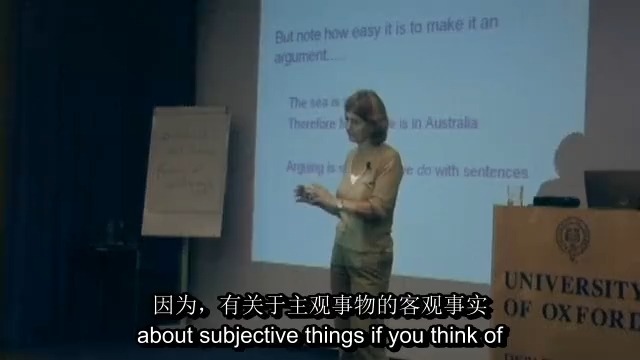
字幕摘录
| 时间 | 英文 | 中文 |
|---|---|---|
| 0:00 | Hello there, I'm Marianne Talbot. | 你好 我是玛丽安・塔尔博特 |
| 0:02 | I'm Director of Studies in Philosophy at Oxford University's Department for Continuing Education. | 我是牛津大学继续教育系哲学研究主任. |
| 0:07 | We're about to start a six-week course called Critical Reasoning for Beginners, and we're going to go through looking at how to recognise an argument, | 我们即将开始一个为期六周的课程, 叫做“初学者的关键原因”, 我们将要研究如何识别一个论点, |
| 0:15 | what arguments are, the different types of arguments, that's deduction and induction, and we'll be looking at how to set out arguments logic book style, | 辩论是什么, 不同类型的辩论, 这是推理和诱导, 我们将研究如何设置 辩论逻辑书风格, |
| 0:24 | how to analyse them, then we'll be looking at how to evaluate them, and finally we'll look at fallacies, which are arguments that look like good arguments, | 如何分析它们, 然后我们将研究如何评估它们, 最后我们将研究谬误, 这些论点看起来是好的论点, |
| 0:32 | but which are bad arguments. | 但这些是恶辩。 |
| 0:34 | Okay, so we're going to start off on the first week with how to recognise arguments and what the nature of an argument is. | 好吧,所以我们要从第一周开始 如何识别争论 和争论的性质是什么。 |
| 0:42 | Right, okay, let's get started. | 好了,我们开始吧 |
| 0:44 | You're all here to do Critical Reasoning. | 你们都是来做关键原因的 |
| 0:48 | Okay, why do you want to do Critical Reasoning? | 好吧,你为什么要做 关键原因? |
展开字幕全文(1217 条)
| 序号 | 英文 | 中文 |
|---|---|---|
| 1 | Hello there, I'm Marianne Talbot. | 你好 我是玛丽安・塔尔博特 |
| 2 | I'm Director of Studies in Philosophy at Oxford University's Department for Continuing Education. | 我是牛津大学继续教育系哲学研究主任. |
| 3 | We're about to start a six-week course called Critical Reasoning for Beginners, and we're going to go through looking at how to recognise an argument, | 我们即将开始一个为期六周的课程, 叫做“初学者的关键原因”, 我们将要研究如何识别一个论点, |
| 4 | what arguments are, the different types of arguments, that's deduction and induction, and we'll be looking at how to set out arguments logic book style, | 辩论是什么, 不同类型的辩论, 这是推理和诱导, 我们将研究如何设置 辩论逻辑书风格, |
| 5 | how to analyse them, then we'll be looking at how to evaluate them, and finally we'll look at fallacies, which are arguments that look like good arguments, | 如何分析它们, 然后我们将研究如何评估它们, 最后我们将研究谬误, 这些论点看起来是好的论点, |
| 6 | but which are bad arguments. | 但这些是恶辩。 |
| 7 | Okay, so we're going to start off on the first week with how to recognise arguments and what the nature of an argument is. | 好吧,所以我们要从第一周开始 如何识别争论 和争论的性质是什么。 |
| 8 | Right, okay, let's get started. | 好了,我们开始吧 |
| 9 | You're all here to do Critical Reasoning. | 你们都是来做关键原因的 |
| 10 | Okay, why do you want to do Critical Reasoning? | 好吧,你为什么要做 关键原因? |
| 11 | A couple of you tell me what you want to do it for. | 你们几个告诉我你想干什么 |
| 12 | What do you think you can't do now that you want to be able to do if I don't do this course? | 你觉得你现在不能做什么 如果我不做这个课程,你想做什么? |
| 13 | I'd like to sharpen my sense of argumentation. | 欲磨净辩才觉. |
| 14 | Sharpen your sense of argumentation? | 使你的争辩感更敏锐? |
| 15 | Is there anyone you want to argue with in particular? | 你特别想和谁争论? |
| 16 | Half of a wife. | 半个妻子. |
| 17 | Half of a wife, yeah. | 半个妻子,是的。 |
| 18 | It won't work if you don't, you'll be married to your wife. | 若不从,则不可行,则娶妻矣. |
| 19 | There's only two terms speaking, but particularly political arguments and debate. | 说话只有两个术语,但尤其是政治争论和辩论. |
| 20 | Right, okay, so another hand over here. | 好,好,再过来一个 |
| 21 | Detect the flaws in other people's arguments. | 找出别人争论的缺点 |
| 22 | You want to be able to detect the flaws in other people's arguments, okay. | 你想能够发现别人争论的缺陷,好吗? |
| 23 | What about your own arguments? | 那你自己的争论呢? |
| 24 | That too, because that's very important. | 这也是,因为那很重要。 |
| 25 | One of the things I'll talk about today is something called the principle of charity, and you'll see where I'll talk about that. | 我今天要谈的一件事是 所谓的慈善原则, 你会看到我在哪里会谈论这一点。 |
| 26 | I also don't want to get lost as a valid point maker, so to actually be able to have conviction of what I'm saying if I believe in it and not let someone more intellectual and eloquent beat me down. | 我也不想迷失为一个有效的点评者, 所以实际上,如果我相信的话, 就能对我说的有信念, 并且不要让更聪明和雄辩的人打我。 |
| 27 | Right, okay, and one thing that will help, I mean it won't do the trick completely, because of course that confidence has to come from you, but it will help to feel that you know where you are in arguments, certainly. | 好吧,还有一件事会有所帮助, 我的意思是它不会完全起作用, 因为当然,自信必须来自你, 但是它会帮助你感觉你知道你在哪里 在争论,当然。 |
| 28 | One at the back there. | 一个在后面。 |
| 29 | I read the overview of Thomas More, and most of that was in part about the logic, and I thought, oh, that's interesting. | 我读了托马斯·莫尔(Thomas More)的概述, 其中大部分是关于逻辑的, 我认为,这很有趣。 |
| 30 | Uh huh, actually that's how I came to philosophy, something like that. | 嗯,嗯,实际上,这就是我 来哲学,类似的东西。 |
| 31 | I did an open university course. | 我做了一个开放的大学课程。 |
| 32 | I was a mature student, not very mature, 26, and as I said, it was an open university course, they did logic in those days, formal, symbolic logic. | 我是一个成熟的学生, 不太成熟,26岁, 正如我所说, 这是一个开放式的大学课程, 他们在那些时候做了逻辑, 正式的,象征性的逻辑。 |
| 33 | And I tried to do this logic, and I found it so difficult, really, really difficult, and I sat up all night and still trying to do it. | 我尝试了这个逻辑, 我发现它是如此困难, 真的,真的困难, 我整晚都坐着,仍然在努力去做。 |
| 34 | And in the morning I realized that I'd had such a much nicer night, much better night than I'd had with all sorts of other things you might stay up all night to do. | 早上,我意识到,我有一个 如此美好的夜晚, 比我有更好的夜晚 与各种其他事情 你可能熬夜做。 |
| 35 | I really enjoyed it, and that's what got me into philosophy in the first place. | 我非常喜欢它,这就是我 进入哲学的第一。 |
| 36 | I came, I think it's very nice at school at 15, I came on here, eventually, eventually, that took quite a long time. | 我来了,我觉得学校15岁的时候很好, 我来到这里,最终, 花了很长时间。 |
| 37 | But I have never lost my love of philosophy, I've never lost my love of learning, and that's all down to philosophy, this confidence you have in argument. | 但我从未失去对哲学的热爱, 我从未失去对学习的热爱, 而这都归结于哲学, 这种你对争论的信心. |
| 38 | Because if you can learn how to argue properly, you can, nothing is hidden from you in principle. | 因为如果你能学习如何正确争论,你可以,原则上没有什么是隐藏在你身上的. |
| 39 | It's always possible to tease out the arguments and to evaluate the arguments and to take yourself that step further. | 总是可以挑逗辩词,评价辩词,让自己更进一步. |
| 40 | And so I hope that after this series of six lectures, of course you're not going to go away knowing all about logic and knowing all about how to reason properly. | 所以我希望在这一系列的六场讲座之后, 你当然不会去了解逻辑和如何正确解释。 |
| 41 | But I hope what I'll have done by that time is given you more confidence and given you a feeling for the fun it can be, so that you'll go away and start looking at yourself. | 但我希望那时我所做的,会给你更多的信心,并给你一种对它可能带来的乐趣的感觉,这样你就会离开,开始看着自己. |
| 42 | And I'll be very happy to pass on some reading or give some other ideas of how you might do that. | 我很乐意通过一些阅读 或提供一些其他的想法 你可能这样做。 |
| 43 | Right, okay, let me tell you about Monty Python. | 好吧,好吧,让我告诉你 关于蒙蒂・派森。 |
| 44 | I'm sure some of you know about it, but what it is, it's called the Argument Clinic. | 我敢肯定,你们中有些人知道它, 但是它是什么, 它叫做争辩诊所。 |
| 45 | And one man, I've forgotten his name, goes in and says, John Cleese, sitting there, and he says, is this the place for arguments or something like that? | 一个人,我忘了他的名字, 进去说,约翰·克莱塞,坐在那里, 他说,这是辩论的地方还是类似的东西? |
| 46 | And John Cleese says, what if it is, or, well, I'm here for an argument, well, no you haven't, yes I have, no you haven't, yes I have. | John Cleese说,如果它是, 或者,嗯,我在这里 辩论,嗯,不,你没有, 是的,你有,没有, 是的,我有。 |
| 47 | And this goes on, he says, you're not arguing, you're contradicting me. | 他说,你没有在争吵,你在跟我矛盾 |
| 48 | And John Cleese says, no I'm not. | 约翰·克莱斯说,我不是。 |
| 49 | He says, yes you are, no I'm not, yes you are. | 他说,是的,你是, 不,我不是,是的,你是。 |
| 50 | And so it goes on, then presses a bell, that's the end of the session, he says, but that wasn't five minutes. | 所以它继续,然后按铃, 这就是会议的结束,他说, 但这不是五分钟。 |
| 51 | Yes it was, says John Cleese, no it wasn't, yes it was, I'm not arguing, says John Cleese, and so on. | 是的,约翰·克莱塞说,不是的,是的,我没有争论,约翰·克莱塞说,等等。 |
| 52 | And that was supposed to be an amusing introduction, but what I wanted to move on to is the idea that John Cleese had it wrong. | 这本来是一个有趣的介绍, 但我想继续的想法是 约翰·克莱塞有它是错误的。 |
| 53 | Of course, argument isn't a set of contradictions, it isn't a set of just you say one thing and I say another, that doesn't get us anywhere. | 当然,争论不是一套矛盾,也不是一套你只说一件事,我只说另一件事,这对我们没有好处. |
| 54 | Part of the point of argument is to move us on from where we are to somewhere a bit further. | 争论的部分原因是把我们从我们所处的位置推向更远的某个地方。 |
| 55 | Just imagine if the only way we could find out about the world was through our senses. | 想象一下 如果我们能发现世界的唯一方法 就是通过我们的感官 |
| 56 | If we could see one thing and form one belief, but not take that belief and move on to another belief. | 如果我们能看到一件事,形成一种信仰,但不要把这种信仰带到另一种信仰。 |
| 57 | So you would say that that's blue and the carpet's blue, but you couldn't say when two things are the same colour they match, therefore the chair and the carpet match. | 所以,你会说这是蓝色的,地毯是蓝色的, 但你不能说当两件事情是相同的颜色, 所以椅子和地毯是匹配的。 |
| 58 | Do you see, whatever, argument takes us from where we are to where we want to be or sometimes where we don't want to be. | 你看,不管怎样,争论把我们从我们想要的地方带到我们想要的地方,或者有时我们不想成为的地方. |
| 59 | We'll never get very far without argument. | 没有争论我们永远走不远 |
| 60 | Can we turn the lights off again? | 我们能再关灯吗? |
| 61 | Yes, if I can. | 是的,如果我可以的话。 |
| 62 | There we are. | 我们到了。 |
| 63 | Thank you. | 谢谢 |
| 64 | Thank you very much. | 谢谢 |
| 65 | We're awash with technicians here. | 我们这里有很多技术人员 |
| 66 | Okay, so let's have a look at the definition of argument. | 好吧,让我们来看看 辩论的定义。 |
| 67 | An argument is a set of sentences and I put sentences there after you wouldn't believe it, | 争吵是一组句子, 我在那里做出句子,因为你不相信, |
| 68 | spending half an hour wondering whether I should put statements, propositions, expressions of statements or something. | 花了半个小时 想知道我是否该发表演讲 提议 表达言论 |
| 69 | But I'm putting sentences and anyone who wants to quarrel with that's most welcome to do so. | 但我在判刑,任何人 谁想争吵, 这是最欢迎这样做。 |
| 70 | A set of sentences such that one of them is being said to be true and the others are being offered as reasons for believing the truth of the first. | 一系列的句子,比如说其中的一句是真实的,而其他的句子则被作为相信第一者的真理的理由。 |
| 71 | That's all there is to an argument. | 辩才如此. |
| 72 | I put others with the S in brackets here because of course we might say that one thing is true on the basis of just one other sentence. | 我在这里把其他的S放在括号内,因为我们当然可以说,只有一句话是真实的。 |
| 73 | So here's an argument. | 故此辩才. |
| 74 | It's Friday. | 礼拜五 |
| 75 | Marianne always wears jeans on a Friday so Marianne will be wearing jeans today. | 玛丽安星期五总是穿牛仔裤 所以玛丽安今天会穿牛仔裤 |
| 76 | That's a set of sentences that is, as a matter of fact, an argument. | 这是一套句子,其实是争论. |
| 77 | What are the sentences? | 判决是什么? |
| 78 | Tell me what the sentences are. | 告诉我句子是什么 |
| 79 | This is an easy question to lull you into a false sense of security. | 这个问题很容易让你陷入一种虚假的安全感。 |
| 80 | It's Friday. | 礼拜五 |
| 81 | It's Friday, that's one sentence. | 这是星期五,这是一句话。 |
| 82 | I've got a comma after it because I've gone straight on to the other sentence. | 后有逗号因直指别句. |
| 83 | But that doesn't matter, it is Friday as a sentence. | 但是这不重要,是星期五作为句子 |
| 84 | Next one. | 下一个 |
| 85 | Marianne always wears jeans on a Friday. | 玛丽安每周五都穿牛仔裤 |
| 86 | I told you it was easy. | 我告诉过你很容易的 |
| 87 | Marianne always wears jeans on a Friday, that's right. | 玛丽安每周五总穿牛仔裤 没错 |
| 88 | Next one. | 下一个 |
| 89 | Marianne won't be wearing jeans today. | 玛丽安今天不会穿牛仔裤的 |
| 90 | Those are the sentences that make up the argument. | 这些是构成争论的句子。 |
| 91 | Exactly so. | 没错 |
| 92 | Now, here's a bit of technology, terminology for you. | 现在,这里有一些技术,术语给你。 |
| 93 | Technology focus. | 技术重点. |
| 94 | Conclusion is the sentence being said to be true and the premises are the sentences being offered as reasons for believing the other one. | 结论是,据说判决是真实的,判决是作为相信另一判决的理由提出的。 |
| 95 | And remember that might be just one. | 记住,那可能只是一个。 |
| 96 | There might be just one premise so it doesn't need to be two. | 可能只有一个前提 所以不需要两个前提 |
| 97 | There could be 20 premises. | 可能还有20处 |
| 98 | But what makes something a premise and what makes something a conclusion is the role that they're playing in the argument, the function that they're performing. | 但是什么使某件事成为前提,是什么使某件事成为结论,是他们在争论中扮演的角色,是他们正在履行的功能. |
| 99 | So here's the argument again. | 故此论又. |
| 100 | What's the conclusion of the argument? | 辩之何为结论. |
| 101 | That's right, yep, that's the conclusion because that's the one we're saying is true. | 是的,是的,这是结论 因为我们说的是事实 |
| 102 | And what are the premises? | 馆舍是什么? |
| 103 | That's right. | 没错 |
| 104 | So there are two premises to this argument and one conclusion. | 因此,这一论点有两个前提和一个结论。 |
| 105 | Okay, very simple stuff. | 好吧,非常简单的东西。 |
| 106 | So there's the conclusion in red, Marianne will be wearing jeans today and the premises in green. | 玛丽安今天会穿着牛仔裤 和绿色的场地 |
| 107 | It's very important to distinguish arguments from sets of sentences. | 将论据与句子区分开来是非常重要的. |
| 108 | Let's see how to do that because an argument is a set of sentences, but it's more than that. | 让我们看看如何做到这一点,因为一个争论是一组句子,但不止于此. |
| 109 | So there's more to an argument than a set of sentences. | 故辩才多于集句. |
| 110 | Question at the back. | 后问. |
| 111 | Yes, how do you feel about taking questions? | 是的,你对提问有什么感觉? |
| 112 | Because I wanted to ask you that previous one. | 因为我想问你上一个 |
| 113 | Does it matter? | 有关系吗? |
| 114 | I'm very happy to take questions. | 我很高兴能接受问题 |
| 115 | If I think they're going to go on too long, I'll shut you up and put you on to the question time. | 如果我觉得他们要持续太久 我会让你闭嘴 让你进入提问时间 |
| 116 | Or if I think it's complicated or something, but otherwise I'm happy to take you on. | 或者,如果我觉得它很复杂什么的, 但否则我很乐意接受你。 |
| 117 | Well, the question then is presumably one sentence as a premise depends on another because it's five days irrelevant | 好吧,那么问题大概是一句话 作为一个前提取决于另一个,因为它的五天无关紧要 |
| 118 | until you know that Marianne always wears jeans on a Friday. | 直到你知道玛丽安每周五总是穿牛仔裤 |
| 119 | In that particular argument, yes, that's a good question. | 在这个具体的论点中,是的,这是一个很好的问题. |
| 120 | Let's go back to it. | 复说 it言. |
| 121 | Actually, I'm very happy for you to ask questions because if you do, it might be a clarification question like that one, which is quite useful. | 事实上,我很高兴你能问问题, 因为如果你问, 这可能是一个澄清问题 像那个问题, 这是相当有用的。 |
| 122 | If you look at that, let's get to that one. | 如果你看看,让我们开始吧。 |
| 123 | If you take out that premise, you might still have an argument. | 如果你拿出这个前提, 你可能还有争论。 |
| 124 | You say it's Friday, so Marianne will be wearing jeans today. | 你说是星期五 所以玛丽安今天要穿牛仔裤 |
| 125 | But what have you done? | 但是你们做了什么? |
| 126 | You've left an indication that you always wanted to see it on a Friday. | 你留下了一个迹象 你一直想在星期五看到它。 |
| 127 | That's right. | 没错 |
| 128 | You've left a suppressed premise, haven't you? | 你留下了一个被压制的前提,不是吗? |
| 129 | Because that wouldn't be a good argument. | 因为这不会是一个很好的争论。 |
| 130 | It would still be an argument, actually, because you'd still be giving one sentence as a reason to believe another one. | 这仍然是个争论,实际上, 因为你仍然会给出一个句子 作为相信另一个句子的理由。 |
| 131 | But it wouldn't be an argument that could possibly be convincing were it not for that. | 但是,如果没有这个理由,它不会是一个可能令人信服的论点. |
| 132 | So we often leave premises suppressed in an argument. | 所以我们经常在争吵中离开被压制的场所. |
| 133 | But usually when because of the context or because of something that we can assume, we assume that the person knows the other one. | 但通常由于上下文或我们可以假设的东西,我们假设这个人认识另一个人. |
| 134 | So if we all knew, if you knew that every time, well, that every Friday I wear jeans, if you all knew that, that would be an argument without the second premise. | 所以,如果我们都知道, 如果你知道,每一次,嗯, 我每周五穿牛仔裤,如果你们都知道, 这将是一个争论 没有第二个前提。 |
| 135 | So thank you for that. | 谢谢你们 |
| 136 | If people didn't have that assumption, is that what would be termed a non sequitur? | 如果人们没有这种假设,那所谓的非定理是什么呢? |
| 137 | Yes. | 对 |
| 138 | Yeah, well done. | 是啊,干得不错。 |
| 139 | And we'll say something more about non sequiturs not today, probably, but later in the course. | 我们将会多说一些关于非下层的,不是今天,也许,而是后来。 |
| 140 | You could actually say Mary Ann always wears jeans on Friday. | 你可以说玛丽安周五总穿牛仔裤 |
| 141 | She is wearing jeans today. | 她今天穿牛仔裤 |
| 142 | You could leave out then. | 那你可以离开了 |
| 143 | You don't need to say it's Friday. | 你不必说这是星期五。 |
| 144 | Yes, you could. | 是的,你会的。 |
| 145 | I mean, that would be a different argument, but it would be an argument. | 我的意思是,这将是一个不同的争论,但它会是一个争论。 |
| 146 | Well, I was going to say you could change the, for instance, you could say it's Mary's wearing jeans, yours wears jeans on Friday. | 嗯,我想说 你可以改变, 例如,你可以说, 这是玛丽穿牛仔裤, 你的牛仔裤星期五。 |
| 147 | Therefore, it's Friday. | 因此,这是星期五。 |
| 148 | That would be a false argument. | 那将是一个虚假的论点。 |
| 149 | Well, that would be a false argument. | 好吧,那会是一个虚假的争论。 |
| 150 | Hold that one. | 拿着那个 |
| 151 | We'll come back to that in a minute and you'll see what I'm going to say about that. | 我们马上回来,你看看我要说什么 |
| 152 | I just want to note that. | 我只是想指出这一点。 |
| 153 | OK, I'm going to move on because, yes, you can make an argument out of. | 好吧,我要继续前进,因为,是的,你可以提出一个争论。 |
| 154 | Well, let me just move on and show you exactly what I'm going to say there. | 好吧,让我继续前进, 告诉你我到底要说什么。 |
| 155 | OK, it's important to distinguish arguments from sets of sentences. | 好了,重要的是要区分 论点和句子。 |
| 156 | Sets of sentences that are not arguments might either have no relation at all between them or they may have between a relation other than that characterizing an argument. | 不属于争辩的一组句子可能要么彼此之间完全没有关系,要么在争辩特征以外的一种关系之间有关系。 |
| 157 | For example, a set of sentences might be consistent, i.e. | 例如,一组句子可能是一致的,即: |
| 158 | such that they could all be true together without being an argument. | 因此,他们可以 都是真的在一起,没有争论。 |
| 159 | Do you see what I mean? | 明白我的意思了吗? |
| 160 | Or they could be related by all referring to what's your name? | 或者他们可能都与你名字有关? |
| 161 | Mike. | 迈克 |
| 162 | They could be related in that way without being an argument. | 它们可以这样联系,而不必争辩。 |
| 163 | Do you see what I mean? | 明白我的意思了吗? |
| 164 | There are lots of different ways sets of sentences can be related. | 有很多不同的方式 组合的句子可以相互联系。 |
| 165 | But the relation, in order to be one of arguments, it's got to what? | 但是,关系,为了成为争论之一,它得到了什么? |
| 166 | It's got to be a reason for something to be true. | 得是因缘而得真言. |
| 167 | Good. | 不错 |
| 168 | In order to be an argument, there's got to be one sentence that you're putting forward as being true and the other sentences or sentence is a reason for believing that thing. | 为了成为争论,你提出的一个句子必须是真实的,而其他句子或句子是相信那个东西的理由. |
| 169 | That's the relation that characterizes an argument, nothing else. | 这就是争论的特征,别无他法。 |
| 170 | Here's a set of sentences that isn't an argument. | 这是一组不是争论的句子。 |
| 171 | The sea is salt, Melbourne's in Australia. | 海是盐,墨尔本在澳大利亚. |
| 172 | But it's very easy to make it an argument. | 但以辩才为方便. |
| 173 | The sea is salt, therefore Melbourne's in Australia. | 海是盐,因此墨尔本在澳大利亚. |
| 174 | Now, do you think I've made that an argument or not? | 现在,你认为我 已经做了一个争论与否? |
| 175 | No, why not? | 不,为什么不呢? |
| 176 | It's a false argument. | 虚妄辩才. |
| 177 | No, that particular one, you'll see why I'm saying this in a minute. | 不,那一个,你会明白我为什么 说这个一分钟。 |
| 178 | It's a what? | 是个什么? |
| 179 | There's no link between them. | 他们之间没有联系 |
| 180 | So you think that my putting the therefore in doesn't make it an argument. | 所以,你认为我把 因此不使它成为争论。 |
| 181 | Let me tell you a little story. | 让我告诉你一个小故事。 |
| 182 | We're doing a panel show. | 我们正在做一个面板秀。 |
| 183 | We've got to find out things and find out other things and they come back and we'll win a huge prize. | 我们必须找出一些东西, 找出其他的东西, 他们回来,我们会赢得一个巨大的奖。 |
| 184 | Now, we're particularly ignorant contestants here. | 现在,我们特别无知的参赛者在这里。 |
| 185 | We don't know whether the sea is salt and we don't know whether Melbourne's in Australia. | 我们不知道海是不是盐,也不知道墨尔本是否在澳大利亚. |
| 186 | But we do know that if one of these sentences is true, so is the other. | 但我们确实知道,如果其中一句话是真的,那么另一句话也是一样。 |
| 187 | That's all we know. | 我们只知道这些 |
| 188 | We know if one of these sentences is true, so is the other. | 我们知道,如果其中一句话是真的,那么另一个句子也是一样。 |
| 189 | So now we've got to find out whether either of these sentences is true. | 所以现在我们必须找出这些句子中的任何一句是否属实. |
| 190 | So half of us run off to see whether the sea is salt. | 所以我们有一半人跑出去看海是不是盐。 |
| 191 | The other half run off to find out whether Melbourne's in Australia. | 另一半跑去查墨尔本是否在澳大利亚 |
| 192 | And the Melbourne's in Australia, sorry, the sea is salt ones come back first. | 墨尔本号在澳大利亚,抱歉,海是盐的先回来 |
| 193 | They say the sea is salt, therefore Melbourne's in Australia. | 他们说海是盐 所以墨尔本在澳大利亚 |
| 194 | Hey, is that an argument? | 嘿,这是在吵架吗? |
| 195 | What do you know? | 你们知道什么? |
| 196 | That's supposed to be a good argument, isn't it? | 这应该是一个很好的争论,不是吗? |
| 197 | What I'm doing there is I'm giving a reason. | 我所做的就是给出一个理由。 |
| 198 | I'm saying Melbourne is in Australia is true, aren't I? | 我说墨尔本在澳洲是真的,不是吗? |
| 199 | And I'm giving a reason for believing it, namely the truth of the seas being salt. | 我给一个相信它的理由, 即海是盐的真理。 |
| 200 | Fair enough? | 公平吗? |
| 201 | Is this an argument? | 这是争论吗? |
| 202 | Okay, it was an argument before I gave you the context, actually, | 好吧,这是一场争论 之前,我给你的背景,实际上, |
| 203 | because arguing is something that we do with sentences. | 因为争吵是我们处理判决的事 |
| 204 | Okay, we do them because of all sorts of things to do with our background, | 好吧,我们做他们 因为各种各样的事情 我们的背景, |
| 205 | what we've just found out, our desires, our hopes, our fears, our intentions, things like that. | 我们刚刚发现的,我们的欲望,我们的希望,我们的恐惧,我们的意图,类似的事情. |
| 206 | Arguing is something we do, and we can do it in any way. | 争辩是我们做的事情,我们无论如何都可以做到. |
| 207 | This is why the idea of artificial intelligence, | 这就是为什么人工智能的想法, |
| 208 | which was talked about a great deal a few years ago, is getting, frankly, nowhere. | 几年前讨论过很多事情 坦白地说,现在没有结果了 |
| 209 | And the reason it's getting nowhere is human beings can see the relevance | 人类可以看清它的意义 |
| 210 | once the context is provided that a computer, so far, can't see. | 一旦提供上下文 计算机,到目前为止,看不到。 |
| 211 | I mean, fingers crossed that we will be able to deal with this one. | 我的意思是,手指交叉 我们将能够处理这一个。 |
| 212 | But the fact is that the minute I give you the context, you can see the argument, can't you? | 但事实是,我给你的背景, 你可以看到争论,不是吗? |
| 213 | Some of you. | 诸人中. |
| 214 | It's just context. | 这只是背景。 |
| 215 | I mean, in this sentence, the fact that we haven't explicitly said | 我的意思是,在这个句子中, 我们没有明确说 |
| 216 | both must be true if one is true. | 如果两者都是真的的话 |
| 217 | You're absolutely right. | 你说得对 |
| 218 | In fact, you might say there are a lot of... | 事实上,你可能会说有很多... |
| 219 | You could say there's a suppressed premise in there, | 你可以说里面有一个被压制的前提, |
| 220 | which is that if the sea is salt, then Melbourne is in Australia. | 如果海是盐 那么墨尔本在澳大利亚 |
| 221 | And I've given that by giving the context, if you like. | 如果你愿意的话,我通过提供背景来给它。 |
| 222 | So if we were gaining contestants in that situation, | 所以,如果我们是 获得参赛者在这种情况下, |
| 223 | I wouldn't have to give that suppressed premise because we would all know it. | 我不必给这个被压制的前提,因为我们都知道。 |
| 224 | But, again, well done. | 但还是做得好 |
| 225 | You picked up the point at the back. | 你捡起后面的点。 |
| 226 | So a suppressed premise is the same as context? | 所以被压制的前提与上下文相同? |
| 227 | No. | 没有 |
| 228 | In providing the context, I enabled us to see the suppressed premise, if you like. | 在提供背景方面,我使我们能够看到被压制的前提,如果你愿意的话。 |
| 229 | Because just at the moment, there's no suppressed premise that we can see. | 因为就在此时此刻,没有被压制的前提,我们可以看到. |
| 230 | I mean, we don't see why that's an argument. | 我的意思是,我们不明白为什么这是个争论。 |
| 231 | You all denied it was an argument because you can't see the relevance between the two. | 你们都否认这是个争论 因为你看不出两者的相关性 |
| 232 | What I did was make one relevant to the other. | 我所做的就是使一个与另一个相关。 |
| 233 | And in doing so, I provided you with the premise that was suppressed. | 这样做,我给了你一个被压制的前提。 |
| 234 | So there's a suppressed premise, which is a sentence, | 所以有一个被压制的前提, 这是一个句子, |
| 235 | because premises are always sentences. | 因为前提总是句子。 |
| 236 | And that's what I provided by providing the context. | 这就是我通过提供背景提供的。 |
| 237 | I'm struggling with that because Melbourne is in Australia not because the sea is salt, | 因为墨尔本在澳大利亚 不是因为海水是盐 |
| 238 | but because the first sentence is true. | 但是因为第一句是真实的。 |
| 239 | This is very interesting. | 这很有趣 |
| 240 | Very interesting question. | 非常有趣的问题。 |
| 241 | What you're confusing, I apologise, is causation and entailment. | 你所混淆的,我道歉, 是因果关系和内涵。 |
| 242 | The premises of an argument do not cause the conclusion to be true. | 论点的前提不能使结论属实。 |
| 243 | If that's a premise, then that's a premise. | 如果这是一个前提, 那么这是一个前提。 |
| 244 | Do you think that what's caused me to wear jeans today is these two things? | 你觉得今天我穿牛仔裤的原因 是这两件事吗? |
| 245 | Not necessarily. | 不见得. |
| 246 | I mean, it might be that actually I wear jeans on a Friday | 我的意思是,这可能是,实际上 我穿牛仔裤在一个星期五 |
| 247 | to commemorate the first pair of jeans that my mum ever bought me or something like that. | 纪念我妈妈给我买的第一件牛仔裤之类的 |
| 248 | I can't think of a good reason for wearing jeans on a Friday. | 周五穿牛仔裤有什么好理由 |
| 249 | Do you like to wear jeans every day? | 你喜欢每天穿牛仔裤吗? |
| 250 | I might wear jeans every day, yes, exactly. | 我可能每天都穿牛仔裤 没错 |
| 251 | Okay, so the fact that A and B together entail C doesn't mean that A and B cause C. | 所以A和B一起产生C 并不意味着A和B引起C |
| 252 | And when you say that the sea is salt doesn't cause Melbourne to be in Australia, | 当你说海是盐 并不导致墨尔本在澳大利亚 |
| 253 | you're quite right. | 你说得对 |
| 254 | But saying that the sea is salt, therefore Melbourne in Australia, | 但说海是盐 所以墨尔本在澳大利亚 |
| 255 | isn't implying causation of any kind. | 这并不意味着任何因果关系。 |
| 256 | What do you do if you have two other Melbournes in the world? | 如果你有另外两个墨尔本人呢? |
| 257 | Ah, you ignore them. | 啊,你忽略他们。 |
| 258 | Again, that's a very good question. | 再说一遍,这是一个非常好的问题。 |
| 259 | I'm glad you asked it. | 我很高兴你问了 |
| 260 | Let's go to the sea of salt one. | 入盐一海. |
| 261 | Well, actually, you could do it with the Marianne one as well, | 嗯,实际上,你可以做到这一点 与玛丽安之一, |
| 262 | because there are lots of people called Marianne other than me in the world. | 因为世界上有很多人叫玛丽安 除了我之外 |
| 263 | All that it means is if Marianne... | 意味着如果玛丽安... |
| 264 | Is there anyone else called Marianne in this room? | 这里还有人叫玛丽安吗? |
| 265 | All right, put up your hand if you're called John. | 好吧,举起你的手 如果你叫约翰。 |
| 266 | This is the second time this has happened. | 这是第二次发生这种情况。 |
| 267 | Okay, there are no Johns in this room. | 好吧,这房间里没有约翰斯。 |
| 268 | Your mic. | 你的麦克风。 |
| 269 | Is there anyone else called Mike? | 还有谁叫麦克吗? |
| 270 | Two Mikes in this room. | 房间有两个麦克 |
| 271 | If I say Mike is tall, okay, at the moment that's ambiguous, isn't it? | 如果我说迈克是高的,好吧, 在目前这模棱两可,不是吗? |
| 272 | It has two meanings. | 有二义. |
| 273 | I could be referring to that Mike or that Mike. | 我可能是指那个迈克 或者那个迈克 |
| 274 | One of you may be short, in which case it would be false of one, true of the other. | 你们中的一人可能很矮,在这种情况下,那将是假的,是假的. |
| 275 | But what I've actually got here is two sentences. | 但我在这里得到了两句。 |
| 276 | In which case I'm going to get here. | 这样的话,我就要到了 |
| 277 | There's a type of sentence. | 有一类句子. |
| 278 | I have no pens, believe it or not. | 我没有笔,信不信由你 |
| 279 | That was another thing that fell off the list. | 这是另一个从清单上掉下来的东西。 |
| 280 | Would you mind? | 你介意吗? |
| 281 | I bet you can't see this. | 我打赌你看不到这个 |
| 282 | Imagine it. | 试想一下 |
| 283 | Yes, you can imagine it. | 是的,你可以想象出来。 |
| 284 | Okay, Mike is tall is what it says. | 好吧,迈克是高 上面说。 |
| 285 | Actually, let's forget Mike. | 实际上,让我们忘了迈克。 |
| 286 | Let's put John is tall there. | 让我们把约翰是高的那里。 |
| 287 | Now, if I put John is tall up there, that has no meaning, doesn't it? | 现在,如果我把约翰高 在那里,这是没有意义的,不是吗? |
| 288 | In the context of this room. | 以本室为背景. |
| 289 | In the sense that there's nobody to whom John refers, as we know. | 意思是,没有人被约翰提到, 我们知道。 |
| 290 | But I could use that sentence John is tall to say something, couldn't I? | 但我可以用约翰高高的句子说点什么吗? |
| 291 | In the same way, here is a sentence type that could be used to say things. | 同样,这里还有一种句子类型,可以用来表达事物. |
| 292 | And I could use this type of sentence to say Mike is tall. | 我可以用这种句子说迈克很高 |
| 293 | Or I could use the same sentence to say Mike is tall. | 或者我可以用同一句话 说迈克是高的。 |
| 294 | But those are two different tokens of the same type of sentence. | 但这些是同一类句的两个不同的符号. |
| 295 | See what I mean? | 明白我的意思了吗? |
| 296 | So just as that's one token of the type chair and that's another one. | 所以,就像这是 一种类型的椅子的标志, 这是另一个。 |
| 297 | And this is one token of the type human being and that's another one. | 这是人类的象征,是另一个 |
| 298 | Mike is tall is one token of that type of sentence. | 迈克高个子是那种句子的象征 |
| 299 | And Mike is tall is another token of that type of sentence. | 迈克又高了 是那种句子的另一个象征 |
| 300 | So actually, if you have two Melbans, you could have two arguments that that could be. | 所以,实际上,如果你有两个Melbans, 你可以有两个论点,那可能是。 |
| 301 | It could either be the sea assault, therefore, Melbourne, which is in the Northern Territories in Australia, | 也可能是海袭,所以墨尔本 位于澳大利亚北部领地 |
| 302 | or Melbourne, which is in, thank you, Victoria, is in Australia. | 或者墨尔本,这是,谢谢你,维多利亚, 在澳大利亚。 |
| 303 | Or in Derbyshire. | 或于德边郡. |
| 304 | Well, no, not in Derbyshire, because that would falsify that one, wouldn't it? | 不,不是在德比郡 因为那样会伪造那个,不是吗? |
| 305 | Unless there's a Derbyshire in Australia. | 除非澳大利亚有德比郡 |
| 306 | Can you clarify that? | 你能澄清吗? |
| 307 | If one causes part of the argument to be false, the existence or non-existence of facts in the world, then? | 如果有人导致部分论点是虚假的,那么世界上是否存在事实,那么呢? |
| 308 | I'm going to hold over that question and I'm going to tag it together with your claim that the argument is false. | 我会坚持这个问题, 我会标注它与你的说法, 争论是虚假的。 |
| 309 | Okay, and I'll come back to it shortly. | 好吧,我会回来的很快。 |
| 310 | Okay, so, arguing is something that we do with sentences. | 好吧,所以,争论是我们做的 与判决。 |
| 311 | Any sentences could form part of an argument. | 任何判决都可以构成辩论的一部分。 |
| 312 | There's no such thing as a sentence that couldn't be part of an argument. | 句句无能为辩. |
| 313 | And what makes this an argument is the fact that we are making an argument claim. | 我们提出一个论点。 |
| 314 | We're putting forward one sentence and we're offering the other sentences as reasons to believe that sentence. | 我们提出一个句子,我们提出另一个句子作为相信这句话的理由. |
| 315 | So, you cannot recognise arguments by recognising the sentences that are in arguments. | 因此,你无法通过承认争论中的句子来识别争论。 |
| 316 | You've got to recognise the relation between the sentences. | 你必须承认 判决之间的关系。 |
| 317 | Okay, let's have a look at these. | 好吧,让我们来看看这些。 |
| 318 | Which of these sentences are arguments? | 这些句子中哪些是争论? |
| 319 | Right, who thinks that this is an argument? | 好吧,谁认为这是个争论? |
| 320 | Okay, no one else. | 好吧,没有人。 |
| 321 | Okay, why do you think that's an argument? | 好吧,你为什么认为这是个争论? |
| 322 | It's making the assumption that the storm broke because the clouds formed from the sky back in. | 它的假设是,风暴破裂是因为云从天空中重新形成. |
| 323 | The storm broke because the clouds formed from the sky back in. | 暴风雨破裂是因为云从天而降 |
| 324 | Does that make it an argument? | 这说明这是个争论吗? |
| 325 | Because. | 因为... |
| 326 | That word because is very difficult because distinguish causes and reasons for something. | 这个词是因为很难区分原因和原因。 |
| 327 | Okay, there can be a causal relation between two events. | 好吧 两个事件之间可能有因果关系 |
| 328 | So, a causal relation between two events. | 所以,两个事件之间的因果关系。 |
| 329 | And there can be a rational relation between two sentences or two beliefs. | 而两句或两句信仰之间也可以有理性的关系. |
| 330 | Okay, and we tend to use because for both of these types of relations. | 好吧,我们倾向于使用 因为这两种类型的关系。 |
| 331 | But these are causes and these are reasons. | 但这些都是原因,也是原因。 |
| 332 | And you shouldn't be worried about making this error because it's a very, very common one. | 你不应该担心犯这个错误,因为它是非常,非常常见的。 |
| 333 | You were thinking of the causal relation as a rational relation, but it's not, is it? | 你当时认为因果关系是一种理性的关系,但不是,是吗? |
| 334 | Okay, so that's not an argument because all we're saying is that actually three events happened, aren't we? | 好吧,所以这不是一个争论,因为我们说的是, 实际上发生了三个事件,不是吗? |
| 335 | Firstly, clouds formed, then the sky blackened, then the storm broke. | 首先,云层形成,然后天空变黑,然后暴风雨破裂。 |
| 336 | And there may be a causal relation between them. | 他们之间可能存在因果关系。 |
| 337 | But we're not saying that these two are a reason for believing the other, are we? | 但我们不是说这两个是相信另一个的理由吧? |
| 338 | Are you with me? | 你明白吗? |
| 339 | What about this one? | 这个呢? |
| 340 | Is this an argument? | 这是争论吗? |
| 341 | Put your hand up if you think yes. | 把手举起来,如果你认为是。 |
| 342 | Yes, okay. | 是的,还好。 |
| 343 | Which is the conclusion? | 哪个结论? |
| 344 | And the premises? | 馆舍呢? |
| 345 | That's right. | 没错 |
| 346 | Manchester is north of Oxford. | 曼彻斯特位于牛津北部. |
| 347 | Edinburgh is north of Oxford. | 爱丁堡位于牛津北部. |
| 348 | Sorry. | 对不起 |
| 349 | Edinburgh is north of Manchester. | 爱丁堡位于曼彻斯特以北. |
| 350 | Edinburgh is north of Oxford is the conclusion. | 爱丁堡位于牛津北部就是结论. |
| 351 | Okay, so this one is since Manchester is north of Oxford and Edinburgh is north of Manchester, | 好吧,这是因为曼彻斯特在牛津北部,爱丁堡在曼彻斯特北部, |
| 352 | Edinburgh is north of Oxford. | 爱丁堡位于牛津北部. |
| 353 | Edinburgh is north of Oxford is the conclusion. | 爱丁堡位于牛津北部就是结论. |
| 354 | The other two are the premises. | 另两处为馆舍. |
| 355 | That's definitely an argument. | 这绝对是一个争论。 |
| 356 | Okay, witches float because witches are made of wood and wood floats. | 好吧,女巫漂浮 因为女巫是由木头和木头漂浮而成的 |
| 357 | Is that an argument or not? | 这是否是争论? |
| 358 | Put your hand up if you think it is an argument. | 把手举起来,如果你认为这是争论。 |
| 359 | Okay, that's an argument. | 好吧,这是一个争论。 |
| 360 | You're quite right. | 你说得对 |
| 361 | And what's the conclusion? | 那结果是什么? |
| 362 | Witches float, okay. | 女巫会漂浮,好吗? |
| 363 | And then the premises are? | 然后这里是? |
| 364 | And wood floats, that's right. | 及木浮浮,对. |
| 365 | Notice that the conclusion is at the front here. | 注意结论在前面 |
| 366 | Doesn't make any difference, does it? | 这没什么区别吧? |
| 367 | Because what makes a sentence a conclusion? | 因为什么使句子成为结论? |
| 368 | It follows from the other two premises. | 是从另外两个前提开始的。 |
| 369 | No, because it might not follow from the other two premises. | 不,因为它可能不是从其他两个前提。 |
| 370 | It might be a bad argument. | 这也许是一个坏的争论。 |
| 371 | What makes something a conclusion? | 什么结论? |
| 372 | The word concurs. | 这个词同意。 |
| 373 | I wanted that in the sentence as well. | 我也想在句子里这样 |
| 374 | Well, because the premise is it really is true. | 因为前提是它是真的 |
| 375 | Even if you had it in argument one it wouldn't have done. | 即使你用它来辩论 也不会这么做 |
| 376 | Come on somebody! | 来吧! |
| 377 | It's the one you're saying is true, that's right. | 尔时金刚手菩萨言. |
| 378 | You're saying this is true because of the others. | 你说这是真的 因为其他人。 |
| 379 | Where the because is a rational because, not a causal because. | 原因是理性,而不是因果 |
| 380 | Okay, let me tell you again. | 好吧,让我告诉你一遍。 |
| 381 | The only thing that makes a sentence a conclusion or a premise | 唯一能让句子成为结论或前提的东西 |
| 382 | is the role that it's playing in the argument. | 是它在争论中扮演的角色。 |
| 383 | If it's playing the role of being the sentence for which you're arguing | 如果它扮演你为之争辩的句子的角色 |
| 384 | then it's a conclusion. | 然后它是一个结论。 |
| 385 | And if it's playing the role of a sentence for which you're offering | 狦琌簍璶暗 |
| 386 | as a reason for believing the other one, then it's a premise. | 作为相信另一个的原因, 然后它是一个前提。 |
| 387 | That's the only thing that makes a sentence a premise or a conclusion. | 只有这样,句子才成为前提或结论. |
| 388 | Even if it's not true, it's actually true. | 纵有不实之义,其实也. |
| 389 | We'll come onto truth in a minute. | 我们马上就会了解真相的 |
| 390 | Truth is, you're quite right to think that truth is very important, | 事实是,你非常正确 认为真相是非常重要的, |
| 391 | but not just yet. | 但不是现在 |
| 392 | Notice instead that there's no reason why a sentence that's playing | 注意一下,没有任何理由 一个句子在播放 |
| 393 | the role of a conclusion in one argument | 一、结论在一个论点中的作用 |
| 394 | can't play the role of a premise in another argument. | 无法在另一个论点中扮演前提的角色. |
| 395 | Do you see what I mean? | 明白我的意思了吗? |
| 396 | That's why it's very important that what makes them a premise or a conclusion | 所以重要的是 是什么让他们成为前提或结论 |
| 397 | is the function they're playing, the role they're playing, | 他们扮演的角色,他们扮演的角色, |
| 398 | not anything intrinsic to the sentence. | 不是句子的内在内容 |
| 399 | Because if it was intrinsic to the sentence, | 因为如果这是句子的固有内容 |
| 400 | you'd have a sentence that could only be a conclusion, | 你会有一个句子 只能是一个结论, |
| 401 | which would be rather odd, wouldn't it? | 那会很奇怪,不是吗? |
| 402 | And I'm sure there are, so I might be able to speak about that. | 我敢肯定,有, 所以我也许可以谈论这一点。 |
| 403 | I can't off the top of my head. | 我无法从头顶下来。 |
| 404 | So what makes a sentence a conclusion is that you are arguing for it. | 因此,句子可以得出一个结论,那就是你正在为此争论。 |
| 405 | What makes it a premise is that you are using it to argue for something else. | 其前提就是 你利用它来为别的东西辩护 |
| 406 | Okay, is this an argument? | 好吧,这是在争论吗? |
| 407 | Hands up if you think it is. | 举起手来,如果你认为是。 |
| 408 | It could be. | 可能会 |
| 409 | It depends. | 这取决于。 |
| 410 | It's a more difficult one, isn't it? | 这是一个更困难的,不是吗? |
| 411 | But if it were a conclusion, which would... | 但是,如果这是一个结论, 这将... |
| 412 | If it were an argument, which would be the conclusion? | 如果这是个争论,那会是什么结论? |
| 413 | Things would be odd. | 事情会很奇怪。 |
| 414 | Okay, so then the premise would be Jesse James left town | 好吧,那么前提是 杰西・詹姆斯离开小镇 |
| 415 | and Jesse James took his gang with him. | 杰西·詹姆斯带着他的帮派 |
| 416 | So we could say Jesse James left town, Jesse James took his gang with him, | 我们可以说杰西·詹姆斯离开了小镇 杰西·詹姆斯带着他的帮派 |
| 417 | therefore things have been a lot quieter. | 因此,事情变得更加平静。 |
| 418 | But there's an implied premise as well, isn't there, | 但也有一个隐含的前提 是不是 |
| 419 | that Jesse James and his gang... | 杰西・詹姆斯和他的帮派... |
| 420 | We can make anything an argument. | 我们能把任何事都当成争吵 |
| 421 | I don't think that's an argument myself. | 我不认为这是个争论自己。 |
| 422 | I think it's just a concatenation of sentences, | 我觉得这只是句子的调和, |
| 423 | i.e. | 即说. |
| 424 | several sentences strung together. | 几个句子连在一起。 |
| 425 | And in fact there probably is a causal relationship too, isn't there? | 事实上,也存在因果关系,不是吗? |
| 426 | Why are things quieter? | 为什么事情比较安静? |
| 427 | Because Jesse James left town and he's taken his gang with him as well. | 因为杰西·詹姆斯离开了镇上,他也带着他的帮派. |
| 428 | It's not just an explanation. | 这不仅仅是一个解释。 |
| 429 | Ah, now explanations, reasons and causes, | 啊,现在解释,理由和原因, |
| 430 | now you're really getting into the interesting stuff. | 现在你真的 进入有趣的东西。 |
| 431 | Explanations can be both causal and rational, can't they? | 解释既可以是因果关系,也可以是理性的,不是吗? |
| 432 | So I can give an explanation of your behaviour that's rational, | 所以,我可以解释 你的行为是理性的, |
| 433 | or I can give an explanation of your behaviour that's causal. | 或者我可以解释你的行为是因果 |
| 434 | So, what's your name? | 你叫什么来着? |
| 435 | Paul. | 保罗 |
| 436 | Paul, okay. | 保罗,好吧。 |
| 437 | So the reason Paul did that was whatever. | 所以保罗这么做的原因就在于此 |
| 438 | Or Paul did that because... | 或者保罗这样做是因为... |
| 439 | What's your name? | 你叫什么来着? |
| 440 | Jenny. | 詹妮,你好吗? |
| 441 | Jenny pushed him. | 珍妮推他出来 |
| 442 | You know, Jenny pushed him, Paul fell over. | 你知道,珍妮推他,保罗跌倒。 |
| 443 | Okay, or Paul fell over because he was trying to make the children laugh. | 好吧,或者保罗摔倒 因为他试图让孩子们笑。 |
| 444 | Do you see? | 看到没? |
| 445 | One's a rational explanation and the other's a causal explanation. | 一个是理性的解释,另一个是因果解释. |
| 446 | Causes, reasons and explanations are intimately tied together | 原因、理由和解释紧密相连 |
| 447 | and we'll talk about them probably quite often in these sessions, | 我们可能经常在会议上讨论他们 |
| 448 | but the important thing is that not all causes are reasons. | 但重要的是,并非所有原因都是原因。 |
| 449 | It may be that all reasons are causes, | 也许所有原因都是原因 |
| 450 | but it's not the case that all causes are reasons | 但并不是所有原因都是原因 |
| 451 | because some causes are non-rational. | 因为有些原因是不合理的 |
| 452 | They have no reasons involved in them at all. | 他们完全没有参与的理由。 |
| 453 | Anyway, this is getting complicated and you don't need to worry about this. | 总之 这越来越复杂了 你不必担心 |
| 454 | The important thing is that a set of sentences is only an argument | 重要的是 一组句子只是争论 |
| 455 | if you're putting one forward as true | 如果你提出一个是真实的 |
| 456 | and putting the others forward as reasons for believing the one. | 并且把他人引入正轨,以示信义。 |
| 457 | That's what an argument is. | 辩才如此. |
| 458 | So if a set of sentences doesn't have that relation between them, | 所以,如果一组句子 没有关系 他们之间, |
| 459 | it isn't an argument. | 这不是争论。 |
| 460 | There may be some other reason. | 可能还有其他原因。 |
| 461 | So it may be just coincidence. | 所以也许只是巧合 |
| 462 | Yes, you may not be saying there's even a causal relationship here. | 是的,你可能不是说 这里甚至有因果关系。 |
| 463 | Actually, since Jesse James left town taking his gang with him, | 事实上 自从杰西·詹姆斯带着他的帮派离开后 |
| 464 | things have been a lot quieter | 事情比较平静 |
| 465 | because it's not been necessary to do this, that or the other. | 因为它是不必要的 做到这一点,那或其他。 |
| 466 | But you could very easily supply a context in which that wasn't, right? | 但你可以很容易地提供一个 不属于这个背景的,对不对? |
| 467 | Well, as I said, you can supply a context in which anything is an argument, | 正如我所说,你可以提供一个背景 任何事物都是争论, |
| 468 | so that's true. | 所以这是真的。 |
| 469 | Is a set of sentences an argument subjective or objective? | 一套句子是主观的还是客观的? |
| 470 | Is it a matter of opinion? | 是意见问题吗? |
| 471 | Well, is it? | 是吗? |
| 472 | I mean, if we go back to... | 我的意思是,如果我们回去... |
| 473 | I mean, you can answer this question yourself. | 你可以自己回答这个问题 |
| 474 | If we go back to that one, | 如果我们回到那个, |
| 475 | is it a matter of opinion that that's an argument | 这是观点问题吗? |
| 476 | or did I somehow make it an argument? | 还是我把它说成是争吵? |
| 477 | I mean, did I make it appear to be an argument | 我的意思是,我是不是把它 看起来像一个争论 |
| 478 | or did I make it an argument? | 还是我吵架了? |
| 479 | I mean, I imagine that it appears to be an argument | 我的意思是,我想 这似乎是一个争论 |
| 480 | by making it an argument. | 因为它是一个争论。 |
| 481 | It requires a context. | 它需要一个背景。 |
| 482 | And therefore it became an argument, | 因此,它变成了一种争论, |
| 483 | or rather you started to see that it was an argument. | 或者说,你开始看到 这是一场争论。 |
| 484 | Is that right? | 是吗? |
| 485 | So, objective and subjective. | 所以,客观和主观。 |
| 486 | When I used to teach undergraduates, | 我以前教本科的时候 |
| 487 | I used to say that I wouldn't let them use those words until their third year | 我曾经说过,我不会让他们用那些词 直到他们的第三年 |
| 488 | because they're very difficult words. | 因为他们是非常困难的词。 |
| 489 | And the reason they're very difficult words | 和原因 他们是非常困难的话 |
| 490 | is because there are objective facts about subjective things. | 是因为有客观的事实 关于主观的东西。 |
| 491 | If you think of a subjective state as the state of a subject, | 如果你认为主观状态是主体状态 |
| 492 | state of happiness or something like that, | 快乐的状态之类的, |
| 493 | then there are objective facts about such states. | 因此,有客观的事实 有关这种状态。 |
| 494 | I mean, either you're happy now or you're not. | 我的意思是,要么你现在高兴 要么你不是。 |
| 495 | That's a bad example, actually, happiness. | 这是一个不好的例子,实际上,幸福。 |
| 496 | Anyway, you can see what I mean. | 总之,你明白我的意思 |
| 497 | I guess I will reject an argument because I say | 我想我会拒绝一个争论 因为我说 |
| 498 | I don't think it's an argument. | 何以为辩. |
| 499 | Or do you mean it's not another argument? | 还是说这不是另一个争论? |
| 500 | I was just going to make that distinction. | 我本来想把这事区分开来 |
| 501 | Okay, two questions you might ask. | 好吧,你可能会问两个问题。 |
| 502 | That isn't an argument or that isn't a good argument. | 这不是争论,也不是好争论。 |
| 503 | That isn't an argument. | 这不是争论 |
| 504 | Clearly you can make that distinction, that claim. | 很明显,你可以做出这样的区分, 这个说法。 |
| 505 | Whether the person making it... | 那个人是不是... |
| 506 | That's an interesting one. | 这是一个有趣的。 |
| 507 | If you mind, I'll leave that on one side | 你介意的话,我把这个留在一边 |
| 508 | because I'll think about what I think about that. | 因为我会考虑我的想法 |
| 509 | I'm not sure. | 我不太确定 说不定 |
| 510 | I have a feeling you'd say, yes, it is, | 我有一种感觉,你会说,是的,这是, |
| 511 | but then you'd have to provide the context | 但你必须提供背景 |
| 512 | which would make it clear to the other person | 可以向对方说明 |
| 513 | that it's an argument. | 那是个争论 |
| 514 | Okay, let's move on. | 好吧,让我们继续前进。 |
| 515 | If that's a John Cleese, then that's what John Cleese was saying. | 如果那是约翰·克莱斯 那约翰·克莱斯就是这么说的 |
| 516 | What did he say? | 他说什么? |
| 517 | No, no. | 没有,没有。 |
| 518 | Oh, that's not an argument. | 哦,这不是一个争论。 |
| 519 | Indeed, he did say that. | 他确实这么说了。 |
| 520 | That's right, that's not an argument. | 这是正确的,这不是争论。 |
| 521 | And what he meant by that is that's just a contradiction. | 他的意思是,这只是一个矛盾。 |
| 522 | You have just two sentences, | 你只有两句 |
| 523 | one which contradicts the other. | 两者矛盾 |
| 524 | That's not an argument. | 这不是争论。 |
| 525 | And that's an argument against... | 这是反对... |
| 526 | But it's not an argument against the truth of it. | 然非辩其真谛. |
| 527 | It's the argument against the truth that that's an argument. | 是故辩才辩才辩才. |
| 528 | Oh, clarity of thought. | 思想清净. |
| 529 | It's wonderful. | 这是美妙的。 |
| 530 | Right, let's move on. | 好吧,让我们继续前进。 |
| 531 | Okay, there are often words that suggest | 好吧,经常有 字暗示 |
| 532 | that a set of sentences is an argument. | 说一组句子是争论。 |
| 533 | When we looked at these, | 当我们看着这些, |
| 534 | we saw that you, sir, wanted a because in there | 我们看到你,先生,想要一个 因为在那里 |
| 535 | because that would have convinced you it was an argument. | 因为那会说服你 这是争论 |
| 536 | Should it have done? | 应该这样做吗? |
| 537 | No, not necessarily. | 不,不一定要这样 |
| 538 | Because does sometimes interfere with an argument, but not always. | 因为有时会干扰争论,但并不总是这样. |
| 539 | Okay, where's the argument word in this one? | 好吧,这里的争论词在哪里? |
| 540 | Hang on. | 坚持住。 |
| 541 | Oh, okay. | 哦,还好。 |
| 542 | What about that one? | 那个呢? |
| 543 | So. | 所以说 So. |
| 544 | So, yeah. | 对 |
| 545 | Okay. | 摆 |
| 546 | Can you give me any more? | 你能再给我一点吗? |
| 547 | Yes. | 对 |
| 548 | Ah, if then is a difficult one. | 啊,如果那是一个困难的。 |
| 549 | The answer is... | 答案是... |
| 550 | Well, actually, I'll talk about that in a minute, | 好吧,其实,我会谈论 在一分钟内, |
| 551 | but I will put if on one side. | 但我会站在一边 |
| 552 | Because we've got to stick to the English | 因为我们得坚持英语 |
| 553 | between implication and entailment, | 在暗示和暗示之间, |
| 554 | but we'll do that in a minute. | 但是,我们会做到这一点在一分钟。 |
| 555 | Hence. | 所以说 |
| 556 | Hence is a good one, yeah. | 因此,这是一个好的,是的。 |
| 557 | Then. | 那样吧 |
| 558 | Given. | 承认 |
| 559 | Then. | 那样吧 |
| 560 | Then is another one that's a bit iffy, actually. | 那其实是另一个有点小 |
| 561 | Therefore. | 因此,我们... |
| 562 | Therefore is very definitely an argument word. | 因此,这绝对是一个辩论词。 |
| 563 | Notice, incidentally, that there are words that... | 顺便说一句 有些话... |
| 564 | Consequently. | 由此而来. |
| 565 | Consequently, yeah. | 因此,对。 |
| 566 | Okay, let's leave that. | 好吧,让我们离开这个。 |
| 567 | So, firstly, we've said what an argument is, | 所以,首先,我们已经说 什么是争论, |
| 568 | and we've said how to distinguish an argument from a set of sentences. | 我们说过如何区分一个争论和一组句子 |
| 569 | But we've also got to distinguish an argument from an assertion, | 但我们也必须区分一个论点和一个断言 |
| 570 | just a straightforward assertion. | 只是直截了当的断言 |
| 571 | Okay. | 摆 |
| 572 | An argument is a set of sentences, | 一个争论是一组句子, |
| 573 | just one of which is being asserted. | 只是其中之一被断言。 |
| 574 | An assertion is a single sentence, | 说一句就是一句 |
| 575 | possibly a complex sentence, | 可能是一个复杂的句子, |
| 576 | so it might be, | 所以,这可能是, |
| 577 | Marianne's wearing jeans and it's Friday, | 玛丽安穿着牛仔裤 今天是星期五 |
| 578 | so that's one sentence conjoined with a sentence conjunction, | 因此,这是一个句子 与句子结合, |
| 579 | the and, | 还有, |
| 580 | 以Acetoric模式表达。 | |
| 581 | So, which of these sentences are or could be assertions? | 那么,这些句子中哪句是或可能是断言? |
| 582 | Only number one, exactly so. | 只有第一个,完全如此。 |
| 583 | I say could be, because, of course, it could be said, | 我说可以,因为, 当然,可以说, |
| 584 | I could say the room is hot in that Australian intonation that makes it a question. | 我可以说房间很热 在澳洲的融合 使它成为一个问题。 |
| 585 | Do you see what I mean? | 明白我的意思了吗? |
| 586 | So, I could ask the question in a form of words that would usually be used for acetoric. | 因此,我可以用通常用于甲骨文的词语来提问。 |
| 587 | So, again, remember that language is something we use and we can use it in all sorts of different ways. | 所以,再次记住,语言是我们使用的东西, 我们可以以各种各样的方式使用它。 |
| 588 | But this sentence has interrogative force, doesn't it? | 但这一句有审讯力,不是吗? |
| 589 | Is the room hot? | 房间热吗? |
| 590 | And this has imperative force, turn the heat up. | 这有必须的力量,把热量调高。 |
| 591 | That one is being used acetorically, not the others. | 这个正在被使用,而不是其他。 |
| 592 | Some assertions, and this will pick up the point you were making there, | 一些说法,这个会 得到你在那里提出的观点, |
| 593 | look very like arguments. | 看起来像是争论。 |
| 594 | If it's snowing, the mail will be late. | 如果下雪,邮件会迟到 |
| 595 | Okay. | 摆 |
| 596 | So, you might think that this is an argument because it's an if-then sentence. | 所以,你可能会认为这是一个争论,因为它是一个句子,如果当时。 |
| 597 | Why isn't that an argument? | 为什么这不是一个争论? |
| 598 | Can anyone tell me? | 有人能告诉我吗? |
| 599 | It's an assertion. | 谓说法. |
| 600 | Well done, yes, it is an assertion, actually. | 做得好,是的,这是一个断言,其实。 |
| 601 | So, it might be snowing, it might not be. | 所以,它可能是下雪,也许不是。 |
| 602 | It's not based on any truth. | 无以真言为本. |
| 603 | Definitely. | 当然 |
| 604 | Not definitely. | 肯定没有 |
| 605 | Okay. | 摆 |
| 606 | Good, okay. | 不错,好吧。 |
| 607 | Are we asserting it is snowing? | 我们是不是说下雪了? |
| 608 | No. | 没有 |
| 609 | Are we asserting the mail will be late? | 我们声称邮件会迟到吗? |
| 610 | No. | 没有 |
| 611 | Are we asserting if it's snowing, the mail will be late? | 如果下雪,邮件会迟到吗? |
| 612 | Yes. | 对 |
| 613 | So, there's only one sentence there, isn't there? | 所以,那里只有一个句子,不是吗? |
| 614 | It happens to be complex. | 情况很复杂 |
| 615 | It's a sentence that the sub-sentential parts are themselves sentential. | 谓 次结分部分自是发心. |
| 616 | But it's not an argument because it doesn't satisfy the description, does it? | 但这不是争论,因为它不能满足描述,是吗? |
| 617 | It doesn't satisfy the claim that there must be a sentence that's being put forward as true | 肯定有句子是真实的 |
| 618 | and other sentences that are being put forward to support the claim that that one sentence is true. | 以及正在提出的其他判决,以证实这一说法。 |
| 619 | So, that's an implication, not an entailment. | 所以,这是一个暗示,而不是暗示。 |
| 620 | So, it's snowing, implied the mail will be late. | 所以,它下雪了, 暗示邮件会迟到。 |
| 621 | It doesn't entail that the mail will be late. | 邮件不会迟到的 |
| 622 | Question at the back. | 后问. |
| 623 | What about the if? | 如果是这样呢? |
| 624 | If you put in a therefore, would that make it as an argument? | 因此,如果你加进去, 这是否就是一个争论? |
| 625 | Well, it would make it ungrammatical, actually. | 实际上,这不会是语法上的 |
| 626 | Therefore, it is snowing, the mail will be late. | 因此,它正在下雪,邮件会迟到。 |
| 627 | Sorry, Robert, paste one to the other. | 对不起,罗伯特,把一个贴到另一个 |
| 628 | But if it's snowing, therefore, the mail will be late. | 但是如果下雪了 邮件会迟到的 |
| 629 | That would make it an argument because the therefore signals entailment. | 这将使它成为一种争论,因为因此它意味着信号。 |
| 630 | Then, it can signal entailment, but doesn't automatically. | 然后,它可以发出信号,但不自动。 |
| 631 | But therefore, I was going to say something very bash there. | 但是,因此,我要说一些非常痛快的事情。 |
| 632 | Therefore, always does, and I may be right about that. | 因此,总是如此,我也许是对的。 |
| 633 | So, we need to distinguish things like that from arguments. | 因此,我们需要区分 类似的事情和争论。 |
| 634 | Now, we get on to the bit that's been worrying around this end of the room here. | 现在,我们开始讨论这间屋子的这一端 一直在担心的问题。 |
| 635 | The thing about assertions is they're either true or false. | 有关断言的是,它们要么是真实的,要么是虚假的. |
| 636 | Now, this is an interesting thing. | 现在,这是一个有趣的事情。 |
| 637 | There are only two sorts of things that can be true or false in this world. | 于此世界中唯有二种能说真假. |
| 638 | One of them is beliefs. | 其中之一是信仰。 |
| 639 | Beliefs are either true or false. | 信仰是真还是假。 |
| 640 | And the other is the sentences that we use to express beliefs. | 另一个是用来表达信仰的句子。 |
| 641 | So, if I believe that the chair is blue, I can express that belief in the sentence, the chair is blue. | 因此,如果我相信椅子是蓝色的, 我可以表达对句子的信念,椅子是蓝色的。 |
| 642 | And both the belief and the sentence used to express it can be either true or false. | 而用来表达它的信仰和句子,既可以是真实的,也可以是虚假的. |
| 643 | Are you with me? | 你明白吗? |
| 644 | Can you think of anything else that can be true or false? | 你能想到什么是真实或虚假的吗? |
| 645 | No, facts are what make sentences true or false. | 不,事实就是判决的真伪 |
| 646 | They are not themselves true or false. | 它们本身不是真实或虚假的。 |
| 647 | They just exist or don't exist. | 他们只是存在或不存在。 |
| 648 | So, the fact that that chair is blue makes true the sentence, that chair is blue. | 所以,那张椅子是蓝色的 这句子是真的,那张椅子是蓝色的。 |
| 649 | Are you with me? | 你明白吗? |
| 650 | What about her hair is blonde? | 那她的头发是金发呢? |
| 651 | When you say that, are you saying what about that fact or that sentence? | 当你这么说的时候 你是在说那个事实还是那个句子? |
| 652 | That sentence. | 这句话 |
| 653 | Well, that's either true or false, isn't it? | 好吧,这是真的还是假的,不是吗? |
| 654 | I mean, let me just point out an ambiguity. | 我的意思是,让我只指出一个模糊。 |
| 655 | What's your name? | 你叫什么来着? |
| 656 | Fiona. | 菲奥娜 |
| 657 | Said, what about, what did you say? | 说什么? |
| 658 | Her hair is blonde. | 她的头发是金发 |
| 659 | If I put it like that, I'm talking about the fact, aren't I? | 如果我这么说,我说的是事实,不是吗? |
| 660 | Whereas if I do that, I'm now talking about the sentence, right? | 而如果我这样做, 我现在谈论的句子,对不对? |
| 661 | If I take those out again, that's not the sort of thing that can be true, | 如果我再拿出来,那就不是真的了 |
| 662 | because the fact that someone's hair is blonde, that her hair is blonde, | 因为某人的头发是金发, 她的头发是金发, |
| 663 | makes true the sentence, her hair is blonde. | 她的头发是金发的 |
| 664 | Are you with me? | 你明白吗? |
| 665 | Difficult stuff philosophy, isn't it? | 很难理解,不是吗? |
| 666 | But the really nice thing is that if you persevere with logic, | 但真正的好事是,如果你坚持逻辑, |
| 667 | you too will be able to do things like this. | 你也会做这种事的 |
| 668 | These distinctions are there to be made. | 应作出这些区分。 |
| 669 | You just need the clarity of thought to be able to make them. | 你只需要思想的清晰 才能制造它们 |
| 670 | Is that because facts are just always true? | 是不是因为事实总是真实的? |
| 671 | Facts aren't true at all. | 事实根本不是真的 |
| 672 | Facts are what makes sentences true. | 事实才是句子的真理。 |
| 673 | Facts, if you like, are combinations of things or events, | 事实,如果你喜欢, 是事物或事件的组合, |
| 674 | or things or properties and events. | 或事物或财产和事件。 |
| 675 | So if you think of something like, her hair is blonde, that's a fact. | 所以,如果你想到类似的东西, 她的头发是金发,这是一个事实。 |
| 676 | Okay, her hair's being blonde. | 好吧,她的头发是金发。 |
| 677 | Her jacket's being... | 她的夹克是... |
| 678 | Green. | 绿色。 |
| 679 | Is it green? | 是绿色的吗? |
| 680 | Well, I think so. | 嗯,我想是这样。 |
| 681 | Right. | 对 |
| 682 | Whether that's a fact or not, we're not really sure. | 不管这是否属实 我们并不确定 |
| 683 | If it's green, then there's a fact of the matter, | 如果它是绿色的, 那么有一个事实, |
| 684 | which is Diana's Japanese dream. | 这是戴安娜的日梦 |
| 685 | These are facts which either exist or not. | 这些事实要么存在要么不存在。 |
| 686 | Some people might say that that's not a fact, that Diana's Japanese dream. | 有人可能会说,这不是事实,是戴安娜的日本梦. |
| 687 | The sentence that expresses that, the belief that that's a fact, is false. | 表达这种观点的句子,认为这是事实,是虚假的. |
| 688 | Sorry, I lost myself in the beginning of that sentence. | 抱歉,我在句子开头就迷失了自我 |
| 689 | Is it like the sentence earlier, about the witch and the mode of work? | 和刚才的句子一样 关于女巫和工作方式吗? |
| 690 | The witch is a mode of work, there's a fact in that sentence. | 魔女是一种工作方式,这句话中有一个事实. |
| 691 | That sentence referred to a fact, if you like. | 如果你愿意的话,这句话指的是一个事实。 |
| 692 | Even though witches aren't a mode of work in that context. | 即使巫师不是那种工作方式 |
| 693 | So you could argue that the question was false. | 这样你就可以说问题是假的 |
| 694 | Oh, I see, it referred to a potential fact, a positive fact. | 哦,我明白了,它提到了一个潜在的事实, 一个积极的事实。 |
| 695 | Yes. | 对 |
| 696 | That's right. | 没错 |
| 697 | Yes, of course. | 当然 |
| 698 | No, thank you, that's a very good point to make. | 不,谢谢,这是一个很好的论点。 |
| 699 | Of course, if I say something false, what makes it false is a fact, | 当然,如果我说错什么, 是什么使它是假的是一个事实, |
| 700 | but it's not the fact. | 但事实并非如此 |
| 701 | So if I say that chair's black, the fact of the chair's not being black | 如果我说椅子是黑色的 那椅子不是黑色的 |
| 702 | is what makes that true. | 这才是事实 |
| 703 | It gets difficult, as you can see. | 事情变得很困难,如你所见。 |
| 704 | But the thing to remember is this, there are three different levels | 但记住的是,有三个不同的关卡 |
| 705 | that we very importantly have to keep separate in thinking clearly. | 我们必须保持清晰的思维。 |
| 706 | And of course, all critical reasoning involves clarity of thought. | 当然,所有批判性推理都涉及思想的清晰. |
| 707 | These levels are the level of language, thought, | 这些级别是语言水平,思想, |
| 708 | and the thing they always call reality, but that's wrong, | 和他们常称之为现实的东西, 但这是错的, |
| 709 | because of course, language and thoughts are real, | 当然,语言和思想是真实的, |
| 710 | so that's completely wrong, but I keep using it that way. | 所以这是完全错误的, 但我继续使用它的方式。 |
| 711 | So if I put down red, and I put quotes around so that you make it clear | 所以,如果我把红色的, 我把引号周围,让你说清楚 |
| 712 | that it is a word, it's a linguistic item, | 这是一个词, 这是一个语言项目, |
| 713 | then there's the concept red. | 然后是概念红色。 |
| 714 | It's when I think that is red, I'm using the concept red. | 我觉得那是红色的,我用的是红色的概念。 |
| 715 | And then there's redness, the property. | 然后是红色,财产。 |
| 716 | So these three things are quite different from each other, aren't they? | 所以这三件事 彼此之间是相当不同的,不是吗? |
| 717 | So if I say this pen has the property of being red, | 如果我说这支笔是红色的 |
| 718 | I'm talking about this, and if I'm thinking about this pen as being red, | 我说的是这个 如果我想这支笔是红的 |
| 719 | then I'm exercising my concept of red, | 然后我在行使我的红色概念, |
| 720 | and if I say this pen is red, then I'm using the word red. | 如果我说这支笔是红色的 那我就用红色这个词 |
| 721 | Notice in French, it would be a different word, wouldn't it? | 注意用法语说,这将是另一个词,不是吗? |
| 722 | But the same concept, and the same property. | 但同一概念 同一财产 |
| 723 | So there's an arbitrary element in language that isn't there in the other two. | 所以语言中有一个任意的元素,在其他两种语言中并不存在. |
| 724 | So what's the French word? | 那么,法语是什么呢? |
| 725 | Rouge, I think. | 红色,我想。 |
| 726 | I'm glad I used red, not something else. | 我很高兴我用红色 而不是别的东西 |
| 727 | I'm sorry, could you speak up? | 对不起,你能说出来吗? |
| 728 | This is Metaphysics 101. | 这是元物理101。 |
| 729 | Facts aren't true. | 事实并非如此。 |
| 730 | Right, okay, let's unpack what you're talking about here, | 好了,好了,我们把你们在说什么 |
| 731 | in terms of facts and truths and so on. | 在事实和事实等方面。 |
| 732 | Okay, what you're suggesting is that what I see as red, | 好吧,你的意思是 我认为红色, |
| 733 | Mike might see as green, or something else. | 迈克可能会看到绿色,或者别的什么。 |
| 734 | Okay, so what we're saying is, why isn't anyone wearing red? | 好吧,所以我们要说的是, 为什么没有人穿红色? |
| 735 | Will somebody please come next time wearing red? | 下次有人穿红衣服来吗? |
| 736 | It makes it much easier. | 这样就容易多了 |
| 737 | There's a lady at the back wearing pink, or in the middle there. | 后面有位女士穿着粉红色,或者在中间. |
| 738 | So when I look at that lady, what's her name? | 当我看着那个女人时 她叫什么名字? |
| 739 | Hildegard. | 希尔德加德. |
| 740 | Hildegard, right. | 希尔德加德,没错。 |
| 741 | Okay, when I look at Hildegard's jacket, I see pink. | 好吧,当我看着希尔德加德的外套, 我看到粉红色。 |
| 742 | I see it looks like that. | 看来是这样 |
| 743 | And when Mike looks at it, it looks different. | 而当迈克看它, 它看起来不同。 |
| 744 | Okay, so it appears differently to Mike. | 好吧,所以它看起来与迈克不同。 |
| 745 | So I would say that jacket is pink. | 所以我说那件夹克是粉红色的 |
| 746 | And of course, Mike would also say it's pink. | 当然,迈克也会说它是粉红色的。 |
| 747 | Okay, but pink is different for Mike than it is for me. | 好吧 但粉红色对迈克来说 和我不一样 |
| 748 | That's what you're, where are you? | 这就是你,你在哪里? |
| 749 | That's what you're saying. | 汝所说法. |
| 750 | Okay. | 摆 |
| 751 | You might say you might not call it pink, | 你可能会说 你可能不会把它叫做粉红色, |
| 752 | you might actually call it red, because a lot of men, | 你可能实际上叫它红色, 因为很多男人, |
| 753 | a lot of people think they're pink. | 很多人认为他们是粉红色的。 |
| 754 | A lot of people are useless at colors, | 很多人的颜色都没用 |
| 755 | is that what you're going to say? | 你要这么说吗? |
| 756 | Well, there are a lot of people, | 嗯,这里有很多人, |
| 757 | I mean, some people might say it's ginger, | 我的意思是,有些人可能会说这是姜, |
| 758 | or pink, or some people say that it's pink. | 或者粉红色,或者有些人说它是粉红色的。 |
| 759 | Yeah, shall we not get into that? | 是啊,我们不进去吗? |
| 760 | But isn't that the basis? | 但这不就是依据吗? |
| 761 | How can we say that something is a fact? | 我们怎么能说 某事是事实? |
| 762 | Well, let's make a very important distinction | 好吧,让我们有一个非常重要的区别 |
| 763 | between epistemology and metaphysics here. | 在流行病学和元物理学之间 |
| 764 | There's one question, which is, is something a fact? | 有个问题,那就是,是事实吗? |
| 765 | And there's another question, do we know it's a fact? | 还有另一个问题,我们知道这是事实吗? |
| 766 | Okay. | 摆 |
| 767 | So let's talk about it is pink as a fact, okay, | 所以,让我们谈谈它是粉红色的事实,好吗, |
| 768 | rather than do we know it's a fact. | 而不是我们知道这是一个事实。 |
| 769 | Wittgenstein告诉我们 这个问题, | |
| 770 | could we see it differently, is actually a non-question. | 我们能不能用不同的眼光来看待它? |
| 771 | The answer is, no, this is getting too complicated, | 答案是 不 这太复杂了 |
| 772 | it's going to take us too far away from, | 它会带我们太远, |
| 773 | I'm sorry, I don't want to tease you with this, | 对不起,我不想用这个来逗你 |
| 774 | but I just realized what I was about to get into. | 但我刚意识到我即将进入的阶段 |
| 775 | I'm just trying to clarify what you mean by saying, | 我只是想澄清你说的是什么意思 |
| 776 | you know, by definition, for me personally, | 你知道,根据定义,对我来说, |
| 777 | if you say something, a belief is either true or false, | 如果你说什么,一个信仰是真实的或虚假的, |
| 778 | how, I mean, by definition, for me, | 我是说,对我来说, |
| 779 | a belief is something you can't prove or disprove | 信仰是无法证明或反驳的 |
| 780 | and just believe in, so how can we logically argue | 只要相信,那么我们如何逻辑上争论 |
| 781 | that God exists or not? | 神是否存在? |
| 782 | Hang on, hang on, hang on, hang on. | 坚持住,坚持住,坚持住 |
| 783 | Oh, right, okay. | 哦,对了,好吧。 |
| 784 | You're using beliefs in a way that lots of people do, | 你利用信仰的方式 很多人这样做, |
| 785 | so actually I'm very glad you brought this up. | 所以实际上我很高兴你提起这件事 |
| 786 | People think of beliefs as things that you can't prove, | 人们把信仰看作是你无法证明的事情 |
| 787 | so you have either belief or you have knowledge. | 所以,你们不是信仰就是知识。 |
| 788 | Well, that's not how we use the word belief in philosophy. | 我们不是用这个词来表达哲学的 |
| 789 | A belief is something you postulate | 信仰是你假设的 |
| 790 | in explanation of someone's behavior | 解释某人的行为 |
| 791 | or is something you put forward as true or as false, | 或你们所妄言的, |
| 792 | and it's certainly not the case | 肯定不是这样 |
| 793 | that it's something you can't prove. | 那是你无法证明的事 |
| 794 | I mean, there are many beliefs that we can prove. | 我的意思是,有很多信念 我们可以证明。 |
| 795 | I mean, I believe that two plus two is four, | 我的意思是,我相信 二加二是四, |
| 796 | and I dare say that you wouldn't want me to even attempt | 我敢说你不想我尝试 |
| 797 | to prove that because you believe it too. | 来证明这一点 因为你相信它。 |
| 798 | Is that reasonable? | 合理吗? |
| 799 | Okay, so here's a belief that we believe is conclusive, true, | 好吧,所以这里有一个信念 我们相信是决定性的,正确的, |
| 800 | so we don't mean belief to mean religious belief | 所以我们不意味着信仰是指宗教信仰 |
| 801 | or something like that. | 或者类似的东西。 |
| 802 | Look, this is perhaps it. | 你看,这也许是它。 |
| 803 | If we go back to this, let's use chair, | 如果我们回到这个,让我们使用椅子, |
| 804 | concept of chair, and chair here. | 椅子的概念,这里的椅子。 |
| 805 | So a chair is something I can draw, okay? | 所以我可以画一张椅子,好吗? |
| 806 | I can't draw the concept of a chair, can I? | 我不能画一个椅子的概念,是吗? |
| 807 | I can only entertain it, | 我只能娱乐它, |
| 808 | and I can say chair has five letters. | 我可以说椅子有五个字母 |
| 809 | See what I mean? | 明白我的意思了吗? |
| 810 | Okay, chairs exist. | 好吧,椅子存在。 |
| 811 | Now, that's a fact which I can think about. | 现在,这是我可以想到的事实。 |
| 812 | Do chairs exist? | 有椅子吗? |
| 813 | Barclay said that chairs didn't exist | 巴克利说没有椅子 |
| 814 | except as perceptions in my mind, | 除了在我脑海里的感受 |
| 815 | and of course I can then talk about what I'm thinking about. | 我当然可以谈论我在想什么 |
| 816 | So the fact that chairs exist, if indeed it is a fact, | 因此,事实上,椅子的存在, 如果这是事实, |
| 817 | is something we can think about and talk about. | 我们可以考虑和谈谈 |
| 818 | Do you see the distinction? | 你看到区别了吗? |
| 819 | You may not feel confident in using it at the moment, | 你可能现在对使用它没有信心 |
| 820 | but that's just a matter of practice. | 但这只是实践的问题 |
| 821 | If we confuse these three levels, | 如果我们混淆这三层, |
| 822 | we will not think clearly because you might end up | 我们不会清楚思考 因为你可能会最终 |
| 823 | thinking like the concept chair has five letters. | 以为概念椅有五个字母 |
| 824 | Well, concepts don't have any letters, actually. | 实际上,概念上没有任何字母。 |
| 825 | Or you might think chairs have five letters. | 或者你可能认为椅子有五个字母。 |
| 826 | Well, actually chairs don't have any letters. | 其实椅子上没有信 |
| 827 | It doesn't make sense to think that chairs have any letters. | 认为椅子上有字母是没有道理的. |
| 828 | See what I mean? | 明白我的意思了吗? |
| 829 | So going back to this one, | 所以回到这个 |
| 830 | if I said this jug is loud, | 如果我说这罐子很响 |
| 831 | what would you think? | 你觉得呢? |
| 832 | This jug is loud. | 这罐子很响 |
| 833 | I would wonder if you mean it in a different context of saying it. | 我想知道你是不是用另一种语境来形容 |
| 834 | Well, and you'd be perfectly reasonable for you to mean it. | 好吧,你会完全 合理,你是认真的。 |
| 835 | Because actually that doesn't make any sense, that sentence, does it? | 因为实际上这没有任何意义, 这句话,是吗? |
| 836 | Because jugs aren't the sort of thing that can be loud. | 因为罐子不是那种可以大声的东西。 |
| 837 | It would have to be metaphorical, | 它必须比喻, |
| 838 | I'd have to be being poetic or something like that. | 我不得不是诗意之类的。 |
| 839 | Or I would be displaying my misunderstanding of the word loud | 不然我就会大喊大叫地表达我的误解 |
| 840 | or the misunderstanding of the word jug. | 或者对"罐子"这个词的误解 |
| 841 | Is that right? | 是吗? |
| 842 | When you say that argument is false, | 当你说这种争论是虚假的, |
| 843 | you display the fact that you don't understand either the words argument or false. | 你展现了一个事实,即你不明白 词的争论或虚假。 |
| 844 | These arguments can't be true or false. | 这些论点不可能是真实的或虚假的. |
| 845 | Arguments can only be good or bad. | 辩才能善恶. |
| 846 | They can be valid or invalid. | 它们可以是有效的或无效的. |
| 847 | They can't be true or false. | 它们不能是真实的或虚假的。 |
| 848 | And that's because the only things that are true or false are beliefs or sentences, | 因为只有信仰或判决才是真实或虚假的 |
| 849 | the sentences that express beliefs. | 表达信仰的句子 |
| 850 | Now, in general, every day talk, we do talk about arguments being true or false. | 现在,总的来说,我们每天都在谈论争论的真假。 |
| 851 | You know, everybody does that. | 你知道,每个人都这样做。 |
| 852 | But if you want to learn how to appease it, | 但如果你想学会如何安抚它 |
| 853 | if you want to learn how to think clearly about arguments, | 如果你想学习如何清晰地思考争论, |
| 854 | you must stop doing that because arguments can't be false. | 你必须停止这样做,因为争论不可能是虚假的。 |
| 855 | What is it for a belief to be false? | 信何为虚妄. |
| 856 | If I talk about Mike is tall, | 如果我说迈克很高 |
| 857 | what is it for that belief to be false? | 这种信念有什么错? |
| 858 | Small. | 小一点 |
| 859 | It's for the thing that I mean by Mike to not be in the class of things that are tall. | 我意思是 迈克不要在高档上 |
| 860 | Is that right? | 是吗? |
| 861 | And arguments are sets of sentences. | 辩论是一组句子。 |
| 862 | You can't evaluate them in that way, can you? | 你不能这样评价他们 对吧? |
| 863 | Isn't it a term, though, that there's a form of argument that is termed the truth preserving? | 不过,这难道不是个术语吗? 有一种被称为真理保存的争论形式? |
| 864 | All arguments are truth preserving. | 所有的论点都是维护真理的。 |
| 865 | Or at least all good arguments are truth preserving. | 或者至少所有好的论点都是保留真理的。 |
| 866 | Because the truth of the premises is preserved in the truth of the conclusion. | 因为馆舍的真相保存在结论的真相中. |
| 867 | So to say there's an argument is truth preserving. | 所以说有争论是维护真理。 |
| 868 | And we'll talk about that later on. | 我们稍后再谈 |
| 869 | We're not saying it's true. | 我们不是说这是真的。 |
| 870 | But we're not saying the argument is true. | 但我们不是说这个论点是真的。 |
| 871 | We're saying it's truth preserving, which is a different thing in time. | 我们说这是保存真理 这在时间上是不一样的 |
| 872 | Okay. | 摆 |
| 873 | Do we understand this? | 明白了吗? |
| 874 | This is crucially important because to understand what truth is, | 这一点至关重要 因为要了解真相 |
| 875 | is to see that it's predicated only of sentences and beliefs, not of arguments. | 也就是说它只是判决和信仰的前提 而不是争论 |
| 876 | And to understand what an argument is, is to see that it can't be true or false. | 而知其辩,即见其不能真假. |
| 877 | I think you can see that in the argument about the word and the witch. | 我想你可以在关于这个词和女巫的争论中看到这一点. |
| 878 | You can see what? | 你看见什么了? |
| 879 | That it can't be? | 不可能吗? |
| 880 | That it was a valid argument. | 说这是个合理的论点。 |
| 881 | Right. | 对 |
| 882 | Doesn't that differ from truth? | 这与事实不同吗? |
| 883 | The truth is only contained in that argument. | 事实只包含在这一论点中。 |
| 884 | Nobody would say that a witch is made of wood unless you bought it at a store. | 没人会说女巫是木头做的 除非你在商店买的 |
| 885 | But in terms of the way the argument was constructed, the reason was valid. | 但从论证方式来看,理由是有效的. |
| 886 | Yeah. | 对 |
| 887 | I'm not sure how to unpack what you're saying here, except to say that that's actually... | 我不知道怎么解开你在这里说的话 除了说这其实... |
| 888 | Oh, yes, that was an argument. | 哦,是的,这是一个争论。 |
| 889 | It's an argument because we're saying that that is true. | 这是一个争论,因为我们说这是事实。 |
| 890 | And we're offering as reasons for believing it's truth the truth of that and the truth of that. | 而我们提出的理由 相信这是事实 真相和真相。 |
| 891 | Okay. | 摆 |
| 892 | So the argument itself is a good one. | 所以这个论点本身是好的. |
| 893 | And you use the word valid, and we'll get on to valid at some point next week, I think. | 你用有效这个词, 我们下周某个时候就会生效。 |
| 894 | But the argument itself can't be true or false. | 但争论本身不能是真假. |
| 895 | But the sentences that constitute the argument can, of course, be either true or false. | 但构成争论的句子当然可以是真实的,也可以是虚假的. |
| 896 | So if the sentences are false, does it make the argument bad? | 所以,如果句子是虚假的,是否使争论变得糟糕? |
| 897 | Well, that's a very important one. | 嗯,这是一个非常重要的。 |
| 898 | We'll come to that later. | 我们稍后再谈这个 |
| 899 | So does that sentence actually contain three assertions? | 这句话真的包含三个断言吗? |
| 900 | It contains three sentences, each of which could be used as an assertion. | 它包含三句,每一句都可以用作断言. |
| 901 | And in order for a sentence to be an assertion, it's got to be assertive. | 而要使句子成为一种断言,就必须是肯定的. |
| 902 | And I'm not really asserting this, I'm just talking about it. | 我并不是说这个 我只是在说这个 |
| 903 | So we have three potential assertions, each of which is either true or false. | 因此,我们有三个潜在的断言,每个断言都是真实的或虚假的. |
| 904 | And together, they make up the argument because two are being offered as reasons for believing the truth of the other. | 他们共同组成了争论,因为两个被提出来作为相信另一个真理的理由. |
| 905 | Right. | 对 |
| 906 | Okay. | 摆 |
| 907 | A good argument. | 一个很好的争论。 |
| 908 | This is coming on to your point now. | 这才是你的观点 |
| 909 | A good argument must have at least two characteristics. | 一个好的论点必须至少有两个特征. |
| 910 | Actually, it needs many more than two characteristics, but there are two that we're really interested in. | 实际上,它需要两个以上的特点, 但我们真正感兴趣的有两个。 |
| 911 | These are the two. | 这是两个。 |
| 912 | The conclusion must follow from the premises, and the premises must all be true. | 结论必须从房地中得出,房地必须全部是真的。 |
| 913 | If both those things are true, you've got a good argument. | 如果这两件事都是真的, 你有一个很好的争论。 |
| 914 | If one of these things, if the conclusion doesn't follow, then even if the premises are true, you haven't got a convincing argument. | 如果其中之一,如果结论没有遵循,那么即使前提是真的,你也没有令人信服的论据. |
| 915 | Or if the premises are not true, even though the conclusion follows, then you haven't got a good argument in that way because the premises are false. | 或者说,即使结论是这样的,但如果前提不真实,那么你也没有这样的好争论,因为前提是假的. |
| 916 | But having said that, we're interested only in argument in this session. | 但是说到这一点,我们只对本届会议的辩论感兴趣。 |
| 917 | We're not actually interested in the truth of the premises at all. | 我们其实对这里的真相一点兴趣都没有. |
| 918 | We're interested only in whether the arguments follow from, sorry, whether the conclusion follows from the premises. | 我们只关心这些论点是否源于,抱歉,结论是否源于前提. |
| 919 | So as logicians generally, we're not in the business of going out to the world to see whether premises are true or false. | 因此,作为逻辑学家,我们一般不从事到世界去考察房地是真实的还是虚假的生意. |
| 920 | We're only in the business of seeing whether the relation between the premises and the conclusion is such that the conclusion follows from the premises. | 我们只负责看房地与结论的关系是否如此,从而得出来自房地的结论. |
| 921 | And as we'll see next week, there are loads of different ways in which conclusions can follow from premises. | 正如我们下周所看到的, 有很多不同的方式, 得出的结论可以从前提。 |
| 922 | So I would often talk about some arguments being good, even though the premises, I mean, let's take this one. | 所以,我经常说一些争论是好的, 尽管前提,我的意思是,让我们来做这个。 |
| 923 | Is that a good argument or not? | 这是不是很好的论点? |
| 924 | It's good in the logician sense, isn't it? | 这在逻辑学意义上是好的,不是吗? |
| 925 | I mean, actually, the premises are all false, aren't they? | 我的意思是,实际上, 房地都是假的,不是吗? |
| 926 | They're both false. | 二者虚妄. |
| 927 | There are only two premises of this argument. | 这一论点只有两个前提。 |
| 928 | They're both false. | 二者虚妄. |
| 929 | It's not Friday. | 这不是星期五。 |
| 930 | It's Monday. | 这是星期一。 |
| 931 | And Marianne always wears jeans on Friday. | 玛丽安星期五总是穿牛仔裤 |
| 932 | It's also false. | 亦是虚妄. |
| 933 | You'll have to take it from me. | 汝当得取. |
| 934 | So that's not a good argument from the point of view of the premises. | 因此,从前提的角度来说,这不是一个很好的论点. |
| 935 | But as far as a logician is concerned, that is a good argument because the conclusion follows from the premises. | 但就逻辑学家而言,这是一个很好的论点,因为结论来自前提。 |
| 936 | OK. | 摆 |
| 937 | So if we were actually using that argument to say anything, we'd want the premises to be true as well. | 所以,如果我们真的用这个论点来说什么, 我们就会希望这些前提也是真的。 |
| 938 | But as we're just talking about the argument in order to say what's a good argument and what isn't a good argument, that will do. | 但当我们只是谈论争论,以说什么是好争论,什么不是好争论,这就可以了. |
| 939 | In fact, that's a conclusive argument, isn't it? | 事实上,这是一个结论性的论点,不是吗? |
| 940 | If the premises are true there, the conclusion would have to be true. | 如果这里的房地是真的,那么结论必须是真实的。 |
| 941 | So it's a very good argument. | 故辩才甚妙. |
| 942 | Are there premises in the argument? | 争论中是否有前提? |
| 943 | No, because if the premises are true here, the conclusion would have to be true, wouldn't it? | 不,因为如果这里的建筑是真实的,那么结论必须是真实的,不是吗? |
| 944 | Which is something? | 什么东西? |
| 945 | What, what? | 什么,什麽? |
| 946 | Not on the next day. | 次日不见. |
| 947 | Before a Friday. | 一个星期五之前 |
| 948 | Well, then it wouldn't be true that Marianne always wears jeans on Friday. | 那么玛丽安星期五总是穿牛仔裤 不是真的 |
| 949 | You'd say Marianne always wore jeans on Friday, maybe. | 你说玛丽安星期五总是穿牛仔裤 |
| 950 | Yes. | 对 |
| 951 | What do you mean? | 你说什么? |
| 952 | I'm not sure dead people wear jeans at all, actually. | 我不确定死人会穿牛仔裤 |
| 953 | Could you just remind them, what makes the premise true? | 你能提醒他们吗? 是什么使前提变得真实? |
| 954 | Is that the facts as well? | 这也是事实吗? |
| 955 | A premise is true if there's, actually you're asking a huge philosophical question there, but let me just say, yes, if there's a fact that makes the sentence true, then it's true. | 如果有的话,一个前提是真实的,实际上你正在问一个巨大的哲学问题,但是让我说,是的,如果有事实使句子成真,那么它就是真实的. |
| 956 | Oh, I can't believe I said that. | 哦,我不能相信 我说。 |
| 957 | That's awful, but never mind, that'll do. | 这太可怕了,但没关系,那就够了。 |
| 958 | What were you going to say? | 你想说什么? |
| 959 | You can't always say that you always wear jeans on Friday, because you haven't had all your Fridays, have you? | 你不能总是说 你总是穿牛仔裤 在星期五, 因为你还没有 所有你的星期五,是吗? |
| 960 | Well, I hope so. | 我希望是这样 |
| 961 | If I haven't had all my Fridays, it's alright. | 如果我还没有所有我的星期五, 这是正常的。 |
| 962 | You can't actually say that, because you can't say that you always wear jeans. | 你不能这么说 因为你不能说你总是穿牛仔裤 |
| 963 | This is inductive. | 这很诱人 |
| 964 | This is actually a type of argument we're going to be looking at next week, which is the inductive arguments. | 这其实是下周我们将要研究的一种争论, 这就是引论。 |
| 965 | And inductive arguments always take us further than we can actually go by claiming something like swans are always white. | 引人入胜的论据总是让我们走得更远, 比我们实际上可以走 声称的东西 像天鹅总是白色的。 |
| 966 | Marianne always wears jeans on a Friday. | 玛丽安每周五都穿牛仔裤 |
| 967 | But you could still say that... | 但你还是可以说... |
| 968 | We're not going to get into knowledge, the philosophy of knowledge is definitely not on this curriculum. | 我们不会进入知识, 知识的哲学肯定不是在这个课程。 |
| 969 | Okay, going back to what I was saying there. | 好吧,回到我刚才说的话。 |
| 970 | Okay, so | 好吧,这样吧 |
| 971 | do you understand the difference between the truth of the premise and the conclusions following from the | 你是否理解前提的真相与以下结论之间的区别? |
| 972 | premises? | 房子吗? |
| 973 | That's the important thing. | 这才是最重要的 |
| 974 | And it's because what makes an argument good is that the conclusion follows from the | 因为它使一个争论是好的 是结论从 |
| 975 | premises, that you've got to distinguish the goodness of an argument from the truth of the premises. | 你必须把辩论的善良 和场馆的真相区分开来 |
| 976 | Truth, just because truth is a good thing and validity, say, is a good thing doesn't make them the same thing. | 真理,只是因为真理是一件好事,是正当的,可以说,是一件好事,并不让他们成为同样的事情. |
| 977 | That's the important thing. | 这才是最重要的 |
| 978 | We mustn't just take validity as a sort of general pro-word and in the same way truth | 我们不能仅仅把有效性 作为一种一般的亲词 和同样的方式真理 |
| 979 | isn't just a general pro-word. | 不只是一个一般的亲词。 |
| 980 | Okay, let's have a look at these arguments. | 好吧,让我们来看看这些争论。 |
| 981 | Okay, one of them is good, one of them is bad. | 好吧,其中一个是好的,一个是坏的。 |
| 982 | Don't | 别 |
| 983 | call out, but just have a look at them yourselves and decide which is the good one and which is the bad one. | 喊出来,但只要自己看看他们 并决定谁是好,谁是坏。 |
| 984 | Who's decided? | 谁决定了? |
| 985 | Alright, a bit more time. | 好吧,多一点时间。 |
| 986 | Okay, who's decided? | 好吧,谁决定了? |
| 987 | Okay, is that a good argument? | 好吧,这是个很好的争论吗? |
| 988 | Is that a good argument? | 这是很好的辩论吗? |
| 989 | Well done. | 干得不错 |
| 990 | Yeah, absolutely. | 当然 |
| 991 | You see, you don't need to come to this class at all. | 你看,你不需要来这个班级。 |
| 992 | No, you're absolutely right. | 不,你绝对是对的。 |
| 993 | This is a deductive argument, it gives us absolute certainty in the following sense. | 这是一个推理性的论点,它使我们在以下意义上具有绝对的确定性。 |
| 994 | If these premises, and I'll read out the premises, if it's Monday the lecture will finish at 3.30, it is Monday, | 如果这些房子,我会读出 房子,如果是星期一 讲座将在3点30分结束,这是星期一, |
| 995 | therefore the lecture will finish at 3.30. | 因此,讲座将于3时30分结束。 |
| 996 | If these premises are both true, this conclusion would have to be true, wouldn't it? | 如果这两个前提都是真的,这个结论必须是真实的,不是吗? |
| 997 | It couldn't be false if those two premises are both true. | 如果这两个前提都是真的,那是不可能的。 |
| 998 | So the truth of the premises is preserved in the truth of the conclusion there. | 因此,该院落的真相被保存在那里的结论的真相中. |
| 999 | You couldn't have those two premises true in that conclusion, not so if you believe those two premises, | 如果你相信那两个前提 |
| 1000 | rationally speaking, you must believe that conclusion. | 理性地说,你必须相信这个结论。 |
| 1001 | Okay, that's what it is to be a rational animal and | 好吧,这就是它是什么 一个理性的动物和 |
| 1002 | instantly I say you're wasting your time in this lecture if you knew that. | 我马上说,如果你知道的话, 你在浪费你的时间来讲课。 |
| 1003 | Of course, that's nonsense because | 当然,那是废话 因为 |
| 1004 | you're all rational animals, you have to be rational animals, | 你们都是理性的动物 你们必须是理性的动物 |
| 1005 | you wouldn't be here if you weren't because you saw the leaflet or whatever you saw and you thought that sounds interesting, | 如果你不在这里,你就不会在这里 因为你看到传单或你看到的一切 你觉得这听起来很有趣, |
| 1006 | I would like to go to that lecture, that lecture starts at 2 o'clock on Monday, whatever day this is at the moment, | 我想去讲课,讲课在星期一2点开始, 不管今天是什么日子, |
| 1007 | therefore I will go to that lecture hall. | 因此,我将去演讲厅。 |
| 1008 | Did you not? | 是吗? |
| 1009 | You had loads of reasons. | 你有很多理由。 |
| 1010 | So we're talking theoretical arguments here, but of course actually arguments are the most practical thing in the world. | 我们在这里谈的是理论论证, 但当然,辩论是世界上最实际的。 |
| 1011 | Your bit of practical reasoning led you here. | 你的一点实际推理 引导你来到这里。 |
| 1012 | So each one of you is rational. | 所以你们每个人都是理性的。 |
| 1013 | What we're doing in these lectures is learning how to | 我们在这些讲座中所做的就是学习如何 |
| 1014 | explicate our | 解释我们 |
| 1015 | capacity for reason. | 说明理由的能力。 |
| 1016 | Okay, you know whether a conclusion follows from premises or not. | 好吧,你知道一个结论 是否来自房地。 |
| 1017 | That's why when you argue in the pub with your son's daughter's wife's or whoever, | 这就是为什么当你在酒吧里和你儿子的女儿的妻子或者任何人争论, |
| 1018 | you know whether what you're hearing is a good argument or not. | 你知道你听到的是不是个好辩论 |
| 1019 | There's something wrong with that argument, you say as you read the leader in the newspaper or as you hear the person on television or something like that. | 这种争论有些不对劲,你说当你在报纸上读到领袖,或者当你在电视上听到这个人之类的话时. |
| 1020 | Something wrong with that argument. | 那个论点有问题 |
| 1021 | Your intuitions, your rational intuitions are telling you | 你的直觉 你的理性直觉告诉你 |
| 1022 | what you need to know, but what you're doing in these classes is learning how to make explicit | 你需要知道的, 但你在这些课上在做什么 是学习如何明确 |
| 1023 | your intuitions, what your intuitions are telling you. | 你的直觉 你的直觉告诉你的 |
| 1024 | Okay, so your intuitions tell you, in that category, that's a good argument, that's a bad argument. | 好吧,所以你的直觉告诉你, 在这个类别, 这是一个很好的争论, 这是一个坏争论。 |
| 1025 | What's wrong with this one? | 这个怎么了? |
| 1026 | Yes, okay, everything I heard there is good. | 是的,好吧,我听到的一切都很好。 |
| 1027 | Okay, let me ask you a question. | 好吧,让我问你一个问题。 |
| 1028 | Could it be the case that these two premises are true and yet this conclusion falls? | 这两种前提是否属实,而这一结论是否属实? |
| 1029 | Okay, can anyone give me a counter example to this argument? | 好吧,谁能给我一个反例 这个论点? |
| 1030 | Let me read them out again. | 让我再读一遍 |
| 1031 | Who can't hear? | 谁听不见? |
| 1032 | If it's Monday, the lecture will finish at 3.30. | 如果在星期一,演讲会在3点30分结束. |
| 1033 | The lecture will finish at 3.30. | 讲座将在3点30分结束。 |
| 1034 | Therefore, it's Monday. | 因此,现在是星期一。 |
| 1035 | Okay, can anyone give me a counter example to that argument? | 好吧,谁能给我一个反例来证明这个论点? |
| 1036 | A situation in which both those premises are true | 两种情况都是真的 |
| 1037 | and that conclusion is false. | 而这个结论是错误的。 |
| 1038 | A situation in which both those premises are true and that conclusion is false. | 这两种前提都是真实的,结论是错误的。 |
| 1039 | Good, well done. | 干得不错 |
| 1040 | Or Wednesday, Thursday, or Friday, exactly. | 周三、周四、周五 |
| 1041 | And this says if it's Monday, the lecture will finish at 3.30. | 这上面说,如果是星期一, 讲座将在3点30分结束。 |
| 1042 | This merely says the lecture will finish at 3.30. | 这只是说演讲将在3点30分结束。 |
| 1043 | It could be Monday, but it might not be. | 可能是星期一 但也许不是 |
| 1044 | Okay, so there is a situation in which both these premises are true and this conclusion is false. | 好吧,所以有这样一种情况, 这两个前提都是真实的, 这个结论是虚假的。 |
| 1045 | Therefore, this is a bad argument. | 因此,这是一个糟糕的论点。 |
| 1046 | It's an invalid argument. | 辩才无效. |
| 1047 | It's actually an | 其实是 |
| 1048 | instance of the fallacy of affirming the consequence. | 证实后果是错误的。 |
| 1049 | Because do you see that the | 因为,你看到 |
| 1050 | lectures and the arguments, whatever they are, they look very similar, but of course they're not because this one's taken the | 演讲和辩论,不管它们是什么, 它们看起来非常相似, 但当然不是因为这一个拿了 |
| 1051 | antecedent as the second premise and this one's taken the consequence as the second premise. | 以前是第二个前提 这个假设是第二个前提 |
| 1052 | And we'll be learning a lot more about fallacies later on in the course. | 我们以后会学到更多关于谬论的 |
| 1053 | But that's it for today. | 不过今天就到此为止吧 |
| 1054 | Next week, we're going to look at all the different sorts of arguments there are | 下周,我们将看 各种各样的争论 |
| 1055 | and how to distinguish them from each other. | 如何区分他们彼此。 |
| 1056 | And then we're going to get on to learning how to set them out properly and how to evaluate them. | 然后我们开始学习如何正确设定它们,如何评价它们。 |
| 1057 | Okay, we've got a quarter of an hour for questions. | 好吧,我们有一个半小时的问题。 |
| 1058 | Can you tell me how to do the car part perfectly? | 你能告诉我如何完美地完成汽车部分吗? |
| 1059 | No, that's easy. | 不,这很简单。 |
| 1060 | You can try reading Hazel. | 你可以试试看海瑟 |
| 1061 | She might be able to tell you what I doubted. | 她也许能告诉你我怀疑什么 |
| 1062 | Who was this partly the thought of chair of assembly of concept and what did he sit on? | 谁是概念组合主席,他坐在什么位置? |
| 1063 | He didn't think of chair of assembly of concept. | 他没有想到概念组合的主席. |
| 1064 | It was Bishop Barclay, George Barclay, who lived, I don't know where he lived, I'm sorry, I don't remember the dates. | 是巴克莱主教乔治·巴克莱(英语:George Barclay)居住,我不知道他住在哪里,对不起,我不记得日期了. |
| 1065 | He believed that our only reason for believing that something exists is because we can either see it now | 他相信我们相信有东西存在的唯一理由 就是我们现在可以看见它 |
| 1066 | or that we could see it under some other circumstances. | 或者我们可以在其他情况下看到它。 |
| 1067 | So if I claim, okay, what makes it true that this lectern exists? | 所以,如果我声称, 好吧,是什么使它 真正存在这种语言? |
| 1068 | We can see it, we can hear it, we can touch it, all sorts of things. | 我们可以看到它,我们听到它, 我们可以触摸它,各种事情。 |
| 1069 | What's more, we also believe that were we to come back tonight at midnight | 还有,我们也相信 我们今晚午夜回来 |
| 1070 | and nobody had moved us and so on, all other things being equal, it would still be here. | 没有人动过我们等等, 所有其他的事情都是平等的, 它仍然在这里。 |
| 1071 | So there we have an appeal to actual perceptions, we can see it now, | 因此,我们有一个吸引力 对于实际的看法, 我们现在可以看到它, |
| 1072 | and we've got an appeal to counterfactual perceptions. | 我们有一个反事实感 |
| 1073 | If we came at twelve o'clock we would be able to see it. | 如果我们在12点来,我们会看到它。 |
| 1074 | And Barclay says, you give me a reason for thinking that anything exists | 巴克利说,你给我一个理由 认为一切存在 |
| 1075 | that doesn't depend upon actual or counterfactual perceptions, | 这不取决于实际或反事实的看法, |
| 1076 | sorry, let me rephrase that, you will not be able to give me a reason | 对不起,我再说一遍,你无法给我一个理由 |
| 1077 | for thinking that anything exists that doesn't appeal to one or other of those two. | 认为任何事物 都无法吸引这两个人 |
| 1078 | Therefore, if something is unperceivable, then you have no reason for thinking it exists. | 因此,如果某事是不可观察的,那么你没有理由认为它存在. |
| 1079 | What about concepts? | 概念呢? |
| 1080 | Well, we experience concepts all the time, don't we? | 我们经常体验概念 不是吗? |
| 1081 | Do they exist? | 他们存在吗? |
| 1082 | You wouldn't be thinking, a concept is a constituent of a thought, | 你不会在想,一个概念是一个思想的组成部分, |
| 1083 | so as long as you think you think, then you will think in concepts | 只要你想,你会思考的概念 |
| 1084 | and you have reason for thinking concepts exist. | 你有理由思考 概念存在。 |
| 1085 | Sorry. | 对不起 |
| 1086 | Is that the same sort of thing as virtually collapsing in the middle of some forest somewhere | 这跟在某处森林中 几乎崩溃一样 |
| 1087 | but nobody hearing it and making noise? | 但没人听到 制造噪音? |
| 1088 | Yes, I mean the fact is if you were in the forest you would hear it, | 是的,我的意思是,如果你在森林里 你会听到它, |
| 1089 | because your experience is in other forests you have been in, | 因为你的经验是在其他森林里 |
| 1090 | but it would make a noise. | 但它会发出声音。 |
| 1091 | No, your reason for thinking that noise exists is that you would hear it if you were there, | 不,你认为噪音存在的原因是 如果你在那里 你会听到它, |
| 1092 | so that's a counterfactual perception that you're basing that on. | 因此,这是一个反事实 感觉你基于这一点。 |
| 1093 | Barclay is very important, and he's a fascinating philosopher actually, | 巴克利很重要 他是一个迷人的哲学家 |
| 1094 | he thinks that physical objects are made up of ideas of ours, | 他认为物理物体是由我们的想法组成的, |
| 1095 | he's one of the first idealists, | 他是最早的理想主义者之一, |
| 1096 | and he doesn't mean that you can put your hand through this because it's an idea, | 他并不代表你可以把你的手 穿过这个,因为这是一个想法, |
| 1097 | he just means that my idea of this lectern is an idea made up partly of solidity, | 他只是说,我的想法 这个演讲是一个想法 部分由固态, |
| 1098 | the idea that if I do that I won't be able to push any further, | 如果我这么做,我无法再继续前进 |
| 1099 | that's a perception, notice, that's a perception. | 这是感知,注意,那是感知。 |
| 1100 | It's a bundle of perceptions. | 即是一束觉. |
| 1101 | Is it as well that we have second order accounts of ours, | 我们是否也有第二顺序的账号 |
| 1102 | this idea that what we see is actually the result of a reaction in the brain | 我们所看到的其实是大脑反应的结果 |
| 1103 | to something that's computer left and only gets translated into a particular way? | 只能被翻译成特定的方式? |
| 1104 | I think it's sense data perhaps, so that we never see the object directly, | 我认为这也许是感官数据 这样我们就不会直接看到物体 |
| 1105 | we just see the data. | 我们只是看到数据。 |
| 1106 | There are some ways of thinking about sense data, | 有一些方法 思考感知数据, |
| 1107 | one way is now very old fashioned, we don't think of it that way anymore, | 一种方式是现在非常古老的, 我们不再这样想, |
| 1108 | Russell和Wittgenstein 和这样的人就是这样想的 | |
| 1109 | which is that we never see the thing itself, we only ever see an idea in our mind, | 就是我们从来没有看到 东西本身, 我们只看到一个想法 在我们的脑海里, |
| 1110 | and why would you think that's the answer? | 为什么你认为这就是答案? |
| 1111 | Are you really sure that I'm here? | 你真的确定我在这里? |
| 1112 | Your reason for believing that I'm here is you can see me, hear me and so on, | 你相信我在这里的理由是 你可以看到我,听到我等等, |
| 1113 | but couldn't it be with you exactly as it is now and yes it not be true that I'm here? | 但不能跟你在一起 就像现在一样 是的 我在这里不是真的 |
| 1114 | When you say no, have you ever had a lucid dream that you said no? | 当你说不的时候,你有没有做过一个清晰的梦 你说不? |
| 1115 | Oh you said no, sorry. | 哦,你说不,对不起。 |
| 1116 | You said no. | 你说不。 |
| 1117 | So you don't think that you can have an experience as if I were here doing what I'm doing and yet I'm not here? | 所以你不认为你可以有经验 就像我在这里做我在做什么 而我却不在这里? |
| 1118 | You'll probably have one of those tonight. | 你今晚可能会吃这种 |
| 1119 | Genie would be one, but here's another one, | 精灵会是其中之一, 但这里还有一个, |
| 1120 | what you think at the moment is that you're having perceptions as of me, | 你现在认为你对我的看法 |
| 1121 | and what's causing those perceptions is me. | 造成这些感觉的是我 |
| 1122 | And what's more, your perceptions are a good guide to what I'm like. | 更重要的是,你的看法能很好地指导我的感受。 |
| 1123 | But look, if we talk about the causal relation, | 但是,如果我们谈论 因果关系, |
| 1124 | if we think that A causes B, we have to know about both A and B, don't we? | 如果我们认为A会引起B, 我们必须知道A和B,不是吗? |
| 1125 | We have to see that they're constantly conjoined, they're correlated, something like that. | 我们必须看到它们经常交织在一起, 它们彼此相关,类似的东西。 |
| 1126 | So we've got to be standing here, if you like, to see that A and B are correlated, | 所以,我们必须站在这里,如果你喜欢, 看A和B是相互关联的, |
| 1127 | but if you're thinking of B as a chair and A as your idea of a chair, | 但如果你想把B当椅子,把A当椅子, |
| 1128 | and you can't get outside your ideas, and here is where you stand with respect to your perceptions, isn't it? | 你无法走出你的想法, 这就是你站在你的看法,不是吗? |
| 1129 | How can you get outside your perceptions to see what causes them? | 你怎么可以离开你的看法 来了解是什么原因吗? |
| 1130 | Do you see what I mean? | 明白我的意思了吗? |
| 1131 | It's got an objective existence, because I can't change in a dream if it's a little dream. | 它有客观的存在,因为如果是一个小梦,我无法在梦中改变. |
| 1132 | Yeah, but we're not talking about dreams now, we're talking about... | 是的 但我们现在不是在谈论梦想 而是在谈论... |
| 1133 | But with something that's objectively actually out there, existing, | 但有某种东西是客观上存在的 |
| 1134 | the observer can't change the movement or whatever of that. | 观察者不能改变运动 或任何东西。 |
| 1135 | Yeah, hang on, let me ask the question again. | 是啊,等一下,让我再问一个问题。 |
| 1136 | If we're talking about your idea of a chair, your ideas of a chair, | 如果我们在谈论你对椅子的想法, 你对椅子的想法, |
| 1137 | your concepts of a chair and so on, and chairs, | 你的概念 一个椅子等等, 和椅子, |
| 1138 | can you get outside your idea of a chair in order to see that it's caused by a chair? | 你能离开你的想法 一个椅子,以便看到 它是由椅子造成的? |
| 1139 | Now, if it can be with me, exactly as it is now, here I am, | 现在,如果它可以和我在一起, 正是现在,我在这里, |
| 1140 | I'm looking at this chair, I'm touching the chair, I'm hearing the chair, all sorts of things, | 我看着这把椅子,我碰了椅子, 我听到椅子,各种各样的东西, |
| 1141 | and yes, it's possible that I might be asleep, and there being no chair here. | 是的,我可能睡着了 这里没有椅子 |
| 1142 | Even if I was asleep, I might want to say something like, | 即使我睡着了,我也许想说点什么 |
| 1143 | well, I must have experienced the chair before in order to be able to do this. | 好吧,我以前一定经历过椅子 才能做到这一点。 |
| 1144 | I could say, well, why should I think in the first place | 我可以说,嗯,为什么我应该思考 首先 |
| 1145 | that there is something that's causing my perceptions? | 有什么东西引起我的看法? |
| 1146 | All I've got is my perceptions. | 我只有我的感觉 |
| 1147 | I can't get outside my perceptions to adopt this perspective on them, can I? | 我无法超越我的认知 对他们采取这种观点,对不对? |
| 1148 | So are you saying you could create the idea of a chair in your mind | 你是说你可以在思想中 创造出一个椅子的想法 |
| 1149 | without actually having to see them? | 而不一定要见他们? |
| 1150 | Maybe not me creating them, it may be an evil demon. | 也许不是我创造的 可能是邪恶的恶魔 |
| 1151 | What I'm giving you here is the Cartesian thought experiment. | 我给你的是笛卡尔思想实验 |
| 1152 | The idea being that if you push what you know to the final degree, | 想法是,如果你推 你所知道的到最后的程度, |
| 1153 | you'll see that actually the only reason you believe in the physical universe | 你会看到,实际上 你相信物理宇宙的唯一原因 |
| 1154 | and things outside yourself, and that includes your own body, | 还有你身体以外的东西 |
| 1155 | is because you assume that your perceptions are caused by something outside yourself, | 是因为你认为你的看法 是由你自己之外的东西引起的, |
| 1156 | outside your mind, and that your mind is a good guide to the nature of these things. | 在你的心灵之外, 你的心灵是这些事物的本质的良好指南。 |
| 1157 | And if you question both those perceptions, you're left with nothing. | 如果你质疑这两种看法, 你就一无所有。 |
| 1158 | Because what makes you think that there's something outside causing your perceptions | 因为是什么让你觉得 外面有些东西 引起你的看法 |
| 1159 | if all you can see is the perceptions themselves, | 如果你能看见的只是感知本身 |
| 1160 | rather than the causal relation between your perceptions and what that is causing them. | 而不是你的看法和造成这些看法的原因之间的因果关系。 |
| 1161 | We're getting a bit away from the critical reasoning here. | 我们离批判性推理有点远了 |
| 1162 | What you can see is the reaction on your ability to control what's around you. | 你可以看到的是你控制周围事物的能力的反应。 |
| 1163 | If we try to do something that the object doesn't do what it wants to do, | 如果我们试图做一些事情 物体不做它想要做的事, |
| 1164 | then couldn't it be that it's outside of you? | 难道它不是在你之外吗? |
| 1165 | But all you're talking about is one experience after another, aren't you? | 但你所说的只是一次又一次的经历,不是吗? |
| 1166 | There are some perceptions of mine that obey my will, | 我有些看法是服从我的意志 |
| 1167 | and there are other perceptions of mine that don't. | 还有一些其他的看法 对我,没有。 |
| 1168 | That chair doesn't obey my will, that particular perception doesn't obey my will, | 那把椅子不服从我的意愿, 特定的观念不服从我的意愿, |
| 1169 | whereas others do. | 而其他人则如此。 |
| 1170 | I think perhaps I've introduced the Cartesian thought experiment | 我想我介绍过笛卡尔思想实验 |
| 1171 | with too little time to convince you. | 也没有多少时间说服你 |
| 1172 | You can go away and read. | 你可以走开看书 |
| 1173 | The first meditation is very easy to read. | 初禅冥想甚易读诵. |
| 1174 | Actually, it doesn't take much longer to read than... | 实际上,读书的时间不会比... |
| 1175 | Who argues against it? | 谁反对? |
| 1176 | Barclay. | 巴克莱 |
| 1177 | The Cartesian thought experiment completely revolutionised philosophy, | 笛卡尔的思想实验 彻底的革命哲学, |
| 1178 | because it revolutionised our belief that we could claim to have knowledge. | 因为它改变了我们的信念 我们可以声称有知识。 |
| 1179 | Barclay attempted to get over that, because if we... | 巴克利试图克服这一点, 因为如果我们... |
| 1180 | OK, here's the world, and here's our mind, and here's the evil demon. | 好吧,这就是世界,这就是我们的思想,这就是邪恶的恶魔。 |
| 1181 | If Descartes has shown that once this is in place, | 如果笛卡尔已经证明,一旦 这一点到位, |
| 1182 | and you see that could be exactly as it is whatever this is like, | 你可以看到,这可能是 完全一样 它是什么样子, |
| 1183 | you need to say something about our knowledge of the external world. | 你得谈谈我们对外界的了解 |
| 1184 | What Barclay is doing is he's remaking the world in the mind. | 巴克利正在做的是他在思想中重新塑造世界. |
| 1185 | So if there is nothing more to a physical object than a set of perceptions, | 因此,如果一个物理物体没有什么比 一组感知, |
| 1186 | and if the only thing of which we can have knowledge is our perceptions, | 如果我们唯一能了解的就是我们的看法 |
| 1187 | then there's no reason why we can't have knowledge of physical objects, | 那么我们没有理由不能 了解物理物体, |
| 1188 | if they are perceptions. | 如果它们是感知。 |
| 1189 | So Barclay was trying to show that we do have knowledge, | 巴克利想证明我们有知识 |
| 1190 | despite the Cartesian thought experiment. | 尽管笛卡尔的思想实验。 |
| 1191 | Anyway, there is no way we're going to... | 无论如何,我们不可能... |
| 1192 | If you would like to know more about that, | 如果你想知道更多情况 |
| 1193 | you can come to another set of lectures. | 你可以来另一套讲座。 |
| 1194 | OK, I see there is time for one more question, if anyone would like one. | 好吧,我想还有时间再问一个问题 如果有人愿意的话 |
| 1195 | There's one at the back there. | 后面有个 |
| 1196 | There are three books on the reading list. | 阅览单上有三本书. |
| 1197 | No. | 没有 |
| 1198 | What do you mean, on what they're... | 什么意思,他们是什么... |
| 1199 | Well, they're all good on them, or they wouldn't be on the reading list. | 好吧,他们都很好 他们不会在阅读列表。 |
| 1200 | The short introduction to logic is very interesting, | 对逻辑学的简短介绍非常有趣, |
| 1201 | and that's very easy to read, very short. | 这很容易读,非常简短。 |
| 1202 | So I'll have a go at that. | 所以,我会试试。 |
| 1203 | The Hackett book. | 哈克特书. |
| 1204 | On the little leaflets that went... | 在那些小传单上... |
| 1205 | OK, well, if you look outside, you'll find the leaflets on the thing, | 好吧,如果你看外面, 你会找到传单的东西, |
| 1206 | and you should find the reading list back. | 你应该找到读取列表。 |
| 1207 | Sorry, say that again. | 对不起,再说一遍。 |
| 1208 | Yes, I know it sounds pretty, it's very irritating, isn't it? | 是的,我知道这听起来很漂亮, 它非常刺激,不是吗? |
| 1209 | You can get it on Amazon. | 你可以在亚马逊得到它。 |
| 1210 | The reason it's irritating is it's a very good little book. | 令人烦恼的原因是它是一个非常好的小书. |
| 1211 | If you can't find it on Amazon, let me know. | 如果你在亚马逊找不到,告诉我 |
| 1212 | You can't, that's right. | 你不能,没错。 |
| 1213 | OK. | 摆 |
| 1214 | I can't really read this by, sorry. | 我读不出来,对不起。 |
| 1215 | It's on the reading list. | 释文表上. |
| 1216 | OK, I think we'll stop there. | 好吧,我想我们会停止在那里。 |
| 1217 | Thank you for coming, and see you next week. | 谢谢你能来,下周见 |
该视频共有字幕 1226 条。解锁更多字幕为会员功能,请移动到 价格
P3 · 【牛津大学】6讲 # 逻辑推理入门公开课 # 超级优秀的教授及课程! p03 2. 2.论证的不同型态. (P3)
字幕摘录
| 时间 | 英文 | 中文 |
|---|---|---|
| 0:00 | Okay, now we're on week two and this week we're going to look at different types of arguments and in particular we're going to look at deduction and induction. | 好了,现在我们进入第二周了 这周我们将研究不同类型的论点 特别是我们将要研究推理和诱导 |
| 0:09 | These are two basic types of arguments and we'll be looking at different examples of each type. | 这些是两种基本的论证类型,我们将研究每种类型的不同的例子。 |
| 0:15 | Welcome back everyone. | 欢迎大家回来 |
| 0:16 | So it didn't put you off entirely last week then. | 所以上星期没有把你完全关掉 |
| 0:19 | Difficult though it was, I'm sure it was difficult. | 虽然很困难,但肯定很困难 |
| 0:23 | Let's do a quick recap on last week so we can remember where we were. | 上星期我们来回顾一下吧 这样我们就能记得我们在哪里了 |
| 0:27 | If you remember I said that arguments are sets of sentences such that one of them, the conclusion if you remember, is being said to be true and the others, called the premises, are being offered as reasons for believing the truth of the one or reasons for | 如果你记得我说过,争论是一组句子,其中之一,如果你记得的话,结论是真实的,而其他人,即所谓的前提,是作为相信其中之一的真理的理由或相信该一的理由提出的。 |
| 0:45 | Okay, so that's what an argument is and I said it was important to distinguish arguments from two things. | 好吧,这就是一个争论是什么, 我说,重要的是区分争论和两件事。 |
| 0:52 | Firstly, sets of sentences that aren't arguments and if you remember I gave there two sorts of sets of sentences that are not arguments, can anyone remember what they are? | 首先,不是争吵的一组句子,如果你记得我给了那里两组不是争吵的句子,谁能记得它们是什么? |
| 1:04 | No, an assertion isn't an argument. | 不,一个断言不是争论。 |
展开字幕全文(1223 条)
| 序号 | 英文 | 中文 |
|---|---|---|
| 1 | Okay, now we're on week two and this week we're going to look at different types of arguments and in particular we're going to look at deduction and induction. | 好了,现在我们进入第二周了 这周我们将研究不同类型的论点 特别是我们将要研究推理和诱导 |
| 2 | These are two basic types of arguments and we'll be looking at different examples of each type. | 这些是两种基本的论证类型,我们将研究每种类型的不同的例子。 |
| 3 | Welcome back everyone. | 欢迎大家回来 |
| 4 | So it didn't put you off entirely last week then. | 所以上星期没有把你完全关掉 |
| 5 | Difficult though it was, I'm sure it was difficult. | 虽然很困难,但肯定很困难 |
| 6 | Let's do a quick recap on last week so we can remember where we were. | 上星期我们来回顾一下吧 这样我们就能记得我们在哪里了 |
| 7 | If you remember I said that arguments are sets of sentences such that one of them, the conclusion if you remember, is being said to be true and the others, called the premises, are being offered as reasons for believing the truth of the one or reasons for | 如果你记得我说过,争论是一组句子,其中之一,如果你记得的话,结论是真实的,而其他人,即所谓的前提,是作为相信其中之一的真理的理由或相信该一的理由提出的。 |
| 8 | Okay, so that's what an argument is and I said it was important to distinguish arguments from two things. | 好吧,这就是一个争论是什么, 我说,重要的是区分争论和两件事。 |
| 9 | Firstly, sets of sentences that aren't arguments and if you remember I gave there two sorts of sets of sentences that are not arguments, can anyone remember what they are? | 首先,不是争吵的一组句子,如果你记得我给了那里两组不是争吵的句子,谁能记得它们是什么? |
| 10 | No, an assertion isn't an argument. | 不,一个断言不是争论。 |
| 11 | An assertion is the second thing from which you should distinguish arguments. | 断言是第二件事,你应该区分争论。 |
| 12 | So I said that there are two sets, I think you misunderstand my question slightly, whoever it was then. | 所以我说,有两套, 我想你稍微误解了我的问题, 不管是谁。 |
| 13 | So there are two things from which you distinguish arguments but the first one is sets of sentences and I said that there are two things, two types of sets of sentence that you need to distinguish from an argument. | 所以,有两件事,你们可以区分争论,但是第一件事是一组句子,我说有两件事, 两类句子,你们需要区别于一个争论。 |
| 14 | Can anyone remember what those two types of sets of sentences were? | 有人记得这两类判决是什么吗? |
| 15 | Sorry? | 你说什么? |
| 16 | No? | 是吗? |
| 17 | Okay, maybe that's not a fair question. | 好吧,也许这是一个不公平的问题。 |
| 18 | Okay, the first one is sets of sentences that aren't related at all. | 好吧,第一个是 一组句子是完全无关的。 |
| 19 | Do you remember I talked about Sears, Salt and Melbourne's in Australia? | 你还记得我说过 西尔斯 盐和墨尔本在澳大利亚的事吗? |
| 20 | Well, until you add therefore and a bit of context, that's not an argument, is it? | 好吧,直到你添加 因此和一些上下文, 这不是一个争论,是吗? |
| 21 | It's just two unrelated sentences. | 仅是两句不相关. |
| 22 | And the second type of sets of sentence you should distinguish from arguments are those that are related but not as an argument is related, not as the sets of sentences that constitute an argument are related. | 而第二类句子,你应该与论证区分的是那些相关但因论证而无关的句子,而不是构成论证的句子相关. |
| 23 | So in order for a set of sentences to be an argument, it's got to be related in the sense that the conclusion is being said to follow from the premises. | 因此,为了让一组句子成为争辩,必须联系到一个意义上,就是说,结论是从前提中遵循的. |
| 24 | Okay, that's what an argument is, that one of the sentences of the set is being said to follow from the others. | 好吧,这就是一个论点, 一组句子之一 被说从其他句子。 |
| 25 | If that relation isn't being said to be there, then it's not an argument. | 如果说这种关系不存在 那就不是争论了 |
| 26 | The second thing from which you must distinguish an argument is a sentence. | 第二件事,你必须区分一个争论是句子。 |
| 27 | And can anyone remember how you distinguish sentences from arguments or one way at least in which you would distinguish a sentence from an argument? | 有人记得你是如何区分句子和争论的吗? 或者至少你是如何区分句子和争论的? |
| 28 | What do you mean by premise? | 你说的前提是什么意思? |
| 29 | A premise has a very particular definition. | 前提有一个非常特别的定义。 |
| 30 | The definition is that a premise is a sentence that's being offered as reason for believing the truth of the conclusion. | 定义是,一个前提是一个句子,被提出来作为相信结论真相的理由. |
| 31 | So what the question is here is how do you distinguish a sentence or assertion from an argument? | 因此,问题在这里是如何区分句子或断言和争论? |
| 32 | A sentence you could see as an incomplete argument, I suppose, but that's not what I was thinking of. | 这句话你可能认为是不完整的争论,但我不是这么想的。 |
| 33 | Certainly there's no conclusion, nothing being, well, there is something being postulated if the sentence is being asserted, isn't there? | 当然没有结论,什么也没有,嗯, 有一些假设,如果判决是断言的,不是吗? |
| 34 | There's no relation, that's right. | 没有关系,没错。 |
| 35 | But okay, hang on, there's one more back there. | 好吧,等一下,还有一个后面。 |
| 36 | Say that again. | 再说一遍 |
| 37 | That's right, this is just a statement and a statement isn't an argument, is it? | 没错,这只是声明,声明不是争论,是吗? |
| 38 | A statement isn't good or bad. | 声明不善恶. |
| 39 | Well, it could be, I suppose, couldn't it? | 嗯,它可能是,我想,不是吗? |
| 40 | A statement is true or false and an argument is good or bad. | 陈述是真还是假,争论是好还是坏. |
| 41 | Do you remember? | 你记得吗? |
| 42 | Very important that you shouldn't call arguments true or false because arguments can't be true or false. | 非常重要的是,你不应该把辩词称为真或假,因为辩词不可能是真或假. |
| 43 | The only thing that can be true or false is the sentences that make up the argument. | 唯一可以真实或虚假的就是构成争论的句子. |
| 44 | What an argument is is truth preserving. | 争论是维护真理。 |
| 45 | So if you have truth in the premises and it's a good argument, then the conclusion will be true. | 所以,如果你有 真理在前提 这是一个很好的争论, 那么结论是真实的。 |
| 46 | But notice it's the premises that are true and the conclusion that's true, not the argument itself. | 但注意的是前提是真实的,结论是真实的,而不是争论本身. |
| 47 | The most the argument can be is truth preserving. | 最多的论点是维护真理。 |
| 48 | Okay, so that's distinguishing arguments from sets of sentences and from sentences themselves. | 好吧,所以这是区分 论点与句子和句子本身。 |
| 49 | What we're going to do today is consider different types of arguments. | 我们今天要做的是考虑不同类型的论证. |
| 50 | And we're going to start using some of the concepts that you've already mentioned this morning. | 我们将开始使用一些 你今天上午已经提到的概念。 |
| 51 | So there are two basic types of argument. | 所以有两种基本的论证类型. |
| 52 | There are deductive arguments and they're inductive arguments. | 有一些推论,它们是推论. |
| 53 | This is a very basic type of argument because you'll see later there are lots of other types of arguments in these categories. | 这是一种非常基本的论点,因为以后你会看到这些类别中有很多其他类型的论点。 |
| 54 | But these two categories are the most important. | 但这两个类别是最重要的. |
| 55 | These are the ones you need to get a grip on. | 这些是你需要抓住的 |
| 56 | Okay, let's look at deductive arguments first. | 好吧,让我们先看看 推论。 |
| 57 | Now, these are such that the truth of their premises guarantees the truth of the conclusion. | 现在,这些都使得他们的前提的真相保证了结论的真相. |
| 58 | So if the premises are true, then the conclusion must be true because if it's a good deductive argument, it's truth guaranteeing. | 因此,如果假设是真实的,那么结论必须是真实的,因为如果这是一个很好的推理论证,那就是真理的保证. |
| 59 | So here's a deductive argument. | 所以这里有一个推理论. |
| 60 | You'll be familiar with this one. | 你会熟悉这个 |
| 61 | We used it last week. | 我们上周用过 |
| 62 | It's Friday. | 礼拜五 |
| 63 | Marianne always wears jeans on a Friday. | 玛丽安每周五都穿牛仔裤 |
| 64 | Therefore, Marianne is wearing jeans. | 因此,玛丽安穿着牛仔裤。 |
| 65 | Notice that the conclusion of this argument is true, but neither of the premises are. | 请注意,这一论点的结论是真实的,但前提都不是。 |
| 66 | So that that should give you an idea that the argument is a good one. | 这样你就能明白 争论是好的 |
| 67 | The conclusion is true, but actually neither of the premises are true. | 结论是真实的,但实际上这两个前提都不是真实的. |
| 68 | So this will be something we'll look at again when we look at what a good argument is next week relating to the real world. | 接下来我们再看一看 下周关于现实世界的好论点 |
| 69 | That's right. | 没错 |
| 70 | It's not Friday. | 这不是星期五。 |
| 71 | Therefore, that premise is false. | 因此,这一前提是错误的。 |
| 72 | It's not true. | 非实非实. |
| 73 | You'll have to take it from me on authority that I don't always wear jeans on a Friday. | 你不得不从我的权力, 我并不总是穿牛仔裤 在星期五。 |
| 74 | I do happen to be wearing jeans today, but of course that's irrelevant because it's neither Friday nor is it the case that I always wear jeans on a Friday. | 今天我确实穿着牛仔裤, 但当然这无关紧要, 因为它既不是星期五,也不是我总是在星期五穿牛仔裤。 |
| 75 | But what's important about this argument is that it's deductive. | 但是,这个论点很重要的是,它是推论性的. |
| 76 | It's truth guaranteeing at least conditionally upon the truth of the premises. | 这是事实,至少有条件地保证 房地的真相。 |
| 77 | Can you think of any situation? | 你能想到什么情况吗? |
| 78 | I really try and use your ingenuity here. | 我真的想利用你的才华 |
| 79 | Let's see if we can get in which that would be true. | 让我们看看我们能不能找到那是真的 |
| 80 | OK, it isn't true. | 好吧,这不是真的。 |
| 81 | We know that. | 我们知道这一点。 |
| 82 | But we're assuming for the sake of argument that it is true. | 但我们假设这是真的 |
| 83 | So imagine a situation where that's true and that's true for some reason. | 所以,想象一下一个情况,这是真实的,也是出于某种原因的. |
| 84 | I always wear jeans on a Friday. | 我每周五总是穿牛仔裤 |
| 85 | Could that be false? | 会不会是假的? |
| 86 | Can anyone think you might have lost them? | 有人会认为你失去了他们吗? |
| 87 | Well, well, that that would that wouldn't that make that not true? | 那么,那不会使那不是真的吗? |
| 88 | No, no, it doesn't. | 不,不,它没有。 |
| 89 | I may not. | 我可能不会。 |
| 90 | I may hate wearing jeans. | 我可能讨厌穿牛仔裤 |
| 91 | That may mean nothing to do with it. | 这可能与此事无关。 |
| 92 | I may wear jeans as a penance on a Friday because I once did something really ghastly and said to myself, right. | 我可能穿着牛仔裤作为周五的忏悔 因为我曾经做过可怕的事 对自己说,没错 |
| 93 | OK, from now on, I'm always going to wear jeans on a Friday. | 好吧,从现在开始,我每星期五都要穿牛仔裤 |
| 94 | So it doesn't say that I want to. | 所以它没有说我想。 |
| 95 | Can anyone think of a counter example? | 有人能想到一个反例吗? |
| 96 | OK, so it's true. | 好吧,所以这是真的。 |
| 97 | It would be Friday on that day. | 当天是星期五 |
| 98 | But would this be true? | 但这是真的吗? |
| 99 | No, it wouldn't, would it? | 不会吧? |
| 100 | So we've given what we've given there is a falsification of that, not a counter example to the argument. | 因此,我们给出了我们所给出的,这是伪造的,而不是一个反驳这个论点的例子. |
| 101 | OK, do you see where I'm getting at? | 好了,你看见我说什么了吗? |
| 102 | What we're doing is we're distinguishing the truth of the premises from the truth preservingness of the argument. | 我们正在做的是,我们区分 前提的真相和 维护真相的论点。 |
| 103 | Lots of us can think of situations where that's false or where that's false. | 我们很多人都能想到那些虚假或虚假的情况. |
| 104 | But that's not what I'm asking you to do. | 但我不是要你这么做的 |
| 105 | What I'm asking you to do is to think of a situation where that's true and that's true and that's false. | 臣所请之事,乃思一时之情,实与虚实,实与虚实. |
| 106 | It is, isn't it? | 是吗? |
| 107 | Well, hang on. | 好吧,坚持住。 |
| 108 | There are a couple of other examples here. | 这里还有其他几个例子。 |
| 109 | Let's try one. | 让我们试试一个。 |
| 110 | So I'm on the moon or something like that. | 所以我在月球上之类的。 |
| 111 | Very ingenious. | 非常有才华 |
| 112 | I think what we're talking about is a situation where these two are true together. | 我认为,我们所说的是这两个人在一起是真实的。 |
| 113 | Do you see what I mean? | 明白我的意思了吗? |
| 114 | And what you're giving me is one where it's not Friday, aren't you? | 你给我的不是星期五,对吧? |
| 115 | Really? | 真的吗? |
| 116 | You're trying to make it not Friday somehow by shifting me out of a time zone in which it is Friday. | 你想把我从周五的时区里 移到周五里来 |
| 117 | No, it won't do. | 不 不会的 |
| 118 | But we don't need to guarantee it because all we're doing, we're saying this is true if this is true and if this is true. | 但是,我们不需要保证,因为我们所做的一切,我们说这是真的,如果这是真的,如果这是真的. |
| 119 | We're not saying this is true. | 我们不是说这是真的。 |
| 120 | I mean, this is another very important distinction. | 我的意思是,这是另一个非常重要的区别。 |
| 121 | When you're doing logic, you're not talking about the actual truth value of a sentence. | 在做逻辑时,你不是在说句子的实际真实价值. |
| 122 | OK, so the truth value of that could be either true or false. | 好吧,所以真理的价值 可以是真实的或虚假的。 |
| 123 | Do you see what I mean? | 明白我的意思了吗? |
| 124 | So that's the value of its truth is either true or false. | 因此,这就是其真理的价值是真实的还是虚假的. |
| 125 | And we're not saying it is true, but we're saying if it's true and if this is true, this can't be false. | 且吾等亦不说此真谛,但说此真谛,若此真谛,此不可谬也. |
| 126 | And as you rightly said, actually, if these two are true, it's impossible for this to be false. | 正如你正确说过的,事实上,如果这两个是真的,这是不可能的。 |
| 127 | It really is, isn't it? | 真的,不是吗? |
| 128 | Well, if we're looking at an argument, we're saying we're asking ourselves two questions. | 好吧,如果我们看一个争论, 我们说我们自己 问两个问题。 |
| 129 | The questions are does the conclusion follow from the premises? | 问题是,结论是否来自房地? |
| 130 | And in asking that, what we're asking is if the premises were true, would the conclusion be true? | 在问这个问题时,我们所问的是,如果房地是真的,那么结论是否是真的? |
| 131 | If the premises are true, would the conclusion be true? | 如果馆舍是真的,结论是否是真的? |
| 132 | And if we look at these two premises and we ask that question, we're not asking whether the premises are true. | 如果我们看看这两处建筑, 我们问这个问题, 我们不是在问这些建筑是否真实。 |
| 133 | We're saying if they're true, would the conclusion be true? | 我们说的是,如果它们是真的,结论会是真的吗? |
| 134 | And the answer is yes. | 且答为是. |
| 135 | Can everyone see that? | 大家都能看见吗? |
| 136 | This is a deductively valid argument. | 这是一个推理有效的论据。 |
| 137 | It's truth preserving. | 这是维护真理。 |
| 138 | And therefore, it's very, very useful because we know that if the premises are true, the conclusion must be true. | 因此,它非常,非常有用,因为我们知道,如果前提是真的,结论必须是真实的. |
| 139 | Now, in this particular case, this is not very useful because it's all hypothetical. | 现在,在这个特殊的例子中,这个并不十分有用,因为它都是假设性的. |
| 140 | But can you imagine if this was something that we didn't know but we were wanting to test, then we could say, OK, it's Friday. | 但是,你能想象,如果这是 我们不知道的东西 但我们想测试, 然后我们可以说,OK,这是星期五。 |
| 141 | Marianne always wears jeans on a Friday. | 玛丽安每周五都穿牛仔裤 |
| 142 | Therefore, Marianne is wearing jeans. | 因此,玛丽安穿着牛仔裤。 |
| 143 | Then if you see that I'm not wearing jeans, what do you know? | 如果你看到我没穿牛仔裤,你知道什么? |
| 144 | One or other of these isn't true exactly. | 这其中的一种或另一种并不是真的。 |
| 145 | So if you see that Marianne isn't wearing jeans, you know either that it's not Friday, that that one's false, or that Marianne always wears jeans on a Friday is itself false. | 所以,如果你看到玛丽安没有穿牛仔裤, 你知道,要么它不是星期五, 那一个是假的, 要么玛丽安总是穿牛仔裤 在星期五本身就是虚假的。 |
| 146 | So you know either your hypothesis is false or your observation is false. | 所以你知道你的假说是假的 或者你的观察是假的 |
| 147 | Or sorry, you're quite right. | 或者抱歉 你说的对 |
| 148 | Or both. | 或同时兼有. |
| 149 | That's right. | 没错 |
| 150 | So if you have a valid argument, a deductively valid argument, the conclusion to which is false, you know that one of the premises must be false. | 因此,如果您有合理的论证,推理有效的论证,其结论是虚假的,您知道其中一个前提必须是虚假的. |
| 151 | And that's why truth preserving this is useful, whatever the situation is, even if it turns out that the conclusion is false. | 这也是为什么保留这个真理是有用的,不管情况如何,即使事实证明这个结论是错误的. |
| 152 | Anyway, again, that's something we'll talk about more next week. | 总之,再说一遍,下星期我们再谈这个 |
| 153 | The only thing that's important for now is that you understand what a deductively valid argument is. | 现在唯一要紧的是 你明白什么是推理有效的论点 |
| 154 | You understand that it's truth preserving that if the premises are true, the conclusion must be true. | 你明白,这是真理 维护,如果房地是真实的, 结论必须是真实的。 |
| 155 | OK, everyone happy with that? | 好了,大家都满意吗? |
| 156 | Let's move on. | 让我们继续前进。 |
| 157 | OK, you should note, incidentally, that deduction is an either or thing. | 好吧,你应该顺便指出, 扣减是要么或是什么。 |
| 158 | Either an argument is deductive, deductively valid, or it's not. | 争论要么是推理性的,推理性的,要么不是. |
| 159 | OK, there's no in between there. | 好吧,那里之间没有。 |
| 160 | It's one or the other. | 即是分别. |
| 161 | A good deductive argument gives us conditional certainty. | 一个很好的推理 给了我们有条件的确定性。 |
| 162 | Certainty conditional upon the truth of the premises. | 确定性取决于地点的真相。 |
| 163 | Well done. | 干得不错 |
| 164 | I can feel you're getting it now. | 我能感觉到你现在得到了它。 |
| 165 | OK, a bad one tells us nothing, because if the argument isn't a good one, if it isn't truth preserving, then the conclusion could be either true or false. | 好吧,一个坏的 告诉我们什么, 因为如果争论不是一个好的论点, 如果它不是真理保存, 那么结论要么是真实的,要么是虚假的。 |
| 166 | And we really don't know. | 而我们真的不知道。 |
| 167 | OK, so that's deduction. | 好吧,这是扣除。 |
| 168 | Let's move to induction. | 动向入门. |
| 169 | Inductive arguments is such that the truth of their premises makes the conclusion either more or less probable. | 引人入胜的论点是,其前提的真相使结论或多或少有可能。 |
| 170 | OK, it doesn't give us certainty, makes the conclusion more or less probable. | 好吧,它不给我们的确定性, 使结论或多或少的可能性。 |
| 171 | Now, this means that inductive arguments can be either weak or strong. | 现在,这意味着诱导性的论点可以是软弱的,也可以是强烈的. |
| 172 | OK, so here's an example of a strong inductive argument. | 好吧,我举个例子来说明一个很强的诱导性论点。 |
| 173 | The sun has risen every day in the history of the universe. | 在宇宙历史上,太阳每天都升起. |
| 174 | Therefore, the sun will rise tomorrow. | 因此,明天太阳会升起。 |
| 175 | OK, that's a strong inductive argument. | 好吧,这是一个强烈的诱导性论点。 |
| 176 | Why isn't that a deductive argument? | 为什么这不是一种推理论? |
| 177 | Sorry, what may not be true, because arguments can't be true, of course, can they? | 对不起,什么可能不是真的, 因为争论不可能是真实的, 当然,他们可以吗? |
| 178 | This may not be true. | 这可能不是真的。 |
| 179 | OK, but we're saying if this is true, then this will be true. | 好吧,但我们要说 如果这是真的, 那么这是真的。 |
| 180 | So why is that not deductively certain? | 那么,为什么这不能肯定呢? |
| 181 | OK, so this could be true, and yet this false, and yet this is a good argument. | 好吧,所以这可能是真的, 但这个错误, 然而这是一个很好的争论。 |
| 182 | Yeah, good. | 是啊,不错。 |
| 183 | Well done. | 干得不错 |
| 184 | That's exactly right. | 没错 |
| 185 | The hallmark of a strong inductive argument is even though you've got a very strong argument, | 强烈的诱导性论点的特征是 即使你有一个非常强烈的论点, |
| 186 | and if the sun has risen every single day in the history of the universe so far, | 如果太阳在宇宙历史上的每一天都升起 |
| 187 | I've no idea how old the universe is, but it's old, right? | 我不知道宇宙有多古老,但它是旧的,对不对? |
| 188 | If the sun has risen every day in the history of the universe, | 如果太阳在宇宙历史上每天都升起 |
| 189 | then it's hugely likely that the sun is going to rise tomorrow, isn't it? | 那么明天太阳会升起的可能性很大 不是吗? |
| 190 | And then you say, but we can't be 100% certain, because who knows, the sun may explode tomorrow. | 然后你说, 但我们不能百分百确定, 因为谁知道,明天太阳会爆炸。 |
| 191 | Or maybe the law that ensures that the sun rises every morning actually has a bit of a dogleg in it. | 或者也许确保每天早上太阳升起的法则 里面有条狗腿 |
| 192 | So it's saying, OK, what the law is, is every morning the sun will rise, | 所以,它的意思是,好吧,什么是法律, 每天早晨,太阳会升起, |
| 193 | except on the 7th of October 2009, it's suddenly going to miss a day. | 除了2009年10月7日,突然错过一天. |
| 194 | And from then on, it's only going to rise every other day, OK, for the rest of the history of time. | 从那时起,它只会每隔一天升起,OK, 对于剩下的时间。 |
| 195 | Do we know that that isn't what the law is? | 我们知道这不是法律吗? |
| 196 | Do we know that the law that ensures that the sun has risen every morning in the history of the universe so far | 我们是否知道,确保太阳每天早上升起 宇宙历史至今 |
| 197 | won't tomorrow miss a day? | 明天不会错过一天吗? |
| 198 | Well, it makes it weaker, but it means that we haven't got certainty. | 但它意味着我们没有把握 |
| 199 | This could be true and this false. | 这可能是真的,也可能是错的。 |
| 200 | But it's a different type of argument. | 然此论不同. |
| 201 | We mustn't think that because deductive arguments are certain and inductive arguments aren't, | 我们不能认为因为推理论是肯定的 推理论不是 |
| 202 | that therefore inductive arguments are somehow inferior, | 因此,诱导性的论点是劣等的, |
| 203 | because actually they're dealing with different things. | 因为实际上他们正在处理不同的事情。 |
| 204 | This is the sort of argument that science deals with, isn't it? | 科学就是这样争论的 不是吗? |
| 205 | You observe that nature has been like this all the times before, | 你看,大自然一直 像这样以前, |
| 206 | and then you extrapolate into the future to assume it's going to be like that in the future. | 然后你推导到未来 假设将来会是这样 |
| 207 | So every daffodil you've ever seen in your life so far has been yellow. | 所以到目前为止你所见过的水仙都是黄色的 |
| 208 | You're going to assume that the next daffodil you see will be yellow. | 你会假设你看到的下一个水仙是黄色的 |
| 209 | There's another bad example, you see. | 还有另一个坏例子,你看。 |
| 210 | But you see what I mean, I hope. | 但你明白我的意思,我希望。 |
| 211 | Ah, because there's a... | 因为有个... |
| 212 | Whoops, sorry, I'm going the wrong way. | 抱歉,我走错路了 |
| 213 | This is the argument, right? | 这就是争论,对不对? |
| 214 | An argument is a set of sentences. | 辩才即是一组句子. |
| 215 | There are three sentences in this argument. | 此论有三句. |
| 216 | The argument claim that's being made by this sentence is that if this is true and this is true, | 这个句子所提出的论点是,如果这是真的,这是真的, |
| 217 | then this will be true. | 那么,这是真实的。 |
| 218 | This will be true, okay? | 这是真的,好吗? |
| 219 | And this one, the inductive argument, | 而这一个,诱导性的论点, |
| 220 | is saying if this is true, this will be true, okay? | 是说如果这是真的, 这是真的,好吗? |
| 221 | Now, in this case, we can say that there could be a counterexample to this. | 现在,在这种情况下,我们可以说,可能有一个反例。 |
| 222 | The counterexample might be that the sun explodes tomorrow, | 反例可能是明天太阳会爆炸 |
| 223 | or that the law of nature has had written into it from the history of time | 或自然法则从历史中写进它 |
| 224 | that it will change tomorrow of all days. | 它将改变所有天的明天。 |
| 225 | We know that this doesn't give us certainty, | 我们知道这不能让我们确定 |
| 226 | but it gives us a jolly good reason for thinking that this is true, doesn't it? | 但它给了我们一个很好的理由 认为这是真的,不是吗? |
| 227 | I mean, I could give you an inductive argument that goes like this. | 我的意思是,我可以给你一个 诱导性的论点 这样下去。 |
| 228 | In fact, let me give you one. | 其实,让我给你一个。 |
| 229 | Every time I've seen Marianne, she's been wearing earrings. | 每次我见到玛丽安 她都戴耳环 |
| 230 | Therefore, next time I see Marianne, she'll be wearing earrings, okay? | 因此,下一次我见到玛丽安, 她会穿耳环,好吗? |
| 231 | Now, is that a strong inductive argument? | 这是很强的诱导性辩论吗? |
| 232 | No. | 没有 |
| 233 | Well, it's not very strong, is it? | 不是很强吧? |
| 234 | I mean, the next time you see me, you might have come knocking on my door at 7 o'clock in the morning | 我的意思是,下一次你看到我, 你可能会来敲我的门 在早上7点 |
| 235 | and I've just got up and I don't wear earrings in bed. | 我刚刚起床,不在床上戴耳环 |
| 236 | We know too much about the world, about people, about earrings and things like that | 我们太了解世界,了解人,了解耳环之类的东西 |
| 237 | to know that that's a good inductive argument. | 要知道这是一个很好的诱导性论点。 |
| 238 | Well, let's go back to this one and notice that here we're arguing from this, not to it. | 好吧,让我们回到这一个 并且注意到我们在这里争论 从这个,而不是它。 |
| 239 | This is a premise in our argument, not a conclusion. | 这是我们辩论的前提,而不是结论。 |
| 240 | Whereas if we're looking here... | 而如果我们看这里... |
| 241 | Oh, now I'm going the wrong way the other way. | 现在我走错路了 |
| 242 | No, actually what I was just about to tell you there isn't going to work. | 不,其实我正要告诉你的 是不会有工作的。 |
| 243 | How did we get to this? | 我们怎么做到的? |
| 244 | We've seen the sunrise every single day. | 我们每天都看到日出 |
| 245 | We've seen lots of observations and therefore we naturally extrapolate to a generalisation like this. | 我们看到了很多观测结果 因此我们自然地推断出 这样的概括 |
| 246 | This is a different form of reasoning. | 这是另一种推理形式。 |
| 247 | This is inductive reasoning. | 这是诱导推理。 |
| 248 | And it's the same reasoning that causes us to say something like this. | 同样的推理 也促使我们这样说 |
| 249 | But in this case, the same reasoning isn't as strong. | 但在这种情况下,同样的推理并没有那么强烈. |
| 250 | Here's another one. | 这里还有一个。 |
| 251 | Who takes a lucky rabbit's foot into an exam if they ever go into an exam? | 谁会把幸运的兔子的脚 带进考试,如果他们曾经参加考试? |
| 252 | Who used to take a lucky rabbit's foot into an exam? | 谁会把幸运的兔子的脚带进考试? |
| 253 | Who has a lucky red jumper or something like that? | 谁有幸运的红色跳伞之类的? |
| 254 | We've all had the experience of something's really nice happening to us | 我们都有过经历 我们之间发生了一件好事 |
| 255 | and we were wearing something or carrying something | 我们穿着什么或携带什么 |
| 256 | and we think maybe I'll wear that again and I'll be lucky again | и稱砛и穦Ω 礛и穦┋笲 |
| 257 | because we extrapolate from what's happened in the past to what's going to happen in the future. | 因为我们从过去发生的事情 推断出将来会发生什么 |
| 258 | I've lost you. | 我已经失去了你。 |
| 259 | I can see. | 我看得出来 |
| 260 | I'm looking at your faces and you've gone. | 我看着你的脸,你走了。 |
| 261 | Right. | 对 |
| 262 | The only thing you need to remember is that a deductive argument, you've got certainty. | 你唯一需要记住的就是 推理论,你有确定性。 |
| 263 | Because if the premises are true, the conclusion must be true. | 因为如果前提是真的,结论必须是真实的. |
| 264 | In an inductive argument, you haven't got certainty. | 在诱导性辩论中,你没有把握. |
| 265 | You've only got probability. | 你只有概率。 |
| 266 | This premise gives you probable reason to believe this. | 这个前提让你有理由相信 |
| 267 | If this premise is true, this conclusion is probably true. | 如果这个前提是真的,这个结论很可能是真的. |
| 268 | But it's not certainly true. | 但事实并非如此。 |
| 269 | And if this premise is true, then this conclusion is not even probably true, is it? | 如果这个前提是真的,那么这个结论甚至可能也不是真的,不是吗? |
| 270 | This is a very weak inductive argument. | 这是一个非常微弱的诱导性论点。 |
| 271 | This gives you some reason for believing this, but not very much. | 这给了你一些理由相信这一点,但并不是很多。 |
| 272 | Have a look at these. | 看看这个。 |
| 273 | I'm going to give you a couple of minutes to do them on your own | 我给你几分钟时间 自己做 |
| 274 | so you really try and work this out for yourself. | 所以,你真的尝试 解决这一点自己。 |
| 275 | Decide which of those are deductive arguments and which of those are inductive arguments. | 决定其中哪些是推理性论点,哪些是推理性论点。 |
| 276 | And then we'll have a look at them together. | 然后我们一起看看 |
| 277 | So the sun is coming... | 所以太阳要来了... |
| 278 | Well, actually, let's do them together. | 嗯,实际上,让我们一起做。 |
| 279 | I think that's probably easier at this point. | 我觉得现在可能比较容易 |
| 280 | Let's have a look. | 让我们来看看。 |
| 281 | The sun is coming out, so the rain should stop soon. | 阳气已出,故雨宜速止. |
| 282 | Which is the conclusion of that argument? | 这一论点的结论是什么? |
| 283 | Oh, OK. Well, let's do it the canonical way, shall we, just so we've all got it. | 哦,没事。 好吧,让我们做它 峡谷的方式,我们,让我们都得到了它。 |
| 284 | Which is the conclusion of this argument? | 这个论点的结论是什么? |
| 285 | The rain should stop soon. | 雨很快就会停了 |
| 286 | That's what we're claiming. | 这就是我们所声称的。 |
| 287 | And the reason we're giving for that claim is the sun is coming out. | 我们之所以提出这个要求 是因为太阳出来了 |
| 288 | So the premise is the sun is coming out, therefore the rain should stop soon. | 所以前提就是太阳要出来了 因此雨应该很快停止 |
| 289 | Now, does the truth of that premise make the truth of the conclusion certain? | 现在,这个前提的真相是否使结论的真相确定? |
| 290 | No. | 没有 |
| 291 | You can't have more or less certain. | 你不能有 或多或少的确定。 |
| 292 | Sorry. | 对不起 |
| 293 | More or less probable, but not more or less certain. | 或多或少是可能的,但不能多或少地确定。 |
| 294 | OK. | 摆 |
| 295 | So is it inductive or deductive? | 那么,它是诱导还是推导? |
| 296 | Put up your hands if you think it's inductive. | 如果觉得有诱导作用就把手举起来. |
| 297 | Yay! | 赞! |
| 298 | You see, I knew you'd got it, really. | 你看,我知道你会得到它,真的。 |
| 299 | OK, good. | 好吧,不错。 |
| 300 | That's an inductive argument. | 即是引论. |
| 301 | What about this one? | 这个呢? |
| 302 | Let's do it the canonical way. | 贡举志五种 上. |
| 303 | What's the conclusion? | 有何结论. |
| 304 | Right, I'm going to make you do the things that I make undergraduates or used to make undergraduates do. | 好吧,我要让你做我做本科生 或用来做本科生。 |
| 305 | Notice there's... Can you make that a proper sentence? | 请注意... 你能把这句话写成句子吗? |
| 306 | John won't be at the party. | 约翰不会去派对的 |
| 307 | That's right. | 没错 |
| 308 | It's obvious what the sentence should be, isn't it? | 句子应该是什么是显而易见的,不是吗? |
| 309 | So OK, the conclusion is John won't be at the party and the premises are... | 好吧,结论是约翰不会在派对上,而且... |
| 310 | Good. | 不错 |
| 311 | There are two premises here. | 这里有两个地方 |
| 312 | One is Jane is at the party and the other is if Jane is at the party, John won't be at the party. | 一是简在党,二是简在党,约翰不会在党. |
| 313 | Notice that that's a complex sentence that's constituted of two sentences within the sentence. | 注意,这是一个复杂的句子, 构成两句在句子内。 |
| 314 | But you don't separate those two to make them two different premises | 但你不分开那两个 让他们两个不同的前提 |
| 315 | because this sentence being asserted is if Jane is at the party, John won't be. | 因为如果简在派对上,约翰就不会 |
| 316 | That's the premise. | 这就是前提。 |
| 317 | Good. | 不错 |
| 318 | OK. | 摆 |
| 319 | So we've got an argument that goes if Jane is at the party, John won't be at the party. | 所以,我们有一个争论,如果简在党,约翰不会在党。 |
| 320 | Jane is at the party, therefore John won't be at the party. | Jane在派对上 所以John不会在派对上 |
| 321 | Is that deductive or inductive? | 这是推理还是诱导? |
| 322 | Put up your hand if you think it's inductive. | 举手若以为诱. |
| 323 | OK, put up your hand if you think it's deductive. | 好吧,举起你的手,如果你认为它是扣除。 |
| 324 | Well done. | 干得不错 |
| 325 | OK. | 摆 |
| 326 | So you are getting this. | 所以,你得到这个。 |
| 327 | OK, it's just sign up. | 好吧,它只是注册。 |
| 328 | The house is a mess, therefore Lucy must be at home. | 房子一团糟,所以露西一定在家 |
| 329 | What's the conclusion? | 有何结论. |
| 330 | Just Lucy must be at home. | 只有露西必须在家里。 |
| 331 | The therefore just marks the conclusion rather than being the conclusion. | 因此,这只是结论,而不是结论。 |
| 332 | OK, Lucy must be at home. | 好吧,露西必须在家里。 |
| 333 | Premise the house is a mess. | 预设殿堂为乱. |
| 334 | Inductive or deductive? | 诱导还是推理? |
| 335 | Put up your hand if you think inductive. | 举起你的手,如果你认为诱导。 |
| 336 | Well done. | 干得不错 |
| 337 | Can you give me a counterexample to that argument? | 你能给我一个反例吗? |
| 338 | Yes, that's right. | 没错 |
| 339 | OK. | 摆 |
| 340 | So the house is a mess, but Lucy isn't at home. | 房子一团糟 但露西不在家 |
| 341 | You've had burglars instead. | 你却有盗贼 |
| 342 | Good. | 不错 |
| 343 | OK. | 摆 |
| 344 | Either he's in the bathroom or the bedroom. | 他要么在浴室 要么在卧室 |
| 345 | He's not in the bathroom, so he must be in the bedroom. | 他不在洗手间 所以肯定在卧室里 |
| 346 | Conclusion is obvious. | 结论是显而易见的。 |
| 347 | It must be in the bedroom. | 一定是在卧室里 |
| 348 | And the two premises, either he's in the bathroom or the bedroom, | 还有两处房子,要么他在浴室 要么在卧室 |
| 349 | he's not in the bathroom. | 他不在厕所里 |
| 350 | OK. Deductive or inductive? | 摆 贬低还是诱导? |
| 351 | Deductive. | 减者. |
| 352 | Well done. | 干得不错 |
| 353 | OK. Dog would have barked if it saw a stranger. | 摆 狗看到陌生人会叫的 |
| 354 | It didn't bark, so it didn't see a stranger. | 它没有吠叫,所以没有看到陌生人. |
| 355 | Deductive. | 减者. |
| 356 | Good. | 不错 |
| 357 | No one in Paris understands me, so my French must be rotten | 巴黎没有人能理解我 所以我的法语一定很烂 |
| 358 | or the Parisians are stupid. | 或者说巴黎人很蠢 |
| 359 | I got this from a book. | 我从一本书上拿到的 |
| 360 | Inductive. | 摄受. |
| 361 | OK. | 摆 |
| 362 | It's difficult, that one, but it is inductive. | 很难,那一个,但它是诱导性的。 |
| 363 | You're quite right, because what's the conclusion? | 你说得对,因为结论是什么? |
| 364 | That's right. | 没错 |
| 365 | It's actually a complex conclusion, isn't it? | 这其实是一个复杂的结论,不是吗? |
| 366 | My French must be rotten or the Parisians are stupid. | 我的法国人一定烂透了 否则巴黎人就是傻子 |
| 367 | And the premises, no one in Paris understands me. | 巴黎没人能理解我 |
| 368 | So it may be the case that if that's true, these are true. | 因此,如果这是真的,这些是真实的。 |
| 369 | But there are other reasons for nobody understanding me, | 但还有别的理由没人理解我 |
| 370 | aren't there, as well? | 对不对? |
| 371 | OK. Good. | 摆 不错 |
| 372 | So you have actually got it, | 所以,你实际上得到了它, |
| 373 | even if we got tied up in a few knots there. | 即使我们被绑在了几节里 |
| 374 | No, I'm not going to say all that. | 不 我不会说这些的 |
| 375 | Right. | 对 |
| 376 | Logicians study deduction by studying valid argument forms. | 逻辑学家通过研究有效的论证表来研究推理. |
| 377 | Now, here it's very important to distinguish form from content. | 现在,在这里,区分形式和内容是非常重要的. |
| 378 | Arguments are deductively valid in virtue of their forms | 论据因其形式而具有扣减效力 |
| 379 | rather than their contents. | 而不是他们的内容。 |
| 380 | Now, that's not true of all deduction, | 现在,这不是真的 所有扣减, |
| 381 | but it's true of most deduction. | 但大多数推理都是如此 |
| 382 | So let's have a look at what I mean here. | 让我们来看看我在这里的意思。 |
| 383 | All men are mortal. | 一切众生皆是凡夫. |
| 384 | Socrates is a man. | 苏格拉底是个男人 |
| 385 | Therefore, Socrates is mortal. | 因此,苏格拉底是凡人. |
| 386 | OK. | 摆 |
| 387 | All actions that produce the greatest happiness of the greatest number. | 所有能带来最大幸福的动作 |
| 388 | I got very bored writing it out. | 我写出来很无聊 |
| 389 | The greatest happiness of the greatest number. | 最大数中最幸福. |
| 390 | All actions that produce the greatest happiness of the greatest number | 所有创造最大幸福的动作 |
| 391 | are right, morally right, that is. | 说对了 说对了 |
| 392 | That action produced the greatest happiness of the greatest number. | 这一行动产生了最大数量的幸福。 |
| 393 | Therefore, that action was right. | 因此,这一行动是正确的。 |
| 394 | OK. | 摆 |
| 395 | Can you see that the form of those two arguments is exactly the same? | 你可以看到这两种论点的形式是完全相同的吗? |
| 396 | Can you see that? | 你看到了吗? |
| 397 | So the content of the two arguments is quite different. | 因此两个论点的内容是相当不同的. |
| 398 | This is an argument about Socrates and mortality, | 这是关于苏格拉底和死亡的争论, |
| 399 | and this is an argument about morality | 这是关于道德的争论 |
| 400 | and the greatest happiness of the greatest number. | 以及最伟大的幸福 |
| 401 | Completely different topics, completely different content, | 完全不同的主题, 完全不同的内容, |
| 402 | but each of the arguments has the same form. | 但每个论点都有相同的形式。 |
| 403 | Can anyone try and write down the form? | 谁能试着把表格写下来? |
| 404 | Tell me the form of that argument. | 告诉我辩论的形式 |
| 405 | The structure of it. | 其结构. |
| 406 | Do you not know what I mean? | 你不知道我的意思吗? |
| 407 | No. | 没有 |
| 408 | OK. Let's do it together. | 摆 一起来. |
| 409 | 所有A's为B. | |
| 410 | S is an A. | S是一个A。 |
| 411 | Therefore, S is a B. | 因此,S是一个B。 |
| 412 | Did you get that? | 你听到了吗? |
| 413 | 所有A's为B. | |
| 414 | So, A, let's do an interpretation here. | 所以,A,让我们在这里做一个解释。 |
| 415 | A equals, let's do it properly here. | 等价的,让我们在这里做正确。 |
| 416 | X is a man. | X是个男人 |
| 417 | X is mortal. | X是个凡人 |
| 418 | S is Socrates. | S是苏格拉底 |
| 419 | And the form of this is all A's are B. | 而这种形式都是A的就是B. |
| 420 | S is an A. | S是一个A。 |
| 421 | Therefore, S is a B. | 因此,S是一个B。 |
| 422 | Are you with me? | 你明白吗? |
| 423 | Let me do it again. | 让我再来一次 |
| 424 | Can you see on the side there? | 你能看见那边吗? |
| 425 | So, if this is the interpretation, | 所以,如果这是解释, |
| 426 | I've just changed the words for symbols here, | 我刚刚换了符号 |
| 427 | and the symbols are only letters. | 而符号只是字母。 |
| 428 | So, A of X says X is a man. | 所以,A的X说X是一个男人。 |
| 429 | X is mortal, is B. | X是凡人,是B,是B。 |
| 430 | And S is Socrates. | S是苏格拉底 |
| 431 | So, all A's are B. | 所以,所有A's是B。 |
| 432 | S is an A. | S是一个A。 |
| 433 | Therefore, S is a B. | 因此,S是一个B。 |
| 434 | Are you with me? | 你明白吗? |
| 435 | So, see if you can do that for the other argument. | 所以,看看你能不能为另一个论点这样做。 |
| 436 | What would we have to say that A is there? | 我们该说什么是A? |
| 437 | Good. | 不错 |
| 438 | A is an action. | A是一种行动。 |
| 439 | B,X很难 | |
| 440 | Go on. | 继续 |
| 441 | Produce, no, okay. | 生产,不,好。 |
| 442 | All men are mortal. | 一切众生皆是凡夫. |
| 443 | All actions that produce the greatest happiness, | 所有产生最大幸福的动作, |
| 444 | the greatest number are right. | 人数最多是正确的。 |
| 445 | Okay, so actually A isn't actions, is it? | 好吧,所以实际上A不是行动,是吗? |
| 446 | It's actions that produce, no, not right actions, | 行动产生,不,不是正确的行动, |
| 447 | actions that produce the greatest happiness, | 创造最大幸福的行动, |
| 448 | the greatest number. | 最伟大的数字。 |
| 449 | So, all men are mortal. | 因此,所有的人都是凡人. |
| 450 | And all actions that produce the greatest happiness, | 所有产生最大幸福的动作, |
| 451 | the greatest number are right. | 人数最多是正确的。 |
| 452 | You with me? | 你明白吗? |
| 453 | So, all A's, all men, are B's, mortal. | 所以,所有的A's,所有的人, 是B's,凡人。 |
| 454 | All A's, actions that produce the greatest happiness, | 所有A,产生最大幸福的动作, |
| 455 | the greatest number, are right. | 最伟大的数字,是正确的。 |
| 456 | Okay, and then the next one, | 好吧,然后下一个, |
| 457 | that action produced the greatest happiness, | 行动产生了最大的幸福, |
| 458 | the greatest number. | 最伟大的数字。 |
| 459 | You've got Socrates here is a particular thing, | 你带苏格拉底来这是一件特别的事 |
| 460 | just as that action is a particular thing. | 就像那个行动是一件特别的事情一样。 |
| 461 | Okay? | 好吗? |
| 462 | And you're saying that particular thing is a man, | 而你说, 特殊的事情是一个男人, |
| 463 | i.e. | 即说. |
| 464 | falls into this class here, | 这里属于这个班级, |
| 465 | and therefore he falls into the other class too. | 所以他也属于另一个阶级。 |
| 466 | Okay? | 好吗? |
| 467 | So, both those arguments have the form, | 所以,这两个论点都有形式, |
| 468 | all A's are B, S is an A, therefore S is a B. | 所有A是B,S是A,因此S是B. |
| 469 | Now, the point of this is just to get you | 现在,这是重点 只是让你 |
| 470 | to distinguish form and content. | 以区分形式和内容。 |
| 471 | Can you see that an argument can have different forms | 你可以看到一个争论可以有不同的形式 |
| 472 | and yet the same content? | 但内容是一样的吗? |
| 473 | Sorry, different contents and yet the same form. | 抱歉,内容不同,但形式相同 |
| 474 | Okay, so these are two arguments of exactly the same form, | 好吧,这是两个完全相同的论点, |
| 475 | different contents. | 不同的内容。 |
| 476 | What's important about this is that logic is topic neutral. | 重要的是逻辑是中性的。 |
| 477 | Once you've learnt how to do logic, | 一旦你学会了如何运用逻辑 |
| 478 | it doesn't matter what you're doing it with or on, | 无论你用什么做 或继续做, |
| 479 | it's always the same. | 总是一样 |
| 480 | Logic is the same whether you're talking about | 逻辑学和你说的一样 |
| 481 | the colour of chairs, whether you're talking about biochemistry, | 椅子的颜色, 不管你在谈论生物化学, |
| 482 | whether you're talking about the philosophy of time. | 无论你说的是时间哲学 |
| 483 | It doesn't matter what you're talking about. | 无量无边. |
| 484 | If an argument is valid, | 如果一个论点是有效的, |
| 485 | it'll be valid by virtue of its form, | 因其形式而有效 |
| 486 | whatever the topic is you're talking about. | 不管你在说什么 |
| 487 | So, logic is the ultimate transferable skill. | 因此,逻辑是最终可转移的技能. |
| 488 | If you've learnt logic, | 如果你学会了逻辑 |
| 489 | you can do it with whatever you happen to be talking about, | 你可以用你所说的一切来做 |
| 490 | whatever it is you're interested in, | 无论你感兴趣的是什么 |
| 491 | whether it's art history or fashion. | 无论是艺术史还是时尚 |
| 492 | Right, okay. | 对,好的。 |
| 493 | Let's have a look at a few argument forms. | 让我们来看看一些争论表。 |
| 494 | Here's a valid argument form. | 此处为有效论证形式. |
| 495 | 若P,则Q. | |
| 496 | P, therefore Q. | P,因此为Q. |
| 497 | What's P standing in for here? | P站在这里干什么? |
| 498 | What type of thing is it standing in for? | 它站在那里是为了什么? |
| 499 | Can anyone tell me? | 有人能告诉我吗? |
| 500 | Good, or a sentence, I was going to say, | 好,或者一句话,我本来要说, |
| 501 | but a premise is even better. | 但有一个前提甚至更好。 |
| 502 | Yes, well done. | 是的,干得不错。 |
| 503 | So, this is one sentence. | 所以,这是一句话。 |
| 504 | What's this? | 这是什么? |
| 505 | No. | 没有 |
| 506 | No, not even that. | 不,甚至没有。 |
| 507 | Oh, actually, that's a premise. | 哦,其实,这是一个前提。 |
| 508 | Actually, that's a premise. | 事实上,这是一个前提。 |
| 509 | That's only a sentence. | 这只是一句。 |
| 510 | Can you see why? | 你明白为什么吗? |
| 511 | That's right. | 没错 |
| 512 | Okay, so if P, then Q is one premise, | 好吧,所以如果P, 那么Q是一个前提, |
| 513 | P is the other premise, | P是另一个前提, |
| 514 | and Q is the conclusion. | 和Q是结论。 |
| 515 | So, all we've done there, | 我们所做的一切 |
| 516 | instead of thinking about actual sentences, | 而不是考虑实际的句子, |
| 517 | we've just put in what are called sentence letters. | 我们刚刚把 所谓的句子字母。 |
| 518 | Any letter will do, doesn't matter, | 任何信件都行,无所谓 |
| 519 | just so long as you get the form of the argument right. | 只要你把辩论的形式弄对了 |
| 520 | Can you think of an argument that fits that form? | 你能想到一个适合这种形式的争论吗? |
| 521 | Okay, just think for yourself now | 好,现在你自己想想 |
| 522 | of an argument that fits that form. | 符合这种形式的论点。 |
| 523 | You could use one that we've already used. | 你可以用我们用过的 |
| 524 | You could use one to do with the colours | 你可以用一个和颜色有关 |
| 525 | of the chair in this room. | 这个房间里的椅子。 |
| 526 | Quite difficult, but see if you can think of one. | 相当困难,但看看你能不能想到一个。 |
| 527 | Go on, try it. | 试试看 |
| 528 | Give her a clap. | 给她鼓掌 |
| 529 | Well done. | 干得不错 |
| 530 | That's exactly right. | 没错 |
| 531 | Can anyone think of another one? | 有人能想到另一个吗? |
| 532 | No, there's no all there. | 不,没有所有的。 |
| 533 | No, just if the impossible cannot happen, | 不 如果不可能发生的话 |
| 534 | then, no, you're not quite getting the idea here. | 那么,不,你并不完全得到这个想法。 |
| 535 | Now, this will be happening to lots of you. | 这会发生在你们很多人身上 |
| 536 | This is not just you. | 这不仅仅是你 |
| 537 | The form is if sentence, then sentence, | 形式是如果句子,然后句子, |
| 538 | sentence, therefore sentence. | 因此,判决。 |
| 539 | And these two have got to be the same sentence, | 这两句话也一样 |
| 540 | and these two have got to be the same sentence. | 这两句话也一样 |
| 541 | So, the form of this has got to be | 所以,这个形式必须是 |
| 542 | if P, then Q, | 如果P,然后是Q, |
| 543 | P, therefore Q. | P,因此为Q. |
| 544 | Think of another one. | 想想另一个 |
| 545 | Think to yourselves first, | 先想想你们自己 |
| 546 | and then when you feel confident that you've got it, | 然后当你觉得自信 你得到了它, |
| 547 | put your hand up and we'll try. | 把手举起来,我们试试 |
| 548 | This is really doing logic. | 这真的在做逻辑。 |
| 549 | So, if you're finding it hard, that's right. | 所以,如果你觉得很难,这是对的。 |
| 550 | It's in the nature of the beast. | 以兽性为体. |
| 551 | Are you? | 是吗? |
| 552 | Well, sit down and think for yourself, | 好吧,坐下来,自己想想, |
| 553 | and then try again. | 然后再试一次 |
| 554 | No, you've just said, oh, no, you didn't. | 不,你刚才说, 哦,不,你没有。 |
| 555 | No, it's, okay, go on, you say one. | 不,这是,好吧,继续,你说一个。 |
| 556 | No, that was an if P, and Q, wasn't it? | 不,那是P,还有Q,不是吗? |
| 557 | And we're looking for an if P, then Q. | 我们正在寻找一个如果P,然后Q。 |
| 558 | These words that are left are the logical words, | 剩下的这些词是逻辑词 |
| 559 | and it's getting the logical words right, | 它使逻辑词是正确的, |
| 560 | if, then, and, or, not, that's hugely important. | 如果,那么,或者,不, 这是非常重要的。 |
| 561 | Have you got one? | 你有吗? |
| 562 | Good, okay. | 不错,好吧。 |
| 563 | If he gets a bus, then he's eco-friendly. | 如果他得到一辆公交车,那么他是生态友好的. |
| 564 | He does get a bus, therefore he's eco-friendly. | 他确实有公交车,所以他生态友好。 |
| 565 | Good, well done, Paul. | 做得好,保罗 |
| 566 | Oh, something wrong with that. | 哦,这是不对的。 |
| 567 | What was wrong with it? | 有什么不对吗? |
| 568 | Now, the sentences were great. | 现在,判决是伟大的。 |
| 569 | Say it again, though. | 虽复说 it. |
| 570 | Okay, so P is, it is raining. | 好吧,所以P是,这是下雨。 |
| 571 | Okay, and Q is, I raised an umbrella. | 好吧,而Q是,我举起伞。 |
| 572 | Now, was P my umbrella is up? | 现在,P是我的伞上了吗? |
| 573 | What was P? | P是谁? |
| 574 | It雨. | |
| 575 | So what do you need there instead? | 那你需要什么来着? |
| 576 | It is raining. | 下着雨呢 |
| 577 | Therefore, you're, do you see, what you were doing there | 因此,你,你看到了, 你在那里做什么 |
| 578 | is you were committing the fallacy | 是你犯了错 |
| 579 | of affirming the consequence. | 肯定后果。 |
| 580 | Very common fallacy. | 非常常见的谬论. |
| 581 | We'll do fallacies next week, I think. | 我想我们下周会做错事 |
| 582 | So, but do you see, it has to be, | 所以,但你看, 它必须是, |
| 583 | you have to have the letters in the right order, | 你必须有字母的顺序正确, |
| 584 | because what you gave me initially wasn't a valid argument, | 因为你最初给我的不是合理的论点 |
| 585 | but a valid argument could easily be made from it | 但可以很容易地从中得出一个有效的论据 |
| 586 | just by transposing those. | 只是通过转换这些。 |
| 587 | Do you have another one? | 你有另一个吗? |
| 588 | It's sunny, dog for a walk. | 阳光灿烂,狗散步。 |
| 589 | Therefore, I'll take my dog for a walk. | 因此,我带我的狗散步。 |
| 590 | Exactly, so P is, it is sunny. | 没错,所以P是,它是阳光。 |
| 591 | Q is, I'm taking my dog for a walk. | Q是,我要带我的狗散步。 |
| 592 | And the argument is, if it's sunny, | 而争论是,如果它是阳光, |
| 593 | then I'm taking my dog for a walk. | 然后我带我的狗散步。 |
| 594 | It is sunny, therefore I'm taking my dog for a walk. | 阳光灿烂,所以我要带我的狗散步 |
| 595 | Okay, now that has to be valid, doesn't it? | 好吧,现在必须有效,不是吗? |
| 596 | Sorry, that has, if those premises are true, | 对不起,如果那些房子是真的, |
| 597 | that conclusion has to be true, | 这个结论必须是真的, |
| 598 | because any argument of this form must be a good argument. | 因为任何这种形式的论点都必须是一个很好的论点。 |
| 599 | It's deductively valid. | 推算有效. |
| 600 | Anyone else want to try another one? | 还有谁想再试一次吗? |
| 601 | Good, okay. | 不错,好吧。 |
| 602 | If the postman is striking, then we will have no letters. | 如果邮递员出事了 我们就不会有信了 |
| 603 | The postman are striking, therefore we'll have no letters. | 邮递员罢工了 所以我们没有信 |
| 604 | So P is, the postman is striking. | 所以P是,邮差是惊人的。 |
| 605 | No, not if, because the if, okay, | 不,不是如果,因为如果,好吧, |
| 606 | the postman is striking, and Q is, we will have no letters. | 邮递员正在罢工 Q是,我们将没有信件。 |
| 607 | So if the postman is striking, then we'll have no letters. | 所以,如果邮递员罢工, 那么我们就不会有信件。 |
| 608 | The postman are striking, therefore we'll have no letters. | 邮递员罢工了 所以我们没有信 |
| 609 | Good, okay, one more, and then we'll move on. | 好,好,再来一个,然后我们继续 |
| 610 | This is looking good. | 这看起来不错 |
| 611 | That's right, if he's breathing, then he's alive. | 没错 如果他有呼吸 那他还活着 |
| 612 | He is breathing, therefore he's alive. | 他在呼吸,所以他还活着。 |
| 613 | Okay, yeah, good. | 好吧,是的,不错。 |
| 614 | Okay, it's dead easy, isn't it, once you get the idea of it? | 好吧,这很容易,不是吗, 一旦你得到的想法? |
| 615 | And here's the, sorry, say that again. | 再说一遍,抱歉 |
| 616 | Like the third parrot. | 如第三鹦鹉. |
| 617 | Oh, the dead parrot. | 死鹦鹉. |
| 618 | Yes, I'm sure we could make one there. | 是的,我相信我们可以在那里做一个。 |
| 619 | Here we are, if there are no chance factors in chess, | 在这里,我们是, 如果没有机会因素 在围棋, |
| 620 | then chess is a game of skill. | 那么,围棋是一种技巧的游戏。 |
| 621 | There are no chance factors in chess, therefore chess is a game of skill. | 国际象棋没有机会因素,因此国际象棋是技能的游戏. |
| 622 | What's P here? | 什么是P在这里? |
| 623 | Good, what's Q? | 好,什么是Q吗? |
| 624 | Good, well done. | 干得不错 |
| 625 | Here's another argument. | 这里还有另一个论点。 |
| 626 | Okay, that was modus ponens, by the way. | 好吧,那是临时小马,顺便说一句。 |
| 627 | So you now have to do modus ponens. | 所以,你现在必须做临时小马。 |
| 628 | Here's modus tollens, the mode of denial. | 这是临时收费 拒绝的方式 |
| 629 | If P, then Q, not Q, therefore not P. | 如果P,那么Q,而不是Q,因此不是P. |
| 630 | Okay, if P, then Q, not Q, therefore not P. | 好吧,如果P,那么Q,不是Q,所以不是P。 |
| 631 | So this is saying, in effect, that P is sufficient for Q. | 因此,这就是说,事实上,P足以满足Q. |
| 632 | Sorry, have I got it the wrong way around? | 对不起,我搞错了吗? |
| 633 | No, I have got it the right way around. | 不,我得到了它的正确的方式绕。 |
| 634 | What we're saying here is that Q is necessary for P, | 我们要说的是 Q对P来说是必要的 |
| 635 | and so if Q isn't the case, then P isn't the case either. | 所以,如果不是Q, 那么P也不是这种情况。 |
| 636 | Well, let's have a look at the example, and then you can come up with your own. | 好吧,让我们来看看这个例子, 然后你可以想出你自己的。 |
| 637 | Actually, this example is wrong, because that shouldn't be in there. | 实际上,这个例子是错误的,因为不应该有。 |
| 638 | But let's do it. | 却作么生. |
| 639 | If the dog didn't know the visitor well, the dog would have barked. | 如果狗不熟悉访客,狗就会叫. |
| 640 | The dog didn't bark, therefore the dog did know the visitor. | 狗没有叫,因此狗确实认识访客. |
| 641 | That shouldn't be in there. | 那不应该在那里。 |
| 642 | That's the one that I was saying I'd got wrong before we started. | 这就是我说,我错了 在我们开始之前。 |
| 643 | So if you take that knot out, I won't draw on the screen there. | 所以,如果你把结, 我不会画在屏幕上。 |
| 644 | So on your handouts, make sure that you take that knot out on slide 16. | 因此,在你的施舍, 确保你取出 结在滑行16。 |
| 645 | Write that down now. | 写下来吧 |
| 646 | I think it's 16, yep, because that's incorrect. | 我想是16岁,因为那不对 |
| 647 | But do you see how that argument is valid? | 但是,你看到这个论点如何有效吗? |
| 648 | If it's true that if the dog didn't know the visitor well, the dog would have barked, | 如果真的,如果狗 不认识访客,狗会叫, |
| 649 | it's a good guide dog, guard dog, guard dog, not guide dog. | 是一种很好的导盲犬,卫视犬,卫视犬,而不是导盲犬. |
| 650 | It didn't bark, therefore it must have known the visitor well, mustn't it? | 它没有叫,所以它肯定很了解访客,不是吗? |
| 651 | Okay. | 摆 |
| 652 | So see if you can come up with something of that form now. | 看看你能不能想出那种形式 |
| 653 | I'll take the example out so it's not confusing you. | 我会举个例子 这样你就不会困惑了 |
| 654 | Have you come up with one already? | 你已经想好了吗? |
| 655 | Well done. | 干得不错 |
| 656 | Fantastic. | 厉害 |
| 657 | Absolutely right. | 没错 |
| 658 | So P is I have money. | 所以我有钱 |
| 659 | Q is I would be in the pub. | Q是我会在酒吧。 |
| 660 | Is that right? | 是吗? |
| 661 | I'm not in the pub, therefore I have no money. | 我不在酒吧,所以我没有钱。 |
| 662 | If I had money, so having money would be sufficient for you to be in the pub. | 如果我有钱,所以有钱就足够你进酒吧了 |
| 663 | Okay. | 摆 |
| 664 | But you're not in the pub, therefore you haven't got any money. | 但你不在酒吧,所以你没有钱 |
| 665 | Okay, anyone else wants to have a go? | 好了,还有谁想试试吗? |
| 666 | Gentleman there. | 先生们 |
| 667 | You've got it, I think. | 我想你已经得到了它,我想。 |
| 668 | Does anyone else want to have a go or does everyone feel that they've got that? | 还有谁想试试 还是每个人都觉得自己有这个能力? |
| 669 | What was it? | 这是什么? |
| 670 | Sorry, say it again. | 对不起,再说一遍。 |
| 671 | Okay, so P is the sun is out and Q is I'll take my dog for a walk. | 好吧,所以P是太阳出来了,而Q是我要带我的狗散步。 |
| 672 | Ah, I'm sorry. | 啊,对不起。 |
| 673 | Those of you who saw the error, that's quite right. | 你们中谁看到错误, 这是相当正确的。 |
| 674 | Okay, what should be here? | 好吧,什么应该在这里? |
| 675 | I'm not taking my dog out for a walk, therefore the sun is not out. | 我不会带我的狗出去散步, 因此太阳没有出来。 |
| 676 | Yep, that's right. | 没错 |
| 677 | Good. | 不错 |
| 678 | Okay, try one more then as we got that, as I got that wrong. | 好吧,再试一次,因为我们得到了, 因为我错了。 |
| 679 | Yes, okay. | 是的,还好。 |
| 680 | No, we had a knot in the wrong place there, didn't we? | 不,我们有一个结 在错误的地方,不是吗? |
| 681 | How did it go again? | 又怎么样? |
| 682 | If I'm hungry, then I won't concentrate. | 如果我饿了,我就不会集中精神 |
| 683 | и... | |
| 684 | Right. | 对 |
| 685 | It would be... | 这将是... |
| 686 | Hang on, we'll write this one down because there are knots in there that we need to get right because, as you see. | 等一下,我们会写下这个 因为里面有些结,我们需要得到正确的,因为,如你所见。 |
| 687 | Okay, so P is I am hungry. | 好吧,我饿了。 |
| 688 | Q is I can't concentrate. | Q是我不能集中精力。 |
| 689 | Okay, notice that we've changed Q. | 好吧,请注意 我们已经改变了Q。 |
| 690 | Q is actually a negative here. | Q其实是负面的 |
| 691 | That's where it's very easy to get tied up, so be very careful of this. | 在那里很容易被绑起来,所以要非常小心. |
| 692 | Negatives immediately make things quite difficult. | 消极因素立即使事情变得相当困难. |
| 693 | But never mind, we can do it. | 但没关系,我们能做到的。 |
| 694 | Okay, so Q is I can't concentrate. | 好吧,所以Q是我不能集中精力。 |
| 695 | Now, not Q, therefore, is I can concentrate. | 现在,不是Q,因此,我可以集中精神。 |
| 696 | Therefore, I'm not hungry. | 因此,我不饿。 |
| 697 | Are you with me? | 你明白吗? |
| 698 | Do you see how that works? | 你看到这怎么工作了吗? |
| 699 | So you had the right sentences. | 所以你有正确的句子。 |
| 700 | You were just not using the negatives in the right way. | 你只是没有用 底片的方式正确。 |
| 701 | I've forgotten who said this, so I'm looking at all the wrong people. | 我忘了是谁说的 所以我看错人了 |
| 702 | Okay, one more on this one because it's quite difficult. | 好吧,再来一次,因为很困难 |
| 703 | Paul. | 保罗 |
| 704 | Oh, actually, we've had you, Paul. | 哦,实际上,我们已经得到了你,保罗。 |
| 705 | So did we have you before? | 我们以前有你吗? |
| 706 | Okay. | 摆 |
| 707 | Good. | 不错 |
| 708 | Okay, if I catch my train... | 好吧,如果我赶上我的火车... |
| 709 | No, sorry, start again. | 不,对不起,重新开始。 |
| 710 | If I miss my train, I'll be late. | 如果我错过我的火车,我会迟到。 |
| 711 | I'm not late. | 我没有迟到。 |
| 712 | Therefore, I haven't missed my train. | 因此,我没有错过我的火车。 |
| 713 | You don't have to use the same words as long as you... | 你不必用相同的词 只要你... |
| 714 | Now, this is actually an important point. | 这其实是一个重要的问题。 |
| 715 | You don't have to use the same words as long as the words have the same meaning. | 只要文字有相同的含义,就不必使用相同的词. |
| 716 | Or do you see what I mean? | 或者你明白我的意思吗? |
| 717 | But when you're learning logic, it's a very good idea to use the same words | 但是当你学习逻辑学时,使用相同的词句是一个非常好的主意. |
| 718 | because it cuts out one area of complication. | 因为它切断了一个复杂区域。 |
| 719 | Do you see that? | 你看到了吗? |
| 720 | Why change your language when what it's going to do is confuse you? | 为什么改变你的语言 当它将要做的是混淆你? |
| 721 | Keep things as simple as possible. | 尽量简单 |
| 722 | This is quite hard enough without adding layers of complication in. | 这已经够难了,没有增加层层的复杂。 |
| 723 | Okay, good. | 好吧,不错。 |
| 724 | You did that well. | 你表现的很好 |
| 725 | So what have I got? | 我有什么发现? |
| 726 | Oh, well, we've already tried that. | 我们已经试过了 |
| 727 | Good. | 不错 |
| 728 | Let's try another one. | 我们再试试看 |
| 729 | This is a disjunctive syllogism. | 这是一种断开的语境 |
| 730 | P or Q, not P, therefore Q. | P或Q,而非P,故为Q. |
| 731 | Okay? | 好吗? |
| 732 | Have a go at that one. | 试试那个 |
| 733 | P or Q, not P, therefore Q. | P或Q,而非P,故为Q. |
| 734 | Okay? | 好吗? |
| 735 | Oh, good. | 哦,不错。 |
| 736 | Look at you. | 看着你。 |
| 737 | Hands going up immediately now. | 举起手来 |
| 738 | Brilliant. | 聪明 |
| 739 | Okay? | 好吗? |
| 740 | It's either raining or it's sunny. | 要么下雨 要么阳光灿烂 |
| 741 | It's not raining, therefore it's sunny. | 没有下雨,所以是阳光 |
| 742 | Good. | 不错 |
| 743 | Well done. | 干得不错 |
| 744 | One at the back there. | 一个在后面。 |
| 745 | Good. | 不错 |
| 746 | Well done. | 干得不错 |
| 747 | Anyone else? | 还有谁? |
| 748 | Good. | 不错 |
| 749 | Okay. | 摆 |
| 750 | I think you've got one. | 我想你已经得到了一个。 |
| 751 | Good. | 不错 |
| 752 | Well done. | 干得不错 |
| 753 | Okay. | 摆 |
| 754 | Notice that that works if you've got an exclusive or. | 注意,如果你有独家或。 |
| 755 | Because or is actually an ambiguous word in English. | 因为或实际上在英语中是一个模棱两可的词. |
| 756 | It can mean either or, or it can mean not both. | 可以是两者之一,也可以不是两者兼有。 |
| 757 | And if this was either, this has got to be either or, hasn't it? | 如果这是要么, 这必须是要么,或者,不是吗? |
| 758 | Because if it were not both, you couldn't get the conclusion, could you? | 因为如果不是两者兼而有之,你就不能得出结论,对吧? |
| 759 | So that's where English can lead us astray a little bit because English is itself ambiguous. | 因此,英语可以让我们有点迷路,因为英语本身是模糊的。 |
| 760 | Okay. | 摆 |
| 761 | Here's my example. | 举个例子 |
| 762 | This is actually a Bertrand Russell example. | 这其实是一个伯特兰·罗素的例子。 |
| 763 | Either we hope for progress through improving morals or we hope for progress from improving intelligence. | 我们要么希望通过改善道德来取得进展,要么希望通过改进情报来取得进展。 |
| 764 | We can't hope for progress through improving morals, therefore we must hope for progress through improving intelligence. | 我们不能希望通过提高道德来进步,因此我们必须希望通过提高智力来进步. |
| 765 | What this should tell you, incidentally, we've been looking at very simple ones, but actually these forms can be very complicated. | 顺便说一句,我们一直在寻找非常简单的表格, 但实际上这些表格可能非常复杂。 |
| 766 | One of the things I'm going to ask you to do this week while you're at home is when you read your newspaper, | 这周你在家的时候 我要请你做一件事 就是看你的报纸 |
| 767 | you listen to your television or argue with your friends in the pub or whatever you happen to do. | 你听你的电视 或者和你朋友在酒吧里争吵 或者随便你做什么 |
| 768 | I want you to try and identify arguments that come up whenever you hear the words if then and or not. | 我要你试着找出 每当你听到这些话时 就会出现的论点 |
| 769 | If and only if all these logical words, all is lovely logical words. | 如果并且只有所有这些逻辑词,所有逻辑词都是可爱的. |
| 770 | Just you've got to be sensitized to them this week because I want you to hear you every time you hear this. | 你本周必须对他们有敏锐感应 因为我希望你每次听到这个都会听到你的声音 |
| 771 | If then, I want you identifying the form of the argument in which you find it. | 如果那样的话,我要你找出你发现的争论的形式。 |
| 772 | Of course, it might not be in an argument, might it? | 当然,它可能不是在争论,是吗? |
| 773 | It might be just a freestanding assertion. | 这也许只是一个独立的断言。 |
| 774 | But have a look, see if there is an argument there. | 但看看,看看有没有争论。 |
| 775 | Second sentence. | 第二释. |
| 776 | Yes. | 对 |
| 777 | Each of the premises is an asserted sentence, a sentence that's being asserted, isn't he? | 每一个前提都是一个断言的句子,一个被断言的句子,不是吗? |
| 778 | So Russell is saying, you know, it's true that either we hope for progress this way or we hope for it this way. | 所以,罗素是说,你知道,这是真的, 我们要么希望这样进步, 要么我们希望这样。 |
| 779 | OK, there's no other option. | 好吧,没有其他选择。 |
| 780 | We can't hope for it this way, he's asserting. | 我们不能指望这样,他坚持。 |
| 781 | Therefore, we must hope for it that way. | 因此,我们必须希望这样做。 |
| 782 | What's incorrect? | 什么是错的? |
| 783 | Hang on, what's false here? | 等等,这有什么错? |
| 784 | So is it the first premise? | 所以这是第一个前提吗? |
| 785 | Let's start to use the language now. | 现在开始使用语言。 |
| 786 | Is it the first premise that's false or the second? | 是第一个假设是假的还是第二个假设? |
| 787 | Well, improving intelligence isn't a sentence and it appears here and here. | 改进情报不是一句句子 它出现在这里和这里 |
| 788 | So what? | 那又怎样? |
| 789 | So is that the false premise or that one? | 那么这是假前提还是假前提? |
| 790 | Right. | 对 |
| 791 | I think I'm going to put this on one side because A, we're not really looking at the truth of the premises and B, you've got to take the premises as they are here. | 我想我要把这个放在一边,因为A,我们不 真正地看房子的真相,B,你必须把房子当他们在这里。 |
| 792 | This is what's being asserted. | 这就是人们所主张的。 |
| 793 | So we're not saying this is true or that this is true. | 所以我们不是说这是真的,也不是说这是真的。 |
| 794 | What we're saying is if this is true and this is true, then this must be true. | 我们说的是,如果这是真的,这是真实的,那么这一定是真实的。 |
| 795 | OK, these conditionals are very important. | 好吧,这些条件是非常重要的。 |
| 796 | Presupposition of what? | 假设什么? |
| 797 | We'll get on to that later on. | 我们稍后再谈 |
| 798 | So what I want to get us now, just sensitizing us now to deduction and induction and to the form of an argument. | 所以,我现在想要得到的, 只是让我们认识到,现在,我们 扣除和诱导 和辩论的形式。 |
| 799 | That's what we need to get today. | 这就是我们今天需要得到的。 |
| 800 | OK, let's move on. | 好吧,让我们继续前进。 |
| 801 | Here's another one. | 这里还有一个。 |
| 802 | Leibniz law. | 莱布尼兹法. |
| 803 | A为F. | |
| 804 | A equals B. | 一个等于B。 |
| 805 | Therefore, B is F. | 因此,B为F. |
| 806 | I'll give you my example of that because it's quite a difficult one. | 我举个例子给你,因为那很困难 |
| 807 | Jane is tall. | 简曰高. |
| 808 | Jane is the bank manager. | Jane是银行经理 |
| 809 | Therefore, the bank manager is tall. | 因此,银行经理很高。 |
| 810 | If these are true, is that true? | 如果这些是真的,那是真的吗? |
| 811 | Has to be, doesn't it? | 一定是,不是吗? |
| 812 | Can't be anything else. | 不能是别的东西。 |
| 813 | Go on. | 继续 |
| 814 | Think of a couple of examples of that one. | 想想这个例子 |
| 815 | Go for it. | 来啊 |
| 816 | No, I don't think it's going to work. | 不,我不认为它会工作。 |
| 817 | Why is that not going to work? | 为什么这样不行? |
| 818 | Let's see. | 让我看看。 |
| 819 | Why is this not going to work? | 为什么这样不行? |
| 820 | Well, dog's bark doesn't have the form A is F. | 狗的树皮没有A是F |
| 821 | The chair is blue. | 椅子是蓝色的。 |
| 822 | Marianne is tall. | 玛丽安很高 |
| 823 | The board duster is lost, et cetera. | 板尘器失落等. |
| 824 | Not dog. | 不是狗,不是狗,不是狗,是狗,是狗,是狗,是狗,是狗,是狗 |
| 825 | You could say the dog is barking. | 你可以说狗在叫 |
| 826 | But dog's bark is saying of one class of things that they fit another class of things. | 但狗的树皮在说一种类型的东西, 它们适合另一种类型的东西。 |
| 827 | And that's not the form of that sentence, is it? | 这不是那个句子的形式,是吗? |
| 828 | Go on. | 继续 |
| 829 | Not quite. | 没有 |
| 830 | What we've got here, this is a very interesting ambiguity here. | 我们这里有一个非常有趣的模糊之处。 |
| 831 | Is is a very slippery word in English. | 英文词很滑 |
| 832 | Is you can have the is of predication and the is of identity. | 你可以有 预言和身份。 |
| 833 | And your attempted argument there. | 还有你试图争吵的事 |
| 834 | And don't worry about this at all. | 不用担心这件事 |
| 835 | This is a perfectly reasonable mistake to make. | 这是完全合理的错误。 |
| 836 | You equivocated between these two is's. | 你平息了这两件事 |
| 837 | So you said this chair is blue. | 你说这椅子是蓝色的 |
| 838 | Is that right? | 是吗? |
| 839 | Right. | 对 |
| 840 | Then you said this chair is comfortable. | 你说这把椅子很舒服 |
| 841 | OK. | 摆 |
| 842 | Now this. | 现在这个。 |
| 843 | Well, actually, those are both is's of predication, aren't they? | 其实,这都是预言,不是吗? |
| 844 | Whereas what we're looking for here is an is of identity, isn't it? | 我们要找的是身份,不是吗? |
| 845 | A is B is the very same thing as B. | A是B 和B是一样的 |
| 846 | So here we've got a predication, haven't we? | 所以这里我们有一个预兆,不是吗? |
| 847 | A为F. | |
| 848 | A has a certain property. | A有一定财产. |
| 849 | And here we have and this thing A is the same thing as this thing B. | 我们这里有A和B一样 |
| 850 | Therefore, B is F. | 因此,B为F. |
| 851 | Do you see how that has to be true? | 你明白这是怎么一回事吗? |
| 852 | This is a it's a law of logic, this one, isn't it? | 这是逻辑定律,不是吗? |
| 853 | This is Leibniz law. | 这是莱布尼兹法。 |
| 854 | It is a law of logic. | 这是逻辑法则。 |
| 855 | If A is F, if Marianne is tall, I'm just giving you the same example. | 如果A是F,如果Marianne是高的, 我只是给你一个同样的例子。 |
| 856 | So let me give it to you. | 所以,让我给你。 |
| 857 | If Jane is tall and Jane is the bank manager, here's an is of predication. | 如果简是高的,简是银行经理,这是个预言。 |
| 858 | So we're predicating tallness of Jane, aren't we? | 所以,我们预示 高的简,不是吗? |
| 859 | You with me? | 你明白吗? |
| 860 | And here we've got the is of identity, haven't we? | 在这里,我们得到了身份,不是吗? |
| 861 | Jane is the bank manager. | Jane是银行经理 |
| 862 | OK, if that's true and that's true, that has to be true, doesn't it? | 好吧,如果这是真的,这是真的, 这必须是真实的,不是吗? |
| 863 | Because the bank manager is Jane, isn't she? | 因为银行经理是Jane 对吧? |
| 864 | Yes, that's exactly it. | 是的,就是这样。 |
| 865 | That's what we're doing. | 这就是我们在做什么。 |
| 866 | We're looking at examples of deductively valid arguments, arguments that are valid by virtue of their form. | 我们研究的是推理有效的论证的例子,这些论证因其形式而有效. |
| 867 | OK, good. | 好吧,不错。 |
| 868 | One last one, I think. | 我想还有最后一个 |
| 869 | Here's a syllogism. | 此处作毗卢遮那. |
| 870 | Now, this should be easy. | 这应该很简单 |
| 871 | All F's are G. | 所有的F's是G。 |
| 872 | A is an F. | A是一个F。 |
| 873 | Therefore, A is G. | 因此,A为G. |
| 874 | All Fords are cars. | 一切福德为车. |
| 875 | OK. | 摆 |
| 876 | A is a Ford. | A是一个福特。 |
| 877 | Therefore, A is a car. | 因此,A是一种汽车。 |
| 878 | Yeah, well done. | 是啊,干得不错。 |
| 879 | That'll do. | 这样就行了 |
| 880 | Anyone else want to give one more example and we'll move on? | 还有谁想再举个例子,我们继续前进? |
| 881 | Good. | 不错 |
| 882 | I see where you're getting to. | 我明白你们要做什么了 |
| 883 | Yeah, the grammar got a bit mixed up, but yes. | 是的,语法有点乱,但是是的。 |
| 884 | OK. | 摆 |
| 885 | So all my clothes are wet. | 所以我的衣服都湿了 |
| 886 | That pair of jeans is one of my clothes, sort of. | 那双牛仔裤是我的衣服 |
| 887 | Therefore, it is wet. | 因此,这是湿的。 |
| 888 | I see where you're coming from. | 悉从何处来. |
| 889 | OK. | 摆 |
| 890 | You've got one. | 你有一个。 |
| 891 | OK, go on. | 好吧,继续。 |
| 892 | All miracles are impossible. | 所有奇迹都不可能 |
| 893 | Resurrection is a miracle. | 复活是一个奇迹。 |
| 894 | OK. | 摆 |
| 895 | It works, doesn't it? | 它的工作,不是吗? |
| 896 | Well done. | 干得不错 |
| 897 | Well, you knew you would get there somewhere. | 嗯,你知道你会到达的地方。 |
| 898 | Incidentally, let me just give you a logical problem with that just because I think you | 顺便说一句 让我给你一个逻辑问题 因为我觉得你 |
| 899 | might enjoy it. | 可能会很享受 |
| 900 | You said the resurrection is a miracle. | 你说复活是奇迹 |
| 901 | Therefore, the resurrection is impossible. | 因此,复活是不可能的。 |
| 902 | There's something very logically fishy about true negative existential sentences, isn't | 真实的负面存在性句子 是有道理的 |
| 903 | there? | 那边? |
| 904 | If we say Pegasus doesn't exist, aren't we picking out something by the word Pegasus | 如果我们说"飞马"不存在, 难道我们不是用"飞马"这个词来挑东西吗? |
| 905 | in order to say of it that it doesn't exist? | 为了说它不存在? |
| 906 | In which case, how can a negative existential be true? | 在这种情况下,消极的存在怎么可能是真的? |
| 907 | See what I mean? | 明白我的意思了吗? |
| 908 | Hamlet doesn't exist. | 哈姆雷特不存在。 |
| 909 | You're picking out something, Hamlet, in order to say of him that he doesn't exist. | 哈姆雷特,你挑出一些东西 是为了说他不存在 |
| 910 | Well, how can you do that? | 那你怎么能这么做? |
| 911 | You shouldn't be able to do that. | 你不应该做到这一点。 |
| 912 | I'll just leave you with a little conundrum because that's philosophical logic. | 我会给你留下一个小难题 因为那是哲学逻辑。 |
| 913 | And we're not doing that here. | 而我们不这样做在这里。 |
| 914 | We're doing symbolic logic here. | 我们正在做象征性的逻辑。 |
| 915 | So now you know of two different types of logic. | 现在你知道两种不同的逻辑。 |
| 916 | OK. | 摆 |
| 917 | There's the canonical example for that one. | 其有可证. |
| 918 | All men are mortal. | 一切众生皆是凡夫. |
| 919 | Now, I said that some arguments are deductively valid, but not in virtue of their form. | 现在,我说,一些论点在推论上是有效的,但就其形式而言并非如此。 |
| 920 | Here are just a couple that are valid in virtue of their content, apparently. | 这里只有一对夫妇,显然,他们的内容是有效的。 |
| 921 | Deontic logic. | 定律逻辑. |
| 922 | Now, this is cutting edge stuff. | 现在,这是尖端的东西。 |
| 923 | We know very little about deontic logic. | 我们对道德逻辑知之甚少。 |
| 924 | Deontic logic is the logic of morality. | 定律逻辑是道德的逻辑. |
| 925 | OK. | 摆 |
| 926 | What we're trying to look at is the area of discourse in which we talk about morality | 我们想研究的是 讨论道德的话题 |
| 927 | and say, how does it work logically? | 并说,它是如何运作的逻辑? |
| 928 | How can we get a valid argument form from talk of morality? | 我们怎样才能从道德的角度得到一个有效的论证表? |
| 929 | Now, look at this argument. | 现在,看看这个争论。 |
| 930 | Lying is wrong. | 说谎是错误的。 |
| 931 | Therefore, we shouldn't lie. | 因此,我们不应该撒谎。 |
| 932 | Now, that looks like a deductively valid argument, doesn't it? | 现在,这看起来像一个 推理有效的论据,不是吗? |
| 933 | In other words, if that's true, surely this must be true as well. | 换句话说,如果这是真的,这肯定也是事实。 |
| 934 | But if so, it's not true in virtue of its form. | 但如是,则其形体不实. |
| 935 | It's true in virtue of its. | 以其功德为真. |
| 936 | Well, could you say lying is wrong? | 你能说撒谎是错的吗? |
| 937 | But I'm going to lie. | 但我要说谎。 |
| 938 | Well, we all know that you could lie. | 我们都知道你会撒谎 |
| 939 | But if you truly believe that lying is wrong, you're also going to believe you shouldn't lie. | 但如果你真的相信说谎是错的 你也会相信你不该说谎 |
| 940 | Now, that doesn't mean you won't lie, but you'll feel guilty. | 这并不意味着你不会撒谎 但你会感到内疚 |
| 941 | Madam, that's just what I said. | 夫人 我就是这么说的 |
| 942 | I said, if you believe lying is wrong, then you're going to believe you shouldn't lie, aren't you? | 我说,如果你相信说谎是错的, 那你会相信你不应该撒谎,不是吗? |
| 943 | Do you think you could possibly really believe that lying is wrong and yet not believe that you shouldn't lie? | 你认为你可能真的相信说谎是错误的 却不相信你不应该撒谎吗? |
| 944 | Well, I think that if you find it OK, if you lie, either you're going to feel shame, | 好吧,我想如果你发现它好, 如果你撒谎, 要么你会觉得羞愧, |
| 945 | which manifests your belief that lying, you do think lying is wrong, | 这表明你确信说谎是错的, |
| 946 | or you don't going to feel any shame at all, which manifests the fact that you don't believe that lying is always and everywhere wrong. | 或者你根本不觉得羞耻 这说明你不相信说谎是错的 |
| 947 | Oh, don't get me on that. | 哦,别这样 |
| 948 | I'm not going to follow that one up at all. | 我绝对不会跟随他 |
| 949 | Oh, it's very important. | 这很重要 |
| 950 | Yes, but we're not. | 是的,但我们不是。 |
| 951 | But actually, we can safely leave it on one side here. | 但实际上,我们可以安全地把它放在一边。 |
| 952 | If you're a Kantian, you think that this entails that. | 如果你是康德人,你认为这包含着这一点。 |
| 953 | Incidentally, you might want to put another premise in here. | 顺便说一句,你可能想在这里放另一个前提。 |
| 954 | You might want to say we shouldn't do things that are wrong. | 你也许想说 我们不该做错事 |
| 955 | Did someone want to do that? | 有人想这样做吗? |
| 956 | OK. | 摆 |
| 957 | Kant would say if you did that, you're manifesting the facts that you think that you could believe that something's wrong without believing you shouldn't do it. | 康德会说,如果你这样做, 你揭示的事实,你认为你可以相信 某件事是错误的,而不相信你不应该这样做。 |
| 958 | And that just shows you don't understand what wrongness is. | 这说明你不明白什么是错的 |
| 959 | To Kant, to have the proper moral concept, which is that lying is wrong or something like that, | 对康德来说, 要有正确的道德概念, 即说谎是错的或类似的东西, |
| 960 | you cannot believe that something is wrong without also believing you shouldn't do it. | 你不能相信 事情是错的 不相信你不应该这样做。 |
| 961 | So it doesn't mean you won't do it, because we all know that we do things we believe to be wrong. | 所以这并不意味着你不会这样做,因为我们都知道我们做我们认为是错误的事情。 |
| 962 | But your belief that it's wrong will manifest itself as guilt. | 但你相信这是错的 就会表现为内疚 |
| 963 | And if it doesn't, it manifests the fact you don't believe the first thing that lying is wrong. | 如果它不这样做,它表明你不相信 第一件事是错的。 |
| 964 | So anyway, we're not going to get into morality. | 所以,无论如何,我们不会进入道德。 |
| 965 | I just wanted to say there is a logic, a type of logic called deontic logic. | 我只是想说,有一个逻辑, 一种叫做非自主逻辑的逻辑。 |
| 966 | And it looks at that sort of inference. | 它看着这种推论。 |
| 967 | And notice that we can't give you a form for that. | 注意,我们不能给你一个表格。 |
| 968 | That's the very meaning of the word wrong. | 这就是错误这个词的意义所在。 |
| 969 | There's something very special about the meaning of the word wrong, logically. | 这个词的意义很特殊 逻辑上 |
| 970 | Here's another one, modal logic. | 这里还有一个,模式逻辑。 |
| 971 | Modal logic is the logic of necessity and possibility. | 模式逻辑是必要性和可能性的逻辑. |
| 972 | It's necessarily the case that there are no square circles. | 必然无方圆. |
| 973 | In other words, there's no possible world in which there's a square circle. | 换句话说,没有可能的世界有一个方圆. |
| 974 | If it's square, it's not circular and so on. | 如是方性不圆等. |
| 975 | Therefore, it's not possible that there are square circles. | 因此,不可能有方圆. |
| 976 | So if P is necessarily true, then not P is not possible. | 因此,如果P必然是真实的,那么P是不可能的. |
| 977 | Can you hear that? | 你能听到吗? |
| 978 | Your capacity for reason would follow that quite quickly. | 你的理性能力会很快跟上 |
| 979 | If A is necessary, then not A is not possible. | 如果需要A,则不可能是A。 |
| 980 | Got to be the case, hasn't it? | 一定是这样 不是吗? |
| 981 | So again, we have a deductively valid argument, but it's not deductively valid at least. | 再说一遍,我们有一个推理有效的论点, 但至少它不是推理有效。 |
| 982 | Actually, we're a lot further on with modal logic than we are in deontic logic. | 实际上,我们比自命不凡的逻辑更进一步。 |
| 983 | We can do quite a lot with modal logic these days. | 这些天我们可以用模式逻辑做很多事情。 |
| 984 | Here's a bit of temporal logic for you. | 给你一点时间逻辑 |
| 985 | It's raining today, therefore tomorrow it will have been raining yesterday. | 今天下雨了,所以明天昨天就会下雨了 |
| 986 | Is that true? | 是吗? |
| 987 | If that's true, then that must be true, mustn't it? | 如果这是真的,那那一定是真的,不是吗? |
| 988 | Couldn't not. | 没办法。 |
| 989 | That's because of temporal logic, the way the logic of time works. | 这是因为时间逻辑,时间逻辑的作用方式. |
| 990 | Let's move on. | 让我们继续前进。 |
| 991 | We're a bit short of time here. | 我们的时间有点短 |
| 992 | We'll move on to inductive arguments. | 我们继续开导论 |
| 993 | Now, inductive arguments, remember, what's the hallmark of an inductive argument? | 现在,引证论,记住,引证论的特征是什么? |
| 994 | It's if the premises are true, the conclusion might be true, probably is true. | 如果馆舍是真实的,结论可能是真实的,可能是真实的. |
| 995 | That's right. | 没错 |
| 996 | So the premises give us reason for believing the conclusion, but not in the conclusion. | 因此,这些前提让我们有理由相信结论,但不能相信结论。 |
| 997 | in this case, certainty. | 在这种情况下,确定性。 |
| 998 | They don't give us conclusive reason | 他们不给我们确凿的理由 |
| 999 | for bringing in the conclusion. | 给结论。 |
| 1000 | And that's because inductive arguments rely | 那是因为诱导性的论点 |
| 1001 | on the assumption of the uniformity of nature. | 假设自然的统一。 |
| 1002 | That's what Hume called it, David Hume. | 这就是休姆的称呼,大卫休姆. |
| 1003 | The idea that the future will be like the past. | 未来如过去之念. |
| 1004 | So if we've seen the sunrise every day | 所以如果我们每天都看到日出 |
| 1005 | in the history of the universe, | 在宇宙历史上, |
| 1006 | we expect it to rise tomorrow. | 我们期望它明天会升起。 |
| 1007 | If every time we've come here | 如果我们每次来这里 |
| 1008 | for Marianne's lecture on Monday at two o'clock | 为玛丽安星期一下午两点的讲座 |
| 1009 | and Marianne's been lecturing at two o'clock, | 玛丽安在两点钟方向讲课 |
| 1010 | we'll come on, we'll carry on doing that. | 我们继续做下去 |
| 1011 | And if we come on the seventh week, | 如果我们在第七个星期来, |
| 1012 | we'll be disappointed, sadly, okay? | 很遗憾,我们会失望的,好吗? |
| 1013 | But it was quite a good reason for believing | 但这是个好理由相信 |
| 1014 | that Marianne would be lecturing on Monday at two, | 玛丽安会在星期一2点上课 |
| 1015 | that she has been lecturing at two every Monday | 她每周一两次上课 |
| 1016 | for the last six weeks, but it's not conclusive and so on. | 过去六个星期, 但它不是决定性的等等。 |
| 1017 | So we are, one of the biggest problems of philosophy | 所以我们是哲学的最大问题之一 |
| 1018 | in fact is how do we justify, | 事实上,我们如何证明, |
| 1019 | can we justify this assumption, | 我们可以证明这个假设, |
| 1020 | the assumption that the future is going to be like the past? | 假设未来会像过去一样? |
| 1021 | Why should we think that the future has been like the past? | 我们为什么要认为未来就像过去一样? |
| 1022 | Can anyone give me a reason? | 有人能给我个理由吗? |
| 1023 | Exactly, because it has always been the case | 没错,因为一直都是这样 |
| 1024 | that the future has been like the past in the past. | 未来就像过去一样 |
| 1025 | So that's a circular, yes, exactly. | 所以,这是一个循环,是的,准确的。 |
| 1026 | Every time you try and justify the belief | 每次你试图证明信仰 |
| 1027 | that the future is going to be like the past, | 未来将会像过去一样 |
| 1028 | you'll find yourself arguing in a circle. | 你会发现自己在一个圈子里争论。 |
| 1029 | The only reason we think that that works | 唯一的理由,我们认为这工作 |
| 1030 | is because it always has worked in the past, | 因为它过去一直有效, |
| 1031 | therefore we assume it will work that way in the future. | 因此,我们假定,它将在今后这样做。 |
| 1032 | But human beings just cannot not argue like that. | 但人类不能这样争论。 |
| 1033 | It's very interesting, I was playing with my cat | 很有趣,我和我的猫玩 |
| 1034 | the other day and I noticed that it doesn't go in | 那天我注意到它没进 |
| 1035 | for inductive reasoning. | 用于诱导推理. |
| 1036 | If you do that with a cat, | 如果你用猫做, |
| 1037 | if you do it with a human being, | 如果你和一个人在一起 |
| 1038 | the human being will keep going | 人类会继续前进 |
| 1039 | and expect you to keep going, but the cat doesn't. | 并期望你继续走, 但猫没有。 |
| 1040 | If you stop it, it stops, you don't catch it just slightly. | 如果你阻止它,它停止了,你不会只是稍稍抓住它。 |
| 1041 | It was interesting. | 这很有趣。 |
| 1042 | Anyway, that's what inductive arguments rely on. | 总之,这就是诱导性论点所依赖的. |
| 1043 | Okay, tell me why this one. | 好吧,告诉我为什么这个。 |
| 1044 | Tell me what it is we're assuming. | 告诉我我们在假设什么 |
| 1045 | Actually, this is a silly question. | 实际上,这是一个愚蠢的问题。 |
| 1046 | In fact, I don't like this question, I'm going to skip it. | 事实上,我不喜欢这个问题,我要跳过它。 |
| 1047 | You can see why the assumption here is that | 你明白为什么这里的假设是 |
| 1048 | because the sun has always done this, | 因为太阳总是这样 |
| 1049 | it'll always continue doing that in the future. | 它会一直这样做 在未来。 |
| 1050 | And the assumption here is that because in your experience, | 这里的假设是 因为你的经验, |
| 1051 | Marianne's always done this, | 玛丽安总是这样 |
| 1052 | in the future Marianne will always do this. | 在未来,玛丽安将永远这样做。 |
| 1053 | But our background knowledge comes in to say | 但我们的背景知识是说 |
| 1054 | whether you think it's a strong argument or a weak argument. | 不管是强辩还是弱辩 |
| 1055 | And I think you'll see that given what we know about physics, | 我想你会看到,鉴于我们对物理的了解, |
| 1056 | about astronomy, about the laws of nature, et cetera, | 关于天文学, 关于自然规律,等等, |
| 1057 | that is a strong argument. | 这是一个有力的论点。 |
| 1058 | Given what we know about people and what they wear, | 鉴于我们了解的人 和他们穿什么 |
| 1059 | that's a weak argument. | 这是一个弱辩。 |
| 1060 | But both of them rely on the assumption | 但他们都依靠这个假设 |
| 1061 | of the principle of the uniformity of nature. | 原则。 |
| 1062 | And there are sub-categories | 还有亚类 |
| 1063 | within the category of inductive arguments. | 属于诱导性论据类别。 |
| 1064 | Here's one, an argument from analogy. | 这里有一个,一个从类比的论据。 |
| 1065 | A是像B,A是F,因此B是F. | |
| 1066 | Okay, A is like B. | 好吧,A就像B一样。 |
| 1067 | And notice these smaller lowercase letters | 注意这些小写字母 |
| 1068 | stand in for particular things, | 站在特定的东西, |
| 1069 | whereas letters like this stand in for either properties | 而这样的字母 代表两个属性 |
| 1070 | or sometimes sentences, | 或有时判决, |
| 1071 | but I tend to use P, Q, R for sentences and A for... | 但我倾向于用P,Q,R来判决和A来... |
| 1072 | Oh, actually, that should be smaller case. | 哦,实际上,那应该是较小的情况。 |
| 1073 | Now I've started explaining it. | 现在我开始解释 |
| 1074 | That should be smaller case. | 这应该比较小。 |
| 1075 | Ah, scrub that. | 擦干净 |
| 1076 | Okay, A is like B, A is F, therefore B is F. | 好吧,A是像B,A是F,所以B是F。 |
| 1077 | You see how that works? | 看见了吗? |
| 1078 | And here's an example. | 这里有一个例子。 |
| 1079 | The universe is like a pocket watch. | 宇宙犹如袖表. |
| 1080 | A pocket watch has a designer, | 一个袖珍表有一个设计师, |
| 1081 | therefore the universe has a designer. | 因此,宇宙有一个设计师。 |
| 1082 | You'll be familiar with that Pascal's... | 你会熟悉帕斯卡的... |
| 1083 | No, it's not Pascal's, what is it? | 不,这不是帕斯卡的,是什么? |
| 1084 | Paley, thank you. | 佩莉,谢谢你 |
| 1085 | So the universe is like a pocket watch. | 所以宇宙就像个袖珍表 |
| 1086 | A is the universe, B is a pocket watch, | A是宇宙,B是一个袖珍表, |
| 1087 | A为F. | |
| 1088 | I've got this the wrong way around, haven't I? | 我走错路了 不是吗? |
| 1089 | Here's your homework. | 这是你的功课 |
| 1090 | Take that argument and put it | 说吧,说吧 |
| 1091 | into proper canonical logical form. | 以适当的逻辑形式。 |
| 1092 | Come back and tell me where I've got that wrong | 回来告诉我哪里错了 |
| 1093 | because I've got several quite interesting | 因为我有几个很有趣的 |
| 1094 | little errors in there. | 小错误在那里。 |
| 1095 | Some of them are just in the logic that I'm using | 有些只是我用在逻辑上 |
| 1096 | and some of them I've just transposed various things. | 还有一些我刚转写了各种东西 |
| 1097 | It should be easy for you to see where I've gone wrong. | 应该很容易让你看到我错了地方 |
| 1098 | Do it. | 做到这一点。 |
| 1099 | And if you want to come and check that with me next week, | 如果你想下周来我这里看看 |
| 1100 | I'm very happy to have a look at it. | 我很高兴能看看 |
| 1101 | Okay, do you want to come up | 好吧,你想上来 |
| 1102 | with your own argument from analogy? | 用你自己的论据来比喻? |
| 1103 | Got time for one or two, perhaps. | 也许还有一两个时间 |
| 1104 | Hang on, there's someone over here | 等等,这里有人 |
| 1105 | who hasn't had a chance so far. | 他还没有机会 |
| 1106 | Yes, okay, that would do. | 是的,好吧,这样就行了。 |
| 1107 | One of your premises isn't true. | 你的一个地方不是真的 |
| 1108 | Well, actually, no. | 其实没有 |
| 1109 | Yes, one of your... | 是的,一个你的... |
| 1110 | Well, I suppose the universe is like a cabbage, isn't it? | 我想宇宙就像小白菜 对吧? |
| 1111 | I don't know, roughly so, shape-wise. | 我不知道,大概是这样,形状。 |
| 1112 | Okay, well, that would work, yep. | 好吧,那会工作,是啊。 |
| 1113 | One more. | 再来一次 |
| 1114 | Sorry, say that again. | 对不起,再说一遍。 |
| 1115 | Trish is like Sylvia. | 崔西就像西尔维娅 |
| 1116 | Good, yep, absolutely, that'll do. | 好的,是的,绝对的,这就可以了。 |
| 1117 | Good, we've got that. | 很好,我们得到了。 |
| 1118 | Let's have a look at another inductive argument. | 让我们来看看另一个诱导性的论点。 |
| 1119 | Can you see how that's inductive, by the way? | 顺便说一句,你看到这有多诱人吗? |
| 1120 | Why does that depend on the principle | 为什么这取决于原则 |
| 1121 | of the uniformity of nature? | 自然的统一性? |
| 1122 | Well, it's again, we're assuming if one thing | 再说一遍 我们假设如果有一件事 |
| 1123 | is like another in some ways, | 在某些方面就像另一个 |
| 1124 | then it'll be like another in other ways. | 然后它会像另一种方式。 |
| 1125 | So we're assuming the uniformity of nature, aren't we? | 所以我们假设大自然是统一的,不是吗? |
| 1126 | So if it's like that in one way, | 所以如果从某种意义上来说是这样的话 |
| 1127 | it'll be like that in another way as well. | 也会是那样的 |
| 1128 | Here's another argument, an argument from authority. | 这里还有另一个论点,来自权威的论点. |
| 1129 | Einstein is a brilliant physicist. | 爱因斯坦是一个杰出的物理学家。 |
| 1130 | Einstein says relativism is true, | 爱因斯坦说相对主义是真的 |
| 1131 | therefore relativism is true. | 因此,相对论是正确的。 |
| 1132 | Of course, we could put in a different thing here. | 当然,我们可以把 不同的东西在这里。 |
| 1133 | Einstein says pacifism is the right creed, | 爱因斯坦说和平主义是正确的信念, |
| 1134 | therefore pacifism is the right creed. | 因此和平主义是正确的信条。 |
| 1135 | What have we done there? | 我们在那里做了什么? |
| 1136 | We've changed a good argument to a bad argument. | 我们把好争论改成坏争论 |
| 1137 | Why is one good and one bad? | 为什么一个好一个坏? |
| 1138 | Because he is an authority on physics, that's right, | 因为他是物理学权威 |
| 1139 | and he isn't an authority on politics. | 他不是一个政治权威 |
| 1140 | So, but we'll be looking at good and bad arguments | 所以,但是我们会看 好和坏的争论 |
| 1141 | from now on after next week. | 从现在开始,下周之后。 |
| 1142 | Okay, causal arguments. | 好吧,因果关系。 |
| 1143 | We looked at causal arguments briefly last week. | 我们上周简要地研究了因果关系。 |
| 1144 | Every time an A occurs, a B occurs, | 每次发生A,B, |
| 1145 | therefore A's cause B. | 因此,A的事业B。 |
| 1146 | Now, we have a huge tendency, | 现在,我们有一个巨大的趋势, |
| 1147 | and in fact, that tendency was manifested here last week | 事实上,上星期这里就出现了这种趋势 |
| 1148 | in this very room, wasn't it, | 在这个房间里,不是吗, |
| 1149 | where we assumed that where there's a correlation, | 在那里,我们假设 在有关联, |
| 1150 | there's also a causal relation. | 还有因果关系 |
| 1151 | Well, we know that that's not true, is it? | 我们知道那不是真的 对吧? |
| 1152 | We know that there can be correlations | 我们知道可能存在关联 |
| 1153 | without causal relations, | 没有因果关系, |
| 1154 | but even so, our evidence for causation | 但即便如此,我们的证据 因果关系 |
| 1155 | tends to rest on a correlation. | 倾向于依靠一种关联。 |
| 1156 | So if every time an A occurs, a B occurs, | 所以,如果每次发生A, 一个B, |
| 1157 | we'll tend to think that A's cause B's. | 我们会倾向于认为A的事业B的。 |
| 1158 | So we argue from observation of a correlation | 因此,我们争论 从观察一个关联 |
| 1159 | to an assertion about a causal relation. | 对因果关系的断言。 |
| 1160 | And just to say quickly that causal arguments | 并只是快速说, 因果关系的论点 |
| 1161 | can be deductive or inductive | 可以是扣减性或诱导性 |
| 1162 | depending on whether we're arguing | 取决于我们是否在争论 |
| 1163 | from a causal claim or to one. | 从因果关系索赔或从因果关系索赔到因果关系索赔。 |
| 1164 | So A's cause B, there was an A, | 所以A的事业B, 有一个A, |
| 1165 | therefore there will be a B. | 因此,将有一个B。 |
| 1166 | Every time, every observed A has been followed by a B, | 每一次,每个观测到的A 被后面有一个B, |
| 1167 | therefore A's cause B. | 因此,A的事业B。 |
| 1168 | Which of these is deductive? | 其中哪一种是可扣除的? |
| 1169 | Left or right? | 左边还是右边? |
| 1170 | My left, that's left. | 我的左边,那是左边。 |
| 1171 | Deductive, inductive, yep, that's right. | 减,引也,是也,对也. |
| 1172 | We're taking cause here. | 我们在这里有原因。 |
| 1173 | What we're saying, we're arguing to a causal claim, | 我们所说的,我们是在争论一个因果关系, |
| 1174 | aren't we, from observations of correlation? | 难道我们不, 从相关观察? |
| 1175 | And here, we're arguing from a causal claim, | 在这里,我们争论 从因果关系, |
| 1176 | indeed the conclusion of that one, | 那一个结论, |
| 1177 | to a particular claim, okay? | 对一个特定的主张,好吗? |
| 1178 | So that's deductive, well you should be able to do this. | 所以这是减员的,你应该可以做到这一点。 |
| 1179 | Okay, that's deductive because if that's true, | 好吧,这是扣除 因为如果这是真的, |
| 1180 | if that's true and that's true, | 如果这是真的,这是真的, |
| 1181 | then that must be true, okay? | 那一定是事实,好吗? |
| 1182 | This might be true and yet this be false. | 这也许是真的,但这是假的。 |
| 1183 | But even so, that is reason to believe that, isn't it? | 但即便如此,也有理由相信,不是吗? |
| 1184 | Okay, it's just not conclusive reason. | 好吧,这不是决定性的原因。 |
| 1185 | Whereas these are conclusive reason to believe that. | 虽然这些是令人信服的理由相信这一点。 |
| 1186 | Right. | 对 |
| 1187 | Your task for the week ahead. | 接下来一周的任务 |
| 1188 | See if you can find in your newspaper, magazine, | 看看能不能在你报纸,杂志上找到 |
| 1189 | or a book, or wherever, | 或书,或任何地方, |
| 1190 | I've said four, but that's entirely arbitrary. | 我说了四个,但这完全是任意的。 |
| 1191 | Just see if you can find some arguments | 看看能不能找到一些参数 |
| 1192 | that fit the patterns that we've been looking at today. | 符合我们今天所看到的规律 |
| 1193 | And you might also notice in your own behavior, | 你也许也会注意到自己的行为 |
| 1194 | as you're talking to people, | 当你在跟别人说话 |
| 1195 | you'll find yourself, and I'm hoping to sensitize you | 你会发现自己, 而我希望让你敏感 |
| 1196 | {\fn黑体\fs20\shad2\2aH82\3aH20\4aH33\fscx95\3cH592001\be1}这些逻辑词不能过去 | |
| 1197 | without your thinking, ooh. | 没有你的想法,哦。 |
| 1198 | So when you find yourself saying if, then, | 所以当你发现自己说,如果,那么, |
| 1199 | that's a particularly good one, if, then, | 这是一个特别好,如果, |
| 1200 | or therefore, or since, or things like that, | 因此,或从,或诸如此类的事情, |
| 1201 | catch yourself and try and work out what your argument was. | 抓住自己 试着找出你的论点 |
| 1202 | Now some of your arguments are going to be | 现在你们的一些争论将会是 |
| 1203 | far too complicated to work out like that. | 实在太复杂了,不能这样工作 |
| 1204 | At the moment, stick to simple ones. | 目前,要坚持简单一点. |
| 1205 | See if you can find yourself offering a simple argument. | 看看你能不能提供简单的论据 |
| 1206 | I said if you don't clean your room, | 我说如果你不清理你的房间 |
| 1207 | then this would happen. | 那样就会发生 |
| 1208 | You did not clean your room, therefore, | 你没有清理你的房间,因此, |
| 1209 | this sort of thing is what you're trying to find out for. | 这种事是你想找出来的原因 |
| 1210 | And have a look and see if you can fit them into the forms | 看看能不能把它们装进表格里 |
| 1211 | that we've given here. | 我们在这里给予的。 |
| 1212 | Okay, and next week, we're going to look at | 好吧,下个星期,我们来看看 |
| 1213 | actually identifying arguments | 实际识别参数 |
| 1214 | and setting them out logic book style. | 并把它们 逻辑书样式。 |
| 1215 | We've been doing that today, | 我们今天一直在做, |
| 1216 | but we're going to do that | 但我们要这样做 |
| 1217 | with some rather more complicated arguments next week. | 下周的争论比较复杂 |
| 1218 | We're going to look at arguments | и璶 |
| 1219 | that you might make in the pub | 你可以在酒吧里做点什么 |
| 1220 | or in a newspaper or something like that. | 或者在报纸上之类的 |
| 1221 | We'll look at a few magazine leaders and things like that. | 我们看看几个杂志的负责人和类似的事情. |
| 1222 | Sorry, newspaper leaders. | 对不起,报纸领导人。 |
| 1223 | That's it. | 就这样 |
该视频共有字幕 1228 条。解锁更多字幕为会员功能,请移动到 价格
P4 · 【牛津大学】6讲 # 逻辑推理入门公开课 # 超级优秀的教授及课程! p04 3. 3.设定论证逻辑的课本形式. (P4)
字幕摘录
| 时间 | 英文 | 中文 |
|---|---|---|
| 0:00 | Right, now we're onto the third week now and this week we're going to learn how to identify and how to analyse arguments | 好了,现在我们进入第三周了 这周我们要学会如何识别 如何分析论点 |
| 0:07 | and how to set them out logic book style. | 和如何设置它们 逻辑书风格。 |
| 0:10 | And the point of doing this is it enables you to get rid of all sorts of things that are irrelevant to the argument | 这样做的重心是 它能让你摆脱 与争论无关的一切 |
| 0:16 | and you set out the argument so the structure of the argument is very clear. | 你提出了这个论点 所以这个论点的结构非常清楚 |
| 0:20 | That way it's much easier to evaluate. | 这样比较容易评估. |
| 0:22 | Okay, let's get started. | 好了,我们开始吧 |
| 0:26 | Okay, just a brief recap as usual on last week. | 好吧,只是简短的回顾 上周的往常。 |
| 0:29 | Okay, if you remember we looked at the fact that there are two basic types of arguments, deductive and inductive, | 好吧,如果你记得我们看的事实, 有两种基本 类型的论点, 推理和诱导, |
| 0:38 | and we saw that deductive arguments are such that, come on, tell me, don't look at your handouts, | 而且我们看到 推论是如此, 来吧,告诉我, 不要看你的施舍, |
| 0:45 | tell me what a deductive argument is. | 告诉我什么是推理论 |
展开字幕全文(1168 条)
| 序号 | 英文 | 中文 |
|---|---|---|
| 1 | Right, now we're onto the third week now and this week we're going to learn how to identify and how to analyse arguments | 好了,现在我们进入第三周了 这周我们要学会如何识别 如何分析论点 |
| 2 | and how to set them out logic book style. | 和如何设置它们 逻辑书风格。 |
| 3 | And the point of doing this is it enables you to get rid of all sorts of things that are irrelevant to the argument | 这样做的重心是 它能让你摆脱 与争论无关的一切 |
| 4 | and you set out the argument so the structure of the argument is very clear. | 你提出了这个论点 所以这个论点的结构非常清楚 |
| 5 | That way it's much easier to evaluate. | 这样比较容易评估. |
| 6 | Okay, let's get started. | 好了,我们开始吧 |
| 7 | Okay, just a brief recap as usual on last week. | 好吧,只是简短的回顾 上周的往常。 |
| 8 | Okay, if you remember we looked at the fact that there are two basic types of arguments, deductive and inductive, | 好吧,如果你记得我们看的事实, 有两种基本 类型的论点, 推理和诱导, |
| 9 | and we saw that deductive arguments are such that, come on, tell me, don't look at your handouts, | 而且我们看到 推论是如此, 来吧,告诉我, 不要看你的施舍, |
| 10 | tell me what a deductive argument is. | 告诉我什么是推理论 |
| 11 | How do you recognise it? | 你怎么认出来的? |
| 12 | Ooh, ooh, ooh, aren't you good? | 哦,哦,哦,你不好吗? |
| 13 | Haven't you done well? | 你做得很好吗? |
| 14 | You're absolutely right, that's right. | 你说得对,没错 |
| 15 | The truth of the premise makes the truth of the conclusion certain, | 前提的真相使结论的真相是肯定的, |
| 16 | or those of you who use the word guarantee, the truth of the premise guarantees the truth of the conclusion. | 或用"保证"这个词的人 前提的真相保证结论的真相 |
| 17 | Well done, that's absolutely right. | 干得好,这绝对是正确的。 |
| 18 | Okay, then inductive arguments are such that, good, okay, I can hear that you've got it as well. | 好吧,那么诱导性的论点是 如此,好的,好吧, 我可以听到,你也得到了它。 |
| 19 | Okay, I've put it slightly differently this week because if you remember last week we got into trouble | 好吧,我这个星期有点不同 因为如果你记得上周我们遇到了麻烦 |
| 20 | with the way I phrased this as more or less | 用我的话来说,这或多或少 |
| 21 | because we don't want promises making less probable the conclusion, do we? | 因为我们不想让承诺 做出更不可能的结论,不是吗? |
| 22 | So I've said the truth of the premise makes the truth of the conclusion more likely | 所以我说了前提的真相 让结论的真相更可能 |
| 23 | and, of course, as you know, it's either much more likely, as in the case of the sun has risen every day | 当然,你知道的,它或者更可能, 就像太阳每天都升起一样 |
| 24 | in the whole history of the universe, therefore it's likely it'll rise tomorrow | 在宇宙的整个历史中, 因此它很可能明天会上升 |
| 25 | and it's really pretty likely, isn't it? | 也很有可能,不是吗? |
| 26 | It's almost certain. | 这几乎是肯定的。 |
| 27 | Or slightly more likely. | 或者更可能一点 |
| 28 | So the fact that every time you see me I've been wearing earrings makes it slightly more likely | 所以每次你见到我 我都会戴耳环 这更可能 |
| 29 | that the next time you see me I'll be wearing earrings. | 下次你再见到我 我就戴耳环了 |
| 30 | So whereas deduction is an either-or thing, induction is a matter of degree. | 因此,扣除是要么是要么是要么是,诱导是程度问题。 |
| 31 | An argument is more or less strong. | 争辩或多或少强. |
| 32 | Good, we then looked at some examples of arguments that are deductively valid in virtue of their form | 好,我们接着研究了一些论点的例子,这些论点因其形式而具有推论效力。 |
| 33 | and do you remember I was using the P's and Q's and so on | 你还记得我用的是P和Q之类的吗? |
| 34 | to talk about things like modus ponens and modus tolens and so on | 来谈谈诸如"临时小马"和"临时小马"之类的 |
| 35 | so we've got if P then Q, P therefore Q. | 因此,我们得到了如果P 然后Q,P 因此Q。 |
| 36 | That's valid in virtue of its form because it doesn't matter what you're talking about | 这在形式上是有效的 因为不管你在说什么 |
| 37 | it doesn't matter what sentences you put in for P or Q | 你对P或Q的判罚不重要 |
| 38 | if the structure of the argument is if P then Q, P therefore Q, it will be valid. | 如果参数的结构是 P 然后是 Q, P 因此是 Q,它将是有效的. |
| 39 | So then we looked at some arguments that are deductively valid in virtue of their content. | 因此,我们研究了一些论点,这些论点在内容上具有推论性。 |
| 40 | Can you remember any of those? | 你还记得吗? |
| 41 | This is a bit harder because they were only examples that we gave. | 这有点困难,因为它们只是我们给出的例子。 |
| 42 | Good? | 怎么样? |
| 43 | Not quite. | 没有 |
| 44 | Lying is wrong therefore we shouldn't lie, exactly. | 撒谎是错的 因此我们不应该撒谎,确切地说。 |
| 45 | Do you see how that is, if that's a deductively valid argument | 你明白这是怎样的吗,如果这是一个 推理有效的论据 |
| 46 | it's in virtue of the meaning of the word wrong, isn't it? | 是以字义之误,岂不? |
| 47 | Lying is wrong therefore we shouldn't lie. | 说谎是错的 所以我们不应该撒谎 |
| 48 | So the thought is that if you understand the word wrong properly | 所以,我想如果你正确理解这个词 |
| 49 | you'll see that if lying is wrong, if you believe lying is wrong | 你会看到,如果说谎是错误的, 如果你相信说谎是错误的 |
| 50 | then you'll also believe that you shouldn't lie. | 那你也会相信 你不应该撒谎 |
| 51 | Doesn't mean you won't lie, but it does mean that if you do you'll feel guilty or whatever. | 但不代表你不会撒谎 但这确实意味着如果你这样做 你会觉得内疚什么的 |
| 52 | But that's in virtue of the meaning of the word wrong. | 然此言因缘义错. |
| 53 | Can you remember any other arguments that were valid in virtue of the content, the meaning of particular words? | 你还记得其他任何因为内容,特定词的含义而有效的论据吗? |
| 54 | Right, I can't remember the particular example I used there. | 对,我不记得我用过的具体例子了 |
| 55 | I don't think that would have been one actually. | 我觉得那其实不是 |
| 56 | I might be wrong about that, but I have a feeling that was an example that I used of one of the ones that's valid in virtue of form. | 我可能错了, 但我有一种感觉, 那是我用的例子之一 在形式上是有效的。 |
| 57 | No, that came later. | 不,这是后来。 |
| 58 | Temporal, yes, okay, that was one. | 时间,是的,好吧,这是一个。 |
| 59 | Can you remember how that went? | 你还记得这是怎么回事吗? |
| 60 | Okay, that's right. | 好吧,没错。 |
| 61 | It's raining today, therefore tomorrow it will have rained today. | 今天下雨了 所以明天今天就会下雨了 |
| 62 | Okay, so that's because of the word tomorrow and our understanding of before and after and yesterday and today and so on. | 好吧,那是因为明天的话, 以及我们对前后和昨天,今天等等的理解。 |
| 63 | Okay, good. | 好吧,不错。 |
| 64 | Then we moved on to inductive arguments and we looked at several different examples of an inductive argument. | 然后,我们转而讨论引论,我们研究了引论的几个不同的例子。 |
| 65 | Can you remember any of those? | 你还记得吗? |
| 66 | You mentioned one a minute ago. | 你一分钟前提到过一个 |
| 67 | Yes, what was it about Einstein? | 是的,爱因斯坦是怎么回事? |
| 68 | It was an argument from authority, good. | 这是权威的争论,很好。 |
| 69 | Okay, so this man's an authority on this, therefore he said this, therefore he's an authority on this. | 好吧,所以这个人是一个权威 关于这一点, 因此他说了这一点, 因此他是一个权威 关于这一点。 |
| 70 | That's a bad way of looking at it, but you can see that assumes the principle of what? | 这是不好的看待它的方式, 但你可以看到,这是假设什么的原则? |
| 71 | What's behind every inductive argument? | 每个诱导性论点背后是什么? |
| 72 | Continuity, yes. | 连续,是的。 |
| 73 | Can anyone put it in the way I put it last week? | 有人能用上星期我说的话来阻止吗? |
| 74 | There's a principle that Hume is most famous for, David Hume, he said the principle of the uniformity of nature, that's right. | 有一条原则认为休姆最著名的是,大卫·休姆,他说自然统一的原则,这是正确的. |
| 75 | So what's happened in the past will happen in the future. | 故前世之事,将来之事也. |
| 76 | If it was like that in the past, it's going to be like that in the future and so on. | 如是往昔如来未来如是等. |
| 77 | That's the principle of the uniformity of nature which underlies every inductive argument and which can't itself be argued for because arguing for it takes us in a circle. | 这就是自然的统一原则,它支撑着每一个引证性的论点, 并且它本身不能被争论,因为它的争论让我们陷入一个圈子. |
| 78 | Why is the future like the past? | 为什么未来会像过去一样? |
| 79 | Because it always has been. | 因为它一直是。 |
| 80 | Well, again, we're relying on induction, aren't we? | 再说一遍,我们靠上岗培训,不是吗? |
| 81 | Okay, so we looked at some examples. | 好吧,我们看看一些例子。 |
| 82 | This week we're going to be learning how to identify and analyze arguments and how to set them out logic book style. | 本周我们将学习如何辨别和分析论证,以及如何提出逻辑书的风格. |
| 83 | So if you've got some arguments from this week that you had trouble analyzing or you had trouble recognizing, you'll be able to use the arguments that you found this week to practice what we're going to learn today. | 所以如果你从这个星期得到一些论点, 你分析有问题,或者你难以识别, 你就可以利用这个星期你发现的论点 来实践我们今天要学的东西。 |
| 84 | Okay, so let's start by seeing an argument set out logic book style. | 好吧,让我们先看一个论证 设置逻辑书风格。 |
| 85 | You're getting sick of this argument, aren't you? | 你厌倦了这场争论,不是吗? |
| 86 | I'm getting sick of this argument. | 我厌倦了这个争论。 |
| 87 | But here it is again, set out logic book style. | 但这里又出现了逻辑书的风格。 |
| 88 | Okay, you don't have to write out premise one in full. | 好吧,你不必 写出前提一全。 |
| 89 | You can just put P1 or you don't even have to put that. | 你可以放P1 或者你甚至不用放那个 |
| 90 | You can just assume that the premises come first and then the conclusion. | 你可以假设 房子是先来的 然后是结论 |
| 91 | But that's an argument set out logic book style. | 但这是个论点,规定了逻辑书的风格. |
| 92 | And you might ask, well, what's the point of setting out arguments logic book style? | 你可能会问, 那么,有什么意义 设置论证逻辑书风格? |
| 93 | Has anyone got any idea? | 有人知道吗? |
| 94 | Why do we bother setting out arguments logic book style? | 为什么我们要费劲地提出逻辑学的书式? |
| 95 | Yes, absolutely. | 是的,当然。 |
| 96 | It should make it stronger because what you're doing in setting out an argument logic book style is just identifying the argument. | 它应该使它更强大,因为你在阐述论证逻辑书风格时所做的只是辨别论证. |
| 97 | Therefore, you shouldn't you shouldn't be able to make it either stronger or weaker. | 因此,你不应该 让它更强或更弱。 |
| 98 | All you're doing is identifying what the argument is. | 你所做的就是找出争论是什么 |
| 99 | So we're not evaluating it at the moment. | 所以我们现在没有在评估它。 |
| 100 | We're just analyzing it, just setting it out logic book style. | 我们只是分析一下它, 只是设定它的逻辑书风格。 |
| 101 | Good. | 不错 |
| 102 | Absolutely. | 当然 |
| 103 | That's that's right. | 没错 |
| 104 | What we do in setting out an argument logic book style is we actually identify all the premises. | 我们在论证逻辑的书本风格时所做的就是 确定所有的地方。 |
| 105 | So if there's a suppressed premise or an assumption, as Paul says, we try and make it explicit if we can. | 因此,如果有一个被压制的前提或假设,如保罗所说,我们如果可以,就尽量明确它. |
| 106 | Absolutely. | 当然 |
| 107 | It's a set format. | 这是一个设定格式。 |
| 108 | So if you remember what was on there, you got premise, premise, conclusion. | 所以,如果你记得那里是什么, 你有前提,前提,结论。 |
| 109 | So we know exactly what is being argued for, because that's what the conclusion is, isn't it? | 所以,我们完全知道为什么争论, 因为这就是结论,不是吗? |
| 110 | And we know exactly what's being put forward as reasons for believing that thing, which are the premises. | 我们确切地知道是什么 被提出来作为 相信那东西的理由, 这是前提。 |
| 111 | Any other ideas on this one, one, two, and then we'll move on. | 任何其它的想法 关于这个,一,二, 然后我们继续前进。 |
| 112 | That's right. | 没错 |
| 113 | Because if you remember, I was asking you to identify the premises and the conclusion. | 因为如果你记得,我要求你 确定房地和结论。 |
| 114 | Of course, you have to be able to do that to set out an argument logic book style. | 当然,你必须能够做到这一点,来设定一种论证逻辑书的风格. |
| 115 | But once you've done it, once you've set it out logic book style, then it's obvious. | 但是,一旦你完成了它,一旦你规定了逻辑书的风格,就很明显了. |
| 116 | Yep. | 对 |
| 117 | One, two, the gentleman behind you was first. | 一,二,你后面的先生是第一个。 |
| 118 | It can do. | 它可以做到这一点。 |
| 119 | Yes. | 对 |
| 120 | That might also come later. | 以后也可能出现这种情况。 |
| 121 | Again, we'll have a look at that later on. | 我们稍后再看看 |
| 122 | One more. | 再来一次 |
| 123 | Up to a point, as we'll see, Lord Copper. | 上至一分,如所见,铜爵. |
| 124 | OK. | 摆 |
| 125 | I've put down. | 我已经放下了 |
| 126 | There's the one we mentioned. | 我们提到的那个 |
| 127 | It enables us to add suppressed premises. | 它使我们能够增加被压制的房舍。 |
| 128 | It enables us to eliminate cross references, irrelevancies and inconsistent terms. | 它使我们能够消除相互参照、不光彩和不一致的用语。 |
| 129 | OK. And that makes it much easier to identify the argument. | 摆 这样就更容易辨别这个论点。 |
| 130 | We'll go through all this. | 我们会经历这一切。 |
| 131 | So if you don't quite understand what I mean here, don't worry about it. | 所以,如果你不完全理解我的意思, 不要担心。 |
| 132 | We'll cover it in a minute. | 我们马上就来 |
| 133 | And it makes it much, much easier to evaluate the argument, as I hope you'll see today. | 这让评估争论变得容易得多,我希望你们今天能看到。 |
| 134 | OK. | 摆 |
| 135 | Right. | 对 |
| 136 | On the surface of it, it's easy to set out arguments logic book style. | 在它的表面,很容易设定辩证逻辑书风格. |
| 137 | Let's try this one. | 让我们试试这个。 |
| 138 | You're familiar with this. | 你很熟悉这个 |
| 139 | You've seen this argument before. | 你以前见过这种争论 |
| 140 | First of all, tell me what's the conclusion of this argument. | 首先,告诉我这个论点的结论是什么. |
| 141 | Tell me which is the conclusion. | 告诉我什么是结论。 |
| 142 | Good. | 不错 |
| 143 | Edinburgh is north of Oxford. | 爱丁堡位于牛津北部. |
| 144 | So premise one. | 因此,前提一。 |
| 145 | Good. | 不错 |
| 146 | And I'm glad you left out the word since, because that's a logical word, isn't it? | 我很高兴你忘了这个词 因为这个词很合理 不是吗? |
| 147 | That's not actually part of the sentence that is the premise. | 这其实不是部分 句子的前提。 |
| 148 | So you were absolutely right to leave that out. | 所以,你绝对是正确的,不说这一点。 |
| 149 | OK. | 摆 |
| 150 | Premise one, then. | 假设一个,那么。 |
| 151 | So you're writing down premise one. | 所以你写下来的前提一。 |
| 152 | Manchester is north of Oxford. | 曼彻斯特位于牛津北部. |
| 153 | Premise two. | 初标二. |
| 154 | Edinburgh is north of Manchester. | 爱丁堡位于曼彻斯特以北. |
| 155 | Good. | 不错 |
| 156 | And the conclusion, Edinburgh is north of Oxford. | 而结论是爱丁堡位于牛津北部. |
| 157 | And you left out since and and. | 你从那时起就离开了 |
| 158 | Well done. | 干得不错 |
| 159 | Those two are the logical words. | 这两个词是逻辑上的 |
| 160 | They're the words on which the validity of the argument hangs, as we'll see later. | 正如我们以后所见,它们就是争论的有效性所依赖的词. |
| 161 | But we leave them out of the identification of the premise and the conclusion. | 但是,我们不让他们参与确定前提和结论。 |
| 162 | OK. Let's try this one. | 摆 让我们试试这个。 |
| 163 | What's the conclusion? | 有何结论. |
| 164 | Which is float? | 哪个是浮? |
| 165 | Yeah. | 对 |
| 166 | OK. | 摆 |
| 167 | The conclusion is which is float. | 结论是浮着的。 |
| 168 | Premise one. | 精进一. |
| 169 | Which is the made of wood? | 哪个是木头做的? |
| 170 | Wood floats. | 木飘浮. |
| 171 | Good. | 不错 |
| 172 | Again, you left out the logical words and that's right. | 再说一遍,你漏掉了逻辑词,这是正确的。 |
| 173 | Can I just give you a warning of this? | 我可以给你一个警告吗? |
| 174 | And is a logical word. | 并是一个逻辑词。 |
| 175 | But and here is connecting which two parts of language? | 但这里是连接语言的哪两个部分? |
| 176 | I mean, two of the same parts of language. | 我的意思是,两个相同的语言部分。 |
| 177 | What's it connecting here? | 这里有什么联系? |
| 178 | Two two premises. | 两座楼 |
| 179 | OK. | 摆 |
| 180 | But what are premises there? | 但那里有什么前提? |
| 181 | Sentences. | 判决。 |
| 182 | So and here is a sentence connector. | 这里有一个句子连接器。 |
| 183 | OK. And we can connect any sentences we want here. | 摆 我们可以在这里连接任何句子。 |
| 184 | Here it is used again, connecting these two sentences. | 这里再次使用,连接这两句. |
| 185 | But what about this one? | 但是这个呢? |
| 186 | Oedipus is a black and white cat. | 俄狄浦斯是一只黑白的猫. |
| 187 | OK. | 摆 |
| 188 | Is and working as a sentence connective there? | 和工作作为一个句子 连接在那里? |
| 189 | Oedipus is a black and white cat. | 俄狄浦斯是一只黑白的猫. |
| 190 | What's it connecting there? | 那有什么关系? |
| 191 | Two adjectives or two predicates, as we would say in logic. | 正如我们在逻辑中所说的,有两个形容词或两个前提。 |
| 192 | So you've got to be a bit careful when you see and in a sentence. | 所以,你必须有点小心 当你看到和在一个句子。 |
| 193 | Sometimes and will be part of the content if it's not combining two sentences but two predicates. | 有时,如果它不是将两句合并,而是将构成内容的一部分. |
| 194 | Are you with me? | 你明白吗? |
| 195 | So just watch out for that. | 所以小心点 |
| 196 | Keep keep an eye open for that. | 注意点 |
| 197 | Right. | 对 |
| 198 | Good. | 不错 |
| 199 | Well, we've set those two out logic book styles. | 好了,我们已经设定了这两种逻辑书的风格。 |
| 200 | OK. | 摆 |
| 201 | Now try this one. | 现在试试这个 |
| 202 | OK. Now I'm not serious about your trying that one right at the minute. | 摆 现在,我不是认真的 关于你尝试 一分钟。 |
| 203 | But we are going to do that one before the end of today. | 但是,我们将在今天结束前完成这项工作。 |
| 204 | OK. | 摆 |
| 205 | But this is another reason we set it out logic book style, because you can look straight at those arguments and you can pretty well see what the form is. | 但这也是我们提出逻辑书风格的另一个原因, 因为你们可以直观地看待这些论点, 你可以非常清楚地看到形式是什么。 |
| 206 | Can't you? | 不可以吗? |
| 207 | You can see the other ones. | 你可以看见其他的 |
| 208 | You can see whether they're good arguments. | 你可以看到他们是否是很好的争论。 |
| 209 | You can tell straight off. | 你可以直说 |
| 210 | But this is now those of you who found arguments from magazines or newspapers of this week. | 但是,现在,你们这些从本周杂志或报纸上找到论据的人。 |
| 211 | Were your arguments more like that one or more? | 你的论点是不是更像一个或更多? |
| 212 | Yes. | 对 |
| 213 | OK. | 摆 |
| 214 | And this is why they're so difficult, because actually when we're in the pub arguing with each other about whether euthanasia is acceptable or not, | 这就是为什么他们如此困难, 因为实际上 当我们在酒吧里争论 关于安乐死是否可以接受, |
| 215 | whether we should go for assisted suicide or not, we add all sorts of things to our arguments. | 无论我们是否应该去 协助自杀, 我们增加各种事情 我们的论点。 |
| 216 | We say things like, well, if that's true, I'm a Dutchman. | 我们说话喜欢,嗯,如果这是真的, 我是个荷兰人。 |
| 217 | What does that mean? | 这是什么意思? |
| 218 | If that's true, I'm a Dutchman. | 如果是真的,我是一个荷兰人。 |
| 219 | What does that mean in English? | 这在英语中是什么意思? |
| 220 | It's not true. | 非实非实. |
| 221 | So when I say if that's true, I'm a Dutchman. | 所以,当我说如果这是真的,我是荷兰人。 |
| 222 | All I'm actually saying is that's not true. | 我只是说,这不是真的。 |
| 223 | OK. Let's see if I can think of another one. | 摆 看看我能不能再想一个 |
| 224 | No, I can't because I'm doing it off the top of my head. | 不,我不能,因为我这样做 从我的头顶。 |
| 225 | But in English, when we're talking, we use all sorts of colloquialisms. | 但是在英语中,当我们说话的时候,我们使用各种口语. |
| 226 | We add all sorts of things. | 我们添加各种东西。 |
| 227 | We have all sorts of ums and ahs and uhs. | 我们有各种各样的ums,啊,呃。 |
| 228 | And it makes it very difficult to identify the argument itself. | 它使得很难辨别这个论点本身。 |
| 229 | And that's what you're doing when you set out an argument logic book style, is you're getting rid of all the irrelevancies. | 这就是你所要做的, 当你提出一个论证逻辑的书风格, 就是你正在摆脱所有的不光彩。 |
| 230 | OK. | 摆 |
| 231 | Here's a set of steps for analyzing arguments. | 以下是分析论据的一套步骤. |
| 232 | I'm not using this microphone, by the way. | 顺便说一句,我没有用麦克风 |
| 233 | Can people at the back hear me? | 后面的人能听见我吗? |
| 234 | Yeah. | 对 |
| 235 | OK. | 摆 |
| 236 | Here's a set of steps for analyzing arguments. | 以下是分析论据的一套步骤. |
| 237 | We're going to follow these steps today. | 我们今天要遵循这些步骤。 |
| 238 | And I meant to actually write them out on the board and I forgot. | 我本想把它们写在板子上 我忘了 |
| 239 | So you'll have to keep referring back as I ask you, what do we do next? | 所以,你将不得不继续提到 回我问你, 我们下一步怎么办? |
| 240 | You'll have to keep referring back to slide 11. | 你得继续引用到11号幻灯片 |
| 241 | OK. Firstly, let's look at identifying premises and conclusions. | 摆 首先,让我们看看确定前提和结论。 |
| 242 | We've already done quite a lot of this. | 我们已经做了很多事情 |
| 243 | So this is fairly easy. | 所以这很简单。 |
| 244 | We look for the argument indicators and I've given quite a few here. | 我们寻找论证指标 我在这里给出了很多 |
| 245 | And then we identify. | 然后我们确定。 |
| 246 | Well, OK. | 好吧,没关系。 |
| 247 | In identifying the conclusion, what are we looking for? | 在确定结论时,我们在找什么? |
| 248 | Tell me again what a conclusion is. | 再告诉我一个结论是什么 |
| 249 | Another bit of revision. | 又一释. |
| 250 | Now, careful. | 小心点 |
| 251 | What is the conclusion? | 是什么结论? |
| 252 | It's not the reason for the truth of the other premises. | 此非别处真言之因. |
| 253 | The other premises is what you said, actually, isn't it? | 其他的是你说过的,不是吗? |
| 254 | That's right. | 没错 |
| 255 | It's what it is you're arguing for, isn't it? | 这就是你所争辩的,不是吗? |
| 256 | It's the final. | 终会. |
| 257 | You were just getting mixed up there and it's very easy to get mixed up. | 你刚刚弄混了那里 很容易搞混 |
| 258 | And when you get mixed up, of course, you invert it, which gets everything wrong. | 当你被搅拌的时候,当然,你颠倒它, 这让一切都错了。 |
| 259 | But that's easy to do. | 但这很容易 |
| 260 | But the conclusion, you can only tell which is the conclusion by looking at the function of that sentence in the argument. | 但是,结论,你只能通过在论证中看那句的功能来判断哪个是结论. |
| 261 | And what a conclusion is, is the thing you are arguing for. | 一个结论是,你所主张的就是这个。 |
| 262 | It's, in effect, the statement you're making. | 实际上,这是你的声明。 |
| 263 | And then the premises are the supporting evidence or the supporting reasons. | 然后,房地是证明证据或证明理由。 |
| 264 | You've got to be a bit careful with evidence because they're not always, they're arguments rather than evidence. | 你必须小心对待证据,因为证据并不总是,而是争论而不是证据. |
| 265 | Yeah, exactly. | 没错 |
| 266 | So, yeah. | 对 |
| 267 | OK, good. | 好吧,不错。 |
| 268 | Let's, here's an easy one. | 让我们来,这里是一个简单的。 |
| 269 | Identify the argument indicators in these arguments. | 确定这些论点中的论点指标。 |
| 270 | What about the first one? | 那第一个呢? |
| 271 | Which is the argument indicator in this one? | 这其中的辩证指标是什么? |
| 272 | There are two actually. | 其实有两个 |
| 273 | Since. | 从此. |
| 274 | Good. | 不错 |
| 275 | Is there another one? | 还有别的吗? |
| 276 | Four. | 四门. |
| 277 | Well done. | 干得不错 |
| 278 | You're getting good at this. | 你越来越擅长了 |
| 279 | OK, what about this one? | 好吧,那这个呢? |
| 280 | Put up your hands this time. | 这次把手举起来 |
| 281 | I'm going to. | 我会的。 |
| 282 | OK, what's the argument indicator in this one? | 好吧,这里面的争论指标是什么? |
| 283 | Stick your hand up if you're, once you've found it. | 找到就举起手来 |
| 284 | Because some people, and I have to admit I'm one of them, think quite slowly. | 因为有些人,我必须承认我是其中之一, 慢慢思考。 |
| 285 | And if people yell out, it's, they don't get a chance to think. | 如果人们大喊大叫,那就是,他们没有机会思考. |
| 286 | OK, now you can all yell out together. | 现在你们可以一起大喊大叫了 |
| 287 | Because. | 因为... |
| 288 | That's right. | 没错 |
| 289 | Yep. | 对 |
| 290 | Good. | 不错 |
| 291 | OK, what about this one? | 好吧,那这个呢? |
| 292 | Put your hand up again. | 又举手曰. |
| 293 | Quite easy, this one, isn't it? | 这个很简单,不是吗? |
| 294 | OK, again. | 好吧,再来一次。 |
| 295 | Yeah, there we are. | 是的,我们到了。 |
| 296 | And there it is. | 就是这样 |
| 297 | You've got them all right. | 你得到了他们所有的权利。 |
| 298 | Oh, actually, the red isn't very good, is it? | 哦,其实,红色不是很好,是吗? |
| 299 | Can you see that I've marked them all in red? | 你看到我用红色标记了吗? |
| 300 | If you can't see, you'll see it on your handout. | 若见不见即见于施. |
| 301 | That's a shame. | 真遗憾 |
| 302 | I didn't realize that the red doesn't show. | 忽觉红不露. |
| 303 | OK, now we're going to practice looking at conclusions. | 好了,现在我们要练习看结论。 |
| 304 | Again, we've done this before, so this isn't difficult at all. | 再说一遍,我们以前做过,所以这一点都不难 |
| 305 | What's the conclusion here? | 这里有什么结论? |
| 306 | What is it? | 这是什么? |
| 307 | Have another. | 再来一杯 |
| 308 | Don't yell out. | 别大喊大叫 |
| 309 | OK, have another look at the argument. | 好吧,再看看这个争论。 |
| 310 | Remind yourself what a conclusion is and tell me. | 提醒自己一个结论是什么 告诉我 |
| 311 | Socrates is mortal. | 苏格拉底是凡人 |
| 312 | Yes. | 对 |
| 313 | Why did you get that confused? | 你为什么这么困惑? |
| 314 | I mean, there's a very good reason for getting confused. | 我的意思是,有一个很好的理由 变得困惑。 |
| 315 | What is it? | 这是什么? |
| 316 | What? | 你说什么? |
| 317 | It's not at the end. | 终不在. |
| 318 | You're you're you're being expecting to see the conclusion at the end, haven't you? | 你是在期待最后看到结论 是吗? |
| 319 | But but as you see from this one, it doesn't need to be at the end in this one. | 但是,从这个你可以看到, 它不需要在这个结尾。 |
| 320 | It's in the middle, isn't it? | 在中间,不是吗? |
| 321 | So it's remember what I say that the you can only tell which is the conclusion by looking at the function of played by a particular sentence. | 所以,记住我所说的,你只能通过看某一句子所扮演的功能来判断这个结论。 |
| 322 | The conclusion is the sentence you are arguing for. | 结论是你所主张的句子。 |
| 323 | OK, so here's the and it's this in red. | 好吧,这是红色的。 |
| 324 | Just as you said, Socrates is mortal is the conclusion. | 就像你说的 苏格拉底是凡人就是结论 |
| 325 | OK, find the conclusion of this argument. | 好吧,找到这个论点的结论。 |
| 326 | Now, put up your hand again rather than yelling out. | 现在,再把手举起来 而不是大喊大叫 |
| 327 | And don't worry if it takes you a bit of time. | 不要担心,如果你需要一点时间。 |
| 328 | Some people just do think more slowly and that's fine. | 有些人只是想得比较慢,这很好。 |
| 329 | OK, what is it? | 好吧,这是什么? |
| 330 | You're brilliant. | 你很聪明 |
| 331 | They are exactly right. | 他们说得对。 |
| 332 | Socialism was doomed to failure. | 社会主义注定要失败。 |
| 333 | OK, as picked out in red. | 好吧,红色的。 |
| 334 | And what about this one? | 那这个呢? |
| 335 | Hands up. | 举起手来 |
| 336 | OK, would you like to have a go? | 好,你想试试吗? |
| 337 | Yes. | 对 |
| 338 | OK, they will continue to need help from industrial nations. | 好吧,他们将继续需要工业国家的帮助。 |
| 339 | Now, here's a little hint for something that's coming. | 现在,有一个小提示 的东西即将来临。 |
| 340 | Do you remember I said that setting something out logic book style enables you to remove cross references, | 你还记得我说过 设定一些逻辑书样式 让你可以删除交叉引用 |
| 341 | irrelevancies and whatever the other one was. | 无可救药 还有其他的 |
| 342 | OK, look at this one. | 好了,看看这个。 |
| 343 | Can you have an idea of what I meant there? | 你能知道我在说什么吗? |
| 344 | Because this put up your hands if you can if you think you see what I can mean. | 因为如果能的话,这个会举起手来 如果你认为你明白我的意思 |
| 345 | OK, no, that's that's actually not what I mean there. | 好吧,不,那其实不是我的意思。 |
| 346 | I was thinking I think you thought I meant in the whole argument. | 我在想,我认为你认为 我指的是整个争论。 |
| 347 | But actually, I just meant in they will continue to need help from industrial nations. | 但实际上,我的意思是,他们将继续需要工业国家的帮助。 |
| 348 | Just look at the conclusion there. | 看看结论 |
| 349 | Can you see what I might have meant by saying we need to remove cross references and inconsistent terms and so on? | 你明白我的意思吗? 我说我们需要删除交叉引用和不一致的术语等等? |
| 350 | Well done. | 干得不错 |
| 351 | Because this they is an anaphoric reference, isn't it? | 因为这是个令人厌恶的参考,不是吗? |
| 352 | It takes us back to something that's already been said. | 它带我们回到已经说过的东西。 |
| 353 | And we need to identify that because when we separate it out as the conclusion, | 我们需要确定这一点 因为当我们把它分开作为结论时 |
| 354 | we're left with a statement that actually has no meaning, does it? | 我们有一个声明,实际上没有意义,是吗? |
| 355 | In the they will continue to need. | 他们将继续需要。 |
| 356 | Well, who's they? | 他们是谁? |
| 357 | So we need to remove that cross reference and we'll be seeing how to do that later. | 所以我们需要去掉那个交叉的参照物, 以后我们再看看怎样做。 |
| 358 | Indeed, there is. | 确实如此。 |
| 359 | And we'll be looking at that later, I think. | 我想我们以后再看 |
| 360 | Good. | 不错 |
| 361 | Well done. | 干得不错 |
| 362 | OK, there's the conclusion they picked out in red. | 好吧,这是他们用红色做的结论。 |
| 363 | I'll pick it out in green next week. | 下星期我用绿色选出来 |
| 364 | Yes. | 对 |
| 365 | OK, that's a good idea. | 好吧,这是一个好主意。 |
| 366 | I'll do that. | 我来 |
| 367 | Yes, because it's already in bold, but I could easily do it or I could do it in capital letters, couldn't I? | 是的,因为它已经用粗体, 但我可以很容易做到这一点 或者我可以用大写字母,不是吗? |
| 368 | OK, identify all the premises of this argument. | 好吧,找出这个论点的所有前提。 |
| 369 | And don't forget that there might be a suppressed premise. | 别忘了可能有一个被压制的前提. |
| 370 | Now, this is going to take you a little longer. | 现在,这要花你 一点点时间。 |
| 371 | Don't call out. | 别叫 |
| 372 | You might have to write it down and put up your hands when you've identified the premises of that argument. | 你可能必须写下来 并举起手 当你已经确定 辩论的前提。 |
| 373 | And a hint. | 还有一点提示 |
| 374 | There are two of them. | 有二门. |
| 375 | Push up your hand when you've finished. | 完成后举手. |
| 376 | You'll have to paraphrase a little bit. | 得略释. |
| 377 | And if you're finding that, don't don't worry about it. | 如果你发现这一点, 不要担心。 |
| 378 | If you're thinking I can't be right because I'm not using exactly the same words, don't worry about that. | 如果你认为我不对 因为我没有使用完全相同的词, 别担心。 |
| 379 | Paraphrase is fine. | 释义无碍. |
| 380 | What you mustn't do is change the meaning of anything. | 你不能做的就是改变一切的意义 |
| 381 | But paraphrasing it to get the grammar right or whatever is fine. | 但用它来解释语法的正确 或什么的都行 |
| 382 | OK, right. | 好吧,对了。 |
| 383 | Would you like to tell us? | 你想告诉我们吗? |
| 384 | Yep. | 对 |
| 385 | OK, that's premise one. | 好吧,这是前提一。 |
| 386 | 对,OK。 | |
| 387 | Yes, that that would do. | 是的,这样就可以了。 |
| 388 | OK, any variation on those themes? | 好吧,有什么变化 这些主题? |
| 389 | So here it is. | 所以在这里。 |
| 390 | Premise one. | 精进一. |
| 391 | Incentives are needed for a prosperous economy. | 经济繁荣需要激励。 |
| 392 | Premise two. | 初标二. |
| 393 | Socialism did not provide incentives. | 社会主义并没有提供奖励。 |
| 394 | Conclusion. | 结论。 |
| 395 | Socialism was doomed to failure. | 社会主义注定要失败。 |
| 396 | OK, do you see where both those premises come from? | OK,你看到这两处房子都来自哪里吗? |
| 397 | OK, they're needed. | 好吧,他们是需要的。 |
| 398 | Which one is the suppressed premise? | 哪个是被压制的前提? |
| 399 | Yes, that's right. | 没错 |
| 400 | The first one was suppressed in the original argument. | 第一个在最初的论证中被压制. |
| 401 | But but it's made explicit as we set out the argument logic book style. | 但是在我们阐述论证逻辑书的风格时,它已经明确了. |
| 402 | And if you had any variation on this theme, that's fine. | 如果你有关于这个主题的任何变化, 那没关系。 |
| 403 | So long as it has the same meaning. | 如是等义. |
| 404 | Does anyone want to check some? | 有人想检查一下吗? |
| 405 | Well, I think what you're thinking. | 我觉得你在想什么 |
| 406 | Well, is this what you're thinking of? | 这就是你的想法吗? |
| 407 | Doomed to failure. | 最终失败。 |
| 408 | I mean, you want something like you will only succeed if you have a prosperous economy. | 我的意思是,你想要的东西 像你会成功 只有你有一个繁荣的经济。 |
| 409 | Don't you? | 是吗? |
| 410 | OK, that's really in. | 好吧,这是真的英寸 |
| 411 | You've got that in premise one, haven't you? | 你有一个前提,不是吗? |
| 412 | Or you could have something like you have succeeded only if you if you have a prosperous economy. | 或者,只有经济繁荣,你才能有像你这样的成功。 |
| 413 | You could add that. | 你可以加上这个 |
| 414 | OK, you don't need to me. | 好吧,你不需要对我。 |
| 415 | I mean, quite honestly, if you make explicit everything, you might find yourself. | 老实说 如果你把一切都说清楚 你可能会发现自己 |
| 416 | Is that my mobile? | 那是我的手机吗? |
| 417 | No, it's yours. | 不,这是你的。 |
| 418 | Good. | 不错 |
| 419 | Well, bad. | 情况很糟 |
| 420 | But better than this being mine, I completely accept your point. | 但比这更好的是我的, 我完全接受你的观点。 |
| 421 | I think you could easily add another premise in there and you could say prosperous companies are needed for success. | 我认为你可以很容易地增加另一个前提 并且你可以说,繁荣的公司是成功的需要的。 |
| 422 | Incentives are needed for prosperous economies. | 繁荣的经济需要激励。 |
| 423 | Socialism did not provide incentives. | 社会主义并没有提供奖励。 |
| 424 | Therefore, socialism was not a success or something. | 因此,社会主义并不是成功的。 |
| 425 | Do you see we could easily have added that one in as well and made explicit to suppress premises. | 你看,我们本可以很容易地加上这个,并明确禁止房地。 |
| 426 | Yeah, fair enough. | 对,很公平 |
| 427 | OK, anyone else have anything? | 好吧,还有谁有吗? |
| 428 | Not quite this. | 不是这个 |
| 429 | No. | 没有 |
| 430 | OK, good. | 好吧,不错。 |
| 431 | 复用此 one. | |
| 432 | So since many newly emerging nations do not have the capital resources needed necessary for sustained growth, | 因此,由于许多新兴国家没有持续增长所需的资本资源, |
| 433 | they will continue to need help from industrial nations. | 他们将继续需要工业化国家的帮助。 |
| 434 | You'll find, actually, as you practice at this, it gets much, much easier. | 你会发现,实际上,当你在练习的时候, 它会变得非常,更容易。 |
| 435 | And another trick is, if you've not quite seen this, is to identify the sentences that make up the premise, if you can. | 另一个诀窍是,如果你还没有完全看到这一点, 就是识别那些构成前提的句子,如果可以的话。 |
| 436 | I mean, here you've only got one sentence and then see what else you need to make an argument. | 我的意思是,这里你只有一个句子 然后看看你还需要什么 提出争论。 |
| 437 | OK, let's try some. | 好吧,让我们试试。 |
| 438 | Many newly emerging nations will continue to need help. | 许多新兴国家将继续需要帮助。 |
| 439 | Anyone have anything different? | 有人有不一样的吗? |
| 440 | Yes, that's certainly implicit in that argument, so you can make it explicit if you like. | 是的,这当然是隐含在这个论点中, 所以你可以明确地说,如果你喜欢的话。 |
| 441 | Well, no. | 嗯,没有。 |
| 442 | Now you've got to be careful because when you're identifying the premise, don't put in anything that you happen to believe. | 现在,你必须小心 因为当你确定前提时, 不要放任何你碰巧相信的东西。 |
| 443 | What you're doing is you're identifying the argument that whoever it is that wrote this is making. | 你所做的是找出一个论点, 即无论是谁写的。 |
| 444 | Now, we haven't we're not yet evaluating the argument. | 现在,我们还没有评估这个论点。 |
| 445 | We may decide that they're wrong in all sorts of ways. | 我们可以决定他们在各种方面都是错误的。 |
| 446 | But what we don't do is add things on. | 但我们不做的是增加一些东西。 |
| 447 | All we're doing here is sticking to the meaning of the original. | 我们在这里所做的只是坚持原话的意思. |
| 448 | We can paraphrase, but we mustn't change the meaning. | 我们可以解释,但我们不能改变意义。 |
| 449 | To change the meaning is really bad, really, really bad. | 改变意义是非常糟糕的,真的,非常糟糕。 |
| 450 | OK, is there anything else that anyone wants to try? | OK,还有别的什么想尝试的吗? |
| 451 | Oh, yes, one more. | 哦,是的,再来一个。 |
| 452 | Yep. | 对 |
| 453 | OK. | 摆 |
| 454 | When you're adding suppressed premises, try and be careful not to add more than you need for the argument. | 在增加被压制的前提时,尽量注意不要增加比辩论所需的更多. |
| 455 | I mean, let's have a look. | 我的意思是,让我们来看看。 |
| 456 | Let's see what I put down and then let's see whether we still need that. | 看看我写了什么 然后看看我们是否还需要这个 |
| 457 | So I've put down many newly emerging nations do not have capital resources. | 所以,我把许多新兴国家 都没有资本资源。 |
| 458 | Capital resources are necessary for sustained growth. | 资本资源是持续增长的必要条件。 |
| 459 | If a newly emerging nation is to sustain its growth and it does not have capital resources, it will need help from industrial nations. | 如果一个新兴国家要维持其增长并且没有资本资源,它将需要工业化国家的帮助。 |
| 460 | Conclusion, many newly emerging nations will need help from industrial nations. | 结论是,许多新兴国家需要工业化国家的帮助。 |
| 461 | Well, is it now remember in the very first week we looked at the difference between implication and entailments. | 嗯,它现在记得,在第一个星期,我们审视了含义和内涵之间的区别。 |
| 462 | Does anyone remember what the difference between implication and entailment is? | 有人记得暗示和暗示之间的区别吗? |
| 463 | And don't worry if you don't, because it's a very sophisticated distinction, but it's important to realize. | 也不用担心,如果你不这样做,因为它是一个非常复杂的区分,但重要的是要意识到. |
| 464 | If we've got an if-then statement, are we asserting either the antecedent, the if clause, or the consequent, the then clause? | 如果我们有声明的话,我们是否坚持前例,如果条款,或者随后的条款? |
| 465 | Or are we just saying if P then Q? | 或者我们只是说 如果P然后是Q? |
| 466 | We're not actually claiming that P or Q, are we? | 我们其实不是在声称P或Q吧? |
| 467 | If we say if P then Q, are you with me? | 如果我们说,如果P然后Q, 你和我一起吗? |
| 468 | So is there a conclusion in if P then Q? | 那么,如果P然后是Q,那有什么结论吗? |
| 469 | Does something of that structure have the premise and conclusion structure that would make it an argument? | 这种结构的某种东西是否有前提和结论结构,使它成为一个论据? |
| 470 | No, it doesn't, does it? | 不,它没有,是吗? |
| 471 | What it has is two sentences combined with the logical phrase if then. | 它有两个句子和逻辑短语结合,如果是的话。 |
| 472 | But actually you're not claiming anything and you're not backing up anything by offering reasons. | 但实际上你并没有声称什么 也没有通过提供理由来支持任何事情。 |
| 473 | So it's not an argument, it's an implication. | 故此非辩,谓之含义. |
| 474 | Do you understand that? | 你明白吗? |
| 475 | That would be a case of putting in a suppressed premise too far from my perspective. | 这将是一个从我的观点看太过被压制的前提。 |
| 476 | And I think that's because we haven't specified what help they need here. | 我认为这是因为我们没有说明 他们需要什么帮助。 |
| 477 | We're just saying, okay, you've got if that, then that, and that's saying the if is true, if you like, so then that. | 我们只是说,好吧,你已经得到了如果, 那么,这就是说如果是真的,如果你喜欢,那么。 |
| 478 | We don't actually need to spell out what the that is. | 我们实际上不需要说明那是什么。 |
| 479 | I can see why you want that, but I would say it's not necessary for the argument. | 我能理解你为什么想这么做 但我会说 辩论没必要这样 |
| 480 | You could just say what? | 你能说什么? |
| 481 | Would need help from the World Bank. | 需要世界银行的帮助。 |
| 482 | Well, yes, the fact is what we're doing is we're identifying the argument. | 嗯,是的,事实是,我们正在做的是 确定的论点。 |
| 483 | We're not evaluating it yet. | 我们还没评估呢 |
| 484 | Do you see the difference? | 你看到区别了吗? |
| 485 | We're just identifying it, then we evaluate it. | 我们只是确认一下 然后评估一下 |
| 486 | So we do have to let the content go. | 因此,我们确实必须放弃内容。 |
| 487 | But he is quite right that if there is another suppressed premise there that's needed for the argument, we need to bring it out. | 但他说得对,如果有另一个 被压制的前提 在那里,我们需要把它出来。 |
| 488 | But I don't think that was one of them. | 但我不认为那是其中之一。 |
| 489 | Well, is this argument saying what sort of help they need from? | 这个论点是 他们需要什么样的帮助? |
| 490 | I mean, I agree it's an implication there, but I don't think it's okay. | 我的意思是,我同意这是一个暗示, 但我不认为没关系。 |
| 491 | So it could be that instead of it will need help. | 因此,它可能需要帮助而不是帮助。 |
| 492 | We should change that help to capital resources. | 我们应当改变这种有助于资本资源的做法。 |
| 493 | Do you see what I mean? | 明白我的意思了吗? |
| 494 | So it would then read many newly emerging nations do not have capital resources. | 因此,它将读出许多新兴国家没有资本资源。 |
| 495 | Capital resources are necessary for sustained growth. | 资本资源是持续增长的必要条件。 |
| 496 | If a newly emerging nation is to sustain its growth and it does not have capital resources, it will need capital resources from industrial nations. | 如果新兴国家要维持其增长,而且没有资本资源,就需要工业化国家的资本资源。 |
| 497 | Do you see what I mean? | 明白我的意思了吗? |
| 498 | And then in the same way, we'd say many newly emerging nations will need capital resources from sustain. | 同样的,我们也会说,许多新兴国家需要资本资源来维持。 |
| 499 | So that we would be getting the premise that you want in by removing inconsistent terms rather than by adding another premise. | 这样我们就能通过删除前后不一致的术语而不是增加另一个前提来获得你想要的前提. |
| 500 | But I'm saying it is. | 但我是说它是。 |
| 501 | Well, I'll tell you what. | 好吧,我告诉你。 |
| 502 | Let's come back to this when we've looked at inconsistent terms, because I hope then I'll be able to convince you that it is actually in there. | 让我们回到这个,当我们看 不一致的术语, 因为我希望这样,我就可以 说服你,它实际上是在那里。 |
| 503 | It's just in there in an inconsistent way. | 它只是以不一致的方式在那里。 |
| 504 | But do remind me to come back. | 但请提醒我回来 |
| 505 | Well, no, because the conclusion is that they will need help. | 不,因为结论是他们需要帮助 |
| 506 | I mean, don't forget the premises may be false. | 我的意思是,不要忘记 房地可能是假的。 |
| 507 | I mean, nobody's saying that the premises are true at the moment. | 我的意思是,没有人说 房地是真实的,目前。 |
| 508 | We're just wanting to identify the premise. | 我们只是想确定前提 |
| 509 | Well, that we worry about later. | 好吧,我们担心以后。 |
| 510 | When we're not evaluating the argument at the moment, we're just analyzing it. | 目前我们没有评估争论时,只是分析一下. |
| 511 | We're putting down exactly what was said in the argument or what was said and what was implied in the argument. | 我们要把辩论中所说的 或辩论中所说的 和辩论中暗示的 全部放下来 |
| 512 | Well, I think if we change that to capital resources, it does say that. | 我想如果我们改用资本资源,它确实这么说。 |
| 513 | I mean, aren't we implying in this argument that the help that the industrialized nations are giving to the newly emerging nations is capital resources? | 我的意思是,我们不是在这个论点中暗示工业化国家给予新兴国家的帮助是资本资源吗? |
| 514 | Yes, absolutely. | 是的,当然。 |
| 515 | But that's why when we get rounds to removing inconsistent terms, which we haven't got round to yet, that's one of the things we would want to make explicit. | 但这就是为什么当我们得到的回合去除不一致的术语, 而我们还没有得到回合, 这就是我们想要明确的事情之一。 |
| 516 | So there are different ways of making things explicit. | 因此,有不同的方式使事情变得明确。 |
| 517 | One is by adding suppressed premises and another is by removing inconsistent terms. | 一个是增加被压制的房地,另一个是删除不一致的用语。 |
| 518 | And I've already promised we'll come back to this argument when we've done that and make sure that we're clear on that. | 我已经保证过,我们会回到这个争论 当我们这样做了,并确保我们清楚这一点。 |
| 519 | I wouldn't. | 我不会的 |
| 520 | Not at the moment, I wouldn't. | 现在不行,我不会的 |
| 521 | OK, now you've done so well, we're going to try the really complicated argument. | 好了,现在你做得很好, 我们要尝试非常复杂的争论。 |
| 522 | OK, we'll do that for the rest of this session. | 好吧,我们会做到这一点, 剩下的会议。 |
| 523 | Here's the argument. | 如下辩才. |
| 524 | OK, this is the one. | 好,就是这个 |
| 525 | By the end of this session, you will have analyzed this argument and seen how it works. | 到本届会议结束时,你们将分析这一论点,看看它是如何运作的。 |
| 526 | OK, firstly, identify the conclusion of this argument. | 首先,确定这个论点的结论。 |
| 527 | OK, right. | 好吧,对了。 |
| 528 | Who wants to? | 谁愿意? |
| 529 | Who hasn't had a go? | 谁没去? |
| 530 | Would you like to have a go? | 你想试试吗? |
| 531 | Sorry, I was asking that lady there. | 对不起,我问那位女士。 |
| 532 | You deserve to get scratched. | 你应该得到刮伤。 |
| 533 | There's a bit more to it than that. | 亦复有余无余. |
| 534 | That is part of the conclusion. | 这是结论的一部分。 |
| 535 | Well, it's not if you tickle her tummy, is it? | 好吧,这不是如果你 痒她的肚子,是吗? |
| 536 | It's if you. | 是若尔时. |
| 537 | OK, somebody else. | 好吧,别人。 |
| 538 | Just she didn't want you to tickle her tummy. | 只是她不希望你 痒她的肚子。 |
| 539 | OK, no, wrong. | 好吧,不,错了。 |
| 540 | Absolutely. | 当然 |
| 541 | 俱 sentence句. | |
| 542 | It's actually a conditional conclusion. | 这实际上是有条件的结论. |
| 543 | If the poor thing did want you to tickle her tummy, you deserve to get scratched. | 如果那个可怜的家伙要你抚摸她的肚子 你就应该被刮伤 |
| 544 | So it's not that you deserve to get scratched on its own, | 所以你不该被自己刮伤 |
| 545 | because you only deserve to get scratched if she did want you to tickle her tummy. | 因为只要她要你抚摸她的肚子 你就应该被刮伤 |
| 546 | Do you see what I mean? | 明白我的意思了吗? |
| 547 | The whole thing is a conditional conclusion. | 整件事都是有条件的结论. |
| 548 | And you said something like if you tickled her tummy, | 你说过要是她肚子疼的话 |
| 549 | and I wasn't sure whether you were leaving out the if she wanted you to tickle her tummy, | 我不确定你是否忘了 如果她要你抚摸她的肚子 |
| 550 | because actually that's very important, | 因为实际上 这是非常重要的, |
| 551 | because there's a big difference between you tickled her tummy | 因为你把她的肚子给痒了 |
| 552 | and she wanted you to tickle her tummy, isn't there? | 她希望你抚摸她的肚子,不是吗? |
| 553 | And for the purposes of this argument, that's actually quite an important difference. | 而为了这个论点的目的,这实际上是一个相当重要的区别. |
| 554 | So the conclusion, and I said there was a nice large argument indicator right in front of it, | 所以,结论,我说 有一个很好的大辩论指标 就在它的前面, |
| 555 | and here it is. | 在这里,它是。 |
| 556 | So if the poor thing did want you to tickle her tummy, | 所以,如果可怜的东西 想要你抚摸她的肚子, |
| 557 | you deserve to get scratched. | 你应该得到刮伤。 |
| 558 | That's the conclusion. | 这就是结论。 |
| 559 | OK, everyone happy with that? | 好了,大家都满意吗? |
| 560 | Can you see that the fact that it's a conditional sentence, | 你能看到这是有条件的句子吗? |
| 561 | a complex sentence, doesn't stop it from being a conclusion, | 一个复杂的句子,并不能阻止它成为一个结论, |
| 562 | because a conclusion is what? | 因为结论是什么? |
| 563 | Again? | 又来了? |
| 564 | It's the claim for which you're arguing. | 这是你争论的主张。 |
| 565 | That's right. | 没错 |
| 566 | It's the statement that you're making and that you're backing up with reasons. | 这是你所做的声明 并且你支持的原因。 |
| 567 | OK, what's the next thing we do, having identified the conclusion? | 好吧,接下来我们做什么, 确定结论? |
| 568 | We identify the premises. | 我们确定地点 |
| 569 | OK. | 摆 |
| 570 | Identify the premises of that argument. | 说明这一论点的前提。 |
| 571 | Yes. | 对 |
| 572 | Yep. | 对 |
| 573 | Sometimes within an argument, you get sort of sub-arguments. | 有时在争论中,你会得到某种子争论. |
| 574 | But don't worry about that. | 但别担心 |
| 575 | Treat it as a premise, not a conclusion. | 把它当作一个前提,而不是一个结论. |
| 576 | OK, I think we're getting there. | 好了,我想我们到了。 |
| 577 | I'm going to reveal what I've got, and then you can tell me if you've got something else. | 我要透露我有什么, 然后你可以告诉我 如果你有别的东西。 |
| 578 | OK, this is premise one. | 好吧,这是前提一。 |
| 579 | Well, perhaps she didn't want you to tickle her tummy, | 好吧,也许她不希望你 痒她的肚子, |
| 580 | or she didn't realise that's what you were going to do. | 或者她不知道你会这么做 |
| 581 | Now, I've just realised that I've misled you in something, | 现在,我刚刚意识到 我误导了你的东西, |
| 582 | because I've praised you for leaving out the argument indicators, | 因为我称赞你 漏掉了辩论指标, |
| 583 | whereas actually the only argument indicators I want you to leave out are the synths and the fours and so on. | 而实际上我唯一想要你省略的争论指标是合成物和四合体等等。 |
| 584 | This or here is making these two sentences into a complex sentence. | 此或此处令此二句成复句. |
| 585 | So you should leave that in. | 所以,你应该留在那里。 |
| 586 | OK, so the premise there, you can see the structure of that, can't you? | 好吧,所以前提在那里, 你可以看到的结构,不是吗? |
| 587 | P or Q. | P 或 问. |
| 588 | So the or is part of it. | 所以说,是其中的一部分。 |
| 589 | No, you mustn't. | 不,你不应该。 |
| 590 | The only one you can actually separate like that is and, | 你唯一能像那样分开的就是 |
| 591 | because if you have P and Q, then just two separate premises will do. | 因为如果你有P和Q, 那么只有两个不同的前提会做。 |
| 592 | But if you have P or Q, do you see that the or is rather different, isn't it, logically? | 但是如果你有P或Q, 你有没有看到, 或相当不同,不是吗,逻辑上? |
| 593 | You can't just have one sentence. | 岂可一句而已. |
| 594 | If I say, look, here's a way of doing it, and we're taking, if I've got a pen, yes? | 如果我说,你看,有一个方法 做到这一点,我们正在采取, 如果我有一支笔,是吗? |
| 595 | Right, we're moving ahead a little bit here in what I'm going to tell you. | 好吧,我们正向前走一步 这里一点点,我要告诉你。 |
| 596 | So if you start getting confused, just stop your ears up. | 所以,如果你开始变得困惑, 只是停止你的耳朵。 |
| 597 | When we eventually get round to evaluating arguments, | 当我们最终开始评估争论时 |
| 598 | what we try and do is to set out the conditions under which each premise is true, | 我们尝试和做的是确定每个前提都真实存在的条件, |
| 599 | so we can then set out the conditions under which they're all true together. | 这样我们就可以确定他们在一起的条件 |
| 600 | OK, don't worry about how we do that at the moment. | 好吧,不要担心 我们如何做到这一点,现在。 |
| 601 | It's just that's what we try and do. | 这只是我们试图做的。 |
| 602 | Now, if I look at P and Q, I can say, well, this is true. | 现在,如果我看P和Q, 我可以说,这是真的。 |
| 603 | This whole sentence is true, isn't it? | 这整个句子是真的,不是吗? |
| 604 | If there's one world in which P is true and Q is true, is that right? | 如果有一个世界,P是真实的,Q是真实的,那对不对? |
| 605 | Do you see intuitively that? | 你看到直觉了吗? |
| 606 | So what is it for P and Q to be true? | 那么P和Q的真谛是什么? |
| 607 | Well, it's for P to be true and Q to be true in the same world or in the same situation, if you prefer. | 那么,这是P是真实的,Q是真实的 在同一个世界或者在同样的情况,如果你喜欢。 |
| 608 | So I can represent it just with one line and putting P and Q on the same line. | 所以我只能用一条线来代表它 并把P和Q放在同一条线上。 |
| 609 | Whereas if I say P or Q, I can't do that, can I? | 如果我说P或Q, 我不能做到这一点,不是吗? |
| 610 | P or Q is true just in case what? | P还是Q是真的,以防万一? |
| 611 | Yeah, either P is true or Q is true or sometimes both. | 是的,要么P是真实的,要么Q是真实的,或者有时两者兼而有之. |
| 612 | So I'd have to draw two lines and put P on one line and Q on the other, wouldn't I, in order to say P or Q? | 所以我得画两条线,把P放在一条线上,把Q放在另一条线上,是不是我,说P或Q? |
| 613 | So they have their different words, different logical words. | 因此他们有不同的词,不同的逻辑词. |
| 614 | And you see how if I separate the P and Q in one premise, it doesn't really matter. | 你看,如果我把P和Q分开 一个前提,那并不重要。 |
| 615 | Whereas if I separate the P or Q, it does matter because then I've only got one on each line. | 如果我把P或Q分开,那就很重要了 因为我每条线上只有一条 |
| 616 | So I must keep them together. | 所以我必须让他们在一起。 |
| 617 | In fact, what I should do is keep them all together just because at this moment you don't know what the difference between and and or and so on is. | 事实上,我应该做的就是把它们都放在一起, 只是因为在这个时刻,你不知道 区别是什么,等等。 |
| 618 | So any complex sentence, just keep them together. | 所以,任何复杂的句子, 只是保持它们在一起。 |
| 619 | OK, did anyone have something different from that other than just separating the two sentences? | 好吧,除了把两句分开之外 有没有人有别的东西? |
| 620 | And actually, you're separating the two sentences was because I misled you in the beginning. | 实际上,你把这两句话分开是因为 我一开始就误导了你。 |
| 621 | So don't knock yourself for that. | 所以,不要敲自己为此。 |
| 622 | Well, think about what we're doing here. | 好吧,想想我们在这里做什么。 |
| 623 | Do you remember I said we've got to keep the meaning, the meaning has got to be the same, whatever else we do. | 你还记得我说过我们必须保持意义, 意义必须是一样的, 不管我们做什么。 |
| 624 | Now, this sentence is saying either this is true or this is true. | 现在,这句话是说,要么这是事实,要么就是事实。 |
| 625 | Is that right? | 是吗? |
| 626 | OK, so if we separate them, so we've lost the or, we've just got this is true and this is true. | 好吧,如果我们把它们分开, 所以,我们失去了 或,我们刚刚得到了这个是真实的,这是真实的。 |
| 627 | There are two independent centers. | 有两个独立的中心。 |
| 628 | I completely agree. | 我完全同意你的观点。 |
| 629 | I mean, it might be true that she did want you didn't want you to tickler and it might be true that she didn't realize that you were going to tickler. | 我的意思是,这可能是真的,她确实希望 你不希望你痒 而且这可能是真的,她没有意识到 你要去痒。 |
| 630 | But what this sentence says is that either this or this. | 但此句所说非此非此. |
| 631 | And that's what we have to get. | 这就是我们必须得到的。 |
| 632 | I mean, OK, so the premise of the argument is we start off with either this or this. | 我的意思是,OK,所以辩论的前提 是,我们从这个或这个开始。 |
| 633 | Do you remember the first when we were doing the argument? | 你还记得我们第一次吵架吗? |
| 634 | Well, look at P or Q. | 看看P还是Q |
| 635 | P, sorry, not P, therefore Q. | P,对不起,不是P,所以,Q。 |
| 636 | OK, do you remember that argument? | 好吧,你还记得那个争论吗? |
| 637 | P or Q, not P, therefore Q. | P或Q,而非P,故为Q. |
| 638 | OK, OK, OK, now I'm not understanding you. | 好吧,好吧,好吧, 现在我不明白你。 |
| 639 | Why not? | 为什么不呢? |
| 640 | But why is that a problem? | 但为什么这是个问题? |
| 641 | Because remember here, the two sentences are completely independent of each other. | 因为记住这里,两句是完全独立的. |
| 642 | We talked about it's if it's it's either sunny or rainy. | 我们讨论过,如果是阳光或雨。 |
| 643 | Now, that shouldn't give you the because we could say it's either sunny or windy. | 现在,这不应该给你 因为我们可以说是阳光或风。 |
| 644 | If it's sunny, then it's not windy. | 如果阳光灿烂,那就不是风 |
| 645 | But we haven't said that if then is completely different from or if then is a different logical claim. | 但是,我们没有说过,如果那样就完全不同,或者那样就是一个不同的逻辑主张. |
| 646 | Right. | 对 |
| 647 | No, no. | 没有,没有。 |
| 648 | I'm sure you're not the only person who's confused by this. | 我敢肯定,你不是唯一的一个 谁被这个困惑。 |
| 649 | All this says here is either this is true or this is true. | 这里只说这是事实还是事实 |
| 650 | And this says this isn't true, therefore this must be. | 这上面说这不是真的, 所以这一定是。 |
| 651 | So listen to the logic again. | 故复听其逻辑. |
| 652 | Either this or this. | 无论这个还是这个 |
| 653 | Sorry, I'll do it. | 对不起,我来吧。 |
| 654 | Either this or that. | 无论是这个还是那个。 |
| 655 | Not this, therefore that. | 不是这个,是那个 |
| 656 | And it doesn't matter what this or that is. | 和它无关 这或是什么。 |
| 657 | Do you see what I mean? | 明白我的意思了吗? |
| 658 | So so here we said she didn't want you to tickle her. | 所以我们在这里说 她不希望你 痒她。 |
| 659 | Well, yeah, but yeah, but hang on. | 嗯,是的,但是是的,但坚持住。 |
| 660 | This is but nothing follows from this. | 但这件事没有结果。 |
| 661 | This is only one premise. | 这只是一个前提。 |
| 662 | We've got to get the whole argument before anything follows. | 我们得在一切发生之前 得到整个争论 |
| 663 | And you don't have to be able to do that. | 亦不须 do. |
| 664 | No, I was just using that to illustrate that the or can stand between two two independent sentences. | 不,我只是用这个来说明 这两句独立的句子之间 |
| 665 | It doesn't matter what the sentences are. | 何等为句. |
| 666 | Their content is irrelevant. | 它们的内容无关紧要。 |
| 667 | OK, if you still don't understand that, see me afterwards. | 好吧,如果你还不明白, 之后见我。 |
| 668 | Is anyone else still bothered by this? | 还有谁对此感到困扰吗? |
| 669 | Put your hand up if you want me to go over that again. | 把手举起来,如果你想我再重复一遍。 |
| 670 | No. | 没有 |
| 671 | OK. | 摆 |
| 672 | See me afterwards if you still haven't got it. | 等会儿见,如果你还没拿到 |
| 673 | OK, does anyone have anything else for premise one than this other than having divided the two up? | 除了把两者分开之外,还有别的东西可以做前提吗? |
| 674 | No. | 没有 |
| 675 | OK, good. | 好吧,不错。 |
| 676 | Premise two. | 初标二. |
| 677 | If she didn't realize, then you obviously went about it in the wrong way. | 如果她没意识到 那你显然走错了路 |
| 678 | Does anyone have something different for that? | 有人有不同的东西吗? |
| 679 | No. | 没有 |
| 680 | Premise three. | 初释三. |
| 681 | In that case, you deserve to get scratched unless you really thought she was such a perceptive cat that she'd understand woof woof meant roll over. | 那样的话,你应该被刮伤 除非你真的认为她很敏锐 她会明白Woof Woof的意思是滚蛋 |
| 682 | Sorry to say that again. | 对不起,再说一遍。 |
| 683 | Well, because remember that you're not evaluating the argument at this point. | 好吧,因为记住,你没有 评估这个论点在这一点上。 |
| 684 | What you're doing is you're trying to capture the meaning of each premise. | 你所做的是试图捕捉每个前提的意义. |
| 685 | If you left out in that case, you deserve to get scratched unless you so you just have unless you just have unless you really thought she was such a perceptive cat. | 如果那样的话,你应该被刮伤 除非你有,除非你真的觉得她很敏锐 |
| 686 | Well, that's actually not even a sentence, is it? | 那其实根本不是句子 是吗? |
| 687 | In order to be a premise, it has to be a sentence. | 以是定义须是句. |
| 688 | It might be a complex sentence, but it has to be a sentence. | 可能是一个复杂的句子,但必须是句子. |
| 689 | Yeah. | 对 |
| 690 | Anyone have anything different there? | 有人有什么不同吗? |
| 691 | No. | 没有 |
| 692 | Good. | 不错 |
| 693 | You're doing very well. | 你表现得很好 |
| 694 | Premise four. | 初释四. |
| 695 | If you thought that you're an idiot, but you're not an idiot, you're just twisted. | 如果你觉得自己是个白痴, 但你不是白痴, 你只是扭曲。 |
| 696 | Anyone have anything different for that? | 有谁有不同之处吗? |
| 697 | If you thought that you sorry. | 如果你觉得对不起的话 |
| 698 | What did you have? | 你们有什么? |
| 699 | Okay. | 摆 |
| 700 | At this point, I actually sympathize with your having left that out and you'll see why in a minute. | 此时此刻,我实际上同情你 忘了这一点,你会明白为什么在一分钟内。 |
| 701 | But you shouldn't have left it out at this point because it is actually in there. | 但你不应该把它抛在一边 因为其实它就在里面 |
| 702 | So so you should put it in. | 所以你应该放进去 |
| 703 | What were you going to say? | 你想说什么? |
| 704 | Okay. | 摆 |
| 705 | At the moment, we're not removing irrelevancies, but perhaps when we do, we'll take this out. | 现在,我们不是去除不光彩, 但也许,当我们这样做,我们会把它拿出来。 |
| 706 | But at the moment, we'll leave it in. | 但是现在,我们会把它留在里面。 |
| 707 | But but your intuition that it's irrelevant is is a good one, as you'll see in a minute. | 但是,你的直觉是无关紧要的 是一个好的,你会看到在一分钟。 |
| 708 | Okay. | 摆 |
| 709 | So there's the argument set out logic book style as it actually stands at the moment. | 因此,有一个论点规定了逻辑书的风格,其实它目前的状况。 |
| 710 | But of course, we haven't finished at the moment because we need to remove all sorts of bits and pieces. | 但是,当然,我们目前还没有完成,因为我们需要去除各种位点和片段. |
| 711 | So on your list of the steps to set out an argument logic book style, what's the third step? | 所以,在你列出的设置论证逻辑书风格的步骤列表中,第三步是什么? |
| 712 | We've identified the premises and the conclusions. | 我们已经确定了场地和结论 |
| 713 | What do we do next? | 接下来怎么办? |
| 714 | Sorry. | 对不起 |
| 715 | Right. | 对 |
| 716 | Actually, I'll tell you now there aren't any suppressed premises. | 其实,我告诉你,现在没有 任何被压制的房舍。 |
| 717 | So so we don't have to worry with that here. | 这样我们就不会担心了 |
| 718 | What's the next step? | 下一步怎么办? |
| 719 | Remove irrelevancies. | 取消撤销。 |
| 720 | Okay. | 摆 |
| 721 | Let me see how we've done that. | 让我看看我们是如何做到的。 |
| 722 | Okay. | 摆 |
| 723 | What we need to do is take each premise separately. | 我们需要做的是把每个前提分开。 |
| 724 | Now, the nice thing about having identified the premises and the conclusion separately is we can treat each one separately now. | 现在,把房子和结论分开来, 不错的一点是,我们现在可以各自单独处理。 |
| 725 | We don't have to do them all all at the same time. | 我们不必同时做所有的事 |
| 726 | And that that helps us. | 这对我们有帮助。 |
| 727 | So let's look at premise one and let's remove the irrelevancies from premise one. | 因此,让我们看看前提一, 让我们去除 不可逆转的前提一。 |
| 728 | Just get rid of any words that are not contributing to what that sentence means. | 只要删除任何没有帮助这句话的意思的话。 |
| 729 | That are just bits of fluff, if you like. | 如果你喜欢的话,那只是毛毛 |
| 730 | Well, yes, that can go, can't it? | 嗯,是的,这可以去,不是吗? |
| 731 | I mean, that doesn't do anything. | 我的意思是,那没有做任何事情。 |
| 732 | What else? | 还有什么? |
| 733 | Anything else? | 还有别的吗? |
| 734 | Perhaps. | 也许吧 |
| 735 | I think perhaps can go as well. | 我想也许也可以去。 |
| 736 | Yep. | 对 |
| 737 | Okay. | 摆 |
| 738 | There's one more word I'd get rid of virtually. | 还有一个字我几乎可以删除。 |
| 739 | Not or, no. | 没有,或者,没有。 |
| 740 | T. | |
| 741 | Who said tummy? | 谁说的肚子? |
| 742 | Yep. | 对 |
| 743 | You can get rid of tummy, can't you? | 你可以摆脱肚子,不是吗? |
| 744 | So what you've got is she didn't want you to tickle her or she didn't realize that was what you were going to do. | 所以,你得到了什么是 她不希望你 痒她 或者她不知道这是你要去做的。 |
| 745 | So here we are. | 我们到了 |
| 746 | There. | 在这里。 |
| 747 | Green. | 绿色。 |
| 748 | Is that green easier than red? | 绿色比红色容易吗? |
| 749 | Okay. | 摆 |
| 750 | So if we get rid of well, perhaps and tummy, we've got she didn't want you to tickle her | 所以,如果我们摆脱好,也许和肚子, 我们得到了她不想让你痒她 |
| 751 | or she didn't realize that's what you were going to do. | 否则她不知道你会这么做 |
| 752 | Okay. | 摆 |
| 753 | Let's try premise two. | 我们试试前提二 |
| 754 | What have you got? | 有什么发现? |
| 755 | Then and obviously. | 很明显 |
| 756 | If she didn't realize. | 如果她没意识到的话 |
| 757 | I'll leave the then in. | 我会离开当时。 |
| 758 | Yep. | 对 |
| 759 | But the obviously can go, can't it? | 但显然可以去,不是吗? |
| 760 | The obviously is just a bit of, you know, whether it was obvious or not is completely | 这显然只是一点点,你知道, 它是明显的与否是完全的 |
| 761 | irrelevant. | 无关紧要 |
| 762 | It might not have been obvious. | 这也许并不明显。 |
| 763 | It wouldn't really matter, would it? | 这不重要,不是吗? |
| 764 | Okay. | 摆 |
| 765 | So we take out the obviously. | ┮и碞р硂 |
| 766 | Next, premise three. | 下一个,前提三。 |
| 767 | You'd take out only really unless you really thought. | 除非你真的想到,否则你只会出局 |
| 768 | You can certainly take out really. | 你当然可以出去 |
| 769 | Yep. | 对 |
| 770 | Not in that case. | 这样不行 |
| 771 | Why not in that case? | 为什么不呢? |
| 772 | Can anyone? | 有人能吗? |
| 773 | Exactly. | 没错 |
| 774 | It refers, it says if this, if that is true, then something. | 它提到,它说如果这个,如果这是真的,那么什么。 |
| 775 | So in that case is really very important. | 因此,在这种情况下,非常重要。 |
| 776 | Okay. | 摆 |
| 777 | I'll show you what I'd take out. | 我让你看看我要拿什么 |
| 778 | I'd take out the lot. | 我会拿掉所有的东西。 |
| 779 | In that case, you deserve to get scratched. | 这样的话,你应该被刮伤 |
| 780 | Because actually, if you look at the fourth premise, which I'd also take out completely, | 因为实际上,如果你看看第四个前提, 我也会完全地去掉, |
| 781 | if you thought that you're an idiot, but you're not an idiot, you're just twisted. | 如果你觉得自己是个白痴 但你不是白痴 你只是扭曲 |
| 782 | This is, this is just a little insult that somebody is putting into the argument in order | 这是,这只是一个小 侮辱,有人把 辩论的顺序 |
| 783 | to ram it home, isn't it? | 把它挤回家,不是吗? |
| 784 | Oh, come on, you idiot. | 哦,来吧,你这个白痴。 |
| 785 | You can't not believe this, which means what? | 你不能相信这一点, 这意味着什么? |
| 786 | Well, it means just this, doesn't it? | 就是这个意思,不是吗? |
| 787 | If I say P and you're an idiot if you don't believe it, what am I saying? | 如果我说P,你是一个白痴 如果你不相信,我说什么? |
| 788 | Just on the whole, well, yes, I'm also saying you're an idiot if I put it that way, don't I? | 总之,是的,我还说你是个白痴 如果我这么说,不是吗? |
| 789 | But so premises four, premise four can go completely and premise three. | 但是,所以前提四,前提四可以完全去 前提三。 |
| 790 | To see that, let's go back to the whole argument. | 为了看到这一点,让我们回到整个争论。 |
| 791 | Okay. | 摆 |
| 792 | And let me read it out to you because it's sometimes much easier. | 让我读给你听,因为有时候容易得多。 |
| 793 | If you ever find you're having trouble with an argument, try reading it out loud because that'll, | 如果你发现你和争吵有矛盾 就大声读出来 因为那样会 |
| 794 | the tone you put on it will give you much better idea of where you're going with the logic. | 你在上面的语气 可以让你更清楚地了解你的逻辑 |
| 795 | So let's read it out. | 故当诵之. |
| 796 | Well, perhaps she didn't want you to tickle her tummy or she didn't realize that's what she was going to do. | 也许她不想你挠她的肚子 或者她不知道她会这么做 |
| 797 | If she didn't realize, then you obviously went about it in the wrong way. | 如果她没意识到 那你显然走错了路 |
| 798 | In that case, you deserve to get scratched. | 这样的话,你应该被刮伤 |
| 799 | Well, unless you really thought she was such a perceptive cat that she'd understand woof woof meant roll over. | 除非你真的认为她很敏锐 她会明白Woof waof的意思是滚蛋 |
| 800 | But if you thought that you're an idiot, but you're not an idiot, you're just twisted. | 但如果你觉得自己是个白痴, 但你不是白痴, 你只是扭曲。 |
| 801 | So if the poor thing did want you to tickle her tummy, you deserve to get scratched. | 所以,如果可怜的东西真的想要你 痒她的肚子, 你应该得到刮伤。 |
| 802 | You see, this actually cancels itself out from here because you're saying let's look at the structure of it. | 你看,这实际上取消了 从这里 因为你说,让我们看看它的结构。 |
| 803 | P unless Q. | P,除非Q。 (中文(简体) ). |
| 804 | Okay, Q is you really thought she was such a perceptive cat that she'd understand woof woof meant roll over. | 好吧,Q是你真的觉得 她是一个如此敏锐的猫 她会明白Woof Woof的意思是滚过来。 |
| 805 | Okay, if you thought so, if Q, then you're an idiot. | 好吧,如果你这么想,如果Q, 那么你是一个白痴。 |
| 806 | If Q, then R, but not R. | 如果Q,则R,但不R. |
| 807 | And you're just twisted is just an insult added on. | 你只是被扭曲 只是一个侮辱加在。 |
| 808 | P unless Q, if Q, then R, but not R. | P,除非Q,如果Q,然后是R,但不是R. |
| 809 | Can you see how that all cancels each other out? | 你能看到这一切如何 取消彼此? |
| 810 | P unless Q, if Q, then R, but not R. | P,除非Q,如果Q,然后是R,但不是R. |
| 811 | So it all just becomes, but again, don't worry about the letters I've put in here. | 所以一切都变成这样了, 但再说一遍,别担心我写的信。 |
| 812 | Just do it in your own, try reading it out and see what really counts. | 自己来,试着读出来 看看真正重要的是什么 |
| 813 | Okay, let's, so here's the argument with the irrelevancies. | 好吧,让我们,所以这里的争论 与不可逆转。 |
| 814 | Oh, okay, one more thing, the conclusion. | 哦,好吧,还有一件事,结论。 |
| 815 | I've just taken out the tummy again because we took out the tummy from the first premise, so do it in the conclusion. | 我刚刚再次取出肚子 因为我们从第一个前提取出肚子, 所以在结论中做。 |
| 816 | So here's the argument with the irrelevancies removed. | 因此,这里的争论 与取消的不特权。 |
| 817 | And I hope you agree it starts to look much more simple, much easier to evaluate. | 我希望你同意,它开始看起来 简单得多,更容易评估。 |
| 818 | She didn't want you to tickle her or she didn't realize that's what you were going to do. | 她不想你抚摸她 否则她不知道你会这么做 |
| 819 | If she didn't realize, then you went about it in the wrong way. | 如果她没意识到 那你就走错了路 |
| 820 | In that case, you deserve to get scratched. | 这样的话,你应该被刮伤 |
| 821 | So if the poor thing did want you to tickle her, you deserve to get scratched. | 所以,如果可怜的东西 想要你抚摸她, 你应该得到刮伤。 |
| 822 | But let's continue. | 但是,让我们继续。 |
| 823 | What's the next step? | 下一步怎么办? |
| 824 | Sorry, question first. | 对不起,先提问 |
| 825 | It could be a conclusion, but don't forget, anything could be a conclusion. | 这可能是一个结论,但不要忘记,任何事都可以是一个结论. |
| 826 | A conclusion is just the role that something plays in an argument. | 一个结论只是某事在争论中扮演的角色. |
| 827 | And in this argument, this is not playing the role of a conclusion. | 而在这个论点中,这并没有起到结论的作用. |
| 828 | It is perhaps playing the role of a sub-conclusion, but this is the conclusion. | 它也许正在发挥次级结论的作用,但这就是结论。 |
| 829 | Do you see, again, remember that the conclusion is that for which you are arguing. | 你是否再次看到,记住,你所争辩的结论。 |
| 830 | And that's the only thing that makes it a conclusion. | 而此唯一能令其成结. |
| 831 | But you're absolutely right, that could play the role of a conclusion. | 但你绝对是对的, 这可以发挥一个结论的作用。 |
| 832 | Okay, what's the next step? | 好吧,下一步怎么办? |
| 833 | No? | 是吗? |
| 834 | Remove inconsistent terms, okay, and cross-references. | 删除不一致的术语,好吗,和交叉引用。 |
| 835 | Okay, inconsistent terms. | 好吧,不一致的术语。 |
| 836 | What do we mean by inconsistent terms? | 术语不一致是什么意思? |
| 837 | Well, if we go back to that argument that we were looking at earlier, okay, this one. | 好吧,如果我们回到我们之前讨论的争论, 好吧,这个。 |
| 838 | Do you see how people wanted to have another premise in there? | 你看到人们有多想 有一个前提在那里? |
| 839 | Something about industrial nations need to give emerging nations capital resources or whatever it was. | 工业国家需要给予新兴国家资本资源,或者说它是什么。 |
| 840 | If we look round to this one, if a newly emerging nation is to sustain its growth and it does not have capital resources, | 如果我们看看这个,如果一个新兴国家要维持其增长,而它没有资本资源, |
| 841 | it will need help from industrial nations. | 它需要工业国家的帮助。 |
| 842 | What does this need help mean? | 这需要帮助是什么意思? |
| 843 | It will need, what's the help that is implied here? | 这需要什么帮助? |
| 844 | Capital resources. | 资本资源。 |
| 845 | So we're using two different terms for capital resources, aren't we? | 所以我们用两个不同的术语 资本资源,不是吗? |
| 846 | Here we're using capital resources and here we're using just help. | 在这里,我们使用资本资源, 在这里,我们使用只是帮助。 |
| 847 | But actually they mean the same thing, don't they? | 但实际上他们的意思是一样的,不是吗? |
| 848 | So actually the way this argument, we can reveal the argument much more carefully by saying many newly emerging nations do not have capital resources. | 因此,实际上,我们可以通过说许多新兴国家没有资本资源来更仔细地揭示这一论点。 |
| 849 | Capital resources are necessary for sustained growth. | 资本资源是持续增长的必要条件。 |
| 850 | If a newly emerging nation is to sustain its growth and it does not have capital resources, | 如果一个新兴国家要维持其增长,却没有资本资源, |
| 851 | it will need capital resources from industrial nations. | 它需要来自工业国家的资本资源。 |
| 852 | Many newly emerging nations will need capital resources from emerging nations. | 许多新兴国家将需要新兴国家的资本资源。 |
| 853 | Could you use pronouns? | 你能用代词吗? |
| 854 | Can you use what, sorry? | 你能用什么,对不起? |
| 855 | Pronouns, like them. | 代言人,和他们一样. |
| 856 | Well you couldn't use them there, will it? | 你不能在那里使用它们,是吗? |
| 857 | Many newly emerging nations will need, oh them, you mean capital resources, I see, I'm sorry. | 很多新兴国家需要,哦,你是指资本资源,我明白了,我很抱歉。 |
| 858 | No, well what you're aiming to do is to reveal the structure of the argument | 不,你打算做的是 揭示辩论的结构 |
| 859 | and you do that by getting rid of as many things that are distracting you from the structure of the argument as you can. | 并且你这样做,通过摆脱 尽可能多的事情 正在分散你 从辩论的结构,你可以。 |
| 860 | And one of the things that's distracting you here is the fact that two different words or phrases are used for the same thing. | 令你分心的一件事,就是两个不同的词或短语用于同一事物。 |
| 861 | So what you do is you change them so that you're using the same word throughout the argument. | 所以,你所做的就是改变它们, 这样你在整个争论中都用同一个词。 |
| 862 | Now you could just use, many newly emerging nations do not have help. | 现在你可以使用,许多新兴国家没有帮助。 |
| 863 | Help is necessary for sustained growth. | 帮助是持续增长的必要条件。 |
| 864 | I mean this suggests. | 我的意思是这个暗示。 |
| 865 | We shouldn't use help doesn't it okay? | 我们不应该使用帮助 对不对? |
| 866 | So let's use capital resources instead | 不如用资本资源吧 |
| 867 | Then is actually a pronoun that that you're on the whole you're trying to get rid of rather than put in so | 那其实是一个代词,你正在 整体上,你试图摆脱而不是放 |
| 868 | I wouldn't use that but I see why you wanted to yeah | 我不会用,但我明白你为什么想要 |
| 869 | Okay, do you see what I mean about removing inconsistent terms and have I convinced you? | 好吧,你明白我的意思 移除不一致的术语 我说服了你吗? |
| 870 | You were right about what? | 你说得对什么? |
| 871 | So | 这么说 |
| 872 | You need to book so that should be capital resources | 你需要订票,所以应该是资本资源 |
| 873 | Yes, yes, you were right about that, but I hope I was right that that wasn't a suppressed premise | 是的,是的,你是对的, 但我希望我是对的, 这不是一个被压制的前提 |
| 874 | It's a matter of an inconsistent term needing to be removed or needing to be made consistent | 这是一个前后不一致的名词问题,需要去除或需要使一致 |
| 875 | So let's try it with this the argument. | 因此,让我们试试这个争论。 |
| 876 | We're looking at now. | 我们现在在看 |
| 877 | I've now forgotten which slide we were on | 我现在忘了我们上哪张幻灯片了 |
| 878 | Oh | 瓳 |
| 879 | Yeah, now I was just explaining what inconsistent terms are okay. | 是啊,现在我只是解释 哪些不一致的术语是好的。 |
| 880 | That's what an inconsistent term is what about a cross-reference if we've got | 这就是一个不一致的术语是什么 如果我们有 |
| 881 | Marianne always wears jeans on Friday. | 玛丽安星期五总是穿牛仔裤 |
| 882 | She is wearing jeans | 她穿着牛仔裤 |
| 883 | Got what the other | 得到了其他的东西 |
| 884 | What have we got there that we could and it's like an inconsistent term | 我们得到了什么,我们可以, 这就像一个不一致的术语 |
| 885 | This is the not the jeans, but she because she is referring to | 这不是牛仔裤, 但她是因为她指的是 |
| 886 | Marianne so either make both she that would be fine | 玛丽安,要么让她俩都好 |
| 887 | But but it might fall down elsewhere in the argument or make both Marianne | 但它可能会掉落到 其他地方的争论 或者使玛丽安 |
| 888 | So remove the she and and make it explicit that you mean Marianne. | 所以把她带走 并明确你是指玛丽安 |
| 889 | So let's try that in this premise | 所以,让我们试试这个前提 |
| 890 | Now I'm just a hint here | 现在我只是一个暗示 |
| 891 | We're going to leave the she in here because throughout the argument. | 我们要把她留在这 因为整个争论 |
| 892 | It's she isn't it | 是她不对 |
| 893 | We're never introduced to the cat's name. | 我们从来没有介绍过猫的名字。 |
| 894 | We don't know what her name is | 我们不知道她叫什么 |
| 895 | Nor is she referred to as the cat at any point or anything like that | 在任何时刻,她都不被称为猫之类的 |
| 896 | So in fact, this isn't an inconsistent term | 所以实际上,这不是一个不一致的术语 |
| 897 | It's consistent throughout even though it's exactly the sort of thing that you would usually be removing | 尽管你平时会去掉的东西 却始终如此 |
| 898 | Okay, so she didn't want you to tickler or she didn't realize that's what you were going to do | 好吧,所以她不希望你痒 或者她没有意识到 这是你打算做的 |
| 899 | Anyone can see anything that wants you want to put put up your hand if you see something that you'd like to remove | 谁都能看到任何你想举起手来的东西 如果你看到一些你想摘的东西 |
| 900 | She didn't want you to tickle her or she didn't realize you were going to tickle her that was what you were going to do | 她不想你抚摸她 否则她不知道你会抚摸她 |
| 901 | Stands in for you were going to tickle her doesn't it? | 挺身而出,因为你会 痒她,不是吗? |
| 902 | We're not changing the meaning by by making those two terms consistent | 我们不会改变意义 通过使这两个词一致 |
| 903 | We're just making explicit | 我们只是明确 |
| 904 | Something that in the original premise is left implicit and here it is | 在最初的前提中 隐含着的东西 在这里 |
| 905 | She didn't want you to tickler or she didn't realize that you were going to tickle her | 她不想你痒 或者她不知道你会痒她 |
| 906 | I've left the that out, but that doesn't matter see okay. | 我漏掉了,但没关系 |
| 907 | Anyone have any problems with that | 任何人都有问题 |
| 908 | No, okay. | 不,没关系。 |
| 909 | Let's move on. | 让我们继续前进。 |
| 910 | What about premise two if she didn't realize then you went about it in the wrong way | 假设二,如果她没意识到... ...那么你走错了路 |
| 911 | Very nearly right the first bit was certainly right if she didn't realize you were going to tickle her | 差一点就对了,如果她没意识到你会打她 |
| 912 | Do you see you need to add this in because otherwise if you didn't if she didn't realize isn't actually a sentence is it? | 你明白你需要加上这个吗? 否则如果你不知道她其实不是句子的话? |
| 913 | Until you add you were going to tickle her so you complete that sentence by adding that in what what about the second half? | 直到你补充你要去 痒她,所以你完成了句子 加上,那下半部分呢? |
| 914 | Anyone have any ideas here? | 有人知道吗? |
| 915 | Then you were going to tickle her in the wrong way | 然后你会用错误的方式抚摸她 |
| 916 | Yes, something like that keep it as similar as possible because all you're doing is trying to get rid of the complications | 是的,类似的东西 保持尽可能相似 因为你所做的只是试图 摆脱并发症 |
| 917 | You're trying to make it as simple as possible | 你想尽量简单 |
| 918 | So as to reveal the structure of the arguments and you do that by getting rid of all the things that that | 为了揭示这些争论的结构, 你这样做的方式是摆脱一切 |
| 919 | Are just confusing you so if she didn't realize you were going to tickle her then you were going to tickle her in the wrong way | 只是迷惑你 所以如果她没意识到你会打她 那你会打她 |
| 920 | Okay, anyone any questions about that? | 好吧,有人要问吗? |
| 921 | No good premise three good well done in that case | 没有好的前提 3个好成绩 |
| 922 | Refers back to the previous premise doesn't it and it says if you were going to tickler in the wrong way you deserve to get scratched | 回溯到之前的前提,它不 它说,如果你要去痒 用错误的方式,你应该得到刮伤 |
| 923 | There's two quite separate sentences aren't there you were going to tickle her in the wrong way | 有两句很分别的句子,你不是想用错误的方式抚摸她 |
| 924 | And she didn't realize you were going to tickle her now. | 她没意识到你现在会抚摸她 |
| 925 | Those are different sentences | 这些是不同的句子 |
| 926 | You mustn't conflate them because actually they matter to the argument is very much so | 你不能把他们混为一谈 因为其实他们和争论很重要 |
| 927 | Okay, any other questions about premise three | 好吧,任何其他问题 关于前提三 |
| 928 | No, let's move on. | 不,让我们继续前进。 |
| 929 | What about the conclusion? | 那结论呢? |
| 930 | It's an easy one isn't it okay if she did want you to tickle her you deserve to get scratched | 这很容易 如果她真的要你抚摸她 你就应该被刮伤 |
| 931 | Okay, so we take out the poor thing and put in she | 好,我们把可怜的东西拿出来放进去 |
| 932 | Okay question | 好吧,问题 |
| 933 | Yes, it does | 没错 |
| 934 | Well if the poor cat wanted you to tickle her oh I see you think okay if she wanted you to tickle her | 如果那只可怜的猫要你抚摸她 我看你觉得如果她要你抚摸她的话 |
| 935 | Okay, I see where you're going and it is a sentence | 好吧,我知道你要去哪里,这是句句子 |
| 936 | But you're wanting okay shall I tell you what you're doing and and I completely | 但你想要的好,我告诉你你在做什么 我完全 |
| 937 | Sympathize with what you're doing and what's more you are not the only person in this room who's doing it | 同情你正在做的事 更何况你不是这个房间里唯一这样做的人 |
| 938 | you're probably the only person who's got the courage to | 或许你是唯一有勇气 |
| 939 | Question me on it what you're doing is you're trying to put the logic in here | 问我你在做什么 你试图把逻辑在这里 |
| 940 | Okay, you're you're trying to to make this you're trying to make it all follow | 好吧,你试图使这个 你试图使这一切遵循 |
| 941 | So that it it makes sense as an argument and what you should be doing is just trying to identify what is said | 所以,它有道理 作为一个争论,你应该做什么 只是试图识别 说什么 |
| 942 | Here what you want to put in is this I think so if she did want you to tickle her | 你想放的就是这个 如果她真的想要你抚摸她的话 |
| 943 | But she went about it in the wrong way or something like that then you deserve to get scratched is that is that right? | 但是她走错路了 或者那样的话... ...你应该被刮伤 是吗? |
| 944 | Because you know | 因为你知道 |
| 945 | But the but the conclude | 但最后的结果 |
| 946 | Yeah, you're wrong. | 是啊,你错了。 |
| 947 | Okay, that's | 好吧,这是 |
| 948 | That's all I'll say right now. | 我现在就说这些 |
| 949 | You're wrong | 你错了 |
| 950 | And what you should do is I have a look at the argument over the week | 你该做的是,我看看这周的争论 |
| 951 | And if you're still thinking that if you still don't see what I'm saying | 如果你还在想 如果你还不明白我在说什么 |
| 952 | Come and see me next week and I'll explain it again. | 下周来看我 我再解释一遍 |
| 953 | This will convince you | 这能说服你 |
| 954 | I'm going to reveal the structure of this argument by formalizing it and if that doesn't convince you nothing will | 我要通过形式化来揭示这个论点的结构 如果这不能说服你 |
| 955 | Okay | 还好 |
| 956 | We're going to put it into | 我们要把它投入 |
| 957 | P's and Q's and it will be a revelation to you how putting it into P's and Q's will make it make much more sense | P's and Q's 这会给你一个启示 如何将它投入到P's and Q's |
| 958 | Okay, what we've got to do is identify each of the constituent sentences of the argument and assign it a sentence letter | 好吧,我们必须做的是 确定每个组成句子 并给它分配一个句子字母 |
| 959 | Now have I gone no, okay. | 现在,我走了没有,好吗。 |
| 960 | I haven't done this. | 我没有这样做。 |
| 961 | Okay | 还好 |
| 962 | Let's look at premise one | 让我们看看前提一 |
| 963 | we've got to identify the constituent sentences of that premise and | 我们必须确定这个前提的构成句子 |
| 964 | Assign it a letter. | 授记一函. |
| 965 | So just looking at premise one. | 所以看一号前提 |
| 966 | What are the constituent sentences? | 组成判决是什么? |
| 967 | What's the first one? | 第一个是什么? |
| 968 | She didn't | 她没有 |
| 969 | Want you to tickle her? | 想要你抚摸她吗? |
| 970 | Okay, and the other one | 好吧,另一个 |
| 971 | she didn't | 她没有 |
| 972 | Realize | 实现 |
| 973 | You were only going to tickle her | 你只是要抚摸她 |
| 974 | Okay. | 摆 |
| 975 | Well here are two sentences. | 这里有两句 |
| 976 | Let's provide them with sentence letters | 让我们给他们提供句子字母 |
| 977 | I'd ask you which ones you wanted but I want you to choose certain ones | 我想问你想要哪一个 但我希望你选一些 |
| 978 | So you can choose either P or Q and I'd rather and that P for this one good | 所以你可以选择P或Q 我宁愿选择P |
| 979 | Okay, what about the next one? | 好吧,下一个呢? |
| 980 | Q well done | 成绩不错 |
| 981 | Good choices I have to say okay. | 不错的选择,我必须说好的。 |
| 982 | So whenever we use the sentence letter P | 所以,每当我们使用句子字母P |
| 983 | That that means that sentence. | 这表示这句话。 |
| 984 | It's just standing in for that sentence | 它只是站在那里的句子 |
| 985 | Okay, and whenever you use the sentence letter Q that just stands in for that sentence. | 好吧,每当你使用 句子字母Q 刚刚代表该句子。 |
| 986 | Okay, it's dead simple. | 好吧 很简单 |
| 987 | There's nothing | 什么都没有 |
| 988 | Magical about these things at all and the reason we use capital letters from this side this part of the alphabet | 关于这些东西的神奇之处 以及我们使用大写字母的原因 |
| 989 | That's just conventional | 这很传统 |
| 990 | We if we use capital letters like FG, etc | 我们用大写字母像FG等等 |
| 991 | We tend to use them for other parts of the language and if we use lowercase letters like ABC | 我们倾向于在语言的其他部分使用,如果我们使用小写字母,如ABC |
| 992 | That's for another part of language. | 这是另一个语言部分。 |
| 993 | So there is a conventions about which part of language you use for which sentence letters | 因此,有一个公约 关于哪一部分语言 你使用的句子字母 |
| 994 | So that's why I want you to use letters from here. | 所以我要你用这里的信 |
| 995 | Okay, so premise one | 好吧,那么前提一 |
| 996 | Has two constituent sentences | 有两个组成句子 |
| 997 | She didn't want you to tickle her and she didn't realize you were only going to tickle her and we've labeled them P and Q | 她不想你抚摸她 她不知道你只会抚摸她 我们给他们贴上了P和Q的标签 |
| 998 | Okay premise two. | 好前提二 |
| 999 | What are the constituent sentences in this letter this one? | 这封信有什么组成句子? |
| 1000 | What's the first one? | 第一个是什么? |
| 1001 | She didn't realize you're only going to tickle her. | 她没意识到你只会打她 |
| 1002 | Well, we've got that already haven't we so we don't need to put that down | 好了,我们已经有了,我们没有 所以我们不需要放下 |
| 1003 | What about the other one? | 另一个呢? |
| 1004 | You were going to tickle her in the wrong way. | 你要用错误的方式抚摸她 |
| 1005 | Okay, you were | 好吧,你曾经 |
| 1006 | Going to tickle her in the wrong way | 要用错误的方式抚摸她 |
| 1007 | Okay, it needs a sentence letter. | 好吧,它需要一个句子字母。 |
| 1008 | What should we have? | 我们该吃什么? |
| 1009 | Oh good. | 不错 |
| 1010 | Yes. | 对 |
| 1011 | Well done | 干得不错 |
| 1012 | You've got the idea here. | 你有这个想法。 |
| 1013 | See you can formalize things dead easily | 你看,你可以 正式的东西死容易 |
| 1014 | Okay | 还好 |
| 1015 | That's premise two, isn't it? | 这是前提二,不是吗? |
| 1016 | Good premise three | 好前提三 |
| 1017 | Okay, you were going to tickle her in the wrong way | 好吧,你本来想用错误的方式抚摸她 |
| 1018 | That's that that's our again. | 那又是我们的了 |
| 1019 | You deserve to get scratched. | 你应该得到刮伤。 |
| 1020 | Okay, you | 好吧,你这个 |
| 1021 | deserve | 应得的 |
| 1022 | to get | 获取 |
| 1023 | scratched | 刮伤 |
| 1024 | What should we call that? | 我们该怎么称呼? |
| 1025 | S | 编号 |
| 1026 | Good. | 不错 |
| 1027 | Okay and conclusion. | 好吧,结论。 |
| 1028 | So if she did want you to tickle her | 所以,如果她真的想要你抚摸她 |
| 1029 | Now that's interesting because up here we've got she didn't want you to tickle her now do it | 现在有意思了 因为上面有她不想你打她 |
| 1030 | I'm going to put her outside the room | 我要把她放在房间外面 |
| 1031 | No | 没有 |
| 1032 | This is | 这是 |
| 1033 | It's very good that you question things because that's important | 这很好,你质疑事情 因为那很重要 |
| 1034 | We won't need another sentence letter because what can we use instead? | 我们不需要另一个句子字母,因为我们能用到什么? |
| 1035 | Not P can't we you don't you certainly don't need? | 你不需要吗? |
| 1036 | P and not P because you've got that just in having P and the word and the logical word not | P而不是P 因为你有P 和字和逻辑字 |
| 1037 | Okay, so if she did want you to tickle her you deserve to get scratched. | 好吧,所以如果她真的想要你 痒她,你应该得到刮伤。 |
| 1038 | Do we need anything else? | 我们还需要什么吗? |
| 1039 | That's s already exactly. | 这已经很准确了 |
| 1040 | So we're here | 所以我们来了 |
| 1041 | We've got all the sentences that make up the argument haven't we all the sentences that | 我们所有的句子 构成争论 我们所有的句子 |
| 1042 | Constitute the argument now. | 现在组成争论。 |
| 1043 | I need somebody to hold this please | 我需要人来拿着这个 |
| 1044 | Somebody come up and hold this for me | 有人上来帮我拿着这个 |
| 1045 | Okay, there we there. | 好了,我们到了。 |
| 1046 | We have an interpretation. | 我们有解释 |
| 1047 | That's what that's called an interpretation | 这就是所谓的解释 |
| 1048 | now premise one | 现在的前提一 |
| 1049 | What's the form of that there's a logical word in that that's holding together two sentences | 什么样的形式 有一个逻辑词 在那里,它把两句 |
| 1050 | What are the sentences and what are the logical words? | 句子是什么,逻辑词是什么? |
| 1051 | P or Q good. | P还是Q好。 |
| 1052 | That's premise one, isn't it? | 这是前提一,不是吗? |
| 1053 | What's premise two? | 前提二是什么? |
| 1054 | so if | 因此,如果 |
| 1055 | Is it Q? | 是Q吗? |
| 1056 | She didn't realize okay if Q then not there for your confusing implication and entailment whoever that was | 她不知道,如果Q不在那里... ...你含混不清的暗示... |
| 1057 | If Q then s was it ah | 如果Q是S的话 啊 |
| 1058 | Okay, then the third | 好,那第三个 |
| 1059 | Premise if you were going to tickle her in the wrong way you deserve to get scratched if R | 如果你是想用错误的方式抚摸她 你应该得到刮伤,如果R |
| 1060 | then s and the conclusion is | 然后S,结论是 |
| 1061 | If not | 如果没有 |
| 1062 | She didn't want you if not P then | 她不想要你,如果不是P的话 |
| 1063 | No, where's the not? | 不,哪里没有? |
| 1064 | Where's the not? | 哪里没有? |
| 1065 | No, it's not wrong | 不,没有错 |
| 1066 | You'll be outside too in a minute. | 你马上就要出去了 |
| 1067 | I | 一、导 言 |
| 1068 | There was no not no, I'm putting the | 没有没有没有,我放 |
| 1069 | hang on I'm putting the not in front of the P because we've got P was she didn't want you to tickle her and | 坚持住,我把 不在P前 因为我们有P 是她不希望你痒她和 |
| 1070 | The not here is if she did want you to tickle her | 不在这里是 如果她真的想要你抚摸她 |
| 1071 | Okay, but this says you deserve to get scratched doesn't it and this says you deserve to get scratched | 好吧,但这是说你应得的 刮伤,不是吗? 这说明你应得的 刮伤 |
| 1072 | There's no not snuck in here | 这里没有偷溜的 |
| 1073 | I'm saying not P, but I'm not saying not s am I | 我不是说P, 但我不是说S是I |
| 1074 | No, you don't | 不,你没有 |
| 1075 | Know because well, what you put actually if you use | 因为如果用的话,你写了什么? |
| 1076 | If you you know | 如果你知道的话 |
| 1077 | This says if not P then s whoops. | 这上面写着,如果不是P,那就叫 |
| 1078 | No, that's | 不,这是 |
| 1079 | Okay, it's only the P. That's been negated not the s | 好吧,这只是P。 这被否定了,不是S |
| 1080 | Not the s | 不是那个S |
| 1081 | Okay | 还好 |
| 1082 | You're getting me confused now. | 你现在让我困惑了 |
| 1083 | Hold on. | 坚持住。 |
| 1084 | We've got four minutes to go. | 我们还有四分钟 |
| 1085 | Let's finish | 我们说完吧 |
| 1086 | Okay, that's fine because actually no we might need that a minute stay there | 好吧,没关系,因为实际上不,我们可能需要 一分钟在那里停留。 |
| 1087 | Okay, so this PQRS | 好吧,所以这个PQRS |
| 1088 | And | 还有 |
| 1089 | Here's premise one. | 这是前提一 |
| 1090 | Oh, I was going to make you do it like this, but it's all right. | 哦,我本来打算让你这样,但没关系。 |
| 1091 | You've done it so | 你这样做了 |
| 1092 | Here so there's the whole argument, which is exactly what you've had there what you've got there | 这里有整个争论, 正是你在那里,你得到了什么 |
| 1093 | oops, I | 欧,我 |
| 1094 | Should have put a not there shouldn't I and I haven't but that's my mistake | 不应该放在那里,我和我没有,但这是我的错误 |
| 1095 | Okay, there's only a not there | 好吧,只有一个不在那里 |
| 1096 | She didn't want you to tickle her or she didn't realize you were going to tickler | 她不想你抚摸她 否则她不知道你会抚摸她 |
| 1097 | Okay, that's a straightforward either or isn't it either? | 好吧,这是一个直截了当 要么还是不是? |
| 1098 | This is the case or that's the case | 这是事实还是事实 |
| 1099 | Then this says if she didn't realize that you were going to tickler then you were going to tickler in the wrong way now | 那这上面写着 如果她没意识到你会发痒 那你现在会发痒 |
| 1100 | Obviously if you like something's happened | 显然如果你喜欢发生什么 |
| 1101 | She scratched you hasn't she and and somebody said if she didn't realize you were going to tickle her then | 她抓你,她没有,有人说 如果她不知道你会痒她,那么 |
| 1102 | Obviously you went about it in the wrong way so going about it gently push push push you you | 显然你走错了路 所以轻轻地推推你 |
| 1103 | shoved your hand into her tummy and | 把你的手塞进她的肚子里 |
| 1104 | Scratched so if she didn't realize you were going to tickler then she and the implication there | 所以如果她没意识到你会更痒 她和那的暗示 |
| 1105 | Is that if she had realized you wouldn't have got scratched is that right? | 如果她意识到你不会被刮伤 是吗? |
| 1106 | That's the implication there if she had realized you wouldn't have got scratched | 这就是她的暗示 如果她意识到你不会被刮伤 |
| 1107 | Okay | 还好 |
| 1108 | No, we're not talking about wanting here at all | 不,我们不是想在这里 |
| 1109 | No, no, but the premises are separate the premises are completely separate we're looking at the meaning of each one separately | 不,不,但房地是分开的 房地是完全分开的 我们正在研究每个地方的意义 |
| 1110 | Okay, so this one the implication is if she had realized then then you wouldn't have got scratched | 好吧,这个暗示是 如果她意识到,那么你就不会被刮伤了 |
| 1111 | If you're going to tickler in the wrong way you you deserve to get scratched | 如果你想用错误的方式抓痒 你应该得到抓伤 |
| 1112 | Okay, so there's a question of dessert coming in here | 好,有甜点问题来了 |
| 1113 | And so the conclusion is if she did want you to tickle her and you went about it in the wrong way | 所以结论是 如果她真的想要你抚摸她 而你走错了路 |
| 1114 | Then you deserve to get scratched so the poor thing was longing for you to tickle her and | 那你应该被刮伤 所以可怜的东西渴望你抚摸她 |
| 1115 | What she did when you did tickler was scratch you well? | 你抽痒的时候她做了什么? |
| 1116 | Why did that happen because you went about it in the wrong way? | 为什么是因为你走错了路? |
| 1117 | Have we got it? | 拿到了吗? |
| 1118 | Right, I'm going to shut you up now | 好,我要让你闭嘴 |
| 1119 | Okay, let's I don't I don't want to leave on a note of confusion | 好,我不想在混乱中离开 |
| 1120 | the | 联合国 |
| 1121 | Important thing is that what we've done today is we've taken an argument that you looked at when and when you looked at it | 重要的是我们今天所做的就是 我们做了一个论点 你看着它的时间和时间 |
| 1122 | You weren't good | 你不好吗? |
| 1123 | Didn't you okay? | 你没事吧? |
| 1124 | Well, I said we're going to set it out logic book style. | 好吧,我说我们要 设置逻辑书的风格。 |
| 1125 | All we're going to do is identify the argument | 我们要做的就是找出证据 |
| 1126 | We're going to analyze the argument reveal its structure | 我们要分析这个论点 揭示它的结构 |
| 1127 | So what we've done is we've taken the argument. | 所以,我们所做的是,我们采取了争论。 |
| 1128 | We identified the conclusion of the argument. | 我们确定了这一论点的结论。 |
| 1129 | We all did that fairly easily | 我们都做得很轻松 |
| 1130 | We identified each premise. | 我们确定了每个前提。 |
| 1131 | We all did that fairly easily. | 我们都这样做相当容易。 |
| 1132 | Yes | 对 |
| 1133 | Okay, and we looked for suppressed premises, but I told you there weren't any so so we didn't bother with that one | 好吧,我们找了被压制的场所, 但我告诉你没有,所以我们没有打扰到那个 |
| 1134 | then we went through each premise and we removed inconsistent terms cross references and irrelevancies and | 然后我们经过每一个前提, 我们删除了不一致的术语 交叉的参考和不光彩和 |
| 1135 | Revealed the arguments which might be a very bad argument for all we know | 揭开那些对我们所知的 可能非常糟糕的论点 |
| 1136 | But but we revealed the argument that was there | 但我们揭露了当时的争论 |
| 1137 | What we didn't do is try and impose the argument | 我们没有做的是把争论强加于人 |
| 1138 | We would have made because it would have been a better one | 我们本来会做的 因为那会更好 |
| 1139 | On the argument that we were trying to analyze. | 关于我们试图分析的论点。 |
| 1140 | Are you with me? | 你明白吗? |
| 1141 | So all we've done is revealed the arguments here | 所以,我们所做的一切 揭示在这里的争论 |
| 1142 | We've revealed the structure. | 我们揭示了这个结构 |
| 1143 | We've even got it down to P's Q's R's and S's | 我们甚至把它降到了P的Q的R的和S的 |
| 1144 | now what you should do for next week is take one of the arguments that you found this week and | 现在,你应该做的是 下周你发现的一个论点 |
| 1145 | Try and do that and an awful lot of that's going to be removing | 试试看,还有很多东西要清除 |
| 1146 | Irrelevancies cross references and things like that and adding suppressed premises | 各种不切实际的参考文献和诸如此类的东西, |
| 1147 | But it'll give you practice in doing it and don't forget | 但它会给你练习 做到这一点,不要忘记 |
| 1148 | This is the important thing you can apply this methodology either to somebody else's arguments | 这很重要,你可以把这个方法 应用到别人的论点上 |
| 1149 | which is what we've been doing here and what you will do if you look at arguments from the newspaper or | 这就是我们一直在这里做什么 如果你看看报纸上的论点 |
| 1150 | You can apply it to your own | 你可以把它应用到自己的身上 |
| 1151 | Arguments and you think of something for which you often argue climate change or something like that or I don't know | 争论和你想的东西 你经常争论 气候变化或类似的东西 我不知道 |
| 1152 | What's that | 这是什么 |
| 1153 | Okay, that's a good one. | 好吧,这是一个很好的。 |
| 1154 | That'll do. | 这样就行了 |
| 1155 | Oh, they anyway find something for which you like to argue in the pub | 哦,不管怎样,他们找到的东西 你喜欢在酒吧争论 |
| 1156 | Write down your conclusion and write down your premises and try and make the arguments the argument you actually | 写下你的结论 写下你的前提 试着把辩论 做你实际上的论点 |
| 1157 | Give | 给 |
| 1158 | So that then when we start evaluating arguments, we can look at it | 这样,当我们开始 评估论证,我们可以看看它 |
| 1159 | but you will have identified your own argument and set it out logic book style because | 但你会找出自己的论点 并把它 逻辑书风格,因为 |
| 1160 | people often don't do that with their own arguments and therefore don't see that they're missing out a huge premise or that | 人们常常不这样做 用他们自己的论据, 因此,不要看到 他们错过了一个巨大的前提 或者 |
| 1161 | This is happening or that's happening or whatever | 这正在发生 或发生什么 |
| 1162 | Okay | 还好 |
| 1163 | So if your homework for this week either take the arguments you found last week and set them out logic book style or choose a client | 所以如果你这周的功课 要么接受你上周找到的论据 提出逻辑书的风格 要么选择客户端 |
| 1164 | Claim you'd like to make and see if you can set it out as an argument logic book style | 声称你愿意做 和看看你是否可以 把它作为一个论证逻辑书风格 |
| 1165 | Okay | 还好 |
| 1166 | Cool. | 凉爽。 |
| 1167 | I'm exhausted | 我筋疲力尽了 |
| 1168 | Ha ha ha ha | 呵呵呵呵呵呵呵呵呵呵呵呵呵呵呵呵呵呵呵呵呵呵呵呵呵呵呵呵呵呵呵呵呵呵呵呵呵呵呵呵呵呵呵 |
该视频共有字幕 1172 条。解锁更多字幕为会员功能,请移动到 价格
P5 · 【牛津大学】6讲 # 逻辑推理入门公开课 # 超级优秀的教授及课程! p05 4. 4.怎么样才是好的论证?正确的真实的. (P5)
字幕摘录
| 时间 | 英文 | 中文 |
|---|---|---|
| 0:00 | OK, here we are at week four. | 好了,我们到了第四个星期了 |
| 0:02 | Well done for staying with us so far. | 和我们呆在一起做的很好 |
| 0:04 | This week we're going to be looking at how to evaluate arguments, | 这周我们将会研究如何评价争论 |
| 0:07 | how to tell whether an argument is a good one or a bad one, | 如何分辨争辩是好是坏, |
| 0:10 | and we'll start with inductive arguments. | 我们先从诱导性辩论开始 |
| 0:14 | Right, let's get started today. | 好了,今天开始吧 |
| 0:17 | Last week we learnt how to analyse arguments, | 上周我们学会了如何分析争论 |
| 0:20 | and what I meant by that was how to identify them | 我指的是如何识别他们 |
| 0:23 | and how to set them out logic book style. | 和如何设置它们 逻辑书风格。 |
| 0:26 | I gave you six steps to analysing an argument, | 我给了你六个步骤来分析一个争论, |
展开字幕全文(833 条)
| 序号 | 英文 | 中文 |
|---|---|---|
| 1 | OK, here we are at week four. | 好了,我们到了第四个星期了 |
| 2 | Well done for staying with us so far. | 和我们呆在一起做的很好 |
| 3 | This week we're going to be looking at how to evaluate arguments, | 这周我们将会研究如何评价争论 |
| 4 | how to tell whether an argument is a good one or a bad one, | 如何分辨争辩是好是坏, |
| 5 | and we'll start with inductive arguments. | 我们先从诱导性辩论开始 |
| 6 | Right, let's get started today. | 好了,今天开始吧 |
| 7 | Last week we learnt how to analyse arguments, | 上周我们学会了如何分析争论 |
| 8 | and what I meant by that was how to identify them | 我指的是如何识别他们 |
| 9 | and how to set them out logic book style. | 和如何设置它们 逻辑书风格。 |
| 10 | I gave you six steps to analysing an argument, | 我给了你六个步骤来分析一个争论, |
| 11 | and these are the only steps. | 这是唯一的步骤。 |
| 12 | Another thing that's become clear to me from emails | 还有一件事我从邮件里明白 |
| 13 | and questions I've had this week is that a lot of people | 这周我遇到的问题 是很多人 |
| 14 | are trying to evaluate an argument, | 试图评估一个论点, |
| 15 | to say whether it's a good argument or a bad argument, | 无论是好争论还是坏争论, |
| 16 | as they try and analyse it. | 他们试图分析它。 |
| 17 | Well, don't, because you'll always be led astray | 好吧,不要,因为你会永远被引导 错误 |
| 18 | if you try to do that, | 如果你试图做到这一点, |
| 19 | especially with a complicated argument | 特别是一个复杂的争论 |
| 20 | like the one we looked at last week. | 就像我们上周看到的一样 |
| 21 | So follow just these steps. | 所以跟着这些步骤走 |
| 22 | Don't do anything else to the argument. | 不作别论. |
| 23 | Don't say, I think the conclusion shouldn't have a knot in it here, | 不要说,我认为结论 不应该有一个结在这里, |
| 24 | and take the knot out. | 并取出结。 |
| 25 | Knots are really very important, | 鼻孔真的很重要, |
| 26 | and they shouldn't be added in either if they're not there. | 如果它们不在 也不应该加进去 |
| 27 | So just follow these steps. | 所以,只是遵循这些步骤。 |
| 28 | That's all you need to do. | 这就是你需要做的。 |
| 29 | I'm not suggesting it's easy. | 我并不是说这很容易 |
| 30 | In fact, this is the hardest thing you'll ever do in logic. | 事实上,这是你逻辑上最难做到的事 |
| 31 | Computers can't do this. | 电脑不能这样 |
| 32 | Only we can do this. | 只有我们能做到这一点。 |
| 33 | A computer can evaluate arguments very easily | 电脑很容易评估参数 |
| 34 | by appeal to just a very simple algorithm, | 利用简单的算法 |
| 35 | but what it can't do is translate an argument in English | 但它不能做的是 用英语翻译一个论点 |
| 36 | into a formal language. | 成为正式语言。 |
| 37 | Hopeless, computers can't do that, | 无望,计算机不能做到这一点, |
| 38 | or at least not unless they're very, very, very simple. | 除非他们非常非常非常简单 |
| 39 | So those are the steps that you must take | 所以,这是你必须采取的步骤 |
| 40 | to analyse arguments, | 分析各种论点, |
| 41 | and don't try and evaluate them at the same time. | 不要同时尝试评估它们。 |
| 42 | Okay, we did see that although we needed to paraphrase arguments | 好吧,我们确实看到了,虽然 我们需要解释的论点 |
| 43 | in order to complete these steps, | 为了完成这些步骤, |
| 44 | in other words, we had to add in things that, | 换句话说,我们不得不说, |
| 45 | I mean, instead of it, we put she, or something like that, | 我的意思是,不是它,我们放她, 或者类似的东西, |
| 46 | or that wasn't a good example, | 或者这不是个好例子 |
| 47 | but instead of it, it was tried to tickle him, | 而不是它,它试图痒他, |
| 48 | or do you remember? | 还是你还记得? |
| 49 | So we had to paraphrase arguments to complete these steps, | 所以我们不得不解释 论点来完成这些步骤, |
| 50 | but by paraphrase, I just mean put what's there in different words, | 但是用句子来说,我的意思是用不同的词来表达 |
| 51 | not change the meaning of anything, | 不改变任何事物的意义, |
| 52 | and certainly don't add in any meanings | 绝不增加任何迹象, |
| 53 | or take away any meanings. | 或夺走任何意义。 |
| 54 | Paraphrase is just changing the words | 句子只是换词而已 |
| 55 | so that the argument structure becomes clearer. | 以便论证结构更加清晰。 |
| 56 | Do you see the difference? | 你看到区别了吗? |
| 57 | And again, you'll probably need a bit of practice | 再说一遍,你可能需要练习一下 |
| 58 | before that comes easily, | 在那容易发生之前 |
| 59 | because it really is a temptation to evaluate the argument | 因为这真的是一种诱惑 来评价争论 |
| 60 | and to change its meaning | 改变其意义 |
| 61 | if you think it would be clearer | 如果你认为会更清晰 |
| 62 | if so-and-so said this rather than that. | 如果是这样说 而不是那样说 |
| 63 | But try to avoid that, | 但尽量避免, |
| 64 | because what you're trying to do | 因为你想做的事 |
| 65 | is identify the arguments that somebody else is making, | 找出别人提出的论点, |
| 66 | not the argument that you would make | 而不是你所说的 |
| 67 | if you were in his position, okay? | 如果你是在他的位置,好吗? |
| 68 | Because the point about analyzing arguments | 因为分析论据的意义 |
| 69 | is in the hope that you might learn something, | 希望你们能学到点什么 |
| 70 | and you won't do that if you're imposing your own grid | 如果你把自己的网格强加于人 你就不会这么做 |
| 71 | of understanding onto someone else's argument. | 理解别人的论点 |
| 72 | Okay, so paraphrase, but don't change the meaning. | 好吧,所以解释, 但不要改变意义。 |
| 73 | We also saw that it's necessary to bring to bear | 我们还看到,它的必要性 来承受 |
| 74 | our understanding of the argument. | 我们对这个论点的理解。 |
| 75 | For example, do you remember the suppressed premises | 比如,你还记得被压制的建筑吗? |
| 76 | that we added last week? | 我们上周加的? |
| 77 | We had quite a tussle with some of them, didn't we? | 我们和其中一些人有过一段很愉快的旅程 不是吗? |
| 78 | Some of the things that we thought | 一些东西,我们想 |
| 79 | might be suppressed premises | 可能会被查封 |
| 80 | turned out actually to be a matter of inconsistent terms | 原来是前后矛盾的 |
| 81 | or something like that. | 或者类似的东西。 |
| 82 | So we have to bring to bear our understanding of the argument | 所以我们要让大家明白 |
| 83 | and what follows from that. | 接下来会发生什么 |
| 84 | But don't read into the argument | 但不要读到争论 |
| 85 | anything that isn't actually there. | 任何没有真正存在的东西。 |
| 86 | If a suppressed premise is there, | 如果有一个被压制的前提在那里, |
| 87 | it's usually pretty clear | 通常说得很清楚 |
| 88 | that that's a suppressed premise of the argument. | 这是争论中被压制的前提 |
| 89 | It's a premise that ought to be there, but isn't. | 这是一个前提 应该在那里,但不是。 |
| 90 | So all you're doing is making explicit | 所以,你所做的只是明确 |
| 91 | something that's already there implicitly. | 某种已经隐含的东西 |
| 92 | Okay, I think we're... | 好吧,我想我们... |
| 93 | Okay, and I've just said it's extremely important | 好,我刚说这很重要 |
| 94 | in analyzing an argument not to evaluate it. | 分析一个不评估它的论点。 |
| 95 | First you identify it, then you evaluate it. | 先确认一下 然后评估一下 |
| 96 | Okay, any questions about all that | 好吧,任何关于这一切的问题 |
| 97 | before I move on to today? | 在我开始今天之前? |
| 98 | No. | 没有 |
| 99 | Okay. | 摆 |
| 100 | Let's move on to today. | 今往前说. |
| 101 | What we're going to do today is to start learning | 我们今天要做的是开始学习 |
| 102 | how to evaluate arguments. | 如何评价论据。 |
| 103 | Now, today I've got down as starting with validity and truth, | 今天,我从有效性和真相开始 |
| 104 | looking at the distinction between them. | 看他们之间的区别 |
| 105 | But I've decided instead to start with induction | 但我决定从上岗开始 |
| 106 | and then go on to validity and truth next week | 然后在下周继续说真话 |
| 107 | and then look at deductive arguments | ,然后看扣除性论据 |
| 108 | and the evaluation of them in the final week. | 并在最后一周对他们进行评估。 |
| 109 | So we're going to deal with induction this week. | 因此,我们将处理 本周上岗。 |
| 110 | Oh, okay. | 哦,还好。 |
| 111 | Oh, I've done it now. | 哦,我已经做到了。 |
| 112 | I was going to ask you to tell me what an inductive argument was, | 我本来想请你告诉我什么是诱导性的辩论, |
| 113 | but there we are. | 但是我们到了。 |
| 114 | Okay, you knew this anyway, didn't you? | 好吧,你也知道这一点,不是吗? |
| 115 | Yes, good. | 是的,不错。 |
| 116 | Okay, there you go. | 好吧,给你。 |
| 117 | Fantastic. | 厉害 |
| 118 | Inductive arguments are such that the truth of their premises | 引人入胜的论据是他们前提的真实性 |
| 119 | makes the truth of their conclusion more or less likely. | 让结论的真相或多或少都有可能 |
| 120 | Okay, and if you remember, we looked at two examples in the first place. | 好吧,如果你记得, 我们首先看了两个例子。 |
| 121 | We looked at the sun's rising. | 我们看着太阳升起 |
| 122 | The sun has risen every day in the history of the world. | 世界历史上,太阳每天都升起. |
| 123 | Therefore, the sun will rise tomorrow. | 因此,明天太阳会升起。 |
| 124 | And every time you see Marianne, she's been wearing earrings. | 每次你见到玛丽安 她都戴耳环 |
| 125 | So next time you see her, she'll be wearing earrings. | 所以下次你见到她 她会戴耳环 |
| 126 | I'm going to leave them off next week, if I remember. | 如果我记得的话,我下星期会离开他们 |
| 127 | All inductive arguments rely on the principle of the uniformity of nature, | 所有引证论点都依据自然统一的原则, |
| 128 | as Hume called it, David Hume called it. | 正如休姆所说的,大卫休姆称之为. |
| 129 | And the only arguments for the principle of the uniformity of nature itself | 而自然本身统一原则的唯一论据 |
| 130 | are themselves inductive. | 本身是诱导性的。 |
| 131 | So it looks as if any argument you offer for induction | 所以看起来你对上岗有什么意见 |
| 132 | is going to be circular and based on induction itself. | 这将是循环的,基于感应本身。 |
| 133 | And this is a real problem. | 这是一个真正的问题。 |
| 134 | People would love to be able to justify the principle of the uniformity of nature | 人们愿意为自然统一的原则辩护 |
| 135 | to say why we should believe that the future will be like the past. | 说为什么我们应该相信未来会像过去一样 |
| 136 | But no one's conclusively succeeded. | 但最终没有人成功. |
| 137 | There's reams and reams and reams of books and papers written on this problem. | 也有关于这个问题的书和论文的复刻本和复刻本. |
| 138 | And there are lots of theories about it, | 有很多关于它的理论, |
| 139 | but there's no theory on which everyone would converge yet. | 但还没有一个理论,每个人都会一致。 |
| 140 | OK, different types of inductive argument. | 好吧,不同类型的诱导性论点。 |
| 141 | Inductive generalisations, causal generalisations, | 诱导性概括,因果性概括, |
| 142 | arguments from analogy and arguments from authority. | 从类推和权威角度提出的论点。 |
| 143 | We're going to have a look at each of these separately | 我们要分别看这些东西 |
| 144 | and look at how to evaluate them. | 看看如何评价它们。 |
| 145 | So by how to evaluate, how to tell whether they're good arguments or bad arguments. | 因此,通过如何评价,如何辨别它们是好辩还是坏辩. |
| 146 | Because remember, inductive arguments are not, | 因为记住,诱导性的论点不是, |
| 147 | it's not a matter of either or with inductive arguments. | 这不是一个问题 或与诱导性的论点。 |
| 148 | They're either strong or weak. | 或强或弱. |
| 149 | OK, so there's a gradation. | 好吧,所以有一个等级。 |
| 150 | It's a matter of degree as to how good an inductive argument is. | 如何是引法辩才之妙,是程度问题. |
| 151 | OK, let's start with inductive generalisations. | 好吧,让我们开始 诱导性概括。 |
| 152 | And what I mean by this is that the premise identifies the characteristic | 我的意思是,前提 识别特征 |
| 153 | of a sample of the population, of a population, | 人口样本,人口, |
| 154 | and the conclusion extrapolates that characteristic to the rest of the population. | 并且结论将这一特征推向其他人口。 |
| 155 | And all inductive arguments are actually a form of this, of inductive generalisation. | 并且所有的引论其实都是这种形式,即引论的概括. |
| 156 | So in learning how to evaluate inductive generalisations, | 因此,在学习如何评估 引力概括, |
| 157 | you can apply everything you learn to other types of inductive generalisation. | 您可以将所学的一切应用到其他类型的诱导概括中。 |
| 158 | But let's have a look at them generally. | 但是,让我们来看看它们的总体。 |
| 159 | OK, here are two examples. | 好吧,这里有两个例子。 |
| 160 | So OK, looking first at this one, what's the population that we're looking at here? | 那么,首先看这一个, 什么是人口,我们正在看这里? |
| 161 | So do you remember I said the premise points to a sample of a population | 你还记得我说的前提吗? 指一个样本 |
| 162 | and the conclusion extrapolates to the rest of the population. | 而结论则推断为其他人口. |
| 163 | So what do I mean by the population in this case? | 那么,我是什么意思 人口在这种情况下? |
| 164 | Voters, exactly, that's right. | 选民,没错,没错。 |
| 165 | So we're saying here that 60% of the voters have been sampled | 因此,我们在这里说,60%的选民 已经抽样 |
| 166 | and that 60% said they'd vote for Mr. | 而60%的人说他们会投票支持先生。 |
| 167 | Many Promise. | 很多承诺。 |
| 168 | And we're extrapolating from that to therefore, | 因此我们推断 |
| 169 | actually there's a suppressed premise here, isn't there? | 实际上这里有一个被压制的前提,不是吗? |
| 170 | Or there's something we could add in here. | 或者我们可以在这里补充一些东西。 |
| 171 | Well, no, we'll move on to that in a minute. | 好吧,不,我们会继续 在一分钟。 |
| 172 | We're sort of assuming, aren't we, that 60% of the population as a whole | 我们假设,是不是, 60%的人口作为一个整体。 |
| 173 | would be enough for him to win. | 足以让他赢 |
| 174 | Do you see what I mean? | 明白我的意思了吗? |
| 175 | Because that's implied by this, isn't it? | 因为这是隐含的,不是吗? |
| 176 | Rather than actually stated. | 而不是实际说。 |
| 177 | OK, and then the other one we've got here, what's the sample? | 好吧,然后另一个我们这里, 什么样本? |
| 178 | Oh, sorry, what's the population here? | 哦,对不起,这里的人口是多少? |
| 179 | One more. | 再来一次 |
| 180 | BT电话 | |
| 181 | Yeah, calls to BT. | 对,打给BT |
| 182 | So the premise says whenever I've tried to ring BT, | 因此,前提说,每当我试图拨BT, |
| 183 | whenever I've tried to make calls to BT, it's taken me hours. | 每当我试图打给BT, 它花了我几个小时。 |
| 184 | And I'm extrapolating to that for that to actually, | 我推算到这一点 实际上, |
| 185 | it's calls by me, actually, isn't it? | 其实是我打来的 对吧? |
| 186 | Rather than calls by calls generally. | 而不是一般的打电话。 |
| 187 | So I'm extrapolating from my past experience to my future experience. | 所以我从我过去的经验中推断出未来的经验. |
| 188 | Correctly. | 没错 |
| 189 | OK, so what I want you is to have a look at each of these arguments, | 好吧,所以我要你看看 这些论点, |
| 190 | or you can choose just one of them if you want to do it more slowly. | 或者你可以选择其中之一 如果你想做慢一点。 |
| 191 | And ask yourself, write down the questions to which you would need answers | 问问你自己,写下你需要回答的问题 |
| 192 | in order to decide whether these are good arguments. | 以便决定这些是好的论点。 |
| 193 | And then we'll go through them together. | 然后我们一起通过他们。 |
| 194 | So have a look yourself and just think about these questions | 你自己看看,想想这些问题 |
| 195 | and think about what you would ask in order to satisfy yourself | 想想你想问什么 满足自己 |
| 196 | that these were good arguments. | 这些是很好的论据。 |
| 197 | OK, anyone want to give me examples of the sort of questions you would ask? | 好吧,谁想举个例子 来说明你会问什么问题? |
| 198 | OK, if the electorate was just 10 people, | 好吧 如果选民只有十个人 |
| 199 | why would that help you evaluate the argument? | 为什么那会帮助你评估争论? |
| 200 | Is it really the population, the number of the population you want, | 这是真的人口, 数量,你想要的人口, |
| 201 | or what else might it be? | 或者还有什么可能呢? |
| 202 | You might want to know the size of the sample. | 你也许想知道样本的大小 |
| 203 | Yes, I thought you might. | 是的,我想你会的。 |
| 204 | Because if you've got 10 people only were in the sample | 因为如果你有10个人在样本中 |
| 205 | and yet there are a million people in the population, | 然而,人口却有100万, |
| 206 | then the sample just isn't big enough, is it? | 那样本不够大 是吗? |
| 207 | Have you got another question? | 你有另一个问题吗? |
| 208 | Is it implicit in your word voters? | 你的话里有暗示吗? |
| 209 | No, it isn't implicit in the word voters. | 不,这不是隐含 在选民一词。 |
| 210 | You need to know how many voters actually vote. | 你需要知道有多少选民实际投票. |
| 211 | Yes, one of the things you would certainly want to consider here | 是的,你肯定想考虑的一件事 |
| 212 | is that the voters' sample said that they would vote for whatever his name is, | 选民的样本说他们会投票支持他的名字, |
| 213 | but actually won't vote for him. | 但实际上不会投给他 |
| 214 | Or may not vote at all. | 或终不得投. |
| 215 | Yes, I mean either way it wouldn't make much difference. | 是的,我的意思是无论哪种方式 它不会有什么区别。 |
| 216 | So, yes, I don't think that's... | 所以,是的,我不认为... |
| 217 | You can't say whether he'd win. | 你不能说他会不会赢 |
| 218 | Yes, that's a bit of background information that you would bring to bear | 是的,这是一个有点 背景资料,你会得到 |
| 219 | on this particular argument. | 关于这一具体论点。 |
| 220 | Something you know about voters, | 你知道一些关于选民的事 |
| 221 | which show that you really have to know a bit more about... | 这说明你必须多了解一些... |
| 222 | Well, I expect there's a number by which they determine | 嗯,我期望有一个数字 他们决定 |
| 223 | how many are likely to actually say... | 有多少人可能会说... |
| 224 | I don't know. | 师曰. |
| 225 | Yes, you'd certainly need to know whether they were telling the truth. | 是的,你当然需要知道 他们说的是真的。 |
| 226 | Yes, OK. | 是的,还好。 |
| 227 | OK, it's certainly the case that Mr. | 好吧,这是肯定的情况,先生。 |
| 228 | Many Promise is not likely to win | 许多承诺不可能赢 |
| 229 | if he's not going to stand, even if 60% of the voters... | 如果他不站立, 即使60%的选民... |
| 230 | So actually that's quite a good counter-example, isn't it? | 所以,其实这是一个很好的反例,不是吗? |
| 231 | A case where the premise would be true, | 如果假设是真的, |
| 232 | but the conclusion would have to be false. | 但结论必须是假的 |
| 233 | That is quite a good counter-example to that. | 这是一个很好的反例。 |
| 234 | If you've got a situation where the voters really did want to vote for whoever it was, | 如果选民真的想投给谁的话 |
| 235 | but he wasn't going to stand. | 但他不会站着的 |
| 236 | Yes, I like that one. | 是的 我喜欢这个 |
| 237 | Another one here. | 再来一个 |
| 238 | Good. | 不错 |
| 239 | You'd want to know whether the sample is representative, wouldn't you? | 你想知道样本是否具有代表性吧? |
| 240 | Because if the only people they asked were males, | 因为如果他们要求的只有男性 |
| 241 | then who knows what women are going to do. | 谁知道女人会怎么做呢? |
| 242 | Or if they're all under 24, or if they're all black, or if they're all whatever. | 或皆24岁以下,或皆黑色,或无所不至. |
| 243 | You need to know that the sample chosen is representative of the population as a whole. | 你需要知道所选的样本代表整个人口. |
| 244 | Yes, OK. | 是的,还好。 |
| 245 | So if you have something like the radio, | 所以如果你有类似收音机的东西 |
| 246 | there was a radio programme, wasn't there, that was taking votes for something rather, | 有一个电台节目,是不是在那里, 那是投票 某事, |
| 247 | and a lot of people... | 还有很多人... |
| 248 | So, I mean, actually what you want to do is you want to ask whether the premise here is true at all. | 所以,我的意思是,实际上你想做的是, 你想知道这里的前提是否是真的。 |
| 249 | Yes, definitely. | 是的,当然。 |
| 250 | Yes, because it may be that 60% of the voters said that they would vote for Mr Brown, | 是的,因为可能是60%的选民 说他们会投票支持布朗先生, |
| 251 | but then something dreadful happens, | 但后来发生了可怕的事 |
| 252 | and it's certainly not the case that if you sampled them again just before the election, | 如果你在选举前再次采样 肯定不是那样的 |
| 253 | they would still say, | 他们仍然会说, |
| 254 | good, you're coming up with all sorts of things I haven't got myself here. | 好,你来 各种事情 我没有得到自己在这里。 |
| 255 | This is brilliant. | 这是辉煌的。 |
| 256 | Who did the sampling? | 谁做的取样? |
| 257 | Yep, that would be a very good thing. | 是的,这将是一个非常好的事情。 |
| 258 | And again, I mean, that's another example of is the premise true? | 再说一遍,这就是另一个例子 前提是真的吗? |
| 259 | Because if the person saying that 60% of the voters said that they would vote for him, | 因为如果说60%的选民说他们会投给他 |
| 260 | if they're all apparatchiks for Mr Many Promise who want to make him feel good before the election, | 如果他们都喜欢很多承诺先生 在选举前让他感觉好一点 |
| 261 | you might question the premise itself, mightn't you? | 你可能会质疑前提本身,不是吗? |
| 262 | OK, what about this one? | 好吧,那这个呢? |
| 263 | Or is there anything that would be added to this one that we haven't already considered? | 还是我们还没考虑过 还要加点什么? |
| 264 | Gentleman there. | 先生们 |
| 265 | When I think is perfectly good, | 当我觉得很好的时候 |
| 266 | because if I've been trying to ring BT at two o'clock in the morning, | 因为如果我在凌晨2点打BT |
| 267 | it might be perfect. | 这可能是完美的。 |
| 268 | You know, yes, it may have taken hours, | 你知道,是的, 它可能已经花了几个小时, |
| 269 | but were I to ring at 10 o'clock in the morning, | 但是早上十点我打电话 |
| 270 | it might be different. | 可能不一样 |
| 271 | I'm assuming they don't answer the phone at two o'clock in the morning. | 我猜他们早上两点不接电话 |
| 272 | OK, it's certainly reasonable to ask whether it's just me. | 好吧,这当然合理 问它是不是只有我。 |
| 273 | Yes, I mean, there might be something about my particular telephone number | 是的,我的意思是,也许有什么 关于我的具体电话号码 |
| 274 | that whenever I ring BT, | 每当我打BT, |
| 275 | there's something that says don't answer this one or something like that. | 有些东西说不要回答这个或者什么 |
| 276 | But as the conclusion is that when I ring BT, | 但结论是 当我按BT |
| 277 | do you see what I mean? | 你明白我的意思吗? |
| 278 | Again, the way I've set this up, | 再说一遍,我这样安排的 |
| 279 | the population here is calls that I make to BT rather than calls that anyone makes to BT. | 这里的人是我给BT的电话 而不是任何人给BT的电话 |
| 280 | Yes, I might have only made one or two. | 是的,我可能只做了一两个。 |
| 281 | Again, that's structurally the same as when we said here, | 再说一遍 结构上和我们在这里说的一样 |
| 282 | how many people did we sample in the population | 我们抽样调查了多少人 |
| 283 | and what percentage of the population is that? | 人口的百分比是多少? |
| 284 | And you're suggesting exactly the same thing here quite properly. | 你在这里的建议完全一样,非常正确。 |
| 285 | If I've only tried to ring once or twice, | 如果我只打了一两次电话 |
| 286 | then is that really a big enough sample? | 那这个样本真的够大了吗? |
| 287 | Good. | 不错 |
| 288 | Again, you're questioning whether that premise is true. | 你又在质疑这个前提是否正确 |
| 289 | I mean, maybe I'm just very bad at calculating time. | 我的意思是,也许我只是非常糟糕的计算时间。 |
| 290 | Maybe I'm one of these people who's very keen to get somebody to answer my phone call immediately. | 也许我是其中之一 谁非常热衷于找人 接我的电话立即。 |
| 291 | And if it takes 30 seconds, then I get very irritated and think it's ours. | 如果需要30秒,那么我就会非常烦恼,觉得这是我们的。 |
| 292 | OK, you would have to assume, wouldn't it, that it was the same part of BT? | 好吧,你不得不假设, 是不是, 这是BT的相同部分? |
| 293 | Again, because otherwise you'd get an equivocation, wouldn't you? | 再说一次 否则你就会变得模棱两可 不是吗 |
| 294 | BT here wouldn't mean the same as BT here. | 这儿的BT和这里的BT不一样 |
| 295 | An equivocation, by the way, is an argument in which you use the same word with two different meanings. | 顺便提一句,一个模棱两可的争论就是用两个不同含义的同一个词. |
| 296 | OK, so if you think of the word bank, it could mean financial institution. | 好吧,所以如果你想到银行这个词, 它可能指金融机构。 |
| 297 | It could mean an action of an aeroplane or it can mean the side of a river. | 可能指飞机的动作,也可能指河流的一侧. |
| 298 | And if in an argument you use this in all three of those meanings, | 如果你在争论中用这三种含义 |
| 299 | you could imagine an argument that would look good, but as a matter of fact, wouldn't work at all. | 你可以想象一个看起来不错的争论, 但事实上,这根本行不通。 |
| 300 | And that's as a result of equivocation. | 而这是因模棱两可的结果。 |
| 301 | You're equivocating on the word bank. | 你对"银行"一词的描述相当 |
| 302 | So if I were equivocating here on the word BT or the letters BT, my conclusion might not follow from my premises. | 因此,如果我在这里对BT一词或字母BT等同,我的结论可能不会从我的前提中得出。 |
| 303 | OK, very good. | 好吧,很不错。 |
| 304 | That really is good. | 这真的很好。 |
| 305 | I think it's very impressive. | 我觉得很令人印象深刻 |
| 306 | You'll see as I go through the things that I'm going to list that you've said just about all of them. | 你会看到我所要列举的 你刚刚提到的那些事情 |
| 307 | OK, firstly, is that just about all of them? | 好吧,首先,这是所有的人吗? |
| 308 | There's one I think I've got that you haven't. | 我想有一个我得到了你没有。 |
| 309 | Is the premise true? | 前提是真的吗? |
| 310 | OK, we've got 60 percent of the sample said that they would vote for Mr. Money Promise. | 好吧,我们得到了60%的样本 说他们会投票给钱承诺先生。 |
| 311 | Well, can we really believe that? | 我们真的相信吗? |
| 312 | Might they be bad at record keeping? | 他们可能不会做记录吗? |
| 313 | So it actually wasn't 60 percent. | 所以其实不是60%。 |
| 314 | It was only 50 percent. | 这只有50%。 |
| 315 | And, you know, if you last year when you used those people, they were completely hopeless. | 而且,你知道,如果你去年 当你使用这些人, 他们是完全没有希望的。 |
| 316 | Might they be engaged in wishful thinking? | 他们是否愿意这样做? |
| 317 | Might they be bad, just bad at maths? | 他们会不会很坏,只是数学不好? |
| 318 | They can't work out percentages. | 他们不能解决百分比。 |
| 319 | And am I telling the truth? | 我说的是实话吗? |
| 320 | Am I in the pay of one of BT's rivals? | 我是BT的对手吗? |
| 321 | Am I prone to exaggeration? | 我容易夸张吗? |
| 322 | Am I just very bad at estimating time? | 我只是对估计时间很不好吗? |
| 323 | So lots of reasons why the premise itself might not be true. | 因此,许多理由,为什么前提本身可能不是真的。 |
| 324 | And if you remember, whenever we're evaluating an argument, there are two things we've got to look at. | 如果你还记得,每当我们评估一个争论时, 我们有两件事要研究。 |
| 325 | Can you remember what they are? | 你还记得他们是什么吗? |
| 326 | Just two basic things we look at whenever we're evaluating an argument of any kind at all. | 每当我们评估任何论点时,我们都会考虑两个基本问题。 |
| 327 | One is, does the conclusion follow from the premises? | 其一,结论是否源于馆舍? |
| 328 | That's right. | 没错 |
| 329 | And the other is, are the premises true? | 而另一个是, 房子是真的吗? |
| 330 | That's right. | 没错 |
| 331 | Because if even one premise is false, then that doesn't guarantee the truth of the conclusion, does it? | 因为即使一个前提都是虚假的,那也不能保证结论的真实性,不是吗? |
| 332 | Or doesn't even make the truth of the conclusion more likely? | 或者连结论的真相都不可能吗? |
| 333 | So first thing you look at when you look at any argument is, are the premises true? | 所以,你首先看 当你看到任何争论是, 前提是真的吗? |
| 334 | OK, how large is the sample? | 好,样本有多大? |
| 335 | Again, you've got this. | 再说一遍,你有这个 |
| 336 | How many of those who would vote in the election were sampled? | 有多少人将在选举中投票? |
| 337 | Ten out of one million? | 百万分之十吗? |
| 338 | Well, that doesn't look very good, does it? | 看起来不太好吧? |
| 339 | A thousand out of one million? | 十万分之一吗? |
| 340 | That looks better. | 这看起来好多了。 |
| 341 | How many is enough, though, do you think? | 有多少是足够的,虽然, 你觉得呢? |
| 342 | And that's a really difficult question, isn't it? | 这是一个非常困难的问题,不是吗? |
| 343 | How many is enough? | 有多少够? |
| 344 | I'm just specifying here that one million is the population. | 我只是在这里具体说明 100万人口。 |
| 345 | And then we're saying, OK, how many of those would count as enough? | 然后我们要说,好吧,有多少这些可以算得够多了? |
| 346 | And I'm saying there actually isn't any answer to that. | 我意思是实际上没有任何答案。 |
| 347 | We can certainly answer that ten is probably not enough. | 我们当然可以回答,十项可能是不够的。 |
| 348 | And we might be able to say that 999, well, a thousand or ten thousand, I don't even know how much a million is. | 我们也许可以说999,嗯,一千到一万, 我甚至不知道百万是多少。 |
| 349 | A thousand thousand, isn't it? | 一千,不是吗? |
| 350 | OK, nine hundred thousand would be enough. | 好吧,90万就够了。 |
| 351 | OK, but in between those two numbers, what counts as enough? | 好吧,但是在这两个数字之间, 什么是足够的? |
| 352 | Well, that's coming later. | 嗯,这是以后。 |
| 353 | That's coming when we look at the representativeness of the sample. | 当我们观察样本的代表性时,就会出现这种情况。 |
| 354 | At the moment, the only thing we're talking about is the size of the sample. | 目前,我们只谈样本的大小. |
| 355 | If I say all swans are white and you say, well, what's your reason for saying that? | 如果我说所有的天鹅都是白的 你说,那你为什么这么说? |
| 356 | And I say, well, I've saw a swan just now and it was white. | 我说,我刚刚看到一只天鹅,它是白色的。 |
| 357 | And you say, just one? | 你说,只有一个? |
| 358 | And I say, yeah. | 我说,是的。 |
| 359 | And you can be more or less inductively bold. | 并且你可以多一点的 诱导性大胆。 |
| 360 | And actually, if we were to look at people in this room, if we were to do a head count of people in this room, | 实际上,如果我们要看看这个房间里的人, 如果我们要做一个头数 在这个房间里的人, |
| 361 | we'd find that some of us are very or actually I shouldn't say us because I'm not inductively bold. | 我们会发现,我们中有些人是非常或实际上,我不应该说我们,因为我并不大胆。 |
| 362 | But some of us would be prepared to extrapolate from a very small number. | 但我们有些人愿意从极少数国家推断。 |
| 363 | And others of us would be very skeptical about extrapolating even from quite a large number. | 而我们其他人会非常怀疑 即使从相当数量推断。 |
| 364 | So actually, the question, how many is enough? | 所以,实际上,问题, 有多少是足够的? |
| 365 | The answer would be it depends on who you are and on how inductively bold you are. | 答案是取决于你是谁 取决于你有多大胆 |
| 366 | Well, statisticians have to come up with something that they would count as enough. | 统计学家们必须想出他们认为足够的东西。 |
| 367 | When you say the larger the sample, do you mean that it's certainly true that if a thousand have been sampled, | 当你说样本越大,你的意思是, 如果有一千个样本, |
| 368 | that's much more confidence boosting than 10? | 这比十点更有信心? |
| 369 | Yes. | 对 |
| 370 | Is that what you mean? | 这就是你的意思吗? |
| 371 | Yes. | 对 |
| 372 | OK. | 摆 |
| 373 | 80 percent is 55 percent plus or minus 10 percent. | 80%是55%加减10%。 |
| 374 | And the range of their prediction depends upon the size of the sample. | 而它们的预测范围取决于样本的大小. |
| 375 | No, I'm getting out of my depth here. | 不,我要离开这里的深度。 |
| 376 | I don't understand what you're saying, I'm afraid. | 我不懂你在说什么,我害怕。 |
| 377 | Yes, we're coming to that. | 是的,我们来了。 |
| 378 | That's representativeness. | 这就是代表性。 |
| 379 | Yes. | 对 |
| 380 | No, let's leave representativeness aside. | 不,让我们离开 代表性。 |
| 381 | At the moment, I'm just talking about size. | 目前,我只说大小. |
| 382 | All we need to look at is how many of those in the sample, how many in the population, how many in the sample | 我们只要看看样本中有多少人 有多少人口 |
| 383 | do we think that we've got enough who've been sampled in order to make us more confident about the extrapolation? | 我们是否认为我们有足够的人被采样,以便让我们对推断更加有信心? |
| 384 | If I've only run BT once, then my claim that the next time I'm going to ring is is really pretty low, isn't it? | 如果我只运行过一次BT, 那么我声称下一次我要响 真的很低,不是吗? |
| 385 | It's a very weak argument. | 辩才极弱. |
| 386 | Whereas if I've run BT 50 times and not got through, then that's more reason to think. | 如果我运行了50次BT,没有通过, 那更有理由思考。 |
| 387 | So if we think remember that inductive arguments make the premises make the conclusion more or less likely. | 所以,如果我们想记住, 引证性的论点 使前提 使结论 或多或少的可能性。 |
| 388 | Well, if my premise is I've run BT once in the past and it took them hours to answer, | 好吧,如果我的前提 我曾经运行过一次BT 并且他们花了几个小时来回答, |
| 389 | then so it'll take them hours to answer again. | 那么他们需要几个小时才能回答 |
| 390 | My argument is much less strong than if I say I've run BT 50 odd times in the past and it's taken them hours to answer. | 我的论点比过去运行过50次的BT更没有那么强烈, |
| 391 | Therefore, it'll take them hours to answer next time. | 所以下次要花几个小时才能回答 |
| 392 | See what I mean? | 明白我的意思了吗? |
| 393 | And again here, if I say 10 out of 60 percent of 10, in other words, six voters out of a million said that they'd be voting for Mr. | 换句话说,一百万中有六位选民 说他们会投票支持先生。 |
| 394 | Many Promise, therefore Mr. | 许许多多承诺,所以,先生。 |
| 395 | Many Promise will win the election. | 许多承诺会赢得选举。 |
| 396 | That's a less good argument, a weaker argument than if I say 60 percent of a thousand voters say that they'll vote for Mr. | 较之我所说的 千分之六的选民 说他们会投票支持先生 |
| 397 | Many Promise. | 很多承诺。 |
| 398 | Therefore, Mr. | 因此,我建议: |
| 399 | Many Promise will 60 percent of people will vote for him in the election and he'll win. | 许多承诺将会有60%的人在选举中投票支持他,他会获胜. |
| 400 | See what I mean? | 明白我的意思了吗? |
| 401 | We haven't actually looked at representativeness yet. | 我们还没有真正看待代表性。 |
| 402 | We will about to do so. | 我们将这样做。 |
| 403 | You're all dying to get onto unrepresentativeness. | 你们都渴望获得无代表性。 |
| 404 | So let's do so. | 故应之. |
| 405 | Here we go. | 开始了 |
| 406 | OK, the second thing that we ask is how representative is the sample? | 好吧,我们问的第二件事是 样本的代表性如何? |
| 407 | What you should do instantly, I'm giving you again, you might see it as another algorithm, another just list of steps that you might do. | 你该立刻做什么,我再给你一次, 你可能会把它看作是另一种算法, 另一种你可能要做的步骤。 |
| 408 | Again, try and keep them separate in your mind because if you tick off each one, OK, you've asked yourself how many there are in the sample and how many there are in the population and made a judgement about whether there is nothing in the sample to be ab | 再重复一遍,试着把它们分开, 因为如果你把每个都切掉,好吧, 你问自己样本里有多少个, 有多少个在人群中, 并判断样本里有没有什么可以推断的。 |
| 409 | Second question you ask is whether the sample is representative. | 你问的第二个问题是样本是否具有代表性。 |
| 410 | See what I mean? | 明白我的意思了吗? |
| 411 | Descartes, very famous philosopher, brilliant philosopher, had a list of rules of thinking. | 笛卡尔,非常著名的哲学家,辉煌的哲学家,有一系列的思维规则. |
| 412 | And one of the things he said was that you should take any problem you have and break it up into its parts and then deal with each part separately and then make sure that looking at each of the parts you can put together as a solution to the whole. | 他说的一件事是,你应该处理任何问题, 把它分成几个部分, 然后分别处理每个部分, 然后确保把每个部分都放在一起,作为整体的解决方案。 |
| 413 | And what I'm suggesting here is you ask each of these questions separately so that you make sure that you ask all of them. | 我建议你分别问每个问题 这样你就能确保问到所有的问题 |
| 414 | And it just makes your thoughts clearer. | 它只是让你的想法更清晰。 |
| 415 | Again, as with first, you identify the argument and analyse it. | 同样,与第一一样,你确定并分析这一论点。 |
| 416 | Then you evaluate it. | 那你来评估一下 |
| 417 | OK, you don't try and do both at once. | 好吧,你不尝试 和同时做。 |
| 418 | OK, so here again, you got all these. | 好吧,所以在这里,你得到了所有这些。 |
| 419 | Were the voters sampled all female? | 投票人都是女性吗? |
| 420 | Well, I mean, there are a lot of medical experiments or medical surveys that look only at men and then extrapolate the results to women. | 嗯,我的意思是,有很多医学实验或医学调查 只看男人,然后推断结果给女人。 |
| 421 | I don't know if you've seen recently, they've decided that for women, the symptoms of a heart attack are quite different from the heart attack symptoms of a man. | 我不知道你最近有没有看过, 他们决定,对于女性来说,心脏病发作的症状与男性的心脏病发作症状大不相同. |
| 422 | And therefore, all the extrapolation that they've done in the past from male experience of heart attacks to female experience of heart attacks has been faulty. | 因此,他们过去从男性心脏病发作经历到女性心脏病发作经历的推断都是错误的. |
| 423 | There was quite a big thing about that a couple of weeks ago. | 几个星期前 这件事很重要 |
| 424 | Are they all over 40? | 他们都超过40岁了吗? |
| 425 | Are they all white? | 他们都是白人吗? |
| 426 | Are they all middle class? | 他们都是中产阶级吗? |
| 427 | Are they all known to the person conducting the survey? | 调查人员是否都认识他们? |
| 428 | The famous example that you were mentioning a minute ago and in fact that you've just mentioned as well in an election between who Roosevelt and Landon. | 一分钟前你提到的著名例子 在罗斯福和兰登的选举中你也提到过 |
| 429 | That's right. | 没错 |
| 430 | They thought that 60 percent of the population was going to vote. | 他们认为60%的人口会投票。 |
| 431 | That's what their sample have said. | 他们的样本就是这么说的 |
| 432 | But how did they find the sample? | 但是他们是怎么找到样本的? |
| 433 | They looked in the telephone book. | 他们看了电话簿。 |
| 434 | How many people had telephones then? | 有多少人有电话? |
| 435 | Actually, very few. | 实际上,很少。 |
| 436 | So although there was 60 percent of the sample said that they would vote for Roosevelt, actually the sample was horrendously unrepresentative because it was middle class people with a fair amount of money who had telephones. | 因此,虽然有60%的样本说他们会投罗斯福的票, 但实际上,这些样本非常不具有代表性, 因为有电话的中产阶级是拥有相当数量钱的。 |
| 437 | And therefore, it didn't represent the population as a whole. | 因此,它并不代表整个人口. |
| 438 | OK. | 摆 |
| 439 | And anyway, the same thing here. | 无论如何,同样的事情在这里。 |
| 440 | Again, we came as have I only rung BT on the Sunday after 10 p.m. | 再说一遍,晚上十点后,我星期天才跑BT |
| 441 | When I'm in a hurry, et cetera, et cetera. | 急急时等. |
| 442 | OK. | 摆 |
| 443 | So firstly, is the premise true? | 首先,前提是真的吗? |
| 444 | Secondly, what was it? | 第二,这是什么? |
| 445 | How large is the sample as a percentage of the population? | 样本占人口的百分比有多大? |
| 446 | Thirdly, how representative is the sample? | 第三,样本的代表性如何? |
| 447 | Three questions to ask there. | 问此三问. |
| 448 | Here's another one. | 这里还有一个。 |
| 449 | Here's a one you haven't thought of and perfectly reasonable that you shouldn't. | 这是你没想过的 也是你不该想到的 |
| 450 | If you were asked, here are two hands of cards. | 如果你被问到,这里有两张牌。 |
| 451 | Which one is most likely to come up? | 哪一个最有可能出现? |
| 452 | Who thinks this one is most likely to come up? | 谁认为这个最有可能出现? |
| 453 | No. | 没有 |
| 454 | You're all very clever, aren't you? | 你们都很聪明,不是吗? |
| 455 | You're absolutely right. | 你说得对 |
| 456 | They're actually equally likely to come up because, of course, cards are just at random. | 它们实际上同样有可能出现 因为,当然,卡片只是随机的。 |
| 457 | They're not. | 他们不是。 |
| 458 | But actually, if you if you if you ask the students at the university where this experiment was done, | 但实际上 如果你问大学的学生 做实验的地方 |
| 459 | which hand is likely to come up, they come out overwhelmingly against this one and for this one. | 这只手很可能会升起 他们非常强烈地反对这个 也反对这个 |
| 460 | This is much more likely to come up than this one. | 这比这个更有可能出现。 |
| 461 | Now, you can see why they think this, can't you? | 你明白他们为什么这样想吧? |
| 462 | This is this one. | 这是这个。 |
| 463 | Well, yes, this is the one they'd love to have come up. | 嗯,是的,这是他们喜欢上的人。 |
| 464 | And this is the one that they have come up. | 这是他们提出的一个。 |
| 465 | They think all the time sort of thing. | 他们总是这样想 |
| 466 | But, of course, actually, it doesn't quite work like that because they're using an informal heuristic to say, | 但是,当然,实际上,它不 相当像那样工作 因为他们使用非正式的 热力学说, |
| 467 | in my experience, this never comes up and this always comes up. | 以我的经验,这永远不会出现 并且总是出现。 |
| 468 | And actually, you just can't use that here, can you? | 其实,你只是不能用 在这里,你呢? |
| 469 | Because what comes up is something like that, but certainly not that. | 因为事情是这样的 但肯定不是那样的 |
| 470 | It just means a way of making a decision. | 这只是决定的方法。 |
| 471 | A rule of thumb, if you like, a way of making a decision. | 拇指规则,如果你喜欢, 做决定的方式。 |
| 472 | Thank you for asking. | 谢谢你的问候 |
| 473 | I should have explained it before. | 我早该解释的 |
| 474 | OK, so if an inductive generalisation is based on an informal claim like this, | 好吧,所以如果一个诱导概括 是基于这样的非正式索赔, |
| 475 | in my experience, hands like this never come up. | 根据我的经验 像这样的手永远不会出现 |
| 476 | Therefore, this one is much less likely than that one. | 因此,这个可能性远低于那个。 |
| 477 | Then you should be very wary of the generalisation. | 那你应该非常谨慎的概括。 |
| 478 | And here's another one, and I expect you're all going to be clever enough to get this too. | 还有一个,我希望你们都够聪明 也能得到这个。 |
| 479 | OK, in four pages of a novel, how many words would you expect to find ending in "-ing"? | 好吧,在小说四页里,你会期望 在"-ing"中找到多少个词? |
| 480 | And in four pages of a novel, how many words would you expect to find that include the letter N? | 在小说四页中,你会想找到多少字 包括字母N? |
| 481 | Would you expect that to be larger than that or vice versa? | 你会期望这个比那个大 还是反之? |
| 482 | So you'd expect more of the "-ing words. | 所以,你会期望更多的 " -ing"的词。 |
| 483 | No, more of the N words. | 不,更多的是N词。 |
| 484 | Put up your hands if you think there are more N words. | 举起手来,如果你认为有更多的N字。 |
| 485 | OK, put up your hands if you think more "-ing words. | 好吧,举起手来,如果你多想 " -ing"的词。 |
| 486 | OK, that's interesting. | 好吧,这很有趣。 |
| 487 | This time you have fallen for the trick. | 这次你被骗了 |
| 488 | Because, of course, there are going to be... | 因为,当然,会有... |
| 489 | That's right. | 没错 |
| 490 | They're always going to... | 他们总是... |
| 491 | Oh, OK, I'm sorry. | 哦,好吧,对不起。 |
| 492 | So you're absolutely right. | 所以你绝对是对的 |
| 493 | There are going to be many more N words than there are N words, | N字比N字还多 |
| 494 | because they're going to be at least as many N words as there are N words. | 因为它们至少会像N字一样多 |
| 495 | Yes, OK. | 是的,还好。 |
| 496 | Sorry, you did get that. | 对不起,你确实得到了。 |
| 497 | What happens again when you ask these students, the psychology students at the university where this experiment was done, | 当你问这些学生 做实验的大学的心理学学生 会发生什么 |
| 498 | is they expect many more of these because they can think of many more "-ing words than they can of N words. | 因为他们能想到比N字还多的 " 动词 " 。 |
| 499 | And therefore they inductively generalise again. | 因此,他们又进行了感应性概括。 |
| 500 | Well, I can think of many more of those, therefore there probably are more of those. | 嗯,我可以想到更多的这些, 因此可能有更多的这些。 |
| 501 | Again, bad arguments. | 再说一遍 糟糕的争论 |
| 502 | If I ask you how many footballers or something from a particular team score well, | 如果我问你们 多少足球运动员或某队什么的得分很好 |
| 503 | you'll be able to think... Well, that's a very bad example. | 你会想到... 嗯,这是一个非常糟糕的例子。 |
| 504 | Anything that you think you know a bit about, you're probably tempted to rely on your own experience to make an inductive generalisation. | 任何你觉得自己有点了解的东西,你可能都想依靠自己的经验来做一个感官概括. |
| 505 | That can work if you really do know what you're talking about, | 如果你真的知道自己在说什么,那就成功了 |
| 506 | but it doesn't work if you're just using that way of doing it on another context where actually your knowledge is not so secure. | 但是,如果你只是用这种方式 来做另一个环境,而实际上你的知识并不那么安全,那就行不通了。 |
| 507 | OK. OK, so five steps there, I think it was. | 摆 好吧,所以5个步骤,我想是的。 |
| 508 | When you're evaluating any inductive generalisation, you're looking for firstly, is the premise true? | 当你评估任何感官概括时,你首先要寻找的是,前提是真的吗? |
| 509 | Secondly, does the sample size of the population, is it large enough compared to the population as a whole? | 第二,人口的抽样规模是否与整个人口相比足够大? |
| 510 | Thirdly, is the sample representative or is there a bias in it due to whatever? | 第三,样本是否具有代表性,或者其中是否有偏见,因为什么原因? |
| 511 | All sorts of reasons for different biases. | 不同偏见的各种原因. |
| 512 | And finally, is it based on an informal heuristic that actually an informal rule of thumb that actually just won't stand up to proper scrutiny here? | 最后,是不是基于一种非正式的休眠症 也就是一个非正式的拇指规则 而实际上却无法接受适当的检查? |
| 513 | OK, and as I said, all inductive arguments are based on inductive generalisations. | 好吧,正如我所说,所有引论都是基于引论的概括。 |
| 514 | And so that little way of testing things can be used for all of them. | 那样,测试事物的微小方法 就可以用于所有的东西。 |
| 515 | Let's look at causal generalisations. | 让我们来看看因果概括。 |
| 516 | OK, a causal generalisation is a type of inductive generalisation. | 好吧,一个因果概括 是一种诱导概括。 |
| 517 | The premise identifies a correlation between two types of events | 该前提确定了两类事件之间的关联性 |
| 518 | and the conclusion states that events of the first type cause events of the second type. | 并且结论指出,第一类事件导致第二类事件。 |
| 519 | So the idea is that if you see A and B, A and B, A and B, A's and B's are always correlated, | 所以这个想法是,如果你看到A和B,A和B,A和B,A和B总是相互关联的, |
| 520 | you extrapolate to the claim that A's and B's will always be correlated | 你推论A's和B's永远相关 |
| 521 | and you imply that the reason for this is that there's a causal relation between them. | 而你暗示,原因 是因为他们之间有因果关系。 |
| 522 | So where there's correlation, there's cause. | 因此,在有关联的地方,有原因. |
| 523 | That's what a causal generalisation is. | 这就是因果关系的概括。 |
| 524 | So let's have a look at a couple. | 让我们看看一对夫妇。 |
| 525 | OK, married men live longer than single men. | 好吧,已婚男人的寿命比单身男人长。 |
| 526 | Therefore, being married causes you to live longer. | 因此,结婚让你活得更长。 |
| 527 | I apologise for this one. | 我为这个道歉 |
| 528 | When air is allowed into a wound, maggots form. | 当允许空气进入伤口时,蛆会形成. |
| 529 | Therefore, maggots in wounds are caused by air being allowed into the wound. | 因此,伤口中的蛆是由允许进入伤口的空气造成的。 |
| 530 | Sorry. | 对不起 |
| 531 | OK, I tell you what, let's do it openly. | 好吧,我告诉你,让我们公开做它。 |
| 532 | What do we need to know to know whether these arguments are good arguments? | 我们需要知道什么才能知道这些论点是否是好的论点? |
| 533 | OK, let's have a look. | 好吧,让我们来看看。 |
| 534 | Again, we ask is the premise true? | 我们再次问,前提是否正确? |
| 535 | Who says married men live longer? | 谁说已婚男人活得更久? |
| 536 | A woman who wants to get married? | 一个想结婚的女人? |
| 537 | Fred, whose parents split up when he was five? | 弗莱德,他五岁时父母分开了? |
| 538 | I mean, who's saying this? | 谁说的? |
| 539 | Where are we actually getting this information from? | 我们从哪里得到这个信息? |
| 540 | Who says maggots form when air gets into the wound, just as you said at the back there? | 谁说当空气进入伤口时 蛆会形成 就像你在后面说的? |
| 541 | Was it a newly qualified nurse who's observed this once? | 是一位新合格的护士 看过一次吗? |
| 542 | Was it an elderly doctor who's seen this a lot, but only in his own experience and in his own study, perhaps? | 是一位年长的医生看过很多, 但只有他自己的经验和研究,也许? |
| 543 | Or was it a scientific study, one that you would expect to have looked at more carefully? | 还是你期望更仔细研究的科学研究? |
| 544 | Causation is actually, I mean, to give you a little bit of background on this, | 原因其实是 给你一些背景 |
| 545 | David Hume, the person I've mentioned already in connection with the principle of the uniformity of nature, | 大卫·休姆,我已经提到过的人 关于自然的统一原则, |
| 546 | believes that actually causation, we cannot determine causation. | 我们认为,事实上是因果关系,我们不能确定因果关系。 |
| 547 | If we find A causes B and we try and find out why A causes B, what is this causal relation? | 如果我们找到A原因B,我们试图找出为什么A原因B,这个因果关系是什么? |
| 548 | What is it that relates the two things that have cause and effect? | 它与有因果关系的两件事有什么关系? |
| 549 | We'll just find another correlation, C and D. OK, so why do we think C and D are correlated? | 我们只是找到另一个关联,C和D。 好吧,为什么我们认为C和D是关联的? |
| 550 | We look further and we look down and we see yet another correlation. | 我们向前看,向下看,我们看到另一个关联。 |
| 551 | So all we ever see is correlation. | 所以,我们所看到的只是相关性。 |
| 552 | We never actually see the causal relation itself. | 我们从来没有看到因果关系本身。 |
| 553 | We can never get to the causal relations itself. | 我们永远无法找到因果关系本身。 |
| 554 | And he actually thought, arguably, this is a very popular theory of Hume, although lots of people deny it these days, | 他实际上想,可以说, 这是一个非常流行的论调 休姆,虽然很多人否认它 这些天, |
| 555 | that he actually thought causation didn't exist at all, that our beliefs about causation are just a habit of mind. | 他实际上认为因果关系根本不存在, 我们关于因果关系的信念只是一种心理习惯。 |
| 556 | So we see A correlated with B, A correlated with B, A correlated with B, and we start to say that A causes B. | 因此,我们看到A与B相关,A与B相关,A与B相关,我们开始说A是B的原因。 |
| 557 | And all we mean by that is that A is correlated with B. | 我们的意思是,A和B是相关联的。 |
| 558 | There's just a constant conjunction between A and B. | A和B之间只是不断的连接. |
| 559 | There's nothing that makes A cause B. | 没有什么能让A的原因B。 |
| 560 | I have to say that there's another theory of Hume's that he says that A causes B, | 我不得不说 休姆的另一个理论是 他说A是B |
| 561 | where has it not been the case that A, it would not have been the case that B. | 如果不是A, 就不会是B。 |
| 562 | Had it not been the case that A, it would not have been the case that B. | 如果没有A,就不会是B。 |
| 563 | And that suggests that there's a power of some kind, isn't there, that makes A cause B. | 这说明有一种力量,不是它, 它使A事业B。 |
| 564 | But we don't ever see that power, do we? | 但我们从来没有看到这种力量,不是吗? |
| 565 | We just see the cause and the effect and the correlation between them. | 我们只是看到原因、结果和它们之间的关联。 |
| 566 | And so causation is a really interesting philosophical issue. | 因此因果关系是一个非常有趣的哲学问题。 |
| 567 | The question of what causation is, is endlessly interesting. | 因果关系的问题无休止地令人感兴趣。 |
| 568 | I think it's endlessly interesting. | 我觉得这很有趣 |
| 569 | But it remains to be the case that our evidence for causation is always a correlation. | 但是,我们有关因果关系的证据始终是相互关联的。 |
| 570 | But a correlation simply isn't sufficient as evidence for causation, is it? | 但是一种关联 不足以作为因果关系的证据 不是吗? |
| 571 | Because it could be evidence for identity, for example. | 因为它可能是 身份的证据,例如。 |
| 572 | So night, well, the evening star goes down, the morning star rises and so on and so forth. | 故夜,则夜星降,晨星升等. |
| 573 | Do they cause each other to do it? | 他们是否互相造成? |
| 574 | No, they're actually, they're the same thing. | 不,他们其实是一样的 |
| 575 | That's why they're correlated. | 所以它们才互相关联 |
| 576 | That's why the pattern is uniform. | 所以图案统一. |
| 577 | Do husbands cause wives? | 丈夫生妻子吗? |
| 578 | But they're correlated. | 但它们是相互关联的。 |
| 579 | Well, what we're saying is that correlation isn't sufficient for a causation. | 我们说的是 关联性不足以解释因果关系 |
| 580 | But it's the only evidence we're ever likely to have. | 但这是我们唯一可能掌握的证据 |
| 581 | But when you see a causal generalisation, it will be based on correlations. | 但是,当你看到一个因果概括时,它会基于相关性. |
| 582 | But what we're alerting you to here is that a correlation isn't sufficient for a causation. | 但我们要提醒你的是 关联性不足以解释因果关系 |
| 583 | You need to ask lots of other questions. | 你需要问很多其他的问题。 |
| 584 | So is the premise true? | 前提是真的吗? |
| 585 | How strong is the correlation? | 其相关性有多强? |
| 586 | How many married men were observed? | 有多少已婚男子被观察到? |
| 587 | I mean, this is, again, exactly the same as how many are in the sample from the last question. | 我的意思是,这是,再次, 完全一样 在样本中有多少 从最后一个问题。 |
| 588 | How long were they observed? | 他们被观察到多久了? |
| 589 | Were unmarried men observed? | 未婚男子被观察到了吗? |
| 590 | How many cases of maggots forming were observed? | 观察到了多少只蛆形成的情况? |
| 591 | Because John Stuart Mill, famous philosopher, English philosopher, | 因为约翰·斯图亚特·米尔,著名哲学家,英国哲学家, |
| 592 | came up with what he called the method of agreement and the method of difference for scientific experiments. | 提出了他所说的一致方法和科学实验的区别方法. |
| 593 | If you're trying to work out what causes what, you need to see firstly that they do correlate, | 如果你想找出原因 你得先看看它们是否相关 |
| 594 | that the cause correlates with the effect. | 原因与效果相关 |
| 595 | The next thing you need to do is to try and bring about the cause without the effect. | 接下来你需要做的是尝试实现没有效果的事业. |
| 596 | If you're saying that A's cause B, because A's are always correlated with B, | 如果你说的是A的事业B 因为A总是和B有关 |
| 597 | then what you do is you try and bring about an A without a B, | 然后,你所做的,是尝试 带来一个A没有B, |
| 598 | because if you can do that, you've disproved your claim about causation. | 因为如果你可以做到这一点, 你已经反驳了你关于因果关系的说法。 |
| 599 | See what I mean? | 明白我的意思了吗? |
| 600 | And that shows us that we tend to think that a cause is sufficient for its effect, | 这表明我们倾向于认为一个事业足以产生其效果, |
| 601 | that if A causes B, the occurrence of an A must be followed by the occurrence of a B, | 如果A导致B, A的发生必须随后发生B, |
| 602 | because A is sufficient for B. | 因为A足够B。 |
| 603 | So that's the method of samenesses and the method of differences, | 所以,这是方法 相同和不同, |
| 604 | which tells you whether something's a cause or not. | 告诉你什么是原因还是不是 |
| 605 | Also, you want to ask, does the causal relation make sense or could it be accidental? | 另外,你想问的是,因果关系是否合理,还是偶然的? |
| 606 | Let's say that we discovered that in the whole history of the universe, | 假设我们发现 在宇宙的整个历史, |
| 607 | every time a match has been struck, a pineapple has fallen. | 每一次比赛,菠萝都掉下来了 |
| 608 | Okay, we have a correlation, and we've done our very best to try and make sure | 好吧,我们有一个关联, 我们已经尽了最大努力 试图确保 |
| 609 | that we've struck matches without a pineapple falling, and we keep on doing it, | 我们打的火柴没有菠萝掉落, 我们继续这样做, |
| 610 | so we can't break the correlation in any way. | 因此,我们无法打破 任何方式的关联。 |
| 611 | Do we think that matches striking cause pineapples to fall? | 我们是否认为这匹配 使菠萝坠落? |
| 612 | Well, some people are quite inductively bold here. | 有些人很大胆 |
| 613 | They think, yes, if you've got a correlation as strong as that, it must be causal. | 他们认为,是的,如果你有这么强的关联, 那一定是因果关系。 |
| 614 | Apparently, there's also a correlation between the length of skirts and the Dow Jones index. | 显然,裙子的长度与道琼斯指数之间也有关联. |
| 615 | As one goes up, the other goes up, and as one goes down, the other goes down. | 如一升而一升而一升而一降而一降. |
| 616 | It might be the other way around, but anyway, there's a correlation here. | 也许是相反的, 但无论如何, 这里有一个关联。 |
| 617 | Do we think that the length of skirts causes the rise and fall of the Dow Jones index or vice versa? | 我们是否认为裙子的长度会导致道琼斯指数的升降,反之亦然? |
| 618 | You can sort of see something that makes sense, can't you, in that? | 你可以看到有道理的东西,不是吗? |
| 619 | Maybe when the Dow Jones index is really high, people are really excited and pleased, | 也许当道琼斯指数真的很高时 人们会非常兴奋和高兴 |
| 620 | and therefore they risk taking, so they put on their miniskirt. | 因而他们冒着危险 穿上迷你裙 |
| 621 | Okay, so the claim that being married makes you live longer if you're a man. | 好吧,所以声称结婚 让你活得更长 如果你是一个男人。 |
| 622 | Why would being married cause men to live longer? | 为什么结婚会让男人活得更久? |
| 623 | I think this is where your claim about are we including civil relationships is quite interesting. | 我想这就是你声称的 我们包括的民事关系是相当有趣的。 |
| 624 | Why would being married cause men to live longer? | 为什么结婚会让男人活得更久? |
| 625 | Incidentally, I think it causes women to die earlier. | 顺便说一句,我觉得这导致妇女更早死亡。 |
| 626 | Just a warning to women in this room. | 只是给这房间里的女人一个警告 |
| 627 | Okay, they're happier, their stress reduces. | 好吧,他们更快乐,压力降低。 |
| 628 | Another explanation? | 另一种解释? |
| 629 | What? | 你说什么? |
| 630 | That's a first, he says. | 他说这是第一次 |
| 631 | It might also be because women tend to look after diets and things like that. | 这可能是因为妇女往往照顾 饮食之类的事情。 |
| 632 | Men are cooked for more often than women are, perhaps, and when women do the cooking, | 男人比女人更经常做饭 当女人做饭时 |
| 633 | they're concerned about nutrition and da-da-da-da. | 他们关心的是营养和达达达 |
| 634 | So when a married man eats, he tends to eat more healthily than a... | 所以,当一个已婚男人吃, 他倾向于吃更健康 比一个... |
| 635 | I mean, we can think of reasons for why that would be the case, can't we? | 我的意思是,我们可以想出原因 为什么会这样,不是吗? |
| 636 | So it's not a complete mystery. | 所以这不是一个完全的神秘。 |
| 637 | What about this one? | 这个呢? |
| 638 | Why would air getting into a wound cause maggots to form? | 为什么空气进入伤口会让蛆形成? |
| 639 | So, I mean, the experiment we've done here, | 所以,我的意思是,我们已经做的实验, |
| 640 | some nurses have seen that when a wound was covered up by accident or something like that, | 有些护士看到 当伤口被意外或类似的东西掩盖时 |
| 641 | maggots didn't form, and she thinks, well, you know, could it be? | 她觉得,这有可能吗? |
| 642 | So she covers up a few and she leaves a few open, | 所以她盖了几个,留下了几个开口, |
| 643 | and she sees that the ones she's covered up don't get maggots, | 她看到那些被遮住的人 不会得到蛆, |
| 644 | whereas the ones that are left open do get maggots. | 而那些被打开的 却会得到蛆。 |
| 645 | So she's formed a hypothesis. | 所以她形成了一个假说. |
| 646 | Could it be that air getting into the wound causes maggots? | 会不会是空气冲进伤口 会导致蛆? |
| 647 | But why would that be the case? | 但为什么会这样呢? |
| 648 | Perhaps because there's something carried in the air that causes maggots to form, | 也许因为有东西在空气中携带 导致蛆形成, |
| 649 | and actually we know now that that is the case. | 而实际上我们现在知道,情况就是这样。 |
| 650 | Okay, so does the causal relation make sense? | 好吧 因果关系有道理吗? |
| 651 | Incidentally, if it doesn't make sense, does that mean it's not causal? | 顺便说一句,如果这不合理,那是否意味着它不是因果关系? |
| 652 | No, it doesn't actually, does it? | 不,这不是真的,是吗? |
| 653 | Because you can imagine that there may be something that is a complete mystery for us for a while, | 因为你可以想象 可能有些事情 对我们来说是一个完全的谜 |
| 654 | and I wish I could think of an example, | 我希望我能想到一个例子, |
| 655 | but which turns out to be true and turns out to have an explanation. | 但事实证明是真实的, 并有一个解释。 |
| 656 | But even so, if things seem to be just totally disparate, | 但即使如此 如果事情看起来完全不同 |
| 657 | that would be a mark against this argument being a good one. | 这将是一个标志 与这个论点是一个好的。 |
| 658 | We also might, and we've done this a bit, okay, what cause is what? | 我们也可能,我们已经做了一点, 好吧,什么原因是什么? |
| 659 | Could it be that being long-lived causes marriage? | 会不会是长寿导致婚姻? |
| 660 | So it might be that having genes for longevity cause men to get married. | 所以也许长寿的基因 会导致男人结婚 |
| 661 | So you said socioeconomic factors, but I'm suggesting it could be genetic factors. | 你说了社会经济因素 但我建议可能是遗传因素 |
| 662 | So there's one set of genes such that if a man has them, | 所以,有一套基因 这样,如果一个人有它们, |
| 663 | he's both more likely to get married and he's more likely to live longer. | 他更可能结婚 也更可能活得更长 |
| 664 | So there's one common cause for the two things rather than one thing causes the other. | 所以两件事有一个共同的原因,而不是一个原因。 |
| 665 | Yeah, and I couldn't think of anything. | 是啊,我什么都想不出来。 |
| 666 | Could maggots forming cause air to get into the womb? | 哺乳动物会让空气进入子宫吗? |
| 667 | No, I couldn't think about that. | 不,我不能考虑。 |
| 668 | So, okay, right. | 所以,好吧,对了。 |
| 669 | So that's looking at causal generalizations, | 所以,这就是对因果关系的概括, |
| 670 | and you'll see that many of the questions that you would ask about causal generalizations | 你会看到很多关于因果概括的问题 |
| 671 | are also questions you've already asked about inductive generalizations. | 也是你已经问过的问题 关于诱导概括。 |
| 672 | That's not surprising because causal generalizations are a type of inductive generalization. | 这不足为奇,因为因果通论是一类诱导通论. |
| 673 | And all the ones that you're asking separately are the ones that say, | 而你们单独要求的都是那些说 |
| 674 | you know, why should we think that a correlation has a causal relation under it? | 你知道,我们为什么认为 一种关联 有着因果关系 它下? |
| 675 | So just moving on quickly to analogy here, another type of inductive generalization. | 所以,只要快速地进行类比, 另一种类型的诱导性概括。 |
| 676 | It takes just one sample of something and then extrapolates from a character of that example | 它只需要一个样本 然后从这个例子的特征推断 |
| 677 | to the character of something similar to that thing. | 与类似的东西的性格。 |
| 678 | And there's a famous argument from analogy. | 而有名辩从类推. |
| 679 | The universe is like a pocket watch. | 宇宙犹如袖表. |
| 680 | Pocket watches have designers. | 口袋表有设计师。 |
| 681 | Therefore, the universe must have a designer. | 因此,宇宙必须有一个设计师。 |
| 682 | I think we're probably all familiar with that argument. | 我想我们可能都熟悉这个论点。 |
| 683 | Okay, how would we go about questioning this argument? | 好吧,我们如何去 去质疑这个论点? |
| 684 | Yes. | 对 |
| 685 | Okay. | 摆 |
| 686 | What aspect are we picking out here and saying is similar to the two cases? | 我们在这里挑出哪些方面,并说与这两个案件相似? |
| 687 | So why is the universe like a pocket watch? | 那么为什么宇宙就像一个袖珍表? |
| 688 | I mean, using this famous example, what did the person believe? | 我的意思是,用这个著名的例子, 人相信什么? |
| 689 | That's right. | 没错 |
| 690 | It was very... | 这是非常... |
| 691 | Who was it? | 是谁? |
| 692 | It's gone completely. | 它已经完全消失。 |
| 693 | Paley. | 佩丽 |
| 694 | That's right. | 没错 |
| 695 | Thank you. | 谢谢 |
| 696 | I'm sorry. | 对不起 |
| 697 | I have got a head full of cotton wool. | 我有一头棉羊毛。 |
| 698 | It's very strange. | 甚为怪异. |
| 699 | Yeah. | 对 |
| 700 | Paley believed that the pocket watch moves regularly. | 佩利认为袖珍表经常移动. |
| 701 | It's very complex. | 这是非常复杂的。 |
| 702 | It must have been very difficult to put together. | 肯定很难拼凑 |
| 703 | And he believes that the universe is also very regular, very complex. | 他认为宇宙也非常规律,非常复杂. |
| 704 | It must have been difficult to put together. | 肯定很难拼凑 |
| 705 | Therefore, if one has a designer, the other has the designer. | 因此,如果一个有设计师,另一个有设计师. |
| 706 | What else might you ask? | 你还能问什么? |
| 707 | Okay. | 摆 |
| 708 | There are many... | 这里有很多... |
| 709 | There is a similarity, we might say, between pocket watches and the universe. | 我们可以说,袖珍表和宇宙之间有相似之处。 |
| 710 | But there are many, many dissimilarities. | 但有许多不同之处。 |
| 711 | Why should we consider that this similarity is more important | 我们为什么要认为这种相似性更重要 |
| 712 | than all these differences? | 比所有这些不同? |
| 713 | Yep. | 对 |
| 714 | Okay. | 摆 |
| 715 | But wouldn't you say that if the universe is like a pocket watch | 但如果宇宙就像个袖珍表 |
| 716 | in this particular thing, | 在这个特殊的事情, |
| 717 | and the explanation of pocket watches having a designer | 和解释手表 拥有设计师 |
| 718 | is this particular thing, in other words, it's being very complex, | 换句话说,它非常复杂 |
| 719 | so if we agree that everything that's complex and regular must have a designer, | 所以,如果我们同意 所有复杂和正常的 必须有设计师, |
| 720 | okay, but we are saying the universe is like a pocket watch | 好吧,但我们是在说宇宙就像一个袖珍表 |
| 721 | in being very complex and regular. | 在非常复杂和经常。 |
| 722 | Pocket watches have a designer. | 口袋手表有一个设计师。 |
| 723 | Oh, I see. | 原来如此 |
| 724 | Okay, so you're absolutely right. | 你说得对 |
| 725 | I'm sorry. | 对不起 |
| 726 | No, you are right. | 不,你说得对。 |
| 727 | I was changing that second premise to everything that's complicated has a designer. | 我将第二个前提 换成所有复杂的事情 都有一个设计师 |
| 728 | And that's not what it says, is it? | 上面不是这么说的吧? |
| 729 | And so I've rightly been pulled up on that. | 所以,我正确地拉了起来。 |
| 730 | Okay, it isn't what it says. | 好吧,这不是它说什么。 |
| 731 | I suppose that's why we think that this is going to work at all, though, isn't it? | 我想这就是为什么我们觉得 这样做是完全可行的,不是吗? |
| 732 | In order to give an argument, we do have to say a lot of things | 为了引起争论,我们必须说很多话 |
| 733 | in support of the various premises | 支助各种房地 |
| 734 | and in support of our belief that the conclusion follows from the premise and so on. | 并且支持我们的信念,即结论来自前提等等。 |
| 735 | So you wouldn't expect almost anything said to be an argument. | 所以你不会期望 几乎任何东西 可以说是一个争论。 |
| 736 | And actually, as you learn... | 实际上,当你学会... |
| 737 | Yes, no, I'm not surprised. | 是的,不,我不惊讶。 |
| 738 | I suppose what I'm doing is I'm defending newspapers | 我想我所做的是捍卫报纸 |
| 739 | because actually you need to read a whole article | 因为实际上你需要读一整篇文章 |
| 740 | in order to see what the claim being made is. | 以了解索赔内容。 |
| 741 | And then you need to go back and identify what the reasons are being given for the claim. | 然后,你需要回去 并找出 原因为索赔。 |
| 742 | Okay, are the two things similar in the respect of... | 好吧 这两件事很相似... |
| 743 | Is the respect in which they're similar relevant to the argument being made? | 与提出的论点相类似的尊重是否相关? |
| 744 | And also, can we find a disanalogy, which is the thing you mentioned, | 还有,我们可以找到一个解剖, 这就是你提到的事情, |
| 745 | is are there differences between them and do the differences pertain to this argument? | 它们之间是否有差异,这些差异是否与这一论点有关? |
| 746 | But the thing to remember about arguments from analogy | 但从类比上记住争论 |
| 747 | is that they are extrapolating from just one example. | 他们只是从一个例子中推断出来的。 |
| 748 | Therefore, the one example and the extrapolation | 因此,一个例子和推断 |
| 749 | have to be really pretty strong before you should go along with them. | 在你和他们在一起之前 一定要非常坚强 |
| 750 | So arguments from... | 所以说... |
| 751 | Actually, arguments from analogy are much more common | 实际上,从类比中论证更常见 |
| 752 | and probably for the reason you're saying, | 可能是因为你说的原因 |
| 753 | because they often take us along with them emotionally. | 因为他们常常带我们和他们在一起 |
| 754 | Let's finally look at arguments from authority. | 最后让我们看看权威的论点. |
| 755 | Which take one person or a group of persons | 需要一人或一组人 |
| 756 | who are or are assumed to be right about some things | 对于某些事情,他们或被认为是对的 |
| 757 | and they extrapolate to the claim that they're right about other things. | 他们推论自己在其他事情上是对的 |
| 758 | So human rights monitoring organisations are experts | 所以人权监督组织是专家 |
| 759 | on whether human rights have been violated. | 关于人权是否受到侵犯的问题。 |
| 760 | They say that some prisoners are mistreated in Mexico, | 他们说,一些囚犯在墨西哥受到虐待, |
| 761 | therefore some prisoners are mistreated in Mexico. | 因此,一些囚犯在墨西哥受到虐待。 |
| 762 | What do we need to ask about this? | 我们要问什么? |
| 763 | Where do they get their information from? | 他们从哪里得到信息? |
| 764 | Is it just that they've become hackneyed and cynical | 难道只是他们变得 黑客化和愤世嫉俗 |
| 765 | and they think that everyone mistreats everyone? | 他们认为每个人都虐待别人? |
| 766 | Or do they actually have reasons for saying what they have? | 还是他们真的有理由说他们有什么? |
| 767 | All that's needed for this argument is that some prisoners are mistreated, | 这个论点只需要一些囚犯受到虐待, |
| 768 | not that they're mistreated by anyone in particular. | 不是说他们受到任何人的虐待 |
| 769 | You might say here, we've started the first premise here, | 你可能会说,我们开始 这里的第一个前提, |
| 770 | is they may be experts on whether human rights have been violated, | 他们是否是人权是否受到侵犯的专家, |
| 771 | but are they experts on whether somebody's been mistreated? | 但他们是专家 是否有人受到虐待? |
| 772 | Are they perhaps seeing trivial forms of mistreatment | 他们有没有看到微不足道的虐待形式 |
| 773 | as violations of human rights or something? | 作为侵犯人权还是什么? |
| 774 | Is that what you mean? | 这就是你的意思吗? |
| 775 | Let's have a look. | 让我们来看看。 |
| 776 | Who exactly is the source of information? | 信息来源究竟是谁? |
| 777 | It was implying at least that all the human rights organisations were saying it, | 这至少意味着所有人权组织都这样说, |
| 778 | but it might just say one. | 但它可能只是说一个。 |
| 779 | Again, there you would want to make a judgement | 再说一遍,你想做个判决 |
| 780 | about whether the source of information really is an expert, | 关于信息来源是否真的是专家, |
| 781 | whether they're qualified in the appropriate area, | 无论他们在合适的领域是否合格, |
| 782 | because it's very easy, again, going back to how inductively bold you are. | 因为它非常容易,再次, 回到如何诱导的大胆。 |
| 783 | If you have a tendency to think this person is an expert in one area, | 如果你倾向于认为这个人是一个领域的专家 |
| 784 | you may well inductively generalise to his or her being an expert in another area. | 你完全可以概括 他或她在另一个领域的专家。 |
| 785 | Your tutor, for example, if Marianne says P, then P, | 比如说,如果玛丽安说P,那么P |
| 786 | which is of course a very good argument, | 这当然是一个很好的论点, |
| 787 | but if what she's talking about is politics or mathematics or something like that, | 但如果她说的是政治 数学之类的 |
| 788 | then it's complete nonsense, isn't it? | 那完全是胡说八道,不是吗? |
| 789 | You need to know who they are, you need to know whether they're qualified in the right area, | 你需要知道他们是谁, 你需要知道他们是否合格 在正确的领域, |
| 790 | you need to know whether they're impartial in respect to this particular claim. | 你们需要知道他们是否公正 对于这个特定的说法。 |
| 791 | Amnesty International, let's say, are impartial. | 可以说,大赦国际是公正的。 |
| 792 | They go out and they get the evidence and they're very careful not to be biased. | 他们走出去,得到证据,非常小心不要有偏见. |
| 793 | I don't know whether that's true, incidentally, but let's say it could be. | 顺便说一句,我不知道这是否是真的, 但让我们假设它可能是。 |
| 794 | But then there might be another human rights organisation | 但也许还有另一个人权组织 |
| 795 | that's not careful to make sure that its information isn't biased. | 不小心地确保信息没有偏见 |
| 796 | You'd need to make a distinction between the fact that Amnesty is a reputable organisation | 你得区分一下 特赦组织是一个有声誉的组织 |
| 797 | and this other one isn't. | 而另一个不是。 |
| 798 | Well, you get that quite often. | 嗯,你经常得到这一点。 |
| 799 | If you want to belittle the results that come out of a particular survey, | 如果你想贬低 某一调查的结果, |
| 800 | one way of doing it is to say that the people who are putting forward this survey are biased. | 一种做法是说,提出这项调查的人是有偏见的。 |
| 801 | I've been working on looking at GM food, | 我一直在研究转基因食品 |
| 802 | and actually it's very, very difficult to get a source that hasn't been funded by a pharmaceutical company | 实际上很难找到一个没有制药公司资助的来源 |
| 803 | or by a company that isn't the Soil Association or somebody that's very anti-GM food. | 或者不是土壤协会的公司 或者是反GM食物的人 |
| 804 | So finding something that really is an impartial source is really very difficult, | 所以找到一个真正公正的来源 是非常困难的, |
| 805 | and it's very, very important to try and find one if you're really going to evaluate these arguments. | 如果你真的要评估这些论点 试着找到一个是非常重要的 |
| 806 | Finally, the point you made a minute ago, | 最后,你刚才说的一点, |
| 807 | it's very rarely the case that you have one expert in an area, | 在某个领域你只有一位专家的情况很罕见 |
| 808 | and it's very rarely the case also that all the experts in an area will agree on something. | 一个领域的所有专家 也很少会达成一致 |
| 809 | And if you have different experts making different claims, | 如果你有不同的专家 提出不同的要求, |
| 810 | you need to make a judgement as to which of them you think is correct. | 你需要判断你认为其中哪一个是正确的。 |
| 811 | And what you can't rely on there is an argument from authority, can you? | 你无法依赖的是权威的争论,对吧? |
| 812 | Because they're both authorities. | 因为他们都是当局 |
| 813 | So if you were an undergraduate writing an essay, | 所以如果你是本科生写作 |
| 814 | or indeed if you were you writing an essay on philosophy for me, | 如果你为我写一篇关于哲学的论文 |
| 815 | I would have given you lots of reading, you would have done the reading, | 我本来会给你很多的阅读, 你会做阅读, |
| 816 | and I would have expected you to come away and to think, | 我本希望你离开,然后想 |
| 817 | 好吧,好吧,So -so说这个和 thingamabob说, | |
| 818 | and he says P and he says not P. | 他说P和他说不是P。 |
| 819 | Well, which of them is the case? | 那么,谁是他们的情况? |
| 820 | Well, now you need to look at what the arguments are that so-and-so gives, | 那么,现在,你需要看看 哪些争论是 so -so给, |
| 821 | what the arguments are that thingamabob gives, | 辩论是什么 东西amabob给予, |
| 822 | and work out which ones you think are the best ones and why. | 找出你认为最好的,为什么 |
| 823 | Okay, so there's no substitute for thinking for yourself. | 好吧,所以没有替代 思考自己。 |
| 824 | An appeal to an argument for authority is okay for various things. | 对于各种情况来说,对权威理由提出上诉是好的。 |
| 825 | I mean, we have to rely on authorities for all sorts of things. | 我的意思是,我们必须依靠当局 各种各样的事情。 |
| 826 | But if you were trying to write a philosophy essay saying Marianne says P, | 但如果你想写一篇哲学论文 说玛丽安说P |
| 827 | therefore P, will not do, | 因此,P不会这样做, |
| 828 | and that's true of every philosopher you ever come across | 每一个哲学家都是这样 |
| 829 | because there are very, very few things in philosophy that aren't questioned. | 因为哲学中很少有事情是没有疑问的. |
| 830 | Okay, that's where I was going today. | 好吧,这就是我今天要去的地方。 |
| 831 | Next week we'll look at validity and truth, | 下星期我们再研究事实真相 |
| 832 | and then we'll turn to the evaluation of deductive arguments. | 然后我们再谈谈对推理的评价。 |
| 833 | Thank you. | 谢谢 |
该视频共有字幕 833 条。解锁更多字幕为会员功能,请移动到 价格
P6 · 【牛津大学】6讲 # 逻辑推理入门公开课 # 超级优秀的教授及课程! p06 5. 5.论证评估. (P6)
字幕摘录
| 时间 | 英文 | 中文 |
|---|---|---|
| 0:01 | Okay, here we are at week five. | 好了,我们到了第五个星期了 |
| 0:02 | Now this is going to be the most difficult week you'll have done. | 现在这是你最难熬的一周了 |
| 0:06 | We're going to be looking at evaluating arguments again, this time deductive arguments, | 我们要重新评估各种论点 这次是推论 |
| 0:12 | and in particular we've got to look at the notion of validity. | 特别是我们必须研究 有效性的概念。 |
| 0:15 | And this is a difficult notion to wrap your mind around, so expect to have a hard slog, | 这是一个很难的概念 包围你的思想, 所以期望有一个硬的口吻, |
| 0:20 | but if you keep at it, you'll be fine. | 但如果你坚持下去 你会没事的 |
| 0:25 | Right, just a recap as usual on last week. | 是的,只是回顾一下上周的往常。 |
| 0:29 | If you remember, last week we evaluated inductive arguments. | 如果你记得,上周我们评估了引证性辩论。 |
| 0:34 | Remind me what an inductive argument is, a percentage chance of being right. | 提醒我一个诱导性的论点是什么, 一个百分比的机会是正确的。 |
| 0:42 | I'm not sure that's quite the way I put it, but more or less, what's more or less likely? | 我不太确定我这么说, 但多少,什么是多或少的可能性? |
展开字幕全文(1452 条)
| 序号 | 英文 | 中文 |
|---|---|---|
| 1 | Okay, here we are at week five. | 好了,我们到了第五个星期了 |
| 2 | Now this is going to be the most difficult week you'll have done. | 现在这是你最难熬的一周了 |
| 3 | We're going to be looking at evaluating arguments again, this time deductive arguments, | 我们要重新评估各种论点 这次是推论 |
| 4 | and in particular we've got to look at the notion of validity. | 特别是我们必须研究 有效性的概念。 |
| 5 | And this is a difficult notion to wrap your mind around, so expect to have a hard slog, | 这是一个很难的概念 包围你的思想, 所以期望有一个硬的口吻, |
| 6 | but if you keep at it, you'll be fine. | 但如果你坚持下去 你会没事的 |
| 7 | Right, just a recap as usual on last week. | 是的,只是回顾一下上周的往常。 |
| 8 | If you remember, last week we evaluated inductive arguments. | 如果你记得,上周我们评估了引证性辩论。 |
| 9 | Remind me what an inductive argument is, a percentage chance of being right. | 提醒我一个诱导性的论点是什么, 一个百分比的机会是正确的。 |
| 10 | I'm not sure that's quite the way I put it, but more or less, what's more or less likely? | 我不太确定我这么说, 但多少,什么是多或少的可能性? |
| 11 | Given the premises, the conclusion is more or less likely, exactly, as opposed to a deduction, | 鉴于这些前提,结论或多或少是可能的,确切地说,而不是一种扣减, |
| 12 | where if the premises are true, the conclusion must be true. | 如果馆舍属实,结论必须属实。 |
| 13 | Okay, so we looked at inductive generalisations and causal generalisations. | 好吧,我们研究了感应论和因果论。 |
| 14 | Arguments from analogy and arguments from authority. | 以类推为论据,以权威为论据. |
| 15 | All different types of inductive arguments. | 所有不同种类的引证论. |
| 16 | And if you remember, we looked at these things. | 如果你记得,我们看了这些东西。 |
| 17 | Now I realised at the end of last week that I hadn't added that one on. | 现在我在上周末意识到 我没有加一个。 |
| 18 | So if you've got, you might want to go back to the handouts that you had from last week, | 所以,如果你得到了,你也许想 回到你上周的施舍, |
| 19 | and just note that this week's handouts will have that one on as well. | 并只要注意,本周的施舍 也将有一个。 |
| 20 | And it's fairly obvious what that is, and if it isn't, it will be by the end of today. | 这一点是相当明显的,如果不是的话,那就是今天的结束。 |
| 21 | Okay, so those were the tests for an inductive generalisation. | 好吧,这些是测试 诱导性概括。 |
| 22 | These were the tests for a causal generalisation. | 这些是因果概括的检验标准。 |
| 23 | These for the argument from analogy and these for the arguments for authority. | 这些是用类比提出的论点,这些是用权威提出的论点。 |
| 24 | I won't go over them again because as we've started a bit late, I would rather get straight on to today. | 我不会再重复一遍了,因为我们开始晚了一点, 我宁愿今天直接说。 |
| 25 | But if we have time left at the end of today for questions, | 但是,如果我们还有时间 在今天结束时的问题, |
| 26 | if you want to go over any of the ones that we did last week and you can't remember them | 如果你想看看我们上星期做的那些 你不记得了 |
| 27 | or you'd just like a reminder, ask me then and we'll certainly come back to those. | 或者你只是想提醒一下,然后问我 我们一定会回到那些。 |
| 28 | Okay, but this week we're going to be looking at the distinction between validity and truth | 好吧,但这个星期,我们将看到 区别有效性和真相 |
| 29 | and at why validity is important. | 以及为什么有效性是重要的。 |
| 30 | And we're going to finish both this week and next week with evaluating deductive arguments. | 我们本周和下星期都要完成 评估推理 |
| 31 | We've actually already mentioned the distinction between validity and truth. | 我们实际上已经提到了有效性和真相之间的区别. |
| 32 | Would anyone like to have a go at telling me what it is? | 有人愿意告诉我是什么吗? |
| 33 | It was about three weeks ago, so quite reasonable if you don't remember | 大约三周前的事了 如果你不记得的话,那么很合理 |
| 34 | and quite reasonable if you get it wrong because we only mentioned it glancingly. | 而且很合理 如果你弄错了 因为我们只提到它闪闪发光 |
| 35 | Good, yeah, okay. | 不错,是的,好。 |
| 36 | An argument can be valid but not true. | 论证可以成立,但不能成立. |
| 37 | Why is that the case? | 为什么? |
| 38 | Right, okay, let's not push it. | 好吧,好吧,让我们不要推它。 |
| 39 | No, you were doing very well then. | 不,你当时表现得很好 |
| 40 | You're absolutely right. | 你说得对 |
| 41 | Statements or sentences or propositions can be true or false, | 声明或句子或命题可以是真实的或虚假的, |
| 42 | but arguments can't be true or false. | 但争论不能是真实的或虚假的。 |
| 43 | Arguments can only be valid or invalid. | 参数只能有效或无效 。 |
| 44 | Do you remember that? | 你还记得吗? |
| 45 | We talked about that in the first week. | 我们在第一周就谈过了 |
| 46 | And I said then that one of the things that will give you away every time to a philosopher or a logician | 然后,我说,一个事情 会让你每次向一个哲学家或逻辑学家 |
| 47 | is if you talk about arguments being true or false | 是,如果你谈论 争辩是真还是假 |
| 48 | or if you talk about sentences being valid or invalid | 或者说句子有效或者无效 |
| 49 | because it's like my talking about the table being loud. | 因为这就像我谈论 桌子是大声的。 |
| 50 | It makes it clear that I either don't understand the meaning of loud | 这说明我要么不明白 大声的意义 |
| 51 | or I don't understand the meaning of table | 或者我不明白桌子的意义 |
| 52 | or I'm speaking metaphorically might also help. | 或者我用隐喻来形容 也会有所帮助 |
| 53 | So sentences, statements can be true or false. | 因此句子,陈述可以是真实的或虚假的. |
| 54 | So premises can be true or false. | 因此,房地可以是真实的或虚假的。 |
| 55 | Conclusions can be true or false, but arguments can't be. | 结论可以是真实的,也可以是虚假的,但争论不能是. |
| 56 | And arguments can be valid or invalid, but they can't be either true or false. | 而论据可以有效或无效,但不能是真实或虚假的. |
| 57 | Okay, so we'll be looking at why that is in a little more depth today. | 好吧,我们来研究为什么今天会更深入一些。 |
| 58 | And we'll be looking at why validity is important | 我们会研究为什么有效性很重要 |
| 59 | because one of the interesting things about valid arguments, as you'll see, | 因为一个有趣的事情 关于有效的争论, 你会看到, |
| 60 | is that they can have false conclusions. | 他们可能得出错误的结论。 |
| 61 | And you might ask yourself, well, why should an argument that has a false conclusion | 你可能会问自己 为什么一个有错误结论的争论 |
| 62 | be a useful argument, never mind a good argument, | 做个有用的辩论,不要介意一个好的辩论, |
| 63 | but we'll see why in this session. | 但我们会知道为什么在这段时间。 |
| 64 | Right, first we're going to deal with the idea of soundness. | 是的,我们首先要处理 健全的想法。 |
| 65 | And an argument, a good deductive argument is sound | 和一个争论,一个好的 推理论是健全的 |
| 66 | if and only if it's both valid and it has true premises. | 前提是它既有效又有真实的前提 |
| 67 | So soundness is to do with both validity and the truth of the premises. | 因此,健全性既关系到有效性,也关系到前提的真实性. |
| 68 | So, okay, is this argument sound? | 所以,好吧,这是争论的声音? |
| 69 | Put up your hand rather than yell out. | 举起手来 而不是大喊大叫 |
| 70 | Put up your hand if you think this argument is sound. | 如果你觉得这个争论很合理,就把手举起来. |
| 71 | Do you see what I mean? | 明白我的意思了吗? |
| 72 | This argument is valid and has false premises. | 这一论点是有效的,有虚假的前提。 |
| 73 | Could this argument be sound? | 这种论点是否合理? |
| 74 | Put up your hand rather than shout out. | 把手举起来,不要大喊大叫 |
| 75 | Anyway, you've all done it now and you're quite right. | 总之,你们现在都做了,你们都说对了. |
| 76 | No, that can't be sound, can it? | 不,这不可能是声音,不是吗? |
| 77 | Okay, what about this one? | 好吧,那这个呢? |
| 78 | Put up your hand because some people think more quickly than others, | 举起手来,因为有些人比别人想得更快 |
| 79 | so give everyone a chance to think. | 给大家一个思考的机会 |
| 80 | As soon as you've decided, put up your hand. | 你一决定就把手举起来 |
| 81 | Okay, that's most of you. | 好吧,这是大多数你。 |
| 82 | What is it? | 这是什么? |
| 83 | No, it's got to be unsound, hasn't it? | 不,它必须是不健全的,不是吗? |
| 84 | It couldn't possibly be both. | 不可能是两者兼有 |
| 85 | What about this one? | 这个呢? |
| 86 | Okay, what are you saying to this one? | 好吧,你在说什么 这个? |
| 87 | No, okay, again, this one can't be valid. | 不,好吧,再说一遍,这个不行 |
| 88 | And so, what about this one? | 那这个呢? |
| 89 | Yes, you can yell out this time. | 是的,这次你可以大喊大叫 |
| 90 | Okay, yes, that's right. | 好吧,是的,没错。 |
| 91 | That's got to be sound. | 即得声闻. |
| 92 | Good. | 不错 |
| 93 | Okay, so there's the same thing filled in. | 好吧,所以有 同样的东西填充。 |
| 94 | Okay, now, so the two things that are both necessary for a sound argument | 好吧,现在,所以两件事 既需要一个声音辩论 |
| 95 | or a good argument in so far as soundness goes, | 或一个很好的争论,只要声音响亮, |
| 96 | truth of the premises and the validity of the argument. | 前提的真实性和论证的有效性. |
| 97 | Now, the truth of the premises, and I've mentioned this before, | 现在,这里的真相, 我之前提到过, |
| 98 | is not an interesting matter for logicians or for you, | 对逻辑学家或你们来说,这不是一件有趣的事情, |
| 99 | given that your interest is in critical reasoning. | 因为你对批判性推理感兴趣 |
| 100 | And the reason for that is that when we determine the truth or falsity of a premise, | 原因是,当我们确定一个前提的真相或假象时, |
| 101 | it's not necessarily a logical matter. | 这不一定是合乎逻辑的事 |
| 102 | It's not necessarily a philosophical matter at all. | 这不一定是一个哲学问题。 |
| 103 | So, if I say, is the chair blue, | 所以,如果我说,椅子是蓝色的, |
| 104 | how are you going to determine the truth or falsehood of that? | 你将如何确定 真相或谎言? |
| 105 | It's dead easy. | 死难易. |
| 106 | There's no trick question here. | 这里没有诡计的问题。 |
| 107 | You're going to look at the chair. | 你会看着椅子。 |
| 108 | That's right. | 没错 |
| 109 | Okay, if I say two plus two equals four, is that true or not? | 好吧,如果我说2加2等于4,那是真的还是不是? |
| 110 | Okay, yes, it is. | 好吧,是的,这是。 |
| 111 | Okay, and how do you know? | 好吧,你怎么会知道? |
| 112 | Yeah, I mean, you all know your basic arithmetic. | 是啊,我的意思是,你们都知道 你的基本算术。 |
| 113 | Okay, and you might say, okay, all swans are white. | 好吧,你可能会说,好吧, 所有天鹅都是白色的。 |
| 114 | How do you determine the truth of that answer inductively and so on? | 如何以诱导的方式确定答案的真相? |
| 115 | So, there are lots of different ways in which a premise would be determined to be true or false. | 因此,有许多不同的方式可以确定一个前提是真实的还是虚假的. |
| 116 | And my job in teaching critical reasoning is not to teach you | 我教批判推理的工作不是教你 |
| 117 | how to look at a premise and decide whether it's true or false. | 如何看待一个前提,决定它是真还是假. |
| 118 | My job is to teach you how to look at an argument and determine whether it's valid. | 我的工作就是教你如何看待一个争论,并确定它是否有效. |
| 119 | Okay, are you with me? | 好吧,你明白吗? |
| 120 | So, when two characteristics of a sound argument, | 所以,当一个声音争论的两个特征, |
| 121 | one is true premises, one is validity, | 一个是真实的前提, 一个是有效性, |
| 122 | I'm leaving it to you to ask about true premises. | 我把它留给你 问关于真实的前提。 |
| 123 | All I can teach you is what validity looks like, what validity is. | 我只能教你什么是有效性,什么是有效性。 |
| 124 | Okay, validity is of interest to logicians because validity preserves truth. | 好吧,有效性是逻辑学家感兴趣的 因为有效性维护真理。 |
| 125 | If an argument is valid, then if its premises are true, | 如果一个论点是有效的, 那么如果它的前提是正确的, |
| 126 | we can be certain that its conclusion is true. | 我们可以肯定,它的结论是正确的。 |
| 127 | So, it's the if here that's important. | 所以,如果这是重要的。 |
| 128 | If the premises are true, then the conclusion must be true. | 如果馆舍是真的,那么结论必须是真实的. |
| 129 | And so, the validity of an argument preserves the truth of the premises. | 因此,论证的有效性维护了前提的真实性. |
| 130 | If there's truth there, it will preserve it. | 如果有真相,它会保存它。 |
| 131 | If there isn't truth there, it won't say anything about the truth of the conclusion. | 如果那里没有真理的话,它不会说结论的真相. |
| 132 | So, we'll see more about that in a minute. | 所以,我们会看到更多 关于一分钟。 |
| 133 | Okay, so validity is truth preserving. | 好吧,所以有效性是维护真理。 |
| 134 | That's why it's useful. | 故为用. |
| 135 | So, validity is of interest to anyone who's concerned with truth. | 所以,任何关心真相的人都对有效性感兴趣. |
| 136 | It's not just true premises that concern you if you're interested in truth. | 如果你对真相感兴趣 那不只是你关心的前提 |
| 137 | It's also the validity of arguments. | 这也是论证的有效性. |
| 138 | And that's because we often don't know the truth of our premises, | 这是因为我们常常不知道我们房子的真相 |
| 139 | and we often test the truth of our premises by constructing valid arguments | 我们经常通过建立有效的论据 来检验我们的前提的真相 |
| 140 | and testing the truth of the conclusion. | 并测试结论的真相。 |
| 141 | So, let me go through that again. | 所以,让我再说一遍。 |
| 142 | Okay, if an argument is valid, then if the premises are true, | 好吧,如果一个论点是有效的, 那么如果前提是真的, |
| 143 | the conclusion must be true. | 结论必须是真实的。 |
| 144 | Okay, so we might have a premise that we don't know whether the premise is true or not. | 好吧,所以我们可能有一个前提 我们不知道这个前提是否是真的。 |
| 145 | But if we can use that premise as the premise of a valid argument | 但是,如果我们能利用这个前提 作为有效论点的前提 |
| 146 | and then test the conclusion of that argument to see whether that's true or false, | 然后测试这个论点的结论 看看这是不是真的, |
| 147 | then if we can show that the conclusion of a valid argument is false, what do we know? | 那么如果我们能证明一个有效论点的结论是虚假的,我们怎么知道呢? |
| 148 | If we can show that the conclusion of a valid... | 如果我们能证明一个有效的结论... |
| 149 | Put your hand up. | 举手曰. |
| 150 | If we can show that the conclusion of a valid argument is false, what do we know? | 如果我们能证明一个有效论点的结论是虚假的,我们知道什么? |
| 151 | Let me remind you again of the argument is valid if and only if, | 让我再次提醒各位,如果而且只有在以下情况下,这一论点才有效: |
| 152 | if the premises are true, the conclusion must be true. | 如果馆舍是真的,结论必须是真实的。 |
| 153 | So, if we see that the conclusion of a valid argument is false, what do we know? | 因此,如果我们看到一个有效论点的结论是错误的,我们知道什么? |
| 154 | Put your hands up when you've got the answer. | 答时举手曰. |
| 155 | A little bit longer. | 稍长. |
| 156 | It's quite difficult to play with these concepts in your mind if you're not used to. | 如果不习惯的话,在思想中玩这些概念是很困难的. |
| 157 | So, okay, right, what do we know? | 好吧,好吧,我们知道什么? |
| 158 | Who wants to give me the answer? | 谁想给我答案? |
| 159 | Do you want to have a go? | 你想试试吗? |
| 160 | Yep. | 对 |
| 161 | Right, at least one of the premises must be false. | 对,至少其中一处是伪造的 |
| 162 | That's right. | 没错 |
| 163 | They might all be false or it might be just one of them is false, | 他们可能都是假的 也可能只是其中之一是假的 |
| 164 | but we know that at least one of them must be false. | 但我们知道其中至少有一个一定是虚假的 |
| 165 | So, if an argument is valid and the conclusion is false, | 因此,如果一个论点是有效的,结论是虚假的, |
| 166 | then we know that at least one of the premises must be false. | 那么我们知道至少有一个地方是假的 |
| 167 | And here's a couple of examples. | 下面是几个例子。 |
| 168 | Okay, smoking causes cancer. | 好吧,吸烟会导致癌症。 |
| 169 | That's a hypothesis. | 这是假设 |
| 170 | Okay, where do we get that from? | 好吧,我们从哪里得到的? |
| 171 | What sort of argument might that be the conclusion of? | 什么样的论点可能是结论? |
| 172 | An inductive argument, good. | 一个诱导性的辩论,很好。 |
| 173 | So, we see that this smoker's got cancer, this smoker's got cancer, | 因此,我们看到这个吸烟者得了癌症, 这个吸烟者得了癌症, |
| 174 | this smoker's got cancer, et cetera, | 这个吸烟者得了癌症,等等, |
| 175 | and we form the hypothesis smoking causes cancer. | 我们假设吸烟会导致癌症 |
| 176 | Okay, that generates a prediction, doesn't it? | 好吧,这产生一个预测,不是吗? |
| 177 | If we put that hypothesis as starkly as that, smoking causes cancer, | 如果我们把这个假设说得如此严谨 吸烟会引起癌症 |
| 178 | it generates a prediction. | 它会产生一个预测。 |
| 179 | If smoking causes cancer, then every smoker will get cancer, doesn't it? | 如果吸烟导致癌症,那么每个吸烟者都会得癌症,不是吗? |
| 180 | Oh, yes, it does. | 哦,是的,确实如此。 |
| 181 | No, remember I said if we put the conclusion as starkly as that, | 不,记得我说过如果我们把结论说得这么清楚 |
| 182 | sorry, the premise as starkly as that, | 抱歉 如此严酷的前提 |
| 183 | that's the prediction it generates. | 这就是它的预测。 |
| 184 | Okay, the test or the conclusion of this argument is each smoker gets cancer. | 好吧,测试或结论 这个论点是每个吸烟者都得癌症。 |
| 185 | Okay, now if we look at smokers, | 好吧,现在如果我们看看吸烟者, |
| 186 | we see that some of them get cancer and some of them don't, don't we? | 我们发现他们中有些人得了癌症 而有些人没有,不是吗? |
| 187 | Okay, so what do we know? | 好吧,那么我们知道什么? |
| 188 | This is a valid argument, isn't it? | 这是一个有效的论点,不是吗? |
| 189 | Yeah, okay, but we've seen that the conclusion is false, | 是的,好吧,但我们已经看到的结论是虚假的, |
| 190 | so what do we know? | 所以,我们知道什么? |
| 191 | That one of the premises is, now it might be this, | 其中一个是,现在可能是这个, |
| 192 | it's not the case that smoking causes cancer, | 吸烟不会引起癌症, |
| 193 | or it might be the case that smoking could cause cancer | 或者吸烟可能引发癌症 |
| 194 | without it being the case that every smoker would cause cancer. | 而不是每个吸烟者都会得癌症 |
| 195 | So what do we do if we're researchers at this point? | 那么,如果我们是研究者,我们该怎么办呢? |
| 196 | What might be the case? | 可能是什么情况? |
| 197 | We've got a correlation between smoking and cancer, haven't we? | 我们有吸烟和癌症的关联 不是吗? |
| 198 | Otherwise we wouldn't have that first premise. | 否则我们就不会有第一个前提 |
| 199 | But it was not going to be an exception as correlation, is it? | 但它不会是一个例外 作为相关性,是吗? |
| 200 | We've seen that. | 我们已经看到了。 |
| 201 | So we could say, we could decide to jettison the idea that smoke, | 所以我们可以说 我们可以决定放弃烟雾的想法 |
| 202 | that causation is sufficient. | 因果关系就足够了。 |
| 203 | So we might want to say, well, okay, it's possible for A to cause B | 所以,我们也许想说, 好了,好吧,这是可能的 A造成B |
| 204 | without it being the case that A is sufficient for B. | 但A对B来说就足够了 |
| 205 | See what I mean? | 明白我的意思了吗? |
| 206 | So we could jettison premise two. | 所以我们可以放弃前提二。 |
| 207 | So possibly A can cause B without it being the case | 所以,也许A可以引起B 没有它的情况 |
| 208 | that you always get B if you get A. | 你总是得到B 如果你得到A。 |
| 209 | Actually, we probably wouldn't want to jettison that, would we? | 事实上,我们可能不想放弃,是吗? |
| 210 | Why not? | 为什么不呢? |
| 211 | Okay, I think I'm going about this, | 好吧,我想我要去这个, |
| 212 | looking at your faces I'm getting a bit wrong. | 看你们的脸 我有点错了 |
| 213 | Okay, let's say that we decide to jettison that. | 好吧,假设我们决定放弃它。 |
| 214 | Does that mean we're going to say that's false? | 这是否意味着我们要说那是假的? |
| 215 | What are we going to say instead? | 我们要说什么呢? |
| 216 | We could say that. | 我们可以这么说 |
| 217 | Or we could say that smoking plus something else. | 或者我们可以说吸烟 再加上别的东西。 |
| 218 | We could say we know the hypothesis is going in the right direction. | 我们可以说,我们知道假设的方向是正确的。 |
| 219 | It's smoking plus. | 这是吸烟加。 |
| 220 | I mean, maybe there's some genetic characteristic of people who smoke | 我的意思是,也许有 遗传特征的人吸烟 |
| 221 | and get cancer that's different from those who smoke | 并得癌症 与吸烟者不同 |
| 222 | and don't get cancer or something along those lines. | 并且不要得癌症 或任何类似的东西。 |
| 223 | Do you see what I mean? | 明白我的意思了吗? |
| 224 | So we've got something for which we've got reason to believe it's true, | 因此,我们得到了一些东西 我们有理由相信这是真的, |
| 225 | but we're not sure, or actually given what we know, | 但我们不确定 或者说我们所知道的 |
| 226 | we're pretty sure it isn't entirely true. | 我们很确定这不是真的 |
| 227 | But if we put these together in a valid argument, | 但是,如果我们把这些 在一个有效的论据, |
| 228 | we get that which we know to be false, | 我们得到我们知道是虚假的, |
| 229 | so we know that either one of those has got to be false. | 所以我们知道其中任何一个都是假的 |
| 230 | We could play around with something | 我们可以玩一些东西 |
| 231 | that's the business of philosophers to play around with, | 那是哲学家们要玩的游戏 |
| 232 | namely our concept of causation, | 即我们的因果关系概念, |
| 233 | and say, well, okay, there can be causes | 并说,好吧,可以有原因 |
| 234 | that don't always have their effects, | 并不总是有它们的效果, |
| 235 | that don't necessitate their effects. | 这并不需要他们的效果。 |
| 236 | Or we could stick to being empirical | 或者我们可以坚持经验主义 |
| 237 | and say there's something in addition to smoking | 说除了抽烟还有别的东西 |
| 238 | that causes cancer. | 导致癌症。 |
| 239 | You with me? | 你明白吗? |
| 240 | If smoking always caused cancer, | 如果吸烟总是引起癌症, |
| 241 | you couldn't have a smoker that didn't get cancer, | 你不可能有一个没有癌症的吸烟者, |
| 242 | so that would be true, wouldn't it? | 所以这是真的,不是吗? |
| 243 | So because that's false, | 所以因为那是假的 |
| 244 | we know that one or the other of these is true, | 我们知道其中之一 或另一 是真的, |
| 245 | and if you're a philosopher, you might want to say, | 如果你是一个哲学家, 你可能会想说, |
| 246 | well, maybe causes don't necessitate their effects | 好吧,也许原因并不需要它们的效果 |
| 247 | could premise to be true. | 有可能是事实 |
| 248 | Sorry, false. | 对不起,假的。 |
| 249 | If you're a scientist, you're much more likely to say, | 如果你是一个科学家, 你更有可能说, |
| 250 | actually, causes do necessitate their effects, | 实际上,原因确实需要它们的效果, |
| 251 | therefore it's not smoking on its own that causes cancer. | 因此它不会自己吸烟 导致癌症。 |
| 252 | There must be something in addition to smoking | 除了抽烟 一定还有其他事 |
| 253 | that goes to causing cancer, | 导致癌症, |
| 254 | necessitates its effects. | 这需要它的效果。 |
| 255 | Well, you say by definition, | 你说从定义上来说 |
| 256 | but of course part of the job of a philosopher | 当然是哲学家工作的一部分 |
| 257 | is to say, well, is it true | 是说,嗯,这是真的 |
| 258 | that that's the correct definition of cause? | 这就是原因的正确定义? |
| 259 | Could there be? | 有吗? |
| 260 | No, if it doesn't cause it, it's not a cause it, | 不,如果它不引起它, 它不是一个原因, |
| 261 | but if it doesn't necessitate it, might it cause it? | 但是,如果它不需要它, 它会造成它吗? |
| 262 | I mean, if we look at quantum mechanics, for example, | 我的意思是,如果我们看 量子力学,例如, |
| 263 | here are some ideas that there may be causation | 这里有一些想法 可能有因果关系 |
| 264 | that doesn't necessitate, | 没必要 |
| 265 | and one of the big questions of philosophy, | 和哲学的一个大问题, |
| 266 | and if you ever do an introduction to philosophy | 如果你做过哲学的介绍 |
| 267 | as opposed to an introduction to critical reasoning course, | 而不是引入批判推理课程, |
| 268 | you might look at questions of, | 你也许可以看看问题, |
| 269 | could there be backwards causation, for example? | 例如,是否有倒退的因果关系? |
| 270 | Could the effect come before a cause? | 效果会先于原因吗? |
| 271 | Could there be non-necessitating causes? | 会不会有不必要的原因? |
| 272 | What actually is the causal relation? | 什么是因果关系? |
| 273 | These are all philosophical questions that are... | 这些都是哲学问题... |
| 274 | No, no, they don't have a different concept of cause. | 不,不,他们没有 不同的事业概念。 |
| 275 | What they do is they unpack the concept of cause | 他们做的是解开事业的概念 |
| 276 | that we think we have, | 我们认为我们有, |
| 277 | and I quite agree that the common concept of cause | 我同意共同的事业概念 |
| 278 | is that cause is necessitating. | 这是必须的。 |
| 279 | Yeah, absolutely. | 当然 |
| 280 | Well, then what's the cause? | 那么,是什么原因吗? |
| 281 | What do you mean by random here? | 这是什么意思? |
| 282 | Well, then you're suggesting that a cause | 好吧,那么你建议一个事业 |
| 283 | isn't necessitating, | 没必要 |
| 284 | which is what's... | 这就是... |
| 285 | I've forgotten your name, sorry. | 我忘了你的名字,对不起。 |
| 286 | Brian is questioning. | 布莱恩在问话 |
| 287 | Well, so you disagree on the meaning of the word cause. | 那么,你不同意这个词的意义。 |
| 288 | You can have that conversation later in the common room, | 你可以晚点在客厅里谈 |
| 289 | but I'll tell you now that if you want to find out | 但我现在会告诉你 如果你想知道 |
| 290 | what the answer to that is, | 答案是, |
| 291 | you should come to a philosophy weekend | 你应该来参加哲学周末 |
| 292 | on the nature of causation, | 关于因果关系的性质, |
| 293 | because it's a big issue, that one. | 因为它是一个大问题,那个。 |
| 294 | Very big one. | 非常大一个。 |
| 295 | You had a question. | 你有一个问题。 |
| 296 | Well, that would lead you... | 那会引领你... |
| 297 | That's why you know that each smoker doesn't, | 所以你才知道每个吸烟者不会 |
| 298 | but if you're evaluating the inductive argument | 但是如果你在评估引言 |
| 299 | that leads to that, | 这导致, |
| 300 | you might want to deal with percentages and so on, exactly. | 你可能会想处理 百分比等等,准确的说。 |
| 301 | But what I'm pointing out here is that you form a hypothesis, | 但我要指出的是 你是一个假设, |
| 302 | you generate a prediction, | 你应当用一个预言, |
| 303 | which is going to be based on your understanding | 这是基于你的理解 |
| 304 | of causation and so on, | 因果关系等, |
| 305 | and then you test that prediction, | 然后测试这个预测, |
| 306 | and look, what you've done is you've constructed | 你看,你所做的是 你建造了 |
| 307 | a deductive argument, | 一种推论, |
| 308 | and as long as it's valid, | 只要它有效的话 |
| 309 | and you test the conclusion, | 你将考验这个结论, |
| 310 | if the conclusion comes out false, | 如果结论出错 |
| 311 | then you know that at least one of your premises is false. | 那么你知道你至少一个地方是假的 |
| 312 | Either your hypothesis is false, | 要么你的假说是假的 |
| 313 | or there's something fishy about causation, | 或有可疑的因果关系, |
| 314 | and you're almost certainly not going to go for that one | 你几乎肯定不会去那个 |
| 315 | unless you're a philosopher. | 除非你是个哲学家 |
| 316 | Okay, here's another one. | 好吧,这是另一个。 |
| 317 | All women are passive. | 所有女人都是被动的 |
| 318 | Mrs Thatcher is a woman. | 撒切尔太太是个女人 |
| 319 | Therefore, Mrs Thatcher is passive. | 因此,撒切尔夫人是被动的。 |
| 320 | Okay, you've got a hypothesis here. | 好吧,你有一个假设。 |
| 321 | Okay, you've generated that on what grounds? | 好吧,你创造了什么理由? |
| 322 | None at all, he says. | 他说没有 |
| 323 | The grounds of prejudice or something like that. | 偏见的理由或类似的东西。 |
| 324 | Say inductive grounds as well. | 说感应法也. |
| 325 | This is observation, isn't it? | 这是观察,不是吗? |
| 326 | And do we have a valid argument here? | 我们在这里有合理的论点吗? |
| 327 | Yeah, if these premises are true, | 是的 如果这些房子是真的 |
| 328 | this conclusion must be true. | 这一结论必须是真实的。 |
| 329 | Okay, the conclusion isn't true. | 好吧,结论不是真的。 |
| 330 | I think you'd probably agree with me. | 我想你可能同意我的观点 |
| 331 | Therefore, one or other of these must be false, | 因此,其中之一必须是虚假的, |
| 332 | and as we know, an awful lot of people talked about | 正如我们所知 很多人谈论 |
| 333 | Mrs Thatcher as being the best man in the cabinet, | 撒切尔夫人是内阁的伴郎 |
| 334 | da da da da. | 达达达达. |
| 335 | In effect, they were relying on this argument | 实际上,他们依靠的是这一论点。 |
| 336 | and suggesting that instead of that one being false, | 并暗示,与其捏造, |
| 337 | it's this one that's false. | 是这个是假的 |
| 338 | And here's another one. | 这里还有一个。 |
| 339 | All Labour Party members are left-wing, | 所有工党成员都是左翼, |
| 340 | or all socialists are left-wing. | 或者所有社会主义者都是左翼的 |
| 341 | Tony Blair is a socialist. | 托尼·布莱尔是一个社会主义者. |
| 342 | Therefore, Tony Blair is left-wing. | 因此,托尼·布莱尔是左翼. |
| 343 | And if you think Tony Blair is far too right-wing | 如果你认为托尼·布莱尔太右翼了 |
| 344 | to be a socialist, you're going to say that | 成为社会主义者,你会说 |
| 345 | Tony Blair isn't a socialist | 托尼·布莱尔不是社会主义者 |
| 346 | rather than not all socialists, da da da da. | 而不是所有社会主义者,达达达达。 |
| 347 | That came off the top of my head. | 我从头顶上掉下来了 |
| 348 | I may have got bits of that wrong, | 我可能搞错了 |
| 349 | but I hope you can see the general thrust of it. | 但我希望你能看到它的总方向。 |
| 350 | As we're going to see in a minute, | 我们马上就会看到 |
| 351 | you can have a valid argument, | 你可以有一个有效的论据, |
| 352 | the conclusion of which is false. | 其结论是虚假的。 |
| 353 | So you might ask, well, then, | 所以,你可能会问, 那么, |
| 354 | what's the point of a valid argument? | 有效论证有何意义. |
| 355 | Why should we be interested in validity | 我们为什么要对有效性感兴趣? |
| 356 | if it can generate arguments, | 如果它能产生论据, |
| 357 | the conclusion to which is false? | 其结论是错的? |
| 358 | And I'm saying, well, actually, | 我说的是,其实, |
| 359 | the discovery of a valid argument | 发现有效的参数 |
| 360 | that its conclusion is false | 其结论是错误的 |
| 361 | can be hugely important. | 这很重要 |
| 362 | And the reason it can be important | 和原因 它可以是重要的 |
| 363 | is that we often test our premises | 就是我们经常测试自己的房子 |
| 364 | by constructing a valid argument | 通过构建一个有效的参数 |
| 365 | and testing the conclusion. | 并测试结论。 |
| 366 | Okay, so I just... | 好吧,所以我刚... |
| 367 | Well, I just made it clear, | 嗯,我只是说清楚了, |
| 368 | just to make it clear that | 只是为了说明 |
| 369 | we were testing a hypothesis | 我们在测试一个假设 |
| 370 | by constructing a valid argument | 通过构建一个有效的参数 |
| 371 | showing the conclusion was false | 显示结论不正确 |
| 372 | and then seeing that we can question | 然后看到我们可以质疑 |
| 373 | either or both of the premises. | 或两处都行 |
| 374 | So you can just substitute | 这样你就可以代替了 |
| 375 | premise, premise, conclusion, | 前提,前提,结论, |
| 376 | no problem, exactly the same. | 没有问题,完全一样。 |
| 377 | So it's just that we use premises | 所以,这只是我们使用房地 |
| 378 | in different ways, don't we? | 不同的方式,不是吗? |
| 379 | Sometimes we use premises as hypotheses, | 有时我们把场地当作假设 |
| 380 | sometimes we use them as predictions, | 有时我们用它们做预测 |
| 381 | and so on. | 诸如来. |
| 382 | Okay, so I hope I've convinced you | 好吧,我希望我已经说服你 |
| 383 | that the relation of validity | 有效性的关系 |
| 384 | is important to you | 对你很重要 |
| 385 | if you're concerned about truth. | 如果你担心真相的话 |
| 386 | And what makes it important | 是什么让它重要 |
| 387 | is that validity preserves truth. | 有效性是维护真理的。 |
| 388 | If there's truth in the premises, | 如果这里有真相的话 |
| 389 | there will be truth in the conclusion. | 在结论中会有真理。 |
| 390 | If there isn't truth in the premises, | 如果这里没有真相 |
| 391 | there won't necessarily be truth | 也不一定是事实 |
| 392 | in the conclusion, | 在结论中, |
| 393 | and that might tell you | 这可能告诉你 |
| 394 | that the premises are not true, | 以物配主, |
| 395 | which might be very useful information. | 这可能是非常有用的信息。 |
| 396 | In fact, it is often very useful information | 事实上,它往往是非常有用的信息 |
| 397 | because, of course, the whole of science | 因为,当然,整个科学 |
| 398 | involves testing hypotheses | 涉及测试假设 |
| 399 | and hoping, some would say, to falsify them. | 有人说,他们想伪造经文。 |
| 400 | Okay, so why is this relationship | 好吧,为什么是这种关系 |
| 401 | of validity so important? | 效力如此重要? |
| 402 | What exactly is it? | 到底是什么东西? |
| 403 | Well, there are different theories | 有不同的理论 |
| 404 | of the nature of validity, | 有效性的性质, |
| 405 | and there are some problems, | 有一些问题, |
| 406 | as we'll see later on, | 我们以后再看 |
| 407 | with the notion of validity. | 与有效性的概念。 |
| 408 | But what I'm going to give you now | 但我现在会给你什么 |
| 409 | is the best theory that we can come up with. | 是我们能找到的最好的理论 |
| 410 | An argument is valid if and only if | 如果且只有在 |
| 411 | and notice this logical phrase here, | 注意这个逻辑短语, |
| 412 | if and only if there is no possible situation | 如果而且只有在没有可能的情况下 |
| 413 | in which all its premises are true, | 在那部天经里,万物确是真实的, |
| 414 | remember, it must be all of them, | 记住 一定是他们所有人 |
| 415 | and its conclusion false. | 和它的结论是假的。 |
| 416 | Okay, that's a claim about a valid argument. | 好吧,这是一个权利主张 一个有效的论据。 |
| 417 | Okay, let's move on. | 好吧,让我们继续前进。 |
| 418 | Okay, two things to be aware of. | 好吧,有两件事要注意 |
| 419 | Firstly, it's the possibility | 首先,这是可能的 |
| 420 | of the combination of true premises | 综合实际房地 |
| 421 | and false conclusion | 和虚假结论 |
| 422 | that's ruled out by an argument | 这被一个争论排除了 |
| 423 | being valid, okay? | 有效,好吗? |
| 424 | So it's not that it must have true premises | 所以不是说它必须有真实的前提 |
| 425 | or it must have a true conclusion. | 或者它必须有一个真实的结论。 |
| 426 | What it must have in order to be valid | 必须有它才能有效 |
| 427 | is true premises, sorry, | 是真实的前提,对不起, |
| 428 | what it must not have in order to be valid | 它必须拥有才能有效 |
| 429 | is the combination of true premises | 是真实前提的组合 |
| 430 | and false conclusion. | 和虚假的结论。 |
| 431 | That's completely ruled out | 这完全排除了 |
| 432 | by an argument being valid. | 理由成立 |
| 433 | And we're going to do some exercise in a minute. | 我们马上就要做一些锻炼。 |
| 434 | Also, the second thing to note | 还有,第二件事值得注意 |
| 435 | and the second thing to be aware of, | 和第二件事情, |
| 436 | and this is going to trip you up, | 这会把你绊倒的 |
| 437 | boy, are you going to leave today | 孩子,你今天要离开吗? |
| 438 | having felt you've really had a mental gymnastics, | 觉得你真的有 精神体操, |
| 439 | because you're all going to get this wrong, probably. | 因为你们可能都搞错了 |
| 440 | Maybe you won't. | 也许你不会。 |
| 441 | I mean, maybe you're cleverer than most people are, | 我是说 也许你比大多数人都聪明 |
| 442 | but every class I've ever taught this to | 但我教过的每一门课 |
| 443 | starts off by getting it wrong | 说错了才开始 |
| 444 | in almost every aspect. | 几乎每个方面 |
| 445 | So don't be worried if you do. | 所以不要担心,如果你这样做。 |
| 446 | It's the possibility of the combination | 这是结合的可能性 |
| 447 | of true premises and false conclusions | 真实前提和虚假结论 |
| 448 | that's ruled out, | 这是排除, |
| 449 | not just the actuality of that combination, okay? | 不只是这个组合的实际情况,好吗? |
| 450 | So it's not just that the premises, | 因此,不仅仅是 房地, |
| 451 | as a matter of fact, are true, | 事实上,是真的 |
| 452 | and the conclusion, as a matter of fact, | 和结论,事实上, |
| 453 | is false, that's ruled out. | 这是虚假的,这是排除的。 |
| 454 | It's the very possibility of the premises being true | 房子是真实存在的 |
| 455 | and the conclusion false that's ruled out, okay? | 和结论的假 排除,好吗? |
| 456 | Big difference between actuality and possibility. | 实际性与可能性的差别很大. |
| 457 | Marianne is actually wearing a skirt today, | 玛丽安今天穿裙子 |
| 458 | but she might have been wearing jeans, okay? | 但她可能穿着牛仔裤,好吗? |
| 459 | So there is a possible world in which Marianne's wearing jeans, | 在玛丽安穿着牛仔裤的世界里 |
| 460 | even though in the actual world she's wearing a skirt. | 虽然在现实世界里 她穿着裙子 |
| 461 | So, faced with an argument | 所以,面对一个争论 |
| 462 | whose validity we're trying to determine, | 我们试图确定谁的有效性, |
| 463 | we've got to ask, not just are the premises true | 我们不得不问, 不只是房子是真的 |
| 464 | and the conclusion false together in actuality, | 和妄言, |
| 465 | but could the premises be true | 但这里是否是真的 |
| 466 | and the conclusion false together in some situation? | 在某种情况下,结论是错的? |
| 467 | Okay, do you see the difference? | 好吧,你看到了区别吗? |
| 468 | You're all looking very worried. | 你们看起来都很担心 |
| 469 | Okay, let's try a few, let's test a few. | 好吧,让我们试试几个, 让我们测试几个。 |
| 470 | Okay, I'm going to leave that with you. | 好吧,我把它留给你。 |
| 471 | You have a look. | 你来看看。 |
| 472 | Put your hands up when you think, | 把手举起来 |
| 473 | well, actually, let's do the first one. | 好吧,实际上,让我们做第一个。 |
| 474 | Do you think the arguments, | 你认为那些争论, |
| 475 | an argument could be valid if all its premises are false? | 如果其所有前提都是虚假的,则论据是有效的? |
| 476 | Put your hands up if you think you've got the answer. | 如果你觉得有答案就把手举起来 |
| 477 | Don't yell out, and don't worry if you're a bit slower. | 不要大喊大叫, 不要担心,如果你有点慢。 |
| 478 | Everyone thinks at different speeds. | 每个人都认为速度不同。 |
| 479 | Okay, if the premises of an argument are false, | 好吧 如果辩论的前提是假的 |
| 480 | could the argument be valid? | 这一论点是否有效? |
| 481 | Could the argument be valid if the premises are false? | 如果假设是虚假的,这个论点是否有效? |
| 482 | Okay, those who said yes are right. | 好吧,那些答应的人是对的。 |
| 483 | Okay, you could have a valid argument | 好吧,你可以有一个有效的论证 |
| 484 | in which the premises are false. | 其中的建筑是假的。 |
| 485 | The only thing that's ruled out by an argument being valid | 唯一能排除的就是证据 |
| 486 | is the possibility of the combination | 组合的可能性 |
| 487 | of the premises being true and the conclusion false. | 假设是真实的,结论是虚假的。 |
| 488 | Okay, so the only thing that's ruled out | 好吧,所以唯一排除的东西 |
| 489 | by an argument being valid is the possibility, | 如果一个论点是有效的,则有可能, |
| 490 | not the actuality, of the combination | 组合的实际情况 |
| 491 | of the premises being true and the conclusion false. | 假设是真实的,结论是虚假的。 |
| 492 | So you could have a valid argument, | 这样你就可以有 有效的争论, |
| 493 | the premises of which are all false. | 那些地方都是虚假的。 |
| 494 | If it's Friday, Marianne's wearing jeans, | 如果星期五,玛丽安穿着牛仔裤, |
| 495 | it is Friday, therefore Marianne is wearing jeans. | 今天是星期五,所以玛丽安穿着牛仔裤 |
| 496 | Isn't that an argument that has the two false premises | 这不就是两个错误的假设吗? |
| 497 | but is valid? | 但有效吗? |
| 498 | Okay, right, what about the following? | 好吧,好吧,接下来呢? |
| 499 | The premises of the argument are true | 论点的前提是真的 |
| 500 | and the conclusion is true. | 而结论是真实的。 |
| 501 | Okay, remember the question. | 好吧,记住这个问题。 |
| 502 | Do you think an argument of this sort could be valid? | 你觉得这种争论有道理吗? |
| 503 | The premises are true and the conclusion is true. | 处所是真,结论是真. |
| 504 | Okay, could it be valid or not? | 好吧,它是否有效吗? |
| 505 | Well done, well done. | 干得不错 |
| 506 | You're getting there. | 你到达那里。 |
| 507 | Okay, that's pretty spectacular. | 好吧,这是相当壮观的。 |
| 508 | Okay, good. | 好吧,不错。 |
| 509 | What about the last one? | 最后一个呢? |
| 510 | The premises of the argument are true | 论点的前提是真的 |
| 511 | and the conclusion false. | 和结论虚假。 |
| 512 | Put your hand up, don't yell out the answer. | 举起手来,不要大喊大叫 |
| 513 | Okay, some of you say yes, some of you say no. | 好吧,有些人说是,有些人说不。 |
| 514 | The ones who say no in this case are right. | 此中说不者对. |
| 515 | Okay, the only thing that's ruled out | 好吧,唯一能排除的东西 |
| 516 | by the definition of validity | 根据有效性的定义 |
| 517 | is an argument that's valid | 是一个有效的参数 |
| 518 | where there's a possibility, | 如果有可能的话, |
| 519 | and in this case there's an actuality, | 而在这种情况下,有一个事实, |
| 520 | of the combination of premises that are true | 合并的房地 |
| 521 | and conclusion false. | 和结论虚假。 |
| 522 | That's the only one that's ruled out | 只有这个被排除了 |
| 523 | and that is this one. | 这是这个。 |
| 524 | So an argument of this kind couldn't be valid. | 因此这种争论是无效的. |
| 525 | The other two could. | 其他两个可以。 |
| 526 | Okay, don't worry, there's plenty of time to practice. | 好了 别担心 有很多时间练习 |
| 527 | We can spend the rest of this. | 我们可以花掉剩下的时间 |
| 528 | Okay, so let's think again. | 好吧,让我们再想想。 |
| 529 | If the premises could be true together with, | 如果这栋房子是真实的, |
| 530 | so do you remember I said two things | 你还记得我说过两句话吗? |
| 531 | you need to be aware of, what are they? | 你需要知道,他们是什么? |
| 532 | Two things I said you've got to be aware of, what are they? | 我说了两件事,你要知道,是什么? |
| 533 | Look back on your notes if you can't remember, | 回首你的笔记 如果你不记得, |
| 534 | because I really meant it | 因为我是认真的 |
| 535 | that you must be aware of these things. | 你必须知道这些事情。 |
| 536 | Two things you must be aware of. | 两件事你必须知道。 |
| 537 | It's the combination of true premises | 这是真实的建筑组合 |
| 538 | and false conclusion that's ruled out, | 和错误的结论 排除, |
| 539 | not either one or the other, but both together. | 不是两者,而是两者并存。 |
| 540 | So if the premises could be true together | 所以,如果房子可以真实在一起 |
| 541 | with the conclusions being false, | 那些结论是虚假的, |
| 542 | okay, that's one of the things you're looking out for. | 好吧,这是你要注意的事情之一。 |
| 543 | What's the other one? | 另一个是什么? |
| 544 | It's the possibility of the combination | 这是结合的可能性 |
| 545 | rather than the actuality. | 而不是现实 |
| 546 | So if the conclusion could be false | 所以如果结论是虚假的 |
| 547 | together with the premises being true, | 与真实的房屋, |
| 548 | if it could be the case, not just that if it is the case, | 如果有可能, 不只是如果是这样, |
| 549 | if it could be the case, then the argument is valid. | 如果有可能的话,那么这个论点是有效的。 |
| 550 | Is that right? | 是吗? |
| 551 | Sorry, I lost track myself there. | 对不起,我失去了追踪自己在那里。 |
| 552 | Yes, because it's only deductive arguments | 是的,因为这只是推理 |
| 553 | that are truth preserving, | 是维护真理的, |
| 554 | where the conclusion is guaranteed | 在结论得到保证的情况下 |
| 555 | by the truth of the premises. | 以律所的真理发誓, |
| 556 | Some people do talk about inductive validity | 有些人会说感应力 |
| 557 | and deductive validity, but if they do, | 并减除效力,如果他们做了, |
| 558 | they're using valid in two different senses. | 它们在两种不同意义上是有效的。 |
| 559 | I think it's actually much better to stick to the idea | 我觉得坚持这个想法要好得多 |
| 560 | of validity with deductive arguments | 附有推理理由的有效性 |
| 561 | and talk about inductive strength | 并谈论感应力 |
| 562 | rather than inductive validity, | 而不是诱导有效性, |
| 563 | because validity is an either-or thing, | 因为有效性是非一物, |
| 564 | whereas strength is a matter of degree, | 力量是程度问题, |
| 565 | and inductive arguments are more or less strong, | 或多或少的引言, |
| 566 | whereas deductive arguments are either valid or invalid. | 而推理论点是有效的或无效的。 |
| 567 | What does an argument have to have to be sound? | 辩论必须声音好听吗? |
| 568 | Can anyone tell me? | 有人能告诉我吗? |
| 569 | Two things it needs in order to be sound. | 以是声闻所须二事. |
| 570 | True premises and be valid. | 真实的前提和有效。 |
| 571 | That's right. | 没错 |
| 572 | So that's soundness, and that's fairly easy. | 这就是声音,这相当容易。 |
| 573 | We can put that on one side. | 我们可以把它放在一边。 |
| 574 | We're now looking at validity, one of those characteristics, | 我们现在在研究有效性 其中一个特征 |
| 575 | because, well, as I'm about to show you, | 因为我要告诉你 |
| 576 | it doesn't mean it necessarily is valid. | 这并不意味着它必然是有效的。 |
| 577 | It could be valid. | 这可能是有效的。 |
| 578 | Valid is an either-or thing for every argument, | 任何争论,都是有效的。 |
| 579 | but if you have a situation | 但是,如果你有一个情况 |
| 580 | where the premises have one truth value | 馆舍有一个真实价值的地方 |
| 581 | and the conclusion another truth value, | 和结论 另一个真理价值, |
| 582 | that could encompass different arguments. | 可能包含不同的论点。 |
| 583 | I'll show you exactly what I mean. | 我让你明白我的意思 |
| 584 | Okay, so just keep this in mind. | 好吧,所以记住这一点。 |
| 585 | If the premises could be true, | 如果这房子是真的 |
| 586 | together with the conclusions being false, | 和结论都是虚假的, |
| 587 | then the argument is invalid. | 参数无效。 |
| 588 | Otherwise, it could be valid. | 否则,它可能有效。 |
| 589 | Okay, now this is a bit of a trick question, | 好吧,现在这是一个有点诡计的问题, |
| 590 | and I'll explain why actually it isn't a trick question afterwards. | 我会解释为什么它实际上不是一个骗局问题 之后。 |
| 591 | Okay, here's an argument. | 好吧,这里有一个争论。 |
| 592 | Now remember, I told you right at the very beginning | 记住,我一开始就告诉过你 |
| 593 | that anything can be an argument, depending on the context. | 任何事情都可以是争论,取决于背景。 |
| 594 | So you may not find this a very convincing argument, | 所以,你可能不认为 这是非常令人信服的论点, |
| 595 | but believe me, it's an argument, | 但相信我 这是个争论 |
| 596 | because 2 plus 2 equals 5, therefore grass is green. | 因为2加2等于5 所以草是绿色的 |
| 597 | Okay, that's an argument. | 好吧,这是一个争论。 |
| 598 | Could that be valid? | 这是否有效? |
| 599 | Okay, now don't try and be clever here. | 好吧,现在不要尝试 和聪明在这里。 |
| 600 | Don't try and be clever here. | 别在这里耍聪明 |
| 601 | Work it out actually from the definition, | 从定义出发 |
| 602 | which you can't read there, but you can read in your notes. | 你无法读到的, 但你可以在你的笔记中读到。 |
| 603 | So have a look at that. | 看看这个 |
| 604 | Is there a situation in which the premises could be true | 是否有一种情况 房地可能是真实的 |
| 605 | and the conclusion false? | 而结论是假的吗? |
| 606 | Is there a situation, | 有情况吗? |
| 607 | any situation in which that is true and that is false? | 是否有这种情况是真实和虚假的? |
| 608 | Could it be that that is true and that false | 会不会是真假 |
| 609 | in any possible world? | 在任何可能的世界吗? |
| 610 | No. | 没有 |
| 611 | Okay, so is that argument valid? | 好吧,那么这个论点是否成立? |
| 612 | Who said yes? | 谁答应了? |
| 613 | Somebody said yes, and if they would admit to it, | 有人答应了 如果他们承认的话 |
| 614 | I would then give them a clap. | 我会给他们鼓掌。 |
| 615 | Well done. | 干得不错 |
| 616 | It is. | 没错 |
| 617 | That's a valid argument. | 辩才有效. |
| 618 | And what that shows you is that actually | 这说明你实际上 |
| 619 | for an argument to be good, | 以辩才为善, |
| 620 | it needs more than validity. | 它需要的不仅仅是有效性。 |
| 621 | Okay, that is a perfectly valid argument, | 好吧,这是一个完全合理的论据, |
| 622 | because there's no possible situation | 因为没有可能的情况 |
| 623 | in which that premise is true and that conclusion false. | 其前提是正确的,结论是错误的。 |
| 624 | And the reason for that is there's no possible situation | 原因就是没有可能的情况 |
| 625 | in which that premise is true, is there? | 那个前提是真的,是吗? |
| 626 | That premise is a contradiction. | 这个前提是一个矛盾。 |
| 627 | And you may have heard the saying, | 你或许已经听到这句话, |
| 628 | anything follows from a contradiction. | 任何事物都源于矛盾 |
| 629 | And the reason anything follows from a contradiction | 任何原因都源于矛盾 |
| 630 | is that a contradiction must be false. | 矛盾必须是虚假的。 |
| 631 | So there's no possible situation | 所以没有可能的情况 |
| 632 | in which the premise is true. | 假设是真实的。 |
| 633 | Therefore, there couldn't possibly be a situation | 因此,不可能出现这样的情况 |
| 634 | in which the premise is true and the conclusion false. | 假设是真实的,结论是虚假的。 |
| 635 | Could there? | 可以吗? |
| 636 | So that satisfies the definition of validity. | 这样就满足了有效性的定义。 |
| 637 | And that's what I want you to go on. | 这就是我想要你继续。 |
| 638 | Shall I tell you why you're all sitting there | 让我告诉你为什么你们都坐在那里 |
| 639 | looking so worried? | 这么担心? |
| 640 | I feel for you, I really feel for you, | 我为你感到,我真的为你感到, |
| 641 | but I went through this. | 但我经历了这个。 |
| 642 | Honestly, I'll tell you, when I was an undergraduate, | 老实说,我会告诉你, 当我是本科生, |
| 643 | we did logic in my first term. | 我第一个学期就讲逻辑 |
| 644 | And I sat there looking a bit like some of you | 我坐在那里看起来有点像你们 |
| 645 | were looking there through the whole term thinking, | 看着那整个术语的想法, |
| 646 | oh, what have I got myself in for? | 哦,我为什么进来? |
| 647 | And then during the vacation, | 然后在度假期间 |
| 648 | I sat there with my logic book | 我坐在那里 我的逻辑书 |
| 649 | and I worked through it step by step by step. | 我一步一步地通过它。 |
| 650 | And I went over it again and again and again and again. | 我一遍又一遍地重复一遍地重复一遍地重复一遍地重复一遍地重复一遍。 |
| 651 | And the thing that I had been missing all along | 而我一直缺失的东西 |
| 652 | was that I should have been taking more account | 我本来应该多考虑一下 |
| 653 | of definitions than I had been. | 比我更了解定义 |
| 654 | I was doing what you're almost certainly doing now. | 我在做你现在几乎肯定做的事 |
| 655 | True is a good thing, isn't it? | 真是个好东西,不是吗? |
| 656 | True sort of gives you a nice warm feeling, | 真正让你感觉温暖 |
| 657 | all sort of warm and cuddly. | 那种温暖和可爱。 |
| 658 | And validity gives you that same sort of nice warm feeling, | 有效性给你同样的温暖感 |
| 659 | doesn't it? | 对不对? |
| 660 | So therefore, anything that's true is valid. | 因此,任何真实的东西都是有效的. |
| 661 | And anything that's valid is true. | 任何有效的东西都是真实的 |
| 662 | And all this business about false premises | 和所有关于假馆舍的事 |
| 663 | has nothing to do with... | 这跟... |
| 664 | Do you think this might be behind what you... | 你觉得这可能是你... |
| 665 | Yes. | 对 |
| 666 | Okay, does that help? | 好吧 有用吗? |
| 667 | So try and drop the fact | 所以试着放弃事实 |
| 668 | that both truth and validity make you feel all warm inside | 既真实又有效 让你内心充满温暖 |
| 669 | and just go for the definition. | 并只是去定义。 |
| 670 | Does this argument satisfy the definition of validity | 这一论点是否满足有效性的定义 |
| 671 | or does it not? | 还是没有? |
| 672 | Could this argument satisfy the definition of validity | 这个论点能否满足有效性的定义 |
| 673 | or could it not? | 还是不能? |
| 674 | That's what you answer on. | 这就是你的回答。 |
| 675 | Not on your nice warm feelings | 不是因为你温暖的感情 |
| 676 | of truth and validity going together | 真理与有效性 |
| 677 | because sadly, they don't, | 因为可悲的是,他们没有, |
| 678 | except in the one case of truth being preserved | 惟有一件事,是真实的, |
| 679 | by true premises. | 由真实的前提。 |
| 680 | Okay, does everyone see why this is a valid argument? | 好了,大家都明白为什么这是个合理的论点吗? |
| 681 | Would you like me to go over it again? | 你要我再来一遍吗? |
| 682 | Yeah, okay. | 是啊,没关系。 |
| 683 | Sorry. | 对不起 |
| 684 | Okay. | 摆 |
| 685 | Okay, the definition of validity | 好吧,有效的定义 |
| 686 | is there is no possible... | 有没有可能... |
| 687 | An argument is valid if and only if | 如果且只有在 |
| 688 | there's no possible situation in which the premises are true | 没有可能的情况 房地是真的 |
| 689 | and the conclusion false. | 和结论虚假。 |
| 690 | And what matters is that it's a possible situation, | 重要的是,这是一个可能的情况, |
| 691 | not an actual situation, | 不是实际情况, |
| 692 | and that it's the combination of true premises | 和它是结合 真正的前提 |
| 693 | and false conclusion that's ruled out, okay? | 和错误的结论 这是排除,好吗? |
| 694 | That's the definition of validity. | 这就是有效性的定义. |
| 695 | Now, here we have an argument. | 现在,我们有一个争论。 |
| 696 | Okay, could this be valid? | 好吧,这是有效的吗? |
| 697 | Well, is there a situation, could it be the case, | 那么,有没有情况, 可能是这样, |
| 698 | could it be the case, that's what I'm asking, | 会不会是这样,这就是我要问的, |
| 699 | that this premise is true | 这个前提是真的 |
| 700 | together with this premise being false? | 再加上这个前提是假的? |
| 701 | Well, you look at this, | 你看看这个 |
| 702 | and you see that there actually isn't any situation ever, | 你看,实际上没有任何情况, |
| 703 | anywhere, in which this could be true. | 在任何地方, 这可能是真的。 |
| 704 | Is that true? | 是吗? |
| 705 | So how could there ever be a situation | 怎么会有这样的情况 |
| 706 | in which that's true and that's false? | 在其中,这是真实的,这是虚假的? |
| 707 | Couldn't be, could there? | 不会吧? |
| 708 | With me? | 跟我来? |
| 709 | Yeah, and I can see, | 我看得出来 |
| 710 | it's getting there, isn't it? | 已经到了,不是吗? |
| 711 | I can see understanding dawning | 我可以看到理解的黎明 |
| 712 | on about 50% of faces. | 大约50%的脸。 |
| 713 | The other 50% are looking pretty sick. | 其余50%看起来很恶心 |
| 714 | Okay, if I say that something's P and Q, | 好吧,如果我说的东西的P和Q, |
| 715 | and then I say that, okay, is that true? | 然后我说,好吧,这是真的吗? |
| 716 | You don't know, do you? | 你不知道,是吗? |
| 717 | But if I then say, not P, and say, is this true? | 但是如果我说,不是P,是说,这是真的吗? |
| 718 | What do you know? | 你们知道什么? |
| 719 | No, you don't know, not Q. | 不,你不知道,没有Q。 |
| 720 | But do you know the truth value of this? | 但你知道这个的真相价值吗? |
| 721 | If P's false, what's the truth value of P and Q? | 如果P的虚假,P和Q的真实价值是什么? |
| 722 | False, it must be, mustn't it? | 一定是假的,不是吗? |
| 723 | Because a necessary condition for P and Q being true | 因为P和Q是真实的必要条件 |
| 724 | is that P and Q are true. | P和Q是真实的。 |
| 725 | Sorry. | 对不起 |
| 726 | But it is, isn't it? | 但它是,不是吗? |
| 727 | You all knew that immediately. | 你们都知道了 |
| 728 | In the same way, if I say there's no possible situation | 同样,如果我说没有可能的情况 |
| 729 | where this is true and this is false, | 如果这是真的,而这是假的, |
| 730 | well, if there's no possible situation | 如果没有可能的话 |
| 731 | in which this is true, | 这确是真实的, |
| 732 | then how could there be a situation | 那怎么会有这样的情况 |
| 733 | in which this is true and this is false? | 这是真的,这是假的。 |
| 734 | Another couple of lights went on, then. | 还有两盏灯继续着 |
| 735 | I'll do another one. | 我再来一杯 |
| 736 | Let's see another one. | 我们再看看 |
| 737 | Hang on, where are we? | 等等,我们在哪? |
| 738 | Could this argument be valid? | 这种论点是否有效? |
| 739 | Put your hands up when you've got the answer. | 答时举手曰. |
| 740 | Don't yell it out. | 别大喊大叫 |
| 741 | Just, dear, nobody's got it yet. | 只是,亲爱的,还没有人得到它。 |
| 742 | Oh, yeah, one hand's up. | 哦,是的,一只手起来。 |
| 743 | Well done. | 干得不错 |
| 744 | Okay, so you're asking yourself, | 好吧,所以你问自己, |
| 745 | could there be a possible situation | 有没有可能出现这种情况 |
| 746 | in which that is true and that's false? | 在其中,这是真实的,这是虚假的? |
| 747 | Is there any possible situation | 有没有任何可能的情况 |
| 748 | in which that's true and that's false together? | 在其中,这是真实的, 这是虚假的在一起? |
| 749 | Is there any situation in which that's true | 是否有这种情况是真实的 |
| 750 | and that's false together? | 那都是假的吗? |
| 751 | Put your hand up when you've got the answer. | 答时举手曰. |
| 752 | Yes. | 对 |
| 753 | No, you're doing exactly what I'm warning against. | 不,你正在做 我警告的。 |
| 754 | Did you hear what the lady said? | 你听到那位女士说什么了吗? |
| 755 | She said she thought a valid argument | 她说她认为一个合理的论点 |
| 756 | was where the premises were true | 房子是真实的 |
| 757 | and the conclusion true. | 和结论是正确的。 |
| 758 | Now, that's a classic example of thinking | 现在,这是典型的思考例子 |
| 759 | that because validity is good and truth is good, | 因为真理是好的,真理是好的, |
| 760 | therefore a valid argument must have | 因此,有效的论据必须 |
| 761 | true premises and true conclusion. | 真正的前提和真正的结论。 |
| 762 | Do you see how that works? | 你看到这怎么工作了吗? |
| 763 | But actually, a valid argument | 但实际上,一个有效的论点 |
| 764 | doesn't have true premises and true conclusions. | 没有真正的前提 也没有真正的结论 |
| 765 | What is a valid argument? | 什么是有效的论据? |
| 766 | You give me the definition of a valid argument. | 你给我一个有效辩论的定义 |
| 767 | You've got it written down in front of you. | 你面前写下来了 |
| 768 | Oh, no, you haven't got it written there anymore. | 哦,不,你已经没有写了。 |
| 769 | It's on slide 19. | 在19号幻灯片上 |
| 770 | I'm glad you asked me that question | 我很高兴你问我这个问题 |
| 771 | because you will be far from the only person in the room | 因为你会远离 房间里唯一的一个人 |
| 772 | who's thinking exactly what you're thinking. | 谁在想 你在想什么。 |
| 773 | And the two things that are important | 还有两件事很重要 |
| 774 | is that we're looking at the combination | 也就是我们在看的组合 |
| 775 | of true premises and false conclusion, | 是真实的,是虚假的, |
| 776 | and we're looking at the possibility of, | 而我们正在研究 的可能性, |
| 777 | not the actuality of. | 事实并非如此。 |
| 778 | This is why the definition is important. | 这就是为什么定义很重要。 |
| 779 | And as soon as you understand that, | 当你明白这一点, |
| 780 | as soon as you stop thinking of a valid argument | 一旦你不再想一个有效的论据 |
| 781 | as having true premises and true conclusion, | 有真实的前提和结论, |
| 782 | you will see what's going on here. | 你会看到这是怎么回事。 |
| 783 | I promise you. | 我保证 |
| 784 | It's a bit rash, isn't it? | 有点疹子,不是吗? |
| 785 | Don't give me the answer yet. | 先别答. |
| 786 | Okay, put your hand up if you've got the answer to that. | 好吧,把手举起来 如果你有答案。 |
| 787 | Could that argument be valid? | 这种论点是否有效? |
| 788 | Hand up if you've got it. | 有了就举手. |
| 789 | Right up so I can see you. | 起来,让我看到你。 |
| 790 | Okay, is it valid? | 好吧,这是有效的吗? |
| 791 | Yes, it is valid. | 是的,这是有效的。 |
| 792 | Those who said yes have got it right. | 答应的人说对了 |
| 793 | Okay, now why is it valid? | 好吧,为什么它有效? |
| 794 | Would anyone like to give me a crisp and clear account | 有人愿意给我一个清晰的描述吗? |
| 795 | of why it's valid or should I do it? | 为什么它有效 还是我应该这样做? |
| 796 | Would you like to have a go? | 你想试试吗? |
| 797 | That's right. | 没错 |
| 798 | This can't possibly be false, can it? | 这不可能是虚假的,不是吗? |
| 799 | So there's no possible situation | 所以没有可能的情况 |
| 800 | in which the conclusion is false. | 其中结论是虚假的。 |
| 801 | So how could there be a possible situation | 那么,怎么会有 可能的情况 |
| 802 | in which the premise is true | 假设是真实的 |
| 803 | and the conclusion false? | 而结论是假的吗? |
| 804 | See what I mean? | 明白我的意思了吗? |
| 805 | Could this argument be valid? | 这种论点是否有效? |
| 806 | Actually, as a matter of fact, | 事实上,事实上 |
| 807 | this argument must be valid. | 这一论点必须有效。 |
| 808 | Can anyone tell me why it must be valid | 谁能告诉我为什么它必须有效? |
| 809 | rather than just could be valid? | 而不是仅仅可以有效? |
| 810 | That can never be false. | 这绝不是虚假的。 |
| 811 | That's necessarily true, isn't it? | 这是必然的,不是吗? |
| 812 | Given that that's necessarily true, | 鉴于这必然是真的, |
| 813 | how could there be a possible situation | 怎么会有这样的情况 |
| 814 | in which that's true and that's false | 在其中,这是真实的,这是虚假的 |
| 815 | given that that cannot be false? | 鉴于这不可能是虚假的? |
| 816 | Cannot be false. | 不能是虚假的。 |
| 817 | It's not just that it is false, | 不只是这是假的, |
| 818 | it's that it can't be false. | 它不能是虚假的。 |
| 819 | And actually the same is true of the other one | 其实另一个也一样 |
| 820 | if you look at this. | 如果你看看这个。 |
| 821 | Given that that is a contradiction, | 鉴于这是一个矛盾, |
| 822 | it's necessarily false, | 这一定是虚假的, |
| 823 | again, there's no possible situation | 再说一遍,没有可能的情况 |
| 824 | in which that's true, | 在其中这是真的, |
| 825 | so how could it be the case | 怎么会这样呢? |
| 826 | that that's true and that's false? | 这是真的,这是虚假的? |
| 827 | It couldn't be. | 这不可能。 |
| 828 | So if we say could this argument be valid | 所以,如果我们说这个论点是否成立 |
| 829 | in each of those cases, | 在每一个案件中, |
| 830 | the answer is no. | 答案是没有。 |
| 831 | Sorry, yes. | 对不起,是的。 |
| 832 | Not only is it valid, | 不仅有效, |
| 833 | but it must be valid. | 但它必须是有效的。 |
| 834 | And why is that? | 为什么? |
| 835 | Because there's no possible situation | 因为没有可能的情况 |
| 836 | in which the premises are true | 在其中,房地是真实的 |
| 837 | and the conclusion false. | 和结论虚假。 |
| 838 | So when you ask me as the answer | 所以,当你问我 作为答案 |
| 839 | to those two questions different, | 对于这两个不同的问题, |
| 840 | they're different questions. | 他们是不同的问题。 |
| 841 | Okay, let me just tell you that the two arguments | 好吧,让我告诉你 这两个论点 |
| 842 | I've given you here are called | 我给了你一个叫 |
| 843 | the paradoxes of entailment. | 产生矛盾。 |
| 844 | The paradoxes of entailment. | 内涵的悖论。 |
| 845 | And a paradox | 还有一个悖论 |
| 846 | is something that | 是什么东西 |
| 847 | you cannot understand. | 你无法理解 |
| 848 | It's just something you can't wrap your mind around. | 这只是一些你无法 包围你的思想。 |
| 849 | And the reason you'd want to look at these | 还有你想看这些的原因 |
| 850 | and tell me that they're not arguments | 告诉我他们不是争论 |
| 851 | is because | 因为 |
| 852 | they couldn't convince you of anything, | 他们不能说服你什么, |
| 853 | could they? | 是吗? |
| 854 | As arguments, they would be pretty lousy | 作为辩论,他们会非常糟糕 |
| 855 | because they wouldn't be convincing. | 因为他们不会令人信服 |
| 856 | But they're still valid | 但他们依然有效 |
| 857 | because they satisfy the definition | 因为他们符合定义 |
| 858 | of validity. | 有效性。 |
| 859 | So in the same way we might say, if you think | 所以,同样的方式,我们可以说,如果你认为 |
| 860 | whales, for example, | 例如鲸鱼, |
| 861 | aren't fish, are they? | 不是鱼吗? |
| 862 | Well, they jolly well should be, shouldn't they? | 他们应该很开心,不是吗? |
| 863 | I mean, it seems to me they jolly well should be. | 我觉得他们应该很快乐 |
| 864 | They go swimming around and they're | 他们游来游去 |
| 865 | fish, aren't they? | 鱼,不是吗? |
| 866 | But they're not | 但他们不是 |
| 867 | because they don't satisfy the definition of fish. | 因为它们不能满足鱼的定义 |
| 868 | They satisfy the definition of mammal. | 它们满足哺乳动物的定义. |
| 869 | Well, you might want to say, well, surely we should | 好吧,你也许想说, 好吧,我们当然应该 |
| 870 | fiddle with our definitions so that | 我们的定义是这样的 |
| 871 | whales come out fish | 鲸鱼出来 |
| 872 | because they're fish, obviously. | 因为它们是鱼,很明显。 |
| 873 | But they're not. | 但他们不是。 |
| 874 | Do you see what I mean? | 明白我的意思了吗? |
| 875 | Sometimes | 有时 |
| 876 | things that are really | 真实的东西 |
| 877 | rather irritating are thrown up | 相当刺激的被抛出 |
| 878 | by definitions that work for every | 按对每一实体有效的定义 |
| 879 | other case. | 其他情况。 |
| 880 | And therefore you think, | 所以,你认为, |
| 881 | oh, Sonic will just put up with these anomalies. | 索尼奇会忍受这些异常的 |
| 882 | Well, these are the paradoxes | 嗯,这些是悖论 |
| 883 | of entailment because we wish | 因为我们希望 |
| 884 | that our definition of validity didn't | 我们的有效性定义没有 |
| 885 | generate these two arguments | 生成这两个参数 |
| 886 | as valid. | 作为有效。 |
| 887 | But they do. | 但他们有 |
| 888 | And actually, | 事实上, |
| 889 | think about everything follows from a | 想想一切从一个 |
| 890 | contradiction. | 矛盾 。 |
| 891 | That makes sense, doesn't it? | 这有道理,不是吗? |
| 892 | Because if I say Marianne's wearing a skirt and | 因为如果我说玛丽安穿着裙子 |
| 893 | it's not the case Marianne's wearing a skirt, | 这不是玛丽安穿裙子的情况 |
| 894 | that leaves open every possibility, | 留下一切可能性, |
| 895 | doesn't it? | 对不对? |
| 896 | Everything | 所有的东西 |
| 897 | follows from a contradiction | 由矛盾产生 |
| 898 | because a contradiction | 因为一个矛盾 |
| 899 | doesn't rule out any possibility | 没有排除任何可能性 |
| 900 | at all. | 一点也不 |
| 901 | Okay, so | 好吧,这样吧 |
| 902 | those are the paradoxes of entailment. | 这些是必然产生的矛盾。 |
| 903 | Actually, these are a pretty good test | 其实,这是个很好的测试 |
| 904 | of your understanding of validity | 你对有效性的理解 |
| 905 | because when you see that those | 因为当你看到那些 |
| 906 | two arguments, the paradoxes of entailment, | 引申的矛盾, |
| 907 | must be valid, | 必须有效, |
| 908 | then you'll have understood | 那你就会明白 |
| 909 | validity. | 有效性。 |
| 910 | So that's | 这么说吧 |
| 911 | quite a good little way of testing | 不错的测试方法 |
| 912 | your own understanding of validity. | 你对有效性的理解 |
| 913 | Yes. | 对 |
| 914 | Yep. | 对 |
| 915 | Absolutely. | 当然 |
| 916 | That's right. | 没错 |
| 917 | It really | 痷 |
| 918 | doesn't matter. | 没关系 |
| 919 | And actually, that's true | 其实,这是真的 |
| 920 | anywhere because | 任何地方,因为 |
| 921 | this is | 这是 |
| 922 | actually a theorem. | 其实是一个定理。 |
| 923 | If you have an argument, | 如果你有争论, |
| 924 | I've just seen a can of worms | 我刚刚看到一罐虫子 |
| 925 | opening up in front of me as I'm about to | 打开在我面前 当我即将 |
| 926 | do this, but let's see if I can do it. | 这样做,但让我们看看我能不能做到这一点。 |
| 927 | Okay, if you have a | 好吧,如果你有一个 |
| 928 | premise here and a premise | 这里的前提和前提 |
| 929 | here, | 在这里, |
| 930 | sorry, let's | 对不起,让我们 |
| 931 | do it this way. | 这样做。 |
| 932 | I'm going to draw a truth table. | 画真言台. |
| 933 | I haven't actually | 其实我没有 |
| 934 | introduced you to truth tables, but it doesn't | 把你介绍给真人表,但是没有 |
| 935 | really matter because they're very easy. | 真的很重要,因为他们很容易。 |
| 936 | True, true, | 对,对 |
| 937 | false, false. | 虚假的,虚假的。 |
| 938 | P and | 经常预算和 |
| 939 | Q. | 腾讯. |
| 940 | Okay, I've | 好吧,我已经 |
| 941 | got each of these | 得到了每个这些 |
| 942 | structures is a different | 结构是不同的 |
| 943 | world. | 这个世界 |
| 944 | Okay? | 好吗? |
| 945 | This is the world in which Q | 这就是Q的世界 |
| 946 | is true, and | 没错,而且 |
| 947 | P is true. | P是真实的。 |
| 948 | Okay? | 好吗? |
| 949 | What's the truth | 什么是事实 |
| 950 | value of P and Q in | P和Q的数值 |
| 951 | this world? | 这个世界? |
| 952 | True. | 没错 |
| 953 | Good. | 不错 |
| 954 | Well done. | 干得不错 |
| 955 | Okay, this is the | 好吧,这是 |
| 956 | world in which Q is true and | Q是真实的, |
| 957 | P is false. | P是虚假的。 |
| 958 | What's | 何谓 |
| 959 | the truth value of P and | P和P的真实价值 |
| 960 | Q in this world? | 这个世界上的Q? |
| 961 | Brilliant. | 聪明 |
| 962 | Okay. | 摆 |
| 963 | This is | 这是 |
| 964 | the world in which Q is false and P | Q是虚假和P的世界 |
| 965 | is true. | 没错 |
| 966 | Okay, what's | 好吧,这是什么 |
| 967 | truth value of p and q in this world? | 这个世界上p和q的真理价值? |
| 968 | And here's the world where p and q are both | 这就是P和Q两个世界 |
| 969 | false. | 虚假的。 |
| 970 | What's the truth value? | 何谓真谛值. |
| 971 | False again. | 又说假话了 |
| 972 | Okay, so we had true, false, false, false. | 好吧,所以我们有 真实,虚假,虚假,虚假。 |
| 973 | Didn't we? | 不是吗? |
| 974 | Remember that? | 记得吗? |
| 975 | Okay, now this is the world where q is true and p is | 好了,现在这就是世界 q是真实的,p是 |
| 976 | true. | 没错 |
| 977 | What's the truth value of q in this world? | q在这个世界上的真相价值是什么? |
| 978 | True. | 没错 |
| 979 | What about this world? | 这个世界怎么办? |
| 980 | True. | 没错 |
| 981 | What about this world? | 这个世界怎么办? |
| 982 | False. | 虚假的。 |
| 983 | That's just q. | 这只是q。 |
| 984 | So in the world where q is | 因此,在这个世界,q是 |
| 985 | false, it's got to be false, hasn't it? | 假的,一定是假的,不是吗? |
| 986 | Okay, what about p? | 好吧,怎么样P? |
| 987 | True, false, true, false. | 实,虚也. |
| 988 | Okay, that's just copying out that bit of the truth table. | 好吧,那只是复制出 一点点的真相表。 |
| 989 | Now, here's an argument, | 现在,有一个论点, |
| 990 | q and p, q, therefore p. Okay, you with me? | q和p, q,因此为p. 好吧,你明白吗? |
| 991 | Now, we can use this truth table to | 现在,我们可以使用这个真相表 |
| 992 | test whether this argument's valid. | 测试此参数是否有效 。 |
| 993 | Here, the two premises are true and the | 在这里,两个前提是真实的, |
| 994 | conclusion is true, so that's okay. | 结论是真的,所以没关系。 |
| 995 | That seems to be valid. | 这似乎是正确的。 |
| 996 | Here, one premise is | 这里有一个前提 |
| 997 | true, the other is false, and the conclusion's false, so that seems to be | 对,另一个是虚假的,结论是虚假的,所以似乎 |
| 998 | valid as well. | 同样有效。 |
| 999 | Is that reasonable? | 合理吗? |
| 1000 | That's not a possible situation in | 这不可能 |
| 1001 | which the premises are both true and the conclusion false. | 其前提既真实又虚假。 |
| 1002 | Yeah? | 是吗? |
| 1003 | Is this a | 这是一 |
| 1004 | situation in which the premises are both true and the conclusion false? | 房地是真实的,结论是虚假的? |
| 1005 | No, because | 不,因为 |
| 1006 | the premises are both false and the conclusion true, the other way around. | 房子是虚假的,结论是真实的,相反。 |
| 1007 | And | 还有 |
| 1008 | what about this? | 这个怎么样? |
| 1009 | The premises are both false and the conclusion false, so that | 馆舍既假又假,所以 |
| 1010 | could also be valid. | 也可以有效。 |
| 1011 | So as you'd expect, that argument is valid. | 所以,如你所料,这个论点是正确的。 |
| 1012 | But notice, if I | 但请注意,如果我 |
| 1013 | put in any other premise here, it's going to stay valid. | 放在其他任何前提, 它会保持有效。 |
| 1014 | Any other premise, what | 任何其他前提,什么 |
| 1015 | would you like me to put in here in order to make the argument invalid? | 你希望我放在这里 使辩论无效? |
| 1016 | Not p. | 没有p. |
| 1017 | Okay, if I put in not p, okay, this is the world in which p is true, so not p | 好吧,如果我放不进P,好吧, 这是世界的p是真实的,所以不是p |
| 1018 | will be, no, this is the world in which p is true, so not p will be false. | 将,不,这是世界 其中p是真实的, 所以p不会是虚假的。 |
| 1019 | Okay, this is the | 好吧,这是 |
| 1020 | world where p is false, so not p will be true, good. | 这个世界的p是虚假的, 所以p不会是真的,很好。 |
| 1021 | This is the world where p is | 这就是P的世界 |
| 1022 | true, so not p will be, and it's false here, so it'll be true. | 真实的,所以P不会是, 它在这里是假的,所以它会是真的。 |
| 1023 | So let's test for | 我们来测试一下 |
| 1024 | validity again, okay. | 再说一次,好吧 |
| 1025 | Now this one, in this world, the premises are true, true, | 现在,这个,在这个世界上, 房地是真的,真的, |
| 1026 | and false, and the conclusion is true, okay. | 和虚假,结论是真实的,好吧。 |
| 1027 | Is that all right, or is that a | 这是所有的权利,还是一个 |
| 1028 | counterexample? | 反实例? |
| 1029 | Is that still valid? | 还有效吗? |
| 1030 | So it's not the case that all the premises | 所以不是所有建筑都这样 |
| 1031 | are true, okay, the conclusion is true, but that's okay, it's still valid, isn't it? | 是真的,好吧,结论是真的, 但没关系,它仍然是有效的,不是吗? |
| 1032 | What about false, true, true, as the premises, and the conclusion is false? | 假,真,真,真,如所处处,而结论不实,则如何? |
| 1033 | Still okay, isn't it? | 还好吧? |
| 1034 | We haven't yet found one where we've got true, true, true, and | 我们还没有找到一个 我们得到了真实,真实,真实,和 |
| 1035 | false as the conclusion, which is what we'd be looking for. | 假象是结论, 这就是我们要找的。 |
| 1036 | Here we've got false, | 这里有假的 |
| 1037 | false, false, true, valid, and here we've got false, false, true, false, valid. | 假的,假的,真实的,有效的,我们这里有假的,假的,假的,有效的. |
| 1038 | So you | 这么说你 |
| 1039 | see, I could add in even a negation of the conclusion, and it hasn't changed the | 你看,我可以加 甚至否定的结论, 它没有改变 |
| 1040 | validity. | 有效性。 |
| 1041 | Once you've got a valid argument, you can add anything you like, | 一旦你有一个有效的争论, 你可以添加任何你喜欢的, |
| 1042 | and it'll still be valid. | 还会有效 |
| 1043 | I don't know why I went into telling you all that, | 我不知道我为什么要告诉你这些 |
| 1044 | this is information you really didn't need to know, but it's so interesting, | 这是你真正不需要知道的信息, 但它是如此有趣, |
| 1045 | isn't it? | 是吗? |
| 1046 | I think it's interesting. | 我觉得很有趣 |
| 1047 | Let's move on. | 让我们继续前进。 |
| 1048 | Okay, so let's test you again. | 好吧,让我们再次测试你。 |
| 1049 | Okay, don't shout out your answer. | 好吧,不要大声回答 |
| 1050 | So is the argument valid if we've got true | 如果有事实的话,这个论点也是有效的 |
| 1051 | premises and a true conclusion? | 和真正的结论? |
| 1052 | Could it be valid is what I should have asked? | 我本该问的是否有效? |
| 1053 | Yeah, hand up if you think yes. | 是的,如果你认为是的话。 |
| 1054 | Yeah, okay, you're quite right. | 是啊,好吧,你说得对。 |
| 1055 | False premises, | 虚假的房舍, |
| 1056 | true conclusion. | 真正的结论。 |
| 1057 | Hand up. | 手举起来。 |
| 1058 | Okay, premises are false, the conclusion's true. | 好吧,前提是假的,结论是真的。 |
| 1059 | Could it still be valid? | 还能有效吗? |
| 1060 | Yep, good, well done. | 是的,不错,做得好。 |
| 1061 | What about false conclusion, false | 那假结论,假结论呢? |
| 1062 | premises? | 房子吗? |
| 1063 | Could it still be valid? | 还能有效吗? |
| 1064 | Yes, yes. | 对,对。 |
| 1065 | And true premises, false conclusion, | 和真实的前提, 虚假的结论, |
| 1066 | could it be valid? | 能有效吗? |
| 1067 | No. | 没有 |
| 1068 | Some of you are getting there, some of you I thought | 你们中有些人到了,有些人我想 |
| 1069 | I've got there have got themselves lost in the meantime. | 我在这期间迷路了 |
| 1070 | Okay, let's, okay, I'm | 好吧,让我们,好吧,我 |
| 1071 | going to look at this another way of looking at it, just because you're | 就因为你 |
| 1072 | already probably exhausted. | 可能已经累坏了 |
| 1073 | I'm already exhausted. | 我已经筋疲力尽了 |
| 1074 | We're going to look at Venn | 我们要看看文恩 |
| 1075 | diagrams and we're actually going to run out of time in this session. | 图表和我们实际上 将用完 时间在这个会议。 |
| 1076 | Okay, here's | 好吧,这里 |
| 1077 | an example. | 一个例子。 |
| 1078 | Here we have two arguments. | 我们有两个论点。 |
| 1079 | In both cases the premises are actually | 在这两种情况下,房地实际上是 |
| 1080 | true and the conclusion is actually true. | 和结论其实是真的。 |
| 1081 | Okay, but one of them is valid and the | 好吧,但其中一个是有效的, |
| 1082 | other one isn't valid and I'm going to show you that to you by means of Venn | 其他的都无效,我要用文恩的方式告诉你 |
| 1083 | diagrams if I can find my pen. | 如果我能找到我的笔,就用图表 |
| 1084 | So, all cats meow. | 所以,所有的猫都低调。 |
| 1085 | Okay, here's the class of | 好吧,这里的课 |
| 1086 | meowers, right? | 低调,对不对? |
| 1087 | All cats are meowers, so where should I draw the class of all | 所有猫都是小猫,所以我应该在哪里画 所有阶级 |
| 1088 | cats? | 猫? |
| 1089 | Inside, outside or overlapping? | 里面,外面还是重叠? |
| 1090 | Inside. | 进去 |
| 1091 | If all cats meow then all | 如果所有的猫都呜咽,那么所有的 |
| 1092 | cats must be inside the class of things that meow. | 猫一定在那种低俗的东西里 |
| 1093 | Is that right? | 是吗? |
| 1094 | Okay, Bo, | 好吧,鲍 |
| 1095 | incidentally, I hope you notice my topical reference to the dog of the | 顺便说一句,我希望你注意到 我的专题提到狗 |
| 1096 | United States of America, unless he's died since. | 美国 除非他从此去世了 |
| 1097 | Okay, Bo does not meow, so | 好吧,波不低调,所以 |
| 1098 | where do I draw the Bo? | 我从哪里画波? |
| 1099 | Here. | 这里。 |
| 1100 | Okay, Bo is not a cat. | 好吧,波不是猫。 |
| 1101 | Well, is that true? | 是吗? |
| 1102 | Yeah, okay, | 是啊,没关系, |
| 1103 | that's true. | 没错 |
| 1104 | So, if all cats meow and Bo does not meow, then Bo is not a cat. | 所以,如果所有的猫 低头和波不低头, 那么波不是猫。 |
| 1105 | There's no possibility, is there, in which those are true and that's not true. | 有没有可能,在那里,那些是真实的,而不是真实的。 |
| 1106 | If those are true, that's got to be true. | 如果那些是真的,那一定是事实。 |
| 1107 | Okay, so that's a valid argument. | 好吧,所以这是一个有效的论点。 |
| 1108 | Accepted? | 接受吗? |
| 1109 | Okay, and yet the truth value of that is true. | 好吧,但事实价值是真实的。 |
| 1110 | Yes, truth value of that is true. | 是的,这是事实价值。 |
| 1111 | I | 一、导 言 |
| 1112 | assume the dog doesn't meow and that's true as well. | 假设狗不低调 这也是事实 |
| 1113 | Okay, so you accept my | 好吧,所以你接受我的话 |
| 1114 | claim about the truth values and you accept my claim about the validity. | 你接受我关于有效性的说法 |
| 1115 | | |
| 1116 | let's have a look at this one. | 让我们来看看这个。 |
| 1117 | All cats meow. | 所有的猫都低调。 |
| 1118 | So, here's the meowers. | 所以,这里的低调者。 |
| 1119 | Where do I | 我该去哪儿? |
| 1120 | draw the thing of cats? | 画猫的事? |
| 1121 | Okay, cats. | 好吧,猫咪。 |
| 1122 | Okay, second premise, dogs are not cats. | 好吧,第二个前提,狗不是猫。 |
| 1123 | They're | 他们是 |
| 1124 | outside the class of cats, aren't they? | 在猫类之外,不是吗? |
| 1125 | But they could be either | 但他们也可能是 |
| 1126 | inside or outside or overlapping the class of meowers, couldn't they? | 里面或外面 或重叠的阶级 低调,不是吗? |
| 1127 | So, there | 所以,这里 |
| 1128 | is a possible situation in which that's true and that's true, but that isn't true. | 有可能是真实的,但事实并非如此 |
| 1129 | And that's the possible situation in which cats meow. | 猫咪可能就这样 |
| 1130 | Now, we know that cats | 现在,我们知道猫 |
| 1131 | don't actually meow. | 别那么低调 |
| 1132 | Glad you're all with me. | 很高兴你们都跟我在一起 |
| 1133 | But you see, dogs could meow, | 但你看,狗会低调, |
| 1134 | couldn't they, as far as that? | 他们不能这样吗? |
| 1135 | I mean, these do not guarantee that, do they, in the way | 我的意思是,这些不能保证, 他们的方式 |
| 1136 | that these guarantee that. | 这些保证了这一点。 |
| 1137 | Is that right? | 是吗? |
| 1138 | Okay, and yet would you agree with me | 好吧,你同意我的话吗? |
| 1139 | that that's true? | 是真的吗? |
| 1140 | Yeah? | 是吗? |
| 1141 | That's true? | 是吗? |
| 1142 | Is that true? | 是吗? |
| 1143 | Oh, come on. | 哦,来吧。 |
| 1144 | Is it true? | 真的吗? |
| 1145 | Is it | 是吗? |
| 1146 | actually true? | 是真的吗? |
| 1147 | Yes, it is. | 没错 |
| 1148 | Dogs do not meow. | 狗是不会叫的。 |
| 1149 | But that's not a necessary truth, | 但这不是一个必要的事实, |
| 1150 | is it? | 是吗? |
| 1151 | Dogs could meow. | 狗会低头 |
| 1152 | So, there is a possible situation and this does not rule | 所以,有一个可能的情况 和这不规则 |
| 1153 | out that possible situation. | 摆脱那种可能的情况。 |
| 1154 | So, here we have premises where the actual truth | 因此,这里我们有 房地中的真实真相 |
| 1155 | values, the premises are all true, the conclusion is true, but here's one of | 价值,前提都是真实的,结论是真实的, 但这里有一个 |
| 1156 | an argument exactly like that that's valid and here's an argument exactly | 这样的争吵是有效的 这里的争吵就是 |
| 1157 | like that that's not valid. | 这样不行 |
| 1158 | What's the difference between them? | 他们有什么区别? |
| 1159 | Answer, in this | 回答,在这个 |
| 1160 | case, if the premises are true, the conclusion couldn't be false. | 如果房子是真的,结论不能是虚假的 |
| 1161 | Okay? | 好吗? |
| 1162 | Whereas here, if the premises are true, the conclusion could still be false. | 而在这里,如果前提是真的,结论可能仍然是虚假的。 |
| 1163 | Okay? | 好吗? |
| 1164 | If we didn't know, I'm talking about dogs here, but what if I was talking about, | 狦иぃ笵 и弧琌 狦и琌弧 |
| 1165 | name an animal you wouldn't know anything about. | 给动物起个你什么都不知道的名字 |
| 1166 | Griffins. | 格里芬丝 |
| 1167 | Actually, you've | 其实,你已经 |
| 1168 | all watched your Harry Potter, so that's a bad example too. | 所有人都看着你的哈利波特, 所以这也是一个不好的例子。 |
| 1169 | But, okay, I'm talking | 但是,好吧,我在说 |
| 1170 | about a mythological animal or an animal we've only just discovered. | 我们刚刚发现的神话动物或动物 |
| 1171 | I can tell | 我看得出来 |
| 1172 | you it's, yeah, unicorns are not cats, but unicorns don't meow. | 独角兽不是猫 但独角兽不是猫 |
| 1173 | You actually | 其实你 |
| 1174 | wouldn't know the truth value of that, would you? | 会不会知道 真相的价值,你呢? |
| 1175 | And you'd have to recognise | 你必须认识到 |
| 1176 | that the truth of those two leaves that one open. | 那两个的真相 留下一个打开。 |
| 1177 | Okay? | 好吗? |
| 1178 | That's the | 就是这样 |
| 1179 | importance of validity. | 有效性的重要性。 |
| 1180 | Here's the next one. | 下个 |
| 1181 | Okay, I've got two arguments again. | 好吧,我还有两个论点 |
| 1182 | The premises are actually false, I hope, and the conclusion is actually true. | 我希望,这些前提实际上是虚假的,结论实际上是真实的。 |
| 1183 | Okay? | 好吗? |
| 1184 | Do you accept that that's false? | 你接受那是假的吗? |
| 1185 | Is that false? | 那是假的吗? |
| 1186 | Is that true? | 是吗? |
| 1187 | It is. | 没错 |
| 1188 | Is that false? | 那是假的吗? |
| 1189 | There are fish without scales. | 有鱼没有鳞片。 |
| 1190 | I looked it up. | 我查过了 |
| 1191 | And Jewish people either can or | 犹太人可以或 |
| 1192 | can't eat them. | 不能吃他们。 |
| 1193 | I can't remember which this is. | 我不记得这是哪一个了 |
| 1194 | But there's a whole table of which | 但有一个完整的表格 |
| 1195 | fish have scales and which don't. | 鱼有鳞片,没有鳞片 |
| 1196 | Okay? | 好吗? |
| 1197 | Whales have scales, is that false? | 鲸鱼有鳞片,是不是假的? |
| 1198 | Good. | 不错 |
| 1199 | Whales are not fish. | 鲸鱼不是鱼 |
| 1200 | True or false? | 是真的还是假的? |
| 1201 | True. | 没错 |
| 1202 | Okay, good. | 好吧,不错。 |
| 1203 | So you agree with me that the | 所以你同意我的观点 |
| 1204 | truth values, the actual truth values are like that. | 真理价值,实际真理价值是这样的. |
| 1205 | Yes? | 是吗? |
| 1206 | Okay, as I described. | 好吧,正如我所描述的。 |
| 1207 | Now | 现在 |
| 1208 | let's look at the validity of these arguments. | 让我们看看这些论点的有效性。 |
| 1209 | All fish have lungs. | 一切鱼有肺. |
| 1210 | This is | 这是 |
| 1211 | the class of lunged things. | 肺部的东西。 |
| 1212 | Where do I draw the class of fish? | 我该从哪里画鱼类? |
| 1213 | Inside. | 进去 |
| 1214 | Here's fish. | 鱼来了 |
| 1215 | If whales have lungs, where have I got to draw the... | 如果鲸鱼有肺,我在哪里画... |
| 1216 | Hang on. | 坚持住。 |
| 1217 | All fish have | 所有鱼都有 |
| 1218 | lungs. | 肺经. |
| 1219 | Whales are fish. | 鲸鱼是鱼. |
| 1220 | It's got to be there, hasn't it? | 它必须在那里,不是吗? |
| 1221 | Okay, so it's got | 好吧,所以它会 |
| 1222 | {\fn华文楷体\fs16\1cHE0E0E0}在那里 | |
| 1223 | And if it's there, what's got to be the case? | 且若有之,则必有之乎? |
| 1224 | It's got to have lungs, | 它必须有肺 |
| 1225 | hasn't it? | 是吗? |
| 1226 | So if those two are true, that's got to be true. | 所以,如果这两个是真的,那一定是事实。 |
| 1227 | Accept that? | 接受吗? |
| 1228 | Now | 现在 |
| 1229 | let's have a look at the final one. | 让我们来看看最后一个。 |
| 1230 | Sorry, not the final one. | 对不起,不是最后一个。 |
| 1231 | All fish have scales. | 所有的鱼都有鳞片。 |
| 1232 | This is the class of scaled things. | 这是类 缩放的东西。 |
| 1233 | Class of fish? | 鱼类? |
| 1234 | In there? | 里面吗? |
| 1235 | Okay. | 摆 |
| 1236 | Fish. | 鱼 |
| 1237 | Whales have | 鲸鱼有 |
| 1238 | scales. | 缩放。 |
| 1239 | So where do I draw whales? | 那么,我在哪里画鲸鱼? |
| 1240 | 须 be内. | |
| 1241 | Has it got to be | 它必须是 |
| 1242 | here or here? | 这里还是这里? |
| 1243 | It could be in either, couldn't it? | 也可能在里面,不是吗? |
| 1244 | And whales are not fish. | 鲸鱼不是鱼 |
| 1245 | | |
| 1246 | that tells us that it is there, but it could be either, couldn't it? | 这告诉我们它存在, 但也可能存在,不是吗? |
| 1247 | Again, | 再说一遍 |
| 1248 | the truth of these two, if they were true, doesn't guarantee the truth of | 这两人的真相,如果是真的, 并不能保证真相 |
| 1249 | that, because you can have scales without being a fish. | 那样,因为你可以有鳞片 而不是鱼。 |
| 1250 | Okay, so again, if you look | 好吧,那么再次,如果你看着 |
| 1251 | at the explanation underneath, in both cases the premises are actually false | 在下面的解释中,在这两种情况下,房地实际上都是虚假的。 |
| 1252 | and the conclusion is actually true, but in the first case, if the premises were | 而结论实际上是真实的,但在第一种情况下,如果房地是 |
| 1253 | true, the truth of the conclusion, I should have said there, can you see? | 是的,我应该说,你能看到吗? |
| 1254 | Scrab it out on your copy. | 抄本上写出来 |
| 1255 | That should be conclusion. | 这应该是结论。 |
| 1256 | The truth of the | 事实真相 |
| 1257 | conclusion would be guaranteed. | 将保证结论。 |
| 1258 | In the second case, even if the premises were | 在第二种情况下,即使房地 |
| 1259 | true, the conclusion could still be false. | 是的,结论仍然可能是错误的。 |
| 1260 | Okay, it isn't false, but it could be. | 好吧,这不是假的,但它可能是。 |
| 1261 | Are | 对 |
| 1262 | you beginning to follow? | 你开始跟随? |
| 1263 | And here, I'll actually, I'll skip over these, because | 在这里,我其实,我会跳过这些,因为 |
| 1264 | would you like me to do these with you as I've done the others? | 你想让我和你们一起做这些吗? |
| 1265 | You would? | 你会吗? |
| 1266 | | |
| 1267 | your gluttonous for punishment, aren't you? | 你对惩罚的贪婪,不是吗? |
| 1268 | Okay, firstly, do you agree with me | 好吧,首先,你同意我的观点吗? |
| 1269 | that the truth values are as I say? | 真理的价值就像我说的? |
| 1270 | Okay, I've said everything's false. | 好吧,我说过一切都是假的 |
| 1271 | Is that | 这是 |
| 1272 | false? | 虚假? |
| 1273 | All fish have wings. | 所有鱼都有翅膀 |
| 1274 | Yep, whales are fish. | 是的,鲸鱼是鱼。 |
| 1275 | Is that false? | 那是假的吗? |
| 1276 | Whales have wings. | 鲸鱼有翅膀 |
| 1277 | False? | 虚假? |
| 1278 | False. | 虚假的。 |
| 1279 | Okay, all fish have scales. | 好吧,所有的鱼都有鳞片。 |
| 1280 | False. | 虚假的。 |
| 1281 | Whales have scales. | 鲸鱼有鳞片。 |
| 1282 | False. | 虚假的。 |
| 1283 | Whales | 鲸鱼 |
| 1284 | are fish. | 是鱼。 |
| 1285 | Okay, so all the premises and the conclusions are false here, but this | 好吧,所以所有的前提 和结论在这里是假的,但这个 |
| 1286 | argument is valid and this argument is invalid. | 参数是有效的,该参数无效。 |
| 1287 | Okay, why do I say that? | 好吧,我为什么要这么说? |
| 1288 | Well, if | 好吧,如果 |
| 1289 | I find my pen again, all fish have wings. | 我又找到了我的笔 所有的鱼都有翅膀 |
| 1290 | Here's the class of winged things. | 这是机翼类的东西。 |
| 1291 | The | 那个 |
| 1292 | class of fish is inside. | 鱼类是在里面。 |
| 1293 | Whales have wings. | 鲸鱼有翅膀 |
| 1294 | Oh, sorry, yes, thank you. | 哦,对不起,是的,谢谢你。 |
| 1295 | I'm suddenly | 我突然间 |
| 1296 | thinking, oh my god, it's not valid. | 想想,哦,我的上帝, 这是无效的。 |
| 1297 | All fish have wings. | 所有鱼都有翅膀 |
| 1298 | Whales are fish. | 鲸鱼是鱼. |
| 1299 | | |
| 1300 | therefore, they've got to have wings, haven't they? | 因此,他们必须有翅膀,不是吗? |
| 1301 | That guarantees it. | 这保证它。 |
| 1302 | They've | 他们已经 |
| 1303 | got to be inside the class of winged things. | 一定在机翼类里 |
| 1304 | What have we got over here? | 这里有什么? |
| 1305 | We've | 我们已经 |
| 1306 | got all fish have scales, so there's the scales things and there's the | 所有鱼都有鳞片,所以有鳞片的东西,有 |
| 1307 | fish. | 鱼 |
| 1308 | Whales have scales. | 鲸鱼有鳞片。 |
| 1309 | Well, they could be either or, couldn't they? | 那么,他们可能是或者,不是吗? |
| 1310 | Whales are | 鲸鱼是 |
| 1311 | not fish. | 不是鱼 |
| 1312 | Well, okay, that tells us that whales are here, but is that guaranteed | 好吧,好吧,这告诉我们鲸鱼在这里, 但这是保证 |
| 1313 | other than the fact that we're saying that that's true? | 除了我们说的是真的? |
| 1314 | You know, actually, it | 你知道,其实,它 |
| 1315 | could be false, couldn't it? | 可能是假的,不是吗? |
| 1316 | Even though it is true, it could be false and it's | 虽然是真的,但有可能是虚假的 |
| 1317 | not guaranteed by those, is it? | 他们不能保证,是吗? |
| 1318 | Because as far as the fact that all fish are not | 因为事实上所有的鱼都不是 |
| 1319 | guaranteed by those, is it? Because as far as the fact that all fish are not | 他们保证,是吗? 因为事实上所有的鱼都不是 |
| 1320 | are in the class of things that have scales, | 是属于有秤量的事物的, |
| 1321 | that doesn't tell us whether whales are out here, | 这并不能告诉我们鲸鱼是否在这里 |
| 1322 | so they have scales but are not fish, | 他们有鳞片,但不是鱼。 |
| 1323 | or whether they're in here and they're fish with scales. | 或者他们是否在这里 而且他们是鱼与鳞片。 |
| 1324 | We don't know that. | 我们不知道 |
| 1325 | No. | 没有 |
| 1326 | It happens that all the arguments I'm using | 碰巧我用的所有论点 |
| 1327 | are straightforward cases of modus polens. | 这些都是简单易行的例子。 |
| 1328 | 所有P's是Q,P,因此Q. | |
| 1329 | No, hang on. | 不,坚持住。 |
| 1330 | No, sorry, I've gotten past the stage where I'm thinking. | 不,对不起,我已经过了舞台 我在想什么。 |
| 1331 | Your homework this week is to go home and work out | 你这个礼拜的功课是回家打工 |
| 1332 | what the form of that argument is, | 这种争论的形式是什么? |
| 1333 | because I'm using the same one for each one. | 因为我每个都用同一个 |
| 1334 | What I'm trying to point out is that what matters | 我想说的是... |
| 1335 | is the possibility, not the actuality. | 是可能性,而不是现实。 |
| 1336 | It's the possible truth values, | 这是可能的真理价值, |
| 1337 | not the actual truth values that matter. | 而不是真实的价值 这很重要。 |
| 1338 | Possible truth values, not the actual truth values. | 可能的真理价值,而不是实际的真理价值. |
| 1339 | Okay, here's another way. | 好吧,这是另一种方式。 |
| 1340 | We've used Venn diagrams to have a look, | 我们用Venn图表来查看 |
| 1341 | but let's have another look. | 但让我们再看看 |
| 1342 | Another way of determining validity | 确定有效性的另一种方式 |
| 1343 | is to create a counter example set | 创建反例集 |
| 1344 | and then determine consistency. | 然后确定一致性。 |
| 1345 | Let's have a look at what we mean by that. | 让我们来看看我们的意思。 |
| 1346 | Firstly, to determine the counter example set, | 首先 为了确定反例 |
| 1347 | we set out the argument logic book style, okay? | 我们设定了论证逻辑书的风格,好吗? |
| 1348 | Here are two arguments set out logic book style. | 这里有两个论点规定了逻辑书的风格. |
| 1349 | You're familiar with these, you've seen them before, okay? | 你熟悉这些,你以前见过,好吗? |
| 1350 | Now, that's the argument set out logic book style. | 这就是逻辑书的风格 |
| 1351 | Now I'm going to negate the conclusion | 现在我要否定这个结论 |
| 1352 | and thereby set out the counter example set. | 从而列出反例。 |
| 1353 | So we negate the conclusion by tacking | 所以我们否定这个结论 |
| 1354 | it is not the case that in front of the conclusion. | 结论之前的情况并非如此。 |
| 1355 | So here we are. | 我们到了 |
| 1356 | This is the counter example set | 这是反例集 |
| 1357 | of the two arguments I gave you. | 我给了你两个理由 |
| 1358 | And all I've given you is exactly the same arguments, | 我给你的只是同样的论点 |
| 1359 | but with the words it is not the case that, | 但用这些话来说,情况并非如此, |
| 1360 | tacked in front of them. | 在他们面前夹击。 |
| 1361 | The next thing we do is we need to consider | 接下来我们要考虑 |
| 1362 | whether the set consisting of the premises | 是否由办公用房组成 |
| 1363 | and the negation of the conclusion, | 并否认这一结论, |
| 1364 | in other words, the counter example set, | 换句话说,反例集, |
| 1365 | is consistent, i.e. | 一致的,即: |
| 1366 | could they all be true together? | 他们在一起是不是都是真的? |
| 1367 | If the counter example set is consistent, | 如果反例集一致, |
| 1368 | then the original argument is invalid. | 然后原始参数无效。 |
| 1369 | Can anyone see why that's the case? | 有人知道为什么吗? |
| 1370 | Oh, this is really tough. | 哦,这真的很难。 |
| 1371 | Why am I doing this to you? | 我为什么要这样对你? |
| 1372 | If the counter example set isn't consistent, | 如果反例集不一致 |
| 1373 | then the original argument isn't valid. | 那么最初的论点是无效的。 |
| 1374 | Now again, let me warn you | 再说一遍,我警告你 |
| 1375 | that consistency is a bit like truth. | 这种一致性有点像事实。 |
| 1376 | You think of it as a nice, good, warm thing. | 你认为这是一件很好,很好,温暖的事情。 |
| 1377 | And so you tend to think that if it's valid, | 所以,你倾向于认为 如果它是有效的, |
| 1378 | it must be consistent. | 必须一致 |
| 1379 | But what I'm suggesting here | 但我在这里的建议 |
| 1380 | is if the counter example set is consistent, | 如果反例集一致, |
| 1381 | in other words, if the counter example set | 换句话说,如果反例设置 |
| 1382 | can't all be true together, | 不能都是真的在一起, |
| 1383 | then the argument is invalid. | 参数无效。 |
| 1384 | Let's have a look why. | 让我们来看看为什么。 |
| 1385 | Okay, this is the counter example set, okay? | 好吧,这是反例集,好吗? |
| 1386 | Consisting of the premises | 由房地组成 |
| 1387 | plus the negation of the conclusion. | 加上否定结论。 |
| 1388 | Do you accept that? | 你接受吗? |
| 1389 | Are you with me on that? | 你同意吗? |
| 1390 | Now, what I'm claiming is if this is consistent, | 现在,我要说的是 如果这是一致的, |
| 1391 | then the original argument must have been valid, okay? | 那么,最初的论点必须是有效的,好吗? |
| 1392 | Let's have a look at here with, | 让我们来看看这里, |
| 1393 | you'll agree with me that the original argument here | 你同意我的观点,这里最初的争论 |
| 1394 | is invalid, isn't it? | 无效,不是吗? |
| 1395 | Do you agree with that? | 你同意吗? |
| 1396 | Okay, so if it's snowing, the mail will be late. | 好吧,所以如果下雪,邮件会迟到。 |
| 1397 | The mail will be late, therefore it's snowing. | 信会迟到,所以下雪了 |
| 1398 | That's invalid, isn't it? | 这是无效的,不是吗? |
| 1399 | Because there is a possible situation | 因为有种可能 |
| 1400 | where the premises are true and the conclusion false. | 在那里,房地是真实的,结论是虚假的。 |
| 1401 | Well, what we're doing here is we're saying, | 嗯,我们在这里做的是,我们是在说, |
| 1402 | well, let's assume that the conclusion is false | 假设结论是假的 |
| 1403 | and let's see if these can all be true together. | 让我们看看这些是否都是真的 |
| 1404 | Well, if they can, then it can't be the case | 好吧,如果他们可以, 那么不可能是这样 |
| 1405 | that the original argument was valid, could it? | 原论点是有效的,不是吗? |
| 1406 | Bleh. | 布莱 |
| 1407 | I think this is an argument too far, frankly. | 坦率地说,我认为这是一场争论。 |
| 1408 | So if you're not with me, don't, | 所以,如果你没有和我一起,不要, |
| 1409 | but actually what you can do is you can, | 但实际上,你可以做的是, |
| 1410 | because this bit is dead simple, actually, | 因为这一点是死 简单,实际上, |
| 1411 | and if you go away yourself and you work out, | 如果你离开自己,你的工作, |
| 1412 | there's several ways in which you can test | 有几种方法可以测试 |
| 1413 | your understanding of what I've said today. | 你理解我今天说的话 |
| 1414 | The first one is if you understand | 第一个是如果你明白 |
| 1415 | why the paradoxes of entailment, | 为什么产生悖论, |
| 1416 | the two arguments I gave you | 我给了你两个理由 |
| 1417 | and told you were the paradoxes of entailment, | 并告诉你,那是悖论, |
| 1418 | if you can work out why they are valid, | 如果你能找出为什么它们有效 |
| 1419 | you will have understood validity. | 你将明白它的有效性。 |
| 1420 | Second thing is if you understand why this is the case, | 第二件事是如果你明白为什么这样 |
| 1421 | why you can test the validity of an argument | 为什么您可以测试一个参数的有效性 |
| 1422 | by appeal to a counterexample set | 上诉的反例 |
| 1423 | and you can understand why this is the case, | 你能理解为什么这样 |
| 1424 | in other words, if the counterexample set is consistent, | 换句话说,如果反例集一致, |
| 1425 | then the original argument is invalid | 然后原始参数无效 |
| 1426 | and if the counterexample set isn't consistent, | 如果反例集不一致 |
| 1427 | ah, oh, oh, oh. | 摆 瓳 瓳 |
| 1428 | Sorry, you can still see it over my hands, can't you? | 对不起,你仍然可以看到 它在我的手上,不是吗? |
| 1429 | That's terrible. | 这太可怕了 |
| 1430 | Right, okay. | 对,好的。 |
| 1431 | You will all see that I've put a knot in | 你们都会明白,我已经打结了 |
| 1432 | where I shouldn't have put a knot, | 我不应该打结的地方 |
| 1433 | which is the worst thing you can do | 这是你所能做的最糟糕的事 |
| 1434 | when you're teaching people logic. | 当你在教人逻辑时 |
| 1435 | So will you please all note | 请大家注意 |
| 1436 | that that knot shouldn't be there? | 那个结不应该在那里? |
| 1437 | And so the second test | 所以第二个测试 |
| 1438 | of whether you've understood today's work | 关于你是否理解今天的工作 |
| 1439 | is whether you can see how this works, okay? | 看你能不能看清情况 好吗? |
| 1440 | So if you haven't understood where you are now | 所以如果你还不明白你现在在哪 |
| 1441 | and if you're feeling, | 如果你觉得, |
| 1442 | I'm never gonna understand another thing again, | 我再也不会明白其他的事情了 |
| 1443 | I don't ever want to see that Talbot woman ever again. | 我不想再见到塔尔博特的女人了 |
| 1444 | Quite understand, but go home and have a look at it yourself | 完全明白,但回家自己看一看 |
| 1445 | and I promise you, if you work through it step by step | 我向你保证,如果你一步一步地工作 |
| 1446 | and just think of the definitions, you will understand. | 想想定义 你会明白的 |
| 1447 | And if you don't, email me and we'll go through it | 如果你不去,就给我发邮件,我们再讨论 |
| 1448 | all again by email. | 再次通过电子邮件。 |
| 1449 | Okay, I'll stop there, | 好吧,我会停下来, |
| 1450 | but there's five minutes for questions | 但有五分钟的提问时间 |
| 1451 | if anyone has still got some energy. | 如果还有人有活力的话 |
| 1452 | If anyone has still got some energy. | 如果还有人有活力的话 |
该视频共有字幕 1456 条。解锁更多字幕为会员功能,请移动到 价格
P7 · 【牛津大学】6讲 # 逻辑推理入门公开课 # 超级优秀的教授及课程! p07 6. 6.论证评估.二. (P7)
字幕摘录
| 时间 | 英文 | 中文 |
|---|---|---|
| 0:00 | Okay, here we are at week six, the very last week of our course, and this week we're going to have a bit of a romp. | 好了,我们到了第6周, 也就是我们最后一周的航程, 而这个星期我们将有一个有点隆隆。 |
| 0:06 | We're going to start looking at fallacies. | 始观虚妄. |
| 0:08 | Fallacies are bad arguments that look like good arguments and can easily be confused for them. | 谬论是劣质的争论,看起来像是好争论,对他们来说很容易被混淆. |
| 0:14 | Okay, let's get started. | 好了,我们开始吧 |
| 0:16 | Just a recap on last week as always. | 只是回顾一下上周的情况 |
| 0:19 | If you remember, we looked at what makes a deductive argument sound, | 如果你还记得,我们研究了 是什么使得一个推理性争论的声音, |
| 0:24 | and we looked at what makes such an argument valid. | 我们研究了为什么这样的论点是有效的。 |
| 0:28 | So, just a quick reminder for you. | 所以,只是一个快速提醒你。 |
| 0:31 | Would the argument be sound in this situation, | 如果这种情况下这个论点是否合理, |
| 0:35 | where it's valid but it has false premises? | 有效但有虚假的前提吗? |
展开字幕全文(897 条)
| 序号 | 英文 | 中文 |
|---|---|---|
| 1 | Okay, here we are at week six, the very last week of our course, and this week we're going to have a bit of a romp. | 好了,我们到了第6周, 也就是我们最后一周的航程, 而这个星期我们将有一个有点隆隆。 |
| 2 | We're going to start looking at fallacies. | 始观虚妄. |
| 3 | Fallacies are bad arguments that look like good arguments and can easily be confused for them. | 谬论是劣质的争论,看起来像是好争论,对他们来说很容易被混淆. |
| 4 | Okay, let's get started. | 好了,我们开始吧 |
| 5 | Just a recap on last week as always. | 只是回顾一下上周的情况 |
| 6 | If you remember, we looked at what makes a deductive argument sound, | 如果你还记得,我们研究了 是什么使得一个推理性争论的声音, |
| 7 | and we looked at what makes such an argument valid. | 我们研究了为什么这样的论点是有效的。 |
| 8 | So, just a quick reminder for you. | 所以,只是一个快速提醒你。 |
| 9 | Would the argument be sound in this situation, | 如果这种情况下这个论点是否合理, |
| 10 | where it's valid but it has false premises? | 有效但有虚假的前提吗? |
| 11 | Put your hand up if you think that's sound. | 如果你觉得有声音就把手举起来 |
| 12 | So it's a valid argument but false premises. | 所以,这是一个有效的论据 但虚假的前提。 |
| 13 | Okay, what about if it's an invalid argument with false premises? | 好吧,如果这是一个无效的争论 与假前提? |
| 14 | Nope. | 没有 |
| 15 | Okay, what if it's an invalid argument with true premises, | 好吧,如果这是无效的争论 与真正的前提, |
| 16 | and a valid argument with true premises? | 和有真凭实据的争论吗? |
| 17 | Okay, good, well done. | 好吧,不错,做得好。 |
| 18 | It's only sound if it's a valid argument and it has true premises. | 只有有效论证且有真实前提,才有声音. |
| 19 | All its premises must be true and it's valid. | 其一切处所皆须真实及具足. |
| 20 | Well done. | 干得不错 |
| 21 | Okay, now here's the tricky one. | 好吧,现在这个棘手的。 |
| 22 | The question is, could the argument be valid | 问题是,这个论点是否有效 |
| 23 | when it's got false premises and a false conclusion? | 当它有虚假的前提和错误的结论? |
| 24 | It could be valid. | 这可能是有效的。 |
| 25 | Well done. | 干得不错 |
| 26 | Could it be invalid? | 会不会无效? |
| 27 | Well done. | 干得不错 |
| 28 | Good. | 不错 |
| 29 | Okay, what if it has false premises and a true conclusion? | 好吧,如果它有 虚假的前提和一个真实的结论? |
| 30 | Could it be valid? | 会不会有效? |
| 31 | Put your hand up this time. | 这次把手举起来 |
| 32 | Could it be valid if it has false premises and a true conclusion? | 如果它有虚假的前提和真实的结论,它是否有效? |
| 33 | Could it be valid? | 会不会有效? |
| 34 | Okay, those of you without your hands up, | 好吧,那些没有你的手, |
| 35 | is that because you don't know? | 因为你不知道吗? |
| 36 | Right, okay. | 对,好的。 |
| 37 | What about if it's got true premises and a true conclusion? | 如果它有真实的前提和真实的结论呢? |
| 38 | Could it be valid then? | 那它能有效吗? |
| 39 | Okay. | 摆 |
| 40 | Could it be invalid then? | 那会不会无效? |
| 41 | Oh, yes, it could. | 哦,是的,这可以。 |
| 42 | Okay, there's only one situation in which it couldn't be valid. | 好吧,只有一个情况 它不能有效。 |
| 43 | Only one situation in which it couldn't be valid, | 只有一个情况不能有效 |
| 44 | and that's this one. | 这是这个。 |
| 45 | If it's got true premises and a false conclusion, | 如果有真实的前提和错误的结论 |
| 46 | it couldn't be valid. | 这不可能有效 |
| 47 | Otherwise, it could be. | 否则,它可能是。 |
| 48 | It could be either valid or invalid. | 它可以是有效的,也可以是无效的。 |
| 49 | And the reason for that is because an argument is valid | 原因就在于一个论点是有效的 |
| 50 | if and only if there's no possible situation | 只有在没有可能的情况下 |
| 51 | in which all the premises are true and its conclusion false. | 其中所有的前提都是真实的,它的结论是假的。 |
| 52 | So it's a sufficient condition for an argument being valid, | 因此,这是一个充分的条件 一个辩论是有效的, |
| 53 | that there's no possible situation | 没有可能的情况 |
| 54 | in which its premises are true and conclusion false, | 其前提确是真实的,其结论确是谬误的; |
| 55 | and that's a necessary condition too. | 这也是个必要条件 |
| 56 | And if you remember, I said to you last week, | 如果你还记得,我上周对你说, |
| 57 | there are two things you've got to remember. | 有两件事你得记住 |
| 58 | One is that it's the possibility, | 其一,这是可能性, |
| 59 | not the actuality of the combination of true premises | 并非真实房地组合的实际情况 |
| 60 | and false conclusion that's important. | 和错误的结论 这很重要。 |
| 61 | And the other is it's the combination of true premises | 另一个是真实的建筑组合 |
| 62 | and false conclusion that's important. | 和错误的结论 这很重要。 |
| 63 | Okay, I gave you another test. | 好吧,我给了你另一个测试。 |
| 64 | So that was one test of validity, | 所以这是对有效性的检验 |
| 65 | and the other test I gave you is that an argument is valid | 而我给你的另一个测试是,一个争论是有效的 |
| 66 | if and only if its counterexample set is consistent. | 如果而且只有在其反例集一致的情况下。 |
| 67 | And the counterexample set is the set | 反比喻就是这个 |
| 68 | consisting of the premises plus the negation of the conclusion. | 包括房舍和否定结论。 |
| 69 | So if it's Friday, Marianne's wearing jeans, | 如果星期五,玛丽安穿着牛仔裤 |
| 70 | it is Friday, therefore Marianne's wearing jeans. | 今天是星期五,所以玛丽安穿着牛仔裤 |
| 71 | That's an argument. | 即是辩才. |
| 72 | If you take the conclusion Marianne's wearing jeans | 如果你的结论是玛丽安穿着牛仔裤 |
| 73 | and negate it, so you've got it's not the case | 并否定它,所以你没有它的情况 |
| 74 | that Marianne's wearing jeans, | 玛丽安穿着牛仔裤 |
| 75 | the counterexample set then becomes, | 反比喻就变成了 |
| 76 | if it's Friday, Marianne's wearing jeans, | 如果星期五,玛丽安穿牛仔裤, |
| 77 | if Marianne is wearing jeans, it's not the case. | 如果Marianne穿着牛仔裤 情况并非如此 |
| 78 | I've forgotten what the premise and conclusion was. | 我忘了什么是前提和结论。 |
| 79 | It is Friday, it's not the case that Marianne's wearing jeans. | 今天是星期五,玛丽安穿牛仔裤的情况并非如此。 |
| 80 | That's the counterexample set. | 这是反例集。 |
| 81 | Now listen again, is that consistent? | 现在再听一遍,这是一致的吗? |
| 82 | Could all these sentences be true together? | 所有这些句子在一起会是真的吗? |
| 83 | If it's Friday, Marianne's wearing jeans, | 如果星期五,玛丽安穿着牛仔裤, |
| 84 | it is Friday, it's not the case that Marianne's wearing jeans. | 今天是星期五 玛丽安穿牛仔裤的情况并非如此 |
| 85 | Could those be true together? | 这些都是真的吗? |
| 86 | They couldn't, could they? | 他们不能,是吗? |
| 87 | And that shows that the original argument is valid. | 这表明最初的论点是有效的。 |
| 88 | It shows there is no possible situation | 它显示没有可能的情况 |
| 89 | where the premises are true and the conclusion is false | 如果场地是真实的,结论是虚假的 |
| 90 | because the set consisting of the premises | 因为那套房子由楼层组成 |
| 91 | and the negation of the conclusion is inconsistent. | 对结论的否定是不一致的。 |
| 92 | In other words, there's no possible situation | 换句话说,没有可能的情况 |
| 93 | where they're all true together. | 在那里他们都是真的在一起。 |
| 94 | That's why that test works. | 所以测试才有效 |
| 95 | So, okay, and I said to you there are two tests. | 所以,好吧,我告诉你 有两项测试。 |
| 96 | You will have understood the concept of validity | 你会明白这个概念的 |
| 97 | once you've understood firstly the paradoxes of entailment | 一旦你首先理解了其中的矛盾 |
| 98 | and secondly why this works. | 其次,为什么这样做。 |
| 99 | If you understand why this works, you're getting there. | 如果你明白为什么这样会管用,你就会成功 |
| 100 | If you understand why the paradoxes of entailment | 如果你明白为什么 引领的悖论 |
| 101 | are valid arguments, you will see why | 是有效的参数,你会明白为什么 |
| 102 | you'll have understood the concept of validity. | 你会理解有效性的概念。 |
| 103 | Okay, I can see there are still people worrying | 好吧,我可以看到还有人担心 |
| 104 | about the concept of validity. | 关于有效性的概念。 |
| 105 | If there's time for questions, we'll have a look | 如果有时间提问,我们来看看 |
| 106 | at the questions that you might have then. | 在你可能遇到的问题。 |
| 107 | But we must go on today, I'm afraid, | 恐怕我们今天得继续 |
| 108 | so we'll move straight on. | 我们继续前进 |
| 109 | This week, we're going to be looking at common fallacies. | 本周,我们将研究常见的谬论. |
| 110 | And a fallacy is an argument that looks like a good argument | 谬论是一种看起来不错的争论 |
| 111 | and can easily be mistaken for a good argument, | 并且容易被误认为是善辩, |
| 112 | but that isn't a good argument. | 但这可不是个好理由 |
| 113 | And you won't believe how many fallacies there are, | 你不会相信有多少谬误, |
| 114 | fallacies that you can just identify | 你只能确认的谬误 |
| 115 | and explain why they're fallacies, | 并解释为什么他们是谬误, |
| 116 | why they look as if they're good arguments and they're not. | 为什么他们看起来像是好争论,而不是。 |
| 117 | But I've listed a whole load of fallacies. | 但我列出了很多谬误 |
| 118 | Actually, I've taken them from a website | 其实,我从一个网站拿来的 |
| 119 | that I've mentioned on the top. | 我在上面提到过 |
| 120 | And I think there are four pages or something of fallacies, | 我认为有四页的谬误 |
| 121 | all in, I apologize for the smallness of the print, | 都在里面,我为印刷品的少而道歉, |
| 122 | but they wouldn't have let me photocopy it | 但他们不会让我复印的 |
| 123 | if I'd put it any larger. | 如果我放大一点的话 |
| 124 | And I'd just like to point out at the top, | 我想在顶部指出 |
| 125 | the one fallacy is, now I haven't got my glasses on, | 一个谬论是, 现在我还没有戴眼镜, |
| 126 | it says something like, | 上面写着... |
| 127 | please note that the argument from fast talking on page eight, | 请注意第8页的快速谈话中的论点, |
| 128 | that tells you that if somebody talks fast, | 它告诉你,如果有人说话快, |
| 129 | you haven't got a chance to work out for yourself | 你没有机会为自己工作 |
| 130 | 校对:Soup | |
| 131 | And I'd just like to point out that I've gone through these ideas | 我只想指出,我经历了这些想法 |
| 132 | in these lectures so quickly in some cases | 在某些情况下,这些讲座如此之快 |
| 133 | that there's no way you'll have had time to stop | 你不可能有时间停下来的 |
| 134 | and think about them as I've been talking. | 想想我一直在谈论的 |
| 135 | And so you could say that the whole of these series of lectures | 所以你可以说,这些系列讲座 |
| 136 | has been a giant fallacy of fast talking. | 已经是一个巨大的谬误 快速交谈。 |
| 137 | I promise you it's not. | 我保证不是 |
| 138 | And that if you go back and consider what I've said, | 如果你回去考虑一下我说的话 |
| 139 | and of course, they'll all be on the podcast, | 当然,他们都会在播客, |
| 140 | so you'll be able to actually go back and listen to what I've said again. | 这样你就能回去听我再说一遍 |
| 141 | You'll be able to listen to all my mistakes | 你会听我的错误 |
| 142 | as well as the things I've said correctly. | 以及我说过的正确的话 |
| 143 | I hope we've identified all my mistakes as we've gone through. | 我希望我们已经查明了 我的所有错误,因为我们经历了。 |
| 144 | But that'll give you time to actually think about what I've said | 但那样你就能有时间考虑一下我说的话 |
| 145 | and work it out for yourself | 自己想办法 |
| 146 | because actually nobody can teach anybody else anything. | 因为实际上没有人能教别人任何东西。 |
| 147 | You can learn from what I say. | 你可以从我说的话中学习。 |
| 148 | There's nothing I can do to make you understand the concept of validity. | 我没办法让你理解有效性的概念 |
| 149 | You've got to put that effort in for yourself. | 你得为你自己努力 |
| 150 | One thing I will promise you though, | 我答应你一件事 |
| 151 | if you do put that effort in, you will understand. | 如果你真的投入了努力 你会明白的 |
| 152 | And if you still don't, after putting in a lot of effort, | 如果你仍然不这样做, 经过很多努力, |
| 153 | email me and I'll give you a tutorial all on your own | 发邮件给我,我会给你一个辅导 全部你自己 |
| 154 | because it really is easy to understand once you've seen it. | 因为一旦你看到它,它真的很容易理解。 |
| 155 | And it really is just a question of looking at it in a slightly different way | 这真的只是一个问题 一个看它 略有不同的方式 |
| 156 | and you'll see it. | 你会看到它。 |
| 157 | It's one of those rather irritating things | 这是其中之一 相当刺激的东西 |
| 158 | you'll probably remember from maths from school. | 你可能记得从数学 从学校。 |
| 159 | Okay, so fallacy of fast talking. | 好吧,那么荒谬的快速交谈。 |
| 160 | But the list of fallacies is down there just for your amusement. | 但那些谬论只是为你们着想 |
| 161 | Okay, here's a fallacy or rather here's a deductively valid argument | 好吧,这里有一个谬论 或者说这里有一个推论性的论点 |
| 162 | and here's a fallacy that looks like it. | 这里有一个假象 看起来像它。 |
| 163 | Okay, here's an example of modus ponens you've come across before. | 好吧,这里的一个例子 临时小马 你以前遇到过。 |
| 164 | I think you'll agree. | 我想你会同意的 |
| 165 | Could these be true and this one false? | 这些都是假的吗? |
| 166 | If these two are true, could this be false? | 如果这两个是真的,这会不会是假的? |
| 167 | No, absolutely not. | 不,绝对没有。 |
| 168 | So if you negated that conclusion and took away the therefore, | 如果你否定这个结论 并夺走了它, |
| 169 | if you negated that conclusion, the set would be inconsistent, wouldn't it? | 如果你否定了这个结论, 套集会不一致,不是吗? |
| 170 | And that shows you it's a valid argument. | 这说明这是个合理的论点。 |
| 171 | Would you like us to do that there? | 你想我们在那里做吗? |
| 172 | We can look at the counter example set. | 我们可以看看反例集。 |
| 173 | If it is snowing, the mail will be late. | 如果下雪,邮件会迟到 |
| 174 | It is snowing. | 这是下雪。 |
| 175 | The mail will be late. | 信会迟到的 |
| 176 | And we're going to tack on it's not the case that, which is just that symbol there. | 而我们正要抓住它, 情况并非如此, 那只是那里的象征。 |
| 177 | Okay, that's what that means. | 好吧,这就是这个意思。 |
| 178 | It is not the case that. | 事实并非如此。 |
| 179 | So we've got the set consisting of if it's snowing, the mail will be late. | 所以如果下雪,邮件会迟到 |
| 180 | It is snowing. | 这是下雪。 |
| 181 | It's not the case the mail will be late. | 邮件不会迟到的 |
| 182 | Do you agree that's inconsistent? | 你同意这不一致吗? |
| 183 | That there's no possible situation in which all those three sentences can be true together. | 说此三句皆能合而为真,此三句皆不可有. |
| 184 | Okay. | 摆 |
| 185 | Well, if there's no possible situation in which those three sentences can be true together, | 如果这三句话不可能一言以蔽之 |
| 186 | then the set consisting of the premises plus the sorry, | 然后是那一套房屋,里面有悔恨者, |
| 187 | there's no possible situation where the premises are true and the conclusion is false, is there? | 没有可能的情况 房地是真实的,结论是虚假的,是吗? |
| 188 | Because that's what the counter example set is. | 因为反例集就是这样. |
| 189 | The truth, the premises, just as they are, and the negation of the conclusion. | 事实,前提,就像它们一样, 和否定的结论。 |
| 190 | Okay. | 摆 |
| 191 | That's why that test works. | 所以测试才有效 |
| 192 | But look at this one. | 但看看这个。 |
| 193 | If it's snowing, the mail will be late. | 如果下雪,邮件会迟到 |
| 194 | The mail will be late, therefore it's snowing. | 信会迟到,所以下雪了 |
| 195 | Let's create the counter example set of that. | 让我们创建一个反例 |
| 196 | So tell me what to write. | 告诉我该写什么 |
| 197 | Somebody. | 有人吗? |
| 198 | If it's snowing, the mail will be late. | 如果下雪,邮件会迟到 |
| 199 | What do I write next? | 我接下来写什么? |
| 200 | The mail will be late. | 信会迟到的 |
| 201 | No, we don't put the therefore in because we're creating the counter example set now. | 不,我们不把 因此,因为我们正在创建 反例现在。 |
| 202 | We're just making a set of sentences. | 我们只是做了一组句子。 |
| 203 | So I'm putting it is snowing. | 所以我说下雪了 |
| 204 | And then what do I do? | 然后怎么办? |
| 205 | I put the negation sign in front of that and say it's not the case. | 我把否定的标志放在前面 并说这不是事实。 |
| 206 | It's nice. | 不错 |
| 207 | So we've now got the set consisting of the premises just as they are. | 所以,我们现在有一套 由房子组成,就像它们一样。 |
| 208 | Plus, we're pretending the conclusion is false. | 而且,我们假装结论是假的 |
| 209 | Okay. | 摆 |
| 210 | We're putting a not the case in front of the conclusion, pretending it's false. | 我们不是在结论前立案的,而是假装是假的. |
| 211 | Now, is that could these sentences be true together? | 现在,这些句子是不是都是真的? |
| 212 | Is there a possible situation in which all these sentences are true? | 这些判决是否都是真的? |
| 213 | Where if it's snowing, the mail will be late. | 如果下雪,邮件会迟到 |
| 214 | The mail is late, but it's not snowing. | 信虽迟,却不雪. |
| 215 | Yes. | 对 |
| 216 | Okay. | 摆 |
| 217 | Give me a couple. | 给我两杯 |
| 218 | This is a postal strike. | 这是邮政罢工 |
| 219 | Yes. | 对 |
| 220 | Exactly. | 没错 |
| 221 | So, okay. | 所以,还好。 |
| 222 | Give me another one if you can think of one. | 再给我一个 如果你能想到一个。 |
| 223 | The mail van's broken down. | 邮车坏了 |
| 224 | Exactly. | 没错 |
| 225 | So there are all sorts of situations in which these two premises are true. | 因此,在各种情况下,这两个前提都是真实的。 |
| 226 | And so is the negation of the conclusion. | 对结论的否定也是一样。 |
| 227 | Therefore, it's obvious. | 因此,这是显而易见的。 |
| 228 | There's more than one possible situation in which the premises are true and the conclusion is false. | 馆舍真实,结论虚假的情况不止一种. |
| 229 | So making a counterexample set enables you to think about situations where the premises are true and the conclusion is false. | 所以做一个反例可以让你思考一下 馆舍是真实的,结论是虚假的。 |
| 230 | And that's why it tells you whether the argument's valid or not. | 这就是为什么它告诉你的论点是否有效。 |
| 231 | So this is a deductively valid argument. | 因此,这是一个推理有效的论据。 |
| 232 | And this is a fallacy. | 这是谬误 |
| 233 | This is the fallacy of affirming the consequence. | 这是确认后果的谬误。 |
| 234 | So if you like, you take the consequence of the conditional instead of the antecedent and you put that as the second premise and then derive the antecedent instead of the consequence. | 所以,如果你喜欢的话,你把条件的结果 而不是前置的, 你把它作为第二个前提, 然后得出前置的而不是后果。 |
| 235 | And it doesn't work, as you can see. | 然则不效,如所见也. |
| 236 | Okay. | 摆 |
| 237 | So that's a formal fallacy. | 所以,这是一个正式的谬误。 |
| 238 | We're going to look at fallacies informally. | 我们将非正式地审视谬论. |
| 239 | Some of the fallacies that we'll look at are actually formal fallacies. | 我们将要研究的一些谬论实际上是形式上的谬论. |
| 240 | But I'll talk about them informally because it's just as easy for you to understand. | 但我会非正式地谈论他们,因为你同样容易理解. |
| 241 | Okay. | 摆 |
| 242 | We're going to have a look at three types of fallacy. | 将观三种谬论. |
| 243 | We're going to look at fallacies of relevance, fallacies of vacuity and fallacies of clarity. | 我们要研究一下相关性的谬误,挥发性的谬误和清晰性的谬误. |
| 244 | And even then, we're just skimming the surface. | 即便如此,我们只是 滑动表面。 |
| 245 | Okay. | 摆 |
| 246 | So let's look at fallacies of relevance. | 因此,让我们来看看相关的谬论。 |
| 247 | The first one is a non sequitur. | 第一种是非定义. |
| 248 | And you commit a fallacy of non sequitur when you cite in support of a conclusion something that's true but irrelevant. | 当你引用一个真实但无关紧要的结论时 你却犯了非定理的错误 |
| 249 | So you cite in support of a conclusion. | 所以你引用一个结论作为佐证。 |
| 250 | So one of your premises is true. | 所以,你的一个前提是真的。 |
| 251 | So that's fine. | 所以,这是罚款。 |
| 252 | But it's irrelevant to the conclusion. | 但与结论无关. |
| 253 | Now, you might be a bit worried about this, but let me just give you an example of non sequiturs that will be obviously non sequiturs. | 现在,你可能有点担心这个, 但是让我给你们举个例子, 说明一些非下级的,显然不是下级的。 |
| 254 | Bill lives in a large building. | 比尔住在一座大建筑里 |
| 255 | Therefore, his apartment is large. | 因此,他的公寓很大。 |
| 256 | Is there any situation in which this premise is true and this conclusion false? | 是否有任何情况表明这一前提是真实的,这一结论是虚假的? |
| 257 | Hundreds of them. | 数以百计. |
| 258 | I mean, he may live in a large apartment, large building, but his apartment may be no bigger than a broom cupboard. | 我的意思是,他可能住在一个大的公寓,大大楼, 但他的公寓可能不比扫帚柜大。 |
| 259 | So you can see that that isn't a valid argument. | 所以,你可以看到,这不是一个有效的争论。 |
| 260 | And the reason it isn't is because the premise doesn't matter how true the premises. | 而之所以不是,是因为前提并不重要 房子有多真实。 |
| 261 | It's completely irrelevant to the conclusion, isn't it? | 这与结论完全无关,不是吗? |
| 262 | You cannot derive the truth of the conclusion from the truth of that premise. | 你不能从这个前提的真相中得出结论的真相。 |
| 263 | Now, I can imagine that you're thinking, well, what about those paradoxes of entailment then? | 现在,我可以想象,你在思考, 那么,那些悖论 引领呢? |
| 264 | You know, surely that was a case, a paradigmatic case of irrelevance. | 你知道,这当然是一个案例, 一个典型的无关紧要的案例。 |
| 265 | You remember I had grass is green. | 你还记得我有草是绿色的。 |
| 266 | Therefore, two plus two equals four. | 因此,二加二等于四. |
| 267 | Now, surely that premise is irrelevant to the conclusion. | 现在,这个前提肯定与结论无关。 |
| 268 | But let me ask again, is there any possible situation in which that premise is true and that conclusion is false? | 但我要再次问,是否有任何可能的情况,即这一前提是真实的,而这一结论是虚假的? |
| 269 | Is there any possible situation? | 有没有可能的情况? |
| 270 | Let me ask again, in which that premise is true and that conclusion false? | 让我再次问一下,在哪些方面,这一前提是正确的,而这一结论是错误的? |
| 271 | Why not? | 为什么不呢? |
| 272 | You're right, there isn't. | 你说得对,没有 |
| 273 | But why isn't there? | 但为什么不在那里? |
| 274 | We saw here that this premise can be true and that conclusion false, can't we? | 我们在这里看到这个前提可以是真实的,结论是虚假的,不是吗? |
| 275 | That's not a problem. | 这不是问题。 |
| 276 | That is a non sequiteur commits the fallacy of irrelevance. | 这是一个非后继的不相干的错误。 |
| 277 | But why doesn't this one do that? | 但为什么这个不这样做? |
| 278 | That's all right, go on. | 没关系,继续 |
| 279 | Well, neither is that one. | 这个也不是 |
| 280 | I mean, that's what's wrong with this one is that the premise and the conclusion are completely irrelevant to each other, aren't they? | 我的意思是,这是什么错的 这一个是前提和结论 完全无关 彼此,不是吗? |
| 281 | So why isn't that a problem with this one? | 那为什么这个不是问题? |
| 282 | The conclusion is necessarily true. | 结论必然是真实的。 |
| 283 | That's right. | 没错 |
| 284 | So the reason this is a paradox is that the premise is completely irrelevant to the conclusion, but it satisfies the definition of validity. | 因此,这是一个悖论的原因是,前提与结论完全无关,但它满足了有效性的定义. |
| 285 | Because there can't be any possible situation in which the premise is true and the conclusion false. | 因为不可能有任何假设是真实的,结论是虚假的. |
| 286 | If there isn't any possible situation in which the conclusion is false, how can P and Q be true if Q isn't true? | 如果没有任何可能的情况,结论是虚假的,如果Q不是真实的,P和Q怎么会是真的? |
| 287 | If Q is necessarily false, then how can P and Q be true? | 如果Q必然是虚假的,那么P和Q怎么会是真实的? |
| 288 | The truth of P just becomes irrelevant, doesn't it? | P的真相变得无关紧要,不是吗? |
| 289 | The truth of P is just unnecessary to the whole claim. | P的真相对整个主张来说是不必要的. |
| 290 | Are you with me? | 你明白吗? |
| 291 | I'm seeing light sort of going on here, but it's difficult, isn't it? | 我看见光线在变 但是很困难 不是吗? |
| 292 | OK, so this is a non sequiteur, whereas that's not. | 好吧,所以这是一个非后续的, 而这不是。 |
| 293 | That's a case of a paradox of entailment. | 这是一种自相矛盾的情况。 |
| 294 | And the difference between them is that 2 plus 2 equals 4 is a necessary truth. | 而两者的区别在于,2+2等于4是必然的真理. |
| 295 | It cannot be false. | 这不可能是虚假的。 |
| 296 | So how could the premise be true and the conclusion false? | 那么,这个前提怎么会是真实的,结论怎么会是虚假的? |
| 297 | But if it can't be the case that the premise is true and the conclusion false, then it satisfies the definition of validity, whereas this doesn't. | 但是,如果不可能是假设是真实的,结论是虚假的,那么它就满足了有效性的定义,而这个定义并不正确. |
| 298 | OK, here's another non sequiteur. | 好吧,这是另一个非后续的。 |
| 299 | Every year, many people are supported through life by their religious beliefs. | 每年,许多人的宗教信仰为生活提供了支持。 |
| 300 | Therefore, their religious beliefs must be true. | 因此,他们的宗教信仰必须是真实的。 |
| 301 | OK, does that premise give any support at all to that conclusion? | 好吧,这个前提是否完全支持这一结论? |
| 302 | No, I mean, perhaps your religious beliefs really do help you live a good life, live a life that's satisfying to you. | 不,我的意思是,也许你的宗教信仰真的 帮助你过上美好生活, 过上令你满意的生活。 |
| 303 | That doesn't necessarily mean they're true, because false beliefs, if you believe false beliefs are true, | 这并不一定意味着它们是真实的, 因为假信仰,如果你相信假信仰是真实的, |
| 304 | they're going to give you everything that they would give you if they were true, if you see what I mean. | 他们会给你一切 他们会给你,如果他们是真的, 如果你明白我的意思。 |
| 305 | OK, so those are two non sequiteurs. | OK,所以这是两个非后续的。 |
| 306 | And we can see why a non sequiteur is an invalid argument, that there's easily a possible situation which that's true and that's false. | 我们可以看到,为什么一个非后遗症是无效的争论, 很容易有一个可能的情况,这是真实的,那是错误的。 |
| 307 | Therefore, it's not valid. | 因此,这是无效的。 |
| 308 | Again, the truth of that bears no relation to the truth of that. | 同样,这的真相与事实毫无关系。 |
| 309 | So again, the two arguments are not valid. | 因此,这两个论点也是无效的。 |
| 310 | OK, how do arguments like this work? | 好吧,这种争论如何? |
| 311 | I mean, one of the things we've got to argue, we're forever falling for fallacies. | 我的意思是,我们必须争辩的一件事, 我们永远爱上谬误。 |
| 312 | I mean, we argue incorrectly. | 我的意思是,我们争论的不正确。 |
| 313 | We either make fallacies, we argue fallaciously ourselves, or we fall for the fallacies that other people offer us. | 我们要么做错事,要么我们自己做错事,要么我们相信其他人给我们的错事。 |
| 314 | Have I talked to you about the principle of charity? | 我跟你说过慈善原则吗? |
| 315 | The principle of charity tells you that your interlocutor's silliness is less likely than your bad interpretation. | 慈善原则告诉你,你的对话者的愚蠢 不像你糟糕的解释。 |
| 316 | OK, what does that mean? | 好吧,这是什么意思? |
| 317 | OK, what's your name? | 好吧,你叫什么名字来着? |
| 318 | I was thinking of the lady in front with the nice necklace. | 我想着前面那个戴着漂亮项链的女士 |
| 319 | You've probably got a nice necklace too. | 你项链也不错 |
| 320 | OK, Margaret. | 好吧,玛格丽特。 |
| 321 | Margaret and I are arguing. | 玛格丽特和我吵架了 |
| 322 | Margaret says something that I think is blindingly obviously stupid. | 玛格丽特说了一些我认为盲目的蠢话 |
| 323 | OK, now I've got two possibilities. | 好吧,现在我有两种可能性。 |
| 324 | I can think Margaret's just said something blindingly obviously stupid. | 我想玛格丽特刚才说的 很明显是愚蠢的话 |
| 325 | I'm not going to talk to her anymore. | 我不会再跟她说话了 |
| 326 | She's obviously not worth talking to because she said not P, whereas surely P is obvious. | 她显然不值得交谈 因为她说的不是P, 而肯定P是显而易见的。 |
| 327 | Now, what the principle of charity tells me to do in that case is to say, well, that's interesting. | 现在,慈善原则让我在那样的情况下 说,这很有趣。 |
| 328 | Margaret says not P. | 玛格丽特说不是P. |
| 329 | I think not P is definitely false. | 我认为不是P绝对是假的。 |
| 330 | Therefore, I must have misunderstood Margaret | 因此,我一定是误解了玛格丽特 |
| 331 | because her silliness is far less likely than my misunderstanding her argument. | 因为她的愚蠢 比我误解她的论点要小得多 |
| 332 | Are you with me? | 你明白吗? |
| 333 | OK. | 摆 |
| 334 | So instead of saying to Margaret, you must be joking. | 所以,你不是说玛格丽特, 你一定是在开玩笑。 |
| 335 | How stupid can you get or anything like that? | 你能有多蠢 或任何类似的东西? |
| 336 | Or just saying to myself, right. | 或只是对自己说,正确的。 |
| 337 | OK. | 摆 |
| 338 | Thanks, Margaret. | 谢谢,玛格丽特。 |
| 339 | Nice to see you, et cetera. | 很高兴见到你,等等。 |
| 340 | I'm walking off. | 我要离开 |
| 341 | I say to Margaret, that's interesting. | 我告诉玛格丽特,这很有趣。 |
| 342 | You think not P. | 你不认为P。 |
| 343 | I think P. | 我觉得P。 |
| 344 | Why do you think not P? | 为什么你不认为P? |
| 345 | And you give me your reasons and I give you my reasons for thinking of P. | 你给我你的理由 我给你我考虑P的理由 |
| 346 | And we have a proper argument. | 我们有一个适当的争论。 |
| 347 | We discover actually that P and not P are not in this case inconsistent. | 我们发现P而不是P在本案中并不一致。 |
| 348 | That we've both got a slight misunderstanding. | 我们都有点误会了 |
| 349 | Let me give you an example. | 让我举个例子。 |
| 350 | I don't know why I use this example, but I always do. | 我不知道我为什么用这个例子,但我总是这样做。 |
| 351 | So I'm going to do it again. | 故复发心. |
| 352 | Two rats in a cage. | 笼中两鼠. |
| 353 | They both come from different cages. | 它们都来自不同的笼子. |
| 354 | And in one of those cages, one of the rats was given an electric shock every time a sound | 在其中的笼子里 一只老鼠每次发出声音都会受到电击 |
| 355 | was made. | 被制造出来。 |
| 356 | The same sound resulted in the other rat being given a food pellet. | 同样的音响导致另一只老鼠被送给一只食物丸. |
| 357 | OK. | 摆 |
| 358 | So the experiments are finished. | 所以实验已经结束。 |
| 359 | They've now been put in the same cage. | 它们现在被放在同一个笼子里。 |
| 360 | And this sound happens. | 而此音声常发生. |
| 361 | Sound sounds. | 声音 |
| 362 | Now, what's going to happen? | 现在,会发生什么? |
| 363 | One rat's going to rush shaking into the corner of the cage waiting for an electric shock. | 一只老鼠会急忙摇动到笼子的角落,等待电击. |
| 364 | And the other rat is going to be rushing up to the food bowl looking for a food pellet. | 另一只老鼠要赶到食物碗里 找一个食物丸 |
| 365 | Isn't it? | 是吗? |
| 366 | OK. | 摆 |
| 367 | And then they look at each other and think, you're mad. | 然后他们互相看 并思考,你疯了。 |
| 368 | You know, why have you done that? | 你为什么要这么做? |
| 369 | If they were talking to each other, this is why I don't understand why I use this example. | 如果他们在交谈, 这就是为什么我不明白为什么我用这个例子。 |
| 370 | If they were able to talk to each other, they would then discover that actually they both | 如果他们能互相交谈 然后他们就会发现他们俩 |
| 371 | overgeneralized, didn't they? | 过于普遍,不是吗? |
| 372 | Because one's experience was that whenever that, this. | 因为一个人的经验是,无论何时,都这样。 |
| 373 | And the other's experience was whenever that, that. | 而对方的体验就是那样 |
| 374 | And they assumed that's all the experience there was in the world. | 他们认为这就是世界上所有的经验。 |
| 375 | And in fact, they've now got two counterexamples to that. | 事实上,他们现在有两个反例。 |
| 376 | One is they're in a cage where the sound goes off and nothing happens. | 一是他们被关在笼子里,声音响起,什么都没有发生. |
| 377 | And the other is that there are places in the world where something completely different happens. | 另一个是,世界上有些地方 发生了完全不同的事情。 |
| 378 | And it's only if they talk about it that they'll discover that. | 只有当他们谈论它,他们才会发现。 |
| 379 | So arguing is the lifeblood of cooperating in the search for truth. | 所以争论是合作寻找真相的生命线。 |
| 380 | If you want to know what the truth is, you cooperate with other rational animals. | 如果你想知道真相, 你与其他理性的动物合作。 |
| 381 | In other words, other people like us. | 换句话说,我们这样的人 |
| 382 | And if you find that there's a contradiction, don't assume that the other person is wrong. | 如果你发现有矛盾,不要假设对方错了. |
| 383 | Because the only rational thing to assume is that one of you is wrong. | 因为唯一合理的假设是 你们中的一个错了 |
| 384 | And even that might be false. | 甚至这也可能是虚假的。 |
| 385 | 但肯定是你干的 可能是你干的 But it certainly might be you. | |
| 386 | And it's the principle of charity that you observe when you argue in order not to do the irrational thing | 你为了不做不理智的事而争论时 遵守慈善原则 |
| 387 | and to assume that the other person is wrong rather than assume that you've misunderstood them. | 假设对方错了 而不是你误解了他们 |
| 388 | So that's what the principle of charity is. | 这就是慈善的原则。 |
| 389 | And what happens in this case, in the case of non-sequiteurs, | 而本案中发生的情况, 对于非调查者, |
| 390 | is that the principle of charity can get you into the wrong place. | 慈善原则可以让你走错地方 |
| 391 | Because you might not notice the irrelevance. | 因为你可能没注意到无关紧要 |
| 392 | I mean, that can happen. | 我的意思是,这是可能的。 |
| 393 | For example, large apartment, large building, you might think the two larges there is enough to make it relevant | 比如说,大公寓,大大楼,你可能认为那里的两个大块块足以使其相关 |
| 394 | and you'll let the argument go through. | 你会让辩论通过。 |
| 395 | You wouldn't be right to do that, but it maybe is understandable. | 你这样做是不对的 但也许可以理解 |
| 396 | But sometimes when people are arguing, you might think, | 但有时当人们在争论,你可能会认为, |
| 397 | well, hang on, I'm sure that was irrelevant, but it can't have been | 好吧,等一下,我敢肯定,这是无关紧要的,但不可能是 |
| 398 | because Margaret's too rational to allow an irrelevance to go through, a non-sequiteur like that. | 因为玛格丽特太理性了 不能让一个无关紧要的人通过, 一个非法官这样的。 |
| 399 | Or you might just want to not admit that you can't see the connection. | 或者你可能只是不想承认 你看不到联系 |
| 400 | So the thing to do is to A, be aware that there should be, just in any conversation, | 所以,要做的是,A, 要意识到,应该有, 任何谈话, |
| 401 | the implication is that there's a connection between premises and conclusion, | 意思是房地和结论之间有联系 |
| 402 | like the sea is its salt, Melbourne's in Australia. | 就像大海是它的盐一样 墨尔本在澳大利亚 |
| 403 | When I gave you the context, you could see the connection. | 当我给你上下文时,你可以看到联系。 |
| 404 | So if you can't see the connection, ask for it. | 故若不能见其联系,求之. |
| 405 | So don't be too generous because it's possible that this person is putting forward a non-sequiteur. | 所以不要太慷慨,因为这个人有可能提出一个非调查者. |
| 406 | And certainly don't be too proud to ask for the relevance if you can't see it. | 当然也不要太骄傲,如果你看不到, 问它的相关性。 |
| 407 | OK, here's an ad. | 好吧,这是广告。 |
| 408 | So this is the second fallacy of relevance. | 所以,这是第二个谬论的相关性。 |
| 409 | So the second one is attacking the person. | 所以第二个是攻击这个人 |
| 410 | It's the second one we're looking at. | 观身第二. |
| 411 | There are many more than this. | 不止这些 |
| 412 | You might attack the person making the arguments rather than the argument that's made. | 你可能会攻击提出争论的人 而不是提出争论的人 |
| 413 | And this is called an ad hominem fallacy. | 这叫做人类的谬论 |
| 414 | And you may have heard it's Miliband on the Today programme the other day talking. | 你可能听说过今天节目里的米利班德 那天的谈话 |
| 415 | Now, who was he talking to? | 他跟谁说话? |
| 416 | Talking to William Hague. | 跟威廉・海格说话 |
| 417 | And he accused William Hague of an ad hominem fallacy. | 而他指责威廉·黑格是一个人性的谬论. |
| 418 | He said, you're arguing against the man, not against the argument. | 他说,你反对这个人,而不是反对他。 |
| 419 | You're stopping the man, not the ball or something, he said. | 你阻止了那个人,而不是球什么的,他说。 |
| 420 | It was a very good example. | 这是一个很好的例子。 |
| 421 | OK, here's an ad hominem fallacy. | 好吧,这里有一个人类的谬论。 |
| 422 | Nick Griffin is leader of the BNP. | 尼克·格里芬是BNP的领导人. |
| 423 | Therefore, his claim that some people worry about immigration is rubbish. | 因此,他声称有些人担心移民是垃圾。 |
| 424 | Now, I actually heard that fallacy loud and clear the other night on Question Time. | 现在,我实际上听到这个谬论 响亮和清晰的那天晚上 在问答时间。 |
| 425 | I'm sure you did too. | 我敢肯定,你也一样。 |
| 426 | Does the truth of the fact that Nick Griffin is leader of the BNP bear at all on the claim, | Nick Griffin是BNP的领袖的事实真相 是否完全证实了 |
| 427 | the truth of the claim, that some people worry about immigration? | 有人担心移民? |
| 428 | I mean, could it be the case that Nick Griffin is leader of the BNP and some people worry about immigration? | 我是说,尼克·格里芬是国民党的领袖 而有些人担心移民? |
| 429 | Of course it could, couldn't it? | 当然可以,不是吗? |
| 430 | Yes. | 对 |
| 431 | OK, here's another one, Von Daniken. | 好吧,这是另一个,冯·达尼肯。 |
| 432 | You may not even remember him. | 你可能不记得他了 |
| 433 | He was the chap who wrote books about people coming from space and building the pyramids and so on. | 他曾写过一些关于来自太空的人的书,以及建造金字塔等等. |
| 434 | His books about ancient astronauts are worthless because he's a convicted forger and embezzler. | 他关于古代宇航员的著作是毫无价值的,因为他是一个被定罪的伪造者和贪污者. |
| 435 | Now, he is actually a convicted forger and embezzler. | 现在,他实际上是一个被定罪的伪造者和贪污者。 |
| 436 | Does that mean that his books are worthless? | 这是否意味着他的书一文不值? |
| 437 | OK, so could this premise be true and this conclusion false? | 好吧,那么这个前提是否是真的,这个结论是否是假的? |
| 438 | Yes. | 对 |
| 439 | Could this premise be true and the conclusion false? | 这个前提是否真实,结论是否虚假? |
| 440 | So the arguments are useless, aren't they? | 所以这些争论是没用的,不是吗? |
| 441 | They're both invalid. | 他们都是无效的 |
| 442 | There are possible situations at which the premise is true, conclusion is false. | 在某些情况下,前提是真实的,结论是虚假的。 |
| 443 | They're not good arguments. | 他们不是很好的争论。 |
| 444 | 现在,在考虑ad hominem谬误时,区分ad hominem税和ad hominem谬误是非常重要的. | |
| 445 | And the difference between the two is this. | 而二者之别是此. |
| 446 | You can attack somebody's right to say something. | 你可以攻击别人的权利 说话。 |
| 447 | So you can cast doubt on why they're saying what they're saying by saying something about who they are. | 这样你就可以怀疑他们为什么通过说出自己是谁来表达自己的说法. |
| 448 | What you can't do is cast doubt on the truth of what they're saying. | 你无法做的是 质疑他们所说的真相 |
| 449 | So here's the difference between the two. | 故此二种差别. |
| 450 | Here's the ad hominem attack. | 这是人类攻击 |
| 451 | Nick Griffin is a self-professed racist, so you should take care when listening to his claims about immigration. | Nick Griffin是个自发的种族主义者 所以你在听他的移民主张时应该小心 |
| 452 | Now, that just seems sensible, doesn't it? | 现在,这看起来很明智,不是吗? |
| 453 | That's an ad hominem attack. | 那是对人的攻击 |
| 454 | That's not a fallacy at all. | 这根本不是谬论 |
| 455 | All you're doing is warning somebody that this person has a vested interest in making you believe something. | 你所做的只是警告别人 这个人有既得利益让你相信什么 |
| 456 | So you should take his claims with an extra pinch of salt. | 所以你应该多拿点盐来取他的要求 |
| 457 | But it doesn't say anything about the truth of the claim. | 却不说说法真言. |
| 458 | So here, well, the only thing it says about the truth of the claim is that you should be aware of the truth of the claim, | 因此,在这里,嗯,它所说的唯一 关于这个说法的真相 是,你应该知道这个说法的真相, |
| 459 | because this person wants you to believe that. | 因为这个人想让你相信这一点。 |
| 460 | And of course, that's not a good enough reason for believing it. | 当然,这不是一个 足够的理由相信它。 |
| 461 | Nick Griffin is leader of the BNP. | 尼克·格里芬是BNP的领导人. |
| 462 | Therefore, his claim that some people worry about immigration is rubbish. | 因此,他声称有些人担心移民是垃圾。 |
| 463 | That is a fallacy. | 那是个谬论。 |
| 464 | If you attack a person instead of what he says, and your attack on the person is actually irrelevant to the truth of what he says. | 如果你攻击一个人而不是他说的 你攻击这个人实际上与他所说的真相无关 |
| 465 | In other words, your attack might be a correct attack. | 换句话说,你的攻击可能是正确的攻击。 |
| 466 | You're not saying something false about this person. | 你没有说错什么 关于这个人。 |
| 467 | But the truth of what you're saying has no bearing at all on the truth of what he is saying. | 但你所说的话的真相 与他所说的话的真相毫无关系 |
| 468 | That's a fallacy. | 那是个谬误 |
| 469 | What you could be saying is warning somebody. | 你可以说的是警告别人 |
| 470 | So I've forgotten your name again. | 我又忘记你的名字了 |
| 471 | Ashley comes to me and tells me that so-and-so came and told her that the coffee is ready in the common room. | 阿什利来找我 告诉我,So -so来了 并告诉她,咖啡已经准备好了 在共同的房间。 |
| 472 | And I say, yes, but I know why he told you that. | 我说,是的,但我知道他为什么告诉你这些 |
| 473 | That's because he likes everyone else to go to the common room first and then discover it's actually being served upstairs today. | 这是因为他喜欢其他人先去公共房间,然后发现今天实际上在楼上服务. |
| 474 | And he gets all the chocolate biscuits. | 他得到了所有的巧克力饼干。 |
| 475 | I mean, when I'm doing that, I'm giving her a reason for why he said something. | 我的意思是,当我这样做, 我给了她一个理由 为什么他说什么。 |
| 476 | It doesn't actually bear on the truth of what's there. | 它实际上并不影响 真实存在的东西。 |
| 477 | But it's a good reason not to be sceptical about whether the coffee is being in the common room. | 但对于咖啡是否在共同的房间里,不持怀疑态度是一个很好的理由. |
| 478 | You'd want to check with someone else that the coffee was in the common room before you went there, perhaps. | 你可能想跟别人查查 咖啡在你去那之前是否在公共房间 |
| 479 | Or you wouldn't come down from Ewart House in order to get coffee from the common room on the basis of what Ashley said. | 或者你不会从Ewart House下来 根据Ashley的话 从公共房间买咖啡 |
| 480 | Or what this person said. | 或此人所说. |
| 481 | OK, so that's the difference between ad hominem. | 好,这就是人类的区别 |
| 482 | So I don't know if that's answered your question. | 我不知道这是否回答了你的问题 |
| 483 | I mean, an ad hominem is an attack on the person making an argument, not on the argument he's making. | 我的意思是,一个广告人是攻击 提出争论的人,而不是他提出的争论。 |
| 484 | And therefore, even if the attack is justified, it doesn't question the argument itself. | 因此,即使攻击是正当的,也不质疑论点本身. |
| 485 | So those were fallacies of relevance. | 因此,这些是相关的谬误。 |
| 486 | Now, moving on to fallacies of vacuity. | 现在,开始去 虚无的谬论。 |
| 487 | OK, the first one is a circular argument that we'll be looking at. | 好吧,第一个是循环辩论,我们会看。 |
| 488 | And when you argue in a circle, you cite in support of a conclusion that very conclusion. | 当你在圆圈里争论时,你引用一个结论来支持这个结论。 |
| 489 | So your premise or your conclusion is amongst your premises here. | 所以,你的前提或你的结论 在你的前提在这里。 |
| 490 | Second fallacy we're looking at here is the fallacy of question begging. | 我们在这里看到的第二个谬论是问题乞讨的谬论. |
| 491 | And thirdly, a self-sealing argument. | 第三,自封论. |
| 492 | So let's start with circular arguments, then come back and look at these again. | 让我们从循环辩论开始, 然后回来再看这些。 |
| 493 | A circular argument, the conclusion is one of the premises. | 循环争论,结论是前提之一. |
| 494 | And the difference between that and a question begging argument is that here the conclusion actually is one of the premises. | 这和质询争论的区别在于 这里的结论其实就是前提之一。 |
| 495 | Exactly the same thing. | 完全一样 |
| 496 | And here the conclusion is assumed by one of the premises. | 在这里,结论是由其中之一假设的。 |
| 497 | So you haven't actually got the conclusion amongst the premises. | 所以,你还没有真正得到的结论 在房地。 |
| 498 | But you've got amongst the premises a premise that assumes the conclusion. | 但你有一个假设结论的前提 |
| 499 | So here's an example of a circular argument. | 所以这里是一个循环争论的例子。 |
| 500 | All whales are mammals, therefore all whales are mammals. | 所有鲸鱼都是哺乳动物,因此所有鲸鱼都是哺乳动物. |
| 501 | Now, is that argument valid? | 现在,这个论点是否成立? |
| 502 | Well done. | 干得不错 |
| 503 | You're absolutely right, it is valid. | 你说得对,这是有效的。 |
| 504 | All circular arguments are valid. | 所有循环论证都是有效的. |
| 505 | How could there be a possible situation in which that's true and that's false if they're the same thing? | 如果两者是同一种情况,怎么会有真假的情况? |
| 506 | If that's true, that's got to be true, hasn't it? | 如果这是真的,那一定是真的,不是吗? |
| 507 | So there's no possible situation in which that's true and that's false. | 因此,不存在这样的假象和假象. |
| 508 | Therefore, that argument is valid. | 因此,这一论点是有效的。 |
| 509 | So circular arguments are always valid. | 所以循环争论总是有效的. |
| 510 | And what that tells you is that there's got to be more to a good argument than validity. | 这告诉你, 必须有 更多的好的论点 而不是有效性。 |
| 511 | And what's more true premises? | 还有什么更真实的前提? |
| 512 | Because that is actually a true premise as well. | 因为这也是一个真正的前提。 |
| 513 | So that's a sound argument, but it's not very good, is it? | 所以,这是一个声音的争论, 但这不是很好,是吗? |
| 514 | It wouldn't convince anybody of anything. | 它不会说服任何人什么。 |
| 515 | But do you remember last week I got myself into a bit of a tangle by trying to draw truth tables on here and convince you that once you've got a premise, | 但你还记得上周我让自己陷入了困境吗? 试着在这里画出真相表 说服你一旦你有一个前提 |
| 516 | once you've got a conclusion in amongst the premises, it doesn't matter what you add to the argument, it remains valid. | 一旦你得到了一个结论 在其中的前提, 它不重要 你加什么 论点,它仍然有效。 |
| 517 | This is called the monotonic property of entailment. | 这被称为引产的单质财产. |
| 518 | If I add lots of other premises to that, the circularity will no longer be as obvious as it is now, will it? | 如果我再增加很多其他的前提,循环将不再像现在这样明显,不是吗? |
| 519 | But actually, you are validity detected. | 但实际上,你被检测到了有效性。 |
| 520 | That's what you are in virtue of being rational animals. | 这就是你作为理性动物的美德 |
| 521 | So somebody stands up in Parliament and gives a circular argument that's long and convoluted and so on. | 所以有人站在议会里,提出一个循环争论,这种争论是漫长的,曲折的等等. |
| 522 | It's a valid argument. | 辩才有效. |
| 523 | And you hear that. | 你听见了 |
| 524 | You can tell that it's a valid argument, that there's no possible situation where the premises are true and the conclusion false. | 你可以看到,这是正当的论证,不存在前提真实,结论虚假的可能情况. |
| 525 | But what you don't see is that it's only valid because it's circular. | 但是,你看不到的是,它之所以有效,只是因为它是循环的. |
| 526 | Do you see how it happens? | 你看到它是如何发生的吗? |
| 527 | So nobody would put forward an argument like that. | 所以没有人会提出这样的论点。 |
| 528 | But if they embed that premise in with the, sorry, that conclusion in with the premises, | 但是,如果他们把前提 嵌入,对不起,这个结论 在前提, |
| 529 | they've set up a situation in which there's no possible situation where all the premises are true and the conclusion false. | 他们已经设置了一种情况,在那种情况下,不可能出现所有房地都是真实的,结论是虚假的. |
| 530 | How could there be? | 怎么会这样? |
| 531 | Because it doesn't matter what other premises are there. | 因为那里有什么别的地方不重要 |
| 532 | If all the premises are true, the conclusion must be true as well because the conclusion is one of the premises. | 如果所有前提都是真的,结论也必须是真实的,因为结论是前提之一. |
| 533 | So circular arguments are always valid and some circular arguments like this one are sound. | 所以循环争论总是有效的,有些循环争论像这样的循环争论是健全的. |
| 534 | But that doesn't make them good. | 但这并不让他们好。 |
| 535 | There must be more to a valid argument, sorry, to a good argument than just soundness. | 有效的论点,对不起,对一个好的论点,必须不止是合理的论点。 |
| 536 | In the final analysis, the point of an argument is to persuade someone of something. | 归根结底,一个争论的要点是说服某人有所作为. |
| 537 | So it's to persuade you if you don't believe P and I think you should believe P, I think P is true and therefore you should believe it. | 所以这是要说服你 如果你不相信P 我认为你应该相信P 我认为P是真的 所以你应该相信 |
| 538 | I put together an argument in the hope of convincing you that P. | 我提出一个论点 希望说服你这个P。 |
| 539 | So what I want from an argument more than anything else is that it should be persuasive. | 所以我最想从一个争论中得到的是 它应该是有说服力的。 |
| 540 | But I don't want it to be persuasive because of a fallacy. | 但我不想因为一个谬论而让人信服 |
| 541 | I actually want it to be a good argument as well. | 我其实也希望它是一个很好的争论。 |
| 542 | And therefore I want it to be sound and valid. | 因此,我希望它声音和有效性。 |
| 543 | But if it's sound and valid, not persuasive, it's pretty useless for any practical purpose. | 但是,如果音效合理,不具有说服力,那么对于任何实际目的来说都是相当无用的. |
| 544 | So you actually, you can't have a productive argument with somebody unless you agree with them. | 所以,你实际上, 你不能有一个富有成效的争论 与某人,除非你同意他们。 |
| 545 | Didn't anyone tell me why that might be the case? | 没人告诉我为什么会这样吗? |
| 546 | Productive disagreement always depends on agreement. | 产生分歧总是取决于协议。 |
| 547 | Which is why if you've really got two sides who absolutely disagree on everything, you may as well forget it. | 这就是为什么如果你真的有 双方谁绝对不同意的一切, 你可能忘了它。 |
| 548 | Why should productive disagreement depend on agreement? | 产生成效的分歧为何要取决于协议? |
| 549 | I can only argue with you if you're prepared to accept my premises. | 我只能跟你争论 如果你愿意接受我的住所 |
| 550 | If you reject my premises, then I can't draw anything from those premises that's going to convince you of anything, can I? | 如果你拒绝我的建筑, 那我不能从那些建筑中提取任何东西 来说服你什么,我可以吗? |
| 551 | So I've got to convince you of at least one of my premises before we can even get started. | 因此,我必须说服你 至少一个我的房子,我们甚至可以开始。 |
| 552 | Of course, what I might do is say, will you agree to take this for the sake of argument and then take you through the arguments? | 当然,我可以说,你是否同意为了辩论而接受这一点,然后带你通过辩论? |
| 553 | But of course, if you still don't accept the premise, really, you're never actually going to accept the conclusion of my argument, are you? | 当然,如果你仍然不接受这个前提, 真的,你永远不会 接受我的论点的结论,是吗? |
| 554 | So in order to disagree productively, you've got to agree on something. | 所以为了产生效果的分歧,你必须就一些事情达成一致. |
| 555 | You've got to agree on the premises. | 你必须同意的房地。 |
| 556 | OK, so that's a circular argument and it's a valid one, but it's no good. | 好吧,所以这是一个循环的争论,它是一个有效的争论,但这是不好的。 |
| 557 | And it's no good because there's no possible situation in which the premise is true and the conclusion false. | 而因为没有假设是真实的,结论是虚假的可能情况,所以没有好处. |
| 558 | But that's because the conclusion is amongst the premises. | 但这是因为结论是前提之一。 |
| 559 | OK, let's look at begging the question. | 好吧,让我们看看乞求的问题。 |
| 560 | Here's an argument. | 下面是争论. |
| 561 | It's always wrong to murder human beings. | 杀人总是错的. |
| 562 | Capital punishment involves murdering human beings. | 死刑涉及谋杀人类。 |
| 563 | Therefore, capital punishment is wrong. | 因此,死刑是错误的。 |
| 564 | What's question begging about this argument? | 有什么问题要问这个争论吗? |
| 565 | Exactly. | 没错 |
| 566 | To talk about capital punishment as if it were murder, just to assume that capital punishment is murder, | 说起死刑就像谋杀, 只是假设死刑是谋杀, |
| 567 | is to assume your conclusion, isn't it? | 假设你的结论,不是吗? |
| 568 | Most people would say that actually capital punishment isn't murder because murder is illegal killing, | 大多数人会说死刑其实不是谋杀 因为谋杀是非法杀戮 |
| 569 | whereas capital punishment is legal killing, isn't it? | 而死刑是合法杀戮,不是吗? |
| 570 | Judicial killing. | 司法杀戮。 |
| 571 | So by talking as if capital punishment and murdering human beings are interchangeable here, | 所以,通过交谈 仿佛死刑 和谋杀人在这里可以互换, |
| 572 | you're actually begging the question, aren't you? | 你真的在求问,不是吗? |
| 573 | You're begging the question, well, hang on a second. | 你在求问,好吧,等一下 |
| 574 | Why should I believe capital punishment is wrong on the basis of these two premises? | 我为什么要相信根据这两个前提,死刑是错误的呢? |
| 575 | I don't accept that one at all because you're just assuming your conclusion here. | 我完全不接受 因为你只是假设你的结论 |
| 576 | Are you with me? | 你明白吗? |
| 577 | So when you say that an argument is a fallacy, you're not necessarily saying it's invalid, | 所以,当你说一个争论是谬误, 你不一定说它是无效的, |
| 578 | but you are saying there's something wrong with it. | 但你在说这有问题 |
| 579 | There's something wrong that means it's not persuasive. | 有一些错误表示它没有说服力. |
| 580 | It shouldn't persuade you. | 不应劝汝. |
| 581 | Often that'll be the case because it's invalid, but not always. | 经常是这样,因为它是无效的,但并不总是。 |
| 582 | And certainly with cases of circularity and question begging, that isn't the case. | 当然,在循环和质疑乞讨的情况下,情况并非如此。 |
| 583 | Okay, any other question before we move on? | 好吧,还有别的问题吗? |
| 584 | No? | 是吗? |
| 585 | Okay, let's... | 好吧,让我们... |
| 586 | Okay, where are the question begging premises in each of the following arguments? | 好吧,问题在哪里乞讨的前提 在以下每一个论点? |
| 587 | Let's do an... | 让我们做一个... |
| 588 | So intoxicated beverages should be banned because they make people drunk. | 故醉酒应禁,因使人醉酒. |
| 589 | Let's set out the logic book style before we do that. | 在这样做之前,我们先阐明逻辑书的风格. |
| 590 | We might need to suppress firms. | 我们可能需要压制公司。 |
| 591 | So what's the argument here? | 那这里有什么争论? |
| 592 | Think about it for yourself and then put your hands up when you've put out the argument logic book style. | 为自己考虑一下,然后把手举起来,当你把辩证逻辑书的风格拿出来. |
| 593 | Yes, being drunk is bad or something like that, or beverages that make people drunk should be bad. | 是的,喝醉是坏的或类似的东西, 或饮料让人们喝醉应该是坏的。 |
| 594 | That's probably the right one. | 这可能是对的。 |
| 595 | Beverages that make people drunk should be banned. | 应禁止使人醉酒的饮料. |
| 596 | Intoxicated beverages make people drunk, therefore intoxicating beverages should be banned. | 醉酒使人醉酒,因此应该禁止醉酒. |
| 597 | What's the question begging bit? | 有什么问题要问吗? |
| 598 | Which premise would you reject? | 你拒绝哪个前提? |
| 599 | You couldn't have a beverage that's intoxicating without having a beverage that would make you drunk | 你喝不醉的饮料 喝不醉的 |
| 600 | because an intoxicating beverage is exactly a beverage that makes you drunk, isn't it? | 因为喝醉的饮料 正是让你喝醉的饮料,不是吗? |
| 601 | The fact is you're not going to be able to reject that argument because it's assuming its conclusion in its premises. | 事实是你不会拒绝这个论点 因为它假设它的结论在它的前提。 |
| 602 | So beverages that make people drunk should be banned. | 故应禁止使人醉酒的饮料. |
| 603 | Intoxicating beverages make people drunk, therefore intoxicating beverages should be banned. | 醉酒使人醉酒,因此应该禁止醉酒. |
| 604 | It's a valid argument, but it's not ever going to persuade you. | 辩才有效,但终不能劝. |
| 605 | Well, let's go back to this one. | 好吧,让我们回到这个。 |
| 606 | Let's go back to... | 我们回去... |
| 607 | Can you see that now you might be for capital punishment or against it, | 你可以看到,现在你可能是 死刑或反对它, |
| 608 | but anyone who made this argument is clearly against capital punishment, aren't they? | 但任何提出这一论点的人显然反对死刑,不是吗? |
| 609 | So they would be making the argument in order to try and persuade someone who's for capital punishment or neutral either way | 因此,他们会提出这个论点 为了试图说服某人 谁的死刑或中立的方式 |
| 610 | to agree with them that capital punishment is wrong, right? | 同意他们的观点 死刑是错误的,对不对? |
| 611 | And the problem with the argument they offer is that it's not going to convince anyone | 而他们提出的论点的问题是 它不会说服任何人 |
| 612 | who isn't already convinced of the argument, is it? | 谁已经不相信这个论点,是吗? |
| 613 | Because I might say I'm for capital punishment. | 因为我可以说我是死刑犯 |
| 614 | I might accept that premise as our starting point of agreement, | 我可能接受这个前提 作为我们达成协议的起点, |
| 615 | but as soon as we get to that one I'm going to say, hang on, no, why should I accept that? | 但是,一旦我们到了那个,我要说, 坚持,不,我为什么要接受? |
| 616 | You're assuming that capital punishment is wrong in making that premise. | 你假设死刑是错的? |
| 617 | If you change that premise to capital punishment involves killing human beings, that's fine, | 如果你把前提改为死刑 包括杀人 那没关系 |
| 618 | but then your argument isn't valid. | 但你的论点是无效的 |
| 619 | The only way you can make your argument valid is by putting murdering in, | 你唯一能证明你的论点成立的方法 就是把谋杀放进去 |
| 620 | and then it's valid because it begs the question, and therefore it's not persuasive. | 而后因为求问而有效,因此没有说服力. |
| 621 | So in exactly the same way, if somebody was making this argument, say I didn't believe whales were mammals, | 所以同样 如果有人提出这个论点 说我不认为鲸鱼是哺乳动物 |
| 622 | OK, I thought whales were fish. | 我以为鲸鱼是鱼 |
| 623 | Whales are obviously fish, aren't they? | 鲸鱼显然是鱼 不是吗? |
| 624 | I mean, we've discussed this before. | 我的意思是,我们已经讨论过这一点。 |
| 625 | Anyway, if they tell me whales are mammals, OK, so I don't believe whales are mammals, | 总之 如果他们告诉我鲸鱼是哺乳动物 好吧 所以我不相信鲸鱼是哺乳动物 |
| 626 | and you're trying to convince me. | 你想说服我 |
| 627 | If you offer me this argument and say, well, here's a good argument for whales being mammals, | 如果你提出这个论点 并说, 好吧,这里有一个很好的论点 鲸鱼是哺乳动物, |
| 628 | I'm going to say, no, no, that's not a good argument at all. | 我要说,不,不,这不是一个很好的争论。 |
| 629 | Why should I agree with you on that premise? | 我为什么要同意你的前提? |
| 630 | In that premise, you're just assuming your answer, sorry, your conclusion. | 在这个前提下,你只是假设 你的答案,对不起,你的结论。 |
| 631 | So you've got a valid argument, but it's hopelessly unpersuasive. | 所以,你有一个有效的争论, 但这是无望的无劝阻。 |
| 632 | Therefore, it's not a good argument. | 因此,这不是一个很好的论点. |
| 633 | And this one is only slightly different in that instead of the premise actually being the same as the conclusion, | 而这一个只是稍有不同, 与其说前提 实际上与结论相同, |
| 634 | the premise assumes the conclusion. | 假设结论。 |
| 635 | So if you're using this argument against me, it's not going to persuade me of anything, is it? | 所以,如果你利用这个争论来反对我, 它不会说服我任何事情,是吗? |
| 636 | And that's what's wrong with it, not that it's not valid. | 然则其弊也,非其理也. |
| 637 | So we're looking at fallacies of vacuity. | 故观察虚空之谬. |
| 638 | We've looked at fallacies of relevance. | 我们研究了与此相关的谬误。 |
| 639 | We're now looking at fallacies of vacuity. | 今观虚空之谬. |
| 640 | And we've looked firstly at circular arguments where the conclusion is one of the premises. | 我们首先研究的是循环辩论, 其中结论是前提之一。 |
| 641 | Tell me again why that would convince anyone if you've made an argument where the conclusion is amongst the premises, | 再说一遍,如果你们争吵一下,为什么会说服别人? |
| 642 | because it's valid, and because the fact that the conclusion is amongst the premises may be hidden among all sorts of other premises. | 因为它是有效的, 并且因为这个结论 位于房地中的事实 可能隐藏在各种其他房地中。 |
| 643 | So you just don't notice that the conclusion is there. | 所以,你只是不 注意结论在那里。 |
| 644 | Then we looked at question-banging arguments, and we tied ourselves in knots, or I tied myself in a knot. | 然后我们审视了质疑性争论, 我们把自己绑在了结里, 或者我把自己绑在了结里。 |
| 645 | But the idea here is that instead of the conclusion being amongst the premises itself, | 但这里的想法是, 与其说结论 在前提本身, |
| 646 | there is amongst the premises a premise that assumes the conclusion. | 在前提中有一个假设结论的前提。 |
| 647 | That's the difference between those two. | 二者分别. |
| 648 | And finally, we're going to look at arguments that are self-sealing. | 最后,我们将研究一些自封的论点。 |
| 649 | OK, a self-sealing argument. | 好吧,一个自封的争论。 |
| 650 | Two weeks from today at 2.45, you're going to be doing exactly what you are doing. | 两周后2点45分 你会做你正在做的事 |
| 651 | Well, it will be a true statement, won't it? | 好吧,这将是一个真实的声明,不是吗? |
| 652 | I mean, that couldn't be false, could it? | 我的意思是,这不可能是虚假的,不是吗? |
| 653 | But it's not a persuasive argument. | 但这不是一个有说服力的论点. |
| 654 | Why not? | 为什么不呢? |
| 655 | It's completely vacuous. | 它完全空虚。 |
| 656 | It says absolutely nothing, does it? | 它说绝对没有,是吗? |
| 657 | It doesn't give you any prediction. | 它不给你任何预测。 |
| 658 | It doesn't limit the possibilities at all. | 这完全没有限制可能性. |
| 659 | It just tells you you're going to be doing whatever you're going to be doing, which has to be true. | 它只是告诉你,你会做 你要去做什么,这是必须的。 |
| 660 | Not persuasive. | 没有说服力 |
| 661 | Here's one that actually lots of people do think is persuasive. | 这是很多人认为有说服力的。 |
| 662 | We must respect all moral beliefs, therefore moral relativism is true. | 我们必须尊重所有道德信仰,因此道德相对主义是真实的. |
| 663 | This is called vulgar relativism by a chap called Bernard Williams, famous philosopher. | 这被著名的哲学家伯纳德·威廉姆斯(Bernard Williams)称为粗俗相对主义. |
| 664 | The reason that's a self-sealing argument is that is a moral absolute. | 所谓自封之辩,是道德之绝对. |
| 665 | We must respect all moral beliefs. | 我们必须尊重所有道德信仰。 |
| 666 | You cannot derive moral relativism from a moral absolute. | 你不能从道德绝对论中得出道德相对论. |
| 667 | If that premise is true, then that conclusion is false. | 如果这个前提是真的,那么这个结论就是错误的。 |
| 668 | And if the conclusion is true, the premise is false. | 如果结论是真的,前提是假的。 |
| 669 | So it's a bad argument because it goes around in circles. | 所以这是个糟糕的争论,因为它绕圈子。 |
| 670 | Actually, that's self-defeating rather than self-sealing. | 实际上,这是自负而不是自封. |
| 671 | Yes, that actually should be in a slightly different category. | 是的,这实际上应该属于一个略有不同的类别。 |
| 672 | But here's another one that you may have, variants of it will have caught you out at some point, I'm sure. | 但还有一个你可能拥有的, 它的变体会在某个时候抓住你,我敢肯定。 |
| 673 | Global economy is controlled by Jews and any appearance to the contrary is the result of Jewish cleverness. | 全球经济由犹太人控制,任何相反的外表都是犹太人聪明的结果. |
| 674 | Women are stupid and any appearance to the contrary is just because they're quite good at covering it over sometimes. | 女人是愚蠢的,任何相反的外表 只是因为他们相当擅长掩盖它 有时。 |
| 675 | So again, a self-sealing argument because you know that you can't be refuted because whatever happens, you've got some reason for why what you're saying is true. | 再说一次,一个自封的争论,因为你知道你不能被反驳,因为不管发生什么,你都有你所说的是真实的某种理由. |
| 676 | So some self-sealing arguments move back and forth from interesting but false claims. | 因此,一些自封的论点从有趣的但虚假的主张中前后移动. |
| 677 | For example, you might say all human beings are selfish and you won't say, well, hang on, that's not true. | 例如,你可能会说所有的人都是自私的,你不会说,好吧,坚持住,那不是真的。 |
| 678 | Lots of people are altruistic. | 很多人都是利他主义的 |
| 679 | They do things for other people. | 他们为别人做事 |
| 680 | And then you say, oh, yes, but they're still doing it because they want to. | 然后你说,哦,是的,但他们仍然这样做 因为他们想这样做。 |
| 681 | I mean, Mother Teresa, I mean, she wouldn't have helped all those people unless she wanted to. | 特蕾莎修女 除非她愿意 否则她不会帮助那些人的 |
| 682 | And you say, well, no, she did it out of duty. | 你说,好吧,不,她这样做是出于职责。 |
| 683 | And so you say, well, yes, but she wanted to do her duty, didn't she? | 所以你说,嗯,是的, 但她想做她的职责,不是吗? |
| 684 | I mean, she still wanted to do what she did. | 我的意思是,她仍然想 做她做了什么。 |
| 685 | So the only thing she did was what she wanted to do. | 所以她唯一做的就是她想要做的事 |
| 686 | So she's selfish as everyone else. | 所以她和别人一样自私 |
| 687 | You know what's happening here? | 你知道这里发生了什么吗? |
| 688 | Well, what's happening is that someone's moving from an interesting but false claim to a true but vacuous claim. | 发生的事情是 有人正在从一个有趣但虚假的宣称 变成一个真实但空洞的宣称 |
| 689 | And what they'll do is they'll move backwards and forwards between the two until you've got yourself thoroughly tied in a knot. | 他们要做的是,在你把自己完全捆绑起来之前,他们会前后移动。 |
| 690 | And what you need to do is separate out the two claims that are being made and show why one of them is meaningless, even if true. | 你需要做的是把正在提出的两项主张分开,并表明其中之一为何毫无意义,即使是真的。 |
| 691 | So three ways that an argument can be self-sealing. | 故辩才能自封三种法. |
| 692 | It can invent ad hoc ways to dismiss criticism. | 它可以发明临时的方法来驳回批评. |
| 693 | So if my prediction didn't work, it's because there were negative vibes in the room. | 所以,如果我的预测无效的话, 这是因为房间里有负面的氛围。 |
| 694 | OK, you know, it's all your fault. | 好吧,你知道,这都是你的错。 |
| 695 | It can attack its critics as unable to see the benefits of the position. | 它可以攻击批评者,认为他们看不到立场的好处. |
| 696 | So, you know, the only reason you don't see that the world's been taken over by Jews or women or blacks or whatever is because you've been taken in by them. | 所以,你知道,唯一的原因 你没有看到 世界被 犹太人或女人或黑人接管 或什么的, |
| 697 | Or another one there is, you know, you're in denial. | 或者还有另一个,你知道的,你是在否认。 |
| 698 | Therefore, you don't understand what I'm saying about your appalling desires and what have you. | 因此,你不明白我在说什么 关于你骇人听闻的欲望和你有。 |
| 699 | It can also redefine key words. | 也可以重新定义关键词. |
| 700 | So it's selfish to always be doing just what you want to do. | 所以总是做你想做的事很自私 |
| 701 | Well, it depends how you interpret just what you want to do there. | 那要看你怎么解释你想在那里做什么 |
| 702 | If you interpret so even Mother Teresa was doing just what she wanted to do, then you might need to have another look at what you mean by selfish. | 如果你这样解释 甚至特蕾莎修女也在做她想做的事 那你可能需要再看看 你自私是什么意思 |
| 703 | OK, finally, we're going to look at fallacies of clarity. | OK,最后,我们要看看 模糊的谬误。 |
| 704 | And I want to use some time for questions. | 我想用点时间来提问 |
| 705 | Sorry, you've got a question. | 对不起,你有一个问题。 |
| 706 | Well, on the on this one, as soon as you have the feeling that you're being moved from between two different propositions, | 好吧,在这个方面, 一旦你有感觉 你被从两个不同的命题之间转移, |
| 707 | one of which is false and interesting and the other is is safe. | 其中一种是虚假和有趣的,另一种是安全的。 |
| 708 | Ask for time out if you can, because that's the only way you're going to do it. | 如果可以的话,请求暂停,因为只有这样才能做到. |
| 709 | And of course, this is what you won't get. | 当然,这是你得不到的。 |
| 710 | And try and identify what the two propositions are. | 并尝试确定这两个命题是什么. |
| 711 | So in this case, you want to say, OK, the meaning of selfish is usually isn't interested in what anyone else wants, | 所以在这种情况下,你想说,好吧, 自私的意义 通常不感兴趣 别人想要什么, |
| 712 | in which case Mother Teresa wouldn't be selfish because she is interested in what other people want. | 特蕾莎修女不会自私 因为她喜欢别人想要什么 |
| 713 | Then you say, but then your other claim is that somebody selfish only if they sorry, | 然后你说,但你的另一个说法是 一个自私的人,只有他们道歉, |
| 714 | it's sufficient for being selfish that somebody acts on what they themselves want. | 它足以满足于自私 某人的行为 他们自己想要。 |
| 715 | And actually, that's not usually the definition of selfish. | 实际上,这不是自私的定义。 |
| 716 | So identify the weasel word and get out the two definitions and then show that somebody's flipping between one and the other is the way to do that. | 所以,找出黄鼠狼的词, 并拿出两个定义, 然后显示有人在一种和另一种之间翻转是这样做的方法。 |
| 717 | OK, fallacies of the heap. | 好吧,错的堆。 |
| 718 | If you have only one penny, you're not rich. | 如果你只有一分钱,你就不有钱了。 |
| 719 | If you're not rich and I give you a penny, then you still won't be rich. | 如果你不有钱,我给你一分钱,那么你还是不会有钱. |
| 720 | It doesn't matter how many pennies I give you, then you won't be rich. | 我给你多少便士,你就不会有钱了 |
| 721 | OK, is that a good argument? | 好吧,这是个很好的争论吗? |
| 722 | No. | 没有 |
| 723 | Why not? | 为什么不呢? |
| 724 | I mean, is that false? | 我的意思是,这是假的吗? |
| 725 | No. | 没有 |
| 726 | OK, is that false? | 好吧,这是假的吗? |
| 727 | Is that? | 是吗? |
| 728 | No, it's not false, is it? | 不,这不是假的,是吗? |
| 729 | I mean, that's true. | 我的意思是,这是真的。 |
| 730 | If you gave me a penny, sadly, you wouldn't make me rich. | 如果你给我一分钱, 可悲的是,你不会让我发财。 |
| 731 | OK, so that's true and that's true. | 好吧,所以这是真实的,这是真实的。 |
| 732 | Is that true? | 是吗? |
| 733 | OK, is this valid? | 好吧,这是有效的吗? |
| 734 | Is there any possible situation where those two are both true and this is false? | 这两种情况是否都是真实和虚假的? |
| 735 | Yes. | 对 |
| 736 | OK, this is actually not a valid argument at all, is it? | 好吧,这实际上不是一个有效的争论,是吗? |
| 737 | It's trading on the fact that many words are vague. | 以许多文字模糊的事实为交易. |
| 738 | They admit to borderline cases. | 他们承认了边缘案件 |
| 739 | So any word you can think of like tall, fat, clever. | 所以,任何你能想到的词,像高,胖,聪明。 |
| 740 | Can you think of a few others? | 你能想到其他人吗? |
| 741 | Rich is one of them. | 富贵是其中之一. |
| 742 | Yep. | 对 |
| 743 | Long. | 长. |
| 744 | Poor. | 贫道. |
| 745 | Yep. | 对 |
| 746 | Any word that admits of degrees, admits of borderline cases, you can construct a heap argument for the fallacy of the heap. | 任何承认学位的词,承认边线案例的词,你都可以为堆积的谬误构建一个堆积的论据. |
| 747 | And so that's the fact that words do admit a borderline cases and the idea that a series of insignificant differences can't result in a significant difference. | 因此,文字确实承认了一种界限性的情况,也承认了一系列无关紧要的差异不能导致显著的差异. |
| 748 | And of course, it's this one here that's that's at fault because a series of insignificant differences. | 当然,是这里的这个问题, 是因为一系列微不足道的差别。 |
| 749 | If we take blue at this end of the stage and red at this end of the stage, they're two different colors, aren't they? | 如果我们在舞台的这一端取蓝色,在舞台的这一端取红色,它们就是两种不同的颜色,不是吗? |
| 750 | But we can go from one to the other in a series of gradations where you would say in each case, they're the same color, the same color, the same color. | 但是我们可以在一系列的分级中 从一个到另一个, 在每种情况下你都会说,它们都是相同的颜色, 相同的颜色, 相同的颜色。 |
| 751 | So A and B are the same. | 因此A和B是相同的. |
| 752 | B and C are the same. | B和C是一样的。 |
| 753 | But A and C are not the same. | 但A和C不一样 |
| 754 | OK, they're intransitive. | OK,他们是不易的。 |
| 755 | So when you're making an argument, you should try and avoid words that are grading words, scaling words. | 所以,当你在争论的时候,你应该尽量避免那些是分级词,缩放词的词. |
| 756 | And how would you stop these being vague? | 你怎能阻止这些模糊不清的事? |
| 757 | If you had had John has a nice income, what might you say instead of that? | 如果你有约翰的 收入不错, 你会说什么代替呢? |
| 758 | Say it again. | 再说一遍 |
| 759 | Some of you. | 诸人中. |
| 760 | Good. | 不错 |
| 761 | John is in the top 10th percentile of income earners or something like that. | 约翰是收入最高的10% 或类似的东西。 |
| 762 | Yeah. | 对 |
| 763 | OK. | 摆 |
| 764 | Cocaine is a dangerous drug. | 可卡因是一种危险的药物。 |
| 765 | Cocaine is addictive or cocaine. | 可卡因有上瘾性或可卡因。 |
| 766 | You could say the same sort of thing. | 你可以这么说 |
| 767 | Yep. | 对 |
| 768 | Or whatever. | 或有随缘. |
| 769 | Exactly. | 没错 |
| 770 | That's what you're trying to do is eliminate the vagueness by being more exact in some way or another. | 这就是你试图做的就是通过某种方式更精确地消除模糊. |
| 771 | So Mary is a clever woman. | 玛丽是个聪明的女人 |
| 772 | You can just say Mary has got three degrees and a Ph.D. or something like that. | 你可以说玛丽有3个学位 和博士学位之类的 |
| 773 | Jane is a terrific tennis player. | 简是一个出色的网球运动员。 |
| 774 | Jane is what? | 简是什么? |
| 775 | Yes. | 对 |
| 776 | OK. Good. | 摆 不错 |
| 777 | Dead easy. | 很简单 |
| 778 | Slippery slope fallacy. | 滑坡谬论. |
| 779 | This is another fallacy of ambiguity. | 这是另一个含糊不清的谬误。 |
| 780 | Humans are rational. | 人类是理性的。 |
| 781 | Sorry. | 对不起 |
| 782 | In clarity, human irrational because they act for reasons. | 明晰地说,人类不合理,因为他们的行为是有原因的. |
| 783 | Radiators turn themselves on when it's cold. | 辐射器在冷的时候会打开 |
| 784 | Therefore, radiators are rational. | 因此,散热器是合理的。 |
| 785 | Now, don't laugh, because actually lots of people try and convince me of this, because I I I don't believe animals are rational. | 现在,不要笑, 因为实际上很多人试图说服我, 因为我不相信动物是理性的。 |
| 786 | And people always tell me that I should believe animals are rational because they act for reasons. | 人们总是告诉我,我应该相信动物是理性的, 因为他们的行为是有原因的。 |
| 787 | And some people want to say that even radiators are rational because when it's cold, they turn themselves on, except in Rowley House. | 而有些人想说,即使是散热器也是理性的,因为当冷却时,它们会自燃,除了在罗利之家. |
| 788 | But I mean, it's usually the case. | 但通常都是这样 |
| 789 | And therefore there's it has a belief that it's cold and a desire that it should not be cold. | 因此,它有一种信念,认为它很冷,并且渴望它不应该冷. |
| 790 | And therefore it acts. | 因此,它采取行动。 |
| 791 | Why isn't that rational? | 为什么这不合理? |
| 792 | But again, we're doing the same thing, aren't we? | 再说一遍,我们也是这么做的,不是吗? |
| 793 | Because here are radiators down at one end of acting for reasons. | 因为这里有散热器 因为原因在一端 |
| 794 | And here are human beings up at the other end of acting for reasons. | 而这里是人类在另一端 行动的原因。 |
| 795 | And we're saying that there's no difference between the two. | 且说二法无分别. |
| 796 | So any slippery slope arguments can fall foul of that just quickly. | 因此,任何滑坡的争论都可以很快地犯规。 |
| 797 | Slippery slope depends on the idea that we shouldn't distinguish between things that are not significantly different. | 滑坡取决于我们不应该区分那些没有显著区别的东西的想法. |
| 798 | And the belief that if A isn't significantly different from B and B is not significantly different from C, then A isn't significantly different from C. | 而认为如果A与B和B没有显著的区别,那么A与C没有显著的区别. |
| 799 | And again, that's true only if you've got something that's transitive. | 再说一次,只有你有过渡性的东西,才是真的。 |
| 800 | And there are many, many things that are not transitive. | 有许多东西不是过渡性的。 |
| 801 | Of course, sometimes you I mean, one way of avoiding a slippery slope is actually to define something. | 当然,有时你我的意思是, 避免滑坡的方法之一 实际上是定义一些东西。 |
| 802 | We have to use slippery slopes sometimes, don't we? | 我们有时必须用滑坡,不是吗? |
| 803 | When we think about, you know, well, why should we have the age of being allowed to marry at 16 without your parents' permission or whatever it is? | 当我们想,你知道,嗯, 为什么我们有年龄 允许结婚16 未经你父母的许可或什么的? |
| 804 | Or the age of being able to drink whatever it is? | 或能饮其物之年? |
| 805 | Actually, I have no idea what it is. | 事实上,我不知道是什么 |
| 806 | 18, is it? | 18,是吗? |
| 807 | Right. | 对 |
| 808 | What happens between the last day that you're 17 and the first day that you're 18 that makes it possible for you to drink on one day and not drink on the other legally? | 在最后一天你17岁到第一天你18岁之间会发生什么,使你一天可以喝酒,而另一天不能合法喝酒? |
| 809 | I mean, this is just daft, isn't it? | 我的意思是,这是愚蠢的,不是吗? |
| 810 | Well, it is daft, of course, but here you have to make a cutoff point at some point. | 当然,这是愚蠢的, 但在这里,你必须做出一个临界点 在某个时候。 |
| 811 | And what the slippery slope is, it can say, well, OK, there isn't an obvious difference, but we have to make it on somewhere or that we can just make one by regulation or whatever. | 滑坡是什么,它可以说, 好了,没有明显的区别, 但是我们必须在某个地方做到这一点, 或者我们可以只是通过监管或什么的来做一个。 |
| 812 | But slippery slopes trade on this particular problem. | 但滑坡交易 这个特殊的问题。 |
| 813 | Here's another one. | 这里还有一个。 |
| 814 | Mary had a little lamb. | 玛丽有一个小羊羔。 |
| 815 | He followed her to school. | 他跟着她上学。 |
| 816 | Mary had a little lamb. | 玛丽有一个小羊羔。 |
| 817 | Then she had a little broccoli. | 然后她有一点西兰花。 |
| 818 | We can see that that's an equivocation. | 我们可以看到,这是一个模棱两可。 |
| 819 | It's not actually clear what it's an equivocation on, is it? | 其实还不清楚它有什么模棱两可 不是吗? |
| 820 | Is it lamb or is it had or little? | 是羊肉还是小羊肉? |
| 821 | Well, and little, actually, isn't it? | 嗯,而且很少,实际上,不是吗? |
| 822 | Because had means possessed, whereas in the first one and the second one, it means eight, doesn't it? | 因为有被附身的手段, 而第一和第二, 它意味着8,不是吗? |
| 823 | Little lamb in the first one is a bit different from little lamb in the second one and so on. | 第一只小羊肉与第二只小羊肉等有点不同. |
| 824 | Here's an equivocation. | 这里有一个模棱两可。 |
| 825 | OK, a feather is light. | 好吧,羽毛是轻的。 |
| 826 | What is light cannot be dark. | 光线不能是黑暗的。 |
| 827 | Therefore, a feather can't be dark. | 因此,羽毛不能变黑. |
| 828 | What's the equivocation there? | 那边有什么模棱两可的? |
| 829 | The word light. | 字灯光. |
| 830 | In the first case, it means light as a feather weight wise. | 第一种情况下,意思是轻如羽毛重量智慧. |
| 831 | And the second case, we're talking about light as opposed to dark. | 第二例,我们谈论的是光明而不是黑暗。 |
| 832 | So that's the fallacy of equivocation. | 这就是模糊的谬误。 |
| 833 | There are three types of ambiguity. | 释义有三种. |
| 834 | Lexical. | 语法性. |
| 835 | So what's wrong with that one? | 那这个怎么了? |
| 836 | I thought it was rum is that rum is itself ambiguous. | 我以为是朗姆酒 朗姆酒本身是含糊不清的 |
| 837 | That's a word that can mean different things. | 这个词可以指不同的东西。 |
| 838 | In the second one, Bert was a fat stock breeder. | 在第二部中,伯特是一个脂肪种群饲养者. |
| 839 | What's the ambiguity there? | 有什么模棱两可的? |
| 840 | Give me the two understandings of that term. | 说说这个术语的两种理解. |
| 841 | Right. | 对 |
| 842 | Either Bert was fat or the stock was fat. | 伯特不是胖子就是股票胖子 |
| 843 | That's right. | 没错 |
| 844 | So it's the scope of fat. | 故曰脂之范围. |
| 845 | So Bert was fat and Bert was a stock breeder. | 所以伯特是胖子,伯特是种群饲养者. |
| 846 | Or is it that fat goes with stock breeder? | 还是胖子和种群饲养员在一起? |
| 847 | So Bert was a fat stock breeder. | 所以伯特是个胖子养殖师 |
| 848 | OK, those are the two. | 好吧,这是两个。 |
| 849 | And then finally, cross-reference. | 最后,相互参照。 |
| 850 | My wife's cousin is engaged to her former husband. | 我妻子的表妹和她前夫订婚了 |
| 851 | What's the ambiguity there? | 有什么模棱两可的? |
| 852 | So either my wife's cousin is engaged to my wife's former husband | 所以,要么我妻子的表弟 订婚了我的妻子的前夫 |
| 853 | or my wife's cousin is engaged to the cousin she, | 或者我妻子的表妹和她表妹订婚了 |
| 854 | the wife's cousin, had before, | 他妻子的表弟,曾经, |
| 855 | now that she's married for the second time to the same person. | 现在,她第二次嫁给同一个人。 |
| 856 | OK, explain the ambiguities in these sentences. | 好吧,解释这些句子的模糊之处。 |
| 857 | No one likes Oxford and Cambridge students. | 没有人喜欢牛津和剑桥的学生. |
| 858 | Good. | 不错 |
| 859 | OK, nobody likes students who've been to Oxford and Cambridge | 好吧,没有人喜欢学生 谁去过牛津和剑桥 |
| 860 | or nobody likes Oxford students and nobody likes Cambridge students. | 或者没人喜欢牛津大学的学生 没人喜欢剑桥大学的学生 |
| 861 | Yes, no one likes Oxford and no one likes Cambridge students. | 是的,没有人喜欢牛津, 没有人喜欢剑桥的学生。 |
| 862 | Yes, that would be another one. | 是的,这将是另一个。 |
| 863 | Every nice girl loves a sailor. | 每个好女孩都喜欢水手 |
| 864 | Actually, if you were able to formalise things, | 实际上 如果你能把事情正式化 |
| 865 | you would find it very easy to do this | 你会发现这样做很容易 |
| 866 | because this could mean there is a sailor | 因为这可能意味着有一个水手 |
| 867 | such that every nice girl loves him | 这样,每个好女孩都爱他 |
| 868 | or every nice girl is such that there is a sailor whom she loves. | 或者每个好女孩都爱着水手 |
| 869 | You with me? | 你明白吗? |
| 870 | So every girl is such, sorry, | 所以每个女孩都是这样的,对不起, |
| 871 | there is a sailor such that every girl loves him | 有一个水手这样 每个女孩都爱他 |
| 872 | or every nice girl loves some sailor. | 或者每个好女孩都喜欢水手 |
| 873 | OK, so in the second case, there are lots of different sailors. | 好吧,在第二种情况下,有很多不同的水手。 |
| 874 | In the first case, there's just one sailor who's loved by all the girls. | 第一种情况下,只有一个水手受到所有女孩的喜爱. |
| 875 | So that's a structural ambiguity. | 所以这是结构上的模糊。 |
| 876 | Our shoes are guaranteed to give you a fit. | 我们的鞋子可以让你发火 |
| 877 | I can see you've got that one. | 我看得出来你得到了那个。 |
| 878 | OK, irritating children should be banned. | 好吧,应该禁止刺激儿童。 |
| 879 | That's right. | 没错 |
| 880 | What are we banning? | 我们禁止什么? |
| 881 | Children who are irritating or the irritating of children? | 刺激或刺激儿童的儿童? |
| 882 | OK, what about the last one? | 好吧,那最后一个呢? |
| 883 | Can anyone tell me what the ambiguity is here? | 有人能告诉我这里有什么模糊之处吗? |
| 884 | This is more difficult. | 这更难 |
| 885 | You'll kick yourselves, but you'll also think that I've cheated you. | 你会踢自己, 但你也会认为我欺骗了你。 |
| 886 | Why do swallows fly south for winter? | 燕子为什么南飞过冬? |
| 887 | Is that ambiguous? | 模棱两可吗? |
| 888 | OK, and all it was is the intonation there. | 好吧,它只是在那里的融合。 |
| 889 | I managed to give it lots of different meanings. | 我给了它很多不同的含义。 |
| 890 | So you shouldn't think that actually the ambiguity might just be in the lexicon, | 所以,你不应该认为 其实模糊可能只是 在词典中, |
| 891 | in the structure, and in the cross-references. | 在结构, 和交叉引用。 |
| 892 | Sometimes you can put it in just by the tone, | 有时候你只要用语气就能放进去 |
| 893 | the emphasis you give on the words that you use. | 你对用词的强调。 |
| 894 | Right, OK, that's it for the lectures. | 好了,好了,讲课就到此为止 |
| 895 | Thank you. | 谢谢 |
| 896 | Well, thank you, too. | 嗯,谢谢你,太。 |
| 897 | Thank you. | 谢谢 |
该视频共有字幕 901 条。解锁更多字幕为会员功能,请移动到 价格