【50集全】25年教龄 伦敦口语 金牌外教 # 适合小白学起
共 50 集
剧集目录
| 集 | 标题 | 时长 |
|---|---|---|
| P1 | 【50集全】25年教龄 伦敦口语 金牌外教 # 适合小白学起 | 13:03 |
| P3 | 【50集全】25年教龄 伦敦口语 金牌外教 # 适合小白学起 | 13:38 |
| P4 | 【50集全】25年教龄 伦敦口语 金牌外教 # 适合小白学起 | 11:50 |
| P5 | 【50集全】25年教龄 伦敦口语 金牌外教 # 适合小白学起 | 24:22 |
| P6 | 【50集全】25年教龄 伦敦口语 金牌外教 # 适合小白学起 | 12:36 |
| P7 | 【50集全】25年教龄 伦敦口语 金牌外教 # 适合小白学起 | 11:27 |
| P8 | 【50集全】25年教龄 伦敦口语 金牌外教 # 适合小白学起 | 20:35 |
| P9 | 【50集全】25年教龄 伦敦口语 金牌外教 # 适合小白学起 | 16:54 |
| P10 | 【50集全】25年教龄 伦敦口语 金牌外教 # 适合小白学起 | 13:19 |
| P11 | 【50集全】25年教龄 伦敦口语 金牌外教 # 适合小白学起 | 19:29 |
| P12 | 【50集全】25年教龄 伦敦口语 金牌外教 # 适合小白学起 | 13:31 |
| P13 | 【50集全】25年教龄 伦敦口语 金牌外教 # 适合小白学起 | 17:26 |
| P14 | 【50集全】25年教龄 伦敦口语 金牌外教 # 适合小白学起 | 8:06 |
| P15 | 【50集全】25年教龄 伦敦口语 金牌外教 # 适合小白学起 | 10:05 |
| P16 | 【50集全】25年教龄 伦敦口语 金牌外教 # 适合小白学起 | 21:36 |
| P17 | 【50集全】25年教龄 伦敦口语 金牌外教 # 适合小白学起 | 24:05 |
| P18 | 【50集全】25年教龄 伦敦口语 金牌外教 # 适合小白学起 | 12:07 |
| P19 | 【50集全】25年教龄 伦敦口语 金牌外教 # 适合小白学起 | 10:00 |
| P20 | 【50集全】25年教龄 伦敦口语 金牌外教 # 适合小白学起 | 10:16 |
| P21 | 【50集全】25年教龄 伦敦口语 金牌外教 # 适合小白学起 | 14:35 |
| P22 | 【50集全】25年教龄 伦敦口语 金牌外教 # 适合小白学起 | 4:45 |
| P23 | 【50集全】25年教龄 伦敦口语 金牌外教 # 适合小白学起 | 10:40 |
| P24 | 【50集全】25年教龄 伦敦口语 金牌外教 # 适合小白学起 | 13:19 |
| P25 | 【50集全】25年教龄 伦敦口语 金牌外教 # 适合小白学起 | 14:09 |
| P26 | 【50集全】25年教龄 伦敦口语 金牌外教 # 适合小白学起 | 11:13 |
| P27 | 【50集全】25年教龄 伦敦口语 金牌外教 # 适合小白学起 | 14:33 |
| P28 | 【50集全】25年教龄 伦敦口语 金牌外教 # 适合小白学起 | 8:03 |
| P29 | 【50集全】25年教龄 伦敦口语 金牌外教 # 适合小白学起 | 9:13 |
| P30 | 【50集全】25年教龄 伦敦口语 金牌外教 # 适合小白学起 | 15:52 |
| P31 | 【50集全】25年教龄 伦敦口语 金牌外教 # 适合小白学起 | 11:56 |
| P32 | 【50集全】25年教龄 伦敦口语 金牌外教 # 适合小白学起 | 8:55 |
| P33 | 【50集全】25年教龄 伦敦口语 金牌外教 # 适合小白学起 | 11:43 |
| P34 | 【50集全】25年教龄 伦敦口语 金牌外教 # 适合小白学起 | 14:25 |
| P35 | 【50集全】25年教龄 伦敦口语 金牌外教 # 适合小白学起 | 12:54 |
| P36 | 【50集全】25年教龄 伦敦口语 金牌外教 # 适合小白学起 | 14:25 |
| P37 | 【50集全】25年教龄 伦敦口语 金牌外教 # 适合小白学起 | 9:20 |
| P38 | 【50集全】25年教龄 伦敦口语 金牌外教 # 适合小白学起 | 18:56 |
| P39 | 【50集全】25年教龄 伦敦口语 金牌外教 # 适合小白学起 | 20:36 |
| P40 | 【50集全】25年教龄 伦敦口语 金牌外教 # 适合小白学起 | 10:18 |
| P41 | 【50集全】25年教龄 伦敦口语 金牌外教 # 适合小白学起 | 13:30 |
| P42 | 【50集全】25年教龄 伦敦口语 金牌外教 # 适合小白学起 | 22:16 |
| P43 | 【50集全】25年教龄 伦敦口语 金牌外教 # 适合小白学起 | 14:37 |
| P44 | 【50集全】25年教龄 伦敦口语 金牌外教 # 适合小白学起 | 28:52 |
| P45 | 【50集全】25年教龄 伦敦口语 金牌外教 # 适合小白学起 | 25:07 |
| P46 | 【50集全】25年教龄 伦敦口语 金牌外教 # 适合小白学起 | 10:23 |
| P47 | 【50集全】25年教龄 伦敦口语 金牌外教 # 适合小白学起 | 19:37 |
| P48 | 【50集全】25年教龄 伦敦口语 金牌外教 # 适合小白学起 | 11:30 |
| P49 | 【50集全】25年教龄 伦敦口语 金牌外教 # 适合小白学起 | 7:18 |
| P50 | 【50集全】25年教龄 伦敦口语 金牌外教 # 适合小白学起 | 8:21 |
| P51 | 【50集全】25年教龄 伦敦口语 金牌外教 # 适合小白学起 | 12:11 |
P1 · 【50集全】25年教龄 伦敦口语 金牌外教 # 适合小白学起~ p01 1. 1. The influence of Shakespeare on everyday English (P1)
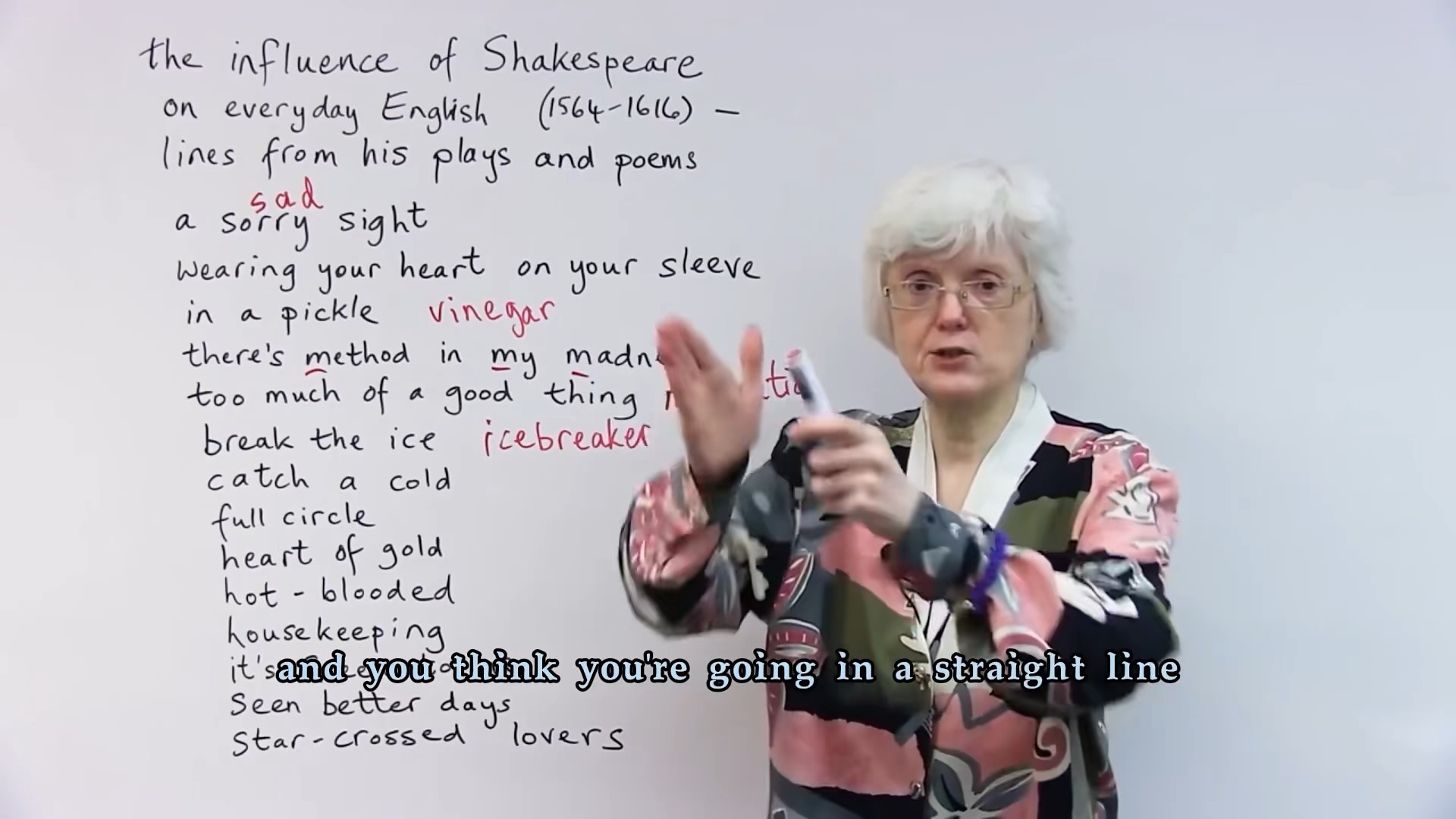
【50集全】25年教龄 伦敦口语 金牌外教 # 适合小白学起~ p01 1. 1. The influence of Shakespeare on everyday English (P1)
发布于 2026-07-23 · 时长 13:03字幕摘录
| 时间 | 英文 | 中文 |
|---|---|---|
| 0:02 | Hi. | 顿 |
| 0:02 | 这是Gill at www.engvid.com, 而今天我们将看到威廉的方式 | |
| 0:10 | Shakespeare, the English playwright and poet, has influenced everyday English today. | 莎士比亚,英国剧作家和诗人,影响了今天的日常英语. |
| 0:18 | He | |
| 0:20 | wrote a lot of plays and quite a lot of poems, and some of the lines from those poems and | 写了很多剧本和很多诗 和一些台词 从这些诗和 |
| 0:28 | plays have been used in the English language because they were very influential. | 戏剧由于影响很大而被用在英语中. |
| 0:36 | So... | 所以说... |
| 0:36 | And the way he said things was just very good at expressing something. | 而他所说的方式 只是非常好的表达的东西。 |
| 0:42 | It may have been | 也许是 |
| 0:43 | that people around him were saying all these things, and that it was just... | 他身边的人在说这些话,只是... |
展开字幕全文(198 条)
| 序号 | 英文 | 中文 |
|---|---|---|
| 1 | Hi. | 顿 |
| 2 | 这是Gill at www.engvid.com, 而今天我们将看到威廉的方式 | |
| 3 | Shakespeare, the English playwright and poet, has influenced everyday English today. | 莎士比亚,英国剧作家和诗人,影响了今天的日常英语. |
| 4 | He | |
| 5 | wrote a lot of plays and quite a lot of poems, and some of the lines from those poems and | 写了很多剧本和很多诗 和一些台词 从这些诗和 |
| 6 | plays have been used in the English language because they were very influential. | 戏剧由于影响很大而被用在英语中. |
| 7 | So... | 所以说... |
| 8 | And the way he said things was just very good at expressing something. | 而他所说的方式 只是非常好的表达的东西。 |
| 9 | It may have been | 也许是 |
| 10 | that people around him were saying all these things, and that it was just... | 他身边的人在说这些话,只是... |
| 11 | He was the | 他是那个 |
| 12 | one to put them down in print, but looking back through all the old books, Shakespeare | 写下来,但回顾所有旧书,莎士比亚 |
| 13 | was the first person to mention all of these. | 是第一个提到所有这些的人。 |
| 14 | These are just a few examples. | 这些只是几个例子。 |
| 15 | He was the | 他是那个 |
| 16 | first person to put these actual phrases and words into print. | 第一人把这些实际的短语和文字打印出来. |
| 17 | So maybe he heard other | 所以也许他听到了其他的 |
| 18 | people saying them, but he was the one who wrote them down. | 人们说,但是他写下来的。 |
| 19 | Okay? | 好吗? |
| 20 | So, let's have a look through the list. | 让我们看看名单 |
| 21 | So... Oh, and there are his dates, just to show | 所以说... 哦,还有他的约会,只是为了显示 |
| 22 | you how long ago he lived. | 你多久前,他还活着。 |
| 23 | He was born in 1564, died in 1616, so a long, long time ago. | 他生于1564年,1616年逝世,故年久失修. |
| 24 | So it's quite amazing, really, that some of what he wrote is actually used in the English | 所以,这是相当惊人的,真的,一些 他写的东西实际上用在英语 |
| 25 | language today. | 今天的语言。 |
| 26 | So, let's have a look. | 所以,让我们来看看。 |
| 27 | So, first of all, a sorry sight. | 所以,首先,一个对不起的目光。 |
| 28 | Okay? | 好吗? |
| 29 | So if you see somebody walking along, and maybe | 所以如果你看到有人走过来,也许 |
| 30 | they've been caught in the rain or something, or they've fallen over into the mud, and they've | 他们被夹在雨里什么的, 或者他们掉进泥里,他们已经 |
| 31 | got all their clothes dirty, they look terrible, they haven't eaten for two days, and they | 衣服都弄脏了,看起来糟透了,两天没吃东西了 |
| 32 | don't look absolutely awful, you could say that poor man, he is a sorry sight. | 别看起来糟透了,你可以说,可怜的人, 他是一个遗憾的目光。 |
| 33 | Sorry | 对不起 |
| 34 | meaning sort of sad. | 意思是有点悲伤 |
| 35 | You feel sorry for him, looking at him. | 你为他感到难过,看着他。 |
| 36 | He looks really disheveled, | 他看起来很无礼, |
| 37 | very dirty, tired, hungry. | 很脏很累很饿 |
| 38 | A sorry sight. | 真遗憾 |
| 39 | Okay. | 摆 |
| 40 | Next one, wearing your heart on your sleeve. | 下一个,穿你的心脏 在你的袖子上。 |
| 41 | Okay? | 好吗? |
| 42 | Now, this is your sleeve, and here is | 这是你的袖子,这里是 |
| 43 | your heart. | 你的心脏。 |
| 44 | Your heart is inside here. | 你的心脏在这里。 |
| 45 | But if you wear your heart on your sleeve, this | 但如果你穿你的心脏 在你的袖子,这个 |
| 46 | is a kind of a metaphor or an idiom, an expression for showing how you're feeling. | 是一种比喻或平庸,一种表现你感受的表达. |
| 47 | Not hiding | 不隐藏 |
| 48 | your feelings, but making it clear how you feel. | 你的感受,但是要说明你的感受 |
| 49 | So, maybe if you've fallen in love with | 所以,也许如果你爱上了 |
| 50 | somebody and instead of sort of keeping it to yourself and keeping it a secret, you sort | 某个人 而不是保守秘密 而不是秘密 |
| 51 | of make it quite obvious to them, probably in a very embarrassing way. | 让他们很明白, 可能是非常尴尬的方式。 |
| 52 | But if you make | 不过如果你做了 |
| 53 | it very obvious to them that you love them, you're wearing your heart on your sleeve. | 很明显,你爱他们, 你穿你的心脏 在你的袖子上。 |
| 54 | Okay? | 好吗? |
| 55 | Sometimes it works, sometimes it doesn't. | 有时有用,有时不行. |
| 56 | So, worth a try if you think so, but I don't | 所以,值得一试,如果你认为如此, 但我不 |
| 57 | know. | 知道吗? |
| 58 | Okay, so that's what that means. | 好吧,这就是这意味着什么。 |
| 59 | Right? | 对吧? |
| 60 | 于 pick菜中. | |
| 61 | If you're in a pickle, you're in trouble. | 若于 pick中为难. |
| 62 | And pickle is a kind of preservative | 泡菜是一种防腐剂 |
| 63 | in a jar, so it's like vinegar or something which preserves food. | 在罐子里,所以它就像醋 或者保存食物的东西。 |
| 64 | So... Vinegar. | 所以... 维那 |
| 65 | Sometimes | 有时 |
| 66 | you get little onions in vinegar, and they're called pickled onions. | 你得到小洋葱在醋, 和它们被称为腌葱。 |
| 67 | Okay? | 好吗? |
| 68 | You can buy them | 你可以买下它们 |
| 69 | in the supermarket. | 在超级市场。 |
| 70 | So, if you're in a... | 所以,如果你在一个... |
| 71 | If you personally are in a pickle, it means | 如果你个人在泡菜,这意味着 |
| 72 | you're in a lot of vinegar, which isn't a very nice place to be, so that's real trouble. | 你在很多醋, 这是一个不好的地方,所以这是真正的麻烦。 |
| 73 | You don't want to be in a lot of vinegar. | 汝等不思议多醋. |
| 74 | So, in a pickle, that's what that means. | 所以,在腌菜中,这就是意思。 |
| 75 | So | 这么说 |
| 76 | you have to get out of it as quickly as possible. | 越快越好 |
| 77 | So, it means in trouble. | 所以,这意味着在麻烦中。 |
| 78 | Okay, next one. | 好吧,下一个。 |
| 79 | There's method in my madness. | 我的疯狂是有办法的 |
| 80 | And if you've heard of Hamlet, this comes | 如果你听说过哈姆雷特,这个来了 |
| 81 | from that play. | 从该剧。 |
| 82 | Hamlet pretends to be mad. | 哈姆雷特假装疯了 |
| 83 | He's not really mad, but he's pretending to | 他不是真的疯了,但他假装 |
| 84 | be mad for a certain reason, which I won't explain now. | 生气是有原因的 我现在不解释 |
| 85 | It would take too long. | 这需要太长的时间。 |
| 86 | You'll | 你会 |
| 87 | notice a lot of M's because Shakespeare is very poetic, and you get a lot of sound patterns, | 因为莎士比亚很有诗意 你得到很多音效模式 |
| 88 | the same letter repeated, which makes it a stronger phrase because of that. | 同一个字母重复了, 这使得它成为一个更强的短语 因为这一点。 |
| 89 | There's method | 有办法 |
| 90 | in my madness means you may be behaving in a very strange way, but there's a good reason | 在我的疯狂 意味着你的行为方式 一个非常奇怪, 但有一个很好的理由 |
| 91 | for it. | 对于它。 |
| 92 | You have a method. | 你有一个方法。 |
| 93 | There is a reason for behaving like that, which hopefully it | 这样做是有原因的, 希望它 |
| 94 | will all work out in the end. | 最终都会成功 |
| 95 | But for Hamlet, it didn't really work out, but I'll leave | 但对于哈姆雷特来说,它并没有真正奏效, 但我会离开 |
| 96 | you to find out about that if you don't already know. | 如果你还不知道,你就会知道 |
| 97 | So, he pretends to be mad for his own | 所以,他假装自己疯了 |
| 98 | reasons, but he's not really mad. | 原因,但他不是真的疯了。 |
| 99 | Okay. | 摆 |
| 100 | All right? | 好吗? |
| 101 | So, next one. | 所以,下一个。 |
| 102 | Too much of a good thing. | 太过善法. |
| 103 | So, you could say, you can have too much of a | 所以,你可以说, 你可以拥有太多一个 |
| 104 | good thing, and I'm sort of thinking about chocolate. | 不错,我想到巧克力 |
| 105 | Okay? | 好吗? |
| 106 | Which I think about a lot. | 我考虑了很多 |
| 107 | Chocolate, to me, is a good thing, but you can have too much of it. | 巧克力对我来说是件好事 但你可以吃太多 |
| 108 | Okay? | 好吗? |
| 109 | And have a | 并有一个 |
| 110 | heart attack or something if you eat too much. | 心脏病发作,或者吃太多东西 |
| 111 | So, you can have too much of a good thing, | 所以,你可以拥有太多的好事, |
| 112 | so don't overdo it. | 所以别太过分 |
| 113 | Everything in moderation. | 一切以节制. |
| 114 | Okay? | 好吗? |
| 115 | Just a little bit of what you like, a little bit of chocolate or whatever it is | 随便你喜欢什么 巧克力什么的 |
| 116 | you like, but not too much because you can have too much of a good thing. | 你喜欢,但不要太多 因为你可以拥有太多的好东西。 |
| 117 | Right. | 对 |
| 118 | Next one, to break the ice. | 下一个,打破冰层。 |
| 119 | This doesn't mean literally if the pond has frozen over, there's | 这不是说如果池塘被冰冻了 |
| 120 | ice on top, you go and break it, break the ice to get through to the water underneath. | 冰块在顶部,你去打破它, 打破冰块到水底。 |
| 121 | This is a metaphor for getting to know people. | 以此喻识众生. |
| 122 | If you go to a meeting and there are people | 如果你去开会,有人 |
| 123 | that you haven't met before, and you're all a bit uncomfortable because you're not quite | 之前你没见过面, 而且你都有点不舒服 因为你不完全 |
| 124 | sure what to say, if somebody then makes a joke and everybody laughs, and people start | 如果有人开个玩笑 大家都会笑 就会有人开始 |
| 125 | to feel happier, and more friendly, and more relaxed, that's... That joke has broken the | 感觉更快乐 更友好 更放松 那个笑话打破了 |
| 126 | ice. | 冰块。 |
| 127 | Okay? | 好吗? |
| 128 | Sometimes you might go to a workshop or a seminar where people are discussing things, | 有时你可能去一个工作坊或研讨会 在那里人们讨论的事情, |
| 129 | and often at the beginning, you have something called an icebreaker. | 通常在开始的时候, 你有一个叫做破冰者。 |
| 130 | Right? | 对吧? |
| 131 | That's the same idea, the icebreaker, for people to start to feel comfortable with each other. | 这同样的想法,破冰者,人们开始觉得彼此很自在. |
| 132 | Okay, so next one, catch a cold. | 好吧,下一个,感冒。 |
| 133 | Now, to catch a cold is when you... | 现在,感冒是当你... |
| 134 | And your nose is streaming, and you've got a sore throat, and oh, a cold, or the flu, | 你的鼻子在流着,你喉咙疼, 哦,感冒,或者感冒, |
| 135 | or something. | 或东西。 |
| 136 | So, to catch a cold. | 所以,为了感冒。 |
| 137 | To me, it sounds very normal. | 对我来说,这听起来很正常。 |
| 138 | I mean, you catch a | 我的意思是,你抓住一个 |
| 139 | ball as well, but to catch a cold, maybe before this was written down, people said to get | 球也一样,但是要感冒, 也许在写下来之前, 人们说得到 |
| 140 | a cold. | 凉了 |
| 141 | I don't know. | 师曰. |
| 142 | Maybe even the word cold wasn't used, but Shakespeare was the | 也许连冷字都没用 但莎士比亚是 |
| 143 | first person to write it down. | 第一个人写下来。 |
| 144 | Okay. | 摆 |
| 145 | Next one, full circle. | 下一个,全圆。 |
| 146 | If you come full circle, maybe you're out in the country somewhere | 如果你来得全圆,也许你在乡下某处 |
| 147 | going for a walk, and you get a bit lost, but you keep walking, and you think you're | 出去走走,你迷路了, 但你继续走,你以为你是 |
| 148 | going in a straight line, but what actually happens is you've been going around in a circle | 直线走,但实际发生的情况是 你一直在绕圈 |
| 149 | and when you get back to where you started, you say, we've come full circle. | 当你回到你开始的地方,你说,我们已经来 完全圆。 |
| 150 | Okay. | 摆 |
| 151 | Next one, a heart of gold. | 次一金刚心. |
| 152 | If someone has a heart of gold, it means they're a very kind | 如果有人有一颗金色的心,那就说明他们很善良 |
| 153 | person. | 个人。 |
| 154 | Okay. | 摆 |
| 155 | Gold being a valuable metal. | 黄金是有价值的金属。 |
| 156 | A heart of gold means a really good person. | 一颗金心意味着一个真正的好人. |
| 157 | Okay. | 摆 |
| 158 | If someone is hot-blooded, they can get angry very quickly, or they get into fights, | 如果某人是热血, 他们可以很迅速地生气, 或者他们打, |
| 159 | that sort of thing. | 那种东西。 |
| 160 | Their blood that is in their veins and arteries is hot, not... Well, | 他们的血管和动脉中的血液是热的,而不是... 那个 |
| 161 | it is hot anyway, but if they're hot-blooded, it means they have a strong temper. | 不过如果他们是热血的 说明他们脾气很强 |
| 162 | They can | 他们可以 |
| 163 | get angry easily, and get into fights. | 轻易发怒,开始打架. |
| 164 | Housekeeping, again, is the... Shakespeare was the first person, apparently, to put this | 房东,又是... 莎士比亚是第一个 说这个的人 |
| 165 | word in print, and it means, as you probably know, looking after the house, cleaning, cooking, | 意思是,你可能知道, 照顾房子,清洁,烹饪, |
| 166 | keeping things tidy, dusting, all the housekeeping that needs to be done to keep the place nice. | 保持整洁,打扫, 所有需要做的家务 保持这个地方好。 |
| 167 | If you say, it's Greek to me, it means you don't understand something. | 如果你说,这是希腊语对我来说, 这意味着你不明白的东西。 |
| 168 | If you're reading | 如果你在读 |
| 169 | a book, it may not literally be in Greek, but you can say, it's Greek to me, meaning | 一本书,也许不是希腊语, 但你可以说,这是希腊语,对我来说,意思是 |
| 170 | I don't understand it, because most people, unless they are Greek, or have studied Greek, | 我不明白,因为大多数人, 除非他们是希腊人,或曾学习过希腊语, |
| 171 | will not understand Greek. | 将不懂希腊语。 |
| 172 | Okay. | 摆 |
| 173 | Seen better days. | 见到更好的日子。 |
| 174 | If something has seen better days, like a chair, if you have a favourite | 如果有比这更好的日子,如椅子,如果你喜欢的话 |
| 175 | chair that you sit in, but you've had it for maybe 20 years, and it's not new anymore, | 你坐的椅子,但你已经拥有它 大概20年, 它已经不是新的了, |
| 176 | it's a bit worn, a bit maybe not very clean-looking, you can say, this chair has seen better days. | 它有点磨损, 有点不太干净, 你可以说,这把椅子已经看到了更好的日子。 |
| 177 | Okay. | 摆 |
| 178 | And then finally, you may have heard this term, star-crossed lovers. | 最后,你可能听说过这个名词,星际恋人。 |
| 179 | It comes from | 它来自 |
| 180 | the play Romeo and Juliet, which is one of the most famous of Shakespeare's plays. | 罗密欧和朱丽叶的戏剧,这是莎士比亚戏剧中最著名的一部. |
| 181 | They | 他们 |
| 182 | are star-crossed because they are very unlucky. | 因为他们很不走运 |
| 183 | Very bad things happen to them, so they don't | 非常糟糕的事情发生在他们身上,所以他们不会 |
| 184 | live to a very old age because they have a bad... Bad fortune, bad luck. | 活在一个非常老的年纪,因为他们有一个坏... 祸福,祸福. |
| 185 | So, star-crossed | 星际迷航 |
| 186 | lovers. | 爱人 |
| 187 | The stars up there, horoscopes, signs of the Zodiac, that sort of thing is the idea | 上面的星星,星座,黄道的标志, 那种东西就是这个想法 |
| 188 | behind this astrology. | 这个占星术的背后。 |
| 189 | Okay. | 摆 |
| 190 | Right, so that's our selective list of words and phrases from Shakespeare, which are still | 对,所以这就是我们从莎士比亚 选来的词和短语列表 |
| 191 | used in the English language today. | 在今天的英语中使用。 |
| 192 | I hope you found it interesting. | 我希望你觉得有趣 |
| 193 | If you'd like to | 如果你愿意的话 |
| 194 | answer a quiz on this topic, please go to the website, www.engvid.com, and come and | 请到网站www.engvid.com回答关于这个主题的问答,然后来, |
| 195 | see us again soon. | 很快就会见到我们 |
| 196 | Okay? | 好吗? |
| 197 | Bye for now. | 再见 |
| 198 | English Transcription by ESO, translated by — | 由ESO翻译的英语译名——. |
该视频共有字幕 198 条。解锁更多字幕为会员功能,请移动到 价格
P3 · 【50集全】25年教龄 伦敦口语 金牌外教 # 适合小白学起~ p03 2. 2. 10 ways to use the verb 'KEEP' in English (P3)
【50集全】25年教龄 伦敦口语 金牌外教 # 适合小白学起~ p03 2. 2. 10 ways to use the verb 'KEEP' in English (P3)
发布于 2026-07-23 · 时长 13:38字幕摘录
| 时间 | 英文 | 中文 |
|---|---|---|
| 0:01 | Hello. | 哈罗 |
| 0:02 | 这是Gill,在www.engvid.com, 今天我们要有一个教训 | |
| 0:09 | the use of the verb to keep. | 使用动词来保留。 |
| 0:11 | Okay? | 好吗? |
| 0:12 | It's a verb that's used a lot in English, so it's | 其动词在英语中被大量使用,所以是. |
| 0:17 | a very useful word to know and to know how to use it. | 一个非常有用的词来知道和知道如何使用它。 |
| 0:22 | And it can actually be used in | 它实际上可以用来 |
| 0:24 | different ways, in slightly different ways, in different meanings. | 不同的方式, 略有不同的方式, 不同的含义。 |
| 0:30 | So, I'm just going | ┮и碞ǐ |
| 0:31 | to show you three of those main ways of using the verb to keep in this lesson. | 向你们展示这三种主要方法 用动词来保持这个教训。 |
展开字幕全文(256 条)
| 序号 | 英文 | 中文 |
|---|---|---|
| 1 | Hello. | 哈罗 |
| 2 | 这是Gill,在www.engvid.com, 今天我们要有一个教训 | |
| 3 | the use of the verb to keep. | 使用动词来保留。 |
| 4 | Okay? | 好吗? |
| 5 | It's a verb that's used a lot in English, so it's | 其动词在英语中被大量使用,所以是. |
| 6 | a very useful word to know and to know how to use it. | 一个非常有用的词来知道和知道如何使用它。 |
| 7 | And it can actually be used in | 它实际上可以用来 |
| 8 | different ways, in slightly different ways, in different meanings. | 不同的方式, 略有不同的方式, 不同的含义。 |
| 9 | So, I'm just going | ┮и碞ǐ |
| 10 | to show you three of those main ways of using the verb to keep in this lesson. | 向你们展示这三种主要方法 用动词来保持这个教训。 |
| 11 | Okay. | 摆 |
| 12 | First of all, to explain how to keep is different from the verb to hold. | 首先,解释如何保持与动词所持不同. |
| 13 | Sometimes people get | 有时人们得到 |
| 14 | them confused. | 他们困惑。 |
| 15 | To hold. | 以坚住. |
| 16 | Okay? | 好吗? |
| 17 | I'm... At the moment, I'm holding... Holding a pen or a | и... 目前,我拿着... 持有笔或笔 |
| 18 | board marker. | 板标. |
| 19 | I may not keep it. | 我可能不留着它。 |
| 20 | If I take it home with me, that means I keep it. | 如果我把它带回家, 这意味着我保留它。 |
| 21 | But | 不过 |
| 22 | if I leave it in this classroom when I go, I did not keep it. | 如果我走的时候把它留在这间教室里, 我没有保留它。 |
| 23 | I'm holding it now, but | 我现在拿着它,但是 |
| 24 | I will not be keeping it. | 我不会留着的 |
| 25 | I leave it here. | 我留在这儿 |
| 26 | Okay, so with to hold, for example, you can | 好,比如说,你可以坚持 |
| 27 | ask somebody... You're holding your bag. | 问别人... 你拿着你的包 |
| 28 | You need to put your coat on. | 你得穿上你的外套。 |
| 29 | You can't do both, | 你不能两者兼有 |
| 30 | so you ask somebody, can you hold my bag while I put my coat on? | 所以,你问某人, 你能拿我的包 当我穿上我的外套? |
| 31 | Okay. | 摆 |
| 32 | And then, thank you, | 然后,谢谢你 |
| 33 | you have your bag back again. | 你的包又回来了 |
| 34 | They give it back. | 他们还给我。 |
| 35 | So, they hold the bag. | 所以,他们拿着袋子。 |
| 36 | It's temporary. | 这是暂时的。 |
| 37 | Just like me holding this pen is temporary. | 就像我拿着这支笔一样是暂时的 |
| 38 | I will be putting it back on the table at | 我会把它放在桌子上 |
| 39 | the end of the session. | 结束届会。 |
| 40 | So, to hold is a temporary thing, just holding something. | 所以,持有只是暂时的, 只是持有一些东西。 |
| 41 | Okay? | 好吗? |
| 42 | So, that's | 所以,这是 |
| 43 | to hold. | 以坚守. |
| 44 | So, now let's have a look at the first meaning of the verb, to keep, which | 因此,现在让我们来看看动词的第一个含义,要保留, |
| 45 | means something like to retain. | 意思是有些东西可以保留 |
| 46 | Like I was saying, if I retain this, if I keep it, I | 就像我说的,如果我保留这个, 如果我保留它,我 |
| 47 | take it home with me and never, never give it back to the person it belongs to, which | 带着它回家 永远不要把它还给它属于的人 |
| 48 | is stealing. | 偷东西 |
| 49 | So, we can't do that, can we? | 所以,我们不能这样做,不是吗? |
| 50 | No. | 没有 |
| 51 | Okay. | 摆 |
| 52 | So, you can say to somebody... Say | 你可以跟别人说... 说 |
| 53 | you... | 你们... |
| 54 | If I... | 狦и... |
| 55 | If this did belong to me, if this was my pen, but somebody else said, | 如果这是属于我的 如果这是我的笔 但别人说 |
| 56 | oh, isn't that a lovely pen? | 哦,这不是一个可爱的笔? |
| 57 | I need a pen like that. | 我需要一支这样的笔。 |
| 58 | So, I would say, oh, well, if you... | 所以我会说 如果你... |
| 59 | Here you are. | 给你 |
| 60 | You can use it. | 你可以用它来。 |
| 61 | And if you like it, you can keep it. | 如果你喜欢,你可以留着它。 |
| 62 | Okay? | 好吗? |
| 63 | I've got lots more | 我还有很多 |
| 64 | pens like this, so you're very welcome to have it. | 像这样的笔,所以欢迎你拥有它。 |
| 65 | You can keep it. | 你可以留着它。 |
| 66 | So, if you like | 所以,如果你喜欢 |
| 67 | it, the pen, you can keep it. | 笔,你可以留着 |
| 68 | And you keep it, you take it home with you, you use it, | 你留着,你带回家,你用它 |
| 69 | it's then your pen. | 然后是你的笔。 |
| 70 | It was my pen, now it's your pen. | 这是我的笔,现在是你的笔。 |
| 71 | You kept it. | 你留着 |
| 72 | So, past tense, kept. | 所以,过去紧张,保持。 |
| 73 | Irregular verb. | 非正法动词. |
| 74 | Right. | 对 |
| 75 | Okay. | 摆 |
| 76 | Next example. | 下一个例子。 |
| 77 | For example, maybe I've broken my leg or something, and it's the summer. | 例如,也许我断了腿什么的,现在是夏天. |
| 78 | I can't go swimming for the whole of the summer because I've broken my leg. | 我整个夏天都游不下去 因为我的腿断了 |
| 79 | Right? | 对吧? |
| 80 | So, I don't | 所以,我没有 |
| 81 | need my swimsuit for the whole of the summer. | 整个夏天都需要我的泳衣 |
| 82 | So, but a friend of mine really, really, really | 所以,但我的朋友 真的,真的,真的,真的 |
| 83 | wants to go swimming, and she's going on holiday soon, and the hotel has a swimming pool, it's | 想去游泳,她马上就要放假了 酒店有个游泳池 |
| 84 | near the sea, she doesn't have a swimsuit. | 在海边 她没有泳衣 |
| 85 | So, I can't use my swimsuit, I've broken my | 所以,我不能用我的泳衣,我已经打破了我的 |
| 86 | leg. | 脚。 |
| 87 | So, I say to her, here is my swimsuit, you can keep it for the summer, but I will | 所以,我跟她说,这是我的泳衣 你可以留着它过暑假,但我会的 |
| 88 | need to have it back in September. | 必须在九月回来 |
| 89 | Okay? | 好吗? |
| 90 | Because my leg will be better in September, | 因为我的腿九月会好一点 |
| 91 | and I will want to start swimming again. | 我想重新开始游泳 |
| 92 | So, keeping can be temporary, if you say you can | 所以,保持可以是暂时的,如果你说可以 |
| 93 | keep it for the summer. | 留为夏. |
| 94 | Okay? | 好吗? |
| 95 | But I will need to have it back, you'll have to give it back | 但我需要把它还回来,你必须还给我 |
| 96 | to me in September. | 9月给我的 |
| 97 | Okay? | 好吗? |
| 98 | Right? | 对吧? |
| 99 | And similarly, if you go in a taxi, and you have to pay the taxi driver, terribly expensive, | 同样,如果你搭计程车,你必须支付 计程车司机,非常昂贵, |
| 100 | but anyway, if you're feeling generous, and you've got lots of money to spare, you can | 不过,如果你觉得慷慨, 而且你有很多钱可以留 |
| 101 | say, I told the taxi driver to keep the change. | 我告诉出租车司机不要找了 |
| 102 | Let's say the taxi fare was, in UK money, | 假设出租车费是英国的钱 |
| 103 | £8.50. | 八块五 |
| 104 | Okay? | 好吗? |
| 105 | And you gave him a £10 note, and you said to him, keep the change. | 你给了他一张10英镑的纸条 你跟他说,不要找了 |
| 106 | You | 你们 |
| 107 | didn't want £1.50 back from him, you were happy to give him a £10 note, let him keep | 不想从他那里得到1.50英镑 你很乐意给他10英镑的纸条 让他留着 |
| 108 | the change, not give you any change. | 零钱,不给你任何零钱。 |
| 109 | It's what you call a tip. | 这就是你所谓的小费。 |
| 110 | You gave the taxi driver | 你给了出租车司机 |
| 111 | a tip. | 一个小费。 |
| 112 | Okay? | 好吗? |
| 113 | So, keep the change. | 所以,不找零钱。 |
| 114 | Right? | 对吧? |
| 115 | And then finally, for this section, you can keep your things in this drawer. | 最后,关于这个部分, 你可以把东西放在这个抽屉里。 |
| 116 | Maybe you | 也许你 |
| 117 | start a new job, and you're on the first day, you're taken to your desk, this is where you're | 开始新的工作, 而你在第一天, 你被带到你的办公桌, |
| 118 | going to be sitting, here is your computer, there's a drawer here, you can keep your things | 会坐着 这是你的电脑 这里有个抽屉 你可以留着你的东西 |
| 119 | in this drawer. | 在这个抽屉里 |
| 120 | So, all your pens, pencils, paper for writing on, anything, your diary, | 所以,所有的笔,铅笔,纸 写在,任何东西,你的日记, |
| 121 | everything you need for your job, to stop the table, the desk looking untidy, you can | 你的工作需要的一切, 停止桌子, 桌子看起来不累,你可以 |
| 122 | put the things in the drawer. | 把东西放在抽屉里 |
| 123 | You can keep your things in this drawer. | 你可以把东西放在抽屉里 |
| 124 | Okay? | 好吗? |
| 125 | That's sort | 就是这样 |
| 126 | {\fn黑体\fs22\bord1\shad0\3aHBE\4aH00\fscx67\fscy66\2cHFFFFFF\3cH808080}把东西放在抽屉里 {\fn黑体\fs22\bord1\shad0\3aHBE\4aH00\fscx67\fscy66\2cHFFFFFF\3cH808080}你要去的时间 | |
| 127 | to be working there. | 在那里工作。 (笑声) |
| 128 | So, hopefully a nice long time, and hopefully a nice enjoyable | 所以,希望很长一段时间, 希望一个愉快的乐趣 |
| 129 | job. | 任务。 |
| 130 | Okay. | 摆 |
| 131 | Right, so we'll now move on to look at another aspect of the verb to keep. | 接下来我们再看动词的另一个方面 |
| 132 | We have three sentences here. | 这里有三句 |
| 133 | For example, | 举例来说, |
| 134 | he keeps his car in good condition. | 他的车状况很好 |
| 135 | Okay? | 好吗? |
| 136 | So, your friend has a car, he looks after | 所以,你的朋友有辆车,他照顾 |
| 137 | it very well. | 很不错 |
| 138 | He keeps it clean, keeps it clean. | 他保持干净,保持干净。 |
| 139 | He looks after it if it needs to be | 如果需要的话,他会照顾它 |
| 140 | repaired, he takes it to the garage. | 修理好了,他把它带到车库。 |
| 141 | He doesn't neglect the car, he really takes care of it. | 他不会忽视汽车,他真的照顾它。 |
| 142 | So, he keeps his car in good condition. | 他的车状况很好 |
| 143 | It's like saying he maintains his car in good condition. | 就像说他的车状况很好 |
| 144 | Okay? | 好吗? |
| 145 | Secondly, do you keep a diary? | 第二,你有日记吗? |
| 146 | Right? | 对吧? |
| 147 | So, that's a slightly different meaning of | 所以,这是一个稍微不同的含义 |
| 148 | keep. | 继续 |
| 149 | If you have a diary, maybe not just an appointment diary, but a diary, a journal | 如果你有日记,也许不只是预约日记,还有日记,日记 |
| 150 | where you write down things that happen each day, and maybe make comments about things | 写下每天发生的事 并评论事情 |
| 151 | that happen. | 发生。 |
| 152 | Do you keep a diary? | 你有日记吗? |
| 153 | Which means you go to your diary maybe every day, every | 也就是说你可能每天都在看日记 |
| 154 | few days, maybe at least once a week to write a few things in your diary in a kind of regular | 几天,也许至少一周一次 在你的日记上写一些东西 一种常规 |
| 155 | way. | 就是这样 |
| 156 | So, to keep a diary, you write in a book regularly about your life. | 所以,为了保留一本日记, 你定期在一本书中写关于你的生活。 |
| 157 | Okay. | 摆 |
| 158 | Right? | 对吧? |
| 159 | And then, finally, in this section, can you keep a secret? | 最后,在这一节中,你能保守秘密吗? |
| 160 | Okay? | 好吗? |
| 161 | This is something a friend | 这个是朋友 |
| 162 | might say to you. | 可能会告诉你。 |
| 163 | Can you keep a secret? | 你能保守秘密吗? |
| 164 | I'm going to tell you something now, but you've | 我现在要告诉你一件事 但你已经 |
| 165 | got to promise not to tell anybody else. | 得保证不告诉别人。 |
| 166 | Can you keep a secret? | 你能保守秘密吗? |
| 167 | Meaning keep it to yourself. | 意思是保持它自己。 |
| 168 | Keep it, and don't share it with other people. | 留着,别和别人分享 |
| 169 | Don't tell other people this secret thing. | 别告诉别人这个秘密 |
| 170 | So, whatever it is, I don't know because it's a secret. | 所以,无论它是什么,我不知道因为它是一个秘密。 |
| 171 | Okay? | 好吗? |
| 172 | But can you keep a secret? | 但你能保守秘密吗? |
| 173 | Has anybody ever told you a secret? | 有没有人告诉你一个秘密? |
| 174 | And have you then gone and told other people, or have | 你曾去告诉别人吗?还是 |
| 175 | you kept it? | 你留着? |
| 176 | Kept it to yourself. | 把它留给你自己。 |
| 177 | Okay? | 好吗? |
| 178 | It's tempting sometimes, isn't it? | 有时候很诱人 不是吗? |
| 179 | But you have | 但你已经 |
| 180 | to really try hard not to tell anybody else because you promised. | 真正努力的不告诉别人 因为你答应。 |
| 181 | Right. | 对 |
| 182 | Okay. | 摆 |
| 183 | Right. | 对 |
| 184 | Okay, moving on to another slightly different usage. | 好,改用另一种稍微不同的用法 |
| 185 | This one, this is like the meaning | 这个,这就像意义 |
| 186 | being continuing, to continue. | 继续,继续。 |
| 187 | So, if you're in a car, it's a long journey. | 所以,如果你在一辆车, 这是一个漫长的旅程。 |
| 188 | You're going | 你该走了 |
| 189 | hundreds of miles. | 数百里. |
| 190 | It's a long journey, and you want to rest, you want to stop, you want | 长途跋涉,想休息,想停止,想停止. |
| 191 | to sleep, anything. | 睡觉,任何事。 |
| 192 | But it's a long journey, but we must keep going. | 但它是一个漫长的旅程, 但我们必须继续前进。 |
| 193 | Keep going. | 继续 |
| 194 | So, to | 所以,到 |
| 195 | keep going is to continue. | 继续前进 |
| 196 | We can't stop. | 我们不能停下来。 |
| 197 | We have to be in that place by a certain time. | 我们必须在一定时间内到达那里。 |
| 198 | We can't stop and rest. | 我们不能停下来休息。 |
| 199 | We've got to keep going. | 我们必须继续前进。 |
| 200 | Keep going. | 继续 |
| 201 | Continue. | 继续 |
| 202 | Okay? | 好吗? |
| 203 | And then similarly, you might still be in this car, and you say, | 同样,你可能还在这辆车里, 你说, |
| 204 | if we keep that tall building in sight, we won't get lost. | 如果我们保持高楼的视线, 我们不会迷路。 |
| 205 | Okay? | 好吗? |
| 206 | You know, if you're | 狦琌 |
| 207 | in a strange city, maybe you're walking around, and you think, well, I need somewhere, somewhere | 在一个奇怪的城市,也许你走来走去, 你认为,嗯,我需要的地方,某处 |
| 208 | a big building, a tall building that I can see from any part of the city, and then I | 一个大建筑,一个高楼 我可以看到 从城市的任何地方, 然后我 |
| 209 | will know where I am. | 会知道我在哪 |
| 210 | Okay? | 好吗? |
| 211 | So, you keep the building in sight, meaning you can always | 所以,你保持建筑的视线, 这意味着你可以永远 |
| 212 | see it, keep it in sight or in view. | 看它, 保持它的视线或视线。 |
| 213 | If we keep it in sight, we won't get lost. | 如果我们保持它的视线,我们不会迷路。 |
| 214 | Okay? | 好吗? |
| 215 | And then, this meaning here is more to do with preserving, like with food. | 然后,这个意义 更多与保存, 就像与食物。 |
| 216 | You don't | 你没有 |
| 217 | want the food to go bad. | 想要食物变坏 |
| 218 | So, the food will keep if you put it in the freezer. | 所以,如果放进冰箱,食物会保留下来。 |
| 219 | Okay? | 好吗? |
| 220 | So, | 这么说 |
| 221 | this is about preserving the food, so that in a month's time, you can take it out of | 这是关于保存食物, 这样在一个月的时间,你可以把它从 |
| 222 | the freezer, you can cook it, and you can eat it, and it tastes good. | 冰柜,你可以煮, 你可以吃,它的味道很好。 |
| 223 | Right? | 对吧? |
| 224 | So, food | 所以,食物 |
| 225 | will keep if you put it in the freezer. | 如果你把它放在冰箱里 就会留下 |
| 226 | Right? | 对吧? |
| 227 | And then finally, this is a notice you might sometimes see if you're visiting a place that | 最后,这是个通知 你有时会看到 如果你去一个地方 |
| 228 | has lovely lawns, grass. | 有可爱的草坪,草。 |
| 229 | So, these are lawns. | 这些是草坪。 |
| 230 | If it's beautifully cut green grass, and they | 如果它是美丽的 剪绿草,他们 |
| 231 | don't want people walking on it all the time because it just goes muddy, you get brown | 不想让别人一直走下去 因为它会变成泥土,你会变得褐色 |
| 232 | patches, it looks horrible. | 补丁,看起来很可怕。 |
| 233 | So, sometimes you have a sign that says, | 所以,有时你有一个标志说, |
| 234 | keep off the grass. | 远离草丛。 |
| 235 | Okay? | 好吗? |
| 236 | Not even please. | 甚至不请。 |
| 237 | It usually just says keep off the grass. | 它通常只是说远离草。 |
| 238 | For | 对于 |
| 239 | it to say please, they'd have to have a much longer notice. | 要说请, 他们必须有一个更长的通知。 |
| 240 | So, keep off the grass. | 所以,远离草地。 |
| 241 | It's | 这是 |
| 242 | an order. | 一个命令。 |
| 243 | Right? | 对吧? |
| 244 | So, you cannot walk on the grass. | 所以,你不能走在草地上。 |
| 245 | Keep off the grass. | 远离草地. |
| 246 | Okay. | 摆 |
| 247 | So, I hope that little lesson was helpful to show you the different ways of using the | 所以,我希望这个小小的教训能帮助你展示出不同的使用方式。 |
| 248 | verb to keep. | 动词要保留。 |
| 249 | 请访问网站www.engvid.com,请访问 | |
| 250 | you to test yourself on this. | 你试试看这个 |
| 251 | And also, if you'd like to subscribe to my YouTube channel, | 还有 如果你愿意订阅我的YouTube频道 |
| 252 | if you would like to keep in touch with my lessons as they come out, that would be great. | 如果你愿意继续联系 我的课程出来,这将是伟大的。 |
| 253 | And hope to see you again soon. | 希望能很快再见到你 |
| 254 | Okay. | 摆 |
| 255 | Bye for now. | 再见 |
| 256 | 译者:https://otter.ai |
该视频共有字幕 256 条。解锁更多字幕为会员功能,请移动到 价格
P4 · 【50集全】25年教龄 伦敦口语 金牌外教 # 适合小白学起~ p04 3. 3. Polite English_How to ask people to repeat themselves (P4)
【50集全】25年教龄 伦敦口语 金牌外教 # 适合小白学起~ p04 3. 3. Polite English_How to ask people to repeat themselves (P4)
发布于 2026-07-23 · 时长 11:50字幕摘录
| 时间 | 英文 | 中文 |
|---|---|---|
| 0:01 | Hi. | 顿 |
| 0:02 | 这是Gill在www.engvid.com上, 今天我们将有一个关于什么 | |
| 0:09 | do if someone says something to you and you can't hear them properly or it's not very | 如果有人对你说了些什么 你听不见的话 |
| 0:18 | clear what they say, and you need to ask them to repeat what it was they said. | 明确他们说的话,你需要要求他们重复他们说的话。 |
| 0:25 | And this | 还有这个 |
| 0:26 | could happen anywhere, anywhere in the world, but especially if you're in maybe a big city | 可能发生在任何地方,在世界任何地方, 但特别是如果你在 也许一个大城市 |
| 0:35 | where there are people of many different nationalities, cities like London, Toronto, New York, anywhere | 有很多不同民族的人 伦敦、多伦多、纽约等城市 |
| 0:45 | really in the world. | 真正在这个世界。 |
| 0:47 | So, people with different accents, either because they're from other | 所以,有不同口音的人, 要么因为他们来自其他 |
| 0:51 | countries and English is not their first language, or even within one country, like | 国家和英语不是他们的第一语言,甚至在一个国家内也是如此,例如: |
展开字幕全文(197 条)
| 序号 | 英文 | 中文 |
|---|---|---|
| 1 | Hi. | 顿 |
| 2 | 这是Gill在www.engvid.com上, 今天我们将有一个关于什么 | |
| 3 | do if someone says something to you and you can't hear them properly or it's not very | 如果有人对你说了些什么 你听不见的话 |
| 4 | clear what they say, and you need to ask them to repeat what it was they said. | 明确他们说的话,你需要要求他们重复他们说的话。 |
| 5 | And this | 还有这个 |
| 6 | could happen anywhere, anywhere in the world, but especially if you're in maybe a big city | 可能发生在任何地方,在世界任何地方, 但特别是如果你在 也许一个大城市 |
| 7 | where there are people of many different nationalities, cities like London, Toronto, New York, anywhere | 有很多不同民族的人 伦敦、多伦多、纽约等城市 |
| 8 | really in the world. | 真正在这个世界。 |
| 9 | So, people with different accents, either because they're from other | 所以,有不同口音的人, 要么因为他们来自其他 |
| 10 | countries and English is not their first language, or even within one country, like | 国家和英语不是他们的第一语言,甚至在一个国家内也是如此,例如: |
| 11 | within the UK, we have many different accents from different parts of the country, from | 在英国,我们有很多不同的口音 来自全国各地,来自 |
| 12 | different cities, from Scotland, Wales, Ireland, there are all different accents. | 不同的城市,从苏格兰,威尔士,爱尔兰,都有不同的口音. |
| 13 | And if someone | 如果有人 |
| 14 | has a strong accent, it's more difficult to understand them. | 口音很重 更难理解 |
| 15 | So, this lesson is about | 所以,这个教训是 |
| 16 | asking people to say again what they said. | 问众生复言. |
| 17 | I have to do it even if someone says something | 就算有人说些什么我也要做 |
| 18 | in English, which is my first language, I sometimes have to ask people to say something | 在英语中,这是我的第一语言, 有时我不得不要求人们说些什么 |
| 19 | again, so it happens to everybody. | 再说一遍,大家都会这样 |
| 20 | Okay, so let's have a look at some of the words you can use to deal with this situation. | 好吧,让我们来看看一些词 你可以用来处理这种情况。 |
| 21 | All right. | 好吧,我们走。 |
| 22 | So, a very useful single word is just to say, | 所以,一个非常有用的单词 就是说, |
| 23 | sorry, with a sort of rising in the voice question. | 抱歉,声音有点高 |
| 24 | Sorry, sorry. | 对不起,对不起。 |
| 25 | And also, I've put | 临Τи临 |
| 26 | body language at the bottom here, but it's quite important. | 身体语言在这里的底部, 但是它是非常重要的。 |
| 27 | You can sort of go like this | 你可以像这样走 |
| 28 | and say, sorry, and lean towards them a little bit with your hand by your ear. | 并说,对不起, 并靠在他们一点点 用你的手在你的耳朵。 |
| 29 | So, especially | 所以,特别 |
| 30 | if they also are not English, if their first language is not English, they will understand | 如果不是英语,如果他们的第一语言不是英语,他们就会理解 |
| 31 | from this that you didn't understand what they said. | 你听不懂他们说的 |
| 32 | So, a little bit of body language | 所以,一点点的身体语言 |
| 33 | helps as well. | 帮助也一样。 |
| 34 | So, sorry is very useful, and polite, because we need it to be polite as | 所以,对不起是非常有用的,礼貌的, 因为我们需要它的礼貌作为 |
| 35 | well. | 不错 |
| 36 | So, polite. | 所以,礼貌一点。 |
| 37 | So, sorry is a polite way of asking someone to repeat. | 所以,道歉是一种礼貌的方式 要求某人重复。 |
| 38 | At one time, there was also the word pardon, which is a little bit old-fashioned now. | 一度也出现了"赦免"这个词,现在这个词有点老套了. |
| 39 | So, | 这么说 |
| 40 | to say pardon, it's a little... | 对不起,有点... |
| 41 | It used to be very polite, and children were taught to | 以前很礼貌,孩子们被教导 |
| 42 | say pardon, but now it's a little bit old-fashioned, and people might laugh at you if you use pardon. | 说"原谅",但现在有点老套了,如果你用"宽恕",人们可能会嘲笑你. |
| 43 | So, see what other people say to you, and then you can follow what they say. | 所以,看看其他人对你说什么, 然后你可以遵循他们说的话。 |
| 44 | But pardon | 但请原谅 |
| 45 | is a little bit old now. | 现在有点老了。 |
| 46 | Okay. | 摆 |
| 47 | Now, things not to say which are not polite. | 现在,不要说那些不礼貌的话。 |
| 48 | You don't just say, what? | 你不只是说,什么? |
| 49 | Because | 因为 |
| 50 | that is rather rude. | 这太粗鲁了 |
| 51 | So, don't say, what? | 所以,不要说,什么? |
| 52 | What? | 你说什么? |
| 53 | Very rude, especially with a loud voice | 非常粗鲁,尤其是声音响亮 |
| 54 | and making a funny face. | 并做一个有趣的脸。 |
| 55 | What? | 你说什么? |
| 56 | Not very nice at all. | 一点也不好 |
| 57 | So, don't say, what? | 所以,不要说,什么? |
| 58 | And don't say | 不要说 |
| 59 | things like, eh? | 比如说? |
| 60 | Eh? | 是吗? |
| 61 | A lot of English people might say, eh? | 很多英国人会说,是吧? |
| 62 | But that's not polite either. | 但那样也不礼貌 |
| 63 | So, or, uh? | 所以,还是,呃? |
| 64 | That's not polite either, just to say, uh? | 这也不礼貌,只是说,嗯? |
| 65 | Uh? | 是吗? |
| 66 | No. | 没有 |
| 67 | Okay. | 摆 |
| 68 | So, the polite way, | 所以,礼貌的方式, |
| 69 | really, for one... As one word, is just to say sorry, and then the person will probably | 真的,一个... 一句话,只是说对不起, 然后这个人可能 |
| 70 | understand you need them to say it again. | 你要让他们再说一遍 |
| 71 | But there are longer sentences you can use | 但还有更长的句子可以使用 |
| 72 | as well, in addition to sorry, just to give you a wider range of options. | 此外,除了道歉之外,还给你更广泛的选择。 |
| 73 | And the three | 还有三个 |
| 74 | main things about what... | 关于什么... |
| 75 | The way we all speak is clarity. | 我们说话的方式是清晰的。 |
| 76 | What we say should be clear. | 我们所说的话应该很清楚。 |
| 77 | I | 一、导 言 |
| 78 | hope I'm being clear in this lesson. | 希望我明白这一点 |
| 79 | So, that's the adjective, clear, and the noun is clarity. | 所以,这是形容词,清晰,名词是清晰的. |
| 80 | Clarity of speech. | 语言明晰. |
| 81 | Okay? | 好吗? |
| 82 | So, it must be clear. | 所以,必须清楚。 |
| 83 | The pace or the speed, if people speak very | 速度或速度,如果人们说话非常 |
| 84 | quickly, it's difficult to follow what they're saying, to understand what they're saying, | 很快,很难听从他们说什么, 理解他们说什么, |
| 85 | so the pace should be fairly slow and regular. | 因此,速度应该相当缓慢和正常。 |
| 86 | Okay? | 好吗? |
| 87 | And the volume, how loud or quiet somebody | 和音量,多大声或安静的人 |
| 88 | is. | 没错 |
| 89 | If someone speaks very quietly, you probably can't hear me at the moment. | 如果有人说话很安静,你可能听不到我说话 |
| 90 | So, some people | 所以,有些人 |
| 91 | are a bit shy, and they don't speak very loud, loudly. | 有点害羞, 他们说话不大声,大声。 |
| 92 | So, the volume, how loud people are | 所以,音量, 多么响亮的人 |
| 93 | is important. | 这一点很重要。 |
| 94 | So, sometimes you need to ask somebody to speak more loudly, so we have | 所以,有时你需要请人 说话更大声,所以我们有 |
| 95 | different sentences for these. | 对于这些不同的句子。 |
| 96 | Okay, so the first thing you can say, if someone says something and you missed a few words | 好吧,所以第一件事你可以说, 如果有人说些什么,你错过了几句话 |
| 97 | and you're not sure what they're saying, you... Again, sorry is always a useful word to begin | 你并不知道他们在说什么,你... 再说一遍,抱歉总是一个有用的词开始 |
| 98 | with. | 带。 |
| 99 | Like, we had sorry as the single word. | 像,我们有对不起作为单一的词。 |
| 100 | Sorry is always useful to begin with. | 道歉总是有用的 首先。 |
| 101 | Sorry, | 对不起 |
| 102 | I didn't quite catch what you said. | 我听不懂你说的 |
| 103 | Now, the quite is optional. | 现在, 广告是可选的。 |
| 104 | You can say, I didn't | 你可以说,我没有 |
| 105 | catch what you said, or I didn't hear what you said. | 抓住你说的话 不然我听不到你说的话 |
| 106 | I didn't quite hear what you said. | 我没听清你说什么 |
| 107 | The quite just adds a little bit more politeness. | 更礼貌一点 |
| 108 | I didn't quite hear. | 我没听清楚 |
| 109 | I nearly heard everything | 我几乎什么都听见了 |
| 110 | that you said, but not quite. | 你说的,但不完全是。 |
| 111 | That suggests that there was just one word that you didn't | 这说明只有一个字 你没有 |
| 112 | get. | 获取。 |
| 113 | So, sorry, I didn't quite catch what you said. | 所以,对不起,我不太明白你说的话。 |
| 114 | To catch something is to... Like | 要抓住的东西是... 喜欢 |
| 115 | catching a ball or something. | 接球之类的 |
| 116 | I didn't catch what you said, or I didn't hear what you said. | 我听不到你说的 或者我听不到你说什么 |
| 117 | And then the person will repeat, hopefully. | 然后,人会重复,希望。 |
| 118 | Right? | 对吧? |
| 119 | Or, again, to ask them to repeat, you | 或者,再次要求他们重复,你 |
| 120 | can say, sorry, could you say that again, please? | 对不起,你能再说一遍吗? |
| 121 | Or, sorry, could you repeat that, | 或者,对不起,你能再说一遍, |
| 122 | please? | 请? |
| 123 | Okay? | 好吗? |
| 124 | To say again or to repeat. | 为复说或复说. |
| 125 | So, could you say that again, please? | 你能再说一遍吗? |
| 126 | Could you | 你能帮我吗? |
| 127 | repeat that, please? | 请再说一遍? |
| 128 | Okay? | 好吗? |
| 129 | So, sorry at the beginning, please at the end is always a | 所以,对不起,一开始,请 在结尾总是一个 |
| 130 | good idea to make it polite. | 不错的主意,让它礼貌。 |
| 131 | Now, if someone wasn't very loud and you want them to say | 现在,如果有人 不是很大声,你想让他们说 |
| 132 | it again with more volume, turning up the volume, you can say, sorry, could you speak | 又用更多的音量,把音量调高 你可以说,对不起,你能说话吗? |
| 133 | up, please? | 起来,好吗? |
| 134 | To speak up means to be louder. | 大声说话意味着大声点 |
| 135 | So, louder. | 大声点 |
| 136 | Okay. | 摆 |
| 137 | So, sorry, could you speak | 所以,对不起,你能说 |
| 138 | up, please? | 起来,好吗? |
| 139 | Again, it's a bit... | 再说一遍,有点... |
| 140 | It's not very polite to say, sorry, you were too quiet. | 说对不起,你太安静了,很不礼貌 |
| 141 | I didn't hear you. | 我没有听到你。 |
| 142 | You were too quiet. | 你当时太安静了 |
| 143 | That sounds a bit like a criticism. | 这听起来有点像批评。 |
| 144 | So, to avoid | 所以,为了避免 |
| 145 | sounding as if you're criticizing the person. | 听起来你好像在批评那个人 |
| 146 | Oh, your voice is really quiet. | 哦,你的声音真的很安静。 |
| 147 | It's not a | 这不是一个 |
| 148 | very nice thing to say. | 说得真好 |
| 149 | So, just to say, sorry, could you speak up, please? | 所以,只是说,对不起, 你能说话,好吗? |
| 150 | And maybe they'll | 也许他们会 |
| 151 | think you can't hear very well, and they think it's your fault and not theirs. | 他们认为这是你的错 而不是他们的错 |
| 152 | You're being | 你们是 |
| 153 | polite. | 礼貌 |
| 154 | Okay. | 摆 |
| 155 | If the person uses a word that you don't know, you can just actually say, | 如果一个人用一个你不知道的词, 你可以说, |
| 156 | sorry, I don't know that word, and you can ask them, what does it mean? | 对不起,我不知道这个词, 你可以问他们, 这是什么意思? |
| 157 | What is the meaning | 这是什么意思? |
| 158 | of the word? | 这个词? |
| 159 | Or, could you tell me what it means, please? | 或者 你能告诉我这是什么意思吗? |
| 160 | Okay? | 好吗? |
| 161 | So, could, not can, can. | 所以,不能,不能,可以。 |
| 162 | Can you tell me? | 你能告诉我吗? |
| 163 | That's less polite. | 这不太礼貌 |
| 164 | Could you tell me is more polite. | 你能告诉我更礼貌一点吗? |
| 165 | What it means, | 这是什么意思, |
| 166 | please. | 请 |
| 167 | Again, please at the end. | 再说一遍,请在最后。 |
| 168 | And if you're having a conversation, then it helps to keep | 如果你有谈话,那么它有助于保持 |
| 169 | the conversation going. | 谈话的进行。 |
| 170 | If you ask somebody, oh, I don't know that word, what does it mean? | 如果你问别人 我不知道这个词是什么意思? |
| 171 | Can you, could you tell me what that word means? | 你能告诉我这个词是什么意思吗? |
| 172 | And, you know, it helps you get to | 而且,你知道,它帮助你得到 |
| 173 | know the person a little bit better if you're asking them to explain something. | 如果你要求他们解释什么的话 更了解这个人 |
| 174 | So, don't | 所以,别 |
| 175 | be afraid of asking for the explanation of a word. | 害怕问一个字的解释。 |
| 176 | Okay. | 摆 |
| 177 | And then, if someone speaks very quickly, and all the words run together in one single | 然后,如果有人说话非常快, 所有的词一起运行在一个单 |
| 178 | sound and you want them to say it again, again, don't say, it's not very polite to say, sorry, | 听起来你希望他们再说一遍, 再说一遍, 别说, 说起来不礼貌,对不起, |
| 179 | you said that too quickly, because again, it sounds like a criticism. | 你说的太快了, 因为再次, 这听起来像批评。 |
| 180 | But if you say, | 但如果你说 |
| 181 | sorry, could you speak more slowly, please? | 对不起,你能说得慢点吗? |
| 182 | That's less, it sounds less like a criticism. | 听起来不像是批评 |
| 183 | Okay? | 好吗? |
| 184 | So, could you speak more slowly, please? | 所以,你能说得慢点吗? |
| 185 | So, sorry, please at the end, at the beginning | 所以,对不起,请 在结尾,在开头 |
| 186 | and at the end. | 临Τ程 |
| 187 | Okay? | 好吗? |
| 188 | And then, as I said before, body language is always helpful. | 然后,正如我以前说过的,身体语言总是有帮助的。 |
| 189 | So, I hope that's been useful to help you solve the problem of not understanding when | 所以,我希望这能帮助你 解决不理解的问题 |
| 190 | somebody speaks. | 有人说话。 |
| 191 | 请访问网站www.engvid.com。 | |
| 192 | where there is a quiz that you can answer. | 在那里有一个测试 你可以回答。 |
| 193 | And I hope to see you again soon. | 我希望很快再见到你 |
| 194 | Okay? | 好吗? |
| 195 | Thank | 谢谢 |
| 196 | you. | 你们 |
| 197 | Bye. | 再见。 |
该视频共有字幕 197 条。解锁更多字幕为会员功能,请移动到 价格
P5 · 【50集全】25年教龄 伦敦口语 金牌外教 # 适合小白学起~ p05 4. 4. Basic English – How and when to use DO, DOES, and DID (P5)
【50集全】25年教龄 伦敦口语 金牌外教 # 适合小白学起~ p05 4. 4. Basic English – How and when to use DO, DOES, and DID (P5)
发布于 2026-07-23 · 时长 24:22字幕摘录
| 时间 | 英文 | 中文 |
|---|---|---|
| 0:02 | Hi. | 顿 |
| 0:02 | 我是Gill 来自www.engvid.com 今天我们要看看动词 | |
| 0:11 | at do, does, and did, and the way it's used, not all within a positive sentence or statement, | 做,做,做, 和它的方式使用, 并非所有在正面的句子或声明, |
| 0:23 | but the way it often needs to be included in a negative statement, and also how it has | 但往往需要将它列入负面声明的方式,以及它是如何被载入的。 |
| 0:34 | to be used in a question. | 用于一个问题。 |
| 0:36 | Okay? | 好吗? |
| 0:38 | So, I've just got an example here to show you what I mean. | 所以,我这里有个例子来告诉你我的意思。 |
| 0:45 | Okay. | 摆 |
| 0:46 | So, just a simple sentence, you walk. | 所以,只要一句话,你走。 |
| 0:50 | Okay? | 好吗? |
展开字幕全文(421 条)
| 序号 | 英文 | 中文 |
|---|---|---|
| 1 | Hi. | 顿 |
| 2 | 我是Gill 来自www.engvid.com 今天我们要看看动词 | |
| 3 | at do, does, and did, and the way it's used, not all within a positive sentence or statement, | 做,做,做, 和它的方式使用, 并非所有在正面的句子或声明, |
| 4 | but the way it often needs to be included in a negative statement, and also how it has | 但往往需要将它列入负面声明的方式,以及它是如何被载入的。 |
| 5 | to be used in a question. | 用于一个问题。 |
| 6 | Okay? | 好吗? |
| 7 | So, I've just got an example here to show you what I mean. | 所以,我这里有个例子来告诉你我的意思。 |
| 8 | Okay. | 摆 |
| 9 | So, just a simple sentence, you walk. | 所以,只要一句话,你走。 |
| 10 | Okay? | 好吗? |
| 11 | You walk. | 你走着。 |
| 12 | So, we've got the... | 所以,我们得到了... |
| 13 | The pronoun, | 代词 |
| 14 | you, the person. | 你,那个人。 |
| 15 | P for pronoun, P for person. | P代表代词,P代表个人. |
| 16 | Okay? | 好吗? |
| 17 | And the verb, to walk. | 而动词,以行之. |
| 18 | You walk. | 你走着。 |
| 19 | Okay. | 摆 |
| 20 | But what happens... Now, this is in the present tense, and what happens is in some tenses | 但会发生什么... 现在,这是在现在的紧张, 会发生什么是在一些紧张 |
| 21 | you have to use do, but in other tenses you don't need it. | 但在其他时态中你不需要它 |
| 22 | So, we're going to see the | 所以,我们将看到 |
| 23 | different types of sentence with different tenses to show when to use it, and when not | 不同类型的句子,有不同的紧张度来显示何时使用,当不使用时 |
| 24 | to use it, and also how to use it. | 使用它, 以及如何使用它。 |
| 25 | Okay? | 好吗? |
| 26 | So, you walk, simple present tense. | 所以,你走, 简单的时尚。 |
| 27 | If you | 如果你们 |
| 28 | turn that into the negative, it's you do not walk, or you don't walk. | 把它变成负的, 它你不会走,或者你不会走。 |
| 29 | You can't just say | 你不能只说 |
| 30 | you not walk. | 你没有走路。 |
| 31 | You have to use you do not walk. | 你必须用你 不要走。 |
| 32 | And so, because do is also a verb, the | 所以,因为做也是一个动词, |
| 33 | way it's used here is to sort of help the meaning, and that means it's called an auxiliary | 这里使用它的方式是帮助 意义, 这意味着它被称为辅助 |
| 34 | verb. | 动词. |
| 35 | Okay? | 好吗? |
| 36 | So, I'll just put A-U-X, auxiliary verb, and then not is the negative. | 所以,我只放A-U-X,辅助动词,然后不是阴性. |
| 37 | Okay? | 好吗? |
| 38 | So, you do not walk, or you don't walk. | 所以,你不会走,或者你不会走。 |
| 39 | In speech, when we're speaking, we say you don't. | 在演讲中,当我们说话的时候,我们说你没有. |
| 40 | Maybe if you're writing a formal essay for an exam, it's best not to use contractions, | 也许如果你为考试写一篇正式的论文 最好不要用收缩法 |
| 41 | abbreviations, like don't. | 缩写,像不。 |
| 42 | It's better to use do not. | 最好别用 |
| 43 | Okay? | 好吗? |
| 44 | So, you do not walk. | 所以,你不会走。 |
| 45 | That's | 这是 |
| 46 | the negative. | 阴性。 |
| 47 | Okay? | 好吗? |
| 48 | And then, again, if we turn it into a question, and you're asking | 然后,再次,如果我们把它变成一个问题, 你问 |
| 49 | the person, it's do, again, do, do you walk? | 那个人,又来了,你走路了吗? |
| 50 | So, you walk, do you walk? | 所以,你走,你走吗? |
| 51 | Okay? | 好吗? |
| 52 | So, do is | 所以,这是 |
| 53 | the auxiliary, you is the person, the pronoun, and walk is the verb. | 辅助,你就是人,代词,行走就是动词. |
| 54 | Okay? | 好吗? |
| 55 | So, you walk, | 所以,你走着, |
| 56 | you don't walk, do you walk? | 你不走,你会走吗? |
| 57 | Okay. | 摆 |
| 58 | So, there, in the simple present tense, for the negative | 因此,在简单的当前紧张状态下, 消极的 |
| 59 | and for the question, you need to use do as an extra, as an auxiliary verb. | 对于这个问题,你需要做一个额外的, 作为辅助动词。 |
| 60 | Okay. | 摆 |
| 61 | Right, so now I've got some little exercises to give you a chance to see if you can do | 好吧,现在我有一些小练习 给你一个机会 看看你能不能做 |
| 62 | them yourself before I say what they should be. | 在我说出他们应该是什么之前,你自己去 |
| 63 | Okay? | 好吗? |
| 64 | So, we've got this one here. | 所以,我们得到了这个在这里。 |
| 65 | I swim every day. | 我每天都会游泳 |
| 66 | Very healthy. | 非常健康,你喜欢吗? |
| 67 | I don't, actually, but some people do. | 其实我没有 但有些人有 |
| 68 | Swim, swimming in a swimming | 游泳,在游泳中游泳 |
| 69 | pool. | 游泳池 游泳池 游泳池 |
| 70 | I swim every day. | 我每天都会游泳 |
| 71 | Okay? | 好吗? |
| 72 | So, if you were going to turn that into the negative, I just | 所以,如果你要把 变成负,我只是 |
| 73 | said it, probably, without realizing. | 说起来,也许,没有意识到。 |
| 74 | I hope you've forgotten what I said now when I gave | 我希望你已经忘记我当时说的话 |
| 75 | you the negative. | 你负的。 |
| 76 | I'm not going to do that every time. | 我不会每次这样做。 |
| 77 | Don't worry. | 别担心 |
| 78 | Okay. | 摆 |
| 79 | So, I swim every day. | 所以我每天都会游泳 |
| 80 | What would be the negative? | 什么是负面的? |
| 81 | I-n-n-n-n. Just have a think before I tell | 我... 在告诉我之前先想想 |
| 82 | you what it should be. | 你该怎样就怎样 |
| 83 | I, then we have to use do not, don't, I don't, and then it's | 我,然后我们必须使用 不,不,我不,然后它 |
| 84 | the same. | 一样 |
| 85 | We've got walk there and walk there, so it's just I don't swim every day. | 我们在那里走着走着,所以我不每天游泳。 |
| 86 | Okay? | 好吗? |
| 87 | So, you just have to put don't in there. | 所以,你只需要把 不要在那里。 |
| 88 | I don't swim every day. | 我每天都不会游泳 |
| 89 | Okay? | 好吗? |
| 90 | And then again, for the question version of it, I swim every day, and then somebody asks | 再说一遍,我每天都游泳,然后有人问 |
| 91 | or I ask... | 或者我问... |
| 92 | I don't know why I would ask that question. | 我不知道为什么我会问这个问题。 |
| 93 | I should know the answer. | 我应该知道答案 |
| 94 | But do... | 不过... |
| 95 | What should it be? | 应该是什么? |
| 96 | Do I swim every day? | 我每天都游泳吗? |
| 97 | So, swim every day. | 所以,每天都要游泳。 |
| 98 | Walk, walk, swim every day. | 走,走,每天游泳。 |
| 99 | Do I swim every day? | 我每天都游泳吗? |
| 100 | Okay. | 摆 |
| 101 | So, it's always do at the beginning of the question, and then | 所以,它总是做 在问题的开始,然后 |
| 102 | you just use the same words. | 你只是用同样的词。 |
| 103 | Okay, so let's try the next one. | 好吧,让我们试试下一个。 |
| 104 | I hope by now that you understand what I'm explaining | 我希望你现在明白我在解释什么 |
| 105 | about the verb to do. | 关于动词要做什么。 |
| 106 | You understand. | 你明白吗? |
| 107 | Okay? | 好吗? |
| 108 | Now, what if it's still negative? | 如果还是负面呢? |
| 109 | I'm not | 我没有 |
| 110 | going to say it this time. | 这次会说 |
| 111 | I'll leave it for you to think. | 我留给你想想 |
| 112 | How would you say the negative | 你怎么说负面 |
| 113 | of this? | 这个? |
| 114 | You n-n-understand. | 你没有理解。 |
| 115 | Okay? | 好吗? |
| 116 | So, it's you, like this one here, don't. | 所以,这是你, 像这个在这里,不要。 |
| 117 | Sorry about | 对不起 |
| 118 | my writing. | 我写的 |
| 119 | You don't, and then understand again. | 你没有,然后再次理解。 |
| 120 | Okay? | 好吗? |
| 121 | You understand, you don't understand. | 你明白,你不明白,你不明白,你没有。 |
| 122 | Right? | 对吧? |
| 123 | And then the question version, I've already started it with do, so if I'm asking | 然后问题版本,我已经开始做,所以如果我问 |
| 124 | you yes or no, do you understand? | 你是是还是不是,你明白吗? |
| 125 | Okay? | 好吗? |
| 126 | So, do you understand? | 你明白吗? |
| 127 | And the question mark, | 而问号, |
| 128 | of course, at the end. | 当然,最后。 |
| 129 | Always remember the question mark. | 永远记得问号。 |
| 130 | Right. | 对 |
| 131 | Okay, so I hope that's | 好吧,所以我希望这是 |
| 132 | clear so far. | 目前为止都安全了 |
| 133 | Now, let's try this one. | 现在,让我们试试这个。 |
| 134 | This is still present tense, simple present tense. | 这仍然是现在的紧张,简单的现在的紧张。 |
| 135 | Okay? | 好吗? |
| 136 | He smokes cigarettes. | 他抽烟。 |
| 137 | Very bad habit. | 非常糟糕的习惯。 |
| 138 | He smokes cigarettes. | 他抽烟。 |
| 139 | Now, and then he gives | 现在,然后他给了 |
| 140 | up smoking. | 吸烟。 |
| 141 | He quits smoking. | 他戒烟了 |
| 142 | He stops. | 他停下来了。 |
| 143 | Very sensible. | 非常聪明 |
| 144 | So, it's now the negative | 所以,现在是阴性 |
| 145 | situation. | 情况 |
| 146 | No more cigarettes. | 别再抽烟了 |
| 147 | So, he... Now, something funny happens here. | 所以说,他... 现在,这里发生了一些有趣的事情。 |
| 148 | Because we're | 因为我们是 |
| 149 | talking about he, we have to change the verb. | 谈论他,我们必须改变动词。 |
| 150 | If it was, for example, I smoke, you smoke, | 譬如说,我抽烟,你抽烟 |
| 151 | we don't have the s on the end. | 我们没有S的结尾。 |
| 152 | But because we've got he smokes, this is where we put the | 但是,因为我们得到了他吸烟, 这就是我们放 |
| 153 | s on the end of the verb. | s在动词的结尾. |
| 154 | He, she, it smokes. | 他,她,它抽烟。 |
| 155 | So that affects what happens here. | 所以这影响了这里发生的事情。 |
| 156 | Okay? | 好吗? |
| 157 | And instead of don't, we have to use doesn't or does not. | 而不是不使用, 我们必须使用不是或不使用。 |
| 158 | Okay? | 好吗? |
| 159 | So it's either | 所以,无论是 |
| 160 | 不,d -o | |
| 161 | He does not, he doesn't. | 他没有,他没有。 |
| 162 | Ah, and then something | 啊,然后的东西 |
| 163 | else happens. | 还有其他的 |
| 164 | Because we've got an s now in does, we've got an s here, we no longer need | 因为我们现在有一个S,我们有一个S在这里,我们不再需要 |
| 165 | the s there. | 那边那个 |
| 166 | So we say he doesn't smoke cigarettes. | 所以我们说他不抽烟 |
| 167 | Okay? | 好吗? |
| 168 | He doesn't smoke cigarettes because | 他不抽烟,因为 |
| 169 | we've already used the s in the does part of the sentence. | 我们已经用过句子的S了 |
| 170 | That's a bit confusing, but | 这有点混乱,但是... |
| 171 | the more you practice it, the more it will get easier. | 你越练习越容易 |
| 172 | Okay? | 好吗? |
| 173 | And similarly with the question, then. | 问题也一样 |
| 174 | See if you can think what the question wording | 看看能不能想出问题的措辞 |
| 175 | would be, starting with does, with the s. Does he smoke, without the s, does he smoke cigarettes? | 这将是,从做开始, 与S。 他抽烟,没有香烟,他抽烟吗? |
| 176 | Okay. | 摆 |
| 177 | Right? | 对吧? |
| 178 | Let's practice that again with this one, because this sentence is she. | 让我们再练习一次这个, 因为这句话是她。 |
| 179 | He, | 他,他是谁? |
| 180 | she, and it, they're all the third person singular, and that's where this s happens | 她,而它,他们都是第三人称单数, 这就是这里发生 |
| 181 | with the verb. | 与动词。 |
| 182 | So, she speaks French, so how would you put the negative? | 所以,她会说法语, 那你会怎么写负面? |
| 183 | See if you can | 你看看有没有办法 |
| 184 | work that out by comparing it with the he above. | 和上面的他做比较 |
| 185 | She does not or doesn't speak French. | 她不会或不会说法语。 |
| 186 | She doesn't speak, without an s, French. | 她不会说话,没有s,法语。 |
| 187 | So, let's have a look at what happens with the question, then, and it's going to be very | 所以,让我们来看看 发生了什么事的问题,然后,它会非常 |
| 188 | similar to what happened with the previous line. | 与上行发生的情况类似。 |
| 189 | So, we've had she speaks French, she | 所以,我们让她说法语,她 |
| 190 | doesn't speak French, and now does, do you want to complete it before I say? | 不说法语,现在说,你想在我说之前完成它吗? |
| 191 | Does she | 难道她 |
| 192 | speak, without the s, French? | 说话,没有s,法国? |
| 193 | Does she speak French? | 她会说法语吗? |
| 194 | Question mark. | 问标. |
| 195 | Don't forget the question mark. | 别忘了问号 |
| 196 | Right. | 对 |
| 197 | And one final example of where the do word is needed, so we have now the girl | 最后一个例子是 在哪里做字,所以我们现在有了女孩 |
| 198 | went shopping. | 去购物了 |
| 199 | So, went, that's a clue that we're in the past tense now, so we've changed | 所以,去,这是一个线索 我们在过去的紧张 现在,所以我们已经改变了 |
| 200 | tenses, we've gone from the present to the past. | 我们从现在到过去 |
| 201 | The girl yesterday, the girl went shopping. | 那个女孩昨天去购物了 |
| 202 | Okay? | 好吗? |
| 203 | So, what happens next? | 那么,接下来会发生什么? |
| 204 | With the negative, we still need to use the do verb, | 阴性,我们仍然需要使用 做动词, |
| 205 | but it's now going to be in the past tense. | 但它现在会 过去的紧张。 |
| 206 | So, the girl, what do you think it might be? | 那个女孩 你觉得可能是什么? |
| 207 | What's the past tense of do? | 过去的紧张是什么? |
| 208 | Okay, I'm going to write it. | 好吧,我要写它。 |
| 209 | The girl did, did not, or didn't. | 这女孩有,没有,或者没有。 |
| 210 | Didn't. | 没有 |
| 211 | Okay? | 好吗? |
| 212 | The girl didn't. | 女孩没有。 |
| 213 | And then because we've got the past tense of do, didn't, we | 因为我们有过去的紧张 做,不是,我们 |
| 214 | have to change this to go shopping. | 得换衣服去购物 |
| 215 | The girl didn't go shopping. | 女孩没有去购物。 |
| 216 | Right? | 对吧? |
| 217 | Go. | 开始吧 |
| 218 | So, go comes | 所以,去来 |
| 219 | from the to go, the verb to go, so you have to go back to the base verb, the main verb from the | 从去,动词去,所以你必须回到基动词,主动词从 |
| 220 | infinitive, to go. | 无限,去。 |
| 221 | So, the girl didn't go shopping. | 那女孩没有去购物 |
| 222 | Okay? | 好吗? |
| 223 | So that's another complication. | 所以这是另一个复杂因素。 |
| 224 | Sorry about | 对不起 |
| 225 | that, but I don't make the rules. | 那个,但规则不是我订的 |
| 226 | Okay, let's try it with a question. | 好吧,让我们试试一个问题。 |
| 227 | Did... | 已经... |
| 228 | So, can you think? | 那么,你能考虑一下吗? |
| 229 | Did, | 对 |
| 230 | it's going to be the girl, so did the girl, what do you think it would be? | 这将是女孩, 所以女孩,你认为会是什么? |
| 231 | Did the girl went shopping? | 那个女孩去购物了吗? |
| 232 | Probably not. | 也许不是。 |
| 233 | No, because we've got did already is the past tense of do, did, so it's did the girl go | 不,因为我们已经做了 过去的紧张做,做了,所以女孩去了 |
| 234 | shopping. | 购物。 |
| 235 | Go shopping. | 去买东西。 |
| 236 | Just like here. | 就像这里一样 |
| 237 | The girl didn't go shopping. | 女孩没有去购物。 |
| 238 | Did the girl go shopping? | 那女孩去购物了吗? |
| 239 | Okay, so that's a few of the tenses where you have to use do or did, but I've put a little line here | 好吧,所以这是一些紧张的,你必须使用 或做,但我已经在这里放了一些线 |
| 240 | to show that these three examples are different. | 以显示这三个例子是不同的。 |
| 241 | In these tenses, we don't have to use do, because | 在这种紧张的状态下,我们不用用,因为 |
| 242 | this one, for example, is the present continuous. | 例如,这个是目前的连续。 |
| 243 | I am swimming. | 我在游泳呢,我正在游泳呢,你们在游泳呢 |
| 244 | So, to do the negative of that, | 所以,为了消除这种负面反应, |
| 245 | all you have to do is say I am swimming. | 你只需要说我在游泳 |
| 246 | I am not swimming. | 我不会游泳的 |
| 247 | Just the negative word | 只是负面的词 |
| 248 | not. | 没有 |
| 249 | I am not swimming. | 我不会游泳的 |
| 250 | Okay? | 好吗? |
| 251 | And for the question at the end, you start with am, and you just reverse | 对于最后的问题,你从am开始,你只是反转 |
| 252 | the words. | 词 |
| 253 | You go am I swimming? | 你去游泳吗? |
| 254 | Question mark. | 问标. |
| 255 | Am I swimming? | 我在游泳吗? |
| 256 | Okay? | 好吗? |
| 257 | Nice and simple. | 简单明了 |
| 258 | So, we don't | 所以,我们不 |
| 259 | need do with the present continuous. | 需要与目前的连续性有关。 |
| 260 | Right? | 对吧? |
| 261 | Similarly, the girl was going shopping. | 同样,这个女孩正在购物。 |
| 262 | We're | 我们是 |
| 263 | in the past continuous tense now. | 过去一直很紧张 |
| 264 | That's present continuous. | 这是连续的。 |
| 265 | This is past continuous. | 这已经过去了 |
| 266 | The girl was | 那个女孩 |
| 267 | going shopping. | 去购物。 |
| 268 | What do you think the negative might be? | 你觉得负面的是什么? |
| 269 | The girl was not going shopping. | 那女孩不是去购物的 |
| 270 | The girl was not. | 女孩没有。 |
| 271 | So, all you're doing is putting not in for the negative. | 所以,你所做的只是不把 阴性。 |
| 272 | Not. | 没有 |
| 273 | The girl was not | 那个女孩不是 |
| 274 | going shopping. | 去购物。 |
| 275 | And then for the question, we just change the word order. | 然后,对于这个问题,我们只是改变 单词顺序。 |
| 276 | Was the girl going | 那个女孩去了 |
| 277 | shopping? | 购物? |
| 278 | Was the girl going shopping? | 那个女孩要去购物吗? |
| 279 | No need to add any do or does or did. | 不需要添加任何做,做或做。 |
| 280 | And then finally, | 然后终于 |
| 281 | we have cleaned the kitchen. | 我们已经清理了厨房。 |
| 282 | Aren't we good? | 我们不好吗? |
| 283 | Ah, cleaning the kitchen. | 啊,清理厨房。 |
| 284 | Don't you love it? | 你不喜欢吗? |
| 285 | Ah, okay. | 啊,还好。 |
| 286 | We have cleaned the kitchen. | 我们已经清理了厨房。 |
| 287 | Ah, but unfortunately there's a negative to that. | 啊,但不幸的是,有一个负面的。 |
| 288 | We have cleaned the kitchen. | 我们已经清理了厨房。 |
| 289 | Sadly, we have not cleaned the kitchen, and it's disgusting. | 可惜我们没有清理厨房,很恶心 |
| 290 | Oh, horrible. | 糟透了 简直太可怕了 |
| 291 | Okay. | 摆 |
| 292 | We have not cleaned the kitchen. | 我们没有清理厨房。 |
| 293 | And the question, just change the word | 而问题,只是改变词 |
| 294 | order. | 秩序。 秩序。 |
| 295 | Have we cleaned the kitchen? | 我们清理厨房了吗? |
| 296 | Question mark. | 问标. |
| 297 | Okay? | 好吗? |
| 298 | So, there we are. | 我们到了 |
| 299 | Some examples of do, | 一些实例表明, |
| 300 | where it's needed, and examples of places where it's not needed because of the different tenses. | 需要它的地方, 和例子 哪里不需要它 因为不同的紧张。 |
| 301 | And then we're just going to go on and look at another couple of uses | 然后我们再看看其他的用途 |
| 302 | of the verb to do. | 的动词。 |
| 303 | Okay, so let's have a look at two other uses of the verb | 好吧,我们来看看动词的另外两种用法 |
| 304 | {\fn黑体\fs22\bord1\shad0\3aHBE\4aH00\fscx67\fscy66\2cHFFFFFF\3cH808080}我们得去 | |
| 305 | All right? | 好吗? |
| 306 | First of all, this, I put x2, but it means twice. | 首先,我放X2,但意味着两次 |
| 307 | Twice means two times. | 两次意味着两次。 |
| 308 | Two times. | 诵二遍. |
| 309 | Times two. | 时二. |
| 310 | In the same sentence. | 以同句义. |
| 311 | So, the verb to do can appear | 所以,该做的动词可以出现 |
| 312 | twice in the same sentence. | 两次在同一句。 |
| 313 | Okay? | 好吗? |
| 314 | Here it is. | 在这里。 |
| 315 | Did you do that? | 是你干的吗? |
| 316 | So, did, past tense of to do, | 所以,确实,过去紧张的做, |
| 317 | did you do that? | 是你干的吗? |
| 318 | Maybe... | 也许... |
| 319 | I don't know. | 师曰. |
| 320 | A little boy has been playing around and | 一个小男孩一直在玩耍 |
| 321 | broken something, and his mother comes and says, did you do that? | 弄坏了东西,他妈妈过来说,你做了吗? |
| 322 | Did you break that? | 你弄坏了吗? |
| 323 | So, the do refers to some action, like break. | 因此,这指的是一些动作,比如断裂. |
| 324 | So, the mother could say, did you break that? | 所以,母亲可以说, 你打破了吗? |
| 325 | But you can just use the verb to do, | 但你可以用动词来做 |
| 326 | meaning to do some action. | 意味着做一些行动。 |
| 327 | So, did, past tense, did you do that? | 所以,过去紧张,你这样做了吗? |
| 328 | Did you break that? | 你弄坏了吗? |
| 329 | Or you could | 或者你可以... ... 或者你应该... |
| 330 | say, did you drink that? | 你喝过吗? |
| 331 | Did you eat that? | 你吃了吗? |
| 332 | But you can just say, did you do that? | 但你可以说,你这样做了吗? |
| 333 | Okay? | 好吗? |
| 334 | So, that's where do can appear twice. | 所以,这是可以出现两次的地方。 |
| 335 | And once as the auxiliary verb, and once as the main verb, | 一次作为辅助动词,一次作为主动词, |
| 336 | the action of the sentence. | 句子的动作。 |
| 337 | Okay. | 摆 |
| 338 | And you can turn it... Oh, well, that's already a question. | 你可以打开它... 哦,那已经是一个问题了。 |
| 339 | There's another question. | 还有个问题 |
| 340 | What did you do? | 你做了什麽? |
| 341 | Okay, so we've got did and do again. | 好吧,所以我们得到了做和再次做。 |
| 342 | What did you do? | 你做了什麽? |
| 343 | If somebody comes with their arm bandaged, what did you do? | 如果有人用臂部的绷带来,你做了什么? |
| 344 | Meaning how... What's happened? | 意思是怎样... 发生什么事了? |
| 345 | How did that happen to your arm? | 你的手臂怎么会这样? |
| 346 | What did you do? | 你做了什麽? |
| 347 | And they say, oh, somebody | 他们说,哦,有人 |
| 348 | knocked me over, and I fell on my arm and it broke. | 把我打翻了,我摔到手臂上,它断了 |
| 349 | The bone is broken. | 骨已断. |
| 350 | So, you didn't do it, | 所以,你没有做到这一点, |
| 351 | somebody else did, but people still say, what did you do to cause that? | 但人们还是会说 你做了什么? |
| 352 | So, what did you do? | 那么,你做了什麽? |
| 353 | Past tense, auxiliary, and main verb, to do. | 过去紧张,辅助, 和主动词,做。 |
| 354 | Okay. | 摆 |
| 355 | And then, this is rather a fun | 然后,这是相当有趣的 |
| 356 | use, a nice use of the verb to do for emphasis. | 使用,用动词来强调的不错。 |
| 357 | If you want to put more stress on something, | 如果你想给某些东西加点压力 |
| 358 | emphasis. | 重点。 |
| 359 | Emphasis or stress, and you also stress it with your voice as well. | 强调或压力,你也会用你的声音强调它。 |
| 360 | If you say, oh, I do like your hair. | 如果你说 我喜欢你的头发 |
| 361 | I do like... You can say, I like your hair. | 我喜欢... 你可以说 我喜欢你的头发 |
| 362 | Oh, | 瓳 |
| 363 | I like your hair. | 我喜欢你的头发 |
| 364 | But if you say, oh, I do like your hair, isn't it lovely? | 但如果你说,哦,我喜欢你的头发,是不是很可爱? |
| 365 | And so the do, | 这么说 |
| 366 | you say, do, your voice goes up and down. | 你说,做,你的声音上下。 |
| 367 | Do, I do like your hair, and hair goes up and down | 我喜欢你的头发,头发上下 |
| 368 | as well. | 临Τ |
| 369 | So, that just emphasizes the fact that you really, really, really do like the person's | 所以,那只是强调的事实 你真的,真的,真的,真的 喜欢这个人的 |
| 370 | hair. | 头发 |
| 371 | Okay. | 摆 |
| 372 | It can be used for a less happy reason as well, of course. | 当然,它也可用于一个不太快乐的原因。 |
| 373 | Oh, she does look tired. | 哦,她看起来很累。 |
| 374 | Okay, so we go from do to does, remember, because this is the third person singular, | 好吧,我们从做到做,记住,因为这是第三人称单数, |
| 375 | this is first person singular. | 这是第一人称单数。 |
| 376 | I do, she does. | 我当然知道 |
| 377 | She does look tired. | 她看起来很累 |
| 378 | Oh, she can't have slept | 她睡不着 |
| 379 | last night. | 昨天晚上的电话 |
| 380 | She does look tired. | 她看起来很累 |
| 381 | She's been working so hard. | 她很努力地工作着 |
| 382 | She does look tired. | 她看起来很累 |
| 383 | You can | 你当然可以 |
| 384 | say she looks tired, and of course, that puts an S on. | 说她看起来很疲惫,当然,这让一个S上。 |
| 385 | She looks tired. | 她看起来很累 |
| 386 | But when you're using | 但是当你使用 |
| 387 | does, the S is there, so you don't need it again here. | 是的,S就在那里,所以你不需要它 再次在这里。 |
| 388 | So, she looks tired. | 她看起来很累 |
| 389 | Oh, she looks tired | 哦,她看起来很累 |
| 390 | today. | 今时. |
| 391 | But oh, she does look tired today. | 她今天看起来很累 |
| 392 | Oh, it just gives more emphasis. | 哦,它只是更强调。 |
| 393 | Okay. | 摆 |
| 394 | She does look | 她确实看起来 |
| 395 | tired. | 厌倦了。 |
| 396 | And then, say you've been on holiday, a nice positive example again. | 然后,说你在度假, 又是一个很好的例子。 |
| 397 | You had a really | 你有一个真正的 |
| 398 | nice time. | 不错的时光。 |
| 399 | So, you could say we enjoyed our holiday. | 所以,你可以说,我们享受我们的假期。 |
| 400 | Oh, yes, we enjoyed our holiday. | 哦,是的,我们很享受我们的假期。 |
| 401 | But | 不过 |
| 402 | oh, we did enjoy our holiday. | 哦,我们确实享受我们的节日。 |
| 403 | That's the emphasis. | 这就是重点。 |
| 404 | Okay? | 好吗? |
| 405 | And you notice again, | 你再次发现, |
| 406 | if you say we enjoyed our holiday, it's ED. | 如果你说我们很享受节日 那就去ED |
| 407 | We enjoyed our holiday without the did. | 我们享受我们的假期,没有做。 |
| 408 | But if you say we did enjoy our holiday, because the past tense is in did, so you don't need to | 但是如果你说我们确实享受了我们的节日 因为过去的紧张已经发生了 所以你不需要 |
| 409 | put it again here. | 再放在这里 |
| 410 | We did enjoy our holiday. | 我们确实很享受假期 |
| 411 | Okay. | 摆 |
| 412 | Right. | 对 |
| 413 | Well, I hope all of that is helpful. | 好吧,我希望这一切是有用的。 |
| 414 | And if you go to the website, www.engvid.com, you will find a quiz on this subject, | 如果你去网站www.engvid.com 你会找到一个关于这个主题的测验, |
| 415 | so please go and try it and see how many marks you can get. | 所以,请去试试看 看你可以得到多少马克。 |
| 416 | And on YouTube, if you'd like to | 在YouTube上,如果你愿意的话 |
| 417 | subscribe to my channel, that would be great. | 订阅我的频道,这将是伟大的。 |
| 418 | Thank you. | 谢谢 |
| 419 | And hope to see you again soon. | 希望能很快再见到你 |
| 420 | Okay. | 摆 |
| 421 | Bye. | 再见。 |
该视频共有字幕 423 条。解锁更多字幕为会员功能,请移动到 价格
P6 · 【50集全】25年教龄 伦敦口语 金牌外教 # 适合小白学起~ p06 5. 5. Speaking English - How to talk about STRESS (P6)
【50集全】25年教龄 伦敦口语 金牌外教 # 适合小白学起~ p06 5. 5. Speaking English - How to talk about STRESS (P6)
发布于 2026-07-23 · 时长 12:36字幕摘录
| 时间 | 英文 | 中文 |
|---|---|---|
| 0:01 | Hi. | 顿 |
| 0:01 | 这是Gill at www.engvid.com, 而今天我们将研究一种特定的类型 | |
| 0:09 | thing that happens to people in their lives, and also to look at the kind of way we describe | 发生在人们生活中的事情 还有我们描述的方式 |
| 0:18 | it in the English language. | 用英语说 |
| 0:20 | Okay? | 好吗? |
| 0:21 | So, we're saying don't get stressed out. | 所以,我们的意思是不要紧张。 |
| 0:27 | Right? | 对吧? |
| 0:28 | Now, | 现在, |
| 0:28 | getting stressed out is... With modern life, there are so many demands. | 压力很大... 随着现代生活,要求如此之多. |
| 0:36 | We have to do things | 我们必须做一些事情 |
展开字幕全文(197 条)
| 序号 | 英文 | 中文 |
|---|---|---|
| 1 | Hi. | 顿 |
| 2 | 这是Gill at www.engvid.com, 而今天我们将研究一种特定的类型 | |
| 3 | thing that happens to people in their lives, and also to look at the kind of way we describe | 发生在人们生活中的事情 还有我们描述的方式 |
| 4 | it in the English language. | 用英语说 |
| 5 | Okay? | 好吗? |
| 6 | So, we're saying don't get stressed out. | 所以,我们的意思是不要紧张。 |
| 7 | Right? | 对吧? |
| 8 | Now, | 现在, |
| 9 | getting stressed out is... With modern life, there are so many demands. | 压力很大... 随着现代生活,要求如此之多. |
| 10 | We have to do things | 我们必须做一些事情 |
| 11 | quickly, we have to survive, have somewhere to live, enough food to eat, somewhere to | 很快,我们必须生存, 有地方住, 足够的食物吃,有地方 |
| 12 | work, all of these things. | 工作,所有这些事情。 |
| 13 | And it causes a lot of stress. | 并引起很大压力. |
| 14 | Okay? | 好吗? |
| 15 | So this word stress is | 所以,这个词的压力是 |
| 16 | when you're feeling very... | 当你感觉非常... |
| 17 | Very upset, and agitated, and worried because of everything | 心烦意乱 心烦意乱 |
| 18 | that you have to do, and everything that's happening, and whether you can cope with it | 你不得不做, 和一切发生, 以及你是否能够应付它 |
| 19 | or not. | 或无. |
| 20 | So, modern life has a lot of stresses and strains. | 因此,现代生活有很多压力和压力. |
| 21 | Strains are the same idea, really. | 草条是同一个想法,真的。 |
| 22 | Things sort of pulling you around, making you do this and that, and you feel all the | 事情有点拉你周围, 让你做这个和那个, 你感觉所有的 |
| 23 | time you're having to do what other people want you to do, and you have no control over | 时间,你必须做别人想要你做的, 而你没有控制权 |
| 24 | what you're doing, all of that kind of thing. | 你正在做的, 所有这类的事情。 |
| 25 | And it can be quite upsetting if you don't | 你不这么做会很不爽的 |
| 26 | feel you're in control of the situation. | 感觉你控制了局势 |
| 27 | So, we're saying don't get stressed out. | 所以,我们的意思是不要紧张。 |
| 28 | This | 这个 |
| 29 | is maybe a little bit of advice in here, along with the way of expressing it about how to | 可能有点建议在这里, 以及表达方式如何 |
| 30 | cope with stress, if you're feeling stressed. | 如果你觉得压力很大的话 就得面对压力 |
| 31 | Okay. | 摆 |
| 32 | So, there's lots of pressure in the modern world. | 因此,现代世界压力很大. |
| 33 | It can be traumatic, it can cause you | 这会给你带来创伤,会给你带来伤害 |
| 34 | a lot of anxiety. | 很多焦虑 |
| 35 | We're always being bombarded by information, advertising, buy this, do | 我们总是被信息,广告,买这个,做 |
| 36 | this, you should be doing this, and there's a lot of pressure on people to do things that | 这,你应该这样做, 和有很多压力 人们做的事情 |
| 37 | maybe they don't really want to do, or they don't see the point of doing, but other people | 也许他们真的不想做 或者他们不明白做的意义 但其他人 |
| 38 | are pressurizing them to do it. | 正在迫使他们这样做。 |
| 39 | Okay. | 摆 |
| 40 | So... | 所以说... |
| 41 | So, what someone might say if they're in a job that is very, what we'd say, highly | 所以,如果有人会说什么 如果他们在一个非常, 我们会说什么,高度 |
| 42 | pressured, a job that is very busy, with a lot of responsibilities, somebody might say, | 工作很繁忙 责任很重 有人可能会说 |
| 43 | I can't take the stress of this job, meaning I can't... | 我不能承受这份工作的压力,意思是我不能... |
| 44 | I can't do it. | 我办不到 |
| 45 | I can't keep having | 我不能继续有 |
| 46 | all this stress every day. | 每天都有这种压力 |
| 47 | It's too much. | 太过. |
| 48 | Okay? | 好吗? |
| 49 | So, I can't take the stress of this job. | 我无法承受这份工作的压力 |
| 50 | All right? | 好吗? |
| 51 | One of the terms we use for when you're more comfortable with what you're doing is that | 我们使用的术语之一 当你更舒服 你在做什么 |
| 52 | you're in your comfort zone. | 你在你的舒适区。 |
| 53 | It's like a zone is an area where you're comfortable. | 这就像一个区域是 一个你舒适的区域。 |
| 54 | The things that you're happy doing, the things that you are confident doing, that's in your | 你快乐的事情, 你自信的事情,这是你的 |
| 55 | comfort zone. | 舒适区 |
| 56 | So maybe being at home, watching television is in your comfort zone. | 所以也许在家里,看电视 在你的舒适区。 |
| 57 | Maybe | 也许 |
| 58 | going and playing some sports, going swimming, which you enjoy, going out with friends may | 去玩一些运动,去游泳,你喜欢, 和朋友约会可能 |
| 59 | all be in your comfort zone where you are comfortable. | 都在你舒适的地方 |
| 60 | Okay? | 好吗? |
| 61 | So you stay inside your | 所以,你留在你的内 |
| 62 | comfort zone if you... | 舒适区,如果你... |
| 63 | If you don't really want to try new things. | 如果你真的不想尝试新的东西。 |
| 64 | But sometimes it's... | 但有时... |
| 65 | It's a good idea to go... Go outside your comfort zone or step outside your comfort | 这主意不错... 离开你的舒适区域 或者走出你的舒适区域 |
| 66 | zone just to test what you might be capable of doing. | 以测试你的能力 |
| 67 | Okay? | 好吗? |
| 68 | Just try a little something that's | 试试看 |
| 69 | different to see how it goes. | 不同,看情况如何。 |
| 70 | So, it's not always a good idea to stay within your comfort zone | 所以,这并不总是一个好主意 留在你的舒适区 |
| 71 | all the time. | 所有的时间。 |
| 72 | Try to step outside it occasionally. | 偶尔走出去 |
| 73 | I often try to try something new, see how it goes. | 我经常尝试一些新的东西, 看看它是如何去的。 |
| 74 | And if it's successful, then you feel, great, I've learned something new here. | 如果成功的话,那么你觉得,很好,我在这里学到了一些新东西。 |
| 75 | And then you | 还有你 |
| 76 | feel good about yourself. | 感觉很好 |
| 77 | Okay? | 好吗? |
| 78 | So, this term also, pushing the envelope, is another way of | 因此,这个术语,还推 信封,是另一种方式 |
| 79 | saying going outside your comfort zone, stepping outside. | 说要离开你的舒适区 走出门 |
| 80 | The idea of being inside an envelope, | 在一个信封里的想法, |
| 81 | that you have a letter inside, but the envelope is closed. | 但信封已经关闭了 |
| 82 | But if you push the envelope, | 但如果你按着信封 |
| 83 | you're sort of pushing outside it, trying something new, something different. | 尝试一些新的 不同的东西 |
| 84 | Okay? | 好吗? |
| 85 | So, trying new things. | 所以,尝试新的事物。 |
| 86 | And then we're all different. | 然则众生不同. |
| 87 | We all have different personalities, and we've had different | 我们都有不同的个性,我们也有不同的 |
| 88 | upbringings, childhoods, and education, and so on. | 养育、童年、教育等等。 |
| 89 | So, everybody's different. | 所以,每个人都不一样。 |
| 90 | Some people actually | 其实有些人 |
| 91 | like stress. | 像压力。 |
| 92 | Some people thrive on stress, meaning it gives them a lot of energy. | 有些人因为压力而蓬勃发展,这意味着这给他们带来了很多精力. |
| 93 | Okay? | 好吗? |
| 94 | They get a lot of energy from stress. | 他们从压力中获得很多能量. |
| 95 | Stress produces this, I think it's a hormone, | 压力产生这个, 我认为这是一个激素, |
| 96 | adrenaline, which gives people a boost and makes them want to run fast or do something | 肾上腺素,这给人一个刺激 让他们想跑快或者做点什么 |
| 97 | with a lot of energy and strength. | 充满活力和力量 |
| 98 | So, some people thrive on stress. | 所以,有些人因为压力而兴旺。 |
| 99 | Other people, they just cannot cope with stress. | 其他人,他们只是无法应付压力。 |
| 100 | They can't do... | 他们不能... |
| 101 | They can't... | 他们不能... |
| 102 | You know, they can't do anything with it. | 你知道,他们什么都做不了。 |
| 103 | They don't want to have any stress | 他们不想有任何压力 |
| 104 | because they can't manage it. | 因为他们不能管理它。 |
| 105 | They can't manage it. | 他们不能管理它。 |
| 106 | So, to cope is to sort of manage something and be okay, but some people just cannot... | 所以,应付是有点 管理的东西和好, 但有些人只是不能... |
| 107 | They're not okay if they're feeling stressed because they don't know how to move ahead with | 如果他们觉得压力很大,他们就不好受了,因为他们不知道如何前进 |
| 108 | it. | 这个 |
| 109 | They can't use it, you know, to go ahead and do something positive. | 他们不能用它来做一些积极的事情。 |
| 110 | Or they can possibly learn | 或者他们可以学习 |
| 111 | to do that, though, with a different way of thinking about it. | 这样做,虽然, 用不同的思考方式。 |
| 112 | Okay, so then there are... | 好吧,那么还有... |
| 113 | Psychologists love to divide things up into categories, and so here are | 心理学家喜欢把事情分成几类 所以这里是 |
| 114 | some types of stress which psychologists have identified. | 一些类型的压力 心理学家已经确定。 |
| 115 | There are four here, there are | 这儿有四个 |
| 116 | probably more, but just to look at these four types of stress. | 可能更多,但只是看看这四种压力。 |
| 117 | One of them is to do with time. | 其中一个是关于时间的。 |
| 118 | So, some people are always anxious about the time and how much time they've got to do something. | 所以,有些人总是对时间和他们需要做什么多少时间感到焦虑. |
| 119 | They're worried about if they have a train to catch. | 他们担心是否有火车要赶. |
| 120 | Oh, I'm going to miss the train if I don't | 哦,我会错过火车,如果我不 |
| 121 | leave now. | 现在离开。 |
| 122 | Always anxious about, oh, I've got to be somewhere else soon. | 总是担心,哦,我必须去别的地方 很快。 |
| 123 | I mustn't be late, | 我不能迟到 |
| 124 | and I don't like being late, so that's slightly one of my things. | 我不喜欢迟到,所以那是我的东西之一。 |
| 125 | I'm often quite early because | 我经常很早 因为... |
| 126 | I hate to be late. | 我讨厌迟到。 |
| 127 | So, time is one of the issues with stress. | 所以,时间是紧张的问题之一。 |
| 128 | People feel stressed if they think | 人们觉得压力,如果他们认为 |
| 129 | they're going to be late or they haven't got enough time for something. | 他们要迟到了 否则他们没有足够的时间做点什么 |
| 130 | Okay, the type of | 好吧,类型 |
| 131 | stress to do with situations that you find yourself in, where maybe you go into a room | 压力与你发现自己的处境, 在那里,也许你进入一个房间 |
| 132 | for a meeting and there's a feeling that you're not really in control of your life at that | 有个感觉你无法控制你的生活 |
| 133 | point. | 点。 |
| 134 | Other people seem to be controlling things, and you don't feel in control. | 其他人似乎控制着事物,而你没有感觉控制。 |
| 135 | So if you feel | 所以如果你觉得 |
| 136 | you're losing control of your life at any stage, that can cause stress. | 你的生命在任何阶段都会失去控制 这会引起压力 |
| 137 | And also, it can affect | 而且,它会影响 |
| 138 | if you have... Everyone has a kind of sense of their status in society. | 如果你有的话... 每个人都有一种在社会中的地位感。 |
| 139 | So, if people feel that | 所以,如果人们觉得 |
| 140 | they're losing their status for some reason, if they're in a meeting and people are just not | 他们正因为某种原因失去地位, 如果他们在开会,人们只是不是 |
| 141 | looking at you, if they're ignoring you as if you're not there, you think, | 看着你,如果他们忽视你 就像你不在那里,你认为, |
| 142 | oh, they don't think I'm important enough to look at or to speak to. | 哦,他们不认为我很重要 看着或说话。 |
| 143 | So you sort of feel | 所以你觉得 |
| 144 | you're losing status, so that can cause stress. | 你正在失去地位,这样会引发压力。 |
| 145 | Okay. | 摆 |
| 146 | Third type of stress, anticipation to do with the future. | 第三种压力,预期与未来有关。 |
| 147 | If you're constantly worrying about | 如果你一直担心 |
| 148 | what's going to happen in the future. | 未来将如何. |
| 149 | Oh, I've got a meeting next week, and I've got to give | 哦,我有一个会议 下周,我必须给 |
| 150 | a talk, and I'm already getting stressed about it. | 说说看,我已经有点紧张了 |
| 151 | Oh, what am I going to do? | 哦,我该怎么办? |
| 152 | And you might be | 你也许 |
| 153 | having a panic attack or something, and hyperventilating, that's when you can't breathe properly. | 惊慌发作,呼吸过度, 这时候你无法正常呼吸。 |
| 154 | Oh, oh, like that. | 哦,哦,像这样。 |
| 155 | Anticipation, thinking, thinking, thinking all the time about something, | 幻想 思考 思考 思考 思考 思考 |
| 156 | and getting obsessed about it, rather than maybe just sitting down and thinking, okay, well, | 而不是只是坐下来思考 好吧 |
| 157 | I'm giving a talk next week, I'd better start writing down some ideas for my talk. | 我下周要谈谈 最好开始写一些想法 |
| 158 | But if you don't do the practical side of it, you are going to get stressed by the thought of | 但是如果你不做实际的一面, 你会受到压力 通过思考 |
| 159 | not being prepared for that talk or whatever it is. | 没有准备好 演讲或它是什么。 |
| 160 | Okay. | 摆 |
| 161 | And finally, the type of stress, encounter, which means meeting, meeting people. | 最后,压力的种类,遭遇,意思是见面,与人见面. |
| 162 | Some people love | 有些人喜欢 |
| 163 | to meet new people, meeting strangers and getting to know them. | 结识新人 认识陌生人 了解他们 |
| 164 | Other people are scared of... | 别人害怕... |
| 165 | Afraid of meeting new people. | 害怕遇见新人 |
| 166 | Or maybe they are people that you know, but you don't really want | 也许他们是你认识的人 但你并不真正想要 |
| 167 | to see them again. | 再次见到他们。 |
| 168 | You feel a bit threatened by them for some reason, maybe for good reasons. | 你感到他们有些威胁 原因,也许有很好的理由。 |
| 169 | So the thought of meeting a certain person again, who maybe you had an argument with, | 所以想再次遇见某个人 可能你和他吵了一架 |
| 170 | could create stress. | 可以制造压力。 |
| 171 | And you think, oh, I'm not going to go. | 你认为,哦,我不会去。 |
| 172 | I'm not going to that party because | 我不会去那个派对,因为 |
| 173 | that person might be there, so I'm going to stay home instead. | 那个人可能在那里, 所以我要留在家里代替。 |
| 174 | And that's what happens with people | 人就是这样 |
| 175 | who can't cope with stress, often withdraw from society. | 他们不能应付压力, 经常退出社会。 |
| 176 | They stay at home, they don't go out | 他们呆在家里,不出去 |
| 177 | sometimes, so it's a sad situation to get into. | 有时候,所以这是一个可悲的情况 进入。 |
| 178 | So I think my main piece of advice from this lesson | 所以我认为我的主要建议 从这个教训 |
| 179 | is to just try stepping outside your comfort zone occasionally, try new things, test yourself out, | 只是尝试偶尔走出你的舒适区域, 尝试新的事物,测试自己出来, |
| 180 | try some new things, and you can gain confidence from that, finding, oh, I can do that. | 尝试一些新事物, 你可以从中获得信心, 发现,哦,我可以做到这一点。 |
| 181 | I didn't | 我没有 |
| 182 | think I could do that, and I've just done it, whatever it is. | 我想我可以做到这一点, 我刚刚做了,无论它是什么。 |
| 183 | Parachuting from a plane or | 从飞机上降落或 |
| 184 | anything like that. | 任何类似的东西。 |
| 185 | So you can get a huge boost of confidence just by trying something new | 这样你就可以通过尝试新的东西 获得巨大的信心 |
| 186 | occasionally. | 偶尔 |
| 187 | Right? | 对吧? |
| 188 | And avoiding stress. | 和避免压力。 |
| 189 | So, okay, well I hope that's been helpful and also taught you maybe some new vocabulary as well | 所以,好吧,我希望这很有帮助 也教你一些新的词汇 |
| 190 | connected with the subject. | 和主题有关 |
| 191 | So if you'd like to take a quiz, please go to the website, | 所以,如果你想参加一个测验, 请去网站, |
| 192 | www.engvid.com,并做一个测验. | |
| 193 | And if you'd like to subscribe to my YouTube channel, that would be | 如果你想订阅我的YouTube频道,那将是 |
| 194 | great. | 伟大的。 |
| 195 | And look forward to seeing you again next time. | 期待下次再见到你 |
| 196 | Okay. | 摆 |
| 197 | Bye for now. | 再见 |
该视频共有字幕 197 条。解锁更多字幕为会员功能,请移动到 价格
P7 · 【50集全】25年教龄 伦敦口语 金牌外教 # 适合小白学起~ p07 6. 6. English Vocabulary_Many ways to use the word 'BACK' (P7)
【50集全】25年教龄 伦敦口语 金牌外教 # 适合小白学起~ p07 6. 6. English Vocabulary_Many ways to use the word 'BACK' (P7)
发布于 2026-07-23 · 时长 11:27字幕摘录
| 时间 | 英文 | 中文 |
|---|---|---|
| 0:01 | Hi. | 顿 |
| 0:02 | I'm Gill at www.engvid.com, and today we have a lesson on the little word | 我是Gill 在www.engvid.com, 今天我们有一个教训 关于这个小词 |
| 0:09 | back. | 回来 |
| 0:10 | 这是响应Najma的要求, 他在www.engvid.com上发表了评论。 | |
| 0:21 | website. | 网站。 |
| 0:21 | 所以,谢谢你,Najma。 | |
| 0:24 | I hope you're watching. | 我希望你在看着。 |
| 0:26 | This is for you. | 这是给你的。 |
| 0:26 | Okay. | 摆 |
| 0:28 | So, the use of the word back, it's a very common word. | 因此,用回字,是一个很常见的词. |
展开字幕全文(189 条)
| 序号 | 英文 | 中文 |
|---|---|---|
| 1 | Hi. | 顿 |
| 2 | I'm Gill at www.engvid.com, and today we have a lesson on the little word | 我是Gill 在www.engvid.com, 今天我们有一个教训 关于这个小词 |
| 3 | back. | 回来 |
| 4 | 这是响应Najma的要求, 他在www.engvid.com上发表了评论。 | |
| 5 | website. | 网站。 |
| 6 | 所以,谢谢你,Najma。 | |
| 7 | I hope you're watching. | 我希望你在看着。 |
| 8 | This is for you. | 这是给你的。 |
| 9 | Okay. | 摆 |
| 10 | So, the use of the word back, it's a very common word. | 因此,用回字,是一个很常见的词. |
| 11 | It's used all the time, and it's | 一直用着,而且 |
| 12 | also used in different ways as different parts of speech. | 也以不同的方式作为语音的不同部分. |
| 13 | So, it can be used as a noun, as | 所以,它可以作为一个名词,作为 |
| 14 | an adjective, as an adverb, as a verb, and it can be used as part of a phrasal verb. | 形容词,作为副词,作为动词,可以用作词组动词的一部分. |
| 15 | So, I'll be showing you examples of all of these. | 所以,我会给你们展示所有这些的例子。 |
| 16 | Okay. | 摆 |
| 17 | So, let's start with back used as a noun. | 因此,让我们从后面作为名词开始。 |
| 18 | Okay? | 好吗? |
| 19 | So, for example, if you're talking about | 所以,举例来说,如果你在谈论 |
| 20 | a friend of yours who, when they get on the bus, they always go to the back. | 你的一个朋友,当他们上巴士, 他们总是去后面。 |
| 21 | They like | 他们喜欢 |
| 22 | to sit at the back. | 坐在后边 |
| 23 | So, he always sits at the back of the bus. | 所以,他总是坐在巴士后面。 |
| 24 | You can tell it's a noun | 说不定是名词 |
| 25 | because it has the in front of it. | 因为它有它的前面。 |
| 26 | The back. | 后面那个 |
| 27 | Okay? | 好吗? |
| 28 | Right? | 对吧? |
| 29 | So, he always sits at the back | 所以,他总是坐在后面 |
| 30 | of the bus. | 公交车。 |
| 31 | Second one, the back can be in a location, but you can also talk about my back. | 第二,背部可以在一个地点, 但你也可以谈论我的背部。 |
| 32 | That's | 这是 |
| 33 | this part of your body is your back, at the back. | 身体的这一部分是你的背部,在后面。 |
| 34 | So, my back is itching. | 所以,我的背好痒。 |
| 35 | Ah, ooh, I have | 啊,哦,我已经 |
| 36 | to scratch. | 要刮伤。 |
| 37 | It's itching. | 发痒. |
| 38 | Okay? | 好吗? |
| 39 | My back is itching. | 我的背好痒,我有点痒 |
| 40 | Okay? | 好吗? |
| 41 | Useful word, itching. | 有用词 痒 |
| 42 | It's | 这是 |
| 43 | probably not polite, though, to sort of scratch in public, so you have to be a bit careful | 不过在公众场合刮伤可能不太礼貌 所以你要小心 |
| 44 | about that. | 关于那个。 |
| 45 | It's probably safe to scratch your back, and to scratch your head to a certain | 刮你的背可能很安全 刮你的头到某个地方 |
| 46 | extent, but other parts of the body may be not a good idea in public. | 但身体的其他部分在公众场合可能不是一个好主意。 |
| 47 | So, okay, you better | 所以,好吧,你最好这样 |
| 48 | move on. | 继续前进 |
| 49 | Right, you're arranging to meet somebody, and depending on whether you're in America | 是的,你安排 与某人见面, 取决于你是否在美国 |
| 50 | or in another part of the world where English is spoken, you can either say, | 或者在说英语的世界其他地方, 你可以说, |
| 51 | I'll meet you in back of the building. | 后楼见. |
| 52 | That's the American way of using back. | 这就是美国使用回力的方法. |
| 53 | Or in the | 或者说在 |
| 54 | UK, for example, we would say, I'll meet you behind the building. | 比如说,英国,我们会说, 我会在大楼后面等你。 |
| 55 | That means at the back, | 这意味着在后面, |
| 56 | but behind, it's a similar idea. | 但后面,这是一个类似的想法。 |
| 57 | So, in back of is American. | 所以,后面是美国人。 |
| 58 | In the UK, we say behind. | 在英国,我们说后面。 |
| 59 | Right. | 对 |
| 60 | So that's back as a noun. | 故复为名词. |
| 61 | Moving on to back used as an adjective to describe something, a back something. | 继续背作为形容词用来形容某物,某物的背部. |
| 62 | Question. | 腾讯. |
| 63 | Did you close the back door? | 你关了后门吗? |
| 64 | Okay? | 好吗? |
| 65 | In your house, you might have a back door and a front | 在你家里,你可能有后门和前门 |
| 66 | door. | 门。 |
| 67 | This is the back door, the door at the back of the house. | 这是后门 后门 |
| 68 | The back door. | 后门. |
| 69 | Okay? | 好吗? |
| 70 | And | 还有 |
| 71 | also, he's in the back room. | 他还在后面的房间 |
| 72 | So, different rooms in the house, a room at the back is | 所以,不同的房间在房子里, 一个房间在后面是 |
| 73 | called the back room as an adjective. | 称后室为形容词. |
| 74 | Okay. | 摆 |
| 75 | Right. | 对 |
| 76 | Then moving on, using back as an adverb where it sort of modifies a verb. | 然后继续前进, 使用回作为副词 在那里它排序 修改动词。 |
| 77 | I'm going back | и璶 |
| 78 | home now. | 现在回家。 |
| 79 | You can say I'm going home now, but going back home is like the idea of returning | 你可以说我现在要回家了 但回家就像回家一样 |
| 80 | home. | 回家去 回家来 |
| 81 | I'm going back home now, to go back. | 我现在要回家,回去 |
| 82 | Right? | 对吧? |
| 83 | And finally, in this section, our neighbours | 最后,在这个部分,我们的邻居 |
| 84 | are back from holiday. | 从假期回来。 |
| 85 | So, that again is an adverb. | 这又是副词 |
| 86 | They are back from holiday. | 他们从假期回来。 |
| 87 | Okay, so we'll move on now to look at back used as a verb. | 好吧,现在我们继续往后看 用作为动词。 |
| 88 | Okay, so now let's have a look at back used as a verb. | 好吧,现在让我们看看 回用作为动词。 |
| 89 | Right? | 对吧? |
| 90 | So, for example, the car | 比如说车 |
| 91 | was backing into the street, so the car was going backwards into the street. | 车开到街上 所以车倒向街上 |
| 92 | It was backing, | 这是支持, |
| 93 | so to back is what a car can do. | 所以车可以靠后 |
| 94 | Okay? | 好吗? |
| 95 | Another way of backing somebody or something, if you say, don't worry, if you want to raise | 另一种方式支持某人或东西, 如果你说,不用担心, 如果你想抚养 |
| 96 | this issue with the boss, I will back you, meaning I will support you. | 我会支持你的 意思是我会支持你 |
| 97 | If there's a problem | 如果有什么问题 |
| 98 | in the office and your friend is a little bit unsure about whether to talk to the boss | 在办公室里,你的朋友 有点不确定是否要和老板说话 |
| 99 | about it, they need a bit of support, you say, I will back you, meaning I will agree | 关于这一点,他们需要一些支持, 你说,我会支持你, 这意味着我会同意 |
| 100 | with you and say the same thing to the boss that you are saying. | 跟老板说一样的话 |
| 101 | Okay? | 好吗? |
| 102 | I will back you, | 我会支持你 |
| 103 | support you. | 支持你们。 |
| 104 | And a similar idea of supporting, the company will back the project, that usually means | 支持的类似想法 公司会支持项目 通常意味着 |
| 105 | money, putting money into a project to make something happen. | 把钱投入到一个项目里 来让事情发生 |
| 106 | So, to back something can | 所以,支持的东西可以 |
| 107 | be financial. | 经济。 |
| 108 | Okay. | 摆 |
| 109 | And then if we move on to look at some phrasal verbs, where back is used with another verb, | 然后如果我们继续看一些词组动词, 后面用另一个动词, |
| 110 | there are different uses of that. | 这有不同的用途。 |
| 111 | So, for example, maybe somebody is saying something | 比如说,也许有人在说些什么 |
| 112 | that you don't agree with, and rather than... | 你不同意 而不是说... |
| 113 | Sometimes you might keep quiet and say, well, | 有时你可能会保持沉默 并说,嗯, |
| 114 | I'm not going to say anything, it could cause trouble. | 我不会说任何事情, 它可能会造成麻烦。 |
| 115 | But sometimes you just have to say, | 但有时你只需要说, |
| 116 | well, actually, I don't think that's true. | 嗯,实际上,我不认为这是真的。 |
| 117 | You're challenging the person, disagreeing | 你在挑战这个人,不同意 |
| 118 | with them. | 与他们。 |
| 119 | So, when I challenged her, she backed down. | 所以,当我挑战她, 她退缩了。 |
| 120 | It means she... She didn't keep | 这意味着她... 她没有留下 |
| 121 | saying, oh, well, no, that is true. | 说,哦,嗯,不,这是真的。 |
| 122 | She didn't. | 她没有。 |
| 123 | She did the opposite. | 她做的恰恰相反。 |
| 124 | She sort of... | 她有点... |
| 125 | It's | 这是 |
| 126 | like taking a step back and saying, oh, okay, then, maybe I'm wrong. | 就像退一步 说,哦,好吧,那么, 也许我错了。 |
| 127 | You may be right. | 你也许是对的。 |
| 128 | So, | 这么说 |
| 129 | if you challenge somebody, they are either going to argue back or they're going to say, | 如果你挑战某人, 他们要么是要去争辩 要么他们会说, |
| 130 | oh, okay, then, whatever you say, I'm not going to argue. | 哦,好吧,那么,无论你说什么, 我不会争论。 |
| 131 | That's backing down if you're | 如果你是,这是退缩 |
| 132 | sort of standing back from it. | 有点退缩了 |
| 133 | Okay. | 摆 |
| 134 | In computing, sometimes, something I hardly ever do, very bad, but we need to back | 在计算,有时,我几乎不做,非常糟糕, 但我们需要备份 |
| 135 | up these files, meaning to make a copy of some files in case you lose the original copy | 在这些文件上方,意思是复制一些文件,以防丢失原始副本 |
| 136 | on your computer, you have a backup copy. | 电脑上有备份 |
| 137 | To back up some files on the computer is to | 在电脑上备份一些文件是 |
| 138 | make an extra copy and maybe keep it somewhere else on a disc or a memory stick or something | 做一个额外的拷贝,也许把它保存在别的地方 盘或记忆棒什么的 |
| 139 | for security. | 保安人员。 |
| 140 | Okay? | 好吗? |
| 141 | So, to back up. | 所以,备份。 |
| 142 | Now, if you have made an agreement with someone, but then they change their mind, they think, | 现在,如果你已经与某人达成协议, 但是他们改变主意,他们认为, |
| 143 | oh, no, I don't want to do that after all, he wants to back out of the agreement, meaning | 哦,不,我不想做 毕竟,他想 回到协议,意思 |
| 144 | it's a bit like the car backing out. | 有点像车后退 |
| 145 | He doesn't want to do this anymore. | 他不想再这么做了 |
| 146 | He wants to back | 他想回来 |
| 147 | out of the agreement. | 在协议之外。 |
| 148 | He doesn't want to do it. | 他不想这样做。 |
| 149 | So, going back, away from it. | 所以,回去,远离它。 |
| 150 | And then finally, just a simple one. | 最后,只是一个简单的问题。 |
| 151 | I have lent my book to somebody. | 我把我的书借给别人了 |
| 152 | She has forgotten | 她忘记了 |
| 153 | to give me back my book. | 把书还给我 |
| 154 | So, to give back is a phrasal verb. | 因此,还原是一种词性动词. |
| 155 | This time, it's sort of | 这一次,有点 |
| 156 | split with me in the middle. | 在中间和我分开 |
| 157 | That happens sometimes. | 有时候会这样 |
| 158 | You can't say she has forgotten | 你不能说她忘了 |
| 159 | to give back me my book. | 把我的书还给我 |
| 160 | It's to give me back my book. | 是为还我书. |
| 161 | So that is a little tricky, but that's | 所以,这是有点棘手, 但这是 |
| 162 | how you say it. | 怎么说呢? |
| 163 | Okay, so I hope that's been a helpful overview of how the word | 好吧,所以我希望,这是一个很有帮助的概述 这个词如何 |
| 164 | back is used as different parts of speech. | 后部用作语音的不同部分。 |
| 165 | And if you'd like to do a quiz to test yourself | 如果你想做个测验来测试自己 |
| 166 | 请访问网站www.engvid.com并进行测验。 | |
| 167 | And if you'd like to subscribe | 如果你想订阅 |
| 168 | to my channel on YouTube, that would be great. | 在YouTube的频道,那太好了。 |
| 169 | And hope to see you again soon. | 希望能很快再见到你 |
| 170 | Okay. | 摆 |
| 171 | Bye | 再见 |
| 172 | for now. | 现在。 |
| 173 | Oops. | 哎哟 |
| 174 | Sorry, I forgot. | 对不起,我忘了。 |
| 175 | Talking about forgetting, I missed one of my examples, so let's go back | 说到忘记,我错过了一个例子,让我们回去吧 |
| 176 | and have a look at it. | 并一览. |
| 177 | Okay. | 摆 |
| 178 | This one. | 这个 |
| 179 | If two people are maybe arguing, and you think, | 如果两个人在争吵 你觉得 |
| 180 | oh, they're going to be fighting in a minute, they'll be doing this, punching and fighting, | 哦,他们马上就要战斗了, 他们会这样做,拳击和战斗, |
| 181 | you might say to one of them, or both of them, | 你可能会说其中之一, 或者他们两人, |
| 182 | I think you should back off. | 我想你应该退后。 |
| 183 | Back off, meaning both of you step back away from each other, | 退后,意思是你们两个 退后彼此, |
| 184 | otherwise it'll be like that, and not a good idea. | 否则会是这样的, 而不是一个好主意。 |
| 185 | So, I think you should back off, calm | 所以,我觉得你应该退后,冷静 |
| 186 | down, we don't want to fight, let's make friends again once you've calmed down. | 下来,我们不想打, 让我们再次交朋友 一旦你冷静下来。 |
| 187 | So, | 这么说 |
| 188 | back off, step back. | 退后,退后一点 |
| 189 | Okay, that's it. | 好了 就这样 |
该视频共有字幕 189 条。解锁更多字幕为会员功能,请移动到 价格
P8 · 【50集全】25年教龄 伦敦口语 金牌外教 # 适合小白学起~ p08 7. 7. Learn English with a poem! (P8)
字幕摘录
| 时间 | 英文 | 中文 |
|---|---|---|
| 0:02 | Hello. | 哈罗 |
| 0:02 | 我是Gill at www.engvid.com, 而今天我们将做一些 有点不同的事情。 | |
| 0:10 | We're going to look at an English poem. | 我们要看一首英文诗 |
| 0:14 | And I know you're probably thinking, poetry, that's | 我知道你可能在思考,诗歌,这就是 |
| 0:18 | too difficult. | 太难了。 |
| 0:20 | English prose is hard enough, but poetry, ah, no. | 英语的散文已经够难了,但是诗歌,啊,不. |
| 0:25 | But I'm hoping to make | 但我希望能够 |
| 0:28 | you realise that it is possible to read an English poem and to understand it. | 你意识到读一首英文诗并理解它是可能的。 |
| 0:35 | I've chosen | 我选择了 |
| 0:36 | quite an easy, straightforward one. | 非常简单,直截了当。 |
展开字幕全文(386 条)
| 序号 | 英文 | 中文 |
|---|---|---|
| 1 | Hello. | 哈罗 |
| 2 | 我是Gill at www.engvid.com, 而今天我们将做一些 有点不同的事情。 | |
| 3 | We're going to look at an English poem. | 我们要看一首英文诗 |
| 4 | And I know you're probably thinking, poetry, that's | 我知道你可能在思考,诗歌,这就是 |
| 5 | too difficult. | 太难了。 |
| 6 | English prose is hard enough, but poetry, ah, no. | 英语的散文已经够难了,但是诗歌,啊,不. |
| 7 | But I'm hoping to make | 但我希望能够 |
| 8 | you realise that it is possible to read an English poem and to understand it. | 你意识到读一首英文诗并理解它是可能的。 |
| 9 | I've chosen | 我选择了 |
| 10 | quite an easy, straightforward one. | 非常简单,直截了当。 |
| 11 | It's called The Owl and the Pussycat, which is in the | 它叫猫头鹰和猫猫,它位于 |
| 12 | first line here, and it was written by a poet called Edward Lear. | 这里的第一行,是一位诗人爱德华·里尔写的. |
| 13 | Edward Lear in 1871. | 1871年爱德华·里尔. |
| 14 | Okay. | 摆 |
| 15 | And Edward Lear was well known for his humorous writing, so a lot of his writing is funny. | 而爱德华·里尔则以幽默的写作而闻名,因此他的许多写作都很搞笑. |
| 16 | It makes you smile, it makes you laugh. | 它让你微笑,让你笑。 |
| 17 | So, hopefully this poem will do that for you. | 所以,希望这首诗能为你效劳。 |
| 18 | And so it tells a story. | 所以它讲述了一个故事。 |
| 19 | It's in three sections. | 分三节. |
| 20 | This is the first of three sections. | 此三节中第一. |
| 21 | And I'm | и琌 |
| 22 | just going to go through it with you, and I will explain any words that I think maybe | 我会解释我认为可能的话 |
| 23 | need explaining, and I hope you enjoy it. | 需要解释 我希望你喜欢 |
| 24 | Okay? | 好吗? |
| 25 | So, I'll read it. | 所以,我会读它。 |
| 26 | The Owl and the Pussycat Went to Sea. | 猫头鹰和猫咪上海了 |
| 27 | Okay. | 摆 |
| 28 | Now, the owl... Do you | 现在,猫头鹰... 你会吗? |
| 29 | know what an owl is? | 知道猫头鹰是什么吗? |
| 30 | You probably know what a bird is. | 你可能知道鸟是什么 |
| 31 | A bird that flies. | 一只飞翔的鸟 |
| 32 | Well, an owl | 猫头鹰 |
| 33 | is the kind of bird that is awake at night. | 是那种晚上醒过来的鸟 |
| 34 | It's... | 这... |
| 35 | It has big, round eyes. | 它有大圆眼 |
| 36 | If you look | 如果你看着 |
| 37 | it up on Google Images, you'll see lots of pictures of owls. | 在Google图像上 你会看到很多猫头鹰的照片 |
| 38 | Okay? | 好吗? |
| 39 | So, we have a bird | 我们有一只鸟 |
| 40 | here, an owl, and a pussycat. | 猫头鹰和猫咪 |
| 41 | I'm sure you know what a cat is. | 我敢肯定,你知道什么是猫。 |
| 42 | We use the word pussycat, | 我们用猫这个词 |
| 43 | it's a sort of a comic name or a... An affectionate name for a cat. | 这是一种漫画名称或. 爱猫的名字 |
| 44 | People say, | 人们说, |
| 45 | oh, puss, puss, puss, pussy, pussy, pussy, pussy. | 哦,脓,脓,脓,脓,脓,脓. |
| 46 | So, it's a name for a cat. | 所以,它是一个猫的名字。 |
| 47 | And children | 还有孩子 |
| 48 | also say, oh, pussycat, pussycat. | 还说,哦,猫咪,猫咪 |
| 49 | So, pussy is a cat, but here it's being called pussycat | 所以,阴部是猫,但这里叫猫 |
| 50 | with a hyphen. | 带连字. |
| 51 | So, the owl and the pussycat. | 所以,猫头鹰和猫咪。 |
| 52 | So, we have a bird and a cat. | 所以,我们有一只鸟和一只猫。 |
| 53 | Okay? | 好吗? |
| 54 | Which | 哪个 |
| 55 | usually birds and cats don't usually make friends. | 通常鸟和猫一般不交朋友. |
| 56 | Usually the cat is going to attack | 通常猫会攻击 |
| 57 | the bird and kill it, probably. | 那鸟就杀了它 |
| 58 | But in this poem, because it's Edward Lear and because | 但在这首诗里 因为是爱德华·里尔 |
| 59 | he's being funny, he's put a bird and a cat together. | 他很幽默 他把一只鸟和一只猫放在一起 |
| 60 | And they're not just friends, but | 他们不只是朋友,而且... |
| 61 | they're going on a journey together. | 他们一起去旅行 |
| 62 | They're on a trip together. | 他们一起旅行 |
| 63 | So, we'll see what happens, | 所以,我们看看会发生什么, |
| 64 | shall we? | 好吗? |
| 65 | So, the owl and the pussycat went to sea, on the sea. | 于是,猫头鹰和猫咪上海,上海. |
| 66 | So, even more... Oh, dangerous. | 所以,更... 哦,危险。 |
| 67 | Went to sea in a beautiful pea-green boat. | 乘坐漂亮的豆绿船出海 |
| 68 | So, they're in a boat. | 所以,他们在船上。 |
| 69 | You know the word | 你知道这个字 |
| 70 | boat on the sea. | 船在海上。 |
| 71 | A boat. | 一条船 |
| 72 | It's pea-green. | 豆绿'. |
| 73 | It's not just a green boat, it's the colour of | 这不仅仅是一艘绿色的船,它是颜色 |
| 74 | a green pea, the vegetable that you eat, little green peas. | 绿豌豆,你吃的蔬菜,小绿豌豆。 |
| 75 | So, it's pea-green. | 故曰豆绿. |
| 76 | We have | 我们有 |
| 77 | all sorts of shades of green. | 种种树荫绿. |
| 78 | Olive green, sage green, light green, dark green, pea-green. | 橄榄绿色,贤者绿色,浅绿色,深绿色,豌豆绿色. |
| 79 | So, the boat is the colour of a green pea. | 因此,船是绿色豌豆的颜色. |
| 80 | No particular reason, it just... | 没什么特别的原因,只是... |
| 81 | It just sort | 它只是排序 |
| 82 | {\fn黑体\fs22\bord1\shad0\3aHBE\4aH00\fscx67\fscy66\2cHFFFFFF\3cH808080}很合时宜 {\fn黑体\fs22\bord1\shad0\3aHBE\4aH00\fscx67\fscy66\2cHFFFFFF\3cH808080}这太合适了 | |
| 83 | The rhythm, because rhythm is important. | 节奏,因为节奏很重要. |
| 84 | In a beautiful pea-green boat, something had | 在一个美丽的豆绿色的船里, 有东西 |
| 85 | to go in there. | 进去 |
| 86 | Okay, so what did they take with them? | 那他们拿了什么? |
| 87 | They took some honey. | 他们拿了一些蜂蜜。 |
| 88 | You know honey? | 你知道蜂蜜吗? |
| 89 | The sweet | 甜点 |
| 90 | stuff that the bees go to flowers, and then they make honey. | 蜜蜂去花,然后他们做蜂蜜。 |
| 91 | Honey. | 亲爱的 |
| 92 | It's like jam, only | 这就像果酱,只是 |
| 93 | it's honey in a pot. | 是锅里的蜂蜜 |
| 94 | Very sweet. | 非常贴心 |
| 95 | You put it on the bread and eat it. | 你把它放在面包上,然后吃掉它。 |
| 96 | Or you put it in | 或者你放进去 |
| 97 | a pudding or something. | 一个布丁什么的。 |
| 98 | They took some honey, and plenty of money. | 他们拿了一些蜂蜜和很多钱。 |
| 99 | Well, that was sensible. | 嗯,这是明智的。 |
| 100 | They're not very sensible, I don't think, going onto the sea in a boat, but at least | 他们不太明智,我想, 坐船上海,但至少 |
| 101 | they've been sensible enough to take some money with them. | 他们一直很明智 带着一些钱。 |
| 102 | Okay? | 好吗? |
| 103 | Plenty of money wrapped | 包裹着很多钱 |
| 104 | up in a five-pound note. | 在5磅纸币。 |
| 105 | Okay. | 摆 |
| 106 | Well, here, this is a modern five-pound note. | 这是现代五磅纸币 |
| 107 | It has the | 它拥有 |
| 108 | queen on it. | 皇后在那边 |
| 109 | Okay. | 摆 |
| 110 | And some other pictures on the back. | 还有后面的一些照片 |
| 111 | Five-pound note. | 五斤纸条. |
| 112 | But that's quite | 但这是相当的 |
| 113 | small compared with... | 相比... |
| 114 | In 1871, a five-pound note, I think, was a lot bigger than this, | 在1871年,一个5磅的纸币,我想, 比这个大很多, |
| 115 | and it was a big, white sheet of paper, so much easier to wrap other things in. | 这是一张大白纸, 所以更容易包装其他的东西。 |
| 116 | You wouldn't | 你不会的 |
| 117 | be able to wrap much in this little thing. | 能够把小东西包起来 |
| 118 | You can't buy much with it either these days. | 现在也买不起那么多 |
| 119 | Anyway. | 总之 |
| 120 | They took some honey, and plenty of money wrapped up... | 他们拿了一些蜂蜜, 和大量的钱包裹... |
| 121 | Wrapped... | 包装... |
| 122 | So if you wrap something | 所以,如果你包装的东西 |
| 123 | up, you put it inside, and you fold the pieces over, and that's wrapped up. | 起来,你把它放进去,然后把碎片叠起来,就包起来。 |
| 124 | Okay. | 摆 |
| 125 | Wrapped up in a five-pound note. | 以五重纸条包装. |
| 126 | I just hope that the honey and the money didn't get all... | 我只是希望蜂蜜和钱不会... |
| 127 | Ooh, that would be horrible. | 哦,那会是可怕的。 |
| 128 | Ugh. | 唉哟 |
| 129 | I hope they managed to keep it separate. | 我希望他们能把它分开 |
| 130 | Anyway, wrapped | 总之,包裹 |
| 131 | up in a five-pound note. | 在5磅纸币。 |
| 132 | Right. | 对 |
| 133 | The owl looked up to the stars above. | 猫头鹰仰望着上面的星星 |
| 134 | So it's nighttime, and the stars are in the sky. | 故曰夜宿,星临天上. |
| 135 | Little | 小点 |
| 136 | stars in the sky. | 天空中的星星们 |
| 137 | Looking up at the sky is very romantic at night. | 晚上仰望天空非常浪漫 |
| 138 | The owl looked up | 猫头鹰抬头看 |
| 139 | to the stars above and sang. | 对上面的星星唱歌。 |
| 140 | A singing owl. | 一个唱歌的猫头鹰。 |
| 141 | You see, I told you it was funny. | 你看,我告诉你这很有趣。 |
| 142 | This... | 这个... |
| 143 | He's not just singing, he's playing a musical instrument and sang to a small guitar. | 他不仅在唱歌,还在演奏乐器,向小吉他唱歌. |
| 144 | I told you it was a bit funny. | 我跟你说过这有点好笑 |
| 145 | Well, it's called nonsense poetry. | 这叫做无稽之谈 |
| 146 | That's the technical | 这是技术 |
| 147 | name for this. | 名称。 |
| 148 | Non-sense. | 无心者. |
| 149 | So, non- is the negative prefix. | 所以,非-是负前缀. |
| 150 | Sense and sensible. | 理智而明智. |
| 151 | Sense, | 理智, |
| 152 | we try to be sensible, but non-sense is the opposite. | 我们尽量理智,但非理智是相反的。 |
| 153 | This is a nonsense poem. | 这是一首胡说八道的诗 |
| 154 | Okay. | 摆 |
| 155 | He sang to a small guitar. | 他唱的是一个小吉他。 |
| 156 | I wonder what an owl sounds like when it's singing. | 不知道猫头鹰在唱歌时听起来像什么 |
| 157 | Usually | 通常情况 |
| 158 | they just make a hooting sound, like, woo, woo, woo, like that. | 他们只是发出呼喊的声音, 像,呜,呜,呜,呜,像这样。 |
| 159 | So, I hate to think what | 所以,我讨厌思考什么 |
| 160 | they sound like when they're singing. | 听起来就像在唱歌 |
| 161 | Anyway, this is what he sang, which you can tell from | 总之,这就是他唱的,你可以从中看出 |
| 162 | the quotation mark. | 引号 |
| 163 | He's singing. | 师唱曰. |
| 164 | Oh, lovely pussy. | 哦,可爱的猫咪。 |
| 165 | So, he likes the cat, which is just | 所以,他喜欢猫,这只是 |
| 166 | as well because they're off in a boat on the sea all on their own. | 也因为他们都独自在海上的船上离开 |
| 167 | Oh, lovely pussy. | 哦,可爱的猫咪。 |
| 168 | Oh, | 瓳 |
| 169 | pussy, my love. | 阴道,我的爱。 |
| 170 | So, he loves the cat. | 所以,他喜欢猫。 |
| 171 | These two animals that usually hate each other. | 这两种动物通常互相憎恨. |
| 172 | Oh, pussy, my love. | 哦,娘娘腔,亲爱的。 |
| 173 | What a beautiful pussy you are. | 你真是个漂亮的娘们 |
| 174 | You are. | 没错 |
| 175 | In music, things | 在音乐中,事物 |
| 176 | get repeated. | 再说一遍 |
| 177 | That's... And in poetry, so that's why we've got you are. | 这是... 在诗里,这就是为什么我们有你。 |
| 178 | You are. | 没错 |
| 179 | What a beautiful pussy you are. | 你真是个漂亮的娘们 |
| 180 | I think it has been set to music. | 我想它已经被设定为音乐。 |
| 181 | That's the only bit | 这是唯一的一点 |
| 182 | of the music I can remember. | 我还记得的音乐。 |
| 183 | So, there we are. | 我们到了 |
| 184 | That's the scenario. | 就是这样 |
| 185 | That's the story | 就是这样 |
| 186 | so far. | 目前为止 |
| 187 | The owl singing to the pussy, who he obviously loves. | 猫头鹰向阴道唱歌 他显然爱她 |
| 188 | What is going to happen | 会发生什么? |
| 189 | next? | 下一个? |
| 190 | Well, we shall see in a moment. | 好吧,我们会看到在一分钟。 |
| 191 | Okay, so moving on to the second verse, let's see what happens next. | 好了,继续第二段, 让我们看看接下来会发生什么。 |
| 192 | Pussy, that's the cat, | 猫咪,那是猫咪 |
| 193 | said to the owl, the bird. | 对猫头鹰说,鸟。 |
| 194 | Quotation mark. | 引证印. |
| 195 | You elegant fowl. | 你这个优雅的禽兽。 |
| 196 | Now, a fowl, | 现在,一只鸟, |
| 197 | can you guess, is another word for a bird. | 你能猜到吗,是鸟的另一个词。 |
| 198 | Okay. | 摆 |
| 199 | But of course, it has to rhyme with | 当然,它必须和 |
| 200 | owl because this is a poem, and a lot of poems have rhyming in them. | 猫头鹰因为这首诗是一首诗,很多诗中都有韵律. |
| 201 | Owl, fowl. | 猫头鹰,禽类。 |
| 202 | Okay. | 摆 |
| 203 | There's | 还有 |
| 204 | quite a lot more in this verse. | 这首诗里还有很多 |
| 205 | Pussy said to the owl, you elegant fowl. | 普西对猫头鹰说,你这个优雅的禽兽. |
| 206 | Elegant is... | 精华是... |
| 207 | Oh, very smart. | 哦,非常聪明。 |
| 208 | Looking really good. | 看起来不错 |
| 209 | Okay. | 摆 |
| 210 | Elegant fowl. | 精进禽兽. |
| 211 | How charmingly sweet you sing. | 你唱的真好听 唱得真好听 |
| 212 | So, she loves his singing. | 她喜欢他的歌声 |
| 213 | She thinks it's sweet and charming. | 她认为它甜美迷人. |
| 214 | Okay. | 摆 |
| 215 | Oh, what happens next? | 哦,接下来会发生什么? |
| 216 | She's proposing to him. | 她向他求婚了 |
| 217 | Oh, let us be married. | 哦,让我们结婚。 |
| 218 | Now, this is 1871, | 这是1871年 |
| 219 | and in 1871 it was very unusual for the lady to propose to the man. | 而在1871年,这位女士向男士求婚是非常不寻常的. |
| 220 | But this is a nonsense | 但这是胡说八道 |
| 221 | poem, so that's probably why. | 诗,所以也许这就是原因。 |
| 222 | And she's a cat, he's an owl. | 她是一个猫,他是一个猫头鹰。 |
| 223 | Anything goes, really. | 任何事都会发生,真的。 |
| 224 | So, let us be married. | 所以,让我们结婚。 |
| 225 | Too long we have... What's that? | 太久了,我们... 这是什么? |
| 226 | Tarried? | 烦心事? |
| 227 | What's tarried? | 耽误了什么? |
| 228 | What do you think? | 你觉得呢? |
| 229 | It means waited, we've delayed, held back. | 意思是等,我们拖延,拖延。 |
| 230 | So, waited. | 所以,等待着。 |
| 231 | And again, tarried, married. | 再说一遍 迟到 结婚了 |
| 232 | He had to | 他必须 |
| 233 | use tarried, really, didn't he? | 使用拖延,真的,不是吗? |
| 234 | To rhyme with married, otherwise it wouldn't sound as good. | 和已婚的人押韵,否则听起来就不好了. |
| 235 | So, they've been thinking of marriage for quite some time, apparently, but they've held | 所以,他们已经考虑结婚 相当一段时间了,显然,但他们持有 |
| 236 | back for some reason, perhaps because they're different species, you know. | 也许是因为他们是不同的物种 |
| 237 | Anyway, let's | 无论如何,让我们 |
| 238 | carry on. | 继续 |
| 239 | But what shall we do for a ring? | 但是,我们该怎么办 戒指? |
| 240 | A ring. | 一个戒指。 |
| 241 | Okay. | 摆 |
| 242 | First thing you think of when | 你首先想到的是什么时候 |
| 243 | you're getting married, must have a ring. | 你要结婚了,一定有戒指 |
| 244 | Yeah. | 对 |
| 245 | Well, some people might think of that | 有些人会想到 |
| 246 | first, not everybody. | 首先 不是每个人 |
| 247 | Better not go into more detail on that. | 最好不要再详细说这些了 |
| 248 | Okay. | 摆 |
| 249 | They sailed away for a year and a day. | 他们航行了一年一天。 |
| 250 | Away, a day, had to happen, didn't it? | 离开,一天,必须发生,不是吗? |
| 251 | A year and a day | 一岁零一天 |
| 252 | often happens in stories, fairy tales. | 经常发生在故事,童话中. |
| 253 | To the land where the bong tree grows. | 至蓬树生长之地. |
| 254 | I don't know if there | 我不知道有没有 |
| 255 | is such a thing as a bong tree, it just sounds exotic and funny. | 听起来很怪异 很有趣 |
| 256 | So... And there in a wood | 所以说... 在树林里 |
| 257 | where the trees are growing, in a wood, a piggy wig stood. | 树木生长的地方,在木头里,一个小猪假发。 |
| 258 | A piggy wig, it's just a pig, but again, | 一只小猪假发,只是只猪,但还是 |
| 259 | it's a name that children give to pigs. | 这是孩子给猪取的名字 |
| 260 | Piggy wig, because Edward Lear, a lot of his poems, | 猪头假发,因为爱德华·里尔, 很多他的诗歌, |
| 261 | children enjoyed them, but adults enjoyed them as well. | 儿童享受,但成年人也享受。 |
| 262 | So, a piggy wig stood, a pig in the wood. | 所以,一只猪假发站着,一只猪在木头里。 |
| 263 | Oh, wood, and stood with a ring at the end of his nose. | 哦,木头,站在他鼻子末端的戒指。 |
| 264 | You know, pigs have rings in the end | 你知道,猪 最后有戒指 |
| 265 | of their nose often, maybe to tie them up to something, which isn't very nice, really. | 他们的鼻子经常,也许 绑起来的东西, 这是不好的,真的。 |
| 266 | But | 不过 |
| 267 | anyway, he has a ring at the end of his nose. | 总之,他鼻子末端有个戒指 |
| 268 | His nose, his nose, with a ring at the end of | 他的鼻子,他的鼻子, 有一个戒指在结尾 |
| 269 | his nose. | 他的鼻子 他的鼻子 他的鼻子 他的鼻子 他的鼻子 他的鼻子 |
| 270 | Same repetition as before. | 复次如前所说. |
| 271 | Okay, so perhaps we can all guess what's going to happen | 好吧,也许我们都能猜到会发生什么 |
| 272 | next, but let's move on to the third and final verse, and we shall see. | 接下来,但让我们继续 第三和最后的诗, 我们会看到。 |
| 273 | Okay, third and final verse. | 好的,第三首也是最后一首诗 |
| 274 | So, another quotation mark. | 所以,另一个引号。 |
| 275 | So, someone is speaking, either the owl or | 所以,有人在说话, 要么猫头鹰或 |
| 276 | the pussycat, we're not sure. | 猫咪,我们不确定。 |
| 277 | Dear pig... | 亲爱的猪... |
| 278 | They're speaking to the pig. | 他们在跟猪说话 |
| 279 | Are you willing to sell for | 你愿意为 |
| 280 | one shilling your ring? | 一先令你的戒指吗? |
| 281 | Now, the word order is a bit, but dear pig, are you willing to sell your | 现在,单词有点,但亲爱的猪, 你愿意卖你的 |
| 282 | ring for one shilling? | 响一先令? |
| 283 | They are offering a shilling. | 他们提供一先令。 |
| 284 | Now, if you don't know what a shilling | 现在,如果你不知道什么是先令 |
| 285 | is, obviously willing and shilling, it had to happen because they rhyme. | 很明显是愿意和先令 是因为押韵 |
| 286 | A shilling was an old | 一先令是旧的 |
| 287 | coin, which we don't have anymore. | 硬币,我们没有了。 |
| 288 | This is not a shilling, but it's similar. | 这不是先令,但它相似。 |
| 289 | It was a small, | 这是一个小, |
| 290 | silvery coloured coin. | 银色彩色硬币。 |
| 291 | This has flattened edges, but it's totally round, maybe slightly bigger | 边缘变平了,但它是完全圆的,也许更大一点 |
| 292 | than this. | 比这更厉害 |
| 293 | This is a modern 20 pence piece from the UK. | 这是来自英国的现代20便士作品. |
| 294 | But a shilling was worth a 20th of a pound, | 但一先令值20英镑 |
| 295 | believe it or not, before the decimal currency came in. | 信不信由你 在十进制货币出现之前 |
| 296 | But we won't get into that. | 但是我们不会进去的 |
| 297 | That will | 那会 |
| 298 | be another lesson, I promise. | 成为另一个教训,我保证。 |
| 299 | A lesson on the old currency. | 旧币学问. |
| 300 | Okay, so they're offering a shilling | 好吧,所以他们提供一先令 |
| 301 | to the pig for his ring. | 为了他的戒指 |
| 302 | Okay? | 好吗? |
| 303 | Willing, meaning I will, I am happy to do this. | Willing,意思是我会的,我很高兴这样做。 |
| 304 | So, | 这么说 |
| 305 | said the pig. | 说猪。 |
| 306 | Piggy. | 猪 |
| 307 | I will. | 我会的。 |
| 308 | So, yes, he's agreeing to sell his ring in exchange for a shilling | 所以,是的,他同意 卖掉他的戒指以换取先令 |
| 309 | coin. | 硬币。 |
| 310 | So, they took it away. | 所以,他们拿走了它。 |
| 311 | They took the ring away and were married next day. | 他们拿走戒指,第二天结婚. |
| 312 | That was quick. | 这么快 |
| 313 | Oh, of course, if you want to get married, you go to a turkey. | 哦,当然,如果你想结婚,你去火鸡。 |
| 314 | Yeah? | 是吗? |
| 315 | Do you know what a turkey is? | 你知道火鸡是什么吗? |
| 316 | Another bird. | 又一鸟. |
| 317 | There are lots of birds here. | 这里有很多鸟儿 |
| 318 | That's another bird. | 这是另一只鸟。 |
| 319 | Now, in the UK, we eat | 现在,在英国,我们吃 |
| 320 | turkeys at Christmas. | 圣诞节放火鸡 |
| 321 | It's our traditional bird that we eat. | 我们吃的传统鸟类 |
| 322 | I think in America, they eat the | 我想在美国,他们吃 |
| 323 | turkey for Thanksgiving in November. | 11月的感恩节火鸡 |
| 324 | So, it's a sort of traditional bird. | 所以,它是一种传统鸟类。 |
| 325 | Not good news for | 这可不是好消息 |
| 326 | turkeys, but anyway, this turkey apparently has the power to marry people. | 火鸡,但无论如何, 这火鸡显然有 能力与人结婚。 |
| 327 | So, the turkey who | 所以,火鸡谁 |
| 328 | lives on the hill. | 住在山顶上 |
| 329 | Okay? | 好吗? |
| 330 | So, that was convenient again. | 所以,这是方便再次。 |
| 331 | So, they get married by the turkey, and then, of course, they have to have their reception, | 所以,他们通过火鸡结婚, 然后,当然,他们有他们的接待, |
| 332 | their meal to celebrate. | 他们的晚餐庆祝。 |
| 333 | So, what do they eat? | 他们吃什么? |
| 334 | They dined, meaning they had their dinner, | 他们吃饭了,意思是吃晚饭了 |
| 335 | on mince, which is sort of meat in little pieces. | 在薄荷上,这是一种肉 在小块。 |
| 336 | Little pieces of beef, usually. | 通常是小块牛肉 |
| 337 | Little pieces of | 小块 |
| 338 | beef that have been cut up into small pieces. | 牛肉被切成小块 |
| 339 | Mince. | 明丝 |
| 340 | And slices of quince. | 和切成块的成人。 |
| 341 | We're rhyming again. | 我们又在吟了 |
| 342 | A quince is a kind of fruit that grows on trees, and a slice, you cut it... Cut it into slices. | 15岁是树上生长的一种果实 切片,切片... 切为片. |
| 343 | Cutting into slices. | 切为切片. |
| 344 | So, mince and quince, why not? | 那么,薄荷和五金,为什么不呢? |
| 345 | Sounds good. | 听起来不错 |
| 346 | Main course, pudding, dessert. | 主菜,布丁,甜点。 |
| 347 | Yep, sounds good. | 是的,听起来不错。 |
| 348 | Which they ate, past tense of to eat, they ate with a... What kind of spoon? | 他们吃过,吃过,吃过... 什么样的勺子? |
| 349 | A runcible spoon. | 一个可流的勺子。 |
| 350 | Runcible. | 奔驰. |
| 351 | Well, they're using a spoon for their food. | 他们用勺子做饭 |
| 352 | At least they're not using | 至少他们没有使用 |
| 353 | their hands. | 他们的手。 |
| 354 | They're using a spoon. | 他们用的是勺子。 |
| 355 | It's a runcible spoon. | 这是一个可流的勺子。 |
| 356 | Now, I had to look this up to find out what a runcible spoon is, but if you think of a spoon | 现在,我不得不看看这个 找出什么是可流的勺子, 但是如果你想到一个勺子 |
| 357 | that's like this, but it has pieces cut into it like a fork. | 像这样,但它有 切成像叉子。 |
| 358 | So, it's a combination of a spoon | 所以,这是一个勺子的组合 |
| 359 | and a fork with pointed pieces, and one edge of it is sharp so you can cut with it. | 和叉子与尖片, 和它的一边是尖的, 这样你就可以切与它。 |
| 360 | Okay? | 好吗? |
| 361 | That's a runcible spoon. | 这是一个可调味的勺子。 |
| 362 | If you look it up, runcible spoon, on Google Images, | 如果你在谷歌影像上查一下,可操作的勺子, |
| 363 | you'll see lots of pictures of these things. | 你会看到很多这些东西的照片。 |
| 364 | Okay. | 摆 |
| 365 | And hand in hand, do owls and cats have hands? | 手牵手,猫头鹰和猫有手吗? |
| 366 | Never mind. | 没关系 |
| 367 | It should be wing and paw, | 应该是翅膀和爪子 |
| 368 | shouldn't it? | 不应该吗? |
| 369 | Owls have wings, and cats have paws, but anyway. | 猫头鹰有翅膀,猫有爪子,但无论如何。 |
| 370 | Hand in hand... Ah, | 手牵手... 摆 |
| 371 | this is why it has to be hand, because they're on the sand. | 这就是为什么它必须是手,因为他们在沙滩上。 |
| 372 | It's the rhyming again. | 又作是念诵. |
| 373 | Hand in hand | 手牵手 |
| 374 | on the edge of the sand, so they must be by the sea. | 在沙的边缘, 所以它们必须是在海边。 |
| 375 | The sand is by the sea, so they're right | 沙子在海边 所以它们是对的 |
| 376 | near the sea, on the edge of the sand. | 靠近海,在沙滩上 |
| 377 | They danced by the light of the moon. | 他们靠着月亮跳舞 |
| 378 | 月, moon也. | |
| 379 | They danced by the light of the moon. | 他们靠着月亮跳舞 |
| 380 | And that's the end of the story. | 亦复如是说已. |
| 381 | So, I think we can devise a quiz on this poem, so if you'd like to go to the website, | 所以,我想我们可以设计一个测试 关于这首诗, 所以如果你想去网站, |
| 382 | www.engvid.com, 并看一看问答, 看看是否懂诗, | |
| 383 | and we'll see you again soon, I hope. | 我希望我们很快会再见到你 |
| 384 | Thanks for listening. | 谢谢你的倾听。 |
| 385 | Bye. | 再见。 |
| 386 | 网址:www.engvid.com |
该视频共有字幕 388 条。解锁更多字幕为会员功能,请移动到 价格
P9 · 【50集全】25年教龄 伦敦口语 金牌外教 # 适合小白学起~ p09 8. 8. Interjections! Yay! Hmm What are they (P9)
【50集全】25年教龄 伦敦口语 金牌外教 # 适合小白学起~ p09 8. 8. Interjections! Yay! Hmm What are they (P9)
发布于 2026-07-23 · 时长 16:54字幕摘录
| 时间 | 英文 | 中文 |
|---|---|---|
| 0:02 | Hi. | 顿 |
| 0:02 | 这是Gill,在www.engvid.com, 今天的教训是插座, | |
| 0:11 | that's a very long word. | 这是一个非常长的词。 |
| 0:12 | What it really means is something quite short, little expressions | 这真正意味着什么 相当短的,小的表达 |
| 0:19 | that we make to express a particular feeling. | 表达一种特别的感觉 |
| 0:26 | Okay? | 好吗? |
| 0:27 | And just to say thank you, someone on | 只是想说谢谢,有人在 |
| 0:31 | our website at www.engvid.com, somebody, one of you suggested this topic, so thank you | 我们的网站www.engvid.com,有人,你们中的一个建议了这个话题,所以谢谢你 |
| 0:37 | for the suggestion, and here is the lesson. | 为了建议,这里是教训。 |
| 0:42 | So, I hope you're watching, whoever it was. | 所以,我希望你在看, 不管是谁。 |
展开字幕全文(224 条)
| 序号 | 英文 | 中文 |
|---|---|---|
| 1 | Hi. | 顿 |
| 2 | 这是Gill,在www.engvid.com, 今天的教训是插座, | |
| 3 | that's a very long word. | 这是一个非常长的词。 |
| 4 | What it really means is something quite short, little expressions | 这真正意味着什么 相当短的,小的表达 |
| 5 | that we make to express a particular feeling. | 表达一种特别的感觉 |
| 6 | Okay? | 好吗? |
| 7 | And just to say thank you, someone on | 只是想说谢谢,有人在 |
| 8 | our website at www.engvid.com, somebody, one of you suggested this topic, so thank you | 我们的网站www.engvid.com,有人,你们中的一个建议了这个话题,所以谢谢你 |
| 9 | for the suggestion, and here is the lesson. | 为了建议,这里是教训。 |
| 10 | So, I hope you're watching, whoever it was. | 所以,我希望你在看, 不管是谁。 |
| 11 | Right. | 对 |
| 12 | So, interjections, a short word expressing a feeling. | 所以,插句,一个表达一种感觉的短词。 |
| 13 | So, we'll just go through different | 所以,我们只是经历不同的 |
| 14 | groups of these. | 这些团体。 |
| 15 | So, first one to start with is just, | 所以,第一个开始的是... |
| 16 | huh. | 摆 |
| 17 | Usually, if you're surprised or something has amused you, if you think something is | 通常,如果你感到惊讶或有些东西 让你感到好笑,如果你认为什么是 |
| 18 | funny, you just say, huh. | 好笑,你只是说,是吧。 |
| 19 | Or you can say it with a different tone of voice to sound | 或者你可以用不同的声音来表达 |
| 20 | a little bit sarcastic. | 有点讽刺 |
| 21 | So, if someone has said, oh, I had a really good job interview | 所以,如果有人说, 哦,我有一个非常好的工作面试 |
| 22 | the other day, I think I'm going to get that job, and you say, huh. | 有一天,我想我会得到那份工作, 你说,嗯。 |
| 23 | You know, so different | 你知道,这样不同 |
| 24 | body language, different tone of voice, it can mean something slightly different. | 身体语言,语音的语气不同,可以指一些稍有不同的东西. |
| 25 | It's | 这是 |
| 26 | as if you're saying to that person, oh, you think you're going to get that job, do you? | 就像你在对那个人说, 哦,你认为你会得到那份工作,是吗? |
| 27 | You're very confident, but you can just use it in one little expression, huh, and a sort | 你非常自信,但是你可以用它 一个小小的表达,嗯,一种 |
| 28 | of nod and a certain look on your face. | 点点头 脸上有表情 |
| 29 | So, body language goes with it, and tone of voice. | 所以,身体语言也随之而来,声音的语气也随之而来. |
| 30 | Next, if you put an A in front of this, huh, ah-ha, ah-ha. | 接下来,如果你在前面放个A,嗯,哈,哈。 |
| 31 | So, if you say, ah-ha, that | 所以,如果你说,啊哈,那 |
| 32 | is like saying, oh, you've said something really important there, ah-ha, or that is | 就像说,哦,你说过一些很重要的话, 啊,哈,或者 |
| 33 | very true, something like that, ah-ha. | 是真的,类似的东西,啊哈。 |
| 34 | Similarly, oh-ho, oh-ho, also. | 同样,哦,哦,哦,哦,同样。 |
| 35 | Or if somebody says something | 或者有人说些什么 |
| 36 | that tells you something more about them, maybe that they didn't really want you to | 告诉你更多关于他们的事 也许他们不想让你 |
| 37 | know, like, oh, okay, if your friend says, oh, I didn't get up on Sunday until 1 o'clock | 你知道,喜欢,哦,好吧, 如果你的朋友说, 哦,我直到星期天1点才起床 |
| 38 | in the afternoon, and you say, oh-ho, as if you're sort of imagining why that friend stayed | 下午,你说,哦 -呼, 好像你在想象 为什么那个朋友留下来 |
| 39 | in bed so long. | 在床上这么久。 |
| 40 | You can use your own imagination there, but it's a sort of suggestive kind | 你可以用你自己的想象力, 但这是一种暗示性的 |
| 41 | of expression. | 表达方式。 |
| 42 | 吴ho. | |
| 43 | This one is rather different. | 这一个相当不同。 |
| 44 | It doesn't really belong with those | 这不是真的属于那些 |
| 45 | three, but it's on the same line. | 3,但内容相同. |
| 46 | If you say, wow, there's a thing called the wow factor, | 如果你说,哇, 有一个东西叫哇因素, |
| 47 | which is used often with property. | 经常与财产一起使用。 |
| 48 | If you're looking at somebody's house or somebody's | 如果你在看别人的房子或者别人的房子 |
| 49 | flat or apartment, and you walk in for the first time, and it's so nice and so impressive, | 公寓或公寓, 你第一次走进来, 它是如此美好和令人印象深刻, |
| 50 | you just look round and you say, wow. | 你只要看看四周,你说,哇。 |
| 51 | And I once walked into a friend's flat, and they | 我曾经走进朋友的公寓 |
| 52 | had a glass floor, and you went into their main door, and you looked down, and they had | 有玻璃地板,你走进他们的正门, 你向下看,他们有 |
| 53 | a basement area, a lower floor. | 一个地下室,一个下层。 |
| 54 | And you walk in their front door, you look down at the | 你走在他们的前门, 你低头看 |
| 55 | floor, and it's made of glass that you can see through. | 地板,它是由玻璃制成的,你可以看到。 |
| 56 | And I just looked down to see | 我只是低头看 |
| 57 | their basement, and I said, oh, wow. | 他们的地下室,我说,哦,哇。 |
| 58 | Wow, that's amazing. | 哇,这是惊人的。 |
| 59 | So, wow is for surprise or | 所以,哇是给惊喜或 |
| 60 | when you're feeling really impressed by something. | 当你感到 真正令人印象深刻的东西。 |
| 61 | And the wow factor is what estate agents talk | 地产代理商说到的是什么 |
| 62 | about when they are trying to sell a property. | 当他们试图卖掉财产的时候 |
| 63 | They say, this property really has the wow | 他们说,这房子真的有哇 |
| 64 | factor. | 参数。 |
| 65 | So, it's that kind of word. | 所以,这是那种词。 |
| 66 | I think maybe this word appears in other languages | 我想也许这个词出现在其他语言中 |
| 67 | in a similar meaning. | 在类似意义上。 |
| 68 | But just to say that these expressions in English are not necessarily | 但只是说这些英文的表达不一定 |
| 69 | the same in other languages. | 其他语言也是如此。 |
| 70 | So, in your language, you may have different sounds, different vowel | 所以,用你的语言,你可能有 不同的声音,不同的元音 |
| 71 | sounds probably for different things. | 听起来可能不同 |
| 72 | Maybe in French, a French person might say, oh-huh, | 也许在法语里,一个法国人可能会说,哦,嗯, |
| 73 | so different sort of nasal, oh-huh, or oh-la-la. | 不同种类的鼻音,哦,嗯,或者哦,拉拉。 |
| 74 | So, we don't go around saying, oh-la-la in | 所以,我们不到处说,哦啦啦 |
| 75 | this country very much, unless we're being a bit flamboyant. | 这个国家非常, 除非我们是一个有点闪耀。 |
| 76 | So, these are specifically | 所以,这些是具体的 |
| 77 | English or English-speaking, either British or American, Canadian, other English-speaking | 英语或英语,英国或美国,加拿大,其他英语 |
| 78 | countries. | 国家。 |
| 79 | They're not necessarily the kind of expressions you would use in your language. | 它们不一定是你用语言表达的 |
| 80 | So, you have to learn them really. | 所以,你必须真正学习它们。 |
| 81 | If you want to sound like a good English-speaking | 如果你想听起来像一个好英语 |
| 82 | person, it's good to learn these particular pronunciations. | 人,学习这些特定的发音是好的. |
| 83 | Okay, so let's move on to the next line. | 好吧,让我们继续下一行。 |
| 84 | This one's a bit American, but we use this quite | 这个有点美国化,但是我们用这个 |
| 85 | a lot now because we watch a lot of American films and so on. | 现在很多,因为我们看了很多美国电影等等。 |
| 86 | So, if you say, yay, like | 所以,如果你说,Yay,喜欢 |
| 87 | that, yay, it's when you're really pleased that you have achieved something, or a friend | 是的,是的,这是当你真的很高兴 你已经取得了一些东西,或者一个朋友 |
| 88 | has achieved something, something really good has happened, and it's a way of sort of celebrating. | 已经取得了一些成就, 一些真的好的事情发生了, 它是一种庆祝的方式。 |
| 89 | Oh, that's really good. | 哦,这是非常好的。 |
| 90 | You just say, yay, like that. | 你只是说,耶,像这样。 |
| 91 | Or a similar one, way, similarly, | 或者一个相似的,同样, |
| 92 | same sort of meaning. | 同样的意义。 |
| 93 | And also, wahey, which is a little bit longer, they all suggest some | 而且,哇嘿,这有点长, 他们都建议一些 |
| 94 | sort of... That you're pleased about something or excited about something. | 有点... 你对某件事很满意 或者很兴奋 |
| 95 | Okay, so next line, you can say the word well in different ways. | 好吧,那么下一行, 你可以用不同的方式说这个词。 |
| 96 | If you're not sure what | 如果你还不知道什么 |
| 97 | to say, if someone asks you a question, you could say it like this, well, and you know, | 说,如果有人问你一个问题, 你可以这样说,嗯,你知道, |
| 98 | then you pause and you're trying to think what to say. | 然后你暂停,你试图 想说什么。 |
| 99 | Or maybe if someone annoys you, | 也许有人惹你生气 |
| 100 | if somebody does something bad, like they tread on your foot or something, and then | 如果有人做坏事 就像踩在你的脚上一样 然后 |
| 101 | they just walk straight past, and they don't say sorry, they don't apologize, they just | 他们只是走过去, 他们不说对不起, 他们不道歉,他们只是 |
| 102 | walk straight on and say nothing. | 直走而无言. |
| 103 | And so, well, so you say it like that, well, dreadful, | 所以,好吧,所以你这样说,嗯,可怕的, |
| 104 | well. | 不错 |
| 105 | So, that's another way, the different ways of tone of voice, body language. | 所以,这是另一种方式, 语音的不同方式,身体语言。 |
| 106 | It's | 这是 |
| 107 | just a sound that you make, and the way you say it carries the meaning in that particular | 只是你发出的声音, 和你说的方式 带有这个特定的意义 |
| 108 | situation. | 情况 |
| 109 | Okay. | 摆 |
| 110 | So, okay, I just said okay, and that's the next word, okay. | 所以,好吧,我只是说好, 这是下一个词,好吧。 |
| 111 | So, you know the word | 所以,你知道这个词 |
| 112 | okay, perhaps you use it in your language. | 好吧,也许你用你的语言。 |
| 113 | Again, you could say it in different ways. | 再说一遍 你可以用不同的方式说 |
| 114 | So, if a friend suggests, shall we go to lunch now? | 所以,如果一个朋友建议, 我们现在可以去吃午饭了吗? |
| 115 | You can say, okay, in a nice sort of simple, | 你可以说,好吧, 在一个很好的简单, |
| 116 | happy way. | 快乐的方式。 |
| 117 | Or if they say, oh, shall we go to lunch now? | 或者,如果他们说, 哦,我们应该去吃午饭吗? |
| 118 | And you say, okay, as if you're not, | 你说,好吧,好像你不是, |
| 119 | you don't really want to go now, but because your friend wants to go, you will go with them, | 你现在真的不想去, 但是因为你的朋友想去,你会和他们一起去, |
| 120 | and you want, you're letting them know that you're not really hungry yet, but okay, okay, | 你想,你让他们知道 你不是真的饿了,但好吧,好吧, |
| 121 | might as well go now. | 最好现在就走 |
| 122 | So, the way you say it makes the difference. | 所以,你说的方式 使不同。 |
| 123 | Or if you walk into the room, | 或者如果你走进房间, |
| 124 | and you have some work to do, and there are other people there, and you want to say, | 你还有工作要做, 还有其他人在那里,你想说, |
| 125 | right, let's get started now, you can say, okay, and then let's get started on this project. | 好了,让我们开始吧,你可以说,好吧, 然后让我们开始这个项目。 |
| 126 | Okay. | 摆 |
| 127 | So, different ways of saying it. | 所以,不同的说法。 |
| 128 | Some complete words which you can say as interjections, | 一些完整的词 你可以说插话, |
| 129 | you can say, great, oh, great, the sun's shining. | 你可以说,伟大的,哦,伟大的,太阳的光辉。 |
| 130 | So, things like that, something positive is | 所以,类似的事情, 一些积极的东西是 |
| 131 | happening. | 发生。 |
| 132 | Brilliant, brilliant. | 聪明,聪明。 |
| 133 | If someone shows you they've just baked a cake or something, | 如果有人给你看 他们刚刚烤了蛋糕什么的 |
| 134 | and it looks really nice, and you want to be polite as well, you can say, oh, brilliant, | 它看起来真的很好, 你想礼貌一点, 你可以说,哦,辉煌, |
| 135 | brilliant. | 聪明 |
| 136 | So, again, it depends how you say it, but they're both positive. | 所以,再次,这取决于你怎么说, 但两者都是积极的。 |
| 137 | Great, brilliant. | 伟大的,辉煌的。 |
| 138 | Okay, so now we'll have a look at some less positive examples. | 现在我们来看看一些不那么积极的例子。 |
| 139 | Oh, well, that can be either | 哦,好吧,这也可以 |
| 140 | positive or negative, but just, oh, oh, I didn't know he was here today. | 肯定或否定,但只是, 哦,哦,我不知道他今天在这里。 |
| 141 | Or if something really | 如果真的有什么东西 |
| 142 | bad has happened, oh. | 情况很糟 |
| 143 | So, again, different ways of saying it. | 所以,再次,不同的表达方式。 |
| 144 | Oh, dear is definitely a negative | 哦,亲爱的绝对是负面的 |
| 145 | expression. | 表达式。 |
| 146 | Oh, dear. | 哦,亲爱的。 |
| 147 | So, if something bad happens, if you're wanting to sympathize with somebody, | 所以,如果有什么坏事发生, 如果你想同情某人, |
| 148 | if a friend comes and says, I've lost my purse with all my money in it, oh, dear. | 如果有朋友来说 我的钱都不见了 |
| 149 | You can say | 你可以说 |
| 150 | it in a really sympathetic way. | 它以非常同情的方式。 |
| 151 | If the person who's trod on your foot earlier, instead of just | 如果之前被踩在脚上的人 而不是只是 |
| 152 | saying, wow, you can say, hey, like that. | 说,哇,你可以说,嘿,像这样。 |
| 153 | What do you think you're doing? | 作么生会. |
| 154 | Hey. | 顿 |
| 155 | So, that is to sort of | 所以,这就是排序 |
| 156 | say to someone, just a minute, aren't you going to say you're sorry for doing that? | 对某人说,只是一分钟, 难道你不说 你对不起这样做? |
| 157 | Ah, and here, | 啊,这里, |
| 158 | just a minute, just a minute, you can say that in quite a strong way. | 只要一分钟,只要一分钟, 你可以说,相当有力的方式。 |
| 159 | Just a minute, | 单 |
| 160 | aren't you going to say you're sorry for treading on my toe? | 你不说对不起踩我的脚趾吗? |
| 161 | Oh, dear. | 哦,亲爱的。 |
| 162 | So, just a minute. | 所以,就一分钟。 |
| 163 | Okay. | 摆 |
| 164 | In another lesson, I said don't say what, but you can in the right context. | 在另一个教训,我说不要说什么, 但你可以在正确的背景。 |
| 165 | You can... | 你可以... |
| 166 | It's not good to say it if you don't understand what somebody said, but you can say it | 如果你不明白别人说什么 说出来不好吗 但你可以说出来 |
| 167 | if something surprises you, and you don't quite understand if someone walks past the window | 如果有东西让你吃惊,你不明白 如果有人走过窗户 |
| 168 | in strange clothes, and you say, what? | 穿着奇怪的衣服,你说,什么? |
| 169 | What? | 你说什么? |
| 170 | What's that? | 这是什么? |
| 171 | What? | 你说什么? |
| 172 | What's going on? | 这是怎么回事? |
| 173 | Sort of idea. | 有点想法 |
| 174 | Okay. | 摆 |
| 175 | If you're busy doing something, and someone says something, and you're not really listening, | 如果你忙着做一些事情, 有人说些什么, 你不是真的在听, |
| 176 | and you don't really want them to keep talking to you because you're | 你并不希望他们继续跟你说话 因为你是 |
| 177 | busy with something else, you can just say, hmm, hmm, and hopefully it will make them go away. | 忙着别的事情,你可以只说,嗯,嗯, 希望这会让他们消失。 |
| 178 | You're saying, hmm, what? | 你是说,嗯,什么? |
| 179 | But you don't really want them to say it again, but you're just saying, hmm. | 但你不想让他们再说一遍 但你只是说 |
| 180 | Or if you want to agree with somebody with this, you can say, hmm, hmm, and it doesn't show a lot | 或者,如果你想同意 有人同意这一点, 你可以说,嗯,嗯, 它没有显示很多 |
| 181 | of interest. | 有兴趣。 |
| 182 | It's sort of designed to put them off, really, and make them go away because you're | 它的某种设计 将其关闭,真的, 并让他们离开 因为你 |
| 183 | busy with something else. | 忙着别的事 |
| 184 | And similarly, hmm, hmm, also doesn't show a lot of interest. | 同样,嗯,嗯, 也没有表现出很多的兴趣。 |
| 185 | It's a little | 有点 |
| 186 | bit rude. | 有点粗鲁。 |
| 187 | You have to be quite careful how you use these. | 你要非常小心你如何使用这些。 |
| 188 | If you... | 狦... |
| 189 | This is quite rude as well. | 这也太粗鲁了 |
| 190 | If you go, shh, you're telling someone to be quiet, shh, and usually people don't like you to do that | 如果你去,嘘,你告诉某人 安静,嘘,通常人们不喜欢你这样做 |
| 191 | unless you do it in a polite way, shh, like that. | 除非你以礼貌的方式做, 嘘,像这样。 |
| 192 | Or this one, if you want to attract someone's | 或者这个 如果你想吸引别人 |
| 193 | attention, you can go, sssst, sssst, like that, and they look round, and sssst, and you might do this to get | 注意,你可以去,ssst,sshst,像这样, 他们看起来圆,sshst,你可能这样做 |
| 194 | them to come to you, so you can say something quietly to them. | 他们来找你 所以你可以悄悄地对他们说些什么 |
| 195 | If you're... And again, the person | 狦琌... 再说一遍,这个人 |
| 196 | who trod on my foot earlier, if I don't say, wow, or hey, just a minute, you could say, it's just a... | 刚才踩我的脚, 如果我不说,哇,或嘿, 一分钟,你可以说,这只是一个... |
| 197 | It says tut-tut, but really all it is is a t sound that you make, two t's with your tongue | 上面写着"Tut -tut",但实际上它只是你发出的声音, 两个T用你的舌头 |
| 198 | on the roof of your mouth when you're annoyed about something. | 在你嘴的屋顶 当你生气的东西。 |
| 199 | It's very quiet, but they would | 非常安静,但他们会 |
| 200 | probably hear it, so it's to show that you're annoyed about something that somebody has done. | 也许听到它, 所以它是为了显示 你恼怒的事情 已经有人做了。 |
| 201 | Okay. | 摆 |
| 202 | Now, if you're disgusted with something, you can say, ugh, ugh, the milk, the milk has gone sour, | 现在,如果你对某件事感到厌恶, 你可以说,呃,呃,牛奶,牛奶已经酸了, |
| 203 | ugh, horrible, ugh, or yuck, yuck means the same. | 唉,可怕,唉,或 雅克,雅克的意思一样。 |
| 204 | Yuck with a k or a ck, yuck, same pronunciation. | 使用k或ck,yuck,相同的发音. |
| 205 | Or even ugh, ugh, e-u-g-h, ugh, so you make a worse-looking face with ugh. | 或者,呃,呃,e -u -g -h,呃,所以你做了一个更糟糕的面孔与呜。 |
| 206 | Okay. | 摆 |
| 207 | If you're relieved about something, if you were worried and stressed, but then suddenly everything | 如果你对某件事感到宽慰 如果你担心和紧张 但突然间一切 |
| 208 | is fine again, you can go whew, whew, that's spelt like that, but it's more like whew, whew, or | 不错,你可以去呼呼,呼呼, 这是这样拼写, 但更像呼呼,呼呼,或 |
| 209 | whew, whew, it's the same thing. | 哇,哇,这是同样的事情。 |
| 210 | Sometimes people do that as if they're wiping the sweat off their | 有时候,人们这样做 就像他们擦掉汗水 |
| 211 | face, whew, whew, if they're relieved. | 脸,哇,哇,哇,如果他们得到了解脱。 |
| 212 | This one, yikes, is if something has happened, | 这一个,yikes,是如果 发生了什么事, |
| 213 | surprising, but you're sort of relieved as well that you're okay, yikes. | 惊讶,但你有点松了一口气 你没事,yikes。 |
| 214 | And then finally, | 然后终于 |
| 215 | when people are speaking, sometimes they stop, they pause, they're not sure what to say next, | 当人们在说话, 有时他们停下来, 他们暂停,他们不知道 说什么接下来, |
| 216 | so they say, uh, uh, um, and that's what the dots are for, that's the pausing afterwards, | 所以他们说,嗯,嗯, 这就是点是用来, 这就是之后的贫困, |
| 217 | so trying to think what to say. | 所以想着该说什么 |
| 218 | Okay. | 摆 |
| 219 | So, I hope that is all helpful for you. | 所以,我希望这一切对你很有帮助。 |
| 220 | There is a quiz on | 有个测验 |
| 221 | this on the website, www.engvid.com, so please go there and take the quiz, and see you again | www.engvid.com网站上的这个 请去参加考试,再见到你 |
| 222 | next time. | 下次再说吧 |
| 223 | Thanks for watching. | 谢谢你的观看。 |
| 224 | Bye. | 再见。 |
该视频共有字幕 224 条。解锁更多字幕为会员功能,请移动到 价格
P10 · 【50集全】25年教龄 伦敦口语 金牌外教 # 适合小白学起~ p10 9. 9. British measurements pints, feet, Celsius, and more! (P10)
【50集全】25年教龄 伦敦口语 金牌外教 # 适合小白学起~ p10 9. 9. British measurements pints, feet, Celsius, and more! (P10)
发布于 2026-07-23 · 时长 13:19字幕摘录
| 时间 | 英文 | 中文 |
|---|---|---|
| 0:01 | Hi. | 顿 |
| 0:01 | 我是Gill at www.engvid.com,今天的课都是关于美妙的英国测量. | |
| 0:09 | Okay? | 好吗? |
| 0:11 | The way that we measure things like height, how high somebody is. | 我们测量高度的方式 一个人有多高 |
| 0:17 | In my case, | 对我来说 |
| 0:18 | not very high. | 不太高,没有 |
| 0:21 | Weight, how much people weigh. | 体重,人重多少. |
| 0:24 | And again, in my case, not very much. | 再说一次,就我而言,不太喜欢 |
| 0:29 | How | 怎么样 |
| 0:29 | food and drink are weighed, the volume, the quantity. | 食物和饮料都是重量,数量,数量。 |
展开字幕全文(205 条)
| 序号 | 英文 | 中文 |
|---|---|---|
| 1 | Hi. | 顿 |
| 2 | 我是Gill at www.engvid.com,今天的课都是关于美妙的英国测量. | |
| 3 | Okay? | 好吗? |
| 4 | The way that we measure things like height, how high somebody is. | 我们测量高度的方式 一个人有多高 |
| 5 | In my case, | 对我来说 |
| 6 | not very high. | 不太高,没有 |
| 7 | Weight, how much people weigh. | 体重,人重多少. |
| 8 | And again, in my case, not very much. | 再说一次,就我而言,不太喜欢 |
| 9 | How | 怎么样 |
| 10 | food and drink are weighed, the volume, the quantity. | 食物和饮料都是重量,数量,数量。 |
| 11 | Property, like space in houses, | 财产,像房子的空间, |
| 12 | the space, the shape of a room, how big a room is. | 空间 房间的形状 房间有多大 |
| 13 | Things like temperature, how hot | 像温度,多热 |
| 14 | or cold it is in the room. | 或冷在房间里。 |
| 15 | And things like in farming, land, the amount of space that | 还有农耕、土地、空间 |
| 16 | belongs to a farm for agriculture or dairy farming or whatever. | 属于农业农场或奶制品种植农场。 |
| 17 | Okay, so there are all these different things that have to be measured. | 好吧,所以有所有这些不同的东西 需要衡量。 |
| 18 | I'm sure you have | 我敢肯定,你已经 |
| 19 | your own system in your country. | 在你的国家,你自己的系统。 |
| 20 | You may use a similar system to us, but in the UK, we | 你可能跟我们使用类似的系统 但在英国 我们 |
| 21 | actually now have a mixture of two systems, which makes it a little bit complicated. | 事实上,现在有两个系统的混合, 这使得它有点复杂。 |
| 22 | We | 我们 |
| 23 | have an older system called the imperial system, which is not based on 10. | 拥有一个更古老的系统,称为帝国系统,它不是基于10. |
| 24 | A lot of things | 很多东西 |
| 25 | from our old systems were not based on units of 10 or 100 or 1,000, a little bit like the | 从我们的旧系统 不是基于10或100或1000单位, 有点像 |
| 26 | old money that we used to have, which we're talking about in another lesson. | 我们曾经拥有的旧钱,我们在另一个课上谈到这些钱。 |
| 27 | So the imperial | 所以说帝国 |
| 28 | system, all sorts of strange numbers for different things, for height, weight, etc. | 系统,各种奇怪的数字 对于不同的事物, 高度,重量等。 |
| 29 | And then, | 礛 |
| 30 | though, when we joined the European community, the European Union, as it's now called, we | 然而,当我们加入欧洲共同体时,欧盟,就像现在所说的,我们 |
| 31 | became part of Europe. | 成为欧洲的一部分。 |
| 32 | And because a lot of European countries, probably all of them, | 而且因为很多欧洲国家, 很可能都是, |
| 33 | were using the metric system, we had to take on that system as well. | 我们不得不使用这个系统。 |
| 34 | Okay? | 好吗? |
| 35 | But it's very | 但这是非常的 |
| 36 | difficult to suddenly change from one system to another. | 很难从一个系统突然改变到另一个系统。 |
| 37 | So what we have now is a mixture | 所以,我们现在有一个混合体 |
| 38 | of both. | 两者都有 |
| 39 | And for different categories of measurements, we either use imperial or metric or sometimes | 对于不同种类的测量, 我们要么使用帝国式的, 要么使用度量, 或有时 |
| 40 | both together, just to... | 一起,只是为了... |
| 41 | So that you can choose which one to look at. | 这样你就可以选择看哪一个。 |
| 42 | Okay, so let's just start by looking at height. | 好吧,让我们先看看高度。 |
| 43 | So, my height would be measured in feet and | 所以,我的身高是用脚来测量的 |
| 44 | inches. | 寸许. |
| 45 | Okay? | 好吗? |
| 46 | Now, I've got a tape measure here. | 现在,我有一个磁带测量。 |
| 47 | It's quite an old tape measure, and | 这是一个相当古老的磁带量度,和 |
| 48 | it's marked on both sides, and these are inches. | 两边都有标记,这些是英寸。 |
| 49 | So where you can see 1, 2, 3, 4, 5, 6 going | 所以,你可以看到 1,2,3,4,5,6去 |
| 50 | across, those are inches. | 穿过,那些是英寸。 |
| 51 | Okay? | 好吗? |
| 52 | And if I go up to 12, so here we are, it's not a 10, it's | 如果我升到12,所以我们在这里, 它不是一个10,它是 |
| 53 | a 12个。 | |
| 54 | 12 inches are one foot. | 十二寸为一尺. |
| 55 | So we've got feet and inches. | 故有脚寸. |
| 56 | One foot and several feet. | 一尺数尺. |
| 57 | So this tape measure actually, it goes up to 60. | 因此,这个磁带测量,实际上,它去到60。 |
| 58 | It goes up to 60 inches. | 升至六十寸许. |
| 59 | There's 59, | 有59个 |
| 60 | there's 60, so 60 inches. | 这里有60,所以60英寸。 |
| 61 | Divide 60 by 12, that gives you 5. | 60除以12,这给你5。 |
| 62 | So this tape measure is | 所以这个磁带量度是 |
| 63 | 5 feet. | 5英尺长 |
| 64 | So you can see from that I'm just over 5 feet. | 所以,你可以看到,我刚刚超过5英尺。 |
| 65 | I'm actually 5 feet, 2 inches. | 我实际上5英尺2英寸。 |
| 66 | Okay, my height. | 好吧,我的身高。 。 。 |
| 67 | So, that is how people generally in the UK measure their height. | 这就是英国人如何衡量自己的身高。 |
| 68 | So it's not | 这么说不是 |
| 69 | meters. | 数。 |
| 70 | So if you're talking to an English friend and you ask them, how tall are you? | 如果你和一个英国朋友说话 你问他们 你有多高? |
| 71 | Tall is a useful word. | 高是一个有用的词。 |
| 72 | How tall are you? | Τ蔼 |
| 73 | They will probably reply, if they are English or | 如果回答是英语或 |
| 74 | British, they will probably reply in feet and inches, whereas you perhaps might know | 英国人,他们可能会回答 脚和英寸,而你也许知道 |
| 75 | your own height in meters. | 自己的高度,以米计。 |
| 76 | Okay? | 好吗? |
| 77 | So that's quite difficult. | 所以这是相当困难的。 |
| 78 | You can find websites on | 您可以在 |
| 79 | the internet which do conversions, so it's very easy. | 互联网做转换, 所以很容易。 |
| 80 | If you just Google convert feet, | 如果你只是谷歌转换脚, |
| 81 | meters, you can find a little calculator to do the conversion, so it's okay. | 公尺,你可以找到一个小计算器来进行转换,所以没关系. |
| 82 | It just takes a bit | 只是需要一点时间 |
| 83 | of time. | 时间。 |
| 84 | Right, so feet and inches. | 对,脚和英寸。 |
| 85 | So there are 12 inches in one foot, so instead of 10, | 所以一英尺有12英寸 所以不是10英寸 |
| 86 | the unit is 12. | 单位是12。 |
| 87 | 12 inches in one foot, and then if you have 3 feet, 3 feet, which is 36 inches, | 12英寸的一英尺,然后 如果你有3英尺,3英尺,即36英寸, |
| 88 | that's called a yard. | 这叫院子 |
| 89 | That is one yard. | 只有一个院子 |
| 90 | And I think it's a little bit less than one meter, | 我觉得这还不到1米 |
| 91 | just slightly less than one meter. | 只是略小于一个米。 |
| 92 | So, 12 inches in a foot, 3 feet in a yard. | 至此,一尺十二寸,一院三尺. |
| 93 | 3 feet in a yard. | 院子里有三尺长 |
| 94 | And then, anything bigger than a yard, when we go up to a mile, which is a lot longer than | 然后,任何比院子更大的东西, 当我们去一英里, 这比 |
| 95 | a yard, how many do we have? | 一个院子,我们有多少? |
| 96 | We have 1,760 yards in a mile. | 我们有1 760码一英里。 |
| 97 | So, 1,760 yards in a mile, | 因此,1英里1,760码, |
| 98 | so you can see all these numbers, 12, 3, 1760, there's no tens or hundreds in there. | 这样你就可以看到所有这些数字, 12,3,1760, 那里没有几十或数百。 |
| 99 | It's | 这是 |
| 100 | all very, very strange mixtures of numbers. | 所有非常非常奇怪的数字混合物。 |
| 101 | Okay? | 好吗? |
| 102 | So that's the way it is. | 故如来. |
| 103 | Some people | 有些人 |
| 104 | put both. | 两个都放进去 |
| 105 | If I put 5 foot 2, I might put in brackets 1.57 meters. | 如果我把5英尺2, 我可能把括号1.57米。 |
| 106 | Okay? | 好吗? |
| 107 | So, it's a random | 所以,这是随机的 |
| 108 | number. | 数字。 |
| 109 | It's not a very equal number. | 其数不甚相等. |
| 110 | Okay, so moving on to weight, what things weigh, the heaviness of things. | 好吧,所以去 重量, 东西重量, 事物的沉重。 |
| 111 | What we use, | 我们用什么 |
| 112 | again, in the UK, we have the weight in stones and pounds. | 在英国,我们有重磅重的石头 |
| 113 | Okay? | 好吗? |
| 114 | And there are 14 pounds | 还有14磅 |
| 115 | in a stone. | 在石头上。 |
| 116 | So, again, a random number, 14 pounds in a stone. | 故又曰:随机数,一石十四斤. |
| 117 | So we don't use kilos, | 所以我们不用公斤 |
| 118 | which are used mostly in the rest of Europe. | 它们主要在欧洲其他地区使用。 |
| 119 | Okay. | 摆 |
| 120 | Anything less than a pound, there's | 不到一磅的东西,就有 |
| 121 | a smaller measurement called an ounce, and there are 16 ounces in a pound. | 一个较小的量度叫做盎司, 并且每磅有16盎司。 |
| 122 | So there's | 这么说 |
| 123 | another different number, 16 ounces in a pound, 14 pounds in a stone. | 另一个不同的数字,一磅16盎司,一石14磅。 |
| 124 | And then if we | 然后如果我们 |
| 125 | go up to something much heavier, you may have heard the word ton, so we talk about a 10-ton | 你可能已经听到很多字了 所以我们谈论一个10吨 |
| 126 | lorry. | 卡车。 |
| 127 | Maybe that word ton is used in other languages as well, possibly in America and | 也许这个单词"吨"也用于其他语言, 可能在美国和 |
| 128 | Canada. | 加拿大。 |
| 129 | I'm not sure. | 我不太确定 说不定 |
| 130 | But a 10-ton lorry is a very heavy lorry. | 但是一辆10吨的货车是一辆非常重的货车. |
| 131 | And we also use tons | 我们也用吨 |
| 132 | as a kind of a metaphor. | 作为一种比喻. |
| 133 | We have tons of sugar in the cupboard. | 橱柜里有一堆糖 |
| 134 | We don't need to buy any | 我们不需要买任何 |
| 135 | more sugar. | 再来点糖 |
| 136 | We've got tons of it. | 我们得到了吨。 |
| 137 | So it's used in a sort of metaphorical sense to mean | 因此,它被用在某种 隐喻的意义 |
| 138 | a lot of something. | 很多东西。 |
| 139 | It's not literally weighing tons, but it's quite a lot. | 虽然没有实际重量,但数量相当大. |
| 140 | Okay? | 好吗? |
| 141 | So that's | 这么说吧 |
| 142 | weight. | 重量。 |
| 143 | Moving on to food and drink. | 继续吃喝。 |
| 144 | If you buy a pint of milk in the supermarket, it's called | 如果你在超市里买一品脱牛奶 那就叫... |
| 145 | a pint, pint of milk. | 一品脱,一品脱牛奶. |
| 146 | But on the label, it says one pint, 568 millilitres, because the | 但标签上写着一品脱,568毫升,因为 |
| 147 | millilitre is the liquid measurement in the metric system. | 毫升是计量系统中的液体测量. |
| 148 | So, when you buy food and drink, | 所以,当你购买食物和饮料, |
| 149 | you tend to have the label with both measurements on. | 你往往有标签 与两个测量。 |
| 150 | Okay? | 好吗? |
| 151 | But it's still a pint that you buy, | 但你还是要买一品脱 |
| 152 | a pint of milk. | 一品脱牛奶. |
| 153 | Also, if you go into a pub or a bar, you buy a pint of beer or half a | 另外,如果你去酒吧或酒吧, 你买一品脱啤酒或半杯 |
| 154 | pint of beer, so that's still the old measurement. | 啤酒一品脱,所以这仍然是老的测量。 |
| 155 | Okay? | 好吗? |
| 156 | There is a larger liquid measurement | 有一个更大的液体测量 |
| 157 | as well from the imperial system called a gallon. | 也从帝国制度 被称为加仑。 |
| 158 | And people used to buy their petrol | 人们经常买汽油 |
| 159 | for their cars in gallons, but I think they now buy it in litres instead, so that has | 他们的汽车加仑, 但我想他们现在买 它用升,所以, |
| 160 | changed. | 已更改。 |
| 161 | Okay, so moving on to the measurement of space, such as property. | 好吧,所以去测量空间,比如地产。 |
| 162 | When you're looking at property, | 当你看财产时 |
| 163 | there's often a floor plan showing the shape of the room and measurements, the size. | 常有显示房间形状和测量,大小的地板图. |
| 164 | And | 还有 |
| 165 | estate agents who are selling the property usually use both measurements, so they use | 出售房产的房地产经纪人通常使用两种测量方法,因此使用 |
| 166 | square metres from the metric system and square feet from the imperial system, because | 距离公制和帝国制的平方英尺 因为 |
| 167 | they want to be as helpful as possible, because they're trying to make it easy for people | 他们想尽可能的帮助, 因为他们试图让它为人们容易 |
| 168 | to buy and not get confused. | 买不搞混 |
| 169 | Okay? | 好吗? |
| 170 | Similarly, with farming, people talk about a 40-acre farm. | 同样,随着农业的发展,人们会谈论一个40英亩的农场. |
| 171 | That's all the fields that | 这就是所有田地 |
| 172 | go with the farm, 40 acres. | 与农场,40英亩。 |
| 173 | That's an old style of measurement. | 这是一种古老的测量风格. |
| 174 | And then finally, for temperature, we tend to use centigrade now, so we would say this | 最后,对于温度,我们倾向于使用 摄氏度现在,所以我们会说 |
| 175 | room, the temperature in this room, which I can tell from my little chart here, is 21 | 房间,这个房间的温度, 从我这里的小图表可以看出,是21 |
| 176 | degrees centigrade, but we do sometimes also use the older system, Fahrenheit, and you | 摄氏度,但我们有时也会使用 旧的系统,华氏,和你 |
| 177 | can see that is actually marked on this chart as centigrade on this side, with a heat-sensitive | 可以在这张图上看到这个位置 被标记为摄氏度 并带有热敏度 |
| 178 | strip on it, and the Fahrenheit is just marked with numbers. | 上面有条纹,华氏号只是标有数字 |
| 179 | Okay. | 摆 |
| 180 | And then also, this tape just has the old inches on, but this one, which is a more | 还有,这卷带子上只有旧的英寸, 但这个,这是一个更 |
| 181 | modern tape, has inches along the top, there, and if I turn it the other way... Oh, no, | 现代磁带,有英寸 沿着顶部,那里, 如果我把它反方向... 哦,没有, |
| 182 | I don't have to turn it the other way. | 不须转法轮. |
| 183 | No. | 没有 |
| 184 | If you look along the top, you can see that | 如果你沿着上面看,你可以看到 |
| 185 | on the bottom row, that has the millimetres. | 在底排,那有毫米。 |
| 186 | Okay? | 好吗? |
| 187 | So we've got the inches along the top, | 因此,我们已经得到了英寸沿着顶端, |
| 188 | and the millimetres along the bottom, just to show how both systems are being used on | 和沿底部的毫米,只是为了显示两个系统是如何被使用的 |
| 189 | the same piece of tape. | 同样的磁带。 |
| 190 | Okay, so I hope that hasn't been too much of a shock for you to find all these strange, | 好吧,所以我希望这没有 太多的震惊 你发现所有这些奇怪, |
| 191 | strange numbers, 12s, and 14s, and 16s. | 奇数,十二,十四,十六. |
| 192 | It's just developed through the centuries, that's | 这是经过几个世纪才发展起来的 |
| 193 | why we just had no choice about it. | 为什么我们没有选择 |
| 194 | So, anyway, I hope you found it interesting, and if you're | 所以,无论如何,我希望你发现它很有趣, 如果你是 |
| 195 | coming to the UK or if you're in the UK, it might help you to understand a little more | 来英国,或者如果你在英国, 它可能会帮助你理解更多 |
| 196 | easily how measurements are shown. | 如何显示测量。 |
| 197 | So, if you'd like to test yourself on this information, | 所以,如果你想测试 自己在这个信息, |
| 198 | 请到网站www.engvid.com 现场有问答等你. | |
| 199 | And | 还有 |
| 200 | if you'd like to subscribe to my YouTube channel, that would be great. | 如果你愿意订阅我的YouTube频道 那就太好了 |
| 201 | And hope to see you again | 希望再见到你 |
| 202 | next time. | 下次再说吧 |
| 203 | Okay. | 摆 |
| 204 | Bye for now. | 再见 |
| 205 | 网址:www.engvid.com |
该视频共有字幕 205 条。解锁更多字幕为会员功能,请移动到 价格
P11 · 【50集全】25年教龄 伦敦口语 金牌外教 # 适合小白学起~ p11 10. 10. Change word meanings with SYLLABLE STRESS (P11)
【50集全】25年教龄 伦敦口语 金牌外教 # 适合小白学起~ p11 10. 10. Change word meanings with SYLLABLE STRESS (P11)
发布于 2026-07-23 · 时长 19:29字幕摘录
| 时间 | 英文 | 中文 |
|---|---|---|
| 0:01 | Hello. | 哈罗 |
| 0:02 | 这是Gill在www.engvid.com上, 而今天,我们将看到一个 | |
| 0:07 | very interesting aspect of the English language. | 英语非常有趣。 |
| 0:14 | What happens with some words if you stress | 如果你有压力的话,会怎么说呢? |
| 0:19 | a different syllable? | 不同的音节? |
| 0:21 | Okay? | 好吗? |
| 0:21 | This is quite important because sometimes the change of | 这一点很重要,因为有时会改变 |
| 0:27 | stress just changes a noun to a verb or a verb to a noun, but there are some other words | 压力只是将名词改为动词,或将动词改为名词,但还有其他一些词 |
| 0:35 | which we'll also be looking at where the meaning of the word completely changes if you change | 如果改变的话,我们也会研究这个词的意义会在哪里完全改变 |
| 0:45 | which syllable you're stressing. | 你压力很大 |
展开字幕全文(308 条)
| 序号 | 英文 | 中文 |
|---|---|---|
| 1 | Hello. | 哈罗 |
| 2 | 这是Gill在www.engvid.com上, 而今天,我们将看到一个 | |
| 3 | very interesting aspect of the English language. | 英语非常有趣。 |
| 4 | What happens with some words if you stress | 如果你有压力的话,会怎么说呢? |
| 5 | a different syllable? | 不同的音节? |
| 6 | Okay? | 好吗? |
| 7 | This is quite important because sometimes the change of | 这一点很重要,因为有时会改变 |
| 8 | stress just changes a noun to a verb or a verb to a noun, but there are some other words | 压力只是将名词改为动词,或将动词改为名词,但还有其他一些词 |
| 9 | which we'll also be looking at where the meaning of the word completely changes if you change | 如果改变的话,我们也会研究这个词的意义会在哪里完全改变 |
| 10 | which syllable you're stressing. | 你压力很大 |
| 11 | Okay? | 好吗? |
| 12 | So this is quite important to be clear on which | 所以,这很重要,要明确 |
| 13 | syllable to stress for the particular meaning that you want. | 音节可以强调你想要的特殊意义. |
| 14 | Okay? | 好吗? |
| 15 | So, we're going to start with the easier part, which is a two-syllable word, so two syllables, | 所以,我们要从更容易的部分开始, 这是一个两音节词, 所以两个音节, |
| 16 | mm-mm, mm-mm, two syllables, where if you stress it on the first syllable where I've | 毫米,毫米,毫米,两个音节, 如果你在第一个音节上强调它,我在那里 |
| 17 | put capital letters, it's... | 放大写字母,这是... |
| 18 | It's the noun. | 是名词. |
| 19 | And if you stress it on the second syllable, | 如果你在第二个音节上强调 |
| 20 | again, capital letters, it becomes the verb. | 又,大写字母,它成为动词。 |
| 21 | The general meaning is the same with this | 一般意义与这个相同 |
| 22 | group of words, but you're changing from noun to verb when you're changing the stress. | 一组词,但你正在改变压力时从名词变为动词. |
| 23 | Okay? | 好吗? |
| 24 | So it's important to know whether you're saying a noun or a verb. | 故须知是名词还是动词. |
| 25 | So remember, it's always | 所以记住,它总是 |
| 26 | the first stress syllable is the noun, second syllable stressed is the verb. | 第一个应力音节是名词,第二个应力音节是动词. |
| 27 | Okay, so let's have a look at the examples here. | 好吧,让我们来看看这里的例子。 |
| 28 | So, a record, if you keep a record of | 所以,记录,如果你保持记录 |
| 29 | something or if you play a record that has music on it in the days when we used to have | 或者,如果你演奏一个唱片 有音乐在它 在我们过去的日子 |
| 30 | black plastic records that went round and round on a gramophone or a record player, | 黑色的塑胶唱片,在录音机或唱片播放器上周而复始, |
| 31 | a record is something recorded. | 记录是记录的东西。 |
| 32 | Or if you write down in a document, you make a note | 或者,如果你在文档中写下, 你做一个笔记 |
| 33 | of something, you make a... You keep a record of something that happened or something that | 某事,你让一个... 你记录着发生的事情或者 |
| 34 | was agreed. | 会议商定。 |
| 35 | Maybe in a meeting, somebody keeps a note of the discussion of the meeting, and | 也许在会议中,有人会记下会议的讨论, |
| 36 | then they print it out and send it to everyone who was at the meeting as a record of that | 然后,他们打印出来, 并把它发给每个人 谁在会议上作为记录 |
| 37 | meeting, what was discussed, what was agreed, and so on. | 会议、讨论的内容、商定的内容等。 |
| 38 | So the record, that's the noun. | 所以记录,这就是名词. |
| 39 | The record. | 记录 |
| 40 | A record is the noun. | 一个记录是名词。 |
| 41 | But if you then change the stress and say record, that becomes the verb. | 但是,如果你再改变压力 并说记录, 这成为动词。 |
| 42 | We are going | 我们要走了 |
| 43 | to record a song. | 来录一首歌。 |
| 44 | So if you're making a CD, maybe now, rather than a black plastic record | 所以,如果你正在制作一张CD,也许现在, 而不是黑色的塑料唱片 |
| 45 | that goes round, a CD, we are going to record the new song that we've written. | 我们要录下我们所写的新歌 |
| 46 | Or at the | 或者说在 |
| 47 | meeting, we will record the agreement. | 会议,我们将记录协议。 |
| 48 | So that is the verb, the action of recording. | 这就是动词,录音的动作。 |
| 49 | If you say recording, recording, it's the chord bit that you stress. | 如果你说录音,录音, 它的和弦位,你的压力。 |
| 50 | But a record is | 但记录是 |
| 51 | the thing itself, the noun. | 东西本身,名词。 |
| 52 | Okay. | 摆 |
| 53 | And you'll also notice the vowel sound changes slightly because you're changing the stress. | 你也会注意到元音的音调由于你正在改变压力而略有变化. |
| 54 | So record, e, the e sound, but record, i, it becomes an i sound here. | 所以,记录,e,e的声音, 但记录,i,它成为一个i的声音在这里。 |
| 55 | Record, record. | 记录,记录。 |
| 56 | So sometimes with the change of stress, the vowel sound changes, too. | 所以有时随着压力的改变,元音的声音也会发生变化. |
| 57 | Okay. | 摆 |
| 58 | Right, next one. | 好吧,下一个。 |
| 59 | Suspect and suspect. | 疑及疑处. |
| 60 | Right? | 对吧? |
| 61 | So, suspect, if someone is a suspect, they are usually, maybe | 所以,嫌疑人,如果某人是嫌疑人, 他们通常,也许 |
| 62 | the police think that they committed a crime. | 警察认为他们犯了罪 |
| 63 | We have caught the suspect. | 我们抓到嫌犯了 |
| 64 | We are questioning | 我们正在审问 |
| 65 | a suspect of someone who maybe stole something from a shop, and then somebody identifies | 怀疑有人从店里偷东西 然后有人指认 |
| 66 | them later, and that is a suspect. | 他们以后, 这是一个嫌疑人。 |
| 67 | So that's the noun. | 这就是名词 |
| 68 | The person, usually, is a suspect. | 这个人,通常是嫌疑人. |
| 69 | If you suspect someone, if you do the action of suspecting, the police suspect this person | 如果你怀疑某人 如果你做了怀疑行动 警察怀疑这个人 |
| 70 | of having committed that crime. | 已经犯罪。 |
| 71 | So, we suspect, if you do the action of suspecting. | 所以,我们怀疑,如果你做的行为 怀疑。 |
| 72 | So, suspect | 所以,疑犯们 |
| 73 | is the noun. | 是名词。 |
| 74 | Suspect is the verb, the action of having suspicion about somebody. | 疑犯是动词 怀疑某人的行为 |
| 75 | Okay? | 好吗? |
| 76 | Import and import. | 进出口. |
| 77 | An import or the import is some product that is imported from one | 进口或进口是某种产品 |
| 78 | country to another. | 国家到另一个国家。 |
| 79 | We have imports, the goods themselves, the products which arrive by plane | 我们有进口,货物本身, 产品通过飞机到达 |
| 80 | or ship, that's the import. | 或船,这是进口。 |
| 81 | Okay? | 好吗? |
| 82 | The thing itself. | 这件事本身。 |
| 83 | But the action is we import these | 但行动是我们进口这些 |
| 84 | goods on a daily basis. | 日用品。 |
| 85 | We are importing the goods, so the action is import. | 我们正在进口货物,所以行动是进口。 |
| 86 | All right? | 好吗? |
| 87 | And an insult, that is an insult. | 和侮辱,这是侮辱。 |
| 88 | If somebody says something bad to you, they say, | 如果有人对你说坏话,他们说, |
| 89 | oh, you don't look very nice today. | 哦,你今天看起来不太好。 |
| 90 | I don't like what you're wearing. | 我不喜欢你穿的 |
| 91 | It's terrible. | 这太可怕了。 |
| 92 | I don't like your hair. | 我不喜欢你的头发 |
| 93 | I don't like anything about you. | 我不喜欢你 |
| 94 | That's an insult. | 这是侮辱。 |
| 95 | That's a really | 这是真的 |
| 96 | not very nice thing to say to anybody, so they make... | 对别人说不好,所以他们... |
| 97 | They make an insult. | 他们侮辱我 |
| 98 | That's the | 就是这样 |
| 99 | thing itself that they say, the noun. | 他们自己说的名词 |
| 100 | And then the action is they have insulted you. | 然后他们就侮辱了你 |
| 101 | That was... And you might say to them, please don't insult me. | 这是... 你可能会说,请不要侮辱我。 |
| 102 | Please don't insult me. | 请不要侮辱我。 |
| 103 | So | 这么说 |
| 104 | that's the action, or telling them not to do that action. | 这就是行动, 或者告诉他们不要这样做。 |
| 105 | Please don't insult me. | 请不要侮辱我。 |
| 106 | All right? | 好吗? |
| 107 | A conflict, like with a war, people fighting. | 一场冲突,就像一场战争,人们在战斗。 |
| 108 | There was a conflict today in the street. | 今天街上发生了冲突 |
| 109 | There were people fighting in the street. | 当时有人在街上打架 |
| 110 | There was a conflict, and the police had to | 发生了冲突 警察不得不 |
| 111 | come and stop, stop it happening. | 来停下来,停止它发生。 |
| 112 | So that's the actual situation, so that's the noun, | 这就是实际情况,这就是名词 |
| 113 | a conflict, an actual thing that was there happening. | 一个冲突,一个实际发生的事情。 |
| 114 | But when people conflict, that's | 但当人们发生冲突时, |
| 115 | the verb, the action. | 动词 动作 |
| 116 | So these people fighting in the street with their conflict, they were | 所以这些人在街上战斗 他们的冲突,他们是 |
| 117 | they were conflicting, so they were doing that action. | 他们互相矛盾,所以他们这样做。 |
| 118 | They conflict. | 他们冲突。 |
| 119 | All right. | 好吧,我们走。 |
| 120 | Permit. | 许可。 |
| 121 | So if you're maybe travelling from one country to another, sometimes you need | 所以,如果你可能 旅行从一个国家到另一个国家, 有时你需要 |
| 122 | a permit to travel, so a document, maybe with your photograph on. | 旅行许可,所以文件,也许有你的照片。 |
| 123 | I have my permit here | 我这里有通行证 |
| 124 | with my photograph on, so the person at the border might want to check your passport, | 我的照片,所以边境的人 可能想检查你的护照, |
| 125 | your other documents, your visa, your permit, your permission to be there, to come into | 你的其他证件,签证,许可证, 允许在那里,进入 |
| 126 | that country, your permit. | 那国家,你的许可。 |
| 127 | So it's a thing, a document, a noun. | 所以这是一个东西,一个文件,一个名词。 |
| 128 | But then the activity, | 但后来的活动, |
| 129 | they at the border will permit you to enter the country. | 在边境,他们会允许你入境。 |
| 130 | They will permit you, so that's | 他们会允许你,所以... |
| 131 | the action, the permission. | 行动,许可。 |
| 132 | They will permit you. | 他们会允许你的 |
| 133 | So I have my permit, so they should permit | 所以,我有我的许可, 所以他们应该允许 |
| 134 | me to enter. | 我进入。 |
| 135 | Okay? | 好吗? |
| 136 | And then finally, for this section, a reject is the thing in a factory, often, where things | 最后,对于这一节,一个拒绝 是一个工厂的东西, 经常,在那里的东西 |
| 137 | are made in a factory, sometimes things go wrong and some of the items manufactured in | 工厂制造,有时出错 和一些产品制造 |
| 138 | the factory, they come along the conveyor belt, and there are people called quality | 工厂,他们沿着传送带, 和有人叫质量 |
| 139 | control inspectors who check to make sure every item is right, that everything has come | 检查员检查所有物品是否正确 所有物品都来了 |
| 140 | out well. | 不错 |
| 141 | Sometimes, though, there's something with... | 有时候,虽然, 有东西与... |
| 142 | It hasn't come out right, there's | 还没有出来,有 |
| 143 | something missing, it's damaged, so it's a reject. | 丢失的东西,它损坏了,所以这是一个拒绝。 |
| 144 | So they might take it off the conveyor | 所以他们可以把它从传送器上取出来 |
| 145 | belt and throw it in a box, so it's a reject. | 腰带和扔进盒子里,所以这是一个拒绝。 |
| 146 | There's something wrong with it, that's the | 有点不对劲 |
| 147 | thing. | 东西。 |
| 148 | But the action that they do in removing it and throwing it into a box, they are rejecting | 但是,他们的行动 移除它和扔进一个盒子, 他们拒绝 |
| 149 | that item, that's the action. | 那东西,这就是动作。 |
| 150 | They reject the item. | 他们拒绝该项目。 |
| 151 | So they reject the reject. | 故他们否认真理。 |
| 152 | Okay? | 好吗? |
| 153 | So on that happy note, we'll move on to the second set of words. | 因此,在这个快乐的方面,我们接着讲第二组词。 |
| 154 | Okay. | 摆 |
| 155 | Okay, so moving on to our second set of words, we're looking at some changes of meaning, | 好吧,所以继续我们的第二组词, 我们正在寻找一些改变的含义, |
| 156 | but this time there is very little connection in the meaning from one to the other. | 但这次在意义上 彼此之间几乎没有联系 |
| 157 | So, | 这么说 |
| 158 | for example, there's one with three syllables, here. | 例如,有一个有三个音节,在这里。 |
| 159 | Invalid and invalid. | 无效和无效 。 |
| 160 | Okay? | 好吗? |
| 161 | So they're | 所以他们是 |
| 162 | totally different meanings. | 完全不同的意义 |
| 163 | An invalid is someone who maybe they can't walk very easily, | 残疾人可能走不动 |
| 164 | they're disabled, they may use a wheelchair. | 他们是残疾人,他们可能使用轮椅。 |
| 165 | An invalid, well, they may be just temporarily | 无效的 他们可能只是暂时的 |
| 166 | unable to move around easily. | 无法轻易移动。 |
| 167 | Maybe they had an accident and they're on crutches, something | 也许他们出事了 他们踩着拐杖 |
| 168 | like that. | 像这样 |
| 169 | So an invalid is a person who has been injured or they have difficulty moving, | 因此,一个残疾人是受伤或行动困难的人, |
| 170 | walking. | 走着走着 |
| 171 | Okay, so then invalid, that's an adjective, meaning not valid. | 好吧,那么无效, 这是一个形容词,意思是无效。 |
| 172 | So the in at | 所以,进入 |
| 173 | the beginning means not. | 开始意味着不是。 |
| 174 | So if something is invalid, you cannot use it. | 所以,如果某物无效,则不能使用. |
| 175 | Maybe your passport, | 或许你的护照, |
| 176 | when you go to another country, you didn't notice that it was out of date, the date has | 当你去另一个国家, 你没有注意到它过时了,日期有 |
| 177 | gone by and you forgot to renew it. | 你忘了续约 |
| 178 | And at the border control, they might say, I'm sorry, | 在边境管制部门 他们可能会说 我很抱歉 |
| 179 | your passport is invalid. | 您的护照无效 。 |
| 180 | You can't use it, you can't come in. | 不可用而进. |
| 181 | So that's a completely | 所以这是个完全 |
| 182 | different meaning from someone who's... Has difficulty moving around. | 和某个... 移动有困难。 |
| 183 | So, invalid. | 所以,无效。 |
| 184 | Okay? | 好吗? |
| 185 | Next one, content and content. | 下一篇,内容与内容. |
| 186 | Right? | 对吧? |
| 187 | Now, the content of something is what is inside | 现在,东西的内容 是里面的东西 |
| 188 | it. | 这个 |
| 189 | If you have a box with things inside, it contains those things. | 如果你有一个盒子里面的东西, 它包含那些东西。 |
| 190 | So the content or | 所以内容或 |
| 191 | content, contents with an S. Or the content of a document, what's in the document, that's | 内容,包含 S 的内容。 或者文件的内容,文件的内容,就是 |
| 192 | the meaning of content, what is in something. | 内容的意义,什么是事物。 |
| 193 | So that's a noun. | 这就是名词 |
| 194 | Okay? | 好吗? |
| 195 | If you are content, that's an adjective, describing how you are. | 如果你是满足的,这是一个形容词,描述你是如何的。 |
| 196 | If I'm content, I'm happy, comfortable, | 如果我满意,我快乐,舒适, |
| 197 | enjoying myself. | 玩得开心 |
| 198 | I'm very content, you can say. | 我非常满意,你可以说。 |
| 199 | I'm really content just sitting here | 我真的很满足就坐在这里 |
| 200 | reading a book. | 读一本书。 |
| 201 | It's a sort of relaxed kind of meaning of happy, just content, just comfortable, | 这是一种轻松 那种快乐, 公正的满足,只是舒适, |
| 202 | content. | 内容。 |
| 203 | Okay, now, next one, entrance and entrance. | 好吧,现在,下一个,进出。 |
| 204 | So, entrance is a noun. | 所以,入口是一个名词。 |
| 205 | The entrance to a | 一个入口 |
| 206 | building is where you go in, the entrance, the front door entrance. | 大楼是你们去的地方,入口,前门入口。 |
| 207 | You enter through | 您通过 |
| 208 | the entrance. | 进入。 |
| 209 | So that's a noun. | 这就是名词 |
| 210 | To entrance somebody, so that's a verb. | 进入某人,所以这是一个动词。 |
| 211 | I was entranced, | 我被录取了 |
| 212 | meaning sort of amazed by something. | 意思是有点惊讶 |
| 213 | Hypnotized, maybe. | 也许催眠了 |
| 214 | Ah, entranced. | 啊,进入。 |
| 215 | So, put into a trance. | 所以,把一个颤抖。 |
| 216 | If you know the word trance, if you're in a trance, someone has hypnotized you. | 如果你知道Trance这个词, 如果你在trance, 有人催眠了你。 |
| 217 | So, | 这么说 |
| 218 | to be entranced or to entrance somebody, if you are the hypnotist and you entrance | 如果你是催眠师和进入 |
| 219 | someone, you put them into a trance. | 某人,你把他们 陷入了惊魂。 |
| 220 | So, that's the verb. | 所以,这是动词。 |
| 221 | Okay, next one. | 好吧,下一个。 |
| 222 | Refuse and refuse. | 拒绝和拒绝。 |
| 223 | The refuse is the rubbish. | 垃圾是垃圾 垃圾是垃圾 |
| 224 | If you throw your refuse out once a week and | 如果你每周扔一次垃圾 |
| 225 | into a dustbin or rubbish bin or refuse bin, and the local council, the local authority | 进入垃圾桶或垃圾桶或垃圾桶,以及地方议会、地方当局 |
| 226 | come and collect it, and it goes to a place. | 来收集它,它去一个地方。 |
| 227 | So, all the rubbish, the refuse. | 所以,所有的垃圾, 垃圾。 |
| 228 | Okay? | 好吗? |
| 229 | But... | 不过... |
| 230 | So that's a noun. | 这就是名词 |
| 231 | But if you refuse something, so that's the verb, to refuse, it's to say | 但如果你拒绝什么,所以这就是动词,拒绝,它就是说 |
| 232 | no to something. | 不对什么。 |
| 233 | Right? | 对吧? |
| 234 | I refuse... | 我拒绝... |
| 235 | I refuse to go out today, it's raining. | 我今天拒绝出去,下雨了 |
| 236 | I refuse. | 我拒绝。 |
| 237 | No, | 没有 |
| 238 | I'm not going. | 我不会去。 |
| 239 | Refuse. | 拒绝。 |
| 240 | Okay? | 好吗? |
| 241 | Next one, object and object. | 下一个,对象和对象。 |
| 242 | An object, so it's a noun, is a thing. | 物,故名词,谓之物也. |
| 243 | This pen here is | 这支笔在这里 |
| 244 | an object. | 一个物体。 |
| 245 | There are objects everywhere, so they're nouns. | 到处都有物体,所以都是名词. |
| 246 | If you object to something, | 如果你反对什么 |
| 247 | so that's a verb, you're saying... Again, it's a bit like refuse. | 所以这是个动词 你是说... 再说一遍 这有点像垃圾 |
| 248 | Object, you disagree. | 目标,你不同意。 |
| 249 | You say, no, I don't agree with that. | 你说,不,我不同意这一点。 |
| 250 | I object. | 我反对。 |
| 251 | If you're at a meeting and they have made | 如果你在开会 他们已经做了 |
| 252 | a decision or they want to do something that you don't like, you say, no, I object to that. | 或者他们想做一些你不喜欢的事 你说不 我反对 |
| 253 | I don't want that to happen. | 我不想这样 |
| 254 | Okay? | 好吗? |
| 255 | Desert and dessert. | 沙漠和甜点 |
| 256 | So, the desert, a noun, is like the Sahara Desert, huge, hot area | 因此,沙漠,一个名词, 就像撒哈拉沙漠, 巨大的,炎热的地区 |
| 257 | that's just sand, no water. | 那只是沙子,没有水。 |
| 258 | The desert, in the desert. | 沙漠,在沙漠中。 |
| 259 | Okay? | 好吗? |
| 260 | So that's the noun. | 这就是名词 |
| 261 | To dessert, | 为了甜点 |
| 262 | so it's a verb. | 所以它是一个动词。 |
| 263 | If you desert somebody... | 如果你抛弃某人... |
| 264 | So, I was with my friend shopping, and she | 所以,我和我的朋友购物, 她 |
| 265 | saw somebody else she knew, and she deserted me and went off with this other friend. | 她看见了另一个她认识的人 她抛弃了我 然后和另一个朋友走了 |
| 266 | So, | 这么说 |
| 267 | I was deserted. | 我被抛弃了 |
| 268 | So, if you desert somebody, you leave them alone and go somewhere else | 所以,如果你抛弃某人, 你离开他们 并去别的地方 |
| 269 | instead. | 相反。 |
| 270 | Okay? | 好吗? |
| 271 | Then finally, console and console. | 最后是控制台和控制台 |
| 272 | So, this is a noun. | 所以,这是一个名词。 |
| 273 | The console is usually at a machine | 控制台通常在机器上 |
| 274 | where you're looking at a screen, maybe a computer, and a keyboard, and controls, and | 在那里你看着屏幕,也许计算机,键盘,控制, |
| 275 | things that you press, buttons. | 你按的按钮 |
| 276 | The console, it's sort of control, a place where you control | 控制台,它有点控制,一个你控制的地方 |
| 277 | something. | 东西。 |
| 278 | The console. | 操纵台. |
| 279 | If you console someone, so it's a verb, to console someone is when | 如果你安慰某人, 所以这是一个动词, 安慰某人是什么时候 |
| 280 | somebody is upset, unhappy, something bad has happened to them, and so you console them | 有人心烦意乱 心烦意乱 发生了坏事 所以你安慰他们 |
| 281 | by maybe put your arm around them, say, don't worry, it'll be okay. | 也许把你的手臂围住他们, 说,不用担心,它会好起来的。 |
| 282 | Try to make them feel | 试着让他们觉得 |
| 283 | better, and sympathize with them. | 并同情他们。 |
| 284 | You're consoling them. | 你在安慰他们 |
| 285 | Okay, so I hope that's helpful. | 好吧,所以我希望这是帮助。 |
| 286 | And there's a list here, lots more words. | 这里有一份清单 还有很多话要说 |
| 287 | I found all | 我发现所有 |
| 288 | the words I could where this kind of thing happens. | 我可以用这些话来表达 |
| 289 | There isn't time in the lesson to | 没时间教训你了 |
| 290 | go into all of these, but I've specially written a resource document which is on the www.engvid.com | 我特别写了一份资源文件 放在www.engvid.com上 |
| 291 | website where all of this is explained. | 网站对此作出解释。 |
| 292 | Okay? | 好吗? |
| 293 | And there is also a quiz in there that you | 里面还有个测验,你 |
| 294 | can do. | 说得没错 |
| 295 | So, please go to the resource sheet, look at all the explanations. | 因此,请查看资源表,看看所有的解释. |
| 296 | You might want | 你也许想要 |
| 297 | to download it onto your computer, print it out. | 把它下载到电脑上 打印出来 |
| 298 | It should be a very useful thing to know | 应该是一件非常有用的事情 |
| 299 | the differences between these words and with the different stresses. | 这些词和不同压力之间的区别。 |
| 300 | So, please go to the | 所以,请去 |
| 301 | 网站www.engvid.com 资源表,包括问答。 | |
| 302 | And if you'd like | 如果你愿意的话 |
| 303 | to subscribe to my YouTube channel, I hope you'll do that, too. | 希望你们也这样做。 |
| 304 | And look forward to seeing | 并期待着看到 |
| 305 | you again as soon as possible. | 尽快再来一次 |
| 306 | Okay. | 摆 |
| 307 | Bye for now. | 再见 |
| 308 | 网址:www.engvid.com |
该视频共有字幕 308 条。解锁更多字幕为会员功能,请移动到 价格
P12 · 【50集全】25年教龄 伦敦口语 金牌外教 # 适合小白学起~ p12 11. 11. Using metaphors to speak English more fluently (P12)
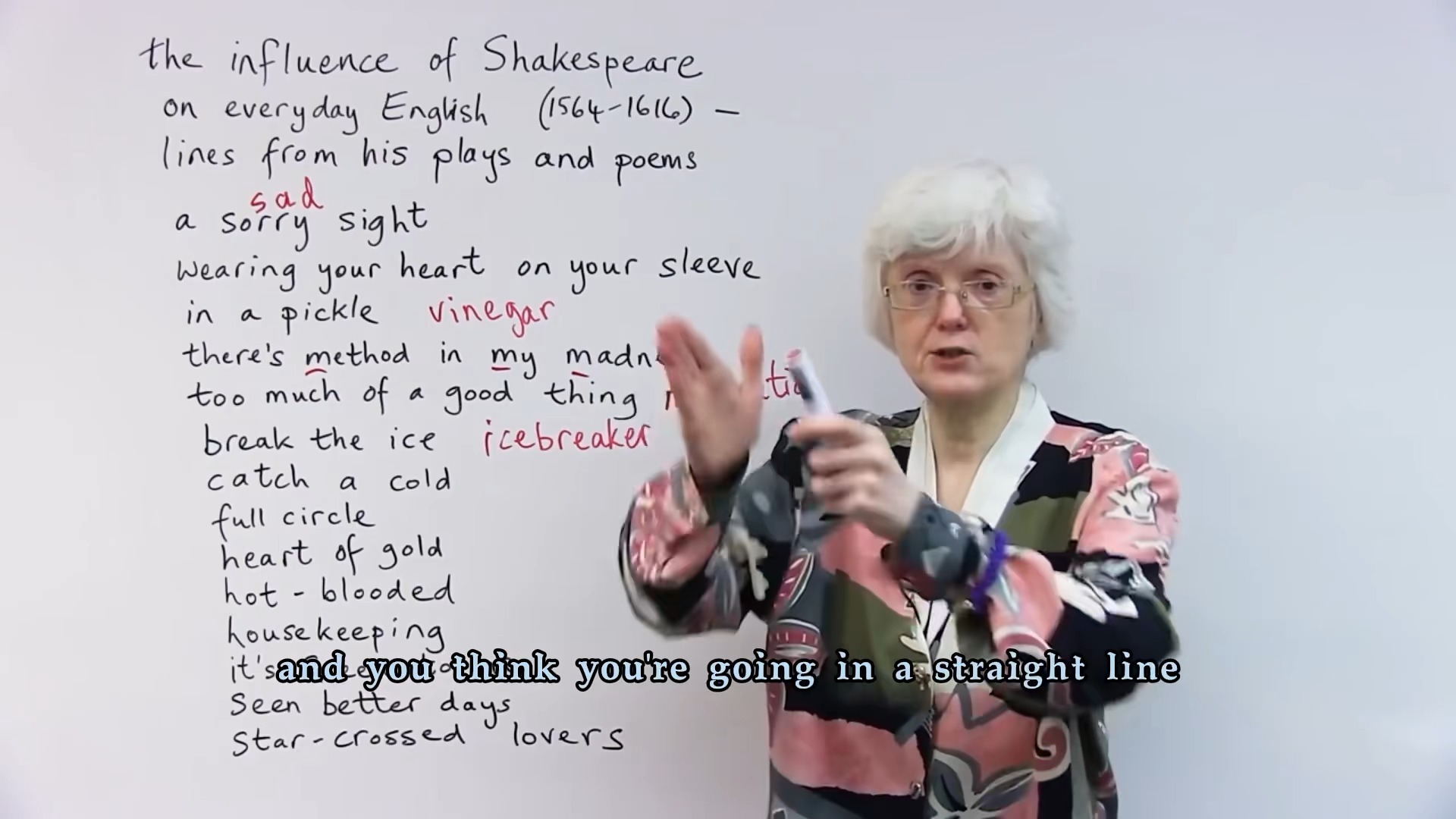
【50集全】25年教龄 伦敦口语 金牌外教 # 适合小白学起~ p12 11. 11. Using metaphors to speak English more fluently (P12)
发布于 2026-07-23 · 时长 13:31字幕摘录
| 时间 | 英文 | 中文 |
|---|---|---|
| 0:00 | Hi. | 顿 |
| 0:01 | I'm Gill from www.engvid.com, and today in this lesson, we're going to look at metaphors, | 我是Gill 从www.engvid.com, 今天在这个课上, 我们要看看比喻, |
| 0:09 | which are a different way of using language, really. | 这是一种使用语言的不同方式,真的。 |
| 0:14 | But these metaphors are used a lot | 但是这些比喻被用了很多 |
| 0:18 | in everyday life. | 在日常生活中, |
| 0:20 | You could also call them idioms. | 你也可以叫他们白痴 |
| 0:23 | They're a little bit like idioms. | 他们有点像偶像 |
| 0:29 | And there are a lot of them. | 亦有众生. |
| 0:31 | But I just want to mention that there are metaphors and similes, | 但我只想说, 有一些比喻和类似, |
| 0:36 | and they're similar in a way, but different. | 它们在某种意义上是相似的,但有所不同。 |
展开字幕全文(211 条)
| 序号 | 英文 | 中文 |
|---|---|---|
| 1 | Hi. | 顿 |
| 2 | I'm Gill from www.engvid.com, and today in this lesson, we're going to look at metaphors, | 我是Gill 从www.engvid.com, 今天在这个课上, 我们要看看比喻, |
| 3 | which are a different way of using language, really. | 这是一种使用语言的不同方式,真的。 |
| 4 | But these metaphors are used a lot | 但是这些比喻被用了很多 |
| 5 | in everyday life. | 在日常生活中, |
| 6 | You could also call them idioms. | 你也可以叫他们白痴 |
| 7 | They're a little bit like idioms. | 他们有点像偶像 |
| 8 | And there are a lot of them. | 亦有众生. |
| 9 | But I just want to mention that there are metaphors and similes, | 但我只想说, 有一些比喻和类似, |
| 10 | and they're similar in a way, but different. | 它们在某种意义上是相似的,但有所不同。 |
| 11 | So, a metaphor says one thing is another thing. | 所以,一个比喻说一件事是另一件事。 |
| 12 | So, for example, in my first sentence here, | 比如,我在这里的第一句 |
| 13 | thanks for helping me. | 谢谢你帮我 |
| 14 | You're an angel. | 你是个天使 |
| 15 | Okay? | 好吗? |
| 16 | An angel is supposed to be a good person who | 天使应该是个好人 |
| 17 | helps people, but you're talking here to an ordinary human being and calling them an angel | 但你在这里跟一个普通人说话 称他们为天使 |
| 18 | because they've helped you. | 因为他们帮助你。 |
| 19 | Okay? | 好吗? |
| 20 | So, you're saying you are an angel. | 你是说你是天使? |
| 21 | So, you equals angel. | 这么说,你等于天使 |
| 22 | So, in a metaphor, it's saying something is or somebody is something else. | 所以,在一个比喻中,它说某事是或者某人是别的东西。 |
| 23 | The other type of style of speaking | 另一种说话风格 |
| 24 | is called a simile, and we'll have another lesson on that, a separate lesson. | 我们再学习一次 单独学习 |
| 25 | And with a simile, | 带着一丝毫 |
| 26 | you don't say A is B. | 你不说A是B。 |
| 27 | You say A is like B. | 你说A就像B |
| 28 | So, with this one, you'd say you are like an angel | 所以,用这个,你会说 你像天使 |
| 29 | or you are as good as an angel. | 否则你就跟天使一样好 |
| 30 | But with the metaphor, you are an angel. | 但用这个比喻,你是一个天使。 |
| 31 | So, that's the | 所以,这是 |
| 32 | difference between metaphors and similes. | 隐喻和比喻的区别 |
| 33 | So, please look at the other lesson about similes | 所以,请看看另一个关于类似物的教训 |
| 34 | to see some examples of that. | 来看看一些例子。 |
| 35 | Okay? | 好吗? |
| 36 | Right, so concentrating on metaphors. | 对,所以专注于比喻。 |
| 37 | Thanks for helping me. | 谢谢你帮我 |
| 38 | You're an angel if someone helps you. | 你是一个天使,如果有人帮助你。 |
| 39 | You could say this to somebody if they | 你可以告诉别人,如果他们 |
| 40 | help you. | 帮你 |
| 41 | Thank you. | 谢谢 |
| 42 | You're an angel. | 你是个天使 |
| 43 | It's a nice compliment, a nice thing to say to somebody | 赞美他人,对别人说点好话 |
| 44 | who's helped you. | 谁帮你。 |
| 45 | Second example, the people in that club are just a bunch of sheep. | 第二个例子是,那个俱乐部里的人只是一群羊. |
| 46 | Okay? | 好吗? |
| 47 | A bunch, that's a sort of casual, informal word. | 一群人, 这是一种随意,非正式的词。 |
| 48 | A bunch, it means a group. | 一帮人,意思是一群人 |
| 49 | A group. | 一组 |
| 50 | A group of people. | 一众生. |
| 51 | You can have a bunch of flowers. | 汝可生一束花来. |
| 52 | That's the normal use for bunch. | 这是正常的用在一堆。 |
| 53 | Bunch of flowers, several flowers held together. | 一大堆花,几朵花被夹在一起 |
| 54 | But this is people who are being called sheep. | 但这就是人们被称作羊的人。 |
| 55 | They're not literally sheep. | 他们不是真正的羊。 |
| 56 | People are not sheep. | 人非绵羊. |
| 57 | Sheep are animals. | 羊为畜. |
| 58 | People are humans. | 众生是人. |
| 59 | But this is saying the people in that club are a bunch of sheep. | 但这是说俱乐部里的人是一群羊 |
| 60 | They're behaving like sheep | 他们的行为就像羊 |
| 61 | because what sheep do, they all stick together. | 因为羊会做什么, 它们都在一起。 |
| 62 | They all stay together, and they all follow each | 他们都在一起,他们都跟着 |
| 63 | other. | 其他费用。 |
| 64 | They all do the same thing. | 他们都这样做。 |
| 65 | So this happens with people sometimes. | 因此,这有时发生在人们身上。 |
| 66 | They don't have their own | 他们没有自己的 |
| 67 | independent ideas. | 独立思想。 |
| 68 | They just copy what everybody else does. | 他们只是复制了其他人的作品。 |
| 69 | So that's the meaning of this one. | 所以,这就是这个的意义。 |
| 70 | The people in that club are just a bunch of sheep. | 那个俱乐部里的人只是一群羊 |
| 71 | Okay. | 摆 |
| 72 | This one is probably more of a positive thing to say to somebody. | 这个可能更是一个积极的事情 对别人说。 |
| 73 | You're such a busy bee. | 你这么忙的蜜蜂。 |
| 74 | It maybe sounds a bit patronizing, perhaps, but if someone is really busy, | 也许听起来有点夸张 但如果有人真的很忙 |
| 75 | you can say they're a busy bee. | 你可以说他们很忙 |
| 76 | And the two bees, it's a sort of poetic thing, again, | 而两只蜜蜂, 这是一种诗意的东西,再次, |
| 77 | but busy bee. | 但繁忙的蜜蜂。 |
| 78 | The thing about bees is the bees that buzz around, they're always busy. | 有关蜜蜂的事情是蜜蜂 蜂鸣,他们总是很忙。 |
| 79 | They're collecting pollen from flowers, and going back to the hive, and they're making honey. | 他们从花里收集花粉,然后回到蜂巢里,并制造蜂蜜. |
| 80 | So they seem to be busy all the time. | 所以他们似乎总是很忙 |
| 81 | So to call a person a busy bee is that they are also | 所以称一个人是忙蜂 就是他们也是 |
| 82 | running around, and doing things, and being very busy, and working a lot, and never stopping. | 到处跑跑跑跑跑跑跑跑跑跑跑跑跑跑跑跑跑跑跑 |
| 83 | Okay. | 摆 |
| 84 | Here's another one. | 这里还有一个。 |
| 85 | London is a melting pot of people and cultures. | 伦敦是人民和文化的熔炉。 |
| 86 | Okay? | 好吗? |
| 87 | So London is a melting pot. | 所以伦敦是个熔炉 |
| 88 | It's not literally a pot with food in it. | 里面不是有食物的锅 |
| 89 | It's a melting pot of people and cultures. | 它是人和文化的熔炉. |
| 90 | The people and cultures aren't being thrown into a pot. | 人民和文化不会被扔进锅里 |
| 91 | London, the city, just contains | 伦敦,城市,只是包含 |
| 92 | a lot of people from different cultures, different countries. | 很多来自不同文化,不同国家的人. |
| 93 | Okay. | 摆 |
| 94 | Here's a good one from if you're... | 这里有一个很好的,如果你... |
| 95 | If you're working in an office or somewhere, | 如果你在办公室或某处工作 |
| 96 | and you have some ideas, and you tell them to your boss. | 你有一些想法, 你告诉他们你的老板。 |
| 97 | I had some good ideas, but my boss shot them down. | 我有一些好主意, 但我的老板击落他们。 |
| 98 | Okay? | 好吗? |
| 99 | So to shoot something is like with a gun. | 所以用枪射击是种感觉 |
| 100 | All these good ideas that you've just produced, | 你刚刚提出的这些好想法 |
| 101 | and your boss doesn't like them. | 你老板不喜欢他们 |
| 102 | Or he doesn't like you, maybe. | 也许他不喜欢你 |
| 103 | But he shoots down all your | 但他射杀你所有的人 |
| 104 | ideas, and they come falling to the floor. | 他们倒在地上。 |
| 105 | Not literally. | 不是从字面上。 |
| 106 | Again, it's not literally true. | 再说一遍,这不是真的 |
| 107 | Not literally true. | 不完全是真实的。 |
| 108 | It's just a picture in your mind, like your boss with a gun | 就像你老板拿着枪一样 |
| 109 | shooting down your ideas. | 击落你的想法。 |
| 110 | So he doesn't like any of your ideas, he just shoots them, | 所以他不喜欢你的任何想法, 他只是射击他们, |
| 111 | destroys them. | 摧毁他们。 |
| 112 | So you had some good ideas, but my boss shot them down. | 你有一些好主意,但我老板击落了他们。 |
| 113 | Okay? | 好吗? |
| 114 | Another one. | 又一个. |
| 115 | My head is so full of problems, it's spinning. | 我的脑袋充满问题,在旋转 |
| 116 | To spin is to go round, and round, | 转动就是转动 转动 |
| 117 | and round, and round like that. | 和圆,像这样的圆。 |
| 118 | To spin. | 为转. |
| 119 | Well, your head can't literally be going round, and | 好吧,你的头不能 字面上是圆,和 |
| 120 | round, and round, and round, and round because it would kill you, probably, if that happened. | 圆的,圆的,圆的,圆的,圆的, 因为它会杀了你,也许,如果那样发生。 |
| 121 | After two or three turns, you'd be dead. | 二三转后即死. |
| 122 | So it can't be true, literally. | 所以这不可能是真的 字面上 |
| 123 | It's just a picture | 这只是一张照片 |
| 124 | in your mind, of your head. | 在你的脑海里,你的脑袋。 |
| 125 | All these problems inside your head, it's making it feel like that. | 你脑子里的所有问题 都让人觉得这样 |
| 126 | Okay? | 好吗? |
| 127 | So it's not literally true, it's just an image, a picture. | 所以这不是真的,它只是一个图像,一个图片。 |
| 128 | Now, here's a slightly different one. | 现在,这里有一个有点不同。 |
| 129 | Her dress has a very loud pattern. | 她的裙子有非常响亮的图案. |
| 130 | Now, if you... | 现在,如果你... |
| 131 | I don't have a pattern on this. | 我没有这个模式 |
| 132 | Oh, this scarf has a slight pattern, | 哦,这围巾有一个轻微的模式, |
| 133 | stripes. | 条纹. |
| 134 | It has stripes and some slightly different colours, but I wouldn't call that a loud | 它有条纹和一些稍有不同的颜色, 但我不会这么大声 |
| 135 | pattern. | 模式。 |
| 136 | If the pattern is loud, it's very strong, lots of different colours and shapes, | 如果图案响亮,非常强烈, 有很多不同的颜色和形状, |
| 137 | something really strong. | 东西真的很强壮。 |
| 138 | So, loud, it's not to do with the sound in this case, | 所以,大声一点,这和本案中的声音无关, |
| 139 | it's to do with how it looks. | 和它的样子有关 |
| 140 | So, loud and soft for music, yes, but for a pattern, a loud pattern. | 所以,对于音乐来说,声音和柔和,是的,但是对于一个图案,一个响亮的图案. |
| 141 | So, next one. | 所以,下一个。 |
| 142 | People are flocking to the pop concert. | 人们纷纷参加流行音乐会 |
| 143 | Now, the metaphor here | 现在,这个比喻 |
| 144 | is this word, flocking, and it goes back to sheep, because the collective word for sheep | 是这个词,羊群, 它回到羊, 因为集体词的羊 |
| 145 | is a flock of sheep. | 是一群绵羊 |
| 146 | So, when you see sheep running across a field, they're all in a bunch, | 所以,当你看到羊 跑过一个田野, 他们都在一堆, |
| 147 | like we said, bunch of sheep, but the proper name for that bunch is a flock. | 就像我们说的,一群羊, 但是这群羊的正确名称是一只羊。 |
| 148 | So, if people | 所以,如果人们 |
| 149 | are flocking to the pop concert, it's like they're sheep again, we're back to the sheep. | 他们又成了绵羊 我们又回到绵羊身边了 |
| 150 | So, it's a little bit metaphorical, if you like. | 所以,它是一个有点隐喻,如果你喜欢。 |
| 151 | They're not just going, people are going to the | 他们不只是去,人们要去 |
| 152 | pop concert, they're flocking in big groups, all going to the same place. | 流行音乐会,他们成群聚,都去同一个地方。 |
| 153 | Okay. | 摆 |
| 154 | Right, now this is about two people who were good friends, but... Oh, at first, but then things | 好吧,现在这是关于两个人谁是好朋友,但... 哦,一开始,但后来的事情 |
| 155 | turned sour. | 变酸了 |
| 156 | Now, usually in the literal world, things that turn sour are things like milk, | 现在,通常在字面上, 事情变成酸是像牛奶, |
| 157 | if you leave milk too long and you taste it. | 如果你留下的牛奶太长,你尝它。 |
| 158 | Oh, horrible. | 糟透了 简直太可怕了 |
| 159 | That sort of cheesy | 这种俗气 |
| 160 | taste, not very nice at all. | 味道,一点也不好 |
| 161 | And this has the same idea, really. | 这想法也一样,真的。 |
| 162 | Two people who are good friends | 两个人是好朋友 |
| 163 | to begin with, at first, but then things turn sour. | 首先,一开始, 但事情变酸。 |
| 164 | It goes wrong, something goes wrong, | 出错,出错 |
| 165 | they're not friends anymore. | 他们不再是朋友了 |
| 166 | Maybe they had an argument, they disagreed. | 也许他们吵架了 他们不同意 |
| 167 | Things turn sour. | 事情变酸了。 |
| 168 | Okay. | 摆 |
| 169 | And let's end with quite a famous quotation from Shakespeare. | 最后我们用莎士比亚的著名引言结束。 |
| 170 | I like quoting from Shakespeare, | 我喜欢引用莎士比亚的话 |
| 171 | he's one of my favourite writers. | 他是我最喜欢的作家之一。 |
| 172 | And what he said in one of his plays, | 他在其中的一部戏里说的话 |
| 173 | he said, all the world's a stage. | 他说世界都是舞台 |
| 174 | He's talking about the theatre, because he wrote plays, | 他谈论的剧院, 因为他写戏剧, |
| 175 | he was a man of the theatre. | 他是个戏剧界的人 |
| 176 | So, he's saying all the world is a stage, wherever you go, | 所以,他说所有的世界 是一个舞台,无论你走到哪里, |
| 177 | not just in the theatre, but everywhere, because people are acting in some way. | 不仅在剧院,而且到处都是, 因为人们在以某种方式行事。 |
| 178 | And all the men and women, merely players, merely, that means just, just players. | 所有的男人和女人, 仅仅是玩家,仅仅, 这意味着公正,公正的玩家。 |
| 179 | Just. | 刚刚。 |
| 180 | And players is another word for actors. | 而玩家是演员的另一个词. |
| 181 | Okay. | 摆 |
| 182 | They're just actors, people. | 他们只是演员,人。 |
| 183 | He's saying people just act their part, even if they're not in the | 他说人们只是表现自己的角色, 即使他们不在 |
| 184 | theatre, they're playing a part in some way. | 剧场,他们以某种方式扮演角色。 |
| 185 | That's what... Well, it's not Shakespeare saying it, | 这就是... 不是莎士比亚说的 |
| 186 | it's one of his characters in one of his plays is saying it, so it's a bit different. | 他的其中一部剧里的一个角色就是说,所以有点不同. |
| 187 | So it's just one person's opinion in the play. | 所以剧中只有一人的意见. |
| 188 | All the world's a stage, and all the men and women, | 所有的世界都是舞台, 所有的男人和女人, |
| 189 | merely players, they have their exits, they go off, and their entrances, they come in, | 只是玩家,他们有他们的出口, 他们去,他们的入口,他们进来, |
| 190 | they come and go, and they come and go, and they do what they do, they say what they say, | 他们来来去去, 他们来去去, 他们做他们做的事, 他们说什么, |
| 191 | and this character thinks they're acting, just like in a theatre. | 这个角色认为他们在演戏 就像在剧院里 |
| 192 | So, this is what's | 所以,这就是 |
| 193 | called an extended metaphor. | 称为延伸的比喻。 |
| 194 | Okay? | 好吗? |
| 195 | Because we've got a metaphor, and adding... | 因为我们有一个比喻,并添加... |
| 196 | It's adding more and more ideas to it. | 增增众智. |
| 197 | All the world's | 整个世界 |
| 198 | a stage, that's a simple metaphor, but then saying more in the same way, all the men and women | 一个舞台,这是一个简单的比喻, 但是,用同样的方式,所有的男人和女人 |
| 199 | are actors, they come in, they go out, they come in. | 他们是演员,他们进来, 他们出去,他们进来。 |
| 200 | So, lots of different things that fit into | 所以,很多不同的东西 适合 |
| 201 | that metaphor. | 那个比喻 |
| 202 | Okay, so I hope I've helped you to understand metaphors, whether English is your | 好吧,所以我希望我已经帮助你 理解比喻, 是否英语是你的 |
| 203 | first language, and you're studying English literature at school, or whether you're studying | 第一语言,你在学校学习英语文学, 或者你是否学习 |
| 204 | English as a second language, or as a foreign language. | 英语作为第二语言,或作为外语. |
| 205 | I hope this has been helpful, | 我希望这有帮助, |
| 206 | and given you some more vocabulary as well. | 还给你一些词汇 |
| 207 | And do look for the other lesson, which is about | 并寻找另一个教训, 这是关于 |
| 208 | similes, and with this one, the metaphors, we have a quiz for you on the website www.engvid.com. | similes),加上这一个比喻,我们在网站www.engvid.com上为您做了一个测试. |
| 209 | Please go and give it a try, and see you again soon. | 请去试一试,不久再见. |
| 210 | Okay? | 好吗? |
| 211 | Bye. | 再见。 |
该视频共有字幕 212 条。解锁更多字幕为会员功能,请移动到 价格
P13 · 【50集全】25年教龄 伦敦口语 金牌外教 # 适合小白学起~ p13 12. 12. Using SIMILES to improve your everyday English (P13)
【50集全】25年教龄 伦敦口语 金牌外教 # 适合小白学起~ p13 12. 12. Using SIMILES to improve your everyday English (P13)
发布于 2026-07-23 · 时长 17:26字幕摘录
| 时间 | 英文 | 中文 |
|---|---|---|
| 0:02 | Hi. | 顿 |
| 0:03 | 我是Gill 在engVid, 而我们今天的教训 是关于similes。 | |
| 0:10 | And just to | 并且只是去 |
| 0:11 | explain what a simile is, it's when you compare two different things. | 解释一下 硅米是什么 当你比较两个不同的事物时 |
| 0:17 | Okay? | 好吗? |
| 0:18 | Now, there's another | 现在,还有一个 |
| 0:19 | lesson that we have about metaphors, and at the beginning of that one, we explained the | 我们学到的关于比喻的教训, 在开头,我们解释了 |
| 0:27 | difference between metaphors and similes, so I'm going to do the same again with this | 隐喻和比喻的区别, 所以我会再次这样做 |
| 0:34 | lesson. | 教训 |
| 0:34 | So, the simile is when you say A is like B. | 所以,西米利是当你说A是像B。 |
展开字幕全文(282 条)
| 序号 | 英文 | 中文 |
|---|---|---|
| 1 | Hi. | 顿 |
| 2 | 我是Gill 在engVid, 而我们今天的教训 是关于similes。 | |
| 3 | And just to | 并且只是去 |
| 4 | explain what a simile is, it's when you compare two different things. | 解释一下 硅米是什么 当你比较两个不同的事物时 |
| 5 | Okay? | 好吗? |
| 6 | Now, there's another | 现在,还有一个 |
| 7 | lesson that we have about metaphors, and at the beginning of that one, we explained the | 我们学到的关于比喻的教训, 在开头,我们解释了 |
| 8 | difference between metaphors and similes, so I'm going to do the same again with this | 隐喻和比喻的区别, 所以我会再次这样做 |
| 9 | lesson. | 教训 |
| 10 | So, the simile is when you say A is like B. | 所以,西米利是当你说A是像B。 |
| 11 | Okay? | 好吗? |
| 12 | Or A is as big as B, or as small | 或者A和B一样大 或者小 |
| 13 | as B. | 页:1 |
| 14 | So it's comparing, using like or as. | 所以,它是比较, 使用类似或作为。 |
| 15 | Whereas the metaphor is when you say A is | 而比喻是当你说A是 |
| 16 | B类. | |
| 17 | If you say he is a pig, it's not literally true, but he behaves like a pig, but he is | 如果你说他是猪,那不是真的 但他的行为就像猪,但他是 |
| 18 | a pig is a metaphor. | 猪是个比喻 |
| 19 | If you say he is like a pig, that's a simile because you're using | 如果你说他像猪,那就叫西米勒 因为你在用 |
| 20 | the word like and comparing him with a pig. | 和猪比起来 |
| 21 | Okay? | 好吗? |
| 22 | So, let's just have a look at a few | 所以,让我们看看几个 |
| 23 | examples. | 实例。 |
| 24 | Also, because similes use either like or as, we're going to look at some examples | 而且,因为类似物使用 喜欢或作为, 我们将看看一些例子 |
| 25 | using like to begin with, and then we'll move on to look at a few as examples. | 使用类似开始, 然后我们再看几个作为例子。 |
| 26 | So these | 所以这些 |
| 27 | are all examples that you would hear in everyday life that people tend to use, so they're quite | 在日常生活中你所听到的 所有的例子 人们往往使用,所以他们相当 |
| 28 | familiar ones. | 认识的 |
| 29 | Okay, so first one, she eats like a pig, which isn't a very nice thing to say about someone, | 好吧,所以第一个,她吃 像猪,这不是一个很好的事情说一个人, |
| 30 | but if she's quite... Makes a mess and a lot of noise, you know what a pig eats like. | 但如果她相当... 弄得一团糟和吵闹 你知道猪吃什么的 |
| 31 | | |
| 32 | eats like a pig, so it's not a very nice thing to say about someone, but it's comparing | 吃起来像头猪,所以说一个人不是很好,而是比较 |
| 33 | she, a woman or a girl, comparing her to the way a pig eats. | 她,一个女人或女孩, 比较她与猪吃的方式。 |
| 34 | She eats like a pig, so that's | 她吃起来像猪,所以... |
| 35 | a simile. | 一分长 |
| 36 | So, a similar example to that is he drinks like a fish. | 所以,一个类似的例子就是 他喝得像条鱼。 |
| 37 | This usually means | 这通常意味着 |
| 38 | alcohol, not just water, but it's usually alcohol, beer, wine, whiskey, anything. | 酒精 不只是水 通常是酒精 啤酒 酒 威士忌 任何东西 |
| 39 | He | |
| 40 | drinks like a fish. | 喝得像鱼一样 |
| 41 | Again, it's not a nice thing to say about somebody, but it can sometimes | 再说一次,说某人不是件好事,但有时候可以 |
| 42 | be true, so. | 事实如此 |
| 43 | Of course, fish... | 当然,鱼... |
| 44 | I don't know if fish actually drink water, but because | 我不知道鱼是否真的喝水,但因为... |
| 45 | they live underwater, they're immersed in water. | 他们生活在水下,被水浸没 |
| 46 | Water is all around them, so that's | 水在他们周围,所以... |
| 47 | the idea. | 这个想法。 |
| 48 | This man who drinks is surrounded by liquid. | 这个喝酒的人被液体包围了 |
| 49 | It's that sort of idea. | 这是那种想法。 |
| 50 | He drinks | 他喝东西 |
| 51 | like a fish. | 像一条鱼。 |
| 52 | Okay, next example is using... We've got animals, and fish, and another animal now. | 好吧,下一个例子是使用... 我们有动物,还有鱼 还有另一种动物 |
| 53 | I've been | 我去过 |
| 54 | working like a dog, and that means working really hard. | 像狗一样工作, 这意味着工作真的很努力。 |
| 55 | Okay? | 好吗? |
| 56 | Working like a dog. | 像狗一样工作 |
| 57 | You | 你们 |
| 58 | may know a Beatles song called A Hard Day's Night, and that is part of the lyrics of that | 也许知道一首披头士的歌叫"苦日子之夜" 而这是歌词的一部分 |
| 59 | song. | 歌声。 |
| 60 | Okay. | 摆 |
| 61 | I've been working like a dog, which is actually true at the moment, but | 我一直像狗一样工作, 这其实是真实的,现在,但 |
| 62 | I've been quite enjoying it, so that's all right. | 我一直很享受,所以没关系。 |
| 63 | Okay. | 摆 |
| 64 | Maybe if you're talking about two children, a brother and a sister, for example, who are | 也许,如果你说的是两个孩子, 一个兄弟和一个姐妹,例如,谁是 |
| 65 | always fighting. | 总是战斗。 |
| 66 | This often happens, I think. | 我想这经常发生 |
| 67 | You can say they are fighting like cat and | 你可以说他们像猫一样打架 |
| 68 | dog, because cats and dogs don't always... | 因为猫和狗并不总是... |
| 69 | They're not always very friendly with each | 他们对每个都不太友好 |
| 70 | other. | 其他费用。 |
| 71 | So, traditionally, cats and dogs perhaps fight. | 所以,传统上,猫和狗也许会战斗。 |
| 72 | So, they are fighting like cat and | 所以他们像猫一样打架 |
| 73 | dog. | 狗养的 |
| 74 | Okay. | 摆 |
| 75 | So, all of these, it's like comparing. | 所以,所有这些,就像比较。 |
| 76 | Okay? | 好吗? |
| 77 | So, two children, human children compared | 所以,两个孩子,人类的孩子比较 |
| 78 | to a cat and a dog because they're fighting. | 对一只猫和一只狗,因为他们在战斗。 |
| 79 | Okay? | 好吗? |
| 80 | Coming back to a little bit like eating, drinking. | 回到一点点 像吃,喝。 |
| 81 | Smoking is another thing that people do, which | 吸烟是别人的另外一件事 |
| 82 | isn't a very healthy thing to do. | 这不是一个非常健康的事情做。 |
| 83 | So, if you say to someone, you smoke like a chimney. | 所以,如果你对某人说,你抽烟像烟囱。 |
| 84 | Cigarettes, cigars, a pipe, maybe, any tobacco. | 香烟,雪茄,烟管,也许,任何烟草。 |
| 85 | And a chimney is what you get on a house. | 烟囱是房子上的东西 |
| 86 | The smoke comes out of the chimney. | 烟从烟囱里冒出来. |
| 87 | There's the roof of the house. | 有屋顶. |
| 88 | The smoke comes out | 烟雾出来了 |
| 89 | of the chimney if you have a fire in the house. | 烟囱,如果你有火 在房子里。 |
| 90 | So, if you say to your friend, you smoke like | 所以,如果你对你的朋友说, 你抽烟喜欢 |
| 91 | a chimney, it's not a very nice thing to say, but maybe you will persuade them to stop smoking | 烟囱,这不是一个很好的说法, 但也许你会说服他们停止吸烟。 |
| 92 | because it's very bad for your health. | 因为这对你的健康有害 |
| 93 | Okay? | 好吗? |
| 94 | So, that's a very common expression, anyway. | 所以,这是一个非常常见的表达,反正。 |
| 95 | And then finally in this section, you can say if you're waiting for something and you're | 最后在这个部分,你可以说 如果你等待的东西,你正在 |
| 96 | waiting a really long time, you can say it's like watching paint dry. | 等待很长一段时间,你可以说这就像看漆干。 |
| 97 | If you've been painting | 如果你一直在画画 |
| 98 | a wall or a door with a paint and a brush, when you've painted something, it takes a | 墙壁或门,有油漆和刷子, 当你画的东西,它需要一个 |
| 99 | few hours for the paint to dry. | 几小时的油漆干燥。 |
| 100 | So, if you're waiting for something to happen and you're | 所以,如果你在等待 事情发生,你正在 |
| 101 | waiting and you'd rather like it to happen quite quickly, but you've been waiting 10 | 等着,你更希望它能很快发生 但你已经等了10年了 |
| 102 | minutes and it's still not happening, you can say, oh, it's like watching paint dry. | 几分钟后,它仍然没有发生, 你可以说, 哦,这就像看着油漆干。 |
| 103 | You know, if you stand there watching while the paint dries for two or three hours, that's | 如果你站在那看着油漆干涸两三个小时,那就是 |
| 104 | a very frustrating thing to do. | 非常令人沮丧的事情 |
| 105 | You don't normally have to do that. | 你通常不用这么做 |
| 106 | If you paint something, | 如果你画的东西, |
| 107 | you just walk away and get on with something else. | 你只是走开 并得到了其他的东西。 |
| 108 | But this is quite a clever expression | 但这个表情很聪明 |
| 109 | for something that's making you feel impatient. | 让你觉得不耐烦 |
| 110 | Okay. | 摆 |
| 111 | Right, so that's the like ones, and | 癸┮碞钩êㄇ |
| 112 | we'll now move on to look at the as examples. | 现在,我们将把例子看成是例子。 |
| 113 | Okay, so moving on to the second part of similes, we're looking at the ones that use as. | 好吧,所以继续到 第二部分的similes, 我们正在看着那些使用作为。 |
| 114 | As, | 因为, |
| 115 | something, as, something. | 一些东西,如,一些东西。 |
| 116 | Okay. | 摆 |
| 117 | Which is, again, still comparing two different things. | 这还是比较两件事 |
| 118 | So, first example, she's as timid as a mouse. | 所以,第一个例子,她像一只老鼠一样胆小。 |
| 119 | So, a little mouse that's very timid, meaning | 一只很胆小的小老鼠 |
| 120 | frightened, shy. | 吓坏了,害羞。 |
| 121 | So, if a person is very shy and they don't speak very much or they're | 所以,如果一个人非常害羞, 他们不说话很多或者他们是 |
| 122 | very quiet, she's as timid as a mouse. | 非常安静,她像老鼠一样胆小 |
| 123 | So, as timid as a mouse. | 所以,胆小如鼠. |
| 124 | So, we use as twice. | 所以,我们使用两次。 |
| 125 | Okay? | 好吗? |
| 126 | And then if I take my glasses off, I can't see very well, so I can say I'm as blind | 如果我把眼镜摘了,我看不清, 所以我可以说我是瞎子 |
| 127 | as a bat without my glasses. | 作为蝙蝠 没有我的眼镜。 |
| 128 | Okay? | 好吗? |
| 129 | Oh, you're still there. | 哦,你还在那里。 |
| 130 | Good. | 不错 |
| 131 | Okay. | 摆 |
| 132 | So, as, blind, as, | 所以,作为,盲目,作为, |
| 133 | a bat. | 一个蝙蝠。 |
| 134 | Some of the... Because it's two Bs, it sort of makes a pattern a bit like in poetry. | 有些... 因为它是两个B, 有点像诗歌中的图案。 |
| 135 | As blind as a bat. | 犹如蝙蝠盲. |
| 136 | If you know... Do you know what a bat is? | 如果你知道的话... 你知道蝙蝠是什么吗? |
| 137 | A sort of... | 有点... |
| 138 | It's like a mouse | 就像老鼠一样 |
| 139 | with wings, and you know Dracula. | 有翅膀,你知道德古拉。 |
| 140 | Dracula is supposed to be... To turn into a bat, and | 德古拉应该是... 变成蝙蝠 |
| 141 | then from a bat back to being Dracula again. | 然后从蝙蝠回到德古拉 |
| 142 | So, that's a bat. | 所以,这是一个蝙蝠。 |
| 143 | And they... | 他们... |
| 144 | Apparently, | 显然, |
| 145 | they can't see very well. | 他们看不清 |
| 146 | They find their way via radar or something. | 他们通过雷达什么的找到路 |
| 147 | So, I'm as blind | 所以,我像瞎子一样 |
| 148 | as a bat without my glasses or spectacles. | 作为蝙蝠 没有我的眼镜或眼镜。 |
| 149 | Okay. | 摆 |
| 150 | So, this sentence, I hope you're not going to say this about me, because this says that | 所以,这个句子,我希望你不会说 关于我,因为这个说 |
| 151 | explanation is as clear as mud. | 解释和泥土一样清晰 |
| 152 | Okay? | 好吗? |
| 153 | So, we've got as twice again. | 因此,我们得到了两倍的再次。 |
| 154 | The explanation, | 解释, |
| 155 | I've just been explaining something. | 我只是在解释一件事 |
| 156 | It... Clear is good. | 这... |
| 157 | Oh, yeah. | 对 |
| 158 | Clear explanation. | 明确解释. |
| 159 | Very clear. | 非常明确。 |
| 160 | We understand. | 我们理解 |
| 161 | But what about mud? | 那泥浆呢? |
| 162 | Mud is... | 泥头... |
| 163 | It's like soil with a lot of | 这就像土壤与很多 |
| 164 | water in it. | 里面有水 里面还有水 |
| 165 | So, it's very thick, and brown, and sticky, and you can't see through it. | 所以,它非常厚,褐色,粘着,你看不到它。 |
| 166 | It's not like looking through a window. | 亦不似从窗看. |
| 167 | Mud is... | 泥头... |
| 168 | It's not clear. | 未详. |
| 169 | Mud is the opposite | 泥浆是相反的 |
| 170 | of clear. | 明确。 |
| 171 | So, this is a little sort of joke, really, or what you'd call a paradox. | 所以,这是个小笑话,真的, 或者你所谓的悖论。 |
| 172 | A paradox, to say it's as clear as mud, which means it's not clear at all. | 一种悖论,说它像泥一样清晰,表示它完全不清晰. |
| 173 | Okay? | 好吗? |
| 174 | So, I hope | 所以,我希望,我们 |
| 175 | my explanations... | 我的解释... |
| 176 | I hope you're not saying this about me and the way I'm explaining things. | 我希望你不是说这个 关于我和我解释的方式。 |
| 177 | Okay. | 摆 |
| 178 | If a friend of yours has a shock, something shocks them, something bad happens, and their | 如果你的一个朋友有震撼, 有些东西震撼他们, 一些不好的事情发生, |
| 179 | face, instead of having lovely pink cheeks, if their face goes completely white... Of | 脸,而不是可爱的粉红脸颊, 如果他们的脸完全白了... 员额 |
| 180 | course, it depends on the colour of their skin, but if they're like me and they have | 当然,这取决于他们的肤色 但如果他们像我,他们有 |
| 181 | white skin, and they've got no pink in their cheeks, and they look totally white, and a | 白皮肤,他们的脸颊没有粉红色, 他们看起来完全白色, |
| 182 | look of shock on their face, you can say, you've gone as white as a sheet. | 看他们脸上的惊吓,你可以说, 你已经白得像一张床单。 |
| 183 | So, there's | 所以,这是 |
| 184 | as again. | 再来一次 |
| 185 | White, obviously, colour white. | 白色,显然,颜色白色。 |
| 186 | A sheet, like on a bed, the white sheet you | 一张床单,就像一张床上的白毯 |
| 187 | put on the bed is a sheet, a bed sheet, a white... And they are often white. | 放在床上是一张床单,一张床单,一张白色的... 它们常常是白色的。 |
| 188 | So, you've | 所以,你已经 |
| 189 | gone, meaning your face has become as white as a sheet. | 不见了,意味着你的脸变白了 |
| 190 | So, oh, what's happened? | 发生什么事了? |
| 191 | What's... | 这... |
| 192 | What's wrong? | 有什么不对吗? |
| 193 | You've gone as white as a sheet. | 你变白了 |
| 194 | What's the matter? | 这是怎么回事? |
| 195 | So, that's the idea with | 所以,这是想法 |
| 196 | that one. | 那个 |
| 197 | Okay, then finally in this section, children are often not very well-behaved, | 好吧,最后在本节, 儿童往往不 很好的行为, |
| 198 | but in this example, they are very well-behaved because the children have been as good as | 但在这个例子中,他们表现得非常好,因为孩子们表现得就像 |
| 199 | gold. | 黄金 |
| 200 | So, again, we've got this, the same letter, and as. | 所以,再次,我们得到了这个, 同一封信,和。 |
| 201 | So, we had as blind as a bat, | 所以,我们像蝙蝠一样盲目 |
| 202 | and now we've got as good as gold with the same letter repeated, just a nice little pattern. | 现在我们得到了像金子一样好 同样的字母重复, 只是一个漂亮的小图案。 |
| 203 | I suppose gold is good. | 我想黄金是好的。 |
| 204 | It's quite valuable. | 这是相当宝贵的。 |
| 205 | It looks nice, shiny, clean. | 看起来不错,闪亮,干净。 |
| 206 | So, I suppose | 这么说吧 |
| 207 | this is why this saying has come about. | 这就是为什么这个说法的出现。 |
| 208 | The children have been as good as gold. | 子孙如金. |
| 209 | They've | 他们已经 |
| 210 | really been good. | 真的很厉害 |
| 211 | They've behaved well. | 他们表现得很好 |
| 212 | There's been no trouble at all. | 根本就没有麻烦 |
| 213 | Okay, so that's the end of this section, and there's just one more little section to come. | 好吧,所以这是这一节的结尾, 只有一个小节来。 |
| 214 | Okay, so let's continue with the final section on similes, and these are a couple of poetic | 好吧,让我们继续 最后一节关于similes, 这是几首诗 |
| 215 | examples, kind of like poetry, because similes, as well as metaphors, often appear in poetry. | 例子,有点像诗歌,因为同义词,以及比喻经常出现在诗歌中. |
| 216 | Right? | 对吧? |
| 217 | So, two poetic examples. | 所以,两个诗人的例子。 |
| 218 | So, this one, we've got the word like. | 所以,这一个,我们已经得到了这样的词。 |
| 219 | My love is like a red, red rose. | 我的爱就像红玫瑰 |
| 220 | Okay? | 好吗? |
| 221 | And that's in quite a famous poem by a Scottish | 这首诗是苏格兰人写的 |
| 222 | poet called Robert Burns, and it's also been set to music, so people sing it as a song | 诗人叫罗伯特・伯恩斯, 并且它也被设定为音乐, 所以人们唱它作为一首歌 |
| 223 | as well. | 临Τ |
| 224 | So, and again, with poetry, you often get the same letters repeated because it makes | 所以,再一次,用诗歌, 你经常得到同样的字母重复,因为它使 |
| 225 | a nice pattern in the sound. | 声音中的好图案 |
| 226 | So, my love is like a red, red rose. | 我的爱就像红玫瑰 |
| 227 | So, the simile is comparing | 所以,西米利比较 |
| 228 | a woman to a red rose, because the red rose is beautiful, and so is the woman. | 一个女人对一个红色的玫瑰, 因为红色的玫瑰是美丽的, 女人也是。 |
| 229 | Okay? | 好吗? |
| 230 | Right, and then our final example is called... | 对,然后我们最后的例子叫做... |
| 231 | It's a nursery rhyme, something that you sing | 这是婴儿韵律,你唱的 |
| 232 | to children. | 给孩子们 |
| 233 | Okay? | 好吗? |
| 234 | So, the nursery is the place where, in a big house, you'd have a | 所以,托儿所是一个地方,在一个大的房子, 你会有一个 |
| 235 | room called a nursery where you put the children, and look, they sort of grow up there, and | 房间叫托儿所 你把孩子们放在那 看,他们在那里长大 |
| 236 | they might even have a nurse in the nursery, a nanny who looks after them if it's a rich | 他们甚至可能有一个护士 在托儿所,一个保姆 谁照顾他们,如果这是一个富人 |
| 237 | family. | 家庭 家庭 |
| 238 | Okay, so this one, I'm going to sing this. | 好吧,这个,我要唱这个。 |
| 239 | Can you bear it? | 你能忍受吗? |
| 240 | Okay, here it goes. | 好了,开始了。 |
| 241 | Oh, twinkle, let me explain first. | 哦,闪闪发光,让我先解释一下。 |
| 242 | When a star twinkles, it's when you look at a star | 星星闪闪发光的时候,就是看着星星的时候 |
| 243 | and the light is going like this. | 灯光是这样照的 |
| 244 | You can see it when you look up in the sky at night, | 当你在夜里仰望天空时,你可以看到它, |
| 245 | a sort of little flashing effect. | 有点闪烁效应 |
| 246 | Twinkle. | 闪闪发光 |
| 247 | You can also say someone has a twinkle in their eye | 你也可以说有人眼睛闪闪发光 |
| 248 | if they're looking sort of amused about something. | 如果他们看起来有点 喜欢的东西。 |
| 249 | So, I'll give the words first. | 所以,我先给词。 |
| 250 | Twinkle, twinkle, little star. | 闪闪发光 小星星 |
| 251 | So, you're talking to a star. | 所以,你在跟一个明星说话。 |
| 252 | How I wonder what you are. | 我真想知道你是谁 |
| 253 | Up above the world so high, like a diamond in the sky. | 上天上天这么高 就像天上的钻石 |
| 254 | A diamond is a precious stone | 钻石是宝石 |
| 255 | that you have in a ring, often an engagement ring, a big white precious stone. | 你有一个戒指, 常常是订婚戒指, 一个白色的宝石。 |
| 256 | Okay, so | 好吧,这样吧 |
| 257 | a diamond twinkles, and so does the star going like this. | 一颗钻石闪闪发光的星星也像这样 |
| 258 | It catches the light. | 它抓住灯光。 |
| 259 | Okay? | 好吗? |
| 260 | So, I don't know if you've heard this song before, but here we go. | 所以,我不知道你有没有听过这首歌, 但我们开始吧。 |
| 261 | Twinkle, twinkle, | 闪闪发光,闪闪发光 |
| 262 | little star. | 琍 |
| 263 | How I wonder what you are. | 我真想知道你是谁 |
| 264 | Up above the world so high, like a diamond in | 上面的世界是如此之高, 像一颗钻石英寸 |
| 265 | {\fn华文楷体\fs16\1cHE0E0E0}天空 | |
| 266 | Twinkle, twinkle, little star. | 闪闪发光 小星星 |
| 267 | How I wonder what you are. | 我真想知道你是谁 |
| 268 | Okay, so that's how | 好吧,所以这样 |
| 269 | it goes. | 它会去。 |
| 270 | You might want to play this again and join in with me. | 你也许想再玩一次 和我一起玩 |
| 271 | Okay? | 好吗? |
| 272 | Drown my voice. | 溺我声. |
| 273 | Okay, so that's some examples of similes. | 好吧,这就是一些类似的例子。 |
| 274 | I hope you found that helpful. | 我希望你觉得有帮助。 |
| 275 | Please visit | 请访问 |
| 276 | 网站www.engvid.com有关于这一主题的测验。 | |
| 277 | Please also, if you've | 请也,如果你已经 |
| 278 | enjoyed this lesson, please subscribe to my channel on YouTube. | 请订阅我在YouTube上的频道。 |
| 279 | And that's it for now. | 且道现在如何. |
| 280 | Hope to see you again next time. | 希望下次能再见到你 |
| 281 | Okay. | 摆 |
| 282 | Bye. | 再见。 |
该视频共有字幕 282 条。解锁更多字幕为会员功能,请移动到 价格
P14 · 【50集全】25年教龄 伦敦口语 金牌外教 # 适合小白学起~ p14 13. 13. 20160304Basic_English_–_How_and_when_to_use_LOOK,_SEE,_and_WATCH (P14)
【50集全】25年教龄 伦敦口语 金牌外教 # 适合小白学起~ p14 13. 13. 20160304Basic_English_–_How_and_when_to_use_LOOK,_SEE,_and_WATCH (P14)
发布于 2026-07-23 · 时长 8:06字幕摘录
| 时间 | 英文 | 中文 |
|---|---|---|
| 0:02 | Hi. | 顿 |
| 0:03 | I'm Gill at engVid, and today we're going to be looking at the verb... Well, three verbs | 我是Gill在EngVid 今天我们要看动词... 三个动词 |
| 0:10 | to look, to see, and to watch, which all involve using your eyes, but they are used in different | 看,看,看,看, 这都涉及到使用你的眼睛, |
| 0:22 | ways and different contexts. | 方式和不同的背景。 |
| 0:26 | So it's quite complicated, really, but we're going to look | 所以,这是相当复杂的,真的, 但我们要去寻找 |
| 0:31 | at some examples, and I'll try to explain why you choose look in certain cases, watch | 举个例子,我会试着解释你为什么选择 在某些情况下,看 |
| 0:40 | in other cases, and see in other cases. | 在其他情况下,并查看在其他情况下。 |
| 0:44 | Sometimes there's a choice, but both or all three would | 有时候有选择,但两者或所有三个会 |
| 0:48 | work. | 工作时 |
| 0:48 | Other times it has to be one particular one for it to sound right in English. | 换句话说,用英语说话必须是一个特别的过程。 |
展开字幕全文(122 条)
| 序号 | 英文 | 中文 |
|---|---|---|
| 1 | Hi. | 顿 |
| 2 | I'm Gill at engVid, and today we're going to be looking at the verb... Well, three verbs | 我是Gill在EngVid 今天我们要看动词... 三个动词 |
| 3 | to look, to see, and to watch, which all involve using your eyes, but they are used in different | 看,看,看,看, 这都涉及到使用你的眼睛, |
| 4 | ways and different contexts. | 方式和不同的背景。 |
| 5 | So it's quite complicated, really, but we're going to look | 所以,这是相当复杂的,真的, 但我们要去寻找 |
| 6 | at some examples, and I'll try to explain why you choose look in certain cases, watch | 举个例子,我会试着解释你为什么选择 在某些情况下,看 |
| 7 | in other cases, and see in other cases. | 在其他情况下,并查看在其他情况下。 |
| 8 | Sometimes there's a choice, but both or all three would | 有时候有选择,但两者或所有三个会 |
| 9 | work. | 工作时 |
| 10 | Other times it has to be one particular one for it to sound right in English. | 换句话说,用英语说话必须是一个特别的过程。 |
| 11 | Okay. | 摆 |
| 12 | So, let's have a look at look to begin with. | 所以,让我们先看看。 |
| 13 | Look is quite an active verb because to look | 看上去很活跃的动词 因为看 |
| 14 | you have to deliberately decide to use your eyes and move... Move your head around and | 你不得不刻意决定用你的眼睛移动... 把你的头绕过去 |
| 15 | look to see, look to see what's there. | 看看,看看那里有什么 |
| 16 | So, we'll do see in a minute, but you're looking | 所以,我们会看到在一分钟, 但你正在寻找 |
| 17 | in a deliberate, active way because you want to... Maybe you want to find something, so | 深思熟虑 积极 因为你想... 也许你想找点什么,所以 |
| 18 | if you're looking for something, if you start to use prepositions with it. | 如果你在寻找什么, 如果你开始使用预设。 |
| 19 | I'm looking for | 我在寻找 |
| 20 | my book, for example. | 比如我的书 |
| 21 | Where is my book? | 我的书呢? |
| 22 | I'm looking for it. | 我在寻找它。 |
| 23 | I can't see it at the moment, | 目前我看不见 |
| 24 | I'm looking for it. | 我在寻找它。 |
| 25 | Or you can be looking at something. | 或者你可以看的东西。 |
| 26 | If it's there and you're seeing it, | 如果它在那里 你看见它了 |
| 27 | a picture on the wall, looking at the picture, and it's a deliberate looking at the details, | 墙上的一张照片,看照片, 这是故意 查看细节, |
| 28 | taking in the colours, the shapes, everything in the picture, so it's quite an active process. | 以颜色,形状,画面中的一切, 所以这是一个相当活跃的过程。 |
| 29 | Okay. | 摆 |
| 30 | With watch, it's similar because it's quite an active thing. | 与表相似,因为它相当活跃. |
| 31 | Again, you're watching | 再说一遍,你在看 |
| 32 | something. | 东西。 |
| 33 | But with watch, it's often used when you're watching things which might be moving, | 但用手表,它经常被使用 当你看的东西 可能是移动, |
| 34 | either on a film or on television, a sports match, either you're there at the sports field | 要么在电影上 要么在电视上 一场体育比赛 要么在体育场上 |
| 35 | or you're watching sport on television. | 或者你在电视上看运动 |
| 36 | Or people, if you're sitting outside a cafe | 或人,如果你坐在咖啡馆外面 |
| 37 | having a coffee and you're watching people going by, or you're watching some animals in the zoo, | 喝咖啡,你看着别人走 或者看着动物园里的动物 |
| 38 | what they're doing in their cage, it tends to be with things that are moving. | 他们正在笼子里做的事 往往跟动静有关 |
| 39 | So you're watching | 所以,你看着 |
| 40 | because there's a constant change happening. | 因为经常有变化 |
| 41 | You're watching and it's holding your interest | 你在看,它能维持你的兴趣 |
| 42 | because it's developing, either a film, a TV programme, you're watching the news, | 因为无论是电影还是电视节目 你都在看新闻 |
| 43 | the details keep changing, the picture keeps changing, people moving around, animals. | 细节在不断改变,画面在不断改变 人们在移动,动物。 |
| 44 | It's a kind of watching something in a process, a process is happening. | 这是一种在一个过程中看某件事,一个过程正在发生。 |
| 45 | Okay. | 摆 |
| 46 | With see, it's a little bit different. | 以见之,稍有不同. |
| 47 | I've already used the word. | 我已经用了这个词。 |
| 48 | It's a little bit more | 再来一点 |
| 49 | passive in some ways because it's like you're receiving the image through your eyes. | 在某些方面是被动的,因为它就像你通过眼睛接收图像. |
| 50 | You're | 琌 |
| 51 | not deliberately looking for something. | 不是故意找东西的 |
| 52 | If I'm not looking for my book, but I just happen to | 如果我不找我的书, 但我只是碰巧 |
| 53 | look over that side of the room and oh, I see my book. | 看看房间那边 我看见我的书了 |
| 54 | I just happen to see my book. | 我只是碰巧看到我的书。 |
| 55 | I'm not | 我没有 |
| 56 | looking for it, but there it is. | 寻找它,但是它在那里。 |
| 57 | I see it. | 我看见了 |
| 58 | The image comes through my eye, down my optic nerve, | 图像来自我的眼睛, 下我的视神经, |
| 59 | into my brain, and my brain tells me that is your book. | 进入我的大脑, 我的大脑告诉我这是你的书。 |
| 60 | Oh, I've seen my book. | 哦,我见过我的书。 |
| 61 | Okay, so it's | 好吧,所以这是 |
| 62 | receiving, it's more passive. | 接收,它更被动。 |
| 63 | It's sort of recognising something when it's there in front | 它有点承认的东西 当它在那里的前面 |
| 64 | of your eyes. | 在你眼睛里,你看着 |
| 65 | Okay. | 摆 |
| 66 | If a bird flies past the window, you're not looking... You're not deliberately | 如果一只鸟飞过窗户,你不会... 你没有故意的 |
| 67 | looking out of the window, waiting. | 看着窗外,等待。 |
| 68 | Oh, I'm waiting to see a bird. | 我等着看鸟呢 |
| 69 | You don't expect it to happen, | 你不指望它发生, |
| 70 | but then you say, oh, oh, did you see that? | 但你说,你看到了吗? |
| 71 | Did you see that? | 你看到了吗? |
| 72 | The bird flew past the window | 鸟飞过窗外 |
| 73 | with very bright feathers. | 有着非常明亮的羽毛 |
| 74 | What kind of bird is that? | 那是什么鸟? |
| 75 | So, I saw a bird. | 我看见一只鸟 |
| 76 | So, past tense. | 所以,过去紧张。 |
| 77 | I saw a bird fly past the window. | 我看到一只鸟飞过窗户 |
| 78 | You weren't looking for it. | 你没有在找它。 |
| 79 | It happened, and you received | 发生了,你收到了 |
| 80 | that image unexpectedly. | 那个形象出乎意料 |
| 81 | Okay. | 摆 |
| 82 | But as I said, it's a bit complicated because sometimes | 但正如我所说,这有点复杂,因为有时 |
| 83 | it's... Well, let me show you this example to illustrate what can happen. | 这是... 让我举个例子来说明会发生什么。 |
| 84 | We talked about | 我们谈过了 |
| 85 | watching a film, and if you're in the present tense, we are watching a film now, so the | 在看电影 如果你现在很紧张 我们现在在看电影 所以 |
| 86 | phone rings, a friend is there, and oh, sorry, can I call you back? | 电话铃响了,有个朋友在那儿, 哦,对不起,我可以回你电话吗? |
| 87 | Because we're watching | 因为我们在看 |
| 88 | a film now, I don't want to miss it, so at the moment we are watching a film. | 现在的电影,我不想错过它, 所以现在我们正在看一部电影。 |
| 89 | But if | 不过如果 |
| 90 | you're talking about yesterday, we saw a film yesterday. | 你说的是昨天 我们昨天看了一部电影 |
| 91 | Okay? | 好吗? |
| 92 | You can say we saw a film. | 你可以说我们看过电影 |
| 93 | You can also say we watched a film yesterday, which sort of makes it sound a bit more active. | 你也可以说,我们昨天看了一部电影, 这听起来更活跃。 |
| 94 | You can say watched as well, but you wouldn't use look. | 你也可以说看, 但你不会用看。 |
| 95 | You wouldn't say we looked at a | 你不会说我们看一个 |
| 96 | film. | 电影。 |
| 97 | That doesn't sound right. | 这听起来不正确。 |
| 98 | You can say we watched a film yesterday, or we saw a film | 你可以说我们昨天看了一部电影 或者我们看了一部电影 |
| 99 | yesterday. | 昨日.. |
| 100 | For the future tense, you can say we are going to see a film tomorrow, and again | 对于未来的紧张,你可以说,我们将看 电影明天,和再次 |
| 101 | you can say we are going to watch a film tomorrow. | 你可以说我们明天要看一部电影 |
| 102 | Okay? | 好吗? |
| 103 | So saw and watch, see and | 看见了,看着,看着 |
| 104 | watch, you could use both of those if it's the past tense or the present tense... Future | 看着,如果是过去紧张还是现在紧张,你都可以用上这两个... 未来 |
| 105 | tense, sorry. | 紧张,对不起 |
| 106 | But in the present tense, what you're doing now, we are watching a film. | 但是,在目前的紧张时期, 你正在做的, 我们正在看一部电影。 |
| 107 | It's a kind of the activity of watching. | 这是一种观看的活动. |
| 108 | We're doing it now, so it's important. | 我们现在在做,所以很重要。 |
| 109 | We are | 我们是 |
| 110 | watching, concentrating on the film now. | 专心看电影 |
| 111 | Yesterday we saw a film, tomorrow we're going | 昨天我们看了一部电影,明天我们就走 |
| 112 | to see a film, but today we're watching a film at this moment. | 但是今天我们正在看一部电影 |
| 113 | So, I'm sorry it's a | 所以,我很抱歉这是一个 |
| 114 | bit complicated, but that's the way it is. | 有点复杂,但事情就是这样 |
| 115 | It's just the way it feels to a native speaker, | 对一个讲母语的人来说,这只是一种感觉, |
| 116 | so I hope that's not too complicated, and I hope the idea of the active versus the passive | 所以我希望这不会太复杂 我希望主动对被动的想法 |
| 117 | helps you to decide which one of these three verbs to use. | 帮助您决定使用这三种动词中的哪一种. |
| 118 | So, if you'd like to go to the website, there is a quiz on this subject at www.engvid.com. | 所以,如果你想上网站的话,在www.engvid.com上有一个关于这个主题的测验. |
| 119 | Please go and give that a try, see how you do, and hope to see you again soon. | 请去试试看,看看情况如何 希望很快能再见到你 |
| 120 | Okay, thanks for watching. | 好吧,谢谢你的观看。 |
| 121 | Bye. | 再见。 |
| 122 | 网址:www.engvid.com |
该视频共有字幕 122 条。解锁更多字幕为会员功能,请移动到 价格
P15 · 【50集全】25年教龄 伦敦口语 金牌外教 # 适合小白学起~ p15 14. 14. 20160323How_to_use_the_word_THINK_in_English (P15)
【50集全】25年教龄 伦敦口语 金牌外教 # 适合小白学起~ p15 14. 14. 20160323How_to_use_the_word_THINK_in_English (P15)
发布于 2026-07-23 · 时长 10:05字幕摘录
| 时间 | 英文 | 中文 |
|---|---|---|
| 0:02 | Hi. | 顿 |
| 0:02 | I'm Gill at www.engvid.com, and today we have a lesson on the word | 我是Gill 在www.engvid.com 今天我们有一个关于这个词的教训 |
| 0:09 | think, the use of think. | 思考,思想的运用。 |
| 0:13 | And it's used mostly as a verb. | 而多作为动词使用. |
| 0:16 | I think, I know. | 我觉得,我知道。 |
| 0:18 | I mean, I know | 我是说,我知道 |
| 0:19 | it is used mostly as a verb. | 它大多被用作动词. |
| 0:24 | When we think, we are using our brain to think with. | 当我们思考的时候,我们用我们的大脑来思考。 |
| 0:29 | So, | 这么说 |
| 0:29 | okay, I think, I know. | 好吧,我认为,我知道。 |
展开字幕全文(155 条)
| 序号 | 英文 | 中文 |
|---|---|---|
| 1 | Hi. | 顿 |
| 2 | I'm Gill at www.engvid.com, and today we have a lesson on the word | 我是Gill 在www.engvid.com 今天我们有一个关于这个词的教训 |
| 3 | think, the use of think. | 思考,思想的运用。 |
| 4 | And it's used mostly as a verb. | 而多作为动词使用. |
| 5 | I think, I know. | 我觉得,我知道。 |
| 6 | I mean, I know | 我是说,我知道 |
| 7 | it is used mostly as a verb. | 它大多被用作动词. |
| 8 | When we think, we are using our brain to think with. | 当我们思考的时候,我们用我们的大脑来思考。 |
| 9 | So, | 这么说 |
| 10 | okay, I think, I know. | 好吧,我认为,我知道。 |
| 11 | Okay, sorry. | 好吧,对不起。 |
| 12 | I'm going to confuse you. | 我会迷惑你 |
| 13 | So, as a verb, then, very | 所以,作为一个动词,那么,非常 |
| 14 | simple use, we use the word all the time. | 简单的使用,我们总是使用这个词。 |
| 15 | But here was a French philosopher who used | 但这里有个法国哲学家 |
| 16 | the word in a very famous thing that he said, which he wrote down. | 他写下来的一句名言 |
| 17 | I think, therefore I | 我觉得,所以我 |
| 18 | am. | 已经。 |
| 19 | So he was saying because he knows he's using his brain to think, that proves to him | 所以他说,因为他知道 他用他的大脑来思考, 这证明他 |
| 20 | that he exists, but he is because he thinks. | 他的存在,但他的存在, 因为他想。 |
| 21 | So, proof of existence, using your brain. | 所以,用你的大脑证明存在。 |
| 22 | It's always a good idea to use your brain every day. | 每天用你的大脑总是个好主意. |
| 23 | Keep it active. | 保持活动 |
| 24 | Okay. | 摆 |
| 25 | Learning | 学习 |
| 26 | a language, anything like that. | 一种语言,任何类似的东西。 |
| 27 | So, very simple. | 所以,很简单。 |
| 28 | We use it all the time. | 我们一直使用它。 |
| 29 | I think, past tense, because it's an irregular verb, thought. | 我想,过去紧张, 因为这是一个不规则的动词,想。 |
| 30 | So, I thought, you thought, | 所以,我想,你认为, |
| 31 | he thought, we thought, they thought. | 他以为,我们以为,他们以为。 |
| 32 | Same all the time. | 总是一样 |
| 33 | Okay. | 摆 |
| 34 | It's also sometimes used as a noun. | 它有时也被用作名词. |
| 35 | You can have a think and you can have a thought, except | 你可以有一个想法 你可以有一个想法,但 |
| 36 | in America or Canada. | 在美国或加拿大。 |
| 37 | You can't have a think, apparently. | 你显然不能有想法。 |
| 38 | I have been told on good authority | 有人告诉我,有权威 |
| 39 | that people in America and Canada do not say, let me have a think. | 美国和加拿大的人不会说 让我想想 |
| 40 | They might say, let me | 他们可能会说,让我 |
| 41 | think, but maybe only in Britain, in the UK. | 想想,但也许只在英国,英国。 |
| 42 | I don't know. | 师曰. |
| 43 | I can't speak for people in | 我不能代表大家说话 |
| 44 | Australia, New Zealand, Africa, all the other places where English is spoken. | 澳大利亚,新西兰,非洲,所有其他使用英语的地方. |
| 45 | But anyway, | 但无论如何, |
| 46 | let me have a think is fine if you're in the UK, but people in America and Canada will | 如果你在英国的话,让我好好想想 不过美国和加拿大的人会 |
| 47 | think you're a bit strange if you say that. | 你这么说会有点奇怪 |
| 48 | So, let me have a think. | 让我想想 |
| 49 | But you can say, | 但你可以说, |
| 50 | I've just had a thought. | 我刚刚有个想法 |
| 51 | And in America and Canada, you can say that. | 在美国和加拿大,你可以这么说。 |
| 52 | So, there you go. | 就这样 |
| 53 | The inconsistencies of language in different countries. | 不同国家的语言不一致. |
| 54 | Very interesting. | 非常有趣,你觉得呢? |
| 55 | So, a think, a thought, that is a noun. | 所以,一个想法,一个想法, 这是一个名词。 |
| 56 | Okay. | 摆 |
| 57 | So, let's move on because it's mostly used | 所以,让我们继续前进,因为它大多被使用 |
| 58 | as a verb, so we have some phrasal verbs where the word think is combined with a preposition. | 作为动词,所以我们有一些词性动词,词性思考与前置结合. |
| 59 | So, what do you think of my idea? | 你觉得我的主意如何? |
| 60 | That's what is your opinion? | 这就是你的看法吗? |
| 61 | What do you think of my idea? | 你觉得我的主意如何? |
| 62 | Okay? | 好吗? |
| 63 | Or if you see your friend looking very thoughtful, you can ask, what are you thinking | 或者如果你看到你朋友看起来很体贴 你可以问,你在想什么 |
| 64 | about? | 关于? |
| 65 | Okay? | 好吗? |
| 66 | That's the subject in your mind. | 这就是你心中的话题. |
| 67 | What are you thinking about? | 你在想什麽? |
| 68 | And then if you have a problem and you need to really think about it very deeply in detail, | 如果你有问题,你需要 仔细考虑一下 |
| 69 | I need to think this through. | 我得好好考虑一下 |
| 70 | And here, sometimes with a phrasal verb, the phrasal verb to think | 而这里,有时用词组动词,词组动词来思考 |
| 71 | through something, to think about it in detail, is split and there's another word in between. | 透过某种东西,细细地考虑一下,是分裂的,中间还有另一个词. |
| 72 | This, meaning the problem that you have to think through. | 这是你必须思考的问题 |
| 73 | So, I need to think this through. | 所以,我需要思考这一点。 |
| 74 | Okay? | 好吗? |
| 75 | Then, if somebody has some idea to do something, but you're being a little bit negative about | 那么,如果有人想做点什么 但你有点消极 |
| 76 | it, a little bit sarcastic because whenever that person has an idea, it can be a bit... | 有点讽刺 因为每当他有想法的时候... |
| 77 | Hmm, a bit strange. | 嗯,有点奇怪。 |
| 78 | Things don't really work out. | 事情没有真正解决。 |
| 79 | So, what has he thought up now? | 他现在在想什么? |
| 80 | This | 这个 |
| 81 | person who's always having strange ideas, some new project which never really works. | 总是有奇怪想法的人 一些新项目 从来没有真正奏效 |
| 82 | Oh, no. | 哦,没有。 |
| 83 | What has he thought up now? | 他现在在想什么? |
| 84 | So, to think up something is to create something, | 所以,思考的东西 是创造的东西, |
| 85 | to invent something. | 发明一些东西。 |
| 86 | And it could be a good idea, but if you say it like this, what has | 这可能是一个好主意, 但如果你这样说,有什么 |
| 87 | he thought up now, it can be fairly negative. | 他现在想起来, 它可能相当消极。 |
| 88 | Okay. | 摆 |
| 89 | Right, so moving on, we have another set of examples here. | 好了,继续,我们还有一组例子。 |
| 90 | So, you've been thinking of | 所以,你一直在考虑 |
| 91 | moving house, and it seemed like a good idea at the time, but then for various reasons | 搬家,这似乎是一个好主意 在当时,但后来 由于各种原因 |
| 92 | you start to think, hmm, is it the right time? | 你开始想,嗯,是合适的时机吗? |
| 93 | So, you might say to your partner, | 所以,你可以告诉你的搭档, |
| 94 | I know we agreed to move house, but we need to think again. | 我知道我们同意搬家 但我们需要再想想 |
| 95 | So, to think again is to reconsider. | 所以,再次思考就是重新考虑。 |
| 96 | Think again. | 再考虑一下 |
| 97 | It may be the wrong decision. | 这可能是错误的决定。 |
| 98 | Let's think again and maybe come up with a | 让我们再想想,也许想出一个 |
| 99 | different result. | 不同的结果。 |
| 100 | Maybe we'll stay where we are for another year or two until the circumstances | 也许我们再待一两年 直到情况成熟 |
| 101 | are better to think again. | 最好再考虑一下 |
| 102 | Right? | 对吧? |
| 103 | If you read a plan for something and you think that's really good, very good, that plan has | 如果你读一个计划的东西, 你觉得这真的很好,非常好, 这个计划有 |
| 104 | been really well thought out. | 考虑得非常周到 |
| 105 | If you think something out, you consider all the details, | 如果你想出点什么来 考虑所有的细节 |
| 106 | all the possibilities, everything that could happen. | 所有的可能性, 所有可能发生的。 |
| 107 | If things could go wrong, what to | 如果事情会出问题,怎么办? |
| 108 | do if things go wrong? | 如果出了问题怎么办? |
| 109 | If you think something out, it means you're planning really well | 如果你想出什么来,就说明你计划得很好 |
| 110 | for every possibility. | 对于所有的可能性。 |
| 111 | Okay? | 好吗? |
| 112 | This one, somebody makes a suggestion for you, but you need to think about it. | 这个 有人给你提个建议 但你得考虑一下 |
| 113 | So, you | 所以说,你 |
| 114 | say, let me think it over and I'll let you know. | 让我好好想想,我会告诉你的 |
| 115 | If you think something over, again, | 如果你再考虑一下 |
| 116 | you consider it in detail. | 你仔细考虑一下 |
| 117 | You don't make a quick decision. | 你不做一个快速的决定。 |
| 118 | You need to think over all | 你要仔细想想 |
| 119 | the implications of it, and then when I've thought it over, I will let you know what | 我考虑过之后,会告诉你 |
| 120 | I think about it, what decision I've come to. | 我想一想,我的决定是什么 |
| 121 | Okay? | 好吗? |
| 122 | This one is when you're planning what could happen in the future. | 这一次你正在计划未来会发生什么。 |
| 123 | We need to think ahead, | 我们需要提前思考 |
| 124 | meaning into the future. | 意味着未来 |
| 125 | We need to think ahead before deciding. | 在作出决定之前,我们需要提前思考。 |
| 126 | Maybe thinking for | 也许在想 |
| 127 | the next five years, thinking ahead what sort of things could happen, what do we need to | 未来五年, 思考未来 什么样的事情会发生, 我们需要什么 |
| 128 | plan for before we decide? | 我们决定之前的计划? |
| 129 | Maybe, still, the idea of moving house. | 搬家的想法也许还是 |
| 130 | We need to think | 我们需要思考 |
| 131 | ahead. | 前进。 |
| 132 | What are our plans for the next five years? | 我们未来五年的计划是什么? |
| 133 | Think ahead before deciding. | 在决定之前先想清楚 |
| 134 | Okay? | 好吗? |
| 135 | And then finally, instead of thinking into the future this time, we have someone thinking | 最后,这次我们没有想到未来, 而是有人在想 |
| 136 | back to the past, and somebody says, | 回到过去 有人说 |
| 137 | I was thinking back to my childhood. | 我在回想我的童年 |
| 138 | Maybe a very elderly person, they have a certain | 也许一个非常年长的人, 他们有一个特定的 |
| 139 | look on their face, and you say, oh, what are you thinking about? | 看着他们的脸,你说, 哦,你在想什么? |
| 140 | And they say, oh, | 他们说,哦, |
| 141 | I was thinking back to my childhood, thinking what life was like when they were very young. | 我回想我的童年, 思考生活是什么样子 当他们非常年轻。 |
| 142 | So, thinking back to the past is fairly obvious. | 所以,回想过去是相当明显的。 |
| 143 | Thinking back. | 复思惟处. |
| 144 | Okay, so that's a few examples of phrasal verbs using think, and think as a noun, think | 好吧,这是几个例子 语言动词使用思考, 思考作为一个名词,思考 |
| 145 | as a very simple verb that's used a lot. | 作为一个非常简单的动词,它被使用了很多。 |
| 146 | So I hope that's been helpful. | 所以我希望这有帮助。 |
| 147 | If you'd like | 如果你愿意的话 |
| 148 | 请访问网站www.engvid.com, | |
| 149 | where there is a quiz. | 那里有个测验 |
| 150 | And if you enjoyed this lesson and would like to keep track of | 如果你喜欢这个课 并想跟踪 |
| 151 | future ones, you might like to subscribe to my YouTube channel. | 未来的,你可能想订阅 我的YouTube频道。 |
| 152 | Okay, so hope to see you | 好吧,希望见到你 |
| 153 | again very soon. | 很快又来了。 |
| 154 | Bye for now. | 再见 |
| 155 | 免费学习英语 www.engvid.com |
该视频共有字幕 155 条。解锁更多字幕为会员功能,请移动到 价格
P16 · 【50集全】25年教龄 伦敦口语 金牌外教 # 适合小白学起~ p16 15. 15. 20160413Discover_the_History_of_English (P16)
【50集全】25年教龄 伦敦口语 金牌外教 # 适合小白学起~ p16 15. 15. 20160413Discover_the_History_of_English (P16)
发布于 2026-07-23 · 时长 21:36字幕摘录
| 时间 | 英文 | 中文 |
|---|---|---|
| 0:02 | Hello. | 哈罗 |
| 0:03 | I'm Gill from engVid, and today, as you know, I usually teach an aspect of the | 我是来自英威德的吉尔 今天,你知道,我通常教一个方面 |
| 0:11 | English language, but today we're going to be looking at the English language from a | 英语,但今天我们将从英语中 |
| 0:16 | different perspective, a different angle, and looking at the history of the language | 不同的视角,不同的视角, 并审视语言的历史 |
| 0:25 | and how it has developed. | 以及它是如何发展的。 |
| 0:29 | Because the English language hasn't always been the way it is | 因为英语并不总是这样 |
| 0:33 | today. | 今时. |
| 0:34 | It's developed over hundreds and hundreds of years. | 其发展历时数百年. |
| 0:39 | Now, today, hundreds of millions | 现在,今天,亿万 |
| 0:42 | of people speak English all over the world, whether it's their first language or their | 全世界都说英语的人 不管是第一语言还是第一语言 |
展开字幕全文(301 条)
| 序号 | 英文 | 中文 |
|---|---|---|
| 1 | Hello. | 哈罗 |
| 2 | I'm Gill from engVid, and today, as you know, I usually teach an aspect of the | 我是来自英威德的吉尔 今天,你知道,我通常教一个方面 |
| 3 | English language, but today we're going to be looking at the English language from a | 英语,但今天我们将从英语中 |
| 4 | different perspective, a different angle, and looking at the history of the language | 不同的视角,不同的视角, 并审视语言的历史 |
| 5 | and how it has developed. | 以及它是如何发展的。 |
| 6 | Because the English language hasn't always been the way it is | 因为英语并不总是这样 |
| 7 | today. | 今时. |
| 8 | It's developed over hundreds and hundreds of years. | 其发展历时数百年. |
| 9 | Now, today, hundreds of millions | 现在,今天,亿万 |
| 10 | of people speak English all over the world, whether it's their first language or their | 全世界都说英语的人 不管是第一语言还是第一语言 |
| 11 | second language, or just one of the foreign languages that they speak and learn at school | 第二语言,或只是他们在学校里说和学习的一种外语 |
| 12 | and so on. | 诸如来. |
| 13 | So, hundreds of millions of people speak English and learn English. | 因此,数亿人会说英语,学习英语. |
| 14 | But hundreds | 但是几百个 |
| 15 | of years ago, the English language that we know today didn't really exist. | 几年前,我们今天所知道的英语并不存在。 |
| 16 | It sort of | 有点 |
| 17 | got put together gradually by different historical events. | 被不同的历史事件逐渐融合在一起. |
| 18 | So, we're going to go back in history | 所以,我们要回到历史 |
| 19 | now and have a look at a timeline. | 现在看看时间表 |
| 20 | I don't know if you've seen a timeline before, but | 我不知道你有没有看过时间线,但是... |
| 21 | it is literally the time, the years going from left to right, like you get on a graph | 它的字面时间, 从左到右的岁月, 就像你得到一个图表 |
| 22 | if you've done graphs. | 如果你做了图表。 |
| 23 | And the time goes across along the line, so the different developments | 时间跨过线, 所以不同的发展 |
| 24 | that happened can be shown on that line. | 发生的事情可以显示在这条线上。 |
| 25 | So, we're starting here in 55 BC, hundreds of | 所以,我们开始在这里 在公元前55年,数百 |
| 26 | years ago, and we're coming up to... Well, beyond... We have 1066 here, but because I | 几年前,我们就要... 嗯,超过... 我们这里有1066,但因为我 |
| 27 | ran out of space on the board, the time went on for such a long time, I couldn't get all | 板子上没有空间了 时间这么长,我得不到一切 |
| 28 | the centuries in, but I will still tell you about them. | 几百年来,但我还是会告诉你的 |
| 29 | Okay. | 摆 |
| 30 | But these are the very interesting | 但是这些非常有趣 |
| 31 | parts which are on the board. | 在板子上的部件。 |
| 32 | So, 55 BC, the Roman invasion of Britain, of the UK, where | 公元前55年,罗马入侵英国 |
| 33 | we are at the moment. | 我们是在此刻。 |
| 34 | So, you've heard of the Roman Empire with Julius Caesar and all | 所以,你听说过罗马帝国 与尤利乌斯凯撒和所有 |
| 35 | the other Caesars, the Roman Empire that spread in different directions, and Britain is one | 其他的凯撒, 罗马帝国 扩散到不同的方向, 和英国是一个 |
| 36 | of the directions they spread in. | 即他们展开的道路。 |
| 37 | They came here and stayed for a while, and built some | 他们来这住了一段时间 造了一些 |
| 38 | nice buildings, and they built a wall that goes across between Scotland and England called | 他们建造了一堵墙 穿过苏格兰和英格兰 |
| 39 | Hadrian's Wall, because the emperor at the time was called Hadrian. | 哈德良城墙,因为当时的皇帝被称为哈德良. |
| 40 | So, anyway, when | 所以,无论如何,何时 |
| 41 | they came and stayed for some time, they brought their language with them, the Latin language. | 他们来了并停留了一段时间, 他们带来了他们的语言,拉丁语。 |
| 42 | Okay? | 好吗? |
| 43 | And the Latin language, it's called a dead language today, but it has influenced | 而拉丁语,今天被称为死语,但它影响了 |
| 44 | so many other languages, especially in Southern Europe. | 许多其他语言,特别是在南欧。 |
| 45 | So, languages like Italian, French, | 所以,语言像意大利语,法语, |
| 46 | Spanish, Portuguese, they all come from Latin. | 西班牙语,葡萄牙语,都来自拉丁语. |
| 47 | So, in this country, in the English language, | 因此,在这个国家, 用英语, |
| 48 | we have had the Latin influence at different times. | 我们在不同时期曾有过拉丁语的影响. |
| 49 | So, the Romans brought their Latin | 所以,罗马人带来了他们的拉丁语 |
| 50 | language with them. | 语言与他们。 |
| 51 | Okay? | 好吗? |
| 52 | So that influenced the way people were speaking to each other | 所以这影响了人们的谈话方式 |
| 53 | as time went on, and the natives of this country started learning Latin words, and it became | 随着时间的流逝 这个国家的原住民开始学习拉丁语 |
| 54 | integrated into the language. | 融入语言。 |
| 55 | Okay, so let's have a look at some of the words that we use today that were influenced | 好吧,让我们来看看一些 我们今天使用的词 曾经受到影响 |
| 56 | or that came from Latin words. | 或者来自拉丁语的词 |
| 57 | Right? | 对吧? |
| 58 | And we have this pie chart here, which you may | 我们这里有一张馅饼图,你可以 |
| 59 | know if you've been studying things for IELTS and the writing task. | 你知道你是否为IELTS和写作任务研究过东西. |
| 60 | A pie chart, so the | 一个派图,所以 |
| 61 | whole circle represents 100%. | 全圆代表100%. |
| 62 | So if you're thinking of all the words in the English language | 所以,如果你在想英语中的所有词 |
| 63 | at the moment. | 现在 |
| 64 | Latin, the Latin words that came from... | 拉丁语,拉丁语的词来自... |
| 65 | Partly from the Roman invasion. | 部分来自罗马入侵. |
| 66 | We have 29% of the words in the English language have come from a Latin origin, from a source, | 我们有29%的英语词 来自拉丁语,来自来源, |
| 67 | Latin source. | 拉丁语来源. |
| 68 | Okay. | 摆 |
| 69 | So, here are just a few of very... | 所以,这里只是一些非常... |
| 70 | Words that we use every day, really. | 我们每天用的话,真的。 |
| 71 | Words like human, animal, dental to do with the teeth, decimal, which is to do with the | 人类、动物、牙齿等词 与牙齿有关,十进制 |
| 72 | fingers because we have 10 fingers. | 手指,因为我们有十个手指。 |
| 73 | Decimal. | 十进制. |
| 74 | And digital, also fingers. | 还有数字,还有手指。 |
| 75 | Factory, where | 工厂,在哪里 |
| 76 | things are made. | 事情是创造的。 |
| 77 | Manufacture. | 制造业。 |
| 78 | A library, where you read books. | 图书馆,你读书的地方 |
| 79 | Libra, meaning book. | 天秤座,意为书. |
| 80 | Library, | 图书馆 |
| 81 | the building where the books are kept. | 藏书的大楼 |
| 82 | Manual, to do with... | 手动的,用来... |
| 83 | If you do things with your hand, | 如果你用手做点事 |
| 84 | it comes from the Latin word for hand. | 它来自拉丁语的手字。 |
| 85 | Manual. | 手动. |
| 86 | Lunar, to do with the moon, because the Latin | 月亮,与月亮有关,因为拉丁语 |
| 87 | word for the moon was luna. | 月亮的词是露娜 |
| 88 | Luna. | 卢娜. |
| 89 | And solar, to do with the sun, again because the Latin | 和太阳,与太阳有关,再次因为拉丁语 |
| 90 | word was like that. | 字是这样的。 |
| 91 | Solar. | 太阳。 |
| 92 | Military, anything to do with soldiers, because the Latin Roman | 军队,任何与士兵有关的事, 因为拉丁罗马人 |
| 93 | Empire soldiers were... That was the kind... | 帝国士兵... 这就是那种... |
| 94 | The word that was used for soldiers. | 曾为兵所用之词. |
| 95 | Miles, | 迈尔斯 |
| 96 | I think. | 我觉得 |
| 97 | And we also get our mile, the distance, the mile from that, because that was the distance | 我们也得到了我们的英里,距离,距离, 因为那是距离 |
| 98 | that they would march, I think, before they had a rest or something like that. | 我认为,他们会行军, 在他们休息或 类似的东西之前。 |
| 99 | So, military | 所以,军队 |
| 100 | is to do with soldiers. | 和士兵有关 |
| 101 | Science, to do with knowledge. | 科学,与知识有关. |
| 102 | Science. | 科学 |
| 103 | And station, the railway | 还有火车站 |
| 104 | station, the bus station is a place where you stand still before you move off, and that also | 车站,公交车站是您在出发前站着的地方, 同时也是 |
| 105 | comes from a Latin word, to be static in one place. | 来源于拉丁语单词,在一个地方是静止的. |
| 106 | Okay. | 摆 |
| 107 | Okay, so that's the Latin. | 好吧,这就是拉丁语。 |
| 108 | You'll notice also that later on in history, Latin kept coming back, | 你也会注意到, 之后在历史上,拉丁语不断回来, |
| 109 | so there and there, but that's the Latin from these three points in history when we had | 所以那里和那里, 但这是拉丁语 从这三点历史, 当我们有 |
| 110 | visitors of one sort or another. | 某种类型的访客。 |
| 111 | Okay, so let's move on, then. | 好吧,那么我们继续吧。 |
| 112 | The next major event. | 下一个重大事件。 |
| 113 | I've put 450 AD, but I'm going to start putting century numbers now because it's simpler. | 我已经投了450AD, 但我现在要开始投下世纪数字了,因为它更简单。 |
| 114 | So, | 这么说 |
| 115 | fifth... | 第五个... |
| 116 | The fifth century. | 五世纪. |
| 117 | Okay. | 摆 |
| 118 | Germanic migration, that's people from roughly where | 日耳曼式的移民,这是人们 从大约哪里 |
| 119 | Germany is today in the mainland Europe moved across. | 今日德国在欧洲大陆移动. |
| 120 | Okay. | 摆 |
| 121 | From the Saxon, Saxon area of | 从萨克森,萨克森地区 |
| 122 | Germany. | 德国。 |
| 123 | Saxony. | 萨克森州. |
| 124 | So, the language they brought with them was a kind of... Well, it became Anglo | 所以,他们带来的语言 是一种... 它变成了盎格鲁 |
| 125 | Saxon because it got merged with the English we already had, the Anglo part, with the Saxon part | 撒克逊州是因为它和我们拥有的英国人合并了 盎格鲁州和撒克逊州 |
| 126 | added, and that's... Another name for that is Old English. | 加上,这是... 另一个名字是老英语。 |
| 127 | Old English, which looks totally | 老英语,看起来完全 |
| 128 | different from the English we have today. | 和我们今天的英语不同 |
| 129 | So, they brought a different language with them, | 他们带来了不同的语言, |
| 130 | and that got all mixed in. | 都混进去了 |
| 131 | If you think of a big cooking pot and different ingredients being put in, | 如果你想到一个大锅 和不同的成分, |
| 132 | and it just keeps cooking and cooking over time, that's how it was developing. | 它只是不停的烹饪和烹饪 随着时间的推移,这就是它是如何发展的。 |
| 133 | Okay, so Germanic, | 好,德意志语 |
| 134 | let's have a look at how much Germanic language there is in English today. | 让我们来看看今天英语里有多少德语。 |
| 135 | So, looking at our | 所以,看着我们 |
| 136 | pie chart again, we've got Germanic 26%. | 又是馅饼图 我们有26%的日耳曼语 |
| 137 | So, just over a quarter of the words in the English | 所以,刚刚超过四分之一的英文单词 |
| 138 | language today come from a Germanic source, and I've put some little abbreviations here. | 今天的语言来自一个日耳曼语源,我在这里放了一些小缩略语. |
| 139 | Old English, Middle English, Old Norse, and Dutch. | 老英语,中英语,老诺尔斯语,和荷兰语. |
| 140 | These are all roughly the sort of... | 这些都差不多是... |
| 141 | From the Germanic area. | 从日耳曼语地区. |
| 142 | And the Dutch words as well are all mixed in there, too, | 里面的荷兰语也是混合的 |
| 143 | because Holland isn't that far away either. | 因为荷兰也不远 |
| 144 | Okay, so let's just see a few examples of the Germanic words. | 好吧,让我们看看一些德国语的例子。 |
| 145 | They're often quite short words | 他们经常是很短的词 |
| 146 | and words we use every day, like above, again, and apple, bad and good, cake, eat and drink, | 我们每天都在说话, 就像上面,再次, 苹果,坏和好,蛋糕,吃和喝, |
| 147 | parts of the body, especially eye and feet and arm, boy and girl. | 身体的一部分,尤其是眼睛和脚和手臂,男孩和女孩。 |
| 148 | These are all the Germanic | 这些都是德国人 |
| 149 | type of words. | 类型。 |
| 150 | House, hand, bread. | 房子,手,面包。 |
| 151 | So, parts of the body, food, all of that kind of thing. | 所以,身体的部位,食物, 所有这类的东西。 |
| 152 | Okay, so that's that one. | 好吧,这就是那个。 |
| 153 | So, moving on, in the 6th century, before this, we had been what you | 因此,前进,在6世纪, 在此之前,我们一直是你 |
| 154 | call a pagan country, sort of pre-Christianity. | 所谓的异教徒国家, 一种基督教前的。 |
| 155 | In the 6th century, Saint Augustine came and | 6世纪,圣奥古斯丁来了 |
| 156 | started converting people to Christianity. | 开始使人皈依基督教. |
| 157 | Okay? | 好吗? |
| 158 | And that meant bringing languages with him, | 意思是带给他语言 |
| 159 | like the Bible that was written in these different languages, other books, books of learning. | 就像用这些不同语言写的圣经, 其他的书,学习的书。 |
| 160 | So, again, Latin came in, and Greek as well came in, and Hebrew all came with the Christianity, | 所以,再一次,拉丁语进来了,希腊语也进来了,希伯来语都跟着基督教进来, |
| 161 | which spread around the whole country. | 它遍布全国。 |
| 162 | So, we've covered Latin already. | 所以,我们已经覆盖拉丁语。 |
| 163 | Let's just have a look at | 我们看看 |
| 164 | Greek in our pie chart to see how much influence that has had on the language today. | 在我们的馅饼图中,看看这对今天的语言产生了多大的影响。 |
| 165 | So, looking at Greek, it's actually quite small, just 6%. | 所以,看希腊语,它实际上相当小,只有6%。 |
| 166 | But they're very sort of... | 但他们很... |
| 167 | They're the | 他们是 |
| 168 | kind of words that are used in a sort of academic life, and the word academic itself is one of them. | 一种在某种学术生活中使用的词, 而学术这个词本身就是其中之一。 |
| 169 | Academic is a Greek word. | 学术学是一个希腊语词汇. |
| 170 | Android 如果你有Android手机 你不会相信的 | |
| 171 | that it had come from an old Greek word, but it has. | 它来自一个古希腊语,但它已经。 |
| 172 | Android (英语). | |
| 173 | Okay? | 好吗? |
| 174 | A word like basic, cinema, | 一个字像基本,电影, |
| 175 | even, climate, democracy, economy, geography, history, idea, because philosophy, thinking, | 甚至,气候,民主,经济,地理,历史,思想, 因为哲学,思想, |
| 176 | ideas is very important, and had a big... Greece had a big influence on that. | 想法很重要,而且有个大... 希腊对此有很大影响。 |
| 177 | Politics | 政治 |
| 178 | and technology all come from Greek. | 技术都来自希腊语 |
| 179 | Okay. | 摆 |
| 180 | Hebrew, we don't have unless it's included under | 希伯来语,我们没有 除非它包含在 |
| 181 | other, one of the other influences, which is another 6%. | 其它影响之一, 也就是6%。 |
| 182 | Okay, so moving on to a period when we had some more invasions, and it wasn't the Romans this time. | 好吧,所以继续到一个时期 当我们有一些更多的入侵, 而这次不是罗马人。 |
| 183 | It was people called the Vikings who came from Scandinavian countries. | 是来自斯堪的纳维亚国家的人叫维京人 |
| 184 | So, that's Norway, | 所以,这是挪威, |
| 185 | Sweden, Denmark, and they came across the sea and invaded. | 瑞典,丹麦,他们穿过大海入侵. |
| 186 | And it wasn't just one invasion, | 这不仅仅是一次入侵, |
| 187 | it happened over three centuries, from the 8th to the 11th century. | 从8世纪到11世纪 发生了三个世纪 |
| 188 | So, the Viking invasions, | 因此,维京人的入侵, |
| 189 | and they brought their Scandinavian languages with them. | 他们带着他们的斯堪的纳维亚语 |
| 190 | Old Norse is one of them. | 老诺斯是其中之一。 |
| 191 | And as I | 和我一样 |
| 192 | said earlier, from this Germanic migration, this was another sort of input into the Germanic | 之前说,从这次日耳曼移民, 这是另一种输入 日耳曼语 |
| 193 | types of languages that we have. | 我们拥有的语言类型。 |
| 194 | That's why we've got 26%, because there was such a lot | 这就是为什么我们得到了26%, 因为有这么多 |
| 195 | coming in, a lot of words there. | 进来吧,有很多话 |
| 196 | Okay. | 摆 |
| 197 | Right, so moving on again to the... | 对,所以继续往... |
| 198 | This is 11th century as well. | 这也是11世纪。 |
| 199 | 1066, which is a big date | 1066,这是一个大约会 |
| 200 | in English history. | 在英国历史上。 |
| 201 | The Norman invasion, and if you know the area called Normandy in northern | 诺曼人的入侵 如果你知道北部的诺曼底地区 |
| 202 | France, there's a connection there. | 法国,那里有联系 |
| 203 | So, the Normans were French, and they invaded. | 因此,诺曼人是法国人,他们入侵. |
| 204 | They | 他们 |
| 205 | came across the Channel, they had a big battle near the south coast of Britain, and they won, | 他们穿过海峡,在英国南海岸附近发生了一场大战 他们赢了 |
| 206 | so they took over. | 于是他们接手了 |
| 207 | So, the Norman invasion, that brought French for the first time, | 所以,诺曼人的入侵 第一次带来了法国人 |
| 208 | and some more Latin again, because anyway, French developed from Latin, so it was a mixture | 和一些更多的拉丁语, 因为无论如何,法语 从拉丁语发展, 所以这是一个混合物 |
| 209 | of that. | 就是这样 |
| 210 | But French for the first time, their French that had developed from Latin, as well | 但法语是第一次, 他们的法语是从拉丁语发展而来的,同样 |
| 211 | as Latin itself. | 作为拉丁语本身。 |
| 212 | So, let's have a look at some of the words we use in English today that came | 我们来看看今天用英语表达的词 |
| 213 | from French sources. | 从法语来源。 |
| 214 | Okay. | 摆 |
| 215 | So, food. | 故曰饮食. |
| 216 | French people love food, and a lot of words for food | 法国人喜欢吃东西 也喜欢说很多话 |
| 217 | came in. | 进来了 |
| 218 | So, beef, pork, and veal all come from French words. | 因此,牛肉,猪肉,小牛肉都来自法语词汇. |
| 219 | Okay? | 好吗? |
| 220 | But then some other | 但还有别的 |
| 221 | interesting words that maybe were Latin originally, but they became French, and then these French | 有趣的词,也许 拉丁文最初, 但它们成为法语, 然后这些法语 |
| 222 | words came into English, and they're still with us today. | 语言传入英语,他们今天还和我们在一起。 |
| 223 | Words like continue, liberty, | 继续说,自由, |
| 224 | justice. | 正义。 |
| 225 | So, a lot of legal language, words to do with the law, come from French. | 因此,很多法律语言,与法律有关的文字,都来自法语. |
| 226 | So, | 这么说 |
| 227 | liberty, justice. | 自由,正义。 |
| 228 | Journey, if you go on a trip, a journey comes from a French word. | 旅行,如果你去旅行, 旅行来自法语词汇。 |
| 229 | People comes from a French word for people. | 人从一法语中为人说法. |
| 230 | And even the little word very, when you say, | 即使是小词,当你说, |
| 231 | oh, that's very nice. | 哦,这是非常好的。 |
| 232 | Very just is the French word for true, so it means truly, | 法语词很真实,所以意思是 |
| 233 | truly nice. | 非常不错 |
| 234 | That is truly nice. | 这是真正的好。 |
| 235 | That is very nice. | 真不错 |
| 236 | So, a little word like very | 所以,一个小词像非常 |
| 237 | comes from the French word for true. | 出自法身字为真. |
| 238 | Okay. | 摆 |
| 239 | Right, so we've covered Latin, French, Germanic, and Greek, and we've come up to 1066, | 是的,所以我们覆盖了拉丁语,法语,日耳曼语,和希腊语,我们来到了1066, |
| 240 | but of course the English language didn't stop developing then. | 当然,当时英语并没有停止发展。 |
| 241 | As I said, I ran out of space. | 正如我所说,我跑出了空间。 |
| 242 | But other things happened. | 但其他事情发生了。 |
| 243 | For example, in the 15th century, 16th century, people started | 例如,在15世纪,16世纪,人们开始 |
| 244 | exploring the world, going off in ships and finding other countries, finding places like | 探索世界 乘船出海 寻找其他国家 寻找诸如 |
| 245 | America that they didn't know was there before, Christopher Columbus. | 他们之前不知道的美国 克里斯托弗·哥伦布 |
| 246 | Also going the other way, | 换个方向 |
| 247 | and the Portuguese, for example, found India and China. | 例如,葡萄牙人发现印度和中国。 |
| 248 | So, people explored. | 所以,人们探索。 |
| 249 | So, from the | 所以,从 |
| 250 | English point of view, we had explorers who went off and found things and came back, and | 英国观点,我们有探险家 他们走了出去,找到东西,回来, |
| 251 | that also influenced the language because, for example, we got tobacco and potatoes | 这也影响了语言 因为,比如,我们有烟草和马铃薯 |
| 252 | from America, so the words for those things were new. | 从美国,所以这些东西的词是新的。 |
| 253 | Okay. | 摆 |
| 254 | And then 18th, 19th century, | 然后18,19世纪, |
| 255 | colonialism, British Empire, Britain became involved politically in other countries. | 殖民主义,大英帝国,英国在政治上介入其他国家. |
| 256 | Then eventually, the British Empire ended, and we now have the Commonwealth instead. | 后来,大英帝国最终结束,我们现在有了英联邦。 |
| 257 | And now in the 20th, 21st century, the language is still developing. | 而现在的20,21世纪,该语言仍在发展. |
| 258 | We've got the internet, | 我们有互联网 |
| 259 | the speed of travel, it's very easy to get on a plane and travel thousands of miles and go to | 旅行的速度,非常容易登上飞机, 旅行数千英里,然后去 |
| 260 | another country. | 另一个国家。 |
| 261 | So, words keep coming back from other countries. | 因此,文字不断从其他国家传回. |
| 262 | For example, so looking at from | 比如说,从 |
| 263 | the British Empire onwards, a lot of Asian words, words from the Middle East and the Far East, | 从大英帝国开始,许多亚洲语, 来自中东和远东, |
| 264 | like balcony, bangle, a bangle that you wear around your wrist, bangle. | 像阳台,手镯,一个手镯 你戴在你的手腕,手镯。 |
| 265 | A bungalow, | 一个公寓, |
| 266 | that's a house which is only one story. | 那房子只是一个故事 |
| 267 | A bungalow, we have quite a lot of those in this country. | 一个小屋,我们有很多这些 在这个国家。 |
| 268 | A guru from India, someone who you go to for advice and help, guru. | 一个来自印度的大师, 一个你去找建议和帮助的人, 大师. |
| 269 | A kiosk, pajamas that | 一个亭子,睡衣 |
| 270 | you wear in bed at night to sleep in, pajamas are from an empire country. | 睡衣来自帝国 |
| 271 | Sandals that you wear on | 你穿的桑德尔 |
| 272 | your feet, sandals with spacers in between for hot weather. | 你的脚,有宇航员的凉鞋 在中间热天气。 |
| 273 | And even shampoo that you wash your hair | 甚至洗洗你的头发 |
| 274 | with. | 带。 |
| 275 | Shampoo is a foreign word from one of the empire countries. | 香波是一个来自帝国国家之一的外来词. |
| 276 | And finally, so we were talking about the internet and technology. | 最后,我们谈到了互联网和技术。 |
| 277 | If you're doing the housework | 如果你做家务 |
| 278 | and hoovering the carpet, we also say vacuuming the carpet because you use a vacuum cleaner. | 我们还说要吸尘地毯 因为你用吸尘器 |
| 279 | But the... One of the major brands of vacuum cleaner is the Hoover, and that was the name | 不过... 吸尘器的主要品牌之一 是胡佛,这就是名字 |
| 280 | of the maker, the Hoover. | 创造者胡佛者。 |
| 281 | So, but that word has now become a verb, to hoover and hoovering. | 所以,但这个词现在变成了一种动词,用于胡佛和胡佛. |
| 282 | Okay? | 好吗? |
| 283 | So, names count for about 4% in the English language. | 所以,在英语中,名字大约占4%。 |
| 284 | So, Hoover, and more recently Google, | 胡佛,最近还有谷歌 |
| 285 | we all use Google, and now there is a verb to Google, so I am googling something. | 我们都使用Google, 现在有一个动词Google, 所以我在浏览的东西。 |
| 286 | So... No, sorry. | 所以说... 不,对不起。 |
| 287 | Not like that. | 不是那样的 |
| 288 | That's hoovering. | 这是胡言乱语。 |
| 289 | I am googling something. | 我在挖东西 |
| 290 | So those are just two examples of names that are now part of the English language, and it's | 因此,这些只是两个例子 名字是 现在的一部分 英语,它是 |
| 291 | changing all the time still. | 总是不停地改变 |
| 292 | So... | 所以说... |
| 293 | But it's a fascinating language to study, as I hope you agree. | 但它是一个令人着迷的语言学习,我希望你同意。 |
| 294 | So, I hope that's been interesting for you, a bit of history. | 所以,我希望这对你来说很有趣, 一些历史。 |
| 295 | And there is a quiz on the website, | 网站上还有个测验 |
| 296 | www.engvid.com,所以希望你去试试看. | |
| 297 | And so that's all for today, | 所以今天就这样 |
| 298 | but come back soon and we'll have another lesson for you. | 但很快回来 我们再给你上一课 |
| 299 | Okay? | 好吗? |
| 300 | Thank you. | 谢谢 |
| 301 | Bye. | 再见。 |
该视频共有字幕 302 条。解锁更多字幕为会员功能,请移动到 价格
P17 · 【50集全】25年教龄 伦敦口语 金牌外教 # 适合小白学起~ p17 16. 16. 20160429Learn_British_accents_and_dialects_–_Cockney,_RP,_Northern,_and_ (P17)
【50集全】25年教龄 伦敦口语 金牌外教 # 适合小白学起~ p17 16. 16. 20160429Learn_British_accents_and_dialects_–_Cockney,_RP,_Northern,_and_ (P17)
发布于 2026-07-23 · 时长 24:05字幕摘录
| 时间 | 英文 | 中文 |
|---|---|---|
| 0:00 | Hi. | 顿 |
| 0:01 | I'm Gill at www.engvid.com, and today's lesson is about accents in the UK, so UK accents | 我是Gill www.engvid.com 今天的课是关于英国的口音,所以英国的口音 |
| 0:11 | and also dialects. | 还有方言 |
| 0:14 | Okay, so what's the difference between an accent and a dialect? | 好吧 口音和方言有什么区别? |
| 0:19 | Right. | 对 |
| 0:19 | Well, | 那个 |
| 0:20 | an accent, as you know, is to do with pronunciation, how you pronounce the word. | 一个口音,如你所知, 与发音,你如何发音这个词。 |
| 0:28 | Dialect is... | 拨号是... |
| 0:30 | Is when you have a word that only people in a certain area of the country use. | 就是当你有一个词,只有国家某一地区的人才会使用。 |
| 0:37 | It's | 这是 |
展开字幕全文(332 条)
| 序号 | 英文 | 中文 |
|---|---|---|
| 1 | Hi. | 顿 |
| 2 | I'm Gill at www.engvid.com, and today's lesson is about accents in the UK, so UK accents | 我是Gill www.engvid.com 今天的课是关于英国的口音,所以英国的口音 |
| 3 | and also dialects. | 还有方言 |
| 4 | Okay, so what's the difference between an accent and a dialect? | 好吧 口音和方言有什么区别? |
| 5 | Right. | 对 |
| 6 | Well, | 那个 |
| 7 | an accent, as you know, is to do with pronunciation, how you pronounce the word. | 一个口音,如你所知, 与发音,你如何发音这个词。 |
| 8 | Dialect is... | 拨号是... |
| 9 | Is when you have a word that only people in a certain area of the country use. | 就是当你有一个词,只有国家某一地区的人才会使用。 |
| 10 | It's | 这是 |
| 11 | not a national word, it's a local word that maybe people from other parts of the country, | 不是一个全国性的词,这是一个地方性的词,也许来自该国其他地区的人, |
| 12 | they won't even know what it means, so that's dialect. | 他们甚至不知道这是什么意思, 所以这是方言。 |
| 13 | Okay. | 摆 |
| 14 | So, let's just have a look | 所以,让我们看看 |
| 15 | through some of the accents that we have in the UK. | 通过我们英国的一些口音。 |
| 16 | The one that you're probably learning | 你可能正在学习的那个 |
| 17 | as you're learning to pronounce English words is RP. | 当你学会发音英语单词是RP. |
| 18 | RP stands for Received Pronunciation. | RP代表了接受发音. |
| 19 | It's a slightly strange term. | 此名略显奇特. |
| 20 | Received, where do you receive it from? | 收到,你从哪里得到的? |
| 21 | Well, maybe you receive | 好吧,也许你得到 |
| 22 | it from your teacher. | 老师说的 |
| 23 | This is how to say this word. | 今此说法. |
| 24 | It's a slightly strange expression, | 这是一个有点奇怪的说法, |
| 25 | but RP, it's usually referred to by the initials. | 但是RP,它通常被首字母所提及. |
| 26 | And it's the kind of accent you will hear | 你会听到这种口音 |
| 27 | if you're watching BBC television programmes or listening to BBC radio. | 如果你在看BBC的电视节目 或者听BBC的广播 |
| 28 | Not everybody on | 不是每个人都在 |
| 29 | BBC用RP口音说话 | |
| 30 | The newsreaders tend to be RP speakers, but not always. | 新闻阅读者往往使用RP语言,但并不总是如此. |
| 31 | But | 不过 |
| 32 | the strange thing is that in this country, only a very small percentage of people do | 奇怪的是 在这个国家,只有很小一部分人这样做 |
| 33 | speak with this accent. | 用这种口音说话。 |
| 34 | Apparently just 3%, but they tend to be people in positions of | 显然只有3%,但他们往往是处于 |
| 35 | power, authority, responsibility. | 权力,权力,责任。 |
| 36 | They probably earn a lot of money, they live in big houses, | 他们可能赚了很多钱 他们住在大房子里 |
| 37 | you know the idea. | 你知道这个想法。 |
| 38 | So, people like the Prime Minister at the moment, David Cameron, he | 大卫·卡梅伦,现在像首相这样的人 |
| 39 | went to a private school, he went to university, Oxford. | 就读于私立学校,他就读于牛津大学. |
| 40 | So, people who've been to Oxford and | 去过牛津的人 |
| 41 | Cambridge universities often speak in RP. | 剑桥大学经常使用RP语言. |
| 42 | Even if they didn't speak in RP before they | 即使他们之前没有用RP说话 |
| 43 | went to Oxford or Cambridge, they often change their accent while they are there because | 去牛津或剑桥, 他们经常改变他们的口音 当他们在那里,因为 |
| 44 | of the big influence of their surroundings and the people that they're meeting. | 他们周围的巨型影响 和他们正在会见的人。 |
| 45 | So, that's RP. | 所以,这是RP。 |
| 46 | It's a very clear accent, so it's probably a good idea to either learn to speak English | 口音很清晰 所以要么学说英语 也许是个好主意 |
| 47 | with an RP accent, or you may be learning with an American accent, a Canadian accent. | 有RP口音,或者你可能正在学习 美国口音,加拿大口音。 |
| 48 | All of those accents are very clear. | 所有这些口音都非常清楚。 |
| 49 | Okay? | 好吗? |
| 50 | And being clear is the most important thing. | 而清净是最重要的事. |
| 51 | Okay, so moving on. | 好吧,所以继续前进。 |
| 52 | RP, as I should have said, is mostly in the south of the country. | 正如我应该说的那样,RP主要在该国南部。 |
| 53 | London | 伦敦 |
| 54 | and the south. | 还有南方 |
| 55 | So, also Cockney and Estuary English are in the south. | 因此,科克尼语和Estuary英语也在南部. |
| 56 | Okay? | 好吗? |
| 57 | So, Cockney | 所以,库克尼 |
| 58 | is the local London accent, and it tends to spread further out to places like Kent, Essex, | 是当地伦敦的口音, 它倾向于进一步扩散到 肯特,埃塞克斯, |
| 59 | other places like that. | 其他类似的地方。 |
| 60 | Sorry. | 对不起 |
| 61 | 科克尼有较新的版本,名为Estuary English. | |
| 62 | If you think an estuary is | 如果你认为河口是 |
| 63 | connected to a river, so the River Thames, which flows across the country, goes quite | 与一条河流相连,所以流经全国的泰晤士河相当 |
| 64 | a long way west, so anyone living along the estuary near the river can possibly have this | 西边很长的路 所以住在河边河口的人 都可能拥有这个 |
| 65 | accent as well. | 还有口音 |
| 66 | So, just to give you some examples, then, of the Cockney accent, there | 所以,只是给你一些例子, 然后,Cockney口音,那里 |
| 67 | are different features. | 是不同的特性。 |
| 68 | So, one example is the th sound. | 因此,一个例子是th音. |
| 69 | As you know, to make a th sound, | 如你所知 为了发出一个声音 |
| 70 | some of you may find it difficult. | 你们有些人可能会觉得很困难 |
| 71 | Anyway, th, when you put your tongue through your | 总之 当你把舌头伸进来 |
| 72 | teeth, th, but a Cockney person may not use the th, they will use an f sound or a v sound | 牙齿,但库克尼人可能不会使用它, 他们会使用f音或v音 |
| 73 | instead. | 相反。 |
| 74 | So, the word think, I think, they would say, instead of think, they would say | 所以,这个词,我认为,他们会说,而不是想,他们会说, |
| 75 | it like that, think, think, and the top teeth are on the bottom lip, think. | 像这样,思考,思考, 和顶端牙齿在底唇,思考。 |
| 76 | And words like | 和词类 |
| 77 | with that end with the th, instead of with, it will be with, with, with. | 与该端与th,而不是与,它会与,与,与. |
| 78 | Are you coming | 你来吗? |
| 79 | with me? | 跟我来? |
| 80 | So, that is one of the things that happens with the Cockney accent. | 这就是考克尼口音发生的事情之一。 |
| 81 | Words like | 单词如 |
| 82 | together would be together, okay? | 在一起会在一起,好吗? |
| 83 | 第三,t-h-r-double-e,常被宣告为免费. | |
| 84 | We have free people coming | 我们有自由人来 |
| 85 | to dinner, free people. | 吃晚饭,自由人。 |
| 86 | So, there can be confusion there because we have the word free, which | 所以,可能会有混淆 因为我们有免费的单词, |
| 87 | has a meaning in itself, free. | 本身有意义,自由。 |
| 88 | But if you actually mean three, the number three, there | 但是如果你真的指三,第三个,那里 |
| 89 | can be some confusion. | 可能会有些混乱 |
| 90 | So, don't get confused by free people. | 所以,不要被自由人迷惑. |
| 91 | Oh, they're free, they're | 哦,他们是自由的,他们是 |
| 92 | free to come? | 自由来? |
| 93 | No, there are three of them, three people who are free to come. | 不,他们有三个人, 有三个人可以自由来。 |
| 94 | Okay, another | 好,再来一杯 |
| 95 | example. | 实例。 |
| 96 | Another aspect of Cockney is the glottal stop. | 库克尼的另一个方面是光荣的停站. |
| 97 | Words like computer with a t | 像电脑一样的文字 |
| 98 | in it, the t is not pronounced. | 在它里,T是不显的。 |
| 99 | So, some... A lot of Cockney speakers will say, computer, | 所以,一些... 不少考克尼演说家会说 电脑 |
| 100 | computer. | 电脑。 |
| 101 | I don't need to write it because you can hear I'm missing out the t and doing | 我不用写,因为你听得到 我错过了T和做 |
| 102 | a glottal in my throat instead. | 我喉咙里有一块光彩 |
| 103 | Computer, computer, computer. | 电脑 电脑 电脑 |
| 104 | Okay? | 好吗? |
| 105 | And the word matter, | 和字面意义, |
| 106 | does it matter how I speak? | 我怎么说话有关系吗? |
| 107 | Does it matter? | 有关系吗? |
| 108 | Does it matter how I speak? | 我怎么说话有关系吗? |
| 109 | So, that's for | 所以,这是为 |
| 110 | you to decide. | 你来决定 |
| 111 | Does it matter or matter how you speak, how you pronounce? | 你说话和发音有什么关系? |
| 112 | There's another thing with Cockney, when there is an l sound in a word, like in the word | 科克尼还有一件事, 当有一个我的声音在一个字, 像在字 |
| 113 | milk, the word milk. | 牛奶,这个词是牛奶。 |
| 114 | Cockney speakers tend to make a w sound instead of the l. So, instead | 鸡尼扬声器往往发出w的声音而不是l. 所以,转而 |
| 115 | of a glass of milk, they will say a glass of milk, milk, and they w, go like a w. So... | 一杯牛奶,他们会说一杯牛奶,牛奶, 他们w,去像w。 所以说... |
| 116 | And the mail, m-a-i-l, when you have the mail delivered, they might say the mou, mail, mail. | 和邮件,M -a -i -l, 当你有邮件交付, 他们可能会说Mou,邮件,邮件。 |
| 117 | It's hard for me to say. | 吾难言. |
| 118 | Mail, rather than mail. | 邮件,而不是邮件。 |
| 119 | The l you make with your tongue on the | 你用舌头做的我 |
| 120 | roof of your mouth, just behind your front top teeth. | 嘴顶,就在前牙后面 |
| 121 | Mail, l, l, but mail is the Cockney. | 邮件,我,我,但邮件是考克尼。 |
| 122 | And there's a place in the west of the country, which I'm sure you've heard of. | 且西域有处,臣闻之. |
| 123 | Oh, I'll put | 哦,我会放 |
| 124 | it by this one. | 这一个。 |
| 125 | To the west of the west country, the country called Wales, and you've probably | 在西部国家的西部, 国家叫威尔士, 你可能已经 |
| 126 | heard of the Prince of Wales, one of the royal family. | 听说威尔士王子,王室之一。 |
| 127 | This word, with a very strong | 这个词很强 |
| 128 | Cockney speaker, with a very strong accent, tends to pronounce it like wows, not wales, | 鸡尼扬声器,有很强的口音, 倾向于发音像哇,而不是华尔士, |
| 129 | but wows, which is like saying wow with an s on the end. | 但哇,这就像说哇 与一个S的结尾。 |
| 130 | Wows. | 珃瓳 |
| 131 | We went to wows for our | 我们去哇哇我们 |
| 132 | holiday, but it's actually wales. | 节日,但其实是华莱士。 |
| 133 | So, these are some examples of... Of that. | 这些是... 对 |
| 134 | And one more aspect of Cockney is the letter h. So, if you have a name like Harry... | 考克尼还有一个方面是字母h. 所以,如果你有一个名字像哈利... |
| 135 | Harry, would be pronounced Ari, and have, where you make the h sound, have. | 哈利,会是阿里, 并有,在那里你发出h的声音,有。 |
| 136 | So, the | 这么说 |
| 137 | Cockney speaker tends to miss off the h. Okay. | 鸡尼扬声器往往会错过h. 摆 |
| 138 | So, okay, that's just a few examples of how | 所以,好吧,这只是几个例子 |
| 139 | the Cockney accent differs from... From RP. | 鸡尾酒的口音和... 从RP. |
| 140 | Okay, so now we have a little bit more space, we'll move on a little bit further north. | 好了,现在我们还有一点空间,我们再往北走一点。 |
| 141 | And the Midlands is an area of the country about 100 miles or more north of London. | 而米德兰河(英語:Midlands)是该国位于伦敦以北约100英里或以上的地区. |
| 142 | The | 那个 |
| 143 | Midlands, which is in the middle of the country. | 中地,即今 middle中地区. |
| 144 | Okay. | 摆 |
| 145 | And there's the East Midlands and the | 还有东方中原和 |
| 146 | West Midlands. | 西中兰州. |
| 147 | I happen to come from the East Midlands, so my accent is now... Because I | 我恰好来自东中地 所以我的口音现在... 因为我 |
| 148 | now live in London, and I've lived in London for a long time, my accent changed gradually | 现在住在伦敦 我在伦敦住了很久 我的口音逐渐变了 |
| 149 | after I moved. | 我搬家后,我开始搬家了 |
| 150 | But there is still a little bit of a mixture in my accent. | 但我的口音还是有点混合 |
| 151 | For example, | 举例来说, |
| 152 | I still say words like bath and path, which is the same as the American and Canadian pronunciation. | 我仍然会说像洗澡和道路这样的词,这和美式和加拿大式的发音相同. |
| 153 | Lots of people say bath and path, but the RP pronunciation of these words is bath and | 很多人说洗澡和走道, 但是这些词的RP发音是洗澡和 |
| 154 | path. | 路径。 |
| 155 | So, there are a lot of these words where the a is not the a sound, but the a sound. | 所以,有许多这样的词,其中a不是音,而是音. |
| 156 | So, that is one thing that I have not changed in my accent. | 所以,这是我口音没有改变的一件事。 |
| 157 | I still say bath and path because | 我仍然说洗澡和道路,因为 |
| 158 | to me it feels very strange psychologically to talk about a bath or a path. | 对我来说,谈论洗澡或路径 感觉很奇怪 |
| 159 | It's just | 这只是 |
| 160 | a step too far for me. | 对我来说太远了 |
| 161 | But other aspects of my previous accent I have changed. | 但我之前口音的其他方面都变了 |
| 162 | For example, | 举例来说, |
| 163 | if you have a cup of tea... A cup of tea, that's the RP pronunciation, but where I come | 如果你喝杯茶的话... 一杯茶,这就是RP的发音, 但我来的地方 |
| 164 | from in the Midlands, we called it a cup of tea. | 我们称之为一杯茶 |
| 165 | Okay? | 好吗? |
| 166 | So, I'll spell it like that, that's | 所以,我会这样拼,这就是 |
| 167 | just a kind of phonetic spelling. | 只是一种拼写。 |
| 168 | Cup, cup of tea. | 杯,茶饮. |
| 169 | So, it feels very strange for me now | 所以,现在我觉得很奇怪 |
| 170 | to say cup because I have trained myself to say cup, which feels more refined, but a nice | 说杯子,因为我训练自己说杯子, 这感觉更精致,但不错 |
| 171 | cup of tea, not a cup of tea. | 来杯茶,不是茶 |
| 172 | Okay? | 好吗? |
| 173 | And similarly, larger than a cup is a mug. | 同样,比杯子大一点就是杯子 |
| 174 | That sort of thing | 那种东西 |
| 175 | is a mug, pronounced mug. | 是一个杯子, 宣告的杯子。 |
| 176 | But in the Midlands they say mug, a mug. | 但是在中原,他们说杯子,杯子。 |
| 177 | Do you want it in a cup | 你想在杯子里吗? |
| 178 | or in a mug? | 还是在杯子里? |
| 179 | Okay? | 好吗? |
| 180 | That's how they would say it. | 他们就是这么说的 |
| 181 | And the word up, up, look up, they would | 上面的字,上面的,抬头的,他们会 |
| 182 | say, look up. | 抬头看 |
| 183 | So, that's another one, similar. | 所以,这是另一个,相似的。 |
| 184 | And in the Midlands also, and in other parts | 在中原地区 还有其他地区 |
| 185 | of the country, sometimes people are very friendly and they call people love. | 国家,有时人们非常友好 他们称人们爱。 |
| 186 | Hello, love. | 你好,亲爱的。 |
| 187 | How are you today? | 你今天怎么样? |
| 188 | They use it in the south, but of course in the Midlands | 他们用在南方,当然在中原 |
| 189 | and the north, they say love. | 和北方,他们说爱。 |
| 190 | Okay? | 好吗? |
| 191 | So, the word love as well, used when you're speaking | 所以,爱这个词也一样,当你说话的时候 |
| 192 | to somebody in a friendly way. | 以友好的方式对某人。 |
| 193 | Hello, love. | 你好,亲爱的。 |
| 194 | Love, love, they say love. | 爱,爱,他们说爱。 |
| 195 | Okay. | 摆 |
| 196 | Okay, so that's just a few examples of the Midlands and the northern as well. | 好吧,那只是中原和北部的几个例子。 |
| 197 | The further | 进一步 |
| 198 | north you go, you still get these. | 向北走,你还得到这些。 |
| 199 | Bath, pass, cup, mug, love, up. | 洗澡,通过,杯子,杯子,爱,起来。 |
| 200 | It's all very similar, | 这一切都非常相似, |
| 201 | really. | 痷 |
| 202 | So, from the Midlands upwards. | 所以,从中地向上。 |
| 203 | Okay, moving on, there is the West Country, which is over obviously to the west of England. | 好了,继续,有西部国家, 它显然结束了英格兰西部。 |
| 204 | Before you get to Wales, because Wales has its own accent, which is different. | 在你到达威尔士之前,因为威尔士有自己的口音,这不同. |
| 205 | Again, | 再说一遍 |
| 206 | the West Country, I can't really imitate that very well, but it... People sort of imagine | 西方国家,我无法很好地模仿,但... 人们会想象 |
| 207 | it as a very sort of farming area, a kind of rural accent. | 一种乡村口音 |
| 208 | 如果... And if... | |
| 209 | If you ever listen to a radio program called The Archers on the radio, BBC Radio | 如果你听过一个电台的节目叫《弓箭手》 BBC电台 |
| 210 | 4, they... | 4,他们... |
| 211 | Some of the characters in that program, it's a little drama series, speak | 节目中的一些角色, 这是一个小戏剧系列,说话 |
| 212 | in this West Country accent. | 在西乡口音。 |
| 213 | So, that's all I'm saying about West Country, because I can't | 所以,这就是我所说的西部乡村, 因为我不能 |
| 214 | imitate it. | 仿造. |
| 215 | So, moving on, apart from England, the country that has given the language its name, English, | 因此,除了英国之外,继续发展 给语言命名的国家,英语, |
| 216 | we have other countries. | 我们有其他国家。 |
| 217 | Scotland in the far north, Wales in the far west, and then Irish, | 苏格兰在极北,威尔士在极西,然后爱尔兰, |
| 218 | the other island to the west, an island all on its own, called Ireland, which is confusing. | 另一座西边的岛屿,一个全靠自己的岛屿,叫做爱尔兰,这令人困惑. |
| 219 | Ireland is the name of the country, and it is an island. | 爱尔兰是国家的名称,也是一个岛屿。 |
| 220 | And of course, Britain, Scotland, | 当然,英国,苏格兰, |
| 221 | and Wales is another island because it has the sea all around it. | 威尔士是另一个岛屿 因为它周围都是大海 |
| 222 | So, each of these have | 所以,每个这些都有 |
| 223 | their own accent again. | 他们自己的口音了。 |
| 224 | So, with the Scottish accent, if a Scottish person with their Scottish accent says, | 所以,用苏格兰口音,如果一个苏格兰人 用他们的苏格兰口音说, |
| 225 | I don't know, they say, | 我不知道,他们说, |
| 226 | I dinnae ken. | 我吃顿饭 |
| 227 | Okay? | 好吗? |
| 228 | So... | 所以说... |
| 229 | That means I don't know. | 这意味着我不知道。 |
| 230 | So, I dinnae ken is the... My accent isn't very good, but that... | 所以,我丁纳·肯是... 我的口音不好,不过... |
| 231 | Those are the words that are used. | 这些是使用的词。 |
| 232 | I don't know. | 师曰. |
| 233 | Okay? | 好吗? |
| 234 | And instead of saying can't or | 而不是说不能或 |
| 235 | 不能,他们说Canny。 | |
| 236 | You canny be serious. | 你开玩笑吧 |
| 237 | You can't be serious. | 你不能是认真的。 |
| 238 | I think a tennis player used to say that, | 我想网球选手常这么说 |
| 239 | didn't he? | 是吗? |
| 240 | If he was Scottish, he might have said, you canny be serious, man. | 如果他是苏格兰人,他可能会说, 你是认真的,伙计。 |
| 241 | So, canny | 这么说吧,小甜甜 |
| 242 | instead of can't or cannot. | 而不是无法或不能。 |
| 243 | Okay? | 好吗? |
| 244 | So those are some examples of Scottish accent and dialect. | 这些是苏格兰口音和方言的一些例子. |
| 245 | And Scottish people also, instead of saying yes, they say I. | 还有苏格兰人,他们不是说"是",而是说我 |
| 246 | So, A-Y-E means yes. | 所以,A -Y -E表示是的。 |
| 247 | And | 还有 |
| 248 | they also, instead of saying oh, the exclamation, oh, oh, they say och, och, and they make this | 他们还说,而不是说,哦,哦,哦,哦,哦,哦,哦,哦,哦,哦,哦,哦,哦,哦,哦 |
| 249 | sound in the back of their throat, which is like the German ch sound. | 喉咙后面的声音 就像德国ch的声音 |
| 250 | So, och. | 所以,奥奇。 |
| 251 | And | 还有 |
| 252 | they also have these large expanses of water, like big lakes, which are called lochs. | 它们也拥有这些巨大的宽阔的水, 像大湖,这些被称为湖。 |
| 253 | So, | 这么说 |
| 254 | lo. | |
| 255 | So, och, I fell in the loch. | 我掉进湖里了 |
| 256 | And they also have a slightly different up and down | 他们上下也略有不同 |
| 257 | in their voice as well. | 他们的声音也一样。 |
| 258 | Och, I fell in the loch. | 哦,我掉进湖里了 |
| 259 | Och, I'm wet through. | 哦,我湿透了 |
| 260 | So, they have | 所以,他们有 |
| 261 | a certain way of speaking. | 某种说法. |
| 262 | If you've ever heard Sean Connery in a film, he changes his | 如果你听过肖恩·康纳利的电影 他就会改变他的 |
| 263 | accent sometimes, but if you hear Sean Connery, he's a Scottish actor, speaking in his Scottish | 口音有时,但如果你听到肖恩・康纳里, 他是一个苏格兰演员, 用他的苏格兰语说话 |
| 264 | accent, you will get some idea of the Scottish sound. | 口音,你会得到一些想法 苏格兰的声音。 |
| 265 | And also the younger actor, David Tennant, | 还有年轻的演员大卫·坦南特 |
| 266 | who also uses different accents, but sometimes he uses his native Scottish accent. | 他也使用不同的口音,但有时他使用他的苏格兰本土口音. |
| 267 | Okay. | 摆 |
| 268 | Right, so that's some Scottish examples, and I just need to clear some space again | 好吧,这是一些苏格兰的例子, 我只需要重新清理一些空间 |
| 269 | to give you just the last few examples. | 仅举最后几个例子。 |
| 270 | Okay. | 摆 |
| 271 | Okay, so just one more example for you. | 好,你再举个例子 |
| 272 | There are various cities which have their own distinct | 有很多城市都有自己的特色 |
| 273 | accents. | 口音。 (笑声) |
| 274 | Okay? | 好吗? |
| 275 | Places like Liverpool, which is up in the northwest. | 利物浦等地,位于西北方向. |
| 276 | Birmingham, which is in the | 伯明翰,这里是 |
| 277 | west Midlands. | 中原西部地区. |
| 278 | Newcastle, which is in the northeast. | 位于东北的纽卡斯尔. |
| 279 | And Glasgow, up in Scotland. | 还有格拉斯哥 在苏格兰 |
| 280 | And I just | 我刚刚 |
| 281 | would like to give you a few examples from the Birmingham accent. | 以伯明翰口音为例 |
| 282 | So, in Birmingham, | 因此,在伯明翰, |
| 283 | if you say, I'll, I'll be there, they actually... | 如果你说,我会,我会在那里, 他们实际上... |
| 284 | They change the vowel sound, and they say | 他们改变元音,他们说 |
| 285 | oil, so it's like oil. | 油,故为油也. |
| 286 | If they say fine, we say fine. | 如果他们说好,我们说好。 |
| 287 | Okay? | 好吗? |
| 288 | But they say fine, so like that. | 但他们说很好,所以这样。 |
| 289 | And the word for the cosmetics that you put on your face, which we call makeup, makeup, | 你脸上的化妆品的字,我们叫化妆,化妆 |
| 290 | all one word, when you make up your face, you're using makeup, they pronounce it | 所有一句话,当你补上你的脸, 你用化妆,他们发音它 |
| 291 | my cup, my cup. | 我的杯子,我的杯子,我的杯子,我的杯子。 |
| 292 | Okay? | 好吗? |
| 293 | So it's like my, my cup. | 所以这就像我的,我的杯子。 |
| 294 | I'm going to buy some my cup instead of I'm going | 我要买杯子而不是去 |
| 295 | to buy some makeup. | 买一些化妆品。 |
| 296 | Okay, so that's just a few examples to show how a particular accent can | 好吧,那只是几个例子 来表明一个特定的口音可以 |
| 297 | change the vowel sound. | 变元音。 |
| 298 | Right, so having said all of this, I'm giving you some examples. | 是的,所以说完这些,我给你一些例子。 |
| 299 | Just to come back to London briefly, and any other big city, you get many, many accents | 只是来回伦敦 短暂,任何其他大城市, 你得到很多,很多口音 |
| 300 | in a big city. | 在一个大城市。 |
| 301 | You get the accents from the people who live in that country, the national accents, | 你得到的口音 住在那个国家的人,民族口音, |
| 302 | and the regional accents from different parts of the country. | 以及来自全国各地的区域口音。 |
| 303 | You also get all the international | 你也得到所有的国际性 |
| 304 | accents from people who have come from other countries. | 来自其他国家的人的口音。 |
| 305 | Okay? | 好吗? |
| 306 | So in any big city that you | 所以,在任何大城市 你 |
| 307 | visit, you will hear many, many different accents. | 你会听到很多不同的口音 |
| 308 | But there are three main things that really matter | 但有三件事情真的很重要 |
| 309 | with accent. | 带有口音。 |
| 310 | It doesn't really matter so much which accent you use as long as you have these | 只要有这些,你用哪一种口音不重要 |
| 311 | three things. | 说三事. |
| 312 | Clarity, that's if you speak clearly. | 克莱蒂 如果你能说清楚的话 |
| 313 | Okay? | 好吗? |
| 314 | Pace or the speed, don't speak too quickly, | 帕斯或速度,不要说话太快, |
| 315 | and you can ask other people to speak more slowly for you to understand them. | 你可以叫别人慢慢说话 让你了解他们 |
| 316 | And volume, sometimes people speak very quietly, and you need to ask them to speak | 体积,有时人们说话非常安静, 你需要请他们说话 |
| 317 | more loudly, to speak up. | 大声点,大声点 |
| 318 | So those are the three main things, whatever your accent, | 所以,这是三个主要事情, 无论你的口音, |
| 319 | don't worry too much about your accent. | 不要太担心你的口音。 |
| 320 | Just try to be clear, don't speak too quickly, | 尽量讲清楚 别说话太快 |
| 321 | and speak with a good volume, not too quietly. | 并用良好的音量说话,不要太安静。 |
| 322 | Don't be so shy about making mistakes | 不要这么害羞 犯错误 |
| 323 | that you speak too quietly. | 你说话太安静了 |
| 324 | Make it fairly loud. | 大声点 |
| 325 | Okay, so I hope that little overview of UK accents has been useful for you. | 好吧,所以我希望对英国口音的一点点概述 对你有用。 |
| 326 | And if you'd like to test | 如果你想测试 |
| 327 | your knowledge, we have a quiz on the website, www.engvid.com, so if you'd like to go there | www.engvid.com网站上有个测验 如果你想去的话 |
| 328 | and do the quiz. | 并做测试。 |
| 329 | And if you'd like to subscribe to my channel on YouTube, that would be great. | 如果你愿意订阅我的YouTube频道 那就太好了 |
| 330 | And so, thank you for watching, and hope to see you again soon. | 所以,谢谢你的观看, 希望很快再次见到你。 |
| 331 | Okay, bye. | 好吧,再见。 |
| 332 | Bye. | 再见。 |
该视频共有字幕 332 条。解锁更多字幕为会员功能,请移动到 价格
P18 · 【50集全】25年教龄 伦敦口语 金牌外教 # 适合小白学起~ p18 17. 17. 20160520 8_Expressions_using_BITE_in_English (P18)
【50集全】25年教龄 伦敦口语 金牌外教 # 适合小白学起~ p18 17. 17. 20160520 8_Expressions_using_BITE_in_English (P18)
发布于 2026-07-23 · 时长 12:07字幕摘录
| 时间 | 英文 | 中文 |
|---|---|---|
| 0:02 | Hi. | 顿 |
| 0:02 | 这是Gill at www.engvid.com, 今天的课给你八种不同的表达方式 | |
| 0:12 | using the word bite. | 用"咬"这个词 |
| 0:14 | Okay? | 好吗? |
| 0:16 | So, first of all, to give you the literal meaning of bite in | 所以,首先,给你 咬的字面意义英寸 |
| 0:21 | case you don't know the word, if you bite something, you do that. | 如果你不知道这个词, 如果你咬的东西, 你这样做。 |
| 0:29 | Okay? | 好吗? |
| 0:30 | You either bite, | 你要么咬伤, |
| 0:32 | maybe bite into an apple, or hopefully you don't bite your fingernails, which is a very | 也许咬进苹果, 或者希望你不要咬你的指甲, 这是一个非常 |
| 0:38 | bad habit, but it's always to do with doing that. | 坏习惯,但它总是与这样做有关。 |
展开字幕全文(220 条)
| 序号 | 英文 | 中文 |
|---|---|---|
| 1 | Hi. | 顿 |
| 2 | 这是Gill at www.engvid.com, 今天的课给你八种不同的表达方式 | |
| 3 | using the word bite. | 用"咬"这个词 |
| 4 | Okay? | 好吗? |
| 5 | So, first of all, to give you the literal meaning of bite in | 所以,首先,给你 咬的字面意义英寸 |
| 6 | case you don't know the word, if you bite something, you do that. | 如果你不知道这个词, 如果你咬的东西, 你这样做。 |
| 7 | Okay? | 好吗? |
| 8 | You either bite, | 你要么咬伤, |
| 9 | maybe bite into an apple, or hopefully you don't bite your fingernails, which is a very | 也许咬进苹果, 或者希望你不要咬你的指甲, 这是一个非常 |
| 10 | bad habit, but it's always to do with doing that. | 坏习惯,但它总是与这样做有关。 |
| 11 | Okay? | 好吗? |
| 12 | So that's the literal meaning | 这就是字面意义 |
| 13 | of bite. | 咬伤。 |
| 14 | But the examples here are expressions, which means metaphorical meanings, metaphors | 但这里的例子都是表达,意思是隐喻意义,隐喻 |
| 15 | and idioms. | 和仪表。 |
| 16 | So, they're particular ways of using the word bite, which sometimes create | 所以,它们是使用咬字的特殊方法,有时它会创造 |
| 17 | a picture in your mind which expresses the idea in quite an interesting way. | 你脑海里的一张照片 以有趣的方式表达了这个想法 |
| 18 | Okay, so let's have a look at the first one. | 好吧,让我们来看看第一个。 |
| 19 | So, if someone says, | 所以 如果有人说 |
| 20 | -"Oh, that woman, she bit my head off." | - "哦,那个女人,她咬了我的头。" |
| 21 | Obviously, it's not literal. | 显然,它不是字面上的。 |
| 22 | It's not the literal meaning. | 这不是字面意义。 |
| 23 | She can't have literally bitten your head off. | 她不可能把你脑袋咬下来的 |
| 24 | It would be impossible because her mouth | 这是不可能的,因为她的嘴 |
| 25 | wouldn't be big enough to start with to go like that. | 就不会那么大到可以这样开始 |
| 26 | But it means if you say something | 但是,这意味着如果你说些什么 |
| 27 | to somebody and they just reply in a very bad, aggressive way, unpleasant, like, | 对某人,他们只是回答 一个非常糟糕,攻击性的方式,不愉快,喜欢, |
| 28 | -"What do you mean?" | - "你什么意思?" - 为什么? |
| 29 | Or, -"Oh, don't bother me now. | 或者,"哦,不要打扰我现在。 |
| 30 | I'm busy." | 我忙着呢" |
| 31 | Things like that, that's | 这样的事情,那就是 |
| 32 | called biting somebody's head off. | 称咬人的头。 |
| 33 | Okay? | 好吗? |
| 34 | You go to them in a friendly way and you get this | 你以友好的方式去找他们,你得到这个 |
| 35 | unpleasant response. | 令人不快的反应。 |
| 36 | So, that's biting somebody's head off. | 所以,这是咬某人的脑袋。 |
| 37 | Or if you say, -"Oh, oh, I do like | 或者如果你说,"哦,哦,我喜欢 |
| 38 | that picture up there." | 那张照片在那里。" |
| 39 | And someone else says, -"Oh, it's dreadful. | 其他人说,"哦,这太可怕了。 |
| 40 | How can you possibly | 你怎么会这样 |
| 41 | like that? | 像这样? |
| 42 | Stupid of you to like that picture." | 愚蠢的你喜欢那张照片。" |
| 43 | That's really, you know, biting somebody's | 这是真的,你知道,咬某人的 |
| 44 | head off when you've just expressed a, you know, a nice, pleasant opinion about a picture. | 当你刚刚表达一个,你知道的, 一个很好的,愉快的意见 关于一张照片。 |
| 45 | So, biting somebody's head off. | 所以,咬别人的脑袋。 |
| 46 | Right. | 对 |
| 47 | Okay. | 摆 |
| 48 | Enough of that. | 够了 |
| 49 | Oh, and then the next one almost follows because, | 哦,然后下一个几乎跟随 因为, |
| 50 | -"She bit my head off. | -"她咬了我的头。 |
| 51 | I had to bite my tongue." | 我不得不咬我的舌头。" |
| 52 | Which means, it's not literally biting your tongue, but if you bite your tongue, you're | 也就是说 它不是咬你的舌头 但如果你咬你的舌头 |
| 53 | holding your tongue with your teeth, it means you can't speak. | 用牙齿握住舌头 意味着你不会说话 |
| 54 | So, when this woman bites | 所以,当这个女人咬 |
| 55 | your head off, rather than you reply and say, -"Don't be so horrible", and then some argument | 把你的头砍下来,而不是你回答说, "别这么可怕",然后一些争论 |
| 56 | begins, instead, to avoid it getting worse into an argument or a fight or anything like | 而是要避免在争吵或争吵中恶化 |
| 57 | that, you bite your tongue. | 你咬你的舌头 |
| 58 | -"I had to bite my tongue." | - "我不得不咬我的舌头。" |
| 59 | Just keep quiet. | 保持安静 |
| 60 | Don't say anything | 什么都别说 |
| 61 | because it will only make the situation worse. | 因为这样只会让情况更糟 |
| 62 | Okay. | 摆 |
| 63 | So, -"She bit my head off. | 她咬了我的头 |
| 64 | I had to | 我不得不这样 |
| 65 | bite my tongue." | 咬我的舌头。" |
| 66 | Okay, so they almost belong together, there. | 好吧,所以他们几乎属于在一起,在那里。 |
| 67 | Okay. | 摆 |
| 68 | Next one, -"We'll have to bite the bullet." | 下一个,"我们必须咬子弹。" |
| 69 | Okay. | 摆 |
| 70 | Now, this is quite a tricky one, but | 现在,这是一个相当棘手的,但 |
| 71 | to bite the bullet... A bullet is what you have in a gun that fires, so that sort of | 咬子弹... 子弹就是你在枪里开的枪 所以... |
| 72 | shape. | 形状。 |
| 73 | A metal bullet with maybe gunpowder inside, something that explodes or hits, hopefully | 里面装着火药的金属子弹 希望能爆炸或击中 |
| 74 | not another person. | 不是另一个人。 |
| 75 | Okay? | 好吗? |
| 76 | But to bite the bullet, it means sort of catching the bullet | 但咬子弹,意思是抓住子弹 |
| 77 | in your mouth before it goes through the back of your head. | 在你嘴里,在它穿过你的后脑勺之前。 |
| 78 | That's horrible to think of, | 这太可怕了 |
| 79 | but there's a... | 但有一个... |
| 80 | There's a circus trick, I think, where in the circus, somebody stands | 有一个马戏团的诡计,我想, 在马戏团,有人站 |
| 81 | and they have a gun firing at them, and they catch the bullet in their mouth. | 他们拿着枪朝他们开枪 然后在嘴里抓住子弹 |
| 82 | I don't know | 我不知道,你觉得呢? |
| 83 | how that works. | 如何运作。 |
| 84 | I don't know if it's real or whether it's just imaginary. | 我不知道它是真实的还是虚构的 |
| 85 | I don't know | 我不知道,你觉得呢? |
| 86 | how somebody can catch a bullet in their mouth, because it must be going very fast. | 怎么会有人在嘴里射中子弹 肯定跑得很快 |
| 87 | But anyway, | 但无论如何, |
| 88 | to bite the bullet, it sort of suggests that circus trick. | 要咬子弹, 它有点暗示马戏团的诡计。 |
| 89 | But what it really means is | 但真正意义是 |
| 90 | we've really got to tackle a problem. | 我们必须解决一个问题。 |
| 91 | There's a problem, we have to deal with it, to tackle | 有个问题,我们得处理好,去解决 |
| 92 | it. | 这个 |
| 93 | So, we've got to bite the bullet, we've got to sort this problem out. | 所以,我们必须咬子弹, 我们必须解决这个问题。 |
| 94 | Maybe in your | 也许在你身上 |
| 95 | home there's some repair. | 家里有修补 |
| 96 | The roof, the roof needs to be repaired. | 屋顶,屋顶需要修复. |
| 97 | The rain is coming through, | 雨来了 |
| 98 | and you don't know how, how to deal with it, but you just say, look, we've got to do this. | 而你不知道如何,如何处理它, 但你只是说, 听着,我们必须做到这一点。 |
| 99 | We can't just have rain coming through every day. | 我们不能天天下雨 |
| 100 | We'll have to bite the bullet, go and | 我们不得不咬子弹,去 |
| 101 | find some company who will come, and we'll have to pay them thousands of pounds for them | 找个公司来,我们得给他们几千磅 |
| 102 | to fix it, but we've got to do it. | 修复它, 但我们必须做到这一点。 |
| 103 | So, that's biting the bullet. | 所以,这是咬子弹。 |
| 104 | It's, you know, something | 这是,你知道,一些 |
| 105 | you don't really want to have to do, but you've got to do it. | 你其实不想这么做 但你必须这么做 |
| 106 | Okay. | 摆 |
| 107 | Next one, if you've bitten off more than you can chew, and to chew is what you do when | 下一个,如果你咬断了更多的 你无法咀嚼, |
| 108 | you're eating food. | 你在吃东西 |
| 109 | The food is in your mouth, and you're doing... You're chewing it with | 食物在你嘴里 你却在做... 你正在嚼着它 |
| 110 | your teeth. | 你的牙齿。 |
| 111 | Right? | 对吧? |
| 112 | If you bite off more than you can chew, if it's literal, you've bitten | 如果你咬得比嚼得还多,如果它是字面上的,你咬过了 |
| 113 | off a large piece of bread, maybe, and you're trying to chew it, but there's so much bread | 也许从一大块面包上掉下来 你却想嚼它 但面包太多了 |
| 114 | it's sticking out here, and there's more of it than you can get into your mouth. | 它一直伸在这里, 而且还有更多的 它不能进入你的嘴。 |
| 115 | You can't | 你不能这样 |
| 116 | chew it. | 咀嚼它。 |
| 117 | So... | 所以说... |
| 118 | But this means in a metaphorical sense, you've taken on a project, some job, | 但从隐喻的意义上来说 你承担了一个项目 一些工作 |
| 119 | it's a very, very big project, and you start trying to do it, and then you find... | 这是一个非常,非常大的项目, 你开始尝试做到这一点, 然后你发现... |
| 120 | Oh, my goodness. | 天呐 |
| 121 | This is so big. | 这太大了 |
| 122 | I can't do this. | 我办不到 |
| 123 | It's too much. | 太过. |
| 124 | Too much for me. | 对我来说太多了 |
| 125 | I can't do it. | 我办不到 |
| 126 | Or you can't do it. | 或无能行. |
| 127 | You've bitten off more than you can chew. | 你咬得比嚼得还厉害 |
| 128 | You've taken on too much. | 你已经承受了太多。 |
| 129 | So, you've got to either stop or get other people to help you, something like that. | 所以,你要么停下来 要么找其他人来帮你, 类似的东西。 |
| 130 | Okay. | 摆 |
| 131 | Next one. | 下一个 |
| 132 | His bark is worse than his bite. | 他的树皮比他的咬伤还糟 |
| 133 | Okay? | 好吗? |
| 134 | Now, this sounds like a dog, really, because dogs | 现在,这听起来像狗,真的,因为狗 |
| 135 | bark. | 树皮。 |
| 136 | Oh, oh, oh. | 瓳 瓳 瓳 |
| 137 | That's not a very good bark, but you know what dogs sound like. | 这不是一个非常好的树皮, 但你知道什么狗听起来像。 |
| 138 | Yeah. | 对 |
| 139 | And | 还有 |
| 140 | dogs also bite sometimes. | 狗有时也会咬人 |
| 141 | They bite people, they bite other dogs, they bite cats, anything | 他们咬人,他们咬其他的狗, 他们咬猫,任何东西 |
| 142 | they can get hold of, really. | 他们可以抓住,真的。 |
| 143 | They like to bite. | 他们喜欢咬人 |
| 144 | Okay. | 摆 |
| 145 | But his bark, the sound he makes | 但是他的树皮,他的声音 |
| 146 | is worse than his bite, means he makes a lot of noise, and it sounds frightening. | 比咬人还糟 意味着他制造了很多噪音 听起来很可怕 |
| 147 | Oh, big barking noise. | 哦,大叫声。 |
| 148 | Oh, help. | 哦,帮助。 |
| 149 | But he doesn't really bite very much. | 但他不会咬得太多 |
| 150 | You know, he's not | 你知道,他没有 |
| 151 | dangerous. | 危险 |
| 152 | He can make a lot of noise, but he doesn't really do a lot of damage. | 他能制造很多噪音,但是他并没有真正造成很多伤害. |
| 153 | He's | 琌 |
| 154 | not dangerous. | 不危险 |
| 155 | So, it can be a dog, but it can refer to a person as well. | 所以,它可以是狗,但它也可以指一个人. |
| 156 | If it's a man | 如果是个男人 |
| 157 | who shouts a lot and makes a lot of noise, and you think, oh my goodness, what's he going | 大声喊叫 发出很大的声音 而你却想,哦,我的天啊,他是怎么回事 |
| 158 | to do? | 做吗? |
| 159 | But he doesn't actually hit people or hurt people, he just makes a lot of noise. | 但他并没有真正打人或伤害人,只是制造了很多噪音. |
| 160 | It's just the sound. | 声闻而已. |
| 161 | The voice is loud, but the... Any other, you know, there's nothing | 声音很大 但是... 任何其他,你知道,没有什么 |
| 162 | much else to worry about. | 还有很多值得担心的 |
| 163 | If you can bear to hear the loud voice, that's all you have | 如果你能忍受听到那声音 你就只有这些了 |
| 164 | to deal with, really. | 处理,真的。 |
| 165 | You don't have to worry about being bitten or hit or anything like | 你不必担心被咬或被击中什么的 |
| 166 | that. | 那个 |
| 167 | Okay. | 摆 |
| 168 | Next one, this is to do with the weather. | 下一个,这与天气有关。 |
| 169 | It's a biting wind today. | 今日咬人风. |
| 170 | Biting. | 咬伤。 |
| 171 | So if you're | 如果你是的话 |
| 172 | out on a really cold day, and it's a really cold wind, and you can feel the cold coming | 天气很冷 风很冷 你能感觉到寒冷的来临 |
| 173 | through, it's as if it's biting you. | 穿过,它好像在咬你。 |
| 174 | Okay? | 好吗? |
| 175 | With teeth, if the wind has teeth, which it | 有了牙齿,如果风有牙齿,它是什么 |
| 176 | doesn't, but it feels like cold teeth biting at you, getting in under your clothes. | 没有,但感觉像冷牙咬你, 在你的衣服下。 |
| 177 | So | 这么说 |
| 178 | a biting wind, very cold. | 咬的风,非常冷。 |
| 179 | Right? | 对吧? |
| 180 | Bite. | 咬伤。 |
| 181 | You can only have one bite of the cherry. | 你只能吃一口樱桃 |
| 182 | Okay? | 好吗? |
| 183 | So a cherry is a very small piece of | 所以樱桃是一个非常小的一块 |
| 184 | fruit that grows on a cherry tree. | 果实生长在樱桃树上. |
| 185 | 红s. | |
| 186 | It's very nice, but it's very small. | 甚善却小. |
| 187 | So it | 就这样 |
| 188 | means you can only bite once, and then maybe hand it to somebody else, and they can have | 意思是你只能咬一次 然后也许把它交给别人 他们可以 |
| 189 | a bite, but it's quite small. | 咬一口,但还很小 |
| 190 | So this is something that you can't get a lot from. | 所以这是你得不到很多的东西。 |
| 191 | There's not | 没有 |
| 192 | much there. | 还有很多 |
| 193 | You can... A cherry is very nice, but there's not very much of it. | 你可以... 樱桃很好吃,但不多见. |
| 194 | Okay? | 好吗? |
| 195 | So | 这么说 |
| 196 | not many opportunities. | 机会不多 |
| 197 | It's a situation where you can't get much from something. | 这是一种你无法从某方面得到很多东西的情况. |
| 198 | And then finally, to describe a person, he's a hard-bitten type. | 最后,为了形容一个人,他是一个硬的字节型. |
| 199 | Okay? | 好吗? |
| 200 | So this is about | 所以这是关于 |
| 201 | a person's personality, what they are like as a person. | 一个人的个性, 他们像一个人。 |
| 202 | If they're hard-bitten, if they've... | 如果他们是硬的,如果他们已经... |
| 203 | You know, it suggests they've been bitten during their... | 你知道,这说明他们被咬了 在他们的... |
| 204 | Throughout their life. | 一辈子 |
| 205 | If | 若为 |
| 206 | they've had a lot of bad things happening to them, it makes them quite hard and self-protective. | 他们发生了很多坏事, 使他们相当困难和自我保护。 |
| 207 | Not very friendly, not very outgoing. | 不太友好,不太开朗 |
| 208 | So if it's someone who's not very sympathetic, they're | 所以,如果有人 谁不太同情,他们是 |
| 209 | a bit cold, they're hard-bitten because of experiences, bad experiences they've had in | 有点冷,他们很难受 因为他们的经验,糟糕的经验 |
| 210 | their life. | 他们的生活。 |
| 211 | They become hard-bitten. | 他们变得硬了。 |
| 212 | Okay. | 摆 |
| 213 | So, I hope that helps to give you some useful ways of using the verb | 所以,我希望这能帮助 给你一些有用的方法 使用动词 |
| 214 | to bite. | 咬伤。 |
| 215 | If you'd like to visit the website, www.engvid.com, you'll find a quiz there on | 如果你想访问网站www.engvid.com,你会在网站上找到一个测试 |
| 216 | this subject, so please give that a try. | 所以请你试试看 |
| 217 | And please come back again soon for another lesson. | 请马上回来再上课 |
| 218 | Okay. | 摆 |
| 219 | Bye for now. | 再见 |
| 220 | 免费学习英语 www.engvid.com |
该视频共有字幕 220 条。解锁更多字幕为会员功能,请移动到 价格
P19 · 【50集全】25年教龄 伦敦口语 金牌外教 # 适合小白学起~ p19 18. 18. 20160606Learn_English_Using_AT,_IN_THE,_AGO,_and_more_words_to_talk_abou (P19)
【50集全】25年教龄 伦敦口语 金牌外教 # 适合小白学起~ p19 18. 18. 20160606Learn_English_Using_AT,_IN_THE,_AGO,_and_more_words_to_talk_abou (P19)
发布于 2026-07-23 · 时长 10:00字幕摘录
| 时间 | 英文 | 中文 |
|---|---|---|
| 0:02 | Hello. | 哈罗 |
| 0:03 | I'm Gill at www.engvid.com, and today's lesson we're looking at how to talk about | 我是Gill 在www.engvid.com 今天的课,我们正在研究如何谈论 |
| 0:10 | days and times. | 日日时. |
| 0:13 | And we're going to start by looking at prepositions, because sometimes | 我们首先要研究前姿,因为有时候 |
| 0:19 | it's a little bit confusing which preposition to use for particular references to the day | 这有点迷惑 用来指日可待 |
| 0:27 | or the time. | 或时间。 |
| 0:28 | Okay? | 好吗? |
| 0:30 | So, there are two main prepositions. | 因此,主要有两个前置位置. |
| 0:34 | There's | 还有 |
| 0:34 | at and there's in. | 时而有入. |
展开字幕全文(147 条)
| 序号 | 英文 | 中文 |
|---|---|---|
| 1 | Hello. | 哈罗 |
| 2 | I'm Gill at www.engvid.com, and today's lesson we're looking at how to talk about | 我是Gill 在www.engvid.com 今天的课,我们正在研究如何谈论 |
| 3 | days and times. | 日日时. |
| 4 | And we're going to start by looking at prepositions, because sometimes | 我们首先要研究前姿,因为有时候 |
| 5 | it's a little bit confusing which preposition to use for particular references to the day | 这有点迷惑 用来指日可待 |
| 6 | or the time. | 或时间。 |
| 7 | Okay? | 好吗? |
| 8 | So, there are two main prepositions. | 因此,主要有两个前置位置. |
| 9 | There's | 还有 |
| 10 | at and there's in. | 时而有入. |
| 11 | And in the, usually. | 而且,通常情况下。 |
| 12 | Or always, probably. | 也可能总是这样 |
| 13 | So, with at, we can have | 所以,有了,我们可以有 |
| 14 | a specific time on the clock, at 2pm or at 2 o'clock, at 2.30, at midnight. | 具体时间在时钟2点或2点,2点30分,午夜。 |
| 15 | All the times | 所有的时间 |
| 16 | on the clock or on your watch is at. | 时间或表上是。 |
| 17 | And then when you're referring to meal times, at breakfast | 然后当你提到吃饭时间, 在早餐时 |
| 18 | time, at lunch time, at tea time. | 时间,午餐时间,茶时间。 |
| 19 | We like tea time here in the UK. | 我们喜欢在英国喝茶 |
| 20 | It's very traditional | 这是很传统的 |
| 21 | around 4 o'clock. | 4点左右 |
| 22 | Ah, nice cup of tea. | 啊,不错的茶。 |
| 23 | Lovely. | 可爱 |
| 24 | At tea time, at dinner time, and at night. | 茶时,饭时,夜时也. |
| 25 | Okay? | 好吗? |
| 26 | So, at night. | 所以,在夜间。 |
| 27 | But when it comes to other words that are linked with morning, | 但是,当谈到其他 与早晨有关的话, |
| 28 | afternoon, evening, night, we use a different preposition. | 下午,晚上,晚上, 我们使用不同的前置位置。 |
| 29 | So, it's just night that has | 所以,这只是夜晚,曾经 |
| 30 | at with it, there. | 用它,那边。 |
| 31 | And then the meal times, and the specific times on your watch. | 然后是吃饭时间,还有你手表上的具体时间。 |
| 32 | Okay, so let's have a look at the in preposition and see what goes with in. | 好吧,让我们来看看 预先的位置,看看是怎么回事。 |
| 33 | So, you can say | 所以,你可以说 |
| 34 | in the morning, in the afternoon, in the daytime, meaning any time during the day, in the daytime, | 在早晨,下午,白天, 意思是任何时间 在白天,白天, |
| 35 | in the middle of the day. | 于中时. |
| 36 | So, that's roughly maybe midday, 12 o'clock or 1 o'clock, 2 o'clock, | 大约是中午12点或1点,2点 |
| 37 | that sort of time in the middle of the day. | 那种时间在白天。 |
| 38 | In the evening. | 晚参. |
| 39 | You can also say in the night, | 晚上你也可以说 |
| 40 | which has the sort of meaning during the night. | 它有那种意思 在夜间。 |
| 41 | We've got at night there, but you can say in the night, meaning, oh, I woke up in the | 我们晚上在那里,但你可以说, 在晚上,意思是,哦,我醒来在 |
| 42 | night because I'd had a bad dream. | 因为我做了个噩梦 |
| 43 | So, I woke up during the night because I'd had a bad | 所以,我晚上醒来,因为我有一个坏 |
| 44 | dream. | 梦想。 |
| 45 | So, you can use it with night, with both prepositions. | 所以,你可以用它与夜晚, 与两个前置。 |
| 46 | Okay? | 好吗? |
| 47 | And then in the middle | 然后在中间 |
| 48 | of the night, you can also say, I woke up in the middle of the night. | 你也可以说,我半夜醒来 |
| 49 | Okay, so I hope that helps to make clear which preposition to use, and now we're going to | 好吧,所以我希望这 有助于明确 哪个前置位置 使用,现在我们要去 |
| 50 | move on and look at some past, present, and future words. | 继续看过去、现在和将来的文字。 |
| 51 | Okay. | 摆 |
| 52 | Okay, so moving on to look at some words about the past, the present, and the future. | 好了,接下来看一些关于过去,现在,以及未来的文字. |
| 53 | Okay? | 好吗? |
| 54 | Past, present, future. | 过去,现在,未来。 |
| 55 | We have, for example, yesterday. | 例如,我们昨天就这样做了。 |
| 56 | Yesterday was Tuesday. | 昨天是周二。 |
| 57 | Today, today | 今天,今天,今天,我们... |
| 58 | is Wednesday. | 这是星期三。 |
| 59 | Tomorrow, tomorrow is Thursday. | 明天,明天是星期四。 |
| 60 | Okay? | 好吗? |
| 61 | Yesterday, today, tomorrow. | 昨天,今天,明天。 |
| 62 | Then, when you're talking about different parts of today, okay, we use this, so you | 那么,当你谈论 今天的不同部分, 好吧,我们用这个,所以你 |
| 63 | say this morning. | 说今天早上。 |
| 64 | That is whether it is morning at the moment, this morning we are going to | 这是否就是现在的早晨, 今天上午,我们要 |
| 65 | do something, or you can say this morning we had our breakfast at 9 o'clock. | 做点什么,或者你可以说,今天上午 我们吃早餐9点。 |
| 66 | So, this | 所以,这个 |
| 67 | morning, you can use in the present or the past. | 早上,你可以在现在或过去使用。 |
| 68 | This morning, this afternoon, and again, | 今天早上 今天下午 再说一遍 |
| 69 | oh, you could say this afternoon we will, so that's like future, or this afternoon we | 哦,你可以说今天下午我们会的, 所以那是像未来,或者今天下午我们 |
| 70 | are doing something in the present. | 现在正在做一些事情 |
| 71 | So, you can use these past, present, future, but it's | 所以,你可以使用这些过去,现在,未来,但它是 |
| 72 | always this morning, this afternoon, this evening, but it then changes. | 总是今天早上,下午,晚上, 但后来它改变了。 |
| 73 | We don't say | 我们不说 |
| 74 | this night, we say tonight, all one word, tonight. | 今晚,我们说今晚, 全部一个字,今晚。 |
| 75 | Okay? | 好吗? |
| 76 | So that's just one little exception. | 所以这只是一个小例外。 |
| 77 | Tonight. | 今晚见 |
| 78 | Okay? | 好吗? |
| 79 | And then looking at something similar for yesterday, we can say yesterday morning, yesterday | 然后看类似的东西 昨天早上,昨天 |
| 80 | afternoon we went to see a film, yesterday evening we went to see some friends, but again, | 下午我们去看电影 昨天晚上我们去看一些朋友 |
| 81 | we don't say yesterday night, we say last night. | 我们不说昨天晚上, 我们说昨晚。 |
| 82 | Okay? | 好吗? |
| 83 | So, another little exception. | 所以,另一个小例外。 |
| 84 | Tonight, last night are different. | 今晚 昨晚不一样了 |
| 85 | Okay. | 摆 |
| 86 | Right, and then moving on to look at the future, | 对,然后展望未来 |
| 87 | tomorrow morning, tomorrow afternoon, tomorrow evening, there is a good program on television, | 明天早上,明天下午, 明晚,有一个好节目 在电视上, |
| 88 | tomorrow evening, and this time it's the same, tomorrow night, so it doesn't change. | 明晚,这次是相同的,明晚,所以不会改变. |
| 89 | Tonight, | 今天晚上, |
| 90 | last night, tomorrow night. | 昨夜,明晚。 明晚。 |
| 91 | And then moving on to look either further back in the past | 然后继续往前看 |
| 92 | or other times in the present, or further into the future, with the day of the week | 或现在的其他时间,或未来, 与一周的一天 |
| 93 | you can say last Monday, which was Monday of last week, you can say this Monday, Monday | 你可以说上星期一,上周的星期一, 你可以说这个星期一,星期一 |
| 94 | of this week, or next Monday in the future, Monday of next week. | 本周,或下周的下星期一,下周的星期一。 |
| 95 | Okay? | 好吗? |
| 96 | And similarly, | 同样, |
| 97 | you can use these in combination. | 你可以把这些组合起来。 |
| 98 | Last week, this week, next week, last month, this month, | 上周,本周,下周,上个月,本月, |
| 99 | next month, last year, this year, and next year. | 下个月,去年,今年,明年 |
| 100 | So, they're all very straightforward. | 所以,他们都非常直截了当。 |
| 101 | Okay? | 好吗? |
| 102 | Right, and then to finish with, just two little interesting points. | 对,然后说完,只有两个有趣的点。 |
| 103 | First of all, | 首先,我们... |
| 104 | this little word, ago, ago, a week ago, that means this time last week. | 这个小词,前,前,一周前, 这意味着这个时间上周。 |
| 105 | A week ago, I was | 一个星期前,我 |
| 106 | on holiday. | 在节日。 |
| 107 | Okay? | 好吗? |
| 108 | Or a week ago, I was in my office. | 或者一周前 我在办公室 |
| 109 | Or a week ago, I was travelling | 一周前,我还在旅行 |
| 110 | on a train. | 在火车上。 |
| 111 | It's what you were doing this time last week, seven days ago. | 上周七天前,你就是这么做的 |
| 112 | So, a week | 所以,一个星期 |
| 113 | ago, you could use it with a month ago, a year ago. | 一个月前,一年前 你可以用它 |
| 114 | You can make it less, you can say | 你可以少一点,你可以说 |
| 115 | a minute ago, an hour ago, a day ago. | 一分钟前 一小时前 一天前 |
| 116 | Okay? | 好吗? |
| 117 | So, it's always in the past. | 故总以过去. |
| 118 | And even longer | 还有更长的时间 |
| 119 | time, five years ago, ten years ago. | 时间,5年前,10年前。 |
| 120 | So, it's a useful little word. | 所以,这是一个有用的小词。 |
| 121 | And then finally, a lot of people get confused by this strange word, a fortnight. | 最后,很多人被这个奇怪的词迷惑了,两周. |
| 122 | They might | 他们可能 |
| 123 | think, what, four nights? | 什么,四个晚上? |
| 124 | No, it's not four nights. | 不,这不是四个晚上。 |
| 125 | It actually... | 其实... |
| 126 | It was a very old | 那是个很老的 |
| 127 | expression meaning 14 nights. | 表示14个晚上 |
| 128 | Okay? | 好吗? |
| 129 | And if you think 14 nights, well, okay, that's two | 如果你认为14晚, 好吧,这是两个 |
| 130 | weeks. | 几个星期 |
| 131 | So, 14 days, but 14 nights. | 所以,14天,但是14夜。 |
| 132 | Okay? | 好吗? |
| 133 | So, it just means... A fortnight means two weeks. | 所以,它只是意味着... 两周意味着两周。 |
| 134 | You might find it in books like Jane Austen, but we still use it today as well to say a | 你可能会在简·奥斯汀的书中找到 但是我们今天仍然用它来形容 |
| 135 | fortnight. | 两周。 |
| 136 | A fortnight ago, I was on holiday. | 两周前 我在度假 |
| 137 | Or we are going on holiday for a fortnight. | 或者我们要去度假两周。 |
| 138 | So, we use it a lot in the UK. | 因此,我们在英国经常使用它。 |
| 139 | Right, so I hope that was all useful for you. | 是的,所以我希望这一切对你有用。 |
| 140 | If you'd like to test your knowledge on this | 如果你愿意测试一下你的知识 |
| 141 | 请访问网站www.engvid.com并进行测验。 | |
| 142 | And if you've enjoyed my | 如果你喜欢我 |
| 143 | lesson, perhaps you'd like to subscribe to my YouTube channel. | 教训,也许你想订阅 我的YouTube频道。 |
| 144 | And that's it for today. | 且道今日作么生会. |
| 145 | Hope to see you very soon. | 希望很快见到你。 |
| 146 | Okay. | 摆 |
| 147 | Bye for now. | 再见 |
该视频共有字幕 147 条。解锁更多字幕为会员功能,请移动到 价格
P20 · 【50集全】25年教龄 伦敦口语 金牌外教 # 适合小白学起~ p20 19. 19. 20160622Fix_these_3_common_pronunciation_mistakes_in_English! (P20)
【50集全】25年教龄 伦敦口语 金牌外教 # 适合小白学起~ p20 19. 19. 20160622Fix_these_3_common_pronunciation_mistakes_in_English! (P20)
发布于 2026-07-23 · 时长 10:16字幕摘录
| 时间 | 英文 | 中文 |
|---|---|---|
| 0:01 | Hi. | 顿 |
| 0:02 | I'm Gill at www.engvid.com, and today we're having a lesson on confusing pronunciations | 我是Gill,在www.engvid.com, 今天我们有一个课程 关于混淆的发音 |
| 0:12 | and spellings. | 和拼写。 |
| 0:13 | Okay? | 好吗? |
| 0:14 | I've got three main examples for you of confusion because sometimes they're | 我给你们举了三个主要的混乱例子 因为有时候 |
| 0:21 | spelt in the same way, but they are pronounced differently. | 以同样的方式拼写, 但他们被不同地宣告。 |
| 0:26 | Okay? | 好吗? |
| 0:28 | So, let's start. | 所以,让我们开始。 |
| 0:30 | So, the first one is this word, B-O-W, which can be pronounced in two different ways. | 因此,第一个是这个词,B-O-W,可以两种不同的方式发音. |
| 0:39 | Okay? | 好吗? |
展开字幕全文(159 条)
| 序号 | 英文 | 中文 |
|---|---|---|
| 1 | Hi. | 顿 |
| 2 | I'm Gill at www.engvid.com, and today we're having a lesson on confusing pronunciations | 我是Gill,在www.engvid.com, 今天我们有一个课程 关于混淆的发音 |
| 3 | and spellings. | 和拼写。 |
| 4 | Okay? | 好吗? |
| 5 | I've got three main examples for you of confusion because sometimes they're | 我给你们举了三个主要的混乱例子 因为有时候 |
| 6 | spelt in the same way, but they are pronounced differently. | 以同样的方式拼写, 但他们被不同地宣告。 |
| 7 | Okay? | 好吗? |
| 8 | So, let's start. | 所以,让我们开始。 |
| 9 | So, the first one is this word, B-O-W, which can be pronounced in two different ways. | 因此,第一个是这个词,B-O-W,可以两种不同的方式发音. |
| 10 | Okay? | 好吗? |
| 11 | If it's this, it's a bow, either a bow tie or a bow... A ribbon with a bow in your hair. | 如果是这个,就是弓,要么是弓领,要么是弓领...... 一根带子,你的头发上有弓 |
| 12 | Or if you tie your shoelaces in a bow. | 或者把鞋带绑在弓里 |
| 13 | Okay? | 好吗? |
| 14 | So, that's a bow. | 所以,这是一个弓。 |
| 15 | So, for example, you can | 所以,举例来说,你可以 |
| 16 | say she has a bow in her hair, and it's this... | 说她头发上有弓,这是... |
| 17 | This sort of shape, maybe a ribbon tied into | 这样的形状,也许一个丝带绑在 |
| 18 | a bow. | 一个弓。 |
| 19 | Or he is wearing a bow tie, so instead of a long tie, a bow tie, like that. | 或者他戴着一个弓领带, 所以而不是一个长的领带, 一个弓领带,像这样。 |
| 20 | Okay? | 好吗? |
| 21 | So, that's bow. | 所以,这是弓。 |
| 22 | So, that's pronounced like O, bow. | 所以,这是像O,鞠躬。 |
| 23 | Okay? | 好吗? |
| 24 | But then there's another kind | 但还有另一种 |
| 25 | of word spelt the same, but pronounced differently, bow. | 字面上写着同样的字,但用不同的句子,低头。 |
| 26 | Okay? | 好吗? |
| 27 | So, it's like this here. | 所以,这是在这里。 |
| 28 | If you | 如果你们 |
| 29 | do this, usually men bow, women curtsy. | 做这个,通常是男人鞠躬,女人弯曲。 |
| 30 | If this is when you meet the queen, men bow, | 如果这就是你遇到女王的时候 男人们鞠躬 |
| 31 | 女 cur. | |
| 32 | So, men do this, bending. | 因此,男人这样做,弯曲。 |
| 33 | Men often bow when they meet the queen. | 男人经常在遇到女王时鞠躬. |
| 34 | So, this | 所以,这个 |
| 35 | one is like O-W, if that helps, ow. | 一个像O -W, 如果有帮助,哦。 |
| 36 | So, bow, bow, and they're spelt exactly the same. | 所以,鞠躬,鞠躬, 他们的拼写完全一样。 |
| 37 | So, | 这么说 |
| 38 | you can only tell... | 你只能告诉... |
| 39 | If you're reading it, you can only tell from the context which one | 如果你读它, 你只能从上下文看 |
| 40 | it is. | 没错 |
| 41 | If someone is speaking, you can tell from the pronunciation. | 如果有人在说话,可以从发音中分辨出来. |
| 42 | Okay. | 摆 |
| 43 | Bow, bow. | 叩头 叩头 |
| 44 | Right, so moving on to the second example, completely different, but there's one little | 对,所以转到第二个例子, 完全不同,但有一个小 |
| 45 | confusion with this one. | 与这个混淆。 |
| 46 | 结束A -T -C | |
| 47 | Okay? | 好吗? |
| 48 | So, usually it's just one letter in | 所以,通常它只是一个字母在 |
| 49 | A -T -C | |
| 50 | So, we have words like batch, catch, hatch, latch, match, patch. | 所以,我们有诸如批量,捕获,孵化,锁,匹配,补丁之类的词. |
| 51 | You may | 随便你 |
| 52 | not know the meaning of those, I'll tell you in a second, but they all have this short | 我马上就会告诉你,但是他们都这么短 |
| 53 | A sound, like with apple. | 像苹果一样的声音 |
| 54 | Okay? | 好吗? |
| 55 | When you say apple, A, like that. | 当你说苹果,A,像这样。 |
| 56 | Batch, catch, hatch, | 批,接,舱, |
| 57 | latch, match, patch. | 挂链 匹配 补丁 |
| 58 | But this, with the time on it, is a watch. | 但是,随着时间的流逝,这是一个表。 |
| 59 | So, it's not a watch, it's | 所以,这不是表,它是 |
| 60 | a watch. | 一个表。 |
| 61 | So, it's a short O sound. | 所以,这是一个短的O音. |
| 62 | O, as in orange. | O,像橙色一样。 |
| 63 | So, it's apples and oranges, really. | 所以,这是苹果和橙子,真的。 |
| 64 | So, A and O. | 所以,A和O。 。 。 |
| 65 | So, a watch. | 所以,一个表。 |
| 66 | I realized this when a student of mine who is in Russia said | 我意识到这一点 当我的一个学生 谁在俄罗斯说 |
| 67 | Koch, and I thought Koch, and when she typed it, wrote it via Skype, I saw it was catch. | 科赫,我想科赫,当她打字时,通过Skype写下它,我看到它是捕捉。 |
| 68 | So, I realized then, ah, she was thinking of watch and saying Koch, but it's wrong. | 所以,我意识到,嗯, 她想看和说科赫, 但这是错的。 |
| 69 | It's catch. | 是捉来. |
| 70 | So, watch is the only one I can think of that has this short O sound. | 所以,表是我唯一能想到的 有这个短的O的声音。 |
| 71 | Okay, so we know what a watch is. | 好,我们知道表是什么 |
| 72 | A batch, if you don't know what a batch is, it's like | 一个批,如果你不知道什么是批, 它就像 |
| 73 | a set of things, like bread rolls in a batch, a batch of six or a batch of 12 rolls of bread, | 一套东西,如一批面包卷,六批或十二卷面包, |
| 74 | a batch, that go into the oven to be baked all together. | 一批,放进烤箱一起烤 |
| 75 | That's a batch. | 这是批货 |
| 76 | To catch, if someone throws a ball to you, you try to catch it. | 为了抓住,如果有人向你扔球,你试着抓住它。 |
| 77 | Ooh. | 瓳 |
| 78 | Hatch, if there's an egg and the bird is sitting on the egg, okay, keeping it nice and warm, | 哈奇,如果有一个鸡蛋 而鸟坐在鸡蛋上, 好吧,保持它好和温暖, |
| 79 | and then one day, the shell starts to break and a little beak comes out, and the little | 然后有一天 壳子开始裂开 一只小喙出来了 |
| 80 | bird, little baby bird, is hatching. | 鸟,小宝贝鸟,正在孵化。 |
| 81 | That's to hatch, when the egg breaks and the little | 这是孵化, 当鸡蛋破碎和小 |
| 82 | baby bird comes out. | 小鸟出来了 |
| 83 | That's to hatch. | 这是孵化。 |
| 84 | A latch is on a door to close the door. | 门上有锁锁 |
| 85 | Sometimes it's just something that goes over and it | 有时候,它只是的东西 过去了,它 |
| 86 | closes the door. | 关门 |
| 87 | That's the latch. | 这是锁。 |
| 88 | Okay? | 好吗? |
| 89 | A match is something you... | 比赛是你... |
| 90 | If you're... Oh, I hope you don't smoke cigarettes, but to | 狦琌... 哦,我希望你不抽烟,但 |
| 91 | light a cigarette, people often use a match, a little wooden... | 点一根烟 人们经常用火柴 木头... |
| 92 | It's got a red or brown | 它有红色或棕色 |
| 93 | tip on it and a piece of wood, and you go like that with it, and you get a flame and | 在它和一块木头上, 你用它去,你得到一个火焰, |
| 94 | you light the cigarette. | 你点燃香烟。 |
| 95 | Or you may be lighting a fire, you strike a match and you light the | 或者你可能点火,你击打火柴,你点燃 |
| 96 | fire with it. | 用它开火。 |
| 97 | Okay? | 好吗? |
| 98 | Match. | 火柴。 火柴。 |
| 99 | Match can also mean putting two things together that are the same or colours that match. | 火柴也可以指将两个相同的东西或匹配的颜色组合在一起. |
| 100 | Purple | 紫色 |
| 101 | and blue, maybe, you think. | 和蓝色,也许,你认为。 |
| 102 | Oh, yes, purple and blue, they go together well, they match. | 哦,是的,紫色和蓝色, 它们一起走好,它们匹配。 |
| 103 | So, two totally different meanings of match. | 所以,两个完全不同的匹配意义。 |
| 104 | And patch, if you have a hole in your elbow or in your trousers, you put an extra piece | 和补丁,如果你有一个洞 在你的肘或裤子,你加一块 |
| 105 | of material on there to cover the hole, and that's a patch. | 上面有用来遮盖洞穴的材料 那是个补丁 |
| 106 | Okay. | 摆 |
| 107 | Right, so that's the | 没错,这就是 |
| 108 | meaning of all of those, so they're all A, short A as in apple, and the watch, short | 意思是所有这些,所以他们都是A, 短A像苹果,和表,短 |
| 109 | O as in orange. | 如橘子一样 |
| 110 | Okay, so moving on, finally, to our third example, which is words ending | 好吧,所以继续,最后,到我们的第三个例子,这就是词结束 |
| 111 | O-U-G-H. And so, here, unfortunately, we have three different pronunciations for this. | 欧-吴-G-H. 因此,不幸的是,我们有三个不同的发音。 |
| 112 | Okay? | 好吗? |
| 113 | But once you've learnt them, you should be fine. | 但是,一旦你学会了,你应该没事。 |
| 114 | So, cough and trough, that's like the | 所以,咳嗽和槽, 这就像 |
| 115 | off, off sound. | 关闭,关闭声音。 |
| 116 | So, cough, cough, and a trough is something that a pig eats out of, a wooden | 所以,咳嗽,咳嗽, 和槽是东西 猪吃出,木 |
| 117 | usually or metal container that the food is put into for the pig, and the pig eats from | 通常或金属容器,供猪食用。 |
| 118 | the trough. | 树槽。 |
| 119 | Okay? | 好吗? |
| 120 | So, cough, trough, off. | 所以,咳嗽,槽,关。 |
| 121 | Then, we have enough, rough, and tough with the uff sound. | 然后,我们有足够的,粗糙的, 和坚硬的音。 |
| 122 | Okay? | 好吗? |
| 123 | So, enough, have you | 所以,够了,你有 |
| 124 | had enough? | 喝够了吗? |
| 125 | I hope you haven't had enough yet because I've still got a little bit more | 我希望你还没喝够 因为我还有一点 |
| 126 | {\fn黑体\fs22\bord1\shad0\3aHBE\4aH00\fscx67\fscy66\2cHFFFFFF\3cH808080}我们得去 | |
| 127 | Okay? | 好吗? |
| 128 | Enough. | 够了 |
| 129 | Rough, rough is the opposite of smooth if all this material is | 粗糙 粗糙 与平滑相反 如果这些材料都是 |
| 130 | rough, but some other silk is very smooth, other material can be rough. | 粗糙,但有些其他丝绸非常光滑,其他材料可以粗糙. |
| 131 | Okay? | 好吗? |
| 132 | And tough, | 和坚韧, |
| 133 | that's someone who's very strong and tough, resilient, tough person. | 那是一个非常强壮 坚韧 坚韧 坚韧的人 |
| 134 | Okay. | 摆 |
| 135 | Enough, rough, | 够了,粗鲁, |
| 136 | tough, off. | 强,关闭。 |
| 137 | And finally, bow and plough is the O-W kind of sound, ow. | 最后,弓和犁是O -W型的声音,呜。 |
| 138 | A bow is part of a tree. | 弓是树的一部分. |
| 139 | So, | 这么说 |
| 140 | here's the tree, and these things that stick out are the bows, bows of the tree, these | 树在这 树的弓 树的弓 |
| 141 | things here. | 这里的东西。 |
| 142 | Okay, so that's bow. | 好吧,这就是弓。 |
| 143 | A plough is used in farming, in a field to break up | 农耕用犁,田里用犁断裂 |
| 144 | the ground for putting in seeds to grow crops, a plough. | 种植作物的种子 一种犁 |
| 145 | So bow, plough, ow. | 故躬,犁,ow. |
| 146 | And funnily | 和乐趣 |
| 147 | enough, bow, you've probably noticed, is the same pronunciation, but different spelling | 足够了,弓,你可能已经注意到, 是相同的发音,但不同的拼写 |
| 148 | as this one, this type of bow, that sort of bow. | 就像这个,这种弓,那种弓。 |
| 149 | So, we have come full circle to bow, | 於是,我们全程前来鞠躬, |
| 150 | that kind of bow. | 那样的弓 |
| 151 | So, there we are. | 我们到了 |
| 152 | I hope that's been a helpful lesson for you, and | 我希望这对你很有帮助 |
| 153 | if you'd like to go to the website, www.engvid.com, there is a quiz there which you can do to | 如果你想去网站www.engvid.com, 那儿有一个测试,你可以做 |
| 154 | test yourself on this, and if you'd like to subscribe to my YouTube channel, I hope you | 如果你想订阅我的YouTube频道 我希望你 |
| 155 | will do that, and look forward to seeing you again soon. | 并期待着很快再次见到你。 |
| 156 | Okay. | 摆 |
| 157 | Thanks for listening. | 谢谢你的倾听。 |
| 158 | Bye. | 再见。 |
| 159 | you | 老师 |
该视频共有字幕 159 条。解锁更多字幕为会员功能,请移动到 价格
P21 · 【50集全】25年教龄 伦敦口语 金牌外教 # 适合小白学起~ p21 20. 20. 20160708Improve_Your_Vocabulary_23_words_for_talking_about_feeling_good_ (P21)
【50集全】25年教龄 伦敦口语 金牌外教 # 适合小白学起~ p21 20. 20. 20160708Improve_Your_Vocabulary_23_words_for_talking_about_feeling_good_ (P21)
发布于 2026-07-23 · 时长 14:35字幕摘录
| 时间 | 英文 | 中文 |
|---|---|---|
| 0:02 | Hi. | 顿 |
| 0:02 | 我是Gill,从www.engvid.com, 今天在这个课上,我们将看到 | |
| 0:09 | some vocabulary for moods, emotions, and feelings, which are all the same thing, really. | 情绪、情绪和感情的词汇 都是一样的 |
| 0:19 | So there | 就这样 |
| 0:19 | you are, you've learnt three words that all mean the same thing. | 你学到了三个字 都一样 |
| 0:23 | Mood, emotion, feeling, | 情绪,情感,感觉, |
| 0:26 | they're all pretty much the same meaning. | 都是一样的意思 |
| 0:29 | Okay? | 好吗? |
| 0:29 | And we're looking at positive words | 我们正看着正面的言论 |
| 0:32 | for good... Good emotions, and some negative words for not-so-happy emotions. | 永远... 良好的情绪, 和一些负面的词 对于不是那么快乐的情绪。 |
展开字幕全文(242 条)
| 序号 | 英文 | 中文 |
|---|---|---|
| 1 | Hi. | 顿 |
| 2 | 我是Gill,从www.engvid.com, 今天在这个课上,我们将看到 | |
| 3 | some vocabulary for moods, emotions, and feelings, which are all the same thing, really. | 情绪、情绪和感情的词汇 都是一样的 |
| 4 | So there | 就这样 |
| 5 | you are, you've learnt three words that all mean the same thing. | 你学到了三个字 都一样 |
| 6 | Mood, emotion, feeling, | 情绪,情感,感觉, |
| 7 | they're all pretty much the same meaning. | 都是一样的意思 |
| 8 | Okay? | 好吗? |
| 9 | And we're looking at positive words | 我们正看着正面的言论 |
| 10 | for good... Good emotions, and some negative words for not-so-happy emotions. | 永远... 良好的情绪, 和一些负面的词 对于不是那么快乐的情绪。 |
| 11 | Okay. | 摆 |
| 12 | Right, so let's have a look. | 好吧,让我们来看看。 |
| 13 | Most people are going to use happy and sad. | 大多数人会用快乐和悲伤。 |
| 14 | Those are probably | 这些可能是 |
| 15 | the first words you learn when you want to describe emotions. | 当你想描述情感时,你学会的第一句话。 |
| 16 | But sometimes I hear people | 但有时我听到有人 |
| 17 | talking and having a conversation, and they just keep using the same. | 说话和谈话 他们总是用同样的方法 |
| 18 | Happy, sad, and | 快乐,悲伤,和 |
| 19 | there's no variation. | 没有变化 |
| 20 | I mean, it's okay, but to have a broader vocabulary is good, especially | 我的意思是,没关系, 但有一个更广泛的词汇是好的,特别是 |
| 21 | if you're going to be using it in the IELTS, for example, in the speaking test, or in | 如果你打算在IELTS中使用,例如,在演讲测试中,或者在 |
| 22 | some essay writing, or any... Any exams you're doing, whether they're written or spoken, | 一些散文写作,或任何... 你所做的任何考试, 无论是书面的,还是口头的, |
| 23 | it's good to have a wider range of vocabulary. | 有了更广泛的词汇是好的. |
| 24 | So, I've got some for you here, so look no | 所以,我有一些给你, 所以看不 |
| 25 | further. | 更进一步。 |
| 26 | Right, so happy and glad. | 对,很高兴,很高兴。 |
| 27 | You may have heard glad. | 你也许听到很高兴。 |
| 28 | Oh, I'm so glad. | 哦,我很高兴。 |
| 29 | If your | 狦 |
| 30 | friend tells you that they've just got a new job and they're really enjoying it, you can | 朋友告诉你,他们刚找到一份新工作 他们真的很享受,你可以 |
| 31 | say, oh, I'm so glad to hear that. | 说,哦,我很高兴听到这个。 |
| 32 | Or pleased, it's very similar. | 或者很高兴,这是非常相似的。 |
| 33 | I'm really pleased for | 我真的很高兴 |
| 34 | you. | 你们 |
| 35 | Very pleased, very glad. | 非常高兴,非常高兴。 |
| 36 | Okay? | 好吗? |
| 37 | So, those are all happy, glad, pleased, they're all | 所以,他们都快乐,高兴,高兴,他们都 |
| 38 | pretty much the same sort of meaning, sort of generally positive and happy. | 差不多是同一种意思, 某种一般的正面和快乐。 |
| 39 | Then we come to some words that are a little bit more intense. | 然后我们来谈谈一些更激烈的话。 |
| 40 | They're stronger. | 他们更强大。 |
| 41 | Stronger | 更强 |
| 42 | words. | 词 |
| 43 | Delighted, if your friend has this new job and you say, oh, I'm delighted, that's... | 很高兴,如果你朋友有这份新工作 你说,哦,我很高兴,那是... |
| 44 | It's three syllables for one thing, so that makes it delighted, that makes it more stronger. | 其三音节为一,故令其欢喜,更强. |
| 45 | But also, it's a nice word to know. | 但是,它是一个很好的词来知道。 |
| 46 | Also, if you get an invitation to a party and you | 还有,如果你得到邀请 参加一个派对和你 |
| 47 | say, oh, I'd be delighted to come. | 我很高兴能来 |
| 48 | Thank you. | 谢谢 |
| 49 | Or an invitation anywhere. | 或随处请. |
| 50 | Oh, delighted. | 哦,很高兴。 |
| 51 | Unless, of course, you want to play it cool and not be too, you know. | 除非,当然,你想 玩它凉爽,而不是太,你知道的。 |
| 52 | Okay, so you can | 好吧,这样你就可以 |
| 53 | use delighted in writing and in speaking. | 使用愉快的文字和演讲。 |
| 54 | Okay. | 摆 |
| 55 | The same with this word, thrilled. | 和这个词一样,兴奋。 |
| 56 | There's the word thrill, which is the noun. | 有"刺激"这个词 就是名词 |
| 57 | What a | 这算什么 |
| 58 | thrill. | 兴奋。 |
| 59 | 你可以练习你的TH,TH,SHE。 | |
| 60 | It's difficult to say because it's not | 很难说,因为它不是 |
| 61 | just the th, which is hard for some people, but there's an r as well, so it's thrilled. | 只是Th,这对一些人来说是很难的, 但也有r,所以它很激动。 |
| 62 | It's quite hard to say if you're not used to that kind of pronunciation. | 如果你不习惯这种发音,就很难说. |
| 63 | Thrill and | 特里尔和 |
| 64 | thrilled. | 很高兴。 |
| 65 | I'd be thrilled-okay?-to go to the party. | 我会很兴奋的,好吗? |
| 66 | And here's another. | 这是另一个。 |
| 67 | This is a very sophisticated word. | 这是一个非常复杂的词。 |
| 68 | Elated. | 电动 |
| 69 | It's not the sort of word, perhaps, | 也许不是那种词 |
| 70 | that you would use in a sort of informal, casual conversation. | 你会用在一种非正式的,随便的对话中。 |
| 71 | Elated is quite a high, | 电势很高 |
| 72 | high status kind of word, but it's a good one in certain contexts. | 地位很高的词,但在特定情况下是好的词. |
| 73 | Okay. | 摆 |
| 74 | And elation, | 和喜悦, |
| 75 | the noun. | 名词 |
| 76 | Elation, but it's not used in sort of everyday life. | 兴奋症,但并没有在日常生活中使用. |
| 77 | Okay. | 摆 |
| 78 | Ecstatic is a little | 有点紧张 |
| 79 | bit like elated. | 有点像欢乐。 |
| 80 | You've probably heard of the noun ecstasy. | 你可能听说过名词迷幻。 |
| 81 | Okay? | 好吗? |
| 82 | Ec -sta -cy,这很不幸 | |
| 83 | is also now linked with a drug, which is probably unfortunate, but there we are. | 现在也和一种药物有关 这可能很不幸 但我们有 |
| 84 | But that's... | 但这... |
| 85 | The drug ecstasy produces a result of feeling ecstasy. | 药物的摇头丸产生感觉摇头丸的结果. |
| 86 | So, ecstatic, but please don't try | 所以,喜悦,但请不要尝试 |
| 87 | it. | 这个 |
| 88 | Not a good idea. | 这不是个好主意。 |
| 89 | So, ecstatic, it's a very extreme, extreme kind of word. | 因此,喜悦,这是一个非常极端,极端的词. |
| 90 | Again, | 再说一遍 |
| 91 | extreme. | 极端。 |
| 92 | Okay. | 摆 |
| 93 | Delirious is another. | 破坏是另一个。 |
| 94 | Sometimes this is used in a medical sense by doctors. | 有时医生会用到这个 |
| 95 | If | 若为 |
| 96 | someone is delirious, they may have a high temperature. | 有人精神失常,他们可能有高温 |
| 97 | If the doctor takes their temperature | 如果医生用他们的体温 |
| 98 | and it's way up and maybe they've got a cold or a fever, delirious. | 也许他们得了感冒或发烧 精神失常 |
| 99 | You can be deliriously | 你可能会很疯狂 |
| 100 | happy. | 快乐 |
| 101 | That doesn't mean you have a temperature and a cold, it just means you're really, really, | 这不代表你有体温和感冒 只是意味着你真的很,真的, |
| 102 | really happy. | 真的很快乐 |
| 103 | But you can also be delirious with a fever, so it's that sort of extreme | 但你也会发烧而精神失常, 所以这是那种极端 |
| 104 | sense with that word. | 用这个词来理解 |
| 105 | Okay? | 好吗? |
| 106 | In a good mood is... Oh, we're back down to earth again. | 心情不错... 我们又回到地球了 |
| 107 | It was getting a little bit too | 也有点过头了 |
| 108 | exciting. | 令人兴奋。 |
| 109 | We're back down to earth. | 我们回到了地球。 |
| 110 | If you say you're in a good mood, that's sort of | 如果你说你心情很好 那算是 |
| 111 | normal. | 寻常. |
| 112 | It's like saying happy, glad, pleased, in a good mood. | 这就像说快乐,快乐,快乐, 在良好的心情。 |
| 113 | Oh, we can relax a bit. | 哦,我们可以放松一点。 |
| 114 | Okay. | 摆 |
| 115 | It's just a nice, happy mood, in a good mood. | 这只是一个愉快的心情, 在良好的心情。 |
| 116 | Okay? | 好吗? |
| 117 | But oh, we're going up again now. | 但是,哦,我们再次上升了。 |
| 118 | Over | 完毕 |
| 119 | the moon, that's right up into the... Leaving the planet. | 月亮,这是正确的进入... 离开地球。 |
| 120 | If you're over the moon, you're | 如果你过了月亮,你就 |
| 121 | really, really, really happy again. | 真的,真的,真的,真的 再次快乐。 |
| 122 | Okay? | 好吗? |
| 123 | Because you're going right up into space. | 因为你正要上太空 |
| 124 | So, that's obviously what we call an idiom. | 所以,这显然是我们所说的一个典型。 |
| 125 | Idiom, because it's not literally true. | 平庸,因为这不是真的 |
| 126 | You don't actually go up in a rocket and go over | 你其实不是用火箭上去的 |
| 127 | the moon, but that's the sort of feeling of extreme elation. | 月亮,但这是那种 极度喜悦的感觉。 |
| 128 | Okay? | 好吗? |
| 129 | Over the moon. | 过月上. |
| 130 | And similarly, not quite as high, so we're coming back down to earth a bit again now. | 同样,没有那么高, 所以我们现在又回到地球了。 |
| 131 | On cloud nine. | 论云九. |
| 132 | If you think of the clouds in the sky, there's a cloud up there, number | 如果你想到天上的云, 上面有一个云,数字 |
| 133 | nine for some reason, and you're on that cloud, so that's sort of up, feeling happy up in | 9个原因,你站在那个云上, 所以有点起来,感觉很高兴在 |
| 134 | {\fn华文楷体\fs16\1cHE0E0E0}天空 | |
| 135 | Okay? | 好吗? |
| 136 | So, oh, walking on air. | 所以,哦,在空中走动。 |
| 137 | We're coming back down to earth a little bit now, | 我们现在要回到地球了 |
| 138 | because if you're walking on air, it's like your feet are just a few inches above the | 因为如果你走在空中, 它就像你的脚 只是几英寸以上 |
| 139 | ground. | 地面。 地面。 |
| 140 | You can't feel your feet touching the ground because you're happy about something. | 你无法感觉到你的脚触摸地面 因为你喜欢的东西。 |
| 141 | So, that's walking on air, another idiom. | 所以,这是在空中行走, 另一个典型。 |
| 142 | And finally, in the positive section, a happy bunny. | 最后,在阳性部分, 一个快乐的兔子。 |
| 143 | If you say, oh, I'm a happy bunny, | 如果你说,哦,我是一个快乐的兔子, |
| 144 | or a very happy bunny sometimes. | 有时候,或者一个非常快乐的兔子。 |
| 145 | Bunny, I don't know if you know this word, it's another | 兔子,我不知道 如果你知道这个词,这是另一个 |
| 146 | word for rabbit. | 给兔子的词 |
| 147 | Okay, a rabbit, a little pet that people have, or they're a wild rabbits | 好吧,一只兔子,一个小宠物 人们有,或者他们是野兔 |
| 148 | as well. | 临Τ |
| 149 | Children call them bunnies. | 孩子们叫他们兔子 |
| 150 | Bunny rabbit. | 兔兔(原变种). |
| 151 | They often say both words, bunny rabbit. | 他们经常说两句,兔子 |
| 152 | But a happy bunny, I don't know where this came from. | 但是一个快乐的兔子, 我不知道这是从哪里来的。 |
| 153 | It's... | 这... |
| 154 | I think it's fairly recent, | 我想这是最近, |
| 155 | maybe in the past 10 years. | 也许在过去十年里 |
| 156 | But if you're a happy bunny, it's a sort of a joke, | 但如果你是一个快乐的兔子, 这是一个笑话, |
| 157 | jokey kind of thing to say, but that means you're happy, very happy. | 笑话之类的话, 但这意味着你快乐,非常快乐。 |
| 158 | Okay. | 摆 |
| 159 | Right, so I hope that's given you a good range of positive words, just normal ones, | 好吧,所以我希望这给你 范围很广的正面词, 只是正常的词, |
| 160 | more extreme ones, some idioms. | 更极端的,一些典型。 |
| 161 | Okay? | 好吗? |
| 162 | So, let's move on now to... We're going to get | 所以,让我们现在去... 我们会得到 |
| 163 | really depressed now. | 现在真的很沮丧。 |
| 164 | I hope not, but anyway, here are all the negative ones. | 我希望不是,但无论如何,这里都是负面的。 |
| 165 | So, sad is probably the one you know best, the first word you learn for negative feelings. | 所以,悲哀可能是你最了解的, 第一个字,你学习负面的感情。 |
| 166 | Sad. | 伤心 |
| 167 | Unhappy, so we've got happy, and the un- is just the negative prefix, so unhappy. | 不高兴,所以我们很快乐, 和un -只是消极的前缀, 太不高兴了。 |
| 168 | Okay? | 好吗? |
| 169 | And now we're going a little bit extreme again with miserable. | 现在,我们又变得有些极端了 和悲惨。 |
| 170 | The noun misery, | 名词的痛苦, |
| 171 | misery, that's the noun, the condition of being miserable, misery. | 痛苦,这就是名词, 悲惨的条件,痛苦。 |
| 172 | Or you can even call | 或者你甚至可以打电话 |
| 173 | somebody a misery. | 一个人是一个痛苦。 |
| 174 | Oh, that woman, she is a misery. | 那个女人 她很痛苦 |
| 175 | You can say that, but misery as | 你可以这么说,但痛苦是 |
| 176 | the noun is the state of being miserable. | 名词就是悲惨的状态 |
| 177 | So, miserable, this is getting more extreme | 所以,可悲的是,这越来越极端了 |
| 178 | than just sad. | 不只是悲伤。 |
| 179 | And melancholy as well is often something melancholy, maybe it lasts a long | 忧郁也常常是忧郁的东西,也许会持续很长的时间 |
| 180 | time. | 时间。 |
| 181 | People have a state of melancholy and it could go on for days or weeks. | 人们有一种忧郁的状态,它可能持续数天或数周。 |
| 182 | It's not a very | 这不是一个非常 |
| 183 | pleasant condition. | 情况不错 |
| 184 | If you have melancholy, I think you need to go to the doctor or have some | 如果你有忧郁, 我认为你需要去看医生或一些 |
| 185 | counselling or something, because it's not a good state to be in. | 咨询什么的,因为它不是一个好的状态 进入。 |
| 186 | Melancholy, depression, | 忧郁,忧郁, |
| 187 | go together. | 一起来。 |
| 188 | So, okay, there's another one. | 所以,好吧,还有另一个。 |
| 189 | If we say | 如果我们说 |
| 190 | depressed, that's the kind of word you would use if you go to the doctor and said, | 抑郁症,如果你去看医生,你会用这个词 |
| 191 | I feel really depressed. | 我感到非常沮丧。 |
| 192 | Okay? | 好吗? |
| 193 | A useful word there. | 一个有用的词在那里。 |
| 194 | Okay, and where we had in a good mood, we also have in a bad mood. | 好吧,我们有一个良好的心情, 我们也有一个坏的心情。 |
| 195 | And that's not so much to do | 这没什么大不了的 |
| 196 | with being sad. | 和悲伤。 |
| 197 | If you're in a bad mood, you're a bit annoyed or angry about something, really, | 如果你心情不好, 你有点生气或愤怒的东西,真的, |
| 198 | a bit irritated. | 有点烦恼 |
| 199 | Okay, so good mood, bad mood. | 好吧,那么好心情,坏心情。 |
| 200 | Here's another nice idiom. | 这里还有一个不错的规范。 |
| 201 | Down in the dumps. | 在垃圾场里 |
| 202 | Okay? | 好吗? |
| 203 | So where we had up over the moon, right up there in the space, | 所以在月球上, 在太空上, |
| 204 | down in the dumps. | 在垃圾场里。 |
| 205 | I don't know what the dumps are, but it's a long way down, | 我不知道垃圾堆是什么, 但这是很长的路要走, |
| 206 | somewhere not very nice. | 某处不是很好的地方 |
| 207 | It's probably dark and horrible, so down in the dumps. | 它可能是黑暗和可怕的, 所以在垃圾堆里。 |
| 208 | And because it | 因为它 |
| 209 | has D, D, it's a bit poetic. | 有点诗意 |
| 210 | It's a little bit like poetry, where you sometimes get the same | 这有点像诗歌, 你有时得到同样的 |
| 211 | letter, D, D, repeated like a pattern, so down in the dumps. | 字母,D,D,像图案一样重复,所以在垃圾堆里。 |
| 212 | It's a little slightly jokey | 有点笑话 |
| 213 | kind of way. | 一种方式。 |
| 214 | Oh, I'm really down in the dumps today. | 哦,我今天真的在垃圾堆里。 |
| 215 | And your friend might say, oh, never mind, you'll feel better tomorrow, and it's sort of light, | 你的朋友可能会说,哦,没关系, 你会感觉更好明天, 它有点轻, |
| 216 | light-hearted. | 轻心. |
| 217 | Okay. | 摆 |
| 218 | Down in the dumps. | 在垃圾场里 |
| 219 | Now, we had on cloud nine for the positive, | 现在,我们有云九 对于阳性, |
| 220 | and for the negative, we've got under a cloud, so it's like you have a cloud over your head, | 对于阴性,我们得到了一个云, 所以它就像你有一个云在你头上, |
| 221 | and it's probably a grey cloud or a black cloud, and rain might be coming down from it, | 可能是灰云或黑云 雨会从中降下 |
| 222 | so you're looking very under a cloud. | 所以,你看起来非常 下云。 |
| 223 | You can just imagine it up there over your head. | 你可以想象它在你头上。 |
| 224 | Okay? | 好吗? |
| 225 | And then the opposite of a happy bunny, you'll be surprised to hear, is not a happy bunny. | 和快乐的兔子相反, 你会惊讶地听到, 不是一个快乐的兔子。 |
| 226 | You won't be surprised to hear. | 你听了不会惊讶的 |
| 227 | You can just say, oh, I'm not a happy bunny today. | 你可以只说,哦, 我今天不是一个快乐的兔子。 |
| 228 | Oh. | 瓳 |
| 229 | And your | 还有你的 |
| 230 | friends will all be sympathetic and say, oh, never mind. | 朋友都会同情你,说,哦,没关系。 |
| 231 | So, there we are. | 我们到了 |
| 232 | So, again, different types | 所以,再次,不同的类型 |
| 233 | of words for negative feelings with different extremes. | 不同极端的负面情绪 |
| 234 | So, I hope that's all been useful and | 所以,我希望这一切是有用的, |
| 235 | helped you to increase your vocabulary and use words in different situations. | 帮助您增加词汇,并在不同情况下使用词汇。 |
| 236 | So, if you'd like | 所以,如果你愿意的话 |
| 237 | to go to the website, www.engvid.com, there's a quiz there to test you on these, which I hope | 上网站www.engvid.com,那里有一个测试你 测试这些,我希望 |
| 238 | you'll go and do straight away. | 你马上走 |
| 239 | And maybe subscribe to my YouTube channel, and I hope | 也许订阅我的YouTube频道 我希望 |
| 240 | to see you again soon. | 很快再见到你。 |
| 241 | Okay? | 好吗? |
| 242 | Bye for now. | 再见 |
该视频共有字幕 242 条。解锁更多字幕为会员功能,请移动到 价格
P22 · 【50集全】25年教龄 伦敦口语 金牌外教 # 适合小白学起~ p22 21. 21. 20160729Basic_English_Lesson_LISTEN_or_HEAR (P22)
【50集全】25年教龄 伦敦口语 金牌外教 # 适合小白学起~ p22 21. 21. 20160729Basic_English_Lesson_LISTEN_or_HEAR (P22)
发布于 2026-07-23 · 时长 4:45字幕摘录
| 时间 | 英文 | 中文 |
|---|---|---|
| 0:02 | Hi. | 顿 |
| 0:03 | I'm Gill at www.engvid.com, and today we have a lesson on two verbs, listen and | 我是吉尔 在www.engvid.com, 今天我们有一个教训 关于两个动词, 听和 |
| 0:12 | hear. | 听着 |
| 0:13 | And we're going to look at the ways that you use them because they're a bit similar. | 我们将研究你使用它们的方式, 因为它们有点相似。 |
| 0:19 | They're both to do with your hearing and listening when you're using your ears, so it's a little | 你用耳朵时,听力和听力都有关系 所以有点 |
| 0:27 | confusing sometimes for people to know when to use listen and when to use hear. | 有时让人困惑的是人们知道何时使用听觉,何时使用听觉. |
| 0:34 | So, I've | 所以,我已经 |
| 0:35 | got a few examples here to try to show what context they can be used in. | 这里有一些例子来说明它们可以用于什么背景。 |
| 0:41 | Okay, so let's | 好吧,那么我们 |
| 0:43 | have a look first at listen, which is quite an active thing. | 先看一看听,这相当活跃。 |
展开字幕全文(84 条)
| 序号 | 英文 | 中文 |
|---|---|---|
| 1 | Hi. | 顿 |
| 2 | I'm Gill at www.engvid.com, and today we have a lesson on two verbs, listen and | 我是吉尔 在www.engvid.com, 今天我们有一个教训 关于两个动词, 听和 |
| 3 | hear. | 听着 |
| 4 | And we're going to look at the ways that you use them because they're a bit similar. | 我们将研究你使用它们的方式, 因为它们有点相似。 |
| 5 | They're both to do with your hearing and listening when you're using your ears, so it's a little | 你用耳朵时,听力和听力都有关系 所以有点 |
| 6 | confusing sometimes for people to know when to use listen and when to use hear. | 有时让人困惑的是人们知道何时使用听觉,何时使用听觉. |
| 7 | So, I've | 所以,我已经 |
| 8 | got a few examples here to try to show what context they can be used in. | 这里有一些例子来说明它们可以用于什么背景。 |
| 9 | Okay, so let's | 好吧,那么我们 |
| 10 | have a look first at listen, which is quite an active thing. | 先看一看听,这相当活跃。 |
| 11 | You're really concentrating | 你真的很专注 |
| 12 | when you're listening, listening to a piece of music, really thinking about it as you're | 当你在听,听一段音乐, 真正思考它,当你是 |
| 13 | listening, so it's quite active. | 听,所以它相当活跃。 |
| 14 | So, listening to something, you're using the preposition | 所以,听一些东西, 你使用预设 |
| 15 | with it. | 用这个 |
| 16 | Listening to the radio, listening to a CD, listening to. | 听收音机,听一张CD,听了. |
| 17 | Somebody might say | 有人会说 |
| 18 | to a friend, oh, you never listen to me. | 你从不听我的 |
| 19 | I'm telling you something, but you're not listening. | 我告诉你,但你没在听 |
| 20 | You're thinking about something else. | 你在想别的事 |
| 21 | You never listen to me. | 你从不听我的 |
| 22 | So, to again, there. | 所以,再次,在这里。 |
| 23 | You | 你们 |
| 24 | don't concentrate on what I'm saying. | 不要专注于我说的话。 |
| 25 | Okay? | 好吗? |
| 26 | And there's another way of using listen, you | 还有另一种方式使用 听,你 |
| 27 | can listen out for something. | 可以听出的东西。 |
| 28 | That's a different preposition. | 这是不同的预设。 |
| 29 | If you're in an office and your | 如果你在办公室和你的 |
| 30 | colleague needs to go out, they're expecting a phone call, they might say to you, will | 同事要出去,他们要打个电话 可能会告诉你,会吗? |
| 31 | you listen out for the phone? | 你听电话? |
| 32 | And answer the phone for me while I'm not here. | 在我不在的时候帮我接电话 |
| 33 | Take | 拿着 |
| 34 | a message, maybe. | 也许是个信息 |
| 35 | Will you listen out for the phone? | 你听电话好吗? |
| 36 | So, it's quite an active listening, | 所以,这是一个相当积极的倾听, |
| 37 | focusing, concentrating on the sound. | 专注,专注于声音. |
| 38 | Okay? | 好吗? |
| 39 | Compared with that, to hear, it's a little bit more passive. | 与此相比,听来,它有点被动. |
| 40 | You sort of receive the | 你有点接受 |
| 41 | sound waves into your ears, whether you decide to or not. | 无论你决定与否 耳朵都发出波浪 |
| 42 | So, someone might say, did you | 所以,有人可能会说,你 |
| 43 | hear that strange noise just then? | 刚才听到奇怪的声音了吗? |
| 44 | You weren't listening for a noise, but you heard a noise. | 你没有听一个噪音, 但你听到一个噪音。 |
| 45 | It sort of came in through your ear and to your brain, and your brain recognized, oh, | 它从你的耳朵和大脑里走进来 你的大脑认出来了 |
| 46 | what was that noise? | 什么声音? |
| 47 | So, did you hear that strange noise? | 你听到奇怪的声音了吗? |
| 48 | Okay? | 好吗? |
| 49 | And another one, if you don't hear what someone says, could you speak up, please? | 另一个 如果你听不见别人说什么 你能大声点吗? |
| 50 | Meaning | 含义 |
| 51 | speak more loudly. | 大声点 |
| 52 | I can't hear you. | 我听不见. |
| 53 | So, you wouldn't say, I can't listen, you. | 所以,你不会说,我不能听,你。 |
| 54 | That's | 这是 |
| 55 | not right. | 不对 |
| 56 | I can't hear you. | 我听不见. |
| 57 | The sound isn't getting into my ear. | 声闻不入我耳. |
| 58 | Okay? | 好吗? |
| 59 | If a friend wants to tell you about something, and you don't really, you're not interested | 如果一个朋友想告诉你一些事情 你其实不感兴趣 |
| 60 | really, I don't want to hear about that. | 我真的不想听这些 |
| 61 | I don't want to receive that information. | 我不想收到这个消息 |
| 62 | Okay? | 好吗? |
| 63 | And then finally, last example, have you heard? | 最后一个例子,你听说过吗? |
| 64 | So, this is the past tense. | 所以,这是过去的紧张。 |
| 65 | Have you heard | 你有没有听说过 |
| 66 | from your sister recently? | 最近从你妹妹那里? |
| 67 | So, to hear from someone, another preposition, is to receive | 所以,从某人那里听到, 另一个前提,是接收 |
| 68 | maybe a phone call. | 也许一个电话。 |
| 69 | You're not expecting it, maybe the phone rings, you answer it. | 你没料到,也许电话响了,你接吧 |
| 70 | Ah, | 摆 |
| 71 | it's your sister. | 这是你妹妹。 |
| 72 | You've heard from your sister. | 你姐姐给你的消息了 |
| 73 | Okay. | 摆 |
| 74 | So, I hope that helps to explain the | 所以,我希望这能有助于解释 |
| 75 | difference between listen and hear. | 听与听的不同. |
| 76 | Listen, more active. | 听着,更活跃。 |
| 77 | Hear, more just receiving passively. | 听,更只是被动接受。 |
| 78 | Okay. | 摆 |
| 79 | So, if you'd like to test your understanding of this, please go to the website, www.engvid.com, | 所以,如果你想测试 你的理解, 请去网站,www.engvid.com, |
| 80 | and do the quiz. | 并做测试。 |
| 81 | And if you found this lesson helpful, please subscribe to my channel on | 如果你觉得这课有帮助 请订阅我的频道 |
| 82 | YouTube, and hope to see you again soon. | YouTube 希望很快能再见到你 |
| 83 | Okay? | 好吗? |
| 84 | Bye. | 再见。 |
该视频共有字幕 85 条。解锁更多字幕为会员功能,请移动到 价格
P23 · 【50集全】25年教龄 伦敦口语 金牌外教 # 适合小白学起~ p23 22. 22. 20160815Learn_about_British_money,_new_and_old!_£££ (P23)
【50集全】25年教龄 伦敦口语 金牌外教 # 适合小白学起~ p23 22. 22. 20160815Learn_about_British_money,_new_and_old!_£££ (P23)
发布于 2026-07-23 · 时长 10:40字幕摘录
| 时间 | 英文 | 中文 |
|---|---|---|
| 0:02 | Hi. | 顿 |
| 0:03 | I'm Gill at engVid, and today's lesson we're looking at British money, the UK currency. | 我是Gill at engVid, 而今天的课,我们正在研究英国货币,英国货币。 |
| 0:12 | Okay? | 好吗? |
| 0:13 | And we're going to be looking at the present day currency, the notes and coins. | 并且我们将会看到现在的货币,纸币和硬币. |
| 0:18 | And then in the second part of the lesson, we'll be looking at the older currency, which | 然后在课的第二部分, 我们将看老的货币, |
| 0:23 | we had some time in the past, which is a bit different. | 我们过去有一段时间, 这有点不同。 |
| 0:28 | Okay. | 摆 |
| 0:29 | So, just looking briefly | 所以,只是简单看看 |
| 0:31 | at the present day, I'll be showing you in a minute some actual notes and coins. | 我马上就会给你们看一些真实的纸币和硬币 |
| 0:38 | So, | 这么说 |
展开字幕全文(158 条)
| 序号 | 英文 | 中文 |
|---|---|---|
| 1 | Hi. | 顿 |
| 2 | I'm Gill at engVid, and today's lesson we're looking at British money, the UK currency. | 我是Gill at engVid, 而今天的课,我们正在研究英国货币,英国货币。 |
| 3 | Okay? | 好吗? |
| 4 | And we're going to be looking at the present day currency, the notes and coins. | 并且我们将会看到现在的货币,纸币和硬币. |
| 5 | And then in the second part of the lesson, we'll be looking at the older currency, which | 然后在课的第二部分, 我们将看老的货币, |
| 6 | we had some time in the past, which is a bit different. | 我们过去有一段时间, 这有点不同。 |
| 7 | Okay. | 摆 |
| 8 | So, just looking briefly | 所以,只是简单看看 |
| 9 | at the present day, I'll be showing you in a minute some actual notes and coins. | 我马上就会给你们看一些真实的纸币和硬币 |
| 10 | So, | 这么说 |
| 11 | these are the main numbers of notes and coins, the pounds and the pennies. | 这些是纸币和硬币的主要数量 磅和硬币 |
| 12 | Okay? | 好吗? |
| 13 | And just | 还有 |
| 14 | to explain that penny is the singular, and there are two plural versions, pennies and | 解释一分钱是单数,有两个复数版本,即硬币和 |
| 15 | 便士(英语:Pence). | |
| 16 | So, you can talk about 20 pence, 50 pence, or 50 pennies. | 所以,你可以谈论20便士,50便士,或者50便士。 |
| 17 | Most people say pence | 大多数人说便士 |
| 18 | when they're giving the figure, 10 pence, 5 pence, 2 pence, and then obviously 1 penny, | 当他们给出数字,10便士,5便士,2便士,然后很明显的1便士, |
| 19 | or 1p. | 或1页。 |
| 20 | Sometimes people just say p, just the letter p. 50p, 20p. | 有时人们只是说p, 只是字母50p,20p。 |
| 21 | So, we use that as well. | 所以,我们也用这个。 |
| 22 | Okay, so let's have a look at some of the actual notes and coins. | 好吧,让我们来看看一些 实际的纸币和硬币。 |
| 23 | Okay, so here are some examples of the notes and the coins, and starting at the top. | 好了,这里有一些纸币和硬币的例子, 从上面开始。 |
| 24 | We | 我们 |
| 25 | don't have a £50 note, unfortunately, but here is a £20 note in a nice mauve colour. | 可惜没有50英镑的纸币 但这里有20英镑的纸币 颜色不错 |
| 26 | They all have the Queen's head on one side, Queen Elizabeth II. | 他们都有一个女王的头在一边,伊丽莎白二世女王. |
| 27 | On the other side, there's | 在另一边,有 |
| 28 | a portrait of a famous person who's made some big contribution to the national life. | 一个为国家生活做出巨大贡献的著名人物的肖像. |
| 29 | So, | 这么说 |
| 30 | we've got here Adam Smith, the economist, going back to the 18th century. | 我们这里有经济学家亚当·斯密 回到18世纪 |
| 31 | Okay, so that's | 好吧,所以这是 |
| 32 | a £20 note. | 一个20英镑的纸条。 |
| 33 | Next one, a £10 note. | 下一个是10英镑 |
| 34 | Again, the Queen's head. | 复次Q王头. |
| 35 | Now, there's a slang term | 现在有个俗语 |
| 36 | for the £10 note, which is a tenor, t-e-n-n-e-r, tenor. | 10英镑的纸币,是硬币,t-e-n-n-r,硬币。 |
| 37 | Okay, so turning this one over, we | 好吧,所以翻开这个,我们 |
| 38 | have Charles Darwin, the scientist. | 有查尔斯达尔文,科学家。 |
| 39 | Okay, 19th century. | 好吧,19世纪。 |
| 40 | And then moving on to the £5 | 然后转到5英镑 |
| 41 | note, and the slang term for this is a fiver, f-i-v-e-r, fiver. | 音符,这里的俗语是五,f -i -v -e -r,五。 |
| 42 | And there's the Queen again, | 还有王后 |
| 43 | and on the back, we have a woman this time, token woman, Elizabeth Fry, who was a prison | 在后面,我们有一个女人 这次,象征性的女人,伊丽莎白·弗莱, 她是一个监狱 |
| 44 | reformer in the early 19th century. | 19世纪初改革家. |
| 45 | Okay, so that's a fiver. | 好吧,所以这是一个五。 |
| 46 | Okay, and then... Oh, moving | 好吧,然后,然后... 哦,移动 |
| 47 | down to here, this is... | 到这里,这是... |
| 48 | There is a £2 coin that's bigger than this one, but the same | 有2英镑的硬币 比这个大,但同样 |
| 49 | colour, £2 coin. | 彩色,2英镑硬币. |
| 50 | This is a £1 coin, and the slang term for that is a quid, q-u-i-d. | 这是1英镑的硬币, 和这的俗称术语是 quid, q -u -i -d。 |
| 51 | Okay. | 摆 |
| 52 | Then, half of a pound is the 50, 50 pence piece, and this has this distinctive | 那么,半磅是50,50便士, 这有这个独特的 |
| 53 | edge that has flat edges to it. | 边缘有平坦的边缘。 |
| 54 | Okay. | 摆 |
| 55 | And on the back, this is the back of the coin, | 在背面,这是硬币背面, |
| 56 | Britannia, the sort of female figure who represents Britain, Britannia. | 大不列颠,代表英国的一类女性人物,大不列颠. |
| 57 | Okay. | 摆 |
| 58 | And so that's 50p. | 这是50p。 |
| 59 | Moving on to the 20p piece. | 继续20p的作品。 |
| 60 | Okay. | 摆 |
| 61 | The Queen's head on the front, and another design on the | 皇后的头在前面,另一个设计在前面 |
| 62 | back. | 回来 |
| 63 | That also has little flat edges. | 还有一点平坦的边缘 |
| 64 | Right. | 对 |
| 65 | We don't have a 10p, but that's slightly bigger | 我们没有10p,但有点大 |
| 66 | than these five p's and has a circular edge. | 比这5p's,并有一个循环边缘。 |
| 67 | So these are five p's, a two pence piece, | 这是五便士,两便士 |
| 68 | or a 2p. | 或者2点 |
| 69 | And finally, 1p, one pence or one penny. | 最后,一便士或一便士。 |
| 70 | They used to be a half, half penny, | 他们以前是半分半分 |
| 71 | but they... | 但是他们... |
| 72 | They were taken out of the currency a few years ago because they were so worthless, | 他们几年前被从货币中取出 因为他们是如此无价值, |
| 73 | really. | 痷 |
| 74 | Okay, so that's the current currency, and let's just go back now and have a look at | 好吧,所以这是现在的货币, 让我们只是回去看看 |
| 75 | a few more slang terms for money. | 再用几句话来形容钱 |
| 76 | Okay, so we've just looked at the slang terms for the notes, tenner, fiver, and quid, and then there | 好吧,所以我们刚刚看 字条的词,十纳,五,和quid,然后那里 |
| 77 | are a few other terms. | 还有其他几个术语。 |
| 78 | Ready money or readies, that's, you know, cash. | 准备好钱或读书,这就是现金。 |
| 79 | Cash is another useful | 现金是另一个有用的 |
| 80 | term. | 术语。 |
| 81 | It's not a slang term, but people say they would like to be paid in cash, or do you have the | 这不是俗语,但人们说 他们希望得到现金支付, 或者你有 |
| 82 | cash? | 现金? |
| 83 | So this is the ready money, the readies, rather than paying by credit card or debit card | 所以,这是现成的钱,读数, 而不是通过信用卡或借记卡支付 |
| 84 | or check. | 或检查。 |
| 85 | Okay. | 摆 |
| 86 | Folding stuff, that's the paper notes. | 折叠的东西,这就是纸条。 |
| 87 | It folds up, so it's called the folding | 折叠起来,所以叫做折叠 |
| 88 | stuff. | 东西。 |
| 89 | There are two terms to do with food, bread and dough. | 食物,面包和钱有两条 |
| 90 | The dough is what you put in the oven, | 钱是你放进烤箱的 |
| 91 | and the bread is what you take out. | 面包是你们取出的。 |
| 92 | Bread and dough, that's also a word for money. | 面包和钱 也是钱的词 |
| 93 | Dosh, loot, lolly, they're all sort of quite comical, humorous terms for money as well. | 多什,抢劫,洛利,他们都 有点滑稽,幽默的条件 钱也。 |
| 94 | Okay, so now we'll move on to look at the older currency. | 好吧,现在我们继续看旧货币。 |
| 95 | Okay, so now let's have a look at the older currency before 1971. | 好吧,现在让我们来看看 老货币在1971年之前。 |
| 96 | And the reason I'm showing | 还有我表现的原因 |
| 97 | you this, you may be wondering, is because if you're reading old books, old novels like by | 你,你可能想知道, 因为如果你在读旧书, 旧小说喜欢 |
| 98 | Charles Dickens and novelists like that, Jane Austen, some of these coins that we no longer | 查尔斯·狄更斯和这样的小说家 简·奥斯汀 其中一些硬币 我们不再 |
| 99 | use might be mentioned, like the shilling in particular. | 可以提到使用,特别是先令。 |
| 100 | The shilling, maybe half crown, | 那先令,也许半冠, |
| 101 | a florin, the guinea. | 弗罗林 豚鼠 |
| 102 | So, I'll just run quickly through these and explain that we had to have | 所以,我将快速运行 通过这些并解释 我们不得不有 |
| 103 | this decimalization because we were joining the European community, and we needed to have a | 这种小数化,因为我们加入了欧洲共同体, 我们需要有一个 |
| 104 | simpler currency because all the other European countries had a currency based on units of 10 | 较简单的货币,因为所有其他欧洲国家的货币均以单位10为基础 |
| 105 | and 100. | 和100个。 |
| 106 | So, at this time, before 1971, we had 240 pennies in a pound, not 100 pennies. | 因此,在1971年以前,我们有一磅240便士,而不是100便士。 |
| 107 | We had a shilling which came between the penny and the pound, so there were 12 pennies in a shilling | 我们有一先令,从一分钱到一分钱之间 所以一先令就有12分钱 |
| 108 | and 20 shillings in a pound. | 20先令一英镑 |
| 109 | Okay? | 好吗? |
| 110 | We had a coin called a half crown, which I'll be showing you in a minute, which was worth | 我们有一个硬币,叫做半个王冠, 我将在一分钟内给你看, 这是值得的 |
| 111 | two shillings and six pence, so that's two and a half shillings. | 两先令和六便士, 所以这是两个半先令。 |
| 112 | A florin coin worth two shillings, | 价值两先令的弗罗林硬币 |
| 113 | this line here is how the shilling was shown, like that. | 这里的这行是先令是如何显示的,像这样。 |
| 114 | We had a 10 shilling note, so that | 我们有10先令纸币,所以... |
| 115 | was worth half a pound, and also we had a one pound note, whereas now we have a one pound coin. | 价值半磅,还有一磅纸币, 而现在我们有一磅硬币。 |
| 116 | And the smaller coins, six pence, three pence, one penny, a half penny, and long before this, | 而较小的硬币,六便士,三便士,一便士,半便士,远在之前, |
| 117 | this was no longer used in the 70s, but a quarter of a penny called a farthing, and I'll be showing | 这在70年代不再使用, 但四分之一的一分钱叫做远处, 我会显示 |
| 118 | you one of those. | 你是一个这样的。 |
| 119 | There was also a guinea, this word could come up if you're reading old books, | 还有一只豚鼠 如果你在读旧书 这个词可能会出现 |
| 120 | which was worth one pound plus one shilling, i.e. | 价值一英镑加一先令,即 |
| 121 | 21 shillings, and that was quite an elite | 21先令,这是相当的精英 |
| 122 | kind of coin that was for sort of expensive dress shops and for men's suits. | 那种硬币 那种昂贵的服装店 和男装。 |
| 123 | They were priced in | 他们被价入 |
| 124 | guineas rather than pounds, and it just meant the shop got more money from people, so it was a bit | 豚鼠而不是磅,它只是意味着 商店从人们得到更多的钱,所以有点 |
| 125 | of a trick, really. | 骗局,真的。 |
| 126 | Okay, so let's have a look, then, at the actual coins. | 好吧,让我们来看看, 然后,看看真正的硬币。 |
| 127 | Okay, so just to show you what some of these coins look like, this is the half crown, | 好吧,所以只是让你看看 这些硬币是什么样子, 这是半冠, |
| 128 | two shillings and six pence. | 两先令和六便士 |
| 129 | This is the florin, worth two shillings. | 这是佛罗林,值两先令 |
| 130 | This is the shilling, | 这是先令, |
| 131 | that's the shilling, worth 12 pennies. | 这是先令,值12便士 |
| 132 | This is the six pence, six pennies, half a shilling. | 这是六便士,六便士,半先令 |
| 133 | These... | 这些... |
| 134 | These are three... Worth three pennies each, and this was the more recent one. | 这是三... 每一个值3便士, 这是最近的一个。 |
| 135 | This | 这个 |
| 136 | was a much older one, little silver three penny pieces. | 是一个更古老的, 小银三分硬币。 |
| 137 | Okay? | 好吗? |
| 138 | These are the penny, which is quite | 这是一分钱,这是相当的 |
| 139 | big. | 大块头 |
| 140 | This is the ha'penny, half penny, and this is the farthing, worth a quarter of a penny. | 这是大便,半分钱, 这是远处,值四分之一钱。 |
| 141 | Okay, so I hope you found that interesting, little historical information that might be | 好吧,所以我希望你发现 有趣的,小历史信息可能是 |
| 142 | useful for you if you're reading older literature. | 如果你读的是更古老的文学 对你有用 |
| 143 | And just to mention, the present currency, | 还有,现在的货币 |
| 144 | as I said, is the pound. | 正如我所说,是英镑。 |
| 145 | We don't belong... | 我们不属于... |
| 146 | Although we're part of Europe, | 虽然我们是欧洲的一部分, |
| 147 | the European Union, we don't have the euro currency. | 欧盟,我们没有欧元货币。 |
| 148 | Most of the other European countries | 其他大多数欧洲国家 |
| 149 | do, but in the UK we're not part of the euro currency, and I think most people don't want to | 但是在英国我们不是欧元货币的一部分 我认为大多数人不想 |
| 150 | be... We want to keep our pound currency. | 我们要保持我们的英镑货币。 |
| 151 | So, let's hope we do. | 所以,让我们希望我们这样做。 |
| 152 | So, I hope that's been interesting, and if you'd like to do the quiz on this topic, | 所以,我希望这是很有趣的, 如果你想做关于这个话题的测验, |
| 153 | 请到网站www.engvid.com进行测验。 | |
| 154 | And if you'd like to subscribe | 如果你想订阅 |
| 155 | to my YouTube channel, that would be great. | 到我的YouTube频道,那太好了。 |
| 156 | And I hope to see you again soon. | 我希望很快再见到你 |
| 157 | Okay? | 好吗? |
| 158 | Bye for now. | 再见 |
该视频共有字幕 158 条。解锁更多字幕为会员功能,请移动到 价格
P24 · 【50集全】25年教龄 伦敦口语 金牌外教 # 适合小白学起~ p24 23. 23. 20160831Fix_your_spelling_mistakes_10_confusing_words_that_sound_the_sam (P24)
【50集全】25年教龄 伦敦口语 金牌外教 # 适合小白学起~ p24 23. 23. 20160831Fix_your_spelling_mistakes_10_confusing_words_that_sound_the_sam (P24)
发布于 2026-07-23 · 时长 13:19字幕摘录
| 时间 | 英文 | 中文 |
|---|---|---|
| 0:01 | Hi. | 顿 |
| 0:01 | 我是Gill at www.engvid.com,今天的课是关于所谓的同名词. | |
| 0:10 | And don't worry about the strange word. | 亦不烦恼离奇语. |
| 0:12 | All it means is words which have the same sound, | 意思是那些声音相同的词 |
| 0:18 | the same pronunciation, but there are different spellings of them, and the different spelling | 相同的发音,但有不同的拼法,不同的拼法 |
| 0:25 | has a different meaning. | 有不同的含义。 |
| 0:26 | Okay. | 摆 |
| 0:27 | So, I think there's sometimes a bit of confusion about | 所以,我觉得有时候有些困惑 |
| 0:32 | whether these words are actually pronounced differently, as well as being spelt differently. | 是否这些字句实际上有不同表述,以及拼写的不同. |
| 0:40 | But the point about homonyms is they are pronounced exactly the same, and it's only the spelling | 但同义词的要点是 它们发音完全一样, 它只是拼写 |
展开字幕全文(212 条)
| 序号 | 英文 | 中文 |
|---|---|---|
| 1 | Hi. | 顿 |
| 2 | 我是Gill at www.engvid.com,今天的课是关于所谓的同名词. | |
| 3 | And don't worry about the strange word. | 亦不烦恼离奇语. |
| 4 | All it means is words which have the same sound, | 意思是那些声音相同的词 |
| 5 | the same pronunciation, but there are different spellings of them, and the different spelling | 相同的发音,但有不同的拼法,不同的拼法 |
| 6 | has a different meaning. | 有不同的含义。 |
| 7 | Okay. | 摆 |
| 8 | So, I think there's sometimes a bit of confusion about | 所以,我觉得有时候有些困惑 |
| 9 | whether these words are actually pronounced differently, as well as being spelt differently. | 是否这些字句实际上有不同表述,以及拼写的不同. |
| 10 | But the point about homonyms is they are pronounced exactly the same, and it's only the spelling | 但同义词的要点是 它们发音完全一样, 它只是拼写 |
| 11 | that's different. | 这是不同的。 |
| 12 | Okay. | 摆 |
| 13 | So, we have ten little quizzes for you here. | 所以,我们有10个小测验 给你在这里。 |
| 14 | So, the first one, I've | 所以,第一个,我 |
| 15 | put in a gap to give you a chance to think of the word and the spelling yourself. | 给您一个机会去思考这个词和拼写 |
| 16 | So, | 这么说 |
| 17 | for this sentence, it should read, there was a hole in the road, and it took a whole group | 这句话应该读作: 路上有个洞 花了整整一组人 |
| 18 | of workmen to fix it. | 工人来修复它。 |
| 19 | Okay? | 好吗? |
| 20 | So, for the word hole, there are two different spellings. | 因此,对于"洞"一词,有两种不同的拼法. |
| 21 | So, | 这么说 |
| 22 | can you think what kind of hole this is? | 你觉得这是什么洞? |
| 23 | The hole in the road. | 道中洞头. |
| 24 | And what kind of hole this | 这算什么洞? |
| 25 | is? | 是吗? |
| 26 | A whole group of people. | 一一众生. |
| 27 | Okay? | 好吗? |
| 28 | I'll just give you a few seconds to think, and you might | 我给你几秒钟思考,你可能会 |
| 29 | like to write it down if you have a pencil and paper handy. | 喜欢写下来 如果你有铅笔和纸手。 |
| 30 | Okay. | 摆 |
| 31 | So, a hole in the road, | 所以 路上有个洞 |
| 32 | meaning something that needs to be repaired, is spelt like that, H-O-L-E. | 意思是需要修复的东西, 是这样的,H -O -L |
| 33 | Okay? | 好吗? |
| 34 | But a whole, | 但是整个 |
| 35 | meaning a total group of workmen, is like this, only with a W at the beginning. | 意思是全体工人都是这样 只有W在开头 |
| 36 | So, | 这么说 |
| 37 | whole, and the pronunciation is exactly the same. | 和发音完全一样 |
| 38 | Hole in the road, whole group of workmen. | 路洞,全体工人. |
| 39 | There's no difference in how you say it. | 如何是无分别句. |
| 40 | Okay. | 摆 |
| 41 | Good. | 不错 |
| 42 | Right, second one. | 右,第二个。 |
| 43 | Do you know where my phone is? | 你知道我的电话在哪吗? |
| 44 | And then somebody else replies, I'm sorry, | 然后别人回答,我很抱歉, |
| 45 | no, I don't. | 不,我没有。 |
| 46 | So, do you know? | 所以,你知道吗? |
| 47 | And no, I don't. | 不,我没有。 |
| 48 | So, I'll just give you a couple of seconds | 所以,我给你几秒钟 |
| 49 | to think about the two different spellings of that. | 想想那两个不同的拼法 |
| 50 | Okay. | 摆 |
| 51 | So, do you know where my phone | 所以,你知道在哪里 我的电话 |
| 52 | is? | 是吗? |
| 53 | K -N -O | |
| 54 | Okay? | 好吗? |
| 55 | That's one of our famous silent letters, the K at the beginning. | 那是我们著名的沉默字母之一, K在开头。 |
| 56 | So, | 这么说 |
| 57 | K -N -O | |
| 58 | Do you know where my phone is? | 你知道我的电话在哪吗? |
| 59 | I'm sorry, no. | 对不起,没有。 |
| 60 | Just the negative, | 只是阴性 |
| 61 | no. | 没有 |
| 62 | 号 -O。 | |
| 63 | Okay? | 好吗? |
| 64 | So, you can see N-O is in the middle of K-N-O-W, and the negative there, | 所以,你可以看到N -O在K -N |
| 65 | no. | 没有 |
| 66 | Okay. | 摆 |
| 67 | Right, the third one. | 对,第三个 |
| 68 | Yesterday, I knew where I had put my new coat. | 昨天,我知道我把新外套放哪儿了 |
| 69 | Today, | 今天,我们... |
| 70 | I have forgotten. | 我忘记了 |
| 71 | So, you can see I'm forgetting things, I'm losing things. | 所以,你可以看到,我忘了的东西, 我失去了的东西。 |
| 72 | I don't usually. | 我通常不会 |
| 73 | It's just for the quiz, really. | 这只是为测试,真的。 |
| 74 | I try not to forget things. | 我尽量不要忘记一些事情。 |
| 75 | I try not to lose things, | 我尽量不要失去东西, |
| 76 | but it happens sometimes. | 但有时候会这样 |
| 77 | Okay. | 摆 |
| 78 | So, yesterday, I knew where I had put my new coat. | 昨天,我知道我把新外套放哪儿了 |
| 79 | Today, | 今天,我们... |
| 80 | I've forgotten. | 我忘记了 |
| 81 | Where is it? | 在甚么处. |
| 82 | Oh, dear. | 哦,亲爱的。 |
| 83 | So, yesterday, I knew. | 所以,昨天,我知道了。 |
| 84 | Okay? | 好吗? |
| 85 | So, another one. | 所以,另一个。 |
| 86 | It's the past tense of know. | 这是过去紧张的知道。 |
| 87 | Knew, and another silent K. I knew where I had put my new coat. | 还有另一个沉默的K 我知道自己把新外套放哪儿了 |
| 88 | The new coat which I only bought a few days ago. | 我几天前才买的新外套 |
| 89 | Okay? | 好吗? |
| 90 | So, again, those are the spellings, | 所以,这些是拼写, |
| 91 | but the sound is exactly the same. | 但声音完全一样 |
| 92 | Right, next one. | 好吧,下一个。 |
| 93 | I don't know where I'm going to wear this hat. | 我不知道我该怎么戴这顶帽子 |
| 94 | So, this word is wear, in | 所以,这个词是穿的,在 |
| 95 | two different spellings. | 两种不同的拼写. |
| 96 | I don't know where I'm going to wear this hat. | 我不知道我该怎么戴这顶帽子 |
| 97 | Okay? | 好吗? |
| 98 | So, that's | 所以,这是 |
| 99 | wear, in what place, like the question word. | 穿,在什么地方, 像问词。 |
| 100 | Wear, where shall I wear? | 穿衣服,我该穿哪里? |
| 101 | Okay? | 好吗? |
| 102 | I don't know | 我不知道,你觉得呢? |
| 103 | where I'm going to... | 我将... |
| 104 | Okay, so that's a slightly different, w-e-a-r, to wear, to put something | 好吧,这有点不一样,W -e |
| 105 | on. | 继续 |
| 106 | Wear and wear. | 着衣而穿. |
| 107 | Okay, and then finally, from this first five, can you wait for me, | 好吧,最后,从这前五个, 你能等我, |
| 108 | please? | 请? |
| 109 | I shouldn't be more than four minutes. | 我不应该超过四分钟。 |
| 110 | Four and four. | 四释四. |
| 111 | Okay? | 好吗? |
| 112 | 所以,f -o | |
| 113 | And then the number of minutes, we don't just put the figure because that's cheating, we | 然后,分钟数, 我们不只是把数字 因为那是欺骗,我们 |
| 114 | put the word. | 说吧 |
| 115 | Okay? | 好吗? |
| 116 | Four minutes, so f-o-u-r for the word. | 四分钟,所以f -o |
| 117 | Okay, so I hope you've enjoyed | 好吧,所以我希望你喜欢 |
| 118 | that so far, and we will now move on to another five. | 目前为止,我们将再谈五个问题。 |
| 119 | Okay, our next five. | 好吧,我们的下一个5。 |
| 120 | So, the first one, the boy threw the ball through the window. | 所以,第一个,男孩 扔球从窗口。 |
| 121 | Okay? | 好吗? |
| 122 | So, he must have broken the window doing that. | 所以,他一定是打破了窗户 这样做。 |
| 123 | The boy threw the ball through the window. | 男孩把球扔到窗户上 |
| 124 | So, same pronunciation, different spelling. | 因此,同样的发音,不同的拼写. |
| 125 | Can you think what the two are? | 你能想到两者是什么吗? |
| 126 | Okay, so, | 好,这样吧 |
| 127 | threw, that's the past tense of to throw, an irregular verb, so to throw, he threw in | 扔,这是过去 扔,一个不规则的动词, 所以扔,他扔进 |
| 128 | the past. | 过去 |
| 129 | The boy threw the ball through the window. | 男孩把球扔到窗户上 |
| 130 | Quite a difficult spelling, that | 拼写很困难 |
| 131 | one. | 一个 |
| 132 | T-h-r-o-u-g-h. | |
| 133 | Okay, through the window. | 好吧,通过窗口。 |
| 134 | Right, next one. | 好吧,下一个。 |
| 135 | Our mail, that's the post. | 我们的邮件 就是这个 |
| 136 | Our mail is usually delivered by a male postal | 我们的邮件通常由男性邮递 |
| 137 | worker. | 工人们。 |
| 138 | I couldn't put postman there because what we usually call them is postman, but | 我不能把邮差放在那里,因为我们通常叫他们邮差,但是... |
| 139 | that's saying the same thing twice. | 说两遍了 |
| 140 | A male postal worker. | 一个男性邮政工人。 |
| 141 | But today, it was a woman. | 但今天,这是一个女人。 |
| 142 | Ah, okay. | 啊,还好。 |
| 143 | So, mail is usually delivered by a male postal worker. | 因此,邮件通常由男性邮政工人递送. |
| 144 | Can you think what the | 你能考虑一下 |
| 145 | two spellings are? | 两个拼法是? |
| 146 | 好吧,所以,m -a -i -l和m -a | |
| 147 | And, of course, the female, well, mail, female, so woman is the word mail with f-e on the | 当然,女的,嗯,邮件,女的, 所以,女人是字 邮件上f -e |
| 148 | front, female. | 前面,雌鸟。 |
| 149 | Okay. | 摆 |
| 150 | Right. | 对 |
| 151 | Okay, next one. | 好吧,下一个。 |
| 152 | Don't leave your baby son out in the sun, | 别把你儿子丢在阳光下 |
| 153 | he will get burnt. | 他会被烧死的 |
| 154 | This is especially in very hot countries. | 在非常热的国家尤其如此。 |
| 155 | In the UK, you don't have to | 在英国,你不必 |
| 156 | say this kind of thing very much because we don't get a lot of sunshine. | 说这种话 是因为我们没有多少阳光 |
| 157 | Okay, but | 好吧 不过 |
| 158 | in other countries, yes, you might need to say this quite a lot. | 在其他国家,是的,你可能需要 说很多。 |
| 159 | So, don't leave your | 所以,不要离开你的 |
| 160 | baby son out in the sun, he will get burnt. | 幼子在太阳下, 他会被烧伤。 |
| 161 | Okay, can you think of the two spellings for | 好吧,你能想到两个拼法吗? |
| 162 | that? | 那个? |
| 163 | Right, so, your baby, if your baby is a boy, then he's your son, s-o-n, but then | 好吧,所以,你的宝贝, 如果你的孩子是男孩, 那么他是你的儿子,S -o -n,但后来 |
| 164 | the sun that shines is s-u-n. | 阳光照亮的太阳是S -u -n。 |
| 165 | Okay? | 好吗? |
| 166 | Right. | 对 |
| 167 | Next one. | 下一个 |
| 168 | Now, this is about someone, perhaps | 现在,这是关于某人,也许 |
| 169 | a little girl who's not very happy and she's being a nuisance, so somebody says, oh, please | 一个不太高兴的小女孩 她很烦人 所以有人说 哦 拜托 |
| 170 | give her a piece of chocolate and then we might have some peace, meaning peace and quiet. | 给她一块巧克力 然后我们可能会有 和平,意味着和平和安静。 |
| 171 | She won't bother us now if we give her some chocolate, a piece of chocolate, then we will | 她不会打扰我们,如果我们给她一些巧克力,一块巧克力,然后我们就会 |
| 172 | have some peace, peaceful. | 安静,安静 |
| 173 | Okay? | 好吗? |
| 174 | So, can you think of the two spellings there? | 所以,你能想到那里的两个拼法吗? |
| 175 | Piece of | 一块 |
| 176 | chocolate, have some peace and quiet. | 巧克力 安静一点 |
| 177 | Okay, so... | 好吧,这样... |
| 178 | So, p-i-e-c-e for the little piece | 所以,P -i -e -e 对于小作品 |
| 179 | of chocolate, or maybe a big piece of chocolate, hopefully. | 希望是一块大块的巧克力 |
| 180 | We like big pieces of chocolate, | 我们喜欢大块的巧克力 |
| 181 | but yeah. | 不过是的 |
| 182 | Okay. | 摆 |
| 183 | And then to have some peace and quiet, p-e-a-c-e. | 然后,有一些平静和安静,p -e -a |
| 184 | Okay, but the pronunciation | 好吧,但读音 |
| 185 | exactly the same, different spelling. | 完全一样,不同的拼写。 |
| 186 | Right, and then finally, this is in a sports race. | 最后,这是一场运动比赛。 |
| 187 | The race between the two men has just | 两人的比赛 |
| 188 | finished. | 结束了。 |
| 189 | I wonder which one won? | 我想知道哪一个赢了? |
| 190 | Which one won? | 哪个赢了? |
| 191 | Okay? | 好吗? |
| 192 | Can you think what they are? | 你能想象他们是什么吗? |
| 193 | One | 一个 |
| 194 | won. | 赢了。 |
| 195 | Which one of the men won the race? | 哪个男人赢得了比赛? |
| 196 | Okay? | 好吗? |
| 197 | Right, so which one is the number one? | 好吧,那么哪一个是第一? |
| 198 | Spelt | 拼图 |
| 199 | w-o-n-e, but the verb to win in the past tense, he won the race. | w-o-n-e,但过去紧张时期获胜的动词,他赢得了比赛. |
| 200 | Okay? | 好吗? |
| 201 | So that's w-o-n, | 所以这是W -O |
| 202 | so which one won? | 哪个赢了? |
| 203 | Okay. | 摆 |
| 204 | Right, so I hope you found that helpful and interesting, and if | 好吧,所以我希望你发现 有用和有趣的,如果 |
| 205 | 你可以去网站www.engvid.com, 在那里。 | |
| 206 | there is a quiz to test you further on this. | 有个测验要测试你 |
| 207 | And if you enjoyed this lesson, perhaps you'd | 如果你喜欢这个课,也许你会 |
| 208 | like to subscribe to my channel on YouTube. | 喜欢订阅我的频道 在YouTube。 |
| 209 | So, okay. | 所以,还好。 |
| 210 | Well, thanks for watching, and hope | 谢谢你的观看和希望 |
| 211 | to see you again soon. | 很快再见到你。 |
| 212 | Bye for now. | 再见 |
该视频共有字幕 212 条。解锁更多字幕为会员功能,请移动到 价格
P25 · 【50集全】25年教龄 伦敦口语 金牌外教 # 适合小白学起~ p25 24. 24. 20160921Improve_your_English_by_working_in_a_charity_shop (P25)
【50集全】25年教龄 伦敦口语 金牌外教 # 适合小白学起~ p25 24. 24. 20160921Improve_your_English_by_working_in_a_charity_shop (P25)
发布于 2026-07-23 · 时长 14:09字幕摘录
| 时间 | 英文 | 中文 |
|---|---|---|
| 0:02 | Hi. | 顿 |
| 0:02 | I'm Gill at www.engvid.com, and today we're going to look at working in a charity | 我是Gill 在www.engvid.com, 今天我们要看看 在慈善机构工作 |
| 0:10 | shop or sometimes called a thrift store in... More in America, Canada. | 更在美国,加拿大。 |
| 0:18 | So, to explain what | 所以,解释一下 |
| 0:20 | I mean by a charity shop, a charity raises money for a particular purpose. | 我是说通过一家慈善店 一个慈善机构为某一特定目的募捐 |
| 0:28 | So, either | 所以,无论 |
| 0:30 | for people in a disaster area, people needing food, clothing, shelter, money has to be raised, | 对于灾区的人, 需要食物,衣服,住所, 钱必须筹集, |
| 0:41 | transport to take the things to the place where the disaster has happened. | 把东西运到灾难发生的地方 |
| 0:48 | So, places | 所以,地点 |
| 0:48 | like Oxfam, a charity called Oxfam, which operates all around the world. | 像乐施会,一个名为乐施会的慈善机构,它在世界各地运作. |
展开字幕全文(197 条)
| 序号 | 英文 | 中文 |
|---|---|---|
| 1 | Hi. | 顿 |
| 2 | I'm Gill at www.engvid.com, and today we're going to look at working in a charity | 我是Gill 在www.engvid.com, 今天我们要看看 在慈善机构工作 |
| 3 | shop or sometimes called a thrift store in... More in America, Canada. | 更在美国,加拿大。 |
| 4 | So, to explain what | 所以,解释一下 |
| 5 | I mean by a charity shop, a charity raises money for a particular purpose. | 我是说通过一家慈善店 一个慈善机构为某一特定目的募捐 |
| 6 | So, either | 所以,无论 |
| 7 | for people in a disaster area, people needing food, clothing, shelter, money has to be raised, | 对于灾区的人, 需要食物,衣服,住所, 钱必须筹集, |
| 8 | transport to take the things to the place where the disaster has happened. | 把东西运到灾难发生的地方 |
| 9 | So, places | 所以,地点 |
| 10 | like Oxfam, a charity called Oxfam, which operates all around the world. | 像乐施会,一个名为乐施会的慈善机构,它在世界各地运作. |
| 11 | It began in | 开始于 |
| 12 | Oxford, which partly explains its name. | 牛津,部分解释了它的名称. |
| 13 | It started in Oxford and in response to a famine, | 它起源于牛津,为了应对饥荒, |
| 14 | so they put those two words together, Oxfam, and so it has been running now for many, many | 所以他们把这两个词拼凑在一起,乐施会, 所以它已经运行了很多,很多 |
| 15 | years and is a big international charity. | 并且是一个巨大的国际慈善机构。 |
| 16 | Okay? | 好吗? |
| 17 | So, we have Oxfam. | 所以,我们有乐施会。 |
| 18 | The Salvation Army | 救世军 |
| 19 | is another charity who operate in various countries, and they are partly a religious | 是另一个在不同国家运作的慈善机构,它们部分属于宗教性质。 |
| 20 | organization, but they are also very practical, and they arrange shelter for homeless people, | 但他们也是非常实用的 他们为无家可归的人安排住所 |
| 21 | and they have hostels for people to stay in overnight or to live in on a more permanent | 他们有招待所 供人们过夜或住在一个更长久的地方 |
| 22 | basis, and they provide food and clothing. | 他们提供食物和衣服。 |
| 23 | So, again, they need to raise money to do all of that. | 所以,他们需要募集资金来完成这一切。 |
| 24 | Then there are two medical charities here that I've written down. | 我写了两个慈善机构 |
| 25 | Cancer Research and | 癌症研究与 |
| 26 | the particular UK-based charity, the British Heart Foundation, who do research into heart | 英国心脏基金会 研究心脏 |
| 27 | disease. | 诸病. |
| 28 | Okay? | 好吗? |
| 29 | And perhaps I should just explain famine. | 也许我应该解释一下饥荒 |
| 30 | So, I mentioned Oxford, and I said | 所以我提到牛津,我说 |
| 31 | a famine. | 一场饥荒 |
| 32 | I didn't explain famine. | 我没有解释饥荒 |
| 33 | When there is no food, maybe people have been growing, | 当没有食物, 也许人们一直在成长, |
| 34 | their crops, but there has been very bad weather, and they have lost their crops, wheat, maize, | 他们的庄稼,但气候非常恶劣, 他们的庄稼,小麦,玉米, |
| 35 | vegetables, perhaps the whole harvest has been lost because of very bad weather, like | 蔬菜,也许整个收成 已经失去了 因为非常糟糕的天气,如 |
| 36 | heavy rain, or if it's been very, very dry in a hot country, and the crops don't grow, | 暴雨,或者如果它已经非常,非常干燥在一个炎热的国家, 而农作物没有生长, |
| 37 | and they haven't had the water to put on the crops for them to grow, there will be no food, | 他们没有水去种植庄稼,所以没有食物。 |
| 38 | so that is a famine. | 那是一场饥荒。 |
| 39 | Okay? | 好吗? |
| 40 | That's the full word there, famine. | 饥荒就是这么说的 |
| 41 | Okay. | 摆 |
| 42 | So that explains Oxfam, how they started. | 这解释了牛津救济会是如何开始的。 |
| 43 | So, working in a charity shop, you find these shops in many cities and towns in the UK, | 在一家慈善店里工作 在英国许多城市和城镇都能找到这些商店 |
| 44 | in North America, and often you can go in and buy maybe second-hand clothes, or shoes, | 在北美,你经常可以进去买二手衣服 或者鞋子, |
| 45 | all sorts of things that you need, books, coffee, tea, things like that. | 书 咖啡 茶 类似的东西 |
| 46 | It's also called | 这名字也叫 |
| 47 | a thrift store, because thrift means you don't spend a lot of money. | 因为节俭意味着你不花很多钱 |
| 48 | If you don't have | 如果你没有 |
| 49 | a lot of money to spend, a charity shop or a thrift store is a good place to go if you | 需要花很多钱 慈善商店或节俭商店 如果你能去的话 |
| 50 | need some new clothes. | 需要一些新衣服。 |
| 51 | Sometimes the clothes are completely new, and they have not been | 有时衣服是全新的,没有 |
| 52 | worn. | 磨损。 |
| 53 | Maybe they were given as a present, and the person didn't want the present, they | 也许他们是作为礼物送的 这个人不想要礼物,他们 |
| 54 | never even tried it on, so they give it to the charity shop. | 从来没有尝试过它, 所以他们把它给慈善店。 |
| 55 | So... And then the charity | 所以说... 然后是慈善事业 |
| 56 | shop sells it, and that is how they raise their money for their particular purpose. | 商店出售它, 这就是他们如何为自己的特定目的筹集资金。 |
| 57 | Right, so if... One of the good things about working in a charity shop, if you come to | 对,如果... 做慈善店的好事之一 如果你来 |
| 58 | an English-speaking country and you're trying to learn the language, it's a very, very good | 一个讲英语的国家,你试图学习语言, 这是一个非常,非常好的 |
| 59 | opportunity to learn the language, because you'll be working with other English-speaking | 有机会学习语言 因为你会与其他英语人合作 |
| 60 | people, so you have to speak to them to work with them. | 人,所以你必须和他们说话 与他们合作。 |
| 61 | You might be having to speak to | 你可能得和他谈谈 |
| 62 | customers in the shop as well. | 店里也有顾客 |
| 63 | So, it's a very good opportunity to learn a lot more | 所以,这是一个很好的机会 学习更多 |
| 64 | vocabulary, how to say things, grammar maybe as well. | 词汇, 如何说话, 语法也许也一样。 |
| 65 | So, it's a very good place to go. | 所以,这是一个非常好的地方去。 |
| 66 | If you're trying to get a job, but you haven't been able to get a job, it's good experience, | 如果你想找份工作,但是你还没有找到工作, 那这是很好的经验, |
| 67 | it's good work experience to spend some time in a charity shop. | 在慈善店里呆一段时间是不错的工作经验 |
| 68 | Maybe just for a few hours | 也许只是几个小时 |
| 69 | a week or one day a week. | 一周或一个星期。 |
| 70 | I should explain that it's usually voluntary, which means | 我得解释一下 通常是自愿的 这意味着 |
| 71 | it's not paid. | 还没付呢 |
| 72 | It's unpaid work, but it's very good experience. | 虽然是无偿工作,但经验非常好. |
| 73 | Right? | 对吧? |
| 74 | So, an opportunity | 所以,一个机会 |
| 75 | to learn the language. | 学习语言。 |
| 76 | So, these are some of the charities whose shops you might see, | 所以,这些是一些慈善机构 他们的商店你可能会看到, |
| 77 | and they're all in the centre of towns and cities, you see them everywhere. | 他们都位于城镇中心, 你可以看到他们到处。 |
| 78 | Sometimes | 有时 |
| 79 | if they need volunteers, they will put a piece of paper in the window, a notice that says | 如果他们需要志愿者 他们会把一张纸放进窗户 上面写着 |
| 80 | we need more volunteers, please come in and talk to us about it. | 我们需要更多的志愿者 请进来跟我们谈谈 |
| 81 | But if you don't see | 但如果你看不见 |
| 82 | a notice, don't let that put you off. | 通知,不要让 让你关闭。 |
| 83 | You can just go in, have a look around, see what | 你可以进去看看,看看 |
| 84 | you think of the shop, and if you think, oh, well, this is nice, it seems a nice place | 想想这家店,如果你觉得, 哦,好吧,这是个不错的地方, |
| 85 | to spend some time, you can just go into the shop and ask, do they need any volunteers | 你可以去店里问 他们需要志愿者吗? |
| 86 | at the moment? | 现在? |
| 87 | Okay? | 好吗? |
| 88 | So, these are some of the things you could say. | 所以,这是一些事情 你可以说。 |
| 89 | I'm looking for some voluntary work. | 我在找一些志愿工作。 |
| 90 | Okay? | 好吗? |
| 91 | Or, I'm interested in volunteering. | 或者,我对志愿工作感兴趣。 |
| 92 | Or, do | 或者说,做 |
| 93 | you have any volunteering vacancies? | 你有志愿工作空缺吗? |
| 94 | Vacancies means you need more people, there is an opening | 空缺意味着你需要更多的人,还有机会 |
| 95 | for another volunteer. | 为另一个志愿者。 |
| 96 | Okay? | 好吗? |
| 97 | And then you could say how much time you have available, | 然后你可以说 你有多少时间, |
| 98 | like I could help out a few hours a week, I could help out one day per week, two days | 就像我每周可以帮上几个小时 我每周可以帮上一天,两天 |
| 99 | per week, and so on. | 每周一次,等等。 |
| 100 | Okay? | 好吗? |
| 101 | So, let's imagine you've done all this, you've gone in, and | 所以,让我们想象你做了这一切, 你走了, |
| 102 | they have said, yes, we would like you to come and volunteer and help us in the shop. | 他们已经说,是的,我们希望你来 志愿帮助我们在商店。 |
| 103 | So, we're now going to move on and have a look at the kinds of things that you would | 所以,我们现在要继续前进, 来看看你想要的东西。 |
| 104 | be asked to do in the shop. | 在店里被叫来做 |
| 105 | Okay. | 摆 |
| 106 | Okay, so let's have a look at some of the things you might be doing when you volunteer | 好吧,让我们来看看一些事情 你可能会做 当你自愿 |
| 107 | in a charity shop. | 在一个慈善店。 |
| 108 | So, obviously with any shop, you have to display things, you have | 所以,很明显,任何商店, 你必须展示的东西,你有 |
| 109 | to show them to customers. | 给顾客看 |
| 110 | The window at the front of the shop is, you know, you can set | 店前的窗户是,你知道,你可以设置 |
| 111 | things out in the window to make them look nice, to make people want to come in. | 窗外的东西让他们看起来漂亮 让人们想进来 |
| 112 | So, | 这么说 |
| 113 | the window. | 窗户 |
| 114 | Inside the shop, you have shelves, which you can put things on in a nice display. | 店里有货架 你可以把东西放在一个漂亮的展示中 |
| 115 | Racks, that's metal things that you hang clothes on, on metal racks. | 拉克斯,那是金属的东西 你挂的衣服,金属架。 |
| 116 | So, obviously a lot of | 所以,显然很多 |
| 117 | clothes are given, they have to be hung up on the racks. | 衣服是给的,必须挂在架子上。 |
| 118 | Okay? | 好吗? |
| 119 | When people bring in their | 当人们带来他们的 |
| 120 | donations, the things that they are giving, which are to them unwanted items, they don't | 捐献,他们送的东西, 给他们的不想要的东西,他们不 |
| 121 | want them, but somebody else might want them. | 想要他们,但有人可能会想要他们。 |
| 122 | Someone else will be willing to buy them. | 别人会愿意买的 |
| 123 | So, you have to sort... Somebody has to sort them. | 所以,你必须排序... 总得有人来整理一下 |
| 124 | There is usually a room at the back | 后面有个房间 |
| 125 | of the shop where the donated items, which are usually in bags, go straight to the back | 通常装在袋子里的捐赠物品直接到后面的商店 |
| 126 | of the shop, and people take the things out of the bags and decide whether they are good | 店里的人把东西从袋子里拿出来 然后决定它们是否好 |
| 127 | enough quality to sell, and then they decide on things like pricing. | 质量足够卖, 然后他们决定 诸如定价的东西。 |
| 128 | So, what... What can | 所以,这... 还有什么 |
| 129 | we sell this for? | 我们卖这个? |
| 130 | A t-shirt, maybe £2 for a t-shirt. | 一件T恤,也许2英镑的T恤。 |
| 131 | So, they decide on the price, or | 所以,他们决定价格,或 |
| 132 | you might be helping to decide on the price. | 你可能会帮助决定价格。 |
| 133 | You then have to put a label on with that | 那你得贴个标签 |
| 134 | price-okay?-before the item goes on display. | 价钱好么? |
| 135 | You might be asked to help on the till, the | 你可能会被请来帮忙 在直到, |
| 136 | cash desk, when customers want to buy something, they hand over their money. | 现金柜台,当顾客想买东西时,就会交出钱. |
| 137 | You might say, | 你可能会说, |
| 138 | would you like a bag to put that in? | 你想把袋子放进去吗? |
| 139 | You might put it in a bag for them. | 你可以放进袋子里给他们 |
| 140 | You might need to | 你也许需要 |
| 141 | give them their change, and a receipt from the till. | 分给他们零钱,还有收条 |
| 142 | So, that's handling the money side | 所以,这是处理 钱方面 |
| 143 | of things. | 东西。 |
| 144 | Okay? | 好吗? |
| 145 | So, what kind of things are usually donated to a charity shop? | 通常捐赠给慈善店的东西是什么? |
| 146 | Well, books are always | 书总是这样 |
| 147 | very popular, a lot of books. | 非常受欢迎 很多书 |
| 148 | Clothes, shoes, handbags, scarves, like this, jewellery, necklaces, | 衣服,鞋子,手提包,手巾,像这样,珠宝,项链, |
| 149 | earrings, any jewellery, rings, anything like that you can think of. | 耳环,任何珠宝,戒指,任何你能想到的 |
| 150 | Ornaments, which people | 形体,什么人 |
| 151 | put on their shelves at home to decorate their home. | 放在家里的货架上装饰他们的家 |
| 152 | Glassware, glasses to drink out of, | 玻璃器皿,眼镜喝出, |
| 153 | all of that kind of thing. | 所有这种事情。 |
| 154 | Crockery, like plates, cups, and saucers for eating from, | 饼干,像盘子,杯子, 和酱油从吃, |
| 155 | drinking from. | 从喝。 |
| 156 | These are very typical items which people donate, which are sold in charity | 这些是人们捐赠的非常典型的物品, 这些物品在慈善机构出售 |
| 157 | shops. | 商店。 |
| 158 | Okay? | 好吗? |
| 159 | And some shops have a very big book section. | 有些店铺的书面很大 |
| 160 | I have an Oxfam shop. | 我有一个乐施会商店。 |
| 161 | I can't | 我不能这样 |
| 162 | point to it, it was on the previous board. | 指着它,它是在上一个板。 |
| 163 | I have a very big Oxfam shop near where I | 我在附近有个很大的乐施会店 |
| 164 | live, and the whole of the upstairs room is for books, and they divide the books up | 楼上的房间都是用来买书的 他们把书分成两部分 |
| 165 | into categories to make it easier for people to find what they want. | 分为几类 让人们更容易找到他们想要的东西 |
| 166 | So, you may have to | 所以,你可能必须 |
| 167 | sort books into categories, which is especially good for learning the language and learning | 将书籍分为几类,这特别有利于学习语言和学习 |
| 168 | new words. | 新词。 |
| 169 | Having to decide whether a book is a biography, a book about somebody written | 要决定一本书是不是一本传记 一本关于某人写的书 |
| 170 | by somebody else, or an autobiography, a book written by that person about their own life. | 别人写的,或者自传, 一本由他写的关于自己生活的书。 |
| 171 | Literature, like stories, novels, short stories. | 文学,如故事,小说,短篇小说. |
| 172 | History, history books, books on travel. | 历史,历史书籍,旅行书籍. |
| 173 | Cookery, with recipes in, how to bake a cake, all of that thing, that sort of thing which | 烹饪,配有食谱 如何烤蛋糕,所有的东西,那种东西 |
| 174 | I'm impossible... | 我无法... |
| 175 | I can't possibly do that kind of thing. | 我不能做那样的事 |
| 176 | Cookery, not one of my strong points. | 厨艺,不是我的强项之一。 |
| 177 | Humour, books with humour. | 幽默 幽默的书 |
| 178 | Cartoons, humorous stories to make you laugh. | 漫画,幽默的故事让你笑。 |
| 179 | Foreign language | 外语 |
| 180 | books, so they all usually have their own section in different languages. | 书籍,所以它们通常都有自己的不同语言的章节. |
| 181 | And probably | 也许 |
| 182 | children's books as well, children's story books. | 儿童书 儿童故事书 |
| 183 | So, all of those kinds of books would | 所以,所有这些类型的书会 |
| 184 | be very good practice for you to be working with and putting them into their sections. | 做一个很好的练习 让你和他们一起工作 把他们投入他们的部门 |
| 185 | So, I hope that helps to show how useful it could be for you to do a little bit of volunteering | 所以,我希望这能帮助显示 你做一点志愿工作是多么有益 |
| 186 | in your local charity shop. | 在你的当地慈善店。 |
| 187 | There are charity shops in all sorts of places in the world, | 世界各地都有慈善店 |
| 188 | especially in the UK. | 特别是在英国 |
| 189 | Wherever you look, there's a charity shop. | 无论你在哪里看, 有一个慈善店。 |
| 190 | And if you buy things from | 如果你买的东西 |
| 191 | a charity shop, they are usually very good value. | 慈善店,它们通常价值很高。 |
| 192 | So, I hope that's helpful. | 所以,我希望这有帮助。 |
| 193 | If you'd like to visit the website, www.engvid.com, there's a quiz there which will ask you some | 如果你想访问网站www.engvid.com, 那里有一个测验会问你一些 |
| 194 | questions on this subject, so please go and try that. | 这个问题,请去试试。 |
| 195 | And I hope to see you again very soon. | 我希望很快再见到你 |
| 196 | Thanks for watching. | 谢谢你的观看。 |
| 197 | Bye for now. | 再见 |
该视频共有字幕 197 条。解锁更多字幕为会员功能,请移动到 价格
P26 · 【50集全】25年教龄 伦敦口语 金牌外教 # 适合小白学起~ p26 25. 25. 20161007How_to_use_the_verb_'GET'_in_English (P26)
【50集全】25年教龄 伦敦口语 金牌外教 # 适合小白学起~ p26 25. 25. 20161007How_to_use_the_verb_'GET'_in_English (P26)
发布于 2026-07-23 · 时长 11:13字幕摘录
| 时间 | 英文 | 中文 |
|---|---|---|
| 0:01 | Hi. | 顿 |
| 0:02 | 我是Gill,从www.engvid.com, 而今天我们将有一个动词 | |
| 0:07 | to get and the different uses of it, or some of the different uses. | 以获得和不同用途,或一些不同用途。 |
| 0:14 | It's used all the time | 一直用着 |
| 0:16 | and in different ways, so there are too many uses to look at in one lesson, so there will | 以不同的方式,所以太多的用途 来看一个教训,所以会有 |
| 0:23 | be another lesson on this as well, so look out for that one, too. | 这也是另一个教训, 所以注意这个。 |
| 0:29 | Okay, so the verb to | 好吧,所以动词 |
| 0:30 | get, it's a very, very common English word used all the time in many different ways, | 得到,这是一个非常,非常常见的英语单词 所有的时间在很多不同的方式, |
| 0:38 | so let's start by looking at some very ordinary uses of the verb to get. | 因此,让我们从一些非常普通的 使用动词得到。 |
| 0:46 | So, you can get wet | 所以,你可以淋湿 |
展开字幕全文(181 条)
| 序号 | 英文 | 中文 |
|---|---|---|
| 1 | Hi. | 顿 |
| 2 | 我是Gill,从www.engvid.com, 而今天我们将有一个动词 | |
| 3 | to get and the different uses of it, or some of the different uses. | 以获得和不同用途,或一些不同用途。 |
| 4 | It's used all the time | 一直用着 |
| 5 | and in different ways, so there are too many uses to look at in one lesson, so there will | 以不同的方式,所以太多的用途 来看一个教训,所以会有 |
| 6 | be another lesson on this as well, so look out for that one, too. | 这也是另一个教训, 所以注意这个。 |
| 7 | Okay, so the verb to | 好吧,所以动词 |
| 8 | get, it's a very, very common English word used all the time in many different ways, | 得到,这是一个非常,非常常见的英语单词 所有的时间在很多不同的方式, |
| 9 | so let's start by looking at some very ordinary uses of the verb to get. | 因此,让我们从一些非常普通的 使用动词得到。 |
| 10 | So, you can get wet | 所以,你可以淋湿 |
| 11 | if you're out in the rain. | 如果你在雨中出来。 |
| 12 | Oh, I got wet in the rain, so got. | 哦,我湿了在雨中,所以得到了。 |
| 13 | Past tense, or you can say don't get wet, it's going to rain, so to get wet. | 过去的紧张,或者你可以说不要弄湿,它会下雨,所以要弄湿. |
| 14 | To get thirsty, | 为了口渴 |
| 15 | if you haven't had a drink for a long time, you get thirsty, you need a drink. | 如果你已经很久没有喝酒了, 你渴了,你需要喝一杯。 |
| 16 | To get annoyed, | 为了生气 |
| 17 | you can get annoyed, angry about something or about someone, the way somebody behaves. | 你可以为某事或某人的举止而生气 |
| 18 | Okay. | 摆 |
| 19 | You can get tired, if you've been working all day, you get really tired late at night | 如果你整天工作 晚上会很累 |
| 20 | and you need to go to bed. | 你需要睡觉。 |
| 21 | You can get drunk, which means drinking a lot of alcohol so that | 你可以喝醉,这意味着 喝了很多酒,这样 |
| 22 | you're sort of reeling around and maybe falling on the floor, not a good idea, so you can get | 你好像在转动 也许掉在地上 不是一个好主意 这样你就可以得到 |
| 23 | drunk. | 喝醉了吗? |
| 24 | Or you can say to somebody who's going to a party, don't get drunk. | 或者你可以对一个要去派对的人说 别喝醉 |
| 25 | Okay? | 好吗? |
| 26 | You'll feel | 你会觉得 |
| 27 | terrible the next day. | 第二天很惨 |
| 28 | Don't get drunk. | 别醉了 |
| 29 | So, drunk, it's always to do with alcohol. | 所以,醉酒,总是与酒有关. |
| 30 | You can say I | 你可以说我 |
| 31 | have drunk a glass of water, that's just the past tense of to drink, but in this sense it's to do | 喝过一杯水,那只是过去喝的紧张, 但从这个意义上讲,它是应该做的 |
| 32 | with alcohol. | 酒精。 与酒精。 |
| 33 | Okay, you can get married, well, you can get engaged, get married, get divorced, | 好吧 你可以结婚 你可以订婚 结婚 离婚 |
| 34 | all of those for get, use get. | 所有那些用来获取,使用获取。 |
| 35 | Okay? | 好吗? |
| 36 | You can get the flu or a cold when you're sneezing and you're | 你打喷嚏时会感冒或感冒 |
| 37 | feeling really ill, the flu. | 感觉很不舒服,流感。 |
| 38 | You can get the sack, which means losing your job, | 你可以得到的袋子, 这意味着失去你的工作, |
| 39 | it's a colloquial expression that means to lose your job, the sack. | 这是一个口语表达 意味着失去你的工作,麻袋。 |
| 40 | A sack is like a | 一个袋子就像一个 |
| 41 | something, a container, a sack made of cloth usually, or a plastic, you can have a plastic | 某种东西,一个容器,一个袋子 由布做的,或者塑料,你可以有一个塑料 |
| 42 | sack, but it's just an expression for losing your job. | 麻袋,但它只是一个表达 失去你的工作。 |
| 43 | I think you're given a bag with all | 我想你得到了一个包与所有 |
| 44 | your belongings in to take away with you so that you don't leave all your stuff in a drawer | 带着你的东西带走你 这样你就不会把东西都留在抽屉里 |
| 45 | somewhere in the office where you don't work anymore, so that may be the reason. | 在你不再工作的办公室里 这也许是原因 |
| 46 | To get the | 为了得到 |
| 47 | sack. | 麻袋。 麻袋。 |
| 48 | And then, having got the sack, you can get a new job where hopefully things will go better, | 然后,有了麻袋, 你可以得到一个新的工作, 希望事情会更好, |
| 49 | to get a new job. | 找到一份新工作。 |
| 50 | And to get ready, to get ready, put some nice clothes on, to go out to a party, | 为了准备 准备 穿上好衣服 去参加派对 |
| 51 | get ready to go to work, get ready to do something. | 准备去工作,准备做点什么. |
| 52 | Okay, so that's all very, very simple | 好吧,所以这一切都非常,非常简单 |
| 53 | uses of the verb to get. | 使用动词获取。 |
| 54 | Right, so now let's have a look at some imperatives, which means telling people what to do or what | 好吧,现在让我们来看看一些 必要的,这意味着 告诉人们做什么或什么 |
| 55 | not to do sometimes. | 有时不这样做。 |
| 56 | They're like orders. | 他们就像命令。 |
| 57 | Do this, do that. | 做到这一点,做到这一点。 |
| 58 | Okay? | 好吗? |
| 59 | So... And some can be quite | 所以说... 有些可以相当 |
| 60 | rude, so you have to be careful how you use them, because telling people what to do isn't always | 粗鲁,所以你必须小心如何使用它们, 因为告诉别人做什么并不总是 |
| 61 | very nice. | 很不错。 |
| 62 | So, if you say to someone, | 所以,如果你对某人说, |
| 63 | get out, that is very strong. | 滚出去,这是非常强烈的。 |
| 64 | If you ask them, get out. | 如果你问他们, 滚出去。 |
| 65 | If someone walked in here now, I might say... | 如果有人现在进来,我可能会说... |
| 66 | Well, I wouldn't, but I could say, get out, we're filming. | 好吧,我不会, 但我可以说, 出去,我们正在拍摄。 |
| 67 | But I would probably say, oh, | 但我可能会说,哦, |
| 68 | do you mind? | 你介意吗? |
| 69 | We're filming at the moment, so please, would you mind leaving the room? | 我们拍片的时候, 所以请, 你介意离开房间吗? |
| 70 | But | 不过 |
| 71 | a rude person would say, get out, we're filming. | 一个粗鲁的人会说,出去, 我们正在拍摄。 |
| 72 | So, get out. | 所以,滚出去。 |
| 73 | Get in, maybe your friend is... Has arrived with the car, ready to go on a trip, and she's waiting | 上车,也许你的朋友是... 已经与车到达, 准备去旅行, 她正在等待 |
| 74 | for you to get into the car as well, and she's in a hurry, so she might say, get in, get in, | 让你也上车 她很急 所以她可能会说 上车 上车 |
| 75 | we're ready to go. | 我们准备好了 |
| 76 | We don't want to be late. | 我们不想迟到 |
| 77 | Get in. | 上车 |
| 78 | Get off. | 下车。 |
| 79 | So, again, in the car, we need to | 所以,再次,在车里,我们需要 |
| 80 | get off now. | 现在下车。 |
| 81 | We can go, we can get off. | 我们可以走,我们可以下车。 |
| 82 | Or if someone is standing on a chair, and they're | 或者如果有人站在椅子上 他们 |
| 83 | spoiling the chair with their dirty shoes, you can say, get off the chair. | 你可以说,用他们肮脏的鞋子破坏椅子, 滚下椅子。 |
| 84 | Get off the chair, | 从椅子上下来, |
| 85 | you're making it dirty. | 你弄脏了 |
| 86 | Okay? | 好吗? |
| 87 | Get up. | 起来 |
| 88 | If you're in bed in the morning, you have to get up, | 如果你早上在床上, 你必须起床, |
| 89 | get dressed, get washed, all of those things. | 穿好衣服,洗干净,所有这些东西。 |
| 90 | Get ready to go out. | 准备好出去 |
| 91 | Get up. | 起来 |
| 92 | If you're on some very nice grass that you're not supposed to be on, somebody might shout, | 如果你在一些非常好的草上 你不应该在, 有人可能会喊, |
| 93 | get off the grass, because you could be spoiling it and turning it into muddy tracks. | 离开草丛,因为你可能会 破坏它,并把它变成泥土的轨道。 |
| 94 | And this one is quite a nice one, because this... | 这个不错 因为这个... |
| 95 | These words appear on a card. | 这些词出现在一张卡上. |
| 96 | You can buy | 你可以买 |
| 97 | a greetings card from a shop that says get well soon. | 一个店里的问候卡 上面写着尽快康复 |
| 98 | If you're ill, if somebody is ill, | 如果你有病,如果有人有病的话, |
| 99 | either at home or in hospital, and you feel sorry for them, you want them to get better, | 无论是在家还是在医院 你都同情他们 你想让他们好起来 |
| 100 | you can send a card that says get well soon. | 你可以寄张卡片说尽快康复 |
| 101 | Okay? | 好吗? |
| 102 | Right, then, finally then, just a few other expressions using get. | 好吧,那么,最后, 仅仅几个其他的表达 使用获取。 |
| 103 | To get the credit for something. | 以得功德为事. |
| 104 | If somebody has done something really good, | 如果有人做了点好事 |
| 105 | hopefully they get the credit for doing it. | 希望他们这样做能有功劳 |
| 106 | People recognise that they have done something | 人们意识到他们做了什么 |
| 107 | good. | 不错 |
| 108 | Sometimes, somebody else gets the credit for what you've done, and that is not very nice. | 有时,别人得到的功劳 你做了什么, 这是不好的。 |
| 109 | They... Or they take the credit, but to get the credit means you are recognised as the person | 他们... 或者他们接受信用 但为了获得信用 你被承认为个人 |
| 110 | who has done something, usually something good. | 谁做了一些事情, 通常是好事。 |
| 111 | To get... | 为了得到... |
| 112 | If something gets on my nerves, | 如果有什么让我紧张, |
| 113 | the nerves are your nervous system, your feelings, your sensations, your nerves, you know, | 神经是你的神经系统, 你的感受,你的感受, 你的神经,你知道, |
| 114 | how you feel, how you react. | 你的感觉,你的反应。 |
| 115 | If I said... | 如果我说... |
| 116 | If there was some music playing next door, | 如果有音乐在隔壁演奏 |
| 117 | very loud, and it had been going on for an hour, I would say that music is really | 非常响亮,而且它已经持续了一个小时, 我想说音乐真的 |
| 118 | getting on my nerves. | 让我很紧张 |
| 119 | It's really annoying me. | 真的很烦人 |
| 120 | It's irritating me. | 令我烦恼. |
| 121 | I don't like it. | 我不喜欢它。 |
| 122 | It's upsetting | 真让人心烦 |
| 123 | me. | 来啊 |
| 124 | So, to get on your nerves. | 所以,让你紧张。 |
| 125 | Okay? | 好吗? |
| 126 | To get through the day. | 以过此日. |
| 127 | Sometimes the day that you're living is rather difficult, | 有时你生活的那一天很艰难 |
| 128 | but you keep going and you say, I've got to get through the day. | 但你继续说,我必须度过今天 |
| 129 | If I can just get through the | 如果我能通过 |
| 130 | day, I'll be okay. | 我会好起来的 |
| 131 | Then I can go home, relax, watch some television, whatever. | 然后,我可以回家,放松, 看一些电视,随便什么。 |
| 132 | Just get through | 刚刚通过 |
| 133 | the day. | 这天 |
| 134 | It's a sort of endurance test, sometimes, to get through. | 这是一种耐力测试,有时通过. |
| 135 | Right? | 对吧? |
| 136 | To get over a bad experience. | 渡过一段糟糕的经历 |
| 137 | If you've had a bad experience, you have to recover from it, | 如果你有过糟糕的经历, 你必须从中恢复过来, |
| 138 | and it might take a bit of time. | 可能要花点时间 |
| 139 | So that's called getting over something, to get over | 所以,这就是所谓的 克服一些事情, 结束 |
| 140 | a bad experience. | 一个糟糕的经历。 |
| 141 | Just an ordinary one, really. | 一个普通的,真的。 |
| 142 | To get the car going. | 开车去 |
| 143 | Sometimes the car won't | 有时车子不会 |
| 144 | start very easily. | 很容易开始 |
| 145 | You turn the key in the ignition and the engine won't start. | 你打开点火的钥匙 引擎就启动不了了 |
| 146 | So, oh no, | 所以,哦,没有, |
| 147 | we're going on holiday, we've got to get the car going, otherwise we won't be able to go. | 我们要去度假,我们得把车开走 否则我们无法去 |
| 148 | So that's usually something you have to do to get it going. | 所以,通常你必须做一些事情 才能让它继续下去。 |
| 149 | To get something done, to do a job, get something done. | 做点什么 做点什么 做点什么 |
| 150 | To get up, to get up in the morning from | 起来,早上起床,从 |
| 151 | bed, or to stand up from a chair, maybe. | 或者从椅子上站起来 |
| 152 | Oh, to get out of bed. | 哦,起床睡觉。 |
| 153 | Right? | 对吧? |
| 154 | This is an interesting one, | 这是一个有趣的, |
| 155 | to get into conversation with somebody. | 和别人谈话 |
| 156 | If you're learning English, it's a good idea to... | 如果你学英语,这是一个好主意... |
| 157 | And there are English-speaking people around, it's a good idea to try to get into conversation | 周围还有讲英语的人, 尝试进入对话是好主意 |
| 158 | with an English-speaking person to give you some practice. | 和一个讲英语的人一起给你一些练习。 |
| 159 | And even if you don't know them, | 就算你不认识他们 |
| 160 | you can just start chatting, and that's called getting into conversation, to start a conversation. | 你可以开始聊天, 这就是所谓的进入谈话,开始交谈。 |
| 161 | Okay? | 好吗? |
| 162 | And then finally, to get out of something is when there's something you don't really want | 最后,为了摆脱某些事情... ... ...... |
| 163 | {\fn黑体\fs22\bord1\shad0\3aHBE\4aH00\fscx67\fscy66\2cHFFFFFF\3cH808080}我们得去 | |
| 164 | Maybe you've been invited to a friend's party and you know you don't enjoy the parties, | 也许你被邀请参加朋友的派对 你知道你不喜欢派对 |
| 165 | unfortunately, at your friend's house. | 很不幸,在你的朋友的家里。 |
| 166 | You don't like the other people who come. | 你不喜欢别人来 |
| 167 | So you have to think of a reason why you can't go and say, | 所以,你必须想一个原因 为什么你不能去说, |
| 168 | oh sorry, I'm doing something else that night. | 哦,对不起,我做了别的事情 那天晚上。 |
| 169 | You get out of it. | 你离开它。 |
| 170 | You find an excuse, | 你找一个借口, |
| 171 | a reason why you can't go. | 这是你不能去的原因 |
| 172 | Okay. | 摆 |
| 173 | So that's just a few. | 所以,这只是几个。 |
| 174 | There are lots more, but that's just a few | 还有很多,不过只是几个 |
| 175 | uses of the verb to get. | 使用动词获取。 |
| 176 | So if you'd like to test yourself on these, there's a quiz on the website, | 所以,如果你想测试自己 在这些,有一个测试 在网站上, |
| 177 | www.engvid.com. 请检查date=中的日期值 (帮助) www. | |
| 178 | And if you'd like to subscribe to my YouTube channel, | 如果你想订阅我的YouTube频道 |
| 179 | that would be great. | 这将是伟大的。 |
| 180 | And see you again soon. | 不久再见到你 |
| 181 | Bye. | 再见。 |
该视频共有字幕 181 条。解锁更多字幕为会员功能,请移动到 价格
P27 · 【50集全】25年教龄 伦敦口语 金牌外教 # 适合小白学起~ p27 26. 26. 20161024BANG!_CRASH!_DING_DONG!_Words_that_Imitate_Sounds (P27)
【50集全】25年教龄 伦敦口语 金牌外教 # 适合小白学起~ p27 26. 26. 20161024BANG!_CRASH!_DING_DONG!_Words_that_Imitate_Sounds (P27)
发布于 2026-07-23 · 时长 14:33字幕摘录
| 时间 | 英文 | 中文 |
|---|---|---|
| 0:02 | Hi. | 顿 |
| 0:02 | 我是Gill at www.engvid.com, 而今天,我们将看 外科动物。 | |
| 0:10 | Now, don't run away. | 现在,不要逃跑。 |
| 0:12 | It's a very long Greek word, but it means something quite simple. | 这是一个很长的希腊语单词,但意思相当简单. |
| 0:17 | It means words that imitate sounds. | 意思是模仿声音的词. |
| 0:23 | Okay? | 好吗? |
| 0:24 | So, like a cat that makes a sound, meow, meow, | 所以,像一只猫 发出一个声音,微,微,微, |
| 0:32 | ow,又作 word字,或作 me,或作 me,或作 me. | |
| 0:42 | Two different | 两个不同的 |
| 0:43 | spellings, there. | 拼写,这里。 |
展开字幕全文(273 条)
| 序号 | 英文 | 中文 |
|---|---|---|
| 1 | Hi. | 顿 |
| 2 | 我是Gill at www.engvid.com, 而今天,我们将看 外科动物。 | |
| 3 | Now, don't run away. | 现在,不要逃跑。 |
| 4 | It's a very long Greek word, but it means something quite simple. | 这是一个很长的希腊语单词,但意思相当简单. |
| 5 | It means words that imitate sounds. | 意思是模仿声音的词. |
| 6 | Okay? | 好吗? |
| 7 | So, like a cat that makes a sound, meow, meow, | 所以,像一只猫 发出一个声音,微,微,微, |
| 8 | ow,又作 word字,或作 me,或作 me,或作 me. | |
| 9 | Two different | 两个不同的 |
| 10 | spellings, there. | 拼写,这里。 |
| 11 | Three, three different spellings. | 三,三种不同的拼写方式. |
| 12 | In your language, you... | 用你的语言,你... |
| 13 | I'm sure you have | 我敢肯定,你已经 |
| 14 | words for these sounds as well, but they may be different because of your language having | 这些声音的词也一样 但可能不同了 因为你的语言 |
| 15 | different vowel sounds in it, and so on. | 不同元音在其中发音,等等. |
| 16 | You probably have words for sounds, but they won't | 你可能有话要说,但不会 |
| 17 | be exactly the same, probably, as the English version. | 可能与英文版完全相同。 |
| 18 | Okay. | 摆 |
| 19 | So, I've divided them into | 所以,我把他们分成 |
| 20 | three categories. | 分为三类。 |
| 21 | Sounds of animals, sounds that humans can make, sometimes embarrassing, | 动物的声音, 声音,人类可以制造, 有时尴尬, |
| 22 | and other... Other sounds. | 还有其他... 其他声音。 |
| 23 | Okay, so let's start with the animals. | 好吧,让我们从动物开始。 |
| 24 | So, we've already | 所以,我们已经 |
| 25 | had the cat sound, meow, so that's the kind of spelling we have for that. | 有猫的声音,微声, 所以这就是我们有的那种拼写。 |
| 26 | For a dog, it's | 对于狗来说,这是 |
| 27 | either bark or woof, and you can sort of make the sound, or try to, woof, woof, woof, woof, | 要么叫,要么叫,要么叫, 你可以发出声音, 或尝试,呜呼,呜呼,呜呼, |
| 28 | woof, that's the sort of bark sound. | 呜,这是种吠叫的声音。 |
| 29 | Woof, woof, woof, woof, that's the woof sound. | 呜呼,呜呼,呜呼,那是呜呼的声音. |
| 30 | Okay? | 好吗? |
| 31 | So, that's the dog. | 这就是那只狗 |
| 32 | This one, B-A-A, is ba-ha-ha-ha-ha-ha-ha, and that's a sheep. | 这个BAA,是巴哈哈哈哈哈哈哈哈哈哈哈哈哈哈哈哈哈哈哈哈哈哈哈哈哈哈哈哈哈哈哈哈哈哈哈哈哈哈哈哈哈哈哈哈哈哈哈哈哈哈哈哈哈哈哈哈哈哈哈哈哈哈哈哈哈哈哈哈哈哈哈哈哈哈哈哈哈哈哈哈哈哈哈哈哈哈哈哈哈哈哈哈哈哈哈哈哈哈哈哈哈哈哈哈哈哈哈哈哈哈哈哈哈哈哈哈哈哈哈哈哈哈哈哈哈哈哈哈哈哈哈哈哈哈哈哈哈哈哈哈哈哈哈哈哈哈哈哈哈哈哈哈哈哈哈哈哈哈哈哈哈哈哈哈哈哈哈哈哈哈哈哈哈哈哈哈哈哈哈哈哈哈哈哈哈哈哈哈哈哈哈哈哈哈哈哈哈哈哈哈哈哈哈哈哈哈哈哈哈哈哈哈哈哈哈哈哈哈哈哈哈哈哈哈哈哈哈哈哈哈哈哈哈哈哈哈哈哈哈哈哈哈哈哈哈哈哈 |
| 33 | Okay? | 好吗? |
| 34 | So, in normal speech, | 所以,在正常的演讲中, |
| 35 | we don't go around using the words like this. | 我们不会用这样的话到处走 |
| 36 | We don't actually imitate the animal sound. | 我们没有模仿动物的声音 |
| 37 | We just say it normally, like meow, bark, woof, bar, but you can actually make the real | 我们只是说它通常, 像低声,吠叫,呜呼,酒吧, 但你可以真正 |
| 38 | sound if you can, if you want to, but not in normal conversation. | 如果你可以的话,如果你愿意的话,但不能在正常的谈话中发出声音。 |
| 39 | People might think | 人们可能会认为 |
| 40 | you're a little bit strange if you start going around making the actual animal sounds, so | 你有点奇怪,如果你开始四处 制造真正的动物的声音,所以 |
| 41 | be careful how you use them. | 小心你如何使用它们。 |
| 42 | Okay? | 好吗? |
| 43 | So, that's a sheep. | 所以,这是一只羊。 |
| 44 | Moo is a... Can you guess what makes | 穆是个... 你猜怎么着? |
| 45 | that sound? | 那个声音? |
| 46 | o, moo也. | |
| 47 | Oh, dear. | 哦,亲爱的。 |
| 48 | Can't do that one very well. | 不能做一个很好。 |
| 49 | That is a cow. | 这是一个牛。 |
| 50 | Okay? | 好吗? |
| 51 | And children | 还有孩子 |
| 52 | actually call them moo cows. | 他们实际上叫它们 moo牛。 |
| 53 | They put the sound of the cow with the name of the cow, | 他们把牛的声音 与牛的名字, |
| 54 | and they say, oh, look, moo cows. | 他们说,哦,看,莫伊牛。 |
| 55 | So, they put the sound with the name. | 所以,他们把声音与名字。 |
| 56 | Okay? | 好吗? |
| 57 | Also, with | 还有... |
| 58 | the bar, with the baby sheep, the lamb, they say, oh, bar lambs, bar lambs. | 酒吧,有幼羊,羊肉, 他们说,哦, 酒吧羊肉,酒吧羊肉。 |
| 59 | So, they put | 所以,他们放 |
| 60 | the sound the animal makes with the name of the animal. | 动物用动物的名字发出的声音。 |
| 61 | Okay. | 摆 |
| 62 | This one, whinny and neigh | 这个,呜咽和叹息 |
| 63 | is for a horse or a pony. | 是为一匹马或一匹小马。 |
| 64 | I don't know if I can do this. | 我不知道我能不能做到这一点。 |
| 65 | Neigh, something like that, | 邻居,类似的东西, |
| 66 | or woo, woo, woo, that sort of sound. | 或呜,呜,呜,呜,那种声音。 |
| 67 | And they shake their head as well. | 他们也摇头 |
| 68 | Okay? | 好吗? |
| 69 | So, that's | 所以,这是 |
| 70 | a horse or a pony. | 马或马. |
| 71 | The pony is a smaller version of a horse. | 小马是小马的一种版本. |
| 72 | Okay, can you guess what makes | 好,你猜怎么着? |
| 73 | this sound? | 这个声音? |
| 74 | u, qua也. | |
| 75 | In normal speech, you just say quack, but you | 在正常的演讲中,你只是说呆子,但你 |
| 76 | 可以使它更像 qua, qua, qua, qua, qua. | |
| 77 | That's a duck. | 那是只鸭子。 |
| 78 | Okay? | 好吗? |
| 79 | A duck, a bird. | 鸭子,鸟。 |
| 80 | Right? | 对吧? |
| 81 | Hiss, and normally you just say hiss, make a short s sound, but | 他的,通常你只是说他的, 发出一个简短的声音,但 |
| 82 | if you're going to imitate the thing hiss, and that would be like a snake, or sometimes | 如果你要模仿他的东西, 那会像一条蛇,有时 |
| 83 | a cat makes a hissing sound as well. | 猫也发出大叫的声音 |
| 84 | So, anything making a hissing sound. | 所以,任何发出嘘声的声音。 |
| 85 | Okay. | 摆 |
| 86 | This one, howl or yowl, nice round, open vowel sound. | 这个,叫或yowl, 漂亮的圆形,开放元音的声音。 |
| 87 | Howl, yowl. | 哈尔,哟。 |
| 88 | So, it could be a dog who's | 所以,它可能是一只狗 谁 |
| 89 | very unhappy, and the owner has left the dog at home all day on its own, and it's getting | 非常不开心 店主整天把狗留在家里 |
| 90 | very upset without human company, and this is what the dogs do eventually. | 没有人类的陪伴 狗最终会这样 |
| 91 | Howl, howl, | 哈尔,哈尔, |
| 92 | meaning I've been abandoned. | 就是说我被抛弃了 |
| 93 | Where is my family? | 我的家人呢? 他们在哪? |
| 94 | I'm all on my own. | 我诸人自在. |
| 95 | Or it... | 或者说... |
| 96 | Sorry, it can | 对不起,可以 |
| 97 | be a dog, a domestic dog, but it can also be a wild animal, like a wolf. | 做狗,家养狗,但也可以是野兽,如狼. |
| 98 | Okay. | 摆 |
| 99 | So, quite | 所以,相当 |
| 100 | a fun one to do that. | 一个有趣的一个做到这一点。 |
| 101 | I've always enjoyed howling. | 我一直喜欢嚎叫 |
| 102 | Okay, so moving on to humans. | 好吧,那么去人类。 |
| 103 | This | 这个 |
| 104 | one, you may already have seen a lesson that contains this word. | 第一,你可能已经看到了一个包含这个词的教训。 |
| 105 | Burp, Belch, 两者都意味着 | |
| 106 | if you have some air inside you when you've been eating, and you have to let the air come | 如果你吃东西的时候 里面有些空气 你必须让空气来 |
| 107 | out. | 出来。 |
| 108 | I can't do it because I haven't got any air to come out. | 我不能这样做 因为我没有空气出来。 |
| 109 | It's when the air comes | 是空气降临的时候 |
| 110 | out. | 出来。 |
| 111 | I can't do it. | 我办不到 |
| 112 | Sorry. | 对不起 |
| 113 | If you watch Ronnie, I think Ronnie does a perfect one of these. | 如果你看着罗尼,我觉得罗尼做的完美之一。 |
| 114 | So... | 所以说... |
| 115 | Okay. | 摆 |
| 116 | Right, so that's burp or belch, to let out some air from your stomach. | 对,所以那是打嗝或贝尔奇, 释放一些空气 从你的胃。 |
| 117 | Clap, can you guess what that is? | 克莱普,你能猜到那是什么吗? |
| 118 | To clap. | 为了拍手 |
| 119 | So, that's the clapping sound. | 所以,这就是鼓掌的声音。 |
| 120 | Right? | 对吧? |
| 121 | When | 何时 |
| 122 | people clap, an audience clap after someone has performed. | 人们鼓掌, 观众鼓掌 之后有人表演。 |
| 123 | Slap, when you do that, or | 拍,当你这样做,或 |
| 124 | if... | 狦... |
| 125 | lap, slap也. | |
| 126 | Okay. | 摆 |
| 127 | Cough, that's the cough. | 咳嗽,这是咳嗽。 |
| 128 | Okay. | 摆 |
| 129 | Hi, hi也. | |
| 130 | hi. | |
| 131 | Okay? | 好吗? |
| 132 | So, if you've got the... | 所以,如果你已经得到了... |
| 133 | When you can't stop the air coming up at regular | 当你不能阻止空气 时常出现 |
| 134 | intervals, it's very difficult to stop. | 间隔,很难停止。 |
| 135 | Hi, hi也. | |
| 136 | Okay? | 好吗? |
| 137 | Hi. | |
| 138 | To sneeze, when you have a cold or if your nose just tickles, a funny feeling in your | 要打喷嚏,当你有感冒 或者如果你的鼻子只是痒, |
| 139 | nose and you go like that, and it's... | 鼻子,你就这样走,它... |
| 140 | I suppose it sort of imitates the sound. | 我想它有点模仿声音 |
| 141 | There's a lot | 还有很多 |
| 142 | of S's and Z's in there, so it's that sort of sound. | S和Z都在里面 所以就是那种声音 |
| 143 | Z,z,象也. | |
| 144 | Okay? | 好吗? |
| 145 | Mumble, if people don't speak very clearly, and they sort of mumble, like this, and they're | Mumble,如果人们不说得非常清楚, 他们有点喃喃自语,像这样,他们是 |
| 146 | talking quietly to each other, and you can't hear them properly, but you can hear this | 悄悄地交谈, 你无法正确听到他们, 但你可以听到这个 |
| 147 | funny sound going on. | 奇怪的声音正在发生。 |
| 148 | umble mum mum mum mum mum | |
| 149 | That's to mumble. | 这是对喃喃自语。 |
| 150 | Don't mumble, because if you're speaking to someone, and you mumble, they won't be able | 别胡言乱语,因为如果你在和某人说话,你又在胡言乱语,他们就不会 |
| 151 | to hear what you're saying. | 来听听你在说什么 |
| 152 | Okay? | 好吗? |
| 153 | Mutter, similarly, mutter, mutter, mutter, mutter. | 穆特 类似 哑巴 哑巴 哑巴 哑巴 |
| 154 | If two people are muttering in the | 如果两个人在抱怨 |
| 155 | corner of the room, and you think, what are they muttering about? | 房间的角落,你觉得, 他们在抱怨什么? |
| 156 | Mutter, mutter, mutter, | 穆特 哑巴 哑巴 |
| 157 | mutter, mutter, mutter, mutter, mutter. | 哑巴 哑巴 哑巴 |
| 158 | Some secret they have that they're talking about. | 一些秘密,他们有 他们谈论。 |
| 159 | To stutter and to stammer are when someone repeats a sound. | 结巴和结巴是当有人重复一个声音。 |
| 160 | Stutter, stutter. | 结巴 结巴 |
| 161 | If they | 如果他们 |
| 162 | can't get the sound out properly, it's a very unfortunate thing to have a stutter, and people | 声音传得不好 口吃很不幸 |
| 163 | have to have coaching to get out of doing it. | 得有辅导才能摆脱这种困境 |
| 164 | Stutter, if say with a word like turn, | 斯特特,如果说一个字像转弯, |
| 165 | and if you go tu-tu-tu-tu-tu-tu-tu-tu-tu-tu-turn, when it's like that, the person can't get | 如果你去图图图图图图图图图图图图图图图图图图图图图图图图图图图图图图图图图图图图图图图图图图图图图图 |
| 166 | the word out properly. | 说得没错 |
| 167 | 并用 s,m,m,m母,故M为ta. | |
| 168 | Okay? | 好吗? |
| 169 | And then finally, if you're very tired or very bored, which I hope you're not at | 最后,如果你很累或者很无聊 我希望你不在 |
| 170 | this moment, but if you get tired and you do this, oh, oh, oh, and it's a good idea | 但是如果你累了,你这样做, 哦,哦,哦,这是一个好主意 |
| 171 | to cover your mouth when you do this, but I didn't cover my mouth because I wanted you | 盖住你的嘴 当你这样做, 但我没有盖住我的嘴 因为我想要你 |
| 172 | to see. | 来看看。 |
| 173 | Yawn. | 阳. |
| 174 | Oh, yawn. | 哦,打呼噜。 |
| 175 | So that's the yawn, when you open your mouth and breathe in a | 所以,这就是日眠, 当你张开嘴,呼吸在一个 |
| 176 | lot of air when you're tired or bored. | 当你疲惫或无聊的时候,会有很多空气 |
| 177 | Okay. | 摆 |
| 178 | You need some fresh air, or you need to go | 你需要一些新鲜空气,或者你需要去 |
| 179 | to bed. | 睡觉。 |
| 180 | Okay. | 摆 |
| 181 | Finally, a few other sounds which come more from objects, inanimate objects rather than | 最后,还有几个声音更多来自物体,非活性物体,而不是 |
| 182 | animals and people. | 动物和人。 |
| 183 | So, bang. | 所以,砰砰的一声。 |
| 184 | Bang. | |
| 185 | Any sound like that? | 有这种声音吗? |
| 186 | C. | |
| 187 | Oh, if I do this, that's a clattering sound. | 哦,如果我这样做, 这是一个夸张的声音。 |
| 188 | Clatter, clatter, clatter, clatter, clatter. | 盘,盘,盘,盘,盘. |
| 189 | Okay. | 摆 |
| 190 | Click. | 点击 |
| 191 | That's a click, or that could be a click, or... No, that's not really clicky | 点击,或可能是点击,或. 不,那不是真的轻率 |
| 192 | enough. | 够了。 |
| 193 | That's more of a click. | 这更是一个点击。 |
| 194 | It's quite a sharp sound, a click. | 这是一个相当尖锐的声音,点击。 |
| 195 | Click your fingers. | 点击你的手指。 |
| 196 | We say clicking your fingers. | 我们说点击你的手指。 |
| 197 | Okay. | 摆 |
| 198 | Crash. | 崩溃。 |
| 199 | That's when something quite big and probably made of metal or pottery, plates, | 这时,一些相当大的东西 可能由金属或陶器,板, |
| 200 | cups, and saucers. | 杯子和酱汁 |
| 201 | Cars. | 车 |
| 202 | Crash. | 崩溃。 |
| 203 | Quite a loud noise and a lot of damage, probably. | 声音很大,可能还有很多损失 |
| 204 | Okay. | 摆 |
| 205 | With a crash. | 与坠机. |
| 206 | Crash. | 崩溃。 |
| 207 | If you think of dropping a whole pile of plates on a hard, tiled floor. | 如果你想把一整堆板子 扔在硬的地板上 |
| 208 | Crash. | 崩溃。 |
| 209 | And they all break. | 他们都打破。 |
| 210 | It makes a terrible noise. | 它发出可怕的声音。 |
| 211 | Okay. | 摆 |
| 212 | P, p也. | |
| 213 | If you put a meal in the microwave and given it five minutes, say, and then it's | 如果你在微波炉里放一顿饭 给它五分钟,说,然后它就 |
| 214 | ready and the microwave goes ping, and you know that it's ready. | 准备好,微波炉响了,你知道它准备好了。 |
| 215 | Okay? | 好吗? |
| 216 | P平. | |
| 217 | And ring. | 还有戒指 |
| 218 | Ring, ring, ring, ring, ring. | 环,环,环,环. |
| 219 | Anything can ring. | 任何东西都可以响。 |
| 220 | The doorbell can ring. | 门铃能响. |
| 221 | A bell in a church | 教堂的钟声 |
| 222 | tower can ring. | 塔能鸣. |
| 223 | ing, don也. | |
| 224 | Ringing. | 铃声 |
| 225 | So it's the... | 所以这是... |
| 226 | Sort of imitates the sound. | 有点模仿声音 |
| 227 | que. | |
| 228 | That could be an animal, like a mouse, if they do squeak. | 那可能是动物,像老鼠, 如果他们真的叫。 |
| 229 | I've never heard a mouse | 我从来没听过老鼠 |
| 230 | squeak and don't really want to because I can't bear mice. | 尖叫和不真的想 因为我不能忍受老鼠。 |
| 231 | Ugh, horrible. | 糟透了,这太可怕了。 |
| 232 | But things | 但事情却 |
| 233 | can squeak as well, like a door. | 也可以像门一样叫 |
| 234 | Like that. | 像这样 |
| 235 | That's a squeaky sound. | 声闻声闻. |
| 236 | que,que也. | |
| 237 | que. | |
| 238 | Okay. | 摆 |
| 239 | A clock. | 一个钟。 |
| 240 | Tick, tock, tick, tock, tick, tock, tick, tock, tick, tock. | 滴答 滴答 滴答 滴答 滴答 滴答 滴答 滴答 |
| 241 | Okay? | 好吗? |
| 242 | Tick, tock. | 滴答 滴答 滴答 |
| 243 | And thump. | 而 . |
| 244 | Oh, again, it's like a sort of dull sound. | 哦,再次,它就像一种无聊的声音。 |
| 245 | ump,th也. | |
| 246 | Okay. | 摆 |
| 247 | Right, so that's quite a few onomatopoeia words. | 对,所以这是很多 欧诺马托波亚语。 |
| 248 | And finally, to end, I don't know if | 最后,到最后,我不知道是否 |
| 249 | you know this breakfast cereal called Rice Krispies. | 你知道这个早餐麦片叫米饭Krispies。 |
| 250 | I remember it from years and years | 我从岁月中记得 |
| 251 | ago when I was a child and I used to eat it. | 我小时候常吃它 |
| 252 | And one of the advertising things about it | 和广告的事情之一 |
| 253 | is that if you pour the milk on it, it makes a sound. | 如果你把牛奶倒在上面 它就会发出声音 |
| 254 | Well, it makes three sounds. | 它发出三个声音 |
| 255 | It goes | 它会去 |
| 256 | snap, crackle, pop. | 来,快来,爸爸 |
| 257 | So, if you ever get the chance to try Rice Krispies, put them in a | 所以,如果你有机会 尝试瑞斯克里斯皮斯, 把它们在 |
| 258 | bowl, pour some milk on, put your ear down to it like they do in the television adverts | 碗,倒一些牛奶, 把你的耳朵 下来,像他们在电视广告 |
| 259 | and you'll hear snap, crackle, pop. | 你会听到响亮的,曲棍球,流行。 |
| 260 | Okay. | 摆 |
| 261 | So, there we are. | 我们到了 |
| 262 | That's onomatopoeia. | 那是大肠杆菌 |
| 263 | I hope | 我希望这样 |
| 264 | that wasn't too painful. | 这并不太痛苦。 |
| 265 | So, anyway, if you'd like to go to the website www.engvid.com, | 所以,不管怎么样,如果你愿意去网站www.engvid.com, |
| 266 | there is a quiz there to test yourself on this new knowledge. | 那儿有个测验来测试你的新知识 |
| 267 | And if you'd like to subscribe | 如果你想订阅 |
| 268 | to my YouTube channel, that would be very nice. | 去我的YouTube频道,那会很好 |
| 269 | Thank you. | 谢谢 |
| 270 | And hope to see you again | 希望再见到你 |
| 271 | soon. | 马上 |
| 272 | Thanks for listening. | 谢谢你的倾听。 |
| 273 | Bye. | 再见。 |
该视频共有字幕 273 条。解锁更多字幕为会员功能,请移动到 价格
P28 · 【50集全】25年教龄 伦敦口语 金牌外教 # 适合小白学起~ p28 27. 27. 20161111Learn_English_Vocabulary_TOUCH_or_FEEL (P28)
【50集全】25年教龄 伦敦口语 金牌外教 # 适合小白学起~ p28 27. 27. 20161111Learn_English_Vocabulary_TOUCH_or_FEEL (P28)
发布于 2026-07-23 · 时长 8:03字幕摘录
| 时间 | 英文 | 中文 |
|---|---|---|
| 0:02 | Hi. | 顿 |
| 0:02 | I'm Gill from engVid, and today we have a lesson about two verbs, to touch and to | 我是Gill 来自EngVid 今天我们有个关于两个动词的课 来触摸 |
| 0:11 | feel, and we're going to look at how they are used. | 感觉,我们要看看它们是如何使用的。 |
| 0:16 | They... Because they mean something | 他们... 因为他们意味着什么 |
| 0:18 | very similar, it's to do with the same sort of action of touching or feeling, it's very | 非常相似,它与 相同的动作 触摸或感觉,非常 |
| 0:26 | easy to get them confused. | 很容易让他们困惑。 |
| 0:28 | So, sometimes you use touch, other times you use feel. | 所以,有时你用触摸,有时用感觉。 |
| 0:33 | So, I'm | 所以,我是一个 |
| 0:34 | going to show a few examples just to illustrate how they are used. | 将举几个例子来说明如何使用它们。 |
| 0:40 | Okay, so let's first have | 好吧,那么我们首先 |
展开字幕全文(127 条)
| 序号 | 英文 | 中文 |
|---|---|---|
| 1 | Hi. | 顿 |
| 2 | I'm Gill from engVid, and today we have a lesson about two verbs, to touch and to | 我是Gill 来自EngVid 今天我们有个关于两个动词的课 来触摸 |
| 3 | feel, and we're going to look at how they are used. | 感觉,我们要看看它们是如何使用的。 |
| 4 | They... Because they mean something | 他们... 因为他们意味着什么 |
| 5 | very similar, it's to do with the same sort of action of touching or feeling, it's very | 非常相似,它与 相同的动作 触摸或感觉,非常 |
| 6 | easy to get them confused. | 很容易让他们困惑。 |
| 7 | So, sometimes you use touch, other times you use feel. | 所以,有时你用触摸,有时用感觉。 |
| 8 | So, I'm | 所以,我是一个 |
| 9 | going to show a few examples just to illustrate how they are used. | 将举几个例子来说明如何使用它们。 |
| 10 | Okay, so let's first have | 好吧,那么我们首先 |
| 11 | a look at the verb to touch, and it's an active verb, it's something you actively do physically. | 用动词来触摸,它是一种活动动动词,这是你身体上积极做的事情. |
| 12 | If you just touch, touch something like that, it can be quite a light, brief, a short time | 如果你只是碰,摸类似的东西, 它可以是相当轻,简短,短暂的时间 |
| 13 | touching. | 抚摸。 |
| 14 | It's not something that you hold onto, it's a short, usually, touch. | 这不是你持有的东西, 它是一个短,通常,触摸。 |
| 15 | Or if | 或者如果 |
| 16 | you just touch someone on the arm to get their attention, or on the shoulder. | 你只是碰手臂上的某个人来引起他们的注意 或者肩膀上 |
| 17 | Okay? | 好吗? |
| 18 | So, here's the first example, then. | 那么,这是第一个例子。 |
| 19 | I touched the kettle to see if it was still hot. | 我碰了水壶 看看是不是还热 |
| 20 | And | 还有 |
| 21 | if you're not sure what a kettle is, you boil water in the kettle to make a cup of tea or | 如果你不知道什么是水壶, 你煮水在水壶里做一个茶杯或 |
| 22 | coffee, so you boil the water in an electric kettle or on the gas. | 咖啡,所以你煮水 在电壶或气体。 |
| 23 | So, I touched, past | 所以,我感动,过去 |
| 24 | tense, the kettle to see if it was still hot. | 水壶,看看是否还热 |
| 25 | So, touched. | 所以,触动。 |
| 26 | So, with something that | 所以,用的东西 |
| 27 | might be very hot, you don't want to hold your hand on it for too long, because you | 可能很热,你不想手握太久 因为你 |
| 28 | could burn your hand. | 可能烧了你的手。 |
| 29 | So, you just touched it lightly, like that. | 所以,你只是轻轻地触摸它,像这样。 |
| 30 | So, it's a short, quick | 所以,这是一个短,快 |
| 31 | touch to see if it's hot. | 摸摸看热不热. |
| 32 | Okay? | 好吗? |
| 33 | And second example, if you touch the cat, she might scratch you. | 第二个例子,如果你碰猫,她可能会抓你。 |
| 34 | So, it's a warning. | 所以,这是一个警告。 |
| 35 | A cat to scratch. | 一只猫抓。 |
| 36 | If the cat doesn't like to be touched. | 若猫不欲触. |
| 37 | Some cats don't like people | 有些猫不喜欢人 |
| 38 | to touch them, especially if they're total strangers. | 特别是如果他们是陌生人的话 |
| 39 | Cats are very particular, I think. | 我想,猫很特别 |
| 40 | So, if you touch the cat, be careful, she might scratch you with the sharp claws. | 所以,如果你碰猫,小心点, 她可能用尖爪抓你。 |
| 41 | So, | 这么说 |
| 42 | again, if you were going to just stroke the cat like that, and no, don't stroke the cat, | 再说一遍,如果你要这样打猫, 不,不要打猫, |
| 43 | she doesn't like it. | 她不喜欢这样 |
| 44 | So, if you touch the cat, she might scratch you. | 所以,如果你碰猫, 她可能会抓你。 |
| 45 | Be careful. | 小心点 |
| 46 | Okay? | 好吗? |
| 47 | So, it's a sort of light, short time of contact. | 所以,这是一种光线,短时间的接触。 |
| 48 | Okay. | 摆 |
| 49 | So, moving on to feel, this is also quite an active verb. | 所以,继续感受, 这也是一个非常活跃的动词。 |
| 50 | For example, it's still making | 比如说,它还在制造 |
| 51 | contact like this. | 像这样接触 |
| 52 | For example, this material, like on a blouse or a shirt, this material | 比如说,这种材料,像衬衫或者衬衫,这种材料 |
| 53 | is so silky, kind of silk. | 如此丝绸,一种丝绸。 |
| 54 | Just feel it. | 感觉一下 |
| 55 | Oh, just feel. | 哦,只是感觉。 |
| 56 | Oh, lovely. | 哦,可爱。 |
| 57 | Soft and smooth. | 柔软顺. |
| 58 | Isn't | 对不对? |
| 59 | that nice? | 这么好? |
| 60 | So, with feel, you sort of... | 所以,用感觉,你有点... |
| 61 | It sort of suggests a longer time that you're | 这说明你需要更长的时间 |
| 62 | in contact with what it is that you're feeling. | 和你的感觉有联系 |
| 63 | Okay. | 摆 |
| 64 | So, just feel it like that. | 所以,只是感觉它是这样。 |
| 65 | And another example, I'm feeling around in the dark. | 另一个例子是,我在黑暗中感觉 |
| 66 | So, we're adding a preposition here | 所以,我们在这里增加一个预设 |
| 67 | to feel around in the dark. | 在黑暗中感受周围 |
| 68 | For example, if you're sleeping in a friend's house and you've | 例如,如果你睡在朋友的家里,你已经 |
| 69 | never been there before, you wake up in the middle of the night, you know that you're | 从来没有去过,你醒来 在半夜,你知道你 |
| 70 | not in your own home, it's completely dark, and you want to put the light on for some | 不是在自己的家里,它是完全黑暗的, 你想把灯为一些 |
| 71 | reason to see the time or whatever. | 有理由看看时间什么的。 |
| 72 | So, you get out of bed and you're not quite sure... | 所以,你从床上下来,你不确定... |
| 73 | You want to put the light on, you're not quite sure where it is, so you're doing this in | 你想开灯,你不确定它在哪里, 所以你这样做 |
| 74 | the dark, feeling around for the wall, trying to find the switch on the wall, or find a | 黑暗,对墙的感觉,试图在墙上找到开关,或者找到 |
| 75 | lamp, turn on the lamp. | 灯,打开灯。 |
| 76 | You don't know the room, so you're having to feel around. | 你不了解房间,所以你必须感觉周围。 |
| 77 | So, | 这么说 |
| 78 | it's about stretching out your hand, making contact with things to find your way to where | 这是关于伸展你的手, 接触的东西 找到通往哪里 |
| 79 | you're trying to get. | 你试图得到。 |
| 80 | So, I'm feeling around in the dark. | 所以,我感觉周围的黑暗。 |
| 81 | And then for people who shave, I luckily don't have to shave. | 然后对于刮胡子的人,我幸运地不用刮胡子. |
| 82 | Some women do, apparently, | 有些女人很显然 |
| 83 | but I shouldn't joke about that because it's not funny. | 但我不应该开玩笑 因为这不好笑。 |
| 84 | If you shaved, you might feel your face after shaving to see if it's rough or smooth. | 如果你刮了胡子,你可能会在刮了胡子后感觉你的脸,看看是粗糙还是光滑. |
| 85 | Okay? | 好吗? |
| 86 | To see if you... | 看看你们... |
| 87 | If it's a good razor, good sharp razor that you've used, or an electric | 如果这是你用过的好剃刀 尖锐的剃刀 或者电动刀 |
| 88 | razor that goes... Like that sort of sound. | 剃须刀... 就像那种声音 |
| 89 | So you feel your face after shaving to see | 所以你在刮胡子后感觉你的脸 |
| 90 | if it's nice and smooth. | 如果它很好和滑动。 |
| 91 | So, again, making contact and for quite a long time, not just | 所以,再次,进行接触 和相当长一段时间,不只是 |
| 92 | touching. | 抚摸。 |
| 93 | Touching would be like that, but feeling is more like that. | 触摸会是这样, 但感觉更是这样。 |
| 94 | Okay. | 摆 |
| 95 | Okay, so that's touch and feel. | 好吧,这就是触摸和感觉。 |
| 96 | And there's one other use of the verb to feel, a slightly | 还有一种用动词来感受的,有点 |
| 97 | different way of using it, in a kind of more general way to do with how you feel inside | 不同的方式使用它, 一种更一般的方式 与你的感受 |
| 98 | yourself, emotionally or in your head, how you're thinking, or physically. | 你自己,情感上或脑海里, 你在想什么,或身体上。 |
| 99 | It can be | 可能是这样 |
| 100 | physically as well. | 身体也一样。 |
| 101 | So, if you walk into a room and you say, | 所以,如果你走进一个房间 你说, |
| 102 | it feels cold in here. | 这儿很冷 |
| 103 | Okay. | 摆 |
| 104 | Just the physical sensation is, oh, it's cold. | 只是身体感觉很冷 |
| 105 | We need to put | 我们需要设置 |
| 106 | some heating on. | 来点暖气 |
| 107 | So that's the physical feeling that you're sort of receiving a signal that | 这就是你体会到的信号 |
| 108 | the temperature is low. | 温度很低 |
| 109 | But also, as I said, kind of in your mind or emotionally, you can | 但是,正如我所说,在你的头脑或情感上,你可以 |
| 110 | say... | 说... |
| 111 | If you're at a party and some people are behaving in a strange way, they may be | 如果你在派对上 一些人的行为很奇怪 他们可能 |
| 112 | having an argument or something, or they're about to have a fight, and it makes you uncomfortable. | 争吵什么的, 或者他们要吵架, 让你不舒服。 |
| 113 | So you would say, this situation doesn't feel right. | 所以,你会说,这种情况 感觉不对。 |
| 114 | Okay, let's go home, or let's go somewhere | 好吧,我们回家,或者我们去某个地方 |
| 115 | else. | 别的 |
| 116 | It doesn't feel right. | 这感觉不对劲 |
| 117 | And that's more the impression you're getting from the atmosphere | 你从大气层里得到的印象更是这样 |
| 118 | rather than a physical sensation. | 而不是身体上的感觉 |
| 119 | Okay, so I hope those three groups of examples are helpful. | 我希望这三组例子能有所帮助。 |
| 120 | If you'd like to test out your | 如果你想测试一下你的 |
| 121 | 请在www.engvid.com上参加考试。 | |
| 122 | And if you'd like to subscribe to my YouTube | 如果你想订阅我的YouTube |
| 123 | channel, that would be great. | 频道,这将是伟大的。 |
| 124 | And I hope to see you again soon. | 我希望很快再见到你 |
| 125 | Okay? | 好吗? |
| 126 | Bye for now. | 再见 |
| 127 | 译者:https://otter.ai |
该视频共有字幕 127 条。解锁更多字幕为会员功能,请移动到 价格
P29 · 【50集全】25年教龄 伦敦口语 金牌外教 # 适合小白学起~ p29 28. 28. 20161130Learn_10_English_PHRASAL_VERBS_with_UP_dress_up,_wash_up,_grow_u (P29)
【50集全】25年教龄 伦敦口语 金牌外教 # 适合小白学起~ p29 28. 28. 20161130Learn_10_English_PHRASAL_VERBS_with_UP_dress_up,_wash_up,_grow_u (P29)
发布于 2026-07-23 · 时长 9:13字幕摘录
| 时间 | 英文 | 中文 |
|---|---|---|
| 0:01 | Hi. | 顿 |
| 0:02 | 这是Gill的www.engvid.com, 在今天的课上,我们将寻找 | |
| 0:08 | at some phrasal verbs using the preposition up. | 使用前置动词。 |
| 0:14 | So, a phrasal verb, just to remind you, | 所以,一个词性动词, 只是提醒你, |
| 0:17 | is the verb plus the preposition. | 是动词加预设值。 |
| 0:21 | So, in this case, the preposition in all of these examples | 因此,在这种情况下,所有这些例子中的前置位置 |
| 0:25 | is up, so it's being put with a main verb to turn it into a phrasal verb. | 因此它被放入主动词中 把它变成一个词组动词 |
| 0:32 | Okay? | 好吗? |
| 0:33 | So, | 这么说 |
| 0:34 | let's have a look at what we have here. | 让我们来看看我们这里有什么。 |
展开字幕全文(149 条)
| 序号 | 英文 | 中文 |
|---|---|---|
| 1 | Hi. | 顿 |
| 2 | 这是Gill的www.engvid.com, 在今天的课上,我们将寻找 | |
| 3 | at some phrasal verbs using the preposition up. | 使用前置动词。 |
| 4 | So, a phrasal verb, just to remind you, | 所以,一个词性动词, 只是提醒你, |
| 5 | is the verb plus the preposition. | 是动词加预设值。 |
| 6 | So, in this case, the preposition in all of these examples | 因此,在这种情况下,所有这些例子中的前置位置 |
| 7 | is up, so it's being put with a main verb to turn it into a phrasal verb. | 因此它被放入主动词中 把它变成一个词组动词 |
| 8 | Okay? | 好吗? |
| 9 | So, | 这么说 |
| 10 | let's have a look at what we have here. | 让我们来看看我们这里有什么。 |
| 11 | So, first of all, children love to dress up. | 所以,首先,孩子们喜欢打扮。 |
| 12 | Okay? | 好吗? |
| 13 | Children like to put clothes on, maybe | 孩子们喜欢穿衣服,也许 |
| 14 | their mother's clothes, put makeup on, earrings, all sorts of things. | 他们的母亲的衣服, 化妆,耳环, 各种各样的事情。 |
| 15 | To dress up, so that's | 打扮成这样 |
| 16 | the phrasal verb. | 语法动词. |
| 17 | To dress up is to put sort of special clothes on for, you know, just | 打扮一下就是穿上一些特别的衣服 |
| 18 | for fun, really. | 为了好玩,真的。 |
| 19 | Adults dress up as well if they're going somewhere special. | 大人要是去特别的地方 穿得也不错 |
| 20 | Oh, we'll | 哦,我们会 |
| 21 | have to dress up for this party. | 得为这个派对打扮一下 |
| 22 | Put some jewellery on, and a long, full-length dress, | 戴上首饰 穿一件长长的裙子 |
| 23 | or a tuxedo with a bow tie, all that sort of thing. | 或有弓领带的礼服, 所有这种东西。 |
| 24 | Dressing up in special clothes for | 穿着特别的衣服 |
| 25 | a special occasion. | 一个特殊的场合。 |
| 26 | Okay? | 好吗? |
| 27 | Dressing up. | 着衣. |
| 28 | Second one, it's time to drink up, the bar is closing. | 第二,该喝酒了,酒吧关门了 |
| 29 | So, to drink up is to finish your | 所以,喝酒就是结束你 |
| 30 | drink. | 喝点 |
| 31 | Drink up, you're putting the glass up like that, to finish your drink because | 喝吧,你把杯子放这样, 完成你的饮料,因为 |
| 32 | the bar is closing and you have to go. | 酒吧要关门了,你得走了 |
| 33 | So, you don't want to leave your drink there, | 所以,你不想 留下你的饮料在那里, |
| 34 | you want to drink it because you paid for it, so you don't want to waste it. | 你想喝是因为你付了钱 所以你不想浪费它 |
| 35 | Okay. | 摆 |
| 36 | Time | 时间 |
| 37 | to drink up. | 喝起来。 |
| 38 | Right, now, this is a common complaint that somebody in the household, he never washes | 好吧,现在,这是一个常见的抱怨 家里有人,他从来不洗 |
| 39 | up. | 起来 |
| 40 | And we have the noun from this, the washing up, which is about washing the dishes after | 我们这里有名词, 洗碗,也就是洗碗 |
| 41 | a meal. | 一顿饭 |
| 42 | He never washes up. | 他从没洗过澡 |
| 43 | To wash up means washing all the dishes after a meal. | 洗碗意味着一顿饭后洗洗所有菜肴. |
| 44 | Okay. | 摆 |
| 45 | Now, next one, if there's a word you don't know, I don't know that word, I'll have to | 现在,下一个,如果有一个字 你不知道,我不知道这个词,我不得不 |
| 46 | look it up. | 调查一下 |
| 47 | So, the phrasal verb is to look up, but you'll notice that the pronoun it | 因此,词性动词是向上看,但你会注意到,代词它 |
| 48 | has to go in the middle there. | 必须在中间。 |
| 49 | You don't... You can't say I have to look up it, you have | 你不会... 你不能说我必须查查,你有 |
| 50 | to put the pronoun in the middle. | 把代词放在中间。 |
| 51 | I have to look it up. | 我必须查查 |
| 52 | Okay. | 摆 |
| 53 | Right, so I'm looking | 对,所以我在找 |
| 54 | it up, that means getting the dictionary or using a computer, looking for the word to | 上面,意思是把字典 或用电脑,寻找这个词 |
| 55 | find the meaning. | 找到意义。 |
| 56 | Looking it up means find the page, look down the page. | 查一下就是找到那页,往下看 |
| 57 | Ah, there it | 给 |
| 58 | is. | 没错 |
| 59 | What does it mean? | 这是什么意思? |
| 60 | Ah, okay. | 啊,还好。 |
| 61 | Looking up. | 抬头看 |
| 62 | Referring to a book or referring to a | 指书或指书 |
| 63 | website to find out the definition. | 寻找定义的网站。 |
| 64 | Okay, next one. | 好吧,下一个。 |
| 65 | I can't hear you, please speak up. | 我听不见,请大声点 |
| 66 | Okay? | 好吗? |
| 67 | Speak up means get louder, say it louder. | 大声说就是大声说 |
| 68 | I can't hear you, please speak up, turn up | 我听不见你说话,大声点,大声点 |
| 69 | the volume. | 音量。 。 。 |
| 70 | Okay? | 好吗? |
| 71 | Speak up. | 说吧 |
| 72 | Okay, next one, you're studying and you say I'm having to read up on Shakespeare for the | 好吧,下一个,你在学习 你说我必须读 关于莎士比亚 |
| 73 | test next week. | 下周的测试。 |
| 74 | So, if you read up on a subject, that means you're reading lots of information | 所以,如果你读到一个主题, 这意味着你读了很多信息 |
| 75 | about the subject. | 关于主题。 |
| 76 | You're finding books, you're finding websites, all sorts of sources to | 你正在寻找书籍 你正在寻找网站 各种来源 |
| 77 | get lots of information, learning all the information, get it into your head for a test, | 得到很多信息, 学习所有的信息, 得到它进入你的大脑 测试, |
| 78 | for the test next week. | 下周的测试。 |
| 79 | Reading up means to gather information about a subject. | 阅读意味着收集一个主题的信息。 |
| 80 | Okay. | 摆 |
| 81 | Right, now this next one is not a very nice thing to say to somebody, especially if they're | 好吧,现在这个下一个 不是一个很好的事情对别人说, 特别是如果他们是 |
| 82 | maybe over 40. | 也许超过40。 |
| 83 | When are you going to grow up? | 你什么时候长大? |
| 84 | Okay? | 好吗? |
| 85 | It's okay if you say it to a child, | 如果你对孩子说,没关系 |
| 86 | that doesn't really make sense because a child hasn't grown up yet, but people tend to say | 因为孩子还没有长大 但人们总是说 |
| 87 | this to adults because if an adult is behaving in a very silly way, like a child, a childish | 对成年人来说 因为如果成年人的行为很愚蠢 就像孩子一样 幼稚 |
| 88 | way, somebody might say to them, when are you going to grow up? | 有人可能会说 你什么时候长大? |
| 89 | Meaning become mature. | 意思变得成熟。 |
| 90 | Grow up can mean to get taller, but it also means to become more sensible, more mature, | 长大可能意味着提高身高, 但也意味着变得更明智,更成熟, |
| 91 | or, you know, be a more responsible adult person. | 或者,你知道,是一个更负责任的成年人。 |
| 92 | Okay. | 摆 |
| 93 | Rather than messing about and | 而不是胡闹和 |
| 94 | being silly. | 这么傻 |
| 95 | Right. | 对 |
| 96 | Okay, next one, you've really messed that up. | 好吧,下一个,你真的搞砸了。 |
| 97 | So, mess, to mess up. | 所以,乱,乱。 |
| 98 | If you mess up, and again, you'll see another word comes in between, but this is the phrasal | 如果你再搞砸,你会看到另一个词 中间,但这是词 |
| 99 | verb, to mess up. | 动词,来搅乱. |
| 100 | To mess something up is to do something badly. | 乱搞就是做坏事 |
| 101 | Just make... A mess | 只要让... 一团糟 |
| 102 | is untidy, not very good. | 有点不成熟,不是很好 |
| 103 | If you mess something up, you've made a very bad job of it. | 如果你把事情弄乱了, 你做了一个非常糟糕的工作。 |
| 104 | You've | 你已经 |
| 105 | not done it at all well. | 完全没有成功 |
| 106 | You've done it very badly. | 你做得太惨了 |
| 107 | Okay. | 摆 |
| 108 | Next one, what are you cooking up now? | 下一个,你正在煮什么? |
| 109 | So, to cook up, you might think this is some food | 所以,做饭,你可能会认为这是一些食物 |
| 110 | that you're cooking in the kitchen, but in this sense, it's more metaphorical. | 你在厨房里做饭 但从这个意义上来说 更隐喻 |
| 111 | If you | 如果你们 |
| 112 | cook something up, you're planning something, and the sense of it is you're being quite | 做点什么,你在计划什么, 感觉你是相当 |
| 113 | devious about it. | 阴阳之气. |
| 114 | It's something a bit, you know, not quite right. | 有点不对劲 |
| 115 | Cooking something up | 煮东西 |
| 116 | means having a plan to do something a bit naughty, perhaps. | 意思是有一个计划 做一些有点淘气,也许。 |
| 117 | What are you cooking up | 你在做什麽? |
| 118 | now? | 现在? |
| 119 | What are you planning? | 你在计划什么? |
| 120 | Okay. | 摆 |
| 121 | And then finally, you're making it all up, aren't you? | 最后,你编造这一切,不是吗? |
| 122 | So, again, there's our phrasal verb, to make up, but this time we have two words in between. | 再说一遍,这是我们的词组动词,来弥补,但这次我们中间有两个词。 |
| 123 | It, whatever it is, and all. | 它,无论它是什么,和所有。 |
| 124 | You can just say you're making it up, aren't you? | 你可以说你是在编造的 是吗? |
| 125 | But if | 不过如果 |
| 126 | you say you're making it all up, this really means you're inventing something, you're inventing | 你说你是编造出来的 这真的意味着你在发明什么 你在发明什么 |
| 127 | a story. | 一个故事。 |
| 128 | It's not true, it's untrue, it's false, it's fiction. | 非实非实非虚非虚非虚空即虚妄. |
| 129 | But maybe a policeman | 但也许是一个警察 |
| 130 | interviewing a suspect, and the suspect has done a crime, but they have some... | 与嫌疑人面谈, 而嫌疑人已经犯罪,但他们有一些... |
| 131 | They're | 他们是 |
| 132 | saying, oh no, I wasn't in that shop yesterday. | 说,哦,不,我昨天没有在那家店里。 |
| 133 | I didn't steal that television. | 我没有偷电视 |
| 134 | I was somewhere | 我在某个地方 |
| 135 | else. | 别的 |
| 136 | I was 100 miles away. | 我当时在100英里外 |
| 137 | But it's not true. | 却不真实. |
| 138 | They're making it up. | 他们编的 |
| 139 | They're making up a | 他们正在编造一个 |
| 140 | story, which is not true. | 故事,这不是真的。 |
| 141 | Okay? | 好吗? |
| 142 | So, you're making it all up, aren't you? | 所以,你是在编造这一切,不是吗? |
| 143 | Okay. | 摆 |
| 144 | So, I hope that's been interesting and helpful for you. | 所以,我希望,这是有趣的 和帮助你。 |
| 145 | If you'd like to take a quiz on this | 要不要试一下? |
| 146 | topic, go to the website, www.engvid.com, and hope to see you again very soon. | 并希望能很快再次见到你。 |
| 147 | Okay. | 摆 |
| 148 | All the best. | 尽一切善根. |
| 149 | Bye. | 再见。 |
该视频共有字幕 149 条。解锁更多字幕为会员功能,请移动到 价格
P30 · 【50集全】25年教龄 伦敦口语 金牌外教 # 适合小白学起~ p30 29. 29. 20161217Vocabulary_to_talk_about_your_feelings_in_English_anger,_fear,_a (P30)
【50集全】25年教龄 伦敦口语 金牌外教 # 适合小白学起~ p30 29. 29. 20161217Vocabulary_to_talk_about_your_feelings_in_English_anger,_fear,_a (P30)
发布于 2026-07-23 · 时长 15:52字幕摘录
| 时间 | 英文 | 中文 |
|---|---|---|
| 0:02 | Hi. | 顿 |
| 0:02 | I'm Gill from engVid, and today in this lesson, we're going to be looking at some | 我是EngVid的Gill, 今天在这个课上,我们将看到一些 |
| 0:10 | moods, emotions, feelings, and state of mind, which means what your... What state your head | 情绪,情绪,感情, 和精神状态, 这意味着你... 什么状态你的头 |
| 0:21 | is in. | 进来了 |
| 0:22 | Okay? | 好吗? |
| 0:22 | Whether it's good or bad. | 不论善恶. |
| 0:25 | But in this lesson, it's all the not-so-good examples. | 但在这个课中, 这些都是不好的例子。 |
| 0:30 | In fact, we're looking at three areas of feelings. | 事实上,我们正在研究三个方面的感觉。 |
| 0:36 | Anger, fear, and confusion. | 愤怒、恐惧和困惑 |
| 0:40 | So, it's a little | 有点 |
展开字幕全文(266 条)
| 序号 | 英文 | 中文 |
|---|---|---|
| 1 | Hi. | 顿 |
| 2 | I'm Gill from engVid, and today in this lesson, we're going to be looking at some | 我是EngVid的Gill, 今天在这个课上,我们将看到一些 |
| 3 | moods, emotions, feelings, and state of mind, which means what your... What state your head | 情绪,情绪,感情, 和精神状态, 这意味着你... 什么状态你的头 |
| 4 | is in. | 进来了 |
| 5 | Okay? | 好吗? |
| 6 | Whether it's good or bad. | 不论善恶. |
| 7 | But in this lesson, it's all the not-so-good examples. | 但在这个课中, 这些都是不好的例子。 |
| 8 | In fact, we're looking at three areas of feelings. | 事实上,我们正在研究三个方面的感觉。 |
| 9 | Anger, fear, and confusion. | 愤怒、恐惧和困惑 |
| 10 | So, it's a little | 有点 |
| 11 | heavy. | 重点 |
| 12 | We call that heavy. | 我们称这为重。 |
| 13 | Heavy, but it's important to know this vocabulary, and you | 重,但重要的是 要知道这个词汇,你 |
| 14 | probably already know the basic words. | 可能已经知道基本词了 |
| 15 | Angry, afraid or scared, confused. | 愤怒,害怕或害怕,困惑。 |
| 16 | But again, it's | 但还是 |
| 17 | useful to have a wider vocabulary for use in everyday life, talking to people, to friends, | 在日常生活中可以使用更广泛的词汇 与人交谈 和朋友交谈 |
| 18 | to other people. | 给别人 |
| 19 | If you're taking exams, whether it's written or spoken, again, it's good to | 如果你正在参加考试,无论是写作还是讲口语, |
| 20 | have a good range of different words that mean the same things or similar things. | 有很多不同的词 意思是相同或类似的东西。 |
| 21 | Okay, so... And it's important... | 好吧,这样... 这很重要... |
| 22 | I mean, these are difficult subjects, like I say heavy | 我的意思是,这些是困难的主题, 就像我说的沉重 |
| 23 | when we say heavy. | 当我们说重。 |
| 24 | It means it's a difficult subject to talk about, but it's important | 意思是说这很难讨论 但很重要 |
| 25 | to talk about feelings like this because if, say, you're talking to a friend about it, | 谈论这样的感觉 因为,如果,说, 你和一个朋友谈论它, |
| 26 | it's helping you to understand yourself, and if you have a good friend who is a good listener, | 帮助你了解自己 如果你有一个好朋友 一个好听者 |
| 27 | they will help you by listening and understanding. | 他们将以静听和理智助你们。 |
| 28 | So, it's really good to be able to explain | 所以,这是非常好的 能够解释 |
| 29 | your feelings in a very precise way, not just saying, | 你的感受非常精确 不只是说 |
| 30 | oh, I felt angry, I felt scared, I was confused, but to be able to say more, more than that. | 哦,我感到愤怒,我感到害怕, 我感到困惑, 但能够说更多,不止这一点。 |
| 31 | Okay? | 好吗? |
| 32 | In English. | 英语。 |
| 33 | So, anyway, let's start with the angry words. | 所以,无论如何,让我们从愤怒的话开始。 |
| 34 | So, anger, angry, okay? | 所以,愤怒,愤怒,好吗? |
| 35 | You probably know that word already. | 你可能已经知道这个词了 |
| 36 | Mad, that's a more colloquial, informal sort of | 疯狂,这是一个更 口语,非正式的类型 |
| 37 | word that means angry. | 意思是愤怒 |
| 38 | Mad can also mean someone who's, you know, they're not very... | 疯狂也可以指一个人, 你知道,他们不是很... |
| 39 | Oh, dear. | 哦,亲爱的。 |
| 40 | They have a problem in their mind. | 他们心里有问题 |
| 41 | They're not thinking rationally. | 他们没有理性的思考。 |
| 42 | But in this | 但在这 |
| 43 | meaning, this casual meaning, mad can mean angry. | 意思是,这个随便的意思,疯狂可能意味着愤怒。 |
| 44 | Oh, I was so mad with that woman. | 哦,我是如此生气 与那个女人。 |
| 45 | | |
| 46 | was so rude to me. | 对我太粗鲁了 |
| 47 | She makes me so mad. | 她让我很生气 |
| 48 | It means the same as angry. | 谓 与大怒同. |
| 49 | Irritable. | 烦恼. |
| 50 | Now, if you're irritable, it's just everything annoys you. | 现在,如果你生气, 它只是一切让你烦恼。 |
| 51 | Irritation. | 烦恼. |
| 52 | Okay. | 摆 |
| 53 | Sometimes it can be just irritation can mean something on your skin that you have | 有时它可能只是刺激 可能意味着你皮肤上的东西,你有 |
| 54 | to scratch. | 要刮伤。 |
| 55 | That's a kind of irritation. | 这是一种刺激。 |
| 56 | But also people can irritate you by the things | 但人们也会因为这些事而烦恼你 |
| 57 | they do, the things they say. | 他们做的,他们说的话。 |
| 58 | And if you're feeling more irritated than usual, then that's | 如果你觉得比平时更烦躁 那这就是 |
| 59 | maybe because you're tired or something else has upset you earlier or whatever. | 可能是因为你累了 或者有别的事情让你很不高兴 |
| 60 | So, irritable | 所以,刺激性强 |
| 61 | is just everything, everything makes you angry. | 就是一切,一切让你生气 |
| 62 | Okay. | 摆 |
| 63 | Prickly is a bit similar. | 板块有点相似。 |
| 64 | Prickly, it means... Oh, dear. | 烂透了,意思是... 哦,亲爱的。 |
| 65 | There's an animal called a hedgehog. | 有种动物叫刺g. |
| 66 | I don't know if you know this animal, but I'm going to attempt to draw it. | 我不知道你是否认识这只动物 但我会试着画它 |
| 67 | Hedgehogs. | 斑鸠. |
| 68 | People love hedgehogs. | 人们喜欢刺客。 |
| 69 | They're so cute. | 他们很可爱。 |
| 70 | They have a lovely little face, but | 他们有一个可爱的小脸,但 |
| 71 | they also have very sharp, like needles sticking out to protect them. | 他们也有非常尖锐的, 像针刺 来保护他们。 |
| 72 | So, they have all these | 所以,他们有所有这些 |
| 73 | points sticking out, and if you touch them, it's probably, ouch, like touching the end | 尖点突出,如果你碰他们, 它可能,碰,喜欢碰端 |
| 74 | of a needle or a pin. | 针或针。 |
| 75 | They're very sharp. | 他们非常锋利。 |
| 76 | But they're called prickles. | 但它们被称为刺。 |
| 77 | These sharp things | 这些尖锐的东西 |
| 78 | are called prickles. | 被称为刺刺。 |
| 79 | So, if someone's prickly, it's as if they've got these sharp things | 所以,如果某人的刺, 这就像他们有 这些尖锐的东西 |
| 80 | all over them, and if you say... You can say anything to them and they will react in | 到处都是,如果你说... 你可以跟他们说什么 他们就会作出反应 |
| 81 | a bad way, as if you've said something rude when you had no intention to be rude. | 坏的方式,好像你已经说了一些无礼 当你无意无礼。 |
| 82 | They | 他们 |
| 83 | just react badly. | 只是反应不好。 |
| 84 | That person is prickly. | 那个人很讨厌 |
| 85 | So, it helps to be able to say that woman | 因此,它帮助 能够说那个女人 |
| 86 | I work with, she is so prickly. | 我与她共事, 她是如此的刺。 |
| 87 | I can't say anything to her. | 我什么都不能跟她说 |
| 88 | I've stopped talking to her | 我不再跟她说话了 |
| 89 | because it's impossible. | 因为这是不可能的。 |
| 90 | Prickly. | 烂透了 |
| 91 | Okay. | 摆 |
| 92 | Touchy is similar. | 触觉相似. |
| 93 | You touch, to touch. | 你触摸,触摸。 |
| 94 | Touchy means like prickly. | 触摸意味着像刺。 |
| 95 | You just say one thing | 你只要说一件事 |
| 96 | to someone and they react badly, as if you've touched them and it hurt or something. | 对某人,他们的反应很糟, 仿佛你碰过他们,它伤害了什么。 |
| 97 | Okay. | 摆 |
| 98 | Okay, we're back to something a bit more normal now. | 好了,我们现在回到了更正常的东西。 |
| 99 | Upset. | 烦恼. |
| 100 | If you're upset, you're probably about to cry. | 如果你心烦的话,你可能就要哭了. |
| 101 | You're going to be crying any minute | 你随时都会哭的 |
| 102 | with tears if you're upset. | 如果你心烦的话,会流泪 |
| 103 | Okay. | 摆 |
| 104 | Upset. | 烦恼. |
| 105 | Furious is a more extreme word for angry. | 愤怒是一个更极端的词 愤怒。 |
| 106 | We have the word fury. | 我们有愤怒这个词 |
| 107 | Fury, it's extreme | 愤怒,这是极端的 |
| 108 | anger. | 愤怒 |
| 109 | So, very, very angry. | 所以,非常非常愤怒。 |
| 110 | Furious. | 发狂. |
| 111 | I was furious when that woman said that to me. | 那个女人对我这么说我很生气 |
| 112 | Okay. | 摆 |
| 113 | And similar, now we're getting on to some idioms. | 类似地,现在我们 开始一些典型。 |
| 114 | Here's an idiom. | 这是个典型的 |
| 115 | Blowing your top. | 吹你顶. |
| 116 | If you blow your top, this is your top, your head, and if you blow your | 如果你吹你的顶,这是你的顶,你的头,如果你吹你的 |
| 117 | top, you just shout very loudly at somebody and lose your temper. | 顶部,你只要对别人大喊大叫 然后发脾气 |
| 118 | Ah, there's another one. | 啊,还有一个。 |
| 119 | Lose your temper. | 发脾气. |
| 120 | If you lose your temper, you stop being a nice, calm person, and you | 如果你失去你的脾气,你停止 作为一个好人,平静的人,你 |
| 121 | get angry, and you shout, and all of that. | 生气,你大喊大叫,所有这一切。 |
| 122 | So, blowing your top, it's like... | 所以,吹你的顶, 它就像... |
| 123 | If you | 如果你们 |
| 124 | think of a pressure cooker, something that you cook things in, and the steam comes out | 想到一个压力锅, 东西你煮的东西, 蒸汽出来 |
| 125 | of the top when it gets hot, or it explodes. | 当它发热,或者它爆炸。 |
| 126 | If something explodes, that's blowing your | 如果有东西爆炸,那会炸掉你 |
| 127 | top. | 顶部。 |
| 128 | It's like an explosion. | 犹如爆炸. |
| 129 | Just exploding everywhere. | 到处爆炸 |
| 130 | Okay? | 好吗? |
| 131 | Blowing your top. | 吹你顶. |
| 132 | And this | 还有这个 |
| 133 | is a bit similar, and I think this is a more recent term. | 有点相似,我认为这是一个更近的术语。 |
| 134 | Going off on one just means getting | 一个人走就意味着得到 |
| 135 | annoyed about something, and just talking, and being angry, and saying things, and it | 烦恼于某事,只是说话, 愤怒,说些什么, 它 |
| 136 | continues for quite a long time. | 持续了相当长一段时间。 |
| 137 | You just keep saying how angry you are. | 你一直说你有多生气 |
| 138 | Going off on | 继续走 |
| 139 | one. | 一个 |
| 140 | I don't know what one is, but it's sort of just... You just start, and you don't finish | 我不知道是什么 但有点... 你刚刚开始,你没有完成 |
| 141 | because you're so angry. | 因为你太生气了 |
| 142 | You just keep complaining. | 你总是抱怨 |
| 143 | Okay, so those are a few terms for anger. | 好吧,这些是愤怒的几个词。 |
| 144 | Right. | 对 |
| 145 | So, let's move on, then, to fear. | 所以,让我们继续,然后,恐惧。 |
| 146 | Afraid, you probably know. | 恐怕你应该知道 |
| 147 | Scared. | 吓坏了。 |
| 148 | Scared is a bit | 有点害怕 |
| 149 | more colloquial, more informal, more casual. | 更有口味,更非正式,更随意。 |
| 150 | So, in conversation, you'd say you were scared | 所以,在谈话中,你会说你害怕 |
| 151 | about something, about an exam, or something. | 关于什么,关于考试,或者什么的。 |
| 152 | Frightened, you probably know that one. | 吓坏了,你可能知道那一个。 |
| 153 | These | 这些 |
| 154 | two, timid and timorous, that's usually somebody who is always like that. | 二,胆小又凶猛, 通常都是这样的人。 |
| 155 | A timid person, someone | 一个胆小的人,有人 |
| 156 | who is always quiet and shy, and they're not very brave, so they don't... | 谁总是安静和害羞, 他们不是很勇敢,所以他们不... |
| 157 | They don't complain | 他们不抱怨 |
| 158 | to people in shops if they've been given a bad product or anything. | 给商店里的人,如果他们得到了一个坏产品什么的。 |
| 159 | They're too timid. | 他们太胆小了 |
| 160 | They're a bit like a mouse. | 他们有点像老鼠 |
| 161 | People say as timid as a mouse. | 人言胆小如鼠. |
| 162 | So, if you think of a mouse and the | 所以,如果你想到一个老鼠和 |
| 163 | way it runs away and hides, that's timid, and timorous is the adjective. | 其逃而藏之,即胆怯,而rous是形容词. |
| 164 | Okay. | 摆 |
| 165 | Oh, more extreme, again. | 哦,更极端,再次。 |
| 166 | Terrified, if you're really, really frightened. | 吓坏了,如果你真的,真的害怕。 |
| 167 | Absolutely terrified. | 绝对吓坏了。 |
| 168 | This comes from the word terror. | 这来自恐怖这个词。 |
| 169 | Terror and terrified, that is the more extreme version | 恐怖和恐惧,这是更极端的版本 |
| 170 | of fear. | 恐惧 |
| 171 | And if you're spooked, you may have seen a ghost or something, or something's | 如果你被吓到了 你可能见过鬼什么的 |
| 172 | frightened you and you don't know what it is, but just totally spooked, and you can't | 吓着你了,你不知道是什么, 只是完全吓坏了,你不能 |
| 173 | get back to normal for a while. | 暂时恢复正常 |
| 174 | So, because a spook is another word for a ghost. | 因为鬼是鬼的另一个词 |
| 175 | If you've | 如果你已经 |
| 176 | ever seen a ghost, perhaps you were spooked. | 曾经见过鬼 也许你被吓到了 |
| 177 | I've never seen a ghost, and I don't really | 我从来没有见过鬼,我不是真的 |
| 178 | want to. | 欲为欲. |
| 179 | Okay, so that's fear. | 好吧,这就是恐惧。 |
| 180 | So, then finally, looking at confusion, and this is your state of mind, how things are | 所以,最后,看 混乱, 这就是你的状态, 事情是如何 |
| 181 | inside your head. | 在你的脑海里 |
| 182 | Okay. | 摆 |
| 183 | Confused, maybe sometimes the English language, you find... You feel | 困惑,也许有时 英语,你发现... 你觉得 |
| 184 | confused to do with grammar and all of that, and puzzled. | 与语法和所有这一切混淆, 并令人困惑。 |
| 185 | Puzzle. | 谜语 |
| 186 | You also get... | 你也会得到... |
| 187 | In newspapers | 报纸 |
| 188 | and magazines, there's often a puzzle or a quiz that you do, like we have the quiz on | 杂志上,你经常做一个谜题或者测验 就像我们有测验 |
| 189 | engVid, but a puzzle is usually something difficult that you have to work out. | engVid,但一个谜题通常是一些你必须解决的难题. |
| 190 | So, if | 所以,如果 |
| 191 | you're puzzled, your mind is not understanding something. | 你被迷惑了,你的头脑 不明白什么。 |
| 192 | Okay. | 摆 |
| 193 | Muddled, and again, the noun is muddle. | 泥d,又曰,名词为泥ddle. |
| 194 | That is when things are sort of mixed, just mixed | 这时候,事情有点 混合,只是混合 |
| 195 | up. | 起来 |
| 196 | Did we put mixed up? | 我们把混在一起了吗? |
| 197 | No. | 没有 |
| 198 | So, that's another one. | 所以,这是另一个。 |
| 199 | Mixed up. | 混合起来。 |
| 200 | Okay? | 好吗? |
| 201 | If things are all mixed | 如果一切都是混杂的 |
| 202 | up and you can't think clearly in one straight line, it's all mixed up in your head. | 抬起头来,你无法用直线清晰地思考, 这都混在你的头上。 |
| 203 | Okay? | 好吗? |
| 204 | In a muddle, muddled, in a muddle, it's all confused inside your head, you can't think | 浑身是泥 浑身是泥 脑子里都糊涂了 |
| 205 | straight. | 直饶. |
| 206 | Mixed up. | 混合起来。 |
| 207 | Oh, it's there. | 哦,就在这里。 |
| 208 | Okay. | 摆 |
| 209 | Sorry. | 对不起 |
| 210 | Now, I'm feeling stupid because I didn't see that there and I've written it again here. | 现在,我感到愚蠢 因为我没有看到那里, 我又写在这里。 |
| 211 | Feeling stupid. | 感觉很愚蠢 |
| 212 | Oh, I feel so stupid. | 哦,我觉得如此愚蠢。 |
| 213 | And I did it on camera, too. | 我也在镜头上做了 |
| 214 | That's terrible. | 这太可怕了 |
| 215 | Oh, okay. | 哦,还好。 |
| 216 | If you say, oh, I'm feeling so stupid because there's something you can't understand, | 如果你说,哦,我觉得如此愚蠢 因为有些事情你不明白, |
| 217 | your head is so confused. | 你的脑袋好糊涂 |
| 218 | Okay. | 摆 |
| 219 | Out of my depth, that's a useful idiom. | 从我的深度来看,这是一个有用的规范。 |
| 220 | Idiom. | 愚谓曰. |
| 221 | It's a little bit like if you're in a swimming | 这有点像你在游泳 |
| 222 | pool and you maybe... You go in at the shallow end where you can get your feet on the ground | 游泳池,你也许... 在浅的尽头,你可以踏上地面 |
| 223 | and your head above the water, but if you start going towards the deep end of the pool, | 和你的头在水面上, 但如果你开始去 池的深端, |
| 224 | your feet come off the floor and you're sort of floating, and you're trying to keep your | 你的脚从地板上下来,你有点漂浮, 你试图保持你的 |
| 225 | head above the water, but you can't put your feet down anymore. | 头在水面上,但你不能 把你的脚了。 |
| 226 | And that means, you know, | 这意味着,你知道, |
| 227 | you're not tall enough to touch the floor of the swimming pool anymore. | 你已经不够高 无法再触摸游泳池的地板了 |
| 228 | That means you're | 这意味着你 |
| 229 | out of your depth, the depth of the water. | 从你的深度,水的深度。 |
| 230 | Okay? | 好吗? |
| 231 | So if it's a new subject that you... | 所以,如果这是一个新的主题,你... |
| 232 | Or a subject that you don't understand very well. | 或者一个你不太明白的话题 |
| 233 | I mean, for me it would be science. | 我的意思是,对我来说,这将是科学。 |
| 234 | I don't understand a lot about science, so with quantum physics, I would be out of my depth. | 我对科学不甚了解, 所以用量子物理学,我就会失去深度。 |
| 235 | Okay. | 摆 |
| 236 | So, right. | 所以,对了。 |
| 237 | You can say, | 你可以说, |
| 238 | oh, I'm lost or I feel lost. | 哦,我迷路了,或者我觉得迷路了。 |
| 239 | It doesn't mean you're just out in the street and you don't | 这不代表你只是走在街上 而你不 |
| 240 | know where you are. | 知道你在哪吗? |
| 241 | You're lost inside your head. | 你脑子里迷路了 |
| 242 | Okay? | 好吗? |
| 243 | And my head is all over the place. | 则我头目遍满. |
| 244 | Oh, my head is all over the place. | 哦,我的头是 到处都是。 |
| 245 | It's as if all your thoughts are in different places | 好像你的想法都在不同的地方 |
| 246 | and you can't bring things together properly. | 你无法把事情妥善地结合起来 |
| 247 | You can't think clearly. | 你无法清楚思考。 |
| 248 | My head is all over | 我头都快断了 |
| 249 | the place. | 那个地方 |
| 250 | I don't know where I am. | 不知身处. |
| 251 | Again, it's not in the street where you're lost and | 再说一遍,它不在你迷路的街上 |
| 252 | you can't find where to go. | 你找不到去处的 |
| 253 | It can mean inside your head, you don't know where you are with | 可能是指你脑子里,你不知道自己在哪里 |
| 254 | a subject. | a 主体。 |
| 255 | You could say, I don't know where I am with the English language at the moment. | 你可以说,我不知道 我现在在哪里 用英语。 |
| 256 | It's all very confusing. | 皆大惑难. |
| 257 | But I promise you, if you keep coming to engVid and watching | 但我向你保证,如果你继续来EngVid看 |
| 258 | all our lessons, it will get less confusing. | 我们所有的教训, 它会减少混乱。 |
| 259 | Okay? | 好吗? |
| 260 | So, that's a range of vocabulary, then, on anger, fear, and confusion. | 所以,这是一系列词汇, 然后,关于愤怒,恐惧,和混乱。 |
| 261 | I hope that's | 我希望这是 |
| 262 | been useful. | 很有帮助 |
| 263 | 网站有试题 engvid.com. | |
| 264 | Please go and give it a try. | 请去试一下 |
| 265 | And see you next time. | 下次见 |
| 266 | Bye. | 再见。 |
该视频共有字幕 266 条。解锁更多字幕为会员功能,请移动到 价格
P31 · 【50集全】25年教龄 伦敦口语 金牌外教 # 适合小白学起~ p31 30. 30. 20170106 Learn English Grammar USE,USED,and USED TO (P31)
【50集全】25年教龄 伦敦口语 金牌外教 # 适合小白学起~ p31 30. 30. 20170106 Learn English Grammar USE,USED,and USED TO (P31)
发布于 2026-07-23 · 时长 11:56字幕摘录
| 时间 | 英文 | 中文 |
|---|---|---|
| 0:02 | Hello. | 哈罗 |
| 0:03 | I'm Gill from www.engvid.com, and we're having a lesson today on the verb to use, | 我是Gill 从www.engvid.com, 今天我们有一个关于动词的课 要使用, |
| 0:11 | which is quite an interesting verb, and it is used in different ways. | 它是一个相当有趣的动词, 并且使用的方式不同。 |
| 0:16 | So, I'm going to | 所以,我会 |
| 0:17 | show you a few ways that we can use the verb to use. | 演示一些我们可以使用动词的方法。 |
| 0:23 | Okay. | 摆 |
| 0:23 | So, use, in the past tense, | 所以,用,在过去的紧张, |
| 0:27 | used, and we also talk about being used to. | 我们谈论的是习惯 |
| 0:32 | So, I'll be showing you some examples of the | 所以,我会给你看一些例子 |
| 0:35 | different ways of using used to. | 不同的方式使用习惯。 |
展开字幕全文(216 条)
| 序号 | 英文 | 中文 |
|---|---|---|
| 1 | Hello. | 哈罗 |
| 2 | I'm Gill from www.engvid.com, and we're having a lesson today on the verb to use, | 我是Gill 从www.engvid.com, 今天我们有一个关于动词的课 要使用, |
| 3 | which is quite an interesting verb, and it is used in different ways. | 它是一个相当有趣的动词, 并且使用的方式不同。 |
| 4 | So, I'm going to | 所以,我会 |
| 5 | show you a few ways that we can use the verb to use. | 演示一些我们可以使用动词的方法。 |
| 6 | Okay. | 摆 |
| 7 | So, use, in the past tense, | 所以,用,在过去的紧张, |
| 8 | used, and we also talk about being used to. | 我们谈论的是习惯 |
| 9 | So, I'll be showing you some examples of the | 所以,我会给你看一些例子 |
| 10 | different ways of using used to. | 不同的方式使用习惯。 |
| 11 | Okay. | 摆 |
| 12 | Let's just start with the simple meaning. | 让我们从简单的意义开始。 |
| 13 | Right? | 对吧? |
| 14 | To use something, the simple meaning. | 用一些简单的含义 |
| 15 | I use a computer at work. | 我在工作时用电脑 |
| 16 | Okay? | 好吗? |
| 17 | I have a computer | 我有一台电脑 |
| 18 | on my desk. | 在我的书桌上。 |
| 19 | I use it. | 我用过 |
| 20 | It's part of my job to use the computer. | 用电脑是我工作的一部分 |
| 21 | Okay? | 好吗? |
| 22 | She uses a sat-nav in her car to help her find her direction, how to go to somewhere | 她用座标导航在车里帮助她找到方向 如何去某个地方 |
| 23 | where she doesn't know the way. | 在那里,她不知道 道路。 |
| 24 | A sat-nav machine in her car. | 她车上的卫星导航机 |
| 25 | She uses. | 她用这个 |
| 26 | So, obviously, | 所以,很明显, |
| 27 | use, uses, depending on the person. | 使用,使用,取决于个人。 |
| 28 | I use, you use, but he, she, it uses. | 我用,你用, 但他,她,它用。 |
| 29 | We just add | 我们只是补充 |
| 30 | the S on the end in the present tense. | 在目前紧张状态的结尾 |
| 31 | Okay. | 摆 |
| 32 | And then just the past tense, if I... | 然后只是过去的紧张, 如果我... |
| 33 | If I... | 狦и... |
| 34 | In the past, I had a job where I used a computer at work. | 过去,我有一个工作,我用电脑工作。 |
| 35 | So, we can change that to past tense | 所以,我们可以改变 过去的紧张 |
| 36 | if we want to, and say I used a computer at work. | 如果我们想, 并说我用 计算机在工作。 |
| 37 | Just the same. | 一样 |
| 38 | Okay. | 摆 |
| 39 | So, that's just | 所以,这只是 |
| 40 | the simple way of using use. | 简单的使用方式。 |
| 41 | So, let's have a look at some more complicated ways of using this word. | 因此,让我们来看看使用这个词的一些更复杂的方法。 |
| 42 | And the first one | 第一个 |
| 43 | is to get used to something. | 是为了适应一些事情 |
| 44 | And you may have noticed when I said that, I made more of an | 你可能已经注意到 当我说,我做了更多的一个 |
| 45 | S sound here, used, s, whereas with this one, it has a sort of Z, to use, use, but | 这里的声音,使用,s, 而用这个, 它有某种Z,使用,使用,但 |
| 46 | then when we come to this, use, used, used to. | 然后,当我们来到这个, 使用,使用,习惯。 |
| 47 | Okay? | 好吗? |
| 48 | So, just remember there is a slight | 所以,只要记住有一点点 |
| 49 | change of pronunciation when you say to get used to something. | 换发音,当你说 习惯的东西。 |
| 50 | And this is when you're | 这是当你 |
| 51 | adapting to a new situation, to get used to. | 适应新形势 适应新形势 |
| 52 | You're probably having to get used to | 你可能已经习惯了 |
| 53 | the English language and all the complications in it, and the new vocabulary that you're | 英语和里面的复杂问题 还有你的新词汇 |
| 54 | learning. | 学习。 |
| 55 | You have to get used to a new language, adapt to it. | 你要适应新语言 适应它 |
| 56 | Okay, so looking at this first example, maybe this is someone who has moved from a hot country | 好吧,所以看这个第一个例子, 也许这个人是从一个炎热的国家搬来的 |
| 57 | to a cold one, and they're finding it very difficult in the winter because the winters | 他们觉得冬天很困难 因为冬天 |
| 58 | are cold and long. | 既冷又长 |
| 59 | So, they might say, I can't get used to the long, cold winters. | 所以,他们说,我不能习惯 漫长,寒冷的冬天。 |
| 60 | It's really | 这是真的 |
| 61 | difficult to adapt, to get used to the long, cold winters. | 难以适应,习惯漫长,寒冷的冬天. |
| 62 | Okay? | 好吗? |
| 63 | And then this one, maybe | 然后这个,也许 |
| 64 | someone who has started a new job, and there are a lot of new things to learn, so they're | 开始新工作的人 还有很多新东西要学习 所以他们 |
| 65 | saying there's a lot to learn in my new job, but I'm getting used to it. | 说我的新工作有很多东西要学 但我已经习惯了 |
| 66 | I'm adapting gradually. | 我逐渐适应了 |
| 67 | I'm getting used to it. | 我渐渐习惯. |
| 68 | Okay? | 好吗? |
| 69 | So, this is about adapting, a gradual process of getting | 所以,这是关于适应, 一个渐进的过程得到 |
| 70 | used to something. | 习惯什么。 |
| 71 | Okay? | 好吗? |
| 72 | So, that's getting used to something. | 所以,这是得到 习惯的东西。 |
| 73 | And similarly, to be used | 同样,被使用 |
| 74 | to, again, it's the S sound. | 又是S的声音 |
| 75 | To be used to something is when you have adapted or it was... | 习惯于某样东西 就是当你适应了还是... |
| 76 | It's always been like that. | 时常如是. |
| 77 | It's normal. | 寻常. |
| 78 | It's a regular situation, so there's nothing | 这是正常的,所以什么都没有 |
| 79 | new here. | 新来的 |
| 80 | It's something that you've always done, or you've done for a long time, so it | 这是你一直以来做的事 或者你已经做了很久 所以 |
| 81 | feels normal. | 感觉正常 |
| 82 | So, you say, I'm used to getting up early. | 所以,你说,我习惯早起。 |
| 83 | I'm used to. | 我习惯了 |
| 84 | To be, I am, so that's | 我是,所以这是 |
| 85 | part of the verb, to be. | 动词的一部分,是的。 |
| 86 | I am used to getting up early. | 我习惯了早起 |
| 87 | I'm not used to getting up early, | 我不习惯早起, |
| 88 | but some people are. | 但有些人是。 |
| 89 | I find it very difficult getting up early. | 我觉得早起很难 |
| 90 | Oh, dear. | 哦,亲爱的。 |
| 91 | Especially in | 特别是 |
| 92 | the long, cold winters. | 漫长寒冷的冬天 |
| 93 | Okay. | 摆 |
| 94 | I'm used to getting... Well, somebody, he is used to getting | 我习惯了... 好吧,有人,他习惯了得到 |
| 95 | up early. | 早点起床 |
| 96 | I'm not. | 我没有。 |
| 97 | Oh, here's a negative one. | 哦,这里有一个负的。 |
| 98 | He's not used to driving on the left. | 他不习惯开车在左边。 |
| 99 | Maybe | 也许 |
| 100 | someone who's moved countries, again, in his country, they drive on the right. | 某个迁移过的国家, 在他的国家, 他们开车在右边。 |
| 101 | So, he moves | 他动了 |
| 102 | to a country where they drive on the left. | 到一个他们开车在左边的国家。 |
| 103 | How confusing. | 真让人困惑 |
| 104 | And he's not used to driving | 他不习惯开车 |
| 105 | on the left. | 左边 |
| 106 | You can even have an accident if you're not used to it. | 如果你不习惯,你甚至可以发生意外 |
| 107 | I think you have | 我想你已经 |
| 108 | to practice quite carefully first. | 先仔细练习 |
| 109 | Not used to driving his car on the left. | 不习惯驾驶他的车在左边。 |
| 110 | Okay? | 好吗? |
| 111 | And then finally in this section, again, the weather in this country, in the UK. | 最后,在这个节中,再次, 这个国家的天气,在英国。 |
| 112 | We're | 我们是 |
| 113 | used to wet weather in the UK. | 以前英国的天气湿润 |
| 114 | Okay? | 好吗? |
| 115 | We are used to wet weather. | 我们习惯湿天气 |
| 116 | It rains a lot, especially | 特别多雨 |
| 117 | in the autumn. | 在秋天的时候 |
| 118 | Okay. | 摆 |
| 119 | And in the spring, and in the winter, and sometimes in the summer | 春天,冬天,有时夏天 |
| 120 | as well, so it's very... | 所以这非常... |
| 121 | It can be very wet here. | 这里可能很湿 |
| 122 | You may not want to come now, I've told | 你也许现在不想来,我说过了 |
| 123 | you that, but anyway. | 不过不管怎样 |
| 124 | Perhaps you're here already. | 也许你已经来了 |
| 125 | Anyway, we're used to wet weather | 总之,我们习惯湿天气 |
| 126 | in the UK, and the longer you spend here, you'll... | 在英国 你在这里待的时间越长 你会... |
| 127 | Easier, you'll get used to it as | 放松点,你会习惯的 |
| 128 | well. | 不错 |
| 129 | Okay, so that is the first part of the lesson. | 好吧,这是课程的第一部分。 |
| 130 | We have one more set of examples which | 我们还有一组例子 |
| 131 | we'll be covering next. | 接下来是掩护 |
| 132 | Okay, so here is the final example of how | 好吧,这是最后的例子 如何 |
| 133 | used is used. | 用于使用。 |
| 134 | When you say I used to, so again, we've got the s sound, not z, used to. | 你说我以前是这么说的,所以再说一遍,我们有S的声音,不是Z,是用过. |
| 135 | We | 我们 |
| 136 | also don't really pronounce the d much. | 也不怎么发音 |
| 137 | Used to. | 从前. |
| 138 | So, we don't try to say used to, it's | 所以,我们不试图说 习惯,这是 |
| 139 | too difficult. | 太难了。 |
| 140 | So, used to, but it's spelt with the d, but it's not really pronounced. | 所以,过去是,但是它与 d 拼写,但它并没有真正发音。 |
| 141 | Used to. | 从前. |
| 142 | So, this is something... | 所以,这是什么... |
| 143 | The meaning of this, it's quite different from the other, | 这个意义 和另一个完全不同 |
| 144 | to get used to, to be used to. | 习惯,习惯。 |
| 145 | When you say I used to, do something. | 你说我以前常做点什么 |
| 146 | It's something in | 里面的东西 |
| 147 | the past, something you did in the past, but you don't do it now. | 过去,你过去做的事, 但你现在不这样做。 |
| 148 | Okay? | 好吗? |
| 149 | So, for example, | 所以,举例来说, |
| 150 | I used to live in North London. | 我以前住在北伦敦 |
| 151 | Okay? | 好吗? |
| 152 | I used to. | 我曾经是 |
| 153 | At one time I lived in North London, but | 我曾经住在北伦敦,但是... |
| 154 | not now. | 现在不行 |
| 155 | Now I live in South London. | 现在我住在南伦敦 |
| 156 | Okay? | 好吗? |
| 157 | The river, the river divides London, and the | 河,河分伦敦, |
| 158 | areas are very specific. | 这些领域非常具体。 |
| 159 | People in North London don't like to go to South London, and people | 北伦敦的人不喜欢去南伦敦,人们 |
| 160 | in South London don't like to go to North London. | 南伦敦不喜欢去北伦敦 |
| 161 | Sometimes it's a bit of a... | 有时有点... |
| 162 | The river | 河边 |
| 163 | is a big divide. | 是一个巨大的鸿沟。 |
| 164 | Anyway, I used to live in North London, but I'm happy to say I now live | 总之,我以前住在北伦敦, 但我很高兴说我现在活着 |
| 165 | in South London. | 在南伦敦。 |
| 166 | Okay. | 摆 |
| 167 | She used to play tennis, but then she hurt her knee. | 她曾经打网球,但后来伤了膝盖. |
| 168 | She had an injury, something happened | 她受伤了,出事了 |
| 169 | to hurt her knee, and she had to stop. | 伤害她的膝盖, 她不得不停止。 |
| 170 | Had to stop playing tennis. | 不得不停止打网球。 |
| 171 | She used to play. | 她以前玩过 |
| 172 | At one time she played tennis, but not now because she hurt her knee. | 有一次她打网球,但现在不是因为她伤了膝盖. |
| 173 | Okay? | 好吗? |
| 174 | Another one, I used to work full-time. | 另一个,我以前是全职的 |
| 175 | To work full-time, that means from, say, 9 or | 全职工作,这意味着,比如,9或 |
| 176 | 10 o'clock in the morning through to 5 or 5.30 at night, so like seven hours the full | 早上10点到晚上5点或5点30分,像七小时 |
| 177 | day, and that's usually Monday to Friday for a lot of people. | 通常周一到周五 很多人都这样 |
| 178 | That's full-time. | 这是全职。 |
| 179 | About 35, | 大约35个 |
| 180 | 36 hours a week is full-time. | 每周36小时为全职. |
| 181 | So, I used to work full-time. | 我以前是全职的 |
| 182 | The opposite of full-time | 与全职相反 |
| 183 | is part-time. | 是兼职的。 |
| 184 | It's called part-time. | 名为分业. |
| 185 | But I only work in the afternoons now. | 但我只在下午工作 现在。 |
| 186 | Okay? | 好吗? |
| 187 | So, | 这么说 |
| 188 | I used to work full-time, but now I'm part-time. | 我以前是全职工作,但现在我是兼职. |
| 189 | I only work in the afternoons now. | 我现在只在下午工作 |
| 190 | Okay. | 摆 |
| 191 | And finally, this is where you see somebody and they look familiar. | 最后,这里你看到一个人 他们看起来很熟悉。 |
| 192 | You think, | 你觉得 |
| 193 | I know that person. | 我认识那个人 |
| 194 | Where do I know that person from? | 我从哪里认识这个人的? |
| 195 | And then you think back years and years | 然后,你想想 多年和几年 |
| 196 | and years to when you were at school. | 几年来你在学校。 |
| 197 | Ah, we were at school together all those years ago. | 啊,这些年前我们一起上学的 |
| 198 | So, you say, ah, we used to go to the same school, didn't we? | 所以,你说,啊,我们曾经去 同一所学校,不是吗? |
| 199 | We used to go to the same | 我们以前也一样 |
| 200 | school, didn't we? | 学校,不是吗? |
| 201 | We don't go there now because we're too old to go to school. | 我们现在不去那里,因为我们太老了,不能上学. |
| 202 | We | 我们 |
| 203 | used to go to the same school, didn't we? | 以前是同一所学校的 对吧? |
| 204 | And then the other person might pretend not | 然后另一个人可能假装没有 |
| 205 | to recognize you. | 认得你 |
| 206 | It depends, you know, what your relationship was at school, whether you | 这取决于,你知道, 你是什么关系在学校, |
| 207 | were friends or not. | 是朋友还是朋友 |
| 208 | But anyway, I hope those examples and the earlier ones have helped | 但无论如何,我希望这些例子和以前的例子有助于 |
| 209 | to show how this interesting verb, to use, can be used. | 以显示如何使用这个有趣的动词。 |
| 210 | So, to take it a little bit further, we have a quiz on the website, www.engvid.com. | 因此,更进一步一点,我们在网站www.engvid.com上有一个测验。 |
| 211 | Please | 请 |
| 212 | go there and try the quiz, see how you do. | 去那边试一试,看看怎么样 |
| 213 | And please, if you'd like to, subscribe to | 如果你愿意,请订阅 |
| 214 | my YouTube channel, and hope to see you again soon. | 我的YouTube频道 希望很快能再见到你 |
| 215 | Bye for now. | 再见 |
| 216 | 网址:www.engvid.com |
该视频共有字幕 217 条。解锁更多字幕为会员功能,请移动到 价格
P32 · 【50集全】25年教龄 伦敦口语 金牌外教 # 适合小白学起~ p32 31. 31. 20170123Real_English_Using_WHEN_WHERE_to_Make_Plans (P32)
【50集全】25年教龄 伦敦口语 金牌外教 # 适合小白学起~ p32 31. 31. 20170123Real_English_Using_WHEN_WHERE_to_Make_Plans (P32)
发布于 2026-07-23 · 时长 8:55字幕摘录
| 时间 | 英文 | 中文 |
|---|---|---|
| 0:02 | Hi. | 顿 |
| 0:03 | I'm Gill from www.engvid.com, and today we have a lesson on quite a nice social subject, | 我是Gill,从www.engvid.com, 今天我们有一个教训 一个相当不错的社会主题, |
| 0:12 | making arrangements to meet a friend. | 安排和朋友见面 |
| 0:14 | Okay? | 好吗? |
| 0:16 | And the idea is that this friend is an English-speaking | 有个想法是这位朋友会说英语 |
| 0:20 | friend. | 哥们儿 |
| 0:21 | They may be English, or American, or Canadian, or they may speak another language, | 他们可能是英语,或者美国语,或者加拿大语,或者说另一种语言, |
| 0:30 | but you and they can only communicate in English. | 但你和他们只能用英语交流 |
| 0:34 | Maybe they're Chinese and you're Spanish | 也许他们是中国人,你是西班牙人 |
| 0:38 | or something, and the only language you have in common is English, but either way, | 你唯一的共同语言是英语 但无论如何 |
展开字幕全文(165 条)
| 序号 | 英文 | 中文 |
|---|---|---|
| 1 | Hi. | 顿 |
| 2 | I'm Gill from www.engvid.com, and today we have a lesson on quite a nice social subject, | 我是Gill,从www.engvid.com, 今天我们有一个教训 一个相当不错的社会主题, |
| 3 | making arrangements to meet a friend. | 安排和朋友见面 |
| 4 | Okay? | 好吗? |
| 5 | And the idea is that this friend is an English-speaking | 有个想法是这位朋友会说英语 |
| 6 | friend. | 哥们儿 |
| 7 | They may be English, or American, or Canadian, or they may speak another language, | 他们可能是英语,或者美国语,或者加拿大语,或者说另一种语言, |
| 8 | but you and they can only communicate in English. | 但你和他们只能用英语交流 |
| 9 | Maybe they're Chinese and you're Spanish | 也许他们是中国人,你是西班牙人 |
| 10 | or something, and the only language you have in common is English, but either way, | 你唯一的共同语言是英语 但无论如何 |
| 11 | you have to communicate in English. | 你要用英语交流 |
| 12 | And this is one of the best ways to learn English is to have | 这是学习英语的最好方法之一 |
| 13 | friends who speak English and have to communicate with them in English. | 说英语的朋友必须用英语与他们沟通. |
| 14 | So please make friends with | 所以,请交朋友 |
| 15 | English speakers, because apart from being friends, it will be very good for your language | 说英语,因为除了做朋友之外,对你的语言也有好处 |
| 16 | learning. | 学习。 |
| 17 | Okay. | 摆 |
| 18 | Right. | 对 |
| 19 | So, first of all, say you're phoning your friend and you're saying... | 所以,首先,说你打电话 你的朋友,你说... |
| 20 | First of all, you're not going to just go straight in and say, | 首先 你不能直接进去说 |
| 21 | let's arrange to meet. | 让我们安排见面。 |
| 22 | You want to first of all say things like, | 你想首先说, |
| 23 | hi, how are you? | 嗨,你好吗? |
| 24 | Because if they're not very well, it's not a good idea to start making | 因为如果他们身体不好 开始做不好 |
| 25 | arrangements to meet. | 安排会议。 |
| 26 | So, just socially, you need to say, hello, how are you? | 所以,只是社交, 你需要说,你好,你好吗? |
| 27 | How is everything | 一切都好吗? |
| 28 | going? | 去吗? |
| 29 | I haven't seen you for a while. | 我好久没见你了 |
| 30 | Shall we meet up? | 我们见面吧? |
| 31 | Are you free to meet up? | 你有空见面吗? |
| 32 | To meet up is to meet, but we often say meet up with the up preposition. | 见面就是见面,但我们经常说见面 与上升的预设。 |
| 33 | Shall we meet up? | 我们见面吧? |
| 34 | And the shall is used when you make a suggestion. | 当你们提建议时,必受刑罚。 |
| 35 | Shall we? | 可以吗? |
| 36 | Shall we do something? | 我们能做些什么吗? |
| 37 | Okay? | 好吗? |
| 38 | So, once you've done your little introductory part and they're feeling well, | 所以,一旦你完成了你的小 介绍部分,他们感觉很好, |
| 39 | and they want to meet you and go somewhere interesting, we can move on to the second | 他们想见你,去一个有趣的地方, 我们可以继续到第二个 |
| 40 | part. | 编。 |
| 41 | You need to decide when. | 你需要决定何时 |
| 42 | When are you both free? | 你们俩什么时候有空? |
| 43 | Okay, so you might say, | 好吧,你可能会说, |
| 44 | when are you free? | 你什么时候有空? |
| 45 | And they might say, oh, well, I'm free on Tuesday afternoon, Thursday morning, | 他们可能会说,哦,嗯,我有空 在星期二下午,星期四早上, |
| 46 | Saturday afternoon. | 礼拜六下午 |
| 47 | So, you decide between yourselves which is the best time for both | 所以,你们自己决定 哪种时间对双方都是最好的 |
| 48 | of you. | 你们的 |
| 49 | I'm free on and the day. | 日日闲. |
| 50 | Okay? | 好吗? |
| 51 | You use on with the day. | 你用在当日。 |
| 52 | I'm free on Tuesday, on Saturday. | 周二,周六我有空 周二,周六 |
| 53 | Okay? | 好吗? |
| 54 | And then just to check, is that okay for you? | 然后只是检查一下, 这样可以吗? |
| 55 | You have to check with the other person. | 你必须检查另一个人。 |
| 56 | Is that okay for them as well? | 他们也可以吗? |
| 57 | And then if they say yes, great. | 如果他们答应了 那就太好了 |
| 58 | Great. | 不错 |
| 59 | Useful word, | 有用的话 |
| 60 | great, whenever you're pleased about something. | 好极了,每当你喜欢的东西。 |
| 61 | Great. | 不错 |
| 62 | So, you've got the day, you now need to | 所以,你有今天,你现在需要 |
| 63 | decide on the time. | 决定时间。 |
| 64 | What time shall we meet? | 我们什么时候见面? |
| 65 | Again, using shall as the suggestion. | 同样,使用应作为建议。 |
| 66 | What time | 什么时候 |
| 67 | shall we meet? | 我们见面吧? |
| 68 | And because you're meeting a friend, you don't want to make it like, oh, | 因为你要见一个朋友, 你不想让它像,哦, |
| 69 | I start work at 9.30 in the morning, I have to be there. | 我早上9点30开始上班,我必须去 |
| 70 | This is a nice social occasion. | 这是一个很好的社交场合。 |
| 71 | You don't | 你没有 |
| 72 | have to say, be there at 2 o'clock. | 得说2点钟到 |
| 73 | As it's a friend and it's a social meeting, you can be a | 作为朋友和社交聚会,你可以成为一个 |
| 74 | little bit more casual about it and say, oh, around, around 2 o'clock, which means just before | 更随意一点,然后说,哦,大约2点左右,这意味着刚刚 |
| 75 | 2, just after 2. | 2,就在2点之后。 |
| 76 | Around is a very useful word for time. | 周围是一个非常有用的词 对于时间。 |
| 77 | Let's meet around 2 o'clock. | 约二时会. |
| 78 | Okay? | 好吗? |
| 79 | So, you've decided on the day and the time. | 所以,你决定了白天和时间。 |
| 80 | So, thirdly, you have to then decide where to meet, | 所以,第三,你必须决定在哪里见面, |
| 81 | somewhere interesting maybe that you haven't been before. | 或许你以前没去过的地方 |
| 82 | Where shall we meet? | 我们在哪里见面? |
| 83 | So, shall again. | 所以,将再次。 |
| 84 | Where shall we meet? | 我们在哪里见面? |
| 85 | And your friend might suggest, oh, an art gallery. | 你的朋友可能建议, 哦,艺术画廊。 |
| 86 | I haven't been to that art | 我没有去过那艺术 |
| 87 | gallery for a while. | 画廊一段时间。 |
| 88 | Shall we meet there? | 我们在那里见面吗? |
| 89 | Have you ever been there? | 你去过那里吗? |
| 90 | No, I haven't been to that | 不,我没去过 |
| 91 | one. | 一个 |
| 92 | Oh, okay, then. | 哦,好吧,这样吧。 |
| 93 | Well, let's meet there. | 好吧,让我们在那里见面。 |
| 94 | I think you'd like it. | 我想你会喜欢的 |
| 95 | Okay? | 好吗? |
| 96 | So, once you've decided | 所以,一旦你决定 |
| 97 | on the location, the art gallery, an art gallery is a big place, and there's an outside and an | 在地点,美术馆,一个美术馆是一个大的地方, 有一个外部和一个 |
| 98 | inside. | 进去 |
| 99 | You have to decide exactly where. | 你必须决定具体地点 |
| 100 | So, whereabouts is a useful word. | 因此,下落是一个有用的词。 |
| 101 | Whereabouts. | 向甚么处去. |
| 102 | It's | 这是 |
| 103 | just like saying where. | 就像说在哪里。 |
| 104 | Where shall we meet around the building? | 楼周围见甚么处. |
| 105 | Whereabouts shall we meet? | 我们在哪里见面? |
| 106 | Inside or outside? | 里面还是外面? |
| 107 | But if it's in the UK, because of the weather, it's not always a good idea to meet | 但是如果在英国,因为天气, 开会并不总是一个好主意 |
| 108 | outside somewhere, because it could be bad weather. | 外面的某个地方, 因为这可能是坏天气。 |
| 109 | So, you say, in case it's raining, | 所以,你说, 万一下雨, |
| 110 | in case it's cold, it might be better to meet inside. | 以防冷,也许最好在里面见面 |
| 111 | So, you can be dry and warm while you're | 所以,你可以干燥和温暖 当你 |
| 112 | waiting for your friend. | 等着你的朋友 |
| 113 | So, in case means if, if. | 所以,如果,如果的话。 |
| 114 | It might be raining, it might be cold. | 可能下雨 可能很冷 |
| 115 | So, | 这么说 |
| 116 | in case it's raining, in case it's cold, we'd better meet inside. | 以防下雨 以防冷 我们最好进去见 |
| 117 | Okay? | 好吗? |
| 118 | Always a good idea. | 总是个好主意 |
| 119 | And you can sit down as well, usually, if you want to. | 如果你愿意,你也可以坐下来 |
| 120 | So, say it's an art gallery, there are different places, and I'm thinking of a particular art | 所以,说这是一个艺术画廊, 有不同的地方, 我在想一个特定的艺术 |
| 121 | gallery here, so I'm thinking of the different parts of it that are good places to meet someone. | 这里的画廊, 所以我想它的不同部分 是好地方与某人见面。 |
| 122 | The foyer, which is just inside, you go through the door and it's like the hallway, | 大厅,就在里面, 你穿过门,它就像走廊, |
| 123 | an open space called the foyer, which is a French word, actually, but we all use it to mean | 一个叫大厅的空地 其实是一个法语词 但是我们都用它来表示 |
| 124 | the inside, just inside the building, just inside the entrance. | 里面 就在大楼里 就在入口里 |
| 125 | In the foyer, in the cafe, | 在大厅,在咖啡馆, |
| 126 | always a good idea. | 总是个好主意。 |
| 127 | Start in the cafe and have a nice chat first, a nice talk with your friend | 从咖啡馆开始 先跟你朋友好好聊聊 |
| 128 | before you go off to look at some pictures. | 在你去看照片之前 |
| 129 | Cafe. | 咖啡厅。 |
| 130 | In the gift shop, because if you're in | 在礼品店,因为如果你在 |
| 131 | a gift shop, you can be looking around at the things before your friend comes. | 一个礼品店,你可以在你的朋友来之前 到处看东西。 |
| 132 | You might want | 你也许想要 |
| 133 | to buy a few things as presents for people. | 为人们买些礼物 |
| 134 | Gift shop. | 礼品店 |
| 135 | A bookshop, you can be looking at books, | 一个书店 你可以看书 |
| 136 | always something to look at. | 总是有东西看。 |
| 137 | Books in English, hopefully. | 希望是英文的书 |
| 138 | Okay? | 好吗? |
| 139 | On a particular floor of the | 在某个楼层 |
| 140 | gallery, you could say, well, let's meet on the second floor, because there's a good exhibition | 画廊,你可以说, 好吧,让我们在二楼见面, 因为有一个很好的展览 |
| 141 | there at the moment, on the second floor, or the first floor. | 现在,在二楼,或一楼。 |
| 142 | Or in the basement, downstairs in | 或者在地下室 楼下 |
| 143 | the basement, below the ground. | 地下室,在地下。 |
| 144 | Okay? | 好吗? |
| 145 | So, different places you can meet in the building. | 所以,不同的地方 你可以在建筑中见面。 |
| 146 | So, once you've decided when and where to meet, you then have to finish off your phone call. | 所以,一旦你决定了见面的时间和地点, 那你必须完成你的电话。 |
| 147 | And so you can say, okay, that's great. | 所以你可以说,好吧,这是伟大的。 |
| 148 | See you on... On the day. | 再见... 当日. |
| 149 | See you on Tuesday, | 星期二见 |
| 150 | around 2 o'clock. | 大约两点左右 |
| 151 | Okay? | 好吗? |
| 152 | And something nice to end with, like looking forward to seeing you | 和一些美好的结局, 像期待见到你 |
| 153 | when you're going to meet someone, or you're going to work with somebody. | 当你要去见某人, 或者你要去与某人合作。 |
| 154 | Looking forward to is a good phrase. | 期待是一个很好的短语。 |
| 155 | Looking forward to seeing you. | 期待见到你。 |
| 156 | Okay? | 好吗? |
| 157 | So, I hope you make lots of English-speaking friends, and arrange to meet them, and learn | 所以,我希望你做很多英语的朋友, 并安排会见他们,并学习 |
| 158 | lots of language from them. | 有很多语言来自他们。 |
| 159 | 网站也有一个测试,www.engvid.com。 | |
| 160 | Please go and try | 请去试试 |
| 161 | the quiz. | 考试。 |
| 162 | And that's it, really. | 就是这样,真的。 |
| 163 | So, hope to see you again very soon. | 所以,希望很快再见到你。 |
| 164 | Okay. | 摆 |
| 165 | Bye. | 再见。 |
该视频共有字幕 166 条。解锁更多字幕为会员功能,请移动到 价格
P33 · 【50集全】25年教龄 伦敦口语 金牌外教 # 适合小白学起~ p33 32. 32. 20170210Where_do_the_names_of_the_days_of_the_week_come_from (P33)
【50集全】25年教龄 伦敦口语 金牌外教 # 适合小白学起~ p33 32. 32. 20170210Where_do_the_names_of_the_days_of_the_week_come_from (P33)
发布于 2026-07-23 · 时长 11:43字幕摘录
| 时间 | 英文 | 中文 |
|---|---|---|
| 0:02 | Hi. | 顿 |
| 0:03 | 我是Gill 在www.engvid.com, 而今天我们将看到的日子 | |
| 0:10 | week and the origin of the names of the days, which are obviously different in different | 和日期名称的来源,这些日期在不同的日期显然不同 |
| 0:19 | languages, but in the English language, the days, a lot of them, apart from the sun and | 语言,但是在英语, 日子,很多,除了太阳和 |
| 0:27 | the moon, a lot of the days are named after gods. | 月亮,很多的日子都是以神命名的. |
| 0:34 | Not god, not the Christian god, but | 不是上帝,不是基督教神,但是,我们... |
| 0:37 | before Christianity came to the UK or to Britain, we had these... | 在基督教来到英国或英国之前 我们... |
| 0:44 | It's called pagan gods. | 所谓异教神通. |
| 0:46 | Pagan | 异教徒 |
| 0:47 | just means before Christianity. | 只是意味着基督教之前。 |
展开字幕全文(171 条)
| 序号 | 英文 | 中文 |
|---|---|---|
| 1 | Hi. | 顿 |
| 2 | 我是Gill 在www.engvid.com, 而今天我们将看到的日子 | |
| 3 | week and the origin of the names of the days, which are obviously different in different | 和日期名称的来源,这些日期在不同的日期显然不同 |
| 4 | languages, but in the English language, the days, a lot of them, apart from the sun and | 语言,但是在英语, 日子,很多,除了太阳和 |
| 5 | the moon, a lot of the days are named after gods. | 月亮,很多的日子都是以神命名的. |
| 6 | Not god, not the Christian god, but | 不是上帝,不是基督教神,但是,我们... |
| 7 | before Christianity came to the UK or to Britain, we had these... | 在基督教来到英国或英国之前 我们... |
| 8 | It's called pagan gods. | 所谓异教神通. |
| 9 | Pagan | 异教徒 |
| 10 | just means before Christianity. | 只是意味着基督教之前。 |
| 11 | So, there were these... Not just one god, but a group | 所以,有这些... 不只是一个神,还有一群人 |
| 12 | of gods and a goddess as well, a female god, and the days were named after them. | 和一位女神, 一个女神, 和日子以他们命名。 |
| 13 | Okay. | 摆 |
| 14 | So, let's have a look through the days of the week, and I'll tell you all about how | 那么,让我们看看 周日,我会告诉你 |
| 15 | the day got its name. | 一天得到它的名称。 |
| 16 | Okay. | 摆 |
| 17 | So, this goes back hundreds of years, so that's why it's | 所以,这可以追溯到几百年前,所以这就是为什么 |
| 18 | a little strange. | 有点奇怪 |
| 19 | So, Sunday, the main religious day in the Christian world, but before Christianity | 所以,星期天,基督教世界的主要宗教日, 但在基督教之前 |
| 20 | in the pagan times, Sunday, obviously, sun, was named after the sun. | 在异教时代,星期日,显然太阳,是以太阳命名的. |
| 21 | Sun's day, because | 太阳的日子,因为 |
| 22 | obviously, you look up into the sky and the sun is the brightest thing there, and it keeps | 很明显,你仰望天空 太阳是最亮的东西在那里, 它保持 |
| 23 | you warm and all of that, so everyone knew the sun was very important for human life | 所以大家都知道太阳对人的生命非常重要 |
| 24 | to survive. | 为了生存 |
| 25 | So, they named the first day of the week after the sun, sun's day. | 因此,他们把一周的第一天命名为太阳日,太阳日. |
| 26 | And just | 还有 |
| 27 | to make a link here with the German language, because we share a lot of similar words with | 在这里与德语建立联系,因为我们有很多类似的词 |
| 28 | the German language, Sonntag, so in German as well, the sun, the word for sun in German | 日耳曼语 索南塔格语 德语中 日耳曼语 日耳曼语中 |
| 29 | is in the name of the German word for Sunday. | 以德语为名 周日。 |
| 30 | Okay. | 摆 |
| 31 | Right, so that's Sunday, sun's day, | 对,所以那是星期天,太阳的日子, |
| 32 | the day dedicated to the sun. | 献给太阳的日子。 |
| 33 | Next day, Monday, it's not totally obvious, but it's named after | 第二天,星期一,它并不完全明显,但它的名字是 |
| 34 | the moon. | 那个月亮 |
| 35 | Moon, mon, moon, so there's a little moon. | 月,月,月,故有一点月. |
| 36 | And again, because the sun, most important, | 再说一遍,因为太阳,最重要的是, |
| 37 | and then after that, you look up in the sky at night and you see the moon, so it's like | 然后,之后,你抬头的天空 在晚上,你看到月亮,所以它就像 |
| 38 | the second most important thing that you see. | 这是你看到的第二件事 |
| 39 | So, moon's day, Monday. | 周一是月亮节 |
| 40 | And in German, Montag, | 在德语,蒙塔格语, |
| 41 | so that's the moon in German. | 这就是德语中的月亮 |
| 42 | But also, the example from French, because in French the | 但同样,法语的例子,因为法语中 |
| 43 | word for moon is lune, la lune, so in French, again, the day is named after the moon, and | 月亮的词是 lune, la lune, 所以在法语中,再次,日以月亮命名, |
| 44 | it's called Lundi. | 它叫伦迪。 |
| 45 | So, even in French, which has a different word, it's still connected | 所以,即使法语,它有一个不同的词, 它仍然连接 |
| 46 | with the moon. | 与月圆. |
| 47 | Okay. | 摆 |
| 48 | Right, so that's the sun and the moon for the first two days of | 癸┮硂琌玡ㄢぱ sun |
| 49 | the week. | 这周 |
| 50 | Now, this is where it gets interesting. | 现在,这是它变得有趣的地方。 |
| 51 | Tuesday is named after one of the pagan gods | 星期二以异教神之一的名字命名 |
| 52 | called Tiu, T-I-U, Tiu's day. | 提乌,提乌,提乌的日子。 |
| 53 | Okay? | 好吗? |
| 54 | And he came from the sort of North European group | 他来自北欧组 |
| 55 | of gods. | 众神的旨意 |
| 56 | Okay? | 好吗? |
| 57 | And Tiu was the god of war, he represented war, or and the god of the | Tiu是战争之神 他代表着战争 或者是战争之神 |
| 58 | sky, generally. | 一般来说是天空 |
| 59 | And the link here with the Southern European gods, which come mostly | 而这里的联系 与南欧神, 他们大多来 |
| 60 | from the Roman gods, so the French name for Tuesday, and the French words come from the | 从罗马神祇传来,所以星期二的法语名称,法语单词来自 |
| 61 | Southern group of gods. | 南方众神. |
| 62 | The Roman god of war is Mars. | 罗马战争之神是火星. |
| 63 | Okay? | 好吗? |
| 64 | Like the planet, there's also | 就像地球一样,还有 |
| 65 | a link with the planets, and that's the red planet, Mars. | 和行星的连接 那就是红星球火星 |
| 66 | So, in French, Tuesday is called | 所以,在法语中,星期二叫做 |
| 67 | Mardi because it's linked to Mars. | 马尔迪因为它与火星有关. |
| 68 | So, in the Northern group of gods, we have Tuesday, | 因此,在北方的神团, 我们有星期二, |
| 69 | and he's the god of war. | 他是战争之神 |
| 70 | And in the Southern group of gods, we have Mardi, Mars, and Mars | 在南方的神团里 我们有马迪 火星和火星 |
| 71 | is also the god of war in the Southern European gods. | 也是南欧诸神的战争之神. |
| 72 | Okay. | 摆 |
| 73 | Oops. | 哎哟 |
| 74 | Sorry. | 对不起 |
| 75 | Right, moving on. | 继续前进 |
| 76 | Wednesday, which is always a tricky one to spell, difficult to spell. | 周三,这总是 一个棘手的拼写, 很难拼写。 |
| 77 | It's Wed-Nez-Day, but we pronounce it Wednesday. | 今天是韦德尼兹日 但我们周三宣布 |
| 78 | That's named after Woden, Woden's day. | 这是以沃登,沃登的日子命名的. |
| 79 | Okay? | 好吗? |
| 80 | And Woden was the sort of chief god in charge of all the other gods. | 而沃登是掌管其他神祇的主要神祇. |
| 81 | He was the top god, | 他是顶级神祇 |
| 82 | Woden's day. | 沃登节. |
| 83 | Okay? | 好吗? |
| 84 | In the Southern group of gods, in French, Wednesday is Mercredi, which is named after | 在南方的神团中,法语中,周三是Mercredi,它以 |
| 85 | Mercury. | 水银. |
| 86 | But in this case, Mercury is not the equivalent of Woden, so sorry, that's | 但在这种情况下,水星并不等同于沃登,所以很抱歉,那是 |
| 87 | a bit not very... | 有点不太... |
| 88 | Anyway, that's the way it goes, we can't change it. | 总之,这是它的方式, 我们不能改变它。 |
| 89 | 法语Mercredi语 | |
| 90 | is named after Mercury, who was the messenger god. | 以水星的名字命名 水星是信使神 |
| 91 | Okay? | 好吗? |
| 92 | And again, there's a planet named | 再说一遍,有一个行星叫 |
| 93 | after Mercury as well. | 水星之后也一样 |
| 94 | So, anyway, Northern European, Woden's day, Wednesday. | 所以,不管怎么样,北欧,沃登的节日,星期三。 |
| 95 | Right, | 对 |
| 96 | moving on to Thursday, which is named after Thor. | 搬去星期四,这个周四以托尔命名。 |
| 97 | Thor's day, Thursday. | 周四是托尔节 |
| 98 | And I've put these | 我把这些 |
| 99 | little... That's not thunder. | 一点点... 这不是雷声。 |
| 100 | It's the god of thunder. | 即是雷神发菩提心. |
| 101 | When there's a storm, the sound | 当有风暴,声音 |
| 102 | of the thunder. | 在雷电中。 |
| 103 | This is the flash of light from the lightning, but you get thunder and | 这是闪电的闪光, 但你得到雷电, |
| 104 | lightning when there's a storm, the noise and the light flashing. | 暴风雨时闪电,噪音和光线闪烁. |
| 105 | So, Thor is the Northern | 索尔是北方人 |
| 106 | god of thunder. | 霹雳之神. |
| 107 | Okay? | 好吗? |
| 108 | 而在德语中,Donnerstag,Donner在德语中意为雷霆. | |
| 109 | So, in German, | 所以,在德语中, |
| 110 | that day is also named after the god of thunder. | 那天也是以雷神命名的。 |
| 111 | Okay. | 摆 |
| 112 | Thor's day. | 托尔日. |
| 113 | In the Southern European | 在南欧 |
| 114 | names, it's named after Jove. | 名字,它以乔夫的名字命名. |
| 115 | Jove 和Thor相当 因为Jove也是... | |
| 116 | Also has thunder and lightning. | 还有雷电 |
| 117 | He causes the thunder and the lightning. | 他导致雷电和闪电。 |
| 118 | So, Jove. | 所以,乔夫。 |
| 119 | In | 内 |
| 120 | 法语,这一天叫做Jeudi,Jeudi,来源于Jove. | |
| 121 | Okay. | 摆 |
| 122 | So, Thursday, Thor's | 所以,星期四,索尔的 |
| 123 | day. | 日报. |
| 124 | Now, you'll be wondering where are all the female gods, the goddesses? | 现在,你会想知道 所有的女神,女神在哪里? |
| 125 | So, at last we | 所以,终于我们 |
| 126 | have one, just one in the whole group of seven. | 只有一个 整个七人组只有一个 |
| 127 | So, fairly typical of women's equality, | 因此,相当典型的 妇女平等, |
| 128 | a token woman. | 一个象征性的女人。 |
| 129 | Okay. | 摆 |
| 130 | Friday, Freya's day. | 星期五 芙蕾雅节 |
| 131 | So, Freya, I think she's like the wife of | 所以,芙蕾雅,我想她就像妻子一样 |
| 132 | the chief god, but she represents love, being the wife of the chief god. | 但是她代表着爱情 成为主神的妻子 |
| 133 | And in German, | 德语 |
| 134 | again, Freitag. | 再次,弗赖塔格。 |
| 135 | So, in German as well, Friday is named after Freya, the northern goddess | 因此,在德语中,星期五以北方女神芙蕾雅的名字命名 |
| 136 | of love. | 爱 |
| 137 | And similarly, in the Southern European group, Venus. | 同样,在南欧集团,维纳斯。 |
| 138 | So, Venus, the goddess of love, | 因此,维纳斯,爱的女神, |
| 139 | the Roman goddess of love, is the equivalent of Freya, Venus. | 罗马女神的爱, 相当于佛蕾雅,维纳斯。 |
| 140 | We also have a planet again | 我们又有星球了 |
| 141 | named after Venus. | 以金星命名。 |
| 142 | And in French, Vendredi is sort of vaguely like the name Venus, so | 在法语中,文德雷迪有点模糊 就像维纳斯这个名字,所以 |
| 143 | there is a link again there between the northern and the southern version. | 北部版本和南部版本之间又有一个联系。 |
| 144 | Okay. | 摆 |
| 145 | So, Freya's | 所以,芙蕾亚的 |
| 146 | day, Friday. | 今天是周五 周五 周五 周五 周五 |
| 147 | And finally, Saturday, Saturn's day. | 最后,星期六,土星节。 |
| 148 | Okay? | 好吗? |
| 149 | Now, this time it's not a northern, | 这次不是北部 |
| 150 | European god, it's a Roman god, because the Romans actually came to Britain. | 欧洲神,是罗马神,因为罗马人实际上来到了英国. |
| 151 | This probably | 这也许 |
| 152 | influenced the naming of the day. | 影响了今天的命名. |
| 153 | The Romans were in Britain for a certain length of time | 罗马人在英国呆了一段时间 |
| 154 | and influenced some of the things. | 并影响了一些东西。 |
| 155 | So, it's Saturn was the Roman god of agriculture and | 土星是罗马农业之神 |
| 156 | maybe various other things. | 也许还有其他的 |
| 157 | Roman god of agriculture. | 罗马农业之神. |
| 158 | And also, again, there's a planet, Saturn, | 还有一个行星,土星 |
| 159 | the one with the rings around it. | 环绕着它的那个 |
| 160 | Okay? | 好吗? |
| 161 | So, Saturn's day, Saturday. | 所以,土星节,星期六。 |
| 162 | Okay, so I hope that's helped you to understand why the days of the week are named like that, | 好吧,我希望这能帮助你 理解为什么这个星期的日子是这样的, |
| 163 | and also to understand a little bit of the cultural, historical background to how they | 也了解一下他们的文化、历史背景 |
| 164 | came to be named like that. | 被这样命名 |
| 165 | Okay. | 摆 |
| 166 | 所以,如果你愿意去网站,www.engvid.com, | |
| 167 | there's a quiz there that you can do on this subject. | 有个试题可以做 |
| 168 | And if you've enjoyed this lesson, | 如果你喜欢这个课 |
| 169 | perhaps you'd like to subscribe to my YouTube channel, and I hope to see you again soon. | 也许你想订阅我的YouTube频道 我希望很快能再见到你 |
| 170 | Thanks for listening. | 谢谢你的倾听。 |
| 171 | Bye. | 再见。 |
该视频共有字幕 171 条。解锁更多字幕为会员功能,请移动到 价格
P34 · 【50集全】25年教龄 伦敦口语 金牌外教 # 适合小白学起~ p34 33. 33. 20170227Learn_English_Vocabulary_and_Phrasal_Verbs_with_LOOK_(_͡°_͜ʖ_͡°) (P34)
【50集全】25年教龄 伦敦口语 金牌外教 # 适合小白学起~ p34 33. 33. 20170227Learn_English_Vocabulary_and_Phrasal_Verbs_with_LOOK_(_͡°_͜ʖ_͡°) (P34)
发布于 2026-07-23 · 时长 14:25字幕摘录
| 时间 | 英文 | 中文 |
|---|---|---|
| 0:02 | Hi. | 顿 |
| 0:02 | 我是Gill,在www.engvid.com上, 这个课是关于这个词的使用 | |
| 0:10 | look. | 听着 |
| 0:11 | And I'd like to thank King Future, who requested this topic on the engVid's Facebook | 感谢未来国王 在EngVid的Facebook上要求这个话题 |
| 0:20 | page. | 页面。 |
| 0:21 | So, thank you very much. | 所以,非常感谢你。 |
| 0:22 | I hope you're watching. | 我希望你在看着。 |
| 0:24 | Thanks for suggesting it because | 谢谢你的建议,因为 |
| 0:26 | it's an interesting word. | 这是一个有趣的词。 |
| 0:28 | And we're going to be looking at five different ways of using | 我们将研究五种不同的使用方式 |
展开字幕全文(267 条)
| 序号 | 英文 | 中文 |
|---|---|---|
| 1 | Hi. | 顿 |
| 2 | 我是Gill,在www.engvid.com上, 这个课是关于这个词的使用 | |
| 3 | look. | 听着 |
| 4 | And I'd like to thank King Future, who requested this topic on the engVid's Facebook | 感谢未来国王 在EngVid的Facebook上要求这个话题 |
| 5 | page. | 页面。 |
| 6 | So, thank you very much. | 所以,非常感谢你。 |
| 7 | I hope you're watching. | 我希望你在看着。 |
| 8 | Thanks for suggesting it because | 谢谢你的建议,因为 |
| 9 | it's an interesting word. | 这是一个有趣的词。 |
| 10 | And we're going to be looking at five different ways of using | 我们将研究五种不同的使用方式 |
| 11 | the word look. | 这个词看起来。 |
| 12 | We have three here. | 我们这里有三个。 |
| 13 | These are all verbal uses. | 这些都是口头上的用途。 |
| 14 | We also have the use of look | 我们也有用外观 |
| 15 | as a noun, and also combined with other words in the second part of the lesson. | 作为名词,同时也结合了第二部课中的其他词语. |
| 16 | So, okay, | 所以,没关系, |
| 17 | let's have a look at how to use the word look. | 让我们看看怎么用这个词 |
| 18 | Okay? | 好吗? |
| 19 | So, first one is the obvious one, to | 所以,第一个是显而易见的,去 |
| 20 | use your eyes. | 用你的双眼。 |
| 21 | Look. | 听着 |
| 22 | Look at that. | 看看这个。 |
| 23 | Look at that picture on the wall. | 看看墙上的照片 |
| 24 | Look both ways. | 看两边 |
| 25 | When you're crossing the road, look both ways before crossing. | 过马路时,先看两条路再过马路. |
| 26 | Okay? | 好吗? |
| 27 | Just to make sure there | 只是想确认一下 |
| 28 | are no cars coming, look both ways before crossing. | 没有车来了,两边都看 |
| 29 | And look at that. | 看那个 |
| 30 | Look at that. | 看看这个。 |
| 31 | Just telling someone, oh, what's that? | 只是告诉别人,哦,那是什么? |
| 32 | Look at that. | 看看这个。 |
| 33 | So... Or look at that picture. | 所以说... 或观此相. |
| 34 | Okay? | 好吗? |
| 35 | So just the simple look using your eyes. | 所以,只是简单的外观 用你的眼睛。 |
| 36 | Secondly, a bit different, this means to appear like something, to appear something. | 第二,有点不同,这意味着 出现的东西,出现的东西。 |
| 37 | So, she | 所以说,她 |
| 38 | looks tired today. | 今天看起来很累 |
| 39 | She appears tired today. | 她今天看起来很累 |
| 40 | She seems to be tired today. | 她今天看起来很累 |
| 41 | Okay? | 好吗? |
| 42 | So that's | 这么说吧 |
| 43 | to appear. | 出现。 |
| 44 | She looks tired today. | 她今天看起来很累 |
| 45 | Or, more happily, that cake looks nice. | 或者,更快乐的是,蛋糕看起来不错。 |
| 46 | I'd like a | 我要一个 |
| 47 | piece of that. | 一块。 |
| 48 | My favourite chocolate cake looks very nice. | 我最喜欢的巧克力蛋糕看起来很不错 |
| 49 | So, that cake looks nice. | 蛋糕看起来不错 |
| 50 | It's a sort of a hint that you would like a piece. | 这是你想要的暗示 |
| 51 | Okay? | 好吗? |
| 52 | Right, so then moving on, phrasal | 右,所以继续前进,措辞 |
| 53 | verbs, where you combine look with a preposition to create a new meaning. | 动词,即将外观和前置组合,以创造新的意义. |
| 54 | So, we have 10 phrasal | 所以,我们有10个词 |
| 55 | verbs here to illustrate how it can be used. | 这里的动词来说明如何使用它. |
| 56 | So, first of all, I'll look after you. | 所以,首先,我会照顾你。 |
| 57 | Okay? | 好吗? |
| 58 | So, look with after. | 照顾好自己 |
| 59 | It means to take care of somebody. | 这意味着照顾一个人。 |
| 60 | Don't worry, I'll look after | 别担心,我会照顾你 |
| 61 | you. | 你们 |
| 62 | Okay. | 摆 |
| 63 | Right. | 对 |
| 64 | And then a fairly simple one, if you go into a shoe shop and they say, can I help? | 然后一个相当简单的, 如果你去一个鞋店 他们说,我能帮忙吗? |
| 65 | And | 还有 |
| 66 | you say, I'd like to look at some shoes, please. | 你说,我想看看一些鞋子,请。 |
| 67 | Okay? | 好吗? |
| 68 | So, very simply, to look at some shoes. | 所以,很简单,看看一些鞋子。 |
| 69 | If you're buying anything in a shop, you ask to look at something. | 如果你在店里买东西, 你问看什么。 |
| 70 | Okay? | 好吗? |
| 71 | Slightly different meaning, she's always looking back at her childhood. | 略有不同的意义,她总是回顾她的童年. |
| 72 | Okay? | 好吗? |
| 73 | Looking back | 回头看 |
| 74 | in time, in history. | 时间,历史。 |
| 75 | She's maybe 70 years old now. | 她现在可能70岁了 |
| 76 | She's always remembering her childhood, | 她总是记得她的童年 |
| 77 | looking back, and telling people about it. | 回首往事,并告诉人们它。 |
| 78 | So, looking back in history. | 所以,回顾历史。 |
| 79 | Okay? | 好吗? |
| 80 | Another one, I'm looking for my hat. | 另一个,我在找我的帽子。 |
| 81 | So, if there's something you're trying to find, you're | 所以,如果有什么 你试图找到,你是 |
| 82 | looking for it. | 寻找它。 |
| 83 | Okay? | 好吗? |
| 84 | And then instead of looking back, we have looking forward. | 然后,我们不再回头看,而是向前看。 |
| 85 | We're | 我们是 |
| 86 | looking forward to our holiday. | 期待我们的假期。 |
| 87 | Right? | 对吧? |
| 88 | We're anticipating. | 我们期待。 |
| 89 | We really want to go soon. | 我们真的想快点走 |
| 90 | We | 我们 |
| 91 | want to have a nice holiday. | 想有一个愉快的假期。 |
| 92 | We're really looking forward to it. | 我们真的很期待 |
| 93 | It's in a lovely place, | 它在一个可爱的地方, |
| 94 | lots of sunshine, and nice food, and everything. | 很多阳光 美食 还有一切 |
| 95 | Okay. | 摆 |
| 96 | Right. | 对 |
| 97 | Now, the next one, maybe this is one you get on the holiday, and you say, | 现在,下一个,也许这是一个 你得到的节日,你说, |
| 98 | oh, isn't this lovely? | 哦,这不是很可爱吗? |
| 99 | The house looks onto the sea. | 房子望着大海 |
| 100 | So, you're staying in a house, | 所以,你住在一个房子, |
| 101 | you look out of the window, and there is the sea straight ahead of you. | 你从窗外看, 前面就是大海。 |
| 102 | So, the house looks | 所以,房子看起来 |
| 103 | {\fn华文仿宋\fs16\1cHD1D1D1}在海上。 | |
| 104 | You can see the sea straight through the window. | 汝能从窗中直见大海. |
| 105 | Right. | 对 |
| 106 | Now, if you're waiting for the postman, and sometimes, you know, the postman in this country | 现在,如果你在等邮递员 有时,你知道, 这个国家的邮递员 |
| 107 | anyway, they don't knock, they don't ring, they just... | 反正,他们不敲门,不敲门,他们只是... |
| 108 | They fill in a card thinking that you're | 他们填了一张卡片 以为你是 |
| 109 | not at home, and they say, we tried to deliver something for you while you were out, and they | 不是在家里, 他们说, 我们试图给你一些东西 当你出去, |
| 110 | fill in this card, and they put it through the letterbox, and they haven't even tried to ring | 填写这张卡片, 他们把它通过信箱, 他们甚至没有尝试铃声 |
| 111 | or knock, and you go to the front door sometime later, and you see, oh, what's this card? | 或敲门,你到前门 某天,你看,哦,这是什么牌? |
| 112 | You | 你们 |
| 113 | pick it up, and what? | 捡起来,什么? |
| 114 | The postman was here. | 邮差来了 |
| 115 | He didn't ring. | 他没有打电话 |
| 116 | So, next day, I'm going to get that | 所以,第二天,我会得到这个 |
| 117 | postman, I'm going to tell him what I think of him. | 邮差 我要告诉他我对他的看法 |
| 118 | Well, not really. | 嗯,没有。 |
| 119 | Probably best not to get | 也许最好不要得到 |
| 120 | into an argument. | 成为争论 |
| 121 | But anyway, you might say to your friend who's with you at home, | 但无论如何,你可能会告诉你的朋友 谁和你在一起在家里, |
| 122 | will you look out for the postman, please? | 你能照顾一下邮递员吗? |
| 123 | Okay? | 好吗? |
| 124 | To look out for... | 来照顾... |
| 125 | So we've got two prepositions, | 所以,我们有两个预设, |
| 126 | there. | 这里 |
| 127 | If you look out for somebody, you're... You don't want to miss them. | 如果你照顾别人,你... 你不想错过他们。 |
| 128 | If you see them | 如果你看到他们 |
| 129 | through the window, you go to the door quickly and say, oh, could I have a word, please, | 穿过窗户,你快去门口说, 哦,我能说句话吗,请, |
| 130 | about that card you put through yesterday? | 你昨天送的那张卡? |
| 131 | I was in, actually. | 我其实是加入的 |
| 132 | Okay. | 摆 |
| 133 | Will you look out for the postman? | 你会注意邮差吗? |
| 134 | Next. | 下一个 |
| 135 | Okay, you go into a shop, and maybe it feels a little bit... You're not sure that you can | 好吧,你进入一个商店, 也许它感觉有点... 你不确定你还能 |
| 136 | look round. | 看着圆。 |
| 137 | Maybe it's a very expensive shop, an antique shop or something, and you're not sure | 也许是个很贵的店 古董店之类的 |
| 138 | it's okay to just look round, so may we look round the shop? | 四处看看可以吗? |
| 139 | Okay. | 摆 |
| 140 | You say to the assistant, | 你对助理说, |
| 141 | there. | 这里 |
| 142 | Is it okay if we look round the shop? | 我们看看店里可以吗? |
| 143 | And they say yes, usually, because they want to sell | 他们通常会答应的,因为他们想卖 |
| 144 | you something. | 你的东西。 |
| 145 | Yeah. | 对 |
| 146 | Okay. | 摆 |
| 147 | There are some shops, apparently, where they don't like people coming | 很明显有些商店 他们不喜欢有人来 |
| 148 | in, and they say, oh, no, I don't think we've got anything for you. | 里面,他们说,哦,不, 我不认为我们有什么给你。 |
| 149 | Very strange, but anyway. | 非常奇怪,但无论如何。 |
| 150 | May we look round the shop? | 我们可以在店里看看吗? |
| 151 | Okay. | 摆 |
| 152 | Next one, he was looking through some books. | 下一个,他在看一些书。 |
| 153 | Okay, so maybe he's got a pile of books trying | 好吧,也许他有一堆书试图 |
| 154 | to decide which one to read, maybe, and just looking through that one, looking through that | 来决定该读哪本书,也许, 只是看看那本,看看那本 |
| 155 | one, and that one, trying to decide which one shall I read next. | 一个,另一个,试图决定 哪个应该我读下一个。 |
| 156 | So you're looking through | ┮筁 |
| 157 | one at a time. | 一次一个 |
| 158 | Okay? | 好吗? |
| 159 | And then finally, in this section, I look up to my boss. | 最后,在这一节,我仰望我的老板。 |
| 160 | Okay? | 好吗? |
| 161 | So again, | 再说一遍 |
| 162 | we have two prepositions here. | 我们有两个预设位置 |
| 163 | Look up to. | 抬头看. |
| 164 | To look up to someone is if you... | 看着别人就是如果你... |
| 165 | If you admire | 如果你钦佩 |
| 166 | them, respect them, you think they really do a good job, you would like to be... Do your job | 他们,尊重他们, 你认为他们真的做得很好, 你愿意成为... 尽你的职责 |
| 167 | as well as they do theirs. | 和他们一样 |
| 168 | They inspire you, they impress you, you like working with them. | 他们激励你,让你印象深刻,你喜欢和他们合作。 |
| 169 | So I look up to my boss. | 所以我很仰赖我的老板 |
| 170 | I think he's really great. | 我觉得他真的很棒。 |
| 171 | Okay? | 好吗? |
| 172 | Right. | 对 |
| 173 | So that's the first part | 这就是第一部分 |
| 174 | of the lesson, and now we'll move on to look at some nouns and other uses. | 现在,我们继续研究一些名词和其他用途。 |
| 175 | Okay, so let's continue with the word look as a noun. | 好吧,让我们继续 这个词看起来像一个名词。 |
| 176 | Okay? | 好吗? |
| 177 | So a look, the look, a noun. | 所以看,看,一个名词。 |
| 178 | So, for example, he gave her a strange look, meaning he looked at her in a strange way, | 所以,比如,他给她一个奇怪的表情, 意思是,他看着她的方式很奇怪, |
| 179 | but you can give someone a look, like that kind of thing. | 但你可以给别人看 像那种东西。 |
| 180 | Okay? | 好吗? |
| 181 | Strange look. | 奇怪的样子。 |
| 182 | He gave her a strange look. | 他给她一个奇怪的表情。 |
| 183 | Okay? | 好吗? |
| 184 | And similarly, the way your face looks, | 同样,你的脸看起来, |
| 185 | she has that look on her face. | 她脸上有那种表情 |
| 186 | Okay? | 好吗? |
| 187 | That look, which means, ah, I know what she's thinking. | 那个表情 意思是 我知道她在想什么 |
| 188 | You know, a particular look. | 你知道,一个特定的表情。 |
| 189 | Maybe a friend who every now and again likes to go out shopping | 也许一个时常喜欢外出购物的朋友 |
| 190 | and spend a lot of money because they're a bit bored, maybe. | 并花了很多钱 因为他们有点无聊,也许。 |
| 191 | So, ah, I know she's got that look | 所以,啊,我知道她有这种表情 |
| 192 | on her face. | 在她脸上。 |
| 193 | She's going to go off shopping in a minute and spend hundreds of pounds. | 她马上就要购物了 花了几百磅 |
| 194 | I know that look. | 我知道那个表情。 |
| 195 | Okay? | 好吗? |
| 196 | So that's the idea with that one. | 这就是那个想法。 |
| 197 | And finally, here, can I have a look? | 最后,在这里,我可以看看吗? |
| 198 | So, a look. | 所以,来看看。 |
| 199 | If some friends are looking at some | 如果有些朋友在看着一些 |
| 200 | photographs from somebody's holiday, and they haven't sort of asked you, | 从某人的假期的照片, 他们没有排序问你, |
| 201 | would you like to see? | 你想看看吗? |
| 202 | But you... You want to see what the pictures are like, and so you come up | 不过你... 你想看看照片是怎样的 所以你上来吧 |
| 203 | and you say, can I have a look? | 你说,我可以看看吗? |
| 204 | So, that's what you say. | 所以,这就是你说的。 |
| 205 | A look. | 看着 |
| 206 | Can I have a look? | 我能看看吗? |
| 207 | Right. | 对 |
| 208 | Okay? | 好吗? |
| 209 | So that's as a noun. | 所以,这是一个名词。 |
| 210 | Okay, so moving on to the final examples, other uses of the | 好吧,所以转到最后的例子,其他用途 |
| 211 | word look, and where they're sometimes combined with a longer word used in a particular way. | 单词外观,有时它们与特定方式使用的更长的单词结合的地方. |
| 212 | So, for example, if somebody says about somebody, she's a looker, it means she's very beautiful, | 所以,例如,如果有人说某人, 她是一个外表, 这意味着她非常漂亮, |
| 213 | very pretty. | 相当漂亮 |
| 214 | She's a looker. | 她是一个外观。 |
| 215 | Okay? | 好吗? |
| 216 | That's quite a colloquial slang way of saying it. | 说来话长 |
| 217 | A little bit more formal, this means the same thing. | 更正式一点,这意味着同样的事情。 |
| 218 | She's good looking. | 她长得很帅 |
| 219 | She looks good. | 她看起来不错。 |
| 220 | She looks beautiful, pretty. | 她看起来很漂亮,漂亮。 |
| 221 | She's good looking. | 她长得很帅 |
| 222 | Okay? | 好吗? |
| 223 | So they mean the same thing, but this one | 所以,他们的意思是一样的, 但这个 |
| 224 | is very informal, this one is more formal. | 这是非常非正式的,这个是比较正式的。 |
| 225 | Okay? | 好吗? |
| 226 | And then, sadly, she's not been very well, | 很遗憾,她身体不好 |
| 227 | or she's got... She's now 10 years older or something. | 否则她... 她现在大十岁了 |
| 228 | She's losing her looks. | 她的长相越来越差 |
| 229 | So, losing your looks is when you have been very beautiful or very pretty, | 所以,失去你的长相是 当你一直非常漂亮或非常漂亮, |
| 230 | but then as you get older or if you've been ill, you can lose your good looking-ness. | 但是当你变老了 或者如果你生病了 你会失去你的美貌 |
| 231 | Okay? | 好吗? |
| 232 | So, losing. | 所以,输了。 |
| 233 | Losing your looks. | 失去你的长相。 |
| 234 | Okay. | 摆 |
| 235 | And then a word that uses look in it, a lookout post. | 然后用一个字来看,一个看柱。 |
| 236 | Can you see the lookout post? | 你能看到监视哨吗? |
| 237 | This is some post where it's quite high up, you maybe go up a ladder or something, | 这个站点很高,你也许上梯子 |
| 238 | and you stand at the top. | 你站在顶端。 |
| 239 | It could be like on a beach where the people who rescue people who are | 就像在沙滩上救人的人 |
| 240 | having difficulties in the sea, they run out and save them. | 在海上有困难, 他们跑出来救他们。 |
| 241 | So there's the lookout post sometimes | 所以有的时候是看门人 |
| 242 | on the beach. | 在海滩上 |
| 243 | So, can you see the lookout post? | 所以,你能看到望柱吗? |
| 244 | So, lookout post is where you look out | 所以,看望帖 在那里你看着 |
| 245 | from. | 从. |
| 246 | You look out from that position, so that's why it's called lookout, all as one word. | 你从那个位置看, 所以这就是为什么它叫做"看", 都作为一个词。 |
| 247 | And then also using this word lookout in a slightly different way. | 然后也用这个单词的外观略显不同. |
| 248 | I'm on the lookout | 我看着呢 |
| 249 | for a good second-hand car. | 为了一辆好二手车 |
| 250 | So, that means I'm looking out for. | 所以,这意味着我正在寻找。 |
| 251 | Like we had, | 就像我们以前一样 |
| 252 | can you look out for the postman? | 你能照顾好邮递员吗? |
| 253 | This is now turned into a noun. | 现在这个变成了名词 |
| 254 | I'm on the lookout. | 我在看着 |
| 255 | I'm searching for a good second-hand car. | 我在寻找一辆好二手车 |
| 256 | Second-hand is when someone else has already | 第二手是当别人已经 |
| 257 | used the car, but they're now selling it to another person. | 用车,但他们现在把它卖给别人。 |
| 258 | So, second-hand car, | 二手车 |
| 259 | but a good one that's still reasonable to drive. | 但它是一个不错的 仍然合理的驾驶。 |
| 260 | Okay, so I hope that's been helpful. | 好吧,所以我希望这是有帮助的。 |
| 261 | And if you'd like to take a quiz to test your knowledge, | 如果你想参加测验 测试你的知识 |
| 262 | 请到网站www.engvid.com进行测验。 | |
| 263 | 请订阅我的YouTube | |
| 264 | channel if you'd like to keep in touch with new lessons as they come out. | 频道,如果你想保持联系 新的课程,当他们出来。 |
| 265 | Okay, well that's all for now. | 好吧,就现在。 |
| 266 | See you soon. | 再见 |
| 267 | Bye. | 再见。 |
该视频共有字幕 267 条。解锁更多字幕为会员功能,请移动到 价格
P35 · 【50集全】25年教龄 伦敦口语 金牌外教 # 适合小白学起~ p35 34. 34. 20170315Vocabulary_Learn_10_words_that_come_from_BACK (P35)
【50集全】25年教龄 伦敦口语 金牌外教 # 适合小白学起~ p35 34. 34. 20170315Vocabulary_Learn_10_words_that_come_from_BACK (P35)
发布于 2026-07-23 · 时长 12:54字幕摘录
| 时间 | 英文 | 中文 |
|---|---|---|
| 0:02 | Hi. | 顿 |
| 0:02 | I'm Gill at www.engvid.com, and today we're having a lesson on the use of the word | 我是Gill 在www.engvid.com, 今天我们有一个关于使用这个词的教训 |
| 0:10 | back. | 回来 |
| 0:11 | We've already given you a lesson on the word back in different parts of speech, | 我们已经给了你一个教训 关于这个词 回到不同部分的演讲, |
| 0:18 | so do have a look for that if you haven't already seen it. | 所以如果你还没有看到,请看看。 |
| 0:23 | This lesson is about words | 这课讲的是文字 |
| 0:26 | which are based on the word back, or they begin with back. | 或从头开始 |
| 0:31 | So, let's have a look at | 让我们看看 |
| 0:33 | a few examples. | 几个例子。 |
| 0:35 | First of all, if you say, | 首先,如果你说, |
展开字幕全文(187 条)
| 序号 | 英文 | 中文 |
|---|---|---|
| 1 | Hi. | 顿 |
| 2 | I'm Gill at www.engvid.com, and today we're having a lesson on the use of the word | 我是Gill 在www.engvid.com, 今天我们有一个关于使用这个词的教训 |
| 3 | back. | 回来 |
| 4 | We've already given you a lesson on the word back in different parts of speech, | 我们已经给了你一个教训 关于这个词 回到不同部分的演讲, |
| 5 | so do have a look for that if you haven't already seen it. | 所以如果你还没有看到,请看看。 |
| 6 | This lesson is about words | 这课讲的是文字 |
| 7 | which are based on the word back, or they begin with back. | 或从头开始 |
| 8 | So, let's have a look at | 让我们看看 |
| 9 | a few examples. | 几个例子。 |
| 10 | First of all, if you say, | 首先,如果你说, |
| 11 | -"That man has no backbone." | - "他没有骨干" |
| 12 | Your backbone is your spine that runs down the back of your | 你的脊椎会从你的脊椎往后伸 |
| 13 | body, and it sort of holds you upright. | 身体, 它有点让你站直。 |
| 14 | So, if you think literally someone has no backbone, | 所以,如果你认为 字面上有人没有骨干, |
| 15 | they're going to go over like that. | 他们要这样过去 |
| 16 | But this is used in a metaphorical sense, not a literal | 但是这个用在比喻意义上,而不是字面上 |
| 17 | sense. | 感觉 |
| 18 | So, if you describe someone as having no backbone, it means they're not a very strong | 所以,如果你形容某人没有骨干, 这意味着他们不是一个非常强壮的 |
| 19 | person. | 个人。 |
| 20 | You can easily make them do things or stop them doing things. | 你可以轻而易举地让他们做事,或者阻止他们做事. |
| 21 | They don't sort | 他们不排序 |
| 22 | of have a mind of their own. | 有他们自己的思想。 |
| 23 | They don't have a strong will. | 他们没有坚强的意志。 |
| 24 | You can push them around, that | 你可以把它们推过来 |
| 25 | sort of thing. | 那种东西。 |
| 26 | They're a bit weak. | 他们有点弱。 |
| 27 | So, no backbone is quite a bad criticism of anybody. | 所以,没有一个骨干是相当糟糕的批评任何人。 |
| 28 | Okay. | 摆 |
| 29 | Second example, if you're applying for a job, usually your job application will require | 第二例 如果你申请工作 通常你的工作申请需要 |
| 30 | the backing of two referees, meaning people who will give you a reference. | 两位裁判的支持, 意思是谁会给你一个参考。 |
| 31 | Maybe people | 也许有人 |
| 32 | you have worked with before who will say how well you did your job, what sort of person | 你之前和谁合作过 说你的工作表现如何 什么样的人 |
| 33 | you are. | 没错 |
| 34 | Hopefully they will say nice things, otherwise you wouldn't choose them to give | 希望他们能说点好话 否则你不会选择给他们 |
| 35 | you references. | 你推荐书。 |
| 36 | So, when you fill in an application form, you often have to put the name and address | 所以,当你填写申请表时,你往往必须把姓名和地址写下来。 |
| 37 | and job title of two referees. | 和两名裁判的职务头衔。 |
| 38 | Okay? | 好吗? |
| 39 | So, the backing of referees means the support, the | 因此,裁判员的支持意味着支持, |
| 40 | . . .... | |
| 41 | Telling the new company about you, and helping you to get the new job. | 向新公司介绍你,帮助你获得新工作. |
| 42 | Okay. | 摆 |
| 43 | Right. | 对 |
| 44 | Another business-related one, if you want to find out more information about a company, | 另一个与企业有关 如果你想了解更多关于公司的信息 |
| 45 | you can ask somebody, could you give me some background information on the company? | 你可以问问别人 能给我一些公司的背景信息吗? |
| 46 | So, | 这么说 |
| 47 | information tells you really what it means. | 信息告诉你它的真正含义。 |
| 48 | Background means just general information | 背景说明只是一般信息 |
| 49 | about maybe when the company was started, what does the company do, what is their business, | 也许当公司开始, 公司做什么, 什么是他们的业务, |
| 50 | how many people work there, do they have one building in one city, or several buildings | 有多少人在那里工作, 他们有一个建筑在一个城市, 或者几个建筑 |
| 51 | in different cities, all the sort of background, maybe a bit historical, what has happened | 在不同城市,所有的背景, 可能有点历史,发生了什么 |
| 52 | in the past, are they on the stock market, that sort of thing, background information. | 过去,他们是否在股票市场, 那种东西,背景资料。 |
| 53 | Okay. | 摆 |
| 54 | Next example, sometimes when a government decide to do something new, a new policy, | 下一例,有时当政府决定 做一些新的,新的政策, |
| 55 | sometimes people don't like it very much, and it can cause demonstrations, riots, all | 有时人们不喜欢它, 它会引发示威,暴动,所有 |
| 56 | sorts of things. | 有点事 |
| 57 | It can cause bad things to happen. | 能令诸恶事. |
| 58 | People react to the new policy. | 人们对新政策作出反应。 |
| 59 | So, | 这么说 |
| 60 | if you say the government's new policy could result in a backlash, that's like if you're | 如果你说政府的新政策 会导致反弹, 那就像如果你 |
| 61 | using a whip, the whip which does a lash, you lash something with a whip. | 用鞭子 鞭子 鞭子 鞭子 你用鞭子 鞭子 鞭子 |
| 62 | If it comes | 如果来了 |
| 63 | back at you and hits you, that is a backlash. | 回击你,这是反弹。 |
| 64 | So, the government is doing this, and it comes | 所以,政府这样做,它来了 |
| 65 | back at them, and something bad happens, a bad result, basically, a backlash is a bad | 反弹是坏的 |
| 66 | result from something. | 是因为某种原因 |
| 67 | Okay. | 摆 |
| 68 | And finally, in this first half of the lesson, if I have been on holiday for two weeks, and | 最后,在上半班, 如果我已经休假两个星期, |
| 69 | I come back and my desk has got lots of papers mounted up, lots of emails on the computer, | 我回来了,我的办公桌 有很多文件,很多电子邮件 在计算机上, |
| 70 | lots of work to do because I've been away, I have a huge backlog of work. | 还有很多工作要做 因为我已经离开了, 我有大量的工作积压。 |
| 71 | It means just | 就是说 |
| 72 | lots of work that has come in while I have been away. | 我出门的时候 做了很多工作 |
| 73 | Why did I bother going on holiday? | 我为什么要去度假? |
| 74 | I've got all this extra work to do now, a backlog. | 我还有好多工作要做 积压工作 |
| 75 | So, it's best to avoid a backlog if | 因此,最好避免积压,如果 |
| 76 | you can, but not going on holiday is not so nice. | 你可以,但不去度假不是那么好。 |
| 77 | But when you think sometimes, what | 但当你有时想,什么 |
| 78 | will it be like when I go back? | 就像我回去的时候一样吗? |
| 79 | There'll be so much to do. | 会有好多事要做 |
| 80 | So, that's a backlog. | 所以,这是一个积压。 |
| 81 | Okay. | 摆 |
| 82 | We'll move on to the next few examples. | 后举数例. |
| 83 | Okay, so you'll see I am now carrying my backpack to illustrate the next sentence. | 好吧,所以你会看到我现在 背负我的背包 来说明下一句。 |
| 84 | So, let's | 所以,让我们 |
| 85 | see what it is. | 看这是什么。 |
| 86 | He is going to backpack around India. | 他要去印度周围的背包。 |
| 87 | Okay? | 好吗? |
| 88 | And that's what you do if you're | 如果你是那样的 |
| 89 | travelling just with a pack on your back, like this. | 背着一个包像这样旅行 |
| 90 | So, you're travelling very light | 所以,你旅行非常轻 |
| 91 | and you're just getting buses, you're walking, you're maybe getting rides in cars and lorries, | 你只是得到公交车, 你走路, 你可能得到骑车和卡车, |
| 92 | backpack, and this... | 背包,这个... |
| 93 | This is all that you have with you. | 这就是你拥有的一切 |
| 94 | No suitcases or anything like | 没有手提箱什么的 |
| 95 | that. | 那个 |
| 96 | So, it's a very popular way of travelling if you're feeling quite brave and you're happy | 所以,这是一个非常流行的 旅行方式 如果你感到相当勇敢和幸福 |
| 97 | just to go day-to-day, seeing different places. | 只是去日常, 看到不同的地方。 |
| 98 | Okay, so that's a backpack. | 好吧,那是一个背包。 |
| 99 | Right. | 对 |
| 100 | Okay, and | 好吧,还有 |
| 101 | next sentence. | 下句问. |
| 102 | Now, this is a little bit rude. | 现在,这有点粗鲁。 |
| 103 | So, sometimes I hear people saying this word | 所以,有时我听到有人说这个词 |
| 104 | back-side because they've put back and side together. | 后侧,因为他们已经 背并肩。 |
| 105 | And because English is not their | 而且因为英语不是他们的 |
| 106 | first language, they don't realise that back-side as one word has a very specific meaning. | 第一语言,他们没有意识到 后边作为一个词 有非常具体的含义。 |
| 107 | Okay? | 好吗? |
| 108 | And it's actually your bottom. | 其实是你的底部 |
| 109 | Right? | 对吧? |
| 110 | Bottom. | 下边 |
| 111 | Or some people even say B-T-M without saying the word. | 或者有些人甚至说B -T |
| 112 | B -T -M,最底层。 | |
| 113 | Back-side has this particular meaning, and it's slightly slang, a little bit rude. | 后方有这个特殊的含义,略带俗语,有点粗鲁. |
| 114 | You | 你们 |
| 115 | don't generally use it in polite society, so you have to be careful who you are with | 不要在礼貌的社会中使用, 所以你必须小心你与谁在一起 |
| 116 | when you use it. | 当你使用它。 |
| 117 | If you're with friends, it's probably okay. | 如果你和朋友在一起,也许没关系 |
| 118 | So, here, she fell down on | 所以,在这里,她掉下来了 |
| 119 | her back-side. | 她的后边。 |
| 120 | Could be painful. | 可能会很痛苦 |
| 121 | Okay? | 好吗? |
| 122 | That's what it means. | 其义也. |
| 123 | She fell down on her bottom. | 她跌倒在她的屁股上。 |
| 124 | Another word we use, posterior, but that's a very elite word that comes from Latin. | 后人,我们用另一个词,但这个词非常精致,来自拉丁语。 |
| 125 | Posterior, but it's a bit of a jokey word as well. | 事后,但也是个笑话 |
| 126 | So, okay, all these different words. | 所以,好吧,所有这些不同的词。 |
| 127 | Back-side, be careful how you use it. | 后方,小心如何使用它。 |
| 128 | Right? | 对吧? |
| 129 | Now, next one. | 现在,下一个。 |
| 130 | If someone is trying to explain something to you that's really | 如果有人想向你解释一些事情 |
| 131 | complicated, and you have to concentrate very hard, and then at some point in the day, you | 复杂,你必须集中精神,然后在一天的某个时候,你 |
| 132 | at some point, you think, oh, I don't understand this. | 在某些时候,你认为, 哦,我不明白这一点。 |
| 133 | I need this person to start again from | 我需要这个人重新开始 |
| 134 | the beginning and see if I understand it next time. | 开始,看看我是否理解它下一次。 |
| 135 | So, you can say, I've lost the thread | 所以,你可以说,我已经失去了线 |
| 136 | of your explanation. | 你的解释。 |
| 137 | The thread, it's like a piece of cotton that you sew with, and as | 线,它就像一块棉花 你缝,作为 |
| 138 | they're explaining, you have this sort of idea of a thread. | 他们正在解释, 你有这种想法的线。 |
| 139 | But if you sort of lose | 但如果你输了 |
| 140 | your concentration, you can say, I've lost the thread of your explanation. | 你的注意力,你可以说, 我已经失去了你解释的线索。 |
| 141 | Can we back-track, | 我们能回路吗? |
| 142 | please? | 请? |
| 143 | Meaning, can we go back? | 意思是,我们能回去吗? |
| 144 | Tracks are like... A train is on tracks, so if you back-track, | 轨迹就像... 火车在轨道上,所以如果你回到轨道, |
| 145 | you're going back along some tracks, back to the beginning of the explanation, | 回到解释的开始 |
| 146 | and try again to understand. | 再试着理解 |
| 147 | So, to back-track. | 所以,回到后轨。 |
| 148 | Right. | 对 |
| 149 | Now, if there is an incident, people on the street fighting or somebody stealing | 现在 如果出了事 街上的人打架或者有人偷东西 |
| 150 | something from a shop, and the policeman, one policeman on his own is not always the | 店里的东西,而警察,一个警察 一个人,并不总是 |
| 151 | best way of dealing with it. | 最好的处理方法 |
| 152 | You need more than one for safety. | 你需要一个以上的安全。 |
| 153 | So, often the policeman | 所以,经常是警察 |
| 154 | on his own had to call for backup, meaning for support for more policemen to come, and | 他自己必须请求支援, 这意味着要支持更多的警察前来, |
| 155 | policewomen, maybe. | 也许女警察 |
| 156 | Why not? | 为什么不呢? |
| 157 | To come and help, because it's too much for one person | 来帮忙,因为一个人都受不了了 |
| 158 | to deal with. | 处理。 |
| 159 | So, to call for backup is to call for extra people to come and help. | 所以,呼吁支援就是呼吁更多的人来帮忙. |
| 160 | Okay? | 好吗? |
| 161 | And then finally, if you imagine you're doing a building project, maybe it's an old house | 最后,如果你想象你在做一个建筑项目, 也许这是一个老房子 |
| 162 | that you have bought and you want to modernize it, but as you start working, you find that | 你买了它,你想现代化它, 但当你开始工作,你发现 |
| 163 | you have to get rid of a lot of things. | 你必须摆脱很多事情。 |
| 164 | You have to take the plaster off the walls. | 你必须把墙上的石膏拿走 |
| 165 | There | 那边 |
| 166 | are all sorts of problems. | 是各种各样的问题。 |
| 167 | It's as if you're almost demolishing the house before you can | 仿佛你几乎要拆掉房子一样 |
| 168 | rebuild it. | 重建这个系统。 |
| 169 | So, you can say, I think we're going backwards rather than forwards with | 所以,你可以说,我认为我们是倒退 而不是向前 |
| 170 | this building project. | 这个建筑项目。 |
| 171 | We're having to go backwards, take it back before we can start | 我們必須往後走,在開始前把它拿回去 |
| 172 | building again, bring it down almost to the ground before we can start building it up | 再建一次 把它倒在地上 然后再开始建起来 |
| 173 | again as a nice, modern house. | 又是一座漂亮的现代房子 |
| 174 | So, backwards you can use in all sorts of contexts. | 倒着看,你可以在各种场合使用。 |
| 175 | If I'm | 狦и琌 |
| 176 | walking backwards, I'm going like that, obviously. | 向后走,我这样走,很明显。 |
| 177 | Forwards, like that. | 前进,像这样。 |
| 178 | Simple. | 简单 |
| 179 | Okay. | 摆 |
| 180 | So, I hope these examples have been useful for you. | 我希望这些例子对你有用。 |
| 181 | If you'd like to do a quiz, please | 如果你想做一个测试,请 |
| 182 | 请访问网站www.engvid.com。 | |
| 183 | And if you'd like to subscribe to my YouTube channel, | 如果你想订阅我的YouTube频道 |
| 184 | that would be great. | 这将是伟大的。 |
| 185 | And I hope to see you again very soon. | 我希望很快再见到你 |
| 186 | Okay. | 摆 |
| 187 | Bye for now. | 再见 |
该视频共有字幕 187 条。解锁更多字幕为会员功能,请移动到 价格
P36 · 【50集全】25年教龄 伦敦口语 金牌外教 # 适合小白学起~ p36 35. 35. 20170401How_are_you_feeling_Vocabulary_expressions_to_answer_this_common (P36)
【50集全】25年教龄 伦敦口语 金牌外教 # 适合小白学起~ p36 35. 35. 20170401How_are_you_feeling_Vocabulary_expressions_to_answer_this_common (P36)
发布于 2026-07-23 · 时长 14:25字幕摘录
| 时间 | 英文 | 中文 |
|---|---|---|
| 0:00 | Hi. | 顿 |
| 0:01 | 我是Gill at www.engvid.com 今天的课是关于身体和精神的 | |
| 0:11 | health. | 卫生。 |
| 0:11 | Okay? | 好吗? |
| 0:12 | So, physical, your body, and mental, your mind. | 所以,身体,身体,精神,心灵。 |
| 0:18 | Okay? | 好吗? |
| 0:19 | And health, how you're | 健康,你好吗? |
| 0:20 | feeling, whether it's good or bad. | 感觉,无论是好还是坏。 |
| 0:23 | Okay. | 摆 |
| 0:26 | For physical health, people talk about that a | 为了身体健康,人们谈论这个 |
展开字幕全文(239 条)
| 序号 | 英文 | 中文 |
|---|---|---|
| 1 | Hi. | 顿 |
| 2 | 我是Gill at www.engvid.com 今天的课是关于身体和精神的 | |
| 3 | health. | 卫生。 |
| 4 | Okay? | 好吗? |
| 5 | So, physical, your body, and mental, your mind. | 所以,身体,身体,精神,心灵。 |
| 6 | Okay? | 好吗? |
| 7 | And health, how you're | 健康,你好吗? |
| 8 | feeling, whether it's good or bad. | 感觉,无论是好还是坏。 |
| 9 | Okay. | 摆 |
| 10 | For physical health, people talk about that a | 为了身体健康,人们谈论这个 |
| 11 | lot, but for mental health, people maybe don't talk about that so much because it's maybe | 但对于精神健康,人们也许不会说这么多 因为也许 |
| 12 | more embarrassing sometimes. | 有时更尴尬 |
| 13 | But it's important to know these words, and you probably know | 但了解这些话很重要 你可能知道 |
| 14 | the basic ones, like feeling well, feeling ill, or sick, but it's good to have other | 基本的东西,比如感觉好,感觉不舒服,或者生病, 但是有其他东西是好的 |
| 15 | words as well to describe different ways that you're feeling. | 也用词形容你感受的不同方式。 |
| 16 | Especially if you're going | 尤其是你要去的时候 |
| 17 | to see the doctor, you need to be able to explain as clearly as possible how you're | 要看医生,你必须能够 尽可能清楚地解释你是如何 |
| 18 | feeling so that the doctor can help you. | 感觉好让医生帮你 |
| 19 | Or if you're just talking to a friend, it's important | 如果你只是跟朋友说话 那很重要 |
| 20 | to be able to explain how you're feeling. | 来解释你的感受 |
| 21 | Okay, so we'll start with the physical health, then, and looking at the positive ways. | 好吧,我们从身体健康开始, 然后,看看积极的方式。 |
| 22 | If | 若为 |
| 23 | you're feeling really well, the ways of saying that. | 你感觉真的很好 这么说的方法 |
| 24 | Okay, so feeling well, obviously. | 好吧,感觉很好,很明显。 |
| 25 | I'm | и琌 |
| 26 | feeling well. | 感觉很好。 |
| 27 | I'm feeling good. | 我感觉很好。 |
| 28 | Feeling good is a little bit more colloquial, more informal, | 感觉好点了 有点夸张 更非正式 |
| 29 | but you'd say that to your friends. | 但你会告诉你的朋友。 |
| 30 | How are you? | 你好吗? |
| 31 | Oh, I'm good. | 我没事 |
| 32 | I'm feeling good. | 我感觉很好。 |
| 33 | Okay. | 摆 |
| 34 | In the pink, I think maybe this is a little bit old, old-fashioned, but people sometimes | 粉红色的,我想这也许有点老了,老式的, 但有时候人们 |
| 35 | say, oh, I'm in the pink. | 说,哦,我在粉红色。 |
| 36 | And I think it refers to pink cheeks on your face, so maybe you | 我想这指的是你脸上的粉红色脸颊,所以也许你 |
| 37 | have to be a white person, really, to be able to say this. | 一定要是一个白人,真的, 才能说这个。 |
| 38 | If you have pink cheeks, | 如果你有粉红色的脸颊, |
| 39 | it suggests that you're healthy. | 这说明你很健康 |
| 40 | You can see the blood in the... | 你能看见血在... |
| 41 | In your face, so that | 在你脸上,这样 |
| 42 | suggests oxygen and good health. | 表示氧气和良好的健康。 |
| 43 | So, in the pink, that's what it means, even if people | 所以,在粉红色,这就是它的意思, 即使人们 |
| 44 | don't use it very much anymore. | 别再用它了 |
| 45 | Okay, just a straightforward one. | 好吧,只是一个直截了当的。 |
| 46 | If you say, I'm in the best of health, I'm very lucky. | 如果你说,我身体健康,我很幸运。 |
| 47 | I'm in the best of health. | 我身体状况很好 |
| 48 | If someone has a lot of energy, and this one is an idiom, | 如果有人有很强的能量, 而这个是一个典型的, |
| 49 | if they say they're full of beans, oh, I'm feeling full of beans today, it doesn't mean... | 如果他们说他们满是豆子, 哦,我感觉今天满是豆子, 这并不意味着... |
| 50 | It doesn't mean that literally they have eaten a lot of beans, but it probably comes from | 这并不意味着他们真的吃了很多豆子 但可能来自 |
| 51 | the fact that beans are a very healthy food, and they give you energy, and maybe protein. | 豆子是一种非常健康的食物 它们能给你能量 也许还有蛋白质 |
| 52 | I don't know all the ingredients, but if someone is full of beans, it means they're jumping | 我不知道所有的原料, 但是如果有人满是豆子, 这意味着他们跳 |
| 53 | around and lots of energy, and so you might say, oh, he's full of beans today, but it | 周围和很多的能量, 所以你可能会说, 哦,他今天充满了豆子, 但是它 |
| 54 | doesn't mean he's been eating beans, literally. | 这并不意味着他一直在吃豆子, 字面上。 |
| 55 | It's an idiom. | 谓之仪. |
| 56 | Okay. | 摆 |
| 57 | Another one that people use is a little bit old-fashioned again. | 另一种人们使用的是 有点老套了。 |
| 58 | Full of the joys of spring, | 充满春天的欢乐, |
| 59 | the season, spring, because it's the time when everything starts growing, and new life, | 季节,春天,因为它的时间 所有的东西开始增长, 和新的生活, |
| 60 | and everything, and joy means happiness. | 快乐意味着幸福 |
| 61 | So, if you're full of the joys of spring, if you | 所以,如果你充满了春天的快乐,如果你 |
| 62 | say I'm full of the joys of spring today, it may be because the sun's shining, and you're | 说我今天充满了春天的喜悦 也许是因为太阳的光芒,而你 |
| 63 | feeling healthy, you're feeling good, happy, lots of energy, so that's the joys of spring. | 感觉健康,你感觉很好,快乐,精力充沛,这就是春天的欢乐. |
| 64 | And finally, for this section, I'm feeling on top of the world. | 最后,对于这一节,我感到世界的顶端。 |
| 65 | So, right up there on | 所以,就在这里 |
| 66 | top of the world, another idiom, it doesn't literally mean... You'd have to be up on the | 世界之巅,另一个典型, 它不字面意思是... 你必须在上 |
| 67 | Arctic to be on top of the world, which wouldn't really be a very comfortable place, but on | 北极是世界的顶端, 它不会是一个非常舒适的地方, 但是在 |
| 68 | top of the world just means you're really... You feel you're on top of everything, you're | 世界之巅只是表示你真的是... 你感觉自己在一切之上,你是 |
| 69 | in control of everything, and you're feeling good. | 控制一切 你感觉很好 |
| 70 | Okay? | 好吗? |
| 71 | Right, well, those are all the positive words we have in this lesson, and all the rest are | 好吧,这些都是我们在这个教训中的 积极的话,其余的都是 |
| 72 | negative. | 负. |
| 73 | We have negative for the physical health, and negative for mental health, because | 我们对身体健康不利,对精神健康不利,因为 |
| 74 | probably we take mental health for granted, and if we're in good mental health, we don't | 也许我们把心理健康视为理所当然, 如果我们有良好的心理健康,我们不 |
| 75 | really need to say much about it. | 真的需要说很多关于它。 |
| 76 | So, anyway, if you have to go to the doctor because you | 所以,无论如何,如果你必须去看医生 因为你 |
| 77 | are not feeling well, these are the kinds of words you could use. | 感觉不舒服,这是你可以用的那种词。 |
| 78 | Okay, not feeling | 好吧,没有感觉 |
| 79 | well. | 不错 |
| 80 | I'm not feeling well. | 我感觉不舒服。 |
| 81 | And then the doctor says, well, what exactly is it? | 然后医生说,到底是什么? |
| 82 | So that's | 这么说吧 |
| 83 | why we need a few other words. | 为什么我们需要一些其他的话。 |
| 84 | I'm feeling ill. | 我感觉不舒服。 |
| 85 | I'm feeling sick. | 我感觉不舒服。 |
| 86 | Sick, sometimes you | 生病,有时你 |
| 87 | feel like being sick, vomiting, but also in a more general way, if you feel sick, it doesn't | 感觉像生病,呕吐, 但也以更一般的方式, 如果你觉得生病,它不 |
| 88 | literally mean you're going to vomit. | 意味着你会呕吐 |
| 89 | It's just generally not feeling very good. | 只是感觉不太好 |
| 90 | Okay. | 摆 |
| 91 | Tired, if you have no energy. | 累了,如果你没有能量。 |
| 92 | I'm feeling tired, or I've been feeling tired for the | 我觉得很累,或者一直觉得很累 |
| 93 | whole... A whole week. | 整个... 整整一个星期 |
| 94 | Worn out is another meaning for tired. | 厌倦是另一个意义。 |
| 95 | Worn out is more colloquial. | 胡言乱语 |
| 96 | Worn out, it's like with clothes. | 烦恼出,如与衣. |
| 97 | If... | 如果... |
| 98 | If you get a hole in your elbow of your shirt, | 如果你的衬衫肘上有洞 |
| 99 | it's worn. | 这是磨损的。 |
| 100 | So if you physically are feeling worn out and tired, it's like a hole in your | 所以,如果你身体 感觉疲惫和疲劳, 它就像一个洞在你的 |
| 101 | shirt. | 衬衫。 |
| 102 | You know, you just need to recover. | 你知道,你只需要恢复。 |
| 103 | Worn out, exhausted, that's a more extreme | 烦恼 疲惫 更极端 |
| 104 | word for being tired. | 用词表示疲倦。 |
| 105 | I'm feeling exhausted, or I've been feeling exhausted. | 我感到筋疲力尽,或者一直感到筋疲力尽. |
| 106 | Just generally, you can say I'm not in the best of health at the moment. | 一般来说,你可以说,我现在身体不健康 |
| 107 | That's a sort of general, | 这是一种将军, |
| 108 | and then somebody would say, well, what exactly is wrong? | 然后有人会说, 那么,到底怎么了? |
| 109 | This is a very general thing. | 这是一个非常普遍的事情。 |
| 110 | I'm not | 我没有 |
| 111 | in the best of health without actually saying what exactly it is. | 在最好的健康, 而实际上没有说它到底是什么。 |
| 112 | Out of sorts is a more colloquial, casual way of saying you're not really feeling well. | 从某种意义上说,是一种比较口语化, 随意的方式说,你感觉不太舒服。 |
| 113 | I'm feeling out of sorts. | 我感觉有点不对劲 |
| 114 | And where we had on top of the world, here we have under the | 而我们的世界顶端, 我们这里有 |
| 115 | weather. | 天气 风 |
| 116 | It's as if the weather is probably bad weather. | 就像天气可能是坏天气一样 |
| 117 | Rain, cold, horrible weather, | 下雨 寒冷 恶劣的天气 |
| 118 | and you're under it, under the weather. | 而你却在天气之下 |
| 119 | So it's getting a bit... | 所以有点... |
| 120 | It's weighing down on you, | 压在你身上 |
| 121 | and you're feeling, oh dear. | 你感觉,亲爱的。 |
| 122 | So that's physical, mostly physical words for not feeling well. | 这就是物理的,主要是物理的词 因为感觉不舒服。 |
| 123 | Okay, so let's move on now to the negative words for mental health. | 好吧,让我们现在转到负面的字 心理健康。 |
| 124 | Okay? | 好吗? |
| 125 | So if you're not feeling | 所以,如果你没有感觉 |
| 126 | yourself, or you say I'm not feeling myself, it doesn't mean literally you're not feeling yourself. | 或者你说我感觉不到自己 这并不意味着你感觉不到自己 |
| 127 | It means you don't feel right, something feels wrong. | 意思是你觉得不对 感觉不对劲 |
| 128 | So I'm not feeling myself at the moment. | 所以我现在感觉不到自己 |
| 129 | That sort of thing. | 那种东西。 |
| 130 | You know something isn't right, but you don't know what it is. | 你知道有些事情不对劲 但你不知道是什么 |
| 131 | Okay? | 好吗? |
| 132 | I feel as if I'm losing it, meaning you're losing a sort of... | 我觉得好像我失去了它, 这意味着你失去了某种... |
| 133 | Some sort of control on your life, | 某种控制你的生活, |
| 134 | or on things, or in your work. | 或关于事物, 或在你的工作。 |
| 135 | You're losing it. | 你输了 |
| 136 | Okay? | 好吗? |
| 137 | That's a very colloquial term. | 这是一个非常口语化的术语。 |
| 138 | Similar, losing your grip. | 类似地,失去你的控制。 |
| 139 | I'm losing my grip. | 我失去控制了。 |
| 140 | This is your grip when you hold something, | 这是你握着东西的手 |
| 141 | so that's the grip. | 所以这就是握手。 |
| 142 | If you're losing your grip, you're not really holding things together | 如果你失去控制, 你不是真的把事情放在一起 |
| 143 | properly. | 说得好 |
| 144 | You're not in control of the things you need to do in your life, in your work, | 你无法控制你生命中 工作上需要做的事情 |
| 145 | and so on. | 诸如来. |
| 146 | I'm losing my grip. | 我失去控制了。 |
| 147 | I'm out of my mind, out literally... Not literally, but it's as if | 我疯了,从字面上... 不是字面上的,但是这就像 |
| 148 | this is your mind inside your head, but you're somewhere else. | 这是你脑子里的想法 但你在别的地方 |
| 149 | You don't feel that | 你不觉得 |
| 150 | you and your mind are working together properly. | 你和你的思想是 一起正常工作。 |
| 151 | I think... | 我觉得... |
| 152 | I can't think how else to explain that, | 我无法解释 |
| 153 | but you can sometimes say I'm going out of my mind. | 但你有时会说我疯了 |
| 154 | I'm going out of my mind. | 即发心而去. |
| 155 | I think there's a song with those words in it. | 我想这里面有首歌 |
| 156 | Okay? | 好吗? |
| 157 | Going out of my mind. | 我疯了 |
| 158 | Similarly, losing my mind. | 同样,失去理智。 |
| 159 | I'm losing my mind, or I think I'm losing my mind means, you know, | 我快疯了 或者我觉得我快疯了 |
| 160 | your concentration isn't working properly. | 你的注意力不能正常发挥 |
| 161 | You're having strange thoughts. | 你的想法有点奇怪 |
| 162 | All sorts of things | 各种东西 |
| 163 | are happening. | 正在发生。 |
| 164 | You don't feel in control of your thoughts. | 你无法控制你的思想 |
| 165 | Losing my mind. | 失智无常. |
| 166 | If you've been upset by | 如果你已经心烦意乱 |
| 167 | something that's happened and you can't come to terms with it. | 发生了一些事情 你无法接受 |
| 168 | Okay? | 好吗? |
| 169 | That sort of thing. | 那种东西。 |
| 170 | And then we have going nuts, which is a rather casual, informal, jokey kind of thing to say. | 然后我们开始发疯, 这是一种很随意的,非正式的,笑话之类的话。 |
| 171 | Nuts. | 神经病 |
| 172 | Oh, he's nuts, that guy. | 哦,他疯了,那家伙。 |
| 173 | You've heard of the film The Nutty Professor. | 你听说过电影"疯子教授" |
| 174 | Nutty also means | 神经病也意味着 |
| 175 | a bit strange. | 有点奇怪 |
| 176 | Strange person. | 怪人 怪人 怪人 怪人 |
| 177 | Strange in the head, we say sometimes. | 头部很奇怪,我们说有时。 |
| 178 | So, going nuts. | 所以,要疯了。 |
| 179 | If you're | 如果你喜欢 |
| 180 | going nuts. | 疯了。 |
| 181 | If you are nuts, you're already nuts. | 如果你疯了,你已经疯了。 |
| 182 | If you're going nuts, you're gradually becoming nuts. | 如果你疯了, 你逐渐变得疯了。 |
| 183 | Okay. | 摆 |
| 184 | Okay, more serious now. | 好吧,现在更认真了。 |
| 185 | Worried. | 烦恼. |
| 186 | To worry is always to have things on your mind, | 担心总是有 事情在你心里, |
| 187 | always thinking. | 总是在想 |
| 188 | Oh, I'm worrying all the time. | 哦,我一直担心。 |
| 189 | Oh, he's such a worrier. | 哦,他是如此的烦恼。 |
| 190 | That man | 那个男人 |
| 191 | is such a worrier. | 真让人担心 |
| 192 | Worrier. | 烦恼者. |
| 193 | Not warrior, worrier. | 不是战士,是恐怖者 |
| 194 | I -E | |
| 195 | Some people just do worry all the time. | 有些人总是担心 |
| 196 | They get one worry out of the way, one issue, and then they replace it with another worry or issue. | 他们得到一个担心的出路, 一个问题, 然后他们取代它 另一个担心或问题。 |
| 197 | So, some people are just like that. | 所以,有些人就是这样。 |
| 198 | Okay. | 摆 |
| 199 | And anxious is another... | 焦虑是另一个... |
| 200 | Anxious is another word | 愤怒是另一个词 |
| 201 | for worry. | 为了担心。 |
| 202 | Someone who's always anxious, they're always thinking, and thinking things are going | 一个人总是焦虑, 他们总是在思考, 思考事情正在发展 |
| 203 | to go wrong. | 错的 |
| 204 | Okay. | 摆 |
| 205 | Depressed is a medical condition, really, used by doctors. | 抑郁症是一种病症,真的,被医生使用。 |
| 206 | Feeling low | 感觉低落 |
| 207 | is another way of saying that. | 这是另一种说法。 |
| 208 | Feeling low. | 感觉低落。 |
| 209 | Okay? | 好吗? |
| 210 | Your feelings are low. | 你的感觉很低。 |
| 211 | You... Depression tends to | 你们... 抑郁症往往 |
| 212 | go on for a period of time, so that's important. | 继续一段时间,所以这很重要。 |
| 213 | If you're feeling depressed, that's what you say | 如果你感到沮丧,这就是你说的 |
| 214 | to the doctor, and then they can do something to help. | 到医生,然后他们可以做一些帮助。 |
| 215 | Okay. | 摆 |
| 216 | Finally, in a state, if you're in a state, that's a little bit more nervous. | 最后,在一个状态下,如果你处于一个状态,那会更紧张一点. |
| 217 | You're feeling | 你感觉 |
| 218 | nervous and you can't relax. | 紧张,你不能放松。 |
| 219 | Nervous. | 紧张 |
| 220 | And you can't relax. | 你无法放松。 |
| 221 | So if you say, | 所以,如果你说, |
| 222 | oh, I'm in a state at the moment, or I'm in a bit of a state at the moment because something's | 哦,我现在处于一种状态, 或者我现在处于一种状态,因为有些东西 |
| 223 | happened, I've lost my car or something, just to be in a state because, you know, you can't relax | 发生了,我失去了我的车什么的, 只是在一个状态,因为,你知道,你不能放松 |
| 224 | until things get sorted out. | 直到事情解决为止 |
| 225 | Okay. | 摆 |
| 226 | Oh, going nuts, another one for that is going crazy. | 哦,快疯了,又一个要疯了。 |
| 227 | Crazy is | 疯了 |
| 228 | another sort of jokey word, casual, informal word. | 另一种笑话,随便,非正式的词。 |
| 229 | You might know a song called Crazy, | 你可能知道一首叫疯狂的歌 |
| 230 | okay, which I'm not going to sing. | 好吧 我不会唱的 |
| 231 | You'll be glad to hear. | 你会很高兴听到的。 |
| 232 | Okay, so there we are. | 好了,我们到了。 |
| 233 | Lots of new words for you. | 有很多新词给你 |
| 234 | So, if you'd like to go to the website, | 所以,如果你愿意去网站, |
| 235 | www.engvid.com, there is a quiz there to test you on some of these. | www.engvid.com,那里有一个测试 测试一些这些。 |
| 236 | Okay? | 好吗? |
| 237 | And come back again soon. | 很快再来 |
| 238 | So, see you then. | 那么,再见。 |
| 239 | Bye. | 再见。 |
该视频共有字幕 239 条。解锁更多字幕为会员功能,请移动到 价格
P37 · 【50集全】25年教龄 伦敦口语 金牌外教 # 适合小白学起~ p37 36. 36. 20170503MAY_or_MIGHT (P37)
字幕摘录
| 时间 | 英文 | 中文 |
|---|---|---|
| 0:00 | Hi. | 顿 |
| 0:01 | 我是Gill www.engvid.com 今天的课是讲两个词 | |
| 0:08 | may and might. | 可能和可能发生。 |
| 0:11 | And I know these can be a little bit confusing because they are connected. | 我知道这些可能有点混乱,因为它们是相连的。 |
| 0:16 | May and might come from the same verbb, but it's a 相当奇怪的动词,只使用 | |
| 0:25 | in certain ways. | 在某些方面。 |
| 0:28 | So, I'm just going to give you a few examples to show how these words | 所以,我给你们举几个例子 来说明这些话是怎么写的 |
| 0:33 | are actually used in sentences and in different situations. | 实际用于判决和不同情况下。 |
| 0:39 | So, starting with may, which as you know is also the name of a month. | 所以,从可能开始, 正如你所知,它也是一个月的名字。 |
| 0:45 | It can be a woman's | 这可能是女人的 |
展开字幕全文(150 条)
| 序号 | 英文 | 中文 |
|---|---|---|
| 1 | Hi. | 顿 |
| 2 | 我是Gill www.engvid.com 今天的课是讲两个词 | |
| 3 | may and might. | 可能和可能发生。 |
| 4 | And I know these can be a little bit confusing because they are connected. | 我知道这些可能有点混乱,因为它们是相连的。 |
| 5 | May and might come from the same verbb, but it's a 相当奇怪的动词,只使用 | |
| 6 | in certain ways. | 在某些方面。 |
| 7 | So, I'm just going to give you a few examples to show how these words | 所以,我给你们举几个例子 来说明这些话是怎么写的 |
| 8 | are actually used in sentences and in different situations. | 实际用于判决和不同情况下。 |
| 9 | So, starting with may, which as you know is also the name of a month. | 所以,从可能开始, 正如你所知,它也是一个月的名字。 |
| 10 | It can be a woman's | 这可能是女人的 |
| 11 | name, but it's also a verb, and it's used in two main different ways. | 名称,但也是一种动词,主要使用方式有两种. |
| 12 | It's used to express | 用来表达 |
| 13 | something that is possible, a possibility of something happening. | 有些事是可能的,有可能发生 |
| 14 | And it can also be | 也可能是这样 |
| 15 | used differently to ask permission in a polite way, to say may I do something. | 用不同的方式以礼貌的方式请求许可, 说我可以做点什么。 |
| 16 | It's more | 再来点 |
| 17 | polite than saying can I or could I. | 比说我可以或可以。 |
| 18 | Could I is polite, can I is less polite, but may | 我能不能礼貌点,我能不能礼貌点 |
| 19 | I is the really nice, polite way of asking for something. | 我是一个非常好,礼貌的方式 要求的东西。 |
| 20 | Okay, so let's have a look, first of all, at may used to express something possible, | 好吧,让我们来看看,首先, 可能用来表达一些可能的东西, |
| 21 | a possibility. | 一个可能性。 |
| 22 | So, first of all, I've lost my gloves. | 所以,首先,我已经失去了我的手套。 |
| 23 | I can't find my gloves that go | 我找不到我的手套了 |
| 24 | on my hands, so I say to my friend, oh, I can't find my gloves, and my friend replies, | 我对我的朋友说 我找不到手套 我的朋友回答 |
| 25 | do you think you may have dropped them in the street? | 你觉得你扔在街上了吗? |
| 26 | Okay, so I was walking through | 好吧,所以我走过去 |
| 27 | the street with my friend, we have arrived home. | 和我的朋友一起在街上 我们到了家 |
| 28 | Do you think you may have dropped them | 你以为你掉了吗? |
| 29 | in the street? | 在街上吗? |
| 30 | Is that possible, that you dropped them somewhere? | 有可能,你把它们扔到什么地方了? |
| 31 | So, that's possibility. | 所以,这是可能的。 |
| 32 | Okay. | 摆 |
| 33 | And again, going out again, so in this colder weather, my friend says, you'd better | 再说一次,又出去了,所以在这寒冷的天气里, 我的朋友说,你最好 |
| 34 | take a coat, it may get cold later. | 穿件大衣,以后可能会变冷 |
| 35 | If we're going out in the daytime, but we're going | 如果我们白天出去,但我们要去 |
| 36 | to be out in the evening as well, when it gets colder. | 晚上也出来,当它变得冷。 |
| 37 | So, you'd better take a coat. | 所以,你最好拿件外套来。 |
| 38 | Good advice, take a coat, it may get cold later. | 不错的忠告,拿件大衣,以后可能会变冷. |
| 39 | It's possible it will get cold later, | 可能以后会冷的 |
| 40 | and you need to put your coat on. | 还要穿上外套 |
| 41 | Okay? | 好吗? |
| 42 | And then finally, for these examples of what is possible, I say to my friend, was that | 最后,对于这些可能的例子,我对我的朋友说: |
| 43 | John who just walked by? | 约翰刚刚走过? |
| 44 | Someone walked by, was that John? | 有人路过,是约翰吗? |
| 45 | And my friend replies, it may | 我的朋友回答,也许 |
| 46 | have been, I'm not sure, because my friend didn't really see. | 我不确定 因为我朋友没看到 |
| 47 | It may have been, but I'm | 也许是,但我 |
| 48 | not really sure. | 还不太确定 |
| 49 | So, possibly, possibly it was John, I'm not 100% sure. | 所以,可能,可能是约翰,我不确定。 |
| 50 | Okay. | 摆 |
| 51 | So, those | 所以,这些 |
| 52 | are three examples of this first meaning of may. | 三个例子 可能的第一个含义。 |
| 53 | And then just two examples of asking permission using may in a polite way. | 然后只是两个使用许可的例子 可能以礼貌的方式。 |
| 54 | If I don't have | 如果我没有 |
| 55 | a pen, I can say to someone, may I borrow your pen, please? | 我可以对别人说,可以借你的笔吗? |
| 56 | Okay. | 摆 |
| 57 | To borrow is just | 借钱只是 |
| 58 | {\fn黑体\fs22\bord1\shad0\3aHBE\4aH00\fscx67\fscy66\2cHFFFFFF\3cH808080}用它 把它还给我 {\fn黑体\fs22\bord1\shad0\3aHBE\4aH00\fscx67\fscy66\2cHFFFFFF\3cH808080}我还给你 | |
| 59 | Okay. | 摆 |
| 60 | May I borrow your pen, please? | 我能借你的笔吗? |
| 61 | That's all very polite. | 这是非常礼貌的。 |
| 62 | May I, please? | 可以吗? |
| 63 | Okay. | 摆 |
| 64 | And then finally, somebody asks you a question, and it's maybe quite a complicated thing, | 最后,有人问你一个问题, 这也许相当复杂, |
| 65 | you can't decide, they invite you to something, you can't decide yes, no, not sure, you need | 你无法决定,他们邀请你 一些事情,你不能决定是,不是,不确定,你需要 |
| 66 | to think about it. | 考虑一下 |
| 67 | So, you reply, I can't decide at the moment, may I have a few days | 所以,你回答,我现在不能决定,也许我有几天时间 |
| 68 | to think about it? | 考虑一下? |
| 69 | Okay. | 摆 |
| 70 | And hopefully the other person is willing to give you time to | 希望对方愿意给你时间 |
| 71 | think, it might be a very serious decision. | 可能是一个非常严肃的决定 |
| 72 | So, may I have a few days, give me some time | 所以,也许我有几天的时间,给我一些时间 |
| 73 | to think about it? | 考虑一下? |
| 74 | Okay, so that's the two main meanings for may, we'll now move on to | 好了,所以这是两个主要的意义 对于May,我们现在去 |
| 75 | look at might. | 看着可能。 |
| 76 | Okay, so moving on to might, it's similar in a way, similar to the first meaning of | 好吧,所以继续到可能, 它在某种意义上是相似的, 类似于第一个意义, |
| 77 | may, meaning possible. | 可能,意味着可能。 |
| 78 | Okay? | 好吗? |
| 79 | But the feeling with might is that it's a little bit less | 但对强权的感受是 它少一点 |
| 80 | likely to be true, it's more remote, less possible, there's more doubt about it. | 很可能是真实的,它更偏僻, 更不可能, 对它有更多的怀疑。 |
| 81 | Okay? | 好吗? |
| 82 | Just slightly more doubt. | 只是有点怀疑。 |
| 83 | So, let's have a look at some examples. | 所以,让我们来看看一些例子。 |
| 84 | Okay, so I might say, | 好吧,我可以说, |
| 85 | I don't feel well, and my friend might say, oh dear, do you think it might be something | 我感觉不舒服,我的朋友可能会说, 哦,亲爱的,你认为这可能是什么 |
| 86 | you've eaten, some food you've eaten? | 你吃过东西了吗? |
| 87 | Do you think it might be, possibly? | 你觉得有可能吗? |
| 88 | With some doubt, | 有一点怀疑, |
| 89 | maybe she cooked the dinner, so she doesn't want to think it was anything she cooked. | 也许她煮了晚餐 所以她不想以为是她煮的 |
| 90 | So, do you think it might be? | 你觉得可能吗? |
| 91 | Okay. | 摆 |
| 92 | Another example, someone asks, where are you going for your holidays? | 又一个例子,有人问,你放假去哪里? |
| 93 | And I might reply, | 我会回答, |
| 94 | we haven't decided yet, but we might go to Italy. | 我们还没决定 但我们可能去意大利 |
| 95 | It's possible, possible, but not definite. | 这是可能的,可能,但不确定。 |
| 96 | We might go to Italy. | 我们可能去意大利。 |
| 97 | Another example, you're waiting for your friend to arrive, Anna. | 另一个例子是,你正在等待你的朋友到达,安娜。 |
| 98 | Anna hasn't arrived yet, | 安娜还没到 |
| 99 | do you think she might have forgotten the arrangement to meet? | 你觉得她会不会忘了见面的安排? |
| 100 | Do you think she might | 你觉得她会 |
| 101 | have forgotten? | 忘记了? |
| 102 | It's not... | 这不是... |
| 103 | It's not like her to forget, so there's a lot of doubt there. | 她不会忘记的,所以那里有很多疑点. |
| 104 | She might have forgotten, but... | 她可能忘记了,但是... |
| 105 | Okay. | 摆 |
| 106 | And finally, one of the buses I sometimes travel on is a number 54. | 最后,我有时乘坐的一辆巴士是54号。 |
| 107 | Okay? | 好吗? |
| 108 | But because | 但因为 |
| 109 | I can't see very well, if the bus is coming from a long way away, I can't see the number | 我看不出来,如果公交车是从很远的地方来的, 我看不到号码 |
| 110 | until it's nearer. | 直到它更近的时候。 |
| 111 | So, I might say to someone else waiting, is that a 54 bus coming? | 所以,我可以说,其他人等待, 是54公交车来了? |
| 112 | And | 还有 |
| 113 | they could reply, hmm, they can't see the number either. | 他们可以回答,嗯,他们看不到号码。 |
| 114 | It might be I can't see the | 我可能看不见 |
| 115 | number yet. | 号码还没有。 |
| 116 | So, there are four different buses, it might be... | 所以,有四辆不同的巴士,可能是... |
| 117 | It might be a 54, but | 这可能是54,但 |
| 118 | it could be one of three other possible ones. | 这可能是另外三个可能之一。 |
| 119 | Okay. | 摆 |
| 120 | And then just one final little note about the use of the word may with the word be. | 最后一点,关于这个词的使用 可能就是这个词。 |
| 121 | People tend to get this confused. | 人们往往会感到困惑。 |
| 122 | Even English... | 甚至英语... |
| 123 | Native English speakers don't understand this. | 讲英语的原住民不懂这一点. |
| 124 | So, maybe, if you say maybe, and if you write it as one word, it means perhaps. | 所以,也许,如果你说,也许, 如果你把它写成一个词,也许意味着。 |
| 125 | Again, it's | 再说一遍 |
| 126 | the idea of what's possible. | 考虑什么是可能的。 |
| 127 | Perhaps. | 也许吧 |
| 128 | Maybe. | 也许 |
| 129 | Will we go to see a film tomorrow? | 我们明天去看电影好吗? |
| 130 | Hmm, maybe. | 也许吧 |
| 131 | Maybe, which means perhaps. | 也许,这意味着也许。 |
| 132 | It's possible. | 这是可能的。 |
| 133 | But if you have a sentence which says, | 如果你有句子说 |
| 134 | it may be raining tomorrow, that is two words. | 明天可能会下雨,这是两个词。 |
| 135 | May be, two words. | 可能,两个字。 |
| 136 | It may be raining tomorrow. | 明天可能会下雨 |
| 137 | So, it doesn't mean perhaps. | 所以,这并不意味着也许。 |
| 138 | You can't say it perhaps raining tomorrow. | 你不能说,也许明天下雨。 |
| 139 | That doesn't | 不是这样的 |
| 140 | work in English. | 英语工作。 |
| 141 | Okay. | 摆 |
| 142 | So, I hope that lesson about may and might has been helpful. | 因此,我希望关于可能和可能有益的教训。 |
| 143 | If you'd | 如果你愿意的话 |
| 144 | like to go to the website, www.engvid.com, there is a quiz on this subject, which I hope | 网站www.engvid.com有关于这个主题的测验,我希望 |
| 145 | you would like to try. | 你想试试看 |
| 146 | And if you've found this lesson helpful, please subscribe to my | 如果你觉得这课有帮助 请接受我的 |
| 147 | YouTube上的频道. | |
| 148 | And so, that's all for now. | 所以,这是所有现在。 |
| 149 | Hope to see you again soon. | 希望很快能再见到你 |
| 150 | Bye. | 再见。 |
该视频共有字幕 150 条。解锁更多字幕为会员功能,请移动到 价格
P38 · 【50集全】25年教龄 伦敦口语 金牌外教 # 适合小白学起~ p38 37. 37. 20170522Real_English_Speaking on_the_phone (P38)
【50集全】25年教龄 伦敦口语 金牌外教 # 适合小白学起~ p38 37. 37. 20170522Real_English_Speaking on_the_phone (P38)
发布于 2026-07-23 · 时长 18:56字幕摘录
| 时间 | 英文 | 中文 |
|---|---|---|
| 0:00 | Well... Oh, actually, I've got to go now because, you know, I'm at work. | 这个... 哦,实际上,我得走了 因为,你知道,我在工作。 |
| 0:06 | Yeah? | 是吗? |
| 0:07 | I've just got | 我刚刚得到 |
| 0:08 | to teach a lesson. | 来教训我 |
| 0:09 | Okay? | 好吗? |
| 0:10 | Yeah, I'm teaching a lesson right now. | 是啊,我现在教一个教训。 |
| 0:13 | Uh-huh. | 对 |
| 0:15 | Okay, so I'll | 好吧,所以我会 |
| 0:16 | see you later. | 再见 |
| 0:17 | Yeah? | 是吗? |
展开字幕全文(349 条)
| 序号 | 英文 | 中文 |
|---|---|---|
| 1 | Well... Oh, actually, I've got to go now because, you know, I'm at work. | 这个... 哦,实际上,我得走了 因为,你知道,我在工作。 |
| 2 | Yeah? | 是吗? |
| 3 | I've just got | 我刚刚得到 |
| 4 | to teach a lesson. | 来教训我 |
| 5 | Okay? | 好吗? |
| 6 | Yeah, I'm teaching a lesson right now. | 是啊,我现在教一个教训。 |
| 7 | Uh-huh. | 对 |
| 8 | Okay, so I'll | 好吧,所以我会 |
| 9 | see you later. | 再见 |
| 10 | Yeah? | 是吗? |
| 11 | All right. | 好吧,我们走。 |
| 12 | See you later, then. | 再见了 |
| 13 | Bye. | 再见。 |
| 14 | Sorry about that. | 对不起 |
| 15 | Hi. | 顿 |
| 16 | Oh, pen. | 哦,笔。 |
| 17 | Hi. | 顿 |
| 18 | I'm Gill from engVid, and today-sorry-we have a lesson on the phone. | 我是来自英维德的吉尔 今天我们有个电话课 |
| 19 | Not on the phone, I was just on the phone. | 不是在电话上,我只是在电话上。 |
| 20 | I apologize about that. | 我为此道歉。 |
| 21 | Unexpected phone call. | 意外的电话 |
| 22 | We're looking today at phone vocabulary. | 我们今天看的是电话词汇 |
| 23 | Okay? | 好吗? |
| 24 | So, words and phrases to use to do with making | 所以,用词和短语 来制作 |
| 25 | phone calls, being on the phone, calling people. | 打电话、打电话、打电话、打电话 |
| 26 | Okay. | 摆 |
| 27 | Maybe just with your friends, phoning | 也许只是跟你朋友打个电话 |
| 28 | your friends, but also in your job, if you have to use the phone at work. | 你的朋友,但你的工作, 如果你需要使用电话 在工作。 |
| 29 | This is all | 就这样 |
| 30 | useful stuff for that. | 有用的东西。 |
| 31 | Okay. | 摆 |
| 32 | Right, so phone vocabulary. | 是的,所以电话词汇。 |
| 33 | First of all, if the phone rings, you answer the phone. | 首先 如果电话响了 你就接电话 |
| 34 | Okay? | 好吗? |
| 35 | Answer the phone. | 接电话 |
| 36 | You say, | 你说, |
| 37 | oh, the phone is ringing. | 哦,电话响了。 |
| 38 | I'll have to answer the phone. | 我得接电话了 |
| 39 | Okay? | 好吗? |
| 40 | Now, if you're making the | 现在,如果你正在做 |
| 41 | call, you are phoning, you're making... Making a phone call. | 电话,你在打电话,你在... 打电话 |
| 42 | Okay? | 好吗? |
| 43 | And somebody answers | 有人会回答 |
| 44 | at the other end, you have to say something. | 在另一端, 你必须说些什么。 |
| 45 | So, you might say, hello, is that Anne? | 所以,你可以说,你好,是安妮? |
| 46 | Is | 已经 |
| 47 | that Anne? | 那个安妮? |
| 48 | So, hello, is that... And the name of the person that you want to speak to. | 所以,你好,这是... 及欲说者名. |
| 49 | That's | 这是 |
| 50 | more maybe informal if you're phoning somebody's home. | 如果你打电话到别人家 可能更非正式 |
| 51 | If you're phoning an office, a business, | 如果你打给一个办公室,一个企业, |
| 52 | you might say, hello, could I speak to... | 你可以说,你好,我可以和... |
| 53 | This is a little bit more formal. | 这是有点正式。 |
| 54 | Could I | 我可以吗? |
| 55 | speak to Mr. Jones? | 跟琼斯先生说话? |
| 56 | Something like that. | 类似的东西。 |
| 57 | Okay. | 摆 |
| 58 | Sometimes when you make a phone call and somebody answers, and you're not quite | 有时你打个电话 有人接 你并不完全 |
| 59 | sure if it's the person you want or not, you don't quite recognize the voice. | 当然,如果这是你想要的人与否, 你不太认得的声音。 |
| 60 | So, you sometimes | 所以,你有时 |
| 61 | want to ask them their name to see if that is the person you were phoning to speak to. | 想要问他们的名字 看看那是否是你要找的人 |
| 62 | So, you can say, who am I speaking to? | 所以,你可以说, 我是谁说话? |
| 63 | Please. | 请 |
| 64 | It's always a good idea to use please when | 总是个好主意,请当 |
| 65 | you're asking a question on the phone. | 你在电话里问问题 |
| 66 | Who am I speaking to, please? | 我在跟谁说话? |
| 67 | And then they will | 然后他们会 |
| 68 | say who they are, and if they are the person you want to speak to, you can continue with | 说出他们是谁 如果他们是你想跟的人 你可以继续 |
| 69 | your call. | 你的电话。 |
| 70 | If they are not the person you want to speak to, you would use this. | 如果不是你要找的人 你会用这个 |
| 71 | Could | 可以吗? |
| 72 | I speak to Mr. Jones, please? | 我和琼斯先生说话,好吗? |
| 73 | Okay. | 摆 |
| 74 | Right. | 对 |
| 75 | Now, sometimes if you phone and the person at the other end, they want you | 有时候,如果你打电话 和那个人在另一端, 他们想要你 |
| 76 | to wait, probably because they need to find the person you want to speak to. | 等待,可能因为他们需要 找到你要找的人。 |
| 77 | So, they | 所以,他们 |
| 78 | say, could you hang on? | 你能等等吗? |
| 79 | Or could you hold on? | 或者你能坚持住吗? |
| 80 | That's the same thing, it just means to | 同样的,它只是意味着 |
| 81 | wait. | 单单 |
| 82 | Hang on or hold on. | 或执或执. |
| 83 | Or if they're being very polite, or if this is you in an office | 或者他们很礼貌,如果这是你在办公室 |
| 84 | taking a phone call, and it might be a customer, an important person, so you might say very | 打电话 可能是客户 重要人物 所以你可以说 |
| 85 | politely, would you mind holding? | 礼貌点,你介意抱抱吗? |
| 86 | Instead of just saying hang on, which is a little | 而不是只是说坚持, 这是一点点 |
| 87 | bit casual and informal, or even hold on, which is a little... Not very... | 有点随意和非正式,甚至坚持,这有点... 不太喜欢... |
| 88 | It's okay, | 没关系 |
| 89 | but it's not very polite. | 但不太礼貌 |
| 90 | This is much more polite. | 这更礼貌一点 |
| 91 | Would you mind holding? | 你介意抱抱吗? |
| 92 | It's a much | 够多了 |
| 93 | nicer way. | 更好的办法。 |
| 94 | Would you mind holding, please? | 请稍等一下好吗? |
| 95 | Is even better. | 感觉更好 |
| 96 | Okay. | 摆 |
| 97 | So, that's a good one | 所以,这是一个很好的 |
| 98 | to use. | 用来使用。 |
| 99 | And then, say this is you going to try and find somebody in the office to take this phone | 然后,说这是你要去 尝试找到人 在办公室里拿这个电话 |
| 100 | call, you come back. | 打电话,你回来。 |
| 101 | If you have to go back to the same person after they've been holding | 如果你不得不回到同一个人 之后,他们一直持有 |
| 102 | on, or hanging on, or holding, you come and say, sorry to keep you waiting. | 或坚持,或坚持, 你来说,对不起让你久等。 |
| 103 | Sorry to keep | 对不起,留在这儿 |
| 104 | you waiting, especially if they're a customer. | 特别是如果他们是顾客的话 |
| 105 | And again, sorry if there is other bad news, | 再说一遍,如果还有坏消息,对不起 |
| 106 | like the person they want to speak to is not there. | 就像他们想说话的人不在那里。 |
| 107 | Sorry she's not here, you might say. | 对不起,她不在这里,你可能会说。 |
| 108 | She's not here at the moment. | 她现在不在 |
| 109 | At the moment. | 此时. |
| 110 | Or if that person is already on the phone | 如果那个人已经打电话了 |
| 111 | talking to somebody else, you can say, sorry, he's on the other line, meaning the telephone | 和别人说话,你可以说,对不起, 他在另一条线,意思是电话 |
| 112 | line. | 线条。 |
| 113 | Sorry, he's on the other line. | 抱歉 他在另一条线上 |
| 114 | So, when that situation happens, and say it's you in | 所以,当这种情况发生, 并说你在 |
| 115 | an office taking the call, you don't want to just say, oh, sorry, he's on the other | 办公室接电话,你不想说, 哦,对不起,他在另一边 |
| 116 | line, and then wait for the person to say something. | 线条,然后等待 人说话。 |
| 117 | Like, oh, well, okay, then goodbye. | 就像,哦,好吧,好吧,然后再见。 |
| 118 | You have to be helpful. | 你必须有所帮助。 |
| 119 | You've got to then continue being helpful, because this could | 你一定要继续帮忙 因为这样可以 |
| 120 | be a customer, or it could be the boss, it could be anybody. | 做一个顾客,或可能是老板,可以是任何人。 |
| 121 | So, you need to be helpful | 所以,你需要帮助 |
| 122 | and say, sorry, he's on the other line, can I take a message? | 并且说,对不起,他在另一条线上, 我可以接受一个消息? |
| 123 | Okay? | 好吗? |
| 124 | Take a message, to | 带个口信去 |
| 125 | write down a message to say this person called, and either they will call again, or can you | 写下一条信息,说这个人打电话, 他们或者会再打电话, 或者你可以 |
| 126 | call them back? | 给他们回电话? |
| 127 | So, can I take a message? | 我能带个口信吗? |
| 128 | Or can I give her a message? | 或者我可以给她一个消息吗? |
| 129 | Okay? | 好吗? |
| 130 | And if | 如果 |
| 131 | it's you that's calling, you have phoned somewhere, and the person is not available, | 打电话的是你,你打过电话, 那个人没有空位, |
| 132 | okay, you can say politely, could I leave a message? | 好吧,你可以礼貌地说, 我可以留言吗? |
| 133 | Okay? | 好吗? |
| 134 | So that the person who has | 因此,拥有者 |
| 135 | answered the phone will write a message down and give it to the person that you want to | 电话会写一个信息 给想要的人 |
| 136 | speak to. | 说话 |
| 137 | Could I, that's the polite way of asking, not can I, but could I, it's more | 我可以,这是礼貌的方式 问,我不能,但我可以, |
| 138 | polite. | 礼貌 |
| 139 | Could I leave a message, please? | 请留言 |
| 140 | You can put please again. | 你可以再放一次请。 |
| 141 | Could I leave a message | 请留言 |
| 142 | for him, please? | 给他,好吗? |
| 143 | Could I leave a message for her, please? | 我可以留言给她吗? |
| 144 | Okay? | 好吗? |
| 145 | Now, this one, this is if the person who has answered is the person you want to speak to, | 现在,这一个,这是,如果已经回答的人 是你想要说话的人, |
| 146 | but they are busy doing something else at that moment, it's not convenient for them | 但是他们现在忙着做别的事,对他们来说不方便 |
| 147 | to speak to you, but they are being helpful, and they say, can I call you back? | 但他们有帮助, 他们说,我可以给你回电话吗? |
| 148 | Maybe, | 也许 |
| 149 | can I call you back in 10 minutes? | 我10分钟后打给你好吗? |
| 150 | Can you... Can I call you back this afternoon? | 你能... 今天下午再打给你好吗? |
| 151 | Can I | 可以吗? |
| 152 | call you back before 4 o'clock? | 四点钟前打给你? |
| 153 | So, this is all being helpful and ensuring that you do | 所以,这一切都是 帮助和确保你做 |
| 154 | eventually speak to that person and have time to talk about something. | 最终和那个人谈话 并有时间谈谈一些事情。 |
| 155 | Can I call you back? | 我可以再打给你吗? |
| 156 | Now, this one, this is if someone has phoned you and you weren't there, so somebody else | 现在,这一个,这是如果有人 打电话给你,你不在那里,所以别人 |
| 157 | had to take a message for you and apologize and be polite and helpful, and you come home | 得帮你带个口信 道歉 礼貌和帮助 你回家 |
| 158 | and you get this message. | 你得到这个消息。 |
| 159 | Mr. Jones called. | 琼斯先生打过电话 |
| 160 | Can you call him? | 你能给他打电话吗? |
| 161 | So, you phone the number | 所以,你打电话给电话号码 |
| 162 | and you tell the person who answers, I'm returning... Could I speak to Mr. Jones? | 你告诉回答的人,我回来... 我能和琼斯先生谈谈吗? |
| 163 | I'm returning his call. | 我要回他电话 |
| 164 | That means he called me. | 这意味着他打电话给我。 |
| 165 | He wants to speak to me. | 他想跟我说话 |
| 166 | I'm returning his call | 我要回他电话 |
| 167 | so that we can have the conversation. | 这样我们就可以有谈话。 |
| 168 | He wants to speak to me. | 他想跟我说话 |
| 169 | I'm returning his call. | 我要回他电话 |
| 170 | I'm calling | 我打给你 |
| 171 | him back. | 他回来了。 |
| 172 | Okay. | 摆 |
| 173 | And then, finally, in this section, sometimes people's names are difficult | 最后,在本节中 有时人们的名字很难 |
| 174 | to spell or place names, and so on. | 拼写或地名,等等。 |
| 175 | So, if you need to get a name clear, if you want | 所以,如果你需要 得到一个名称明确, 如果你想 |
| 176 | to make sure you've got the right spelling, you can say, could I, the polite form, could | 确保你拼写正确,你可以说, 我可以,礼貌的形式,可以 |
| 177 | I ask you to spell that, please? | 我请你拼字,好吗? |
| 178 | Okay? | 好吗? |
| 179 | If it's a difficult name, could I ask you to | 如果这名字很困难 我可以请你 |
| 180 | spell that, please? | 拼写,好吗? |
| 181 | Okay? | 好吗? |
| 182 | So, that's most of the... | 所以,这是大多数... |
| 183 | The main ways of speaking on the | 讨论《公约》的主要方式 |
| 184 | phone, and we just have a few more items which are to do... We've had a few problems here | 还有几件事情要做... 我们这里有些问题 |
| 185 | with not being able to speak to people, but we have a few more problem situations, and | 无法与人交谈, 但我们还有几个问题, |
| 186 | a few more words and phrases connected to that, so we'll do that next. | 再多说几句话 然后我们再做 |
| 187 | Okay, so a few more telephone problems and the words to use. | 好吧,那么一些电话问题 和使用的词。 |
| 188 | So, if you try to ring a | 所以,如果你试图敲响 |
| 189 | number, and you just can't... Well, this is it. | 号码,你不能... 就是这样 |
| 190 | I can't get through. | 我无法通过。 |
| 191 | Meaning there's something wrong. | 意思是有些不对劲 |
| 192 | You're... You're tapping out the number, but nothing | 你是... 你在监听号码,但什么都没有 |
| 193 | is happening for some reason. | 因为某种原因 |
| 194 | Nobody is answering. | 没有人回答。 |
| 195 | You can't even hear the line ringing. | 你甚至都听不到电话铃声 |
| 196 | You | 你们 |
| 197 | know, the ringing... Ringing tone isn't... | 铃声... 铃声不是... |
| 198 | It's not even ringing. | 乃至不鸣. |
| 199 | Okay. | 摆 |
| 200 | I can't get | 我没办法 |
| 201 | through, meaning I can't make the connection. | 通过,意思是我不能 建立连接。 |
| 202 | Okay. | 摆 |
| 203 | And some of the reasons why you can't get through, the line is busy. | 加上一些你无法通过的原因,线路繁忙. |
| 204 | If the person is | 如果这个人是 |
| 205 | already on the phone, the line is busy. | 电话已经打通了 线路很忙 |
| 206 | Or in the UK, we say it's engaged. | 或者在英国,我们说它订婚了。 |
| 207 | Engaged means, | 接触手段, |
| 208 | you know, somebody is already speaking on the phone to somebody else, which is why you | 你知道,有人已经在电话上 与别人,这就是为什么你 |
| 209 | can't get through. | 无法通过。 |
| 210 | Okay? | 好吗? |
| 211 | It's busy or engaged, so those... Those are the same thing. | 忙还是订婚,所以那些... 这些都是同样的事情。 |
| 212 | And sometimes unobtainable. | 而有时不可得. |
| 213 | In the UK, we get a sort of continuous sound when you dial | 在英国,我们得到一种连续的声音 当你拨号 |
| 214 | a number that doesn't exist, basically. | 一个不存在的数字,基本上。 |
| 215 | Maybe it's an old number, you're trying to contact | 可能是旧号码,你想联系 |
| 216 | a friend, maybe that friend has moved away and they didn't take their phone number with | 一个朋友,也许那个朋友已经搬走了 他们没有带他们的电话号码 |
| 217 | them, so that line, that number doesn't exist anymore, so we call it this fancy word. | 他们,所以这个线, 这个数字已经不存在了, 所以我们把它叫做这个花哨的词。 |
| 218 | Unobtainable, | 难以实现, |
| 219 | meaning you can't obtain it, you can't get through because it doesn't exist. | 意思是无法获得,无法通过,因为它不存在. |
| 220 | Okay. | 摆 |
| 221 | So... | 所以说... |
| 222 | Okay, so say you do get through, you can get through and you can hear a voice at the other | 好吧,那么说,你确实通过, 你可以通过,你可以听到一个声音 在另一个 |
| 223 | end, but you can't hear them very well, they're very quiet. | 结尾,但你听不见 他们非常安静。 |
| 224 | So, you can say, | 所以,你可以说, |
| 225 | -"Could you speak up, please?" | - "请你大声点好吗?" |
| 226 | Again, please is good. | 再次,请是好的。 |
| 227 | Could you is good. | 你能行吗? |
| 228 | A polite way of | 一个礼貌的方式 |
| 229 | asking. | 问。 |
| 230 | Could you speak up? | 你能说话吗? |
| 231 | Could you speak up, please? | 你能大声点吗? |
| 232 | I can't hear you. | 我听不见. |
| 233 | Okay. | 摆 |
| 234 | It's a | 这是一个 |
| 235 | bad line. | 差线. |
| 236 | Rather than blame that person for having a quiet voice. | 而不是责怪他有安静的声音。 |
| 237 | -"Oh, your voice is | - 哦,你的声音是 |
| 238 | really quiet. | 非常安静 |
| 239 | I can't hear you." | 我听不见". |
| 240 | That's not very nice to say that, and it may not be their | 这么说不太好,也许不是他们 |
| 241 | fault anyway. | 反正都是错 |
| 242 | It may be the technology that is... Has something wrong and you can't hear | 可能是技术... 有问题,你听不到 |
| 243 | them very well. | 他们很好。 |
| 244 | So, you can ask them, -"Could you speak up, please?" | 所以,你可以问他们, "你能说话,好吗?" |
| 245 | It's a bad line. | 其行不顺. |
| 246 | Always | 总是 |
| 247 | blame the technology. | 责怪科技。 |
| 248 | Don't blame the person for having a quiet voice, because they won't | 别怪他声音安静 因为他们不会 |
| 249 | be your friend for much longer if you do that. | 做你朋友的时间要长得多 |
| 250 | Okay. | 摆 |
| 251 | So, could you speak up, please? | 所以,你能说话,好吗? |
| 252 | It's | 这是 |
| 253 | a bad line. | 一条坏线。 |
| 254 | Okay? | 好吗? |
| 255 | The line is the connection, the technology, the cable, whatever. | 线路是连接,技术,电缆,什么的. |
| 256 | Or if | 或者如果 |
| 257 | you're on a mobile phone, -"Sorry, you're breaking up." | 你在手机上 "对不起 你分手了" |
| 258 | It doesn't mean they're falling | 这不代表他们要跌倒 |
| 259 | apart physically. | 分开身体。 |
| 260 | It's their voice. | 这是他们的声音。 |
| 261 | The voice is breaking up. | 声闻断绝. |
| 262 | Oops, sorry. | 对不起 |
| 263 | Wrong way around. | 路错了 |
| 264 | Meaning your voice is breaking up. | 意思是你的声音断了 |
| 265 | The sound has got little broken pieces in it. | 声音有小碎块在里面。 |
| 266 | It's... | 这... |
| 267 | Instead of continuous sound, it's... And you're losing part of what they're saying. | 而不是连续的声音,它是... 而你失去了他们所说的一部分。 |
| 268 | You're | 琌 |
| 269 | breaking up. | 分手了。 分手了。 |
| 270 | That's usually with a mobile phone. | 这通常与手机。 |
| 271 | So, again, blame the technology, not | 所以,再次指责技术,而不是 |
| 272 | the person for having a funny voice that goes, ah, ah, ah, ah, ah, because it's probably | 这个人有一个有趣的 声音去,啊,啊,啊,啊,啊,啊,因为这可能是 |
| 273 | not their fault. | 不是他们的错。 |
| 274 | Okay. | 摆 |
| 275 | -"Sorry, you're breaking up." | "对不起,你分手了" |
| 276 | Bad signal. | 信号不好 |
| 277 | Right. | 对 |
| 278 | That can happen. | 这可能会发生。 |
| 279 | Sometimes if you're | 有时候如果你是 |
| 280 | on a train and you go under a bridge, you lose the signal, and you even get cut off | 在火车上,你走在桥下, 你失去了信号,你甚至被切断 |
| 281 | sometimes. | 有时 |
| 282 | That's the next one. | 这是下一个。 |
| 283 | Yeah. | 对 |
| 284 | -"I think we got cut off." | -"我想我们被切断了" |
| 285 | Okay. | 摆 |
| 286 | You don't say, | 你不说, |
| 287 | -"You hung up on me." | -"你挂断了" |
| 288 | Meaning the other person just put the phone down because they didn't | 意思是另一个人把电话放下,因为他们没有 |
| 289 | want to talk to you anymore. | 想和你谈谈了 |
| 290 | Don't blame them for hanging up on you. | 别怪他们挂你电话 |
| 291 | Hanging up on someone isn't a very nice thing to do, but sometimes if two people are having | 挂在某人身上不是件好事 但有时如果两个人有 |
| 292 | an argument over the phone, and one person has just had enough, they just, ah, put the | 电话里吵了一架 一个人刚刚受够了 他们就... |
| 293 | phone down. | 手机关闭。 |
| 294 | They don't want to talk anymore. | 他们不想再说话了 |
| 295 | They're too fed up with it. | 他们太厌倦了 |
| 296 | So, just if the | 所以,如果 |
| 297 | connection is lost, don't blame them. | 联系断了 别怪他们 |
| 298 | Phone again if you want to, and say, | 如果你想再打电话,然后说, |
| 299 | -"I think we got cut off." | -"我想我们被切断了" |
| 300 | Yeah. | 对 |
| 301 | Right. | 对 |
| 302 | So don't blame them for... Don't suggest that they hung up on you, because | 别怪他们... 不要暗示他们挂了你,因为... |
| 303 | it won't... | 不会... |
| 304 | It won't help your relationship, probably. | 这对你们的关系没有帮助 |
| 305 | So, I think we got cut off. | 我想我们被切断了 |
| 306 | Right. | 对 |
| 307 | The last two examples are when you just phone and... Or somebody phones you and you don't | 最后两个例子是 当你只是电话和... 或者有人给你打电话,你不会 |
| 308 | know them. | 认识他们。 |
| 309 | They're total strangers. | 他们都是陌生人 |
| 310 | So, if they say, | 所以,如果他们说, |
| 311 | -"Hello. | -"哈罗。 |
| 312 | Is Gladys there?" | 格拉迪斯在吗?" |
| 313 | 你的名字不是Gladys 没人叫Gladys | |
| 314 | the same building as you, you say... You don't sort of... Don't be rude, even if it's a stranger. | 和你一样的建筑,你说... 你不会... 别无礼,纵有外人. |
| 315 | You don't say, don't be stupid. | 别说,别傻了 |
| 316 | There's no one here called Gladys. | 这里没有人叫格拉迪斯 |
| 317 | No, not a good idea. | 不,不是一个好主意。 |
| 318 | Try to be polite, again, and say, -"Sorry, I think you've got the wrong number." | 再说一次,礼貌点,说:"对不起,我想你打错了号码" |
| 319 | Okay? | 好吗? |
| 320 | They've tapped the numbers wrong, in the wrong order, or something's gone wrong with the | 他们输入了错误的数字, 按照错误的顺序, 或者东西出了问题 |
| 321 | technology again. | 又是技术 |
| 322 | -"Sorry, I think you've got the wrong number." | -"对不起,我想你打错了" |
| 323 | And if they have asked | 如果他们问 |
| 324 | for somebody by name, and there is no one with that name where you live or where you | 一个人的名字, 没有人有这个名字 你住在哪里或你在哪里 |
| 325 | work, you say... You can say, -"Sorry, there's no one of that name here." | 工作,你说... - "对不起,这里没有这个名字" |
| 326 | Okay? | 好吗? |
| 327 | -"Sorry, there's no one of that name here. | -"对不起,这里没有这个名字" |
| 328 | Are you sure you dialed the right number?" | 你确定你打的对吗?" |
| 329 | You can ask them, what number... What number did you dial? | 你可以问他们,什么号码... 你拨了几号? |
| 330 | You can ask them to read the | 你可以叫他们读 |
| 331 | number back to you. | 数字回给你。 |
| 332 | And sometimes they read you a number, and it's not your number, and | 有时候他们会读你一个数字, 这不是你的号码,和 |
| 333 | you can say, -"Oh, sorry. | - "哦,对不起。 |
| 334 | That's not this number. | 这不是这个号码。 |
| 335 | Something has gone wrong." | "有些事情出了问题" |
| 336 | So... | 所以说... |
| 337 | So these are all some of the lovely scenarios that can happen with the telephone or the | 所以这些都是一些可爱的情景 可能发生与电话或 |
| 338 | phone. | 电话 |
| 339 | We don't use the word telephone so much now. | 我们现在不用电话了 |
| 340 | It's a very formal word, telephone. | 这是一个非常正式的词,电话。 |
| 341 | You might use it in an essay, but in speaking, you say phone. | 你可能用在一篇散文中, 但在演讲中,你说电话。 |
| 342 | So, okay, so I hope that's | 所以,好吧,所以我希望这是 |
| 343 | been helpful, something you can use in your daily life and in your job. | 很有帮助,你可以在日常生活和工作中使用的东西。 |
| 344 | If you'd like | 如果你愿意的话 |
| 345 | 请访问www.engvid.com和 | |
| 346 | answer the questions there. | 回答问题 |
| 347 | And come back and see us again soon. | 再回来再看看我们 |
| 348 | Okay. | 摆 |
| 349 | Bye. | 再见。 |
该视频共有字幕 352 条。解锁更多字幕为会员功能,请移动到 价格
P39 · 【50集全】25年教龄 伦敦口语 金牌外教 # 适合小白学起~ p39 38. 38. 20170602Learn_about_the_UK_political_system_elections (P39)
【50集全】25年教龄 伦敦口语 金牌外教 # 适合小白学起~ p39 38. 38. 20170602Learn_about_the_UK_political_system_elections (P39)
发布于 2026-07-23 · 时长 20:36字幕摘录
| 时间 | 英文 | 中文 |
|---|---|---|
| 0:00 | Hello. | 哈罗 |
| 0:01 | I'm Gill at engVid, and today's lesson is on the British political system. | 我是Gill at engVid, 今天的教训是英国的政治制度。 |
| 0:08 | So, this | 所以,这个 |
| 0:09 | may be of interest to you if you're interested in politics and interested in this country. | 如果你对政治感兴趣,对这个国家感兴趣,你可能会感兴趣。 |
| 0:17 | Maybe you're living here in the UK and would like to understand a little bit more about | 也许你住在英国 更想知道 |
| 0:24 | the system... About how the system works, and what all the terminology is, all the vocabulary | 系统... 关于系统如何运作,所有术语是什么,所有词汇 |
| 0:30 | connected with it. | 和它有关 |
| 0:32 | So, this is just a general introduction to that. | 所以,这只是一个一般性的介绍。 |
| 0:37 | And also, maybe you're | 而且,也许你 |
| 0:39 | a native English speaker and you just... You're just interested in the subject and would like | 一个讲英语的本地人 而你... 你只是对这个话题感兴趣,想 |
展开字幕全文(255 条)
| 序号 | 英文 | 中文 |
|---|---|---|
| 1 | Hello. | 哈罗 |
| 2 | I'm Gill at engVid, and today's lesson is on the British political system. | 我是Gill at engVid, 今天的教训是英国的政治制度。 |
| 3 | So, this | 所以,这个 |
| 4 | may be of interest to you if you're interested in politics and interested in this country. | 如果你对政治感兴趣,对这个国家感兴趣,你可能会感兴趣。 |
| 5 | Maybe you're living here in the UK and would like to understand a little bit more about | 也许你住在英国 更想知道 |
| 6 | the system... About how the system works, and what all the terminology is, all the vocabulary | 系统... 关于系统如何运作,所有术语是什么,所有词汇 |
| 7 | connected with it. | 和它有关 |
| 8 | So, this is just a general introduction to that. | 所以,这只是一个一般性的介绍。 |
| 9 | And also, maybe you're | 而且,也许你 |
| 10 | a native English speaker and you just... You're just interested in the subject and would like | 一个讲英语的本地人 而你... 你只是对这个话题感兴趣,想 |
| 11 | to hear something about it, a sort of general summary. | 听到一些关于它的东西, 一种概括。 |
| 12 | So, here it is. | 所以,在这里。 |
| 13 | So, first of all, to begin with the main big organization that runs the country, who make | 所以,首先,从管理国家的主要大组织开始, |
| 14 | all the political decisions, the National Parliament and the government. | 所有的政治决定, 国会和政府。 |
| 15 | Okay? | 好吗? |
| 16 | So, there | 所以,这里 |
| 17 | are 650 MPs, all representing different what are called constituencies. | 650名议员,都代表不同的选区。 |
| 18 | Difficult word | 困难的词 |
| 19 | to say. | 说起来 |
| 20 | Constituency. | 选区。 |
| 21 | So, the whole country is divided up into these parliamentary constituencies, | 因此,全国被划分为这些议会选区, |
| 22 | and the people who live there register to vote, so everyone has a vote. | 住在那里的人登记投票 所以每个人都有投票权 |
| 23 | So, depending | 所以,取决于 |
| 24 | on which constituency you live in, you get an opportunity to vote for one of the candidates | 在哪个选区 你有机会投票给其中一位候选人 |
| 25 | in each election. | 每次选举。 |
| 26 | Okay, so a candidate is when the elections are held and there may | 好吧,所以一个候选人是何时 举行选举和可能 |
| 27 | be five or six or seven or more candidates all wanting you to vote for them, and they | 成为五、六、七或更多 候选人都希望你投给他们,他们 |
| 28 | all represent different political parties, like these which I've written here in different | 都代表不同的政党, 就像我在这里写的不同。 |
| 29 | colours because those are the colours associated with those parties. | 颜色,因为这些颜色与这些政党有关。 |
| 30 | So, you get to vote every... | 所以,你每个... |
| 31 | Usually every five years, you can vote for the person you want to have as your local | 通常每5年,你可以投票给想成为本地人的人 |
| 32 | MP, Member of Parliament. | 议员,国会议员. |
| 33 | Okay. | 摆 |
| 34 | So, there are 650 altogether MPs, Members of Parliament, | 因此,共有650名议员,议员, |
| 35 | representing 650 constituencies, which is a lot of people, millions of people. | 代表650个选区, 即很多人,数百万人。 |
| 36 | Okay. | 摆 |
| 37 | So, out of all of those MPs, they are all representing different parties. | 所以,在所有这些议员中,他们都代表不同政党。 |
| 38 | They're not | 他们不是 |
| 39 | all from the same party. | 都是同一派对的 |
| 40 | So, usually... | 所以,通常... |
| 41 | These are the main parties, the ones who actually | 这些是主要的政党,实际上 |
| 42 | have MPs in Parliament. | 议会中有议员。 |
| 43 | This party, they only have one MP, so it's quite small. | 这个党,他们只有一个议员, 所以它相当小。 |
| 44 | They're | 他们是 |
| 45 | a fairly recent political party compared with the other ones. | 与其他政党相比,是一个相当近的政党。 |
| 46 | They only have one MP. | 他们只有一个议员。 |
| 47 | The Green Party, I think maybe only have one MP. | 绿党,我想也许只有一个议员。 |
| 48 | This depends. | 这取决于。 |
| 49 | I mean, we're in 2017 at | 我是说,我们是在2017年 |
| 50 | the moment, so things can change in politics, so it may be different by the time you're | 现在,事情可以改变政治, 所以,它可能不同 当你是 |
| 51 | watching this... | 看这个... |
| 52 | This lesson. | 此经. |
| 53 | So, anyway, the main parties are the ones in the middle | 所以,不管怎样,主要的派对都是中间的 |
| 54 | here, really. | 在这里,真的。 |
| 55 | The Liberal Democrats don't have quite so many MPs at the moment, but | 自由民主党目前没有这么多议员,但 |
| 56 | I've put them here because they're a fairly sort of central party in political terms. | 我把它们放在这里 因为他们在政治方面是相当的中央党. |
| 57 | What I've done, you've probably heard of the terms left-wing and right-wing, so I've put | 我所做的 你可能听说过左翼和右翼术语 所以我说 |
| 58 | them in the position where they belong in terms of how their policies, their opinions | 在政策、意见方面处于其所属地位的人 |
| 59 | relate to left-wing and right-wing views. | 与左翼和右翼观点有关。 |
| 60 | So, UKIP are quite right-wing. | 因此,UKIP相当右翼. |
| 61 | Labour or Socialist | 劳工或社会主义 |
| 62 | and Green are quite left-wing, and then you have people who are in the middle. | 格林是相当左翼, 然后你有的人在中间。 |
| 63 | Liberal | 自由主义 |
| 64 | Democrats are fairly middle. | 民主党相当中间。 |
| 65 | Conservatives are a little bit more right-wing. | 保守派比较右派一点. |
| 66 | And these | 还有这些 |
| 67 | things do change from time to time. | 事情不时改变 |
| 68 | You could have a Labour government a few years ago | 几年前你就可以有个工党政府了 |
| 69 | which was actually quite right-wing in the way it... | 其实是相当右翼的方式... |
| 70 | In the things that it did, but at | 在它所做的事情中,但当 |
| 71 | the moment they... | 当他们... |
| 72 | The Labour leader is quite a left-wing person, so you have the same name | 工党领袖是个左翼人士 所以你有同名名字 |
| 73 | for the party, but their ideas can change or their interests and what they want to do | 对党来说,但他们的想法可以改变,他们的利益和他们想做什么 |
| 74 | can change. | 可以改变。 |
| 75 | So, the 650 MPs could come from any of those, as well as national parties, | 因此,650名议员可能来自其中任何一个,以及国家政党, |
| 76 | because the countries involved, it's not just England, it's Wales as well, Scotland, and | 因为所涉及的国家 不仅仅是英格兰 威尔士也是苏格兰 |
| 77 | Northern Ireland. | 北爱尔兰。 |
| 78 | Okay? | 好吗? |
| 79 | So, there are national parties from Wales, Scotland, and Northern | 因此,有来自威尔士,苏格兰和北方的民族政党. |
| 80 | Ireland specific to that country who are MPs for their national party related to that country. | 爱尔兰是本国政党的议员,与该国有关。 |
| 81 | And there are also a few independent MPs who don't belong to a party, but they have been | 也有一些独立议员 不属于一个政党,但他们一直 |
| 82 | a candidate, an independent candidate, and they were popular enough to be voted for and | 一个候选人,一个独立候选人, 他们受到足够广泛的欢迎 被投票和 |
| 83 | become an MP. | 成为一名议员。 |
| 84 | So, there are other parties as well as the ones I've written here, the | 所以,还有其他的派对 还有那些我在这里写的, |
| 85 | national parties mostly. | 主要是国家政党。 |
| 86 | So, these four countries, England, Wales, Scotland, Northern Ireland, | 因此,这四个国家,英格兰,威尔士,苏格兰,北爱尔兰, |
| 87 | not the rest of Ireland, not the Republic of Ireland, because they are separate. | 不是爱尔兰的其他地方,也不是爱尔兰共和国,因为两者是分开的。 |
| 88 | They're | 他们是 |
| 89 | a republic. | a 共和国。 |
| 90 | They're not part of the UK, so they have their own system, their own political | 他们不是英国的一部分 所以他们有自己的制度 自己的政治 |
| 91 | system. | 系统。 |
| 92 | Okay. | 摆 |
| 93 | Right, so the 650 MPs all belong to different parties, but you have to form | 对,所以650名议员都属于不同的政党 但你必须组成 |
| 94 | a government from that. | 一个政府从那里。 |
| 95 | So, usually it's based on who has the majority. | 所以,通常是基于谁占多数. |
| 96 | At the moment, | 现在 |
| 97 | at the time... | 当时... |
| 98 | The time speaking now, in 2017, the Conservative Party has... Is the government, | 现在,在2017年,保守党有... 是政府吗 |
| 99 | because they had the majority... | 因为他们有多数... |
| 100 | Majority of seats. | 席位多数。 |
| 101 | These are called seats because they sit. | 这些座位是因为它们坐着 |
| 102 | They sit down in their seat, so it's called a seat. | 他们坐在自己的座位上,所以叫做座位. |
| 103 | But it means their position as an MP, | 但这意味着他们作为议员的地位, |
| 104 | they're called seats. | 他们被称为座位。 |
| 105 | So, the Conservatives had a majority of seats, so they formed a government | 因此,保守党拥有多数席位,所以组成政府 |
| 106 | in 2015 when we had the last general election, when the whole country all on one day was voting | 2015年,我们举行了上一次大选,全国一天都在投票。 |
| 107 | for their MP, 2015. | 他们的议员,2015年。 |
| 108 | The one before that was 2010, so the general elections are usually every five | 之前是2010年 所以大选通常每5次 |
| 109 | years. | 岁月 |
| 110 | 2010, no party had a majority in 2010, so the Conservatives and the Liberal Democrats got | 2010年,没有任何政党在2010年获得多数,因此保守党和自由民主党获得了 |
| 111 | together and they formed a coalition. | 他们组成了联盟 |
| 112 | So, I'll write it here. | 所以,我会写在这里。 |
| 113 | Coalition, meaning they had to | 联盟,意味着他们必须 |
| 114 | work together to form a government and to run the country, basically. | 合作组建政府,管理国家,基本上就是. |
| 115 | So, that was a coalition in | 所以,这是一个联盟在 |
| 116 | 2010, but then the general election 2015, the Conservatives got more seats and they formed... | 2010年,但之后的2015年大选,保守党获得更多议席,他们形成. |
| 117 | Had a majority, so they could form a government without the help of the Liberal Democrats, | 有多数,所以他们可以组成一个政府 没有自由民主党的帮助, |
| 118 | who lost a lot of seats. | 他们失去了很多座位。 |
| 119 | They lost a lot of popularity. | 他们失去了很多的受欢迎。 |
| 120 | Okay. | 摆 |
| 121 | So, there's the Conservative | 所以,有保守党 |
| 122 | Government, and then the Labour Party, because they are the next biggest party, they are seen | 政府,然后工党, 因为他们是下一个最大的政党, 他们被看到 |
| 123 | and they're called the Opposition. | 他们被称为反对派。 |
| 124 | They are called the Opposition Party, because in a democracy | 他们被称为反对党,因为在一个民主国家 |
| 125 | you have your government who are doing things, but you need the balance of a party to... | 但你需要党的平衡 |
| 126 | To criticise them and to question everything, and sometimes to try to stop them from doing | 批评他们,质疑一切, 有时试图阻止他们做 |
| 127 | things. | 东西。 |
| 128 | So, you might wonder, does anything ever get done when you've got people trying to do | 所以,你可能会想,做任何事情 当你有人们试图做 |
| 129 | something and other people trying to stop them? | 什么东西和其他人试图阻止他们? |
| 130 | So, that's the democratic system. | 这就是民主制度。 |
| 131 | It's a bit sort | 有点像 |
| 132 | of aggressive, really, but it means everybody's opinion is heard that way. | 但这意味着每个人的意见都是这样听的 |
| 133 | Okay, so you can imagine the Green Party is very interested in the environment, that's why they're | 好吧,你可以想象绿党 对环境非常感兴趣, 这就是为什么他们 |
| 134 | called green. | 叫做绿色。 |
| 135 | So, Labour traditionally are more interested really in what they call working | 所以,工党传统上更关心 他们所谓的工作 |
| 136 | people, except lots and lots of people are working people, but they have a kind of a class | 人们,除了很多和很多人是工作的人, 但他们有一个阶级 |
| 137 | view of that, which is perhaps a bit out of date nowadays. | 现在可能有点过时。 |
| 138 | We're not divided into three classes | 我们不是分为三个班 |
| 139 | anymore, so it's rather difficult to... And they're in a lot of confusion at the moment, | 所以很难... 他们现在很困惑 |
| 140 | because of their new leader. | 因为他们的新领导人。 |
| 141 | Not everybody is happy with him. | 不是每个人都喜欢他 |
| 142 | Some people love him, | 有些人爱他, |
| 143 | some people hate him, so there we are. | 有人讨厌他,所以我们到了。 |
| 144 | Liberal Democrats, as I say, lost a lot of seats, | 如我所说,自由民主党失去了很多席位, |
| 145 | so they don't have a lot of power at the moment. | 所以他们现在没有太多的力量 |
| 146 | Conservatives have a small majority, | 保守派占少数 |
| 147 | so they can do things, but with a lot of people trying to stop them, and so it goes on. | 所以他们可以做一些事情, 但很多人试图阻止他们, 所以它继续。 |
| 148 | UKIP, UKIP as they're called, United Kingdom Independence Party, they were set up specifically | UKIP,UKIP,他们被称为,英国独立党,他们是特别成立的 |
| 149 | to try to persuade people, the country, to leave the European Union. | 试图说服人们,这个国家, 离开欧盟。 |
| 150 | So they were set up, | 于是他们就被集合起来, |
| 151 | oh, years ago, and people at first thought this was crazy. | 哦,多年前, 人们起初认为这是疯狂的。 |
| 152 | Why would we want to leave | 我们为什么要离开? |
| 153 | the European Union? | 欧洲联盟? |
| 154 | But gradually, they got more and more, you know, people listening to them, | 但逐渐地,他们得到了越来越多的, 你知道,人们听他们, |
| 155 | and eventually there was a referendum. | 最终举行了全民公决。 |
| 156 | So, referendum, | 因此,公投, |
| 157 | referendum, where people were given an opportunity to vote. | 全民公决,人民有机会投票。 |
| 158 | Did they want to stay in the European | 他们想留在欧洲吗? |
| 159 | Union, or did they want to leave? | 联盟,还是他们想离开? |
| 160 | And it was very close, but the people who voted to leave | 但投票决定离开的人 |
| 161 | were slightly higher than the number who wanted to stay. | 比想留下的人数略高。 |
| 162 | So we are now going through what's called | 所以我们现在要经历所谓的 |
| 163 | Brexit, which is British exit, the British exit from the EU. | Brexit,即英国出口,英国退出欧盟. |
| 164 | It's called Brexit | 叫做布莱克西特 |
| 165 | for convenience. | 为方便. |
| 166 | So we're now going through a process of Brexit where we are gradually | 所以我们现在正在经历一个 Brexit 的过程 在那里,我们逐渐 |
| 167 | being extracted from the European Union, taken out of the European Union, but I think it's going | 被从欧洲联盟中抽出,被从欧洲联盟中抽出, 但我认为这是去 |
| 168 | to be a very long, slow, complicated process with a lot of negotiations going on. | 这是一个漫长、缓慢、复杂的进程,许多谈判正在进行。 |
| 169 | But that's a result | 但是这是结果 |
| 170 | of the referendum when everybody who wanted to voted one way or the other, and the majority | 在全民公决中,所有想投票的人,以及多数人 |
| 171 | wanted to leave. | 想离开。 |
| 172 | So that's what's being done now at the moment. | 所以,这就是现在正在做的。 |
| 173 | Okay, so... | 好吧,这样... |
| 174 | So UKIP set themselves | 因此,UKIP设置自己 |
| 175 | up especially for this purpose, and now they have succeeded. | 特别是为了这个目的 现在他们成功了 |
| 176 | That is going ahead. | 就是这样 |
| 177 | People wonder | 人们会怀疑 |
| 178 | what do they do now? | 他们现在做什么? |
| 179 | Can they continue as a party? | 他们能继续作为派对吗? |
| 180 | It's not very clear because one, | 不太清楚 因为一个 |
| 181 | their main leader has stopped being leader, and they've had two new leaders so far who have not | 他们的主要领导人已经不再是领导人了 他们已经有两位新领导人了 |
| 182 | been all that successful, so people wonder now whether the UKIP party will continue or whether | 所以人们现在想知道英国投资促进会 是否会继续下去 还是 |
| 183 | it will just disappear gradually. | 它会逐渐消失 |
| 184 | Okay, so that's the main national system there. | 好吧,这就是主要的国家系统。 |
| 185 | We also have local political systems called local councils, so the area where you live | 我们也有地方政治制度,叫地方议会,所以你住的地方 |
| 186 | in London, for example, there are more than 30 local councils because London is so big. | 例如,伦敦有30多个地方议会,因为伦敦如此之大。 |
| 187 | London is divided up into council areas, and elections are every four years | 伦敦划分为市辖区,选举每四年举行一次. |
| 188 | for councils. | 为理事会。 |
| 189 | The people who are voted for are called councillors. | 被投票支持的人被称为议员. |
| 190 | They... Again, each council is divided up into smaller areas called wards, so wherever you live | 他们... 每一个议会又被分成较小的地区 叫做病房 所以无论你住在哪里 |
| 191 | in London, you are in a ward which is in a bigger council area, and each ward might have two or | 在伦敦,你在一个病房 在一个更大的议会区域, 每个病房可能有两个或 |
| 192 | three councillors for that ward, so there may be 20 wards in a council area, so there are quite a | 三个议员在那个病房, 所以一个议会区域可能有20个病房, 所以有一个相当的 |
| 193 | lot of wards. | 许多病房。 |
| 194 | They're just smaller areas to help administration to make it easier to deal with. | 它们只是较小的地区,用来帮助行政部门更容易处理. |
| 195 | And then with the council, there is often a mayor as well. | 和议会, 经常有一个市长。 |
| 196 | The mayor who is either just chosen | 刚被选中的市长 |
| 197 | by the councillors or some local councils, people can elect the mayor as well. | 由议员或某些地方议会选举市长。 |
| 198 | They have a paper, | 他们有纸 |
| 199 | voting paper, where they can choose their mayor. | 投票文件,他们可以选择他们的市长。 |
| 200 | And London itself has a much bigger... | 伦敦本身有更大的... |
| 201 | The London | 伦敦 |
| 202 | Assembly, and we have a mayor for London, an overall mayor of London for the whole London area, | 伦敦市市长 伦敦市市长 |
| 203 | as well as having mayors in different smaller councils. | 以及市长在不同较小的议会中任职。 |
| 204 | So there are lots of political systems, | 所以有很多政治制度 |
| 205 | all one on top of another. | 都在另一个之上 |
| 206 | Okay. | 摆 |
| 207 | So, finally, just for fun, I thought I'd tell you about a party, a political party who have never | 所以,最后,为了好玩,我想告诉你一个政党, 一个从未有过 |
| 208 | had an MP, but they have had a few councillors and mayors. | 有一位议员,但他们有几位议员和市长。 |
| 209 | They're called the Official Monster | 他们叫"官方怪物" |
| 210 | Raving Loony Party. | 狂欢派对。 |
| 211 | A raving loony is a crazy person, so they were called that | 狂妄狂是个疯子 所以他们被叫作 |
| 212 | because they wanted to appear crazy, like very eccentric. | 因为他们想显得很疯狂 就像非常古怪 |
| 213 | Eccentric. | 离诸心者. |
| 214 | So, somebody in 1963, a long time ago, started this party, and his name... | 所以,1963年有人,很久以前, 开始这个聚会,他的名字... |
| 215 | It wasn't his real | 这不是真的 |
| 216 | name, but he called himself Screaming Lord Such, and he used to dress in very strange clothes, | 名字,但他叫自己尖叫 主Such, 他常穿非常奇怪的衣服, |
| 217 | and it was just to make people laugh, really. | 这只是为了让人们笑,真的。 |
| 218 | But it was also as a kind of a protest, | 但它也是一种抗议, |
| 219 | and people would vote for them, what's called a protest vote. | 人们会投票给他们, 所谓的抗议投票。 |
| 220 | If people don't like all the | 如果人们不喜欢 |
| 221 | other candidates and they don't like what all the main political parties are doing, | 其他候选人,他们不喜欢 所有主要政党正在做的, |
| 222 | they might vote for a crazy party like this as a protest vote to say, | 他们可能会投票支持这样一个疯狂的政党 作为抗议投票来表示, |
| 223 | well, we prefer that crazy person in the funny clothes to these serious political people who | 我们更喜欢那个穿滑稽服装的疯子 而不是那些严肃的政治人物 |
| 224 | don't seem to be helping us very much. | 似乎帮不了我们很多 |
| 225 | So, that's sometimes what has happened. | 所以,这有时已经发生了。 |
| 226 | So, they've never had an MP in parliament. | 所以,他们从来没有议员在议会中。 |
| 227 | They've never had enough votes for that. | 他们从未有过足够的选票 |
| 228 | But sometimes in a local council, people disliked the local councillors so much that they decided | 但有时在一个地方议会里,人们讨厌地方议员,以至于他们决定 |
| 229 | {\fn黑体\fs22\bord1\shad0\3aHBE\4aH00\fscx67\fscy66\2cHFFFFFF\3cH808080}有几位议员实际上是 | |
| 230 | elected, and one of them, maybe one or two, even became the mayor of their local council, | 他们中有一个,也许一个或两个, 甚至成为他们的地方议会的市长, |
| 231 | and perhaps they did a good job. | 也许他们做得很好 |
| 232 | So, when you see on television sometimes when there has been an | 所以,当你在电视上看到 有时当有一个 |
| 233 | election, and then people stay up very late that night and into the early hours of the morning, | 然后人们在深夜呆到凌晨 |
| 234 | counting the votes, and then eventually all the candidates are standing on a stage, | 计票 最终所有候选人都站在舞台上 |
| 235 | and somebody from the local council is announcing how many votes each candidate | 地方议会的人宣布每个候选人有多少票 |
| 236 | received. | 已经收到。 |
| 237 | One of those candidates may be from this party, and they're very easy to... To... | 其中一个候选人可能来自这个政党 他们很容易... 为了... |
| 238 | To spot, to notice because they are dressed in a... | 发现 发现 因为他们穿的是... |
| 239 | In a very colourful | 在一个非常多彩的 |
| 240 | costume, usually, of some sort or another. | 服装,通常, 某种或另一种。 |
| 241 | Very colourful, and maybe with a big funny hat or | 色彩鲜艳,也许还有一顶大笑帽 |
| 242 | something. | 东西。 |
| 243 | So, you can spot the raving monster loony candidate just by looking, and they stand | 所以,你可以发现 狂妄的怪物候选人 只是看,他们站 |
| 244 | there waiting to hear how many votes they've received. | 在那里等着听他们得到多少选票 |
| 245 | So, that sort of brightens things up | 所以,那种亮点的事情 |
| 246 | when people are a bit tired of politics, which is going on all the time, so it's easy to get | 当人们对政治有点厌倦时, 政治一直在持续, 所以很容易得到 |
| 247 | tired of it because there's always something happening. | 厌倦了它,因为总有事情发生。 |
| 248 | So, okay, so that's just a very simple | 所以,好吧,这很简单 |
| 249 | overview, really, but I hope... | 概览,真的,但我希望... |
| 250 | I hope it's been useful for you with a bit of vocabulary and a bit | 我希望这对你有用 有点词汇和一点点 |
| 251 | of information you may not have known about before. | 您可能以前不知道的信息。 |
| 252 | 因此,请访问网站www.engvid.com, | |
| 253 | where there's a quiz on this subject. | 这里有一个关于这个题目的测验。 |
| 254 | Thanks for watching, and see you again soon. | 谢谢你的观看, 很快再见到你。 |
| 255 | Bye. | 再见。 |
该视频共有字幕 255 条。解锁更多字幕为会员功能,请移动到 价格
P40 · 【50集全】25年教龄 伦敦口语 金牌外教 # 适合小白学起~ p40 39. 39. 20170628 12_English_expressions_using_'THINK' (P40)
【50集全】25年教龄 伦敦口语 金牌外教 # 适合小白学起~ p40 39. 39. 20170628 12_English_expressions_using_'THINK' (P40)
发布于 2026-07-23 · 时长 10:18字幕摘录
| 时间 | 英文 | 中文 |
|---|---|---|
| 0:01 | Hi. | 顿 |
| 0:01 | 我是Gill,在www.engvid.com上, 今天我们要看看一些表达 | |
| 0:09 | using the word think. | 用这个词来思考。 |
| 0:11 | Okay? | 好吗? |
| 0:12 | We've already had a lesson on the use of think. | 我们已经学会了思考 |
| 0:16 | This is | 这是 |
| 0:17 | more to do with expressions now, particular meanings. | 更多与现在的表达, 特定的意义。 |
| 0:21 | So, let's have a look at the first | 所以,让我们来看看第一个 |
| 0:24 | example. | 实例。 |
| 0:26 | And if you say, | 如果你说, |
展开字幕全文(187 条)
| 序号 | 英文 | 中文 |
|---|---|---|
| 1 | Hi. | 顿 |
| 2 | 我是Gill,在www.engvid.com上, 今天我们要看看一些表达 | |
| 3 | using the word think. | 用这个词来思考。 |
| 4 | Okay? | 好吗? |
| 5 | We've already had a lesson on the use of think. | 我们已经学会了思考 |
| 6 | This is | 这是 |
| 7 | more to do with expressions now, particular meanings. | 更多与现在的表达, 特定的意义。 |
| 8 | So, let's have a look at the first | 所以,让我们来看看第一个 |
| 9 | example. | 实例。 |
| 10 | And if you say, | 如果你说, |
| 11 | what was I thinking? | 我当时在想什么? |
| 12 | Or, what were you thinking? | 或者,你当时在想什么? |
| 13 | And especially if you have a question mark | 特别是如果你有一个问号 |
| 14 | and an exclamation mark afterwards. | 以及随后的感叹标记。 |
| 15 | What was I thinking? | 我当时在想什么? |
| 16 | Why did I do that? | 我为什么要这么做? |
| 17 | Why did you do that? | 你为什么这么做? |
| 18 | What were you thinking? | 你在想什麽? |
| 19 | It's | 这是 |
| 20 | like a criticism, either of yourself or someone else because of something they have done. | 就像批评你或者别人 因为他们做了什么 |
| 21 | Why did they do that? | 他们为什么要这么做? |
| 22 | It was stupid. | 这是愚蠢的。 |
| 23 | What were you thinking? | 你在想什麽? |
| 24 | Oh, dear. | 哦,亲爱的。 |
| 25 | Don't do it again, | 别再这样了 |
| 26 | whatever it was. | 无论是什么 |
| 27 | Okay. | 摆 |
| 28 | So, that's a very useful expression, but you have to be a bit careful, | 所以,这是一个非常有用的表达, 但你必须小心, |
| 29 | though, how you use it. | 不过,你如何使用它。 |
| 30 | Be careful who you criticize. | 小心你批评谁 |
| 31 | Uh-huh. | 对 |
| 32 | Okay, next one, this is | 好吧,下一个,这是 |
| 33 | somebody who thinks too much without doing anything. | 一个人谁认为太多 没有做任何事情。 |
| 34 | So, she tends to overthink things, | 所以,她倾向于过度思考的事情, |
| 35 | meaning she thinks about doing things or she dwells on things too much. | 意思是她想着做一些事情 或者她想太多事情 |
| 36 | Maybe she gets | 也许她得到 |
| 37 | a little bit depressed because she thinks too much. | 有点沮丧 因为她想太多 |
| 38 | Too much thinking, not enough action | 思考太多,行动不够 |
| 39 | is not always a good thing. | 并不总是一件好事。 |
| 40 | It depends what the action is, of course. | 当然,这取决于行动是什么。 |
| 41 | But she tends to | 但她倾向于 |
| 42 | overthink things, and the more you think about something, maybe the harder it is to actually | 思考过度,你越想 的东西,也许它更难 实际上, |
| 43 | do it, so you need a balance. | 做到这一点,所以你需要一个平衡。 |
| 44 | Okay? | 好吗? |
| 45 | Now, this is about somebody's opinion of themself. | 现在,这是关于 有人对他们的看法自己。 |
| 46 | So, he thinks of himself as a great artist, | 所以,他认为自己是一个伟大的艺术家, |
| 47 | okay? | 好吗? |
| 48 | So, he's not very modest. | 所以,他不是很谦虚。 |
| 49 | He's an artist, he paints paintings maybe, and he thinks he's | 他是艺术家,他画画也许, 他认为他 |
| 50 | really good. | 很不错。 |
| 51 | So, for people to have a really high opinion of themselves is not always a | 所以,对于人们来说, 对自己有非常高的看法 并不总是一个 |
| 52 | good thing. | 好东西 |
| 53 | A little bit of modesty is always useful. | 一点谦虚总是有用的. |
| 54 | Okay? | 好吗? |
| 55 | So, he thinks of himself as | 所以,他认为自己是 |
| 56 | a great artist. | 一个伟大的艺术家。 |
| 57 | It sounds a little bit like a criticism, you know. | 这听起来有点像批评,你知道的。 |
| 58 | He has a high opinion | 他有很高的评价 |
| 59 | of himself. | 他自己。 自己吗? |
| 60 | Okay. | 摆 |
| 61 | Now, this one, it's later than you think, is like a warning. | 现在,这个,它比你想的晚, 就像一个警告。 |
| 62 | It could be in a... | 可能是在一个... |
| 63 | In | 内 |
| 64 | a horror film, a horror movie or something. | 恐怖片 恐怖片之类的 |
| 65 | You know, The Martian, The Landing, it's later | 你知道,火星人,着陆,它晚点 |
| 66 | than you think. | 比你想的还要多 |
| 67 | It seems to have an American accent with it. | 它似乎带有美国口音. |
| 68 | Sort of something to frighten | 有点吓人 |
| 69 | people. | 人们 |
| 70 | It could be part of an entertainment, though, like a film. | 这可能是娱乐的一部分,虽然, 像电影。 |
| 71 | It doesn't always mean | 这并不总是意味着 |
| 72 | just literally, oh, you think it's 3 o'clock, and it's actually 4 o'clock. | 只是字面上,哦,你认为这是3点, 实际上它是4点。 |
| 73 | It's later than | 晚点了 |
| 74 | you think. | 你认为。 |
| 75 | It's an hour later than you think. | 比你想象的晚了一小时 |
| 76 | So, you could use it that way, but it usually | 所以,你可以这样使用它, 但通常它 |
| 77 | has a special meaning to make people worry a little bit. | 有特殊的意义 让人们有点担心。 |
| 78 | Maybe people advertising, trying | 也许人们广告,尝试 |
| 79 | to sell insurance, life insurance. | 卖保险,人寿保险。 |
| 80 | How old are you? | 你几岁了? |
| 81 | 40? | 40岁? |
| 82 | Oh, it's later than you think, | 哦,这比你想象的晚, |
| 83 | and you haven't taken out life insurance yet. | 你还没拿人寿保险呢 |
| 84 | What will happen to your family if anything | 你的家人会怎么样? |
| 85 | happens to you? | 发生在你身上? |
| 86 | It's later than you think. | 晚于尔时. |
| 87 | So, companies, you know, insurance companies | 所以,公司,你知道,保险公司 |
| 88 | especially try to worry people, so you can be aware of that. | 特别要担心别人 这样你才能知道 |
| 89 | Okay, next example. | 好吧,下一个例子。 |
| 90 | Come to think of it, I haven't seen her for a month or two. | 想想看 我一两个月没见她了 |
| 91 | So, you're saying, | 所以,你说, |
| 92 | well, now I'm thinking about it, about that woman, now I'm thinking about her, I haven't | 好吧,现在我想它, 关于那个女人, 现在我想她,我没有 |
| 93 | seen her for a month or two. | 见过她一两个月 |
| 94 | So, you weren't aware that you hadn't seen her, but then when | 所以,你不知道 你没有见过她, 但后来, |
| 95 | somebody mentions her name, oh, yeah, come to think of it, I haven't seen her for some | 有人提到她的名字, 哦,是的,来想一想, 我还没有见过她一些 |
| 96 | time. | 时间。 |
| 97 | So, come to think of it is quite a useful phrase. | 所以,现在想起来这是一个很有用的短语。 |
| 98 | Okay, next one. | 好吧,下一个。 |
| 99 | If someone says, oh, I'm just thinking aloud, or I'm just thinking out loud, | 如果有人说,哦,我只是在大声思考, 或者我只是在大声思考, |
| 100 | they're saying things, they're saying their thoughts, and maybe they don't make a lot | 他们说话, 他们说他们的想法, 也许他们没有赚很多 |
| 101 | of sense sometimes. | 有时有感应 |
| 102 | If you say what you're thinking all the time, it can be very strange | 如果你老是说出你的想法,那会很奇怪的 |
| 103 | for other people. | 为了其他人 |
| 104 | If you're speaking your thoughts all the time, you have to be careful | 如果你总是在说话,你必须小心 |
| 105 | to select a little bit. | 来选择一点。 |
| 106 | If someone's having some ideas for a project and they're sort | 如果有人对一个项目有些想法,他们就有点 |
| 107 | of brainstorming, yeah, they're thinking aloud, thinking of different ideas. | 集思广益,是的, 他们高声思考, 思考不同的想法。 |
| 108 | Thinking usually | 思维 |
| 109 | is silent inside your head, but if you're saying what you're thinking, you're thinking | 但是如果你在说自己的想法 |
| 110 | aloud or you're thinking out loud. | 大声点 否则你就会大吵大闹 |
| 111 | You're speaking your thoughts. | 你在说自己的想法 |
| 112 | And if you say, oh, | 如果你说,哦, |
| 113 | don't... Don't mind me, I'm just thinking aloud. | 别... 别介意,我只是在大声思考 |
| 114 | Don't take any notice of me. | 别管我 |
| 115 | These | 这些 |
| 116 | are just my thoughts. | 只是我的想法罢了 |
| 117 | You know, I have to arrange them later into some sort of order | 你知道,我待会再安排好 |
| 118 | and sense. | 和感应。 |
| 119 | Okay. | 摆 |
| 120 | So, just thinking aloud. | 所以,只是大声思考。 |
| 121 | Right, moving on. | 继续前进 |
| 122 | If you have an idea, but then later you're not quite sure it's a good | 如果你有主意,但后来你不确定这是好事 |
| 123 | idea, you say, I did have an idea, but I've thought better of it. | 你说,我确实有个主意, 但我已经想好了。 |
| 124 | Meaning, well, it wasn't | 意思是,其实不是 |
| 125 | such a good idea, I've thought better of it. | 这么好的主意,我已经想好了 |
| 126 | Meaning, I'm not going to do that now, | 意思是,我现在不这样做, |
| 127 | that idea. | 这个想法。 |
| 128 | It's not as good as I first thought it was. | 不如初觉. |
| 129 | Okay? | 好吗? |
| 130 | I've thought better of it. | 我想过了 |
| 131 | Right, next. | 下一个 |
| 132 | If you don't think big, you'll never achieve anything. | 不思议大无量无边成就. |
| 133 | So, when you think | 所以,当你觉得 |
| 134 | new ideas, try to think big, because you could always come back to something smaller later. | 新的想法,试着想大点 因为你以后总能回到小点的 |
| 135 | But if you're wanting to achieve things in life, sometimes you have to think big. | 但是,如果你想要在生活中实现一些东西,有时你必须思考大局. |
| 136 | Otherwise, | 否则 |
| 137 | if you think small, you're only going to go a small way. | 如果你觉得小,你只会走小路。 |
| 138 | So, to think big, you will progress | 所以,想大,你会进步 |
| 139 | a little bit further. | 再远一点 |
| 140 | Okay? | 好吗? |
| 141 | If you don't think big, you'll never achieve anything. | 不思议大无量无边成就. |
| 142 | Now, this is about opinion again, about people who work together and colleagues. | 现在,这又是关于观点,关于合作者和同事。 |
| 143 | He thinks | 他觉得 |
| 144 | very little of his colleagues. | 他的同事们很少 |
| 145 | That means he doesn't have a very high opinion of his | 也就是说他对他 |
| 146 | colleagues. | 诸同事. |
| 147 | He doesn't really respect them very much, so it's not a very nice thing. | 他不太尊重他们,所以这不是一件很好的事. |
| 148 | It's good to think well of your colleagues. | 善思同业. |
| 149 | Okay? | 好吗? |
| 150 | Not to think very little of your colleagues. | 更不要提你的同事了 |
| 151 | Okay? | 好吗? |
| 152 | Also, if you go to see a film, but you didn't really like it very much, you can say, | 而且,如果你去看电影, 但你不喜欢它,你可以说, |
| 153 | I didn't think much of that film. | 我没怎么想那部电影 |
| 154 | It was okay, but nothing special. | 没关系 但没什么特别的 |
| 155 | I didn't think much of | 我没想到 |
| 156 | that film. | 那个电影。 |
| 157 | Then, decisions, decisions with money. | 然后,决定,用金钱决定。 |
| 158 | It's always a big issue, especially nowadays. | 这总是个大问题 尤其是现在 |
| 159 | You | 你们 |
| 160 | should think twice before investing with that bank. | 在与银行投资之前,应该三思 |
| 161 | Now, if you think once and invest the | 现在,如果你想一想,投资 |
| 162 | money, okay, well, you have to hope for the best. | 钱,好吧,嗯,你必须希望最好的。 |
| 163 | But if you think twice, it means you've | 但如果你再想两遍 就意味着你已经 |
| 164 | thought once and you've thought, okay, it's probably a good bank to invest with. | 曾经想过,你认为, 好吧,这可能是一个很好的银行 投资。 |
| 165 | But if | 不过如果 |
| 166 | you think a second time, you might think, ah, but there was some bad publicity recently | 你想第二次,你可能会认为, 啊,但最近有一些坏宣传 |
| 167 | about that bank, maybe I shouldn't invest with them. | 关于那家银行 也许我不该跟他们投资 |
| 168 | So when you think twice, you're | 所以当你三思而后行 |
| 169 | possibly changing your mind, deciding not to do something when you've thought for the | 可能改变你的想法, 决定不做一些事情 当你已经想到 |
| 170 | second time. | 再来一次 |
| 171 | So, think twice before doing something. | 所以,在做一些事情之前,先考虑一下。 |
| 172 | Okay, and then finally, this is a very nice one. | 好吧,最后,这是一个非常好的。 |
| 173 | She thinks the world of her sister. | 她认为她姐姐的世界。 |
| 174 | The | 那个 |
| 175 | world, the whole world, that means she thinks a lot of her sister. | 世界,整个世界, 这意味着她认为很多 她的妹妹。 |
| 176 | She thinks her sister | 她以为她妹妹 |
| 177 | is a great, lovely person, so she thinks the world of her sister. | 她是个好可爱的人 所以她认为她姐姐的世界 |
| 178 | Okay, so I hope those | 好吧,所以我希望这些 |
| 179 | examples have been interesting and useful for you. | 举个例子对你们来说是有趣和有益的。 |
| 180 | And if you'd like to do a quiz on | 如果你想做一个测试 |
| 181 | 请访问网站www.engvid.com。 | |
| 182 | And if you'd like to subscribe to my YouTube | 如果你想订阅我的YouTube |
| 183 | channel, then that would be lovely. | 频道,那么这将是可爱的。 |
| 184 | Thank you. | 谢谢 |
| 185 | And hope to see you again very soon. | 希望很快能再见到你 |
| 186 | Okay. | 摆 |
| 187 | Bye for now. | 再见 |
该视频共有字幕 187 条。解锁更多字幕为会员功能,请移动到 价格
P41 · 【50集全】25年教龄 伦敦口语 金牌外教 # 适合小白学起~ p41 40. 40. 20170726English_Vocabulary_for_visiting_the_DOCTOR (P41)
【50集全】25年教龄 伦敦口语 金牌外教 # 适合小白学起~ p41 40. 40. 20170726English_Vocabulary_for_visiting_the_DOCTOR (P41)
发布于 2026-07-23 · 时长 13:30字幕摘录
| 时间 | 英文 | 中文 |
|---|---|---|
| 0:02 | Hi. | 顿 |
| 0:02 | 我是Gill,从www.engvid.com, 哦亲爱的,我工作了一整天。 | |
| 0:08 | I've got a terrible | 我有一个可怕的 |
| 0:10 | headache. | 头痛 |
| 0:11 | I think I need to see the doctor. | 我想我需要去看医生。 |
| 0:14 | But later, I have to put you first, all of | 但后来,我不得不把你放在第一位,所有 |
| 0:18 | you watching. | 你看着 |
| 0:19 | You're my priority. | 你是我的首要任务 |
| 0:21 | So, let's have a look today. | 所以,让我们来看看今天。 |
| 0:23 | The subject of the lesson | 课程的主题 |
展开字幕全文(227 条)
| 序号 | 英文 | 中文 |
|---|---|---|
| 1 | Hi. | 顿 |
| 2 | 我是Gill,从www.engvid.com, 哦亲爱的,我工作了一整天。 | |
| 3 | I've got a terrible | 我有一个可怕的 |
| 4 | headache. | 头痛 |
| 5 | I think I need to see the doctor. | 我想我需要去看医生。 |
| 6 | But later, I have to put you first, all of | 但后来,我不得不把你放在第一位,所有 |
| 7 | you watching. | 你看着 |
| 8 | You're my priority. | 你是我的首要任务 |
| 9 | So, let's have a look today. | 所以,让我们来看看今天。 |
| 10 | The subject of the lesson | 课程的主题 |
| 11 | is visiting the doctor when you have a headache or a pain somewhere else, if you're feeling | 如果你觉得头痛或疼痛 就要去看医生 |
| 12 | sick, all of those things. | 生病了,所有这些东西。 |
| 13 | So, visiting the doctor, going to the GP's surgery. | 去看医生 去GP的手术 |
| 14 | Now, in | 现在,在 |
| 15 | the UK, a doctor who has a... Where you go to them in a building, it's called their surgery. | 一个有... 你到楼里找他们的地方 叫做他们的手术 |
| 16 | It doesn't mean they cut you open and do surgery. | 这并不意味着他们把你切开做手术 |
| 17 | It's not that kind of surgery. | 不是那种手术 |
| 18 | That's done | 结束了 |
| 19 | in a hospital, in an operating theatre. | 在医院,手术室。 |
| 20 | But this is like often it's just an ordinary house | 但是这就像经常 它只是一个普通的房子 |
| 21 | type of building. | 建筑类型。 |
| 22 | You go in, you see the doctor. | 你进去看医生 |
| 23 | It's called the doctor's surgery. | 名为大夫外科. |
| 24 | 而GP是: And | |
| 25 | sometimes used, it stands for general practitioner. | 有时,它代表全科医生。 |
| 26 | It just means that doctor deals with all kinds | 意思是医生要处理各种事情 |
| 27 | of different problems, people coming off the street when they have something wrong with | 不同的问题,人们从街上出来 当他们有什么问题 |
| 28 | them. | 他们。 |
| 29 | So, visiting the doctor. | 所以,去看医生。 |
| 30 | First of all, you have to make an appointment. | 首先,你必须预约 |
| 31 | It's not | 这不是 |
| 32 | called a meeting, it's an appointment. | 召集会议,这是预约 |
| 33 | You can either phone, go in. | 你可以打电话,进去 |
| 34 | Some doctors you | 一些医生你 |
| 35 | can book online through their website, making an appointment. | 可以在网上通过他们的网站预订,预约。 |
| 36 | Then you go in to see the | 那你进去看看 |
| 37 | doctor or possibly a nurse. | 医生或护士 |
| 38 | Some surgeries have nurses as well as doctors. | 有些手术有护士和医生。 |
| 39 | You go in | 你进去吧 |
| 40 | to see the doctor or to see the nurse. | 去看医生或护士。 |
| 41 | Okay? | 好吗? |
| 42 | You have to describe your symptoms, like what | 你必须描述你的症状,比如 |
| 43 | is wrong. | 这是错的。 |
| 44 | My headache or oh, feeling sick, that's a symptom. | 我的头痛或哦,感觉不舒服, 这是一个症状。 |
| 45 | What you're feeling that | 你的感觉 |
| 46 | is wrong. | 这是错的。 |
| 47 | Why you are there. | 你为什么在那里。 |
| 48 | Describe the symptoms. | 描述症状 |
| 49 | And we will look at some specific | 我们来看看一些具体 |
| 50 | symptoms in the second half of the lesson. | 下半场的症状 |
| 51 | Right, you may, depending on what the problem is, the doctor or the nurse may want to give | 是的,你可能,视问题所在, 医生或护士可能想给 |
| 52 | you a physical examination. | 你的身体检查。 |
| 53 | They want to sort of feel things and have a look, and so | 他们想摸摸东西,看看,所以 |
| 54 | sometimes you may want someone... | 有时你可能想要一个人... |
| 55 | If you're a lady, you may want a female doctor. | 如果你是淑女,你可能需要一位女医生。 |
| 56 | If you're | 如果你喜欢 |
| 57 | a man, you may want to see a male doctor. | 男人,你也许想看男医生 |
| 58 | In the UK, it's very easy to ask for whichever | 在英国,无论谁都很容易要求 |
| 59 | you prefer. | 你更喜欢 |
| 60 | If it's a bit embarrassing, you may want to see a doctor who is the same gender | 如果有点尴尬的话,你可能想看一个同性医生 |
| 61 | as you. | 和你一样 |
| 62 | So that's okay. | 所以没关系。 |
| 63 | Right. | 对 |
| 64 | When you see the doctor and the doctor decides what kind | 当你看到医生和医生决定什么样的 |
| 65 | of medication you need, or medicine, medication, the doctor gives you a piece of paper which | 医生给你一张纸 |
| 66 | is called a prescription, which is for medicine. | 叫做处方,用于医学 |
| 67 | Either pills, another word for pills is tablets, | 任何一种药, 另一种词的药片, |
| 68 | little things you take out of a bottle and swallow. | 你从瓶子里取出来的小东西 然后吞下去 |
| 69 | It might be cream. | 也许是奶油 |
| 70 | If you've burnt | 如果你烧焦了 |
| 71 | your skin, you might have some cream to put on to heal it. | 你的皮肤,你可能有一些奶油 敷上治疗它。 |
| 72 | Or liquid, if you need something | 或液体,如果你需要的东西 |
| 73 | like to drink some kind of tonic, there may be a liquid in a bottle that you have to drink. | 喜欢喝某种通心粉, 瓶子中可能会有液体,你必须喝。 |
| 74 | Okay? | 好吗? |
| 75 | You've got your prescription, piece of paper, you have to go and get the medicine | 你有你的处方,纸片, 你必须去得到药 |
| 76 | because the doctor at the surgery does not usually give you the medication. | 因为外科医生通常不会给你药 |
| 77 | You have | 你有过 |
| 78 | to go, you have to take your prescription to a pharmacy. | 你必须把处方带到药店去 |
| 79 | The other name for pharmacy | 药店的另一个名字 |
| 80 | is chemist or chemist shop, where they have a place where they keep lots of pills, all | 是化学家或化学家的商店, 他们有一个地方,他们保存了很多药丸, 所有 |
| 81 | sorts of drugs and things. | 毒品之类的 |
| 82 | Legal drugs, I hasten to add. | 合法毒品,我快点补充。 |
| 83 | When you say drugs, people | 当你说毒品,人们 |
| 84 | sometimes think, oh, illegal. | 有时会想,哦,非法的。 |
| 85 | But no, these are drugs. | 但是,这些是毒品。 |
| 86 | Medicine is drugs. | 药是药. |
| 87 | Okay? | 好吗? |
| 88 | So you | 这么说你 |
| 89 | go to get your prescription, you get your medication. | 去取你的处方,你得到你的药物。 |
| 90 | The instructions on the bottle | 瓶子上的指示 |
| 91 | or on the container tells you the dosage, how much to take, maybe two pills per day, | 或者在容器上告诉你剂量, 多少服用,也许每天两片药丸, |
| 92 | four pills per day, one pill after each meal, that kind of thing. | 每服四丸,每餐后一丸,即此类. |
| 93 | That's the dosage or the | 这是剂量还是 |
| 94 | dose. | 剂量。 |
| 95 | And how often, the frequency, once a day, twice a day, so on. | 并且频率,频率,每天一次,每天两次,等等。 |
| 96 | Hopefully with one | 希望有一个 |
| 97 | set of medication, you will be better within a few days. | 几天内你就会好些 |
| 98 | But if there is still a problem | 但如果还有问题 |
| 99 | after a few days and you've taken all your pills or whatever, you may have to make a | 过了几天,你吃了所有的药 或者什么的,你可能必须做一个 |
| 100 | return visit to the doctor, so another appointment. | 回去看医生 再来一次 |
| 101 | You may need a repeat prescription, which | 您可能需要一个重复的处方, |
| 102 | is more... More drugs, because the first drugs haven't worked. | 还有... 更多的药物,因为第一种药物没有起作用。 |
| 103 | A repeat prescription for | 重复处方 |
| 104 | the same thing. | 同样的事情。 |
| 105 | If the doctor decides to try different drugs, then it will be a different | 如果医生决定尝试不同的药物,那就不一样了 |
| 106 | prescription, not a repeat prescription. | 处方,不是重复处方。 |
| 107 | Okay, so that's just the general introduction to the whole process, and we will now move | 好吧,所以这只是 整个过程的一般介绍, 我们现在将移动 |
| 108 | on and have a look at the symptoms and how to describe what... What is wrong. | 检查一下症状 如何描述... 发生什么事了? |
| 109 | Okay. | 摆 |
| 110 | Okay, so here we have the various symptoms that you may have to describe to the doctor | 好了,我们这里有各种症状,你可能需要向医生描述 |
| 111 | or to the nurse. | 或者给护士 |
| 112 | First of all, the word | 首先,这个词 |
| 113 | ache is pronounced like a K. It looks like H, but it's pronounced ache with a K sound. | 痛得像个K 它看起来像H,但它与K的声音一起宣告疼痛. |
| 114 | You can have a backache. | 你可以有一个背痛。 |
| 115 | Oh, back is aching. | 哦,背部很痛。 。 |
| 116 | Stomachache, it means generally some kind | 胃痛,一般是指某种东西 |
| 117 | of pain. | 痛苦的记忆 |
| 118 | Stomachache, earache. | 肠胃,耳痛. |
| 119 | Toothache, if you have toothache, you should really see | 牙痛,如果你有牙痛,你真的应该看看 |
| 120 | the dentist rather than the doctor. | 牙医而不是医生 |
| 121 | You can say, I have an ache in my stomach, I have | 你可以说,我的胃痛,我有 |
| 122 | an ache in my shoulder, anything like that. | 我肩膀痛,任何类似的东西。 |
| 123 | Okay? | 好吗? |
| 124 | Hurt is a useful word. | 伤害是一个有用的词。 |
| 125 | My head is hurting, my arm is hurting. | 我头痛,手臂痛 |
| 126 | Any part of the body, you | 身体的任何一个部分,你 |
| 127 | can say is hurting. | 可以说是伤害。 |
| 128 | Or my head hurts, my arm hurts, my knee hurts. | 或头痛,臂痛,膝痛. |
| 129 | Or I have hurt my head. | 或者我头痛 |
| 130 | Maybe you hit it on something. | 也许你打它的东西。 |
| 131 | I have hurt my elbow, I've hurt my shoulder, anything | 我伤了我的肘,我伤了我的肩膀,任何东西 |
| 132 | like that. | 像这样 |
| 133 | Okay. | 摆 |
| 134 | With the word pain, I have a pain in my head, a pain in my shoulder, | 以字痛,则头痛,肩痛. |
| 135 | pain in my stomach, anything like that. | 胃痛,任何类似的东西。 |
| 136 | Pain in my foot, any part of the body. | 我的脚痛,身体的任何部分。 |
| 137 | Okay? | 好吗? |
| 138 | So, if you have a high temperature, if you've put a thermometer in your mouth and waited | 所以 如果你有高温 如果你把温度计放进嘴里等待 |
| 139 | a few minutes, then you look and you see it's too high, and you're also feeling very hot, | 几分钟,然后你看着,你看到 它太高,你感觉非常热, |
| 140 | you say you have a fever. | 你说你发烧了 |
| 141 | I have a fever, or I'm feeling feverish, feverish. | 我发烧了,不然我就发烧了 |
| 142 | Okay. | 摆 |
| 143 | Or | 或者说 |
| 144 | I have a high temperature. | 我有高温 |
| 145 | Okay. | 摆 |
| 146 | Cough, that sort of thing. | 咳嗽,那种东西。 |
| 147 | Cough. | 咳嗽声。 |
| 148 | If you just have a little cough, it's probably nothing, | 如果你只是有点咳嗽, 它可能没什么, |
| 149 | but if it continues for several days or weeks, then it's important to see the doctor. | 但是,如果它持续了几天或几个星期, 那么重要的是看医生。 |
| 150 | So, | 这么说 |
| 151 | you can say, I have a cough, or I have a bad cough, or I can't stop coughing, especially | 你可以说,我咳嗽,或者我咳嗽不好,或者我不能停止咳嗽,特别是 |
| 152 | if it's been going on for some time. | 如果它已经持续了一段时间。 |
| 153 | I can't stop coughing. | 咳嗽不绝. |
| 154 | Okay? | 好吗? |
| 155 | Then we have words like ill, well, unwell. | 那么,我们的话像生病,嗯,不好。 |
| 156 | Unwell means the same as ill or sick. | 不善意同病或病. |
| 157 | I'm | и琌 |
| 158 | feeling ill, or I'm feeling unwell. | 不舒服,否则我感觉不舒服。 |
| 159 | Or, to use the negative of well, I don't feel well, | 或者,用井的阴性, 我不舒服, |
| 160 | or I haven't been feeling well is another way of saying that. | 或者我一直感觉不舒服 是另一种说法。 |
| 161 | Okay? | 好吗? |
| 162 | So, moving on, a little bit like hurt is injured. | 所以,继续前进, 有点像受伤了。 |
| 163 | That's if you've actually had an accident | 如果你真的出了意外的话 |
| 164 | of some sort. | 某种意义上的。 |
| 165 | I have injured my hand. | 我的手受伤了 |
| 166 | Maybe it got bent. | 也许它弯曲了 |
| 167 | Perhaps you fell on the floor, | 也许你掉在地上, |
| 168 | and your hand was bent. | 你的手弯曲了。 |
| 169 | I have injured my hand. | 我的手受伤了 |
| 170 | I have injured my knee. | 膝盖受伤了 |
| 171 | Anything like | 任何类似的东西 |
| 172 | that. | 那个 |
| 173 | Sore is sometimes if you scratch yourself, or maybe it's your throat, that can be sore. | 疼痛是有时 如果你刮伤自己, 或者可能是你的喉咙, 那会很疼。 |
| 174 | If you're going to get a cold or the flu, you get a sore throat first because of the | 如果你要感冒或感冒, 你会先得喉咙痛,因为 |
| 175 | bacteria in your throat. | 喉咙里的细菌 |
| 176 | Anyway, with sore, you can say, I have a sore hand, I have a | 总之,因为疼痛,你可以说,我有 疼痛的手,我有 |
| 177 | sore throat. | 喉咙痛. |
| 178 | Or my, my arm is sore. | 还是我的,我的手臂疼。 |
| 179 | Things like that. | 诸如来之事. |
| 180 | My knee is sore. | 我的膝盖痛 |
| 181 | Okay? | 好吗? |
| 182 | Tired, we often get tired if we've been working really hard, but if you're ill, you can feel | 累了,我们常常很累 如果我们一直工作 真的辛苦,但如果你生病,你可以感觉 |
| 183 | tired, more tired than normal. | 累了,比正常还累 |
| 184 | I'm feeling tired, or even more strong, I'm feeling exhausted. | 我感到疲惫,甚至更强壮,我感到筋疲力尽. |
| 185 | Exhausted is just, oh, you can't do anything. | 精疲力尽只是,哦,你不能做任何事情。 |
| 186 | You feel so tired. | 你感觉好累 |
| 187 | Okay. | 摆 |
| 188 | Three things that happen, sort of accidents, again. | 发生三件事, 某种意外,再次。 |
| 189 | Burn, you can burn yourself, you can | 燃烧,你可以烧自己,你可以 |
| 190 | scald yourself, you can cut yourself, or it happens by accident. | 你可以割伤自己,或者意外发生 |
| 191 | To burn is a sort of | 烧是一种 |
| 192 | a dry burn. | 干烧. |
| 193 | If you have boiling water, which accidentally maybe splashes your hand, that | 如果你有沸水, 它不小心会溅到你的手, |
| 194 | is a scald when it's a wet heat. | 是湿热时的烫伤 |
| 195 | Okay? | 好吗? |
| 196 | So that's dry heat, burn. | 所以这是干热,燃烧。 |
| 197 | Wet heat is a scald. | 湿热为疮. |
| 198 | Cut, if you've accidentally... You've been chopping vegetables and you happen to catch | 卡,如果你不小心的话... 你在切蔬菜 碰巧赶上 |
| 199 | your finger. | 指头 |
| 200 | Ooh, that's a cut. | 哦,这是一个切。 |
| 201 | So, I have burnt my hand, I have scalded my arm, I have | 所以,我烧了我的手,我烫了我的手,我 |
| 202 | cut my finger, things like that. | 剪断我的手指,类似的东西。 |
| 203 | Okay? | 好吗? |
| 204 | And then finally, if you're feeling dizzy, it means, | 最后,如果你觉得头晕,这意味着, |
| 205 | oh, it's your head and you feel you could fall over, you're just... | 哦,这是你的头,你觉得你可以掉下来,你只是... |
| 206 | Your balance is going. | 你的平衡会变的 |
| 207 | You could just fall over, you just feel dizzy. | 你可以掉下来,只是觉得头晕 |
| 208 | If you go round and round in circles and then | 如果你绕圈子绕圈子 然后 |
| 209 | stop, you can feel dizzy. | 停下来,你会觉得头晕 |
| 210 | That can happen sometimes. | 这有时会发生。 |
| 211 | But if you haven't been going round | 但如果你没来 |
| 212 | and round in circles and making yourself dizzy, but you're feeling dizzy and you don't | 环绕圆圈,让你自己头晕 但你觉得头晕,你不 |
| 213 | know why, then it's probably a good idea to see the doctor and say, I'm feeling dizzy, | 知道为什么吗,那可能是一个好主意 去看医生说,我很头晕, |
| 214 | or I've been feeling dizzy, and it's been going on for some time now. | 或者我一直觉得头晕, 它已经持续了一段时间了。 |
| 215 | The last few days, | 过去几天 |
| 216 | I've been feeling dizzy. | 我有点头晕 |
| 217 | Okay, so these are a lot of the symptoms you can have and how | 好吧,这是很多的症状 你可以有和如何 |
| 218 | to describe them. | 来描述他们。 |
| 219 | So, I hope you found that a useful, practical lesson. | 所以,我希望你找到一个有用的,实用的教训。 |
| 220 | If you'd like | 如果你愿意的话 |
| 221 | 请访问www.engvid.com。 | |
| 222 | And if you'd like to subscribe to my YouTube | 如果你想订阅我的YouTube |
| 223 | channel, that would be great. | 频道,这将是伟大的。 |
| 224 | Thank you. | 谢谢 |
| 225 | And looking forward to seeing you again very soon. | 并期待着很快再次见到你。 |
| 226 | Okay. | 摆 |
| 227 | Bye for now. | 再见 |
该视频共有字幕 227 条。解锁更多字幕为会员功能,请移动到 价格
P42 · 【50集全】25年教龄 伦敦口语 金牌外教 # 适合小白学起~ p42 41. 41. 20170818Learn_to_speak_like_Jon_Snow_Ygritte_from_GAME_OF_THRONES! (P42)
【50集全】25年教龄 伦敦口语 金牌外教 # 适合小白学起~ p42 41. 41. 20170818Learn_to_speak_like_Jon_Snow_Ygritte_from_GAME_OF_THRONES! (P42)
发布于 2026-07-23 · 时长 22:16字幕摘录
| 时间 | 英文 | 中文 |
|---|---|---|
| 0:00 | Right foot, left foot, right foot, left foot. | 右脚 左脚 右脚 左脚 |
| 0:06 | Hello. | 哈罗 |
| 0:06 | I'm Gill at engVid, and today's lesson is on the Northern UK accent, and we've used | 我是Gill在engVid, 今天的课在英国北部的口音, 我们已经使用 |
| 0:16 | as our example a program called Game of Thrones, and you may be a big fan of this program. | 作为我们的例子,一个叫做"王座游戏"的节目, 你可能会成为这个节目的忠实粉丝. |
| 0:26 | I think it's very popular, but if you're not, if you've never seen an episode of Game of | 我认为它很受欢迎,但如果你没有, 如果你从来没有见过一集的游戏, |
| 0:34 | {\fn黑体\fs22\bord1\shad0\3aHBE\4aH00\fscx67\fscy66\2cHFFFFFF\3cH808080}然后解释一下 {\fn黑体\fs22\bord1\shad0\3aHBE\4aH00\fscx67\fscy66\2cHFFFFFF\3cH808080}这是对权力斗争的 中世纪的幻想 {\fn黑体\fs22\bord1\shad0\3aHBE\4aH00\fscx67\fscy66\2cHFFFFFF\3cH808080}你应该知道 | |
| 0:45 | mostly, hence the throne in the title. | 大多如此,所以王位在爵位中. |
| 0:49 | And we're looking today at one episode which comes from series three, episode seven, which | 我们今天看到的是第三集第七集 |
| 1:02 | shows two of the characters, Jon Snow and Ygritte, a young man and a young woman, walking | 显示两个角色,琼恩·雪诺和伊格里特 一个年轻男人和一个年轻女人,走着 |
| 1:11 | through the countryside, and they're going off to fight somewhere, so they're having | 穿过农村,他们要出去打仗,所以他们有 |
展开字幕全文(152 条)
| 序号 | 英文 | 中文 |
|---|---|---|
| 1 | Right foot, left foot, right foot, left foot. | 右脚 左脚 右脚 左脚 |
| 2 | Hello. | 哈罗 |
| 3 | I'm Gill at engVid, and today's lesson is on the Northern UK accent, and we've used | 我是Gill在engVid, 今天的课在英国北部的口音, 我们已经使用 |
| 4 | as our example a program called Game of Thrones, and you may be a big fan of this program. | 作为我们的例子,一个叫做"王座游戏"的节目, 你可能会成为这个节目的忠实粉丝. |
| 5 | I think it's very popular, but if you're not, if you've never seen an episode of Game of | 我认为它很受欢迎,但如果你没有, 如果你从来没有见过一集的游戏, |
| 6 | {\fn黑体\fs22\bord1\shad0\3aHBE\4aH00\fscx67\fscy66\2cHFFFFFF\3cH808080}然后解释一下 {\fn黑体\fs22\bord1\shad0\3aHBE\4aH00\fscx67\fscy66\2cHFFFFFF\3cH808080}这是对权力斗争的 中世纪的幻想 {\fn黑体\fs22\bord1\shad0\3aHBE\4aH00\fscx67\fscy66\2cHFFFFFF\3cH808080}你应该知道 | |
| 7 | mostly, hence the throne in the title. | 大多如此,所以王位在爵位中. |
| 8 | And we're looking today at one episode which comes from series three, episode seven, which | 我们今天看到的是第三集第七集 |
| 9 | shows two of the characters, Jon Snow and Ygritte, a young man and a young woman, walking | 显示两个角色,琼恩·雪诺和伊格里特 一个年轻男人和一个年轻女人,走着 |
| 10 | through the countryside, and they're going off to fight somewhere, so they're having | 穿过农村,他们要出去打仗,所以他们有 |
| 11 | a conversation on the way. | 路上有个谈话 |
| 12 | So, we've taken some of the words that they say during their conversations to look at | 所以,我们取了一些话 他们谈话时说的话来看 |
| 13 | how they pronounce them. | 他们是如何发音的。 |
| 14 | So, they're both speaking in a Northern UK accent, which is around the sort of Yorkshire, | 他们都用英国北部的口音说话 也就是约克郡附近 |
| 15 | Lancashire area, about 200 miles north of London. | 兰卡西雷地区,伦敦以北约200英里. |
| 16 | But the actors themselves are not Northern. | 但演员本身不是北方人。 |
| 17 | They are performing in a Northern accent, so it's possible to learn different accents. | 他们用北方口音表演,所以可以学习不同的口音. |
| 18 | The actress actually comes from Scotland, but she speaks in normal life. | 女演员实际上来自苏格兰,但在正常生活中她会说话. |
| 19 | In her real life, she speaks with a Southern London, quite a cultured London accent, whereas | 在现实生活中,她和南伦敦人说话, 相当有文化的伦敦口音,而 |
| 20 | the actor, the male actor who plays Jon Snow, he's from the London area, and he speaks with | 饰演琼恩·雪诺的男演员 他来自伦敦地区 |
| 21 | a London accent, so they are both speaking with accents that they don't normally speak. | 伦敦的口音,所以他们都说话 口音他们通常不说话。 |
| 22 | But, anyway, we're going to look at some of the words from that episode today, and I will | 但是,不管怎么样,我们今天要看一些 从那集中的话,我会 |
| 23 | demonstrate how they're pronounced compared with the standard RP, Received Pronunciation | 演示它们如何与标准的RP, 接收读音比较 |
| 24 | Southern way of saying the words. | 南方说法法. |
| 25 | Okay. | 摆 |
| 26 | So, right, so the idea with the Northern UK accent, it fits the medieval fantasy type | 英国北部的口音 符合中世纪的幻想 |
| 27 | of program more probably than the Southern accent because it has a sort of historical | 可能比南方的口音要好 因为它有某种历史 |
| 28 | feel to it. | 感觉到它。 |
| 29 | It sounds strong. | 听起来很强壮 |
| 30 | The people who speak that way sound very strong, and this word, gritty, grit is little pieces | 那样说话的人听起来很强壮 这个词,gritty,grit是小片 |
| 31 | of stone, so if you think of stone, it's very hard and tough. | 石头,所以如果你想到石头, 它是非常艰难和艰难的。 |
| 32 | It's hard to break, so if somebody is gritty, they're quite strong and tough, so the Northern | 很难打破,所以如果有人是gritty, 他们相当强壮和坚韧,所以北方人 |
| 33 | accent has this strong, tough, gritty feel to it. | 口音有这种强烈,坚韧,粗鲁的感觉。 |
| 34 | So, it fits with a historical drama where people are living quite difficult lives, and | 所以,它符合一个历史戏剧 在那里人们生活相当困难, |
| 35 | they haven't got central heating, for example, and they haven't got electricity, so life | 比如说没有中央供暖 也没有电 所以生活 |
| 36 | is hard. | 很难 |
| 37 | Okay? | 好吗? |
| 38 | So, okay, let's have a look at the... | 好吧,让我们来看看... |
| 39 | Some of the vowel sounds which are different from the Southern. | 部分元音与南方不同. |
| 40 | So, first of all, these examples in sort of Southern RP, what we call RP, received pronunciation, | 因此,首先,这些例子 排序南方RP, 我们称之为RP, 收到了发音, |
| 41 | these would be pronounced snow, won't, don't, no, road, so it's the O sound, just an O sound. | 这些会是雪,不会,不会,不会,不,道路, 所以这是O的声音,只是一个O的声音。 |
| 42 | But in the Northern accent that's used in the program, it's much broader. | 但是,在节目中使用的北方口音中,范围要广得多. |
| 43 | It's snow and won't, don't, no, road, it's like that. | 雪且不来,不来,路,似此. |
| 44 | Okay? | 好吗? |
| 45 | So, maybe you'd like to try repeating after me. | 所以,也许你想 尝试重复我。 |
| 46 | Snow, won't, don't, no, road, so you have to really push your mouth forward and make | 白雪,不会,不会,不,道路, 所以你必须真的推 你的嘴向前 |
| 47 | it quite dark and heavy sounding. | 它相当黑暗和沉重的声音。 |
| 48 | Okay? | 好吗? |
| 49 | So, that's the O sound, or the uh sound, okay? | 所以,这是O的声音, 或者呃的声音,好吗? |
| 50 | It's a bit longer, you hold it on for longer as well. | 它有点长,你坚持它的时间也更长。 |
| 51 | Right, next one, these words would... | 好吧,下一个,这些词会... |
| 52 | In RP would be blood, love, drums, and come, as in come on, come on, let's go, come, but... | 在RP里会是血,爱,鼓, 和来,如来,来吧,我们走,来吧,但... |
| 53 | So, it's a sort of uh sound, but in the Northern accent it's blood and love, drums, come, so | 所以,这是一种呃的声音, 但在北方的口音 它的血液和爱,鼓,来,所以 |
| 54 | again it's much darker and... | 再说一遍,更暗了... |
| 55 | Or pushing your mouth forward again, so perhaps you'd like to repeat after me again. | 或者再把嘴往前推 所以也许你想再跟我重复一遍 |
| 56 | So, blood, love, drums, come on, so I hope you know all these words. | 所以,血,爱,鼓, 来吧,所以我希望你知道所有这些词。 |
| 57 | Drums, things that you hit, a musical instrument, percussion instrument, bang, bang, bang, bang, | 鼓,击之物,乐器,击之器也. |
| 58 | bang, drums, which are used in military, you know, marches and so on, for people to | 敲击,鼓声, 用于军事, 你知道,游行等等, |
| 59 | {\fn黑体\fs22\bord1\shad0\3aHBE\4aH00\fscx67\fscy66\2cHFFFFFF\3cH808080}我们走 {\fn黑体\fs22\bord1\shad0\3aHBE\4aH00\fscx67\fscy66\2cHFFFFFF\3cH808080}好么? | |
| 60 | Okay, next one, in the South people would say save, make, lady, brave, day, so it's | 好吧,下一个,在南方的人 会说拯救, 使,女士,勇敢,白天,所以它是 |
| 61 | a bit like A, like that, but again in the Northern accent it's a longer sound and it's | 有点像A 但北方的口音是更长的声音 |
| 62 | um, save, make, lady, brave, day, so it's much sort of wider and again longer and darker, | 嗯,保存,使,女士,勇敢,白天, 所以它很多种类的宽度 和再次更长和黑暗, |
| 63 | you make the sound a bit darker as well, so would you like to repeat after me? | 声音也变暗了,你想跟我重复吗? |
| 64 | Save, make, lady, brave, day, okay? | 省省吧 女士 勇敢的一天 好吗 |
| 65 | Brave means strong and courageous, you're not afraid of anything, okay? | 勇敢意味着坚强和勇敢 你什么都不怕 好吗? |
| 66 | If you're brave and you're really brave if you're from the North, gritty and strong and | 如果你勇敢,你真的很勇敢 如果你来自北方, gritty和强壮, |
| 67 | brave, okay, so that's that one. | 勇敢,好吧,所以这就是那个。 |
| 68 | This little word, you, it depends what part of the sentence it comes in, but if it's towards | 这个小词,你,它取决于 它的句子的哪一部分, 但如果它朝 |
| 69 | the end it can often be shortened, so it might just sound like yuh, yuh, I've spelt it two | 结尾常常可以缩短, 所以它可能只是听起来像yuh,yuh,我拼了两个 |
| 70 | different ways here to try to suggest the pronunciation, yuh, instead of you, just | 不同的方式在这里试图建议 发音,yuh,而不是你,只是 |
| 71 | yuh, so perhaps you'd like to repeat after me, yuh, okay, okay then. | 嗯,所以也许你想重复我,嗯,好吧,那么。 |
| 72 | Next one, in the Southern accent, right, right, this is my right hand, this is my left, right, | 下一个,在南方的口音, 右,右,右, 这是我的右手, 这是我的左,右 |
| 73 | okay, but again the I of right, it gets longer in the Northern accent and also the T isn't | 好吧,但还是我的权利, 它得到更长的北方口音 和T不是 |
| 74 | always pronounced, so you get something like this, right, right, so you make your mouth | 总是发音,所以你得到的东西 像这样,对,对,所以你做你的嘴 |
| 75 | very wide, like that, right, right, and instead of making the t, t, t sound, it's called the | 非常宽,像那样,对,对, 而不是制造T,T,T的声音,它被称为 |
| 76 | glottal stop, you may have heard of this before, and that is some sound, something that happens | 光彩的停,你可能以前听说过, 这是一些声音, 发生的事情 |
| 77 | in your throat, so instead of making the t sound in your mouth, you're sort of making | 在你的喉咙,所以你不是 使T的声音在你的嘴里,你有点 |
| 78 | a catching sound in your throat, so right, it's something down there, so right, would | 在你的喉咙中发出捕捉的声音, 所以,正确的,它的东西在那里,那么正确的,会 |
| 79 | you like to repeat after me, right, okay, so you just stop yourself making the t sound | 你喜欢跟我重复,好,好, 所以你只是停止自己 使T的声音 |
| 80 | and catch something in your throat instead, and this one, that, that, again the final | 抓住你喉咙里的东西, 而这个,那个,那个,再次是最后的 |
| 81 | t can be missed off, but also the ah sound is a little bit wider, that, that in the South, | 可以错过,但是... ... ...... |
| 82 | but a bit wider, like that, that, that, so again a big wide mouth, I sort of imagine it as almost | 但有点宽,像那样, 所以,再次大嘴巴, 我有点想象它几乎 |
| 83 | a square shape, that, as square as you can get it, like right, that, so it makes your face probably | 方形,那,你可以得到的方形, 像正确的,那,所以它让你的脸可能 |
| 84 | look a bit strange because you're making shapes you perhaps haven't made before, okay, | 看起来有点怪怪的 因为你做的形状 你也许以前没有做过,好吗? |
| 85 | so that's that one, if you'd like to say the word after me, that, that, okay, and the same | 所以,这是一个,如果你想说 这个词在我后面,那,那,好吧,一样的 |
| 86 | with land, in the South, land, but the same vowel sound as in that, land, land, it's much | 有土地,在南方,有土地, 但同样的元音的声音 在那个,有土地,有土地,它很多 |
| 87 | wider, land, do you want to repeat after me, land, land, okay, and then the final example | 更宽,土地,你想重复我之后,土地,土地,好,然后最后的例子 |
| 88 | of what happens is words ending ing, where we would say in the South anything, fighting, | 会发生什么是词结束, 在那里,我们会说 在南方任何东西,战斗, |
| 89 | training, first of all we have a t missing again here, the glottal stop again, and the g | 训练,首先我们又少了一个T, 荣耀又停止了,G |
| 90 | sound is missed off, so anything, anything, anything, and fighting, fighting, and training, | 声音被错过了, 所以任何东西,任何东西,任何东西, 和战斗,战斗,和训练, |
| 91 | training, okay, do you want to repeat, anything, fighting, training, okay, so those are some of | 训练,好吧,你想重复,任何事情, 战斗,训练,好吧,所以这些是一些 |
| 92 | the vowel sounds and some of the other things that happen, like the glottal stop, missing t, | 元音的声音和一些其他的事情, 发生,如光彩的停止,缺失t, |
| 93 | and the missing g, so let's now have a look at some of the phrases that are used in the dialogue | 和缺失的g, 所以现在让我们来看看一些短语 在对话中使用 |
| 94 | in the episode, which also include these words to get a longer line that's said by the actors, | 在剧集中,其中也包括这些词来获得一个更长的线条,由演员们说, |
| 95 | so that it, if, and if you're a fan of Game of Thrones, you will probably | 所以,如果,如果你是 游戏宝座的爱好者,你可能会 |
| 96 | recognize these lines, so this is something that Ygritte, the woman, says to Jon Snow, | 认识这些台词,所以这是伊格丽特,那个女人对琼恩·雪诺说的, |
| 97 | the man, as they're walking along, you know nothing, Jon Snow, you know nothing, Jon Snow, | 那个男人,他们走在路上, 你什么都不知道,琼恩・雪诺, 你什么都不知道,琼恩・雪诺, |
| 98 | so know and snow are the same vowel sound, nothing, nothing, instead of you know nothing, | 所以,知道和雪是相同的元音 声音,什么都没有,什么都没有, 而不是你知道什么, |
| 99 | Jon Snow, which sounds much too civilized and modern, you know nothing, Jon Snow, | 琼恩·雪诺 这听起来太文明和现代了 你什么都不知道 琼恩·雪诺 |
| 100 | okay, so do you want to repeat after me, or with me, you know nothing, Jon Snow, | 好吧,所以你想重复 在我之后, 或者和我,你知道什么,琼恩・雪诺, |
| 101 | okay, and then similar, you don't know, so the same vowel sound again, you don't know, | 好吧,然后相似的,你不知道, 所以同样的元音的声音,你不知道, |
| 102 | okay, right, just repeat when I've done it, okay, then I don't know whether it's him, | 好吧,好吧,只是重复 当我做了,好吧,然后我不知道是不是他, |
| 103 | I think Jon Snow says this to Ygritte this time, I'm not sure, but somebody says | 我想琼恩·雪诺这次对伊格丽特说这个,我不确定,但有人说 |
| 104 | you don't have the training, but they say it, you don't have the training, | 你没有训练,但他们说, 你没有训练, |
| 105 | you don't have the training, repeat, you don't have the training, | 你没有训练,重复, 你没有训练, |
| 106 | okay, and then they're talking about marching along when they're in an army, and somebody's | 好吧,然后他们谈论 前进,当他们在一个军队, 和某人的 |
| 107 | banging the drums to give a good rhythm for people marching, so somebody says | 敲鼓来给游行的人一个良好的节奏,所以有人说 |
| 108 | not banging the drums, but banging the drums, and the G, instead of banging, banging, as we | 不是敲鼓,而是敲鼓,还有G,而不是敲鼓,敲鼓,就像我们 |
| 109 | would say in the south, banging, you'd get a G sound in both places, banging, it's banging, | 会说在南方,敲响, 你会得到一个G的声音 在两个地方,敲响,它敲响, |
| 110 | so the hard G sound here, and then the G is missed at the end, and then drums, | 因此,硬G的声音在这里, 然后G被错过 在结尾,然后鼓, |
| 111 | banging the drums, do you want to repeat that after me, banging the drums, okay, | 敲鼓,你想重复一遍, 在我之后,敲鼓,好吗, |
| 112 | oh, and then this is where Ygritte, she's being a bit sarcastic about the drums, | 哦,然后这里是 Ygritte, 她有点讽刺鼓, |
| 113 | oh, so it helps you to put your left foot down, and then your right foot down, does it, | 哦,所以它帮助你放下你的左脚, 然后你的右脚下来,做它, |
| 114 | that's clever, so right foot, left foot, right foot, left foot, right foot, left foot, | 这是聪明的,所以右脚,左脚,右脚,左脚,左脚,右脚,右脚,右脚,右脚,右脚,右脚,右脚,右脚,右脚,右脚,右脚,右脚,右脚,右脚,右脚,右脚,右脚,右脚,右脚,右脚,右脚,右脚,右脚,右脚,右脚,右脚,右脚,右脚,右脚,右脚,右脚,右脚,右脚,右脚,右脚,右脚,右脚,右脚,右脚,右脚,右脚,右脚,右脚,右脚,右脚,右脚,右脚,右脚,右脚,右脚,右脚,右脚,右脚,右脚,右脚,右脚,右脚,右脚,右脚,右脚,右脚,右脚,右脚,右脚,右脚,右脚,右脚,右脚,右脚,右脚,右脚,右脚。 |
| 115 | but the way she says it, she misses the T off the end, so glottal stop each time, and also | 但是她所说的方式, 她错过了T的结束, 所以光荣的停止每次,还有 |
| 116 | instead of right, it's right, right foot, so right foot, left foot, right foot, left foot, | 而不是右脚 右脚 所以右脚 左脚 左脚 |
| 117 | so she's being very sarcastic, which fits with the accent, really, | 所以她非常讽刺, 这符合口音,真的, |
| 118 | so do you want to say that after me, right foot, left foot, okay, | 你想说,在我之后, 右脚,左脚,好吗, |
| 119 | and then the sort of slogan of the whole program, really, the idea that winter is coming, | 然后是整个节目的口号,真的, 冬天即将来临的想法, |
| 120 | but it's not said like that, not by these characters anyway, so they say winter is coming, | 但不是这些角色说的 所以他们说冬天就要到了 |
| 121 | winter is coming, so this is the main vowel sound here, coming, instead of coming, | 冬天即将到来,所以这是这里的主要元音, 来,而不是来, |
| 122 | winter is coming, winter is coming, okay, right, and similarly, the same vowel sound again, come, | 冬天即将到来,冬天即将到来,好吧,对了 同样,同一个元音的声音又来了,来了, |
| 123 | come on, come on, we've got to go, so not come on, come on, but come on, come on, | 来吧,来吧,我们得走了, 所以不是来吧,来吧,但来吧, |
| 124 | it's much darker and deeper, and this one, she understands, so there's not really a D there, | 它更暗更深, 而这个,她理解, 所以那里没有真正的D, |
| 125 | there should be a D in the spelling, so that's why I've put a little apostrophe to show it's | 拼写中应该有一个D,所以我加了一点药剂来显示 |
| 126 | not a possessive apostrophe S, it's just D S, there's a D missing, so she understands, | 不是一个占有性的Aposrape S,它只是DS, 有一个D缺失,所以她理解, |
| 127 | she understands, not she understands, but she understands, so do you want to say that after me, | 她理解,不是她理解,但她理解, 所以你想说,在我之后, |
| 128 | she understands, so no D sound at the end, okay, and then, oh, they have a... | 她明白,所以没有D的声音 在结尾,好吗,然后,哦,他们有一个... |
| 129 | Egret has a conversation with another character, and they're talking about who, | Egret和另一个角色谈话 他们在谈论谁 |
| 130 | what they feel about other people, so you love him, love, not love, you love him, | 他们对其他人的感受, 所以你爱他,爱,而不是爱,你爱他, |
| 131 | would be in the south, but you love him, and the H is missing, often in the north, | 在南方,但你爱他, 和H失踪,经常在北方, |
| 132 | the letter H at the beginning of a word is missing as well, so you love him, you love him, | 一个字开头的字母H也不见了 所以你爱他 你爱他 |
| 133 | and he, he, this is a missing H again, he, he loves you, he loves you, he loves you, | 他,他,这是一个失踪的H 再次,他,他爱你,他爱你,他爱你, |
| 134 | and so this is where the word you at the end of a line becomes just you, he loves you, | 所以这就是你最后的词 就变成你 他爱你 |
| 135 | he loves you, would you like to say that after me, he loves you, okay, and then this is a really | 他爱你,你愿意说,在我之后, 他爱你,好吗,然后这是一个真正的 |
| 136 | good one because the whole program is about the ownership of land, and castles, and fighting | 不错的一,因为整个计划 是关于土地所有权, 城堡,和战斗 |
| 137 | people for ownership, so they're off to fight to get some land back that they've lost in the past, | 所以他们去争取他们过去失去的土地 |
| 138 | apparently, so I think Egret says this, so she doesn't say after we've taken our land back, | 很明显,我想Egret说这个, 所以她不说在我们夺回土地后, |
| 139 | that's much too civilized and modern, if you've seen Downton Abbey with an actress like Maggie | 这太文明和现代了 如果你见过唐顿修道院的女演员像玛姬 |
| 140 | Smith as a very aristocratic lady, she would say after we've taken our land back, but that would | 史密斯作为一个非常贵族的女士, 她会说,在我们夺回我们的土地后, |
| 141 | not work, I don't think in Game of Thrones, it's much deeper and more down to earth, so after we've | 不工作,我不认为 在游戏的王座, 它更深 和更多的下到地球, |
| 142 | taken our land back, so this we've is more like with, after with, and then | 夺回了我们的土地,所以我们更喜欢, 之后,然后 |
| 143 | instead of taken, it's more like taken, taken, after we've taken our land back, so the big | 而不是被夺走,它更像是被夺走,被夺走, 在我们夺回了我们的土地,所以大 |
| 144 | a sound for the land back, so after, after rather than after, a lot of southern people say after, | 给土地回声, 所以,在之后, 而不是之后, 很多南方人说, |
| 145 | I don't because I'm from further north and I have never changed that in my accent, but | 我不是因为我来自更远的北边, 我从来没有改变我的口音,但 |
| 146 | a lot of southern people say after, not everybody though, so after, after we've taken our land back, | 许多南方人说,之后,不是每个人, 所以之后,我们把土地收回, |
| 147 | okay, so I hope that's been interesting for you, whether you're a Game of Thrones fan or not, | 好吧,所以我希望这一直 很有趣,无论你是一个游戏 宝座迷或不, |
| 148 | I hope it's given you some insight into how actors, you know, can sometimes change their | 我希望它给了你一些洞察 如何演员,你知道, 有时可以改变他们的 |
| 149 | accents to fit a particular character and a particular period in history or for | 适合特定字符和历史特定时期的重音或用于 |
| 150 | a fantasy series like that, so I hope it's been useful and fun, and so do go to the website | 这样的幻想系列, 所以我希望它一直有用和有趣, 所以去网站 |
| 151 | www.engvid.com where there's a quiz for you to do to test your knowledge of this subject, | www.engvid.com 有个考试要你做 测试你对这个课题的知识, |
| 152 | and I hope to see you again soon, thanks for watching, bye. | 我希望很快再见到你 谢谢你的观看 再见 |
该视频共有字幕 153 条。解锁更多字幕为会员功能,请移动到 价格
P43 · 【50集全】25年教龄 伦敦口语 金牌外教 # 适合小白学起~ p43 42. 42. 20170909English_Grammar_Negative_contractions_of_the_verb_TO_BE (P43)
【50集全】25年教龄 伦敦口语 金牌外教 # 适合小白学起~ p43 42. 42. 20170909English_Grammar_Negative_contractions_of_the_verb_TO_BE (P43)
发布于 2026-07-23 · 时长 14:37字幕摘录
| 时间 | 英文 | 中文 |
|---|---|---|
| 0:00 | Hello. | 哈罗 |
| 0:01 | I'm Gill at engVid, and today's lesson is on negative contractions or abbreviations, | 我是Gill at engVid, 今天的课 关于负收缩或缩写, |
| 0:11 | so this is something you will hear a lot when people speak because people use these abbreviations | 所以,这是你会听到很多 当人们说话 因为人们使用这些缩写 |
| 0:20 | or contractions all the time in informal speech especially, because it's quicker. | 或者在非正式的演讲中总是收缩 特别是因为它会更快 |
| 0:29 | Okay? | 好吗? |
| 0:31 | So, | 这么说 |
| 0:31 | we're looking at some contractions using the negative because the way it's constructed | 我们用负数来观察一些收缩,因为它的结构 |
| 0:38 | is a bit different from the way it's done with the positive statement. | 和用正面的表述来表达的方式有点不同 |
| 0:44 | Okay? | 好吗? |
| 0:46 | So, negative | 所以,负 |
展开字幕全文(180 条)
| 序号 | 英文 | 中文 |
|---|---|---|
| 1 | Hello. | 哈罗 |
| 2 | I'm Gill at engVid, and today's lesson is on negative contractions or abbreviations, | 我是Gill at engVid, 今天的课 关于负收缩或缩写, |
| 3 | so this is something you will hear a lot when people speak because people use these abbreviations | 所以,这是你会听到很多 当人们说话 因为人们使用这些缩写 |
| 4 | or contractions all the time in informal speech especially, because it's quicker. | 或者在非正式的演讲中总是收缩 特别是因为它会更快 |
| 5 | Okay? | 好吗? |
| 6 | So, | 这么说 |
| 7 | we're looking at some contractions using the negative because the way it's constructed | 我们用负数来观察一些收缩,因为它的结构 |
| 8 | is a bit different from the way it's done with the positive statement. | 和用正面的表述来表达的方式有点不同 |
| 9 | Okay? | 好吗? |
| 10 | So, negative | 所以,负 |
| 11 | contractions, verb to be, so let's have a look first of all at the present tense. | 收缩,动词是, 让我们先看看目前的紧张。 |
| 12 | So, | 这么说 |
| 13 | the positive would be I am, but the negative is I am not, but in the contracted form people | 肯定的是我,但否定的是我不是, 但以合同形式的人 |
| 14 | say all the time when they're speaking I'm not, I'm not, and when it's written down you | 说所有的时间,当他们说话 我不是,我不是, 当它写下来你 |
| 15 | have an apostrophe which shows that there's something missing, so the letter A is missing | 显示有东西不见了 所以字母A不见了 |
| 16 | here for I am, so I'm not. | 我在这里,所以我不是。 |
| 17 | Okay? | 好吗? |
| 18 | Then in the... That's the first person singular. | 然后在那个... 这是第一人称单数。 |
| 19 | So, | 这么说 |
| 20 | then second person singular, you, you're not because am changes to are, A-R-E, so you are | 第二人称单数,你,你, 不因为我的变化是,A -R |
| 21 | not, contracted becomes you're not with an apostrophe, but then with all of these after | 不,合同变成你没有 与aposrape, 但然后所有这些之后 |
| 22 | the first person, all the other ones have an alternative version. | 第一人称,所有其他人都有另一个版本。 |
| 23 | So, you can either say | 所以,你要么说 |
| 24 | you're not or you aren't, you are, and instead of not spelled out, you've got an apostrophe | 你没有,或者你没有,你是, 而不是不拼出来,你有一个萎缩症 |
| 25 | T, so there are two different ways of saying it, either you're not or you aren't, and there | T,所以有两种不同的说法,要么你不是,要么你不是,在那里 |
| 26 | isn't really much difference between them in terms of which is... | 他们之间的差别不大 也就是说... |
| 27 | They're both similar. | 两者相似. |
| 28 | They're | 他们是 |
| 29 | both informal, spoken. | 两者都是非正式的,口头的。 |
| 30 | There isn't one that sounds more old-fashioned than the other. | 没有什么比这更古老的了 |
| 31 | They're just | 他们只是 |
| 32 | alternatives. | 备选案文。 |
| 33 | So, you're not or you aren't. | 所以,你不是,还是你不是。 |
| 34 | You may have heard people using this form and perhaps | 你可能听过有人用这个形式 也许 |
| 35 | been confused by it, or you may be used to one form and not the other one, so this is giving | 被它迷惑了,或者你可能习惯于一种形式而不是另一种形式,所以这是给 |
| 36 | you both here. | 你们都在这里。 |
| 37 | So, you're not or you aren't. | 所以,你不是,还是你不是。 |
| 38 | Okay, then the third person singular, so it's he, she, | 好吧,那么第三人称单数, 所以是他,她, |
| 39 | it, third person singular, so it's either he's not, for he is not, he's not, or she's not, or | 是第三人称单数,所以他不是, 因为他不是, 或者她不是,或者 |
| 40 | it's not, or it can be he isn't, and again, it's the not part that gets the apostrophe rather than | 它不是,或者它可能是他不是, 而且,再次,这是不 部分得到aposrape 而不是 |
| 41 | the is part. | 这是一部分。 |
| 42 | He's not, or he isn't. | 他没有,或者他没有。 |
| 43 | She's not, she isn't. | 她没有,她没有。 |
| 44 | It's not, it isn't. | 这不是,它不是。 |
| 45 | Okay, and then moving | 好吧,然后移动 |
| 46 | on to the plural, first person plural, we. | 在复数,第一人称复数,我们。 |
| 47 | So, we are not becomes we're not, we're not. | 所以,我们不是变成我们不是,我们不是。 |
| 48 | You may also | 你们也可以 |
| 49 | be not quite sure how to pronounce these when they're contracted, so I hope this lesson helps | 所以希望这个课能有帮助 |
| 50 | you with that as well. | 你也一样 |
| 51 | Some people get a bit confused about how to say it, so we're not, | 有些人对怎么说有点困惑 所以我们不是 |
| 52 | we're not, or we aren't, we aren't. | 我们不是,或者我们不是,我们不是。 |
| 53 | Okay, and then you will be the same again here in the plural, | 好吧,然后你会再次是相同的 在这里复数, |
| 54 | the second person plural is just the same. | 第二人称复数是相同的。 |
| 55 | You, you're not, you aren't. | 你,你没有,你没有 |
| 56 | And then we have the | 然后我们有了 |
| 57 | third person plural for they. | 他们的第三人称复数 |
| 58 | They are not becomes they're not, they're not, or they aren't, they | 他们不是,他们不是,他们不是,或者他们不是,他们 |
| 59 | aren't. | 没有。 |
| 60 | Okay, so I hope that's helpful there. | 好吧,所以我希望这是有帮助的。 |
| 61 | And then there's a funny thing that happens, | 然后发生了一件有趣的事情 |
| 62 | there's a non-standard version of this which you might hear in the UK, especially in the London | 你可能会在英国听到一个非标准版本 尤其是在伦敦 |
| 63 | area, but I think it's also used in other parts of the country too, and it's a non-standard which | 但是我想它也被用于 其他地区, 这是一个非标准 |
| 64 | people call bad grammar, but to be more polite, it's called non-standard, it's not the standard | 人们称之为坏语法,但为了更礼貌,它被称为非标准,不是标准 |
| 65 | grammar. | 语法. |
| 66 | And it's this ain't, and again, N apostrophe T shows that it's not, but a not, | 而这是不是,再次,N aposrophe T 显示它不是,但不是一个, |
| 67 | nobody says a not, but in the contracted form, it's pronounced ain't, and it can be used for | 没有人说不是,但是在合同的形式, 它被宣告不是, 它可以用来 |
| 68 | all the pronouns, which is quite useful really, that it doesn't change. | 所有的代名词,这是相当有用的 真的,它不会改变。 |
| 69 | It may be non-standard, | 可能不标准 |
| 70 | but at least it doesn't change, so it's easy. | 但至少它不会改变,所以很容易。 |
| 71 | Although I wouldn't advise you to use it, | 虽然我不建议你使用它, |
| 72 | because it sounds very casual, very informal. | 因为它听起来很随意,非常非正式。 |
| 73 | So, you would say, I ain't, I ain't, you ain't, | 所以,你会说,我不是,我不是,你不是, |
| 74 | he ain't, she ain't, it ain't, we ain't, they ain't, so meaning I ain't going to the cinema, | 他没有,她没有,它没有,我们没有,他们没有,所以意思是我不去电影院, |
| 75 | we ain't going tonight, he ain't working today, things like that. | 我们今晚不会去,他今天不会工作, 像这样的事情。 |
| 76 | So, ain't, you will hear | 所以,不是,你会听到的 |
| 77 | probably people saying it, especially if you're in the UK, you might hear it on television, | 特别是如果你在英国 你可能会在电视上听到 |
| 78 | on the radio, in films, and so on. | 在广播,电影,等等。 |
| 79 | Okay. | 摆 |
| 80 | And then back to the standard grammar again now, going to the past tense. | 然后回到标准语法 现在,去过去的紧张。 |
| 81 | So, was not | 所以,没有 |
| 82 | becomes wasn't, wasn't, and were not becomes weren't, weren't. | 变成不是,不是,不是,不是,不是。 |
| 83 | So, was and were depending | 所以,过去和现在都取决于 |
| 84 | on which person. | 在哪个人身上。 |
| 85 | So, I wasn't, you weren't, he, she, it wasn't, we weren't, they weren't, | 所以,我不是,你不是, 他,她,它不是,我们不是,他们不是, |
| 86 | okay. | 还好。 |
| 87 | And then for the future, won't be, which is a bit strange, but won't is a contracted | 以后不会的 这有点奇怪 但不会是合约 |
| 88 | form of will not. | 遗嘱的形式。 |
| 89 | So, it's a bit strange because the I and the double L of will changes to | 所以,这有点奇怪,因为 我和双L的意志改变 |
| 90 | woe. | 伤哉. |
| 91 | We've got not here, and then we've got woe, not will. | 我们没有在这里, 然后我们得到了悲伤,不是意志。 |
| 92 | We don't say willn't, we say | 我们不说不会,我们说 |
| 93 | won't. | 不会的 |
| 94 | Maybe because willn't is difficult to say, I don't know. | 也许因为Will不难说,我不知道。 |
| 95 | But won't be means will | 但不会是手段 |
| 96 | not be, okay. | 不会的,好吧。 |
| 97 | And again, that can be used for every person, singular or plural. | 再说一遍,这可以用于每个人,单数或复数。 |
| 98 | I won't | 我不会的 |
| 99 | be, you won't be, he won't be, we won't be, they won't be, they won't be going to the | 你不会的 他不会的 我们不会的 他们不会去 |
| 100 | party, whatever, okay. | 派对,随便,好吧。 |
| 101 | Right, so those are all the contractions using the verb to be. | 对,所以这些都是使用动词的收缩。 |
| 102 | And then to finish, we have some song titles here. | 最后,我们有一些歌曲标题。 |
| 103 | So, I wonder if you can work out, if | 所以,我想知道,如果你能工作出来,如果 |
| 104 | you recognize the song titles and if you can see what is missing in the gaps, okay. | 你认得歌曲标题 如果你能看到空白中缺少什么 |
| 105 | So, | 这么说 |
| 106 | shall we go through them one at a time? | 我们能一次一个地通过它们吗? |
| 107 | Mm-mm, unusual. | 嗯,嗯,不寻常。 |
| 108 | And the performer, the singer is Tom | 表演者是汤姆 |
| 109 | Jones, Welsh singer. | 琼斯,威尔士歌手. |
| 110 | You may think of him as English or British. | 你可以把他当成英国人或英国人 |
| 111 | He's from Wales, which is | 他来自威尔士,这是 |
| 112 | part of Britain, part of the UK. | 英国的一部分,英国的一部分。 |
| 113 | So, mm-mm, unusual. | 所以,毫米毫米,不寻常。 |
| 114 | So, this is to do with a negative | 所以,这是与负 |
| 115 | using the verb to be, okay. | 用动词是,好吧。 |
| 116 | Let's just go through and then we'll go back and fill in | 我们过去,然后我们回去填写 |
| 117 | the gaps. | 差距。 |
| 118 | So, this one, I'm sure you've heard of this song. | 这个,我相信你听过这首歌 |
| 119 | You, mm, nothing but a hound | 你,嗯,只是一只猎犬 |
| 120 | dog. | 狗养的 |
| 121 | A hound and a dog, but it's the same thing. | 一只猎犬和一只狗, 但这是同样的事情。 |
| 122 | Why, what is a hound dog? | 为什么,什么是猎犬? |
| 123 | It's maybe | 也许吧 |
| 124 | a particular kind of dog, but hound and dog mean the same, but Elvis Presley, you've probably | 一种特殊的狗,但猎犬和狗的意思是一样的, 但猫王普雷斯利,你可能已经 |
| 125 | heard of. | 听说了 |
| 126 | So, if you want to think about what goes in the gap there. | 所以,如果你想考虑一下那里的差距。 |
| 127 | And then, this | 然后,这个 |
| 128 | one, mm-mm, there. | 一个,毫米毫米,在那里。 |
| 129 | This is somebody in the negative using the verb to be, there, okay. | 这是阴性的人 用动词是,那里,好吗。 |
| 130 | And then, finally, he, mm, heavy. | 然后,最后,他,毫米,重型。 |
| 131 | He's my brother and, oh, that was the zombies, by | 他是我弟弟, 哦,那是僵尸,通过 |
| 132 | the way. | 这边 |
| 133 | And then, this is another pop group, the Hollies, okay. | 然后,这是另一个流行团体, 霍利斯,好吗。 |
| 134 | So, let's have a look then. | 那么,让我们来看看。 |
| 135 | So, have you guessed what these all are? | 你猜到这些是什么了吗? |
| 136 | Mm-mm, unusual. | 嗯,嗯,不寻常。 |
| 137 | So, it's a negative, so I'll | 所以,这是一个负的,所以我会 |
| 138 | put the negative in, just in case you haven't got it, the negative might help you with the | 把底片放进去 以防你拿不到底片 底片可能会帮你 |
| 139 | other part. | 其他部分。 |
| 140 | So, I'll put the not there. | 所以,我将不在那里。 |
| 141 | So, now we need a pronoun and the verb to be. | 现在我们需要一个代词和动词。 |
| 142 | He, mm, not unusual. | 他,嗯,不不寻常。 |
| 143 | So, it's, I'll give you a clue, it's the third person singular, | 所以,这是,我给你一个线索, 这是第三人称单数, |
| 144 | he, she, or it. | 他,她,还是它。 |
| 145 | So, which do you think it might be? | 那么,你认为它可能是什么? |
| 146 | Okay, so it's, it's, it's not unusual | 好吧,所以这是,这是,这是不是不寻常的 |
| 147 | is the song title, okay. | 是歌曲的标题,好吗。 |
| 148 | Next one, you, mm, nothing but a hound dog. | 下一个,你,嗯,除了一只猎犬。 |
| 149 | So, which of these | 那么,哪一个 |
| 150 | could it be? | 是吗? |
| 151 | So, we've only got one space for the word, so could it be that one? | 所以,我们只有一个空间 这个词,所以它可能是吗? |
| 152 | Yes, | 对 |
| 153 | I think so, you, you ain't. | 我想是这样,你,你不是。 |
| 154 | So, that just proves I was wrong about the London area and | 所以,这证明了我对伦敦地区的看法是错误的 |
| 155 | the UK, Elvis Presley used this as well in America, so ain't is used in America, so okay, | 英国,埃尔维斯・普雷斯利也在美国使用过, 所以在美国没有使用,所以好吧, |
| 156 | I should have realised that. | 我早该意识到的 |
| 157 | So, you ain't nothing but a hound dog, right? | 所以,你只是一只猎犬,对不对? |
| 158 | Crying all | 都哭着 |
| 159 | the time, I think it goes on. | 时间,我想它继续。 |
| 160 | So, this one then, let's have a look, mm, mm, there, and | 那么,这个,让我们来看看,毫米,毫米,那里,和 |
| 161 | it's negative, somebody, not, mm, okay, not, somebody is not there. | 是负面的,有人,不是,嗯,好吧,不,有人不在那里。 |
| 162 | Who is it who's not | 谁不是 |
| 163 | there? | 那边? |
| 164 | Do you know this song? | 你知道这首歌吗? |
| 165 | So, clue, third person singular, he, she, or it. | 所以,线索,第三人称单数,他,她,或者它。 |
| 166 | Is it he's | 是他吗? |
| 167 | not there, she's not there, it's not there. | 不在那里,她不在那里, 它不在那里。 |
| 168 | Okay, so, there it is, that's the one, okay, | 好了,好了,就这个,好吧 |
| 169 | she's not there. | 她不在这里。 |
| 170 | And finally, he, mm, heavy, he's my brother. | 最后,他,嗯,重, 他是我的兄弟。 |
| 171 | So, negative, contraction, | 所以,负,收缩, |
| 172 | single gap, so it's like this one again, he ain't heavy. | 单间隙,所以它像这个 再次,他不重。 |
| 173 | He ain't heavy, he's my brother. | 他不重,他是我的弟弟。 |
| 174 | | |
| 175 | good. | 不错 |
| 176 | So, I hope you found that useful and interesting, and if you'd like to go to the | 所以,我希望你发现 有用和有趣的, 如果你想去 |
| 177 | 网站www.engvid.com, 有个测试测试你在这里。 | |
| 178 | So, thank you very much | 所以,非常感谢你 |
| 179 | for watching, and hope to see you again soon. | 希望能很快再见到你 |
| 180 | Bye for now. | 再见 |
该视频共有字幕 180 条。解锁更多字幕为会员功能,请移动到 价格
P44 · 【50集全】25年教龄 伦敦口语 金牌外教 # 适合小白学起~ p44 43. 43. 20170930The_British_Royal_Family_Everything_you_need_to_know (P44)
【50集全】25年教龄 伦敦口语 金牌外教 # 适合小白学起~ p44 43. 43. 20170930The_British_Royal_Family_Everything_you_need_to_know (P44)
发布于 2026-07-23 · 时长 28:52字幕摘录
| 时间 | 英文 | 中文 |
|---|---|---|
| 0:01 | Hello. | 哈罗 |
| 0:01 | I'm Gill at engVid, and today's lesson is all about the British royal family. | 我是Gill at engVid, 今天的课都是关于英国王室的. |
| 0:10 | | |
| 0:11 | so if you probably see items in the news about our royal family, you'll have seen the Queen, | 所以如果你可能在新闻里看到 关于我们皇室的东西 你会看到女王 |
| 0:21 | Queen Elizabeth, maybe her husband, Prince Philip, but they're a big family, and also not all | 伊丽莎白女王,也许她的丈夫,菲利普王子, 但他们是一个大家庭, |
| 0:32 | countries have a royal family, so I've just put this lesson together with a bit of information | 国家有皇室,所以我把这个课和一些信息放在一起 |
| 0:39 | to tell you a little bit more about them. | 告诉你更多关于他们的。 |
| 0:42 | Okay. | 摆 |
| 0:43 | Right, so the British royal family | 对,所以英国皇室 |
| 0:47 | are also known as the House of Windsor, because Windsor is their... Their name, which comes from | 因为温莎是他们的... 他们的名字,来自 |
展开字幕全文(386 条)
| 序号 | 英文 | 中文 |
|---|---|---|
| 1 | Hello. | 哈罗 |
| 2 | I'm Gill at engVid, and today's lesson is all about the British royal family. | 我是Gill at engVid, 今天的课都是关于英国王室的. |
| 3 | | |
| 4 | so if you probably see items in the news about our royal family, you'll have seen the Queen, | 所以如果你可能在新闻里看到 关于我们皇室的东西 你会看到女王 |
| 5 | Queen Elizabeth, maybe her husband, Prince Philip, but they're a big family, and also not all | 伊丽莎白女王,也许她的丈夫,菲利普王子, 但他们是一个大家庭, |
| 6 | countries have a royal family, so I've just put this lesson together with a bit of information | 国家有皇室,所以我把这个课和一些信息放在一起 |
| 7 | to tell you a little bit more about them. | 告诉你更多关于他们的。 |
| 8 | Okay. | 摆 |
| 9 | Right, so the British royal family | 对,所以英国皇室 |
| 10 | are also known as the House of Windsor, because Windsor is their... Their name, which comes from | 因为温莎是他们的... 他们的名字,来自 |
| 11 | Windsor, this place here. | 温莎,这里 |
| 12 | Windsor Castle is one of their homes, so years ago they decided to use | 温莎城堡是他们的家 所以几年前他们决定使用 |
| 13 | the name Windsor. | 那个叫温莎的 |
| 14 | So, some people like the royal family, admire them, they think of them as | 所以,有些人喜欢皇室, 钦佩他们, 他们认为他们 |
| 15 | kind of celebrities, just like film stars and sports celebrities. | 就像电影明星和运动名人 |
| 16 | They're reported in the | 他们的报告在 |
| 17 | newspapers in a similar way. | 报纸也是这样 |
| 18 | You get gossip about them. | 你得到关于他们的流言蜚语。 |
| 19 | In some newspapers who like to write | 在一些喜欢写作的报纸上 |
| 20 | a lot of gossip, if they've heard something, it may not be accurate, but they've heard a story | 很多八卦,如果他们听到什么, 也许不准确,但他们听说过一个故事 |
| 21 | about some member of the royal family, and they print the story. | 关于皇室的某个成员, 他们印刷的故事。 |
| 22 | They might have a photograph | 他们可能有张照片 |
| 23 | to go with it. | 随它去。 |
| 24 | So, they're always in the news, the royal family, for one reason or another, | 因此,他们总是在新闻中,王室,出于某种原因, |
| 25 | either a good reason or a bad reason. | 要么是个好理由 要么是一个坏理由 |
| 26 | Pretty much every day you can hear something about the | 几乎每天都能听到一些关于 |
| 27 | royal family or read something in the newspaper. | 皇室或者在报纸上读到什么 |
| 28 | So, some people do like them, and even, you know, | 所以,有些人确实喜欢他们,甚至,你知道, |
| 29 | think of them as celebrities and maybe give too much time and thought to them. | 把他们当作名人,也许给他们太多的时间,想着他们。 |
| 30 | But then at the other extreme, some people dislike them because they're thinking of the fact that | 但是在另一个极端 一些人不喜欢他们 因为他们在想 |
| 31 | they spend a lot of money, they have all these buildings which are expensive to look after. | 他们花了很多钱, 他们有所有这些建筑 昂贵的照顾。 |
| 32 | People say, what work do they do? | 人们说,他们做什么工作? |
| 33 | They don't seem to do any work, so why should they live | 他们似乎不做任何工作, 所以他们为什么要活 |
| 34 | such rich lives if they don't do anything? | 这么富有的生活 如果他们什么都不做? |
| 35 | But of course, a lot of the royal family do | 当然,很多皇室都这样 |
| 36 | things all the time. | 总是这样 |
| 37 | They're not working for money always. | 他们不是一直为钱工作 |
| 38 | Sometimes they do that as well. | 有时他们也会这么做 |
| 39 | They have jobs, some of them, with a salary. | 他们有工作,有些有薪水 |
| 40 | But some of them, they may not be working | 但其中一些人,他们可能不工作 |
| 41 | and being paid for it, but they're doing kind of diplomatic work, they're meeting visitors from | 他们正在做一些外交工作 他们正在会见来自 |
| 42 | other countries, they're being kind of ambassadors, that sort of thing. | 其他国家,他们是 那种大使,那种事情。 |
| 43 | So, they keep busy, | 所以他们一直忙着 |
| 44 | and they're patrons of charities, and they go to events, and they give their support to things, | 他们是慈善机构的赞助者, 他们去活动, 他们支持的东西, |
| 45 | and so on. | 诸如来. |
| 46 | So, a lot of the royal family do keep quite busy trying to live useful lives, and so | 很多皇室都忙着过活 |
| 47 | I think if they didn't do that, there would be a lot more sort of criticism of them. | 我想如果他们不这样做, 将会有更多的批评。 |
| 48 | But because you can see that they're doing things, working hard, that stops a lot of people from | 但是因为你可以看到,他们正在做一些事情, 努力工作,这阻止了很多人从 |
| 49 | criticizing and saying we shouldn't have a royal family. | 批评说我们不应该有皇室 |
| 50 | Some people are called Republicans, | 有些人被称为共和党人 |
| 51 | and they say we should have a president instead of a queen or a king. | 他们说我们应该有总统 而不是女王或国王 |
| 52 | We should have a president | 我们应该有个总统 |
| 53 | and a prime minister instead of a queen and a prime minister. | 和总理,而不是女王和总理。 |
| 54 | So, there are Republicans | 因此,有共和党人 |
| 55 | around and have been for more than 100 years, people who wanted to get rid of the royal family, | 一百多年了,想要摆脱皇室的人 |
| 56 | but it hasn't happened yet. | 但还没有发生 |
| 57 | Okay, so the kind of system we have in the UK, | 好吧,所以这种系统 我们在英国, |
| 58 | it's called a constitutional monarchy. | 这被称为君主立宪制. |
| 59 | The monarchy part is to do with the royal family, | 君主制部分与王室有关 |
| 60 | with the queen, the monarch. | 与王后,君主。 |
| 61 | So, the word monarch means king or queen. | 因此,君主一词意为国王或女王. |
| 62 | The constitutional part is | 宪法部分 |
| 63 | to do with politics, and the government, and parliament. | 与政治、政府和议会有关 |
| 64 | So, what happens really is the | 所以,真正会发生的是 |
| 65 | government, the MPs, the ministers in parliament, they make the decisions. | 政府、议员、议会的部长由他们决定。 |
| 66 | The government makes the | 政府让 |
| 67 | decisions, and if they have a new piece of... An act of parliament, a new law, for example, | 如果他们有新的... 例如,议会法案和新法律, |
| 68 | the queen just has to sign it. | 女王只要签字就行了 |
| 69 | If it's been democratically decided already by the politicians | 如果政治人物已经民主决定了 |
| 70 | that this will become law, the queen can't just say no, I don't like that, I'm not going to sign | 这将成为法律, 女王不能只是说不, 我不喜欢, 我不会签 |
| 71 | it. | 这个 |
| 72 | She just has to sign it because it's gone through a democratic process. | 她必须签字,因为它经历了一个民主进程。 |
| 73 | So, that's why | 所以,这就是为什么 |
| 74 | it's a constitutional monarchy. | 这是君主立宪制. |
| 75 | It's the monarch or king or queen governed by the parliament, | 这是君主或国王或女王 由议会管理, |
| 76 | by the politicians. | 由政治家们决定。 |
| 77 | Okay. | 摆 |
| 78 | So, let's have a look at some of the vocabulary, which is fairly simple, most of it. | 所以,让我们来看看一些词汇, 很简单,大部分。 |
| 79 | So, a king | 所以,一个国王 |
| 80 | or the... Or queen is the monarch, the head of state, if you like. | 还是... 或者王后是君主,国家元首,如果你愿意的话. |
| 81 | Usually, any children they | 通常,任何孩子他们 |
| 82 | have will be prince or princess. | 将会是王子或公主 |
| 83 | So, prince for male, princess for female. | 所以,王子为男性,公主为女性。 |
| 84 | There are some other | 还有别的 |
| 85 | titles used as well, which are sort of high aristocratic titles. | 也曾使用过头衔,这些头衔是贵族头衔。 |
| 86 | Duke for the male, duchess | 男公爵 公爵夫人 |
| 87 | for the female. | 对于女性。 |
| 88 | So, some of the royal family have these titles as well, as well as prince. | 因此,部分王室也有这些头衔,还有王子. |
| 89 | Someone might be prince and duke, they just have extra titles because of their position. | 某人可能是王子和公爵, 他们只是有额外的头衔 因为他们的地位。 |
| 90 | Okay. | 摆 |
| 91 | So, the current queen, I'm sure you've seen her in pictures and on television, in films, | 所以,现任女王,我敢肯定,你见过她 在图片和电视,电影, |
| 92 | is Queen Elizabeth II. | 是伊丽莎白二世女王 |
| 93 | We always use these Roman numerals for the king or queen, | 我们总是用这些罗马数字 国王或女王, |
| 94 | so not second to ND like that, but we use the Roman numerals. | 我们用的是罗马数字 |
| 95 | It's just a | 这只是一个 |
| 96 | convention, a tradition. | 公约,一种传统。 |
| 97 | And she was born in 1926. | 而她出生于1926年. |
| 98 | Okay. | 摆 |
| 99 | And she married Prince Philip, | 她嫁给了菲利普王子 |
| 100 | the Duke of Edinburgh, that's the title he was given when he married her. | 爱丁堡公爵,这是他在娶她时获得的头衔. |
| 101 | So, he was already | 所以,他已经 |
| 102 | called Philip, that was his name, but then because he married... She was at the time | 他叫菲利普,那是他的名字, 但后来因为他结婚了... 她当时是 |
| 103 | Princess Elizabeth. | 伊丽莎白公主 |
| 104 | She wasn't already queen at that time. | 当时她还不是女王 |
| 105 | She was Princess Elizabeth. | 她是伊丽莎白公主 |
| 106 | So, he became Prince Philip, and he was given this title in addition, the Duke of Edinburgh. | 至此,他成为了菲利普王子,他还获得了这个头衔,爱丁堡公爵. |
| 107 | So, Edinburgh has a connection with Scotland because the UK is a combination of England, | 因此,爱丁堡与苏格兰有联系,因为英国是英格兰的组合, |
| 108 | Scotland, Wales, and Northern Ireland. | 苏格兰、威尔士和北爱尔兰。 |
| 109 | So, some titles mention Scotland or Wales, usually. | 因此,一些标题通常提到苏格兰或威尔士. |
| 110 | Okay. | 摆 |
| 111 | So, she married Prince Philip in 1947, a few years before she became queen. | 因此,她在1947年与菲利普王子结婚,在她成为女王之前的几年. |
| 112 | Her father died in 1952, so she automatically became queen because he had two daughters, | 她的父亲在1952年去世,所以她自动成为女王,因为他有两个女儿, |
| 113 | and she was the older daughter, so there were no sons. | 她是大女儿 所以没有儿子 |
| 114 | So, she became queen as soon as he died, | 所以,他一死她就成为王后 |
| 115 | 1952. | 1952 (英语). |
| 116 | And then the coronation, the special ceremony, when the crown is put on the person's | 然后加冕仪式 特别仪式 当王冠被戴上 |
| 117 | head was the following year because coronations are very complicated events. | 头是次年 因为加冕礼是非常复杂的事件 |
| 118 | They take a long | 他们花了很长时间 |
| 119 | time to organize, so they couldn't have a coronation the same year. | 时间来组织,所以他们无法在同年举行加冕典礼. |
| 120 | It's often the | 经常是 |
| 121 | following year. | 下一年开始。 |
| 122 | And that was also interesting because it was the first time a coronation | 这也很有趣,因为这是第一次加冕 |
| 123 | in this country had been on television. | 这个国家曾经上过电视 |
| 124 | It was televised. | 是电视转播的 |
| 125 | There were TV cameras there | 那里有电视摄像头 |
| 126 | on the day, and it was being broadcast live. | 当天,正在现场直播 |
| 127 | And that gave a big boost to the ownership of | 这大大提升了 |
| 128 | television sets because the television technology had just started being developed around this | 电视机因为电视技术 刚刚开始开发 |
| 129 | period, and a lot of people hadn't... | 期间,很多人没有... |
| 130 | Hadn't bought a television yet. | 还没买电视呢 |
| 131 | But when they knew that the | 但当他们知道 |
| 132 | coronation was going to be on television, they either bought their own television to watch it, | 卫冕要上电视了 他们要么买自己的电视看 |
| 133 | or they would... | 或者他们会... |
| 134 | They arranged to go to a neighbour's house or a friend's house to watch | 他们安排去邻居家或朋友家看 |
| 135 | it on their television. | 在他们的电视上。 |
| 136 | So, 1953, the sales of televisions went up dramatically because of the | 因此,1953年,电视的销量急剧上升,因为 |
| 137 | coronation. | 卫冕. |
| 138 | Okay. | 摆 |
| 139 | So... And there is still film available that you can see now in black and white | 所以说... 仍然有胶片,你可以看到现在的黑白 |
| 140 | of the coronation. | 在加冕礼。 |
| 141 | Right. | 对 |
| 142 | Okay. | 摆 |
| 143 | So, she became queen and was crowned. | 于是,她成为女王,并被加冕. |
| 144 | And then just to mention | 顺便提一下 |
| 145 | the main buildings that belong... Well, do they belong to the royal family, or they belong to | 属于... 是属于王室还是属于 |
| 146 | the nation, but the royal family live in them. | 国家,但皇室生活在其中。 |
| 147 | Buckingham Palace in London. | 伦敦白金汉宫. |
| 148 | Okay. | 摆 |
| 149 | Windsor Castle in Berkshire, which is to the west of London. | 伯克郡的温莎城堡,位于伦敦以西. |
| 150 | That's a very old building, | 那是个很老的建筑 |
| 151 | older than this one. | 长于这个。 |
| 152 | There's a house, a big house in Sandringham, which is in Norfolk, | 桑德林汉姆有间大房子 在诺福克 |
| 153 | which is sort of northeast from London, about 100 miles or so. | 大约100英里左右 |
| 154 | And then again, | 再说一遍 |
| 155 | a Scottish connection, there's a Balmoral, a castle in Scotland. | 一个苏格兰的连接, 有一个巴尔摩,苏格兰的城堡。 |
| 156 | And usually the royal family | 通常还有王室 |
| 157 | go to the different buildings at particular times of year. | 每年的特定时间去不同的建筑物。 |
| 158 | So, in the summer, for example, in August, | 因此,在夏天,比如在8月, |
| 159 | traditionally the royal family go up to Scotland in August and through into September. | 传统上,王室在8月到苏格兰,直到9月。 |
| 160 | So, there's a very long tradition of being in certain places at certain times. | 因此,在某些时候在某些地方有很长的传统. |
| 161 | Okay. | 摆 |
| 162 | And then just to show you a little bit of the history going back, | 然后给你看一些历史故事 |
| 163 | the royal family and the person who is queen, as you... As I mentioned, she was the elder of two | 皇室和身为王后的人... 正如我所提到的,她是两个的长者 |
| 164 | daughters, so she inherited the throne, as it's called. | 女儿们,所以她继承了王位,就像所谓的一样. |
| 165 | Inherit the throne. | 继承王位. |
| 166 | The throne is the | 宝座是 |
| 167 | big chair that the queen sits on, so she inherited the throne. | 女王坐在大椅子上 所以她继承了王位 |
| 168 | Inherited. | 传承. |
| 169 | From her father. | 从她的父亲。 |
| 170 | So, it is hereditary. | 所以,这是遗传性的。 |
| 171 | So, that's the other word. | 所以,这是另一个词。 |
| 172 | 他 -re -di -ta | |
| 173 | So, it is a family, and people inherit. | 因此,这是一个家庭,人们继承。 |
| 174 | The next generation inherit the throne, | 后世继承王位, |
| 175 | so it's a continuous line. | 所以这是一条连续的线 |
| 176 | And it's designed, really, to avoid confusion. | 它的设计,其实是为了避免混淆。 |
| 177 | If one king or queen | 如果有一个国王或女王 |
| 178 | dies, there may be people fighting to take their place, people competing in competition for becoming | 可能有人争着要取代自己的位置 人们竞相成为 |
| 179 | king or queen, so they don't want that to happen. | 国王或女王,所以他们不希望发生这种情况。 |
| 180 | So, because there have been times in history when | 所以,因为历史上曾经有过... |
| 181 | that has happened, and it's caused a lot of... A lot of people killed in battles, and so on. | 这已经发生了, 并造成了很多... 战死的人很多,等等. |
| 182 | So, this is just to show how the family has gone back through time. | 所以,这只是要展示 家庭是如何经过时间的。 |
| 183 | So, the queen's father, | 所以女王的父亲 |
| 184 | who died in 1952, was King George VI, so that's VI there. | 1952年去世,是乔治六世国王,所以那里是六世. |
| 185 | So, he was king from 1936 until 1952. | 因此,他从1936年到1952年都是国王. |
| 186 | This person here was actually his older brother, but he wasn't king for very long. | 这个人其实是他哥哥 但他不是国王很久了 |
| 187 | King Edward VIII | 爱德华八世国王 |
| 188 | He was only king in one year, 1936, because he decided not to be king. | 1936年,他只当了一年的国王,因为他决定不当国王. |
| 189 | He abdicated. | 他放弃了 |
| 190 | That's the sort of royal word for resigning. | 辞退是皇家的词 |
| 191 | He resigned. | 他辞职了。 |
| 192 | Or he... | 还是他... |
| 193 | He quit. | 他辞职了 |
| 194 | He said, | 他说, |
| 195 | I quit. | 我辞职了 |
| 196 | Well, he didn't say I quit, he said it in a different way. | 他没说我辞职 他用不同的方式说了 |
| 197 | But... And it's a very long story | 不过... 说来话长 |
| 198 | why he decided he didn't want to be king. | 他为什么决定不想当国王 |
| 199 | I don't have time for that in this lesson, | 我没时间上这个课 |
| 200 | but there's lots of information on the internet about it. | 但互联网上有很多关于它的信息 |
| 201 | Okay. | 摆 |
| 202 | So, he was automatically king | 所以,他是自动的国王 |
| 203 | in 1936 because his father, King George V, died, and because Edward was the eldest son, | 1936年,因为父亲乔治五世国王去世,也因为爱德华是长子, |
| 204 | he automatically became king. | 他自动成为国王。 |
| 205 | But then he abdicated and his next brother became king instead. | 但后来他退位,他的次弟转而成为国王. |
| 206 | That was a bit unexpected, but that's what happened. | 这有点出乎意料 但事情就是这样 |
| 207 | So, George V, then, he was King George V | 所以,乔治五世,然后,他是国王乔治五世 |
| 208 | from 1910 to 1936. | 从1910年到1936年. |
| 209 | His father was King Edward VII, | 他的父亲是爱德华七世国王 |
| 210 | who was king from 1901 to 1910. | 他从1901年到1910年是国王 |
| 211 | He didn't have a very long reign because he was already | 他没有很长的统治,因为他已经 |
| 212 | quite old by the time he became king, because his mother, Queen Victoria, | 在他成为国王时相当老 因为他的母亲维多利亚女王 |
| 213 | she was queen for a very long time, from 1837 through to 1901. | 从1837年到1901年,她一直是女王。 |
| 214 | So by the time she died, he was already quite old, which is... | 所以在她死的时候 他已经很老了 也就是... |
| 215 | It's a bit similar to the present | 和现在有点相似 |
| 216 | queen and her son. | 皇后和她的儿子,他们... |
| 217 | Very similar, really. | 相当相似,真的。 |
| 218 | Okay. | 摆 |
| 219 | So... And then you may be wondering... We have | 所以说... 然后你可能会在想... 我们有 |
| 220 | Queen Elizabeth II. | 女王伊丽莎白二世. |
| 221 | Was there a Queen Elizabeth I? | 有没有伊丽莎白女王一世? |
| 222 | And there was, but it was quite a long time ago | 曾经有过,但很久以前 |
| 223 | in the 16th century and early 17th century. | 在16世纪和17世纪初. |
| 224 | That was Elizabeth I, and she was the daughter | 那是伊丽莎白一世,她是她的女儿 |
| 225 | of King Henry VIII, who you may know had six wives, not all at the same time, | 亨利八世国王,你可能知道 他有六位妻子,不是所有同时, |
| 226 | one at a time. | 一次一个 |
| 227 | He had six wives. | 他有六个妻子 |
| 228 | So he's the king who is famous for marrying six times. | 故以六娶为名王. |
| 229 | Okay. | 摆 |
| 230 | Right, so that's the first half of the lesson, and I have just a bit more information for you | 好吧,这是上半场的课,我给你一点信息 |
| 231 | in the second part. | 在第二部分。 |
| 232 | Okay, so let's have a look in a bit more detail at the inheritance | 好吧,让我们来看看 更详细一点的遗产 |
| 233 | of the British throne. | 英国王位。 |
| 234 | So, the word inheritance, the person who inherits the throne, usually from | 因此,继承一词,继承王位的人,通常来自 |
| 235 | their mother or father who was king or queen before. | 他们的父母 曾经是国王或女王。 |
| 236 | So, inheritance of the throne, hereditary. | 因此,继承王位,世袭. |
| 237 | And we talk about the person who is next in line to the throne. | 我们谈的是王位旁边的人 |
| 238 | You can say who is next in line | 你可以说下一个是谁 |
| 239 | to the throne, who inherits the throne when the present monarch dies. | 在现任君主去世时继承王位。 |
| 240 | Okay. | 摆 |
| 241 | So, usually, as I've said, there are lots of people and they all have a position. | 所以,通常,正如我所说, 有很多人,他们都有自己的位置。 |
| 242 | I've put some numbers here to show what number they are in line to the throne. | 我在这里放了一些数字来显示他们与王位一致的号码. |
| 243 | So, you can see that the first person in line to the throne is Prince Charles, Prince of Wales, | 所以,你可以看到,第一人 排在王位是查尔斯王子,威尔士王子, |
| 244 | who is the son, the eldest son of Queen Elizabeth. | 他是伊丽莎白女王的长子 |
| 245 | So he's first in line. | 故其先师. |
| 246 | And then there's a rule | 还有一条规则 |
| 247 | of who inherits or who's next after him, and so on. | 继承人或下一个继承人,等等 |
| 248 | But there are lots of them, so | 但是他们很多,所以 |
| 249 | there's no difficulty if one person unexpectedly dies. | 如果一个人出乎意料地死了,那就没有什么困难了. |
| 250 | There's always someone else, | 总有别人 |
| 251 | someone next down on the list. | 名单上下一个 |
| 252 | But back in the 18th century, there was a time when there was | 但早在18世纪,曾经有过 |
| 253 | a bit of difficulty finding who to take the throne after one monarch had died. | 在一位君主去世后 很难找到谁登上王位 |
| 254 | There was | 曾经 |
| 255 | also a problem about different religions, Protestant and Catholic religions. | 也是关于不同宗教、新教和天主教的问题。 |
| 256 | And I think | 我觉得 |
| 257 | that the king who was possibly the next in line for the throne was Catholic or had Catholic | 国王是天主教徒还是天主教徒 |
| 258 | interests, and people didn't want that. | 利益,人们不希望。 |
| 259 | They wanted to stay with the Protestant side of | 他们想留在新教那边 |
| 260 | Christianity. | 基督教会. |
| 261 | So, what did they do? | 他们做了什么? |
| 262 | They had to find a more distant relative who happened to be | 他们必须找到一个更远的亲戚 谁碰巧是 |
| 263 | Protestant, and that distant relative was German, and lived in Germany, and spoke German, and didn't | 新教徒 那个远亲是德国人 住在德国,会说德语,不会 |
| 264 | speak English. | 说英语。 |
| 265 | So... | 所以说... |
| 266 | But he was the best option because the most important thing at the time was | 但他是最好的选择 因为当时最重要的是 |
| 267 | to have a king or queen, preferably king, who was Protestant. | 拥有一位国王或王后,最好是一位新教徒的国王。 |
| 268 | And this guy, George, agreed to come | 而这个人,乔治,同意来 |
| 269 | and become king, so he came from Germany to become King George I, and he couldn't speak English. | 并成为国王,因此他从德国来成为乔治一世国王,他不会说英语. |
| 270 | I don't know if he learned a bit of English, but I don't think he tried very hard because they | 我不知道他是否学过一点英语, 但我不认为他很努力,因为他们 |
| 271 | didn't have things like the internet and engVid in those days, so it must have been quite difficult | 那时候没有互联网和EngVid之类的东西 所以肯定很困难 |
| 272 | to learn English. | 学习英语。 |
| 273 | So, he became king. | 于是,他成为国王. |
| 274 | That was when the order of what's called the succession | 这时,所谓的继承顺序 |
| 275 | is another word. | 是另一个词。 |
| 276 | Suc-cess-sion,指一个人跟随另一个人. | |
| 277 | It was not very... You know, there weren't enough people to fill the vacancy, if you like. | 这不太... 你知道,没有足够的人来填补这个空缺,如果你喜欢。 |
| 278 | The job vacancy. | 职位空缺。 |
| 279 | So, it's not like that now... Nowadays, because the present queen has had four | 所以,现在不是这样... 现在,因为现在的皇后有四个 |
| 280 | children, her eldest son has had two children, and his eldest son has had two children, so there | 孩子们,她的长子有两个孩子,他的长子有两个孩子,所以在那里 |
| 281 | are lots and lots of people. | 很多人都是这样 |
| 282 | Other... Others as well, the other three children of the queen have | 还有... 其他的还有王后的其他三个孩子 |
| 283 | had children, so all of them are at some position in line to the throne. | 有孩子,所以他们都处于某种位置 与王位一致。 |
| 284 | So, just to go through the | 所以,只是通过 |
| 285 | names here, Prince Charles is also called Prince of Wales. | 这里的名字,查尔斯亲王也被称为威尔士亲王. |
| 286 | That's to make a connection with Wales | 就是跟威尔士有联系 |
| 287 | as one of the UK countries, because UK is United Kingdom, so it's four different countries united. | 作为英国国家之一,因为英国是英国,所以是四个不同的国家联合起来的. |
| 288 | Okay? | 好吗? |
| 289 | So, Prince Charles, traditionally, going back many hundreds of years, the eldest son of | 所以,查尔斯王子,传统上, 回溯几百年, |
| 290 | the king or queen is called the Prince of Wales. | 国王或女王被称为威尔士亲王。 |
| 291 | And you know from that title that that person | 你从标题上知道那个人 |
| 292 | is heir to the throne. | 是王位继承人 |
| 293 | So, he's the heir to the throne. | 因此,他是王位的继承人. |
| 294 | So, that's why first in line here. | 所以,这就是为什么先排在这里。 |
| 295 | And he was born in 1948. | 而他出生于1948年. |
| 296 | Okay? | 好吗? |
| 297 | Then her next child was a girl, Princess Anne, who also has the title Princess Royal, | 然后她的下一个孩子是一位女孩,安妮公主, 她的头衔也是皇家公主, |
| 298 | born in 1950. | 出生于1950年. |
| 299 | She is actually 12th in line. | 她实际上排在第12位。 |
| 300 | You might think, well, why... Why isn't she a bit | 你可能会想,为什么... 为什么不是她一点点 |
| 301 | further up? | 更进一步? |
| 302 | But there was... | 但当时... |
| 303 | The law at the time was that the sons had more... A higher position | 当时的法律是儿子们有更多... 较高职位 |
| 304 | than daughters, and that law has changed more recently. | 法律最近有所改变。 |
| 305 | I'll tell you a bit more about that | 我会告诉你更多 |
| 306 | towards the end of the lesson. | 即将上课 |
| 307 | So, that's why she is only 12th in line to the throne, | 所以,这就是为什么她只有12位排在王位前 |
| 308 | whereas her next younger brother, Andrew, is 6th in line. | 而她的下个弟弟安德鲁 排行第六 |
| 309 | So, there was some sort of lack of | 所以,有某种 缺乏 |
| 310 | equality between sons and daughters in the past, which there isn't anymore. | 过去,儿子和女儿之间是平等的,现在已经不存在了。 |
| 311 | But because it was the | 但因为那是 |
| 312 | law at the time they were born, you... | 他们出生时的法律,你... |
| 313 | It's not being applied retrospectively. | 没有被追溯应用. |
| 314 | They have to stay | 他们必须留下 |
| 315 | with that position now. | 和现在的位置。 |
| 316 | Okay. | 摆 |
| 317 | So, Princess Anne. | 故安国公主. |
| 318 | Next one, Prince Andrew, born 1960, | 下一个是1960年出生的安德鲁王子 |
| 319 | and he has this extra title, another duke, Duke of York. | 他有这个额外的头衔, 另一个公爵,约克公爵。 |
| 320 | And York is a city up in the north | 约克是北部的城市 |
| 321 | of England. | 英国 |
| 322 | Okay? | 好吗? |
| 323 | And then finally, the fourth son was Prince Edward, and he also has a title. | 后来最后,第四子是爱德华王子,他也有一个头衔. |
| 324 | Earl is another aristocratic title, a bit like duke. | 厄尔是另一个贵族头衔,有点像公爵. |
| 325 | He's the Earl of Wessex, | 他是韦塞克斯伯爵, |
| 326 | and Wessex is an area in the west of England. | 而韦塞克斯是英格兰西部的一个地区. |
| 327 | Okay? | 好吗? |
| 328 | Which covers more than one county. | 范围不止一个县 |
| 329 | It's | 这是 |
| 330 | like Devon, and Cornwall, and so on. | 如德文,康沃尔等. |
| 331 | So, Earl of Wessex, born 1964, and he is 9th in line | 所以,韦塞克斯伯爵,出生于1964年, 他是排行第九 |
| 332 | to the throne. | 登上宝座。 |
| 333 | Okay. | 摆 |
| 334 | So, with Prince Charles having children, they then become... Are in line | 所以,查尔斯王子有了孩子,他们就... 排队 |
| 335 | for the throne ahead of Charles' other brothers and sisters. | 为查尔斯其他兄弟姐妹的王位 |
| 336 | So, Prince Charles, his eldest son | 所以,查尔斯王子,他的长子 |
| 337 | is Prince William. | 这是威廉王子。 |
| 338 | His title is the Duke of Cambridge, so another duke. | 他的头衔是剑桥公爵,所以是另一位公爵. |
| 339 | Cambridge is a city | 剑桥是个城市 |
| 340 | just north of London, a university city. | 就在伦敦北部 一个大学城 |
| 341 | He was born in 1982, and he's second in line for the | 他出生于1982年 他排行第二 |
| 342 | throne. | 宝座。 |
| 343 | Okay? | 好吗? |
| 344 | And his younger brother is Prince Harry, whose title is also Prince Henry of Wales, | 他的弟弟是哈里王子 他的头衔也是威尔士的亨利王子 |
| 345 | so Wales comes into it again. | 所以威尔士再次进入其中。 |
| 346 | Harry and Henry, that's the same name, really. | 哈利和亨利,这是同一个名字,真的。 |
| 347 | People called | 人们打电话 |
| 348 | Henry... | 亨利... ... 亨利... ... 亨利... |
| 349 | The informal name for Henry is Harry, and everybody thinks of him as Prince Harry, | 亨利的非正式名字是哈里 每个人都把他当成哈里王子 |
| 350 | not... Not Henry. | 亨利不会的 |
| 351 | Okay. | 摆 |
| 352 | He was born in 1984, and he is fifth in line to the throne. | 他生于1984年,在王位排名第五. |
| 353 | Okay. | 摆 |
| 354 | So, then Prince William, who is already the grandson of the present queen, has had two children. | 因此,当时已经是现皇后孙子的威廉王子有两个孩子. |
| 355 | Prince George of Cambridge, so he has the Cambridge title because his father has the | 剑桥乔治王子,所以他有剑桥头衔 因为他的父亲有 |
| 356 | Cambridge title. | 剑桥职称. |
| 357 | Prince George of Cambridge was born 2013, so that's... | 剑桥乔治王子2013年出生 所以... |
| 358 | He's a little boy, | 他是个小男孩, |
| 359 | but he's third in line for the throne. | 但他是王位第三顺位 |
| 360 | Okay? | 好吗? |
| 361 | And then they had a daughter, Princess Charlotte | 然后他们有了女儿夏洛特公主 |
| 362 | of Cambridge, again. | 剑桥,再次。 |
| 363 | She was born in 2015, and because of the change in the law, | 她出生于2015年,由于法律的改变, |
| 364 | this new law of equality was in 2013, so by the time Princess Charlotte was born in 2015, | 这一新的平等法是在2013年,所以到2015年夏洛特公主出生时, |
| 365 | two years later, that then means that she becomes fourth in line to the throne after her | 两年后,这意味着她成为继她之后第四顺位 |
| 366 | older brother under the new law. | 根据新的法律,哥哥。 |
| 367 | So, she is the first person, a little girl, to be affected by | 所以,她是第一个人,一个小女孩, 受到影响 |
| 368 | this new law, which as a very small baby, she became fourth in line to the throne. | 这个新法,作为一个很小的婴儿,她成为了王位排行第四. |
| 369 | Okay. | 摆 |
| 370 | So... And then, of course, you probably remember Prince Charles was married to Diana, | 所以说... 然后,当然,你可能记得 查尔斯王子嫁给了戴安娜, |
| 371 | who died in 1997 in a car crash in Paris, which was a big shock. | 他于1997年死于巴黎的车祸,这非常震惊. |
| 372 | And Prince William | 还有威廉王子 |
| 373 | is married to Catherine, and she is called the Duchess of Cambridge to match his title. | 和凯瑟琳结婚 她被称为剑桥公爵夫人 |
| 374 | Okay, so I hope that's given you a bit of an idea about the more detailed... A more detailed | 好吧,我希望能给你一点想法 关于更详细的... 更详细 |
| 375 | picture of the British royal family and who they all are. | 英国王室的图片 以及他们是谁 |
| 376 | There are lots of other relatives, too, | 还有很多其他亲戚 |
| 377 | but there isn't time to go into them. | 但没有时间去进入他们。 |
| 378 | These are the main ones who you might see in newspapers, | 这些是你可能在报纸上看到的 |
| 379 | and magazines, or on television, and so on. | 杂志,或电视,等等。 |
| 380 | So, I hope that's been a bit of interesting | 所以,我希望这是 有点有趣的 |
| 381 | history and present day, what's called current affairs. | 历史与今日,所谓时事. |
| 382 | So, if you'd like to go to the website, | 所以,如果你愿意去网站, |
| 383 | www.engvid.com, there's a quiz there to test your knowledge on this lesson, | www.engvid.com 那儿有个测验 测试你对这个课的知识 |
| 384 | and I hope to see you again soon. | 我希望很快能再见到你 |
| 385 | Okay. | 摆 |
| 386 | Bye for now. | 再见 |
该视频共有字幕 386 条。解锁更多字幕为会员功能,请移动到 价格
P45 · 【50集全】25年教龄 伦敦口语 金牌外教 # 适合小白学起~ p45 44. 44. 20171020TEST_YOUR_ENGLISH!_Irregular_Past_Participles (P45)
【50集全】25年教龄 伦敦口语 金牌外教 # 适合小白学起~ p45 44. 44. 20171020TEST_YOUR_ENGLISH!_Irregular_Past_Participles (P45)
发布于 2026-07-23 · 时长 25:07字幕摘录
| 时间 | 英文 | 中文 |
|---|---|---|
| 0:00 | Hello. | 哈罗 |
| 0:01 | 我是Gill at www.engvid.com, 今天的课是关于不规则的过去紧张。 | |
| 0:11 | Okay? | 好吗? |
| 0:12 | And in particular, irregular past participles. | 特别是,不规则的过去 |
| 0:17 | Okay? | 好吗? |
| 0:17 | Of irregular verbs. | 不规则动词 |
| 0:20 | So, let me just | 所以,让我 |
| 0:21 | show you some examples to make it clearer what I mean. | 给你看一些例子 来更清楚地说明我的意思 |
| 0:25 | Okay. | 摆 |
| 0:27 | So, what we're doing, we're | 所以,我们在做什么,我们 |
展开字幕全文(455 条)
| 序号 | 英文 | 中文 |
|---|---|---|
| 1 | Hello. | 哈罗 |
| 2 | 我是Gill at www.engvid.com, 今天的课是关于不规则的过去紧张。 | |
| 3 | Okay? | 好吗? |
| 4 | And in particular, irregular past participles. | 特别是,不规则的过去 |
| 5 | Okay? | 好吗? |
| 6 | Of irregular verbs. | 不规则动词 |
| 7 | So, let me just | 所以,让我 |
| 8 | show you some examples to make it clearer what I mean. | 给你看一些例子 来更清楚地说明我的意思 |
| 9 | Okay. | 摆 |
| 10 | So, what we're doing, we're | 所以,我们在做什么,我们 |
| 11 | looking at three different tenses to show how the verb changes. | 观察三种不同的时态来显示动词的变化. |
| 12 | So, the present simple | 所以,现在简单 |
| 13 | of the verb, then the past simple, and then when we use the present perfect, that's when | 动词,然后是过去 简单,然后当我们使用 现在的完美,这就是何时 |
| 14 | you have to use the past participle. | 你必须用过去的派对。 |
| 15 | And what happens is sometimes it's the same for both | 发生的事情是,有时 两者是相同的 |
| 16 | the past simple and the present perfect, but with other verbs, it's different. | 过去的简单和现在的完美, 但与其他动词,它是不同的。 |
| 17 | So, I just | 所以,我刚刚 |
| 18 | have two examples here to show you. | 这里有两个例子 |
| 19 | One verb where it's the same, and one verb where it's | 一个动词和同一个动词 |
| 20 | different, just to illustrate. | 不同,只是为了说明。 |
| 21 | And then in the second part of the lesson, we will have | 然后在第二课,我们将 |
| 22 | a list of two separate sets of verbs, and I will test you on your knowledge of the | 单列两组不同的动词 我会测试你对 |
| 23 | past participles of those. | 过去那些聚会。 |
| 24 | And they're listed under same and different, just to clarify | 他们被列在同一个和不同的, 只是澄清 |
| 25 | which ones stay the same, which ones are different. | 哪些是不变的 哪些是不同的 |
| 26 | Okay. | 摆 |
| 27 | So, let's have a look at some examples, | 所以,让我们来看看一些例子, |
| 28 | and then it should all become clearer. | 然后就应该更清楚了 |
| 29 | So, first of all, this is the present simple. | 所以,首先,这是现在的简单。 |
| 30 | I catch a cold every winter. | 我每个冬天都会感冒 |
| 31 | Every winter. | 每个冬天 |
| 32 | I... Achoo! | 阿乔! |
| 33 | I'm sneezing. | 我在打喷嚏 |
| 34 | Oh, terrible. | 哦,糟糕透顶了。 |
| 35 | Every | 每个 |
| 36 | winter I catch a cold. | 冬天我会感冒 |
| 37 | So, for something that happens regularly, that is one way that we | 所以,对于经常发生的事情, 这是我们的方式之一 |
| 38 | use the present simple when something happens regularly. | 经常发生时使用当前简单。 |
| 39 | Every, every winter I catch a | 每到冬天,我都会发现 |
| 40 | cold. | 凉. |
| 41 | So, the verb is to catch. | 因此,动词是用来捕捉的. |
| 42 | Okay? | 好吗? |
| 43 | So, then if we put it into the past tense, the | 那么,如果我们把它 过去的紧张, |
| 44 | past simple, and we say last month, I caught a cold last month. | 我们说上个月我感冒了 |
| 45 | Okay? | 好吗? |
| 46 | So, caught is the | 所以,捕捉是 |
| 47 | irregular past simple form of the verb to catch. | 用于捕捉的动词不规则的过去简单形式。 |
| 48 | I caught a cold last month. | 我上个月感冒了 |
| 49 | I caught | 我抓住了,我抓住了 抓住了,我抓住了 |
| 50 | a cold last month, but I'm much better now. | 上个月感冒了 但我现在好多了 |
| 51 | That sort of idea. | 这种想法。 |
| 52 | Okay. | 摆 |
| 53 | So, then the third | 那么,第三个 |
| 54 | example here is using the present perfect, which involves using this word have as an | 这里的例子就是使用现在的完美, 这涉及到使用这个词作为一个 |
| 55 | auxiliary, as an extra verb. | 辅助,作为附加动词. |
| 56 | So, I have caught another cold. | 所以,我又感冒了。 |
| 57 | Oh, dear. | 哦,亲爱的。 |
| 58 | I only had a cold... | 我只感冒过... |
| 59 | I caught a cold last month, and now I have caught another cold. | 我上个月感冒了 现在又感冒了 |
| 60 | That's one cold after | 这之后就冷死了 |
| 61 | another. | 另一个 |
| 62 | So, this is in the more recent past, the present perfect using have. | 所以,这是在更近的过去, 现在的完美使用。 |
| 63 | I have caught | 我抓到他们了 |
| 64 | another cold, meaning just recently. | 又感冒了,就是说最近 |
| 65 | So, you can see here that caught stays the same. | 所以,你可以在这里看到 捕捉保持不变。 |
| 66 | It's | 这是 |
| 67 | the same. | 一样 |
| 68 | So, it's an example where the past simple and the present perfect stay the same. | 所以,这是过去简单和现在的完美保持不变的例子。 |
| 69 | But let's have a look now at an example where there's a change and where they're different. | 但是,现在让我们看看一个例子,那里有变化,它们不同. |
| 70 | Okay? | 好吗? |
| 71 | So, back to the present simple again, and the verb is to write, which is an irregular | 所以,回到现在的简单, 而动词是写,这是一个不规则的 |
| 72 | verb. | 动词. |
| 73 | So, I write to my cousin once a year. | 所以,我每年给我的表弟写信一次。 |
| 74 | I have a cousin who is not on email, and it makes | 我有一个表弟 谁不在电子邮件上, 它使 |
| 75 | it rather inconvenient to keep in touch with her. | 和她保持联系相当不方便 |
| 76 | So, writing letters and putting them in the post, | 所以,写信并把它们放在邮箱里, |
| 77 | I find a terrible job these days. | 这些天我找了份糟糕的工作 |
| 78 | I'm so used to using email for everybody, but I have a cousin | 我习惯用电子邮件给大家 但我有个表哥 |
| 79 | who has... | 谁... |
| 80 | He's not on email, and she will not have a computer. | 他没有在电子邮件上, 她不会有计算机。 |
| 81 | So, I have to write a letter | 所以,我必须写封信 |
| 82 | to her. | 给她。 |
| 83 | I write to my cousin once a year. | 我每年都给我表弟写信 |
| 84 | Okay? | 好吗? |
| 85 | So, again, that's using the present simple for | 所以,再次,这是用现在的简单 |
| 86 | a regular action. | 常规行动。 |
| 87 | Every... Once a year is the regular action I write. | 每个... 每年一次是我写的常规行动。 |
| 88 | Okay? | 好吗? |
| 89 | So, then if we | 所以,如果我们 |
| 90 | move to the past simple, last week I wrote to my cousin last week. | 上个星期我写信给我表哥 |
| 91 | So, that's the past simple. | 所以,这是过去的简单。 |
| 92 | So, | 这么说 |
| 93 | the form there for the past simple is wrote, from write to wrote. | 用于过去简单的表格是写成的,从写到写。 |
| 94 | But then, if we use the present | 但是,如果我们用现在 |
| 95 | perfect using the auxiliary have, today I have written to my cousin. | 今天我写信给我表弟 |
| 96 | Today. | 今时. |
| 97 | So, recent past, | 所以,最近过去, |
| 98 | it's a completed action. | 这是完成的动作。 |
| 99 | I have written. | 我写了 |
| 100 | Thank goodness I've got that letter written and posted, | 谢天谢地,我收到那封信 并张贴, |
| 101 | and it's gone now. | 现在它消失了。 |
| 102 | So, that's a job done for the year. | 所以,这是一年的工作。 |
| 103 | So, I have written. | 所以我写了 |
| 104 | So, you can see there | 所以,你可以看到那里 |
| 105 | that this form is not the same. | 这种形式不一样 |
| 106 | They're the same here. | 他们在这里是一样的。 |
| 107 | I caught, I have caught, but with write, | 我抓住了,我抓住了,但是用写作 |
| 108 | I wrote, I have written to my cousin today. | 我写信给我表弟 |
| 109 | So, you can see how past simple and present perfect | 所以,你可以看到如何过去 简单和现在的完美 |
| 110 | with different verbs, sometimes they stay the same, other times they're different. | 用不同的动词,有时会保持不变,有时会有所不同. |
| 111 | Okay. | 摆 |
| 112 | So, let's move on to the second part of the lesson, and we'll have a look at two lists of | 因此,我们继续讲课的第二部分,我们来看看两个列表 |
| 113 | verbs, and I will test you on your knowledge of the past participles. | 动词,我会测试你对过去聚会的了解。 |
| 114 | Okay. | 摆 |
| 115 | So, let's have a look | 我们来看看 |
| 116 | at these, which are the verbs which stay the same in the past simple and the present perfect. | 这些动词在过去的简单和现在的完美中保持不变。 |
| 117 | And | 还有 |
| 118 | I will just write that form in, but just to give you an opportunity first to think what it is. | 我会把表格写进去,但只是给你一个机会 先想想是什么。 |
| 119 | So, | 这么说 |
| 120 | to send, I send in the present. | 发送,我发送到现在。 |
| 121 | Yesterday I sent. | 昨天我派来了 |
| 122 | Did you get that one? | 你拿到那个了吗? |
| 123 | Okay. | 摆 |
| 124 | So, yesterday I sent. | 昨天我派来了 |
| 125 | It's always useful to think of some words like yesterday or last week, I, to help you to form | 想想昨天或上周之类的词 我总是能帮助你形成 |
| 126 | the simple past tense. | 简单的过去紧张。 |
| 127 | Okay. | 摆 |
| 128 | Right, so make, the verb to make. | 右,所以做,动词做。 |
| 129 | Yesterday I made. | 昨天我做了一个 |
| 130 | Okay? | 好吗? |
| 131 | So, | 这么说 |
| 132 | these are all irregular, so they're not going to be with ed on the end, they're going to be | 这些都是不规则的,所以他们不会 与Ed在最后,他们会是 |
| 133 | different. | 不一样 |
| 134 | Sometimes it means that the consonant changes, like from make, K to D, D to T. Sometimes | 有时意味着相应的变化,比如从make,K到D,D到T. |
| 135 | a vowel will change from one vowel letter to another. | 元音将从一个元音字母变为另一个元音字母. |
| 136 | So, let's carry on. | 所以,让我们继续。 |
| 137 | I pay, I pay. | 我付钱,我付钱。 |
| 138 | Yesterday | 昨日来 |
| 139 | I paid. | 我付钱了 |
| 140 | So, that changes from an A to an I, and then with a D added. | 所以,这从一个A变为一个I, 然后加上一个D。 |
| 141 | Okay? | 好吗? |
| 142 | Next one, to say. | 下一个,可以说。 |
| 143 | Today | 现在 |
| 144 | I say. | 我说。 |
| 145 | Yesterday I said. | 昨天我说了 |
| 146 | So, that's pronounced said, not said. | 所以,这是公开说,不是说。 |
| 147 | This is pronounced paid, but | 这已经宣布支付,但 |
| 148 | that's not pronounced said. | 还没说出来 |
| 149 | Paid, said. | 付了,说。 |
| 150 | So, there's a different pronunciation there. | 因此,这里有不同的发音. |
| 151 | | |
| 152 | good. | 不错 |
| 153 | Next one, to think. | 下一个,想一想 |
| 154 | Today I think. | 今我以为. |
| 155 | Yesterday I... Mm, that's a funny one, isn't it? | 昨天我,嗯, 这是一个有趣的,不是吗? |
| 156 | G -O -U -G T级 | |
| 157 | often appears in English words. | 常以英语单词出现. |
| 158 | I thought, I thought. | 我以为,我想。 |
| 159 | I think, I thought. | 我觉得,我想。 |
| 160 | And of course, | 当然 |
| 161 | with the present perfect, you would say I have sent, I have made, I have paid, I have | 以现在的完美,你会说我送了,我做了,我付了,我付了 |
| 162 | said, I have thought. | 说,我想过。 |
| 163 | So, it stays the same in the present perfect. | 所以,它保持不变 在目前的完美。 |
| 164 | Okay, let's carry | 好,我们走 |
| 165 | on. | 继续 |
| 166 | I stand. | 我站着 |
| 167 | Today I stand here in front of a camera. | 今天我站在摄像机前 |
| 168 | Yesterday I stood. | 昨天我站着 |
| 169 | Did you get | 你得到吗? |
| 170 | that one? | 那个? |
| 171 | So, from A to double O, and we lose the N. Stand, stood, and I have stood as well. | 所以,从A到双O, 我们失去了N. 站,站,我也站。 |
| 172 | Okay. | 摆 |
| 173 | Buy. | 买 |
| 174 | Today I buy some oranges. | 今天我买些橙子 |
| 175 | Yesterday I... | 昨天我还... |
| 176 | I bought. | 我买了。 |
| 177 | So, it's a bit like thought. | 所以,这有点像想法。 |
| 178 | Thought, bought. | 考虑,买。 |
| 179 | Okay. | 摆 |
| 180 | Next one, tell. | 下一个,告诉。 |
| 181 | I tell. | 我告诉。 |
| 182 | I tell my friends something today. | 我今天告诉朋友们一些事情。 |
| 183 | Yesterday I... | 昨天我还... |
| 184 | told. | 告诉。 |
| 185 | So, the E changes to O, two L's change to one L, and we add a D. Tell, told, and also I have | E变了O,2L变了1L,我们加了一个D. 告诉,告诉,还有我 |
| 186 | told. | 告诉。 |
| 187 | Just the same. | 一样 |
| 188 | Okay. | 摆 |
| 189 | Bring. | 拿来 |
| 190 | I bring. | 我带来了。 |
| 191 | Yesterday I... | 昨天我还... |
| 192 | another one of those. | 又一个。 |
| 193 | Brought. | 带来了。 |
| 194 | We have thought, bought, brought. | 我们想,买,带。 |
| 195 | Okay. | 摆 |
| 196 | Right, next column. | 对,下列 |
| 197 | Lose. | 输. |
| 198 | I lose. | 我输了 |
| 199 | I lose my keys all the time. | 我总是把钥匙丢了 |
| 200 | Yesterday I... | 昨天我还... |
| 201 | lost. | 输了 |
| 202 | And then I... | 礛и... |
| 203 | I have lost. | 我输了 |
| 204 | I have lost my keys. | 我钥匙不见了 |
| 205 | Again. | 再来 |
| 206 | I lost, I have lost. | 我输了,我输了。 |
| 207 | Stays the same. | 不变. |
| 208 | Okay. | 摆 |
| 209 | To have. | 拥有 |
| 210 | Today I have something. | 今天我有东西 |
| 211 | I have a bottle of water. | 我有一瓶水。 我有一个瓶水。 |
| 212 | Yesterday I... | 昨天我还... |
| 213 | had. | 有过。 |
| 214 | And also, with the present perfect, I have had. | 还有,以现在的完美,我已经做到了。 |
| 215 | Have had. | 有过 |
| 216 | So, the verb to have appears twice | 所以,动词出现了两次 |
| 217 | like that. | 像这样 |
| 218 | I have, I had, I have had. | 我有,我有,我有过。 |
| 219 | Okay. | 摆 |
| 220 | To sell. | 以卖之. |
| 221 | Today I sell my car. | 今天我卖了我的车。 |
| 222 | Yesterday I sold my | 昨天我卖了我的 |
| 223 | car. | 车 |
| 224 | Today I... | 今天,我... ... 我... ... 我... ... |
| 225 | I sold. | 我卖了。 |
| 226 | And then a week later I might say to a friend, I have sold my car. | 一周后,我可能会对一个朋友说,我已经卖掉了我的车。 |
| 227 | Okay. | 摆 |
| 228 | Meet. | 相见. |
| 229 | Today I meet. | 今日我见. |
| 230 | Yesterday I... | 昨天我还... |
| 231 | met. | 见过 |
| 232 | So, one E rather than two. | 所以,一个E而不是两个。 |
| 233 | Yesterday I met somebody famous. | 昨天我遇到一个名人 |
| 234 | And then I can say I have met | 然后我可以说我见过 |
| 235 | that famous person. | 那个名人 |
| 236 | I have met. | 我见过 |
| 237 | Okay. | 摆 |
| 238 | Sit. | 请坐 |
| 239 | Today I sit. | 今天我坐着 |
| 240 | Yesterday I... | 昨天我还... |
| 241 | sat. | 坐着 |
| 242 | So, from I to A, I sat. | 所以,从我到A,我坐。 |
| 243 | And also, I have sat. | 我也坐过 |
| 244 | Okay. | 摆 |
| 245 | Find. | 寻找。 |
| 246 | Today I find my keys. | 今天我找到钥匙了 |
| 247 | I lost them, | 我失去了他们, |
| 248 | now I find them. | 现在我找到了他们。 |
| 249 | Yesterday I... | 昨天我还... |
| 250 | found. | 发现。 |
| 251 | Found them in a strange place. | 在一个奇怪的地方发现的 |
| 252 | In the fridge. | - 在冰箱里 - 对 |
| 253 | What were they doing in the fridge? | 他们在冰箱里干什么? |
| 254 | I | 一、导 言 |
| 255 | found my keys in the fridge. | 在冰箱里发现了我的钥匙 |
| 256 | And I said, look, I have found my keys. | 我说,你看,我找到了我的钥匙。 |
| 257 | Okay. | 摆 |
| 258 | So, find, found, have | 所以,发现,发现,有 |
| 259 | found. | 发现。 |
| 260 | Leave. | 离开 |
| 261 | I leave. | 我离开。 |
| 262 | Yesterday I... | 昨天我还... |
| 263 | left. | 左边 |
| 264 | Left. | 左边 |
| 265 | Okay. | 摆 |
| 266 | And I have left. | 我已经离开了。 |
| 267 | Left. | 左边 |
| 268 | Next one, hear. | 下一个,听。 |
| 269 | I hear something. | 我听到一些声音。 |
| 270 | What do I hear? | 我听到什么声音? |
| 271 | Yesterday I... | 昨天我还... |
| 272 | heard. | 听见了 |
| 273 | So, the vowel sound changes. | 故元音音变. |
| 274 | Ear, er. | 耳,额。 |
| 275 | Hear, heard. | 听着,听着。 |
| 276 | It's spelt A-G-A-R plus a D, | 它的拼写A -G -A -R加一个D, |
| 277 | but the vowel sound changes. | 但元音的音变了 |
| 278 | I hear, I heard, and I have heard. | 我听到,我听到,我听到。 |
| 279 | Right. | 对 |
| 280 | And finally for this one, | 最后为了这个 |
| 281 | before we move on to the different ones, teach. | 之前,我们转到不同的, 教学。 |
| 282 | I teach English. | 我教英语。 |
| 283 | Yesterday I... | 昨天我还... |
| 284 | I taught. | 我教书的 |
| 285 | I taught French yesterday. | 我昨教法语. |
| 286 | I didn't really, but today I teach English. | 我真的没有,但今天我教英语。 |
| 287 | Yesterday I | 昨天,我开始 |
| 288 | taught French. | 教法语。 |
| 289 | I have taught English for many years. | 我教英语很多年了 |
| 290 | Okay. | 摆 |
| 291 | Teach, taught, have taught. | 教化,教化,已经教化. |
| 292 | Okay. | 摆 |
| 293 | So, those are all the ones that stay the same, and now let's have a look at the ones that | 所以,这些都是保持不变的 现在让我们来看看那些 |
| 294 | change in the past participle. | 改变过去的聚会。 |
| 295 | Okay. | 摆 |
| 296 | So, let's have a look at the verbs that change from the | 所以,让我们来看看 动词的变化,从 |
| 297 | past simple to the present perfect using have. | 过去的简单到现在的完美 |
| 298 | So, here are some examples. | 因此,这里有一些例子。 |
| 299 | So, forget. | 所以,忘记。 |
| 300 | Today | 现在 |
| 301 | I forget. | 我忘记了 |
| 302 | Yesterday I forgot. | 昨天我忘记了 |
| 303 | So, E changes to O. I forgot. | E变了O 我忘了 |
| 304 | And oh dear, I have... | 哦,亲爱的,我... |
| 305 | I have | 我见过 |
| 306 | forgotten. | 忘记了 |
| 307 | Forgotten. | 忘却. |
| 308 | Okay? | 好吗? |
| 309 | So, that's where it changes in the present perfect. | 所以,这就是它的变化 在目前的完美。 |
| 310 | I have forgotten. | 我忘记了 |
| 311 | Right. | 对 |
| 312 | Next one, I give. | 下一个,我给。 |
| 313 | Today I give. | 今天我给。 |
| 314 | Yesterday I | 昨天,我开始 |
| 315 | gave, with an A, I to A. I gave yesterday. | 我昨天给了A,我给了A |
| 316 | And I have | 而我已经 |
| 317 | given. | 给出。 |
| 318 | So, it's back to give with an N on the end. | 所以,它回来给 与一个N端。 |
| 319 | I gave, I have given. | 我给了,我给了。 |
| 320 | Right. | 对 |
| 321 | Next one, to know. | 下一个,知道。 |
| 322 | Today I know. | 今我当知. |
| 323 | Yesterday I... | 昨天我还... |
| 324 | I knew. | 我早就知道,我还不知道 |
| 325 | So, O to E. I knew. | 所以,O对E,我知道。 |
| 326 | Yesterday I knew. | 昨天我早知道会这样 |
| 327 | And I have... | 我还有... |
| 328 | If you're thinking of a friend | 如果你在想一个朋友 |
| 329 | you met 20 years ago. | 你20年前认识的 |
| 330 | I have... My friend for 20 years. | 我已经... 我的朋友,20年了。 |
| 331 | I have | 我见过 |
| 332 | known. | 已经知道 |
| 333 | So, it's back to know with an N on the end. | 所以,它回到知道 与一个N端。 |
| 334 | I have known my friend for 20 years. | 我认识我的朋友20年了 |
| 335 | Okay. | 摆 |
| 336 | Next one, sing. | 下一个,唱歌。 |
| 337 | Today I sing. | 今天我唱着歌 |
| 338 | Yesterday I | 昨天,我开始 |
| 339 | sang, I to A. | 唱歌,我对A。 |
| 340 | And I have | 而我已经 |
| 341 | sung. | 颂曰. |
| 342 | So, it goes from I to A to U. I sing, I sang, I have sung. | 所以,它从我到A到U。 我唱歌,我唱歌,我唱歌。 |
| 343 | Next one, eat. | 下一个,吃饭。 |
| 344 | I eat bread every day. | 我每天都在吃面包。 |
| 345 | Yesterday I | 昨天,我开始 |
| 346 | ate. | 吃饭了 |
| 347 | This is a funny one, the way it's pronounced. | 这是一个有趣的, 它的宣告方式。 |
| 348 | I ate, or some people say ate. | 我吃了,或有人说吃了。 |
| 349 | It could be either | 也可能是这样 |
| 350 | eat, ate, or ate. | 吃,吃,或者说吃。 |
| 351 | And I have, | 我已经 |
| 352 | it's a bit like this again, but with a bit of extra added. | 这又有点像了,但加了一点 |
| 353 | Eaten, eaten. | 进食,进食. |
| 354 | I have eaten something | 我吃了点东西 |
| 355 | and it's made me feel ill. | 这让我觉得不舒服。 |
| 356 | So, eat, ate, eaten. | 所以,吃,吃,吃。 。 |
| 357 | Next one, the important verb to be. | 下一个,重要的动词是。 |
| 358 | Today I am. | 今我为人. |
| 359 | Of course, this is going to change depending on the person | 当然,这要改变 取决于个人 |
| 360 | you're using, but I am. | 你用,但我用,但我是。 |
| 361 | Yesterday I | 昨天,我开始 |
| 362 | was, or we were, and I, or we have | 曾经,或者我们,我,或者我们 |
| 363 | been. | 已经。 |
| 364 | So, it's back to be with another EN on the end. | 所以,它回到了另一个EN的结尾。 |
| 365 | So, that's quite different. | 所以,这是相当不同的。 |
| 366 | Was, were, | 曾经是,曾经是, |
| 367 | been, I have been, we have been. | 一直以来,我一直,我们一直。 |
| 368 | Okay? | 好吗? |
| 369 | The verb to do. | 动词拟作. |
| 370 | I do. | 当然 |
| 371 | Yesterday I | 昨天,我开始 |
| 372 | did, and I have | 是的,我已经 |
| 373 | done. | 结束了。 |
| 374 | So, back to the O again. | 再来一次 |
| 375 | Do, did, done. | 做,做,结束了。 |
| 376 | I have done. | 我已经做了。 |
| 377 | Right. | 对 |
| 378 | Next one, take. | 下一个,拿。 |
| 379 | Today I take, | 今天,我说, |
| 380 | yesterday I | 昨天我说 |
| 381 | took, and I have, | 带走了,我... |
| 382 | back to take again. | 再来一次 |
| 383 | Taken. | 带走了 |
| 384 | So, often this one goes back to looking more similar to the first one. | 所以,这个经常会回到看起来 与第一个更相似。 |
| 385 | Take, took, taken. | 带,带,带。 |
| 386 | Ring. | 环. |
| 387 | Today I ring, yesterday I | 今天我打电话,昨天我 |
| 388 | rang, my friend, and I have | 打电话,我的朋友,我有 |
| 389 | run. | |
| 390 | Ring, rang, rung. | 响,响,响。 |
| 391 | I have rung. | 我跑出来了 |
| 392 | Okay. | 摆 |
| 393 | Next one, drive. | 下一个,开车 |
| 394 | Today I drive to work, yesterday I | 今天我开车上班,昨天 |
| 395 | drove to work. | 开车去上班 |
| 396 | I drove. | 我开车 |
| 397 | And I have driven. | 我开车来了 |
| 398 | Back again to the I. | 再来一次 |
| 399 | Drive, driven. | 开车 开车 |
| 400 | Drive, drove, | 开车 开车 |
| 401 | have driven. | 已经驱动。 |
| 402 | Okay. | 摆 |
| 403 | Next one, break. | 下一个,休息。 |
| 404 | I break. | 我断了 |
| 405 | Yesterday I | 昨天,我开始 |
| 406 | broke, and I have. | 我破产了,我破产了。 |
| 407 | This time it stays very similar. | 这一次它保持非常相似。 |
| 408 | I have | 我见过 |
| 409 | broken, broken, with an N on the end. | 断了,断了,最后是N |
| 410 | Okay. | 摆 |
| 411 | Next one, I speak. | 下一个,我说话。 |
| 412 | Yesterday I | 昨天,我开始 |
| 413 | spoke, I have | 我说了,我说过 |
| 414 | spoken. | 说 |
| 415 | Again, I have spoken. | 我再说一遍 |
| 416 | Similar to break. | 类似断. |
| 417 | Broken, speak, spoke, spoken. | 断了,说,说,说 |
| 418 | Some of them are very similar. | 其中一些非常相似。 |
| 419 | You can see | 你看见了 |
| 420 | similarities in the way they change. | 它们在变化方式上的相似性. |
| 421 | Okay. | 摆 |
| 422 | Okay, run. | 好吧,运行。 |
| 423 | I run every day. | 我每天都在运行。 |
| 424 | Yesterday I | 昨天,我开始 |
| 425 | ran, and I have | 跑,我已经 |
| 426 | run. | 运行。 |
| 427 | So, run, it's back to the same here. | 因此,运行,它回到了相同的这里。 |
| 428 | I have run. | 我已经跑了。 |
| 429 | Okay, next one, see. | 好吧,下一个,看。 |
| 430 | I see. | 原来如此 |
| 431 | Yesterday I | 昨天,我开始 |
| 432 | I saw. | 我看见了 |
| 433 | It's a bit different. | 有点不一样 |
| 434 | A-W, saw. | A -W,看见了。 |
| 435 | And I have | 而我已经 |
| 436 | seen. | 看见了 |
| 437 | So, it's back to C with an N added. | 所以,它回到了C 加上一个N。 |
| 438 | And then, finally, drink. | 然后,最后,饮酒。 |
| 439 | I drink. | и耻皊 |
| 440 | Yesterday, I | 昨天,我刚刚 |
| 441 | drank with an A, and I have | 和A一起喝,我有一个 |
| 442 | have. | 有过 |
| 443 | 醉 Dr. | |
| 444 | Drink, drank, drunk. | 饮酒,饮酒,醉酒. |
| 445 | Okay? | 好吗? |
| 446 | Right. | 对 |
| 447 | So, I hope that's been a useful overview of | 所以,我希望这是 一个有用的概览 |
| 448 | these different verbs, irregular verbs, and how some of them change in the past participle | 这些不同的动词,不规则的动词,以及其中的一些在过去的participle中是如何变化的 |
| 449 | when combined with have, and some of them don't change. | 当结合了有, 并且其中一些不会改变。 |
| 450 | They stay the same. | 二者不变. |
| 451 | So, if you'd like to | 所以,如果你愿意的话 |
| 452 | go to the website, www.engvid.com, and do the quiz there to test your knowledge on this. | 去网站www.engvid.com, 并做测试 测试你在这方面的知识。 |
| 453 | And thank you for watching, and see you again soon. | 感谢您的观看, 并再次见到你很快。 |
| 454 | Okay. | 摆 |
| 455 | Bye for now. | 再见 |
该视频共有字幕 457 条。解锁更多字幕为会员功能,请移动到 价格
P46 · 【50集全】25年教龄 伦敦口语 金牌外教 # 适合小白学起~ p46 45. 45. 20171110Easy_English_Lesson_Should_you_use_“A”_or_“AN” (P46)
【50集全】25年教龄 伦敦口语 金牌外教 # 适合小白学起~ p46 45. 45. 20171110Easy_English_Lesson_Should_you_use_“A”_or_“AN” (P46)
发布于 2026-07-23 · 时长 10:23字幕摘录
| 时间 | 英文 | 中文 |
|---|---|---|
| 0:00 | Hello. | 哈罗 |
| 0:01 | I'm Gill from engVid, back to give you another lesson on an aspect of English, | 我是EngVid的Gill 回来给你上一堂英语课 |
| 0:07 | and today we're looking at the indefinite article, which is a and an, and when to use | 而今天,我们正研究 无限期的文章,这是一个和一个,什么时候使用 |
| 0:17 | each one. | 每个。 |
| 0:18 | So, a, an, indefinite article. | 所以,一个,无限期的文章。 |
| 0:22 | So, there's one main rule to this, that you use | 所以,有一个主要规则,你使用 |
| 0:28 | a before a consonant sound, and an before a vowel sound, but as you'll see, sometimes | 和元音之前的声调 但正如你所见 有时 |
| 0:39 | there are some little exceptions where you just have to bear something in mind to do | 有一些小的例外 你只需要记住一些事情去做 |
| 0:44 | with how the word is pronounced, rather than how it's spelt. | 而不是拼写 |
| 0:50 | You'll see that as we go through. | 你会看到,因为我们通过。 |
展开字幕全文(166 条)
| 序号 | 英文 | 中文 |
|---|---|---|
| 1 | Hello. | 哈罗 |
| 2 | I'm Gill from engVid, back to give you another lesson on an aspect of English, | 我是EngVid的Gill 回来给你上一堂英语课 |
| 3 | and today we're looking at the indefinite article, which is a and an, and when to use | 而今天,我们正研究 无限期的文章,这是一个和一个,什么时候使用 |
| 4 | each one. | 每个。 |
| 5 | So, a, an, indefinite article. | 所以,一个,无限期的文章。 |
| 6 | So, there's one main rule to this, that you use | 所以,有一个主要规则,你使用 |
| 7 | a before a consonant sound, and an before a vowel sound, but as you'll see, sometimes | 和元音之前的声调 但正如你所见 有时 |
| 8 | there are some little exceptions where you just have to bear something in mind to do | 有一些小的例外 你只需要记住一些事情去做 |
| 9 | with how the word is pronounced, rather than how it's spelt. | 而不是拼写 |
| 10 | You'll see that as we go through. | 你会看到,因为我们通过。 |
| 11 | So, just to look at the list here, the letter A, some people will say A, which is okay if | 所以,只要看看这里的列表,字母A, 有些人会说A, 如果 |
| 12 | you're emphasizing it, but normally we just pronounce it a. | 你强调它, 但通常我们只是宣布它是一个。 |
| 13 | So, a bag, a coat. | 所以,一个袋子,一件外套。 |
| 14 | You don't | 你没有 |
| 15 | say a bag, a coat. | 说一个袋子,一个大衣。 |
| 16 | It doesn't sound very, you know, normal. | 听起来不太正常 |
| 17 | So, a bag, a coat, a dress. | 于是,一袋,一衣,一衣. |
| 18 | And then, here's the first exception to the rule. | 然后,这是规则的第一个例外。 |
| 19 | This word is spelt with an E. It begins | 这个词用E拼写. 开始了 |
| 20 | with an E, which you might think, well, that's one of the vowels. | 与一个E,你可能认为, 好吧,这是元音之一。 |
| 21 | A,E,I,O,U,Y是一个元音 | |
| 22 | here for A, and the answer is that when you pronounce this word, you're making a Y sound. | 在这里为A, 答案是 当你发出这个词, 你发出一个Y的声音。 |
| 23 | So, it's not E, E, European. | 所以,它不是E,E,欧洲。 |
| 24 | It's Y, European. | 这是Y,欧洲。 |
| 25 | So, A, European, and that's why there are | 因此,A,欧洲, 这就是为什么有 |
| 26 | sometimes these exceptions. | 有时这些例外。 |
| 27 | So, that is one of them. | 这就是其中之一。 |
| 28 | Okay, so then continuing. | 好吧,然后继续。 |
| 29 | A fridge, | 一个冰箱, |
| 30 | a giraffe, a kitchen, a map, a sound, and again, letter U is a vowel, but the pronunciation | 长颈鹿、厨房、地图、声音 字母U是元音,但发音 |
| 31 | is this Y sound again. | 又是这个Y的声音 |
| 32 | So, a university. | 所以,一个大学。 |
| 33 | Okay, so it's important to know how the word | 好吧,所以重要的是 要知道这个词 |
| 34 | sounds before you know whether to write a or an. | 听起来你不知道是写还是写。 |
| 35 | Okay, so I hope that's clear. | 好吧,所以我希望这是清楚的。 |
| 36 | So, let's | 所以,让我们 |
| 37 | move on to the other column. | 转到另一栏 |
| 38 | This one, an, comes before a vowel sound, and again, we | 这一个,一个,来之前 一个元音的声音,再次,我们 |
| 39 | pronounce it... | 发音... |
| 40 | This is a, this is an, an. | 这是一个,这是一个,一个。 |
| 41 | We don't say an. | 我们不说一个。 |
| 42 | People do, again, for emphasis, | 人们会再次强调 |
| 43 | but an, because this is a very small, little word. | 但是,这是一个非常小的,小的词。 |
| 44 | It's not one of the most important words | 这不是最重要的词之一 |
| 45 | in a sentence. | 在一句话。 |
| 46 | We don't usually emphasize it. | 我们通常不强调这一点。 |
| 47 | So, an artist, an exhibition, an insult. | 所以,一个艺术家,一个展览,一个侮辱。 |
| 48 | If you're | 如果你喜欢 |
| 49 | not sure what insult is, if someone says something bad about you, that's an insult. | 不知道什么是侮辱 如果有人说你的坏话 那就是侮辱 |
| 50 | If you hear them | 如果你听到他们 |
| 51 | as well, you say, that's an insult. | 还有,你说,这是侮辱。 |
| 52 | How can you insult me like that? | 你怎么能这样侮辱我? |
| 53 | So, that's an insult, | 所以,这是侮辱, |
| 54 | an insult. | 一个侮辱。 |
| 55 | An offer, make me an offer. | 一个提议,给我一个提议。 |
| 56 | An upset, again, if you're not sure of the word upset, | 一个不高兴,再次, 如果你不确定这个词不高兴, |
| 57 | if you hear somebody insulting you, you will become upset, and it becomes an upset. | 如果你听到有人侮辱你, 你会变得不高兴, 它成为一个不高兴。 |
| 58 | That was | 这是 |
| 59 | an upset when I heard that insult. | 我听到这种侮辱时很不高兴 |
| 60 | So, an upset. | 所以,一个不高兴。 |
| 61 | Okay? | 好吗? |
| 62 | And then, finally, one other exception. | 最后,还有一个例外。 |
| 63 | Here's one beginning with h, but it's one of the small number of words beginning with h | 这里有一个开头是h,但它是一个 少量字开头是h |
| 64 | where you don't pronounce the h. So, it's pronounced honor. | 在那里你不会发音h。 所以,这是公开的荣誉。 |
| 65 | So, it's as if it began with an | 所以,它就像从一个 |
| 66 | o. | |
| 67 | So, an honor. | 所以,一个荣誉。 |
| 68 | We don't say honor, it's honor. | 我们不说荣誉,这是荣誉。 |
| 69 | So, an honor. | 所以,一个荣誉。 |
| 70 | So, that's another little exception. | 所以,这是另一个小例外。 |
| 71 | Okay, so I hope that's clear, and we'll now move on to a second board where I'll give you a little | 好吧,所以我希望这是清楚的, 我们现在将转到第二个板 我给你一点点 |
| 72 | test where you can choose which of these two to put in the gaps. | 测试您可以选择其中哪一个设置空白。 |
| 73 | Okay. | 摆 |
| 74 | Okay, so now we have a test, | 好吧,现在我们有一个测试, |
| 75 | and it's for you to decide whether to put a or an in each gap. | 由你来决定是放一个还是放一个 |
| 76 | Okay, so let's go. | 好吧,我们走吧。 |
| 77 | Do you have n pen? | 你有笔吗? |
| 78 | Which would you put there? | 你会放哪一个? |
| 79 | Do you have a pen? | 你有笔吗? |
| 80 | Okay, because p is a consonant, | 好吧,因为P是一个一致, |
| 81 | pen, a pen. | 笔,笔。 |
| 82 | Okay. | 摆 |
| 83 | 我在找N杯子,我需要你帮忙 I'm looking for n cup. | |
| 84 | What would you put there? | 你会放什么? |
| 85 | So, I'm looking for a cup, because c is another consonant. | 所以,我在找杯子,因为C是另一个相容的。 |
| 86 | Okay. | 摆 |
| 87 | Next one. | 下一个 |
| 88 | Shall we boil egg? | 要煮鸡蛋吗? |
| 89 | So, e, is that a consonant or is it a vowel? | 所以,e,那是对称还是元音? |
| 90 | So, it's a vowel, isn't it? | 所以,这是一个元音,不是吗? |
| 91 | So, it's shall we boil an egg? | 那么,我们要煮鸡蛋吗? |
| 92 | Okay. | 摆 |
| 93 | Right. | 对 |
| 94 | Next one. | 下一个 |
| 95 | How much is n euro worth? | N欧元值多少钱? |
| 96 | Worth meaning what is the value of, | 价值意味着什么价值, |
| 97 | maybe compared to dollars or pounds. | 也许比起美元或英镑。 |
| 98 | So, how much is n euro worth? | 那么,欧元值多少钱? |
| 99 | Euro, it's an e, | 欧元,这是一个e, |
| 100 | but remember it's also about how it sounds. | 但记住它也是关于 如何听起来。 |
| 101 | So, when you say euro, you're making a y sound | 所以,当你说欧元, 你发出一个Y的声音 |
| 102 | like that, ya. | 像这样,你。 |
| 103 | So, it's not an in this case, it's a. | 所以,这案子不是一宗,而是一宗. |
| 104 | How much is a euro worth? | 欧元值多少钱? |
| 105 | Okay. | 摆 |
| 106 | Right. | 对 |
| 107 | So, next one. | 所以,下一个。 |
| 108 | This is an ominous thing that people sometimes say. | 这是人们有时说的不祥的话。 |
| 109 | We need to have n talk. | 我们得谈谈 |
| 110 | And you think, oh my goodness, what is this going to be about? | 你觉得,哦,我的天啊,这是怎么回事? |
| 111 | Anyway, we need to have | 无论如何,我们需要 |
| 112 | a talk. | 谈谈。 |
| 113 | Okay, because t is another consonant, a talk. | 好吧,因为T是另一个调和, 谈话。 |
| 114 | Right. | 对 |
| 115 | Next one. | 下一个 |
| 116 | You see a tree with | 你看到一棵树 |
| 117 | with apples growing and you feel like eating one. | 苹果会长出来,你想吃一个 |
| 118 | So, you say, I'm going to pick | 所以,你说,我要选 |
| 119 | apple. | 苹果酱 |
| 120 | So, which one would you put there? | 你放哪一个? |
| 121 | I'm going to pick an apple. | 我要选个苹果 |
| 122 | Because a is a vowel sound. | 因为一个是元音 |
| 123 | Okay. | 摆 |
| 124 | Next one. | 下一个 |
| 125 | They used to have n dog. | 他们以前养狗 |
| 126 | Maybe a family next door to | 也许隔壁有个家庭 |
| 127 | you and you think, what's happened to their dog? | 你和你觉得 他们的狗怎么了? |
| 128 | They used to have dog. | 他们以前养狗的 |
| 129 | They used to have | 他们以前有 |
| 130 | a dog. | 一条狗 |
| 131 | Because d is another consonant. | 因为d是另一个相容。 |
| 132 | Okay. | 摆 |
| 133 | Right. | 对 |
| 134 | Next one. | 下一个 |
| 135 | It's not really n problem. | 这不是真的问题。 |
| 136 | Which would you put there? | 你会放哪一个? |
| 137 | It's not really a problem. | 这不是一个真正的问题。 |
| 138 | Because p is another consonant. | 因为p是另一个相容。 |
| 139 | Okay. | 摆 |
| 140 | Next one. | 下一个 |
| 141 | I don't think that's n option. | 我不认为这是N的选择。 |
| 142 | I don't think that's option. | 我不认为那是选择。 |
| 143 | What would you put? | 你会放什么? |
| 144 | I don't think that's an option. | 我不认为这是一个选择。 |
| 145 | Okay. | 摆 |
| 146 | Because o is a vowel sound. | 因为O是元音 |
| 147 | And then finally, | 然后终于 |
| 148 | kings always need somebody to follow them. | 国王总是需要有人跟着他们 |
| 149 | So, the king needs n. And this word, if you don't | 因此,国王需要n. 还有这个字,如果你不 |
| 150 | know it, is pronounced air. | 你知道,是显著的空气。 |
| 151 | It has an h at the beginning, but the h is not sounded. | 一开始它有一个h, 但h没有发出声音。 |
| 152 | So, | 这么说 |
| 153 | the king needs n, air. | 国王需要空气 |
| 154 | So, that's really a vowel sound, isn't it? | 那真的是个元音,不是吗? |
| 155 | So, the king needs an air. | 因此,国王需要空气。 |
| 156 | Okay. | 摆 |
| 157 | So, there we are. | 我们到了 |
| 158 | I hope... | 我希望... 希望你们能... |
| 159 | I'm sure you got all of those right. | 我敢肯定,你得到了这一切的权利。 |
| 160 | So, I hope that was useful. | 所以,我希望这是有用的。 |
| 161 | 请访问网站www.engvid.com,还有 | |
| 162 | quiz on this topic. | 这个问题的测验。 |
| 163 | And do subscribe to my channel if you've enjoyed this lesson, | 并订阅我的频道 如果你喜欢这个课程, |
| 164 | and see you again soon. | 很快再见到你 |
| 165 | Okay. | 摆 |
| 166 | Bye for now. | 再见 |
该视频共有字幕 167 条。解锁更多字幕为会员功能,请移动到 价格
P47 · 【50集全】25年教龄 伦敦口语 金牌外教 # 适合小白学起~ p47 46. 46. 20171204What's_it_like_to_move_to_the_UK (P47)
【50集全】25年教龄 伦敦口语 金牌外教 # 适合小白学起~ p47 46. 46. 20171204What's_it_like_to_move_to_the_UK (P47)
发布于 2026-07-23 · 时长 19:37字幕摘录
| 时间 | 英文 | 中文 |
|---|---|---|
| 0:00 | Hello. | 哈罗 |
| 0:01 | I'm Gill at www.engvid.com, and today's lesson is not really a lesson because we're | 我是Gill,在www.engvid.com, 今天的课并不是真正的教训,因为我们是 |
| 0:09 | doing something a little bit different. | 做点不同的事 |
| 0:12 | We're having an interview with someone I know who | 我们正在采访一个我知道的人 |
| 0:17 | has come to the UK from another country and is living and working here. | 已经从另一个国家来到联合王国,并在这里生活和工作。 |
| 0:23 | So, I'd like to | 所以,我想说 |
| 0:24 | introduce Camilla, and we're going to ask her some questions about her experience of | 介绍卡米拉,我们要问她一些 她的经历 |
| 0:34 | coming to the UK and living here. | 来到英国并住在这里。 |
| 0:38 | So, let's get started. | 所以,让我们开始吧。 |
| 0:40 | So, Camilla, thank you for coming. | 卡米拉 谢谢你能来 |
展开字幕全文(378 条)
| 序号 | 英文 | 中文 |
|---|---|---|
| 1 | Hello. | 哈罗 |
| 2 | I'm Gill at www.engvid.com, and today's lesson is not really a lesson because we're | 我是Gill,在www.engvid.com, 今天的课并不是真正的教训,因为我们是 |
| 3 | doing something a little bit different. | 做点不同的事 |
| 4 | We're having an interview with someone I know who | 我们正在采访一个我知道的人 |
| 5 | has come to the UK from another country and is living and working here. | 已经从另一个国家来到联合王国,并在这里生活和工作。 |
| 6 | So, I'd like to | 所以,我想说 |
| 7 | introduce Camilla, and we're going to ask her some questions about her experience of | 介绍卡米拉,我们要问她一些 她的经历 |
| 8 | coming to the UK and living here. | 来到英国并住在这里。 |
| 9 | So, let's get started. | 所以,让我们开始吧。 |
| 10 | So, Camilla, thank you for coming. | 卡米拉 谢谢你能来 |
| 11 | It's lovely to see you. | 见到你真好 |
| 12 | You're very welcome. | 不用谢 |
| 13 | Thank you. | 谢谢 |
| 14 | And so, would you like to tell | 所以,你想告诉 |
| 15 | us a little bit about yourself, where you're from, how you came to decide to come to the UK? | 我们有点关于你自己,你来自哪里, 你怎么决定来英国的? |
| 16 | Yes. | 对 |
| 17 | So, my name is Camilla. | 所以,我的名字是卡米拉。 |
| 18 | I come from Poland, so my first language is Polish. | 我来自波兰,所以我的第一语言是波兰语. |
| 19 | Before I arrived | 在我到达之前 |
| 20 | in the UK, I have lived in Warsaw for a couple of years, and so I worked there for a bank for | 在英国 我在华沙住了几年 所以我在那里为一家银行工作 |
| 21 | over seven years in corporate banking as product manager. | 公司银行业7年以上,担任产品经理。 |
| 22 | 在伦敦,我为Fintech工作 | |
| 23 | startup. | 启动。 |
| 24 | I'm a credit analyst of small companies. | 我是小公司的信用分析师 |
| 25 | I really like my job. | 我真的很喜欢我的工作 |
| 26 | I enjoy it. | 我喜欢它。 |
| 27 | There is a lot | 还有很多 |
| 28 | {\fn黑体\fs22\bord1\shad0\3aHBE\4aH00\fscx67\fscy66\2cHFFFFFF\3cH808080}那又怎样? | |
| 29 | My company is still developing, so I also have opportunities to develop in diverse | 我的公司还在发展,所以我还有机会 发展多样化 |
| 30 | areas. | 区域。 |
| 31 | So, yeah, I'm really happy to be part of it. | 所以,是的,我真的很高兴 成为它的一部分。 |
| 32 | Oh, that's good. | 哦,这是很好的。 |
| 33 | So, lovely. | 所以,可爱。 |
| 34 | So, fintech, | 所以 费奇 |
| 35 | that means financial... And technology. | 也就是说... 还有科技 |
| 36 | Finance and technology... | 金融和技术... |
| 37 | Yes, exactly. | 没错 |
| 38 | ...used together | 一起用过 |
| 39 | for financial, for funding. | 资金,资金。 |
| 40 | Yeah, exactly. | 没错 |
| 41 | Because we lend money for small companies, | 因为我们借钱给小公司, |
| 42 | but making our credit decisions, we use a lot of technology. | 我们用了很多技术来决定信用 |
| 43 | We use some algorithms and so on. | 我们使用一些算法等等。 |
| 44 | 这也是为什么Fintech。 | |
| 45 | Okay, lovely. | 好吧,可爱。 |
| 46 | So, have you always spoken English? | 你总是说英语吗? |
| 47 | When did you first start | 你什么时候开始的? |
| 48 | to learn English in your life? | 在你的生活中学习英语? |
| 49 | Yes, so I learned English in high school and during my studies. | 是的,所以我在高中和学习期间学英语. |
| 50 | Also, after I finished my education, I attended some English lessons in Poland while I was | 另外,我完成学业后,在波兰上了一些英语课程,当时我正在学习英语。 |
| 51 | working there. | 在那里工作过。 |
| 52 | And so, I felt that I understood quite a lot, but I had a fear of speaking. | 所以,我觉得我理解了很多, 但我害怕说话。 |
| 53 | Because I think that, in my opinion, teachers put a lot of pressure on drama, which is good, | 因为我认为,在我看来, 老师给戏剧带来了很大的压力, 这很好, |
| 54 | of course, but there is... Because of that, there is a little time for practicing speaking. | 当然,但是... 因此,有一点时间练习演讲。 |
| 55 | So, | 这么说 |
| 56 | a lot of people fear of speaking. | 很多人害怕说话 |
| 57 | Yes. | 对 |
| 58 | They don't feel confident enough to speak. | 他们没有信心说话 |
| 59 | Yeah, | 对 |
| 60 | and that was also my case. | 这也是我的情况。 |
| 61 | Yes. | 对 |
| 62 | I think I experienced the same when I was at school. | 我想我在学校时也经历过同样的经历. |
| 63 | It was... A lot of it was based on written and reading and writing. | 这是... 其多以书写,读写为主. |
| 64 | Yes, exactly. | 没错 |
| 65 | And exams, | 考试, |
| 66 | writing exams and tests. | 写考试和测试。 |
| 67 | Yes, yes, exactly. | 没错 没错 |
| 68 | So, since then, do you feel that you... Was it when | 所以,从那以后,你觉得你... 是什么时候 |
| 69 | you came to the UK that you started getting more practice at speaking? | 你来到英国 开始得到更多的练习 说话? |
| 70 | Yes, exactly. | 没错 |
| 71 | So, | 这么说 |
| 72 | I feel that since I arrived here in the UK, my English language skills have improved. | 我觉得自从我来到英国以来,我的英语能力得到了提高。 |
| 73 | I feel | 我感觉 |
| 74 | more confident. | 更自信一点 |
| 75 | So, yeah, I decided that first couple months I would work on my English. | 所以,是的,我决定 头几个月我会做我的英语。 |
| 76 | So, | 这么说 |
| 77 | I read lots of newspapers, I watched some TV programs, I watched some TV series with subtitles, | 我看过很多报纸,我看过一些电视节目, 我看过一些电视连续剧的字幕, |
| 78 | and I also attended private English lessons with a great teacher. | 我还和一位伟大的老师一起参加了私人英语课程。 |
| 79 | Oh, oh. | 瓳 瓳 |
| 80 | So, it helped me not only to improve my spoken English, but also it gave me some insight into | 因此,它不仅帮助我改进了英语口语, 也让我对英语有了一些见解 |
| 81 | English culture and politics sometimes and everyday life and things to see in London. | 英国文化与政治有时,以及伦敦的日常生活与事物. |
| 82 | So, | 这么说 |
| 83 | I really enjoyed that, and I would recommend it to everyone who is thinking about moving to UK, | 我真的很喜欢,我会推荐给所有 想搬到英国的人, |
| 84 | for example. | 举个例子 |
| 85 | Yes, I remember we had... We've had a lot of very interesting conversations about | 是的,我记得我们... 我们有很多有趣的谈话 |
| 86 | English politics and about the culture and different types of food and all of that. | 英国政治,关于文化 和不同类型的食物等等。 |
| 87 | Yeah, exactly. | 没错 |
| 88 | So, did you ever come to the UK for a holiday before you came to live here? | 你来过英国度假吗? |
| 89 | Yes. | 对 |
| 90 | So, it's a funny story because the first school trip abroad I took part in was to London. | 所以,这是一个有趣的故事,因为我第一次到国外上学是去伦敦。 |
| 91 | I was 11 years old, but I can still recall some memories from this trip. | 我当时11岁,但我仍然可以记得这次旅行的一些回忆。 |
| 92 | For example, my first | 比如说,我的第一个 |
| 93 | impression was that there were lots of people walking along the pavement, so it was really | 印象是有很多人在人行走 在人行道上,所以这是真的 |
| 94 | crowded. | 拥挤。 |
| 95 | And also I saw a lot of people very smart dressed, and it was a really big surprise for me | 我也看到很多人穿得非常聪明, 这对我来说是一个很大的惊喜。 |
| 96 | because then I lived in a small city, so, you know, that smart clothes were designed for some | 因为那时我住在一个小城市, 所以,你知道, 聪明的衣服是为一些 |
| 97 | special occasions like wedding or something. | 婚礼之类的特殊场合 |
| 98 | And here I saw a lot of people so smart and elegant | 在这里,我看到很多人如此聪明优雅 |
| 99 | dressed up. | 打扮起来。 |
| 100 | Yes, yes, being the capital city. | 是的,是的,作为首都。 |
| 101 | And the way you come from, you're not from Warsaw | 你从哪里来的 你不是华沙人 |
| 102 | originally, I don't think, so a smaller place. | 原本,我不认为, 这么小的地方。 |
| 103 | Yes, exactly. | 没错 |
| 104 | So, that's why the difference was | 所以,这就是为什么区别是 |
| 105 | so huge for me. | 对我来说是如此巨大。 |
| 106 | Yes. | 对 |
| 107 | Oh, wow. | 哦,哇呜。 |
| 108 | Yeah. | 对 |
| 109 | So, I also still have some photos and souvenirs from that | 我还有些照片和纪念品 |
| 110 | trip at my parents' home. | 在我爸妈家旅行 |
| 111 | But they are still, I think, available to buy here and they are quite | 但是,我认为,他们仍然可以在这里购买 他们相当 |
| 112 | popular, like this tin of candies in shape of red public telephone or something. | 流行的,像这锡 糖果形状的红色公用电话什么的。 |
| 113 | Oh, yes, the red | 哦,是的,红色 |
| 114 | phone box, yes, with sweets inside. | 电话盒,是的,里面有甜品 |
| 115 | Yes, exactly. | 没错 |
| 116 | So, I still have it. | 所以,我仍然拥有它。 |
| 117 | Oh, wow, amazing. | 哦,哇,令人惊叹。 |
| 118 | From that | 从此 |
| 119 | trip, yeah. | 旅行,对。 |
| 120 | Yes, yes, they're very popular souvenirs in the gift shops. | 是的,是的,它们是非常流行的纪念品 在礼品店。 |
| 121 | Yes, exactly. | 没错 |
| 122 | Yes. | 对 |
| 123 | Yes, so, yeah, this was my first time in London. | 是的,所以,是啊,这是我第一次 在伦敦。 |
| 124 | Oh, wow. | 哦,哇呜。 |
| 125 | And so when you came to London at the | 所以当你来到伦敦 |
| 126 | age of 11, did you hear people talking and did you understand what people were saying? | 11岁,你听到人们说话, 你明白人们说什么吗? |
| 127 | No, I don't think so. | 不,我不这么认为。 |
| 128 | I didn't understand a lot. | 我不太懂这个 |
| 129 | No. | 没有 |
| 130 | So, maybe at 11, had you already started | 所以,也许11,你已经开始 |
| 131 | studying English? | 学英语? |
| 132 | No, no, I didn't because at first I learned German and then I started English, so... | 不,不,我没有 因为一开始我学会德语,然后我开始英语,所以... |
| 133 | Right. | 对 |
| 134 | And I think between German and English, there are some similarities. | 我认为在德语和英语之间,有一些相似之处。 |
| 135 | In vocabulary, | 在词汇中, |
| 136 | there are similar words, so the German probably helped. | 也有类似的词,所以德国人可能帮助。 |
| 137 | Yes, exactly. | 没错 |
| 138 | It's easier when you | 你这样比较容易 |
| 139 | learn one language than to learn another, I think. | 学一种语言而不是学习另一种语言,我想。 |
| 140 | Yes, yes, that's right. | 是的,是的,没错。 |
| 141 | It's sort of... | 这有点... |
| 142 | It's good for the brain, isn't it, to learn languages? | 学语言对大脑有好处,不是吗? |
| 143 | The most difficult part is to start, | 最难的部分是开始 |
| 144 | I think. | 我觉得 |
| 145 | Yes. | 对 |
| 146 | Then it's easier. | 然则易矣. |
| 147 | Yes, that's right. | 没错 |
| 148 | And it's a very gradual building process, | 这是一个非常渐进的建设过程, |
| 149 | isn't it, with language? | 是不是,用语言? |
| 150 | Just building vocabulary, understanding grammar, all of that. | 只是构建词汇 理解语法 这一切 |
| 151 | And then speaking. | 然后说. |
| 152 | And then speaking, that's right. | 然后说,这是对的。 |
| 153 | So, when you came to the UK to live, | 所以,当你来到英国生活, |
| 154 | what were your first impressions when you first came and, you know, settled in? | 你第一次来时的第一印象是什么? 你知道,安顿下来了? |
| 155 | So, I wouldn't say it was a shock, but my first impression was that | 所以,我不会说这是一个震惊, 但我的第一个印象是, |
| 156 | London is like a melting pot of different cultures and languages and nationalities. | 伦敦就像不同文化、语言和民族的熔炉。 |
| 157 | So, | 这么说 |
| 158 | I think it's that London is so diverse that it's not very hard to feel here like home. | 我认为伦敦是如此的多样化,所以在这里感觉像家一样并不难. |
| 159 | Right. | 对 |
| 160 | So, people are very nice and friendly and welcoming for foreigners. | 因此,人们非常友好,欢迎外国人. |
| 161 | And so, my husband and | 所以,我的丈夫,还有... |
| 162 | I are also members of FOCUS. | 我也是主席之友的成员。 |
| 163 | This is an organization made by expats for expats. | 这是一个组织 由外派为外派。 |
| 164 | And | 还有 |
| 165 | one of the first events we took part in was a presentation about Brits. | 我们参与的第一批活动之一是关于英国人的演讲。 |
| 166 | And they recommended | 他们建议 |
| 167 | also one book entitled Watching the English. | 还有一本名为《观察英语》的书。 |
| 168 | So, I also read that book and it helped me to | 所以我也读了那本书 帮助我 |
| 169 | understand English culture and it helped me to avoid shock. | 了解英国文化,帮助我避免了惊吓. |
| 170 | Yes. | 对 |
| 171 | Brits是英国人 英国人 Brits的简称 | |
| 172 | sort of slightly jokey name for people who are from Britain. | 对英国人来说 名字有点笑话 |
| 173 | So, Brits, Watching the Brits. | 所以,英国人,看英国人。 |
| 174 | Yeah, exactly. | 没错 |
| 175 | But to be honest, I have to admit that at first it was difficult because | 但老实说,我不得不承认 一开始很困难,因为 |
| 176 | it was hard for me to understand what exactly people were saying. | 我很难理解人们到底在说什么 |
| 177 | Sometimes they were talking too fast for me. | 有时他们对我说话太快了 |
| 178 | Yes. | 对 |
| 179 | And I had this problem that when I didn't understand a single word in a sentence, | 我有一个问题 当我一个字都听不懂的时候 |
| 180 | I didn't understand the whole sentence. | 我听不懂整个句子 |
| 181 | So, yeah. | 对 |
| 182 | But then I started to watch | 但我开始看 |
| 183 | some programs and to read lots of newspapers and it started to improve. | 一些节目和阅读许多报纸,它开始改进。 |
| 184 | Yes. | 对 |
| 185 | Oh, that's good because I think watching the television with subtitles on | 哦,这很好,因为我觉得看电视 有字幕 |
| 186 | is a very good idea. | 是个好主意 |
| 187 | Yeah, exactly. | 没错 |
| 188 | I do that too because I don't always hear what someone has just said. | 我也这样做,因为我并不总是听到 有人刚才说什么。 |
| 189 | Yes, exactly. | 没错 |
| 190 | Sometimes you get some quite comic | 有时你会得到一些相当的漫画 |
| 191 | subtitles that are not quite right. | 字幕不太对劲 |
| 192 | Yeah. | 对 |
| 193 | Maybe it's a computer or something and the computer has misheard what the person said, | 或许是电脑什么的 电脑听错了人说的话 |
| 194 | and it's something completely different, especially on the live news programs. | 而这是完全不同的, 特别是在现场新闻节目。 |
| 195 | Yes, exactly. | 没错 |
| 196 | But it's a very good way of hearing | 但这是很好的听觉方式 |
| 197 | the words and seeing them written at more or less the same time, isn't it? | 那些词 或多或少地同时看到他们写作 不是吗? |
| 198 | Yeah, I think that it helped me a lot. | 是的,我认为它帮助了我很多。 |
| 199 | Yes. | 对 |
| 200 | For example, I like BBC News because the speakers there are... | 例如,我喜欢BBC新闻 因为那里的演讲者... |
| 201 | They speak very carefully, | 他们说话非常小心, |
| 202 | so it's easy to understand them. | 所以很容易理解他们 |
| 203 | I think it's a good way to start. | 我认为这是一个良好的开始方式。 |
| 204 | Yes, yes, definitely. | 是的,是的,当然。 |
| 205 | So, in London, of course, as you say, there's a very wide diversity of people | 所以,在伦敦,当然,正如你所说的, 有很多不同的人 |
| 206 | with all of them from different backgrounds, different countries. | 他们来自不同的背景,不同的国家。 |
| 207 | So, when you hear people | 所以,当你听到人们 |
| 208 | speaking, they will all have different accents. | 说起来,他们都有不同的口音 |
| 209 | Even if they're speaking English, they will be | 即使他们讲英语,他们也会 |
| 210 | speaking English in lots of different accents. | 用不同的口音说英语 |
| 211 | Yes, exactly. | 没错 |
| 212 | So, did you find sometimes that someone's accent was not very... You know, it was more difficult | 所以,你有时会发现 有人的口音不太... 你知道,这更难 |
| 213 | to understand them? | 要了解他们吗? |
| 214 | I think that Italian people have quite strong accents. | 我认为,意大利人的口音相当强烈。 |
| 215 | Oh, yes. | 对 |
| 216 | I met... | 我见过... |
| 217 | I have already met a lot of them, | 我已经见过很多人了 |
| 218 | and they are quite good in English, but they still... | 而且他们很会讲英语,但他们还是... |
| 219 | They... | 他们... |
| 220 | Even if they have lived here for | 即使他们住在这里 |
| 221 | many, many years, I think they have still very strong accents. | 许多年,我认为他们 仍然有非常强烈的口音。 |
| 222 | Yes, yes. | 对,对。 |
| 223 | I think also that it's easy to recognize | 我也觉得很容易认出来 |
| 224 | Polish people because our accent is quite strong also. | 波兰人是因为我们的口音也很强壮 |
| 225 | But I think that very | 但我认为非常 |
| 226 | different is also accent of Indian people. | 不同的是印度人的口音 |
| 227 | Yes. | 对 |
| 228 | They are really good in English, but again, the accent, I think it's quite strong. | 他们的英语真的很好, 但是,重音,我觉得它相当强壮。 |
| 229 | Yes, yes, yes. | 对,对,对。 |
| 230 | So, London is, as you say, a melting pot, really. | 所以,伦敦,就像你说的, 一个熔炉,真的。 |
| 231 | Yeah, exactly. | 没错 |
| 232 | So, and what about just the general culture, things like the weather, the food? | 那一般的文化,比如天气,食物呢? |
| 233 | So, for me, I was quite surprised because I expected more rain, but it hasn't been raining | 因此,对我来说,我很惊讶 因为我期望更多的雨, 但一直没有下雨 |
| 234 | so far a lot. | 目前为止很多 |
| 235 | So, I have this impression that last year it was raining more in Poland than in London, | 所以,我有一个印象, 去年它下雨 在波兰比在伦敦, |
| 236 | so I'm really happy about that. | 所以我真的很高兴。 |
| 237 | So, it's funny because when we resigned from our job in Warsaw, | 所以,这很有趣 因为当我们辞去我们在华沙的工作, |
| 238 | my husband got as a gift an umbrella. | 我丈夫得到了一个礼物 伞。 |
| 239 | I've heard of other people from Poland being given an umbrella as a gift before they came | 我听说过波兰的其他人 在他们来之前 被当成礼物 |
| 240 | to the UK as a joke. | 到英国当笑话 |
| 241 | Yeah, exactly. | 没错 |
| 242 | That's interesting. | 这很有趣。 |
| 243 | Everybody, when people think of London, they think of rain and fog and so on, but it's not so bad. | 每个人,当人们想到伦敦时,都会想到雨和雾等等,但是也没那么糟糕. |
| 244 | No. | 没有 |
| 245 | The weather is quite nice. | 天气不错 |
| 246 | So, you think that the rainfall level in London is lower, actually, than it is in Poland? | 所以,你认为伦敦的降雨量 低于波兰? |
| 247 | Yes. | 对 |
| 248 | Definitely last year it was lower, but yeah. | 去年肯定更低,不过是的 |
| 249 | Yeah, so weather is not so bad. | 是啊,所以天气不是那么糟糕。 |
| 250 | No, but I'm sure that umbrella has come in useful, though. | 没有,但我相信这把伞是有用的 |
| 251 | Yes, yes. | 对,对。 |
| 252 | It's been well used probably by now. | 现在已经用得很好了 |
| 253 | Yeah, we have used it a couple of times, but not so many, so I'm happy. | 是啊,我们已经用过几次了,但不是那么多, 所以我很高兴。 |
| 254 | That's good. | 这是很好的。 |
| 255 | And what about food? | 那食物怎么办? |
| 256 | Is there any difference | 有什么区别吗? |
| 257 | between food in Poland and the food here? | 在波兰的食物和这里的食物之间? |
| 258 | So, I think that here is the big variety of food available. | 所以,我认为这里是 大量的种类的食物。 |
| 259 | For example, in big shops, there's a lot of food because there's a lot of people from | 例如,在大商店里,由于很多人来自 |
| 260 | other countries, so they are looking to buy something they know from their countries. | 因此,他们想从本国购买他们知道的东西。 |
| 261 | So, yes, especially parts with vegetables and fruits, for example, are very huge and you can | 所以,是的,特别是有蔬菜和水果的部分, 是非常巨大的,你可以 |
| 262 | buy their different vegetables from China, India, and so on. | 从中国,印度等地购买不同的蔬菜. |
| 263 | So, for me, it was really | 所以,对我来说,这是真的 |
| 264 | interesting and it's also very nice that you can go to different restaurants here with | 有趣的是,你也可以去 不同的餐厅在这里与 |
| 265 | different cuisine. | 不同的烹调。 |
| 266 | I like very Indian food, for example. | 比如说我喜欢印度菜 |
| 267 | Yes. | 对 |
| 268 | So, there is also a lot of Indian restaurants here in London. | 因此,伦敦也有许多印度餐馆. |
| 269 | Yes. | 对 |
| 270 | So, yeah. | 对 |
| 271 | So, do you have a favorite one? | 你有最喜欢的吗? |
| 272 | Yes, I have. | 是的,我见过。 |
| 273 | I have to admit that. | 我必须承认这一点。 |
| 274 | Oh, no. | 哦,没有。 |
| 275 | I shouldn't say that. | 我不应该说。 |
| 276 | But, yeah, my husband | 但是,对,我丈夫 |
| 277 | and I, we have our favorite Indian restaurant. | 还有我们最爱的印度餐厅 |
| 278 | Yes. | 对 |
| 279 | It is called Dishoom. | 这叫做"离间" |
| 280 | It's, yeah, the ambience there is really nice, but the food is really | 是的,那里的气氛很好,但食物真的 |
| 281 | good and the service is very patient and friendly. | 好,服务非常耐心和友好。 |
| 282 | Yes. | 对 |
| 283 | Oh, that's nice. | 哦,这是很好的。 |
| 284 | And what about... | 怎么样... |
| 285 | I think... Are you... Am I right? | 我觉得... 你是... 是吗? |
| 286 | You're vegetarian, | 你是素食主义者 |
| 287 | but your husband isn't? | 但你丈夫不是吗? |
| 288 | Yes, yes, I am. | 是的,没错。 |
| 289 | But there are a big variety of food there, so everybody will find something. | 但是那里有各种各样的食物, 所以每个人都会找到一些东西。 |
| 290 | Yes. | 对 |
| 291 | Food like meat or some seafood or something. | 食物如肉或海鲜等. |
| 292 | Yes. | 对 |
| 293 | Oh, that's great. | 哦,这是伟大的。 |
| 294 | That sounds great. | 听起来不错 |
| 295 | That's lovely. | 真可爱 |
| 296 | So, is there anything | 所以,有没有什么 |
| 297 | about the English language or the culture that you still find difficult? | 关于英语还是你仍然觉得困难的文化? |
| 298 | Is there... Do you | 有没有... 你会吗? |
| 299 | still feel you're struggling with anything? | 还觉得自己在挣扎吗? |
| 300 | In my opinion, quite difficult are phrasal verbs. | 我认为,词性动词相当困难。 |
| 301 | Yes. | 对 |
| 302 | Because it's not easy to remember all of them with their meaning. | 因为用它们的意义来记住它们并非易事. |
| 303 | No, there are so many. | 不,有这么多。 |
| 304 | Yeah. | 对 |
| 305 | Like, for example, get in, get on, get out, get off, get together. | 譬如进,进,出,出,聚. |
| 306 | Get through, get round. | 通过,得到圆。 |
| 307 | Yeah, exactly. | 没错 |
| 308 | So it would be easier to have separate words for their meanings. | 因此,用单独的词来表达其含义比较容易。 |
| 309 | Yes, yes. | 对,对。 |
| 310 | But yeah, I think it's quite difficult. | 但我觉得这很困难 |
| 311 | But also interesting, but sometimes confusing, | 但也很有趣,但有时令人困惑, |
| 312 | can be to use some sayings because, for example, they have the same meaning, | 可以使用一些说法 因为,例如,它们有相同的含义, |
| 313 | but you have to use different words to make them. | 但你必须用不同的词来制作它们。 |
| 314 | Like, for example, | 比如说, |
| 315 | like two peas in a pod. | 像两个豌豆在一个舱。 |
| 316 | Translating it directly from Polish into English, it would be like | 把它从波兰语直接翻译成英语 |
| 317 | two drops of water. | 两滴水 |
| 318 | So it's different. | 故其义不同. |
| 319 | So I think it can enrich your language, spoken language. | 所以我认为它可以丰富你的语言,口语. |
| 320 | Yes, yes. | 对,对。 |
| 321 | But yeah, you have to be careful. | 但是,你必须小心。 |
| 322 | Yes. | 对 |
| 323 | So sometimes an idiom in one language, it may directly translate. | 所以有时一种语言的idiom,它可能直接翻译. |
| 324 | Yes, yes. | 对,对。 |
| 325 | Other times it's a different image. | 其他时候,它是一个不同的图像。 |
| 326 | Yes, exactly. | 没错 |
| 327 | So instead of drops of water, peas, peas in a pod. | 而不是滴水,豌豆,豌豆在舱。 |
| 328 | Yeah, exactly. | 没错 |
| 329 | So, okay. | 所以,还好。 |
| 330 | Oh, that's interesting. | 哦,这很有趣。 |
| 331 | Yes. | 对 |
| 332 | So yes, and phrasal verbs, of course, there are hundreds. | 所以是的,还有词性动词,当然有上百种. |
| 333 | And whenever you put a different preposition with the verb, it changes the meaning. | 而每当你用动词加了一个不同的前缀,它就会改变意义. |
| 334 | And even | 甚至连 |
| 335 | some phrasal verbs can have two completely different meanings, the same phrasal verb. | 一些词组动词可以有两个完全不同的含义,同一个词组动词. |
| 336 | Yes, exactly. | 没错 |
| 337 | Like to overlook. | 喜欢忽略。 |
| 338 | To overlook is either not to notice something or to supervise something. | 忽略不是注意就是监督 |
| 339 | So it's completely the opposite, you know, so it's weird. | 所以这是完全相反的,你知道的, 所以这是奇怪的。 |
| 340 | So that's English, you know. | 这就是英语,你知道的。 |
| 341 | So what sort of advice would you give someone who... | 那你会给谁什么建议... |
| 342 | Someone who may be watching who's in | 可能正在监视谁在 |
| 343 | another country, and they're learning English through engVid, and they're working really hard, | 他们正在学习英语 通过engVid, 他们非常努力, |
| 344 | and they're thinking maybe of coming to the UK to live, and work, or study. | 他们想也许来英国 生活,工作,学习。 |
| 345 | Is there any sort | 有没有那种 |
| 346 | of advice that you'd give them? | 你给他们的建议? |
| 347 | I would say go for it. | 我会说去。 |
| 348 | Take your chance. | 冒险吧 |
| 349 | Yes. | 对 |
| 350 | And so, yeah, I think that living in a country where people | 所以,是的,我想,生活在一个 国家里的人 |
| 351 | talk this language every day, and you have the opportunity to use this language on | 每天说这种语言 你有机会用这种语言 |
| 352 | everyday basis, it's the greatest way of learning it. | 日复一日,这是最伟大的学习方法. |
| 353 | You don't feel like you | 你感觉不像你 |
| 354 | have to learn, but it's, you know, by the way, you learn something every day watching TV, | 你每天都在看电视 |
| 355 | or talking with people, just talking with people. | 或者和别人说话, 只是和别人说话。 |
| 356 | So it's really... | 所以这是真的... |
| 357 | It's easier to learn when you | 学起来比较容易 |
| 358 | live there. | 住在这里。 |
| 359 | And so, yeah, I think at the beginning, especially, it could be difficult | 所以,是的,我想在一开始, 特别是,这可能是困难的 |
| 360 | if you are not very perfect in English. | 如果你不是非常完美的英语。 |
| 361 | But yeah, I think it's a very good idea, because after a | 但是,我想这是一个非常好的主意, 因为之后 |
| 362 | while you will start to see improvement, and you will get satisfaction out of it. | 而你们将看见改进,而你们将从中得到满足。 |
| 363 | And yeah, | 没错, |
| 364 | I think it's a great idea. | 我认为这是一个好主意。 |
| 365 | Okay. | 摆 |
| 366 | So just go for it, and come, and absorb the language, and you don't even notice perhaps | 所以,只要去它,来, 吸收语言, 你甚至没有注意到也许 |
| 367 | sometimes that you're improving, but you are because it's so gradual. | 有时候你正在进步, 但你是因为它是如此渐进。 |
| 368 | Yes, exactly. | 没错 |
| 369 | So, okay. | 所以,还好。 |
| 370 | Well, thank you very much, Kamila. | 谢谢你 卡米拉 |
| 371 | That's been really interesting. | 这真的很有趣。 |
| 372 | Thank you for coming. | 谢谢你能来 |
| 373 | Thank you. | 谢谢 |
| 374 | And we wish you all the best with your ongoing stay here, and your life here, | 我们祝你继续留在这 祝你生活顺利 |
| 375 | and your work, and everything. | 还有你的工作和一切 |
| 376 | So, thank you. | 所以,谢谢你。 |
| 377 | Thank you very much. | 谢谢 |
| 378 | Thank you. | 谢谢 |
该视频共有字幕 380 条。解锁更多字幕为会员功能,请移动到 价格
P48 · 【50集全】25年教龄 伦敦口语 金牌外教 # 适合小白学起~ p48 47. 47. 20171224The_12_Days_of_Christmas_–_Sing_and_Learn_English! (P48)
【50集全】25年教龄 伦敦口语 金牌外教 # 适合小白学起~ p48 47. 47. 20171224The_12_Days_of_Christmas_–_Sing_and_Learn_English! (P48)
发布于 2026-07-23 · 时长 11:30字幕摘录
| 时间 | 英文 | 中文 |
|---|---|---|
| 0:00 | Hello. | 哈罗 |
| 0:01 | I'm Gill at engVid, and today we're going to be looking at a song, and it's a | 我是EngVid的Gill 今天我们要看一首歌 这是首歌 |
| 0:07 | Christmas song. | 圣诞歌 |
| 0:09 | So, Christmas in the UK, Christmas Day is the 25th of December, but the Christmas | 因此,圣诞节在英国,圣诞节是12月25日,但圣诞节 |
| 0:19 | period is longer than just one day. | 期限长于一天。 |
| 0:23 | There are different versions and different traditions, | 有不同的版本和不同的传统, |
| 0:27 | but one tradition is that there are 12 days of Christmas. | 但一个传统是 圣诞节有12天 |
| 0:34 | So, in that tradition, the 12 | 因此,在这个传统中,12 |
| 0:37 | days of Christmas run from the 25th of December through to the 5th of January, and the 5th | 圣诞节从12月25日持续到1月5日和5日 |
| 0:46 | of January is known as Twelfth Night. | 一月是十二夜。 |
展开字幕全文(167 条)
| 序号 | 英文 | 中文 |
|---|---|---|
| 1 | Hello. | 哈罗 |
| 2 | I'm Gill at engVid, and today we're going to be looking at a song, and it's a | 我是EngVid的Gill 今天我们要看一首歌 这是首歌 |
| 3 | Christmas song. | 圣诞歌 |
| 4 | So, Christmas in the UK, Christmas Day is the 25th of December, but the Christmas | 因此,圣诞节在英国,圣诞节是12月25日,但圣诞节 |
| 5 | period is longer than just one day. | 期限长于一天。 |
| 6 | There are different versions and different traditions, | 有不同的版本和不同的传统, |
| 7 | but one tradition is that there are 12 days of Christmas. | 但一个传统是 圣诞节有12天 |
| 8 | So, in that tradition, the 12 | 因此,在这个传统中,12 |
| 9 | days of Christmas run from the 25th of December through to the 5th of January, and the 5th | 圣诞节从12月25日持续到1月5日和5日 |
| 10 | of January is known as Twelfth Night. | 一月是十二夜。 |
| 11 | Okay? | 好吗? |
| 12 | And it's the time, the date when you start | 现在是你开始的时间和日期 |
| 13 | taking down all the Christmas decorations, get rid of the tree if you had a tree, put | 砍掉所有的圣诞装饰, 摆脱树 如果你有树,放 |
| 14 | things away, get back to normal again, Christmas is over. | 离家出走 恢复正常 圣诞节结束了 |
| 15 | So... | 所以说... |
| 16 | But this song has come out | 但是这首歌出来了 |
| 17 | of that 12-day tradition, and it's quite a funny song because it's about somebody who | 这12天的传统, 这是一个相当有趣的歌曲,因为它是一个 |
| 18 | sends his girlfriend a present on each day of the 12 days of Christmas, but it's not | 在圣诞节的12天里每天给他女朋友送礼物 但并不是 |
| 19 | just one present each time. | 每次只送一份礼物 |
| 20 | It's the present for that day, but also all the presents from | 那天的礼物,还有所有礼物 |
| 21 | the previous days as well. | 前几天也一样 |
| 22 | So, it's sort of... | 所以,这有点... |
| 23 | It's a huge number of presents, and it's impossible | 这是大量的礼物,不可能 |
| 24 | really for it to happen, but this is it. | 是真的,但就是这样。 |
| 25 | So, when I say 12 days of Christmas, of course, | 所以,当我说12天的圣诞节,当然, |
| 26 | people joke about Christmas starting around October, because if you walk into a supermarket | 人们笑话圣诞节 从10月左右开始, 因为如果你走进超市 |
| 27 | in the UK, probably in other countries as well where Christmas is celebrated, the supermarkets | 在英国,也许在其他国家 还有庆祝圣诞节的地方,超市 |
| 28 | often put their Christmas things out in October, and you go in and you see mince pies, Christmas | 经常在10月把圣诞礼物放出来 你进去看薄饼 圣诞节 |
| 29 | cards for sale, and Christmas puddings, and oh no, not Christmas already, and it's only October. | 和圣诞布丁,哦不,不是圣诞节了, 才十月。 |
| 30 | So, Christmas sometimes feels like 12 weeks, not 12 days. | 所以,圣诞节有时感觉像12周,而不是12天。 |
| 31 | But anyway, this song limits it | 但无论如何,这首歌限制了它 |
| 32 | to 12 days, so let's have a look at the words. | 至十二日,故曰观音. |
| 33 | So, it begins, and I will teach you the tune as | 所以,它开始, 我会教你的调子是 |
| 34 | well in a minute. | 马上就好 |
| 35 | It begins on the first day of Christmas, my true love sent to me | 圣诞节第一天开始 我的真爱寄给我 |
| 36 | a partridge in a pear tree. | 梨树上的一块山脊 |
| 37 | So, a partridge is a kind of bird, okay? | 所以,一个小山脊是一种鸟,好吗? |
| 38 | And a pear tree, | 和一棵梨树, |
| 39 | a tree which grows pears, obviously. | 显然是种梨的树 |
| 40 | Okay. | 摆 |
| 41 | So, that's the first day, just one present, | 所以,这是第一天,只是一个礼物, |
| 42 | but then by the second day, on the second day of Christmas, my true love sent to me | 但到了第二天, 在圣诞节的第二天, 我的真爱寄给我 |
| 43 | two turtle doves, that's two more birds, doves, and a partridge in a pear tree. | 两只乌龟鸽子,也就是另外两只鸟,鸽子,还有一只梨树上的半脊. |
| 44 | So, now the | 所以,现在 |
| 45 | recipient, the person receiving the gifts has two pear trees with two partridges and | 领受者,领受礼物者有两棵梨树,有两片山脊和 |
| 46 | two turtle doves by the end of day two. | 两只龟鸽在第二天结束。 |
| 47 | Okay? | 好吗? |
| 48 | So, this is a song, so at this point I think I need | 所以,这是一首歌, 所以我认为在这一点上,我需要 |
| 49 | to sing you how it sounds so far. | 唱你的声音到目前为止。 |
| 50 | So, here we go. | 所以,我们开始吧。 |
| 51 | On the first day of Christmas, my true love sent | 在圣诞节的第一天 我的真爱送来了 |
| 52 | to me a partridge in a pear tree. | 在梨树上给我一块小山 |
| 53 | On the second day of Christmas, my true love sent to me | 在圣诞节的第二天 我的真爱寄给我 |
| 54 | two turtle doves and a partridge in a pear tree. | 两只乌龟鸽和一只梨树上的半脊。 |
| 55 | Okay, so that's how it goes. | 好吧,就这样了。 |
| 56 | It's quite repetitive. | 这是相当重复的。 |
| 57 | It's the same tune all the way through, basically, but I'll sing it again as we go through, | 基本上,这是相同的曲调, 但我会再次歌唱它 当我们通过, |
| 58 | as the song gets longer and longer. | 歌声越来越长 |
| 59 | And you'll see also that this is quite a useful song for | 你也会看到 这首歌很有用 |
| 60 | learning the numbers when you say first, second, third, because in English when you put the number | 当你说第一,第二,第三的时候,学习数字,因为用英语,你放数字的时候 |
| 61 | and N-D or three, R-D, four, and then after... From four onwards you have T-H, | 还有N -D或3,R -D,4,然后... 从四点开始,你有T -H |
| 62 | but you can see that S-T when you have first, you put one S-T, second, two N-D, third, three R-D, | 但你可以看到,S -T 当你有第一, 你放一个S -T,第二,两个N -D,第三,三个R -D, |
| 63 | and then fourth, four T-H. | 然后是第四,四个T -H。 |
| 64 | So, this song helps you with those numbers as well. | 所以,这首歌 帮助你的数字。 |
| 65 | Okay. | 摆 |
| 66 | So, | 这么说 |
| 67 | the third day. | 第三天的时候 |
| 68 | On the third day of Christmas, my true love sent to me three French hens. | 在圣诞节的第三天 我的真爱送我三个法国母鸡 |
| 69 | So, | 这么说 |
| 70 | more birds, lots of birds flying around. | 更多的鸟,很多鸟飞来飞去。 |
| 71 | Three French hens, whatever French hens are, | 三个法国母鸡,无论法国母鸡是什么, |
| 72 | I'm not sure, but there we are. | 我不确定,但我们到了。 |
| 73 | So, third day, the person receives three French hens, two turtle | 第三天,他收到三只法国母鸡,两只乌龟 |
| 74 | doves, and another partridge in a pear tree. | 鸽子,和梨树上的另一块半脊. |
| 75 | So, all of these things are adding up. | 所以,所有这些东西都是加起来的。 |
| 76 | Okay. | 摆 |
| 77 | Fourth day. | 第四天 说吧 |
| 78 | Are you ready? | 你准备好了吗? |
| 79 | Are you still with me? | 你还和我在一起吗? |
| 80 | So, on the fourth day of Christmas, | 在圣诞节的第四天 |
| 81 | my true love sent to me four calling birds. | 我的真爱送我四只叫鸟 |
| 82 | So, more birds, calling, the birds that make | 所以,更多的鸟儿,呼叫, 鸟儿们制造 |
| 83 | calling sounds. | 呼叫声音。 |
| 84 | Four calling birds, three French hens, two turtle doves, and a partridge in a pear | 四只叫鸟,三只法国母鸡,两只龟鸽,还有一只梨里的半脊 |
| 85 | tree. | 树。 |
| 86 | Okay? | 好吗? |
| 87 | So, the fifth day, this line is a little bit different because it sort of slows | 所以,第五天,这条线有点不同,因为它有点慢 |
| 88 | down and there's a bit of a pause, so it's a good place to breathe a bit. | 下则稍有停息,故气之所宜也. |
| 89 | So, on the fifth day of | 所以,在第五天的时候, |
| 90 | Christmas, my true love sent to me five gold rings. | 圣诞节 我的真爱送我五枚金戒指 |
| 91 | So, that's a bit slower and you can take | 所以,这有点慢 你可以采取 |
| 92 | your time over that. | 你的时间过去了。 |
| 93 | Five gold rings, four calling birds, three French hens, two turtle doves, and a | 5个金环,4个叫鸟,3个法国母鸡,2个龟鸽,还有1个 |
| 94 | partridge in a pear tree. | 梨树中的半脊. |
| 95 | So, okay. | 所以,还好。 |
| 96 | And so it goes on. | 因此,它继续。 |
| 97 | So, you get the idea of how the song works. | 所以,你明白这首歌是如何运作的。 |
| 98 | So, I will now just go through the words for the remainder of the lines, and then perhaps you'd | 所以,现在我只读完 其余的台词,然后也许你 |
| 99 | like to join in with me when we sing the whole thing right through from the 12th going backwards. | 喜欢加入我, 当我们唱整件事 从第12回。 |
| 100 | Okay, so the sixth day, six geese a-laying. | 好吧,所以第六天,六只鹅一铺。 |
| 101 | Geese, goose, geese, birds again. | 雁,雁,雁,鸟又. |
| 102 | This | 这个 |
| 103 | a that appears, we have... | 似乎,我们... |
| 104 | It comes a few times. | 其来几回. |
| 105 | You can ignore it, really. | 你可以无视它,真的。 |
| 106 | It's just a way of | 这只是一种方式 |
| 107 | filling in an extra syllable just to make it work in terms of the rhythm, so don't worry about it. | 填写一个额外的音节,只是为了让它在节奏上发挥作用,所以不用担心. |
| 108 | It's geese laying. | 雁卧. |
| 109 | Geese laying eggs, because when geese produce... | 鹅产卵,因为当鹅生产... |
| 110 | When birds produce their eggs, | 当鸟儿产卵时 |
| 111 | it's called laying, to lay an egg. | 这叫产卵 |
| 112 | To lay an egg. | 下个蛋 |
| 113 | Okay? | 好吗? |
| 114 | So, six geese a-laying. | 故六雁一lay. |
| 115 | The seventh day, seven swans, another bird, a-swimming. | 第七日,七只天鹅,又一鸟,一wi. |
| 116 | So, the swans, lovely white birds | 所以,天鹅,可爱的白鸟 |
| 117 | on water, they're just swimming along, looking very elegant as they usually do. | 在水上,它们只是游泳, 看起来非常优雅,就像他们通常做的。 |
| 118 | Okay? | 好吗? |
| 119 | The eighth day, ah, we've got some people now coming into it. | 第八天,啊,我们得到了一些人 现在进入它。 |
| 120 | That's the end of all the birds, | 所有鸟类都结束了 |
| 121 | now it's people. | 现在它是人。 |
| 122 | So, eight maids a-milking. | 所以,八个女仆一米。 |
| 123 | Maids are young women, and they're milking... | 女佣是年轻女性,她们挤奶... |
| 124 | Milking a cow to get the milk out of the cow. | 奶牛取乳出牛头. |
| 125 | Okay? | 好吗? |
| 126 | So, they're milk maids. | 所以,他们是牛奶女佣。 |
| 127 | They're working | 他们在工作 |
| 128 | in the dairy, producing milk from the cow. | 在奶制品中,生产奶牛的牛奶。 |
| 129 | So, eight maids a-milking. | 所以,八个女仆一米。 |
| 130 | The ninth day, there are nine ladies dancing, so that's simple. | 第9天,有9位女士跳舞,所以很简单. |
| 131 | The tenth day, ten lords | 第十天,十位领主 |
| 132 | a -leating. 离开。 | |
| 133 | So, lords are sort of aristocratic men, upper class. | 所以,领主是贵族,上层阶级。 |
| 134 | Leaping is another word for | 偷窥是另一个词 |
| 135 | jumping, so they're leaping around, jumping about. | 所以他们跳来跳去 跳来跳去 |
| 136 | So, it sort of balances with the ladies dancing. | 所以,它有点平衡 与女士跳舞。 |
| 137 | The ladies are dancing, the lords are leaping. | 诸女皆舞,诸主皆跃. |
| 138 | Okay? | 好吗? |
| 139 | The eleventh day, we get pipers piping. | 第11天,我们得到管道管道。 |
| 140 | So, a musician with a pipe, either this... That | 所以,一个音乐家 用管子,要么这个... 那个 |
| 141 | goes this way or that way, like a flute. | 这边走还是那边走 像笛子一样 |
| 142 | Pipers piping. | 吹笛声. |
| 143 | What else do pipers do? | 管道工还能做什么? |
| 144 | They pipe. | 他们管子。 |
| 145 | They play the pipe. | 他们打烟斗。 |
| 146 | Okay? | 好吗? |
| 147 | And then, finally, twelve drummers drumming. | 然后,最后,十二个鼓手打鼓. |
| 148 | So, they have their | 所以,他们有他们的 |
| 149 | drums, they're drumming on their drums. | 鼓声,鼓声在鼓声上. |
| 150 | Okay. | 摆 |
| 151 | So, are you ready, then, to join in with me | 所以,你准备好,那么,加入我 |
| 152 | to sing the whole song? | 唱整首歌吗? |
| 153 | Okay? | 好吗? |
| 154 | So, let's go. | 所以,让我们去。 |
| 155 | On the twelfth day of Christmas, my true love sent to me twelve drummers drumming, | 在圣诞节的第十二天 我的真爱送我十二个鼓手打鼓 |
| 156 | eleven pipers piping, ten lords a-leaping, nine ladies dancing, eight maids a-milking, | 11个管道工,10个领主 一叶, 9个女士跳舞, 8个女佣一米, |
| 157 | seven swans a-swimming, six geese a-laying, five gold rings, four calling birds, three French | 七只天鹅一丝不挂 六只鹅一丝不挂 五只金戒指 四只叫鸟 三只法国 |
| 158 | hens, two turtle doves, and a partridge in a pear tree. | 母鸡,两只龟鸽,还有一棵梨树上的一块小山脊. |
| 159 | There we are. | 我们到了。 |
| 160 | So, that's the song. | 所以,这就是歌。 |
| 161 | I hope you've enjoyed it, and I hope it's been useful for learning | 我希望你喜欢它,我希望它有用 |
| 162 | the numbers and also, perhaps, some unfamiliar vocabulary. | 数字,也许,一些不熟悉的词汇。 |
| 163 | So, please go to the website where | 所以,请到网站 |
| 164 | there's a quiz on this subject, www.engvid.com, and please subscribe to my channel if you've | 有关于这个题目的试题,www.engvid.com, 请订阅我的频道,如果你已经 |
| 165 | enjoyed this lesson, and see you again soon. | 享受这个教训 很快再见到你 |
| 166 | Okay. | 摆 |
| 167 | Bye. | 再见。 |
该视频共有字幕 167 条。解锁更多字幕为会员功能,请移动到 价格
P49 · 【50集全】25年教龄 伦敦口语 金牌外教 # 适合小白学起~ p49 48. 48. 20180119How_did_the_months_get_their_names (P49)
【50集全】25年教龄 伦敦口语 金牌外教 # 适合小白学起~ p49 48. 48. 20180119How_did_the_months_get_their_names (P49)
发布于 2026-07-23 · 时长 7:18字幕摘录
| 时间 | 英文 | 中文 |
|---|---|---|
| 0:00 | Hi. | 顿 |
| 0:01 | This is Gill here from engVid, and today's lesson is on the subject of the months of | 这是Gill,来自EngVid, 今天的课的主题是几个月后 |
| 0:08 | the year and where the names for the months come from. | 年份和月份名称的来源。 |
| 0:14 | This links to an earlier lesson I did on the days of the week and where those names come | 这与我本周的一天 和那些名字的来历有关 |
| 0:21 | from. | 从. |
| 0:22 | And this is very similar, really, because a lot of the names come from Roman times, | 这是非常相似的,真的, 因为很多的名字来自罗马时代, |
| 0:30 | the Roman Empire, the emperors, and so on, Roman mythology, gods and goddesses, that | 罗马帝国 皇帝们 罗马神话 众神和女神 |
| 0:38 | kind of thing, as well as a few Latin words. | 还有一些拉丁语词 |
| 0:44 | So, let's have a look. | 所以,让我们来看看。 |
| 0:46 | The months of the year, so we begin with January. | 这一年的月份,所以我们从1月开始。 |
展开字幕全文(76 条)
| 序号 | 英文 | 中文 |
|---|---|---|
| 1 | Hi. | 顿 |
| 2 | This is Gill here from engVid, and today's lesson is on the subject of the months of | 这是Gill,来自EngVid, 今天的课的主题是几个月后 |
| 3 | the year and where the names for the months come from. | 年份和月份名称的来源。 |
| 4 | This links to an earlier lesson I did on the days of the week and where those names come | 这与我本周的一天 和那些名字的来历有关 |
| 5 | from. | 从. |
| 6 | And this is very similar, really, because a lot of the names come from Roman times, | 这是非常相似的,真的, 因为很多的名字来自罗马时代, |
| 7 | the Roman Empire, the emperors, and so on, Roman mythology, gods and goddesses, that | 罗马帝国 皇帝们 罗马神话 众神和女神 |
| 8 | kind of thing, as well as a few Latin words. | 还有一些拉丁语词 |
| 9 | So, let's have a look. | 所以,让我们来看看。 |
| 10 | The months of the year, so we begin with January. | 这一年的月份,所以我们从1月开始。 |
| 11 | And the god Janus, the god of doors, if you see a statue or a picture of Janus, you see | 还有门神雅努斯 如果你看到一尊雕像或画像 |
| 12 | two faces looking in two different directions, usually left and right. | 两个脸朝两个不同方向看,通常是左右. |
| 13 | That's the god who looks both ways, back to the past and forward to the future. | 即是神明双瞻,回向过去未来. |
| 14 | And also with doors, of course, you either go in through the door or out through the | 还有门,当然,你要么从门进去,要么从门出去 |
| 15 | door, so it's about two directions, a place of transition. | 门,所以大约是两个方向,一个过渡的地方. |
| 16 | Okay? | 好吗? |
| 17 | So, that's January coming from Janus. | 所以,这是一月来自雅努斯。 |
| 18 | Okay? | 好吗? |
| 19 | February, this is maybe not so clear where the name comes from, but people think it comes | 二月,这也许不太清楚 名字从何而来, 但人们觉得它来自 |
| 20 | from the word... | 从字. |
| 21 | The Latin word, februare, which means to purify, because at that time of year in the Roman | 拉丁语单词februare,意思是净化, 因为每年的罗马时代 |
| 22 | Empire there was a festival of forgiveness, where people were forgiven for things that | 帝国有个宽恕节 人们被宽恕了 |
| 23 | they'd done. | 他们做到了。 |
| 24 | So, it was a kind of purification period, so it may be that February comes from that, | 所以,这是一种净化期, 所以可能是二月从, |
| 25 | februare. | 费布鲁亚雷。 |
| 26 | Okay? | 好吗? |
| 27 | Then we have March, which is named after the god of war, Mars. | 然后我们有了以战争之神火星命名的三月. |
| 28 | Okay? | 好吗? |
| 29 | And at one time, for a long time, March was the first month in the Roman calendar. | 而在一段时间里,三月是罗马历法中的第一个月. |
| 30 | It was counted from here, and then presumably they went to the end, and January, February | 从这里算起,然后大概他们走到了终点, 1月,2月 |
| 31 | came at the end, so March was the first month of the year in the Roman Empire calendar. | 到了最后,所以三月是罗马帝国历年的第一个月. |
| 32 | But that changed in the 16th century when Pope Gregory brought in his Gregorian calendar | 但16世纪教宗格雷戈里 将格雷戈里列入他的日历时 情况就变了 |
| 33 | and made January the first month of the year, officially. | 并让1月是一年中的第一个月, 正式。 |
| 34 | And that explains a little bit what we will be coming to at the end of the list, where | 这在一定程度上解释了我们将在名单的结尾,在哪里 |
| 35 | these numbers don't make sense, but we'll come to that. | 这些数字是没有道理的, 但我们会做到这一点。 |
| 36 | Okay. | 摆 |
| 37 | So, that's March. | 所以,这是三月。 |
| 38 | April, aprilis in the Latin name, and it could come, people think, from the Latin word to | 4月,拉丁语中的aprilis, 人们会认为,它可能从拉丁语中 |
| 39 | open, aperire, and if you think of flowers in the spring opening, it's that kind of idea | 开着,开着,开着,如果你想到春天开着的花,那就是那种想法 |
| 40 | after the winter, flowers start to appear, so it's a springtime kind of word. | 冬天之后,花开始出现,所以是春时的一种词. |
| 41 | Okay. | 摆 |
| 42 | May is named after Maya, the Roman goddess who was the mother of Mercury. | 梅以作为水星之母的罗马女神玛雅命名. |
| 43 | June, named after Juno, another goddess who was the wife of Jupiter. | 六月,以朱诺的名字命名,朱诺是另一位女神,她是木星的妻子. |
| 44 | July is named after the famous emperor, Julius Caesar, who was born in that month. | 七月以那个月出生的著名皇帝尤利乌斯·凯撒命名. |
| 45 | He was born in that month when it was called Quintilis, which is the Latin word for fifth, | 他出生于那个月,当时叫做昆蒂利斯,这是拉丁语中的第五个词, |
| 46 | which explains if you start with March as 1, 1, 2, 3, 4, 5, July was the fifth month | 这说明你从3月开始是1,1,2,3,4,5,7月是第五个月 |
| 47 | at that time, but they renamed it anyway after Julius Caesar, and it's now called July. | 那时,但他们将它改名为 尤利乌斯凯撒,现在它叫七月。 |
| 48 | Okay. | 摆 |
| 49 | And similarly, with August, that used to be called the sixth month, Latin, sextillis, | 类似地,与8月, 那曾经被称为 第6个月,拉丁语,sextilis, |
| 50 | but it was named... | 但它被命名为... |
| 51 | It was changed and named after Augustus Caesar in the 8th century BC, so August comes from | 它在公元前8世纪被改变并命名为奥古斯都凯撒,所以奥古斯特来自 |
| 52 | the emperor Augustus. | 皇帝奥古斯都 |
| 53 | Okay. | 摆 |
| 54 | And then the last four are just based on the numbers, and this is where it... | 然后最后四个只是根据数字, 这就是它... |
| 55 | This is why it seems strange that September nowadays, it's not the seventh month at all, | 这就是为什么它看起来很奇怪 现在9月, 它不是第七个月, |
| 56 | it's the ninth month. | 这是第九个月。 |
| 57 | But at that time, when they were counting from March, it was the seventh month. | 但当时,当他们从3月开始计时,是第七个月. |
| 58 | That's why it's so confusing. | 故能惑众生. |
| 59 | So, September, Latin for 7th, September, October, Octo, Latin for 8th, November, Novem, Latin | 因此,9月,拉丁语为7日,9月,10月,Octo,拉丁语为8日,11月,Novem,拉丁语. |
| 60 | for 9th, December, Decem, Latin for 10th, so that explains why those months don't have | 9月,12月,Decem,拉丁文10月,这解释了为什么这些月没有 |
| 61 | the right number connection at all. | 正确的号码连接。 |
| 62 | So, that explains that mystery, and it explains also how we have this influence from so many | 因此,这解释了这个谜团, 也解释了我们是如何有这种影响 从这么多 |
| 63 | hundreds of years ago from the Roman Empire, and we've never really replaced that system. | 几百年前的罗马帝国 我们从未真正取代过这个系统 |
| 64 | It's a bit like the days of the week with the northern and southern mythology names. | 略如周天以南北神话名. |
| 65 | Sometimes it would be too difficult, probably, to try to change the names now, so we still | 有时候可能太难改名了 所以我们还是 |
| 66 | have those names from hundreds of years ago. | 有这些名字 从几百年前。 |
| 67 | So, there we are. | 我们到了 |
| 68 | So, I hope that's been useful, and as I mentioned, we already have a lesson on the days of the | 所以,我希望这是有用的, 正如我所提到的, 我们已经有一个教训 关于的日子 |
| 69 | week, and a lot of them are also based on the Roman... | 周,很多也是以罗马人为基础... |
| 70 | Northern mythology, and also the northern Norse mythology from the northern European | 北欧神话,还有北欧北方神话 |
| 71 | area. | 区域。 |
| 72 | 所以 如果... So, if... | |
| 73 | If you haven't already seen that lesson, the lesson on the days of the week and the names | 如果你还没有看到这个教训, 周日的教训和名字 |
| 74 | for the days, do have a look at that. | 这几天,你看看 |
| 75 | Okay, so thanks for listening, and see you again soon. | 好吧,所以谢谢你的倾听, 再次见到你很快。 |
| 76 | Bye. | 再见。 |
该视频共有字幕 76 条。解锁更多字幕为会员功能,请移动到 价格
P50 · 【50集全】25年教龄 伦敦口语 金牌外教 # 适合小白学起~ p50 49. 49. 20180207 11_uses_of_the_verb_'GET'_in_English_get_going,_get_together,_g (P50)
【50集全】25年教龄 伦敦口语 金牌外教 # 适合小白学起~ p50 49. 49. 20180207 11_uses_of_the_verb_'GET'_in_English_get_going,_get_together,_g (P50)
发布于 2026-07-23 · 时长 8:21字幕摘录
| 时间 | 英文 | 中文 |
|---|---|---|
| 0:00 | 嗨,我是Gill at www.engvid.com, 而今天我们要看看动词要得到。 | |
| 0:07 | Now, | 现在, |
| 0:08 | we've looked at this verb in other lessons, but that's because it is used so much in so | 我们在其他课程中研究过这个动词, 但这是因为它被用在了这么多 |
| 0:16 | many different ways that it does need several lessons to cover the different ways that it's | 许多不同的方式,它确实需要 几个教训来涵盖它的不同方式 |
| 0:24 | used. | 已使用。 |
| 0:25 | And we have 11 expressions here which are a little bit more difficult to understand. | 我们这里有11种表达方式 更难理解 |
| 0:33 | If you translate each word individually, you probably still might not understand what the | 如果你将每个词单独翻译, 你可能仍然不明白什么是 |
| 0:44 | meaning really is because these are like metaphorical or idiomatic expressions which really need | 真正的意义是因为这些是像 隐喻或平庸的表达 真正需要 |
| 0:53 | to be explained in other words. | 换句话说, |
| 0:56 | So, let's have a look, and I think you'll see what... | 所以,让我们来看看, 我想你会看到什么... |
展开字幕全文(144 条)
| 序号 | 英文 | 中文 |
|---|---|---|
| 1 | 嗨,我是Gill at www.engvid.com, 而今天我们要看看动词要得到。 | |
| 2 | Now, | 现在, |
| 3 | we've looked at this verb in other lessons, but that's because it is used so much in so | 我们在其他课程中研究过这个动词, 但这是因为它被用在了这么多 |
| 4 | many different ways that it does need several lessons to cover the different ways that it's | 许多不同的方式,它确实需要 几个教训来涵盖它的不同方式 |
| 5 | used. | 已使用。 |
| 6 | And we have 11 expressions here which are a little bit more difficult to understand. | 我们这里有11种表达方式 更难理解 |
| 7 | If you translate each word individually, you probably still might not understand what the | 如果你将每个词单独翻译, 你可能仍然不明白什么是 |
| 8 | meaning really is because these are like metaphorical or idiomatic expressions which really need | 真正的意义是因为这些是像 隐喻或平庸的表达 真正需要 |
| 9 | to be explained in other words. | 换句话说, |
| 10 | So, let's have a look, and I think you'll see what... | 所以,让我们来看看, 我想你会看到什么... |
| 11 | What I mean by that. | 我说的是什么? |
| 12 | Okay, so the first one is to get out of hand. | 好吧,所以第一个是失控。 |
| 13 | If things get out of | 如果事情摆脱 |
| 14 | hand... Well, you think hand, out of hand. | 手给我... 好吧,你认为手,出手。 |
| 15 | It means things get out of control. | 这意味着事情失控了。 |
| 16 | So, if | 所以,如果 |
| 17 | you imagine you're holding something with your hand, you're controlling it. | 你想象你拿着你的手,控制它。 |
| 18 | But if things | 但是,如果事情发生 |
| 19 | get out of hand, they go free, anything could happen then. | 别管他们,他们自由了 事情都可能发生 |
| 20 | So, if you're losing control | 如果你失去控制的话 |
| 21 | of something, you can say things are getting out of hand. | 你可以说事情失控了 |
| 22 | Okay? | 好吗? |
| 23 | Secondly, to get rid of something. | 第二,摆脱一些东西。 |
| 24 | This word | 这个字 |
| 25 | rid, it means to throw something away, usually, or give something away that you don't want | 丢掉,意思是丢掉一些东西, 通常,或送走一些你不希望的东西 |
| 26 | anymore. | 现在。 |
| 27 | Let's get rid of it. | 先释后释. |
| 28 | You know, that old chair, it's broken. | 那个老椅子坏了 |
| 29 | It's just taking up | 刚刚开始 |
| 30 | space in the room. | 空间在房间里。 |
| 31 | We can't sit on it. | 我们不能坐在那里。 |
| 32 | We can't get it repaired. | 我们不能修复它。 |
| 33 | Let's get rid of it. | 先释后释. |
| 34 | Okay? | 好吗? |
| 35 | Throw it away, give it away. | 弃之,赐之. |
| 36 | Just leave it on the street. | 把它丢在街上 |
| 37 | Some people do, they leave | 有些人会,他们会离开 |
| 38 | all sorts of things on the street, and the local council have to come and pick them up. | 街上所有的东西 地方议会必须来接他们 |
| 39 | So, to get rid of something, okay, that you don't want anymore. | 所以,为了摆脱一些东西, 好吧,你不再想要。 |
| 40 | Next one, to get used to something is when it's a new thing or maybe a new person. | 下一个,习惯的东西是 当它是一个新事物,也许一个新的人。 |
| 41 | To | 改为 |
| 42 | get used to someone, to get used to a new person. | 习惯别人 习惯一个新人 |
| 43 | If you're working in an office, a | 如果你在办公室工作 |
| 44 | new person starts working there. | 新人开始在那里工作。 |
| 45 | Maybe they're a bit different from normal, from your other | 也许他们和正常人有些不同 跟你其他的不一样 |
| 46 | colleagues for some reason. | 同事出于某种原因。 |
| 47 | You have to get used to them, their personality, the things | 你必须习惯他们,他们的个性,事物 |
| 48 | they say, their way of working. | 他们说他们的工作方式 |
| 49 | So, you have to get used to them, or to get used to some | 所以,你必须习惯他们, 或者习惯一些 |
| 50 | situation, some new situation. | 情况,一些新的情况。 |
| 51 | Okay. | 摆 |
| 52 | To get back home. | 为了回家 |
| 53 | So, get back is a phrasal verb, verb plus preposition. | 因此,退位是一个词性动词,动词加前置. |
| 54 | We're here at | 我们在这里 |
| 55 | a party, but we're a bit tired. | 聚会,但我们有点累了。 |
| 56 | It's not very exciting. | 这不是非常刺激。 |
| 57 | We want to get back home. | 我们想回家 |
| 58 | We'd rather | 我们宁可 |
| 59 | be at home. | 在家的时候。 |
| 60 | We would prefer to be at home. | 我们更喜欢在家里。 |
| 61 | Let's get back home, shall we? | 我们回家吧,好吗? |
| 62 | It's late anyway. | 反正已经很晚了 |
| 63 | So, that's fairly straightforward. | 所以,这是相当直接的。 |
| 64 | To get hold of something is just to hold, to get hold of. | 得到一些东西 只是得到,得到得到得到。 |
| 65 | Maybe it could be in a situation | 也许在某种情况下 |
| 66 | where somebody is falling down a cliff or something. | 有人掉下悬崖什么的 |
| 67 | They could be falling... Or off | 他们可能会掉下去... 或关 |
| 68 | a building, and to stop themselves from falling, they need to get hold of something. | 为了防止自己坠落 他们需要找到一些东西 |
| 69 | A curtain | 一个窗帘 |
| 70 | in a window, or a tree growing on the cliff, or whatever it is. | 在窗户里,或者在悬崖上生长的树,或者它是什么。 |
| 71 | Get hold of something before | 捉到东西之前 |
| 72 | you fall right down a very long way. | 你跌倒在很长一段路。 |
| 73 | So, oh, got to get hold of something. | 所以,哦,得到 得到的东西。 |
| 74 | Okay. | 摆 |
| 75 | To get going. | 为去. |
| 76 | Get going. | 快点 |
| 77 | We need to get going. | 我们得走了。 |
| 78 | We need to go, but it's a way of saying we | 我们得走了,但这是一种说法 |
| 79 | need to get going. | 需要离开。 |
| 80 | We need to start, start travelling, or to get started on a job that | 我们需要开始,开始旅行, 或者开始一个工作 |
| 81 | you're doing. | 你这样做。 |
| 82 | All right? | 好吗? |
| 83 | Another phrasal verb, to get together for a chat, for example, or to get together for | 另一种词性动词, 用来聚在一起聊天, 例如, 或者聚在一起 |
| 84 | a meal, all sorts of reasons. | 一顿饭,各种原因。 |
| 85 | So, to get together is to meet someone, a friend, relative. | 所以,聚在一起就是遇到一个人,一个朋友,一个亲戚. |
| 86 | Let's | 让我们 |
| 87 | get together next week for a chat, for a talk, for a meal. | 下周一起聊天 聊天 吃饭 |
| 88 | Just get together, because | 只是聚在一起,因为 |
| 89 | we haven't seen each other for a while. | 我们好久没见面了 |
| 90 | Okay. | 摆 |
| 91 | To get a move on. | 为了继续前进 |
| 92 | If you're... You know, it's time we got to move on. | 狦琌... 我们该走了 |
| 93 | We need to get moving. | 我们得走了。 |
| 94 | Either you've got to be somewhere else, we need to leave here and start travelling to | 要么你必须去别的地方 我们要离开这里 开始旅行 |
| 95 | get a move on. | 快点 |
| 96 | You've got to move forward. | 你必须向前走 |
| 97 | All right? | 好吗? |
| 98 | To get on in your career. | 为了继续你的事业 |
| 99 | To get on, another phrasal verb, is to progress. | 为了上场,另一个词性动词是进步. |
| 100 | Maybe promotions, | 也许晋升, |
| 101 | new positions, learning new skills. | 新职位,学习新技能。 |
| 102 | You're getting on, earning a higher salary. | 你上场了,赚了更高的薪水 |
| 103 | You're | 琌 |
| 104 | getting on, making progress in your career, in your job, your profession. | 继续前进,在你的职业生涯, 在你的工作,你的职业。 |
| 105 | This kind of getting on, though, has a different meaning. | 这样的上场,虽然,有不同的含义。 |
| 106 | This is when somebody is getting | 这是当有人得到 |
| 107 | older. | 年长。 |
| 108 | I've put she, but it could equally be he. | 我把她放进去了 但也可能是他 |
| 109 | If they're getting on a bit, it's a | 他们要是有点着急,就是... |
| 110 | way of saying, oh, you know, they're getting quite old now. | 这么说吧,哦,你知道的, 他们已经老了。 |
| 111 | Not that that's a bad thing, | 这不是坏事 |
| 112 | but maybe, I don't know, possibly for the kind of job where you need to be very fit, | 但也许,我不知道, 可能那种工作 你需要非常适合, |
| 113 | physically fit. | 身体健全. |
| 114 | Or maybe a ballet dancer, for example. | 比如说芭蕾舞者 |
| 115 | They can't continue being a ballet | 他们不能再当芭蕾了 |
| 116 | dancer probably from the age of 50 or 60. | 可能从50岁或60岁开始 |
| 117 | They might do training of other ballet dancers, | 他们可能会训练其他芭蕾舞者, |
| 118 | but she's getting on a bit now. | 但她现在有点紧张了 |
| 119 | We can't give her the main lead in Swan Lake anymore. | 我们不能再让她在天鹅湖当主线了 |
| 120 | It | 这个 |
| 121 | would need to be somebody younger. | 需要更年轻一点 |
| 122 | So, to be getting on a bit, being a bit old for whatever | 所以,要得到一点点, 有点老了什么的 |
| 123 | the purpose is. | 目标就是... |
| 124 | Okay, and then finally, another phrasal verb, to get away with something is | 好吧,最后,另一个词性动词, 摆脱的东西是 |
| 125 | if you've done something wrong. | 如果你做错了什么 |
| 126 | Maybe you made a mistake at work, but nobody notices, | 也许你在工作中犯了错误 但没人注意到 |
| 127 | and nobody else gets blamed for it, probably either, but nobody has noticed that mistake. | 可能没有人被责怪 但没人注意到这个错误 |
| 128 | So, you don't get punished for it. | 所以,你不会因此受到惩罚。 |
| 129 | You don't get being told off by your boss. | 你没有被老板告发 |
| 130 | Your boss | 你头儿 |
| 131 | doesn't get angry with you because your boss doesn't know what the mistake was. | 不会因为你老板不知道错误是什么而生你的气 |
| 132 | So, you | 所以说,你 |
| 133 | got away with it. | 逃脱了 |
| 134 | Everything's okay. | 没事了 |
| 135 | Everything's continuing, as if that thing that you did | 一切都在继续 就像你做的一样 |
| 136 | didn't happen. | 没有发生。 |
| 137 | So, that's our 11 examples there. | 这就是我们的11个例子。 |
| 138 | I hope that's been helpful just to | 我希望这能帮助我们 |
| 139 | show a few ways that the verb to get is used in a more complex way. | 显示几种方式,使动词得到更复杂的使用。 |
| 140 | If you'd like to do | 如果你愿意的话 |
| 141 | 请访问网站www.engvid.com, | |
| 142 | you again soon. | 很快你又来了 |
| 143 | Okay. | 摆 |
| 144 | Bye. | 再见。 |
该视频共有字幕 144 条。解锁更多字幕为会员功能,请移动到 价格
P51 · 【50集全】25年教龄 伦敦口语 金牌外教 # 适合小白学起~ p51 50. 50. 20180302Learn_English_The_2_ways_to_pronounce_'THE' (P51)
【50集全】25年教龄 伦敦口语 金牌外教 # 适合小白学起~ p51 50. 50. 20180302Learn_English_The_2_ways_to_pronounce_'THE' (P51)
发布于 2026-07-23 · 时长 12:11字幕摘录
| 时间 | 英文 | 中文 |
|---|---|---|
| 0:00 | Hello. | 哈罗 |
| 0:01 | I'm Gill from engVid, and today's lesson is about the little word, the, and how to | 我是EngVid的Gill 今天的课是关于小词 和如何 |
| 0:09 | say it, how to pronounce it. | 说吧,怎么发音 |
| 0:11 | You might think, what? | 你觉得呢? |
| 0:13 | I know how to pronounce that word, but | 我知道该怎么说,但是 |
| 0:17 | there are two different ways of pronouncing it, and this lesson is designed to show you | 有两种不同的方式 发音, 这个课是用来告诉你 |
| 0:23 | how to work out which way to say it. | 如何想出怎样说。 |
| 0:28 | Okay. | 摆 |
| 0:29 | So, the simple rule is before a consonant, | 所以,简单的规则 之前的一致, |
| 0:35 | you say the, but before a vowel sound, you say the. | 在元音发出之前,你就会说 |
展开字幕全文(170 条)
| 序号 | 英文 | 中文 |
|---|---|---|
| 1 | Hello. | 哈罗 |
| 2 | I'm Gill from engVid, and today's lesson is about the little word, the, and how to | 我是EngVid的Gill 今天的课是关于小词 和如何 |
| 3 | say it, how to pronounce it. | 说吧,怎么发音 |
| 4 | You might think, what? | 你觉得呢? |
| 5 | I know how to pronounce that word, but | 我知道该怎么说,但是 |
| 6 | there are two different ways of pronouncing it, and this lesson is designed to show you | 有两种不同的方式 发音, 这个课是用来告诉你 |
| 7 | how to work out which way to say it. | 如何想出怎样说。 |
| 8 | Okay. | 摆 |
| 9 | So, the simple rule is before a consonant, | 所以,简单的规则 之前的一致, |
| 10 | you say the, but before a vowel sound, you say the. | 在元音发出之前,你就会说 |
| 11 | So, it's either the or the. | 所以,要么是那个,要么是那个。 |
| 12 | So, let | 所以,让我们 |
| 13 | me just go through some examples to show you how that works. | 我只是通过一些例子 来展示它是如何工作的。 |
| 14 | So, before a consonant sound, | 所以,在响之前, |
| 15 | the, the banana, the dog, but then we get our first exception, which is confusing because | 香蕉,狗, 但我们得到我们的第一个例外, 这令人困惑,因为 |
| 16 | this word begins with an E, which is a vowel letter, but the way it's pronounced, it has | 这个词以一个E开头,这是一个元音字母,但是它的发音方式,它已经 |
| 17 | a yuh at the beginning. | 一开始是的 |
| 18 | Yuh, European, European. | Yuh),欧洲人,欧洲人. |
| 19 | So, we say the European. | 所以,我们说欧洲。 |
| 20 | Okay? | 好吗? |
| 21 | So, that's | 所以,这是 |
| 22 | a slight confusion to be aware of. | 有点迷惑 |
| 23 | Continuing on, the flowers, the house, the man, the people. | 继续,花,房,人,民. |
| 24 | Another exception, again, | 又一个例外 |
| 25 | because this word begins with a U, which is a vowel letter, but the actual sound when | 因为这个词开头是一个U, 是一个元音字母, 但实际的声音当 |
| 26 | you say this word is a yuh, university, university. | 你说这个词是大学的 |
| 27 | It's not university, it's university. | 这不是大学,而是大学。 |
| 28 | So, | 这么说 |
| 29 | the university. | 大学。 |
| 30 | Okay? | 好吗? |
| 31 | And finally, the woman, the woman. | 最后,那个女人,那个女人。 |
| 32 | So, that's the before a consonant | 所以,这是之前的调和 |
| 33 | sound. | 声音。 |
| 34 | So, let's have a look at the other column. | 所以,让我们来看看另一列。 |
| 35 | Before the vowel sound, we say the. | 元音发声之前,我们说. |
| 36 | So, the apple, the elephant, the ice cream, the orange, the umbrella. | 因此,苹果,大象,冰激凌,橙色,伞形. |
| 37 | You can see here, | 你可以看到这里, |
| 38 | umbrella also begins with a U, just like university, but it's not pronounced yuh-umbrella, it's | 雨伞也从U开始,就像大学一样, 但是它不是发音yuh -umbrella,它是 |
| 39 | pronounced umbrella. | 发出雨伞 |
| 40 | So, the umbrella, the umbrella. | 故曰伞,伞也. |
| 41 | Okay? | 好吗? |
| 42 | And finally, here's another | 最后,这是另一个 |
| 43 | funny one. | 有趣的一个。 |
| 44 | It begins with an H, so you might think, well, that's a consonant, but it is | 它从H开始,所以你可能会认为, 好吧,这是一个一致的,但它是 |
| 45 | actually a vowel sound because we don't pronounce the H in this word. | 实际上是一个元音,因为我们不在这个单词中发音H. |
| 46 | You may know the word | 你也许知道这个词 |
| 47 | air, which we had in another lesson about using a and an. | 空气,我们在另一个教训 关于使用a和a。 |
| 48 | The air is usually, well, | 空气通常是,嗯, |
| 49 | male, and the air-ess, female, but often the word air is used for female as well nowadays | 雄性 雌性 空气也常被女性使用 |
| 50 | for reasons of equality. | 出于平等的理由。 |
| 51 | So, but the air-ess, eh, so it's an eh, air-ess. | 所以,但空姐,嗯,所以这是一个空姐。 |
| 52 | So, that's a vowel | 这就是元音 |
| 53 | sound, so the air-ess. | 声音,所以空姐。 |
| 54 | Okay? | 好吗? |
| 55 | So, that's another one to remember along with the yuh sound here. | 所以,这是另一个 记住与这里的声音。 |
| 56 | So, it's purely the way you say it which decides whether it's the or the. | 所以,这纯粹是用你的说法来决定是还是是。 |
| 57 | Okay? | 好吗? |
| 58 | So, now we'll | 所以,现在我们 |
| 59 | move on to a second screen and we'll do some sentences for you to work out how to pronounce | 转到第二个屏幕上,我们会做一些句子 让你想出如何发音 |
| 60 | each time the word the or the appears. | 或出现时。 |
| 61 | So, okay, so what I should have said at the end | 所以,好吧,所以我应该说 在结尾 |
| 62 | of the last section was the word air and air-ess. | 最后一节是空姐和空姐 |
| 63 | I didn't explain what they meant, | 我没有解释他们是什么意思, |
| 64 | so if you hadn't seen the other lesson, you wouldn't... You might not know that. | 所以,如果你没有看到 另一个教训,你不会... 你也许不知道 |
| 65 | So, an | 所以,一个 |
| 66 | air or an air-ess is someone who inherits something, often money or property, something | 空姐或空姐是继承东西的人 通常是金钱或财产 |
| 67 | like that. | 像这样 |
| 68 | So, okay. | 所以,还好。 |
| 69 | Right, so here is the test for you of how to pronounce the word | 对,所以这是你如何发音的测试 |
| 70 | t -h -e,the or the, and as you can see, 我们这里有一些句子, 并且每次 | |
| 71 | word appears, I've underlined it in red just to help you to see it. | 我用红色的划线来帮助你看 |
| 72 | So, first sentence, | 因此,第一句, |
| 73 | n -ferry,跨越,n -爱尔兰,海。 | |
| 74 | So, how would you pronounce the word there? | 所以,你会如何发音这个词在那里? |
| 75 | Okay, so the | 好吧,所以说 |
| 76 | goes before a consonant sound, so f is a consonant, so the ferry, the ferry, crossed. | 所以渡轮,渡轮,渡轮,渡过。 |
| 77 | And what | 还有什么 |
| 78 | about this one? | 关于这个? |
| 79 | I is a vowel sound, so it's the Irish sea, the Irish sea. | 我是元音,所以是爱尔兰海,爱尔兰海. |
| 80 | So, the ferry | 所以,渡轮 |
| 81 | crossed the Irish sea. | 穿过爱尔兰海 |
| 82 | Okay. | 摆 |
| 83 | Next one, n-right way is n-only way. | 下一个,n -右路是n -唯一的方式。 |
| 84 | Okay, so how would you | 好吧,那么你会如何 |
| 85 | pronounce those two? | 宣布这两个? |
| 86 | So, r is a consonant, so the right way, the right way is only, that | 所以,r是一个一致的, 所以正确的方式,正确的方式只是, |
| 87 | begins with an o, which is a vowel, only, so the only way. | 以o开头,是元音,只有,所以是唯一的方法. |
| 88 | The right way is the only | 正确的方式是唯一的 |
| 89 | way. | 就是这样 |
| 90 | Okay. | 摆 |
| 91 | Next one, we have three examples in this sentence. | 下一句,我们在此句中有三个例子。 |
| 92 | 所以,n -答案是在n -back | |
| 93 | of n-book. | 书籍。 |
| 94 | So, what would you do there? | 那么,你会在那里做什么? |
| 95 | Answer, back, book. | 答,归,书也. |
| 96 | So, answer begins with an a, which | 所以,答案从a开始 |
| 97 | is a vowel, so it's the answer, the answer is at. | 是一个元音,所以它是答案,答案在。 |
| 98 | Back and book begin with b, which is | 书从b开始,即 |
| 99 | a consonant, so the back of the book. | 相容,所以书的背面。 |
| 100 | Okay. | 摆 |
| 101 | Next one, n-fire hasn't reached n-upper floor. | 下一个,n -火还没有到达n -upper地板。 |
| 102 | Upper means at the top of the building, up at the top. | 上层是指建筑的顶部,顶部. |
| 103 | Okay. | 摆 |
| 104 | So, fire begins with an | 所以,火从一个 |
| 105 | f, so that's a consonant, so the fire, the fire hasn't reached. | f,所以这是一个对齐的, 所以火,火还没有到达。 |
| 106 | Upper begins with u, | 上方从u开始, |
| 107 | which is a vowel sound, so it's the upper floor. | 它是一个元音,所以它是上层。 |
| 108 | The fire hasn't reached the upper floor. | 火未至上层. |
| 109 | Okay. | 摆 |
| 110 | Right. | 对 |
| 111 | Next one, n-girl felt at home in n-empty house. | 下一个,n女孩感觉在家里 在n空房子。 |
| 112 | So, if you feel at home, | 所以,如果你觉得在家里, |
| 113 | you feel comfortable, you like your surroundings. | 你感觉舒服, 你喜欢你的周围环境。 |
| 114 | Okay. | 摆 |
| 115 | So, girl begins with g, which is a consonant, | 所以,女孩从g开始, 这是一个一致的, |
| 116 | so the girl, the girl felt at home in. | 所以女孩,女孩感觉在家里。 |
| 117 | Empty begins with e, which is a vowel, so the empty | 空以e开头,即元音,所以空 |
| 118 | house. | 房子,这是... |
| 119 | The girl felt at home in the empty house. | 女孩在空房子里感觉自己在家 |
| 120 | Okay. | 摆 |
| 121 | Next one, I will join n-union | 下一个,我加入工会 |
| 122 | in n-morning. | 早上的时候 |
| 123 | So, union is to do with your profession, for your employment rights, and | 因此,工会与你的职业有关, 为了你的就业权利,和 |
| 124 | so on, and you pay a subscription to join. | 等,你付订阅费加入。 |
| 125 | So, I will join. | 所以,我会加入。 |
| 126 | Union begins with a u, which | 联合从一个u开始, |
| 127 | is a vowel sound, so... Ah, no. | 是个元音 所以... 没有 |
| 128 | Hang on. | 坚持住。 |
| 129 | This is one of those exceptions. | 这是一个例外。 |
| 130 | Union. | 联盟。 |
| 131 | So, I nearly | 所以,我差点 |
| 132 | caught myself out there. | 发现自己在那里。 |
| 133 | It's a y sound. | 这是一个y的声音。 |
| 134 | So, the union. | 所以,工会。 |
| 135 | It's not the onion, because | 这不是洋葱,因为 |
| 136 | onion is a different word altogether. | 洋葱是另一个词 |
| 137 | With an o, an onion is a vegetable, so this is | 洋葱是蔬菜 所以这是 |
| 138 | the union. | 工会。 |
| 139 | Okay? | 好吗? |
| 140 | So, I will join the union in m-consonant, the morning. | 所以,我会加入工会 在m -协和,上午。 |
| 141 | The morning. | 晨报. |
| 142 | Okay. | 摆 |
| 143 | So, that's a funny little exception there. | 所以,这是一个有趣的小例外。 |
| 144 | Next one. | 下一个 |
| 145 | Say you're in a big department | 说你在大部门 |
| 146 | store with lots of floors, and they have escalators going up and down, and you can't | 店里有很多楼层 他们有自动扶梯上下 |
| 147 | decide which department to go to first. | 决定哪个部门先去 |
| 148 | So, you're with a friend, you might say, shall | 所以,你有一个朋友,你可能会说, |
| 149 | we take up escalator or down escalator? | 扶梯还是扶梯? |
| 150 | Okay? | 好吗? |
| 151 | So, which one would you use? | 那么,你会用哪一个? |
| 152 | The or the? | 还是那个? |
| 153 | So, before up, up, letter u is a vowel sound, up, so it's the up. | 所以,在向上,向上,字母u是元音,向上,所以是向上. |
| 154 | The up. | 起来吧 |
| 155 | Shall we take | 要不要我们走 |
| 156 | the up escalator? | 扶梯吗? |
| 157 | Or, and then before down, d is a consonant, so the, the down escalator. | 或者,然后在下降之前,d是一个对齐的, 所以,下降的扶梯。 |
| 158 | Okay? | 好吗? |
| 159 | And then finally, here's another one, a little exception, because there's an h here, | 最后,这里还有一个,一个小例外, 因为这里有一个h, |
| 160 | which is not pronounced. | 未发音。 |
| 161 | So, the word honour, honourable, it sounds like an o, we don't | 所以,荣誉,荣誉这个词,听起来像一个O,我们不 |
| 162 | pronounce the h. So, it's m-honourable thing to do. | 发音为h. 所以,这是M -荣誉的事情做。 |
| 163 | Which, which would you use there? | 你用哪一个? |
| 164 | Okay? | 好吗? |
| 165 | So, it's the honourable, this one, the honourable thing to do. | 所以,这是光荣的, 这个,光荣的事情做。 |
| 166 | Okay, so I'm sure you got those | 好吧,我敢肯定,你得到了这些 |
| 167 | all right, and we also have a quiz for you to test that a little bit further on the website, | 好吧,我们还有一个测试 让你在网站上测试, |
| 168 | www.engvid.com, so do go to that and try that, see how many points you can get, and see you | www.engvid.com, 请去试试看, 看看能拿到多少分, 并看到你 |
| 169 | again soon. | 再来一次 |
| 170 | Okay, bye for now. | 好的,再见 |
该视频共有字幕 170 条。解锁更多字幕为会员功能,请移动到 价格