【BBC六分钟】孩子沉迷电子屏幕怎么办?(手绘课件版+知识图
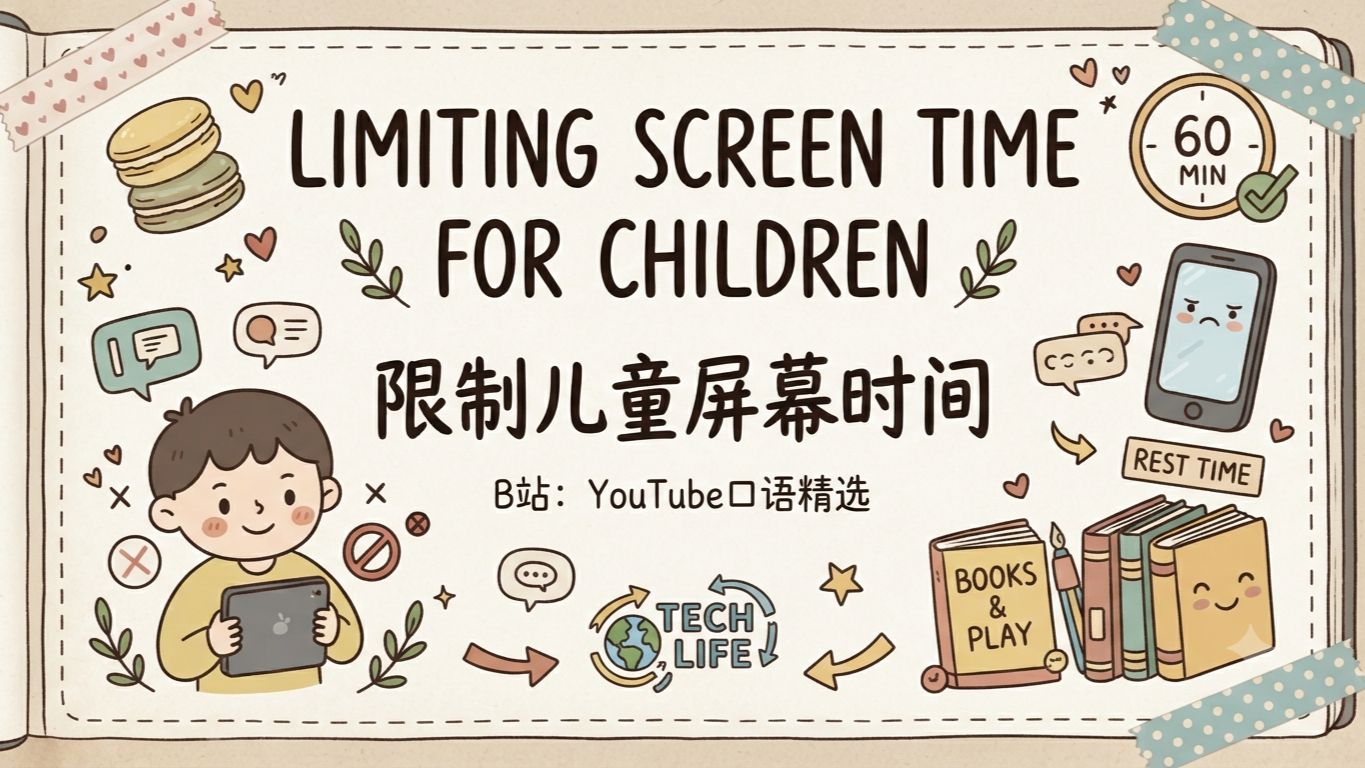
字幕摘录
| 时间 | 英文 | 中文 |
|---|---|---|
| 0:08 | Hello, this is 6 Minute English from BBC Learning English. | 你好,这是6分钟英语 从BBC学习英语。 |
| 0:12 | I'm Neil. | 我是尼尔。 |
| 0:12 | And I'm Becca. | 我是贝卡。 |
| 0:14 | Neil, I noticed that you were checking your phone before you came into the studio to record | 尼尔,我注意到你来录音室之前 正在查你的手机 |
| 0:19 | this programme. | 方案。 |
| 0:20 | Yes, I probably was. | 是的,我也许。 |
| 0:22 | You know, Becca, I spend far too much time looking at my phone and | 贝卡 我花了太多时间看手机了 |
| 0:27 | I really don't like it. | 我真的不喜欢它。 |
| 0:28 | How about you? | 你怎么样? |
| 0:29 | I don't think you're alone. | 我不认为你孤单。 |
展开字幕全文(113 条)
| 序号 | 英文 | 中文 |
|---|---|---|
| 1 | Hello, this is 6 Minute English from BBC Learning English. | 你好,这是6分钟英语 从BBC学习英语。 |
| 2 | I'm Neil. | 我是尼尔。 |
| 3 | And I'm Becca. | 我是贝卡。 |
| 4 | Neil, I noticed that you were checking your phone before you came into the studio to record | 尼尔,我注意到你来录音室之前 正在查你的手机 |
| 5 | this programme. | 方案。 |
| 6 | Yes, I probably was. | 是的,我也许。 |
| 7 | You know, Becca, I spend far too much time looking at my phone and | 贝卡 我花了太多时间看手机了 |
| 8 | I really don't like it. | 我真的不喜欢它。 |
| 9 | How about you? | 你怎么样? |
| 10 | I don't think you're alone. | 我不认为你孤单。 |
| 11 | I also spend way too much time looking at my phone. | 我也花太多时间看手机了 |
| 12 | Well, Becca, we are both adults, but today we're talking about screen time and children. | 贝卡,我们都是成年人 但今天我们谈论的是屏幕时间和孩子 |
| 13 | Screen time, that's how much time you spend using devices like smartphones, tablets and laptops. | 屏幕时间,这就是你花费多少时间使用智能手机,平板电脑和笔记本电脑等设备. |
| 14 | Yes, and it's a particular worry of many parents that their children spend too much time on these | 是的,很多父母特别担心 他们的孩子花太多时间做这些 |
| 15 | devices. | 设备。 |
| 16 | At the end of last year, Australia banned access to social media apps for under-16s | 去年末,澳大利亚禁止16岁以下者使用社交媒体应用软件。 |
| 17 | and countries like the UK are considering similar measures. | 英国等国也在考虑类似的措施。 |
| 18 | So, why is this? | 为什么? |
| 19 | In this episode, we'll hear from a clinical psychologist and research | 在这集里,我们会听到一个临床心理学家和研究 |
| 20 | associate at the University of Cambridge talking about screen time and children. | 剑桥大学的合伙人 谈论屏幕时间和孩子。 |
| 21 | As usual, | 跟往常一样 |
| 22 | we'll be learning some useful new words and phrases and remember, you'll find all this | 我们会学一些有用的新词和短语 记住,你会发现这一切 |
| 23 | 以及我们网站上的笔录 bbclearningenglish.com。 | |
| 24 | But first, Neil, I have a question for you. | 但首先 尼尔 我有个问题要问你 |
| 25 | According to the UK media regulator, | 据英国媒体监管部门称, |
| 26 | how many children aged 3 to 4 have a smartphone? | 有多少3至4岁的儿童有智能手机? |
| 27 | Is it A, 1 in 20, B, 1 in 10 or C, 1 in 5? | 是A,20分1,B,10分1还是C,5分1? |
| 28 | Wow. | 珃 |
| 29 | Well, I'm going to guess 1 in 20, but I think it's probably more than that. | 好吧,我猜一个在20, 但我认为它可能不止这一点。 |
| 30 | Well, we'll find out the answer later. | 好吧,我们会找到答案 以后。 |
| 31 | Emily Goodacre博士是一位研究助理 | |
| 32 | University of Cambridge. | 剑桥大学. |
| 33 | Here, she tells Shona McCollum, presenter of BBC World Service program | 在这里,她告诉Shona McCollum,英国广播公司世界服务节目主持人 |
| 34 | Tech Life, her thoughts on whether we should take away children's screen devices completely. | Tech Life,她想我们是否应该完全拿走儿童屏幕装置. |
| 35 | Yeah, I think it's not as much as getting them away from technology, but being really intentional | 是的,我觉得这不等于让他们远离科技, 而是真正的故意的。 |
| 36 | about how we use technology with children. | 我们如何使用技术 与儿童。 |
| 37 | For me, the bar absolutely needs to be higher. | 对我来说,酒吧绝对需要更高。 |
| 38 | And therefore, I think about how to design products that think about childhood first | 因此,我思考如何设计 产品首先思考童年 |
| 39 | and really think about how children at different stages learn and develop, and then see if there's | 想想不同阶段的孩子是如何学习和发展的 然后看看是否有 |
| 40 | a way that technology can enable that. | 一种技术可以实现这种目的的方法。 |
| 41 | Emily highlights how rather than stopping | 艾米丽强调如何 而不是停止 |
| 42 | children from using technology, parents need to be more intentional about how their children | 利用技术的儿童,父母需要更加有意识地了解他们的孩子如何 |
| 43 | use it. | 用这个 |
| 44 | An intention is a plan or reason to do something. | 意图是计划或理由去做某事. |
| 45 | So, to be intentional is to act | 所以,故意的行为 |
| 46 | with that plan or reason in mind. | 带着这个计划或理由 |
| 47 | It may make you act more carefully as a result. | 这样你才会更小心行事 |
| 48 | Emily also says the bar needs to be higher. | Emily还说酒吧需要更高 |
| 49 | The idiom the bar is low means that the standards, | 酒吧低调意味着标准 |
| 50 | expectations or requirements are minimal and very easy to meet. | 期望或要求很少,而且非常容易满足。 |
| 51 | Therefore, she believes the | 因此,她认为 |
| 52 | bar needs to be higher. | 栏需要更高。 |
| 53 | Parents need to make their expectations higher. | 父母必须提高他们的期望。 |
| 54 | They need to think or act | 他们需要思考或行动 |
| 55 | more carefully when considering how much time children spend with technology. | 在考虑儿童使用技术的时间时,要更加谨慎。 |
| 56 | You might also | 你也会 |
| 57 | hear people say set the bar higher or lower. | 听人们说把酒吧设得高低 |
| 58 | Emily believes that being more intentional and | 艾米丽认为 更故意和 |
| 59 | setting the bar higher will enable children to learn and develop alongside technology. | 设置更高的栏杆将使儿童能够学习和发展技术。 |
| 60 | If you enable something, you encourage somebody's ability to do something | 如果你允许某样东西, 你鼓励某人有能力做一些事情 |
| 61 | or to make something possible. | 或者让事情成为可能 |
| 62 | Now let's hear Dr Becky Kennedy, | 现在让我们听听贝基·肯尼迪博士 |
| 63 | a clinical psychologist and founder of an online parenting platform, | 临床心理学家 在线育儿平台的创始人 |
| 64 | talking about how parents feel about tech and children for BBC World Service programme Tech Life. | 在英国广播公司世界服务节目Tech Life中, |
| 65 | I find parents are very, very eager to understand what's really happening around technology and | 我发现父母非常,非常渴望 了解在科技方面到底发生了什么 |
| 66 | and then have practical, realistic things they can do in their home to make little shifts that | 然后有实际可行的事情 他们可以在他们的家中做 做一些小的转变, |
| 67 | feel better. | 感觉好多了。 |
| 68 | Becky has found that many parents are eager to understand their children's use of | 贝琪发现许多父母都渴望 了解他们的孩子使用 |
| 69 | technology. | 技术。 |
| 70 | Eager is an adjective that describes wanting to do or have something very much. | Eager是一个形容词,它描述想要做或者有很多事情. |
| 71 | Becky also talks about making little shifts. | 贝琪也谈到做小班. |
| 72 | A shift is a small change. | 转变是小变化. |
| 73 | It can be used as a | 它可以用作一个 |
| 74 | verb or a noun. | 动词或名词. |
| 75 | Becky shares an example of a shift that can help parents reduce children's | Becky分享了一个转变的例子,这种转变可以帮助父母减少孩子 |
| 76 | screen time, moving the device somewhere it can't be seen. | 屏幕时间,将设备移动到无法看到的地方. |
| 77 | You can even say to a kid, | 你甚至可以对孩子说, |
| 78 | you know why I moved it? | 你知道我为什么搬走吗? |
| 79 | It's actually because it's a really hard thing for me to expect from you, | 其实是因为我很难指望你 |
| 80 | to see a screen in a room and not want to use it. | 在房间里看到屏幕而不想要使用它。 |
| 81 | I wasn't setting you up for success. | 我不是为了你成功 |
| 82 | Becky explains how it's difficult for children to be expected to reduce their screen time if they | Becky解释,如果孩子们 想要缩短他们的屏幕时间是很难做到的 |
| 83 | can see their device. | 可以看到他们的装置。 |
| 84 | Having the device in view doesn't set them up for success. | 将设备放在视野里 并不会让他们成功 |
| 85 | If you set someone | 如果你陷害别人 |
| 86 | up for something, you prepare them for it. | 做点什么,你让他们做好准备 |
| 87 | Yes. | 对 |
| 88 | For example, earlier I set Neil up for a shock | 比方说,早些时候我陷害了尼尔 |
| 89 | when I asked him a question about screen time. | 当我问他屏幕时间的问题时 |
| 90 | Neil, I asked you, according to the UK media | 尼尔,我问你,根据英国媒体 |
| 91 | regulator, how many children aged three to four have a smartphone? | 监管者,有多少3至4岁的儿童有智能手机? |
| 92 | And I said one in 20. | 我说20分之一 |
| 93 | Well, it is in fact, see, one in five. | 事实上 五分之一 |
| 94 | Wow, I thought it might be more than I said. | 哇,我还以为可能比我说的还要多 |
| 95 | Now let's recap the vocabulary we've learned, starting with intentional. | 现在让我们重新总结一下我们学到的词汇,从故意开始。 |
| 96 | It's an adjective | 这是形容词 |
| 97 | that describes acting with a plan or reason in mind. | 说明有计划或理由的行动 |
| 98 | We had the expression, the bar needs | 我们有表达,酒吧需要 |
| 99 | to be higher. | 要高点。 |
| 100 | To set the bar higher is to make your expectations higher. | 把酒吧设置得更高 就是让你的期望更高 |
| 101 | We also had enable. | 我们也有能力。 |
| 102 | This is to encourage someone's ability to do something or to make something possible. | 这样做是为了鼓励某人有能力做一些事情或者让事情成为可能. |
| 103 | To be eager is to want to do or have something very much. | 渴望是想要做或拥有很多东西。 |
| 104 | A shift is a small change. | 转变是小变化. |
| 105 | You can also use it as a verb to mean changing something slightly. | 也可以用它作为动词来表示稍微改变一些东西. |
| 106 | And if you set someone up for something, you prepare them for it. | 如果你陷害了别人, 你为他们做好准备。 |
| 107 | Once again, our six minutes | 再说一次,六分钟 |
| 108 | are up. | 都起来了。 |
| 109 | If you enjoyed this episode, you'll find a quiz and a free worksheet to practice the | 如果你喜欢这集,你会找到一个问答和免费的工作表来练习 |
| 110 | 在我们的网站上你学到的词汇, bbclearningenglish.com. | |
| 111 | See you again soon. | 再会 |
| 112 | But for now, it's goodbye. | 但暂别. |
| 113 | Goodbye. | 再见 |
该视频共有字幕 113 条。解锁更多字幕为会员功能,请移动到 价格