TED演讲:你的自我感从何而来?从科学的视角分析
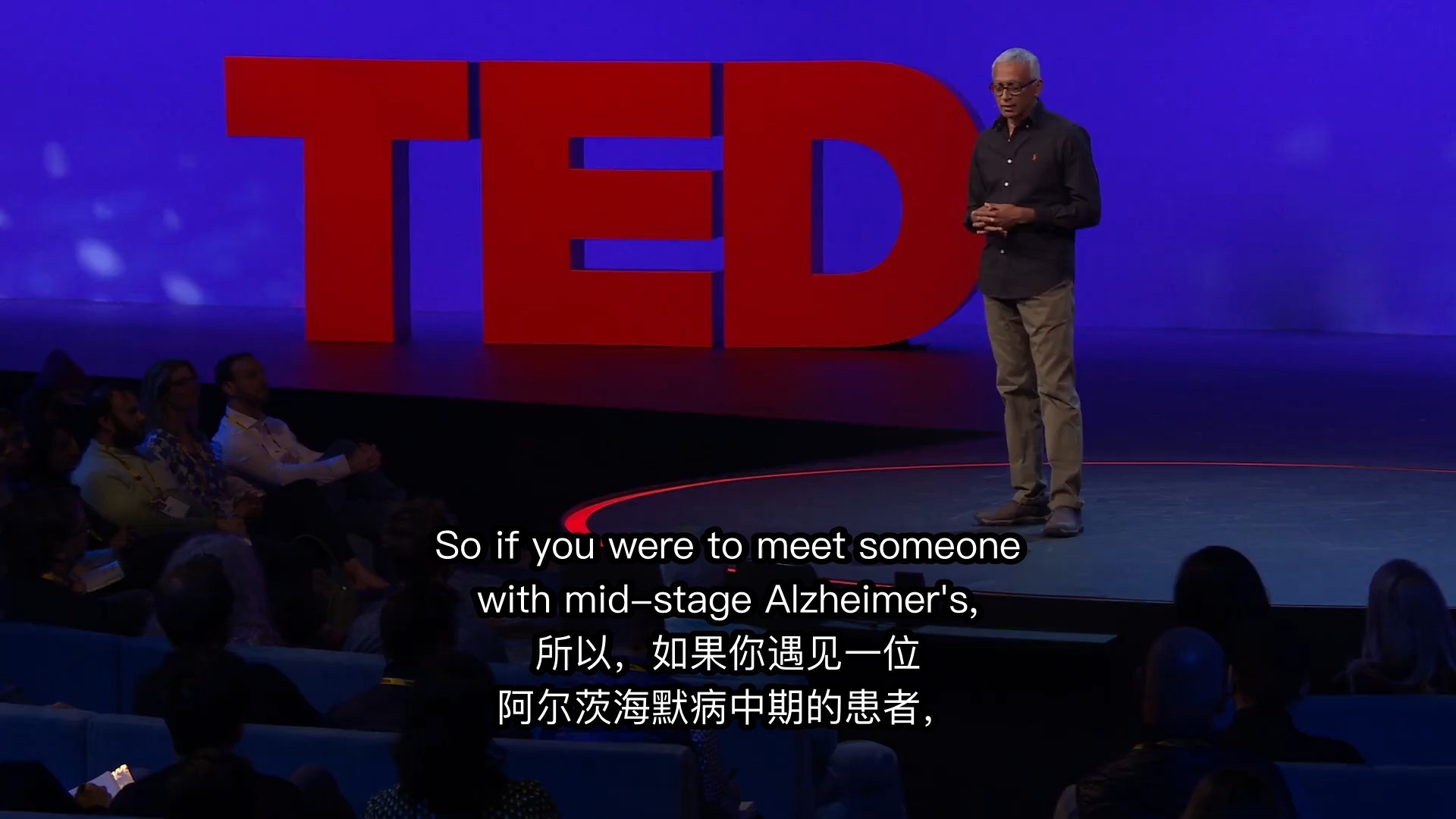
字幕摘录
| 时间 | 英文 | 中文 |
|---|---|---|
| 0:04 | About a decade ago, I met someone who had experienced a few episodes of schizophrenia. | 大约10年前,我遇到了一个经历过几次精神分裂症的人。 |
| 0:12 | They had felt that their sense of self, of what it feels like to be them, changing somewhat. | 他们觉得,他们的自我感, 他们的感受, 是什么感觉是他们, |
| 0:19 | The boundaries of their body began to feel a bit nebulous. | 他们身体的界限开始有点模糊 |
| 0:23 | Even their psychological self felt a bit porous at times. | 即使是他们的心理 感觉有时有点漏洞。 |
| 0:29 | They were experiencing what could be called an altered sense of self. | 他们正在经历一种可以称之为改变的自我感。 |
| 0:35 | Over the years, I met many such brave and insightful people | 这么多年,我遇到许多勇敢有见地的人 |
| 0:39 | who shared what it's like to live with their altered selves. | 他们分享他们改变的自我的感受 |
| 0:44 | And by altered, I mean different, not deficient, | 通过改变,我的意思是不同的,而不是不足, |
| 0:49 | while acknowledging that coping with altered selves can be a struggle at times. | 同时也承认面对自我改变有时可能是一种斗争。 |
| 0:55 | So speaking with them and with theologians, philosophers, neuroscientists, | 所以和他们说话 和神学家,哲学家,神经科学家, |
展开字幕全文(208 条)
| 序号 | 英文 | 中文 |
|---|---|---|
| 1 | About a decade ago, I met someone who had experienced a few episodes of schizophrenia. | 大约10年前,我遇到了一个经历过几次精神分裂症的人。 |
| 2 | They had felt that their sense of self, of what it feels like to be them, changing somewhat. | 他们觉得,他们的自我感, 他们的感受, 是什么感觉是他们, |
| 3 | The boundaries of their body began to feel a bit nebulous. | 他们身体的界限开始有点模糊 |
| 4 | Even their psychological self felt a bit porous at times. | 即使是他们的心理 感觉有时有点漏洞。 |
| 5 | They were experiencing what could be called an altered sense of self. | 他们正在经历一种可以称之为改变的自我感。 |
| 6 | Over the years, I met many such brave and insightful people | 这么多年,我遇到许多勇敢有见地的人 |
| 7 | who shared what it's like to live with their altered selves. | 他们分享他们改变的自我的感受 |
| 8 | And by altered, I mean different, not deficient, | 通过改变,我的意思是不同的,而不是不足, |
| 9 | while acknowledging that coping with altered selves can be a struggle at times. | 同时也承认面对自我改变有时可能是一种斗争。 |
| 10 | So speaking with them and with theologians, philosophers, neuroscientists, | 所以和他们说话 和神学家,哲学家,神经科学家, |
| 11 | I came to understand that this self that each one of us takes oneself to be | 我意识到我们每个人的自我 |
| 12 | is not as real as it seems. | 没有看起来那么真实 |
| 13 | The self is a slippery subject. | 自我是个滑头 |
| 14 | We all intuitively know what it means. | 我们都直觉地知道这意味着什么。 |
| 15 | It's there when we wake up, it disappears when we fall asleep, | 它就在那里 当我们醒来, 它消失 当我们睡着了, |
| 16 | it reappears in our dreams. | 它重新出现在我们的梦里 |
| 17 | It's what makes us who we are. | 是故能令现身. |
| 18 | It seems solid, unchanging, permanent. | 它看起来坚固,不变,永久。 |
| 19 | And yet, we can examine aspects of the self that seem real to us | 然而,我们可以审查 自我的一些方面 似乎我们真的 |
| 20 | and ask just how real are they? | 问他们有多真实? |
| 21 | Take, for instance, the question, who am I? | 比如问,我是谁? |
| 22 | The most likely answer you'll get or give to such a question | 最有可能的答案 你会得到或给出这样一个问题 |
| 23 | will be in the form of a story. | 将以故事的形式出现。 |
| 24 | We tell others and indeed ourselves stories about who we are. | 我们告诉别人,甚至我们自己的故事。 |
| 25 | We take our stories to be sacrosanct. | 我们拿我们的故事是神圣的。 |
| 26 | We are our stories. | 我们是我们的故事。 |
| 27 | But a condition that most of us, sadly, will be familiar with, | 但一个条件,我们大多数人, 可悲地,会熟悉, |
| 28 | Alzheimer's disease, | 阿尔茨海默症, |
| 29 | tells us something quite different. | 告诉我们一些完全不同的事 |
| 30 | Alzheimer's begins by affecting short-term memory. | 阿尔茨海默症开始于影响短期记忆. |
| 31 | Think about what that does to someone's story. | 想想这对别人的故事有什么影响 |
| 32 | In order for our stories to form, to grow, | 为了让我们的故事成形 成长 |
| 33 | something that just happens to us has to first enter short-term memory | 发生在我们身上的东西 必须先输入短期记忆 |
| 34 | and then get incorporated into what's called long-term episodic memory. | 然后融入所谓的长期性记忆。 |
| 35 | It has to become an episode in our narrative. | 它必须成为一个插曲 在我们的叙述。 |
| 36 | But what if the experience doesn't even enter short-term memory? | 但是,如果经验甚至没有进入短期记忆呢? |
| 37 | That's exactly what Alzheimer's does. | 阿尔茨海默症就是这样做的 |
| 38 | In the beginning, Alzheimer's impairs the formation of short-term memory. | 一开始,阿尔茨海默症影响了短期记忆的形成. |
| 39 | It impairs the growth of the narrative. | 它损害了叙述的成长。 |
| 40 | It's as if our stories begin stalling upon the onset of the disease. | 就像我们的故事在疾病发作时就开始拖延 |
| 41 | Eventually, Alzheimer's eats away at older, long-term memories. | 最终,阿尔茨海默症会食用更古老的长期记忆. |
| 42 | So if you were to meet someone with mid-stage Alzheimer's, | 所以,如果你要遇到 有人与阿尔茨海默症中期, |
| 43 | they will likely be able to tell you stories about who they are. | 他们很可能能告诉你 他们是谁的故事。 |
| 44 | But if you know their real stories, | 但如果你知道他们的真实故事 |
| 45 | you'll be able to tell that they sometimes scramble up their narrative, | 你会知道他们有时会乱编故事 |
| 46 | that they sometimes mix up the sequence of episodes from their lives. | 他们有时会把人生的剧集顺序混为一谈 |
| 47 | It's as if they are recalling their own stories | 他们好像在回顾自己的故事 |
| 48 | in ways that are not quite accurate. | 以不太准确的方式 |
| 49 | It's important at this stage to realize | 此时此刻必须意识到 |
| 50 | that there is still a person experiencing that scrambled narrative. | 仍然有一个人 经历这个乱七八糟的叙述。 |
| 51 | Sadly, Alzheimer's goes on to destroy one's narrative and so much more. | 可悲的是,阿尔茨海默症继续 摧毁一个人的叙述 和更多的。 |
| 52 | And towards the end, it's unclear whether there is still someone | 最后,还不清楚有没有人 |
| 53 | experiencing something, | 经历一些事情 |
| 54 | because the person cannot communicate verbally anymore. | 因为这个人不能再口头交流了 |
| 55 | And yet, Alzheimer's tells us that these stories that we take ourselves to be, | 然而,阿尔茨海默兹告诉我们 这些故事,我们自己是, |
| 56 | what philosophers call the narrative self, | 哲学家所说的叙事自我, |
| 57 | these are spun by the brain and body. | 这些是脑部和身体造成的 |
| 58 | They are constructions. | 他们是建筑。 |
| 59 | Sometimes the constructions are disrupted, even destroyed. | 有时建筑被破坏,甚至被毁. |
| 60 | And while that is horrific for the person experiencing it | 虽然这对体验者来说是可怕的 |
| 61 | and for their caregivers, | 和照顾他们的人, |
| 62 | it is nonetheless a window onto the constructed nature of our narrative self. | 然而,它是一个窗口 我们的叙述自我的构建性质。 |
| 63 | And when the construction goes wrong, | 当建筑出问题时, |
| 64 | we perceive our own stories in ways that are not quite real. | 我们以不太真实的方式看待我们的故事。 |
| 65 | From the narrative self, let's talk about our body. | 从叙事本身,让我们谈谈我们的身体. |
| 66 | Let's take a very basic aspect of our bodily self, | 让我们从身体上做一个最基本的方面 |
| 67 | this feeling we all have | 我们都有这种感觉 |
| 68 | that we are owners of our body and body parts, | 我们是身体和身体的主人, |
| 69 | that our bodies and body parts belong to us. | 我们的身体和身体部分属于我们。 |
| 70 | It seems such a strange thing to think that it could even be otherwise. | 认为可能不是那样,这似乎很奇怪。 |
| 71 | If I were to ask you, does your hand belong to you, | 如果我问你,你的手是否属于你 |
| 72 | you're going to say, of course it does. | 当然了 |
| 73 | What a foolish question. | 真是个愚蠢的问题。 |
| 74 | But not everyone would agree. | 但并不是每个人都同意 |
| 75 | Early on in my research, | 在我的研究初期, |
| 76 | a neuropsychologist alerted me to a condition called xenomelia, | 一个神经心理学家提醒我一个叫做xenomelia的病症, |
| 77 | or foreign limb syndrome. | 或外肢综合征。 |
| 78 | You may have heard of something called phantom limb syndrome, | 你可能听说过幻肢综合征 |
| 79 | in which people who have had an amputation | 被截肢者 |
| 80 | feel the presence of that limb sometimes. | 有时候会感觉到四肢的存在 |
| 81 | Xenomelia的情况有点相反 | |
| 82 | where people feel like some part of their body, | 在那里人们觉得自己身体的一部分, |
| 83 | usually the extremities of their hands or legs, don't belong to them. | 通常它们的手或腿的极限,不属于它们. |
| 84 | So this neuropsychologist talked of phantom limb syndrome | 这个神经心理学家谈到幻肢综合征 |
| 85 | as animation without incarnation. | 作为没有化身的动画. |
| 86 | So the limb is gone, it's not incarnate anymore, | 所以四肢不见了,它不再是化身了, |
| 87 | but it's animated in your mind. | 但这是动画 在你的脑海里。 |
| 88 | And he talked of xenomelia as incarnation without animation. | 他把Xenomelia说成没有动画化身. |
| 89 | So the limb is present, healthy even, | 因此,四肢是存在的,健康甚至, |
| 90 | incarnate, | 化为化身, |
| 91 | and yet in your own mind it feels like it doesn't belong to you. | 但是在你自己的脑海里 感觉它不属于你 |
| 92 | So in xenomelia, | 所以在克诺米利亚 |
| 93 | the brain and bodily processes | 大脑和身体过程 |
| 94 | that give rise to our sense of ownership of our body parts, | 引起我们对身体部分的主人翁感, |
| 95 | they're misfiring, so to speak. | 说来话长 |
| 96 | And the consequences can be serious. | 后果可能很严重 |
| 97 | People with xenomelia will sometimes take extreme measures | 有克诺米莉娅的人有时会采取极端措施 |
| 98 | to get rid of, to amputate their foreign-seeming body parts. | 清除,截肢 他们的外观身体部分。 |
| 99 | From the perspective of the self, though, | 从自我的角度来说, |
| 100 | xenomelia is telling us something very profound. | 克诺米莉娅告诉我们一些非常深刻的事 |
| 101 | It's telling us that something as basic as the sense of ownership | 它告诉我们一些像主人翁感一样基本的东西 |
| 102 | of our own body parts is a construction. | 我们自己的身体是建筑 |
| 103 | And sometimes the construction goes wrong, | 有时建筑会出问题 |
| 104 | and we perceive our own bodies in ways that are not quite real. | 我们以不真实的方式看待自己的身体。 |
| 105 | Let's take another aspect of our bodily self. | 让我们从另一个方面来看待我们的身体。 |
| 106 | It's called the sense of agency. | 谓之代理感. |
| 107 | So when I do something like pick up a cup, | 所以当我做一些事情 像拿杯子, |
| 108 | I have this implicit feeling that I am the agent of that action, | 我有一种隐含的感觉 认为我是那个行动的代理人, |
| 109 | {\fn黑体\fs22\bord1\shad0\3aHBE\4aH00\fscx67\fscy66\2cHFFFFFF\3cH808080}我已经把行动变成现实了 {\fn黑体\fs22\bord1\shad0\3aHBE\4aH00\fscx67\fscy66\2cHFFFFFF\3cH808080}我愿意 | |
| 110 | That feeling is the sense of agency. | 这种感觉是一种代理感。 |
| 111 | But someone with schizophrenia may not have that feeling always. | 但患有精神分裂症的人可能并不总是有这种感觉。 |
| 112 | Someone with schizophrenia might do something | 有精神分裂症的人可能会做点什么 |
| 113 | and not feel like they are the agent of that action. | 也觉得他们不是那个行动的代理人 |
| 114 | So schizophrenia tells us that it is possible to be someone | 所以精神分裂症告诉我们 一个人是可能的 |
| 115 | who does something but doesn't have an accompanying sense of agency. | 谁做一些事情,但没有 伴随性的代理感。 |
| 116 | So just like the narrative self | 就像叙事的自我 |
| 117 | and the sense of ownership of body parts, | 和身体部位的所有权感, |
| 118 | the sense of agency is also a construction, | 代理意识也是一种构建, |
| 119 | and it too can fail. | 它也会失败。 |
| 120 | So you can see where this is going. | 这样你就能看清这是怎么回事 |
| 121 | Let me take one more example to drive home this point. | 让我再举一个例子,把这一点带回家。 |
| 122 | Let's talk of what it feels to be a body here and now. | 让我们来谈谈这里现在作为一个尸体的感觉 |
| 123 | Not the feeling of being a story, | 不是那种当故事的感觉 |
| 124 | but the feeling of being a body in the present moment. | 却有成为现在身体的感觉 |
| 125 | Psychologists estimate that about five percent of the general population | 心理学家估计,大约5%的普通人口 |
| 126 | will at some point in their lives have an out-of-body experience. | 在他们生命的某个时刻,他们会有体外的经验。 |
| 127 | Let's assume all of us right now are having an in-body experience. | 假设我们所有人都有内在体验 |
| 128 | But what that means is having this feeling of being in a body, | 但是,这意味着有这种感觉 在一个身体, |
| 129 | being anchored to a body, occupying a certain volume of space | 被固定在身体上,占据一定的空间 |
| 130 | and looking at the world from behind our eyes. | 从我们眼皮底下看世界 |
| 131 | But if you are having an out-of-body experience, | 但如果你有体外经历 |
| 132 | you could possibly be feeling that you're up near the ceiling | 你可能觉得自己在天花板附近 |
| 133 | looking down at your own body sitting in the chair below. | 看着自己坐在椅子上的身体 |
| 134 | People do report such experiences. | 人们确实报告了这种经历。 |
| 135 | And mild versions of this have been replicated in labs. | 而这种温和的版本在实验室中被复制. |
| 136 | But if you think, like I do, | 但如果你想,像我一样 |
| 137 | that out-of-body experiences are the outcome of brain processes | 体外经历是大脑过程的结果 |
| 138 | that are misfiring, | 他们是不信道的, |
| 139 | then it stands to reason that the experience of being in-body, | 那么就有理由说 身体内的经验 |
| 140 | of being embodied, | 被体现, |
| 141 | is itself a construction, | 它本身就是一种建筑, |
| 142 | and that too can come apart. | 那样也会分崩离析 |
| 143 | So what are these experiences of altered selves telling us? | 这些改变自己的经验告诉我们什么? |
| 144 | They are telling us that just about everything we take | 他们告诉我们 我们拿的一切 |
| 145 | to be real about ourselves, | 以真实的自我, |
| 146 | real in the sense that we think we are always experiencing | 真正意义上,我们认为 我们总是经历 |
| 147 | undeniable truths about our bodies, our stories, | 不可否认的真相 关于我们的身体,我们的故事, |
| 148 | well, that's just not the case. | 事实并非如此 |
| 149 | So when theologians and philosophers tell us that the self is an illusion, | 所以当神学家和哲学家告诉我们 自我是幻觉时 |
| 150 | this is partly what they mean. | 这在一定程度上就是他们的意思。 |
| 151 | You may have realized by now that there still remains the question | 你可能已经意识到 现在还有问题 |
| 152 | of who or what is doing the experiencing, | 谁在作恶呢? |
| 153 | even in the case of altered selves. | 即使在自我改变的情况下 |
| 154 | This experiencing I in the question, who am I, | 我经历的问题,我是谁, |
| 155 | is at the heart of the debate about the self. | 这是关于自我的辩论的核心。 |
| 156 | This experiencing I doesn't go away | 这种经历我可不会消失 |
| 157 | if one or a few aspects of the self are disrupted. | 如果自身的一个或几个方面中断。 |
| 158 | But what if all of the aspects of the self that comprise us | 但是,如果所有方面 自我构成我们 |
| 159 | were to be disrupted? | 要被打乱吗? |
| 160 | Would the experiencing I disappear? | 经历会消失吗? |
| 161 | We don't have a satisfactory answer to that question yet. | 这个问题我们还没有一个令人满意的答案。 |
| 162 | It's possible that the experiencing I is also an illusion | 可能我的体验也是幻觉 |
| 163 | in the sense of being a construction, | 在建筑意义上, |
| 164 | a construction without a constructor. | 没有建筑师的建筑。 |
| 165 | That debate, however, is somewhat unresolved. | 然而,这一辩论有些未解决。 |
| 166 | Despite such doubts, I personally, whatever I am, | 尽管如此怀疑,我个人,无论我是什么, |
| 167 | think that the self has no reality outside of the brain and body. | 认为自我在大脑和身体之外没有现实. |
| 168 | I think that the experiencing I will not persist after the body is gone. | 我认为,在尸体消失之后,我将不会继续经历这种经历。 |
| 169 | So what does one make of such knowledge? | 那么这种知识是什么? |
| 170 | Well, firstly, these ideas will feel liberating to some | 首先,这些想法会给一些 |
| 171 | and might sit heavily upon others. | 并可能坐视他人。 |
| 172 | Regardless, I think we can all attend to the stories that we think we are. | 不管怎么说,我想我们都能够关注那些我们认为我们是的故事。 |
| 173 | Our feelings and emotions are modulated by our stories, | 我们的感情和情感被我们的故事所调和 |
| 174 | and in turn, our feelings and emotions become part of our stories. | 反过来,我们的感情和情感也成为我们故事的一部分。 |
| 175 | And our stories, our narratives, are not just cognitive. | 我们的故事,我们的叙述, 不仅仅是认知。 |
| 176 | They live in our bodies, | 他们住在我们的身体里 |
| 177 | and our bodies structure and shape our stories. | 和我们的身体结构 和塑造我们的故事。 |
| 178 | So knowing all this, recognizing the constructed nature of it all, | 所以知道这一切, 承认这一切的构造性质, |
| 179 | maybe we can hold on less tightly to our stories. | 也许我们可以不紧紧抓住我们的故事。 |
| 180 | Maybe we can learn to let go. | 也许我们可以学会放手 |
| 181 | But that's easier said than done, | 但说起来比做起来容易 |
| 182 | because the thing that is doing the letting go | 因为事情是做 放手 |
| 183 | is also the thing that has to be let go of. | 这也是必须放弃的事情。 |
| 184 | Maybe we can just marvel at the efforts of people over millennia, | 也许我们可以对千年来人们的努力感到惊讶 |
| 185 | from the Buddha sitting under the Bodhi tree | 从菩萨坐在波迪树下 |
| 186 | to the modern philosopher and neuroscientist, | 对现代哲学家和神经科学家, |
| 187 | who have asked themselves the question, who am I? | 我是谁? |
| 188 | But most of all, I think we owe our debt to those amongst us | 但最重要的是,我想我们欠我们的人情 |
| 189 | who bravely bear witness to our altered selves, | 他勇敢地见证我们的变形, |
| 190 | whether we do so voluntarily, | 我们是否自愿这样做, |
| 191 | like monks and nuns do when they meditate, | 就像僧尼冥想时一样 |
| 192 | or whether it's brought upon us by biology and circumstance. | 或者是生物和情况给我们带来的 |
| 193 | There is something remarkably robust about the processes | 过程非常有力 |
| 194 | that give rise to the totality of our sense of self. | 从而产生我们的全部自我意识。 |
| 195 | But there's something frighteningly fragile about them, too. | 但是他们身上也有些可怕的弱点 |
| 196 | They can crack. | 他们可以破解。 |
| 197 | And any one of us at any time in our lives | 还有我们生活中任何一个人 |
| 198 | may have to confront such cracks. | 也许必须面对这些裂缝 |
| 199 | And that knowledge, I believe, | 我相信,这个知识 |
| 200 | should make us empathetic towards those of us dealing with altered selves. | 应该让我们同情那些 面对自我改变的人 |
| 201 | But I also believe that altered selves should not be seen | 但我也认为 改变自己不应该被看到 |
| 202 | as the outcome of deficits | 作为赤字结果 |
| 203 | or as the outcome of a lack of attributes considered normal. | 或作为缺乏被认为正常的属性的结果。 |
| 204 | They are different ways of being. | 它们是不同的存在方式。 |
| 205 | And it's the willingness of some of us | 这也是我们有些人的意愿 |
| 206 | to confront the self's constructed nature | 面对自我的造型 |
| 207 | that is helping make sense of the self for all of us. | 这帮助了我们每个人的自我。 |
| 208 | Thank you. | 谢谢 |
该视频共有字幕 208 条。解锁更多字幕为会员功能,请移动到 价格