TED演讲:为何苦乐参半的情感让我们更能体会生活之美?
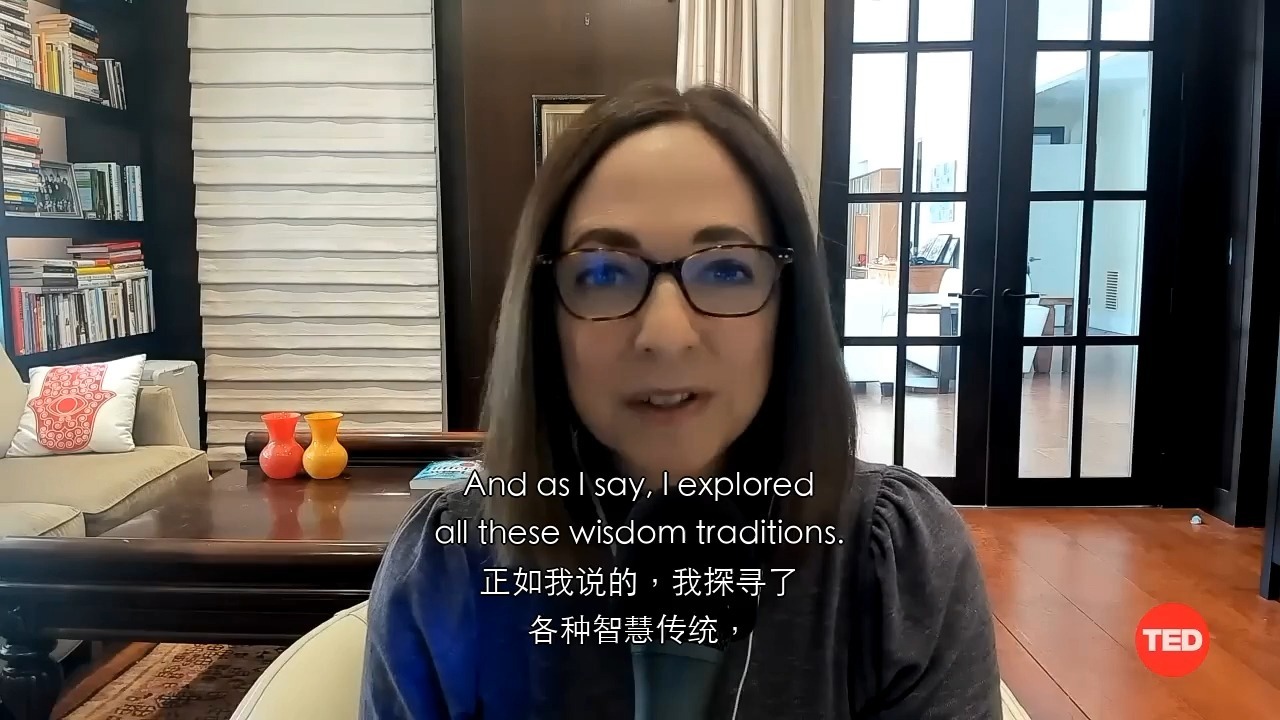
字幕摘录
| 时间 | 英文 | 中文 |
|---|---|---|
| 0:03 | The idea of bittersweetness is that we live in a constant state, all humans do, it's a | 苦甜的想法是 我们生活在一个恒定的状态, 所有人类做,这是一个 |
| 0:11 | constant state of a kind of existence simultaneously of joy and sorrow, dark and light, bitter | 一种恒定的存在状态 同时快乐和悲伤 黑暗和光明 痛苦 |
| 0:19 | and sweet. | 和可爱。 |
| 0:21 | And then what comes with that is a heightened awareness of impermanence in all things, and | 随之而来的是,人们更加认识到万物中的不持久性, |
| 0:27 | also a kind of curiously piercing joy at the beauty of the world, because there's something | 也是一种好奇的喜悦 对世界的美丽, 因为有东西 |
| 0:33 | about having this deep awareness that the joy comes with sorrow, the sorrow comes with | 深知欢乐与悲哀 |
| 0:39 | joy that makes us really attuned to the insane beauty all around us. | 快乐让我们真正适应 我们周围疯狂的美丽。 |
| 0:46 | I think the Stoics come at that from one point of view, there's the Stoic idea of, they would | 我想斯托伊克人会从一个角度出发 提出他们的想法 |
| 0:52 | call it memento mori, to remember all the time that we could die tomorrow, we don't | 把它称为纪念日, 记住所有的时间 我们可能明天死亡,我们不 |
| 0:58 | know what's going to happen, and that's a way of both calming us down and also making | 知道会发生什么, 这是一种方法 既使我们平静下来, 也使 |
展开字幕全文(221 条)
| 序号 | 英文 | 中文 |
|---|---|---|
| 1 | The idea of bittersweetness is that we live in a constant state, all humans do, it's a | 苦甜的想法是 我们生活在一个恒定的状态, 所有人类做,这是一个 |
| 2 | constant state of a kind of existence simultaneously of joy and sorrow, dark and light, bitter | 一种恒定的存在状态 同时快乐和悲伤 黑暗和光明 痛苦 |
| 3 | and sweet. | 和可爱。 |
| 4 | And then what comes with that is a heightened awareness of impermanence in all things, and | 随之而来的是,人们更加认识到万物中的不持久性, |
| 5 | also a kind of curiously piercing joy at the beauty of the world, because there's something | 也是一种好奇的喜悦 对世界的美丽, 因为有东西 |
| 6 | about having this deep awareness that the joy comes with sorrow, the sorrow comes with | 深知欢乐与悲哀 |
| 7 | joy that makes us really attuned to the insane beauty all around us. | 快乐让我们真正适应 我们周围疯狂的美丽。 |
| 8 | I think the Stoics come at that from one point of view, there's the Stoic idea of, they would | 我想斯托伊克人会从一个角度出发 提出他们的想法 |
| 9 | call it memento mori, to remember all the time that we could die tomorrow, we don't | 把它称为纪念日, 记住所有的时间 我们可能明天死亡,我们不 |
| 10 | know what's going to happen, and that's a way of both calming us down and also making | 知道会发生什么, 这是一种方法 既使我们平静下来, 也使 |
| 11 | life feel a little more precious. | 生活感觉更加珍贵 |
| 12 | So the Stoics come at it from that point of view. | 因此斯托克人从这个角度来研究它. |
| 13 | I don't know that I think of myself as a Stoic explicitly, but I do feel there's something | 我不知道我把自己看成一个Stoic人 但我确实觉得有 |
| 14 | about being aware of life's fragility that situates us exactly where we should be. | 了解生命的脆弱 将我们置于我们该处于的位置 |
| 15 | Why do you think art is a way that we see bittersweetness being expressed really masterfully? | 为什么你认为艺术是一种方式,我们看到苦甜的表达是真正熟练的? |
| 16 | I believe that all humans, that the most fundamental aspect of our humanity is that we all have | 我相信,所有人类, 我们人类最根本的方面是 我们都拥有 |
| 17 | a kind of longing for a state that I call the perfect and beautiful world, like in The | 一种渴望的状态 我称之为完美和美丽的世界, 像在The |
| 18 | Wizard of Oz, it's called somewhere over the rainbow. | 奥兹的巫师,在彩虹上某个地方叫它 |
| 19 | All religions have their own name for it. | 所有宗教都有他们自己的名字。 |
| 20 | My favorite is the Sufi name of the Beloved of the Soul, and what creativity really is | 我最爱的是灵魂之爱的苏菲人的名字 以及真正的创造力 |
| 21 | at the end of the day is an expression of that longing for a more perfect and beautiful | 终究是渴望更完美更美的 |
| 22 | world. | 这个世界 |
| 23 | What an artist or a musician is doing is they're having a vision of the gap between the world | 艺术家或音乐家正在做的是 他们对世界差距的看法 |
| 24 | that we're in and the world that they long to be in and therefore to create. | 我们和这个世界 他们渴望进入 并因此创造。 |
| 25 | And so whether you're talking about a violin piece or a rocket to Mars, there's really | 所以无论你说的是小提琴还是火箭到火星 |
| 26 | no difference between those two things. | 这两件事没有区别。 |
| 27 | Like the word longing itself, the etymology of it literally means to reach for, to grow | 和渴望自己这个词一样, 它的字面意思是达到,成长 |
| 28 | longer and to reach for. | 更久 更远 |
| 29 | And that's what we're doing when we're creative. | 这就是我们创造力的所在。 |
| 30 | And I do want to hasten to say that you don't need to compose a symphony that people are | 我确实想赶快说,你不需要 创作一个交响曲 人们是 |
| 31 | going to be listening to hundreds of years later. | 几百年后将开始监听 |
| 32 | You don't have to build the rocket to Mars in order to express that fundamental human | 你不必制造火箭到火星 来表达人类的根本 |
| 33 | creativity. | 创造力。 |
| 34 | You could be sitting at home and drawing a picture or baking a pie. | 你可以坐在家里画画或者烤饼 |
| 35 | It doesn't really matter. | 这不重要 |
| 36 | Like all these different actions are expressions of our longing and of our better nature. | 与所有这些不同的行动一样,也表达了我们的愿望和我们更好的性质。 |
| 37 | I believe that the art and the music and the nature and religion and spirituality are all | 我相信艺术、音乐、自然、宗教和精神 |
| 38 | just different manifestations of the same thing. | 同一事物的不同表现 |
| 39 | And what that thing is, we probably all have to define for ourselves, but it is the most | 那东西是什么, 我们也许都得为自己定义, 但这是最 |
| 40 | fundamental drive in all of human nature. | 根本动力 在所有的人性。 |
| 41 | And I believe our best one, you know, it's the one that leads to creativity, but also | 我相信我们最好的一个,你知道, 它是引领创造力,但也 |
| 42 | to connection and to love. | 和爱。 |
| 43 | Like I literally, sorry to go on with this question, but I literally have sitting taped | 就像我从字面上说,抱歉继续说这个问题, 但我真的坐了下来 |
| 44 | up in front of me in my office right now, a quotation from the poet Jalal al-Din Rumi, | 在我的办公室前面 诗人贾拉勒·丁·鲁米的引文 |
| 45 | who is a Sufi poet. | 他是一个苏菲派诗人。 |
| 46 | And I'm going to quote it for you, but I'm just going to set the context of the poem. | 我将引用它给你, 但我只是要设定 诗的背景。 |
| 47 | It's basically it's about a man who is praying to Allah and a cynical person comes along | 基本上是关于一个向阿拉祈祷的人 一个愤世嫉俗的人 |
| 48 | and asks him, why are you praying? | 问他,你为什么祈祷? |
| 49 | You never got an answer back, did you? | 你从来没有得到一个答案,是吗? |
| 50 | So why are you praying? | 那你为什么祈祷? |
| 51 | And the man thinks about it and is troubled by the cynic's observation and he falls into | 男人想着它, 和烦恼 的愤世嫉俗的观察, 他跌入 |
| 52 | a fitful sleep during which he's visited by Hidr, the guide of souls, who says to him, | 他睡得很安稳 灵魂的引导者Hidr拜访了他 |
| 53 | why did you stop praying? | 你为什么停止祈祷? |
| 54 | And he said, well, you know, God never answered me, Allah never answered. | 他说,嗯,你知道,上帝从来没有回答我,阿拉从来没有回答我。 |
| 55 | And this is what Hidr says to him. | 这就是Hidr对他说的 |
| 56 | He says, and now I'm quoting from the poem itself, this longing you express is the | 他说,现在我引用 从诗本身, 这个渴望你的表达是 |
| 57 | return message. | 返回消息。 |
| 58 | The grief you cry out from draws you toward union. | 你呼喊的悲伤吸引你走向工会 |
| 59 | Your pure sadness that wants help is the secret cup. | 你的纯悲哀需要帮助 就是秘密的杯子 |
| 60 | And I have this taped up in my office because I believe that I believe that that's the | 我办公室里有录音带 因为我相信那是 |
| 61 | truth, whether we consider ourselves atheists or believers or somewhere in between to me | 真理,无论我们视自己为无神论者或信徒,还是我之间的某处 |
| 62 | as a false dichotomy. | 以假二义. |
| 63 | It美'. | |
| 64 | And I mean, can you share a little bit more about the process that went | 我的意思是,你能多分享一点 有关过程 |
| 65 | into writing this book and how you ultimately found yourself in this place where | 写这本书 以及你如何最终发现自己在这个地方 |
| 66 | bittersweet was the end product? | 苦甜是最终产品? |
| 67 | As most of us do, I come from a heritage of love and loss. | 就像我们大多数人一样,我来自爱和损失的遗产。 |
| 68 | In my case, most members of my family, the previous generations, were killed in the | 就我而言,我家族的多数成员 前几代人都死于 |
| 69 | Holocaust on my mother's side and my father's side. | 我母亲和我父亲的大屠杀 |
| 70 | And I explore in the book the whole phenomenon of inherited grief, both how it | 我在书中探索了 继承的悲伤现象 以及它是如何发生的 |
| 71 | transmits to us, both culturally and epigenetically. | 无论是在文化上还是在史诗上,都传达给我们。 |
| 72 | And so I think that that's a kind of unconscious backdrop that had been with me from | 所以,我认为这是一个无意识的背景 一直与我从 |
| 73 | the beginning of just having a sense of kind of like a tragic view of life, but also a | 开始有种感觉 就像一个悲惨的人生观, |
| 74 | view that I kind of just can't believe how beautiful it is sometimes. | 我无法相信它有多美 |
| 75 | So I'm sort of holding those two things at the same time. | 所以,我有点 持有这两件事 同时。 |
| 76 | And so I just had all these questions about how to make sense of of this paradox of | 所以,我只是有这么多问题 关于如何理解这个悖论 |
| 77 | life. | 活着 |
| 78 | And so I just went off on this five year journey. | 于是我开始了这五年的旅程。 |
| 79 | I mean, I went and talked to Pete Docter, who is the director at Pixar, who created the | 我的意思是,我去和皮特・多克特谈了, 他是皮克斯的导演, |
| 80 | movie Inside Out, which is a movie that's really all about sadness and the positive | 内置电影 出局,这是一部电影, 真正所有关于悲伤和积极的 |
| 81 | value that sadness has in our lives. | 珍惜我们生活中的悲伤 |
| 82 | And as I say, I explored all these wisdom traditions, went and talked to neuroscientists, | 正如我所说,我探索了所有这些智慧传统, 去和神经科学家交谈, |
| 83 | spent a lot of time with a psychologist named Dacher Keltner, who has done all this | 和一个叫Dacher Keltner的心理学家一起度过了很长一段时间 他做了这一切 |
| 84 | fascinating, groundbreaking work on what he calls our inner compassionate instinct and | 令人着迷,开创性的工作 关于他所谓的 我们内心的同情本能和 |
| 85 | how we're basically evolutionarily designed to react to the sadness of other beings. | 我们是如何在进化过程中 对其他人的悲伤作出反应的 |
| 86 | And like and this comes from the fact that we're creatures who have to take care of our | 就像,这来自一个事实,我们是生物 谁必须照顾我们 |
| 87 | young, like we don't survive if we don't do that. | 年轻,就像我们没有生存 如果我们不这样做。 |
| 88 | And so that means that we're primed to to respond to the cries of babies, except it | 所以这意味着我们准备回应 婴儿的呼喊,除了它 |
| 89 | radiates out from there. | 辐射从那里。 |
| 90 | We don't only respond to our own baby's tears. | 我们不只回应自己孩子的眼泪. |
| 91 | We end up responding to other babies and we also end up responding to other beings in | 我们最终会回应其他婴儿 我们最终也会回应其他生物 |
| 92 | general. | 将军 |
| 93 | And we definitely do not get this right because we also, as as Darwin had | 我们绝对不能正确理解这一点,因为我们同样,就像达尔文一样 |
| 94 | noticed, Darwin said, we have this deep compassionate instinct, but we also have | 达尔文说,我们有深厚的同情本能 但我们也有 |
| 95 | obviously this propensity to these astonishing acts of cruelty. | 显然,这种倾向 这些惊人的残酷行为。 |
| 96 | So both of these things are part of us. | 所以这两种东西都是我们的一部分。 |
| 97 | And and the question becomes, how do we most draw on the compassionate side of our | 问题是,我们如何从同情心的角度 |
| 98 | deeper instincts? | 更深的直觉? |
| 99 | There's a question here from Maryam where they ask just about how we can be present | 玛丽安有个问题 他们问我们如何出席 |
| 100 | for each other as we're feeling different emotions. | 我们感受着不同的情感 |
| 101 | The question specifically is, can we be fully present for one another if one is | 具体地说,如果一个是,我们能否充分出席对方的会议? |
| 102 | experiencing sadness and the other is happiness? | 经历悲伤,另一个是幸福? |
| 103 | Yeah, I think the answer is to be fully present for each other. | 是的,我想答案是 完全为对方在场。 |
| 104 | And I'll tell you one little hack that I've developed for that. | 我会告诉你一个我为此开发的小黑客。 |
| 105 | I don't know if hack is the right word, but there there's this amazing video that went | 我不知道黑客是否是正确的词, 但有一个惊人的视频 去了 |
| 106 | viral a few years ago. | 几年前的病毒问题 |
| 107 | It was put out by the Cleveland Clinic Hospital and and this was a video that they put | 这是克利夫兰诊所医院的录像 |
| 108 | together to teach empathy to their caregivers. | 一起教导他们的照顾者同情心。 |
| 109 | And the way they did this is they had a camera kind of moving through the corridors of | 他们这样做的方式是 他们有一个摄像头 那种移动穿过走廊 |
| 110 | the hospital, lingering for a moment on the face of this passersby or that passerby, | 医院,停留片刻 面对这个路人或那个路人, |
| 111 | just the way you would do in normal life, right? | 就像你平时那样,对吧? |
| 112 | You're like walking through and you just see people as you go and you're not really | 你就像走过,你只是看到人 你走了,你不是真的 |
| 113 | thinking that much about it, except that in the case of this video, they had little | 想想看,除了这段视频, 他们几乎没有 |
| 114 | captions underneath each random person that you were passing by. | 每一个你路过的人下面的字幕 |
| 115 | And sometimes the captions were joyful ones, like just learn that he's going to be a | 有时候这些字幕很快乐,比如说... ...他将会成为... |
| 116 | father for the first time. | 父亲第一次。 |
| 117 | But because we're in a hospital, more often the captions are not so joyful. | 但是,因为我们在医院里, 更多的是标题不是那么快乐。 |
| 118 | And it's things like, you know, a caption under a little girl saying goodbye to her | 这就像,你知道, 一个小姑娘下面的字幕 跟她道别 |
| 119 | father for the for the last time, things like that. | 父亲最后一次,类似的事情。 |
| 120 | And like you, you literally you cannot watch this video without tearing up. | 和你一样,你实际上不能不撕裂就看这个视频。 |
| 121 | It's impossible, which is why it went viral. | 这是不可能的, 这就是为什么它去病毒。 |
| 122 | You also become aware as you're watching it, you're not only tearing up, you literally | 你也意识到,当你看它, 你不仅撕裂,你字面上 |
| 123 | are are having the sensation of expanding chest muscles like you can feel it physically | 胸肌正在膨胀的感觉 就像你身体上的感觉 |
| 124 | and literally. | 和字面意思一样。 |
| 125 | 我们从Dacher Keltner的作品中 了解到我是谁 | |
| 126 | talking about, that that we have our vagus nerve, which is the biggest bundle of nerves | 谈论,我们有我们的阴险的神经, 这是最大的捆神经 |
| 127 | in our body, and it governs our most fundamental instincts like breathing and digestion. | 它支配着我们最基本的本能 比如呼吸和消化 |
| 128 | You know, it's really basic. | 你知道,这是非常基本的。 |
| 129 | But your vagus nerve also responds and fires up when it sees somebody else in distress. | 但你的阴险神经也会反应 当它看到另一个人陷入困境时会起火 |
| 130 | So, you know, this is a very deep and fundamental impulse. | 所以,你知道,这是一个非常深刻和根本性的冲动。 |
| 131 | And what I take from the the lesson of that Cleveland Clinic video is just the simple | 我从克利夫兰诊所的录像中吸取的教训很简单 |
| 132 | exercise of imagining what people's captions are as you walk through the world. | 在你走遍世界时 想象人们的字幕 |
| 133 | You know, you don't necessarily know them. | 你知道,你不一定知道他们。 |
| 134 | But now I'll go into a grocery store. | 但现在我要去一家杂货店 |
| 135 | And as the person's ringing up my groceries, I'm thinking, what's her caption? | 当那个人在敲我的杂货时 我在想 她的字幕是什么? |
| 136 | You know, what is it? | 你知道,这是什么? |
| 137 | And it's a completely different way of interacting with people once you do that. | 它是一个完全不同的方法 与人互动 一旦你这样做。 |
| 138 | And connected to this, Gordon asks how your experience with the pandemic and lockdown | 与此相关,戈登问 如何经历大流行和封锁 |
| 139 | informed the writing of the book. | 告知了这本书的写作。 |
| 140 | Did it change the book from what you initially envisioned it to be? | 这是否改变了你最初设想的书? |
| 141 | My father and my brother actually passed away from Covid quite early during the pandemic. | 我父亲和我哥哥在这场大流行中 早早从科维德去世了 |
| 142 | There was something about grappling with these subjects for years, as I had been doing, | 多年来我一直在努力研究这些课题 |
| 143 | that actually helped me pass through those particular moments and weather those particular | 帮助我渡过这些特殊的时刻 渡过这些特殊的时刻 |
| 144 | moments. | 时刻 |
| 145 | Like, I guess I'll just give you one specific example. | 我想我会给你一个具体的例子 |
| 146 | So one of the wisdom traditions that I found most illuminating, and I wrote about this | 所以我觉得最有启发性的智慧传统之一 我写了这个 |
| 147 | in the book, it's the one that Leonard Cohen's song comes from, you know, the idea of light | 在书中,这是Leonard Cohen的歌曲 来自于,你知道,光的想法 |
| 148 | coming from the crack and everything. | 从裂缝和一切。 |
| 149 | So he got that from the Kabbalah, which is the mystical side of the Jewish tradition. | 因此他从卡巴拉那里得到了这个,这是犹太传统神秘的一面. |
| 150 | And one of the fundamental stories in the Kabbalah is the idea that all of creation | Kabbalah的基本故事之一 就是所有创造 |
| 151 | originally was one divine vessel of light that ultimately shatter and that now we're | 最初是一个神圣的光线 最终会粉碎 现在我们 |
| 152 | living in the world after the shattering, but these divine shards of light are still | 碎裂后活在世上 但是这些神圣的光芒仍然 |
| 153 | scattered all around us and they're buried in the mud all around us. | 分散在我们周围 他们被埋在我们周围的泥土里 |
| 154 | And so our job is to walk through the world and pick up the shards where we can and maybe | 所以,我们的工作是走遍世界 和捡起的硬块 我们可以,也许 |
| 155 | shine them up a little bit. | 给他们点颜色看看 |
| 156 | And the beauty is that I'm going to see one set of shards, but you're going to notice | 美丽的是,我会看到 一组硬盘,但你会注意到 |
| 157 | completely different ones. | 完全不同的东西 |
| 158 | So we all go around and pick up our own. | 所以我们都绕过去 自己去捡 |
| 159 | When my father passed away from COVID, like I started reflecting on his life and my | 当我父亲从COVID去世的时候 就像我开始思考他的生活和我的 |
| 160 | father is a person who he was a doctor and a med school professor and he worked really, | 父亲是个医生和医学院教授 他真的工作过 |
| 161 | really hard and did great work. | 真的很辛苦,做了伟大的工作。 |
| 162 | And at the same time that he did all that, he also he would perform these, you could | 在他做这一切的同时 他也会表演这些,你可以 |
| 163 | call them senseless acts of beauty, maybe he loved orchids. | 也许他喜欢兰花 |
| 164 | So he built a greenhouse full of orchids in our basement. | 所以他在我们的地下室 建造了一座充满兰花的温室 |
| 165 | For really no reason other than that, he loved orchids and so he grew them and gazed at | 他喜欢兰花 所以他种了兰花 |
| 166 | them. | 他们。 |
| 167 | And he loved the French language. | 他喜欢法语 |
| 168 | So he learned how to speak French, even though he had no time to visit France and rarely | 所以他学会了说法语,尽管他没有时间访问法国,很少 |
| 169 | did. | 没错 |
| 170 | But he would sit there and learn it and loved the act of learning it. | 但他会坐在那里学习它,并喜欢学习它的行为. |
| 171 | And there there were so many different things like this that he did. | 他做了很多不同的事情。 |
| 172 | And and when he died, I started thinking about all those acts of beauty that he had | 当他死后,我开始思考 他所有的美丽行为 |
| 173 | formed in his work and in these seemingly senseless acts of beauty. | 形成于他的作品 和这些看似毫无意义的美丽行为。 |
| 174 | And I and I framed them all as as shards that he had been picking up all his life. | 我和他们都是他毕生所学的硬汉 |
| 175 | And that was, yeah, that was a really helpful way of thinking of him and remembering | 这是,是的,这是一个真正的帮助 思考他和记住 |
| 176 | him and bringing me to some form of peace with his loss. | 带着他的损失带给我某种形式的和平 |
| 177 | As we slowly come out of the pandemic, how can we better normalize talking about loss | 当我们慢慢走出大流行时,我们如何更好地正常地谈论损失 |
| 178 | and talking about these feelings that you've you've mentioned our culture sort of | 并谈论这些感觉 你提到我们的文化 那种 |
| 179 | shies away from? | 离我远点? |
| 180 | Well, I think it's really helpful to start in our organizations. | 我觉得从我们的组织开始是很有帮助的 |
| 181 | I mean, we can obviously start privately, which in some ways is the easiest because | 我的意思是,我们显然可以 私下开始, 在某些方面是最简单的,因为 |
| 182 | we don't have to crawl anybody else to do it. | 我们不用爬别人来做 |
| 183 | But in our organizations, there are small steps that we can take. | 但是,在我们的组织中,我们可以采取一些小步骤。 |
| 184 | So I'm thinking, for example, I I do a lot of public speaking and lately Zoom | 所以我想,比如,我做很多 公开演讲,最近Zoom |
| 185 | talks where I come in and talk about introversion and I guess now bittersweetness. | 谈论我进来的地方 谈论内向 我想现在苦甜。 |
| 186 | But but anyway, I did one not that long ago. | 但总之,我不久前做了一次 |
| 187 | It was a Zoom call and we were talking about the power of introverts and the call | 那是个Zoom的电话 我们谈论的是内向者的力量和电话 |
| 188 | started with a chat just the way this one did. | 开始和他一样聊天 |
| 189 | And the organizer asked them questions like, how is everybody feeling today? | 组织者问他们问题 比如,大家今天感觉如何? |
| 190 | And everybody typed in, you know, I'm feeling great, I'm feeling excited, I'm | 每个人都打入,你知道, 我感觉很好, 我感到兴奋,我 |
| 191 | feeling joyful, feeling all these things. | 感觉很快乐,感觉这些东西。 |
| 192 | And I love it if they were in fact feeling that way. | 我喜欢他们那样的感觉 |
| 193 | That's awesome. | 这是真棒。 |
| 194 | And I also ask, what is the chance that everybody truly was feeling | 我也问,什么是机会 每个人都真正感到 |
| 195 | that way? | 那边? |
| 196 | Like this long list of people coming into the chat, what's the chance | 喜欢这长列表 人来聊天, 什么是机会 |
| 197 | that was accurate? | 准确吗? |
| 198 | Maybe zero percent. | 也许百分之零。 |
| 199 | I would love to see us develop ways. | 我很想看到我们发展方式。 |
| 200 | And maybe the way to start is with anonymous chats or an option to be anonymous | 也许开始的方法就是匿名聊天 或者匿名的选择 |
| 201 | in chats, but for for organizers and for team leaders and so on to be asking, what | 但对于组织者、团队领导等等来说 |
| 202 | are you all truly feeling? | 你们真的有感觉吗? |
| 203 | What are you going through right now? | 你现在要经历什么? |
| 204 | And again, maybe anonymous and maybe not. | 再说一遍,也许匿名,也许不是 |
| 205 | When we're gathering in person, we could have whiteboards up in schools. | 等我们亲自聚在一起的时候 学校可以放白板 |
| 206 | They sometimes do this and they call it a parking lot where people could just write | 他们有时这样做 他们称它是一个停车场 人们可以只是写 |
| 207 | down what they're going through that day, the joys and the sorrows so that people | 在他们经历的那一天, 欢乐和悲哀, |
| 208 | start becoming aware of kind of like the normality of what actual experience is. | 开始意识到那种 像正常 什么样的实际经验。 |
| 209 | We as a society need to figure out how we can start telling the truth of what it's | 我们作为一个社会需要 找出如何开始说出真相 |
| 210 | like to be alive. | 喜欢活着。 |
| 211 | That's what I would say. | 我会这么说的 |
| 212 | I mean, that's actually it's the reason I write books. | 这正是我写书的原因 |
| 213 | That's how I always think of it. | 我总是这么想 |
| 214 | It's like there's really no point other than telling a truth that isn't otherwise | 这就像真的没有什么意义 除了说一个真理,不是其他的 |
| 215 | being spoken out loud. | 被大声说出来。 |
| 216 | And and there's also an incredible safety in numbers, you know, once lots of people | 数字也有惊人的安全性, 你知道,曾经很多人 |
| 217 | start talking about the same thing, it suddenly becomes OK to tell that particular | 开始谈论同样的事情, 它突然变得OK 告诉这个特定 |
| 218 | truth of what it's like to be alive. | 真实如来如是众生. |
| 219 | So we have to just find ways of of telling it and then more and more people will share | 所以我们得想办法说出来 然后会有更多人分享 |
| 220 | it. And then more and more people will share it. | 这个 然后,越来越多的人会分享它。 |
| 221 | And then more and more people will share it. | 然后,越来越多的人会分享它。 |
该视频共有字幕 221 条。解锁更多字幕为会员功能,请移动到 价格