TED演讲:如何避免,越重视,越会搞砸?
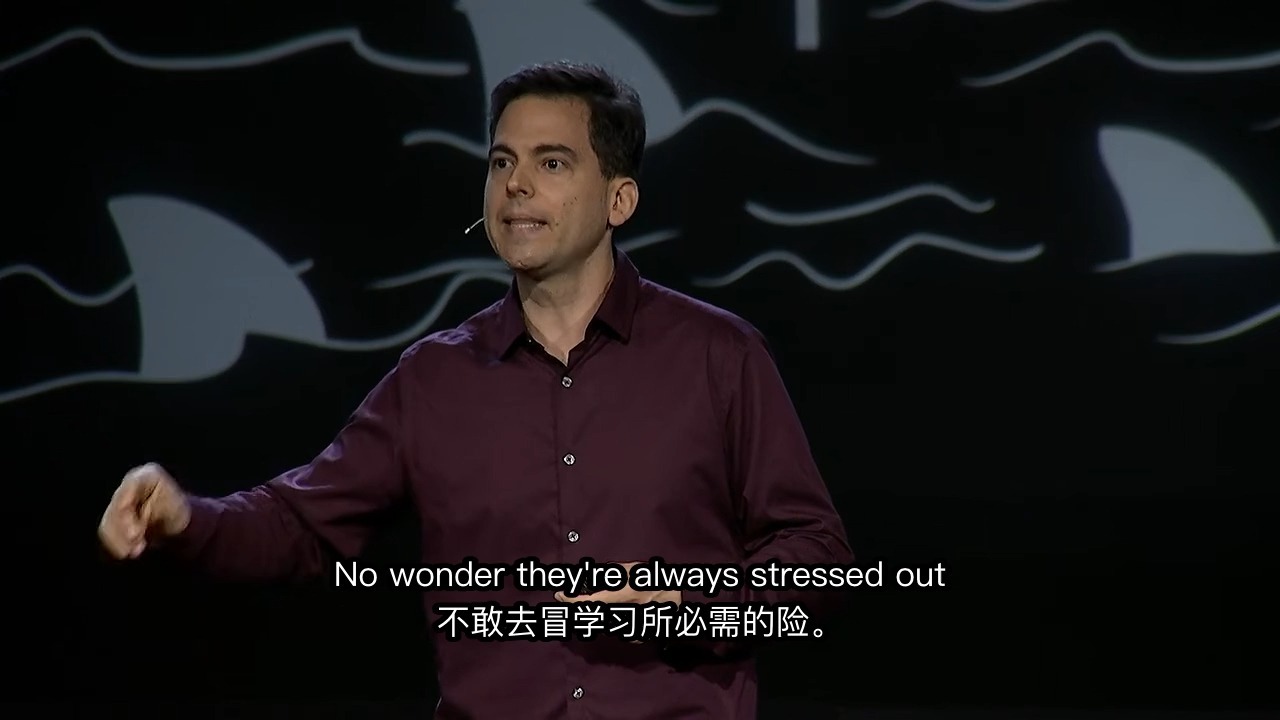
字幕摘录
| 时间 | 英文 | 中文 |
|---|---|---|
| 0:00 | Most of us go through life trying to do our best at whatever we do, | 我们大部分人过着毕生的生活 想尽我们的最大努力 |
| 0:04 | whether it's our job, family, school, or anything else. | 不管是我们的工作,家庭,学校,还是别的什么。 |
| 0:09 | I feel that way. | 我觉得是这样。 |
| 0:10 | I try my best. | 我尽力了 |
| 0:11 | But some time ago, I came to the realization | 但不久前,我意识到 |
| 0:14 | that I wasn't getting much better at the things I cared most about, | 我对最关心的事情没有好过 |
| 0:18 | whether it was being a husband or a friend or a professional or teammate. | 不管是丈夫还是朋友 还是职业或队友 |
| 0:24 | And I wasn't improving much at those things, | 我并没有在那些东西上做很多改进 |
| 0:26 | even though I was spending a lot of time working hard at them. | 虽然我花了很多时间 努力地对待他们。 |
| 0:31 | I've since realized from conversations I've had and from research | 之后我从谈话和研究中意识到 |
展开字幕全文(148 条)
| 序号 | 英文 | 中文 |
|---|---|---|
| 1 | Most of us go through life trying to do our best at whatever we do, | 我们大部分人过着毕生的生活 想尽我们的最大努力 |
| 2 | whether it's our job, family, school, or anything else. | 不管是我们的工作,家庭,学校,还是别的什么。 |
| 3 | I feel that way. | 我觉得是这样。 |
| 4 | I try my best. | 我尽力了 |
| 5 | But some time ago, I came to the realization | 但不久前,我意识到 |
| 6 | that I wasn't getting much better at the things I cared most about, | 我对最关心的事情没有好过 |
| 7 | whether it was being a husband or a friend or a professional or teammate. | 不管是丈夫还是朋友 还是职业或队友 |
| 8 | And I wasn't improving much at those things, | 我并没有在那些东西上做很多改进 |
| 9 | even though I was spending a lot of time working hard at them. | 虽然我花了很多时间 努力地对待他们。 |
| 10 | I've since realized from conversations I've had and from research | 之后我从谈话和研究中意识到 |
| 11 | that this stagnation, despite hard work, turns out to be pretty common. | 尽管付出了艰苦努力,但这种停滞不前的现象却非常普遍。 |
| 12 | So I'd like to share with you some insights into why that is | 所以我想和你们分享一些深刻的见解 |
| 13 | and what we can all do about it. | 我们能做些什么呢? |
| 14 | What I've learned is that the most effective people and teams in any domain | 我所学到的是 任何领域最有效的人和团队 |
| 15 | do something we can all emulate. | 做一些我们可以效仿的事。 |
| 16 | They go through life deliberately alternating between two zones, | 他们分两区轮流生活 |
| 17 | the learning zone and the performance zone. | 学习区和表演区。 |
| 18 | The learning zone is when our goal is to improve. | 学习区是当我们的目标是改善。 |
| 19 | Then we do activities designed for improvement, | 然后我们做一些旨在改进的活动, |
| 20 | concentrating on what we haven't mastered yet, | 专注于我们还没有掌握的东西, |
| 21 | which means we have to expect to make mistakes, | 这意味着我们必须期望 犯错误, |
| 22 | knowing that we will learn from them. | 知道我们会学习他们。 |
| 23 | That is very different from what we do when we're in our performance zone, | 这和我们在表演区时所做的完全不同 |
| 24 | which is when our goal is to do something as best as we can, to execute. | 我们的目标是尽我们所能 尽我们所能去执行 |
| 25 | Then we concentrate on what we have already mastered, | 然后我们集中到我们已经掌握的, |
| 26 | and we try to minimize mistakes. | 我们尽量减少错误 |
| 27 | Both of these zones should be part of our lives, | 这两个区都应该是我们生活的一部分 |
| 28 | but being clear about when we want to be in each of them, | 但当我们想加入他们的时候, |
| 29 | with what goal, focus and expectations helps us better perform and better improve. | 以什么目标、重点和期望来帮助我们更好地工作并改进。 |
| 30 | The performance zone maximizes our immediate performance, | 性能区 最大限度地提高我们的即时性能 |
| 31 | while the learning zone maximizes our growth and our future performance. | 学习区能最大限度地实现我们的成长和未来业绩。 |
| 32 | The reason many of us don't improve much despite our hard work | 尽管我们辛勤工作,我们许多人没有多少改进 |
| 33 | is that we tend to spend almost all of our time in the performance zone. | 也就是说 我们几乎都花在表演区了 |
| 34 | This hinders our growth, and ironically, over the long term, also our performance. | 这阻碍了我们的增长,具有讽刺意味的是,从长远来看,我们的表现也是如此。 |
| 35 | So what does the learning zone look like? | 学习区是什么样子的? |
| 36 | Take Demosthenes, a political leader and the greatest orator and lawyer in ancient Greece. | 拿下德摩斯梯内斯,一位政治领袖和古希腊最伟大的演说家和律师. |
| 37 | To become great, he didn't spend all his time just being an orator or a lawyer, | 为了成为伟大的, 他没有花所有的时间 仅仅作为一个演讲者或律师, |
| 38 | which would be his performance zone, | 这将是他的表演区, |
| 39 | but instead he did activities designed for improvement. | 但他做了一些旨在改进的活动。 |
| 40 | Of course he studied a lot, he studied law and philosophy with guidance from mentors, | 当然,他学习了很多, 他在导师的指导下学习法律和哲学, |
| 41 | but he also realized that being a lawyer involved persuading other people, | 但他也意识到当律师 涉及说服别人 |
| 42 | so he also studied great speeches and acting. | 于是他学习了伟大的演讲和表演。 |
| 43 | To get rid of an odd habit he had of involuntarily lifting his shoulder, | 为了摆脱他过度抬起肩膀的奇怪习惯 |
| 44 | he practiced his speeches in front of a mirror, | 他在镜子前练习演说 |
| 45 | and he suspended a sword from the ceiling so that if he raised his shoulder, it would hurt. | 他把一把剑悬在天花板上,以便他抬起肩膀,那会很痛。 |
| 46 | To speak more clearly despite a lisp, he went through his speeches with stones in his mouth. | 说得更清楚一点,尽管他嘴里有石块,他还是通过演讲。 |
| 47 | He built an underground room where he could practice without interruptions and not disturb other people, | 他建造了一间地下房间,可以不间断地练习,而不会打扰其他人, |
| 48 | and since courts at the time were very noisy, he also practiced by the ocean, | 由于当时的法庭非常吵闹,他也在海上练习, |
| 49 | projecting his voice above the roar of the waves. | 将他的声音投射在波浪的咆哮上 |
| 50 | His activities in the learning zone were very different from his activities in court, his performance zone. | 他在学习区的活动与他在法庭,表演区的活动大不相同. |
| 51 | In the learning zone he did what Dr. Anders Ericsson calls deliberate practice. | 在学习区,他做了安德斯·爱立信博士所说的故意练习。 |
| 52 | This involves breaking down abilities into component skills, | 这涉及到将能力细分为组成部分技能, |
| 53 | being clear about what sub-skills we're working to improve, like keeping our shoulders down. | 清楚我们正在努力改进的副技能 比如把肩膀放下 |
| 54 | Giving full concentration to a high level of challenge outside our comfort zone, | 在舒适区外全力应对高水平的挑战, |
| 55 | just beyond what we can currently do. | 超越我们目前所能做的 |
| 56 | Using frequent feedback with repetition and adjustments, | 经常利用重复和调整的反馈, |
| 57 | and ideally engaging the guidance of a skilled coach, | 并且最理想的是在熟练的教练的引导下, |
| 58 | because activities designed for improvement are domain specific, | 因为旨在改进的活动是特定领域, |
| 59 | and great teachers and coaches know what those activities are and can also give us expert feedback. | 伟大的教师和教练知道这些活动是什么,也可以给我们专家的反馈。 |
| 60 | It is this type of practice in the learning zone which leads to substantial improvement, | 学习区内的这类做法导致大幅度改善, |
| 61 | not just time on task, performing. | 不只是时间 任务,表演。 |
| 62 | For example, research shows that after the first couple of years working in a profession, | 例如,研究表明,在从事某一职业工作的头几年之后, |
| 63 | performance usually plateaus. | 性能通常为高原. |
| 64 | This has been shown to be true in teaching, general medicine, nursing, and other fields. | 这在教学、一般医学、护理和其他领域都显示出来。 |
| 65 | And it happens because once we think we've become good enough, adequate, | 它发生,因为一旦我们觉得 我们变得足够好,足够, |
| 66 | then we stop spending time in the learning zone. | 然后我们停止在学习区花时间。 |
| 67 | We focus all our time on just doing our job, performing, | 我们全神贯注在做我们的工作 表演 |
| 68 | which turns out not to be a great way to improve. | 事实证明,这不是一个伟大的改进方法。 |
| 69 | But the people who continue to spend time in the learning zone do continue to always improve. | 但是,在学习区继续度过时间的人确实继续得到改善。 |
| 70 | The best salespeople at least once a week do activities with the goal of improvement. | 最好的销售人员每周至少从事一次旨在改进的活动。 |
| 71 | They read to extend their knowledge, consult with colleagues or domain experts, | 他们读到扩展知识,与同事或领域专家协商, |
| 72 | try out new strategies, solicit feedback, and reflect. | 尝试新的策略,征求反馈意见和反思。 |
| 73 | The best chess players spend a lot of time not playing games of chess, | 最好的棋手花了很多时间 不玩象棋游戏, |
| 74 | which would be their performance zone, | 这将是他们的表演区, |
| 75 | but trying to predict the moves grandmasters made and analyzing them. | 但试图预测奶奶们的动作 并分析它们。 |
| 76 | Each of us has probably spent many, many, many hours typing on a computer without getting faster. | 我们每个人可能都花费了很多,很多,很多小时 在电脑上打字,没有更快。 |
| 77 | But if we spent 10 to 20 minutes each day fully concentrated on typing 10 to 20% faster | 但是如果我们每天花10到20分钟 全部集中在打字速度快10%到20% |
| 78 | than our current reliable speed, we would get faster, | 比现在的可靠速度还要快 |
| 79 | especially if we also identified what mistakes we're making and practiced typing those words. | 特别是如果我们也发现了我们犯的错误 并练习打字。 |
| 80 | That's deliberate practice. | 这是故意的 |
| 81 | In what other parts of our lives, perhaps that we care more about, | 在我们生活的其他部分 也许我们更关心 |
| 82 | are we working hard but not improving much because we're always in the performance zone? | 我们是不是在努力工作,但并没有改善多少,因为我们总是在表演区? |
| 83 | Now, this is not to say that the performance zone has no value. | 这并不是说表演区没有价值 |
| 84 | It very much does. | 甚处来. |
| 85 | When I needed knee surgery, I didn't tell the surgeon, | 当我需要膝盖手术时 我没有告诉外科医生 |
| 86 | poke around in there and focus on what you don't know. | 调查一下你不知道的事 |
| 87 | We'll learn from your mistakes. | 我们会从你们的错误中吸取教训 |
| 88 | I look for a surgeon who I thought would do a good job, and I wanted her to do a good job. | 我找一个医生,我想做一个好工作, 我希望她做一个好工作。 |
| 89 | Being in the performance zone allows us to get things done as best as we can. | 身处表演区能让我们尽我们所能完成一切 |
| 90 | It can also be motivating, and it provides us with information | 也可以激励我们,为我们提供信息 |
| 91 | to identify what to focus on next when we go back to the learning zone. | 当我们回到学习区时, 确定下一步的重点 |
| 92 | So the way to high performance is to alternate between the learning zone and the performance zone, | 因此,高性能的方式是在学习区和表演区之间交替, |
| 93 | purposefully building our skills in the learning zone, then applying those skills in the performance zone. | 故意在学习区培养我们的技能,然后将这些技能应用到表演区。 |
| 94 | When Beyoncé is on tour, during the concert, she's in her performance zone. | 当碧昂丝巡演时,在演唱会期间,她在她的表演区. |
| 95 | But every night when she gets back to the hotel room, she goes right back into her learning zone. | 但每晚她回到酒店房间后 她就会回到学习区 |
| 96 | She watches a video of the show that just ended. | 她看了一部刚刚结束的节目的录像. |
| 97 | She identifies opportunities for improvement for herself, her dancers, and her camera staff. | 她为自己、舞蹈家和摄影师确定了改进的机会。 |
| 98 | And the next morning, everyone receives pages of notes with what to adjust, | 第二天早上,每个人都收到几页纸条 上面有需要调整的内容 |
| 99 | which they then work on during the day before the next performance. | 然后在下一场演出的前一天工作。 |
| 100 | It's a spiral to ever-increasing capabilities, | 它是一个螺旋向不断增强的能力, |
| 101 | but we need to know when we seek to learn and when we seek to perform. | 但我们需要知道我们何时努力学习,何时努力工作。 |
| 102 | And while we want to spend time doing both, the more time we spend in the learning zone, the more we'll improve. | 虽然我们想花时间做两者, 但是我们花在学习区的时间越多, 我们就会越多。 |
| 103 | So how can we spend more time in the learning zone? | 我们怎样才能在学习区多花点时间呢? |
| 104 | First, we must believe and understand that we can improve, what we call a growth mindset. | 首先,我们必须相信和理解,我们能够改善我们所说的增长心态。 |
| 105 | Second, we must want to improve at that particular skill. | 第二,我们必须提高这种特殊技能。 |
| 106 | There has to be a purpose we care about, because it takes time and effort. | 必须有我们关心的目的,因为它需要时间和努力。 |
| 107 | Third, we must have an idea about how to improve, what we can do to improve. | 第三,我们必须有一个如何改进,如何改进的想法。 |
| 108 | Not how I used to practice a guitar as a teenager, performing songs over and over again, but doing deliberate practice. | 并非我少年时如何练习吉他,反复表演歌曲,而是故意练习. |
| 109 | And fourth, we must be in a low-stakes situation. | 第四,我们必须处于低调状态。 |
| 110 | Because if mistakes are to be expected, then the consequence of making them must not be catastrophic or even very significant. | 因为如果要预料到错误,那么造成错误的后果决不能是灾难性的,甚至不是非常重大。 |
| 111 | A tightrope walker doesn't practice new tricks without a net underneath, | 一个紧身行者不练新把戏 没有下面的网, |
| 112 | and an athlete wouldn't set out to first try a new move during a championship match. | 选手不会在比赛中先尝试新动作 |
| 113 | One reason that in our lives we spend so much time in the performance zone is that our environments often are unnecessarily high-stakes. | 在我们的生活中,我们花这么多时间在表演区的一个原因是,我们的环境往往不必要地高涨。 |
| 114 | We create social risks for one another, even in schools which are supposed to be all about learning, and I'm not talking about standardized tests. | 我们为彼此创造社会风险, 即使在学校里, 学校应该是所有关于学习, 我不是在谈论标准化的测试。 |
| 115 | I mean that every minute of every day, many students in elementary schools through colleges feel that if they make a mistake, others will think less of them. | 我的意思是,每天的每一分钟,许多小学的学生通过学院感到,如果他们犯了错误,其他人会少想他们. |
| 116 | No wonder they're always stressed out and not taking the risks necessary for learning. | 难怪他们总是压力很大,不承担学习所需的风险. |
| 117 | But they learn that mistakes are undesirable, inadvertently, when teachers or parents are eager to hear just correct answers, | 但是当老师或家长渴望听到正确答案时,他们就会发现错误是不受欢迎的,是无意的, |
| 118 | and reject mistakes rather than welcome and examine them to learn from them, | 否认错误,而不喜悦, |
| 119 | or when we look for narrow responses rather than encourage more exploratory thinking that we can all learn from. | 或者,当我们寻找狭隘的对策,而不是鼓励我们大家可以学习的更探索性的思维。 |
| 120 | When all homework or student work has a number or a letter on it and counts toward a final grade, | 当所有家庭作业或学生工作 都有一个号码或信件 并算到一个期末, |
| 121 | rather than being used for practice, mistakes, feedback, and revision, we send the message that school is a performance zone. | 而不是用来练习,错误,反馈, 和修正, 我们发出的信息 学校是一个表演区。 |
| 122 | The same is true in our workplaces. | 我们工作场所的情况也是如此。 |
| 123 | In the companies I consult with, I often see flawless execution cultures, which leaders foster to encourage great work, | 在我咨询的公司里,我经常看到无瑕疵的处决文化, 领导人鼓励伟大的工作, |
| 124 | but it leads employees to stay within what they know and not try new things, so companies struggle to innovate and improve, and they fall behind. | 但是它导致员工 留在他们所知道的 而不是尝试新的事物, 所以公司挣扎 创新和改进, 他们落后。 |
| 125 | We can create more spaces for growth by starting conversations with one another about when we want to be in each zone, | 我们可以创造更多增长空间 通过开始相互对话 当我们想要在每一个区域, |
| 126 | what do we want to get better at, and how, and when do we want to execute and minimize mistakes. | 我们想改进什么,如何,什么时候,我们想执行和尽量减少错误。 |
| 127 | That way we gain clarity about what success is, when, and how to best support one another. | 这样,我们就能清楚地了解什么是成功,何时成功,以及如何最好地相互支持。 |
| 128 | But what if we find ourselves in a chronic high-stakes setting, and we feel we can't start those conversations yet? | 但是,如果我们发现自己处于一个长期高调的环境下,而我们感到我们尚不能开始那些对话呢? |
| 129 | And here are three things we can still do as individuals. | 这里有三件事我们作为个人仍然可以做。 |
| 130 | First, we can create low-stakes islands in an otherwise high-stakes sea. | 首先,我们可以在海中造出低沉的岛屿。 |
| 131 | These are spaces where mistakes have little consequence. | 这些都是错误影响不大的空间。 |
| 132 | For example, we might find a mentor or a trusted colleague with whom we can exchange ideas or have vulnerable conversations or even role play. | 例如,我们可能找到一位导师或一位值得信赖的同事,我们可以与他们交换想法,或者进行脆弱的对话,甚至扮演角色。 |
| 133 | Or we can ask for feedback-oriented meetings as projects progress. | 或者,随着项目的进展,我们可以要求举行注重反馈的会议。 |
| 134 | Or we can set aside time to read or watch videos or take online courses. | 或者我们可以留出时间 阅读或观看视频 或在线课程。 |
| 135 | Those are just some examples. | 这些只是一些例子。 |
| 136 | Second, we can execute and perform as we're expected, but then reflect on what we could do better next time, like Beyoncé does. | 第二,我们可以像预期的那样执行和表演,但再思考下次我们能做的更好,就像碧昂丝那样. |
| 137 | And we can observe and emulate experts. | 我们可以观察和效仿专家。 |
| 138 | The observation, reflection, and adjustment is a learning zone. | 观察,反思,和调整是一个学习区. |
| 139 | And finally, we can lead and lower the stakes for others by sharing what we want to get better at, | 最后,我们可以通过分享我们想要更好的东西来领导和降低他人的利益, |
| 140 | by asking questions about what we don't know, by soliciting feedback, | 通过问一些我们不知道的问题, 通过征求反馈, |
| 141 | and by sharing our mistakes and what we've learned from them so that others can feel safe to do the same. | 通过分享我们的错误 以及我们从中吸取的教训 这样其他人就能感到安全 |
| 142 | Real confidence is about modeling ongoing learning. | 真正的自信在于模拟不断学习。 |
| 143 | What if, instead of spending our lives doing, doing, doing, performing, performing, performing, | 如果,不花我们的生活 做,做,做,表演,表演, |
| 144 | we spent more time exploring, asking, listening, experimenting, reflecting, striving, and becoming? | 我们花了更多的时间探索,问,听, 实验,反射,努力,和成为? |
| 145 | What if we each always had something we were working to improve? | 如果我们每个人都有 我们一直在努力改进的东西呢? |
| 146 | What if we created more low-stakes islands and waters? | 如果我们创造了更多的低沉的岛屿和水域呢? |
| 147 | And what if we got clear within ourselves and with our teammates about when we seek to learn and when we seek to perform, | 如果我们自己和我们的队友 都清楚我们想要学习的时候 以及我们想要表演的时候 |
| 148 | so that our efforts can become more consequential, so that our efforts can become more consequential, | 以便我们的努力能够更有成效,使我们的努力能够更有成效, |
该视频共有字幕 148 条。解锁更多字幕为会员功能,请移动到 价格