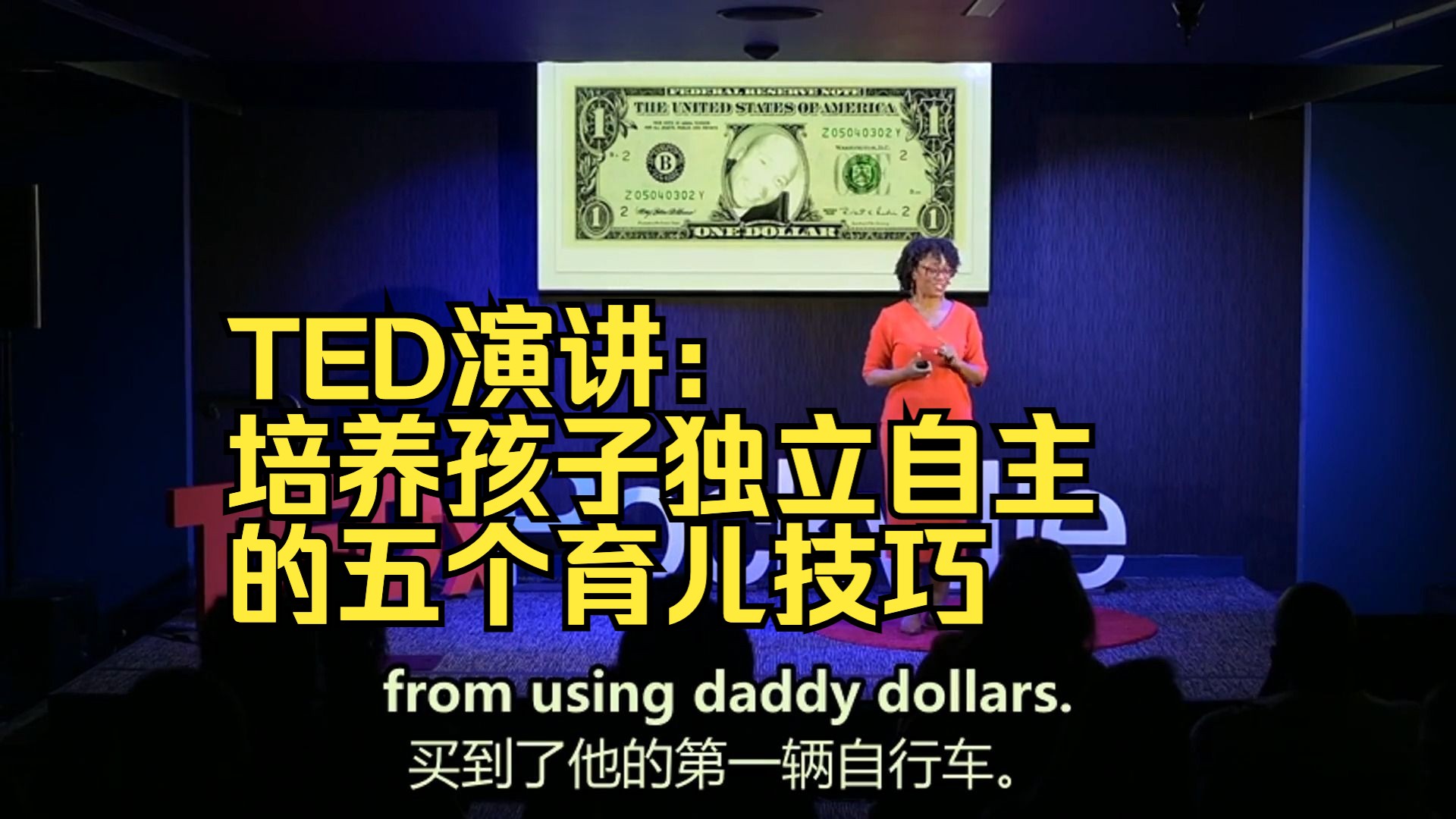
TED演讲:培养孩子独立自主的五个育儿技巧
字幕摘录
| 时间 | 英文 | 中文 |
|---|---|---|
| 0:04 | How do we raise self-reliant kids, who have initiative, who are resilient, and who could | 我们如何培养自力更生的儿童,他们有主动性,有复原力,并且能够 |
| 0:11 | be problem solvers? | 成为解决问题的人? |
| 0:13 | Kids who have the skills and the courage to step outside of their comfort zone and take | 有技巧和勇气的孩子 走出他们的舒适地带 带走 |
| 0:20 | advantage of what life has to offer. | 拥有生命的优势 |
| 0:24 | I'm a mom to these three boys, and if you're a parent like me, you've probably asked yourself | 我是这三个孩子的妈妈 如果你像我一样是父母 你可能已经问自己 |
| 0:30 | those very same questions. | 同样的问题。 |
| 0:33 | And while I'm sure that every caring parent wants those same things for their children, | 虽然我相信每个有爱心的父母 都希望孩子得到同样的东西 |
| 0:40 | I think we're going about it the wrong way. | 我想我们走错了路 |
| 0:44 | We want our kids to be happy and successful, so our instinct is to shield them from hurt | 我们希望我们的孩子快乐成功 所以我们的本能就是保护他们免受伤害 |
| 0:53 | and disappointment. | 还有失望 |
展开字幕全文(236 条)
| 序号 | 英文 | 中文 |
|---|---|---|
| 1 | How do we raise self-reliant kids, who have initiative, who are resilient, and who could | 我们如何培养自力更生的儿童,他们有主动性,有复原力,并且能够 |
| 2 | be problem solvers? | 成为解决问题的人? |
| 3 | Kids who have the skills and the courage to step outside of their comfort zone and take | 有技巧和勇气的孩子 走出他们的舒适地带 带走 |
| 4 | advantage of what life has to offer. | 拥有生命的优势 |
| 5 | I'm a mom to these three boys, and if you're a parent like me, you've probably asked yourself | 我是这三个孩子的妈妈 如果你像我一样是父母 你可能已经问自己 |
| 6 | those very same questions. | 同样的问题。 |
| 7 | And while I'm sure that every caring parent wants those same things for their children, | 虽然我相信每个有爱心的父母 都希望孩子得到同样的东西 |
| 8 | I think we're going about it the wrong way. | 我想我们走错了路 |
| 9 | We want our kids to be happy and successful, so our instinct is to shield them from hurt | 我们希望我们的孩子快乐成功 所以我们的本能就是保护他们免受伤害 |
| 10 | and disappointment. | 还有失望 |
| 11 | We worry about their self-esteem, so we praise them for everything. | 我们担心他们的自尊,所以我们赞扬他们的一切。 |
| 12 | We are concerned about whether or not they fit in, so we indulge them. | 我们担心他们是否适合,所以我们纵容他们。 |
| 13 | And we don't want them to fail, so we step in and take over. | 我们不希望他们失败, 所以我们介入并接管。 |
| 14 | And we do all of this in an attempt to curate a perfect life for them. | 我们做这些都是为了 管理他们完美的生活 |
| 15 | But what we're really doing is raising kids who are afraid to take risks because they | 但我们真正要做的是抚养孩子 他们害怕冒险,因为他们 |
| 16 | failure, kids who lack the confidence in their ability to figure things out, and then young | 失败的孩子 缺乏信心 他们的能力 找出事情,然后年轻 |
| 17 | people who are afraid to launch into adulthood. | 害怕进入成年的人 |
| 18 | More young adults are living at home and for longer stretches, and this was occurring even | 更多的年轻成年人住在家中,而且时间较长,这种情况甚至发生 |
| 19 | before the pandemic. | 在疫情发生前 |
| 20 | A Pew Research study found that 52% of young adults are living at home, which is the highest | Pew研究发现,52%的年轻成年人住在家中,这是最高的。 |
| 21 | percentage since the Great Depression. | 自大萧条以来的百分比。 |
| 22 | And what we're finding is that young adults are stuck between adolescence and adulthood. | 而我们发现的是,年轻的成年人被困在青春期和成年之间。 |
| 23 | And that's the generation of people that we're raising. | 这就是我们培养的一代人。 |
| 24 | And in fact, we hear this in the language that young adults even use when they have | 事实上,我们听到这种语言 年轻的成年人甚至使用,当他们有 |
| 25 | to make responsible adult decisions. | 由成年人作出负责任的决定。 |
| 26 | There's a term for it. | 其有名词. |
| 27 | Who knows what that is? | 谁知道那是什么? |
| 28 | Adulting, yes. | 成年,是的。 |
| 29 | The practice of behaving in a characteristic of a responsible adult. | 以负责任的成年人为特征的行为。 |
| 30 | So I am convinced that as parents and caregivers, we are missing out on a great opportunity | 所以我相信,作为父母和照顾者,我们正错失良机 |
| 31 | to raise kids who are resilient and can take hold of their future, kids who can step outside | 抚养那些有适应力并能把握未来的孩子, 那些可以走出家门的孩子 |
| 32 | of their comfort zone and do amazing things. | 他们的舒适地带, 做惊人的事情。 |
| 33 | Now these are skills that are necessary not only for them to lead fulfilling lives and | 现在这些技能不仅对于他们过上充实的生活和生活是必要的。 |
| 34 | live out their potential, but those are skills that are also necessary for our changing world. | 这些技能对我们不断变化的世界也是必要的。 |
| 35 | So back to my original question, how do we raise self-reliant kids who have initiative, | 回到我最初的问题 我们如何培养那些有主动性的自立儿童 |
| 36 | are resilient, and can be problem solvers? | 有弹性,而且能解决问题? |
| 37 | I believe we do that by raising kids who can think and act entrepreneurially. | 我相信我们通过抚养能思考和创业的儿童来做到这一点。 |
| 38 | Kids who have the opportunity or have the skill set to view the world from an entrepreneurial | 有机会或有能力从企业中看待世界的孩子们 |
| 39 | mindset. | 心态。 |
| 40 | So let me tell you how I came to this conclusion. | 所以,让我告诉你我是如何得出这个结论的。 |
| 41 | So for more than 20 years, my work was centered around supporting adult entrepreneurs, providing | 因此,20多年来,我的工作集中在 支持成年企业家,提供 |
| 42 | them with training and technical assistance and resources to help them start and grow | * 通过培训和技术援助及资源帮助她们开始成长; |
| 43 | their businesses. | 他们的生意。 |
| 44 | And something I would observe, we'd have two individuals come into our office seeking | 我所观察到的,我们会有两个人 进入我们的办公室寻求 |
| 45 | assistance. | 援助活动。 |
| 46 | And on the surface, it appeared that those individuals were at the same level in terms | 从表面上看,这些人似乎处于同一水平。 |
| 47 | of resources, capabilities, skills, and business acumen. | 资源、能力、技能和业务敏锐。 |
| 48 | But what we would find is that one individual would take that information and go with it. | 但我们会发现,一个人会接受这个信息,并随它去。 |
| 49 | And then the other individual would just seem to have trouble really getting traction and | 然后另一个人 似乎有困难 真正得到牵引和 |
| 50 | getting going. | 出发 |
| 51 | And what I realized was that it had nothing to do with skill or capability. | 我意识到这与技能和能力无关。 |
| 52 | What it came down to was the mindset of that individual. | 由此而来的是这个人的心态。 |
| 53 | And observing this got me thinking, how might I raise my children such that they can view | 观察这让我想到 我如何抚养我的孩子,让他们能看见 |
| 54 | the world like an entrepreneur, that they would have the courage to step out and to | 世界就像一个企业家, 他们有勇气走出和 |
| 55 | change the world with an entrepreneurial lens. | 用创业视角改变世界 |
| 56 | So that set us out, my husband and I, on a 15-year journey to raise entrepreneurial kids. | 因此,这让我们,我的丈夫和我, 在15年的旅程, 养育创业的孩子。 |
| 57 | And we really saw this come together when my eldest son Silas was nine years old. | 我长子Silas九岁的时候 我们真的看到了这个 |
| 58 | We had been living here in Maryland for about two years, and my husband was planning to | 我们在马里兰州住了两年左右 我丈夫打算 |
| 59 | travel back to Colorado to visit his mother. | 回到科罗拉多去看他的母亲 |
| 60 | And so Silas asked me, he said, hey, Mom, can me and my brothers also go with Dad to | 所以Silas问我,他说,嘿,妈妈,我可以和我的兄弟们也和爸爸去 |
| 61 | visit Grandma? | 去拜访外婆? |
| 62 | And I said, well, you know, Silas, four airline tickets were not in the budget, but you can | 我说 Silas 4张机票不在预算中 但你可以 |
| 63 | go if you can buy your own ticket. | 如果你能买到自己的票就去 |
| 64 | So he paused for a moment and he said, okay, well, how much are airline tickets? | 所以他暂停了一会儿 然后说,好吧,那机票多少钱? |
| 65 | And I said about $300. | 我说了大约300美元。 |
| 66 | And so his next question, I have to say, it literally blew my mind. | 所以,他的下一个问题,我不得不说, 它真的让我心碎。 |
| 67 | So he said, okay, can I find free stuff on Craigslist and then resell it? | 所以他说,好吧,我可以找到免费的东西 在克雷格列表然后转售? |
| 68 | Yeah, I was like, yeah, you can. | 是的,我很喜欢,是的,你可以。 |
| 69 | And so then over the course of that summer, that's exactly what he did. | 所以在那个夏天里,他就是这么做的。 |
| 70 | You know, he would get online and research Craigslist. | 你知道,他会得到在线 和研究克雷格名单。 |
| 71 | My husband would take him to go pick up those things and then I would help him take pictures | 我丈夫会带他去捡东西 然后我会帮他拍照 |
| 72 | and post them online. | 然后在网上发布 |
| 73 | But then he also did some other things that summer. | 但那个夏天他还做了一些其他的事. |
| 74 | He hustled. | 他急着走 |
| 75 | So he he sold and he baked and sold cookies. | 所以他卖了 然后烤了又卖了饼干 |
| 76 | And then he also washed cars. | 然后他也洗车。 |
| 77 | And throughout that entire process, my husband and I, we guided him along. | 在整个过程中,我和我丈夫 一直引导着他 |
| 78 | We were there to coach and encourage him. | 我们在那里指导并鼓励他。 |
| 79 | But we allowed him to take the lead when it was time for him to make his | 但是我们让他在时机到来的时候领先 |
| 80 | sales pitch. | 销售投注. |
| 81 | You know, we coached him on how to make the pitch. | 我们教他如何投球 |
| 82 | But when it was time to knock on the doors, he stood forward and we stepped back. | 但到了敲门的时候,他站着,我们退了一步。 |
| 83 | And that summer, he raised the money. | 那年夏天,他筹到了钱 |
| 84 | He earned the money to purchase his airline ticket. | 他挣钱买机票 |
| 85 | And he made a little bit more and he bought me a gift. | 他多做了一点 他给我买了个礼物 |
| 86 | But, you know, he was thinking about when he bought that gift, it was like me or him. | 但是,你知道,他在想 当他买了礼物, 它就像我或他。 |
| 87 | I don't know. | 师曰. |
| 88 | But think about the confidence that this put in him at nine years old, | 但想想这让他在9岁时充满信心 |
| 89 | that he could have a big goal and that he could persevere to achieve that goal. | 他可以有一个大目标,他可以坚持不懈地实现这一目标。 |
| 90 | Amazing. | 厉害 |
| 91 | But when I share that story with other parents, | 但当我与其他父母分享这个故事时, |
| 92 | many of them shake their head and say, you know what? | 很多人摇头说,你知道吗? |
| 93 | My kid could never do that because my kids don't have the entrepreneurial gene. | 我的孩子永远不会这样做 因为我的孩子没有 创业基因。 |
| 94 | Well, being entrepreneurial is not genetic. | 做企业不是遗传性的 |
| 95 | It is a set of behaviors that can be learned when given the opportunity. | 这是一种在有机会时可以学到的行为。 |
| 96 | Entrepreneurs are not born. | 企业家不生. |
| 97 | The skills and the experiences that cause a person to be entrepreneurial | 促使一个人创业的技能和经验 |
| 98 | can be taught and it can be nurtured. | 可以教它,也可以培养它。 |
| 99 | Now, raising entrepreneurial kids is more than just teaching them how to start a | 现在,养育创业的孩子 不只是教他们如何开始 |
| 100 | business so they can earn money. | 生意是为了赚钱 |
| 101 | Raising entrepreneurial kids is really about preparing kids for life, | 养育创业儿童 真正是为了让孩子们为生活做好准备 |
| 102 | equipping them with everything that they need, with the confidence, | 让他们拥有他们需要的一切 充满信心 |
| 103 | with the ability to speak up, to persevere, to have tenacity, | 有说话、坚忍、坚忍的能力, |
| 104 | to bounce back from fear and rejection. | 从恐惧和排斥中反弹回来 |
| 105 | Those are the things that are required in our world to live to one's potential. | 这些都是我们世界为了实现自己的潜力而需要的东西。 |
| 106 | So in order for me to learn as much as I could about raising entrepreneurial kids, | 所以为了让我尽可能多地学习 如何培养创业儿童 |
| 107 | I interviewed dozens of parents and kids to find out what they were doing. | 我采访了几十个父母和孩子,以了解他们在做什么。 |
| 108 | And so I want to share with you what I learned and I want to share with you five | 所以我想跟你分享我学到的知识 和与你分享五 |
| 109 | strategies that I'm actually doing with my children and that, honestly, | 其实我和孩子们一起做的策略 说实话 |
| 110 | I think every parent should be doing with their children to disrupt | 我觉得每个家长都应该和孩子一起 来扰乱 |
| 111 | our conventional way of parenting. | 我们传统的养育方式 |
| 112 | So number one, don't give them an allowance. | 所以,第一,不要给他们补贴。 |
| 113 | That's right, that's what I'm talking about too, yes. | 对,我也是这么说的,是的 |
| 114 | Don't give them an allowance. | 别给他们补贴 |
| 115 | Instead, challenge them to start a business to earn their spending money. | 相反,挑战他们创办企业以赚取开支。 |
| 116 | So this is my boys and this is how one of the ways that they've earned money, | 这就是他们挣钱的方式之一 |
| 117 | their own spending money is they make bracelets. | 他们自己花的钱就是做手镯 |
| 118 | And there is no better lesson around the value of a dollar | 一美元的价值没有更好的教训 |
| 119 | {\fn黑体\fs22\bord1\shad0\3aHBE\4aH00\fscx67\fscy66\2cHFFFFFF\3cH808080}比你们要努力工作才能赚到他们每个人的钱 | |
| 120 | And through this process, our kids will learn confidence, financial literacy, | 通过这个过程,我们的孩子将学习信心, 金融知识, |
| 121 | public speaking, how to convince people, all skills that are valuable | 公开演讲,如何说服人 所有有价值的技能 |
| 122 | for the world that we live in. | 为了我们生活的世界 |
| 123 | So don't give them an allowance. | 所以别给他们零钱 |
| 124 | The next thing is make them pay for their wants. | 接下来的事情是让他们 支付他们的需求。 |
| 125 | You know, key to entrepreneurship is about personal responsibility and ownership. | 创业的关键在于个人责任和所有权。 |
| 126 | And it is amazing how when you put the responsibility on someone else | 当你把责任推给别人时 真是太神奇了 |
| 127 | to buy that thing that they said they really wanted, kind of shifts a little bit, right? | 买他们说真的想要的东西, 有点班,对不对? |
| 128 | It really, really does. | 痷 痷 |
| 129 | It's no different with the kids. | 与子无异. |
| 130 | And so we actually started this quite early with our children. | 所以,我们开始这个很早 我们的孩子。 |
| 131 | 所以当Silas大约四岁的时候,我创造了Daddy Dollars。 | |
| 132 | And the boys would earn Daddy Dollars for doing things such as chores, | 男孩们会挣到爸爸的美元 做家务之类的事 |
| 133 | for exhibiting positive behavior and for also reading books. | 表现了积极的行为 也读了书 |
| 134 | And Silas actually purchased his first bike from using Daddy Dollars. | 而Silas实际上从使用Daddy Dollars购买了他的第一辆自行车. |
| 135 | He had to earn two hundred and fifty Daddy Dollars, | 他得挣250块爸爸美元 |
| 136 | and that allowed him to purchase his first bike. | 这样他就能买到第一辆自行车 |
| 137 | Now, yeah, you know, these are not real, real dollars. | 现在,是的,你知道, 这些不是真实的,真实的美元。 |
| 138 | But to Silas, that experience of working hard to earn that money | 但对Silas来说 努力挣钱的经验 |
| 139 | and to buy that bike was a very real experience for him. | 买那辆自行车对他来说是非常真实的经验 |
| 140 | Also, in 2019, our family decided to take a trip to Tanzania. | 另外,在2019年,我们的家人决定去坦桑尼亚旅行. |
| 141 | And so, you know, the boys were really excited about it. | 所以,你知道,男孩们真的很兴奋。 |
| 142 | And I said, now, if you want to go to Tanzania, your dad and I are going. | 我说,现在, 如果你想去坦桑尼亚, 你爸爸和我要去。 |
| 143 | But if you want to go to Tanzania, you know what you got to do? | 但如果你想去坦桑尼亚 你知道该怎么做吗? |
| 144 | What do you think I told them? | 你觉得我告诉他们什么了? |
| 145 | They're going to have to buy their own airline ticket. | 他们得自己买机票 |
| 146 | Yes. | 对 |
| 147 | Now, the tickets to Tanzania were not cheap. | 现在,去坦桑尼亚的机票不便宜。 |
| 148 | They were nine hundred dollars a piece. | 一块九百块 |
| 149 | Yeah. | 对 |
| 150 | Check this out. | 看看这个。 |
| 151 | This is what I just love, was when I told the boys | 这就是我所爱的 当我告诉孩子们 |
| 152 | that they were going to have to buy their own ticket, Silas remembering back | 他们必须自己买票 Silas记得 |
| 153 | to what he had done when he was about nine years old. | 当他九岁的时候他做了什么 |
| 154 | He said to his brothers, that's easy. | 他对兄弟们说,这很简单。 |
| 155 | Don't worry about it. | 别着急 |
| 156 | I'll show you how to do it. | 师示众曰. |
| 157 | Yeah. | 对 |
| 158 | And sure enough, | 当然 |
| 159 | they worked hard over several months and they did just that. | 几个月来他们很努力地工作 他们就是这样做的 |
| 160 | They were able to earn enough money by selling their bracelets | 卖了手镯就赚够了钱 |
| 161 | that I showed you earlier. | 我之前给你看的 |
| 162 | And they all were able to go with their parents to Tanzania. | 他们都能跟父母去坦桑尼亚 |
| 163 | So I would encourage you to make your kids pay for the things | 所以我鼓励你让你的孩子为这些东西付出代价 |
| 164 | that they say they want. | 他们说他们想要。 |
| 165 | The next is to reduce their prosperity. | 接下来是减少他们的繁荣。 |
| 166 | Now, let's admit it. | 现在,让我们承认这一点。 |
| 167 | Kids today have a lot of stuff. | 今天的孩子有很多东西 |
| 168 | Right. | 对 |
| 169 | And when you think about it, | 当你想到它, |
| 170 | I understand this need and this desire as parents to want to give our kids | 我理解这个需要 和这个愿望 作为父母想要给我们的孩子 |
| 171 | experiences and things that maybe we did not have when we were children. | 我们小时候可能没有的经验和事物。 |
| 172 | But when we choose a parenting style of overindulging our children | 但是,当我们选择了 养育孩子的风格 过度诱惑我们的孩子 |
| 173 | by providing them with too much, | 以过分供给他们, |
| 174 | too soon, for too long, with no effort on their part, | 时间太长了,没有努力 |
| 175 | what we do is actually raise young people who are self-centered and entitled. | 我们要做的是培养那些以自我为中心和有资格的年轻人。 |
| 176 | And so when we instead in the 1700s, | 所以,当我们在1700年代, |
| 177 | it's interesting because Frederick Douglass made a statement | 这很有趣 因为弗雷德里克道格拉斯做了一个声明 |
| 178 | that I thought was profound even in the 1700s, | 我认为即使在1700年代也是很深刻的 |
| 179 | because we're dealing with it today. | 因为我们今天正在处理它。 |
| 180 | And he said, if you wish to make your son helpless, | 他说 如果你想让你儿子无助 |
| 181 | you need not cripple him with a bullet or a bludgeon, | 你不必用子弹或棍棒打他 |
| 182 | but simply place him beyond the reach of necessity | 但只是把他 超出必要的范围 |
| 183 | and surround him with luxury and ease. | 并且以优容和优容包围他。 |
| 184 | Still true today. | 今天还是真的 |
| 185 | Steve Jobs in a speech to some grad to graduate in a graduation speech | Steve Jobs在毕业演讲中 发表毕业演讲 |
| 186 | told the graduates to stay hungry. | 告诉毕业生继续挨饿。 |
| 187 | And what we love about entrepreneurs is their hustle. | 我们最爱的是企业家的动作 |
| 188 | And oftentimes that hustle is rooted in a hunger for something. | 时常,这种诡计植根于对某种事物的渴望。 |
| 189 | But if our kids never want for anything, | 但如果我们的孩子什么都不想要 |
| 190 | what's going to motivate them to take action? | 是什么能激励他们采取行动? |
| 191 | So I encourage you to reduce your kids prosperity. | 所以我鼓励你减少你的孩子的繁荣。 |
| 192 | Next is to let them be delight directed. | 接下来是让他们快乐地引导。 |
| 193 | Entrepreneurs are lifelong learners. | 企业家是终身学习者。 |
| 194 | They learn to do, not simply to know. | 他们学会这样做,而不是简单地知道。 |
| 195 | And when we encourage our children to seek out learning | 当我们鼓励我们的孩子去学习 |
| 196 | for the things that they are most interested in, | 因为他们最关心的事, |
| 197 | they become learners who seek to learn to do because they're teaching themselves | 他们成为学习者 试图学习 这样做,因为他们自己教 |
| 198 | as opposed to just simply pouring in information, | 而不是仅仅在信息中注入, |
| 199 | which is sometimes what we get in our education system. | 这有时是我们在教育系统得到的东西。 |
| 200 | And so this is my my son, Isaiah. | 这是我的儿子以赛亚 |
| 201 | His delight is drawing. | 他的快乐就是画画 |
| 202 | And so he spends hours drawing and he seeks out classes, | 所以他花了几个小时画画 并寻找课程, |
| 203 | teach him how to draw. | 教他画画. |
| 204 | And he was recently awarded | 他最近被授予 |
| 205 | an award by the Smithsonian Museum of African Art for creating. | 史密森尼非洲艺术博物馆颁发的奖项 |
| 206 | Thank you. | 谢谢 |
| 207 | Yeah, this superhero | 是啊,这个超级英雄 |
| 208 | from looking at a piece of art in the museum. | 从看博物馆的艺术品。 |
| 209 | And he designed this. | 他设计了这个。 |
| 210 | But now Isaiah is designing logos for people. | 但现在以赛亚正在为人们设计标志. |
| 211 | So now he's yeah, I love it. | 所以现在他喜欢了,我喜欢 |
| 212 | So so give them room and space to follow their delights. | 故你应当给他们空间和空间,以便他们顺从他们的喜悦。 |
| 213 | And then lastly, let them solve their own problems. | 最后,让他们解决自己的问题。 |
| 214 | Entrepreneurs are problem solvers. | 企业家是解决问题的人。 |
| 215 | And as parents, it is our natural instinct to want to step in | 作为父母 我们的本能是想介入 |
| 216 | and help our kids solve their problems. | 帮助我们的孩子解决他们的问题。 |
| 217 | But when we do that all the time, | 但是,当我们这样做 所有的时间, |
| 218 | we kind of squelch the potential that they have | 我们压制他们的潜力 |
| 219 | to discover new things about themselves, new capabilities that they might have. | 发现他们自己的新事物, 他们可能拥有的新能力。 |
| 220 | It squelches their ability to go out and find the answers for themselves. | 它压制了他们出去为自己找到答案的能力. |
| 221 | So I want you to think about those five things | 所以我要你想想这五件事 |
| 222 | as you begin to raise up young people. | 当你开始培养年轻人。 |
| 223 | And yeah, you know what? | 对,你知道吗? |
| 224 | It's very likely that my boys | 很可能我的孩子们 |
| 225 | may not choose business ownership when they grow up. | 长大后不得选择企业所有权。 |
| 226 | And that's OK, because rather whether a child chooses | 没关系,因为孩子是否选择 |
| 227 | to build a company or become an employee, it doesn't matter | 建立公司或成为员工,这不重要 |
| 228 | because every kid needs to learn how to think like an entrepreneur. | 因为每个孩子都需要学会如何像企业家一样思考 |
| 229 | And the sooner we do this, as parents create an environment at home | 我们越早这样做,因为父母在家中创造环境 |
| 230 | where they have the opportunity in multiple occasions | 他们有机会在多个场合 |
| 231 | to challenge their beliefs about what's possible within them | 挑战他们的信仰 关于什么是可能的 |
| 232 | to step outside of their comfort zone, to take risks, | 走出他们的舒适地带, 冒险, |
| 233 | to learn from failure, to bounce back from rejection, | 从失败中学习 从拒绝中反弹 |
| 234 | then the sooner we'll put them on the path of living out their potential | 然后,我们越早地让他们 走上他们的潜力。 |
| 235 | to lead very fulfilling and successful lives. | 过着充满满足感和成功的生活 |
| 236 | Thank you. | 谢谢 |
该视频共有字幕 236 条。解锁更多字幕为会员功能,请移动到 价格