TED演讲:共创残疾友好未来的四种方法
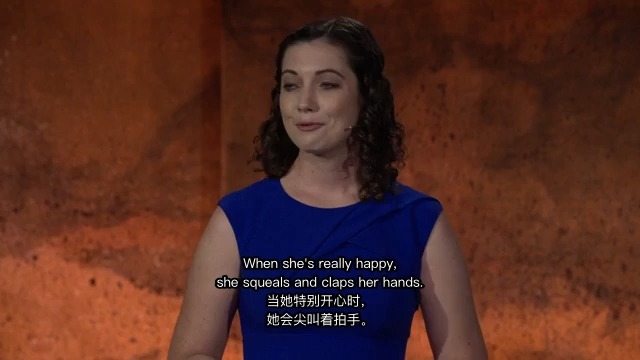
字幕摘录
| 时间 | 英文 | 中文 |
|---|---|---|
| 0:04 | I've never known life without disability. | 我从来没有见过没有残疾的生活。 |
| 0:07 | Disability is where a physical or mental condition or impairment | 残疾是指身体或精神状况或缺陷 |
| 0:11 | is combined with physical or social barriers | 与有形或社会障碍相结合; |
| 0:14 | that make it hard for a person to do certain things | 让人很难做某些事情 |
| 0:16 | or interact with the world around them. | 或与周围的世界互动。 |
| 0:19 | Disability is very diverse, | 残疾种类繁多, |
| 0:21 | with a wide range of experiences | 具有广泛经验 |
| 0:23 | that can affect a person's ability to see, move, hear, learn, communicate, | 能够影响一个人的视力,运动,听觉,学习,交流, |
| 0:29 | or interact with others. | 或与他人互动。 |
| 0:30 | In my case, my sister Erin is autistic and has intellectual disabilities. | 就我而言,我妹妹艾琳患自闭症,有智力残疾. |
展开字幕全文(174 条)
| 序号 | 英文 | 中文 |
|---|---|---|
| 1 | I've never known life without disability. | 我从来没有见过没有残疾的生活。 |
| 2 | Disability is where a physical or mental condition or impairment | 残疾是指身体或精神状况或缺陷 |
| 3 | is combined with physical or social barriers | 与有形或社会障碍相结合; |
| 4 | that make it hard for a person to do certain things | 让人很难做某些事情 |
| 5 | or interact with the world around them. | 或与周围的世界互动。 |
| 6 | Disability is very diverse, | 残疾种类繁多, |
| 7 | with a wide range of experiences | 具有广泛经验 |
| 8 | that can affect a person's ability to see, move, hear, learn, communicate, | 能够影响一个人的视力,运动,听觉,学习,交流, |
| 9 | or interact with others. | 或与他人互动。 |
| 10 | In my case, my sister Erin is autistic and has intellectual disabilities. | 就我而言,我妹妹艾琳患自闭症,有智力残疾. |
| 11 | She processes the world differently. | 她处理的世界不同。 |
| 12 | She enjoys riding her bike, collecting rubber ducks, | 她喜欢骑自行车 收集橡皮鸭 |
| 13 | 重复观看YouTube视频, | |
| 14 | and spending the money she earns at work. | 把钱花在工作上 |
| 15 | When she's really happy, she squeals and flaps her hands. | 当她真的快乐时,她会尖叫和拍手. |
| 16 | Though for many people, Erin is different, she is my normal. | 虽然对许多人来说,艾琳是不同的,她是我的正常人. |
| 17 | In my family, we were raised with a core value that different is not less. | 在我家里,我们成长的核心价值并不小。 |
| 18 | But it was made clear to me | 但我已经明白 |
| 19 | that the rest of the world didn't always share this value. | 世界其他地方并非总能分享这种价值。 |
| 20 | Like I'll never forget one time in middle school, | 就像我永远不会忘记一次 在中学, |
| 21 | my sister's aide had made a video of her learning | 我姐姐的助手 拍了她的学习录像 |
| 22 | how to communicate using speech and sign | 如何使用语音和签名进行通信 |
| 23 | and thriving in an inclusive classroom | 在包容的课堂上兴盛 |
| 24 | where she was loved and accepted just for who she is. | 在那里,她被爱 和接受只是她是谁。 |
| 25 | And I brought it to school wanting to share | 我把它带到学校 想要分享 |
| 26 | to give my classmates the opportunity to learn more about autism, | 让我的同学们有机会更多地了解自闭症 |
| 27 | only to be told by my teacher | 只听老师讲 |
| 28 | that the faculty had decided against it to protect me | 教职员工决定不保护我 |
| 29 | from other students inevitably making fun of her. | 从其他学生 不可避免地取笑她。 |
| 30 | It was one of many instances that taught me what stigma was. | 这是教会我什么是耻辱的许多例子之一。 |
| 31 | With every rude comment | 每一个粗鲁的评论 |
| 32 | when Erin would have a sensory meltdown in a public place, | 当艾琳在公共场所发生感官崩溃时, |
| 33 | with every casual use of the slur retard | 随心所欲地使用稀释剂 |
| 34 | by even childhood friends of mine, | 连我童年的朋友, |
| 35 | with every judgmental stare, | 以每一次判决的眼光, |
| 36 | I learned that the rest of the world | 我学会了世界其他地方 |
| 37 | didn't necessarily see Erin for the full human being that she is. | 不一定看到艾琳是完全的人类 |
| 38 | Now, when I went off to college, | 我上大学时 |
| 39 | I didn't know what role, if any, | 我不知道什么角色,如果有的话, |
| 40 | disability would play in my life outside my family. | 残疾会在我的生活中 在我的家庭之外。 |
| 41 | It wasn't until I studied abroad in China | 直到我出国留学 |
| 42 | for my international relations major | 我的国际关系 |
| 43 | that my personal background with disability and my career came together. | 我个人的残疾背景 和我的事业走到一起 |
| 44 | Through a class I was taking on social issues in Beijing, | 通过我在北京的社交课, |
| 45 | I had the opportunity to visit an autism school there | 我有机会去那儿的自闭症学校 |
| 46 | and was introduced to a local disability rights advocacy organization. | 并被介绍给当地的一个残疾人权利宣传组织。 |
| 47 | I ended up interning with them | 我最后和他们在一起 |
| 48 | and got completely absorbed into that community. | 完全融入了那个社区 |
| 49 | I was finally able to see how my family's struggle | 我终于能看到我的家人是如何挣扎的 |
| 50 | was part of something much larger, | 是一个更大的问题, |
| 51 | and the magnitude of what I found actually shocked me. | 以及我发现的震撼力 |
| 52 | Over a billion people, | 超过十亿人 |
| 53 | an estimated 15 percent of the world's population, | 估计占世界人口的15% |
| 54 | has some form of disability. | 患有某种残疾。 |
| 55 | And persons with disabilities as a group worldwide | 全世界残疾人群体 |
| 56 | face huge amounts of stigma and disadvantage. | 面对着巨大的耻辱和劣势。 |
| 57 | Like just to use education as an example, | 就像用教育作为例子一样 |
| 58 | of the 240 million children with disabilities in the world, | 在世界上2.4亿残疾儿童中, |
| 59 | about 50 percent have never been to school. | 大约50%从未上过学。 |
| 60 | I was appalled that I had been studying global human rights | 我对研究全球人权感到惊讶 |
| 61 | at an Ivy League school, | 在常春藤联盟学校 |
| 62 | and even though the problem was so unbelievably huge, | 尽管问题如此巨大 |
| 63 | not once had disability really ever come up. | 从来没有一次有残疾 真的从来没有出现。 |
| 64 | So I decided to pivot, | 所以我决定选择 |
| 65 | and I've spent the past decade of my career | 我度过了过去十年的职业生涯 |
| 66 | to disability inclusion in international development. | 将残疾问题纳入国际发展。 |
| 67 | I returned to China on a Fulbright Scholarship | 我以富布莱特奖学金回到中国 |
| 68 | to do research on education and programs for autistic adolescents and adults. | 研究自闭症青少年和成年人的教育和方案。 |
| 69 | I then went on to do research or work with disability organizations | 然后,我继续做研究 或与残疾组织合作 |
| 70 | in places like Tanzania, Ireland, and South Africa. | 在坦桑尼亚、爱尔兰和南非等地。 |
| 71 | I now work globally with Special Olympics, | 我现在在全球与特别奥运合作, |
| 72 | using sport as a platform to teach and promote inclusive attitudes. | 利用体育作为教授和促进包容性态度的平台。 |
| 73 | And what I found is that all over the world, | 我发现 全世界, |
| 74 | even though countries' specific cultural contexts or systems | 国家的具体文化背景或制度 |
| 75 | might be different, | 可能不一样 |
| 76 | the underlying problem of attitude barriers remains the same. | 态度障碍的根本问题依然存在。 |
| 77 | And the research backs me up. | 研究为我提供了支持。 |
| 78 | The second most cited barrier to inclusion after lack of data | 在缺乏数据后被引述的第二大阻碍纳入的因素 |
| 79 | is negative attitudes towards disability. | 是对残疾的消极态度。 |
| 80 | What people don't realize is that exclusion hurts everyone. | 人们没有意识到 排斥会伤害每个人 |
| 81 | The International Labor Organization | 国际劳工组织 |
| 82 | estimates that disability exclusion costs low- and middle-income countries | 残疾排斥对中低收入国家造成损失的估计数 |
| 83 | between three and seven percent of GDP. | 占国内生产总值的3%至7%。 |
| 84 | But the opposite is also true. | 但相反的情况也是事实。 |
| 85 | Inclusion could help everyone. | 包容可以帮助每个人。 |
| 86 | Our research at Special Olympics has found | 我们在特别奥运的研究发现 |
| 87 | that inclusive sport and youth leadership programming | 包容性体育和青年领导才能方案 |
| 88 | has benefits for youth both with and without disabilities, | 对残疾和非残疾青年都有好处, |
| 89 | especially when it comes to developing | 特别是涉及发展 |
| 90 | key social and emotional skills | 关键社会和情感技能 |
| 91 | everyone needs to succeed | 每个人都需要成功 |
| 92 | in an increasingly diverse and interconnected world. | 在日益多样化和相互联系的世界中。 |
| 93 | And this is held true in countries as different as the United States, | 在与美国不同的国家里也是如此 |
| 94 | China, India, Kenya, and Greece. | 中国、印度、肯尼亚和希腊。 |
| 95 | The good news is there are four things we all can do | 好消息是,我们可以做四件事 |
| 96 | to make the future more inclusive. | 使未来更具包容性。 |
| 97 | Number one, we need to reevaluate our own attitudes towards disability. | 第一,我们需要重新评估我们对残疾的态度。 |
| 98 | I still get questions about whether it is realistic | 我仍然有疑问 这是否现实 |
| 99 | to include persons with disabilities in international development programs | 将残疾人纳入国际发展方案 |
| 100 | when even the so-called regular people are struggling. | 连所谓的普通人都在挣扎 |
| 101 | There are still too many stereotypes that associate disability with pity. | 将残疾与怜悯联系在一起的定型观念仍然太多。 |
| 102 | And we're still living with social systems and physical structures | 我们还生活在社会体系和物质结构之中 |
| 103 | that segregate people with disabilities. | 隔离残疾人。 |
| 104 | So fewer people have it as part of their everyday experience, | 很少有人有它 作为日常经验的一部分, |
| 105 | and it still makes them really uncomfortable. | 这仍然让他们很不舒服。 |
| 106 | We need to reevaluate these attitudes. | 我们需要重新评估这些态度。 |
| 107 | Needing accommodation or support does not make a person | 需要住宿或支助并不使一个人 |
| 108 | any less deserving of dignity and respect. | 更不值得尊严和尊重 |
| 109 | This is a matter of justice and equity, not charity. | 这是正义和公平的问题,而不是慈善问题。 |
| 110 | Second, choose to include. | 第二,选择包括. |
| 111 | Solving this issue is not just a matter of policy. | 解决这个问题不仅仅是政策问题。 |
| 112 | There are plenty of countries that have disability laws on the books | 有很多国家有 残疾法在书本上 |
| 113 | or have signed and ratified the United Nations Convention | 或已经签署和批准《联合国公约》的国家 |
| 114 | on the Rights of Persons with Disabilities, | 残疾人权利国际公约 |
| 115 | but there is still a huge gap between what is written in policy | 但政策上写的东西之间 仍然有很大的差距 |
| 116 | and what actually happens in practice. | 以及实际发生的事 |
| 117 | And this comes down to all of us. | 而此降伏一切众生. |
| 118 | We can put pressure on governments to make sure that laws are actually implemented, | 我们可以向政府施压,确保法律得到切实实施, |
| 119 | but we can also look at where we have the power to affect change. | 但我们也可以看看我们在哪里有权力去影响变化。 |
| 120 | We should be looking at organizations' diversity, equity, and inclusion strategies | 我们应研究各组织的多样性、公平性和包容性战略。 |
| 121 | and see where we can be doing better. | 看看我们能做得更好 |
| 122 | Too often, we still fall short of recognizing disability | 往往,我们仍然未能认识到残疾 |
| 123 | as part of human diversity. | 作为人类多样性的一部分。 |
| 124 | We would all benefit by not only accommodating, | 我们都会从中得益的 |
| 125 | but actively supporting and including persons with disabilities in the workplace. | 但积极支持残疾人并将其纳入工作场所。 |
| 126 | Third, we need to recognize where disability intersects with every issue area. | 第三,我们需要认识到残疾与每个问题领域之间的交叉之处。 |
| 127 | When we talk about gender equity, | 当我们谈论性别平等时, |
| 128 | we need to be inclusive of women with disabilities | 我们需要包容残疾妇女 |
| 129 | who are actually more likely to be victims of gender-based violence. | 他们实际上更容易成为基于性别的暴力的受害者。 |
| 130 | When we talk about global health and health systems, | 当我们谈论全球卫生和卫生系统时, |
| 131 | we need to be inclusive of persons with disabilities | 我们需要包容残疾人 |
| 132 | who are more likely to have poor health outcomes, | (b) 更可能健康结果不佳; |
| 133 | often not because of their actual disability, | 往往不是因为他们的实际残疾, |
| 134 | but because of stigma and lack of access to care. | 但因为耻辱和得不到护理。 |
| 135 | Everyone has something they can do to make their work more inclusive, | 每个人都有办法让自己的工作更具包容性 |
| 136 | and together, these collective efforts can result in the cultural shift that we need. | 这些集体努力可以共同导致我们需要的文化转变。 |
| 137 | Finally, and most importantly, don't just listen to me. | 最后,最重要的是,不要只是听我说。 |
| 138 | Listen to persons with disabilities themselves. | 听取残疾人自己的意见。 |
| 139 | All over the world, there are incredible self-advocates, | 全世界都有不可思议的自我辩护人 |
| 140 | like my friend and colleague Ben, | 像我的朋友和同事本, |
| 141 | who is both legally blind and has an intellectual disability, | 既盲人又有智力残疾; |
| 142 | and who successfully advocated to the D.C. Department of Transportation | 并成功地向华盛顿特区交通部宣传 |
| 143 | to get voice and sound added to the crosswalks near our office | 将声音和声音添加到我们办公室附近的十字路口 |
| 144 | to make it safe for him and people like him to cross the street going to work. | 让他和像他这样的人安全过街去上班 |
| 145 | Or Brina from the Philippines, | 或者来自菲律宾的Brina |
| 146 | whose parents were told upon her Down syndrome diagnosis | 他们的父母被告知她唐氏综合症的诊断 |
| 147 | that they shouldn't set their expectations too high, | 他们不应该把期望定得太高, |
| 148 | but who has become an assistant preschool teacher | 却成为一名助教 |
| 149 | and a UNESCO champion for inclusion in education. | 以及教科文组织促进融入教育的倡导者。 |
| 150 | Or Hasib, who has actually been on a TEDx stage before me | 或者哈西布,我之前在TEDx舞台上 |
| 151 | to speak out against the stigma he has faced | 公开谴责他面对的耻辱 |
| 152 | as an autistic young person in Pakistan. | 作为巴基斯坦自闭症青年。 |
| 153 | And I could go on and on and on with others | 我可以跟别人一起继续 |
| 154 | who have shared their lived experience of disability | 分享过残疾经历的人 |
| 155 | in books, speeches, blogs, podcasts, and social media. | 在书籍、演讲、博客、播客和社交媒体中。 |
| 156 | When you're looking for ways to make your work more inclusive, | 当你在寻找方法 让你的工作更具包容性, |
| 157 | seek out the voices of persons with disabilities, | 征求残疾人的意见, |
| 158 | really take the time to listen to what they have to say | 真的需要时间听他们说的话 |
| 159 | and follow their lead. | 并遵循他们的路线。 |
| 160 | Disability has always been and will always be a part of my life. | 残疾一直是而且将永远是我的生活的一部分。 |
| 161 | Erin and I deserve to live in a world | 我和艾琳应该生活在一个世界上 |
| 162 | where she has more opportunities to be supported and included. | 在那里,她有更多的机会得到支持和包容。 |
| 163 | Erin, Ben, Brina, and Hasib are only four out of over a billion people | 艾琳,本,布丽娜,和哈西布只有四亿 |
| 164 | who are just trying to find belonging and live their best lives | 他们只是想找到归属 过他们最好的生活 |
| 165 | in a world that was not designed for them. | 在一个不是为他们设计的世界上 |
| 166 | Indeed, a world that was designed to hold them back. | 的确,一个旨在阻止它们的世界。 |
| 167 | Not because it had to be that way, | 不是因为它必须是那样, |
| 168 | but because people built systems around attitudes that other and exclude them. | 但因为人们围绕着别人的态度建立系统 并排斥他们 |
| 169 | And all of those people have family members like me, | 那些人都有像我这样的家人 |
| 170 | whose lives are shaped by this issue, | 他们的生活是由这个问题决定的, |
| 171 | and communities who are affected, whether they realize it or not. | 以及受影响的社区,无论他们是否意识到这一点。 |
| 172 | Disability inclusion is not something nice that we do for those people. | 包容残疾人对我们这些人来说不是一件好事。 |
| 173 | It is something critical that needs to come from all of us. | 关键的东西需要来自我们所有人。 |
| 174 | Thank you. | 谢谢 |
该视频共有字幕 174 条。解锁更多字幕为会员功能,请移动到 价格