TED演讲:你的大脑如何幻想出你意识到的?
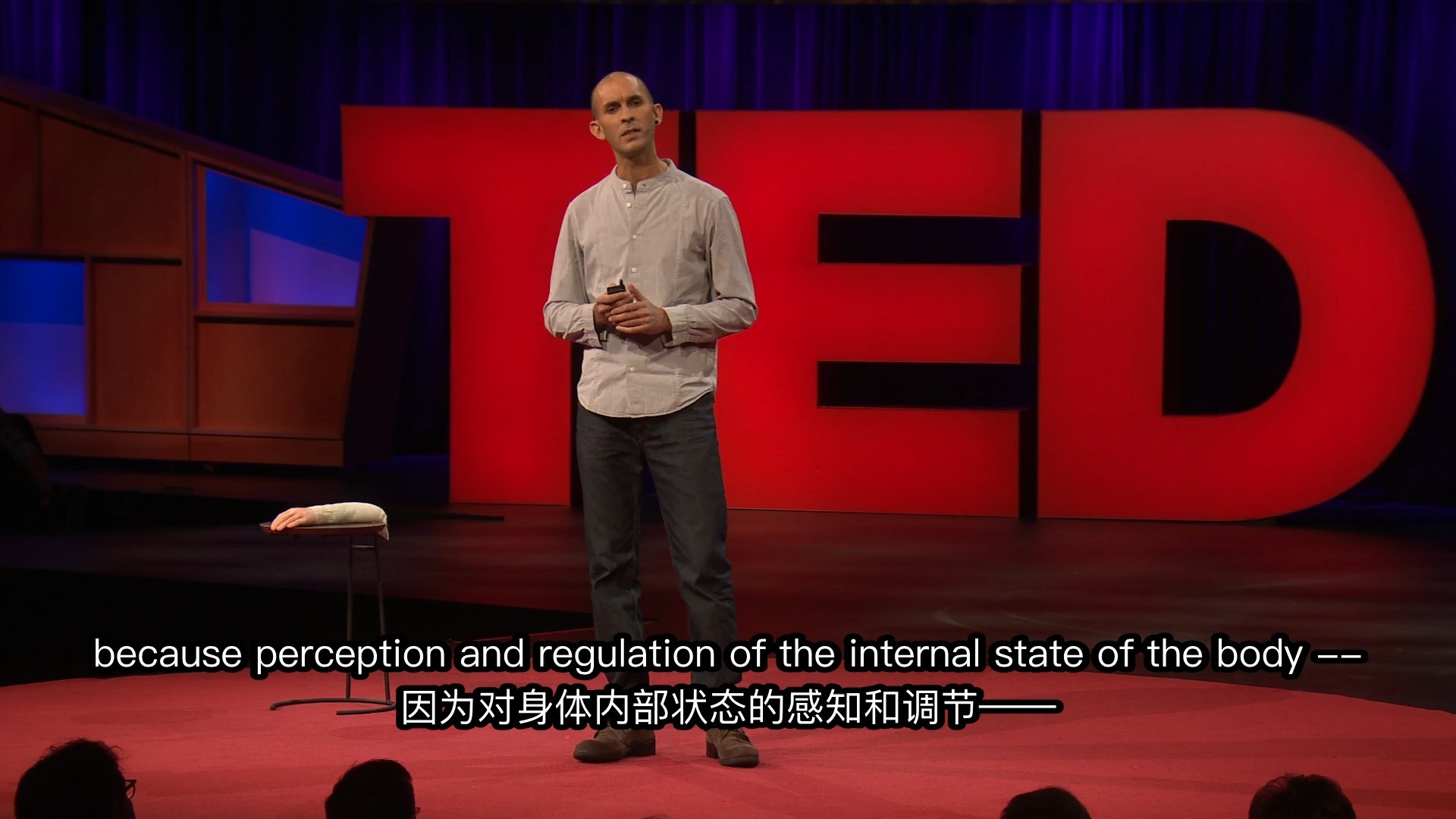
字幕摘录
| 时间 | 英文 | 中文 |
|---|---|---|
| 0:00 | So just over a year ago, for the third time in my life, | 所以就在一年多前 我生命中的第三次 |
| 0:04 | I ceased to exist. | 我不复存在。 |
| 0:05 | I was having a small operation. | 我做了个小手术 |
| 0:07 | My brain was filling with anesthetic. | 我的大脑充满了麻醉剂。 |
| 0:10 | I remember a sense of detachment and falling apart, coldness. | 我还记得一种解脱的感觉 和崩溃,寒冷。 |
| 0:15 | And then I was back, drowsy and disoriented, | 然后我又回来 昏昏欲睡 迷茫 |
| 0:18 | but definitely there. | 但绝对有。 |
| 0:20 | Now, when you wake from a deep sleep, | 当你从深睡中醒来 |
| 0:21 | you might feel confused about the time or anxious about oversleeping, | 你可能会对时间感到困惑 或担心过度睡眠, |
| 0:25 | but there's always a basic sense of time having passed, | 但总有一种基本的 时间感已经过去, |
展开字幕全文(340 条)
| 序号 | 英文 | 中文 |
|---|---|---|
| 1 | So just over a year ago, for the third time in my life, | 所以就在一年多前 我生命中的第三次 |
| 2 | I ceased to exist. | 我不复存在。 |
| 3 | I was having a small operation. | 我做了个小手术 |
| 4 | My brain was filling with anesthetic. | 我的大脑充满了麻醉剂。 |
| 5 | I remember a sense of detachment and falling apart, coldness. | 我还记得一种解脱的感觉 和崩溃,寒冷。 |
| 6 | And then I was back, drowsy and disoriented, | 然后我又回来 昏昏欲睡 迷茫 |
| 7 | but definitely there. | 但绝对有。 |
| 8 | Now, when you wake from a deep sleep, | 当你从深睡中醒来 |
| 9 | you might feel confused about the time or anxious about oversleeping, | 你可能会对时间感到困惑 或担心过度睡眠, |
| 10 | but there's always a basic sense of time having passed, | 但总有一种基本的 时间感已经过去, |
| 11 | of a continuity between then and now. | 从那时到现在的连续性。 |
| 12 | And coming around from anesthesia is very different. | 并且从麻醉中走来 是非常不同的。 |
| 13 | I could have been under for five minutes, five hours, five years, | 我可能已经 5分钟,5小时,5年, |
| 14 | or even 50 years. | 或甚至50年的岁月。 |
| 15 | I simply wasn't there as total oblivion. | 我只是没有完全被遗忘。 |
| 16 | Anesthesia, it's a modern kind of magic. | 麻醉,是一种现代的魔法. |
| 17 | It turns people into objects, | 它把人变成物体 |
| 18 | and then, we hope, back again into people. | 然后,我们希望,再次回到人们。 |
| 19 | And in this process is one of the greatest remaining mysteries | 在这个过程中,还有一个最大的秘密 |
| 20 | in science and philosophy. | 科学与哲学 |
| 21 | How does consciousness happen? | 意识是怎么发生的? |
| 22 | Somehow, within each of our brains, | 不知怎的,在我们每个人的大脑里, |
| 23 | the combined activity of many billions of neurons, | 数十亿神经元的综合活动, |
| 24 | each one a tiny biological machine, | 每一个小生物机器, |
| 25 | is generating a conscious experience. | 正在产生一种有意识的经验。 |
| 26 | And not just any conscious experience, | 而且不只是任何有意识的经验, |
| 27 | your conscious experience right here and right now. | 你在这里和现在的清醒经历。 |
| 28 | How does this happen? | 怎么会这样? |
| 29 | Well, answering this question is so important, | 回答这个问题很重要 |
| 30 | because consciousness for each of us is all there is. | 因为我们每个人都有意识 |
| 31 | Without it, there's no world, | 没有它,没有世界, |
| 32 | there's no self, | 没有自我 |
| 33 | there's nothing at all. | 什么都没有。 |
| 34 | And when we suffer, we suffer consciously, | 当我们受苦时,我们自觉地受苦, |
| 35 | whether it's through mental illness or pain. | 不管是精神疾病还是痛苦 |
| 36 | And if we can experience joy and suffering, | 如果我们能体验快乐和痛苦 |
| 37 | what about other animals? | 其他动物呢? |
| 38 | Might they be conscious, too? | 他们是否也会有意识? |
| 39 | Do they also have a sense of self? | 他们也有自我意识吗? |
| 40 | And as computers get faster and smarter, | 随着计算机的更快和智能化, |
| 41 | maybe they'll come a point maybe not too far away | 也许他们会有一点,也许不会太远 |
| 42 | when my iPhone develops a sense of its own existence. | 当我的iPhone 发展出一种自己的存在感时. |
| 43 | Now, I actually think the prospects for a conscious AI are pretty remote. | 现在,我实际上认为 一个意识AI的前景是相当遥远的。 |
| 44 | And I think this because my research is telling me | 我觉得是因为我的研究告诉我 |
| 45 | that consciousness has less to do with pure intelligence | 意识与纯粹的智力无关 |
| 46 | and more to do with our nature as living and breathing organisms. | 更和我们作为生物的本性有关 |
| 47 | Consciousness and intelligence are very different things. | 意识和智力是截然不同的 |
| 48 | You don't have to be smart to suffer, but you probably do have to be alive. | 受苦不必聪明,但也许必须活着. |
| 49 | In this story, I'm going to tell you our conscious experiences | 在这个故事里,我要告诉你我们有意识的经历 |
| 50 | of the world around us and of ourselves within it | 我们周围的世界 以及我们自己在其中 |
| 51 | are kinds of controlled hallucinations | 是一类可控制的幻觉 |
| 52 | that happen with, through and because of our living bodies. | 和我们的生命体。 |
| 53 | Now, you might have heard that we know nothing | 你可能听说我们什么都不知道 |
| 54 | about how the brain and body give rise to consciousness. | 关于大脑和身体如何产生意识。 |
| 55 | Some people even say it's beyond the reach of science altogether. | 有些人甚至说这完全超出了科学的范畴. |
| 56 | But in fact, the last 25 years | 但事实上 过去25年 |
| 57 | have seen an explosion of scientific work in this area. | 已经目睹了这个领域的科学工作爆炸。 |
| 58 | If you come to my lab at the University of Sussex, | 如果你来我萨塞克斯大学的实验室 |
| 59 | you'll find scientists from all different disciplines, | 你会找到来自不同学科的科学家 |
| 60 | and sometimes even philosophers, | 有时甚至是哲学家, |
| 61 | all of us together trying to understand how consciousness happens | 我们一起试图理解意识是如何发生的 |
| 62 | and what happens when it goes wrong. | 和当它出问题时会发生什么。 |
| 63 | And the strategy is very simple. | 策略很简单。 |
| 64 | I'd like you to think about consciousness | 我希望你能考虑一下意识 |
| 65 | in the way that we've come to think about life. | 以我们来思考生活的方式 |
| 66 | Now, at one time, people thought the property of being alive | 现在,有一次,人们以为 活着的财产 |
| 67 | could not be explained by physics and chemistry, | 不能用物理和化学来解释 |
| 68 | that life had to be more than just mechanism. | 生活必须不只是机制 |
| 69 | But people no longer think that. | 但人们不再这么想。 |
| 70 | As biologists got on with the job of explaining the properties of living systems | 当生物学家开始解释生命系统的性质时 |
| 71 | in terms of physics and chemistry, | 在物理和化学方面, |
| 72 | things like metabolism, reproduction and homeostasis, | 诸如新陈代谢 繁殖和顺势疗法 |
| 73 | the basic mystery of what life is started to fade away, | 生命开始消失的基本谜团 |
| 74 | and people didn't propose any more magical solutions, | 而人们没有提出 任何更多的神奇的解决方案, |
| 75 | like a force of life or an élan vital. | 就像生命的力量 或一个生命中最重要的。 |
| 76 | So as with life, so with consciousness. | 故如是众生亦如是意识. |
| 77 | Once we start explaining its properties | 一旦我们开始解释它的属性 |
| 78 | in terms of things happening inside brains and bodies, | 大脑和身体里发生的事情 |
| 79 | the apparently insoluble mystery of what consciousness is | 似乎无法解开 意识是什么 |
| 80 | should start to fade away. | 应该开始消失。 |
| 81 | At least, that's the plan. | 至少,这是计划。 |
| 82 | So let's get started. | 因此,让我们开始。 |
| 83 | What are the properties of consciousness? | 意识的属性是什么? |
| 84 | What should a science of consciousness try to explain? | 意识科学应该怎么解释呢? |
| 85 | Well, for today, I'd just like to think of consciousness in two different ways. | 今天,我想用两种不同的方式来思考意识。 |
| 86 | There are experiences of the world around us | 环绕着我们的世界有经验 |
| 87 | full of sights, sounds and smells, | 充满景色,声音和气味, |
| 88 | this multi-sensory, panoramic, 3D, fully immersive inner movie. | 这个多感应,全景,3D, 完全浸润的内在电影。 |
| 89 | And then there's conscious self, | 然后有意识的自我, |
| 90 | the specific experience of being you or being me, | 成为你或我的具体经历, |
| 91 | the lead character in this inner movie, | 这部电影的主角 |
| 92 | and probably the aspect of consciousness we all cling to most tightly. | 也许是我们最紧紧的 意识的方面 |
| 93 | Let's start with experiences of the world around us | 让我们从周围世界的经验开始 |
| 94 | and with the important idea of the brain as a prediction engine. | 以及大脑作为预测引擎的重要想法. |
| 95 | Now, imagine being a brain. | 现在,想象成一个大脑。 |
| 96 | You're locked inside a bony skull trying to figure what's out there in the world. | 你被锁在一个骨骼里 试图找出世界上有什么 |
| 97 | There's no light inside the skull, there's no sound either. | 头骨内部没有光线,也没有声音. |
| 98 | All you've got to go on are streams of electrical impulses | 你只需要继续 电流冲动 |
| 99 | which are only indirectly related to things in the world, | 与世界事物间接相关 |
| 100 | whatever they may be. | 不管他们是什么 |
| 101 | So perception, figuring out what's there, | 所以,感知, 找出什么是在那里, |
| 102 | has to be a process of informed guesswork | 必须是知情猜测的过程 |
| 103 | in which the brain combines these sensory signals | 大脑结合这些感官信号 |
| 104 | with its prior expectations or beliefs about the way the world is | 对世界现状的期待或信念 |
| 105 | to form its best guess of what caused those signals. | 来猜出造成这些信号的原因 |
| 106 | The brain doesn't hear sound or see light. | 脑不闻声不见光. |
| 107 | What we perceive is its best guess of what's out there in the world. | 我们所看到的是它最能猜出 外面的世界。 |
| 108 | Let me give you a couple of examples of all this. | 让我举几个例子。 |
| 109 | Now, you might have seen this illusion before, | 现在,你可能见过这个幻觉之前, |
| 110 | but I'd like you to think about it in a new way. | 但我希望你以新的方式思考这个问题。 |
| 111 | If you look at those two patches, A and B, | 如果你看看这两个补丁,A和B, |
| 112 | they should look to you to be very different shades of gray, right? | 他们应该期待你 与众不同 灰色的阴影,对不对? |
| 113 | But they are, in fact, exactly the same shade, | 但它们其实是一样的荫影, |
| 114 | and I can illustrate this if I put up a second version of the image here | 如果我把图像的第二版放在这里 我可以说明这一点 |
| 115 | and join the two patches with a gray-colored bar, | 并加入两个补丁 一个灰色的条, |
| 116 | and you can see there's no difference, it's exactly the same shade of gray. | 你可以看到没有区别 灰色的阴影完全一样 |
| 117 | And if you still don't believe me, I'll bring the bar across and join them up. | 如果你仍然不相信我, 我会带酒吧过去 并加入他们。 |
| 118 | It's a single-colored block of gray, there's no difference at all. | 它是灰色的单色块,完全没有区别. |
| 119 | So this isn't any kind of magic trickery, it's the same shade of gray, | 所以这不是什么魔术 灰色的阴影 |
| 120 | but take it away again, and it looks different. | 但又把它拿走,看起来不一样。 |
| 121 | So what's happening here is that the brain is using its prior expectations | 因此,这里发生的情况是,大脑在利用它之前的预期 |
| 122 | built deeply into the circuits of the visual cortex | 深植于视觉皮层的电路 |
| 123 | that a cast shadow dims the appearance of a surface | 暗影会遮蔽表面 |
| 124 | so that we see B as lighter than it really is. | 所以我们觉得B比它更轻 |
| 125 | Here's one more example, | 还有一个例子 |
| 126 | which shows just how quickly the brain can use new predictions | 说明大脑能使用新预测的速度 |
| 127 | to change what we consciously experience. | 改变我们自觉的经历 |
| 128 | Have a listen to this. | 听听这个 |
| 129 | I think Brexit is a really terrible idea. | 我觉得布莱克西特是个非常糟糕的主意 |
| 130 | Sounded strange, right? | 听起来很奇怪,对不对? |
| 131 | Have a listen again and see if you can get anything. | 再听一遍,看看能不能买到什么 |
| 132 | It's really terrible. | 这真的很可怕。 |
| 133 | Still strange. | 还是很奇怪。 |
| 134 | Now listen to this. | 现在听听这个 |
| 135 | I think Brexit is a really terrible idea. | 我觉得布莱克西特是个非常糟糕的主意 |
| 136 | Which I do. | 没错 |
| 137 | So you heard some words there, right? | 所以,你听到一些话在那里,对不对? |
| 138 | Now listen to the first sound again. | 现在又听第一声. |
| 139 | I'm just going to replay it. | 我只是来重放一下 |
| 140 | I think Brexit is a really terrible idea. | 我觉得布莱克西特是个非常糟糕的主意 |
| 141 | Yeah? | 是吗? |
| 142 | So you can now hear words there. | 所以,现在你可以听到那里的话。 |
| 143 | Once more for luck. | 再来一次运气。 |
| 144 | I think Brexit is a really terrible idea. | 我觉得布莱克西特是个非常糟糕的主意 |
| 145 | OK, so what's going on here is the remarkable thing | OK,所以这里发生的事是一件了不起的事 |
| 146 | is the sensory information coming into the brain hasn't changed at all. | 大脑中传入的感官信息一点都没变 |
| 147 | All that's changed is your brain's best guess | 改变的只是你的大脑的猜测 |
| 148 | of the causes of that sensory information, | 感官信息的原因, |
| 149 | and that changes what you consciously hear. | 并改变你自觉地听到的。 |
| 150 | Now all this puts the brain basis of perception | 现在这一切使大脑成为感知的基础 |
| 151 | in a bit of a different light. | 在一个有点不同的光。 |
| 152 | Instead of perception depending largely on signals coming into the brain | 而不是感觉主要取决于 信号进入大脑 |
| 153 | from the outside world, | 从外部世界, |
| 154 | it depends as much, if not more, | 它取决于同样多,如果不是更多, |
| 155 | on perceptual predictions | 概念预测 |
| 156 | flowing in the opposite direction. | 向相反的方向流动。 |
| 157 | We don't just passively perceive the world, we actively generate it. | 我们不只是被动地看待这个世界, 我们积极地创造它。 |
| 158 | The world we experience comes as much, if not more, | 我们经历的世界,即使不是更多 |
| 159 | from the inside out as from the outside in. | 从内而外如从外而入. |
| 160 | Let me give you one more example of perception | 让我再举一个例子给你 |
| 161 | as this active, constructive process. | 作为这一积极、建设性的进程。 |
| 162 | In this, here we've combined immersive virtual reality | 在此,我们结合了浸泡的虚拟现实 |
| 163 | with image processing to simulate the effects | 用图像处理模拟效果 |
| 164 | of overly strong perceptual predictions on experience. | 对经验的超强认知预测 |
| 165 | In this panoramic video, we've transformed the world, | 在这个全景视频中,我们改变了世界 |
| 166 | which is in this case Sussex campus, | 也就是苏塞克斯校园 |
| 167 | into a psychedelic playground. | 进入一个精神运动场。 |
| 168 | We've processed the footage using an algorithm based on Google's Deep Dream | 我们用基于Google的"深梦"的算法 处理镜头 |
| 169 | to simulate the effects of overly strong perceptual predictions, | 模拟超强感知预测的影响, |
| 170 | in this case, to see dogs. | 在这种情况下,看狗。 |
| 171 | And you can see this is a very strange thing. | 你可以看到这是一个非常奇怪的事情。 |
| 172 | When perceptual predictions are too strong, as they are here, | 当知觉的预测过于强烈时, 就像他们在这里一样, |
| 173 | the result looks very much like the kinds of hallucinations | 结果看起来很像幻觉 |
| 174 | people might report in altered states or perhaps even in psychosis. | 人们可能会在改变的状态下报告 甚至可能出现精神病 |
| 175 | Now think about this for a minute. | 现在考虑一下 |
| 176 | If hallucination is a kind of uncontrolled perception, | 如果幻觉是一种失控的感觉, |
| 177 | then perception right here and right now is also a kind of hallucination, | 此时此刻的感知也是幻觉 |
| 178 | but a controlled hallucination | 却有一种可控的幻觉 |
| 179 | in which the brain's predictions are being reined in | 大脑的预测被控制在其中 |
| 180 | by sensory information from the world. | 根据来自世界的感官信息 |
| 181 | In fact, we're all hallucinating all the time, including right now. | 事实上,我们一直都在产生幻觉,包括现在。 |
| 182 | It's just that when we agree about our hallucinations, | 只是当我们同意我们的幻觉 |
| 183 | we call that reality. | 我们称之为现实。 |
| 184 | Now I'm going to tell you that your experience of being a self, | 现在我要告诉你,你的经验 一个自我, |
| 185 | the specific experience of being you, | 成为你的具体经历, |
| 186 | is also a controlled hallucination generated by the brain. | 也是大脑产生的可控幻觉 |
| 187 | Now this seems a very strange idea, right? | 现在这似乎是一个非常奇怪的主意,对不对? |
| 188 | Yes, visual illusions might deceive my eyes, | 是的,视觉幻觉可能会欺骗我的眼睛, |
| 189 | but how could I be deceived about what it means to be me? | 我怎么会被骗呢? |
| 190 | For most of us, the experience of being a person is so familiar, | 对我们大多数人来说,作为一个人的经验是那么熟悉的, |
| 191 | so unified and so continuous | 如此统一和连续 |
| 192 | that it's difficult not to take it for granted. | 很难不认为这是理所当然的。 |
| 193 | But we shouldn't take it for granted. | 但我们不应该认为这是理所当然的。 |
| 194 | There are in fact many different ways we experience being a self. | 事实上,我们体验到许多不同的自我。 |
| 195 | There's the experience of having a body and of being a body. | 有身与身等经历. |
| 196 | There are experiences of perceiving the world | 也有一些感受世界的经验 |
| 197 | from a first-person point of view. | 从第一人称的角度 |
| 198 | There are experiences of intending to do things | 也有打算做事的经验 |
| 199 | and of being the cause of things that happen in the world. | 和成为世界上发生的事情的原因。 |
| 200 | And there are experiences of being a continuous and distinctive person over time, | 并且有一些经验 是一个连续和独特的人 随着时间的推移, |
| 201 | built from a rich set of memories and social interactions. | 从丰富的记忆和社会互动中建立起来的 |
| 202 | Now many experiments show, | 现在许多实验显示, |
| 203 | and psychiatrists and neurologists know very well, | 心理医生和神经学家都非常清楚 |
| 204 | that these different ways in which we experience being a self | 这些不同的方式 我们体验自己 |
| 205 | can all come apart. | 都能分开 |
| 206 | And what this means is the basic background experience | 这代表着基本的背景经验 |
| 207 | of being a unified self | 作为统一的自我 |
| 208 | is a rather fragile construction of the brain, | 是一个相当脆弱的大脑构造, |
| 209 | another experience which, just like all others, requires explanation. | 另一个经验,就像所有其他经验一样,需要解释。 |
| 210 | So let's return to the bodily self. | 让我们回到身体的自我。 |
| 211 | How does the brain generate the experience of being a body | 大脑如何产生作为一个身体的经验 |
| 212 | and of having a body? | 和拥有一个身体? |
| 213 | Well, just the same principles apply. | 同样的原则也一样 |
| 214 | The brain makes its best guess about what is and what is not part of its body. | 大脑对什么是和什么不是其身体的一部分作出最好的猜测. |
| 215 | And there's a beautiful experiment in neuroscience to illustrate this. | 在神经科学中有一个美丽的实验来说明这一点。 |
| 216 | And unlike most neuroscience experiments, this is one you can do at home. | 和大多数神经科学实验不同, 这是你在家里可以做的。 |
| 217 | All you need is one of these | 你只需要这个 |
| 218 | and a couple of paintbrushes. | 和几张画笔。 |
| 219 | Now in the rubber hand illusion, a person's real hand is hidden from view, | 现在在橡皮手幻觉中,一个人的真手被隐藏在视线之外, |
| 220 | and that fake rubber hand is placed in front of them. | 假橡胶手放在他们面前 |
| 221 | Then both hands are simultaneously stroked with a paintbrush | 然后两只手同时被画笔打中 |
| 222 | while the person stares at the fake hand. | 人看着假手 |
| 223 | Now for most people, after a while, | 对大多数人来说 过了一段时间 |
| 224 | this leads to the very uncanny sensation | 这导致了令人难以置信的感觉 |
| 225 | that the fake hand is in fact part of their body. | 假手其实是他们身体的一部分 |
| 226 | And the idea is that the congruence between seeing touch and feeling touch | 想法是看到触觉和触觉 |
| 227 | on an object that looks like a hand | 在一个看起来像手的物体上 |
| 228 | {\fn黑体\fs22\bord1\shad0\3aHBE\4aH00\fscx67\fscy66\2cHFFFFFF\3cH808080}就是一只手应该在哪 | |
| 229 | is enough evidence for the brain to make its best guess | 足以让大脑做出最好的猜测 |
| 230 | that the fake hand is in fact part of the body. | 假手其实是身体的一部分。 |
| 231 | So you can measure all kinds of clever things, right? | 所以你可以测量各种聪明的东西,对不对? |
| 232 | You can measure skin conductance and style responses, | 你可以测量皮肤的导体和样式反应, |
| 233 | but there's no need. | 但没必要 |
| 234 | It's clear the guy in blue has assimilated the fake hand. | 很明显那个穿蓝色衣服的人 已经吸收了假手 |
| 235 | Now this means that even experiences of what our body is | 也就是说,即使是我们身体的体验 |
| 236 | is a kind of best-guessing, a kind of controlled hallucination by the brain. | 是一种最好的猜测, 一种大脑控制的幻觉。 |
| 237 | Now there's one more thing. | 现在还有一件事 |
| 238 | We don't just experience our bodies as objects in the world from the outside. | 我们不只是从外面体验我们的身体作为世界的物体. |
| 239 | We also experience them from within. | 我们也从内部体验。 |
| 240 | We all experience the sense of being a body from the inside. | 我们都从内心体会到自己 |
| 241 | And sensory signals coming from the inside of the body | 和来自身体内部的感官信号 |
| 242 | are continually telling the brain about the state of the internal organs, | 不断向大脑讲述内脏的状态 |
| 243 | how the heart is doing, what blood pressure is like, lots of things. | 心脏是如何做的, 血压是什么样子, 很多事情。 |
| 244 | And this kind of perception, which we call interoception, | 而这种感觉,我们称之为截断, |
| 245 | is rather overlooked, | 相当被忽视, |
| 246 | but it's critically important | 但是这很重要 |
| 247 | because perception and regulation of the internal state of the body, | 因为对身体内部状态的认识和调节, |
| 248 | well, that's what keeps us alive. | 这就是我们活着的原因 |
| 249 | Here's another version of the rubber hand illusion. | 这里还有另一个版本的橡胶手幻. |
| 250 | This is from our lab at Sussex. | 这是萨塞克斯实验室的 |
| 251 | And here, people see a virtual reality version of their hand, | 在这里,人们看到一个虚拟的现实版本 他们的手, |
| 252 | which flashes red and back, | 红色和红色的, |
| 253 | either in time or out of time, with their heartbeat. | 或时或时,以其心跳. |
| 254 | And when it's flashing in time with their heartbeat, | 当它与他们的心跳及时闪现时, |
| 255 | people have a stronger sense that it's in fact part of their body. | 人们有一种更强烈的感觉,认为它实际上是他们身体的一部分. |
| 256 | So experiences of having a body | 所以有身体的经验 |
| 257 | are deeply grounded in perceiving our bodies from within. | 我们深植于从内部看待我们的身体。 |
| 258 | There's one last thing I want to draw your attention to, | 还有一件事我想提醒你注意 |
| 259 | which is that experiences of the body from the inside | 身体的内在经历 |
| 260 | are very different from experiences of the world around us. | 与我们周围世界的经历大不相同。 |
| 261 | When I look around me, the world seems full of objects, | 当我环顾四周,世界似乎充满了物体, |
| 262 | tables, chairs, rubber hands, people, you lot. | 桌子,椅子,橡胶手,人,你们这些家伙。 |
| 263 | Even my own body in the world, | 即使我的身体在世界上, |
| 264 | I can perceive it as an object from the outside. | 我能从外面看出来是物体 |
| 265 | But my experiences of the body from within, they're not like that at all. | 但我的身体经历 从内部, 他们根本不是这样。 |
| 266 | I don't perceive my kidneys here, my liver here, my spleen. | 我看不出我的肾脏,我的肝脏,我的脾脏 |
| 267 | I don't know where my spleen is, but somewhere. | 我不知道我的脾脏在哪里,但某处。 |
| 268 | I don't perceive my insides as objects. | 我不认为我的内心是物体。 |
| 269 | In fact, I don't experience them much at all unless they go wrong. | 事实上,除非他们出错,否则我完全不体验他们. |
| 270 | And this is important, I think. | 我觉得这很重要 |
| 271 | Perception of the internal state of the body | 对身体内部状态的看法 |
| 272 | isn't about figuring out what's there, | 并不是想弄清楚那里有什么 |
| 273 | it's about control and regulation, | 这是关于控制和监管, |
| 274 | keeping the physiological variables | 保存生理变量 |
| 275 | within the tight bounds that are compatible with survival. | 在与生存相容的紧要界限内 |
| 276 | When the brain uses predictions to figure out what's there, | 当大脑利用预测 找出那里有什么 |
| 277 | we perceive objects as the causes of sensations. | 我们把物体视为引起轰动的原因 |
| 278 | When the brain uses predictions to control and regulate things, | 当大脑利用预测来控制和调节事物时, |
| 279 | we experience how well or how badly that control is going. | 我们体验到这种控制有多好或有多糟糕 |
| 280 | So our most basic experiences of being a self, | 因此,我们最基本的经历 一个自我, |
| 281 | of being an embodied organism, | 是一个有机体, |
| 282 | are deeply grounded in the biological mechanisms that keep us alive. | 深深植根于维持我们生命的生物机制。 |
| 283 | And when we follow this idea all the way through, | 当我们一直跟着这个想法 |
| 284 | we can start to see that all of our conscious experiences, | 我们可以开始看到 我们所有的有意识的经验, |
| 285 | since they all depend on the same mechanisms of predictive perception, | 由于它们都依赖于同样的预测感知机制, |
| 286 | all stem from this basic drive to stay alive. | 这一切都来自这个 生存的基本驱动力。 |
| 287 | We experience the world and ourselves with, through | 我们体验世界和我们自己 通过 |
| 288 | and because of our living bodies. | 和因为我们的活体。 |
| 289 | Let me bring things together step by step. | 让我一步一步地把事情集中起来。 |
| 290 | What we consciously see depends on the brain's best guess | 我们自觉看到的 取决于大脑的最佳猜测 |
| 291 | of what's out there. | 关于外面的东西。 |
| 292 | Our experienced world comes from the inside out, | 我们的体验世界来自内心 |
| 293 | not just the outside in. | 不仅仅是外面 |
| 294 | The rubber hand illusion shows that this applies | 橡皮手幻术显示,这适用 |
| 295 | to our experiences of what is and what is not our body. | 来体验我们的身体和身体 |
| 296 | And these self-related predictions depend critically on sensory signals | 这些自我相关的预测 关键取决于感官信号 |
| 297 | coming from deep inside the body. | 从身体深处传来 |
| 298 | And finally, experiences of being an embodied self | 最后, 成为自我的经历 |
| 299 | are more about control and regulation than figuring out what's there. | 更多的是控制与监管 而不是去弄清楚那里有什么 |
| 300 | So our experiences of the world around us and ourselves within it, | 所以,我们的经验 环绕我们的世界 和我们自己在其中, |
| 301 | well, they're kinds of controlled hallucinations | 嗯,他们是一类 控制幻觉 |
| 302 | that have been shaped over millions of years of evolution | 在数百万年的进化过程中形成的 |
| 303 | to keep us alive in worlds full of danger and opportunity. | 使我们在充满危险和机会的世界中生存 |
| 304 | We predict ourselves into existence. | 我们预测自己会存在。 |
| 305 | Now, I'll leave you with three implications of all this. | 现在,我留你 三个影响这一切。 |
| 306 | First, just as we can misperceive the world, | 首先,正如我们能误解世界一样, |
| 307 | we can misperceive ourselves | 我们可能会误解自己 |
| 308 | when the mechanisms of prediction go wrong. | 当预测机制出错时 |
| 309 | Understanding this opens many new opportunities | 了解这一点,开辟了许多新的机会 |
| 310 | in psychiatry and neurology, | 在精神科和神经科, |
| 311 | because we can finally get at the mechanisms | 因为我们终于可以进入机制 |
| 312 | rather than just treating the symptoms | 而不是仅仅治疗症状 |
| 313 | in conditions like depression and schizophrenia. | 比如抑郁症和精神分裂症 |
| 314 | Second, what it means to be me cannot be reduced to | 第二,对我的意义不能被贬为 |
| 315 | or uploaded to a software program, | 或上传到软件程序, |
| 316 | running on a robot, however smart or sophisticated. | 运行在机器人上,无论多么聪明或复杂。 |
| 317 | We are biological flesh-and-blood animals | 我们是血肉生物 |
| 318 | whose conscious experiences are shaped at all levels | 在各级形成有意识的经验 |
| 319 | {\fn黑体\fs22\bord1\shad0\3aHBE\4aH00\fscx67\fscy66\2cHFFFFFF\3cH808080}通过生物机制 {\fn黑体\fs22\bord1\shad0\3aHBE\4aH00\fscx67\fscy66\2cHFFFFFF\3cH808080}让我们活着 | |
| 320 | Just making computers smarter is not going to make them sentient. | 只是让计算机更聪明 并不会使它们变得灵敏。 |
| 321 | Finally, our own individual inner universe, our way of being conscious, | 最后,我们自己的内部宇宙, 我们的意识方式, |
| 322 | is just one possible way of being conscious. | 只是一种可能的自觉方式 |
| 323 | And even human consciousness generally, | 甚至人类的意识, |
| 324 | it's just a tiny region in a vast space of possible consciousnesses. | 它只是一个很小的区域 在广阔的空间 可能的意识。 |
| 325 | Our individual selves and worlds are unique to each of us, | 我们各自和世界都是我们各自独有的 |
| 326 | but they're all grounded in biological mechanisms | 但它们都根植于生物机制 |
| 327 | shared with many other living creatures. | 与许多其他生物分享。 |
| 328 | Now, these are fundamental changes in how we understand ourselves, | 现在,这些是根本 改变我们如何理解自己, |
| 329 | but I think they should be celebrated, | 但我认为他们应该庆祝, |
| 330 | because as so often in science, from Copernicus, | 因为在科学界,从哥白尼, |
| 331 | we're not at the center of the universe, | 我们不在宇宙的中心 |
| 332 | to Darwin, we're related to all other creatures, | 达尔文,我们和所有其他生物有关 |
| 333 | to the present day. | 至今日为止。 |
| 334 | With a greater sense of understanding comes a greater sense of wonder | 有了更大的理解感 有了更大的奇迹感 |
| 335 | and a greater realization that we are part of | 更清楚地认识到我们是 |
| 336 | and not apart from the rest of nature. | 与自然的其余部分无关 |
| 337 | And when the end of consciousness comes, | 当意识的末日来临时, |
| 338 | there's nothing to be afraid of, | 没有什么好害怕的, |
| 339 | nothing at all. | 什么都没有。 |
| 340 | Thank you. | 谢谢 |
该视频共有字幕 340 条。解锁更多字幕为会员功能,请移动到 价格