TED演讲:身为跨种族养女的故事:爱与失去
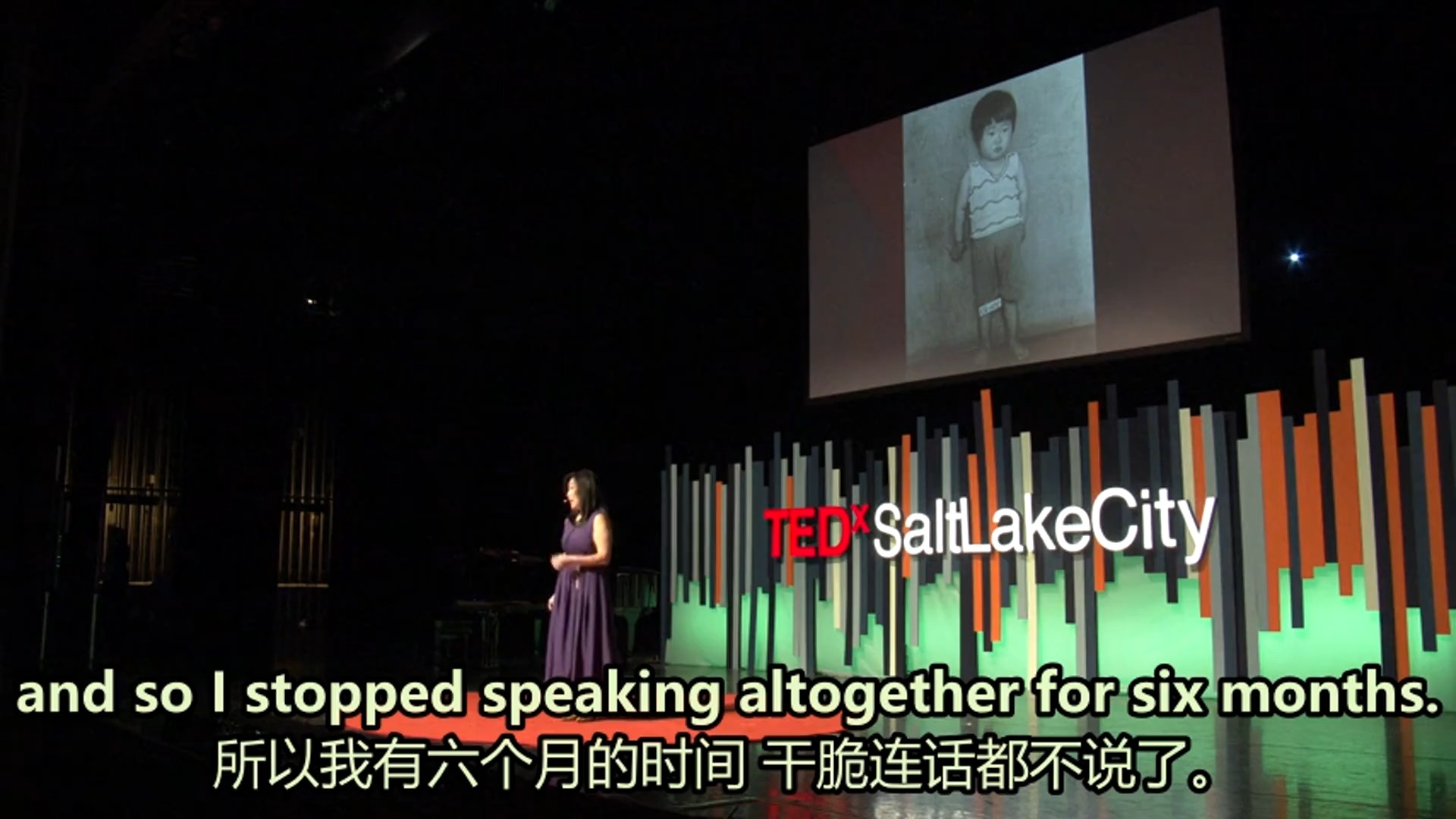
字幕摘录
| 时间 | 英文 | 中文 |
|---|---|---|
| 0:04 | When I was three years old, I was transracially adopted from South Korea | 我三岁时 被南韩异族收养 |
| 0:09 | by a white family in Salt Lake City, Utah. | 被犹他州盐湖城一个白人家庭所杀. |
| 0:13 | I arrived in America with a mysterious tattoo on my left forearm. | 我到了美国 我的左前臂上有个神秘的纹身 |
| 0:17 | The tattoo was so large and noticeable | 纹身那么大,很显眼 |
| 0:20 | that my adoptive parents had it surgically removed right away. | 我养父母马上把它切掉 |
| 0:24 | They were worried that other kids would make fun of it. | 他们担心其他孩子会取笑他 |
| 0:27 | Today, there's only a light scar where the tattoo once was, | 今天,只有一个轻伤疤 曾经的纹身, |
| 0:30 | so I've redrawn it in permanent marker. | 所以我重新绘制了永久标记 |
| 0:32 | So you can see what it looked like. | 故能观其相. |
| 0:35 | Korean adoption records in 1976 were notoriously incomplete. | 1976年的韩国收养记录臭名昭著地不完整. |
展开字幕全文(228 条)
| 序号 | 英文 | 中文 |
|---|---|---|
| 1 | When I was three years old, I was transracially adopted from South Korea | 我三岁时 被南韩异族收养 |
| 2 | by a white family in Salt Lake City, Utah. | 被犹他州盐湖城一个白人家庭所杀. |
| 3 | I arrived in America with a mysterious tattoo on my left forearm. | 我到了美国 我的左前臂上有个神秘的纹身 |
| 4 | The tattoo was so large and noticeable | 纹身那么大,很显眼 |
| 5 | that my adoptive parents had it surgically removed right away. | 我养父母马上把它切掉 |
| 6 | They were worried that other kids would make fun of it. | 他们担心其他孩子会取笑他 |
| 7 | Today, there's only a light scar where the tattoo once was, | 今天,只有一个轻伤疤 曾经的纹身, |
| 8 | so I've redrawn it in permanent marker. | 所以我重新绘制了永久标记 |
| 9 | So you can see what it looked like. | 故能观其相. |
| 10 | Korean adoption records in 1976 were notoriously incomplete. | 1976年的韩国收养记录臭名昭著地不完整. |
| 11 | I didn't have any information about my background or my birth family. | 我没有关于我的背景和出生家庭的任何信息。 |
| 12 | I didn't even know if my name or birth date were real | 我甚至不知道我的名字和出生日期是否真实 |
| 13 | or if they were assigned. | 或者,如果他们被指派。 |
| 14 | And no one knew what my tattoo meant. | 没人知道我的纹身是什么意思 |
| 15 | Transracial adoption is where a child from one race or ethnicity | 跨种族收养是指来自某一种族或族裔的儿童。 |
| 16 | is adopted by parents from a different race or ethnicity. | 由不同种族或族裔的父母收养。 |
| 17 | In my generation, children who were adopted from Korea | 在我这一代,从韩国领养的孩子 |
| 18 | were assimilated into the culture of their adoptive parents, | 被同化为养父母的文化, |
| 19 | so I was raised as if I were white. | 所以我被养成白人 |
| 20 | Growing up, occasionally my family would eat at a Korean restaurant | 长大了,偶尔我家会在韩餐馆吃饭 |
| 21 | or we'd go to the Asian festival, | 或者我们参加亚洲节日 |
| 22 | but I did not identify with being Asian. | 但我并不认同自己是亚洲人 |
| 23 | Looking back now, | 回首现在, |
| 24 | having my tattoo removed is symbolic of losing a connection | 帮我去掉纹身是失去联系的象征 |
| 25 | with my Korean ethnicity and culture. | 与我的朝鲜民族和文化。 |
| 26 | And I am not alone. | 我不是一个人。 |
| 27 | Since the 1950s, almost 200,000 Korean children | 自1950年代以来,近20万朝鲜儿童 |
| 28 | have been adopted all over the world. | 已在世界各地被采纳。 |
| 29 | A growing body of research shows that children experience trauma | 越来越多的研究表明,儿童遭受创伤。 |
| 30 | when they're separated from their families of origin. | 当与出身家庭分离. |
| 31 | My story includes such childhood trauma. | 我的故事包括这样的童年创伤。 |
| 32 | I recently found out that my birth mother left my family | 我最近发现我的生母离开了我的家人 |
| 33 | shortly after I was born. | 我出生后不久,我开始... |
| 34 | When I was two years old, | 当我两岁的时候, |
| 35 | my birth father became injured and could not provide for my brothers and me. | 我出生的父亲受伤了 无法供养我的兄弟和我 |
| 36 | And so my two older brothers and I were sent to children welfare services, | 我两个哥哥和我被送到儿童福利机构 |
| 37 | and there, someone decided, | 在那里,有人决定, |
| 38 | because I was younger, | 因为我年轻, |
| 39 | that I was more adoptable. | 我更能被收养 |
| 40 | And so I was sent to a separate orphanage, | 于是我被送到了单独的孤儿院 |
| 41 | separated from my brothers who cared for me. | 和关心我的兄弟们分开 |
| 42 | My adoption records say that I wouldn't play | 我的收养记录说我不会玩 |
| 43 | with any of the other children at the orphanage, | 和孤儿院的其他任何孩子 |
| 44 | and now I know why. | 现在我知道原因了 |
| 45 | My adoption photos show the picture of a frightened, malnourished little girl. | 我的收养照片显示一个恐惧,营养不良的小女孩的照片. |
| 46 | Just imagine my culture shock a short and lonely nine months later, | 想象一下9个月后我的文化会震惊 短暂孤独 |
| 47 | as I arrived in America, where everything was different. | 当我到达美国时 一切都不同了 |
| 48 | The people, | 人民们, |
| 49 | the buildings, | 建筑物, |
| 50 | the food | 食物 食物 |
| 51 | and the clothing. | 还有衣服 |
| 52 | As a three-year-old child, | 作为一个三岁的孩子, |
| 53 | I quickly figured out that no one spoke the Korean language that I spoke, | 我很快发现没有人会说我说的韩语 |
| 54 | and so I stopped speaking altogether for six months. | 所以我就半年没说话了 |
| 55 | And when I started speaking again, it was in full English. | 当我又开始说话时, 完全用英语。 |
| 56 | One of the first phrases I said as my parents showed me my orphanage photos | 我父母给我看孤儿院照片时说的第一句话之一 |
| 57 | was, | 当时, |
| 58 | Sarah, sad. | 莎拉,伤心。 |
| 59 | Children who are adopted often put up emotional walls | 被收养的儿童往往在情感上挂起墙壁 |
| 60 | to protect themselves from being hurt again. | 保护自己不再受到伤害 |
| 61 | I certainly did this. | 当然是我干的 |
| 62 | And like many transracially adopted children, | 像很多跨种族领养的孩子一样 |
| 63 | there were many moments growing up where I wished that I was white, | 有很多时刻长大 我希望我是白人, |
| 64 | like the other kids around me. | 就像我身边的其他孩子一样 |
| 65 | Other kids made fun of my eyes and nose. | 其他孩子取笑我的眼睛和鼻子。 |
| 66 | Now, the 80s styles were particularly brutal to me, | 80年代的风格对我特别残酷 |
| 67 | with glasses that didn't fit well, | 戴眼镜不合适 |
| 68 | hairstyles that looked ridiculous on me. | 发型看起来很可笑 |
| 69 | This narrative of adoption might be uncomfortable for you to hear. | 这种收养的叙事 可能会令你不舒服 |
| 70 | The narrative that we usually hear | 我们通常听到的叙述 |
| 71 | is that of a new parent who's eagerly awaiting a child | 是一位新父母 急切地等待着孩子 |
| 72 | that they've been wanting for so long. | 他们已经渴望了这么久 |
| 73 | The parent's story is told with love, joy and excitement, | 父母的故事以爱、喜悦和兴奋来讲述, |
| 74 | and as they bring a newly adopted child into their home, | 当他们把一个新收养的孩子带回家时, |
| 75 | family and friends celebrate and congratulate the parents | 亲朋好友庆祝和祝贺父母 |
| 76 | on their wonderful decision to adopt. | 他们的出色决定 通过。 |
| 77 | My parents' adoption story was like a beautiful blanket that kept me warm. | 我爸妈的收养故事就像一条漂亮的毯子 让我温暖 |
| 78 | But after a while, it felt like the focus was more on the blanket, | 但过了一段时间,感觉焦点 更多在毯子上, |
| 79 | covering me and my point of view entirely. | 完全涵盖我的观点 |
| 80 | I couldn't emotionally breathe. | 我无法呼吸 |
| 81 | My parents would say things to me like, | 我的父母会对我说一些事情喜欢, |
| 82 | I fell in love with you the first time I saw your photo. | 我第一次看到你的照片就爱上你了 |
| 83 | My heart broke. | 我的心都碎了。 |
| 84 | They love me. | 他们爱我。 |
| 85 | I know that. | 我知道这一点。 |
| 86 | And I was wanted. | 我被通缉了 |
| 87 | But I wished that the only birth story I had wasn't so sad, | 但我希望我唯一生下来的故事 不是那么悲伤 |
| 88 | so humanitarian. | 如此人道主义。 |
| 89 | I would often confuse love with gratitude, | 我经常把爱和感激混为一谈 |
| 90 | especially when other people would say things to me like, | 特别是当别人对我说话的时候 |
| 91 | you're so lucky to be adopted to America, | 你很幸运被领养到美国 |
| 92 | or your parents are such angels to adopt you. | 或者你父母会收养你 |
| 93 | To a child, it felt like these comments were constant reminders | 对于一个孩子来说,感觉这些评论是不断提醒的 |
| 94 | to be grateful to my parents' charity. | 感谢我父母的慈善事业 |
| 95 | I resented that I couldn't tell these adults, | 我恨我不能告诉这些成年人, |
| 96 | I don't like being reminded all the time that I'm adopted. | 我不喜欢被别人提醒我被收养 |
| 97 | I just want to be a normal kid | 我只是想成为一个正常的孩子 |
| 98 | and maybe even be ungrateful once in a while. | 也许偶尔也会忘恩负义 |
| 99 | But I learned to smile without really smiling. | 但我学会了笑而不笑 |
| 100 | And as I grew older, I wanted to be able to say, | 当我长大了 我想说 |
| 101 | Sarah is still sad. | 莎拉还是很伤心 |
| 102 | But I buried my feelings, | 但我埋葬了我的感情, |
| 103 | and it wasn't until later in life that I realized | 直到晚年我才意识到 |
| 104 | I'd never really grieved my own adoption. | 我从来没有真正悲伤 我自己的收养。 |
| 105 | While many of us understand that adopting a child from a different race, | 虽然我们许多人都明白 领养一个不同种族的孩子 |
| 106 | culture or country is never simple, | 文化或国家永远不是简单的, |
| 107 | we rarely acknowledge the complex emotions | 我们很少承认复杂的情感 |
| 108 | that children who are adopted can experience. | 被收养的儿童可以经历。 |
| 109 | Some children experience feelings of loss, | 有些孩子有失落的感觉 |
| 110 | feelings of rejection, | 拒绝的感觉, |
| 111 | grief, | 悲伤 |
| 112 | shame, | 羞耻 |
| 113 | guilt, | 内疚, |
| 114 | challenges with identity, | 与身份有关的挑战, |
| 115 | difficulty with intimacy and control issues. | 在亲密关系和控制问题上有困难。 |
| 116 | Just ask my kids. | 问问我的孩子 |
| 117 | Children who are adopted can still love their adoptive parents | 被收养的孩子仍然爱着养父母 |
| 118 | at the same time as experiencing these complex emotions. | 在经历这些复杂情绪的同时 |
| 119 | And many of us wonder if we had had safe emotional spaces | 我们很多人都在想 我们是否有安全的情感空间 |
| 120 | to own our own stories when we were younger, | 我们年轻时拥有自己的故事 |
| 121 | would we still be struggling to come to terms with adoption as adults? | 我们是否仍然在努力接受成年人的收养? |
| 122 | Where do we find the emotional oxygen to own our own stories? | 我们从哪里找到 拥有自己故事的情感氧气? |
| 123 | Since the late 1990s and early 2000s, | 自1990年代末和2000年代初以来, |
| 124 | researchers like Dr. Richard Lee | 理查李博士这样的研究者 |
| 125 | have focused on different parenting techniques for transracial adoption. | 重点研究了跨种族收养的不同育儿技巧。 |
| 126 | The hope is to help children and their adoptive parents | 希望帮助孩子和养父母 |
| 127 | better adapt to their unique racial and ethnic circumstances. | 更好地适应他们独特的种族和民族环境。 |
| 128 | There's more enculturation encouraged | 更鼓励栽培 |
| 129 | that exposes children to the people, places, | 使儿童接触到人民、地方、 |
| 130 | languages and culture of their birth families. | 其出生家庭的语言和文化。 |
| 131 | Some parents focus on racial inculcation | 有些家长注重种族灌输 |
| 132 | to specifically work with their children on the racism and discrimination | 专门与其子女合作反对种族主义和歧视 |
| 133 | that they will experience outside of the home. | 他们将在家外经历。 |
| 134 | And some parents allow children to choose, as they get older, | 有些父母允许孩子选择 随着年龄的增长 |
| 135 | the level of exposure to the culture of their birth families. | 接触其出生家庭文化的程度。 |
| 136 | Now, we might look at these signs of progress | 现在我们可以看看这些进步的迹象 |
| 137 | and think we've got it all figured out when it comes to transracial adoption. | 并且认为当涉及到跨种族收养时我们已经想通了 |
| 138 | But Korean adoptees were the first massive wave | 但韩国的领养者是第一波大浪 |
| 139 | of international adoptions almost 30 years earlier | 近30年前的国际收养 |
| 140 | than most other countries. | 比大多数其他国家。 |
| 141 | And so there are entire generations of Korean adoptees | 因此,有整整几代的韩国收养人 |
| 142 | from children all the way to adults in their 70s | 从儿童一直到70多岁的成年人 |
| 143 | dealing with the impact of their assimilation. | 处理同化的影响。 |
| 144 | And there have only been a handful of studies | 也只有几门研究 |
| 145 | that follow transracial adoptees over a lifetime. | 永远跟随跨种族的被收养人 |
| 146 | I know that people around me could not understand my adoption grief. | 我知道身边的人无法理解我的收养悲痛。 |
| 147 | Rachel Rostad 另一个韩国收养人 | |
| 148 | expressed what I was feeling when she said, | 表达我的感觉 当她说, |
| 149 | loss is especially confusing to measure | 损失特别令人困惑 |
| 150 | when it appears as if I haven't lost anything at all. | 似乎我什么都没失去 |
| 151 | It's not missing like an organ. | 它不是像器官一样丢失。 |
| 152 | It's missing like wherever dreams go | 它不见了 就像梦想去的地方 |
| 153 | when you blink awake into the morning light. | 当你在晨光中醒来的时候。 |
| 154 | Every year, hundreds of South Korean adoptees | 每年有数百名韩国人领养 |
| 155 | search for their birth families. | 寻找他们的出生家庭。 |
| 156 | And Korean agencies report that less than 15 percent are successful. | 韩国机构报告说,成功率不到15%。 |
| 157 | Last year, I found my Korean birth family in just three months. | 去年,我在短短三个月内就找到了我的韩国出生家庭. |
| 158 | I posted a photo of my redrawn tattoo on social media, | 我在社交媒体上贴了一张我重画纹身的照片 |
| 159 | which Korean groups generously shared. | 韩国团体慷慨分享。 |
| 160 | And a friend of my brother saw the photo, | 我哥哥的一个朋友看了那张照片 |
| 161 | and he knew instantly what the tattoo meant. | 他立刻知道纹身的意义 |
| 162 | When my father decided to send us to Children Welfare Services, | 当我父亲决定送我们去儿童福利处时 |
| 163 | he was worried that we would be separated | 他担心我们会分开 |
| 164 | and even adopted into foreign countries. | 甚至被收养到外国 |
| 165 | And so he took the unusual step | 所以他采取了不寻常的步骤 |
| 166 | to place a large tattoo on each of our arms | 我们的每个手臂上都贴上大纹身 |
| 167 | and on his own, | 而他自己, |
| 168 | so that we could find each other someday. | 以便我们有一天能找到对方 |
| 169 | And he tried searching for me, | 他试图寻找我, |
| 170 | and he was right. | 他说得对 |
| 171 | The tattoo did eventually lead me to find the family that I had lost. | 纹身让我最终找到失去的家庭 |
| 172 | Unfortunately, he passed away nine years | 不幸的是,他去世了九岁 |
| 173 | before he could see his children reunited. | 在他看到孩子团聚之前 |
| 174 | But last year, I traveled to Korea to meet my two older brothers, | 但是去年我去了韩国 认识两个哥哥 |
| 175 | my aunt and uncle. | 我姨妈和舅舅 |
| 176 | And I learned a lot of new things about myself, | 我对自己学到了很多新东西 |
| 177 | including my real birth date, | 包括我真正的出生日期, |
| 178 | which actually makes me seven months older. | 这让我大了七个月 |
| 179 | This middle-aged woman did not love hearing that she is older. | 这个中年妇女不喜欢听到她年长的声音。 |
| 180 | And that explains all those gifted and talented classes I had in school. | 这解释了我在学校里所有的有天赋的班级。 |
| 181 | But the most important thing that I learned | 但我学到的最重要的东西 |
| 182 | was that I had a loving family in Korea | 我在韩国有个可爱的家庭 |
| 183 | who remembered me as a little baby | 谁记得我作为一个小宝宝 |
| 184 | and had never forgotten me. | 从未忘记我 |
| 185 | I wasn't abandoned, like my adoption records said. | 我并没有被抛弃 就像我的收养记录所说的 |
| 186 | I was wanted. | 我被通缉了 |
| 187 | It's time to reframe our views on adoption. | 是时候重新定义我们对收养的看法了 |
| 188 | A healthy adoption ecosystem is one | 一个健康的收养生态系统 |
| 189 | in which children, | 其中,儿童, |
| 190 | adoptive families and birth families | 收养家庭和出生家庭 |
| 191 | each own their unique stories. | 各自拥有自己独特的故事. |
| 192 | When these narratives are placed side by side, | 当这些叙事放在一起时, |
| 193 | it creates better empathy and policies for the lives | 它为生活创造了更好的同情和政策 |
| 194 | that adoption impacts. | 收养的影响。 |
| 195 | Here are two things that adults can do | 大人有两件事要做 |
| 196 | to better protect adopted children's stories. | 更好地保护被收养儿童的故事。 |
| 197 | First, give children safe emotional spaces | 首先,给孩子们安全的情感空间 |
| 198 | to express their emotions, | 为了表达他们的情绪, |
| 199 | both positive and negative. | 积极和消极的。 |
| 200 | Phrases such as, | 例如, |
| 201 | Tell me more. | 告诉我更多。 |
| 202 | What do you wish for? | 你许什么愿? |
| 203 | And those feelings are normal. | 这些感觉是正常的。 |
| 204 | Are ways that parents can grant emotional oxygen to their children. | 父母可以给孩子以情感上的氧气 |
| 205 | Second, validate a child's adoption story. | 第二,验证儿童收养故事. |
| 206 | Children may express emotions that may feel hurtful | 孩子们会表达可能感到痛苦的情感 |
| 207 | or worry an adoptive parent. | 或者担心养父母 |
| 208 | As a parent, work to hold | 作为父母,工作持有 |
| 209 | and manage your fears separately from your child. | 将恐惧和孩子分开处理 |
| 210 | Always acknowledge your child's story as valid and important. | 永远承认你孩子的故事是有效和重要的 |
| 211 | That's natural to want to protect children | 这是自然想要保护儿童 |
| 212 | from experiencing pain. | 从经历痛苦。 |
| 213 | But my tattoo is a poignant reminder | 但我的纹身是一记尖刻的提醒 |
| 214 | that every adoption starts with loss | 每次收养都要从损失开始 |
| 215 | and every child is affected differently. | 每个儿童都受到不同的影响。 |
| 216 | Children who are adopted can live full, rich lives | 被收养的儿童可以过充实富足的生活 |
| 217 | as we accept and build upon this unique set of cards | 我们接受和发扬这一套独特的牌 |
| 218 | that we were dealt. | 我们被处理。 |
| 219 | And as you listen to our narratives with empathy, | 当你用同情心聆听我们的叙述时 |
| 220 | you will hear other things as well. | 你也会听到别的事情 |
| 221 | Childlike curiosity, | 像孩子一样好奇 |
| 222 | grace, | 恩典, |
| 223 | resilience, | 复原力, |
| 224 | courage, | 勇气, |
| 225 | love, | 爱 |
| 226 | and yes, | 和对, |
| 227 | even gratitude. | 甚至感谢。 |
| 228 | Thank you. | 谢谢 |
该视频共有字幕 228 条。解锁更多字幕为会员功能,请移动到 价格