TED演讲:一种抗病毒生物体——以及它对未来可能的意义
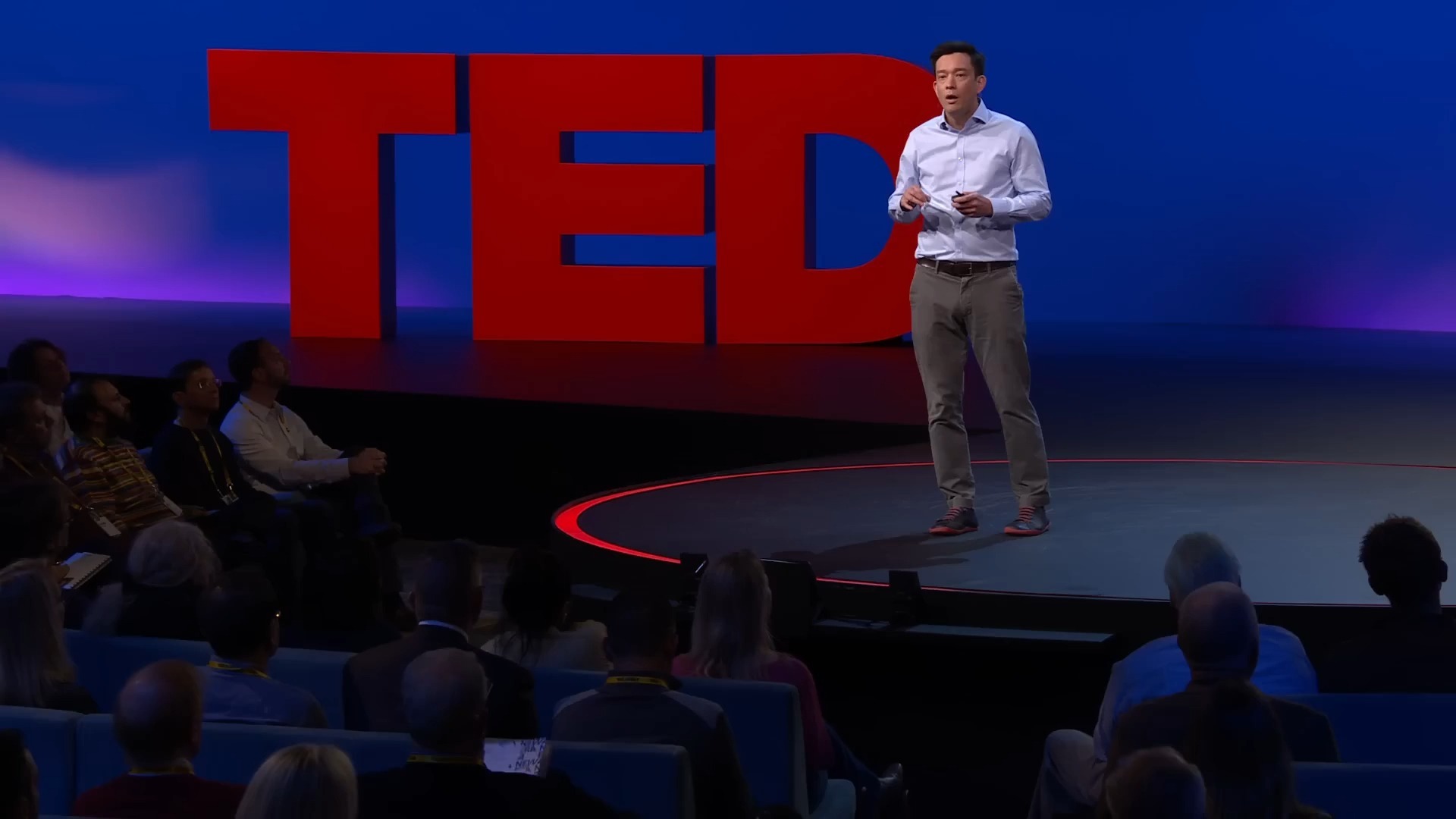
字幕摘录
| 时间 | 英文 | 中文 |
|---|---|---|
| 0:03 | So, we built a virus-resistant organism. | 因此,我们建立了一种抗病毒生物。 |
| 0:07 | Why? | 为什么? |
| 0:08 | It's not about disease or not directly. | 非病非直论. |
| 0:12 | It's about building the clean factories of the future. | 是为未来造清净工厂. |
| 0:16 | Let me explain by taking a big step back. | 让我向后退一步来解释 |
| 0:20 | All life runs on DNA. | 所有生命都靠DNA维生 |
| 0:23 | DNA codes for proteins, | 蛋白质的DNA密码, |
| 0:25 | and proteins run life. | 蛋白质运行生命。 |
| 0:29 | DNA is composed of four bases. | DNA由四个基础组成. |
| 0:32 | A, T, G和C. (英语). |
展开字幕全文(189 条)
| 序号 | 英文 | 中文 |
|---|---|---|
| 1 | So, we built a virus-resistant organism. | 因此,我们建立了一种抗病毒生物。 |
| 2 | Why? | 为什么? |
| 3 | It's not about disease or not directly. | 非病非直论. |
| 4 | It's about building the clean factories of the future. | 是为未来造清净工厂. |
| 5 | Let me explain by taking a big step back. | 让我向后退一步来解释 |
| 6 | All life runs on DNA. | 所有生命都靠DNA维生 |
| 7 | DNA codes for proteins, | 蛋白质的DNA密码, |
| 8 | and proteins run life. | 蛋白质运行生命。 |
| 9 | DNA is composed of four bases. | DNA由四个基础组成. |
| 10 | A, T, G和C. (英语). | |
| 11 | And triplets of these bases, known as codons, | 这些基地的三胞胎被称为Codons, |
| 12 | encode each of the amino acid building blocks in proteins. | 编码蛋白质中的每个氨基酸构件. |
| 13 | The genetic code is a rule book | 遗传密码是一本规则书 |
| 14 | that defines which codon encodes which amino acid. | 定义了哪个Codon编码了哪些氨基酸. |
| 15 | So, for example, | 所以,举例来说, |
| 16 | the triplet codon TCG encodes the amino acid serine. | 三胞胎Codon TCG编码了氨基酸盐 |
| 17 | And the order of triplet codons in DNA | DNA中三胞胎的顺序 |
| 18 | encodes the order of amino acid building blocks in a protein. | 编码蛋白质中氨基酸构件的顺序。 |
| 19 | There are 64 triplet codons in DNA | DNA里有64个三胞胎 |
| 20 | and just 20 common amino acids. | 只有20种常见的氨基酸 |
| 21 | And this means that most amino acids are encoded by more than one triplet codon. | 这意味着大多数氨基酸被一个以上的三联体编码. |
| 22 | So, for example, the amino acid serine | 例如氨基酸盐 |
| 23 | is encoded by six different triplet codons. | 由六个不同的三胞胎编码 |
| 24 | And triplet codons that encode the same amino acid | 编码同一种氨基酸的三胞胎Codons |
| 25 | are defined as synonymous codons. | 被定义为同义词codons。 |
| 26 | The DNA code used for life is near-universal. | 用于生命的DNA代码几乎是通用的. |
| 27 | All forms of life and viruses | 所有形式的生命和病毒 |
| 28 | use essentially the same genetic code. | 使用基本相同的遗传密码。 |
| 29 | And that's a trait that we can exploit. | 这是我们可以利用的特征。 |
| 30 | Here's what we did. | 这就是我们做了什么。 |
| 31 | We asked whether life needs multiple synonymous codons | 我们问生命需要多种同义词吗? |
| 32 | to encode a single amino acid. | 以编码单一氨基酸。 |
| 33 | For example, does life need six different codons | 比如说,生活需要六个不同的科登 |
| 34 | which all code for the amino acid serine? | 氨基酸盐的编码是什么? |
| 35 | We took the four-million-character DNA of E. coli, its genome, | 我们拿走了大肠杆菌四百万的DNA 基因组 |
| 36 | and completely rewrote the code of this microbe in a very specific way | 完全改写这个微生物的代码 以非常具体的方式 |
| 37 | by replacing targeted codons in its genome | 取代基因组中的目标Codons |
| 38 | with synonymous codons that encode the same amino acid. | 和编码相同氨基酸的同义词codons。 |
| 39 | So, for example, | 所以,举例来说, |
| 40 | 我们替换了TCG和TCACodons, | |
| 41 | which encode the amino acid serine, | 编码氨基酸盐, |
| 42 | 与AGT和AGCCodons, | |
| 43 | which also encode the amino acid serine. | 还编码了氨基酸盐 |
| 44 | By doing this across the whole four-million-base genome, | 通过在400万个基因组中这样做, |
| 45 | we completely removed the targeted codons | 我们完全清除了目标codons |
| 46 | from the genetic code of E. coli. | E. 大肠杆菌的基因密码 |
| 47 | Overall, we compressed the genetic code | 总的来说,我们压缩了基因密码 |
| 48 | from using 64 codons to using 61 codons. | 从使用64科登到使用61科登. |
| 49 | How did we do it? | 我们怎么做到的? |
| 50 | We first took the four-million-character code in a computer | 我们先在电脑里拿了四百万元的密码 |
| 51 | and used a find-and-replace operation | 并使用了查找和替换操作 |
| 52 | to replace targeted codons with their synonyms. | 以同义词取代目标codon。 |
| 53 | This created our new genome design, | 这创造了新的基因组设计, |
| 54 | which contained more than 18,000 changes | 超过18 000个变化 |
| 55 | with respect to the original genome. | 关于原始基因组。 |
| 56 | We then asked whether we could build an organism | 然后我们问我们是否可以造出一个生物体 |
| 57 | that runs on our synthetic genome design. | 我们的合成基因组设计 |
| 58 | We built the synthetic genome starting from short pieces of DNA. | 我们从短片DNA开始构建合成基因组。 |
| 59 | These were made by chemistry in a test tube, | 这些是化学用试管做的, |
| 60 | something that would have been prohibitively expensive to do on this scale | 这么高的价钱 |
| 61 | just a decade or two ago. | 就在一两十年前 |
| 62 | We then assembled these short pieces of DNA into longer stretches of DNA, | 然后我们把这些短片的DNA组装成较长的DNA |
| 63 | which we then used to step-by-step replace | 然后,我们逐渐地代替它, |
| 64 | all four-million bases of the E. coli genome. | 所有四百万的E大肠杆菌基因组基础 |
| 65 | This created the largest synthetic genome ever made, | 这创造了有史以来最大的合成基因组, |
| 66 | and the resulting cell was alive. | 由此产生的细胞还活着。 |
| 67 | Think about that. | 考虑一下 |
| 68 | We streamlined the genetic code, | 我们简化了基因密码 |
| 69 | and yet the cell lived. | 牢房却还活着 |
| 70 | We can create life with a compressed genetic code. | 我们可以用压缩基因密码创造生命. |
| 71 | Now, because our organism with a compressed genetic code | 现在,因为我们的机体 有压缩的基因密码 |
| 72 | doesn't use all 64 triplet codons to make proteins, | 不使用全部64 三胞胎Codons 制作蛋白质, |
| 73 | we could remove some of the machinery from the cell | 我们可以从牢房里取出一些机器 |
| 74 | that normally reads the near-universal genetic code. | 通常读取近乎普遍的基因密码。 |
| 75 | Specifically, we could remove components of the translational machinery, | 具体来说,我们可以去掉翻译机器的部件, |
| 76 | 具体的tRNA, | |
| 77 | that normally read the codons that we've removed from the genome. | 通常读到我们从基因组中移除的Codons。 |
| 78 | Now, the key point here is that we've created a cell | 现在,这里的关键是,我们已经建立了一个细胞 |
| 79 | that no longer reads all the codons in the near-universal genetic code. | 在近乎通用的基因密码中 不再读到所有Codons |
| 80 | Now, viruses infect cells. | 现在,病毒感染细胞。 |
| 81 | These might be the cells of our bodies | 这些可能是我们身体的细胞 |
| 82 | or single-cell microbes like E. coli. | 或单细胞微生物如E.coli. |
| 83 | They commonly have their own DNA, | 他们通常都有自己的DNA |
| 84 | which uses the near-universal genetic code | 使用近乎普遍的基因密码 |
| 85 | to encode the proteins necessary to make copies of the virus. | 编码病毒复制所需的蛋白质。 |
| 86 | But viruses don't have the machinery to read the genetic code in their DNA, | 但是病毒没有机器来读取DNA中的基因密码, |
| 87 | and instead, they rely on the host cell, | 相反,他们依赖主机 |
| 88 | the machinery of the host cell, | 东道单元的机器, |
| 89 | to read the genetic code in their DNA | 在DNA中读取基因密码 |
| 90 | and make copies of the virus. | 并拷贝病毒。 |
| 91 | It's these copies of the virus that go on to infect other cells, | 正是这些病毒复制品 感染了其他细胞, |
| 92 | and this is how viruses spread. | 这就是病毒的传播方式。 |
| 93 | But viruses are unable to make copies of themselves in our new organism | 但是病毒无法在新生物中复制自己 |
| 94 | because our new organism doesn't have the machinery | 因为我们的新机体没有机器 |
| 95 | 读出病毒DNA中的所有Codons。 | |
| 96 | The code in the DNA used in the virus | 病毒使用的DNA密码 |
| 97 | and the host cell's machinery to read that code are incompatible. | 和主机的机器读取代码是不兼容的。 |
| 98 | Therefore, the virus doesn't spread in the new organism, | 因此,病毒不会在新生物中传播, |
| 99 | and the new organism is resistant to viruses. | 新的生物体对病毒有抗药性 |
| 100 | In fact, we showed that our new organism was resistant to a wide range of viruses, | 事实上,我们显示,我们的新生物 对各种各样的病毒具有抗药性, |
| 101 | suggesting that rewriting the genetic code | 建议重写基因密码 |
| 102 | provides a route to creating broadly virus-resistant life. | 提供了创造广泛抗病毒生命的路径. |
| 103 | By extending the approaches we've developed to other organisms, | 通过将我们开发的方法扩展到其他生物, |
| 104 | it may be possible to create virus-resistant crops and animals | 可能创造出抗病毒作物和动物 |
| 105 | with important applications in agriculture and beyond. | 在农业及其他领域都有重要应用。 |
| 106 | But our advances also provide a foundation for turning cells | 但我们的进步也为转身提供了基础 |
| 107 | into the clean factories of the future. | 进入未来的清洁工厂 |
| 108 | How? | 怎么会? |
| 109 | So to explain, let me take another step back | 所以说,让我退一步 |
| 110 | to how organisms read their genetic code to make proteins. | 以及生物如何读取它们的基因密码来制造蛋白质 |
| 111 | 回顾DNA中三胞胎Codons的顺序 | |
| 112 | encodes the order of amino acid building blocks in a protein. | 编码蛋白质中氨基酸构件的顺序。 |
| 113 | And it's the translational machinery of cells | 这是细胞的翻译机器 |
| 114 | 读取三胞胎Codons | |
| 115 | and builds the corresponding sequence of amino acids. | 并构建相应的氨基酸序列. |
| 116 | The translational machinery of natural cells | 自然细胞的翻译机制 |
| 117 | 包括ribosomes、氨基乙酰-tRNA-合成酶酶和tRNAs | |
| 118 | is a unique and special system for making proteins | 是制作蛋白质的独特而特殊的系统 |
| 119 | in which the 20 common amino acids are strung together in a chain. | 其中20种常见的氨基酸被串成链状排列在一起. |
| 120 | Now, proteins are amazing, | 现在,蛋白质惊人, |
| 121 | but they're just one example from a vast class of molecules | 但它们只是大类分子的一个例子 |
| 122 | known as polymers, | 称为聚合物, |
| 123 | which includes plastics, materials and drugs. | 包括塑料、材料和药物。 |
| 124 | And a polymer, or a linear polymer, | 和聚合物,或线性聚合物, |
| 125 | is really any molecule in which simpler chemical building blocks | 是一个更简单的化学构件 |
| 126 | are strung together in a chain. | 被捆在铁链里 |
| 127 | We wanted to unlock the potential of the translational machinery | 我们想释放翻译机器的潜力 |
| 128 | for making plastics, materials and drugs | 制造塑料、材料和药物 |
| 129 | that simply can't be made in any other way, | 根本无法以其他方式制造 |
| 130 | or that could be made more cleanly and efficiently | 更干净、更有效率 |
| 131 | using engineered versions of the cell's translational machinery. | 使用细胞的翻译机械的工程版. |
| 132 | The building blocks for these polymers | 这些聚合物的构件 |
| 133 | go well beyond the 20 common amino acids used to make proteins. | 远超20种常见的氨基酸制造蛋白质. |
| 134 | It's been impossible to unlock the potential of the translational machinery | 翻译机器的潜力是不可能解开的 |
| 135 | for making plastics, materials and drugs for two reasons. | 用于制造塑料、材料和药物,原因有二。 |
| 136 | First, all 64 triplet codons in natural cells | 首先,自然细胞中所有64个三胞胎 |
| 137 | are used for making natural proteins, | 用来制造天然蛋白质, |
| 138 | 根本就没有Codons | |
| 139 | to encode the synthesis of new polymers. | 编码新聚合物的合成。 |
| 140 | Second, the natural translational machinery | 第二,自然翻译机械 |
| 141 | specifically uses natural amino acids | 专门使用天然氨基酸 |
| 142 | and simply can't use the chemical building blocks | 无法使用化学构件 |
| 143 | required to make new polymers. | 要求制造新的聚合物。 |
| 144 | However, our virus-resistant organism | 然而,我们的抗病毒生物 |
| 145 | doesn't use all 64 triplet codons to make proteins | 不使用所有64个三胞胎Codons来制作蛋白质 |
| 146 | and doesn't contain the machinery to read the codons | 也不包含读codons的机器 |
| 147 | that have been deleted from its genome. | 被从基因组中删除。 |
| 148 | And this cell provides the starting point | 这个单元格提供了起点 |
| 149 | for genetically encoded polymer synthesis. | 用于转基因编码聚合物合成. |
| 150 | To realize genetically encoded polymer synthesis | 实现基因编码聚合物合成 |
| 151 | in our virus-resistant organism, | 在我们抗病毒的生物体内 |
| 152 | we added synthetic DNA | 我们加入了合成DNA |
| 153 | containing the triplet codons we'd removed from the genome of the cell | 包含我们从细胞基因组中分离出来的三胞胎 |
| 154 | and engineered translational machinery to read these codons | 并设计了翻译机读取这些codons |
| 155 | and reassign them to new chemical building blocks for new polymers. | 并将其重新分配给新的聚合物的化学构件。 |
| 156 | This system can be programmed to make diverse synthetic polymers. | 这个系统可以被编程成多种合成聚合物. |
| 157 | By changing the order of the triplet codons in the synthetic DNA, | 通过改变合成DNA中三胞胎的顺序, |
| 158 | we can change the order of the chemical building blocks | 我们可以改变化学构件的顺序 |
| 159 | that we program into the resulting polymer. | 我们编程到产生的聚合物。 |
| 160 | And by changing the identity of the engineered translational machinery | 通过改变翻译机器的特性 |
| 161 | that we add to the cell, | 我们加入细胞, |
| 162 | we can change the identity of the chemical building blocks | 我们可以改变化学构件的特性 |
| 163 | from which we compose the polymer. | 我们用它来组成聚合物 |
| 164 | Overall, we've created a cellular factory | 总的来说,我们创建了一个蜂窝工厂 |
| 165 | that we can reliably and predictably program to make synthetic polymers. | 我们可以可靠和预测地编程 制造合成聚合物。 |
| 166 | Using our approach, we've already been able to program cells | 用我们的方法,我们已经可以编程细胞 |
| 167 | to make new molecules, | 制造新分子, |
| 168 | including molecules from an important class of drugs | 包括一种重要药物的分子 |
| 169 | known as depthsypeptide macrocycles. | 称为深sy宏观循环。 |
| 170 | Molecules in this class include antibiotics, | 本类分子包括抗生素, |
| 171 | immunosuppressives and antitumor compounds. | 免疫抑制剂和抗肿瘤化合物。 |
| 172 | We've also been able to program cells to make completely synthetic polymers | 我们还可以编程细胞 完全合成聚合物 |
| 173 | containing the chemical linkages | 含有化学品关联的化学品 |
| 174 | found in several classes of biodegradable plastics. | 在几类可生物降解塑料中发现。 |
| 175 | As we build new polymer molecules using our cellular factories, | 随着我们利用细胞工厂 制造新的聚合物分子 |
| 176 | we have the opportunity to consider, from the beginning, | 我们有机会考虑,从一开始, |
| 177 | how we might also use engineered biological cells | 我们如何使用 工程生物细胞 |
| 178 | to break these polymers down into their constituent chemical building blocks | 将这些聚合物分解成其化学构件 |
| 179 | that could be recycled and used for new encoded polymers. | 用于新的编码聚合物。 |
| 180 | We envision a circular bioeconomy | 我们设想一个循环生物经济 |
| 181 | in which our new, genetically encoded plastics and materials | 我们的新基因编码塑料和材料 |
| 182 | are manufactured and ultimately broken down | 被制造出来,最终被拆解 |
| 183 | using low-energy cellular processes | 使用低能电池工艺 |
| 184 | taking advantage of existing bioreactors and fermentors | 利用现有生物反应器和发酵器 |
| 185 | by taking inspiration from nature | 从自然界获得灵感 |
| 186 | and reimagining what life can become, | 并重新设想生命将变成什么样, |
| 187 | we have the opportunity to build | 我们有机会建立 |
| 188 | the sustainable industries of the future. | 未来的可持续产业。 |
| 189 | Thank you. | 谢谢 |
该视频共有字幕 190 条。解锁更多字幕为会员功能,请移动到 价格