蜂群秘密:摇摆舞其实没那么重要!
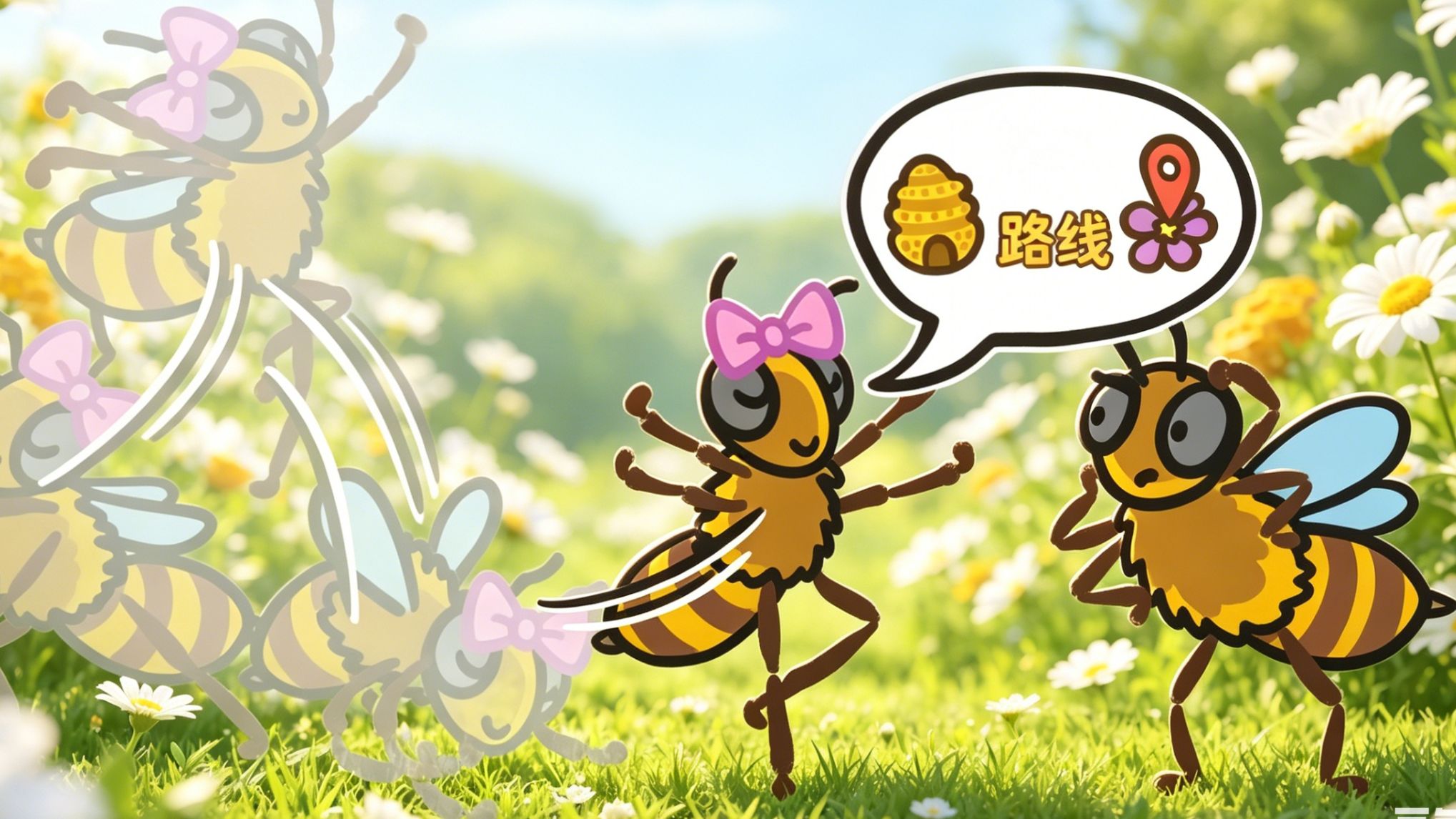
字幕摘录
| 时间 | 英文 | 中文 |
|---|---|---|
| 0:00 | You've probably heard that bees use a complex set of movements, often called the waggle | 你可能听说过蜜蜂使用 复杂的运动组合, 常被称为摇摆 |
| 0:04 | dance, to tell other worker bees where to find new sources of nectar. | 告诉其他工人蜜蜂在哪里找到新的花蜜来源 |
| 0:08 | It's a super clever and sophisticated system, but it turns out that bees almost never immediately | 这是一个超级聪明和复杂的系统, 但事实证明,蜜蜂几乎从来没有立即 |
| 0:13 | jump up to follow the directions they just got, which weirdly is also super clever and | 跳上去遵循他们刚刚得到的方向, 这奇怪的是,也是超级聪明和 |
| 0:19 | sophisticated. | 精细。 |
| 0:20 | Hi, I'm Cameron and this is MinuteEarth. | 嗨,我是卡梅伦,这里是"地球" |
| 0:23 | Most communal insects lead their nest mates to promising food sources with pheromone trails, | 多数社区昆虫会带给巢穴伴侣 带来有希望的食物来源 并有球踪 |
| 0:28 | but bees, like Beatrice here, fly long distances to find flower patches, chemical signals would | 但是蜜蜂,就像比阿特丽斯一样, 飞得很远 寻找花点,化学信号会 |
| 0:33 | just disappear into the air. | 直接消失在空中。 |
| 0:35 | Instead, after returning to the hive, Bee shares information about a promising patch | 相反,在回到蜂巢后,BE分享了关于一个有希望的补丁的信息 |
展开字幕全文(42 条)
| 序号 | 英文 | 中文 |
|---|---|---|
| 1 | You've probably heard that bees use a complex set of movements, often called the waggle | 你可能听说过蜜蜂使用 复杂的运动组合, 常被称为摇摆 |
| 2 | dance, to tell other worker bees where to find new sources of nectar. | 告诉其他工人蜜蜂在哪里找到新的花蜜来源 |
| 3 | It's a super clever and sophisticated system, but it turns out that bees almost never immediately | 这是一个超级聪明和复杂的系统, 但事实证明,蜜蜂几乎从来没有立即 |
| 4 | jump up to follow the directions they just got, which weirdly is also super clever and | 跳上去遵循他们刚刚得到的方向, 这奇怪的是,也是超级聪明和 |
| 5 | sophisticated. | 精细。 |
| 6 | Hi, I'm Cameron and this is MinuteEarth. | 嗨,我是卡梅伦,这里是"地球" |
| 7 | Most communal insects lead their nest mates to promising food sources with pheromone trails, | 多数社区昆虫会带给巢穴伴侣 带来有希望的食物来源 并有球踪 |
| 8 | but bees, like Beatrice here, fly long distances to find flower patches, chemical signals would | 但是蜜蜂,就像比阿特丽斯一样, 飞得很远 寻找花点,化学信号会 |
| 9 | just disappear into the air. | 直接消失在空中。 |
| 10 | Instead, after returning to the hive, Bee shares information about a promising patch | 相反,在回到蜂巢后,BE分享了关于一个有希望的补丁的信息 |
| 11 | through choreography. | 通过舞蹈。 |
| 12 | The direction she moves describes the exact direction to the patch relative to the sun, | 她移动的方向 描述了精确的方向 补丁相对于太阳, |
| 13 | the time she spends waggling tells her sisters how far the patch is in that direction, and | 她花在摇摆的时间 告诉她的姐妹们 斑点是多远的方向, |
| 14 | the intensity conveys how promising Bee thinks the patch is. | 强度能传达出BE认为补丁有多好 |
| 15 | This complicated set of movements adds up to a set of map coordinates tagged with a | 这一系列复杂的移动构成一组地图坐标 |
| 16 | starred review, for bees. | 主演评论,为蜜蜂。 |
| 17 | And Bee might repeat her choreography as many as 50 times to make sure the other workers | 和BE可能重复她的舞蹈 多达50倍 确保其他工人 |
| 18 | catch every move. | 抓住每一个动作。 |
| 19 | And at this point I guess I should mention that the inside of a beehive is completely | 此时此刻,我想我应该提到 蜂巢的内在是完全的 |
| 20 | dark, nearby workers have to follow Bee's every move by touching her with their antenna. | 黑暗,附近的工人必须跟随Bee的每一个动作,用他们的天线触摸她. |
| 21 | But as much as 93% of the time, the other workers will observe this long, intricate | 但高达93%的时间, 其他工人会观察 如此漫长,复杂 |
| 22 | set of movements and then just go on with their day. | 然后继续他们的一天。 |
| 23 | Which actually makes sense, I mean, most of these workers are expert foragers themselves, | 这实际上有道理,我的意思是, 这些工人大多是专家 饲料本身, |
| 24 | they already have patches they know and like, there's also the risk of getting lost while | 他们已经有补丁 他们知道和喜欢, 也有风险 迷失的同时 |
| 25 | following someone else's directions, plus Bee might have overestimated how promising | 跟着别人的路 加上Be可能高估了 |
| 26 | the patch actually is or might have made a mistake in her directions. | 补丁实际上是或可能 犯了错误她的方向。 |
| 27 | Instead, a bee analyzes the information conveyed by a waggle dance, they weigh the risks of | 相反,蜜蜂分析 传递的信息 通过摇摆舞, 他们权衡的风险 |
| 28 | venturing into the unknown versus sticking with what they know, and then make a decision, | 进入未知的对决 坚持他们知道,然后作出决定, |
| 29 | and the vast majority of the time bees end up passing on that suggestion. | 绝大多数时间蜜蜂都接受了这个建议 |
| 30 | Which probably isn't different than how you use crowd-sourced information. | 可能跟你使用众包信息没什么不同 |
| 31 | One five-star review probably wouldn't convince you to visit a new place instead of one you | 一次五星级的检讨 可能不会说服你去一个新地方而不是你 |
| 32 | already love. | 已经是爱了 |
| 33 | But let's say your favorite place was closed, or there were dozens of five-star reviews | 假设你最喜欢的地方是关闭的 或者有几十个五星评论 |
| 34 | for this new place, then you might be convinced to take the chance. | 为了这个新地方, 那么你可能会说服 抓住机会。 |
| 35 | It's the same with bees, in early spring and late fall, when flower patches are few | 和蜜蜂一样,春早秋晚,花点很少 |
| 36 | and far between, or after a destructive storm, a bee's go-to spots are more likely to be | 在狂风暴雨之间或之后 蜜蜂更可能出现 |
| 37 | empty. | 空无所有. |
| 38 | And in that case, it might be worth taking a chance on what another bee is buzzing about, | 如果那样的话,也许值得冒险去了解另一只蜜蜂在说什么 |
| 39 | and if multiple bees are giving the same information about the same patch, a worker is more likely | 如果多只蜜蜂提供相同信息 更可能是一个工人 |
| 40 | to take a chance and visit it. | 冒险去拜访一下 |
| 41 | So even though most of the time bees don't follow the directions conveyed by waggle dances, | 所以,即使大多数时间蜜蜂 不遵循通过摇摆舞传达的方向, |
| 42 | the information becomes part of the hive's communal knowledge, even if they don't make | 这些信息成为蜂巢社区知识的一部分 即使他们不做 |
该视频共有字幕 42 条。解锁更多字幕为会员功能,请移动到 价格