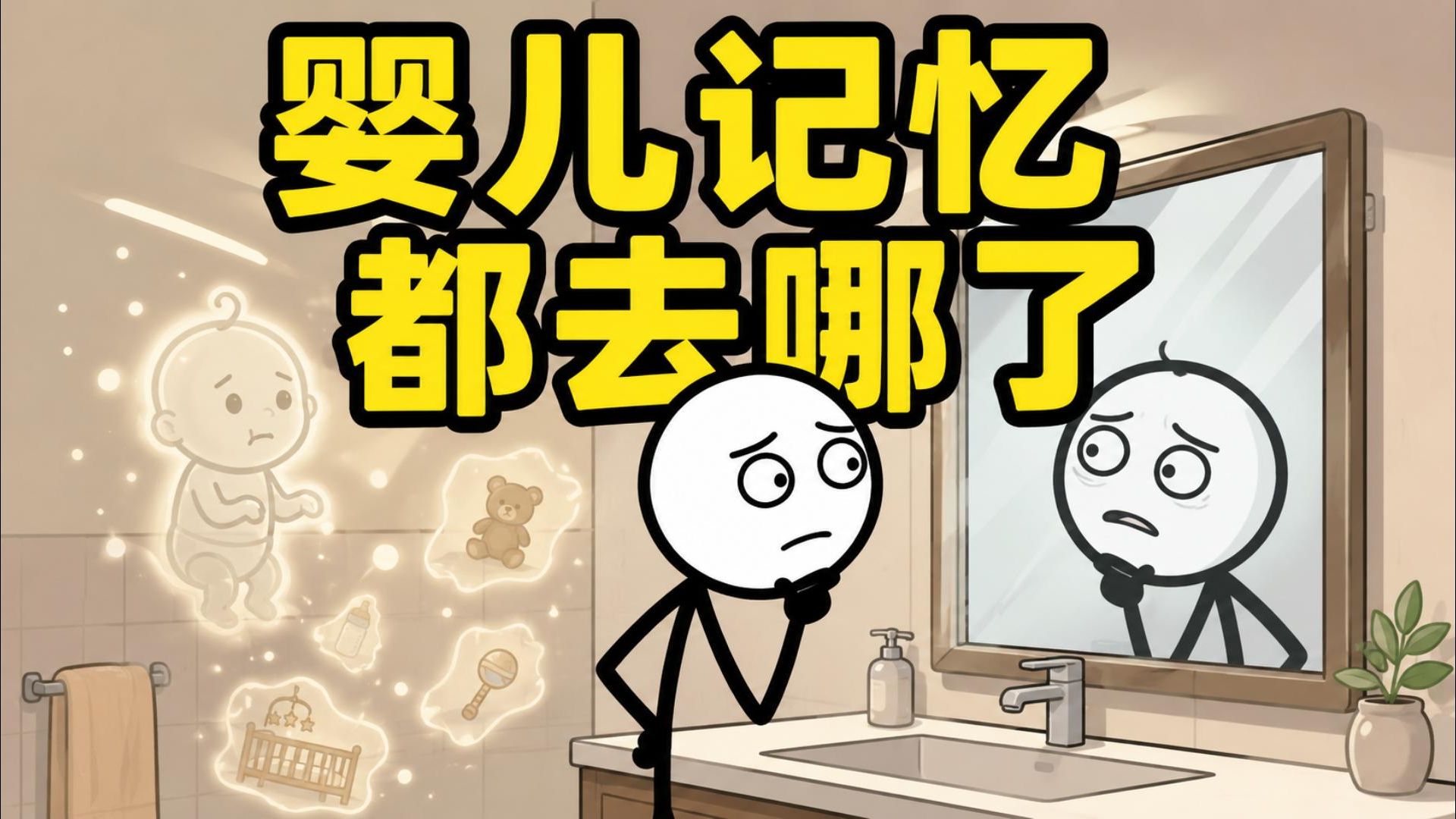
为什么你的婴儿记忆消失了?
字幕摘录
| 时间 | 英文 | 中文 |
|---|---|---|
| 0:00 | You don't remember being born. | 你不记得自己出生了 |
| 0:01 | You don't remember your first word, your first step, | 你不记得你的第一个字, 你的第一步, |
| 0:04 | or the first time someone held you and you looked up at their face. | 或者第一次有人抱着你 你看着他们的脸 |
| 0:08 | You don't remember learning what a dog was, or the first time you tasted something sweet, | 你不记得知道狗是什么 或者你第一次尝到甜味 |
| 0:14 | or the moment you figured out that your hands belonged to you. | 或者当你发现你的手属于你时 |
| 0:17 | And here's the thing, those moments happened. | 事情是这样的 那些时刻发生了 |
| 0:20 | They were real. | 他们是真的 |
| 0:21 | You were there. | 你当时在场 |
| 0:22 | You were conscious. | 你当时很清醒 |
| 0:23 | You were feeling things, experiencing things, processing an entirely new world at an astonishing | 你在感受事物,体验事物, 处理一个全新的世界 在惊人的 |
展开字幕全文(408 条)
| 序号 | 英文 | 中文 |
|---|---|---|
| 1 | You don't remember being born. | 你不记得自己出生了 |
| 2 | You don't remember your first word, your first step, | 你不记得你的第一个字, 你的第一步, |
| 3 | or the first time someone held you and you looked up at their face. | 或者第一次有人抱着你 你看着他们的脸 |
| 4 | You don't remember learning what a dog was, or the first time you tasted something sweet, | 你不记得知道狗是什么 或者你第一次尝到甜味 |
| 5 | or the moment you figured out that your hands belonged to you. | 或者当你发现你的手属于你时 |
| 6 | And here's the thing, those moments happened. | 事情是这样的 那些时刻发生了 |
| 7 | They were real. | 他们是真的 |
| 8 | You were there. | 你当时在场 |
| 9 | You were conscious. | 你当时很清醒 |
| 10 | You were feeling things, experiencing things, processing an entirely new world at an astonishing | 你在感受事物,体验事物, 处理一个全新的世界 在惊人的 |
| 11 | rate. | 费率。 |
| 12 | And then it just… vanished. | 然后,它就... 消失了。 |
| 13 | Everything before roughly age three is gone for most people. | 大约三岁以前的东西 大部分人都不见了 |
| 14 | Some people have a fragment or two from age four, a birthday, a car ride, a smell. | 有些人从四岁开始就有一两片碎片,生日,乘车,闻到气味. |
| 15 | But, | 不过 |
| 16 | the first years of your life, the most dramatic period of growth and learning your brain will | 在你生命的头几年, 最戏剧性的成长 和学习你的大脑会 |
| 17 | undergo, exist in almost complete silence. | 接受,在几乎完全的沉默中存在。 |
| 18 | No memories, nothing. | 没有记忆,什么都没有。 |
| 19 | So where did they go? | 他们去哪了? |
| 20 | Because this isn't like forgetting where you put your keys. | 因为这不是像忘了你放钥匙的地方。 |
| 21 | This is a systematic, near total | 这是系统化的,几乎是总数 |
| 22 | erasure of the first chapter of your existence. | 消除你生命的第一章 |
| 23 | And for a long time, nobody could satisfactorily | 长久以来 没人能满意 |
| 24 | explain why it happens. | 解释为什么会这样 |
| 25 | Now we have some answers, and they are genuinely fascinating. | 现在我们有了一些答案,它们确实令人着迷。 |
| 26 | Let's start with the obvious question. | 先明问. |
| 27 | Were you even conscious back then? | 你那时有意识吗? |
| 28 | Were you actually | 其实你 |
| 29 | experiencing anything worth remembering? | 经历什么值得记住? |
| 30 | Yes. | 对 |
| 31 | Unambiguously yes. | 毫不含糊地是的。 |
| 32 | Infants are not passive | 婴儿不是被动的 |
| 33 | receivers of sensory input. | 接收感官输入器。 |
| 34 | They are active, curious, emotionally responsive beings from | 他们是活跃的,好奇的, 情绪反应迅速的人来自 |
| 35 | extremely early on. | 非常早的时候 |
| 36 | Newborns can recognize their mother's voice within hours of birth, | 新生儿可以在出生后数小时内认出母亲的声音, |
| 37 | they heard it in the womb, and the memory of that sound is already encoded before they've even seen | 他们听到它在子宫, 和记忆 该声音已经编码 他们甚至还没有看到 |
| 38 | daylight. | 日光灿烂. |
| 39 | Within days, they show preferences. | 几天之内,他们就会表现出偏好。 |
| 40 | They respond differently to faces they've seen | 他们对所见的面孔的反应不同 |
| 41 | versus faces they haven't. | 对抗他们没有的面孔。 |
| 42 | They cry differently for hunger versus pain versus loneliness. | 他们为饥饿而哭 与痛苦与孤独不同 |
| 43 | There is someone home. | 有个人在家。 |
| 44 | A real experiencing consciousness is present from the very beginning. | 一个真正的体验意识从一开始就存在. |
| 45 | And yet, none of it sticks. | 然而,它没有坚持。 |
| 46 | Not in a form you can access now. | 现在不能进入表格 |
| 47 | The first major clue | 第一个主要线索 |
| 48 | to understanding why comes from looking at what memory actually is and how it gets built. | 来理解为什么从观察什么是记忆 以及如何建立记忆。 |
| 49 | Memory isn't a recording. | 记忆不是录音 |
| 50 | This is probably the most important thing to understand about | 这可能是最重要的事情 了解 |
| 51 | how the brain stores experience, and it's wildly counterintuitive. | 大脑如何存储经验, 和它的疯狂反直觉。 |
| 52 | When something happens to you, | 当你出事时 |
| 53 | your brain doesn't hit a record button and file away a video clip. | 你的大脑没有按下记录按钮 然后把视频片段存档 |
| 54 | What it does is far messier, | 事情会变得更糟 |
| 55 | and far more interesting. | 更有趣一点 |
| 56 | Different aspects of an experience get processed by different | 经验的不同方面被不同的 |
| 57 | brain regions simultaneously. | 大脑区域同时存在。 |
| 58 | The emotional content goes one place. | 情感内容去一个地方。 |
| 59 | The sensory details | 感官细节 |
| 60 | go somewhere else. | 去别的地方 |
| 61 | The sequence of events, the narrative of what happened, | 事情的顺序 事情的叙述 |
| 62 | goes somewhere else entirely. | 完全去别的地方 |
| 63 | For you to have a retrievable autobiographical memory, | 让你有一个可以自传的记忆 |
| 64 | a memory of the I was there and this happened to me variety, all of those pieces need to be linked | 我当时在场的记忆 这一切发生在我身上 需要把这些作品联系起来 |
| 65 | together and consolidated into a stable, accessible package. | 并合并成一个稳定,方便的软件包。 |
| 66 | That process requires | 这一过程要求 |
| 67 | a specific brain structure called the hippocampus. | 一个特定的脑结构叫做河马营 |
| 68 | The hippocampus is the brain's memory indexer. | 河马是大脑的记忆索引器. |
| 69 | It's the region that binds the scattered pieces of an experience into a coherent whole | 是这个区域把分散的经验 结合成一个整体 |
| 70 | and files it somewhere you can later retrieve. | 并把它归档到某个地方,你以后可以检索。 |
| 71 | Without hippocampal involvement, you might | 没有河马队的参与,你可能会 |
| 72 | process an experience, you might even be affected by it emotionally, but you won't have a conscious | 处理一个经验,你甚至可能会 受到它的影响, 但你不会有一个意识 |
| 73 | narrative memory of it that you can deliberately recall. | 叙事记忆,你可以刻意回忆。 |
| 74 | And here's the key. | 这是关键 |
| 75 | The hippocampus in | 河马营在 |
| 76 | human infants is dramatically underdeveloped, not slightly behind. | 人类婴儿严重发育不足,并非稍稍落后。 |
| 77 | Not almost there. | 差一点就到了 |
| 78 | Dramatically, | 戏剧性地 |
| 79 | functionally incomplete in the first years of life. | 在生命的最初几年,功能不完整。 |
| 80 | The neurons are there, but the connections | 神经元在那里,但是连接 |
| 81 | between them, the dense complex network of links that allows efficient memory encoding and retrieval, | 在它们之间,密集的复杂链路网络 允许有效的内存编码和检索, |
| 82 | hasn't formed yet. | 还没有形成。 |
| 83 | The hippocampus undergoes significant development through the first two | 河马在前两部都经历了重大发展 |
| 84 | to three years of life and in some regions continues developing well into adolescence. | 而在一些地区,生活持续到青春期。 |
| 85 | A baby experiencing something beautiful or frightening or joyful is like trying to record | 婴儿经历美丽 恐怖 快乐的事物 就像尝试录制 |
| 86 | video on a camera that doesn't have a memory card yet. | 摄像机上的录像 还没有内存卡 |
| 87 | The lens is working, the processor is | 镜头有用,处理器有用 |
| 88 | running, but there's nowhere for the footage to go. | 跑,但没有 镜头去。 |
| 89 | So the memories don't form in the first place, | 因此,记忆没有形成 首先, |
| 90 | not in the retrievable narrative sense, not the kind you can pull up 30 years later and play back. | 而不是30年后你能够重新演奏的那种 |
| 91 | That's the first part of the answer, but it's not the whole answer because it still doesn't explain | 这是答案的第一部分,但它不是 整个答案,因为它仍然没有解释 |
| 92 | why most people can't access memories from age two or three, even though the hippocampus is | 为什么大多数人无法从2岁或3岁开始访问记忆, 尽管河马营是 |
| 93 | considerably more developed by then than it was at birth. | 到那时,比出生时要发达得多。 |
| 94 | This is where it gets even more interesting. | 这才是更有趣的地方。 |
| 95 | There's a second factor, and it has to do with something called neurogenesis. | 还有一个因素,它和所谓的神经起源有关. |
| 96 | Your brain grows | 你的大脑在成长 |
| 97 | new neurons throughout your life. | 新的神经元在你一生中。 |
| 98 | This was considered controversial for a long time. | 这在很长一段时间内被认为是有争议的. |
| 99 | The old assumption was that you were born with all the neurons you'd ever have, and that was it. | 旧的假设是 你生来就拥有所有的神经元 就是这样 |
| 100 | That turned out to be wrong. | 原来是错的 |
| 101 | New neurons are generated continuously, particularly in the | 新的神经元是连续产生的,特别是在 |
| 102 | rate of neurogenesis in the hippocampus is extraordinarily high, far higher than at any | 河马区神经起源率特别高,远高于任何地区 |
| 103 | later point in life. | 晚点生命。 |
| 104 | The infant brain is generating new hippocampal neurons at a rate that simply | 幼脑以简单的速度产生新的河马神经元 |
| 105 | doesn't happen in adults, and all of those new neurons need to be integrated into the existing | 这些新的神经元 都需要融入现有的神经元 |
| 106 | network. | 腾讯网. |
| 107 | They need to find their place, form connections, wire themselves into the system. | 他们需要找到他们的位置, 形成连接, 连接自己进入系统。 |
| 108 | That integration process is disruptive. | 这一一体化进程具有破坏性。 |
| 109 | It destabilizes existing connections. | 它破坏了现有的联系。 |
| 110 | It essentially | 本质上 |
| 111 | rewires the filing system. | 重新连接归档系统。 |
| 112 | Think of it like this. | 这样想吧 |
| 113 | Imagine you have a library. | 想象一下你有一个图书馆。 |
| 114 | Not a big organized | 不是个大组织 |
| 115 | library, a young chaotic one that's adding hundreds of new shelves every single day. | 图书馆,一个年轻 混乱的,它每天增加 数百个新书架。 |
| 116 | Books are being | 书是 |
| 117 | added faster than they can be properly cataloged. | 添加速度快于可以适当编目的速度. |
| 118 | The organization system keeps changing as new | 组织系统不断发生变化 |
| 119 | sections are built. | 区域已构建。 |
| 120 | Old books don't necessarily stay where you put them because the shelves | 旧书不一定留在你放的地方 因为书架 |
| 121 | themselves keep moving. | 自己继续前进。 |
| 122 | That's your hippocampus in the first few years of life. | 那是你头几年的河马队 |
| 123 | The very thing | 就是这个 |
| 124 | makes the infant brain so extraordinarily good at learning, that explosive growth, | 使幼脑非常善于学习 爆炸性成长 |
| 125 | {\fn黑体\fs22\bord1\shad0\3aHBE\4aH00\fscx67\fscy66\2cHFFFFFF\3cH808080}那无情的新生神经元 {\fn黑体\fs22\bord1\shad0\3aHBE\4aH00\fscx67\fscy66\2cHFFFFFF\3cH808080}同时也是它几乎 | |
| 126 | impossible to form stable long-term memories. | 无法形成稳定的长期记忆。 |
| 127 | Rapid neurogenesis trades away memory consolidation | 快速的神经源交换 记忆整合 |
| 128 | in exchange for learning capacity. | 以换取学习能力。 |
| 129 | The infant brain is optimized for absorbing new information | 婴儿大脑被优化 以吸收新的信息 |
| 130 | at maximum speed, not for filing it away in a form that will be accessible decades later. | 在最高速度时,不以几十年后可以使用的形式存档。 |
| 131 | You were learning faster than any adult ever could, and the cost of that speed was forgetting | 你学得比任何成年人都快 速度的代价是忘记了 |
| 132 | everything. | 一切众生. |
| 133 | But there's a third factor, and this one is the strangest one of all. | 但有第三因缘,此因缘最奇. |
| 134 | Language. | 语言. |
| 135 | This | 这个 |
| 136 | sounds simple at first. | 一开始听起来很简单。 |
| 137 | Of course babies can't form verbal memories. | 当然,婴儿不能形成口头记忆。 |
| 138 | They don't have words yet, | 他们还没有语言, |
| 139 | but it goes deeper than that because the relationship between language and memory is | 但比这更深 因为语言和记忆之间的关系 |
| 140 | more intimate than most people realize. | 比大多数人意识到的更亲密 |
| 141 | Autobiographical memory, the I remember when | 自我记忆,我记得,当 |
| 142 | I was five and this happened kind of memory, is deeply, structurally connected to language. | 我五岁的时候,发生了这种记忆, 与语言有很深的结构联系。 |
| 143 | Not just because you need words to describe memories to other people, but because the | 不只是因为你需要文字来形容别人的记忆 而是因为 |
| 144 | internal experience of having a memory, of replaying it in your mind, of knowing that | 内在经验 拥有记忆, 在你的脑海中重播, 了解 |
| 145 | it happened to you and not someone else, that experience is mediated by language in ways that | 这发生在你身上,而不是别人身上, 这种经历通过语言调解的方式, |
| 146 | are hard to fully separate. | 很难完全分开 |
| 147 | When you remember something, you are, in part, narrating it to | 当你想起一些事情, 你,部分地,描述它 |
| 148 | yourself. | 你自己来 |
| 149 | You're constructing a story, a sequence, a sense of self moving through time, | 你正在构建一个故事,一个序列, 一种自我穿越时间的感觉, |
| 150 | and that narrative capacity, that ability to construct a story with yourself as the protagonist | 和叙述能力, 能力构建一个故事 作为主角 |
| 151 | emerges alongside language. | 与语言同时出现。 |
| 152 | Infants have a sense of self. | 婴儿有自觉. |
| 153 | Research has demonstrated that, | 研究表明, |
| 154 | but it's a present tense self, an I am experiencing this right now self. | 但这是现在的紧张的自我, 我现在正在经历这个自我。 |
| 155 | The extension of that self backward through time into a retrievable personal history, | 将这种自我倒退 延续到可以挽回的个人历史中 |
| 156 | the autobiographical self, requires language as scaffolding. | 自传性自我,需要语言作为脚手架. |
| 157 | Without language, there's no story. | 没有语言,就没有故事。 |
| 158 | Without a story, there's no narrator. | 没有故事,就没有旁白。 |
| 159 | And without a narrator, there's no one to be the subject of | 没有旁白,没有人可以成为 |
| 160 | the memory. | 记忆 |
| 161 | You can't remember I was there if you don't yet have a stable language mediated concept | 你不记得我在那里,如果你还没有 一个稳定的语言调解概念 |
| 162 | of I. | 页:1 |
| 163 | Studies across cultures support this. | 不同文化的研究支持这一点。 |
| 164 | Children who develop language later also tend | 日后发展语言的儿童也有所增长 |
| 165 | to have later onset of autobiographical memory. | 然后开始自传记忆 |
| 166 | Bilingual children often have the clearest early | 双语儿童往往最早知道 |
| 167 | memories in the language they were using at the time, even if they rarely use that language as | 他们当时使用的语言中的记忆 即使他们很少使用这种语言 |
| 168 | adults. | 已经成年了 |
| 169 | People who learned sign language as their first language show the same infantile amnesia | 作为第一语言学习手语的人 表现出同样的幼年失忆症 |
| 170 | patterns as hearing children who learned spoken language, suggesting that it's not spoken language | 像是听力学口语的孩子 暗示这不是口语 |
| 171 | specifically, but language as a cognitive system that matters. | 具体来说,但语言作为一种认知系统很重要。 |
| 172 | The words aren't just how you | 这些话不只是你 |
| 173 | express the memory. | 表达记忆。 |
| 174 | They're part of how the memory is built in the first place. | 它们是最初记忆构建方式的一部分. |
| 175 | So now we have three overlapping explanations. | 现在我们有三个相互重叠的解释。 |
| 176 | Hippocampal不成熟、爆炸性神经起源 | |
| 177 | disrupting consolidation, and the absence of language as a structuring scaffold for | 以及没有语言作为结构脚手架用于 |
| 178 | autobiographical experience. | 自传经验。 |
| 179 | All three are real. | 三者皆是真实. |
| 180 | All three are happening simultaneously. | 三者同时发生. |
| 181 | And together, they create a window of near total amnesia that covers the most formative period of | 它们共同创造了一个 几乎完全失忆的窗口 它覆盖了最原始的 |
| 182 | ネ | |
| 183 | But here's what makes this genuinely strange. | 但这是真正奇怪的原因 |
| 184 | The experiences you can't remember | 你不记得的经历 |
| 185 | still shaped you. | 仍然塑造你 |
| 186 | This is the part that people don't always fully sit with. | 这是人们不总是 完全坐在一起的部分。 |
| 187 | Your infant years | 你小的时候 |
| 188 | are gone from your conscious retrievable memory, but they are absolutely not gone from you. | 但绝对不是你的记忆 |
| 189 | Everything that happened in those years left traces, deep structural traces that influence | 那些年发生的一切 都留下了痕迹 深层的结构痕迹 |
| 190 | who you are right now. | 你现在是谁? |
| 191 | The attachment patterns you formed with your caregivers in the first | 你和你的照顾者在第一个 |
| 192 | year of life, whether you learned that the world was safe and responsive or unpredictable and | 无论你是否得知世界是安全的 反应迅速的 |
| 193 | unreliable, are encoded not as memories, but as implicit expectations, ways of being, emotional | 不可靠,不是被编码为记忆, 而是作为隐含的期望, 存在的方式,情感 |
| 194 | reflexes that operate below conscious awareness. | 意识不足的反射。 |
| 195 | If you were consistently soothed when you cried, | 如果你们哭的时候, |
| 196 | your nervous system learned at a biological level that distress is temporary and help is available. | 您的神经系统在生物层面上得知 痛苦是暂时的 并且有帮助。 |
| 197 | That expectation shapes how you respond to stress as an adult. | 这种期望决定了你如何应对成年人的压力。 |
| 198 | How quickly you can calm yourself | 多久才能冷静下来 |
| 199 | down, how much you trust that things will be okay. | 你有多相信事情会好起来的 |
| 200 | If you were inconsistently responded to or left | 如果你的反应不一致或离开 |
| 201 | to cry without comfort, your nervous system learned something different, not as a memory. | 你神经系统学到了不同的东西 而不是记忆 |
| 202 | As a setting, a default calibration of how safe the world is and how much you can rely on other | 作为设定,默认校准世界有多安全 和你可以依赖多少其他 |
| 203 | people. | 人们 |
| 204 | None of this is accessible to you as a story you can tell. | 这些都不是你所能理解的 |
| 205 | You can't remember the specific | 你不记得具体内容了 |
| 206 | night you cried and no one came, or the specific morning you were held and felt completely safe. | 晚上你哭了,没有人来, 或者具体的早晨 你被扣留,感觉完全安全。 |
| 207 | But those nights and mornings added up into something, a posture toward existence that you | 但那些夜晚和早晨加起来 变成了某种东西, 一种对存在的态度,你 |
| 208 | carry without knowing you're carrying it. | 带着它,却不知道你携带它。 |
| 209 | This is what psychologists mean when they talk about | 这就是心理学家在谈论 |
| 210 | implicit memory as opposed to explicit memory. | 隐性内存相对于显性内存. |
| 211 | Explicit memory is the kind you can consciously | 明确的记忆是那种你可以自觉的 |
| 212 | access and describe. | 访问和描述。 |
| 213 | Implicit memory is the kind that lives in your body, your emotional reactions, | 隐性记忆是那种 生活在你体内,你的情绪反应, |
| 214 | your automatic assumptions about how relationships work, and whether you deserve to be cared for. | 您的自动假设 关系如何运作, 以及是否值得照顾。 |
| 215 | Infantile amnesia erases your explicit memories. | 婴儿失忆会抹去你的记忆 |
| 216 | It leaves your implicit memories completely intact. | 它让你的内在记忆完全完好无损 |
| 217 | You forgot the experiences, you kept the lessons. | 你忘记了经历, 你保留了教训。 |
| 218 | The problem is, you can't examine lessons you | 问题是,你不能检查你的课 |
| 219 | don't know you learned. | 不知道你学的 |
| 220 | You just act on them and wonder why you respond to certain situations the | 你只是对他们采取行动 并想知道你为什么 应对某些情况 |
| 221 | way you do. | 你这样做。 |
| 222 | Now let's talk about the fake ones, because here's where it gets uncomfortable. | 现在我们来谈谈假的 因为这里很不舒服 |
| 223 | Some of the earliest memories you think you have are probably not real, not distorted, | 一些最早的回忆,你认为 你可能不是真实的,不是扭曲的, |
| 224 | not exaggerated, actually fabricated, constructed by your brain from photographs, stories, and | 不夸张,事实上是捏造的, 由你的大脑构建 从照片,故事,和 |
| 225 | repeated tellings, and then filed as if they were genuine experiential memories. | 重复讲述,然后存档 看起来像是真正的体验记忆。 |
| 226 | This is extremely | 这太过分了 |
| 227 | well documented in memory research and it's deeply unsettling the first time you really confront it. | 记忆研究中有大量文献记载 第一次你真正面对它时,它非常不安 |
| 228 | Here's how it happens. | 是这样的 |
| 229 | Your family has a photo of you at your second birthday party. | 你家人有你二岁生日派对的照片 |
| 230 | You've seen | 你见过的 |
| 231 | that photo dozens of times growing up. | 那张照片长大了几十倍 |
| 232 | Adults told you the story of that birthday, what happened, | 大人告诉你那个生日的故事 发生了什么事 |
| 233 | who was there, how you reacted to the cake. | 你对蛋糕的反应 |
| 234 | You heard that story enough times that your brain | 你听到这个故事的次数够多了 你的大脑 |
| 235 | eventually built a mental representation of the event, and then at some point your brain | 最终建立了事件的精神表现 然后在某个时候 你的大脑 |
| 236 | filed that mental representation in the same place as actual memories. | 与真实记忆在同一地点 提出精神证明 |
| 237 | Now it feels like a memory. | 现在感觉就像记忆 |
| 238 | It has the quality of a memory. | 它有记忆的质量。 |
| 239 | You'd describe it as a memory if someone asked, but what you're | 如果有人问起 你会把它描述为记忆 但你是什么 |
| 240 | accessing is a reconstruction built from external information, not a genuine trace of the original | 访问是一个由外部信息构建的重建,而不是原始信息的真实踪迹 |
| 241 | experience. | 经验 |
| 242 | Researchers have demonstrated that entirely false memories of events that never | 研究者已经证明, 完全错误的记忆 事件从来没有 |
| 243 | happened at all can be implanted in people through repeated suggestion and social reinforcement, | 通过反复的建议和社会强化, 完全可以植入人体内, |
| 244 | and those false memories are experientially indistinguishable from real ones. | 而那些虚假的记忆 与真实的记忆是难以区分的 |
| 245 | If that's | 如果这是 |
| 246 | possible with fabricated events, the capacity for genuine experiences to be reconstructed and | 可能发生捏造事件,能够重建真正的经验, |
| 247 | filed as direct memories is even more plausible. | 作为直接记忆存档更可信。 |
| 248 | Think about the earliest memory you have right | 想想你拥有的最早的记忆 |
| 249 | now, the one you'd reach for if someone asked, where did it come from? | 现在,如果有人问,你会找到的, 它是从哪里来的? |
| 250 | Did you remember it always, | 你一直记得吗? |
| 251 | unprompted, or did someone tell you about it first? | 还是有人先告诉你的? |
| 252 | Is there a photo, a family story that gets a | 是否有一张照片,一个家庭故事 得到一个 |
| 253 | family told at reunions? | 家人在重聚时说的? |
| 254 | The honest answer for most people is that they can't be sure, | 大多数人的诚实答案是 他们不能确定, |
| 255 | and that uncertainty is not comfortable, but it's important. | 和不确定性并不舒适, 但重要的是。 |
| 256 | Your memory of your own earliest life | 你对自己最早生命的记忆 |
| 257 | is, at least partly, a story other people told you about yourself that you eventually absorbed | 至少一部分是别人告诉你的 你最终吸收了自己的故事 |
| 258 | as your own, which raises a strange philosophical question. | 作为你自己, 这提出了一个奇怪的哲学问题。 |
| 259 | If the memory is vivid and emotionally | 如果记忆是生动和情感的 |
| 260 | real and functionally identical to a genuine memory in every way you can detect, does it | 真实的和功能上的完全一样的 真实的记忆,在你能发现的每一种方式,是不是 |
| 261 | matter that it might be a reconstruction? | 可能是重建吗? |
| 262 | Some people say no. | 有人说不. |
| 263 | The memory serves the same function | 内存为同一功能服务 |
| 264 | regardless of its origin. | 不论来源 |
| 265 | Others find it deeply disorienting, because the self you think you are | 其他人觉得这很不引人入胜 因为你认为自己是 |
| 266 | is partly built on stories about your own past. | 部分建立在关于你过去的故事上 |
| 267 | And if those stories are borrowed rather than | 如果那些故事是借来的 |
| 268 | remembered, what does that mean for who you actually are? | 还记得,这是什么意思 你实际上是谁? |
| 269 | There's no clean answer to that, | 没有一个干净的答案, |
| 270 | but it's worth sitting with. | 但它值得坐在一起。 |
| 271 | Let's come back to something more concrete. | 让我们回到更具体的事情。 |
| 272 | Why do some people have | 为什么有些人 |
| 273 | earlier memories than others? | 比别人更早的回忆? |
| 274 | Because they do. | 因为他们有 |
| 275 | The research consistently shows variation. | 研究始终显示出差异。 |
| 276 | Some | 有点 |
| 277 | people have what feel like genuine memories from as early as age two. | 人们从二岁起就有真正的记忆 |
| 278 | Others have nothing before | 别人以前什么也没有 |
| 279 | five or six. | 五六岁 |
| 280 | The average onset of reliable autobiographical memory is around three to three | 可靠的自传记忆的平均开始时间是三到三 |
| 281 | and a half years, but the range is wide. | 半年,但范围很广。 |
| 282 | Several factors seem to influence this. | 有几个因素似乎对此产生影响。 |
| 283 | Culture is one of | 文化是一个 |
| 284 | them. | 他们。 |
| 285 | Studies comparing American children with children from cultures where parents less frequently | 比较美国儿童与父母较少的文化儿童的研究 |
| 286 | engage in collaborative reminiscing, talking with children about shared past experiences, | 参与合作回忆,与儿童讨论分享过去的经验, |
| 287 | asking them questions about what they remember, narrating their own histories back to them, | 你问他们自己所记忆的(事物),你应当对他们叙述他们的历史, |
| 288 | show that the cultural practice of memory talk significantly affects how early children begin | 说明记忆论的文化习俗 大大影响了幼儿的开始 |
| 289 | forming retrievable autobiographical memories. | 形成可检索的自传记忆。 |
| 290 | In cultures where parents frequently say things like, | 在父母经常说这种话的文化中, |
| 291 | remember when we went to the beach last summer, what did you see? | 记得去年夏天我们去海滩时 你看到了什么? |
| 292 | Where memory is actively | 记忆活跃的地方 |
| 293 | rehearsed and socially reinforced, children develop earlier and more detailed autobiographical | 通过排练和社会强化,儿童发展得更早、更详尽的自传 |
| 294 | memories. | 回忆 |
| 295 | The social practice of remembering together teaches children that their experiences | 共同记忆的社会实践使儿童认识到他们的经历 |
| 296 | are worth preserving and gives them the narrative scaffolding to do so. | 值得保存 并给他们 叙事脚手架这样做。 |
| 297 | Memory, it turns out, is | 记忆,事实证明,是 |
| 298 | partly a social skill. | 部分是一种社会技能。 |
| 299 | And like all social skills, it develops faster when it's actively practiced | 和所有社交技能一样,当它积极练习时,它发展得更快 |
| 300 | and encouraged. | 和鼓励。 |
| 301 | Gender is another factor, though the reasons are complex. | 性别是另一个因素,尽管原因很复杂。 |
| 302 | Studies have found that | 研究发现 |
| 303 | on average women report earlier and more emotionally detailed childhood memories than men. | 平均而言,妇女比男子更早、更详细反映童年记忆。 |
| 304 | Whether this is biological or a product of different socialization patterns around emotional | 不管是生物还是情感上不同的社交模式的产物 |
| 305 | expression and narrative, or some combination of both, is still debated. | 表达和叙述,或两者的某种组合,仍然在争论之中。 |
| 306 | And then there's stress. | 后有应力. |
| 307 | Significant emotional experiences, particularly frightening ones, sometimes leave traces that | 重要的情感经历,特别是可怕的经历 有时留下痕迹 |
| 308 | other memories don't. | 其他的记忆没有。 |
| 309 | The amygdala, the brain's emotional alarm system, is active and functional | Amygdala,大脑的情绪警报系统, 活跃和实用 |
| 310 | much earlier in development than the hippocampus. | 比河马更早发展 |
| 311 | Fear responses, intense emotional moments, | 恐惧的反应 强烈的情感时刻 |
| 312 | can sometimes leave residues that surface later, as feelings or physical reactions without any | 有时会留下后表面的残留物,作为感觉或物理反应,而没有任何反应。 |
| 313 | accompanying narrative memory. | 附带的叙述记忆。 |
| 314 | You might become inexplicably anxious in a hospital, | 你可能会在医院里变得难以解释的焦虑, |
| 315 | or feel an unaccountable sense of safety at the smell of a specific food without knowing why. | 或对特定食物的味道感到不负责任的安全感,而不知道为什么。 |
| 316 | The emotion remembered the experience, even when the story didn't. | 情感回忆着这段经历,即使故事没有. |
| 317 | Here's something that | 有个东西 |
| 318 | doesn't get discussed nearly enough in all of this. | 在这一切中,讨论不够多。 |
| 319 | Sleep. | 睡觉。 |
| 320 | Memory consolidation. | 记忆整合. |
| 321 | The process by | 过程 |
| 322 | which new experiences are converted into stable long-term memories happens primarily during sleep, | 新的经验被转化成稳定的长期记忆 主要是在睡眠中 |
| 323 | specifically during slow wave sleep and REM sleep, when the brain essentially replays and | 特别是在低潮睡眠和REM睡眠期间, 当大脑基本上重放和 |
| 324 | reorganizes the day's experiences, strengthening important connections and pruning unnecessary | 重新组织当天的体验,加强重要联系和不必要地磨练 |
| 325 | ones. | 这些 |
| 326 | Infants sleep enormously. | 婴儿睡得很熟 |
| 327 | A newborn sleeps 16 to 18 hours a day, and their sleep architecture | 新生儿每天睡16到18个小时,他们的睡眠结构 |
| 328 | is radically different from adult sleep. | 和成人睡觉完全不同 |
| 329 | They spend far more of their sleep time in active | 他们用更多的睡眠时间在活动 |
| 330 | REM-like states than adults do. | 和成年人一样的REM状态 |
| 331 | For decades, researchers assumed this was just a biological | 几十年来,研究者们认为这只是一种生物 |
| 332 | quirk of development with no particular significance for memory. | 对记忆没有特别意义的发展怪异。 |
| 333 | It turns out that might be wrong. | 结果可能错了 |
| 334 | Some researchers now believe that the enormous amounts of active sleep in infancy serve a | 一些研究者现在认为 婴儿期大量活跃睡眠 |
| 335 | developmental function, not storing discrete memories, but consolidating the foundational | 开发功能,不存储离散记忆,而是巩固基础 |
| 336 | patterns that underlie learning. | 学习的基本模式。 |
| 337 | Learning how faces work, how voices work, how physical objects | 学习面孔如何工作,声音如何工作,物理物体如何 |
| 338 | behave in space, how social interaction flows. | 行为在空间, 如何社会互动流动。 |
| 339 | The infant sleeping for 18 hours is not wasting time. | 婴儿睡觉18小时不是浪费时间。 |
| 340 | The infant sleeping for 18 hours is building the operating system that everything else will run on, | 婴儿睡了18小时 正在建立操作系统 其他一切会运行, |
| 341 | not saving individual files, installing the software. | 不保存单个文件, 安装软件 。 |
| 342 | And one implication of this is that | 其中一个影响是 |
| 343 | the experiences happening during those awake hours aren't being stored as memories precisely | 那些醒悟时段发生的经历 并没有被作为记忆保存 |
| 344 | because they're being used for something more fundamental. | 因为他们被用来做更基本的事情 |
| 345 | They're being processed into | 他们被处理成 |
| 346 | architecture rather than narrative, into capability rather than story. | 结构而不是叙事,变成能力而不是故事。 |
| 347 | You don't remember learning to | 你不记得学会了 |
| 348 | see, but you can see. | 你看,但你可以看见。 |
| 349 | You don't remember learning that objects are solid and permanent, but you know | 你不记得知道物体是坚固和永久的,但你知道 |
| 350 | it instantly and effortlessly every moment of your life. | 你生命中的每一刻 都刻不容缓 |
| 351 | You don't remember learning to | 你不记得学会了 |
| 352 | read faces and voices for emotional meaning, but you do it automatically thousands of times a day | 阅读面孔和声音 情感的意义, 但你自动做 每天上千次 |
| 353 | without any conscious effort. | 没有任何意识的努力。 |
| 354 | All of that was learned in the years you can't remember. | 所有这些都是在你不记得的岁月里学到的. |
| 355 | It just got filed in a different format than the memories you can access. | 它刚刚被归档 不同的格式 与你能访问的记忆。 |
| 356 | Deeper, more permanent, | 更深,更持久, |
| 357 | more fundamental. | 更基本一点。 |
| 358 | So what does all of this mean for you right now? | 这对你意味着什么? |
| 359 | It means that the first years | 这意味着头几年 |
| 360 | of your life were not wasted just because you can't remember them. | 你的生命不是因为记不起而浪费的 |
| 361 | They were, in many ways, | 他们,在许多方面, |
| 362 | the most consequential years of your entire existence. | 你生命中最不幸的岁月 |
| 363 | The years when the foundational | 基础的年代 |
| 364 | architecture of who you are was laid down at a level deeper than memory can reach. | 你被置于一个比记忆更深的层次。 |
| 365 | The person you are, the way you attach to people, the way you respond to uncertainty, | 你的人,你对人的方式, 你的反应不确定, |
| 366 | the things that calm you, and the things that destabilize you, the intuitions you can't explain, | 让你平静的事物, 和破坏你稳定的东西, 直觉你不能解释, |
| 367 | and the fears that seem to come from nowhere. | 恐惧似乎从无到有。 |
| 368 | All of that has roots in a period of your life | 所有这一切都源于你生命中的一段时期 |
| 369 | that is completely invisible to your conscious mind. | 这在你的脑海里是完全看不见的 |
| 370 | You are built from experiences you cannot | 你从经验中积蓄出来 你无法 |
| 371 | access. | 进入。 |
| 372 | That's either terrifying or liberating, depending on how you hold it. | 这要么是恐怖 要么是解放 取决于你如何持有它。 |
| 373 | On the terrifying | 在恐惧中 |
| 374 | side, you can't examine the foundations. | 你不能检查地基 |
| 375 | You can't go back and audit the first three years | 你不能回去审核头三年 |
| 376 | to understand why you are the way you are. | 来理解你为何如此 |
| 377 | The influences are real. | 影响是真实的。 |
| 378 | They're shaping you | 他们在塑造你 |
| 379 | constantly, and they're entirely outside your conscious reach. | 而且它们完全不在你的意识范围内 |
| 380 | On the liberating side, | 在解放的一边, |
| 381 | the absence of explicit memory means the absence of explicit narrative. | 没有明确的记忆意味着没有明确的叙述。 |
| 382 | You don't have a story you | 你没有故事 |
| 383 | tell yourself about those years, and that means the story isn't fixed. | 告诉自己那些年的事 说明故事没有固定下来 |
| 384 | The implicit patterns can | 隐含的模式可以 |
| 385 | be changed, not by remembering because there's nothing to remember, but by new experiences that | 改变,不是通过记忆 因为没有什么可记住, 而是通过新的经验 |
| 386 | update the old calibrations. | 更新旧的校准。 |
| 387 | Therapy, safe relationships, consistent new evidence that | 治疗 安全的关系 一致的新证据 |
| 388 | the world is different from what your three-month-old self concluded it was. | 世界与你三个月前的自我结论不同 |
| 389 | The brain is plastic. | 脑为塑料. |
| 390 | The early patterns are influential, but they're not destiny. | 早期的图案颇具影响力,但并非宿命. |
| 391 | They're just the starting position. | 他们只是开始的位置。 |
| 392 | And here's the last thing worth considering. | 这是最后一件值得考虑的事。 |
| 393 | Every generation is shaped by experiences they | 每代人都是由经验决定的 |
| 394 | can't remember, passed down from caregivers who were shaped by experiences they couldn't remember | 不记得了,从照顾者那里传下来的 他们被他们无法回忆的经验塑造了 |
| 395 | either. | 也一样。 |
| 396 | The implicit emotional inheritance moves through families across generations. | 暗含的情感继承通过家族代代相传. |
| 397 | Anxiety patterns, attachment styles, default expectations about whether the world is safe | 焦虑模式、附件样式、对世界是否安全的默认期望 |
| 398 | without anyone being able to point to the original source or consciously decide whether | 没有任何人能够指向原始来源或有意识地决定是否 |
| 399 | to pass it on. | 以传之. |
| 400 | You received something from your caregivers that came from their caregivers, | 你从你的照顾者那里收到一些东西 来自于他们的照顾者 |
| 401 | not as stories, not as explicit teaching, as calibration, as the emotional atmosphere you | 不是故事,不是明确的教学, 校准,和你的情感氛围 |
| 402 | breathed in your earliest years before you had any awareness that you were absorbing it. | 早在你意识到自己吸收它之前就呼吸了 |
| 403 | The memories are gone, but what they built is sitting inside you right now, quietly running | 记忆已经消逝,但他们建造的东西 坐在你体内,悄悄地运行 |
| 404 | the show in ways you barely notice. | 以你几乎不注意到的方式展示 |
| 405 | The first years of your life happened. | 你生命的第一年就发生了 |
| 406 | They mattered. | 他们很重要。 |
| 407 | More than almost any other years that followed, you just weren't allowed to keep the receipts. | 比其他几年都多, 你只是不允许保存收据。 |
| 408 | You just weren't allowed to keep the receipts. You just weren't allowed to keep the receipts. | 你只是不能留着收据 你只是不能留着收据 |
该视频共有字幕 409 条。解锁更多字幕为会员功能,请移动到 价格