第一批树差点灭绝所有生命
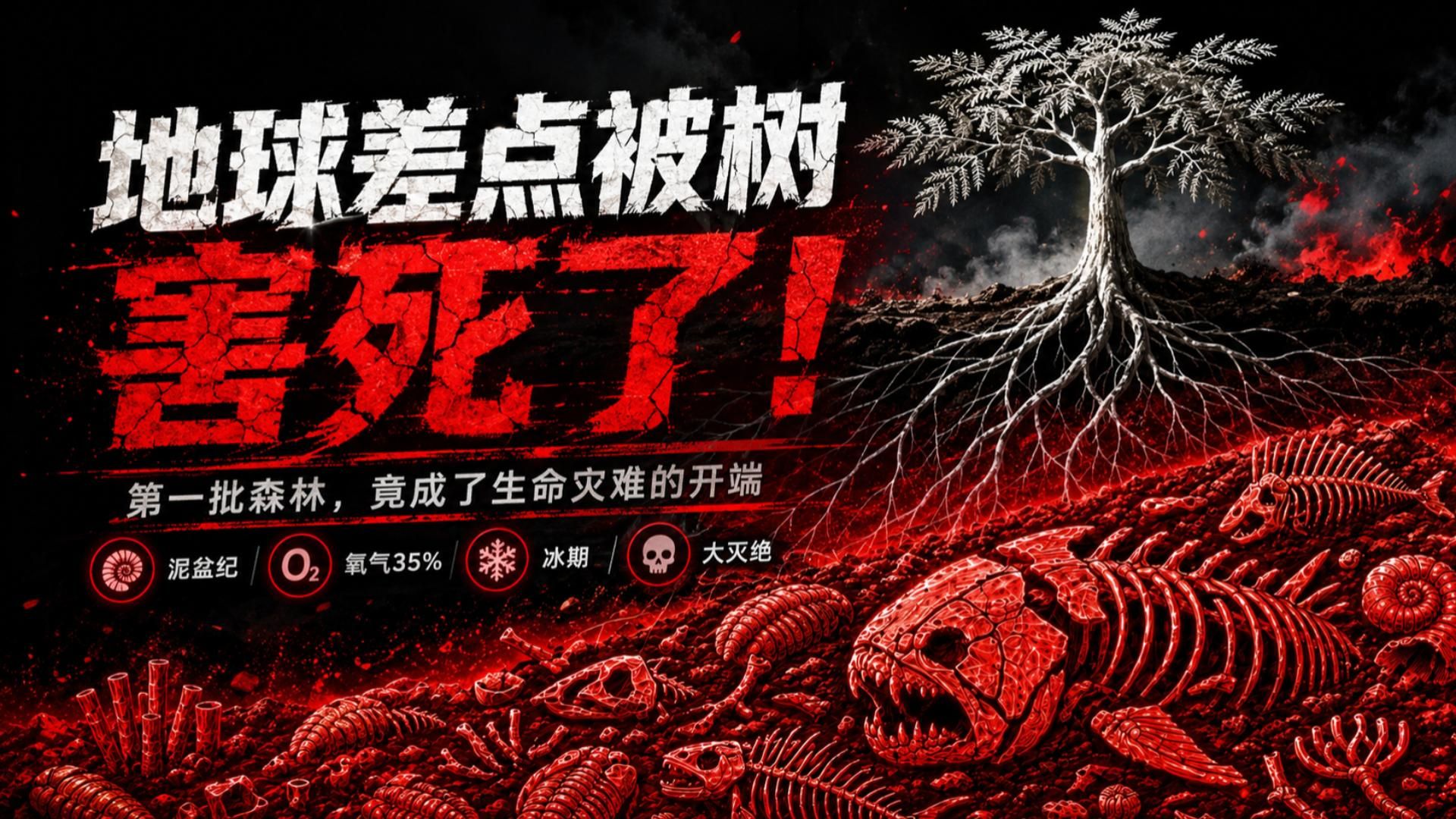
字幕摘录
| 时间 | 英文 | 中文 |
|---|---|---|
| 0:00 | Imagine a 6 meter predator covered in bone plating with jaws that could snap shut using more force than almost anything alive today. | 想象一下一个6米高的捕食者 覆盖在骨头上 镀着下巴 能够用比今天任何活着的东西更强的力气 来断裂 |
| 0:08 | Dunkleosteus ruled the Devonian period's global ocean, which had remained stable for 60 million years, | Dunkleosteus统治了德沃尼亚时期的全球海洋,6000万年来一直保持稳定, |
| 0:14 | and during that entire era of the age of fishes, absolutely nothing in the water could touch it. | 在鱼的时代 水里绝对没有任何东西能触碰它 |
| 0:20 | Now, it is gone. | 现在,它不见了。 |
| 0:22 | The creature is completely extinct, and every single member of its ancient lineage has vanished along with it. | 该生物已完全灭绝,其古代世系的每一个成员都随之消失. |
| 0:28 | An asteroid didn't do this, and no volcano was responsible for the slaughter. | 小行星没有这样做,没有火山对屠杀负责. |
| 0:32 | It wasn't even brought down by a rival predator or a change in the food chain. | 它甚至没有被竞争对手的掠食者 或食物链的改变所破坏 |
| 0:36 | The king of the ocean suffocated. | 大海王灭. |
| 0:39 | The thing that killed it had never existed before in the entire history of our planet, and it didn't even come from the sea. | 杀死它的东西,在我们这个星球的整个历史中,从来没有存在过,它甚至没有来自海洋. |
| 0:45 | It came from the land. | 其从国土来. |
展开字幕全文(123 条)
| 序号 | 英文 | 中文 |
|---|---|---|
| 1 | Imagine a 6 meter predator covered in bone plating with jaws that could snap shut using more force than almost anything alive today. | 想象一下一个6米高的捕食者 覆盖在骨头上 镀着下巴 能够用比今天任何活着的东西更强的力气 来断裂 |
| 2 | Dunkleosteus ruled the Devonian period's global ocean, which had remained stable for 60 million years, | Dunkleosteus统治了德沃尼亚时期的全球海洋,6000万年来一直保持稳定, |
| 3 | and during that entire era of the age of fishes, absolutely nothing in the water could touch it. | 在鱼的时代 水里绝对没有任何东西能触碰它 |
| 4 | Now, it is gone. | 现在,它不见了。 |
| 5 | The creature is completely extinct, and every single member of its ancient lineage has vanished along with it. | 该生物已完全灭绝,其古代世系的每一个成员都随之消失. |
| 6 | An asteroid didn't do this, and no volcano was responsible for the slaughter. | 小行星没有这样做,没有火山对屠杀负责. |
| 7 | It wasn't even brought down by a rival predator or a change in the food chain. | 它甚至没有被竞争对手的掠食者 或食物链的改变所破坏 |
| 8 | The king of the ocean suffocated. | 大海王灭. |
| 9 | The thing that killed it had never existed before in the entire history of our planet, and it didn't even come from the sea. | 杀死它的东西,在我们这个星球的整个历史中,从来没有存在过,它甚至没有来自海洋. |
| 10 | It came from the land. | 其从国土来. |
| 11 | Specifically, from trees. | 具体地说,从树上。 |
| 12 | To understand how this happened, you have to picture the world Dunkleosteus lived in about 385 million years ago. | 要了解这是怎么回事 你必须想象一下 邓克洛斯特斯在3.85亿年前生活的世界 |
| 13 | The atmosphere held around 4,000 parts per million of CO2, which meant there were no polar ice caps anywhere on Earth. | 大气占二氧化碳的百万分之4000, 这意味着地球上任何地方都没有极地冰盖。 |
| 14 | Because the continents were low and flat, shallow, warm seas stretched across their interiors for thousands of kilometers in every direction. | 因为各大洲地势低洼,平坦,浅薄,温暖的海洋在每一个方向的内地伸展了数千公里. |
| 15 | These weren't dark ocean trenches, but sunlit inland seas that were almost completely mineral-poor and teeming with life. | 这些不是暗海沟,而是照亮了内陆海域, 这些海域几乎完全是矿物贫瘠的,充满生命。 |
| 16 | You would have seen coral reefs built by stromatoporoids, rugos corals, and tabulate corals creating vast underwater cities, | 你会看到珊瑚礁 由石解类固醇, 地毯珊瑚, 和列表珊瑚 创建广阔的水下城市, |
| 17 | with dense fish populations patrolling between them. | 他们之间有密集的鱼群巡逻 |
| 18 | 最重要的是Dunkleosteus。 | |
| 19 | Most adults reached about four meters, but the largest individuals grew closer to seven meters | 多数成年人达到约4米,但最大的个体增长到接近7米 |
| 20 | and carried heavy armor across the entire front half of their bodies. | 并携带重型盔甲 横穿整个前半身。 |
| 21 | If you stepped onto land during this same period, you'd barely recognize it as Earth. | 如果你在同一期间踏上陆地, 你几乎认不出它是地球。 |
| 22 | No grass, no trees, just thin crusts of microbial material on bare rock. | 没有草,没有树木,只是裸露岩石上的微薄的微生物材料结壳. |
| 23 | A few low vascular plants no taller than your knee, with roots that scratched only 30 centimeters into the surface. | 少数低血管植物的高度不超过你的膝盖,其根只有30厘米划入表面. |
| 24 | For hundreds of millions of years, the continents just sat there, weathering slowly under rain and wind, chemically quiet. | 数亿年来,各大洲只坐在那里,在雨和风下缓慢风化,化学上安静. |
| 25 | Archaeopterus来的时候一切都变了 | |
| 26 | This was the first true tree, appearing in the middle Devonian and spreading across the low, wet floodplains of Euramerica. | 这是第一棵真正的树, 出现在德文尼亚中部, 并散布在欧亚大陆低潮湿的平原上。 |
| 27 | It grew 30 meters tall and produced the first real wood in Earth's history. | 它生长高30米,生产出地球历史上第一颗真木. |
| 28 | But the height and the wood aren't what mattered. | 但身高和木头并不重要 |
| 29 | The real story was happening 1.6 meters underground. | 真实故事发生在地下1.6米. |
| 30 | Earlier plants only scratched 30 centimeters into the soil, | 早期的植物只在土壤中划了30厘米 |
| 31 | but Archaeopterus drove its roots a full 1.6 meters down, directly into unweathered silicate bedrock. | 但是Archaeopterus将它的根部 推下1.6米 直接进入无天气的硅酸盐基岩 |
| 32 | No organism had ever done that before, and those roots didn't just sit there in the dark. | 之前没有生物这样做过 那些根子不只是坐在黑暗中 |
| 33 | They started dissolving the rock from the inside. | 他们开始从内部溶解岩石. |
| 34 | The roots secreted acids directly into the fractures of the bedrock, oxalic, citric, and malic acid, | 根部分泌的酸直接分化为基岩、奥克萨利、柑橘和乳酸的断裂, |
| 35 | compounds designed to grip metal ions locked inside the mineral structure and tear them loose. | 用于将锁在矿物结构内的金属离子抓住并撕裂的化合物。 |
| 36 | Silicate minerals trapped in solid rock for millions of years started dissolving. | 被困在固体岩石中数百万年的硅酸盐矿物开始溶解. |
| 37 | Phosphorus came out, calcium came out, potassium came out as the rock literally fell apart. | 磷露出,钙露出,钾露出,因为岩石实际上已经分崩离析. |
| 38 | Modeling suggests this accelerated continental silicate weathering by 1.6 to 2.4 times the pre-forest baseline. | 建模表明,这种加速大陆硅酸盐的风化是森林前基线的1.6至2.4倍。 |
| 39 | The fundamental chemistry of the planet was changing because something alive had decided to eat the crust of the Earth. | 地球的基本化学正在改变 因为有活的东西决定吃掉地壳 |
| 40 | Every rainstorm flushed what the roots liberated into those warm, shallow seas. | 每场暴风雨都把根部 冲进温暖的浅海 |
| 41 | Those reefs had evolved in low-nutrient water and were perfectly adapted to it. | 这些珊瑚礁是在低营养水中演化而来的,并完全适应它。 |
| 42 | Suddenly, they were receiving a continuous flood of phosphorus, and when you flood a stable ocean with it, you get a bloom. | 突然间,他们不断受到磷的泛滥, 当你用它淹没一个稳定的海洋时, 你就会开花。 |
| 43 | An explosion of algae across the surface of the world's oceans, and then the algae died. | 一次横跨世界海洋表面的藻类爆炸,随后藻类死亡. |
| 44 | As that organic matter sank and decomposed, aerobic bacteria stripped every molecule of dissolved oxygen from the bottom waters. | 随着有机物沉没和分解,有氧细菌从底水中剥离了每一个分子的溶解氧. |
| 45 | The seafloor went anoxic. | 海底变得异常。 |
| 46 | Under anoxic conditions, the iron compounds that normally lock phosphorus into sediment release it back into the water column, | 在无氧条件下,通常将磷锁入沉积物的铁化合物释放回水柱中, |
| 47 | which feeds the next bloom, which strips more oxygen, which releases more phosphorus. | 它能养活下一次开花 使氧气脱落 释放出更多的磷 |
| 48 | The forests were running this cycle, and the ocean couldn't stop it. | 森林正在运行这个循环, 海洋无法阻止它。 |
| 49 | We can read this disaster directly in the rock record. | 我们可以直接在摇滚唱片上看到这场灾难. |
| 50 | Around 372 million years ago, during what we call the Kelwasser Event at the Frasnian-Femenian boundary, | 大约3.72亿年前 在弗拉斯尼亚-费梅尼亚边界的凯尔瓦瑟事件期间 |
| 51 | two distinct black shale horizons formed in marine basins across the entire world. | 世界各地的海洋盆地形成了两个明显的黑页岩地平线。 |
| 52 | Black shale only forms when organic material accumulates on an anoxic seafloor without decomposing, | 黑页岩只有在有机物质在无分解的无氧海底累积时才形成, |
| 53 | and the sheer volume of it tells you the oceans had stopped breathing over massive areas. | 它的体积告诉你 海洋在大片地区停止了呼吸 |
| 54 | Carbon isotope analysis of marine limestones from this period shows a shift of plus three to four parts per thousand, | 这一时期海洋石灰岩的碳同位素分析显示,每千分之三到四, |
| 55 | a number that records the burial of enormous quantities of organic carbon that should have decomposed, | 大量有机碳的埋藏记录 本来应该分解的 |
| 56 | but couldn't because there was no oxygen left to do the job. | 但因为没有氧气可以做这个工作,所以不能。 |
| 57 | Each of these two Kelwasser pulses lasted roughly 90,000 to 110,000 years. | 这两次克尔瓦瑟脉冲都持续了大约9万到11万年. |
| 58 | But that was only the first blow. | 但这只是第一次打击。 |
| 59 | The same weathering process pulling minerals out of bedrock was also pulling CO2 out of the atmosphere, | 同一风化过程把矿物质从基岩中抽出 也把二氧化碳从大气中抽出, |
| 60 | and when you combine that with all the organic carbon being buried in anoxic sediments, | 当你把它和所有有机碳 埋在无氧沉积物中时 |
| 61 | atmospheric CO2 crashed from around 4,000 parts per million down to somewhere near 400 parts per million. | 大气二氧化碳从百万分之4000坠落到百万分之400。 |
| 62 | That is a staggering 90% drop in greenhouse gases. | 这是一个惊人的90%的温室气体下降。 |
| 63 | Because Gondwana sat over the South Pole, the gutted greenhouse effect allowed massive ice sheets to form, | 由于贡德瓦纳坐落在南极上空, 沟壑的温室效应使得巨大的冰盖形成, |
| 64 | and sea levels fell more than 100 meters. | 和海平面下降 超过100米。 |
| 65 | Those shallow inland seas, which were the most biologically productive environments on the planet, | 这些内陆浅海是地球上最具生物生产力的环境, |
| 66 | simply drained away into nothing. | 就这么一无所有了 |
| 67 | The Kelwasser event hit at 372 million years ago, and the Hangenberg event followed it at 359 million years ago. | Kelwasser事件在3.72亿年前就发生了,而Hangenberg事件在3.59亿年前也随之发生了. |
| 68 | This was 13 million years of cascading collapse, rather than a single bad day. | 这是1300万年的连锁坍塌 而不是一个糟糕的一天。 |
| 69 | And while volcanism from large igneous provinces like the Velui Traps contributed some noise in the background, | 虽然来自大西部省份的火山活动 像Velui陷阱一样 造成了一些背景噪音 |
| 70 | the forest were the ones running the machine. | 森林是运行机器的人。 |
| 71 | By the time the dust settled, 75% of all species were gone, | 尘埃落定时 75%的物种已经消失 |
| 72 | and the coral reef system that had dominated Devonian oceans collapsed so completely, | 而主导德文尼亚海洋的珊瑚礁系统 完全崩溃了, |
| 73 | it wouldn't recover for another 40 million years. | 再过4000万年就恢复不了了 |
| 74 | The seas were anoxic, the CO2 was gone, and the reefs were nothing but rubble. | 大海是无氧的,二氧化碳已经消失, 珊瑚礁只是废墟。 |
| 75 | Now we have to go back to Dunkleosteus. | 现在我们得回邓克洛斯特斯了 |
| 76 | Dunkleosteus didn't just run out of luck, it ran out of oxygen, | Dunkleosteus不只是运气用光了 氧气也用光了 |
| 77 | and the way its body was built made that a death sentence. | 以及他身体的构造方式... ... ...... |
| 78 | A large, active predator in the multimeter class needs ambient oxygen above roughly 30 to 50% of modern levels | 多米级的大型活性捕食者需要超过现代水平30%至50%的环境氧气 |
| 79 | just to sustain basic resting metabolism. | 只是维持基本休息的新陈代谢。 |
| 80 | Drop below that, and the body pulls energy from anaerobic pathways, | 跳到下面,身体从厌氧路径拉动能量, |
| 81 | which works for short bursts, but can't keep a several hundred kilogram animal alive in open water day after day. | 它能维持短暂的暴雨 但不能让几百公斤的动物 日复一日地在水中生存 |
| 82 | Smaller sharks and early ray-finned fish needed far less oxygen. | 更小的鲨鱼和早期的射线鳍鱼需要的氧气要少得多。 |
| 83 | Simply because they weighed so much less, their total demand was lower by one or two orders of magnitude. | 仅仅因为它们的重量要小得多,它们的总需求就减少了一两个数量级。 |
| 84 | They could survive in shrinking pockets of oxygenated water, | 他们可以生存在 缩水口 含氧水, |
| 85 | 而Dunkleosteus 需要一个完整的功能海洋。 | |
| 86 | And there was one more problem that the king of the seas couldn't solve. | 还有一个问题 海王无法解决 |
| 87 | The bony thoracic shield that made it essentially invulnerable to anything in the Devonian seas was rigid and could not expand. | 骨质胸罩使其基本上对德文海中任何事物都不可伤害,是僵硬的,无法扩展。 |
| 88 | That armor locked the gill chamber in place and imposed a hard sealing on how much oxygen the gills could extract, | 装甲将 gi舱锁在原位 并对 gi能提取多少氧气 强制加固密封 |
| 89 | regardless of how hard the animal tried to breathe. | 不管动物怎么努力呼吸 |
| 90 | When oxygen levels dropped, there was no physiological adjustment available, | 当氧气水平下降, 没有生理调整, |
| 91 | and no way to breathe harder to compensate. | 无法呼吸更难补偿 |
| 92 | The armor that built the empire had finally become the cage. | 建立帝国的盔甲最终变成了笼子. |
| 93 | By the time of the Hengenberg event, 359 million years ago, the collapse had gone way beyond simple oxygen depletion. | 到了3.59亿年前的亨根贝格事件时,坍塌已经远远超出了简单的氧气消耗. |
| 94 | Sulfate-reducing bacteria had proliferated across the anoxic seafloor and were producing hydrogen sulfide in massive quantities, | 减少硫酸盐的细菌扩散到无氧海底,大量生产硫化氢, |
| 95 | a gas that is denser than water and toxic to virtually all aerobic life, even at trace concentrations. | 气体比水更稠密,对几乎所有有氧生物都有毒性,即使是微量浓度。 |
| 96 | In normal ocean chemistry, this poison stays near the bottom, but during the Hengenberg, it didn't. | 在正常的海洋化学中,这种毒药会停留在底部附近,但在亨根贝格河期间却没有. |
| 97 | The chemical signatures of green sulfur bacteria, which are organisms that only survive in sulfitic, sunlit water, | 绿色硫化物细菌的化学特征 它们只存在于硫化的阳光下 |
| 98 | are preserved in Devonian black shales from coastal and estuarine deposits. | 保存在Devonian黑页的沿海和河口矿床。 |
| 99 | Those bacteria can only exist where hydrogen sulfide reaches the surface, | 这些细菌只有在硫化氢到达表面时才能存在, |
| 100 | meaning the shallow water smelled of rotten eggs and killed almost everything on contact. | 意思是浅水里有腐烂的蛋味 几乎在接触上杀死了一切 |
| 101 | Geochemists call this a poison ocean, and that's about as accurate a description as the geological record offers. | 地球化学家称这为毒海洋, 这与地质记录所提供的描述一样准确。 |
| 102 | The early tetrapods lived in exactly these danger zones. | 早期的四聚体生活在这些危险地带。 |
| 103 | Acanthostega, ichthyostega, 过渡形式 像构造, | |
| 104 | occupied river deltas and coastal swamps, where the toxic water hit hardest. | 河流三角洲和沿海沼泽 有毒的水最重 |
| 105 | Their limbs weren't built for walking yet. | 他们的四肢还不是用来走路的 |
| 106 | What those limbs could do was prop the animal's head above the surface to gulp air | 那些四肢能做的是 将动物的头抬到地表上方 |
| 107 | and haul its body through root-choke shallows where fins were useless. | 把尸体拖到没有鳍的浅滩 |
| 108 | These weren't pioneers, they were survivors, making do. | 这些不是先锋,他们是生还者。 |
| 109 | After the Hangenberg event, the tetrapod fossil record nearly disappears for 15 million years in a gap called Romer's Gap. | 汉亨伯格事件后,四聚体化石记录在被称为"罗默沟"的缺口中几乎消失1500万年. |
| 110 | Every reptile, every bird, every mammal, and every human | 每个爬行动物,每个鸟类,每个哺乳动物,每个人类 |
| 111 | descends from the few creatures that scraped themselves onto a mudflat and breathed air while the ocean behind them turned to poison. | 鲜有的生物 把自己刮到泥滩上 呼吸空气 而后面的海洋变成毒物 |
| 112 | These trees didn't have a plan or some grand intent, | 这些树没有计划或大意 |
| 113 | but their roots cracked into solid rock for the first time | 但他们的根第一次裂成坚固的岩石 |
| 114 | and the planet had no defense against something so genuinely new. | 地球没有防御 如此新的东西。 |
| 115 | That one biological innovation rewired the entire atmosphere while it suffocated the oceans, | 一次生物创新在窒息海洋的同时 重新连接了整个大气层 |
| 116 | which eventually forced our ancestors out of the water and onto land. | 这最终迫使我们的祖先 离开水和土地。 |
| 117 | If you want more stories about the events that actually built the world you're living in, | 如果你想要更多关于 事件的故事 真正构建你生活的世界, |
| 118 | like this video and subscribe so you don't miss the next one. | 喜欢这个视频,订阅 这样你就不会错过下一个。 |
| 119 | And leave a comment below. | 并在下面留言。 |
| 120 | Which do you think poses a bigger threat to life on Earth? | 你认为哪一个对地球上的生命构成更大的威胁? |
| 121 | A sudden catastrophe like an asteroid? | 像小行星一样突然发生的灾难? |
| 122 | Or a slow biological innovation like the first trees? | 还是像第一棵树那样缓慢的生物创新? |
| 123 | I want to know what you think. | 我想知道你的看法 |
该视频共有字幕 123 条。解锁更多字幕为会员功能,请移动到 价格