为什么在太空中导航比地球更难?
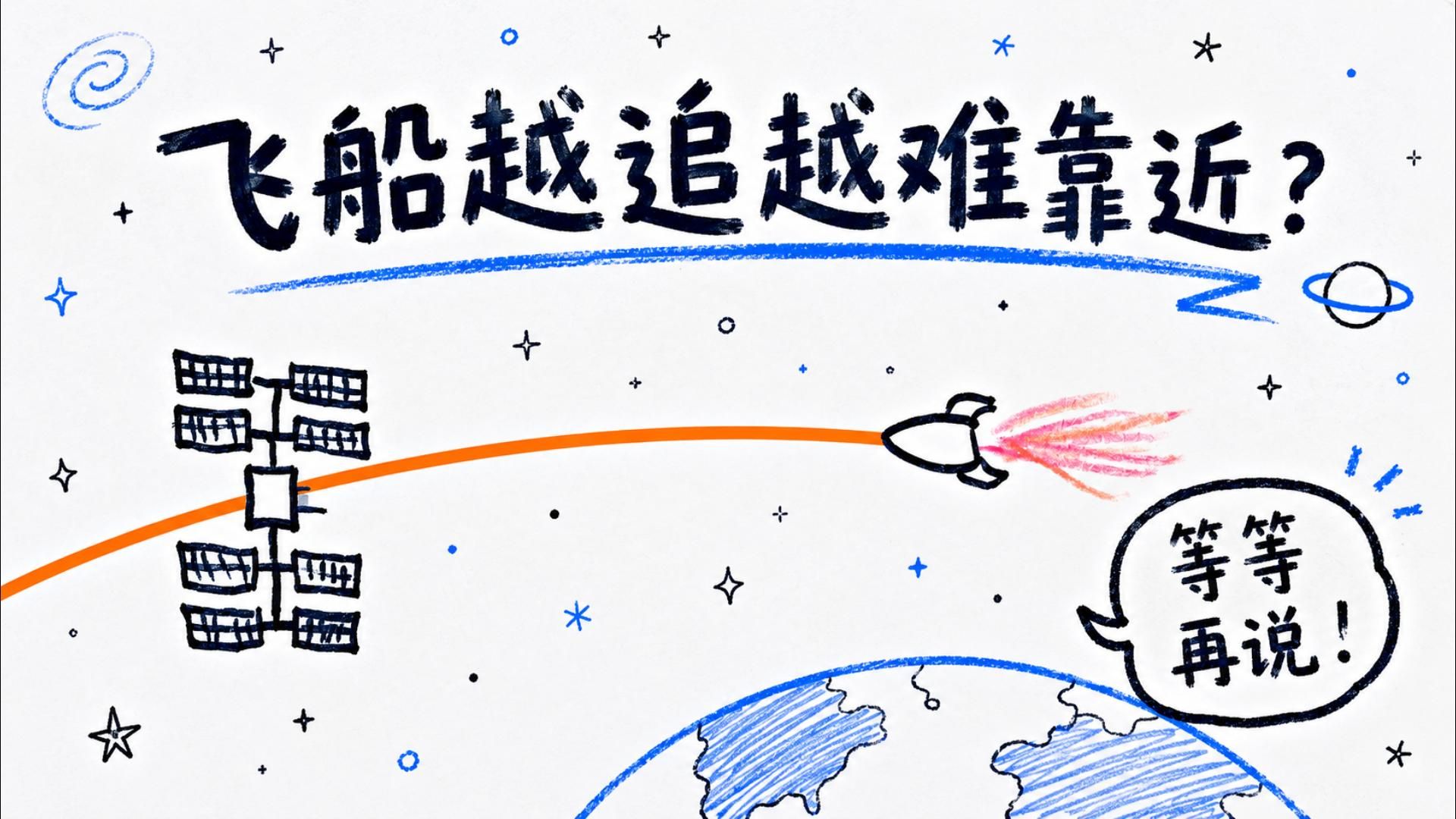
字幕摘录
| 时间 | 英文 | 中文 |
|---|---|---|
| 0:01 | There's something backwards about orbital mechanics. | 轨道力学方面有些倒退. |
| 0:03 | Outer planets have longer years than inner planets, and higher satellites take longer | 外行星的寿命比内行星长 卫星要长 |
| 0:07 | to orbit than lower ones. | 到轨道上。 |
| 0:08 | And that's not just because those orbits are longer paths. | 这不仅仅是因为这些轨道是更长的路径。 |
| 0:10 | The orbital speed is literally slower in higher orbits. | 轨道速度在较高轨道上从字面上来说比较慢. |
| 0:13 | The formula for orbital speed is clear, as r increases, v decreases. | 轨道速度的公式是明确的,随着r的上升,v的下降. |
| 0:17 | But if you're in a low circular orbit around Earth, and you want to get to a higher, slower | 但是如果你在环绕地球的低圆形轨道上 想要到达一个更高更慢的轨道 |
| 0:21 | orbit, you can't just slow down, that'll send you falling down toward Earth. | 轨道,你不能只是慢下来, 那会把你掉到地球。 |
| 0:25 | So higher orbits are slower, but you have to speed up to get there? | 所以更高的轨道比较慢,但你必须加速到达那里? |
| 0:28 | This is the first in a series of paradoxes about space navigation, some of which I didn't | 这是一系列关于太空导航的悖论中的第一个,有些我没有 |
展开字幕全文(53 条)
| 序号 | 英文 | 中文 |
|---|---|---|
| 1 | There's something backwards about orbital mechanics. | 轨道力学方面有些倒退. |
| 2 | Outer planets have longer years than inner planets, and higher satellites take longer | 外行星的寿命比内行星长 卫星要长 |
| 3 | to orbit than lower ones. | 到轨道上。 |
| 4 | And that's not just because those orbits are longer paths. | 这不仅仅是因为这些轨道是更长的路径。 |
| 5 | The orbital speed is literally slower in higher orbits. | 轨道速度在较高轨道上从字面上来说比较慢. |
| 6 | The formula for orbital speed is clear, as r increases, v decreases. | 轨道速度的公式是明确的,随着r的上升,v的下降. |
| 7 | But if you're in a low circular orbit around Earth, and you want to get to a higher, slower | 但是如果你在环绕地球的低圆形轨道上 想要到达一个更高更慢的轨道 |
| 8 | orbit, you can't just slow down, that'll send you falling down toward Earth. | 轨道,你不能只是慢下来, 那会把你掉到地球。 |
| 9 | So higher orbits are slower, but you have to speed up to get there? | 所以更高的轨道比较慢,但你必须加速到达那里? |
| 10 | This is the first in a series of paradoxes about space navigation, some of which I didn't | 这是一系列关于太空导航的悖论中的第一个,有些我没有 |
| 11 | even know about until very recently. | 甚至直到最近才知道这件事 |
| 12 | The solution to this first paradox, how do you get to a higher, slower orbit if slowing | 第一个悖论的解答,你如何进入一个更高,更慢的轨道,如果放慢 |
| 13 | down makes you fall? | 下来让你跌倒? |
| 14 | The solution is to remember that not all orbits are circular. | 解决办法是记住,并非所有轨道都是圆形的。 |
| 15 | If you speed up, you'll have too much speed to stay in a circular orbit, and instead you'll | 如果你加快速度,你就会有太多的速度 留在环形轨道上,相反你会 |
| 16 | be flung farther out from Earth along an elliptical orbit. | 沿着椭圆轨道向外飞去 |
| 17 | But on the way, you'll slow down like a ball thrown upwards in the air, trading kinetic | 但是在路上,你会慢下来 像一个球扔向空中,交易动力学 |
| 18 | energy for potential energy, or trading speed for height, eventually slowing down and starting | 能量换潜在能量,或以速度换高度,最终减速并开始 |
| 19 | to fall back toward Earth. | 倒向地球。 |
| 20 | But unlike a ball in the air, once you're at the top of an elliptical orbit, you can | 但与空中的球不同 一旦你处于椭圆轨道的顶端 |
| 21 | choose to speed up again to not fall back to Earth as quickly, and thus put yourself | 选择再次加快速度,不要像现在这样迅速返回地球,从而将自己置于 |
| 22 | into a new circular orbit at this higher altitude. | 在这个更高的高度进入一个新的圆形轨道。 |
| 23 | This two-step elliptical strategy is called a Hohmann transfer, and even though you speed | 这种双步椭圆式的策略叫做霍曼转速,虽然你速度快 |
| 24 | up twice to get to a higher orbit, you lose even more speed due to gravity on the climb | 爬上两圈才能到达更高的轨道, 你会因为攀登上的引力而失去更多的速度。 |
| 25 | upwards so the final orbit is slower. | 最后的轨道会变慢 |
| 26 | And that's the explanation for the first paradox. | 这就是第一个悖论的解释. |
| 27 | So here's the second one. | 故此第二义. |
| 28 | To catch up to a space station in circular orbit, you need to slow down. | 要赶上环绕轨道的空间站,就需要放慢速度. |
| 29 | Really. | 真的吗? |
| 30 | If you're following a space station in a circular orbit and you want to catch up to | 如果你在环形轨道上跟踪一个空间站 你想赶上 |
| 31 | it and dock, then you have to do the most counter-intuitive maneuver possible. | 它和码头,然后你必须做 最反直觉的操作可能。 |
| 32 | Slow down. | 慢点 |
| 33 | If you did the seemingly obvious thing and accelerated towards the station, the higher | 如果你做了看似明显的事情 并加速到车站,越高 |
| 34 | speed would fling you onto a new elliptical orbit, where a. you end up farther away from | 速度会把你扔到一个新的椭圆轨道上 在那里你最终会更远 |
| 35 | the planet, and b. as you climb, your spacecraft slows down, which means you'll end up farther | 地球,和b,当你攀登, 你的飞船慢下来, 这意味着你会结束更远 |
| 36 | and farther behind. | 更落后一点 |
| 37 | To catch up to an object orbiting ahead of you, you actually need to accelerate directly | 要赶上在你前面的轨道,你需要直接加速 |
| 38 | away from the object, which slows you down so that you fall inwards along an elliptical | 远离物体,它使你慢下来,以便你沿着椭圆形坠入, |
| 39 | orbit. | 轨道。 |
| 40 | As you fall, you speed up, which allows you to catch up with the object you're trying | 当你跌倒,你加快速度, 让你赶上你正在尝试的物体 |
| 41 | to catch. | 来抓他 |
| 42 | When you meet up with it at the high point of the ellipse, you'll be in the same place, | 当你在椭圆高处遇到它, 你会在同一处, |
| 43 | but you'll again be going slower, so you need to do a second rocket boost, this time | 但你会再慢一点 所以这次你需要第二次火箭助推 |
| 44 | forwards, to stay in a circular orbit. | 前进,保持圆形轨道。 |
| 45 | And now you've caught up and are ready for docking. | 现在你赶上了 准备好对接了 |
| 46 | This paradox kind of reminds me of the Burkista-Krone curve, where an object that first falls quickly | 这种悖论让我想起了Burkista-Krone曲线, 在那里,一个物体首先坠落 |
| 47 | downwards can catch up with one that's following a straight line. | 向下可以追上一条遵循直线的线. |
| 48 | But anyway, that's just a taste of the weirdness of orbital mechanics. | 但不管怎样,这只是一种感觉 轨道力学的怪异。 |
| 49 | For example, did you know that it takes less fuel to leave the solar system entirely than | 例如,你知道离开太阳系所需的燃料比离开太阳系所需的燃料少吗? |
| 50 | to get into a circular orbit near Jupiter? | 进入木星附近的环形轨道? |
| 51 | It's just bonkers. | 简直是疯了 |
| 52 | And that's not even the most ridiculous thing. | 这甚至不是最荒谬的事情。 |
| 53 | We'll talk about it soon. | 我们很快会讨论的 |
该视频共有字幕 53 条。解锁更多字幕为会员功能,请移动到 价格