一光年到底有多远?人类最快飞船也要飞一万八千年
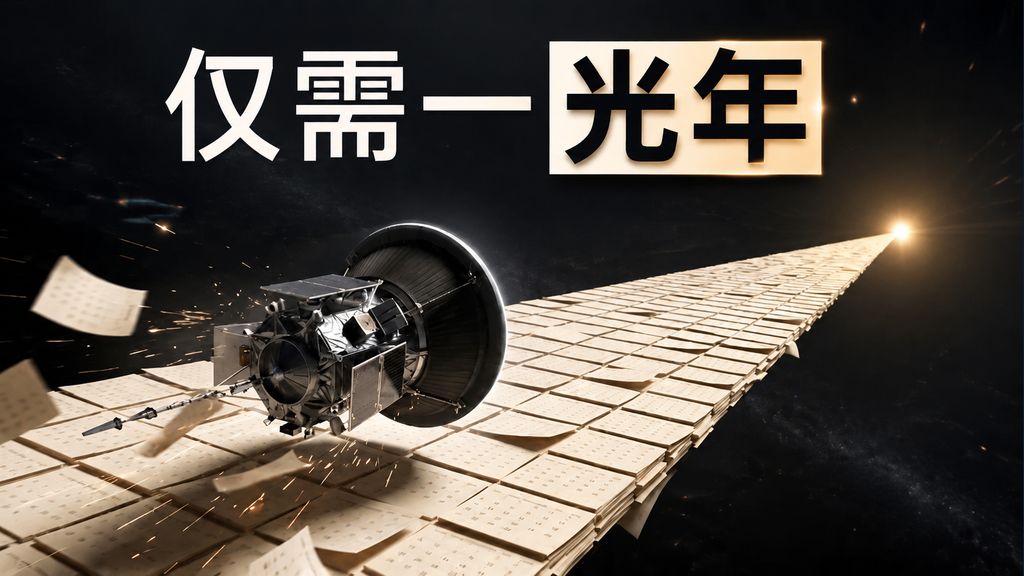
字幕摘录
| 时间 | 英文 | 中文 |
|---|---|---|
| 0:00 | There is a number that will make you feel very small. | 有个数字会让你觉得很小 |
| 0:03 | One light year. | 光阴一年. |
| 0:04 | The distance light travels | 灯光的距离 |
| 0:06 | in a single year. | 一年之内。 |
| 0:07 | It sounds like a unit of time. | 这听起来像一个单位的时间。 |
| 0:10 | It is not. | 事实并非如此。 |
| 0:11 | It is a unit of distance so vast | 这么远的单位 |
| 0:14 | that our fastest spacecraft moving at full speed right now would need more than 18,000 years to | 我们最快的飞船现在全速运行 需要超过18000年的时间 |
| 0:20 | cross it. | 穿过它。 |
| 0:21 | And the nearest star to our sun is 4.2 of those light years away. | 离我们太阳最近的恒星 是那些光年中的4.2个 |
展开字幕全文(172 条)
| 序号 | 英文 | 中文 |
|---|---|---|
| 1 | There is a number that will make you feel very small. | 有个数字会让你觉得很小 |
| 2 | One light year. | 光阴一年. |
| 3 | The distance light travels | 灯光的距离 |
| 4 | in a single year. | 一年之内。 |
| 5 | It sounds like a unit of time. | 这听起来像一个单位的时间。 |
| 6 | It is not. | 事实并非如此。 |
| 7 | It is a unit of distance so vast | 这么远的单位 |
| 8 | that our fastest spacecraft moving at full speed right now would need more than 18,000 years to | 我们最快的飞船现在全速运行 需要超过18000年的时间 |
| 9 | cross it. | 穿过它。 |
| 10 | And the nearest star to our sun is 4.2 of those light years away. | 离我们太阳最近的恒星 是那些光年中的4.2个 |
| 11 | By the time you finish | 当你完成的时候 |
| 12 | watching this video, you will understand exactly how far that really is. | 看这段视频,你会明白这到底有多远。 |
| 13 | And it is going to hurt | 会很痛的 |
| 14 | a little. | 一点点。 |
| 15 | In 1676, a Danish astronomer named Ole Romer did something that changed physics forever. | 1676年,一位丹麦天文学家Ole Romer做了一些永远改变物理学的事情. |
| 16 | He noticed that Jupiter's moon Io kept appearing slightly earlier or later than predicted, | 他发现木星的月亮 木卫一一直出现 稍早或稍晚于预测, |
| 17 | depending on where Earth was in its orbit. | 取决于地球的轨道位置 |
| 18 | He realized this wasn't a mistake in the math. | 他意识到这不是数学上的错误. |
| 19 | It was the time it took light to cross the extra distance between Earth and Jupiter. | 穿越地球和木星之间的额外距离的时间到了. |
| 20 | For the first time in history, someone had proved that light has a speed. | 历史上第一次有人证明了光有速度. |
| 21 | It isn't instantaneous. | 这不是瞬间。 |
| 22 | It travels. | 其行迹. |
| 23 | And when you calculate how fast, the number is staggering. | 当你计算速度时,数字是惊人的。 |
| 24 | Roughly 186,000 miles per | 每公里约186,000英里 |
| 25 | second, or about 670 million miles per hour. | 第二,大约每小时6.7亿英里。 |
| 26 | At that speed, light crosses the distance from | 在这样的速度下,光穿过距离 |
| 27 | Earth to the moon in about 1.3 seconds. | 约1.3秒后地球到月球. |
| 28 | It reaches the sun in 8 minutes and 20 seconds. | 它在8分20秒内到达太阳. |
| 29 | It reaches Neptune, the outermost planet, in about 4 hours. | 它到达海王星,最外层的行星, 大约4小时。 |
| 30 | And in one full year, | 一年之内 |
| 31 | it travels approximately 5.88 trillion miles. | 它行驶约5.88万亿英里. |
| 32 | That distance is one light year. | 距离是光年。 |
| 33 | 5.88 trillion miles. | 5.88万亿英里. |
| 34 | That is the unit. | 这是单位。 |
| 35 | That is what we are trying to cross. | 这就是我们试图跨越的。 |
| 36 | The fastest object humanity has ever built is the Parker Solar Probe. | 人类建造最快的物体是帕克太阳探测器. |
| 37 | Launched in 2018, | 2018年开通, |
| 38 | it uses repeated gravity assists from Venus to accelerate toward the sun. | 它利用金星的重复引力 加速向太阳前进 |
| 39 | And in December 2024, | 而在2024年12月, |
| 40 | it reached a peak speed of around 430,000 miles per hour. | 它达到每小时43万英里的最高速度 |
| 41 | The fastest any human-made object | 最快的人类造物 |
| 42 | has ever moved. | 曾经移动过。 |
| 43 | 430,000 miles per hour. | 时速43万英里. |
| 44 | That is fast enough to travel from New York to Los Angeles | 这么快就能从纽约到洛杉矶了 |
| 45 | in under a second. | 在一秒钟。 |
| 46 | Fast enough to circle Earth in about 3.5 minutes. | 速度足以在3.5分钟左右环绕地球. |
| 47 | And at that speed, | 以那样的速度 |
| 48 | to cross one light year, the Parker Solar Probe would need approximately 1,500 years. | 穿越一个光年,帕克太阳探测器将需要大约1500年。 |
| 49 | 1,500 years. | 一千五百年了 一千五百岁 |
| 50 | From the year of a Roman Emperor to today. | 从罗马皇帝的年号到今天. |
| 51 | To cross a single light year. | 过一光年. |
| 52 | But the Parker Solar Probe can't actually go anywhere useful at that speed. | 但帕克太阳探测器不能以那样的速度去任何有用的地方. |
| 53 | It's locked in | 锁在里面了 |
| 54 | an orbit around the sun. | 环绕太阳的轨道 |
| 55 | Using the sun's own gravity as part of its trajectory, it isn't heading | 利用太阳本身的引力 作为其轨迹的一部分 它不会前进 |
| 56 | to another star. | 给另一颗恒星 |
| 57 | Nothing we have built is capable of that journey. | 我们建造的任何东西都无法完成这一旅程。 |
| 58 | Not yet. | 还没 |
| 59 | Not even close. | 还差一点 |
| 60 | Voyager 1. | 变速器 1. |
| 61 | Launched September 5, 1977. | 1977年9月5日启用. |
| 62 | The farthest human-made object from Earth. | 地球最远的人造物体. |
| 63 | Moving at roughly 38,000 miles per hour. | 时速约38000英里 |
| 64 | It has been traveling for nearly 50 years without ever | 它已经旅行了将近50年 |
| 65 | stopping. | 停下来。 |
| 66 | And on November 18, 2026, at exactly 2.16 in the morning Pacific time, NASA has calculated | 2026年11月18日 太平洋时间凌晨2.16分 NASA已经计算出 |
| 67 | down to the precise second that Voyager 1 will cross a milestone no human creation | 准确的第二秒 沃亚格1号将跨越一个里程碑 没有人类创造 |
| 68 | has ever reached. | 已经到达。 |
| 69 | It will be exactly one light day from Earth. | 离地球只有一天光 |
| 70 | Not a light year. | 没有光年。 |
| 71 | A light day. | 光明日报. |
| 72 | The distance light travels in just 24 hours. | 距离光在24小时之内就到了 |
| 73 | After 49 years of constant travel, at 38,000 miles per | 经过49年的不断旅行,每公里38 000英里 |
| 74 | hour, Voyager 1 will have covered 1 24th of a single light year. | 小时,Voyager 1将覆盖 单一光年的124。 |
| 75 | Let that settle. | 就这么定了 |
| 76 | 1 24th | 1月24日 (中文(简体) ). |
| 77 | of one light year in 50 years. | 50年中的光年。 |
| 78 | At that same rate, to cross one full light year, | 以同样的速度,跨越一个完整的光年, |
| 79 | Voyager 1需要大约18000年的时间才能到达最近的恒星Prosima Centauri, | |
| 80 | at 4.2 light years away. | 在4.2光年远。 |
| 81 | It would take roughly 73,000 years. | 大约需要73,000年。 |
| 82 | Nobody alive today, or anyone born | 今天没有人活着 也没有人出生 |
| 83 | in the next thousand generations, would be there to see it arrive. | 在后千代, 将会看到它到达。 |
| 84 | That is what a light year means | 这就是光年的意思 |
| 85 | in terms of our actual technology. | 就我们的实际技术而言 |
| 86 | Not a poetic number. | 不是一个诗人的数字。 |
| 87 | A physical fact about the gap between | 相差的物理事实 |
| 88 | what we can build and where we want to go. | 我们能建的和我们想去的地方。 |
| 89 | Here's the detail that makes everything worse. | 下面是细节 使一切更糟。 |
| 90 | The solar system is not just the sun and the eight planets. | 太阳系不仅仅是太阳和八颗行星. |
| 91 | Around it, at an enormous distance, | 绕着它,在巨大的距离, |
| 92 | sits what astronomers call the Oort Cloud, a vast spherical shell of icy objects, comets, and debris | 坐着天文学家所谓的"奥特云", 巨大的球形外壳 冰层物体,彗星,和碎片 |
| 93 | left over from the formation of the solar system billions of years ago. | 数十亿年前太阳系形成时留下的 |
| 94 | The Oort Cloud doesn't | 乌龟云不会 |
| 95 | end at a neat boundary, but estimates suggest it extends somewhere between half a light year | 以整齐的边界结束,但估计它大约在半光年之间 |
| 96 | and potentially two light years from the sun. | 可能离太阳还有两光年 |
| 97 | Which means that, even if you could somehow travel | 也就是说,即使你能去旅行 |
| 98 | one full light year from Earth, you might still technically be inside our solar system's outer | 离地球一整年的光线 你可能还在我们的太阳系外层 |
| 99 | envelope. | 信封内。 |
| 100 | Voyager 1 crossed the heliopause, the boundary where the sun's direct influence ends, | Voyager 1号穿过太阳系,太阳的直接影响结束的边界, |
| 101 | back in 2012. | 回到2012年时. |
| 102 | But the Oort Cloud is a different thing entirely. | 但乌龟云是完全不同的 |
| 103 | It's the gravitational reach of | 这是引力到达 |
| 104 | the sun extended across an almost incomprehensible distance. | 太阳伸展了几乎无法理解的距离 |
| 105 | And we have never sent anything to study | 我们从来没有送过任何东西去学习 |
| 106 | it directly. | 直接说 |
| 107 | Nobody has. | 没有人知道。 |
| 108 | We know it exists largely because of the long period comets it occasionally | 我们知道它的存在 很大程度上是因为彗星存在的时间很长 |
| 109 | flings toward the inner solar system. | 飞向太阳系 |
| 110 | So when we say that crossing a light year is almost impossible | 所以当我们说渡过光年几乎是不可能的 |
| 111 | with current technology, we are also saying that the edge of what could reasonably be called our | 以目前的技术,我们也说, 边缘是合理可以称为我们的 |
| 112 | neighborhood might be a light year away. | 街坊可能离这里很近 |
| 113 | And we have barely left the driveway. | 我们几乎没离开车道 |
| 114 | The obvious question | 很明显的问题 |
| 115 | is, why don't we just build something faster? | 是,我们为什么不只是 建造更快的东西? |
| 116 | The answer is one of the most stubborn facts in | 答案是最顽固的事实之一 |
| 117 | physics. | 物理学 |
| 118 | To go faster, you need to burn more fuel. | 要加快速度,你需要燃烧更多的燃料。 |
| 119 | But fuel has mass. | 但燃料有质量。 |
| 120 | And to carry more mass, you need | 并且要携带更多的质量, 你需要 |
| 121 | more fuel to lift that mass. | 更多的燃料来提升质量。 |
| 122 | And more fuel adds more mass, which requires even more fuel to move. | 而更多的燃料会增加更多的质量,这需要更多的燃料才能移动. |
| 123 | This relationship grows exponentially, and it gets brutal very quickly. | 这种关系呈指数增长,变得非常残忍。 |
| 124 | To accelerate even a small | 来加速一个小 |
| 125 | spacecraft to 1% of the speed of light, which would still take over 400 years to reach the | 宇宙飞船到1%的光速, 仍然需要400多年才能到达 |
| 126 | nearest star, would require an amount of fuel that outweighs the spacecraft by a factor that | 距离最近的恒星,需要超过航天器的燃料量 乘以一个因素 |
| 127 | makes the engineering essentially impossible with any conventional propulsion system we know how to | 用我们知道的任何传统推进系统 使工程基本无法进行 |
| 128 | build. | 建设。 |
| 129 | And even if you solved the fuel problem, you face a second one. | 即使你解决了燃料问题 你也会面临第二个问题 |
| 130 | Stopping. | 停下来 |
| 131 | You can't just | 你不能就这样 |
| 132 | coast to your destination. | 海岸到你的目的地。 |
| 133 | Arriving at a star system at 1% of the speed of light without slowing | 以光速1%的速度到达恒星系统而不减速 |
| 134 | down means you burn through the entire system in hours, unable to observe or stop or do anything | 下来意味着你燃烧 整个系统在几个小时, 无法观察或停止或做任何事情 |
| 135 | useful. | 实用。 |
| 136 | Deceleration requires just as much fuel as acceleration. | 减速需要和加速度一样多的燃料. |
| 137 | Every gram you burn getting there, | 你烧到的每克 |
| 138 | you have to match again to slow down. | 你必须再次匹配 以慢下来。 |
| 139 | The engineers who dream about interstellar travel | 梦想星际旅行的工程师 |
| 140 | are not being naive. | 并不是天真无邪 |
| 141 | They know the numbers. | 他们知道数字。 |
| 142 | Concepts like laser sails, nuclear pulse propulsion, | 激光帆、核脉冲推进等概念 |
| 143 | and anti-matter drives exist because conventional rockets hit a wall that cannot be climbed. | 和反物质驱动器的存在,因为常规火箭击中了无法攀登的墙。 |
| 144 | And even the most optimistic of those concepts, with technology that doesn't yet exist, | 即使是最乐观的这些概念, 技术还没有存在, |
| 145 | would reduce the journey to Proxima Centauri from 73,000 years to something closer to a few centuries. | 将缩短去近西马半人马座的旅程 从73000年到几世纪 |
| 146 | A few centuries to the nearest star. | 几世纪前的恒星 |
| 147 | Voyager 1 turned its camera around and took one last | Voyager一号把摄像机转过来 最后拍了一张 |
| 148 | photograph of home. | 回家的照片。 。 |
| 149 | Earth appeared as a pale blue dot, a fraction of a single pixel suspended in a | 地球作为一个苍白的蓝点出现,一个像素悬浮的一小部分 |
| 150 | sunbeam. | 太阳束. |
| 151 | He said that every human who ever lived, every king and peasant, every mother and child, | 他说,每一个曾经活着的人,每一个国王和农民,每一个母亲和孩子, |
| 152 | every inventor and explorer, every saint and sinner in the history of our species, | 所有发明家和探险家 人类历史上的每个圣人和罪人 |
| 153 | lived out their lives on that mote of dust suspended in a sunbeam, and that our planet is | 生活在太阳束中悬浮的尘埃中 我们的星球 |
| 154 | a lonely speck in the great, enveloping cosmic dark. | 一个孤独的斑点 笼罩着宇宙的黑暗 |
| 155 | Voyager 1仍然在那里,现在, | |
| 156 | covering about 900,000 miles every single day. | 每天覆盖约90万英里。 |
| 157 | And on November 18th of this year, | 而今年11月18日, |
| 158 | it will become the first object we have ever made to be one light day from home. | 它将成为我们从家到家的第一个光天化日。 |
| 159 | After 49 years of | 过了49年 |
| 160 | travel, still inside what some definitions would call our cosmic neighborhood. | 旅行,仍然在 某些定义会称为我们的宇宙邻居。 |
| 161 | The question that | 问题 |
| 162 | follows from all of this is not technical, it's philosophical. | 从所有这一切都不是技术性的,这是哲学性的。 |
| 163 | Are we going to stay? | 我们要留下来吗? |
| 164 | Are we the | 是我们 |
| 165 | it? | 是吗? |
| 166 | Or are we the kind that keeps throwing bottles into the ocean, knowing most will never be found? | 或者我们是那种 不停地把瓶子扔到海里的人, 知道大多数都永远找不到吗? |
| 167 | Because the act of reaching is itself, what makes us who we are? | 因为达到它本身, 是什么使我们是谁? |
| 168 | We cannot cross a light year. | 我们不能跨越光年。 |
| 169 | Not | 没有 |
| 170 | yet. | 还没有。 |
| 171 | We keep trying to figure out how. | 我们一直在想办法 |
| 172 | And maybe that is the most human thing about us. | 也许这就是我们最人类的东西。 |
该视频共有字幕 172 条。解锁更多字幕为会员功能,请移动到 价格