什么有些人宁愿修也不愿换?
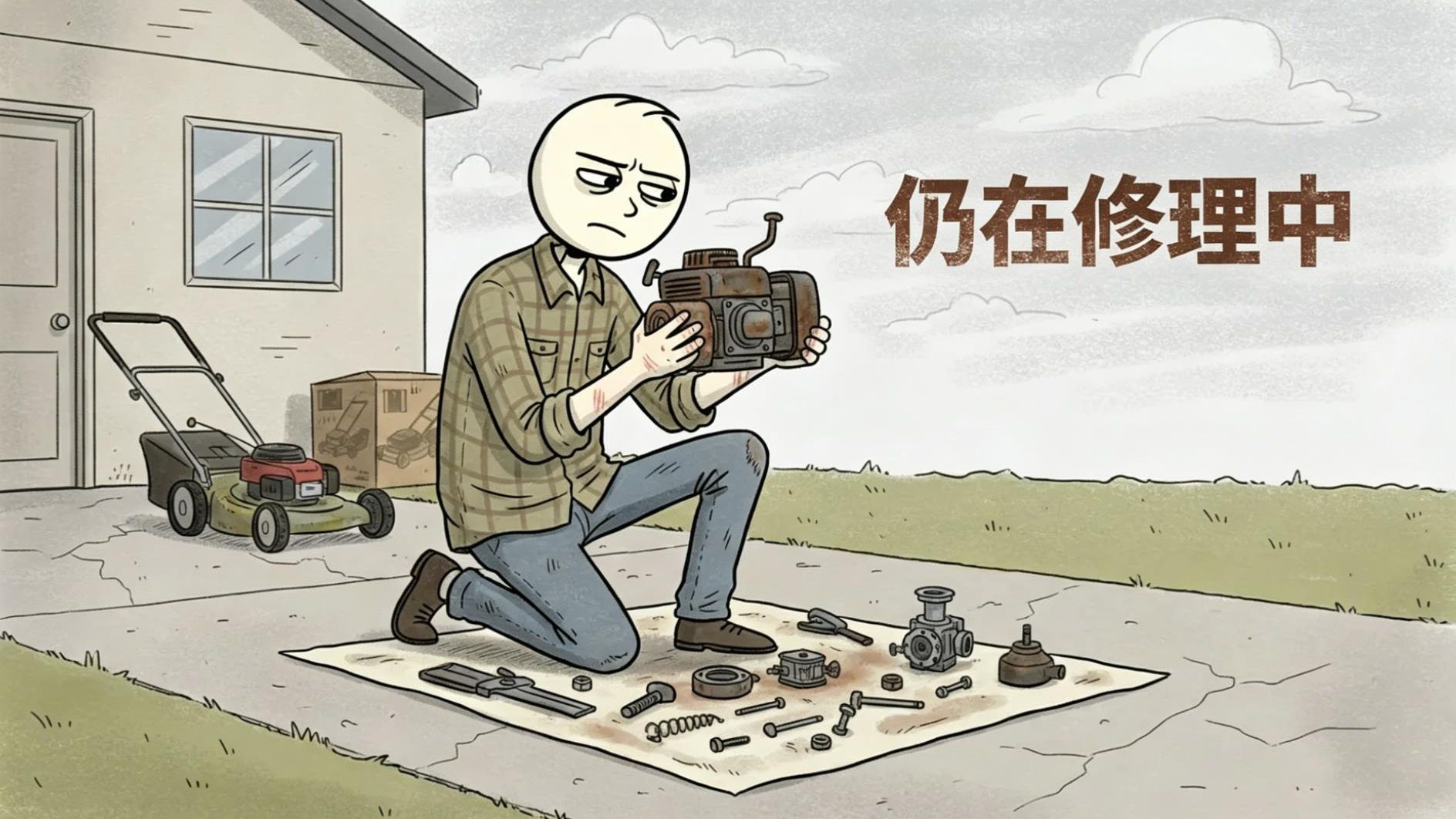
字幕摘录
| 时间 | 英文 | 中文 |
|---|---|---|
| 0:00 | There is a man in his garage right now. | 车库里有个人 |
| 0:02 | It is Saturday morning. | 今天是周六早上 周六早上吗? |
| 0:04 | The lawnmower stopped working three weeks ago, | 草坪工人三周前就停工了 |
| 0:06 | and a new one cost $60 at the hardware store. | 和一个新的60美元 在五金店。 |
| 0:09 | He has spent four Saturdays taking this one apart. | 他花了四个周六把这个分开 |
| 0:13 | His knuckles are scraped. | 他的手指被刮伤了。 |
| 0:14 | There is grease under his fingernails | 他的指甲下面有油脂,你觉得呢? |
| 0:16 | that will not fully wash out. | 这不会完全洗掉。 |
| 0:18 | His wife suggested twice, quietly, | 他的妻子两次悄悄地暗示 |
| 0:20 | that they just buy the new one. | 他们只是买新的。 |
展开字幕全文(184 条)
| 序号 | 英文 | 中文 |
|---|---|---|
| 1 | There is a man in his garage right now. | 车库里有个人 |
| 2 | It is Saturday morning. | 今天是周六早上 周六早上吗? |
| 3 | The lawnmower stopped working three weeks ago, | 草坪工人三周前就停工了 |
| 4 | and a new one cost $60 at the hardware store. | 和一个新的60美元 在五金店。 |
| 5 | He has spent four Saturdays taking this one apart. | 他花了四个周六把这个分开 |
| 6 | His knuckles are scraped. | 他的手指被刮伤了。 |
| 7 | There is grease under his fingernails | 他的指甲下面有油脂,你觉得呢? |
| 8 | that will not fully wash out. | 这不会完全洗掉。 |
| 9 | His wife suggested twice, quietly, | 他的妻子两次悄悄地暗示 |
| 10 | that they just buy the new one. | 他们只是买新的。 |
| 11 | He heard her. | 他听见了 |
| 12 | He is not replacing the lawnmower. | 他不会取代草坪厂的 |
| 13 | This is not stubbornness. | 这不是固执。 |
| 14 | Not exactly. | 不尽然 |
| 15 | Something else is operating underneath it. | 里面还有其它东西 |
| 16 | Something older, quieter, | 更老更安静的东西 |
| 17 | and far more psychologically interesting | 更具有心理趣味 |
| 18 | than simple resistance to change. | 而不是简单的抵抗变化。 |
| 19 | To understand people who fix rather than replace, | 为了了解那些修补而不是替换的人, |
| 20 | you have to go back further than the individual. | 你必须比个人走得更远 |
| 21 | You have to go back to the world they were born into | 你必须回到他们出生的世界 |
| 22 | or the world their parents were born into | 他们的父母出生的世界 |
| 23 | and never fully left. | 并且从来没有完全离开。 |
| 24 | The generation that first hardwired this behavior | 第一次用硬线连接这种行为的一代 |
| 25 | lived through the Great Depression | 经历了大萧条 |
| 26 | and then immediately through a World War. | 然后立即通过世界大战 |
| 27 | These were not abstract historical events. | 这些不是抽象的历史事件。 |
| 28 | They were the texture of daily life. | 他们是日常生活的纹理。 |
| 29 | Bread lines, ration books, shoes resold four times | 面包线、配给书、鞋子转售四次 |
| 30 | before they were discarded. | 在他们被抛弃之前 |
| 31 | Children who grew up in that era | 在那个时代长大的儿童 |
| 32 | learned something that went far deeper than thrift. | 学到了比节俭还深的东西 |
| 33 | They learned that objects were not casual, | 他们知道物体不是随便的 |
| 34 | that resources could disappear, | 资源可能会消失, |
| 35 | that the correct response to a broken thing | 对破碎事物的正确反应 |
| 36 | was not to discard it, | 不是放弃它, |
| 37 | but to understand it well enough to bring it back. | 但要好好理解 才能把它带回来 |
| 38 | That lesson did not stay in the 1930s. | 这一教训并没有停留在1930年代。 |
| 39 | It was passed down through kitchens, | 它从厨房传下来 |
| 40 | through garages, | 通过车库, |
| 41 | through the particular way a father | 以父亲的方式 |
| 42 | handed a son a wrench without saying much. | 给儿子一个扳手,没说什么 |
| 43 | The children of those Depression-era parents | 这些萧条时代父母的子女 |
| 44 | grew up in the post-war boom. | 成长于战后的繁荣时期. |
| 45 | There was suddenly abundance, | 突然间,有许多人, |
| 46 | new cars, new appliances, | 新车,新电器, |
| 47 | the first televisions arriving in living rooms | 第一批进入客厅的电视机 |
| 48 | in heavy wooden cabinets. | 在沉重的木柜里。 |
| 49 | But the emotional programming from the previous decade | 但前十年的情感节目 |
| 50 | did not simply update itself. | 不只是自我更新。 |
| 51 | The behavior persisted inside the new prosperity | 行为持续在新的繁荣中 |
| 52 | like a dialect that never quite disappeared. | 就像一个从未消失的方言 |
| 53 | What psychology calls this is the endowment effect. | 心理学称之为天赋效应。 |
| 54 | Once something belongs to you, truly belongs to you, | 一旦有东西属于你 真正属于你 |
| 55 | with time and effort and memory attached, | 在时间、努力和记忆中, |
| 56 | it becomes worth more to you than its market price. | 它比市场价格更值钱 |
| 57 | A repaired lamp is not the same as a new lamp. | 修理过的灯与新灯不同. |
| 58 | The repaired one has a history. | 修行者有经. |
| 59 | The new one is just an object. | 新的只是一件物品 |
| 60 | But here is what most people misunderstand about this. | 但这就是大多数人对此误解的原因。 |
| 61 | They assume the person doing the repairing | 他们假设做修理的人 |
| 62 | is primarily motivated by saving money. | 其动机主要是储蓄。 |
| 63 | Sometimes that is a factor. | 有时候这是一个因素。 |
| 64 | But watch closely and you will see something else. | 但仔细观察,你会看到别的东西。 |
| 65 | The act of repair is not really about the object. | 修补行为其实与物体无关. |
| 66 | It is about the person doing the repairing. | 是关于修理人员 |
| 67 | It is about competence, agency, | 这是关于能力,代理, |
| 68 | the experience of understanding how something works | 了解事物如何运作的经验 |
| 69 | and having the power to restore it. | 并拥有恢复它的能力。 |
| 70 | Think about what the post-war suburban landscape | 想想战后的郊区景观 |
| 71 | looked like in the late 1950s. | 看起来像在1950年代末。 |
| 72 | Identical houses, long commutes beginning, | 相同的房屋,长途通勤开始, |
| 73 | work becoming more abstract, more office, more paperwork, | 工作变得更加抽象, 更多的办公室,更多的文书工作, |
| 74 | more tasks whose outcomes were hard to measure. | 更多的任务,其成果难以衡量。 |
| 75 | A man who spent eight hours in a fluorescent lit building | 一个在荧光照亮的大楼里呆了八小时的人 |
| 76 | moving numbers from one column to another | 将数字从一列移动到另一列 |
| 77 | could come home and spend 90 minutes | 可以回家待90分钟 |
| 78 | replacing a section of copper pipe. | 替换一部分铜管。 |
| 79 | And at the end of those 90 minutes, he had done something, | 在这90分钟的最后 他做了一些事情 |
| 80 | something visible, something real. | 可见的,真实的 |
| 81 | The water ran again. | 水又开. |
| 82 | He had fixed it. | 他已经修好了 |
| 83 | That psychological transaction is enormously powerful. | 这种心理交易非常强大。 |
| 84 | It is one of the most direct routes | 这是最直接的路线之一 |
| 85 | to what researchers now call self-efficacy, | 对于研究者所谓的自我效能, |
| 86 | the felt sense that your actions | 感觉你的行为 |
| 87 | produce real outcomes in the world. | 在世界上产生真正的结果。 |
| 88 | When that sense is depleted, people seek it. | 当这种感觉耗尽时,人们就会寻求它. |
| 89 | Repair is one of the oldest ways to restore it. | 修补是修复它最古老的方法之一. |
| 90 | This is also why the behavior | 这也是为什么行为 |
| 91 | tends to intensify under stress. | 压力会加重 |
| 92 | The person under financial pressure | 经济压力下的人 |
| 93 | or professional uncertainty or personal loss, | 或职业不确定性或个人损失, |
| 94 | they often become the most determined repairs. | 它们常常成为最坚决的修理。 |
| 95 | They cannot control their job situation. | 他们无法控制自己的工作状况。 |
| 96 | They cannot control the economy, | 他们无法控制经济, |
| 97 | but they can strip this carburetor | 但他们可以剥光这个汽化器 |
| 98 | down to its components and rebuild it. | 回到它的组件,重建它。 |
| 99 | And so they do for hours on a Saturday morning in a garage | 周六早上在车库里做几个小时 |
| 100 | while a new lawnmower sits $60 away on a shelf. | 而一个新的草坪机 坐在60美元外的架子上。 |
| 101 | There's a further layer that almost never gets discussed. | 还有一层几乎从未讨论过 |
| 102 | The act of repairing something rather than replacing it | 修补东西而不是替换它 |
| 103 | is also at a deep level, a form of loyalty. | 也是深层的忠诚 |
| 104 | It is a statement about what things mean. | 这是关于事物含义的声明。 |
| 105 | People who fix rather than replace | 固定而不是替换的人 |
| 106 | are often operating inside a worldview | 经常在世界观中运行 |
| 107 | where abandonment of objects of relationships of commitments | 放弃承诺关系对象 |
| 108 | carries a moral weight that others do not feel as strongly. | 具有其他人没有感到强烈的道德分量。 |
| 109 | Watch how these same people behave in relationships. | 看这些人在交往中的表现 |
| 110 | They are often the ones who stay, | 他们常常是留下来的, |
| 111 | who try harder, who return to a difficult conversation | 谁更努力,谁回到一个困难的对话 |
| 112 | three, four, five times, | 3,4,5次, 3,4,5次, |
| 113 | not because they lack the ability to walk away, | 不是因为他们没有能力离开, |
| 114 | but because their internal architecture | 因为他们的内部结构 |
| 115 | frames walking away as the option of last resort. | 框作为最后选择。 |
| 116 | They apply the same logic. | 它们适用同样的逻辑。 |
| 117 | The thing is broken. | 东西坏了。 |
| 118 | The correct response is to understand why and to fix it. | 正确的反应是理解原因并纠正它. |
| 119 | This can be a profound strength. | 这可能是一种深刻的力量。 |
| 120 | It can also be a trap | 也可能是个陷阱 |
| 121 | because not everything broken should be repaired. | 因为不是所有破损都该修复 |
| 122 | Some systems are not worth salvaging. | 有些系统不值得拯救。 |
| 123 | Some relationships are genuinely past restoration. | 有些关系确实已经过去。 |
| 124 | Some lawnmowers should just be replaced. | 有些草地应该换掉 |
| 125 | But people with this psychology often cannot reach that conclusion | 但这种心理学的人往往无法得出这个结论 |
| 126 | until they have exhausted every alternative, | 直到他们用尽一切办法, |
| 127 | sometimes long past the point when others would have let go. | 有时已经过了别人会放手的地步 |
| 128 | The cultural forces that created this | 创造这个文化的力量 |
| 129 | did not disappear with the post-war generation. | 并没有随着战后一代消失。 |
| 130 | They diluted, shifted, and re-expressed in new forms. | 它们稀释,转移, 并以新的形式重新表达。 |
| 131 | Millennials who grew up watching their parents lose homes in 2008 | 在2008年看着父母失去家园的千年老人 |
| 132 | developed their own version of the fix-not-replace psychology, | 开发了他们自己的版本 固定不取代心理学, |
| 133 | expressed not in carpentry, but in refurbished furniture, | 不是用木工,而是用翻新的家具表示 |
| 134 | mended clothing, replanted houseplants, repaired electronics. | 修饰衣物,补植房屋,修复电子设备. |
| 135 | The specific objects changed. | 特定对象已更改 。 |
| 136 | The underlying emotional logic did not. | 根本的情感逻辑没有。 |
| 137 | And here is something important. | 这里有件重要的事 |
| 138 | The consumer culture that arose through the 1960s | 1960年代产生的消费文化 |
| 139 | and accelerated through the 1980s was, in many ways, | 而在1980年代, 在许多方面, |
| 140 | built in direct opposition to this psychology. | 与这种心理学直接对立 |
| 141 | Planned obsolescence, | 计划过时, |
| 142 | the deliberate design of products to fail and require replacement, | 故意设计产品以失败和需要更换, |
| 143 | was an economic strategy, not a natural law. | 这是一种经济战略,而不是自然法则。 |
| 144 | The advertising of that era | 那个时代的广告 |
| 145 | specifically worked to reframe repair as embarrassing. | 特别努力重塑修复 尴尬。 |
| 146 | Old things were associated with poverty, with failure to keep up. | 旧事物与贫穷有关,无法跟上。 |
| 147 | New things were aspirational. | 新的东西是渴望的。 |
| 148 | The implicit message was that holding on to the broken version of something | 暗含的信息是,坚持 打破版本的东西 |
| 149 | was a sign that you could not afford better. | 表明你买不起更好的 |
| 150 | Some people absorbed that message entirely. | 有些人完全吸收了这个信息。 |
| 151 | Others rejected it, consciously or not, | 其他人自觉地拒绝了它 |
| 152 | and kept going out to their garages on Saturday mornings. | 周六早上继续去他们的车库 |
| 153 | The tension between those two responses is still active, right now, today, | 这两种反应之间的紧张关系仍然活跃,现在,今天, |
| 154 | in hardware stores and repair cafes, | 在五金店和修理咖啡馆, |
| 155 | and YouTube tutorials watched by people who are convinced | 和YouTube的教程 由相信的人观看 |
| 156 | they can fix the thing before buying a replacement. | 他们可以在买人之前修好 |
| 157 | The modern repair movement, the right to repair legislation, | 现代修补运动,修补立法的权利, |
| 158 | the resurgence of craft skills, is not simply an environmental trend. | 工艺技能的再现不仅仅是一种环境趋势。 |
| 159 | It is a psychological revolt against the 40-year argument | 这是对40年争论的心理反抗 |
| 160 | that replacement is progress. | 替换是进步。 |
| 161 | What drives the person who would rather fix than replace | 是什么驱使的人 谁宁可修复 而不是替换 |
| 162 | is not backwardness. | 这不是落后。 |
| 163 | It is not an inability to let go or an irrational attachment to things. | 这不是不能放手,也不是对事物毫无理性的依恋。 |
| 164 | At its core, it is a specific relationship with meaning. | 其核心是与意义的具体关系. |
| 165 | A belief, deep and mostly unconscious, | 一个信仰, 深刻和大多是无意识的, |
| 166 | that the history inside an object, the hours, the repairs, | 物体内部的历史 时间 修复 |
| 167 | the memory of where it came from, | 记忆它来自哪里, |
| 168 | is not something that can be purchased at a store. | 不是可以在商店买的东西。 |
| 169 | That belief was forged in hardship | 这种信念是在困难中形成的 |
| 170 | and passed down through generations of people | 历经数代人 |
| 171 | who learned that resources were finite, | 他们知道资源是有限的, |
| 172 | that effort was honorable, | 努力是光荣的, |
| 173 | and that the capacity to restore something broken | 而恢复被破坏的东西的能力 |
| 174 | was one of the most reliable forms of human dignity available. | 人类尊严是最可靠的形式之一。 |
| 175 | The man in the garage with the lawnmower | 车库里那个带草坪的人 |
| 176 | is not refusing to buy a new one. | 而不是拒绝购买新的。 |
| 177 | He is refusing to believe that what he has is not worth saving. | 他拒绝相信他拥有的东西不值得拯救。 |
| 178 | The question worth sitting with is not whether that belief is practical. | 值得考虑的问题是,这种信念是否切合实际。 |
| 179 | The question is what it would mean for each of us | 问题是这对我们每个人意味着什么 |
| 180 | to examine where we apply it and where we do not. | 检查我们在哪里应用,哪里没有。 |
| 181 | Because the things people choose to fix | 因为人们选择解决的事情 |
| 182 | and the things they choose to replace | 和他们选择替换的东西 |
| 183 | tell you almost everything about what they have been taught to believe | 几乎每件事都告诉你 他们所学会的信仰 |
| 184 | is worth keeping. | 值得保留。 |
该视频共有字幕 184 条。解锁更多字幕为会员功能,请移动到 价格