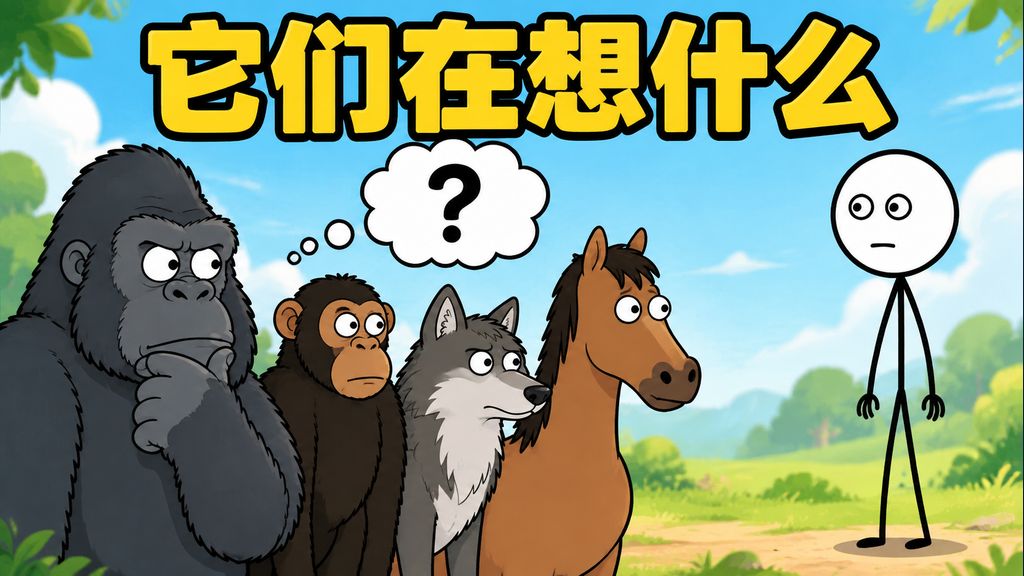
狗把你当家人,猫把你当员工?动物眼中的人类到底有多矛盾
字幕摘录
| 时间 | 英文 | 中文 |
|---|---|---|
| 0:00 | Have you ever looked into an animal's eyes and wondered what they think of you? | 你看过动物的眼睛吗? |
| 0:03 | Not what they feel, not whether they like you, but what they actually think you are. | 不是他们的感觉,不是他们是否喜欢你, 而是他们真正认为你是什么。 |
| 0:08 | To a dog, are you family? | 敬狗,你们是一家人吗? |
| 0:09 | To a cat, are you staff? | 对一只猫,你是员工吗? |
| 0:11 | To a bird, are you a strange featherless giant? | 对鸟来说,你是一只奇怪的无羽毛巨人吗? |
| 0:14 | And to a wild animal, are you a threat, a curiosity, or something so confusing that | 对野生动物来说,你是一个威胁,好奇心, 还是什么令人困惑的东西, |
| 0:19 | it does not fit into any category at all? | 完全不属于任何类别? |
| 0:21 | The truth is, animals do not see humans the way we see ourselves. | 事实是,动物们没有像我们自己那样看待人类。 |
| 0:25 | We think of ourselves as people with names, jobs, phones, houses, and complicated lives. | 我们把自己视为有名字、工作、电话、房屋和复杂生活的人。 |
| 0:30 | Animals do not know any of that. | 动物不知道这些 |
展开字幕全文(130 条)
| 序号 | 英文 | 中文 |
|---|---|---|
| 1 | Have you ever looked into an animal's eyes and wondered what they think of you? | 你看过动物的眼睛吗? |
| 2 | Not what they feel, not whether they like you, but what they actually think you are. | 不是他们的感觉,不是他们是否喜欢你, 而是他们真正认为你是什么。 |
| 3 | To a dog, are you family? | 敬狗,你们是一家人吗? |
| 4 | To a cat, are you staff? | 对一只猫,你是员工吗? |
| 5 | To a bird, are you a strange featherless giant? | 对鸟来说,你是一只奇怪的无羽毛巨人吗? |
| 6 | And to a wild animal, are you a threat, a curiosity, or something so confusing that | 对野生动物来说,你是一个威胁,好奇心, 还是什么令人困惑的东西, |
| 7 | it does not fit into any category at all? | 完全不属于任何类别? |
| 8 | The truth is, animals do not see humans the way we see ourselves. | 事实是,动物们没有像我们自己那样看待人类。 |
| 9 | We think of ourselves as people with names, jobs, phones, houses, and complicated lives. | 我们把自己视为有名字、工作、电话、房屋和复杂生活的人。 |
| 10 | Animals do not know any of that. | 动物不知道这些 |
| 11 | They judge us through smell, sound, movement, routine, and behaviour. | 他们通过嗅觉、声音、动作、常规和行为来评判我们。 |
| 12 | So the real question is not, do animals understand humans? | 那么真正的问题是 动物们了解人类吗? |
| 13 | The better question is, what kind of creature do they think we are? | 更好的问题是 他们认为我们是什么生物? |
| 14 | Let's start with dogs. | 以狗为首. |
| 15 | Dogs may be the animals that understand us best. | 狗可能是最了解我们的动物 |
| 16 | They can read our faces, follow our pointing, recognise our voices, and sense changes in | 他们可以读懂我们的脸, 跟着我们的指点, 认识我们的声音, 并感知变化 |
| 17 | our mood. | 我们的心情。 |
| 18 | A dog does not think you are another dog. | 一只狗不认为你是另一只狗。 |
| 19 | It knows you look different, smell different, and act different. | 它知道你看起来不同,闻起来不同,行为也不同. |
| 20 | But that does not mean it sees you as separate from its social world. | 但这并不意味着它将你视为独立于社会世界。 |
| 21 | To a dog, you are part of the pack. | 对一只狗来说,你属于这群人 |
| 22 | You are a provider, protector, playmate, and emotional anchor. | 你是供养者、保护者、玩伴和情感主播。 |
| 23 | That is why dogs get excited when you come home. | 所以你回家后狗才会兴奋 |
| 24 | To them, your return is not casual, it's a reunion. | 对他们来说,你的归来不是偶然的,而是重逢. |
| 25 | You are the creature that brings food, safety, affection, and structure. | 你是带来食物、安全、感情和结构的生物。 |
| 26 | In a dog's mind, humans may be strange, upright pack members with terrible noses and | 在狗的心目中,人类可能是陌生的,直立的包 成员与可怕的鼻子和 |
| 27 | amazing access to snacks. | 惊人的点心。 |
| 28 | Cats are different. | 猫不同. |
| 29 | Cats understand humans, but they do not respond to us the same way dogs do. | 猫会理解人类 但不像狗那样对我们做出回应 |
| 30 | A cat probably does not think you are a cat. | 猫可能不认为你是猫。 |
| 31 | It knows you are bigger, louder, and much less graceful. | 它知道你是更大的,更响亮, 更没有优雅。 |
| 32 | But cats often treat humans in ways that resemble how they treat other cats. | 但猫经常以类似对待其他猫的方式对待人类. |
| 33 | They rub against us, they blink slowly, they bring us things. | 他们磨蹭我们, 慢慢眨眼, 他们给我们的东西。 |
| 34 | Some researchers believe cats see humans as social partners, not masters. | 一些研究者认为猫将人类视为社会伙伴,而不是主人. |
| 35 | When a cat meows at you, it is usually not using normal cat-to-cat language. | 当一只猫对你低头时,通常不会使用普通的猫对猫语言. |
| 36 | Adult cats rarely meow at each other. | 成年猫很少互相鸣叫 |
| 37 | They mostly meow at humans. | 他们大多对人低头 |
| 38 | That means cats have developed a special way to communicate with us. | 这意味着猫已经开发出一种与我们交流的特殊方式. |
| 39 | So maybe cats think we are trainable giants. | 所以也许猫认为我们是训练有素的巨人。 |
| 40 | Now think about horses. | 现在想想马 |
| 41 | Horses are prey animals. | 马是猎物动物. |
| 42 | Their survival depends on reading body language. | 他们的生存取决于阅读身体语言. |
| 43 | They know tension, posture, breathing, and confidence. | 他们知道紧张、姿态、呼吸和自信 |
| 44 | A horse does not care about your words as much as your energy. | 一匹马不关心你的言语 就像你的精力。 |
| 45 | If you are nervous, the horse may feel unsafe. | 如果你紧张,马可能会觉得不安全。 |
| 46 | If you are calm, the horse may trust you. | 如果你冷静,马会信任你 |
| 47 | To a horse, a human is a small, predator-shaped creature that somehow does not act like a predator. | 对马来说,人是一种小型的,掠食性形状的生物,不知何故不会像掠食性动物. |
| 48 | That is confusing. | 这是令人困惑的。 |
| 49 | We have forward-facing eyes like hunters. | 我们的眼睛像猎人一样向前看 |
| 50 | We approach directly like hunters. | 我们像猎人一样直接接近 |
| 51 | But we also bring food, grooming, and companionship. | 但我们也带来了食物, 培养,和陪伴。 |
| 52 | Over time, horses can learn that humans are safe leaders. | 随着时间的推移,马可以得知人类是安全的领袖. |
| 53 | They may see us as strange herd members who guide them, feed them, and sometimes ask them | 他们可能认为我们是 陌生的畜牧成员 谁引导他们,喂他们,有时问他们 |
| 54 | to do very specific things for reasons only humans understand. | 做非常具体的事情 原因只有人类能理解 |
| 55 | Birds may see us in an even stranger way. | 鸟儿可能会以陌生的方式看到我们 |
| 56 | Parrots, crows, ravens, and pigeons are incredibly intelligent. | 鹦鹉、乌鸦、乌鸦和鸽子都非常聪明 |
| 57 | They recognize faces, solve problems, and some can even understand patterns, tools, | 他们认得面孔,解决问题, 有些人甚至可以理解规律,工具, |
| 58 | and social relationships. | 以及社会关系 |
| 59 | A crow that has been treated badly by a human can remember that person for years. | 被人类虐待的乌鸦可以记得这个人多年. |
| 60 | It can also warn other crows. | 也可以警告其他乌鸦. |
| 61 | That means, to a crow, you are not just a human. | 也就是说,对乌鸦来说,你不仅仅是一个人类。 |
| 62 | You are a specific individual. | 你是一个特殊的人。 |
| 63 | A kind person may be remembered as safe. | 善良的人可以被记住是安全的。 |
| 64 | A threatening person may be remembered as dangerous. | 威胁者可能被记住是危险的。 |
| 65 | Parrots can form deep bonds with humans. | 鹦鹉可以和人类形成深厚的联系. |
| 66 | Some may see their owners as flock members. | 有些人可能视其主人为羊群成员。 |
| 67 | Others may see them as mates, rivals, or parents. | 其他人可能视他们为伴侣、对手或父母。 |
| 68 | To a bird, we are giant wingless creatures with weird voices and powerful hands. | 对鸟来说,我们是巨大的无翼生物,有着怪异的声音和强大的手. |
| 69 | But we control doors, food, lights, and attention. | 但我们控制着门、食物、灯光和注意力 |
| 70 | That probably makes us very important. | 这可能让我们非常重要。 |
| 71 | Now imagine how wild animals see us. | 现在想象一下野生动物如何看待我们。 |
| 72 | A deer does not wonder about your personality. | 鹿不会怀疑你的个性 |
| 73 | It does not care where you work. | 它不关心你在哪里工作。 |
| 74 | It sees your shape, movement, smell, and distance. | 它看到你的形状、动作、嗅觉和距离 |
| 75 | For many wild animals, humans fall into one of two categories. | 对于许多野生动物来说,人类属于两类之一. |
| 76 | Threat or background noise. | 威胁或背景噪音。 |
| 77 | In cities, pigeons, foxes, raccoons, and squirrels often learn that humans are part of the environment. | 在城市中,鸽子,狐狸,浣熊,松鼠经常知道人类是环境的一部分. |
| 78 | We are like moving trees that drop food. | 我们就像移动的树木 扔食物。 |
| 79 | Sometimes we are dangerous. | 有时候我们很危险 |
| 80 | Sometimes we are useful. | 有时我们是有用的。 |
| 81 | Most of the time, we are just there. | 大多数时候,我们只是在那里。 |
| 82 | A city squirrel may not see you as a person. | 城市松鼠可能不会把你当人看待 |
| 83 | It may see you as a large obstacle with snack potential. | 它可能认为你是一个巨大的障碍 与小吃的潜力。 |
| 84 | Raccoons may see humans as the owners of magical food boxes. | 浣熊可能将人类视为神奇食物盒的主人. |
| 85 | Those boxes are trash cans. | 这些箱子是垃圾桶 |
| 86 | To them, our entire civilization might look like a complicated system for producing leftovers. | 对他们来说,我们的整个文明 可能看起来像一个复杂的系统 生产剩余。 |
| 87 | Marine animals have their own version of us. | 海洋动物有自己的版本 |
| 88 | Dolphins are curious about humans. | 海豚对人类很好奇. |
| 89 | They may see us as odd, slow swimmers. | 他们可能把我们看成古怪的,慢速的游泳者. |
| 90 | We are clumsy in the water. | 我们在水里很笨拙 |
| 91 | We need equipment to stay underwater. | 我们需要设备 留在水下。 |
| 92 | We make bubbles. | 我们制造泡泡。 |
| 93 | We move strangely. | 我们移动的很奇怪。 |
| 94 | Whales may not think much about us at all. | 鲸鱼可能对我们一点想法都没有 |
| 95 | We are tiny compared to them. | 我们比他们还小 |
| 96 | A human beside a whale is almost like a bird beside a building. | 鲸鱼旁边的人类几乎就像建筑物旁边的鸟 |
| 97 | Still, whales can be gentle around people. | 鲸鱼还是可以温柔地围着人 |
| 98 | They seem aware that we are fragile. | 他们似乎意识到我们是脆弱的。 |
| 99 | That does not mean they understand us. | 这并不意味着他们理解我们。 |
| 100 | It means they can sense size, movement, and vulnerability. | 这意味着他们能感知到大小,移动和脆弱性. |
| 101 | Octopuses may have one of the strangest views of humans. | 八角星可能拥有人类最奇怪的观点之一. |
| 102 | An octopus is intelligent, but its mind is very different from ours. | 章鱼是聪明的,但是它的思想 和我们的完全不同。 |
| 103 | It has arms that can explore and react almost independently. | 它的手臂可以几乎独立地探索和反应. |
| 104 | It changes color with its skin. | 以其皮肤变化色相. |
| 105 | It experiences the world in a way we can barely imagine. | 它以我们难以想象的方式体验世界。 |
| 106 | To an octopus, a human may be a large, predictable creature outside the glass. | 对章鱼来说,人类可能是玻璃外的大型,可预测的生物. |
| 107 | Some octopuses recognize individual keepers. | 一些章鱼会识别个体守护者. |
| 108 | Some behave differently around different people. | 有些人对不同的人有不同的行为. |
| 109 | They may not know what we are, but they know we matter. | 他们也许不知道我们是什么人,但他们知道我们很重要。 |
| 110 | Now here's the strange part. | 现在,这是奇怪的部分。 |
| 111 | Animals may understand us less as a species and more as a pattern. | 动物可能不太了解我们是一个物种 更了解我们的模式 |
| 112 | They learn what we do. | 他们知道我们在做什么。 |
| 113 | Dogs learn that keys mean leaving. | 狗知道钥匙意味着离开 |
| 114 | Cats learn that the sound of a can means food. | 猫学会了罐头的声音意味着食物. |
| 115 | Crows learn which faces are dangerous. | 乌鸦知道哪张脸很危险 |
| 116 | Squirrels learn which humans throw crumbs. | 松鼠学会了哪些人类扔碎屑. |
| 117 | Animals may not ask, what is a human? | 动物可能不会问, 什么是人类? |
| 118 | They may ask in their own way, what does this creature usually do? | 他们可能会问自己 这生物通常做什么? |
| 119 | That might be the most honest answer. | 这可能是最诚实的答案。 |
| 120 | To animals, we are not one thing. | 对动物来说,我们不是一回事。 |
| 121 | We are many things. | 我们有很多事情 |
| 122 | And maybe that should humble us. | 也许这应该让我们谦卑 |
| 123 | Humans often assume we are the main characters of Earth. | 人类常常认为我们是地球的主角. |
| 124 | But animals are not sitting around trying to understand our careers, our politics, or our dreams. | 但是动物们并没有坐在这里 试图理解我们的事业,我们的政治,或者我们的梦想。 |
| 125 | They are trying to survive. | 他们试图生存。 |
| 126 | They are watching us more closely than we realize. | 他们比我们意识到的更密切地注视着我们。 |
| 127 | Every moment, every sound, every habit, and every choice teaches them something. | 每时每刻,每声,每习惯,每一选择都教他们一些东西. |
| 128 | We are always telling animals what kind of creature we are. | 我们总是告诉动物我们是什么生物 |
| 129 | Not with words, with behavior. | 不与言语,与行为. |
| 130 | And in the end, that may be the only language that really matters. | 最后,这也许是真正重要的语言。 |
该视频共有字幕 130 条。解锁更多字幕为会员功能,请移动到 价格