人类肤色为何不同?
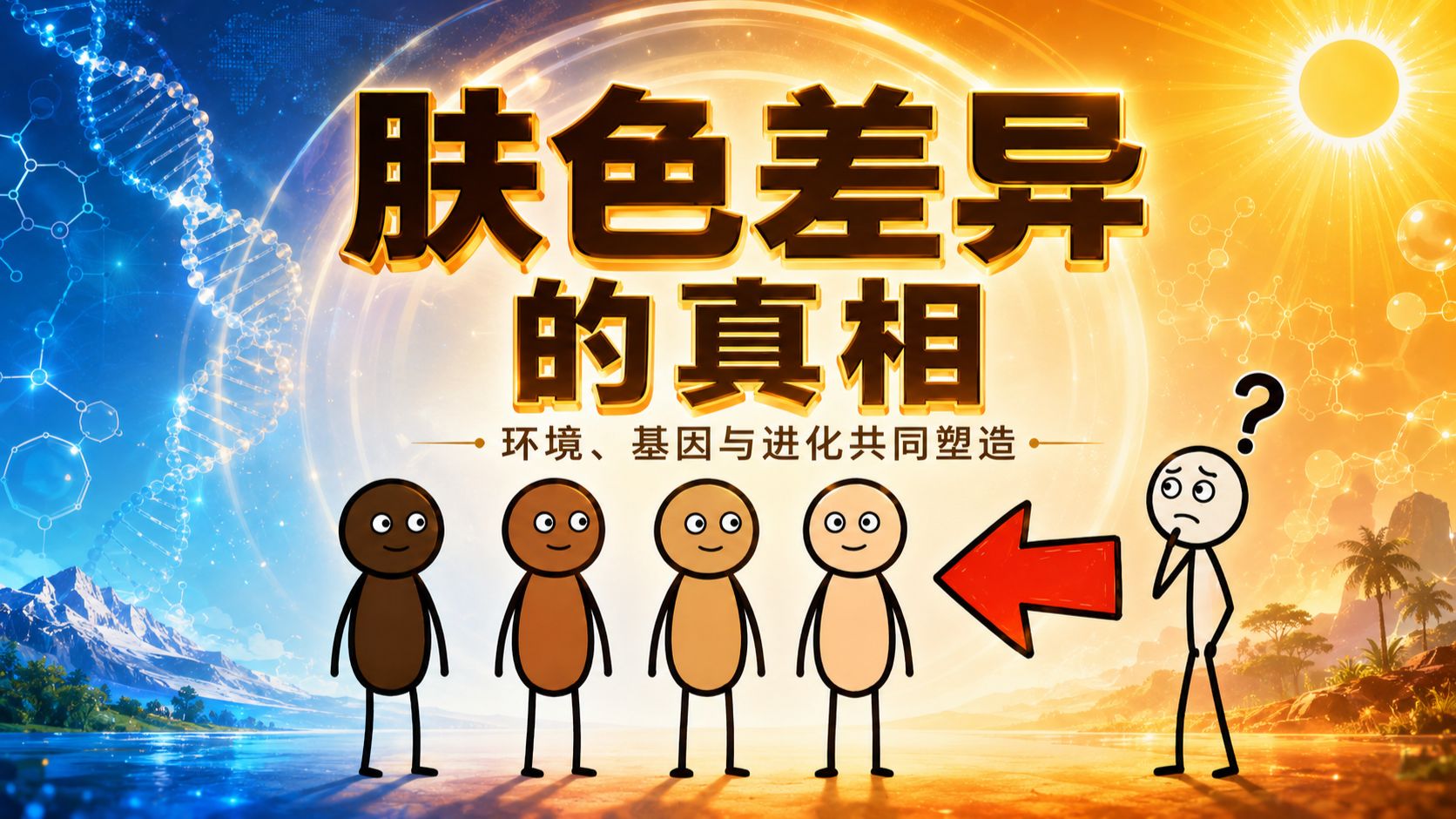
字幕摘录
| 时间 | 英文 | 中文 |
|---|---|---|
| 0:00 | Look at any crowd on Earth and you will see something strange. | 看看地球上的任何人群 你会看到一些奇怪的东西 |
| 0:03 | One species. | 一个物种。 |
| 0:04 | Same bones. | 同样的骨头。 |
| 0:05 | Same blood. | 血迹相同 |
| 0:06 | Same basic brain. | 同样的基本大脑。 |
| 0:07 | Same ancient family tree. | 同古家树. |
| 0:09 | But skin that ranges from very dark brown to very pale pink. | 但皮肤从很深的棕色到很苍白的粉红色. |
| 0:12 | For thousands of years, humans explained that difference in the worst possible ways. | 几千年来,人类以最恶劣的方式解释了这种差异. |
| 0:17 | They turned it into myths. | 他们把它变成神话 |
| 0:18 | Then tribes. | 后为部落. |
展开字幕全文(217 条)
| 序号 | 英文 | 中文 |
|---|---|---|
| 1 | Look at any crowd on Earth and you will see something strange. | 看看地球上的任何人群 你会看到一些奇怪的东西 |
| 2 | One species. | 一个物种。 |
| 3 | Same bones. | 同样的骨头。 |
| 4 | Same blood. | 血迹相同 |
| 5 | Same basic brain. | 同样的基本大脑。 |
| 6 | Same ancient family tree. | 同古家树. |
| 7 | But skin that ranges from very dark brown to very pale pink. | 但皮肤从很深的棕色到很苍白的粉红色. |
| 8 | For thousands of years, humans explained that difference in the worst possible ways. | 几千年来,人类以最恶劣的方式解释了这种差异. |
| 9 | They turned it into myths. | 他们把它变成神话 |
| 10 | Then tribes. | 后为部落. |
| 11 | Then empires. | 然后是帝国 |
| 12 | Then race. | 然后比赛。 |
| 13 | They acted like skin color was proof that humans were separated into different kinds of people. | 他们的行为就像皮肤颜色 证明人类被分离成不同的人 |
| 14 | But biology tells a very different story. | 但生物学讲述了一个非常不同的故事. |
| 15 | Skin color was never proof that humans were separate. | 皮肤颜色从来不证明人类是分开的. |
| 16 | And it was never really about the labels people use today. | 和它从来没有真正 关于人们今天使用的标签。 |
| 17 | It was about a problem every human body had to solve. | 这是关于一个问题 每个人体必须解决。 |
| 18 | A problem coming from the sky. | 问题从天而降 |
| 19 | The strange thing is that the same thing that kept humans alive was also trying to damage them. | 奇怪的是,同样让人类活着的东西 也试图伤害他们 |
| 20 | And over thousands of generations, your ancestors' bodies had to find a balance. | 成千上万代人, 你的祖先的身体必须找到平衡。 |
| 21 | Block too much of it, and you die one way. | 堵住太多,你只能死一个 |
| 22 | Let too much of it in, and you die another. | 放太多进去,你又死了 |
| 23 | So why did humans become different colors? | 那么为什么人类会变成不同的颜色呢? |
| 24 | The answer begins long before nations, borders, or races. | 答案早在国家、边界或种族之前就开始了。 |
| 25 | It begins in Africa, with a small, exposed, sweating ape standing under a brutal sun. | 它开始于非洲, 一个小,暴露, 汗水猿站在残酷的太阳下。 |
| 26 | For most mammals, skin color is not the first line of defense. | 对于大多数哺乳动物来说,皮肤颜色不是第一线的防线. |
| 27 | Fur is. | 佛尔是. |
| 28 | Fur is shade. | 富尔是荫. |
| 29 | Fur is armor. | 富尔是盔甲. |
| 30 | Fur blocks sunlight before it ever touches the skin. | 毛皮在触摸到皮肤之前会挡住阳光 |
| 31 | But our ancestors did something dangerous. | 但我们的祖先做了危险的事 |
| 32 | They lost most of it. | 他们失去了大部分。 |
| 33 | Exactly when it happened is still debated. | 事情发生时仍然在辩论之中。 |
| 34 | But the leading explanation is heat. | 但最主要的解释是热. |
| 35 | A fur-covered animal overheats quickly when it runs in open sunlight. | 毛盖动物在露天阳光下运行时会很快过热. |
| 36 | A mostly hairless animal that can sweat has a strange advantage. | 大多是无毛的动物,可以出汗,具有奇怪的优势. |
| 37 | It can keep moving. | 它可以继续移动。 |
| 38 | It can walk for hours. | 它可以走几个小时 |
| 39 | Run for hours. | 跑几小时 |
| 40 | Follow animals across hot open land while other predators have to stop and cool down. | 跟着动物穿越炎热的开阔地,而其他掠食者则必须停下来冷却. |
| 41 | Sweat works best on bare skin. | 汗在赤皮肤上最有效. |
| 42 | So early humans traded fur for cooling. | 所以早期人类为了冷却而用皮毛交易. |
| 43 | But that trade created a new problem. | 但这种贸易造成了一个新的问题。 |
| 44 | Because once the fur was gone, the sky could touch the body directly. | 因为一旦皮毛消失,天空就可以直接触摸身体. |
| 45 | And near the equator, sunlight is not gentle. | 而在赤道附近,阳光并不温和. |
| 46 | It carries ultraviolet radiation. | 它携带紫外线辐射。 |
| 47 | UV light is powerful enough to burn skin. | 紫外光的威力足以燃烧皮肤. |
| 48 | Powerful enough to damage DNA. | 足以破坏DNA |
| 49 | Powerful enough to break down important molecules inside the body. | 强大到足以破碎体内的重要分子. |
| 50 | One of those molecules is folate. | 其中一种分子是叶酸盐。 |
| 51 | Folate is a B vitamin your body needs to make cells, | 福拉特是乙类维生素 你的身体需要制造细胞, |
| 52 | repair DNA, support healthy sperm, and support early pregnancy. | 修复DNA,支持健康的精子,支持早孕. |
| 53 | If too much UV breaks down folate, reproduction becomes harder. | 如果紫外线破裂太多 叶酸盐就更难复制 |
| 54 | And in evolution, reproduction is not a small detail. | 而在进化论中,生殖并不是一个小细节. |
| 55 | It is the test everything has to pass. | 这是测试 一切必须通过。 |
| 56 | A body can be strong, fast, smart, perfectly adapted in every other way. | 身体可以强壮,快速,聪明,以其他方式完美地适应. |
| 57 | But if it cannot successfully leave descendants, evolution does not keep that design for long. | 但是,如果它不能成功地离开后代,进化不会使这种设计长期存在. |
| 58 | So as early humans lived under intense tropical sunlight, | 早期人类生活在强烈的热带阳光下 |
| 59 | natural selection favored bodies that could protect folate. | 自然选择有利于保护叶酸的身体。 |
| 60 | That protection came from melanin. | 保护来自梅兰宁。 |
| 61 | Melanin is the pigment that gives skin its color. | 梅兰宁是给皮肤颜色的色素. |
| 62 | But it is not just color. | 但它不仅仅是颜色。 |
| 63 | It is a biological shield. | 这是生物盾牌。 |
| 64 | It absorbs and scatters ultraviolet radiation before that radiation can do too much damage. | 它吸收和散布紫外线辐射,以免辐射造成过多的损害。 |
| 65 | The more dark protective eumelanin your skin produces, | 皮肤越暗的防腐乳胶 |
| 66 | the better protected you are under strong sunlight. | 在阳光下保护得更好 |
| 67 | This is why populations whose ancestors lived for long periods near the equator | 这就是为什么祖先在赤道附近长期居住的人群 |
| 68 | tend to have darker skin. | 皮肤变黑 |
| 69 | Not because they are a different kind of human. | 不是因为他们是不同的人类 |
| 70 | Because their ancestors lived under stronger UV. | 因为他们的祖先生活在更强大的紫外线下. |
| 71 | Dark skin was not cosmetic. | 黑皮肤不是化妆品。 |
| 72 | It was survival technology. | 这是生存技术。 |
| 73 | It was the first sunscreen. | 这是第一个防晒霜。 |
| 74 | But then humans moved. | 但后来人类移动. |
| 75 | Slowly, over tens of thousands of years, groups of Homo sapiens spread out of Africa. | 慢慢地,数万年来, 同性恋团体从非洲蔓延。 |
| 76 | They crossed deserts, followed coastlines, moved through forests, | 他们穿过沙漠,沿着海岸线,穿过森林, |
| 77 | reached cold plains, cloudy islands, mountains, and northern skies. | 到达了寒冷的平原、多云的岛屿、山脉和北部的天空。 |
| 78 | And the farther some groups moved from the equator, the problem changed. | 有些群体离赤道更远,问题就变了。 |
| 79 | The danger was no longer just too much sunlight. | 危险不再只是太阳光。 |
| 80 | It was too little. | 这太少了。 |
| 81 | More specifically, too little UVB. | 更具体地说,紫外线太小了 |
| 82 | UVB is the part of sunlight your body uses to make vitamin D. | 紫外线是阳光的一部分 你的身体用来制造维生素D。 |
| 83 | And vitamin D is essential. | 而维生素D是必需的. |
| 84 | Your body uses it to absorb calcium, build bones, support immunity, | 你的身体用它来吸收钙 制造骨头 支持免疫 |
| 85 | and maintain normal biological function. | 并保持正常的生物学功能。 |
| 86 | Without enough vitamin D, children can develop rickets. | 没有足够的维生素D,儿童可以发育小球. |
| 87 | A disease where bones become soft and deformed. | 一种骨变软变形的疾病. |
| 88 | Pregnancy becomes riskier. | 怀孕的风险更大。 |
| 89 | Bones become weaker. | 骨头变弱了 |
| 90 | Survival becomes harder. | 生存变得更加困难。 |
| 91 | So now human skin faced the opposite problem. | 所以现在人类的皮肤面临着相反的问题。 |
| 92 | Dark skin was excellent under powerful tropical sunlight. | 在强大的热带阳光下,暗色皮肤非常出色. |
| 93 | But in places where the sun was weak for much of the year, | 但是在一年多的时间里 太阳很弱的地方 |
| 94 | too much melanin could block the limited UVB the body needed. | 太多的黑色素可以阻挡 有限的紫外线 身体需要。 |
| 95 | So in many low UV environments, natural selection favored lighter skin. | 所以在许多低紫外线环境中,自然选择倾向于更浅的皮肤. |
| 96 | Less melanin meant more UVB could enter the skin. | 亚麻素少意味着更多的紫外线B可以进入皮肤. |
| 97 | More UVB meant more vitamin D. | 更多的紫外线意味着更多的维生素D. |
| 98 | More vitamin D meant stronger bones and better chances of survival. | 更多的维生素D意味着骨骼更坚固,生存机会更高. |
| 99 | This is the part most people get wrong. | 这是大多数人错的 |
| 100 | Light skin did not evolve because cold places are cold. | 光皮肤没有进化,因为寒冷的地方很冷。 |
| 101 | Cold does not bleach skin. | 冷不会漂白皮肤 |
| 102 | Sunlight does. | 日光照见. |
| 103 | The real map is not temperature. | 真正的地图不是温度 |
| 104 | It is ultraviolet radiation. | 它是紫外线辐射。 |
| 105 | That is why human skin color follows sunlight better than it follows heat. | 这就是为什么人的皮肤颜色跟随阳光比跟随热。 |
| 106 | But the story is still not as simple as dark near the equator and light in the north. | 但故事在赤道附近和北方的光线上仍然没有那么简单. |
| 107 | Because humans are messy. | 因为人类很乱 |
| 108 | Migration is messy. | 移民是混乱的。 |
| 109 | Diet is messy. | 饮食混乱. |
| 110 | History is messy. | 历史是混乱的。 |
| 111 | Some Arctic populations, for example, | 例如,北极的一些人口 |
| 112 | did not become extremely pale even though they lived far north. | 虽然他们生活在遥远的北方,但他们并没有变得极其苍白。 |
| 113 | Why? | 为什么? |
| 114 | Because many of them traditionally ate diets rich in fish and marine mammals. | 因为它们中有许多传统上吃着富含鱼类和海洋哺乳动物的饮食. |
| 115 | Those foods contain vitamin D. | 这些食物含有维生素D. |
| 116 | If your food gives you vitamin D, your skin does not need to let in as much weak northern sunlight. | 如果你的食物给了你维他命D, 你的皮肤不需要让 如此弱的北方阳光。 |
| 117 | So diet can change the pressure on skin color. | 因此饮食可以改变皮肤颜色的压力. |
| 118 | That is why there is no perfect skin color chart. | 这就是为什么没有完美的肤色图。 |
| 119 | There are patterns, but not clean boxes. | 有规律,但没有干净的盒子。 |
| 120 | And this is where the idea of race starts to fall apart. | 这就是种族观念开始瓦解的地方。 |
| 121 | Because skin color changes gradually across geography. | 因为皮肤颜色在地理上逐渐变化. |
| 122 | It does not divide humans into neat biological categories. | 它不把人类分为整洁的生物类别. |
| 123 | There is no sharp line where one kind of human ends and another begins. | 没有尖锐的界限 人类的一端和另一端开始。 |
| 124 | There are just populations whose ancestors adapted to different amounts of sunlight, | 有一群祖先适应不同程度的阳光 |
| 125 | mixed with other populations, moved again, and adapted again. | 与其他人口混合,再次移动,再次适应。 |
| 126 | If you walked from central Africa northward thousands of years ago, | 如果你几千年前从非洲中部往北走 |
| 127 | you would not cross a magic border where humans suddenly changed. | 你不会越过一个神奇的边界 人类突然改变。 |
| 128 | You would see gradual shifts. | 你会看到逐渐的转变。 |
| 129 | Different bodies shaped by sunlight, diet, migration, and chance. | 不同的身体被阳光、饮食、迁徙和机会所塑造 |
| 130 | Human variation is real, but the boxes people built around it are mostly cultural. | 人类的变异是真实的,但是围绕它建造的盒子大多是文化的. |
| 131 | Skin color became one of the most visible human differences. | 皮肤颜色成为人类最明显的差异之一. |
| 132 | So societies gave it meaning. | 所以社会赋予它意义。 |
| 133 | Then they gave it hierarchy. | 然后他们给了它等级。 |
| 134 | Then they gave it violence. | 然后,他们给了它暴力。 |
| 135 | But evolution never said any of that. | 但进化从未说过这些 |
| 136 | Evolution was solving a chemistry problem. | 进化正在解决化学问题。 |
| 137 | How do you block enough sunlight to protect folate, | 如何阻挡足够的阳光保护叶酸盐, |
| 138 | but allow enough sunlight to make vitamin D? | 但允许足够阳光 生产维生素D? |
| 139 | That is the whole puzzle. | 这就是整个谜题。 |
| 140 | Too much UV and you need more melanin. | 紫外线太多了,你需要更多的梅兰宁。 |
| 141 | Too little UV and too much melanin can become a problem. | 太小的紫外线和太多的黑色素会成为一个问题. |
| 142 | Human skin color is the compromise. | 人皮色是妥协. |
| 143 | A moving balance between protection and production. | 保护与生产之间的动态平衡。 |
| 144 | Between blocking the sun and using it. | 屏蔽太阳与用阴阳之间. |
| 145 | And the strangest part is that this balance evolved more than once. | 最奇怪的是 这种平衡不止一次演变 |
| 146 | Lighter skin in Europe and lighter skin in parts of East Asia | 欧洲皮肤较浅,东亚部分地区皮肤较浅 |
| 147 | did not appear through exactly the same genetic changes. | 并没有通过完全相同的基因变化出现。 |
| 148 | Evolution found similar solutions using different tools. | Evolution使用不同的工具发现了类似的解决方案. |
| 149 | That means there was no single moment when humans became white. | 这意味着人类变成白人时没有单一的时刻. |
| 150 | No single moment when humans became black. | 没有人类变成黑人的一刻 |
| 151 | Those are modern words for a much older, slower process. | 对于一个更古老、更慢的过程来说,这些都是现代的词汇。 |
| 152 | The first homo sapiens were almost certainly dark skinned, | 最早的同性恋者几乎肯定皮肤很黑, |
| 153 | compared with many people alive today, | 以今天的许多人盟誓, |
| 154 | because our species evolved in Africa under strong ultraviolet radiation. | 因为我们的物种在非洲在强紫外线辐射下进化。 |
| 155 | But even that has to be said carefully. | 但即便如此,也必须谨慎地说。 |
| 156 | They were not black in the modern social sense. | 在现代社会意义上,他们不是黑人。 |
| 157 | They were ancient humans with skin adapted to strong sunlight. | 他们是古老的人类,皮肤适应强烈的阳光。 |
| 158 | The categories came later. | 这些类别后来才出现。 |
| 159 | Much later, the biology came first. | 很久以后,生物学就先到了。 |
| 160 | Imagine the sun as a problem with two dangers. | 把太阳想象成两个危险的问题 |
| 161 | If it gets too deep into your skin, it can damage folate and DNA. | 如果它深入到你的皮肤里, 它会损坏叶酸盐和DNA。 |
| 162 | If it does not get in enough, you cannot make enough vitamin D. | 如果进得不够,你就不能生产足够的维生素D. |
| 163 | Melanin is the dial. | 梅兰宁是拨号 |
| 164 | Turn it up where UV is brutal. | 在紫外线凶残的地方打开 |
| 165 | Turn it down where UV is weak. | 在紫外线较弱的地方把声音调低 |
| 166 | Not because one skin color is better. | 不是因为一个肤色更好 |
| 167 | Because different environments ask different things from the body. | 因为不同的环境 要求不同的东西 从身体。 |
| 168 | That is why no human skin color is the original perfect version. | 这就是为什么没有人类肤色是原始的完美版本。 |
| 169 | Every shade is a solution. | 每荫是解. |
| 170 | Dark skin is not primitive. | 黑暗的皮肤不是原始的。 |
| 171 | Light skin is not advanced. | 浅皮未进. |
| 172 | Brown skin is not halfway finished. | 棕色皮肤还没有完成一半。 |
| 173 | They are all records of survival. | 这些都是生存记录 |
| 174 | But then the modern world broke the old rules. | 但后来现代世界打破了旧规则. |
| 175 | Today, people move across the planet in hours. | 今天,人们在数小时内跨过地球。 |
| 176 | A person whose ancestors adapted to weak northern sunlight can live under harsh equatorial sun. | 其祖先适应北方弱太阳的人可以生活在严酷的赤道太阳下. |
| 177 | A person whose ancestors adapted to strong tropical UV can live in a cloudy northern city. | 其祖先适应强热带紫外线的人可以生活在云雾般的北方城市. |
| 178 | Your skin still carries the story of old sunlight. | 你的皮肤还带着旧日光的故事 |
| 179 | But your life may happen under a completely different sky. | 但你的生命可能发生在完全不同的天空下 |
| 180 | Our bodies were shaped by places. | 我们的身体是由地方塑造的 |
| 181 | Our lives are no longer stuck in those places. | 我们的生活不再停留在这些地方。 |
| 182 | And maybe that is the most important part of the story. | 也许这是故事最重要的部分。 |
| 183 | Skin color feels permanent. | 皮肤颜色感觉永久. |
| 184 | It feels like identity, family, history. | 感觉像是身份 家庭 历史 |
| 185 | Something you are born with and carry everywhere. | 你生来随身携带的东西 |
| 186 | And it is. | 事实就是如此。 |
| 187 | But it is also evidence of movement. | 但它也是运动的证据。 |
| 188 | Your skin is not just the color of your body. | 你的皮肤不仅仅是身体的颜色 |
| 189 | It is the shadow of ancient migrations. | 这是古代移民的影子。 |
| 190 | It is the trace of deserts crossed, coastlines followed, winters survived, | 它是沙漠穿越的痕迹, 海岸线紧随其后, 冬天幸存下来, |
| 191 | and sunlight absorbed by people whose names are gone. | 阳光被那些名声消失的人吸收 |
| 192 | People who never knew they were shaping the face of humanity. | 永远不知道自己在塑造人性 |
| 193 | They were just trying to live long enough to have children. | 他们只是想活到有孩子为止 |
| 194 | And over thousands of generations, the sun rode itself into their skin. | 千代万代,太阳自成一片 |
| 195 | So why did humans become different colors? | 那么为什么人类会变成不同的颜色呢? |
| 196 | Because we left one place and tried to survive in many. | 因为我们离开一个地方 试图生存在很多地方。 |
| 197 | Because the same star that gave us life also threatened to damage us. | 因为那个给我们生命的恒星 也威胁要伤害我们 |
| 198 | Because evolution had to solve two opposite problems at the same time. | 因为进化必须同时解决两个相反的问题. |
| 199 | Protect the body from sunlight. | 保护身体免受阳光照射. |
| 200 | And let sunlight in. | 让阳光进入。 |
| 201 | That is all skin color is. | 这都是皮肤颜色 |
| 202 | Not a ranking. | 没有排名 |
| 203 | Not a border. | 不是边界 |
| 204 | Not proof that humans are separate. | 不能证明人类是分开的 |
| 205 | It is proof that humans are one species flexible enough to survive almost anywhere. | 它证明了人类是一个能够灵活生存的物种。 |
| 206 | A species that began under the African sun, | 在非洲太阳下开始的物种 |
| 207 | spread across the planet, | 遍及全球, |
| 208 | and carried the memory of those skies on its skin. | 并带着那些天空的记忆 在它的皮肤。 |
| 209 | Every shade is a survival story. | 每个阴影都是生存的故事。 |
| 210 | Every color is a map. | 每个颜色都是地图 |
| 211 | And every human alive today is walking around | 今天每个活着的人都在到处走 |
| 212 | with a little piece of ancient sunlight written on their body. | 上面写着一块古老的阳光 |
| 213 | Your body is carrying a much older story than you think. | 你的身躯比你想的要老得多 |
| 214 | And that story did not end in the past. | 而那个故事过去并没有结束。 |
| 215 | If you want more videos like this, | 如果你想要更多这样的视频, |
| 216 | subscribe now. | 现在订阅。 |
| 217 | There's a lot more buried in being human. | 更葬于人间. |
该视频共有字幕 217 条。解锁更多字幕为会员功能,请移动到 价格