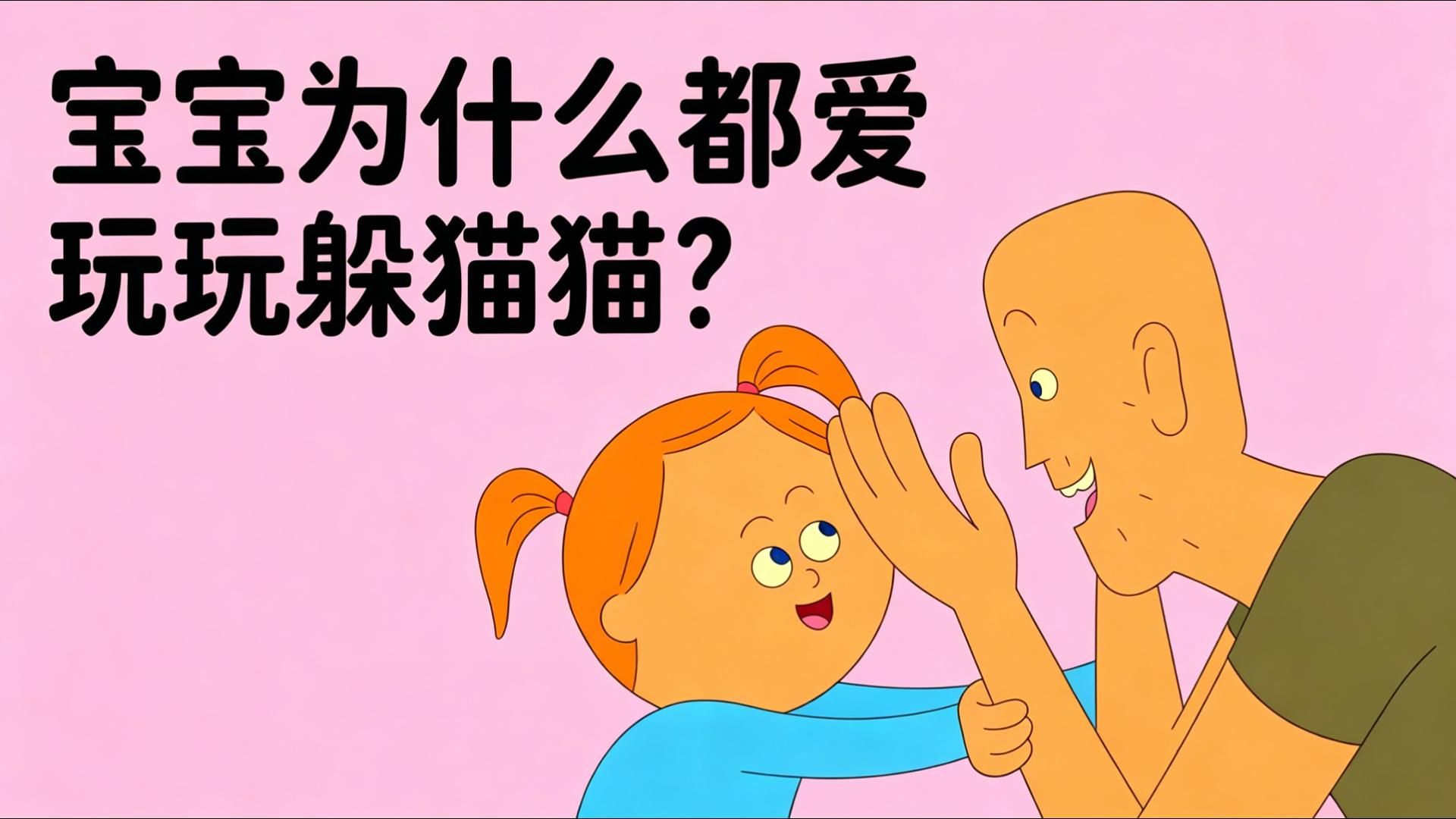
婴儿为何痴迷躲猫猫?
字幕摘录
| 时间 | 英文 | 中文 |
|---|---|---|
| 0:00 | 在意大利,它被称为 il gioco del cuckoo. | |
| 0:04 | 巴勒斯坦人说bah -eh -no, 在日本,它是inay -inay -bah。 | |
| 0:10 | But in every language, the response is usually the same. | 但是在每种语言中,反应通常是相同的. |
| 0:14 | Peek -a | |
| 0:18 | for infants and adults. | 婴儿和成年人。 |
| 0:20 | It's the first game that almost everyone plays. | 这是几乎所有人都玩的第一个游戏. |
| 0:24 | So what is it about this goofy game that babies love so much? | 那么,这愚蠢的游戏是什么 婴儿爱这么多? |
| 0:29 | While infants develop at different rates, | 虽然婴儿发育速度不同, |
| 0:31 | many cognitive and motor abilities emerge in a certain order. | 许多认知能力和运动能力以一定的顺序出现. |
| 0:35 | For example, while six-month-olds can typically grab things | 比如说,6个月大的孩子 通常可以抓东西 |
展开字幕全文(101 条)
| 序号 | 英文 | 中文 |
|---|---|---|
| 1 | 在意大利,它被称为 il gioco del cuckoo. | |
| 2 | 巴勒斯坦人说bah -eh -no, 在日本,它是inay -inay -bah。 | |
| 3 | But in every language, the response is usually the same. | 但是在每种语言中,反应通常是相同的. |
| 4 | Peek -a | |
| 5 | for infants and adults. | 婴儿和成年人。 |
| 6 | It's the first game that almost everyone plays. | 这是几乎所有人都玩的第一个游戏. |
| 7 | So what is it about this goofy game that babies love so much? | 那么,这愚蠢的游戏是什么 婴儿爱这么多? |
| 8 | While infants develop at different rates, | 虽然婴儿发育速度不同, |
| 9 | many cognitive and motor abilities emerge in a certain order. | 许多认知能力和运动能力以一定的顺序出现. |
| 10 | For example, while six-month-olds can typically grab things | 比如说,6个月大的孩子 通常可以抓东西 |
| 11 | and then promptly drop them, | 然后立刻放下他们, |
| 12 | walking and talking generally begin around 12 months. | 步行和交谈一般从12个月左右开始。 |
| 13 | This timeline was first formally charted in 1936 | 这个时间表是1936年首次正式绘制的 |
| 14 | by Swiss psychologist Jean Piaget. | 瑞士心理学家让·皮亚吉特(Jean Piaget)的作品. |
| 15 | And while most modern researchers agree | 虽然大多数现代研究者都同意 |
| 16 | this process is more fluid than Piaget believed, | 这个过程比皮亚杰认为的更流畅 |
| 17 | the early developments he identified | 他查明的早期事态发展 |
| 18 | are key for understanding peek-a-boo. | 是理解偷看的关键 |
| 19 | First is face processing. | 首先是脸部处理。 |
| 20 | This happens almost immediately. | 这几乎是立即发生的。 |
| 21 | Newborns as young as two days old | 年仅两天的新生儿 |
| 22 | can recognize their caregivers' faces. | 可以认出他们的照顾者的脸 |
| 23 | Then around six to 10 weeks, babies will begin social smiling. | 然后大约六到十周, 婴儿将开始社交微笑。 |
| 24 | This is when they notice nearby laughing or smiling faces | 当他们注意到附近笑或笑的时候 |
| 25 | and start to mimic them. | 并开始模仿他们。 |
| 26 | At two to four months, | 两到四个月 |
| 27 | they may begin to understand cause and effect. | 他们可能开始理解因果关系。 |
| 28 | And finally, between four and seven months, | 最后,4到7个月之间, |
| 29 | they learn object permanence. | 他们学习物体永恒。 |
| 30 | Piaget described this as the understanding | 皮亚吉特将这一点描述为 |
| 31 | that people and objects continue to exist | 人类和物体继续存在 |
| 32 | even when you can't see them. | 即使你看不到他们 |
| 33 | So before this period, | 所以在这段时期之前 |
| 34 | out of sight can literally mean out of mind, | 离开视线 字面意思是离开心, |
| 35 | making hiding your face akin to a magic trick. | 把你的脸藏在魔术里 |
| 36 | Before object permanence, | 在对象永久性之前, |
| 37 | this disappearing act can range from confusing | 这种消失的行为可能包括混淆 |
| 38 | to pleasantly surprising. | 令人愉快的惊喜。 |
| 39 | But by nine months, | 但是9个月前 |
| 40 | these developments are working together | 这些事态发展正在共同努力。 |
| 41 | for peak peek-a-boo performance. | 顶级偷看表演 |
| 42 | At this age, infants can focus on the game longer, | 在这个年龄,婴儿可以更专注于游戏, |
| 43 | predict the timing of the reveal, | 预测揭发的时间, |
| 44 | and even look for the hidden object or person. | 甚至寻找隐藏的物体或人物。 |
| 45 | And since infants learn about the world through play, | 既然婴儿们通过游戏了解世界 |
| 46 | peek-a-boo is one of their first teachers. | 偷看是他们最早的老师之一 |
| 47 | In one study, 11-month-olds were shown a barrier, | 在一项研究中,11个月大的孩子 被显示是一个障碍, |
| 48 | the bottom of which was hidden behind a screen. | 底部隐藏在屏幕后面。 |
| 49 | Then researchers rolled balls and toy cars | 然后研究人员滚球和玩具车 |
| 50 | behind the screen, removing it afterwards | 在屏幕后面, 之后删除它 |
| 51 | to show that the toys had either stopped at the barrier | 显示玩具不是停在障碍物旁 |
| 52 | as expected or somehow gone through it. | 或不知何故经过它。 |
| 53 | Infants shown these seemingly magical toys | 婴儿们展示了这些神奇的玩具 |
| 54 | showed more interest in them afterwards, | 之后,他们更加感兴趣, |
| 55 | even ignoring new objects in favor of the toys | 甚至忽略了新的玩具 |
| 56 | that challenged their expectations. | 这挑战了他们的期望。 |
| 57 | The social expectations peek-a-boo develops | 社会期望逐渐浮现 |
| 58 | may be even more important. | 也许更重要 |
| 59 | The game features several hallmarks | 游戏具有多个标志 |
| 60 | of what researchers call social play. | 研究者称之为社会游戏 |
| 61 | Eye contact, turn-taking, and joint attention. | 眼睛接触,转弯,和联合关注。 |
| 62 | These skills are the foundation of human conversation. | 这些技能是人类对话的基础. |
| 63 | And since it's a conversation, what the adult does matters. | 既然是谈话 成年人会做什么 |
| 64 | Just as caregivers learn to read their infant's cries | 就像照顾者学会看孩子的哭声 |
| 65 | and verbal cues, babies learn how adults respond | 和口头提示, 婴儿学习如何成年人的反应 |
| 66 | to their behavior. | 他们的行为。 |
| 67 | Some play researchers call this back-and-forth | 有的玩研究者称这为"回转" |
| 68 | serve-and-return interaction. | 服务与回归互动。 |
| 69 | And peek-a-boo is a prime example. | 而偷窥-a-boo是一个主要的例子。 |
| 70 | This call-and-response structure is also why | 这种呼叫和响应结构也是为什么 |
| 71 | some psychologists describe peek-a-boo | 有些心理学家形容偷看 |
| 72 | as a baby's first joke. | 作为婴儿的第一个笑话。 |
| 73 | It's an interaction where the format is reliable, | 这是一种互动,格式是可靠的, |
| 74 | but the content is surprising. | 但内容令人惊讶。 |
| 75 | As other motor and cognitive abilities develop, | 随着其他运动能力和认知能力的发展, |
| 76 | this foundation of social skills and object permanence | 社会技能和物体永久性的基础 |
| 77 | informs various kinds of play. | 通知各种游戏。 |
| 78 | Once kids begin walking and talking, | 一旦孩子们开始走路说话, |
| 79 | peek-a-boo usually evolves into hide-and-seek. | 偷看-a-boo通常会演化成"捉迷藏". |
| 80 | Though their hiding isn't usually very good at this age | 虽然他们这个年纪的藏起来通常不是很好 |
| 81 | due to poor impulse control and a lack of theory of mind. | 由於冲动控制不力,缺乏思想理论. |
| 82 | This is the ability to understand, imagine, | 这就是理解 想象的能力 |
| 83 | and predict other people's mental states. | 并预测其他人的精神状态。 |
| 84 | Without it, a child might think they're hidden | 没有它,孩子可能会认为他们藏起来了 |
| 85 | simply by covering their own eyes. | 仅仅通过掩盖他们自己的眼睛。 |
| 86 | After all, if they can't see you, | 毕竟,如果他们看不到你, |
| 87 | shortly you can't see them. | 很快你就看不到他们了 |
| 88 | Once theory of mind develops, around age three or four, | 一旦思想理论发展,大约三四岁, |
| 89 | kids can begin playing pretend together, | 孩子们可以一起假装 |
| 90 | all occupying a shared, imaginary world. | 都占据着一个共同的 想象的世界 |
| 91 | Though even the most cooperative pretend play | 虽然最合作的玩法 |
| 92 | is often sprinkled with peek-a-boo-style surprises. | 通常会用偷看式的惊喜喷洒 |
| 93 | By ages five and six, language expands | 5岁和6岁时,语言会扩大 |
| 94 | to inform more playful negotiation, | 为更多的有趣的谈判提供信息, |
| 95 | leading to games with more complicated rules. | 导致游戏 更复杂的规则。 |
| 96 | After this point, most kids' favorite types of play | 之后,大多数孩子最喜欢的游戏类型 |
| 97 | are more determined by their personalities and interests | 更受他们的个性和利益决定 |
| 98 | than their cognitive development. | 而不是他们的认知发展。 |
| 99 | But no matter what play they pursue, | 但不管他们追求什么游戏 |
| 100 | as adults, they'll likely wind up playing peek-a-boo again, | 成年后,他们可能会再次玩偷看游戏 |
| 101 | this time from an all-new perspective. | 这次从全新角度出发 |
该视频共有字幕 101 条。解锁更多字幕为会员功能,请移动到 价格