【TED演讲】销售任何东西的秘诀
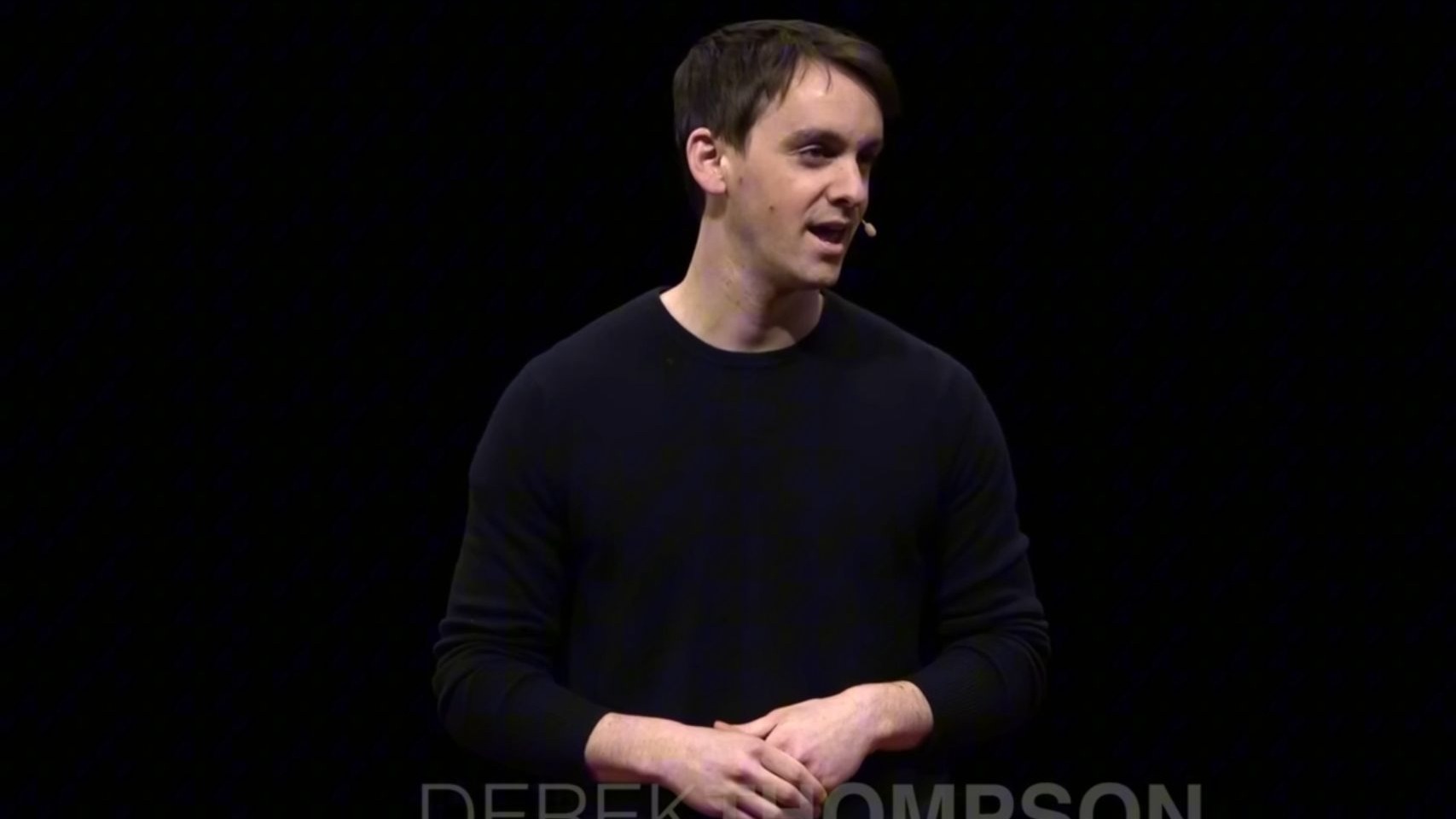
字幕摘录
| 时间 | 英文 | 中文 |
|---|---|---|
| 0:14 | For thousands of years, some of the smartest people in the world | 几千年来,世界上最聪明的人 |
| 0:17 | have been asking themselves versions of the same question. | 一直问自己同样的问题。 |
| 0:20 | Why do we like what we like? | 为什么我们喜欢我们喜欢的东西? |
| 0:22 | Is there a formula for beauty, for popularity, for human affinity? | 是否有美,流行,人类亲缘的公式? |
| 0:29 | And the ancient Greeks said, yes, of course there is. | 古希腊人说,是的,当然有。 |
| 0:31 | It's the golden ratio, 1.62, et cetera, et cetera, to one. | 是以金比,1.62等,以一为一. |
| 0:37 | And then the enlightenment thinkers said, yes, of course there is. | 然后启蒙思想家说,是的,当然有。 |
| 0:40 | It's Kant's theory of aesthetics. | 是康德的美学理论. |
| 0:43 | But today we don't have the golden ratio. | 但今天我们没有黄金比例 |
| 0:45 | We don't have philosophers. | 我们没有哲学家。 |
展开字幕全文(347 条)
| 序号 | 英文 | 中文 |
|---|---|---|
| 1 | For thousands of years, some of the smartest people in the world | 几千年来,世界上最聪明的人 |
| 2 | have been asking themselves versions of the same question. | 一直问自己同样的问题。 |
| 3 | Why do we like what we like? | 为什么我们喜欢我们喜欢的东西? |
| 4 | Is there a formula for beauty, for popularity, for human affinity? | 是否有美,流行,人类亲缘的公式? |
| 5 | And the ancient Greeks said, yes, of course there is. | 古希腊人说,是的,当然有。 |
| 6 | It's the golden ratio, 1.62, et cetera, et cetera, to one. | 是以金比,1.62等,以一为一. |
| 7 | And then the enlightenment thinkers said, yes, of course there is. | 然后启蒙思想家说,是的,当然有。 |
| 8 | It's Kant's theory of aesthetics. | 是康德的美学理论. |
| 9 | But today we don't have the golden ratio. | 但今天我们没有黄金比例 |
| 10 | We don't have philosophers. | 我们没有哲学家。 |
| 11 | 我们有谷歌和Facebook。 | |
| 12 | We have advertisers. | 我们有广告商。 |
| 13 | And in the advertiser formula, the first variable is always novelty. | 而在广告商公式中,第一个变量总是新颖的. |
| 14 | This is a scientific fact. | 这是一个科学的事实。 |
| 15 | They actually went through, several decades ago, | 他们实际上经历了, 几十年前, |
| 16 | all of the words they could possibly find | 他们可能找到的词 |
| 17 | and all the advertisements that were out there. | 还有外面所有的广告 |
| 18 | And the most common word in all of those ads | 这些广告中最常用的词 |
| 19 | wasn't buy, wasn't now, wasn't risk-free warranty. | 不是买的 不是现在 不是无风险的担保 |
| 20 | It was new. | 这是新的。 |
| 21 | We are living in a cult of novelty. | 我们生活在一种新颖的崇拜中。 |
| 22 | Companies want us to like new things, to buy new things, to crave new things. | 公司希望我们喜欢新事物,购买新事物,渴望新事物. |
| 23 | But the truth is that we don't like novelty. | 但事实是,我们不喜欢新奇的东西。 |
| 24 | In fact, we hate it. | 事实上,我们恨它。 |
| 25 | According to the mere exposure effect, | 根据光是接触效应, |
| 26 | one of the oldest and most robust theories in the history of psychology, | 心理学史上最古老最有力的理论之一 |
| 27 | the mere exposure of any stimulus to you over time | 任何刺激物都会随时间而暴露 |
| 28 | will bias you toward that stimulus. | 会让你对刺激产生偏见 |
| 29 | In English, familiarity good. | 在英语,熟悉的很好。 |
| 30 | And indeed, when you think about it, we seek out new songs. | 实际上,当你想到它, 我们寻找新的歌曲。 |
| 31 | But the songs that we most reliably enjoy | 但我们最享受的歌 |
| 32 | are those with familiar chord structures and timbres. | 是那些熟悉的和弦结构 和结节。 |
| 33 | We seek out new movies. | 我们寻找新的电影。 |
| 34 | But every year this century, | 但本世纪每年, |
| 35 | a majority of the top 10 films in America have been sequels, | 美国前十部电影大多是续集 |
| 36 | adaptations, or reboots. | 适应,或复发。 |
| 37 | Familiar, familiar, familiar. | 熟人 熟人 熟人 熟人 |
| 38 | In fact, maybe the best proof of the power of familiarity | 事实上,也许最好的证明 熟悉的力量 |
| 39 | is that thing that is so familiar to you, your own face. | 是你熟悉的东西,你自己的脸。 |
| 40 | It turns out that people prefer the face they see in mirrors | 原来人们更喜欢镜子里看到的表情 |
| 41 | to the face they see in photographs. | 他们从照片上看到的脸 |
| 42 | Maybe you have a friend who complains constantly | 也许你有个朋友经常抱怨 |
| 43 | about how he or she looks in Facebook photos, | 在脸书照片上, |
| 44 | but is often constantly admiring his or herself in the mirror. | 但经常在镜子里欣赏自己 |
| 45 | Well, this is not pure vanity. | 嗯,这不是纯粹的虚荣。 |
| 46 | This is mere exposure effect. | 这仅仅是暴露效应。 |
| 47 | The face is slightly asymmetric. | 面部略为不对称. |
| 48 | We see different versions when we see a reflection versus a photo. | 当我们看到反射和照片时,我们看到不同的版本。 |
| 49 | And if you're not a celebrity, | 如果你不是名人的话 |
| 50 | then the version you're most used to seeing is not in a photograph, | 那你最习惯看到的版本 不是在照片中, |
| 51 | but rather in the most common reflection in the world in a mirror. | 但是,在世界上最常见的反射镜。 |
| 52 | You prefer that version of your face | 你更喜欢那种表情 |
| 53 | not because it's you at your most beautiful, | 不是因为它是你最美丽的, |
| 54 | but because it's you at your most familiar. | 但因为这是你最熟悉的。 |
| 55 | In fact, the power of familiarity seems so deep | 事实上,熟悉的力量似乎很深 |
| 56 | that people think it must be written into our genetics. | 人们认为它必须写进我们的基因。 |
| 57 | The evolutionary theory for the preference for the familiar | 偏爱熟人的进化论 |
| 58 | is that if you're a hunter-gatherer | 如果你是一个狩猎采集者 |
| 59 | and you're trawling the savanna of Africa | 而你拖着非洲草原 |
| 60 | and you see a plant or an animal and you recognize it, | 你看见植物或动物,你就认出它, |
| 61 | that's a very good sign that plant or animal has not killed you yet. | 这是个好兆头 植物或动物还没有杀死你 |
| 62 | So, of course, you should prefer it. | 所以,当然,你应该更喜欢它。 |
| 63 | But this creates an enormous problem for creators, for creative types, | 但这给创造者、创造者 带来了巨大的问题 |
| 64 | because I just told you that people only like new things | 因为我刚刚告诉你 人们只喜欢新事物 |
| 65 | if they're just like old things. | 如果它们就像老东西一样 |
| 66 | So the question before us today is, | 所以今天我们面前的问题是, |
| 67 | how do you balance familiarity and surprise | 你们怎么平衡熟悉和惊讶呢? |
| 68 | in such a way as to design hits, | 设计点击, |
| 69 | to design things that people love? | 设计人们喜欢的东西? |
| 70 | Is it possible to engineer a familiar surprise? | 能否设计出一个熟悉的惊喜? |
| 71 | And to begin to answer that question, | 然后开始回答这个问题, |
| 72 | I want to tell you a short story | 我想告诉你一个短故事 |
| 73 | about a man who is a hero of mine, a hero of my book, | 关于一个是我的英雄,我的书中的英雄, |
| 74 | but also a man that I would imagine | 但也是一个我想象中的男人 |
| 75 | nine to 95% of this room does not know. | 这个房间的9%到95%的人不知道 |
| 76 | His name is Raymond Lowy, and he designed the 20th century. | 他的名字是雷蒙德·洛维,他设计了20世纪. |
| 77 | Raymond Lowy是个法国孤儿 | |
| 78 | who came over to the United States after World War I. | 第一次世界大战结束后来到美国 |
| 79 | And his brother picked him up in a cab, | 他哥哥在出租车上接他 |
| 80 | and this is in the 1920s, | 这是在1920年代, |
| 81 | where they drive down to downtown Manhattan, | 他们开车去曼哈顿市中心 |
| 82 | where one of the tallest buildings down there is the Equitable Building, | 其中最高的建筑之一 那里是公平大厦, |
| 83 | which looks a bit like a tuning fork | 有点像调音叉 |
| 84 | with sort of two large buildings rising into the sky. | 有两座大建筑升入天空。 |
| 85 | And Raymond Lowy takes an elevator to the top of this building, | 雷蒙·洛维坐电梯到这栋楼顶 |
| 86 | and he looks out over Manhattan from this vista. | 他看着曼哈顿 从这个景色。 |
| 87 | And he's expecting from his dreams in Paris | 他在巴黎的梦中期待 |
| 88 | to see a world that is beautiful, | 看到一个美丽的世界, |
| 89 | that is round, that is feminine. | 这是圆的,那是女性的。 |
| 90 | But the New York that unfurls in front of him is the exact opposite. | 但是他面前的纽约正好相反 |
| 91 | It's grungy, it's noisy, | 它的粗糙, 它的吵闹, |
| 92 | it's the hulkiness of the industrial age. | 这是工业时代的繁华。 |
| 93 | And Lowy makes a promise to himself and his brother. | 而洛维则对自己和弟弟做出承诺. |
| 94 | He says, I'm going to devote the rest of my life | 他说,我要奉献我的余生 |
| 95 | to beautifying America in my image. | 用我的形象来美化美国 |
| 96 | And Lowy did just that. | 而洛维就是这么做的 |
| 97 | Raymond Lowy designed the most famous car of the 20th century, | 雷蒙德·洛维设计了20世纪最著名的汽车, |
| 98 | the 1953 Studebaker. | 1953年斯图德贝克 |
| 99 | He designed the most famous train and locomotive of the 20th century, | 他设计了20世纪最著名的火车和火车头, |
| 100 | the Pennsylvania Railroad GG-1. | 宾夕法尼亚铁路GG-1 |
| 101 | He designed the modern Greyhound bus and the modern tractor, | 他设计了现代灰狗巴士和现代拖拉机, |
| 102 | the modern Coca-Cola fountain. | 现代可口可乐喷泉。 |
| 103 | He designed that pencil sharpener that looks like an egg | 他设计的铅笔磨刀 看起来像鸡蛋 |
| 104 | with a little spindle coming out of it that you've seen in 100,000 classrooms. | 在10万间教室里看到的 里面有一根小松果 |
| 105 | He designed the logos for Exxon and USPS. | 他为埃克森和USPS设计了标志. |
| 106 | He basically designed all of 1950s Americana. | 他基本上设计了整个1950年代的美国式. |
| 107 | And in fact, one day Raymond Lowy was hanging out with his friend, | 事实上,有一天雷蒙德·洛维 和他的朋友在一起 |
| 108 | and he saw the President's plane take off, and he said, | 他看见总统的飞机起飞 他说 |
| 109 | it looks gaudy. | 看起来很糟 |
| 110 | So President Kennedy invited Lowy to the Oval Office | 肯尼迪总统邀请洛维去奥华办公室 |
| 111 | where they sat on the floor and cut little papers | 他们坐在地上剪小纸 |
| 112 | until they achieved the perfect design for Air Force One. | 直到他们完成了空军一号的完美设计 |
| 113 | And in fact, the design that Raymond Lowy came up with | 事实上,雷蒙·洛维的设计 |
| 114 | there on the floor of the Oval Office with JFK | 和肯尼迪在奥华办公室的地板上 |
| 115 | still adorns the most famous plane in the world today. | 现在仍是世界上最著名的飞机 |
| 116 | So the question is, what did this man possibly understand | 所以问题是 这个人可能明白什么 |
| 117 | about human psychology that he knew what we wanted | 关于人类心理学 他知道我们想要什么 |
| 118 | from planes and trains and automobiles? | 飞机、火车和汽车? |
| 119 | This man was like Don Draper meets Steve Jobs for the 20th century. | 这个人就像唐·德拉珀在20世纪遇见史蒂夫·乔布斯一样. |
| 120 | He understood everything. | 他什么都懂了,他很聪明 |
| 121 | And fortunately for us, Raymond Lowy had a grand theory of everything. | 幸运的是,雷蒙德·洛维对一切有一套伟大的理论 |
| 122 | 它被称为MAIA,M -A -Y -A, | |
| 123 | Most Advanced Yet Acceptable. | 最高级但可接受。 |
| 124 | Raymond Lowy说人类的喜好被撕裂了 | |
| 125 | between two opposing forces. | 两支对立部队之间 |
| 126 | On the one hand, there is neophilia, a love of new things | 一方面,有新菲利亚, 爱新事物 |
| 127 | and an appreciation for the new, a need to discover. | 并欣赏新的, 需要发现。 |
| 128 | But on the other hand, there is neophobia, | 但另一方面,有新恐惧症, |
| 129 | a fear of anything that is too new, a deep conservativeness. | 害怕任何新事物, 深深的保守。 |
| 130 | And Lowy said that in order to make hits, | 而Lowy说,为了让点击, |
| 131 | you need to make products that live right at that intersection | 你需要制作产品 住在那个十字路口 |
| 132 | of the familiar surprise. | 令人耳目一新的惊喜 |
| 133 | To sell something familiar, you have to make it surprising. | 要卖一些熟悉的东西, 你必须让它令人惊讶。 |
| 134 | But to sell something surprising, you have to make it familiar. | 但为了卖出令人惊讶的东西, 你必须让它熟悉。 |
| 135 | And Lowy was not a scientist. | 洛维不是科学家 |
| 136 | But this theory has been proved and validated | 但这个理论已经得到证明和验证 |
| 137 | by scores of studies and meta-studies since he died. | 他死后经过数十次学习和元研究 |
| 138 | It has been used to explain hits in technology, in academics, | 它被用来解释科技、学术、 |
| 139 | in culture, and even in politics. | 在文化中,甚至在政治上。 |
| 140 | Let's start with technology. | 先从科技入手. |
| 141 | Technologists are often in the position of having to make something new | 技术专家往往不得不创造新的东西 |
| 142 | and then make that new thing popular with an audience | 然后让这个新东西受到观众的欢迎 |
| 143 | that doesn't understand it. | 这不理解它。 |
| 144 | 这是Spotify最近的问题。 | |
| 145 | Spotify, obviously the famous streaming music company, | Spotify,显然著名的流音乐公司, |
| 146 | which was developing its app, which probably many people in this audience | 它正在开发它的应用程序, 可能是许多人在这个受众。 |
| 147 | have used, called Discover Weekly. | 已经使用,称为"发现周刊". |
| 148 | If you haven't used Discover Weekly, every single Monday, | 如果你还没有使用发现周刊, 每个星期一, |
| 149 | Spotify will dump 30 songs onto your phone. | Spotify会把30首歌丢进你的手机 |
| 150 | And initially, they wanted those 30 songs to be entirely new | 一开始 他们希望这30首歌是全新的 |
| 151 | so that people had never heard the songs | 所以人们从来没有听说过歌曲 |
| 152 | and they had never heard the artists. | 他们从来没有听说过艺术家。 |
| 153 | But when they were initially testing it, | 但当他们开始测试时, |
| 154 | there was a bug in the algorithm | 算法里有个错误 |
| 155 | that accidentally let slip through some familiar songs | 不小心让一些熟悉的歌曲溜走 |
| 156 | and some familiar artists. | 还有一些熟悉的艺术家 |
| 157 | So they quickly fixed the bug and they kept testing. | 于是他们迅速修复了虫子,并不断检测. |
| 158 | But what happened is that when they kept testing the app | 但是当他们不断测试应用程序时 |
| 159 | once they'd fixed the bug, engagement with the app plummeted. | 一旦他们修好了窃听器, 与应用程序的接触急剧下降。 |
| 160 | It turned out that having just a little bit of familiarity | 结果发现只有一点点的熟悉 |
| 161 | in this discovery platform made it significantly more popular. | 在这个发现平台中,它显著地更受欢迎. |
| 162 | To sell that which was surprising, they had to make it familiar. | 为了卖掉令人惊讶的东西, 他们不得不让它熟悉。 |
| 163 | Academics. | 学者. |
| 164 | I'd imagine that most academics don't think of themselves as hit makers. | 我想大多数学者 都认为自己不是杀手 |
| 165 | They don't think of themselves as operating in a cultural marketplace. | 他们不认为自己在文化市场里运作。 |
| 166 | But in order to become a star in your discipline, | 但是为了成为你学科的明星 |
| 167 | you often need to be published by the most famous publishers. | 您通常需要由最著名的出版商出版。 |
| 168 | And therefore, you are essentially giving up your research, | 因此,你基本上放弃你的研究, |
| 169 | proposing your research to people who are essentially your audience. | 向那些基本上是你的观众推荐你的研究 |
| 170 | So in 2014, a group of researchers from Harvard University in Northwestern | 2014年,一群来自西北哈佛大学的研究人员 |
| 171 | wanted to figure out what is the formula for a hit paper. | 想知道打纸的公式是什么 |
| 172 | They wanted to figure out what sort of paper | 他们想知道什么是纸 |
| 173 | was most likely to be accepted by the NIH. | 很可能被国家卫生局接受。 |
| 174 | Was it really, really novel proposals or was it extremely familiar ones? | 这是真的,真的很新颖的建议还是非常熟悉的建议? |
| 175 | So they created a dummy list of 150 papers | 所以他们创造了150份论文的假名单 |
| 176 | and they coded each of them for novelty. | 他们把每个都编码为新奇 |
| 177 | And then they delivered those papers to a group of 150 researchers | 然后他们把这些论文交给了150名研究人员 |
| 178 | who scored their favorites. | 谁打他们最喜欢的。 |
| 179 | And the graph of that score looks a bit like an upside down you. | 这个分数的图表看起来有点像颠倒你。 |
| 180 | Over here, you have utmost familiarity. | 在这里,你非常熟悉。 |
| 181 | Over here, you have utmost novelty. | 在这里,你很有新意 |
| 182 | But it turned out that the researchers who were evaluating these proposals, | 但结果发现,那些正在评估这些提案的研究人员, |
| 183 | they too preferred that which they called optimally familiar, | 他们也喜欢自己所说的最熟悉的。 |
| 184 | advanced, yet acceptable, Maya. | 高级,但可以接受,玛雅。 |
| 185 | Three, identity. | 三,身份问题. |
| 186 | In my book Hitmakers, I spend a long time trying to figure out | 在我的书《拳击手》里 我花了很长的时间去想 |
| 187 | this issue of why do fashions exist. | 为什么时尚存在? |
| 188 | Indeed, if the brain is an organ of ancient chemistry, | 事实上,如果大脑是古化学的器官, |
| 189 | then why should we change our opinion of what is good? | 那我们为什么要改变对什么是好的看法呢? |
| 190 | But of course we do. | 但我们当然知道。 |
| 191 | Guitar solos are weird in the 1930s, extremely popular in the 1970s, | 吉他独奏在1930年代很怪异 1970年代极受欢迎 |
| 192 | and then weird again in the 2000s. | 然后在2000年代又变得奇怪了 |
| 193 | Skinny jeans are unpopular and then popular and unpopular and popular | 瘦牛仔裤很不受欢迎 然后很受欢迎 也很受欢迎 |
| 194 | and they follow this sine curve. | 他们遵循这个正弦曲线。 |
| 195 | So why does this happen? | 那为什么会这样呢? |
| 196 | Well, it's really important to understand that for the vast majority of human history, | 嗯,这真的很重要 要理解, 对于绝大多数人类历史, |
| 197 | fashions really didn't exist. | 时尚真的不存在。 |
| 198 | People wore the same clothes for centuries, for millennia. | 几个世纪以来人们都穿同样的衣服 几千年了 |
| 199 | It never occurred to people wearing togas that they should somehow change the look | 从来没有想过,人们穿 毒气,他们应该 改变的样子 |
| 200 | of their toga from one decade to the next. | 从十年到下一个十年 |
| 201 | But a really interesting way to look at fashion is to say, | 但看时尚的一个真正有趣的方法是说, |
| 202 | all right, well, let's say people clearly do have different clothing, | 好吧,好吧,让我们假设 人们显然有不同的衣服, |
| 203 | fashion preferences, but let's imagine a make-believe store. | 时尚的喜好,但让我们想象一下 一家化妆的商店。 |
| 204 | And at the store, all clothes simply exist, they all cost the same price, | 在店里,所有的衣服都存在, 价格都一样, |
| 205 | and there is no marketing. | 也没有市场营销。 |
| 206 | And it's important to think about this store sort of in your head | 想想这家店对你很重要 |
| 207 | because as an economic writer, I often think, all right, well, to explain fashion, | 因为作为一个经济作家,我经常认为, 好吧,嗯,解释时尚, |
| 208 | I would think that it must be explained by price | 我想这必须用价格来解释 |
| 209 | or by the fact that J. | 或者因为J. |
| 210 | Crew doesn't want you to wear a certain kind of pant anymore, | 船员们不想你再穿那种裤子了 |
| 211 | so they take it away, or they want you to wear a new kind of pant, so they market it. | 所以他们把它拿走, 或者他们希望你穿一种新的裤子, 所以他们推销它。 |
| 212 | But imagine with me this magical store where all of the clothes exist | 但想象一下这家神奇的店 里面有所有的衣服 |
| 213 | and they're all the same price and marketing is impossible. | 它们都是同样的价格 营销是不可能的 |
| 214 | Well, in fact, that store exists here in the real world. | 事实上,那家商店存在于现实世界中 |
| 215 | It is the marketplace of first names. | 这是名字的市场。 |
| 216 | Think about it, all first names exist. | 想想看,所有的名字都存在. |
| 217 | They all cost the same price, and there's no direct marketing. | 它们的价格都一样,没有直接营销. |
| 218 | Nike really, really wants you to buy its next shoe, | 耐克真的很希望你买下一双鞋 |
| 219 | but there is no advertisement in Nike history that has ever said, | 但耐克历史上没有广告说过 |
| 220 | oh, and after you buy your shoe, would you please name your baby girl | 哦,你买鞋后,请命名你的宝贝女孩 |
| 221 | after the Greek goddess of victory and speed? | 在胜利和速度的希腊女神之后? |
| 222 | It's never happened. | 从来没有发生过 |
| 223 | So why do first names follow the same hype cycles as clothes? | 那么,为什么先名跟衣服一样遵循同样的杂音循环? |
| 224 | So a sociologist named Stanley Lieberson investigated this, | 一个叫斯坦利·利伯森的社会学家调查了这个 |
| 225 | and he came up with a really interesting theory | 他提出一个非常有趣的理论 |
| 226 | that essentially just went right back to Maya. | 基本上只是回到玛雅。 |
| 227 | He found that people tend to prefer names that are familiar surprises. | 他发现人们往往更喜欢那些熟悉的惊喜名字. |
| 228 | So take a name like Samantha. | 所以,取一个名字像萨曼莎。 |
| 229 | Samantha in the 1980s was not a particularly popular name. | 1980年代的萨曼莎并不是特别流行的名字. |
| 230 | It was about the 30th most popular baby girl name in the country. | 是关于全国第30个最受欢迎的女婴名字. |
| 231 | But just enough young couples decided that that was a perfectly popular name | 但只有足够多的年轻夫妇决定 这是一个完全流行的名字 |
| 232 | for their baby girl that in 1992, | 在1992年,他们的女儿, |
| 233 | 222,000 couples named their baby girl Samantha, | 222,000对夫妇 命名他们的女婴萨曼莎, |
| 234 | making it the second most popular baby girl name of that year. | 成为当年第二受欢迎的女婴名字. |
| 235 | But then think about what happens five years later. | 但再想想五年后会发生什么 |
| 236 | All these little Samanthas go into kindergarten together, | 这些小萨曼莎一起上幼儿园 |
| 237 | and the kindergarten is suddenly just run amuck with Samantha, Samantha, Samantha, | 幼儿园突然和萨曼莎 萨曼莎 萨曼莎一起乱跑 |
| 238 | when all these parents thought they were giving their daughter a unique name. | 当所有这些父母认为 他们给他们的女儿 一个独特的名字。 |
| 239 | And so since most parents have a preference for names that are familiar but also surprising, | 既然大多数父母都喜欢熟悉的名字 但也很奇怪 |
| 240 | the name Samantha naturally without any organization rises in popularity and then falls. | 萨曼莎这个名字 自然而然地没有组织 受到欢迎,然后就垮掉 |
| 241 | One of the more interesting proves for the fact that parents have a specific taste for popularity | 一个更有趣的证明 父母对受欢迎有特别的品味 |
| 242 | is that siblings tend to have similarly common or uncommon names. | 兄弟姐妹的名字往往类似常见或不寻常。 |
| 243 | And this is intuitively true. | 这是直观的 |
| 244 | If you meet the siblings, Michael, Emily, and Sarah, | 如果你见到兄弟姐妹,迈克尔,艾米莉,和莎拉, |
| 245 | it's a little bit strange if they say, and this is our sister, Xanthope. | 如果他们说这有点奇怪 这是我们的妹妹 桑托普 |
| 246 | But if you meet the sibling Xanthope, Prairie Rose, Esmerelda, | 但如果你遇到桑托普兄弟 帕蕊·罗斯 埃斯梅雷尔达 |
| 247 | it's very strange if they're like, also, here's our brother Chad. | 如果他们喜欢,这是非常奇怪的, 而且,这是我们的兄弟乍得。 |
| 248 | Parents have a specific taste for familiarity. | 父母对熟悉有特别的品味. |
| 249 | But one of the most interesting proves of this naming theory | 但最有趣的一个证明 这个命名理论 |
| 250 | is looking at the phenomenon of baby girl names for black Americans. | 正在研究美国黑人女孩的名字现象。 |
| 251 | For the vast majority of human history, for American history, excuse me, | 对于绝大多数人类历史, 对于美国历史, 对不起, |
| 252 | blacks and whites had similar names. | 黑人和白人也有类似的名字. |
| 253 | But starting in about the 1960s, there was a great forking | 但从20世纪60年代开始, 曾经有一个伟大的伪造 |
| 254 | where some names began to sound white and others and other names sounded black. | 有些名字开始听起来是白色的,另一些名字听起来是黑色的。 |
| 255 | And one of those markers for a black name is the LA or LE prefix, | 黑色名字的标记之一是LA或LE前缀 |
| 256 | like for LeBron James or LeDenian Tomlinson. | 就像勒布朗·詹姆斯或勒德尼安·汤姆林森 |
| 257 | But this was basically unheard of before the 1960s. | 但这基本上是在1960年代以前从未听说过的。 |
| 258 | But Stanley Lieberson found that starting in 1967, | 但斯坦利·利伯森发现,从1967年开始, |
| 259 | eight distinct black baby girl names peaked in popularity with a LA prefix. | 八个明显的黑色婴儿女孩的名字在流行中达到顶峰,上面有一个LA前缀. |
| 260 | And they peaked in the following order. | 他们按照以下顺序登顶. |
| 261 | Latonia, Latanya, Latasha, Latoya, Latrice, Lakisha, Lakisha, Latricia. | 拉托尼亚,拉塔尼亚,拉塔沙,拉托亚,拉特里塞,拉基沙,拉基沙,拉蒂西亚. |
| 262 | And what's so fascinating about the sequence is just how orderly it is. | 序列的魅力在于它有多有序 |
| 263 | Every next popular name is a play on what came before it. | 接下来的每个流行的名字都是关于它之前的剧本. |
| 264 | It takes the familiar and it makes it surprising. | 它需要熟悉的, 它使它令人惊讶。 |
| 265 | Fourth, politics. | 第四,政治. |
| 266 | In this age of hyper-partisanship and polarization, | 在这个极端党派和两极分化的时代, |
| 267 | there is an enormous demand to figure out how people can talk to each other, | 有巨大的需求 找出人们如何交谈, |
| 268 | how we can persuade each other. | 我们如何说服对方 |
| 269 | But often when we get into debates, when we get into discussions | 但往往当我们进入辩论, 当我们进入讨论 |
| 270 | and we try to persuade someone of our point of view, | 我们试图说服一个符合我们观点的人 |
| 271 | we begin with our code of ethics. | 我们从道德准则开始 |
| 272 | So if you're a liberal, you'll say, | 如果你是自由主义者 你会说 |
| 273 | you shouldn't like Donald Trump because his policies are cruel to Hispanics. | 你不应该喜欢唐纳德·特朗普 因为他的政策对西班牙人很残忍 |
| 274 | Or if you're a conservative, you might say, | 或者如果你是一个保守派,你可能会说, |
| 275 | you shouldn't like Bernie Sanders because he's trying to turn us into Denmark. | 你不该喜欢伯尼·桑德斯 因为他想把我们变成丹麦人 |
| 276 | Now on its face, these statements are perfectly genuine and sincere, | 现在,在它的表面, 这些声明是完全真实和真诚的, |
| 277 | but they fail immediately as articles of persuasion | 但他们立刻失败, |
| 278 | because if you're a conservative who supports Trump, | 因为如果你是支持特朗普的保守派 |
| 279 | you probably like those policies that are discriminatory. | 你可能喜欢那些歧视性的政策。 |
| 280 | And if you are the liberal supporting Bernie Sanders, | 如果你是支持伯尼·桑德斯的自由主义者 |
| 281 | you kind of want to nudge the U.S. toward Denmark. | 你想把美国推向丹麦 |
| 282 | But imagine if instead we invert the process | 但想象一下,如果我们倒置的过程 |
| 283 | and we begin with the code of ethics of the person that we're talking about. | 我们从我们所说的人的道德准则开始。 |
| 284 | We piggyback off of their familiarities. | 我们放弃了他们的熟悉 |
| 285 | So if you're talking to someone as a liberal | 如果你跟自由主义者说话 |
| 286 | and you're talking to someone who supports Donald Trump, | 你在跟一个支持唐纳德·特朗普的人说话 |
| 287 | you might say, one of the things that I've always respected about the Republican Party | 你可能会说,一件事 我一直尊重 关于共和党 |
| 288 | is their emphasis on patriotism, putting country over self, and seeking service. | 他们强调爱国主义,把国家置于自我之上,寻求服务。 |
| 289 | Help me think through times in Donald Trump's business career. | 帮我在唐纳德·特朗普的商业生涯中思考 |
| 290 | He's been a paragon of these values. | 他一直是这些价值的典范. |
| 291 | Now, you might not create a Bernie Sanders supporter on the spot. | 你可能不会当场创建伯尼·桑德斯的支持者 |
| 292 | You might be slapped for insouciance, | 你可能会被扇耳光,因为不自在, |
| 293 | but you're going to get a lot farther following this path | 但你会走得更远的 |
| 294 | than you are putting forth first principles | 比你提出的首要原则 |
| 295 | that the person you're speaking to disagrees with. | 你说的人不同意。 |
| 296 | The model that I've just proposed is called the moral foundations theory. | 我刚刚提出的模型叫做道德基础理论. |
| 297 | And it says essentially that it's always more beneficial | 根本上说它总是更有利 |
| 298 | when debating with somebody else to begin with their first principles, | 当与别人辩论 开始他们的第一原则, |
| 299 | to begin with their code of ethics, | 从他们的道德守则开始, |
| 300 | and then show how slow-walking those code of ethics toward the center | 然后展示这些道德守则如何缓慢走向中心 |
| 301 | might make their position leak into your position. | 可能会让他们的位置泄露到你的位置 |
| 302 | All debate involves a form of ideological advertising. | 所有辩论都涉及某种形式的意识形态广告。 |
| 303 | And in both polemics and in products, to make it Maya, make it familiar. | 在争辩和产品中,为了让它成为玛雅,使它变得熟悉. |
| 304 | The last story I want to tell takes us back to Raymond Loewy. | 我要说的最后一个故事 带我们回到雷蒙德·卢维。 |
| 305 | And it takes us back to his last assignment as an industrial designer. | 这让我们回到他作为工业设计师的最后一个任务。 |
| 306 | Raymond Loewy被告知要设计内部栖息地 | |
| 307 | for the first NASA space orbital, | 美国航天局第一个空间轨道, |
| 308 | the most surprising and unfamiliar and exotic environment | 最令人惊讶、最陌生、最奇异的环境 |
| 309 | you could possibly imagine a human being in, in deep space. | 你可以想象一个人在深空 |
| 310 | And Loewy conducted a bunch of habitability studies, | 而Loewy进行了一系列的可居住性研究, |
| 311 | and he made some tweaks here and some tweaks there, | 他做了一些微软 在这里和一些微软, |
| 312 | but his most famous contribution to space history | 但他对太空史最有名的贡献 |
| 313 | is that he cut a hole in the side of the NASA space orbital. | 就是他在太空总署的轨道上 挖了一个洞 |
| 314 | He placed a sheet of glass there and created a viewing portal for Earth. | 他在那里放置了一块玻璃板,为地球建立了一个观景门户. |
| 315 | Yes, that viewing portal that you have seen in all of those movies, | 是的,你在所有这些电影中看到的观看门户, |
| 316 | that too is Raymond Loewy's innovation. | 这也是雷蒙德·卢维的创新 |
| 317 | And I cannot think of a more perfect illustration for Maya | 我无法想象一个更完美的 玛雅的插图 |
| 318 | or a more beautiful inspiration to creators everywhere, | 或者给各地的创造者带来更美丽的灵感, |
| 319 | because it says that a window to a new world can also show you home. | 因为上面写着 通往新世界的窗口 也能让你回家 |
| 320 | Thank you. | 谢谢 |
| 321 | So Maya is just such an interesting concept with so many unique applications. | 玛雅是个有趣的概念 有很多独特的应用 |
| 322 | I'm wondering, do you think that there are ways to apply this idea | 我在想,你觉得有办法应用这个想法吗? |
| 323 | to help people from diverse backgrounds better relate to each other? | 帮助来自不同背景的人更好地互相联系? |
| 324 | Yeah, absolutely. | 当然 |
| 325 | I mean, one of the ideas that comes up in developmental psychology | 我的意思是,一个想法 出现于发展心理学 |
| 326 | is this issue of sensitive periods, | 是这个敏感时期的问题, |
| 327 | that people develop tastes, develop their particular familiarities | 培养人们的品味 发展他们特有的熟悉 |
| 328 | during specific periods in their life, which tends to be relatively young. | 在他们生活中的特定时期,他们往往比较年轻。 |
| 329 | People tend not to change their taste in music or their taste in food | 人们往往不会改变自己在音乐中的口味或食物的口味 |
| 330 | after the age of 40 or 50. | 40岁或50岁以上。 |
| 331 | So when thinking about this question of sort of justice, | 所以当想到这个正义的问题时 |
| 332 | it's important sometimes to not only focus on adults, | 有时候重要的是不只关注成年人, |
| 333 | not only trying to remediate adults, | 不仅试图补救成年人, |
| 334 | but also realizing that the way to get liberal-minded people, | 但同时也意识到 如何获得自由思想的人, |
| 335 | the way to get people who think multi-culturally | 让那些有多种文化思维的人 |
| 336 | and embrace those of all stripes and colors and creeds | 拥抱一切条纹、肤色、信仰的, |
| 337 | is actually to have a kind of cradle-to-grave strategy, | 实际上是有 一种摇篮到坟墓的策略, |
| 338 | where you say, we should build neighborhoods. | 你说的地方,我们应该建立邻里。 |
| 339 | We should focus on neighborhoods and build neighborhoods | 我们应该把注意力集中在邻里和建设邻里上 |
| 340 | where you have a combination of ideologies and colors and creeds and all of this. | 在那里,你拥有 意识形态,颜色和信仰的组合 这一切。 |
| 341 | So I think sometimes we think of justice as purely remedial, | 因此,我认为有时 我们认为正义是纯粹的补救, |
| 342 | and of course there's lots of people doing very important work there, | 当然有很多人 在那里做非常重要的工作, |
| 343 | but it's also so important that we think about taste formation, | 但同样重要的是,我们要考虑品味的形成, |
| 344 | even on important issues like politics, | 即使在政治等重要问题上 |
| 345 | as being a project that involves the neighborhood level. | 作为涉及社区层面的项目。 |
| 346 | Absolutely. | 当然 |
| 347 | Thank you. | 谢谢 |
该视频共有字幕 348 条。解锁更多字幕为会员功能,请移动到 价格