【TED演讲】关于意识,我们究竟知道些什么?
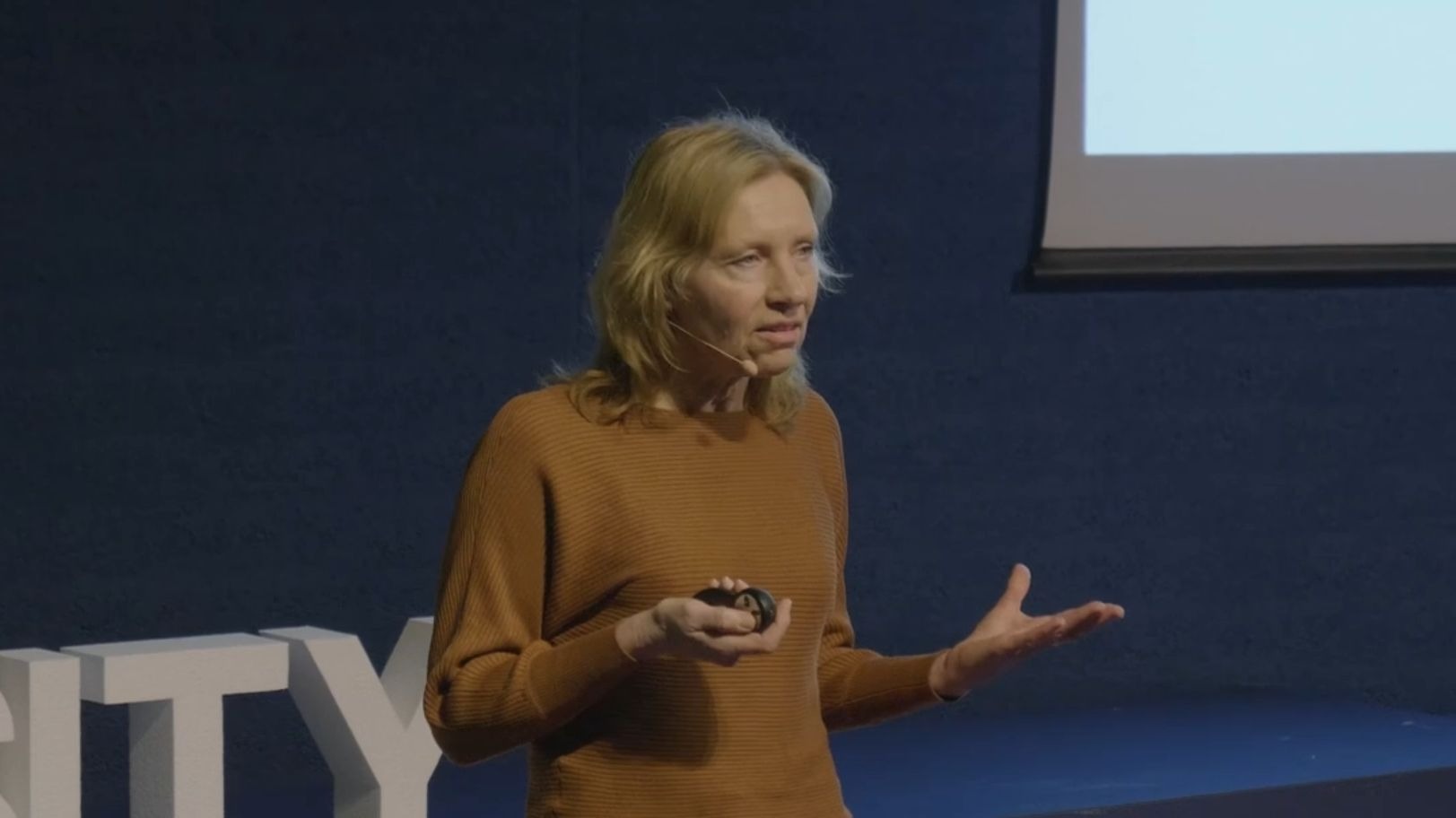
字幕摘录
| 时间 | 英文 | 中文 |
|---|---|---|
| 0:03 | So, hi everyone. | 大家好,你们好 |
| 0:05 | We've just been listening to such impressive talks, and here is the biologist, and then maybe, you know, ready to give all the answers, but I don't have them. | 我们刚刚听到这样令人印象深刻的谈话, 这是生物学家, 然后,也许,你知道,准备好给出所有答案, 但我没有。 |
| 0:14 | I'm sorry. | 对不起 |
| 0:15 | I'll try to give you at least an interesting talk about what I think is so relevant about consciousness. | 我至少会给你一个有趣的话题 关于我认为与意识相关的内容 |
| 0:23 | So, this is me with less hair, and these are my students. | 所以,这是我少发型, 这些是我的学生。 |
| 0:28 | And, you know, in cognitive science, they constantly ask me, what is the relationship between the brain and consciousness? | 在认知科学中 他们不断问我 大脑和意识之间的关系是什么? |
| 0:38 | And maybe, as Churchland indeed put it, as Dr. Hanekhan put it so nicely, how do we start to think from a piece of meat? | 也许,正如Churchland所言,正如Hanekhan博士所言,我们如何从一块肉中开始思考? |
| 0:48 | And this is actually one of the biggest questions in science. | 这是科学中最大的问题之一。 |
| 0:52 | What is the nature of consciousness? | 意识的本质是什么? |
| 0:55 | Is there one reality, a physical reality, and is consciousness part of that? | 是否有一种现实,一种物理现实,意识是其中的一部分? |
展开字幕全文(110 条)
| 序号 | 英文 | 中文 |
|---|---|---|
| 1 | So, hi everyone. | 大家好,你们好 |
| 2 | We've just been listening to such impressive talks, and here is the biologist, and then maybe, you know, ready to give all the answers, but I don't have them. | 我们刚刚听到这样令人印象深刻的谈话, 这是生物学家, 然后,也许,你知道,准备好给出所有答案, 但我没有。 |
| 3 | I'm sorry. | 对不起 |
| 4 | I'll try to give you at least an interesting talk about what I think is so relevant about consciousness. | 我至少会给你一个有趣的话题 关于我认为与意识相关的内容 |
| 5 | So, this is me with less hair, and these are my students. | 所以,这是我少发型, 这些是我的学生。 |
| 6 | And, you know, in cognitive science, they constantly ask me, what is the relationship between the brain and consciousness? | 在认知科学中 他们不断问我 大脑和意识之间的关系是什么? |
| 7 | And maybe, as Churchland indeed put it, as Dr. Hanekhan put it so nicely, how do we start to think from a piece of meat? | 也许,正如Churchland所言,正如Hanekhan博士所言,我们如何从一块肉中开始思考? |
| 8 | And this is actually one of the biggest questions in science. | 这是科学中最大的问题之一。 |
| 9 | What is the nature of consciousness? | 意识的本质是什么? |
| 10 | Is there one reality, a physical reality, and is consciousness part of that? | 是否有一种现实,一种物理现实,意识是其中的一部分? |
| 11 | Is there a non-physical reality, and is that consciousness? | 是否存在着非物理现实,以及这种意识? |
| 12 | So, if we think of the dualist approach, then, of course, we see these two realities. | 因此,如果我们想到二元主义的方法,那么,当然,我们看到这两个现实. |
| 13 | They think there is a mind and a brain, and that appeals very much to how we live our life, right? | 他们认为有头脑和大脑 这对我们的生活很有吸引力 对吧? |
| 14 | There is the physical brain, and this physical brain is there, and yet we steer it with our minds in some sort of miraculous way. | 这是物理大脑, 而这个物理大脑是在那里, 但我们用某种神奇的方式用我们的思想来引导它。 |
| 15 | So, there is this non-physical mind. | 所以,有一个非物理的心灵。 |
| 16 | It's what we actually call common-sense dualism, and it shows this clear separation between, on one hand, the mind with consciousness, and on the other hand, the brain that is physical. | 这就是我们所谓的常识二元论,它显示了这种明显的分离,一方面是意识的头脑,另一方面是物理的大脑. |
| 17 | And this is also related to religion, right? | 这也和宗教有关 对吧? |
| 18 | We have a mind and a soul, and it might leave our body when we pass away, and then the body stays behind. | 我们有一个思想和一个灵魂,它可能会在我们去世时离开我们的身体,然后身体就留在后面. |
| 19 | And yet, if we look at some of the neuroscientific studies, and I fully agree with Hanekam, for instance, that these neuroscientific studies cannot solve the whole problem. | 然而,如果我们看看一些神经科学的研究, 我完全同意Hanekam的观点, 例如,这些神经科学的研究不能解决整个问题。 |
| 20 | But if we look at them, we see, actually, that if we stimulate parts of the brain, people might feel as if they've taken a conscious decision, even if they didn't take any decision. | 但是如果我们看看它们,我们看到,事实上, 如果我们刺激大脑的部位, 人们可能会觉得,他们已经做了一个有意识的决定, 即使他们没有做任何决定。 |
| 21 | So, they might tell you, yes, I pressed a button, or I pointed at something, or I said something. | 所以,他们可能会告诉你,是的,我按了一个按钮, 或者我指着什么,或者我说了些什么。 |
| 22 | In reality, they didn't do it, but it was because of the stimulation of their parietal lobe, or parts of their frontal lobe. | 在现实中,他们并没有这样做,但这是因为他们的鹦鹉叶的刺激,或者前叶的部分地区. |
| 23 | And it puzzles us, because it makes us wonder about the separation between mind and brain. | 它令我们困惑,因为它让我们对心灵和大脑的分离产生好奇。 |
| 24 | And could this sense of consciousness, could that just be a product of the brain in some way? | 这种知觉 会不会只是大脑的产物? |
| 25 | That's what these neuroscientific studies seem to suggest, but perhaps that is really too simple. | 这些神经科学研究似乎就是这么说的, 但也许这太简单了。 |
| 26 | Now, that's one side of the story, dualism. | 现在,这就是故事的一面,二元论. |
| 27 | Then there is another crazy bunch, I must say, and those are the monists. | 我必须说,还有另一群疯子,他们是一元主义者。 |
| 28 | And they actually say, well, the brain is everything there is, you know, it's the brain that does all the work. | 他们实际上说,嗯,大脑就是一切, 你知道,是大脑做所有的工作。 |
| 29 | And the physicalists, which are most of the monists, say, yeah, it's really this brain, there is nothing else. | 物理主义者, 大部分是一元主义者, 说,是的,其实是这个大脑, 没有别的。 |
| 30 | But if you think about it, this feeling of pain that you might have if you've been running, you have the muscle pain, a feeling of being in love, a perceiving of a beautiful dress, | 但是,如果你考虑一下,这种痛苦的感觉 如果你一直在跑, 你有肌肉疼痛, 一种恋爱的感觉, 一种对美丽裙子的感知, |
| 31 | your feeling of identity, your feeling of being one person, a unity that has a sense of time and continuity, | 你对身份的感觉, 你对作为一个人的感受, 一个具有时间感和连续性的团结, |
| 32 | surely that cannot be the product of just our brain. | 这当然不是我们大脑的产物 |
| 33 | That would be ridiculous. | 那太荒谬了 |
| 34 | But is it really so ridiculous? | 但它真的如此荒谬吗? |
| 35 | I'm going to try and do a bit of a thought experiment with you and start with a very simple example. | 我要试着和你做个思考实验 然后从一个很简单的例子开始 |
| 36 | This is my example. | 这是我的榜样。 |
| 37 | It's a wooden chair. | 木轮椅. |
| 38 | This wooden chair has a structure, right? | 这个木椅有结构,对不对? |
| 39 | I think you all agree with me. | 我想你们都同意我的观点 |
| 40 | It has physical properties, you know, it's a wooden chair, it has physical properties. | 它有物理特性,你知道, 这是一个木椅, 它有物理特性。 |
| 41 | And yet the structure and composition of this wooden chair give it a certain function. | 然而,这个木椅的结构和组成却赋予它一定的功能. |
| 42 | You can sit on it, right? | 你可以坐在这里,对不对? |
| 43 | Now, the very fact that we can sit on a chair, does that make us wonder about non-physical realities? | 现在,我们可以坐在椅子上的事实,让我们对非物理现实感到奇怪吗? |
| 44 | Probably not. | 也许不是。 |
| 45 | Not many of us think that this leads to some sort of non-physical explanation, right? | 我们很多人认为这会导致某种非物理解释,对吧? |
| 46 | It's a chair and you can sit on it and that sitting is very much linked to the physical properties. | 它是一个椅子,你可以坐在它上, 而这个坐与物理属性有很大的联系。 |
| 47 | You might say, well, but the brain is very different, right? | 你可能会说,但大脑很不一样,对吧? |
| 48 | This is a very complex structure, true? | 这是一个非常复杂的结构,真的吗? |
| 49 | It's a very complex structure. | 这是一个非常复杂的结构. |
| 50 | We also have very complex man-made structures and it has been alluded to already many times, I think. | 我们也有非常复杂的人造结构,我认为,我们已经多次提到这种结构。 |
| 51 | Computers. | 电脑 |
| 52 | Computers are maybe the most complex man-made structures. | 计算机也许是最复杂的人造结构. |
| 53 | And yet even those very complex structures, those complex objects that have very complex functions, we tend to not say, oh, they must have consciousness. | 然而,即使是那些非常复杂的结构, 那些具有非常复杂的功能的复杂物体, 我们往往不会说,哦,它们必须有意识。 |
| 54 | Well, some people do, by the way, they say computers have consciousness. | 顺便说一句 有些人说电脑有意识 |
| 55 | But most of us would say, no, computers, they don't have consciousness, even though we call them intelligent, okay? | 但我们大多数人会说,不, 计算机,他们没有意识, 尽管我们称之为智能,好吗? |
| 56 | Let me ask you this question. | 让我问你这个问题。 |
| 57 | If a simple structure, a chair, has a simple function, and if a complex structure, a computer, has a complex function, | 如果一个简单的结构,一个椅子,有一个简单的功能,如果一个复杂的结构,一个计算机,有一个复杂的功能, |
| 58 | shouldn't we regard the very complex structure of the brain, shouldn't we see then consciousness as a very complex function of the brain? | 我们不应该把大脑的复杂结构看成是大脑的一个非常复杂的功能吗? |
| 59 | You might think, well, I don't know. | 你可能会觉得,嗯,我不知道。 |
| 60 | But if we think about it, consciousness as a function of the brain, | 但如果我们考虑一下 意识是大脑的一种功能 |
| 61 | not something that is not real, not something that needs to be reduced, also not something that should be separated from the brain either, | 不是那些不真实的东西,不是需要减少的东西, 也不是应该与大脑分离的东西, |
| 62 | but a function that is real and that is in fact mind-blowing. | 但它的功能是真实的,事实上是令人惊奇的。 |
| 63 | Now, is this true? | 这是真的吗? |
| 64 | I honestly don't know. | 老实说我不知道 |
| 65 | I mean, we have to be honest about these things, you know, we're scholars, we're scientists, | 我的意思是,我们必须诚实 对这些事情,你知道, 我们是学者, 我们是科学家, |
| 66 | but most of the things we don't know, okay, and I honestly don't know. | 但大多数事情我们不知道, 好吧,我真的不知道。 |
| 67 | But I find it a very interesting idea. | 但我觉得这主意很有趣 |
| 68 | And what I even find more interesting, that if we study the functions of consciousness, that leads to some intriguing insights. | 我甚至觉得更有趣的是, 如果我们研究意识的功能, 从而产生一些有趣的见解。 |
| 69 | First of all, what we know is that consciousness is actually, if we look at these different functions, it's quite rare. | 首先,我们所知道的是,意识实际上是,如果我们看这些不同的功能,这是相当罕见的. |
| 70 | Most of what we do with the human brain is subconscious thinking, and you might be thinking, no, this is not true, I'm conscious all the time. | 我们用人类大脑做的大多是潜意识思考, 你可能会在想,不,这不是真的,我一直有意识。 |
| 71 | Well, if you bike to UCR or if you drive to work, most of that driving and biking you do very subconsciously. | 如果你骑车去UCR 或者开车去上班 大多数的驾驶和骑自行车都是潜意识的 |
| 72 | Sometimes I have to go to the dentist and I find myself biking to UCR. | 有时候我得去看牙医 发现自己骑自行车去UCR |
| 73 | I'm thinking, what was I doing? | 我在想,我当时在做什么? |
| 74 | I wasn't thinking, right? | 我没在想,对吧? |
| 75 | So a lot of what we do is subconscious, and even some of the most complex planning and decision-making and troubleshooting, we do it subconsciously. | 因此,我们所做的很多都是潜意识,甚至一些最复杂的规划和决策以及解决问题,我们都是潜意识的. |
| 76 | If we play chess, a lot of the rules that we know, we use them subconsciously. | 如果我们下棋,很多我们知道的规则, 我们潜意识地使用它们。 |
| 77 | So it's complex, but it's subconscious, okay? | 所以它很复杂,但它是潜意识,好吗? |
| 78 | And actually, that subconscious also really helps us to make very fast decisions. | 事实上,这种潜意识也确实帮助我们做出非常迅速的决定。 |
| 79 | So if we think about, I'm looking at the clock, if we think about this, it's very hard to then know what is the function of consciousness. | 所以,如果我们考虑一下,我在看时钟,如果我们考虑这个, 那么很难知道意识的作用是什么。 |
| 80 | Also because consciousness is very time-consuming, it takes a lot of energy, it takes a lot of space in our brain, so we have this time-consuming, energy-demanding thing. | 也因为意识非常耗时,它需要大量能量,它需要我们大脑中大量的空间,所以我们有这个耗时,需要能量的东西. |
| 81 | And we have loads of unconscious processing that does a lot of the job. | 我们有很多的无意识的处理 做了很多工作。 |
| 82 | Why do we even need it? | 为什么我们甚至需要它? |
| 83 | You might actually wonder about that. | 你可能真的会怀疑这一点。 |
| 84 | It must be pretty special if we have it, and I think it is pretty special. | 如果我们有它,它一定很特别, 我觉得它很特别。 |
| 85 | I think consciousness has pretty special functions. | 我认为意识有相当特殊的功能。 |
| 86 | And people have proposed all kinds of things, functions of consciousness, but if I have to put my money on it, I would say it is long-term planning and problem-solving. | 人们提出了各种事情, 意识的功能, 但如果我不得不把钱放在上面, 我会说这是长期的规划和解决问题。 |
| 87 | Not the short-term, because in the short-term, we can use our biases, our previous experiences, our current emotions, we can use those to make the fast decisions. | 不是短期的,因为在短期内,我们可以利用我们的偏见,我们以前的经验,我们目前的情绪,我们可以利用这些来作出迅速的决定. |
| 88 | Do we want chocolate milk, or nuts, or a beer? | 我们要巧克力牛奶还是坚果 还是啤酒? |
| 89 | Do we want actually red or green grass? | 我们要真正的红草还是绿草? |
| 90 | Do we like to have butter on our bread? | 我们喜欢吃黄油吗? |
| 91 | All these decisions we can make so fast, and we rely just on our satiety, our emotions and all that. | 所有这些决定,我们可以做出这么快, 我们仅仅依赖于我们的焦虑,我们的情绪和这一切。 |
| 92 | But if we have to pick, what will we do after UCR? | 但是如果我们必须选择,我们该怎么办 之后UCR? |
| 93 | What will we do tomorrow? | 我们明天怎么办? |
| 94 | Will we tell this bad story to our friends, a sad story or not? | 我们是不是要把这个坏故事告诉朋友,一个悲哀的故事? |
| 95 | Will we talk about our problems or not? | 我们是否要谈论我们的问题? |
| 96 | Then actually, we make decisions that also are informed by our moral judgments, and by our ethics, and by our personal values. | 然后,实际上,我们做出的决定, 也参考了我们的道德判断, 我们的道德, 我们的个人价值。 |
| 97 | So in other words, I think that our long-term decision-making and the quality of that is massively improved if we have consciousness, and we do. | 换句话说,我认为,如果我们有意识,那么,我们的长期决策和决策的质量就得到了巨大的提高,而且我们做到了。 |
| 98 | Now, my proposition is that consciousness is needed for long-term and especially altruistic decision-making. | 现在,我的提议是,长期决策,特别是利他主义决策需要意识。 |
| 99 | And now you might say, well, altruistic decision-making, altruism, basically that is something that can be explained by classic evolutionary psychology theories, right? | 现在你可以说,利他主义的决策,利他主义, 基本上,这是一些可以由经典的进化心理学理论解释的,对吧? |
| 100 | Altruistic behavior is behavior that is good for the group, but in the end, if you're genetically related to that group, it's also good for you. | 异端行为(英語:Altruistic activity)是有利于群体的行为,但归根结底,如果与群体有遗传关系,也有利于你. |
| 101 | So it's either good for you or your offspring, and it can be explained by reward and punishment. | 故或为贵人,或为子孙,可以以赏罚来解释. |
| 102 | And those forces are also influencing our subconscious decision-making anyway, so it could still be explained with the subconscious reasoning. | 这些力量也影响着我们的潜意识决策,所以仍然可以用潜意识推理来解释. |
| 103 | But what about the human desire to really help someone, even if that person is somebody that you don't know? | 但人类真正帮助他人的欲望呢 即使那个人是你不认识的人 |
| 104 | Did you never ever stand up for a stranger in the bus? | 你从没在巴士上为陌生人站起来过吗? |
| 105 | Probably you did. | 也许是你干的 |
| 106 | Even if we want to help people that might not even have been born yet, future generations, we all feel an inclination to look ahead and to think about that. | 即使我们想帮助那些可能还没有出生的人 -- -- 后代 -- -- ,我们都愿意向前看,思考这个问题。 |
| 107 | So I think this is actually the core of consciousness, that consciousness helps us really to set ourselves free from very, how do I say that, innate patterns, from reflexes, to be creative, to go and to choose for compassion rather than self-interest. | 所以,我认为这其实是意识的核心, 意识帮助我们真正摆脱了非常的, 我如何说,内在的规律,从反射, 创造性,去选择同情而不是自我利益。 |
| 108 | I think that is actually the essence of consciousness, and I think therefore consciousness can be the driver for all of us to create a more equitable and a better world together because of that. | 我认为,这实际上是意识的精髓,因此我认为意识可以成为我们所有人共同创造一个更加公平和更美好世界的动力。 |
| 109 | So consciousness not so much as a separate thing from the brain, but consciousness as a complex function that serves altruistic behavior that helps us develop a better world. | 所以意识并不是大脑中一个单独的事物,而是意识作为一种复杂的功能,服务于利他主义行为,帮助我们发展一个更美好的世界. |
| 110 | Thank you. | 谢谢 |
该视频共有字幕 110 条。解锁更多字幕为会员功能,请移动到 价格