视差视角如何打破感知偏见【TED演讲】
共 3 集
剧集目录
| 集 | 标题 | 时长 |
|---|---|---|
| P1 | 视差视角如何打破感知偏见【TED演讲】 中英双语 | 9:23 |
| P2 | 视差视角如何打破感知偏见【TED演讲】 英文字幕(注释+中文 | 9:23 |
| P3 | 视差视角如何打破感知偏见【TED演讲】 无字幕(中英外挂) | 9:23 |
P1 · 视差视角如何打破感知偏见【TED演讲】 p01 中英双语 (P1)
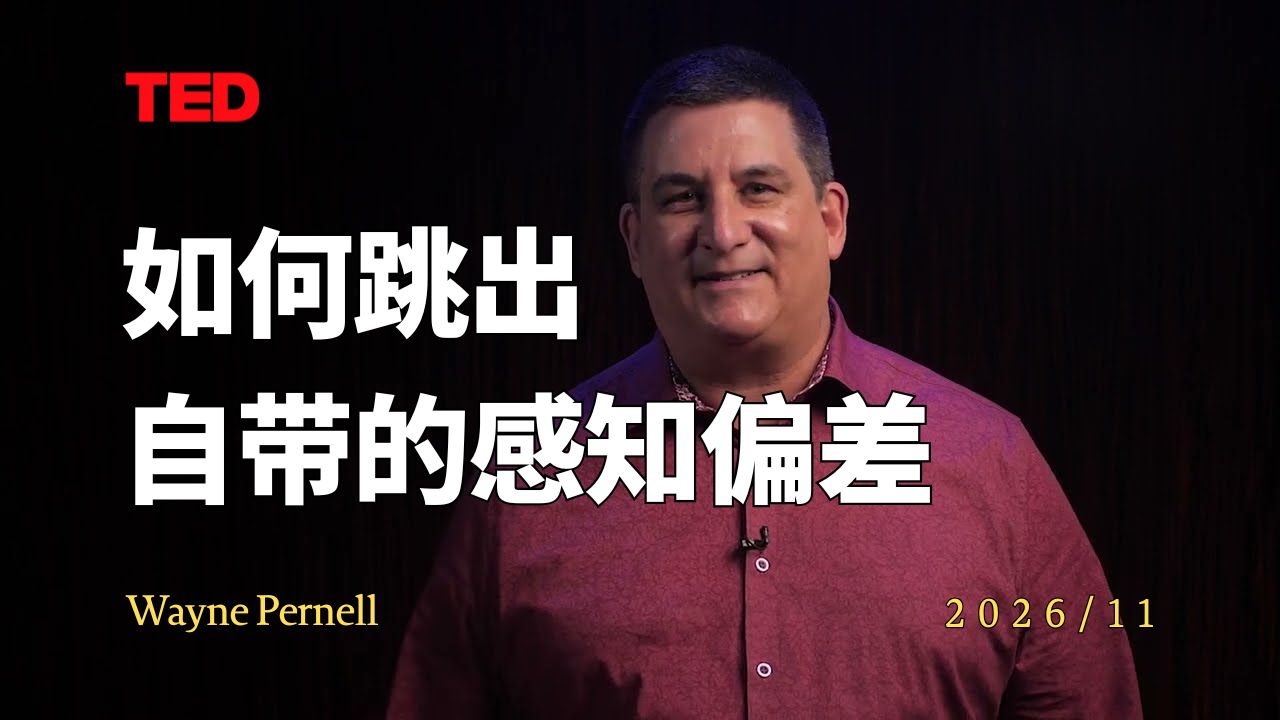
字幕摘录
| 时间 | 英文 | 中文 |
|---|---|---|
| 0:01 | Our frame of reference affects everything. | 我们的参照基准影响到一切。 |
| 0:04 | We judge the world based on our experiences. | 我们根据我们的经验来判断世界。 |
| 0:10 | At dinner the other night, I observed a guy in his 20s | 那天晚上晚餐时 我看见一个20多岁的家伙 |
| 0:13 | with his snap cap on backwards. | 背着他的胸罩 |
| 0:15 | He was hunched over his plate, chewing with his mouth open | 他直觉在盘子上 张着嘴嚼着 |
| 0:19 | and shoveling food into it as if his goal was not to taste what he was eating. | 把食物铲进里面 好像他的目的不是要品尝他吃的东西 |
| 0:25 | My thoughts went to judgment, and then I realized | 我开始思考,然后我意识到 |
| 0:29 | I don't know anything about him. | 我对他一无所知 |
| 0:31 | Nothing. | 没什么 |
| 0:34 | And I'm sure that if he observed me, he'd think all kinds of things. | 我敢肯定,如果他观察我, 他会想各种各样的事情。 |
展开字幕全文(139 条)
| 序号 | 英文 | 中文 |
|---|---|---|
| 1 | Our frame of reference affects everything. | 我们的参照基准影响到一切。 |
| 2 | We judge the world based on our experiences. | 我们根据我们的经验来判断世界。 |
| 3 | At dinner the other night, I observed a guy in his 20s | 那天晚上晚餐时 我看见一个20多岁的家伙 |
| 4 | with his snap cap on backwards. | 背着他的胸罩 |
| 5 | He was hunched over his plate, chewing with his mouth open | 他直觉在盘子上 张着嘴嚼着 |
| 6 | and shoveling food into it as if his goal was not to taste what he was eating. | 把食物铲进里面 好像他的目的不是要品尝他吃的东西 |
| 7 | My thoughts went to judgment, and then I realized | 我开始思考,然后我意识到 |
| 8 | I don't know anything about him. | 我对他一无所知 |
| 9 | Nothing. | 没什么 |
| 10 | And I'm sure that if he observed me, he'd think all kinds of things. | 我敢肯定,如果他观察我, 他会想各种各样的事情。 |
| 11 | Many of which might be true, but then again, maybe not. | 其中许多可能是真实的,但也许不是。 |
| 12 | Our experiences to this point have given us a unique lens | 我们到现在为止的经验 给我们一个独特的镜头 |
| 13 | through which we view and filter the world. | 我们通过它来观察和过滤世界。 |
| 14 | We each develop expectations about how the world and the people in it should be. | 我们每个人都对世界和人民应该如何生活抱有期望。 |
| 15 | It is that which defines our perceptual bias. | 它决定了我们的观念偏执。 |
| 16 | As humans, we're designed to stay alive. | 作为人类 我们被设计为活着 |
| 17 | We protect our physical being, and we protect our psychological being. | 我们保护身体,保护心理。 |
| 18 | Perhaps slightly insidiously, we protect the schema or map of the world | 也许我们略为阴险地保护世界的图谋 |
| 19 | that we have constructed. | 我们所建造的。 |
| 20 | We're willing to defend what we know because | 我们愿意捍卫我们所知道的,因为 |
| 21 | our identities are tied to what we know. | 我们的身份和我们所知的有联系 |
| 22 | We know what we know and we're drawn towards things that resonate with our values | 我们知道我们所知道的,我们被吸引到 与我们的价值观共鸣的东西 |
| 23 | even if we're not fully conscious of doing so. | 即使我们没有完全意识到这样做。 |
| 24 | Because of this, we need to be deliberate if we're to step away | 因为这样,我们得仔细考虑 才能走开 |
| 25 | from what we already know and presume about the world. | 从我们已经知道 并假设的世界。 |
| 26 | We can then be open to learning or trying something new. | 然后,我们可以开放学习或尝试新的东西。 |
| 27 | When we judge someone, or even ourselves, | 当我们评判某人,甚至我们自己时, |
| 28 | we subconsciously seek confirmation and validation of our premise. | 我们潜意识中寻求确认和验证我们的前提。 |
| 29 | We're good at something. | 我们擅长的东西。 |
| 30 | Bad, right, wrong, stupid, gifted, and on and on. | 坏,对,错,蠢,有天赋,不断. |
| 31 | We pick up on the things that validate this | 我们发现一些东西可以证明这一点 |
| 32 | and somehow ignore other information that might push against our beliefs. | 却忽略了其他可能违背我们信仰的信息 |
| 33 | That is, we automatically tune into the things we expect. | 也就是说,我们自动调和我们期望的东西。 |
| 34 | Again, this is our perceptual bias. | 再说一遍,这是我们的观念偏见。 |
| 35 | The problem with perceptual bias is that | 观念偏差的问题是 |
| 36 | not only do we bind ourselves to certain norms, | 我们不仅遵守某些规范, |
| 37 | but we also attempt to hold others to the norms we believe they should be held to. | 但我们也试图让其他人遵守我们认为应该遵守的准则。 |
| 38 | Rosenthal's research, back in 1963, | 罗森塔尔的研究,早在1963年. |
| 39 | showed us that the bias toward an expected outcome | 告诉我们,对预期结果的偏见 |
| 40 | influenced the way people engaged and therefore | 影响人们参与的方式,因此 |
| 41 | actually created the outcomes that were expected. | 实际上创造了预期的结果。 |
| 42 | Essentially, our beliefs affect our actions. | 从根本上说,我们的信仰影响我们的行动。 |
| 43 | Those actions affect the way others respond to us, | 这些行动影响到其他人对我们的反应方式, |
| 44 | and then their responses reinforce our beliefs about them, | 然后他们的反应加强了我们对他们的信念, |
| 45 | and so we act in a certain way. | 所以,我们以某种方式行事。 |
| 46 | We get validating feedback, | 我们得到验证反馈, |
| 47 | and that cycle reinforces what we already know, | 而这个循环强化了我们已经知道的, |
| 48 | so we engage in the world with a stronger bias. | 因此,我们以更强烈的偏见参与世界。 |
| 49 | And where does that leave us? | 那会给我们带来什么? |
| 50 | Divided. | 分开 |
| 51 | Separated. | 分别. |
| 52 | Isolated. | 孤立无边. |
| 53 | Presuming that growth and learning are desired, | 假定增长和学习是可取的, |
| 54 | what's needed is a new mind state, | 需要的是一个新的精神状态, |
| 55 | an active state of mind that mandates | A. 授权的积极心态 |
| 56 | a move to disrupt our hidden perceptual biases. | 打破我们隐藏的观念偏见 |
| 57 | We need to look at the world differently. | 我们需要以不同的方式看待世界。 |
| 58 | What if we deliberately pushed ourselves | 如果我们故意推自己 |
| 59 | to become curious and to see the situation, | 变得好奇 并看到情况, |
| 60 | the other person, or ourselves differently? | 还是我们不一样? |
| 61 | Could we acknowledge that there might be something we're missing? | 我们能承认我们可能错过了什么吗? |
| 62 | Could we seek to fill in the unknown gap in a quest for more information? | 我们能否设法填补未知的空白,以寻求更多信息? |
| 63 | Yes, and that is why a parallax perspective is needed. | 是的,这就是为什么需要从参数角度出发。 |
| 64 | Parallax来自拉丁语单词parallaxis,, | |
| 65 | meaning change, and your perspective. | 意思是改变,还有你的观点。 |
| 66 | How you look at something makes all the difference in how you react to it. | 你如何看待某件事 使所有不同的 你的反应。 |
| 67 | Try this for a second. | 试试这个 |
| 68 | If you're able, just hold up one finger in front of your face and look at it. | 若能,只举一指于面前,视之. |
| 69 | Now close one eye. | 现在闭上一只眼睛 |
| 70 | Open that eye and close the other one. | 打开眼睛,把另一个关上 |
| 71 | Now shift back and forth a few times here, | 现在转过身来,在这里几次, |
| 72 | opening one eye while closing the other. | 打开一只眼睛,同时关闭另一只眼睛。 |
| 73 | You'll notice that your finger or the background behind it | 你会注意到你的手指或背后的背景 |
| 74 | jumps back and forth as you change which eye is open and which eye is closed. | 当你改变哪只眼睛是开着的,哪只眼睛是闭着的。 |
| 75 | If you saw your finger and or the background jump back and forth, | 如果你看到你的手指或背景 跳来跳去, |
| 76 | you experienced a parallax shift. | 你经历了一个伞形变换。 |
| 77 | Whether or not you're able to do the exercise, | 无论你是否能够做运动, |
| 78 | recognize that you can take this concept into your everyday life. | 承认你可以把这个概念 进入你的日常生活。 |
| 79 | The key here is to leverage the fact that you can see things differently, | 这里的关键是利用一个事实, 你可以看到不同的东西, |
| 80 | and that then begs the question, what else is there? | 那又怎么样? |
| 81 | Or what might I be missing? | 或者我会错过什么? |
| 82 | Moving on the premise that there is more to explore about a situation, | 假设还有更多事情要探讨, |
| 83 | a person, or even yourself, and wielding the questions based in wonder, | 一个人,甚至你自己, 并运用问题 基于奇怪, |
| 84 | you've stepped into a powerful position, that of curiosity. | 你进入了一个强大的位置, 好奇心。 |
| 85 | Curiosity is the key to seeing things from more than one point of view. | 好奇是从一个以上的角度看待事物的关键. |
| 86 | Acknowledging that there is more than one point of view | 承认有不止一种观点 |
| 87 | and then choosing to be curious and explore what that might be | 然后选择好奇 探索可能是什么 |
| 88 | both opens the world to you and brings you closer to others. | 都为你打开世界 让你更接近别人 |
| 89 | Remember that a parallax perspective is based on change and perception. | 记住一个准音视角是基于变化和感知. |
| 90 | When we cling tightly to the perception that we had, | 当我们紧紧地 坚持我们的看法, |
| 91 | we find evidence that maintains that bias. | 我们找到证据来维持这种偏见。 |
| 92 | And if we believe that other possibilities exist | 如果我们相信还有其他的可能性 |
| 93 | and we engage in curiosity as a personal methodology, | 我们以好奇心为个人方法 |
| 94 | asking ourselves, I wonder what else there is, | 问我们自己,我不知道还有什么, |
| 95 | we remove this kind of ego, ethno, and social-centric disconnect. | 我们消除了这种自负 民族和以社会为中心的脱节 |
| 96 | This act of curiosity opens the door to asking new questions | 好奇心打开了问新问题的大门 |
| 97 | and yielding new insights. | 并产生新的见解。 |
| 98 | In essence, curiosity deliberately invokes a parallax perspective. | 从本质上讲,好奇心有意地引用了parallax视角. |
| 99 | It was Emerson who said that the mind once stretched by a new idea | 是爱默生说过 思想一度被新思想所束缚 |
| 100 | can never return to its original dimensions. | 永远不能回到原来的维度。 |
| 101 | What would happen if we thought in terms of a parallax perspective all the time? | 如果我们一直从准音角度考虑会怎么样? |
| 102 | When we choose to live from a place of wonder and curiosity | 当我们选择从奇异和好奇的地方生活 |
| 103 | about what more there might be, | 关于还有什么可能, |
| 104 | we train ourselves to think in a way that expands our awareness. | 我们训练自己 思考的方式 扩大我们的认识。 |
| 105 | And as our awareness expands, we crave further expansion. | 随着我们的认识的扩大,我们渴望进一步扩大。 |
| 106 | That is the antidote to perceptual bias. | 这就是对观念偏见的解药。 |
| 107 | There is one essential ground rule or working agreement | 有一项基本规则或工作协议 |
| 108 | we each must make with ourselves. | 我们每个人都必须做自己。 |
| 109 | Simply this, we have to want to change the way we see the world. | 简而言之,我们必须改变我们看待世界的方式。 |
| 110 | Remember that no one comes to a debate | 记住,没有人来辩论 |
| 111 | looking to be persuaded about the other side. | 期待被说服 对方。 |
| 112 | And the good news is that deliberately choosing a parallax perspective | 好消息是 故意选择一个伞形视角 |
| 113 | isn't a debate. | 这不是辩论。 |
| 114 | Quite the opposite. | 反之为实. |
| 115 | Being deliberate about seeking a parallax perspective | 深思熟虑地寻求平面视角 |
| 116 | opens the world to you in ways you haven't yet imagined. | 以你尚未想象的方式打开世界 |
| 117 | By actively pursuing an alternative view, any alternate view, | 通过积极寻求替代观点,任何替代观点, |
| 118 | we invite the possibility of more. | 我们邀请更多的机会。 |
| 119 | More information, greater connection, | 更多的信息,更多的联系, |
| 120 | and an increase in personal power and certainly a new truth. | 以及个人力量的增加 无疑是新的真理 |
| 121 | Your personal truth comes from experience, | 你的真相来自经验 |
| 122 | and that develops when you choose to expand your view of the world, | 当你选择扩大你对世界的看法时, |
| 123 | from the way a guy eats his dinner to the way your finger | 从一个人吃晚餐到手指 |
| 124 | or background jumps when you close one eye. | 或者当你闭上一只眼睛时背景跳动。 |
| 125 | We live with perceptual biases, conscious and unconscious, | 我们生活在有意识和无意识的偏见之中, |
| 126 | which divide us all the while we long to feel connected or a part of something. | 它把我们都分开 而我们渴望感到连接 或某件事的一部分。 |
| 127 | We instinctively protect ourselves against people and ideals | 我们本能地保护自己 对抗人和理想 |
| 128 | that oppose what we cling to as our truth, | 他们反对我们所坚持的真理, |
| 129 | and yet each of us worldwide, each of us, | 然而,我们每一个人,我们每一个人, |
| 130 | could expand our worldviews and personal truths | 可以扩展我们的世界观和个人真理 |
| 131 | by being just that bit more deliberate about choosing curiosity | 更慎重地选择好奇心 |
| 132 | and employing the parallax perspective. | 并使用参数视角。 |
| 133 | Assume there's more and explore what that might be. | 假设还有更多 并探索可能是什么。 |
| 134 | What might I be missing about this situation, this person, or myself? | 这个人,还是我自己? |
| 135 | More positively, what more is there? | 更积极的是,还有什么? |
| 136 | Stay curious. | 继续好奇 |
| 137 | Employing curiosity as the keystone of the parallax perspective | 利用好奇心作为参数视角的基石 |
| 138 | disrupts perceptual bias and creates the path, person by person, | 打破了观念上的偏见,并创造了道路,逐人, |
| 139 | for how we'll significantly connect humanity. | 我们如何将人类紧密联系起来 |
该视频共有字幕 139 条。解锁更多字幕为会员功能,请移动到 价格
P2 · 视差视角如何打破感知偏见【TED演讲】 p02 英文字幕(注释+中文外挂) (P2)
字幕摘录
| 时间 | 英文 | 中文 |
|---|---|---|
| 0:01 | Our frame of reference affects everything. | 我们的参照基准影响到一切。 |
| 0:04 | We judge the world based on our experiences. | 我们根据我们的经验来判断世界。 |
| 0:10 | At dinner the other night, I observed a guy in his 20s | 那天晚上晚餐时 我看见一个20多岁的家伙 |
| 0:13 | with his snap cap on backwards. | 背着他的胸罩 |
| 0:15 | He was hunched over his plate, chewing with his mouth open | 他直觉在盘子上 张着嘴嚼着 |
| 0:19 | and shoveling food into it as if his goal was not to taste what he was eating. | 把食物铲进里面 好像他的目的不是要品尝他吃的东西 |
| 0:25 | My thoughts went to judgment, and then I realized | 我开始思考,然后我意识到 |
| 0:29 | I don't know anything about him. | 我对他一无所知 |
| 0:31 | Nothing. | 没什么 |
| 0:34 | And I'm sure that if he observed me, he'd think all kinds of things, | 我敢肯定,如果他观察我, 他会想各种各样的事情, |
展开字幕全文(129 条)
| 序号 | 英文 | 中文 |
|---|---|---|
| 1 | Our frame of reference affects everything. | 我们的参照基准影响到一切。 |
| 2 | We judge the world based on our experiences. | 我们根据我们的经验来判断世界。 |
| 3 | At dinner the other night, I observed a guy in his 20s | 那天晚上晚餐时 我看见一个20多岁的家伙 |
| 4 | with his snap cap on backwards. | 背着他的胸罩 |
| 5 | He was hunched over his plate, chewing with his mouth open | 他直觉在盘子上 张着嘴嚼着 |
| 6 | and shoveling food into it as if his goal was not to taste what he was eating. | 把食物铲进里面 好像他的目的不是要品尝他吃的东西 |
| 7 | My thoughts went to judgment, and then I realized | 我开始思考,然后我意识到 |
| 8 | I don't know anything about him. | 我对他一无所知 |
| 9 | Nothing. | 没什么 |
| 10 | And I'm sure that if he observed me, he'd think all kinds of things, | 我敢肯定,如果他观察我, 他会想各种各样的事情, |
| 11 | many of which might be true, but then again, maybe not. | 其中许多可能是真实的,但是,也许不是。 |
| 12 | Our experiences to this point have given us a unique lens | 我们到现在为止的经验 给我们一个独特的镜头 |
| 13 | through which we view and filter the world. | 我们通过它来观察和过滤世界。 |
| 14 | We each develop expectations about how the world and the people in it should be. | 我们每个人都对世界和人民应该如何生活抱有期望。 |
| 15 | It is that which defines our perceptual bias. | 它决定了我们的观念偏执。 |
| 16 | As humans, we're designed to stay alive. | 作为人类 我们被设计为活着 |
| 17 | We protect our physical being, and we protect our psychological being. | 我们保护身体,保护心理。 |
| 18 | Perhaps slightly insidiously, we protect the schema or map of the world | 也许我们略为阴险地保护世界的图谋 |
| 19 | that we have constructed. | 我们所建造的。 |
| 20 | We're willing to defend what we know because our identities are tied to what we know. | 我们愿意捍卫我们知道的东西,因为我们的身份和我们知道的东西是联系在一起的. |
| 21 | We know what we know and we're drawn towards things that resonate with our values | 我们知道我们所知道的,我们被吸引到 与我们的价值观共鸣的东西 |
| 22 | even if we're not fully conscious of doing so. | 即使我们没有完全意识到这样做。 |
| 23 | Because of this, we need to be deliberate if we're to step away from what we already know | 因此,我们需要考虑,如果我们要远离我们已经知道的 |
| 24 | and presume about the world. | 并假设世界。 |
| 25 | We can then be open to learning or trying something new. | 然后,我们可以开放学习或尝试新的东西。 |
| 26 | When we judge someone, or even ourselves, | 当我们评判某人,甚至我们自己时, |
| 27 | we subconsciously seek confirmation and validation of our premise. | 我们潜意识中寻求确认和验证我们的前提。 |
| 28 | We're good at something bad, right, wrong, stupid, gifted, and on and on. | 我们善于做一些坏事,对,错,蠢,有天赋,不停的. |
| 29 | We pick up on the things that validate this and somehow ignore other information | 我们发现一些事情 证实了这一点 却忽略了其他信息 |
| 30 | that might push against our beliefs. | 这可能会违背我们的信仰 |
| 31 | That is, we automatically tune into the things we expect. | 也就是说,我们自动调和我们期望的东西。 |
| 32 | Again, this is our perceptual bias. | 再说一遍,这是我们的观念偏见。 |
| 33 | The problem with perceptual bias is that not only do we bind ourselves to certain norms, | 观念偏见的问题是,我们不仅遵守某些规范, |
| 34 | but we also attempt to hold others to the norms we believe they should be held to. | 但我们也试图让其他人遵守我们认为应该遵守的准则。 |
| 35 | Rosenthal's research back in 1963 showed us that the bias toward an expected outcome | 罗森塔尔在1963年的研究表明, 偏向预期的结果 |
| 36 | influenced the way people engaged and therefore actually created the outcomes that were expected. | 影响人们的参与方式,因此实际上创造了预期的结果。 |
| 37 | Essentially, our beliefs affect our actions. | 从根本上说,我们的信仰影响我们的行动。 |
| 38 | Those actions affect the way others respond to us, | 这些行动影响到其他人对我们的反应方式, |
| 39 | and then their responses reinforce our beliefs about them, | 然后他们的反应加强了我们对他们的信念, |
| 40 | and so we act in a certain way. | 所以,我们以某种方式行事。 |
| 41 | We get validating feedback, and that cycle reinforces what we already know, | 我们得到了验证反馈, 这个循环强化了我们已经知道, |
| 42 | so we engage in the world with a stronger bias. | 因此,我们以更强烈的偏见参与世界。 |
| 43 | And where does that leave us? | 那会给我们带来什么? |
| 44 | Divided. | 分开 |
| 45 | Separated. | 分别. |
| 46 | Isolated. | 孤立无边. |
| 47 | Presuming that growth and learning are desired, | 假定增长和学习是可取的, |
| 48 | What's needed is a new mind state, | 需要的是一个新的精神状态, |
| 49 | an active state of mind that mandates a move to disrupt our hidden perceptual biases. | 一种积极的精神状态 要求我们采取行动 打破我们隐藏的观念偏见 |
| 50 | We need to look at the world differently. | 我们需要以不同的方式看待世界。 |
| 51 | What if we deliberately pushed ourselves to become curious | 狦иΤ種 |
| 52 | and to see the situation, the other person, or ourselves differently? | 还是我们自己不同? |
| 53 | Could we acknowledge that there might be something we're missing? | 我们能承认我们可能错过了什么吗? |
| 54 | Could we seek to fill in the unknown gap in a quest for more information? | 我们能否设法填补未知的空白,以寻求更多信息? |
| 55 | Yes, and that is why a parallax perspective is needed. | 是的,这就是为什么需要从参数角度出发。 |
| 56 | Parallax来源于拉丁语单词parallaxis,意为变化. | |
| 57 | And your perspective, how you look at something, makes all the difference in how you react to it. | 你的观点,你对事物的看法, 使你对事物的反应变得不同。 |
| 58 | Try this for a second. | 试试这个 |
| 59 | If you're able, just hold up one finger in front of your face and look at it. | 若能,只举一指于面前,视之. |
| 60 | Now close one eye. | 现在闭上一只眼睛 |
| 61 | Open that eye and close the other one. | 打开眼睛,把另一个关上 |
| 62 | Now shift back and forth a few times here, opening one eye while closing the other. | 现在转过来转过去几次 打开一只眼睛 闭上另一只眼睛 |
| 63 | You'll notice that your finger or the background behind it jumps back and forth | 你会发现你的手指或背后的背景 跳来跳去 |
| 64 | as you change which eye is open and which eye is closed. | 改变那张眼睛和那张眼睛。 |
| 65 | If you saw your finger and or the background jump back and forth, | 如果你看到你的手指或背景 跳来跳去, |
| 66 | you experienced a parallax shift. | 你经历了一个伞形变换。 |
| 67 | Whether or not you're able to do the exercise, | 无论你是否能够做运动, |
| 68 | recognize that you can take this concept into your everyday life. | 承认你可以把这个概念 进入你的日常生活。 |
| 69 | The key here is to leverage the fact that you can see things differently. | 关键在于利用这个事实 你可以对事物有不同的看法。 |
| 70 | And that then begs the question, what else is there? | 然后问,还有什么? |
| 71 | Or what might I be missing? | 或者我会错过什么? |
| 72 | Moving on the premise that there is more to explore about a situation, a person, | 假设还有更多事情要探讨 一个人 |
| 73 | or even yourself, and wielding the questions based in wonder, | 甚至是你自己, 并掌握的问题 以奇异, |
| 74 | you've stepped into a powerful position, that of curiosity. | 你进入了一个强大的位置, 好奇心。 |
| 75 | Curiosity is the key to seeing things from more than one point of view. | 好奇是从一个以上的角度看待事物的关键. |
| 76 | Acknowledging that there is more than one point of view | 承认有不止一种观点 |
| 77 | and then choosing to be curious and explore what that might be | 然后选择好奇 探索可能是什么 |
| 78 | both opens the world to you and brings you closer to others. | 都为你打开世界 让你更接近别人 |
| 79 | Remember that a parallax perspective is based on change and perception. | 记住一个准音视角是基于变化和感知. |
| 80 | When we cling tightly to the perception that we had, | 当我们紧紧地 坚持我们的看法, |
| 81 | we find evidence that maintains that bias. | 我们找到证据来维持这种偏见。 |
| 82 | And if we believe that other possibilities exist | 如果我们相信还有其他的可能性 |
| 83 | and we engage in curiosity as a personal methodology, | 我们以好奇心为个人方法 |
| 84 | asking ourselves, I wonder what else there is, | 问我们自己,我不知道还有什么, |
| 85 | we remove this kind of ego, ethno, and social-centric disconnect. | 我们消除了这种自负 民族和以社会为中心的脱节 |
| 86 | This active curiosity opens the door to asking new questions | 这种积极的好奇心打开了问新问题的大门 |
| 87 | and yielding new insights. | 并产生新的见解。 |
| 88 | In essence, curiosity deliberately invokes a parallax perspective. | 从本质上讲,好奇心有意地引用了parallax视角. |
| 89 | It was Emerson who said that the mind once stretched by a new idea | 是爱默生说过 思想一度被新思想所束缚 |
| 90 | can never return to its original dimensions. | 永远不能回到原来的维度。 |
| 91 | What would happen if we thought in terms of a parallax perspective all the time? | 如果我们一直从准音角度考虑会怎么样? |
| 92 | When we choose to live from a place of wonder and curiosity | 当我们选择从奇异和好奇的地方生活 |
| 93 | about what more there might be, | 关于还有什么可能, |
| 94 | we train ourselves to think in a way that expands our awareness. | 我们训练自己 思考的方式 扩大我们的认识。 |
| 95 | And as our awareness expands, we crave further expansion. | 随着我们的认识的扩大,我们渴望进一步扩大。 |
| 96 | That is the antidote to perceptual bias. | 这就是对观念偏见的解药。 |
| 97 | There is one essential ground rule or working agreement | 有一项基本规则或工作协议 |
| 98 | we each must make with ourselves. | 我们每个人都必须做自己。 |
| 99 | Simply this, we have to want to change the way we see the world. | 简而言之,我们必须改变我们看待世界的方式。 |
| 100 | Remember that no one comes to a debate | 记住,没有人来辩论 |
| 101 | looking to be persuaded about the other side. | 期待被说服 对方。 |
| 102 | And the good news is that deliberately choosing a parallax perspective | 好消息是 故意选择一个伞形视角 |
| 103 | isn't a debate. | 这不是辩论。 |
| 104 | Quite the opposite. | 反之为实. |
| 105 | Being deliberate about seeking a parallax perspective | 深思熟虑地寻求平面视角 |
| 106 | opens the world to you in ways you haven't yet imagined. | 以你尚未想象的方式打开世界 |
| 107 | By actively pursuing an alternative view, any alternate view, | 通过积极寻求替代观点,任何替代观点, |
| 108 | we invite the possibility of more. | 我们邀请更多的机会。 |
| 109 | More information, greater connection, | 更多的信息,更多的联系, |
| 110 | and an increase in personal power and certainly a new truth. | 以及个人力量的增加 无疑是新的真理 |
| 111 | Your personal truth comes from experience, | 你的真相来自经验 |
| 112 | and that develops when you choose to expand your view of the world, | 当你选择扩大你对世界的看法时, |
| 113 | from the way a guy eats his dinner to the way your finger | 从一个人吃晚餐到手指 |
| 114 | or background jumps when you close one eye. | 或者当你闭上一只眼睛时背景跳动。 |
| 115 | We live with perceptual biases, conscious and unconscious, | 我们生活在有意识和无意识的偏见之中, |
| 116 | which divide us all the while we long to feel connected or a part of something. | 它把我们都分开 而我们渴望感到连接 或某件事的一部分。 |
| 117 | We instinctively protect ourselves against people and ideals | 我们本能地保护自己 对抗人和理想 |
| 118 | that oppose what we cling to as our truth, | 他们反对我们所坚持的真理, |
| 119 | and yet each of us worldwide, each of us, | 然而,我们每一个人,我们每一个人, |
| 120 | could expand our worldviews and personal truths | 可以扩展我们的世界观和个人真理 |
| 121 | by being just that bit more deliberate about choosing curiosity | 更慎重地选择好奇心 |
| 122 | and employing the parallax perspective. | 并使用参数视角。 |
| 123 | Assume there's more and explore what that might be. | 假设还有更多 并探索可能是什么。 |
| 124 | What might I be missing about this situation, this person, or myself? | 这个人,还是我自己? |
| 125 | More positively, what more is there? | 更积极的是,还有什么? |
| 126 | Stay curious. | 继续好奇 |
| 127 | Employing curiosity as the keystone of the parallax perspective | 利用好奇心作为参数视角的基石 |
| 128 | disrupts perceptual bias and creates the path, person by person, | 打破了观念上的偏见,并创造了道路,逐人, |
| 129 | for how we'll significantly connect humanity. | 我们如何将人类紧密联系起来 |
该视频共有字幕 129 条。解锁更多字幕为会员功能,请移动到 价格
P3 · 视差视角如何打破感知偏见【TED演讲】 p03 无字幕(中英外挂) (P3)
字幕摘录
| 时间 | 英文 | 中文 |
|---|---|---|
| 0:01 | Our frame of reference affects everything. | 我们的参照基准影响到一切。 |
| 0:04 | We judge the world based on our experiences. | 我们根据我们的经验来判断世界。 |
| 0:10 | At dinner the other night, I observed a guy in his 20s | 那天晚上晚餐时 我看见一个20多岁的家伙 |
| 0:13 | with his snap cap on backwards. | 背着他的胸罩 |
| 0:15 | He was hunched over his plate, chewing with his mouth open | 他直觉在盘子上 张着嘴嚼着 |
| 0:19 | and shoveling food into it as if his goal was not to taste what he was eating. | 把食物铲进里面 好像他的目的不是要品尝他吃的东西 |
| 0:25 | My thoughts went to judgment, and then I realized | 我开始思考,然后我意识到 |
| 0:29 | I don't know anything about him. | 我对他一无所知 |
| 0:31 | Nothing. | 没什么 |
| 0:34 | And I'm sure that if he observed me, he'd think all kinds of things. | 我敢肯定,如果他观察我, 他会想各种各样的事情。 |
展开字幕全文(139 条)
| 序号 | 英文 | 中文 |
|---|---|---|
| 1 | Our frame of reference affects everything. | 我们的参照基准影响到一切。 |
| 2 | We judge the world based on our experiences. | 我们根据我们的经验来判断世界。 |
| 3 | At dinner the other night, I observed a guy in his 20s | 那天晚上晚餐时 我看见一个20多岁的家伙 |
| 4 | with his snap cap on backwards. | 背着他的胸罩 |
| 5 | He was hunched over his plate, chewing with his mouth open | 他直觉在盘子上 张着嘴嚼着 |
| 6 | and shoveling food into it as if his goal was not to taste what he was eating. | 把食物铲进里面 好像他的目的不是要品尝他吃的东西 |
| 7 | My thoughts went to judgment, and then I realized | 我开始思考,然后我意识到 |
| 8 | I don't know anything about him. | 我对他一无所知 |
| 9 | Nothing. | 没什么 |
| 10 | And I'm sure that if he observed me, he'd think all kinds of things. | 我敢肯定,如果他观察我, 他会想各种各样的事情。 |
| 11 | Many of which might be true, but then again, maybe not. | 其中许多可能是真实的,但也许不是。 |
| 12 | Our experiences to this point have given us a unique lens | 我们到现在为止的经验 给我们一个独特的镜头 |
| 13 | through which we view and filter the world. | 我们通过它来观察和过滤世界。 |
| 14 | We each develop expectations about how the world and the people in it should be. | 我们每个人都对世界和人民应该如何生活抱有期望。 |
| 15 | It is that which defines our perceptual bias. | 它决定了我们的观念偏执。 |
| 16 | As humans, we're designed to stay alive. | 作为人类 我们被设计为活着 |
| 17 | We protect our physical being, and we protect our psychological being. | 我们保护身体,保护心理。 |
| 18 | Perhaps slightly insidiously, we protect the schema or map of the world | 也许我们略为阴险地保护世界的图谋 |
| 19 | that we have constructed. | 我们所建造的。 |
| 20 | We're willing to defend what we know because | 我们愿意捍卫我们所知道的,因为 |
| 21 | our identities are tied to what we know. | 我们的身份和我们所知的有联系 |
| 22 | We know what we know and we're drawn towards things that resonate with our values | 我们知道我们所知道的,我们被吸引到 与我们的价值观共鸣的东西 |
| 23 | even if we're not fully conscious of doing so. | 即使我们没有完全意识到这样做。 |
| 24 | Because of this, we need to be deliberate if we're to step away | 因为这样,我们得仔细考虑 才能走开 |
| 25 | from what we already know and presume about the world. | 从我们已经知道 并假设的世界。 |
| 26 | We can then be open to learning or trying something new. | 然后,我们可以开放学习或尝试新的东西。 |
| 27 | When we judge someone, or even ourselves, | 当我们评判某人,甚至我们自己时, |
| 28 | we subconsciously seek confirmation and validation of our premise. | 我们潜意识中寻求确认和验证我们的前提。 |
| 29 | We're good at something. | 我们擅长的东西。 |
| 30 | Bad, right, wrong, stupid, gifted, and on and on. | 坏,对,错,蠢,有天赋,不断. |
| 31 | We pick up on the things that validate this | 我们发现一些东西可以证明这一点 |
| 32 | and somehow ignore other information that might push against our beliefs. | 却忽略了其他可能违背我们信仰的信息 |
| 33 | That is, we automatically tune into the things we expect. | 也就是说,我们自动调和我们期望的东西。 |
| 34 | Again, this is our perceptual bias. | 再说一遍,这是我们的观念偏见。 |
| 35 | The problem with perceptual bias is that | 观念偏差的问题是 |
| 36 | not only do we bind ourselves to certain norms, | 我们不仅遵守某些规范, |
| 37 | but we also attempt to hold others to the norms we believe they should be held to. | 但我们也试图让其他人遵守我们认为应该遵守的准则。 |
| 38 | Rosenthal's research, back in 1963, | 罗森塔尔的研究,早在1963年. |
| 39 | showed us that the bias toward an expected outcome | 告诉我们,对预期结果的偏见 |
| 40 | influenced the way people engaged and therefore | 影响人们参与的方式,因此 |
| 41 | actually created the outcomes that were expected. | 实际上创造了预期的结果。 |
| 42 | Essentially, our beliefs affect our actions. | 从根本上说,我们的信仰影响我们的行动。 |
| 43 | Those actions affect the way others respond to us, | 这些行动影响到其他人对我们的反应方式, |
| 44 | and then their responses reinforce our beliefs about them, | 然后他们的反应加强了我们对他们的信念, |
| 45 | and so we act in a certain way. | 所以,我们以某种方式行事。 |
| 46 | We get validating feedback, | 我们得到验证反馈, |
| 47 | and that cycle reinforces what we already know, | 而这个循环强化了我们已经知道的, |
| 48 | so we engage in the world with a stronger bias. | 因此,我们以更强烈的偏见参与世界。 |
| 49 | And where does that leave us? | 那会给我们带来什么? |
| 50 | Divided. | 分开 |
| 51 | Separated. | 分别. |
| 52 | Isolated. | 孤立无边. |
| 53 | Presuming that growth and learning are desired, | 假定增长和学习是可取的, |
| 54 | what's needed is a new mind state, | 需要的是一个新的精神状态, |
| 55 | an active state of mind that mandates | A. 授权的积极心态 |
| 56 | a move to disrupt our hidden perceptual biases. | 打破我们隐藏的观念偏见 |
| 57 | We need to look at the world differently. | 我们需要以不同的方式看待世界。 |
| 58 | What if we deliberately pushed ourselves | 如果我们故意推自己 |
| 59 | to become curious and to see the situation, | 变得好奇 并看到情况, |
| 60 | the other person, or ourselves differently? | 还是我们不一样? |
| 61 | Could we acknowledge that there might be something we're missing? | 我们能承认我们可能错过了什么吗? |
| 62 | Could we seek to fill in the unknown gap in a quest for more information? | 我们能否设法填补未知的空白,以寻求更多信息? |
| 63 | Yes, and that is why a parallax perspective is needed. | 是的,这就是为什么需要从参数角度出发。 |
| 64 | Parallax来自拉丁语单词parallaxis,, | |
| 65 | meaning change, and your perspective. | 意思是改变,还有你的观点。 |
| 66 | How you look at something makes all the difference in how you react to it. | 你如何看待某件事 使所有不同的 你的反应。 |
| 67 | Try this for a second. | 试试这个 |
| 68 | If you're able, just hold up one finger in front of your face and look at it. | 若能,只举一指于面前,视之. |
| 69 | Now close one eye. | 现在闭上一只眼睛 |
| 70 | Open that eye and close the other one. | 打开眼睛,把另一个关上 |
| 71 | Now shift back and forth a few times here, | 现在转过身来,在这里几次, |
| 72 | opening one eye while closing the other. | 打开一只眼睛,同时关闭另一只眼睛。 |
| 73 | You'll notice that your finger or the background behind it | 你会注意到你的手指或背后的背景 |
| 74 | jumps back and forth as you change which eye is open and which eye is closed. | 当你改变哪只眼睛是开着的,哪只眼睛是闭着的。 |
| 75 | If you saw your finger and or the background jump back and forth, | 如果你看到你的手指或背景 跳来跳去, |
| 76 | you experienced a parallax shift. | 你经历了一个伞形变换。 |
| 77 | Whether or not you're able to do the exercise, | 无论你是否能够做运动, |
| 78 | recognize that you can take this concept into your everyday life. | 承认你可以把这个概念 进入你的日常生活。 |
| 79 | The key here is to leverage the fact that you can see things differently, | 这里的关键是利用一个事实, 你可以看到不同的东西, |
| 80 | and that then begs the question, what else is there? | 那又怎么样? |
| 81 | Or what might I be missing? | 或者我会错过什么? |
| 82 | Moving on the premise that there is more to explore about a situation, | 假设还有更多事情要探讨, |
| 83 | a person, or even yourself, and wielding the questions based in wonder, | 一个人,甚至你自己, 并运用问题 基于奇怪, |
| 84 | you've stepped into a powerful position, that of curiosity. | 你进入了一个强大的位置, 好奇心。 |
| 85 | Curiosity is the key to seeing things from more than one point of view. | 好奇是从一个以上的角度看待事物的关键. |
| 86 | Acknowledging that there is more than one point of view | 承认有不止一种观点 |
| 87 | and then choosing to be curious and explore what that might be | 然后选择好奇 探索可能是什么 |
| 88 | both opens the world to you and brings you closer to others. | 都为你打开世界 让你更接近别人 |
| 89 | Remember that a parallax perspective is based on change and perception. | 记住一个准音视角是基于变化和感知. |
| 90 | When we cling tightly to the perception that we had, | 当我们紧紧地 坚持我们的看法, |
| 91 | we find evidence that maintains that bias. | 我们找到证据来维持这种偏见。 |
| 92 | And if we believe that other possibilities exist | 如果我们相信还有其他的可能性 |
| 93 | and we engage in curiosity as a personal methodology, | 我们以好奇心为个人方法 |
| 94 | asking ourselves, I wonder what else there is, | 问我们自己,我不知道还有什么, |
| 95 | we remove this kind of ego, ethno, and social-centric disconnect. | 我们消除了这种自负 民族和以社会为中心的脱节 |
| 96 | This act of curiosity opens the door to asking new questions | 好奇心打开了问新问题的大门 |
| 97 | and yielding new insights. | 并产生新的见解。 |
| 98 | In essence, curiosity deliberately invokes a parallax perspective. | 从本质上讲,好奇心有意地引用了parallax视角. |
| 99 | It was Emerson who said that the mind once stretched by a new idea | 是爱默生说过 思想一度被新思想所束缚 |
| 100 | can never return to its original dimensions. | 永远不能回到原来的维度。 |
| 101 | What would happen if we thought in terms of a parallax perspective all the time? | 如果我们一直从准音角度考虑会怎么样? |
| 102 | When we choose to live from a place of wonder and curiosity | 当我们选择从奇异和好奇的地方生活 |
| 103 | about what more there might be, | 关于还有什么可能, |
| 104 | we train ourselves to think in a way that expands our awareness. | 我们训练自己 思考的方式 扩大我们的认识。 |
| 105 | And as our awareness expands, we crave further expansion. | 随着我们的认识的扩大,我们渴望进一步扩大。 |
| 106 | That is the antidote to perceptual bias. | 这就是对观念偏见的解药。 |
| 107 | There is one essential ground rule or working agreement | 有一项基本规则或工作协议 |
| 108 | we each must make with ourselves. | 我们每个人都必须做自己。 |
| 109 | Simply this, we have to want to change the way we see the world. | 简而言之,我们必须改变我们看待世界的方式。 |
| 110 | Remember that no one comes to a debate | 记住,没有人来辩论 |
| 111 | looking to be persuaded about the other side. | 期待被说服 对方。 |
| 112 | And the good news is that deliberately choosing a parallax perspective | 好消息是 故意选择一个伞形视角 |
| 113 | isn't a debate. | 这不是辩论。 |
| 114 | Quite the opposite. | 反之为实. |
| 115 | Being deliberate about seeking a parallax perspective | 深思熟虑地寻求平面视角 |
| 116 | opens the world to you in ways you haven't yet imagined. | 以你尚未想象的方式打开世界 |
| 117 | By actively pursuing an alternative view, any alternate view, | 通过积极寻求替代观点,任何替代观点, |
| 118 | we invite the possibility of more. | 我们邀请更多的机会。 |
| 119 | More information, greater connection, | 更多的信息,更多的联系, |
| 120 | and an increase in personal power and certainly a new truth. | 以及个人力量的增加 无疑是新的真理 |
| 121 | Your personal truth comes from experience, | 你的真相来自经验 |
| 122 | and that develops when you choose to expand your view of the world, | 当你选择扩大你对世界的看法时, |
| 123 | from the way a guy eats his dinner to the way your finger | 从一个人吃晚餐到手指 |
| 124 | or background jumps when you close one eye. | 或者当你闭上一只眼睛时背景跳动。 |
| 125 | We live with perceptual biases, conscious and unconscious, | 我们生活在有意识和无意识的偏见之中, |
| 126 | which divide us all the while we long to feel connected or a part of something. | 它把我们都分开 而我们渴望感到连接 或某件事的一部分。 |
| 127 | We instinctively protect ourselves against people and ideals | 我们本能地保护自己 对抗人和理想 |
| 128 | that oppose what we cling to as our truth, | 他们反对我们所坚持的真理, |
| 129 | and yet each of us worldwide, each of us, | 然而,我们每一个人,我们每一个人, |
| 130 | could expand our worldviews and personal truths | 可以扩展我们的世界观和个人真理 |
| 131 | by being just that bit more deliberate about choosing curiosity | 更慎重地选择好奇心 |
| 132 | and employing the parallax perspective. | 并使用参数视角。 |
| 133 | Assume there's more and explore what that might be. | 假设还有更多 并探索可能是什么。 |
| 134 | What might I be missing about this situation, this person, or myself? | 这个人,还是我自己? |
| 135 | More positively, what more is there? | 更积极的是,还有什么? |
| 136 | Stay curious. | 继续好奇 |
| 137 | Employing curiosity as the keystone of the parallax perspective | 利用好奇心作为参数视角的基石 |
| 138 | disrupts perceptual bias and creates the path, person by person, | 打破了观念上的偏见,并创造了道路,逐人, |
| 139 | for how we'll significantly connect humanity. | 我们如何将人类紧密联系起来 |
该视频共有字幕 139 条。解锁更多字幕为会员功能,请移动到 价格