【TED演讲】如何终结压力、不幸与焦虑,活出美好状态
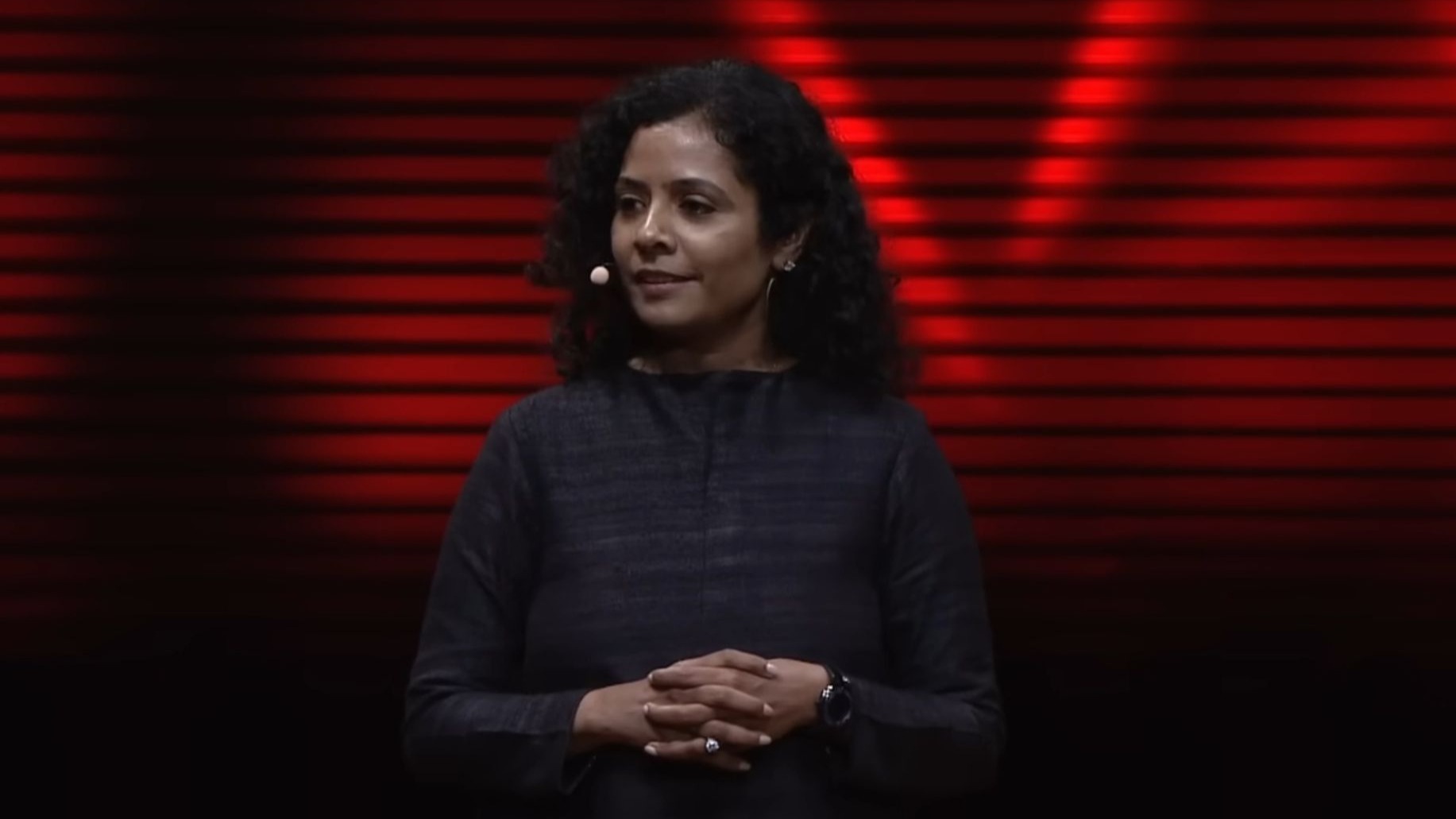
字幕摘录
| 时间 | 英文 | 中文 |
|---|---|---|
| 0:25 | Nam. | |
| 0:30 | Let me share a fable with you. | 让我告诉你一个寓言。 |
| 0:33 | For stories are ways of immortalizing messages. | 因为故事就是不朽的信息 |
| 0:39 | Two monks, Yesmi and Nomi, are returning back to the monastery after a day of teaching in | 两名僧侣Yesmi和Nomi在修道院教书一天后返回修道院。 |
| 0:46 | their nearby village. | 他们附近的村庄。 |
| 0:49 | They were just about to cross the river when they hear a woman crying. | 他们听到一个女人在哭的时候正要过河 |
| 0:55 | Yesmi walks up to her and asks her what was troubling her. | 叶美走到她面前,问她有什么困扰她. |
| 1:02 | She needed to get back to her toddler who was living in the village across the river. | 她需要回到住在河对岸村里的小孩身边 |
| 1:08 | Since the river had risen that day, she was feeling miserable that she will not be able | 因为那天河水涨起 她感到很痛苦 她无法 |
| 1:13 | to go back to her toddler and her child would cry for her all night. | 她的孩子会为她哭一整晚 |
展开字幕全文(180 条)
| 序号 | 英文 | 中文 |
|---|---|---|
| 1 | Nam. | |
| 2 | Let me share a fable with you. | 让我告诉你一个寓言。 |
| 3 | For stories are ways of immortalizing messages. | 因为故事就是不朽的信息 |
| 4 | Two monks, Yesmi and Nomi, are returning back to the monastery after a day of teaching in | 两名僧侣Yesmi和Nomi在修道院教书一天后返回修道院。 |
| 5 | their nearby village. | 他们附近的村庄。 |
| 6 | They were just about to cross the river when they hear a woman crying. | 他们听到一个女人在哭的时候正要过河 |
| 7 | Yesmi walks up to her and asks her what was troubling her. | 叶美走到她面前,问她有什么困扰她. |
| 8 | She needed to get back to her toddler who was living in the village across the river. | 她需要回到住在河对岸村里的小孩身边 |
| 9 | Since the river had risen that day, she was feeling miserable that she will not be able | 因为那天河水涨起 她感到很痛苦 她无法 |
| 10 | to go back to her toddler and her child would cry for her all night. | 她的孩子会为她哭一整晚 |
| 11 | On hearing her, Yesmi volunteers to help her. | 听到她的声音后,Yesmi自愿帮助她. |
| 12 | He carries her across the river and drops her on the other side. | 他带她过河 把她扔到另一边 |
| 13 | And they continue with their walk. | 他们继续行走。 |
| 14 | About half an hour into the walk, Nomi in a very agitated tone speaks up. | 步行半小时后, 诺米语调非常激动。 |
| 15 | He says, Yesmi, do you know what you have done? | 他说 Yesmi 你知道你做了什么吗? |
| 16 | Yesmi calmly looks at him. | 亚美冷静的看着他 |
| 17 | Our master said, never look at a woman. | 我们的主人说 从不看女人 |
| 18 | You spoke to her. | 你跟她谈过了 |
| 19 | Our master said, never speak to a woman. | 我们的主人说 从不跟女人说话 |
| 20 | You touched her. | 你碰过她。 |
| 21 | Our master said, never touch a woman. | 我们的主人说,永远不要碰女人 |
| 22 | You carried her. | 你背着她 |
| 23 | Yesmi calmly looks at Nomi and says, yes, that is true. | 叶美冷静地看着诺米说,是的,这是真的. |
| 24 | But I have dropped her half an hour ago. | 但我半小时前就把她扔了 |
| 25 | It is you who is still carrying her. | 是你还在背着她 |
| 26 | Let me take you away from this story for a bit, for a tiny experience of meditation. | 让我带你离开这个故事 一点点,一个小小的冥想经历。 |
| 27 | Please close your eyes. | 请闭上眼睛 |
| 28 | I still see a few sneaking a peek. | 我仍然看到一些偷看。 |
| 29 | It is safe to close your eyes. | 闭上眼睛是安全的。 |
| 30 | Inhale and exhale deep and slow. | 吸入和呼气 深和慢。 |
| 31 | With every exhale, raise the edges of your lips into a gentle smile. | 用每一个呼气,把嘴唇的边缘提升成温柔的微笑. |
| 32 | Inhale. | 吸气 吸气 吸气 吸气 吸气 |
| 33 | Exhale. | 呼气声。 |
| 34 | Inhale. | 吸气 吸气 吸气 吸气 吸气 |
| 35 | Broaden your smile. | 扩大你的微笑。 |
| 36 | Open your eyes. | 睁开眼睛 |
| 37 | Do you recognize that with a little attention to your breath and a smile to your face, you | 你认不认得吗? 用一点心思的呼吸 和微笑的面,你 |
| 38 | are more calm and more present? | 更冷静更现身吗? |
| 39 | The power to peace is always within you. | 和平的力量永远在你体内。 |
| 40 | Let us get back to our story. | 让我们回到我们的故事。 |
| 41 | Yesmi and Nomi represent two states of being. | 叶美和诺米代表两个状态存在. |
| 42 | Fundamentally, every one of us live only in two states. | 基本上,我们每个人只生活在两个州。 |
| 43 | One is a stressful state. | 一个是紧张的状态。 |
| 44 | The other is a no-stress state. | 其一为无压国. |
| 45 | We call this no-stress state a beautiful state, for that is how life feels when you live free | 我们称这个无记者状态是美丽的状态, 因为这就是生活的感觉 当你自由生活 |
| 46 | of stress. | 压力。 |
| 47 | Generally, stress refers to tension, but anger, fear, hurt, loneliness, frustration are all | 一般来说,压力是指紧张,但愤怒,恐惧,伤害,孤独,沮丧都是 |
| 48 | stressful states, aren't they? | 压力很大,不是吗? |
| 49 | A beautiful state is a state of connection, joy, love, compassion, vitality, and passion. | 一个美丽的状态是一个连接,快乐,爱,同情,活力,和激情的状态. |
| 50 | If you are not in a beautiful state, your default state is stress. | 如果你不处于一个美丽的状态, 你的默认状态是压力。 |
| 51 | If you look at the entirety of human life, behind war or peace, cooperation or corrosive | 如果你在战争或和平、合作或腐蚀下看待整个人的生命 |
| 52 | politics, love or separation, persistence or failure, finally, happy children or a generation | 政治,爱或分离, 坚持或失败, 最后,快乐的孩子或一代 |
| 53 | that is troubled. | 这是麻烦。 |
| 54 | Behind all this is the driving force of these two states. | 这一切背后是这两个州的驱动力. |
| 55 | Behind every choice and every action is the driving force of only one of these two states. | 在每一个选择和每个行动背后,这两个州中只有一个州的驱动力。 |
| 56 | So the most important choice is from which state do we want to live our life? | 所以最重要的选择是 我们要从哪个州来生活? |
| 57 | From which state do we want to relate to the people in our life? | 我们想从哪个州 与我们生活中的人联系? |
| 58 | From which state do we want to achieve and fulfill every vision of our life? | 我们想从哪个州实现和实现我们生活的每一个愿景? |
| 59 | Sadly, our education, entire system of a society, our parents, our religion do not bring sufficient | 可悲的是,我们的教育,整个社会体系,我们的父母,我们的宗教,都不足以带来 |
| 60 | attention to our inner state. | 注意我们的内在状态 |
| 61 | In fact, the very structure of education at school makes us compete, makes us feel jealous | 事实上,学校的教育结构 使我们互相竞争,让我们觉得嫉妒 |
| 62 | of another's progress, makes us feel ashamed of being less. | 我们感到羞愧的是, |
| 63 | It is a total compromise on the essence of being human. | 这是对人类本质的完全妥协。 |
| 64 | Let us get back to our story again. | 让我们回到我们的故事。 |
| 65 | Yesmi represents the beautiful state and Nomi represents the stressful state. | Yesmi代表美丽状态,Nomi代表紧张状态. |
| 66 | Nomi has created a problem in his mind and is paralyzed with it. | 诺米在脑海中制造了一个问题,并因此瘫痪. |
| 67 | Yesmi solves the problem of a fellow human being and continues with this peaceful walk. | 叶思美解决了人类同胞的问题,继续这段和平的散步. |
| 68 | Nomi is agitated before the event, during the event and after the event. | 诺米在赛事前,赛事期间和赛事后都焦躁不安. |
| 69 | And his thinking becomes incredibly stupid and complicated because of his inner agitation. | 他的思想变得非常愚蠢和复杂 因为他内心的焦虑。 |
| 70 | Yesmi, while in action, is fully present. | 在行动期间,Yesmi完全在场。 |
| 71 | And once the action is complete, his departure from the situation too is total. | 一旦行动完成,他也完全脱离局势。 |
| 72 | In a beautiful state, there is no compulsive rumination of the past or anxiety over the future. | 在一个美丽的状态下,没有强迫性的对过去的反响,也没有对未来的焦虑. |
| 73 | It is a state where you experience inner simplicity and the brilliance of an uncluttered mind. | 这是一种你经历内在简洁 和聪明的头脑。 |
| 74 | It is a state where you are connected to the present. | 这是你与现在相连的状态。 |
| 75 | Nomi is lost in a stressful state. | 诺米处于紧张状态 |
| 76 | You are lost. | 你迷路了,你疯了 |
| 77 | You are disconnected from the others. | 你和别人断绝联系了 |
| 78 | You might be Amit's people, but yet feel lonely. | 你们可能是阿米特的人,但感觉很寂寞 |
| 79 | Yesmi is different. | 义弥不同. |
| 80 | He is connected to the lady's plight. | 他和这位女士的困境有关 |
| 81 | He helps her. | 他帮了她 |
| 82 | He understands Nomi's distress and tries to help him out with a wise remark. | 他理解诺米的苦恼,并试图以明智的言论帮助他. |
| 83 | In a beautiful state, you are powerful enough to help yourself and help others around you. | 在美丽的状态下,你有能力帮助自己,帮助周围的人. |
| 84 | You are outright intelligent and your actions are decisive and powerful. | 你完全聪明,你的行动是决定性和强大的。 |
| 85 | Let us observe Nomi a little longer. | 让我们多观察一下诺米 |
| 86 | Anger and confusion have mounted over his ideals of duty and virtue. | 愤怒和困惑已经笼罩在他的职责和美德的理想之上。 |
| 87 | In my observation, when a stressful state mounts over your ideals, however lofty they are, | 在我观察中,当一个紧张的国家 超过你的理想, 无论它们多么崇高, |
| 88 | whether they are of patriotism, unconditional love, duty or honesty, | 无论是爱国 无条件的爱 义务还是诚实 |
| 89 | we become insensitive and indifferent. | 我们变得漠不关心和漠不关心 |
| 90 | We hurt the very cause we served and we hurt the very people we love. | 我们伤害我们为之服务的事业,伤害我们所爱的人。 |
| 91 | Yesmi helped not because he would be barred entry into heaven. | 叶美没有帮助,因为他会被禁止进入天堂。 |
| 92 | Definitely not. | 当然不是。 |
| 93 | Nor did he help not because he would feel guilty if he hadn't helped. | 他也没有帮忙 因为如果他不帮忙 他就会感到内疚 |
| 94 | He helped because he was able to feel the lady's pain. | 他帮忙是因为他能感觉到这位女士的痛苦. |
| 95 | He was able to feel her suffering. | 他能够感受到她的痛苦。 |
| 96 | Actions in a beautiful state arise from a place of connection, not from an ideal. | 美丽状态下的行动产生于一个连接的地方,而不是一个理想. |
| 97 | There have been times when we have been Yesmi. | 我们曾经是女神 |
| 98 | There have been times when we have been Nomi. | 我们曾经是诺米 |
| 99 | We have lived in stress and disconnection and caused greater confusion in our own lives and lives of people around us. | 我们生活在压力和脱节之中,使我们自己的生活和周围的人的生活更加混乱。 |
| 100 | We have lived in a beautiful state of connection and contributed to the well-being of ourselves and people around us. | 我们生活在良好的联系状态中,为我们自己和周围人民的福祉作出了贡献。 |
| 101 | War, division and conflict of every form can only end when more and more of us live in a beautiful state. | 战争、分裂和各种形式的冲突只有在我们越来越多的人生活在一个美丽的状态下才能结束。 |
| 102 | So the big question is, how do we break free of our habitual negative bias of our brain towards stressful state? | 所以,大的问题是,我们怎样才能摆脱我们大脑对压力状态的惯常负面偏见? |
| 103 | If pressure is going to be a part of life, how do we live life without being bogged down by stress? | 如果压力将成为生活的一部分,我们如何过着没有压力的人生? |
| 104 | How do we address numerous challenges of our life living in a beautiful state? | 我们如何应对生活在美丽状态下的无数挑战? |
| 105 | There are three well-trodden paths people usually take. | 人们通常走的路线有三条。 |
| 106 | One, we live in stressful states and plummet into hurting inner states. | 第一,我们生活在紧张的状态中 并且崩溃到伤害内在的状态。 |
| 107 | Two, we try to escape stress. | 第二,我们试图逃避压力。 |
| 108 | We try to achieve a temporary dopamine high. | 我们试图实现一个临时多巴胺高。 |
| 109 | However, when the dopamine plateaus, we are left feeling emotionally dry and empty. | 然而,当多巴胺高原出现时,我们感到情绪干燥和空虚。 |
| 110 | Three, we try replacing inconvenient beliefs, stories and ideas into more convenient ones. | 三,我们尝试把不便的信仰,故事和思想换成更方便的. |
| 111 | The problem, however, is none of these three parts have the power to get you off the gravitational pull of suffering or long-term stress. | 然而,问题在于这三部分中没有一个能够让你摆脱痛苦或长期压力的引力拉动. |
| 112 | And we succumb back into the vortex of habitual stressful emotions. | 我们又回到了常态性压力的漩涡中 |
| 113 | We need a greater inner power to get us to a beautiful state. | 我们需要更大的内在力量 才能让我们进入美丽的状态 |
| 114 | And that is the way of inner truth. | 这就是内心真理的方式。 |
| 115 | About eight years ago, we as a family met with an accident while at Big Bad Lake in California. | 大约8年前,我们一家人 在加利福尼亚州大坏湖遇到事故 |
| 116 | We emerged safe from the accident. | 我们从事故中安全出现。 |
| 117 | But while in the waters, Krishnaji, my husband, co-founder of One World Academy, realized the root cause of all human suffering. | 但是,在水域中,我丈夫克里希纳吉,同一个世界学院的共同创始人,意识到了所有人类痛苦的根源。 |
| 118 | He saw what kept suffering alive for days, months and years after a stressful event was over in anyone's life. | 他看到在紧张事件结束后 几天、几个月和几年里 在任何人的生活中 一直遭受着痛苦 |
| 119 | Past and present circumstances, other people and their behavior can trigger stress in us. | 过去和现在的情况,其他人和他们的行为 可能引发我们的压力。 |
| 120 | But they do not keep us chained in our unhappiness. | 但他们并没有把我们锁在我们的不幸中。 |
| 121 | While in the waters, he saw the true reason for humanity's suffering. | 在水中,他看到了人类受苦的真正原因. |
| 122 | He saw all emotional suffering arising from obsessive, self-centric thinking. | 他看到了所有的情感痛苦都是由沉迷,自我中心的思想引起的. |
| 123 | It is a total preoccupation with oneself. | 这完全是对自己的关注。 |
| 124 | It is a total, incessant preoccupation with oneself. | 这完全是不断关心自己。 |
| 125 | And it is this preoccupation that separates you from the other. | 而正是这种关注 把你和另一个分开。 |
| 126 | It is this preoccupation that is responsible for war, conflict and division of every kind that we see in the world today. | 正是这种关切导致我们今天在世界上看到的各种战争、冲突和分裂。 |
| 127 | This truth can be inconvenient for us. | 这个事实对我们来说可能不方便。 |
| 128 | But if we can observe our emotional suffering in the light of this insight, then this truth can liberate us. | 但是,如果我们能从这种洞察力观察我们的情感痛苦,那么这个真理就能解放我们. |
| 129 | This truth can set us free. | 这个事实可以让我们自由 |
| 130 | In suffering, in unhappiness, in stressful states, you're preoccupied with yourself. | 在痛苦中,在不幸福中, 在紧张的状态中, 你专注于你自己。 |
| 131 | We are preoccupied with injustice done to us. | 我们忙于对我们的不公正对待。 |
| 132 | We are preoccupied with pleasure that was denied us. | 我们很关心被否认的快乐。 |
| 133 | We are preoccupied with opportunities that did not come our way. | 我们正忙于没有到来的机会。 |
| 134 | We are preoccupied with love that was withheld from us. | 我们忙于爱,而爱却被拒之门外。 |
| 135 | It is a total preoccupation with oneself. | 这完全是对自己的关注。 |
| 136 | And in this state, we are not concerned with finding solutions to the problem at hand. | 而在这种状态下,我们并不关心为手头的问题找到解决办法. |
| 137 | For the entire thinking is only me, me, me, me and me. | 因为整个想法只有我,我,我,我和我. |
| 138 | That is all we think in unhappiness. | 这是我们在不幸中想的 |
| 139 | Let us observe no me in the light of this insight. | 根据这种见解,让我们不要观察我。 |
| 140 | Throughout the story, he's preoccupied. | 整个故事,他都忙着 |
| 141 | He's preoccupied with his rightness. | 他关心自己的正确性 |
| 142 | He's preoccupied with his guilt at having allowed a wrong to happen. | 他的内疚是让错误发生 |
| 143 | He's not concerned about the situation, nor is he concerned about the lady and her son, nor his friend. | 他不关心情况,也不关心夫人和儿子,也不关心朋友. |
| 144 | He's constantly justifying within himself that he was right in ignoring the suffering woman | 他不断为自己辩解 他无视受苦的女人是对的 |
| 145 | and that he was great in following the rules. | 而且他很能遵守规矩 |
| 146 | Realizing that all lingering in suffering is a total preoccupation with oneself. | 认识到所有仍在受苦受难的人都是对自己的关注。 |
| 147 | It is an obsessive, self-centric thinking. | 这是一种偏执的、自我中心的思想。 |
| 148 | It's the most powerful antidote for any form of suffering that could have gripped you. | 它是最强大的解药 对于任何形式的痛苦 本来可以抓住你。 |
| 149 | When you see it, not only you walk out of stressful states, but there is a great release of energy. | 当你看到它, 不仅你走出了压力的状态, 而且有巨大的能量释放。 |
| 150 | And you awaken to a sense of power, connection, freedom and purpose. | 你唤醒了一种力量、联系、自由和使命感。 |
| 151 | We know the way now. | 我们现在知道路了 |
| 152 | Let's do it. | 贡举志五种 上. |
| 153 | It works. | 它的工作原理。 |
| 154 | Let us do a small three-question meditation. | 让我们进行一个小的三问题冥想。 |
| 155 | Please close your eyes. | 请闭上眼睛 |
| 156 | Please remember, meditation is not about a religion. | 请记住,冥想与宗教无关 |
| 157 | It is about being human. | 这是关于做人。 |
| 158 | It is about returning to a beautiful state. | 这是关于回到一个美丽的国家。 |
| 159 | Bring attention to your breath. | 唤醒你的呼吸。 |
| 160 | Inhale and exhale, deep and slow. | 吸气与吐气,深而缓. |
| 161 | Observe yourself. | 观察自身. |
| 162 | Are you in a stressful state? | 你有压力吗? |
| 163 | Or are you in a beautiful state? | 还是你处于一个美丽的状态? |
| 164 | Observe yourself. | 观察自身. |
| 165 | Are you engaged with your past? | 你和你的过去订婚了吗? |
| 166 | Or are you engaged with your future? | 还是你和你的未来订婚了? |
| 167 | Or are you in the present? | 还是你在现在? |
| 168 | Observe yourself. | 观察自身. |
| 169 | Are you preoccupied with yourself? | 你关心自己吗? |
| 170 | Or are you in a state of connection? | 还是你处于联系状态? |
| 171 | Just observe. | 只是观察。 |
| 172 | Do not try to change anything. | 不要试图改变任何事情。 |
| 173 | Imagine a flame glowing in the middle of your forehead. | 想象一下前额中间的火焰在发光 |
| 174 | Bring a gentle smile to your face. | 给脸带个温柔的微笑 |
| 175 | Open your eyes. | 睁开眼睛 |
| 176 | Look into the eyes of the person sitting next to you. | 看着坐在你旁边的人的眼睛 |
| 177 | Wish from the bottom of your heart that the other person lives in a beautiful state. | 从你内心深处希望 其他人生活在美丽的状态中 |
| 178 | And if you're comfortable, you may hug the other. | 如果你觉得舒服 你可以拥抱另一个 |
| 179 | Thank you so much. | 非常感谢 |
| 180 | Nam. |
该视频共有字幕 180 条。解锁更多字幕为会员功能,请移动到 价格