如何主导一场艰难谈话,直接接管对方神经系统|前特工
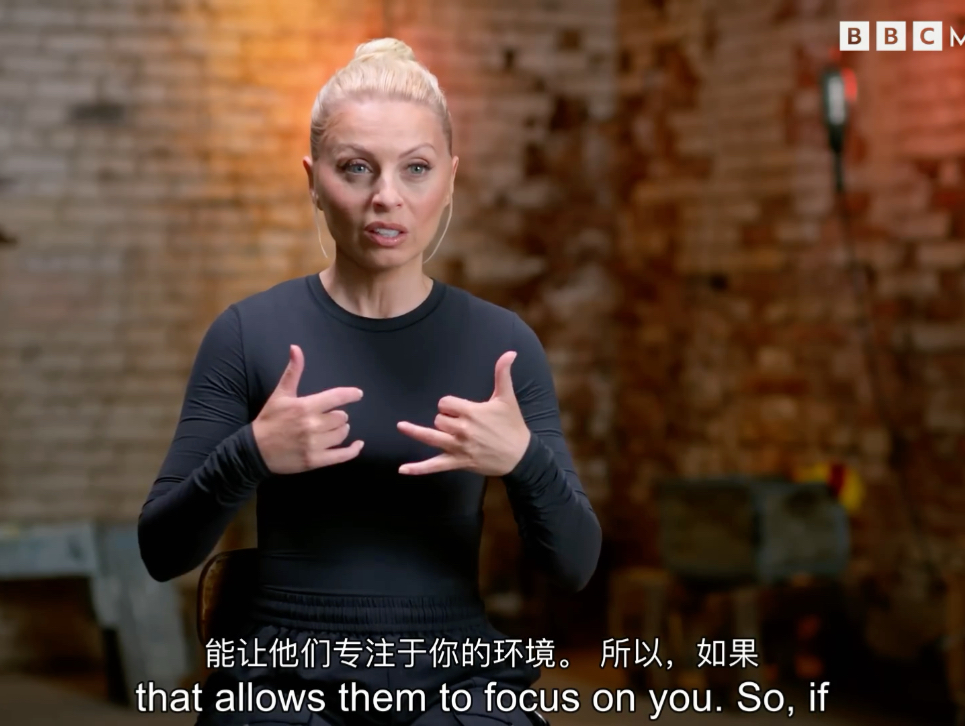
字幕摘录
| 时间 | 英文 | 中文 |
|---|---|---|
| 0:00 | Priming is something that you can use | priming是一个你可以使用的东西 |
| 0:02 | to influence situations. | 影响局势。 |
| 0:04 | When I did interviews, I used priming | 面试的时候,我用刺激 |
| 0:07 | with regard to where I was going to do my interviews. | 关于我在哪里接受采访。 |
| 0:10 | So for example, I would actually think | 举例来说,我觉得 |
| 0:12 | where do I want to interview the person | 我想问他在哪里 |
| 0:15 | I'm going to speak to? | 我要跟你说话? |
| 0:16 | Now, most people would think, oh, go to their house, right? | 现在,大多数人会认为, 哦,去他们的房子,对不对? |
| 0:20 | You wanna go to the house, check out what's going on, | 你想回家看看发生了什么 |
| 0:22 | see how they live, get kind of a lay in the land, right? | 看看他们是怎么生活的, 在土地上得到一种谎言,对不对? |
展开字幕全文(149 条)
| 序号 | 英文 | 中文 |
|---|---|---|
| 1 | Priming is something that you can use | priming是一个你可以使用的东西 |
| 2 | to influence situations. | 影响局势。 |
| 3 | When I did interviews, I used priming | 面试的时候,我用刺激 |
| 4 | with regard to where I was going to do my interviews. | 关于我在哪里接受采访。 |
| 5 | So for example, I would actually think | 举例来说,我觉得 |
| 6 | where do I want to interview the person | 我想问他在哪里 |
| 7 | I'm going to speak to? | 我要跟你说话? |
| 8 | Now, most people would think, oh, go to their house, right? | 现在,大多数人会认为, 哦,去他们的房子,对不对? |
| 9 | You wanna go to the house, check out what's going on, | 你想回家看看发生了什么 |
| 10 | see how they live, get kind of a lay in the land, right? | 看看他们是怎么生活的, 在土地上得到一种谎言,对不对? |
| 11 | Going to somebody's home was the last place I wanted to go. | 去别人的家是我最不想去的地方 |
| 12 | First, that's where they're king or queen. | 首先,那是他们的王或王后。 |
| 13 | That's where they're gonna be the centered | 在那里,他们会是中心 |
| 14 | and grounded the most. | 并禁足最强。 |
| 15 | That's where they're really gonna own the situation | 那才是他们真正掌控局面的地方 |
| 16 | and not me. | 而不是我 而不是我 说吧 |
| 17 | Second, when people are home, they're distracted. | 第二,当人们在家时,就会分心. |
| 18 | The phone rings, maybe they have kids | 电话响了,也许他们有孩子 |
| 19 | running around the house, a dog, something's on the stove. | 绕着房子跑 一只狗 炉子里有东西 |
| 20 | They're doing multiple things. | 他们在做很多事情 |
| 21 | I don't want that. | 我不想那样 |
| 22 | I want, when I'm speaking to someone, | 我想,当我说话的人, |
| 23 | I want them focused on me. | 我要他们专注于我 |
| 24 | So when you are thinking about having conversations | 所以当你在考虑谈话时 |
| 25 | with people, spend time thinking about | 与人,花时间思考 |
| 26 | where you're going to have the conversations. | 在那里你要去 有谈话。 |
| 27 | In addition to that, often I would go to police departments | 除此之外,我经常去警察局 |
| 28 | or travel the country, helping locals | 或到国外旅行,帮助当地人 |
| 29 | with their difficult cases. | 与他们的困难情况。 |
| 30 | So as soon as I would show up, | 我一出现 |
| 31 | and actually I would show up early, | 其实我会早点出现 |
| 32 | because I wanted to find where I was going to do | 因为我想找到我要去的地方 |
| 33 | my interview so I could prime it. | 我的采访,所以我可以 黄金。 |
| 34 | I'd walk in, hi guys, I'm Evy. | 我会走进来,嗨,伙计们,我是艾薇。 |
| 35 | Where can I do my interview? | 我在哪里可以做我的采访? |
| 36 | They'd show me an interview room, | 他们会给我一个面试室 |
| 37 | which usually I didn't use. | 通常我没有使用。 |
| 38 | And I'd say, hmm, what else you guys have? | 我会说,嗯,你们还有什么? |
| 39 | And I would scour the building, | 我会扫荡大楼, |
| 40 | trying to find a place to do my interview there. | 试图找到一个地方做我的采访在那里。 |
| 41 | Why? | 为什么? |
| 42 | Because I wanted an environment that would work. | 因为我想要一个能起作用的环境 |
| 43 | So for example, if I'd pick a room, | 比如说 如果我选个房间 |
| 44 | sometimes let's say it'd be a conference room, | 有时我们可以说这是一个会议室, |
| 45 | I'd start moving furniture around. | 我会开始移动家具周围。 |
| 46 | Everybody thought I was out of my mind. | 大家都以为我疯了 |
| 47 | I didn't care. | 我不关心。 |
| 48 | First, I didn't want any tables between me | 首先,我不想我之间有任何桌子 |
| 49 | and the person I was speaking to. | 和我说话的人。 |
| 50 | Do you know why? | 你知道为什么吗? |
| 51 | A table is a barrier. | 一表为障. |
| 52 | When I'm talking to someone, it's me, | 当我在和别人说话时 是我 |
| 53 | and then it's you over there. | 然后是你那边 |
| 54 | But when I get rid of the table, hmm, it's us. | 但当我摆脱桌子,嗯,是我们。 |
| 55 | I want to prime the person to feel | 我想让那个人感觉 |
| 56 | that we're in it together. | 我们一起的 |
| 57 | The other thing I would do in my interview rooms | 还有一件事我会在我的面试室做 |
| 58 | is I would look for the clock. | 我要找时钟 |
| 59 | Super simple, but I didn't want people | 很简单,但我不要人 |
| 60 | to have a sense of time. | 拥有时间感 |
| 61 | My goal was to really captivate people | 我的目标是真正吸引人 |
| 62 | and have them feel that they were there | 让他们觉得自己在那里 |
| 63 | with just me. | 只有我一个人 |
| 64 | I don't want you thinking about where you have to go later | 我不想你晚点再想去哪里 |
| 65 | or that this meeting or interview is going over. | 或者说这次会面或采访会结束 |
| 66 | I want you to be locked in and in the present. | 我要你被锁在和现在。 |
| 67 | So if you're sitting having a business meeting | 所以如果你坐着开会 |
| 68 | with someone, it's in a really important pitch, | 和某个人在一起,这是 一个非常重要的投球, |
| 69 | and you seat them across from you | 你让他们坐在你对面 |
| 70 | and right over your head, right here is the clock, | 就在你头上,这里是时钟 |
| 71 | you tell me how that's going to help you. | 告诉我这对你有什么帮助 |
| 72 | All they're doing is looking up at that clock thinking, | 他们只是看着那个钟在想 |
| 73 | all right, 10 more minutes, and then I have to bounce. | 好吧,再过10分钟,我就得跳了 |
| 74 | You want people to forget that. | 你想让人们忘记这一点。 |
| 75 | It's almost like you're trying to make reality go away. | 这几乎就像你试图使现实消失。 |
| 76 | You want to build this cocooned environment | 你想建立这个 茧化的环境 |
| 77 | where people feel it's just you and them. | 人们觉得只有你和他们 |
| 78 | You want to draw people in. | 欲引众入. |
| 79 | Think about the environments you choose | 想想你选择的环境 |
| 80 | when you're having meetings or pitches, | 当你有会议或投球, |
| 81 | or you're talking to someone. | 或者你在跟别人说话 |
| 82 | If you're trying to do something that's really important, | 如果你想做点很重要的事 |
| 83 | pick an environment that allows them to focus on you. | 选择一个环境,让他们可以专注于你。 |
| 84 | So if you pick a really fancy conference room | 所以,如果你选择 一个真正漂亮的会议室 |
| 85 | with these floor-to-ceiling windows, | 与这些楼层至天窗, |
| 86 | where you see the full skyline of New York City, | 在那里你看到了纽约市的全天线, |
| 87 | and you seat the person to look at that skyline, | 你让那个人看着那条天线 |
| 88 | what are they looking at during that meeting? | 他们在开会时看什么? |
| 89 | You or the skyline? | 你还是天际线? |
| 90 | In fact, what you just did is you created competition. | 事实上,你刚刚做的是你创造了竞争。 |
| 91 | Now they're bouncing back and forth | 现在,他们弹出 前后 |
| 92 | between you and the skyline, you and the skyline. | 你和天际线,你和天际线之间 |
| 93 | You don't want that, you want them focused on you. | 你不希望那样,你希望他们专注于你。 |
| 94 | So when you have those meetings, | 所以当你有那些会议, |
| 95 | maybe you can lead them to the chair | 也许你可以带他们去坐椅子 |
| 96 | that you would like them to sit in | 你想让他们坐进来 |
| 97 | so that the only thing they're looking at is you. | 所以他们唯一在看的是你们 |
| 98 | You don't want to create competition for yourself. | 你不想为自己创造竞争。 |
| 99 | You want people to focus on you | 你希望人们关注你 |
| 100 | so that your words have maximum impact on them. | 让你的话对他们产生最大的影响 |
| 101 | Priming can also be used in words, | Priming也可以用在文字上, |
| 102 | meaning the setup that you make | 意思是你做的设置 |
| 103 | and the language that you choose. | 以及你选择的语言。 |
| 104 | Words can be your most powerful weapon or tactic, | 语言可以成为你最强大的武器或战术 |
| 105 | so to speak. | 这么说吧 |
| 106 | Think about the words you choose | 想想你选的词 |
| 107 | and how they land on other people. | 他们怎样降落在别人身上。 |
| 108 | So maybe you speak one way | 所以,也许你说话的方法之一 |
| 109 | and you don't think much of your words. | 而且你对你的言辞不以为然 |
| 110 | Sometimes I curse if you haven't noticed. | 有时候如果你没注意到 我就诅咒你 |
| 111 | Now for me, it's not a big deal | 对我来说,这没什么大不了的 |
| 112 | because I came from an environment where everybody did that. | 因为我来自一个每个人都这样做的环境。 |
| 113 | But for other people, it might not land so well. | 但对于其他人来说,它可能不会降落得那么好。 |
| 114 | So I'm always aware of how are my words impacting others. | 所以我一直意识到我的话如何影响他人。 |
| 115 | Now I can prime people with words as well. | 现在,我也可以用文字来引导人们。 |
| 116 | You can prime people to see something positively | 你可以让人们看到一些正面的东西 |
| 117 | or negatively. | 或负. |
| 118 | Think about the language you use. | 想想你用的语言 |
| 119 | Remember, it is not about you. | 记住,这与你无关 |
| 120 | It is about how your words impact them. | 这是关于你的话如何影响他们。 |
| 121 | It is about how it makes them feel. | 这是关于如何让他们的感觉。 |
| 122 | And we want to have an open dialogue with people. | 我们希望与人们进行公开对话。 |
| 123 | And if we use words or language | 如果我们用文字或语言 |
| 124 | that just shuts people down, | 那只是关闭人们, |
| 125 | then we have nowhere to go. | 然后我们无处可去。 |
| 126 | The whole goal of this is to build trust, | 这整个目标是建立信任, |
| 127 | to build relationships. | 建立关系。 |
| 128 | And we want people to feel comfortable when they're with us. | 我们希望人们在和我们在一起时能感到舒适。 |
| 129 | We want people to feel good. | 我们希望人们感觉好点。 |
| 130 | I keep using this word, feel, feel, feel. | 我一直用这个词,感觉,感觉,感觉。 |
| 131 | How do people feel when they are around us? | 当人们在我们身边时,他们有什么感觉? |
| 132 | Do they feel great? | 他们感觉好吗? |
| 133 | Do they feel energized? | 他们感到兴奋吗? |
| 134 | They're gonna wanna be near us. | 他们会想靠近我们 |
| 135 | They're gonna wanna do business with us. | 他们想和我们做生意 |
| 136 | They're gonna wanna spend time with us. | 他们会想和我们在一起的 |
| 137 | Or do people feel that they need to go take a nap | 或者人们觉得他们需要去睡觉 |
| 138 | after they're done dealing with us? | 在他们处理完我们之后? |
| 139 | How are we impacting people? | 我们如何影响人们? |
| 140 | So often we are focused on what we want from somebody else | 我们经常把注意力集中在别人身上 |
| 141 | that we don't realize just how much we influence them. | 我们不知道我们对他们的影响有多大 |
| 142 | Think of priming this way. | 想想这招 |
| 143 | Priming is what we do first | 定价是我们先做的 |
| 144 | so that everything that follows is better. | 以便接下来的一切会更好。 |
| 145 | I'm going to prime the conversation | 我要开始对话了 |
| 146 | so we can have a positive dialogue. | 因此,我们可以有一个积极的对话。 |
| 147 | I'm going to prime the environment | 我要给环境带来新的环境 |
| 148 | so that you can really focus on me | 这样你才能真正专注于我 |
| 149 | and not be distracted by anything. | 而不为任何事物所分心。 |
该视频共有字幕 149 条。解锁更多字幕为会员功能,请移动到 价格