久坐:隐形的慢性伤害|TED
共 2 集
剧集目录
| 集 | 标题 | 时长 |
|---|---|---|
| P1 | 久坐:隐形的慢性伤害|TED 上 | 5:47 |
| P2 | 久坐:隐形的慢性伤害|TED 下 | 6:14 |
P1 · 久坐:隐形的慢性伤害|TED p01 上 (P1)
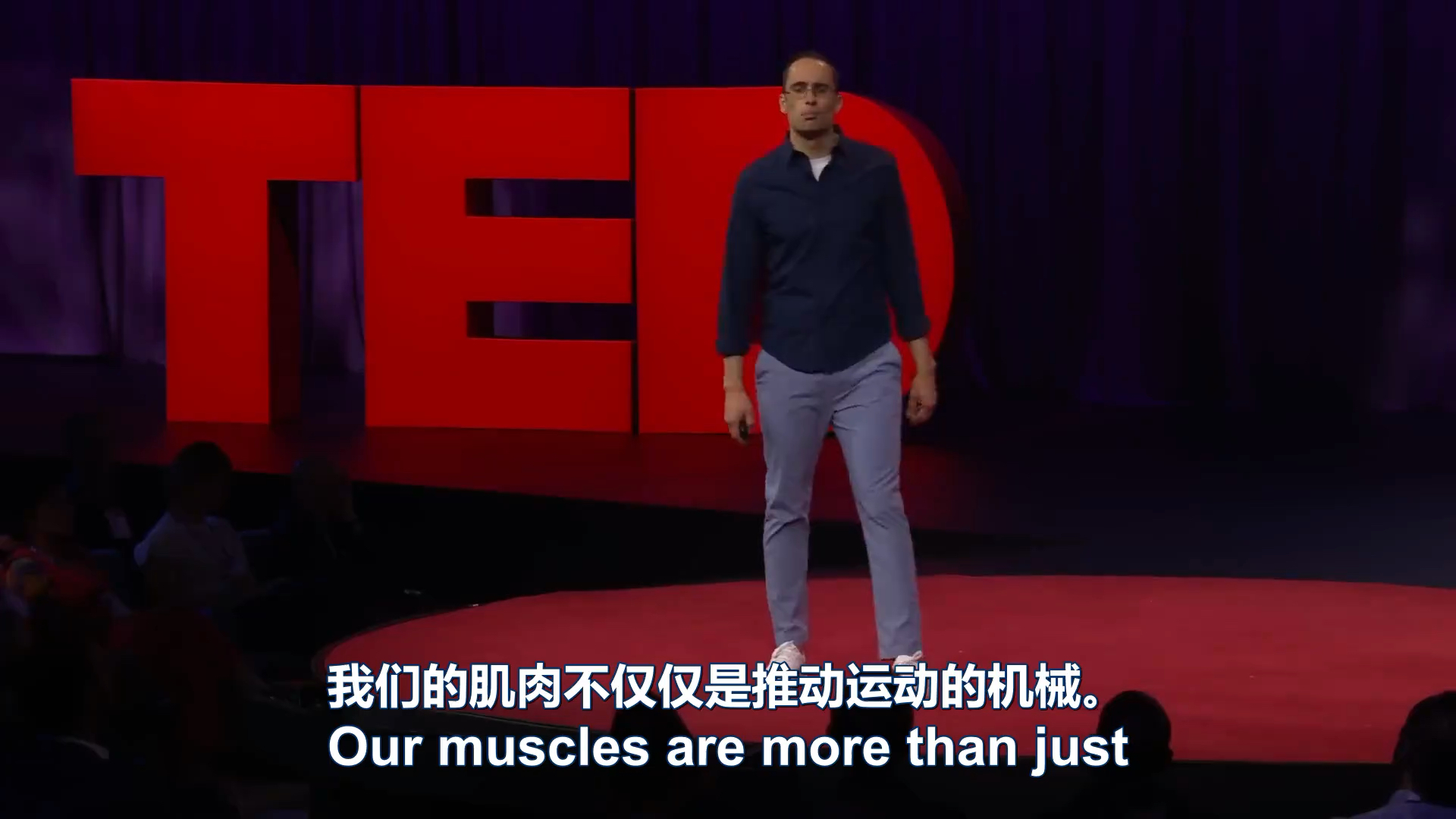
字幕摘录
| 时间 | 英文 | 中文 |
|---|---|---|
| 0:04 | My favorite job ever was as a summer camp counselor, | 我最喜欢的工作是 作为夏令营的顾问, |
| 0:08 | where it was basically paid to play games with kids all day. | 在那里,它基本上支付 玩游戏与孩子一整天。 |
| 0:11 | We played capture the flag, run in bases, dodgeball, | 我们玩捉旗,跑在基地,躲避球, |
| 0:15 | went swimming in the pool every day. | 每天在游泳池游泳 |
| 0:17 | And at the end of the day, I'd be tired, but in a good way. | 临终时,我虽疲劳,但以妙法. |
| 0:20 | Not mentally drained, but physically tired. | 不是精神排水 而是身体疲劳 |
| 0:24 | A satisfied kind of tired, | 一种满意的疲劳, |
| 0:25 | where I'd use my body to complete a hard day's work. | 在那里,我会用我的身体 完成一个艰苦的一天的工作。 |
| 0:28 | Flash forward, and my job today looked like a lot of fun. | 闪闪发光,而我今天的工作 看起来像很多乐趣。 |
| 0:31 | It looks very different. | 看起来很不一样 |
展开字幕全文(107 条)
| 序号 | 英文 | 中文 |
|---|---|---|
| 1 | My favorite job ever was as a summer camp counselor, | 我最喜欢的工作是 作为夏令营的顾问, |
| 2 | where it was basically paid to play games with kids all day. | 在那里,它基本上支付 玩游戏与孩子一整天。 |
| 3 | We played capture the flag, run in bases, dodgeball, | 我们玩捉旗,跑在基地,躲避球, |
| 4 | went swimming in the pool every day. | 每天在游泳池游泳 |
| 5 | And at the end of the day, I'd be tired, but in a good way. | 临终时,我虽疲劳,但以妙法. |
| 6 | Not mentally drained, but physically tired. | 不是精神排水 而是身体疲劳 |
| 7 | A satisfied kind of tired, | 一种满意的疲劳, |
| 8 | where I'd use my body to complete a hard day's work. | 在那里,我会用我的身体 完成一个艰苦的一天的工作。 |
| 9 | Flash forward, and my job today looked like a lot of fun. | 闪闪发光,而我今天的工作 看起来像很多乐趣。 |
| 10 | It looks very different. | 看起来很不一样 |
| 11 | Even though I'm an exercise scientist, | 虽然我是一个练习科学家, |
| 12 | I don't get to actually do any exercise at work. | 我实际上没有做任何运动 在工作。 |
| 13 | Instead, my days consist of staring at a computer screen | 相反,我的日子就是看着电脑屏幕 |
| 14 | and sitting in countless meetings. | 并坐在无数会议。 |
| 15 | The transition for me to office work was jarring. | 我向办公室工作的转变很激烈 |
| 16 | I no longer had those same feelings of satisfaction | 我不再有同样的满足感 |
| 17 | at the end of the day's work. | 在一天的工作结束时。 |
| 18 | I was so tired, exhausted, actually, | 我太累了,很累,实际上, |
| 19 | but I hadn't used my body at all. | 但我根本没用过身体 |
| 20 | And this shift that I experienced, I'm not alone in feeling. | 我经历的这种转变, 并不是我一个人在感受。 |
| 21 | We are living in the most sedentary era in modern history. | 我们生活在现代史上最安定的时代。 |
| 22 | In a single year, | 在一年之内 |
| 23 | the average adult now spends a full 187 days, | 成年人平均花187天的时间 |
| 24 | over half of the year, | 超过一年半的时间, |
| 25 | sitting or physically idle. | 坐在或身体闲置。 |
| 26 | The bad news is that our bodies weren't designed for this. | 坏消息是我们的身体不是为这个设计的 |
| 27 | I know because I've spent my career as a scientist | 我知道,因为我度过了科学家的生涯 |
| 28 | studying the harms of being highly sedentary. | 研究高度定居的危害 |
| 29 | And what scientists have found is that being highly sedentary | 科学家们发现的 是高度的静态 |
| 30 | increases your risk of diabetes, | 增加你的糖尿病风险, |
| 31 | cancer, dementia, | 癌症、痴呆症, |
| 32 | heart disease | 心脏病 |
| 33 | and, ultimately, early death. | 最终是早逝 |
| 34 | Worse, this is true even if you exercise regularly. | 更糟糕的是,这是事实,即使你经常锻炼。 |
| 35 | To put it simply, | 简单地说, |
| 36 | being highly sedentary, as many of us are, | 和我们许多人一样,是高度定居的, |
| 37 | is toxic. | 有毒的 有毒的吗? |
| 38 | Let's start with the healthiest people among us to use as an example. | 让我们从我们中最健康的人开始 来作为例子 |
| 39 | In one study, | 在一个研究中, |
| 40 | when highly trained endurance athletes were forced to bed rest, | 当训练有素的耐力运动员被迫休息时, |
| 41 | their aerobic fitness levels dropped by about 20 percent | 他们的体能水平下降了20%左右 |
| 42 | in just three days. | 三天之内 |
| 43 | What took them months to build | 他们花了好几个月才建立 |
| 44 | was erased in a matter of a long weekend with no movement. | 在一个漫长的周末里被抹去,没有动静。 |
| 45 | This isn't unique to highly trained endurance athletes. | 这并非是训练有素的耐力运动员独有的. |
| 46 | If you took a regular, typical healthy adult | 如果你服用一个正常,典型的健康成年人 |
| 47 | and forced them to 40 days of bed rest, | 强迫他们休息40天, |
| 48 | their heart would show changes similar to 50 years of aging. | 他们的心脏会显示类似于50年老化的变化。 |
| 49 | Now, this isn't about missing a workout or two. | 现在,这不是 缺少一个或两个锻炼。 |
| 50 | Exercise only makes up a tiny fraction of your day. | 锻炼只是你一天的一小部分 |
| 51 | The toxicity comes from when movement begins to disappear from your life. | 毒性来自于运动开始从你的生命中消失时. |
| 52 | And this begs the question, | 这让人很困扰 |
| 53 | why isn't exercise alone enough? | 为什么一个人锻炼还不够? |
| 54 | A part of the answer lies in our muscles. | 答案的一部分在于我们的肌肉。 |
| 55 | Our muscles are more than just a machinery that power movement. | 我们的肌肉不仅仅是一种动力运动的机械 |
| 56 | They're also really important for regulating things like our metabolism. | 它们对于调节我们的新陈代谢 也是非常重要的 |
| 57 | Let's use blood sugar as an example. | 以血糖为例. |
| 58 | Our muscles are like sponges for blood sugar. | 我们的肌肉就像血糖的海绵 |
| 59 | When we regularly use and contract our muscles, | 当我们经常使用和收缩我们的肌肉, |
| 60 | they're like a moist sponge, | 他们就像湿海绵, |
| 61 | soaking up the sugar from the bloodstream. | 从血液中浸出糖 |
| 62 | When we don't regularly use and contract our muscle, | 当我们不定期使用和收缩我们的肌肉, |
| 63 | we're like a dry and shriveled-up sponge, | 我们就像一个干燥的, 累累的海绵, |
| 64 | not really good at soaking up anything. | 不太会泡东西 |
| 65 | Now, here's the key. | 现在,这是关键。 |
| 66 | When we exercise, it rewets the sponge. | 当我们锻炼时,它会重排海绵。 |
| 67 | But eventually, that sponge dries out | 但最终海绵干涸了 |
| 68 | if you get little to no movement the rest of your day. | 如果你一天没动静的话 |
| 69 | So what do we do? | 那怎么办? |
| 70 | Well, we need to keep the sponge moist. | 我们要保持海绵湿润 |
| 71 | Now, I'm not going to tell you that we need to move all day. | 现在,我不会告诉你,我们需要移动一整天。 |
| 72 | Instead, I'm going to suggest that we follow the lead of an unlikely place, | 相反,我要建议我们 遵循一个不可能的地方的领导, |
| 73 | the tobacco industry. | 烟草工业。 |
| 74 | In their early days, cigars were their primary product, | 早年雪茄是他们的主要产品 |
| 75 | but this was the industrial age. | 但这是工业时代。 |
| 76 | Millions were working in factories, | 数百万人在工厂工作, |
| 77 | and those workers only got short breaks from their lines, | 而那些工人只得到 短暂的突破, |
| 78 | certainly not long enough to smoke a cigar. | 抽雪茄的时间肯定不够长 |
| 79 | Thus, the cigarette became the primary focus of the tobacco industry, | 因此,香烟成为烟草业的主要重点, |
| 80 | so that these workers could get their fix in small, short doses | 这样这些工人就可以用小的、短的剂量得到治疗 |
| 81 | a few minutes at a time throughout the day. | 整个白天一次几分钟 |
| 82 | And if sitting truly is the new smoking, | 如果真的坐着抽烟 |
| 83 | as the saying goes, | 俗话说 |
| 84 | then what better way to fight back | 那还有什么更好的回击方法 |
| 85 | than to use the approach of the tobacco industry, | 而不是用烟草工业的方法, |
| 86 | but instead of smoke breaks, | 而不是烟消云散, |
| 87 | movement breaks. | 运动中断。 |
| 88 | Short bouts of movement a few minutes at a time, | 几分钟的短暂移动, |
| 89 | sprinkled in throughout the day. | 整天都洒进去了 |
| 90 | If our muscles need regular use to function optimally, | 如果我们的肌肉需要正常使用才能发挥最佳功能 |
| 91 | then outside of any exercise time, | 在任何锻炼的时间之外, |
| 92 | we need to be contracting them frequently through movement. | 我们需要经常通过移动与它们签约。 |
| 93 | The question that we asked in my lab is, | 我们在实验室问的问题是, |
| 94 | what's the least amount of movement breaks that we need | 我们最不需要的移动断层是多少 |
| 95 | in order to offset the harms of being highly sedentary? | 为了抵消高度定居的危害? |
| 96 | And the answer, we found, | 而答案,我们发现, |
| 97 | was a five-minute walk every half hour. | 每半小时走五分钟 |
| 98 | This reduced the blood sugar spike after eating by about 60 percent. | 这在食用后将血糖含量降低约60%。 |
| 99 | That's the size of a reduction you would expect to see | 这就是你期望的减幅 |
| 100 | if you put someone on medication to manage their blood sugar levels. | 如果你给某人服用药物 以控制他们的血糖水平。 |
| 101 | The cool part is that our participants weren't sprinting | 酷的是,我们的参与者没有冲刺 |
| 102 | or even walking fast. | 或甚至走得很快。 |
| 103 | This was a stroll. | 这是散步。 |
| 104 | They were walking at two miles an hour. | 他们步行时速两英里 |
| 105 | Now, I want to be honest. | 现在,我想说实话。 |
| 106 | What I'm proposing to you as the answer to our modern sedentary lives, | 我建议你作为我们现代定居生活的答案 |
| 107 | our five-minute movement breaks every hour, or every half hour. | 我们每时每刻 或每半小时休息五分钟 |
该视频共有字幕 107 条。解锁更多字幕为会员功能,请移动到 价格
P2 · 久坐:隐形的慢性伤害|TED p02 下 (P2)
字幕摘录
| 时间 | 英文 | 中文 |
|---|---|---|
| 0:05 | This reduced the blood sugar spike after eating by about 60 percent. | 这在食用后将血糖含量降低约60%。 |
| 0:09 | That's the size of a reduction | 这就是减少的大小 |
| 0:11 | you would expect to see if you put someone on medication | 你会期待看到 如果你给某人服药 |
| 0:14 | to manage their blood sugar levels. | 管理他们的血糖水平。 |
| 0:17 | The cool part is that our participants weren't sprinting | 酷的是,我们的参与者没有冲刺 |
| 0:20 | or even walking fast. | 或甚至走得很快。 |
| 0:22 | This was a stroll. | 这是散步。 |
| 0:23 | They were walking at two miles an hour. | 他们步行时速两英里 |
| 0:28 | Now, I want to be honest. | 现在,我想说实话。 |
| 0:30 | What I'm proposing to you as the answer to our modern society | 我建议你做为现代社会的答案 |
展开字幕全文(121 条)
| 序号 | 英文 | 中文 |
|---|---|---|
| 1 | This reduced the blood sugar spike after eating by about 60 percent. | 这在食用后将血糖含量降低约60%。 |
| 2 | That's the size of a reduction | 这就是减少的大小 |
| 3 | you would expect to see if you put someone on medication | 你会期待看到 如果你给某人服药 |
| 4 | to manage their blood sugar levels. | 管理他们的血糖水平。 |
| 5 | The cool part is that our participants weren't sprinting | 酷的是,我们的参与者没有冲刺 |
| 6 | or even walking fast. | 或甚至走得很快。 |
| 7 | This was a stroll. | 这是散步。 |
| 8 | They were walking at two miles an hour. | 他们步行时速两英里 |
| 9 | Now, I want to be honest. | 现在,我想说实话。 |
| 10 | What I'm proposing to you as the answer to our modern society | 我建议你做为现代社会的答案 |
| 11 | is that we need to think about our sedentary lives. | 我们需要考虑一下我们定居的生活 |
| 12 | Our five-minute movement breaks every hour, or every half hour, | 我们每时每刻 或每半小时休息五分钟 |
| 13 | I should say. | 我应该说。 |
| 14 | The truth is that when I found out that this was the answer, | 事实是 当我发现这就是答案 |
| 15 | I was disappointed. | 我当时很失望 |
| 16 | My immediate reaction was, | 我立即的反应是, |
| 17 | there's no way people are going to do this, | 人们不可能这么做的 |
| 18 | largely because I couldn't realistically do it myself. | 大部分是因为我自己不能现实地做到这一点。 |
| 19 | And so part of me wondered whether this should be the end of the road | 所以,我的一部分想知道 这是否应该是 道路的尽头 |
| 20 | for my research on movement breaks. | 我研究移动中断。 |
| 21 | Rather than argue with the data, | 而不是与数据争论, |
| 22 | I decided to press forward and put it to the test in the real world. | 我决定坚持下去,在现实世界中进行试验. |
| 23 | With a little help from public radio, | 在公共电台的帮助下 |
| 24 | we had over 20,000 people try our experiment | 我们有两万多人尝试我们的实验 |
| 25 | to take movement breaks throughout the day, | 使整个白天的行动中断, |
| 26 | anywhere from every half hour to every two hours for two weeks. | 从每半小时到两周 |
| 27 | And to my surprise, | 令我惊讶的是, |
| 28 | the vast majority of people liked taking movement breaks. | 绝大多数人喜欢休息 |
| 29 | Many wanted to keep going. | 很多人想继续前进。 |
| 30 | We had tapped into some things that people were craving, | 我们研究了一些人们渴望的东西 |
| 31 | an antidote to our toxic modern lives. | 解毒剂 现代生活。 |
| 32 | But what really surprised me | 但真正让我惊讶的是 |
| 33 | is that when we asked people what they liked about movement breaks, | 当我们问人们他们喜欢什么 运动中断, |
| 34 | very few touted the physical health benefits. | 很少提到身体健康的好处。 |
| 35 | Instead, what they liked | 相反,他们喜欢的 |
| 36 | was how the movement breaks made them feel. | 运动破裂让他们感觉如何 |
| 37 | They loved that they felt energized, | 他们喜欢他们觉得充满活力, |
| 38 | that they no longer felt like they were in this brain fog throughout the day, | 他们不再觉得自己整天都在脑雾中 |
| 39 | that they were able to actually better focus at work. | 他们实际上能够更好地专注于工作。 |
| 40 | And this really resonated with me and my experiences as an office worker | 这让我和我在办公室工作的经历 产生共鸣 |
| 41 | and how the exhaustion impacted my life. | 以及疲劳如何影响我的生活。 |
| 42 | I remember when my kids were younger | 我记得我孩子年轻的时候 |
| 43 | and they'd come home from my office job, | 他们从我办公室工作回来 |
| 44 | I'd open the door, | 我会开门, |
| 45 | and they'd greet me with energy and enthusiasm | 他们用精力和热情迎接我 |
| 46 | and want me to immediately start playing with them. | 让我立刻开始跟他们玩 |
| 47 | And I just didn't have it in me. | 我只是没有它在我身上。 |
| 48 | I was too drained from the day. | 我从那天开始就太累了 |
| 49 | And that's one of the most striking findings that we see in the lab. | 这是实验室里最引人注目的发现之一。 |
| 50 | Over the course of sitting all day with no movement, | 整天坐着无动于衷 |
| 51 | people's mood plummets | 人们的情绪下降 |
| 52 | while their fatigue builds and builds. | 他们的疲劳正在兴起。 |
| 53 | And that's because our muscles | 那是因为我们的肌肉 |
| 54 | have a symbiotic relationship with our brains. | 和我们的大脑有共生关系 |
| 55 | They're in constant communication | 他们经常联络 |
| 56 | and our biological need to contract muscle | 和我们的生理需要 收缩肌肉 |
| 57 | is more than just about physical health and metabolism. | 不仅仅是身体健康和新陈代谢 |
| 58 | It's also foundational to mental and brain health. | 这也是精神和大脑健康的基础。 |
| 59 | The promising news is that in our real-world experiment, | 充满希望的消息是 在我们现实世界的实验中 |
| 60 | our participants only average four to five movement breaks a day, | 我们的参与者平均每天只休息四到五次 |
| 61 | far below our lab-tested prescription. | 远远低于我们实验室测试的处方 |
| 62 | And yet, they still reduce their feelings of fatigue by about 25 percent. | 然而,他们仍然将疲劳感降低了25%。 |
| 63 | And we see this play out in the lab as well. | 我们在实验室里也看到了这个游戏。 |
| 64 | Something as small as a one-minute walk every hour | 每时每刻步行一分钟 |
| 65 | can still largely offset the impact of sitting all day on your mood. | 仍然可以抵消整天坐着对心情的影响 |
| 66 | So even small, short, infrequent movement breaks | 所以即使是小的,短的,不经常的移动中断 |
| 67 | can counter some, not all, | 可以对抗一些,不是所有, |
| 68 | but some of the hidden costs of our sedentary lives. | 但一些隐藏的代价 我们定居的生活。 |
| 69 | Now, one of the biggest concerns I often hear from employers in schools | 现在,一个最大的问题 我经常听到 从雇主在学校 |
| 70 | about movement breaks is that they worry that it's disruptive, | 关于运动中断,他们担心 它的破坏性, |
| 71 | that it'll hurt productivity and performance. | 这会损害生产力和业绩。 |
| 72 | Movement doesn't mean you have to stop working. | 运动并不意味着你必须停止工作。 |
| 73 | You can have walking meetings, pace around while you're on a call, | 你可以开散步会 随时待命 |
| 74 | get walking pads or simply just move around while thinking. | 得到行走垫或只是移动 在思考。 |
| 75 | The bigger idea and concept with movement breaks | 更大的想法和概念 随着运动中断 |
| 76 | is that when you compare brain activity | 当你比较大脑活动时 |
| 77 | after movement versus after sitting, | 在动静和坐着之后 |
| 78 | the differences are so striking. | 差异是如此惊人。 |
| 79 | The brain after movement looks like one | 动后的大脑看起来像一个 |
| 80 | certainly far more ready to learn and to work, | 当然,更愿意学习和工作, |
| 81 | and yet somewhere along the way, | 但是在路上的某个地方 |
| 82 | we decided that sitting and staring in front of a computer screen | 我们决定坐在电脑屏幕前盯着看 |
| 83 | for eight hours straight is the best way to work. | 直接工作8小时是最好的方法 |
| 84 | And that's where the real challenge lies. | 这就是真正的挑战所在。 |
| 85 | Productivity culture, convenience culture and technology | 生产力文化、便利文化和技术 |
| 86 | are re-engineering our lives | 正在改造我们的生活 |
| 87 | and still removing the need for movement. | 并且仍然消除了移动的需要。 |
| 88 | We can have groceries delivered | 我们可以送些杂货 |
| 89 | and robots vacuum our floors without ever getting off the couch. | 机器人从不下沙发 就把地板打扫干净 |
| 90 | And the consequences of this re-engineering | 而这次改造的后果 |
| 91 | is that we now often see movement as an inconvenience. | 我们现在常常把行动视为一种不便。 |
| 92 | We see it as an interruption. | 我们认为这是中断。 |
| 93 | We see it as something to avoid. | 我们认为,这是要避免的事情。 |
| 94 | I saw this play out with my daughter recently | 我最近和我女儿一起看戏 |
| 95 | when I had to drive her to our local library. | 我开车送她去当地图书馆 |
| 96 | But when we got there, the parking lot was full. | 但是当我们到了那里,停车场是满的。 |
| 97 | So I had to park a little further away on the street, | 所以我不得不把车停在大街上 |
| 98 | and she immediately started complaining that I had parked so far away. | 她立刻开始抱怨我停在这么远的地方 |
| 99 | Now, mind you, the place I had parked | 记住,我停过的地方 |
| 100 | may have had an additional 20 seconds of walking to her life, | 也许还有20秒的路要走 |
| 101 | not a mile, but 20 seconds. | 不是一英里,而是20秒钟。 |
| 102 | But that moment hit me. | 但那个时刻打到我了 |
| 103 | Movement had become an inconvenience for my daughter, too. | 动静也给我女儿带来不便 |
| 104 | So I gave her a classic dad lecture, | 所以我给了她一个典型的爸爸讲座, |
| 105 | and this was met with a preteen eye roll. | 这上面有一张十几岁的眼睛 |
| 106 | But a few days later, we were leaving a stadium, | 但几天后 我们离开体育场 |
| 107 | and I was taking the escalator down. | 我拿下扶梯。 |
| 108 | As I'm going down, I see something past my mind, | 当我下楼时,我看到一些东西 经过我的脑海, |
| 109 | I look, and it's my daughter taking the regular set of stairs, | 我看着,这是我女儿走固定的楼梯, |
| 110 | happily taking the regular set of stairs, | 很高兴能走固定的楼梯 |
| 111 | smiling at me as she goes by. | 她过去时对我笑 |
| 112 | It was a small victory. | 这是一个小小的胜利。 |
| 113 | And if my eye-rolling preteen can make this shift on occasion, | 如果我的眼圈前座偶尔能改变一下 |
| 114 | then I have hope for the rest of us. | 然后,我对我们还有希望。 |
| 115 | Because movement breaks are ultimately about something bigger. | 因为行动中断 最终是为了更大的事情。 |
| 116 | They're about seeing those small moments in your day | 他们想在你这一天看到这些小时刻 |
| 117 | when you have the opportunity to move, | 当你有机会移动, |
| 118 | to see them not as inconveniences, | 以免他们遭遇不便, |
| 119 | but as a way to reconnect our bodies and our brains, | 但作为重新连接我们的身体和大脑的方式, |
| 120 | so we're not living some tired, drained version of ourselves. | 所以,我们没有生活 一些疲劳,耗尽的版本我们自己。 |
| 121 | Thank you. | 谢谢 |
该视频共有字幕 123 条。解锁更多字幕为会员功能,请移动到 价格