唯一正确的英语学习方法,别再用其他不科学的方法浪费时间|St
共 2 集
剧集目录
| 集 | 标题 | 时长 |
|---|---|---|
| P1 | 唯一正确的英语学习方法,别再用其他不科学的方法浪费时间|St | 8:15 |
| P2 | 唯一正确的英语学习方法,别再用其他不科学的方法浪费时间|St | 7:20 |
P1 · 唯一正确的英语学习方法,别再用其他不科学的方法浪费时间|Stephen Krashen p01 上 (P1)
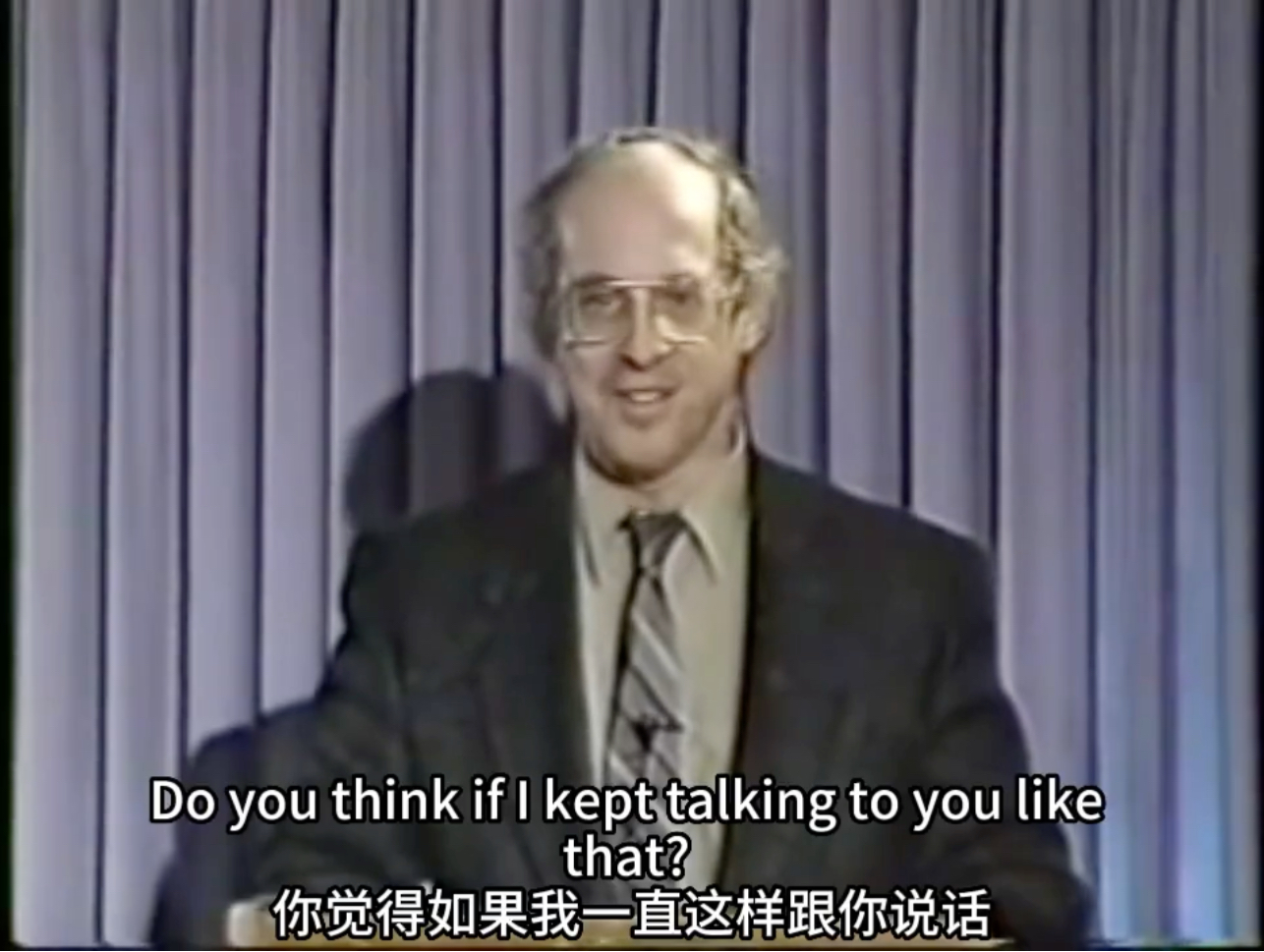
字幕摘录
| 时间 | 英文 | 中文 |
|---|---|---|
| 0:00 | I'd like to begin my presentation this afternoon by talking about what I think is the most | 我想在今天下午的演讲开始 谈谈我认为最 |
| 0:05 | important issue in language education, the most important question, and that is how do | 语言教育中的重要问题,最重要的问题,那就是如何 |
| 0:10 | we acquire language? | 我们得到语言? |
| 0:12 | And I'd like to begin this discussion, this presentation, with an outrageous statement. | 我想开始讨论,这个演讲, 以一个令人发指的发言。 |
| 0:17 | In my opinion, we all acquire language the same way. | 我认为,我们都以同样的方式获得语言。 |
| 0:22 | The reason this is an outrageous thing to say is that these days in education we're | 之所以说这些令人愤慨的话 是因为我们教育的这些天 |
| 0:25 | living in an age of individual variation. | 生活在个体变化的年代。 |
| 0:28 | We're very concerned about how our students are different, not how our students are the | 我们很关心我们的学生是如何不同的 而不是我们的学生是如何 |
| 0:32 | same. | 一样 |
| 0:33 | Those of you who have been around in the field for a while remember all about 15, 20 years | 你们中那些在野外待过一阵子的人 记得15、20年 |
展开字幕全文(188 条)
| 序号 | 英文 | 中文 |
|---|---|---|
| 1 | I'd like to begin my presentation this afternoon by talking about what I think is the most | 我想在今天下午的演讲开始 谈谈我认为最 |
| 2 | important issue in language education, the most important question, and that is how do | 语言教育中的重要问题,最重要的问题,那就是如何 |
| 3 | we acquire language? | 我们得到语言? |
| 4 | And I'd like to begin this discussion, this presentation, with an outrageous statement. | 我想开始讨论,这个演讲, 以一个令人发指的发言。 |
| 5 | In my opinion, we all acquire language the same way. | 我认为,我们都以同样的方式获得语言。 |
| 6 | The reason this is an outrageous thing to say is that these days in education we're | 之所以说这些令人愤慨的话 是因为我们教育的这些天 |
| 7 | living in an age of individual variation. | 生活在个体变化的年代。 |
| 8 | We're very concerned about how our students are different, not how our students are the | 我们很关心我们的学生是如何不同的 而不是我们的学生是如何 |
| 9 | same. | 一样 |
| 10 | Those of you who have been around in the field for a while remember all about 15, 20 years | 你们中那些在野外待过一阵子的人 记得15、20年 |
| 11 | ago people were very concerned about something called field dependent learners and field | 之前人们非常关心 所谓的田地依赖学习和田地 |
| 12 | independent learners. | 独立学习者。 |
| 13 | You give people a certain test and one group gets this treatment, one group gets the other. | 你给人们一个特定的测试 一个小组得到这种治疗, 一个小组得到另一个。 |
| 14 | Then about 15 years ago it was left side of the brain, right side of the brain. | 大约15年前,它是大脑的左侧,右侧。 |
| 15 | Some people are left hemisphere thinkers, some people are right hemisphere. | 有些人是左半球思想家,有些人是右半球思想家. |
| 16 | Then about 10 years ago, cognitive style. | 大约10年前 认知风格 |
| 17 | The cognitive style of the home culture differs from the cognitive style of the school culture. | 家庭文化的认知风格与学校文化的认知风格不同. |
| 18 | We have a clash, etc. | 我们发生了冲突 |
| 19 | Well, each of the examples I gave you is probably correct. | 嗯,每一个我给你的例子 可能是正确的。 |
| 20 | There is individual variation and there is quite a bit of it. | 有一些个体的变异 也有相当一部分 |
| 21 | Nevertheless, there are some things we all do the same. | 然而,我们也有同样的事情。 |
| 22 | Let me give you some examples. | 让我举几个例子。 |
| 23 | Digestion. | 文摘报. |
| 24 | We all digest food the same, no significant individual variation. | 我们都一样消化食物 没有显著的个体差异 |
| 25 | First you put it in your mouth, then you chew it up, then it goes down your throat, then | 先放进嘴里,然后嚼掉,然后咽喉 |
| 26 | into your stomach. | 进入你的胃。 |
| 27 | That's how it's done everywhere. | 随处行此法. |
| 28 | That's how it's done in North America, South America, Europe, Asia, Africa. | 北美,南美,欧洲,亚洲,非洲都是如此. |
| 29 | That's how it's done everywhere in the world. | 世间一切处皆如此. |
| 30 | The visual system is the same everywhere. | 视觉系统随处可见. |
| 31 | It's always the occipital lobe in the back of the brain. | 总是脑后部的骨髓叶. |
| 32 | It's never in the side of the brain. | 从不在脑侧. |
| 33 | It's never in the front of the brain. | 永不于脑前. |
| 34 | It's never in the elbow. | 从不在肘. |
| 35 | It's done exactly the same everywhere you go. | 你到哪里都一样 |
| 36 | By the way, I used to use sex as an example of things. | 况我昔以性为譬. |
| 37 | Everyone does the same, but some counter examples have been pointed out to me recently. | 每个人都这样做,但最近有人向我举出一些反例。 |
| 38 | Actually, I saw this movie, if you really want to know the truth. | 事实上,我看过这部电影 如果你真的想知道真相的话 |
| 39 | Anyway, we all require language the same. | 总之,我们都需要同样的语言。 |
| 40 | And rather than just talk about it, I'd like to show you. | 而不是只谈这件事,我想告诉你。 |
| 41 | I'd like to take just a couple of minutes and give you some sample language lessons. | 我想用几分钟时间 给你一些语言样本 |
| 42 | I'll use a language that I'm sure you've heard before and maybe some of you speak. | 我会用一种你以前听过的语言 也许你们有些人会说话 |
| 43 | And you can tell me which of these two very brief lessons you like better. | 你可以告诉我这两个你更喜欢的简短的课。 |
| 44 | Here's lesson number one. | 这是第一课 |
| 45 | (原始内容存档于2018-09-26). Wir weden jetzt anfangen, Deutsch zu lernen. | |
| 46 | (原始内容存档于2017-09-29). Und ich möchte voraussagen, dass nach meiner Meinung, Deutsch ist eine sehr schöne Sprache. 昆明植物研究所. | |
| 47 | {\fn黑体\fs22\bord1\shad0\3aHBE\4aH00\fscx67\fscy66\2cHFFFFFF\3cH808080}嗯 哥们儿 {\fn黑体\fs22\bord1\shad0\3aHBE\4aH00\fscx67\fscy66\2cHFFFFFF\3cH808080}请说一下 | |
| 48 | What do you think? | 你觉得呢? |
| 49 | Good lessons so far? | 目前为止的好课? |
| 50 | Do you think if I kept talking to you like that, you'd pick up German? | 你觉得如果我一直这样跟你说话 你会选德语吗? |
| 51 | Not very likely. | 不会吧 |
| 52 | How about if I repeated it? | 如果我重复一遍怎么样? |
| 53 | Would that help? | 有用吗? |
| 54 | Probably not. | 也许不是。 |
| 55 | How about if I said it louder? | 如果我说大声点呢? |
| 56 | Would that help? | 有用吗? |
| 57 | Probably not. | 也许不是。 |
| 58 | How about if I said it and you repeated it back? | 如果我说,你再重复一遍呢? |
| 59 | Again, I don't think that would help. | 再说一遍,我觉得这没用 |
| 60 | How about if I wrote it out for you and you could see it on your television screen? | 如果我帮你写出来 你就可以在电视屏幕上看到它 |
| 61 | That wouldn't help either. | 也没用 |
| 62 | How about if I wrote it out for you and you copied it down? | 如果我写出来给你,你抄下来怎么样? |
| 63 | How about if I wrote it out for you and deleted every fifth word and you tried to guess what the word is? | 如果我帮你写出来 删掉每五个字 你试着猜这个词是什么? |
| 64 | The truth is that none of these things help. | 事实是,这些东西都没有帮助。 |
| 65 | None of these things mean anything. | 这些东西都没有意义 |
| 66 | And I hope you can see that now. | 我希望你现在能看到这一点。 |
| 67 | Here's lesson number two. | 下第二课. |
| 68 | And for this, you have to watch me carefully. | 为此,你必须仔细观察我。 |
| 69 | Das ist meine Hand. | 达斯是美因手。 |
| 70 | Verstehen Sie das? | 弗斯泰恩・西达斯? |
| 71 | Hand. | 手给我 |
| 72 | Everyone say, ja, I can hear you, even though it's a TV audience. | 每个人都说,是的,我可以听到你, 虽然这是一个电视观众。 |
| 73 | Das is mein Kopf. (原始内容存档于2018-07-21). | |
| 74 | Verstehen Sie Kopf, ja? | 弗斯泰恩・西・考夫,是吗? |
| 75 | Gut. | 顾曰. |
| 76 | Kopf. | 库普夫. |
| 77 | And here I'll draw a picture now. | 现在我要画一幅画 |
| 78 | Kopf. | 库普夫. |
| 79 | Ist gut, ja? | 肠胃,是吗? |
| 80 | Schön. | 许ö. |
| 81 | Kopf. | 库普夫. |
| 82 | Das ist Mr. Spock, ja? | 是史波克先生吗? |
| 83 | Mr. Spock hat zwei Ohren. | 斯波克·哈特·奥赫伦先生 |
| 84 | Ohren. | 欧仁. |
| 85 | Verstehen Sie Ohren? | 弗斯泰亨·西·奥赫伦? |
| 86 | (原始内容存档于2018-09-21). Er hat zwei Ohren. | |
| 87 | Okay, Mr. Spock, ja? | 好吧,斯波克先生,是吗? |
| 88 | Ach nein, Entschuldigung, okay. | 尼恩,恩特舒尔迪贡,好吗? |
| 89 | Augen. | 奥根 |
| 90 | Verstehen Sie Augen? | 弗斯泰亨·西·奥根? |
| 91 | Augen. | 奥根 |
| 92 | Wie viele Augen? | 维埃·维埃莱·奥根? |
| 93 | (原始内容存档于2018-09-26). Eins, zwei, drei Augen. | |
| 94 | Drei Augen. | 德雷奥根. |
| 95 | Ist das richtig? | 伊斯特达斯·富奇蒂格? |
| 96 | Drei Augen? | 德雷奥根? |
| 97 | Nein. | 无. |
| 98 | (原始内容存档于2018-03-27). Wir habeln nur zwei Augen. | |
| 99 | Mund. | 穆德 穆德 穆德 穆德 穆德 |
| 100 | Verstehen Sie Mund? | 弗斯泰亨·西·芒德? |
| 101 | Und ier ist eine Zigarette, ya? 说吧, 说吧。 | |
| 102 | Nein. | 无. |
| 103 | Zigaretten sind nicht gut. | 齐加雷滕辛尼奇特肠。 |
| 104 | If you understood lesson number two, not every word, but more or less, | 如果你理解第二课,不是每个字,而是多少 |
| 105 | I did everything necessary to teach you German. | 我做了所有必要的 教你德语。 |
| 106 | And now I'm going to share with you the most important thing | 现在我要跟你分享最重要的事情 |
| 107 | I have learned about language. | 我学过语言 |
| 108 | Probably the best kept secret in the profession. | 也许是行业中最好的秘密 |
| 109 | We acquire language in one way and only one way | 我们只能用一种方式获得语言 |
| 110 | when we understand messages. | 当我们理解信息。 |
| 111 | We call this comprehensible input. | 我们称之为可理解的投入。 |
| 112 | We acquire language when we understand what people tell us. | 当我们理解人们所说的话时,我们获得语言。 |
| 113 | Not how they say it, but what they say, | 不是他们怎么说,而是他们说什么, |
| 114 | or when we understand what we read. | 或者当我们理解我们读到什么。 |
| 115 | Comprehensible input, in my opinion, | 我认为,令人费解的投入, |
| 116 | has been the last resort of the language teaching profession. | 成为语言教学专业的最后手段。 |
| 117 | We've tried everything else. | 我们尝试了其他一切。 |
| 118 | We've tried grammar teaching, drills and exercises, computers, et cetera. | 我们尝试过语法教学,操练和练习,计算机等等. |
| 119 | But the only thing that seems to count | 但唯一值得考虑的 |
| 120 | is getting messages you understand, comprehensible input. | 正在获取您所理解的信息, 可理解的输入 。 |
| 121 | Now one of the reasons lesson number two | 现在第二课的原因之一 |
| 122 | was better than lesson number one is we had Mr. Spock to help us out. | 比第一课要好的是 我们让斯波克先生帮我们 |
| 123 | So anything that helps make input comprehensible, pictures, | 所以,任何有助于 输入理解,图片, |
| 124 | knowledge of the world, realia, et cetera, | 了解世界,现实等, |
| 125 | helps language acquisition. | 帮助获取语言。 |
| 126 | If comprehensible input is true, what we call the input hypothesis | 如果可理解的输入是真实的,那么我们称之为输入假说 |
| 127 | is true, other things follow from it. | 这是真的,其他的事情从它。 |
| 128 | And a very important corollary of the input hypothesis is this. | 输入假设的一个非常重要的推论就是这个. |
| 129 | And this may come as a bit of a surprise to some of you. | 这也许对你们来说是个惊喜 |
| 130 | Certainly came as a surprise to me. | 当然让我很惊讶 |
| 131 | Talking is not practicing. | 说话不是练习 |
| 132 | What does this mean? | 这是什么意思? |
| 133 | Means if you want to improve your Spanish, | 意思是如果你想改进你的西班牙语 |
| 134 | it will not help you to speak Spanish out loud in the car | 在车里大声说西班牙语对你好 |
| 135 | as you drive to work in the morning. | 早晨开车去上班 |
| 136 | It will not help you to go to the bathroom, close the door, | 上厕所 关上门 没用的 |
| 137 | and speak Spanish to the mirror. | 用西班牙语和镜子说话 |
| 138 | I used to think those things help. | 我以前觉得这些东西有用 |
| 139 | Now I think they don't. | 现在我想他们不会了 |
| 140 | On the other hand, if we were a German class | 另一方面,如果我们是德国人 |
| 141 | and we could hang together for a couple of weeks, | 我们可以在一起呆几个星期 |
| 142 | say now we're a day of German, and I could keep the input light | 说我们是德国人,我可以保持输入灯光 |
| 143 | and lively as in the second example, | 就像第二个例子一样活泼 |
| 144 | you'd start to acquire German. | 你会开始获得德语。 |
| 145 | It would come on its own. | 它会自己来。 |
| 146 | And eventually, you'd start to talk. | 最后,你会开始说话。 |
| 147 | Your speaking ability would emerge gradually. | 你的演讲能力会逐渐出现 |
| 148 | Now we have a lot of evidence that this is true. | 现在我们有很多证据可以证明这是真的。 |
| 149 | And the evidence is in the professional literature, | 而证据在专业文献中, |
| 150 | in books, in journal papers, et cetera. | 在书籍、期刊论文等中。 |
| 151 | And if you're an insomniac, you're | 如果你是一个失眠症,你是 |
| 152 | welcome to look at all that. | 欢迎你看看这些 |
| 153 | But rather than go through that, I'd | 但是,与其经历,我会 |
| 154 | like instead to tell you a story that | 就像告诉你一个故事 |
| 155 | illustrates the same point. | 说明同样的观点。 |
| 156 | I've used this story for a long time. | 我用这个故事很久了 |
| 157 | So those of you who've heard it before, | 所以你们这些以前听过的人 |
| 158 | I've been using this for about 15 years. | 我用这个大概15年了 |
| 159 | And the reason I stay with it is that it | 我留下来的原因是 |
| 160 | makes the point very well. | 说得很清楚 |
| 161 | And I've discovered it's just about a universal experience. | 我发现这只是一个普遍的经验。 |
| 162 | What has happened to me has certainly happened to you. | 我身上发生的事肯定发生在你身上 |
| 163 | And bear in mind, if you've heard it before | 记住,如果你听说过 |
| 164 | and you're tired of hearing it, think how I feel. | 你听腻了 想想我的感受 |
| 165 | My experience took place in 1974 when I was briefly | 我的经验发生在1974年,当我短暂地 |
| 166 | living in exile from California working | 从加利福尼亚流亡国外 |
| 167 | at the City University of New York at Queens College. | 就读于纽约市立大学皇后学院. |
| 168 | As director of English as a second language. | 担任英语作为第二语言的导演. |
| 169 | And like everyone else in New York, | 和纽约的所有人一样 |
| 170 | we lived in a big apartment building. | 我们住在一个大公寓楼里 |
| 171 | And the apartment next door to us | 还有我们隔壁的公寓 |
| 172 | was owned by a Japanese company. | 是一家日本公司拥有的 |
| 173 | And every year, there'd be a new family in the apartment. | 每年公寓里都会有一个新的家庭 |
| 174 | And every year, there were the children | 每年都有孩子们 |
| 175 | who couldn't speak English. | 谁不会说英语。 |
| 176 | And there I was, director of English as a second language. | 我在那里,作为第二语言的英语导演。 |
| 177 | I will teach English to these children | 我会教这些孩子英语 |
| 178 | and brag about it to my friends. | 向我的朋友吹嘘一下 |
| 179 | So I remember going up to the little girl next door. | 所以我记得去隔壁的小女孩那里 |
| 180 | She was four years old. | 她才四岁 |
| 181 | Her name was Itomi. | 她叫阿东 |
| 182 | And I didn't know about this material on language | 我对语言材料一无所知 |
| 183 | acquisition then. | 那么,获取。 |
| 184 | Nobody did. | 没有人知道。 |
| 185 | And I thought then, the way you get people | 我想,然后,你得到人们的方式 |
| 186 | to acquire a language is you get them to practice talking. | 获得一种语言 就是让他们练习说话 |
| 187 | So I tried to get her to talk. | 所以我试图让她说话。 |
| 188 | I'd say, Itomi, you told me. | 我说,阿东,你告诉我的 |
该视频共有字幕 189 条。解锁更多字幕为会员功能,请移动到 价格
P2 · 唯一正确的英语学习方法,别再用其他不科学的方法浪费时间|Stephen Krashen p02 下 (P2)
字幕摘录
| 时间 | 英文 | 中文 |
|---|---|---|
| 0:00 | then, nobody did. | 那么,没有人知道。 |
| 0:01 | And I thought then the way you get people to acquire a language | 我想,然后你是如何让人们获得一种语言 |
| 0:04 | is you get them to practice talking. | 你让他们练习说话。 |
| 0:07 | So I tried to get her to talk. | 所以我试图让她说话。 |
| 0:08 | I'd say, Itomi, talk to me. | 我说,阿东,跟我说话 |
| 0:10 | Say, good morning. | 说,早上好。 |
| 0:11 | Say, hi. | 说,嗨。 |
| 0:13 | No response. | 无回应。 |
| 0:14 | Well, clearly I decided I've got to make this more concrete. | 嗯,显然我决定 我得让这个更具体。 |
| 0:17 | Itomi, say, ball. | 伊欧米,说,球。 |
展开字幕全文(172 条)
| 序号 | 英文 | 中文 |
|---|---|---|
| 1 | then, nobody did. | 那么,没有人知道。 |
| 2 | And I thought then the way you get people to acquire a language | 我想,然后你是如何让人们获得一种语言 |
| 3 | is you get them to practice talking. | 你让他们练习说话。 |
| 4 | So I tried to get her to talk. | 所以我试图让她说话。 |
| 5 | I'd say, Itomi, talk to me. | 我说,阿东,跟我说话 |
| 6 | Say, good morning. | 说,早上好。 |
| 7 | Say, hi. | 说,嗨。 |
| 8 | No response. | 无回应。 |
| 9 | Well, clearly I decided I've got to make this more concrete. | 嗯,显然我决定 我得让这个更具体。 |
| 10 | Itomi, say, ball. | 伊欧米,说,球。 |
| 11 | No response. | 无回应。 |
| 12 | Well, obviously I've got to break it down into its component parts. | 很明显我必须把它分解成它的组件 |
| 13 | Let's work on initial consonants. | 我们来做首字母对齐 |
| 14 | Say, bah, look at my lips. | 看着我的嘴唇 |
| 15 | Again, no response. | 再次,没有反应。 |
| 16 | There's a theory going around then that a lot of people still | 有个理论说 很多人仍然 |
| 17 | believe that children don't really want to acquire language. | 相信孩子们并不是真的想要获得语言. |
| 18 | You have to kind of force it out of them. | 你不得不强迫他们。 |
| 19 | So I tried that. | 所以我试过了 |
| 20 | I won't give you the ball until you say ball. | 你不说出球,我就不给你球 |
| 21 | That didn't work either. | 这也没有用 |
| 22 | No matter what I said, Itomi wouldn't speak. | 不管我说什么,阿东不会说的 |
| 23 | She didn't say anything the first week. | 她第一个星期什么也没说 |
| 24 | She didn't say anything the second week, the first month, | 第二个星期,第一个月,她什么也没说 |
| 25 | the second month, five months until she started to speak. | 第二个月,五个月,直到她开始说话。 |
| 26 | Actually, that's not entirely true. | 其实,这不是真的。 |
| 27 | Children during this stage do pick up certain expressions | 此阶段的孩子会接受某些表达 |
| 28 | from the other children in the neighborhood. | 从其他孩子 在附近。 |
| 29 | It's not real language. | 非真语言. |
| 30 | They understand approximately what they mean. | 他们明白他们的意思 |
| 31 | Again, it's not real language. | 复次非真语言. |
| 32 | They have a rough idea what it means. | 他们有一个粗略的概念 是什么意思。 |
| 33 | They use it in roughly appropriate situations. | 他们使用它 在大致合适的情况。 |
| 34 | Things like, leave me alone, get out of here. | 诸如此类的事情,让我一个人,离开这里。 |
| 35 | In fact, one child I knew, the only thing he could say | 事实上,我认识一个孩子 他唯一能说的 |
| 36 | was, I kick your ass, said it everywhere. | 我踢你的屁股,到处都说 |
| 37 | Wasn't quite sure what it meant. | 不知道这是什么意思 |
| 38 | After about five months, Itomi started to speak. | 大约五个月后,伊藤美开始说话. |
| 39 | And several things were interesting about her language. | 关于她的语言,有几件事很有趣。 |
| 40 | First, it looked a lot like first language acquisition, | 首先,看起来很像第一语言 |
| 41 | the same process our children went through. | 我们的孩子经历了同样的过程。 |
| 42 | One word, two words, gradually getting more complicated. | 一个字,两个字,逐渐变得更加复杂. |
| 43 | Second, it came quickly. | 第二,它来得很快。 |
| 44 | By the time Itomi and her family went back to Japan | 当藤美和她的家人回日本的时候 |
| 45 | at the end of the year, her English | 在年底,她的英语 |
| 46 | was closing in on the way the other children | 正在接近其他孩子们的路上 |
| 47 | in the neighborhood were talking. | 邻居在聊天 |
| 48 | The question is this, what was going on | 问题是 到底发生了什么 |
| 49 | during those five months? | 那五个月? |
| 50 | She was listening. | 她在听着呢 |
| 51 | She was picking out comprehensible input. | 她正在挑出 可以理解的投入。 |
| 52 | When she started to speak, it was not | 当她开始说话,它不是 |
| 53 | the beginning of her language acquisition. | 她语言学的开始 |
| 54 | Let me repeat that. | 让我重复一遍。 |
| 55 | When she started to speak, it was not the beginning | 当她开始说话, 这不是开始 |
| 56 | of her language acquisition. | 她的语言。 |
| 57 | It was the result of all the comprehensible input | 这是所有可理解的输入的结果 |
| 58 | she had gotten over those five months. | 她已经过了五个月了 |
| 59 | Now, a silent period for a child in a situation like this | 现在,对于一个处于这种境地的孩子来说,一个沉默的时期 |
| 60 | is not pathological. | 这不是病理。 |
| 61 | It's normal. | 寻常. |
| 62 | It's what you expect. | 这是你所期望的。 |
| 63 | You'd like to have a silent period, wouldn't you? | 你想有一个安静的时期,不是吗? |
| 64 | How would it be if you had to study another language, | 如果你必须学习另一种语言,会怎么样? |
| 65 | but you went to a class where you didn't have to say anything? | 但你上过一个不用说什么的课? |
| 66 | Doesn't that sound wonderful? | 听起来不错吧? |
| 67 | You can talk all you want. | 随便你怎么说 |
| 68 | You can raise your hand. | 能举手曰. |
| 69 | You can volunteer. | 你可以自愿参加 |
| 70 | But no one's going to call on you. | 但没人会打电话给你 |
| 71 | No one's going to put you on the spot. | 没有人会把你放在现场。 |
| 72 | Also, in this perfect class, if the input isn't comprehensible, | 而且,在这个完美的班级, 如果输入不能理解, |
| 73 | it's the teacher's fault, not yours. | 是老师的错,不是你的 |
| 74 | That's how we're doing it now. | 我们现在就是这样做的 |
| 75 | And the results we're getting aren't | 而我们得到的结果不是 |
| 76 | a little better than other methods. | 比其他方法好一点 |
| 77 | They're actually much, much better. | 他们其实好多了,好多了。 |
| 78 | Before I leave this topic, let me put in a brief commercial | 在我离开这个话题之前,让我做一个简短的广告 |
| 79 | message for speaking. | 请留言 |
| 80 | I'm not opposed to speaking. | 我不反对发言。 |
| 81 | I think when students speak, it's fine. | 我想当学生说话,它很好。 |
| 82 | But what counts in speaking is not what you say, | 但说话很重要的不是你说的 |
| 83 | but what the other person says to you. | 但别人对你说的话 |
| 84 | In other words, when you get involved in conversation, what | 换句话说,当你参与谈话时, |
| 85 | counts is the input that you can stimulate from other people. | 数是您可以从其他人那里激发的输入。 |
| 86 | So I'm in favor of student speaking. | 所以我赞成学生说话。 |
| 87 | But we have to understand it makes an indirect, helpful, | 但我们必须明白 这是一种间接的,有益的, |
| 88 | but indirect contribution to language acquisition. | 但间接有助于语言的获取。 |
| 89 | I'd like to discuss one more hypothesis before we | 我想先讨论一个假设 |
| 90 | move on to literacy. | 走向识字。 |
| 91 | And this is a very important one called the affective filter | 这个很重要的,叫做感应过滤器 |
| 92 | hypothesis. | 假设 |
| 93 | Research in language acquisition has | 语言学习研究 |
| 94 | concluded that there are several factors that | 得出以下结论: |
| 95 | relate to success in language acquisition. | 与语文学习的成功有关。 |
| 96 | And I'm going to list them here on your screen. | 我要把它们列在你的屏幕上。 |
| 97 | One factor is motivation. | 其中一个因素是动机。 |
| 98 | Students who are more motivated do better in language acquisition. | 更有动力的学生在语言学习方面做得更好。 |
| 99 | Those of you who study this know that it's | 你们这些研究这个的人知道 |
| 100 | a little more complicated than this, but this is a good approximation. | 比这要复杂一点,但这是一个很好的近似。 |
| 101 | Second, self-esteem, probably the dominant concept | 第二,自尊,可能是主导概念 |
| 102 | today in popular psychology. | 今天,在流行心理学。 |
| 103 | Students with more self-esteem, more self-confidence | 更有自尊、自信的学生 |
| 104 | do better in language acquisition. | 在语言获取方面做得更好。 |
| 105 | Third, anxiety. | 第三,焦虑。 |
| 106 | And here the correlations are negative. | 这里的关联性是负的。 |
| 107 | The lower the anxiety, the better the language acquisition. | 焦虑度越低,语言获取越好. |
| 108 | In fact, my hypothesis is for language acquisition | 事实上,我的假设是 语言获取 |
| 109 | to really succeed, anxiety should be zero. | 要真正成功,焦虑应该是零。 |
| 110 | This has happened to you. | 这发生在你身上。 |
| 111 | Have you ever been in a situation, | 你曾经有过这样的情况, |
| 112 | speaking a language that you may not speak very well, | 说一种你可能不太会说话的语言, |
| 113 | when the conversation gets so interesting | 当谈话变得如此有趣 |
| 114 | you temporarily forget that you're using another language? | 你暂时忘了你在用另一种语言? |
| 115 | If this is happening to you, that's when you're acquiring, | 如果这是发生在你身上, 当你得到, |
| 116 | when your focus is completely on the message, what | 当你的注意力完全集中在信息,什么 |
| 117 | the other person is saying, and your anxiety is temporarily gone. | 其他人说, 你的焦虑暂时消失了。 |
| 118 | By the way, as an important footnote to this, | 顺便说一句,作为重要的脚注, |
| 119 | I guess today we say sidebar, as a sidebar to all this, | 我想今天我们说边栏, 作为所有这一切的边栏, |
| 120 | I'm not sure that zero anxiety is right for everything. | 我不确定无忧无虑是否适合一切 |
| 121 | I'm sure it's good for a lot of things, | 我相信这对很多事情都有好处, |
| 122 | but I'm not quite sure how far to push this. | 但我不知道要推动这个有多远 |
| 123 | Speaking to you as a college teacher, | 作为大学老师跟你说话 |
| 124 | speaking to you as a parent, I'm not all that free and easy. | 作为父母跟你说话 我不是那么自由容易 |
| 125 | I think there are certain things in school children absolutely | 我觉得有些事情 在学校的孩子绝对 |
| 126 | must learn. | 必须学习。 |
| 127 | I think my students at the University of Southern California | 我认为我的学生 在南加州大学 |
| 128 | should suffer. | 应当受苦. |
| 129 | We have hard classes, tough requirements, | 我们有困难的课 苛刻的要求 |
| 130 | you don't do the work, you're out. | 你不做工作,你就滚蛋 |
| 131 | I finally learned what they tried | 我终于学会了他们所尝试的 |
| 132 | to teach us in educational psychology. | 教我们教育心理学 |
| 133 | The amount of drive or anxiety necessary to accomplish a task | 完成任务所需的驱动器或焦虑量 |
| 134 | depends on the task. | 取决于任务。 |
| 135 | Sometimes we call facilitative anxiety is OK. | 有时候我们称促进性焦虑是好的。 |
| 136 | I don't believe in torture, but sometimes a little anxiety | 我不相信酷刑,但有时候有点焦虑 |
| 137 | is OK. | 没事了 |
| 138 | Language acquisition, though, is different. | 语言获得虽异. |
| 139 | For language acquisition to succeed, | 语言的获得要成功 |
| 140 | anxiety has to be directed somewhere else, | 焦虑必须被引导到别的地方, |
| 141 | not at the language. | 不是在语言。 |
| 142 | Frank Smith这么说的 为了孩子 | |
| 143 | to develop literacy, the child has | 为了提高识字率,儿童有: |
| 144 | to assume that she's going to be successful. | 假设她会成功 |
| 145 | The way we integrate this into the theory is like this. | 我们把这个融入理论的方式是这样的. |
| 146 | If a student isn't motivated, if self-esteem is low, | 如果一个学生没有动机, 如果自尊心很低, |
| 147 | if anxiety is high, if the student is on the defensive, | 如果焦虑情绪高涨 如果学生处于防御状态 |
| 148 | if the student thinks the language class is | 如果学生认为语言课是 |
| 149 | a place where his weaknesses will be revealed, | 那是一个暴露他的弱点的地方, |
| 150 | he may understand the input, but it won't penetrate. | 他也许能理解输入,但不会穿透。 |
| 151 | It won't reach those parts of the brain | 它不会到达大脑的这些部分 |
| 152 | that do language acquisition. | 用来获取语言。 |
| 153 | A block keeps it out. | 一个街区挡住它。 |
| 154 | We call this block the affective filter. | 我们称这个街区为感应过滤器 |
| 155 | Here's how it works. | 以此为法. |
| 156 | Somewhere in the brain, Chomsky tells us, | 在大脑的某个地方,乔姆斯基告诉我们, |
| 157 | is a language acquisition device. | 是一个语言获取设备。 |
| 158 | Our job is to get input into the device. | 我们的工作是让设备输入 |
| 159 | So that's input here. | 所以这是这里的投入。 |
| 160 | Low motivation, low self-esteem, high anxiety, the block goes up, | 情绪低落 自尊心低落 焦虑情绪高涨 街区上升 |
| 161 | the filter goes up, and the input cannot get in. | 过滤器向上,输入无法进入。 |
| 162 | This explains how it can be that we can have two children | 这解释了我们怎么可以有两个孩子 |
| 163 | in the same class, both getting comprehensible input. | 在同一类, 都得到了可理解的输入。 |
| 164 | One makes progress, the other doesn't. | 一个进步,另一个没有。 |
| 165 | One is open to the input, the other is closed. | 一个是打开输入,另一个是关闭。 |
| 166 | Let me now try to summarize everything | 现在让我来总结一下 |
| 167 | I've said in the last 10, 15 minutes or so, | 我在过去10,15分钟里说过, |
| 168 | and I'll summarize it in one sentence, | 我用一句话总结一下 |
| 169 | and we'll wonder why it took me that long. | 我们想知道为什么我花了那么长时间 |
| 170 | We acquire language in one way, and only one way, | 我们用一种方式获得语言 只有一种方式 |
| 171 | when we get comprehensible input in a low anxiety | 当我们在低沉的焦虑中 得到可以理解的输入 |
| 172 | environment. | 环境。 |
该视频共有字幕 172 条。解锁更多字幕为会员功能,请移动到 价格