改掉坏习惯最简单方法|TED
共 2 集
剧集目录
| 集 | 标题 | 时长 |
|---|---|---|
| P1 | 改掉坏习惯最简单方法|TED 改掉坏习惯最简单方法|TED | 5:33 |
| P2 | 改掉坏习惯最简单方法|TED IMG_0327 | 4:22 |
P1 · 改掉坏习惯最简单方法|TED p01 改掉坏习惯最简单方法|TED (P1)
字幕摘录
| 时间 | 英文 | 中文 |
|---|---|---|
| 0:12 | When I was first learning to meditate, the instruction was to simply pay attention to | 当我第一次学习冥想时, 教导就是要注意 |
| 0:17 | my breath, and when my mind wandered, to bring it back. | 我的呼吸,当我的头脑徘徊, 把它带回来。 |
| 0:20 | Sounded simple enough, yet I'd sit on these silent retreats, sweating through T-shirts | 听起来很简单 但我却坐在静静的退场上 汗流在T恤里 |
| 0:27 | in the middle of winter. | 冬至时. |
| 0:29 | I'd take naps every chance I got because it was really hard work. | 我每一次都睡个午觉 因为工作很辛苦 |
| 0:32 | Actually, it was exhausting. | 其实很累 |
| 0:35 | The instruction was simple enough, but I was missing something really important. | 指令很简单,但我错过了很重要的东西。 |
| 0:40 | So why is it so hard to pay attention? | 那么,为什么很难注意呢? |
| 0:43 | Well, studies show that even when we're really trying to pay attention to something, | 研究表明,即使我们真的想 注意一些事情, |
| 0:47 | like maybe this talk, at some point about half of us will drift off into a daydream | 也许这段话,在某个时候, 大约一半的人会漂到白日梦中 |
展开字幕全文(102 条)
| 序号 | 英文 | 中文 |
|---|---|---|
| 1 | When I was first learning to meditate, the instruction was to simply pay attention to | 当我第一次学习冥想时, 教导就是要注意 |
| 2 | my breath, and when my mind wandered, to bring it back. | 我的呼吸,当我的头脑徘徊, 把它带回来。 |
| 3 | Sounded simple enough, yet I'd sit on these silent retreats, sweating through T-shirts | 听起来很简单 但我却坐在静静的退场上 汗流在T恤里 |
| 4 | in the middle of winter. | 冬至时. |
| 5 | I'd take naps every chance I got because it was really hard work. | 我每一次都睡个午觉 因为工作很辛苦 |
| 6 | Actually, it was exhausting. | 其实很累 |
| 7 | The instruction was simple enough, but I was missing something really important. | 指令很简单,但我错过了很重要的东西。 |
| 8 | So why is it so hard to pay attention? | 那么,为什么很难注意呢? |
| 9 | Well, studies show that even when we're really trying to pay attention to something, | 研究表明,即使我们真的想 注意一些事情, |
| 10 | like maybe this talk, at some point about half of us will drift off into a daydream | 也许这段话,在某个时候, 大约一半的人会漂到白日梦中 |
| 11 | or have this urge to check our Twitter feed. | 或有这种冲动 检查我们的Twitter消息。 |
| 12 | So what's going on here? | 发生什么事了? |
| 13 | It turns out that we're fighting one of the most evolutionarily conserved learning | 事实证明,我们是在与 最进化保存的学习之一战斗 |
| 14 | processes currently known in science, | 科学中目前已知的进程, |
| 15 | one that's conserved back to the most basic nervous systems known to man. | 保存到人类所知的最基本神经系统 |
| 16 | This reward-based learning process is called positive and negative reinforcement | 这种以奖励为基础的学习过程被称为积极和消极的加强 |
| 17 | and basically goes like this. | 基本上是这样的 |
| 18 | We see some food that looks good. | 我们看到一些看起来不错的食物。 |
| 19 | Our brain says, calories, survival. | 我们的大脑说,卡路里,生存。 |
| 20 | We eat the food, we taste it, it tastes good. | 我们吃食物,我们尝它,它的味道很好。 |
| 21 | And especially with sugar, our body sends a signal to our brain that says, | 特别是用糖 我们的身体向我们的大脑发出一个信号 说 |
| 22 | remember what you're eating and where you found it. | 记住你在吃什么 在哪里找到的 |
| 23 | We lay down this context-dependent memory and learn to repeat the process next time. | 我们奠定了这种以背景为基础的记忆,并学会下次重复这一进程。 |
| 24 | See food, eat food, feel good, repeat. | 见食,食食,觉气,反复. |
| 25 | Trigger, behavior, reward. | 触发,行为,奖励。 |
| 26 | Simple, right? | 很简单吧? |
| 27 | Well, after a while, our creative brains say, | 过了一段时间,我们的创意大脑说, |
| 28 | you know what, you can use this for more than just remembering where food is. | 你知道,你可以用这个 不止是记得食物在哪里。 |
| 29 | You know, next time you feel bad, | 你知道,下一次你觉得不好, |
| 30 | why don't you try eating something good so you'll feel better? | 你为什么不吃点好东西 好让你感觉好点? |
| 31 | We thank our brains for the great idea. | 我们感谢我们的大脑 伟大的想法。 |
| 32 | Try this and quickly learn that if we eat chocolate or ice cream | 试试看,快学会吃巧克力或冰淇淋 |
| 33 | when we're mad or sad, we feel better. | 当我们生气或悲伤, 我们感觉更好。 |
| 34 | Same process, just a different trigger. | 同样的过程,只是一个不同的触发器。 |
| 35 | Instead of this hunger signal coming from our stomach, | 而不是我们肚子里的饥饿信号 |
| 36 | this emotional signal, feeling sad, triggers others to eat. | 这种情感信号, 感到悲伤, 触发其他人吃。 |
| 37 | Maybe in our teenage years, we were a nerd at school | 也许在我们十几岁的时候 我们在学校是个书呆子 |
| 38 | and we see those rebel kids outside smoking, we think, | 我们看见那些叛逆的孩子在外面抽烟,我们想, |
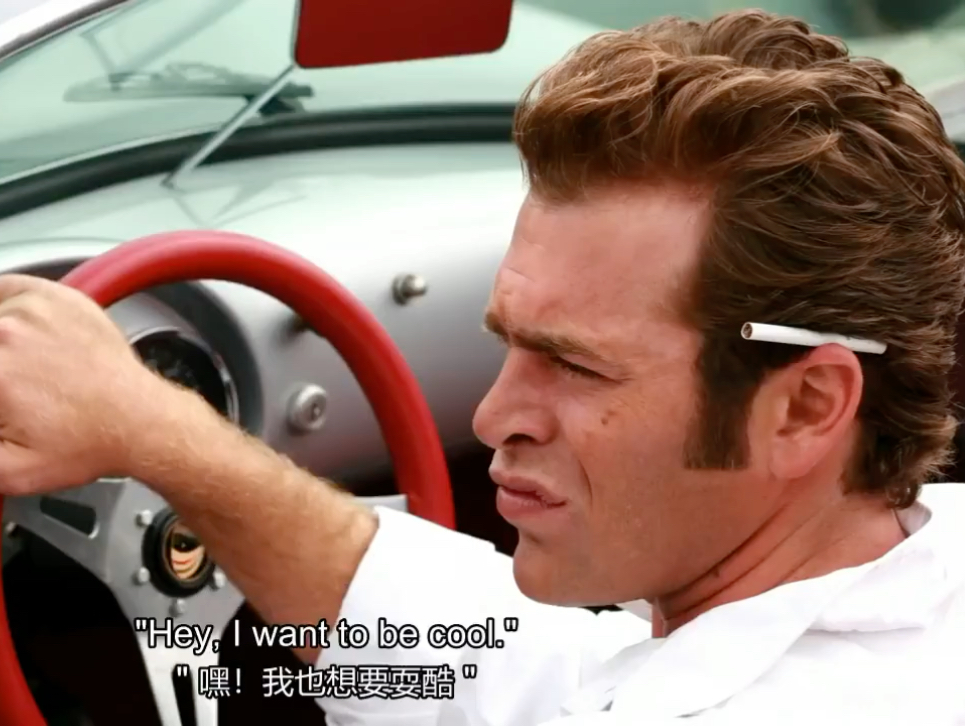
| 39 | hey, I want to be cool, so we start smoking. | 嘿,我想冷静,所以我们开始抽烟。 |
| 40 | The Marlboro Man wasn't a dork, and that was no accident. | 万宝路人不是呆子 这不是意外 |
| 41 | See cool, smoke to be cool, feel good, repeat. | 见清凉,烟以清凉,觉好,复次. |
| 42 | Trigger, behavior, reward. | 触发,行为,奖励。 |
| 43 | And each time we do this, we learn to repeat the process, | 每次我们这样做, 我们学会重复这个过程, |
| 44 | and it becomes a habit. | 变成一种习惯。 |
| 45 | So later, feeling stressed out triggers that urge to smoke a cigarette | 所以后来,感觉压力很大,引发了 吸烟的冲动 |
| 46 | or to eat something sweet. | 或者吃点甜食 |
| 47 | Now with these same brain processes, we've gone from learning to survive | 现在有了同样的大脑过程 我们从学习到生存 |
| 48 | to literally killing ourselves with these habits. | 用这些习惯自杀 |
| 49 | Obesity and smoking are among the leading preventable causes | 肥胖和吸烟是主要的可预防原因之一 |
| 50 | of morbidity and mortality in the world. | 世界发病率和死亡率。 |
| 51 | So back to my breath. | 所以,回到我的呼吸。 |
| 52 | What if instead of fighting our brains or trying to force ourselves | 如果不是与我们的大脑搏斗 或试图强迫自己 |
| 53 | to pay attention, we instead tapped into this natural reward-based | 要注意的是,我们利用这种自然的奖励 |
| 54 | learning process, but added a twist? | 学习过程,但增加一个曲折? |
| 55 | What if instead we just got really curious about what was happening | 如果相反,我们只是 得到真正的好奇 发生了什么事 |
| 56 | in our momentary experience? | 在我们短暂的经历中? |
| 57 | I'll give you an example. | 举个例子 |
| 58 | In my lab, we studied whether mindfulness training could help people | 在我的实验室里,我们研究了 心智训练是否能帮助人们 |
| 59 | quit smoking. | 戒烟。 |
| 60 | Now, just like trying to force myself to pay attention on my breath, | 现在,就像试图强迫自己 注意我的呼吸, |
| 61 | they could try to force themselves to quit smoking. | 他们可以强迫自己戒烟 |
| 62 | And the majority of them had tried this before and failed, | 他们中的大多数人以前尝试过这个,但都失败了, |
| 63 | on average, six times. | 平均六次。 |
| 64 | Now with mindfulness training, we dropped a bit about forcing | 现在,在勤奋训练下,我们放弃了一点强迫 |
| 65 | and instead focused on being curious. | 反而专注于好奇 |
| 66 | In fact, we even told them to smoke. | 事实上,我们甚至叫他们抽烟。 |
| 67 | What? | 你说什么? |
| 68 | Yeah, we said, go ahead and smoke. | 是的,我们说,去抽烟。 |
| 69 | Just be really curious about what it's like when you do. | 只是好奇 当你做它是什么样子。 |
| 70 | And what did they notice? | 他们注意到什么了? |
| 71 | Well, here's an example from one of our smokers. | 嗯,这里有一个例子 从我们的吸烟者。 |
| 72 | She said, mindful smoking smells like stinky cheese | 她说,注意吸烟 闻起来像臭奶酪 |
| 73 | and tastes like chemicals. | 和味道像化学品。 |
| 74 | Yuck! | 讨厌! |
| 75 | Now, she knew cognitively that smoking was bad for her. | 她从认知上知道吸烟对她不好 |
| 76 | That's why she joined our program. | 这就是为什么她加入了我们的节目。 |
| 77 | What she discovered just by being curiously aware when she smoked | 她抽烟时发现的 |
| 78 | was that smoking tastes like shit. | 抽烟的味道像狗屎。 |
| 79 | Now, she moved from knowledge to wisdom. | 现在,她从知识转向智慧。 |
| 80 | She moved from knowing in her head that smoking was bad for her | 她从头到尾都意识到抽烟对她不好 |
| 81 | to knowing it in her bones. | 在她的骨头里知道 |
| 82 | And this spell of smoking was broken. | 这个吸烟的咒语被打破了. |
| 83 | She started to become disenchanted with her behavior. | 她开始对自己的行为产生幻觉. |
| 84 | Now, the prefrontal cortex, that youngest part of our brain | 大脑中最年轻的部分 |
| 85 | from an evolutionary perspective, | 从进化的角度 |
| 86 | it understands on an intellectual level that we shouldn't smoke. | 它从知识层面理解我们不应该吸烟。 |
| 87 | And it tries its hardest to help us change our behavior, | 它尽力帮助我们改变行为 |
| 88 | to help us stop smoking, | 帮助我们戒烟, |
| 89 | to help us stop eating that second, that third, that fourth cookie. | 帮助我们停止吃第二,第三,第四饼干。 |
| 90 | We call this cognitive control. | 我们称之为认知控制。 |
| 91 | We're using cognition to control our behavior. | 我们用认知来控制我们的行为。 |
| 92 | Unfortunately, this is also the first part of our brain | 不幸的是,这也是我们大脑的第一部分 |
| 93 | that goes offline when we get stressed out, | 当我们压力大的时候 就会断线 |
| 94 | which isn't that helpful. | 这没什么用 |
| 95 | Now, we can all relate to this in our own experience. | 现在,我们可以用我们自己的经验来讨论这个问题。 |
| 96 | We're much more likely to do things like yell at our spouse or kids | 我们更可能做 像骂我们的配偶或孩子 |
| 97 | when we're stressed out or tired, | 当我们紧张或疲惫, |
| 98 | even though we know it's not going to be helpful. | 虽然我们知道这没什么用 |
| 99 | We just can't help ourselves. | 我们无法自拔 |
| 100 | Now, when the prefrontal cortex goes offline, | 当前额皮质脱线时 |
| 101 | we fall back into our old habits, | 我们回到我们的旧习惯, |
| 102 | which is why this disenchantment, this disenchantment, | 这就是为什么这个幻觉,这个幻觉, |
该视频共有字幕 102 条。解锁更多字幕为会员功能,请移动到 价格
P2 · 改掉坏习惯最简单方法|TED p02 IMG_0327 (P2)
字幕摘录
| 时间 | 英文 | 中文 |
|---|---|---|
| 0:00 | We call this cognitive control. | 我们称之为认知控制。 |
| 0:02 | We're using cognition to control our behavior. | 我们用认知来控制我们的行为。 |
| 0:06 | Unfortunately, this is also the first part of our brain | 不幸的是,这也是我们大脑的第一部分 |
| 0:08 | that goes offline when we get stressed out, | 当我们压力大的时候 就会断线 |
| 0:10 | which isn't that helpful. | 这没什么用 |
| 0:12 | Now, we can all relate to this in our own experience. | 现在,我们可以用我们自己的经验来讨论这个问题。 |
| 0:14 | We're much more likely to do things like yell at our spouse or kids | 我们更可能做 像骂我们的配偶或孩子 |
| 0:17 | when we're stressed out or tired, | 当我们紧张或疲惫, |
| 0:19 | even though we know it's not going to be helpful. | 虽然我们知道这没什么用 |
| 0:21 | We just can't help ourselves. | 我们无法自拔 |
展开字幕全文(94 条)
| 序号 | 英文 | 中文 |
|---|---|---|
| 1 | We call this cognitive control. | 我们称之为认知控制。 |
| 2 | We're using cognition to control our behavior. | 我们用认知来控制我们的行为。 |
| 3 | Unfortunately, this is also the first part of our brain | 不幸的是,这也是我们大脑的第一部分 |
| 4 | that goes offline when we get stressed out, | 当我们压力大的时候 就会断线 |
| 5 | which isn't that helpful. | 这没什么用 |
| 6 | Now, we can all relate to this in our own experience. | 现在,我们可以用我们自己的经验来讨论这个问题。 |
| 7 | We're much more likely to do things like yell at our spouse or kids | 我们更可能做 像骂我们的配偶或孩子 |
| 8 | when we're stressed out or tired, | 当我们紧张或疲惫, |
| 9 | even though we know it's not going to be helpful. | 虽然我们知道这没什么用 |
| 10 | We just can't help ourselves. | 我们无法自拔 |
| 11 | Now, when the prefrontal cortex goes offline, | 当前额皮质脱线时 |
| 12 | we fall back into our old habits, | 我们回到我们的旧习惯, |
| 13 | which is why this disenchantment is so important. | 这也是为何这种失望如此重要的原因。 |
| 14 | Seeing what we get from our habits | 看我们从习惯中得到什么 |
| 15 | helps us understand them in a deeper level, | 帮助我们更深入地了解他们, |
| 16 | to know when they're a bone, | 要知道当他们是一个骨头, |
| 17 | so we don't have to force ourselves to hold back | 所以,我们不必强迫自己 阻挡 |
| 18 | or restrain ourselves from behavior. | 或克制自己的行为。 |
| 19 | We're just less interested in doing it in the first place. | 我们只是不太有兴趣 这样做在一开始。 |
| 20 | And this is what mindfulness is all about. | 这就是心意所在 |
| 21 | Seeing really clearly what we get when we get caught up in our behaviors, | 看到真正清楚 当我们被卷入我们的行为, |
| 22 | becoming disenchanted on a visceral level | 渐渐失去知觉 |
| 23 | and from this disenchanted stance, | 和从这个迷惑的立场, |
| 24 | naturally letting go. | 自然放开 |
| 25 | This isn't to say that, poof, magically we quit smoking, | 这不是说,Poof,神奇的我们戒烟, |
| 26 | but over time, as we learn to see more and more clearly | 但随着时间的流逝,我们学会了 越来越清楚地看到 |
| 27 | the results of our actions, | 我们行动的结果, |
| 28 | we let go of old habits and form new ones. | 我们放弃旧习惯,形成新的习惯。 |
| 29 | The paradox here is that mindfulness is just about being really interested | 这里的矛盾之处在于, 注意只是真正感兴趣 |
| 30 | in getting close and personal with what's actually happening | 亲近和亲近 与实际发生 |
| 31 | in our bodies and minds from moment to moment. | 我们的身体和思想 瞬间。 |
| 32 | This willingness to turn toward our experience | 这种转向我们经验的意愿 |
| 33 | rather than trying to make unpleasant cravings go away as quickly as possible. | 而不是试图让不愉快的欲望 尽快消失。 |
| 34 | And this willingness to turn toward our experience | 愿意转向我们的经验 |
| 35 | is supported by curiosity, | 有好奇心的支持, |
| 36 | which is naturally rewarding. | 这自然是报酬的。 |
| 37 | What does curiosity feel like? | 好奇心是什么感觉? |
| 38 | It feels good. | 感觉不错。 |
| 39 | And what happens when we get curious? | 我们好奇时会怎样? |
| 40 | We start to notice that cravings are simply made up of body sensations. | 我们开始注意到 渴望只是由身体的感觉组成 |
| 41 | Oh, there's tightness, there's tension, there's restlessness, | 紧张 紧张 不安 |
| 42 | and that these body sensations come and go. | 和这些身体的感觉 来去去。 |
| 43 | These are bite-sized pieces of experiences | 这些是咬伤大小的经验 |
| 44 | that we can manage from moment to moment | 我们可以不时应付 |
| 45 | rather than getting clobbered by this huge, scary craving | 而不是被这个 巨大的,可怕的渴望所痛击 |
| 46 | that we choke on. | 我们窒息。 |
| 47 | In other words, when we get curious, | 换句话说,当我们感到好奇时, |
| 48 | we step out of our old fear-based reactive habit patterns | 我们走出了基于恐惧的习惯模式 |
| 49 | and we step into being. | 我们步入正轨 |
| 50 | We become this inner scientist | 我们成了这个内科学家 |
| 51 | where we're eagerly awaiting that next data point. | 我们正热切等待下一个数据点 |
| 52 | Now, this might sound too simplistic to affect behavior, | 现在,这听起来可能过于简单 影响行为, |
| 53 | but in one study we found that mindfulness training was twice as good | 但是在一项研究中,我们发现 思维训练是两倍好 |
| 54 | as gold standard therapy at helping people quit smoking. | 作为帮助人们戒烟的金本位疗法. |
| 55 | So it actually works. | 所以它实际上起作用了。 |
| 56 | And when we studied the brains of experienced meditators, | 当我们研究有经验的冥想者的大脑时 |
| 57 | we found that parts of a neural network of self-referential processing | 我们发现,神经网络的部分 自优处理 |
| 58 | called the default-mode network were at play. | 名为默认模式网络在运行。 |
| 59 | Now, one current hypothesis is that a region of this network | 目前的一个假设是 这个网络的一个区域 |
| 60 | called the posterior cingulate cortex | 叫做后环状皮层 |
| 61 | is activated not necessarily by craving itself, | 不一定因为渴望自己而激活, |
| 62 | but when we get caught up in it, | 但当我们陷入其中, |
| 63 | when we get sucked in and it takes us for a ride. | 当我们被吸进去, 它需要我们一程。 |
| 64 | In contrast, when we let go, | 相比之下,当我们放手的时候, |
| 65 | step out of the process just by being curiously aware of what's happening, | 走出这个过程 只是好奇地意识到发生了什么, |
| 66 | this same brain region quiets down. | 同一个大脑区域安静下来。 |
| 67 | Now we're testing app and online-based mindfulness training programs | 现在我们在测试应用软件 和在线意识训练 |
| 68 | that target these core mechanisms | 以这些核心机制为目标 |
| 69 | and, ironically, use the same technology that's driving us to distraction | 讽刺的是,用同样的技术 驱使我们分心 |
| 70 | to help us step out of our unhealthy habit patterns of smoking, | 帮助我们摆脱不健康的吸烟习惯模式, |
| 71 | of stress-eating and other addictive behaviors. | 吃压力和其他成瘾行为 |
| 72 | Now, remember that bit about context-dependent memory? | 现在,还记得那一点 依赖上下文的记忆? |
| 73 | We can deliver these tools to people's fingertips | 我们可以把这些工具送到人们的指尖上 |
| 74 | in the contexts that matter most, | 在最重要的情况下, |
| 75 | so we can help them tap into their inherent capacity | 这样我们就能帮助他们发挥内在的能力 |
| 76 | to be curiously aware right when that urge to smoke or stress-eat | 当他们想抽烟或吃压力时 就会好奇地意识到 |
| 77 | or whatever arises. | 或随缘而生. |
| 78 | So if you don't smoke or stress-eat, | 所以如果你不抽烟,不吃压力, |
| 79 | maybe the next time you feel this urge to check your email when you're bored | 也许下次你觉得无聊的时候 急着检查你的邮件 |
| 80 | or you're trying to distract yourself from work, | 或者你想转移你的工作注意力 |
| 81 | or maybe to compulsively respond to that text message when you're driving, | 或者在你开车时 强制回复短信 |
| 82 | see if you can tap into this natural capacity, | 看看你能不能利用这个自然能力 |
| 83 | just be curiously aware of what's happening in your body and mind | 只是好奇地 了解你的身体和心灵正在发生的一切 |
| 84 | in that moment. | 在那一刻。 |
| 85 | It will just be another chance to perpetuate | 这将是另一个机会 延续 |
| 86 | one of our endless and exhaustive habit loops, | 我们无穷无尽的习惯循环 |
| 87 | or step out of it. | 或离开它。 |
| 88 | Instead of see text message, compulsively text back, | 而不是看到短信, 强制回短信, |
| 89 | feel a little bit better, | 感觉好一点, |
| 90 | notice the urge, | 你应当觉悟, |
| 91 | get curious, | 变得好奇, |
| 92 | feel the joy of letting go | 感受放手的快乐 |
| 93 | and repeat. | 再说一遍 |
| 94 | Thank you. | 谢谢 |
该视频共有字幕 95 条。解锁更多字幕为会员功能,请移动到 价格