【中英】多数成年人从未习得的关键情绪技能
字幕摘录
| 时间 | 英文 | 中文 |
|---|---|---|
| 0:00 | Anger is a healthy emotion. | 愤怒是一种健康的情感。 |
| 0:03 | The issue is most of us weren't taught skills | 问题是,我们大多数人没有受过训练 |
| 0:05 | to effectively manage anger, | 有效地控制愤怒, |
| 0:07 | and we weren't given a long enough runway | 跑道不够长 |
| 0:09 | to learn how to do that. | 学习如何做到这一点。 |
| 0:11 | In adulthood, a big part of re-parenting, | 成年后 重生的很大一部分 |
| 0:13 | and this is some of my favorite work to do with parents, | 这是我最喜欢的和父母有关的工作 |
| 0:16 | is to start to reclaim access to healthy anger. | 开始重新获得健康的愤怒 |
| 0:21 | I'm Dr. Becky Kennedy. | 我是贝基·肯尼迪博士 |
| 0:22 | I'm a clinical psychologist. | 我是临床心理学家 |
展开字幕全文(1073 条)
| 序号 | 英文 | 中文 |
|---|---|---|
| 1 | Anger is a healthy emotion. | 愤怒是一种健康的情感。 |
| 2 | The issue is most of us weren't taught skills | 问题是,我们大多数人没有受过训练 |
| 3 | to effectively manage anger, | 有效地控制愤怒, |
| 4 | and we weren't given a long enough runway | 跑道不够长 |
| 5 | to learn how to do that. | 学习如何做到这一点。 |
| 6 | In adulthood, a big part of re-parenting, | 成年后 重生的很大一部分 |
| 7 | and this is some of my favorite work to do with parents, | 这是我最喜欢的和父母有关的工作 |
| 8 | is to start to reclaim access to healthy anger. | 开始重新获得健康的愤怒 |
| 9 | I'm Dr. Becky Kennedy. | 我是贝基·肯尼迪博士 |
| 10 | I'm a clinical psychologist. | 我是临床心理学家 |
| 11 | I'm a mom of three, | 我是三个孩子的妈妈 |
| 12 | and I am the founder of the online parenting platform | 我是在线育儿平台的创始人 |
| 13 | called Good Inside. | 叫做"内线" |
| 14 | There are things we can do | 有些事情我们可以做 |
| 15 | to improve our emotion regulation skills. | 来提高我们的情绪调节能力 |
| 16 | Number one is actually just realizing it's a skill. | 第一其实是意识到它是一种技能。 |
| 17 | I think parenting is a skill, too. | 我觉得做父母也是一种技巧 |
| 18 | That's actually what everything we do | 这就是我们所做的一切 |
| 19 | 在Good Inside是基于。 | |
| 20 | We've been told forever, | 我们一直被告知 |
| 21 | parenting comes naturally. | 养育是自然而然的 |
| 22 | You should just know what to do. | 你应该知道该怎么做 |
| 23 | I hear this from parents all the time. | 我经常从父母那里听到这个 |
| 24 | I'm struggling with my kid. | 我在和我的孩子挣扎 |
| 25 | They're having these tantrums. | 他们发脾气了 |
| 26 | I'm yelling them all the time, | 我总是叫他们 |
| 27 | and then they say, | 然后他们说, |
| 28 | yeah, I'm getting tips on Instagram. | 是的,我得到了关于Instagram的提示。 |
| 29 | I read a book here or there, | 我在这里或那里读过一本书, |
| 30 | but when you really realize, | 但当你真正意识到, |
| 31 | hold on a second, this is a skill. | 等等,这是个技巧 |
| 32 | Any other area of my life that I really care about, | 我生活中任何我真正关心的地方 |
| 33 | I invest in learning skills. | 我投资学习技能。 |
| 34 | I get some professional help. | 我得到了一些专业的帮助。 |
| 35 | I practice. | 我练习。 |
| 36 | That's actually so empowering. | 这实际上是如此的赋予能力。 |
| 37 | That's a sign of strength. | 示现坚固. |
| 38 | It's just that parenting has always been told to us | 只是一直有人告诉我们 |
| 39 | as something that just comes naturally, | 作为自然而然的东西, |
| 40 | which is why we feel shame | 这就是为什么我们感到羞耻 |
| 41 | and we stay alone when we're struggling. | 当我们挣扎时,我们只能独自一人 |
| 42 | That's actually the biggest thing I hope to change. | 这其实是我想改变的最大事情。 |
| 43 | And so, yes, there are so many things we can do | 所以,是的,有很多事情我们可以做 |
| 44 | to work on our parenting | 努力为人父母 |
| 45 | or to work on emotion regulation, | 或致力于情绪调节, |
| 46 | which is definitely a part of parenting. | 这绝对是养育子女的一部分。 |
| 47 | Attachment theory and emotion regulation | 附件理论和情绪调节 |
| 48 | are deeply connected concepts. | 它们是密切相关的概念。 |
| 49 | Kids are born with all of the emotions | 小孩生来就充满感情 |
| 50 | and none of the skills to manage those emotions. | 也没有掌握这些情感的技能 |
| 51 | That gap explains why kids and adults act out. | 这一差距解释了为什么儿童和成年人会采取行动。 |
| 52 | It's when emotions are greater than skills. | 就是情绪比技能强的时候 |
| 53 | But the thing about these skills | 但关于这些技能 |
| 54 | that's different than some other skills | 这跟别的技巧不一样 |
| 55 | is they're rarely just taught in a textbook | 他们很少在教科书里被教过 |
| 56 | or in a classroom. | 或者在课堂上 |
| 57 | Kids learn skills to manage their emotions | 孩子们学着控制情绪的技巧 |
| 58 | through their attachment with their parents. | 他们与父母的感情 |
| 59 | This brings up the concept of dysregulation | 这就产生了不规范的概念 |
| 60 | and then co-regulation, | 然后共同监管, |
| 61 | and then the thing we all want, emotion regulation. | 然后我们想要的东西 情绪调节 |
| 62 | So let me explain. | 让我解释一下 |
| 63 | Because kids are born with all of the emotions | 因为孩子天生就充满感情 |
| 64 | and none of the skills, | 没有技能, |
| 65 | they're often in a state of dysregulation. | 他们经常处于不规则状态. |
| 66 | All that really means | 这真的意味着 |
| 67 | is my emotions are greater than my skills, | 我的情绪比我的能力强 |
| 68 | so my emotions come out as a tantrum, | 所以,我的情绪出来 以暴躁, |
| 69 | as a huge outburst, | 如暴风雨一样, |
| 70 | maybe as in I hate you, | 也许就像我恨你一样 |
| 71 | as flailing on the floor. | 犹如在地板上摇摆。 |
| 72 | That is a state of dysregulation. | 这是一种不规则状态。 |
| 73 | My kid is having big emotions | 我的孩子情绪很强 |
| 74 | but doesn't have skills to manage. | 但是没有技能去管理。 |
| 75 | Okay, what's co-regulation? | 好吧,什么是共同调节? |
| 76 | One of the ways and the most powerful ways | 方法之一和最强大的方法 |
| 77 | kids get from dysregulation to regulation | 小孩从监管到监管 |
| 78 | is through borrowing a parent's regulation. | 通过借用父母的规定。 |
| 79 | So let's picture the scene. | 所以,让我们想象一下现场。 |
| 80 | My kid is melting down. | 我的孩子正在融化下来。 |
| 81 | Why? | 为什么? |
| 82 | Because I cut their grilled cheese into triangles, | 因为我把他们的烤奶酪切成三角形 |
| 83 | not rectangles. | 不是长方形。 |
| 84 | Classic meltdown, | 经典的崩溃, |
| 85 | which is probably just representative of | 这或许只是代表 |
| 86 | there have been so many things in my day | 我这个时代有很多事情 |
| 87 | that didn't go the way I imagined | 这跟我想象的不一样 |
| 88 | and my bucket of frustration is full | 我满怀挫折 |
| 89 | and the triangle grilled cheese | 和三角烤奶酪, |
| 90 | is just the thing that spills it all out. | 就是把东西都吐出来 |
| 91 | My kid is dysregulated on the floor. | 我儿子在地板上很紧张 |
| 92 | How kids learn eventually to regulate | 孩子们最终如何学会调节 |
| 93 | even in the face of frustration or disappointment | 即使面对挫折或失望 |
| 94 | is that they experience over and over | 他们不断经历 |
| 95 | and over and over and over again | 一次又一次 |
| 96 | a caregiver who was able to stay relatively calm | 一个能够保持相对平静的看护者 |
| 97 | in the moment the kid was dysregulated. | 在那个孩子病态时 |
| 98 | It's almost like here's my dysregulated kid | 碞钩硂琌и |
| 99 | flailing on the floor. | 挥舞在地板上。 |
| 100 | Here's my calm and it's almost like the calm | 这是我的平静,这几乎就像平静 |
| 101 | can transfer from my body to my kids | 可以从我的身体转移到我的孩子身上 |
| 102 | and now my kid has this much calm. | 现在我的孩子有这么平静。 |
| 103 | Not much, but it's growing. | 不多,但正在增长. |
| 104 | You can almost imagine this as well | 你几乎可以想象这一点 |
| 105 | when will my kid be able to stay totally calm? | 我儿子什么时候才能保持冷静? |
| 106 | A big part of it is the repetition | 大部分是重复 |
| 107 | over and over and over | 一次又一次 |
| 108 | my parents stayed calm. | 我的父母保持冷静。 |
| 109 | I've absorbed through co-regulation | 我已经通过共同调节吸收了 |
| 110 | enough of that calm regulation | 足够平静的规范 |
| 111 | that it's in my body and I can access it. | 它在我的体内,我可以访问它。 |
| 112 | See, the scariest thing to a kid | 你看,最可怕的事情 一个孩子 |
| 113 | is when they get dysregulated and overwhelmed | 是当他们 变得紧张和不堪重负 |
| 114 | which is essentially like the feelings in my body | 基本上就像我体内的感觉 |
| 115 | are so scary that they take me over. | 吓坏了,他们要接管我 |
| 116 | That's such a helpless state | 那真是无助的状态 |
| 117 | but imagine your four-year-old in that helpless state | 想象一下你的四岁小孩 处于无助的状态 |
| 118 | and then they see their parent | 然后他们看到自己的父母 |
| 119 | who they depend on for survival and see, | 他们靠谁生存,靠谁观察。 |
| 120 | oh no, the things that feel overwhelming to me | 哦,不,那些让我难以忍受的事情 |
| 121 | are also overwhelming to my parent. | 对我父母来说也是 |
| 122 | Parent can't stay calm with this. | 父母不能保持冷静 |
| 123 | That's that situation where you're freaking out | 你吓坏了 |
| 124 | when there's turbulence | 当有动荡时 |
| 125 | and pilot's freaking out when there's turbulence. | 飞机驾驶员在出现动荡时吓坏了 |
| 126 | The way you're eventually even as an adult | 你最终成年的样子 |
| 127 | going to feel safe amidst turbulence | 在动荡中会感到安全 |
| 128 | is actually probably going on flights | 可能正在飞行中 |
| 129 | over and over that have turbulence | 不断的动荡 |
| 130 | and absorbing the regulation from the pilot. | 并吸收飞行员的监管。 |
| 131 | You start to believe it yourself | 你自己开始相信了 |
| 132 | and so through a kid's attachment | 所以通过孩子的依恋 |
| 133 | relationship with a caregiver | 与照料者的关系 |
| 134 | they start to see things that overwhelm me | 他们开始看见我全身的事物 |
| 135 | might not overwhelm me. | 可能不会压倒我。 |
| 136 | Things that kind of knock me off my rocker | 那种让我失去摇滚乐的人 |
| 137 | and feel intolerable | 并感到无法忍受 |
| 138 | actually are tolerable to my most important safest adult | 其实对我最重要的最安全的成年人来说是可以容忍的 |
| 139 | and that over and over brings a kid from dysregulation | 一遍又一遍地把一个孩子从衰落中带来 |
| 140 | to co-regulation to that eventual state | 共同管制最终状态 |
| 141 | of emotion regulation. | 情绪调节 |
| 142 | I should say that we never fully live in emotion regulation. | 我应该说,我们从来没有 完全生活在情绪调节。 |
| 143 | All adults still need other adults in time | 所有成年人仍需要其他成年人及时 |
| 144 | to help co-regulate. | 帮助共同管理。 |
| 145 | That's why when you've had a horrible day | 这就是为什么当你有一个可怕的一天 |
| 146 | and you go out with some friends | 你和一些朋友约会 |
| 147 | and you're having dinner | 而你正在吃晚饭 |
| 148 | and they say, oh, that stinks. | 他们说,哦,这很臭。 |
| 149 | I've been there too. | 我也去过那里 |
| 150 | You're like, wait, that's so weird. | 你就像,等等,这太奇怪了。 |
| 151 | Nothing about my day changed | 我的日子没有改变 |
| 152 | but I'm actually feeling better. | 但我实际上感觉好多了。 |
| 153 | We absorb some of the validation and calm | 我们吸收了一些验证和冷静 |
| 154 | and maybe someone believes in us in a way | 也许有人相信我们的方式 |
| 155 | we forgot that we could believe in ourselves. | 我们忘了我们能相信自己 |
| 156 | We still need co-regulation even as adults | 就算是成年人,我们也需要共同监管 |
| 157 | but hopefully we're not as dependent on it | 但希望我们没有依赖它 |
| 158 | as often as our kids. | 经常和我们的孩子一样 |
| 159 | And I promise you your kid won't be as an adult | 我保证你的孩子不会像成年人一样 |
| 160 | if they've gone through that motion | 如果他们已经通过这个动议 |
| 161 | a bunch of times in their early years. | 在他们早年的很多次。 |
| 162 | Our ability to hold opposing truths at the same time | 我们同时持有对立真理的能力 |
| 163 | is one of the most important things | 是最重要的东西之一 |
| 164 | for our mental health | 我们的心理健康 |
| 165 | and successful adult relationships. | 和成功的成人关系。 |
| 166 | I'll explain both. | 我会解释的 |
| 167 | Our feelings, our internal states are very complicated. | 我们的感情 我们的内部状态非常复杂 |
| 168 | Very rarely do we just feel one thing. | 我们很少能感觉到一件事 |
| 169 | For example, in parenthood | 例如,为人父母 |
| 170 | you might feel like I love my kid | 你可能觉得我爱我的孩子 |
| 171 | in a way I've never loved anyone in the world. | 从某种意义上说,我从未爱过世界上的任何人。 |
| 172 | And you might also think | 你也许也认为 |
| 173 | I kind of miss my pre-child life. | 我有点怀念我的儿前生活 |
| 174 | If we're forced to reconcile those two thoughts | 如果我们被迫调和这两个想法 |
| 175 | as if only one of them can be true | 仿佛只有其中之一能是真的一样 |
| 176 | when I have the thought of, oh my goodness | 当我想到,哦,我的天啊 |
| 177 | I miss my pre-child life | 我怀念我的儿前生活 |
| 178 | I start telling myself a story. | 我开始告诉自己一个故事。 |
| 179 | I'm a horrible person. | 我是一个可怕的人。 |
| 180 | What kind of parent would say that? | 什么样的父母会这么说? |
| 181 | I had to do so much to get pregnant. | 我不得不做这么多 怀孕。 |
| 182 | I'm a monster. | 我是个怪物。 |
| 183 | Good parents don't think that way. | 好父母不以为然. |
| 184 | You can imagine the negative downward spiral from there. | 你可以想象到负面的螺旋下降 |
| 185 | As if having that thought | 好像有这种想法 |
| 186 | means I don't love the heck out of my kid. | 意思是我不爱我的孩子 |
| 187 | When we can say to ourselves | 当我们能对自己说 |
| 188 | and this is kind of a good inside catchphrase | 这里面有句好话 |
| 189 | wait, two things are true. | 等等 两件事是真的 |
| 190 | I love my kid more than I've loved anyone | 我爱我的孩子比爱任何人还多 |
| 191 | or anything in the world. | 或世界上的任何东西。 |
| 192 | And there are moments when I miss my pre-child life. | 有些时候,我怀念我的儿前生活。 |
| 193 | I don't have to reconcile those two things. | 我不必调和这两件事 |
| 194 | I can just say they're both true. | 我可以说两者都是真的 |
| 195 | I have a type of internal peace. | 我有一种内部和平。 |
| 196 | Now being able to hold two seemingly oppositional truths | 现在可以持有两个似乎反对的真理 |
| 197 | is also critical for any successful relationship | 对任何成功的关系也至关重要 |
| 198 | meaning my relationship with my kid | 我和孩子的关系 |
| 199 | my relationship with my husband | 我和我丈夫的关系 |
| 200 | my relationship with my colleague | 我和同事的关系 |
| 201 | people see things differently. | 人们对事物的看法不同 |
| 202 | And when we need someone else to see things | 当我们需要别人看东西时 |
| 203 | the exact way we see things | 我们看事情的方式 |
| 204 | we get into really intense conflict in a marriage. | 我们在婚姻中陷入激烈的冲突 |
| 205 | Maybe we both want to go to our own families for the holiday. | 也许我们都想回家度假 |
| 206 | If I'm only trying to convince my husband | 如果我只是想说服我丈夫 |
| 207 | here's why that's a ridiculous idea. | 这就是为什么这是一个荒谬的想法。 |
| 208 | Here's why I should go to my family. | 故应归家. |
| 209 | I think we all know how that conversation goes. | 我想我们都知道谈话会怎样 |
| 210 | If I can say to myself, hold on a second | 如果我能对自己说,等一下 |
| 211 | I really want to go to my family this year | 今年我真的很想去我家 |
| 212 | maybe I can understand why my husband wants to go to his family. | 也许我能理解 我丈夫为什么想回家 |
| 213 | Maybe we just need to put on hold which family we're visiting | 也许我们只是需要搁置 我们拜访的哪个家庭 |
| 214 | but maybe I can understand my husband | 但也许我能理解我丈夫 |
| 215 | {\fn黑体\fs20\shad2\2aH82\3aH20\4aH33\fscx95\3cH592001\be1}我还是能理解自己 | |
| 216 | and maybe that conversation will be a lot more productive | 也许那段对话会更有成效 |
| 217 | and guess what it is. | 猜猜这是什么 |
| 218 | This comes into play all the time with parenting too. | 这在做父母的时候也经常这样 |
| 219 | Setting boundaries is a big part of a parent's job. | 设定界限是父母工作的一大部分。 |
| 220 | And newsflash kids generally have one reaction | 和新闻闪烁的孩子 通常有一个反应 |
| 221 | to our setting boundaries a tantrum | 对我们的界限来说 有点不妥 |
| 222 | especially when they're young. | 尤其是他们年轻的时候 |
| 223 | When I say to my kid even beautifully | 当我对我孩子说得漂亮的时候 |
| 224 | I know it's hard to turn off the TV | 我知道关电视很难 |
| 225 | and TV time is over. | 电视时间结束了 |
| 226 | I'm going to turn it off now. | 我现在要关掉它。 |
| 227 | I've never had a kid say to me | 我从来没有一个孩子对我说 |
| 228 | that's a really good decision mom. | 这是一个非常好的决定妈妈。 |
| 229 | Thanks for your sturdy leadership. | 谢谢你的坚定领导 |
| 230 | No, especially when my kids are younger | 不,特别是我的孩子年轻的时候 |
| 231 | and they weren't used to boundaries | 他们不习惯于边界 |
| 232 | they would cry. | 他们会哭。 |
| 233 | They would tantrum. | 他们会发脾气的 |
| 234 | They would say you're the worst mom in the world | 他们会说你是世上最糟糕的妈妈 |
| 235 | all my friends watch more TV than I do. | 我的朋友都比我还看电视 |
| 236 | If I can't hold two things as true | 如果我不能把两件事当真 |
| 237 | if only one thing can be true | 如果只有一件事是真实的 |
| 238 | I start getting very mad at my kid. | 我开始对我的孩子很生气 |
| 239 | You're acting ridiculous. | 你的行为很可笑。 |
| 240 | You already watched a show. | 你已经看过演出了 |
| 241 | I surveyed all of your friend's parents | 我调查了你朋友的父母 |
| 242 | and all of them told me | 他们都告诉我 |
| 243 | they actually watch less TV than you do. | 他们实际上看的电视比你少。 |
| 244 | Explosion. | 爆炸声。 |
| 245 | If I can hold two things are true | 如果我能持两件事是真的 |
| 246 | I'd say to myself hold on | 我会对自己说,坚持住 |
| 247 | my job is to set boundaries. | 我的工作就是划定界限 |
| 248 | My kid's job is actually to kind of feel their feelings | 我儿子的工作就是感受他们的感受 |
| 249 | so they can learn to deal with them. | 这样他们才能学会对付他们 |
| 250 | I'm allowed to make the decision | 我可以做决定 |
| 251 | to turn off the TV. | 关掉电视 |
| 252 | My kid is allowed to be upset about it. | 我的孩子被允许对此感到不快. |
| 253 | My decision doesn't dictate my kid's feelings | 我的决定并不支配我孩子的感情 |
| 254 | and my kid's feelings definitely | 和我的孩子的感情绝对 |
| 255 | don't dictate my decision. | 别让我做决定 |
| 256 | I can make a decision. | 我可以做个决定 |
| 257 | My kid can be upset. | 我的孩子会不高兴的 |
| 258 | Two things are true. | 二事如实. |
| 259 | Boundaries are one of the most important things to understand. | 边界是需要理解的最重要的事情之一。 |
| 260 | I think for any relationship | 我想任何关系 |
| 261 | a parenting relationship, | 父母关系, |
| 262 | a work relationship, partnership | 工作关系、伙伴关系 |
| 263 | definitely in your relationship with in-laws | 在你和姻亲的关系中 |
| 264 | you have to understand boundaries. | 你必须明白界限。 |
| 265 | And there's something I hear all the time | 有件事我经常听到 |
| 266 | in passing. | 顺便说一句 |
| 267 | My mother-in-law doesn't respect my boundaries. | 婆 doesn不尊重我境界. |
| 268 | My son doesn't respect my boundaries. | 我的儿子不尊重我的边界。 |
| 269 | And whenever I hear this phrase | 只要我听到这句话 |
| 270 | someone doesn't respect my boundaries if I'm honest. | 如果我是诚实的,有人不尊重我的界限。 |
| 271 | What I think is | 我觉得 |
| 272 | I don't think this person has a correct definition of boundaries. | 我认为这个人没有正确的边界定义. |
| 273 | So let me share my definition of boundaries | 让我来分享一下我的界限 |
| 274 | and then we'll go through why it's so important | 然后我们再研究为什么它如此重要 |
| 275 | and why boundaries actually help us connect to other people | 以及为什么边界能帮助我们与其他人联系 |
| 276 | as opposed to boundaries getting in the way of connection | 而不是边界阻碍连接 |
| 277 | which is what a lot of us think. | 这是我们很多人的想法。 |
| 278 | Boundaries are what we tell someone we will do | 边界是我们要告诉别人的 |
| 279 | and they require the other person to do nothing. | 他们要求对方什么都不做 |
| 280 | So there's like a two-part checklist | 因此,有像一个两部分的核对表 |
| 281 | and I love this. | 我喜欢这个 |
| 282 | It's very practical. | 这是非常实际的。 |
| 283 | Next time you think you're setting a boundary | 下次你觉得自己在划定界限 |
| 284 | you can check in with both parts. | 你可以到两个地方报到 |
| 285 | Boundaries are something we tell someone we will do | 边界是我们要告诉别人的 |
| 286 | and they require the other person to do nothing. | 他们要求对方什么都不做 |
| 287 | Okay, so I think I set a boundary. | 好吧,所以我想我设定了一个界限。 |
| 288 | Did I tell someone what I will do? | 我告诉别人我要做什么了吗? |
| 289 | And does the success of my boundary | 和我的边界的成功 |
| 290 | require the other person to do nothing? | 要求对方什么都不做? |
| 291 | You have to have two yeses for it to count as a boundary. | 得有二正觉以计为界. |
| 292 | So when I say to my son, right? | 所以当我对我的儿子说,对不对? |
| 293 | And this is a great example | 这是个好例子 |
| 294 | because I live in New York City. | 因为我住在纽约 |
| 295 | I live in an elevator building | 我住在电梯楼里 |
| 296 | and I have a kid who has about 0% people pleasing in him, right? | 我有一个孩子 谁有大约0%的人喜欢他,对不对? |
| 297 | So he's not inherently people pleasing. | 所以他不是天生让人高兴的人 |
| 298 | Good for him later on challenging and childhood, right? | 以后在挑战性和童年方面对他有好处,对吧? |
| 299 | And so if I say to my kid when we get into the elevator | 所以,如果我对我的孩子说 当我们进入电梯 |
| 300 | don't press all the elevator buttons. | 不要按所有的电梯按钮。 |
| 301 | It's very annoying to stop at all the floors | 在所有楼层都停下来很烦人 |
| 302 | or it's disrespectful to other people waiting. | 或者这是不尊重 其他人等待。 |
| 303 | And then my son goes in and just presses all the buttons. | 然后我儿子进去按下所有的按钮 |
| 304 | So many parents would say my kid doesn't respect my boundaries | 这么多父母会说我的孩子不尊重我的界限 |
| 305 | or get off the couch. | 或者离开沙发。 |
| 306 | Hey, stop jumping on the couch. | 别在沙发上跳了 |
| 307 | Hey, I'm going to count to five. | 嘿,我要数到五。 |
| 308 | My kid doesn't get off and I say, | 我的孩子不下车 我说, |
| 309 | my kid doesn't respect my boundaries. | 我的孩子不尊重我的界限。 |
| 310 | Okay, in both situations, did I tell my kid what I will do? | 好吧,在这两种情况下, 我告诉我的孩子,我会怎么做? |
| 311 | No. | 没有 |
| 312 | Does the success of my boundary require my kid to do nothing? | 难道我的边界的成功 需要我的孩子什么都不做? |
| 313 | No. | 没有 |
| 314 | In both situations, this is so powerful. | 在这两种情况下,这是如此强大的。 |
| 315 | I am making a request. | 我有一个请求。 |
| 316 | I'm requesting for my kid not to press the buttons. | 我要求我的孩子不要按按钮。 |
| 317 | I'm requesting for my kid to get off the couch. | 我要求我的孩子离开沙发 |
| 318 | No, there's nothing wrong with a request. | 不,一个请求没有问题。 |
| 319 | We make requests all the time. | 我们总是提出要求。 |
| 320 | And if our kid especially isn't able to follow a request | 如果我们的孩子特别不能听从请求 |
| 321 | and we think it's really, really important, | 我们认为这很重要 |
| 322 | we have to set a true boundary. | 我们必须确定一个真正的界限。 |
| 323 | Now watch for the difference. | 现在注意区别 |
| 324 | Hey, when we go into the elevator, | 嘿,当我们进入电梯, |
| 325 | I'm going to stand between you and the buttons. | 我会站在你和按钮之间 |
| 326 | And sweetie, even if you lunge for the buttons, | 亲爱的 即使你按下按钮 |
| 327 | I will stop you. | 我会阻止你的 |
| 328 | And then if you're wondering what I would do, | 如果你想知道我会怎么做 |
| 329 | yeah, I would get ready. | 是的,我会准备好。 |
| 330 | I'd have my like move ready when my kid lunges. | 等孩子肺部出血了,我会准备动身 |
| 331 | I would just say, I'm not going to let you do that. | 我只是说 我不会让你这么做的 |
| 332 | That's a great boundary. | 这是伟大的界限。 |
| 333 | Not, we don't. | 不,我们没有。 |
| 334 | It's like a weird thing we all learn to say to our kid. | 这就像一个奇怪的事情 我们都学会说给我们的孩子。 |
| 335 | We don't press buttons. | 我们不按按钮。 |
| 336 | We don't hit. | 我们不打。 |
| 337 | Hopefully your kid knows that. | 希望你的孩子知道这一点。 |
| 338 | Not, we don't. | 不,我们没有。 |
| 339 | That's really giving away all your authority. | 这真的让你失去所有的权力 |
| 340 | Listen to this language. | 听此语. |
| 341 | I'm not going to let you do that. | 我不会让你这么做的 |
| 342 | And then I'm going to stop my kid. | 然后我会阻止我的孩子。 |
| 343 | That's a boundary. | 那是个界限 |
| 344 | I'm telling my kid what I will do. | 我要告诉我的孩子我会怎么做。 |
| 345 | And I'm not putting the success of my intervention | 我不会把我的干预成功 |
| 346 | in the hands of my four-year-old. | 在我的四岁的孩子手中。 |
| 347 | And that actually gives you back your power. | 这实际上还给了你力量。 |
| 348 | A true boundary gives you your power. | 真正的界限给了你力量 |
| 349 | Think about all the times we say, | 想想我们说的所有时间 |
| 350 | oh, I told my kid to turn off the TV and they didn't do it. | 哦,我告诉我的孩子关闭电视 他们没有这样做。 |
| 351 | They don't respect my boundary. | 他们不尊重我的边界。 |
| 352 | Why am I giving my six-year-old my power? | 为什么我要给我的六岁小孩力量? |
| 353 | And then in doing that, I actually lose connection | 那样的话,我就会失去联系 |
| 354 | because you know what happens in that TV example | 因为你知道电视上发生什么 |
| 355 | or the couch example? | 还是沙发的例子? |
| 356 | My kid doesn't get off the couch. | 我的孩子不下车沙发。 |
| 357 | They don't turn off the TV. | 他们不会关掉电视 |
| 358 | And I end up yelling at them. | 最后我对他们大喊大叫 |
| 359 | What really diminishes connection. | 真正减少联系的东西 |
| 360 | But if I zoom out, I can almost say to myself, | 但如果我放大, 我几乎可以说, |
| 361 | why am I setting myself up for this moment? | 为什么我要为这个时刻做准备? |
| 362 | I don't even have the impulse control to turn off the TV. | 我连关电视的冲动控制都没有 |
| 363 | I go to bed later than I want to. | 我睡得比我想的还晚 |
| 364 | How in any situation is my six-year-old | 我六岁的孩子怎么会这样 |
| 365 | going to watch a TV show and say, you know what? | 去看电视剧,然后说,你知道吗? |
| 366 | It's a good decision to turn off the TV. | 关闭电视是个好决定. |
| 367 | It's just not realistic. | 这不现实 |
| 368 | So what should I do? | 那我该怎么办? |
| 369 | The next time we watch TV, | 我们下次看电视的时候 |
| 370 | I'm going to hold the remote, sweetie. | 我要拿着遥控器 亲爱的 |
| 371 | And at the end of your show time, | 在你的表演时间结束时 |
| 372 | I'm going to turn the TV off. | 我要关掉电视 |
| 373 | My kid will not say thank you, but that is a boundary. | 我的孩子不会说谢谢 但是这是个界限 |
| 374 | And it's more connecting | 它更连接 |
| 375 | because I'm setting my kid up for success. | 因为我在为孩子的成功做准备 |
| 376 | And I'm not asking my kid to do my job for me. | 我不是要我的孩子为我做我的工作 |
| 377 | I'm not saying, could you do the thing that's hard for me | 我不是说,你能做 对我来说很难的事情 |
| 378 | because I don't really want you to have a tantrum | 因为我不想你发脾气 |
| 379 | and I don't really want to deal with that. | 我不想面对这个 |
| 380 | So I'm going to put the power in you. | 所以,我要把 权力在你身上。 |
| 381 | No way. | 不会吧 |
| 382 | We want to get our authority back, | 我们要夺回我们的权力 |
| 383 | which is a big thing at Good Inside. | 这里面有件大事 |
| 384 | I call it authority without aggression. | 我称之为权威,没有侵犯。 |
| 385 | It's a rare form of authority | 这是罕见的权威形式 |
| 386 | we haven't seen a lot of models of, | 我们没有看到很多模型, |
| 387 | but it's authority without aggression. | 但它是权威 没有侵略。 |
| 388 | I'm the decision maker. | 我是决定者。 |
| 389 | I'm going to set boundaries before I get frustrated. | 我要先确定界限 以免我感到沮丧 |
| 390 | I'm going to set boundaries | 我要设定界限 |
| 391 | before you end up doing the bad behavior. | 在你做出坏行为之前 |
| 392 | And that's actually going to preserve our relationship. | 这实际上会保持我们的关系。 |
| 393 | Another example of this at work, | 这在工作上的另一个例子, |
| 394 | because it's the same thing. | 因为这是同样的事情。 |
| 395 | You're always showing up for a 9 a.m. meeting. | 你总是出现在上午9点的会议。 |
| 396 | You're leading this meeting and someone's always late | 你领导这个会议 有人总是迟到 |
| 397 | and you're so annoyed. | 你这么生气 |
| 398 | And you say to them, | 你告诉他们, |
| 399 | maybe some various passive aggressive things. | 也许有些消极的进攻性的东西 |
| 400 | It would be nice if we could start on time tomorrow, right? | 我们明天准时开始就好了,对吧? |
| 401 | And then we think this person doesn't respect me. | 然后我们觉得这个人不尊重我 |
| 402 | Please be on time. | 请准时。 |
| 403 | They didn't come. | 他们没来 |
| 404 | If you want to set a true boundary, | 如果你想设定一个真正的界限, |
| 405 | you can say at the meeting, | 你可以在会议上说, |
| 406 | hey, starting tomorrow at 9 a.m. meetings, | 从明天上午9点开始, |
| 407 | I just want to let you all know, | 我只是想让大家知道, |
| 408 | I will begin the meeting at 9. | 我将在9点开会。 |
| 409 | I won't end up repeating things. | 我不会重复的 |
| 410 | If you end up being late to the meeting, | 如果你迟到的话 |
| 411 | I know we're all trying our best. | 我知道我们都尽力了 |
| 412 | Some mornings are like that. | 有些早晨就是这样 |
| 413 | You can come to me after. | 之后你可以来找我 |
| 414 | You can't notes from someone else. | 你不能从别人的笔记。 |
| 415 | I will begin meetings at 9 starting tomorrow. | 我将于明天9点开始开会。 |
| 416 | I hope you feel a little pep in your step. | 我希望你的脚步能有点痛快 |
| 417 | You're like, oh, instead of giving my power away | 你就像,哦, 而不是给我的力量 |
| 418 | to someone else, I'm actually reclaiming it. | 给别人,我正在收回它。 |
| 419 | I can do it in a really kind, connecting way. | 我可以用一种连接的方式来做 |
| 420 | And that's really what leadership, | 这就是真正的领导者, |
| 421 | whether in the home or in the workplace, is all about. | 无论是在家中还是在工作场所,都是如此。 |
| 422 | So when we're flustered, | 所以,当我们感到兴奋, |
| 423 | and parents ask me this all the time, | 父母一直问我, |
| 424 | what do I do when I'm really flustered to calm down? | 冷静下来时我该怎么办? |
| 425 | And I think a parent even once said to me, | 我想一个家长甚至曾经对我说过 |
| 426 | I'm on the edge. | 我在边缘。 |
| 427 | I'm about to scream at my kid. | 我要对我的孩子尖叫了 |
| 428 | I know it. | 我知道这一点。 |
| 429 | I don't want to. | 我不想这样 |
| 430 | What do I do in that moment? | 那一刻我该怎么办? |
| 431 | I often think of this being the equivalent of someone saying to me, | 我常常觉得这相当于有人对我说 |
| 432 | all right, I drove to a cliff. | 好吧,我开车去悬崖 |
| 433 | My car is on the edge of the cliff. | 我的车在悬崖边 |
| 434 | How do I not fall off the cliff? | 我怎么不掉下悬崖? |
| 435 | And what I would say to that person is, | 我要对那个人说: |
| 436 | why are you driving to a cliff? | 你为什么开车去悬崖? |
| 437 | I mean it. | 我是认真的。 |
| 438 | We're asking the wrong question. | 我们问错了问题 |
| 439 | The best question is, how can I recognize that I'm on a road | 最好的问题是,我怎么能承认 我在路上 |
| 440 | that always ends on a cliff | 总是在悬崖上结束 |
| 441 | and try to exit that road before I get to the cliff? | 在我到达悬崖之前 试着离开那条路? |
| 442 | When you're on the cliff, how do you not fall off the cliff? | 临崖时,如何不坠崖? |
| 443 | I really mean this. | 我是认真的 |
| 444 | Nobody has a great answer to that. | 没有人对此有很好的答案。 |
| 445 | I don't. | 我没有。 |
| 446 | I mean, sure, I guess there's one or two things we could do, | 我的意思是,当然,我想有 一两个事情我们可以做, |
| 447 | but our ability to do something productive | 但我们有能力做一些有成果的事 |
| 448 | when we're teetering on the edge, | 当我们在边缘徘徊时 |
| 449 | it's selling ourselves short. | 它在卖我们的短。 |
| 450 | It's kind of like not setting our kid up for success. | 这有点像不设置 我们的孩子的成功。 |
| 451 | We're not setting ourselves up for success. | 我们不是在为自己的成功做准备。 |
| 452 | So often, I think we're asking kind of the wrong questions, | 所以经常,我觉得我们问错问题了 |
| 453 | which is actually why we're stuck. | 这就是我们被困住的原因 |
| 454 | And it's so empowering to know if you feel stuck with a question, | 它是如此的赋予能力 知道你是否觉得被一个问题困扰, |
| 455 | how do I not tip off the edge? | 我怎么不从边上掉下来? |
| 456 | It's so empowering to say to yourself, wait, | 它是如此的赋予能力 对自己说,等待, |
| 457 | maybe it's not that I don't know the answer to this question. | 也许不是我不知道这个问题的答案 |
| 458 | Maybe I just need to ask a different question. | 也许我需要问另一个问题 |
| 459 | And the question here is, | 这里的问题是, |
| 460 | how do I start recognizing that I'm getting overwhelmed? | 我怎么才能开始意识到 我变得不堪重负? |
| 461 | How do I start recognizing what's happening in my nervous system | 我怎么才能开始认清我神经系统发生的事情 |
| 462 | before I'm at a 10 out of 10? | 之前,我在一个10的10? |
| 463 | How do I recognize I'm getting overstimulated | 我怎么认得自己被过度刺激了 |
| 464 | so I can kind of empty some of that sensory bucket | 所以我可以清空一些感官桶 |
| 465 | before I get to the point that I'm full, | 在我达到我饱满的地步之前 |
| 466 | at which point anybody would explode? | 什么时候有人会爆炸? |
| 467 | And I love this question because it's much more hopeful. | 我喜欢这个问题,因为它更有希望。 |
| 468 | Number one is we have to realize anger is a healthy emotion. | 第一,我们必须认识到愤怒是一种健康的情感。 |
| 469 | I don't just mean a normal emotion. | 我不是说普通的情感 |
| 470 | It's a healthy emotion. | 这是一个健康的情感。 |
| 471 | Anger tells us what we want and what we need. | 愤怒告诉我们我们想要什么 需要什么 |
| 472 | I actually wouldn't wish the removal of anger on anyone. | 我其实不希望任何人的愤怒被消除. |
| 473 | If we want to preserve any sense of self-esteem and self-worth, | 如果我们想保持自尊和自尊 |
| 474 | we have to have access to anger. | 我们必须有 获得愤怒。 |
| 475 | Can you imagine someone saying, I'm never angry? | 你能想象有人说 我从来不生气吗? |
| 476 | That's really a way of saying, I never know what I want. | 这真的是一种说法,我永远不知道我想要什么。 |
| 477 | I never know what I need. | 我永远不知道自己需要什么 |
| 478 | That's actually a really, really sad state of being. | 这其实是一个非常,非常可悲的状态。 |
| 479 | Actually having access to anger means you still have access to self-worth, | 事实上,获得愤怒 意味着你仍然可以获取自我价值, |
| 480 | the belief that you do kind of deserve to want and need things. | 相信自己应该有需要和需要的东西 |
| 481 | Now, why is anger so hard to manage? | 为什么愤怒如此难以控制? |
| 482 | It goes back to attachment and internal family systems | 回到了依附和内在的家庭制度 |
| 483 | and our earliest years. | 以及我们最早的岁月 |
| 484 | Anger is one of the hardest emotions to develop skills for | 愤怒是最难培养技能的情绪之一 |
| 485 | because it's so powerful. | 因为它是如此强大。 |
| 486 | But the issue was in anger itself. | 但问题是愤怒本身。 |
| 487 | The issue was most of us weren't taught skills | 问题是,我们大部分人没有学到技能 |
| 488 | to effectively manage anger | 有效地控制愤怒 |
| 489 | and we weren't given a long enough kind of runway | 我们没有得到足够长的跑道 |
| 490 | to learn how to do that. | 学习如何做到这一点。 |
| 491 | Instead, we were like sent to our rooms, | 相反,我们就像被送到我们的房间, |
| 492 | which ironically only makes us more angry without having skills. | 讽刺的是,这只会让我们更加愤怒,没有技能。 |
| 493 | Pretty counterproductive. | 相当适得其反。 |
| 494 | In adulthood, a big part of reparenting, | 成年后 重生的很大一部分 |
| 495 | and this is some of my favorite work to do with parents, | 这是我最喜欢的和父母有关的工作 |
| 496 | can do maybe a little preview of it here, | 可以在这里做一些预览, |
| 497 | is to start to reclaim access to healthy anger. | 开始重新获得健康的愤怒 |
| 498 | Here's an example. | 举个例子 |
| 499 | And most people wouldn't think about it as anger. | 大多数人不会认为这是愤怒。 |
| 500 | I'm really overwhelmed at bath time, let's say. | 这么说吧,我洗澡时真的受不了了 |
| 501 | Let's say I'm a stay-at-home parent, | 假设我是家里的家长 |
| 502 | or I'm home earlier and my partner works. | 或者我早点回家 我的搭档工作 |
| 503 | Every night, I think, wish I had more help. | 每天晚上,我想,希望我有更多的帮助。 |
| 504 | Wish I had more help, right? | 希望我能得到更多的帮助,对不对? |
| 505 | You feel a little angry. | 你有点生气 |
| 506 | If you're able to recognize anger, hi, anger. | 如果你能认出愤怒,你好,愤怒。 |
| 507 | Well, that makes sense. | 这很合理 |
| 508 | Anger tells me what I want and need. | 愤怒告诉我我想要和需要什么。 |
| 509 | What do I want? | 我要怎样? |
| 510 | I want some help. | 我需要帮助。 |
| 511 | I need some support. | 我需要一些帮助。 |
| 512 | Okay, I'm allowing myself to feel anger. | 好吧,我允许自己感到愤怒。 |
| 513 | And maybe then, because I've done that process, | 也许之后,因为我已经做了这个过程, |
| 514 | I'm able to, and this takes practice and skills, | 我有能力 这需要练习和技巧 |
| 515 | which I love to teach parents, speak directly. | 我喜欢教父母, 直接说话。 |
| 516 | Not this. | 不是这个 |
| 517 | This is what we do too often. | 我们经常这样做。 |
| 518 | It would be nice if you were home for bath time at some point. | 如果你有时间回家洗澡就好了 |
| 519 | Hey, I feel overwhelmed around doing bath time by myself, | 嘿,我感觉不堪重负 在洗澡时间自己, |
| 520 | and I really, really need more support. | 我真的,真的很需要更多的支持。 |
| 521 | Can you let me know two nights this week | 这星期能告诉我两晚吗? |
| 522 | that you can be home by 5.25 p.m.? | 你晚上5点25分就能回家? |
| 523 | I really mean it. | 我是认真的。 |
| 524 | I start with a feeling, I name a need, and I'm specific. | 我从一种感觉开始,我提出一个需要,我很具体。 |
| 525 | I always just have this little acronym. | 我总是有个小缩写 |
| 526 | Feeling, need, specific. | 感觉,需要,具体。 |
| 527 | The specificity matters. | 具体性很重要。 |
| 528 | Because so often, especially in parenting, | 因为如此频繁,特别是在养育子女方面, |
| 529 | when you're the holder of information, you say bath time. | 当您是信息的持有者, 您说洗澡时间。 |
| 530 | The person who's less involved for whatever reason | 少参与的人,无论什么原因 |
| 531 | might have no idea what you mean. | 也许不知道你是什么意思。 |
| 532 | They're like, I came home at seven. | 他们喜欢,我回家 七。 |
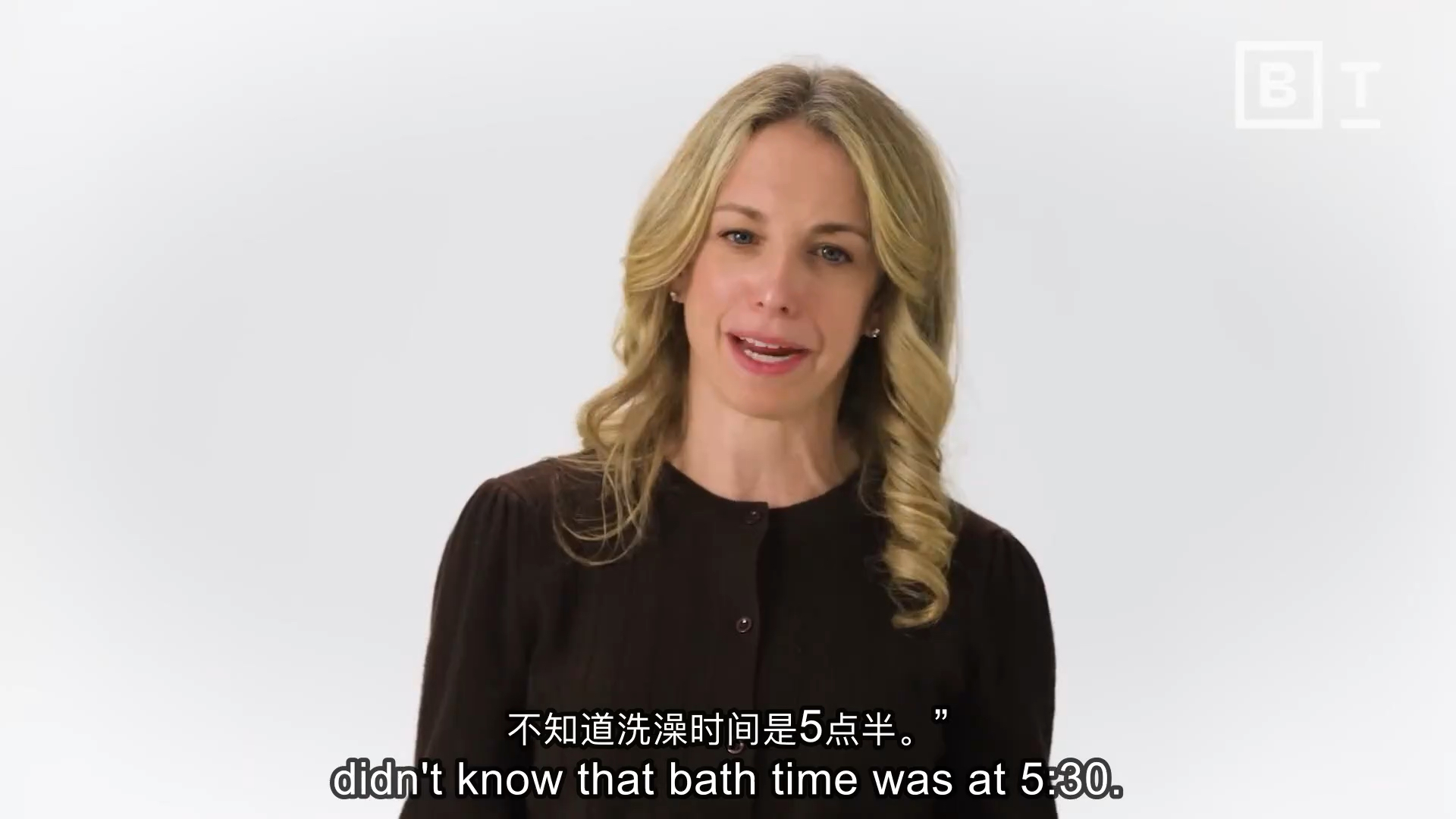
| 533 | Oh, I didn't know that bath time was at 5.30. | 我不知道洗澡时间是5点半 |
| 534 | And this is hard for a lot of us | 这对我们很多人来说都很难 |
| 535 | because we have been so conditioned | 因为我们被束缚了 |
| 536 | to try to get as far away from anger as possible | 尽量远离愤怒 |
| 537 | that we don't communicate directly. | 我们不直接沟通。 |
| 538 | We kind of dance around it, | 我们跳了个舞 |
| 539 | and we do something extremely powerless. | 我们做一些非常无能为力的事 |
| 540 | We hope someone else recognizes our need before we do. | 我们希望在这样做之前还有人认识到我们的需要。 |
| 541 | Like, we're almost crossing our fingers. | 像,我们几乎越过我们的手指。 |
| 542 | I hope my partner knows I need help at 5.25. | 我希望我的搭档知道我5点25分需要帮助 |
| 543 | We do something I call, we hint and hope. | 我们做一些我称之为, 我们暗示和希望。 |
| 544 | Oh, I'm just gonna drop a hint, and I'm gonna hope. | 哦,我只是要去掉一个提示, 我希望。 |
| 545 | So disempowering. | 故断权. |
| 546 | So amazing to realize, wait, anger is healthy. | 如此惊人的意识到,等待,愤怒是健康的。 |
| 547 | It's telling me what I need. | 它告诉我需要什么。 |
| 548 | What do I need? | 我还需要什么? |
| 549 | Can I listen to it? | 我能听听吗? |
| 550 | Can I name a feeling? | 我能说出一种感觉吗? |
| 551 | I probably need help. | 我可能需要帮助 |
| 552 | That's what my anger is telling me with bath time. | 我的愤怒就是用洗澡时间告诉我的 |
| 553 | And the minimum is two nights a week at 5.25. | 最少每周两晚5.25分 |
| 554 | Now what I'm doing, | 现在,我在做什么, |
| 555 | and I always talk about this with parents, | 我总是和父母谈论这件事 |
| 556 | kind of if I think about a road to rage, | 那种如果我想到 道路愤怒, |
| 557 | which is what we mean when we fall off the cliff, | 我们从悬崖上摔下来就是这个意思 |
| 558 | is instead of waiting till I'm almost at the cliff, | 而不是等待 直到我几乎在悬崖, |
| 559 | I'm exiting. | 我要离开 |
| 560 | I'm literally taking an exit. | 我从字面上走出去。 |
| 561 | Another example might be, oh, I'm so touched out. | 另一个例子可能是, 哦,我很感动。 |
| 562 | I can't even deal with my kids anywhere near me. | 我甚至不能处理我的孩子 在我的附近任何地方。 |
| 563 | Wait, maybe that's an anger signal in a way. | 等等,也许这在某种程度上是一个愤怒信号。 |
| 564 | What do I need? | 我还需要什么? |
| 565 | I need some time alone. | 我需要一些时间独处。 |
| 566 | Whenever I tell my kids I'm going to go for a walk, | 每当我告诉我的孩子 我要出去散步, |
| 567 | maybe my partner's home or I have some help | 也许我的搭档在家 或者我有一些帮助 |
| 568 | or they're old enough to stay home alone, | 或者他们已经够老了 可以独自呆在家里, |
| 569 | and they say, wait, I want to go with you. | 他们说,等等,我想和你一起去。 |
| 570 | Now I realize, no, sweetie. | 现在我意识到,不,亲爱的。 |
| 571 | I really love being your parent and being with you. | 我真的很喜欢做你的父母 和你在一起 |
| 572 | I want to be very direct. | 我想直说 |
| 573 | I also really need time to myself. | 我也需要时间 |
| 574 | That's really important. | 这很重要 |
| 575 | So it's okay if you're upset. | 所以,这是好的,如果你不高兴。 |
| 576 | I'm going to take this walk for the next 20 minutes, | 我接下来要走20分钟 |
| 577 | totally by myself. | 完全独自一人。 |
| 578 | That's something I need. | 我需要的东西。 |
| 579 | That is another kind of exit on that road, | 那是路的另一条出口, |
| 580 | and ironically comes from your ability to recognize anger. | 具有讽刺意味的是 你认识愤怒的能力 |
| 581 | You're feeling a little angry at your kids, resentful. | 你对你的孩子有点生气,很讨厌 |
| 582 | And you can actually use that information to exit that road, | 你可以用这个信息离开那条路 |
| 583 | again, before we're on the cliff. | 再说一遍,在我们上悬崖之前 |
| 584 | I actually think the simplest thing you can do | 其实我觉得你做的最简单 |
| 585 | is adopt this AVP practice. | 将采用AVP做法。 |
| 586 | AVP is a basic foundational emotion regulation skill. | AVP是一种基础情感调控的基本技能. |
| 587 | And just to go through those steps, | 为了走这些台阶 |
| 588 | it's acknowledge, validate, permit. | 承认,确认,许可 |
| 589 | I'm not going to be able to regulate | 我无法调节 |
| 590 | my feelings of anxiety or jealousy | 我焦虑或嫉妒的感觉 |
| 591 | if I'm not able to say, I think I'm feeling anxious. | 如果我不能说, 我想我感到焦虑。 |
| 592 | Oh, there's that jealous feeling. | 哦,有那种嫉妒的感觉。 |
| 593 | I always think of acknowledgement | 我一直想着承认 |
| 594 | as saying hi to something. | 就像对某件事打个招呼 |
| 595 | And I find this really, really useful | 我发现这个真的很有用 |
| 596 | because as soon as I can say hi to jealousy, | 因为只要我能问候嫉妒 |
| 597 | the jealousy is a part of me and not all of me, okay? | 嫉妒是我的一部分 而不是我的全部 好吗? |
| 598 | So as soon as I can say, whoa, hi, jealous feeling | 所以只要我能说,哇,嗨,嫉妒的感觉 |
| 599 | about my friend getting a promotion | 关于我朋友升职的事 |
| 600 | when I'm kind of struggling at work. | 当我在工作上挣扎的时候 |
| 601 | Now, instead of jealousy kind of being in the driver's seat | 而不是嫉妒地坐在驾驶座上 |
| 602 | of my car, it just feels like it's taken over. | 我的车,感觉就像它被接管了 |
| 603 | That's when we make really bad decisions. | 那时我们做了非常糟糕的决定。 |
| 604 | I'm in the driver's seat of my car. | 我在车的驾驶座上 |
| 605 | I'm kind of like waving to jealousy in the back seat. | 我好像在后座挥手嫉妒 |
| 606 | It's kind of like an annoying pesky passenger, | 这有点像一个讨厌的讨厌客, |
| 607 | but I'm acknowledging it. | 但我承认 |
| 608 | And then I think we have validation. | 然后我想我们得到了验证。 |
| 609 | Validation is telling yourself why your feeling makes sense. | 验证是告诉自己 你的感觉为什么有意义 |
| 610 | That doesn't have anything to do with saying | 这跟说啥没关系 |
| 611 | your behavior about the feeling makes sense. | 你的行为 感觉是有道理的。 |
| 612 | It might make perfect sense that you're feeling jealous. | 你感到嫉妒也许很合理 |
| 613 | That doesn't mean you should send a nasty text message | 这不代表你应该发个讨厌的短信 |
| 614 | to your friends about your friend | 给你的朋友 关于你的朋友 |
| 615 | who got the good job promotion. | 谁得到了良好的工作提升。 |
| 616 | Not okay. | 不好吗? |
| 617 | But you have to be able to say to yourself, oh, well, | 但你必须能够对自己说,哦,好吧, |
| 618 | I've been really working hard at work | 我一直很努力地工作着 |
| 619 | and I haven't gotten the promotion | 我还没升职 |
| 620 | I thought I was going to get. | 我想我会得到。 |
| 621 | So it makes sense that I'm jealous. | 故知我心生妒嫉. |
| 622 | Validation does not mean I agree with how you feel. | 验证并不意味着我同意你的感受 |
| 623 | When I say to my kid, oh, I get it. | 当我对我的孩子说, 哦,我明白了。 |
| 624 | You wish you could stay up later. | 你希望你晚点再睡 |
| 625 | No part of me thinks it's a good idea | 没有一部分认为这是一个好主意 |
| 626 | for them to stay up later. | 让他们晚点再睡 |
| 627 | They have a bedtime because I think it's the right bedtime. | 他们有睡觉的时间,因为我认为这是正确的睡觉时间。 |
| 628 | But validation is so important | 但验证很重要 |
| 629 | because it's kind of saying to someone else, | 因为它有点对别人说, |
| 630 | I see your emotions as real for you, | 我认为你的情绪是真实的, |
| 631 | which is really no skin off my back. | 这真的不是皮肤 从我的背上。 |
| 632 | I'm not saying it's real for me. | 我不是说这是真实的我。 |
| 633 | I'm not even saying I would feel like that | 我什至没有说,我会有这样的感觉 |
| 634 | if I were in your position. | 如果我在你的立场。 |
| 635 | It's interesting. | 这很有趣。 |
| 636 | The only reason we can't validate someone else | 唯一不能证明别人的理由 |
| 637 | is because we are in a one thing is true mentality. | 因为我们处于一种真正的心态。 |
| 638 | We are only thinking, well, I don't feel that way. | и琌稱 иぃ谋眔 |
| 639 | Well, I wouldn't feel that way. | 好吧,我不会有那种感觉。 |
| 640 | Well, I didn't feel that way when I was that age. | 嗯,我当时没有那种感觉 |
| 641 | That could all be true. | 这一切都可能是真的。 |
| 642 | But we have to hold two things are true. | 但我们必须持有两件事是真的。 |
| 643 | I don't feel that way. | 我没有那种感觉。 |
| 644 | I wouldn't have felt that way. | 我不会有那种感觉的 |
| 645 | My child is feeling that way. | 我的孩子有这种感觉。 |
| 646 | At our core as humans, | 作为人类的核心 |
| 647 | we are all just looking to feel believed. | 我们只想着相信自己 |
| 648 | And the reason that's so important | 这很重要的原因 |
| 649 | is because our feelings are both so powerful | 因为我们的感情是如此强大 |
| 650 | and completely invisible. | 和完全隐形。 |
| 651 | See, when a kid falls and skins their knee and is bleeding, | 你看,当一个孩子 跌倒和皮肤 膝盖和流血, |
| 652 | and they're crying in pain, | 他们痛苦地哭泣 |
| 653 | there's something very useful | 有件很有用的东西 |
| 654 | about seeing the blood or the cut. | 看到血或伤口。 |
| 655 | They're like, I thought that was painful. | 他们喜欢,我认为这是痛苦的。 |
| 656 | Oh, look at that. | 哦,看看那个。 |
| 657 | It's real blood. | 谓真血. |
| 658 | I'm right. | 我说得对 |
| 659 | Feelings are so confusing | 感觉很困惑 |
| 660 | because every adult knows when you feel something intensely, | 因为每个成年人都知道 当你感到强烈的东西, |
| 661 | it is just such a powerful sensation in your body. | 它只是你体内的强烈感觉。 |
| 662 | But there's no blood to prove it. | 但无血证. |
| 663 | There's no blood test. | 无血验. |
| 664 | There's nothing external that is a sign | 没有什么是外表 |
| 665 | that what you're feeling is real. | 你的感觉是真实的 |
| 666 | And so as humans, when someone sees | 作为人类 当有人看到 |
| 667 | an invisible feeling that's taking over our body as real, | 一种隐形的感觉 正在占据我们的身体作为真实, |
| 668 | it's like the ultimate sigh of relief. | 这就像终极的松口气。 |
| 669 | It's like, I'm not so crazy after all. | 这就像,我不 这么疯狂毕竟。 |
| 670 | This thing that I feel is real. | 我觉得这是真的 |
| 671 | Yeah, this is a real thing. | 是啊,这是真的事情。 |
| 672 | Now, the reason validation also is something we want to do | 现在,理由验证 也是我们想要做的事情 |
| 673 | for our kids, knowing that it doesn't mean we agree, | 对于我们的孩子,知道 这并不意味着我们同意, |
| 674 | is our kids can't learn to manage a feeling in their body | 我们的孩子无法在身体中 学会控制一种感觉 |
| 675 | if they don't get the message that the feeling is real. | 如果他们没有得到信息 感觉是真的。 |
| 676 | That's a precondition. | 这是一个先决条件。 |
| 677 | So people say to me, but I don't want my kid to think | 所以人们对我说, 但我不希望我的孩子思考 |
| 678 | it's just okay to freak out like this about going to bed. | 睡觉这样吓唬人没关系 |
| 679 | So I'm not going to validate the feeling. | 所以我不会去验证这种感觉。 |
| 680 | I said, whoa, let's take the long game here. | 我说,哇,让我们在这里玩长游戏。 |
| 681 | Ironically, if you want your kid when they're older | 讽刺的是,如果你想要孩子长大了 |
| 682 | to not freak out about going to bed, | 不要惊慌失措地去睡觉, |
| 683 | you actually do want to validate their feelings. | 你真的想验证他们的感受 |
| 684 | That's step one. | 这是第一步。 |
| 685 | It's hard not to make your own decision. | 难不自决. |
| 686 | Oh, it stinks to have someone else pick your bedtime. | 哦,它臭到有人 选择你的睡觉时间。 |
| 687 | Even just, you're really upset | 即使只是,你真的很难过 |
| 688 | that you have to go to bed right now. | 你必须去睡觉 现在。 |
| 689 | I believe you. | 我相信你们 |
| 690 | Now, the same thing is true for self-regulation in adulthood. | 成年人的自我调节也是一样 |
| 691 | Validating your own feelings doesn't mean | 验证自己的感受并不代表 |
| 692 | this feeling is going to be true forever. | 这种感觉将永远是真的 |
| 693 | It doesn't mean this feeling means | 这并不意味着这种感觉意味着 |
| 694 | you have to act in a certain way. | 你必须以某种方式行事。 |
| 695 | It's just kind of a way of saying to the sensations | 这只是一种表达方式 对的感觉 |
| 696 | in your body, you're real. | 在你的身体,你是真实的。 |
| 697 | I believe you. | 我相信你们 |
| 698 | And I promise you, what that does to kind of cool down | 我答应你,那能怎样冷静下来? |
| 699 | the intensity is remarkable. | 强度非常高 |
| 700 | You can almost think about your feelings | 你几乎可以考虑你的感受 |
| 701 | like this annoying friend | 像这个烦人的朋友 |
| 702 | who's just trying to get your attention | 只是想引起你的注意 |
| 703 | and you're like, stop it, stop it, go away. | 你就像,停下来,停下来,走开。 |
| 704 | I wish this friend wasn't at this party. | 我希望这位朋友没参加这个派对 |
| 705 | You just kind of have to look at the friend sometimes | 你只是有时得看看朋友 |
| 706 | and say, hi, I see you, you're real. | 并说,你好,我看到你,你是真实的。 |
| 707 | And then that friend will like simmer down a little bit | 然后那个朋友会喜欢 冷静下来一点 |
| 708 | and won't be as pesky. | 也不会像麻木一样 |
| 709 | So big picture. | 如此大观. |
| 710 | Validation doesn't mean agreeing. | 验证并不意味着同意. |
| 711 | Validation doesn't mean I feel the same way. | 验证并不意味着我也有同样的感觉。 |
| 712 | Validation is just a way of saying | 验证只是一种说法 |
| 713 | a feeling is real for that person. | 那种感觉是真实的 |
| 714 | And when you think about it that way, | 当你这样想的时候 |
| 715 | it might be a lot easier to start doing. | 开始做可能容易很多。 |
| 716 | The next thing that I think is missing | 接下来我想是失踪了 |
| 717 | is what I call permission. | 我称之为许可。 |
| 718 | Which is just giving yourself permission | 那只是给你自己的许可 |
| 719 | to have the feeling. | 拥有这种感觉。 |
| 720 | It's actually remarkable. | 这其实是惊人的。 |
| 721 | Sometimes I think our feelings would be saying to us, | 有时候我觉得我们的感情会告诉我们 |
| 722 | please just allow us to be there. | 请让我们在那里。 |
| 723 | Please just allow us to live in your body. | 请让我们住在你的身体里 |
| 724 | We're not looking for much more. | 我们没有在寻找更多的。 |
| 725 | As soon as I can say to myself, | 只要我能对自己说 |
| 726 | I allow myself to feel jealous. | 我允许自己感到嫉妒。 |
| 727 | I permit this jealous feeling. | 我允许这种嫉妒的感觉。 |
| 728 | It also doesn't have as much of a hold on us. | 它也没有我们那么重要。 |
| 729 | So I'm asked a lot, all this validation | 所以,我被问了很多, 所有这些验证 |
| 730 | of my kid's feelings. | 我的孩子的感受。 |
| 731 | Am I just coddling them? | 我只是在勾引他们吗? |
| 732 | And I love this question because I really, | 我喜欢这个问题 因为我真的 |
| 733 | really want to differentiate the two. | 真正想要区分两者。 |
| 734 | Coddling is a real thing. | 勾引是真实的 |
| 735 | Let me be clear. | 让我说清楚 |
| 736 | There are a lot of parents, I see it too, | 有很多父母,我也看见了 |
| 737 | where there's coddling. | 在那里有调戏。 |
| 738 | And what that really means is you are limiting | 这真正意味着你正在限制 |
| 739 | your kid's capability. | 你的孩子的能力。 |
| 740 | Good Inside is all about helping your kid | 里面的好就是帮你的孩子 |
| 741 | access and bring out their capability. | 获得并发挥他们的能力。 |
| 742 | I believe that's the best thing for kids. | 我相信这对孩子们来说是最好的 |
| 743 | That's what resilience is. | 即是应变. |
| 744 | And validation of whatever your kid is feeling | 证明你孩子的感受 |
| 745 | is a part of helping your kid be capable, | 帮助你的孩子有能力, |
| 746 | but it's not the whole thing. | 但它不是整个事情。 |
| 747 | I think about two things that are really | 我想到两件事,其实是 |
| 748 | important components of helping a kid | 帮助孩子的重要组成部分 |
| 749 | become more capable. | 变得更有能力。 |
| 750 | And the first one is kind of that, | 第一个是那种 |
| 751 | I believe you. | 我相信你们 |
| 752 | And we hear other people talk about this. | 我们听到其他人谈论这个。 |
| 753 | So let's say a kid is on a soccer team, | 所以,让我们假设一个孩子 在足球队, |
| 754 | but they're no longer starting. | 但他们不再开始。 |
| 755 | And they found that out, | 他们发现, |
| 756 | and they don't want to go to practice tomorrow. | 他们不想明天去练习 |
| 757 | To me, the first, I believe you, | 对我来说,第一个, 我相信你, |
| 758 | validation would sound something like this. | 验证会听起来像这样 |
| 759 | Look, I get it. | 听着,我明白了。 |
| 760 | I would probably feel the same way, | 我可能会有同样的感觉, |
| 761 | like I just kind of want to stay in my room. | 就像我只是想留在我的房间。 |
| 762 | I can't believe I lost my starting spot. | 我不敢相信我失去了起点 |
| 763 | That stinks. | 这臭味。 |
| 764 | If I say that to my kid and then I say, | 如果我对我的孩子说,然后我说, |
| 765 | I guess you don't have to go. | 我猜你不必离开 |
| 766 | Yeah, I think that's really limiting to a kid. | 是啊,我觉得这真的限制 一个孩子。 |
| 767 | Really limiting. | 真的很有限。 |
| 768 | It's not just coddling. | 不只是闲聊 |
| 769 | I just think it's a very sad thing | 我只是觉得这很可悲 |
| 770 | that when a kid feels that they're not capable | 当一个孩子觉得他们不能 |
| 771 | of something because of their emotions, | 因为他们的情绪, |
| 772 | we collude in that not-so-capable version of themselves. | 我们勾结在那种 不太有能力的版本自己。 |
| 773 | I think that ends up being a horrible feeling to a kid. | 我觉得这对孩子来说是一种可怕的感觉 |
| 774 | Oh, I didn't think I was capable of doing something hard, | 哦,我不认为 我有能力做一些困难的事情, |
| 775 | and no one else really believed in me either. | 也没有其他人真的相信我 |
| 776 | Now, the opposite of coddling, I guess, | 现在,反之共鸣,我想, |
| 777 | would be something like, | 这将是类似的东西, |
| 778 | you're making a big deal out of nothing. | 你一无所获 |
| 779 | Go to practice. | 去练习吧 |
| 780 | This is absurd. | 这是荒谬的。 |
| 781 | It's interesting. | 这很有趣。 |
| 782 | I don't think that helps bring out a kid's resilience either. | 我也不觉得这能帮助孩子恢复力 |
| 783 | Now, all of a sudden, | 现在,突然间, |
| 784 | my kid really doesn't want to go to practice | 我的孩子真的不想去练习 |
| 785 | because it's just a way to defy me. | 因为这是挑战我的方法 |
| 786 | That's counterproductive. | 这是适得其反的。 |
| 787 | My kid's going to feel let down at a million points | 我的孩子会觉得失望 在百万分之一 |
| 788 | in their life when they're older, | 当他们长大了, |
| 789 | and if they can't do that first step of acknowledging | 如果他们不能做 第一步承认 |
| 790 | and validating and permitting their feelings, | 并验证和允许他们的感情, |
| 791 | they're not going to be able to recover from it, | 他们无法从中恢复过来, |
| 792 | and just judging yourself for your feelings | 为了你的感情来判断自己 |
| 793 | makes them harder to deal with. | 让他们更难处理。 |
| 794 | So what's that middle ground? | 那中间是什么? |
| 795 | What's that resilience-building ground? | 抗御力建设基地是什么? |
| 796 | We have this, I believe you, but the second part, | 我们有这个 我相信你 但第二部分 |
| 797 | and I do think this is missing sometimes, | 我确实认为这有时是缺失的, |
| 798 | but let me tell you, it is core to what we do at Good Inside. | 但让我告诉你,这是核心 我们做什么在好内部。 |
| 799 | We never forget it. | 我们永远不会忘记它。 |
| 800 | I believe you and I believe in you. | 我相信你,我相信你们 |
| 801 | It's actually really easy to remember that. | 这真的很容易记住。 |
| 802 | I believe you and I believe in you. | 我相信你,我相信你们 |
| 803 | You want to raise a resilient kid, | 你想抚养一个有弹性的孩子, |
| 804 | especially in the face of some nervous or anxious feelings, | 尤其是面对一些紧张或焦虑的情绪, |
| 805 | you need both parts, okay? | 你需要两个部分,好吗? |
| 806 | And in a way, I picture my kid's kind of in a hole almost, | 从某种意义上说,我想象我的孩子 几乎在一个洞里, |
| 807 | not like a abyss, but let's say it's like a little hole. | 不象深渊,但让我们假设它就像一个小洞。 |
| 808 | I'm like, I can't do this. | 我很喜欢,我不能做到这一点。 |
| 809 | No, I kind of need one foot in the hole with them. | 不,我需要一英尺 在洞里与他们。 |
| 810 | Like, that's the part that's validating. | 喜欢,这是部分 是验证。 |
| 811 | I believe you, I'm with you. | 我相信你,我跟你一样。 |
| 812 | But this is important, you need one foot out of the hole. | 但是这很重要,你需要一英尺的洞。 |
| 813 | I always think about it, one foot in validation, | 我总是想着它, 一英尺的验证, |
| 814 | one foot in capability and hope. | 一尺长的能力和希望。 |
| 815 | So what would that sound like? | 听起来怎么样? |
| 816 | We started, look, I get it, I feel the same way. | 我们开始,听着,我明白了,我也有同样的感觉。 |
| 817 | Honestly, not having a starting spot anymore, | 老实说,不再有起点了, |
| 818 | that's really hard. | 这真的很难。 |
| 819 | And I too would probably just want to | 我也可能会只是想 |
| 820 | curl up in my bed and not go to practice. | 卷起来在我的床上 而不是去练习。 |
| 821 | And you're a kid who can do hard things. | 而你是一个孩子 谁可以做艰难的事情。 |
| 822 | I want you to hear that from me. | 我希望你能听到我的话 |
| 823 | You are. | 没错 |
| 824 | And showing up to practice really uncomfortable | 露面练习很不舒服 |
| 825 | and a little bit embarrassed, | 有点尴尬, |
| 826 | I'm not going to tell you, you can work your way out of that. | 我不会告诉你,你可以想办法的 |
| 827 | It is going to be a really, really hard practice. | 这将是一个非常,非常困难的练习。 |
| 828 | And you're actually going to get more out of going through that | 而且你实际上会得到更多的 通过通过 |
| 829 | than you probably would if you were just having | 如果你只是拥有 |
| 830 | the starting position for the rest of high school. | 高中毕业的起步位置 |
| 831 | I want to be honest, and I really know you can do this. | 我想说实话 我真的知道你能做到的 |
| 832 | That's not coddling. | 这不是闲聊。 |
| 833 | Now, parents get very specific. | 现在,父母变得非常具体。 |
| 834 | So do you make them go to practice? | 你让他们去练习吗? |
| 835 | There's so many dynamics in a family. | 一个家庭有这么多的动态。 |
| 836 | No parent is usually that successful | 通常没有父母成功 |
| 837 | making their 16-year-old do anything. | 让他们16岁的孩子做任何事 |
| 838 | But this also has to do with the way you've related to them | 但这也和你和他们的关系有关 |
| 839 | until that point and whether you have enough | 在那之前,你是否有足够的钱 |
| 840 | of what I call connection capital built up with them | 我称之为连接资本 与他们一起建立 |
| 841 | for that intervention to really be helpful. | 让这种干预真正有所帮助。 |
| 842 | I'll give you another example, right? | 我再举个例子,对吗? |
| 843 | Your kid isn't in class with anyone they're friends with. | 你的孩子没有在课堂上与他们的朋友。 |
| 844 | You have to call the school. | 你得给学校打电话 |
| 845 | You have to switch me so I'm with Molly and Priya, | 你得换我 所以我和Molly和Priya在一起 |
| 846 | whatever their friends' names are. | 不管他们朋友的名字是什么 |
| 847 | Look, sweetie, I remember when I was your age | 亲爱的,我记得我像你这么大的时候 |
| 848 | and I found out I wasn't in first grade | 我发现我还没上一年级 |
| 849 | with my best friends. | 和我最好的朋友们 |
| 850 | That stinks. | 这臭味。 |
| 851 | That doesn't just stink like this or this. | 不只是这种臭味 |
| 852 | It's like big time. | 如大乘时. |
| 853 | And you're a kid who's going to get through this. | 而你是一个孩子 谁要去通过这一点。 |
| 854 | I'm not going to call the school. | 我不会给学校打电话的 |
| 855 | Sometimes we don't get our friends in our class. | 有时我们班上没有朋友 |
| 856 | And actually, you're going to feel more confident | 事实上,你会觉得更加自信 |
| 857 | at the end of this year having gotten through that, | 在今年底,经过了这一切, |
| 858 | probably having made some new friends, | 可能交了些新朋友 |
| 859 | but either way, just seeing that you can get | 但无论哪种方式, 只是看你可以得到 |
| 860 | through disappointment. | 通过失望。 |
| 861 | So I'm not going to call the school. | 所以我不会给学校打电话 |
| 862 | I'm not going to switch your class, | 我不会换你的课的 |
| 863 | but I will remind you every day how capable you are. | 但我会每天提醒你 你是多么有能力。 |
| 864 | And I'll also understand that you're sad | 我也会明白你很伤心 |
| 865 | and we're going to get through this together. | 我们一起度过难关 |
| 866 | That is resilience building, | 这就是恢复力建设, |
| 867 | because when you get older | 因为当你长大了 |
| 868 | and something's really hard, | 事情真的很困难, |
| 869 | you have to do that first step. | 你必须要做第一步。 |
| 870 | This stinks. | 这太臭了 |
| 871 | I got fired from my job. | 我被开除了 |
| 872 | And then if you also hear that second voice, | 如果你听到第二个声音, |
| 873 | and I'm going to get through this, | 我会熬过去的 |
| 874 | I feel overwhelmed with kind of sadness and shame. | 我感到悲伤和羞耻 |
| 875 | But I also know there's some other version of me | 但我也知道我还有其他的版本 |
| 876 | who's going to get to the other side. | 谁会去另一边? |
| 877 | I can't even really see her right now, | 我现在甚至都见不到她 |
| 878 | 但我知道她就在那里 我看见她了 But I know she's there. | |
| 879 | That combination of those two, | 两者的结合 |
| 880 | ooh, chef's kiss, that's resilience. | 哦,厨师的吻, 这就是弹性。 |
| 881 | I think a lot about how screens, | 我想了很多关于如何屏幕, |
| 882 | both our relationship with screens as parents | 作为父母 我们和屏幕的关系 |
| 883 | and our kids' relationships with screens, | 还有我们孩子和屏幕的关系 |
| 884 | are affecting emotion regulation. | 影响情绪调节 |
| 885 | I think the core thing I think about | 我觉得我所想的核心 |
| 886 | is our relationship with frustration | 是我们和挫折的关系 |
| 887 | is dramatically changing so quickly | 变化很快 |
| 888 | because of the ease and frankly, | 因为那容易 坦率地说, |
| 889 | the quick dopamine hits that screens give us all the time. | 快速的多巴胺点击 屏幕给我们所有的时间。 |
| 890 | So let's start with children, | 我们从孩子开始 |
| 891 | but then I'll talk about parents | 但我会谈论父母 |
| 892 | because I think that's the part | 因为我认为这是角色 |
| 893 | that's often left out of the conversation. | 这经常被置之不理 |
| 894 | Our kids, because of technology, | 我们的孩子,由于技术, |
| 895 | there's just a lot more ease | 更轻松一点 |
| 896 | built into their everyday life. | 进入他们的日常生活 |
| 897 | Whether it's I just get to sit on an iPad | 我是不是只能坐在iPad上? |
| 898 | and basically go like this, | 基本上像这样走 |
| 899 | b, b也. | |
| 900 | basically nothing, effortless, | 基本上没什么,没有努力, |
| 901 | and dopamine and enjoyment and excitement | 多巴胺 享受和兴奋 |
| 902 | and reward just come to me. | 赏金只是来给我。 |
| 903 | It's kind of the opposite of all the circuitry | 这和所有的电路是相反的 |
| 904 | we would want kids to build | 我们想让孩子们建立 |
| 905 | in terms of what will be adaptive later on. | 就以后的适应性而言。 |
| 906 | Like even think about your kid at five | 5岁就想起你的孩子 |
| 907 | learning to read or in their first job | 学习阅读或从事第一份工作 |
| 908 | taking on a hard project. | 进行一个艰难的项目。 |
| 909 | You want them to have a circuit that kind of says | 你希望他们有一个电路 那种说 |
| 910 | I have to put in a lot of effort | 我不得不付出许多努力 |
| 911 | and a lot of work, by the way, | 顺便说一句 还有很多工作 |
| 912 | a lot of time, a lot of struggle, | 很多时间,很多斗争, |
| 913 | a lot of intentionality, | 大量的故意行为, |
| 914 | and then one day in the future, | 然后将来有一天, |
| 915 | I will have a reward. | 我会得到奖励 |
| 916 | Reward comes later after a lot of hard work | 辛苦了很久,以后再赏 |
| 917 | is basically the opposite of I do | 基本上与我相反 |
| 918 | no hard work and get reward right away. | 不要费劲,马上得到奖励。 |
| 919 | So it makes sense that our kids have less | 所以,这很有意义 我们的孩子少 |
| 920 | what I call frustration tolerance. | 我称之为挫折容忍。 |
| 921 | There is less tolerance for frustration, | 对挫折的容忍度较低, |
| 922 | which is essentially the space | 基本上就是空间 |
| 923 | between wanting and having | 欲与有之间 |
| 924 | because the space between wanting and having | 因为渴望和拥有之间的空间 |
| 925 | for children and technology has been collapsed. | 儿童和技术已经崩溃。 |
| 926 | I often think even just about watching a movie. | 我经常想看电影 |
| 927 | I was fortunate to grow up | 幸好我长大了 |
| 928 | in a family where he had a blockbuster membership. | 在一个家庭里,他有一个阻塞成员。 |
| 929 | Okay, so I think about, | 好吧,我想起来, |
| 930 | oh, I really want to watch a movie. | 哦,我真的想看电影。 |
| 931 | Okay, let me go talk to my parents | 好,让我跟我父母谈谈 |
| 932 | and see when they can take me to blockbuster. | 看看他们什么时候能带我去拦路 |
| 933 | Okay, maybe that's a day or two. | 好吧,也许这是一两天。 |
| 934 | Now let's go on the drive to blockbuster. | 现在,让我们去 驱动阻塞。 |
| 935 | This is already 48 hours where I'm like, | 这已经是48小时了,我喜欢, |
| 936 | oh, I really want to watch this movie. | 我真的很想看这部电影 |
| 937 | Really want to watch true Beverly Hills, | 真的想看真正的贝弗利山 |
| 938 | whatever it is. | 无论它是什么。 |
| 939 | We finally get to blockbuster. | 我们终于可以阻止了 |
| 940 | I go and you're winding through the aisles | 我走了,你正在穿过过道 |
| 941 | and then you see the image. | 然后你看到图像。 |
| 942 | And sometimes as most of us remember | 有时候我们大多数人都记得 |
| 943 | is you look behind and you're like, | 你看看后面,你喜欢, |
| 944 | oh man, they're out. | 哦,伙计,他们出来了。 |
| 945 | They don't even have that movie. | 他们甚至没有电影。 |
| 946 | Maybe they do, but it took such a long time | 也许吧,但花了这么长时间 |
| 947 | between wanting and imagining and having. | 在渴望与想象和拥有之间 |
| 948 | If we think about the time a child right now | 想想现在的孩子 |
| 949 | has between wanting to watch a show | 在想看节目之间 |
| 950 | and having a show, it's essentially no time. | 和有一个表演, 它基本上没有时间。 |
| 951 | It's almost like magic. | 这几乎就像魔法。 |
| 952 | Like if I want something, it magically appears | 就像我想要的东西, 它神奇地出现 |
| 953 | in front of me in that moment. | 在那一刻我面前。 |
| 954 | And I think too often we're not thinking about | 我想我们经常不考虑 |
| 955 | how does this show up in school? | 学校里怎么会出现这种事? |
| 956 | How does this show up in a kid's ability | 如何显示这个孩子的能力 |
| 957 | to learn to read? | 学会读书? |
| 958 | Now there's definitely learning dynamics | 现在肯定有学习动力 |
| 959 | around reading, right? | 在阅读,对不对? |
| 960 | There's phonics. | 有声闻. |
| 961 | Certainly some kids are dyslexic | 当然有些孩子有阅读障碍 |
| 962 | or have tension struggles. | 或者有紧张的挣扎。 |
| 963 | But for a lot of kids who struggle, | 但对于很多挣扎的孩子来说, |
| 964 | it's one of the first things around age five | 这是五岁左右最开始的事之一 |
| 965 | that they actually have to wait and work | 他们必须等待和工作 |
| 966 | and not succeed at right away. | 而不是马上成功。 |
| 967 | And you know what? | 你知道吗? |
| 968 | With reading, nobody is just delivering | 读完书,没人会送东西 |
| 969 | to you right away the ability to read. | 让你马上能读懂 |
| 970 | And so if that circuit in a kid's body, | 所以,如果这个电路 在孩子的身体, |
| 971 | work, try, stick with it, don't get it, | 工作,尝试,坚持它,不理解它, |
| 972 | keep trying, hear that voice that says, | 继续尝试,听到那个声音说, |
| 973 | I can't do it, take a deep breath, | 我不能这样做,深呼吸, |
| 974 | take a break, come back, keep going. | 休息一下,回来,继续走 |
| 975 | And the best it gets is, I don't know, | 而最好的是, 我不知道, |
| 976 | you can read a part of a word, | 你可以读一个字的一部分, |
| 977 | but not even the whole word at the end of that lesson. | 但连教训结束时的完整词都不行 |
| 978 | If that circuit has not been developed | 如果电路没有开发 |
| 979 | in other parts of a kid's life | 在孩子生活的其他方面 |
| 980 | by the time they learn to read, | 当他们学会阅读的时候, |
| 981 | it's no wonder the kid looks like | 难怪那孩子长得像 |
| 982 | they're essentially having a meltdown | 他们基本上正在崩溃 |
| 983 | and can't attend to it | 却不能照顾它 |
| 984 | because it is a totally new task | 因为这是全新的任务 |
| 985 | and completely at odds with all the reward circuitry | 完全与所有的奖励路线相悖 |
| 986 | they've come to expect in their five-year-old life. | 他们五岁时就已经预料到了 |
| 987 | Okay, now the part that I think we often neglect | 好吧,现在的部分 我认为我们经常忽略 |
| 988 | and is so important is what our relationship | 我们的关系是如此重要 |
| 989 | with screens in adulthood has done | 成年时的银幕已经完成 |
| 990 | in terms of the dynamics around parenting. | 在养育子女方面的动态。 |
| 991 | So we kind of know our kids are less tolerant of frustration, | 所以我们知道我们的孩子 对挫折不太宽容, |
| 992 | which actually does mean | 这其实意味着 |
| 993 | they probably do have more bad behavior | 他们也许有更坏的行为 |
| 994 | because their expectations are so different than ours were. | 因为他们的期望和我们不同 |
| 995 | But now in adulthood, I know, | 但现在成年了,我知道, |
| 996 | and I can just speak for myself, | 我可以为自己说话, |
| 997 | I'm on my phone a lot. | 我经常打电话 |
| 998 | I've gotten used to this world | 我习惯了这个世界 |
| 999 | 在那里我不必去Blockbuster。 | |
| 1000 | I want to watch a movie, I'm gonna watch that movie. | 我想看电影,我要看电影 |
| 1001 | I even think about an ingredient | 我甚至想着一种成分 |
| 1002 | I might wanna have for tonight's meal. | 我今晚可能想吃顿饭 |
| 1003 | I can go bing, bing, bing, | 我可以去宾 宾 宾 |
| 1004 | and the thing is delivered to my house. | 东西被送到我家 |
| 1005 | So much more ease, so much more immediate gratification, | 更轻松 更直接的满足 |
| 1006 | so much more dopamine, so much less frustration, | 更多的多巴胺 更少的挫折感 |
| 1007 | so much convenience | 这么方便 |
| 1008 | and so much less inconvenience in our adult life. | 还有我们成年后的不便 |
| 1009 | I think one of the most important things to know | 我认为最重要的事情之一 要知道 |
| 1010 | about raising young kids is actually | 关于抚养年幼的孩子其实 |
| 1011 | that it's massively inconvenient when it's done well. | 当它做得很好时,它非常不方便。 |
| 1012 | Your kid will have a tantrum | 你的孩子会发脾气的 |
| 1013 | when you go to the grocery store | 当你去杂货店的时候 |
| 1014 | and you're like, well, I guess I'm not getting groceries. | 你就像,嗯, 我想我没有得到杂货。 |
| 1015 | I'm gonna have to pick my kid up and carry them out. | 我得去接我的孩子 然后把他们带走 |
| 1016 | You're a good kid having a hard time. | 你是个好孩子 很难过。 |
| 1017 | Whatever I say, put them in the car, work through it. | 不管我说什么,把他们放进车里,通过它工作。 |
| 1018 | So inconvenient. | 故无方便. |
| 1019 | I'm home for 10 minutes after work | 我下班后回家10分钟 |
| 1020 | and my kid is screaming. | 我的孩子尖叫着 |
| 1021 | I get it, inconvenient. | 我懂了,不方便,我懂了,我懂了,我懂了 |
| 1022 | If you think about what phones have done | 如果你想想电话做了什么 |
| 1023 | to our tolerance of the day-to-day inconveniences | 我们容忍日常的不便 |
| 1024 | of parenting, it's dramatic. | 养育子女,这是戏剧性的。 |
| 1025 | I think one of the reasons | 我觉得其中一个原因 |
| 1026 | we kind of can get into this bad cycle, | 我们可以进入这种糟糕的循环, |
| 1027 | our kids are less tolerant of frustration | 我们的孩子对挫折不太宽容 |
| 1028 | in part because of technology | 部分由于技术原因 |
| 1029 | and their expectations | 及其期望 |
| 1030 | of too much immediate gratification, more bad behavior. | 即时的满足 更糟糕的行为 |
| 1031 | We are less tolerant of our kids' bad behavior | 我们不太容忍孩子的坏行为 |
| 1032 | because of our relationship with our screens, | 因为我们和屏幕的关系 |
| 1033 | which means instead of tolerating it, | 也就是说 与其容忍它 |
| 1034 | oh, we're gonna work through this together, | 哦,我们要去工作 通过这个, |
| 1035 | 好,拿个iPad。 | |
| 1036 | Fine, have the ice cream. | 好吧,吃冰激凌。 |
| 1037 | Fine, let me change my rule. | 好吧,让我改变我的规则。 |
| 1038 | I just wanna make this go away. | 我只是想让这一切消失。 |
| 1039 | And we're in this horrible cycle. | 我们正处于可怕的循环中。 |
| 1040 | We're less tolerant, they're less tolerant, | 我们不太宽容 他们不太宽容 |
| 1041 | more bad behavior, more shutting down and avoidance, | 更多的不良行为, 更多的关闭和避免, |
| 1042 | more bad behavior, off in a bad direction. | 更坏的行为, 关闭一个坏的方向。 |
| 1043 | And it's one of the reasons why helping adults | 这是帮助成年人的原因之一 |
| 1044 | and kids increase what I call frustration tolerance. | 孩子们会增加我所说的挫折容忍 |
| 1045 | Like my work around frustration tolerance, | 就像我的工作 关于挫折容忍, |
| 1046 | it's hand in hand with resilience. | 它与韧性携手并进。 |
| 1047 | There's nothing more important in this day and age | 这时代没有比这更重要的了 |
| 1048 | than teaching your kid frustration tolerance, | 而不是教你的孩子 沮丧的容忍, |
| 1049 | which also means we have to increase | 这也意味着我们必须增加 |
| 1050 | our own frustration tolerance | 我们自己的挫折容忍 |
| 1051 | to help our kids do the same. | 帮助我们的孩子也这样做。 |
| 1052 | When we think about our kid bad behavior, | 当我们想到我们的孩子坏行为, |
| 1053 | like my kid doesn't wait, they interrupt me all the time. | 就像我的孩子不等待, 他们一直打断我。 |
| 1054 | Well, our kids have less waiting built into their lives. | 好吧,我们的孩子的等待 较少在他们的生活。 |
| 1055 | They do, they're not waiting for a movie. | 是的 他们不是在等电影 |
| 1056 | They're watching five minutes of a movie, | 他们正在看5分钟的电影 |
| 1057 | maybe just a show and they're like, | 也许只是一场演出 他们喜欢, |
| 1058 | nope, don't like this, next, next, next, next, next. | 不,不要喜欢这个,下一个,下一个,下一个,下一个。 |
| 1059 | And so we actually have to make sure with our kids. | 因此,我们实际上必须确定 我们的孩子。 |
| 1060 | Like I've actually said to my kid, | 就像我对我的孩子说的那样 |
| 1061 | I'm gonna teach you waiting. | 我会教你等待。 |
| 1062 | It's a thing, it's a thing, it's still real. | 是事,是事,仍为实也. |
| 1063 | I'm gonna make sure we learn it. | 我会确保我们学习它。 |
| 1064 | And it is one of these reasons on the margin. | 这也是边际原因之一。 |
| 1065 | I live in Manhattan and I might think, | 我住在曼哈顿,我可能会想, |
| 1066 | oh, I'm gonna jump in a cab. | 哦,我要跳上车。 |
| 1067 | You know what? | 你知道吗? |
| 1068 | I'm gonna carve out more time | 我要挖出更多的时间 |
| 1069 | and I'm gonna go wait for the bus. | 我去等公交车 |
| 1070 | Not just because it saves money, which I like, | 不只是因为它节省了钱,我喜欢, |
| 1071 | but because my kid actually needs more moments | 但因为我的孩子实际上需要更多的时间 |
| 1072 | than I did based on my childhood to wait, | 比起我童年的等待 |
| 1073 | to literally learn how to wait and practice doing that. | 学习如何等待和练习 |
该视频共有字幕 1073 条。解锁更多字幕为会员功能,请移动到 价格