思考本质上是空间性的和具身的,不只发生在大脑|神经科学家Ba
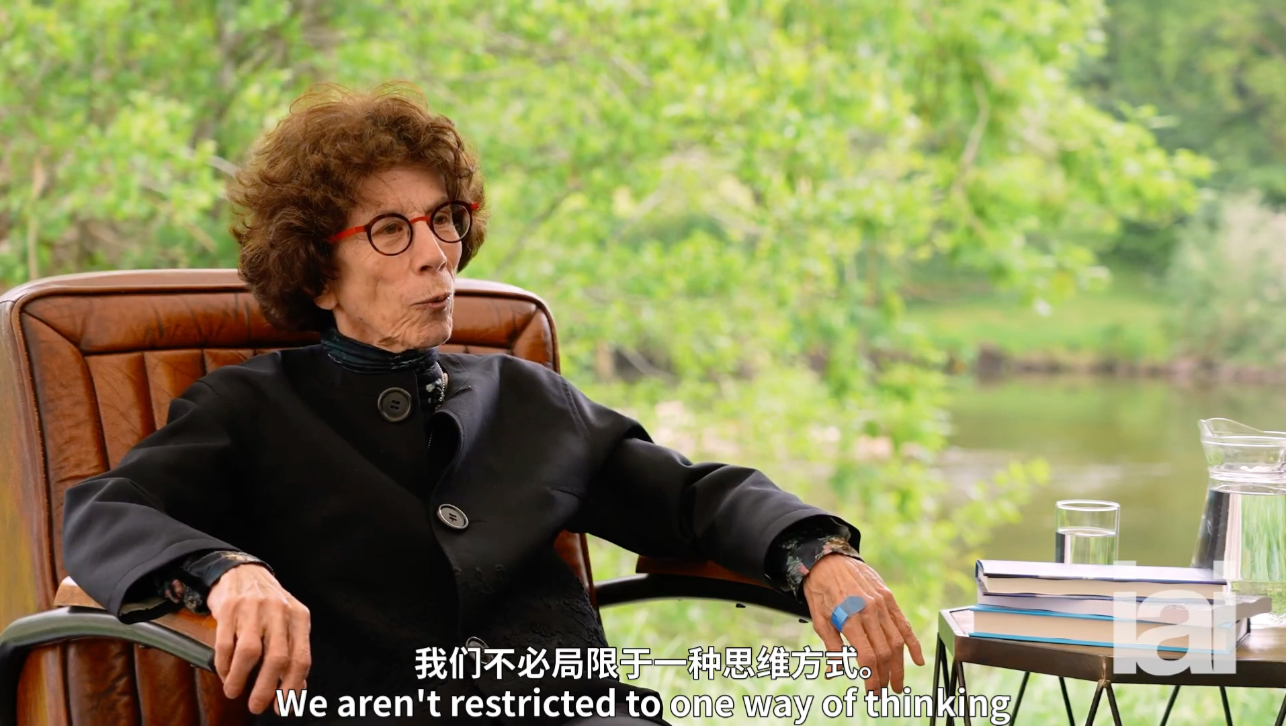
字幕摘录
| 时间 | 英文 | 中文 |
|---|---|---|
| 0:00 | When people sit on their hands, it's harder for them to find words to explain how to get | 当人们坐在自己的手上, 他们很难找到文字来解释如何得到 |
| 0:06 | from their house to the train. | 从他们的房子到火车。 |
| 0:09 | And when they explain those things, they generally gesture, and the gestures precede the words. | 当他们解释这些事情时,他们一般会做出手势,手势会先于文字. |
| 0:16 | So they're somehow facilitating not just the words, but the thinking. | 因此,他们正在推动的不仅仅是文字,而是思维。 |
| 0:22 | And that's a bit of a mystery to me. | 这对我来说是个谜 |
| 0:25 | Why movements of the body seem to be core to thinking. | 为什么身体的移动似乎是思考的核心. |
| 0:37 | Barbara Tversky, welcome to How the Light Gets In. | 芭芭拉·特维尔斯基 欢迎光芒的降临 |
| 0:40 | Thank you. | 谢谢 |
| 0:41 | I'm delighted to be here. | 我很高兴在这里。 |
| 0:43 | So in your book, Mind in Motion, you argue that thinking is fundamentally spatial and embodied. | 所以在你的书《运动的心》中, 你主张思维是 基本的空间和体现。 |
展开字幕全文(267 条)
| 序号 | 英文 | 中文 |
|---|---|---|
| 1 | When people sit on their hands, it's harder for them to find words to explain how to get | 当人们坐在自己的手上, 他们很难找到文字来解释如何得到 |
| 2 | from their house to the train. | 从他们的房子到火车。 |
| 3 | And when they explain those things, they generally gesture, and the gestures precede the words. | 当他们解释这些事情时,他们一般会做出手势,手势会先于文字. |
| 4 | So they're somehow facilitating not just the words, but the thinking. | 因此,他们正在推动的不仅仅是文字,而是思维。 |
| 5 | And that's a bit of a mystery to me. | 这对我来说是个谜 |
| 6 | Why movements of the body seem to be core to thinking. | 为什么身体的移动似乎是思考的核心. |
| 7 | Barbara Tversky, welcome to How the Light Gets In. | 芭芭拉·特维尔斯基 欢迎光芒的降临 |
| 8 | Thank you. | 谢谢 |
| 9 | I'm delighted to be here. | 我很高兴在这里。 |
| 10 | So in your book, Mind in Motion, you argue that thinking is fundamentally spatial and embodied. | 所以在你的书《运动的心》中, 你主张思维是 基本的空间和体现。 |
| 11 | Can you explain how this changes the way that we understand the mind? | 你能解释一下这如何改变我们理解思想的方式吗? |
| 12 | So our spatial thinking takes up half our cortex. | 所以我们的空间思维占据了我们皮层的一半。 |
| 13 | It evolved long before language. | 它在语言之前发展了很久. |
| 14 | We communicate, create, and so forth with our bodies. | 我们和我们的身体沟通、创造等等。 |
| 15 | And again, it goes back evolutionarily to one-celled creatures that either approach things | 再一次,它回到进化到一个细胞的生物 无论是接近事物 |
| 16 | that are attractive or nutritious or avoid things that are noxious. | 吸引人或有营养 或避开有毒的东西。 |
| 17 | And that's the first kind of interaction with the world. | 这是与世界的第一种互动。 |
| 18 | And again, before any language gets in there. | 再说一遍 在任何语言进入之前 |
| 19 | So humans use spatial thinking in many different ways, how we get around the world, | 因此,人类使用空间思维 在许多不同的方式, 我们如何环游世界, |
| 20 | how we grasp objects in the world, and then how we communicate. | 我们如何抓住世界上的物体 然后如何沟通 |
| 21 | So if I'm reaching for a glass, you know what I'm doing. | 所以,如果我伸手要一杯, 你知道我在做什么。 |
| 22 | And I can use grasp as the word or the action as a way of communicating to you. | 我可以用抓住作为词 或动作作为与你沟通的方式。 |
| 23 | So I grasp ideas and pass them on to you. | 所以我掌握了想法,把它们传给你。 |
| 24 | And those are all actions in the world, but get into our language as actions on thought. | 这些都是世界上所有的行动, 但进入我们的语言 作为思考的行动。 |
| 25 | And which forms of thinking would you say are spatial and embodied? | 你说空间和内涵是什么样的思维形式? |
| 26 | And which forms of thinking aren't spatial and embodied? | 什么样的思维形式不是空间和体现的? |
| 27 | So for example, people might point to things like linguistic reasoning and mathematical abstraction. | 例如,人们可能指向语言推理和数学抽象等事物. |
| 28 | I think you touched on it there. | 我想你碰过那里了 |
| 29 | But would you say that those are also spatial and embodied as well? | 但你会说,这些也是空间的和体现的吗? |
| 30 | In many cases, they're going to be spatial. | 在许多情况下,它们将会是空间的. |
| 31 | They're going to be, mathematicians will draw functions. | 数学家们会画出功能 |
| 32 | They'll draw spaces on pieces of paper. | 他们会在纸上画空间 |
| 33 | They'll gesture them with their hands. | 他们会用手做手势 |
| 34 | And that again will be spatial. | 这又是空间。 |
| 35 | Even reasoning is one step after another. | 连推理都是一步一步的 |
| 36 | So is that spatial, temporal? | 那是空间,时间吗? |
| 37 | It's hard to separate what's spatial and what's temporal one step after another. | 空间和时间是分不开的 |
| 38 | Even if it's not a two-dimensional, three-dimensional and dimensional space, | 即使它不是一个二维,三维和维空间, |
| 39 | it's still linear in some sense. | 从某种意义上说,它仍然是线性的。 |
| 40 | So it's hard to think of things that can't in some way be reduced to spatial. | 所以很难想象那些无法从某种程度上缩小为空间的东西. |
| 41 | I mean, if we get into terms like justice, freedom, those are hard to grasp. | 我的意思是,如果我们进入 诸如正义,自由, 这些很难理解。 |
| 42 | And talking about them spatially is a little harder, or grasping them spatially. | 在空间上谈论它们有点难, 或者在空间上抓住它们。 |
| 43 | So there are limits. | 故有穷限. |
| 44 | But I think a great deal of scientific and mathematical thinking has a spatial basis. | 但我认为大量的科学和数学思维有空间基础. |
| 45 | And why do you think this recognition is an important one? | 为什么你认为这种认识很重要? |
| 46 | Because it seems like you're pushing back against a certain type of view | 因为看来你正背着某种观点往后推 |
| 47 | where thinking is something that just primarily happens in the head and the brain. | 脑部和脑部都会出现一些想法 |
| 48 | And that has arguably been quite central in a lot of Western philosophy, | 这在西方哲学中相当重要 |
| 49 | especially in the past few centuries. | 尤其是过去几个世纪 |
| 50 | Do you see it as you pushing back against a type of view that is the idea | 你看到它,当你推回 一种类型的观点 |
| 51 | that thinking happens primarily sort of up here? | 思考主要发生在这里? |
| 52 | So there are two ways of approaching that. | 所以有两种方法可以接近它。 |
| 53 | One is thinking only in the brain, or does the body contribute? | 一个人只在大脑中思考,还是身体有贡献? |
| 54 | And another is pushing back against a language-based view. | 另一个是反对基于语言的观点。 |
| 55 | So I can talk about the first. | 故能说第一义. |
| 56 | And it puzzles me. | 这让我很困惑。 |
| 57 | So we find these are all experiments. | 所以我们发现这些都是实验。 |
| 58 | If people sit on their hands, it's harder for them to find words | 如果人们坐在手上, 他们很难找到词 |
| 59 | to explain how to get from their house to the train. | 解释如何从家里到火车。 |
| 60 | And when they explain those things, they generally gesture. | 当他们解释这些事情时,他们一般会做出姿态。 |
| 61 | And the gestures precede the words. | 手势则先于言语. |
| 62 | So they're somehow facilitating not just the words, but the thinking. | 因此,他们正在推动的不仅仅是文字,而是思维。 |
| 63 | And that's a bit of a mystery to me. | 这对我来说是个谜 |
| 64 | Why movements of the body seem to be core to thinking. | 为什么身体的移动似乎是思考的核心. |
| 65 | And I think the neuroscientists will work that through. | 我认为神经科学家们会做到这一点。 |
| 66 | Is it through? | 结束了吗? |
| 67 | It must be reflected in the brain. | 它必须反映在大脑里。 |
| 68 | But how necessary is the body for that kind of thinking? | 但是这种想法需要身体吗? |
| 69 | So clearly, we can do that kind of thinking. | 很明显,我们可以做那种思考。 |
| 70 | People without arms, without sensation below the neck can think and can explain. | 无臂者,颈下无感者,可思可解. |
| 71 | So we have alternative bases. | 因此,我们有替代的基地。 |
| 72 | Just like blind people can navigate without vision. | 就像盲人可以无目无睹地航行 |
| 73 | So that's part of it. | 所以这是它的一部分。 |
| 74 | And it remains a bit of a mystery to me how the body seems to be important for thinking. | 这对我来说还是个谜 尸体似乎对思考很重要。 |
| 75 | Another thing we know is if we put people, deprive them of any sensation, | 还有一件事我们知道 如果我们把人, 剥夺他们的任何感觉, |
| 76 | their mind wanders. | 他们的思想在徘徊 |
| 77 | They can't keep control of the mind. | 他们无法控制心灵 |
| 78 | And that again indicates something about the body promoting the thinking, | 这再次表明 身体促进思想, |
| 79 | independent of the brain. | 独立于大脑。 |
| 80 | The brain is still active, but the body is desensitized and not moving. | 大脑仍然活跃,但身体已经失去敏锐度,不运动. |
| 81 | The other part is language. | 另一个部分是语言。 |
| 82 | And there I think Western philosophy, certainly educated people, | 我认为西方哲学,当然受过教育的人, |
| 83 | is very dominated by language. | 以语言为主 |
| 84 | And language can mean many things. | 语言可以意味着很多事情。 |
| 85 | Some of it is a highly codified system of words organized by rules. | 其中一些是由规则组织起来的高度编纂的文字体系. |
| 86 | And there, things like gestures, body movements, can't be discretized | 在那里,诸如手势,身体运动, 不能被盘片化 |
| 87 | in the way that language can be coded into words, nor are there rules. | 语言可以被编码成文字,也没有规则。 |
| 88 | So if I'm giving you directions and I say there's an intersection, | 所以,如果我给你指示 我说有一个十字路口, |
| 89 | or there's an intersection, or there's all of that sort of captures the same meaning, | 或有一个十字路口, 或有所有这些类型的捕捉 相同的含义, |
| 90 | but it's not the same way of expressing it. | 但表达方式不同 |
| 91 | And if I get to vagal concepts like it's rocky, | 狦и稱va種 |
| 92 | that's going to be again not something that's easily codified. | 这会再次成为不是 容易编纂的东西。 |
| 93 | Conductors use very different ways of communicating with their orchestras. | 指挥家与他们的管弦乐团使用截然不同的交流方式. |
| 94 | Their orchestras somehow get it and play music. | 他们的管弦乐团不知何故得到它并演奏音乐. |
| 95 | But it's not easily codified in the way that language is. | 但这种语言的编纂方式并不容易. |
| 96 | So that would be another contrast, | 所以,这将是另一个对比, |
| 97 | where thinking with the body and space is different from language. | 和语言不同 |
| 98 | And people say this intuitively, | 人们直觉地说, |
| 99 | but I think there are some studies that also suggest this, | 但我认为有些研究也表明, |
| 100 | which is that there are a group of people in the world | 也就是世界上有一群人 |
| 101 | who primarily feel that they reason more with spatial images and pictures and things like that. | 他们主要觉得自己用空间图像 图片和类似的东西来解释 |
| 102 | And there are some people who think more in words, essentially. | 有些人在文字上思考更多,基本上。 |
| 103 | They think in sentences. | 他们用句子思考 |
| 104 | And then there are another group of people who just say, | 还有一群人只是说, |
| 105 | oh, well, I have an internal monologue in my head, | 哦,好吧,我有一个内部独白在我的头上, |
| 106 | and that's how I come to think about things and I come to conclusions. | 这就是我如何思考事物 并得出结论。 |
| 107 | How would you say this sort of understanding or this research | 你怎么说这种理解 或这种研究 |
| 108 | interacts with what you say about embodied thinking? | 和你说的关于内在思维的事互动? |
| 109 | So we'd need evidence that people really are thinking differently. | 所以我们需要证据,证明人们真的有不同的思维。 |
| 110 | And I'm open to that kind of evidence. | 我愿意接受这种证据 |
| 111 | And I do know people who think, who don't have spatial imaginations at all. | 我确实知道有些人会思考, 他们根本没有空间想象力。 |
| 112 | They can't find their way in environments easily. | 它们在环境中无法轻易找到自己的路. |
| 113 | And they're brilliant people who think one step after another. | 他们是聪明的人 谁思考一步又一步。 |
| 114 | And again, that would be linear thinking, | 再说一遍,那是线性思维, |
| 115 | whether we want to call that spatial or not. | 不论我们是否想称之为空间。 |
| 116 | Most people that I encounter are pretty flexible in the way that they think, again, varying. | 我遇到的大多数人 都相当灵活 他们的思维方式,再次,不同的。 |
| 117 | I don't think we think in words. | 我认为我们不是用文字思考的。 |
| 118 | The words kind of come after the thoughts. | 词在思想之后就出现了 |
| 119 | And we don't really have access to the thoughts. | 我们无法真正了解这些想法。 |
| 120 | We can sometimes introspect on that. | 我们有时可以回顾一下。 |
| 121 | And if you look at athletes and they're going to often do mental practice, | 如果你看看运动员, 他们会经常做心理练习, |
| 122 | how do I do a dive? | 我怎么潜水? |
| 123 | How do I dance a step? | 我该怎么跳舞? |
| 124 | That, again, isn't words. | 再说一遍,这不是言语。 |
| 125 | It's somehow encoded in their body in some way. | 不知何故,它用某种方式在他们体内编码。 |
| 126 | And they might be making miniature movements doing that. | 他们可能在做小型运动。 |
| 127 | And again, I think many people can do a bit of this and a bit of that. | 再说一遍,我觉得很多人可以做一些事情,有些事情。 |
| 128 | We aren't restricted to one way of thinking. | 我们并不局限于一种思维方式。 |
| 129 | But the individual difference work needs to be done. | 但个人的差别工作需要完成. |
| 130 | And I think it would be fascinating. | 我觉得会很有趣 |
| 131 | I want to separate images from spatial because, again, | 我想把图像和空间分开 因为,再次, |
| 132 | blind people can have excellent spatial memory and spatial thinking. | 盲人可以拥有出色的空间记忆和空间思维. |
| 133 | They often gesture. | 他们经常是手势。 |
| 134 | Children blind from birth gesture. | 儿童从出生的姿势中失明。 |
| 135 | And it seems to help their thinking. | 这似乎有助于他们的思考。 |
| 136 | Adults who are blind gesture. | 成人是盲动的 |
| 137 | And it seems to help their thinking. | 这似乎有助于他们的思考。 |
| 138 | These are spatial, motoric sorts of things. | 这些是空间的,机动的种类。 |
| 139 | Don't come with visual images. | 别带影像来 |
| 140 | So I want to keep those things separate. | 所以我想把这些东西分开 |
| 141 | I mean, there are people who say they don't have visual images. | 有人说他们没有视觉影像 |
| 142 | And I trust them. | 我相信他们 |
| 143 | Although, again, I'd love to know the neural science behind it. | 虽然,我还是想知道背后的神经科学。 |
| 144 | On a slight side note, because you mentioned blind people, | 稍微说一句 因为你提到了盲人 |
| 145 | is there any literature on the difference in the way in which | 是否有文献可以说明 |
| 146 | blind people from birth think and interact with the environment | 盲人从出生开始就思考并与环境互动 |
| 147 | and the way in which people who weren't blind from birth | 和不盲从出生的方式 |
| 148 | but became blind in later years think? | 却在后年变得盲目, |
| 149 | What is that? | 这是什么? |
| 150 | Again, you'd have to know what you mean by thinking. | 再说一遍,你必须明白你的想法 |
| 151 | I mean, I don't think the literature there is very rich. | 我的意思是,我不认为那里的文学非常丰富。 |
| 152 | But there are blind mathematicians who've been blind from birth | 但也有盲人数学家从出生就失明 |
| 153 | and who think spatially. | 他们的思维空间。 |
| 154 | Blind physicists who think spatially. | 空间思考的盲人物理学家. |
| 155 | They do need to reach for things, interact with things in the world, | 他们确实需要接触事物 与世界事物互动 |
| 156 | get around their houses, and they learn to do that spatially. | 绕过他们的房子, 他们学会在空间上做到这一点。 |
| 157 | The sorts of things they pick up, the ground, the texture of the ground, | 他们捡到的东西, 地面,地面的纹理, |
| 158 | wind, smells, and things that we might be picking up | 风,气味,还有我们可能捡到的东西 |
| 159 | but not necessarily consciously. | 但不一定有意识 |
| 160 | So they're using those cues from the world around them, | 他们用的是周围世界的提示 |
| 161 | sensory cues that are different from vision. | 与视觉不同的感官提示. |
| 162 | So many of them can navigate quite well and better than I can | 所以他们中很多人都比我更能航行 |
| 163 | from their spatial sense. | 从他们的空间感。 |
| 164 | There is evidence that people blind from birth or deaf from birth, | 有证据表明,人们从出生即失明,从出生即失聪, |
| 165 | different parts of the brain pick up different things. | 大脑的不同部分 收集不同的东西。 |
| 166 | So for blind people, often the back of the brain, | 因此,对于盲人, 往往是脑后, |
| 167 | the occipital lobes, will pick up all sorts of spatial things, | 医院的叶子, 会收集各种空间的东西, |
| 168 | even tactile things that incited people are used for other things. | 甚至触觉事物 煽动人们 用于其他事物。 |
| 169 | So especially people who are blind or deaf from birth, | 特别是瞎子或聋子, |
| 170 | the brain will accommodate in many ways. | 大脑将在许多方面容纳。 |
| 171 | 有些像Ian McGilchrist 提出的观点 | |
| 172 | cognition and thinking is fundamentally made up of two hemispheres of the brain. | 认知和思考从根本上由大脑的两个半球组成. |
| 173 | The right brain, which sees things in a more holistic and contextual way | 正确的大脑,它以更整体和背景的方式看待事物 |
| 174 | and would maybe map onto the sort of embodied thinking that you're talking about, | 并可能映射到那种 体现的思维 你在谈论, |
| 175 | and the left that's more sort of analytical, instrumental, | 左边那更像是分析工具 |
| 176 | and linguistic and logically based. | 以及语言和逻辑基础。 |
| 177 | Both these sides, the left and right hemisphere, | 左右两侧 |
| 178 | have their own personalities and are kind of vying for power. | 拥有自己的个性 并有点争夺权力。 |
| 179 | Does this share similarities with your embodied thinking of you? | 这是否与你含蓄的思考相似? |
| 180 | Do you have any thoughts on that kind of view? | 你对那种风景有什么想法吗? |
| 181 | Yeah, I mean, people love dichotomies. | 是啊,我的意思是,人们喜欢双胞胎。 |
| 182 | There are two kinds of people in the world, those who love dichotomies and those who don't. | 世间有二种人,爱二乘者,不爱二乘者. |
| 183 | So probably saying the whole hemisphere is one thing or another is a little extreme, | 所以也许说整个半球是一件或另一件事情有点极端, |
| 184 | but language does tend to be left-sided and is more sequential, logical, | 但语言的确是偏左的 而且更顺序 逻辑 |
| 185 | and the right side seems to be more holistic. | 右侧似乎更加全面。 |
| 186 | So on a very abstract way, there's something to that. | 所以在非常抽象的方面, 有一些事情。 |
| 187 | He's not the only one who's made that distinction. | 非唯他能分别. |
| 188 | Many people before him have. | 在他之前有许多人 |
| 189 | But it doesn't respect the complexity of the brain. | 但并不尊重大脑的复杂性. |
| 190 | In what ways do you think it doesn't respect the complexity of the brain? | 你觉得它怎么不尊重大脑的复杂性呢? |
| 191 | You know, there are places in the brain that are specialized for faces. | 你知道,大脑中有些地方是专用于面孔的. |
| 192 | There are places in the brain that are specialized for certain objects, recognizing them. | 大脑中有些地方是专用于某些物体的,可以识别它们. |
| 193 | There's a place in the brain that recognizes that a small b and a small d are mirror images. | 大脑中有一个地方承认一个小b和一个小d是镜像. |
| 194 | They aren't the same. | 他们不一样 |
| 195 | Many other visual portions of the brain don't care if something is mirror-reversed. | 大脑的许多其他视觉部分 并不在乎什么是反光镜。 |
| 196 | There's one tiny place in the brain that does care if something is mirror-reversed. | 大脑里有一个很小的地方, 它确实关心的东西如果是反光的。 |
| 197 | That tiny place is used for recognizing reading. | 那个小地方用来识别阅读 |
| 198 | Now, the brain didn't evolve with reading, but that area of the brain | 现在,大脑不是随着阅读而进化的,而是大脑的这个领域 |
| 199 | capitalizes on small b and small d are mirror images and distinguishes between them. | 利用小b和小d是镜像并区分它们. |
| 200 | So looking at that complexity of the brain is fascinating, | 所以看 复杂的大脑是迷人的, |
| 201 | and if you just split hemispheres, you'll miss that. | 如果你只是分裂的半球, 你会想念这一点。 |
| 202 | Okay. | 摆 |
| 203 | A lot of philosophy from Plato to Descartes and Christian theology is placed, | 从柏拉图到笛卡尔的许多哲学 基督教神学被放置, |
| 204 | I think you said earlier, premium on Logos language and reason. | 我想你刚才说,对洛戈斯语和理性的高度评价。 |
| 205 | Do you think this has been a mistake in causing confusion about the way we think about thinking? | 你认为这是个错误吗? 造成我们思考方式的混乱? |
| 206 | Mistake, I wouldn't say. | 错误,我不会说。 |
| 207 | I mean, we're settling on one theory or another is difficult. | 我的意思是,我们正在解决一个或另一个理论是困难的。 |
| 208 | Data keep coming in, views keep coming out, and that makes life very interesting. | 数据不断输入, 观点不断流出, 这让生活非常有趣。 |
| 209 | We like to have things permanent and complete and a way of dealing with the world, | 我们喜欢有永久和完整的事物 和处理世界的方式, |
| 210 | but the world doesn't behave in that way, so we have to keep adapting and changing. | 但是世界不是那样的 所以我们必须不断适应和改变 |
| 211 | Unexpected things keep happening that aren't under our control. | 出乎意料的事情会继续发生 在我们控制之下 |
| 212 | So it feels to me like relying on one system or another is relying on shaky grounds. | 因此,我觉得 依赖一种或另一种系统 是依赖不稳定的理由。 |
| 213 | And you mentioned earlier, which was interesting, that with embodied thinking, | 你刚才提到,这是有趣的, 有内在的思维, |
| 214 | when we start to get to concepts like justice or equality or fairness or infinity, | 当我们开始理解正义或平等或公平或无限的概念时, |
| 215 | it then starts becoming quite difficult to apply the embodied or spatial thinking hypothesis to it. | 然后,它开始变得相当难以对它适用所体现或空间思维假设。 |
| 216 | Do you think these are things that will be accounted for within that framework, | 你是否认为这些东西 将在这个框架内被核算, |
| 217 | or do you think there'll be mysteries outside of that framework or things that aren't fundamentally | 或者你认为框架之外会有谜团 或一些根本上不是 |
| 218 | just not embodied thinking? | 只是没有体现思想? |
| 219 | So we can talk about justice using this kind of gesture. | 我们可以用这种姿态来谈论正义。 |
| 220 | Are things balanced and just? | 事情是平衡和公正吗? |
| 221 | That kind of gesture, and I remember one of my grandchildren, | 那种姿态 我记得我的一个孙子 |
| 222 | at three or four, was using that kind of gesture. | 3到4岁时, 使用了这种姿态。 |
| 223 | And we know that babies respond to | 我们知道,婴儿的反应 |
| 224 | unjust actions viscerally. | 不公平的行为。 |
| 225 | So if they watch puppets and one is grabbing something from another, | 所以,如果他们看木偶 和一个正在抢 从另一个东西, |
| 226 | these are kids that don't yet conceptualize in language, they will react viscerally. | 这些孩子在语言上还没有概念化,他们会有直觉的反应。 |
| 227 | They won't like the puppet that grabbed from another puppet. | 他们不会喜欢从另一个傀儡手中抓来的傀儡. |
| 228 | So that's embodied in a way we | 所以,这是体现在我们的方式 |
| 229 | have a visceral response to watching injustice, and then the concept can get generalized in some | 对观察不公正现象有内在的反应,然后这一概念在有些地方可以被普遍化。 |
| 230 | way from that. | 说得没错 |
| 231 | It's again going back to the primary response is emotional. | 它再次回到了主要的反应是情感. |
| 232 | Are we going to | 我们是不是要去 |
| 233 | something or avoid it? | 东西还是避开它? |
| 234 | And we don't want to approach something that's doing harm to another | 我们不想接近伤害别人的东西 |
| 235 | thing. | 东西。 |
| 236 | Freud stated, Sigmund Freud stated that philosophy sometimes seems to me like a person | 弗洛伊德说,西格蒙德·弗洛伊德说,哲学有时在我看来就像一个人 |
| 237 | who keeps cleaning their glasses and they still stay dim. | 他们不停地打扫他们的眼镜 他们仍然保持阴暗。 |
| 238 | And it seems in a lot of empirical | 它似乎在许多经验 |
| 239 | psychology has done away with the need of philosophy. | 心理学已经消除了哲学的需要. |
| 240 | In your view, what is the role | 在你看来,什么是角色 |
| 241 | of philosophy in psychology? | 心理学哲学? |
| 242 | That's a hard one because I get puzzled about philosophy | 很难说 因为我对哲学很迷惑 |
| 243 | as well. | 临Τ |
| 244 | So you agree with Freud's view? | 所以你同意弗洛伊德的观点? |
| 245 | And I studied philosophy as an undergraduate and | 我作为本科生学习哲学 |
| 246 | psychology and it came to a point where should I specialize in one or the other? | 心理学和它 到了一个点,我应该 专门在一个或另一个? |
| 247 | And I went to my | 我走进我的 |
| 248 | philosophy teacher and he said, you'll do just fine. | 哲学老师说,你会做的很好。 |
| 249 | But let me tell you, you don't think like | 但让我告诉你,你不认为 |
| 250 | a philosopher. | 一个哲学家。 |
| 251 | And he was absolutely right. | 他说得对 |
| 252 | I think empirically, how would you answer that | 从经验来看,你会怎么回答? |
| 253 | question using data? | 用数据提问? |
| 254 | And I think that's my lens on the world. | 我认为那是我在世界的镜头。 |
| 255 | And I don't completely grasp the | 我也没有完全把握 |
| 256 | lens of philosophers. | 哲学家的镜头. |
| 257 | Partly there are so many different kinds of philosophers. | 部分地有许多不同的哲学家. |
| 258 | And the ones I'm | 和那些我是谁 |
| 259 | most familiar with seem to be concerned with the way I use language. | 最熟悉的似乎是我使用语言的方式。 |
| 260 | And they're sure, philosophy | 他们肯定,哲学 |
| 261 | has a role in sharpening concepts and making clear. | 可以在强化概念和明确概念方面发挥作用。 |
| 262 | And that can be the basis for empirical | 这可以成为实证的基础 |
| 263 | empirical research, the kind that I do. | 经验研究,我做的那种。 |
| 264 | So I appreciate philosophers for their clarity | 所以我感谢哲学家的澄清 |
| 265 | or that kind of philosophy for the clarity it provides. | 或那种哲学 对于它所提供的清晰。 |
| 266 | Barbara Tversky, thank you very much. | 芭芭拉 芭芭拉 芭芭拉 特维尔斯基,非常感谢 |
| 267 | Thank you. | 谢谢 |
该视频共有字幕 267 条。解锁更多字幕为会员功能,请移动到 价格