如何得到任何工作|求职面试的终极秘诀
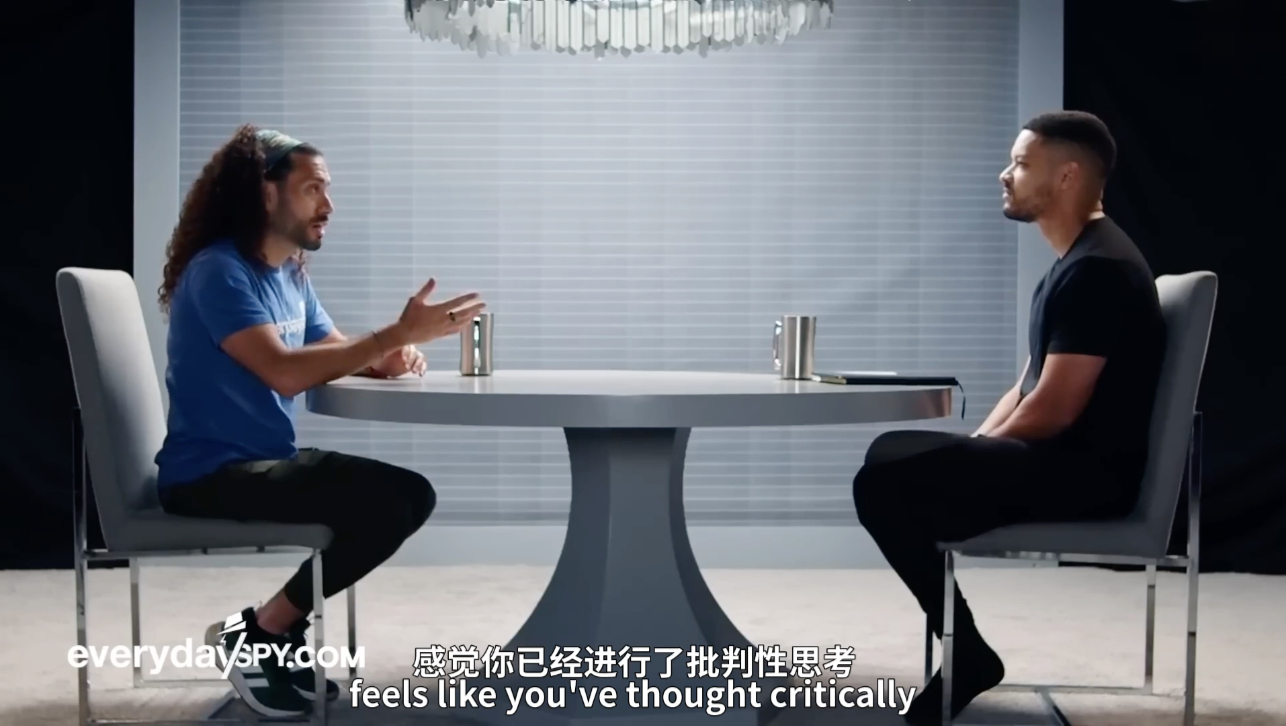
字幕摘录
| 时间 | 英文 | 中文 |
|---|---|---|
| 0:00 | What interviewers really like isn't people that they like, it's people who are alike the interviewer. | 采访者真正喜欢的不是他们喜欢的人, 是那些像采访者的人。 |
| 0:08 | Really? | 真的吗? |
| 0:09 | So I guarantee you that the people that you have liked interviewing the most, | 所以,我向你保证,你最喜欢采访的人, |
| 0:11 | I'm even willing to bet that you will admit in this conversation at some point, | 我甚至敢打赌,你会承认 在这个谈话的某个时候, |
| 0:16 | we'll put that on the line, | 我们把这个放在线上, |
| 0:17 | that a big portion of your hiring is because you see elements of yourself in the people that you hire. | 你雇用的很大一部分是因为 你从你雇用的人中 看到了自己的要素 |
| 0:23 | I mean, like, I don't consciously know that, but I totally believe it. | 我的意思是,喜欢,我不知道, 但我完全相信这一点。 |
| 0:29 | Because when you see someone who reflects elements of you, | 因为当你看见一个能反映你元素的人 |
| 0:35 | you immediately go through the sense-making process and you flip to like and trust. | 你立即通过感知过程 你翻转 喜欢和信任。 |
| 0:39 | Interesting. | 有意思,这很有趣 |
展开字幕全文(202 条)
| 序号 | 英文 | 中文 |
|---|---|---|
| 1 | What interviewers really like isn't people that they like, it's people who are alike the interviewer. | 采访者真正喜欢的不是他们喜欢的人, 是那些像采访者的人。 |
| 2 | Really? | 真的吗? |
| 3 | So I guarantee you that the people that you have liked interviewing the most, | 所以,我向你保证,你最喜欢采访的人, |
| 4 | I'm even willing to bet that you will admit in this conversation at some point, | 我甚至敢打赌,你会承认 在这个谈话的某个时候, |
| 5 | we'll put that on the line, | 我们把这个放在线上, |
| 6 | that a big portion of your hiring is because you see elements of yourself in the people that you hire. | 你雇用的很大一部分是因为 你从你雇用的人中 看到了自己的要素 |
| 7 | I mean, like, I don't consciously know that, but I totally believe it. | 我的意思是,喜欢,我不知道, 但我完全相信这一点。 |
| 8 | Because when you see someone who reflects elements of you, | 因为当你看见一个能反映你元素的人 |
| 9 | you immediately go through the sense-making process and you flip to like and trust. | 你立即通过感知过程 你翻转 喜欢和信任。 |
| 10 | Interesting. | 有意思,这很有趣 |
| 11 | So we need to clarify this, because when you say elements of myself, | 所以,我们需要澄清这一点, 因为当你说我自己的要素, |
| 12 | there's parts of myself that I'm like, I would never hire. | 我从不雇我 |
| 13 | Correct. | 没错 |
| 14 | But that's not the part of you that you like. | 但你不喜欢这样 |
| 15 | It's the part of you that you don't like. | 这是你不喜欢的部分。 |
| 16 | You trust that part of you to not be good at the job. | 你相信那部分人不擅长工作 |
| 17 | But there's other parts of you that you trust to be good at the job, and that's what you shoot for. | 但还有你信任的其他部分 擅长工作, 这就是你射击的目的。 |
| 18 | I'm also willing to bet that there's people that you hire | 我敢打赌,有的人你雇用 |
| 19 | because you know that they're good at areas that you know you're bad at. | 因为你知道 他们擅长那些你知道你不好的地方 |
| 20 | So that's all interviewers. | 这就是所有采访者。 |
| 21 | All interviewers everywhere. | 到处都是采访者 |
| 22 | What they dream of is that they walk into an interview, | 他们的梦想是 他们走进采访, |
| 23 | and across the table is someone almost exactly like them, | 桌子对面的人 几乎完全一样, |
| 24 | who they enjoy talking to, who they can relate to, | 他们喜欢和谁说话, 他们可以联系到谁, |
| 25 | who they feel instant connection and chemistry with, | 他们感到瞬间的联系和化学, |
| 26 | because then it becomes an enjoyable interview. | 因为那会变成一个愉快的采访 |
| 27 | Because what every interviewer hates is walking into an interview | 因为每个采访者最讨厌的就是走进采访 |
| 28 | that is draining and terrible and hard and painful. | 这是耗尽和可怕 和艰难和痛苦。 |
| 29 | That's what they don't like. | 这就是他们不喜欢的。 |
| 30 | And most of the time, the people interviewing are not actually the people | 大部分时间, 面试的人其实不是人民 |
| 31 | who will be the supervisor for the person that gets hired. | 谁是受聘者的主管。 |
| 32 | Oftentimes, they're just an intermediary interviewer. | 经常,他们只是一个中介采访者. |
| 33 | So all they really want is to just find somebody who meets the qualifications technically, | 所以他们真正想要的 就是找到一个在技术上符合资格的人 |
| 34 | has some sort of common ground with the interviewer themselves. | 有某种共同点 与采访者自己。 |
| 35 | So how do I make sure I'm that person? | 那我该如何确定我是那个人? |
| 36 | What can I do to make sure that, say that you are interviewing me, | 我能做什么来确保, 说你正在采访我, |
| 37 | or say that, let's do it the other way around, | 或者说 我们换个方式 |
| 38 | I've got the job that I'm looking to fill, and you've come for an interview today. | 我有我要找的工作来填补 你今天来面试 |
| 39 | So I'm going to go through the sense-making process. | 所以我要通过感知过程。 |
| 40 | As soon as I get on this call with you, I'm new to you, so what does that mean I know? | 我一接到你的电话 我就对你很陌生 那是什么意思? |
| 41 | I know that you don't want to be on this call with me. | 我知道你不想和我通话 |
| 42 | Avoidance, I can assume coming in. | 避免,我可以假设进来。 |
| 43 | So what I have to do is I have to keep investing enough to get through the avoidance phase. | 因此,我要做的是,我必须不断投入足够的资金, 才能渡过避险阶段。 |
| 44 | Well, what am I going to talk about? | 好吧,我该说什么呢? |
| 45 | How am I going to invest in this conversation? | 我该怎么投资这次谈话? |
| 46 | I'm going to pool as much as I can from verbal and nonverbal cues that you give me. | 我会尽量从你给我的口语和非口语提示中游泳 |
| 47 | I'm going to look at the decorations on the wall behind you. | 我要看看你后面墙上的装饰 |
| 48 | Whether it's in person or whether it's virtual, I'm going to try to pool for my environment. | 无论是本人还是虚拟的,我都会尝试为我的环境而游泳. |
| 49 | I see that you're using an iPad. | 我知道你在用iPad软件 |
| 50 | I see that you actually like to write on your iPad. | 我看你真的喜欢在你的iPad上写。 |
| 51 | I see that you use different colors when you write on your iPad. | 我看到你用不同的颜色 在你的iPad上写。 |
| 52 | I also see there's a journal under your iPad. | 我也看到你的iPad下有个日记 |
| 53 | I can assume that inside that journal are handwritten notes that are actually done in pen and ink, right? | 我可以假设那本日记里面是手写的笔记, 实际上是用笔和墨水做的,对吧? |
| 54 | There's certain things that I can start to observe. | 有些事情我可以开始观察 |
| 55 | You have a very clear, you put clear effort into the way that you shave your face. | 你有一个非常清楚,你把 明确的努力的方式,你剃光你的脸。 |
| 56 | You have a very handsome look to your hair. | 你的头发很漂亮 |
| 57 | Thank you so much. | 非常感谢 |
| 58 | You've got the job. | 你已经得到了工作。 |
| 59 | No, I don't need to hear it. | 不,我不需要听到它。 |
| 60 | It's yours. | 这是你的。 |
| 61 | But I'm going to pool from all of this for the competition phase of the sense-making process. | 但是,我要从这一切中聚集起来,为感知过程的竞争阶段. |
| 62 | Because all I need to do to get you to comply with my wishes, my wishes are to get the job, | 因为我只要让你遵守我的愿望 我的愿望就是得到这份工作 |
| 63 | what I need to get you to comply with the wishes, I need you to engage in a conversation with me that is competitive, | 我想让你遵守这些愿望 我要你和我进行竞争对话 |
| 64 | meaning you will invest in me and I will invest in you. | 意思是你会投资我 我也会投资你 |
| 65 | Think about how, don't think of competition like a zero-sum game, like a winner and a loser. | 想想如何,不要把竞争想成零和的游戏,像赢家和输家一样. |
| 66 | I hear competition, I hear arguing. | 我听到竞争,我听到争吵。 |
| 67 | That's what most people hear. | 常人闻此语已. |
| 68 | Most people think of competition as zero-sum game. | 大多数人认为竞争是零和游戏. |
| 69 | Somebody wins, somebody loses the competition. | 有人赢了 有人输了比赛 |
| 70 | Think of it more like a scrimmage in your favorite soccer team. | 更像是你最爱的足球队里的一团糟 |
| 71 | Where like the red shirts play the green shirts, but it's still the same football club, right? | 哪里像红衬衫 玩绿色衬衫, 但它仍然是相同的足球俱乐部,对不对? |
| 72 | They have spring training for baseball in the United States. | 他们在美国为棒球进行春季训练. |
| 73 | It's all the Yankees, but they're just playing the Yankees to practice with each other. | 这都是洋基队,但他们只是扮演洋基队来互相练习. |
| 74 | What are they doing? | 他们在干什么? |
| 75 | They're competing. | 他们在竞争 |
| 76 | They're honing their craft through competition. | 他们正在通过竞争磨练自己的手艺 |
| 77 | They're investing in each other, right? | 他们互相投资,对吧? |
| 78 | They're pitching and batting and trying to strike each other out and trying to catch each other at the bases. | 他们正在投球和击球,并试图互相打击,试图在基地抓住对方. |
| 79 | But it's all for themselves. | 但皆为自身. |
| 80 | It's all to improve the whole of the team. | 都是为了改进整个团队. |
| 81 | That's the competition that exists in the sense-making process. | 这就是在感知过程中存在的竞争. |
| 82 | I want to invest in you with my thoughts and my ideas and my questions. | 我想用我的想法 想法和问题来投资 |
| 83 | And I want you to invest in me with your thoughts and your ideas and your questions. | 我要你用你的想法 想法和问题来投资给我 |
| 84 | And yes, sometimes they will be different, but in the difference we will find the similarity. | 是的,有时它们会不同, 但不同的是,我们会找到相似之处。 |
| 85 | And regardless of whether we find differences or similarities, | 不管我们是否发现不同或相似之处 |
| 86 | we are filling the cup of investment to get towards compliance. | 我们正在填补投资的杯子,以争取遵守。 |
| 87 | Okay, so give me a specific example of how you might get me to go into that competition with you. | 好吧,所以给我一个具体的例子 你可能让我 进入与你的竞争。 |
| 88 | Okay, so I'm going to start. | 好吧,所以我要去开始。 |
| 89 | In an interview, most interviewees expect that the interviewer will ask most of the questions. | 在一次采访中,大多数受访者期望采访者会提出大部分问题. |
| 90 | I would challenge anybody going into a job interview, ask more questions than the interviewer. | 我会挑战任何人去面试 问比面试者更多的问题 |
| 91 | Really? | 真的吗? |
| 92 | Ask more questions than the interviewer, because when you ask questions, especially open-ended questions, | 问的问题比采访者多 因为当你问问题,尤其是开放式的问题 |
| 93 | it makes the person you're talking to feel like they're interesting, feel like they're important, feel like they're special. | 这使得你说话的人觉得他们很有趣,觉得他们很重要,觉得他们很特别. |
| 94 | And guess what's not going to happen with any other interview that day? | 猜猜那天没有别的采访会怎么样? |
| 95 | Nobody is going to ask them questions. | 没有人会问他们问题。 |
| 96 | So if you were interviewing me for a job and we met on the phone, I would say, | 所以,如果你采访我的工作 和我们见面的电话,我会说, |
| 97 | Stephen, thank you very much for making time to talk to me. | Stephen 非常感谢你给我时间跟我说话 |
| 98 | How's your day today? | 今天过得怎么样? |
| 99 | It's been great. | 这是伟大的。 |
| 100 | Thank you. | 谢谢 |
| 101 | I'm really excited for the job. | 我真的很兴奋的工作。 |
| 102 | But one of the things I have a question about right away is when I look you up online, | 但我现在有个问题 就是当我在网上找到你时 |
| 103 | it looks like a lot of what you do is marketing. | 看起来你做的很多都是营销 |
| 104 | But I don't know if it's like social media marketing or if it's more like an internet marketing, like advertising. | 但我不知道是社交媒体营销还是更像是网络营销,如广告. |
| 105 | How would you characterize the core function of the business? | 如何描述企业的核心职能? |
| 106 | It's kind of both. | 二者相类. |
| 107 | We do all of the above, paid marketing, all kinds of marketing. | 我们做所有这些, 付费营销, 各种营销。 |
| 108 | Which one is your favorite? | 哪一个是你最喜欢的? |
| 109 | And my favorite is probably social media marketing, I think. | 我最喜欢社交媒体营销,我想。 |
| 110 | Is it because social media is like so dynamic and always changing? | 是否因为社交媒体如此充满活力, |
| 111 | Or do you like social media marketing for some other reason? | 还是你喜欢社交媒体营销 还有其他原因? |
| 112 | Yeah. | 对 |
| 113 | And also, I just think I think it's very much the future in many respects. | 而且,我觉得这在许多方面都是未来的。 |
| 114 | So I think it's the fastest growing medium. | 因此,我认为它是增长最快的媒介。 |
| 115 | So that's kind of where we focus. | 这就是我们关注的焦点。 |
| 116 | I also think it's the future. | 我也认为这是未来。 |
| 117 | And I spend so much time on social media and my family spends so much time on social media | 我花这么多时间在社交媒体上 我的家人花这么多时间在社交媒体上 |
| 118 | that I really feel like if you want to connect with somebody, | 我真的觉得 如果你想和某人联系, |
| 119 | you have to be in the social media world because it feels like a simulated relationship. | 你必须在社交媒体世界 因为感觉就像一个模拟的关系。 |
| 120 | I completely agree. | 我完全同意你的观点。 |
| 121 | So then I'd start asking the questions. | 所以我开始问问题。 |
| 122 | You would ask a question and then I would answer your question. | 你会问一个问题 然后我会回答你的问题。 |
| 123 | But I would still continue to show investment into you by asking questions. | 但我还是会继续通过问问题对你投资 |
| 124 | And what does that do? | 这有什么用? |
| 125 | So I come away from that interaction and you've asked me a lot of questions. | 我从互动中走出来 你问我了很多问题 |
| 126 | What do I come away feeling? | 我有什么感觉? |
| 127 | You tell me. | 你告诉我。 |
| 128 | What does it feel like when people ask you questions? | 当人们问你时,是什么感觉? |
| 129 | It feels like you're building a relationship. | 感觉你正在建立关系 |
| 130 | It feels like you care. | 感觉你很在意 |
| 131 | It feels like you've thought critically before you came here. | 感觉你来之前 已经仔细思考过了 |
| 132 | It feels like you prepared. | 感觉你已经准备好了 |
| 133 | It feels like you're curious. | 感觉你很好奇 |
| 134 | Well, there's two opposites. | 有两个对面 |
| 135 | One opposite is I just pepper you with questions and then you leave. | 反之,我只问你几个问题 然后你就走 |
| 136 | And the other opposite is that someone that just talks the whole time. | 反之亦然,就是那个一直说话的人。 |
| 137 | Like you pepper me with questions. | 就像你问了我几个问题 |
| 138 | I had a couple of interviews and I remember two last week. | 我做了几次采访 我记得上周有两次 |
| 139 | Part of my feedback was I basically didn't say anything. | 我部分的反馈是 我基本上什么都没说 |
| 140 | And it's funny. | 且作么生会. |
| 141 | I actually said to my chief of staff, I said, oh god, the interview was an hour long. | 我对幕僚长说,我的采访持续了一个小时 |
| 142 | And I go, gosh, I didn't say anything in the whole hour. | 我走了,天啊,我整个小时都没说 |
| 143 | And do you know what I came away feeling? | 你知道我是什么感觉吗? |
| 144 | I came away feeling that if that's what the job working with them is going to be like, | 我走后感觉如果这是他们的工作 会是什么样子, |
| 145 | I don't want to work with them. | 我不想和他们合作 |
| 146 | Because for one hour I sat there and this person just like at me. | 因为我坐在那里一个小时 这个人就像对我一样 |
| 147 | And now you say it. | 而今汝说. |
| 148 | Now I kind of understand why I felt that way. | 现在我有点明白为什么我这样想 |
| 149 | Because you do want people to ask you questions. | 因为你确实想要别人问你问题 |
| 150 | And I think it's that. | 我认为是的。 |
| 151 | But also part of me was worried that every day this person is going to just like kill my eardrums. | 但也有一部分我担心 这个人每天都会喜欢杀了我的耳膜 |
| 152 | Or is it just the ego part where I'm just like be interested in me? | 还是只是我对我的自我感兴趣? |
| 153 | I don't know. | 师曰. |
| 154 | Or is it both? | 还是两者兼有? |
| 155 | Well, first of all, I am not advocating peppering with questions. | 首先 我不主张乱提问题 |
| 156 | So I want to make sure that we don't give anybody the mistaken idea that rapid fire questions are the way to go. | 所以,我想确保我们不要给任何人 错误的想法,即快速火爆问题 是前进的道路。 |
| 157 | Yeah, I was giving short answers. | 是啊,我给出了简短的答案。 |
| 158 | This is the problem. | 这就是问题所在。 |
| 159 | It's all good. | 皆为善根. |
| 160 | Because what the core thing to understand here is you didn't like being spoken at. | 因为这里最能理解的是 你不喜欢被人说 |
| 161 | They were talking all the time, which means they weren't asking you questions. | 也就是说他们没问你问题 |
| 162 | They asked me, we're in an hour interview. | 他们问我,我们在一个小时的采访。 |
| 163 | They asked me zero questions. | 他们没问我问题 |
| 164 | And when I said to them, if you've got any questions you'd like to ask me, they asked me one. | 当我告诉他们 如果你有任何问题想问我 他们问我一个 |
| 165 | But that was actually just teeing them up for another 20 minutes. | 但实际上只是把他们拖了20分钟 |
| 166 | I walked away and logically I rationalized it to my team. | 我走开,逻辑上,我把它合理化给我的团队。 |
| 167 | I was like, I think that person would be quite difficult to deal with because I think they'd be quite distracting. | 我当时想,我觉得这个人会很难对付 因为我觉得他们会很分心 |
| 168 | And this particular role is working with alongside me personally every single day. | 而这个特殊的角色 每天和我个人一起工作。 |
| 169 | And I just thought, gosh, I'm not going to get anything done. | 我只是觉得,天哪,我什么也不会做。 |
| 170 | But maybe that was a prefrontal cortex. | 但也许那是前额皮层 |
| 171 | I think that your decision was 100% correct. | 我认为你的决定百分之百正确 |
| 172 | But what I want to do is I want to juxtapose that process against the person who would have asked you questions. | 但我想做的是 把那个过程与那个会问你问题的人联系起来 |
| 173 | Which I experienced a lot. | 我经历过很多事 |
| 174 | So if people ask you questions, how do you feel at the end of those calls? | 所以,如果人们问你的问题, 你是什么感觉 在这些电话的结尾? |
| 175 | I feel like the person, I feel like they're more thoughtful and I feel like they're smarter. | 我觉得自己像一个人, 我觉得他们更体贴, 我觉得他们更聪明。 |
| 176 | Because why the hell would you come to an interview and not ask the person questions? | 因为你为什么要来面试 而不问人的问题? |
| 177 | You're also making a commitment for your entire life to this company, this job, to this person. | 你一生都在为这家公司 这份工作 为这个人做出承诺 |
| 178 | You want to make sure it's correct. | 你想确保它是正确的。 |
| 179 | So a smart person would be interviewing me as well because they value themselves. | 所以,一个聪明的人也会采访我 因为他们重视自己。 |
| 180 | So if I wanted to win you as the interviewer, | 所以,如果我想赢得你 作为采访者, |
| 181 | And I wanted to win that by making you feel like you and I were similar people. | 我想通过让你觉得你和我是相似的人来赢得它。 |
| 182 | Yeah, exactly. | 没错 |
| 183 | What you just said is why the hell wouldn't you ask a bunch of questions? | 你刚才说的就是为什么你不问一堆问题? |
| 184 | Which makes me think that what you believe is if you want to work for a company for the rest of your life, | 这让我觉得你相信的就是 如果你想为公司工作一辈子 |
| 185 | you want to go in there asking a bunch of questions. | 你想去那里 问一堆问题。 |
| 186 | So when somebody comes in asking questions to you, that checks the box of this person is thoughtful, | 所以当有人来向你提问时 检查这个人的盒子很周到 |
| 187 | this person is committed, this person is responsible, this person is doing what I would do. | 这个人是有罪的 这个人是罪魁祸首 这个人是在做我该做的事 |
| 188 | Yeah, yeah, yeah. | 对,对,对 |
| 189 | And that means on the sense-making no-like-trust framework, | 也就是说,在创造感官的 不信任框架, |
| 190 | you're going to fall into trust for that person much faster than you're going to fall into trust | 你会失去信任的人 比失去信任快得多 |
| 191 | for the person who comes in word-vomits on you. | 给那些用字写字的人 |
| 192 | And that's all we're doing. | 这就是我们要做的。 |
| 193 | We're not saying that every employer is going to be the right employer for you. | 我们不是说每个雇主 都会成为你合适的雇主 |
| 194 | But what we're saying is if you want to take your probability of winning an interview | 但是我们要说的是 如果你愿意接受采访的话 |
| 195 | from I don't know what my probability is to you have a solid, predictable 30% chance of winning this interview, | 从我不知道我的可能性是什么 对你有一个坚实,可预测的30%的机会 赢得这次采访, |
| 196 | it really is as simple as going in there with the idea to win the interviewer. | 它真的很简单,就像进去 的想法是赢得采访者。 |
| 197 | Read their body language, listen to their verbal cues, hear the things they talk about, | 读他们的身体语言, 听他们的口头提示, 听他们谈论的东西, |
| 198 | reflect and mirror their behavior and their terminology, their tone of voice, | 反射和反射他们的行为 和他们的术语, 他们的语气, |
| 199 | how fast the cadence of their speech, reflect that back to them, | 他们的言语是怎样快的, |
| 200 | and then use this process of asking questions, open-ended questions that give you more information | 然后用这个提问的过程, 开放式的问题,给你更多的信息 |
| 201 | that you can turn into knowledge that you can ask questions about | 以便你变成能问问题的知识, |
| 202 | to create that flywheel of information, knowledge and experience that we talked about. | 创造我们所谈论的信息、知识和经验的飞轮。 |
该视频共有字幕 203 条。解锁更多字幕为会员功能,请移动到 价格