自闭症不是‘缺陷’,而是人类进化的超能力|剑桥心理学家重新定
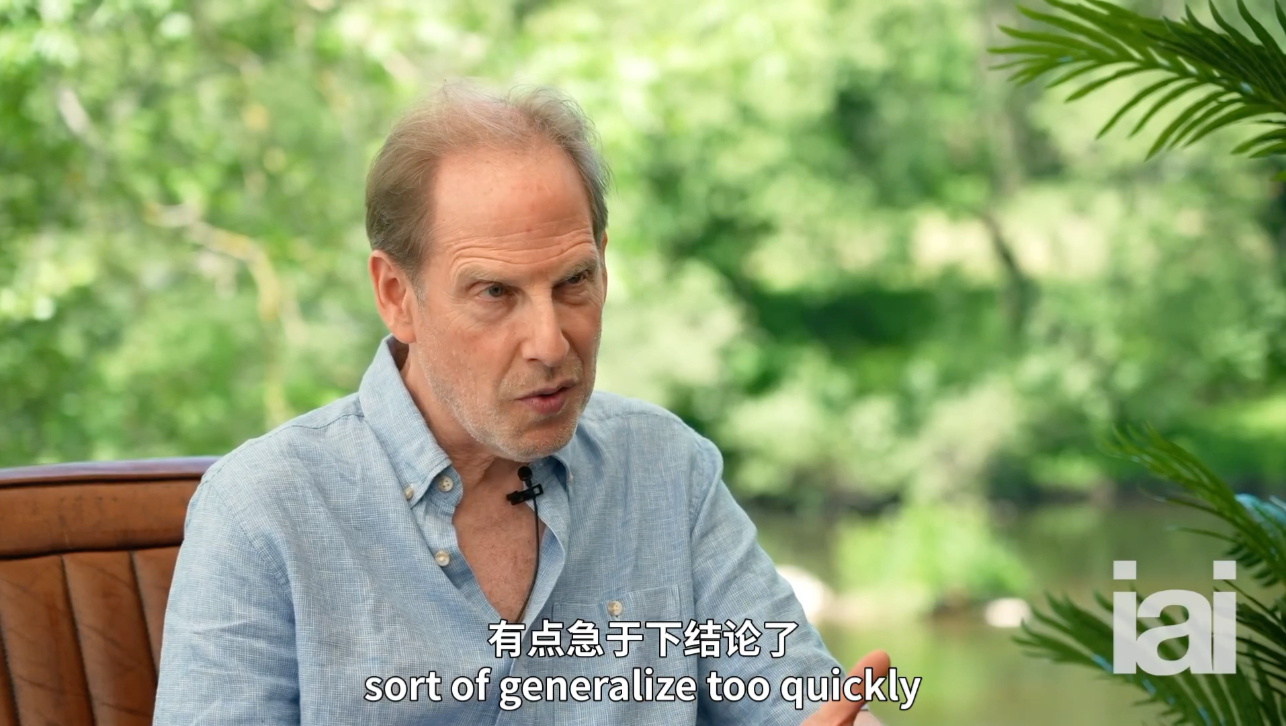
字幕摘录
| 时间 | 英文 | 中文 |
|---|---|---|
| 0:00 | When you look at human progress in terms of invention, | 当你从发明的角度审视人类的进步时, |
| 0:04 | the fact that we are a species that invents generatively, | 我们是一个基因发明的物种 |
| 0:09 | we seem to be unstoppable inventors. | 我们似乎是不可阻挡的发明家 |
| 0:12 | That seems to be driven by people | 这似乎是由人驱动的 |
| 0:15 | who have a lot of autistic traits, | 他们有很多自闭症的特征, |
| 0:17 | or maybe autism itself. | 也许自闭症本身。 |
| 0:20 | So we maybe have underestimated the contribution | 所以我们可能低估了贡献 |
| 0:24 | that autistic people have made to human progress. | 孤独症患者在人类进步中取得了进步。 |
| 0:33 | Simon Baron Cohen, welcome to How the Light Gets In. | 西蒙·科恩男爵 欢迎光之进场 |
| 0:36 | Thank you. | 谢谢 |
展开字幕全文(211 条)
| 序号 | 英文 | 中文 |
|---|---|---|
| 1 | When you look at human progress in terms of invention, | 当你从发明的角度审视人类的进步时, |
| 2 | the fact that we are a species that invents generatively, | 我们是一个基因发明的物种 |
| 3 | we seem to be unstoppable inventors. | 我们似乎是不可阻挡的发明家 |
| 4 | That seems to be driven by people | 这似乎是由人驱动的 |
| 5 | who have a lot of autistic traits, | 他们有很多自闭症的特征, |
| 6 | or maybe autism itself. | 也许自闭症本身。 |
| 7 | So we maybe have underestimated the contribution | 所以我们可能低估了贡献 |
| 8 | that autistic people have made to human progress. | 孤独症患者在人类进步中取得了进步。 |
| 9 | Simon Baron Cohen, welcome to How the Light Gets In. | 西蒙·科恩男爵 欢迎光之进场 |
| 10 | Thank you. | 谢谢 |
| 11 | Nice to be here. | 很高兴来到这里。 |
| 12 | So you've spent much of your career trying to understand the mind | 所以,你花了你职业生涯的大部分时间 试图理解思想 |
| 13 | through autism, empathy, systemising and brain development. | 通过自闭症、同情、系统化和大脑发展。 |
| 14 | Do you think that neuroscience, | 你认为神经科学, |
| 15 | especially now you've been speaking about it today at How the Light Gets In, | 特别是你今天在"灯光的进化"里 谈到这个问题 |
| 16 | is genuinely explaining how the mind works, | 是真正解释 如何用心, |
| 17 | or is it still mostly mapping the physical traces of the thought? | 还是它仍然主要是 绘制思想的物理痕迹? |
| 18 | So I guess another way of asking this question is, | 我想问这个问题的另一种方法是, |
| 19 | how much has neuroscience taught us? | 神经科学告诉我们多少? |
| 20 | And I think we've probably made a lot of progress in neuroscience | 我想我们也许在神经科学方面取得了很大进展 |
| 21 | in certain areas. | 在某些方面。 |
| 22 | So we've learnt aspects of the human brain. | 所以我们已经学会了人类大脑的一些方面。 |
| 23 | You know, we know, for example, | 你知道,我们知道,例如, |
| 24 | where language is mostly processed in the human brain. | 其中语言大多在人脑中加工. |
| 25 | We know the sensory areas of the brain. | 我们知道大脑的感官区域。 |
| 26 | We can start to sort of map different functions in the brain. | 我们可以开始绘制大脑中不同功能的地图。 |
| 27 | But I don't know that neuroscience is going to really help us understand | 但我不知道神经科学会帮助我们理解 |
| 28 | human experience fully. | 人类的全部经验。 |
| 29 | So it's useful. | 故有用处. |
| 30 | You know, all of science is useful. | 你知道,所有科学都是有用的。 |
| 31 | But currently, there are quite a lot of limitations | 但目前有很多限制 |
| 32 | as to what neuroscience can help with. | 至于神经科学能帮助什么 |
| 33 | Of course. | 当然 |
| 34 | And can you sort of give us an explanation of how | 你能给我们个解释吗? |
| 35 | autism can give us a route into that understanding? | 自闭症能给我们一条通向这种理解的道路吗? |
| 36 | And does that offer a greater benefit to the limitations | 这是否为限制提供了更大的好处? |
| 37 | that we possibly have at the moment? | 我们可能现在有吗? |
| 38 | So autistic people, you know, their brains develop differently. | 孤独症患者的大脑发育不同 |
| 39 | And there's a word that, you know, | 有一个词,你知道, |
| 40 | lots of people are familiar with now called neurodiversity. | 很多人现在都熟悉所谓的神经多样性。 |
| 41 | The idea that all of our brains develop differently. | 我们所有的大脑发展不同的想法。 |
| 42 | In some sense, we are all neurodiverse, | 从某种意义上说,我们都是神经分裂者, |
| 43 | just because we're all individuals. | 只是因为我们都是个人 |
| 44 | But if we looked at autistic people compared to non-autistic people, | 但如果我们把自闭症者与非自闭症者相比较 |
| 45 | we see differences in how they process information, | 我们看到他们处理信息的不同, |
| 46 | how their brains develop in childhood, even prenatally. | 他们的大脑如何成长 在童年,甚至产前。 |
| 47 | So when I think about neurodiversity, | 所以当我想到神经多样性时 |
| 48 | I'm thinking both about disability, but also about difference. | 我既考虑残疾,又考虑差异. |
| 49 | So sometimes the differences that we see, | 所以有时候我们看到的分歧 |
| 50 | you know, they add up to challenges that the person has, | 你知道,他们加起来 挑战的人, |
| 51 | where we would perhaps make a diagnosis of a disability | 在那里,我们也许可以 诊断残疾 |
| 52 | as a kind of stepping stone into getting support. | 成为获得支持的跳板 |
| 53 | But for many people, including many autistic people, | 但对于许多人,包括许多自闭症患者来说, |
| 54 | they are just differences. | 它们只是不同。 |
| 55 | And maybe part of the message of neurodiversity, | 也许是神经多样性的一部分 |
| 56 | it's kind of a new framework, is respect for difference | 这是一种新框架 尊重差异 |
| 57 | and acceptance of difference. | 和接受差别。 |
| 58 | So we've moved right away from kind of the old view | 所以我们就从旧的风景上移开 |
| 59 | that there's a thing called the normal brain | 有个叫正常大脑的东西 |
| 60 | and a thing called the abnormal brain, | 一种叫异常大脑的东西, |
| 61 | or the stigmatising and pathologising language, | 或污名化和病态语言, |
| 62 | towards this idea that there are just lots of different types of brains | 这个想法,只有很多不同的大脑类型 |
| 63 | and we should show respect for difference. | 我们应该尊重不同 |
| 64 | And just one thing that I thought on top of that, | 还有一件事我想, |
| 65 | that you draw on in The Pattern Seekers, | 以便你们在图案寻求者中借鉴。 |
| 66 | you sort of talk about human invention | 你在谈论人类的发明 |
| 67 | depends on our ability to identify if and them patterns. | 取决于我们是否有能力辨别这些模式。 |
| 68 | And that this ability kind of overlaps with autistic traits quite a lot. | 这种能力与自闭症的特征重叠很多。 |
| 69 | Is autism, do you think, too often framed through what people lack, | 是自闭症,你认为, 太多时候被人们所缺少, |
| 70 | rather than a distinctive sort of cognitive strength? | 而不是一种独特的认知力量? |
| 71 | And how has that changed in the last few years, do you think? | 你觉得这几年有什么变化? |
| 72 | Yeah, I think for the longest time in autism research, | 是的,我认为最长的时间 在自闭症研究, |
| 73 | we've focused on so-called deficits, you know, and areas of disability. | 我们专注于所谓的缺陷,你知道, 和残疾的领域。 |
| 74 | So the focus was on what autistic people struggle with. | 所以重点是自闭症患者的挣扎。 |
| 75 | And the most extreme descriptions would be about what they can't do. | 最极端的描述是 他们不能做的事情。 |
| 76 | I think these days we're kind of shifting the way we think about autism | 我觉得这些天我们有点 改变我们思考自闭症的方式 |
| 77 | to focus on how do autistic people think differently | 专注于自闭症患者如何看待不同的问题 |
| 78 | and focus not so much on deficits, | 不要太注重赤字, |
| 79 | but on things that autistic people not only can do, | 但对于自闭症患者不仅能做的事 |
| 80 | but sometimes do even better than non-autistic people. | 但有时甚至比非自主主义者做得更好 |
| 81 | So that's almost like, you know, it's a sea change in how we think about autism. | 所以,这几乎就像,你知道, 这是一个海洋变化 我们如何思考自闭症。 |
| 82 | And in my book, The Pattern Seekers, you know, what I argue there is that | 在我的书《寻常者》里 我所认为的是 |
| 83 | autistic people have a strong interest in patterns, | 自闭症患者对模式很感兴趣 |
| 84 | not just any old patterns, but you mentioned specific patterns, | 不只是任何老模式, 但你提到了具体的模式, |
| 85 | if and then patterns, that if I take something and I do something to it, | 如果后来的规律, 如果我拿一些东西, 我做了一些事情, |
| 86 | then I get a particular outcome. | 然后我得到一个特别的结果。 |
| 87 | And that kind of fascination with these special patterns | 那种迷恋这些特殊模式 |
| 88 | could be a great advantage in a lot of different fields. | 可能在很多不同的领域成为巨大的优势. |
| 89 | You could think about, for example, music. | 比如说,你可以考虑音乐。 |
| 90 | How can I take one input and transform it into a different output? | 我怎么能把一个输入转换成另一个输出呢? |
| 91 | Could be in mathematics, could be in art and in science, | 可能是数学,也可能是艺术和科学 |
| 92 | all sorts of areas. | 各种各样的领域。 |
| 93 | And it's not that only autistic people are interested in these patterns | 并不是只有自闭症患者对这些模式感兴趣 |
| 94 | because we all are to some extent. | 因为我们都在某种程度上。 |
| 95 | In the book, what I'm arguing is that in autism, | 在书里,我争论的是,在自闭症, |
| 96 | this ability or drive to seek these special patterns | 寻找这些特殊模式的能力或驱动力 |
| 97 | may be tuned up particularly high. | 可能调高了 |
| 98 | But we also see that in people who work in STEM, for example, | 但我们也看到在STEM工作的人,例如, |
| 99 | science, technology, engineering or maths, you know, | 科学、技术、工程或数学 |
| 100 | and who coincidentally or maybe not coincidentally | 和谁巧合或也许不是巧合 |
| 101 | also have many more autistic traits on average | 平均来说,还有许多自闭症特征 |
| 102 | compared to people who don't work in STEM. | 相比于不在STEM工作的人. |
| 103 | So part of the thesis in that book is that when you look at human progress | 这本书的论文之一是 当你看人类的进步 |
| 104 | in terms of invention, the fact that we are a species that invents generatively, | 在发明方面,事实上我们是一个 基因发明的物种, |
| 105 | we seem to be unstoppable inventors, | 我们似乎是不可阻挡的发明家 |
| 106 | that seems to be driven by people who have a lot of autistic traits | 似乎被一些自闭症患者所驱使 |
| 107 | or maybe autism itself. | 也许自闭症本身。 |
| 108 | So we maybe have underestimated the contribution | 所以我们可能低估了贡献 |
| 109 | that autistic people have made to human progress. | 孤独症患者在人类进步中取得了进步。 |
| 110 | And I think one thing to pull on there is some autistic people | 我觉得有一件事可以拉 有一些自闭症患者 |
| 111 | worry that sort of celebrating this if and them or special talents | 担心这种庆祝 如果和他们或者特殊才华 |
| 112 | can create kind of a new stereotype | 可以制造一种新的陈规定型 |
| 113 | where autistic people are valued only if they are sort of unusually balanced, | 孤独症患者只有在异常平衡的情况下才会受到重视, |
| 114 | like super mathematical and inventive. | 像超级数学和发明。 |
| 115 | Is this a fair concern or do you think that is taking something | 这是否值得你关心 或者你觉得那会带走什么 |
| 116 | and running with the wind? | 随风而跑? |
| 117 | Yeah, I think it is a fair concern. | 是的,我认为这是一个合理的关注。 |
| 118 | I mean, I think human value belongs to all of us. | 我的意思是,我认为人的价值属于我们所有人。 |
| 119 | It doesn't really matter whether you've got a diagnosis or not. | 你是否得到诊断并不重要 |
| 120 | We should all have equal human value. | 我们都应该有平等的人类价值。 |
| 121 | So we shouldn't sort of stereotype. | 所以我们不应该有陈规定型。 |
| 122 | We shouldn't prejudge somebody's value based on, for example, | 我们不应该预先判断某人的价值 比如说, |
| 123 | how well they perform on a particular task. | 他们执行某项任务的表现如何。 |
| 124 | You know, and back in 2017, on Autism Awareness Day, | 2017年的自闭症宣传日 |
| 125 | I was invited by the United Nations to talk about autism and human rights, | 我受联合国邀请,谈论自闭症和人权, |
| 126 | because actually, for the longest time in the history of autism, | 因为事实上 在自闭症史上最长的时间里 |
| 127 | I would say autistic people have missed out on basic human rights. | 我要说,自闭症患者错过了基本人权。 |
| 128 | And these stereotypes often contribute to a violation of their human rights. | 这些定型观念往往助长了对其人权的侵犯。 |
| 129 | So, you know, people are people. | 所以,你知道,人们是人。 |
| 130 | Everybody should be treated equally. | 每个人都应该受到同等待遇。 |
| 131 | But, you know, in the book, in the Pattern Seekers, | 但是,你知道,在书, 在图案搜索者, |
| 132 | I'm also saying let's not overlook some of the remarkable aspects of autism. | 我还想说,我们不要忽视自闭症的一些显著方面。 |
| 133 | And this isn't just people who've achieved, you know, public recognition. | 这不仅仅是那些已经获得公众认可的人。 |
| 134 | It might even be amongst people who are autistic and with a learning disability. | 甚至可能在自闭症和有学习障碍的人中出现。 |
| 135 | But let's just let them show their potential in their own right. | 但是让我们让他们自己展示他们的潜力。 |
| 136 | One other stereotype that I think comes out from your discussions | 还有一个陈规陋习,我想是你们讨论出来的 |
| 137 | and what I've listened to in your book is the concept of empathy around autistic people. | 我在你的书里所听到的 是自闭症患者的同情心 |
| 138 | Do you think the public discussion still misunderstands the difference | 你认为公众讨论 仍然误解的区别 |
| 139 | between struggling to read another person's thoughts and sort of having interaction | 在努力读取他人的思想和 某种互动之间 |
| 140 | and actually lacking care for them? | 而实际上缺乏照顾他们? |
| 141 | And how does that manifest? | 这怎么表现的? |
| 142 | Yeah, that's a really important question because I think there are misunderstandings | 是啊,这是一个非常重要的问题 因为我觉得有误解 |
| 143 | about autism and empathy. | 关于自闭症和同情心 |
| 144 | So in our own work, in my work, what their data seems to be showing | 所以在我们自己的作品中,在我的作品中 他们的数据似乎显示 |
| 145 | is that whilst autistic people may struggle to recognise or imagine | 孤独症患者可能难以识别或想象 |
| 146 | another person's thoughts and feelings, once they're pointed out to them, | 别人的思想和感情 一旦被指给他们 |
| 147 | they care about them, they're not sort of emotionally detached. | 他们关心他们, 他们不是那种情感分离。 |
| 148 | So if they hear that, for example, a person is suffering or in distress | 所以,如果他们听到,比如说,一个人正在受苦或陷入困境 |
| 149 | or has been treated unjustly, that upsets them and they want to go and help. | 或被不公正地对待,以致他们烦恼,他们想去帮忙。 |
| 150 | They want to alleviate other people's distress. | 他们想减轻别人的痛苦 |
| 151 | They may even become whistleblowers at work when they see injustice. | 当他们看到不公正时,他们甚至可能在工作中成为举报人。 |
| 152 | So autistic people clearly have empathy, but we distinguish between cognitive empathy, | 所以自闭症患者显然有同情心 但我们区分认知同情心 |
| 153 | which is the recognition part, where the person may just need a bit of help | 承认的部分, 人可能只需要一点帮助 |
| 154 | to draw those inferences and affective empathy, which is how does it make you feel | 来引领那些推论 和情感的同情心, 这是如何让你的感觉 |
| 155 | once you know what the person is going through? | 一旦你知道这个人正在经历什么? |
| 156 | Autistic people seem to be very empathic when it comes to the affective side, | 自闭症患者在情感方面似乎很同情 |
| 157 | how it makes them feel. | 让他们感觉如何 |
| 158 | In that way, they're not like psychopaths, for example, who may be very uncaring. | 这样,他们就不像精神病患者, 比如说,他们可能很不爱护。 |
| 159 | Do you think a lot of the conflict in this area come from the language that we use, | 你认为这个地区的很多冲突 来自于我们使用的语言, |
| 160 | as opposed to there naturally actually being conflict? | 而不是自然而然地有冲突? |
| 161 | I think language contributes to the misunderstandings. | 我认为语言助长了误解。 |
| 162 | If you take a word like empathy, it sounds like it's just a single thing, | 如果你把一个字 像同情, 它听起来只是一件事, |
| 163 | but actually what the neuroscience and the psychological research is showing | 但事实上神经科学和心理研究显示 |
| 164 | is that empathy itself is a bit of an umbrella concept, | 同情心本身就是一个伞形概念, |
| 165 | and you can break it down into different kinds of empathy. | 你可以把它分解成不同的同情心 |
| 166 | So it's very important that we don't generalise too quickly | 所以,我们不要太快概括很重要 |
| 167 | or draw conclusions that are too simplistic. | 或者得出过于简单化的结论。 |
| 168 | On the same sort of idea of language, do you think the language of female and male brains | 同样的语言思想,你是否认为 女性和男性大脑的语言 |
| 169 | has helped public understanding, or has it sometimes obscured the science | 帮助了公众的理解,或者有时使科学蒙蔽 |
| 170 | and been disadvantaged to the individuals who have differences within the gender? | 性别方面有差异的个人是否处于不利地位? |
| 171 | Yeah, so gender differences and sex differences, that kind of research, | 是的,所以性别差异和性别差异, 这种研究, |
| 172 | it always starts with putting people into groups. | 总是从把人分成小组开始 |
| 173 | So these people either identify as female or male, or were assigned this gender at birth. | 因此,这些人要么是女性,要么是男性,要么是在出生时被赋予这种性别。 |
| 174 | You put people into two groups, and then what the scientists do | 你把人分成两组 然后科学家们会怎么做 |
| 175 | is that they tend to look for average differences between these two groups. | 他们倾向于寻找这两个群体之间的平均差异。 |
| 176 | But average differences don't apply to every individual in this group or that group. | 但平均差异并不适用于这个群体或那个群体中的每一个人. |
| 177 | So I think you're right that the headlines, even the titles of debates in festivals or books, | 所以,我认为你是对的,头条, 甚至辩论的标题 在节日或书籍, |
| 178 | implying that there's a male brain and a female brain, that's totally misleading. | 暗示有雄性大脑和雌性大脑 这完全是误导 |
| 179 | What the science shows is that there's huge overlap between groups. | 科学显示,群体之间有巨大的重叠. |
| 180 | You can see differences at the average, but you can find individuals in one group | 你可以看到平均差异, 但你可以发现个人在一个组 |
| 181 | who are not typical for their group, and the same in the other group. | 他们不为其群体所典型,在另一群体中也是如此。 |
| 182 | And of course, these days, we don't just think in terms of a binary comparison. | 当然,这些天,我们不只是从二进制比较的角度来思考。 |
| 183 | You know, the whole sort of field of gender non-binary self-identification | 你知道,整个领域 性别非二进制自我认同 |
| 184 | and the research that's going into that is suggesting it's much more complex. | 接下来的研究表明 事情要复杂得多 |
| 185 | And ultimately, again, it comes back to this human rights issue. | 最后,它再次回到这个人权问题。 |
| 186 | We were talking earlier about autistic people's human rights, | 我们刚才谈到自闭症患者的人权, |
| 187 | but it's all of our human rights to just be ourselves and be accepted for who we are. | 但只有我们自己 才能被接受 |
| 188 | I think the one final point, just continuing with this idea of male and female language, | 我认为最后一点,只是继续这种男女语言的想法, |
| 189 | autistic women and girls have often been underdiagnosed. | 自闭症妇女和女童往往得不到诊断。 |
| 190 | Do you think there is a risk that the idea of the male brain framing, | 你是否认为有风险 男性的大脑构思, |
| 191 | which, as you've said, Tenshi is not the most useful idea to move forward with, | 正如你所说,登石并不是推进最有用的想法, |
| 192 | makes autism much harder to recognise within women? | 使自闭症更难在妇女中得到承认? |
| 193 | And how can we actually go about making a difference there? | 我们怎样才能真正去 在那里有所作为呢? |
| 194 | Yeah. | 对 |
| 195 | So I think you're right that autism has been under-recognised in females, | 所以我认为你是对的 自闭症在女性中被忽略了 |
| 196 | in girls and in women. | 女孩和妇女。 |
| 197 | But why has it been under-recognised? | 但是为什么它被忽略了呢? |
| 198 | Is it to do with theories that come and go? | 和来去的理论有关吗? |
| 199 | Or is it to do with maybe wider social pressures? | 还是和更广泛的社会压力有关? |
| 200 | So, for example, I think in many cultures, there's an expectation that girls will be sociable | 所以,比如,我认为在许多文化中, 有一种期望 女孩会是 sociable |
| 201 | and communicative and, you know, enjoy being in small groups or even larger groups | 和沟通,你知道,享受 成为小群体甚至更大的群体 |
| 202 | and interacting and socialising. | 互动和社交 |
| 203 | And if you're autistic and you're growing up in a culture with those sorts of expectations, | 如果你是自闭症 而且你成长在一个文化 与这种期望, |
| 204 | it may lead to what's called masking or camouflaging, | 它可能导致所谓的蒙面或涂鸦, |
| 205 | where you try your best to fit in and try to conform to these cultural expectations. | 努力适应这些文化期望 |
| 206 | But I think the research increasingly is suggesting that if we end up masking and camouflaging, | 但我认为研究越来越表明 如果我们最终伪装和涂鸦 |
| 207 | what's that doing to our mental health? | 这对我们的精神健康有什么影响? |
| 208 | You know, so for a lot of autistic girls and women, | 对很多自闭症少女和女人来说 |
| 209 | we may see higher rates of poor mental health because they're not free to just be themselves. | 我们可能会看到更高的精神健康状况 因为他们不能自由做自己。 |
| 210 | Thank you very much and thank you for coming to How the Light Gets In. | 非常感谢你 并感谢你来到 如何光明进入。 |
| 211 | Thanks for the chat. | 谢谢你的聊天 |
该视频共有字幕 211 条。解锁更多字幕为会员功能,请移动到 价格