黑格尔:世界历史和精神哲学|Ellie Anderson
共 2 集
剧集目录
| 集 | 标题 | 时长 |
|---|---|---|
| P1 | 黑格尔:世界历史和精神哲学|Ellie Anderson 上 | 7:22 |
| P2 | 黑格尔:世界历史和精神哲学|Ellie Anderson 下 | 5:02 |
P1 · 黑格尔:世界历史和精神哲学|Ellie Anderson p01 上 (P1)
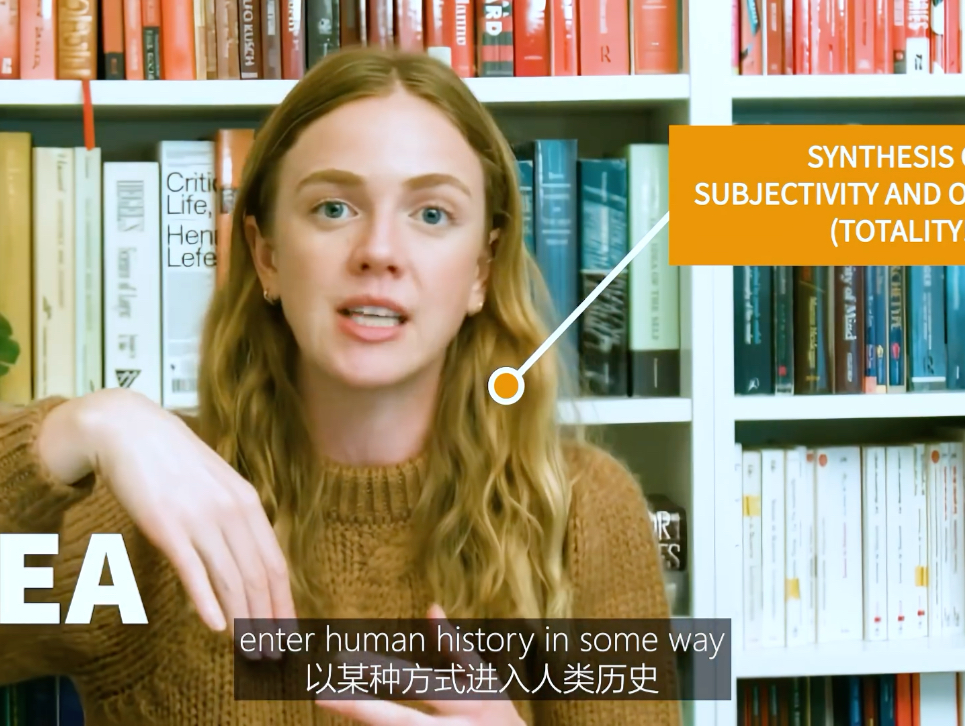
字幕摘录
| 时间 | 英文 | 中文 |
|---|---|---|
| 0:00 | Today we're talking about Hegel's theory of world history and the development of spirit within it. | 今天我们谈论黑格尔的世界历史理论及其内部精神的发展. |
| 0:05 | For Hegel, reason rules the world. | 对于黑格尔,理性统治世界. |
| 0:07 | Therefore, world history is a rational process. | 因此,世界历史是一个理性的过程。 |
| 0:11 | World history, for Hegel, is the gradual emergence of spirit in the world as freedom. | 对黑格尔来说,世界历史是精神在世界上作为自由逐渐出现. |
| 0:17 | As such, world history tracks the increasing freedom and self-consciousness of human beings. | 因此,世界历史跟踪人类日益增长的自由和自我意识。 |
| 0:25 | In other words, world history is the unfolding of spirit in time. | 换句话说,世界历史是精神及时的演进。 |
| 0:31 | So what is spirit? | 灵魂是什么? |
| 0:33 | Well, spirit, or Geist in German, is the engine of history. | 嗯,精神,或Geist的德语, 是历史的引擎。 |
| 0:37 | It's a sort of principle of activity and motion, or as Hegel calls it, | 这是某种活动和运动的原则, 或者像黑格尔所说的, |
| 0:43 | self-consciousness coming to know itself. | 自我意识开始了解自己。 |
展开字幕全文(102 条)
| 序号 | 英文 | 中文 |
|---|---|---|
| 1 | Today we're talking about Hegel's theory of world history and the development of spirit within it. | 今天我们谈论黑格尔的世界历史理论及其内部精神的发展. |
| 2 | For Hegel, reason rules the world. | 对于黑格尔,理性统治世界. |
| 3 | Therefore, world history is a rational process. | 因此,世界历史是一个理性的过程。 |
| 4 | World history, for Hegel, is the gradual emergence of spirit in the world as freedom. | 对黑格尔来说,世界历史是精神在世界上作为自由逐渐出现. |
| 5 | As such, world history tracks the increasing freedom and self-consciousness of human beings. | 因此,世界历史跟踪人类日益增长的自由和自我意识。 |
| 6 | In other words, world history is the unfolding of spirit in time. | 换句话说,世界历史是精神及时的演进。 |
| 7 | So what is spirit? | 灵魂是什么? |
| 8 | Well, spirit, or Geist in German, is the engine of history. | 嗯,精神,或Geist的德语, 是历史的引擎。 |
| 9 | It's a sort of principle of activity and motion, or as Hegel calls it, | 这是某种活动和运动的原则, 或者像黑格尔所说的, |
| 10 | self-consciousness coming to know itself. | 自我意识开始了解自己。 |
| 11 | Now, this might sound very abstract, like where is the spirit? | 现在,这听起来可能非常抽象, 比如精神在哪里? |
| 12 | What is it? | 这是什么? |
| 13 | But for Hegel, it's really permeating everything in the world. | 但对于黑格尔来说,它真的渗透了世界上的一切. |
| 14 | It's not some kind of mysterious woo-woo force, but rather the truth of movement, development, activity. | 这不是某种神秘的宇力,而是运动,发展,活动的真实性. |
| 15 | Things are always changing. | 事情总是在改变。 |
| 16 | They're always in a process of becoming. | 他们总是在变身的过程中. |
| 17 | We can never say with certainty that this thing is what it is, and it is fixed that way. | 我们永远不能肯定地说,这是它是什么,它是固定的。 |
| 18 | Hegel's trying to get through his notion of spirit at the insight that the world is always in flux, | 黑格尔试图通过 他的精神概念 在洞察 世界总是在变化, |
| 19 | in a state of change. | 在变化的状态。 |
| 20 | And this is an interesting point when you think about history, | 当你想到历史时,这是一个有趣的问题, |
| 21 | because the claim is that history is actually essential for understanding the way things are. | 因为这个说法是,历史对理解事物的本质实际上是必不可少的. |
| 22 | There's not some sort of permanent, eternal, unchanging truth, | 没有什么永久的,永恒的,不变的真理, |
| 23 | and then history is sort of the predetermined way that that unfolds chronologically. | 历史是按时间顺序发展的方式 |
| 24 | No, rather, the way things are is historical in its very being. | 不,相反,事情是历史性的。 |
| 25 | Spirit, as this principle of activity that is driving things, | 精神,作为驱动事物的活动原则, |
| 26 | is also driving them forward to a certain end for Hegel. | 也正推动他们走向黑格尔的某个终点. |
| 27 | History is teleological on his view, which is a term that came up in the lecture on Kant. | 历史在他看来是遥不可及的,这个术语出现在关于康德的演讲中. |
| 28 | Teleological means aiming towards a certain logical, reasonable end. | 电传学是指以某种逻辑,合理的目的为目标. |
| 29 | And so for Hegel, things are always in a state of progress, to put it simply. | 所以对于黑格尔来说,事情总是在进步之中,简单地说。 |
| 30 | Spirit is driving towards freedom. | 精神正在走向自由。 |
| 31 | So Hegel describes freedom as the truth of spirit, | 所以黑格尔将自由描述为精神的真理, |
| 32 | and says that when we talk about world history as spirit actualizing itself | 并说当我们谈论世界历史 精神实现自己 |
| 33 | in concrete events throughout history, through individual people's desires, | 在历史上的具体事件中, 通过个人的欲望, |
| 34 | what we're actually saying is that spirit is becoming more and more concrete. | 我们说的是 精神越来越具体 |
| 35 | And this means that things are becoming freer. | 这意味着事情变得更加自由。 |
| 36 | They're unifying, becoming more self-conscious. | 他们正在凝聚,变得更加自觉. |
| 37 | And when we are self-conscious, we are able to rule ourselves, govern ourselves. | 而当我们自觉的时候,我们就能统治自己,管理自己. |
| 38 | And that is the truth of freedom for Hegel. | 这是黑格尔自由的真理。 |
| 39 | The goal towards which spirit is driving is thus, in a sense, freedom. | 因此,从某种意义上讲,精神所追求的目标就是自由。 |
| 40 | But specifically speaking, Hegel really talks about it as the idea, | 但具体地说,黑格尔 真正谈论它作为想法, |
| 41 | which is another notion that comes up a lot in Hegel's work. | 这是黑格尔的作品中 涌现出的另一个概念 |
| 42 | The idea for Hegel is the synthesis of subjectivity and objectivity, | 黑格尔的想法是将主观性和客观性综合起来, |
| 43 | synthesis of matter and spirit, synthesis of really all these things | 合成物质和精神 合成所有的东西 |
| 44 | that seem disparate and separate. | 这似乎不同 和单独的。 |
| 45 | And the idea actually needs human activity in order to help bring it about. | 而这个想法实际上需要人类的活动来帮助实现. |
| 46 | It's not some thing sort of hovering up in the ether | 这不是在乙醚中徘徊的东西 |
| 47 | that needs to enter human history in some way. | 需要以某种方式进入人类历史 |
| 48 | No, it is actually imminent within human history, | 不,它实际上在人类历史中迫在眉睫, |
| 49 | and it needs human activity in order to self-actualize. | 它需要人类活动 才能自我实现 |
| 50 | So humans have an essential role in the self-development of spirit | 所以人类在精神的自我发展 中起着至关重要的作用 |
| 51 | as it strives for its goal, which is the idea. | 在它为它的目标而努力的时候,这就是这个想法。 |
| 52 | The goal of world history is the fulfillment of the concept of spirit. | 世界历史的目标是实现精神概念。 |
| 53 | Spirit is conscious of its own freedom, and it has actualized freedom completely. | 精神是自觉自由的,已经完全实现了自由. |
| 54 | And that is also what Hegel calls the idea. | 这也是黑格尔所说的想法。 |
| 55 | So one thing you'll find is that it's easy to get sort of caught up in these different terms, | 所以,你会发现的一件事 是,它很容易 得到那种赶上 这些不同的说法, |
| 56 | but Hegel is really just trying to get at this notion | 但黑格尔真的 只是想得到这个想法 |
| 57 | that history is in a state of development, | 历史正处于发展阶段, |
| 58 | and that this state of development is imminent within the conditions of the world. | 并且这种发展状态在世界条件下迫在眉睫。 |
| 59 | It doesn't need sort of something outside of it. | 它不需要某种外在的东西。 |
| 60 | For Hegel, the means are always internal to the end. | 对于黑格尔来说,手段总是内部到最后. |
| 61 | On page 26, Hegel says that the idea and human passion | 第26页,黑格尔说这个想法和人类的激情 |
| 62 | are the two elements of world history. | 是世界历史的两个要素。 |
| 63 | And they come together concretely in the freedom | 他们聚集在自由中 |
| 64 | that we receive through living within a state. | 我们通过生活在一个州里获得。 |
| 65 | The idea, as we said earlier, is the synthesis of subjectivity and objectivity. | 正如我们早些时候所说的那样,这个想法是主观性和客观性的综合。 |
| 66 | It's the totality of all things. | 是一切众生. |
| 67 | But its antithesis is passion. | 但它的反面是激情。 |
| 68 | Passion is arbitrary, free, or subjective will, say, of an individual person. | 激情是专断的,自由的,或者主观的意志,比如个人的意志. |
| 69 | And passion, Hegel says, even though it's antithetical to the idea, | 和激情,黑格尔说, 虽然它与这个想法是对立的, |
| 70 | has a role to play in the actualization of reason. | 在理性的实现中可以发挥作用。 |
| 71 | It provides a sort of driving force in what Hegel calls the cunning of reason. | 它在黑格尔所说的理性的狡猾中提供了某种驱动力. |
| 72 | So think about the way that, as a person, you have individual interests, | 所以,想想作为一个人, 你个人的利益, |
| 73 | you have individual desires, you have individual goals, | 你有个人欲望, 你有个人目标, |
| 74 | and those might seem to be unique to you, right? | 这些可能是你独有的,对吧? |
| 75 | Hegel says, well, in trying to attain those desires, | 黑格尔说 为了实现这些愿望 |
| 76 | you are actually unwittingly doing the work of reason. | 你其实是在无意中做理智的工作 |
| 77 | You are helping actualize spirit in the world, even though you don't know it. | 你帮助实现精神 在世界上,尽管你不知道。 |
| 78 | And even if you're not doing good actions. | 即使你没有做好事 |
| 79 | Our actions, Hegel says, have meaning outside of our intentions | 我们的行动,黑格尔说, 具有我们的意图之外的意义 |
| 80 | and even outside of the specific actions we undertake. | 甚至在我们采取的具体行动之外。 |
| 81 | So he gives the example, for instance, of an arsonist | 他举了一个纵火犯的例子 |
| 82 | who lights a house on fire in order to get revenge. | 他们点火烧房子是为了报复 |
| 83 | Say, it's the house of his enemy. | 说,这是他的敌人的房子。 |
| 84 | But then accidentally ends up lighting an entire neighborhood on fire | 但后来不小心烧了整个街区 |
| 85 | and destroying a lot of property and even killing people on the way. | 并摧毁大量财产,甚至杀害路上的人。 |
| 86 | Hegel says, that person's actions have all sorts of consequences | 黑格尔说 这个人的行为有各种各样的后果 |
| 87 | that that person didn't intend. | 那个人不是故意的 |
| 88 | And this is where Hegel's seeming optimism starts to get a little dark. | 黑格尔看起来的乐观 开始变得有点阴暗 |
| 89 | Because he talks about, for instance, the slaughter bench of history. | 因为,比如,他谈到历史的屠宰场。 |
| 90 | Reason uses human passions in order to attain its own end. | 理性利用人类的激情来达到自己的目的. |
| 91 | And in so doing, a lot of individual humans end up not attaining their goals | 如此一来,许多个体 最终没有达到他们的目标 |
| 92 | or end up being destructive or even being destroyed. | 或最终毁灭甚至毁灭。 |
| 93 | In this picture that Hegel gives of individuals | 在黑格尔给个人的照片中 |
| 94 | being the unwitting instruments of reason, | 是无意识的理性工具, |
| 95 | he focuses on a particular type of person | 他专注于某类人 |
| 96 | whom he calls the world historical individual or the hero. | 他称之为世界历史人物或英雄 |
| 97 | The world historical individual is a person whose aims embody a universal concept. | 世界历史个人是一个其目标体现了普遍概念的人。 |
| 98 | They contain the will of the world spirit. | 它们包含了世界精神的意志。 |
| 99 | So, there are plenty of people whose particular passions, | 所以,有很多人 他们的特殊激情, |
| 100 | even though they're still part of this teleological progress of history, | 虽然他们仍然是历史的神学进步的一部分 |
| 101 | aren't particularly useful for reason. | 没有什么特别有用的原因。 |
| 102 | So, for instance, if my particular passion is to... | 所以,举例来说,如果我特别的激情是... |
该视频共有字幕 102 条。解锁更多字幕为会员功能,请移动到 价格
P2 · 黑格尔:世界历史和精神哲学|Ellie Anderson p02 下 (P2)
字幕摘录
| 时间 | 英文 | 中文 |
|---|---|---|
| 0:00 | There are plenty of people whose particular passions, | 有很多人有着特别的激情 |
| 0:03 | even though they're still part | 虽然他们还是一部分 |
| 0:05 | of this teleological progress of history, | 历史的这个神学进展, |
| 0:07 | aren't particularly useful for reason. | 没有什么特别有用的原因。 |
| 0:10 | So for instance, if my particular passion | 比如说,如果我特别的激情 |
| 0:12 | is to create a small business in my community, | 在我的社区里创立一个小生意 |
| 0:15 | maybe it's a used car dealership, | 也许是旧车经销商 |
| 0:17 | then, you know, in achieving that, | 然后,你知道,为了实现这一点, |
| 0:19 | I'm still part of the progress of history, | 我仍然是历史进步的一部分 |
| 0:21 | according to Hegel, | 根据黑格尔, |
展开字幕全文(117 条)
| 序号 | 英文 | 中文 |
|---|---|---|
| 1 | There are plenty of people whose particular passions, | 有很多人有着特别的激情 |
| 2 | even though they're still part | 虽然他们还是一部分 |
| 3 | of this teleological progress of history, | 历史的这个神学进展, |
| 4 | aren't particularly useful for reason. | 没有什么特别有用的原因。 |
| 5 | So for instance, if my particular passion | 比如说,如果我特别的激情 |
| 6 | is to create a small business in my community, | 在我的社区里创立一个小生意 |
| 7 | maybe it's a used car dealership, | 也许是旧车经销商 |
| 8 | then, you know, in achieving that, | 然后,你知道,为了实现这一点, |
| 9 | I'm still part of the progress of history, | 我仍然是历史进步的一部分 |
| 10 | according to Hegel, | 根据黑格尔, |
| 11 | but I have a somewhat localized effect. | 但我有点局部效应 |
| 12 | There are others, however, | 但是,还有一些人, |
| 13 | whose effects go far beyond | 其影响远远超出 |
| 14 | what they even could have anticipated. | 他们甚至能预料到的 |
| 15 | Perhaps it's somebody who starts a movement, | 也许是某个人发动了运动 |
| 16 | or somebody who lives a kind of quiet life | 或过着平静生活的人 |
| 17 | while they're alive, | 他们活着的时候 |
| 18 | but then afterward becomes venerated as a hero | 之后又被誉为英雄 |
| 19 | and ends up embodying a value | 并最终体现一个值 |
| 20 | that then culture really takes to | 那时文化真的需要 |
| 21 | and furthers for centuries to come. | 未来几个世纪 |
| 22 | A lot of religious figures are like this. | 许多宗教人物都是这样的. |
| 23 | Hegel says that for these individuals, | 黑格尔说,对于这些人, |
| 24 | the source of their actions comes from inner spirit. | 他们的行为来源于内心精神。 |
| 25 | It's actually hidden to them themselves. | 其实是他们自己隐藏的. |
| 26 | So world's historical individuals | 所以世界历史人物 |
| 27 | may or may not believe | 可能相信,也可能不相信 |
| 28 | that they have an important mission to accomplish. | 他们有重要的使命要完成 |
| 29 | And it doesn't really matter | 也没关系 |
| 30 | whether they do or not for Hegel, | 无论他们是否为黑格尔服务, |
| 31 | because at the end of the day, | 因为最后, |
| 32 | they are bringing the idea into consciousness | 他们正在唤醒这个想法 |
| 33 | out of themselves, even when they're not aware of it. | 自己,即使他们不知道。 |
| 34 | 今举 about州. | |
| 35 | For Hegel, the state is the object of world history. | 对于黑格尔来说,国家是世界历史的对象. |
| 36 | And what he means by the state is actually pretty broad. | 他所说的国家其实相当广泛。 |
| 37 | So he's not just talking about government here, | 所以他不只是在谈论政府 |
| 38 | although that's part of it. | 虽然这是其中的一部分。 |
| 39 | He's also talking about all dimensions of cultural life, | 他还谈到文化生活的各个方面, |
| 40 | arts, religion, philosophy, education. | 艺术、宗教、哲学、教育。 |
| 41 | In addition, he talks about ethical life. | 此外,他还谈到伦理生活. |
| 42 | And ethical life doesn't strictly mean here | 而道德生活 严格地说,在这里 |
| 43 | our moral actions. | 我们的道德行动。 |
| 44 | It actually just means our norms, | 它实际上只是意味着我们的规范, |
| 45 | our ways of living, our customs. | 我们的生活方式 我们的习俗 |
| 46 | It's Zittlischkeit in German. | 德语为Zittlischkeit. 中国植物物种信息数据库. |
| 47 | And it also pertains to our environment. | 它也涉及到我们的环境。 |
| 48 | So the state for Hegel actually even extends | 所以黑格尔的状态实际上甚至延伸 |
| 49 | to our climate, our geography, | 我们的气候,我们的地理, |
| 50 | and which countries surround us as our neighbors. | 以及我们周围的国家 |
| 51 | And finally, it pertains to something | 最后,它和某件事有关 |
| 52 | we'll talk about a little bit next time, | 我们下次再谈 |
| 53 | which is the Volksgeist, or the spirit of a people. | 这是伏尔克谢主义者, 或一个民族的精神。 |
| 54 | Geist, spirit, folk, people. | 盖世,灵,民,民. |
| 55 | For Hegel, the state is freedom | 对黑格尔来说,国家就是自由 |
| 56 | that is actually rationally self-conscious. | 这其实是理性的自觉。 |
| 57 | And one thing that's important here is Hegel's claim | 最重要的是黑格尔的说法 |
| 58 | that only within the state can freedom be actualized. | 只有在国家内部才能实现自由。 |
| 59 | So this is in contrast, say, | 所以这是相对的,说, |
| 60 | with a pretty common conception of freedom that we have, | 与一个相当共同的 自由概念,我们有, |
| 61 | which is that in the state of nature, | 在自然状态下 |
| 62 | humans are completely free, but we're also pretty violent, | 人类是完全自由的 但我们也很暴力 |
| 63 | you know, and infringing on each other's desires | 和侵犯对方的欲望 |
| 64 | all the time. | 所有的时间。 |
| 65 | And so what we need to do is to enter a state, | 因此,我们需要做的是进入一个州, |
| 66 | enter a society where our freedoms are constrained. | 进入我们的自由受到限制的社会。 |
| 67 | So I can retain certain freedoms, | 所以我可以保留某些自由 |
| 68 | but I can't say retain the freedom to kill another person. | 但我不能说保留杀人的自由 |
| 69 | That notion wherein the state | 国家认为 |
| 70 | is what constrains your freedom, | 是限制你自由的原因, |
| 71 | but freedom is something you have naturally | 但自由是你自然拥有的 |
| 72 | because it's just the freedom to follow your desires | 因为它只是随心所欲的自由 |
| 73 | is very different from what Hegel has in mind. | 和黑格尔的想法完全不同 |
| 74 | Hegel says, no, freedom requires self-consciousness | 黑格尔说 不 自由需要自觉 |
| 75 | and it requires recognition within a community. | 这需要社区内部的承认。 |
| 76 | So it's actually only through the state, | 所以实际上它只是通过州, |
| 77 | which includes all of those things I mentioned | 包括我提到的一切 |
| 78 | a little bit ago, not just government, | 不久前,不只是政府, |
| 79 | but also cultural life and ethical life | 以及文化生活和道德生活 |
| 80 | and so on and so forth. | 诸如来等. |
| 81 | Only there do I actually have the freedom | 只有在那里,我确实有自由 |
| 82 | that Hegel's talking about. | 黑格尔说的 |
| 83 | And in a perfect world, he says on page 27, | 在一个完美的世界里,他在第27页说, |
| 84 | the state's universal goal is in line, | 国家的普遍目标是一致的, |
| 85 | in union with the private interests of citizens. | 与公民的私人利益结合。 |
| 86 | Of course, it doesn't often work out that way. | 当然,它并不经常这样。 |
| 87 | For Hegel, the state is the practical and lived union | 对黑格尔来说,国家是实用的和活的结合 |
| 88 | of the universal and the particular. | 在世界任何地区人权和基本自由遭受侵犯的问题 |
| 89 | And what holds people together in the state is reason. | 而州内人聚在一起的正是理性. |
| 90 | So this is what makes the state different, say, | 因此,这就是 使国家不同,说, |
| 91 | from the family structure. | 从家庭结构。 |
| 92 | Hegel says that the family structure | 黑格尔说家庭结构 |
| 93 | is based on blood ties or kinship ties, right? | 是血缘关系还是血缘关系? |
| 94 | Whereas the state is based on ties of reason, | 国家以理性为基础 |
| 95 | which are universal. | 它们是普遍的。 |
| 96 | And if this all still sounds pretty abstract, | 如果这一切听起来还很抽象 |
| 97 | think about the fact that we encounter reason | 想想我们遇到的原因 |
| 98 | through the state in a literal physical sense, right? | 从字面意义上说,通过状态,对不对? |
| 99 | By encountering laws, for instance. | 例如通过遇到法律。 |
| 100 | Or say I'm going to a national park to go climbing | 或者说我要去国家公园爬山 |
| 101 | and I have to stop at a kiosk and pay my way in, right? | 我不得不去一个亭子 并支付我的方式,对不对? |
| 102 | That's a way of me encountering the state. | 即与州相遇之法. |
| 103 | I'm saying, okay, I'll pay $20 | 我是说,我付20块 |
| 104 | in order to support the upkeep of the park | 为了支持公园的维护 |
| 105 | so I can go climbing here | 所以我可以爬到这里 |
| 106 | and keep it accessible for everybody. | 并让每个人都可以使用它。 |
| 107 | Or when I'm driving down the highway. | 或者当我在高速公路上开车时 |
| 108 | Driving down the highway is a great example | 在高速公路上开车就是一个很好的例子 |
| 109 | of the state structure | 国家结构 |
| 110 | and the fact that it enables freedom for me. | 以及它能让我自由的事实 |
| 111 | Because it allows me to get from point A to point B | 因为它让我从A点到B点 |
| 112 | much more quickly than if we didn't have | 比我们没有快得多 |
| 113 | the infrastructure providing for that. | 基础设施提供了这一点。 |
| 114 | You can also see the state structure embodied | 您也可以看到国家结构的体现 |
| 115 | in individuals who do service for the state. | 服务于国家的个人。 |
| 116 | Say a judge. | 说判者. |
| 117 | Looking forward to talking to you about Hegel this week. | 期待这周跟你谈谈黑格尔 |
该视频共有字幕 117 条。解锁更多字幕为会员功能,请移动到 价格