在"上班"出现之前:史前人类的一天是怎么过的
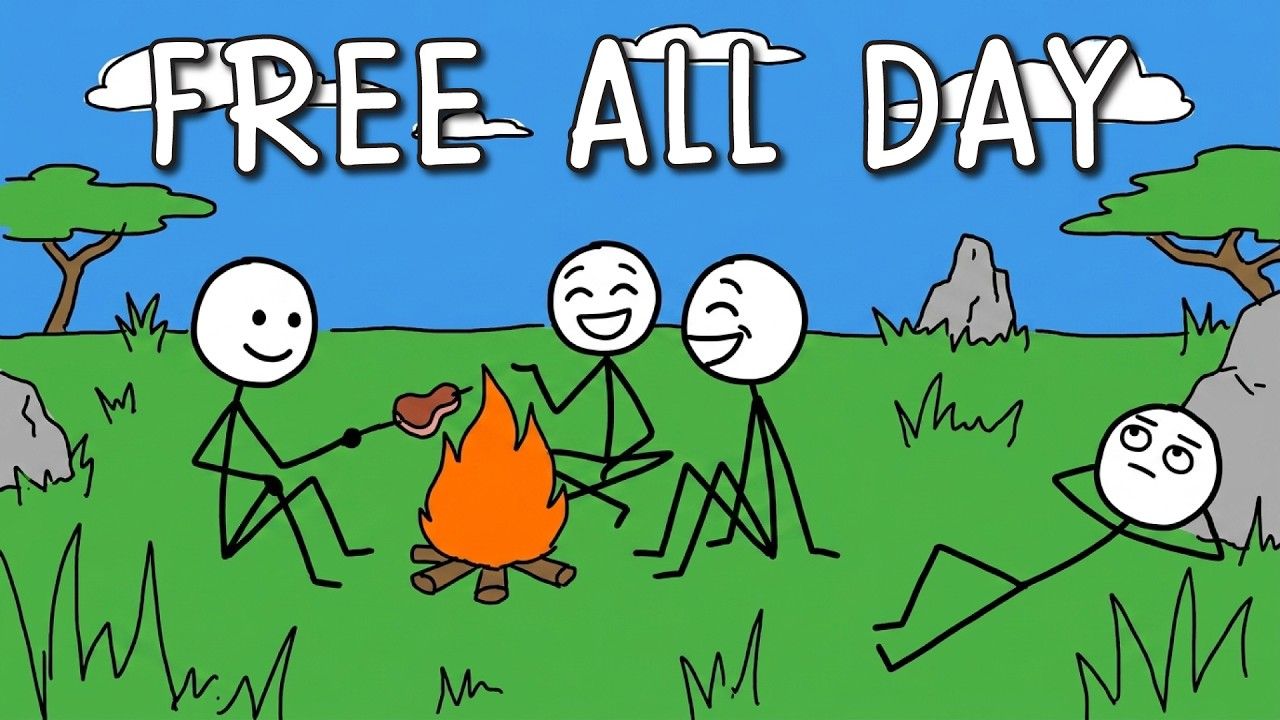
字幕摘录
| 时间 | 英文 | 中文 |
|---|---|---|
| 0:00 | You wake up when your body is ready. | 等你的身体准备好了再醒来 |
| 0:01 | No alarm, no schedule, no place you need to be. | 没有警报 没有日程 没有你需要的地方 |
| 0:04 | You sit up, stretch, and ask yourself one question. | 你坐起来,伸展, 问自己一个问题。 |
| 0:07 | What should I do today? | 今天怎么办? |
| 0:08 | For 99% of human history, this wasn't a hypothetical. | 对于99%的人类历史来说,这不是一个假设. |
| 0:11 | This was every single morning for roughly 300,000 years. | 这是大约30万年来每一天的早晨。 |
| 0:15 | And the answer to that question | 这个问题的答案 |
| 0:16 | looked nothing like the life you're living right now. | 看上去不像你现在的生活 |
| 0:19 | Modern humans spend about 90,000 hours of their lives working. | 现代人类一生共花费约9万小时工作. |
| 0:22 | That's roughly one third of your waking existence | 这大概是你醒过来的三分之一 |
展开字幕全文(259 条)
| 序号 | 英文 | 中文 |
|---|---|---|
| 1 | You wake up when your body is ready. | 等你的身体准备好了再醒来 |
| 2 | No alarm, no schedule, no place you need to be. | 没有警报 没有日程 没有你需要的地方 |
| 3 | You sit up, stretch, and ask yourself one question. | 你坐起来,伸展, 问自己一个问题。 |
| 4 | What should I do today? | 今天怎么办? |
| 5 | For 99% of human history, this wasn't a hypothetical. | 对于99%的人类历史来说,这不是一个假设. |
| 6 | This was every single morning for roughly 300,000 years. | 这是大约30万年来每一天的早晨。 |
| 7 | And the answer to that question | 这个问题的答案 |
| 8 | looked nothing like the life you're living right now. | 看上去不像你现在的生活 |
| 9 | Modern humans spend about 90,000 hours of their lives working. | 现代人类一生共花费约9万小时工作. |
| 10 | That's roughly one third of your waking existence | 这大概是你醒过来的三分之一 |
| 11 | dedicated to a job. | 献身于一份工作。 |
| 12 | But for the overwhelming majority of human history, | 但对于人类历史上的绝大多数 |
| 13 | jobs didn't exist. | 工作不存在。 |
| 14 | There was no employment. | 没有工作。 |
| 15 | No wages. | 没有工资。 |
| 16 | No boss. | 没有老板。 |
| 17 | No career ladder to climb. | 没有职业阶梯可以攀登. |
| 18 | So what did people actually do all day? | 那么人们整天都做什么? |
| 19 | Let's start with what we know for certain. | 我们先说我们知道的事吧 |
| 20 | In 1963, archaeologist Richard Lee conducted a study | 1963年,考古学家理查德·李进行了一项研究 |
| 21 | that would change how we understand prehistoric life. | 那会改变我们对史前生活的理解 |
| 22 | He tracked the daily activities | 他跟踪日常活动 |
| 23 | of the Dobeju-Hawansi people in Botswana, | 博茨瓦纳的多贝朱-哈万西人, |
| 24 | one of the few remaining groups still living in a way | 仅剩的少数群体之一仍然以某种方式生活 |
| 25 | that resembles pre-agricultural human life. | 这和农业前的人类生活相似 |
| 26 | He found that adults spent about 2.5 days per week | 他发现成年人每周花大约2.5天 |
| 27 | acquiring food. | 获取食物。 |
| 28 | That's roughly 17 hours. | 大约17小时 |
| 29 | The rest of the time, they did whatever they wanted. | 其余时间,他们想做什么就做什么。 |
| 30 | And here's the important part. | 这是重要的部分。 |
| 31 | This pattern shows up everywhere anthropologists look. | 这种模式到处出现 人类学家看。 |
| 32 | The Hadza in Tanzania. | 坦桑尼亚的哈扎人 |
| 33 | The Ake in Paraguay. | 巴拉圭的阿克人. |
| 34 | The Martu in Australia. | 澳大利亚的马图 |
| 35 | Completely different environments. | 完全不同的环境。 |
| 36 | Different continents. | 不同大陆. |
| 37 | Same result. | 同样的结果。 |
| 38 | About 15 to 20 hours per week spent on survival activities. | 每周大约15至20小时用于生存活动. |
| 39 | For context, you probably worked twice that. | 就背景而言,你可能工作了两倍。 |
| 40 | Now, some of you are thinking, but those are modern people. | 现在,你们有些人在思考, 但他们是现代人。 |
| 41 | How do we know ancient humans lived the same way? | 我们怎么知道古代人类的生活方式相同? |
| 42 | Fair question. | 问得好 |
| 43 | And the answer comes from bones. | 而答从骨. |
| 44 | When archeologists compare skeletons of ancient humans | 当考古学家比较古人类的骨架时 |
| 45 | to early agricultural populations, | 农业早期人口, |
| 46 | the difference is dramatic. | 差别是巨大的。 |
| 47 | Farmers were shorter. | 农民人数较少。 |
| 48 | Their bones show signs of nutritional deficiency. | 他们的骨头有营养不足的迹象。 |
| 49 | Their teeth were riddled with cavities | 他们的牙齿充满了洞穴 |
| 50 | from grain-heavy diets. | 以重粮为食。 |
| 51 | They had arthritis in their spines from repetitive labor. | 他们的脊椎有关节炎 因为重复劳动。 |
| 52 | And they died younger. | 他们死得更年轻 |
| 53 | Ancient human skeletons, taller, stronger, | 古老的人类骨架,更高,更强壮, |
| 54 | healthier teeth, less joint damage. | 更健康的牙齿,减少关节损伤. |
| 55 | Their bones tell a clear story. | 他们的骨头说得很清楚 |
| 56 | They were doing less repetitive physical labor, not more. | 他们从事的重复体力劳动较少,而不是更多。 |
| 57 | But the most fascinating evidence | 但最迷人的证据 |
| 58 | comes from something archeologists found | 来自考古学家发现的东西 |
| 59 | that shouldn't exist if survival was a constant struggle. | 如果生存是一场持续的斗争 那就不应该存在 |
| 60 | Art. | 第2条。 |
| 61 | In 1994, explorers discovered Chauvet Cave in southern France. | 1994年,探险家在法国南部发现了Chauvet洞. |
| 62 | Inside were paintings created roughly 30,000 years ago. | 里面是大约三万年前创作的画作。 |
| 63 | Horses, lions, rhinoceroses, | 马,狮子,犀牛, |
| 64 | rendered with perspective, shading, and movement. | 以透视、阴影和移动的方式进行。 |
| 65 | These weren't crude stick figures. | 这些不是粗糙的棍子 |
| 66 | This was sophisticated art that required skill, | 这是尖端的艺术 需要技能, |
| 67 | planning, and most importantly, time. | 计划,最重要的是时间。 |
| 68 | Someone spent hours, maybe days, | 有人花了几个小时,也许几天, |
| 69 | deep inside a cave by firelight, | 在火光的洞穴深处 |
| 70 | painting animals on a wall. | 在墙上画动物 |
| 71 | Not for survival, not for food, for beauty, | 不为生存,不为食物,为美丽, |
| 72 | for meaning, for something to do. | 为了意义,为了做一些事情。 |
| 73 | In Blombos Cave in South Africa, | 在南非的布伦博斯洞穴 |
| 74 | archeologists found 100,000-year-old | 考古学家发现10万岁 |
| 75 | perforated shell beads. | 穿孔壳珠. |
| 76 | Tiny holes drilled through seashells, | 细孔钻过海贝壳 |
| 77 | clearly meant to be strung together as jewelry. | 很明显是想一起做首饰 |
| 78 | The nearest coastline was 20 kilometers away. | 最近的海岸线距离20公里。 |
| 79 | Someone walked 40 kilometers round trip | 有人走过40公里 |
| 80 | just to collect shells, | 只是为了收集炮弹 |
| 81 | then spent hours carefully drilling holes with stone tools. | 然后用石器仔细钻洞 |
| 82 | Just to look good, in 2008, | 只是看起来不错,2008年, |
| 83 | researchers found a 40,000-year-old flute | 研究人员发现了四万年前的笛子 |
| 84 | carved from a vulture bone in Germany. | 从德国秃鹫骨头上雕刻出来的 |
| 85 | Five finger holes, perfectly spaced. | 五个手指孔, 完美的间隔。 |
| 86 | Whoever made this understood music. | 谁做的这个懂音乐。 |
| 87 | They understood pitch, | 他们明白投球, |
| 88 | and they spent significant time crafting it. | 他们花了相当长的时间来设计它。 |
| 89 | Not for hunting, not for defense, for music. | 不为狩猎,不为防卫,为音乐. |
| 90 | These aren't isolated finds. | 这些不是孤立的发现 |
| 91 | Across Europe, Africa, and Asia, | 在欧洲、非洲和亚洲, |
| 92 | archeological sites from 100,000 years ago onward | 10万年前的考古遗址 |
| 93 | are filled with evidence of decorative objects, | 里面有装饰品的证据, |
| 94 | carefully crafted tools far more elaborate | 精心设计的工具 |
| 95 | than necessary for survival, | 为了生存, |
| 96 | and items that required hours of focused work | 和需要重点工作小时的项目 |
| 97 | with no immediate practical benefit. | 没有立即的实际好处。 |
| 98 | This is what people did when they weren't securing food. | 这就是人们在得不到食物时所做的。 |
| 99 | They created, they decorated, they made things beautiful. | 他们创造,装饰,使事物变得美丽. |
| 100 | So let's reconstruct a day. | 所以让我们重建一天。 |
| 101 | You wake up around dawn. | 黎明的时候醒来 |
| 102 | The fire from last night is still smoldering. | 昨晚的火还在燃烧 |
| 103 | Someone adds wood. | 有人加木头. |
| 104 | You eat leftover meat or fish from yesterday. | 你吃昨天剩下的肉或鱼 |
| 105 | Maybe some nuts or berries collected the day before. | 也许前一天收集了一些坚果或浆果。 |
| 106 | Breakfast is social. | 早餐是社交节目 |
| 107 | People talk. | 人语. |
| 108 | They plan loosely for the day. | 他们今天的计划很松散 |
| 109 | Not because they have to, because that's what humans do. | 不是因为他们必须这么做,因为人类就是这样做的。 |
| 110 | Around mid-morning, | 大约上午中, |
| 111 | a small group might leave to hunt or gather, | 一个小团体可能离开狩猎或采集, |
| 112 | but here's the key. | 但这是关键 |
| 113 | You don't go every day. | 你每天不会去的 |
| 114 | If the hunt was successful two days ago and food is stored, | 如果两天前猎杀成功 食物被储存起来 |
| 115 | you might not leave camp at all. | 你可能不会离开营地 |
| 116 | You might spend the morning working on tools. | 你早上可能会在工具上工作 |
| 117 | Sharpening a spear, weaving a basket, | 尖锐的矛,编织一个篮子, |
| 118 | scraping an animal hide to make it soft and usable. | 刮刮动物的藏物使其柔软且可用. |
| 119 | This isn't work in the modern sense. | 这在现代意义上是行不通的. |
| 120 | There's no clock, no supervisor. | 没有钟,没有主管。 |
| 121 | You do it because competence matters, | 你这样做是因为能力很重要 |
| 122 | because being skilled earns respect, | 因为熟练能赢得尊重 |
| 123 | because making things well is part of being human. | 因为做好事是人类的一部分 |
| 124 | If hunting happens, | 如果狩猎发生, |
| 125 | it's not the frantic chase you see in movies. | 这不是你在电影中看到的疯狂追逐。 |
| 126 | Humans are persistence hunters. | 人类是坚持不懈的猎人. |
| 127 | We track animals at a steady jog for hours | 我们追踪动物持续了几个小时 |
| 128 | until they overheat and collapse. | 直到他们过热和崩溃。 |
| 129 | We're the only species that can do this effectively | 我们是唯一能有效做到的物种 |
| 130 | because we can sweat and regulate our body temperature | 因为我们可以出汗 调节体温 |
| 131 | while running. | 运行时。 |
| 132 | Most animals can't. | 大多数动物不能。 |
| 133 | So we outlast them. | 所以我们超过他们。 |
| 134 | The hunt might take three to six hours, including travel. | 狩猎可能需要三到六个小时,包括旅行。 |
| 135 | Then the animal is carried back and butchered. | 然后,动物被抬回并屠宰。 |
| 136 | Everyone eats. | 每个人都吃。 |
| 137 | And by early afternoon, | 到了清晨时分 |
| 138 | the productive part of the day is essentially over. | 今天的生产部分基本上已经结束。 |
| 139 | What happens next is what modern people | 接下来是现代人 |
| 140 | find hardest to understand. | 很难理解 |
| 141 | Nothing and everything. | 没什么 |
| 142 | People rest. | 众生休息. |
| 143 | They sit in the shade and talk. | 他们坐在树荫下聊天 |
| 144 | They play with children. | 他们玩儿童。 |
| 145 | They groom each other, picking through hair, | 他们互相驯服 摸摸头发 |
| 146 | reinforcing bonds. | 强化债券。 |
| 147 | They make jewelry from shells or beads or animal teeth. | 它们用贝壳或珠子或动物牙齿制作首饰. |
| 148 | They carve designs into bones or stones. | 他们将设计成骨头或石头. |
| 149 | They nap. | 他们睡着了。 |
| 150 | Anthropologist James Sussman documented that, | 人类学家詹姆斯·苏斯曼记载, |
| 151 | among the Juwansi, | 在朱万西人中间, |
| 152 | adults spend roughly six hours per day | 成人每天大约6小时 |
| 153 | in what he called social time. | 他称之为社交时间。 |
| 154 | Not working, not sleeping, | 不工作 不睡觉 |
| 155 | just being with other people, | 和别人在一起 |
| 156 | talking, laughing, telling jokes. | 说话,笑,说笑话。 |
| 157 | Because in a world without money or police | 因为在一个没有钱和警察的世界 |
| 158 | or written contracts, | 或书面合同, |
| 159 | your survival depends entirely on your relationships. | 你的生存完全取决于你的关系。 |
| 160 | If people don't like you, | 如果人们不喜欢你 |
| 161 | they don't have to share food when you're hungry. | 你饿了他们就不用吃东西了 |
| 162 | So you invest enormous amounts of time in those bonds. | 所以你在债券上投入了大量的时间。 |
| 163 | Not because it's productive, | 不是因为它的生产, |
| 164 | because it's how humans stay human. | 因为这就是人类是人类的方式 |
| 165 | Then the sun sets. | 则日落. |
| 166 | And this is when something remarkable happens. | 这是当一些了不起的事情发生的时候。 |
| 167 | In 2014, anthropologist Polly Wiesner | 2014年,人类学家波利·维斯纳 |
| 168 | analyzed hundreds of hours of conversation recordings | 分析数百小时的谈话录音 |
| 169 | from the Juwansi. | 从朱万西。 |
| 170 | During the day, conversations were practical. | 白天,谈话很实际。 |
| 171 | Who saw animal tracks where? | 谁看见动物的踪迹了? |
| 172 | Which plants were ready for harvest? | 哪些植物已经准备好收割? |
| 173 | Complaints about someone not sharing fairly. | 抱怨某人分享不公 |
| 174 | But at night, around the fire, | 但到了晚上,在火堆周围, |
| 175 | 81% of conversations shifted to stories. | 81%的对话转向故事. |
| 176 | Myths about how the world began. | 关于世界是如何开始的神话. |
| 177 | Tales of ancestors who did impossible things. | 祖先的传言 谁做了不可能的事。 |
| 178 | Jokes that made everyone laugh. | 逗大家笑的笑话 |
| 179 | Adventures from far away. | 冒险从远. |
| 180 | Weisner argued that this is where human culture | 魏斯纳认为这里是人类文化 |
| 181 | was actually born. | 生下来的 |
| 182 | Gods, spirits, the past, the future. | 神,灵,过去,未来. |
| 183 | Things you can only think about | 你只能考虑的事情 |
| 184 | when your stomach is full and you're safe. | 腹满而安时. |
| 185 | And people didn't go to sleep | 人们没有睡觉 |
| 186 | and stay asleep the way you do now. | 睡得像现在一样 |
| 187 | Historical records from medieval Europe | 中世纪欧洲的历史记录 |
| 188 | and sleep studies from the 1990s | 1990年代开始的睡眠研究 |
| 189 | confirmed that before artificial light, | 确认在人造光之前 |
| 190 | humans slept in two phases. | 人类分两个阶段睡觉 |
| 191 | First sleep for about four hours. | 先睡四个小时 |
| 192 | Then a wakeful period of one to two hours | 然后一到两小时的清醒期 |
| 193 | in complete darkness. | 在完全的黑暗中, |
| 194 | Then second sleep for another four hours. | 然后再睡四个小时 |
| 195 | So here's what a full day looked like. | 所以今天的一天看起来是这样的 |
| 196 | About four to six hours securing food | 大约四到六小时 |
| 197 | or making tools. | 或制造工具。 |
| 198 | About six hours in social interaction. | 大约六小时的社会互动。 |
| 199 | Storytelling, grooming, playing. | 讲故事 修饰 演奏 |
| 200 | About eight hours sleeping in two separate phases. | 大约8小时的睡眠分两个不同的阶段. |
| 201 | And the rest, resting, sitting. | 其余的,休息,坐着。 |
| 202 | Watching clouds. | 观云. |
| 203 | Doing nothing in particular. | 什么也没做 |
| 204 | Existing without needing to justify your existence | 存在而不需要证明你的存在 |
| 205 | through productivity. | 通过生产力。 |
| 206 | Then about 10,000 years ago, something changed. | 大约一万年前 事情就变了 |
| 207 | Humans in the Fertile Crescent began planting seeds | 发酵新月的人类开始播种 |
| 208 | and domesticated animals. | 和驯养的动物。 |
| 209 | Agriculture. | 农业。 |
| 210 | And agriculture is a trap. | 和农业是一个陷阱。 |
| 211 | Once you start farming, you can feed more people. | 一旦开始耕作,就可以养活更多的人. |
| 212 | More people means you need more food. | 更多的人意味着你需要更多的食物。 |
| 213 | More food means more farming. | 更多的食物意味着更多的耕作. |
| 214 | Within a few generations, populations exploded | 几代人中,人口爆炸 |
| 215 | and there was no going back. | 和没有回去。 |
| 216 | Because now there were too many mouths | 因为现在有太多的嘴 |
| 217 | to survive by hunting and gathering. | 通过狩猎和采集生存。 |
| 218 | You were locked in. | 你被锁在里面了 |
| 219 | And farming required far more labor. | 农业需要更多的劳动力。 |
| 220 | Plowing, planting, weeding, harvesting, storing, | 耕,种植,杂草,收获,储存, |
| 221 | defending crops from animals and raiders. | 保护庄稼免遭动物和掠夺者的侵害。 |
| 222 | The skeletal evidence is unambiguous. | 骨证无碍. |
| 223 | Early farmers worked harder, ate worse, | 早期的农民更努力地工作,更糟糕的是, |
| 224 | and died younger than the hunter-gatherers | 死得比狩猎采集者还年轻 |
| 225 | who came before them. | 在他们面前来的 |
| 226 | But the population kept growing. | 但人口不断增加。 |
| 227 | And with larger populations came specialists. | 数量较多的人才来了 |
| 228 | Toolmakers, potters, weavers, inventors, | 工具制造者 陶工 织工 发明者 |
| 229 | then soldiers, priests, administrators, | 然后是士兵、牧师、行政官、 |
| 230 | and eventually jobs, employment. | 最后还有工作,工作 |
| 231 | The idea that your time belonged to someone else | 你的时代属于别人的想法 |
| 232 | in exchange for resources. | 以换取资源。 |
| 233 | By the time we built cities, | 当我们建造城市时 |
| 234 | the original human lifestyle was gone. | 原始人类的生活方式消失了。 |
| 235 | Replaced by schedules, obligations, | 改为附表、债务、 |
| 236 | the need to work most of your waking hours | 需要工作 大多数你醒来的时间 |
| 237 | just to survive in the system we created. | 为了在我们创造的体系中生存 |
| 238 | Today, you spend 90,000 hours working. | 今天,你花了9万个小时工作。 |
| 239 | Your ancestors spent way less. | 你祖先花的钱少了一点 |
| 240 | You sleep in one block and call waking up at 2 a.m. insomnia. | 你睡在一个街区,打电话醒来 在凌晨2点失眠。 |
| 241 | They slept in two phases and used the middle hours for reflection. | 他们分两个阶段睡觉,并利用中间时间进行反射. |
| 242 | You spend your life chasing an illusion of greatness, | 你一生都在追求伟大的幻想 |
| 243 | achievements, wealth, and success by standards society invented. | 成就、财富和标准社会的成功 |
| 244 | They woke up every morning already free, | 他们每天早上醒来 已经免费, |
| 245 | already enough, and at peace with nothing to prove to anyone. | 已经足够了, 和在平和 没有向任何人证明。 |
| 246 | They didn't need to become successful. | 他们不需要成功 |
| 247 | They were already living the life | 他们已经过着生活 |
| 248 | you're working your entire existence to retire into. | 你为了退休而努力 |
| 249 | You make art if you can find time after your job. | 如果你能在工作结束后找到时间 你就能创造艺术 |
| 250 | They made art because they had time. | 他们创作艺术是因为他们有时间。 |
| 251 | And that's what humans do. | 而人之所为也. |
| 252 | We're not a different species, | 我们不是一个不同的物种, |
| 253 | but we live so differently from how humans lived | 但我们的生活 与人类的生活如此不同 |
| 254 | for 99% of our existence that we might as well be. | 我们生存的99% 可能也是 |
| 255 | We traded freedom for food security, | 我们以自由换取粮食安全, |
| 256 | leisure for population growth, | 休闲促进人口增长, |
| 257 | time for productivity. | 时间生产力。 |
| 258 | And most of us have no idea what we gave up | 我们大多数人不知道我们放弃了什么 |
| 259 | because we never knew it was there. | 因为我们不知道它在那里。 |
该视频共有字幕 259 条。解锁更多字幕为会员功能,请移动到 价格