英语总学不会?试试每天5分钟分块学习法
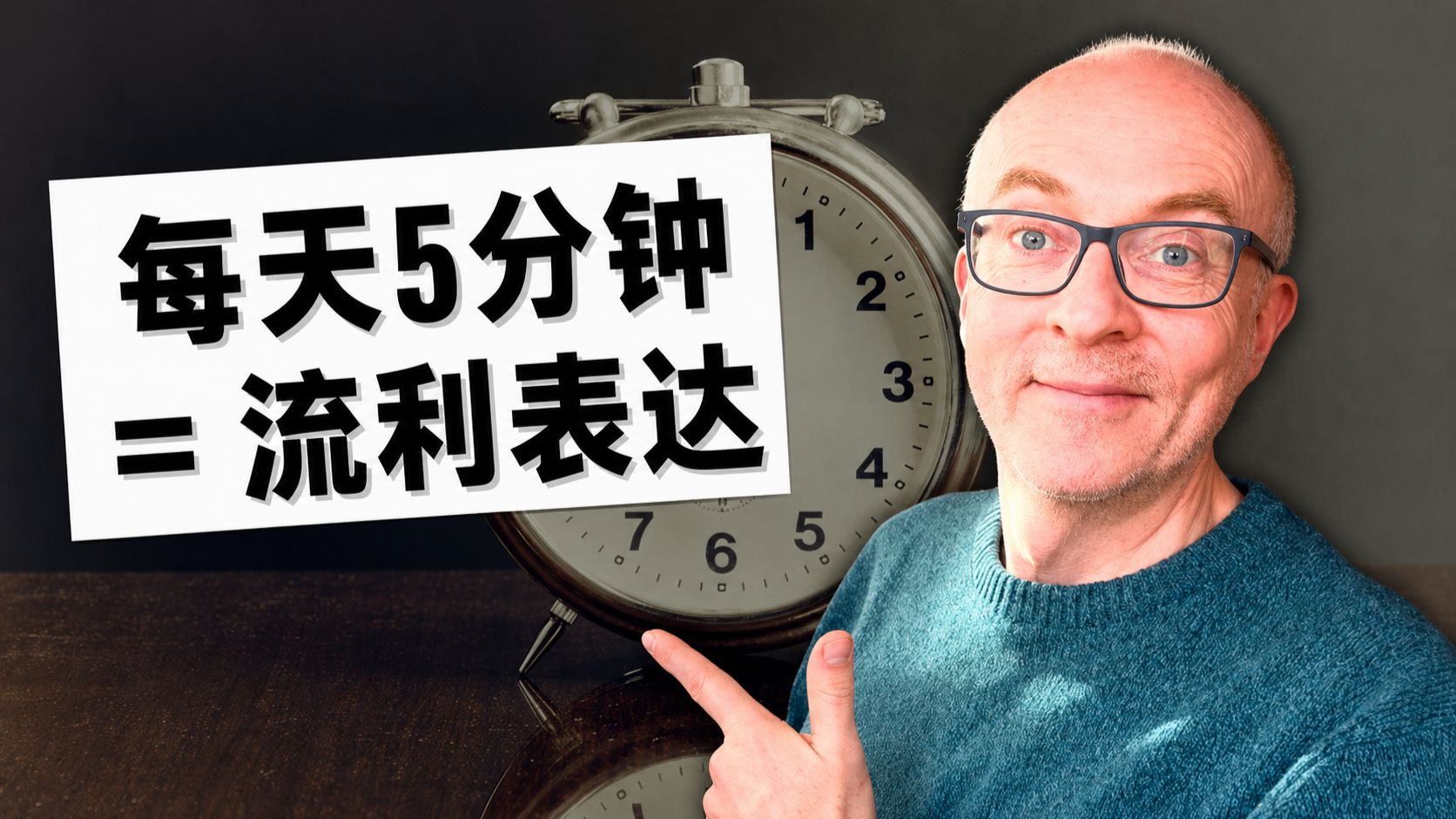
字幕摘录
| 时间 | 英文 | 中文 |
|---|---|---|
| 0:00 | Today, I'm going to show you a simple technique that can dramatically improve your fluency | 今天,我要给你们展示一种简单的技术 能够大大改善你的流畅度 |
| 0:06 | and it just takes five minutes a day. | 一天只需要五分钟 |
| 0:14 | Hello my friends, it's Keith from the Keith Speaking Academy and here today to help you | 你好,朋友们,我是基思大学的基思 今天来帮你 |
| 0:19 | become a more fluent speaker of English. | 成为英语流利的语言。 |
| 0:22 | Now, this one technique I mentioned is called the chunking method. | 现在,我提到的这个技术 叫做块法。 |
| 0:27 | Now, you've probably heard of this. | 现在,你可能听说过这一点。 |
| 0:29 | I've talked about it a little bit before, but I want to make it crystal clear, super | 我之前已经谈过了 但我想说清楚,超级 |
| 0:34 | easy for you today so that you can start practicing this straight away today and get into that | 今天对你们来说很轻松 这样你们就可以直接开始练习了 并且进入 |
| 0:40 | habit of five minutes a day practicing this chunking. | 习惯每天5分钟 练习这个块。 |
| 0:44 | Sound good? | 听起来好吗? |
展开字幕全文(226 条)
| 序号 | 英文 | 中文 |
|---|---|---|
| 1 | Today, I'm going to show you a simple technique that can dramatically improve your fluency | 今天,我要给你们展示一种简单的技术 能够大大改善你的流畅度 |
| 2 | and it just takes five minutes a day. | 一天只需要五分钟 |
| 3 | Hello my friends, it's Keith from the Keith Speaking Academy and here today to help you | 你好,朋友们,我是基思大学的基思 今天来帮你 |
| 4 | become a more fluent speaker of English. | 成为英语流利的语言。 |
| 5 | Now, this one technique I mentioned is called the chunking method. | 现在,我提到的这个技术 叫做块法。 |
| 6 | Now, you've probably heard of this. | 现在,你可能听说过这一点。 |
| 7 | I've talked about it a little bit before, but I want to make it crystal clear, super | 我之前已经谈过了 但我想说清楚,超级 |
| 8 | easy for you today so that you can start practicing this straight away today and get into that | 今天对你们来说很轻松 这样你们就可以直接开始练习了 并且进入 |
| 9 | habit of five minutes a day practicing this chunking. | 习惯每天5分钟 练习这个块。 |
| 10 | Sound good? | 听起来好吗? |
| 11 | Great. | 不错 |
| 12 | So, in this video, I'm going to show you how this works, how you can practice and then | 所以,在这个视频中,我要告诉你 如何运作,如何你可以练习,然后 |
| 13 | we'll finish up with a little story to review this. | 我们把故事讲完再回顾一遍 |
| 14 | Let's do it. | 贡举志五种 上. |
| 15 | Now then, one of the reasons you're not fluent yet is probably because you focus on individual | 现在,一个原因 你不够流利 可能是因为你专注于个人 |
| 16 | words and this is quite normal for students to do. | 这对学生来说很正常 |
| 17 | The thing is, proficient speakers and native speakers, we don't focus on individual words. | 问题是,熟练的演说家和本地的演说家,我们不注重个别的文字. |
| 18 | We focus on chunks, two or three words together and we speak with chunks and we think in chunks. | 我们集中在块,两三个字在一起, 我们用块说话,我们用块来思考。 |
| 19 | If you focus on individual words, it slows you down and it's because normally you've | 如果你专注于单个词, 它会拖慢你 并且是因为你通常 |
| 20 | learned through writing and reading English. | 通过写作和阅读英语学习. |
| 21 | And so you're focusing on the written word that you see is individual words. | 所以,你把注意力集中在文字上, 你看到的是个人的文字。 |
| 22 | But when we speak, we don't think in words, we think in sounds and we speak with sounds. | 但是,当我们说话的时候,我们不以言语思考,我们用声音思考,我们用声音说话. |
| 23 | So each chunk is a sound rather than an individual word, right? | 所以每个块是一个声音而不是一个单词,对不对? |
| 24 | When I say, when I say, I don't say, when I say, I say, when I say, when I say, sounds | 说时不说时不说声. |
| 25 | almost Japanese, when I say, when I say, but I think in sounds. | 几乎是日语,当我说,当我说, 但我想的声音。 |
| 26 | And so it's much easier to speak with more flow and more fluently. | 故以更流而更流畅之言,则更易之矣. |
| 27 | It's a bit like when you go shopping and you take bananas and if you take an individual | 这有点像,当你去购物, 你吃香蕉,如果你采取个人 |
| 28 | banana, put it in your bag and another and another, it's quite slow. | 香蕉,放进你的包里 和另一个和另一个, 它相当缓慢。 |
| 29 | If you take a bunch of bananas, it's much quicker and it's the same with chunks. | 如果你拿一堆香蕉, 它的速度快得多, 和块一样。 |
| 30 | It's a bunch of words put into one sound. | 将一串字放入一音中. |
| 31 | That's the secret. | 这是秘密 |
| 32 | Now, there are different kinds of chunks. | 现在,有不同种类的块。 |
| 33 | There are grammatical chunks and there are lexical chunks. | 有语法块也有语法块. |
| 34 | Let me give you a few examples today. | 今天让我举几个例子。 |
| 35 | Grammatical chunks. | 语法块. |
| 36 | We've got verb chunks like I tend to, I'm used to, I find it easy to, I'd like to. | 我们有我喜欢的动词块, 我习惯了,我觉得很容易,我想。 |
| 37 | Adverbial chunks, I'm sure you know, at the moment, at the moment, by and large, at the | 我敢肯定,你知道, 目前,现在, 总的来说,在 |
| 38 | end of the day. | 结束一天。 |
| 39 | And when we say these, we just say them as one sound, one chunk, right? | 当我们说这些,我们只是说它们 一个声音,一个块,对不对? |
| 40 | By and large, by and large, by and large, meaning generally speaking, by and large. | 大致上说 大致上说 大致上说 |
| 41 | So verb chunks, adverbial chunks. | 所以动词块,旁观块。 |
| 42 | So these chunks are our building blocks. | 所以这些块是我们的基石。 |
| 43 | And as we put them together, we build and speak with more flow and more fluency. | 当我们把它们拼凑在一起时, 我们用更多的流畅和流畅来构建和说话。 |
| 44 | And the more you use them, and the more you think in this way, the more fluent you're | 你越用他们,你越这样想,你就越流利 |
| 45 | going to become. | 将变成。 |
| 46 | Let's move on. | 让我们继续前进。 |
| 47 | Great. | 不错 |
| 48 | Let's have a look at this five minute a day fluency drill. | 让我们看看这个 每天五分钟流利的演习。 |
| 49 | So we're going to look at three chunks, three verb chunks that we can practice with. | 因此,我们将看三个块,三个动词块, 我们可以练习。 |
| 50 | And then later we'll add some adverb chunks. | 然后我们再加一些副词块。 |
| 51 | So the verb chunk is what you do. | 动词块就是你的工作。 |
| 52 | The adverb chunk is how you do it. | 副词块是你怎么做的 |
| 53 | And then we'll start building with blocks. | 然后我们用块块开始建造. |
| 54 | So the first chunk we've got is over here, I tend to do something, meaning I usually | 所以,我们的第一个块是在这里, 我倾向于做一些事情,意思是,我通常 |
| 55 | do something. | 做点什么。 |
| 56 | It's a habit, right? | 这是一个习惯,对不对? |
| 57 | I tend to do, do, do, do, do. | 我倾向于做,做,做,做,做。 |
| 58 | Okay. | 摆 |
| 59 | So instead of saying, I tend to, we say, I tend to. | 而不是说,我倾向于,我们说,我倾向于。 |
| 60 | That means repeat. | 这意味着重复。 |
| 61 | I tend to wake up early, wake up early. | 我往往早起来,早起来。 |
| 62 | Another chunk, wake up early. | 又一块,早起 |
| 63 | Good. | 不错 |
| 64 | Together, I tend to wake up early. | 在一起,我总是早起。 |
| 65 | Got it. | 明白吗? |
| 66 | Hear the difference between I tend to wake up early and I tend to wake up early. | 听我的区别 我往往早起 我往往早起。 |
| 67 | Totally different. | 完全不一样 |
| 68 | Building blocks rather than individual words. | 构件而不是单词 |
| 69 | Let's try another one. | 我们再试试看 |
| 70 | I tend to have a big breakfast. | 我总是吃个大早餐 |
| 71 | Great. | 不错 |
| 72 | That's true for me. | 对我来说是的 |
| 73 | Tell me something true for you. | 告诉我一些真实的东西给你。 |
| 74 | Really? | 真的吗? |
| 75 | Another one. | 又一个. |
| 76 | I tend to drink tea. | 常饮茶. |
| 77 | Okay. | 摆 |
| 78 | I tend to drink tea. | 常饮茶. |
| 79 | Great. | 不错 |
| 80 | And you? | 你呢? |
| 81 | Three chunks now. | 三块了 |
| 82 | I tend to get nervous before meetings. | 开会前我总是很紧张 |
| 83 | Right, you've got it. | 好吧,你已经得到了它。 |
| 84 | Okay. | 摆 |
| 85 | So what we can do, we're just kind of repeating these little chunks. | 所以,我们可以做的, 我们只是重复这些小块。 |
| 86 | Let's move on to chunk number two, which is I am used to doing something. | 我们继续说第二块吧 我习惯做点什么 |
| 87 | So instead of I am used to, it's I'm used to. | 所以我不习惯,而是习惯了 |
| 88 | I'm used to. | 我习惯了 |
| 89 | That's it. | 就这样 |
| 90 | Getting up early. | 早起来. |
| 91 | That's another chunk, getting up early. | 这是另一个块,早起。 |
| 92 | I'm used to getting up early. | 我习惯了早起 |
| 93 | I'm used to working on my own. | 常自修习. |
| 94 | Three chunks, right? | 三块,对不对? |
| 95 | I'm used to working on my own. | 常自修习. |
| 96 | I'm used to living in the countryside. | 常住乡里. |
| 97 | Okay, again, three chunks. | 好,再来三块 |
| 98 | I'm used to living in the countryside. | 常住乡里. |
| 99 | We put them all together with a bit of intonation. | 我们把它们都放在一起 加上一点迷恋。 |
| 100 | I'm used to living in the countryside. | 常住乡里. |
| 101 | It's almost one chunk, right? | 这几乎是一块,对不对? |
| 102 | The more you do it, the better you get at it. | 你越做越好,你得到它。 |
| 103 | Chunk number three, I find it easy to do something. | 3号,我发现很容易做点什么 |
| 104 | Okay, for example, for me, I find it easy to cook. | 好吧,比如说,对我来说,我觉得很容易做饭。 |
| 105 | Okay, the difference again between I find it easy to cook. | 好吧,再次区别 我发现很容易做饭。 |
| 106 | I find it easy to cook. | 我觉得很容易做饭 |
| 107 | Practice that little chunk. | 练习那小块。 |
| 108 | I find it easy. | 我觉得很容易 |
| 109 | Yeah, I find it easy to learn languages. | 是的,我发现它很容易学习语言。 |
| 110 | I find it easy to stay organized. | 我觉得这样很容易有组织 |
| 111 | And you? | 你呢? |
| 112 | Excellent, good. | 不错,很好。 |
| 113 | Now let's start combining a bit. | 现在,让我们开始结合一点。 |
| 114 | Let's start adding some adverb chunks. | 让我们开始添加一些副词块。 |
| 115 | Do you remember like at the moment, okay? | 你记得像现在一样,好吗? |
| 116 | So I might say, at the moment, I tend to wake up early. | 所以我可以说,现在,我往往很早就醒了。 |
| 117 | Kind of three chunks, right? | 差不多三块吧? |
| 118 | At the moment, I tend to wake up early. | 现在,我往往早起。 |
| 119 | I'm slowing it down a bit so you can hear the chunks. | 我慢一点,这样你就能听到大块。 |
| 120 | Obviously, as you put them together, | 显然,当你把它们拼在一起时, |
| 121 | I would say, at the moment, I tend to wake up early. | 我想说,现在,我往往早起。 |
| 122 | I have the intonation, but that comes later. | 我被迷住了,但后来会这样 |
| 123 | Just focus on the chunks first. | 先把注意力集中在块上 |
| 124 | Another one. | 又一个. |
| 125 | Right now, I'm used to living on my own. | 现在,我习惯了靠自己生活 |
| 126 | Okay, we've got this adverbial chunk and the verb chunk. | 好了,我们得到了这个旁观块和动词块。 |
| 127 | Another one. | 又一个. |
| 128 | By and large, I find it easy to stay organized. | 总的来说,我发现它很容易保持组织。 |
| 129 | Stay organized or stay focused? | 保持有组织还是集中? |
| 130 | Stay organized, yes. | 保持组织,是的。 |
| 131 | By and large, I find it easy to stay organized. | 总的来说,我发现它很容易保持组织。 |
| 132 | And what I could start to do is extend the sentence | 我可以开始做的是延长刑期 |
| 133 | by having a because or since or as. | 是因为有原因 或从后或作为。 |
| 134 | At the moment, I tend to wake up early | 现在,我常常早起 |
| 135 | because I'm on holiday. | 因为我在度假。 |
| 136 | No, that wouldn't make sense, would it? | 不,这是没有道理的,是吗? |
| 137 | At the moment, I tend to wake up early | 现在,我常常早起 |
| 138 | because I'm very busy. | 因为我很忙。 |
| 139 | That would make sense, | 这很合理, |
| 140 | but it doesn't matter if it makes sense. | 但不管它是否有意义。 |
| 141 | Actually, it's good not even to make sense. | 其实,这很好 甚至不讲道理。 |
| 142 | Say something illogical, but focus on these chunks. | 说些不合逻辑的话,但专注于这些块。 |
| 143 | D, D, D, and you're building up your sentences, right? | D,D,D,你正在积累你的句子,对不对? |
| 144 | The idea is not to make sense. | 这个想法是不合理的。 |
| 145 | The idea of this practice, the five-minute fluency drill, | 这个练习的想法, 五分钟流利的练习, |
| 146 | is just to practice fluency, practice these chunks, okay? | 只是练习流利,练习这些块,好吗? |
| 147 | We can do it with a mini story. | 我们可以做一个迷你故事。 |
| 148 | Let me develop these into a mini story, | 让我把这些发展成一个迷你故事, |
| 149 | and I want you to really focus | 我要你真正专注 |
| 150 | on the sounds of the chunks as I speak, okay? | 在我说话的时候 听到这些声音,好吗? |
| 151 | Whether it's logical or not. | 是否合乎逻辑? |
| 152 | Here we go. | 开始了 |
| 153 | At the moment, I tend to wake up early. | 现在,我往往早起。 |
| 154 | By and large, I find it easy to wake up early | 总的来说,我发现早起很容易 |
| 155 | because I go to bed early. | 因为我早点上床 |
| 156 | Right now, I'm used to going to bed early | 现在,我习惯早点睡觉 |
| 157 | because I'm on holiday, right? | 因为我在度假,对不对? |
| 158 | Mini story, but I'm just building blocks, | 迷你故事,但我只是构件, |
| 159 | building little sentences, | 建立小句子, |
| 160 | and in your practice, do this. | 在你的练习中,做到这一点。 |
| 161 | Make up stupid stories that make no sense, | 编一些愚蠢的故事,没有道理, |
| 162 | but just practice the chunks, right? | 但只是练习块,对不对? |
| 163 | Later, it will all start to work out, | 后来,一切都会好的 |
| 164 | but this is the drill. | 但这是演习 |
| 165 | This is where you're kind of like the soldiers, | 这里你就像士兵一样 |
| 166 | learn to walk and to drill. | 学会走路和钻孔 |
| 167 | It's the basic footsteps. | 这是基本的脚步。 |
| 168 | These are the footsteps of your language, if you like. | 这些是你语言的脚步,如果你喜欢。 |
| 169 | Okay. | 摆 |
| 170 | So, let me just recap, | 所以,让我只回顾一下, |
| 171 | summarize this five-minute fluency drill. | 总结一下这个五分钟的流畅练习 |
| 172 | Very simple routine. | 非常简单 |
| 173 | First of all, pick three verb chunks. | 首先,选择三个动词块. |
| 174 | You can use the ones we've done today. | 你可以用我们今天做的那些 |
| 175 | 我有一个PDF, boom,boom,boom, | |
| 176 | and you can download that | 你可以下载 |
| 177 | and get lots more chunks you can practice with. | 得到更多的块 你可以练习。 |
| 178 | First, pick three verb chunks, | 首先,选择三个动词块, |
| 179 | practice repeating and changing something. | 练习重复和改变东西。 |
| 180 | Take some adverb chunks, practice repeating, | 拿一些副词块,练习重复, |
| 181 | put them together, building up little phrases, | 把它们放在一起, 建立一些小短语, |
| 182 | and then make a mini story. | 然后做一个迷你故事。 |
| 183 | Sentence after sentence, | 判决后, |
| 184 | using these chunks or others, building them up. | 使用这些块或其他的块,建立起来。 |
| 185 | It can be totally illogical. | 这完全不合逻辑 |
| 186 | And then, if you've got time, | 然后,如果你有时间, |
| 187 | do a mini story, but that's true for you. | 做一个迷你故事, 但这是你。 |
| 188 | And that's more difficult | 这更难 |
| 189 | because you have to think about meaning as well. | 因为你也要考虑意义 |
| 190 | But if you've got time, record yourself. | 但是如果你有时间,请记录自己。 |
| 191 | Great to listen back and listen to the sounds | 听到声音真好 |
| 192 | and the chunks, see how well you're doing. | 和块,看你做得有多好。 |
| 193 | You can do this five minutes a day. | 你可以每天做五分钟。 |
| 194 | Seriously, three chunks, some adverb chunks. | 说真的,三块,一些副词块。 |
| 195 | It's so easy. | 甚为方便. |
| 196 | Practice first of all, with the ones you've seen today, | 首先,用你今天看到的东西 |
| 197 | go and get the PDF. | 去把PDF拿来 |
| 198 | There's loads more there you can start practicing. | 还有很多东西你可以开始练习了 |
| 199 | And just with this focus on sounds and chunks, | 仅以声音和块为重点 |
| 200 | rather than individual words, | 而不是单词, |
| 201 | you will notice a difference after a few weeks. | 几周后你会发现有差别 |
| 202 | That's it for today. | 至今日已毕. |
| 203 | If you've enjoyed this video, subscribe to the channel. | 如果你喜欢这个视频,请订阅频道。 |
| 204 | And why not even join my YouTube channel? | 为什么不加入我的YouTube频道? |
| 205 | Become a member. | 成为会员。 |
| 206 | 你得到的emojis, 定制emojis, | |
| 207 | but you also get access to private videos | 但你也可以访问私人视频 |
| 208 | on all the different topics I talk about, | 关于所有不同的话题,我谈论, |
| 209 | especially IELTS speaking, model answers, | 特别是IELTS说话,模型答案, |
| 210 | really helpful for you. | 对你很有帮助 |
| 211 | Join, it's just $2 a month. | 加入吧 一个月才两块 |
| 212 | It's price of a coffee in most countries. | 在大多数国家,这是一杯咖啡的价格。 |
| 213 | Anyway, and it also helps me, | 无论如何,它也帮助了我, |
| 214 | but I'll leave it to you. | 但我会留给你。 |
| 215 | It would be lovely to see you as a channel member. | 很高兴看到你成为频道成员 |
| 216 | If you want to find out more about my courses, | 如果你想了解我的课程 |
| 217 | 去访问Keith Speaking Academy.com. (中文(中国大陆) ). | |
| 218 | You can find out all about the work that I do there. | 你可以了解我在那里的工作情况 |
| 219 | It's been lovely today. | 今天真可爱 |
| 220 | Thank you so much for watching. | 谢谢你的观看 |
| 221 | I've really enjoyed it. | 我真的很喜欢 |
| 222 | And I will see you soon, | 我会很快见到你, |
| 223 | maybe in the next video on YouTube. | 也许在YouTube上的下一个视频里 |
| 224 | All the best now. | 现在最精彩了 |
| 225 | Take care. | 小心点 |
| 226 | Bye-bye. | 再见 |
该视频共有字幕 229 条。解锁更多字幕为会员功能,请移动到 价格