【英语方法】听清每个单词 · 母语者说快也不怕
共 3 集
剧集目录
| 集 | 标题 | 时长 |
|---|---|---|
| P1 | 【英语方法】听清每个单词 · 母语者说快也不怕 中英字幕 | 4:39 |
| P2 | 【英语方法】听清每个单词 · 母语者说快也不怕 英文字幕 | 4:39 |
| P3 | 【英语方法】听清每个单词 · 母语者说快也不怕 无字幕 | 4:39 |
P1 · 【英语方法】听清每个单词 · 母语者说快也不怕 p01 中英字幕 (P1)
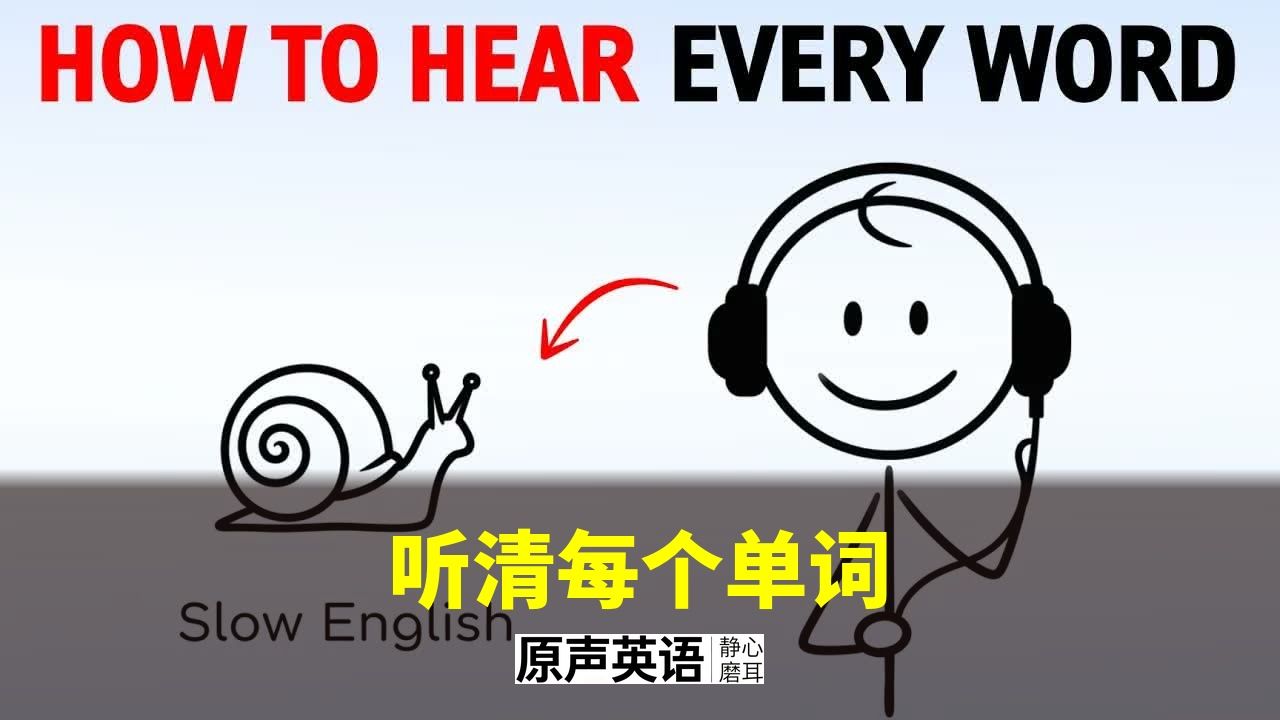
字幕摘录
| 时间 | 英文 | 中文 |
|---|---|---|
| 0:00 | Have you ever felt like this? | 你有这种感觉吗? |
| 0:02 | You understand English when it's slow. | 慢点你懂英语 |
| 0:04 | But when native speakers talk, everything becomes noise. | 但是,当讲母语的人说话时,一切都会变成噪音。 |
| 0:08 | Words disappear. | 语已灭. |
| 0:10 | Sounds connect. | 声音连接。 |
| 0:11 | Nothing makes sense. | 没什么道理 |
| 0:13 | But here's the truth. | 但这是事实 |
| 0:14 | The problem is not your ears. | 问题不在于你的耳朵 |
| 0:16 | The problem is, you're listening the wrong way. | 问题是 你听错了 |
| 0:20 | In this video, I'll show you how to hear almost every word in English. | 在这段视频中,我将教你如何听到几乎每个英文单词. |
展开字幕全文(116 条)
| 序号 | 英文 | 中文 |
|---|---|---|
| 1 | Have you ever felt like this? | 你有这种感觉吗? |
| 2 | You understand English when it's slow. | 慢点你懂英语 |
| 3 | But when native speakers talk, everything becomes noise. | 但是,当讲母语的人说话时,一切都会变成噪音。 |
| 4 | Words disappear. | 语已灭. |
| 5 | Sounds connect. | 声音连接。 |
| 6 | Nothing makes sense. | 没什么道理 |
| 7 | But here's the truth. | 但这是事实 |
| 8 | The problem is not your ears. | 问题不在于你的耳朵 |
| 9 | The problem is, you're listening the wrong way. | 问题是 你听错了 |
| 10 | In this video, I'll show you how to hear almost every word in English. | 在这段视频中,我将教你如何听到几乎每个英文单词. |
| 11 | Even when people speak fast, reduce sounds, or use slang. | 即使人们说话快,减少声音,或者使用口号. |
| 12 | The real problem. | 真正的问题。 |
| 13 | Let's be clear about something important. | 说说重要的事吧 |
| 14 | You learned English from textbooks. | 你从教科书学英语的 |
| 15 | Clear pronunciation. | 清净发音. |
| 16 | Full sentences. | 满句. |
| 17 | Slow speaking. | 慢慢说 |
| 18 | But real English is messy. | 但真正的英语是混乱的。 |
| 19 | Native speakers. | 土著演说者. |
| 20 | Connect words. | 连字. |
| 21 | Reduce sounds. | 减少声音。 |
| 22 | Drop sounds completely. | 完全放弃的声音。 |
| 23 | This is called connected speech. | 这叫做连接的演讲。 |
| 24 | So when you say, | 所以当你说, |
| 25 | I want to go, they say. | 他们说我想去 |
| 26 | I wanna go. | и稱 |
| 27 | And your brain goes, | 你的大脑去, |
| 28 | Wait, what was that? | 等等,这是什么? |
| 29 | E. The truth you need to accept. | E. 你需要接受的事实。 |
| 30 | If you try to hear English word by word, you will always struggle. | 如果你试图逐字听到英语单词,你将永远挣扎. |
| 31 | Because real English is not spoken word by word. | 因为真正的英语不是逐字讲的. |
| 32 | It's spoken in sound patterns. | 以声闻图案而说. |
| 33 | So your goal is not to hear every perfect word. | 所以你的目标不是听到每一个完美的词。 |
| 34 | Your goal is to understand how English actually sounds. | 你的目标是了解英语的真谛 |
| 35 | 8 powerful listening hacks. | 8个强大的监听黑客。 |
| 36 | Accept real English is not equal to textbook English. | 接受真正的英语不等同于教科书英语. |
| 37 | Stop expecting perfect pronunciation. | 停止期待完美的发音。 |
| 38 | Real English is fast, connected, and imperfect. | 真正的英语是快速的,连接的,也是不完美的. |
| 39 | Once you accept this, your listening improves immediately. | 一旦你接受了这个,你的听力会立刻改善。 |
| 40 | Learn reductions. | 学减分. |
| 41 | Real spoken forms. | 真正的口头形式。 |
| 42 | Native speakers don't say, | 土著演说家不说, |
| 43 | Going to, they say gonna. | 去,他们说要去。 |
| 44 | Want to, they say wanna. | 想,他们说想。 |
| 45 | Have to, they say hafta. | 不得不,他们说哈夫塔。 |
| 46 | If you don't know these forms, you won't recognize them. | 如果你不知道这些表格,你就不会认出来. |
| 47 | Learn how English is actually spoken, not just written. | 学会英语是怎样讲的, 不只是写。 |
| 48 | Understand connected speech. | 理解连接的语音 。 |
| 49 | Words don't stay separate. | 言语不分别. |
| 50 | They stick together. | 他们在一起。 |
| 51 | Example. | 实例。 |
| 52 | Next day sounds like next day. | 第二天听起来像第二天。 |
| 53 | Did you, sounds like didja. | 你有没有,听起来像Didja。 |
| 54 | That's why you think, I didn't hear the word. | 所以你才想,我没有听到这个词。 |
| 55 | But actually, it changed form. | 但实际上,它改变了形式。 |
| 56 | Four. | 四门. |
| 57 | Focus on stressed words. | 注重强调的文字. |
| 58 | Here's a big secret. | 这儿有个大秘密 |
| 59 | Not every word is equally important. | 并不是每个词都同样重要。 |
| 60 | Native speakers stress key words. | 土著演说者强调关键词。 |
| 61 | Example. | 实例。 |
| 62 | I want to go to the store. | 我想去商店。 |
| 63 | You mainly hear, | 你们主要听到 |
| 64 | Want. | 想要吗? |
| 65 | Go. | 开始吧 |
| 66 | Store. | 存储。 |
| 67 | Train your ears to catch important words. | 训练你的耳朵 捕捉重要的文字。 |
| 68 | Not every small word. | 不是每个小字 |
| 69 | Five. | 五门. |
| 70 | Train with minimal pairs. | 火车上只有最小的一对 |
| 71 | Some sounds are very similar. | 有些声音非常相似. |
| 72 | Can versus can't. | 无法对抗 |
| 73 | Ship versus sheep. | 船对羊. |
| 74 | Bat versus bet. | 蝙蝠对赌. |
| 75 | If you can't hear the difference. | 若不能闻差别. |
| 76 | You'll misunderstand the meaning. | 你会误会这个意思的 |
| 77 | Practice these pairs to sharpen your listening. | 练习这些对子 使你的听力更敏锐。 |
| 78 | Six. | 六门. |
| 79 | Use pause and predict. | 使用暂停和预测。 |
| 80 | Don't just listen passively. | 不要只是被动地听。 |
| 81 | Pause the audio and guess what comes next. | 暂停录音,猜接下来会怎样 |
| 82 | Example. | 实例。 |
| 83 | I went to the, pause. | 我去了,暂停。 |
| 84 | Your brain predicts, store, park, school. | 你的大脑预测,储存,公园,学校。 |
| 85 | This builds faster understanding and real-time thinking. | 这可以建立更快的理解和实时思维. |
| 86 | Seven. | 七门. |
| 87 | Control the listening speed. | 控制监听速度. |
| 88 | Don't start at full speed. | 不要全速开工. |
| 89 | Train your ears like a muscle. | 练耳如肌肉. |
| 90 | Gradual training equals stronger listening ability. | 渐进式训练等于更强大的听力. |
| 91 | Eight. | 八个。 |
| 92 | Listen in layers. | 分层听. |
| 93 | Stop trying to understand everything at once. | 别再一心一意了 |
| 94 | Use this method. | 使用此法. |
| 95 | First time. | 初问. |
| 96 | Understand the main idea. | 了解主要观点. |
| 97 | Second time. | 次二颂. |
| 98 | Catch key words. | 抓住关键词。 |
| 99 | Third time. | 第三次见. |
| 100 | Hear details. | 听听细节 |
| 101 | Listening is a process, not a one-time action. | 倾听是一个过程,而不是一次性的行动. |
| 102 | Advanced tips. | 高级提示. |
| 103 | If you want faster results. | 如果你想要更快的结果。 |
| 104 | Focus on your weak sounds. | 专心听弱音. |
| 105 | Like the, the, be, be. | 就像那个,那个,那个,那个 |
| 106 | Use songs to test your listening. | 用歌来测试你的听力. |
| 107 | Practice less, but practice correctly. | 练习较少,但练习正确。 |
| 108 | Smart practice beats long practice. | 聪明的练习胜过漫长的练习. |
| 109 | So remember, you don't need better ears. | 所以记住,你不需要更好的耳朵。 |
| 110 | You need better understanding. | 你需要更好的理解。 |
| 111 | When you understand how English works, | 当你明白英语是怎么工作的 |
| 112 | your brain will start filling the gaps automatically. | 你的大脑会自动填补空白 |
| 113 | Because you don't hear every word. | 因为你没有听到每个字。 |
| 114 | You understand the message behind the sound. | 你明白声音背后的信息 |
| 115 | If this video helped you, like it, share it, and subscribe for more simple English lessons. | 如果这段视频有助于你,喜欢它,分享它,订阅更简单的英语课程. |
| 116 | Keep listening, keep growing, and I'll see you in the next video. | 继续听,继续增长,下段视频见. |
该视频共有字幕 116 条。解锁更多字幕为会员功能,请移动到 价格
P2 · 【英语方法】听清每个单词 · 母语者说快也不怕 p02 英文字幕 (P2)
字幕摘录
| 时间 | 英文 | 中文 |
|---|---|---|
| 0:00 | Have you ever felt like this? | 你有这种感觉吗? |
| 0:02 | You understand English when it's slow. | 慢点你懂英语 |
| 0:04 | But when native speakers talk, everything becomes noise. | 但是,当讲母语的人说话时,一切都会变成噪音。 |
| 0:08 | Words disappear. | 语已灭. |
| 0:10 | Sounds connect. | 声音连接。 |
| 0:11 | Nothing makes sense. | 没什么道理 |
| 0:13 | But here's the truth. | 但这是事实 |
| 0:14 | The problem is not your ears. | 问题不在于你的耳朵 |
| 0:16 | The problem is, you're listening the wrong way. | 问题是 你听错了 |
| 0:20 | In this video, I'll show you how to hear almost every word in English. | 在这段视频中,我将教你如何听到几乎每个英文单词. |
展开字幕全文(116 条)
| 序号 | 英文 | 中文 |
|---|---|---|
| 1 | Have you ever felt like this? | 你有这种感觉吗? |
| 2 | You understand English when it's slow. | 慢点你懂英语 |
| 3 | But when native speakers talk, everything becomes noise. | 但是,当讲母语的人说话时,一切都会变成噪音。 |
| 4 | Words disappear. | 语已灭. |
| 5 | Sounds connect. | 声音连接。 |
| 6 | Nothing makes sense. | 没什么道理 |
| 7 | But here's the truth. | 但这是事实 |
| 8 | The problem is not your ears. | 问题不在于你的耳朵 |
| 9 | The problem is, you're listening the wrong way. | 问题是 你听错了 |
| 10 | In this video, I'll show you how to hear almost every word in English. | 在这段视频中,我将教你如何听到几乎每个英文单词. |
| 11 | Even when people speak fast, reduce sounds, or use slang. | 即使人们说话快,减少声音,或者使用口号. |
| 12 | The real problem. | 真正的问题。 |
| 13 | Let's be clear about something important. | 说说重要的事吧 |
| 14 | You learned English from textbooks. | 你从教科书学英语的 |
| 15 | Clear pronunciation. | 清净发音. |
| 16 | Full sentences. | 满句. |
| 17 | Slow speaking. | 慢慢说 |
| 18 | But real English is messy. | 但真正的英语是混乱的。 |
| 19 | Native speakers. | 土著演说者. |
| 20 | Connect words. | 连字. |
| 21 | Reduce sounds. | 减少声音。 |
| 22 | Drop sounds completely. | 完全放弃的声音。 |
| 23 | This is called connected speech. | 这叫做连接的演讲。 |
| 24 | So when you say, | 所以当你说, |
| 25 | I want to go, they say. | 他们说我想去 |
| 26 | I wanna go. | и稱 |
| 27 | And your brain goes, | 你的大脑去, |
| 28 | Wait, what was that? | 等等,这是什么? |
| 29 | E. The truth you need to accept. | E. 你需要接受的事实。 |
| 30 | If you try to hear English word by word, you will always struggle. | 如果你试图逐字听到英语单词,你将永远挣扎. |
| 31 | Because real English is not spoken word by word. | 因为真正的英语不是逐字讲的. |
| 32 | It's spoken in sound patterns. | 以声闻图案而说. |
| 33 | So your goal is not to hear every perfect word. | 所以你的目标不是听到每一个完美的词。 |
| 34 | Your goal is to understand how English actually sounds. | 你的目标是了解英语的真谛 |
| 35 | 8 powerful listening hacks. | 8个强大的监听黑客。 |
| 36 | Accept real English is not equal to textbook English. | 接受真正的英语不等同于教科书英语. |
| 37 | Stop expecting perfect pronunciation. | 停止期待完美的发音。 |
| 38 | Real English is fast, connected, and imperfect. | 真正的英语是快速的,连接的,也是不完美的. |
| 39 | Once you accept this, your listening improves immediately. | 一旦你接受了这个,你的听力会立刻改善。 |
| 40 | Learn reductions. | 学减分. |
| 41 | Real spoken forms. | 真正的口头形式。 |
| 42 | Native speakers don't say, | 土著演说家不说, |
| 43 | Going to, they say gonna. | 去,他们说要去。 |
| 44 | Want to, they say wanna. | 想,他们说想。 |
| 45 | Have to, they say hafta. | 不得不,他们说哈夫塔。 |
| 46 | If you don't know these forms, you won't recognize them. | 如果你不知道这些表格,你就不会认出来. |
| 47 | Learn how English is actually spoken, not just written. | 学会英语是怎样讲的, 不只是写。 |
| 48 | Understand connected speech. | 理解连接的语音 。 |
| 49 | Words don't stay separate. | 言语不分别. |
| 50 | They stick together. | 他们在一起。 |
| 51 | Example. | 实例。 |
| 52 | Next day sounds like next day. | 第二天听起来像第二天。 |
| 53 | Did you, sounds like didja. | 你有没有,听起来像Didja。 |
| 54 | That's why you think, I didn't hear the word. | 所以你才想,我没有听到这个词。 |
| 55 | But actually, it changed form. | 但实际上,它改变了形式。 |
| 56 | Four. | 四门. |
| 57 | Focus on stressed words. | 注重强调的文字. |
| 58 | Here's a big secret. | 这儿有个大秘密 |
| 59 | Not every word is equally important. | 并不是每个词都同样重要。 |
| 60 | Native speakers stress key words. | 土著演说者强调关键词。 |
| 61 | Example. | 实例。 |
| 62 | I want to go to the store. | 我想去商店。 |
| 63 | You mainly hear, | 你们主要听到 |
| 64 | Want. | 想要吗? |
| 65 | Go. | 开始吧 |
| 66 | Store. | 存储。 |
| 67 | Train your ears to catch important words. | 训练你的耳朵 捕捉重要的文字。 |
| 68 | Not every small word. | 不是每个小字 |
| 69 | Five. | 五门. |
| 70 | Train with minimal pairs. | 火车上只有最小的一对 |
| 71 | Some sounds are very similar. | 有些声音非常相似. |
| 72 | Can versus can't. | 无法对抗 |
| 73 | Ship versus sheep. | 船对羊. |
| 74 | Bat versus bet. | 蝙蝠对赌. |
| 75 | If you can't hear the difference. | 若不能闻差别. |
| 76 | You'll misunderstand the meaning. | 你会误会这个意思的 |
| 77 | Practice these pairs to sharpen your listening. | 练习这些对子 使你的听力更敏锐。 |
| 78 | Six. | 六门. |
| 79 | Use pause and predict. | 使用暂停和预测。 |
| 80 | Don't just listen passively. | 不要只是被动地听。 |
| 81 | Pause the audio and guess what comes next. | 暂停录音,猜接下来会怎样 |
| 82 | Example. | 实例。 |
| 83 | I went to the, pause. | 我去了,暂停。 |
| 84 | Your brain predicts, store, park, school. | 你的大脑预测,储存,公园,学校。 |
| 85 | This builds faster understanding and real-time thinking. | 这可以建立更快的理解和实时思维. |
| 86 | Seven. | 七门. |
| 87 | Control the listening speed. | 控制监听速度. |
| 88 | Don't start at full speed. | 不要全速开工. |
| 89 | Train your ears like a muscle. | 练耳如肌肉. |
| 90 | Gradual training equals stronger listening ability. | 渐进式训练等于更强大的听力. |
| 91 | Eight. | 八个。 |
| 92 | Listen in layers. | 分层听. |
| 93 | Stop trying to understand everything at once. | 别再一心一意了 |
| 94 | Use this method. | 使用此法. |
| 95 | First time. | 初问. |
| 96 | Understand the main idea. | 了解主要观点. |
| 97 | Second time. | 次二颂. |
| 98 | Catch key words. | 抓住关键词。 |
| 99 | Third time. | 第三次见. |
| 100 | Hear details. | 听听细节 |
| 101 | Listening is a process, not a one-time action. | 倾听是一个过程,而不是一次性的行动. |
| 102 | Advanced tips. | 高级提示. |
| 103 | If you want faster results. | 如果你想要更快的结果。 |
| 104 | Focus on your weak sounds. | 专心听弱音. |
| 105 | Like the, the, be, be. | 就像那个,那个,那个,那个 |
| 106 | Use songs to test your listening. | 用歌来测试你的听力. |
| 107 | Practice less, but practice correctly. | 练习较少,但练习正确。 |
| 108 | Smart practice beats long practice. | 聪明的练习胜过漫长的练习. |
| 109 | So remember, you don't need better ears. | 所以记住,你不需要更好的耳朵。 |
| 110 | You need better understanding. | 你需要更好的理解。 |
| 111 | When you understand how English works, | 当你明白英语是怎么工作的 |
| 112 | your brain will start filling the gaps automatically. | 你的大脑会自动填补空白 |
| 113 | Because you don't hear every word. | 因为你没有听到每个字。 |
| 114 | You understand the message behind the sound. | 你明白声音背后的信息 |
| 115 | If this video helped you, like it, share it, and subscribe for more simple English lessons. | 如果这段视频有助于你,喜欢它,分享它,订阅更简单的英语课程. |
| 116 | Keep listening, keep growing, and I'll see you in the next video. | 继续听,继续增长,下段视频见. |
该视频共有字幕 116 条。解锁更多字幕为会员功能,请移动到 价格
P3 · 【英语方法】听清每个单词 · 母语者说快也不怕 p03 无字幕 (P3)
字幕摘录
| 时间 | 英文 | 中文 |
|---|---|---|
| 0:00 | Have you ever felt like this? | 你有这种感觉吗? |
| 0:02 | You understand English when it's slow. | 慢点你懂英语 |
| 0:04 | But when native speakers talk, everything becomes noise. | 但是,当讲母语的人说话时,一切都会变成噪音。 |
| 0:08 | Words disappear. | 语已灭. |
| 0:10 | Sounds connect. | 声音连接。 |
| 0:11 | Nothing makes sense. | 没什么道理 |
| 0:13 | But here's the truth. | 但这是事实 |
| 0:14 | The problem is not your ears. | 问题不在于你的耳朵 |
| 0:16 | The problem is, you're listening the wrong way. | 问题是 你听错了 |
| 0:20 | In this video, I'll show you how to hear almost every word in English. | 在这段视频中,我将教你如何听到几乎每个英文单词. |
展开字幕全文(127 条)
| 序号 | 英文 | 中文 |
|---|---|---|
| 1 | Have you ever felt like this? | 你有这种感觉吗? |
| 2 | You understand English when it's slow. | 慢点你懂英语 |
| 3 | But when native speakers talk, everything becomes noise. | 但是,当讲母语的人说话时,一切都会变成噪音。 |
| 4 | Words disappear. | 语已灭. |
| 5 | Sounds connect. | 声音连接。 |
| 6 | Nothing makes sense. | 没什么道理 |
| 7 | But here's the truth. | 但这是事实 |
| 8 | The problem is not your ears. | 问题不在于你的耳朵 |
| 9 | The problem is, you're listening the wrong way. | 问题是 你听错了 |
| 10 | In this video, I'll show you how to hear almost every word in English. | 在这段视频中,我将教你如何听到几乎每个英文单词. |
| 11 | Even when people speak fast, reduce sounds, or use slang. | 即使人们说话快,减少声音,或者使用口号. |
| 12 | The real problem. | 真正的问题。 |
| 13 | Let's be clear about something important. | 说说重要的事吧 |
| 14 | You learned English from textbooks. | 你从教科书学英语的 |
| 15 | Clear pronunciation. | 清净发音. |
| 16 | Full sentences. | 满句. |
| 17 | Slow speaking. | 慢慢说 |
| 18 | But real English is messy. | 但真正的英语是混乱的。 |
| 19 | Native speakers. | 土著演说者. |
| 20 | Connect words. | 连字. |
| 21 | Reduce sounds. | 减少声音。 |
| 22 | Drop sounds completely. | 完全放弃的声音。 |
| 23 | This is called connected speech. | 这叫做连接的演讲。 |
| 24 | So when you say, | 所以当你说, |
| 25 | I want to go. | и稱 |
| 26 | They say, | 他们说, |
| 27 | I wanna go. | и稱 |
| 28 | And your brain goes, | 你的大脑去, |
| 29 | Wait, what was that? | 等等,这是什么? |
| 30 | E, the truth you need to accept. | E,你需要接受的事实。 |
| 31 | If you try to hear English word by word, you will always struggle. | 如果你试图逐字听到英语单词,你将永远挣扎. |
| 32 | Because real English is not spoken word by word. | 因为真正的英语不是逐字讲的. |
| 33 | It's spoken in sound patterns. | 以声闻图案而说. |
| 34 | So your goal is not to hear every perfect word. | 所以你的目标不是听到每一个完美的词。 |
| 35 | Your goal is to understand how English actually sounds. | 你的目标是了解英语的真谛 |
| 36 | 8 powerful listening hacks. | 8个强大的监听黑客。 |
| 37 | 1. | 一、导 言 |
| 38 | Accept real English is not equal to textbook English. | 接受真正的英语不等同于教科书英语. |
| 39 | Stop expecting perfect pronunciation. | 停止期待完美的发音。 |
| 40 | Real English is fast, connected, and imperfect. | 真正的英语是快速的,连接的,也是不完美的. |
| 41 | Once you accept this, your listening improves immediately. | 一旦你接受了这个,你的听力会立刻改善。 |
| 42 | 2. | 2. 国家 |
| 43 | Learn reductions. | 学减分. |
| 44 | Real spoken forms. | 真正的口头形式。 |
| 45 | Native speakers don't say, | 土著演说家不说, |
| 46 | Going to. | 准备去。 |
| 47 | They say gonna. | 他们说要去。 |
| 48 | Want to. | 想要吗? |
| 49 | They say wanna. | 他们说想要。 |
| 50 | Have to. | 不得不这样做。 |
| 51 | They say hafta. | 他们说哈夫塔。 |
| 52 | If you don't know these forms, you won't recognize them. | 如果你不知道这些表格,你就不会认出来. |
| 53 | Learn how English is actually spoken, not just written. | 学会英语是怎样讲的, 不只是写。 |
| 54 | 3. | 3个 |
| 55 | Understand connected speech. | 理解连接的语音 。 |
| 56 | Words don't stay separate. | 言语不分别. |
| 57 | They stick together. | 他们在一起。 |
| 58 | Example. | 实例。 |
| 59 | Next day sounds like next day. | 第二天听起来像第二天。 |
| 60 | Did you. | 你有吗? |
| 61 | 听起来像Didja。 | |
| 62 | That's why you think, I didn't hear the word. | 所以你才想,我没有听到这个词。 |
| 63 | But actually, it changed form. | 但实际上,它改变了形式。 |
| 64 | 4. | 4个 |
| 65 | Focus on stressed words. | 注重强调的文字. |
| 66 | Here's a big secret. | 这儿有个大秘密 |
| 67 | Not every word is equally important. | 并不是每个词都同样重要。 |
| 68 | Native speakers stress key words. | 土著演说者强调关键词。 |
| 69 | Example. | 实例。 |
| 70 | I want to go to the store. | 我想去商店。 |
| 71 | You mainly hear. | 你主要听见了 |
| 72 | Want. | 想要吗? |
| 73 | Go. | 开始吧 |
| 74 | Store. | 存储。 |
| 75 | Train your ears to catch important words. | 训练你的耳朵 捕捉重要的文字。 |
| 76 | Not every small word. | 不是每个小字 |
| 77 | 5. | 5.五. |
| 78 | Train with minimal pairs. | 火车上只有最小的一对 |
| 79 | Some sounds are very similar. | 有些声音非常相似. |
| 80 | Can versus can't. | 无法对抗 |
| 81 | Ship versus sheep. | 船对羊. |
| 82 | Bat versus bet. | 蝙蝠对赌. |
| 83 | If you can't hear the difference. | 若不能闻差别. |
| 84 | You'll misunderstand the meaning. | 你会误会这个意思的 |
| 85 | Practice these pairs to sharpen your listening. | 练习这些对子 使你的听力更敏锐。 |
| 86 | 6. | 6个 |
| 87 | Use pause and predict. | 使用暂停和预测。 |
| 88 | Don't just listen passively. | 不要只是被动地听。 |
| 89 | Pause the audio and guess what comes next. | 暂停录音,猜接下来会怎样 |
| 90 | Example. | 实例。 |
| 91 | I went to the. | 我去了医院 |
| 92 | Pause. | 暂停 |
| 93 | Your brain predicts. | 你的大脑预测。 |
| 94 | Store. | 存储。 |
| 95 | Park. | 公园。 |
| 96 | School. | 学校 |
| 97 | This builds faster understanding and real time thinking. | 这有助于更快的理解和实时思考。 |
| 98 | 7. | 7个 |
| 99 | Control the listening speed. | 控制监听速度. |
| 100 | Don't start at full speed. | 不要全速开工. |
| 101 | Train your ears like a muscle. | 练耳如肌肉. |
| 102 | 0.75x, 1x, 1.25x, 1.5x. | |
| 103 | Gradual training equals stronger listening ability. | 渐进式训练等于更强大的听力. |
| 104 | 8. | 8. 国家 |
| 105 | Listen in layers. | 分层听. |
| 106 | Stop trying to understand everything at once. | 别再一心一意了 |
| 107 | Use this method. | 使用此法. |
| 108 | First time, understand the main idea. | 第一次,了解主思想. |
| 109 | Second time, catch key words. | 第二次,抓住关键词。 |
| 110 | Third time, hear details. | 第三次,听到细节。 |
| 111 | Listening is a process, not a one-time action. | 倾听是一个过程,而不是一次性的行动. |
| 112 | Advanced tips. | 高级提示. |
| 113 | If you want faster results, focus on your weak sounds. | 如果你想要更快的结果, 专注于你的弱音。 |
| 114 | Like the, the, be, be. | 就像那个,那个,那个,那个 |
| 115 | Use songs to test your listening. | 用歌来测试你的听力. |
| 116 | Practice less, but practice correctly. | 练习较少,但练习正确。 |
| 117 | Smart practice beats long practice. | 聪明的练习胜过漫长的练习. |
| 118 | So remember, you don't need better ears. | 所以记住,你不需要更好的耳朵。 |
| 119 | You need better understanding. | 你需要更好的理解。 |
| 120 | When you understand how English works, | 当你明白英语是怎么工作的 |
| 121 | your brain will start filling the gaps automatically. | 你的大脑会自动填补空白 |
| 122 | Because you don't hear every word. | 因为你没有听到每个字。 |
| 123 | You understand the message behind the sound. | 你明白声音背后的信息 |
| 124 | If this video helped you, like it, share it, | 如果这段视频有助于你,喜欢它,分享它, |
| 125 | and subscribe for more simple English lessons. | 并订阅更简单的英语课程。 |
| 126 | Keep listening, keep growing, | 继续听 继续增长 |
| 127 | and I'll see you in the next video. | 我会看到你在下一个视频。 |
该视频共有字幕 127 条。解锁更多字幕为会员功能,请移动到 价格