【英语方法】高效学英语习语 · 说话不再干巴巴
共 3 集
剧集目录
| 集 | 标题 | 时长 |
|---|---|---|
| P1 | 【英语方法】高效学英语习语 · 说话不再干巴巴 中英字幕 | 9:15 |
| P2 | 【英语方法】高效学英语习语 · 说话不再干巴巴 英文字幕 | 9:15 |
| P3 | 【英语方法】高效学英语习语 · 说话不再干巴巴 无字幕 | 9:15 |
P1 · 【英语方法】高效学英语习语 · 说话不再干巴巴 p01 中英字幕 (P1)
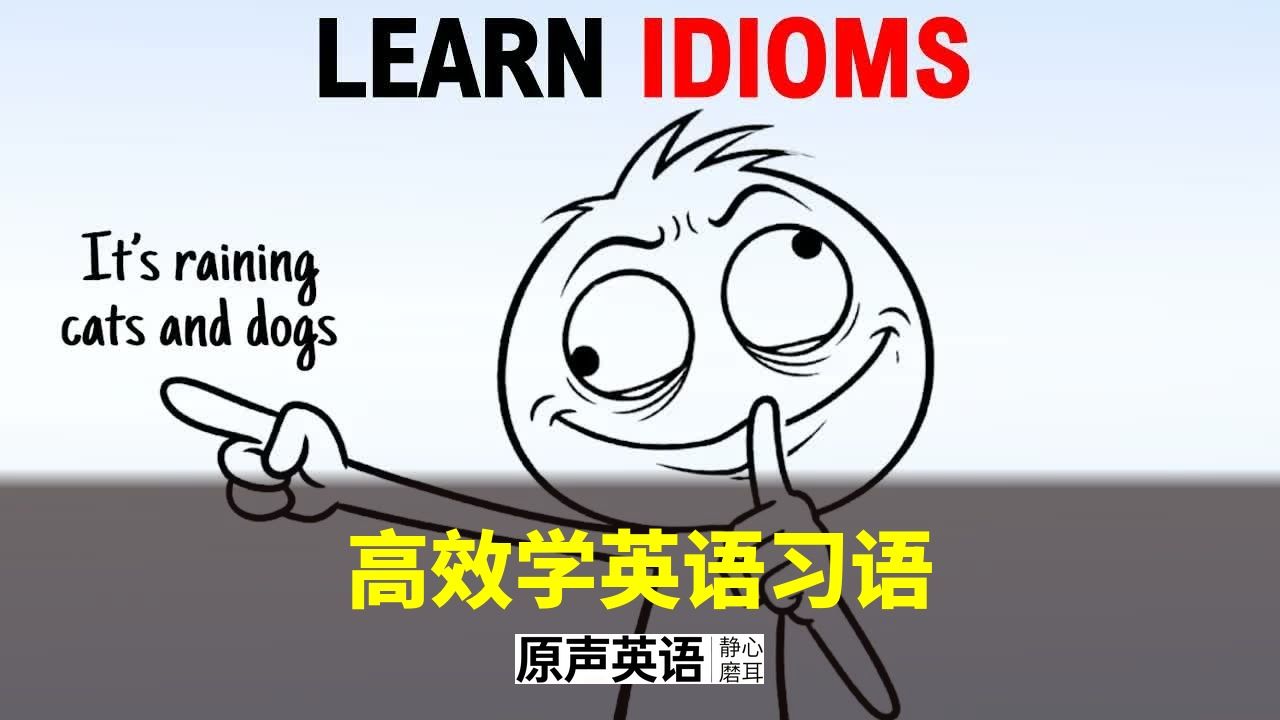
字幕摘录
| 时间 | 英文 | 中文 |
|---|---|---|
| 0:00 | Have you ever heard someone say, | 你有没有听过有人说 |
| 0:02 | It's raining cats and dogs. | 下雨的猫狗。 |
| 0:03 | And you thought, | 你觉得, |
| 0:05 | Wait, are cats and dogs falling from the sky? | 等等,猫狗从天上掉下来了吗? |
| 0:08 | Of course, they aren't. | 当然,他们不是。 |
| 0:10 | The expression simply means, | 表达只是意味着, |
| 0:12 | It's raining very heavily. | 雨势甚盛. |
| 0:14 | This is exactly why English idioms can be so confusing. | 这正是为什么英语的平话可以如此令人困惑的原因. |
| 0:17 | You may know every individual word in an expression, | 你可能知道每个词 一个表达, |
| 0:20 | but the sentence can still have a completely different meaning. | 但这句话仍然可以有完全不同的意义. |
展开字幕全文(210 条)
| 序号 | 英文 | 中文 |
|---|---|---|
| 1 | Have you ever heard someone say, | 你有没有听过有人说 |
| 2 | It's raining cats and dogs. | 下雨的猫狗。 |
| 3 | And you thought, | 你觉得, |
| 4 | Wait, are cats and dogs falling from the sky? | 等等,猫狗从天上掉下来了吗? |
| 5 | Of course, they aren't. | 当然,他们不是。 |
| 6 | The expression simply means, | 表达只是意味着, |
| 7 | It's raining very heavily. | 雨势甚盛. |
| 8 | This is exactly why English idioms can be so confusing. | 这正是为什么英语的平话可以如此令人困惑的原因. |
| 9 | You may know every individual word in an expression, | 你可能知道每个词 一个表达, |
| 10 | but the sentence can still have a completely different meaning. | 但这句话仍然可以有完全不同的意义. |
| 11 | And if you're learning English, | 如果你在学英语 |
| 12 | you may have experienced this many times. | 你可能经历过很多次了 |
| 13 | You understand the grammar, | 你懂语法的 |
| 14 | you understand the vocabulary. | 你理解词汇。 |
| 15 | But when a native speaker uses an idiom, | 但当一个讲母语的人用一个音符时, |
| 16 | suddenly, you have no idea what they mean. | 突然间,你完全不知道他们是什么意思 |
| 17 | So, how can you learn idioms effectively, | 所以,你怎么能有效地学习 典型, |
| 18 | without memorizing hundreds of random expressions? | 没有记忆上百种随机表达式? |
| 19 | The answer is not to memorize more, | 答案不是要记住更多 |
| 20 | it's to learn idioms the right way. | 而是要学习正确的方式 |
| 21 | 1. | 一、导 言 |
| 22 | Understand what an idiom really is. | 了解什么是真正的平庸。 |
| 23 | First, let's understand what an idiom is. | 首先,让我们来了解一个典型。 |
| 24 | An idiom is an expression whose meaning is often different | 意思常常不同 |
| 25 | from the literal meaning of the individual words. | 从字面意义 单个单词。 |
| 26 | For example, break the ice. | 譬如断冰. |
| 27 | Literally, it sounds like you're breaking ice. | 从字面上看,它听起来像 你打破冰。 |
| 28 | But in everyday English, it means, | 但是,在日常英语,这意味着, |
| 29 | to make people feel more comfortable in a social situation. | 让人们在社会状况下感到更舒适。 |
| 30 | For example, I told a joke to break the ice. | 例如,我告诉一个笑话 打破冰。 |
| 31 | Another common example is, hit the nail on the head. | 另一个常见的例子是,击打头部的钉子. |
| 32 | You're not actually hitting a nail. | 你实际上没有打钉子。 |
| 33 | It means, to describe something exactly, | 意思是,确切地说, |
| 34 | or identify the main point. | 或确定要点。 |
| 35 | For example, you hit the nail on the head. | 例如,你撞到头部的钉子. |
| 36 | That's exactly why I'm struggling with English. | 这正是我为英语而挣扎的原因. |
| 37 | Understanding this concept is important, | 理解这一概念很重要, |
| 38 | because you shouldn't always try to translate an idiom word by word. | 因为你不应该总是尝试 逐字翻译一个字。 |
| 39 | Instead, learn the meaning of the whole expression. | 相反,学习整个表达的意义. |
| 40 | 2. | 2. 国家 |
| 41 | Don't memorize long lists. | 不要记住长列表。 |
| 42 | One of the biggest mistakes English learners make, | 英国学生最大的错误之一 |
| 43 | is searching for 100 English idioms you must know. | 正在寻找100个英语的规范。 |
| 44 | Then they try to memorize all 100. | 然后他们试图记住所有100。 |
| 45 | The result? | 结果? |
| 46 | You remember 5 today, maybe 3 tomorrow. | 你记得今天5个,明天3个 |
| 47 | And a week later, most of them are gone. | 一周后,他们大部分都走了 |
| 48 | Why? | 为什么? |
| 49 | Because your brain doesn't remember isolated information very well, | 因为你的大脑不太记得孤立的信息 |
| 50 | when there's no meaningful connection. | 当没有有意义的联系。 |
| 51 | Instead, learn 3 to 5 idioms at a time. | 相反,一次学习3到5个音节. |
| 52 | Choose idioms that are useful for your daily life. | 选择对日常生活有用的规范。 |
| 53 | For example, it depends. | 例如,它取决于。 |
| 54 | A piece of cake. | 一个小蛋糕。 |
| 55 | Under the weather. | 天气之下(见下). |
| 56 | Break the ice. | 打破冰块。 |
| 57 | Once in a blue moon. | 一次在蓝月. |
| 58 | Learn a small number. | 学少数. |
| 59 | Then use them repeatedly. | 然后反复使用它们. |
| 60 | 5 idioms you can actually use | 5个你可以实际使用 |
| 61 | are much more valuable than 50 idioms you can only recognize. | 比你只认得的50个典型更有价值 |
| 62 | 3. | 3个 |
| 63 | Learn idioms in context. | 学习上下文中的典型。 |
| 64 | This is probably the most important strategy. | 这可能是最重要的战略。 |
| 65 | Don't learn, a piece of cake equals easy. | 别学,一块蛋糕就等于容易 |
| 66 | Instead, learn the idiom inside a situation. | 反之,在某种情况下学习常识。 |
| 67 | For example, the English test was a piece of cake. | 例如,英语测试是一件小事。 |
| 68 | Now you understand exactly how the expression works. | 现在你明白表达方式了 |
| 69 | Then create your own examples. | 然后创造出你自己的例子。 |
| 70 | This homework is a piece of cake. | 这个作业是件小事 |
| 71 | Cooking pasta is a piece of cake. | 煮面条是一块小菜. |
| 72 | The interview wasn't a piece of cake. | 采访不是小事 |
| 73 | Now the idiom becomes connected to different situations. | 现在, idiom 变得与不同的情况有关。 |
| 74 | Your brain isn't just memorizing a definition. | 你的大脑不只是在回忆一个定义 |
| 75 | It's building a network of examples. | 正在建立实例网络. |
| 76 | And that makes the expression much easier to remember and use. | 这使得这个表达方式更容易回忆和使用. |
| 77 | 4. | 4个 |
| 78 | Learn the story or image behind the idiom. | 学习idiom背后的故事或形象. |
| 79 | Here's a powerful memory trick. | 这是一个强大的记忆技巧。 |
| 80 | Try to understand or imagine the image behind an idiom. | 试着理解或想象一个偶像背后的画面. |
| 81 | Take, spill the beans. | 拿着 洒豆子 |
| 82 | Literally, imagine someone dropping a bowl of beans on the floor. | 从字面上来说,想象一下有人把一碗豆子扔在地上. |
| 83 | But the actual meaning is to reveal a secret. | 但实际的意义是揭示一个秘密. |
| 84 | Now imagine someone accidentally spilling a box of beans | 现在想象一下有人不小心洒了一盒豆子 |
| 85 | while everyone is trying to keep a secret. | 所有人都想保守秘密 而他们却想隐瞒真相 |
| 86 | The strange image makes the expression memorable. | 怪异的画面使得表情难忘. |
| 87 | Another example, break the ice. | 另一个例子,打破冰。 |
| 88 | Imagine two groups of people standing silently in a room. | 想象两组人静静地站在一个房间里. |
| 89 | Someone says something funny. | 有人说了些有趣的话 |
| 90 | The tension disappears. | 紧张状态消失。 |
| 91 | The ice has been broken. | 冰块被打破了 |
| 92 | When you create a strong mental image, the idiom becomes easier to recall. | 当你创造出强烈的精神形象时,平庸变得更容易回忆. |
| 93 | So don't just memorize the words, visualize them. | 所以不要仅仅记住这些字, 想象它们。 |
| 94 | 5. | 5.五. |
| 95 | Learn idioms by topic. | 逐个话题学习偶像. |
| 96 | Another effective strategy is to organize idioms by topic. | 另一项有效的战略是按专题组织规范。 |
| 97 | For example, if you're learning idioms about success, | 比如说,如果你在学习关于成功的典型 |
| 98 | you might learn, go the extra mile. | 你可能会学的,多走几英里 |
| 99 | Meaning, to make more effort than expected. | 意味着要付出比预期更多的努力。 |
| 100 | Get the ball rolling. | 球滚开 |
| 101 | Meaning, to start something. | 意思是,开始一些事情。 |
| 102 | On the right track. | 於正轨上. |
| 103 | Meaning, doing something correctly or moving in the right direction. | 意思是,做正确的事情或朝着正确的方向移动. |
| 104 | Now your brain sees a connection between the expressions. | 现在你的大脑看到了这些表达之间的关联。 |
| 105 | You could also create groups for, | 你也可以创建团体, |
| 106 | This makes learning more organized and easier to review. | 这使学习更有组织,更容易审查。 |
| 107 | 6. | 6个 |
| 108 | Listen to native speakers. | 听本地语. |
| 109 | If you want to understand idioms naturally, | 如果你想自然地理解我的话 |
| 110 | you need to hear them in natural English. | 你需要听到他们 用自然英语。 |
| 111 | Watch. | 看着 |
| 112 | Movies. | 电影. |
| 113 | TV shows. | 电视剧. |
| 114 | Podcasts. | 播报者. |
| 115 | Interviews. | 专访. |
| 116 | YouTube视频. | |
| 117 | When you hear an idiom, don't immediately stop and translate every word. | 当你听到一个平庸的, 不要立刻停下来,翻译每一个字。 |
| 118 | First, try to understand the situation. | 第一,努力了解情况。 |
| 119 | For example, someone says, | 例如,有人说, |
| 120 | I'm feeling a little under the weather today. | 今天天气有点不好 |
| 121 | Maybe they're staying home. | 也许他们留在家里 |
| 122 | Maybe they look tired. | 也许他们看起来很累 |
| 123 | Maybe someone asks if they're okay. | 也许有人问他们是否没事。 |
| 124 | From the context, you can guess. | 从上下文可以猜到. |
| 125 | They're probably not feeling well. | 他们可能不舒服。 |
| 126 | Then you can confirm the meaning. | 那你可以确认它的意义 |
| 127 | This is much closer to how you naturally acquire language. | 这更接近你如何自然获得语言。 |
| 128 | 7. | 7个 |
| 129 | Use the repeat and juggle method. | 使用重复和杂耍方法. |
| 130 | Here's a technique you can use every day. | 这是你每天可以使用的技术 |
| 131 | Take one idiom and create multiple sentences. | 采取一个音符并创建多个句子. |
| 132 | Let's use, go the extra mile. | 让我们用,去额外的英里。 |
| 133 | Start with, she always goes the extra mile for her customers. | 首先,她总是为她的客户多走一英里。 |
| 134 | Now change it. | 现在改变它。 |
| 135 | I want to go the extra mile at work. | 我想去额外里程的工作。 |
| 136 | He went the extra mile to help his friend. | 他去了额外的里程 帮助他的朋友。 |
| 137 | If you want to improve your English, go the extra mile. | 如果你想改进你的英语, 去额外的里程。 |
| 138 | You're taking one expression and using it in different situations. | 你要用一种表达方式 来表达不同的情况 |
| 139 | This trains your brain to retrieve the idiom faster. | 这训练你的大脑 以检索更快的偶像。 |
| 140 | Eventually, you won't need to translate it. | 最终,你不需要翻译它。 |
| 141 | You'll simply know when it fits. | 你只需要知道什么时候合适 |
| 142 | 8. | 8. 国家 |
| 143 | Use idioms in real conversations. | 在真实的谈话中使用平话. |
| 144 | Learning an idiom is not the final goal. | 学个平庸不是最终目标. |
| 145 | Using it is. | 使用着它。 |
| 146 | Suppose you learn, once in a blue moon. | 如果你学会了,一次在蓝月亮。 |
| 147 | It means something happens very rarely. | 意思是有些事情很少发生 |
| 148 | Don't just memorize the meaning. | 不要只记住意义。 |
| 149 | Use it. | 使用它。 |
| 150 | For example, I eat fast food once in a blue moon. | 例如,我在蓝月里吃过一次快餐. |
| 151 | Or, I go to the cinema once in a blue moon. | 或者,我曾经在一个蓝色的月亮上过电影院 |
| 152 | Or, tell a friend, I only travel abroad once in a blue moon. | 或者,告诉一个朋友,我只出国旅行一次 在一个蓝色的月亮。 |
| 153 | The more you use an idiom in your own life, | 在自己的生活中,你越是用惯用语, |
| 154 | the more deeply it becomes connected to your memory. | 它与你的记忆联系得越深 |
| 155 | And this is when passive vocabulary becomes active vocabulary. | 这就是被动词汇成为主动词汇的时候. |
| 156 | 9. | 9. 国家 |
| 157 | Don't force idioms into every sentence. | 不要强迫平庸 每一个句子。 |
| 158 | There's one more important point. | 还有一点很重要 |
| 159 | You don't need to use idioms everywhere. | 你不需要到处使用惯用词 |
| 160 | Native speakers don't constantly speak in idioms. | 土著演说家不会经常用平话说话. |
| 161 | Some idioms are common. | 某些俗语很常见. |
| 162 | Some are old-fashioned. | 有些是旧式的。 |
| 163 | Some are only appropriate in certain situations, | 有些只适合某些情况, |
| 164 | so don't try to sound native by putting an idiom into every sentence. | 所以,不要试图听起来 本地在每一句。 |
| 165 | Instead, ask, would this expression sound natural here? | 反之,问一下,这个表达在这里听起来自然吗? |
| 166 | If yes, use it. | 如果是,请使用。 |
| 167 | If not, use simple English. | 如果没有,请使用简单的英语. |
| 168 | Natural English is more important than complicated English. | 自然英语比复杂的英语更重要. |
| 169 | Why does this method work? | 为什么这种方法有效? |
| 170 | So why is this approach more effective than simply memorizing lists? | 那么,为什么这种方法比仅仅记忆清单更有效? |
| 171 | Because you're learning idioms through meaning, context, repetition, and use. | 因为你正在通过意义,上下文,重复,以及使用来学习典型. |
| 172 | First, context helps you understand when the expression is appropriate. | 首先,上下文帮助您理解表达式何时合适. |
| 173 | Second, visualization gives your brain a memorable image. | 第二,可视化使你的大脑呈现出令人难忘的形象. |
| 174 | Third, repetition strengthens your memory. | 第三,重复会增强你的记忆力. |
| 175 | Fourth, creating your own sentences forces you to actively retrieve the expression. | 第四,创建自己的句子迫使你积极检索表达式. |
| 176 | And finally, real conversations teach you how the idiom actually works in communication. | 最后,真正的对话 教你如何用平庸的方式进行交流。 |
| 177 | Think about learning to ride a bicycle. | 考虑学骑自行车. |
| 178 | You can read about balance. | 你可以读到平衡。 |
| 179 | You can watch someone else ride. | 你可以看别人骑。 |
| 180 | You can memorize every rule. | 你可以记住每个规则。 |
| 181 | But eventually, you have to get on the bicycle. | 但最终 你必须骑自行车 |
| 182 | Idioms are the same. | 仪轨亦同. |
| 183 | You can memorize hundreds of definitions. | 你可以记住上百个定义 |
| 184 | But until you actually hear them, say them, and use them, they won't become part of your active English. | 但直到你听到,说,使用它们, 它们不会成为你活跃的英语的一部分。 |
| 185 | That's why the goal isn't, how many idioms do I know? | 这就是为什么目标不是, 我知道多少个典型? |
| 186 | The better question is, how many idioms can I naturally use? | 更好的问题是,我可以自然使用多少个典型? |
| 187 | So, if you want to learn English idioms effectively, remember these steps. | 所以,如果想有效地学习英语的规范,请记住这些步骤. |
| 188 | Don't memorize huge lists. | 别记大单子 |
| 189 | Learn a few useful idioms at a time. | 一次学习几个有用的规范. |
| 190 | Understand the meaning of the whole expression. | 理解整个表达的意义. |
| 191 | Learn idioms in context. | 学习上下文中的典型。 |
| 192 | Visualize the meaning. | 视其义. |
| 193 | Group idioms by topic. | 组类依题论. |
| 194 | Listen to them in real English. | 听他们用真正的英语。 |
| 195 | Create your own sentences. | 创建自己的句子. |
| 196 | Repeat and use them in real conversations. | 重复并用在真实的对话中. |
| 197 | And most importantly, don't just learn idioms. | 最重要的是,不要只是学些普通的 |
| 198 | Use them. | 用他们。 |
| 199 | You don't need to know thousands of expressions to speak natural English. | 你不需要知道 成千上万的表达 说自然的英语。 |
| 200 | You need to master the expressions that are useful for your life, your conversations, and your goals. | 你需要掌握那些对生活有用的表达方式,你的谈话和目标. |
| 201 | So the next time you hear, | 所以下次你听到这个消息 |
| 202 | 细 piece. | |
| 203 | Don't imagine a piece of cake. | 不要想象一个蛋糕。 |
| 204 | Think, it's easy. | 想想看,很简单的 |
| 205 | And when you can understand an idiom instantly without translating it. | 当你能立刻理解一个字,而不翻译它。 |
| 206 | That's a sign that your English is becoming more automatic. | 这说明你的英语越来越自动了 |
| 207 | Remember, don't memorize English expressions. | 记住,不要记住英文的表达方式。 |
| 208 | Make them part of your English. | 让他们成为你英语的一部分 |
| 209 | If this video helped you, like it, share it, and subscribe for more simple English lessons. | 如果这段视频有助于你,喜欢它,分享它,订阅更简单的英语课程. |
| 210 | Keep listening, keep growing, and I'll see you in the next video. | 继续听,继续增长,下段视频见. |
该视频共有字幕 210 条。解锁更多字幕为会员功能,请移动到 价格
P2 · 【英语方法】高效学英语习语 · 说话不再干巴巴 p02 英文字幕 (P2)
字幕摘录
| 时间 | 英文 | 中文 |
|---|---|---|
| 0:00 | Have you ever heard someone say, | 你有没有听过有人说 |
| 0:02 | It's raining cats and dogs. | 下雨的猫狗。 |
| 0:03 | And you thought, | 你觉得, |
| 0:05 | Wait, are cats and dogs falling from the sky? | 等等,猫狗从天上掉下来了吗? |
| 0:08 | Of course, they aren't. | 当然,他们不是。 |
| 0:10 | The expression simply means, | 表达只是意味着, |
| 0:12 | It's raining very heavily. | 雨势甚盛. |
| 0:14 | This is exactly why English idioms can be so confusing. | 这正是为什么英语的平话可以如此令人困惑的原因. |
| 0:17 | You may know every individual word in an expression, | 你可能知道每个词 一个表达, |
| 0:20 | but the sentence can still have a completely different meaning. | 但这句话仍然可以有完全不同的意义. |
展开字幕全文(210 条)
| 序号 | 英文 | 中文 |
|---|---|---|
| 1 | Have you ever heard someone say, | 你有没有听过有人说 |
| 2 | It's raining cats and dogs. | 下雨的猫狗。 |
| 3 | And you thought, | 你觉得, |
| 4 | Wait, are cats and dogs falling from the sky? | 等等,猫狗从天上掉下来了吗? |
| 5 | Of course, they aren't. | 当然,他们不是。 |
| 6 | The expression simply means, | 表达只是意味着, |
| 7 | It's raining very heavily. | 雨势甚盛. |
| 8 | This is exactly why English idioms can be so confusing. | 这正是为什么英语的平话可以如此令人困惑的原因. |
| 9 | You may know every individual word in an expression, | 你可能知道每个词 一个表达, |
| 10 | but the sentence can still have a completely different meaning. | 但这句话仍然可以有完全不同的意义. |
| 11 | And if you're learning English, | 如果你在学英语 |
| 12 | you may have experienced this many times. | 你可能经历过很多次了 |
| 13 | You understand the grammar, | 你懂语法的 |
| 14 | you understand the vocabulary. | 你理解词汇。 |
| 15 | But when a native speaker uses an idiom, | 但当一个讲母语的人用一个音符时, |
| 16 | suddenly, you have no idea what they mean. | 突然间,你完全不知道他们是什么意思 |
| 17 | So, how can you learn idioms effectively, | 所以,你怎么能有效地学习 典型, |
| 18 | without memorizing hundreds of random expressions? | 没有记忆上百种随机表达式? |
| 19 | The answer is not to memorize more, | 答案不是要记住更多 |
| 20 | it's to learn idioms the right way. | 而是要学习正确的方式 |
| 21 | 1. | 一、导 言 |
| 22 | Understand what an idiom really is. | 了解什么是真正的平庸。 |
| 23 | First, let's understand what an idiom is. | 首先,让我们来了解一个典型。 |
| 24 | An idiom is an expression whose meaning is often different | 意思常常不同 |
| 25 | from the literal meaning of the individual words. | 从字面意义 单个单词。 |
| 26 | For example, break the ice. | 譬如断冰. |
| 27 | Literally, it sounds like you're breaking ice. | 从字面上看,它听起来像 你打破冰。 |
| 28 | But in everyday English, it means, | 但是,在日常英语,这意味着, |
| 29 | to make people feel more comfortable in a social situation. | 让人们在社会状况下感到更舒适。 |
| 30 | For example, I told a joke to break the ice. | 例如,我告诉一个笑话 打破冰。 |
| 31 | Another common example is, hit the nail on the head. | 另一个常见的例子是,击打头部的钉子. |
| 32 | You're not actually hitting a nail. | 你实际上没有打钉子。 |
| 33 | It means, to describe something exactly, | 意思是,确切地说, |
| 34 | or identify the main point. | 或确定要点。 |
| 35 | For example, you hit the nail on the head. | 例如,你撞到头部的钉子. |
| 36 | That's exactly why I'm struggling with English. | 这正是我为英语而挣扎的原因. |
| 37 | Understanding this concept is important, | 理解这一概念很重要, |
| 38 | because you shouldn't always try to translate an idiom word by word. | 因为你不应该总是尝试 逐字翻译一个字。 |
| 39 | Instead, learn the meaning of the whole expression. | 相反,学习整个表达的意义. |
| 40 | 2. | 2. 国家 |
| 41 | Don't memorize long lists. | 不要记住长列表。 |
| 42 | One of the biggest mistakes English learners make, | 英国学生最大的错误之一 |
| 43 | is searching for 100 English idioms you must know. | 正在寻找100个英语的规范。 |
| 44 | Then they try to memorize all 100. | 然后他们试图记住所有100。 |
| 45 | The result? | 结果? |
| 46 | You remember 5 today, maybe 3 tomorrow. | 你记得今天5个,明天3个 |
| 47 | And a week later, most of them are gone. | 一周后,他们大部分都走了 |
| 48 | Why? | 为什么? |
| 49 | Because your brain doesn't remember isolated information very well, | 因为你的大脑不太记得孤立的信息 |
| 50 | when there's no meaningful connection. | 当没有有意义的联系。 |
| 51 | Instead, learn 3 to 5 idioms at a time. | 相反,一次学习3到5个音节. |
| 52 | Choose idioms that are useful for your daily life. | 选择对日常生活有用的规范。 |
| 53 | For example, it depends. | 例如,它取决于。 |
| 54 | A piece of cake. | 一个小蛋糕。 |
| 55 | Under the weather. | 天气之下(见下). |
| 56 | Break the ice. | 打破冰块。 |
| 57 | Once in a blue moon. | 一次在蓝月. |
| 58 | Learn a small number. | 学少数. |
| 59 | Then use them repeatedly. | 然后反复使用它们. |
| 60 | 5 idioms you can actually use | 5个你可以实际使用 |
| 61 | are much more valuable than 50 idioms you can only recognize. | 比你只认得的50个典型更有价值 |
| 62 | 3. | 3个 |
| 63 | Learn idioms in context. | 学习上下文中的典型。 |
| 64 | This is probably the most important strategy. | 这可能是最重要的战略。 |
| 65 | Don't learn, a piece of cake equals easy. | 别学,一块蛋糕就等于容易 |
| 66 | Instead, learn the idiom inside a situation. | 反之,在某种情况下学习常识。 |
| 67 | For example, the English test was a piece of cake. | 例如,英语测试是一件小事。 |
| 68 | Now you understand exactly how the expression works. | 现在你明白表达方式了 |
| 69 | Then create your own examples. | 然后创造出你自己的例子。 |
| 70 | This homework is a piece of cake. | 这个作业是件小事 |
| 71 | Cooking pasta is a piece of cake. | 煮面条是一块小菜. |
| 72 | The interview wasn't a piece of cake. | 采访不是小事 |
| 73 | Now the idiom becomes connected to different situations. | 现在, idiom 变得与不同的情况有关。 |
| 74 | Your brain isn't just memorizing a definition. | 你的大脑不只是在回忆一个定义 |
| 75 | It's building a network of examples. | 正在建立实例网络. |
| 76 | And that makes the expression much easier to remember and use. | 这使得这个表达方式更容易回忆和使用. |
| 77 | 4. | 4个 |
| 78 | Learn the story or image behind the idiom. | 学习idiom背后的故事或形象. |
| 79 | Here's a powerful memory trick. | 这是一个强大的记忆技巧。 |
| 80 | Try to understand or imagine the image behind an idiom. | 试着理解或想象一个偶像背后的画面. |
| 81 | Take, spill the beans. | 拿着 洒豆子 |
| 82 | Literally, imagine someone dropping a bowl of beans on the floor. | 从字面上来说,想象一下有人把一碗豆子扔在地上. |
| 83 | But the actual meaning is to reveal a secret. | 但实际的意义是揭示一个秘密. |
| 84 | Now imagine someone accidentally spilling a box of beans | 现在想象一下有人不小心洒了一盒豆子 |
| 85 | while everyone is trying to keep a secret. | 所有人都想保守秘密 而他们却想隐瞒真相 |
| 86 | The strange image makes the expression memorable. | 怪异的画面使得表情难忘. |
| 87 | Another example, break the ice. | 另一个例子,打破冰。 |
| 88 | Imagine two groups of people standing silently in a room. | 想象两组人静静地站在一个房间里. |
| 89 | Someone says something funny. | 有人说了些有趣的话 |
| 90 | The tension disappears. | 紧张状态消失。 |
| 91 | The ice has been broken. | 冰块被打破了 |
| 92 | When you create a strong mental image, the idiom becomes easier to recall. | 当你创造出强烈的精神形象时,平庸变得更容易回忆. |
| 93 | So don't just memorize the words, visualize them. | 所以不要仅仅记住这些字, 想象它们。 |
| 94 | 5. | 5.五. |
| 95 | Learn idioms by topic. | 逐个话题学习偶像. |
| 96 | Another effective strategy is to organize idioms by topic. | 另一项有效的战略是按专题组织规范。 |
| 97 | For example, if you're learning idioms about success, | 比如说,如果你在学习关于成功的典型 |
| 98 | you might learn, go the extra mile. | 你可能会学的,多走几英里 |
| 99 | Meaning, to make more effort than expected. | 意味着要付出比预期更多的努力。 |
| 100 | Get the ball rolling. | 球滚开 |
| 101 | Meaning, to start something. | 意思是,开始一些事情。 |
| 102 | On the right track. | 於正轨上. |
| 103 | Meaning, doing something correctly or moving in the right direction. | 意思是,做正确的事情或朝着正确的方向移动. |
| 104 | Now your brain sees a connection between the expressions. | 现在你的大脑看到了这些表达之间的关联。 |
| 105 | You could also create groups for, | 你也可以创建团体, |
| 106 | This makes learning more organized and easier to review. | 这使学习更有组织,更容易审查。 |
| 107 | 6. | 6个 |
| 108 | Listen to native speakers. | 听本地语. |
| 109 | If you want to understand idioms naturally, | 如果你想自然地理解我的话 |
| 110 | you need to hear them in natural English. | 你需要听到他们 用自然英语。 |
| 111 | Watch. | 看着 |
| 112 | Movies. | 电影. |
| 113 | TV shows. | 电视剧. |
| 114 | Podcasts. | 播报者. |
| 115 | Interviews. | 专访. |
| 116 | YouTube视频. | |
| 117 | When you hear an idiom, don't immediately stop and translate every word. | 当你听到一个平庸的, 不要立刻停下来,翻译每一个字。 |
| 118 | First, try to understand the situation. | 第一,努力了解情况。 |
| 119 | For example, someone says, | 例如,有人说, |
| 120 | I'm feeling a little under the weather today. | 今天天气有点不好 |
| 121 | Maybe they're staying home. | 也许他们留在家里 |
| 122 | Maybe they look tired. | 也许他们看起来很累 |
| 123 | Maybe someone asks if they're okay. | 也许有人问他们是否没事。 |
| 124 | From the context, you can guess. | 从上下文可以猜到. |
| 125 | They're probably not feeling well. | 他们可能不舒服。 |
| 126 | Then you can confirm the meaning. | 那你可以确认它的意义 |
| 127 | This is much closer to how you naturally acquire language. | 这更接近你如何自然获得语言。 |
| 128 | 7. | 7个 |
| 129 | Use the repeat and juggle method. | 使用重复和杂耍方法. |
| 130 | Here's a technique you can use every day. | 这是你每天可以使用的技术 |
| 131 | Take one idiom and create multiple sentences. | 采取一个音符并创建多个句子. |
| 132 | Let's use, go the extra mile. | 让我们用,去额外的英里。 |
| 133 | Start with, she always goes the extra mile for her customers. | 首先,她总是为她的客户多走一英里。 |
| 134 | Now change it. | 现在改变它。 |
| 135 | I want to go the extra mile at work. | 我想去额外里程的工作。 |
| 136 | He went the extra mile to help his friend. | 他去了额外的里程 帮助他的朋友。 |
| 137 | If you want to improve your English, go the extra mile. | 如果你想改进你的英语, 去额外的里程。 |
| 138 | You're taking one expression and using it in different situations. | 你要用一种表达方式 来表达不同的情况 |
| 139 | This trains your brain to retrieve the idiom faster. | 这训练你的大脑 以检索更快的偶像。 |
| 140 | Eventually, you won't need to translate it. | 最终,你不需要翻译它。 |
| 141 | You'll simply know when it fits. | 你只需要知道什么时候合适 |
| 142 | 8. | 8. 国家 |
| 143 | Use idioms in real conversations. | 在真实的谈话中使用平话. |
| 144 | Learning an idiom is not the final goal. | 学个平庸不是最终目标. |
| 145 | Using it is. | 使用着它。 |
| 146 | Suppose you learn, once in a blue moon. | 如果你学会了,一次在蓝月亮。 |
| 147 | It means something happens very rarely. | 意思是有些事情很少发生 |
| 148 | Don't just memorize the meaning. | 不要只记住意义。 |
| 149 | Use it. | 使用它。 |
| 150 | For example, I eat fast food once in a blue moon. | 例如,我在蓝月里吃过一次快餐. |
| 151 | Or, I go to the cinema once in a blue moon. | 或者,我曾经在一个蓝色的月亮上过电影院 |
| 152 | Or, tell a friend, I only travel abroad once in a blue moon. | 或者,告诉一个朋友,我只出国旅行一次 在一个蓝色的月亮。 |
| 153 | The more you use an idiom in your own life, | 在自己的生活中,你越是用惯用语, |
| 154 | the more deeply it becomes connected to your memory. | 它与你的记忆联系得越深 |
| 155 | And this is when passive vocabulary becomes active vocabulary. | 这就是被动词汇成为主动词汇的时候. |
| 156 | 9. | 9. 国家 |
| 157 | Don't force idioms into every sentence. | 不要强迫平庸 每一个句子。 |
| 158 | There's one more important point. | 还有一点很重要 |
| 159 | You don't need to use idioms everywhere. | 你不需要到处使用惯用词 |
| 160 | Native speakers don't constantly speak in idioms. | 土著演说家不会经常用平话说话. |
| 161 | Some idioms are common. | 某些俗语很常见. |
| 162 | Some are old-fashioned. | 有些是旧式的。 |
| 163 | Some are only appropriate in certain situations, | 有些只适合某些情况, |
| 164 | so don't try to sound native by putting an idiom into every sentence. | 所以,不要试图听起来 本地在每一句。 |
| 165 | Instead, ask, would this expression sound natural here? | 反之,问一下,这个表达在这里听起来自然吗? |
| 166 | If yes, use it. | 如果是,请使用。 |
| 167 | If not, use simple English. | 如果没有,请使用简单的英语. |
| 168 | Natural English is more important than complicated English. | 自然英语比复杂的英语更重要. |
| 169 | Why does this method work? | 为什么这种方法有效? |
| 170 | So why is this approach more effective than simply memorizing lists? | 那么,为什么这种方法比仅仅记忆清单更有效? |
| 171 | Because you're learning idioms through meaning, context, repetition, and use. | 因为你正在通过意义,上下文,重复,以及使用来学习典型. |
| 172 | First, context helps you understand when the expression is appropriate. | 首先,上下文帮助您理解表达式何时合适. |
| 173 | Second, visualization gives your brain a memorable image. | 第二,可视化使你的大脑呈现出令人难忘的形象. |
| 174 | Third, repetition strengthens your memory. | 第三,重复会增强你的记忆力. |
| 175 | Fourth, creating your own sentences forces you to actively retrieve the expression. | 第四,创建自己的句子迫使你积极检索表达式. |
| 176 | And finally, real conversations teach you how the idiom actually works in communication. | 最后,真正的对话 教你如何用平庸的方式进行交流。 |
| 177 | Think about learning to ride a bicycle. | 考虑学骑自行车. |
| 178 | You can read about balance. | 你可以读到平衡。 |
| 179 | You can watch someone else ride. | 你可以看别人骑。 |
| 180 | You can memorize every rule. | 你可以记住每个规则。 |
| 181 | But eventually, you have to get on the bicycle. | 但最终 你必须骑自行车 |
| 182 | Idioms are the same. | 仪轨亦同. |
| 183 | You can memorize hundreds of definitions. | 你可以记住上百个定义 |
| 184 | But until you actually hear them, say them, and use them, they won't become part of your active English. | 但直到你听到,说,使用它们, 它们不会成为你活跃的英语的一部分。 |
| 185 | That's why the goal isn't, how many idioms do I know? | 这就是为什么目标不是, 我知道多少个典型? |
| 186 | The better question is, how many idioms can I naturally use? | 更好的问题是,我可以自然使用多少个典型? |
| 187 | So, if you want to learn English idioms effectively, remember these steps. | 所以,如果想有效地学习英语的规范,请记住这些步骤. |
| 188 | Don't memorize huge lists. | 别记大单子 |
| 189 | Learn a few useful idioms at a time. | 一次学习几个有用的规范. |
| 190 | Understand the meaning of the whole expression. | 理解整个表达的意义. |
| 191 | Learn idioms in context. | 学习上下文中的典型。 |
| 192 | Visualize the meaning. | 视其义. |
| 193 | Group idioms by topic. | 组类依题论. |
| 194 | Listen to them in real English. | 听他们用真正的英语。 |
| 195 | Create your own sentences. | 创建自己的句子. |
| 196 | Repeat and use them in real conversations. | 重复并用在真实的对话中. |
| 197 | And most importantly, don't just learn idioms. | 最重要的是,不要只是学些普通的 |
| 198 | Use them. | 用他们。 |
| 199 | You don't need to know thousands of expressions to speak natural English. | 你不需要知道 成千上万的表达 说自然的英语。 |
| 200 | You need to master the expressions that are useful for your life, your conversations, and your goals. | 你需要掌握那些对生活有用的表达方式,你的谈话和目标. |
| 201 | So the next time you hear, | 所以下次你听到这个消息 |
| 202 | 细 piece. | |
| 203 | Don't imagine a piece of cake. | 不要想象一个蛋糕。 |
| 204 | Think, it's easy. | 想想看,很简单的 |
| 205 | And when you can understand an idiom instantly without translating it. | 当你能立刻理解一个字,而不翻译它。 |
| 206 | That's a sign that your English is becoming more automatic. | 这说明你的英语越来越自动了 |
| 207 | Remember, don't memorize English expressions. | 记住,不要记住英文的表达方式。 |
| 208 | Make them part of your English. | 让他们成为你英语的一部分 |
| 209 | If this video helped you, like it, share it, and subscribe for more simple English lessons. | 如果这段视频有助于你,喜欢它,分享它,订阅更简单的英语课程. |
| 210 | Keep listening, keep growing, and I'll see you in the next video. | 继续听,继续增长,下段视频见. |
该视频共有字幕 210 条。解锁更多字幕为会员功能,请移动到 价格
P3 · 【英语方法】高效学英语习语 · 说话不再干巴巴 p03 无字幕 (P3)
字幕摘录
| 时间 | 英文 | 中文 |
|---|---|---|
| 0:00 | Have you ever heard someone say, | 你有没有听过有人说 |
| 0:02 | It's raining cats and dogs. | 下雨的猫狗。 |
| 0:03 | And you thought, | 你觉得, |
| 0:05 | Wait, are cats and dogs falling from the sky? | 等等,猫狗从天上掉下来了吗? |
| 0:08 | Of course, they aren't. | 当然,他们不是。 |
| 0:10 | The expression simply means, | 表达只是意味着, |
| 0:12 | It's raining very heavily. | 雨势甚盛. |
| 0:14 | This is exactly why English idioms can be so confusing. | 这正是为什么英语的平话可以如此令人困惑的原因. |
| 0:17 | You may know every individual word in an expression, | 你可能知道每个词 一个表达, |
| 0:20 | but the sentence can still have a completely different meaning. | 但这句话仍然可以有完全不同的意义. |
展开字幕全文(211 条)
| 序号 | 英文 | 中文 |
|---|---|---|
| 1 | Have you ever heard someone say, | 你有没有听过有人说 |
| 2 | It's raining cats and dogs. | 下雨的猫狗。 |
| 3 | And you thought, | 你觉得, |
| 4 | Wait, are cats and dogs falling from the sky? | 等等,猫狗从天上掉下来了吗? |
| 5 | Of course, they aren't. | 当然,他们不是。 |
| 6 | The expression simply means, | 表达只是意味着, |
| 7 | It's raining very heavily. | 雨势甚盛. |
| 8 | This is exactly why English idioms can be so confusing. | 这正是为什么英语的平话可以如此令人困惑的原因. |
| 9 | You may know every individual word in an expression, | 你可能知道每个词 一个表达, |
| 10 | but the sentence can still have a completely different meaning. | 但这句话仍然可以有完全不同的意义. |
| 11 | And if you're learning English, you may have experienced this many times. | 如果你正在学习英语, 你可能经历过很多次。 |
| 12 | You understand the grammar, you understand the vocabulary, | 你懂语法,懂词汇 |
| 13 | but when a native speaker uses an idiom, suddenly, | 但是,当一个母语 使用一个仪表,突然, |
| 14 | you have no idea what they mean. | 你根本不知道他们是什么意思 |
| 15 | So, how can you learn idioms effectively, | 所以,你怎么能有效地学习 典型, |
| 16 | without memorizing hundreds of random expressions? | 没有记忆上百种随机表达式? |
| 17 | The answer is not to memorize more, | 答案不是要记住更多 |
| 18 | it's to learn idioms the right way. | 而是要学习正确的方式 |
| 19 | First, let's understand what an idiom is. | 首先,让我们来了解一个典型。 |
| 20 | An idiom is an expression whose meaning is often different | 意思常常不同 |
| 21 | from the literal meaning of the individual words. | 从字面意义 单个单词。 |
| 22 | For example, break the ice. | 譬如断冰. |
| 23 | Literally, it sounds like you're breaking ice. | 从字面上看,它听起来像 你打破冰。 |
| 24 | But in everyday English, it means, | 但是,在日常英语,这意味着, |
| 25 | to make people feel more comfortable in a social situation. | 让人们在社会状况下感到更舒适。 |
| 26 | For example, I told a joke to break the ice. | 例如,我告诉一个笑话 打破冰。 |
| 27 | Another common example is, | 另一个常见的例子是, |
| 28 | hit the nail on the head. | 击中头部的钉子。 |
| 29 | You're not actually hitting a nail. | 你实际上没有打钉子。 |
| 30 | It means, to describe something exactly, | 意思是,确切地说, |
| 31 | or identify the main point. | 或确定要点。 |
| 32 | For example, you hit the nail on the head. | 例如,你撞到头部的钉子. |
| 33 | That's exactly why I'm struggling with English. | 这正是我为英语而挣扎的原因. |
| 34 | Understanding this concept is important, | 理解这一概念很重要, |
| 35 | because you shouldn't always try to translate an idiom word by word. | 因为你不应该总是尝试 逐字翻译一个字。 |
| 36 | Instead, learn the meaning of the whole expression. | 相反,学习整个表达的意义. |
| 37 | One of the biggest mistakes English learners make, | 英国学生最大的错误之一 |
| 38 | is searching for 100 English idioms you must know. | 正在寻找100个英语的规范。 |
| 39 | Then they try to memorize all 100. | 然后他们试图记住所有100。 |
| 40 | The result? | 结果? |
| 41 | You remember five today, maybe three tomorrow. | 你记得今天有五个,也许明天有三个 |
| 42 | And a week later, most of them are gone. | 一周后,他们大部分都走了 |
| 43 | Why? | 为什么? |
| 44 | Because your brain doesn't remember isolated information very well, | 因为你的大脑不太记得孤立的信息 |
| 45 | when there's no meaningful connection. | 当没有有意义的联系。 |
| 46 | Instead, learn three to five idioms at a time. | 相反,一次学习3到5个音节. |
| 47 | Choose idioms that are useful for your daily life. | 选择对日常生活有用的规范。 |
| 48 | For example, it depends. | 例如,它取决于。 |
| 49 | A piece of cake. | 一个小蛋糕。 |
| 50 | Under the weather. | 天气之下(见下). |
| 51 | Break the ice. | 打破冰块。 |
| 52 | Once in a blue moon. | 一次在蓝月. |
| 53 | Learn a small number. | 学少数. |
| 54 | Then use them repeatedly. | 然后反复使用它们. |
| 55 | Five idioms you can actually use | 五个你实际上可以使用 |
| 56 | are much more valuable than 50 idioms you can only recognize. | 比你只认得的50个典型更有价值 |
| 57 | Three. | 三个 |
| 58 | Learn idioms in context. | 学习上下文中的典型。 |
| 59 | This is probably the most important strategy. | 这可能是最重要的战略。 |
| 60 | Don't learn, a piece of cake equals easy. | 别学,一块蛋糕就等于容易 |
| 61 | Instead, learn the idiom inside a situation. | 反之,在某种情况下学习常识。 |
| 62 | For example, the English test was a piece of cake. | 例如,英语测试是一件小事。 |
| 63 | Now you understand exactly how the expression works. | 现在你明白表达方式了 |
| 64 | Then create your own examples. | 然后创造出你自己的例子。 |
| 65 | This homework is a piece of cake. | 这个作业是件小事 |
| 66 | Cooking pasta is a piece of cake. | 煮面条是一块小菜. |
| 67 | The interview wasn't a piece of cake. | 采访不是小事 |
| 68 | Now the idiom becomes connected to different situations. | 现在, idiom 变得与不同的情况有关。 |
| 69 | Your brain isn't just memorizing a definition. | 你的大脑不只是在回忆一个定义 |
| 70 | It's building a network of examples. | 正在建立实例网络. |
| 71 | And that makes the expression much easier to remember and use. | 这使得这个表达方式更容易回忆和使用. |
| 72 | Learn the story or image behind the idiom. | 学习idiom背后的故事或形象. |
| 73 | Here's a powerful memory trick. | 这是一个强大的记忆技巧。 |
| 74 | Try to understand or imagine the image behind an idiom. | 试着理解或想象一个偶像背后的画面. |
| 75 | Take. | 拿着 |
| 76 | Spill the beans. | 洒诸豆子. |
| 77 | Literally, imagine someone dropping a bowl of beans on the floor. | 从字面上来说,想象一下有人把一碗豆子扔在地上. |
| 78 | But the actual meaning is to reveal a secret. | 但实际的意义是揭示一个秘密. |
| 79 | Now imagine someone accidentally spilling a box of beans | 现在想象一下有人不小心洒了一盒豆子 |
| 80 | while everyone is trying to keep a secret. | 所有人都想保守秘密 而他们却想隐瞒真相 |
| 81 | The strange image makes the expression memorable. | 怪异的画面使得表情难忘. |
| 82 | Another example. | 另一个例子。 |
| 83 | Break the ice. | 打破冰块。 |
| 84 | Imagine two groups of people standing silently in a room. | 想象两组人静静地站在一个房间里. |
| 85 | Someone says something funny. | 有人说了些有趣的话 |
| 86 | The tension disappears. | 紧张状态消失。 |
| 87 | The ice has been broken. | 冰块被打破了 |
| 88 | When you create a strong mental image, the idiom becomes easier to recall. | 当你创造出强烈的精神形象时,平庸变得更容易回忆. |
| 89 | So don't just memorize the words. | 所以不要只是记住这些话。 |
| 90 | Visualize them. | 想象他们。 |
| 91 | Learn idioms by topic. | 逐个话题学习偶像. |
| 92 | Another effective strategy is to organize idioms by topic. | 另一项有效的战略是按专题组织规范。 |
| 93 | For example, if you're learning idioms about success, | 比如说,如果你在学习关于成功的典型 |
| 94 | you might learn, go the extra mile. | 你可能会学的,多走几英里 |
| 95 | Meaning, to make more effort than expected. | 意味着要付出比预期更多的努力。 |
| 96 | Get the ball rolling. | 球滚开 |
| 97 | Meaning, to start something. | 意思是,开始一些事情。 |
| 98 | On the right track. | 於正轨上. |
| 99 | Meaning, doing something correctly or moving in the right direction. | 意思是,做正确的事情或朝着正确的方向移动. |
| 100 | Now your brain sees a connection between the expressions. | 现在你的大脑看到了这些表达之间的关联。 |
| 101 | You could also create groups for… | 也可以为... |
| 102 | This makes learning more organized and easier to review. | 这使学习更有组织,更容易审查。 |
| 103 | If you want to understand idioms naturally, | 如果你想自然地理解我的话 |
| 104 | you need to hear them in natural English. | 你需要听到他们 用自然英语。 |
| 105 | Watch. | 看着 |
| 106 | Movies. | 电影. |
| 107 | TV shows. | 电视剧. |
| 108 | Podcasts. | 播报者. |
| 109 | Interviews. | 专访. |
| 110 | YouTube视频. | |
| 111 | When you hear an idiom, don't immediately stop and translate every word. | 当你听到一个平庸的, 不要立刻停下来,翻译每一个字。 |
| 112 | First, try to understand the situation. | 第一,努力了解情况。 |
| 113 | For example, someone says, | 例如,有人说, |
| 114 | I'm feeling a little under the weather today. | 今天天气有点不好 |
| 115 | Maybe they're staying home. | 也许他们留在家里 |
| 116 | Maybe they look tired. | 也许他们看起来很累 |
| 117 | Maybe someone asks if they're okay. | 也许有人问他们是否没事。 |
| 118 | From the context, you can guess. | 从上下文可以猜到. |
| 119 | They're probably not feeling well. | 他们可能不舒服。 |
| 120 | Then you can confirm the meaning. | 那你可以确认它的意义 |
| 121 | This is much closer to how you naturally acquire language. | 这更接近你如何自然获得语言。 |
| 122 | Here's a technique you can use every day. | 这是你每天可以使用的技术 |
| 123 | Take one idiom and create multiple sentences. | 采取一个音符并创建多个句子. |
| 124 | Let's use, go the extra mile. | 让我们用,去额外的英里。 |
| 125 | Start with, she always goes the extra mile for her customers. | 首先,她总是为她的客户多走一英里。 |
| 126 | Now change it. | 现在改变它。 |
| 127 | I want to go the extra mile at work. | 我想去额外里程的工作。 |
| 128 | He went the extra mile to help his friend. | 他去了额外的里程 帮助他的朋友。 |
| 129 | If you want to improve your English, go the extra mile. | 如果你想改进你的英语, 去额外的里程。 |
| 130 | You're taking one expression and using it in different situations. | 你要用一种表达方式 来表达不同的情况 |
| 131 | This trains your brain to retrieve the idiom faster. | 这训练你的大脑 以检索更快的偶像。 |
| 132 | Eventually, you won't need to translate it. | 最终,你不需要翻译它。 |
| 133 | You'll simply know when it fits. | 你只需要知道什么时候合适 |
| 134 | Learning an idiom is not the final goal. | 学个平庸不是最终目标. |
| 135 | Using it is. | 使用着它。 |
| 136 | Suppose you learn, once in a blue moon. | 如果你学会了,一次在蓝月亮。 |
| 137 | It means something happens very rarely. | 意思是有些事情很少发生 |
| 138 | Don't just memorize the meaning. | 不要只记住意义。 |
| 139 | Use it. | 使用它。 |
| 140 | For example, I eat fast food once in a blue moon. | 例如,我在蓝月里吃过一次快餐. |
| 141 | Or, I go to the cinema once in a blue moon. | 或者,我曾经在一个蓝色的月亮上过电影院 |
| 142 | Or, tell a friend, I only travel abroad once in a blue moon. | 或者,告诉一个朋友,我只出国旅行一次 在一个蓝色的月亮。 |
| 143 | The more you use an idiom in your own life, | 在自己的生活中,你越是用惯用语, |
| 144 | the more deeply it becomes connected to your memory. | 它与你的记忆联系得越深 |
| 145 | And this is when passive vocabulary becomes active vocabulary. | 这就是被动词汇成为主动词汇的时候. |
| 146 | There's one more important point. | 还有一点很重要 |
| 147 | You don't need to use idioms everywhere. | 你不需要到处使用惯用词 |
| 148 | Native speakers don't constantly speak in idioms. | 土著演说家不会经常用平话说话. |
| 149 | Some idioms are common. | 某些俗语很常见. |
| 150 | Some are old-fashioned. | 有些是旧式的。 |
| 151 | Some are only appropriate in certain situations, | 有些只适合某些情况, |
| 152 | so don't try to sound native by putting an idiom into every sentence. | 所以,不要试图听起来 本地在每一句。 |
| 153 | Instead, ask, would this expression sound natural here? | 反之,问一下,这个表达在这里听起来自然吗? |
| 154 | If yes, use it. | 如果是,请使用。 |
| 155 | If not, use simple English. | 如果没有,请使用简单的英语. |
| 156 | Natural English is more important than complicated English. | 自然英语比复杂的英语更重要. |
| 157 | Why does this method work? | 为什么这种方法有效? |
| 158 | So why is this approach more effective than simply memorizing lists? | 那么,为什么这种方法比仅仅记忆清单更有效? |
| 159 | Because you're learning idioms through meaning, context, repetition, and use. | 因为你正在通过意义,上下文,重复,以及使用来学习典型. |
| 160 | First, context helps you understand when the expression is appropriate. | 首先,上下文帮助您理解表达式何时合适. |
| 161 | Second, visualization gives your brain a memorable image. | 第二,可视化使你的大脑呈现出令人难忘的形象. |
| 162 | Third, repetition strengthens your memory. | 第三,重复会增强你的记忆力. |
| 163 | Fourth, creating your own sentences forces you to actively retrieve the expression. | 第四,创建自己的句子迫使你积极检索表达式. |
| 164 | And finally, real conversations teach you how the idiom actually works in communication. | 最后,真正的对话 教你如何用平庸的方式进行交流。 |
| 165 | Think about learning to ride a bicycle. | 考虑学骑自行车. |
| 166 | You can read about balance. | 你可以读到平衡。 |
| 167 | You can watch someone else ride. | 你可以看别人骑。 |
| 168 | You can memorize every rule. | 你可以记住每个规则。 |
| 169 | But eventually, you have to get on the bicycle. | 但最终 你必须骑自行车 |
| 170 | Idioms are the same. | 仪轨亦同. |
| 171 | You can memorize hundreds of definitions. | 你可以记住上百个定义 |
| 172 | But until you actually hear them, say them, and use them, | 但直到你真正听到他们, 说他们,并使用他们, |
| 173 | they won't become part of your active English. | 他们不会成为你活跃的英语的一部分。 |
| 174 | That's why the goal isn't, | 这就是为什么目标不是, |
| 175 | How many idioms do I know? | 我认识多少个偶像? |
| 176 | The better question is, | 更好的问题是, |
| 177 | How many idioms can I naturally use? | 我自然能用多少个偶像? |
| 178 | So, if you want to learn English idioms effectively, | 所以,如果你想 学习英语的典型, |
| 179 | remember these steps. | 记住这些步骤。 |
| 180 | Don't memorize huge lists. | 别记大单子 |
| 181 | Learn a few useful idioms at a time. | 一次学习几个有用的规范. |
| 182 | Understand the meaning of the whole expression. | 理解整个表达的意义. |
| 183 | Learn idioms in context. | 学习上下文中的典型。 |
| 184 | Visualize the meaning. | 视其义. |
| 185 | Group idioms by topic. | 组类依题论. |
| 186 | Listen to them in real English. | 听他们用真正的英语。 |
| 187 | Create your own sentences. | 创建自己的句子. |
| 188 | Repeat and use them in real conversations. | 重复并用在真实的对话中. |
| 189 | And most importantly, | 而最重要的是, |
| 190 | Don't just learn idioms. | 别只是学些普通的 |
| 191 | Use them. | 用他们。 |
| 192 | You don't need to know thousands of expressions | 你不需要知道成千上万的表达 |
| 193 | to speak natural English. | 说自然英语。 |
| 194 | You need to master the expressions that are useful for your life, | 你需要掌握对生活有用的表达方式, |
| 195 | your conversations, and your goals. | 你的谈话和目标 |
| 196 | So the next time you hear, | 所以下次你听到这个消息 |
| 197 | 细 piece. | |
| 198 | Don't imagine a piece of cake. | 不要想象一个蛋糕。 |
| 199 | Think. | 考虑一下 |
| 200 | It's easy. | 方便无碍. |
| 201 | And when you can understand an idiom instantly | 当你能立刻理解一个神话 |
| 202 | without translating it, | 没有翻译它, |
| 203 | that's a sign that your English is becoming more automatic. | 这说明你的英语越来越自动了 |
| 204 | Remember, | 记住 |
| 205 | Don't memorize English expressions. | 不要记住英语的表达方式。 |
| 206 | Make them part of your English. | 让他们成为你英语的一部分 |
| 207 | If this video helped you, | 如果这视频能帮助你 |
| 208 | like it, share it, | 喜欢它,分享它, |
| 209 | and subscribe for more simple English lessons. | 并订阅更简单的英语课程。 |
| 210 | Keep listening, keep growing, | 继续听 继续增长 |
| 211 | and I'll see you in the next video. | 我会看到你在下一个视频。 |
该视频共有字幕 211 条。解锁更多字幕为会员功能,请移动到 价格