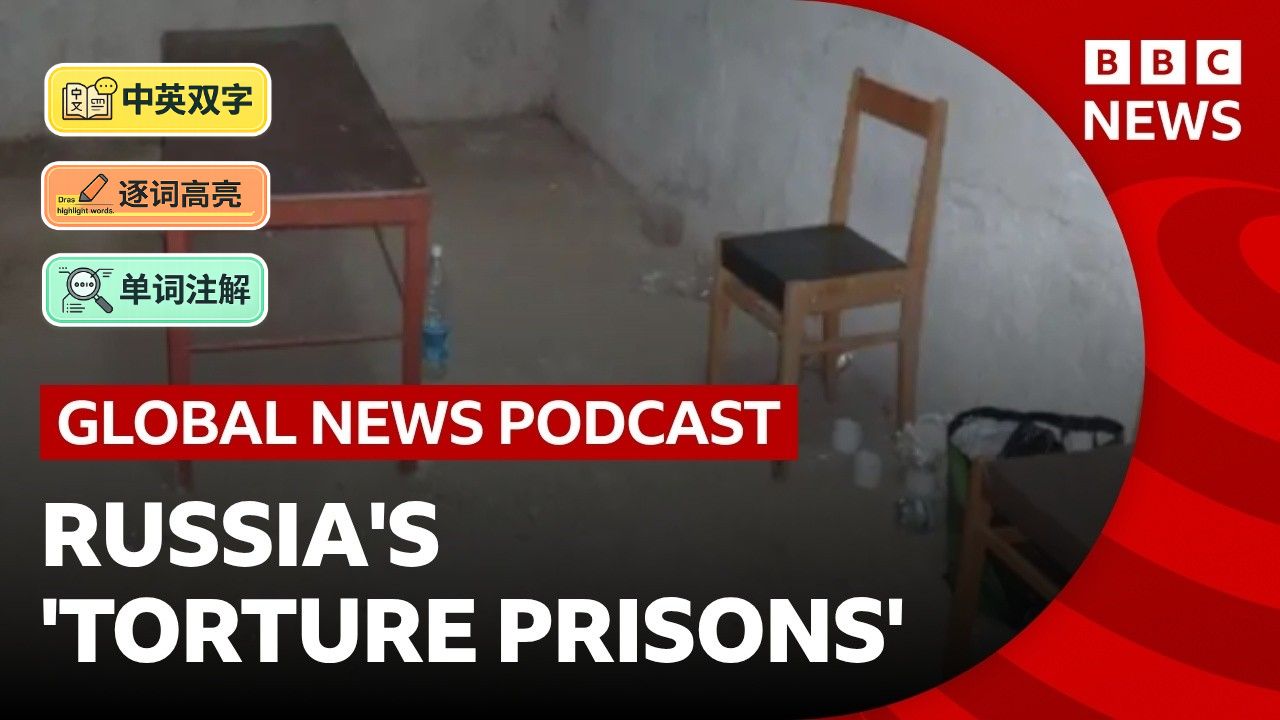
7-8 俄罗斯在乌克兰的“酷刑监狱”被曝光 | BBC全球新
字幕摘录
| 时间 | 英文 | 中文 |
|---|---|---|
| 0:00 | Welcome to the Global News podcast from the BBC. | 欢迎来到英国广播公司的全球新闻播客。 |
| 0:03 | Hello, I'm Oliver Conway. | 你好 我是奥利弗·康威 |
| 0:04 | 今天我和Tanya Harchenko一起来 | |
| 0:07 | And Tanya, you have uncovered some terrible stories | 谭雅,你发现了一些可怕的故事 |
| 0:11 | of abuse of Ukrainian civilians in secret jails | 在秘密监狱中虐待乌克兰平民 |
| 0:17 | in Russian-occupied Ukraine | 在俄罗斯占领下的乌克兰 |
| 0:18 | and over the border in Russia itself. | 并越过俄国边境 |
| 0:21 | First of all, tell us about these detention centers. | 首先,告诉我们这些拘留中心。 |
| 0:25 | Well, actually for Ukrainians inside of Ukraine, | 事实上,对于乌克兰人来说, |
| 0:27 | it's not a news even. | 这甚至不是一个消息。 |
展开字幕全文(205 条)
| 序号 | 英文 | 中文 |
|---|---|---|
| 1 | Welcome to the Global News podcast from the BBC. | 欢迎来到英国广播公司的全球新闻播客。 |
| 2 | Hello, I'm Oliver Conway. | 你好 我是奥利弗·康威 |
| 3 | 今天我和Tanya Harchenko一起来 | |
| 4 | And Tanya, you have uncovered some terrible stories | 谭雅,你发现了一些可怕的故事 |
| 5 | of abuse of Ukrainian civilians in secret jails | 在秘密监狱中虐待乌克兰平民 |
| 6 | in Russian-occupied Ukraine | 在俄罗斯占领下的乌克兰 |
| 7 | and over the border in Russia itself. | 并越过俄国边境 |
| 8 | First of all, tell us about these detention centers. | 首先,告诉我们这些拘留中心。 |
| 9 | Well, actually for Ukrainians inside of Ukraine, | 事实上,对于乌克兰人来说, |
| 10 | it's not a news even. | 这甚至不是一个消息。 |
| 11 | A lot of civilians are kept in those detention centers | 这些拘留中心关押了许多平民 |
| 12 | for years and years. | 年复一年, 年复一年。 |
| 13 | And their relatives are trying to sometimes | 他们的亲戚有时想 |
| 14 | to understand whether they are even alive or not. | 了解他们是否还活着 |
| 15 | What we did was this investigation. | 我们所做的就是调查 |
| 16 | We found survivors who were in such detention centers | 我们发现在这种拘留中心的幸存者 |
| 17 | and who survived the tortures and sexual violence | 在酷刑和性暴力中幸存下来的人 |
| 18 | in some of the cases. | 有些情况下 |
| 19 | And we also checked the open sources | 我们还检查了开源 |
| 20 | to see the statements of other survivors. | 查看其他幸存者的陈述。 |
| 21 | And we were able to establish | 我们建立了 |
| 22 | that there are approximately 93 such centers | 约有93个此类中心; |
| 23 | in occupied territories of Ukraine | 占领区人权遭受侵犯的问题 |
| 24 | and 102 in Russia where Ukrainian civilians were held. | 和俄罗斯的102名乌克兰平民被关押。 |
| 25 | And we are talking about timeframe of research | 我们正在谈论研究的时间范围 |
| 26 | from 2023 to 2025. | 从2023年到2025年. |
| 27 | So that is the data from those years. | 这就是那些年的数据。 |
| 28 | And who are the people who are being held in these centers | 被关在这些中心的人是谁? |
| 29 | and how did they end up there? | 他们怎么会在那里? |
| 30 | Oh, there are so many different stories | 哦,有这么多不同的故事 |
| 31 | how people end up in those centers. | 人们最终会被送到那些中心 |
| 32 | So one of the characters, | 所以其中一个角色 |
| 33 | like a leading character in our documentary, | 就像我们纪录片中的主角 |
| 34 | Lyudmila Huseynova, | 柳德米拉·胡塞诺娃 |
| 35 | she was engineer on a poultry farm | 她是家禽养殖场的工程师 |
| 36 | in Novoazovsk, in Donetsk Oblast, | 诺沃亚佐夫斯克,顿涅茨克州, |
| 37 | which was occupied. | 它被占领。 |
| 38 | And several years after the occupation in 2019, | 而2019年占领数年后, |
| 39 | she was arrested. | 她被捕了 她被关起来了 |
| 40 | She was working as a volunteer | 她是当义工的 |
| 41 | because a lot of Ukrainians | 因为很多乌克兰人 |
| 42 | who are staying on occupied territories, | 住在被占领土上的人, |
| 43 | they were trying to support the Ukrainian armed forces | 他们试图支持乌克兰武装部队 |
| 44 | or she was also helping to orphanages | 或者她还帮助孤儿院 |
| 45 | to kids who didn't have support after the occupation. | 给那些在工作结束后没有赡养的孩子 |
| 46 | So she would send some food or shoes. | 所以她会送一些食物或鞋子。 |
| 47 | And for that help, | 为了这个帮助, |
| 48 | she received the flag from Ukrainian soldiers | 她收到了乌克兰士兵的旗帜 |
| 49 | and they left signatures there. | 他们在那里留下了签名。 |
| 50 | She shared that picture among trusted friends | 她把照片告诉了信任的朋友 |
| 51 | and somehow it probably ended up in the wrong hands. | 不知何故,它可能最终 落入了错误的手中。 |
| 52 | So she was arrested | 所以她被抓了起来 |
| 53 | and after that brought to notorious prison in Donetsk, | 之后又把顿涅茨克的臭名昭著的监狱 |
| 54 | which called Isolatia. | 它叫伊索拉蒂亚 |
| 55 | And you know, that is her story. | 你知道 这就是她的故事 |
| 56 | After that, she spent in detention for more than three years. | 此后,她被关押了三年多。 |
| 57 | There are other stories of people | 还有其他人的故事 |
| 58 | who were in occupation in her zone | 在她所在地区被占领的人 |
| 59 | and they ended up in her zone detention center. | 他们最后被关进了她的拘留所 |
| 60 | I mean, in last years since full-scale invasion, | 我的意思是,在过去几年 从全面入侵, |
| 61 | I had conversations with a lot of Ukrainian civilians. | 我和很多乌克兰平民谈过 |
| 62 | One of them was mass teacher. | 其中一个是大众教师。 |
| 63 | She was abducted. | 她被绑架了。 |
| 64 | I mean, kidnapped basically from, | 我的意思是,绑架基本上, |
| 65 | I think it was Kiev region as far as I remember. | 据我所知是基辅地区 |
| 66 | And then she was brought to Russian prison | 然后她被带到俄罗斯监狱 |
| 67 | where she was subjected to terrible tortures. | 她在那里遭受了可怕的酷刑。 |
| 68 | Tell us more about Lyudmila. | 告诉我们更多关于柳德米拉。 |
| 69 | She was basically just bundled off the street, | 她基本上只是被捆绑在街上, |
| 70 | taken to one of these centers | 被送到其中一个中心 |
| 71 | and what happened to her there? | 她在那里发生了什么事? |
| 72 | So when she was brought there, | 当她被带到那里时, |
| 73 | she was, you know, searched. | 她被搜过身 |
| 74 | There were comments made, sexualized comments | 有评论,性化评论 |
| 75 | about her body. | 关于她的身体。 |
| 76 | Lyudmila was eventually brought to her cell | 柳德米拉最终被带到她的牢房 |
| 77 | and she wanted to cry. | 她想哭起来 |
| 78 | But one of the inmates, female inmate, | 但其中的一个囚犯,女囚犯, |
| 79 | told her, don't you dare to do that. | 告诉她,不要这样做。 |
| 80 | They are watching us all the time | 他们一直在监视我们 |
| 81 | and whoever cries will be beaten. | 谁喊叫,谁就会被打倒。 |
| 82 | So there are very strict rules in isolation | 所以在隔离中有非常严格的规则 |
| 83 | where if somebody from guards enters the cell, | 如果有警卫进入牢房 |
| 84 | prisoners are supposed to wear the bags on their heads. | 犯人应该把袋子戴在头上 |
| 85 | They are not allowed to sit or to lay in their bed. | 他们不得坐或卧床。 |
| 86 | They have to stand up the light | 他们必须站起光明 |
| 87 | for hours and hours and hours. | 数小时,数小时,数小时。 |
| 88 | Obviously the light doesn't go off even during the night. | 很明显,灯光不会熄灭 即使晚上。 |
| 89 | And then she describes that there in the documentary | 然后她在纪录片里描述 |
| 90 | and her interviews, she says that she has never heard | 她说她从没听说过 |
| 91 | such terrible screaming as she heard there | 像她听到的那样尖叫 |
| 92 | because, and you know, people who are survivors | 因为,你知道, 幸存者 |
| 93 | from isolation or other survivors | 被隔离者或其他幸存者 |
| 94 | we interviewed in documentary, | 我们通过纪录片采访, |
| 95 | they're talking about sexualized torture. | 他们说的是性折磨 |
| 96 | So one of the characters, Ruslan Shater, | 所以其中一个角色 罗斯兰·沙特 |
| 97 | told us that he was tortured for several months, | 告诉我们他被折磨了几个月, |
| 98 | including the electrocution of genitals. | 包括生殖器的电刑。 |
| 99 | They are threatened that they can be raped | 他们被威胁说会被强奸 |
| 100 | or their family can be brought in in isolation | 或家人被隔离 |
| 101 | and can be raped as well. | 也可以被强奸 |
| 102 | In some of the cases, they said that they learned | 在一些案件中,他们说他们学会了 |
| 103 | this new habit of listening who is tortured | 这种新习惯 听谁被折磨 |
| 104 | in hope that those are not their relatives, you know. | 希望那些不是他们的亲戚 |
| 105 | For Lyudmila, she was sexually assaulted in isolation | 对Lyudmila来说,她被单独性侵犯 |
| 106 | and later she was transferred to another prison. | 后来,她被转移到另一所监狱。 |
| 107 | She was still in prison during full-scale invasion in 2022. | 她在2022年全面入侵期间仍然在监狱里. |
| 108 | And then later she returned in exchange in prisoner swap. | 后来她又回来交换囚犯 |
| 109 | And the UN has said that torture of civilians | 联合国说,折磨平民 |
| 110 | at these places is systematic and widespread. | 这些地方是系统和广泛的。 |
| 111 | What more can you tell us about that? | 你还能告诉我们什么? |
| 112 | Well, we see that that started | 嗯,我们看到那开始 |
| 113 | with the beginning of the war in 2014. | 随着2014年战争的开始. |
| 114 | And I would say it was brought | 而我会说,它带来了 |
| 115 | to the conscience of the Western world | 西方世界的良知 |
| 116 | or reported more widely after full-scale invasion | 或在全面入侵后更广泛报道 |
| 117 | when we saw what was happening in Kherson and other regions. | 当我们看到赫尔森和其他地区发生的一切 |
| 118 | But the system works and it's, you know, | 但是这个系统是有效的,你知道的, |
| 119 | the main rule of that system is subjecting civilians, | 该制度的主要规则是让平民受困, |
| 120 | especially politically, a political detainees | 政治拘留犯 |
| 121 | to terrible tortures in order to break them. | 为了打破那些可怕的折磨 |
| 122 | And who are the people who are carrying out this torture? | 实施这种酷刑的人是谁? |
| 123 | As one of our characters, again, in documentary, | 作为我们的角色之一,再次在纪录片中, |
| 124 | Ruslan Shater describes on the example, Isolatia. | 罗斯兰·沙特描述了伊索拉蒂亚的例子. |
| 125 | He says that Isolatia wasn't created by Putin. | 他说伊索拉蒂亚不是普京创造的. |
| 126 | It was created by regular people. | 它是由普通人创造的. |
| 127 | And there were Russian soldiers | 还有俄国士兵 |
| 128 | in charge of Isolatia as guards | 负责伊索拉蒂亚的警卫 |
| 129 | and also Ukrainian collaborators. | 以及乌克兰的合作者。 |
| 130 | So one of perpetrators we investigated | 我们调查的凶手之一 |
| 131 | in documentary is Yermak, he's Ukrainian collaborator. | 在纪录片中是耶尔马克,他是乌克兰的合作者. |
| 132 | It's his call name. | 这是他的称呼。 |
| 133 | And he was a person who tortured Lyudmila | 他是一个折磨柳德米拉的人 |
| 134 | in the way when he came. | 在路上,当他来了。 |
| 135 | And so for the first time she was informed | 所以她第一次被告知 |
| 136 | that he's coming inside of the cell. | 说他会进牢房 |
| 137 | So she wore the bag on her head. | 所以她把包戴在头上 |
| 138 | So she wasn't able to see him, but she knew who he is | 所以她无法见到他 但她知道他是谁 |
| 139 | because there were a lot of, you know, | 因为有很多,你知道, |
| 140 | people were talking about him as one | 人们谈论他作为一个人 |
| 141 | of the most violent people there in Isolatia. | 在伊索拉蒂亚最暴力的人群中 |
| 142 | So Yermak basically, he asked Lyudmila | 所以叶玛克基本上问柳德米拉 |
| 143 | whether she is supporting Ukraine. | 她是否支持乌克兰。 |
| 144 | And she said that she supports justice. | 她说她支持正义 |
| 145 | And that was the moment when he violently started beating her. | 那时他开始猛烈殴打她 |
| 146 | And later when he saw that she's on hunger strike | 后来他看到她绝食 |
| 147 | because she lost some weight, he told her | 因为她瘦了,他告诉她 |
| 148 | that for her they will cook special food. | 给她做特餐 |
| 149 | And then they brought raw food mixed with cabbage. | 然后他们带来了与小白菜混合的生菜. |
| 150 | She was forced to eat it in front of CCTV camera. | 她被迫在闭路电视摄像机前吃. |
| 151 | So they were watching her doing that. | 所以他们看着她这样做。 |
| 152 | Basically they watching all inmates | 基本上他们监视所有囚犯 |
| 153 | in Isolatia all of the time, | 在伊索拉提亚, |
| 154 | which doesn't give them any privacy whatsoever. | 这不会给他们任何隐私 |
| 155 | And so she, one of her friends told her in that cell | 她的一个朋友在牢房里告诉她 |
| 156 | that she can hide, you know, pretend that she eats | 她可以隐藏,你知道, 假装她吃 |
| 157 | but split it out. | 但是把它分开 |
| 158 | She was trying to do that, but she says that the taste | 她想这么做 但她说味道 |
| 159 | of that food will stay with her forever. | 食物会永远陪着她 |
| 160 | And how were you able to identify this man? | 你是怎么认出这个人的? |
| 161 | 实际上,如果Yermak, | |
| 162 | Bellingcat did the research before | 贝林卡特以前做过研究 |
| 163 | and other survivor from Isolatia, | 和来自伊索拉提亚的其他幸存者, |
| 164 | Ukrainian journalist Oseyev was helping them | 乌克兰记者Oseyev帮助他们 |
| 165 | with testimony about Yermak's role in Isolatia as well. | 还有叶尔玛克在伊索拉提亚的角色的证词 |
| 166 | So when we learned from Lyudmila that one of her cases | 当我们从Lyudmila那里得知 她的一个案子 |
| 167 | when like the situation which I described happened | 就像我描述的情况一样 |
| 168 | with Yermak, we checked information about him, | 我们查过他的信息 |
| 169 | checked that from his social networks, | 从他的社交网络上查过了 |
| 170 | we were able to establish where he approximately lives. | 我们能确定他住的地方 |
| 171 | We cannot confirm whether he still works | 我们无法确定他是否还在工作 |
| 172 | in Isolatia or not, but it looks like he still lives | 不管是否在伊索拉蒂亚 但看起来他还活着 |
| 173 | in the area and some pictures from his social networks | 和他社交网络的一些照片 |
| 174 | suggest that he was like having quite good time | 说明他好像玩得很开心 |
| 175 | in occupied Crimea on holidays with his family. | 在被占领的克里米亚和他的家人度假 |
| 176 | So what surprises a lot of people, | 所以,是什么令很多人惊讶, |
| 177 | but it's still probably, you know, | 但还是可能,你知道, |
| 178 | in a lot of stories about people who commit crimes, | 在很多关于罪犯的故事中, |
| 179 | there is always this like normal side of them. | 总是有这种正常的一面。 |
| 180 | So it's quite interesting to see the testimonies | 所以看到这些证词很有趣 |
| 181 | of survivors and then to check that regular, | 幸存者,然后检查 定期, |
| 182 | like happy family pictures and to see | 像快乐的家庭图片和看 |
| 183 | that they also live this normal life. | 他们也过着正常的生活 |
| 184 | And what did the Russian authorities say | 俄国当局怎么说? |
| 185 | about these detention centers? | 关于这些拘留中心? |
| 186 | They didn't reply about the, you know, | 他们没有回答 关于,你知道, |
| 187 | allegations about the number of civilians | 关于平民人数的指控 |
| 188 | in detention centers. | 在拘留中心。 |
| 189 | It mostly was about the documentation of the crimes | 主要是犯罪记录 |
| 190 | and that they are on the side of the law | 他们站在法律的一边 |
| 191 | and that the responsible authorities monitor the situation. | 主管当局应监测情况。 |
| 192 | But earlier when UN was added Russia to the blacklist | 但早些时候,当联合国被加入黑名单时,俄罗斯 |
| 193 | of countries responsible for conducting | 负责实施《公约》的国家名单 |
| 194 | or committing sexual violence crimes during the conflict, | 在冲突期间犯下性暴力罪行, |
| 195 | the Russian representative in UN, | 俄罗斯驻联合国代表, |
| 196 | he accused organization in being biased | 他指控组织有偏见 |
| 197 | and, you know, just like he said | 就像他说的 |
| 198 | that they are trying to portray Russia as a villain. | 他们试图把俄罗斯描绘成一个恶棍。 |
| 199 | So that's it, yeah. | 就是这样,是的。 |
| 200 | Tanya, thank you. | 塔尼娅 谢谢 |
| 201 | Tanya Harchenko,记者谁发现 | |
| 202 | those appalling stories. | 那些骇人听闻的故事 |
| 203 | If you'd like to hear more from the Global News podcast, | 如果你想听更多 从全球新闻播客, |
| 204 | click the link below. | 单击下面的链接。 |
| 205 | But thanks for watching. | 谢谢你的观看 |
该视频共有字幕 205 条。解锁更多字幕为会员功能,请移动到 价格